UPDATE, August 24, 2022: Toyota Tundra confirmed for Australia
In huge news for local fans of heavy haulers, the Toyota Tundra is confirmed for an Australian launch, thanks to a conversion program announced by Toyota and partner Walkinshaw. Get all the details at the link below.
The story to here
Snapshot
- 13 years since debut of second-gen Tundra
- Hybrid and electric powertrains on the cards
- Toyota Australia interested in the large truck segment
Could a foggy teaser image of the 2022 Toyota Tundra finally spark an Aussie arrival of the mammoth US pick-up?
Unveiled recently in the USA, the dimly-lit teaser image of the Tundra is part of a slow-drip campaign to build excitement ahead of the vehicle’s launch later this year.
The launch of the next-gen Tundra has been a long time coming, too, with the current second-gen Tundra remaining pretty much unchanged since it debuted way back in the second quarter of 2008 – save for refreshes in 2010 and 2014, which saw the model get a larger grille, a redesigned interior and a slight power rise. Compared to the F-150, Silverado and 1500, that’s ancient.
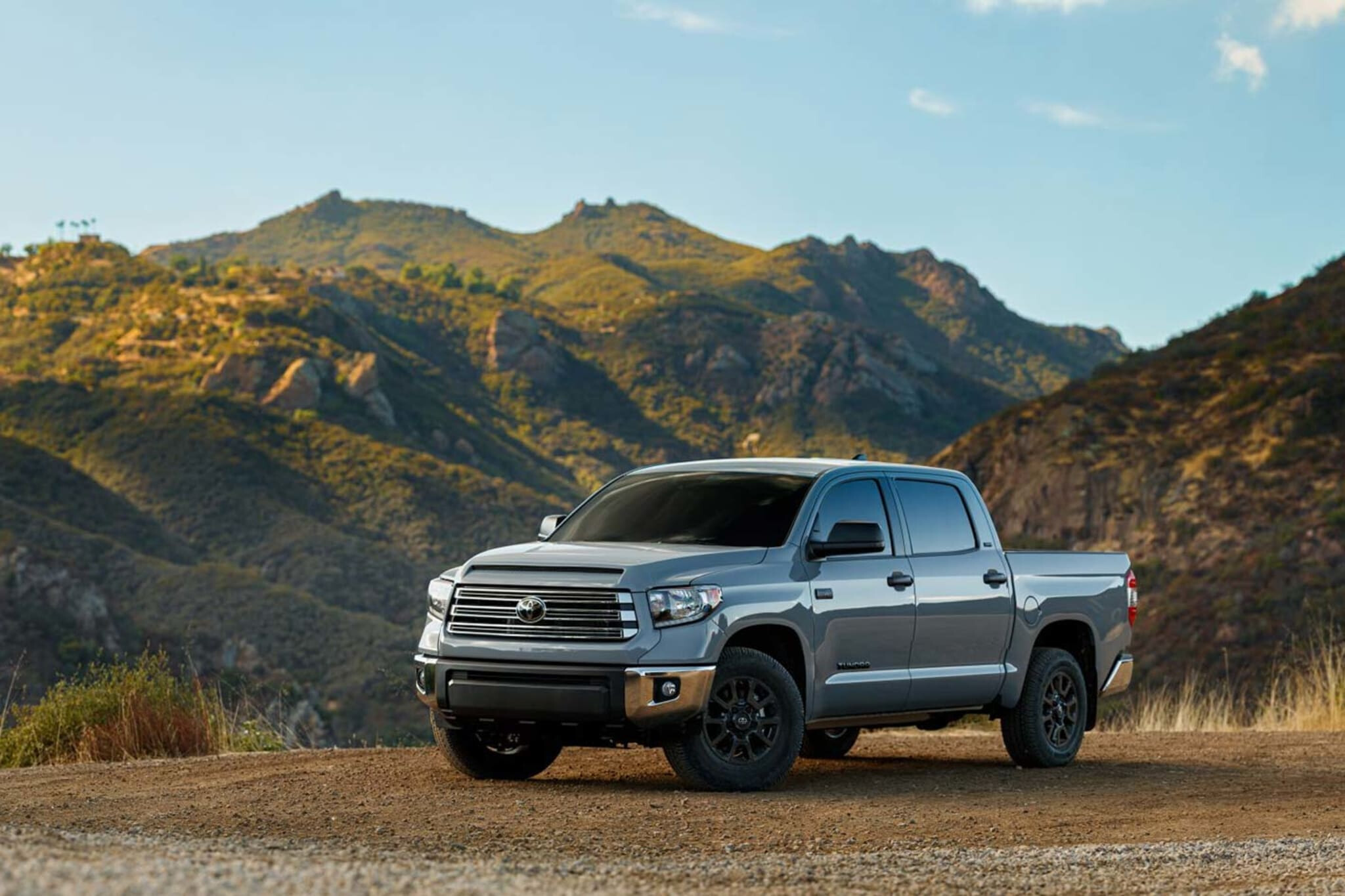
It’s expected official information from Toyota isn’t too far away. For now, though, specifics are scarce. Reports have indicated the pick-up may shift from leaf-spring to coil-spring suspension, and it will most likely sit in the new Toyota New Global Architecture (TNGA) platform for body-on-frame utes.
Reports also indicate, and common-sense suggests, in an attempt to be more efficient the third-gen Tundra is expected to lose its V8 engine, instead utilising a twin-turbo V6. Future plans suggest both hybrid and electric powertrains will soon follow.
Make what you will from the shadowy teaser image, but the outline of bonnet suggests a strong, muscular design focus, a giant grille and plenty of LED lighting (obviously). The vehicle used in the teaser shot is most likely a top-of-the-range model.
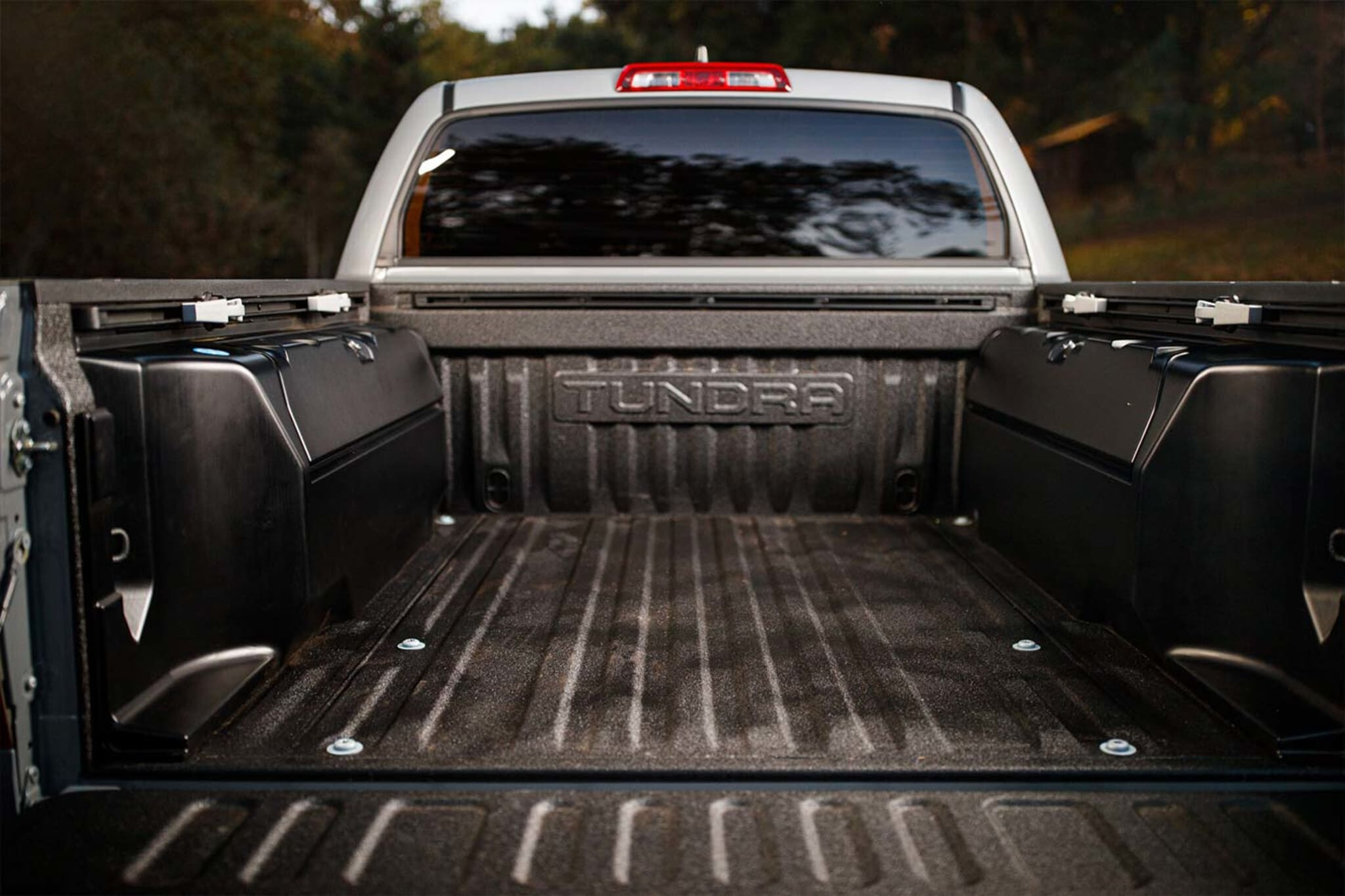
So far, the only option to drive big American pick-ups like the Tundra has been via Australian conversion companies like Performax International, as RHD variants have never been available from factory.
We posed the question to Toyota Australia on its desire to finally bring the Tundra to Australia, and whether local RHD factory conversion could be a possibility.
A Toyota spokesperson told 4X4 Australia: “Toyota Australia is aware that the large truck segment in Australia has grown in popularity over the last few years and it is a segment we are continuing to study and we are interested in generally.
“We have no announcements to make on the introduction of Tundra to Australia today and will continue to study its viability and introduction to Australia.”
Four-wheel drives are meant to be used off-road, so we devised a comprehensive off-road test loop to see which dual-cab ute was the most capable in low-range 4×4.
Our test course was made up of mud, steep hill climbs and descents, rutted out wombat holes and a water crossing as well as some faster corrugations to gain an understanding of how each ute held together over traditional Australian off-road terrain.
This was an accurate representation of what we feel most dual-cab owners will be putting their own vehicles through. It is also a back-to-back comparison designed to highlight any shortcomings or highlights of each 4×4.
Catch the full series here
- Premium utes: Ranger vs D-Max vs Triton vs Navara vs HiLux
- Budget utes: GWM Ute Cannon-L vs Ssangyong Musso XLV Ultimate
- Hero utes: HiLux Rugged X vs Ranger Raptor vs Gladiator Rubicon vs BT-50 Thunder
- Off-roading: Ranger vs D-Max vs Triton vs Navara vs HiLux vs Musso vs Ute Cannon-L vs Ranger Raptor vs Gladiator Rubicon
Ssangyong Musso Unlimited XLV – 5/10
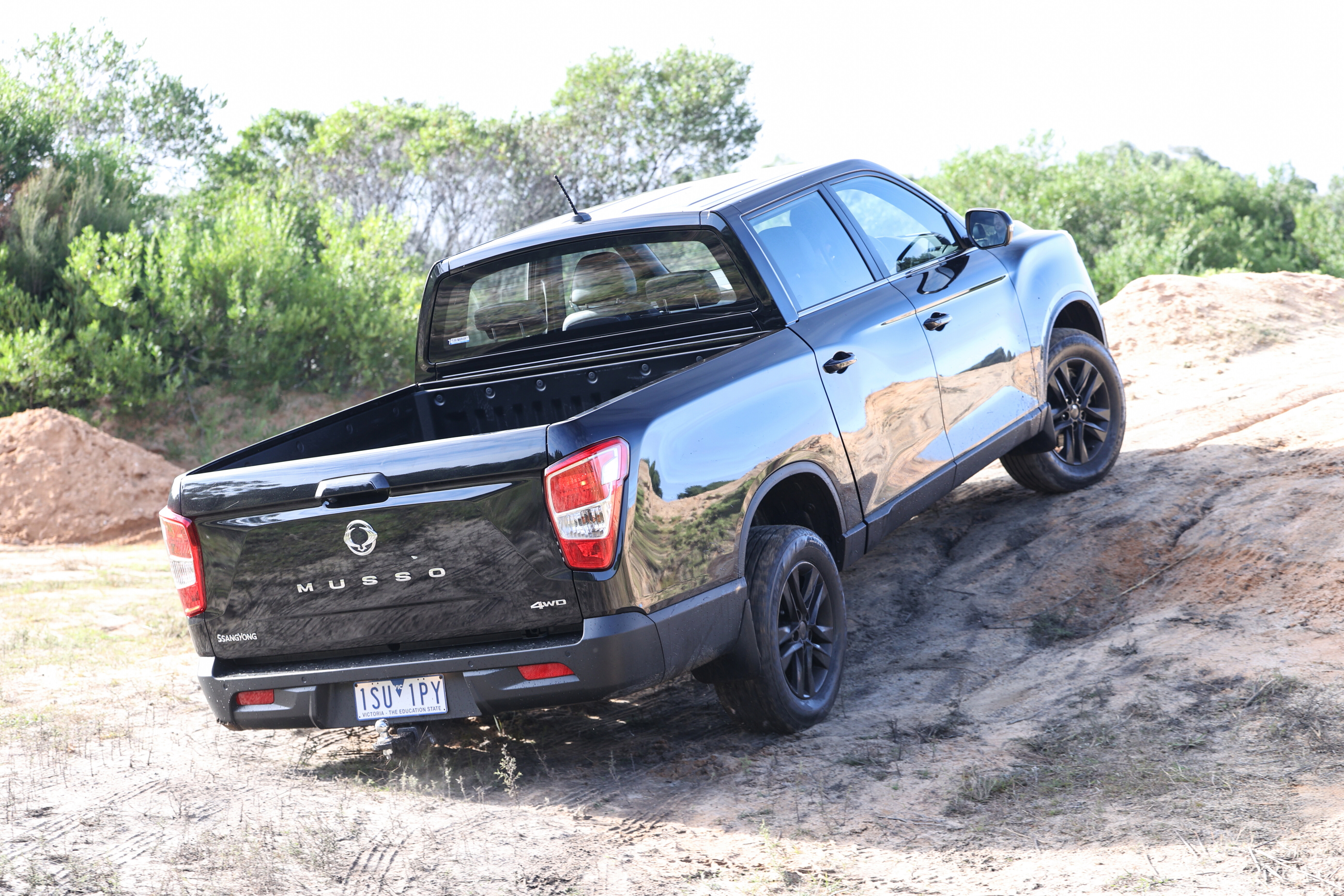
The Musso struggled in the off-road test, due mainly to a lack of ground clearance. It bottomed out more than any other ute and was the only one that didn’t make it up our steep test climb at the first attempt.
Thankfully there are aftermarket suspension lift kits available to fix the ground clearance issue, but the Ssangyong’s automatic rear diff lock isn’t as practical as being able to manually activate the locker when required.
Low-range gearing was also a weak point, having to rely on hill-descent control to come back down our steep test hill, though the system worked fairly well. The engine feels really peaky too, making smooth progress more difficult than others on test.
GWM Ute Cannon-L – 5.5/10
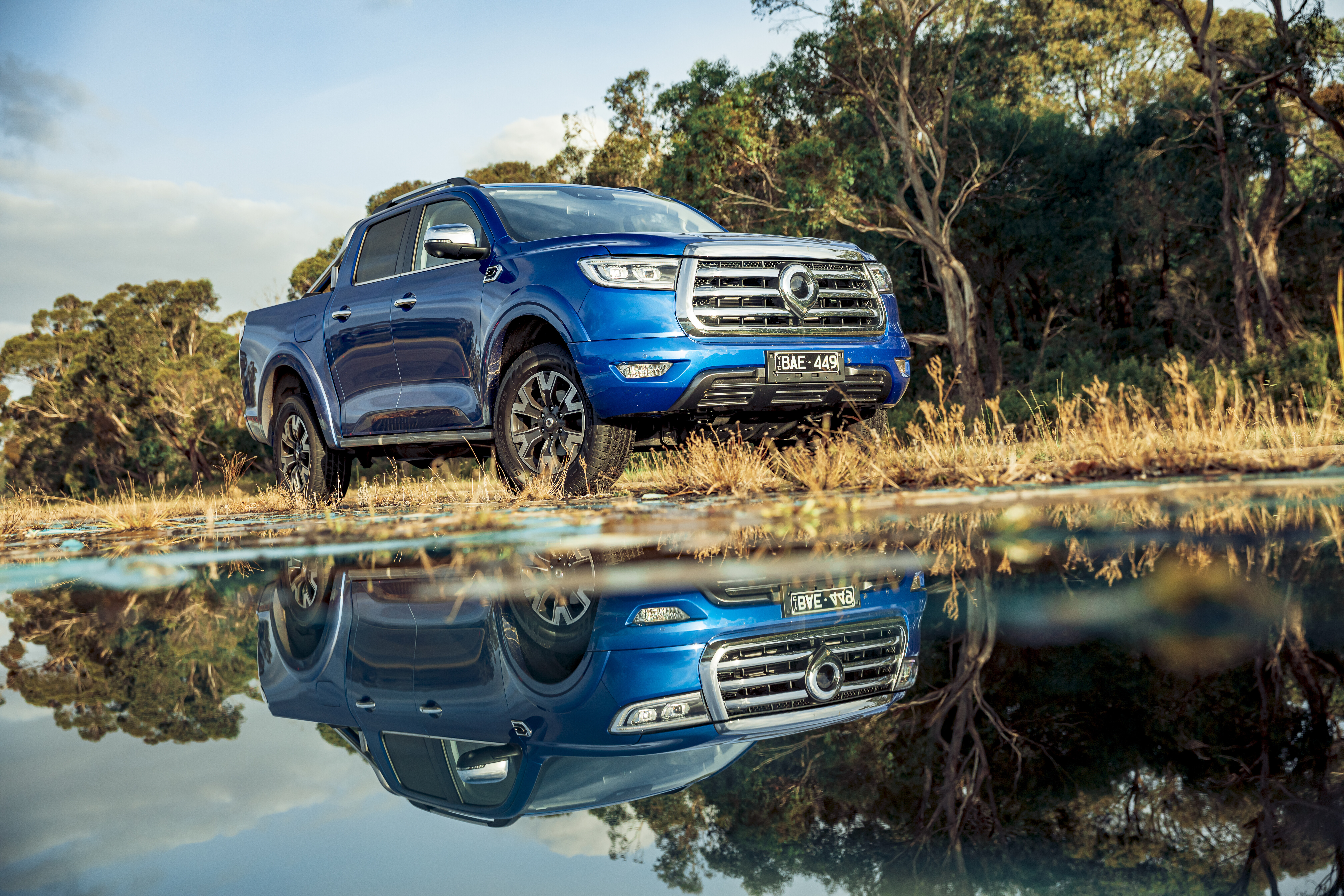
I was very excited to take the GWM Cannon off-road, but that excitement didn’t last long. The gear selector was a particular annoyance as it’s over-complicated and not what you want in a 4×4 where quick shifts from drive to reverse are required. It was also slow to engage 4×4, which is not ideal.
On the upside, traction control response seemed adequate and it was able to get through our test course, just not as easily as other utes due to its poor ramp-over angle. Hill-descent control worked well and when combined with the rear selectable locker, mild off-roading is within the GWM’s realms.
As a side note, and we’re still not sure what happened here, but the Cannon was making some awful clunks and bangs from the rear-end when making tight turns in our off-road test. The radio also decided it didn’t want to turn off, requiring the vehicle to be switched off and back on again.
Mitsubishi Triton GLS – 7/10
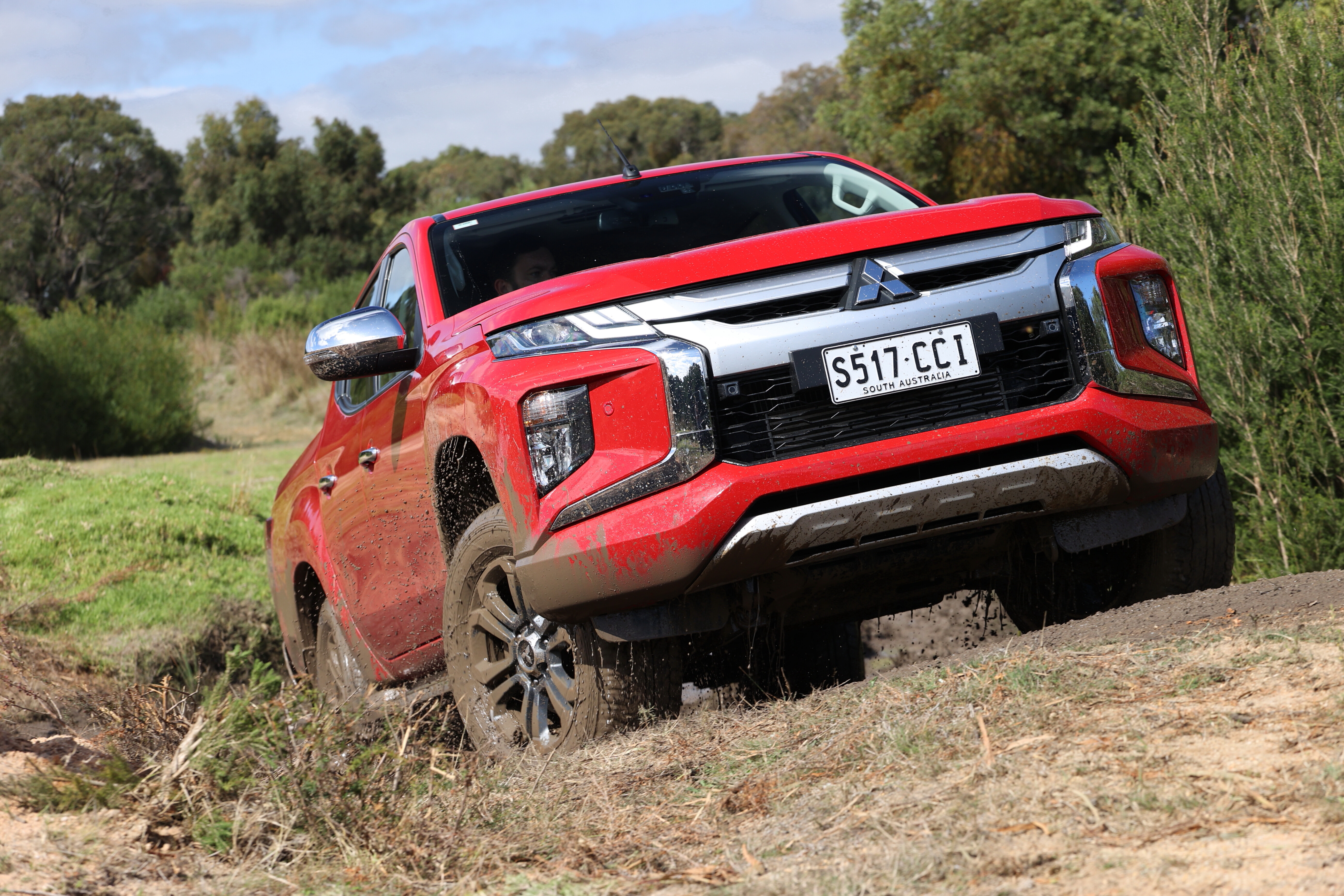
The first thing you notice about the Triton off-road is how nimble it is thanks to the shorter wheelbase and narrower dimensions. It’s also packed with clever off-road features, such as Super Select, which allows you to run in 4×4 high range (with the centre differential unlocked) on-road.
It also has various terrain modes available including rock, gravel, mud/snow and sand. These, combined with the rear differential lock and decent traction control system, meant the Triton went everywhere we wanted it to go.
4×4 engagement did take a few turns to get locked in and the low-hanging rear differential vibration damper did touch down on a few occasions. Suspension travel in the front end is also limited and the brakes suffered after driving through heavy mud. Otherwise, it felt like a little tractor in a good way.
Mazda BT-50 Thunder – 7/10
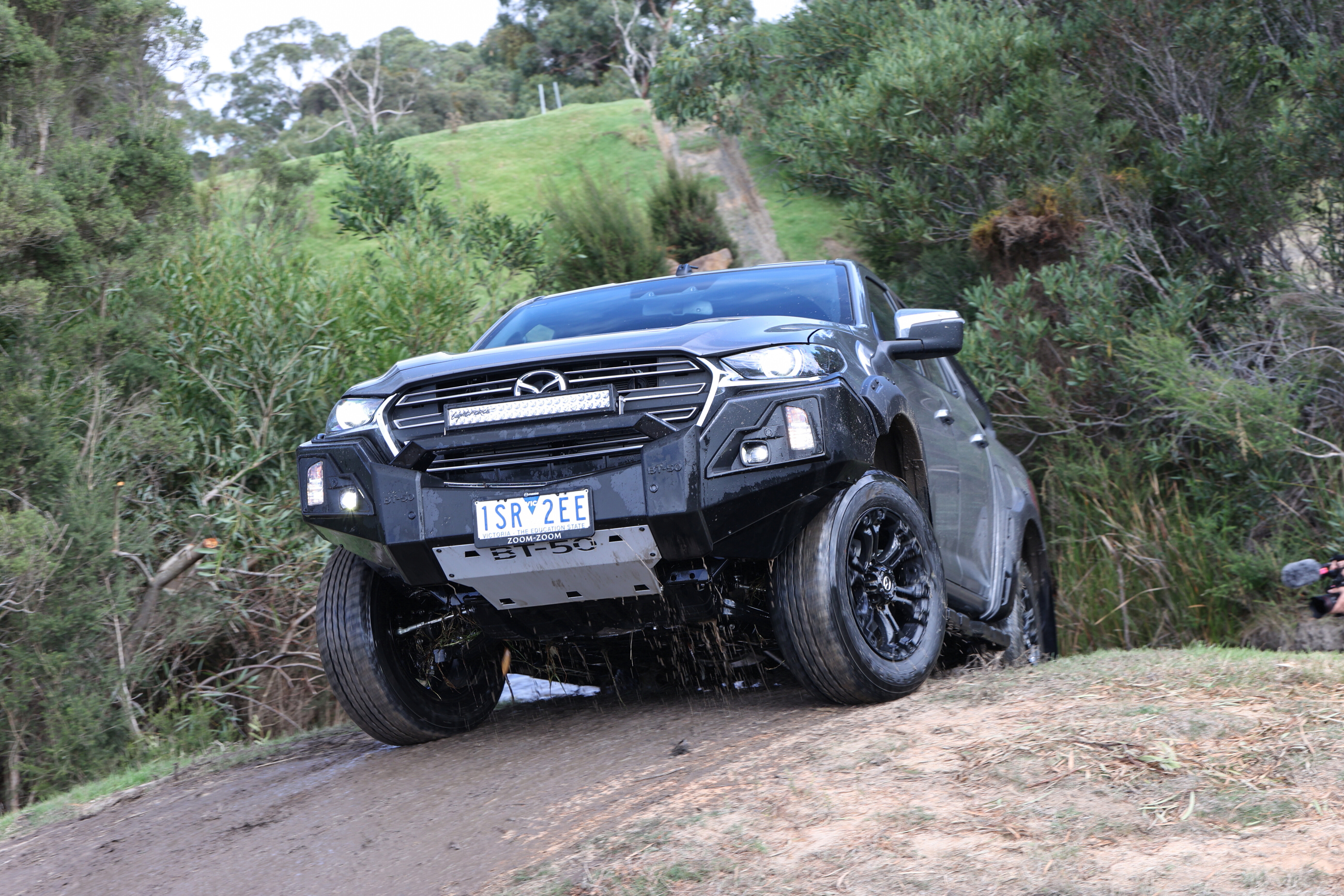
The BT-50 Thunder from Mazda is a more lifestyle-oriented ute but when you look past the steel bull-bar and flares fitted, it is essentially a D-Max. Which is a good thing. As per the D-Max, traction control wasn’t top of the field but the rear diff lock made up for any shortcomings.
The revered 4JJ3 3.0L motor produces torque down low where you want it, allowing for smooth and easy going when negotiating rough terrain. The suspension does feel firm as per the D-Max and is something I’d personally be upgrading if I was in the market. 4×4 engagement is simple and effective, grabbing low-range the first time (as it should).
“The (BT-50’s) suspension does feel firm as per the D-Max and is something I’d personally be upgrading if I was in the market.”
Isuzu D-Max X-Terrain – 7/10
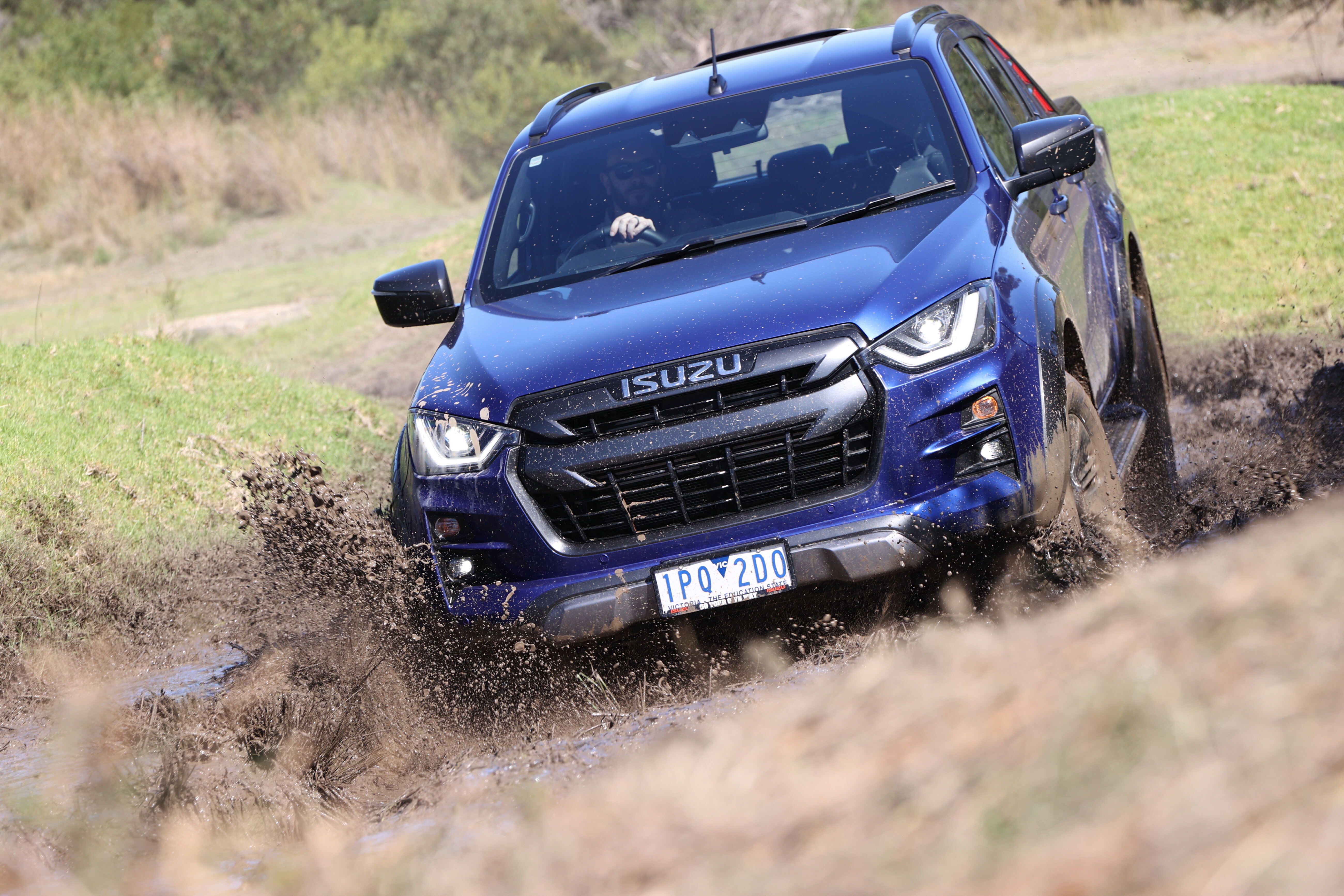
The heart of any D-Max is the engine offered, and I found the low-down torque from Isuzu’s 3.0L motor to be perfectly suited to the transmission. While the traction control system found in the D-Max isn’t HiLux good, you are able to coax every last inch of grip from the tyres by using that low-down lazy power to your advantage.
Like the Triton, the Isuzu feels tractor-like in a good way. The suspension offers decent – not best-in-class – wheel travel but rode firmly over undulations when unladen. It was great to see a rear differential lock fitted to the D-Max, as it dramatically improves off-road capability over the previous generation.
4×4 engagement was smooth and really easy via a simple rotary dial and when locked in low range, engine braking was slow and controlled on descents.
Nissan Navara ST-X – 7.5/10
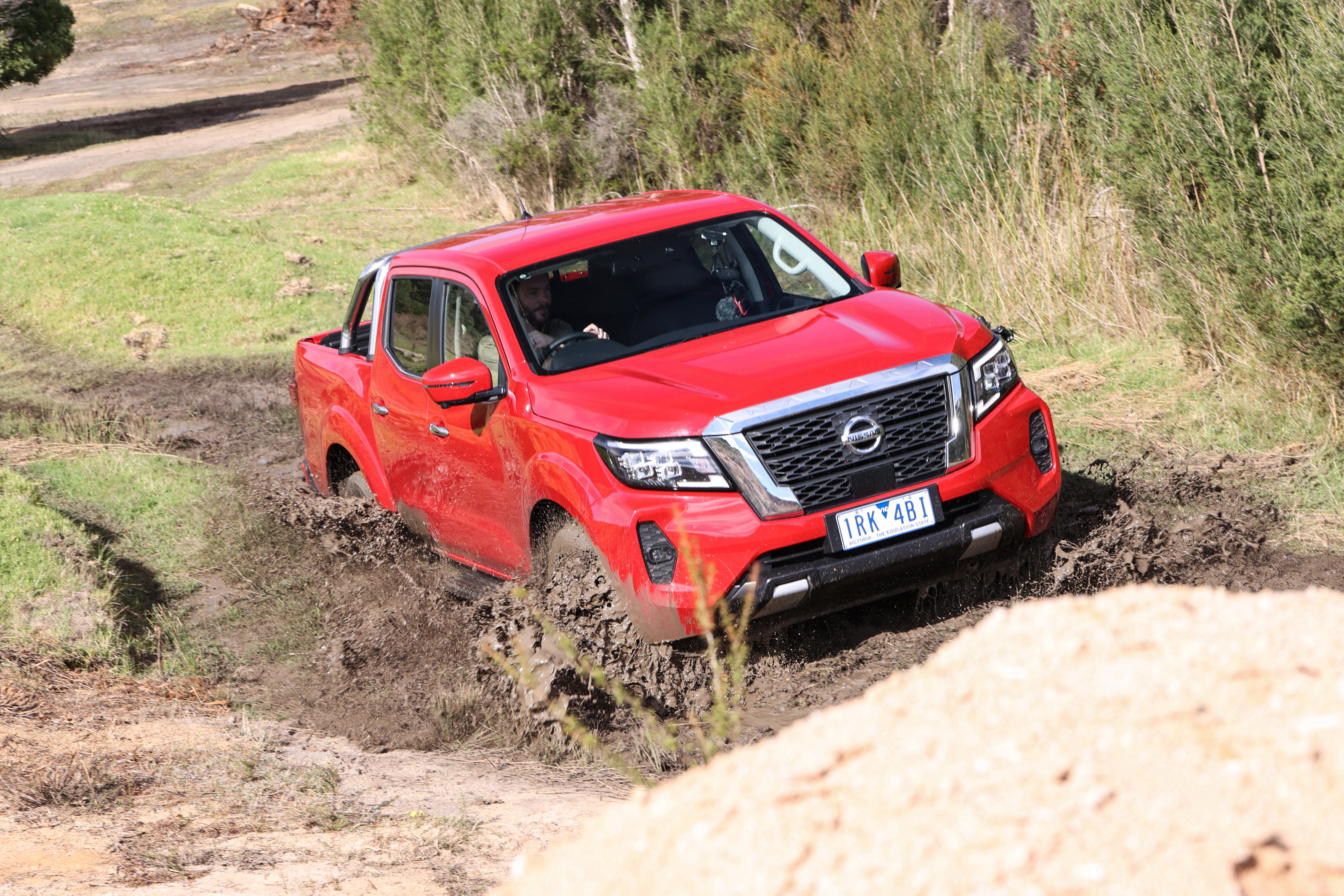
While the suspension in the Navara felt soft when towing, it was at home on our off-road test track. Soft and flexible, which is just what you want. The available gearing was also sensational, seeing the Navara crawling down steep slopes at a snail’s pace.
At no stage did it bottom out either, and we tried our best to unsettle it. Heavy steering was again a let-down, although this is something you’d naturally get used to. 4×4 activation wasn’t smooth, requiring a few attempts to get it into low range but when it was locked in, the Navara performed well off-road with a competent traction control system getting power to the ground. I see the Navara as a bit of an underdog and feel that with a suspension upgrade, it would be a handy off-road performer.
Ford Ranger XLT Bi-Turbo – 8/10
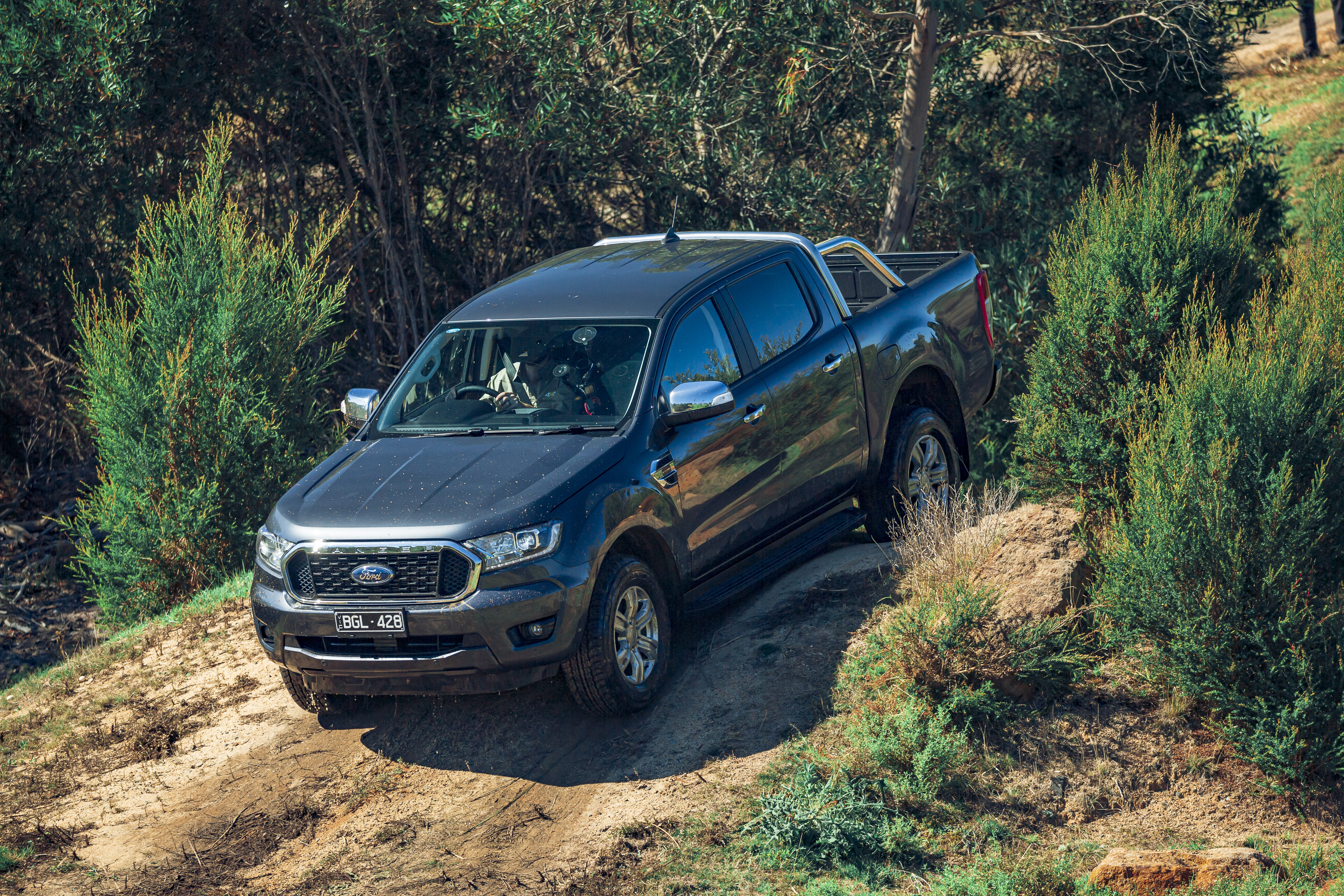
First impressions when driving the Ranger XLT off-road are how planted it is. The suspension is well-suited to undulations and is compliant when the going gets tough. Four-wheel drive engagement was quick and easy, however, we did catch the low factory side-steps a few times.
Steering and brakes felt excellent, and gearing options available from the 10-speed transmission made it feel like there was a ratio for any situation. The motor felt torquey when combined with said gearbox but from experience, we know the older 3.2 offers more low-down grunt off-road. My main gripe is that the traction control isn’t as good off-road as the HiLux; it’s good but not HiLux good. And that is being really critical.
Toyota HiLux SR5 – 8.5/10
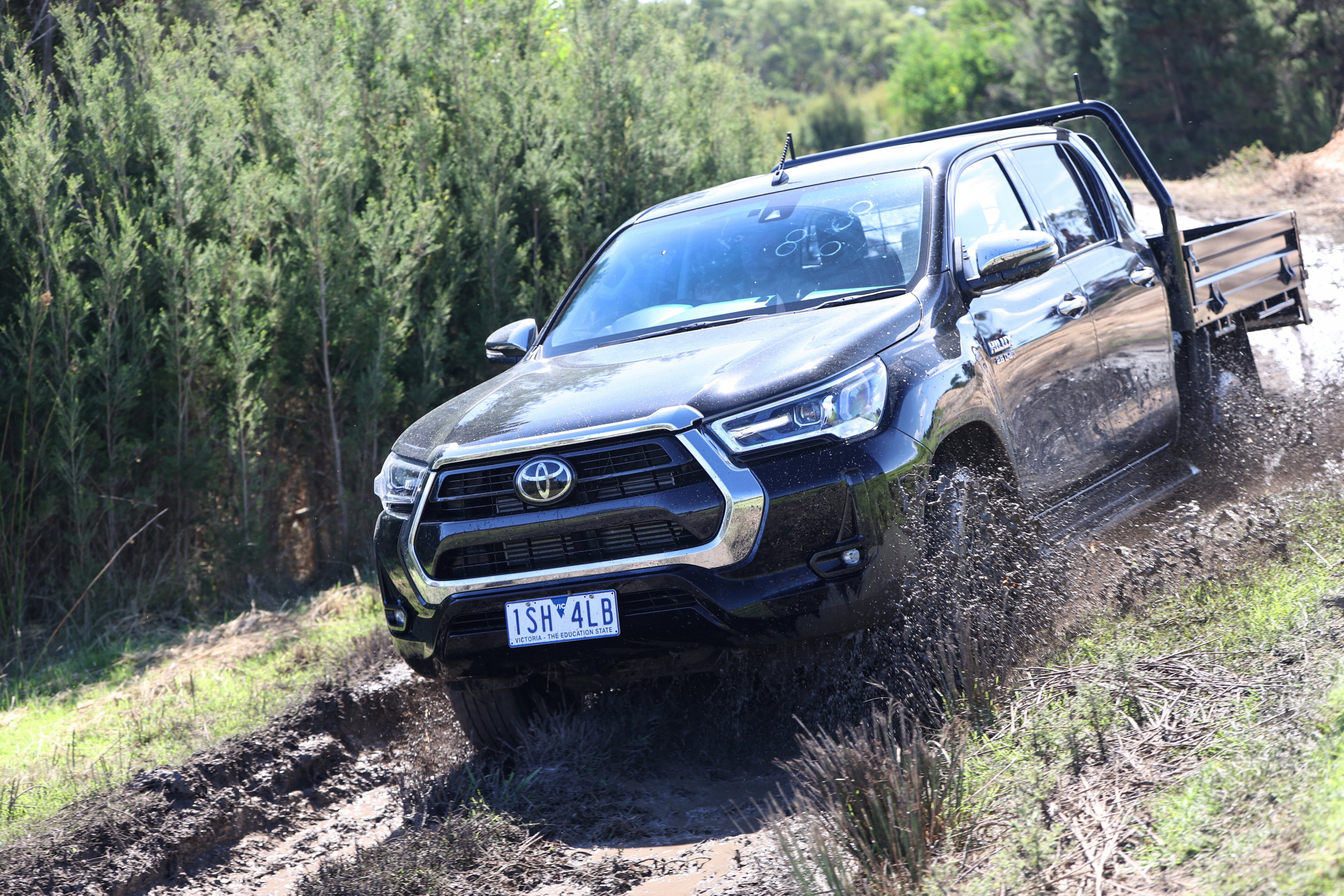
Compared to the Ford Ranger, the SR5 HiLux definitely rode firmer on rough terrain. The steering also felt heavier, but not by much. As per the Rugged X, the traction control system found in the HiLux is nothing short of amazing off-road.
The second you feel a tyre slip, it stops it and sends drive to the tyre with grip. Gearing is also sensational, providing plenty of pulling power up hills and wonderful engine braking down them.
4×4 engagement was quick and easy, with no real annoyances to mention. This platform has been around a few years now and with this most recent update, Toyota has in my opinion created the most capable HiLux yet. It’s a brilliantly effective 4×4, even in stock trim.
Toyota Hilux Rugged X – 8.5/10
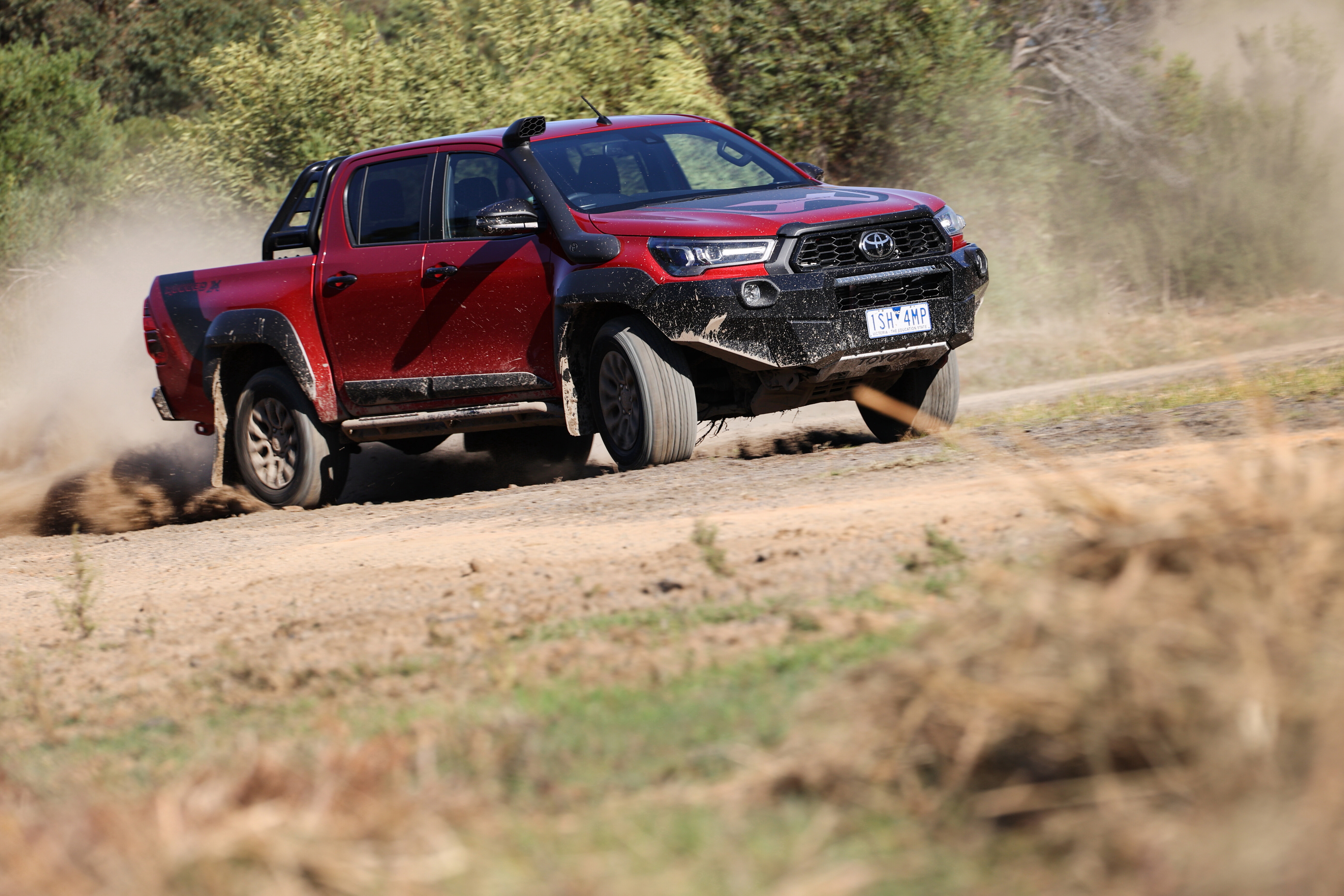
I’m a fan of the factory accessories fitted to the Rugged X, especially the rock sliders that work really well. It must be said though, I’ve never seen a vehicle that is more of a candidate for larger tyres than the Rugged X. It’s begging for them! That’s its only let-down off-road.
As expected, the traction control system found in the HiLux range is first class, pulling the HiLux through everything even on its small highway terrain tyres. 4×4 activation was quick and easy, with excellent low-range gearing available.
With a bigger set of tyres and a basic suspension lift, you’d have a practical ute day-to-day and a capable 4×4 for the weekends. That’s all it needs really, thanks to the factory fitted bar work and recovery points.
Ford Ranger Raptor – 8.5/10
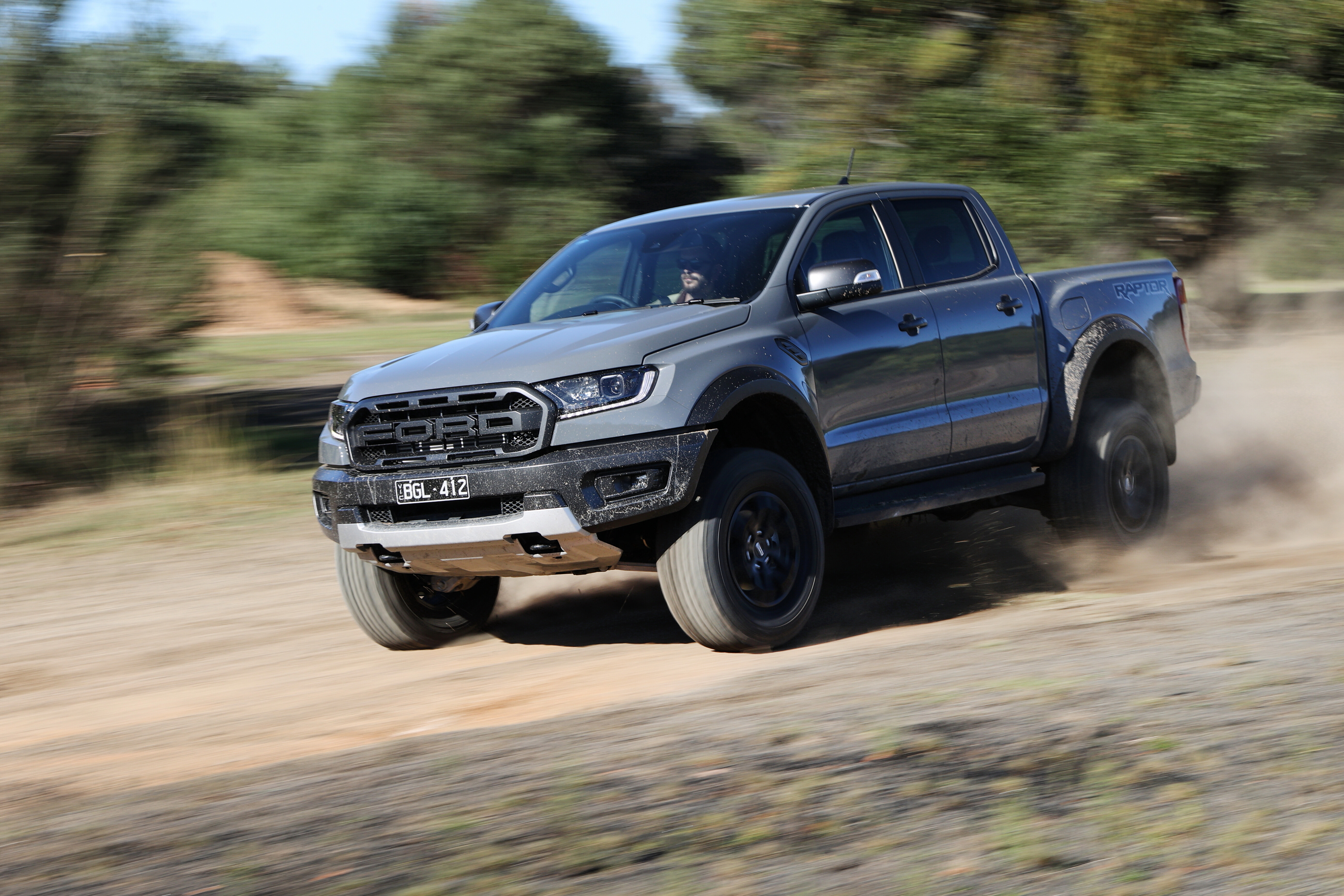
The very first thing you notice about the Ranger Raptor is how wide it is. We drove the Raptor second-last out of the field and it simply didn’t want to sit in the wheel tracks carved out by 4x4s we’d already tested.
Engaging low-range 4×4 was simple and easy, with various traction control modes to play with depending on the terrain you are driving. Special mention must go to the seats, with those supporting side bolsters holding you in place no matter how rough the going gets.
Speaking of rough terrain, the Raptor’s suspension ate washouts for breakfast. This was by far the fastest vehicle through the test course, without even trying. Traction was great thanks to the BFG all-terrains but in terms of pure 4×4 ability, it’s not the most capable here. It’s still very accomplished though, and was an absolute hoot to drive.
Jeep Gladiator Rubicon – 9/10
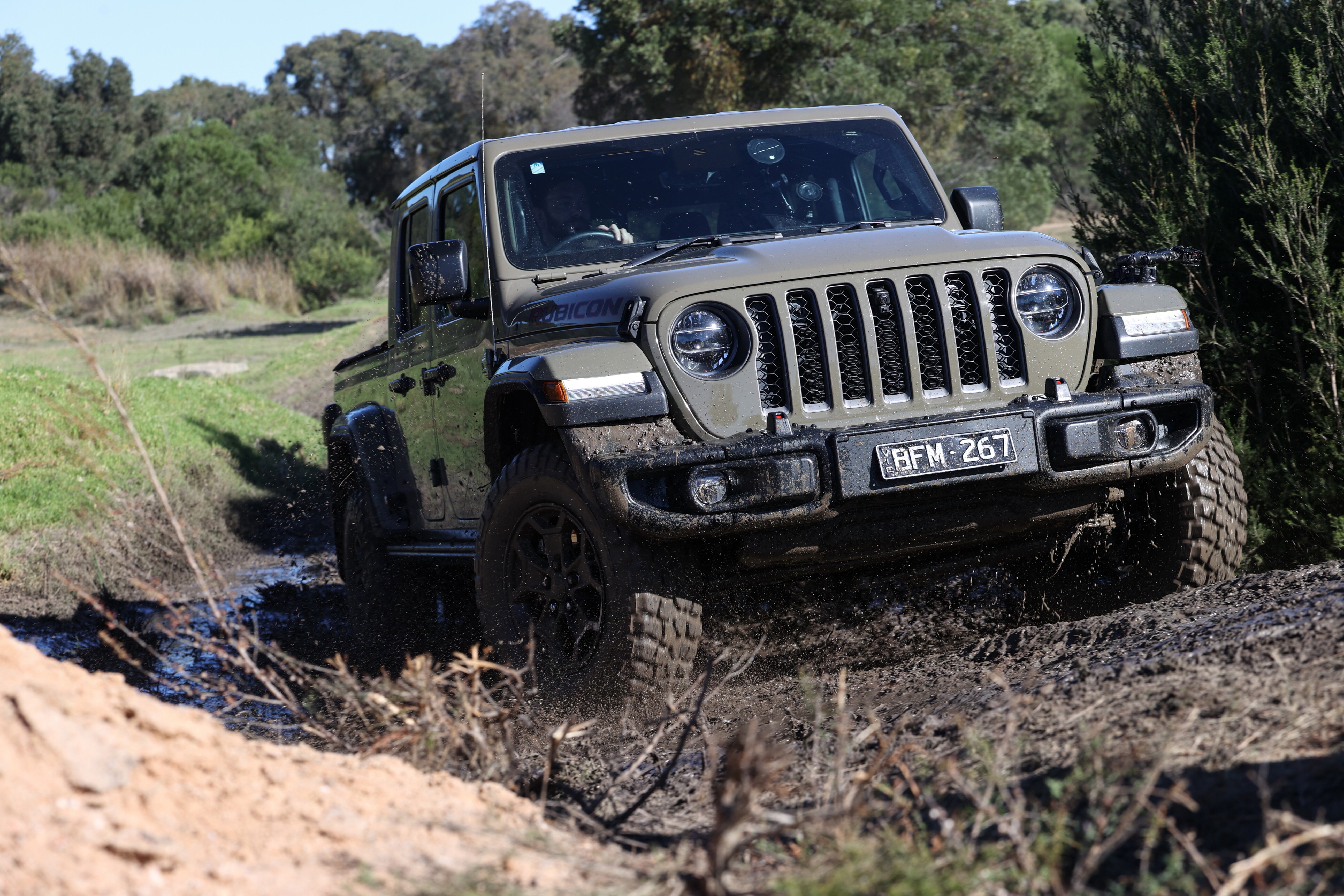
In terms of pure off-road prowess, you’d be hard-pressed to find a more capable vehicle than the Gladiator. Front and rear locking differentials, tremendous low-range gearing, a disconnecting front sway bar and mud terrain tyres are a recipe for success.
And while the Ford Ranger Raptor felt wide on the tracks, the Gladiator felt long. This was its only real issue during our testing. Some larger tyres and a bit of suspension lift will fix this. I swear the Gladiator in Rubicon trim didn’t slip a wheel the entire time; traction levels were simply incredible.
4×4 engagement was via a simple old-school lever, which was great to see, and the interior – while cramped – is easy to clean after a day on the tracks. So, while not perfect, with a few simple tweaks the Jeep Gladiator Rubicon would be unstoppable off-road.
CONCLUSION
Virtually all these utes are capable of dealing with the off-road needs of most buyers, though it might pay to limit your enthusiasm with the Ssangyong and GWM. However, of the main volume-selling utes the Toyota HiLux is clearly the most capable in the rough stuff thanks primarily to its outstanding traction control calibration, though each has its own strengths.
For those who like to venture further off the beaten track the Ranger Raptor and, in particular, the Jeep Gladiator Rubicon are amazing for standard vehicles and would need only a couple of aftermarket tweaks to tackle anything even the most hardcore off-roader could throw at them.
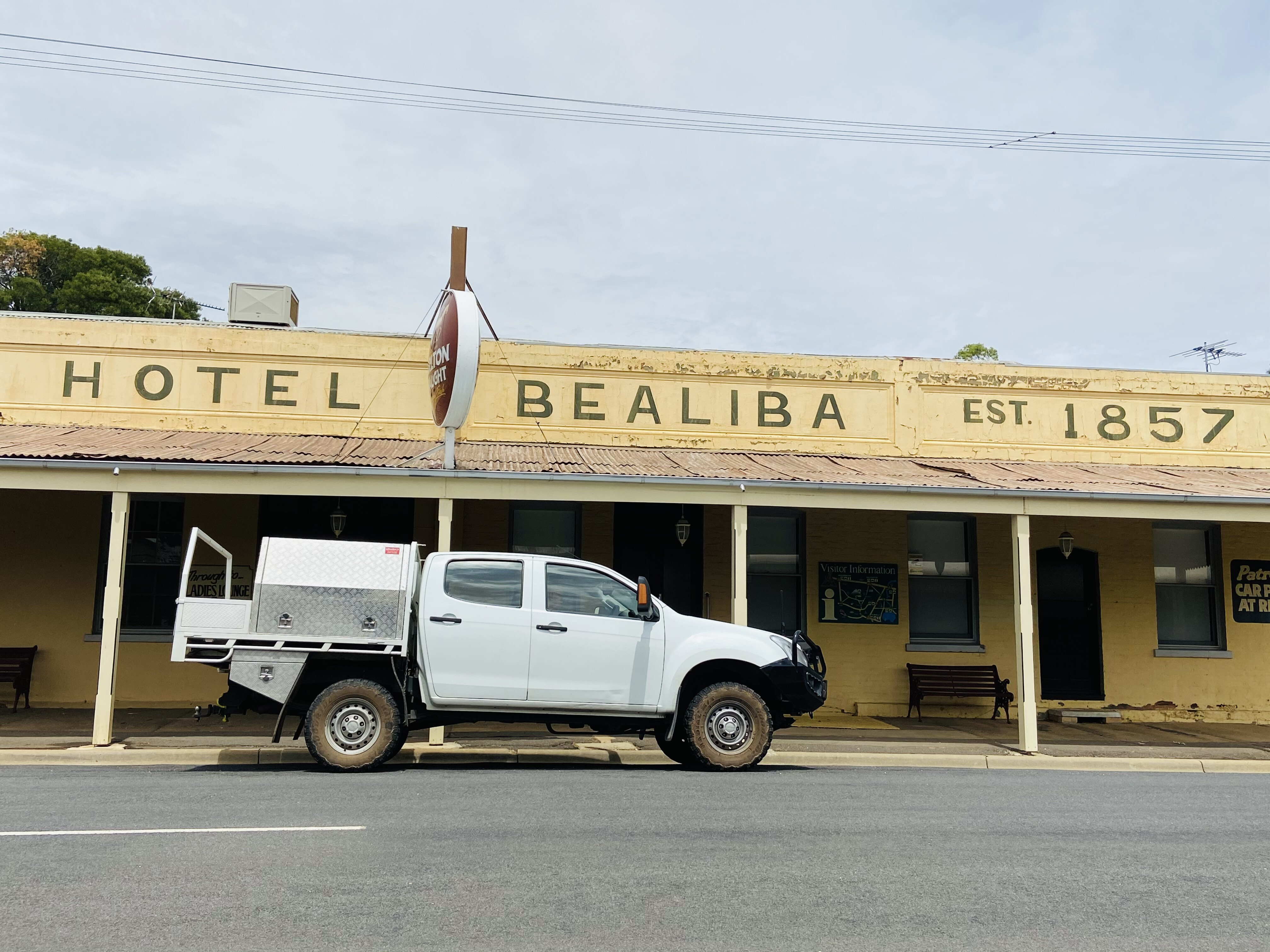
THE facade at the Bealiba Pub looks straight of an 1850’s gold rush movie. Wide verandahs and shady benches out the front hint of long-ago bustle, miners swilling beer and comparing yarns of lucrative finds. But when we visit the pub is deserted, the street empty and there’s no sign of life.
We’re in the middle of Victoria’s Goldfields countryside, a place rich with gold, where hundreds of hopeful miners once flocked with dreams of finding their fortune.
Today, this area is rich with open bushland to wander through with a gold detector and there are abundant gullies, creeks and dams to try your luck gold panning or sluicing. But there’s also much more here than the prospect of what’s under the ground. Located within this golden triangle of Victoria are some fantastic free camp spots, historic relics and a heap of tracks in this often undiscovered part of the Goldfields.
In the quiet town of Laanecorrie, on the edge of the Loddon River is the Laanecorrie River Recreation Reserve. There’s a great walking track which begins at the Janeville Bridge and goes for an easy 1.2km to the Laanecoorie Reservoir Weir. This is a popular spot and when we passed through, it was packed to capacity with tents and New Year revellers.
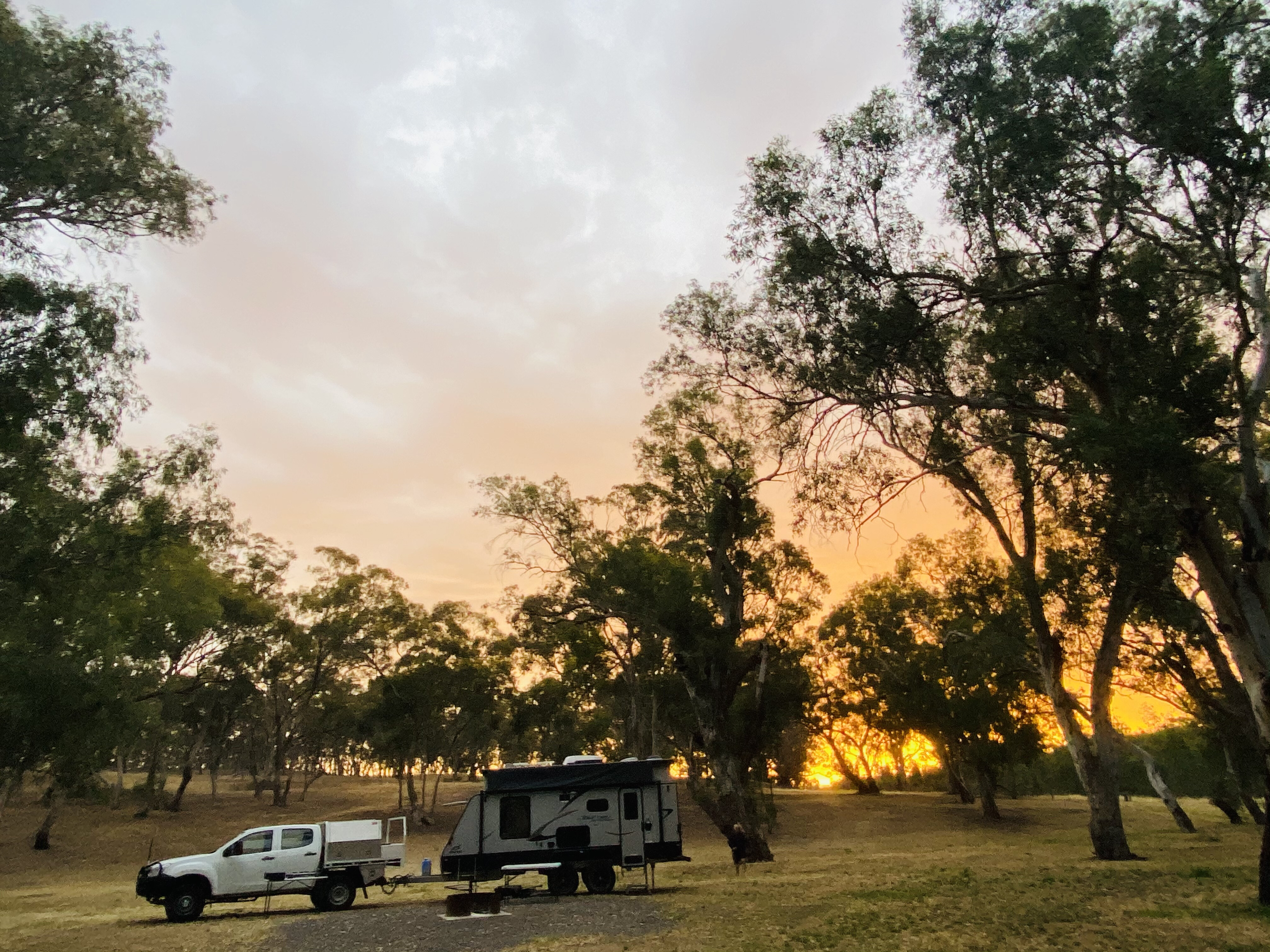
Travel another 20 minutes to Baringhup West and you’ll find Hamilton’s Crossing, also on the Loddon, but with plenty of space so you’re almost guaranteed to find your own piece of seclusion.
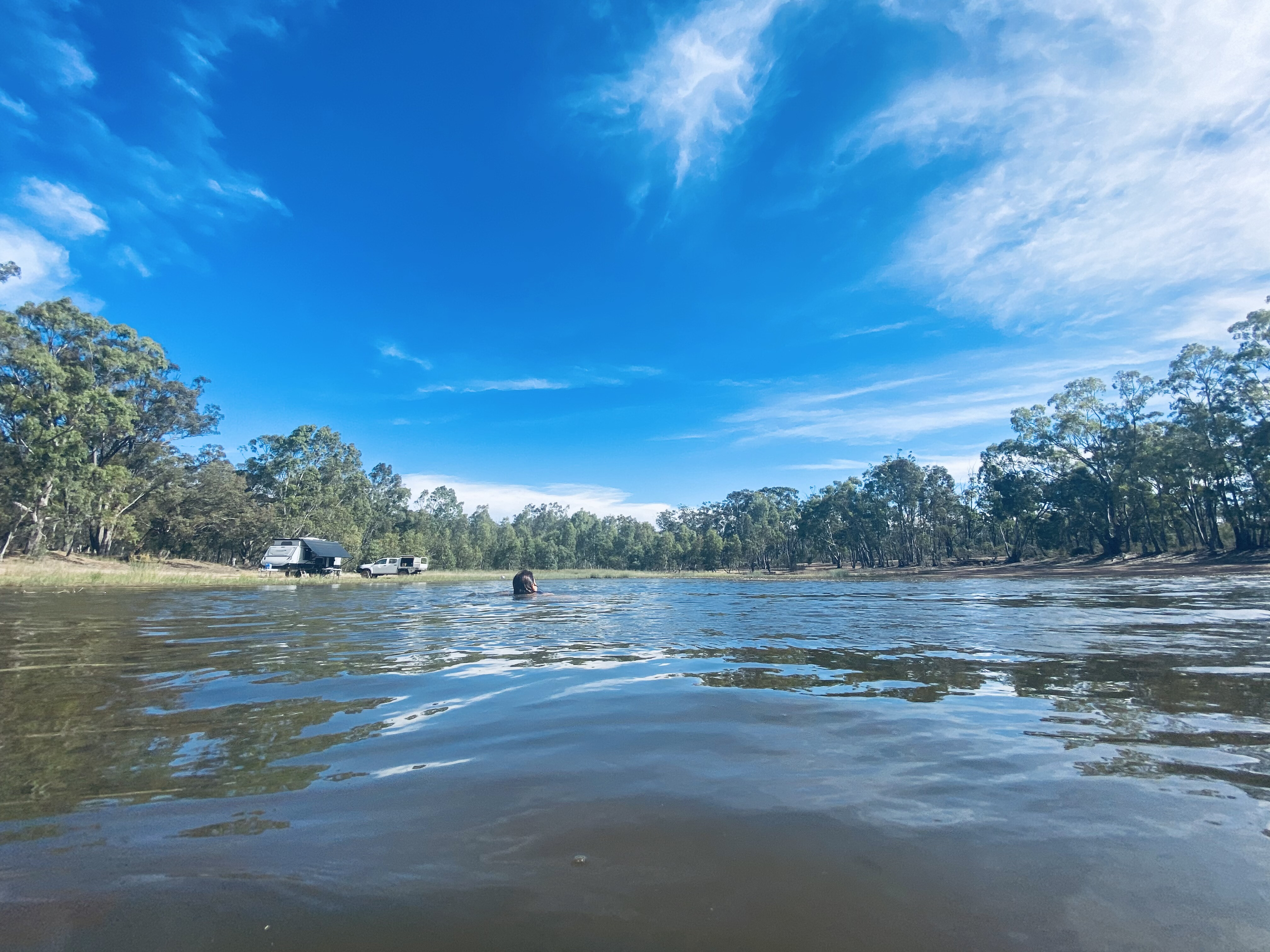
For us, having found our campsite on a previous trip, it was Bealiba for the weekend and from Melbourne, straight up the Calder Highway, it’s an easy drive of 2.5 hours. As we set up our camp with prime water views for the next two days, I can’t help but feel as though we’ve struck gold. It’s peaceful and except for another group a couple of hundred metres away, we have the place to ourselves.
Back in town, all is quiet. It’s New Year’s Day and not a soul was about. Still, despite the lack of activity there’s a certain charm about the place. We pass curious street signs touting ‘Best Awarded Street of 2018 …’ and I smile as there are not many streets in town. There’s a street lined with churches, a well-kept playground for kids and historical facades of buildings such as the town hall and post office.
The small railway station, which opened in 1878 as part of the Mildura line, is surrounded by immaculately kept gardens and would have to be one of the most picturesque stations I’ve seen. Though the station closed in 1981, it’s been beautifully preserved and is worth going inside to read about the history of the area.
Back in 1856 the population of Bealiba peaked at 18,000 and the town was booming. It had three pubs, a school, a post office, a petty session’s court and three quartz-crushing mills. When the gold ran out, the farming began.
Today the Evans Hotel, once the hub of the town, stands lonely in the main street. It was sold in 2016 and hasn’t seen the light of a beer since, much to the locals dismay. We spoke to a couple of them outside the post office, the only thing open when we passed through, and it’s obvious that the sale and closure of the pub four years ago left a gaping hole in the heart of this tiny community.
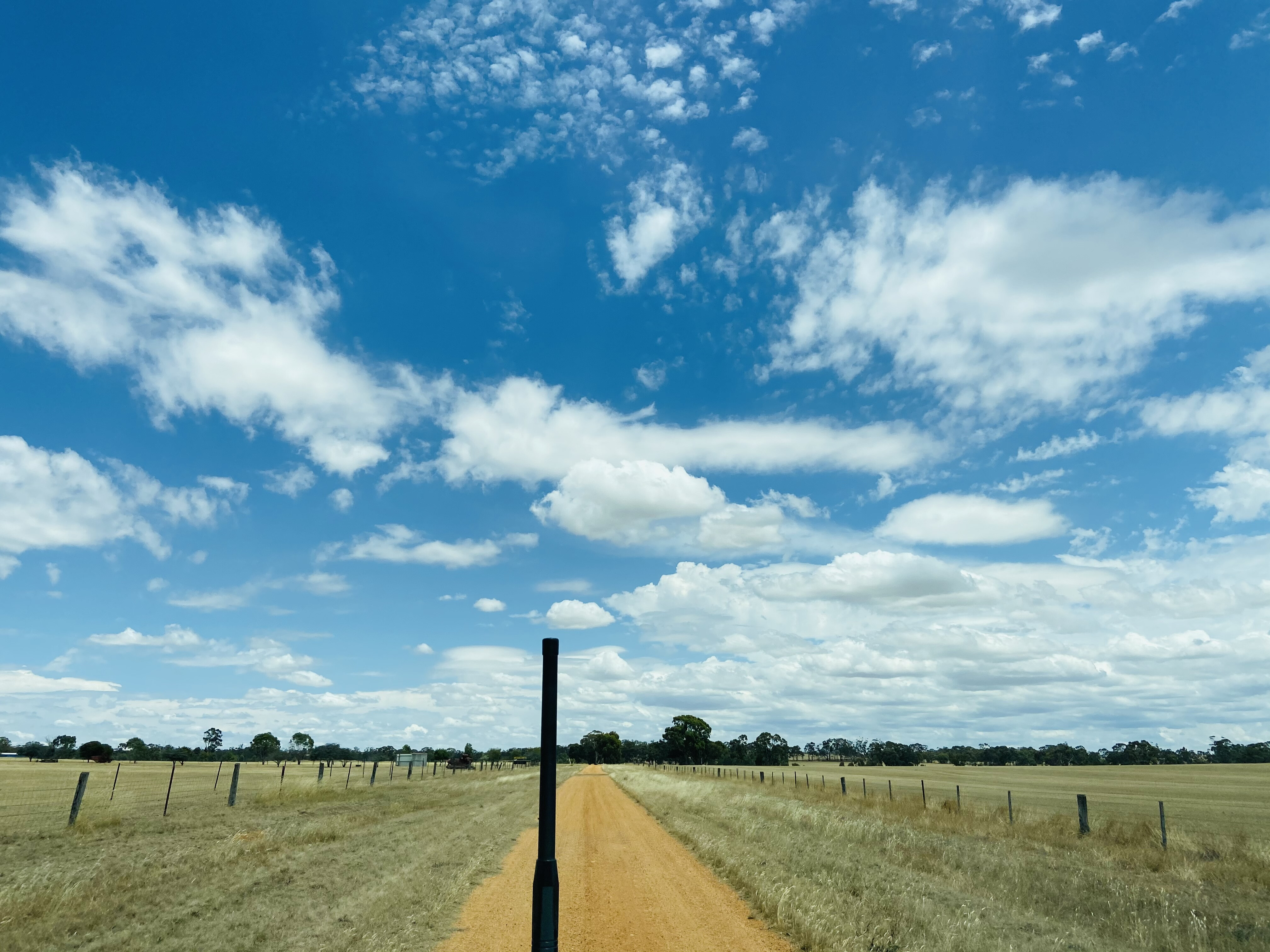
BUSH PUB IN THE SCRUB
THE closest pub is at Dunolly which also has a fantastic award-winning bakery. Only slightly farther away, along the Wimmera Highway is the Logan Pub, halfway between Wedderburn and St Arnaud. ‘The bush pub in the scrub’ as it’s affectionately known, is a small joint with a big heart and a heap of character.
It’s highly likely if you drop in for a drink, you’ll end up chatting to a local farmer or a beekeeper. Locals rarely drive by without dropping in for a coldie, so I’m told. If you want to stay longer, they can whip you up a steak or a chicken Parma for lunch and you can also stay the night or pitch a tent in the back paddock.
A great detour off the quiet Wimmera Highway is the track that leads to Mt Moliagul. Despite the dark and threatening clouds, we turn off and head for the top of the mount. The track to the summit is steep and although a 2WD vehicle will make it in clear conditions, the D-MAX did it effortlessly and proved an effective barrier to the many kamikaze kangaroos along the way.
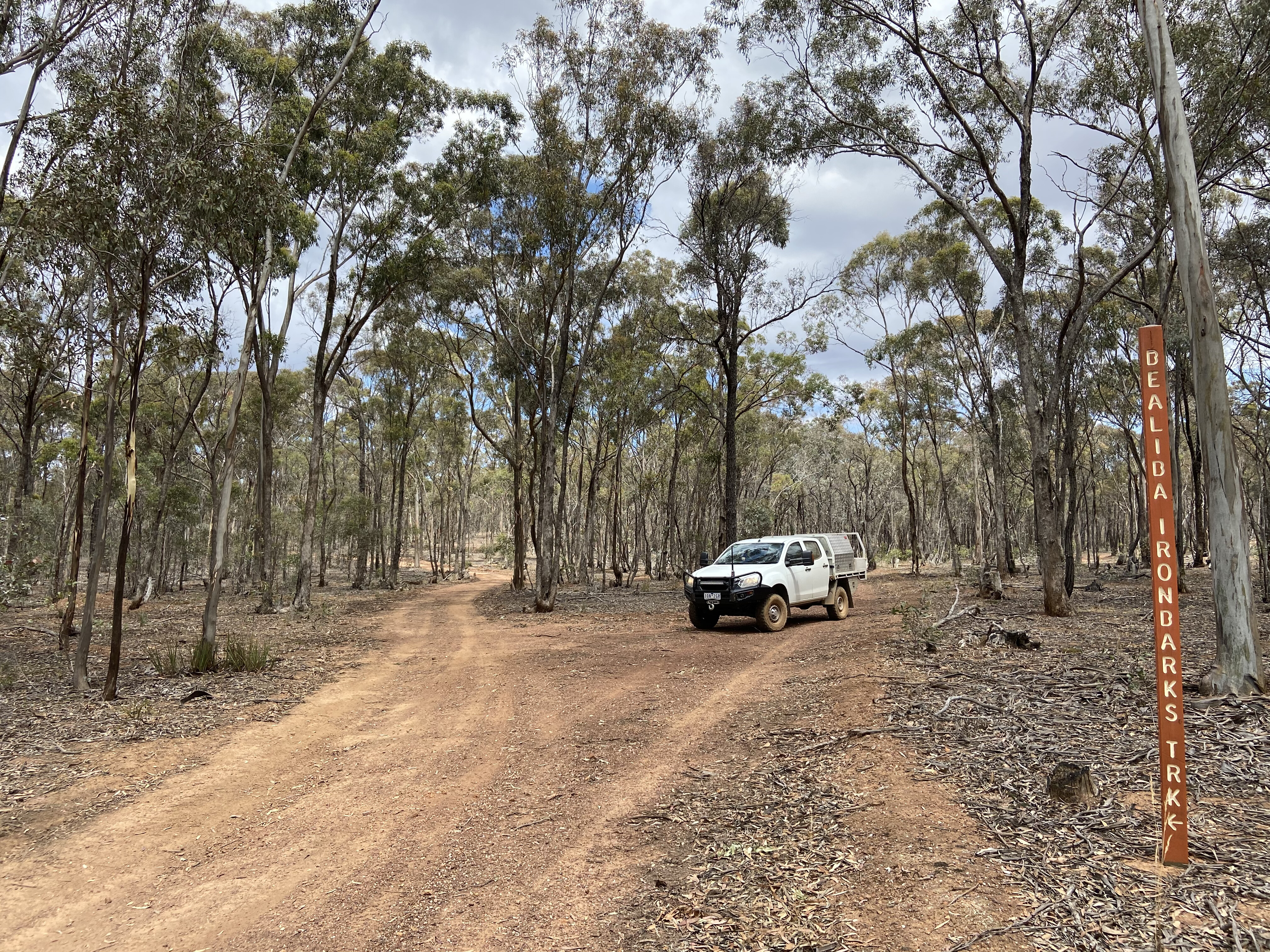
From the top are expansive views over the surrounding countryside and with an imminent storm approaching, the skies were dark and dramatic. Lightning strikes on the ridge and thunder reverberating in the distance provided an epic scene on top of the mountain.
It’s an awe-inspiring spectacle of Mother Nature’s fury coming our way, and on the way down we see even more wildlife. Back on terra firma Moliagul, itself once a thriving gold mining district, is today a ghost town.
Located within what’s known as the Golden Triangle, this area produced more gold nuggets than any other area in Australia. It was here, in this slice of the Australian bush, the largest gold nugget, the famous Welcome Stranger, was discovered in 1869.
TARNAGULLA
ONE of the other areas formed by this triangle is the beautifully preserved goldmining town of Tarnagulla. Though it’s not as well-known as Maldon and Clunes, scattered ruins, a pavilion and rotunda and grand old churches hint at a former glory. The streetscape is a wonderland of historic buildings such as the verandah-fronted shops, the Grand Theatre and the Victoria Hotel.
Take a photo in the Kangaroo Chair found within the manicured gardens and check out the interpretive boards with interesting tidbits on the area. The township is surrounded by mullock heaps where miners once furiously dug into the earth to try and find their fortune.
We check out the Tarnagulla Historic Reserve nearby and the camping reserve where campers are setup over the holiday weekend. It looks to be a popular spot in a bushy oval setting, with shower and toilet facilities and within walking distance to the main street. At $5 a night, it’s a good option for families.
For us it’s onwards, as we enjoy the quiet backroads of this region before stopping in for lunch at Wedderburn. There’s plenty to explore around here with native bushlands, ironbark forests and historic precincts such as the Old Eucalyptus Still, the Wedderburn Gold Battery and the Lonely Grave. Lunch was enjoyed at Skinners Flat Reservoir, nine kilometres north of the town.
Skinners Flat reservoir is found in the Wychitella State Forest and is a great spot for some quiet camping with loads of secluded spots scattered around the water’s edge. Like Bealiba it offers bush walks, swimming and yabbying, and a chance to explore some local 4WD tracks and camp with hardly anyone else around.
MT BEALIBA
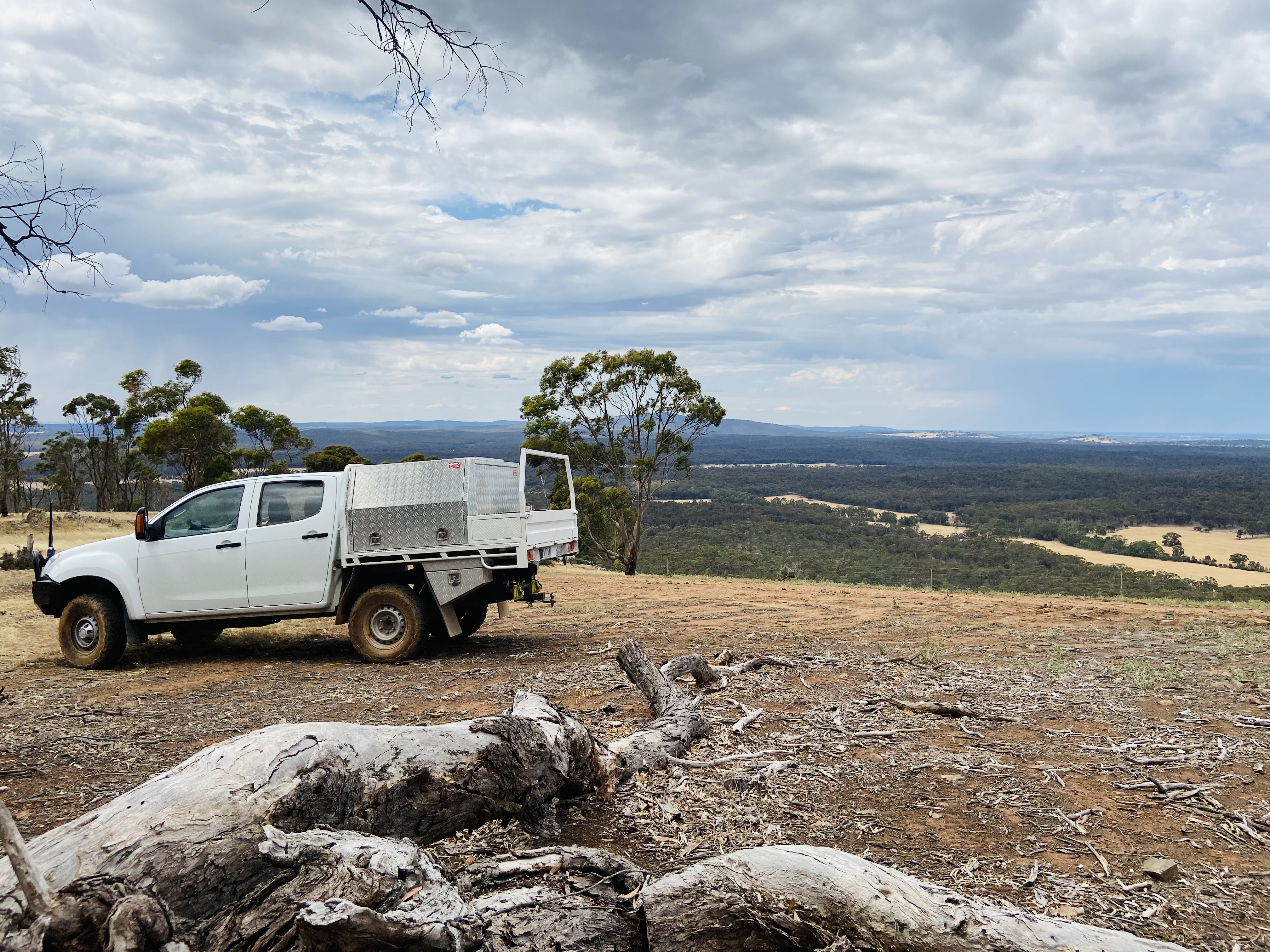
BACK at Bealiba with the temperature warming up, we enjoy a swim in the warm waters of the reservoir. The water is deep enough for a kayak as well. The next day, feeling up for a bit of adventure we take the track to Mt Bealiba, the small mountain that can be seen behind our campground.
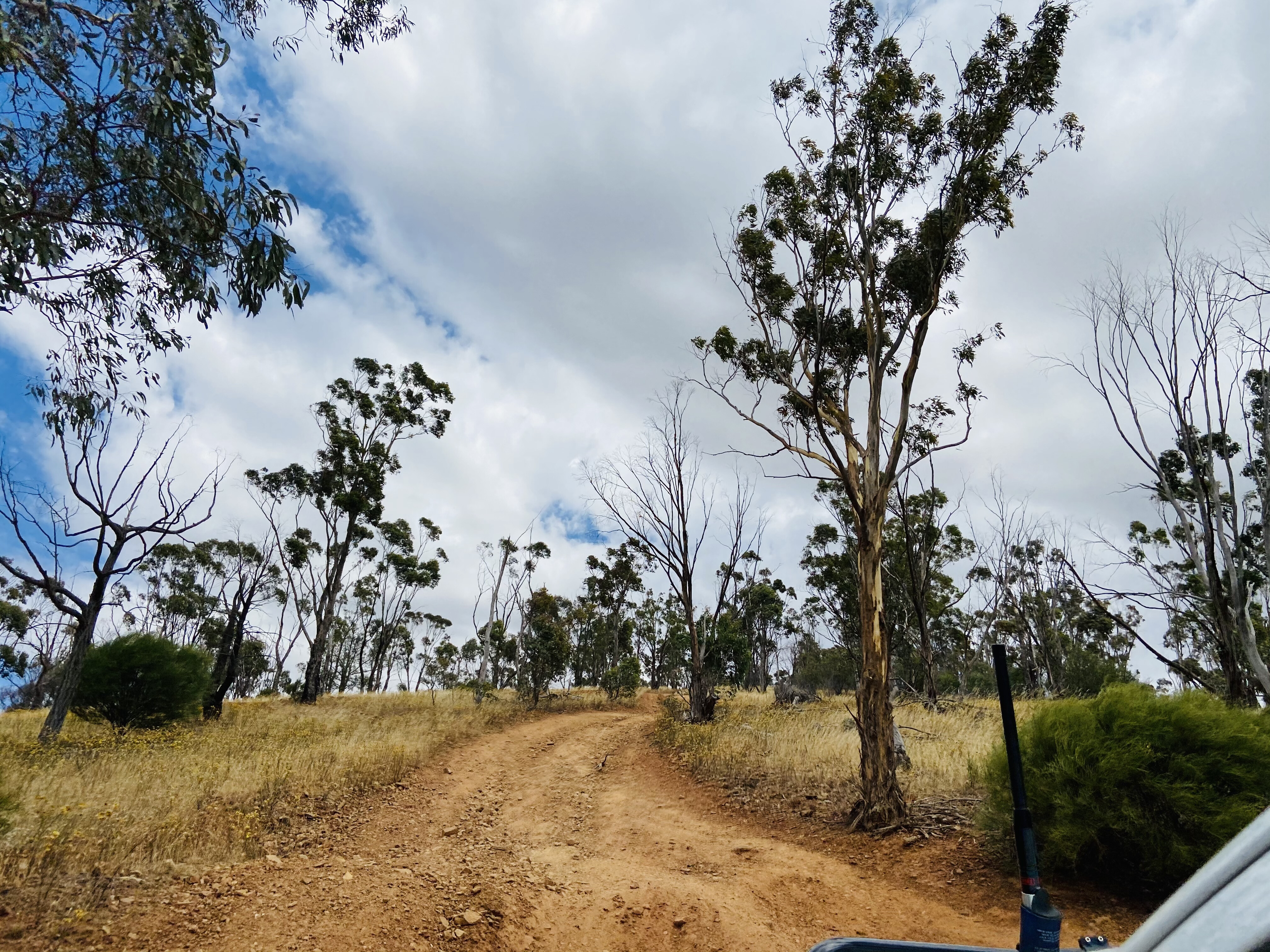
It’s a great drive through the Bealiba ironbark forest, a stark and impressive looking landscape, before reaching our turnoff. There are two distinct types of ironbark in this area; one has blueish leaves and the other greenish leaves. Before long however, ironbark leaves are the last thing on our mind.
Mt Bealiba is steep. It’s not a particularly long climb but the four-wheel drive track is rocky and fit for a billy goat. If it were wet, the track would prove very hairy and challenging. As it was such a sheer climb, we needed a couple of attempts.
On the first attempt, not having enough momentum, the car spun on the shaly rock and on the second attempt using more right foot the D-MAX clawed its way to the top. At 479 metres above sea level, it provides a spectacular view of the surrounding forest and farmland.
There are so many gems in this area to explore and discover. Head to Kooyoora State Park and get lost amongst the Melville Caves in bushranger country. Hire a metal detector at Maryborough and try your luck at finding the precious stuff. You can also pick up maps and get lots of valuable information. Follow the signs linking the Fossickers Drive and weave in and out of goldfields countryside.
Or you could do as we did and simply kick back and savour those big skies and amazing reflections over the water back at camp. Bealiba might not have a pub anymore, but I feel as though we struck gold with this off the beaten track campsite.
Welcome to the most important test we will conduct all year. In 2020 these five models, the Ford Ranger, Isuzu D-Max, Mitsubishi Triton, Nissan Navara and Toyota HiLux, accounted for 13 per cent of the overall new car market.
And that’s just the 4×4 versions. Add the less popular 4×2 variants and they account for 15.8 per cent of the market; this means one-in-six new cars sold in Australia is one of these five models. Like I said, important stuff.
As such, we want to get it right, so we’ve put each through the wringer, testing straight-line performance, load-carrying and towing capability, on- and off-road dynamics, infotainment, and comfort and convenience, all at the ex-GM Lang Lang proving ground, a venue purpose-built to torture-test vehicles.
Judges and writing team: Scott Newman, Byron Mathioudakis, Louis Cordony, Evan Spence, Tom Fraser
Photography: Ellen Dewar, Alastair Brook, Cristian Brunelli
VIDEO: Tune in on Thursday and Friday for our off-roading and comprehensive wrap-up videos.
Catch the full series here
- Premium utes: Ranger vs D-Max vs Triton vs Navara vs HiLux
- Budget utes: GWM Ute Cannon-L vs Ssangyong Musso XLV Ultimate
- Off-roading: Ranger vs D-Max vs Triton vs Navara vs HiLux vs Musso vs Ute Cannon-L vs Ranger Raptor vs Gladiator Rubicon
THE CONTENDERS
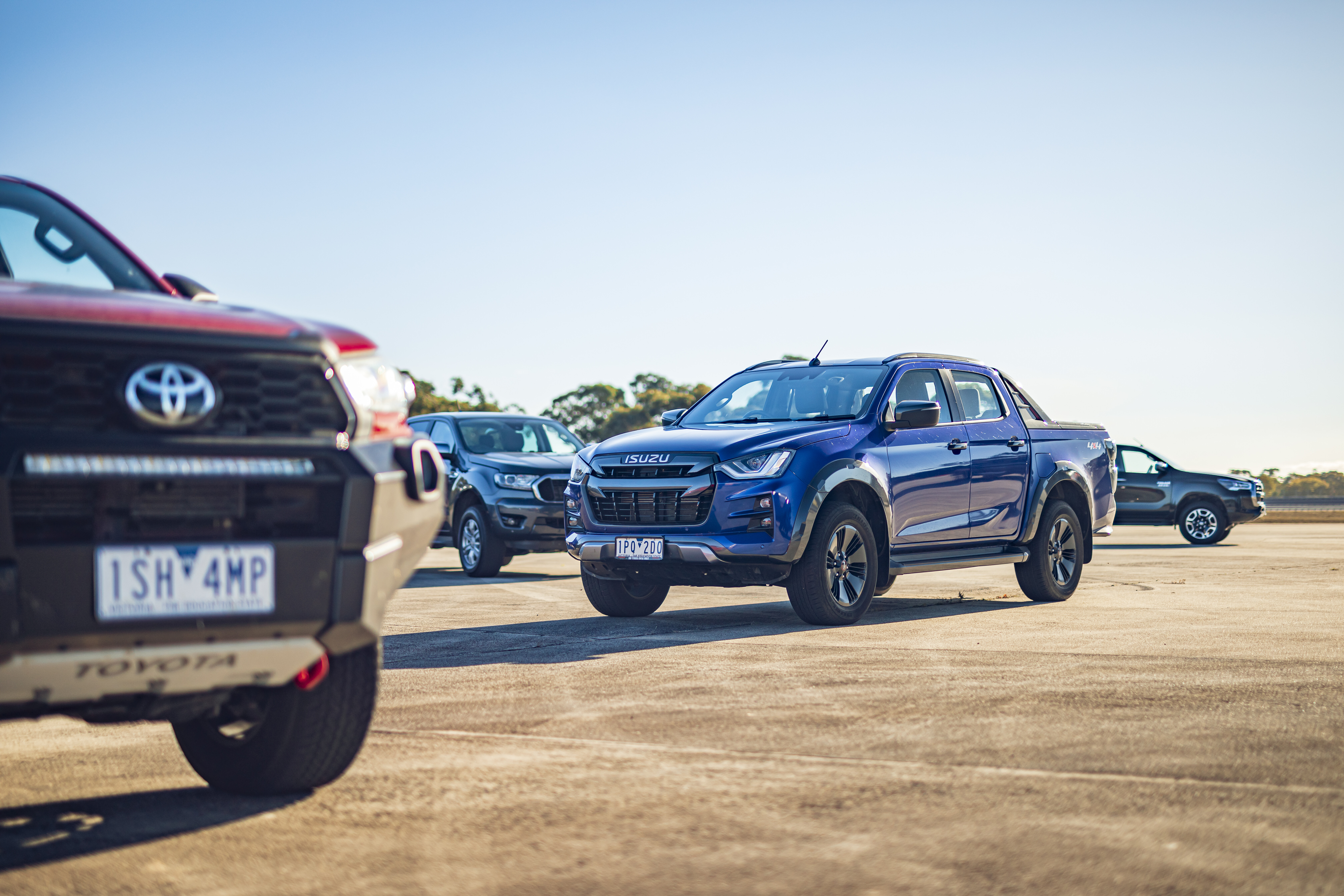
We’ve arranged our quintet as closely as possible – within the realms of manufacturer press fleet availability – so in alphabetical order we’ll start with the Ford Ranger XLT fitted with the optional 2.0-litre bi-turbo engine and 10-speed automatic.
While its regular RRP is $60,940, at the time of writing the current offer is a tempting $58,990 drive-away. This lines it up very nicely with our next contender, the Isuzu D-Max X-Terrain, which is currently on offer for $59,990 drive-away, a handy saving over its regular $62,900 RRP.
The Mitsubishi Triton GLS significantly undercuts both at a very sharp $48,290 drive-away. We requested a range-topping GSR for price parity but it was sadly unavailable, although the GLS is still very representative of the Triton offering.
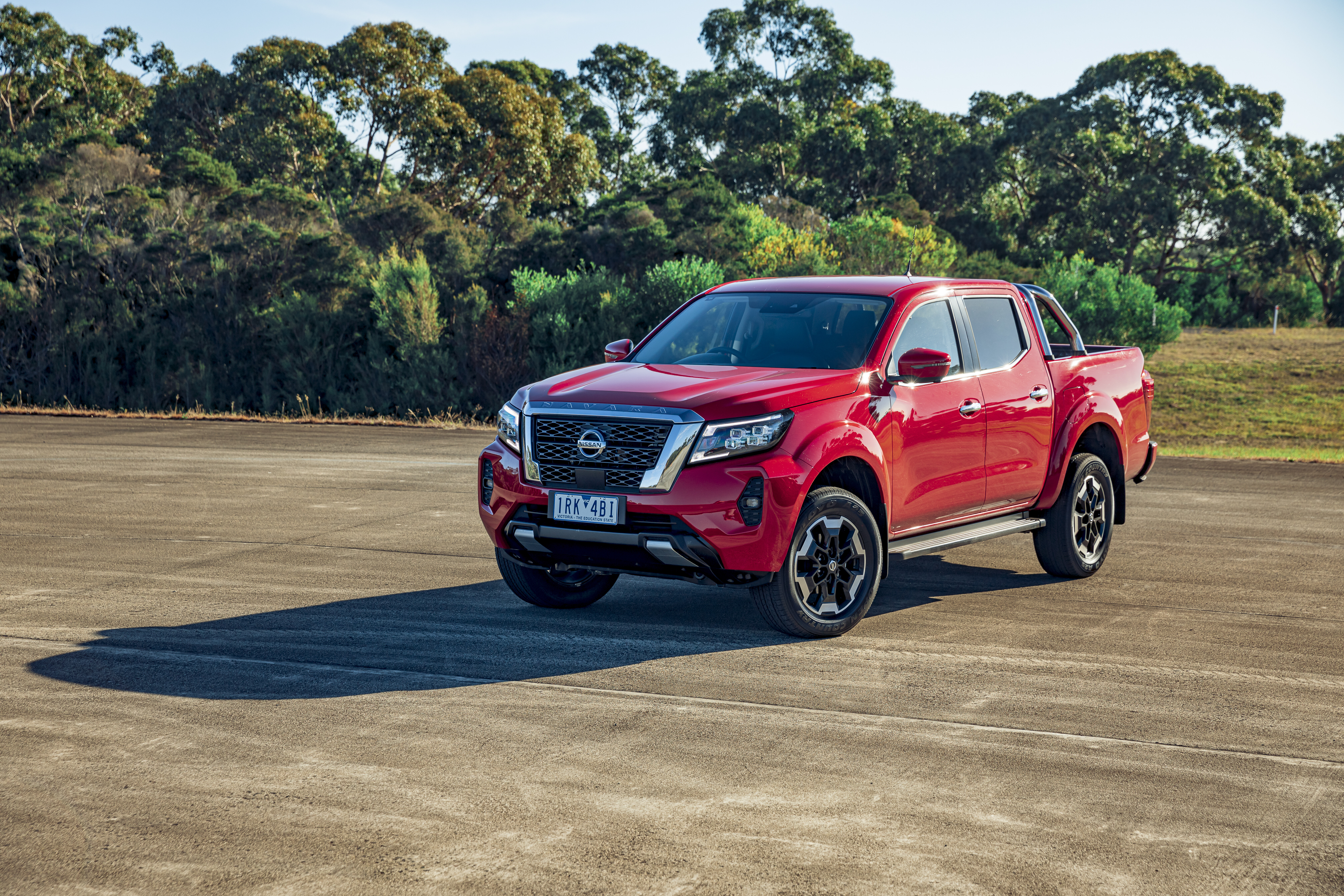
Our newest contender is the freshly facelifted Navara, here in $58,270 (RRP) ST-X guise.
Last but not least is the Toyota HiLux SR5, our most expensive entrant at $59,920 (RRP), though that figure is lifted by a further $3804.50 for the optional steel tray for a total of $63,724.50.
All vehicles are fitted with automatic transmissions.
So, the question is: if you have around $60,000 to spend on a dual-cab ute – and the sales figures suggest plenty of Australians do – which one should you buy?
In 2020, these five models accounted for 13 per cent of the overall new car market.
PERFORMANCE, TOWING & BRAKING
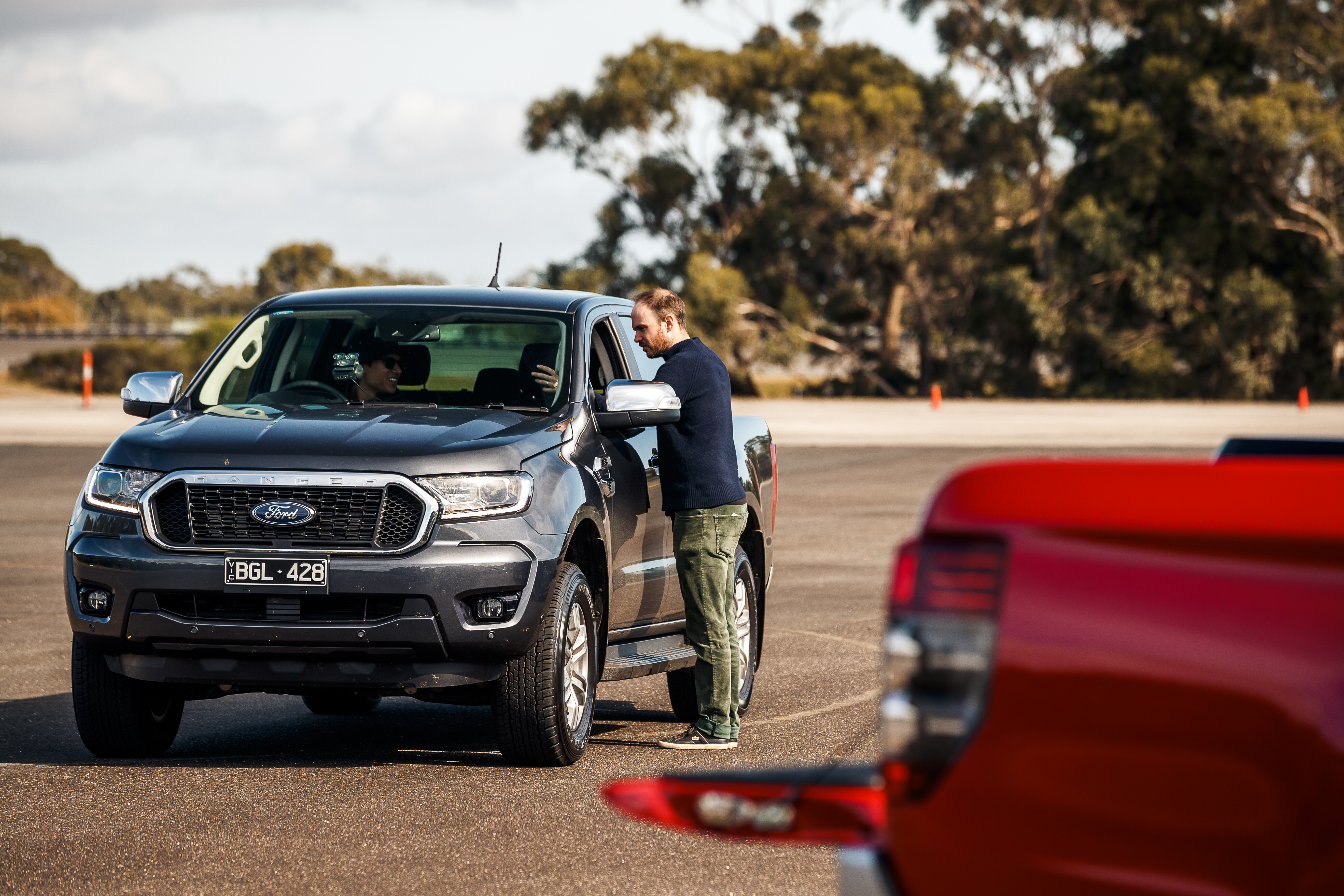
If straight-line performance is important to you there is really only one option. The Ford Ranger XLT is definitely the sprinting star of our assembled group, taking just 8.93sec to hit 100km/h and 5.0sec to shoot from 60-100km/h.
Its engine may offer just two litres but a pair of turbos help produce a healthy 157kW and 500Nm. It makes a reasonably sporty noise as far as diesels go and there’s an impressive spread of torque, but the star of the show has to be the 10-speed automatic, which always keeps the engine on song.
The figures prove the efficacy of this approach and the transmission, in general, does a good job of figuring out which of its myriad ratios it wants at any given moment.
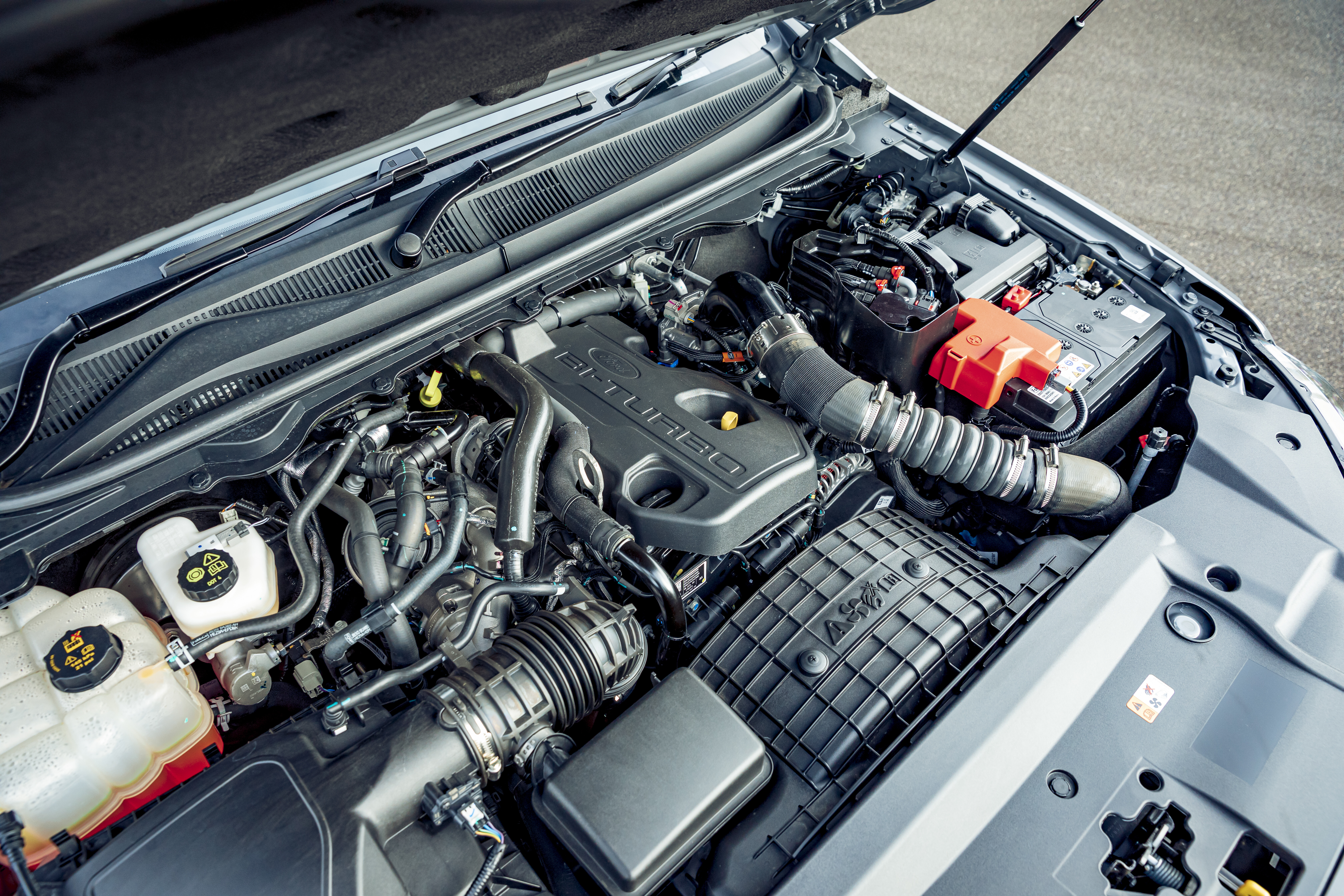
Sadly, the Ranger blots its copybook with sub-standard braking. It wears similar all-terrain tyres to its rivals – in this case Dunlop Grandtreks – but takes more than 42 metres to come to a stop from 100km/h.
That figure blows out to almost 64m on a wet surface (averaged over three runs to account for any surface variation), a poor performance that prevents the Ranger XLT from being the clear performance leader.
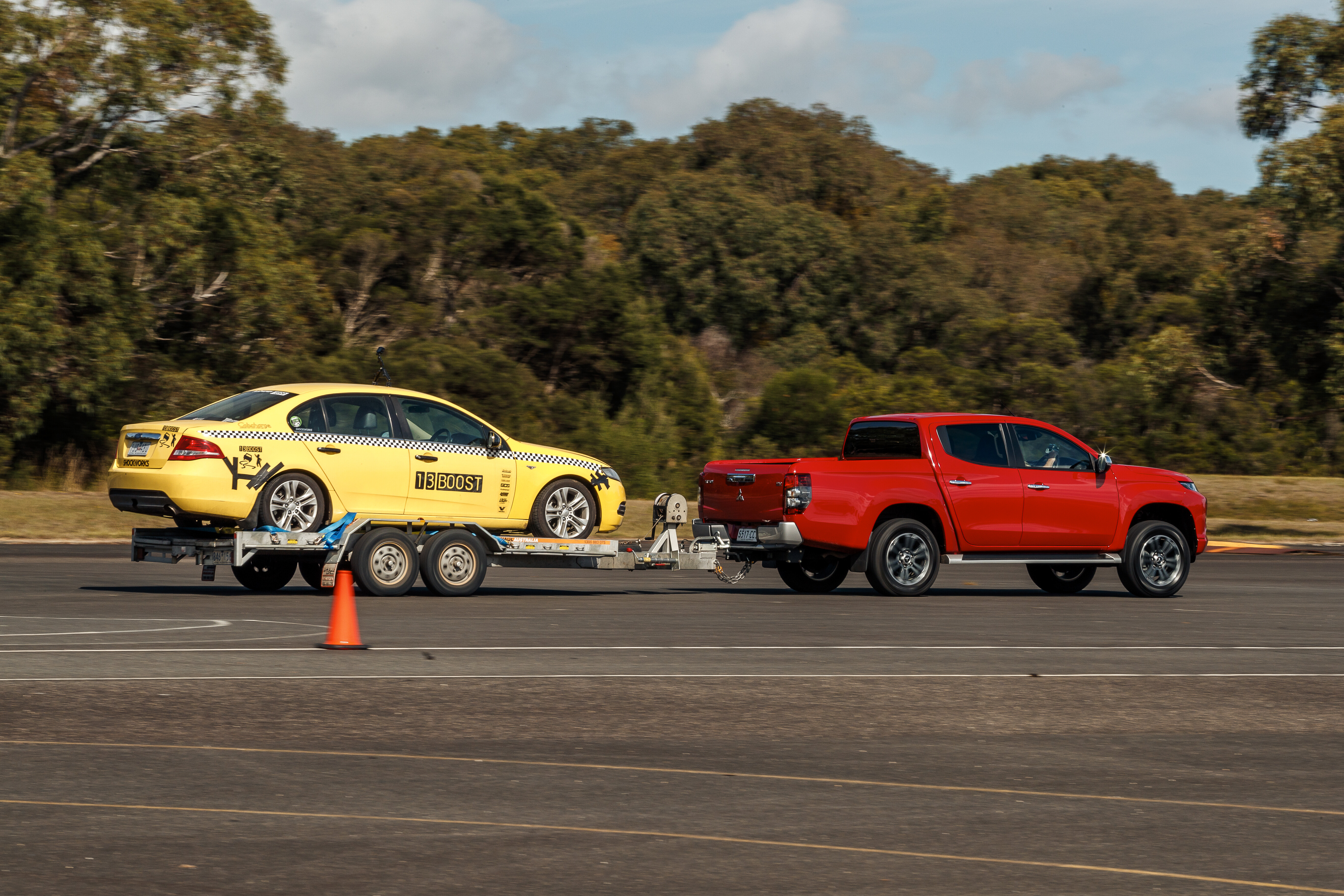
Nevertheless, its grunt pays dividends when hauling a load, taking 3.6sec to accelerate from 20-60km/h with a 500kg pallet aboard and 6.0sec when towing Street Machine’s Turbo Taxi Falcon, both figures easily the class of the field.
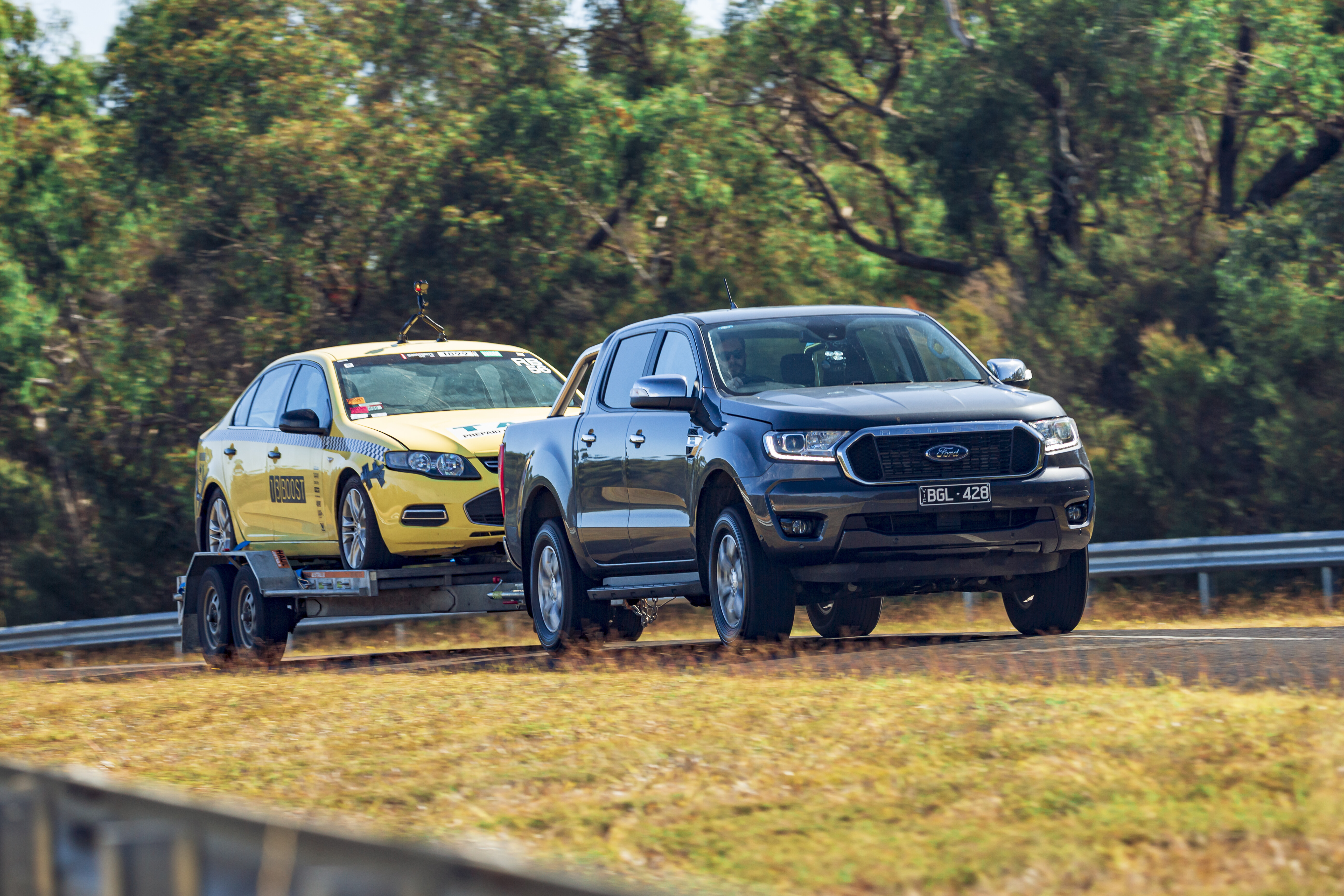
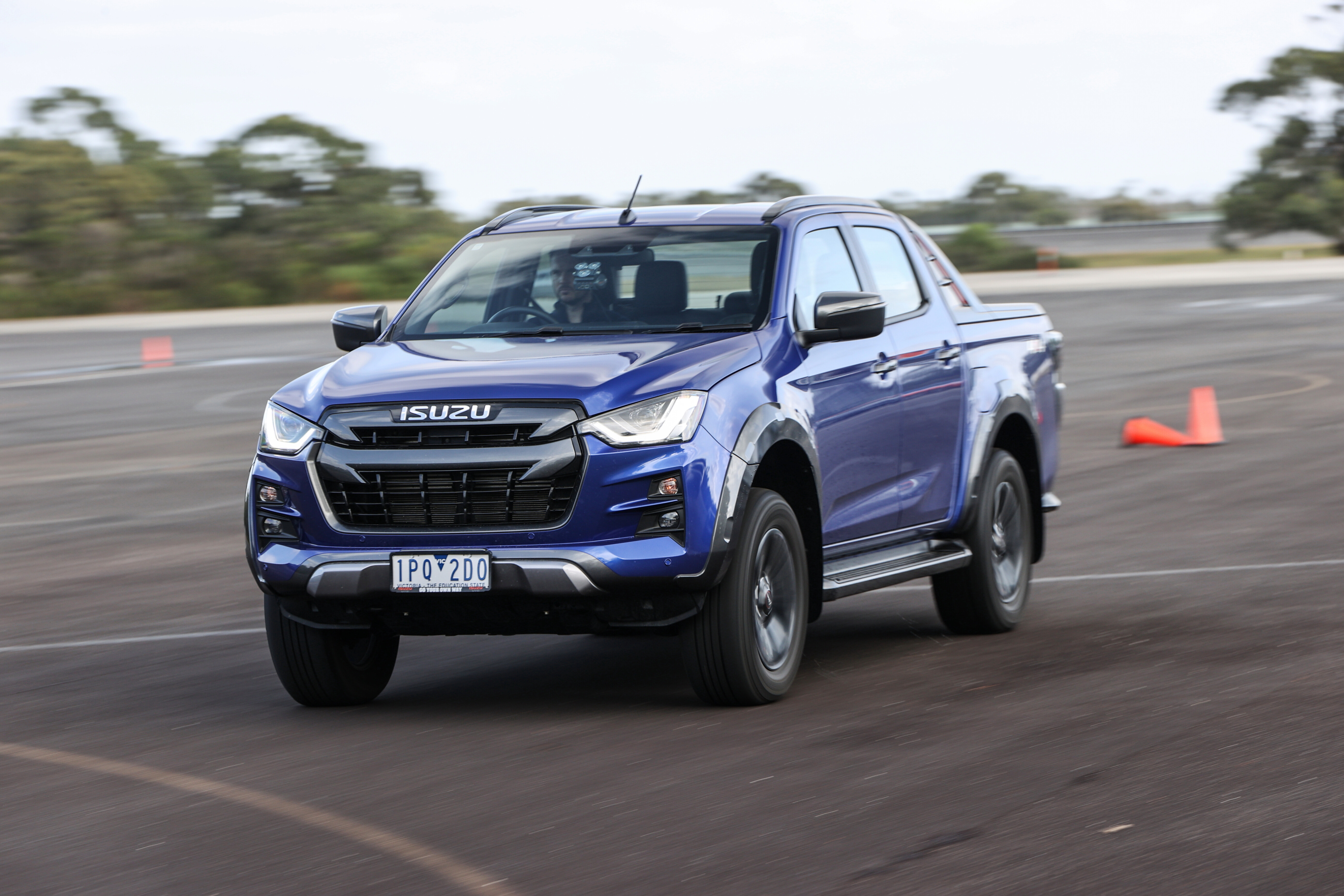
The D-Max shoots off the line eagerly, even chirping its tyres. This enthusiasm doesn’t last, with acceleration tailing off as speeds increase, but the 3.0-litre four-cylinder turbo-diesel offers respectable mid-range muscle, taking 10.1sec from 0-100km/h and 6.0sec from 60-100km/h for second place.
It would benefit from more gears than its current six to exploit the engine’s relatively narrow power band.
The noise is also a definite reminder of the Isuzu’s workhorse roots, with plenty of diesel clatter at all revs. The impressive grunt helps it with a load aboard, though. Laden acceleration is a respectable 4.0sec from 20-60km/h and 6.9sec when towing.
Dry braking performance is impressive for a vehicle like this, with a consistent and confidence-inspiring sub-40m stop.
Wet braking is quite poor at more than 57m and on the final stop, some steering correction was required to keep the D-Max straight despite all electronic stability programs being activated.
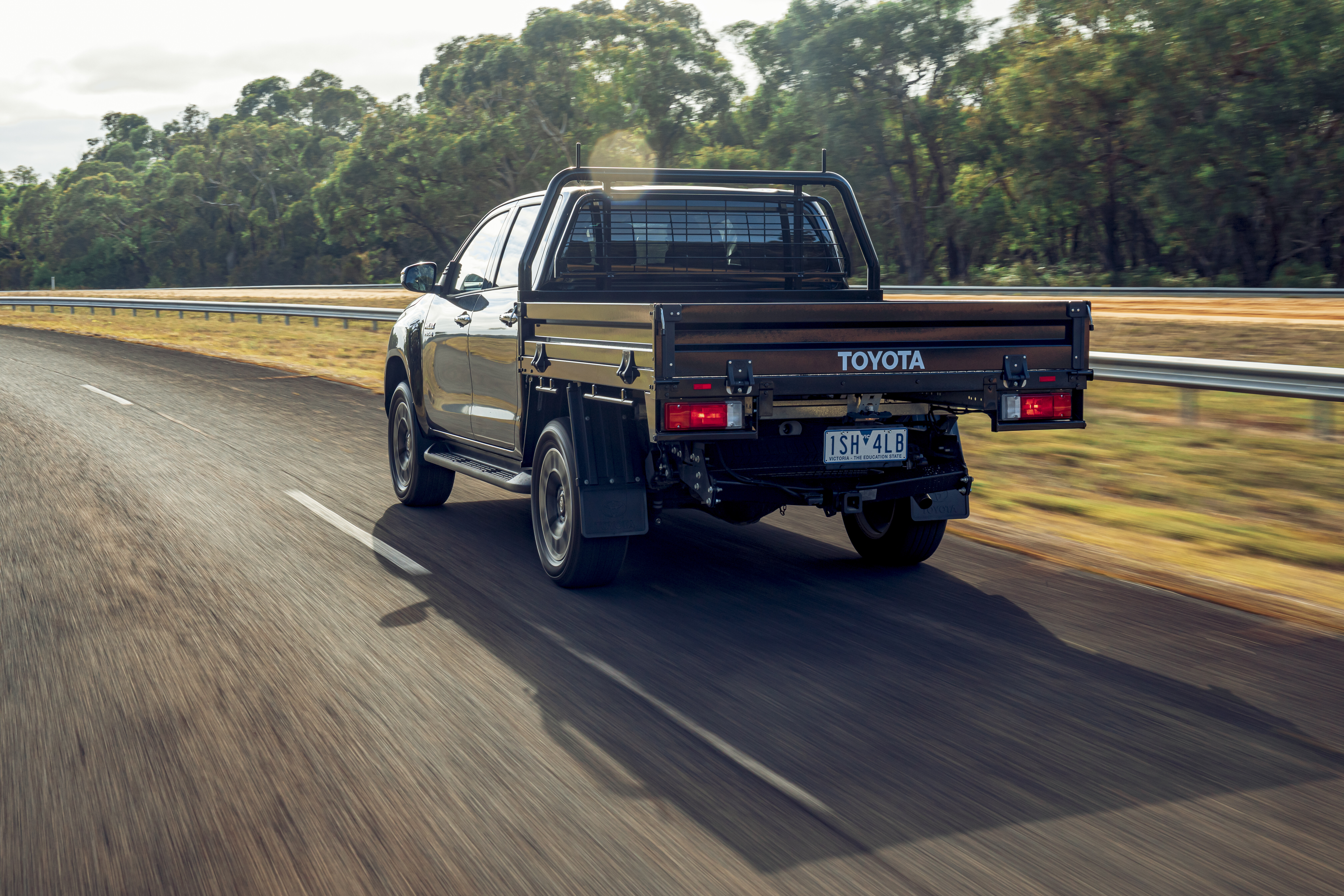
The Toyota HiLux’s upgraded engine serves it well. The 2.8-litre four-cylinder diesel now produces 150kW/500Nm (as an automatic; the manual is limited to 420Nm) and it feels every bit of it, pulling strongly through the rev range accompanied by an intense growl.
Not that this seat-of-the-pants sensation is backed up by the data, with a 0-100km/h time of 11.1sec and a 60-100km/h effort of 6.0sec. This particular SR5’s accelerative efforts are hampered somewhat by the weight of the steel tray, which adds a whopping 290kg.
Braking is an SR5 strong suit, with a sub-40m dry stop backed up by an impressive wet performance of just over 50m – the class of the field.
It’s unfazed by heavy loads, too; its 20-60km/h times of 4.5sec and 7.2sec might not be too impressive but at no point does it feel strained.
Nissan’s Navara feels better than the numbers suggest, which is a kind way of saying it’s very slow. Certainly, 0-100km/h in 11.32sec and 6.4sec from 60-100km/h are nothing to crow about.
The 2.3-litre twin-turbo four-cylinder diesel isn’t overly powerful at 140kW/450Nm but the seven-speed automatic does make the most of it.
The engine revs keenly to almost 4500rpm, making the Navara feel really quite sprightly and its lacklustre figures all the more surprising. Still, it’s quite a pleasant experience, but is that preferable to a more rugged engine that’s more powerful?
Probably not if you’re lugging heavy stuff about, though the Navara shaved a tenth from the HiLux’s 20-60km/h effort (4.4sec) with a 500kg pallet in the back but struggled when towing, taking 7.8sec to complete the same increment.
Braking is quite poor, taking well over 40m to stop in the dry, though its mid-50m effort in the wet is more competitive. An unusual case, the Navara: the data is quite damning but from behind the wheel it’s much more impressive.
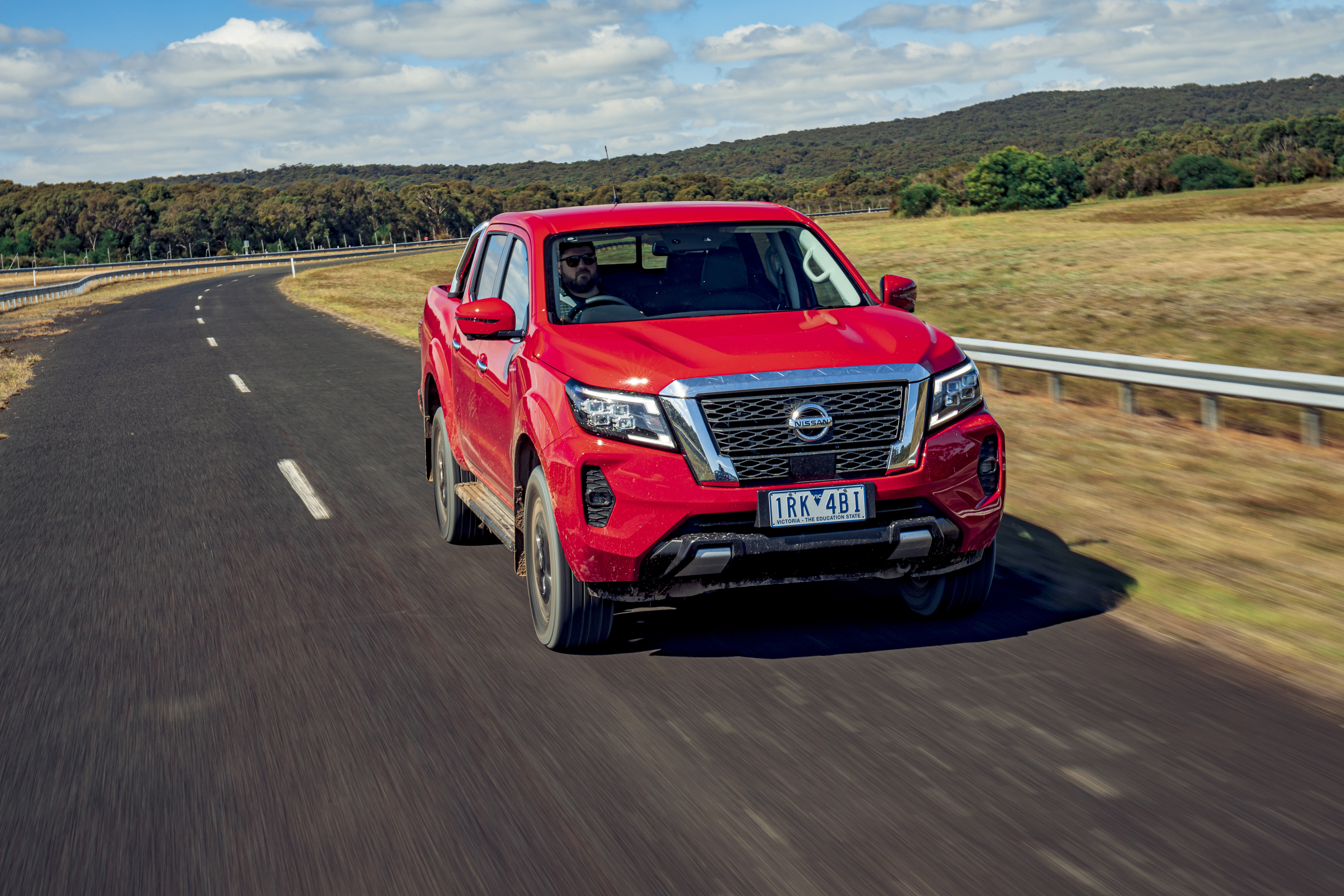
Last and also least is the Mitsubishi. The Triton also struggled massively during wet braking, its first stop taking more than 76m, which goes to show that in very poor conditions even our tested wet figures can extend considerably.
This run is an anomaly and ignored but the Triton’s fortunes don’t improve much, taking an average of almost 63m to stop in the wet; it wears the same Dunlop Grandtrek tyres as the Ranger – coincidence?
Its dry deceleration is much more respectable at less than 40m but acceleration isn’t a Triton strong suit, taking 11.36sec to reach 100km/h from rest and 6.0sec to accelerate from 60-100km/h.
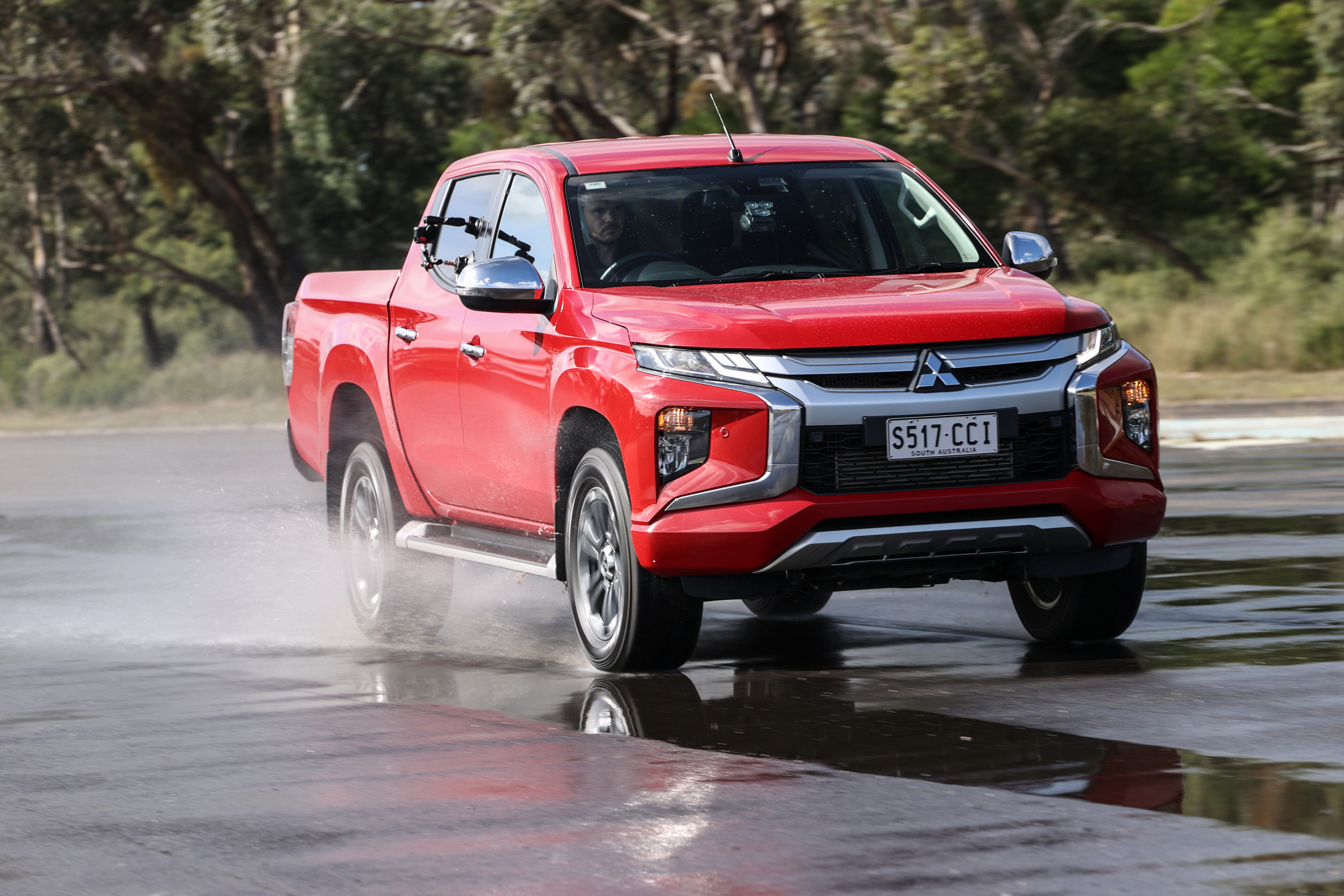
Outputs of 133kW/430Nm from its comparatively small 2.4-litre four-cylinder diesel result in leisurely straight-line performance. The engine doesn’t struggle to haul the Triton’s bulk but is happy to take its time doing so.
Its roll-on acceleration is more competitive but it makes plenty of noise in the process, especially higher in the rev range.
Laden acceleration is quite good at 4.2sec from 20-60km/h but attaching the Turbo Taxi exposes its lack of power again with an 8.2sec result. This is a substantial 2.2sec (or 36.7 per cent!) slower than the Ranger.
It’s not all sunshine and roses for the Ford, though. Its poor braking is alarming, taking a massive 11.02m longer to stop in the wet than the benchmark HiLux. To put it another way, at the point the HiLux stops the Ranger is still travelling at 41.6km/h!
That figure assumes constant deceleration so shouldn’t be taken as gospel, but even allowing for a significant margin of error it’s clear that the accident the Toyota avoids would be a fairly serious one in the Ford (and Mitsubishi).
It’s a shame, as the Ranger XLT is otherwise very impressive dynamically, clearly the most car-like of our assembled quintet. Like most trucks, the 2197kg XLT wears leaf springs rather than the coils of its Raptor big brother.
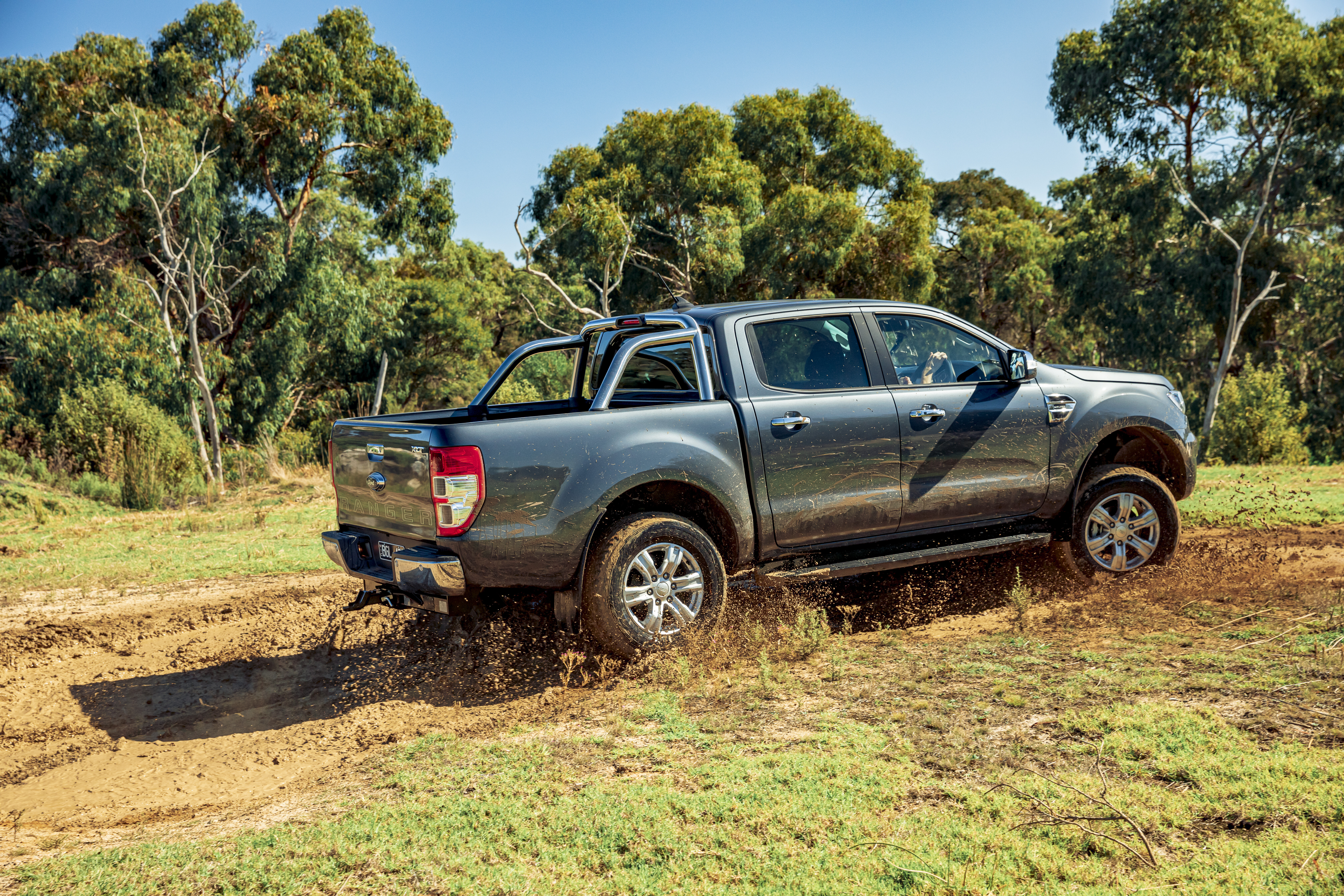
Yet even with a seemingly primitive rear-end spec, the former’s sophistication is palpable, providing beautifully fluent handling, outstanding body control and a downright sumptuous and isolated ride backed up by an outstandingly subtle yet effective ESC calibration at speed over gravel.
Light and easy to manoeuvre, the XLT remains the dual-cab pick-up high-water mark for driver enjoyment and passenger comfort alike. A decade on, the Ranger still shows them all how it’s done and even in its final year can hold its head up high.
The Ranger is also a stand-out for laden composure; its steering does lighten with 500kg in the tray but the chassis remains responsive in tight corners and sails over undulations with encouraging poise. It’s a similar story when towing, with the vehicle retaining its stability through corners and corrugations – you can tell the Ranger was tuned for Australian conditions.
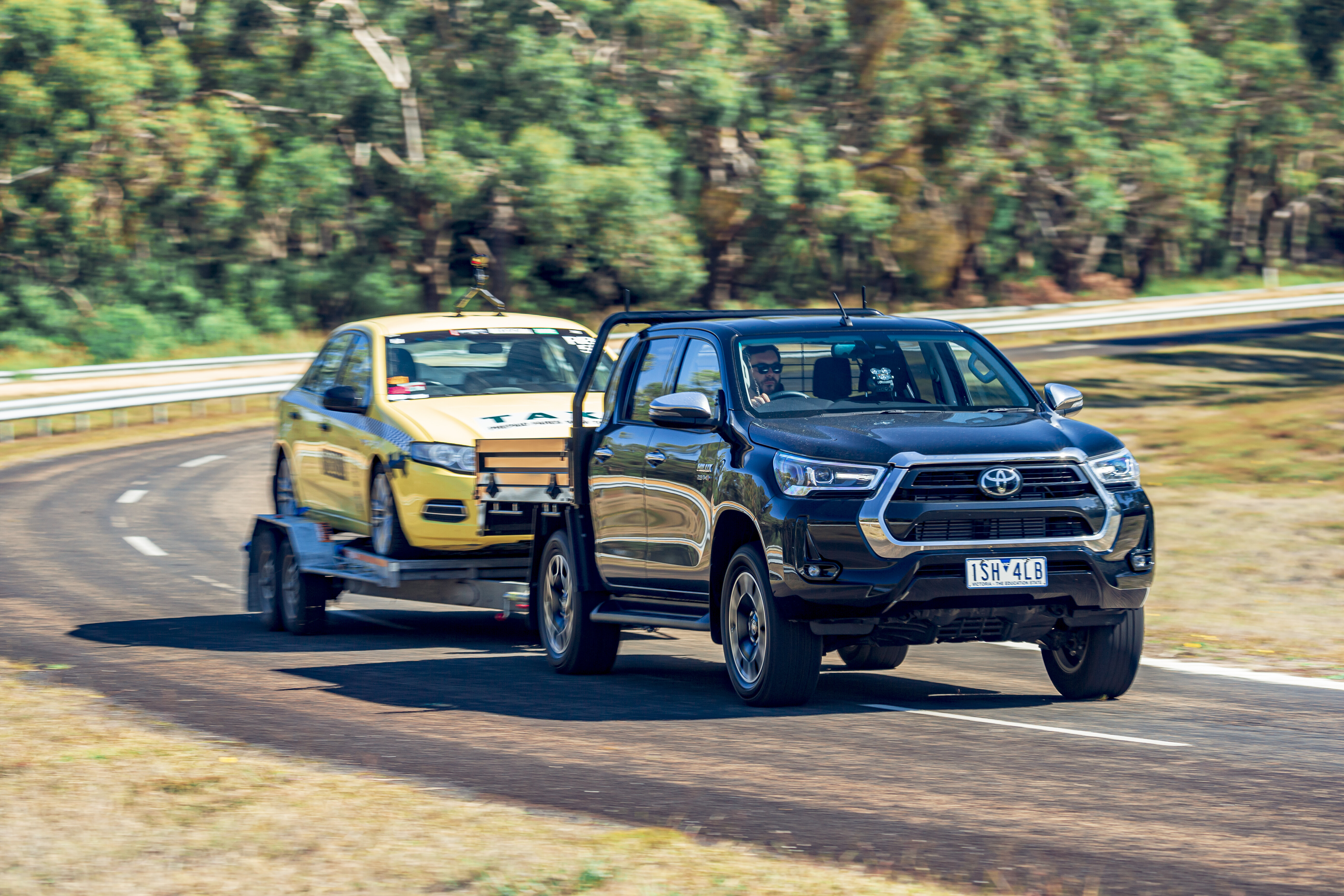
At the other end of the spectrum is the HiLux. It offers easy, eager and responsive steering and surprisingly sure-footed handling but a denture-rattling ride on roads that the others managed with measurably greater finesse.
It has much more mechanical and tyre-noise intrusion and the stability control remains on high alert on bitumen or gravel.
Happily, the situation doesn’t deteriorate when hauling, the HiLux offering stability and confidence-inspiring poise when towing or loaded.
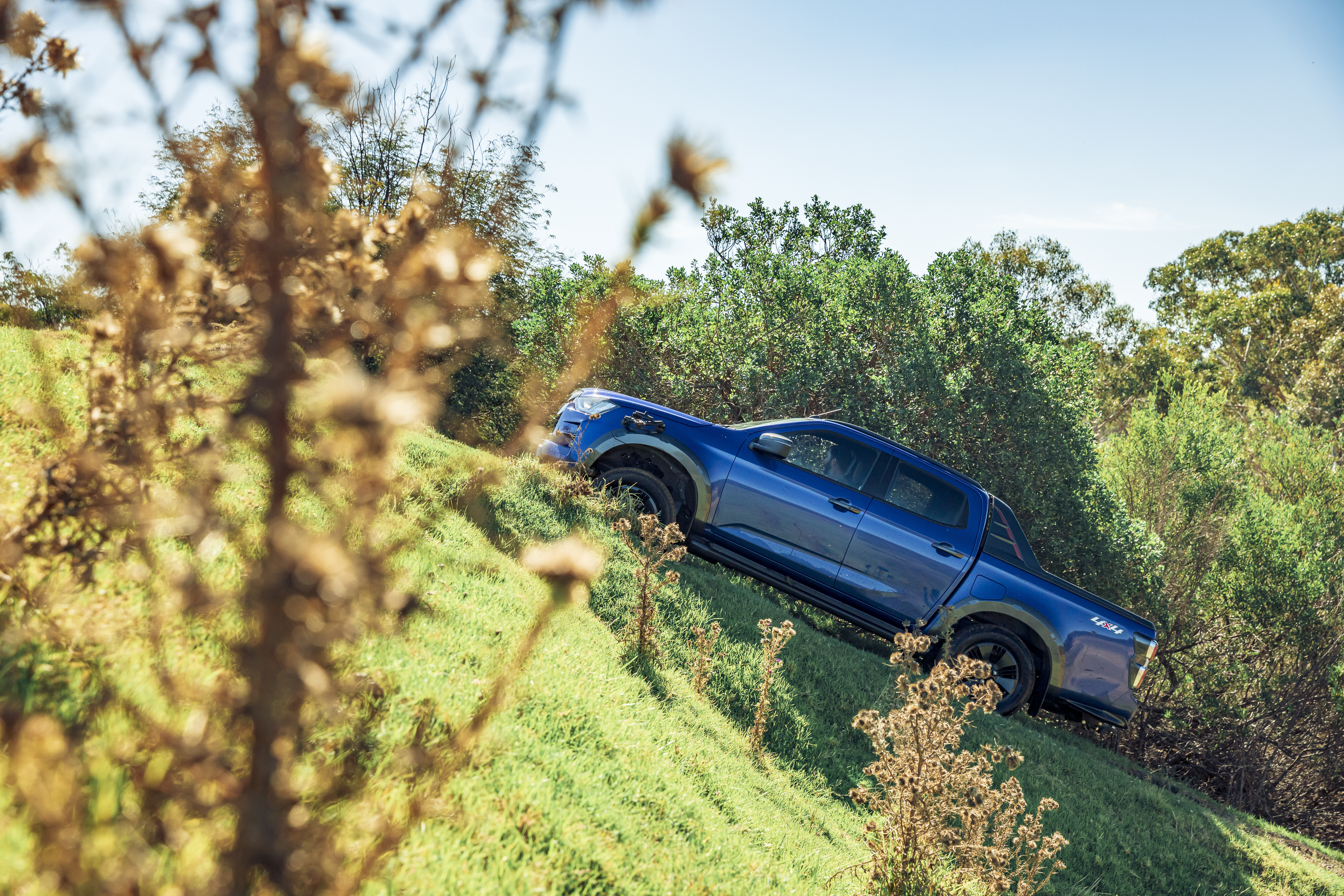
Our other three contestants lie somewhere in the middle. The third-gen D-Max is a huge step over its predecessor and few drivers will complain about the effortless steering that’s nicely weighted for around-town commuting and agile enough for tight-spot parking manoeuvres.
It can’t match the Ranger for bump absorption or isolation, but Isuzu’s engineers should be lauded for quelling road and tyre noise while offering a pleasingly soft ride on normal roads.
The steering lightens when loaded, though that’s partially a consequence of our 500kg pallet not fitting squarely in the tub thanks to the tonneau’s storage cartridge. With the Turbo Taxi attached, the ride improves and the steering feels well balanced.
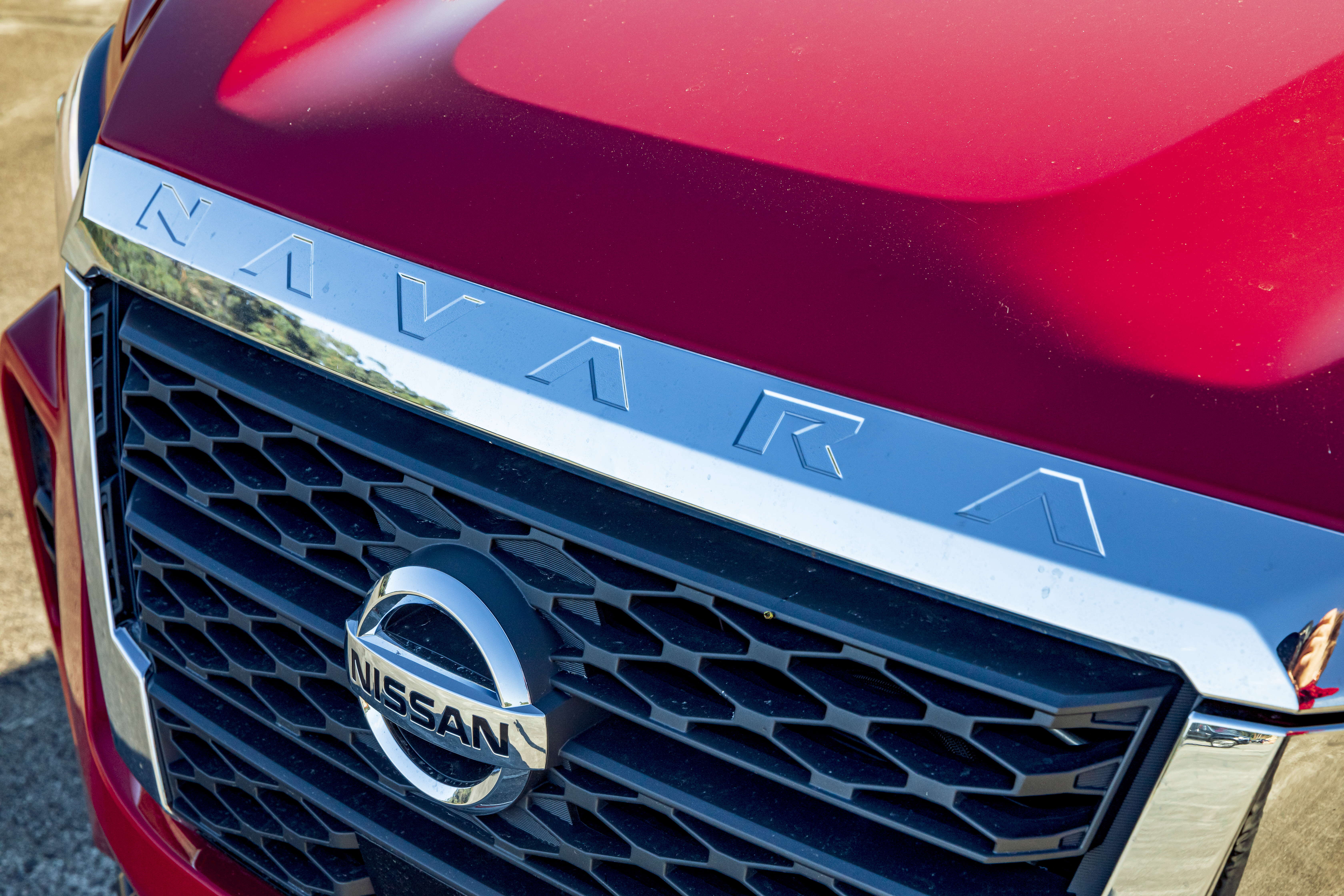
Ever since the D23-series Navara surfaced in 2014, it has struggled to fulfil the promise of its costly coil-sprung rear end, providing neither the expected agility nor comfort.
Happily, the MY21 facelift makes progress, with a wide and planted feel. It’s quite easy to park, too.
The steering remains numb but is well-weighted for more positive handling and roadholding, and there’s a newfound plushness to the suspension rather than the lumpy, thumpy ride of old. It doesn’t bother the Ranger, but the Navara is at last sorted.
This softness counts against it when towing, though, with doughy steering feel, jelly-like suspension and significant sag when loaded. Aftermarket suspension upgrades would be well worth considering if you’re using your Navara for heavy-duty work.
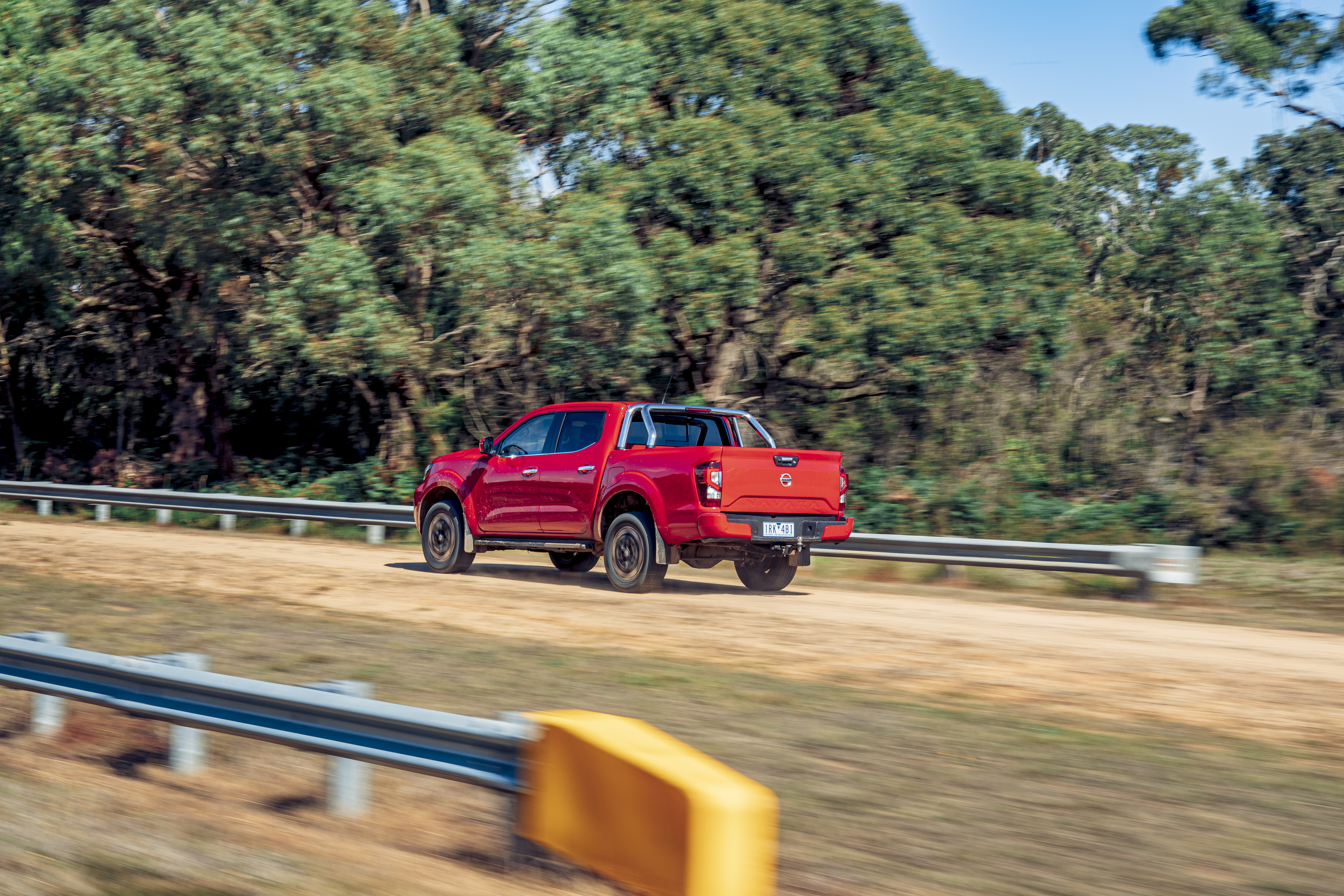
Mitsubishi’s Triton is getting on in years compared to the latest metal but the basic recipe still works ok: consistent competence with just enough engineering nous to keep from falling too far behind.
A tight turning circle and light controls make it relatively agile at slow speeds and it almost seems to shrink around the driver at speed with confident steering and ample grip, though there is a fair bit of noise.
The suspension is proficient enough at dealing with rougher roads and the ESC intervenes gently when required, but the ride can be quite bouncy.
When loaded, the Triton performs well and absorbs most bumps but the short wheelbase hampers it when towing, pitching into a see-saw motion that’s slightly off-putting.
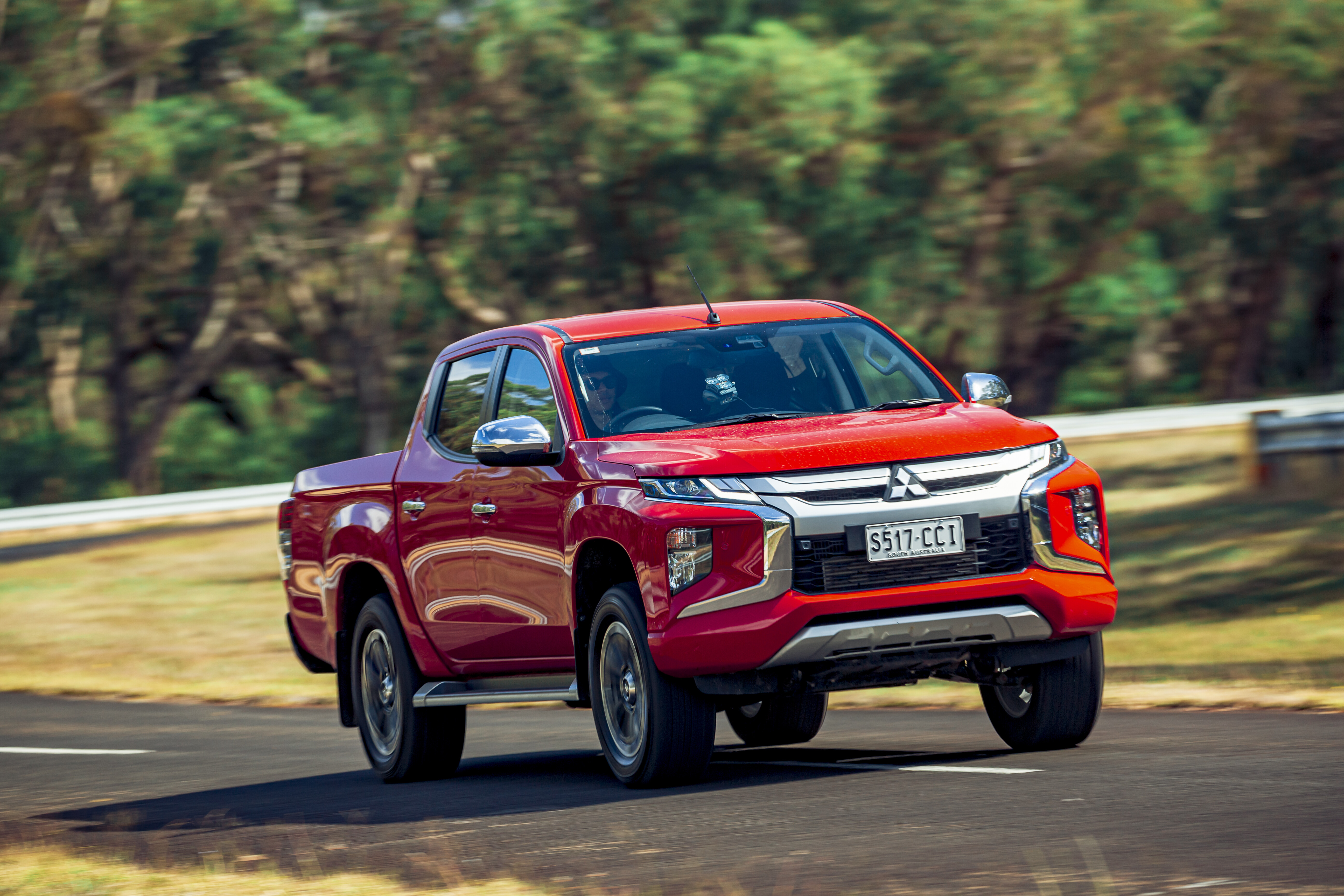
This shorter wheelbase is of benefit off-road, making the Triton feel very nimble. It’s also packed with clever features, such as Super Select, which allows you to run in high-range 4×4 on bitumen with the centre differential unlocked.
It takes a few goes to get the 4×4 system to engage but once it does, there are various terrain modes for rock, gravel, mud/snow and sand. Combined with the rear diff lock and traction control, they help make the Triton a fairly capable unit.
Isuzu’s D-Max is similarly good but not great. The rear diff lock is a huge advantage compared to the previous generation but unfortunately engaging it cancels the traction control.
Wheel travel is decent but the engine is great, with plenty of low-down torque, and 4×4 engagement is a piece of cake.
Soft suspension might have hindered the Navara ST-X when lugging loads but it works a treat off-road. It’s nice and flexible and the gearing is also sensational, allowing the Nissan to crawl down steep slopes at a snail’s pace.
The heavy steering is a let-down and its 4×4 system required a few attempts to engage low range but with a couple of tweaks, the Navara would be a handy off-road performer.
Meanwhile, the Ranger is basically a set of tyres away from excellence. The 2.0-litre twin-turbo engine isn’t quite as good as the older 3.2 five-cylinder off-road, but there’s still plenty of torque and the 10-speed automatic has a gear for every occasion.
Compliant suspension, excellent steering and impressive traction control allow the Ranger to tackle most off-road obstacles with ease, though the side steps do catch on obstacles.
Just as the Ford dominates on-road, the Toyota is the king off-road.
The HiLux has firmer suspension and heavier steering than the Ranger but its trump card is its traction control, which is nothing short of amazing.
As soon as it feels a tyre slip, it sends drive to a wheel that can use it. Combine this with sensational gearing, plenty of engine power, great engine braking and super slick 4×4 engagement and you have a brilliantly effective 4×4, even in stock trim.
Just as the Ford dominates on-road, the Toyota is the king off-road.
SAFETY & EQUIPMENT
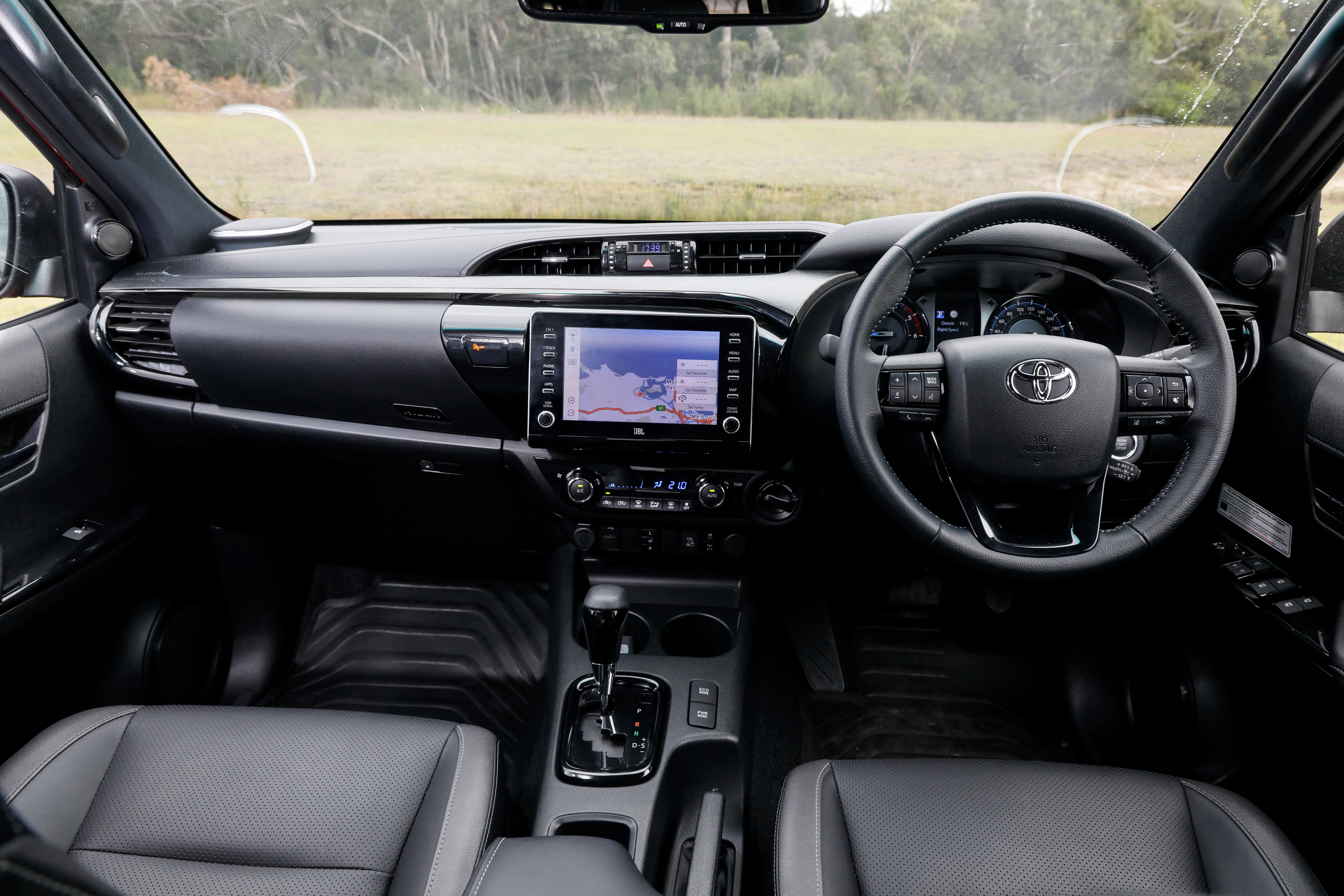
Inside, the HiLux cabin presents a neat and relatively fresh-looking workstation. Clearly designated areas for controls improve functionality while the front seats, which Toyota calls high-grade bucket items, fare okay for comfort and support.
Legroom up front is a touch smaller than rivals. Meanwhile, outward visibility is on par with the class average – except smaller rear windows penalise your over-shoulder view on the left side.
The SR5 comes with single-zone climate control, power windows with an auto function on the driver’s side, keyless entry and start, side steps, heated mirrors and auto LED headlights but misses out on auto wipers.
ANCAP awarded the HiLux with a five-star crash safety rating in 2019. Equipped with seven airbags, it sports active safety features like adaptive cruise control, lane-keep assist and AEB but forgoes blind-spot monitoring and rear cross-traffic alert.
Meanwhile, out back, occupants must deal with hard and flat seats. These can be hoisted up against the backrests for extra load space and split 60/40 in case you need to retain room for a passenger or two.
Legroom is on the shorter side compared to rivals. Cup holders in the centre armrest and doors accommodate large bottles.
Both the USB-A and dual 12-volt outlets are situated in the front, leaving rear occupants with air vents, plastic floor mats and 4kg luggage hooks, though there is also a handy 220-volt outlet. There are also ISOFIX anchorages on both outboard seats.
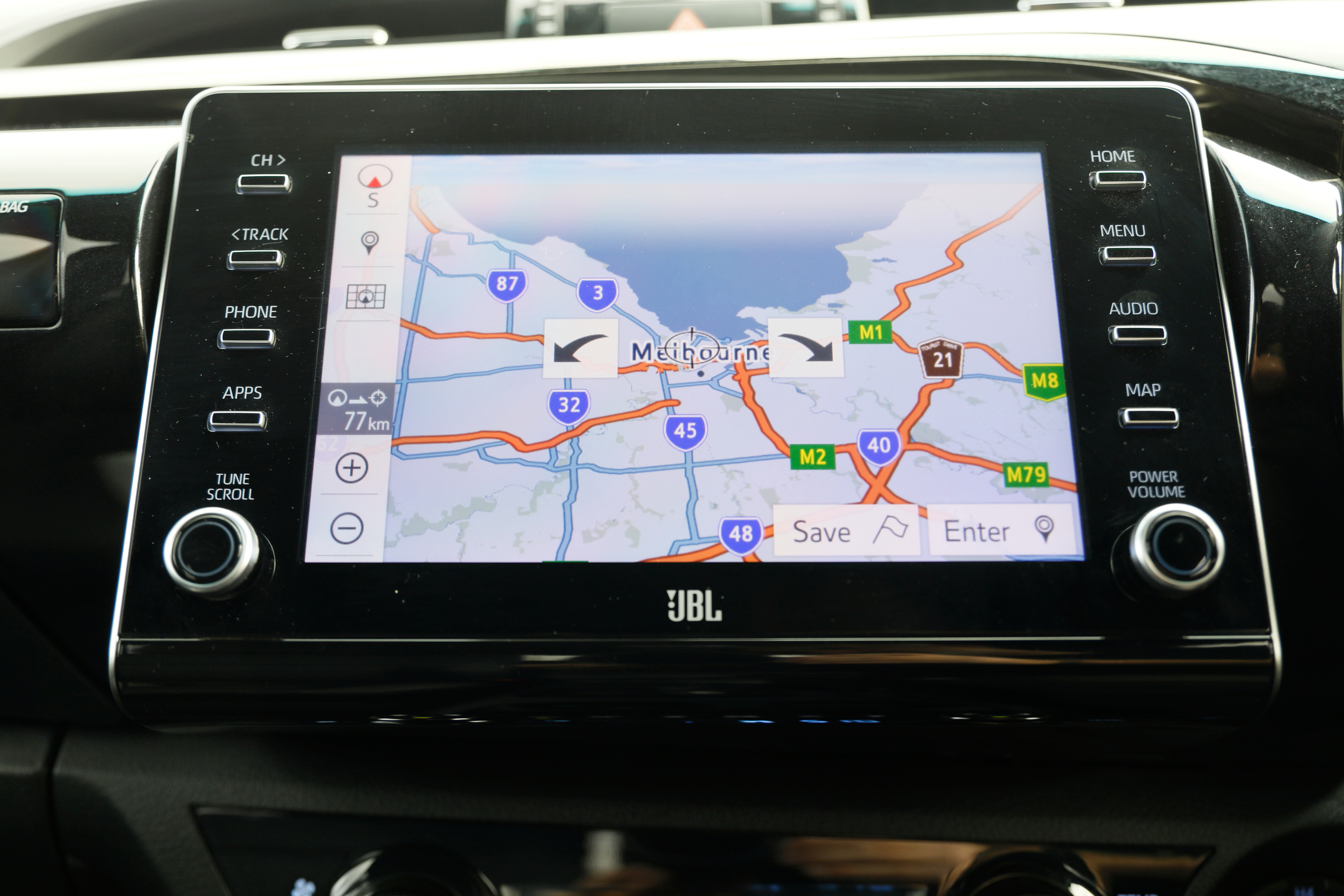
Infotainment in the mid-spec HiLux SR5 is provided through an 8.0-inch central touchscreen display and a 4.2-inch driver info screen within the instrument cluster.
Unlike the higher grade HiLuxes, the SR5 misses out on digital radio and doesn’t have native satellite navigation, though smartphone mirroring somewhat makes up for that.
Functionally, the HiLux’s infotainment is a breeze to use and it is easy to switch between separate screens, while there’s also a home screen that displays key information. The four-speaker stereo is very basic in its ability but the Bluetooth is a quick system to set up and subsequently reconnect to.
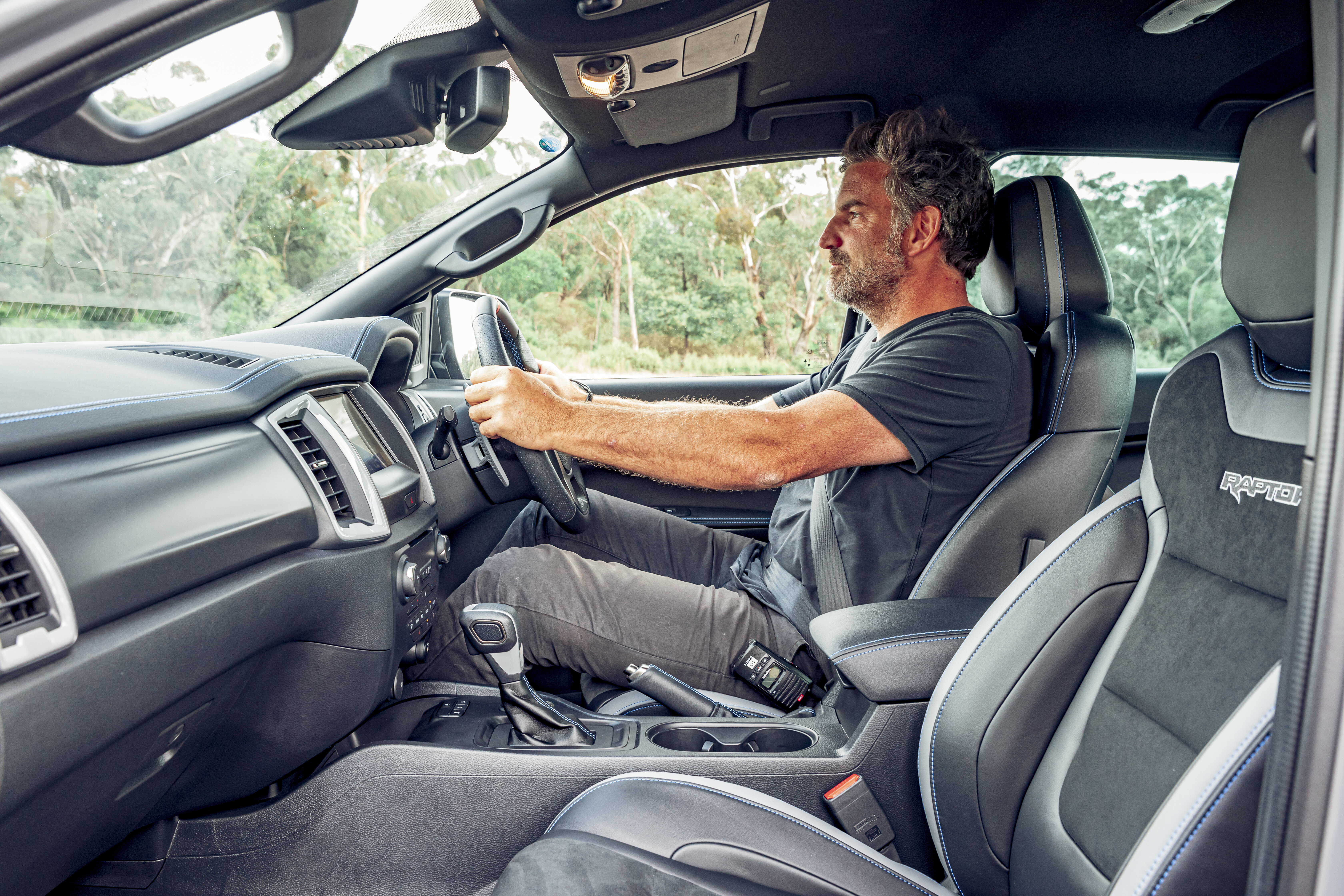
The Isuzu D-Max X-Terrain cabin is dominated by piano black inserts and features a lot of plastic in general. Leather accenting adorns the steering wheel, gear lever, seats and centre console armrest.
Its centre stack layout is clean and functional, while the cluster and steering wheel controls are concise and easy to read.
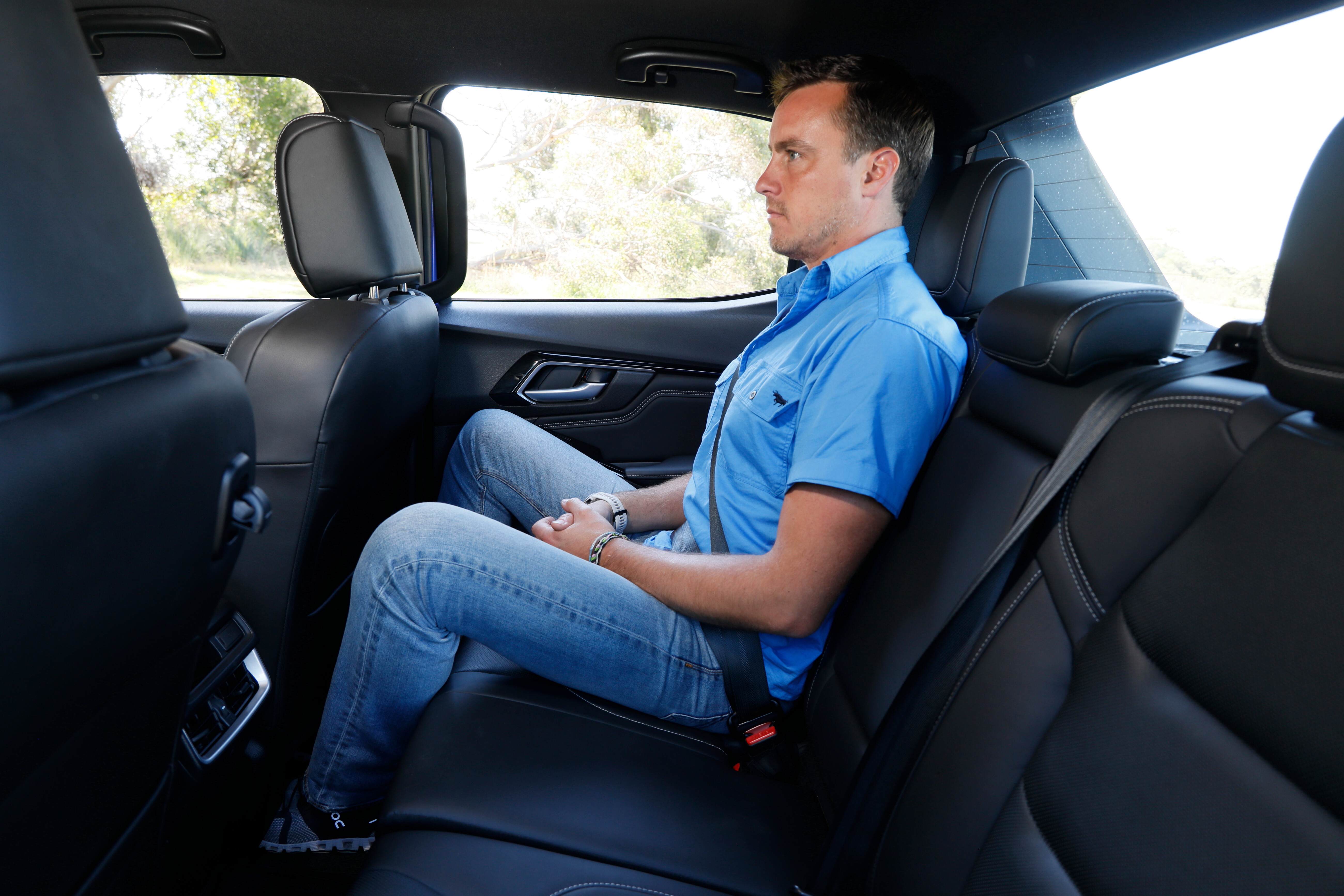
Ultimately, though, the interior looks utilitarian and short on comfort. The seats, both front and back, feel flat.
Outward visibility is average. ANCAP rated the D-Max five stars for crash safety in 2020, explaining why the X-Terrain ticks off every active safety feature under the sun, from adaptive cruise control to rear cross-traffic alert and a rearview camera.
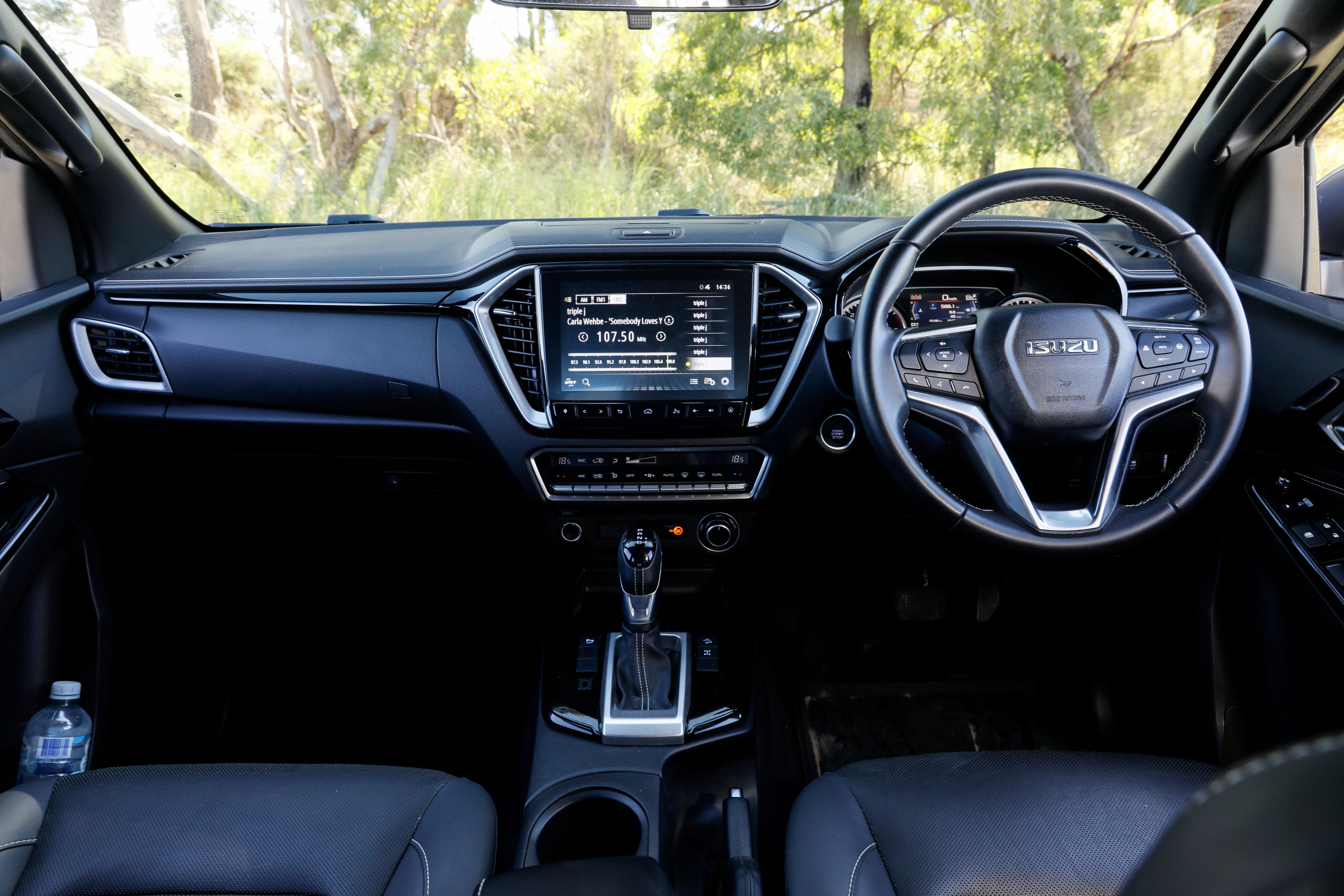
Other equipment is plentiful and includes keyless entry, remote start, auto-locking, an eight-way adjustable electric driver’s seat, auto wipers, auto LED headlights with auto high beam, auto driver’s window and dual-zone climate control.
In the back are two vents and a single USB port to complement the one up front. Rear occupants also score two large cupholders in the doors, two coat hooks and a 4kg bag hook behind the front seat.
The X-Terrain on test stocks a 9.0-inch infotainment screen that runs Apple CarPlay and Android Auto, and features a smaller digital read-out nestled within the instrument cluster to provide key vehicle information.
Front-seat passengers can connect using one USB-A port or charge up using a single 12-volt outlet, though the omission of wireless charging while allowing for wireless smartphone mirroring is a bit of a miss.
Switching between the native Bluetooth connection and Apple CarPlay is at least straightforward, and the stock eight-speaker sound system is surprisingly decent with crisp and clear audio.
The centre screen is prone to some glare but it’s otherwise a simple unit to use thanks to shortcuts along the bottom of the display.
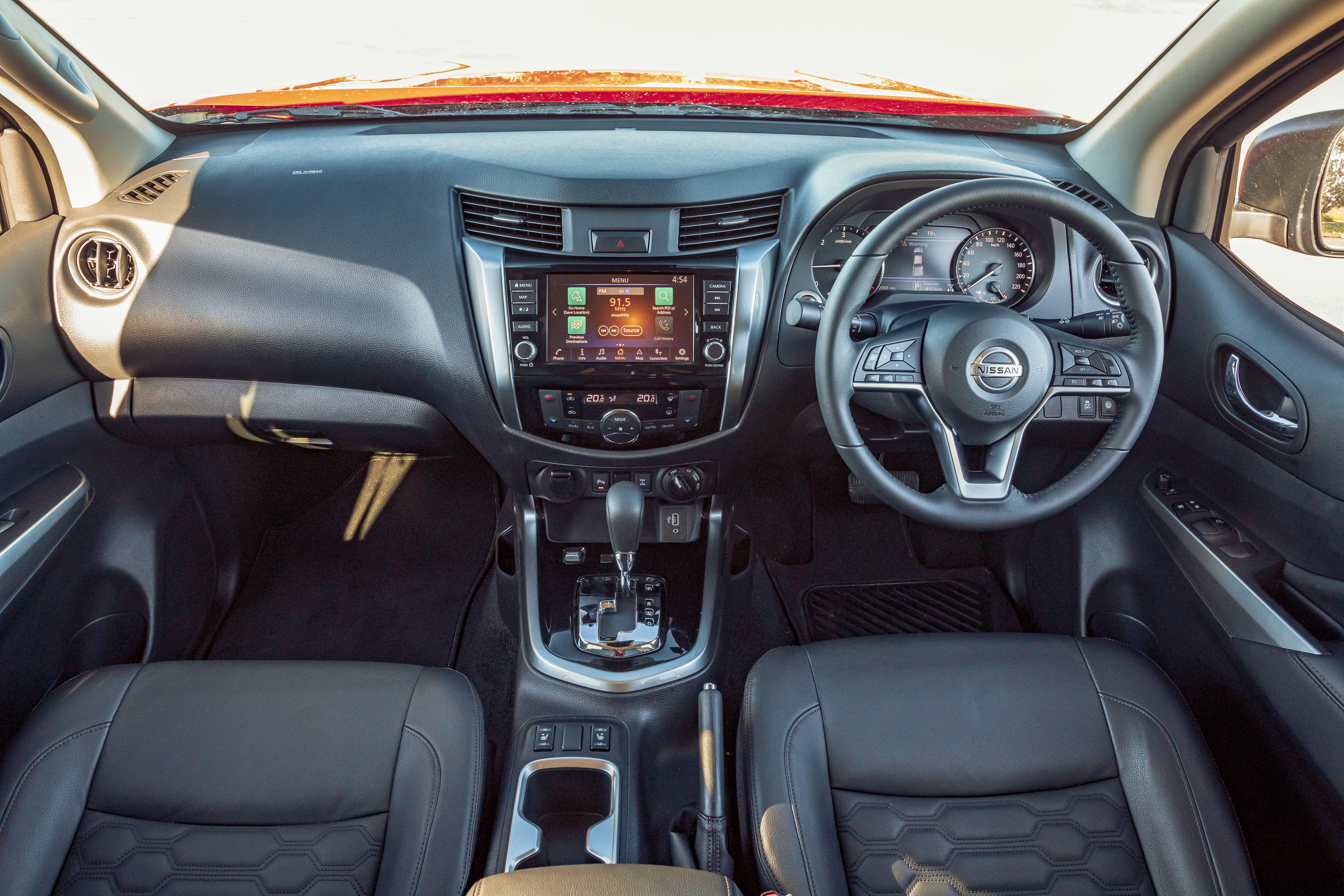
Although the Navara cabin is starting to look old, the ST-X steps it up for luxury over lower-grade variants with part-leather seats. They are comfy but lack under-thigh support and the footwell is spacious but omits a dead pedal.
The ST-X has keyless entry and start, dual-zone climate control, rear parking sensors, heated mirrors, auto wipers, leather accents on the steering and gear lever, quad-LED headlights and a tyre pressure monitoring system.
ANCAP rated the Navara five stars for crash safety back in 2015. This updated version includes a full suite of active safety gear that should satisfy the test’s stringent requirements of such technology today. The Navara also packs seven airbags.
The rear bench sits unusually high on firm cushioning and legroom is seriously compromised, important considerations if you’re planning on ferrying around full-size adults. Meanwhile, four cup holders feature, split between the doors and centre armrest. None, however, fit a large bottle.
Convenience wise, rear occupants are treated to two air vents and a single USB port. There are floor mats complemented by an opening flap in the rear windscreen and ISOFIX child seat anchors on the outboard positions.
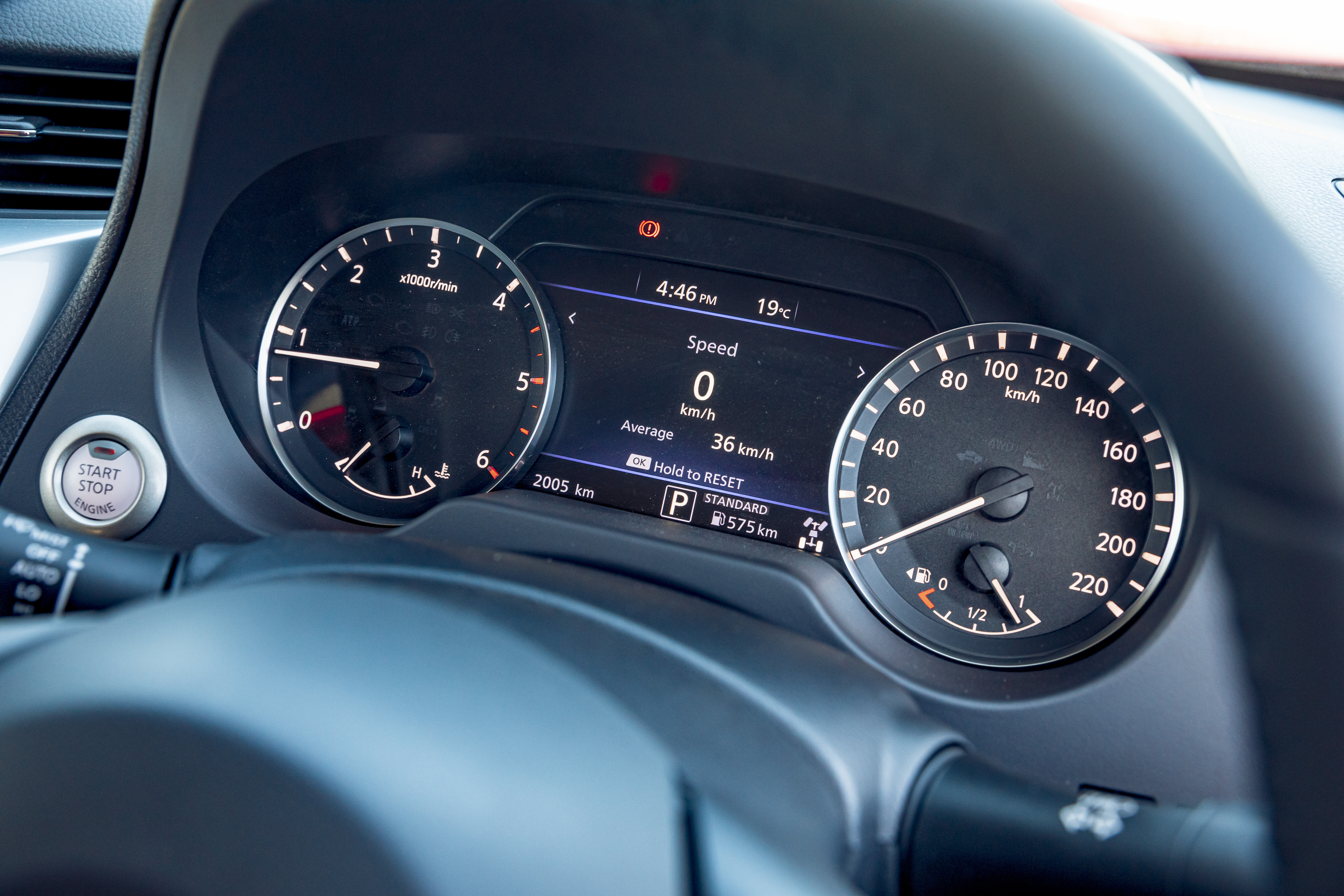
A large 8.0-inch touchscreen infotainment and 7.0-inch digital display between the instrument dials help lift the interior for a more contemporary feel.
The Navara’s native infotainment software is fairly simple in functionality and design, though wired smartphone mirroring is available for both Apple and Android users who want more options.
Charge ports are very well catered for; front-row occupants get a choice between two USB-A ports, one USB-C port and two separate 12-volt outlets for charging.
The Bluetooth functionality is simple to tee up initially, and the system will reconnect to your phone within seconds of re-entering the Navara. The touchscreen is also very responsive and digital radio is included along with the AM and FM bands.
Off-road information is available through the central display and repurposes the 360-degree surround-view cameras to show various views of the vehicle when off-roading, at up to 10km/h. It’s a useful feature and clever use of existing hardware.
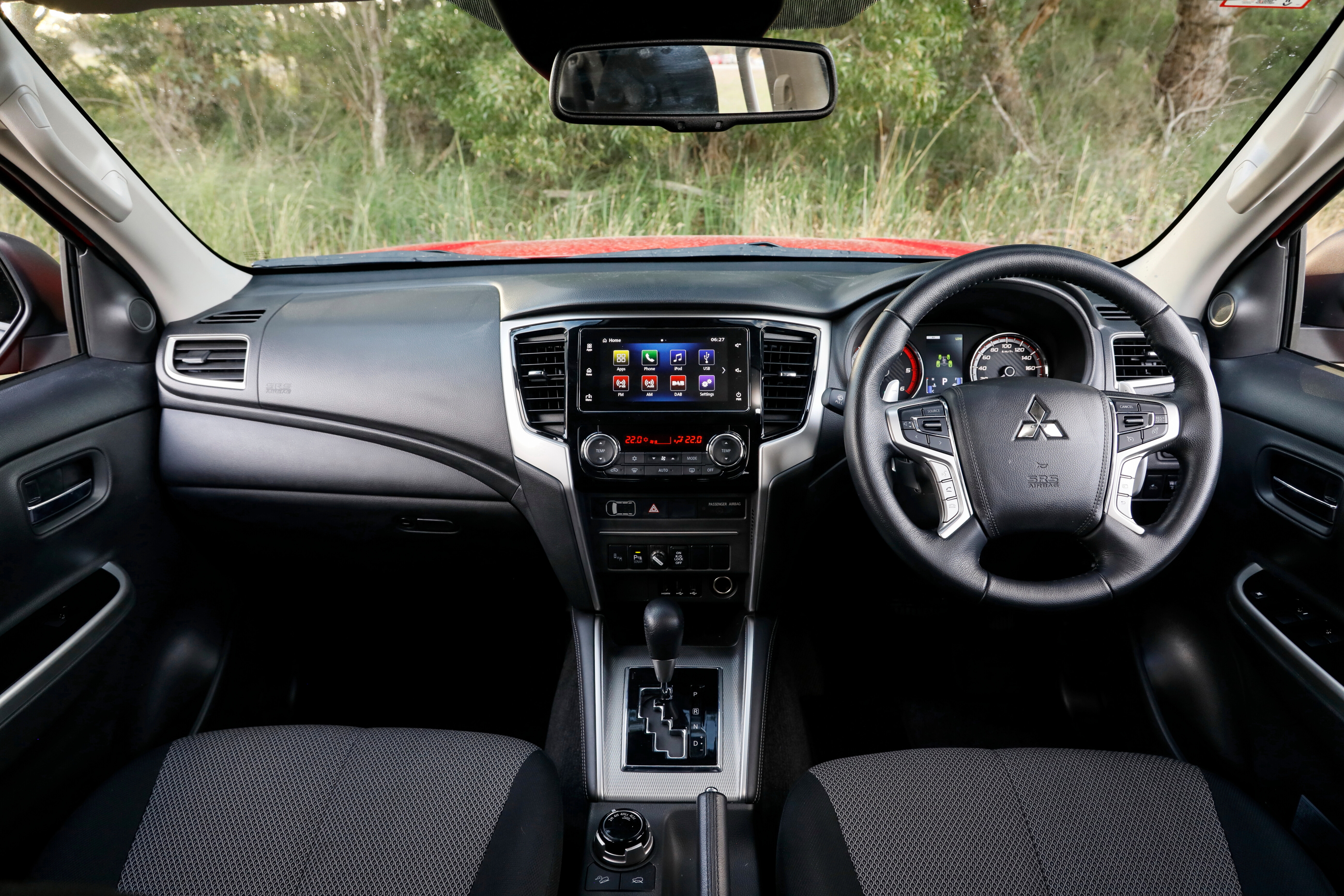
The Triton’s utilitarian character is underlined by its basic cabin. Cloth on the front and rear seats feels cheap to the touch and looks drab, but they’re well cushioned and surprisingly supportive.
With GLS trim comes keyless entry and start, an automatic driver’s side window, parking sensors front and rear with a rearview camera, dual-zone climate control, automatic headlights and rain-sensing wipers.
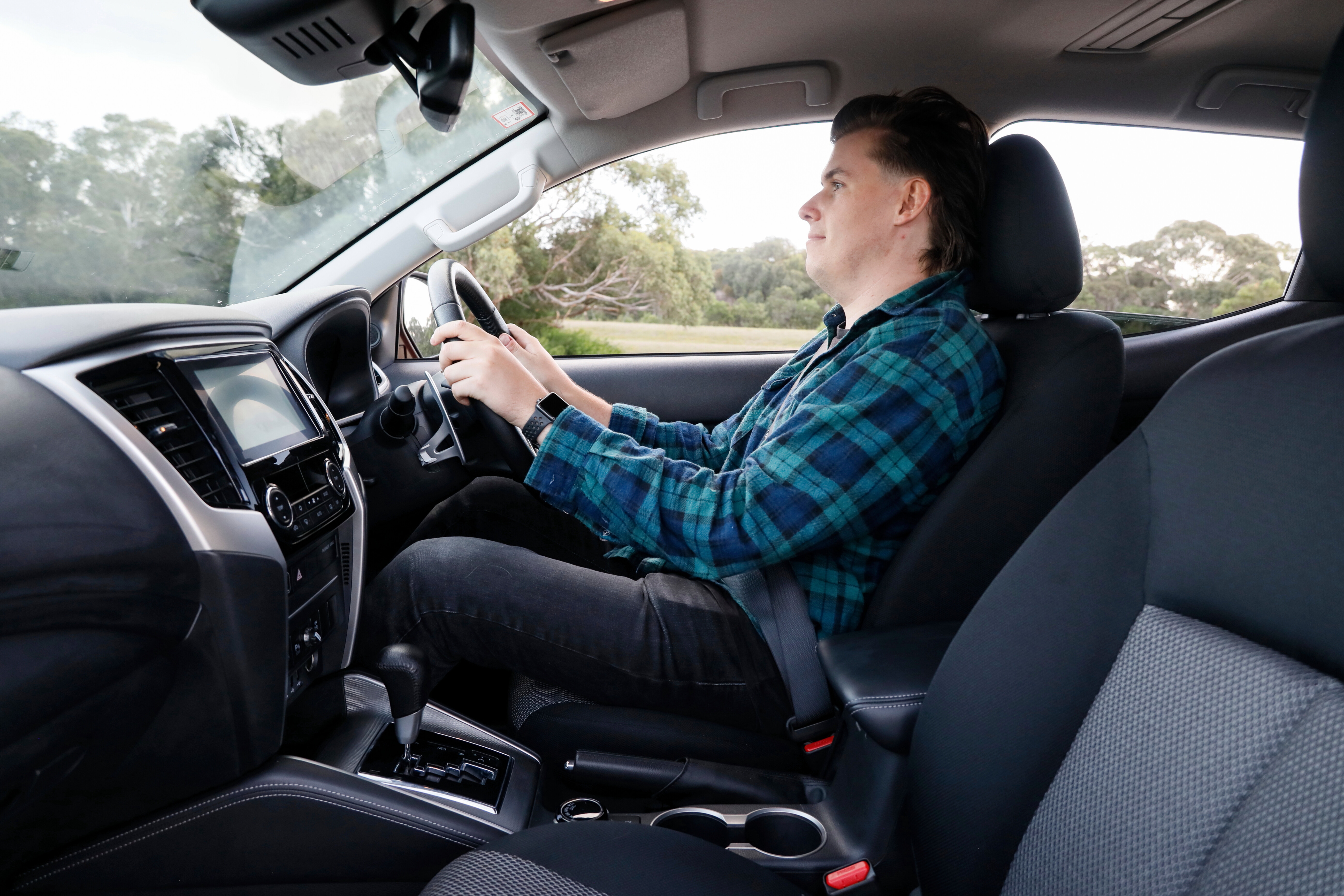
Visibility out of the Triton is better than most of its rivals, especially over the right shoulder. However, the upswept glasshouse can pinch vision on the left side.
ANCAP rated the Mitsubishi Triton five stars for safety back in 2015 and the GLS carries seven airbags. Its active safety list includes everything from AEB to rear cross-traffic alert but it cannot be equipped with adaptive cruise control.
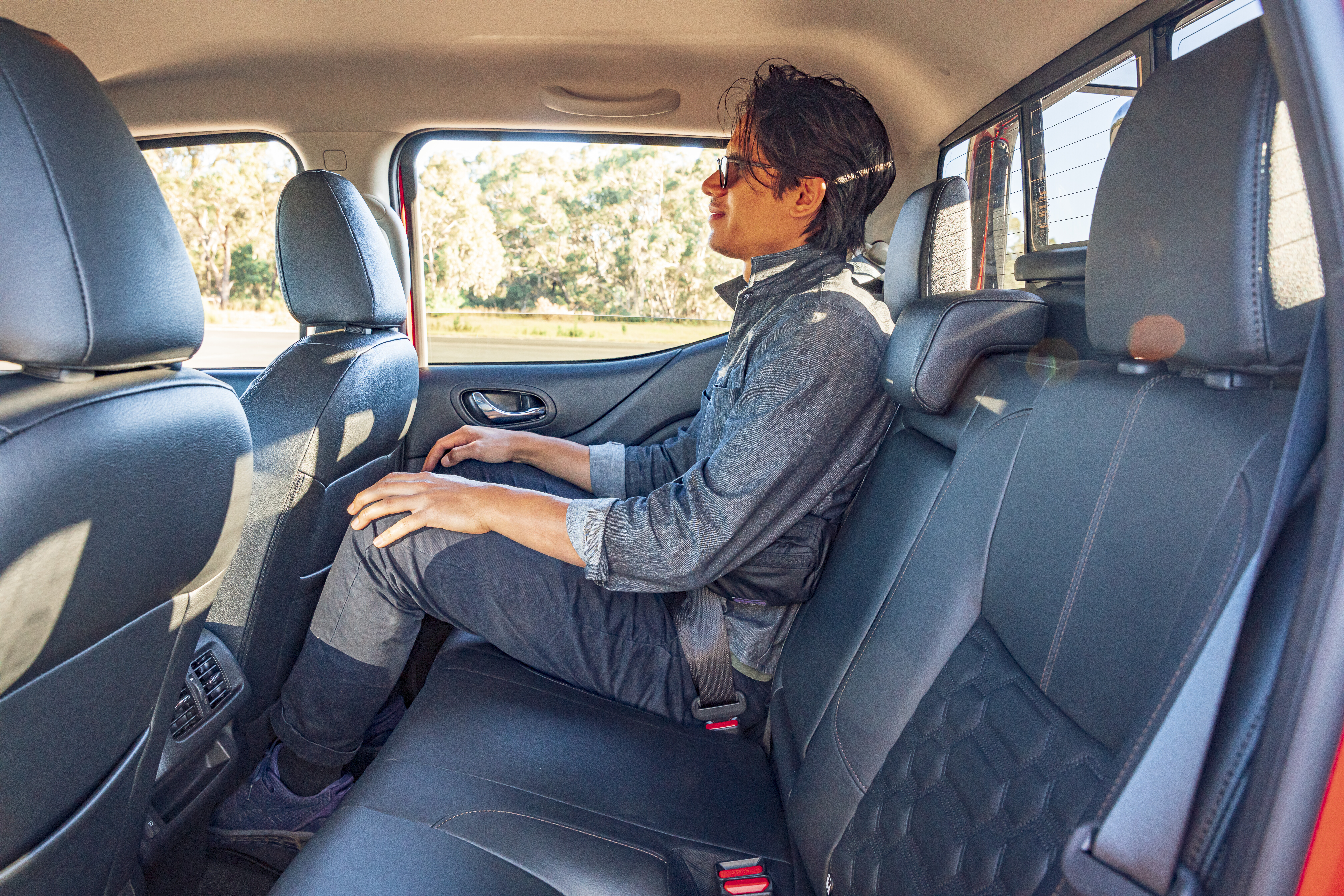
Rear occupant comfort suffers from the short thigh supports and firm back cushioning. There’s good lumbar support, though. Floor mats feature in the rear along with two sets of ISOFIX and top tether anchors.
Practicality wise, the rear doors feature storage bins that hold a large bottle, while the centre armrest has two smaller cup holders that are complemented by two USB ports and ceiling-mounted air vents.
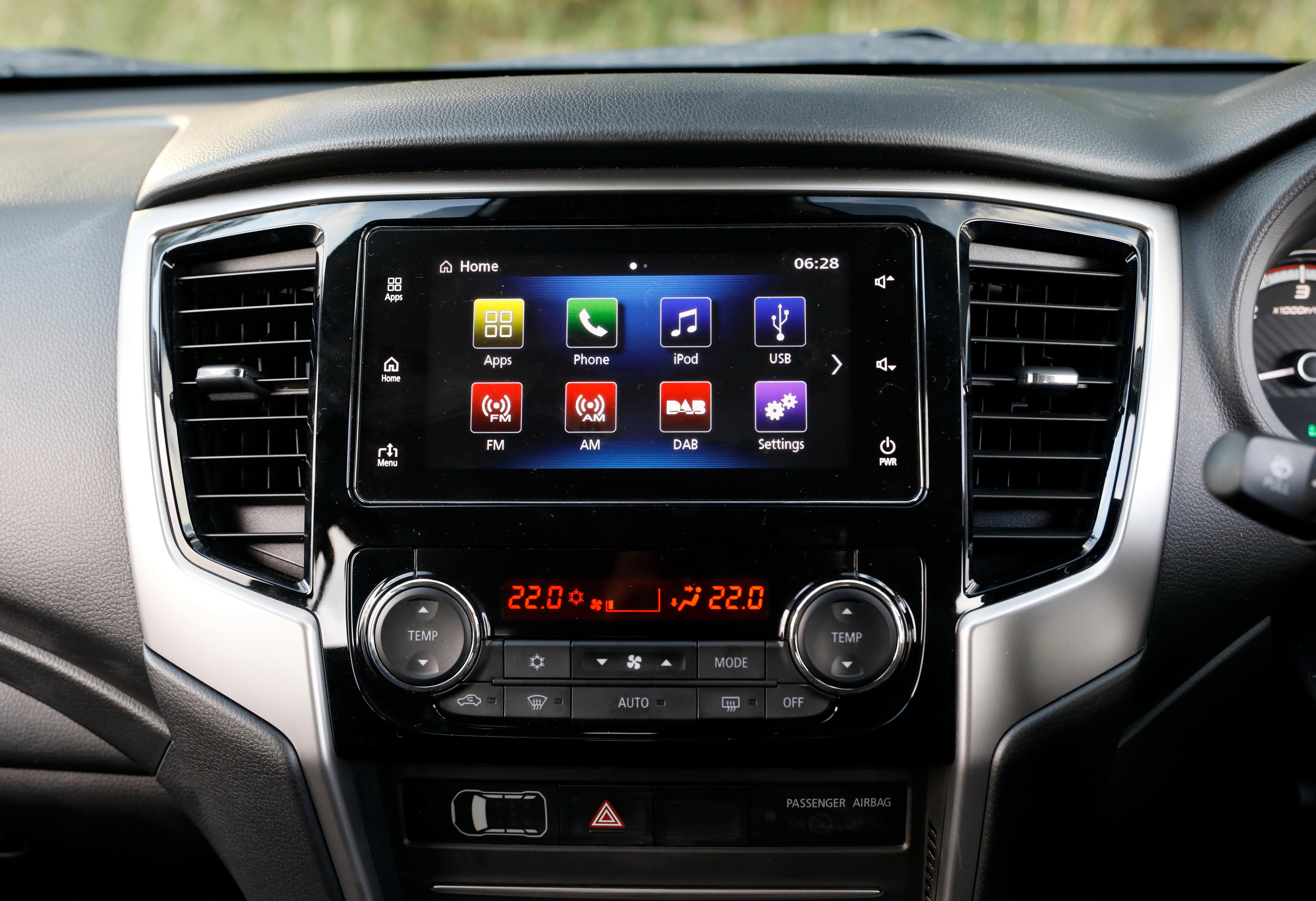
Mitsubishi’s 7.0-inch infotainment screen does service in the Triton GLS and features both wired Apple CarPlay and Android Auto capability. Interestingly, it doesn’t have a native satellite navigation system but will serve up GPS coordinates if you do ever get stuck in the middle of nowhere.
It has FM, AM and digital radio bands, and features two 12-volt outlets and two USB-A inputs. It also has an HDMI port. While the driver can change audio volume on the steering wheel, touch-sensitive controls on the screen itself will no doubt annoy passengers.
The six-speaker stereo system doesn’t impress, sounding tinny and unrefined. On the plus side, there’s a dedicated ‘Apps’ button that effectively acts as a smartphone mirroring switch, and there are features like keyless entry and dual-zone climate control to keep occupants happy.
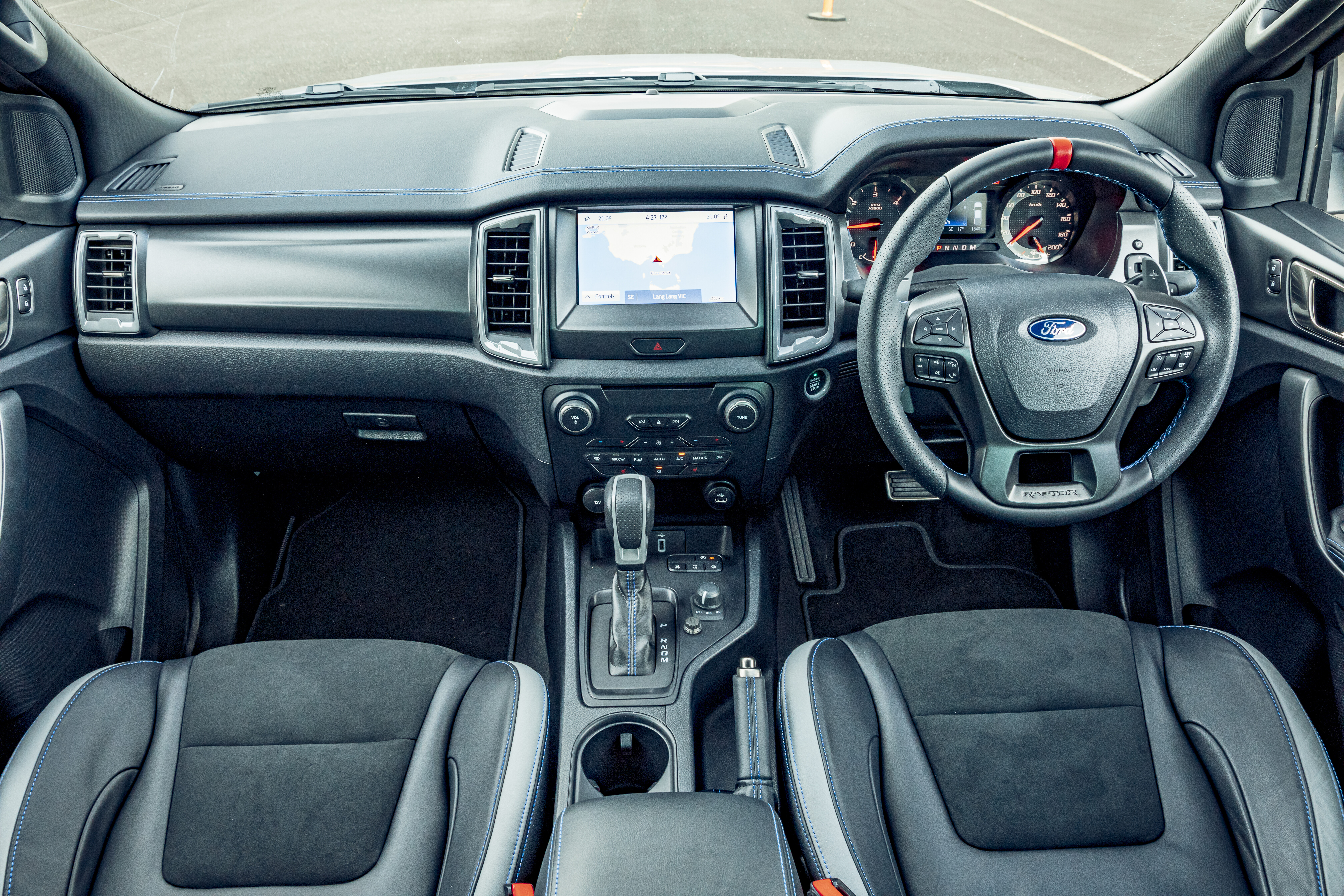
Overall, the Ranger XLT presents a functional workstation that’s ergonomically sound.
The seats are more comfortable than some other Ford commercial vehicles, such as the Transit, but they are still average. It’s worse up back, though, where the firmly cushioned rear seats lack contouring and support. That said, legroom is class-leading for rear occupants and the front footwells are also generously sized.
Features wise, the XLT makes do with manual adjustment for its cloth seats but has carpet floor coverings, auto headlights and wipers, a leather steering wheel, dual-zone climate control, a one-touch power window on the driver’s side and keyless entry.
The Ranger scored five stars in ANCAP crash testing back in 2015 but its equipment list in this area is far from comprehensive.
The XLT misses out on blind-spot monitoring, rear cross-traffic alert and adaptive cruise control. It features six airbags. Meanwhile, forward visibility is okay and even bettered by over-shoulder visibility on both sides.
Practicality is improved for rear occupants by large cup holders in the doors. But the absence of USB ports or ventilation back there is redeemed by a 12-volt power supply, 230-volt inverter and a centre armrest with two small cup holders.
For child seats, there are also two sets of ISOFIX and upper anchorage points.
Ford’s Sync 3 infotainment system is viewed through an 8.0-inch touchscreen, bringing app integration goodness including Spotify and AccuWeather, but also a swathe of FordPass features that control items like remote air-conditioning priming, remote unlock and a vehicle locator function.
Slow-to-respond Sync 3 systems are a known problem, but it seems to be luck of the draw whether an individual car is affected and this test car has no issues. Users report the problem is easily fixed by rebooting the system.
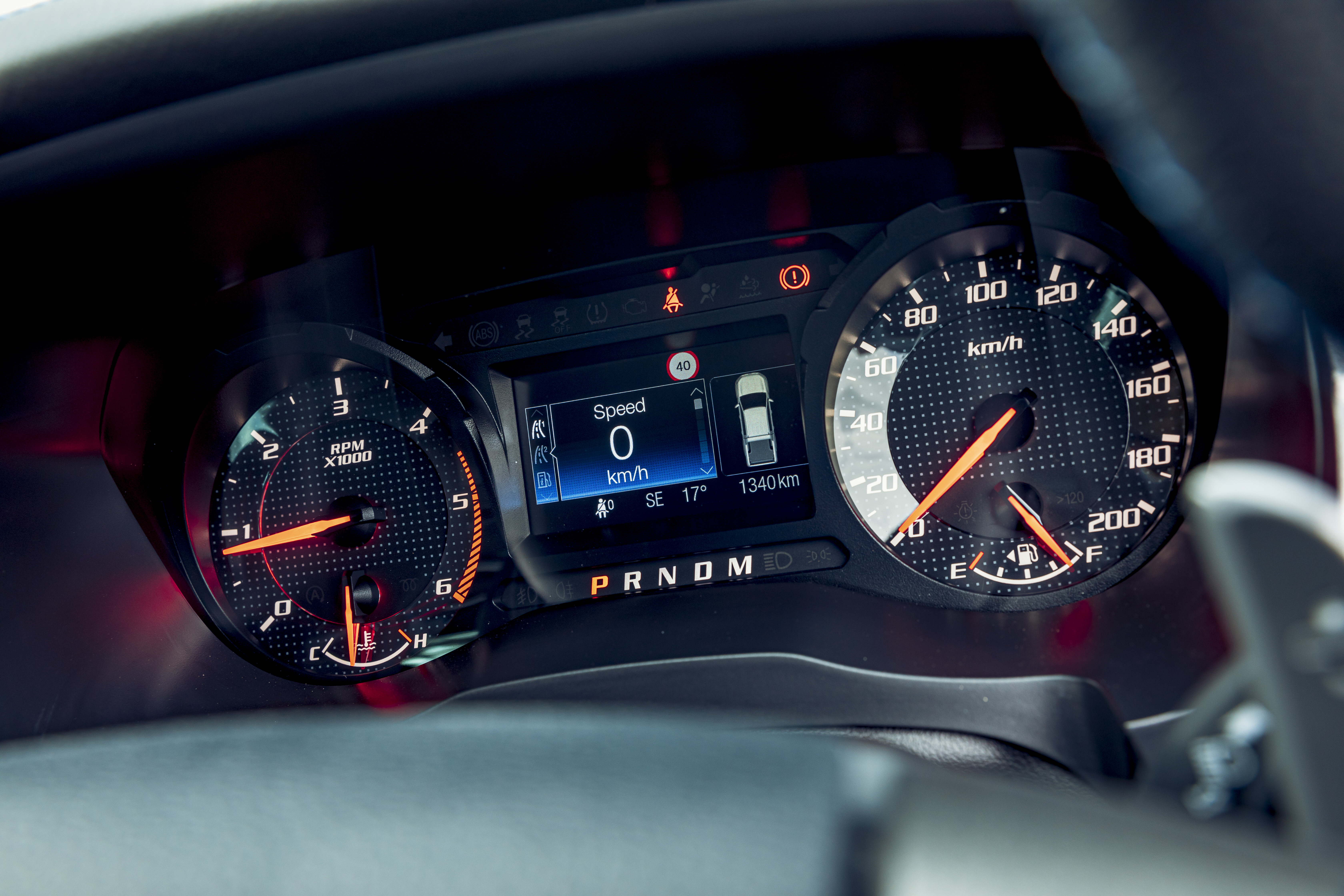
In addition to the 8.0-inch main screen, the Ranger also features two multi-function TFT displays within the instrument cluster that can provide handy access to information from various systems such as navigation or phone.
This level of customisation is a unique feature that few dual-cab ute rivals can match. Also unique to the Ranger is a USB port near the rearview mirror that’s designed for dashcam connectivity.
SERVICING COSTS
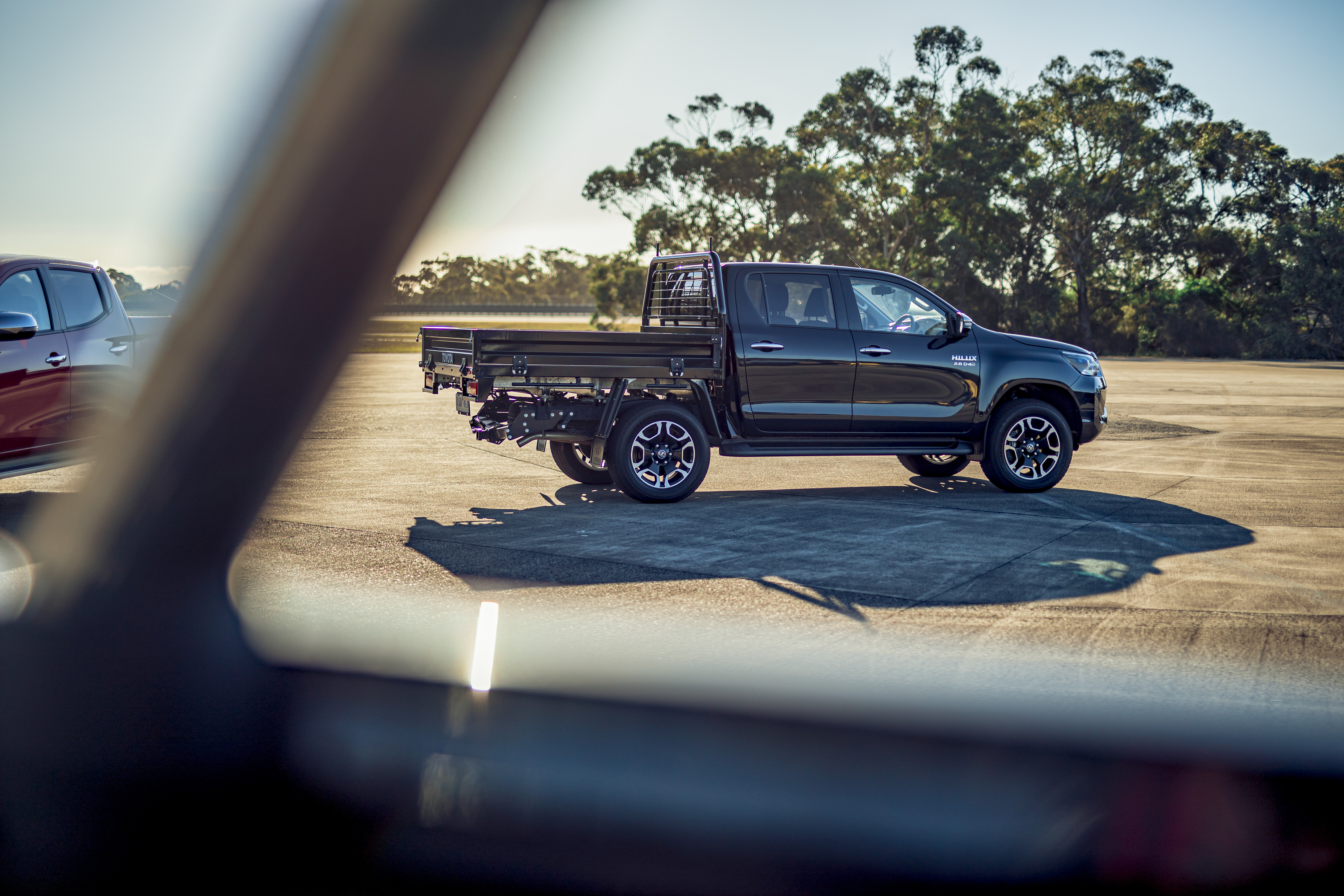
Servicing for the Ranger XLT is capped at $299 for the first four services before getting more expensive for subsequent 15,000km intervals.
In order to receive seven years of roadside assistance benefits, Rangers must be maintained at participating Ford service centres where each consecutive visit will award a further 12-month membership to the brand’s program.
The Ford Ranger XLT is covered by a five-year/unlimited-kilometre warranty and according to Glass’s Guide data, after three years a Ranger XLT will retain a respectable 56 per cent of its purchase price.
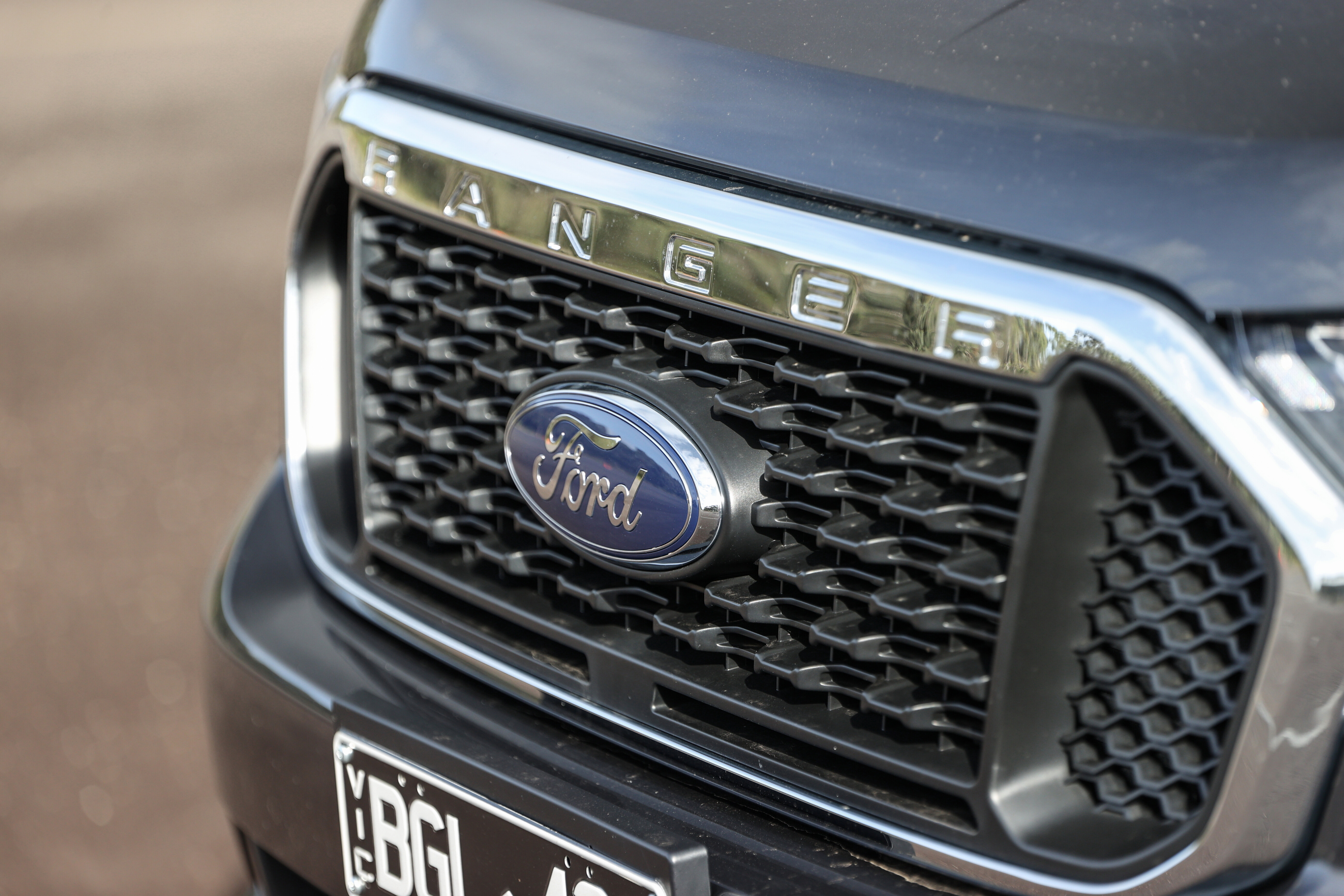
If there’s one thing we know about the Toyota HiLux, it’s that you’ll fare comparatively well when it comes time to sell. Like the Ranger, the HiLux SR5 is said to retain 56 per cent of its value after three years.
Every part, panel and factory-fitted accessory of the Toyota HiLux SR5 is warranted for five years/unlimited kilometres. Servicing can be arranged through the myToyota smartphone application.
Each of the first four visits to Toyota’s service centres will set you back $250. As a bonus, if you stick to Toyota’s 10,000km/six-month service intervals, Toyota will include an extra two years of driveline warranty. Pricing for Toyota’s roadside assistance program begins at $89 per year.
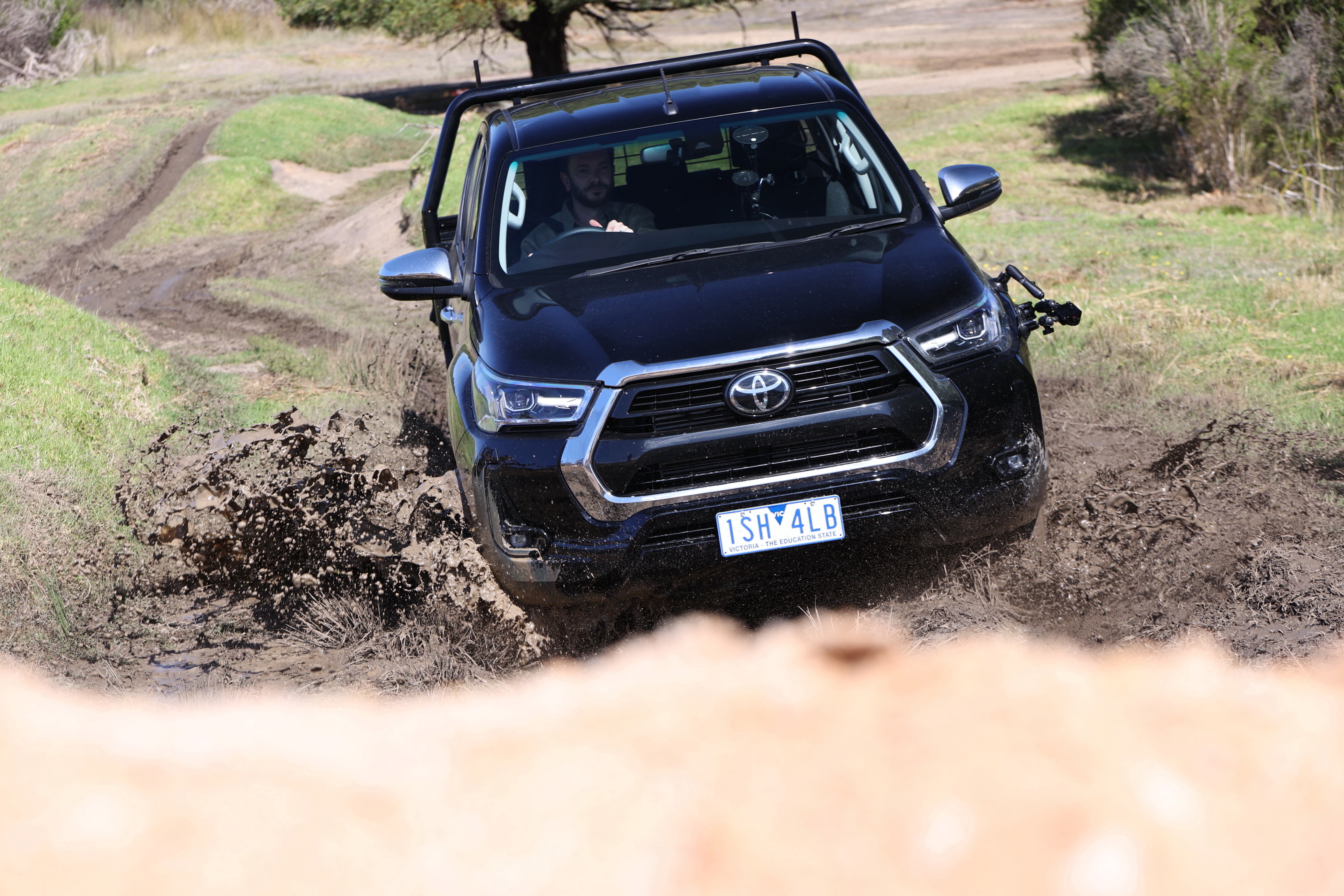
The Navara ST-X is covered for five years/unlimited kilometres under Nissan’s warranty program and roadside assistance is also provided for the first five years of ownership.
Nissan caps the cost of the first six services, which occur at 20,000km intervals. After three years from the date of first delivery, the Nissan Navara is expected to retain 53 per cent of its initial value.
Isuzu’s after-sales offering is impressive, with a six-year/150,000km warranty, seven years of roadside assistance and seven years of capped-price servicing, which includes a complimentary three-month or 3000km inspection.
Each subsequent service will occur at 12-month or 15,000km intervals – whichever comes first. Both the capped-price servicing and warranty are transferrable to subsequent owners and the X-Terrain is expected to retain 49 per cent of its value after the first three years.
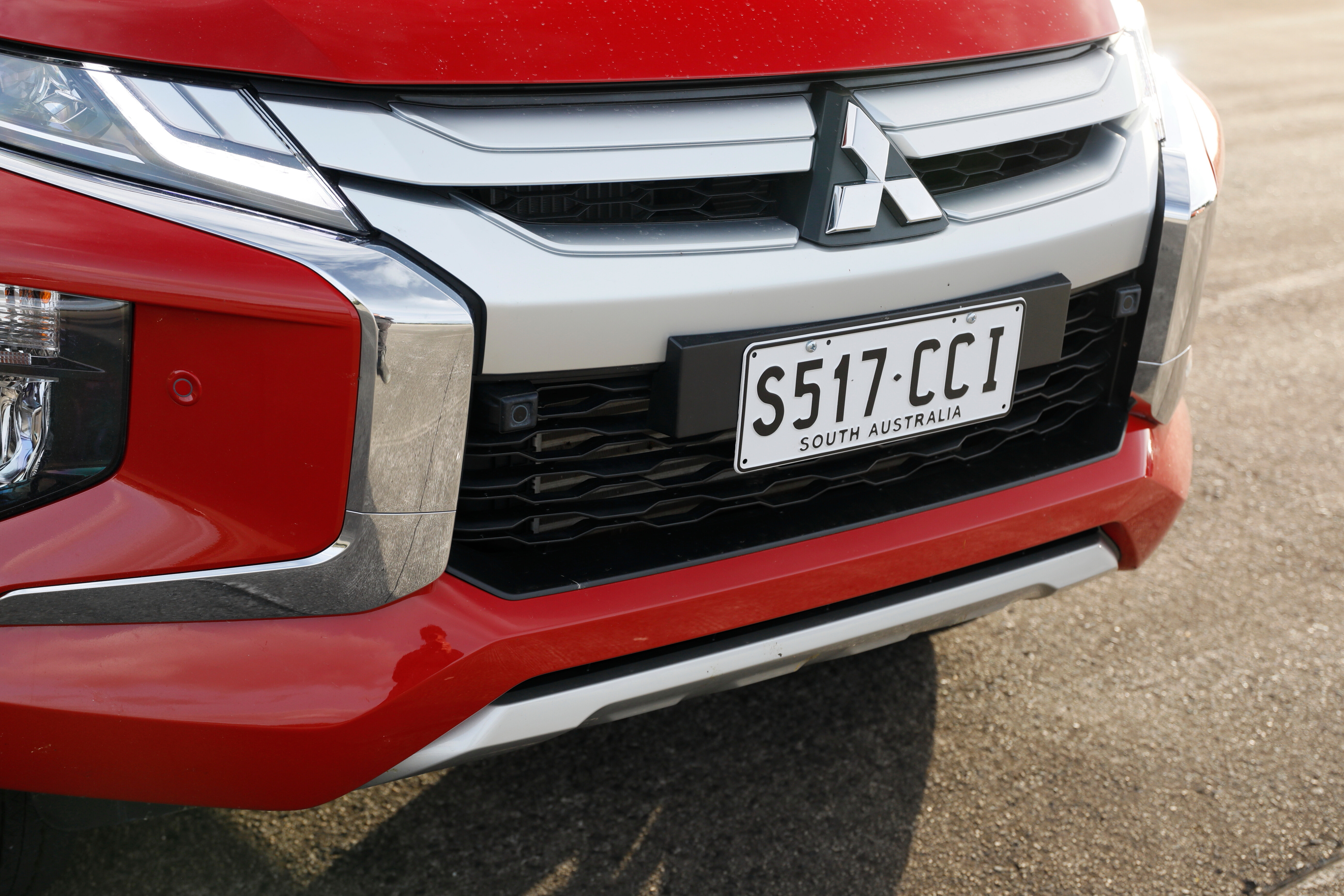
No other manufacturer can beat Mitsubishi when it comes to warranty cover. Its generous 10-year/200,000km warranty applies to the Triton GLS tested here, though you must maintain the vehicle through the Mitsubishi-approved service network in order to get all 10 years.
That’s not such a bad thing, as Mitsubishi offers 10-year/150,000km capped price servicing to match, but it is worth noting that servicing schedule falls 50,000km short of its 200,000km warranty, meaning owners will have to front-up to full price for the final 50,000km worth of maintenance to maintain their coverage.
For owners who go elsewhere for their Triton servicing during the first decade of ownership, the warranty will halve to a five years and 100,000km.
Roadside assistance is included as a courtesy for the first four years as long as the Triton is serviced through Mitsubishi’s network.
While the Triton is by far the cheapest ute here, its resale is also the worst, with an expected retained value of 47 per cent after the first three years.
AUSTRALIA’S POPULAR DUAL-CAB UTES RANKED
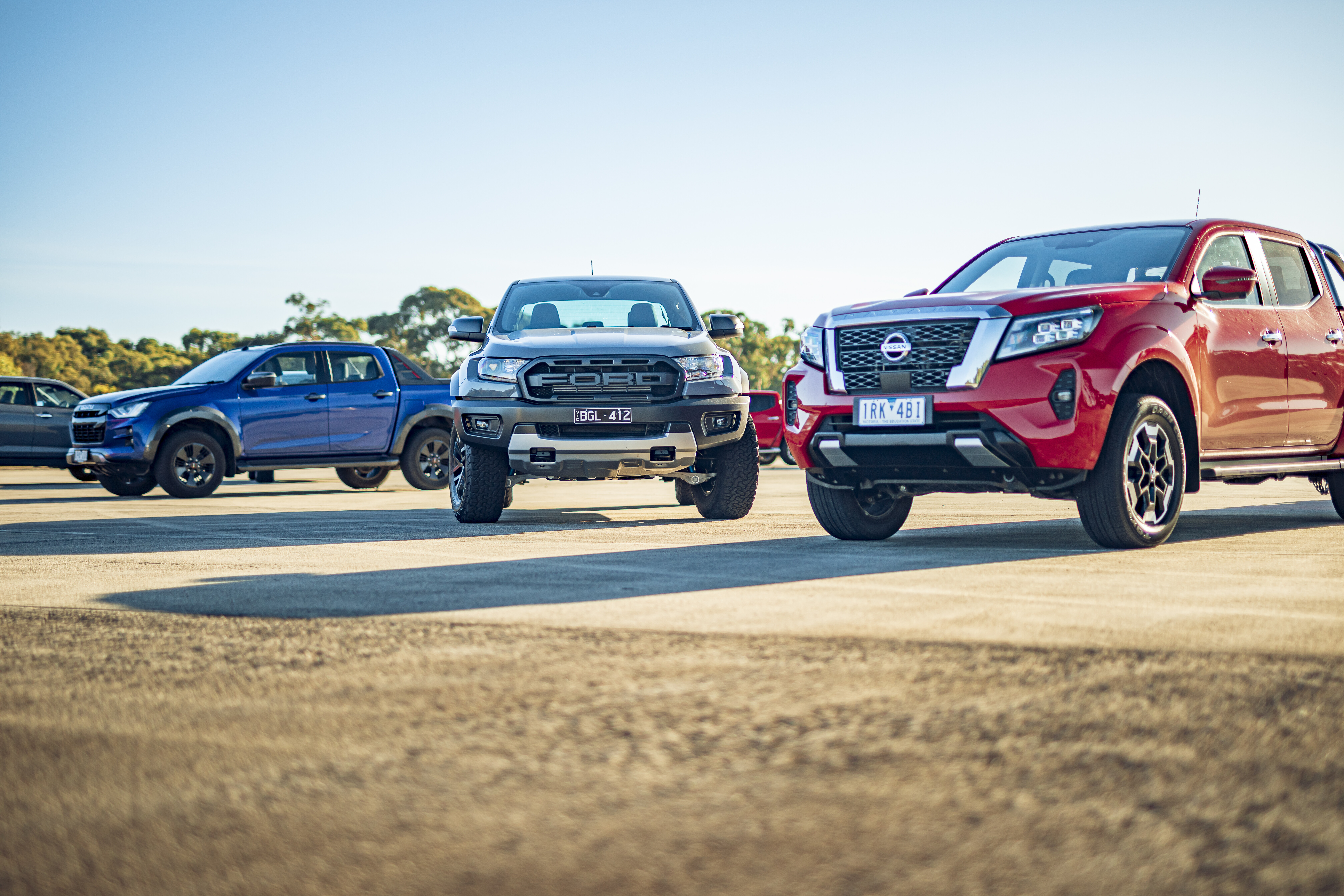
In the final reckoning it’s the Mitsubishi Triton that brings up the rear in this comparison, but it’s not quite that simple.
As many dual-cab utes have increased in price and specification, it’s allowed the Triton to carve out a value-for-money niche, sitting above challenger brands like the Ssangyong Musso and GWM ute but below more expensive rivals like those here.
With that in mind we’d forget about the upper reaches of the Triton range and stick to a GLX ADAS or GLX+, which will leave you with a capable and affordable no-frills dual-cab with the peace of mind of Mitsubishi’s industry-leading warranty.
If you’re on a more modest budget, it’s easy to recommend.
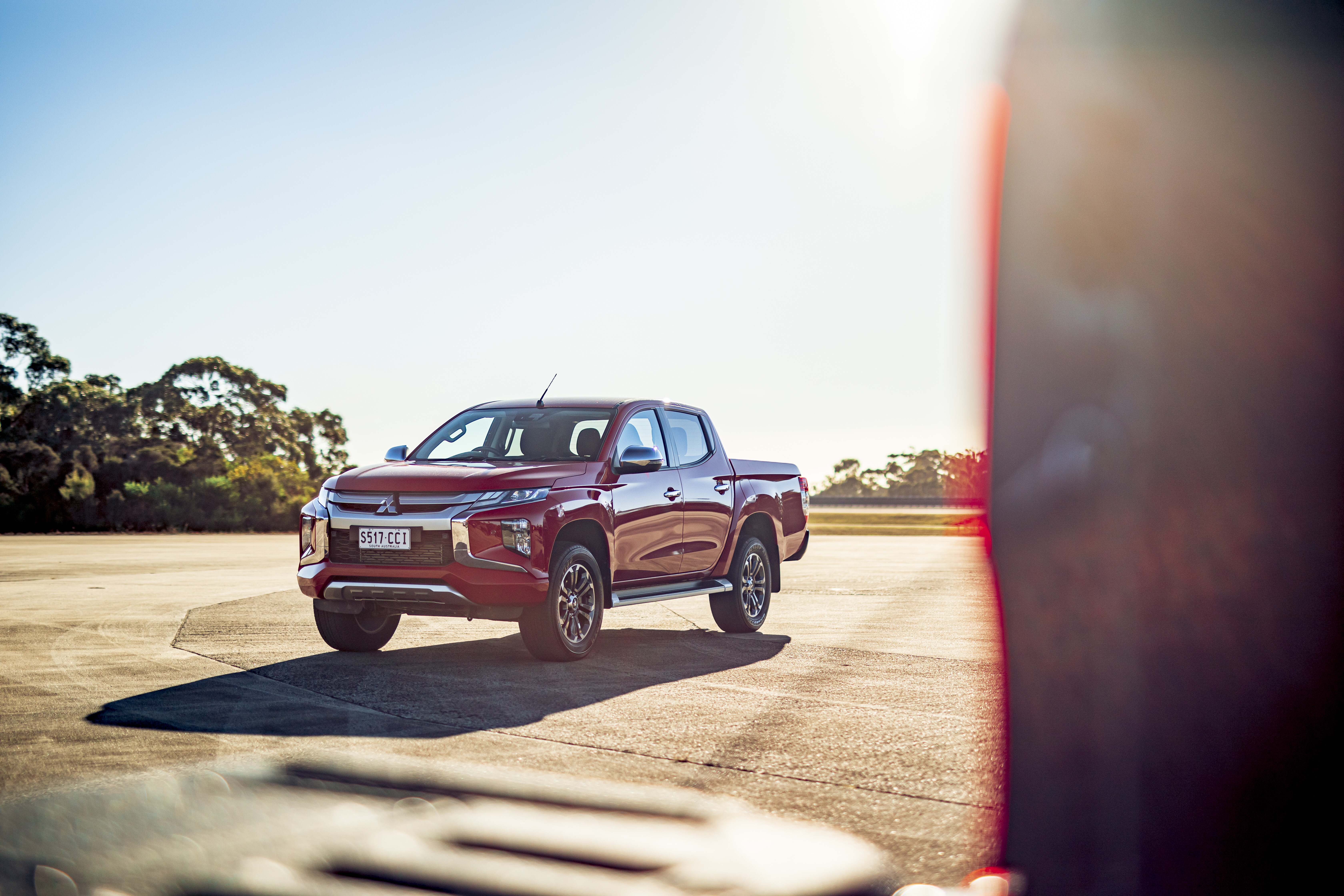
Next in line is the Navara ST-X. Kudos to Nissan for undergoing a constant process of improvement in an effort to rectify the shortcomings of the most recent generation, particularly in the area of suspension.
It’s a solid performer in all areas bar perhaps its ability to carry loads, without being a standout in any specific category. It’s not a bad ute by any means, but there are better offerings.
Happy news for the tens of thousands of Aussies that bought a HiLux last year: it’s a good ’un. The upgraded powertrain is impressive and while it still trails the best in terms of on-road dynamics, it’s brilliant off-road, unfazed by towing or heavy loads, is competitive in terms of running costs and drives well enough.
Then there’s the kicker. Not only does a HiLux offer top-notch resale, there’s still the Toyota factor, that wherever you go in this wide, brown land you’re likely to find parts and support. It’s a tough thing to measure in a comparison, but it matters to buyers.
Well done, Isuzu, it’s the most improved award for you. From stone motherless-last in our previous dual-cab megatest, the D-Max is now a real player.
It’s now the industry leader in terms of safety equipment and continues its reputation of offering a grunty, dependable drivetrain along with vastly enhanced dynamics and a much nicer interior.
There’s still room to improve off-road and we’re not sure the range-topping X-Terrain is the sweet spot of the range, but it’s an excellent dual-cab offering.
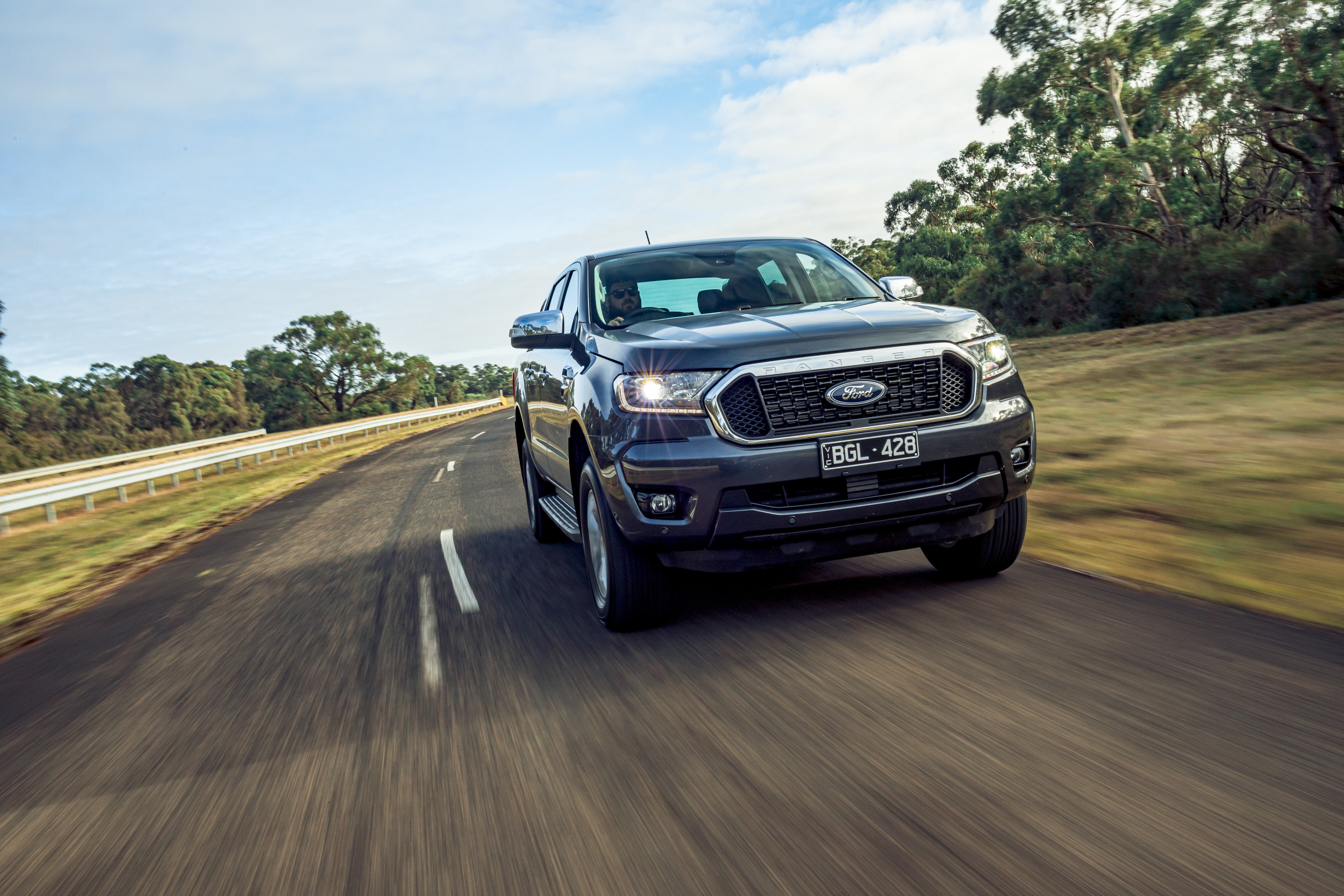
All hail the king, the Ford Ranger XLT Bi-Turbo. The only real blot on its copybook is its terrible braking performance, which is unacceptable for a vehicle that’s increasingly being used as family transportation.
Nevertheless, Ford’s evergreen ute still leads the pack in terms of performance and on-road dynamics (and it’s not particularly close), it’s excellent off-road and when carrying loads, has cutting-edge (for this segment) infotainment, great resale and decent aftersales support.
The interior is feeling its age but then the Ranger has been around a long time now. And that should be the scary thing for its competitors, for the all-new Ranger is less than a year away.
THE VERDICT
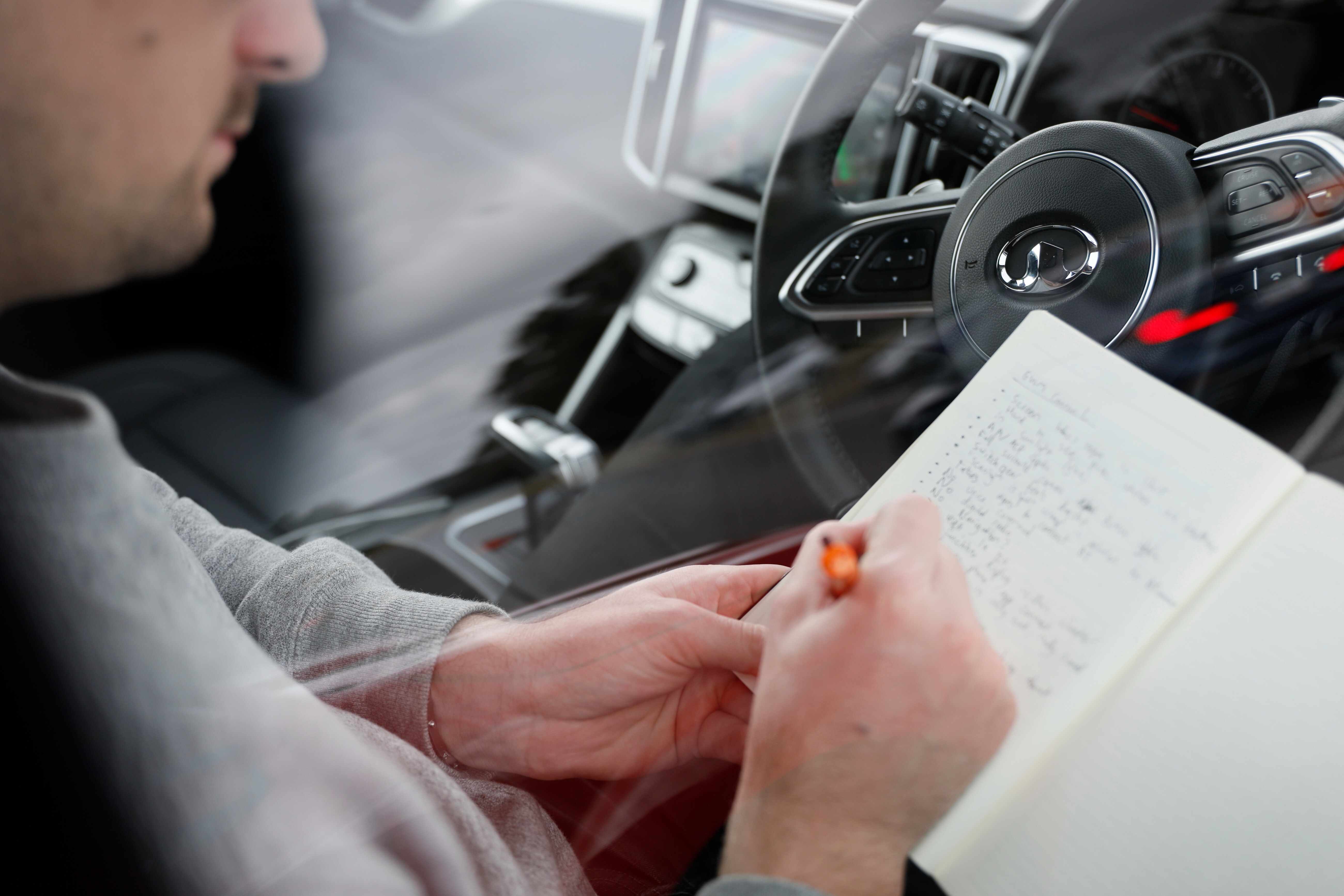
1st: Ford Ranger XLT Bi-Turbo
Things we like: Benchmark driving experience; impressive in all areas Not so much: Dreadful braking performance; ageing interior
SCORE: 8/10
2nd: Isuzu D-Max X-Terrain
Things we like: Safety kit; grunty engine; much-improved dynamics Not so much: Low-range performance; enough of a leap forward?
SCORE: 7.5/10
3rd: Toyota HiLux SR5
Things we like: Strong engine; brilliant off-road; towing performance Not so much: Could be better dynamically; lacks some equipment
SCORE: 7.5/10
4th: Nissan Navara ST-X
Things we like: Smooth engine; improved suspension; capable off-road Not so much: Needs more grunt; suspension still struggles with loads
SCORE: 7/10
5th: Mitsubishi Triton GLS
Things we like: Good value; benchmark warranty; solid in all areas Not so much: No standout talents; lacks engine performance
Score: 7/10
SCORE BREAKDOWN
SPECIFICATIONS
NISSAN Australia has sought to give its Navara range of mid-size utes a boost in sales with a 2021 update centred on a bolder new look. The front end takes styling cues from its big brother in the USA, the Nissan Titan full-size pickup, to give the previously stylish Navara a muscled-up look. Think of it as going to the gym for pickup trucks.
The bigger radiator grille is backed by a taller bonnet line and this added height is taken through to the back of the truck with a taller cargo tub.
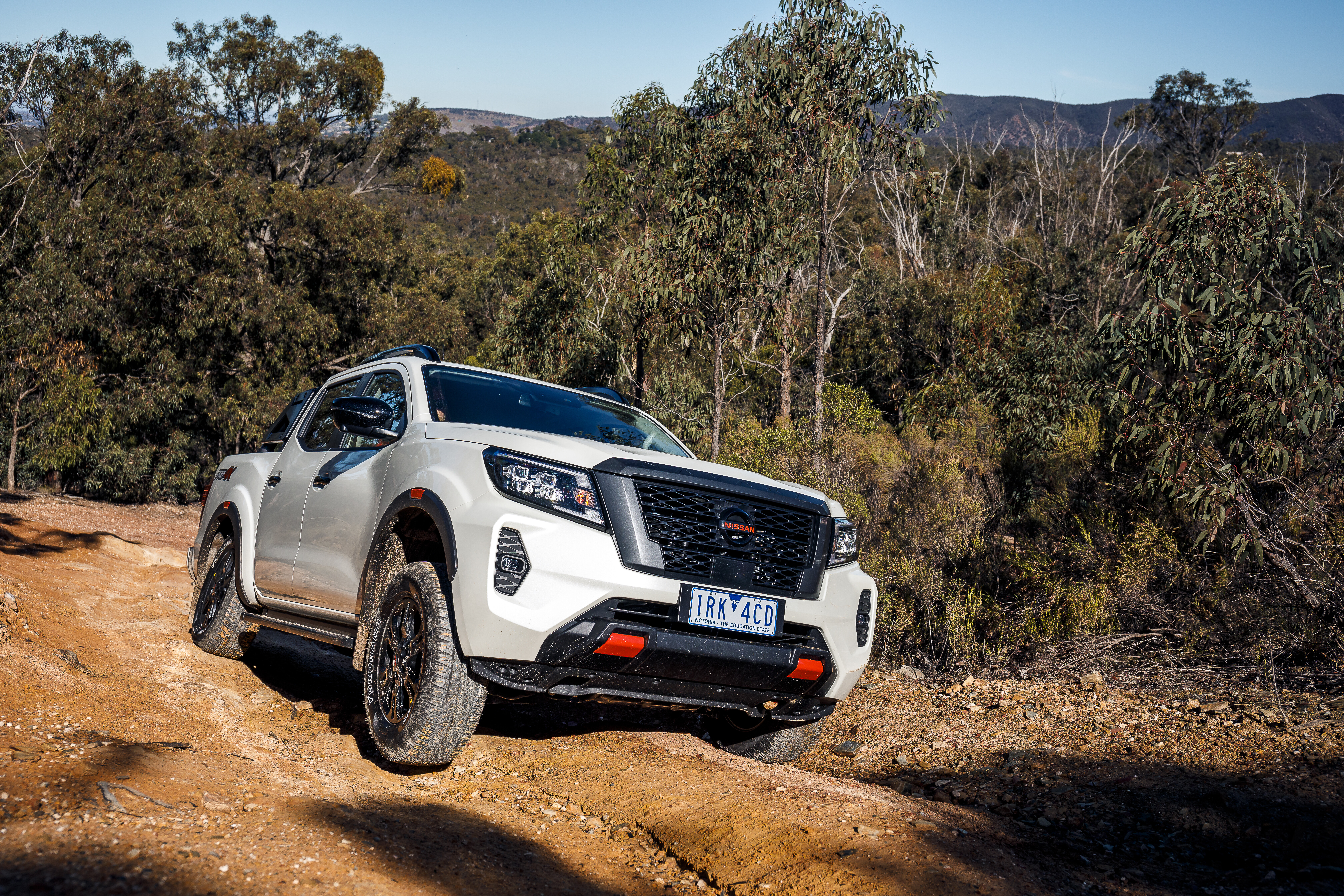
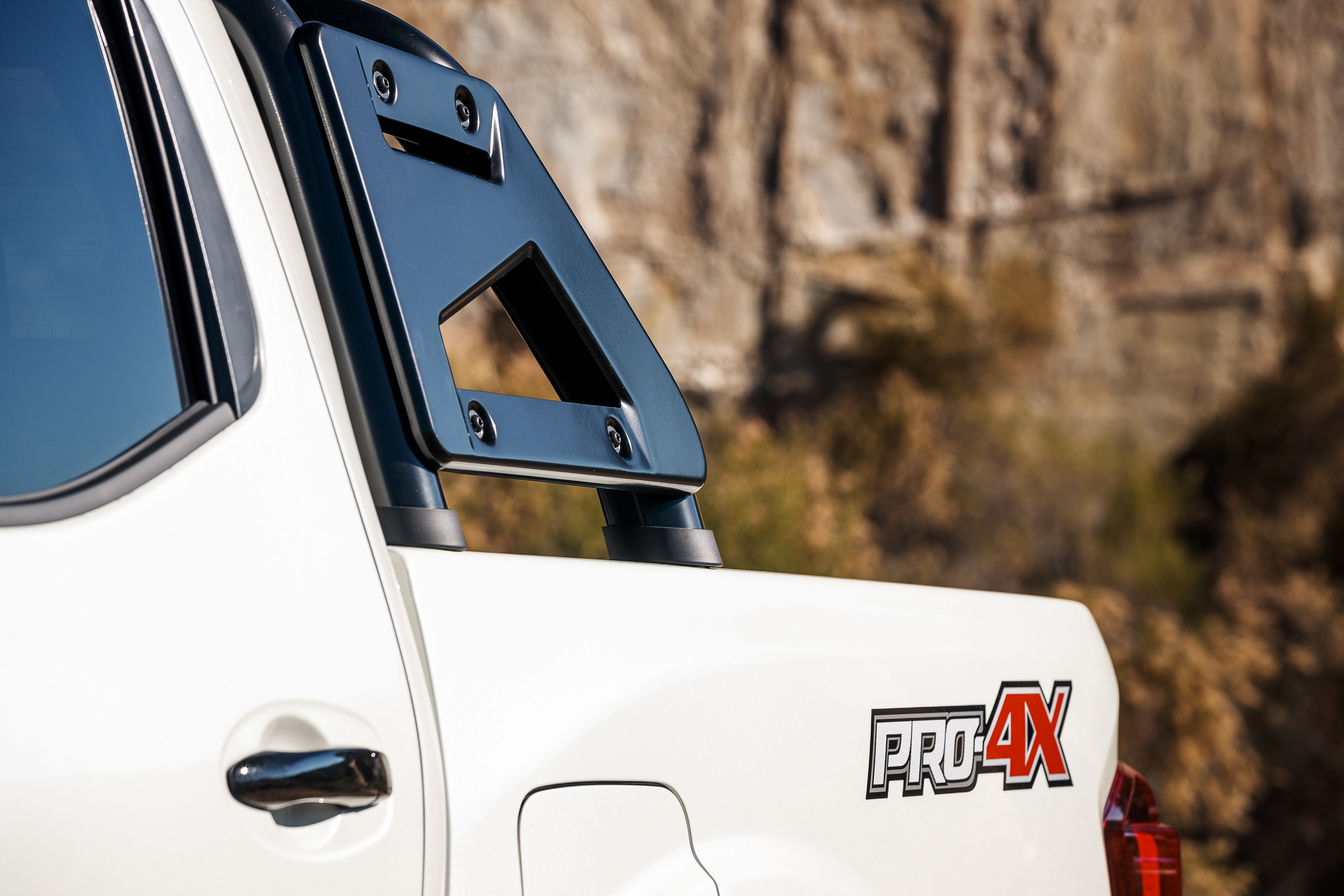
Nissan has taken the tougher look a step further with the introduction of a new PRO-4X model that is now the top-spec in the extensive Navara range. The Navara PRO-4X is only available as a 4×4 double-cab ute and starts at $59,790 with the 6-speed manual gearbox or $61,290 with the 7-speed automatic. We’ve got the Navara PRO-4X with the auto here for review.
POWERTRAIN & PERFORMANCE
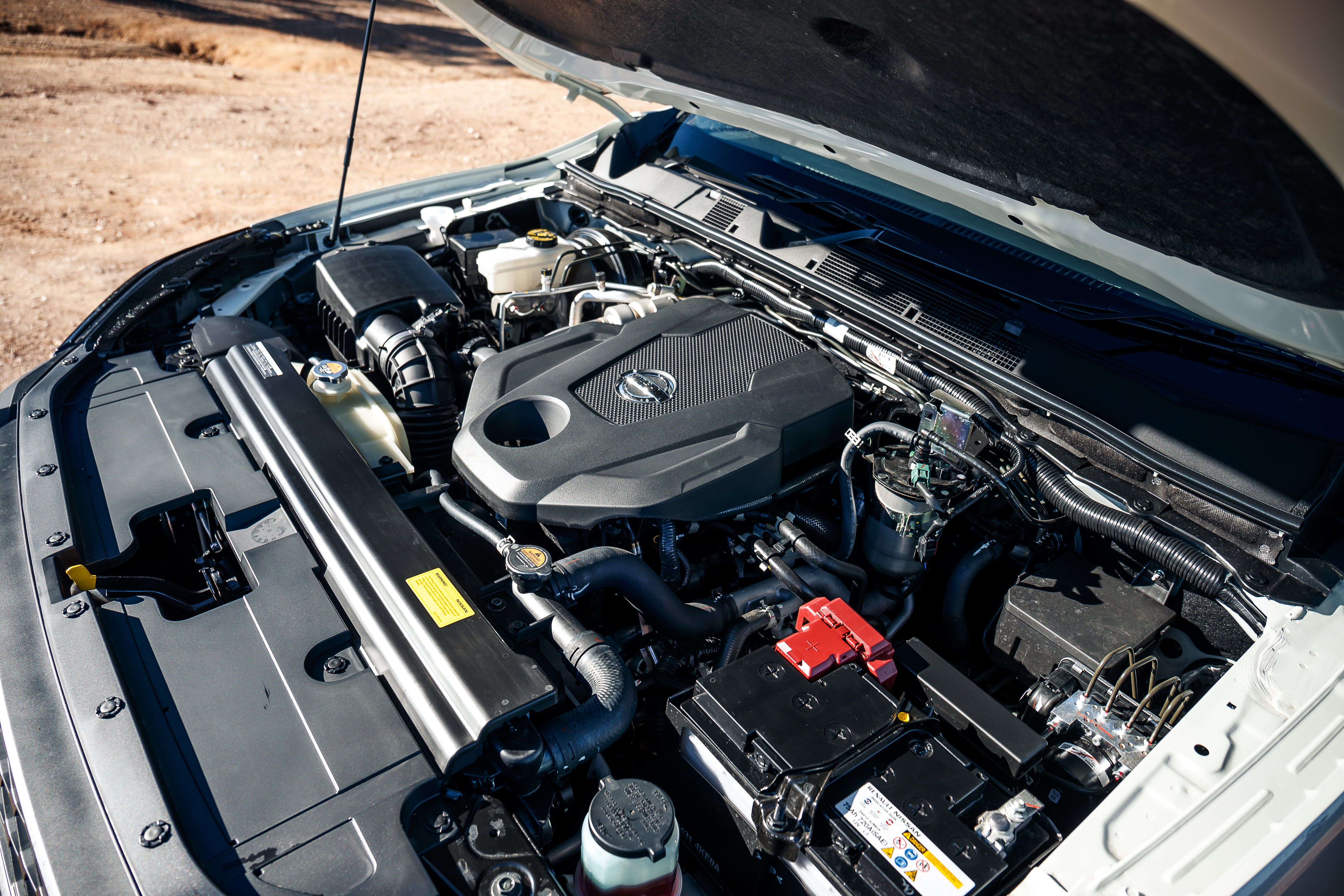
NISSAN has carried over its powertrains for the 2021 Navara update and that means the 2.3-litre, 4-cylinder diesel engine in either a single or bi-turbo induction configuration depending on the model specification. The PRO-4X gets the bi-turbo engine that makes 140kw of power and 450Nm of torque which are middle-of-the-road figures for cars in this class.
Despite the modest numbers, the 2.3 gets along sprightly with linear power delivery through the range of throttle applications, working well with the 7-speed auto to keep things moving along. The engine is smooth and responsive when asked for more and it does so with a minimum of engine noise.
A minor gripe with the auto transmission is one that applies to other Nissan 4x4s as well; the conservative calibration of the manual selection never lets the driver shift down a gear when he or she wants to. When driving off road in low range, you need to come to a complete standstill before the transmission allows you to select first gear before a descent when you expect to be able to make the selection at a crawling pace.
ON ROAD RIDE & HANDLING
THE Navara is almost unique in the mid-size ute class in that it is offered with a choice of traditional leaf-spring rear suspension or coil springs depending on the variant spec. The SsangYong Musso is the only other vehicle to offer such a choice.
As the top-spec model the PRO-4X only comes with the coils which provide a softer and more comfortable ride than the leafs which are best suited to load carrying. The coil-sprung Navara exhibits none of that harsh, jittery ride that is so typical of leaf-sprung 1-tonne utes with no added weight on the back end which, for most drivers, is most of the time.
Nissan has revised the suspension and steering calibrations several times since the launch of the D23 model to varying degrees of success and this latest setting is the closest yet to getting it right. It is compliant and well-balanced but still gets a bit upset over uneven roads where it feels like the back end isn’t working in situ with the front of the car. But that’s really come to the point of nitpicking as this is the best all-coil Navara to date, short of the aftermarket-tuned Navara N-Trek Warrior; a new version of which Nissan is yet to confirm. Fingers crossed!
We are yet to drive the 2021 Navara with a load or trailer on the back but in previous tests, we found the leaf-spring rear end is still the pick if you want to regularly haul some weight behind it. It all comes back to what you need most from the ute, comfort or carrying capacity.
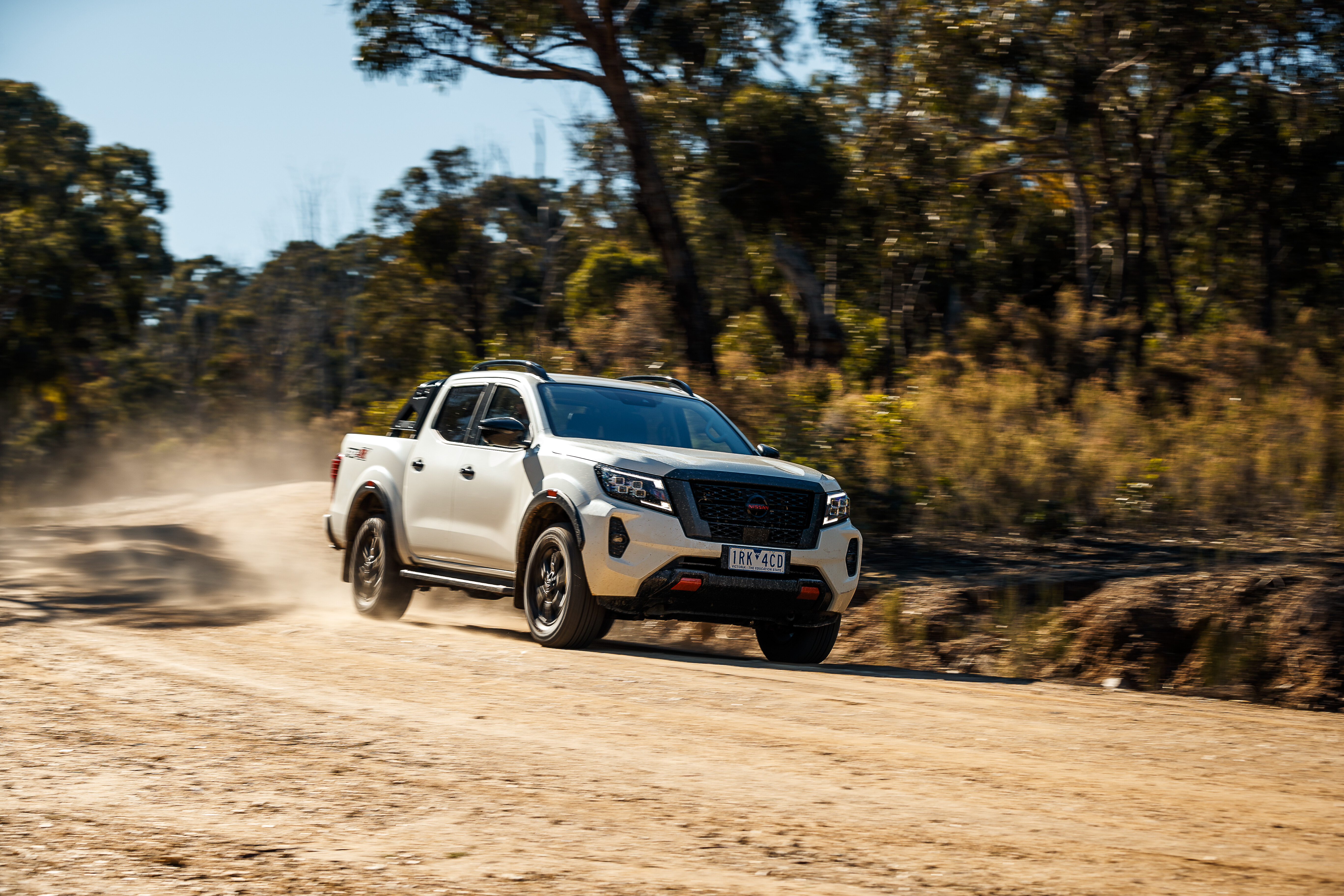
OFF ROAD
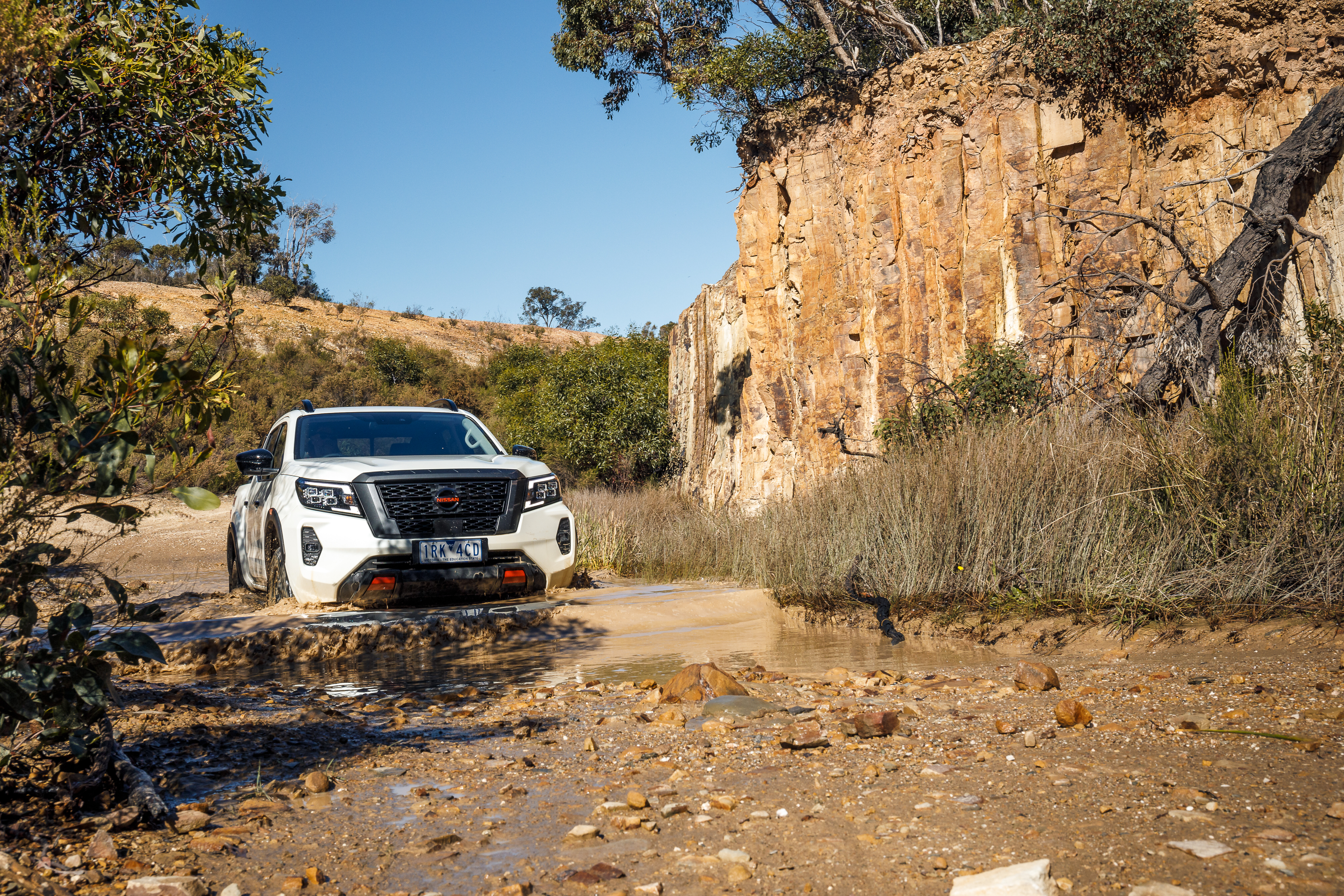
THE compliance of the coil rear suspension works well off road as well as delivering a slinky ride over uneven terrain until the suspension runs out of travel and it lifts a wheel. We did notice that the PRO-4X showed less wheel lift on a small rutted track where other 1-tonne utes lift them spectacularly, much to the disappointment of our photographer.
The 4×4 Navaras get a rear differential lock to back up the electronic traction control, however the PRO-4X failed to get up one particular section of track that we drove a Ranger FX4-Max up the week before. The calibration of the ETC could be sharper and the ETC remains active on the front wheels when the rear locker is engaged to rectify this.
The only performance effecting change to the Navara for the PRO-4X model over the other variants is the fitment of all-terrain tyres, however the Yokohama ATs are some of the tamest all terrains we’ve seen and certainly wouldn’t have helped the Navvie up that tricky pinch. The tyres are 255/65R17 in size.
CABIN & ACCOMMODATION
PERSONALLY, I’ve always liked the cabin of the D23. It’s a comfortable and well-configured cabin with all the controls easily falling within the driver’s reach. Changes for the 2021 update are evolutionary rather than revolutionary, but it all still works well. There’s an 8-inch AV screen with built-in sat-nav and Apple CarPlay and Android Auto.
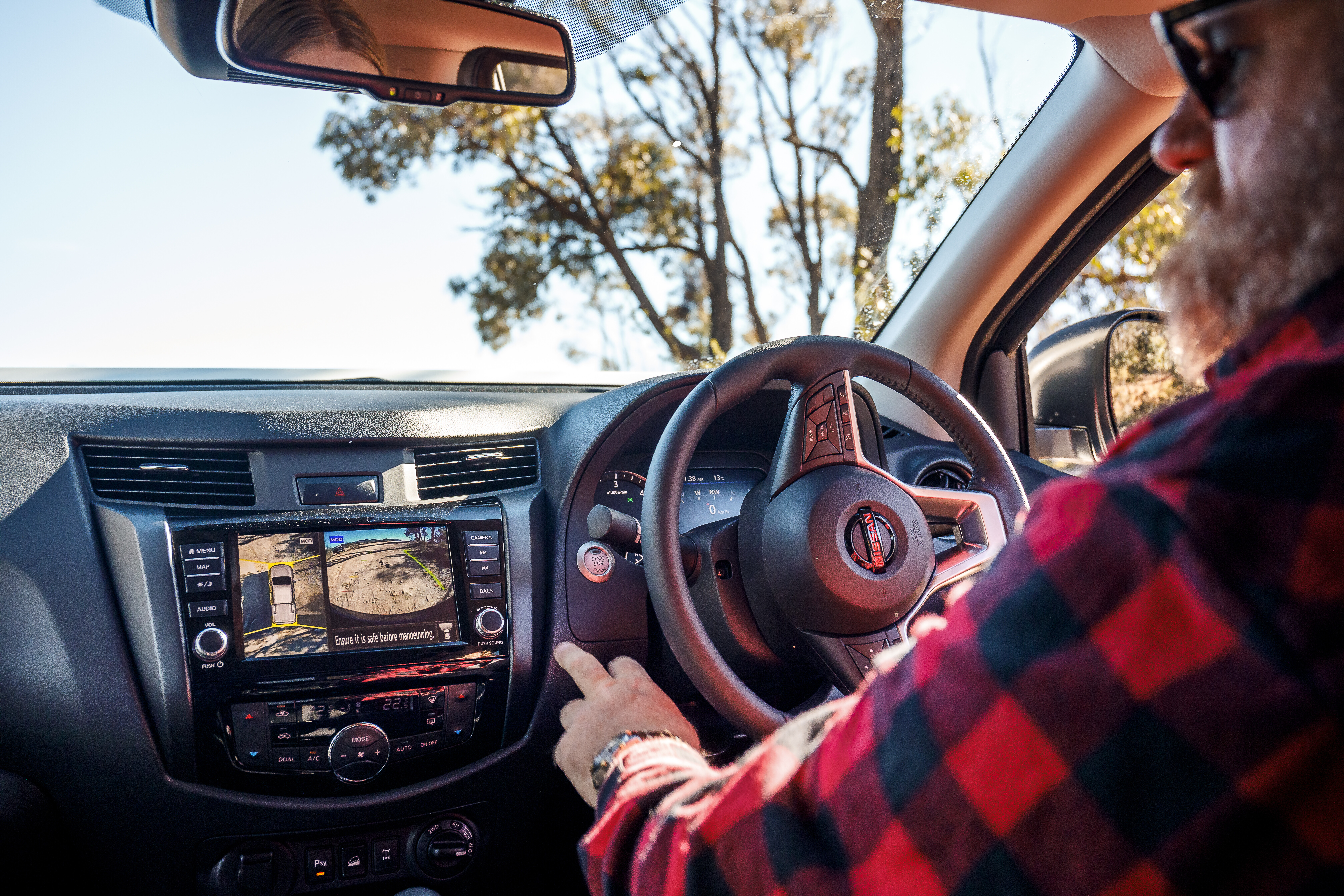
New to the screen is an around-car view for off roading. When in low range the screen shows the terrain directly in front of the vehicle and normally hidden by the bonnet, as well as down the sides of the vehicle. On road, the screen gives a 360-degree view which is great for parking.
The PRO-4X’s interior is dolled up with black accents and red badging. The leather seats are model specific but are manual adjustment with no heating function; you need to go to the lower STX grade to get power adjustment and heating where they are available as an option. The seats themselves are flat and very comfortable with plenty of adjustment to get the driver in the ideal position. This is helped by a steering column that’s adjustable for height only, not adjustable for reach.
Dual-zone climate control is standard and for auxiliary power, there are a UBS point and 3mm input at the front of the console, another USB inside the console and another one at the rear of the console for rear-seat passengers. There are also two 12-volt ciggie outlets. A novel feature is the power-opening rear window, which would be handy if you had a canopy fitted to the tub. The Navara is also available with a power sunroof, which is a rare option in modern utes.
PRACTICALITIES
NISSAN upped the Navara’s safety equation in this 2021 update with autonomous emergency braking (AEB), forward collision warning, rear cross-traffic alert, lane-departure and blind-spot warning, trailer-sway control, lane-departure intervention and most important of all, safety features, as well as a tyre-pressure monitoring system (TPMS) to keep the driver in touch with the status of the tyres.
LED headlights are still a rarity in the ute segment and not only do the PRO-4X’s quad LED lights look cool but they boost safety with a solid beam that is better than any OE halogen lights we’ve used.
The company also upped the load capacity so that all Navaras have at least a 1-tonne payload. For the PRO-4X it comes in at 1004kg, which is handy for a top-spec double-cab variant. Maybe that’s why the PRO-4X misses out on the heavier power-adjustable seats, to maintain that 1000kg-plus payload. Towing capacity is the industry standard 3500kg.
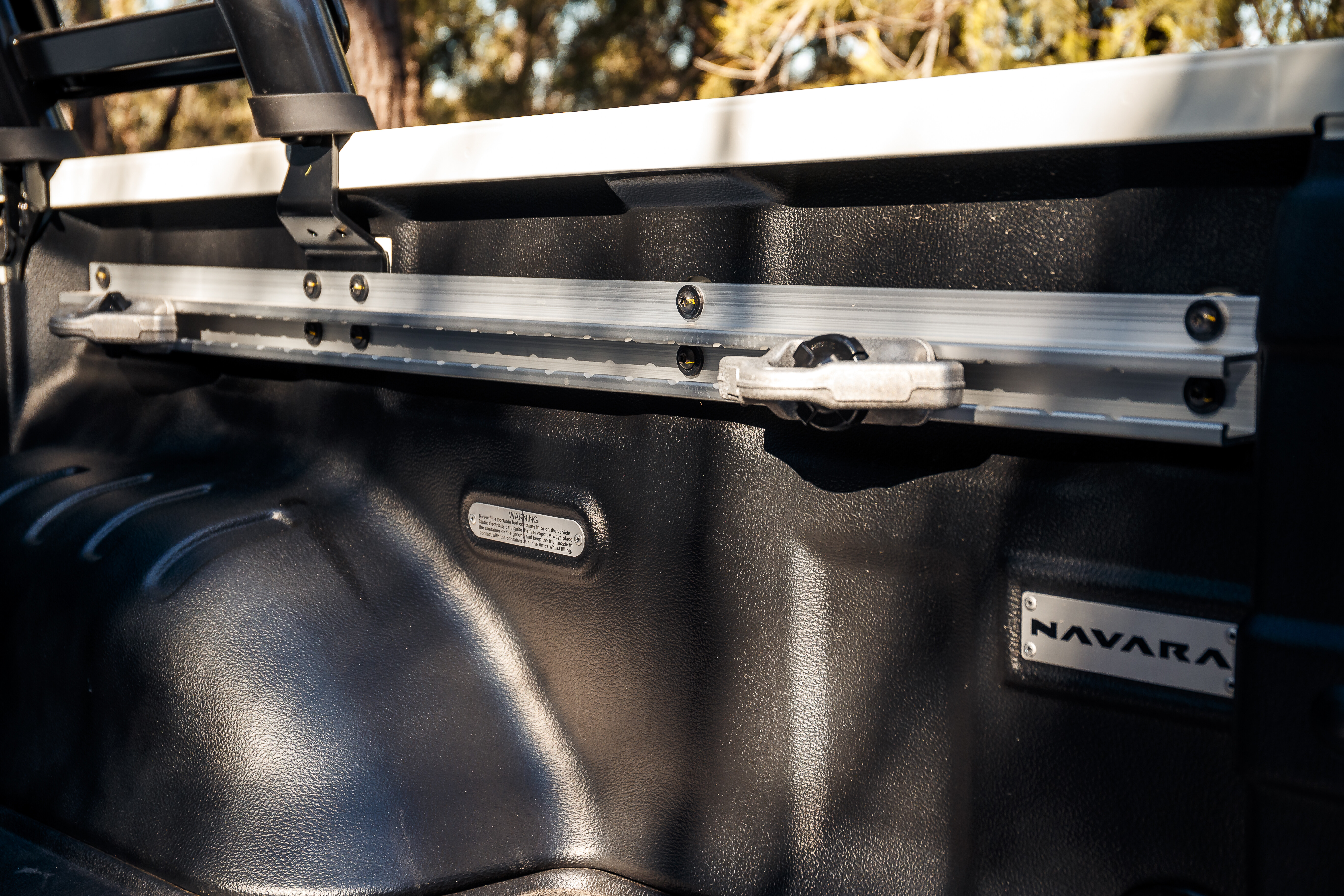
The cargo tub is deeper than in the past so there’s more capacity there. The side walls of the tub feature Nissan’s Intelli-Track adjustable lashing points, while there are four fixed lashing points down low. There’s no 12-volt power outlet in the tub. The rear bumper now has a step in it to make accessing the tub easier.
The black PRO-4X sports bar serves no purpose other than looks and in fact, can hamper access to gear in the tub.
The air intake to the engine faces forward, above the off-side headlight, and Nissan quotes the wading depth as just 600mm, so it’s below some other utes in the class.
Nissan has launched the 2021 Navara with an extensive range of factory accessories including winch-compatible bullbars, a Warn VR winch, underbody protection and an intake snorkel (no change to wading depth). Important here is that all the genuine Nissan accessories work with the updated safety features and their cameras and radar.
The Navara has always been a popular model so you can bet the aftermarket will have new accessories to fit the revised front end any time now.
VERDICT
WHILE most of the changes to the 2021 and the PRO-4X are aesthetic, the new safety equipment is a worthwhile addition and brings the Nissan up to spec with the latest and safest utes in the class.
Things like the LED headlights and TPMS might seem gimmicky but are important, practical features to improve the overall safety package. The revised suspension and steering feel better than previously, with improved driver feedback and a more integrated package.
SEEMINGLY we all know someone whose chipped LC200, LC79, Ranger 3.2 or Amarok V6 makes more torque than you could jump over: “She’s good for 800Nm mate! Goes like a rocket.” Or perhaps it may be 900Nm, or 1000Nm, or more. Just depends on the ‘someone’ in question!
Well, if you’re sick of hearing this over and over, here’s how to shut them up. Just tell them that by itself 1000Nm counts for nothing and you can produce 1000Nm by doing absolutely nothing once you have the ‘test apparatus’ in place. Here’s how it works.
You need a decent-sized mate who tips the scales at 102kg. You also need a metre-long truckie’s wheel-wrech with an old metal tractor seat welded to one end of the spanner. The same tractor that supplies the seat also has rusted near-solid wheel nuts on its large-diameter rear wheels. Attach the spanner to one of those wheel nuts so that the spanner is horizontal to the ground and then have your mate sit on the tractor seat welded to the other end of the spanner, without his weight touching the ground.
Now have a beer as that is all there is to be done. Thanks to the force of gravity acting down on your mate there’s a 1000Nm twisting force (or torque) being applied on the wheelnut at the other end of the spanner.
It works like this. Gravity (measured as an acceleration of 9.8 metres per second per second) acts down on your mate’s 102kg mass to produce a downwards vertical force of 999.6 (9.8 x 10²) Newton on the end of the spanner, Newton (N) being the standard measurement of force in the metric system.
One metre away at the other end of the spanner, the twisting force or torque being applied to the nut then becomes 999.6 Newton-metres (Nm). Let’s call it 1000Nm. If the spanner was two metres long, and thus providing double the leverage, you’re looking at 2000Nm of torque at the nut.
Now while all of that may sound impressive, it unfortunately counts for nothing. Yep, nothing. With no movement at the nut you’re not producing any power, and power is what gets things done. Torque is just the enabler.
If the rusted-on nut starts to turn on the stud then you’re producing power, which is being spent overcoming the friction between the nut and the stud.
“Huge torque numbers are only useful if you can produce them at significant rotational speeds”
When it comes to engines, huge torque numbers are only useful if you can produce them at significant rotational speeds. Our 1000Nm being produced at an engine speed of just one revolution per minute would produce just over one tenth of one kilowatt (kW). But if you can produce 1000Nm at 1000rpm you’re already up to a handy 105kW, while 1000Nm at 2000rpm will net you close to 210kW, which is more than handy.
Power is of course, a product of torque multiplied by engine speed. For any given engine speed, doubling the torque will double the power. Likewise, for any given torque output doubling the engine speed will double the power.
So by themselves, huge torque numbers count for nothing. But if you have lots of torque, then it’s a lot easier to produce effective power. And it’s power, rather than torque, which is the ultimate arbiter of the performance capability of your 4×4, even if the torque flavours the nature of the power delivery.
Without useful torque an engine has to rely on high revs to make decent power, which is not ideal for many reasons, not the least being driveability and reliability.
AS the double-cab mid-size ute market continues to flourish, vehicle manufacturers are rushing to introduce models at the upper end of the price range – as this is where the most money is to be made and where the models are that buyers are wanting.
It’s no longer the case that a simple Ranger Wildtrak or Hilux SR5 will feed the greed; buyers’ want more and are prepared to pay for it. $60K and up is where the 4×4 ute market booms and where the manufacturers like to be selling their utes.
Now these manufacturers are only too keen to load their products up with faux-leather seats, larger diameter alloy wheels, plastic bolt-on accessories, gaudy stickers and a swathe of other goods that allow the car companies to charge more for the cars, but don’t really do anything to improve the driving experience of the vehicle. Buyers are still flocking to aftermarket accessory manufacturers to get gear that actually makes the cars better and the OEMs are missing out on their dollars.
One OEM that has got it right is Ford Australia, its Ranger Raptor a hit with its bespoke suspension and extra kit, but those features made it a stand-alone model and a pricey one at that. Still, the price hasn’t stopped buyers from snapping up the off-road ready Raptors.
Now Ford is taking some of that technology developed by Ford Performance for the Raptor and trickling it down to lower priced variants to make it more accessible to more buyers.
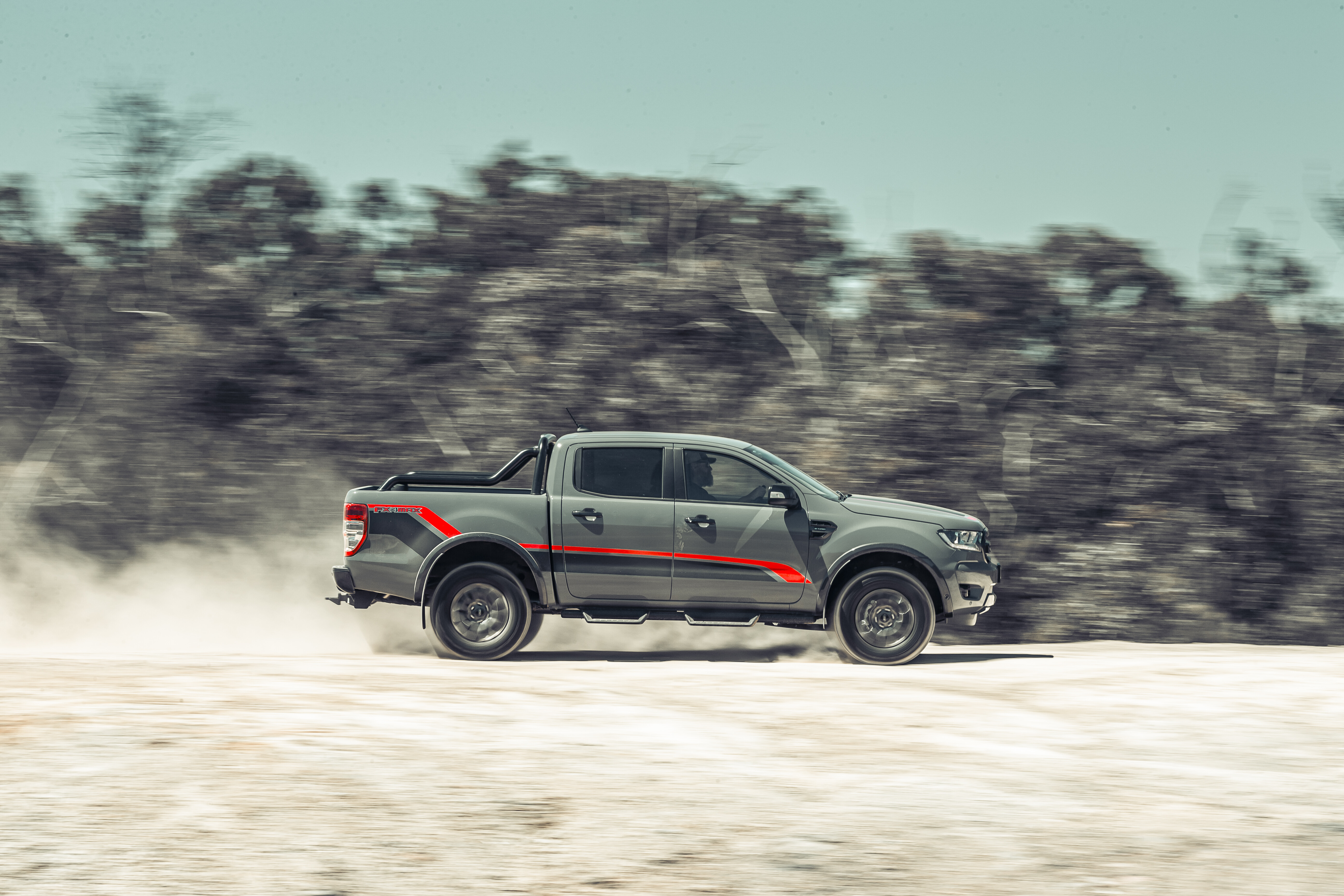
Welcome to the Ford Ranger FX4 MAX, a new variant to the Ranger line-up that borrows from the Raptor’s styling and employs some of its suspension technology, while also addressing some of the limitations that kept the Raptor off the shopping lists of some buyers.
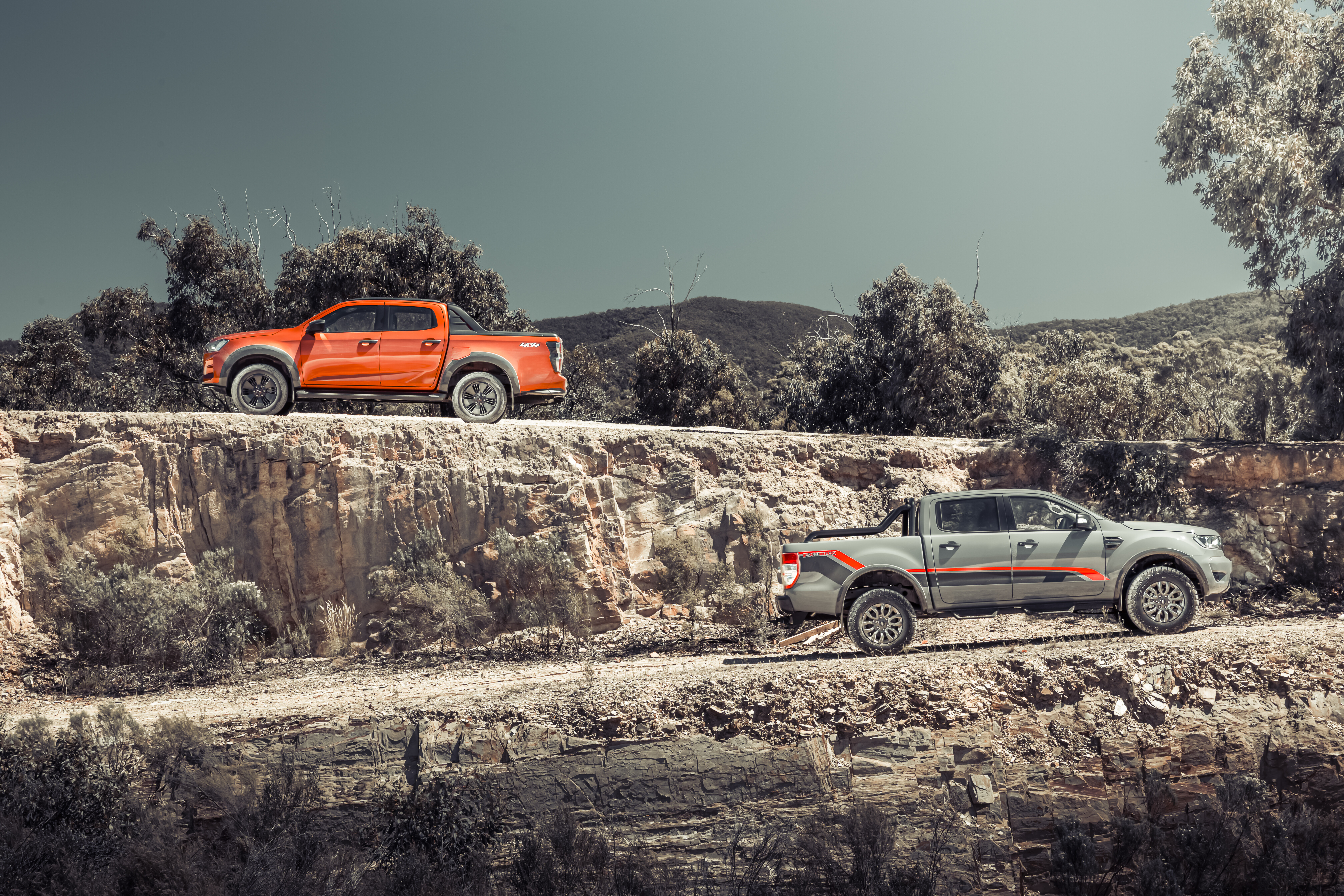
We’ve lined it up here with the top-of-the-range model of the new kid on the block, Isuzu’s D-MAX X-Terrain. At $62,900 the X-Terrain is priced to compete with the $63,290 Ranger Wildtrak, but we look to find out if its worth the extra few grand to step up to better mechanical components than just bling and add-ons.
FORD RANGER FX4-MAX
AT $65,940 the Ford’s latest Ranger slots in between the 2.0-litre-powered XLT and Wildtrak double-cab models in the existing line-up. It pays tribute to the Raptor range-topper with its borrowed grille and the availability of the previously exclusive to Raptor Conquer Grey paint colour but the FX4 MAX is more than a Raptor-lite styling exercise, it’s what’s under the skin that makes it special.
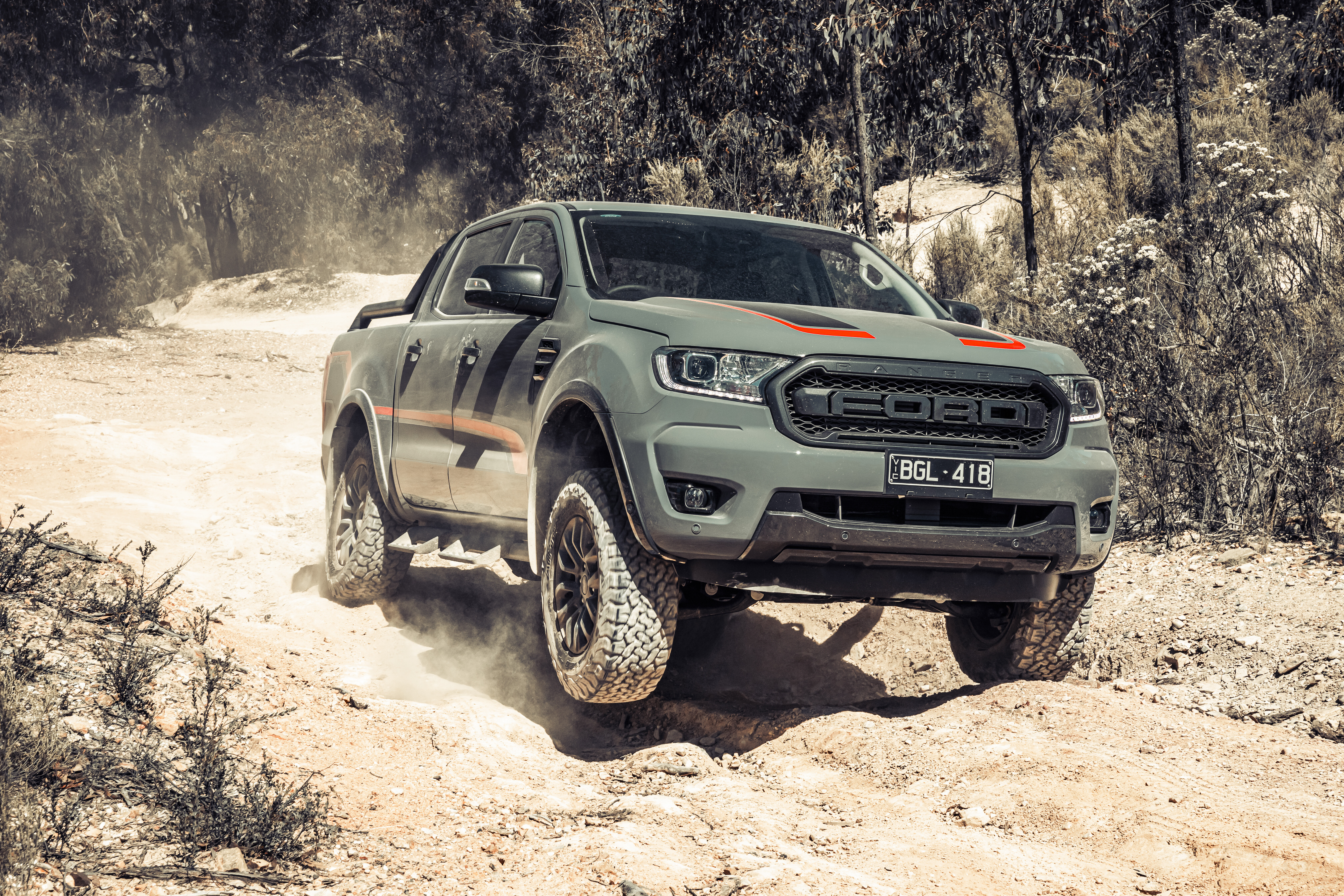
The FX4 MAX is more than a Raptor-lite styling exercise, it’s what’s under the skin that makes it special
POWERTRAIN & PERFORMANCE
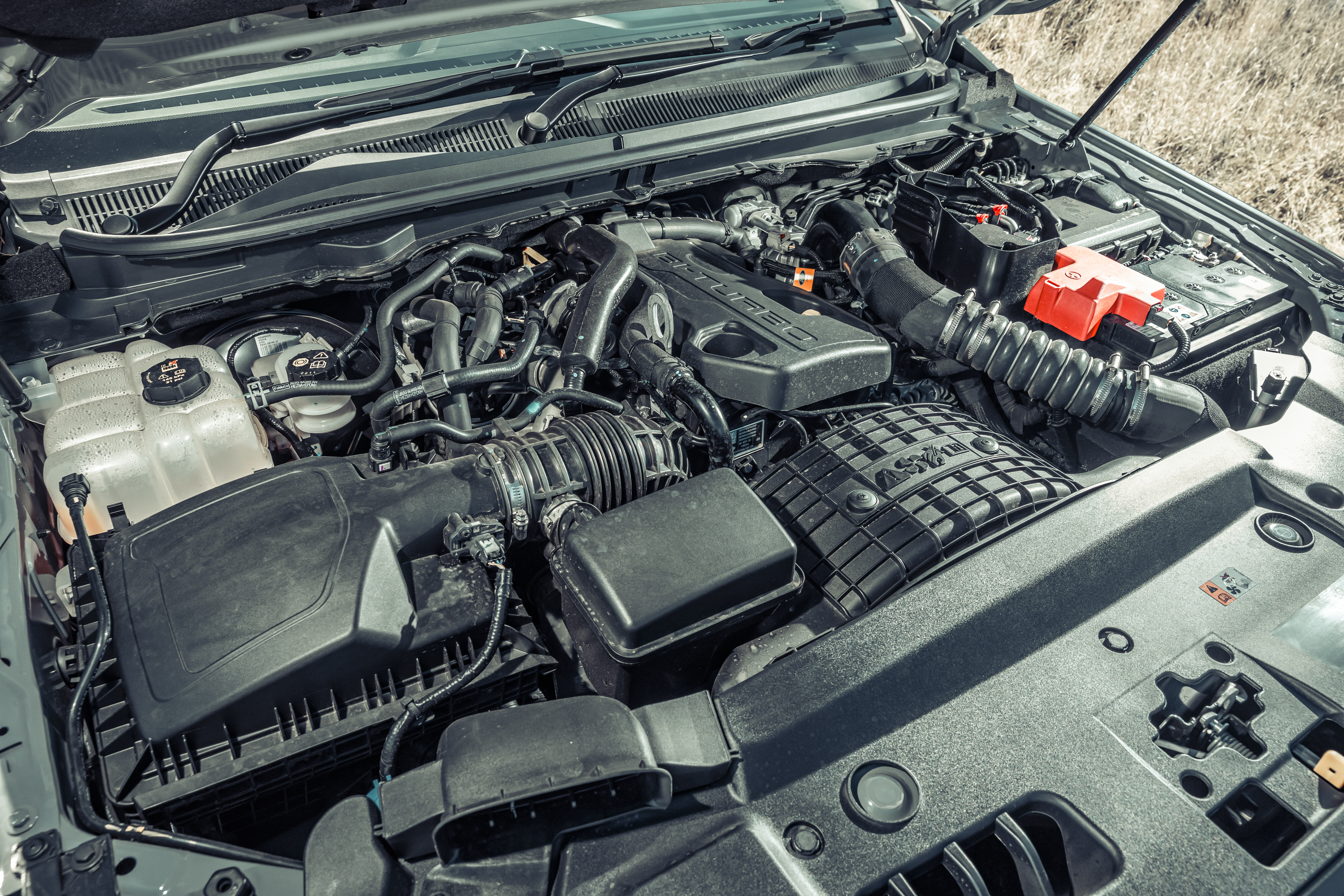
THE Ranger FX4 MAX is only offered with the small 2.0-litre diesel engine and 10-speed auto transmission option and not the larger 3.2-litre diesel and manual gearbox offered elsewhere in the Ranger line-up. This is not totally a bad thing as the 2.0L makes a peak 500Nm of torque at 2000rpm as opposed to the bigger engine’s best of 470Nm, and is more economical.
As we’ve said in previous tests of Rangers with this powertrain, the 2.0L feels like it is working harder to make that grunt while the 3.2L does it lazily and the smaller engine needs every one of those 10 ratios in its transmission to keep the Ranger moving forward.
For its part, the 10-speed is generally smooth and efficient but it can get a bit lost between gears at times, especially at part or varying throttle applications. The tuning of the throttle itself could also be improved on, as it is slow to react requiring a fair amount of input to get the car moving from a standstill and then lunges forward requiring you to immediately back off. This is one car that would really benefit from an aftermarket throttle controller or even an OE one like Toyota fits to the Hilux.
The remainder of the drivetrain is standard 4×4 ute fare; part-time dual-range four-wheel drive with a driver-selectable locking rear differential. As in other Ranger models, the electronic traction control remains active on the front axle when the RDL is activated to give the car the best chance at getting over difficult terrain.
ON-ROAD RIDE & HANDLING
THE Ranger FX4 MAX’s best parts are in its chassis tuning and while primarily designed to improve off-road and gravel-road performance, they are equally as impressive on the blacktop.
The model-specific calibrated springs – coils up front and leafs under the back – and two-inch monotube Fox shock absorbers work with a thinner front swaybar to better control the body movement over any surface. This is a good thing for both performance and safety as the driver is more relaxed and less fatigued over longer drives.
The all-terrain tyres and 31mm taller ride height (over an XLT Ranger) do nothing for the dynamics and on-road traction, but these factors are more than tamed by the quality suspension components.
OFF ROAD
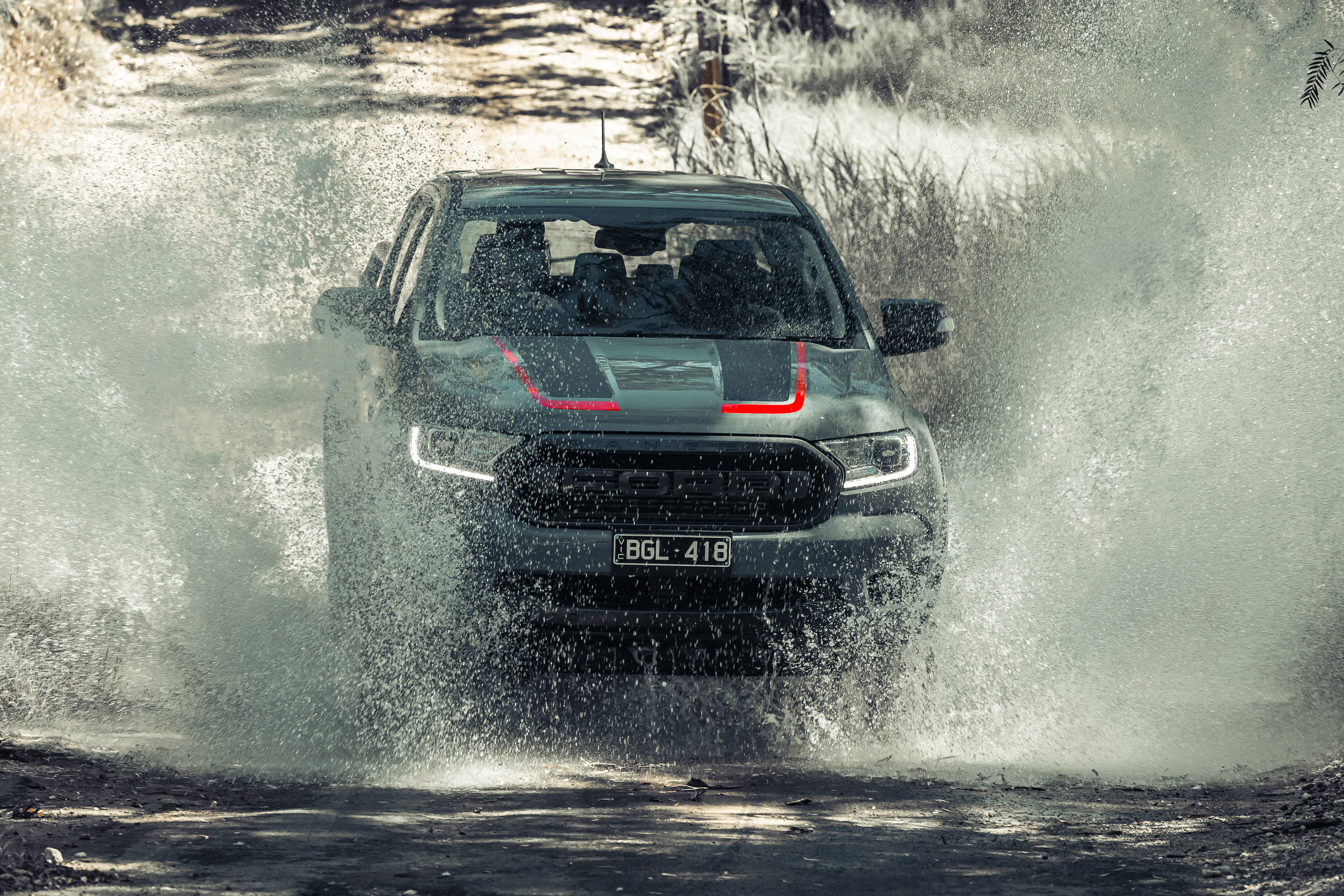
FORD’S PX2 Ranger has always been one of the better performing mid-size 4×4 utes when taken off road and the Raptor variant is arguably the best. With its better equipped and calibrated suspension, increased ride height and BF Goodrich all-terrain tyres, the FX4 MAX lies somewhere in-between the Raptor and the standard varieties, so is still near the top of the class.
Those Fox shocks, while not the full internal by-pass dampeners as fitted to the Raptor, provide that much appreciated control over the roughest terrain, the extra height gives ground clearance while the tyres supply traction and more importantly, durability. The rear Fox shocks are the remote-reservoir type for long duration of off-road pounding without fade.
Ford also fitted hydraulic rebound stops front and rear to increase large amplitude control without compromising on-road comfort. The specs of the springs allow more axle travel as does the smaller diameter front sway bar. The way Ford allows the ETC to remain active across the front axle when the RDL is engaged gives the best tractive ability short of front and rear lockers.
A couple of off-road negatives include the design of the FX4 MAX-specific side-steps which instead of being one long step, have two separate steps along their length, giving you twice as many edges to get hung up on. Also, the way the 2.0L engine draws its intake air from above the off-side headlight instead of inside the ’guard as the 3.2L does, makes it more susceptible to sucking in water on creek crossings.
CABIN & ACCOMMODATION
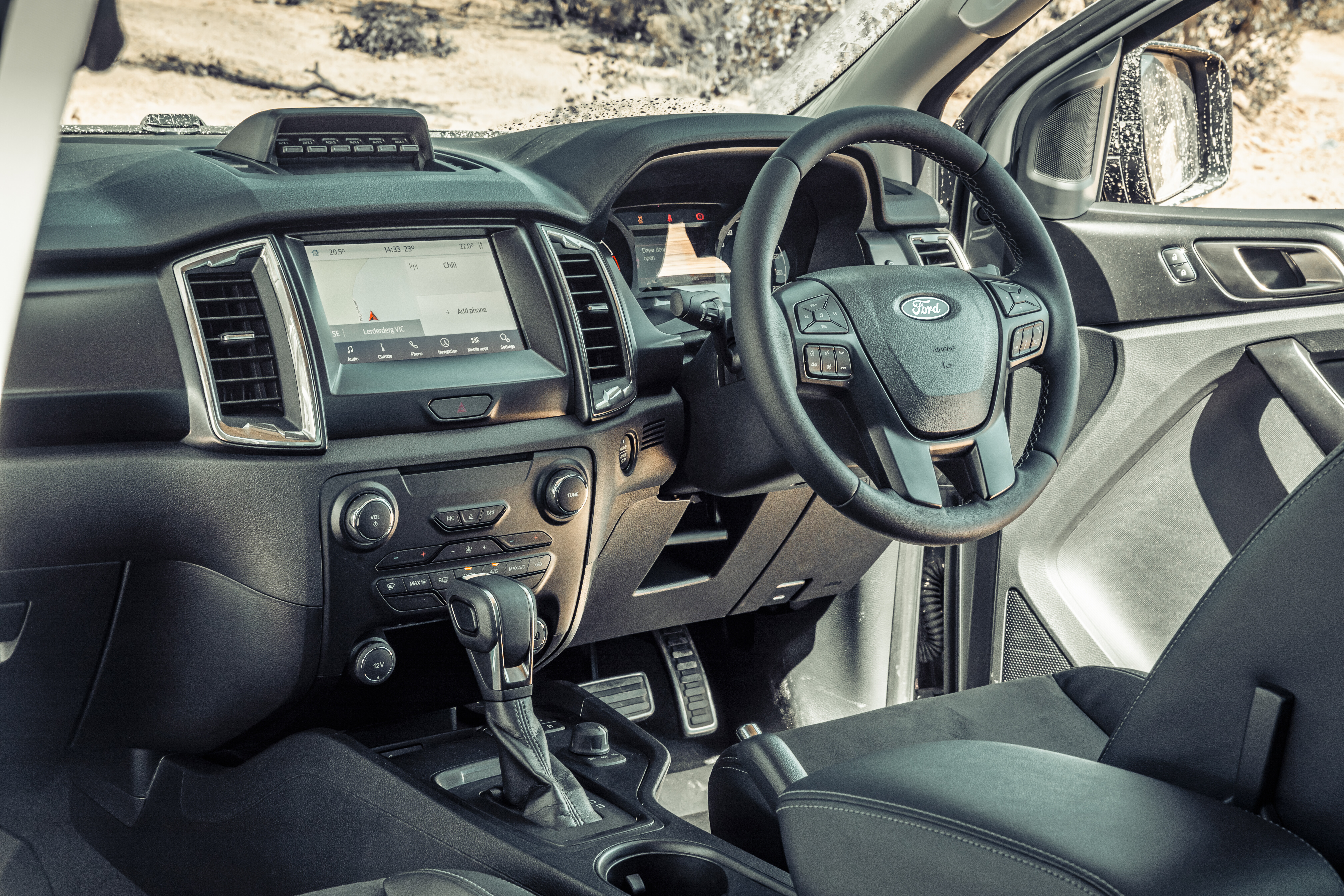
THE Ranger’s cabin has always been a nice place to ride and drive and the FX4 MAX is treated to a few dress-ups such as suede-trimmed seats with model-specific stitching, a thick leather-wrapped steering wheel, sports pedals for the driver and all-weather floor mats.
A unique inclusion and something we’d like to see filter through to other Rangers, is the auxiliary switch panel that sits high on the dash for all your accessories such as lights, fridges, winch and whatever else you need switches for. The Ranger’s dash is notably lacking in anywhere to put extra switch gear, so this would be great to offer as a retro-fit accessory itself. To help power additional accessories, the FX4 MAX gets an uprated 250amp alternator.
A few things we don’t like – still no reach adjustment for the steering column, the buttons for the HVAC are still small and dark, and those new side-steps are so wide you have to step over them each time you get in and out of the car.
PRACTICALITIES
THE big positive to the FX4 MAX’s uprated suspension is that unlike the Raptor, this car retains it 3500kg towing capacity and 981kg payload thanks to its use of leaf springs under the back.
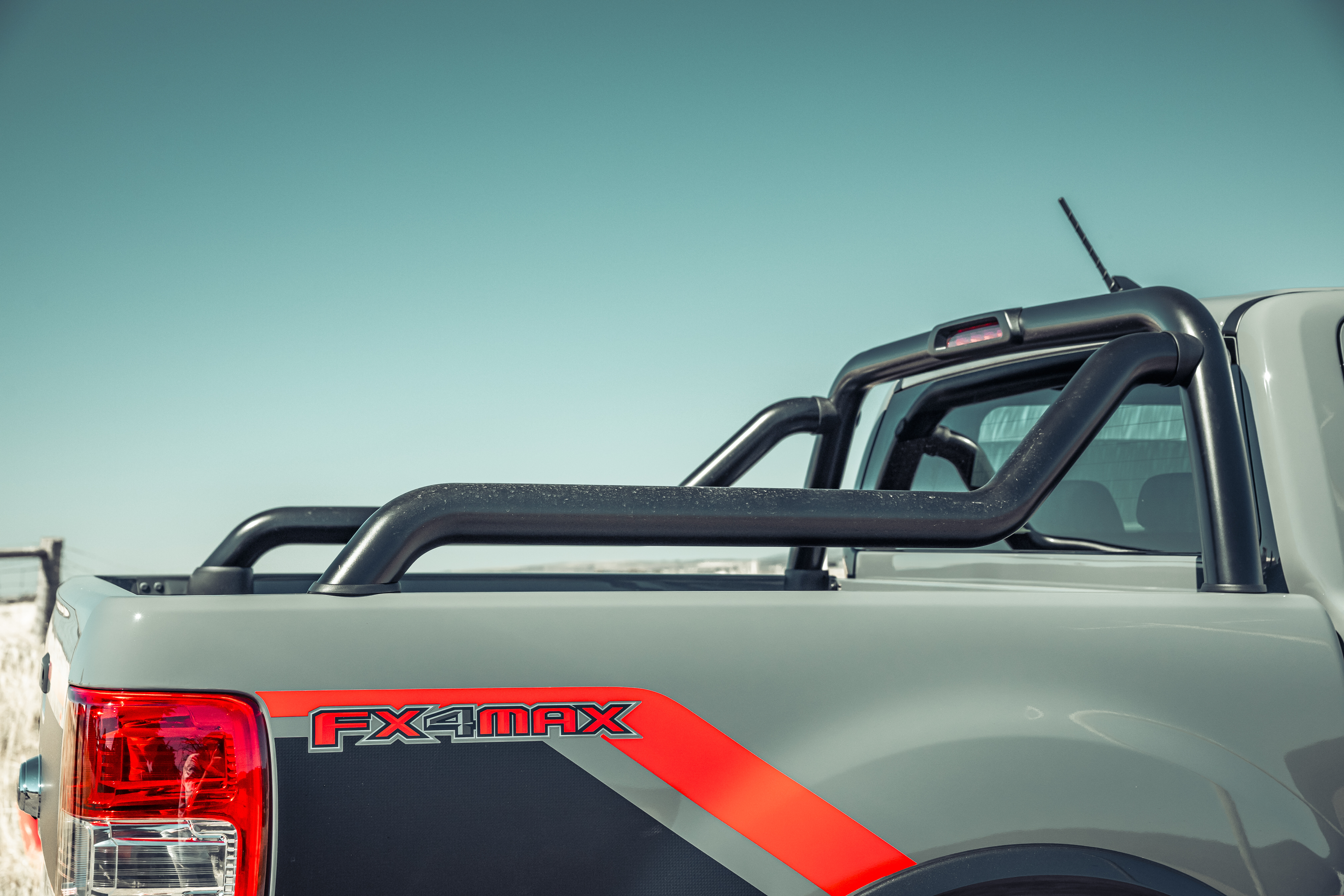
The cargo tub is nice and big to carry that load with tie-downs in the corners and a 12-volt power outlet fitted, but the so-called sports bar does nothing but get in the way when trying to access or load from the sides of the vehicle.
The $700 optional stripe package as fitted to this vehicle failed to make the car any faster even though the stripes are red!
The 265/70-17 BFG All Terrains are a common size if you need to change them and will do for most users. The spare is a matching BFG as well. All-weather floor mats are a welcome inclusion, while the 800mm quoted wading depth is handy although we’re still wary of that air-intake location.
ISUZU D-MAX X TERRAIN
ISUZU’S all-new D-MAX ute has been a hit since it landed in Australia back in September 2020, so much so that supply has had trouble keeping up with demand. That said, it’s now a regular among the top 10 selling 4x4s in the country and this shows no signs of slowing down.
The D-MAX X-Terrain caps the four-model line-up and all of them are powered by the same drivetrain and include the full suite of safety features. It’s only the level of comfort and convenience, and appearance features that vary across the range and at $62,900, the X-Terrain has the lot of them.
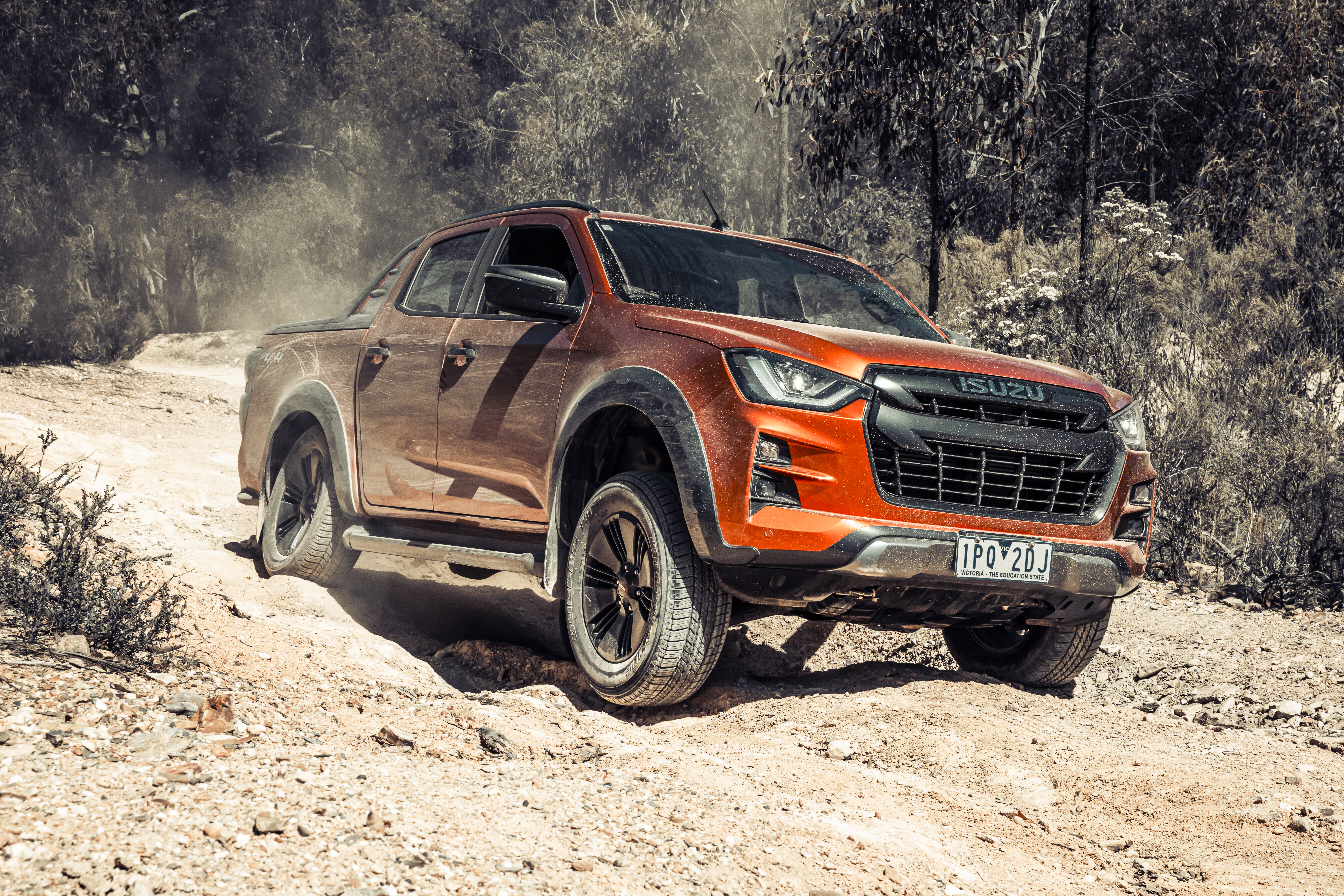
POWERTRAIN & PERFORMANCE
AS mentioned, all D-MAXes get the same powertrain, so that means the venerable 4JJ engine which in this latest iteration has a new engine block, cylinder head, pistons, fuel injection system and turbocharger; is essentially a new power plant but hopefully will retain the legendary dependability of this family of engines. These changes boost the engine with an extra 10kW and 20Nm to deliver 140kW at 3600rpm and 450Nm from 1400 through to 3250rpm.
The performance still falls below the 500Nm as delivered by the Ford engine and you feel this behind the wheel no matter the terrain. It might feature many new parts but this still feels like an older generation of diesel engine compared to the class leaders.
The 6-speed auto is the latest generation of that box by Aisin and as always, offers nothing to complain about. The 4×4 system is part-time with low-range and new to the D-MAX’s drivetrain, is a driver-actuated rear diff lock where none had been fitted in the past.
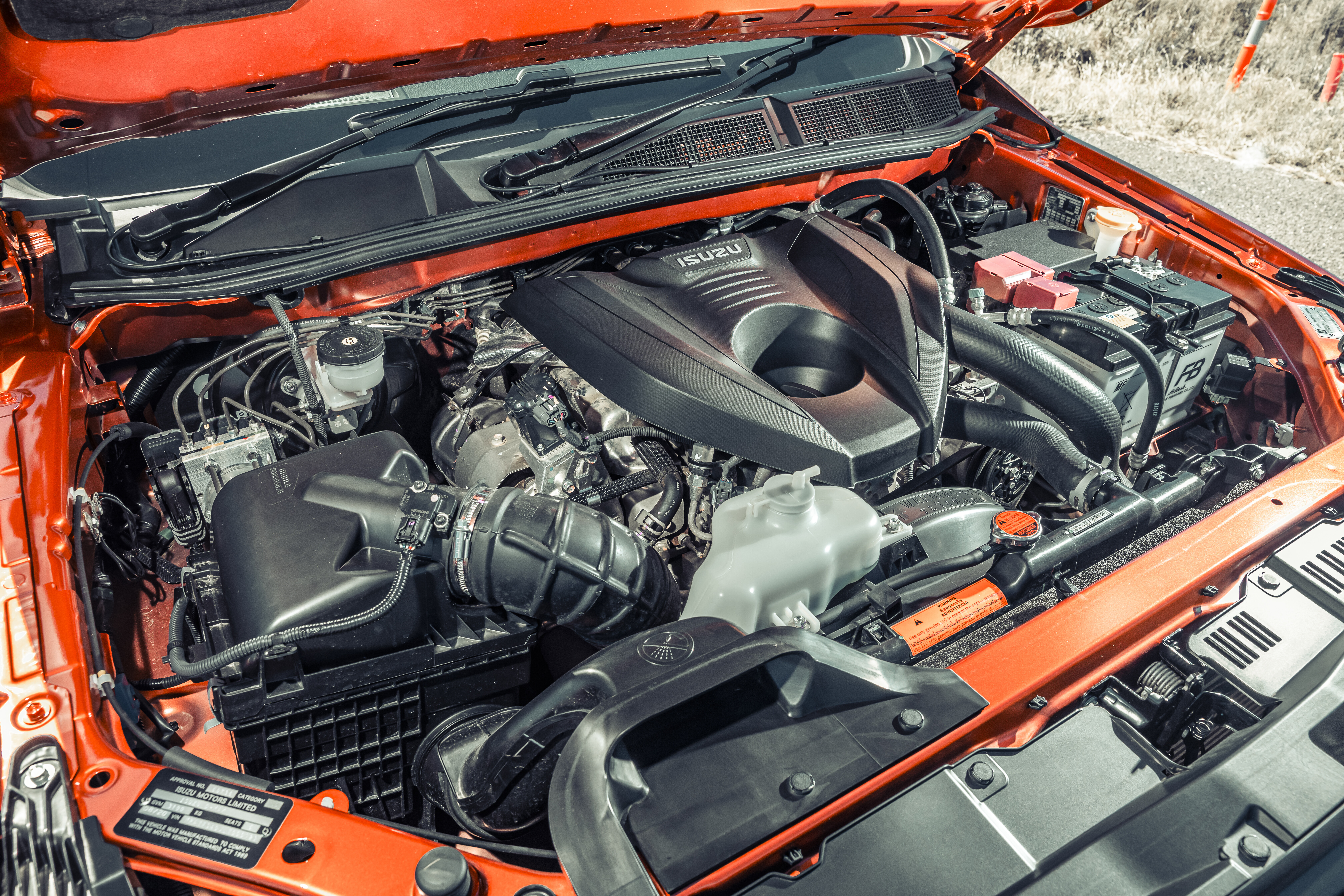
ON-ROAD RIDE & HANDLING
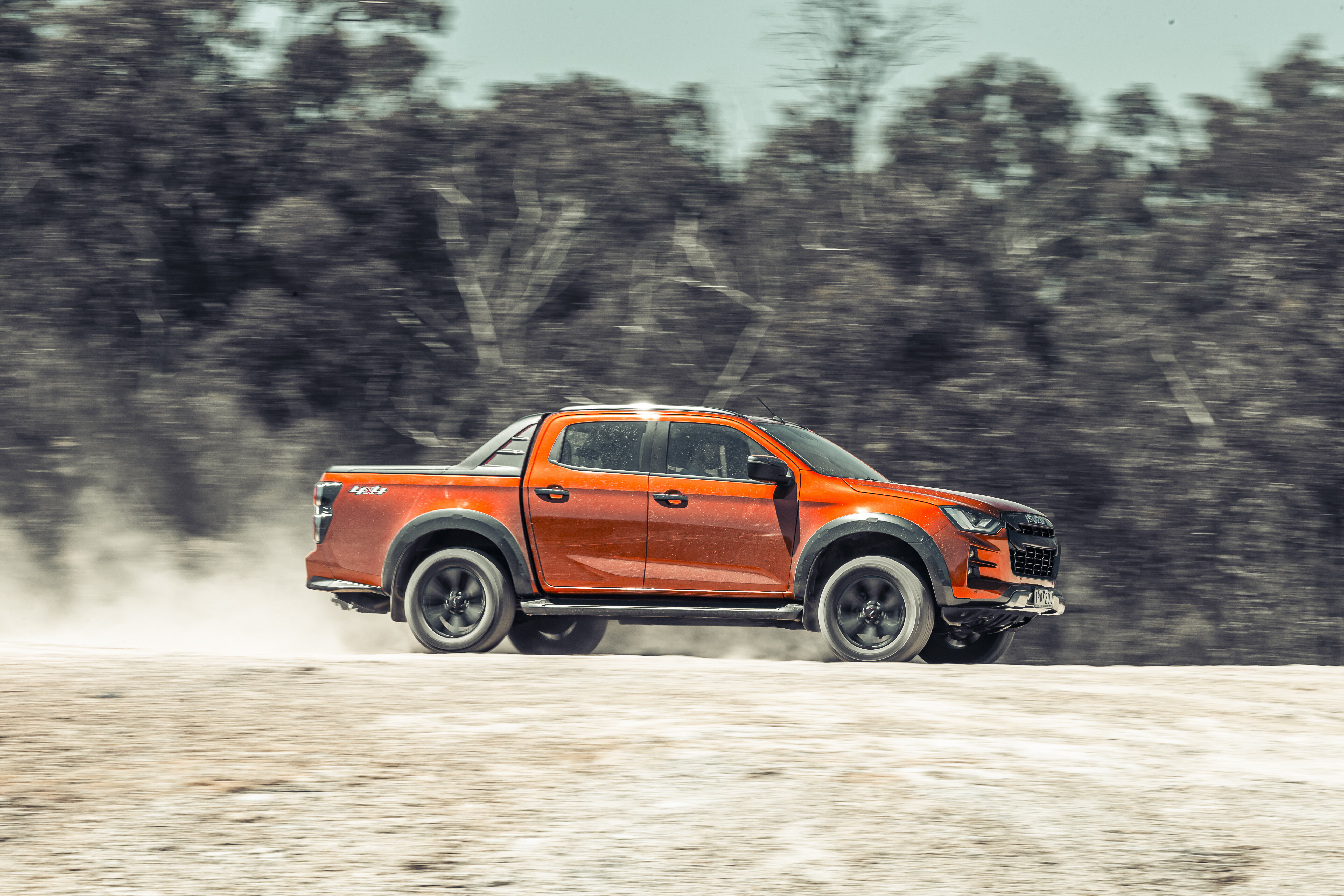
WITH a new chassis and redesigned suspension the latest D-MAX is a big step up in ride and handling over the previous generation. It still follows the tried and proven formula of IFS with coils up front and leaf springs over a live axle at the back, but fresh calibrations and mountings set it apart.
Isuzu offers two different spring settings in the D-MAX with firmer leaves under the two lower-spec ones and softer springs under the upper-spec models like the X-Terrain here. The leaf packs are unusual in that they use only three leaves in them and in this X-Terrain, they seem to struggle a bit with taming the rear-end of the car; and this is without a load on board. The front-end feels better controlled, but it’s like the rear-end is something from another car altogether.
This big revelation when driving the D-MAX back-to-back with this Ranger is the massive difference a set of quality aftermarket shock absorbers can make to any vehicle.
The Isuzu’s heavy-hitting line-up of active safety features will be appealing to many buyers, and there’s no denying they can save lives and limit injury. However the calibration of the some of the self-steering and lane keeping features on the D-MAX is too extreme and negatively affects the drive on multi-lane and country roads.
OFF ROAD
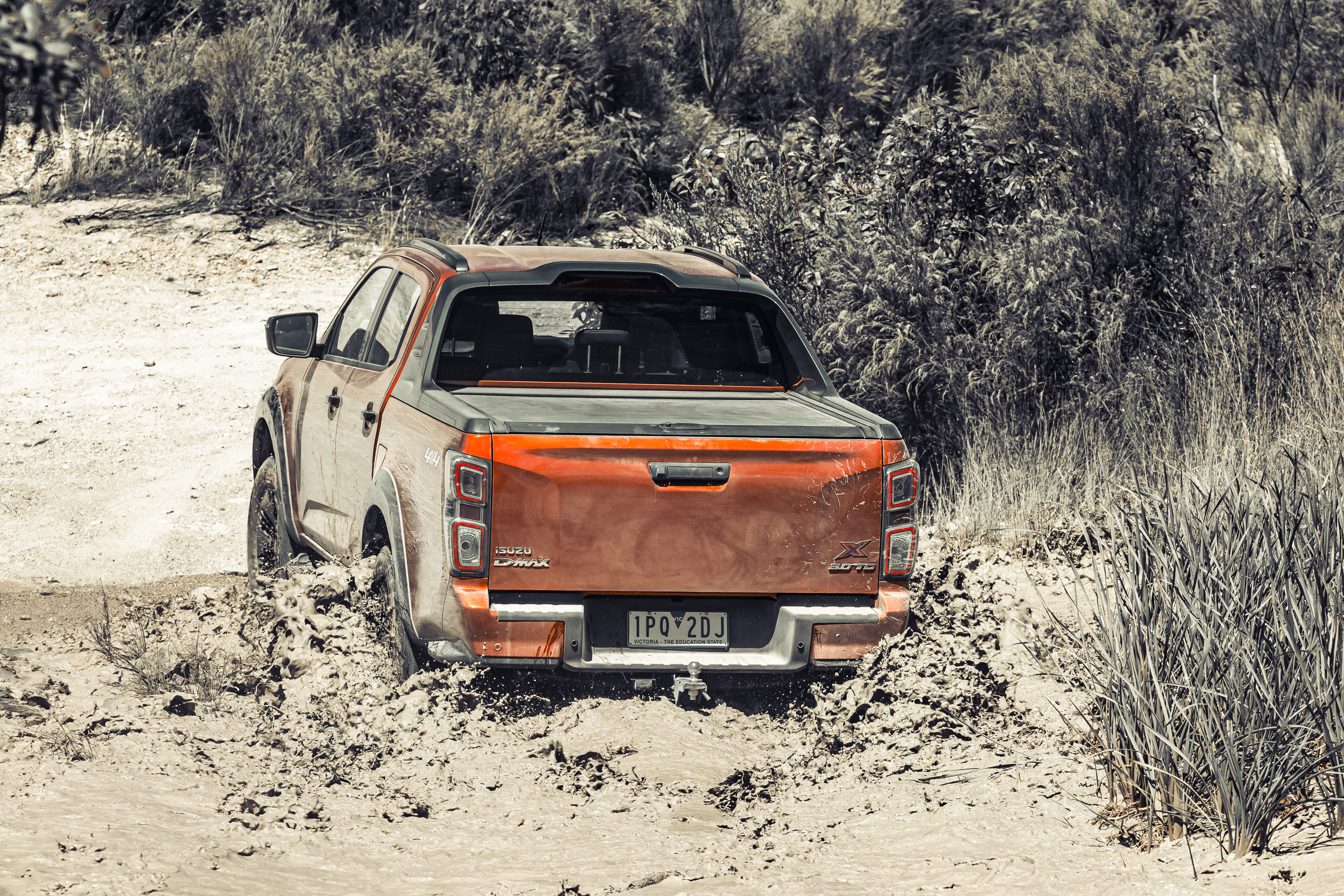
THE biggest improvement to the D-MAX’s off-road ability is the inclusion of the RDL, even though its use cancels out the ETC in full so the front axle becomes a single spinner. The calibration of the ETC is still a bit slow, however it is better than that of the old model. A bit more wheel travel at the rear axle helps keep the tyres on the deck so as to not rely too heavily on the traction aids.
Short front and rear overhangs help with clearance and Isuzu quotes an 800mm wading depth for the D-MAX even though the air intake is located above the grille in a similar way to that on the 2.0L Rangers.
Driving on gravel roads is vastly improved over the previous D-MAX although that loose rear-end still requires the driver’s attention. Some of the electronic driver’s nannies can be annoying when driving off road, especially passing through long grass or water when all sorts of systems start to sound alarms.
CABIN & ACCOMMODATION
WITH the X-Terrain being the top-of-the-line D-MAX, it comes pretty well-loaded inside and the interior of all new D-MAXes are a step up from the old models in terms of fit and finish.
There are leather seats with power adjustment for the driver’s pew, no heating or cooling though; tilt and reach adjustment for the steering column; a big 9-inch AV screen with all the usual connections but it uses small buttons instead of tactile dials for controls; climate control; adaptive cruise control (which is only an option on the FX4 MAX); and a suite of electronic safety features that put the D-MAX at the head of the mid-size LCV class.
All up, the new D-MAX cabin is a nicer place to ride and drive than it ever was in the past, particularly in the two upper-spec models.
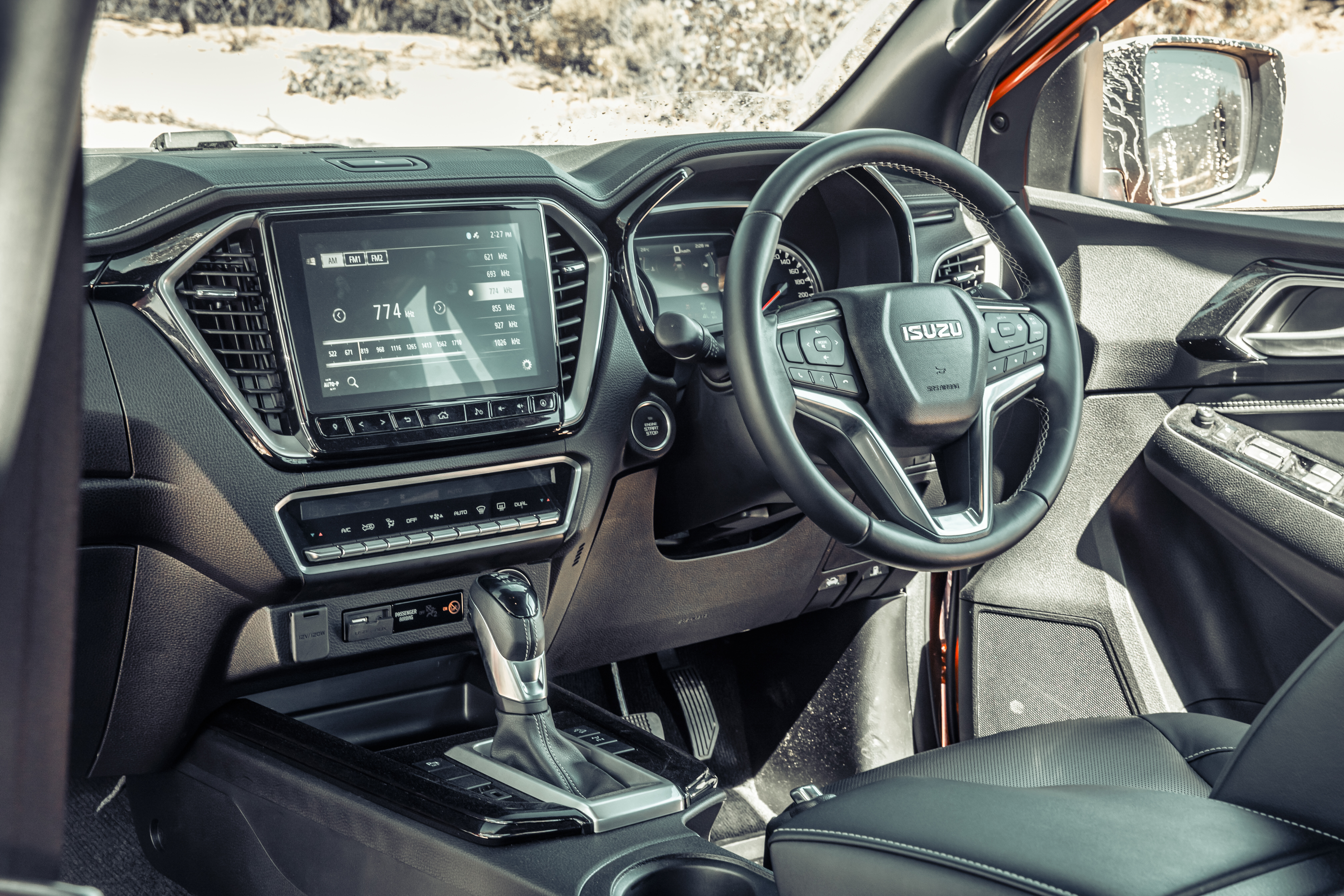
PRACTICALITIES
ALL 4×4 D-MAXes get the class standard 3500kg towing capacity and in this top-spec’d (read heaviest) X-Terrain, maintains a 970kg payload. The tub is spacious and includes a roller hard cover. These cars will be great for security and weather protection but can also be a hindrance, depending on what you’re carrying.
The sail-plane is exclusive to the X-Terrain but serves no purpose and is for styling only and it too can get in the way when loading the tub. There are four tie-down points in the tub but no 12-volt power outlet. The 800mm wading depth and 18-inch wheels are standard, although you can fit 17s as specified on lower-spec models if desired.
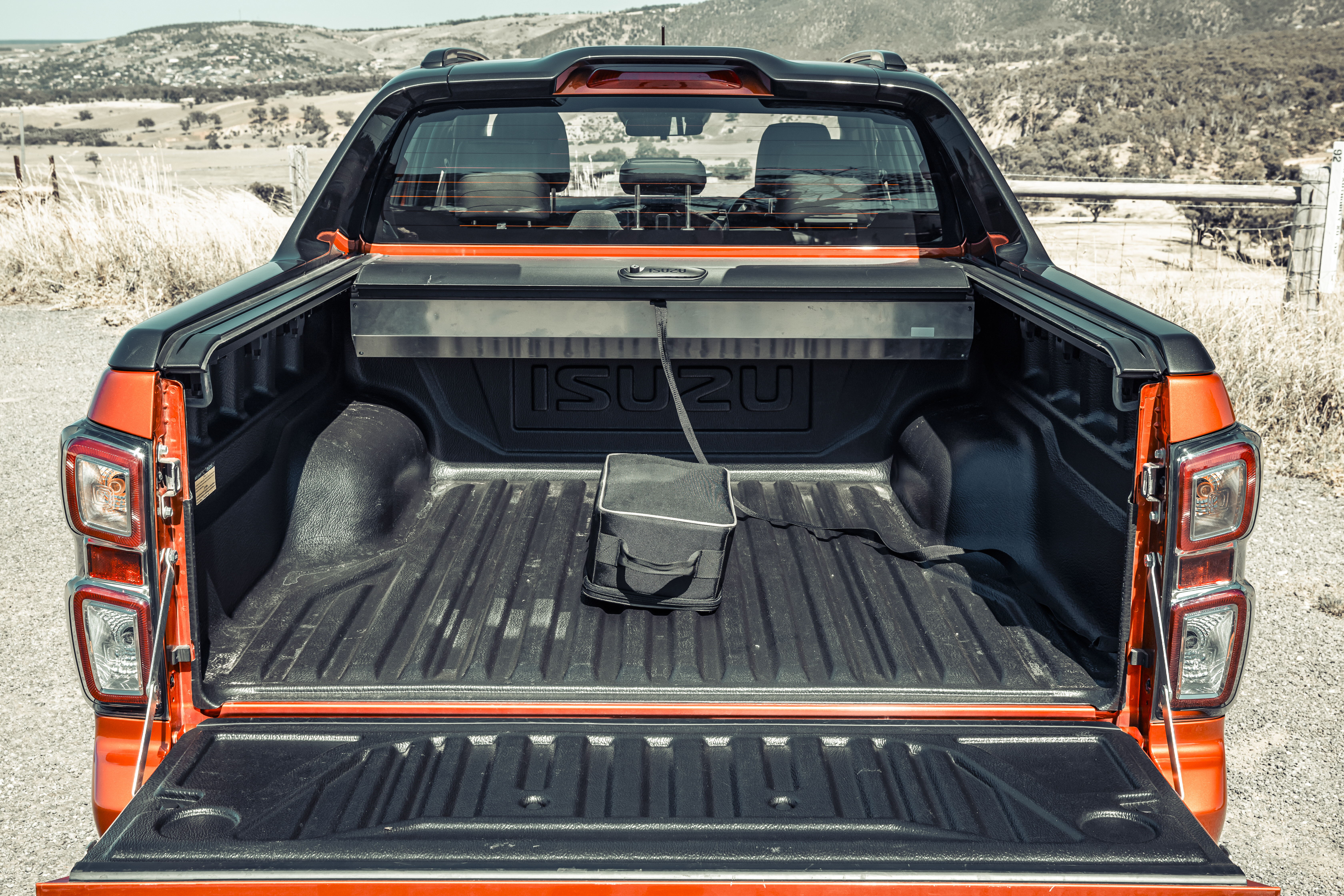
THE WINNER
THERE’S no denying that Australian ute buyers prefer a bit of kit on their mid-size pickups and are happy to pay for it, but choosing between these two mid-$60K high-spec examples comes down to your personal preferences. Do you want to spend the extra dollars on equipment that improves the driving performance over any terrain but especially off road, or are you happy to spend it on superfluous styling features?
Ford Australia has done another exceptional job of improving the suspension of its Ranger with changes made for the FX4 MAX. The Fox dampeners work beautifully to control body movement on any road surface and the tweaks to the springs and other suspension hardware supplement a worthwhile package for any new Ranger. It’s a factory package that will suffice for most ute owners, negating the need to fit aftermarket suspension and unlike the Ranger Raptor, maintains the payloads.
The new D-MAX is a step up from the previous model but still falls short on performance when compared with the market leading Ranger and Hilux. It claws back some points on paper with its class-leading safety features, however the calibration of some of those need some refining, especially when driving off road. The interior of the X-Terrain is a great place to travel and deserving of the top-grade model, however the suspension control still feels unsettled, especially when driven alongside a well-sorted package such as that in the FX4 MAX.
The lower list price of the X-Terrain would allow the buyer to source and fit an aftermarket suspension system to improve its control and the performance of the chassis in a similar way as Ford has done with the FX4 MAX but for our money, it would be the fully factory-backed Ford offering for us.
Talking Points
- Passes testing on The Schu00f6ckl
- Production due to start in July 2022
- Australian deliveries expected late 2022
THE INEOS Grenadier – the utilitarian off-road vehicle conceived by British businessman Sir Jim Ratcliffe after Land Rover refused to sell him the rights to continue building the classic Defender – has passed the next stage in its gruelling schedule of pre-production testing.
With Austrian auto firm Magna Steyr enlisted as its development engineering partner, the latest test location was the mountain known as The Schöckl near its Graz plant in Austria.
“We’ve made great strides since the very early versions of the Grenadier I drove a year ago,” said Sir Jim. “The Schöckl is a proper challenge for any 4×4. Today was a real test for our prototypes, and they came through very well. There is still work to do, but I am confident that the Grenadier will do the job we have developed it for.”
Renowned for their unforgiving and destructive hard-rock terrain, the Styrian mountains have been used for decades by Magna Steyr. Most significantly, more than four decades of the Mercedes Benz G-Wagen have been developed and proven on The Schöckl prior coming to market. The G-Wagen is manufactured at the Graz Manga Steyr plant.
To achieve its rigorous testing targets, INEOS has revised its project timings and pushed back the start of Grenadier production. This latest sign-off from the boss puts INEOS Automotive a step closer to its intended production vehicle start date in July 2022.
Conquering the Schöckl follows testing cold weather engine calibration in northern Sweden; with hot weather testing in some of the world’s harshest environments including Death Valley in the USA and the dunes of the Middle East, set to start shortly. Testing in Australia is also slated for further down the track.
The rigorous testing process will see more than 130 second-phase Grenadier prototypes rack up 1.8 million kilometres in extreme environments around the world.
The Grenadier could be described as the lovechild of the Mercedes Benz G-Wagen and the old Defender. It’s a traditional utilitarian 4×4 created in a similar mould to these two iconic vehicles with a boxy flat-sided body atop basic ladder-chassis frame, suspended on coil springs and live axles.
The Grenadier will be powered by BMW six-cylinder petrol and diesel engines and feature a dual-range four-wheel drive driveline with the option of locking axles.
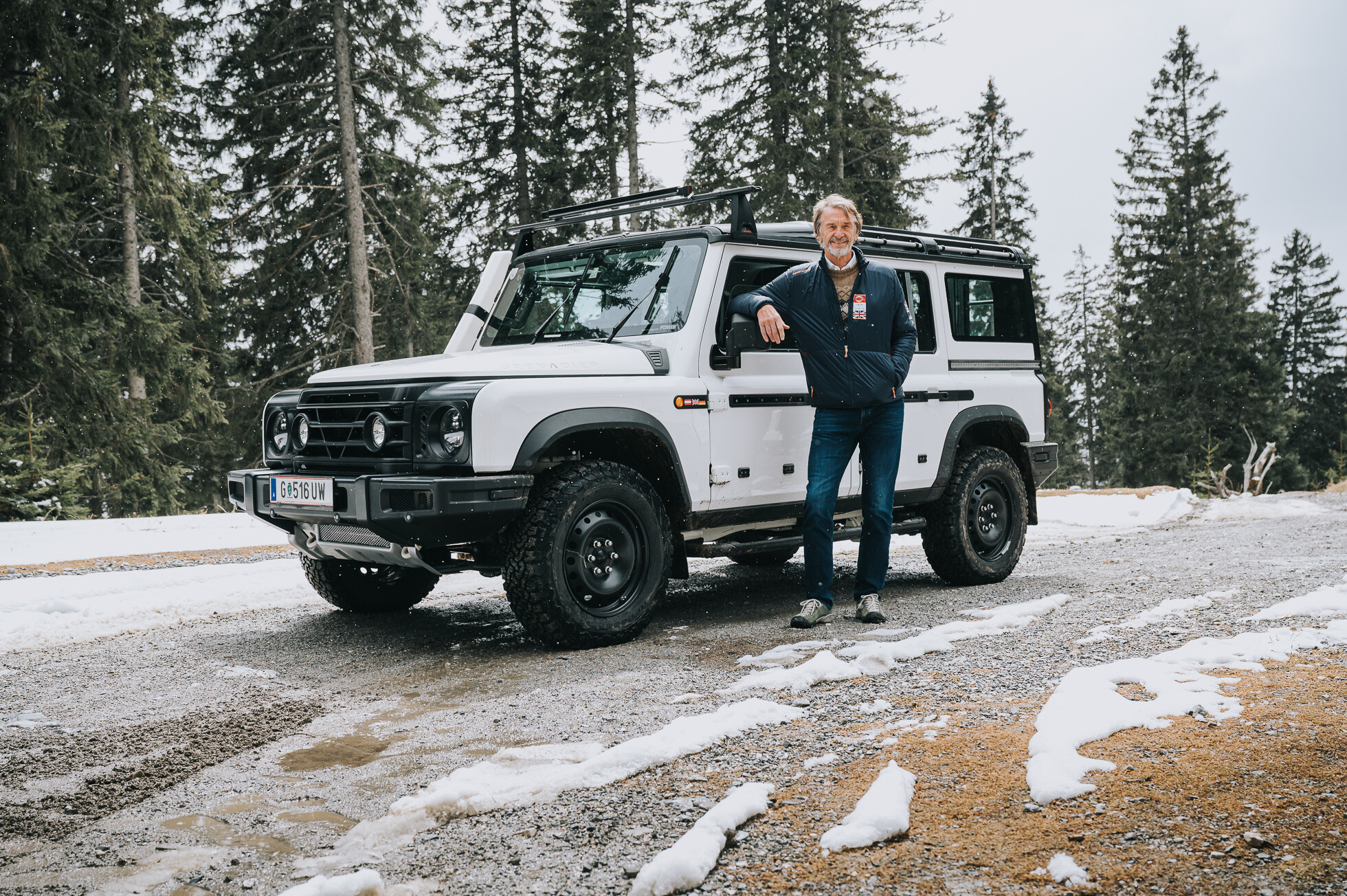
The Grenadier will initially be offered as a five-door wagon and four-door double-cab pick-up, with INEOS not ruling out further body styles in the future.
The INEOS Grenadier is being developed for markets around the world including Australia and New Zealand, with deliveries expected here in the latter part of 2022.
AH, CAMPER trailer touring. A bit of a pain in the arse to be towing something around the tracks, let’s be frank, but ever so worth it for the luxury that befalls you at camp. Fully equipped kitchen, room for the family, hot shower, comfy bed and space to retreat out of the elements. Keep your swags, plebs, this is luxury living gone mobile.
You’d think, then, that when I took the Cub Drifter II dual-fold hard-floor camper trailer away for an overnighter in the Blue Mountains National Park at six months pregnant, I’d be sitting pretty. And don’t get me wrong, it’s a fine-looking camper trailer. One of the best dual-fold family setups I’ve seen for off-roading, in fact. More on that shortly. But was I sitting pretty?
Unfortunately, as is increasingly the case with camper trailer and caravan reviews these days, I wasn’t actually able to use the Drifter II, lest I soil it for the inevitable owner. Instead, we were met at our chosen campsite by the manufacturer, who brought the camper along for the once-over. It is for that reason that this review will be more of a “here’s what it’s got and how I think it might go”, than a “hell yeah, I bloody loved it”.

Back at camp, I was setting up my alternate accommodation. No camper, no worries; I’d pitch my beloved ultralight hiking tent, purchased for its piddling weight and Chinese-made price tag. Inside I’d roll out my plush self-inflating camping mattress, bought on a whim from BCF the day before because I’m-too-goddam-pregnant-now-for-that-flimsy-hiking-thing. I’d arrange my mandatory six pillows for head and back and hips and tum comfort. Happy as an upwardly-duffed Larry, right? As I cast my eyes to the sky, I had a moment of doubt.
“Just scud, don’t worry.” This came from fellow 4X4 Australia journo, Scott Mason, who came along to take photos. Scott’s got a brooding, man-of-nature vibe about him that gives you the impression he knows stuff. You know the type, committed creative who clutches a camera like a bible and follows crap weather around to get sexy photos.
As he quietly eyeballed the clouds in the northwest sky through plumes of his own durry smoke, I felt reassured. “Just scud,” I nodded, amused by how ridiculous the same words sounded coming from my mouth. Time to check out this camper trailer.

GONE DRIFTIN’
ONE of the largest rigs in the Cub range, the Drifter II is designed for comfortable off-road family touring. It’s named in honour of an early ’70s model of Cub, examples of which occasionally can still be seen cruising the tracks. This is a testament to Cub’s long history of manufacturing Australian-made and off-road-ready campers that go the distance.While the dual-fold configuration of the Drifter II is something you’ll see ad nauseum on the stands of Johnny-come-lately brands selling cheap imports at RV shows, the point of difference with this one is manufacturing quality, a focus on weight reduction through clever design and excellent resale value.
Sure, it’s not as affordable as other offerings on the market at around $45K and so won’t suit everyone, but if it’s off-road reliability you want, this is a great place to look. And she’s a pretty stylish and comfortable unit to boot.

FAMILY-FRIENDLY TOURER
THIS big girl sleeps up to six in the main body of the camper. There’s a quality pocket-coil queen-sized main bed at the front over the drawbar, a double medium-density foam mattress at the rear, and a U-shaped dinette between that converts to a third bed, more than adequate for a couple of tuckered out little kiddos.
In its lounge form, the latter is the ideal place for board games or cards with the crew, the central, wind-up table pivoting with ease to whatever position you require it. Handy, too, for those dinner times when it ain’t just scud in the sky.
This rather palatial interior is topped off with under-seat storage, quick-access storage hidey holes beneath the main bed, bedside reading lights, USB charging outlets and privacy curtains sectioning off the beds at either end.There’s great airflow thanks to twin roofline vents and oversized windows on all sides. Three of these are protected from rain by Cub’s ingenious, easy-as-pie two-pole window awning system. Wonderful news for anyone who has ever spat expletives at those godforsaken three-pole arrangements, which require the exact amount of tension and a foot rub to do what you want them to.
But my favourite feature in this style of camper trailer is the roll-up café blind that opens up the whole middle panel beneath the awning, creating what real estate agents like to call a ‘seamless indoor/outdoor living space’. Simply put, your husband can offer you tasting rights to whatever he’s cooking without you having to move from your comfy reading nook in the lounge area.
OVERNIGHTERS OR EXTENDED STAYS
SET up without the side awning, the Drifter II sits on the same footprint it occupies in transit, which will come in handy when setting up at tight bush campsites. This is also the ideal arrangement for quick overnight stops, something camper trailers aren’t usually known for.
With the help of Cub’s whisper-quiet winch and a smart design with no internal poles to tension, one person can have the Drifter II set up and ready for the family to sleep and hang out in within minutes. The benefit of this cannot be overstated when your road-weary and ravenous progeny are snapping at your ankles, seemingly oblivious to the long and aching months you spent lovingly gestating them.
The awning will add to your set-up time somewhat, as awnings typically do. You’re probably looking at about 20 minutes for two people to erect the awning, once you’ve got it down pat. It comes standard with a weather shield end wall to protect the kitchen area, while a full set of walls and floor is optional should you wish to maximise your internal living space. As with the rest of the tent, it’s Australian-made Dynaproofed canvas from Wax Converters. In short, top notch stuff.
With capacity for quick overnight stops and comfortable extended stays alike, the Drifter II is a versatile camper that will adhere to whatever style of touring you prefer.
OUTDOOR LIVING
THE kitchen pulls out the side beneath the aforementioned café blind and has a sink plumbed to the hot-water system, a three-burner gas stove plumbed to one of two 4kg gas bottles housed on the drawbar, and a couple of storage drawers beneath the sink. There’s a fridge slide that can take up to a 95L Waeco and a 1400mm pantry drawer. Sitting atop these at the drawbar is a luggage rack for hauling extra gear to camp.The external shower provides somewhere to hose off those grubby rugrats at the end of the day – just BYO shower tent. There’s 180L of freshwater on board, stored across two tanks that ride high out of harm’s way on the underside of the camper.
There’s plenty of external lighting sustained by two 100amp/h batteries and a Projecta 12V DC-DC charger. These are stowed in a slide-out storage drawer for easy access when it’s needed – no rummaging around in pokey under-bed storage compartments trying to change a fuse. The Drifter II is set up for 240V power for when you find yourself camped in civilisation. It’s also solar-ready with a solar input Anderson plug, but BYO solar panels.
OFF-ROAD CAPABILITY
THE Drifter II has all the hardware that would see it travel easily across the rough stuff. But first, let’s talk about weight.As mentioned, there are a lot of imported campers in a similar dual-fold style that promise all the bells and whistles as well as off-road capability. But they’re heavy. The folks at Cub, being seasoned pros at manufacturing off-road products over the past 50 years, understand that a camper is only as off-road as its weight and dimensions will allow. The Drifter II weighs a touch under 1400kg tare, with a 1900kg ATM. That’s around 500 to 600kg lighter than most competitors in its class. When it comes to off-road adventuring, that’s a huge advantage straight off the blocks.
The Drifter II rides on Cub’s own independent suspension system with twin shocks, supporting an Australian galvanised steel chassis. Both are manufactured at Cub’s factory in Sydney, along with all other components of the camper. It’s got 17in six-stud alloy wheels with Goodyear Duratrac tyres and a rear-mounted spare. The underside is extremely clean and tidy, with heaps of clearance and nothing to jag on rocks or branches.There’s an off-road ball coupling as standard, 12in electric brakes, rear recovery points, and a galvanised steel stone-guard with a couple of jerry can holders tucked behind.
The ‘Xtreme Off Road’ upgrade pack swaps out the hitch for a Cruisemaster DO35, the tyres for 265/70R17 Goodyear Mud Terrains and gives you an extra 50kg payload.Like I said, I didn’t get the opportunity to put the Drifter II through its paces, but the track into our campsite was hairier than expected – steep, windy and slippery from a summer of relentless rain – and it managed just fine. Which was one thing on the way in, when the sun was shining intermittently, and another thing entirely the next day …
WHEN GOOD SCUD TURNS BAD
I’LL be honest, I’d never heard the word ‘scud’ until that day in the Hawkesbury. But as day turned to night and thunder growled menacingly in the distance over the range, my confidence in ol’ storm boy Mason’s assertions of a clear night ahead dissipated. Scud my arse.An hour later we were all huddled beneath the awning of the Drifter, where the boys had lined up their swags as far out of the bucketing rain as possible. And I’m talking end of days rain. Cats and dogs. Relentless torrents for a solid three hours.
I thought of my poor little tent, which I’d placed strategically on the far side of the sprawling campground away from snoring swaggies, and as I eyed the sheets of water covering the ground I wondered what state I’d find it in when the rain eventually eased enough for me to get to it.
Finally, propped in my surprisingly dry fortress of pillows pulled in tight away from the tent’s sodden edges, I drifted into a fitful sleep to a deafening chorus of thunder and deluge as my baby rolled in my belly beneath my hands, seemingly in response to the fray. Yep, the comforts of the Drifter II – standing strong like a lighthouse yet housing no one – sounded pretty bloody good to me in that moment. Where do I sign?

SPECS
TARE: 1390kg ATM: 1900kg TOWING LENGTH: 5510mm TOWING WIDTH: 1940mm TOWING HEIGHT: 1710mm
AVAILABLE FROM: cubcampers.com.au RRP: From $45,000
THE lines are becoming blurred … and that’s a great thing for the 4×4 owner. Several years ago, BFG launched the successor to the KM2 which in itself was a very solid tyre throughout its lifespan.
So, it was somehow surprising that the KM3 managed to raise the eyebrows of many experienced 4×4 experts. I mean we all expected great things from the KM3, considering its lineage, but I can still recall the moment I realised how damn quiet this thing was on the tarmac. This was an aggressive mud pattern with all the right stuff, like construction, advanced compound and sidewall armour, and yet it was quiet!
What was this sorcery? And would it last after a solid off-road wear-in period? Well, after 80,000-odd kilometres (and including my current second set) driving every type of terrain you can experience in this country, I can report on its long-term performance. Let’s break it down …
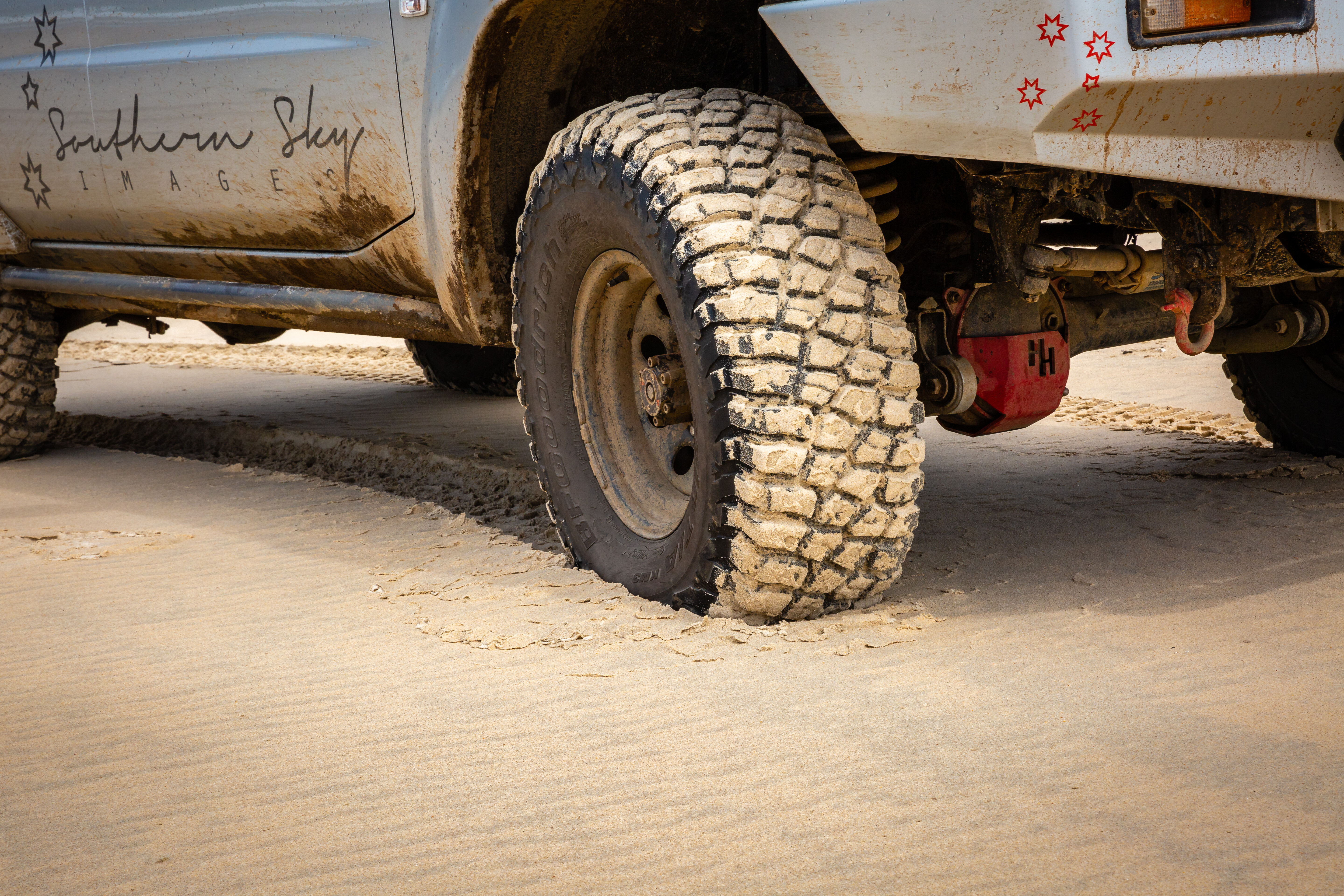
MUD
WELL, you would expect it to work well in mud and yes it does, very well indeed. Ejection of the sticky stuff that otherwise turns your tread into a slick is excellent, even at low wheel rpm.
The little bars that fill the tread gaps, the wide open blocks and the flexible compound and blocks all seem to do their jobs well resulting in good directional control, steerage and most importantly grip. It equates to very confident and effective mud driving.
The sidewall technology really bites in at low pressures, when the tread is flat against the ground, and especially in ruts, rounding out this tyre’s mud prowess.
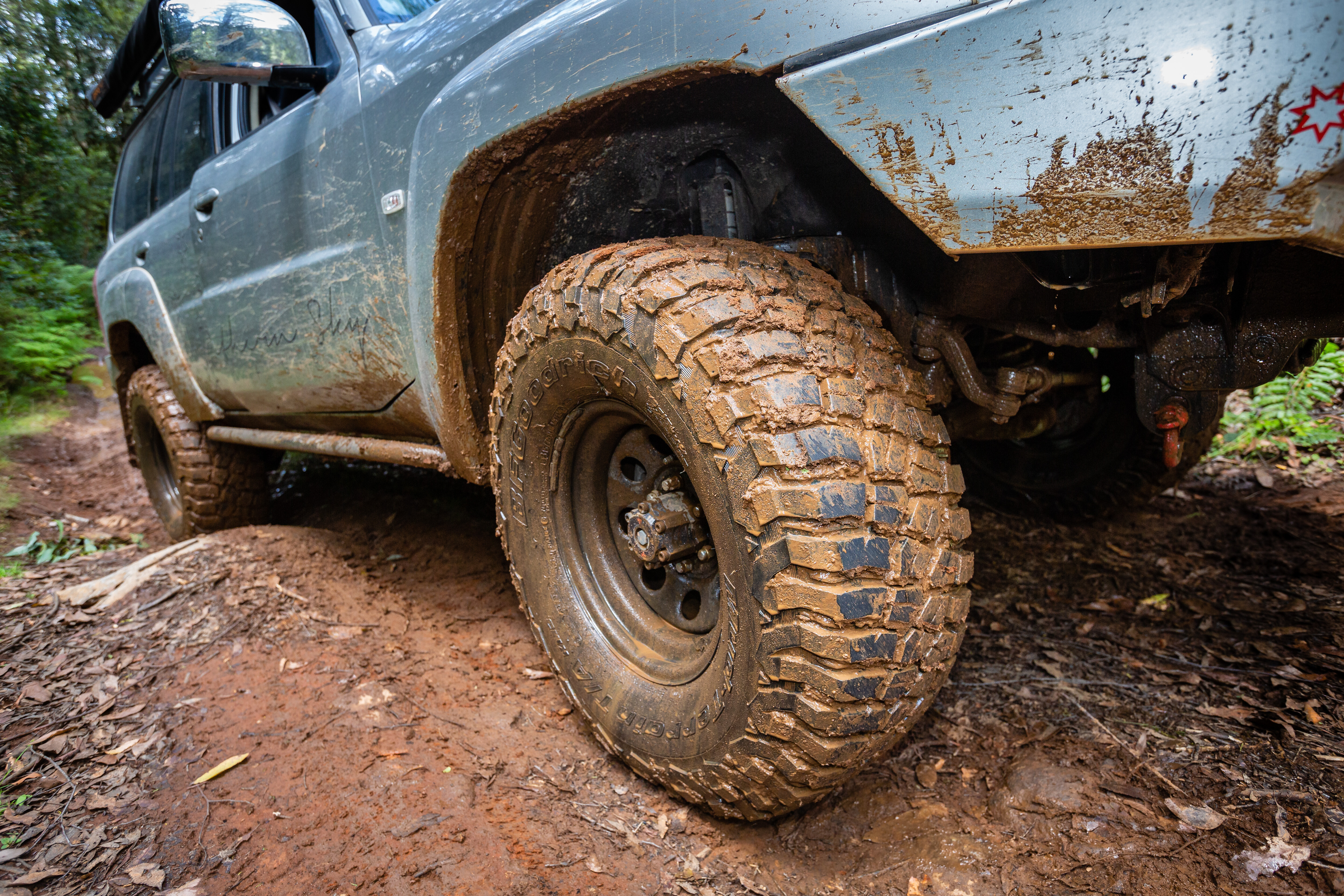
SAND
HOW do they perform compared to other muddies? Just fine. To be honest I could not tell if they were better or worse, I’ve found the biggest help on sand is to lower tyre pressure no matter the tyre, so that’s exactly what I did, same as always.
Driving sand is easy no matter the tyre if you are running the right pressure. I had no issues at all driving the softest of desert dunes and beaches. The only thing I did note was that I had to drop pressure more than in the past with older-technology tyres to get a good bagged-out tyre.
Modern sidewalls are stiffer than they used to be for sure and despite the lower pressure, that stronger sidewall seems to also make for a stronger bead connection, meaning I have not rolled a bead despite some aggressive beach driving.
A Mud Terrain is not ideal for sand driving. Why? Ideally you want as large a footprint on the ground as possible to evenly spread the load of the vehicle while not digging into the surface. You want low rolling-resistance and ‘floatation’. The open blocks of a muddie allow the tyre to sink in straight away, and they also increase rolling resistance, so, sand is not the tyre type’s forte at all.
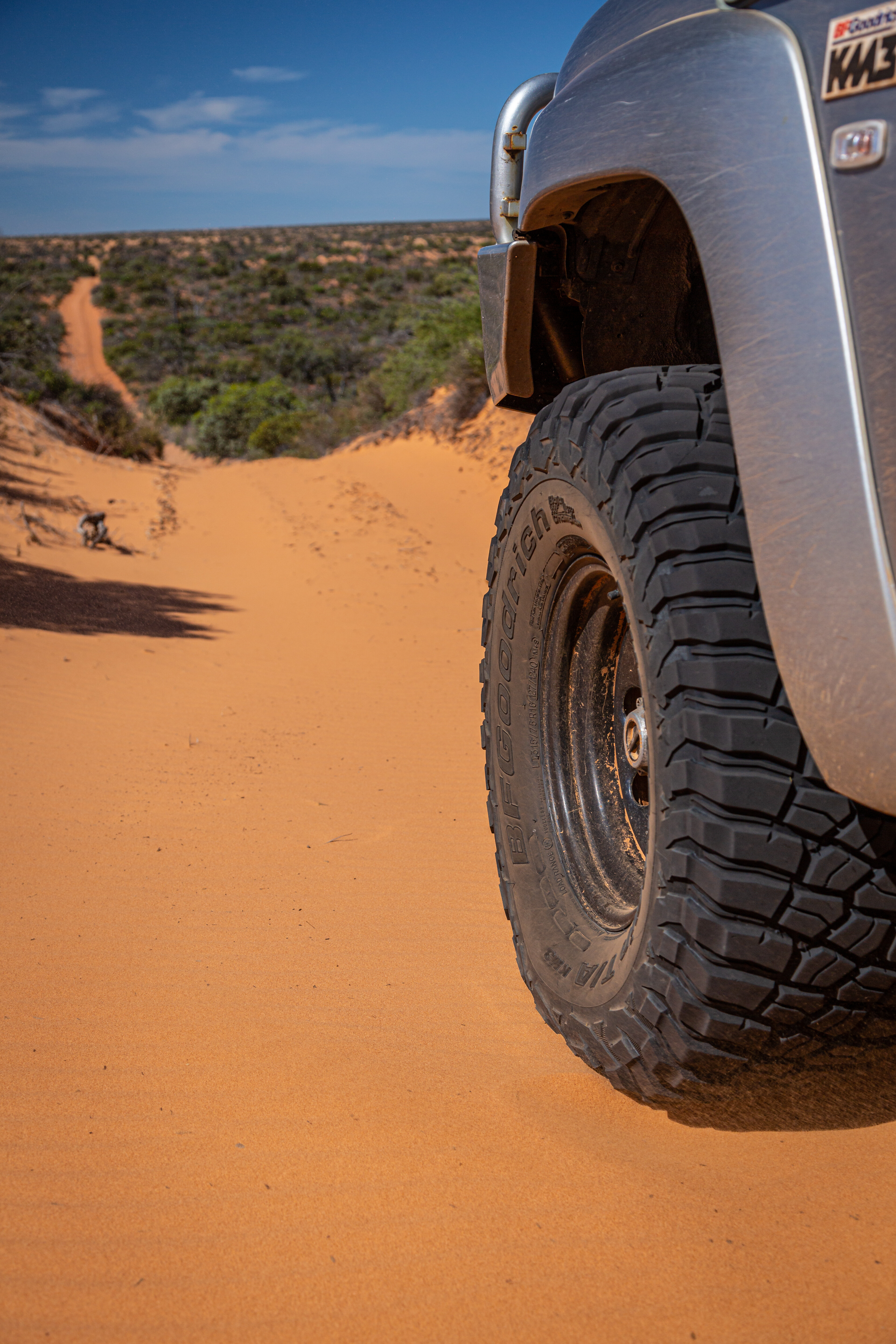
DIRT AND GRAVEL
THIS is an area which I find really interesting with a mud terrain. So, how did the KM3s fare? Best I have driven, hands-down.
On a multitude of gravel and dirt roads with varying levels of corrugation or clay content I never felt unsafe, even when I deliberately pushed them hard with steering input, braking, acceleration and combinations of all inputs.
Lateral and directional stability are fantastic, it is a driver’s tyre, and by that I mean it allows the driver to not have to worry about traction in what is arguably the most driven type of terrain, and I love that.
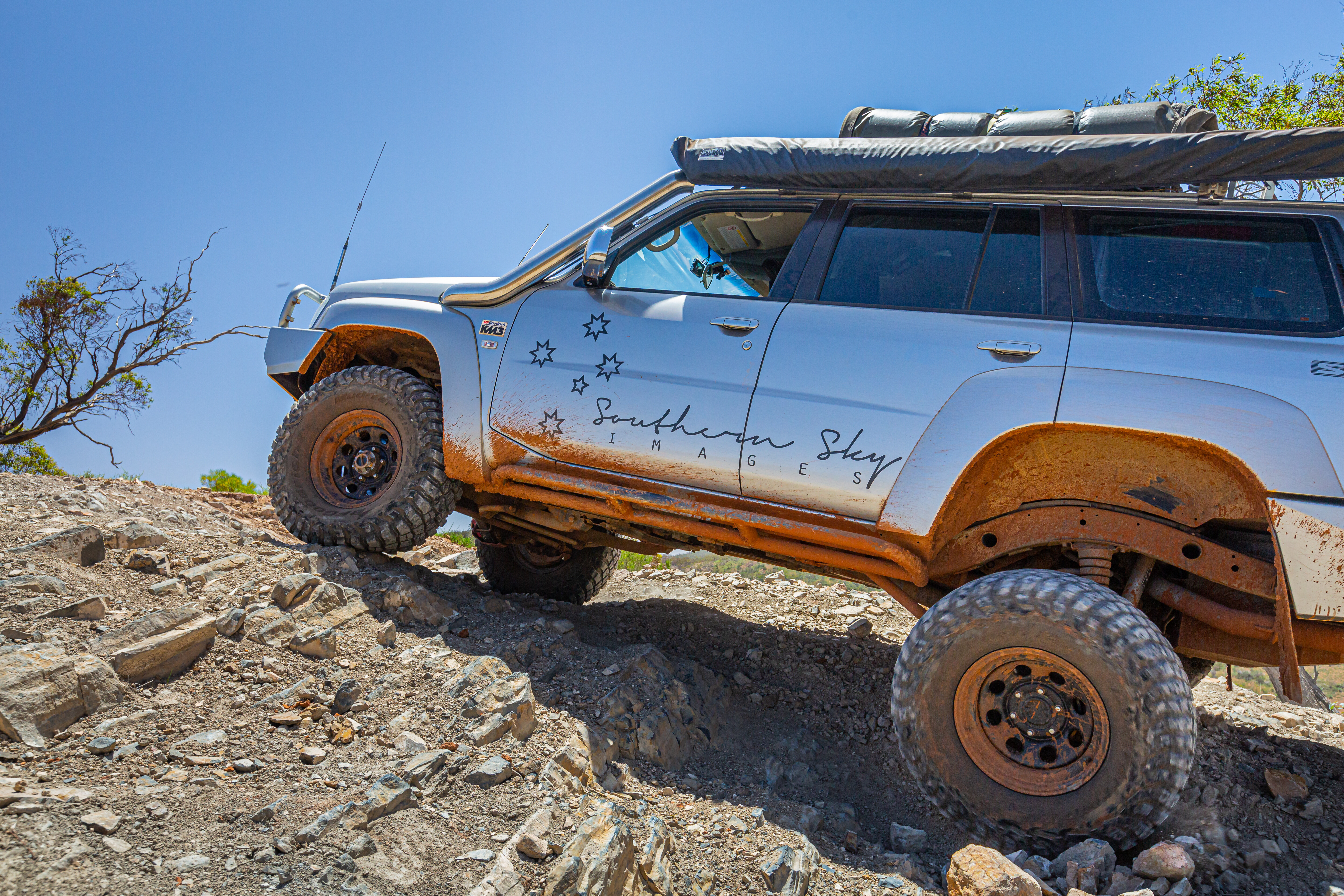
ROCK
FROM smooth river rock to the sharp pointy stuff that you find in the Flinders Ranges, the level of grip is excellent. Would I say it is better than the rest? No, I cannot say that definitively.
In some cases, it comes down to soft vs hard compound and there are some specialty tyres that offer excellent grip on rock at the expense of mileage, but to have a tyre with top-tier grip on rock, and have it come out the other side without tears and rips in the tread blocks is impressive.
Its willingness to ‘mould’ itself to the terrain (at correct pressures – as for any other tyre) means it is a handy asset for the driver, offering plenty of useable surface to aid traction.
HIGHWAY
EASILY the best mud terrain on the tarmac, for two reasons. First, it is not noisy like a muddie of old design. It is surprisingly quiet with excellent harmonics, and I can tell you it did not get noticeably noisier with wear throughout the lifespan.
Second, the lateral and directional grip are excellent with no obvious weak points. Many mud-terrains have a weakness, be it a tendency to break traction sideways or be poor in braking, particularly in the wet.
This tyre’s tread pattern in combination with the grippy silica compound (which acts at a microscopic level with the road surface) is very well-rounded.
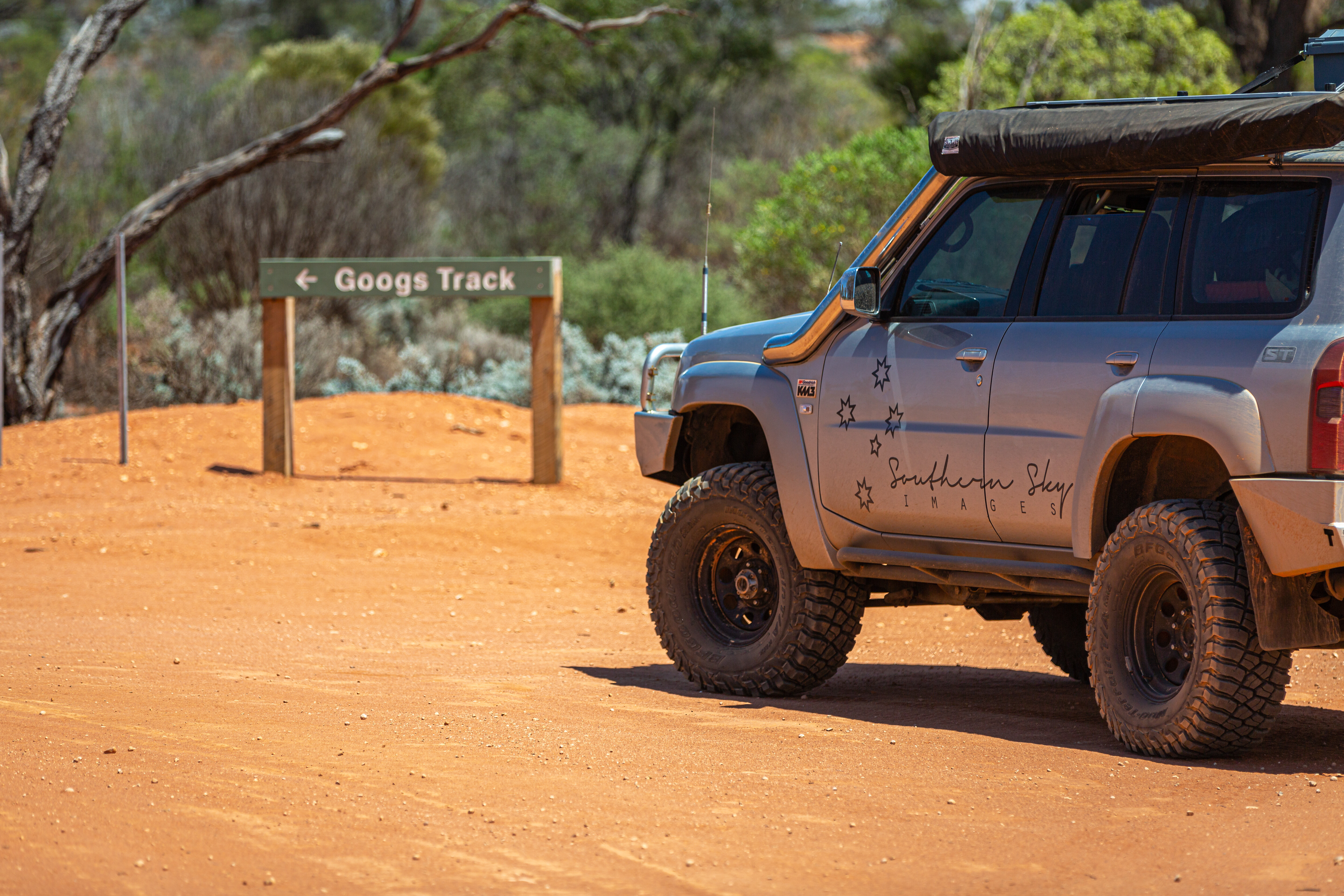
WEAR AND PUNCTURES
THE golden question is mileage right? Hmmm yes, it is, but it isn’t either …
I don’t want to leave you hanging, so I will say I predict more than 70,000km and more if you rotate, balance and run correct pressure. That includes a majority of off-roading and a willingness to run down to a legal but pretty useless level for serious touring.
But I cannot say for sure; I replace my tyres well before they reach the twilight years. What I can say with certainty is this; they are one of the best two wearing muddies I have run but they have offered the best performance over that time by far, which is the most important element for me. So, no, they won’t chip, fall apart or fail like some others have done over time, they offer excellent mileage and overall class-leading performance.
I have not had a failure or single puncture over the two sets. Part luck maybe, but I suspect it is running correct tyre pressure in conjunction with solid carcass construction. I have given the tyres plenty of opportunity to fail with the terrain I have driven but once again, it’s a driver’s tyre.
The fact I am not sweating about punctures when I travel cross country (i.e. not following tracks) across the deserts nor have to worry about my mate Stephan who runs the same on his rig, means we get to enjoy the driving and experience that much more. Worrying about the tyres holding up is not a pressing concern for the work we do, running it as a weekender and daily driver is a no-brainer, it is a great tyre.
OVERALL
THE KM3 is an excellent off-road tyre for the Australian environment. Its performance over any type of terrain is solid and class-leading in nearly every category. It will take an exceptional new (future) tyre to see me bolting on a different pattern.
PRESSURE
WHEREVER I go, I adjust tyre pressures to suit the terrain and vehicle weight. This is the single-most important factor in extracting the best performance from any type of tyre. I also rotate tyres about every 7-10,000km (better yet would be every 5000km) and have a re-balance done with it.