
THINGS are really progressing with our D-MAX build, despite a slow start due to the lack of stock worldwide and the fact this is still a relatively new model.
One item we had no issues in tracking down was this set of awesome Fuel Anza wheels from our mates at Wheel Pros Australia. They arrived a few days after the order was placed. Sweet!
It must be said, choosing wheels has been the hardest part of this build so far, simply because of the massive amount of rims available from Wheel Pros. Talk about good problems to have. Thankfully, its website is a very powerful tool and it’s simple to navigate, helping us narrow down our choices.
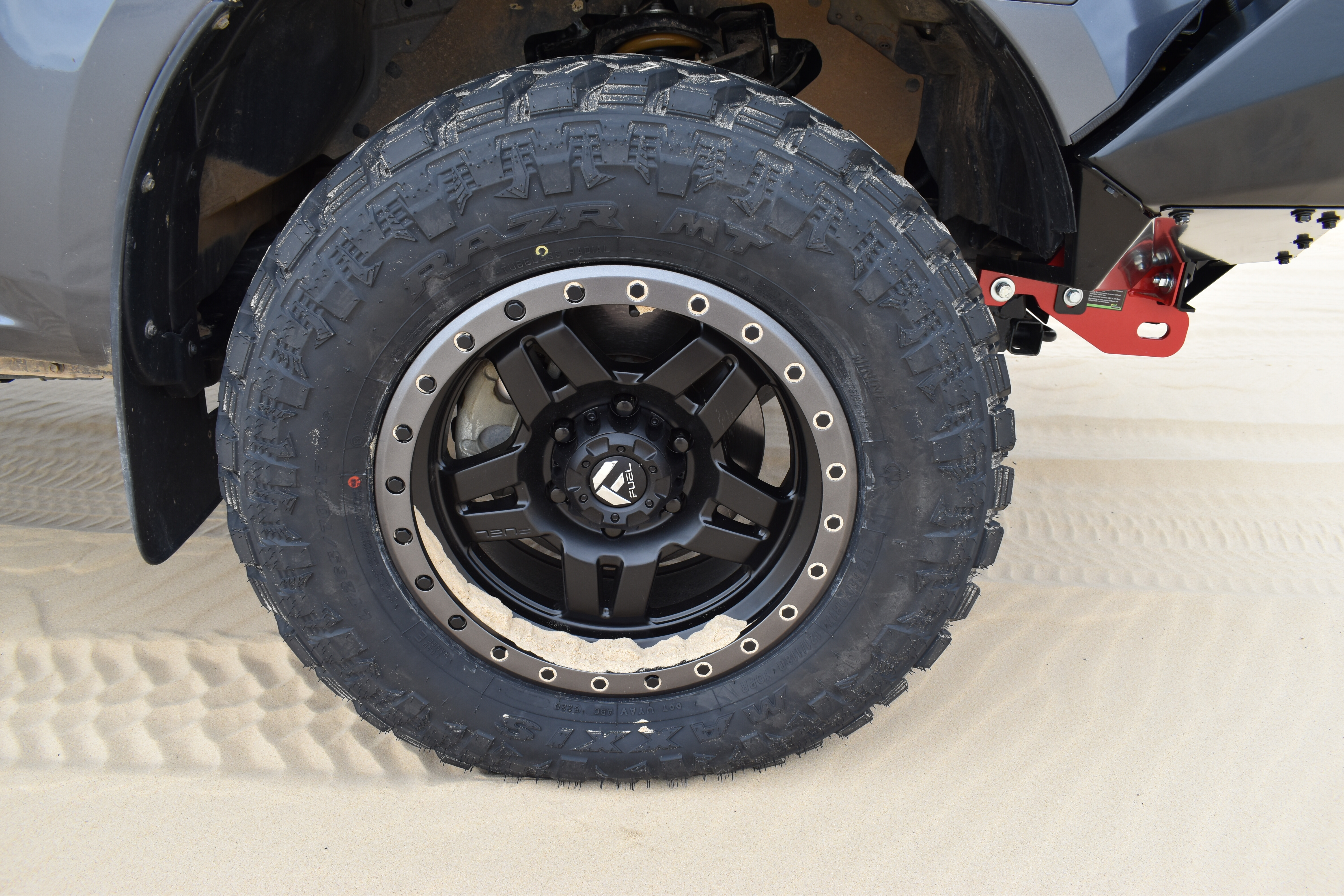
Speaking of choices, I decided on these very stylish set of Fuel Anza wheels, as I wanted a black wheel to go with the dark paint on the D-MAX. I also wanted some highlights to break up the look a little. The Anza met this brief, and you have to admit they look great.
Specs wise, these are a 17×8.5 wheel with a PCD of 6/139.7 with a load rating of 1134. We stuck with a 17-inch wheel because they work well on- and off-road, and it’s what the D-MAX was originally fitted with. Combined with our new Maxxis RAZR muddies, our Isuzu now looks and performs beautifully no matter where we are taking it.
The 17-inch Fuel Anza wheels from Wheel Pros Australia set us back $341 each, and we grabbed four, opting to retain the factory spare steel wheel.
AVAILABLE FROM: www.wheelprosaustralia.com.au RRP: $341 each WHAT WE SAY: “If you are after a trick set of wheels for your 4×4, go have a play on the Wheel Pros website.”
Stefan Fischer is no stranger to the off-road scene, having run his successful YouTube channel AllOffroad 4×4 Adventures for several years.
In that time, he’s built up a wide range of highly modified 4x4s, all in the name of getting out there. And we mean that, too, he loves everything from long-distance desert touring through to low-speed technical driving. As such, his choice of vehicles has changed numerous times over the years.
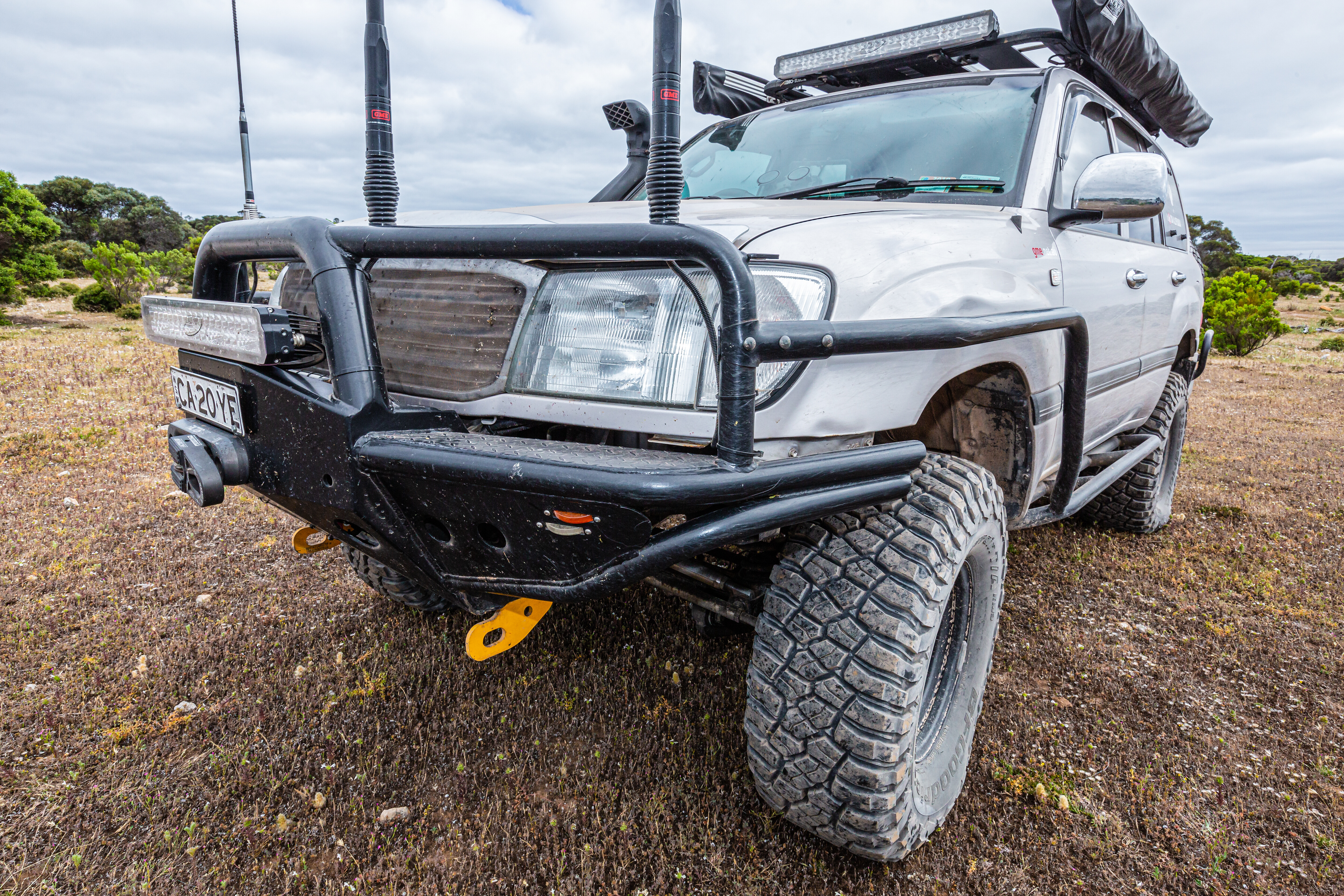
We’re talking everything from a highly modified D2 Land Rover Discovery, a 110 Defender, and even a 6×6 Pinzgauer have seen pride of place in Stefan’s garage. His latest creation (other than his JK Wrangler on 37s) is this highly modified Toyota LandCruiser 105 you see before you; this one has a fairly major twist, though.
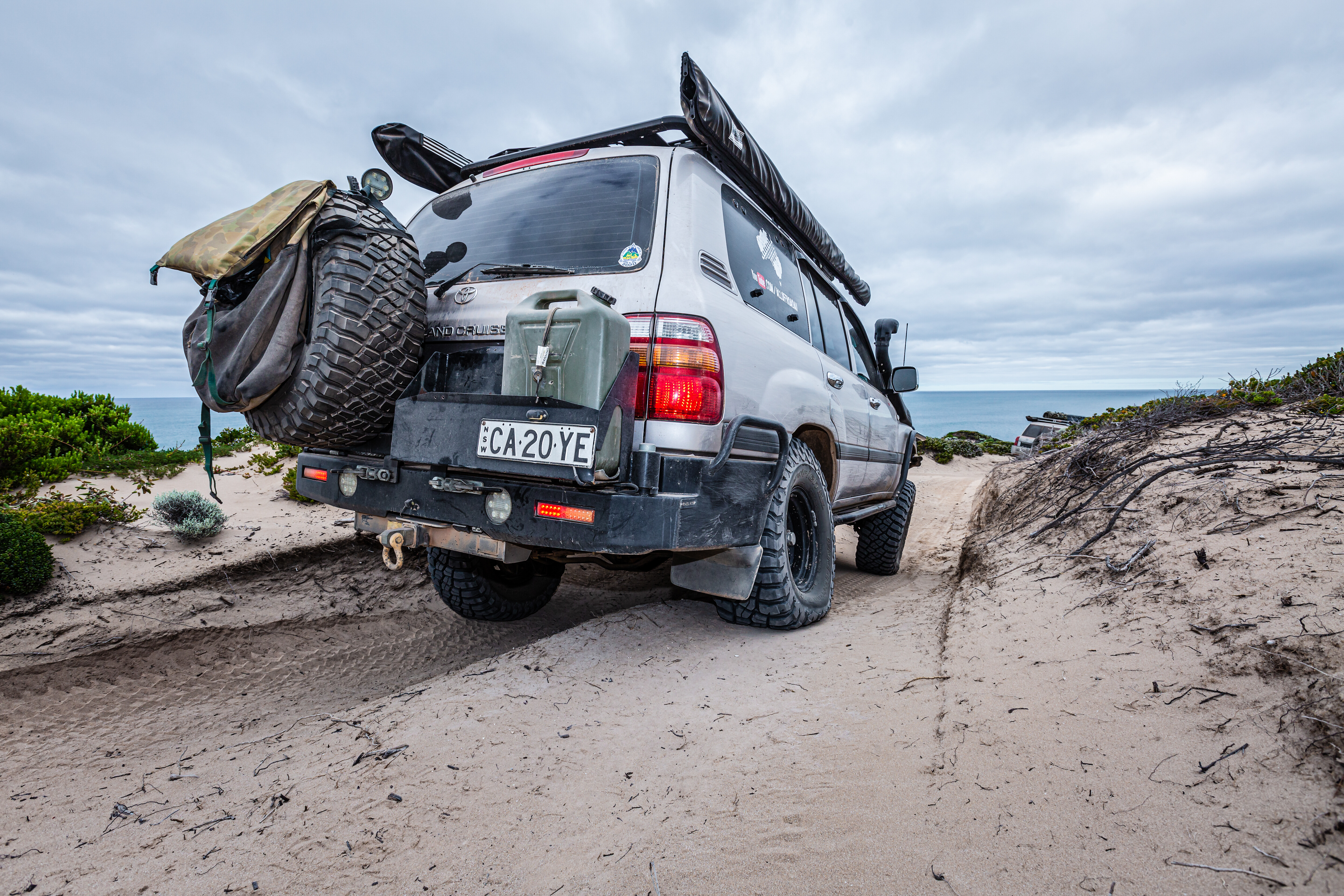
“I bought this stock and with the 4.5L petrol motor fitted,” Stefan tells us. “I drove it around with the petrol motor for a bit, but it was just too thirsty for any proper long-range touring; it was never going to stay in place for long.”
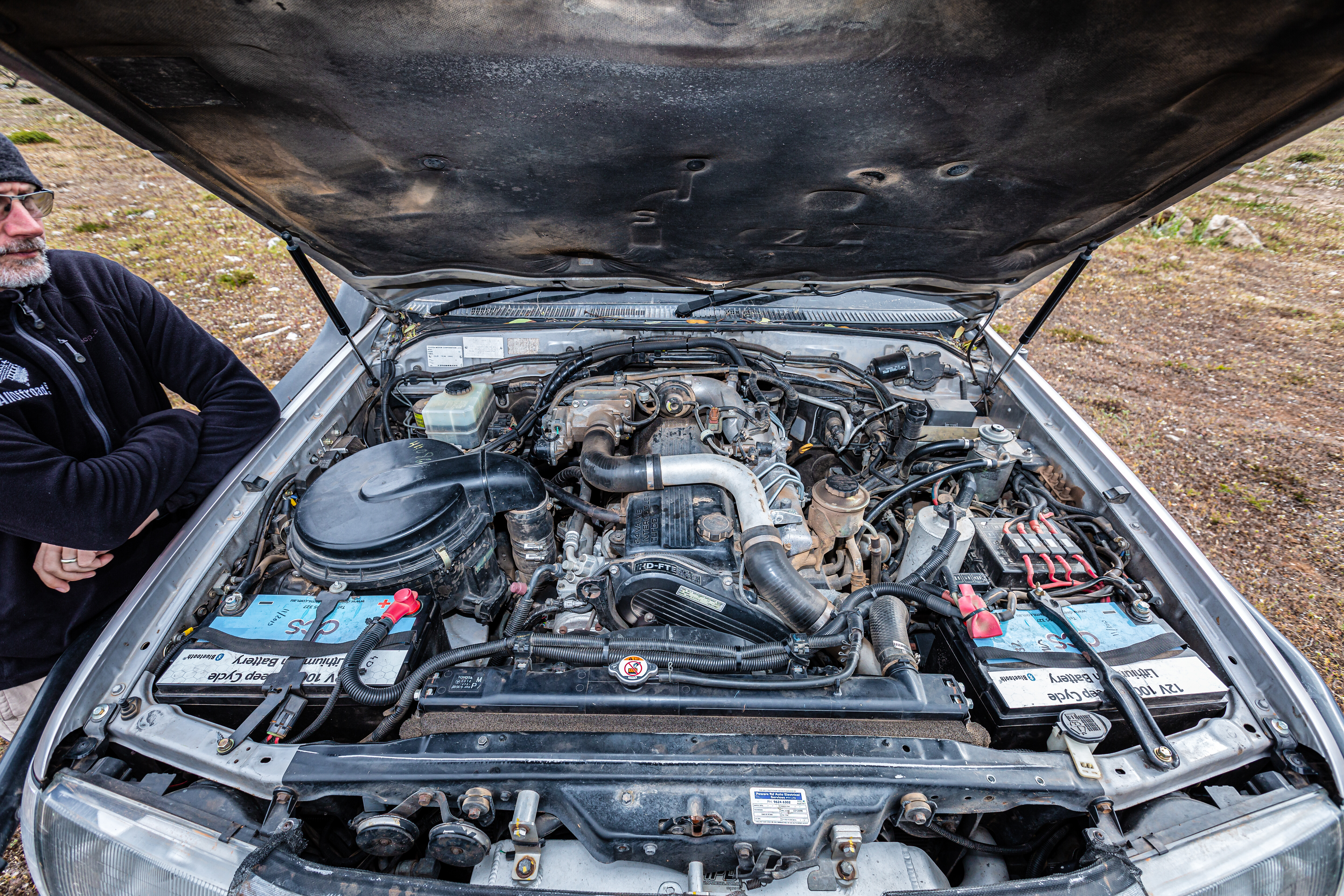
After teaming up with Jason at Total Care 4WD in Sydney, the decision was made to turf the petrol motor and install the holy grail of Toyota engines, the 1HD-FTE in-line six-cylinder matched to an auto gearbox, all from a 100 Series LandCruiser.
Stefan made the switch to Toyota from a Land Rover Defender, but he refuses to call himself a fan boy of any make or model.
“Stefan has done everything he could to create the ultimate touring set-up”
“As much as I loved it, I decided to move on the Defender as it was too small for my growing family,” Stefan mentions. “I also had reliability issues with the Defender (his words – don’t send us hate mail) and many rural mechanics didn’t want to work on it. I don’t have that problem with the LandCruiser.”
When weighing up what vehicle he wanted after the Defender, Stefan looked at anything with a solid front axle. A TD42 GU Patrol was considered but would be too expensive to convert to an automatic gearbox. An 80 Series was thought about, but Stefan decided they are getting a bit old now.
There was also a chance for a 76 Series or Troopy, but after looking at how he’d want it set up it would take way too much money and effort. This is how the idea for an engine conversion in the 105 Series came to light as making the most sense, and I for one can’t help but agree.
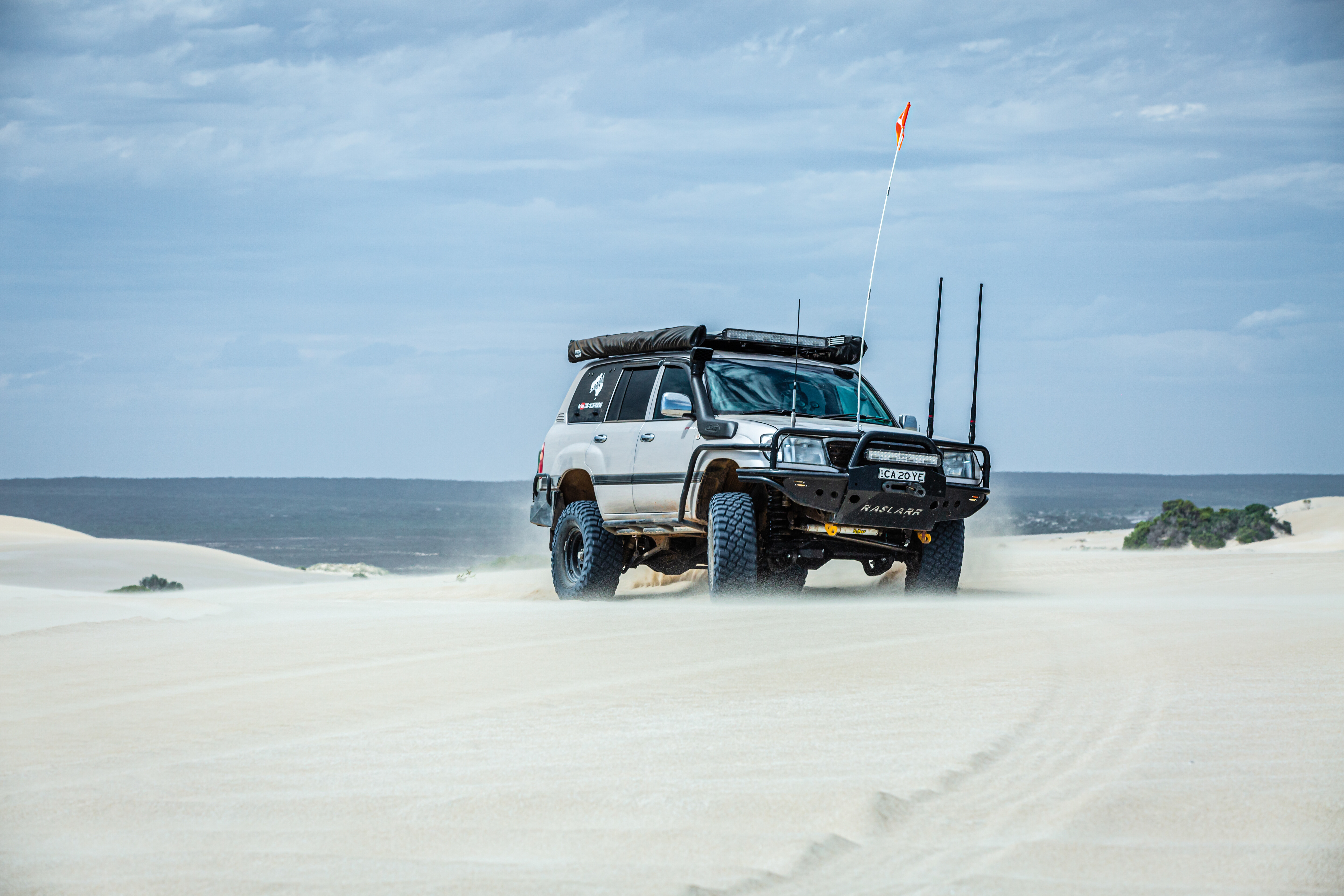
Stefan is the sort of bloke who will research products and make informed decisions on what will suit his needs. As such, he travelled from his native Sydney, NSW, to Victoria to have the team at Raslarr Engineering fabricate most of his bar work including the front bar, rock sliders and rear bar. You have to admit, they look pretty damn cool.
After trialling most diff locks on the market, Stefan has chosen to run TJM Pro Lockers in his 105, as well as re-gearing the differentials to 4.88 ratio. This helps spin the 35-inch BFG Muddies and makes the vehicle feel rather peppy with that strong turbo-diesel engine. To keep things legal, Stefan had a Marks 4WD Adaptors speedo correction box installed, as the larger 35s meant the factory speedo was out by 10km/h. Not anymore.
Breathers have been fitted to the differentials and gearbox, as well as some awesome splined drive flanges on the hubs from PJ’s Off Road. No more snapping axle studs with this setup, a wonderful piece of Australian engineering.
Stefan has decided to leave the power output of the turbo-diesel motor as Toyota intended. After experimenting with turbo upgrades and performance modules, he decided reliability was more important to him than huge power.
Not that the 1HD-FTE is lacking in stock form. To help increase reliability and engine longevity, a HPD front-mount intercooler was installed, but on custom spacers as the air-conditioning was cutting out in really hot conditions without the spacers, due to a lack of airflow to the condenser.
Gearbox-wise, Stefan is running the A750 automatic unit and has modified that with a 2500rpm high-stall torque converter, which makes a huge difference especially in sand and desert conditions. With an aftermarket transmission cooler also installed, Stefan tells us he rarely sees trans temps rise higher than 100ºC. The Nomad Valve Body upgrade from Wholesale Automatic Transmissions also helps in this department.
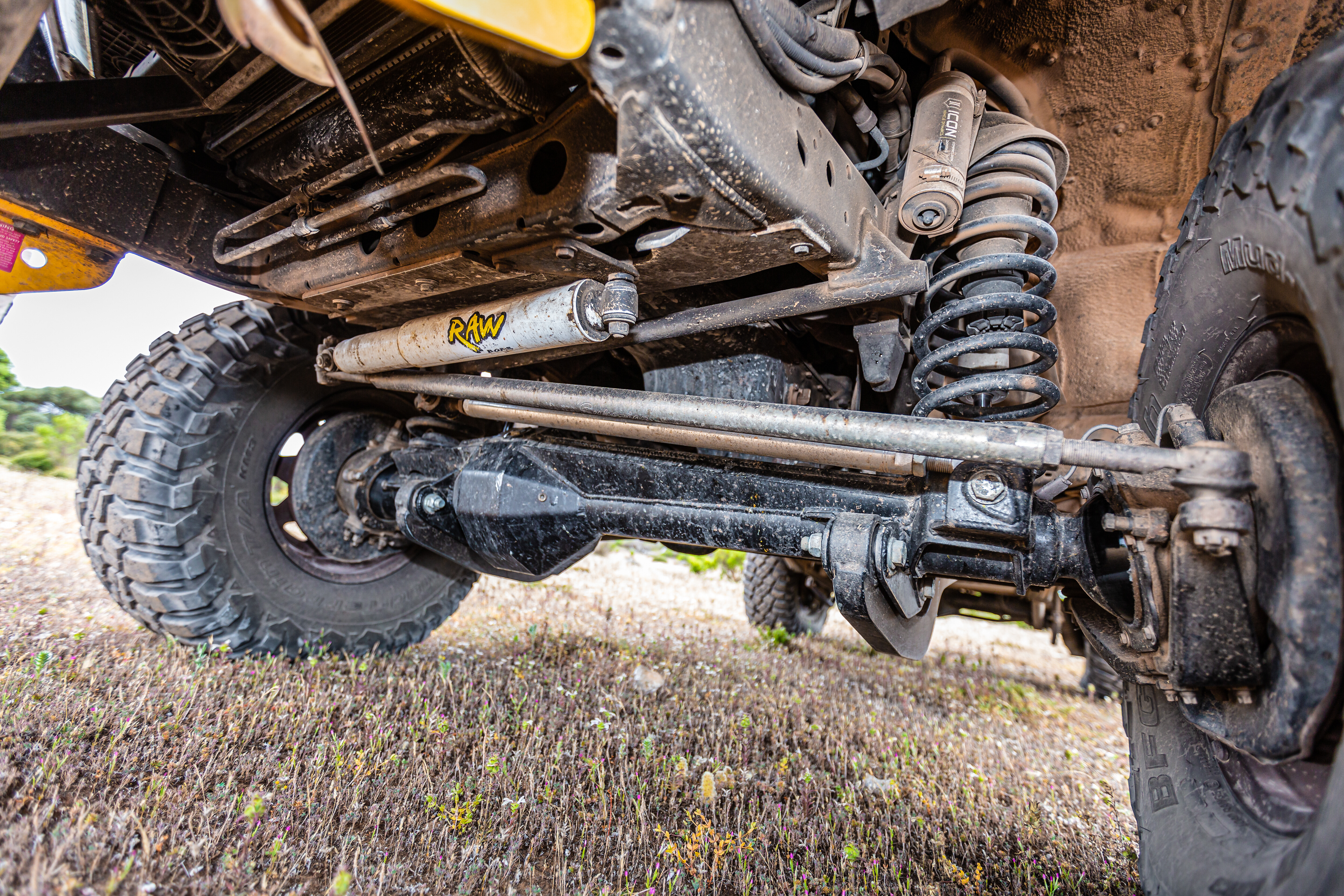
When it comes to touring modifications on the 105, I don’t think we have enough space to mention them all. It’s also important to note this 105 is fully engineered, including a GVM upgrade to 4.2 tonnes. Custom (and super sexy) axle housings have been skilfully crafted by Benji the welding wizard from Rampt Customs after the factory units were damaged on Fraser Island. These custom housings helped massively in allowing the engineers to sign off on the GVM upgrade. You can really see Stefan has done everything he could to create the ultimate touring setup.
Stefan also had a bad run with a very expensive set of coil springs. To fix this, he had Solve Offroad make a custom set of King Springs. Icon remote-res shocks can be found on all four corners, which Stefan rates highly. Bud’s Customs radius arms have been installed, as these gave the most amount of castor to suit the roughly four inches of lift. Heavy-duty sway bars have been given the nod, as well as a HD Panhard rod and lowering control arms.
Anything that could be upgraded, has been upgraded. Have you noticed a common theme here? The end result is a suspension package that rides like a limo, yet flexes like a comp truck.
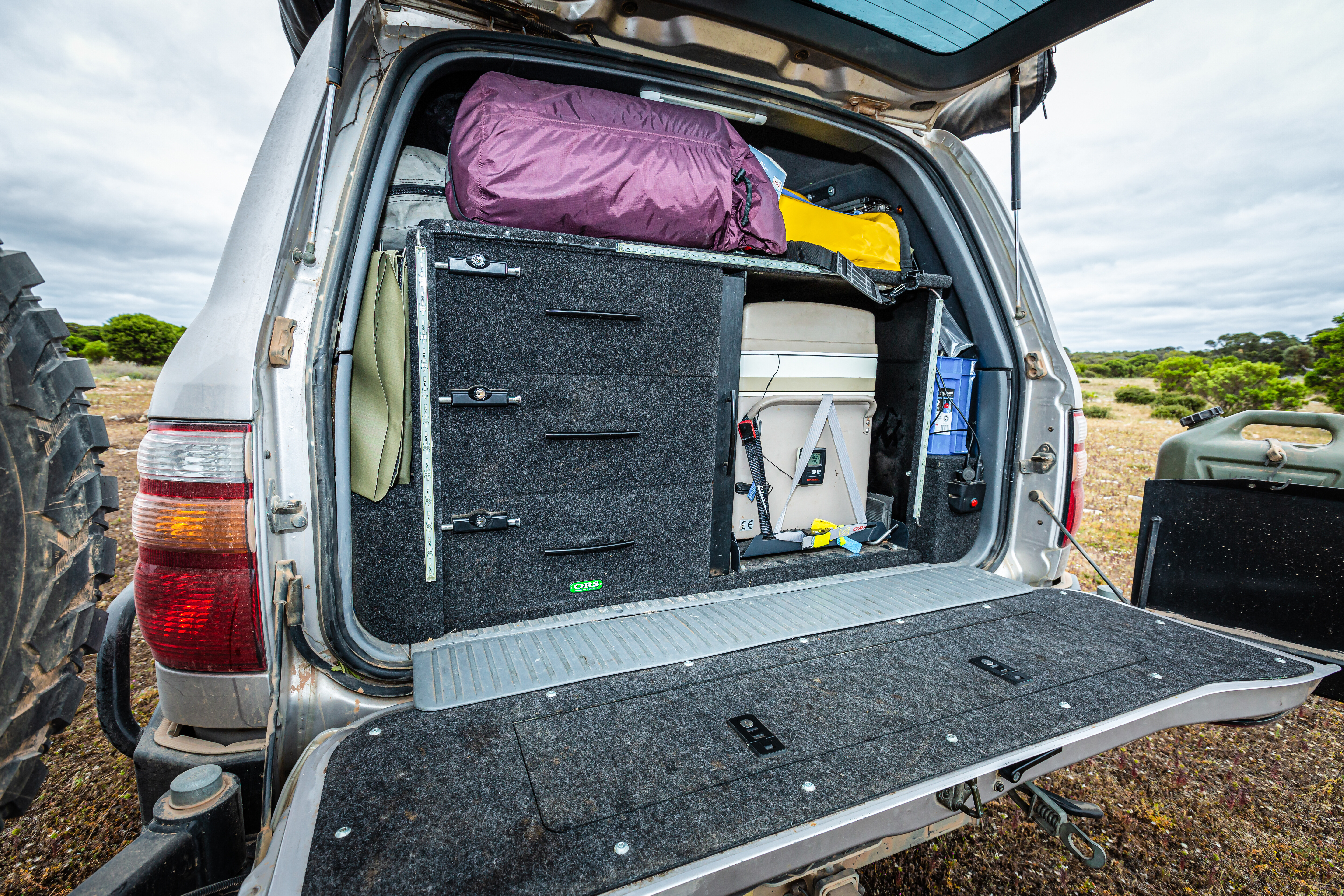
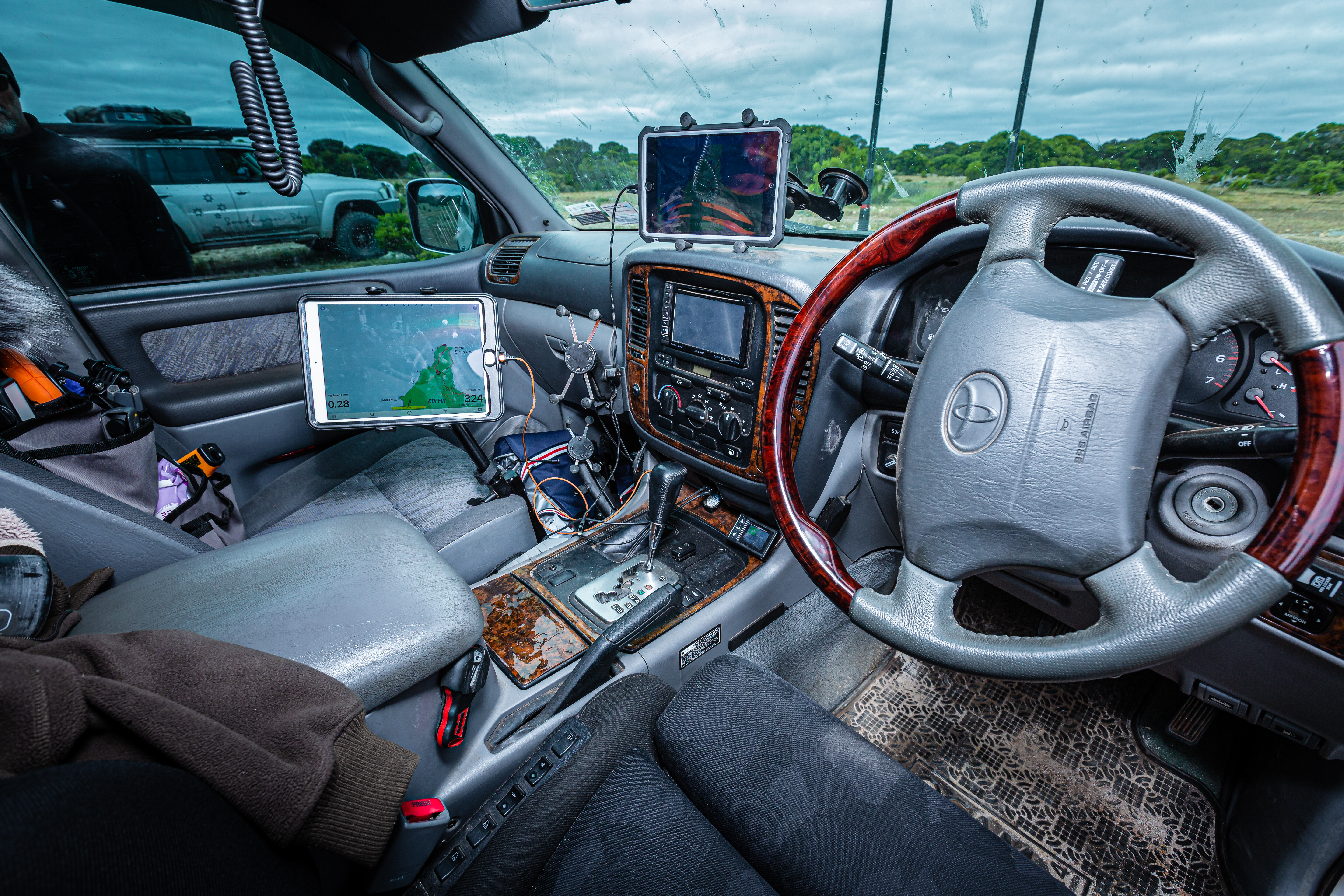
Starting with the interior, Stefan has a Recaro seat for himself, bad backs suck at the end of the day. From here, he can see the various pillar-mounted Redarc gauges including EGT, boost, transmission temp and 12V displays. Emuwing gullwings are a super-practical addition, allowing easy access to the storage drawers and Bushman fridge in the back of the 105.
For additional storage, a Rhino-Rack roof platform sits on top of the ’Cruiser, which he has two awnings mounted to. One a simple pull-out awning for quick stops and the other a 270-degree unit for longer stays.
The 12V side of things is pretty damn serious in Stefan’s dream rig. As he produces so much content for his YouTube channel, his electrical demands are more than simply running a fridge. Stefan made the switch to lithium batteries a few years ago, and hasn’t looked back. However, he has continually refined the package to the point he’s now happy.
A sealed and water-cooled 200amp alternator (yes, you read that right) does the heavy lifting in this setup. When combined with a solar blanket and 80W Redarc solar panel, this vehicle can produce more than enough charge. But how about storing that power? Stefan has two 100amp/h DCS lithium batteries, mounted in the engine bay. I can hear you screaming that lithium doesn’t belong in the engine bay.
Well, Stefan has proved this wrong, as the DCS units are rated for under-bonnet temperatures and use. These batteries are charged directly by the alternator, so even if they are both flat (which rarely happens) it doesn’t take long to get them back up to scratch.
This is without a doubt one of the most comprehensively built touring vehicles in Australia, and Stefan has proven this by taking it to nearly every iconic touring destination in Australia. When we asked Stefan if he agreed, he simply replied, “I just love it.”
We do too, mate, if you ever want to sell it, give us a call.
Snapshot
- The HALO Trust is the worldu2019s largest landmine charity
- INEOS to develop fleet of bespoke Grenadiers suitable for HALO operations
- Australia earmarked as vital market for the Grenadier
From the time of its conception in an English pub, the INEOS Grenadier was set to fill the void left by other vehicles that were traditionally used by NGOs, humanitarian groups and businesses working in remote and rugged areas.
Many of these groups would have used Land Rover Defenders in the past, but with the change in focus of the Defender since 2016, there has been a gap in the market for such vehicles.
The HALO Trust is the world’s largest humanitarian mine-clearance and weapons-disposal organisation and, with a worldwide fleet of more than 600 4×4 vehicles, the joint British and American charity operates off-roaders in some of the most remote and inhospitable places on the planet.
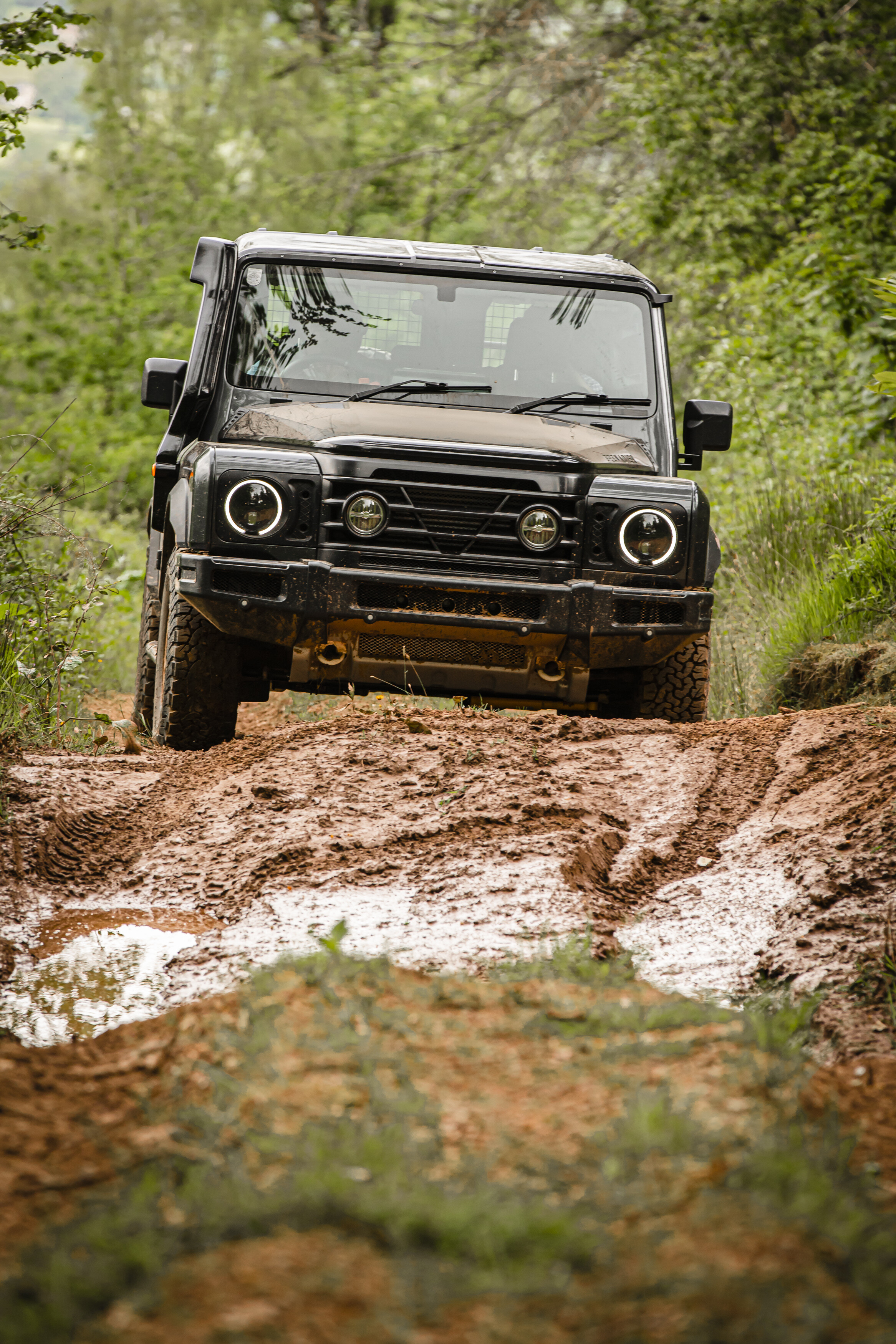
INEOS Automotive has taken on the HALO Trust as a development partner in the R&D of its Grenadier vehicle and will build a fleet of bespoke vehicles for HALO to operate around the world.
These vehicles will be equipped with features specific to their needs, including anchor points to fit protective mine-proof belly armour and safe storage for mine-clearance tools. They will also need to be easily convertible into ambulances for the safe evacuation of potential casualties.
“I hugely admire the HALO Trust’s mission and the dedication of the HALO team. It is a real privilege to work with them. With decades of experience of running a large number of vehicles in extreme conditions, we could think of no better organisation on Earth for helping us to develop Grenadier,” said Dirk Heilmann, CEO of INEOS Automotive. “All the knowledge and insight HALO is sharing with us is incredibly valuable to the engineering programme, and will ultimately help us create the toughest, most capable vehicle for all users.”
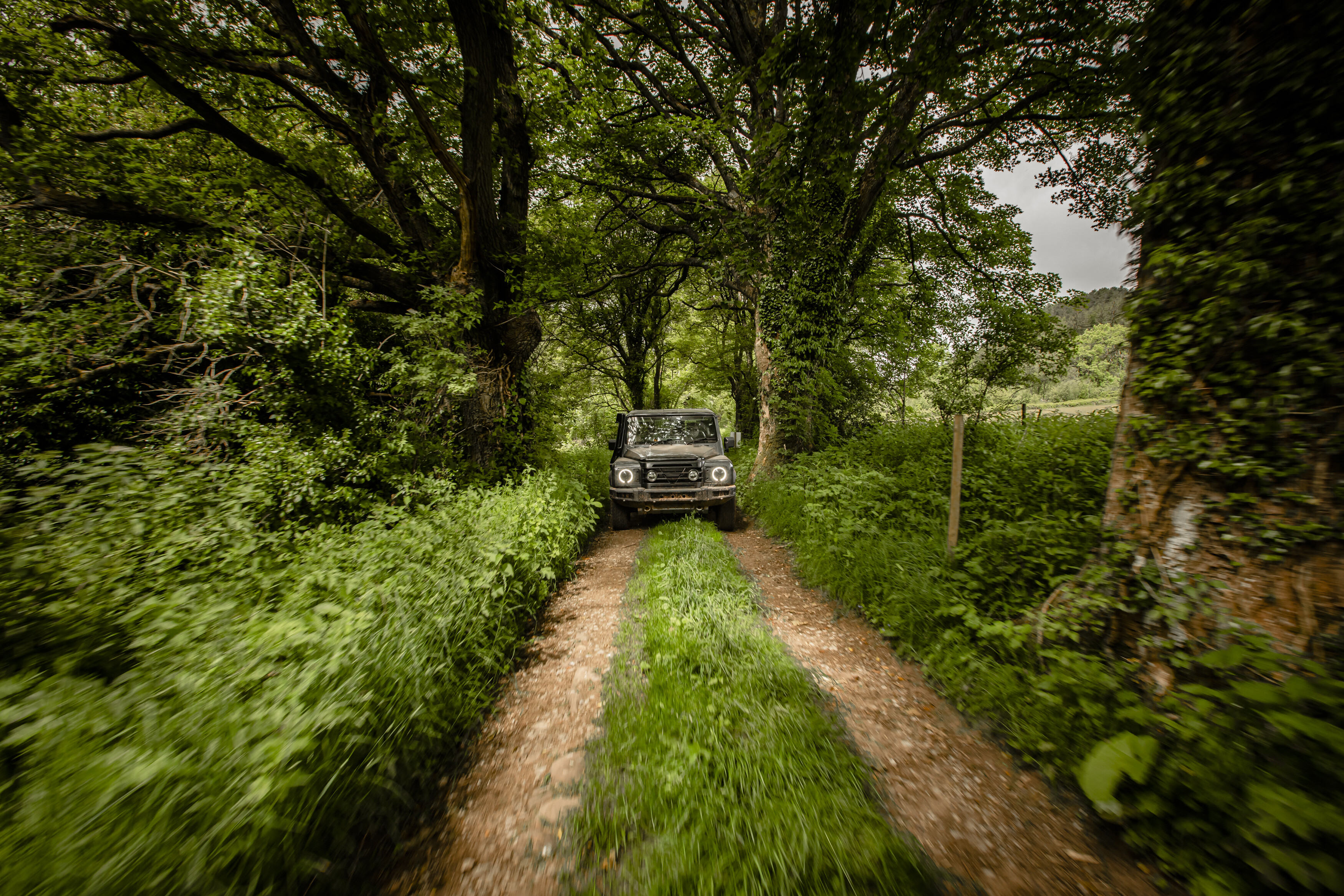
The Grenadier is currently undergoing testing at sites around the globe prior to production starting later this year and the vehicle going on sale later in 2022. As part of that testing, more than 130 second-phase prototypes are racking up more than 1.8 million kilometres, and prototypes will join active HALO projects in places such as Kosovo.
At the other end of the user spectrum, you might have seen the Grenadier prototypes supporting the British cycling team – the INEOS Grenadiers – in some of the world’s biggest road cycling races. Keep an eye out for them in the upcoming Tour de France.
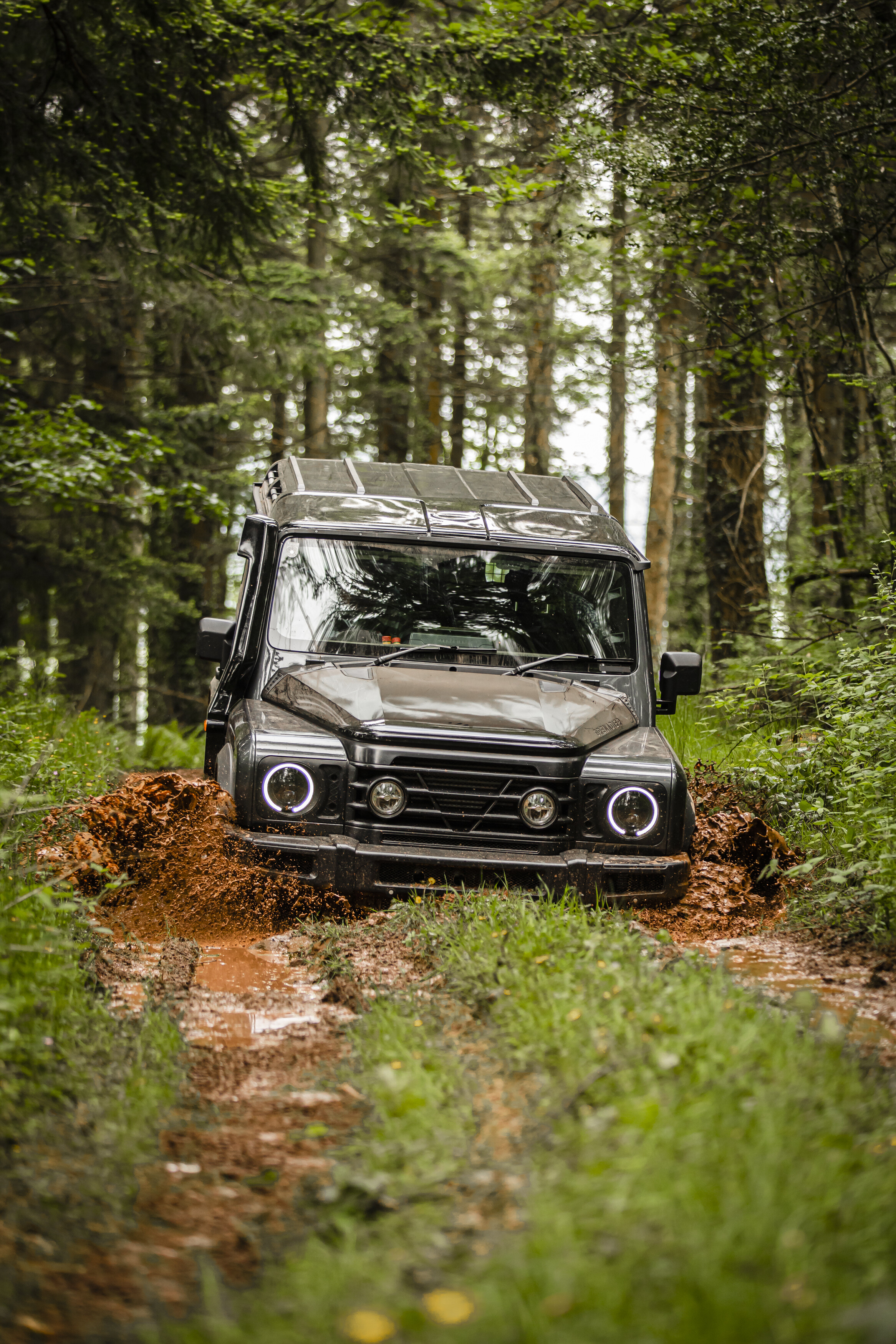
The INEOS Grenadier is being moulded in very much the same form as the old Land Rover Defender it will replace. It features a basic slab-sided wagon body riding on a ladder frame with live axles on coil springs front and rear. Power will come from a BMW-sourced inline six-cylinder engine using petrol or diesel fuel. These will be backed by an automatic transmission and a dual-range four-wheel drive system.
Australia is earmarked as an important market for the Grenadier, with a team setting up camp in Melbourne offices to run the local arm and establish a dealer and service network.
Snapshot
- Night Eagle entry-level variant introduced
- Payload up to 693kg on all models
- Night Eagle starts at $68,450
The Jeep JT Gladiator might be the most off-road-capable double-cab ute on the market, but when compared with the more popular one-tonne utes, it can’t match them in terms of payload and towing capability.
Jeep has gone some way to improving this deficiency by increasing the payload of the Gladiator Rubicon from 620kg to 693kg. This is still at least 300kg short of the payload of the one-tonners, but the Gladiator is more of a lifestyle and off-road-enthusiasts’ vehicle than a tradies’ workhorse. The Gladiator’s towing capacity remains at 2721kg.
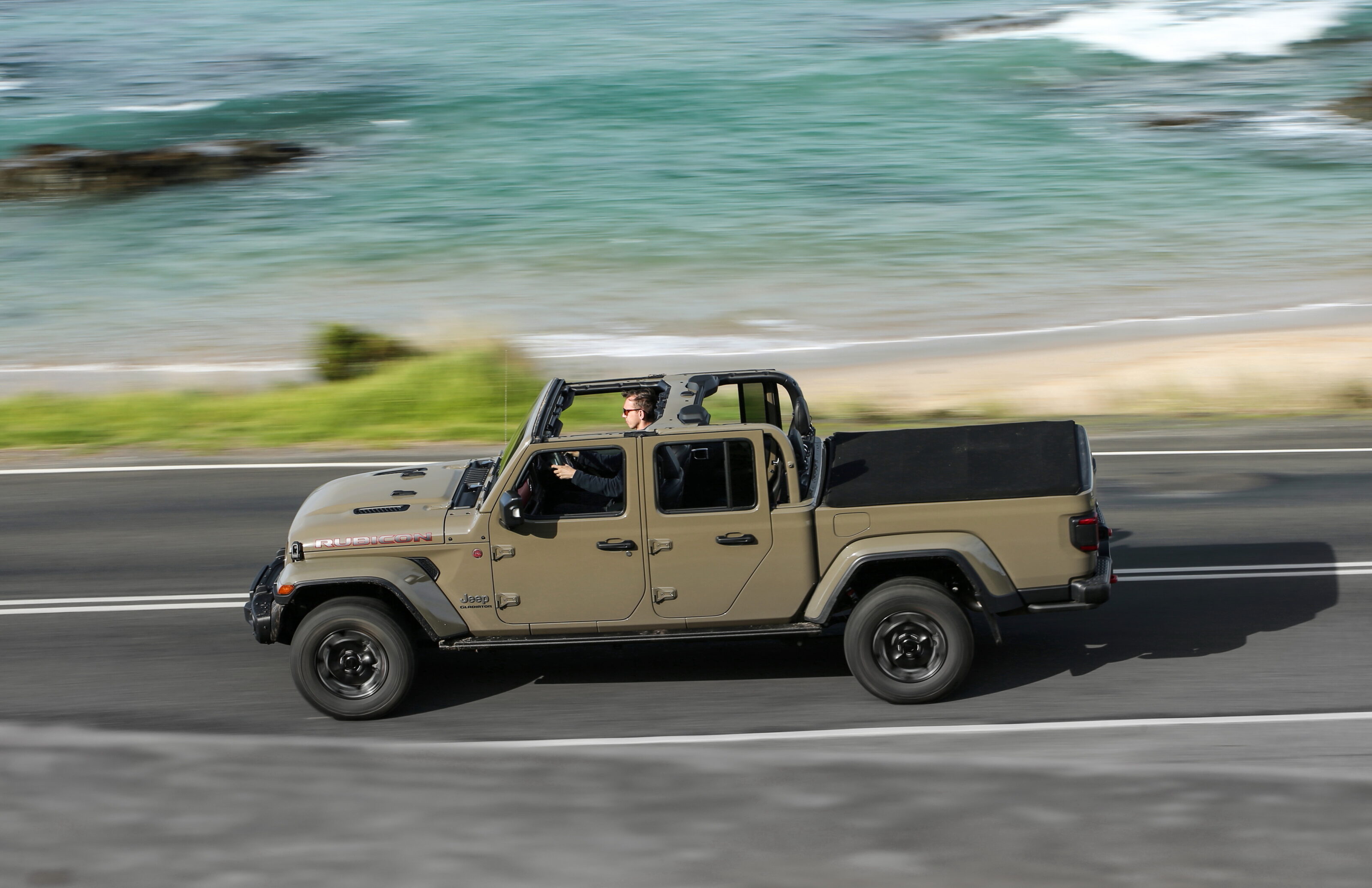
At the same time, Jeep has replaced the Overland and Sport S models with a Gladiator Night Eagle entry level that will start at $68,450. The Sport S was $65,450, so it will now cost you more to get into a Gladiator – but, the Night Eagle has a higher base specification level.
Features over the Sport S include the full-size 8.4-inch U-Connect dash screen – as shared with the Gladiator Rubicon – satellite navigation, black interior accents, and a black grille and exterior highlights.
The Night Eagle also gets the payload upgrade to 693kg where the previous Sport S and Overland models were only rated to 527kg.To carry this heavier load, the 4.1:1 rear axle ratio from the Gladiator Rubicon has carried over to the Night Eagle; however, this is not a locking diff as per the Rubicon. The Night Eagle uses the Selec-Trac on-demand 4×4 system as opposed to the Rock-Trac in the Rubicon.
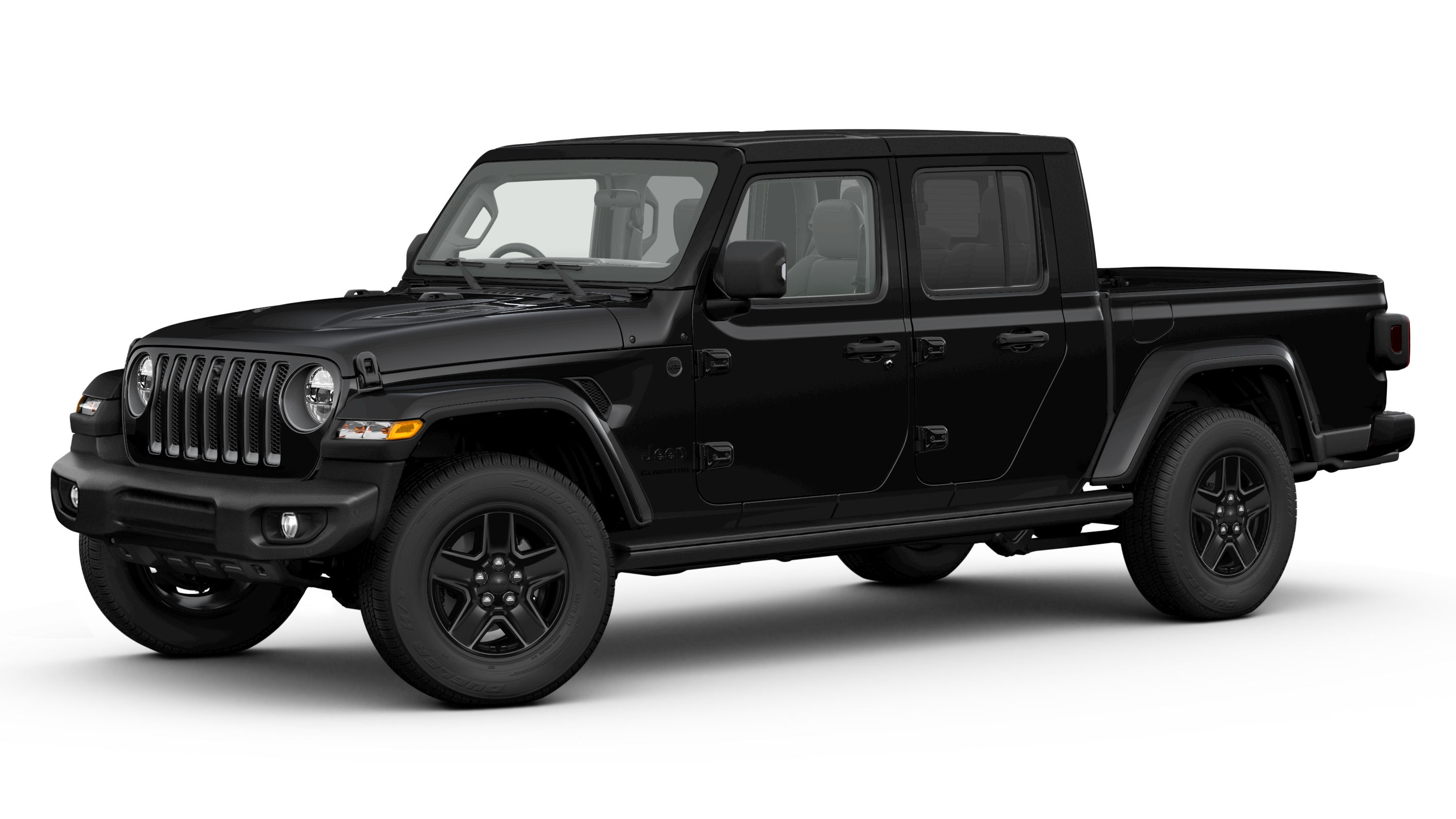
Other features on the Night Eagle include a 240amp alternator, underbody skid plates and heavy duty rock rails. Both Gladiator variants are powered by the 3.6-litre petrol V6 engine mated to an eight-speed automatic transmission.
The JT Gladiator Night Eagle starts at $68,450 and the Gladiator Rubicon starts at $76,950. Various accessory packs are available to option-up both models and, like the Jeep Wrangler wagon, the Gladiator pick-up is one of the most accessorised 4×4 vehicles on the planet.
In January of 1999, I found myself in the remote heights of the Peruvian Andes behind the wheel of a waning Jeep CJ7. Pulling long grades over 15,000-foot passes, it had been running hot and developed a vapor lock.
We were tail gunner for a group of five vehicles, but our primary toolbox was ahead in another vehicle and we had lost comms in the twisting canyons. Alas, the only tool we had was on my belt, a trusted Leatherman multi-tool. My co-driver Brian and I got out, scratched our heads, and popped the bonnet.
I will admit that running naked (tool-wise) in an old rig ranks right up there with heading into the Simpson Desert with half a tank of fuel. However, it does raise the question of what we actually need in the bush. Let’s break it down: water, appropriate clothing, shelter and food.
A survivalist might suggest the most important piece of kit is a knife, fire starter or tarp, but when it comes to keeping our vehicles healthy, we need to expand on that doctrine. What I’ve learned over the years is, when it comes to tools, it is better to have than have not.
TOOL SELECTION
Most pro mechanics swear by US-made SK, Mac, Proto or Snap-on, but these names come with hefty price tags. Like you, I need to pick my financial battles, ponying up the big bucks for specialty tools and relying on less costly brands for the standard stuff.
Unlike back in the 1970s, there are some quality tools being manufactured in Asia. Operative word, some. I also like to honour the inventive folks that became the Xerox of a genre, as well as those that have the intestinal fortitude to keep production at home.
The following selection is representative of my existing off-road kit and broken down into categories: basic hand tools, specialty tools, and rolling fab shop. I see people carrying cordless impact guns, but it is hard to justify the additional weight and real estate when a 10-second Supercars tyre change isn’t required.
Some of these products have been provided by the manufacturer, many were pulled out of my vehicle, and others were purchased through my local tool shop. We’ve also added a special sidebar on storage options, and another on that singular tool you shouldn’t leave home without.
“What I’ve learned over the years is, when it comes to tools, it is better to have than have not”
THE BASICS
At age 17 I received my first credit card, specifically so I could buy a set of Craftsman tools. There were more expensive brands, but Craftsman was US-made, had a reputation for quality and durability, and was affordable. The operative words are quality and durability.
If you open my trail toolbox today (40 years later) you will find most are still with me and in service. Now owned by Stanley Black & Decker, much of its manufacturing was moved overseas, but the company is opening a new facility in Texas and bringing some production lines back to the US.
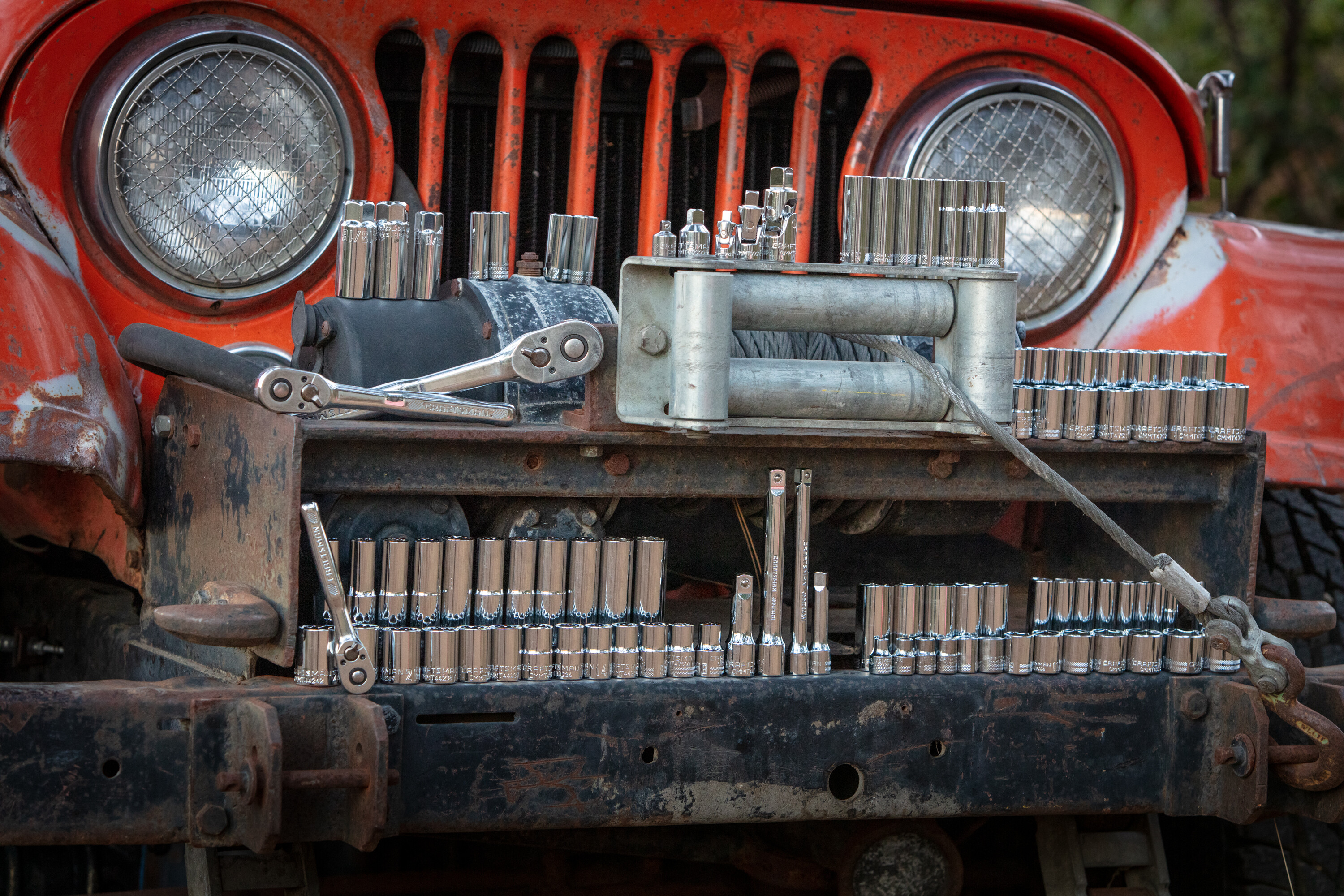
This set is a good place to start. It includes a comprehensive assortment of ratchets and extensions, metric and SAE deep and shallow sockets, combination wrenches, swivel joints, adapters, and sparkplug sockets. Additional items needed are longer ½-inch extensions (10- and 18-inch).
I’m a fan of using a ½-inch flex-head ratchets to access tight spaces (using a 3/8 reducer when needed), and you’ll want a high-end breaker bar for those tough buggers. This is where I open my wallet for a premium brand like Proto.
WRENCH IT
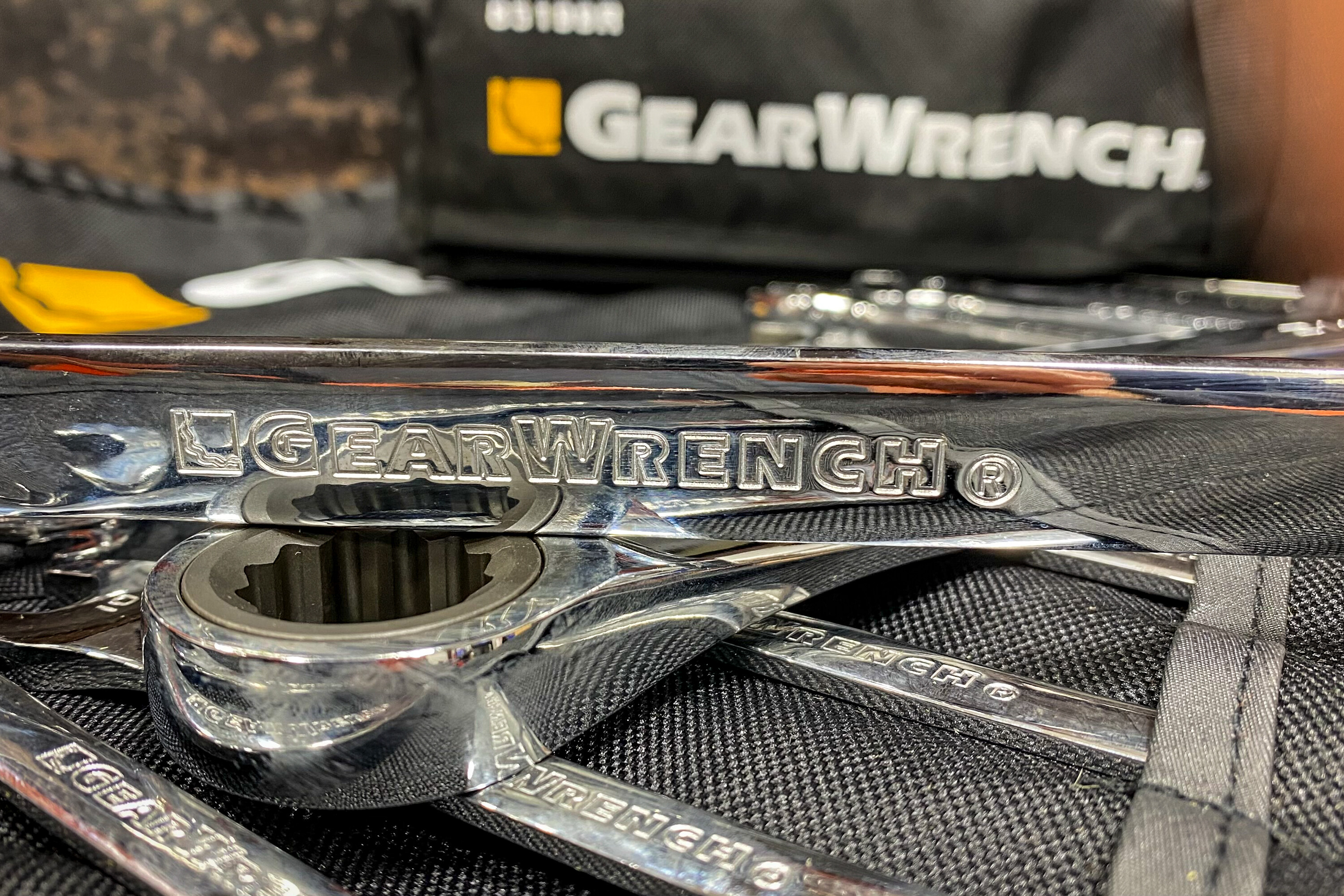
In an effort to make a better mousetrap, Gearwrench went to task to improve upon the combination wrench by adding a ratcheting feature. Nearly all other manufacturers have emulated this patented design, but Gearwrench was the original and its product is on par with any in the field.
A rounded-off brake line fitting can be a big problem, but can be avoided by using a notched box-end wrench. Determine sizes needed for your rig and pick them up at your local auto parts store for about $20.
GRIP IT
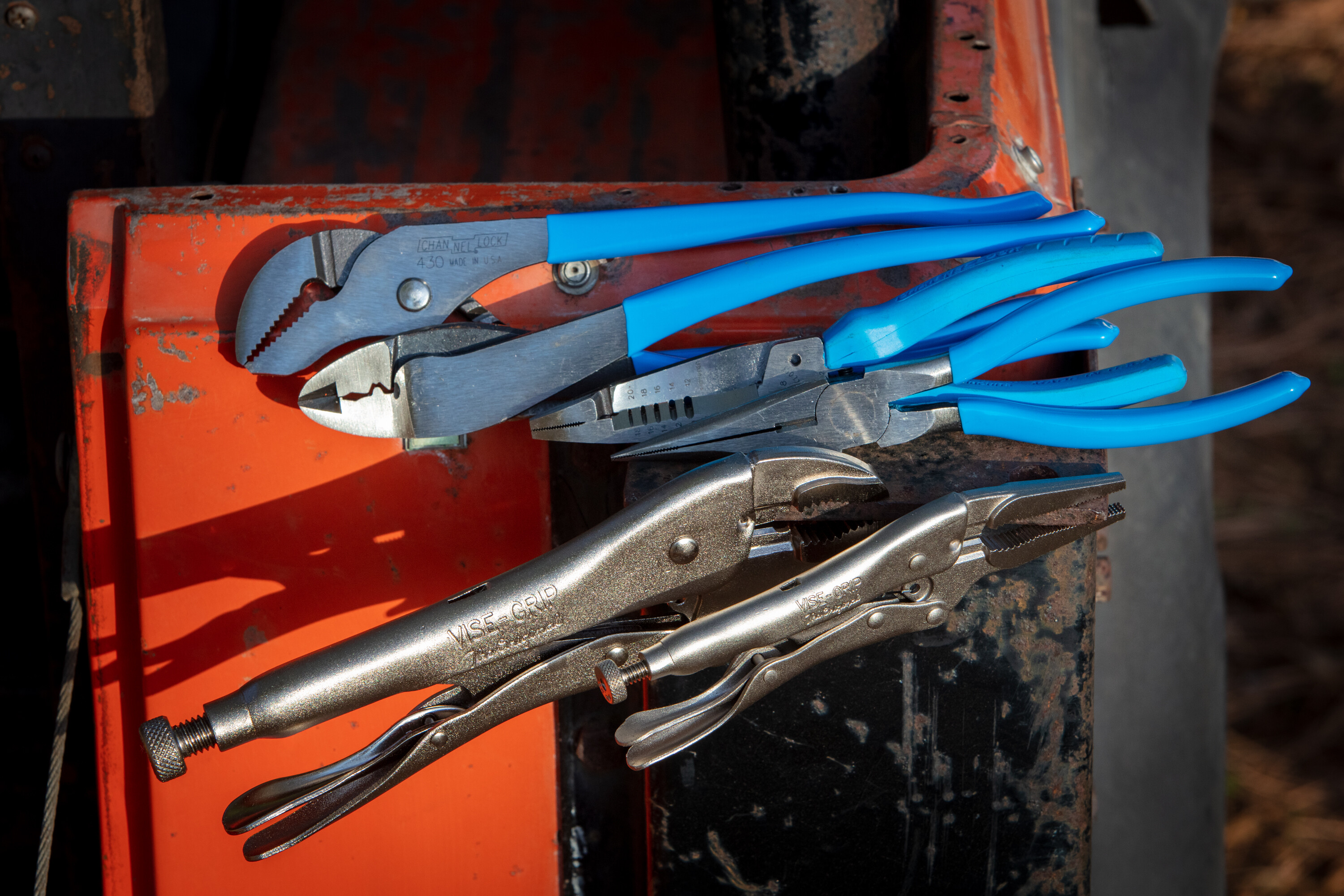
Channellock, Vice-Grip, and Crescent are what you find in my toolbox. Why, because they were the originators of their genre and offer quality products. Many manufacturers offer slip-joint pliers, but the Channellock design, patented in 1934 by the Champion-DeArment Tool Company, was first on the block.
More than 80 years later it is still manufacturing tools in Meadville, Pennsylvania. Same is true for Crescent (1907 in Jamestown, New York), but most of Vice-Grip products are now made in China.
Buying tools in sets will save you some cash, but carrying all this stuff is bulky and heavy, so I cull the herd to what you see here: Vice-Grips in regular and needle nose, and Channellock’s 10-inch tongue & groove, crimpers, and needle nose pliers, and its #968 wire cutters.
TWIST IT
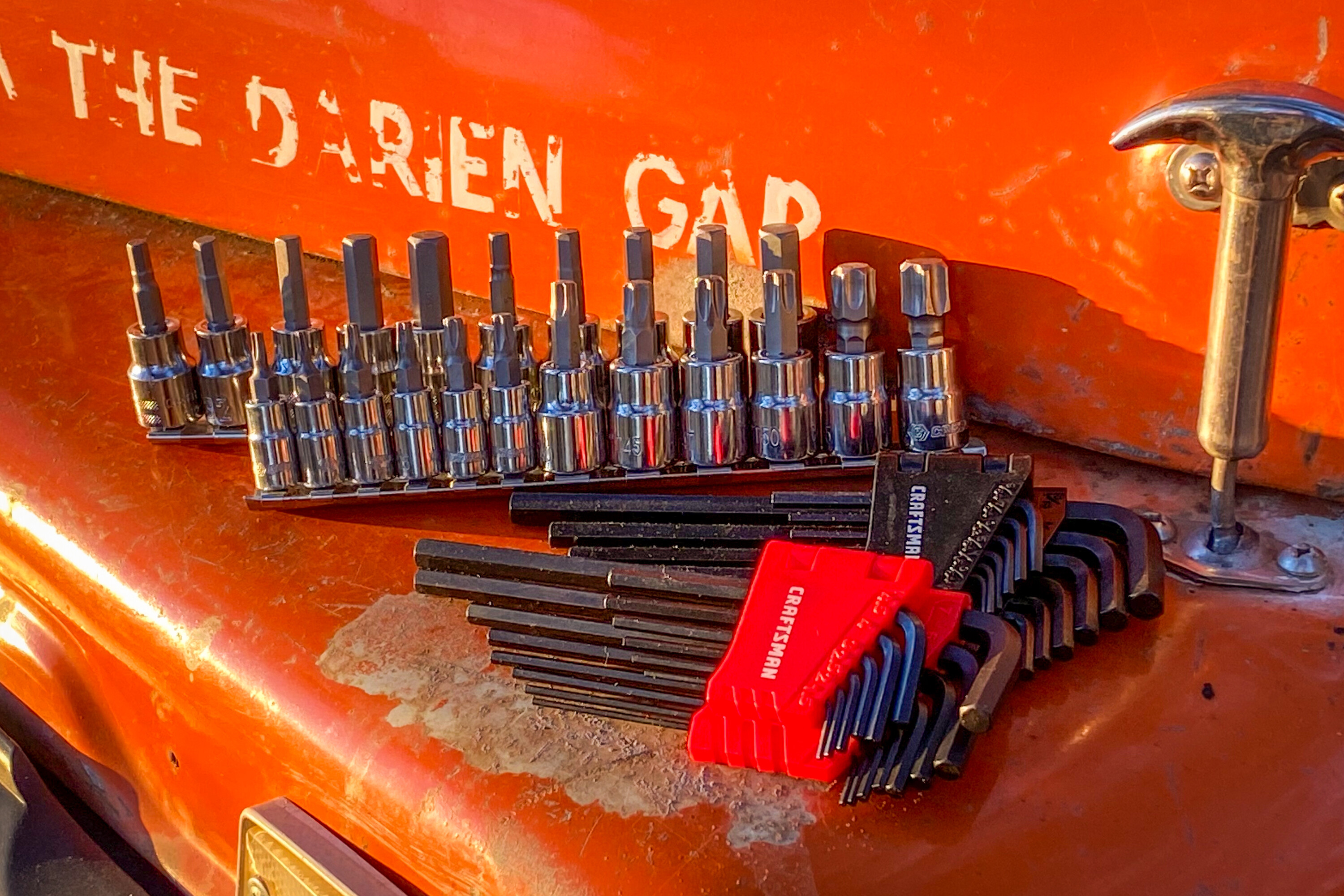
The screw, as we know it, began life in the 1770s when Englishman Jesse Ramsden invented a lathe that would cut helical threads. Though rudimentary by today’s standards, developments during the Industrial Revolution made the screw affordable enough for the common craftsman. There have been many new designs over the years, but when it comes to your vehicle, odds are they will fall into Phillips, slotted, Allen, and Torx categories.
In the quest for a more efficient screw turner (an early term), the Allen Manufacturing Company patented the recessed hex head in 1910, followed by the self-centering crosshead design (cruciform slot) brought to market by Henry F. Phillips in the 1930s. The last significant addition to genre came in 1967 with the Torx, or hexalobular internal-head screw.
Bargain-brand screw turners tend to strip heads, and I’m willing to spend a bit more for screwdrivers crafted from high-alloy steel with a precision machined tip. I like Proto’s ergonomic handles, and I carry this set in each of my trail rigs.
SPECIALTY TOOLS
Now that we’ve covered the basics, let’s examine the other bits that hold your rig together. Some of these may be specific to your vehicle, so do your homework and add them to your cart. I agree, piling all this stuff in your rig takes space, adds weight and comes with a price tag. However, having the right tool in-hand when things go sideways, your cell shows zero bars, and the tarmac is a day’s drive away … that’s priceless.
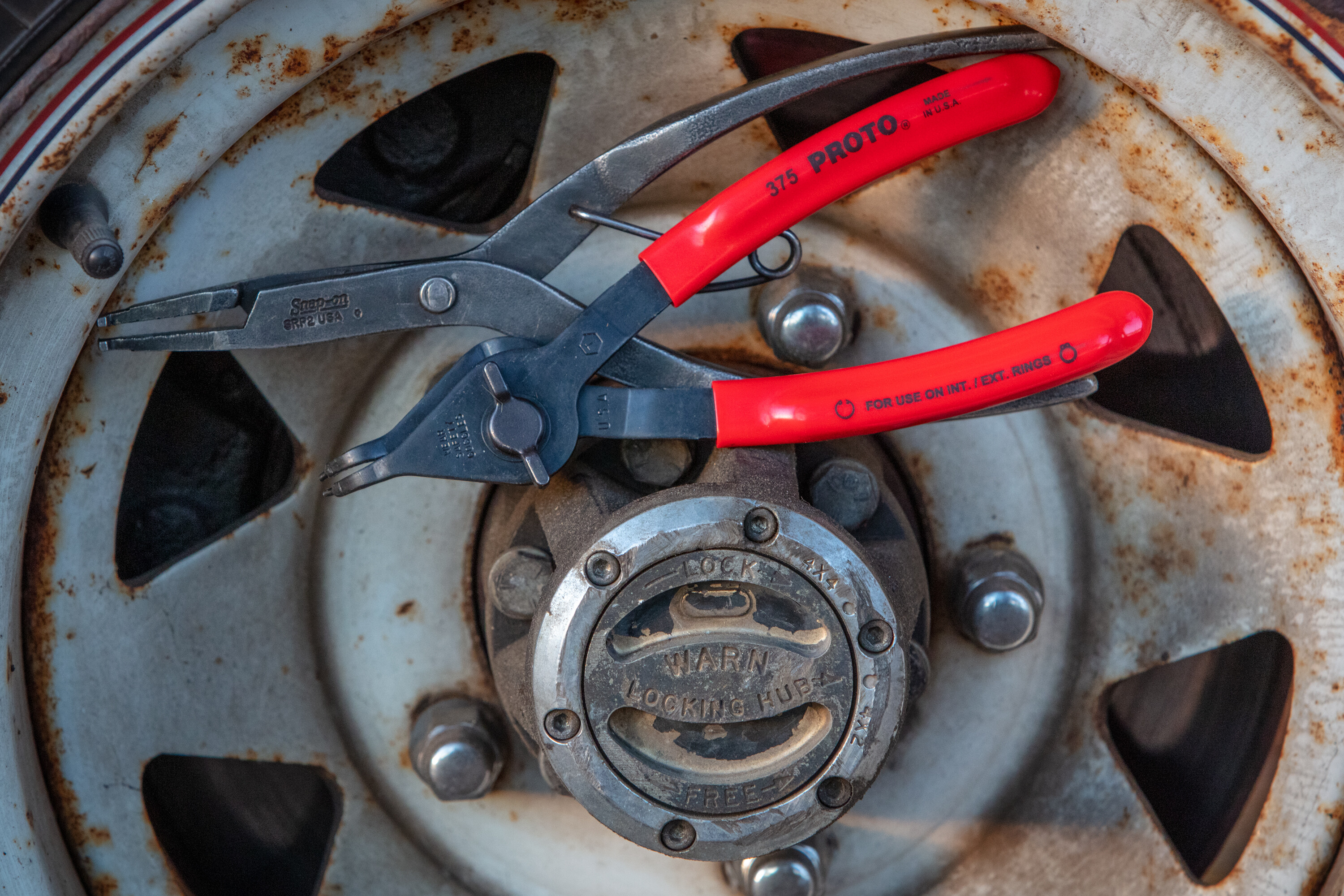
If you have to dismantle a transfer case, engine or axle, you are going to need retaining ring and C-clip pliers. I’ve had these Snap-on horseshoe pliers since the ’90s. They were pricy but invaluable at times. For retaining rings, I suggest a convertible set like the Proto 375, which works with internal and external rings.
This assortment of Proto chisels, punches and drifts were purchased at garage sales. They have been in my toolbox for decades, put to task countless times, and have withstood the test of time and abuse.
Miscellaneous stuff includes hole punch, dental picks, mini screwdrivers, tweezers, utility knife, cleaning brushes, and telescopic magnet and mirror. The Impeltronics telescopic magnet will hold five pounds and has an LED light on the business end. If you have an older rig with a mechanical distributor, include a set of feeler gauges and a point file. Lastly, the ClampTite will allow you to twist bailing wire into a temporary hose clamp.
Accessing front wheel bearings or a pinion seal requires a specific socket. If dismantling steering rod ends or ball joints, a pickle fork will come in handy. Determine the sizes required for your vehicle and source them at your local auto parts store. I also carry a beat-to-heck Snap-on prybar – don’t cheap out or you’ll end up with a pretzel.
An OBD II scanner should be standard issue for 1996 and newer vehicles. The Blue Driver unit and associated app will identify system problems, provide reports and live data, and clear codes. I’ve had good service from this Klein Tools MM400 multimeter, and you should also carry jumper leads and a 12-volt test light.
MOBILE FAB SHOP
If you are in this game long enough, the excrement will eventually hit the fan hard enough that you’ll need more than basic tools. In the same way we might carry a medical kit that exceeds our level of training, there is a good chance someone in your group is a first responder or has training in first aid. The same applies to your tool kit. Don’t know how to weld? Your friend might. If not, you will expand your skill set as many of us have by unadulterated oh-crap necessity.
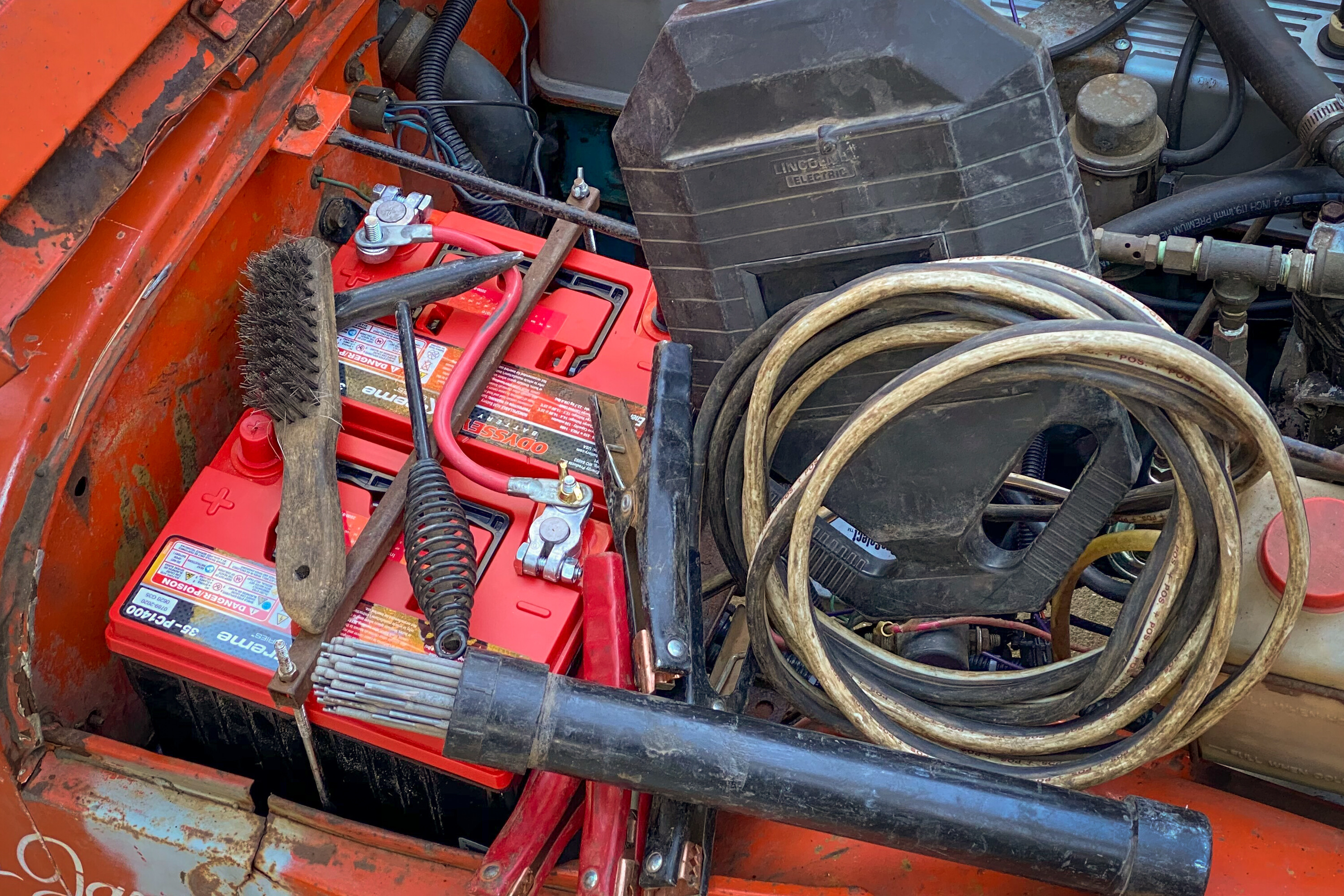
You may not know it, but with two high-quality batteries, such as these Odyssey Group 35s, and a few accessories, you can travel with a mobile welding shop. The kit consists of two-gauge lug connectors, jumper cables, welding rod, wire brush, slag hammer and a compact shield. I made a weatherproof storage tube out of ABS pipe capped on both ends. Suggested rod: 6011 and 7014 in ⅛- and 3/32-inch diameter.
Corded tools are great if you have a large inverter, but you can’t beat the new crop of cordless products. My kit consists of a 20-volt DeWalt drill and cutoff wheel. A pair of batteries will get you through most jobs, and the A/C charger (0.7-amp load) will work on a 400-watt inverter or OE 115V receptacle. Don’t forget a quality bit set, step drill bit, wire wheels, bolt extractor set, and goggles.
When you need to clamp, cut, shape, or pull, the following are the heavy hitters of fab work. Hacksaw (standard and mini), C-clamps (3- and 8-inch), open-jaw Vice-Grips (x2), large Crescent wrench, dead-blow mallet, hammer, and metal files. Files should include medium machinist (double cut), half-round and keyhole (small and large). I also carry a universal gear/bearing puller.
NEVER LEAVE HOME WITHOUT THIS TOOL
When 4X4 Australia editor Matt Raudonikis asked me about the one tool you shouldn’t leave home without, the answer was easy. Your brain. That day in the Andes my brain said, “What the hell are you doing in the middle of nowhere without your tools … idiot.” Granted, we’d consolidated tools to save space, but my brain was spot-on in its assessment.
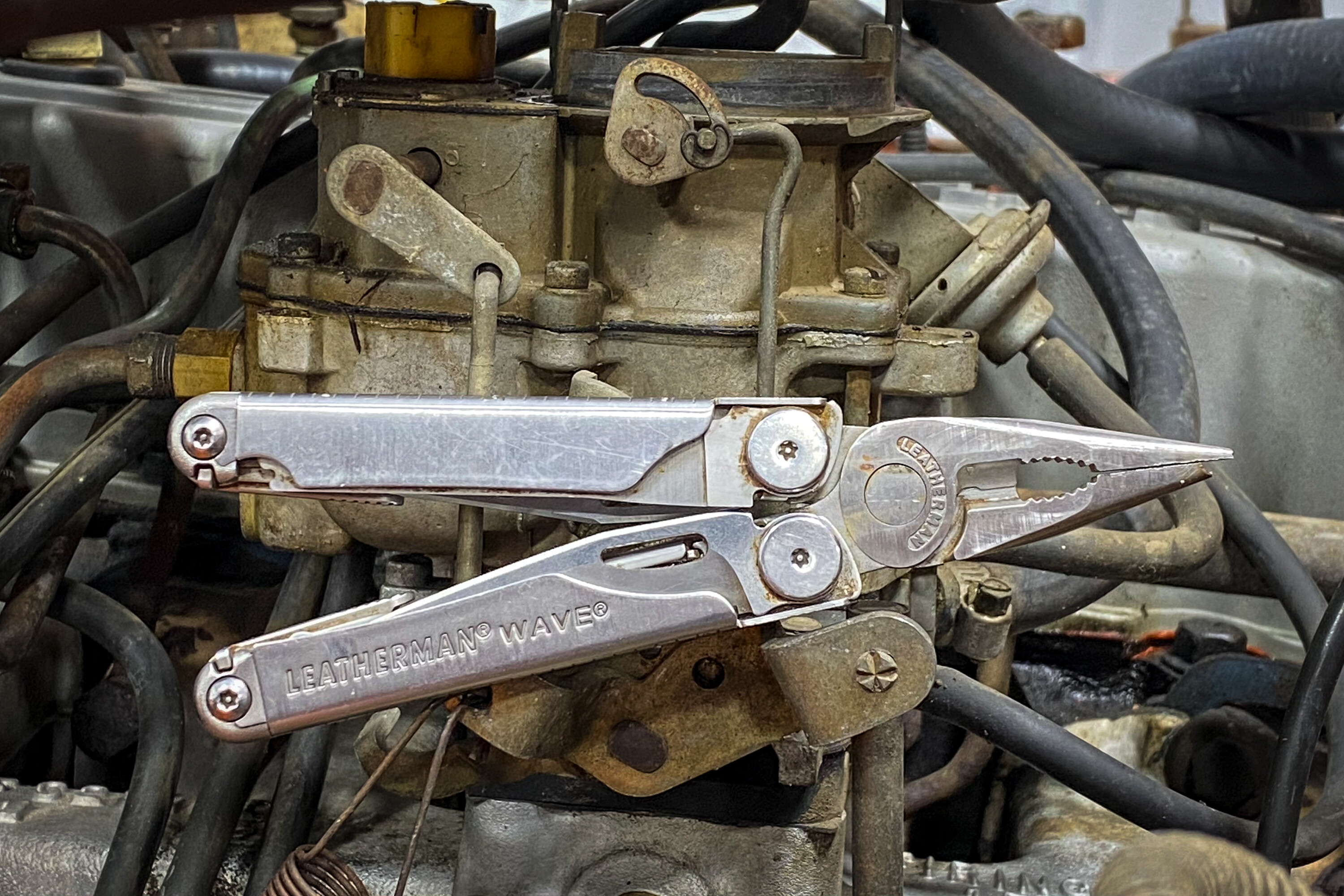
However, if I had to pick a singular tool it would be my Leatherman. Paired with your brain, this compact pocket wizard will get you out of more jams that MacGyver on a good day. With Leatherman in-hand, we proceeded to remove the bonnet (for additional air flow), rerouted the fuel lines away from heat sources, checked the fuel filter, and adjusted the carb. Voilà! We were back on the trail.
STORAGE OPTIONS
There are many schools of thought on the best methods for stowage: steel toolboxes, tool rolls, wrench rolls, ammo boxes and tool bags. I’ve found the two-box (or bag) method works best for my needs – a main box for heavy hitters and specialty items buried deep in my rig, and a quick-grab bag with the basics stored behind my seat.
Key features are durability, utility and transportability. Will handles or other components fail under the burden of heavy tools? Does it have multiple drawers, pockets, or sleeves to organise tools? Can you carry it up the trail if needed?
A few options that fit the bill in all three categories are Crescent’s Tradesman Tool Bag, the Yorktown Tool roll and Pouches from Atlas46, and Step22’s Pangolin Tool Roll. Look for a comprehensive review of these and other storage options in an upcoming issue of 4X4 Australia.
I’m impressed with Crescent’s new 17-inch Tradesman tool bag. It features dozens of sleeves for wrenches and pliers, two large sections for bulky stuff, and exterior PALS loops for expansion. Crafted with 1680 denier polyester, metal hardware, quality YKK zippers, and a rigid polypropylene base, this sturdy bag may replace my old (and heavy) machinist box.
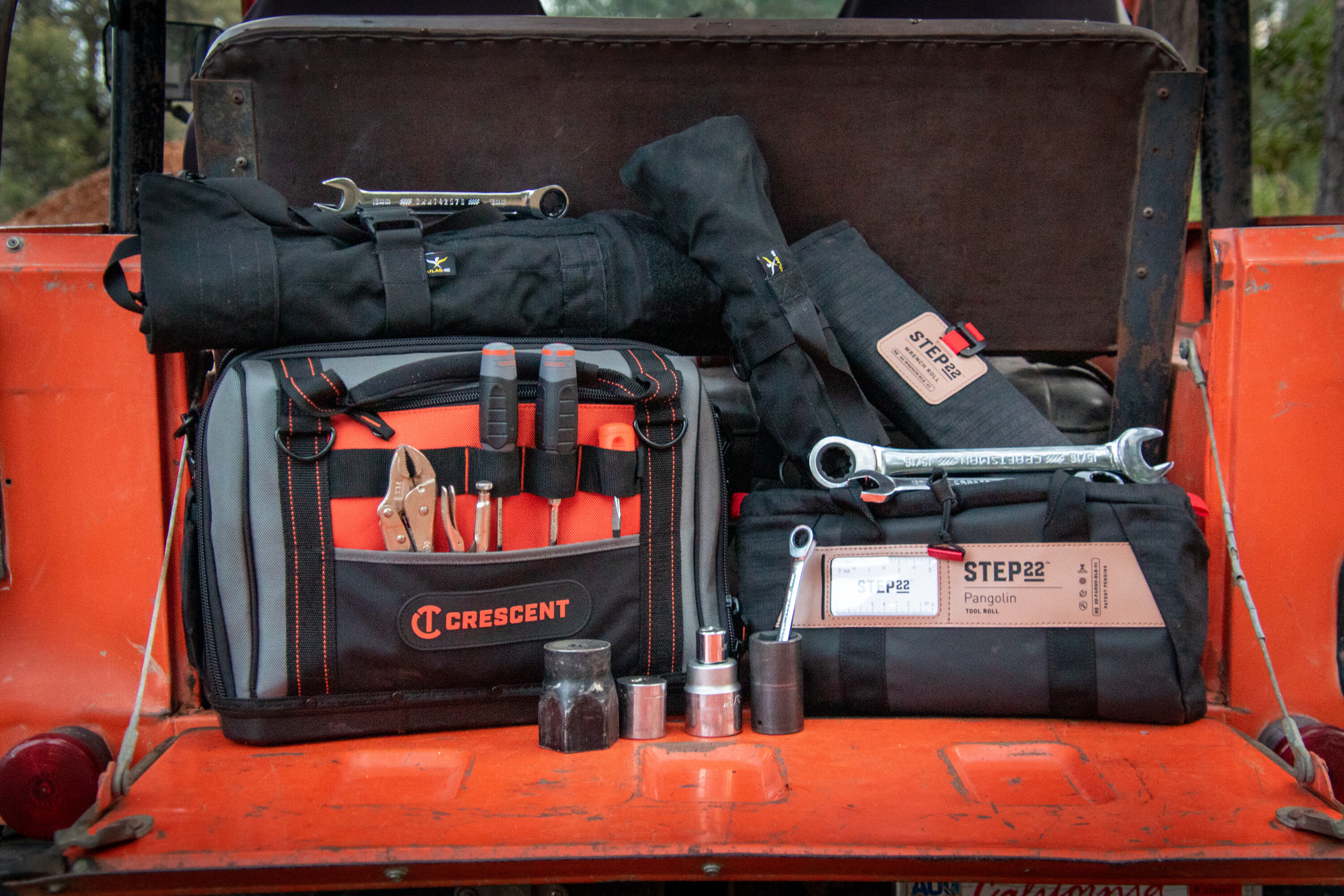
Founded in 1974, Atlas46 has forged a reputation for premium tactical gear for the military and law enforcement, all of which are handcrafted in the USA. The well-designed Yorktown, constructed with 1000 denier Cordura Nylon, is the quintessential tool roll and features four large pockets on one side and numerous tool slots on the back. Quality YKK zippers, Velcro closures, carry handles, and removable hanging straps makes this a great option for a quick-grab bag. Their Wrench Pouch is equal in construction and designed to hold up to 14 combination wrenches. Lifetime warranty, too.
Step22 cut its teeth making Hi-Lift jack covers before getting into storage options. Their Pangolin takes a modular approach to the tool roll. Two of its three large pockets can be removed, converting the end compartment into a catch-all garage. There are two clear-mesh pockets for small items, a removable 17-slot wrench roll, and compression-cord closure. Material is 1000 denier C.R.A.W.L. (coated rugged all-weather layer), zippers are YKK, and dual carry straps allow for quick grab-n-go.
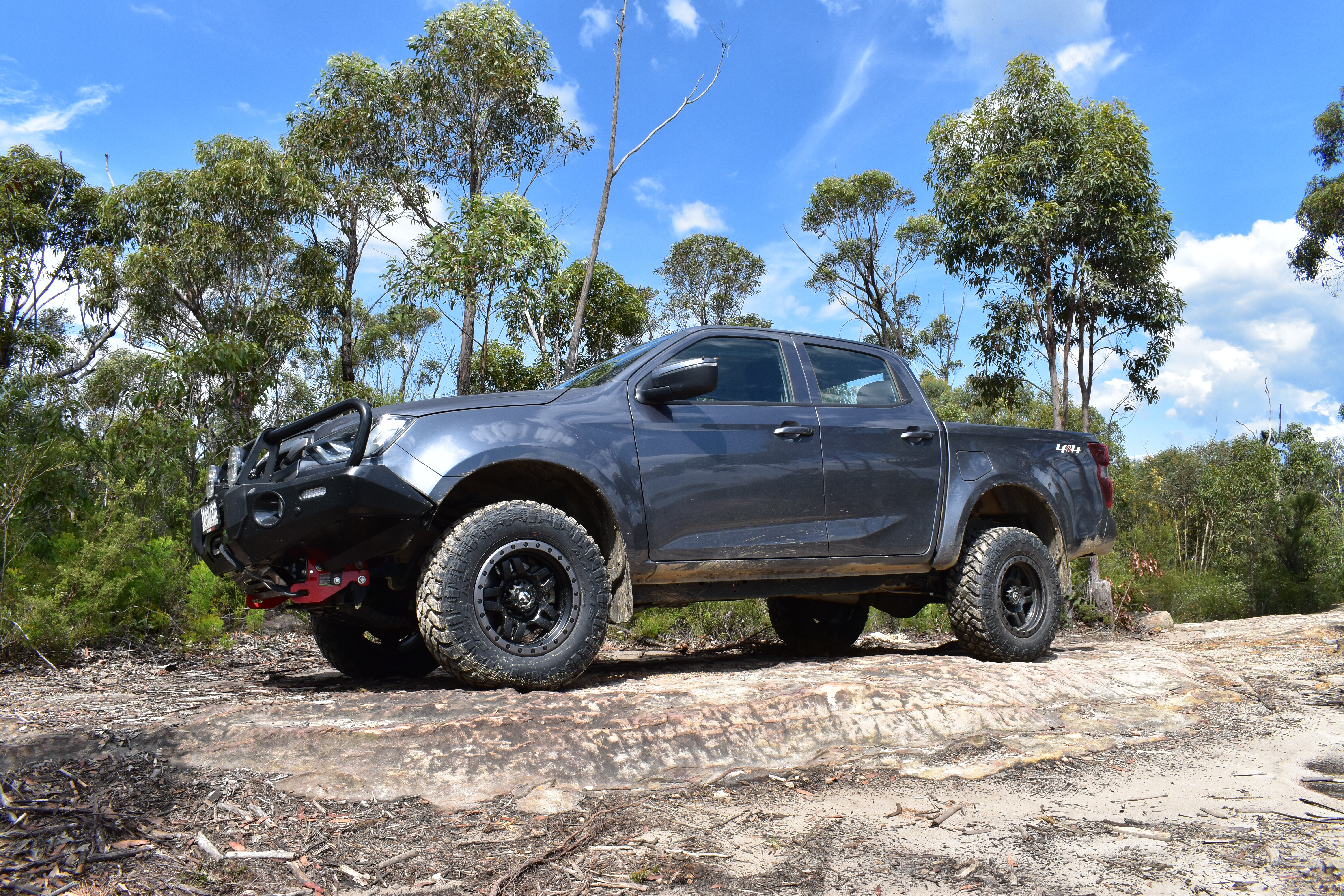
LET’S be honest, the factory tyres on 4X4 Australia’s D-MAX were never going to stay on for long.
They just aren’t up to the task for what we have been and will continue to put this vehicle through. Not to mention, as you would have seen in the last issue of 4X4 Australia, we’ve since installed a Tough Dog 40mm lift, so the stock tyres were looking a bit undercooked.
So, what did we decide to do? I use the word decide, as Editor Matt and myself spent a considerable amount of time deciding what the best wheel and tyre combination would be.
As this is a showpiece for the magazine, we wanted it to look good. At the same token, it had to be street legal. This is where a compromise was reached, and instead of running the biggest rubber we could squeeze in the guards, we chose some of the most aggressive we could find.
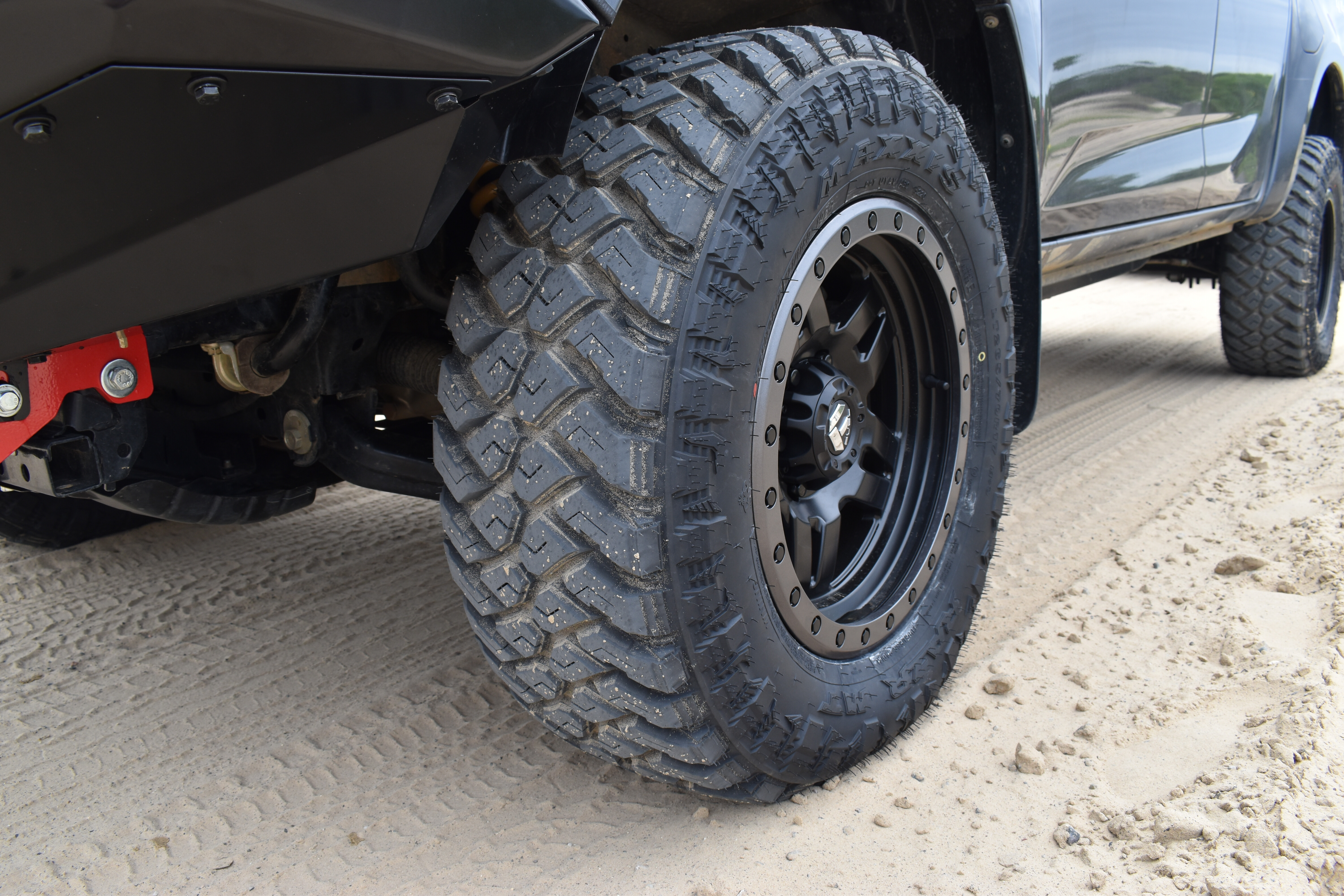
Compromise is actually too strong of a word, as hands down these mud terrains are the quietest and most mild-mannered mud terrains I’ve ever driven on. Honestly, you wouldn’t know you were driving on muddies as there’s none of that usual hum (or roar) you’d expect from such an aggressive tread pattern.
After a great experience running the Maxxis RAZR MT772 tyres on the 4X4 Australia Ranger, we chose to give them another run.
Maxxis states on its website that these are designed for 15 per cent on-road and 85 per cent off-road use, but I’ve since racked up more than 5000km on these tyres and at no stage have they acted strangely on road. This includes a trip to Melbourne from Sydney and back, two trips to Stockton Beach in the pouring rain, as well as general day-to-day driving.
“These things clear mud quicker than I can clear my bank account on pay day”
Off-road, forget about it. These things clear mud quicker than I can clear my bank account on pay day (damn you Facebook Marketplace). They grip to rocks really well too, thanks to the soft compound and staggered shoulder blocks.
We chose the Maxxis RAZR muddies in a 265x70R17 size. For those playing along at home, these fit the D-MAX without scrubbing at all after installing the 40mm lift kit. A quick look at the Maxxis website shows an impressive selection of sizes available to suit a range of rim sizes, from 15 to 20 inches.
The tyres were fitted at my local Maxxis dealer, Active Automotives in Blaxland, who did a great job fitting and balancing the tyres. For five tyres, fitted and balanced, we were charged $1654, which works out to $329 per tyre. Not bad at all for an aggressive mud-terrain tyre that we’re happy to be used every day of the week.
Snapshot
- All new Jeep Grand Cherokee L launched in the USA
- Due in Australia in Q4 2021
- New platform with three row seating
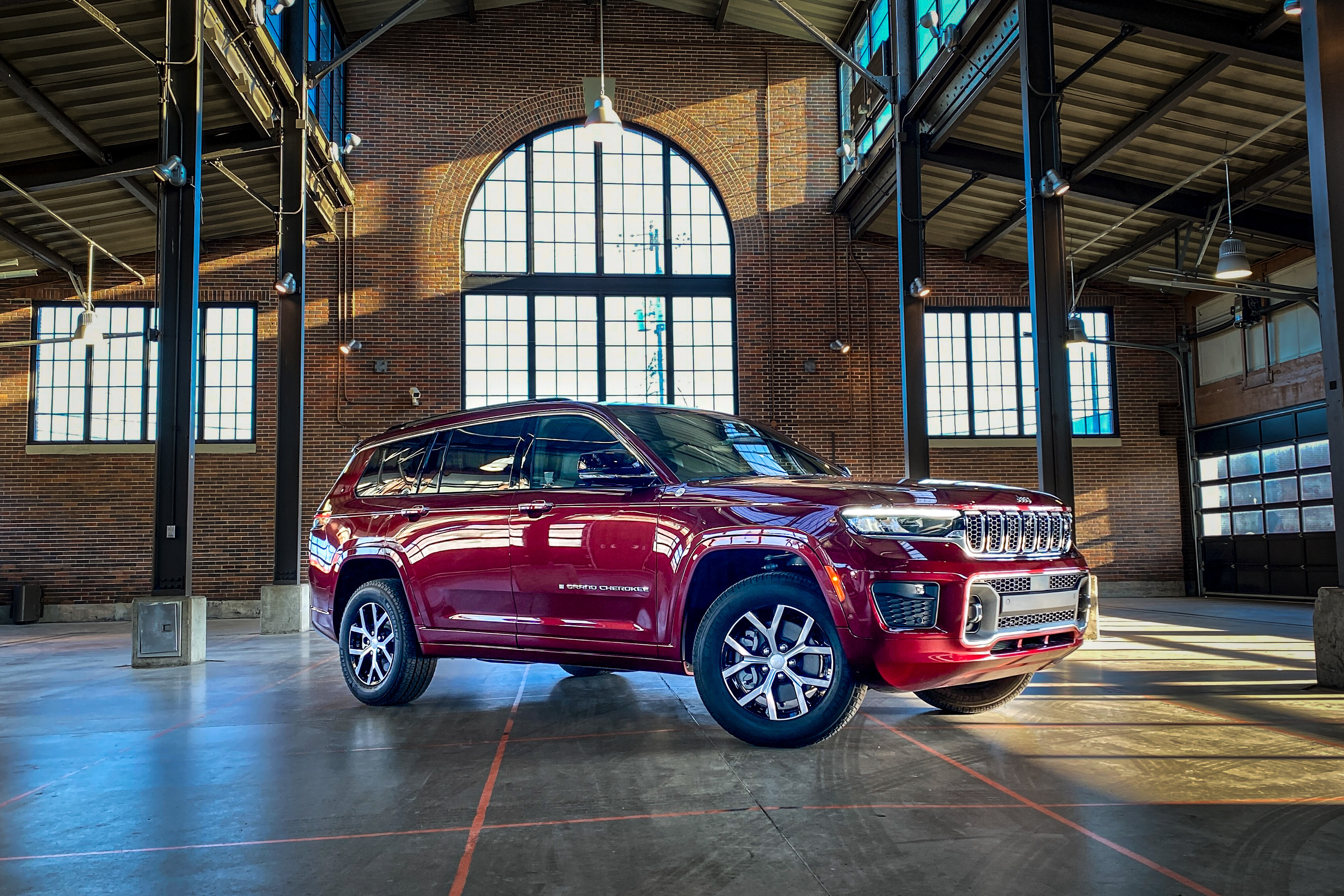
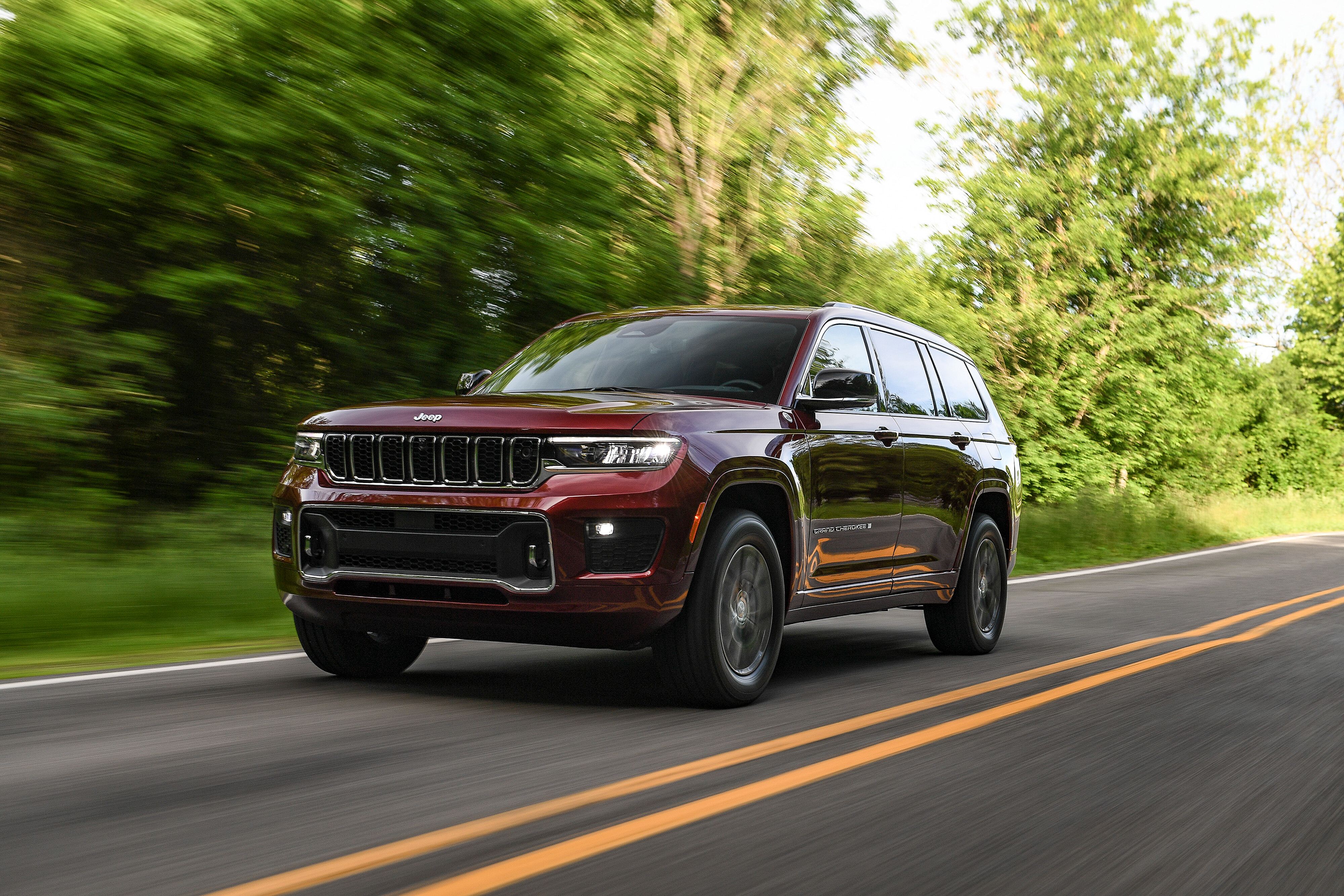
Jeep USA has pulled the wraps off its new three-row premium 4×4 wagon the Grand Cherokee L.
More than just a Grand Cherokee with some added booty and a third row seat, this is an all-new vehicle that replaces the Mercedes Benz-derived platform of the current GC with a new architecture borrowed from the Fiat stable and adapted to a large off road capable wagon.
The Grand Cherokee L is due to go on sale in Australia in Q4 of 2021 as a 2022 model, with local specification and pricing to be announced closer to that launch date.
In the USA, The Grand Cherokee L starts at US$38,995 through to US$63,995, so it’s cheaper there than a Land Cruiser 200 Series. There are four specifications offered in the US, starting with Laredo, Limited, Overland and Summit.
The Grand Cherokee L is the first new vehicle to come out of Jeep’s new three-million-foot Mack assembly plant, the first new auto manufacturing in Detroit in 30 years.
UPDATE, May 12 2022: The new Jeep Grand Cherokee L is now in Australia, and we’ve driven it. Read and watch our review at the link below.
The story to here
In creating this new chassis, Jeep incorporated 70 percent high-strength steel to improve rigidity and reduce mass.
The use of aluminum in the bonnet, tailgate, suspension, steering knuckles, and engine cradle reduced weight further; more than 100 kilograms total.
To lower the center of gravity and accommodate the new body lines, the engine sits deeper in the bay and is now attached to the front drive axle.
This configuration allows for increased ground clearance and reduces noise and vibration on the road.
ON ROAD
We put this new technology through the paces during a half-day road trip to the Chelsey Proving Grounds.
Our drive was in a GCL Summit model fitted with the 266kW and 528Nm 5.7-litre Hemi V8 engine. The base engine is the venerable 3.6-liter Pentastar V6, producing 216kW and 348Nm of torque.
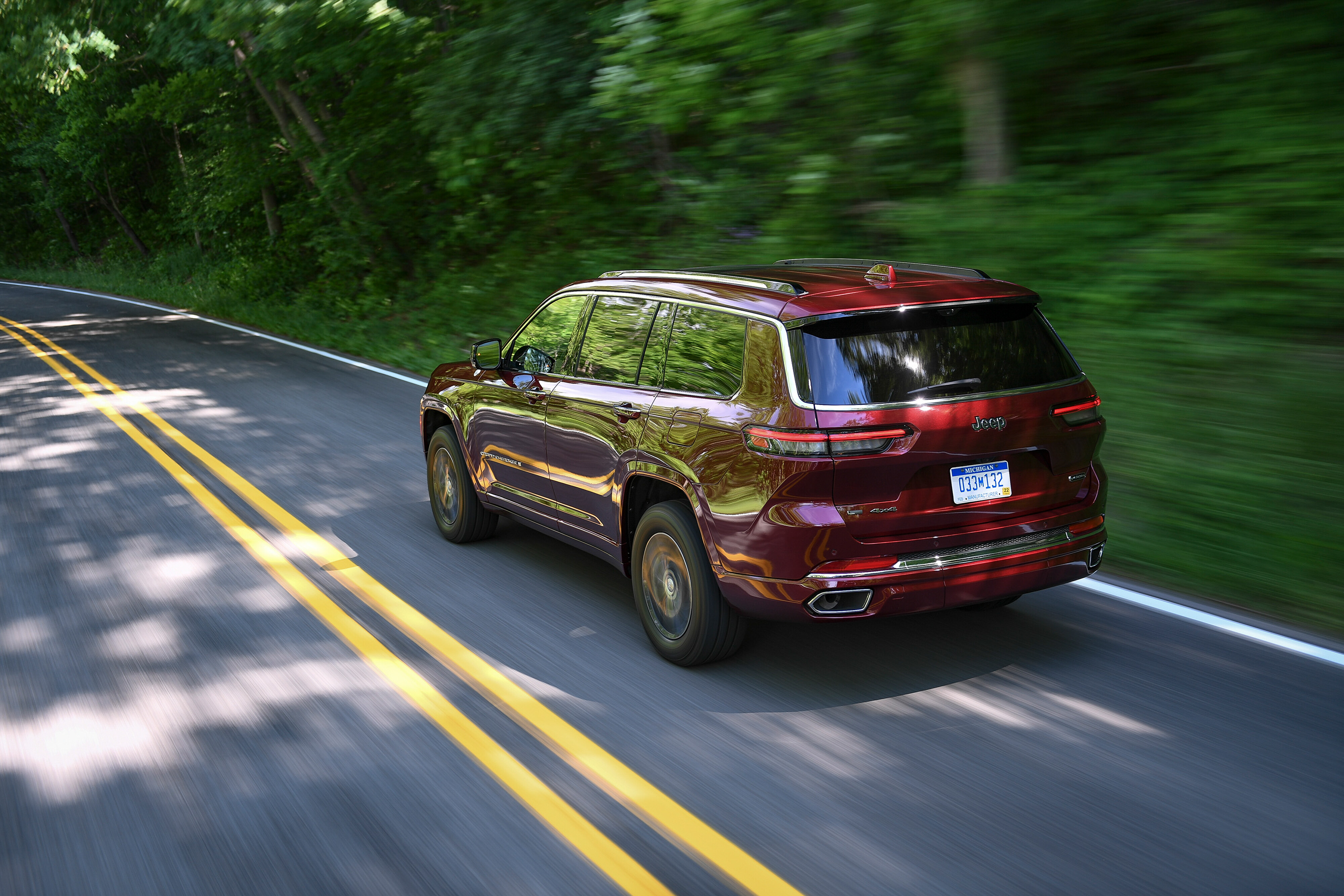
First impressions were a little jarring. I was sure it possessed the trail capability expected from a seven-slot grill, but slipping into the hand-crafted leather seat and glancing around, I wondered if I’d walked into the wrong drive program?
This was not my granddaddy’s Grand Wagoneer. Leather and hardwoods throughout, ambient LED lighting under the dash and seats, a frameless instrument panel, and four-station HVAC system. Was this really a Jeep?
Rolling out of the gates, I toggled the drive mode selector to ‘Sport’ and made my way through the streets of Detroit.
Finding the expressway onramp, I pressed the skinny pedal to the floor. Keeping my eyes above the dash, I watched the speedo on the heads-up display spin north as the Hemi V8 launched me from zero to the fast lane in a heartbeat.
New is a fully electric power steering system, which I was initially apprehensive about, but on the road it is very smooth, had a natural feel, and seamlessly adapted between slow parking lot turns to sensitive lane changes at highway speeds.
The Grand Cherokee L is the first new vehicle to come out of Jeep’s new three-million-foot Mack assembly plant, the first new auto manufacturing in Detroit in 30 years.
Pulling off the highway onto a labyrinth of country roads, I pushed the Grand through tight corners at a spirited pace. Steering was light and predictable, the 52/48 (fore/aft) weight distribution provided balanced handling, and the combination of twin-tube gas shocks and variable-rate air suspension rendered a sportscar feel.
In a clear section I dodged the wheel hard left and then right to emulate an emergency lane change. The return-to-center cycle, where the vehicle stabilizes, was measured in fractions. Emergency braking was immediate and dead straight, thanks to the larger rotors (354mm front, 350mm rear) and calipers, and an effective ABS.
The Grand Cherokee L is rated to tow up to 3200kg in the USA and has a very healthy payload for the 4×4 wagon. The top-spec 4×4 Summit model weighs in at 2395kg, yet has a 1190kg payload. Overland and Summit models are available with a two-speed transfer case for off road driving.
INTERIOR
It was a hot, humid Detroit day and the sun beat through the dual-pane sunroof like a blast furnace.
Comfort was achieved by pressing a few buttons to close the sunshade, activating the ventilated seats, and setting my temperature preference on the four-zone HVAC system.
This new model has a lower belt line, which leaves more real estate available for glass. The increased visibility from the driver’s seat was appreciated as I worked my way through commuter traffic.
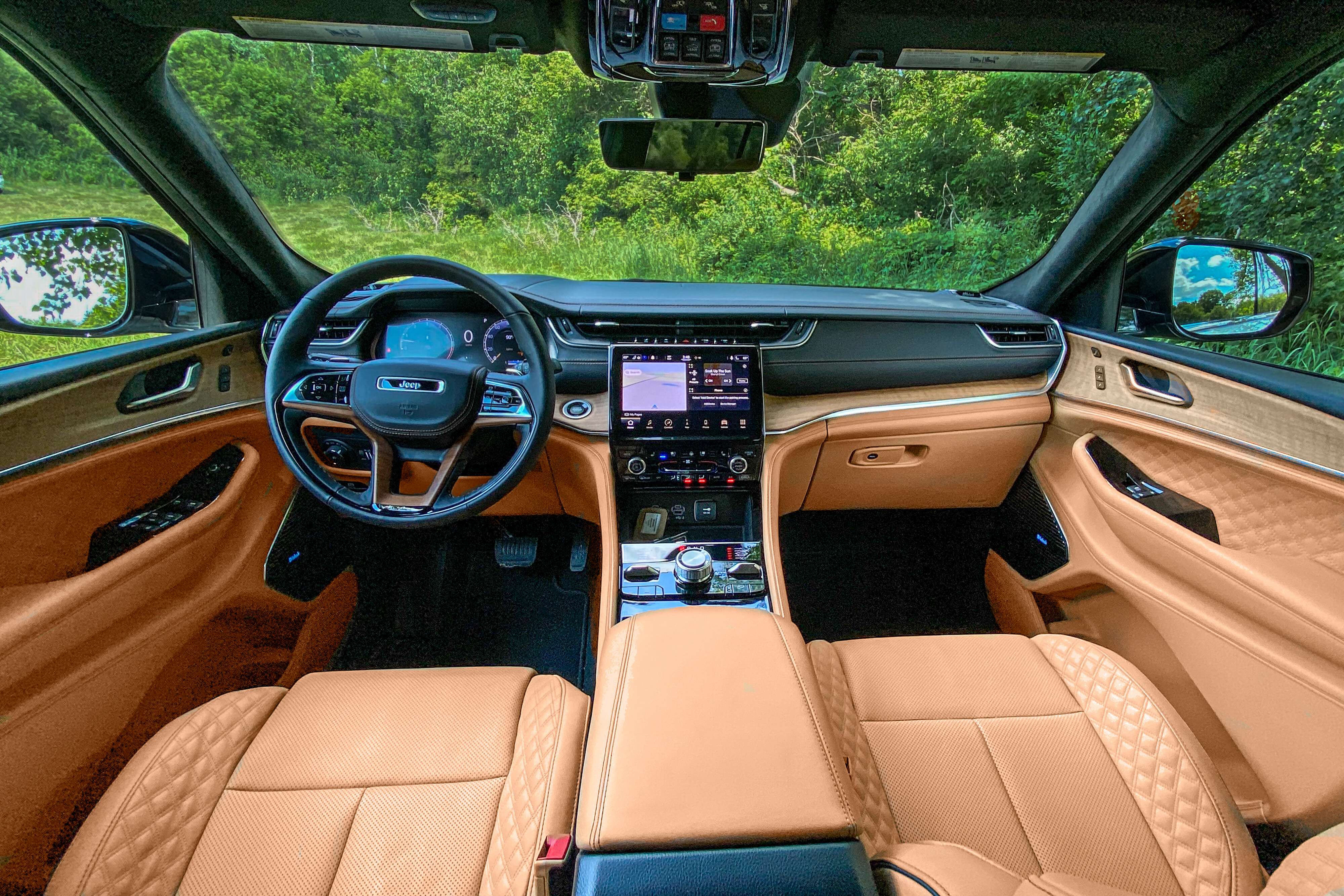
I took advantage of the highway time to savor the Grand Cherokee L’s plush interior and explore the plethora of pages on the Gen 5 Uconnect LCD screen.
First was the 360-degree Surround-View camera system. Not only can you monitor traffic around you, but interior cameras allow you to watch your kids as they smear peanut butter and jelly sandwiches on each other.
There is also a night vision mode, which incorporates thermographic technology to increase the reach of the headlights. In turn, infrared cameras pick up heat signatures on the horizon, whether it be a car’s exhaust, stray dog, or wayward child. Where this comes into play is in the AI driver assist modes.
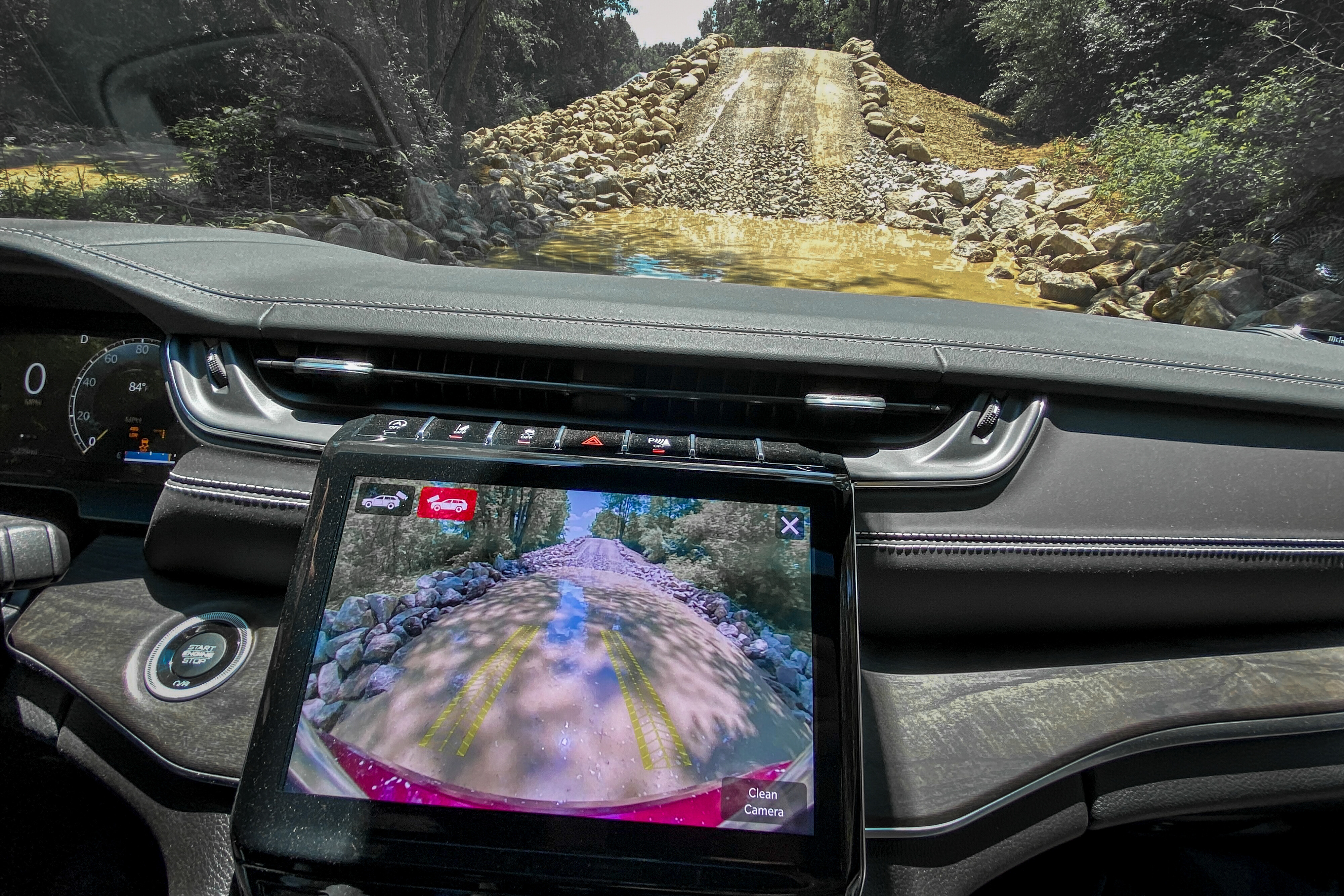
While I’m not fan of electronic nannies, the onboard safety systems in this vehicle can be lifesavers. Stability control, Drowsy Driver Alert, Collision Avoidance Assistance, Active Cruise Control, Blind-spot monitoring and more to keep you and your family safely cruising down the road.
Scrolling through various screens on the frameless instrument panel (accessed via fingertip controls on the steering wheel), we find engine vitals, tire pressure, fuel range and economy, and a dozen informational options. Above, I watched my six through a digital rearview mirror that utilizes the backup camera.
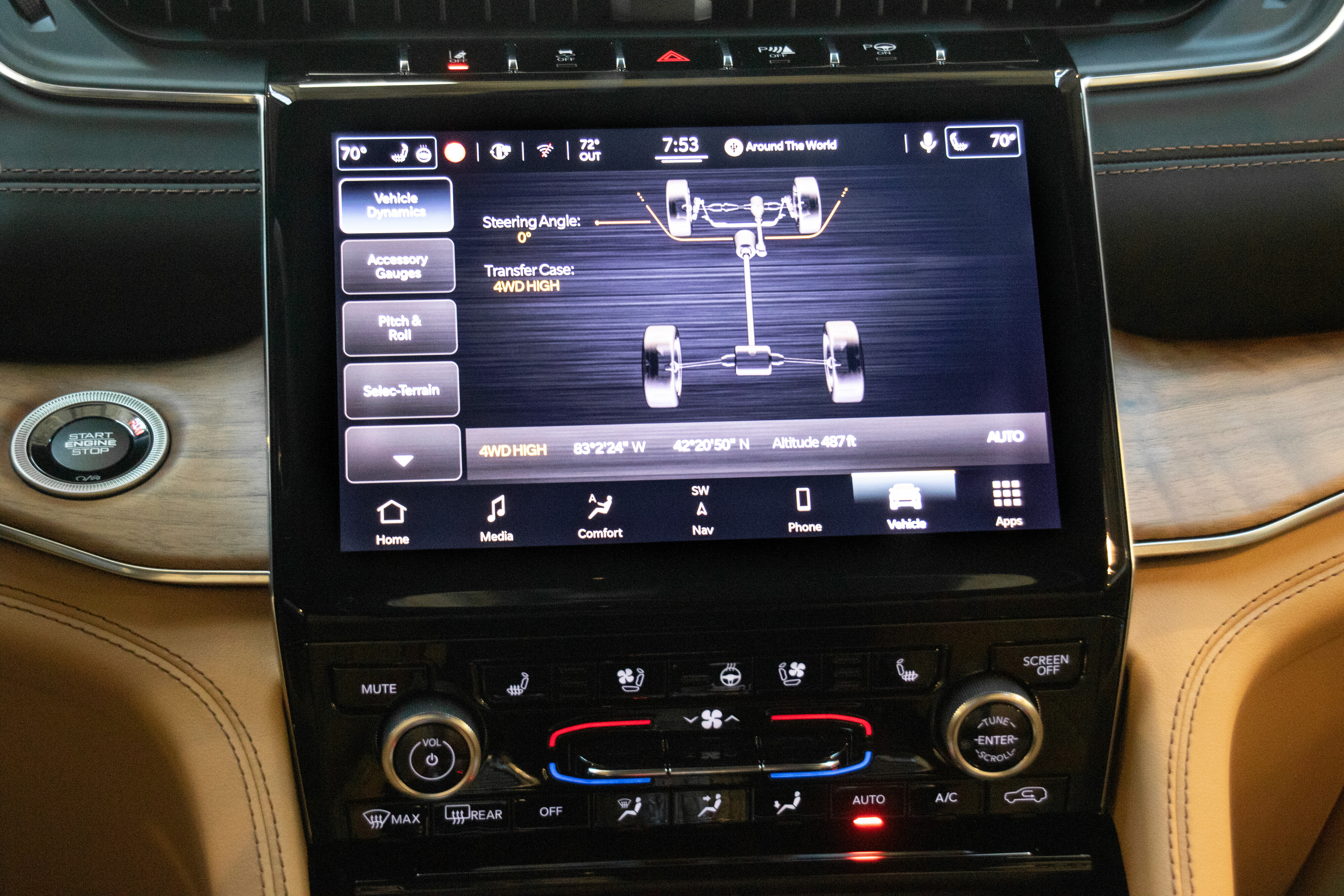
A number of efforts have been made to stay abreast of the Corporate Average Fuel Efficiency (CAFE) standards, including engine start-stop, variable valve timing, cylinder deactivation during highway cruising, active grille shutters, and electrically assisted brakes.
Another fuel-saving measure lays within the TorqueFlite eight-speed automatic transmission with two overdrive gears allow the engine to purr gently while cruising down the highway, seamlessly kicking down a few notches when additional power is needed.
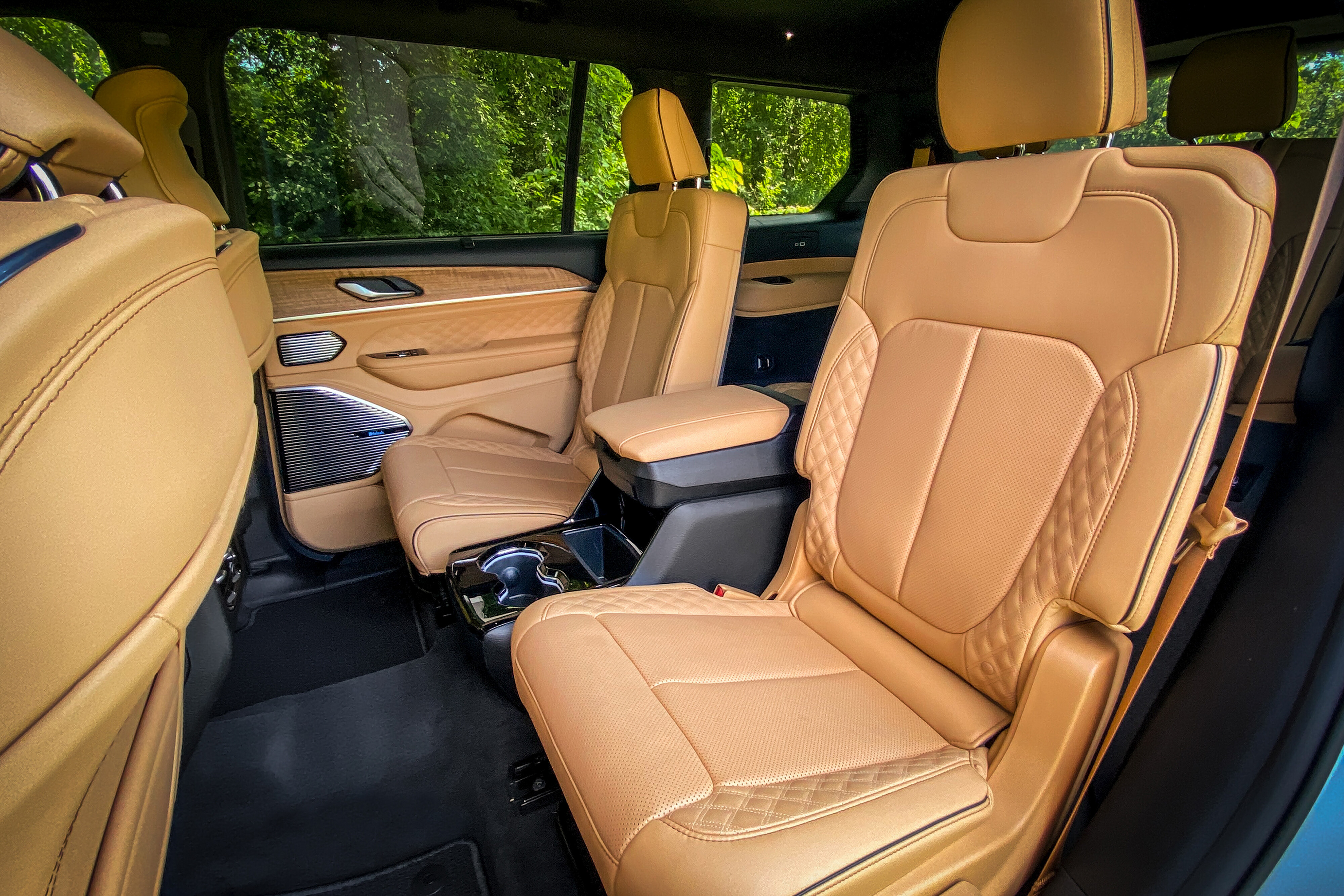
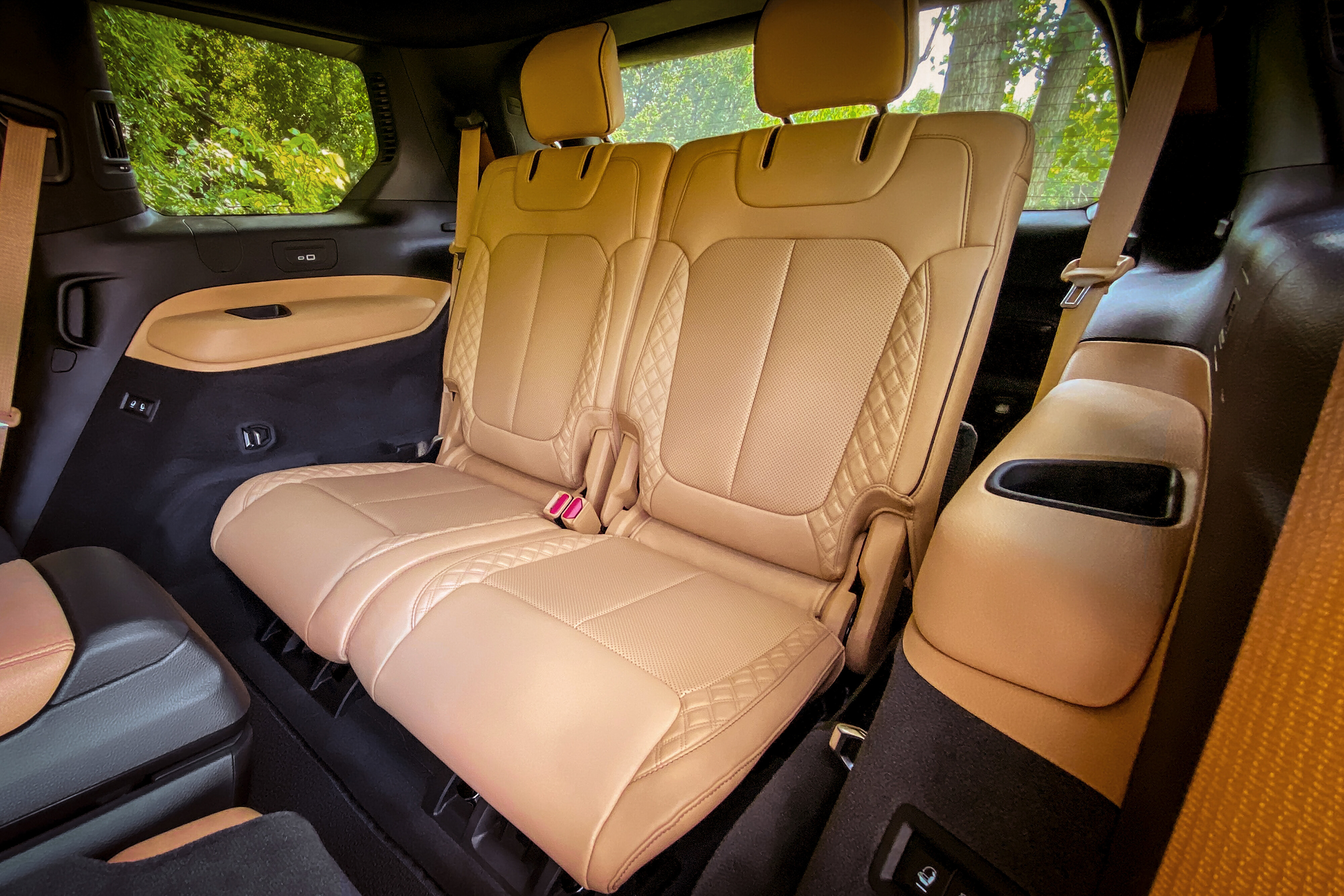
In addition to doing a full makeover of the platform, the new Grand will accommodate seven passengers. During the day I made it a point to settle into the second and third-row seats. I’m six feet tall with a medium build, and I’m happy to say I fit in all of them. The interior can be ordered with seats for six or seven occupants.
My last indulgences were to activate the back massager, link my iPhone to the Uconnect system (which features Apple CarPlay and Android Auto), and crank up the 950-watt McIntosh audio system.
The symphonic quality of its 19 speakers was sublime, and a dozen pulsing fingers buried within the 16-way adjustable seat worked their magic on my back, nearly putting me to sleep. And lest I forget the wealth of USB power points, satellite navigation, and 4G hotspot for up to eight devices.
OFF ROAD
The Chelsey Proving Grounds, a massive complex west of Detroit, is where Jeep goes to test, evaluate, and crash anything and everything. It also has an extensive off-road area replete with a Rubicon-style sluice, hill climbs, wet and dry skid pads, and creek crossings.
Gone are the days of transfer case shift levers, and in the Grand Cherokee’s case, even an engagement button.
All four-wheel drive models now feature full-time active transfer cases, which automatically detect when the front drive axle needs to be engaged and how much bias it requires.
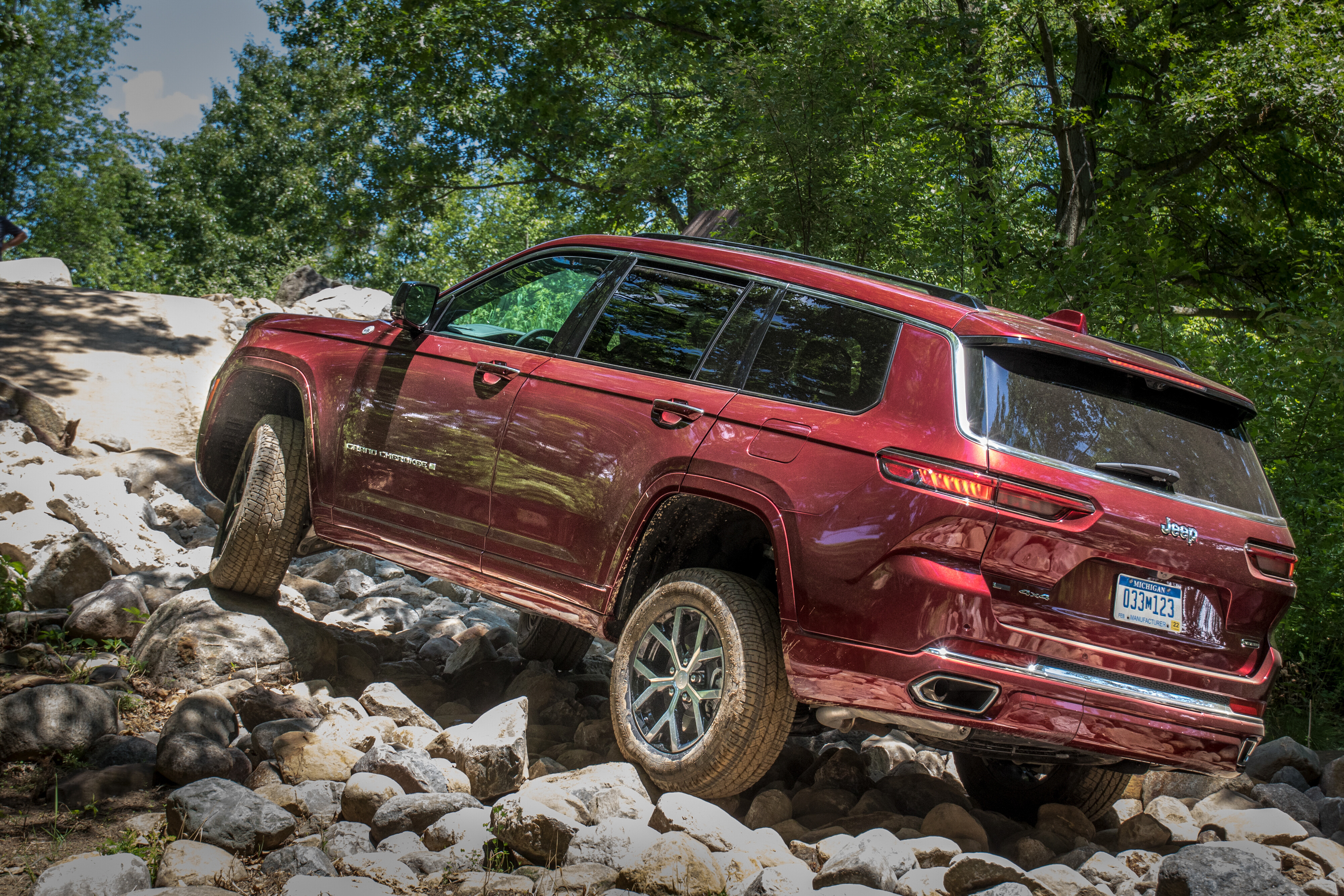
I toggled the Select-Terrain lever to Rock mode—there are five including Auto, Sport, Snow, and Mud/Sand—and nosed up to the sluice box, a hill climb strewn with bowling ball-sized boulders. The Quadra-Lift air suspension raised the vehicle 60 millimeters, and I inched my way up with the help of its rear electronic limited slip differential.
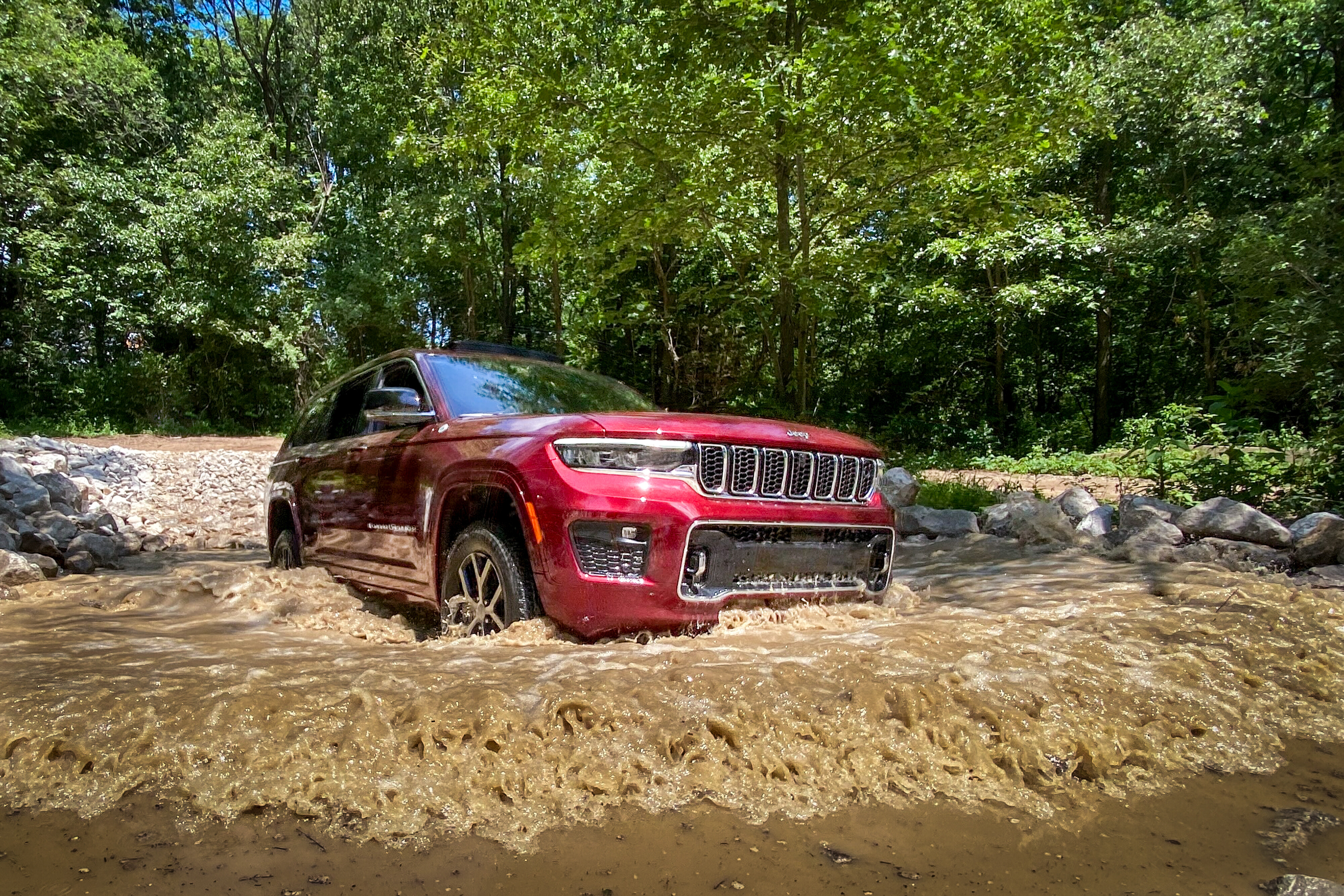
On the backside was a steep descent, which was made easy by variable-speed hill descent control. Next up was a loose hill climb, and again the rear limited slip and traction control helped me clear the top without issue. It is not often that the average person needs to ford deep water, but it is nice to know this new Grand will handle 600mm with room to spare.
If I have one grievance, it would be with the monster brakes. While their function is world-class, the larger the rotors and calipers, the larger the wheels must be to accommodate them (options are 18- to 21-inch diameter). While this is great for highway performance, reduced rolling resistance, and increased fuel economy, the accompanying low-profile tires offer less sidewall, thus limiting the ability to air down when you get in a bog when off road.
SUMMARY
Would I pick this vehicle for a trip across the Rubicon Trail or up the Old Telegraph Track to Cape York? Maybe not, but that’s what the Wrangler is built for.
However, if I needed a superbly comfortable, fully capable off-roader with room for my wife, a gaggle of kids, and the dog, the new Grand Cherokee L fits the bill quite well.
The amount of thought and resources that went into this new vehicle is truly impressive.
You’d never know it today but back in its heyday Tintaldra was a thriving metropolis, the hub of the Upper Murray with a ferry punt crossing, customs house, blacksmith and a police sergeant doing the rounds. It was one of the few places you could cross the river from Victoria into NSW.
Fast forward to 2021 and the punt has been replaced by a bridge, but we have no plans to cross the river. We’re content to stay on the Victorian side, making friendly conversation with the four relaxed-looking police officers stationed there. Restrictions and quarantine measures are still in place for those crossing the border, but for us, the tiny hamlet of Tintaldra and its nearby iconic river offers all we need.
This area has been hit hard, first by the devastating fires of late-2019 and then from months of closures and lost tourism from COVID. We’ve come from Melbourne, a drive of five-plus hours which becomes more scenic once we turn off the Hume Highway and head towards Tallangatta and the Murray River Road. This road links two of Australia’s most iconic landscapes, the Murray River and the Snowy Mountains, and our destination for the next few days is a campsite somewhere in between.
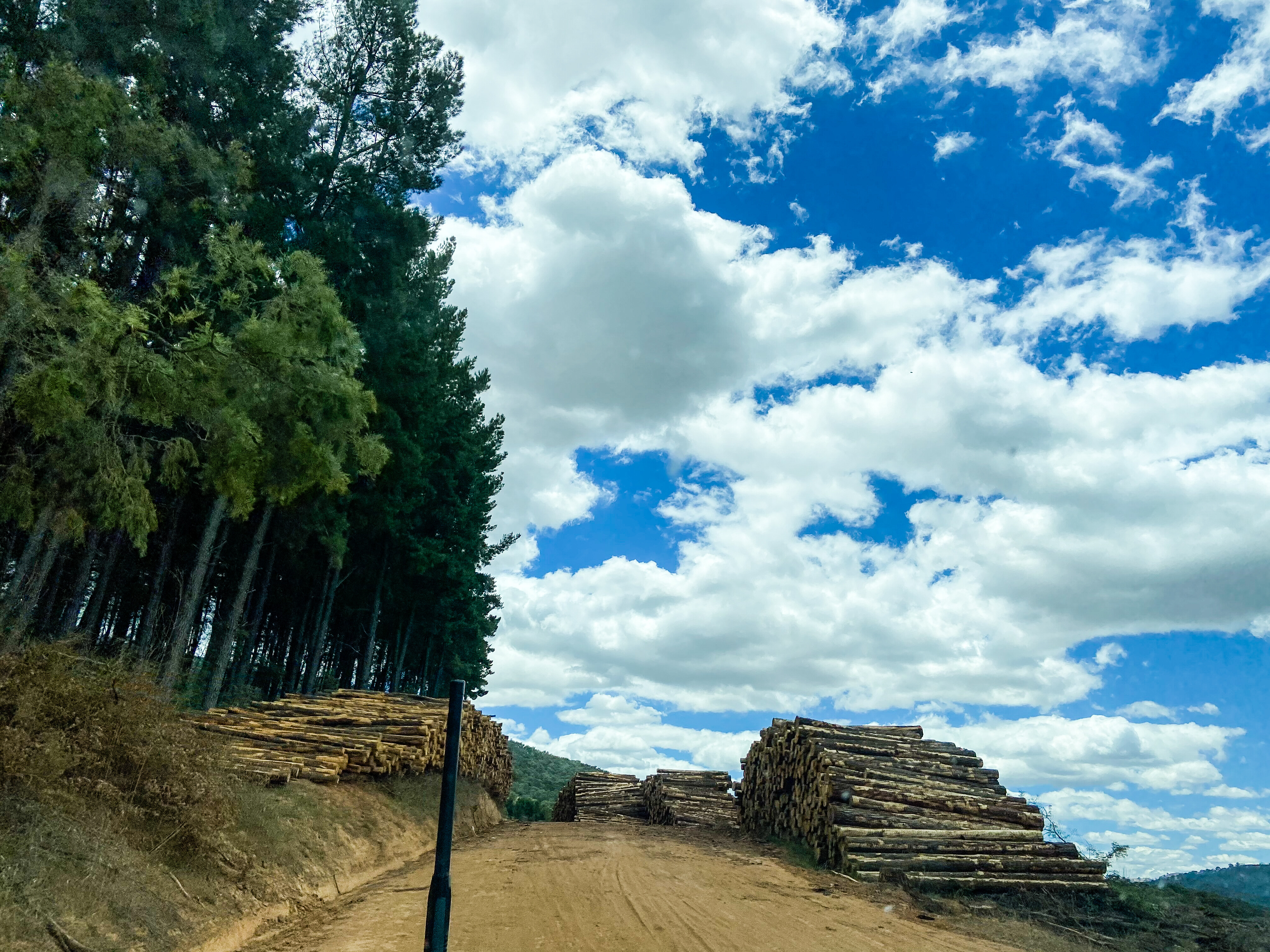
Fortunately, there are plenty of them, and as we drive through Tallangatta and the steep and windy Shelley-Walwa Road, the regrowth and regeneration in the forests from the bushfires of a year ago is prevalent. The road weaves through extensive pine plantations and descends on to the Murray River Road where the river twists its way through a mix of grazing land and forest.
Walwa is a great pit stop with a well-stocked and friendly general store, a pub, caravan park and a dump point at the recreation reserve on O’Halloran Street. Seven kilometres east of town we check out Neils Reserve which has loads of dispersed camp spots along the Murray.
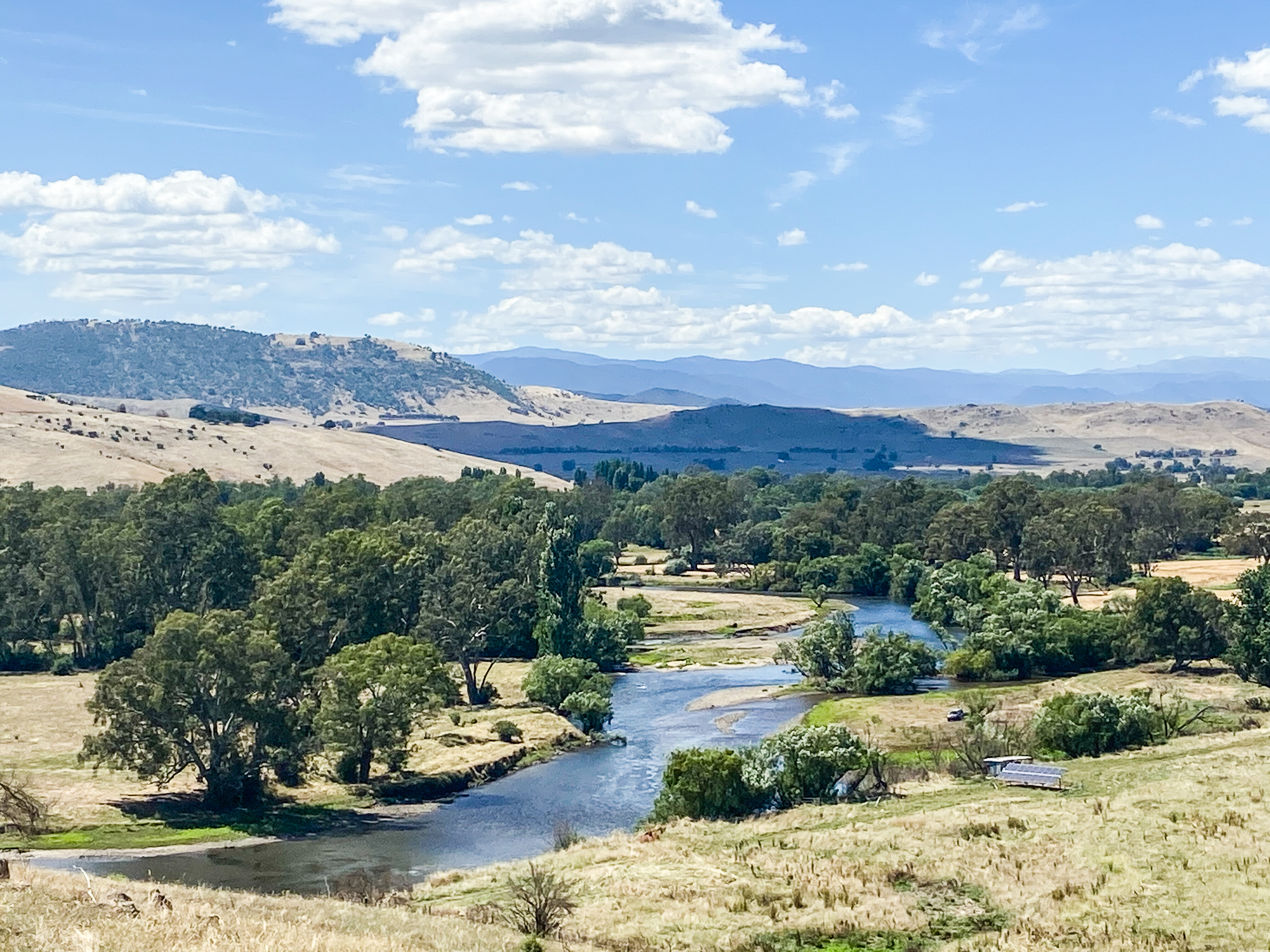
We continue on with plenty of opportunities to stop and take in those big views. A few kilometres before Tintaldra, the Jim Newman Lookout offers spectacular views of the Murray River winding through the valley with the Alps in the background. It features a giant bogong moth structure with an interpretative panel explaining the significance of the moths to the indigenous groups, who came to the region to feast during the spring and summer months on the plentiful moths. The hunters collected them in their thousands, roasted them over hot ashes and grew fat on the rich, sweet nut-like flavour of the moths. Give me a beef camp roast any day.
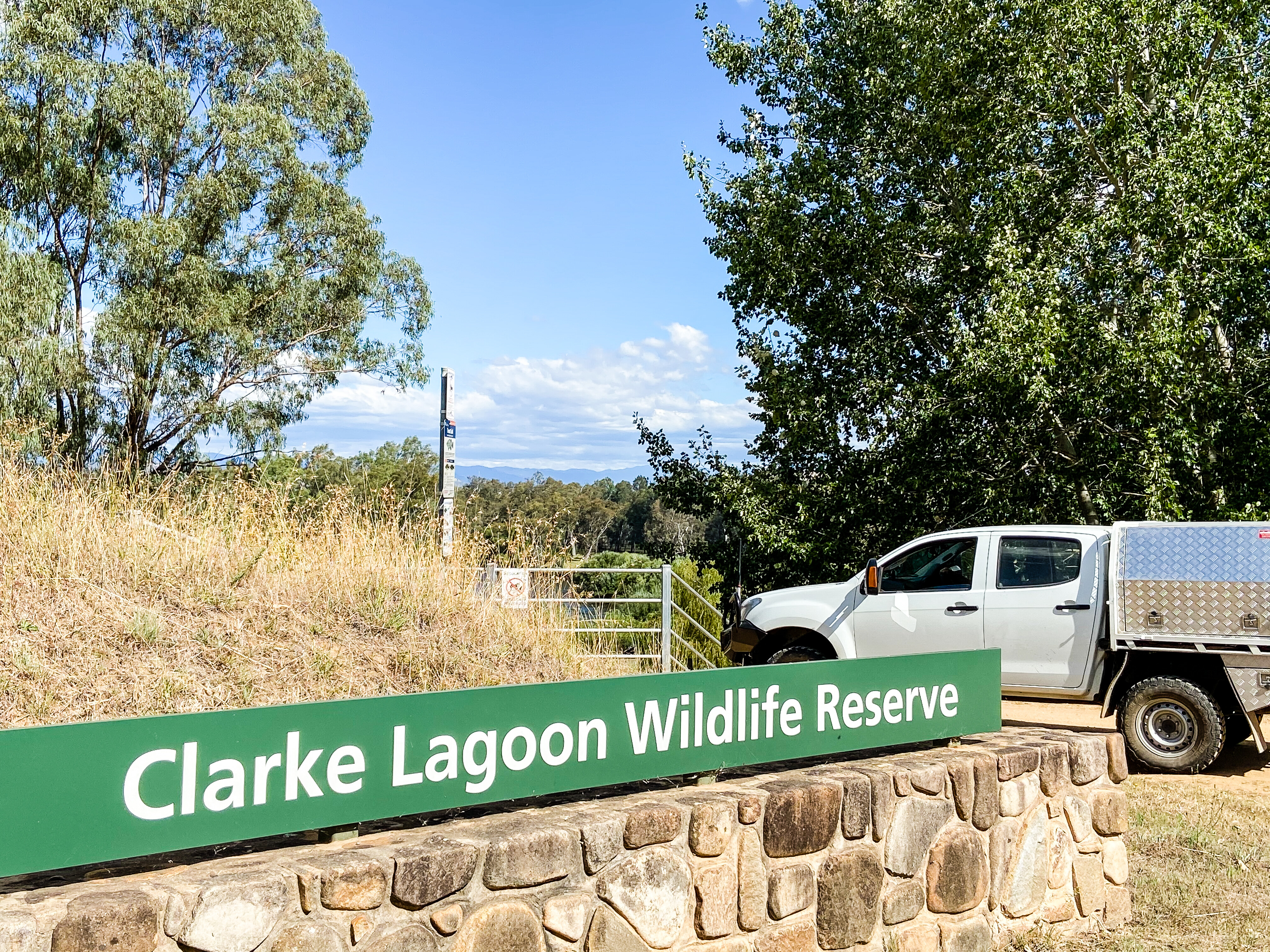
Finally, we arrive at Clarkes Reserve, our picture-perfect campsite for the next few days. Although there’s no facilities here, Clarkes Lagoon has absolute river frontage, it’s perfect to throw in a line or canoe, the grass is lush and there’s plenty of room for our rigs. We’re only 6km drive to Tintaldra, the first pioneer settlement of the Upper Murray established in 1837 and it’s here we head, after settling into camp. The tiny town is quiet with the only traffic a couple of police cars stationed on the border patrol. After some friendly banter we head to the historic general store, the one and only shop in town, where we meet its caretaker Robin Walton.
HISTORY FOR SALE
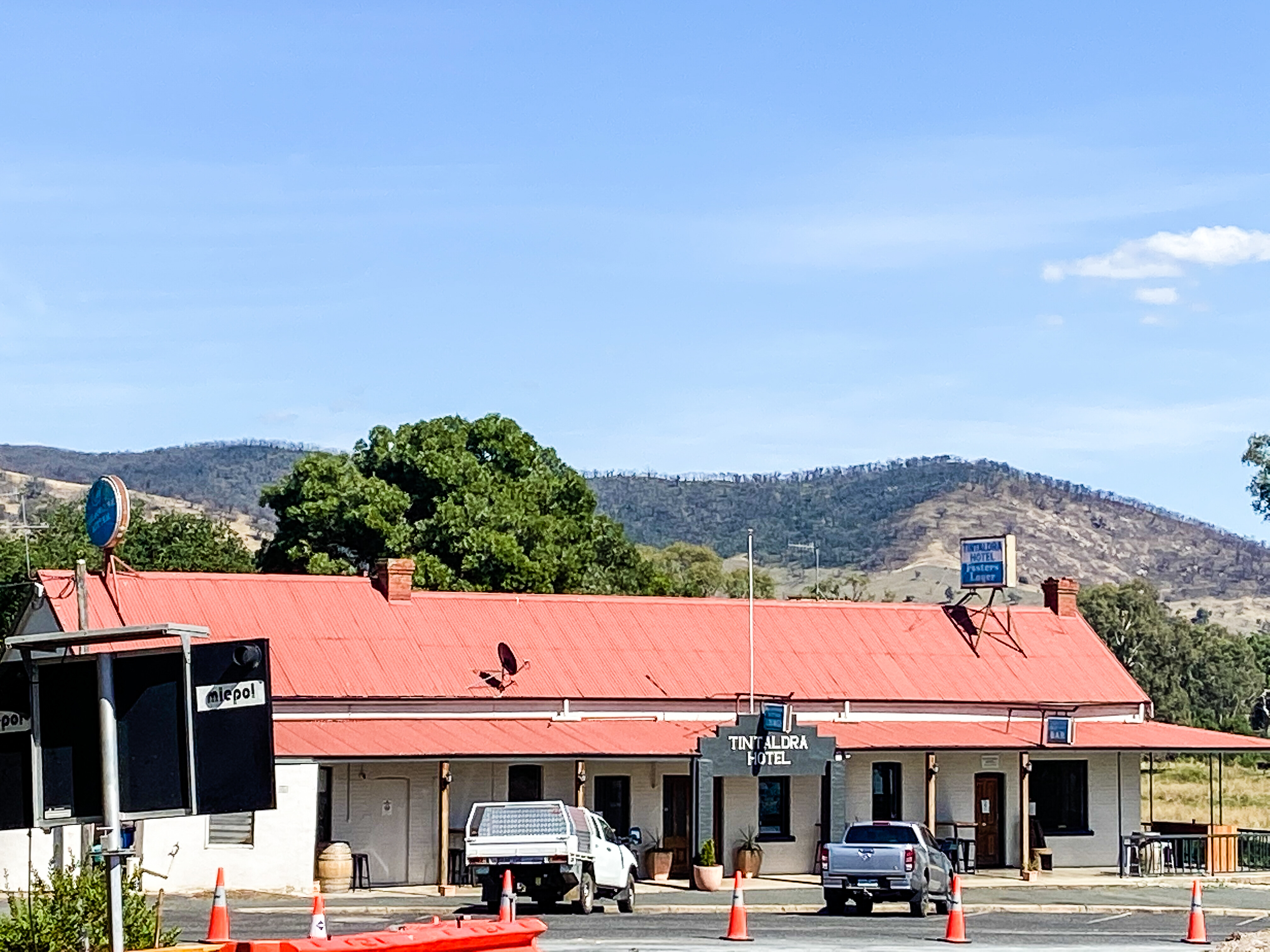
Built in 1864, stepping inside the heritage listed general store is like stepping back in time. The interior is lined with patterned tin and the walls constructed with rough-hewn river red gum beams, supporting rafters made from vertical slabs of stringybark timber. When it operated as a supply store and local post office it had two weekly deliveries from Melbourne and was the longest horseback delivery in Victoria. The store is still the post office, as well as a museum and it’s a great place to find some true alpine hospitality.
Robin tells us the Tintaldra Store has been in her family for nearly 50 years. The store turned 110 years old when her mother, Betty Walton, arrived with her husband and six children to face their first cold winter. Losing her husband early on, Betty worked hard to keep the store going. She was a master of alpine hospitality, a colourful character and published bush poet and historian, and her passing last year was hugely felt in the community.
Robin takes us around the back to show us the historic bakery and bread oven which operated from 1927 but closed due to lack of manpower in WWII. Behind the property are sweeping views of the river and the bridge which leads to Tooma. The general store, bakery and accompanying bed-and-breakfast next door are all for sale.
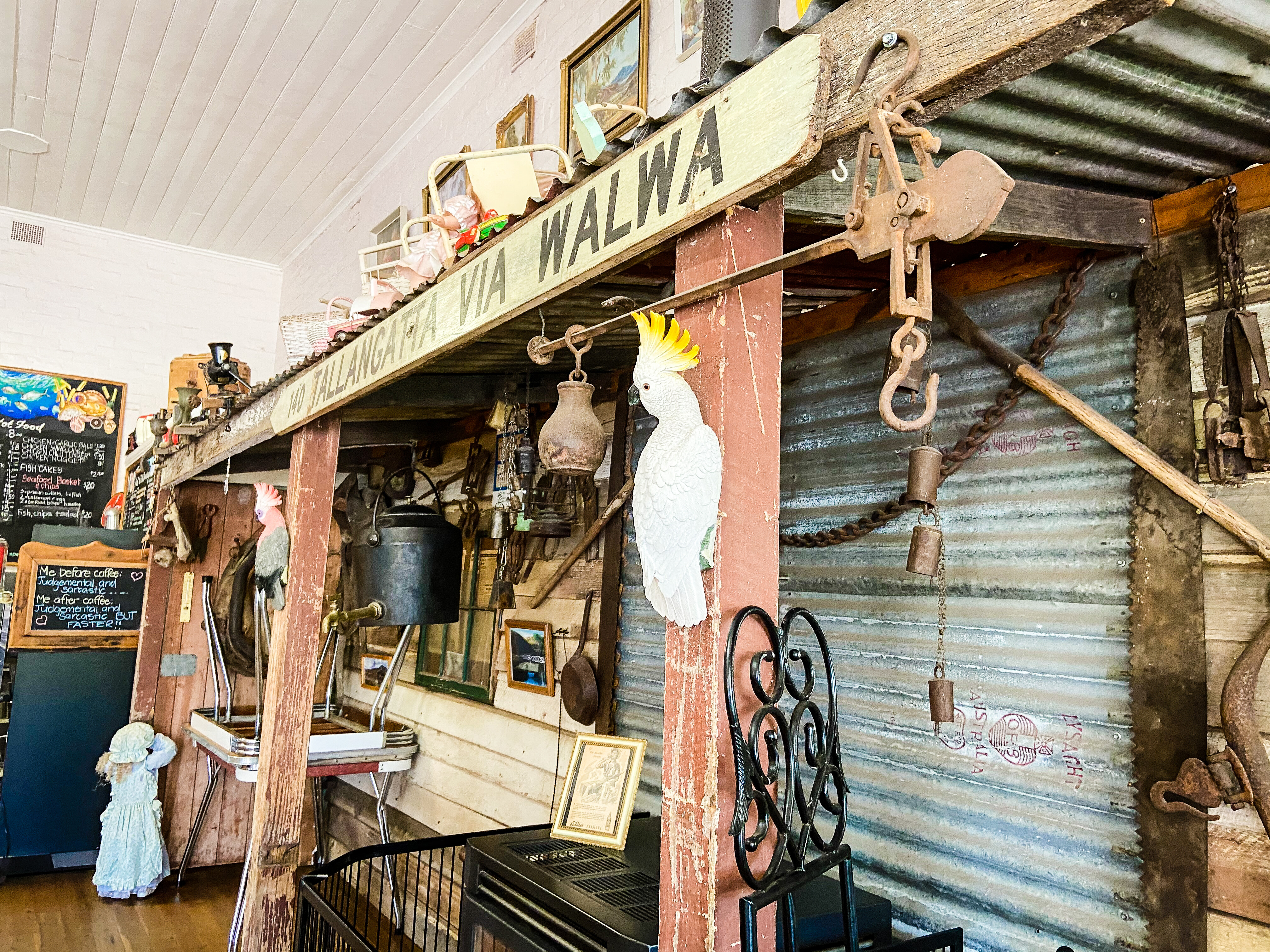
Across the road is the historic Tintaldra Hotel built in 1870 and the local watering hole for many years. Back when the punt service was the only one on the Upper Murray, the town, and pub, drew loads of traffic. However, as other local centres developed nearby, hotel trade eventually died and in 2017, the hotel closed its doors.
Fortunately, it was bought in 2018 and today is open again. Inside you’ll find remnants of the past, old photographs, a fireplace, as well as modern comforts, excellent pub grub and cold beer. On the veranda you can soak up the views of the pylons from the 1891 river red gum bridge which leads across the border. With no traffic coming through, the young cops are taking time out to kick a footy. Not far away, at the entrance to the picnic area, on the site of the blacksmith’s hut, is a monument to early pioneers, the Vogel family.
Christian Vogel established a punt across the river and was, according to the bronze plaque, a “blacksmith, wheelwright, carpenter, dentist, punt builder and operator”. The area is full of plaques and sculptures and down in the river, standing tall on a pylon, a large Murray cod sculpture graces the waterway. Tintaldra makes a great base for those who enjoy their Murray cod fishing, as well as those seeking more action.
MURRAY TO THE MOUNTAINS
BURROWA-PINE Mountain National Park stretches between Walwa Creek in the northwest and Cudgewa Creek in the southeast, both tributaries of the Murray River. The area is a bushwalking and four-wheel driver’s playground with extensive tracks leading to rugged mountain peaks and rocky outcrops, Mount Burrowa the highest peak in the park. Since the bushfires a year ago the tracks remain closed to undergo hazardous-tree assessment and treatment to make them safe.
Pine Mountain is one of the largest monoliths in the Southern Hemisphere, reputedly 1.5 times the size of Uluru and, although the popular walking track to the summit is still closed, ranger Scott Thomson from Parks Victoria says the aim is for the track to be opened, hopefully by the end of this year.
One of the most popular spots in the Pine National Park is the Cudgewa Bluff Falls. This spectacular waterfall thunders down to a tranquil grotto at the bottom where you can cool down on a hot day. Steps, walking paths and infrastructure were destroyed in the fires of 2019, however Scott says rebuilding is underway and will reopen by either the end of 2021 or early 2022 with new and improved walking facilities, including additional access for the disabled.
Mt Mittamatite Regional Park is a striking feature in the landscape and our aim was to drive to the summit, at Embery Lookout, the highest point in the park. From the top are views of Corryong with the Australian Alps as your backdrop. It’s a windy, spectacular 16km drive uphill and our only traffic are the four-legged variety, however, with only a few kilometres to go, we’re stopped by a closed gate. Though we didn’t quite reach the summit, the views were mind blowing. Mt Mittamatite and Embery Lookout should be open by mid-2021.
The Murray River Road continues towards Corryong, where the Man from Snowy River legend lives on with the festival in April planned to go ahead in 2021. En route we pass the historic Towong Racecourse where scenes from Phar Lap were filmed as well as the iconic Farrans Lookout with its big views.
TIME FOR A PIT STOP
TUCKED in amongst the scenic roads and tracks of the Upper Murray are small country pubs that offer a great opportunity to enjoy a cold beer and hospitality. Whether it’s the Walwa Pub smack bang in the middle of town, the Cudgewa Pub renowned for its Friday night happy hour or the remote Koetong Hotel you won’t be caught short of a drop.
At Koetong the beer garden is a top place to stop after a morning exploring the back tracks and trestle bridges in the area. We’d been told about the pub’s great food and huge servings by our daughter who works in the pine plantation at nearby Shelley, but we’re still gobsmacked by the massive steak sandwiches that come out. Patronising these country pubs will help the economic recovery of the Upper Murray.
Nearby at Shelley, the track to Lawrence Lookout can get rough in wet weather but on a clear day, has unforgettable 360-degree views of the surrounding pine plantations and mountain landscape. Koetong provides access to the Mount Lawson State Park which covers 13,150 hectares and is known for its steep slopes and rocky bluffs. Inside the park are more bushwalking and four-wheel drive tracks to discover.
It’s within the Mount Lawson State Park and Mount Granya State Park you’ll find the nearest 4WD tracks along the Murray River. The iconic Mt Pinnibar Track was reopened in late February as was Mt Gibbo, both remote, popular tracks near the Alpine National Park near Tom Groggin, which form part of the Davies Plain iconic 4WD route. This unforgettable route offers some of the highest tracks in Victoria and is an epic trip in itself.
Back at camp the river is a perfect backdrop as we swim, relax and enjoy a night of serenity around the fire. We’re heading home in the morning, via Corryong, but one thing’s for sure … With more than 155 kilometres of high country to explore along the Murray River Road, there’s no shortage of views, side trips and brilliant riverside camp sites in this magnificent part of Victoria.
Snapshot
- Budget off-roader getting an even more utilitarian variant
- New Lite model will be manual only
- Pricing not yet released, will go on sale August 1
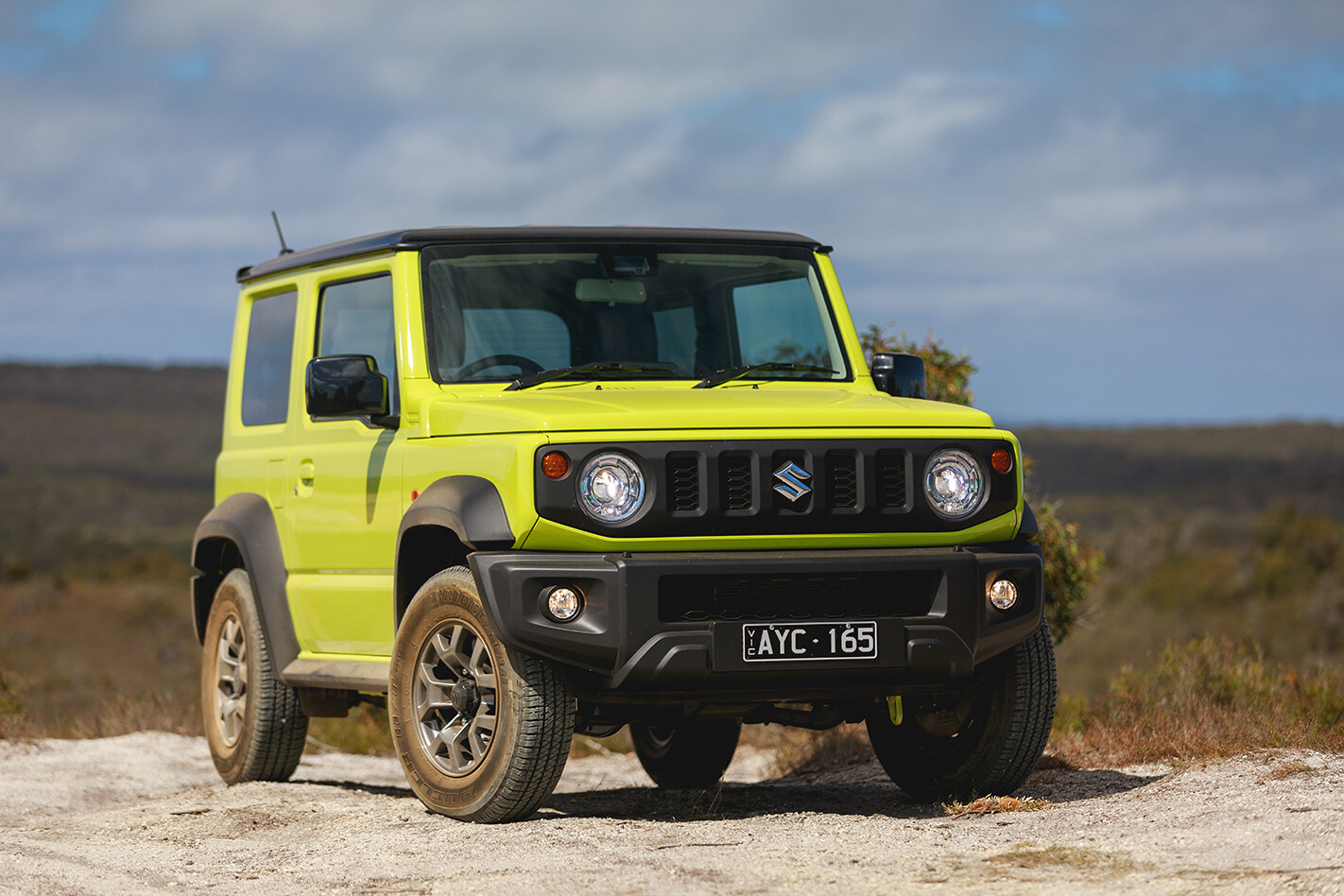
The uber-popular Suzuki Jimny has been given a second variant for the Australian market as the Japanese brand officially revealed the Lite today.
Off the back of the Jimny’s introduction in 2019, where it chalked up a waiting list more than 12 months long, Suzuki has been struggling to meet demand for its small off-roader, increasing the price in some instances to try and capitalise on the affection for it.
Now it has delivered a back-to-basics, stripped out variant, sacrificing the mod-cons from the normal Jimny with only a five-speed manual gearbox on offer, still being powered by a 1.5-litre four-cylinder engine making 75kW/130Nm.
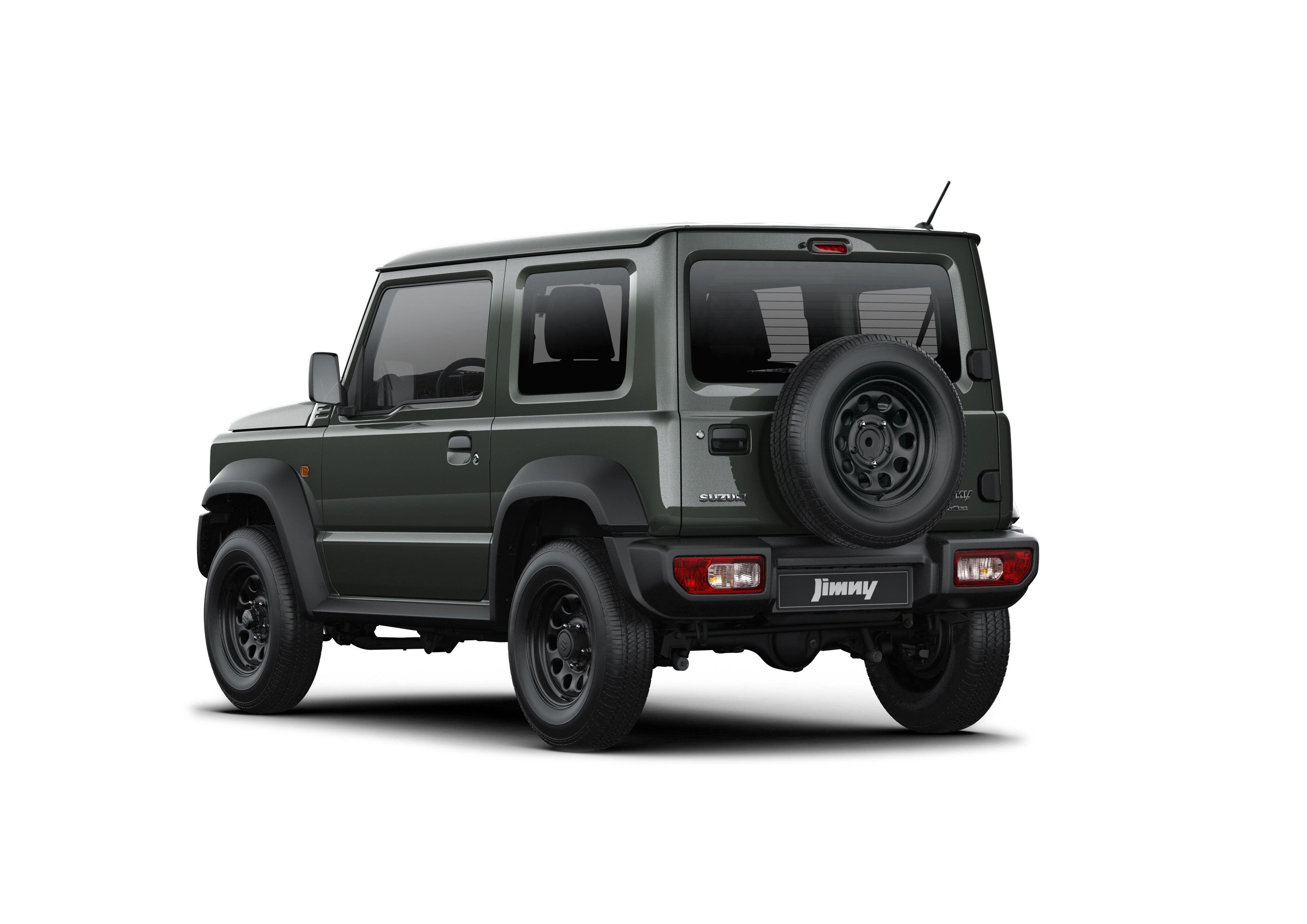
The Jimny Lite will ship with 15-inch steel wheels rather than the existing alloys, as well as halogen projector headlights and no front fog lights, deleting the LED units normally found on the model.
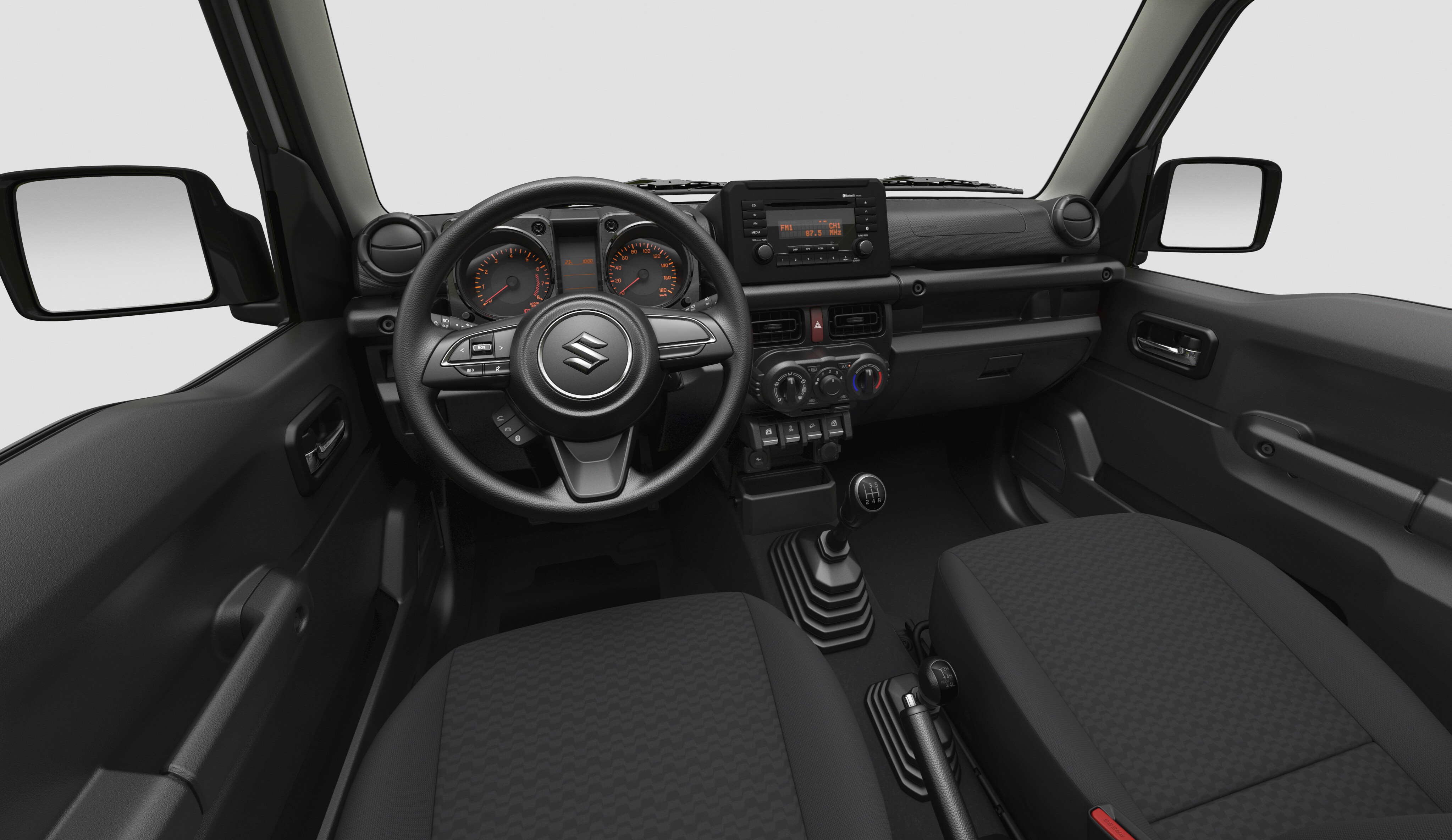
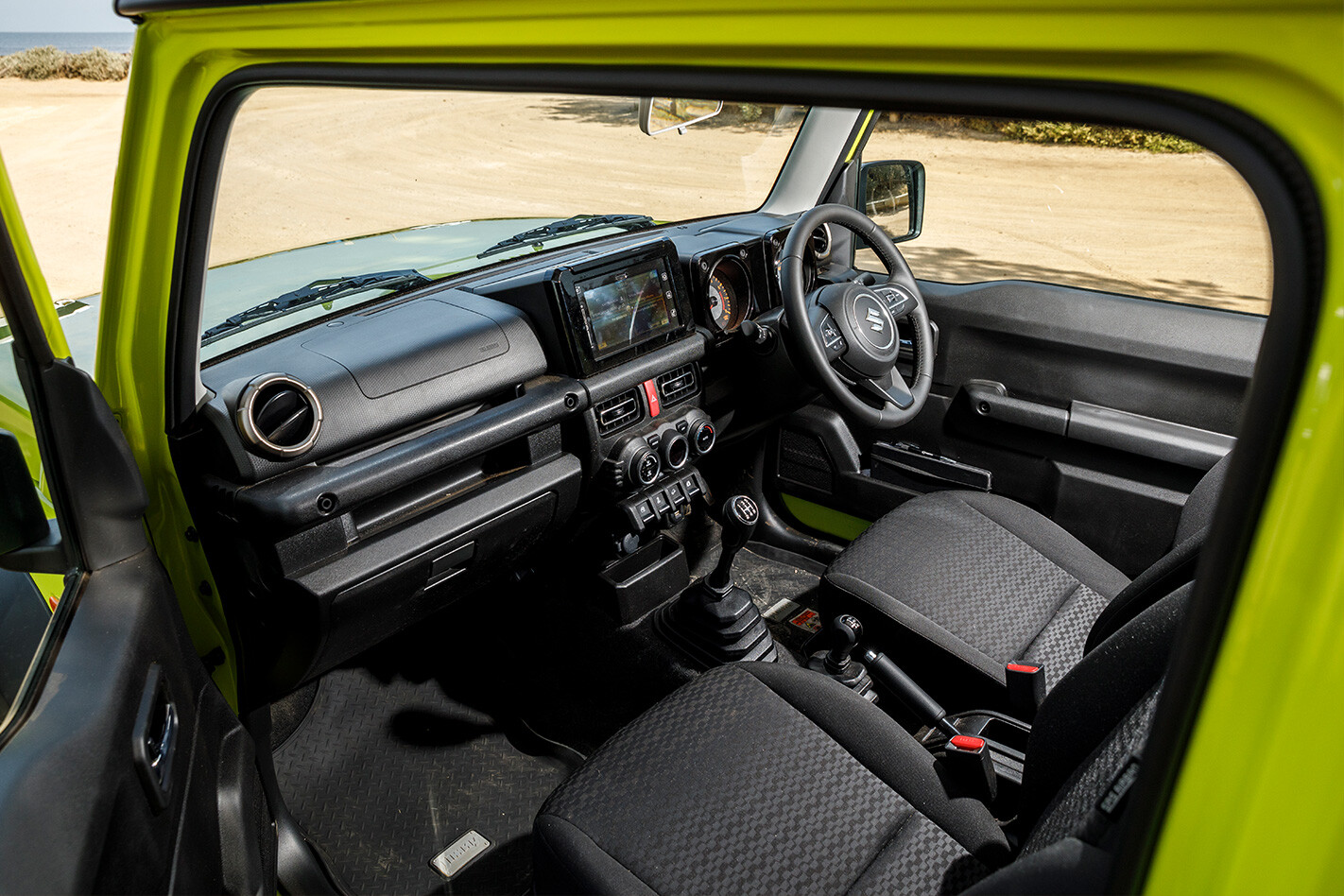
Inside the cabin the same principle has been applied with the Apple CarPlay/Android Auto infotainment set-up removed in favour of a simpler in-dash radio/CD player, still featuring Bluetooth connectivity for music streaming and calls.
Thankfully those who enjoy summer trips to Cape York will still be able to do so without losing their body weight in sweat, as air conditioning is retained as a standard fitment.
Suzuki’s General Manager, Michael Pachota, said the firm expects a continuation of demand for the Jimny Lite and will distribute it in the same manner as the current Jimny.
“We’re giving people what they want – more Jimnys!” said Pachota.
“With demand continuously increasing for this model we are so pleased to be able to add another variant in the line-up and continue to grow our Jimny community with this incremental supply opportunity.
“We will also maintain the fair allocation process based on customer orders with a queue system as we have done with the current Jimny in 2021, making sure the next order in the queue gets the next car to hit Australian soil, every time.”
Pricing of the Jimny Lite will be released on August 1, 2021, the same day the model goes on sale. Suzuki will also launch a dedicated page for the car on its Australian website from July 1.
The 2021 Jimny manual is currently available from $28,490 plus on-road costs.
Snapshot
- Record price for 1994 Land Cruiser
- The 80 was a u2018goalpostu2019 in the design of the new 300 Series
We’ve all seen the prices of vintage Land Cruisers and particularly the classic FJ40 variant go through the roof, especially in the USA where they are much loved but relatively rare. But no one would have expected to read the headline of a 1994 80 series selling for the astonishing amount of US$136,000!
Sure this particular FZJ80 might have the lowest original mileage of any 80 on the planet with just 1005 miles showing on its odometer, but the selling price is amazing.
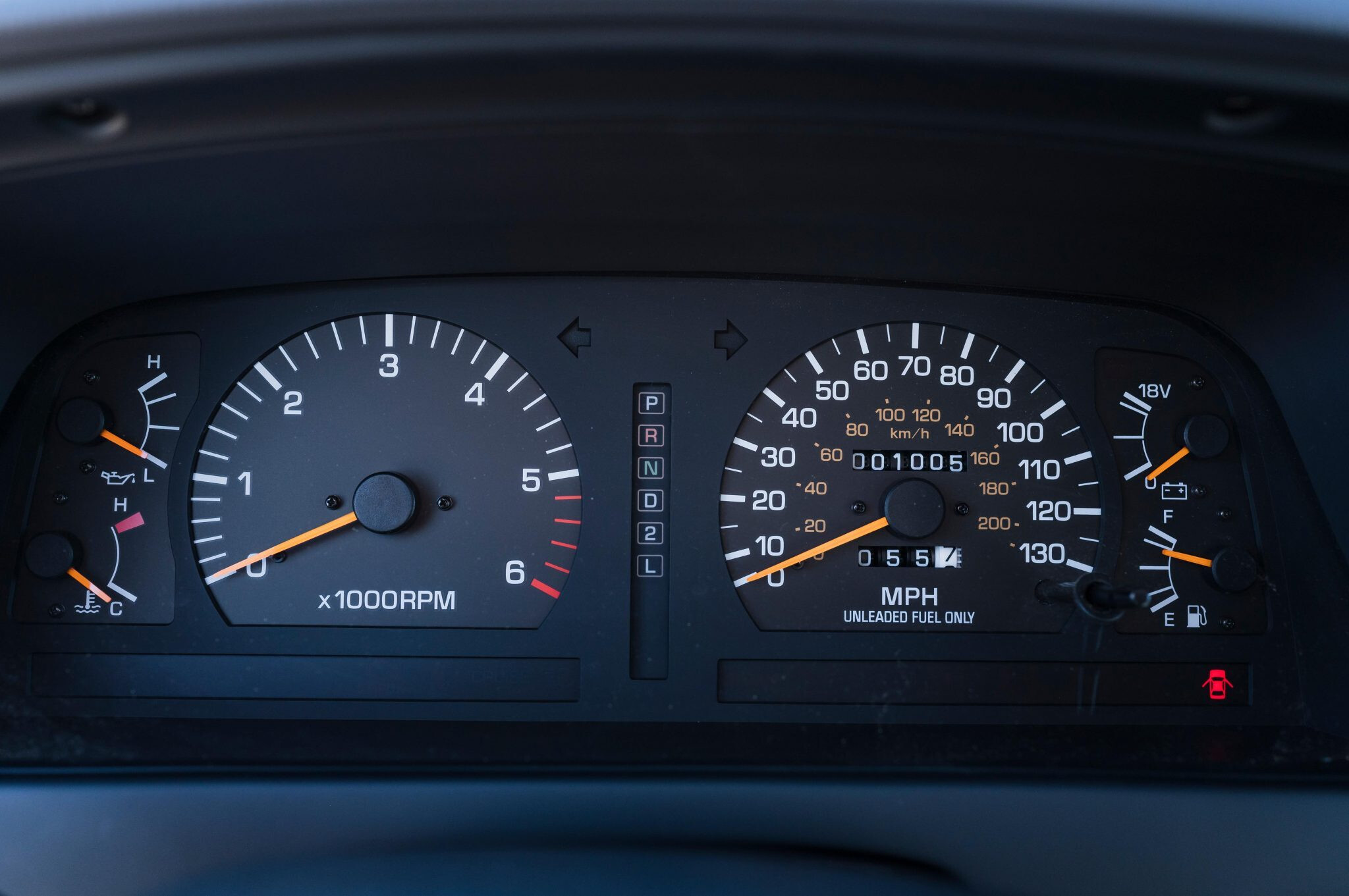
The for sale ad on Bring-a-Trailer says that the car sat in the original owner’s collection up until 2020 when it was sold again. The new owner gave it a thorough service replacing the oils, belts and tyres and advertised it again.
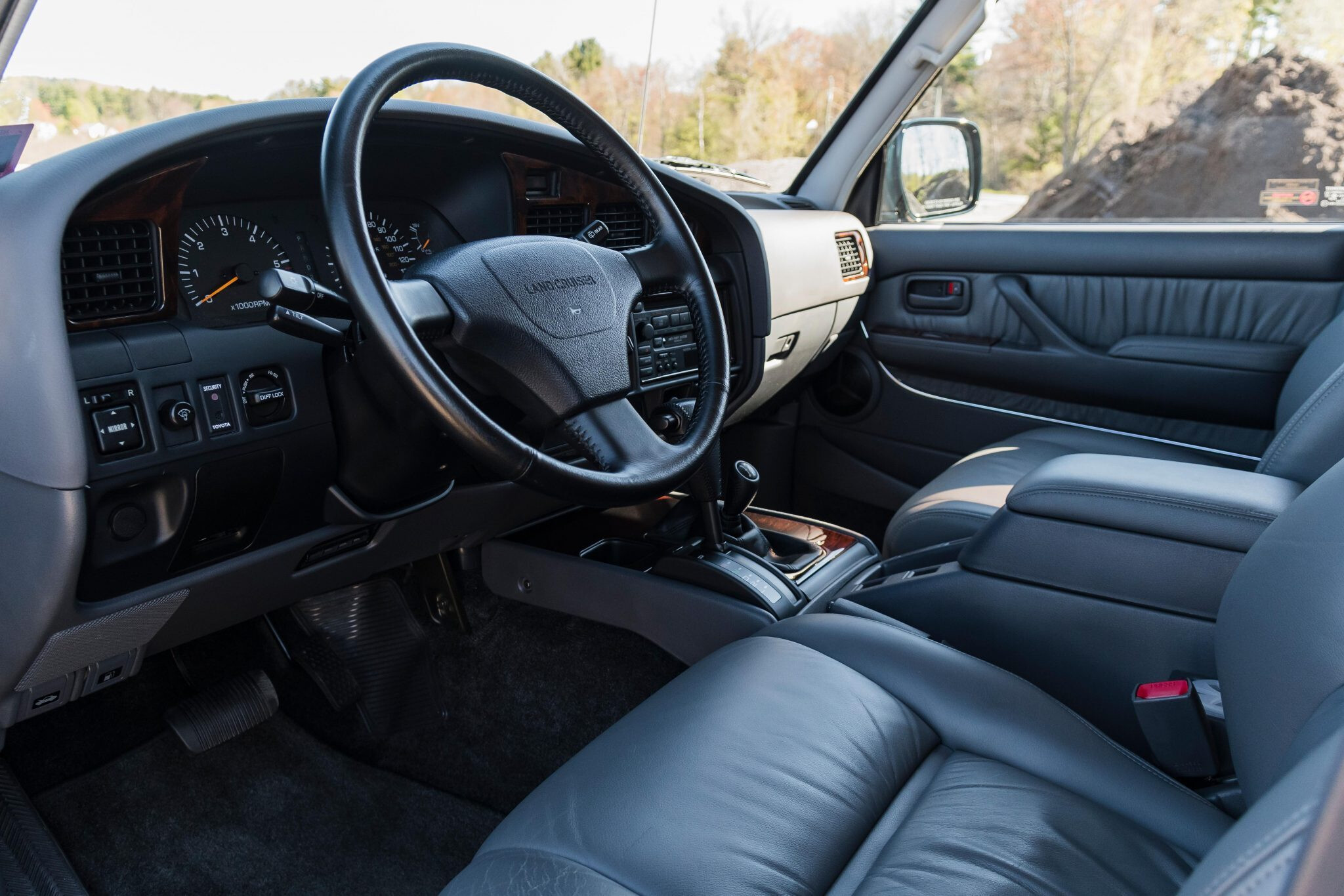
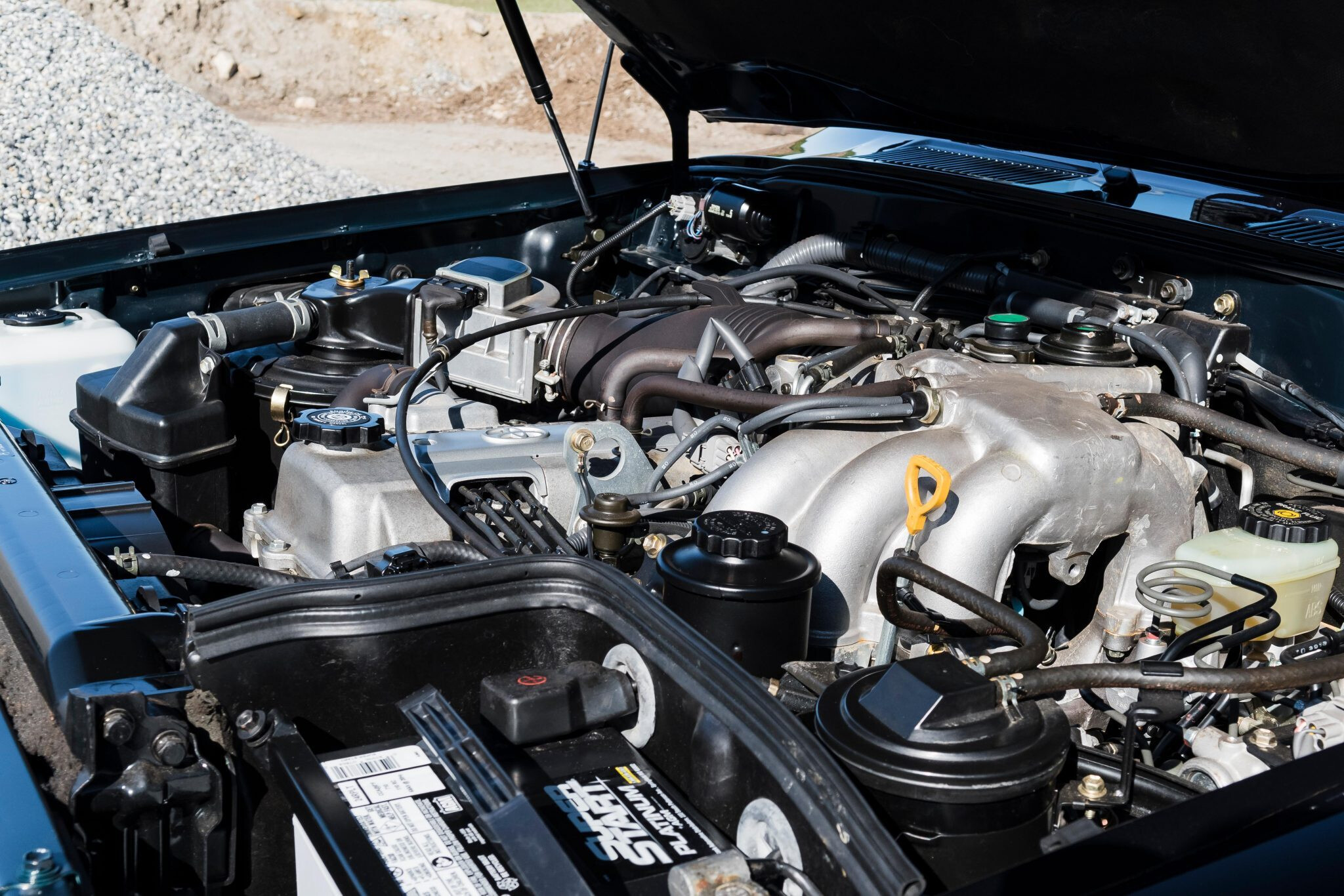
Aside from the items replaced to get the car roadworthy, the 80 is all original with its 1FZ-FE petrol 4.5-litre engine and auto transmission, metallic green paint and grey leather interior.
Not much is revealed about the winning bidder but searching his BAT history shows that he generally goes for and buys low mileage vehicles and this is the first Land Cruiser or SUV in his history.
At the recent reveal of Toyota’s all-new 300 Series Land Cruiser, the chief engineer, Takami Yokoo, made reference to the 80 Series saying that they used it as a “guidepost” when engineering and testing the new vehicle and that any new Land Cruiser should match or better the 80 in its off road dive ability. That’s high praise of a vehicle that is a quarter of a century old and testament to why many long-time Land Cruiser owners still say that their 80 was their favourite.
We wonder if Tokoo-san’s comments added any value to the sale price of this example.
Check out more than 100 photos of this unique and possibly the world’s highest priced 80 Series in the ad here.