
The Toyota LC300 is one of the most highly anticipated new four-wheel drives of the year. Toyota has even gone so far as to say the LC300 is the best LandCruiser it has ever built. Considering the massive shoes to fill due to the overwhelming popularity of the 200 Series, that is a big call.
There was a lot of speculation leading up to the launch, as well as straight-up misinformation spread online in the months beforehand. Well, that ends now, as we know exactly what Australia will be receiving. Spoiler alert … it’s a ripper of a vehicle.
I was extremely fortunate to be among one of the few media outlets invited to the launch drive. Due to restrictions, sadly there was very limited time to evaluate all six variants of the LC300; so with no time to waste, we set off in an attempt to put the newest LandCruiser through its paces.
The test laid out before us would prove rather challenging, with the first leg of trip being a cruise on-road from Sydney down to the Toyota LandCruiser Club’s property, Willowglen, home of the infamous Willowglen 4×4 Challenge.
EDITOR’S NOTE: Dear readers, our scoring on this story is indicative of a first-impressions assessment of the LandCruiser 300 Series line-up as a whole. You can expect to see those numbers vary as we begin to explore each model in the range over the weeks ahead.
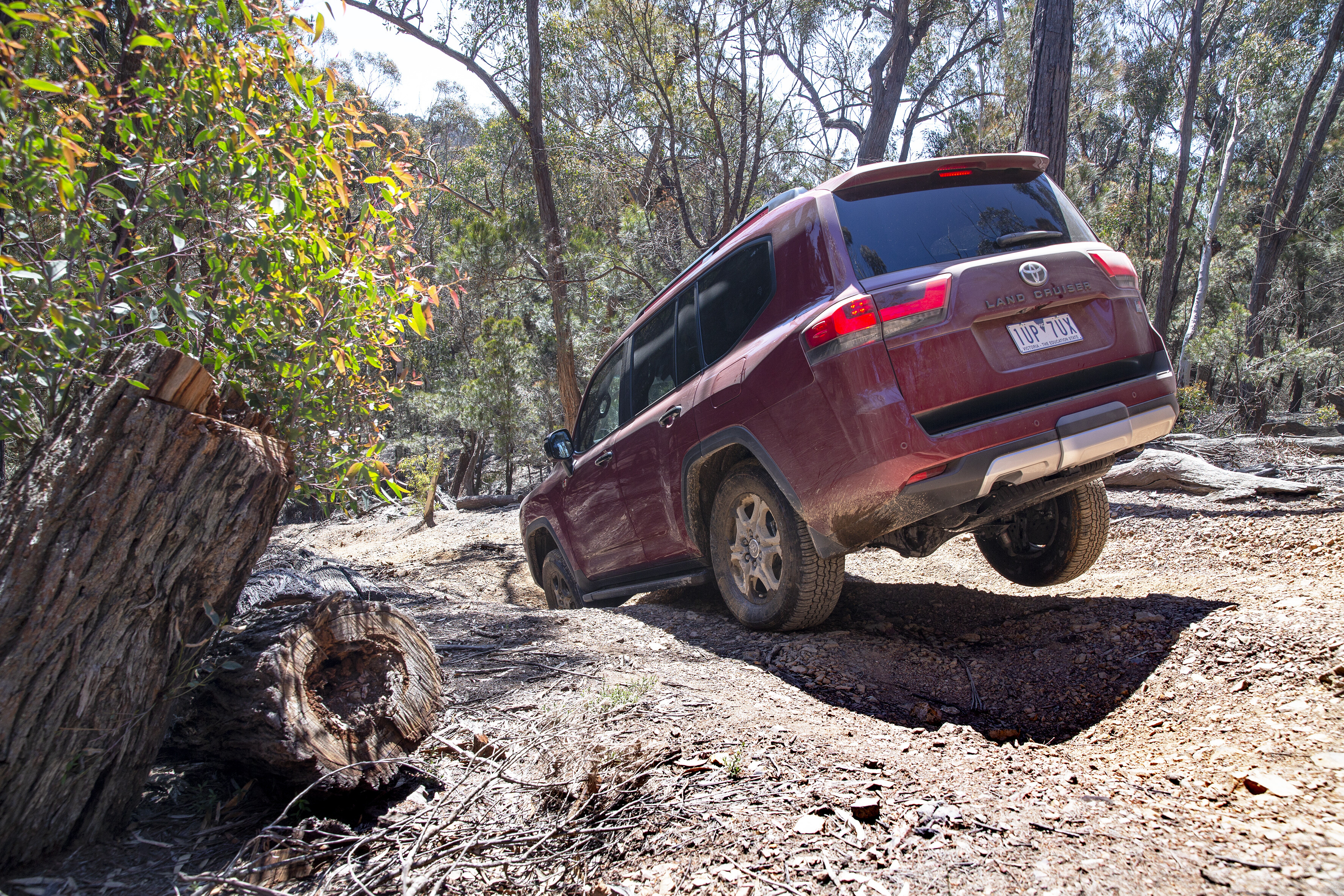
That comprised more than two hours of city, highway, and rural-road driving, each way. I started in the GR Sport, because it would be rude not to. It’s a striking vehicle, with a wide stance and lovely red paint ─ I couldn’t put my hand up quicker when asked who would like to drive it first.
While I didn’t have the opportunity to drive each LC300 variant due to time constraints, I scored seat time in the GX, GXL, VX, Sahara and GR Sport, which provided a solid insight to the new LandCruiser. We look forward to putting the microscope over the entire line-up in coming months.
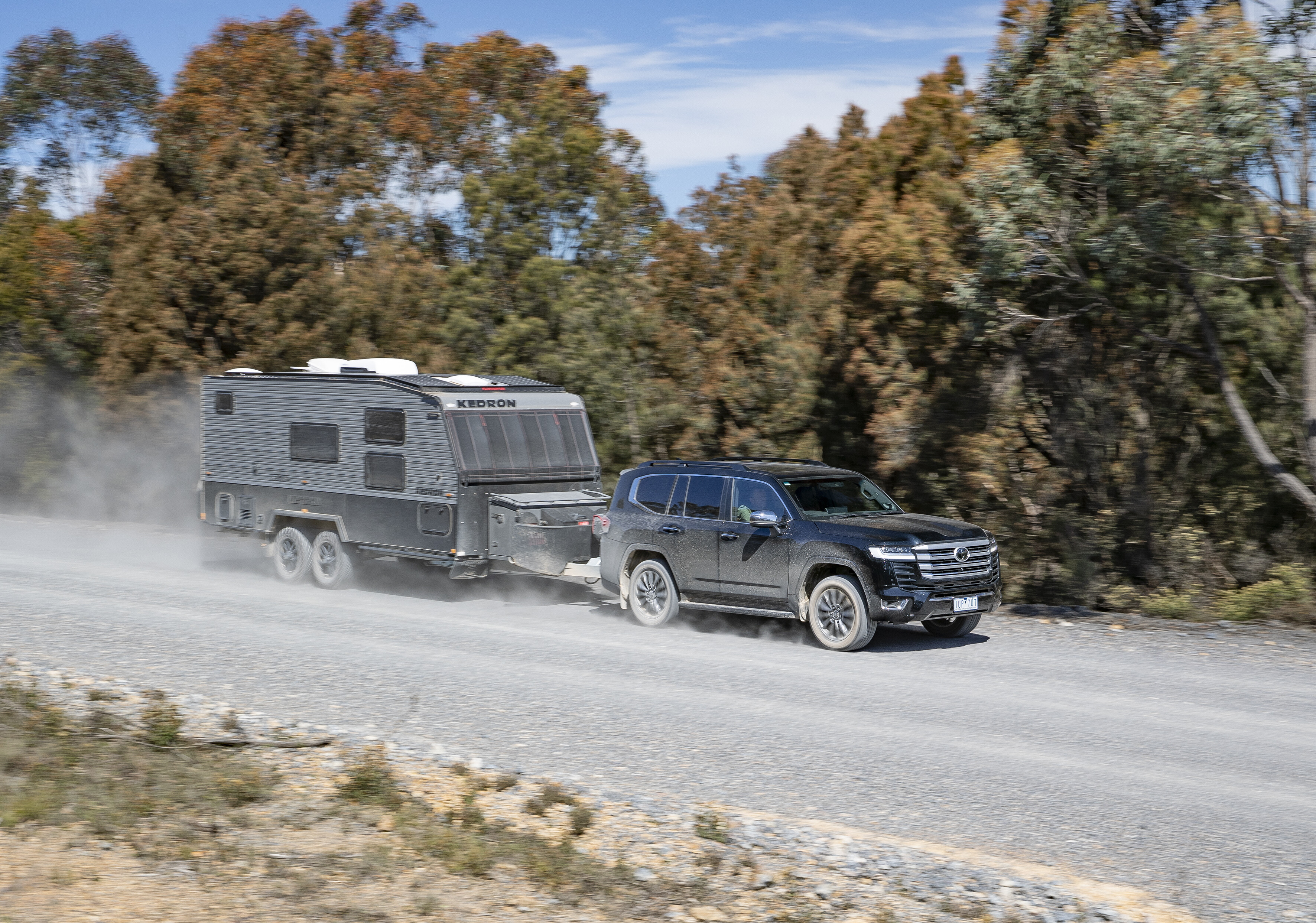
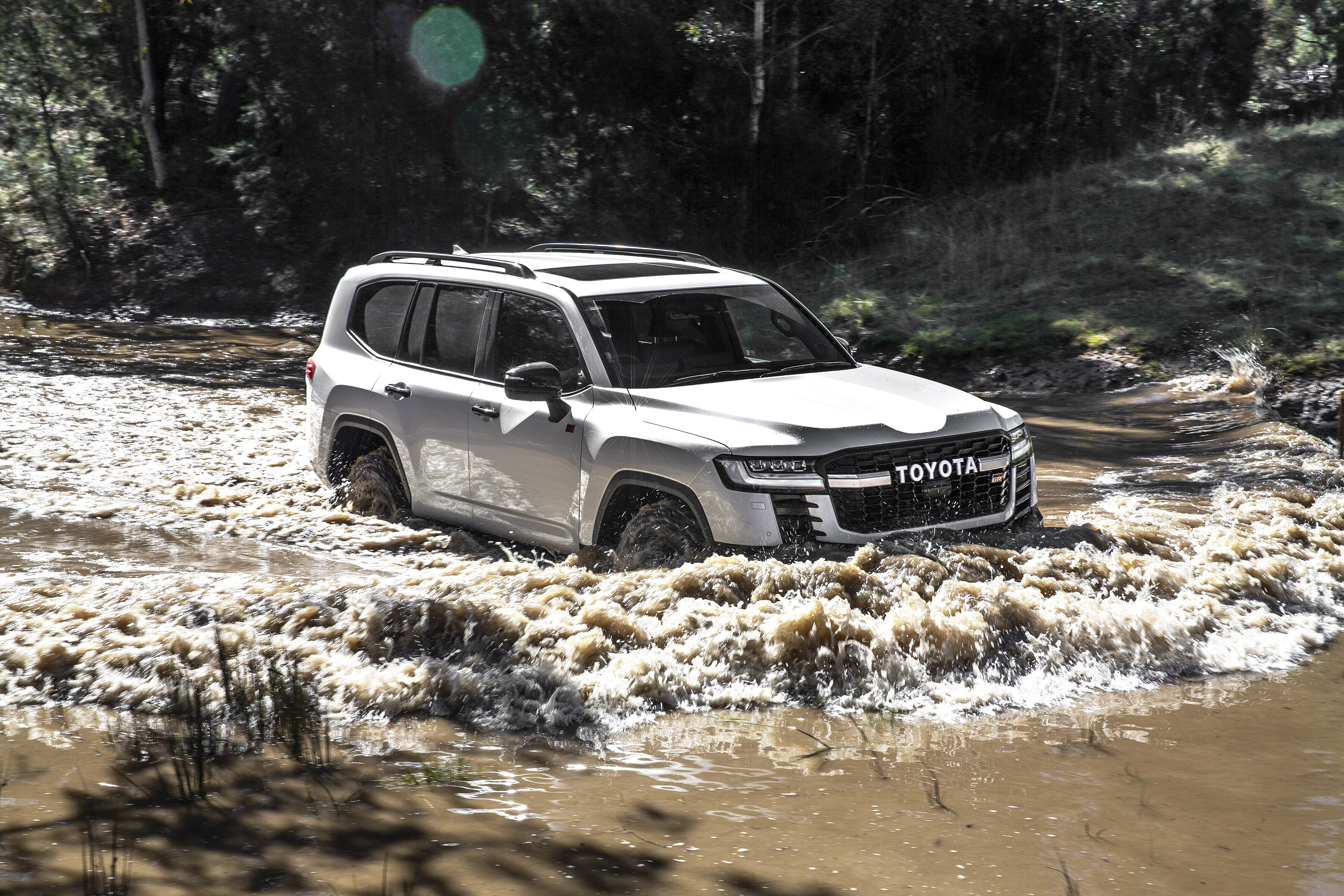
There were two different off-road loops on the day comprising of rocks, mud, ruts and water crossings – with the number of test vehicles with damaged side-steps highlighting how challenging the terrain was. There was also a towing component, where we hitched up a Kedron caravan weighing close to 3000kg and used the 300 Series to lug said ’van up hills, on rural and dirt roads.
POWERTRAIN & PERFORMANCE
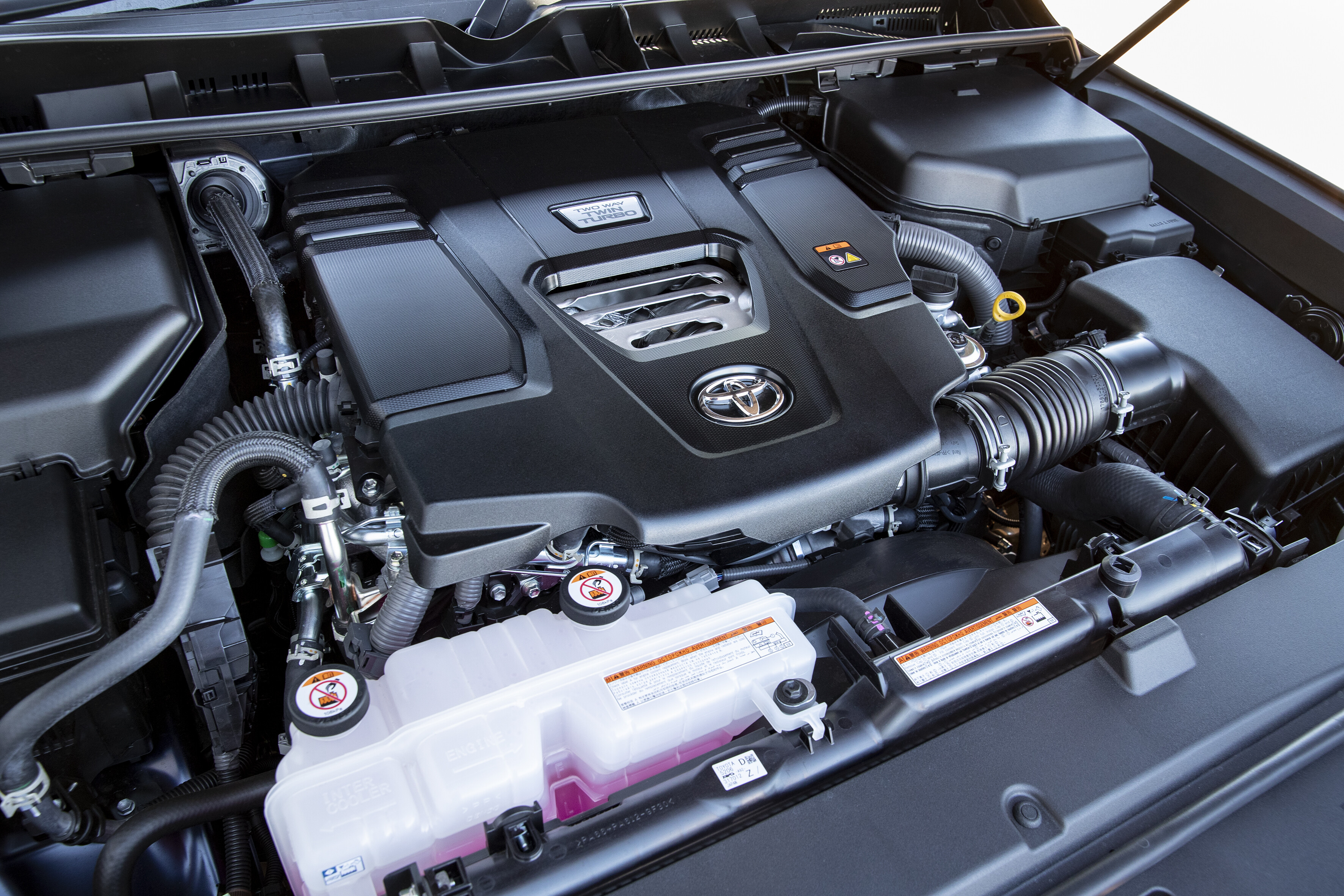
Many people will miss the twin-turbo V8 found in the 200 Series. It’s hard to beat the sound and low-down grunt of a V8, especially one with two turbochargers fitted to it. Fear not, the 3.3-litre twin-turbo V6 diesel motor now used exclusively across the LC300 Series range is a winner.
Praise must also be given to the 10-speed gearbox; it’s a solid operator that gets the most out of that V6. The auto doesn’t seem to hunt for gears in operation, and it offers a useable spread of ratios for both on- and-off-road conditions.
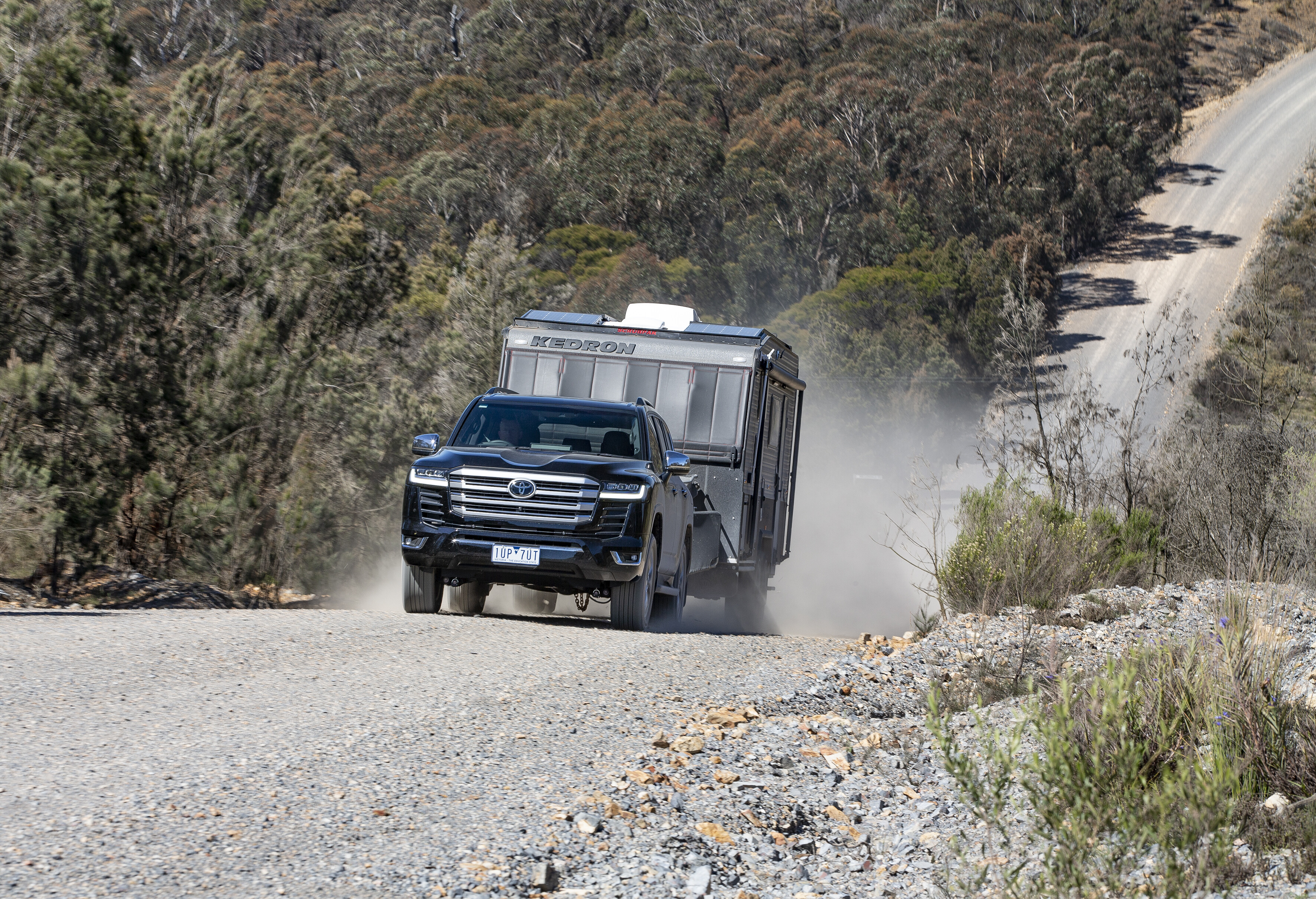
When towing that rather large Kedron caravan, you could certainly tell the ’van was there, but I was suitably impressed with how well the Cruiser coped with that load. It felt surefooted, at no stage sketchy, and with decent acceleration and braking performance.
ON-ROAD RIDE & HANDLING
‘Firm, yet compliant’ was my tester’s note from the day, and this applied to all variants driven. The steering was nicely weighted, even in the lower-spec models with traditional hydraulic steering. Higher-end models receive a hybrid steering system, made up of both electronic and hydraulic components.
Braking performance was solid, with a progressive feel to the pedal. This was especially appreciated with the 3000kg caravan on the back. There was no wind noise to speak of, making the LC300 an easy vehicle to drive over long distances. The new twin-turbo V6 engine makes easy work of steep hills, sipping a meagre amount of diesel in the process.
At 100km/h, the LC300 sits at just 1400rpm, barely raising a sweat. The sound it produces is throaty and meaningful, and performance is stellar, especially in the mid-range when pushed. An impressive fuel consumption figure of around 9.4L/100km isn’t bad for a full-size off-road wagon driven enthusiastically by eager journos.
OFF-ROAD
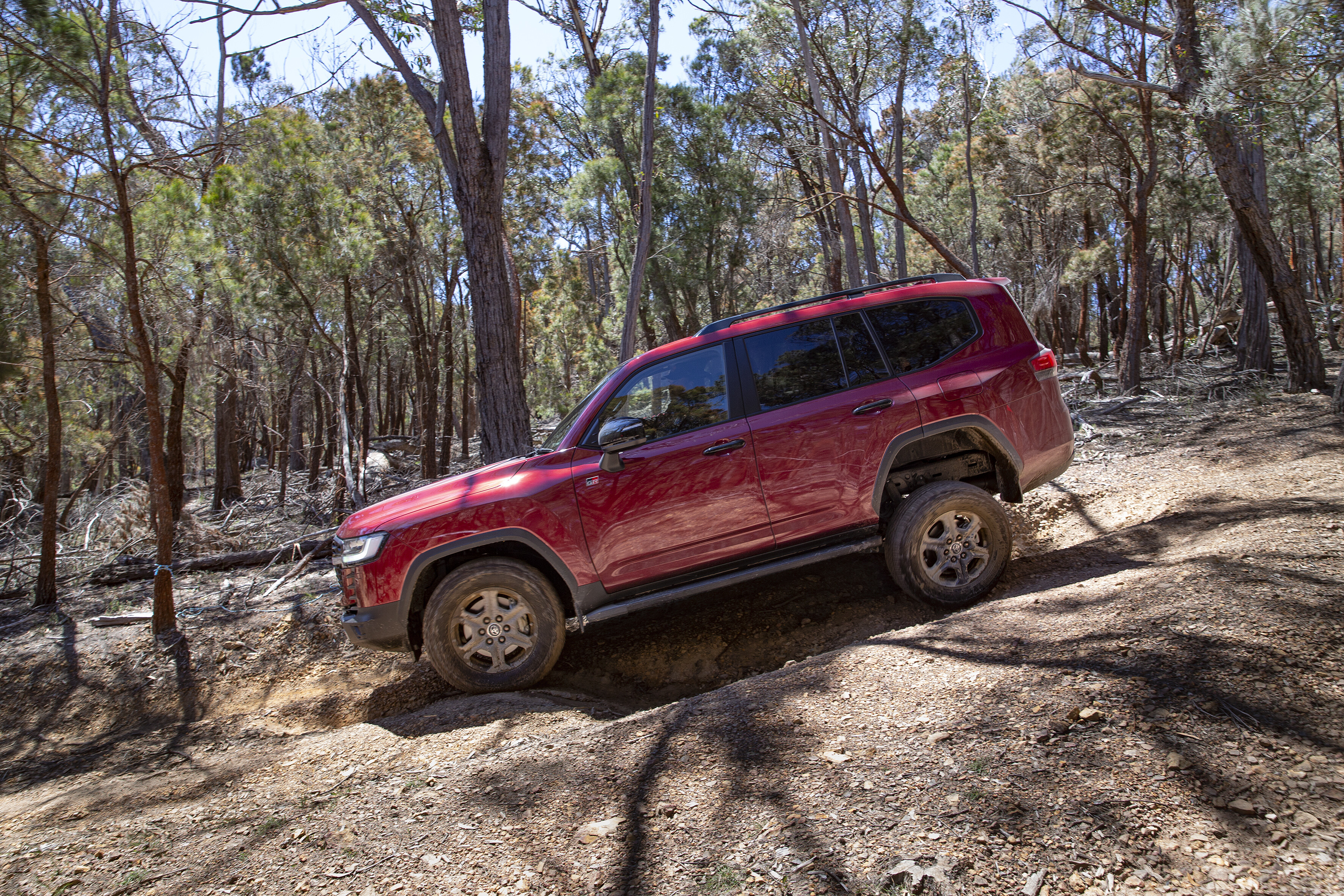
Clearance is the LC300’s biggest off-road limitation, but it’s something you could easily address with a suspension lift and larger tyres. Most vehicles on the press fleet had side-step damage, so some stronger rock sliders would be a good call for those wanting to play on rocks.
I was very impressed with the CRAWL function and traction-control performance of the LC300. While engine braking alone offers enough to control the vehicle off-road, engaging CRAWL mode and twisting the rotary dial to select input level sees the 300 Series walking down challenging obstacles at a snail’s pace.
If you want to go a bit faster, simply turn the dial clockwise until you feel comfortable. This is great technology for both those new to off-roading and experienced operators looking to push themselves and the vehicle.
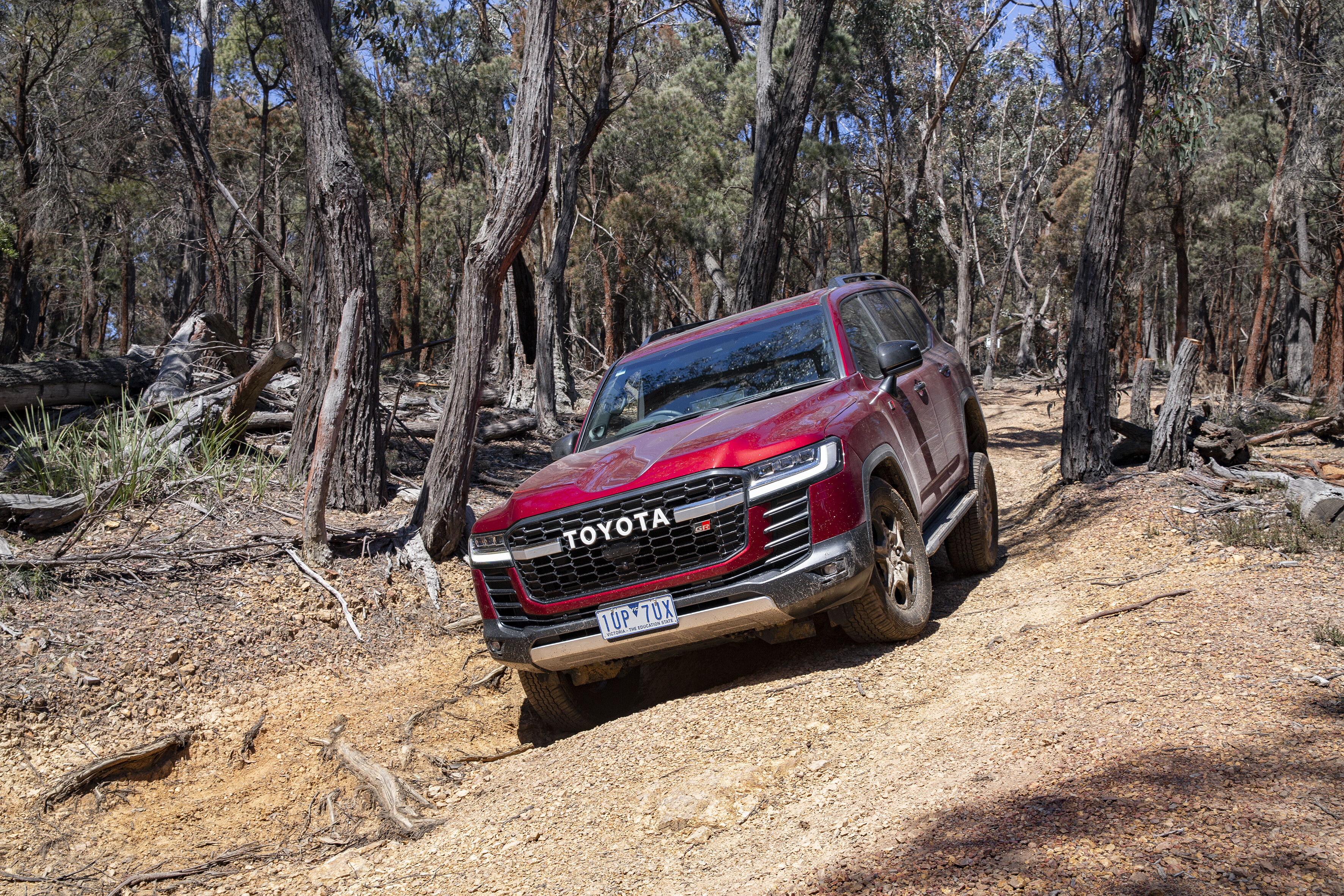
MTS (Multi Terrain Select) is a great inclusion available on GXL models and above, with the ability to select various terrain modes and dial in the traction control to suit the terrain ─ from rocks to sand. We found on this test that Loop Auto or Rock mode were the go-to settings, but we’re looking forward to playing with this more in the future.
Wheel travel, especially from the rear solid axle, was impressive. This was even better on models with automatically disconnecting front and rear sway bars such as the GR Sport. The GR Sport also features front and rear differential locks, and a centre diff lock. These engage quickly and easily, as does low range 4WD selection. Not that you’re going to need the lockers all that often, thanks to the advanced traction control calibration. Full points there.
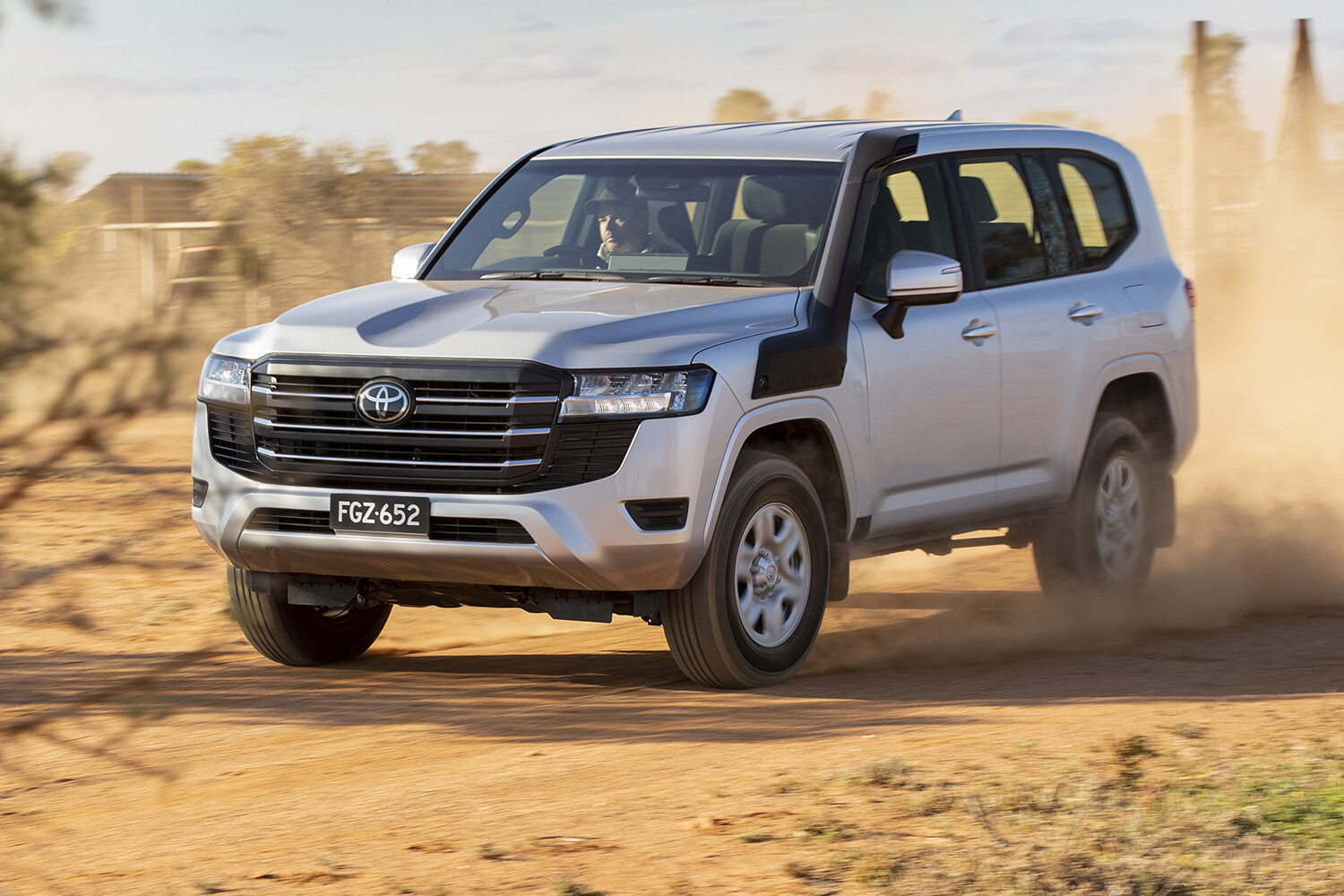
The base-model GX is particularly enjoyable to drive, with vinyl flooring and a factory-fitted raised air intake ─ the induction noise through the air intake is music to the ears. It kept up with the rest of the range off-road, and there’s a significant saving to be had with the GX if you can deal with less technology and luxury – enough money to deck out the vehicle with off-road accessories and purchase a few full tanks of diesel. In saying that, it’s unlikely to be a big volume mover, with most people opting for the GXL or VX model and above.
CABIN & ACCOMMODATION
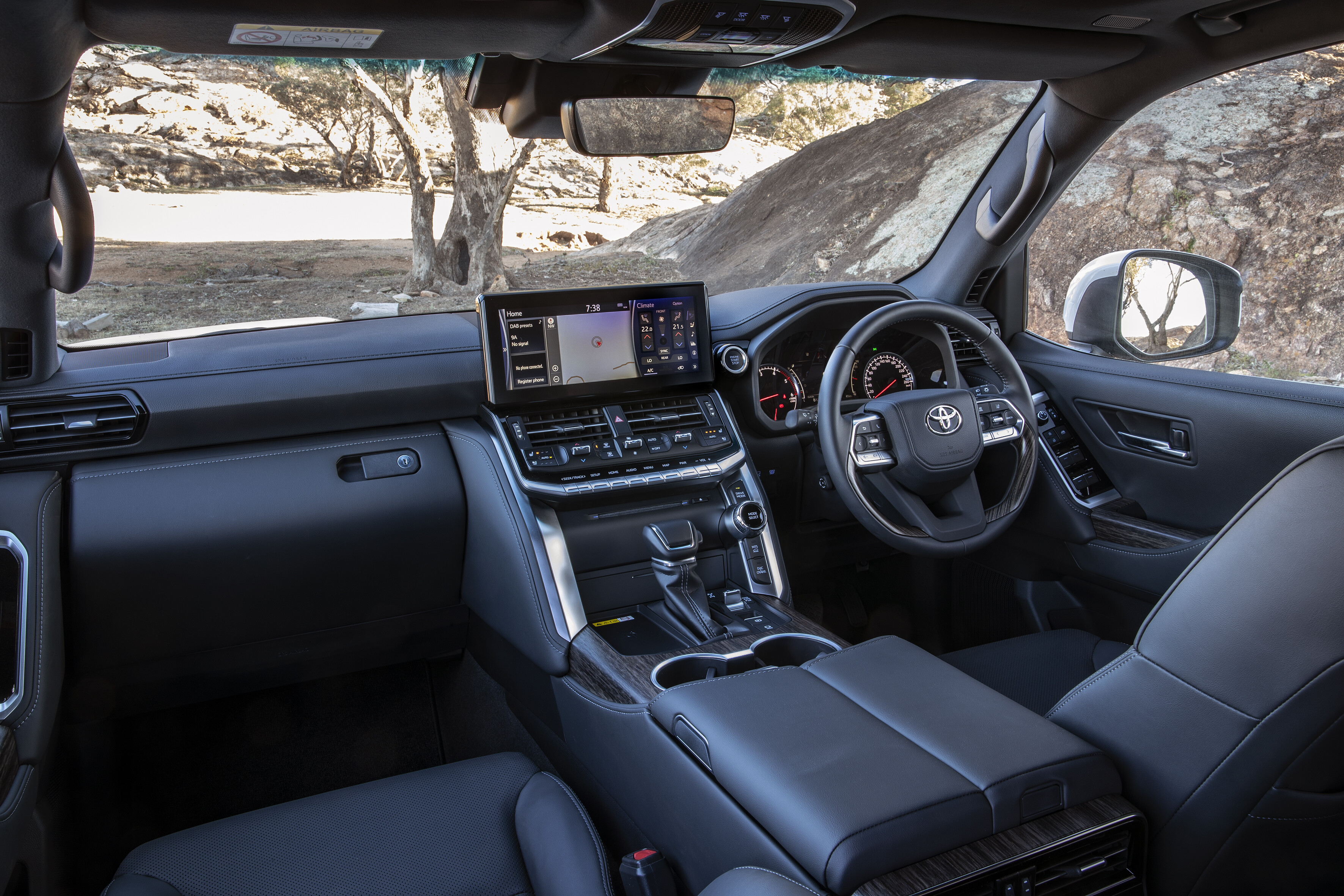
With six different variants, there are way too many interior specs to discuss in detail. There is really something for everyone, though. From the stripped-back GX with cloth seats and vinyl flooring perfect for hard off-road work, to the cream interior of the Sahara (which I wasn’t a fan of), right up to the ultra-modern and sleek GR Sport (my pick of the bunch, interior-wise).
Comfort levels are excellent across the board, so it’s up to you to decide what you feel is best for your needs, style and budget. It’s a good thing that there are so many options – variety is the spice of life, as they say.
PRACTICALITIES
Every LC300 is powered by a 3.3-litre twin-turbo V6 diesel motor, producing more power and torque than the 4.5-litre V8 found in the 200 Series. Output figures are 227kW at 4000rpm and 700Nm between 1600 to 2600rpm, compared to 200kW and 650Nm. The V6 is backed by a 10-speed auto, with no manual transmission available.
The LC300 wheelbase has been unchanged over the 200 Series, but the 300 Series is wider. It’s also lighter, thanks to the use of aluminium in the roof, doors, bonnet and tailgate panels.
Below is a breakdown of each 300 Series available, and what makes them unique in the range.
GX
The GX is the base LandCruiser 300 model, offering a stripped-out interior and exterior. It boasts two fuel tanks (80L main and 30L sub tank) with a total capacity of 110 litres. Low-range reduction has been retained across the LC300 range, with all models using a full-time 4×4 system with a lockable centre differential.
The 17-inch wheels are standard on GX spec, as are LED headlights and a raised air intake. Fabric seats, vinyl flooring and rubber floor mats feature inside the GX. There are only five seats in GX spec, with a 60/40 split. Dual-zone automatic climate control with rear-facing ducts is a nice feature, as are six cup holders located throughout the interior.A nine-inch multimedia touchscreen is standard in both GX and GXL trim. There are six speakers with a Bluetooth-compatible audio system that is also Apple CarPlay/Android Auto compatible.
GXL
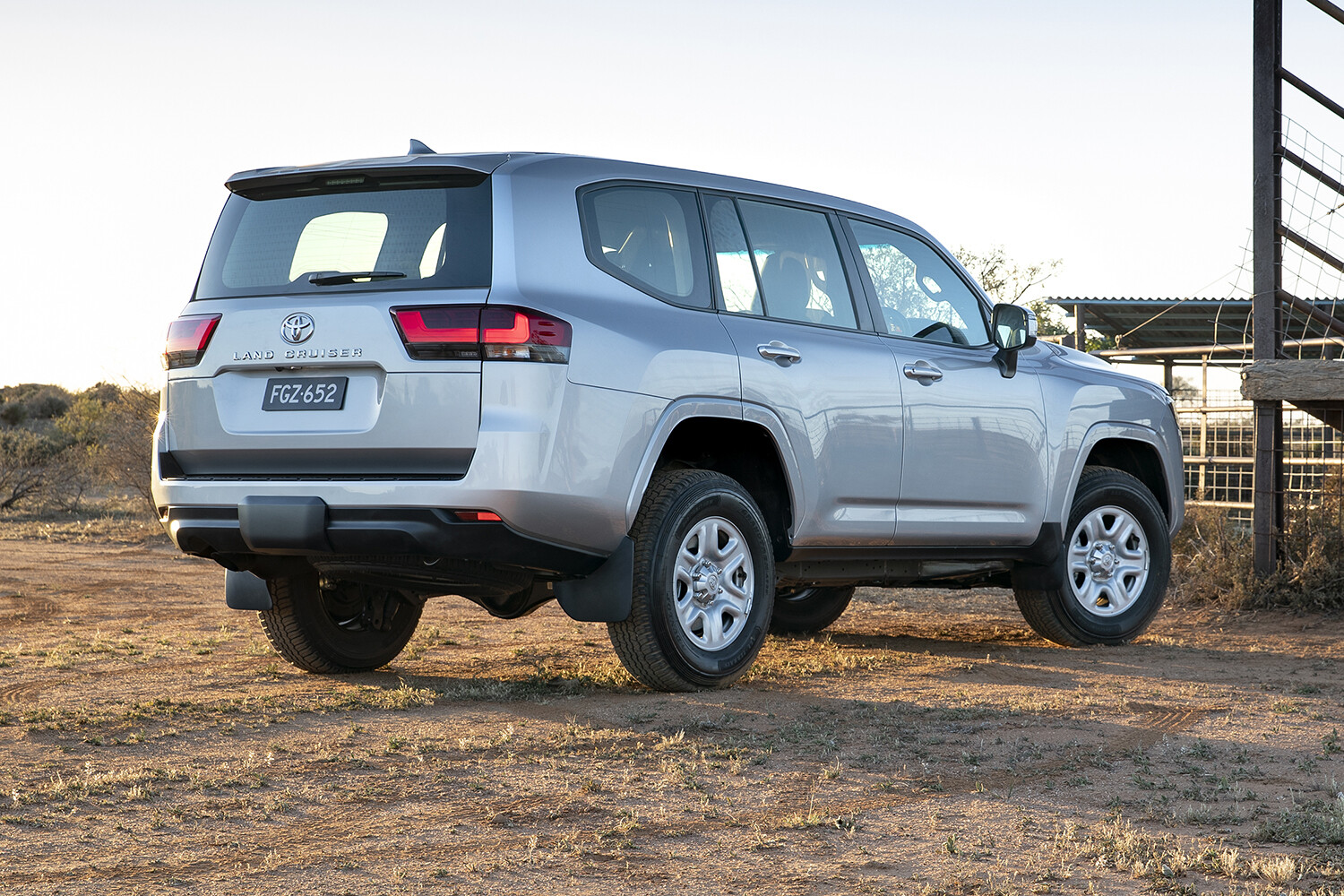
GXL spec adds 18-inch wheels and Multi-Terrain Select (MTS). There is no factory raised air intake fitted to the GXL, but you do get third-row seating, alloy side-steps and LED front fog lights.
Safety levels are up in GXL trim, with blind-spot monitoring, rear cross-traffic alert, third-row curtain airbags and third-row occupant detection. You also receive front and rear parking sensors, and back-guide monitoring.
VX
VX spec and above receive on-board sat-nav (with CD/DVD player), 10-speaker sound system and 12.3-inch multimedia touchscreen. For the first time ever, active cruise control featuring lane trace assist with steering wheel vibration is available on VX grades and above. There are also four cameras used in the multi-terrain monitor (MTM) that incorporates panoramic view.
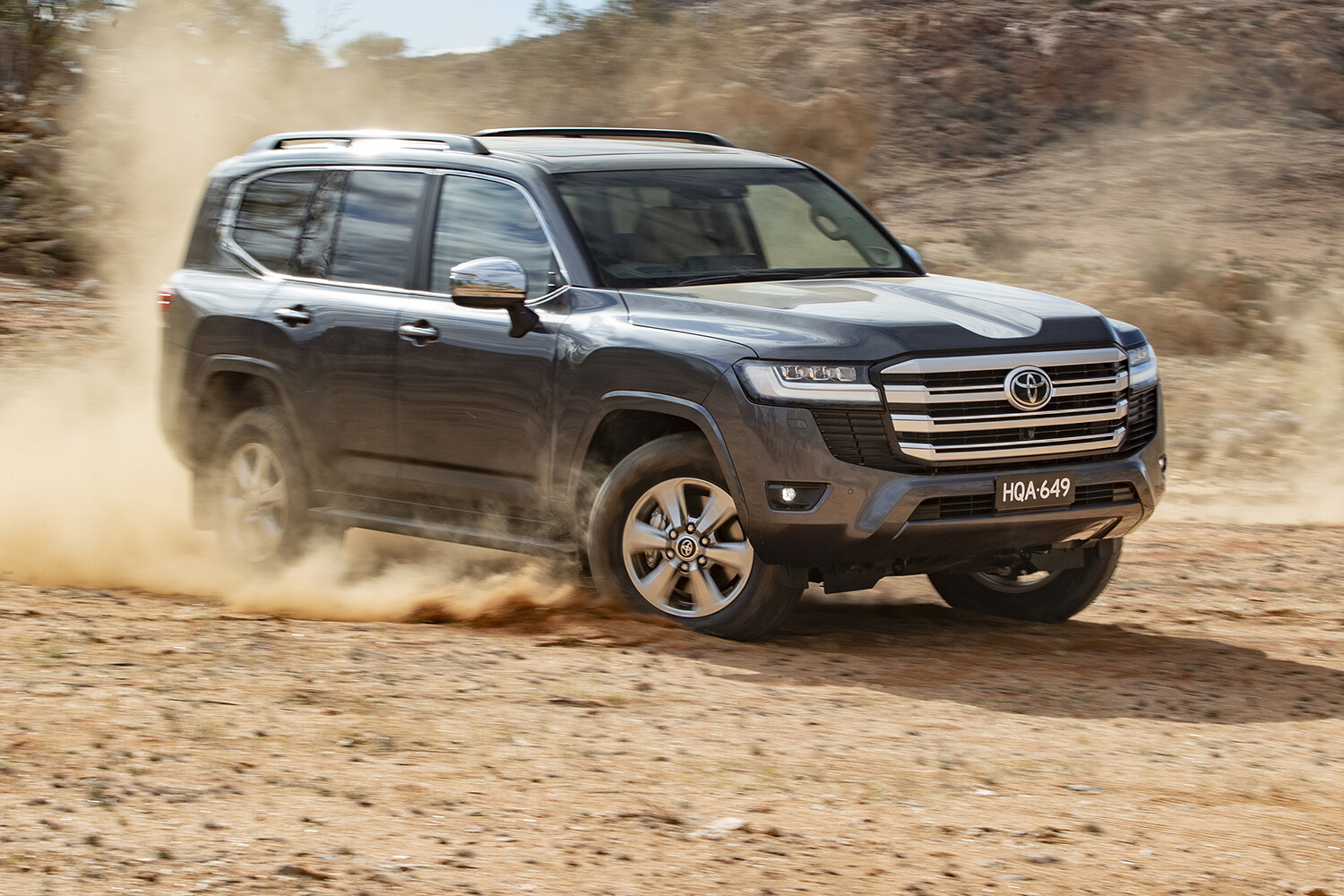
18-inch wheels, Bi-LED headlights with auto-levelling, and headlamp washers are standard. Puddle lamps, chrome window mouldings and a premium grille set the VX apart.
Inside the VX you’ll find a synthetic material used on seating, with woodgrain-style trim. Four-zone automatic climate control is standard on VX spec, as is eight-way power adjustment for both the driver and passenger seat. There are eight cup holders, as well as a tilt-and-slide moon roof.
SAHARA
The Sahara boasts a thumping 14-speaker JBL audio system, heated steering wheel and power-folding third-row seats. Seats feature leather accents, and the driver’s seat has three memory settings for ease of use if multiple drivers use the vehicle. A head-up display is also a stock inclusion in Sahara spec. Heated and ventilated second-row seats, steering wheel and a cooled centre console are nice touches, as is the powered rear hatch.
Externally, the only main difference is chrome-accented exterior door mirrors and door handles, as well as sequential turn signals.
SAHARA ZX
Standard on 20-inch wheels, with a chrome grille, new tail-lights and a redesigned tailgate, the Sahara ZX stands out. A neat touch is the choice of three interior trim colours: black, beige, or red and black. Carbon-style material has been used on the steering wheel, centre console and door trim, to provide a sporty look.
A Torsen rear limited slip differential is found solely in Sahara ZX spec, which enhances traction on- and off-road. There is also Adaptive Variable Suspension and five drive-mode selections to use when driving through various terrains.
GR SPORT
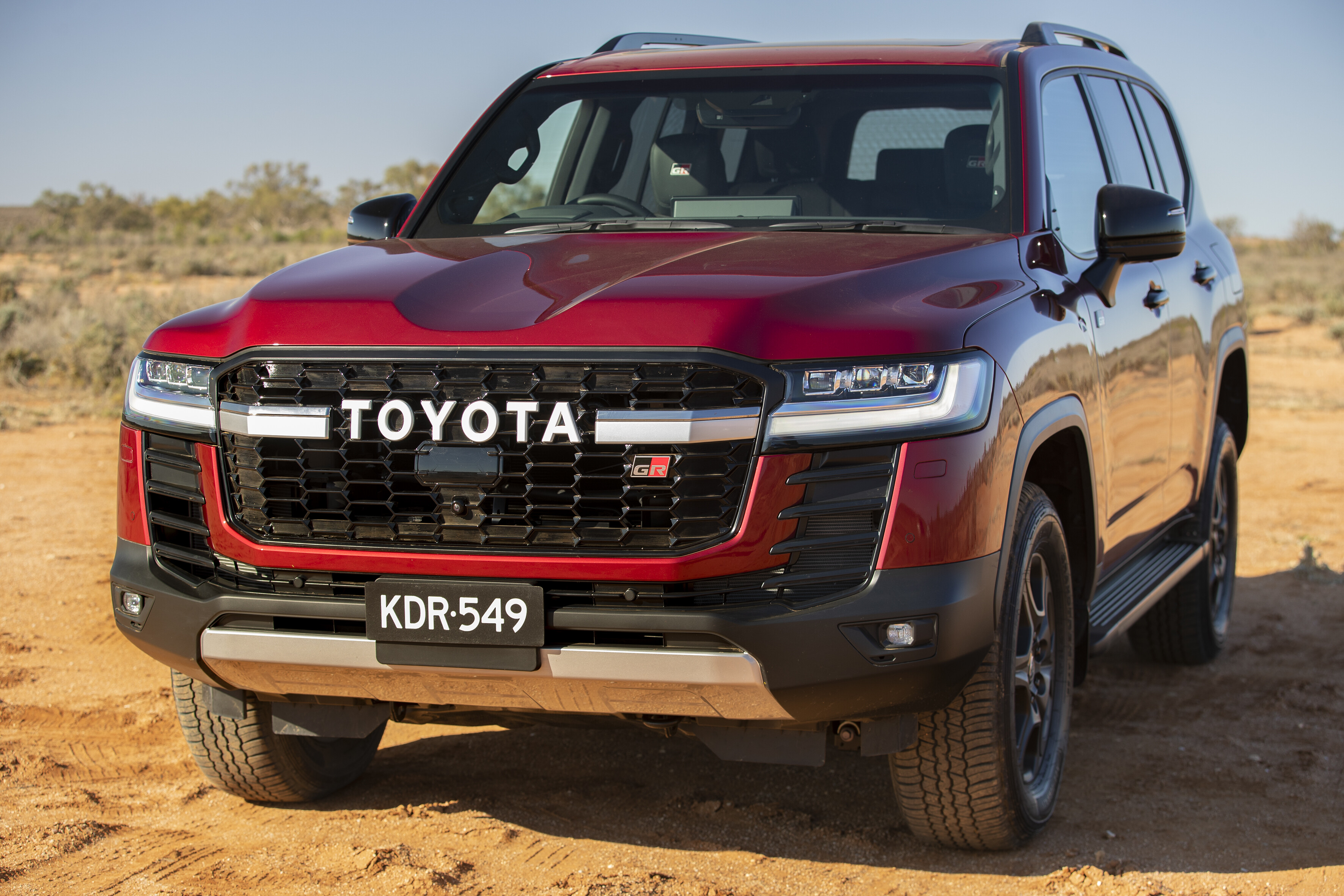
Toyota has equipped the GR Sport with front and rear differential locks, disconnecting front and rear stabiliser bars, and its own Adaptive Variable Suspension system ─ this is a seriously capable vehicle. It is also the only model in the range to get locking differentials (all have a locking centre diff, though). Toyota has chosen 18-inch wheels for the GR Sport, riding on taller 265×65 R18 tyres which equate to 31.1 inches in diameter.
The exterior boasts aggressive design cues and a wider wheel track. Unique exterior features to the GR Sport include a black gloss mesh grille with a matte white Toyota logo. Front and rear bumpers are also unique to the GR Sport, as are the mudflaps and wheel-arch mouldings. The GR Sport is only available as a five-seater, with two-row curtain airbags.
SUMMARY
The LC300 is an expensive vehicle, and it has been widely reported that getting your hands on one will take some time and patience – but it’ll be worth the wait. In the simplest of terms the LC300 is a four-wheel drive that does pretty much everything well: it’s capable off-road, a confident tow rig, has room for the entire family, and is a joy to pilot on-road. This is what you’d expect from a full-size wagon with a full-size price tag.
With so many models available in the range, there are options to suit most four-wheel drivers; from the stripped-out GX with vinyl flooring and cloth seats, to the sporty and stylish GR Sport with its enhanced off-road ability.
We’re looking forward to much more seat time in the LC300 platform, to see how it performs across the desert and on longer trips. First impressions, though: the LC300 is a worthy successor to the ever-popular 200 Series.
2022 TOYOTA LC300 PRICES
| GX | $89,990u00a0 |
|---|---|
| GXL | $101,790u00a0 |
| VX | $113,990u00a0 |
| Sahara | $131,190u00a0 |
| GR Sport | $137,790u00a0 |
| Sahara ZX | $138,790u00a0 |
TOYOTA LC300 GR SPORT SPECS
| ENGINE | Twin-turbo V6 diesel |
|---|---|
| CAPACITY | 3346cc |
| MAX POWER | 227kW at 4000rpm |
| MAX TORQUE | 700Nm between 1600 to 2600rpm |
| GEARBOX | 10-speed automatic |
| 4X4 SYSTEM | Full-time 4×4 w/ locking centre, front and rear differentials |
| CONSTRUCTION | 5-door wagon body on ladder-frame chassis |
| FRONT SUSPENSION | Independent suspension w/ coil springs |
| REAR SUSPENSION | Solid axle 4-link w/ coil springs |
| TYRES | 265x65R18 (GR Sport) |
| KERB WEIGHT | 2630kg (GR Sport) |
| GVM | 3280kg |
| PAYLOAD | 650kg (GR Sport) |
| TOWING CAPACITY | 3500kg |
| SEATING CAPACITY | 5 seats (GR Sport) |
| FUEL TANK | 80L main, 30L sub tank |
| ADR FUEL CLAIM | 8.9L/100km |
| ON-TEST FUEL USE | 9.4L/100km |
| DEPARTURE ANGLE | 25u00b0 |
| RAMPOVER ANGLE | 21u00b0 |
| APPROACH ANGLE | 32u00b0 |
| WADING DEPTH | 700mm |
CTEK has launched a new portable battery charger in Australia, the CTEK CS FREE.
The all-new battery charger and maintainer features Adaptive Boost technology, which allows the charger to get a flat battery going without the need to plug into mains power.
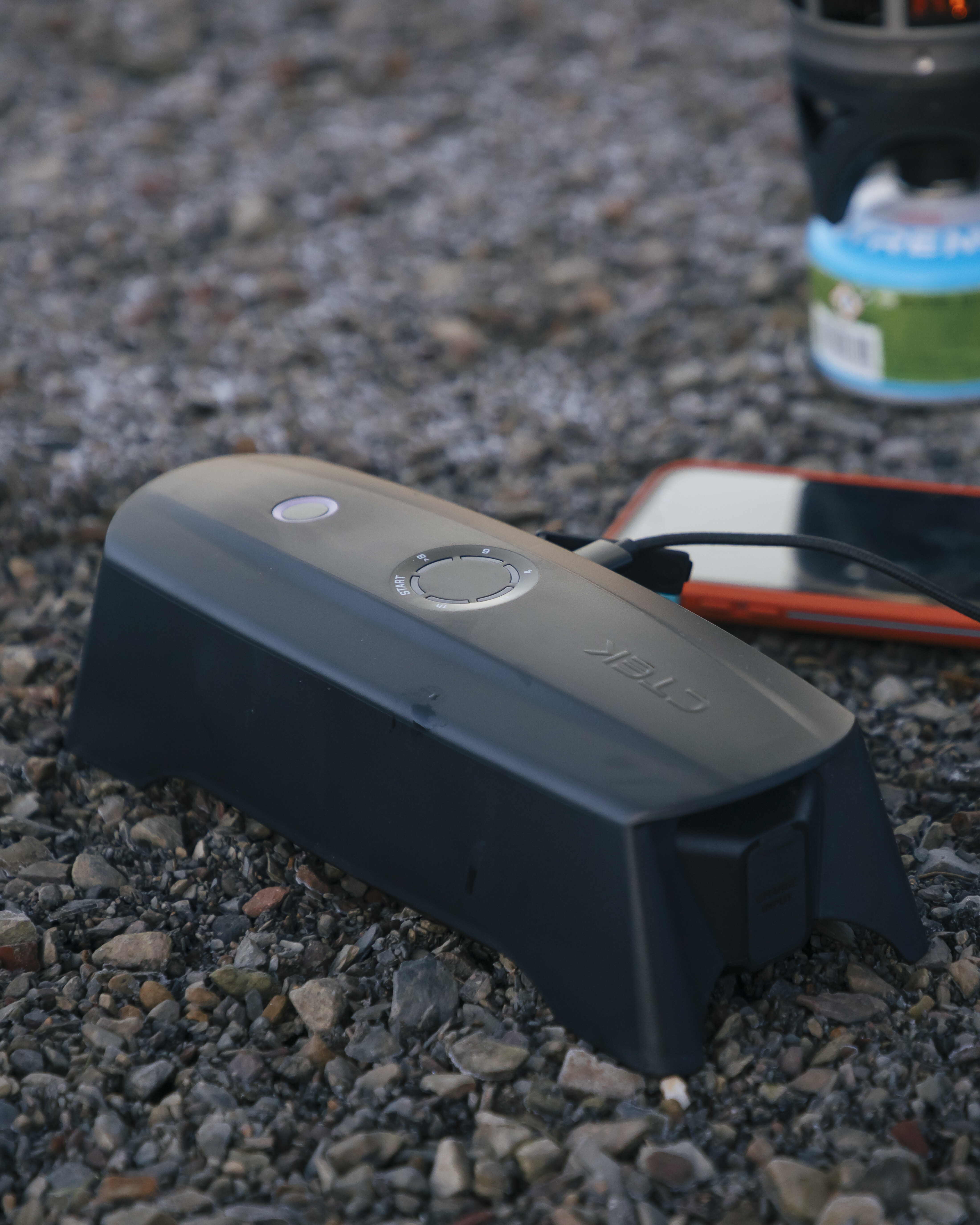
The CS FREE features an internal lithium battery that takes less than an hour to fully charge through the unit’s fast USB-C input, and it can hold its charge for up to a year.
Another benefit of the unit is that it is capable of being used as a portable power pack to charge everyday technology such as laptops, cameras, smartphones and tablets.
If mains power isn’t available, the CS FREE can then be completely recharged via the vehicle’s cigarette socket or by the solar panel charging kit.

It features both USB-C and USB-A outputs and can also be plugged into mains power and used as a maintenance charger. It comes with a two-year warranty.
RRP: $499 Website: www.ctek.com/au
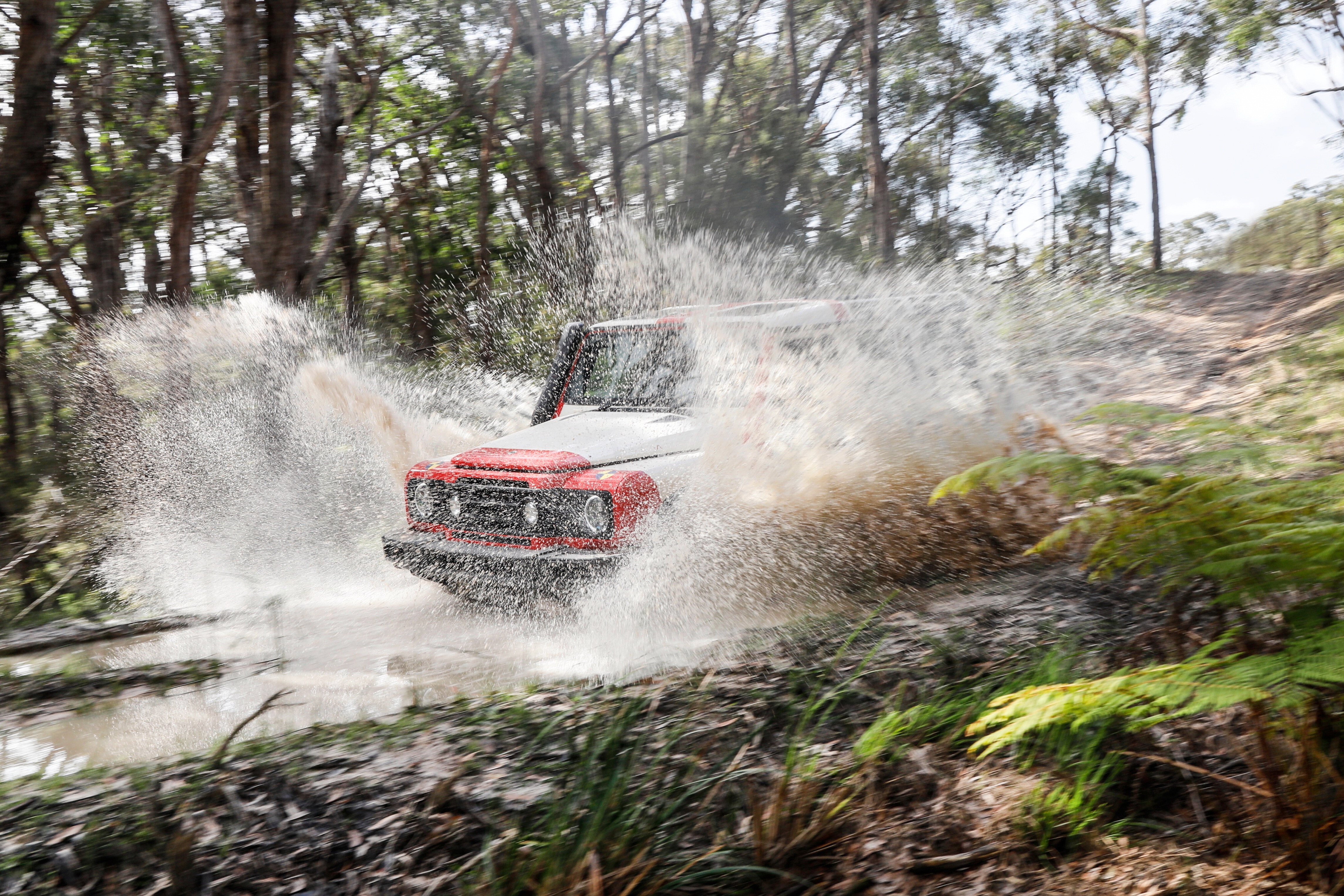
The 2022 Ineos Grenadier is set to arrive in Australia this time next year, but a prototype is already undergoing durability and hot-weather testing in the Outback.
Ineos has released new images of the Grenadier mule being subjected to Australia’s challenging environment, as the new British carmaker seeks to create a reliable and heavy-duty four-wheel-drive designed to compete with the likes of the Toyota LandCruiser 70 Series.
While leaked images of the Ineos Grenadier arriving in Australia were widely circulated on social media last month, the company has confirmed the vehicle is here to “help ensure the final Grenadier product is fully fit to cope with the stresses of the Australian environment and demands of the local buyer.”
The brand has priced the Ineos Grenadier from $84,500 before on-road costs for the entry-level two-seater commercial wagon, but further pricing has yet to be announced for higher-specified variants.
“… What’s not on the cards for us is going down this direction of ‘SUV’,” Ineos Australia sales and marketing manager Justin Hocevar told 4X4 Australia last month.
“We will remain a utility vehicle brand.”
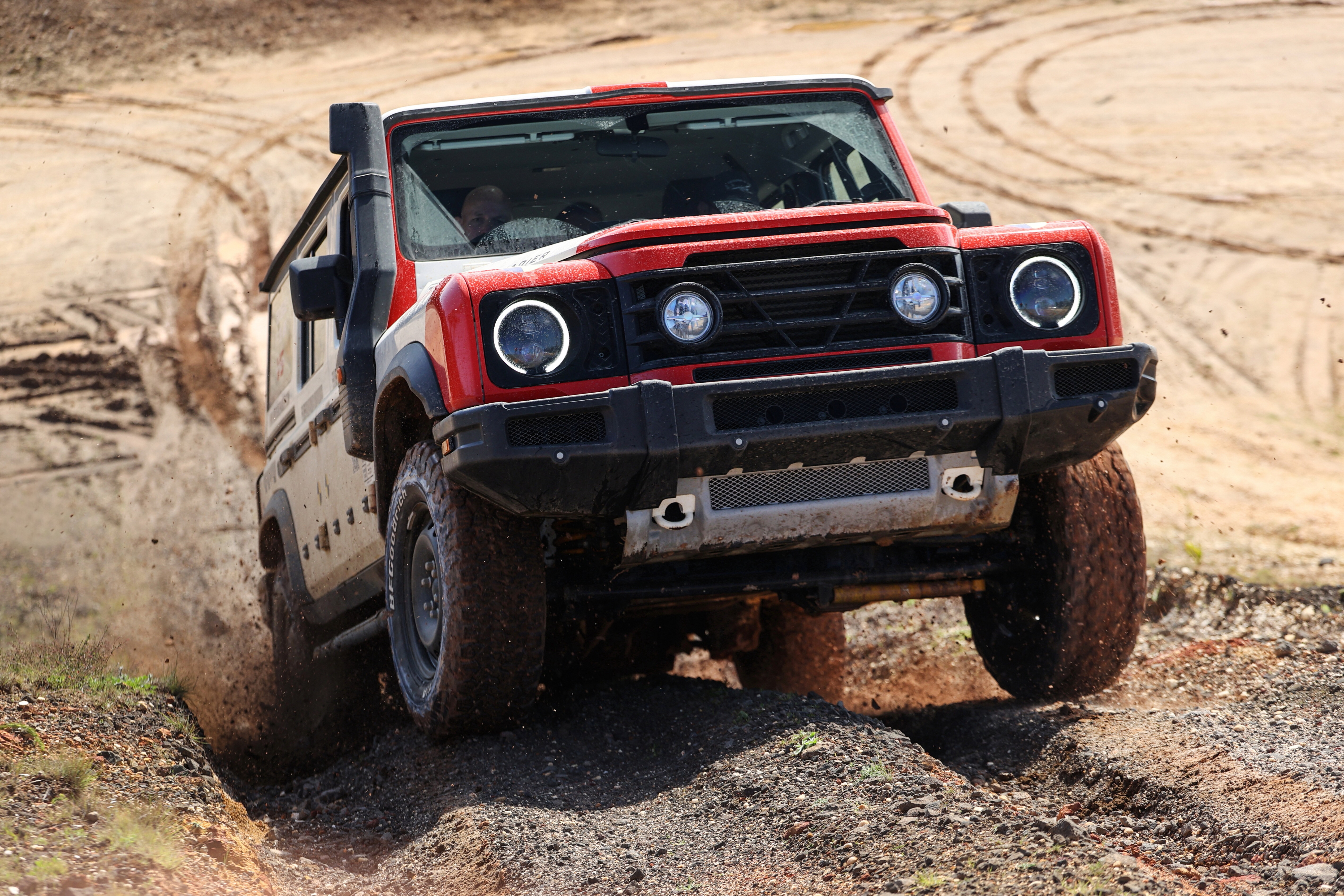
Australians have been able to secure a build slot with an $800 deposit, with some selected parties invited to experience the prototype in person while it’s in the country.
Though the prototype was built by Magna Steyr in Austria, the four-wheel-drive will be manufactured in Germany and powered by choice of a 3.0-litre turbo-diesel six-cylinder engine or a petrol equivalent – both sourced from BMW.
Global reservations for the 2022 Ineos Grenadier officially open on October 14, with orders to begin in March ahead of a fourth quarter launch next year.
The Jeep Comanche may have been discontinued almost 30 years ago, but its name could be revived if the American brand were to bring back a mid-size pick-up.
While the Gladiator currently caters for the ute segment, the Grand Cherokee could lend itself as a base for a Comanche reboot – giving drivers a balance between on-road refinement and the ability to go off the beaten track.
Artist Theo Throttle decided to try his hand at bringing the Comanche closer to reality, combining the new-for-2021 Grand Cherokee plug-in hybrid with Ford’s Maverick pick-up – another electrified offering for the American market.
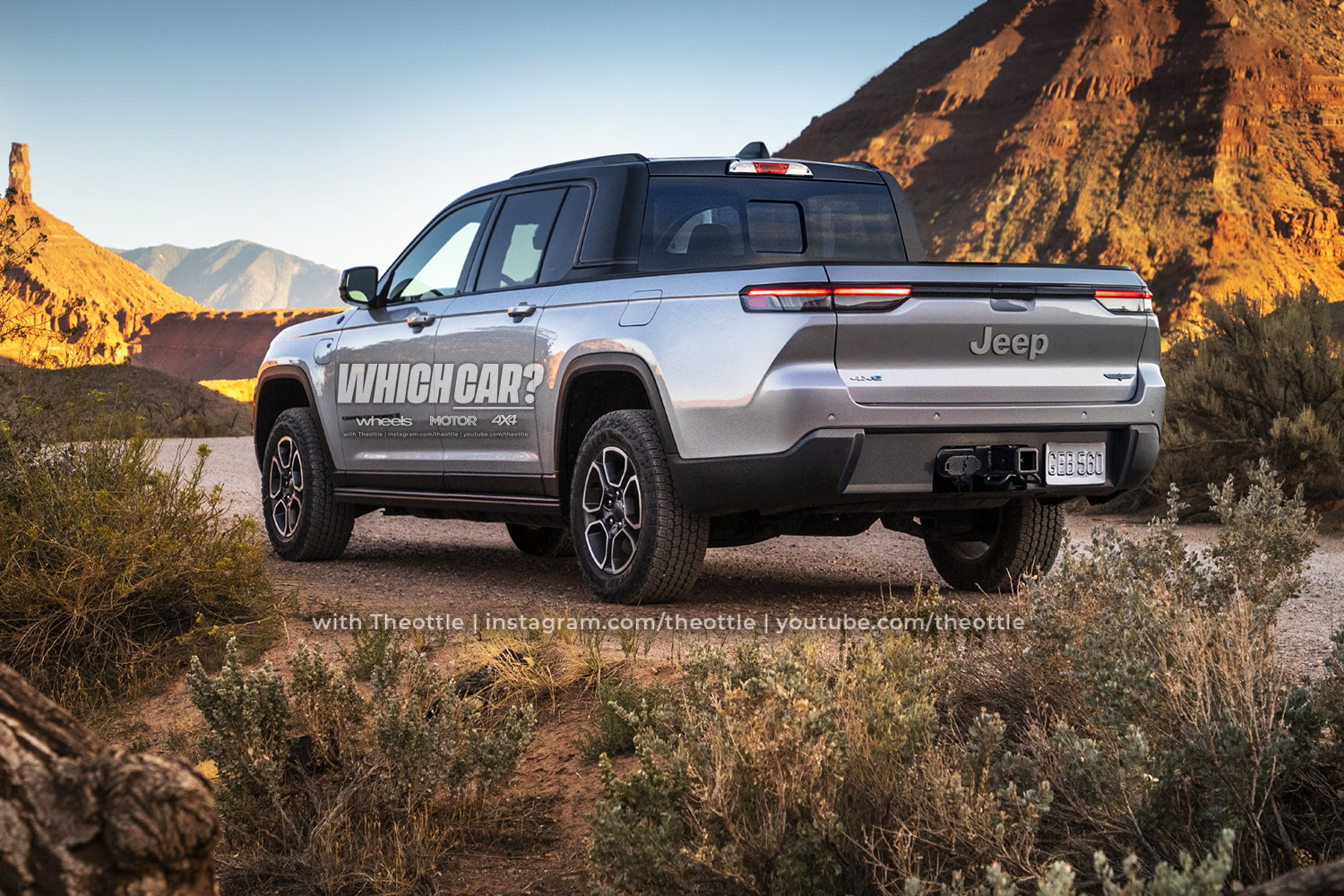
With the 2.0-litre, four-cylinder PHEV powertrain under the bonnet of this Comanche, we could expect even wilder iterations powering the four-door ute if it was also to be offered with the Pentastar V6 and the iconic Hemi V8 – maybe even with a few SRT goodies.
Jeep has previously teased a return of the Comanche, revealing its modern interpretation at the 2016 Easter Jeep Safari in Moab, although it was based on the smaller Renegade, featuring a two-door body rather than Theo’s four-door interpretation.
UPDATE, January 2023: New HiLux GR Sport revealed
It’s no full-bottle high-powered GR HiLux, but the new 2023 HiLux GR Sport does get more power and torque than the regular model – making it a rival, of sorts, to the Navara Warrior and Ranger Raptor. In the meantime, we’ll keep hoping for a proper performance upgrade in future GR HiLux. Details below.
The story to here
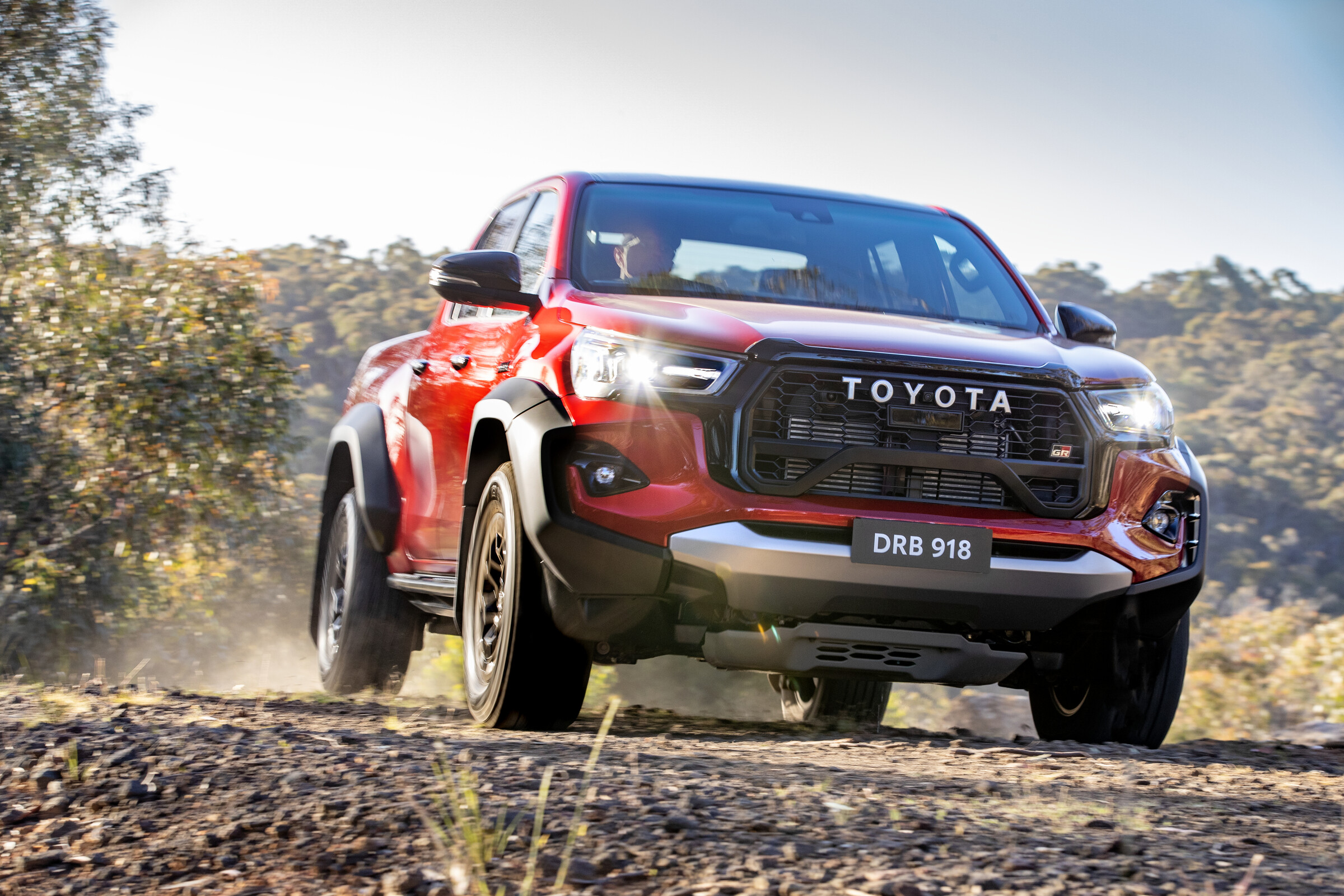
The 2022 Toyota HiLux GR Sport has gone on sale in Japan, providing the best look at what Australian buyers can expect if and when the model eventually lands here.
As with other GR Sport models in the Toyota range, the HiLux GR Sport doesn’t add any extra performance, rather it is a predominantly visual upgrade thanks to a body kit featuring wheel arches, a revised grille and bumpers, and new black 18-inch alloy wheels.
The GR Sport uses a similar version of the body kit found on the HiLux Rogue sold in Australia – with a total width of 1900mm – but painted to go with the vehicle’s body colour.
A centre section of the front bumper provides a smoother, colour-matched look, coupled with a ‘TOYOTA’ grille – as found on the LandCruiser GR Sport.
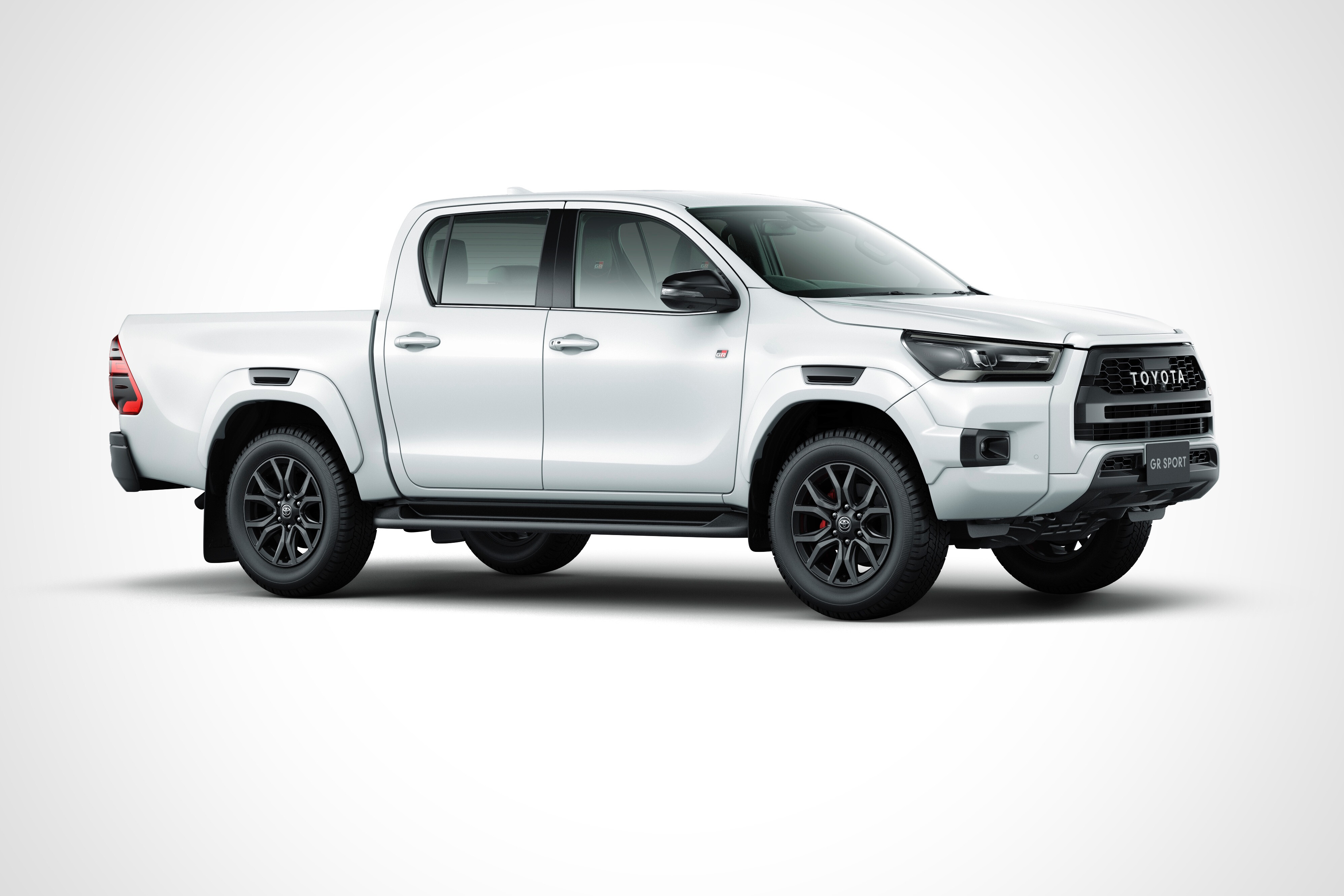
While the powertrain remains unchanged, engineers from Gazoo Racing have fettled with the chassis to deliver a “dedicated suspension [tune] that improves steering response and realizes flat and comfortable driving,” a translated statement from Toyota Japan read.
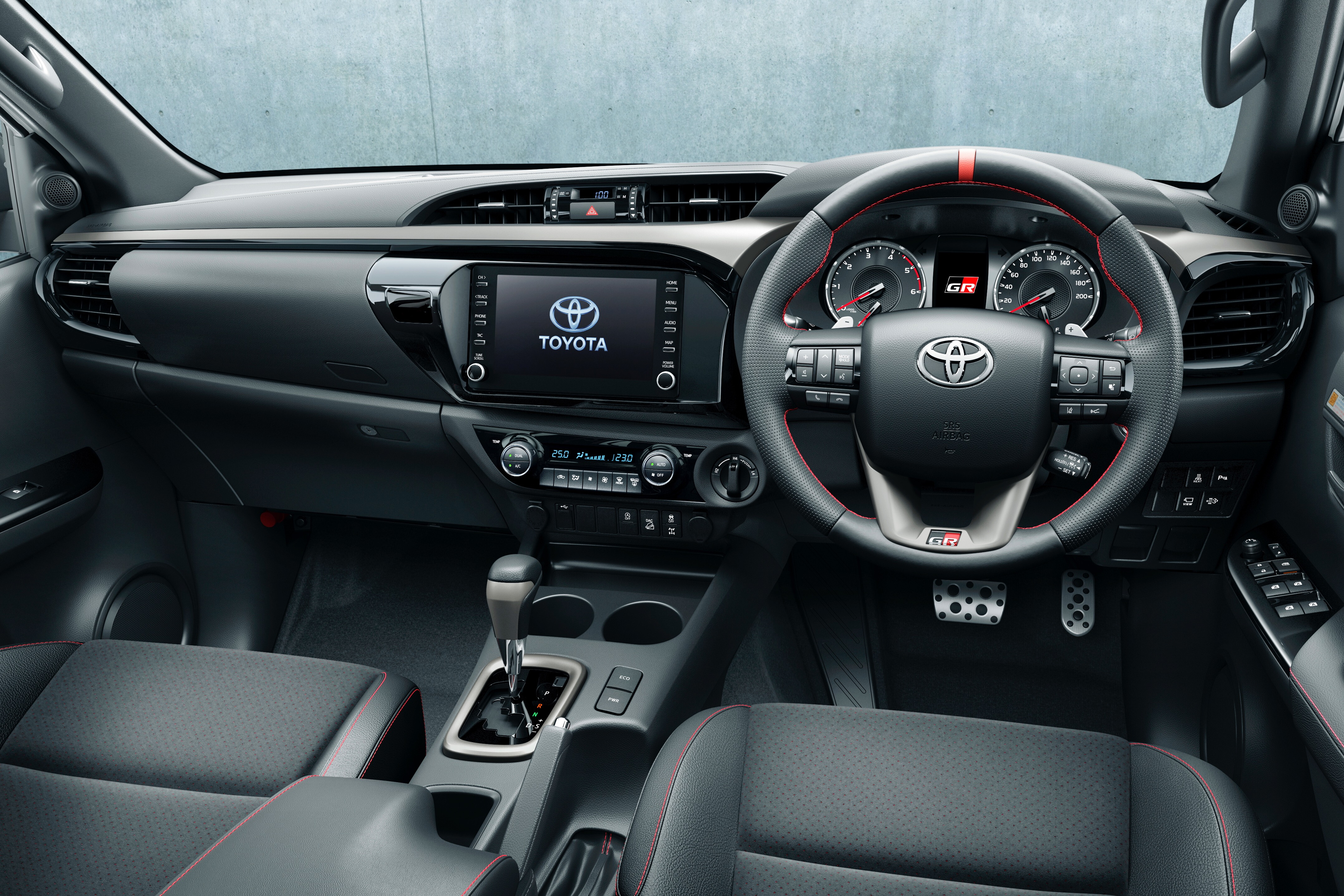
As with the HiLux Revo GR Sport unveiled for the Thailand market in recent months, the Japanese HiLux GR Sport gets a new interior look with synthetic leather and suede upholstery, front sports seats, dark silver highlights, GR Sport badging and instruments, sports pedals, and paddle shifters.
In May 2021, a spokesperson for Toyota Australia said “[The HiLux GR Sport is] not on our radar at the moment, but if it becomes available globally, we’d definitely be interested in it.”
4X4 Australia contacted the company’s local representatives and was told “Toyota Australia is continually looking at opportunities to expand the Toyota GR range with more exciting models however at this stage, we have no announcements to make.”
Those wanting a high-performance Toyota GR HiLux will likely have to wait until the next generation arrives in 2025 at the earliest.
According to a recent report out of the US, the next-gen HiLux will share its underpinnings with the Toyota Tacoma pick-up sold in North America, meaning a greater variety of powertrains could be made available to the Australian market.
There’s so much gear on the market these days that it’s confusing and sometimes frustrating trying to find the right gear for the application.
I found this recently when looking for a new inverter for the 80 Series to charge up all our gear on the road; from the drone, several camera batteries, laptop, torches, batteries for the chainsaw and drill, and a few more.
Now, while it’s easy to jump online and just throw a dart at one of the cheap imports, I needed a serious unit for our stuff – plus it had to be pure sine wave to comfortably protect the gear and, as we travel remotely, it had to be extremely reliable.
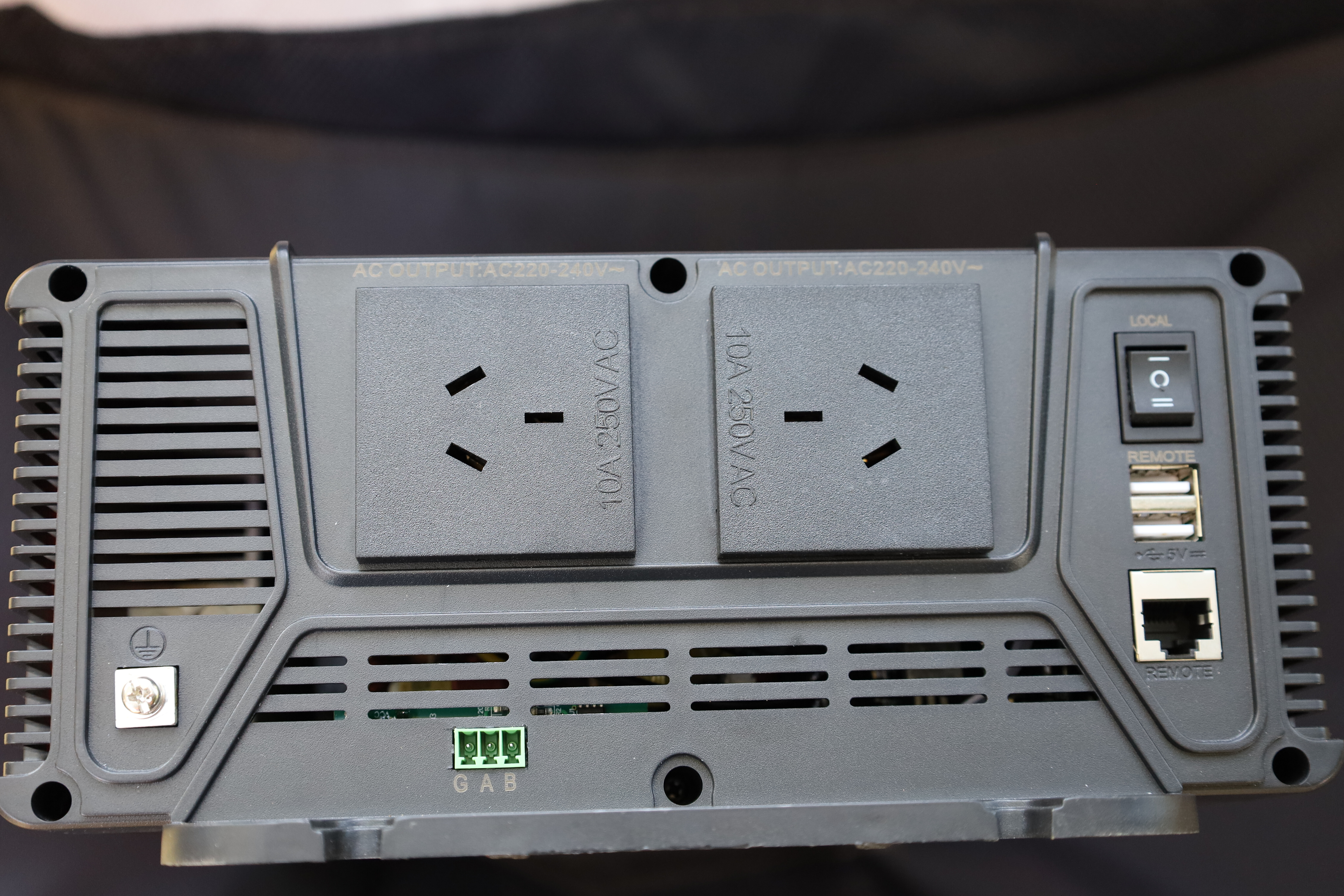
Receiving recommendations for KickAss products, I made the plunge to purchase its 1200W Digital Pure Sine Wave Inverter. The specs read well, with rated power at 1200W, peak power at 2000W, internal safety fuses, smart cooling system with twin fans, fully controllable display panel, and twin 240V and twin USB outlets (both rated at 2.1amp) – plus it comes with a separate external display screen with a five-meter lead.
Also in the box are thick power leads to reduce power drop when connected. The advantage of having the remote screen is that you can’t always mount the inverter in a way to access the 240V outlets and see the screen.
Using the buttons on either screen, it is possible to set different parameters away from the factory defaults such as under- and over-voltage ranges, short-circuit modes, the overload value and warning alarms. If something drastic does happen, fault codes are thrown up on the screen and, with the included manual, it’s an easy process to work out the issue and eliminate the fault.
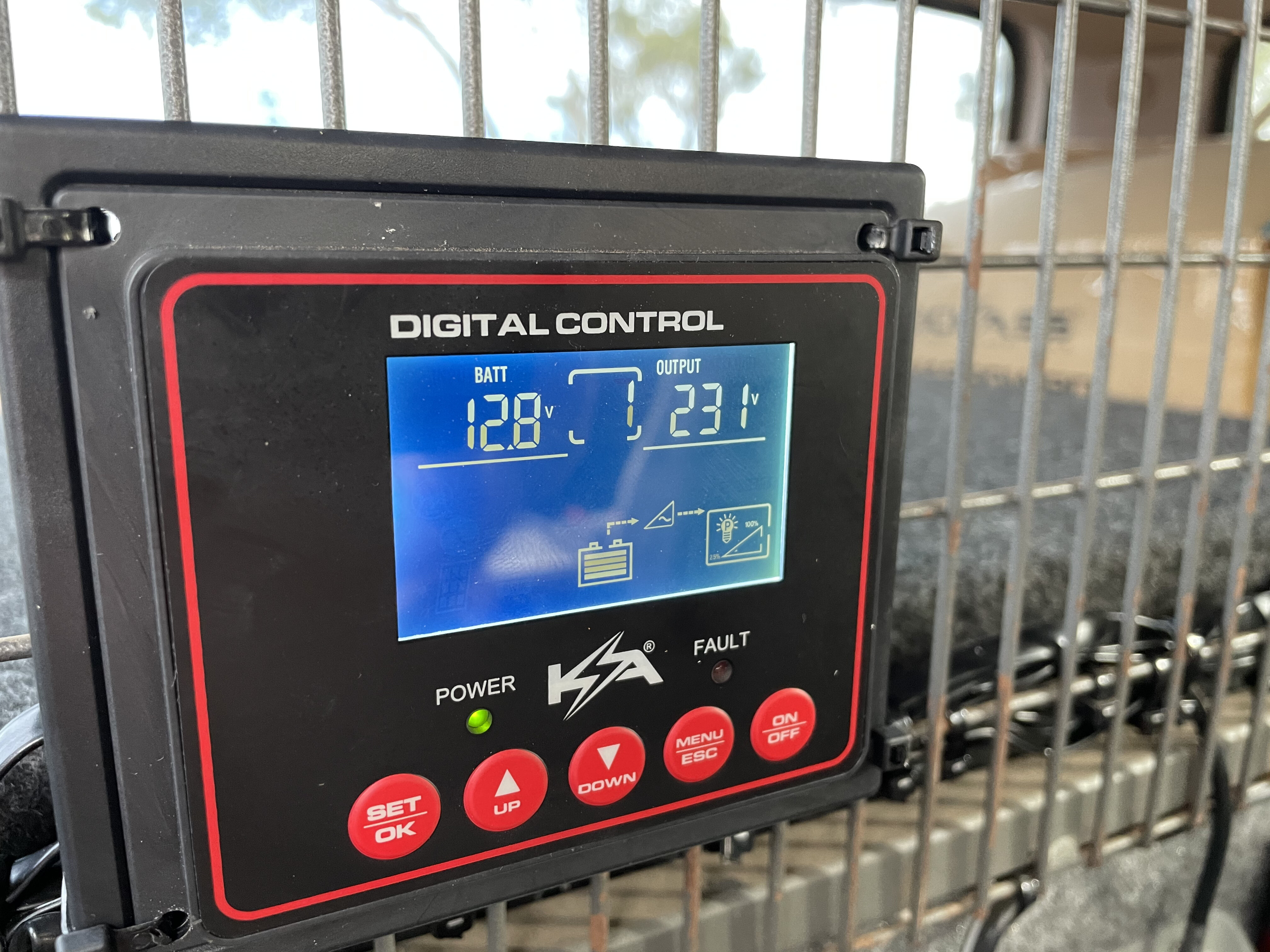
While it’s a large unit, the outer box is a combination of plastic and anodised aluminium which makes it extremely solid; plus it’s great for reducing weight on a build. The anodised alloy casing also serves as a heat sink to dissipate excess heat from the unit.
The twin 240V outlets are positioned in a way that even the most difficult right-angled chargers will fit. Having the external display positioned away from the inverter itself, you can easily see how much power the devices are taking out of the battery and also see the charge that the inverter is producing. Being Pure Sine Wave, it’s very smooth and consistent. In the range of KickAss inverter products are a 700W unit, a larger 2000W model and a monster 3000W mega unit.
A couple of times I’ve loaded up all the outlets and, while the draw is huge, the unit still produced a solid and smooth outlet current. Cheaper units lose massive amounts of power when converting from DC to AC, but KickAss claims its units have a 90 per cent or better efficiency conversion rate.
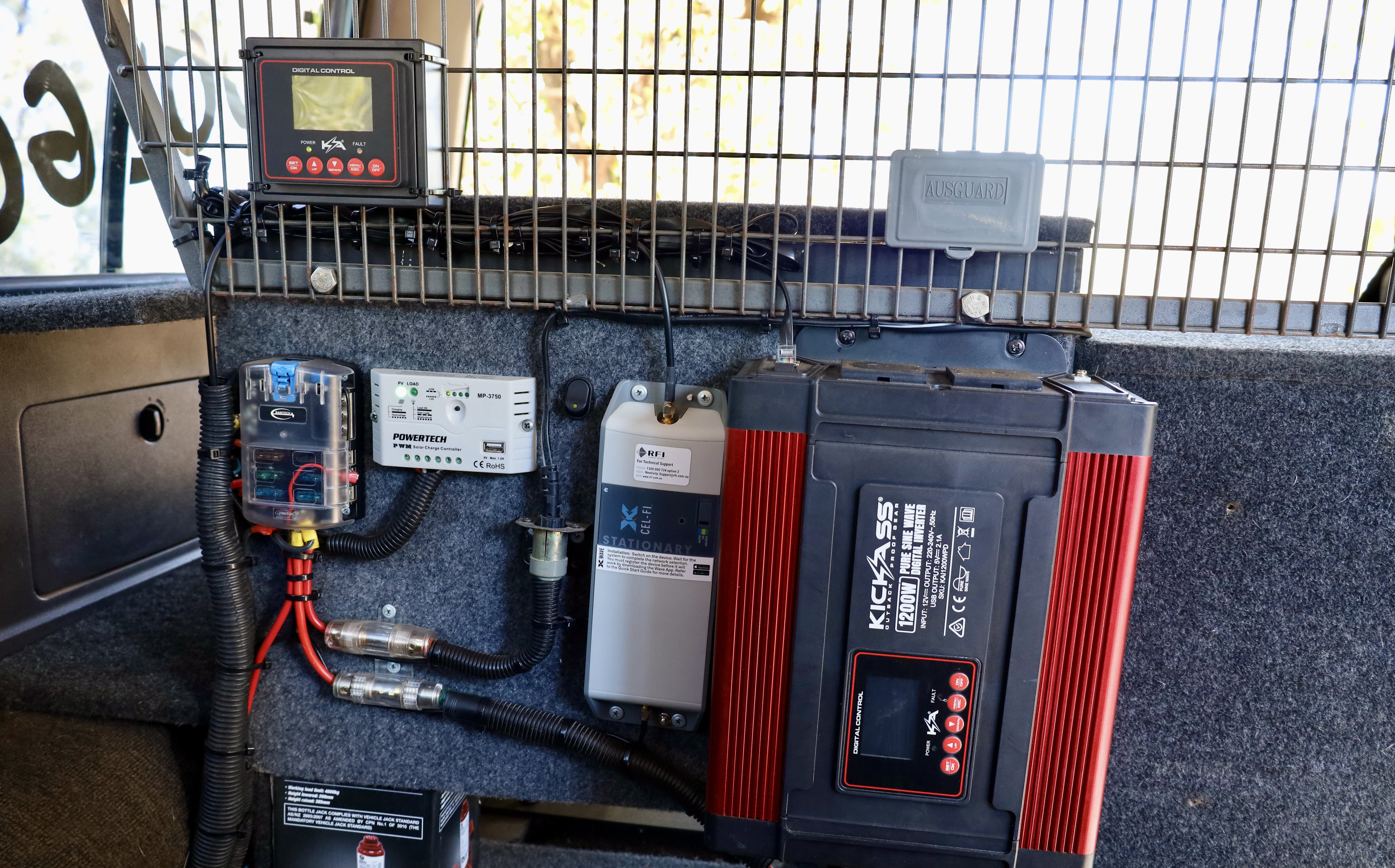
All the inverters come with a two-year warranty – which is hard to find these days on quality gear. The 1200W Pure Sine Wave retails for $369, but keep an eye out on the company’s online sale page.
Based on the Sunshine Coast, Queensland, Australian Direct launched KickAss Outback Proof Gear specialising in quality 12V gear with a list of products as long as your arm, including shower units, fridges, premium solar panels, batteries and battery packs, 12V ovens, air compressors and fans, battery charges, as well as camping and adventure packages.
In fact, it stocks more than 300 products and is developing its own high-quality products for the camping, 4WD and caravan industries.
WEBSITE: kickassproducts.com.au
We really grew to love our long-term SsangYong Musso during the 12 months it was with us, so when the updated 2021 model lobbed on our driveway we were keen to give it another look.
Our long-termer was a 2019 XLV Ultimate model fitted with the dealer-optional Ironman 4×4 off-road suspension kit; while this one is also the long wheelbase XLV in Ultimate trim, but without the suspension pack.
The changes to the Musso are confined to cosmetics, with an all-new front-end treatment with bolder, squared-off styling that is much more contemporary and up-to-date. The previous front end was looking old because, well, it was old.
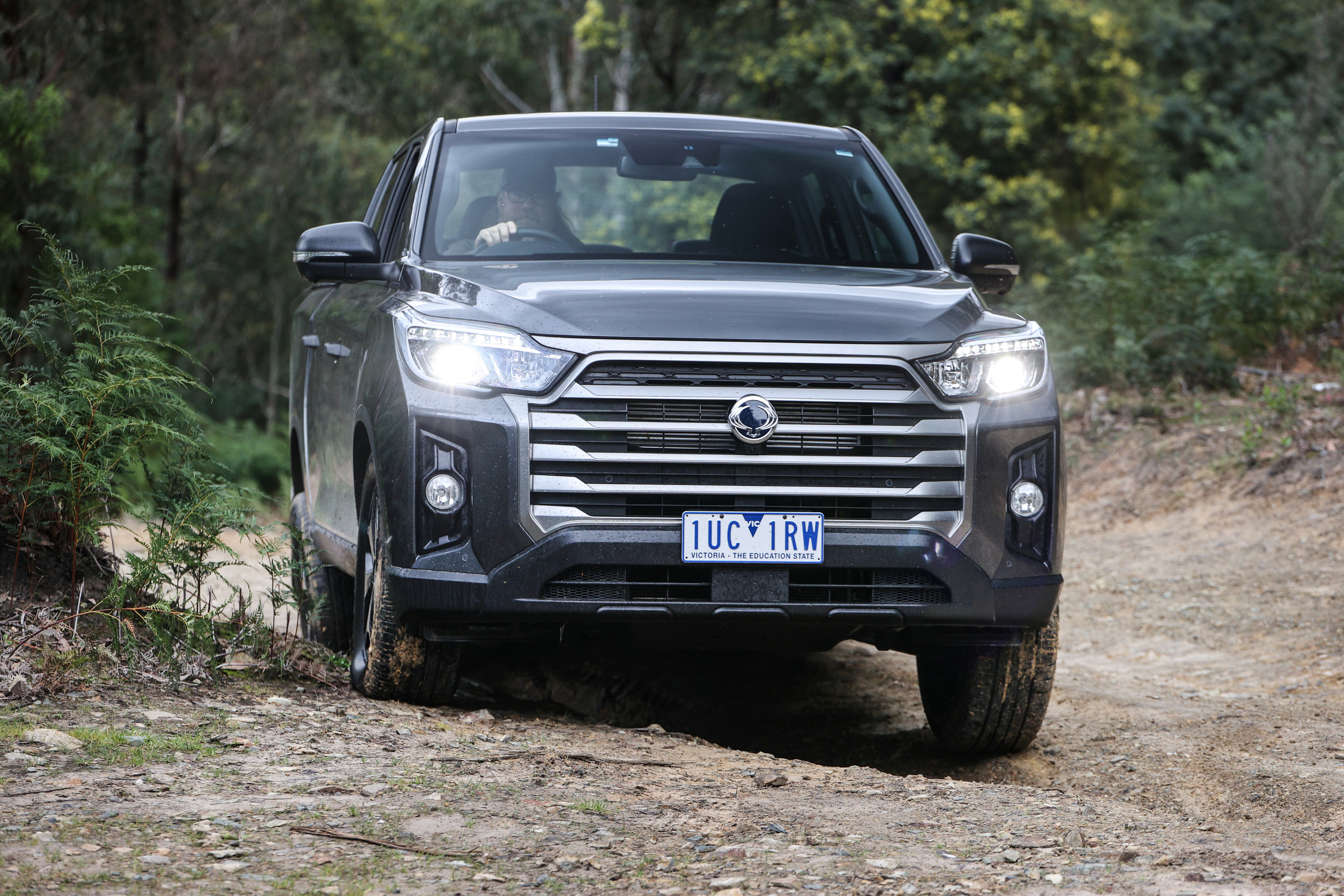
SsangYong has also toughened up the look using black on the grille, side mirrors, door handles and side trims, which work particularly well with this dark grey truck.
The rest of the Musso remains business as usual, with no changes to the drivetrain or mechanical package. We were a bit disappointed to find that the Musso didn’t get the same engine tweaks as its wagon sibling, the Rexton. These take the 2.2-litre diesel’s outputs up from 133kW and 430Nm to 148kW and 441Nm, and backed by an eight-speed auto in the Rexton.
This is a real nice driveline package that would lift the Musso up closer to its competitors in the ute category. For now, the Musso retains the lower-tune engine and six-speed auto transmission, which is refined and adequate but no powerhouse.
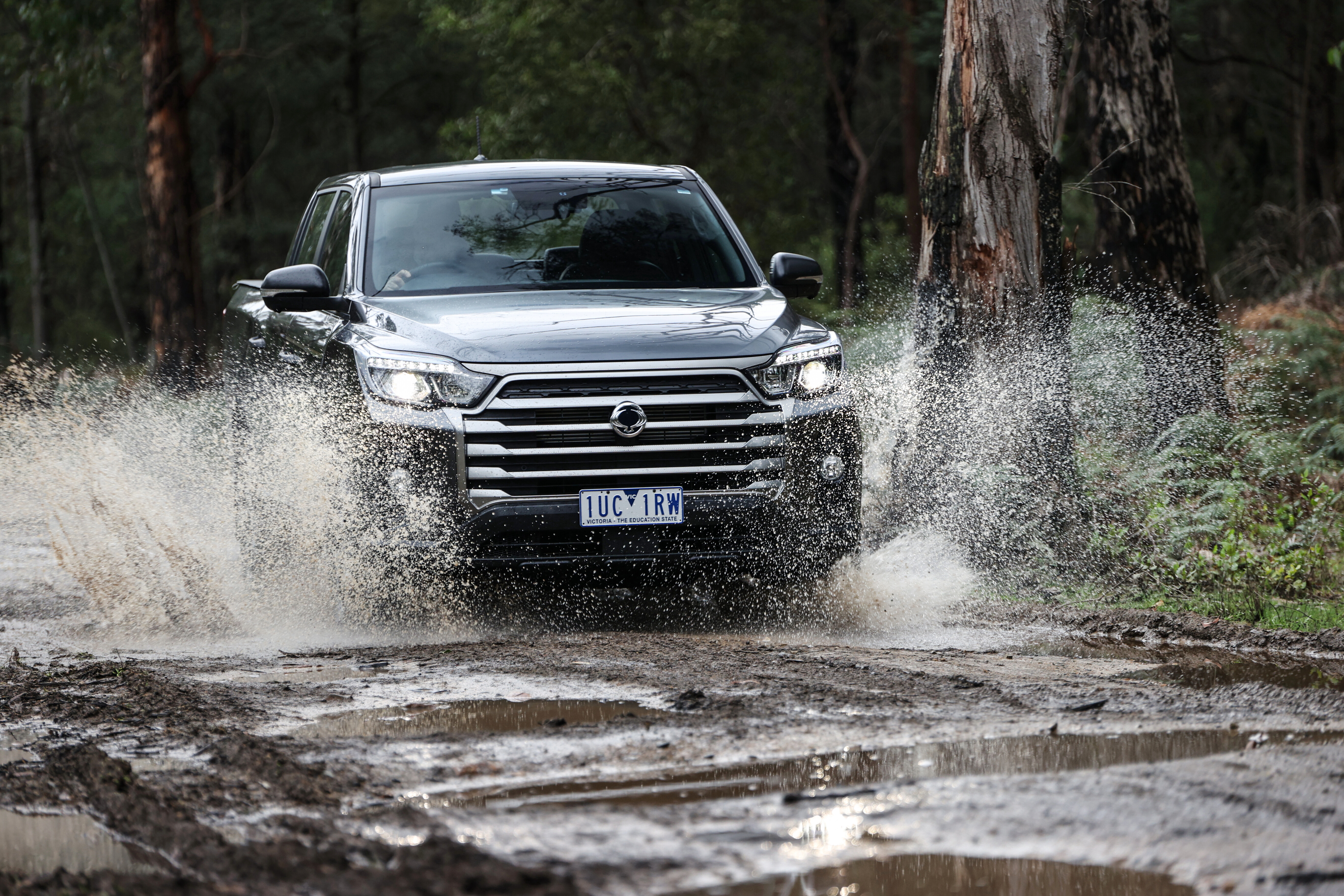
SsangYong says that officially the suspension under the Musso remains unchanged from the last model, however this car looks and feels taller; even close to our long-termer which had the raised suspension beneath it. The Ironman 4×4 suspension and underbody protection remain as options for this 2021 model, while the Australian accessories company is also developing a bullbar to fit the new front end.
FEATURE PACKED
All the features we liked about the previous Musso XLV remain in this one: the wide, spacious and well-appointed cabin with its heated and ventilated seats, the massive cargo tub, the compliant all-coil spring suspension, and four-wheel disc brakes.
This 2021 XLV Ultimate has a heated steering wheel, which our 2019 model didn’t, and we appreciated it during the cold Melbourne winter.
While the Ultimate’s wide cab, large dash screen and faux leather seats give the Musso a premium interior feel, the seats are still manual adjustment and the air-conditioning is manual. You can add a $3000 luxury pack to the Ultimate which gets you dual-zone automatic climate control, Nappa leather seats with power adjustment for the fronts, and a sunroof.
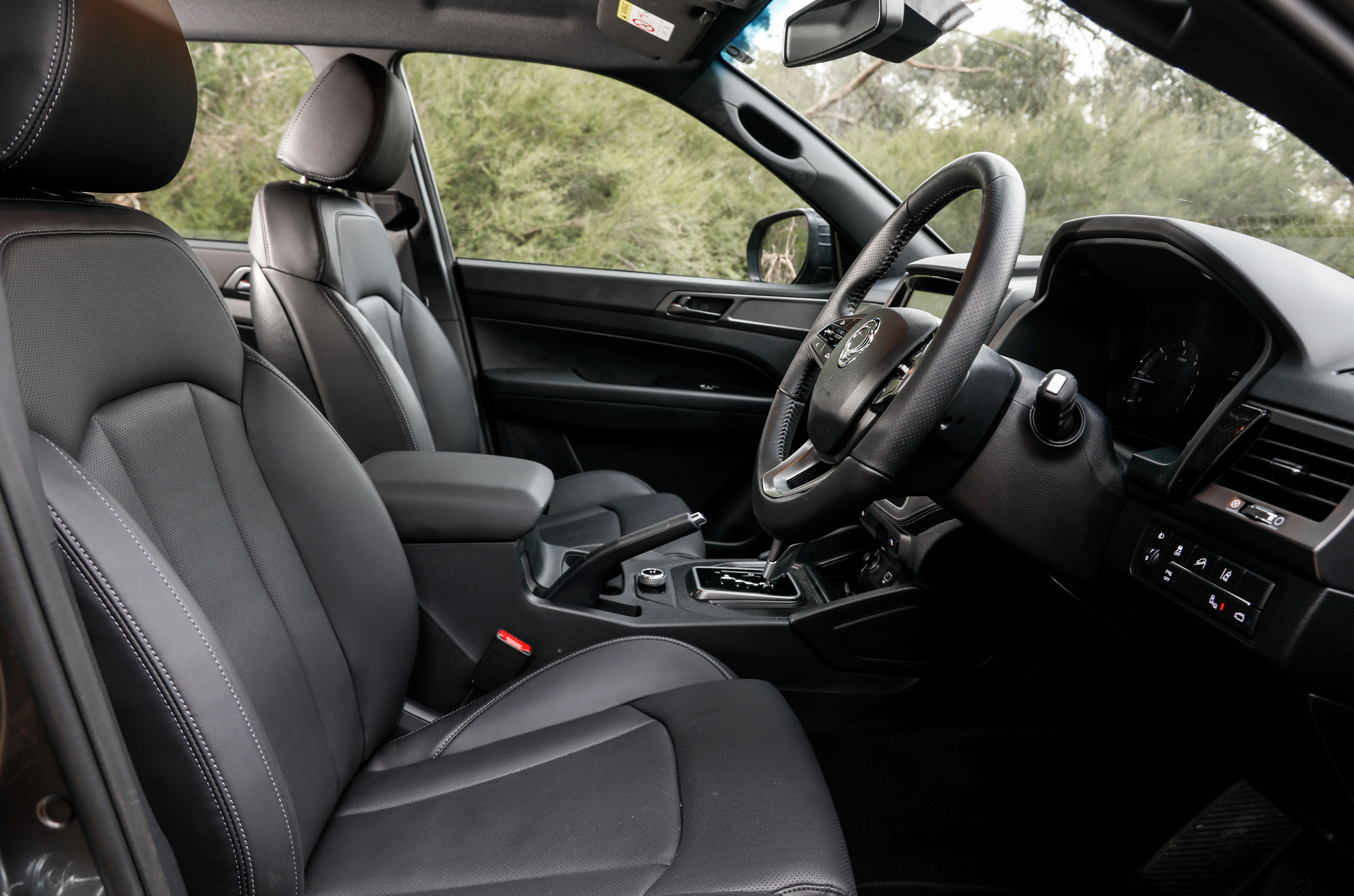
The Musso Ultimate is priced from $41,290 drive away. The 300mm longer XLV adds $1500 to the price and the Luxury pack a further $3000 if you feel you need it.
Even with all the fruit, the Musso represents a great value-for-money package, especially when you figure in the brand’s seven-year unlimited-kilometre warranty.
The Musso doesn’t scrimp on safety kit as every model comes with lane departure warning, AEB, rear cross-traffic alert, six airbags, blind spot warnings, front and rear parking sensors, and a tyre-pressure monitoring system which randomly reminds the driver of the status of the tyres by displaying the pressure on the gauge screen – it doesn’t wait for you to check them.
GOING BUSH
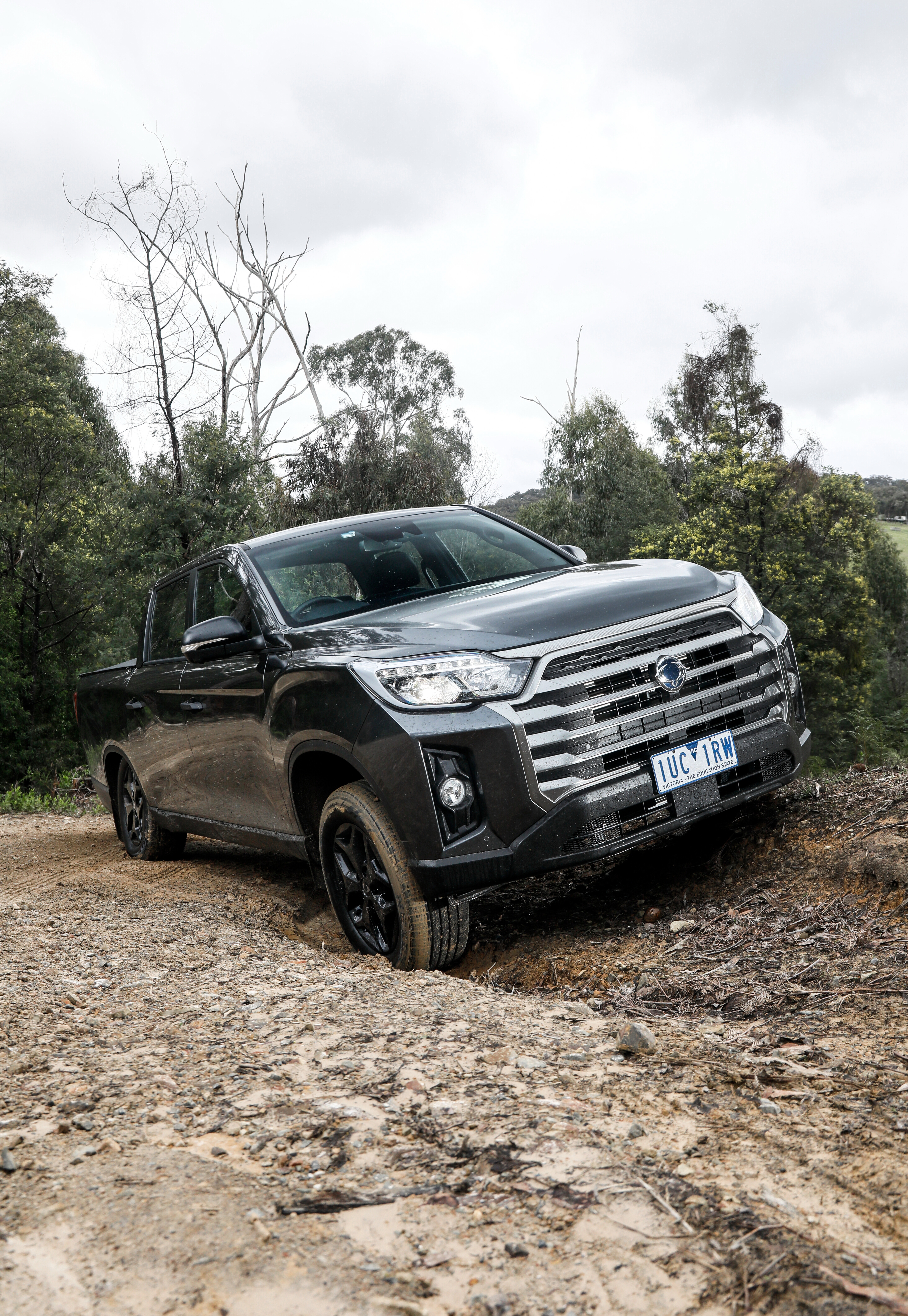
The off-road kit starts with a part-time, dual-range 4×4 system and electronic traction control. There is an auto-locking (non-switchable) differential in the rear axle for when the going gets tough and, while this takes a second to engage, it is certainly effective when it does.
The longer wheelbase of the XLV Musso does mean it suffers for ground clearance in between the axles. This is helped somewhat with the off-road suspension pack, but it is still quite low and long.
For towing, there’s a 3500kg rating while the payload varies depending on the variant – from 790kg for the standard Musso to 880kg for the long wheelbase XLV Ultimate or 1025kg for the base model ELX with the long wheelbase XLV package.
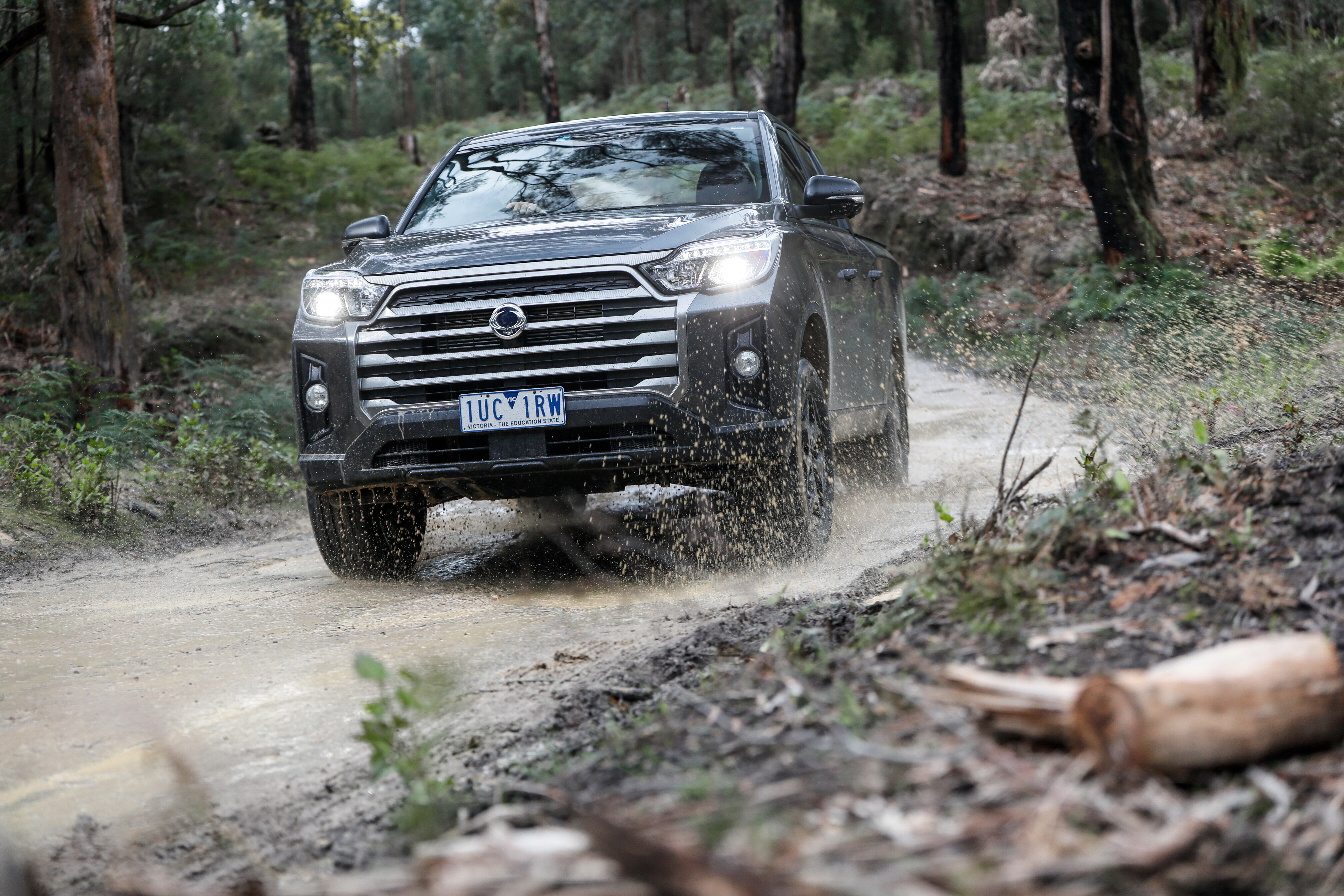
As well as the added payload the extra 110mm of wheelbase the XLV provides, it allows a 300mm longer cargo tub which is one of the biggest in the double-cab ute category.
While the SsangYong Musso might not be the first vehicle to come to mind of 4×4 ute buyers when they start their shopping search, it’s one that we say is certainly worth consideration, especially with the long wheelbase XLV.
As we said after living with one for the last year, the Musso is not purely a value-for-money buy but a great ute regardless.
2021 SsangYong Musso XLV specs
| ENGINE | 2.2-litre 4-cyl turbo-diesel |
|---|---|
| MAX POWER | 133kW at 4000rpm |
| MAX TORQUE | 420Nm at 1400 to 2800rpm |
| TRANSMISSION | 6-speed auto |
| TRANSFER CASE | Dual-range part-time |
| STEERING | Speed-sensitive power steering |
| FRONT SUSPENSION | IFS w/ upper and lower control arms, coil springs |
| REAR SUSPENSION | Live axle, coil springs, stabiliser bar |
| TYRES | 265/60R18 |
| KERB WEIGHT | 2160kg |
| PAYLOAD | 880kg |
| TOWING CAPACITY | 3500kg |
| GVM | 2980kg |
| GCM | 6130kg |
| FUEL TANK CAPACITY | 75L |
| ADR FUEL USE | 8.2L/100km |
The ute segment may have dominated sales charts in Australia for years, but interest in smaller dual-cabs is beginning to grow in North America.
With the 2022 Ford Ranger nearing its unveiling – and poised to make a splash in the US – it’s possible Ram could resurrect plans to introduce its own mid-size dual-cab ute.
While the company does offer the smaller, Fiat Strada-based Ram 700 in Mexico, there’s space in its current line-up between the 700 and the full-size 1500 pick-up to offer a competitor to the Toyota HiLux and Ford Ranger.
Enter the 2024 Ram 1200 – a mid-size ute adopting the carmaker’s latest design cues, as imagined by Brazilian artist Kleber Silva.
Industry rumours of Ram developing a HiLux-sized model have been around for years, but it was in February this year that company sources told website Ford Authority the project had been axed.
Some insiders had previously suggested the vehicle would be based on the Jeep Gladiator, reviving the Dakota badge – a smaller pick-up from Dodge sold between 1986 and 2011, prior to Ram being spun-off into its own brand.
Ram has dipped its toe in the mid-size dual-cab ute market more recently. Between 2016 and 2019, the carmaker sold the 1200 (a rebadged Mitsubishi Triton) in the United Arab Emirates market – no doubt keeping track of how a smaller ute from the American brand was being received by the public.
Whether plans for a Ram 1200 have been scrapped entirely or merely put on hold remains to be seen, but given the trend towards electric pick-ups in the US, it’s possible a future mid-size ute could be battery-powered.
What do you think of the 2024 Ram 1200? Let us know in the comments section below.
Being the main project vehicle for 4X4 Australia over the last few months, there was no way we’d settle for any old dual-battery system in our D-MAX.
We need to power fridges, charge camera batteries and live out of this thing for extended periods of time. It’s safe to say, this set-up we’ve just installed in the D-MAX is absolutely first class, starting with our choice of battery.
Lithium isn’t the future, it’s the now – if you’re setting up a 12V system from scratch for your 4×4, I can’t see the point of not opting for lithium. In our case, we chose a 100amp/h slimline battery from Invicta, for a few reasons.
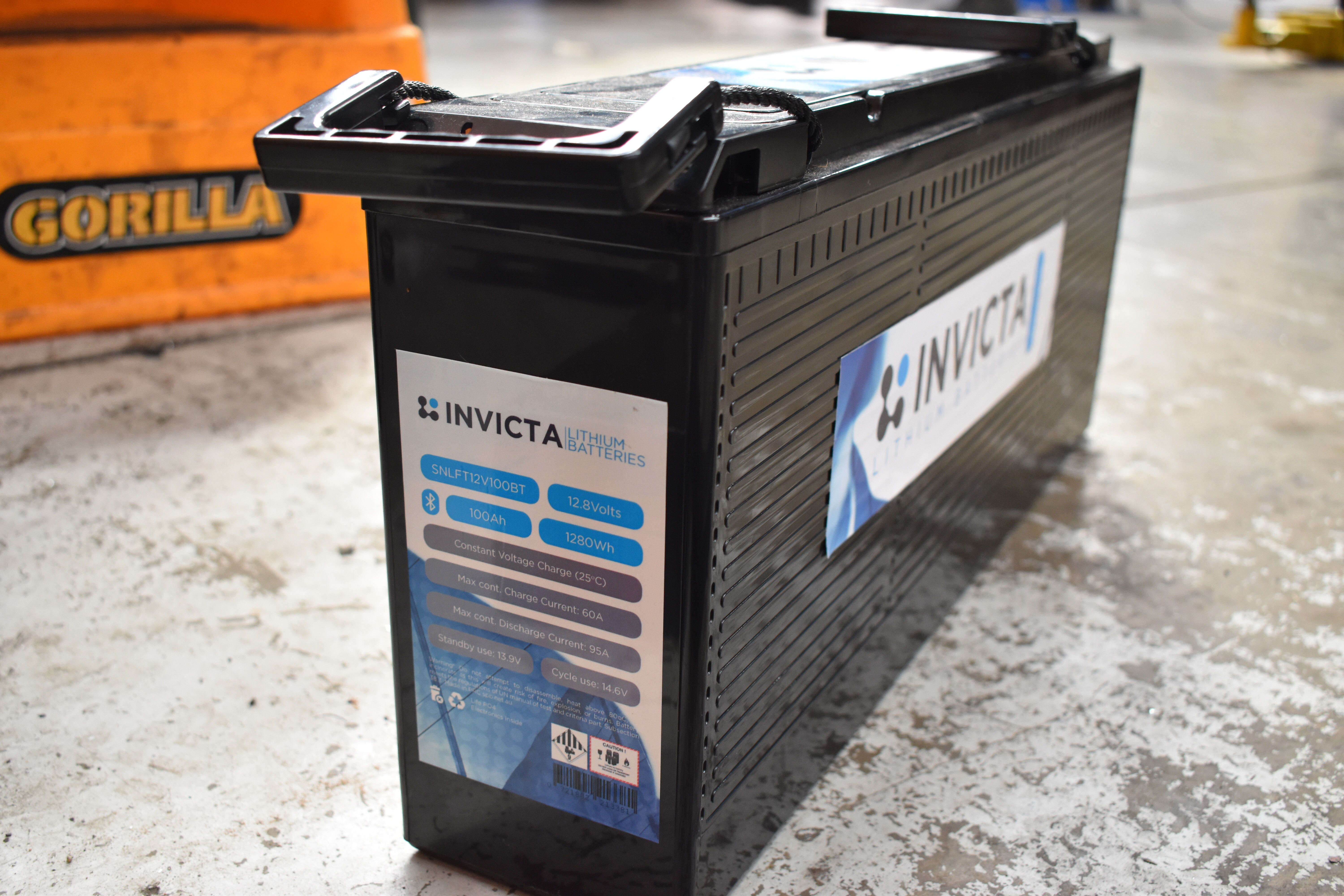
The battery is Bluetooth-compatible, meaning we can monitor it via our smartphone. This battery has enough grunt to power a 1000W inverter, which is more than enough power for our needs. It’s light too, weighing just 12.4kg, so I can pick it up with one hand without issue.
There are an incredible number of different batteries in the Invicta range, but we felt the 100amp/h slimline would be the right size for our needs, and we really wanted to fit it in a position that would occupy otherwise wasted space. These slimline batteries are a brilliant solution.
I was also very impressed with the battery’s seven-year warranty, a sign of confidence in the product.
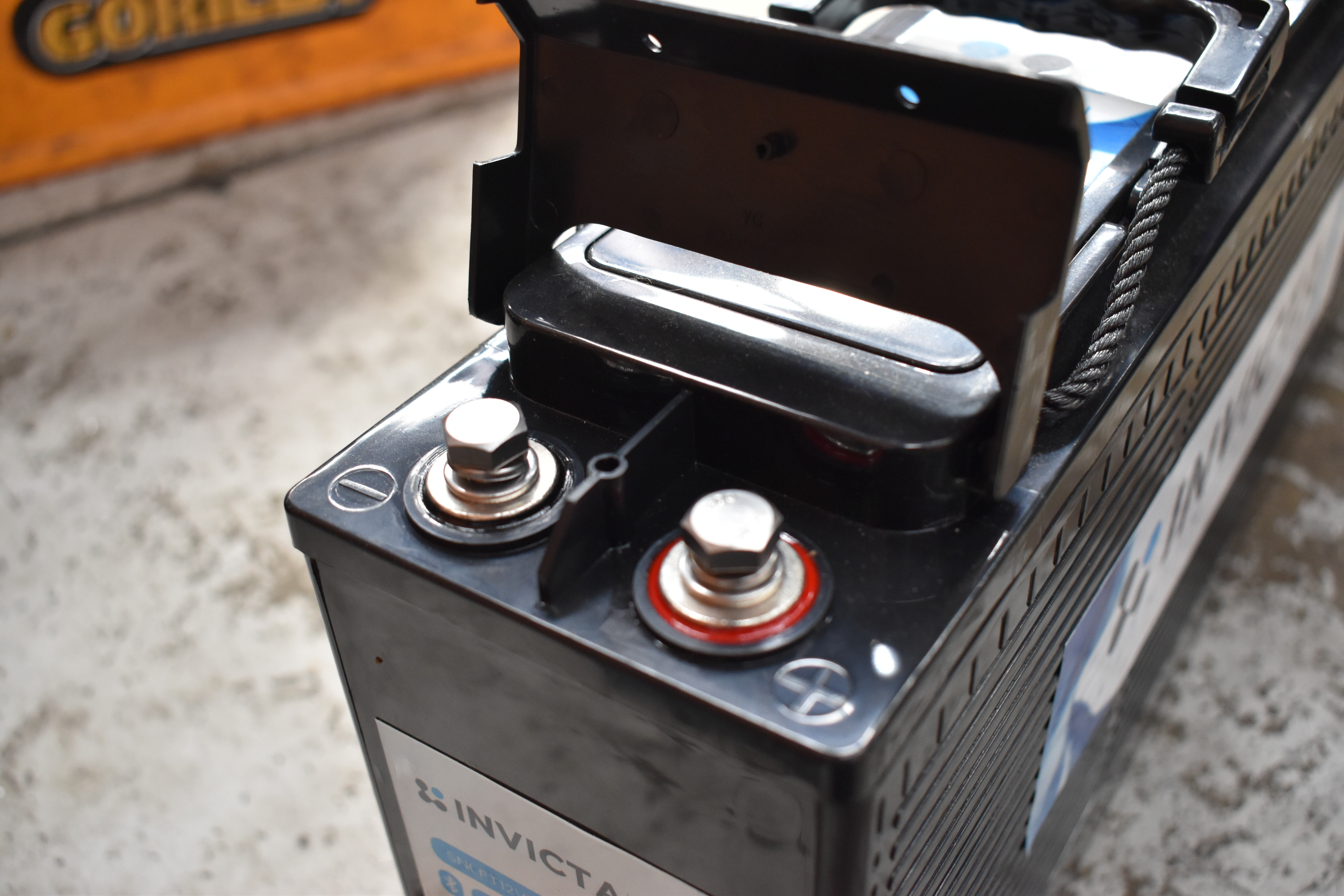
Made up of lithium iron phosphate, the advantages to four-wheel drivers stretch further than just a lighter set-up. Firstly, lithium batteries have the ability to charge faster than a lead acid battery. They also feature longer run times, as you have the ability to run the battery down further thanks to their flat discharge curve; you can also run them down to lower voltages (10V specified in our instance) than an equivalent lead acid battery.
Lithium batteries can also sit unused for longer periods of time, which is handy when half the country is stuck at home.
So it is lighter, has more power available, can fit behind the back seat, and it will recharge quicker. Sign us up!
INVICTA SLIMLINE 100AH LITHIUM BATTERY SPECS
| CYCLE LIFE | 2000 |
|---|---|
| MAX DISCHARGE CURRENT | 95amp |
| MAX CURRENT CHARGE | 60amp |
| OPERATING CHARGE TEMP | 0 to 50u2070C |
| OPERATING TEMP DISCHARGE | -20 to 55u2070Cu00a0 |
| RECOMMENDED CURRENT CHARGE | 50amp |
| CUT-OFF VOLTAGEu00a0u00a0u00a0u00a0 | 10V |
PIRANHA OFF-ROAD BATTERY TRAY AND CHARGER
Piranha Off Road caught on to our plan of installing a slimline battery behind the back seat of our D-MAX, and physically hand-crafted a battery tray to suit the vehicle.
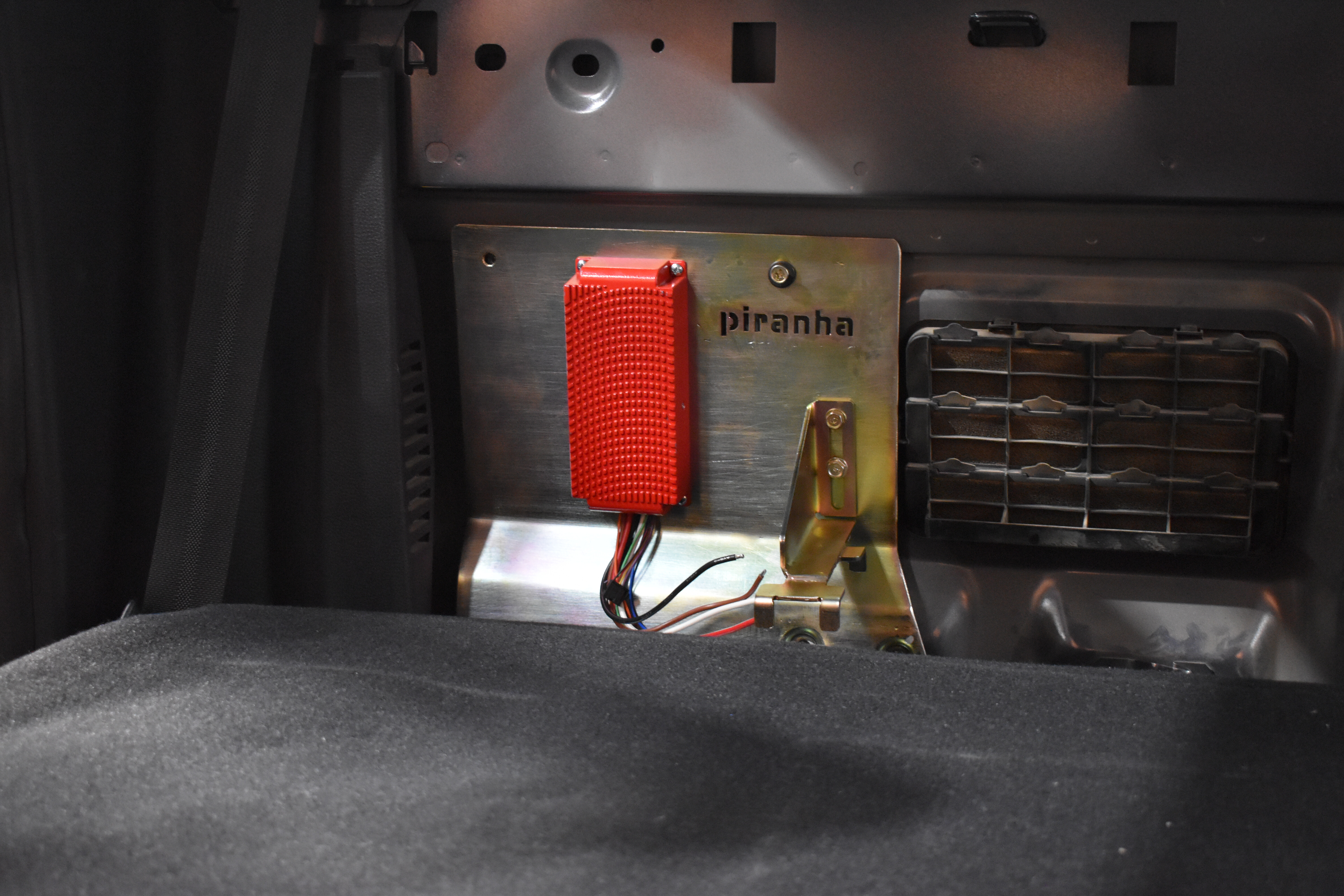
These are now in production to suit the current Isuzu D-MAX, so if you want to put an Invicta slimline battery behind your back seat, like we have, you’ll be able to. I’d recommend going this way, as it makes the most of previously unused space, keeping the tray area free for other gear.
Piranha’s 30amp lithium-compatible DC-DC charger mounts directly to the battery tray, making for an easier installation, and the battery is held in place with a strong, adjustable metal clamp. The charger also has built-in MPPT and a PWM solar regulator, to connect solar directly to the unit.
This certainly wasn’t a DIY installation, requiring nearly two hours just to install the tray. Piranha recommends you get a professional to handle it, unless you are well-skilled with a grinder and power tools.
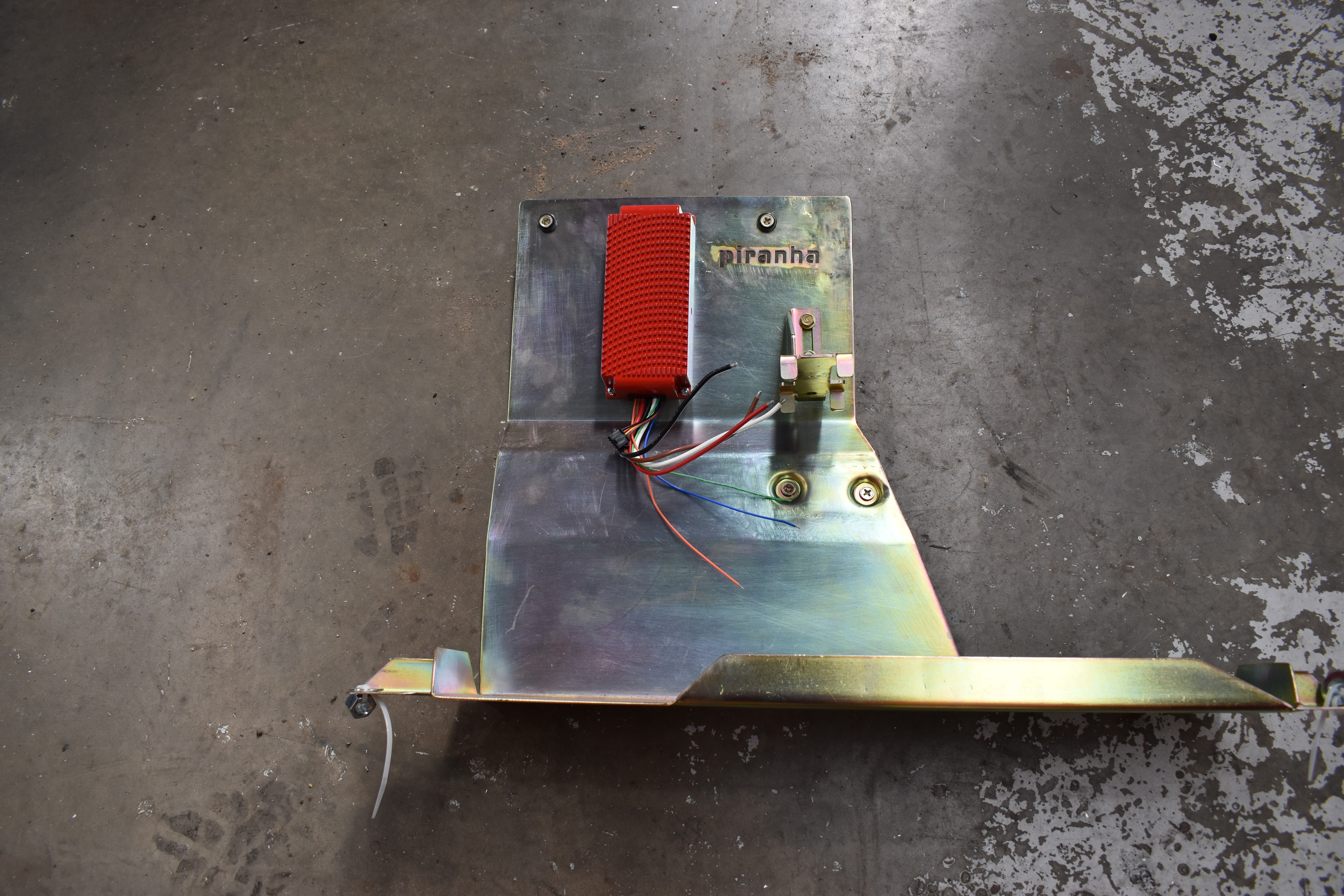
The tray itself is a work of art and has been constructed from 2.9mm thick steel, gold zinc plating and is pre-drilled to mount the Piranha DC-DC – it will also work with the Redarc BCDC1225D.
You will need to remove the rear plastic trim on the back wall, cut a few brackets and drill holes to make it work, but the effort is definitely worth it. This tray mounts rock-solid and provides a super neat install when all wrapped up.
Best of all, you can’t see anything once the back seat is folded up, and if you need to access the battery, it’s as simple as folding the seat down. This also protects the battery from external heat sources, so I’m confident we’ll get a solid run out of this set-up.
AVAILABLE FROM: www.invictalithium.com.au; www.piranhaoffroad.com.au; www.advancedinstalls.com.au
RRP: $1599 (Invicta 100amp/h Slimline Lithium Battery); $290 (Piranha Off Road Battery Tray); $385 (Piranha Off Road DBCD1230S 30amp DC/DC Charger)
LABOUR: To install battery tray and wire in battery: $550. Total for our dual-battery system: $2824
Snapshot
- Prado overtakes Triton on year-to-date charts
- LC200 stocks have run out and supply delays for incoming LC300
- Lack of a Toyota 4×4 LC wagon gives Nissanu2019s Y62 a sales boost
Some interesting movers and shakers in the new 4×4 sales charts during September, as supply issues affect some manufacturers worse than others and a few new models arrive on the scene.
While it’s business as usual at the top of the charts – with the Ford Ranger topping the monthly and year-to-date charts with Hilux in tow – the previously number three place-getter, Mitsubishi’s Triton ute, has tanked to just 384 sales for the month.
Likewise, the LandCruiser 200 Series has dropped off the monthly chart as its stocks have run out; and with full supplies of the LC300 interrupted, Toyota will be suffering a bit.
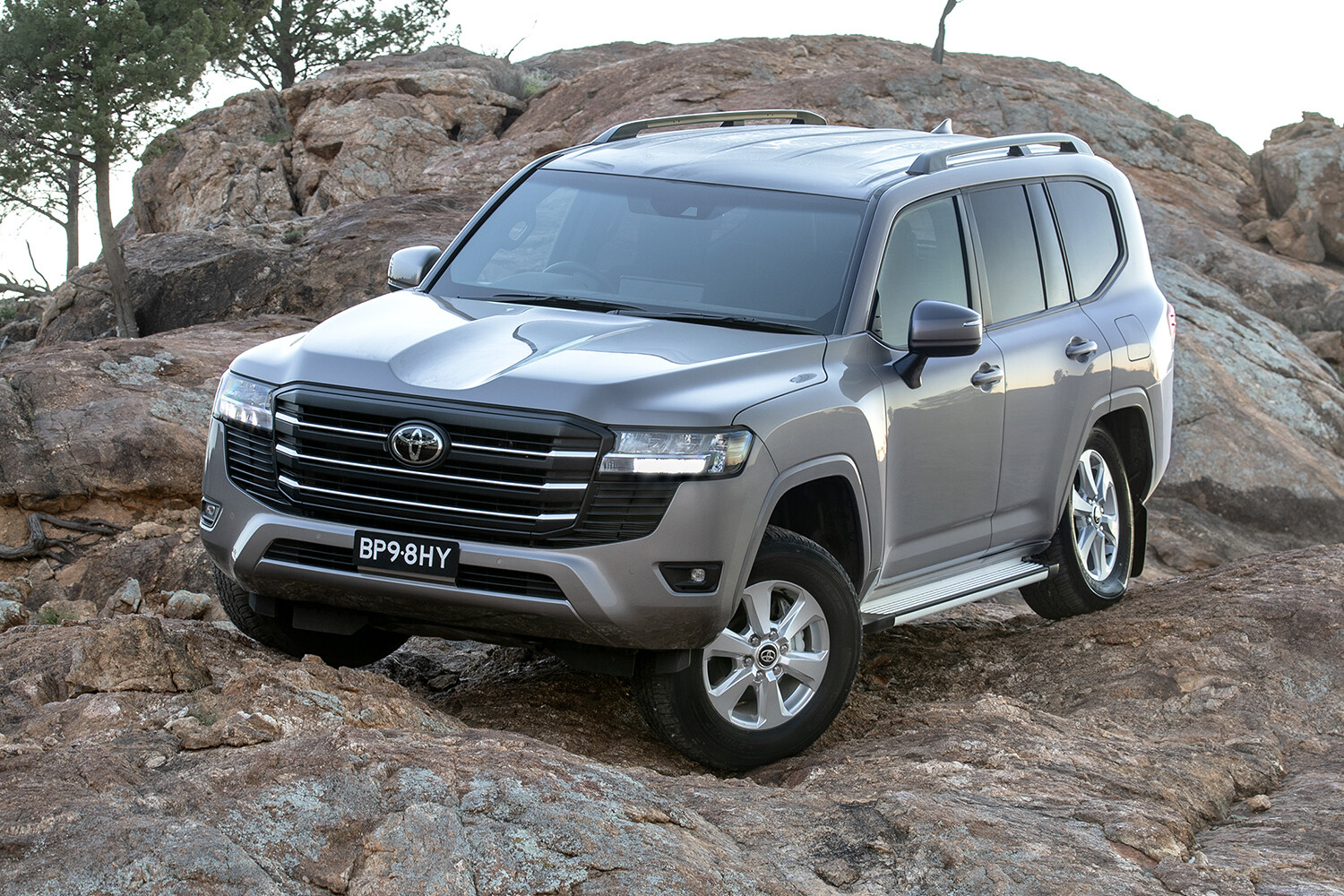
It does give Nissan a small victory as its Patrol outsold Cruiser 700 units to 27, but we’re hearing that supply of the big Nissan will come under threat over the coming months as well. So it might pay to jump in now if you’re after a Patrol Y62.
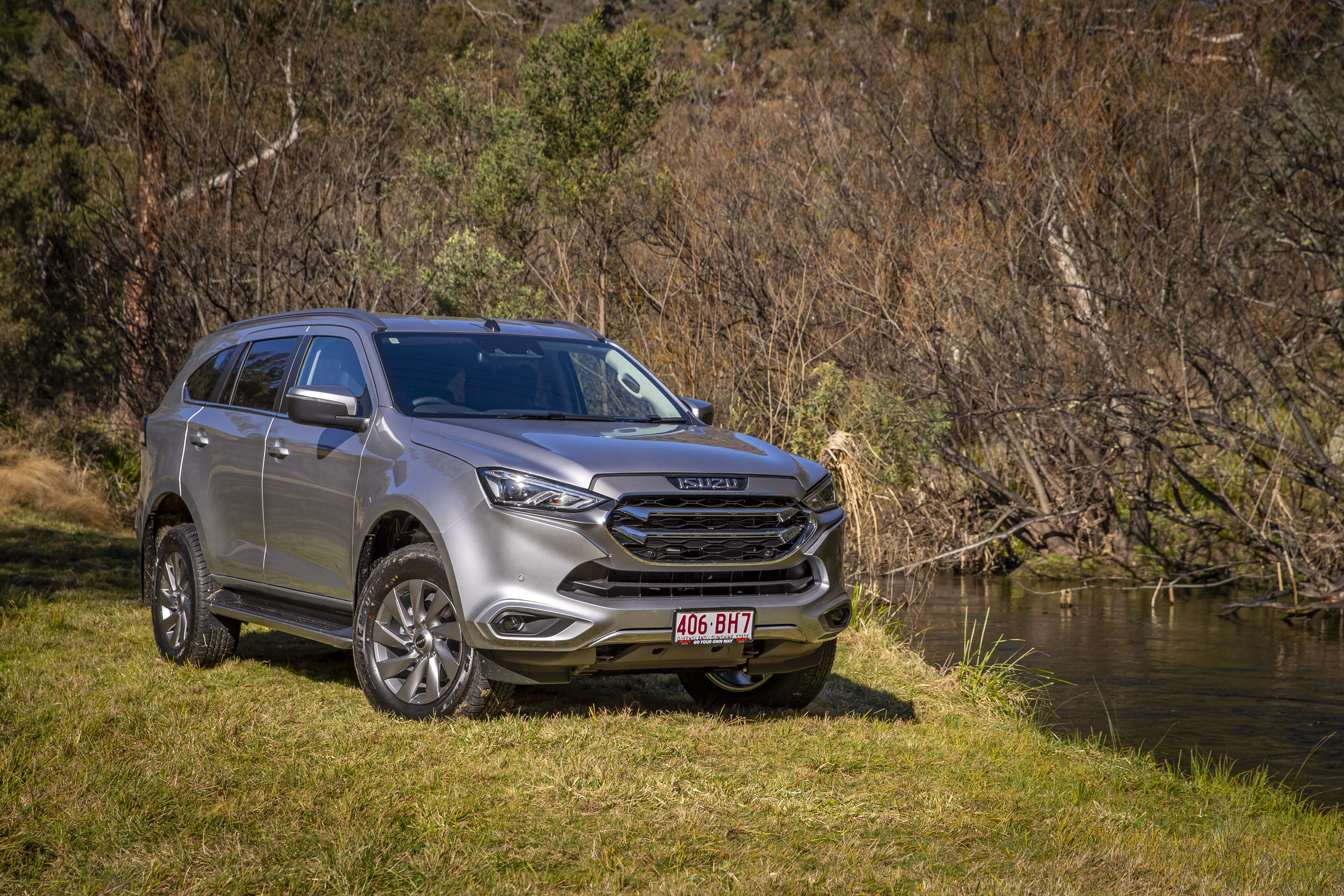
Isuzu’s new MU-X is making its mark, selling 1297 units for the month and climbing in to the year-to-date table; while the D-MAX continues its solid sales while also battling supply limitations.
Meanwhile, it was a good month for VW Amarok, bringing in more than 1000 sales. It might be the best-performing ute on the road but it still can’t keep up in sales-chart standings.
4X4 SALES: SEPTEMER 2021
| 1 | Ford Ranger | 3851 |
|---|---|---|
| 2 | Toyota Hiluxu00a0u00a0u00a0 | 2382 |
| 3 | Toyota Pradou00a0u00a0 | 2173 |
| 4 | Isuzu D-MAX | 1363 |
| 5 | Toyota LC79 | 1314 |
| 6 | Isuzu MU-X | 1297 |
| 7 | Mazda BT-50u00a0u00a0 | 1121 |
| 8 | Volkswagen Amarok | 1096 |
| 9 | Nissan Navara | 911 |
| 10 | Ford Everest | 876 |
4X4 SALES: YEAR TO DATE
| 1 | Ford Ranger | 34,450 |
|---|---|---|
| 2 | Toyota Hiluxu00a0u00a0u00a0 | 31,478 |
| 3 | Toyota Pradou00a0u00a0 | 17,326 |
| 4 | Isuzu D-MAX | 15,027 |
| 5 | Mitsubishi Triton | 14,079 |
| 6 | Toyota LC200u00a0 | 12,697 |
| 7 | Mazda BT-50u00a0u00a0 | 10,250 |
| 8 | Nissan Navara | 8828 |
| 9 | Toyota LC79u00a0u00a0u00a0 | 8801 |
| 10 | Isuzu MU-X | 8431 |