
The November 2021 magazine is out now at regular outlets across Australia. Even better, sign up for a subscription to the magazine so that every issue lands directly in your letterbox.
The annual Custom 4×4 of the Year competition headlines this issue. Powered by Ryobi, we’ve shortlisted 12 wicked custom 4x4s that are now in the running to win the coveted Custom 4X4OTY crown. Vote for a winner and be in with a chance to win some great prizes from both Ryobi and Maxxis Tyres.
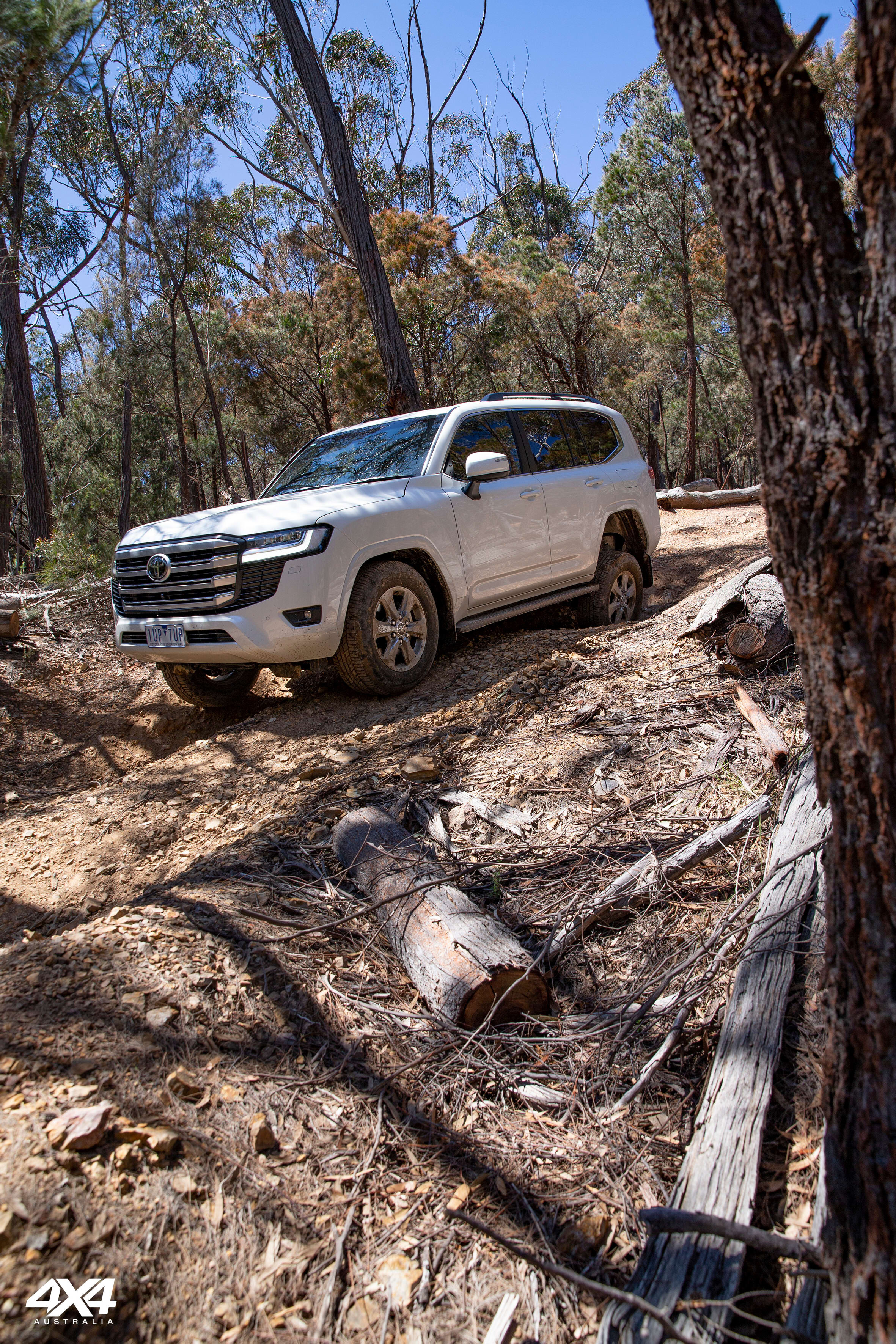
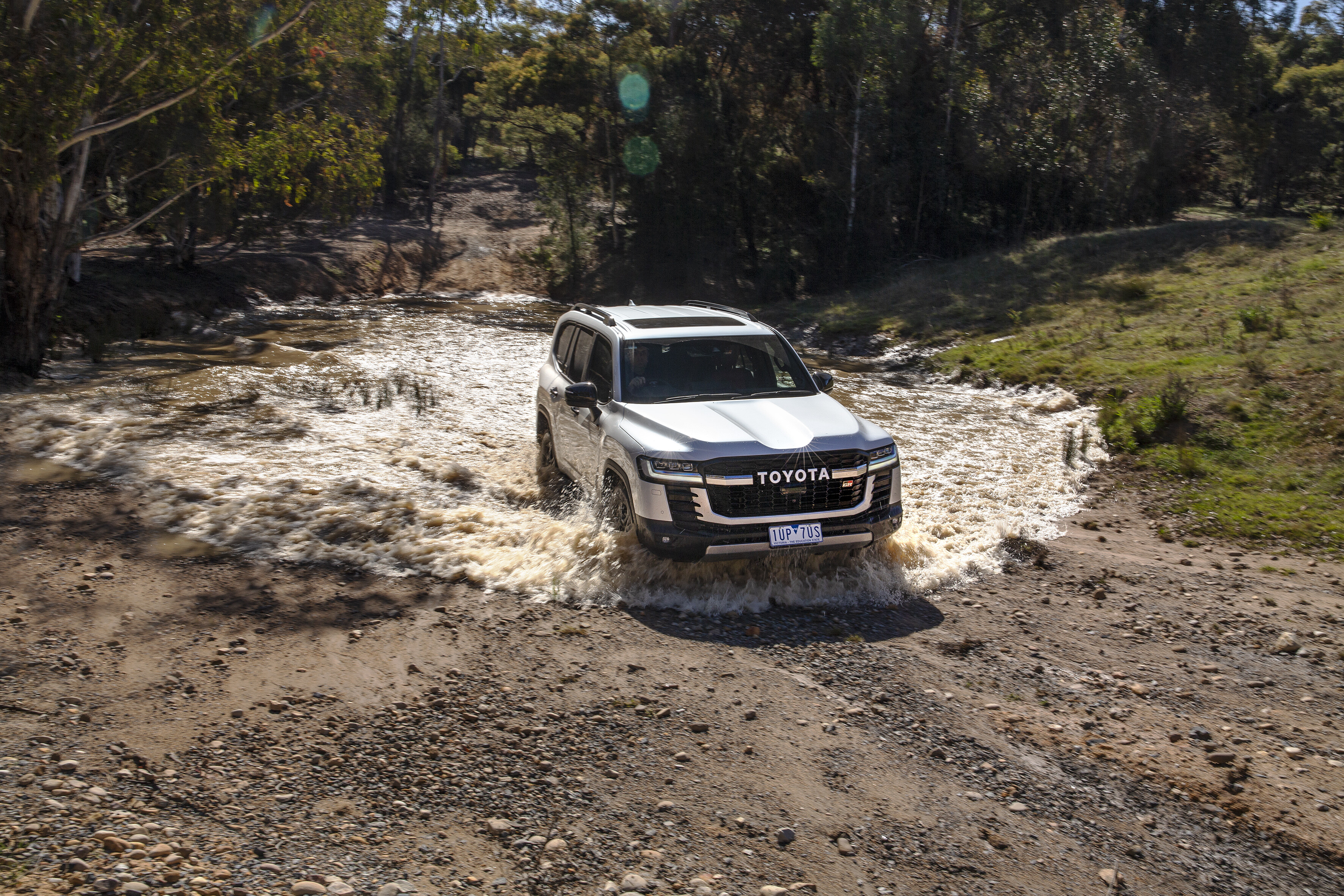
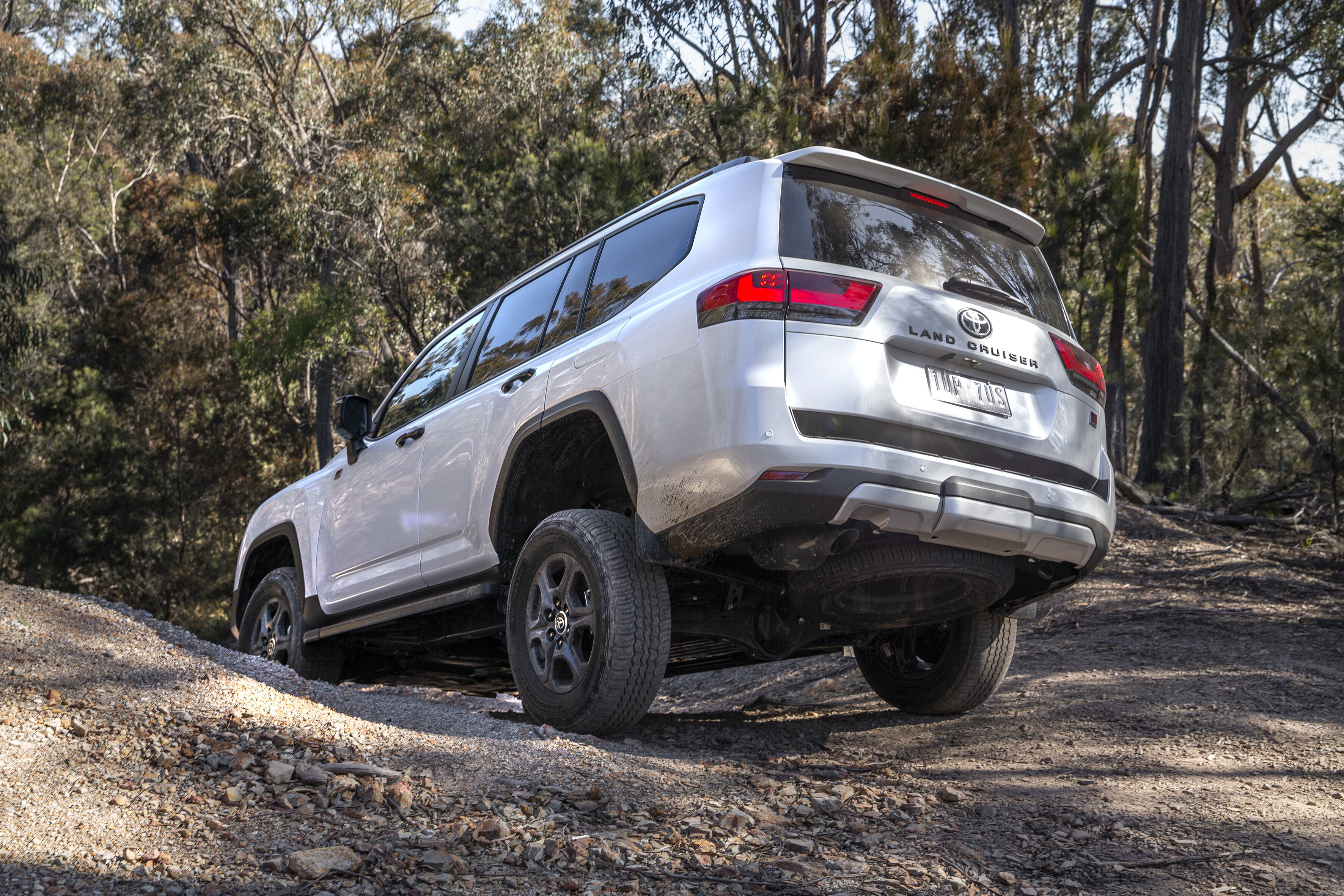
We also hit some back-country trails in the highly anticipated Toyota LandCruiser 300 Series – GR Sport, GX and GXL variants. Read all about our first impressions of the uber-capable wagon.
Evan Spence took the burly RAM 2500 Laramie pick-up to some tight bush tracks, to see whether the giant RAM is a realistic proposition for Aussie tracks. Plus, we put two of the best-selling 4×4 wagons head to head: MU-X versus Everest.
On the custom-metal front, we ran a microscope over the Rambler-built Isuzu D-MAX, and we examine TRED’s epic Y62 shop truck.
We get down and dirty in the next episode of Deano’s “how-to” series, as he explains how to 4WD on dirt. It may sound straightforward, but there’s a lot more to driving on dirt roads than you’d expect.
WHAT ELSE IS THERE?
- Ultimate Campers X25 camper tested
- Bungle Bungles-Windjana Gorge, WA
- Kempsey’s National Parks, NSW
- D-MAX build gets a King Brown exhaust
- Regular columns, new products + more!
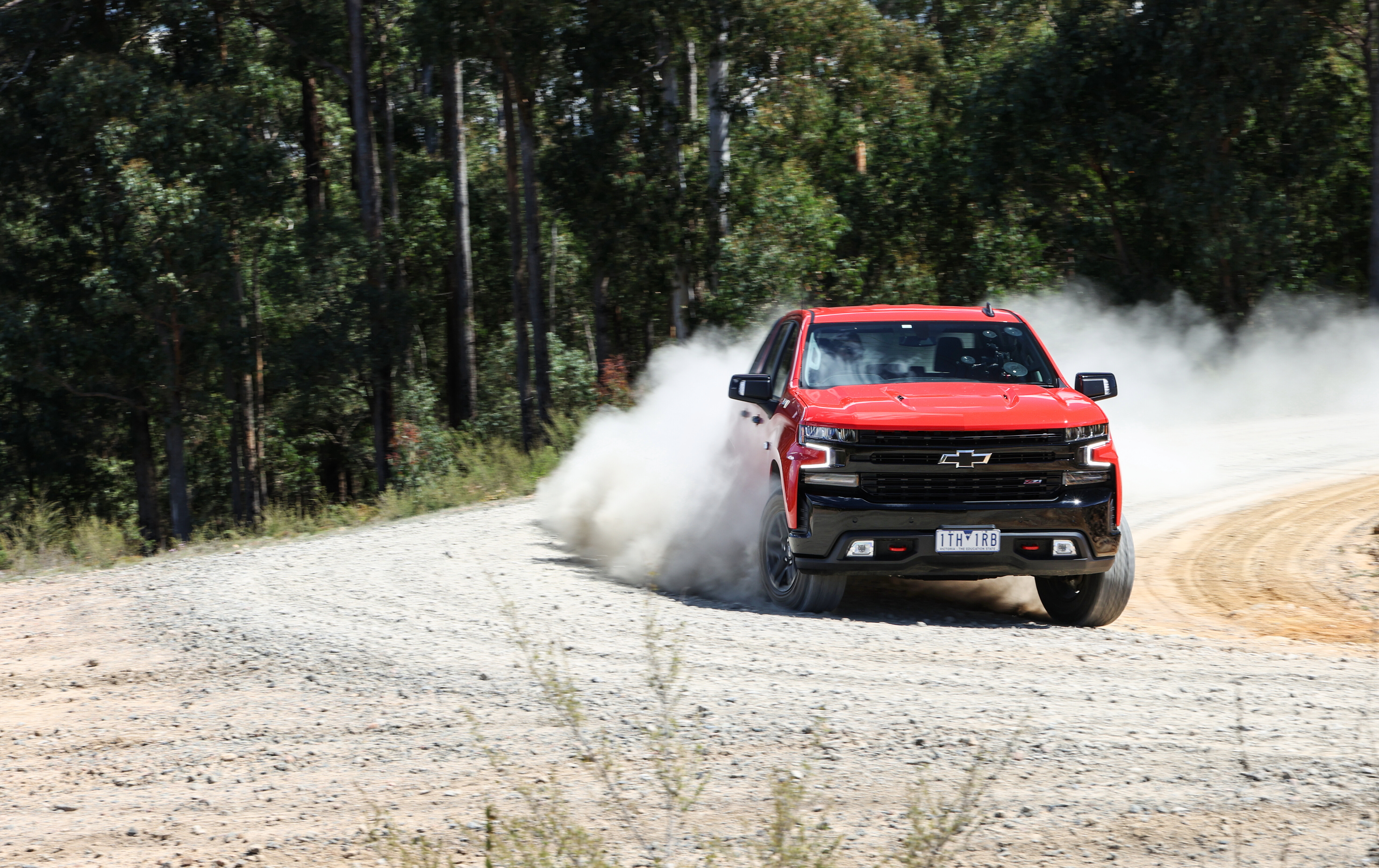
The increased availability of American pickup trucks in Australia has really seen their popularity spike with buyers. Specifically, the 1500 trucks from Chevrolet and Ram have enticed buyers with more affordable prices.Ram has had an advantage in the 1500s with its Express model coming in at less than $100K, while GMSV was only offering the up-spec Silverado 1500 LTZ here which retails for $115,990. Now, the local importer has a new entry-level Silverado on the market and not only is it a cheaper option than the LTZ, but we reckon the $106,990 Silverado LT Trail Boss is a better rig in every regard.
POWERTRAIN & PERFORMANCE
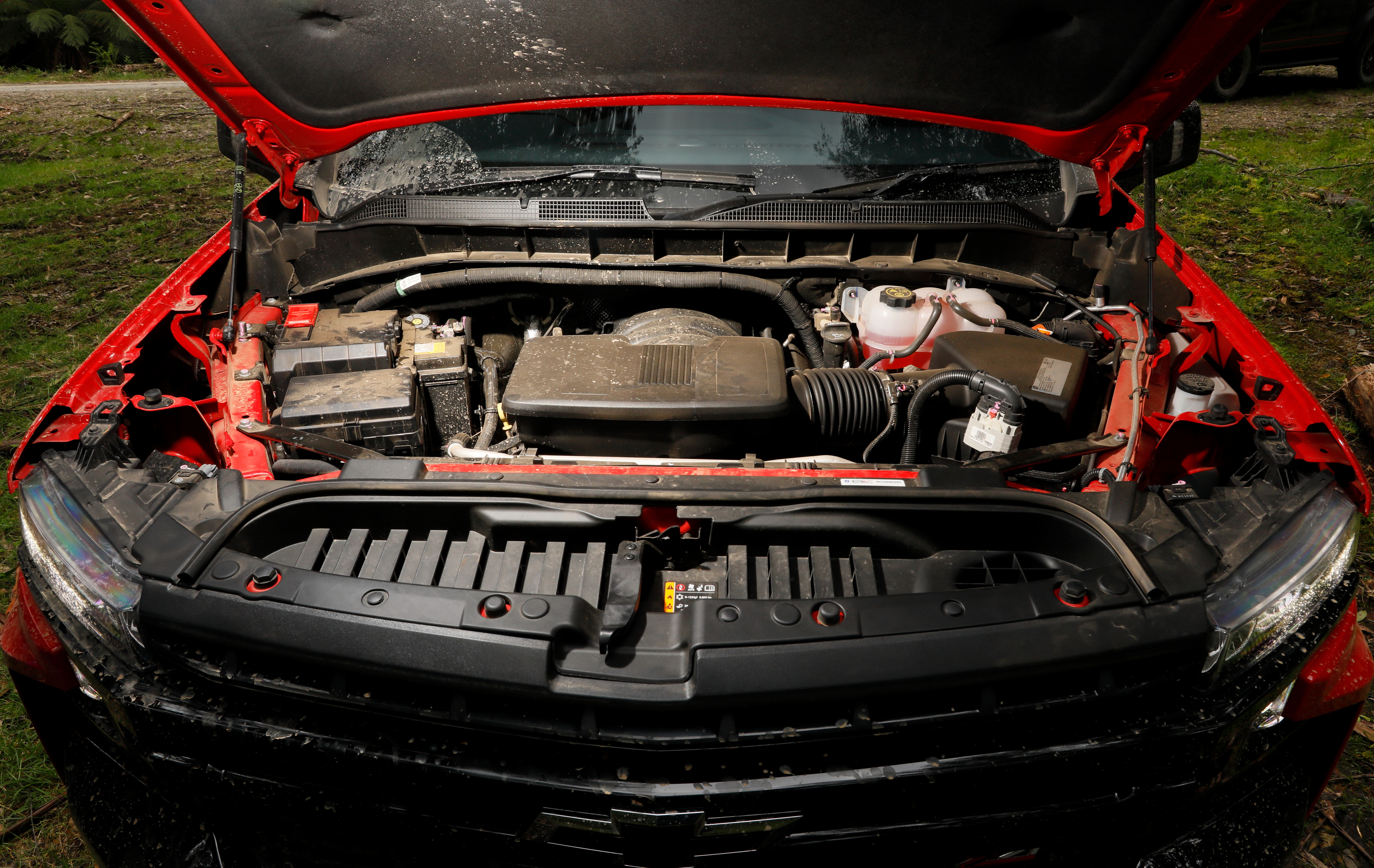
The only powertrain on offer in the 1500 trucks by GMSV is the L86 6.2-litre OHV petrol V8 backed by a 10-speed automatic transmission. The engine makes 624Nm and 313kW, which gets the unladen Chevy along nicely.This is a new generation of GM small-block engine featuring direct fuel injection and cylinder deactivation, to increase efficiency. Officially rated at 12.23L/100km fuel use, we managed 13.1L/100km on our drive – pretty good for a V8 petrol 2.5-tonne truck with the aerodynamics of a Besser block.
ON-ROAD RIDE & HANDLING
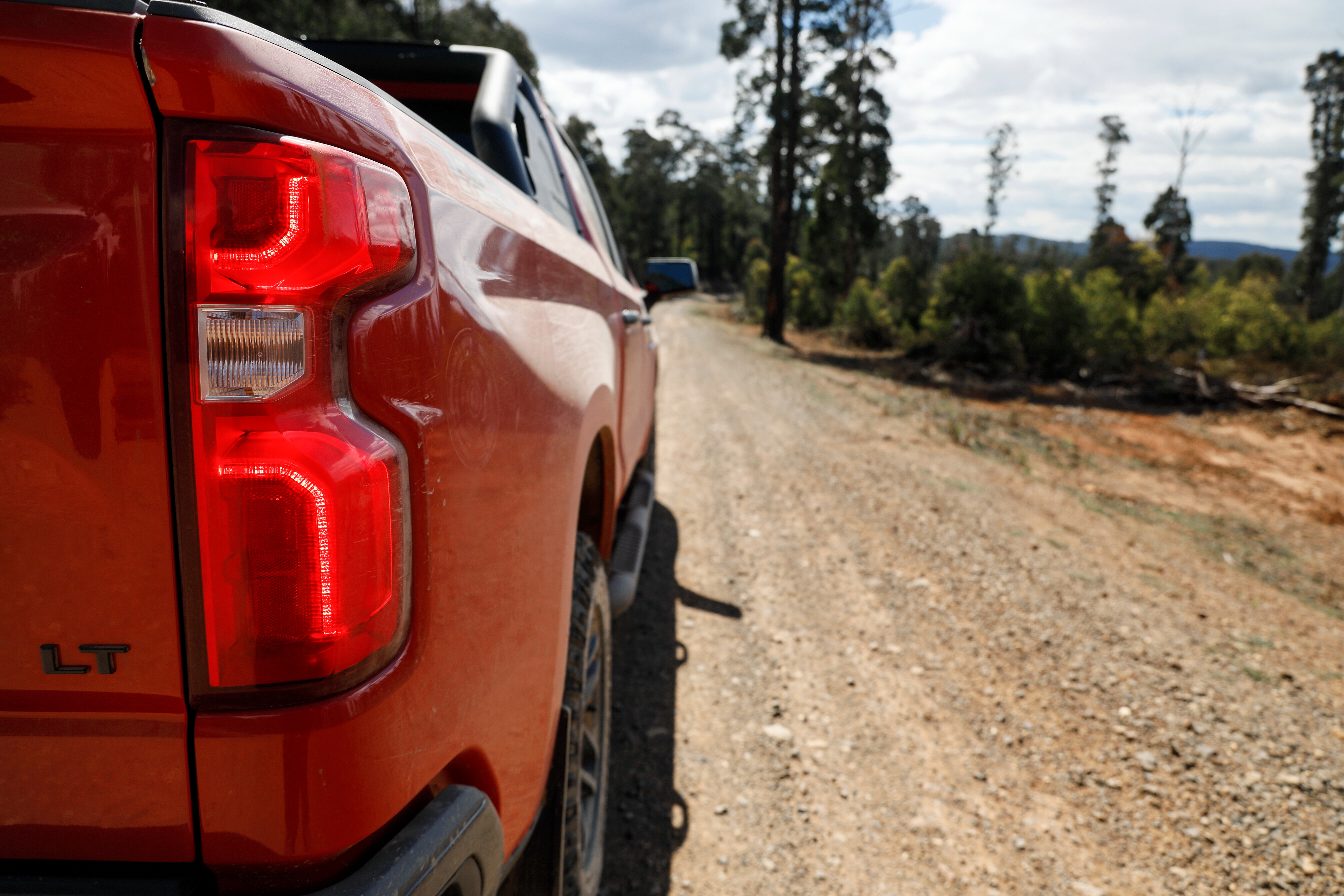
If you have memories of American cars being soft and wallowy in the suspension department, then the Trail Boss will change your mind. This variant gets a set of Rancho monotube shocks and a 25mm boost in ride height, and it rides firmly without being harsh at all. It corners flat and precisely; although, the steering is a little slow when compared to smaller utes. All in all, it’s a surprising package over all road conditions.While we appreciate a manufacturer fitting heavier duty all-terrain tyres to any vehicle expected to be driven off sealed roads, the Goodyear Duratrac tyres on the Trail Boss are noisier than most other A/T style tyres we’ve driven on, and they became particularly annoying on the road.As a marker; we got in to the Trail Boss straight out of a Ranger Raptor which rides on BFGoodrich All Terrain tyres, and it displayed no such road noise. Neither do the well-worn Cooper S/T Maxx all-terrains on my own car, which I was driving straight after the Trail Boss.
OFF-ROAD
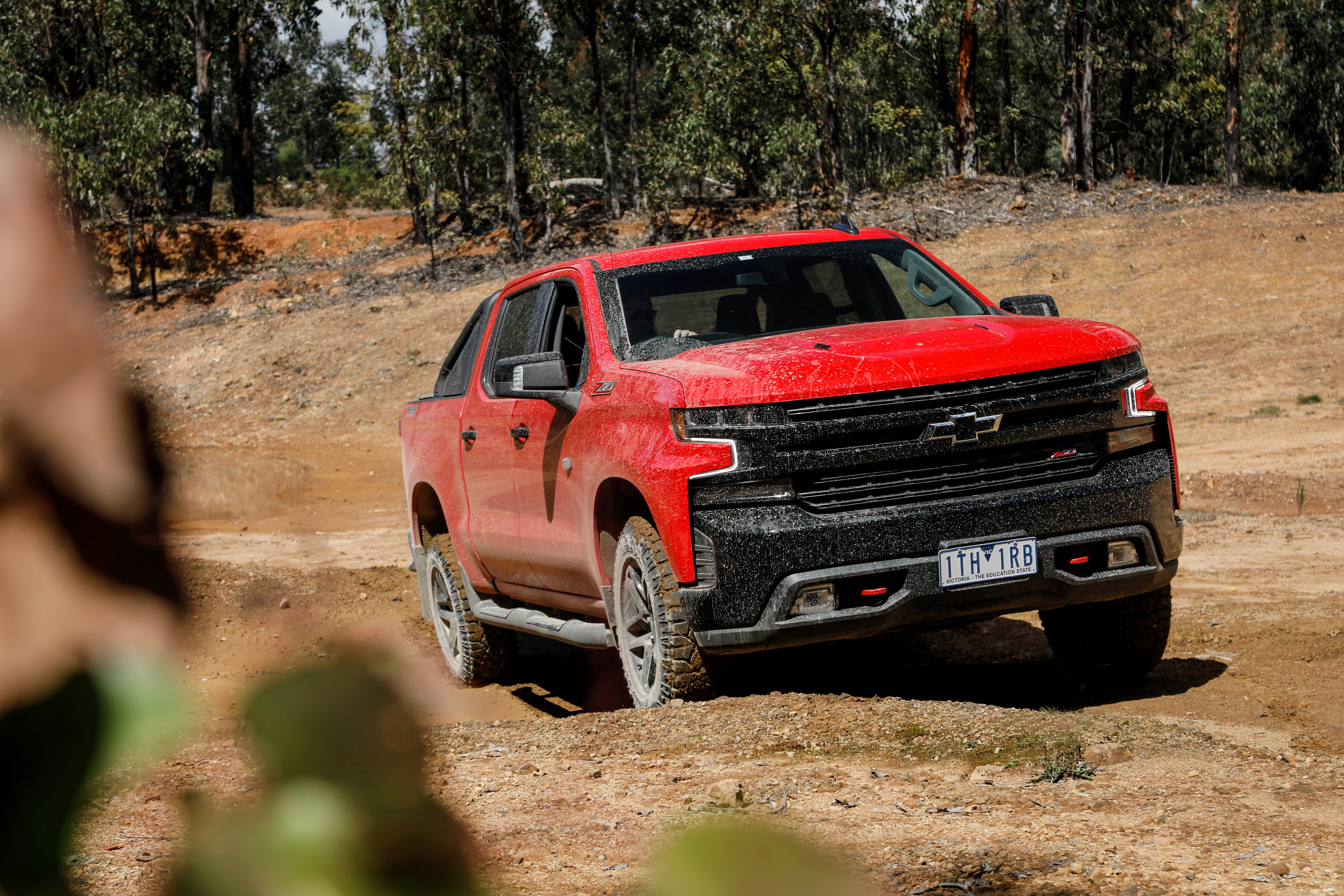
The LT Trail Boss is by far a better off-road option than its LTZ stablemate, thanks to the improved suspension and tyres. The 18-inch alloy wheels in lieu of the 20s on the LTZ not only improve the ride quality but are better suited to off-highway use and rough tracks. The Rancho shock absorbers increase ride height and better control the body over bumps, and the underbody protection is there to ward off scrapes.Four-wheel drive in the Silverado comes via a transfer case that offers 2WD (rear), on-demand 4×4 (auto) and locked 4×4 in high and low range. With the selector in auto, you can leave the vehicle in 4×4 on all road surfaces and drive is only directed to the front axle when needed, and then you can switch to either of the locked 4×4 settings for off-road use.The rear axle is fitted with an auto-locking (non-selectable) locking differential which works well when it cuts in as it detects wheel slip across the axle. It’s not as instant as it would be if you could manually lock it yourself, but it’s always there and you don’t need to think about it.Having a rear locker is a win for the Chevy over the Ram 1500, as it is not offered with one in the new DT series Ram trucks.You’ll need to be wary of the Silverado’s size on off-road tracks. At just under six metres long and a little more than two metres wide, it takes some getting used to positioning on track so as to not scratch or damage the paint work. There is a useful rear-view camera, plus front and rear parking sensors that let you know what’s behind you – plus, the front bumper is metal to limit damage.
CABIN & ACCOMMODATION
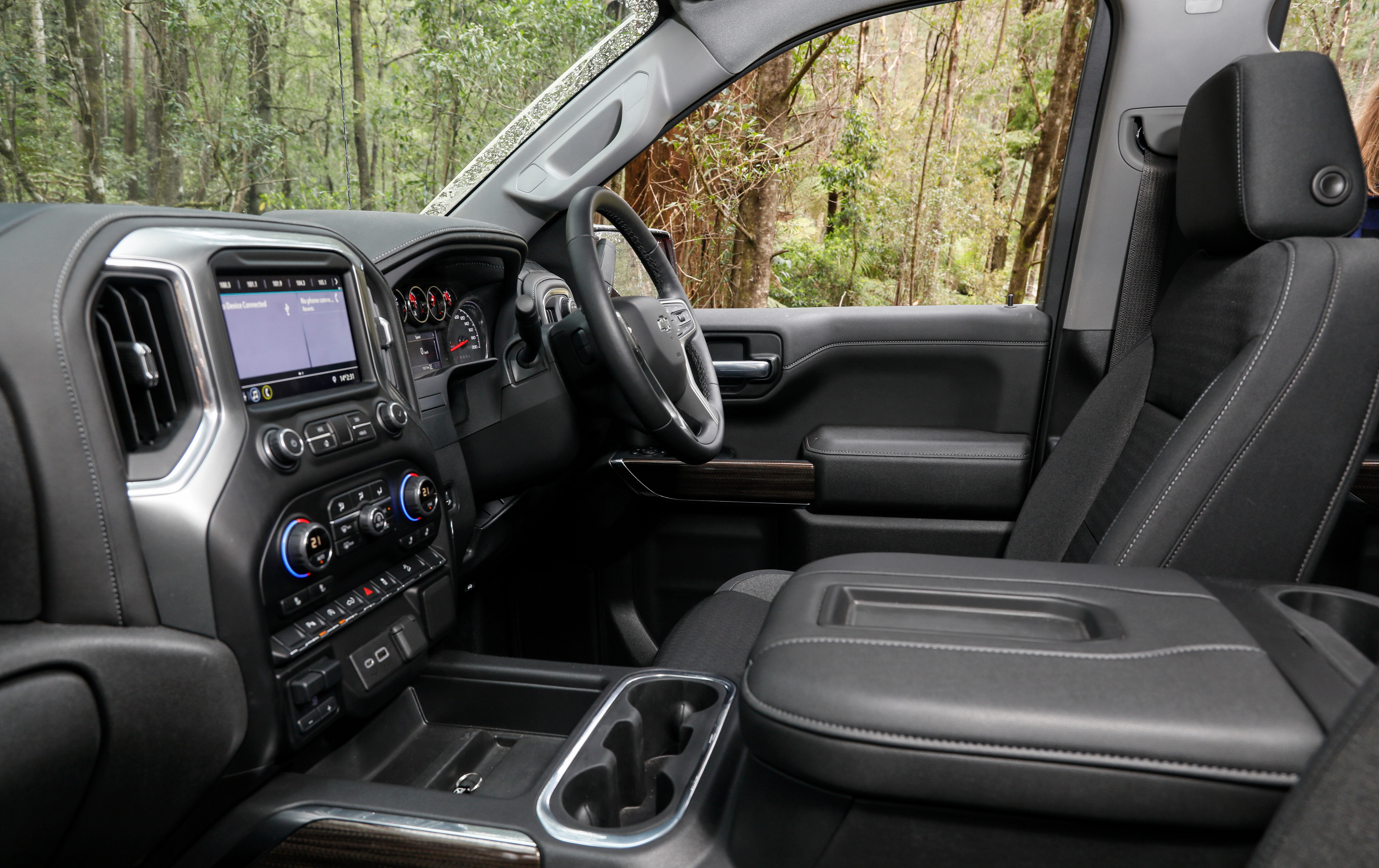
If you appreciate a spacious cabin, then you’ll love riding in a full-size pickup truck like the Silverado. These things take interior space and features to a whole new level, compared to almost everything else available in Australia.While there’s ample room for the front-seat passengers to get comfortable in the Chev, it’s the rear seat where folks will notice the huge difference when compared to regular one-tonne utes. Head, shoulder and leg room are all ample, and you could comfortably travel with three adults across the back seat.The seats in the Trail Boss are cloth-trimmed as opposed to the leather ones in the LTZ, but the front seats remain 10-way power adjustable and heated, but not cooled. The Trail Boss doesn’t have the Bose audio system of the LTZ, but it isn’t bad and the screen is still a good sized eight-inch unit with Apple and Android connectivity. The Trail Boss also misses out on the LTZ’s power sunroof.With all that interior space comes ample storage options. As well as the huge centre console, this Trail Boss was fitted with an optional storage system under the rear seat. This space is cavernous and has slots in the dividers for carrying your rifles – Chevy sure does know its domestic market.The space for the centre console comes from not having the gear shifter down there. It is up on the right-hand side of the steering column and, while not as easy to use as the Mercedes-Benz one in the same location, it works okay. Manual gear shifting is a bit awkward, as it is done using a rocker switch on the handle of the column shifter – it’s not as simple as it could be with buttons or paddles behind the steering wheel.
PRACTICALITIES
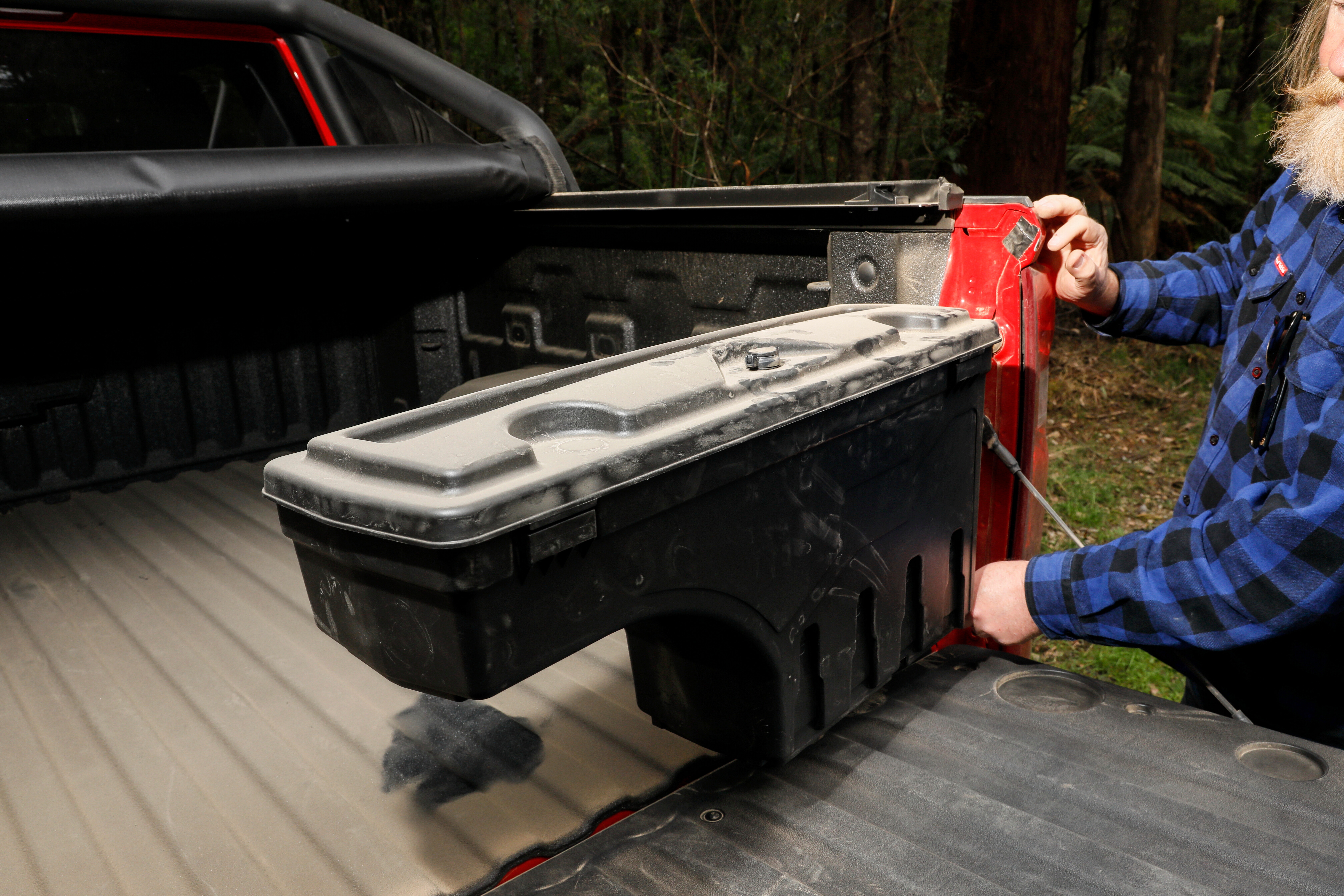
The LT Trail Boss might be the pick of the Silverado 1500 duo, but it does lose a bit of capacity to the LTZ. Towing is rated at 4260kg (on a 70mm ball) compared to 4500kg on the LTZ, while payload is 725kg compared to 760kg. It seems crazy that these full-size trucks don’t have the payload of the mid-size utes like Ranger and Hilux, but that’s the way it is.The 18-inch wheels and A/T tyres are far more practical and comfortable than the LTZ’s 20s. The cargo area is the same size with plenty of tie-down points, and there’s a handy step in the rear bumper that makes it easy to step up in to the bed which is protected by a spay-on liner.As mentioned, this truck was fitted with a few factory accessories and these include a swing-out storage bin on the off-side of the bed, a full-length storage compartment on the near-side, a roll-up tonneau cover, and the Silverado-branded sports bar. The storage bins do limit your access to the tie-down points.While the storage options are handy, the side-steps, which are also an optional extra, hang very low and restrict the ramp-over angle when off-road. As well as these factory options from GMSV, the Silverado is heavily supported by aftermarket accessories to tailer it to your needs.
SUMMARY
While a full-size pickup truck isn’t for everybody, they do tick a lot of boxes, particularly those who want to tow over long distances with a family on board. Think of a large horse float or boat with all the gear you would normally carry for a weekend of play. The space in the cabin and its equipment lend themselves well to long travel times over any and all roads.The Trail Boss works well off road and on, although you want to be careful where you place it on bush tracks if you want to keep it looking pristine. The size of the truck would make it very easy to scrape a side against a tree or rocks on tight turns.The petrol V8 engine will put many users off because of its fuel use when compared to a diesel engine, but, for now, that’s all GMSV is offering in the 1500. You could always move up to the Duramax V8 diesel-powered Silverado 2500, which GMSV is about to reintroduce to its showrooms.
CHEVROLET SILVERADO LT TRAIL BOSS SPECS
| ENGINE | OHV direct-injection petrol V8 |
|---|---|
| CAPACITY | 6162cc |
| MAX POWER | 313kW at 5600rpm |
| MAX TORQUE | 623Nm at 4100rpm |
| TRANSMISSION | 10-speed auto |
| CRAWL RATIO | 40.69:1 |
| 4X4 SYSTEM | Dual-range part-time/on-demand |
| CONSTRUCTION | 4-door cab and tub on ladder chassis |
| FRONT SUSPENSION | IFS w/ wishbones and coil springs |
| REAR SUSPENSION | Live axle w/ leaf springs |
| WHEEL/TYRE | 18-inch alloys / 275/65 AT tyres |
| WEIGHT | 2469kg |
| GVM | 3210kg |
| PAYLOAD | 752kg |
| TOWING CAPACITY | 4260kg |
| GCM | 6804kg |
| SEATING CAPACITY | 5 |
| FUEL TANK | 91L |
| ADR FUEL CLAIM | 12.23L/100km |
| TEST FUEL USE | 13.1L/100km |
| DEPARTURE ANGLE | 23.3u00b0 |
| APPROACH ANGLE | 30u00b0 |
| GROUND CLEARANCE | 260mm |
The Suzuki Jimny has seen its off-road capability increased, along with its ride height.
Swiss company Avus Auto has collaborated with Germany’s Delta4x4 to create a Jimny with 400 millimetres of ground clearance, thanks to the addition of Tibus portal axles.
While ‘portals’ are more often found on serious four-wheel-drive builds, Avus is offering the modification for the smaller Suzuki off-roader, which transfers the drive from the axle down through a gearset to the wheels.
The addition greatly improves under-car clearance, reducing the chances of the vehicle’s differential housings fouling on boulders, logs, and debris when driving along remote tracks.
To put the Jimny’s new-found 400mm ground clearance into perspective, the new Toyota LandCruiser 300 Series enjoys 235mm, while the elevated Ford Ranger Raptor is listed as having 283mm with standard wheels and tyres.
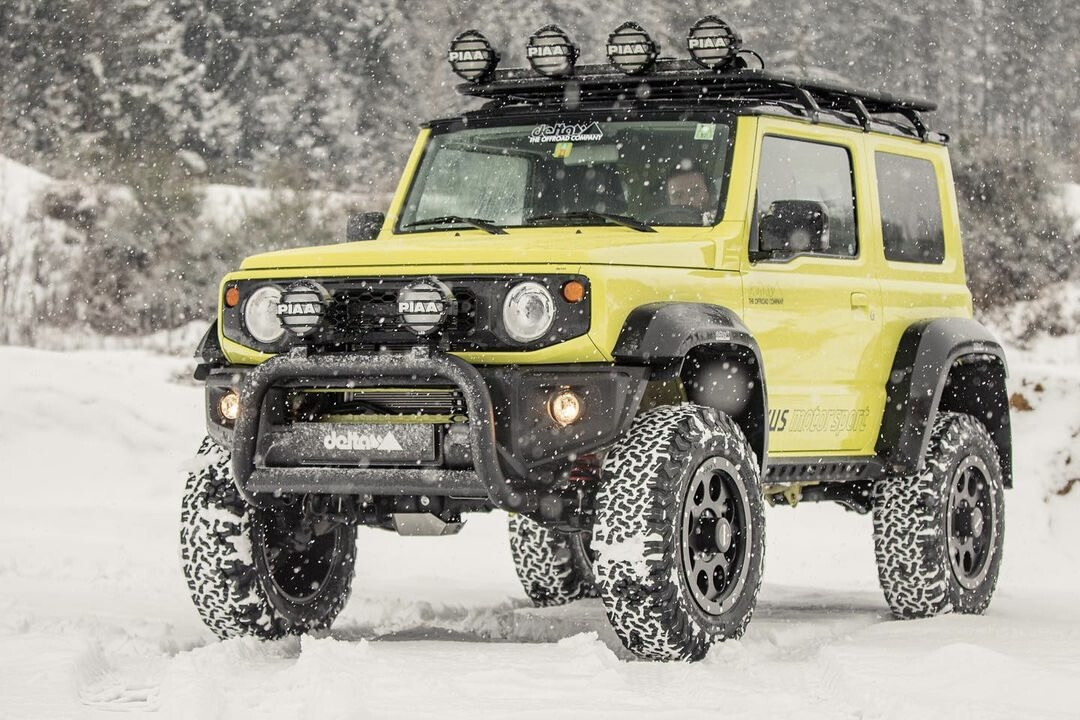
Avus says it is building just 12 of the portal Jimnys, complete with 40mm suspension lift, adjustable shock absorbers with remote reservoirs, and 18-inch alloy wheels with all-terrain tyres.
Buyers can also option locking differentials at each end, brush guards, and a winch.
Those wanting one of the 12 vehicles being built will need to be in Switzerland or Germany to hand over at least €56,000 (AU$87,300) – with a fully-optioned Jimny costing as much as €65,000 (AU$101,300).
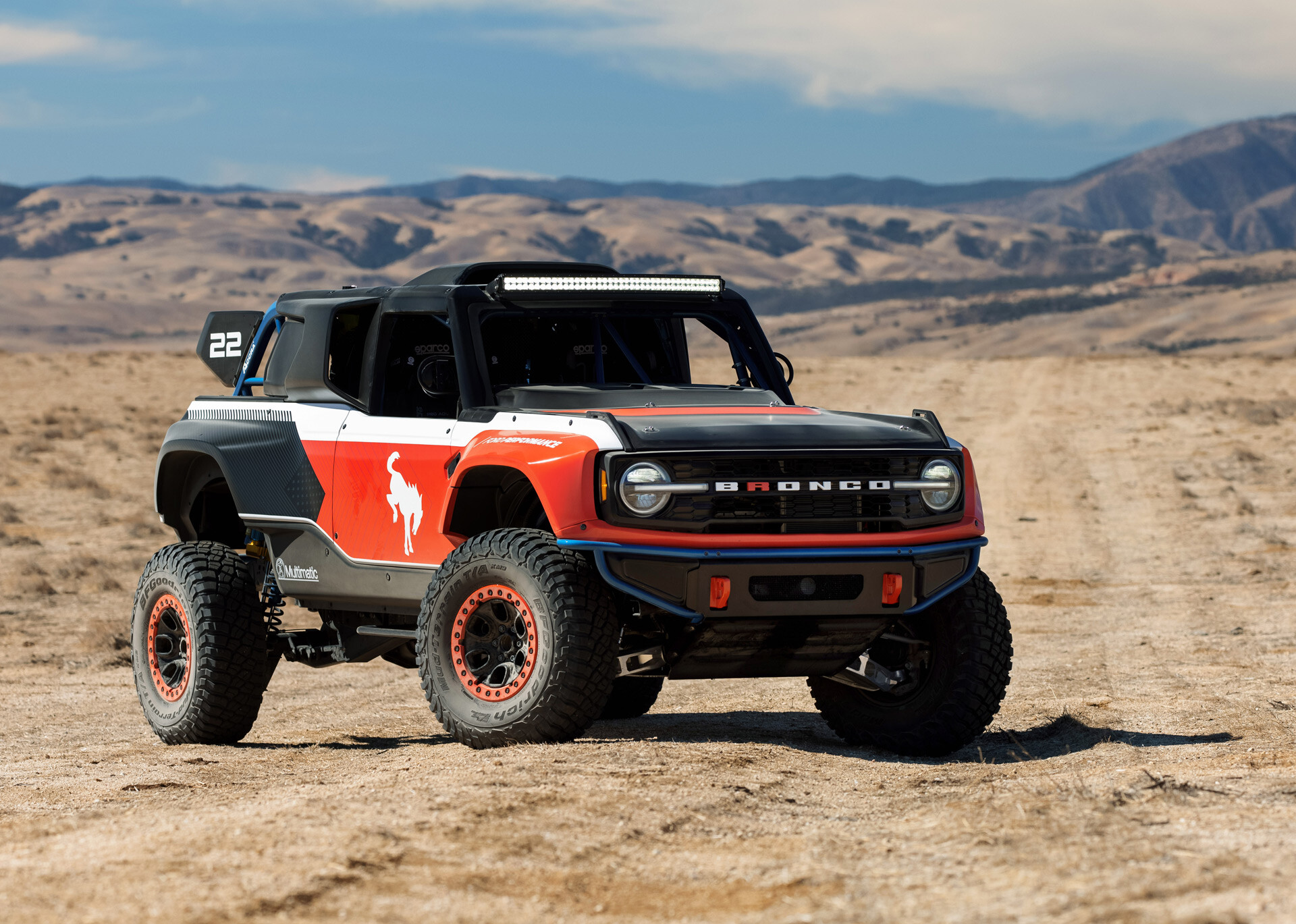
Ford has finally built the Coyote V8-swapped Bronco fans have been screaming out for – but the catch is that it’s a race-only machine and will cost north of AU$269,000 (US$200,000) when it lands next year.
The Ford Bronco DR (Desert Racer) is a purpose-built Baja racing machine, with Ford intending to enter a prototype of the race-bred Bronco into the Baja 1000 next year.
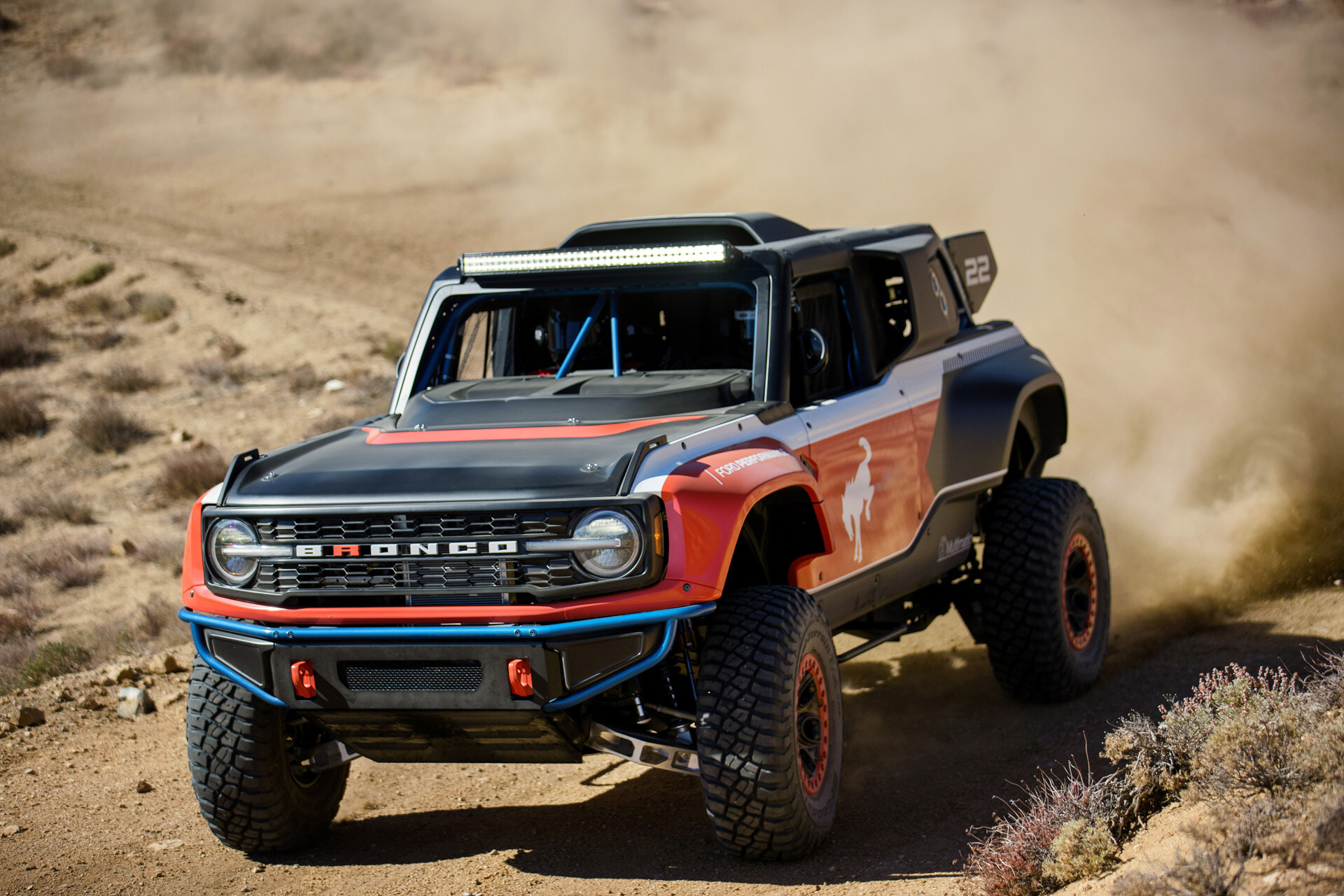
“Bronco DR exists to give hardcore off-road enthusiasts a Built Wild, turnkey 4×4 to compete in desert racing events, including the unforgiving Baja 1000,” said Mark Rushbrook, Ford Performance Motorsports’ global director.
Full specifications are still yet to be announced, but we do know the DR started out life as a four-door Bronco chassis before Ford went to town on it, saying: “We modified and optimised every aspect and built the vehicle hardcore off-road enthusiasts want.”
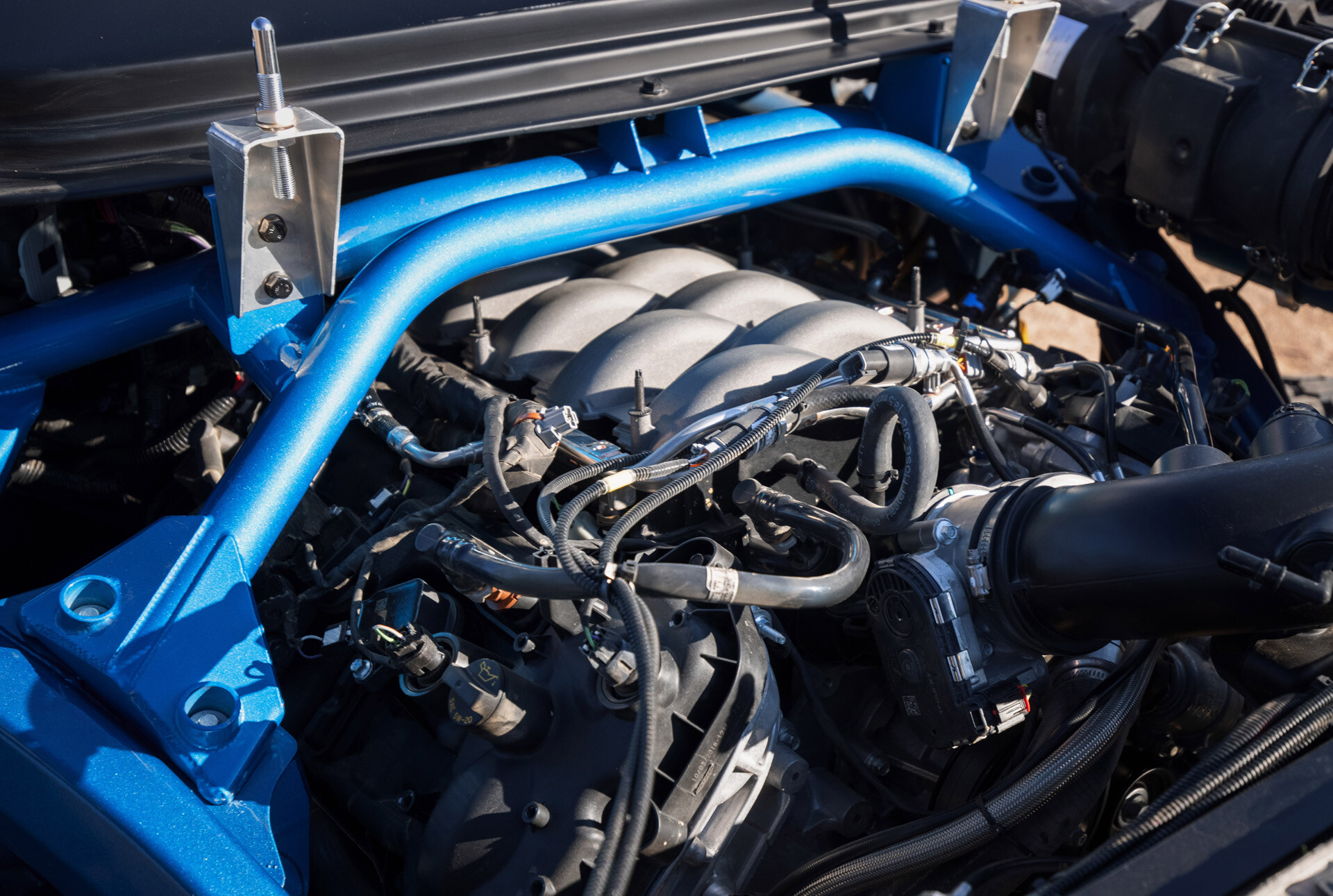
The Coyote V8 is one of the biggest changes for the DR, which Ford says it aims “to generate more than 400hp (298kW)” from for the DR – paired with a 10-speed auto.
The rest of the driveline uses a ‘shift-on-the-fly’ transfer case from the F-150, with both electronic lockers and 4.70:1 final drive ratios front and rear.
The suspension has been overhauled, with one of the key upgrades being the inclusion of Positional Selective DSSV Dampers from Multimatic – which had a large hand in building the Bronco DR with Ford Performance.
The dampers allow for the major adjustability racers desire to suit different terrain, and are connected to new billet aluminium lower control arms. Strengthened inner tie rods are also used for the DR.
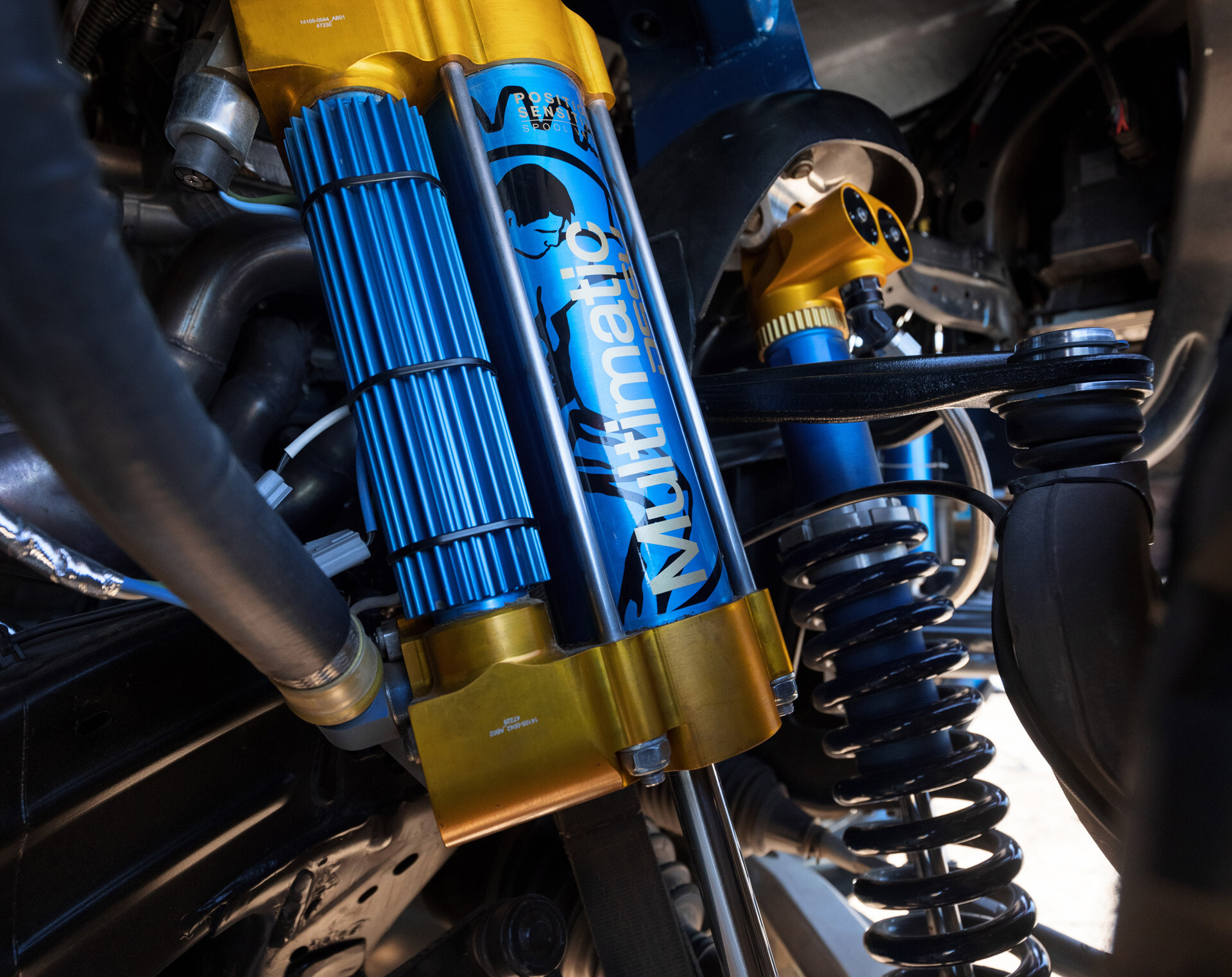
Ford also says it has 55.1 per cent more suspension travel at the front and 58.6 per cent at the rear over the standard Bronco, giving the DR further stability in high-speed desert competition.
Wheels and tyres are 17-inch beadlocks wrapped in 37-inch BFGoodrich Mud-Terrain T/A KM3 rubber.
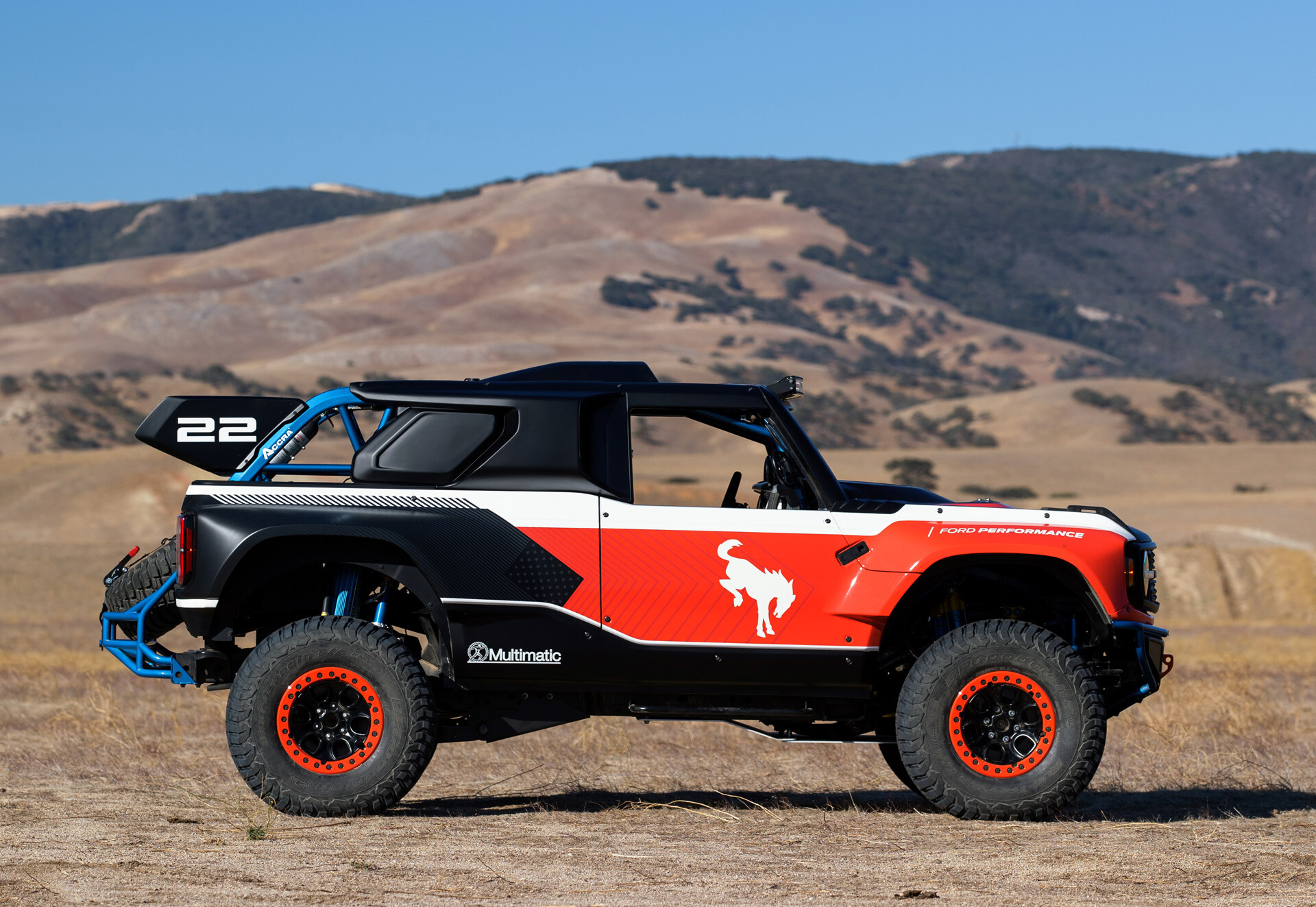
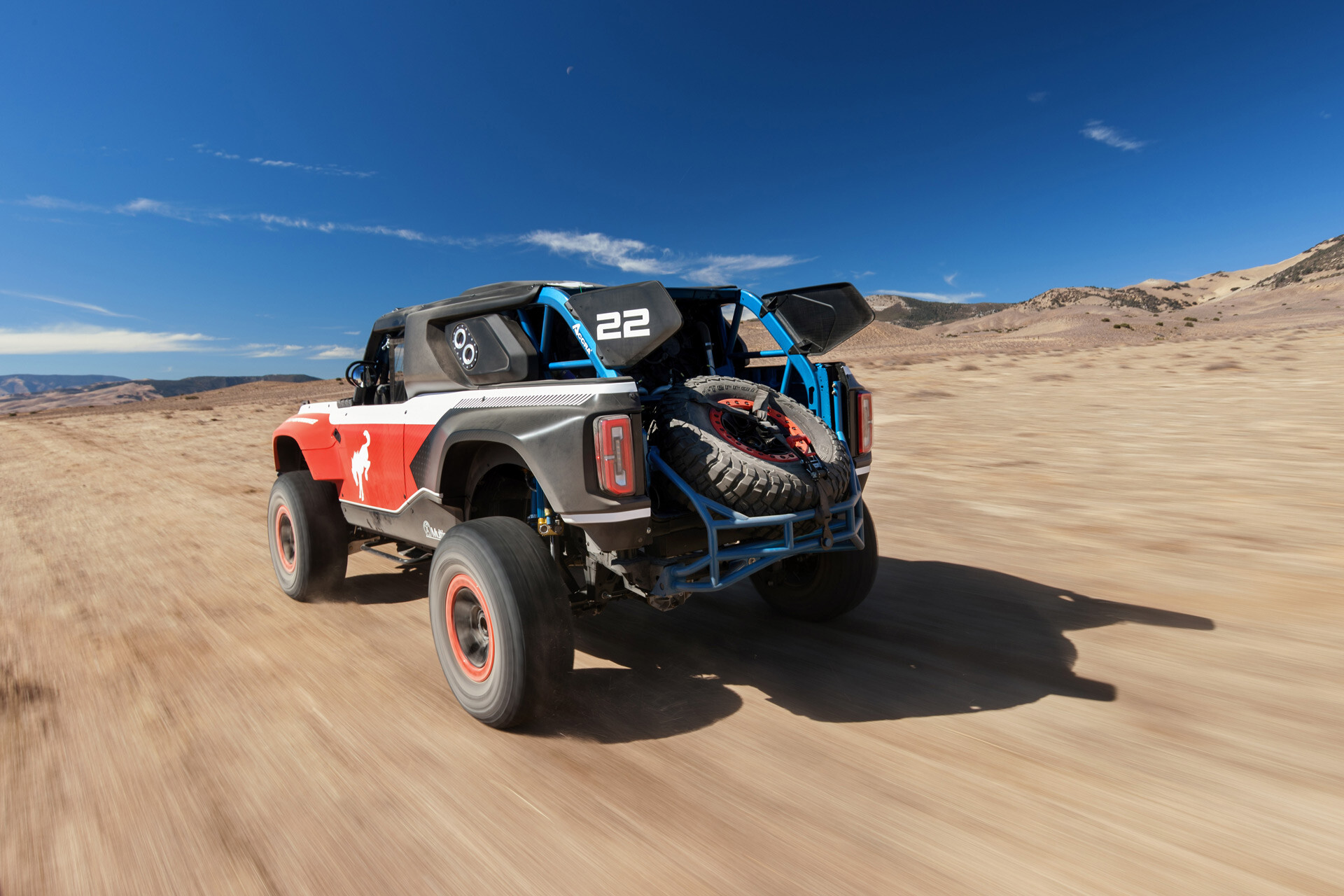
The exterior panels are made from fibreglass rather than steel on the road-going Bronco, with all the glass removed for safety and weight saving. A tubular metal front bumper is used, but the DR still uses normal Bronco headlights, tail-lights and trail sights.
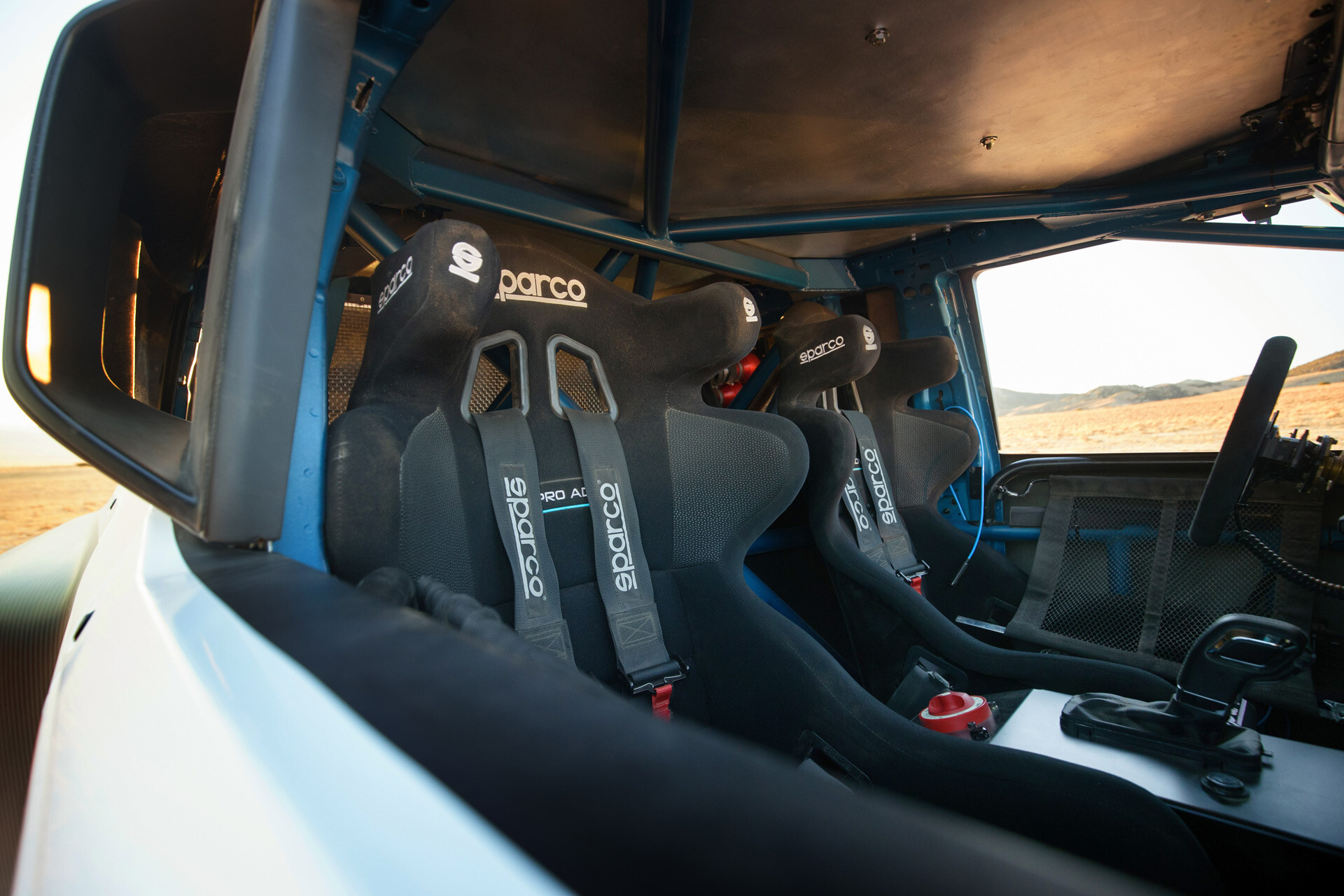
The DR also comes factory-fitted with a roll cage built by Multimatic, along with Sparco racing seats, a Motec C187 display and a switch panel for various accessories.
The Dakar-bred racer also has a 246-litre fuel-cell in the rear and a rear-mounted radiator to keep the Coyote V8 cool.
The DR marks the first time Ford has offered a factory-built dirt racer from the factory, but only 50 examples will initially be available for purchase by the public in late 2022.
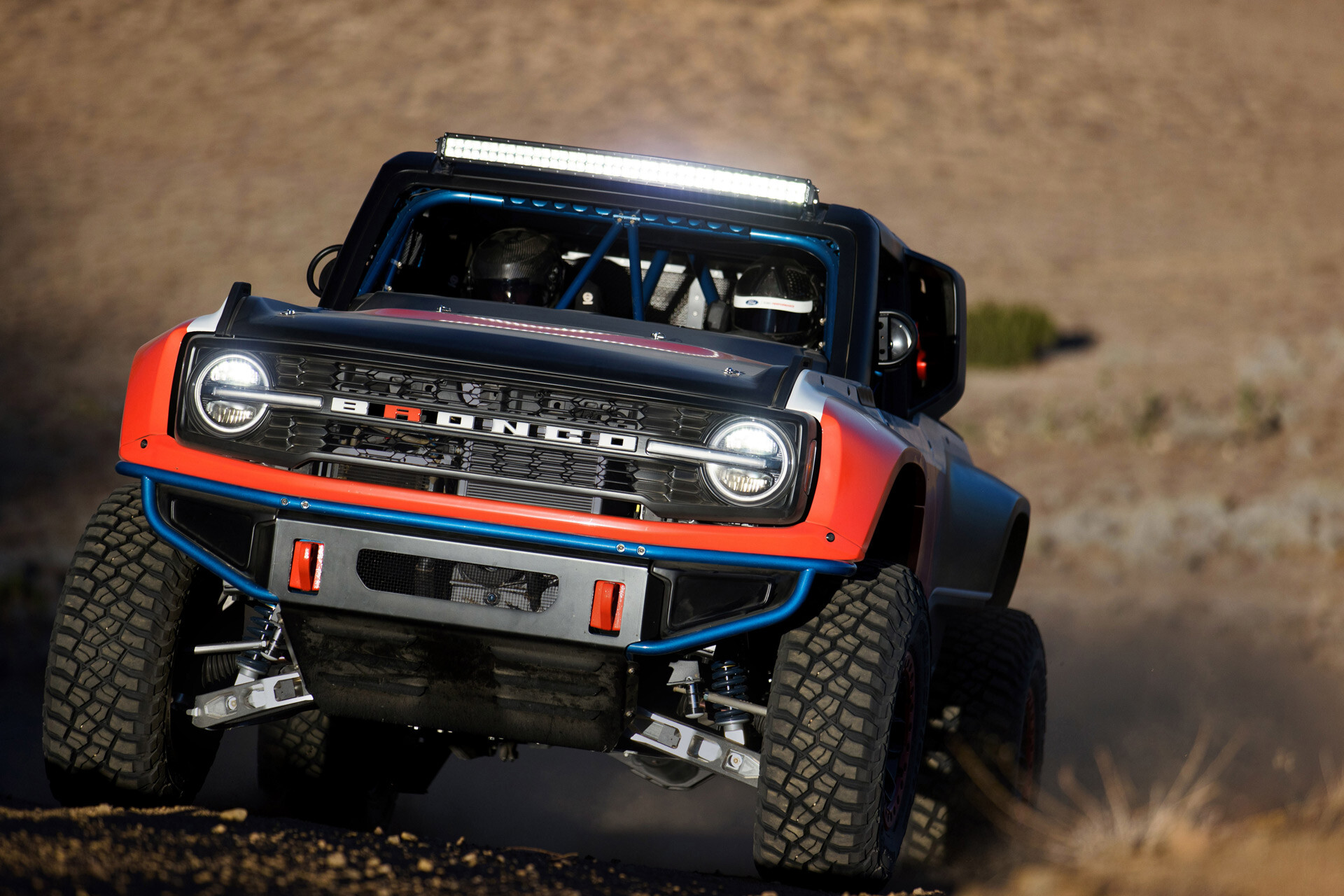
It’s unclear if more will be built after that, but with the Bronco DR illegal to drive on the street and the above mentioned minimum buy-in of US$200,000, it won’t be a sales-chart topper.
Those in the US wanting a race-like Bronco for the street can expect the Bronco Raptor to fill those shoes when it launches next year, likely with a twin-turbocharged V6.
Ford Australia still has no intentions to make the Bronco range available here locally.
Tony Roberts, the original inventor of the ARB Air Locker, has died at his home in Victoria aged 70.
As lovers of the outdoors, Roberts and his wife Patricia were early off-road pioneers, taking their Toyota FJ55 LandCruiser to remote areas of the Victorian High Country in the 1970s – but quickly discovered four-wheel drive alone wasn’t enough to keep them out of trouble.
The problem was the car’s open differentials allowed the wheels with no traction to spin.
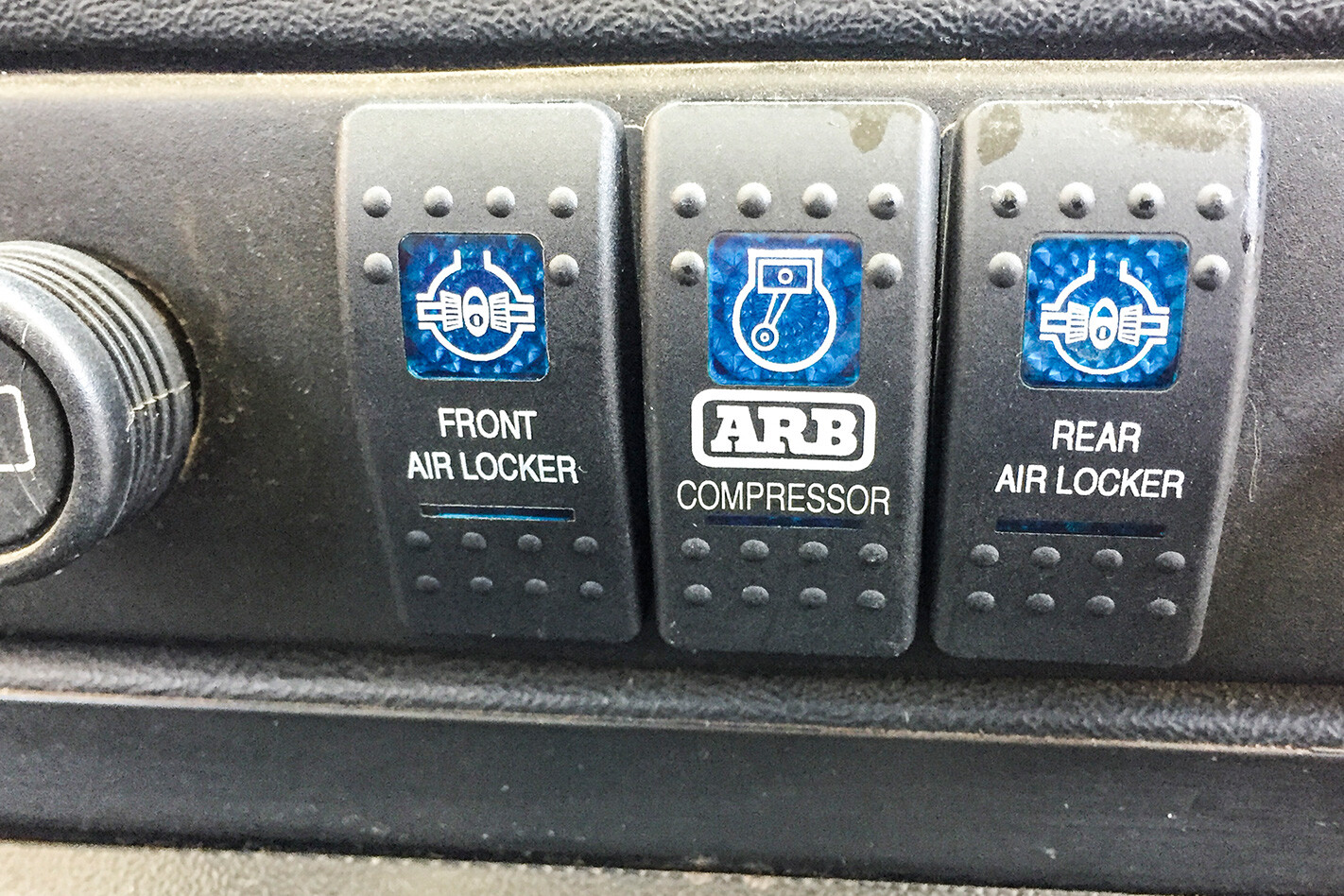
As a pilot instructor and aviation engineer, Roberts set to work designing a mechanism to lock the differential using vacuum from the engine, before settling on an evolution of the idea using compressed air. By the mid-1980s, Roberts had designed and patented the Roberts Diff Lock – a strong device that locks the differential with compressed air, allowing both wheels to turn together and greatly improving traction off road.
A company making roof racks and bull bars around the same time, named ARB after its founder Anthony Ronald Brown, purchased the rights to the Roberts Diff Lock in 1987 and renamed it the ARB Air Locker.
ARB launched a new logo adopting the red and black from the Roberts’ Diff Lock, and began selling the product in Australia and the US alongside its new in-house 12V air compressor – helping to cement the company as a global leader in off-road accessories.
Roberts’ love of aviation continued, running a successful pilot school from Moorabbin airport for a number of years, before moving with his family to a farm near Colac where he continued engineering and gunsmithing until his sudden death.
His passion for the outdoors, engineering, and aviation were passed onto his children, and his invention has helped countless drivers get further into the wilderness – and back – over the past three decades.
While he’ll be best remembered by the community for creating the ARB Air Locker, it’s his laugh, handshake, and sharp wit that will be best remembered by his family and friends.
He is survived by his wife, three children, and five grandchildren.
UPDATE, November 1: Mark your calendars, because the 2022 Ford Ranger is set to be revealed on November 24.
After a long drip-feed of camouflaged Ranger images – both official and unofficial – Ford has confirmed the ute will be fully unveiled later this month.
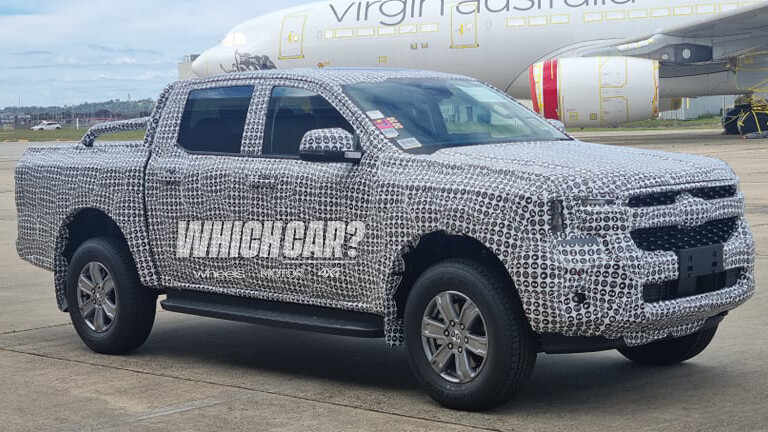
Late last week, 4X4 Australia obtained the first images of a prototype landing in Australia wearing the new promotional digital camouflage, believed to be a Ranger Wildtrak underneath.
Despite the open bonnet, it was difficult to ascertain what was powering the vehicle – but exactly what powertrains will be available in the new model will be known within a matter of weeks.
Along with the announcement, Ford released a video detailing the design process behind the new Ranger.
Make sure you stay tuned to our Facebook, Instagram, and Twitter feeds to get the very latest news as it happens.
The story to here
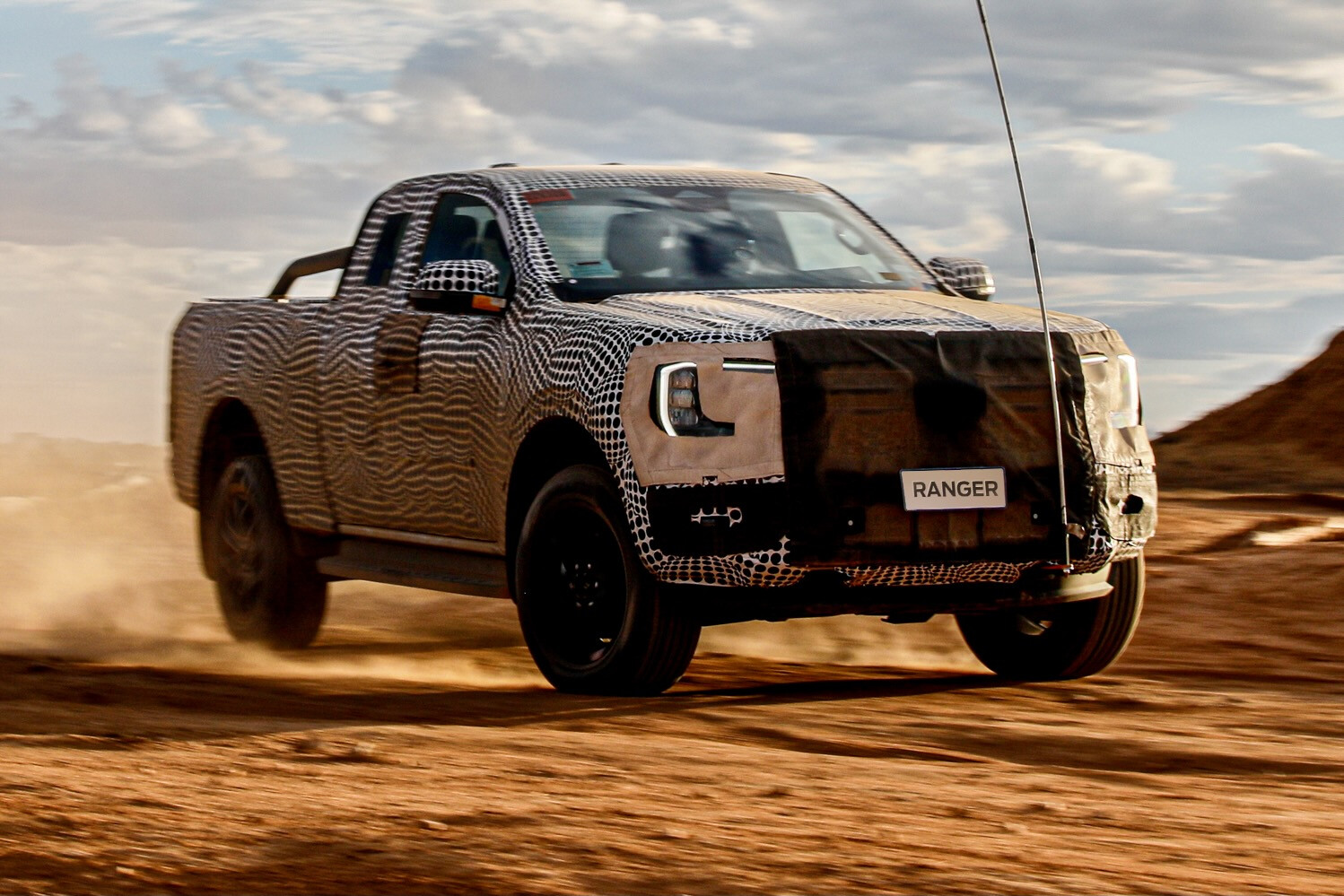
October 12: Two 2022 Ford Ranger prototypes have landed in Australia, with one wearing minimal camouflage.
It’s the first time the next-generation Ranger has been spotted on local soil wearing Ford’s new blue and white digital camo, but thanks to a popped bonnet, we can see the ute’s real colour appears to be Saber Orange – an iconic colour of the Wildtrak variant.
Adding further weight to the thought we’re looking at a Ranger Wildtrak is the ‘sail plane’ valance extending from the rear window – a trademark of the variant – together with roof rails, side steps, and fog lights.
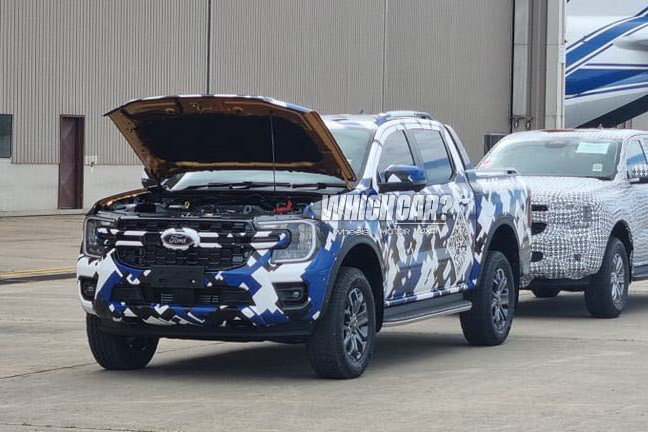
Perhaps more perplexing is what’s under the bonnet. The location of the battery, dipstick, and a number of other components suggest the engine could be the current model’s 3.2-litre turbo-diesel five-cylinder – widely rumoured to be axed in the new Ranger.
Exactly what engine options are powering the 2022 Ford Ranger will soon be revealed, with the ute’s unveiling set to occur before the end of the year.
With the arrival of these prototypes, expect Ford to be taking them out on the road in the coming days and weeks – complete with QR codes printed on the side – so keep an eye out and remember to tag us at @4x4australiamag on Instagram.

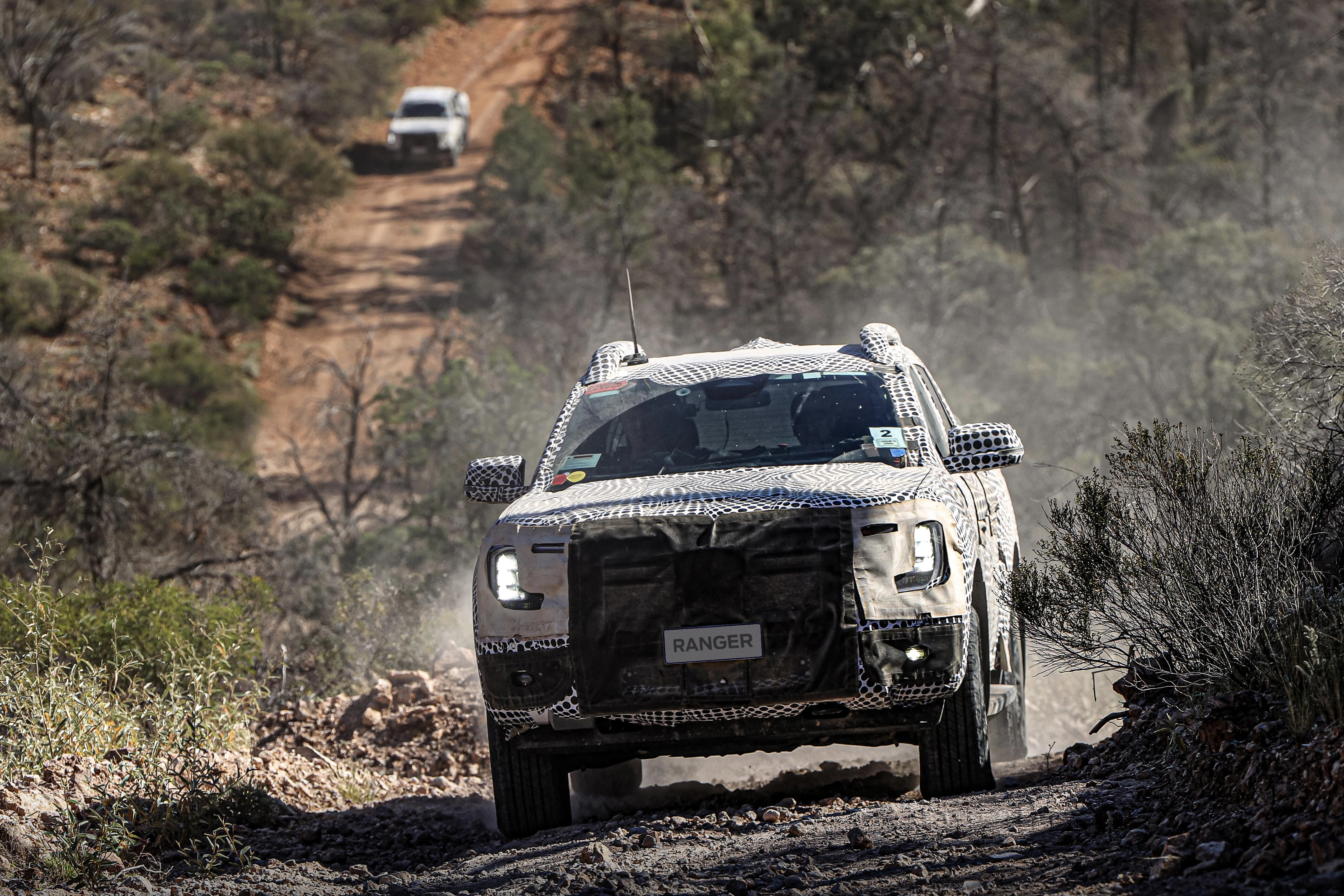
October 21: More teaser images of the 2022 Ford Ranger have been released by the Blue Oval – along with a new promotional video – but it’s unofficial spy photos that are providing us with our best look at the all-new ute.
As Ford gears up for the launch of the new-generation Ranger later this year, photos of the vehicle continue to be drip-fed, as the company demonstrates the lengths gone to ensure the vehicle will be ready when it enters the highly-competitive ute market.
The car company says the Ranger has driven 10,000 kilometres through desert conditions, 625,000km of off-road driving at maximum load, and the equivalent of 1.25 million kilometres of “customer driving”.
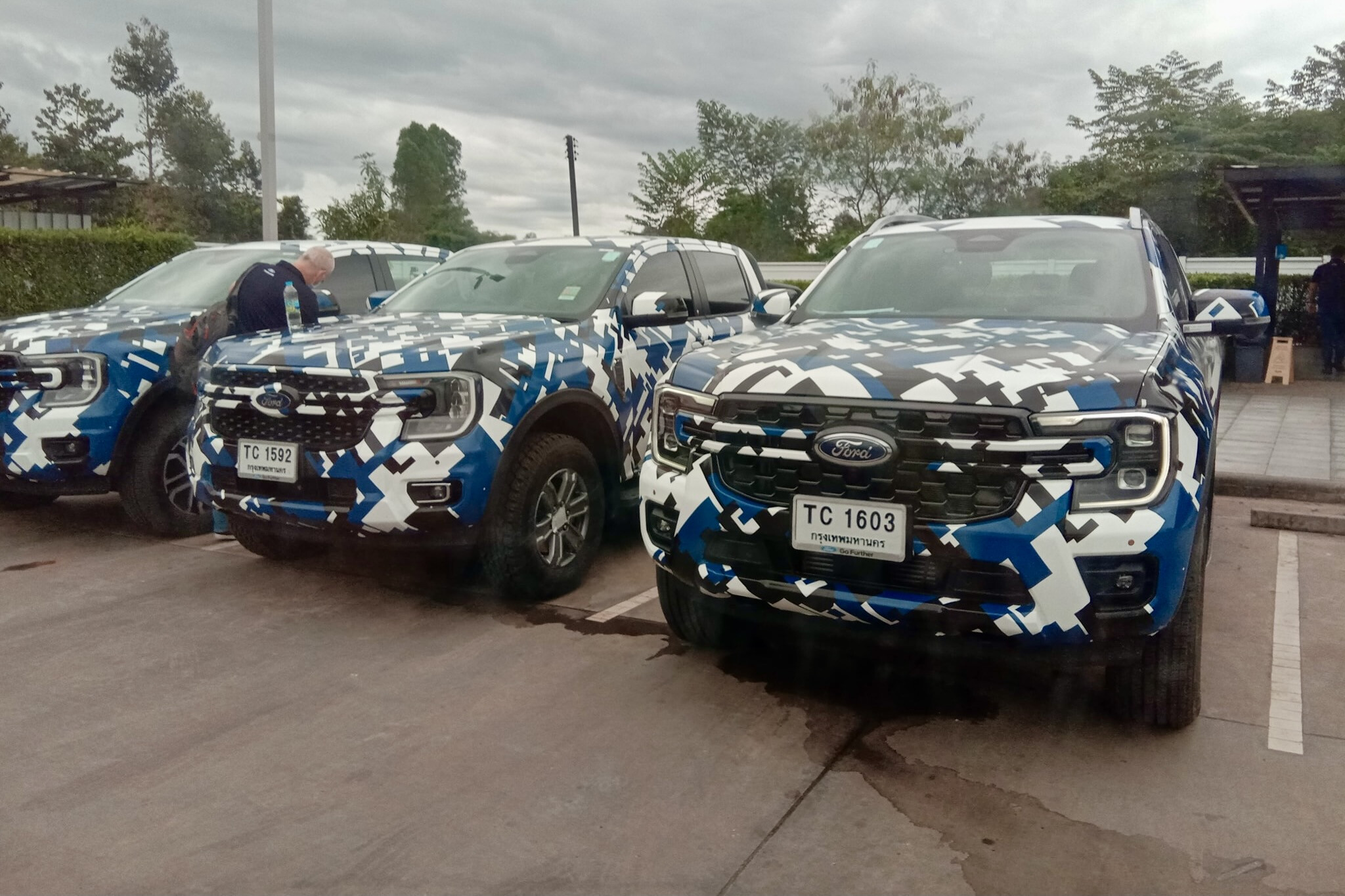
These spy photos, taken in Thailand and posted on a Facebook enthusiasts’ group this week, offer us a much better look at what we can expect when the ute eventually lands in local dealerships.
The images provide an unobscured look at the Ranger’s front-end on two different variants, with black trim and chrome trim (the latter wrapped in camouflage) as well as previewing some new wheel designs.
The story to here
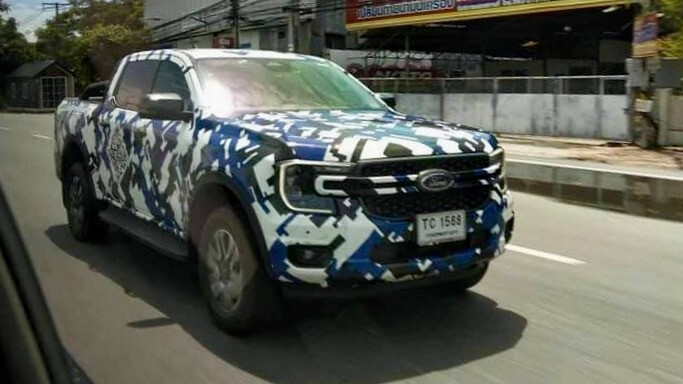
October 13: Images have been posted online showing the 2022 Ford Ranger wearing its all-new digital camouflage.
The photos, taken on the ground in Thailand and posted on the Kurdistan Automotive Blog Instagram account, show the Ranger’s front-end in detail – showing off the ute’s new C-shaped LED headlights and split grille.
While the next-generation Ranger – and eventually the 2023 Volkswagen Amarok – will be built by Ford at its Silverton plant in South Africa, the outgoing Ranger continues to be manufactured in Thailand.
The original story continues unchanged below.
October 7: A new video has provided the best look yet at the 2022 Ford Ranger, complete with a unique wrap.
Ford teased the next-generation Ranger in a video released to show off a new digital camouflage, used to help hide the ute’s design ahead of its final unveiling before the end of the year.
The livery – which incorporates a QR code that links to the Ranger website – was created by Ford designer Lee Imrie, and took up to two months to develop and test.
“We were asked to develop a camouflage that allowed you to clearly see that this is the next-generation Ranger, but not see it at the same time,” said Leigh Cosentino, Design Manager at Ford Australia.
The shape of the rear-lights can be easily seen in an accompanying image, along with a shark-fin antenna, black steel tube sports bar, and a uniquely-shaped tailgate.

As confirmed in the first teaser video released earlier this month, the design of the Ranger has evolved since Wheels published exclusive leaked photos of the ute in February 2019, with the headlights and bonnet being the most obvious changes.
Under the bonnet, the next-gen ute is expected to offer 2.0-litre single- and twin-turbo diesel four-cylinder engines found in the current model, but there’s been much speculation as to what we can expect at the upper-end of the Ranger line-up.
As the all-new Ranger will be offered in the US, Ford quietly removed its 3.0-litre Power Stroke turbo-diesel V6 from the F-150 range in July, potentially to help differentiate the two utes.
The Power Stroke engine also makes sense, considering the 2023 Volkswagen Amarok will be based on the Ranger and Volkswagen is likely to insist on offering a diesel V6 in its model.
Sources out of the US have also pointed to a 3.0-litre twin-turbo petrol V6 – borrowed from the US-market Ford Explorer ST performance SUV – as the engine of choice for the new Ranger Raptor.
Recent spy photos show the Ranger-based Ford Everest SUV being tested with a rotary gear shift dial and electric parking brake switch, with the technology possibly being shared with high-end Ranger variants.
Keep an eye out for any utes driving around in your local area with the striking digital camouflage livery, as company engineers are said to be conducting “final sign-off drives” on the 2022 Ford Ranger ahead of its unveiling.
Designing the ultimate camper trailer is a pretty simple affair; something that’s been written on beer coasters and dreamt up late at night all across the country. Forgetting the fact you’d need to actually find some way to build it, there are a few key features you’d be looking for right out of the gate.
It’ll need to be lightweight for easy towing; ultra-capable, because you wouldn’t want your camper being the reason you can’t make it to camp; it should be quick to set up; and it needs huge storage options and comfortable bedding. A space out of the weather to play a game of cards in the rain would be fantastic, and if we’re throwing caution to the wind with our eternally optimistic wish list, it’d be fantastic if the camper was cool inside on hot days and warm inside on cold nights.
In the real world, things aren’t always so easy and most camper trailers are a compromise. Sometimes with budgets, other times with the manufacturer’s abilities, or lack thereof. However, Ultimate Campers isn’t your average camper-trailer manufacturer; it thinks so far outside the box there isn’t even a box at all.
After hitting the tracks and rolling out the sleeping bag for a night in its top-of-the-line, limited edition X25 camper, we definitely understand why it has developed a cult-like following among its customer base.
GETTING DIRTY
Let’s get one thing clear right from the get go: If you have a camper trailer that is brilliant when set-up but stops you from travelling off the beaten track because it’s so cumbersome, then you don’t have a camper trailer, you have a house. With that in mind, the first thing we were looking for in a camper that literally calls itself ‘Ultimate’ is off-road ability.
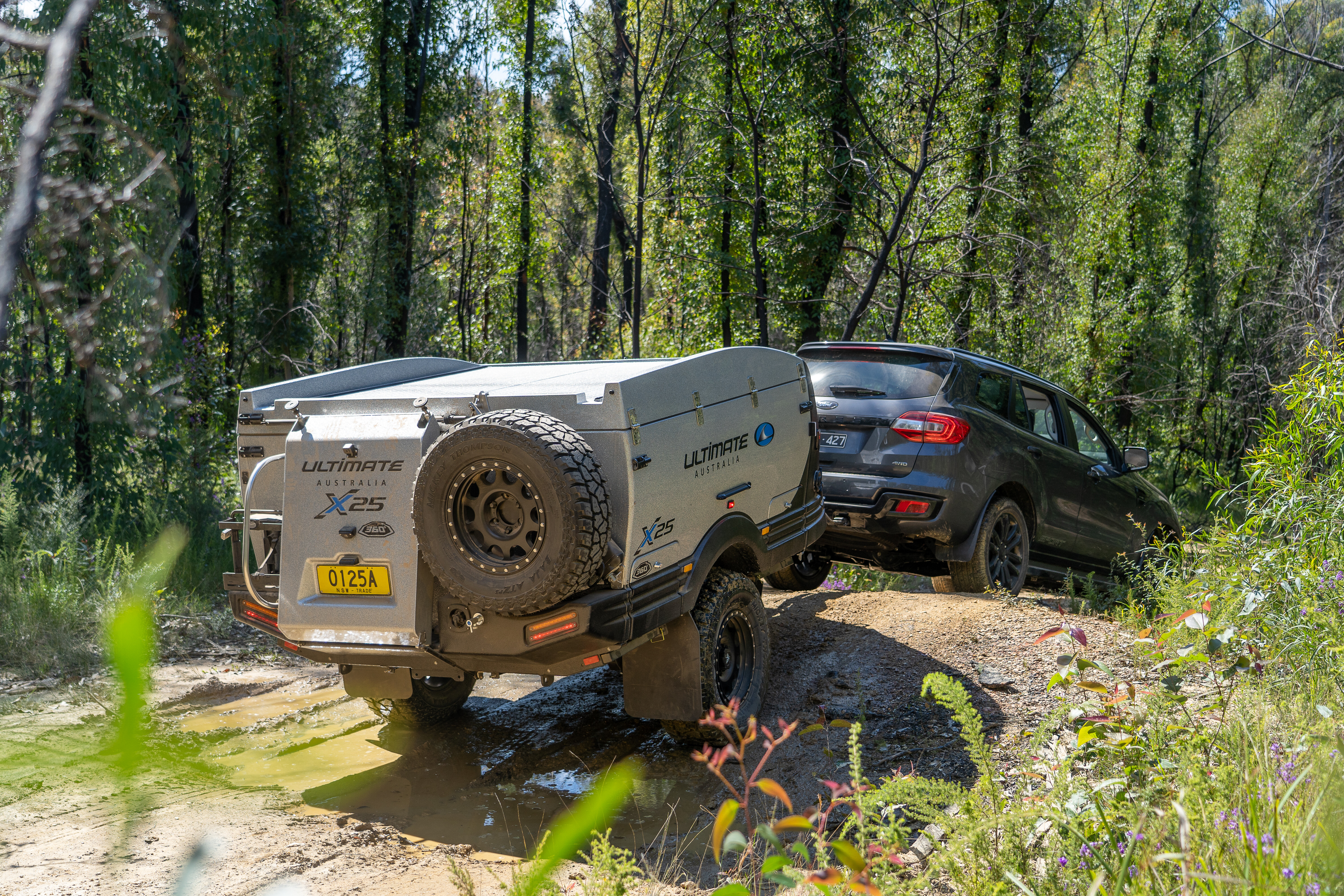
Heading to the hills on the NSW South Coast and the X25’s light-weight 1100kg tare was immediately obvious. Our bi-turbo Everest never once struggled lugging the camper around through stop-start traffic, or powering up long climbs in the scrub.
It packs an even more impressively low tow-ball weight of just 80kg. Rough guidelines typically state a 10 per cent tow-ball weight is ideal; but with a relatively long wheelbase and minimal rear overhang, the 7.3 per cent tow-ball weight kept trailer sway easily under control without overloading the Everest’s coil-spring rear suspension.
It uses the tried and tested DO35 V3 hitch, for a solid and secure engagement between the tow-tug and trailer without limiting articulation. The combination means the Ultimate X25 is easy to tow in rough, undulating or soft terrain and would pose most 4x4s little concern on any of the popular sand islands.
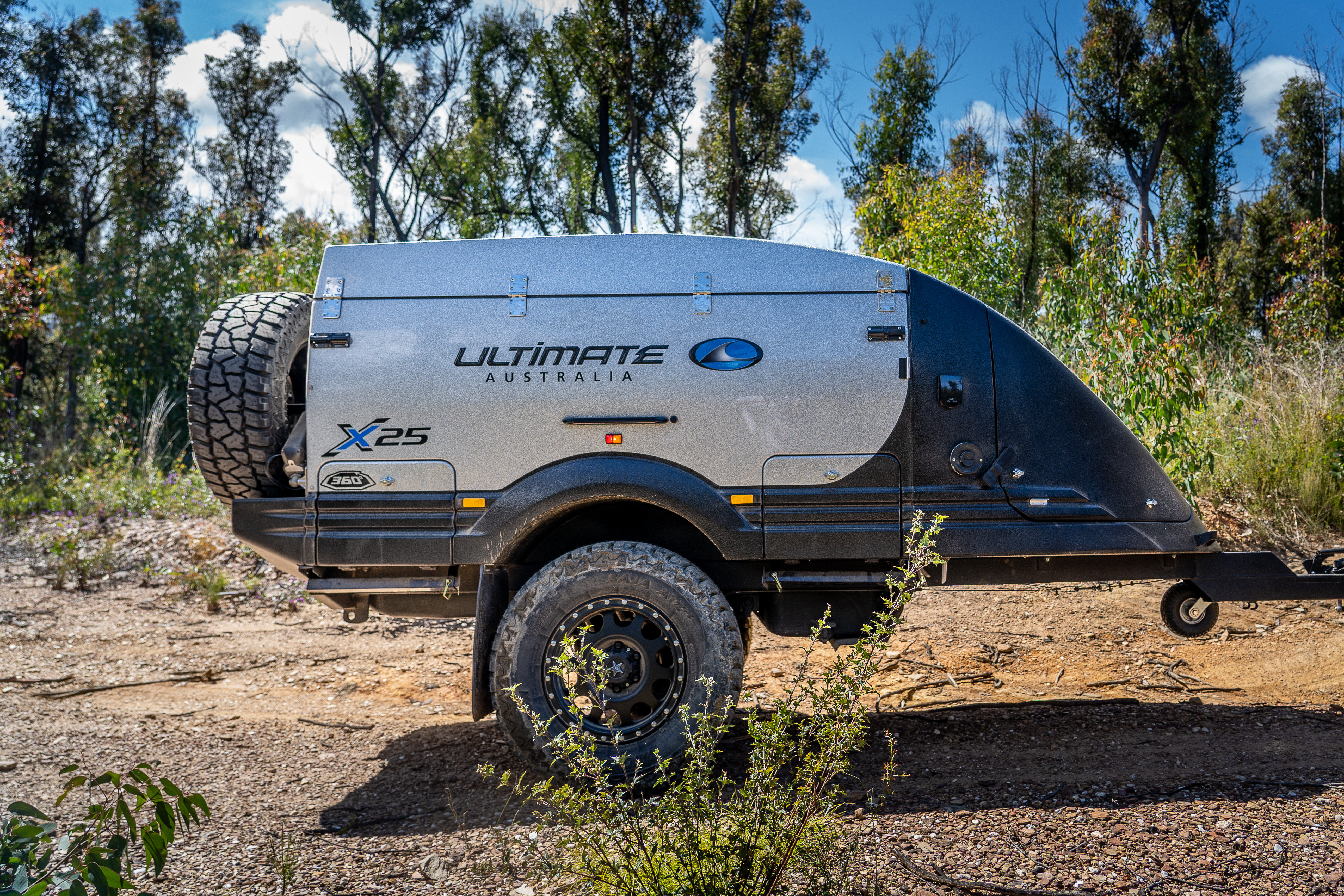
The X25’s unique high-riding body made us comfortable ducking and weaving through overgrown tracks, knowing that any wayward branches or logs hiding in the long grass weren’t going to pose the camper any danger. The lower quarter of the body and front storage box are coated in a sturdy bed liner, helping ward off any deep scratches. The short rear overhang is another welcome feature, making us more than confident negotiating tight turns in the scrub. Despite our Everest wearing a few battle scars, the Ultimate looked brand new after a hose-off.
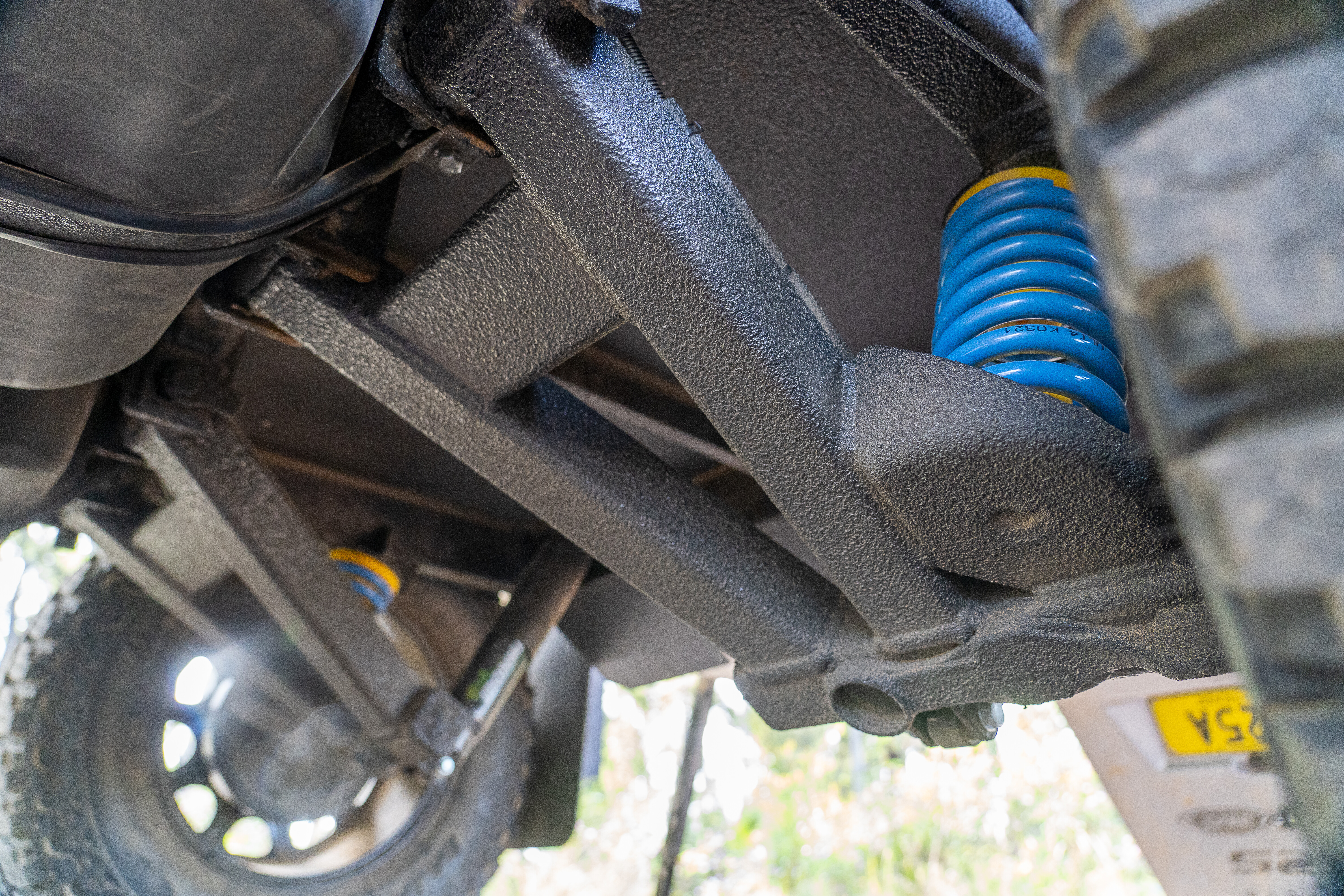
The X25 range rides tall on a high-tensile steel A-frame chassis. The Duragal steel is hot-dip galvanised before being welded together and getting a final coat of spray-on bed liner to seal and protect it against stone chips. The suspension is the ever-dependable independent Cruisemaster XT range, with air suspension available as an optional extra – the standard offering is coil springs and Ironman shock absorbers.
It’s one of the wider campers on the market at a full 2000mm in width – that’s 140mm wider than the Everest we were towing it with. We weren’t able to see past it with our standard mirrors and needed to keep a watchful eye negotiating traffic to and from the tracks. It’s far from a deal breaker and something you should easily get used to with tow mirrors.
THE SET-UP
While the Ultimate X25’s underpinnings might be traditional, the camper’s body and set-up is far from conventional. Riding high on the chassis is a full fibreglass tub that sets up a little different to most campers. Rather than traditional wind-up style stabiliser legs, the X25 uses an L-shaped brace that pins roughly into place using the jockey wheel to raise or lower the camper to get it level. It’s an interesting take that was easy to use, helped keep weight down, and removed another point of failure. That could almost be the Ultimate motto at this point.
The three legs are positioned strategically – one on the rear left and two on the right-hand side. With the legs clicked into place, there are a few latches to pop before an electronically operated actuator steadily winds the lid up and over to the right; the two right-hand stabiliser legs being more than enough to ensure everything remains planted. A tap over the balance point by hand, then the actuator winds in until the bed lid is parallel to the ground. A wireless remote controls the process, although there are hardwired switches and a mechanical backup.
With the lid firmly popped over, there are a series of buttons around the edge pinning the canvas into place and ensuring any rain doesn’t pool into the body itself. On the inside, a couple of poles clip into place and a three-piece king-sized memory foam mattress needs to be slid up from the internal dinette on to the bed. It takes a bit of manhandling, but is easier than expected and well-worth the effort.
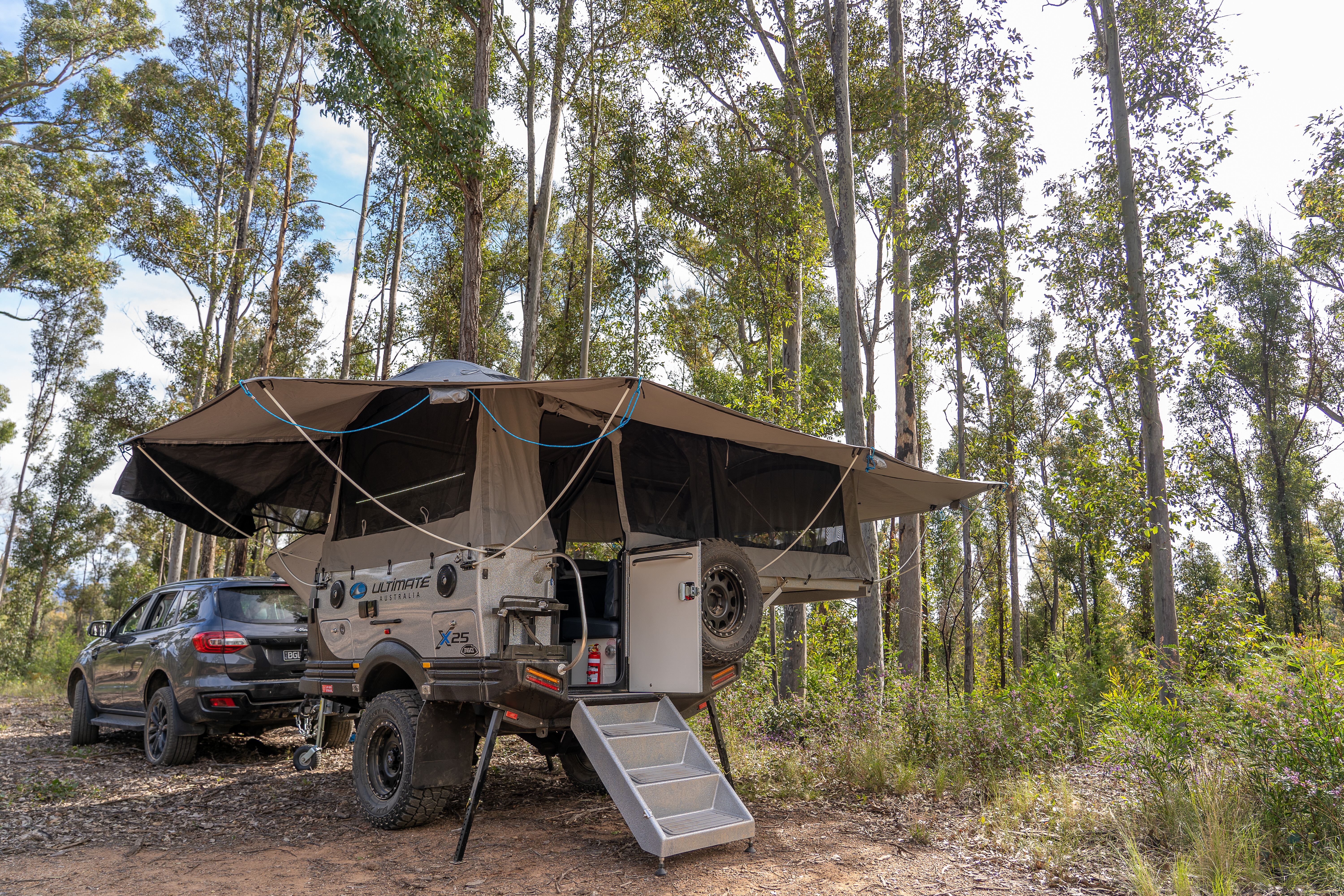
Finally, the external awning needs to be popped into place. It’s an ingenious 360º design with eight flexible poles that require no adjustment – just pop them in on one end and slip them into their corresponding mounts on the body. Integrated tie-down points make for an easy peg-down if high winds are expected.
All in all, with one person, you’re looking at less than 10 minutes set-up time to go from arriving at camp to going to sleep. There are a few oddities such as the folding mattress and the stabiliser legs, but they’re there to benefit the overall design and don’t add any fuss.
The only real downside we could find is that the awning offered protection for the camper from the elements, but really didn’t provide much in terms of outdoor coverage. You won’t be hiding from the rain beneath it, playing drinking games with friends.
Ultimate includes some brilliant clear-plastic window coverings for the camper, so if you’re hunkering down from the elements, you can let natural light in without letting the rain in. It’s one of those small areas where the attention to detail shows they’re designed by people who use them.
THIS IS LIVIN’
A unique aspect of the Ultimate range, and something we rarely see in any camper, is the indoor living design. In many campers, the inside is just where you sleep. Walking up the drop-down staircase into the interior and you’d be forgiven for thinking you were in a caravan.
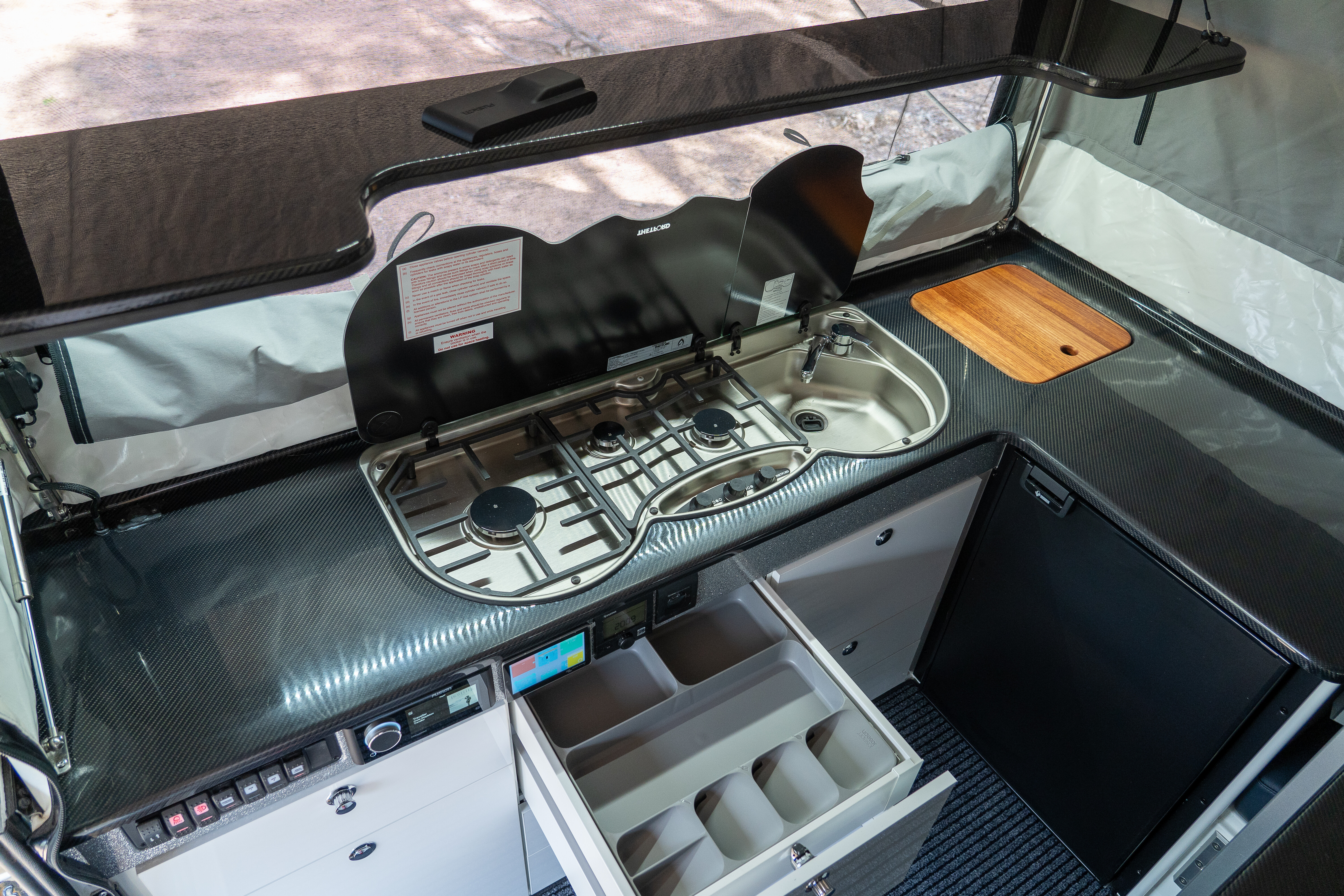
To the left is a galley kitchen with a recessed triple-burner stove top and sink. They’re set into a carbon-fibre bench top with an additional shelf above. Ample storage space underneath with soft-close drawers and a 130L Bushmans upright fridge to the side make it a true off-grid kitchen, rather than just a space to cook your food.
Company is welcome with a U-shaped lounge wrapped in leather and sporting a swivel table. Carbon fibre is used extensively to differentiate the limited-run X25 from the budget-focused models in the line-up; though all sport a similar layout.
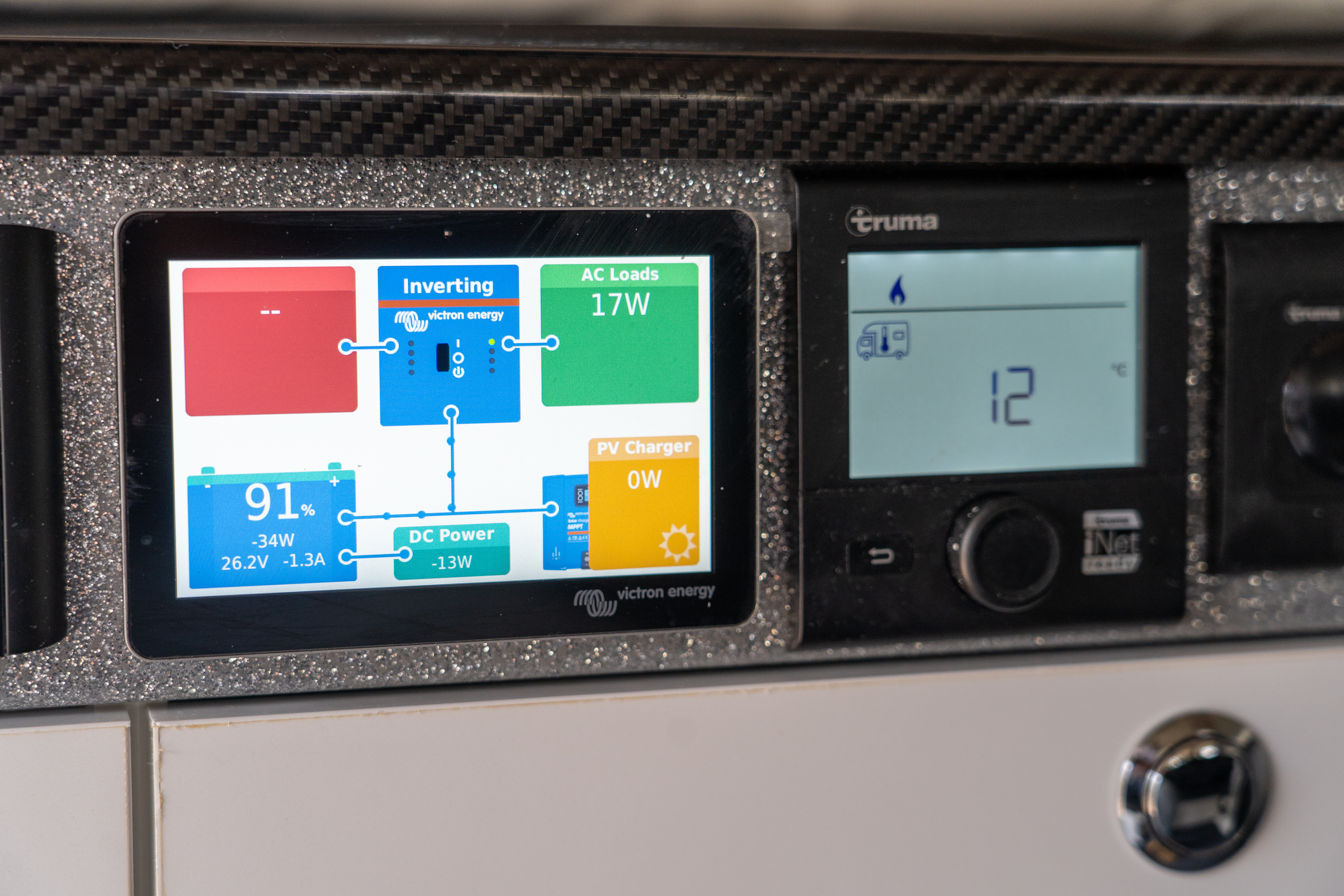
The kitchen serves as the electronics hub, the X25 sporting a 24V Victron power system with a monstrous 5.12kW battery. It’s all controlled via a touchscreen in the kitchen monitoring everything from water-tank levels to input charge from the 620W solar array.
The powerhouse electrical system is required to run the reverse-cycle air-conditioning system completely off-grid. If you’re after more efficient heating, there’s a Combi gas heater that’ll heat not only the kitchen water and external shower, but the tent as well. A clever extendable duct from the heater can be poked under your blankets on really cold nights.
The X25 also sports a top-of-the-line Fusion RA770 stereo linking a phones’ Bluetooth music to both the internal and external speakers. Both are controlled independently so your neighbours won’t know if you slip a little Barry White on late at night.
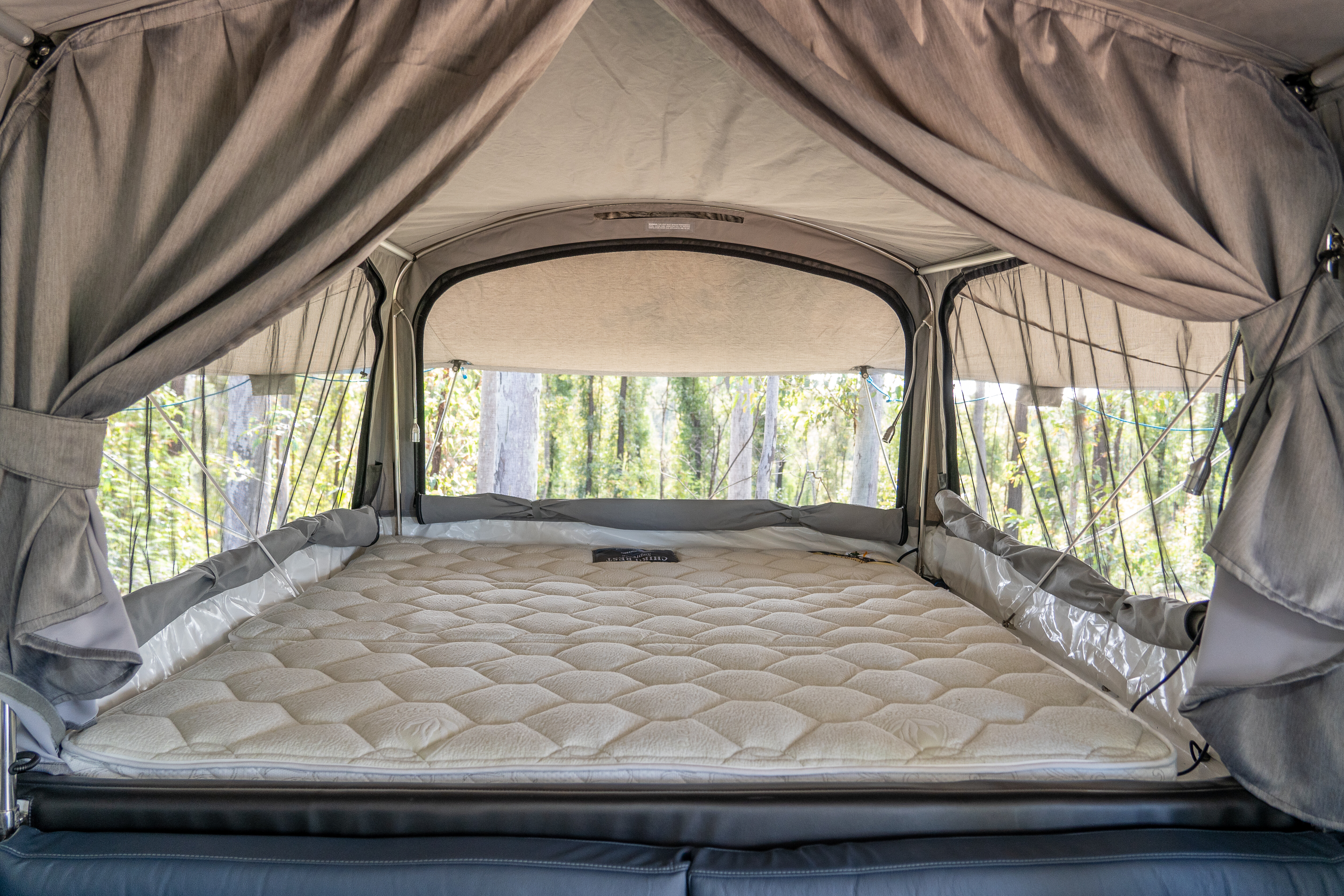
The main bed requires you to step up and over the lounge which isn’t always ideal; but once you’re up there, you’re treated to the best night’s sleep you’ll have on the memory foam mattress tucked in behind the privacy curtains. There are power outlets and reading lights too, as well as storage pouches.
If camping in an area you’re not comfortable with, the Ultimate’s solid door will give you peace of mind, thanks to its internal lock.
WHO SHOULD BUY ONE?
The specced-up X25 will cost you a little less than $100,000 depending on the options you’re looking for, and while that really puts it in a different market to your typical budget-orientated camper trailers, so should its features.
From the quick set-up times to the internal layout at camp, the Ultimate range is more in line with a caravan than a camper once you’re set-up. It also combines that immense and luxurious interior with low weight and high clearance, making it an unbelievably capable camper trailer in its own right.
If you were to rank any campers higher for their off-road performance, it wouldn’t be by much, and you’d be giving up a lot of the modern conveniences and comfort in the process.
If the idea of a $100,000 caravan seems alien to you, then the Ultimate probably won’t be on your shopping list. However, if you’re eyeing off caravans for big adventures but want something that will go wherever you want it to, then the Ultimate range and, specifically, the X25, is well-worth a look at. You just might have to explain to your neighbours why you now have a spaceship parked in your driveway.
AVAILABLE FROM: ultimatecampers.com.au RRP: $95,990
Ultimate Campers X25 specs
A 2021 Ford F-150 Lariat 4×4 has been brought into the country as Ford Australia considers adding the pick-up to its local line-up.
4X4 Australia can exclusively reveal images showing that the F-150 has been flown into Australia by Ford, as the company’s local arm looks to claw back market share from the likes of Ram and Chevrolet.
The popularity of full-size American pick-ups has grown in recent years, with many Australian buyers choosing to purchase Ford F-Trucks from smaller importing companies with aftermarket right-hand-drive conversions.
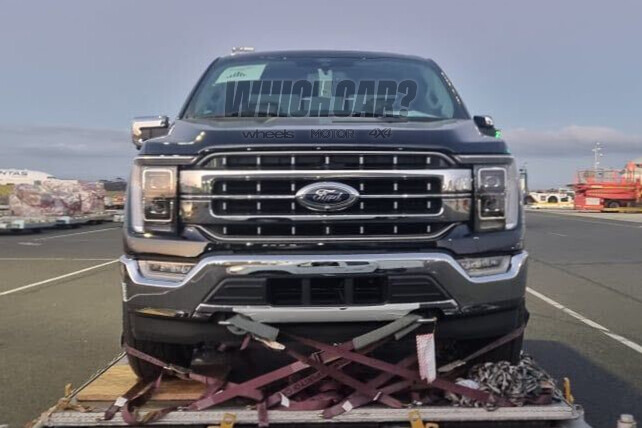
It appears Ford Australia is now considering offering the F-150 here – likely investigating the need to convert the utes to right-hand-drive once they land in the country.
The F-150 pictured is a Lariat – a mid-range variant with leather and dual-zone climate control – optioned with the chrome appearance package, 20-inch ‘chrome-like’ PVD wheels, and four-wheel drive.
Buyers in the US can choose from a 2.7-litre turbo-petrol V6, a 3.5-litre turbo-petrol V6 with or without hybrid assistance, or a 5.0-litre petrol V8, with both rear-wheel or four-wheel drive available. All engines are coupled with a 10-speed automatic transmission.
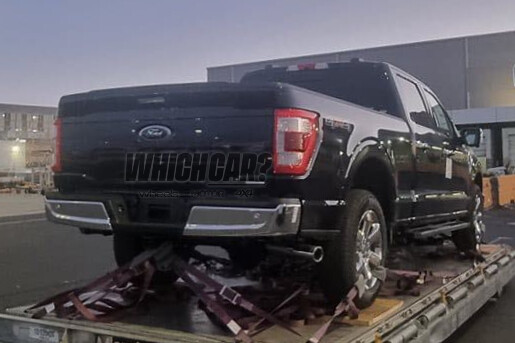
It’s understood the 3.0-litre turbo-diesel V6 option was dropped from the line-up in July – likely to help differentiate the F-150 from the upcoming 2022 Ford Ranger, which is rumoured to be using the engine.
The side-exit exhaust pipe behind the right rear wheel suggests the model brought to Australia is indeed the V8 – however, given Australian buyers’ love of diesel engines, the 3.0-litre turbo-diesel Power Stroke V6 cannot be entirely discounted.
If the Ford F-150 was offered locally, as well as the obvious competitors from Ram and Chevrolet, it’s expected the vehicle would be positioned as an alternative to the recently-released 2022 Toyota LandCruiser 300 Series.
A spokesperson for Ford told 4X4 Australia the company does not have any news to share about plans to bring the F-150 to our shores.
It’s been three years since we first laid eyes on the Ford Ranger Raptor and two years since it scored our 4×4 of the Year accolade, and not much has changed with the model during that time.
There have been a few small tweaks to equipment levels in line with the model year changes across the Ranger line-up, but for the main part the Raptor continues unchanged.
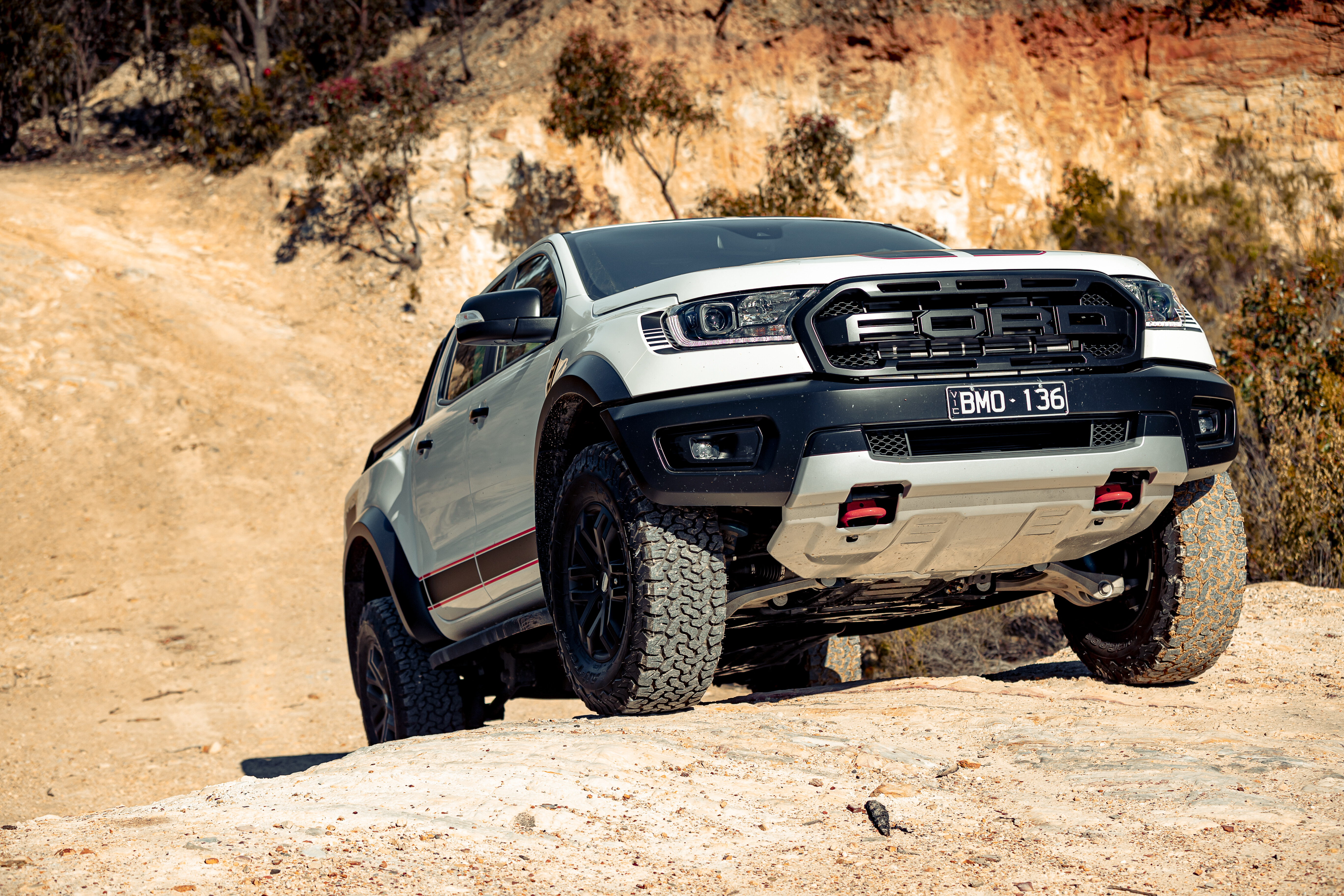
For the end of MY2021 – and as the current PX2 Ranger nears the end of its model life – Ford has given the flagship Ranger a spruce-up and dubbed it the Raptor X.
While the Raptor X is predominately a new sticker pack with a few other styling tweaks, we thought it was a fine time to get back behind the wheel of one of our favourite double-cab utes.
POWERTRAIN & PERFORMANCE
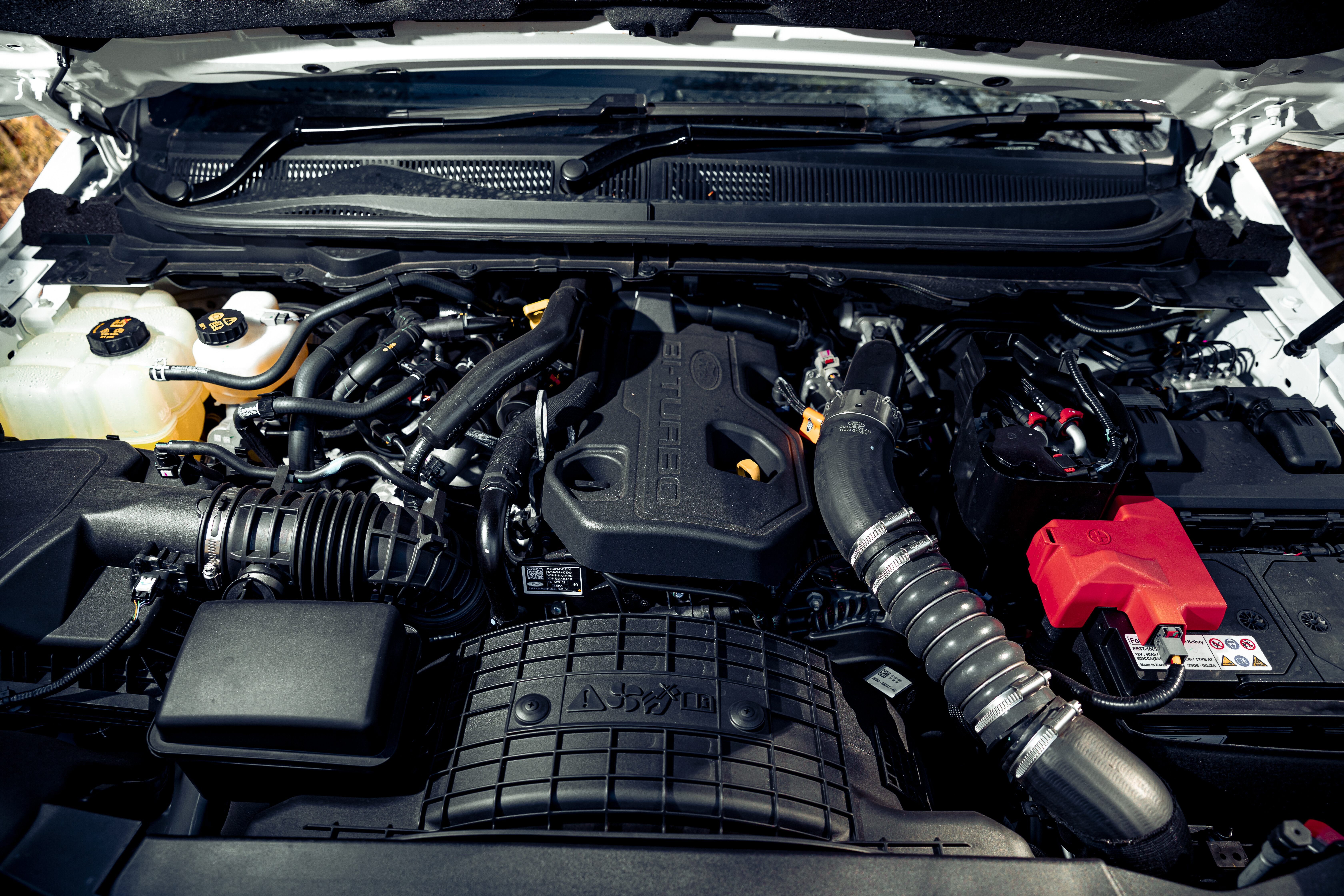
The Ranger Raptor X remains driven exclusively by the four-cylinder bi-turbo diesel engine backed by Ford’s 10-speed automatic transmission and part-time four-wheel drive.
All too often described as underpowered for a performance flagship, the 2.0-litre diesel engine puts out an unchanged 500Nm and 157kW, which remains class-leading for any four-cylinder 4×4 ute.
While those numbers might be class-leading and adequate in day-to-day use, we agree with the pundits that it doesn’t live up to the Ford Performance moniker and leaves the Raptor as one of those vehicles where the chassis is capable of so much more than the powertrain can deliver.
It’s a car where we find our right foot planted on the firewall more often than any other, where the space and terrain allow you to make the most of the exceptional chassis.
“The Raptor X is the best off-the-showroom-floor touring ute you can currently buy”
As for the transmission, it is relatively fuss-free and smooth; although, we do feel it gets a bit lost for gears under light throttle when driving in the suburbs. Alternatively, it does a great job banging through its plentiful ratios when you have the foot to the floor and the Multi Terrain Selector (MTS) in Baja mode.
The performance deficit and transmission foibles are just a couple of items that we, along with many other Ranger fans, hope will be addressed with the all-new 2022 Ranger Raptor.
Something the Raptor gets over other Ranger models is a version of the MTS. This adjusts the vehicle’s electronic systems such as the stability and traction control calibration, throttle, ABS and transmission inputs, to best suit the way the car is being driven.
As well as the regular Rock, Sand and Snow modes, the Raptor gets Baja mode, which winds everything up to 11 to let the driver have the most control and fun.
ON-ROAD RIDE & HANDLING
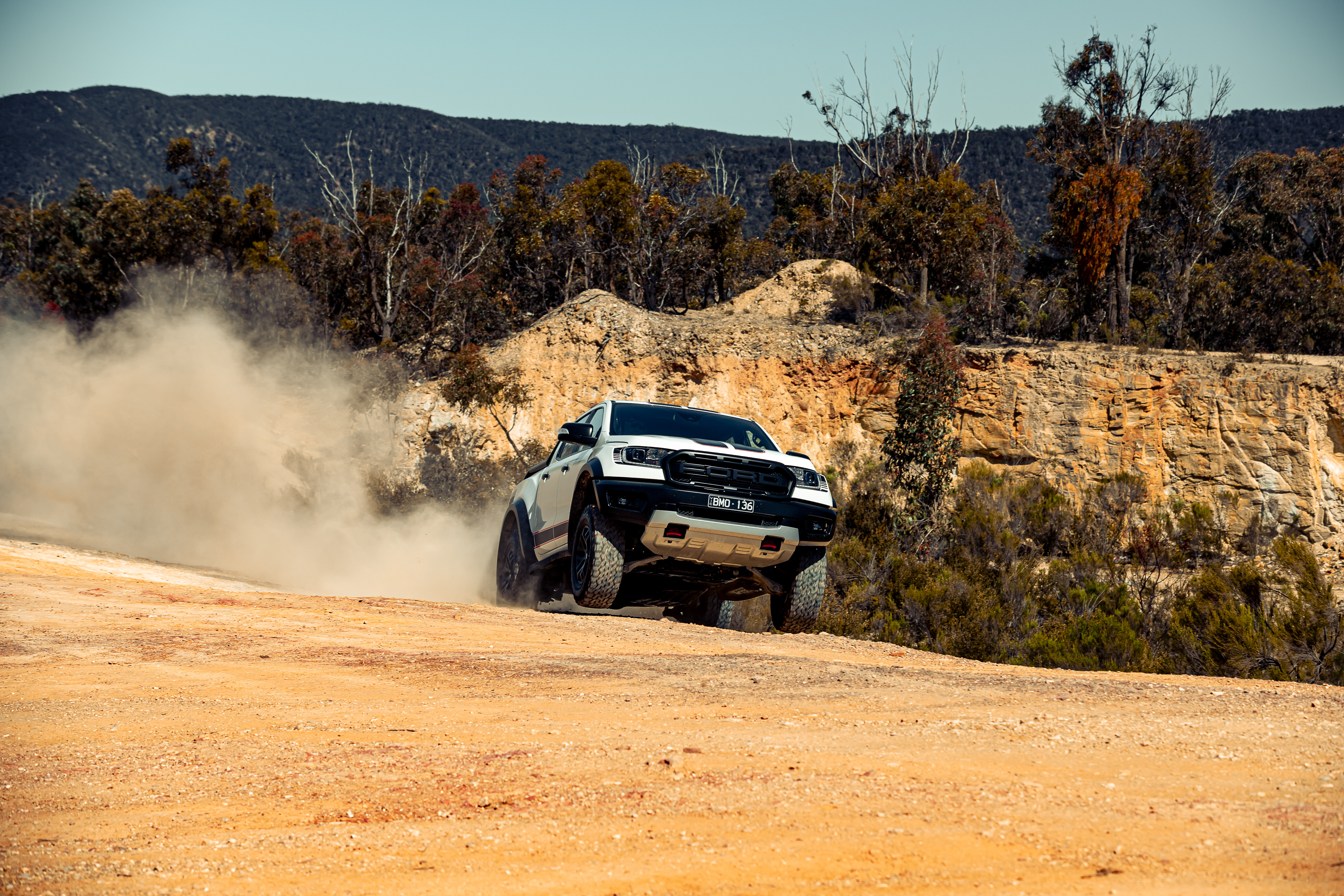
While the Raptor’s bespoke suspension has been optimised for off-road use, it does have huge benefits on-road.
The Watts link-equipped coil-spring rear suspension is adapted from the Everest wagon and, together with the Fox coil-over shocks, delivers superior ride quality, body control and handling compared to working-class ute designs with leaf springs.
All-terrain tyres and an increased ride height over a standard Ranger don’t help with on-road dynamics, but this is a car set up for all-road use. The tyres are relatively quiet on-road compared to other ATs.
OFF-ROAD
Ford Performance used its knowledge from developing the F150 Raptor in the USA when it worked with Fox Suspension and BFGoodrich, to develop the set-up for the Ranger.
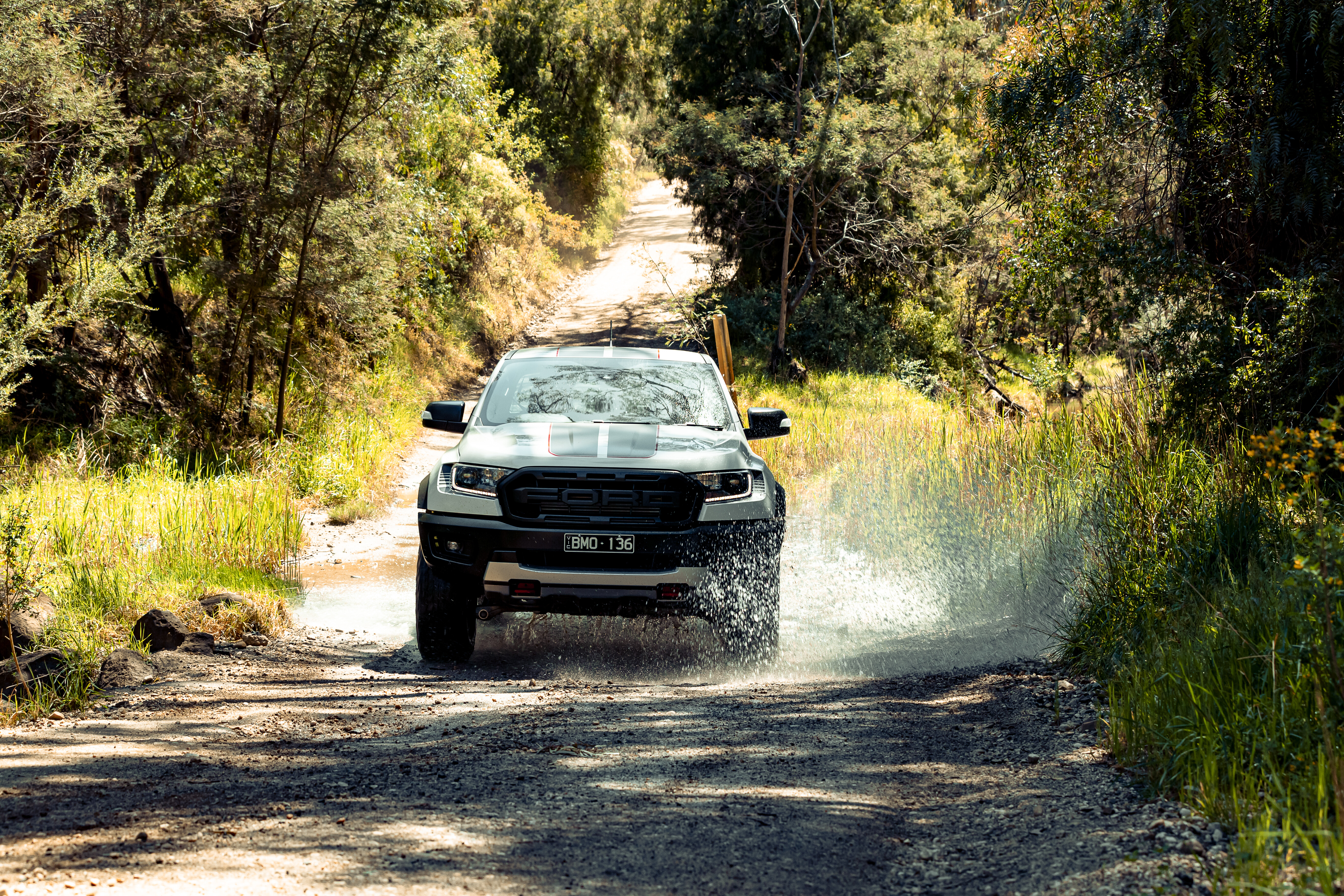
The wider wheel track, aforementioned rear coil set-up and Fox coil-overs and BFG tyres deliver a package that eats up rough roads and tracks at high speeds.
While most of us don’t get to drive at high speeds on public roads, that superior control afforded by the well-designed package and its quality components works equally as well when driving on any rough road, at any speed. This works when touring, as the driver has less body movement and bump steer to contend with, to give him or her better control resulting in a more relaxed drive, especially over long periods. Perfectly suited for Australia’s outback roads.
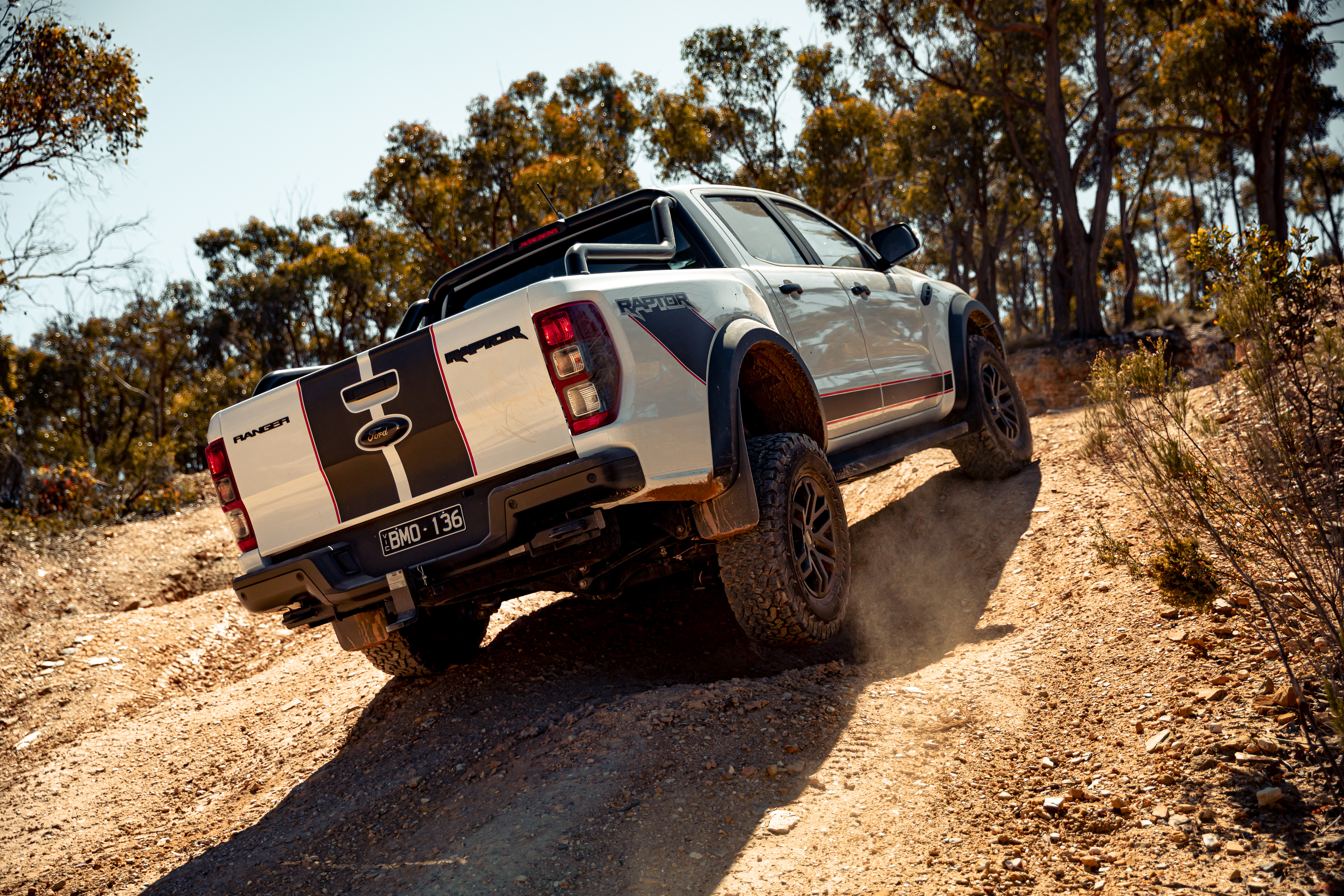
The package also works well for low-speed off-roading, with better rear axle travel than a leaf-sprung Ranger.
Ford’s excellent electronic traction control is still there when you have the rear diff lock engaged, with the added ride height and sturdy side steps there to help you over obstacles.
This is the best factory suspension package you can get under any readily available production 4×4 in Australia, bar none, and it would cost you tens-of-thousands of dollars to successfully emulate it using aftermarket equipment. We are truly thankful Ford offers it off the showroom floor.
CABIN & ACCOMMODATION
The interior of the Raptor has always had a premium feel to it, and in Raptor X guise it has seen some changes.
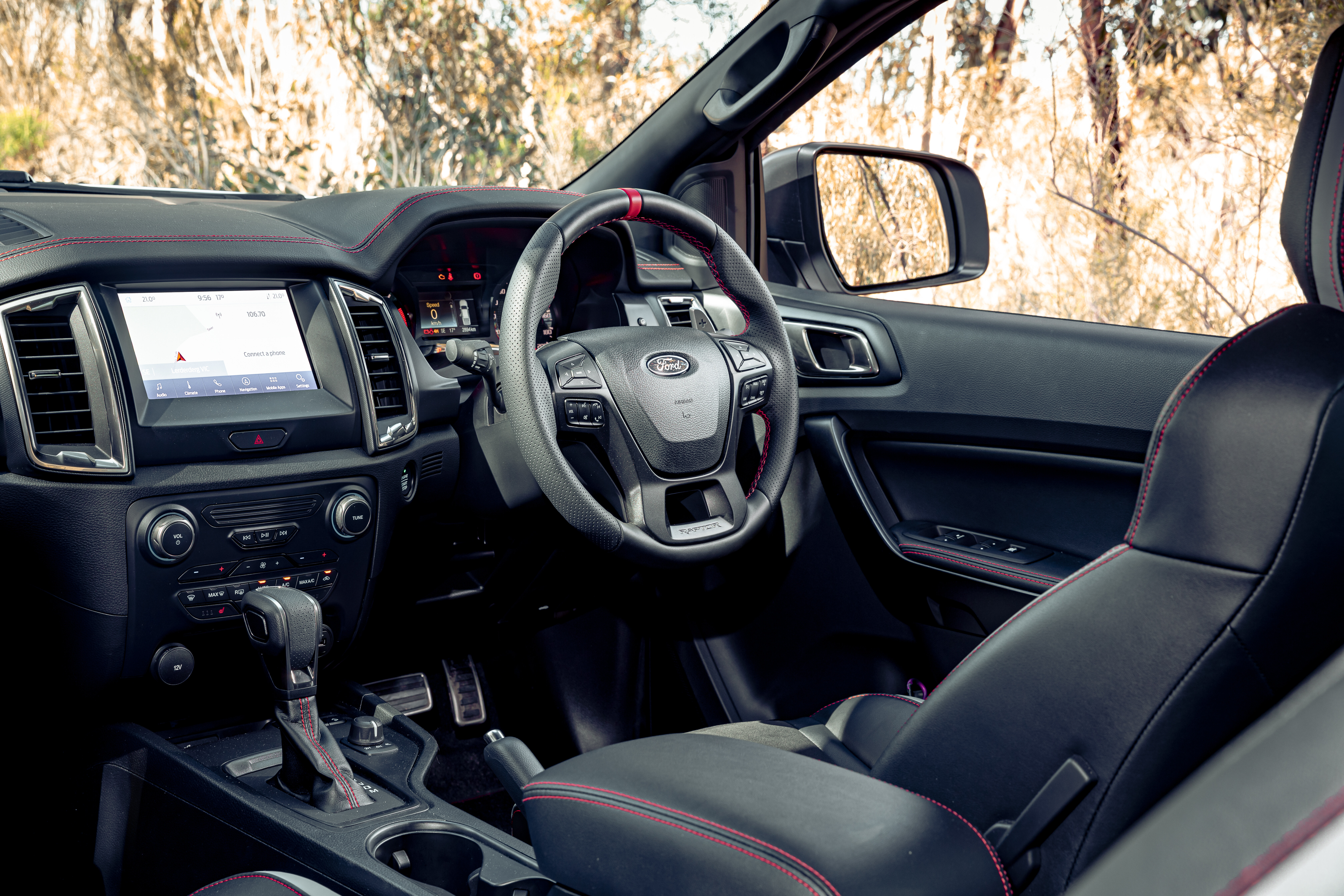
The loss of the CD player in the audio system was an across-the-range change, but the Raptor X has also lost its 240V power outlet from the back of the console, vanity lights behind the sun visors, light in the cargo tub, and the ‘RAPTOR’ embroidery that was on the floor mats. A bit of a rough deal when you consider the price has gone up more than $3000 and the only extras are the stripes.
The well-bolstered and supportive seats and thick soft-feel steering wheel remain, while the Ford Performance Blue stitching that was previously on the dash and seats has now changed to red; maybe red makes them faster! There’s also a new black finish on some of the dash and vent plastics.
The Ranger’s interior has always been a big and comfortable place to ride, and it has aged well.
PRACTICALITIES
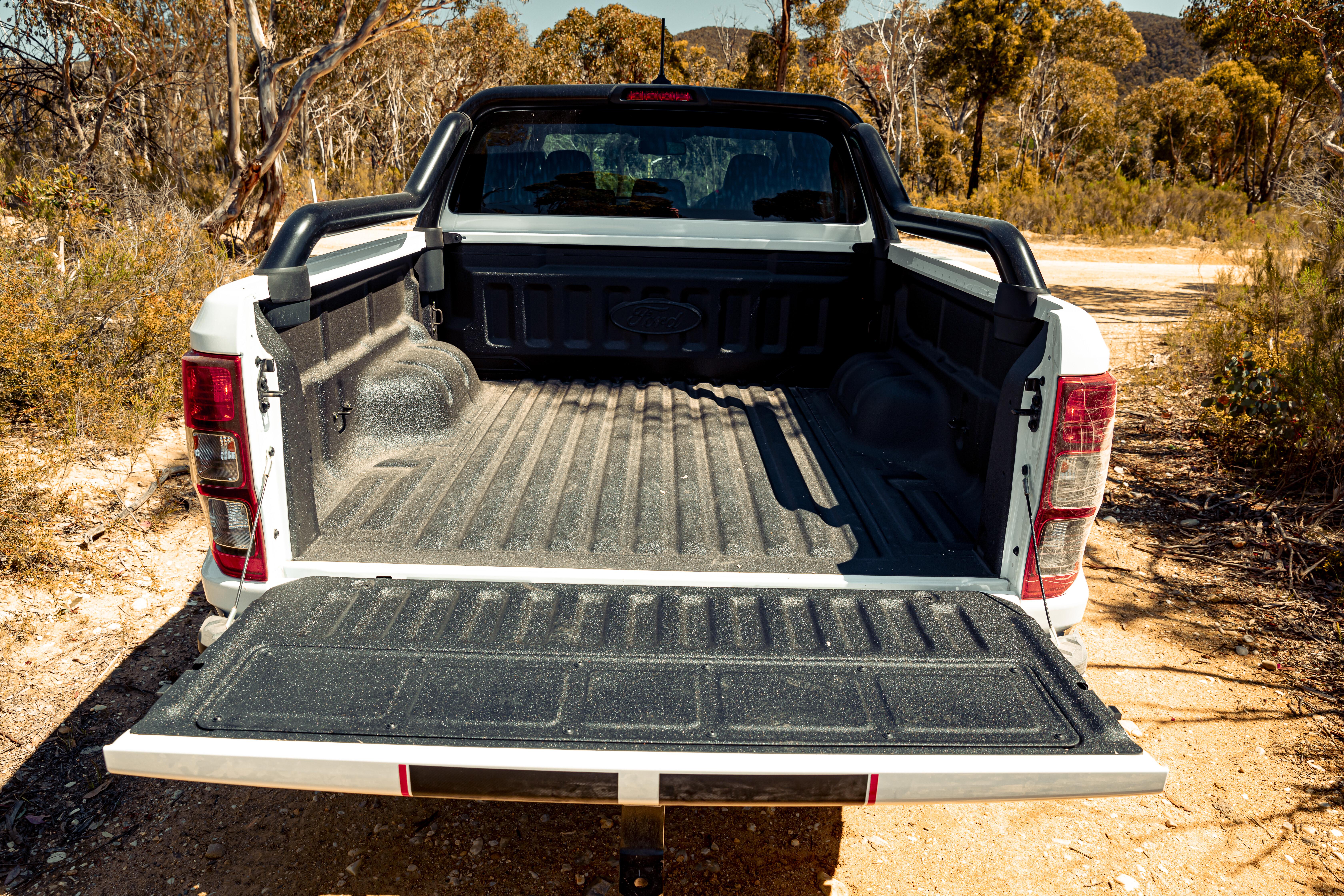
For all the great attributes of the Raptor’s off-road-bred suspension, it does sacrifice a few things on what makes a ute so practical. Specifically, the Raptor X can’t haul as much as a regular leaf-sprung Ranger.
The towing capacity drops from 3500kg to 2500kg, and the payload is rated at 758kg where most 4×4 Rangers are rated to carry closer to 1000kg and more.
The Raptor’s big 285/70R17 BFG all-terrains are a great addition to any car and we’re stoked you can have them fitted from factory. These and the extra height of the suspension give the Raptor X ground clearance of 283mm and a wading depth of 850mm – both up from the regular 2.0-litre Ranger. The burly towing hooks in the front bumper have changed from black to red.
SUMMARY
The two things most owners are likely to replace when they are building a new ute to be a capable and comfortable touring vehicle, are the tyres and the suspension. With the Raptor X, Ford has already done this for you and it hasn’t scrimped on cheap parts, as the kit beneath the Raptor is top notch. Plus it’s all legal and covered by the factory Ford warranty.
With this in mind, the Raptor X is the best off-the-showroom-floor touring ute you can currently buy. It’s no wonder it scored so well at the 2019 4×4 of the Year.
Sure, it doesn’t tow or carry as much as other utes, but that’s not what the Raptor X is made for. It will eat up outback kilometres better than anything else that’s standard, and it’s smoother, more comfortable, more controlled and safer than any other standard ute.
In fact, the Raptor X could probably take the 4X4OTY win again if it were held today.
FORD RANGER RAPTOR X SPECS
Any suggestion Toyota’s new 3.3-litre V6 diesel in the 300 Series LandCruiser is 100 per cent new from the ground up is wrong. Yep, that’s right; it’s not an entirely new design.
This new V6 can be seen as the old V8 with two cylinders lopped off one end of the cast-iron block, and then topped with all-new (but still DOHC four-valve) cylinder heads, and more sophisticated fuel-delivery and turbo systems.
Now that may be a simplification, but the fact remains the 4.5-litre V8 and the 3.3-litre V6 both have 86mm cylinder-bore and 96mm piston-stroke dimensions, both have a cast-iron block, and both have their cylinder banks set 90-degrees apart.
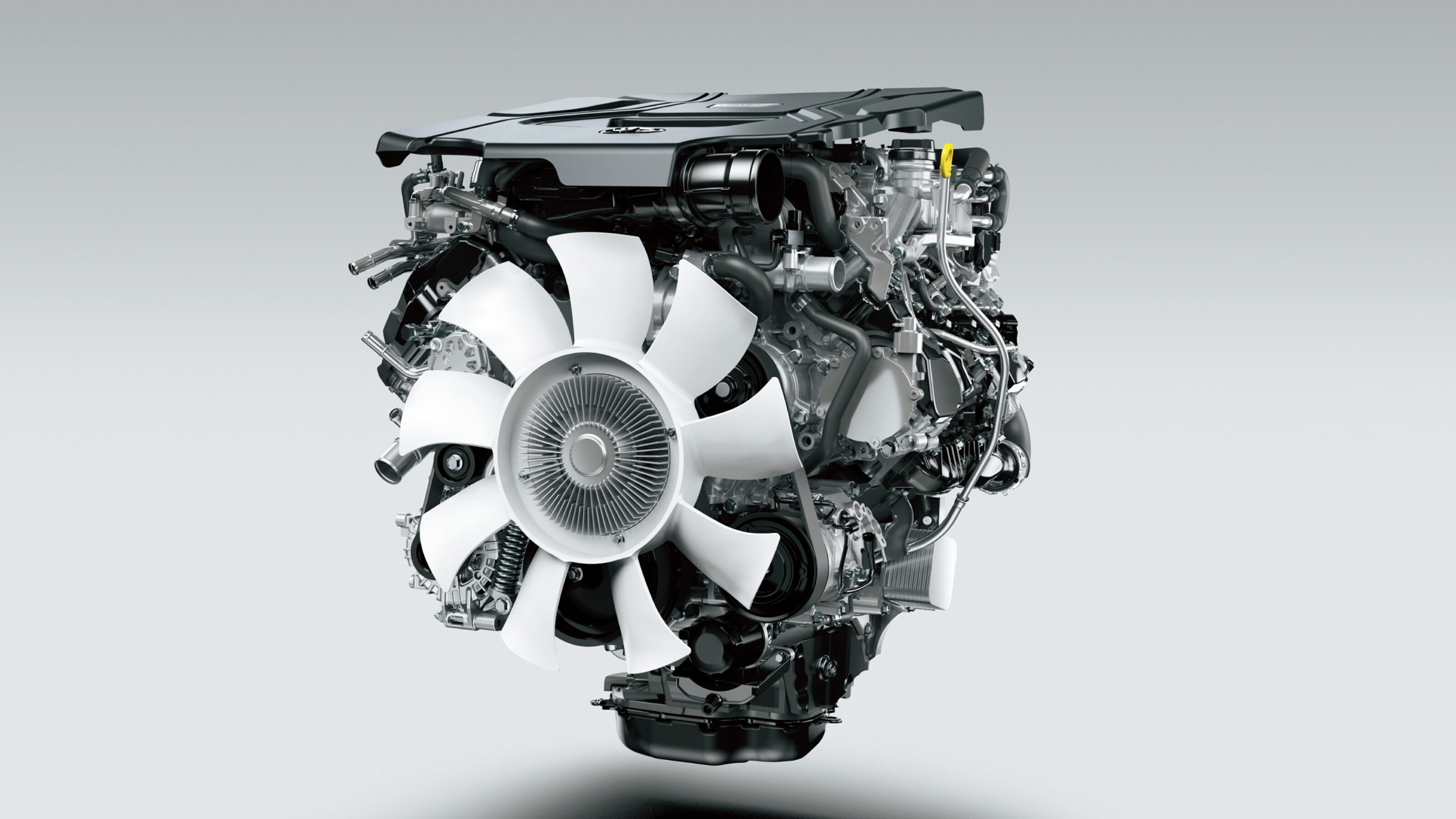
The retention of the exact bore and stroke dimensions is somewhat unexpected given the bore-stroke ratio of passenger-car and light-commercial-vehicle diesel engines has been constantly evolving in the last 20 years as diesel technology has moved into new and uncharted territories.
The V6’s 90-degree vee angle is also unusual given V6s are almost all 60-degree designs, and for good reason. But more on that later.
All this is not to say that the new 3.3-litre V6 isn’t a great leap forward given it makes more power (227kW vs 200kW) and more torque (700Nm vs 650Nm) than the 4.5-litre V8, despite losing two cylinders and 25 per cent of its working capacity. It also gets by with a lower and less mechanically efficient compression ratio of 15.4:1 compared to the V8’s 16.8:1, which makes its increase in power and torque for each unit of engine capacity even more impressive.
The ‘little’ V6 has it over the ‘big’ V8 in both maximum power and maximum torque thanks largely to its sophisticated sequential-parallel twin-turbo system, which has more pumping volume than the V8’s relatively simple parallel twin-turbo system. In essence, the V6’s turbos work together and build on each other in terms of pumping volume, whereas the V8’s turbos work independently of each other and are more limited in what they can do as a result.
A new high-pressure (up to 40,000psi) common-rail fuel injection system, as well as the largely in-piston new-design combustion chambers, also play key roles in the jump in specific power (from 44.8 to 67.8kW/litre) and specific torque (146 to 209Nm/litre).
Unlike the V8 whose two turbos are mounted outside the cylinder banks, the V6’s turbos are mounted between the cylinder banks as the cylinder heads are turned around so their exhaust ports face in to the vee. This is what’s called a ‘hot V’ arrangement and it explains why the V6 retains the 90-degree vee angle.
Having the two cylinder banks angled farther apart (at a 50 per cent wider angle in fact) means more space for the two turbos that sit side-by-side, and more space in and around the turbos. So the ‘hot V’ can be a little less hot, which is what you want for long-term reliability.
There’s been some criticism of the ‘hot V’ concept as being unsuitable for Australia’s hot climate, but given the main market for the 300 is in the Middle East, one can only assume that Toyota would have had a long, hard think about hot-climate suitability. The 300 was also a very long time coming, with advanced prototypes being tested and in Australia as long along ago as 2015, so it has a good deal of development behind it.
The 90-degree vee angle does have a downside in as much as a V6’s inherent vibration is kept to a minimum when the cylinder banks are set at 60 degrees, and by widening up the angle to 90 degrees means the inherent vibration becomes more forceful. To counter this, a somewhat complex two-piece counter-rotating balance shaft driven off the crankshaft is employed.
All of which raises the question: Why didn’t Toyota make a straight six? Unlike a V6, a straight six is perfectly balanced (no need for a balance shaft) and it offers simplicity of turbocharging given the convenient placement (all in one line) of the exhaust ports. A straight six is also cheaper and simpler to make given it has less parts, all of which explains why manufacturers such as Mercedes-Benz (with its latest G-Wagen) and Land Rover/Range Rover have gone the straight-six way.