
Nissan Patrol and Toyota LandCruiser have been fierce rivals since both Japanese brands started building their own ‘Jeeps’ in the second half of the 1950s. Now, as they both mark 70 years of their respective nameplates, Toyota has graced us with an all-new LandCruiser in the form of the 300 Series – the first new Cruiser in more than 14 years.It’s only fitting then that we pitch it up against its traditional foe in the current model Y62 Nissan Patrol. While the Cruiser might be new, the Patrol is more than 10 years old now and even though there has been a few facelifts and upgrades over that time, it’s still essentially the same package – and that’s a good thing.What we have here is the top of the range Nissan Patrol Ti-L which sells for $93,365 and lines up against the similarly specified LandCruiser Sahara at $130,190. The Sahara used to be the top-spec model in the Cruiser range but now there are both the GR Sport and the Sahara ZX model above it topping out at $138,790.
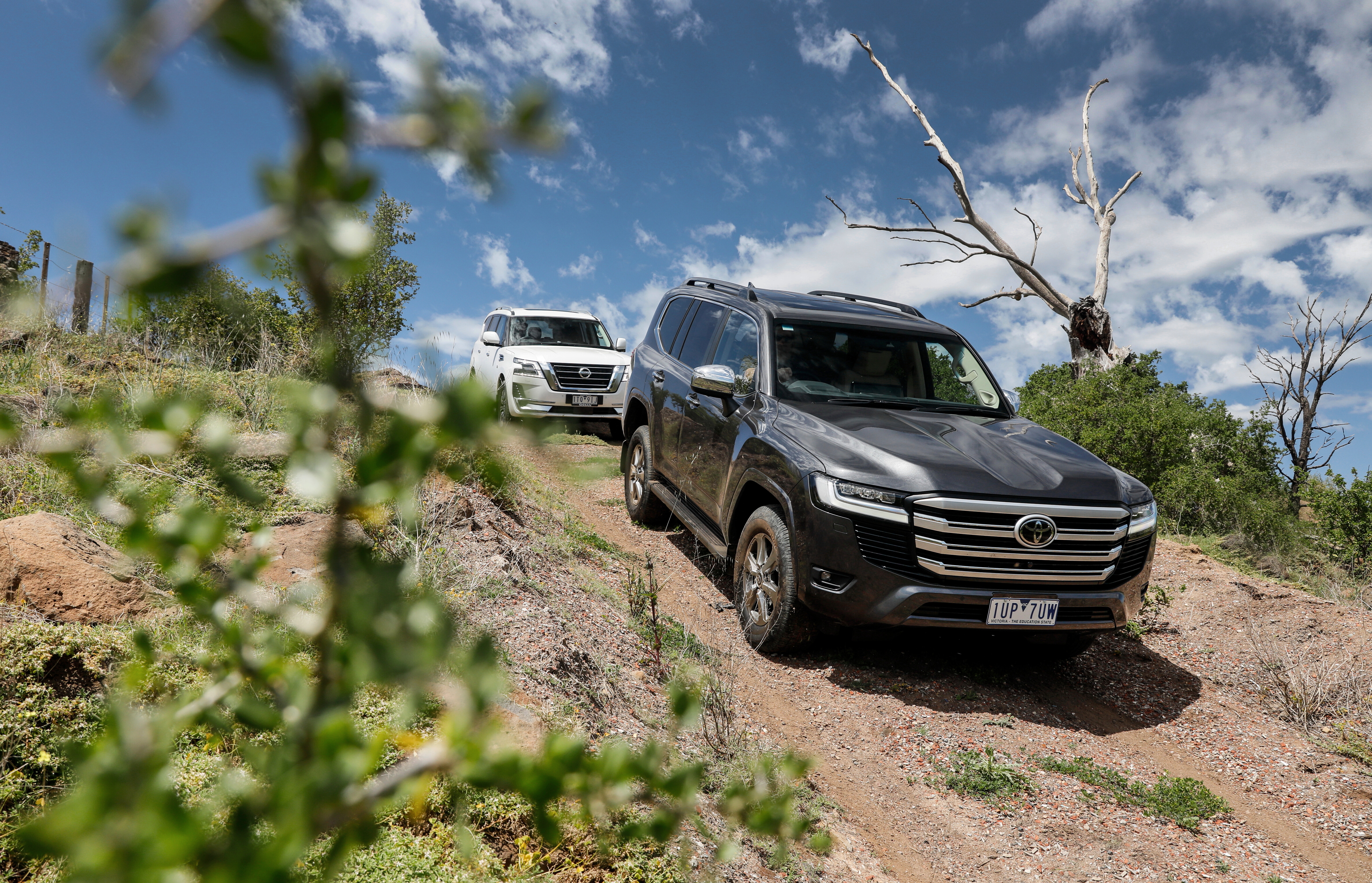
LANDCRUISER 300 SAHARA
POWERTRAIN & PERFORMANCE
All LandCruiser 300s are powered by a 3.3-litre twin-turbo V6 diesel engine that makes 700Nm of torque and 227kW of power, so it has higher outputs than the old V8 diesel engine.An interesting thing about the design of this engine is that it is a ‘Hot-V’ design. This means that the exhaust manifolds and the turbochargers are mounted in the V between the cylinder heads and the intake manifolds are on the outside of the engine. This helps to make the engine more compact and puts the turbochargers closer to the exhausts ports to reduce lag.
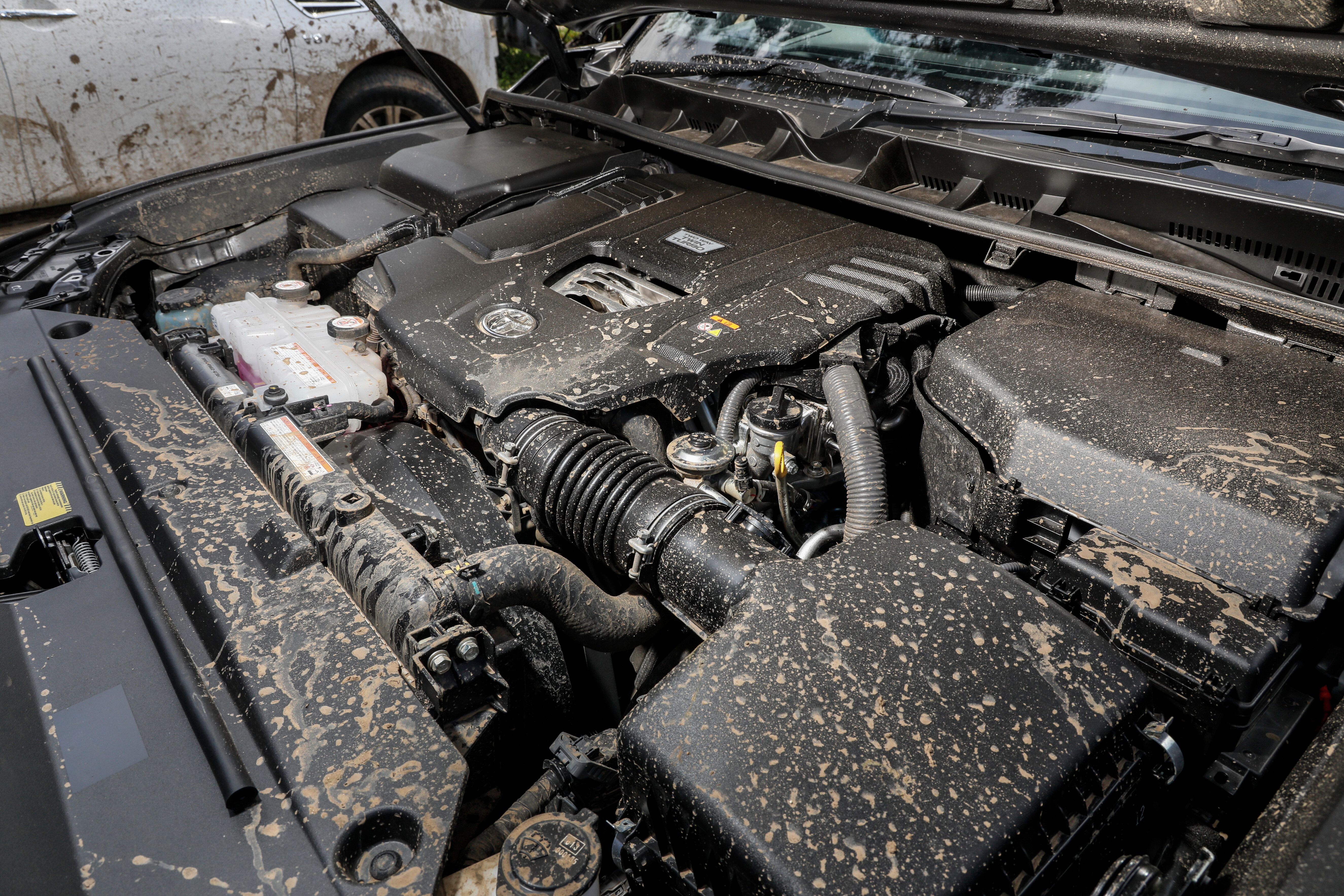
With all that heat now at the top of the engine, Toyota has had to do away with the top-mounted intercooler as used on previous LandCruisers and moved them up behind the grilles under the headlights. I say them, as there are two of them and they are now fluid-to-air design so they should be more efficient. Anyone travelling in regional areas will want a decent bullbar to protect the coolers from frontal impact. More often than not, it’s the corners of the front bumper that cop a ’roo and that’s exactly where the intercoolers are mounted, just like in the new Defender.The 90-degree V6 engine is a smooth and torquey performer that feels to get on with the job much more swiftly than the old 1VD V8. It’s quiet and punchy and works seamlessly with the new 10-speed automatic, which is the only transmission offered in the 300. Previous testing has shown it to be a capable towing powertrain with a 3000kg dual-axle trailer hitched behind the Cruiser.
ON ROAD RIDE & HANDLING
THE LC300 retains the same suspension format from previous LandCruiser models of an IFS and live rear axle, both riding on coil springs, but it has been heavily revised. There’s no fancy height adjustment or trickery to it, however the Sahara does have variable dampeners for comfort and sport settings.In the traditional LandCruiser way, the suspension is soft and supple to deliver a smooth and comfortable ride, but it gets a bit wild and wallowy when pushed hard on tight roads or tracks. The sport setting on the dampeners does address this a bit, but it’s never as composed as the Patrol on such roads.
OFF ROAD
IT wouldn’t be a LandCruiser if it didn’t excel off road and the LC300 has again raised the bar in this regard. Specifically in its electronics with the best calibrated traction control system we have ever driven. The L663 Defender has held that honour for the last 12 months or so but the LC3 has taken the title.Once again, we were impressed by the calibration and fast-acting nature of the electronic traction control (ETC) and amazed by how smoothly and effectively the Crawl Control system operates.
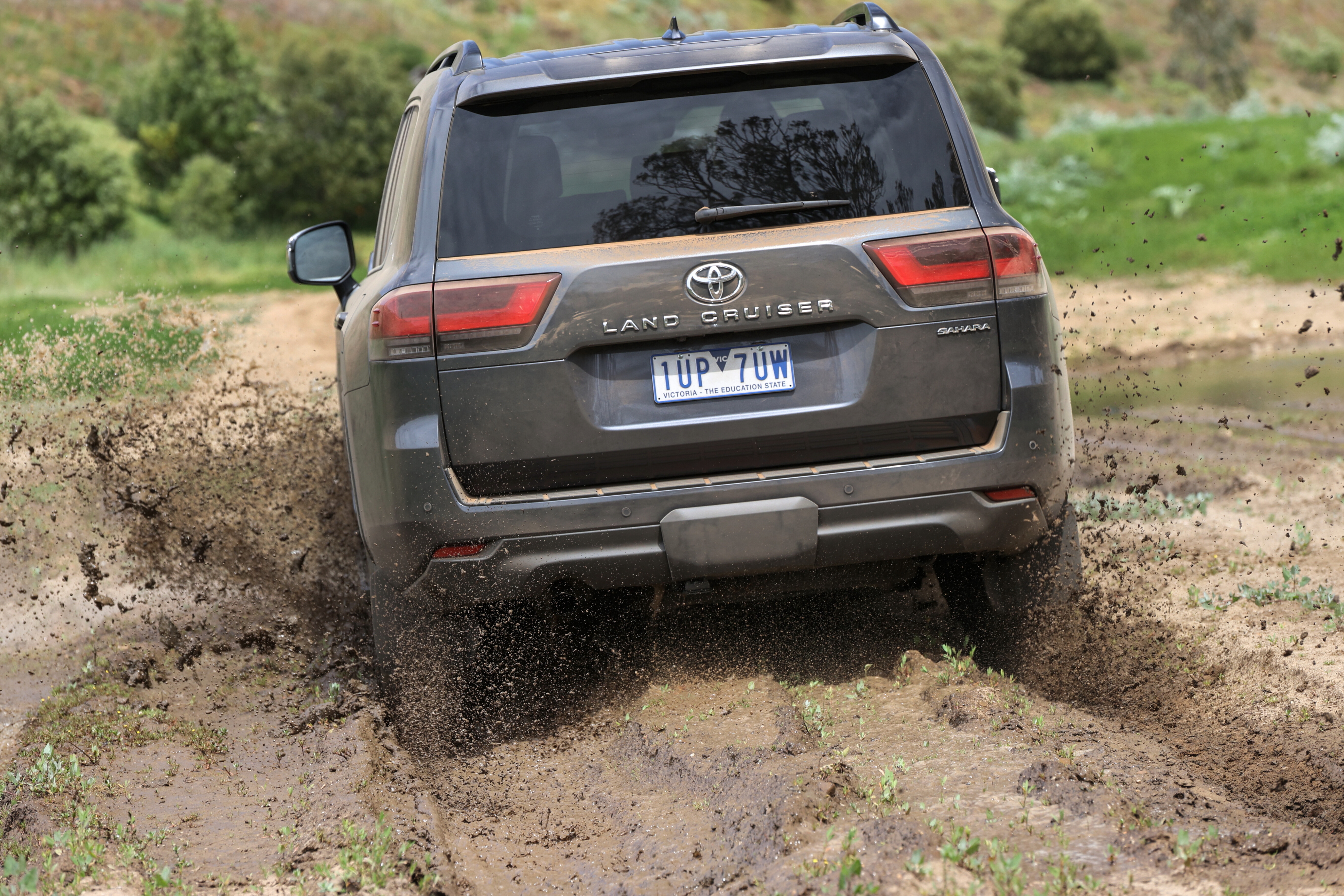
The Cruiser smoothly and effortlessly crawled its way up our rutted hill climb on this test and has surprised us on some rocky climbs in other recent tests. Only the centre differential is lockable, as the Sahara relies on its electronics and has pretty good wheel travel.Only the GR Sport LC300 model is available with factory front and rear lockers.
CABIN & ACCOMMODATION
THE inside of the 300 instantly feels like a LandCruiser so LC200 owners should be comfortable in there. It’s big and plush and should be perfectly suitable for long road trips with the family. The new dashboard has a massive configurable AV screen and the system now includes CarPlay and Android auto.The centre stack is busy with buttons and they take a bit of getting familiar with. We found that in some light the silver buttons glare back in to the drivers or passengers face when you look at them.The lower seating position in the 300 compared to the 200 is appreciated by taller folks, as it puts the driver in a better position and gives a better view of the surroundings through a lower window-line. Of course the seat can be raised if needed and the steering column is power adjustable for both reach and height.
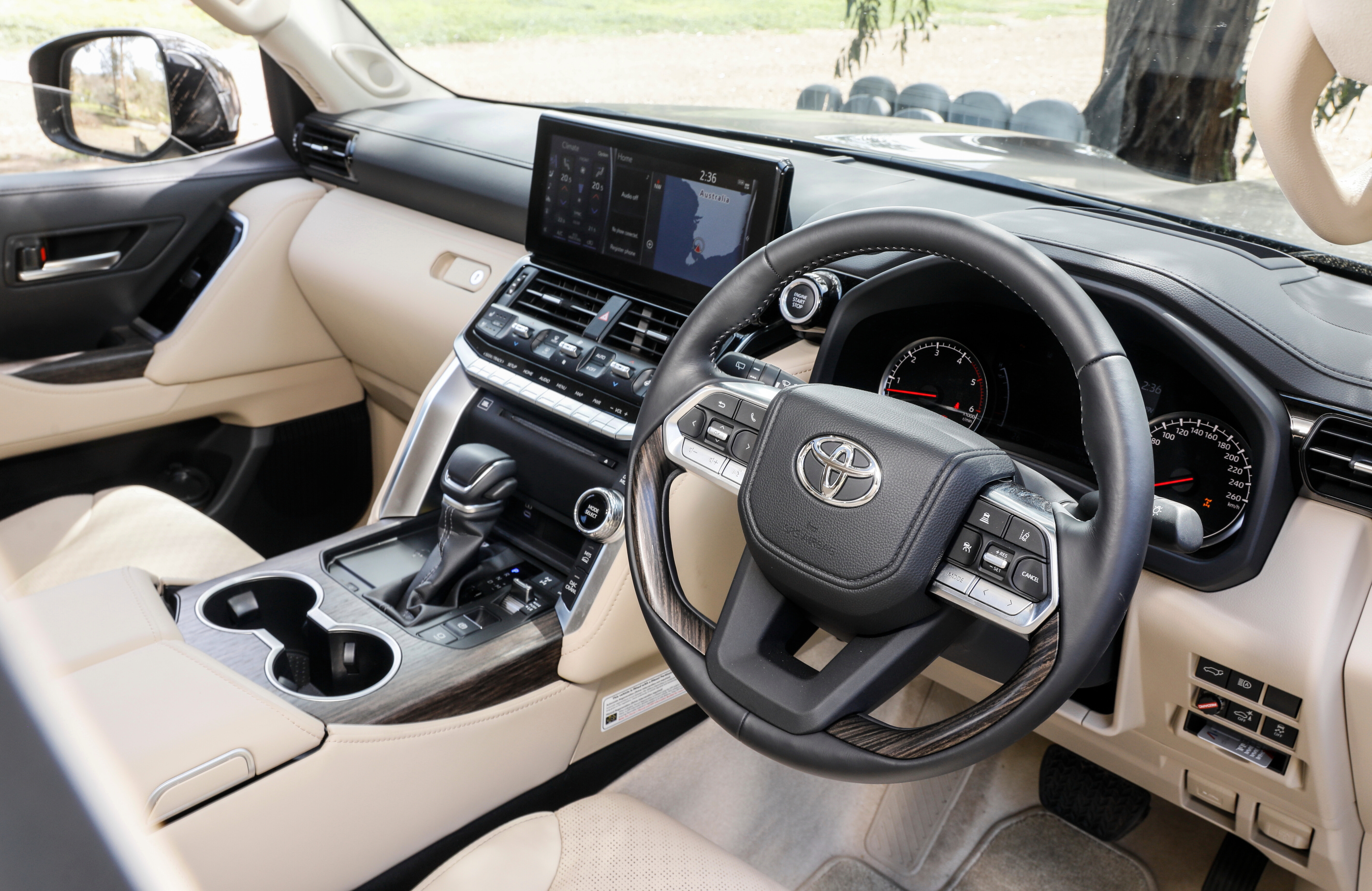
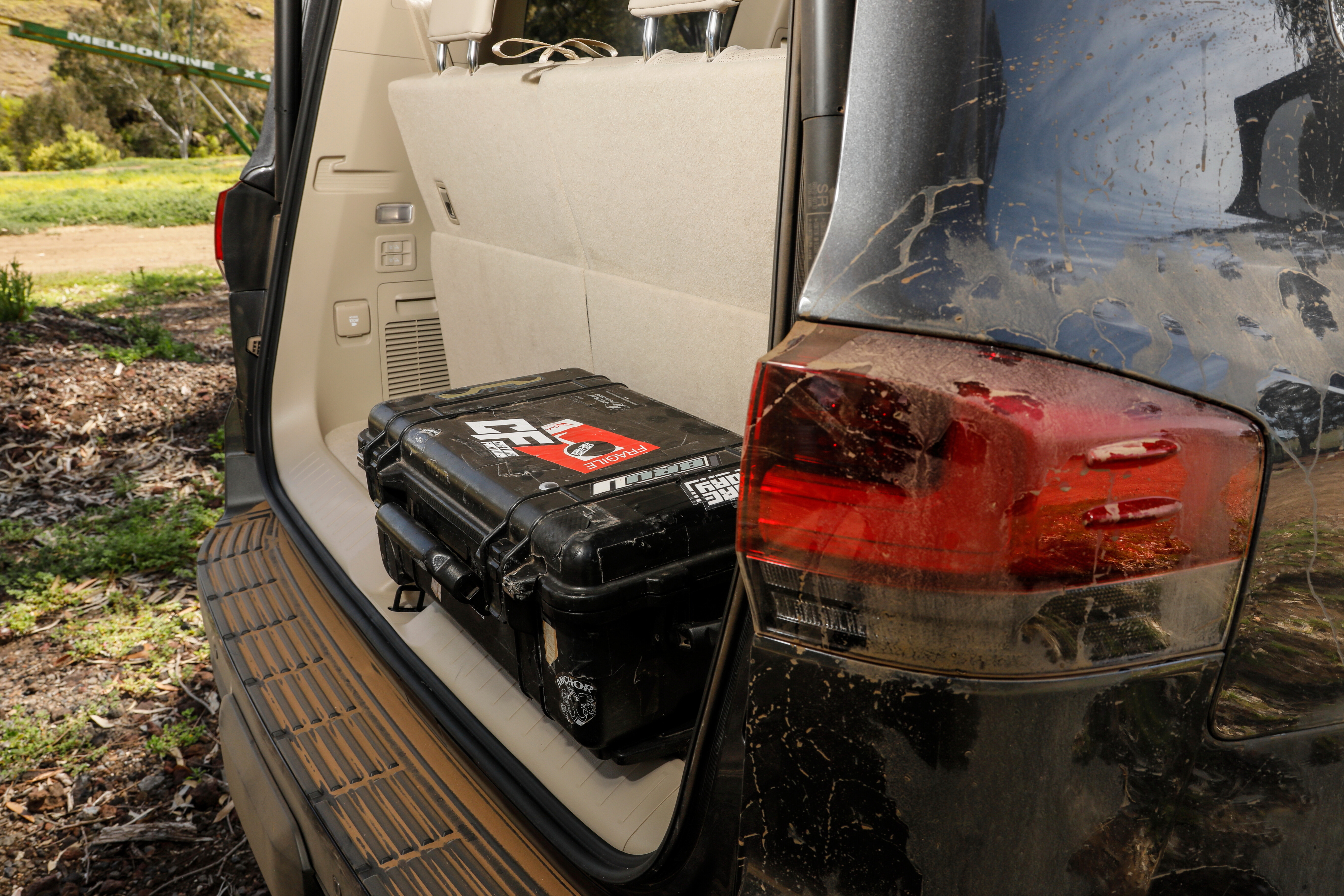
Seats in this Sahara model are leather trimmed and power adjustable, and both the front and second row seats offer heating and cooling functions. Of the six LC300 grades only the GXL, VX and Sahara models are offered with third-row seating for two passengers. These seats now fold flat in to the floor as opposed to up to the sides like they did in the 200, and in this Sahara they fold electronically. The third-row seats are big enough for adults on short trips, if they can squeeze there way in to the back, but are best suited to smaller people.With the third row up and in position, there is very little space left behind it for cargo and this is somewhere that the Patrol has a big advantage.
PRACTICALITIES
THE fuel capacity has dropped from 138 litres in the LC200 to 110 in the 300, with 80 in the main tank and 30 litres in the sub-tank. It’s still substantial by modern standards, but every litre counts when you’re logging up the highway miles in a big wagon. It’s another area where the Nissan takes a win with its 140-litre tank.The Sahara offers plenty of interior space for both passengers and cargo, although as mentioned, very little luggage space if you are using all the seats.
The Sahara wears 265/65R18 tyres which are becoming a more common size, so there should be plenty of options for more durable rubber than the standard highway tyres. Lower grades are fitted with 17s, so you should be able to opt to smaller wheels with taller sidewall tyres if desired, while the top of the range Sahara ZX wears 20-inch rims with low-profile tyres.Toyota has a large range of genuine accessories for the 300, including the choice of steel or aluminium bullbars, nudge bars, an LED lightbar, roof racks, a Warn winch, underbody protection, rated front recovery points, a rear recovery hitch, and a raised air-intake snorkel which is standard on the GX model. As with all LandCruisers in the past, the aftermarket will soon offer plenty of accessory options for your LC300 to tailor it in any direction you like.With a 3500kg tow rating and 650kg of payload, the Cruiser is built to haul, but owners of heavily equipped 300s will still need to be wary of GVM.
NISSAN PATROL Ti-L
POWERTRAIN & PERFORMANCE
LIKE the LandCruiser, the Patrol is only offered with a single powertrain but unlike the Toyota, its engine is petrol fuelled, not diesel. Plus it’s a V8 and a fine one at that. The 5.6-litres of double overhead cam V8 pumping out 298 of the sweetest kiloWatts and 560Nm of stonking torque is backed by a 7-speed auto and an on demand four-wheel drive system with high and low range.Sure, the Australian 4×4 market is predominantly diesel-fuelled, but anyone who has ever driven one of these V8 Patrols will soon be weighing up the pros and cons of each fuel. The naturally-aspirated petrol V8 engine might not have the torque of a diesel but it has enough, and it certainly trumps most if not all diesels in power.This characteristic gives the Patrol a more sporty feel to it, which allies perfectly with its more dynamic chassis when compared to the LandCruiser. The 7-speed automatic gives little to complain about other than our usual gripe with the way Nissan calibrates it’s autos to be so reluctant to let you manually shift down when off road.The real con of this powertrain is fuel economy and that’s something you will get with any petrol when compared to an equivalent diesel. While it was a closer fuel misers fight against the TDV8 LC200, the improved efficiency of he 300’s V6 engine widens the gap. On test, it was 12.1L/100km from the Toyota to 17L/100km from the Nissan. That was a week of commuting and two days at the off-road proving ground, but the gap would narrow with more open highway miles on the vehicles.
ON ROAD RIDE & HANDLING
THE Patrol uses independent suspension both front and rear and while this might scare many an off-road enthusiast away, it shouldn’t. On road, it offers superior ride and handling with better control over bumps and through corners, be the road surface gravel or sealed. The LandCruiser can’t get near a Patrol in terms of dynamics.
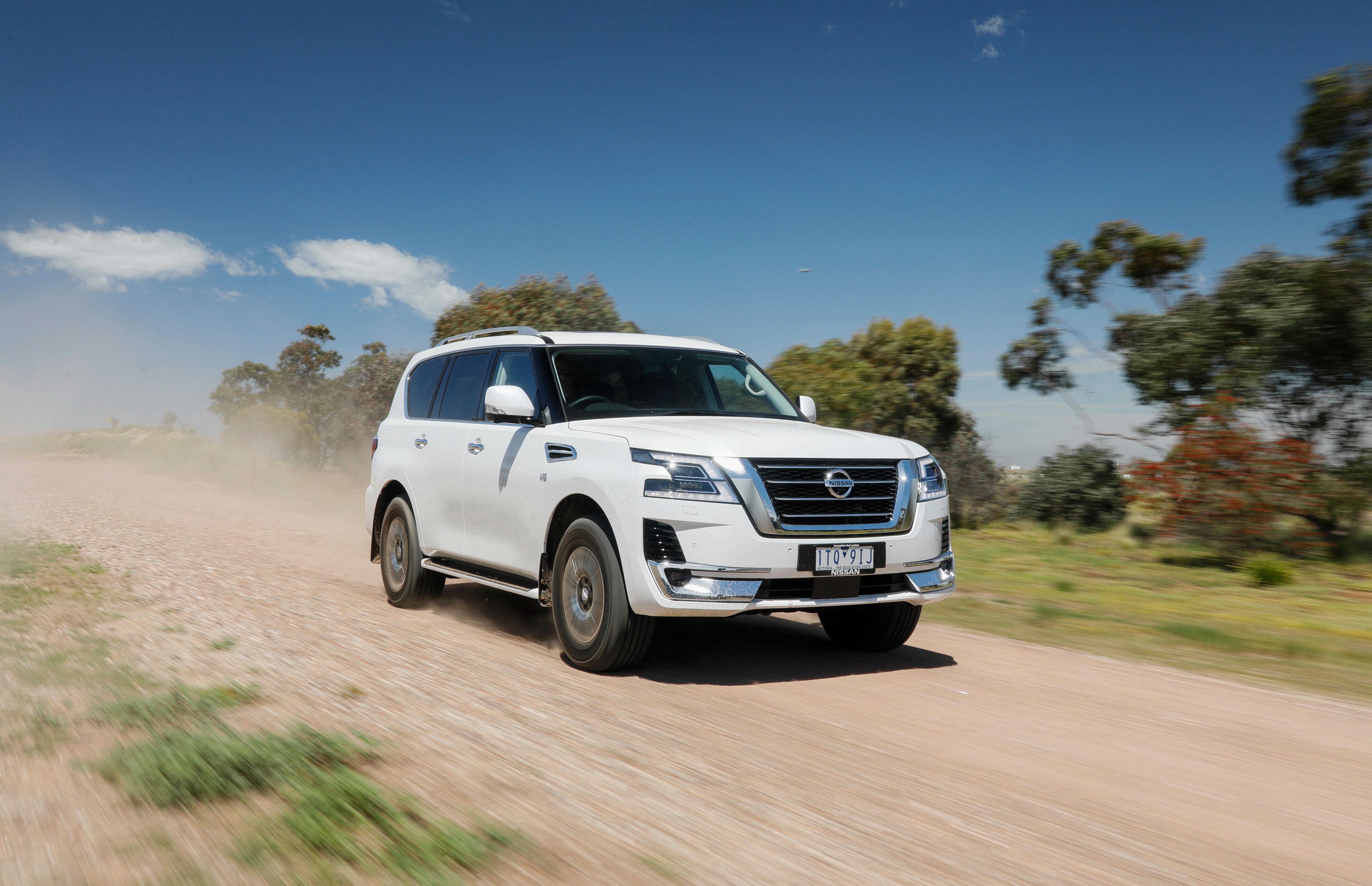
One of the key features that makes the Y62 handle to well is the Hydraulic Body Motion (HBMC) system that is standard on both Patrol models. Like Toyota’s e-KDSS, HBMC controls the amount of body roll depending on the speed of the vehicle and the terrain. But unlike e-KDSS, HBMC replaces the anti-roll bars and their action is done by the hydraulics.HBMC works very well with the fully independent suspension allowing the big heavy Patrol to corner relatively flat on road while ‘releasing’ the wheels from the chassis to give more travel when off road. The only real disadvantage we see with HBMC is that it can hamper owners looking for bigger than normal suspension lifts.
OFF ROAD
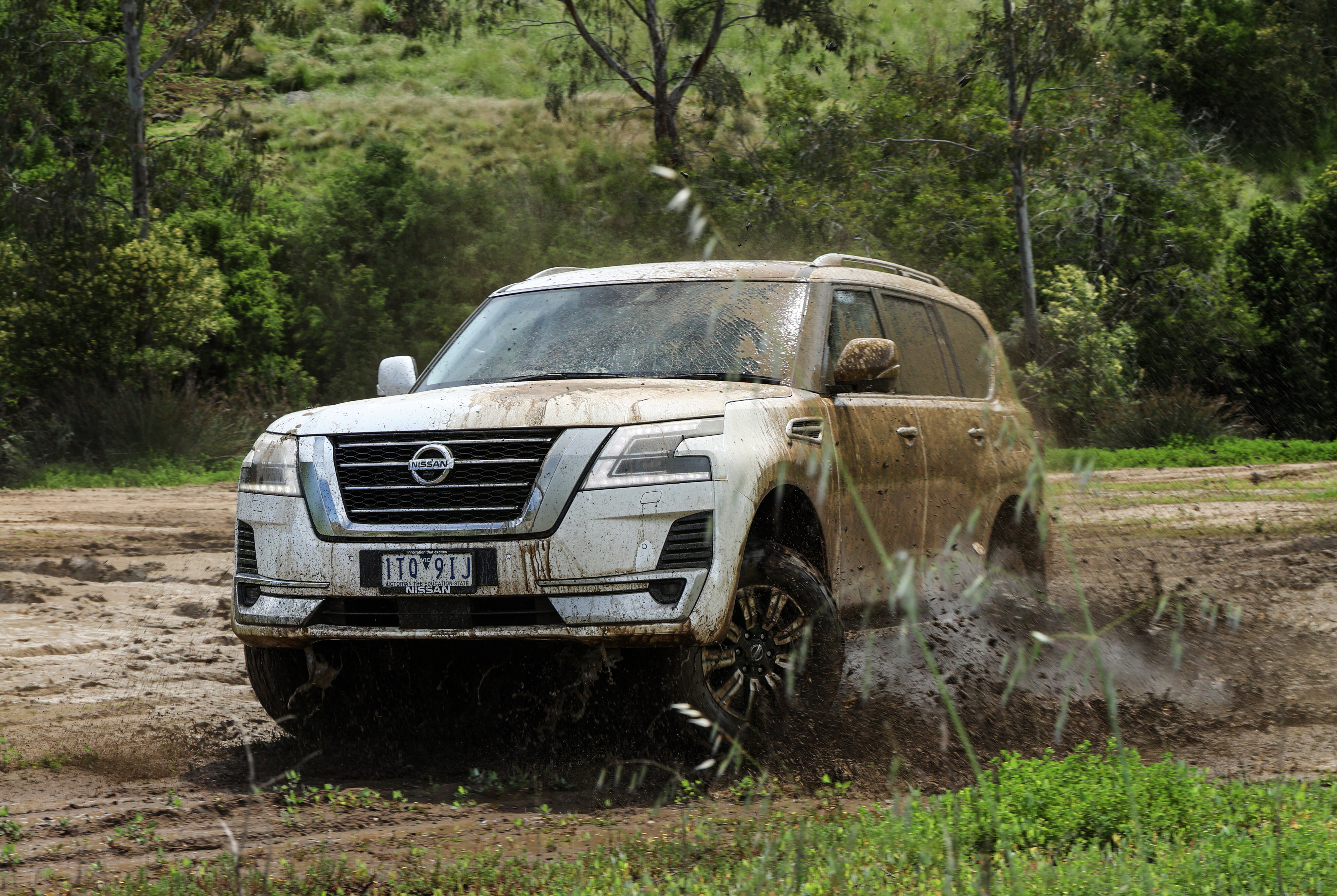
THE Nissan loses some ground to the Toyota when you get off track, but not nearly as much as some would think. It has more ground clearance than the Cruiser and maintains that clearance well. The LC300 scraped its front end when descending our rutted hill, while the Patrol had no such issue. Nor did it have any issue climbing the hill, despite not having the rear wheel travel of the Cruiser and older electronics.The Patrol’s ETC does get the job done, even if it’s not as refined as that in the Cruiser. It’s helped by a rear LSD which is also lockable when the going gets tough. While the Patrol doesn’t have anything like crawl control or fancy drive modes, it doesn’t need them either.
CABIN & ACCOMMODATION
FIRST impressions on jumping out of the Cruiser and in to the Patrol are that it is bigger and much simpler. And when I say simpler, I say it as a positive, not a negative. Yes, the Y62’s dash is showing its age, the chintzy chrome and faux woodgrain trim is tacky, the AV screen is smaller than the Cruiser and it doesn’t even have apple CarPlay, but as soon as you sit behind the wheel you know where everything is and how it operates. It’s not an interior that you have to ‘learn’ like so many of the more modern and more complex vehicles. The foot-release park brake is something from another era.
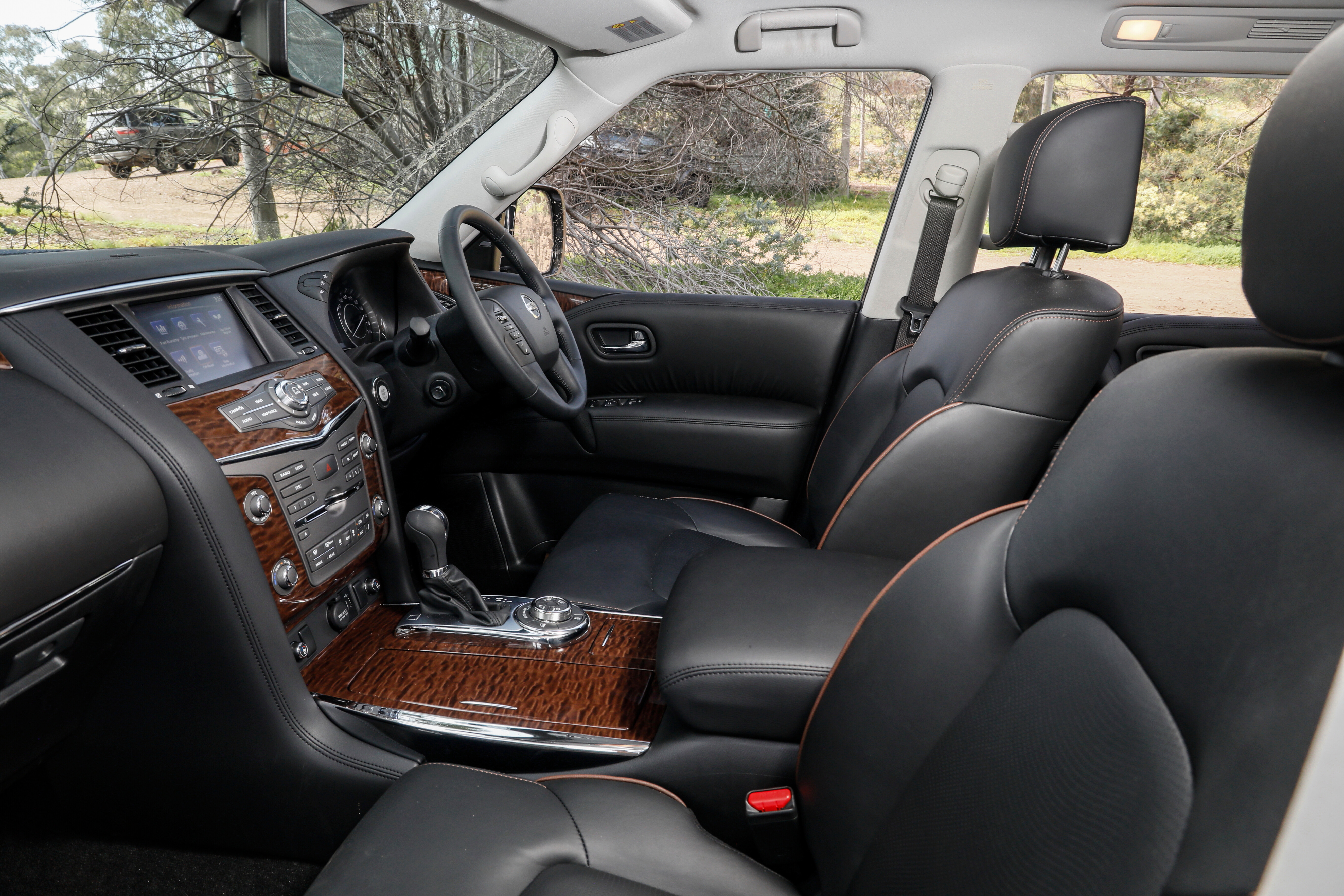
The Patrol interior does miss out on a few luxuries that the LandCruiser has as well: only the front seats are heated and cooled and power operated, the climate control is three-zone as opposed to four, and the rear entertainment system isn’t quite as complex, but it isn’t missing anything you really need. The Ti-L Patrol gets a power sunroof while the Sahara doesn’t, but then, the Cruiser gets a chilled centre console.Where it does make up ground is in space and specifically behind the third-row seats. The Patrol is 185cm longer than the LC300 and it looks as though that’s all behind the third-row seats. We reckon there’s space enough for a 40L Engel behind there, while there’s barely any space behind the Cruiser’s third row for a couple of bags of ice. This difference also equates to the cargo space when the third-row seats are stowed away.The Patrol can also be had as an eight-seater in Ti trim while this Ti-L is only offered with seven seats due to weight limits.
PRACTICALITIES
THE Patrol rolls on 265/70R18 tyres, so a bit taller than the standard tyres on the Cruiser and we’ve seen plenty of them rolling on 35s and bigger with relative ease.
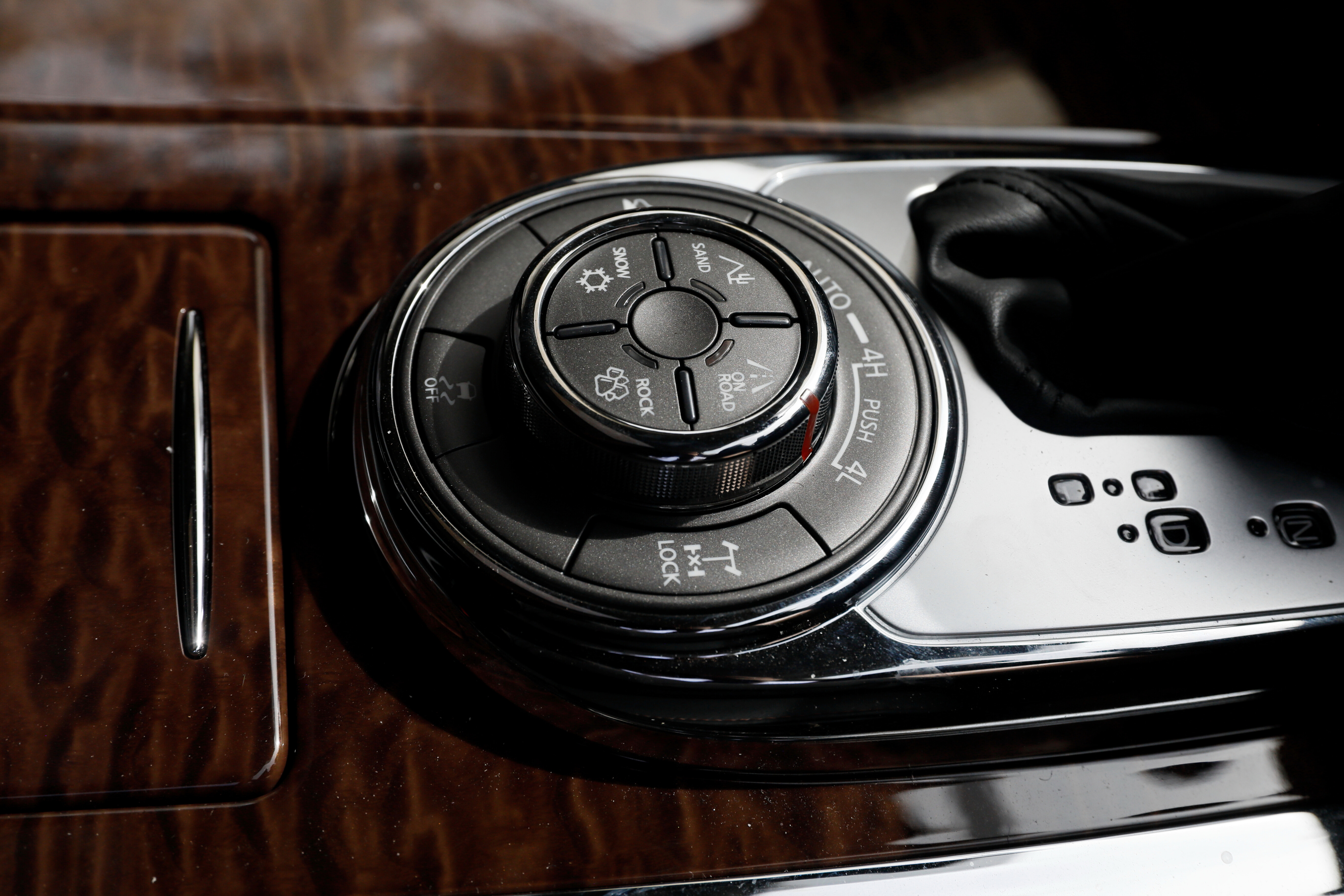
The aftermarket has been slow to develop gear for the Y62 over the years due to the relatively low numbers of them sold, so it can be limiting when doing a build. This is especially so if you have a latest update and the old front bars don’t fit, but you can pretty well get all you need for a serious touring build for one now.The Ti-L’s payload is 639kg and all Patrols are rated to tow 3500kg.
VERDICT
WHEN you look at the sales numbers between the LandCruiser and Patrol over the past five years, you might think this is a one-horse race. Yes, the LC200 outsold the Y62 around five-to-one, but this has more to do with Australian drivers’ preference for diesel engines than anything else.The Patrol has had a resurgence in popularity, certainly since Nissan Australia repositioned its price and range to bring both variants of Patrol in at less than $100K and introduced a few model upgrades and a major facelift.Then again, as folks looked at real-world fuel consumption figures of the V8 diesel LandCruiser and found it wasn’t as efficient as it should be, and it started to have problems with the DPF system along with other Toyota diesel models. The simplicity of a naturally aspirated petrol V8 really started to have more appeal to more buyers. Add in the cost saving on initial purchase price and the Patrol started to look real enticing.
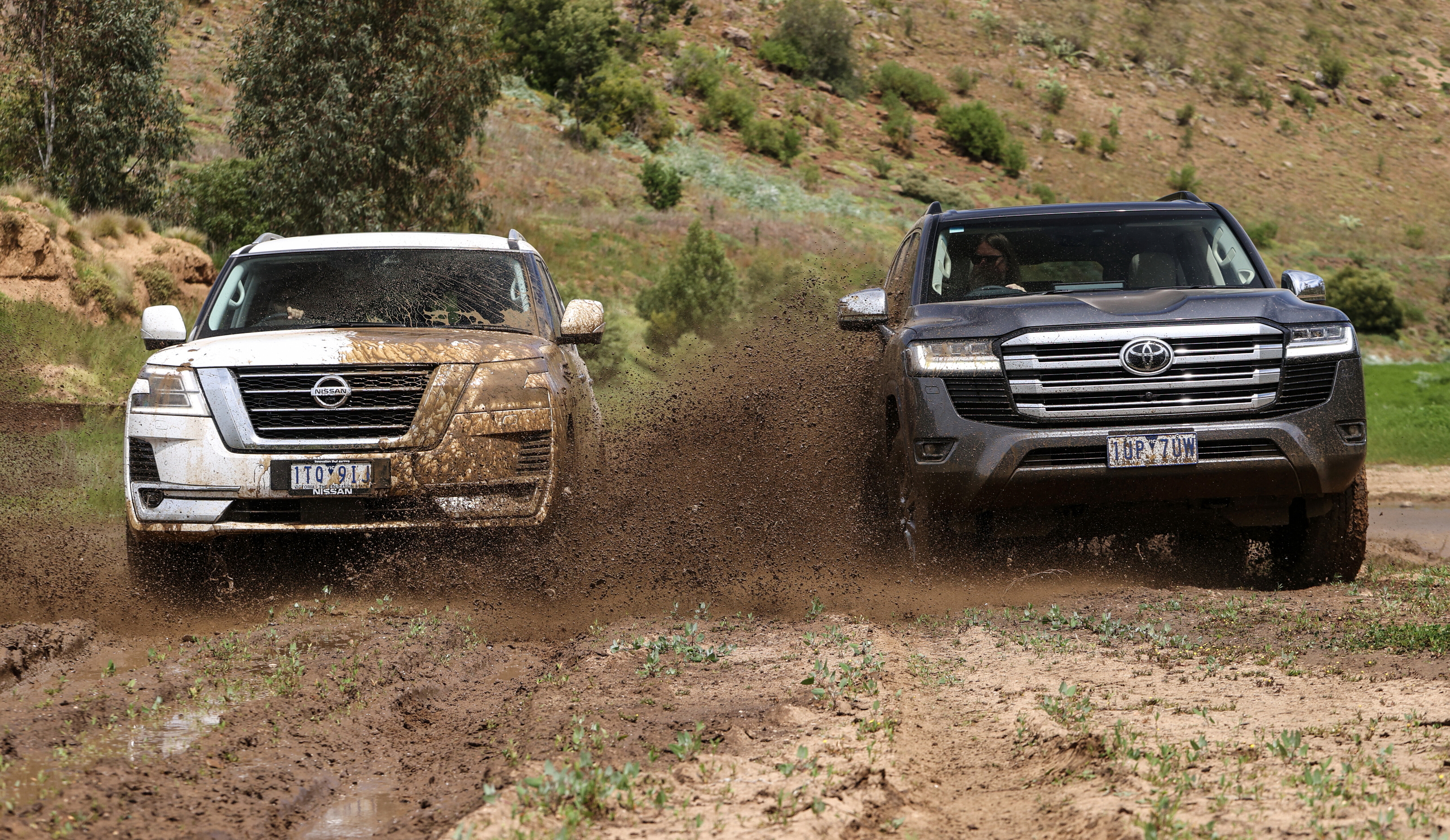
With the introduction of the LC300 and its V6 diesel and 10-speed transmission, we expect to see LandCruiser fuel numbers drop considerably once owners get in to them and start doing some real-world touring, but the new engine is every bit as complex, if not more so than the old V8. And the price of LandCruiser has gone up considerably with the new model. An LC200 Sahara was $123,500 not that long ago.If you’re a diehard LandCruiser diesel fan then there will be no choice. The LC300 is a better driving vehicle than the 200, has more equipment, more features, improved torque over the V8, and it still feels very much like a LandCruiser to ride and drive in. Toyota has stuck to and refined its sales winning formula for the 300 and once supply issues are sorted, you’ll see them running off the showroom floor.But if the added cost and the lack of a V8 engine has you shying away from the new Cruiser and considering a Patrol, you’ll be pleasantly surprised by the $36.5K saving on the purchase price, impressed by the on-road performance, and happy with the simple nature of the big Nissan.The Patrol’s potent V8 engine and responsive chassis give it a sporting character, while the LC300 sticks to its heavier feeling, more floating dynamic that feels more tourer than sports wagon. Yes, the Patrol misses out on some tech and features, but it still has everything you need (except maybe Apple CarPlay) and while it uses more fuel, that $36K saving on price buys a lot of petrol or could give you a full vehicle fit-out at your favourite accessories store.While both of these vehicles are suffering from supply issues as this is written, it would be a fully kitted Patrol in my driveway for my $135K if I had it.
TOYOTA LANDCRUISER 300 SAHARA SPECS
| ENGINE | Turbocharged V6 diesel |
|---|---|
| CAPACITY | 3346cc |
| MAX POWER | 227kW at 4000rpm |
| MAX TORQUE | 700Nm at 1600 to 2600rpm |
| GEARBOX | 10-speed auto |
| CRAWL RATIO | 42.62:1 |
| 4X4 SYSTEM | Full-time, dual range, locking centre diff |
| CONSTRUCTION | 5-door wagon on ladder chassis |
| FRONT SUSPENSION | Double wishbone IFS w/ coils. E-KDSS and variable shocks |
| REAR SUSPENSION | Live axle on links and coils. E-KDSS and variable shocks |
| TYRE/WHEEL | 265/65 / R18 |
| KERB WEIGHT | 2630kg |
| GVM | 3280kg |
| PAYLOAD | 650kg |
| TOWING CAPACITY | 3500kg |
| SEATING | 7 |
| FUEL TANK | 110L |
| ADR FUEL CLAIM | 8.9L/100km |
| ON-TEST FUEL USE | 12.1L/100km |
| DEPARTURE ANGLE | 25u00b0 |
| RAMPOVER ANGLE | 21u00b0 |
| APPROACH ANGLEu00a0 | 32u00b0 |
| WADING DEPTHu00a0 | 700mm |
| GROUND CLEARANCEu00a0 | 235mm |
NISSAN PATROL TI-L SPECS
| ENGINE | DOHC petrol V8 |
|---|---|
| CAPACITY | 5552cc |
| MAX POWER | 298kW at 5800rpm |
| MAX TORQUE | 560Nm at 4000rpm |
| GEARBOX | 7-speed automatic |
| CRAWL RATIO | 44:1 |
| 4X4 SYSTEM | 2WD, on-demand 4WD and dual range locked 4WD |
| CONSTRUCTION | 5-door wagon on a separate chassis |
| FRONT SUSPENSION | IFS w/ double wishbones and HBMC |
| REAR SUSPENSION | IRS w/ double wishbones and HBMC |
| TYRE/WHEEL | 265/70 / R18 |
| KERB WEIGHT | 2861kg |
| GVM | 3500kg |
| PAYLOAD | 639kg |
| TOWING CAPACITY | 3500kg |
| GCM | 7000kg |
| SEATING | 7 |
| FUEL TANK | 140L |
| ADR FUEL CLAIM | 14.4L/100km |
| ON-TEST FUEL USE | 17.0L/100km |
| DEPARTURE ANGLE | 26.3u00b0 |
| APPROACH ANGLEu00a0 | 28u00b0 |
| GROUND CLEARANCEu00a0 | 273mm |
UPDATE, August 24, 2022: Toyota Tundra confirmed for Australia
In huge news for local fans of heavy haulers, the Toyota Tundra is confirmed for an Australian launch, thanks to a conversion program announced by Toyota and partner Walkinshaw. Get all the details at the link below.
The story to here
Snapshot
- Two turbo V6 engines to be used across the range
- Multi-link rear suspension to feature for the first time
- Nearly 5.5 tonne towing rating
UPDATE, December 8: Tundra not ruled out, but…
Toyota Australia executives have said they “wouldn’t rule out” the possibility of the popular Tundra pick-up truck coming to Australia in future.
However, there are several factors currently preventing the large ute, which is available in the US, from coming to our market – and they aren’t likely to be resolved any time soon.
Speaking at an event this week marking the opening of its new Product Centre in Altona, Victoria, Toyota Australia’s product planning and development general manager, Rod Ferguson, reiterated that the carmaker has no current plans for the model but that could change.

“We certainly don’t have plans to convert from left- to right-hand-drive – we don’t actually have that capability [here].
“It is possible [to convert vehicles that way], but the only way we would ever achieve something like that would be through a partnership or arrangement at the moment.
“As we’ve said before, we do study that [US} market and would be interested in that [the Tundra].
“If we are ever able to find a way or can make a business case to bring that product to Australia, then we will try to pursue that – but at the moment we don’t have any announcements.”
The story to here
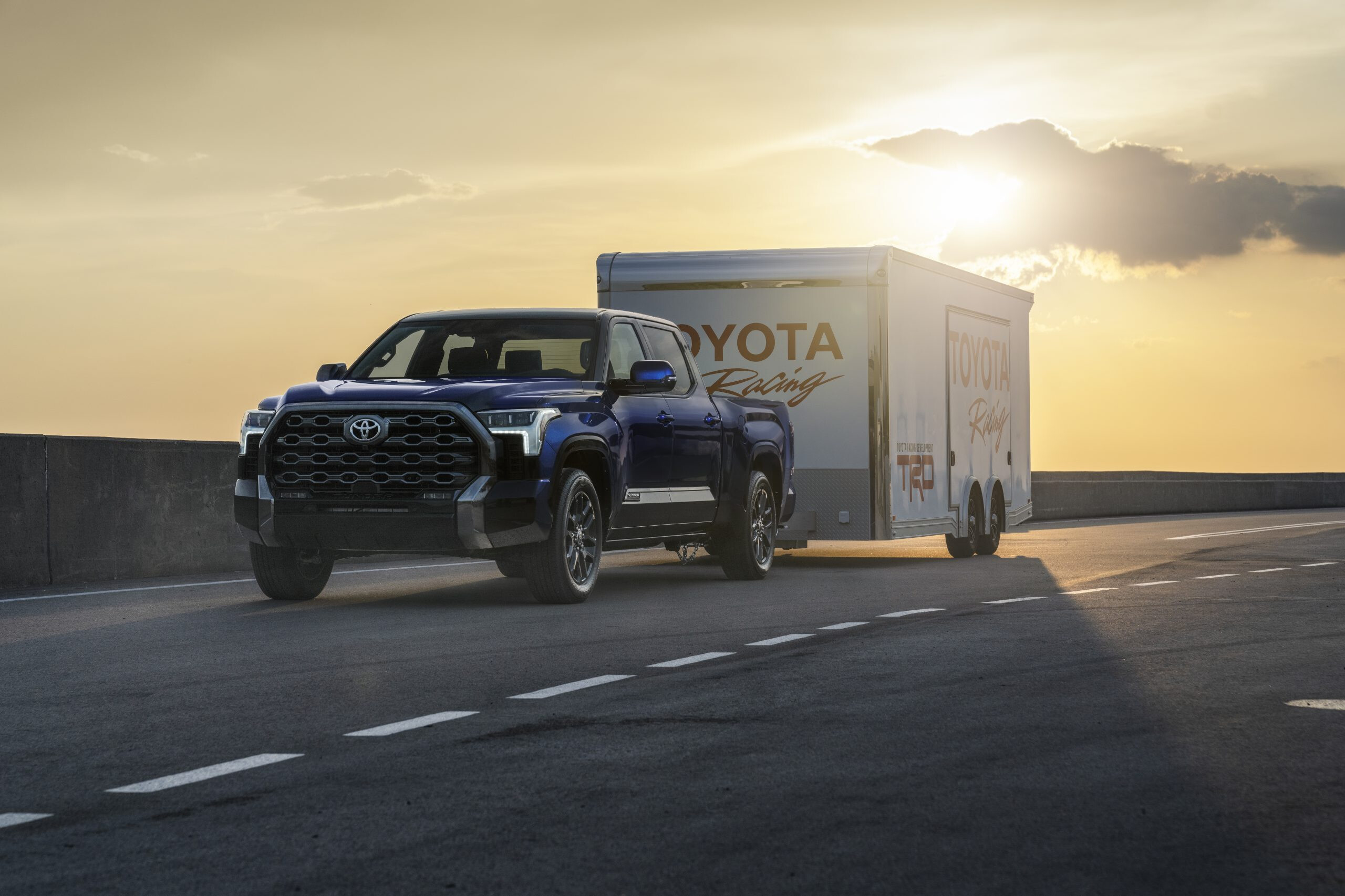
September 20: After a long, drawn-out release campaign, Toyota USA has finally shown off the new Tundra pick-up – aiming to take on the Big Three with a solid redesign.
Replacing the outgoing generation, which was first introduced in 2008 and updated since, the 2022 Tundra features a host of firsts for the Toyota pick-up range – most notably a move towards multi-link rear suspension to replace the ageing leaf springs.
Available in seven trim levels, the SR, SR5, Limited, Platinum, TRD Sport and 1794 grades will be powered by Toyota’s i-Force 3.5L twin-turbo V6, developing 290kW and 650Nm – while the range-topping TRD Pro’s i-Force Max bumps the figures up to 326kW and 790Nm.
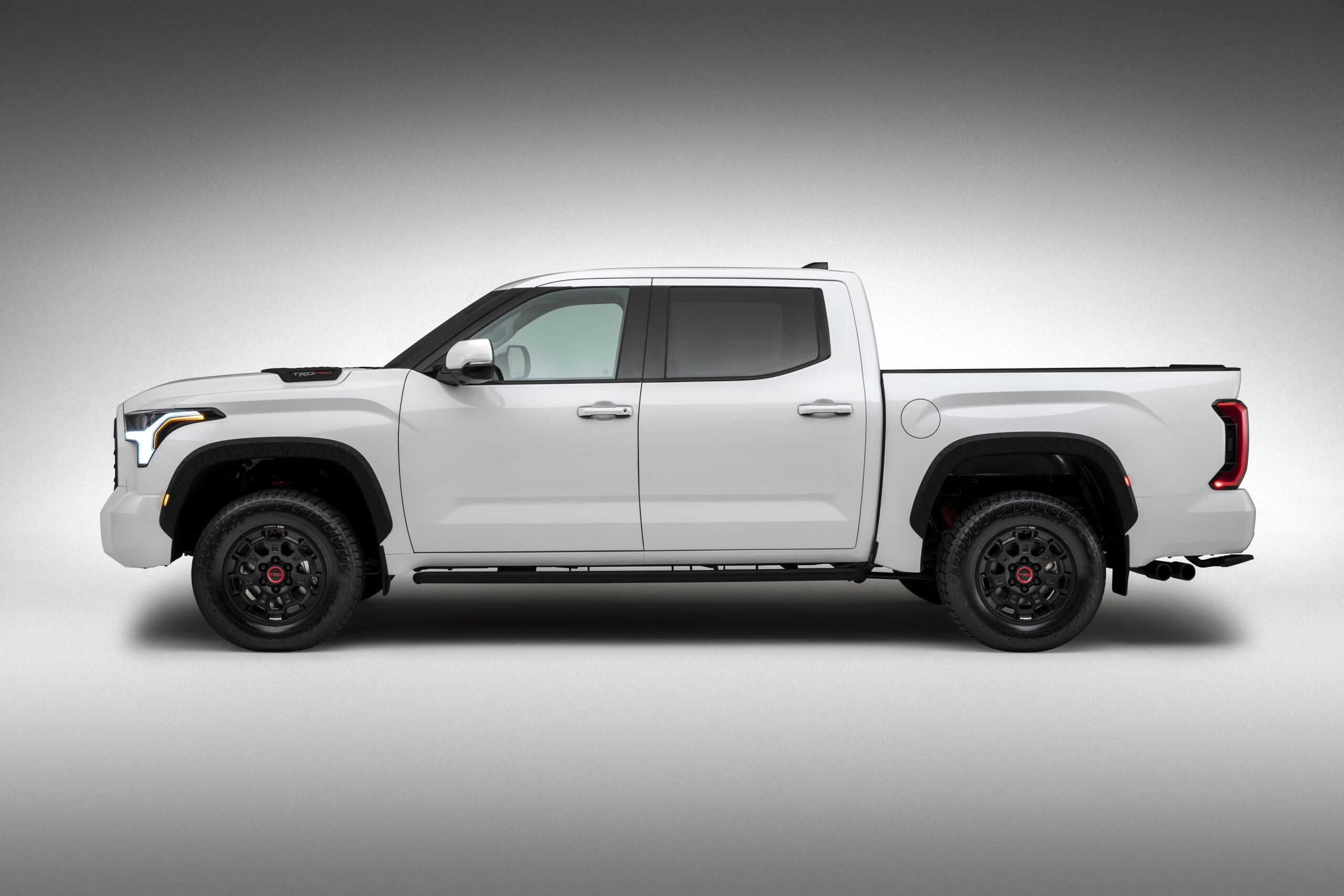
The TRD Pro has been Toyota’s go-to variant throughout the Tundra reveal process, already showing off the off-road oriented vehicle with upgrades such as; Fox shocks, a TRD-embossed skid plate, bright red sway bars and staunch looking body – setting it apart from the lower grades.
Stepping up its game to match the truck offerings from Ford, Chevrolet and RAM, the Tundra now features an 8-inch touchscreen as standard, with a larger 14-inch touchscreen also available sitting above a wireless dock for smartphone charging.
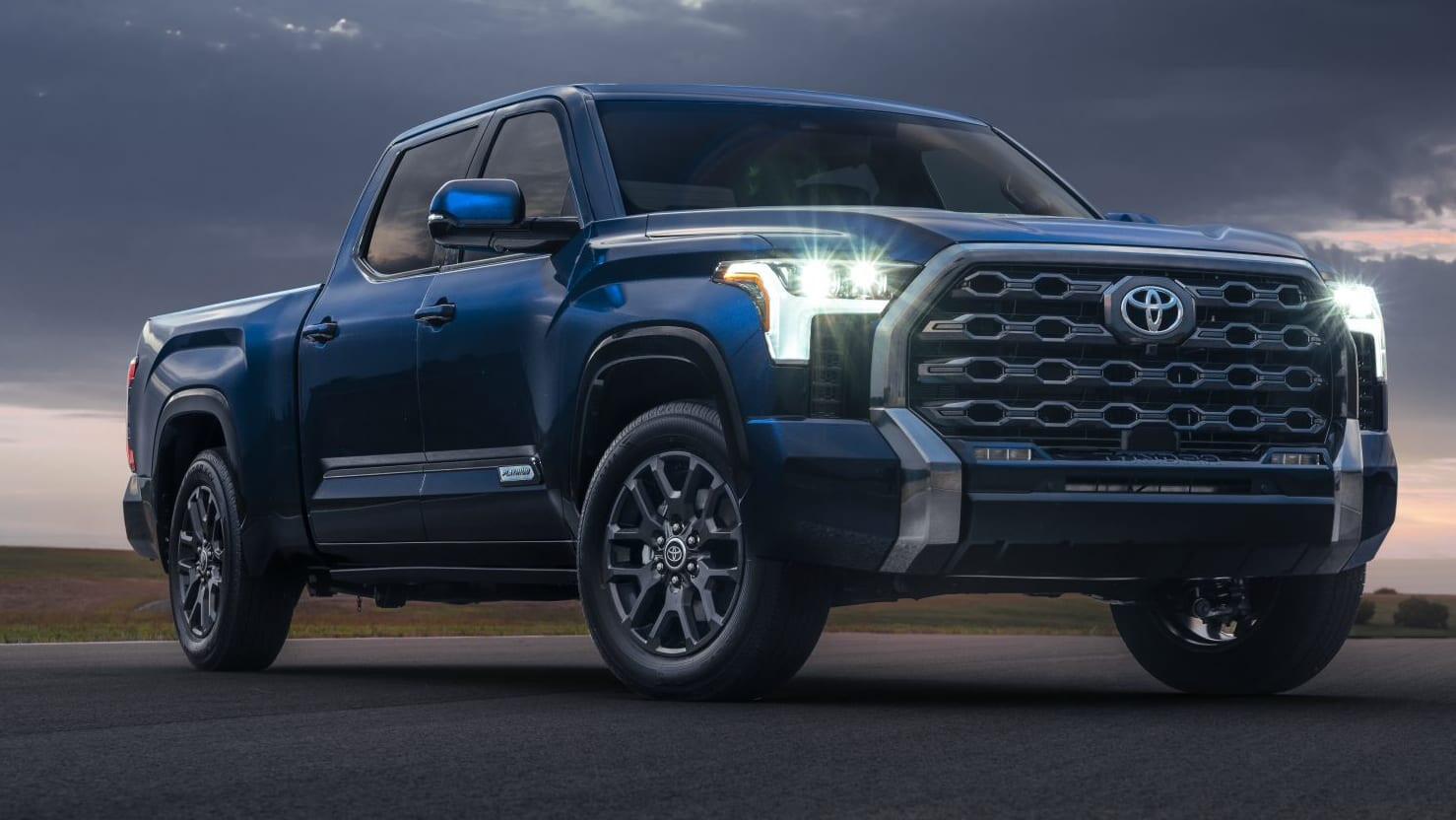
Perhaps the biggest feather in the Tundra’s cap is its 12,000 pound (5443kg) towing capacity – now coupled with two new driving modes which allow the truck to be set up for whatever it is towing, whether it’s a small trailer or a large boat.
With seven variants available, the Tundra will be offered as either a double cab or crew cab in most trims, as well as a choice of two bed lengths in each body design to give buyers almost any combination they desire.
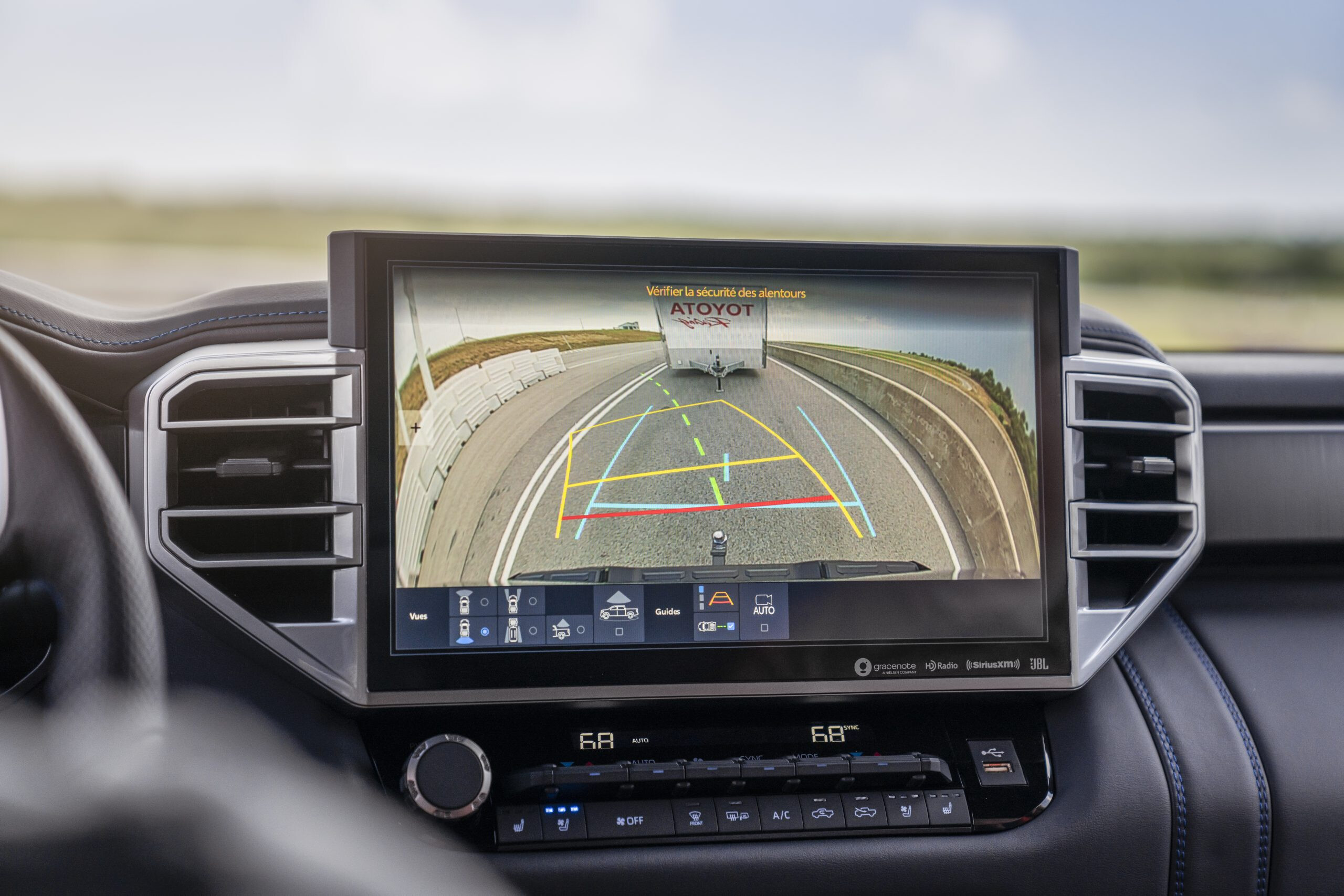
While unconfirmed for the local market, earlier this year Toyota told 4×4 Australia: “Toyota Australia is aware that the large truck segment in Australia has grown in popularity over the last few years and it is a segment we are continuing to study and we are interested in generally.
“We have no announcements to make on the introduction of Tundra to Australia today and will continue to study its viability and introduction to Australia.”
Key Points
- New VW Amarok to launch early 2023
- Bold new styling
- Ford Ranger underpinnings
Hot on the heels of the closely related 2022 Ford Ranger, Volkswagen has released these sketches of its next Amarok pickup.
Co-developed with Ford alongside the new Ranger and riding on the same chassis, the next generation of Amarok should be revealed towards the end of 2022 with a launch date in Australia set for early in ’23.
Said to have ‘clear Volkswagen DNA’ the sketches reveal the shared parts with the 2022 Ranger, such as the scallops in the doors clearly carried over and the ridges atop the front fenders also similar to those seen on the future Ford.
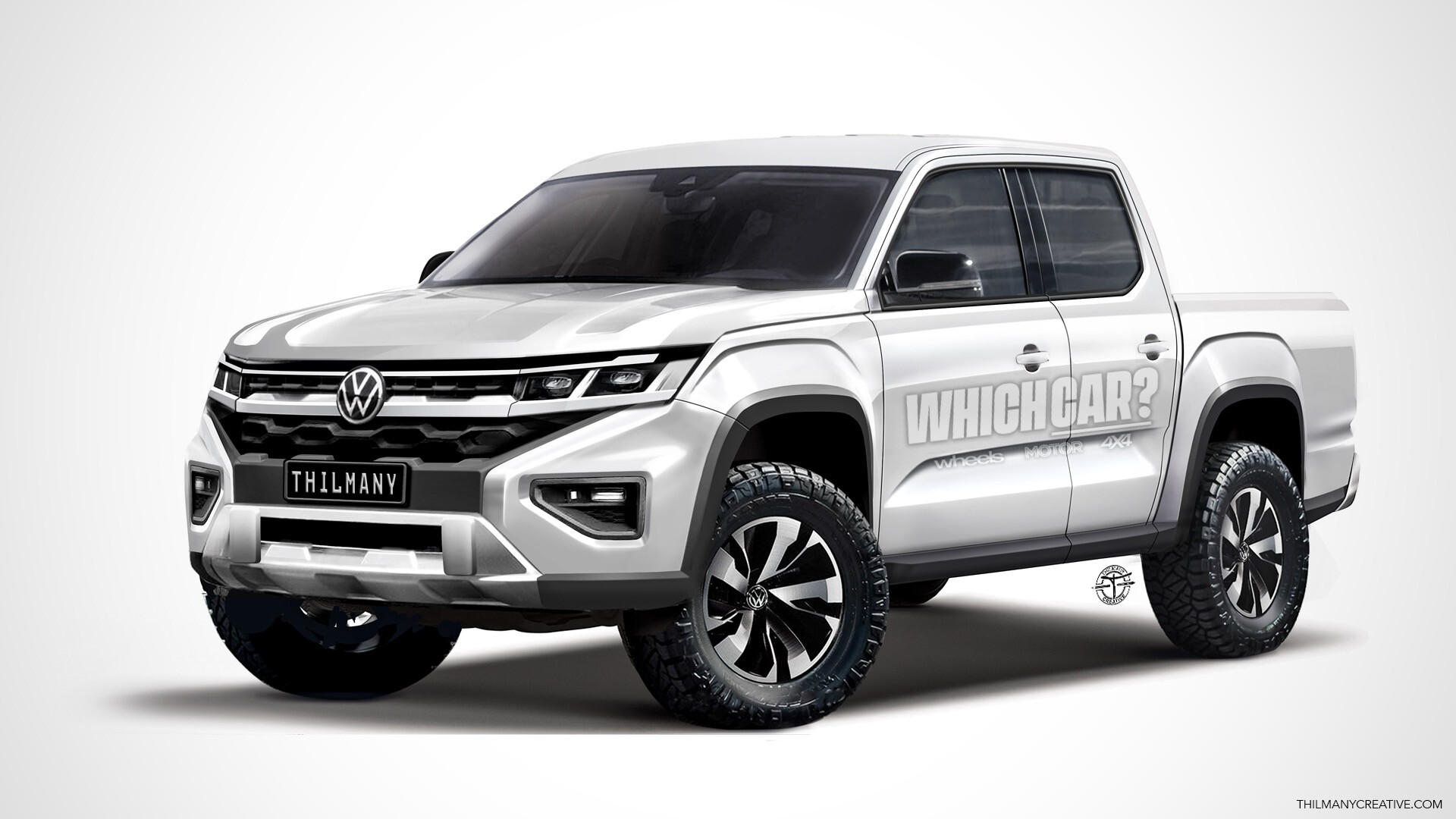
It appears that the 2023 Amarok will be, as expected, a Ford Ranger with a VW front end on it and Amarok styling features. The fender flares of the vehicles in the sketches might not represent those of the production vehicle, but they do look more like those found on the current Amarok than the flatter fenders on the Ranger.
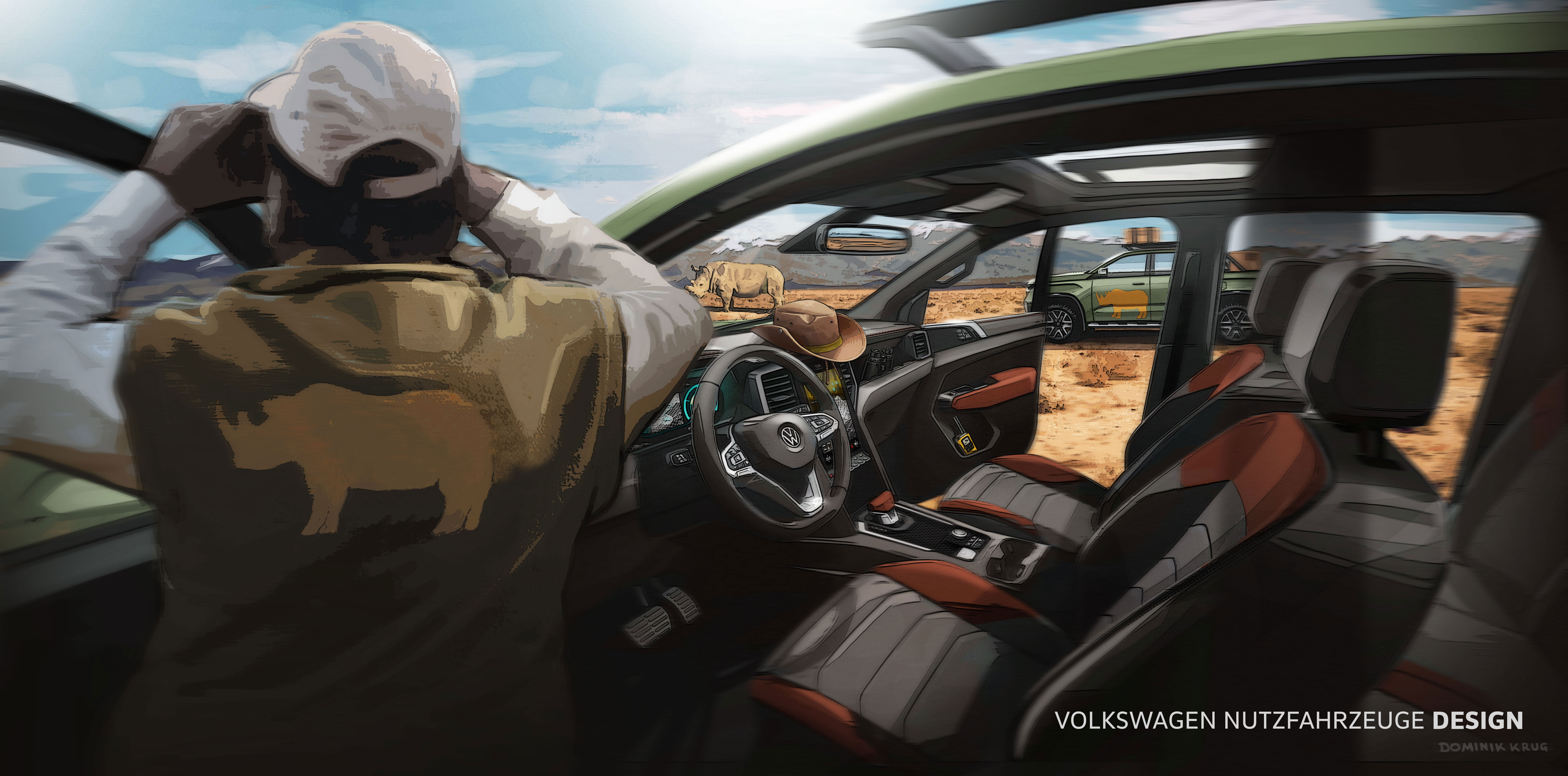
“The striking front, and above all, the defining X design clearly distinguish the new Amarok and emphasise its claim to be leading the way,” confirms Albert-Johann Kirzinger, Head of Design at Volkswagen Commercial Vehicles.
The interior sketch shows plenty of carry-overs from the Ford, including the transmission shifter, 4×4 selector dials and the interior door handles. The centre stack of the dash is also familiar, although it doesn’t quite reveal the Ford’s large portrait screen.
“We’ve given the strength and power of the new Amarok an unambiguous expression – with clear Volkswagen DNA, inside and out, ” continued Kirzinger.
While it has been on the market for more than 10 years, the current VW Amarok remains one of the best driving double-cab 4×4 utes on the market. Not only is it the only model to currently offer the performance of a V6 engine, but its chassis is more dynamic than most of its rivals.
Combine this with a cabin that is wider and more spacious than most other one-tonne utes, and the Amarok is a much underrated vehicle. It’s one that certainly deserves more attention and better sales.
Hopefully, VW will be able to adapt its chassis tuning and dynamics to the Ford T6 platform and continue to offer a superior product.
Ford has endowed its new Ranger with a few features that previously were Amarok key points, including a V6 diesel engine, a full-time four-wheel drive system and a wider cargo tub that allows a full-size pallet to fit in-between the wheel arches, so you could be excused for thinking that the Blue Oval has built the car to VW’s specs. But the engine is all Ford, and the local engineers say that the upgrades were all of their own design.
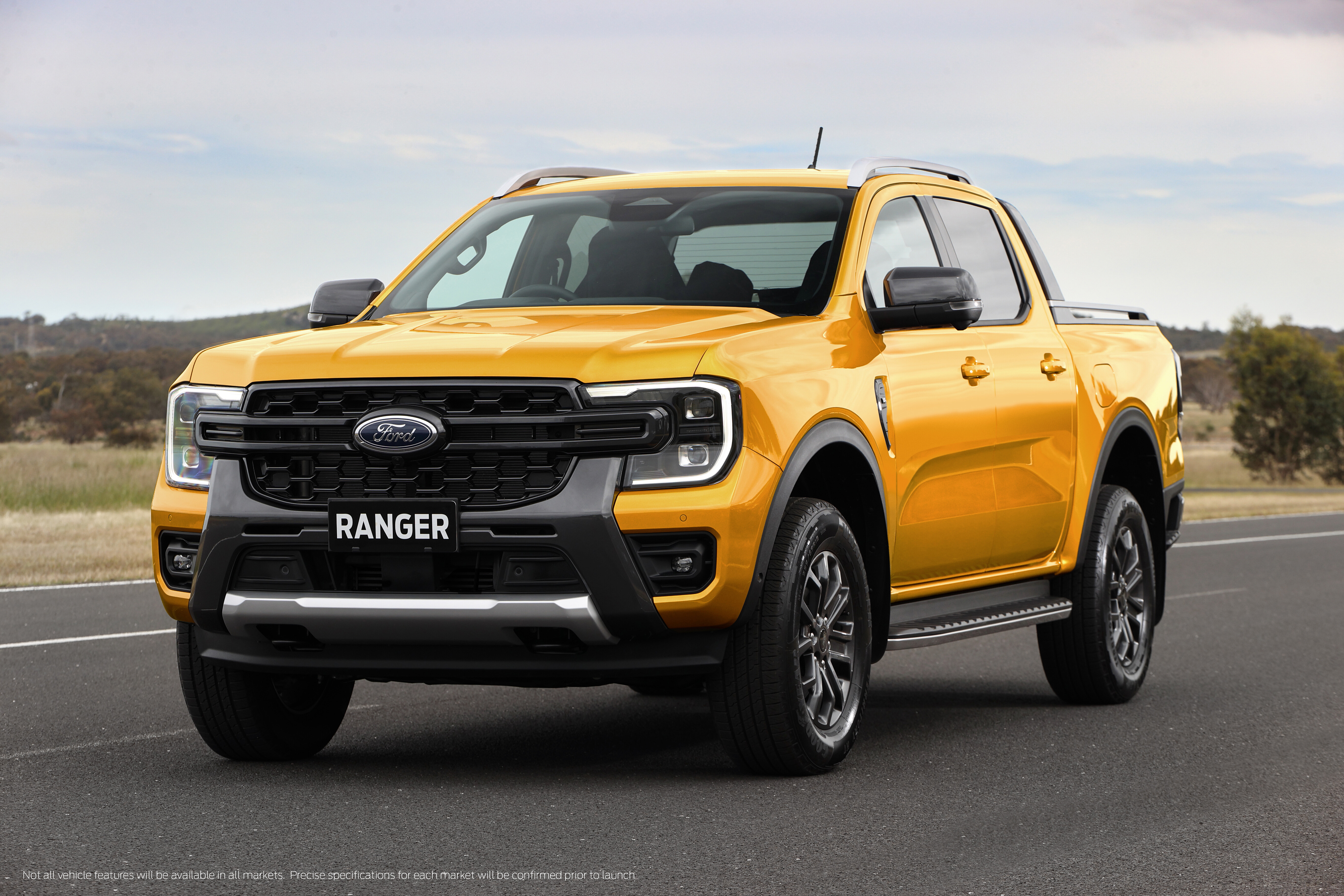
Volkswagen is yet to reveal what powertrains the 2023 Amarok will use, but industry news suggests that they will be carried over from Ford to include both V6 and in-line 4-cylinder diesel engines, and two- and four-wheel drive transmissions.
Currently, the Amarok is manufactured in South America and Germany, but the new model will move manufacturing to South Africa while retaining the South American plant as well.
More than 800,000 Amaroks have been sold since the model was introduced, and the ute is VW Australia’s top selling model.
The 2022 Tank 500 HEV has been revealed in Thailand, featuring a hybrid-electric powertrain.
The world premiere of the Tank 500 HEV was part of the GWM’s launch in the country, with the model showcasing a 2.0-litre turbocharged four-cylinder petrol engine producing 180kW and 380Nm, assisted by an electric motor.
While few specifications of the 500 HEV were detailed at the car’s unveiling, the model continues to use the company’s nine-speed automatic transmission and four-wheel-drive system, with “off-road mode or wading mode, [which] can also be changed per the voice commands,” a statement from the company read.
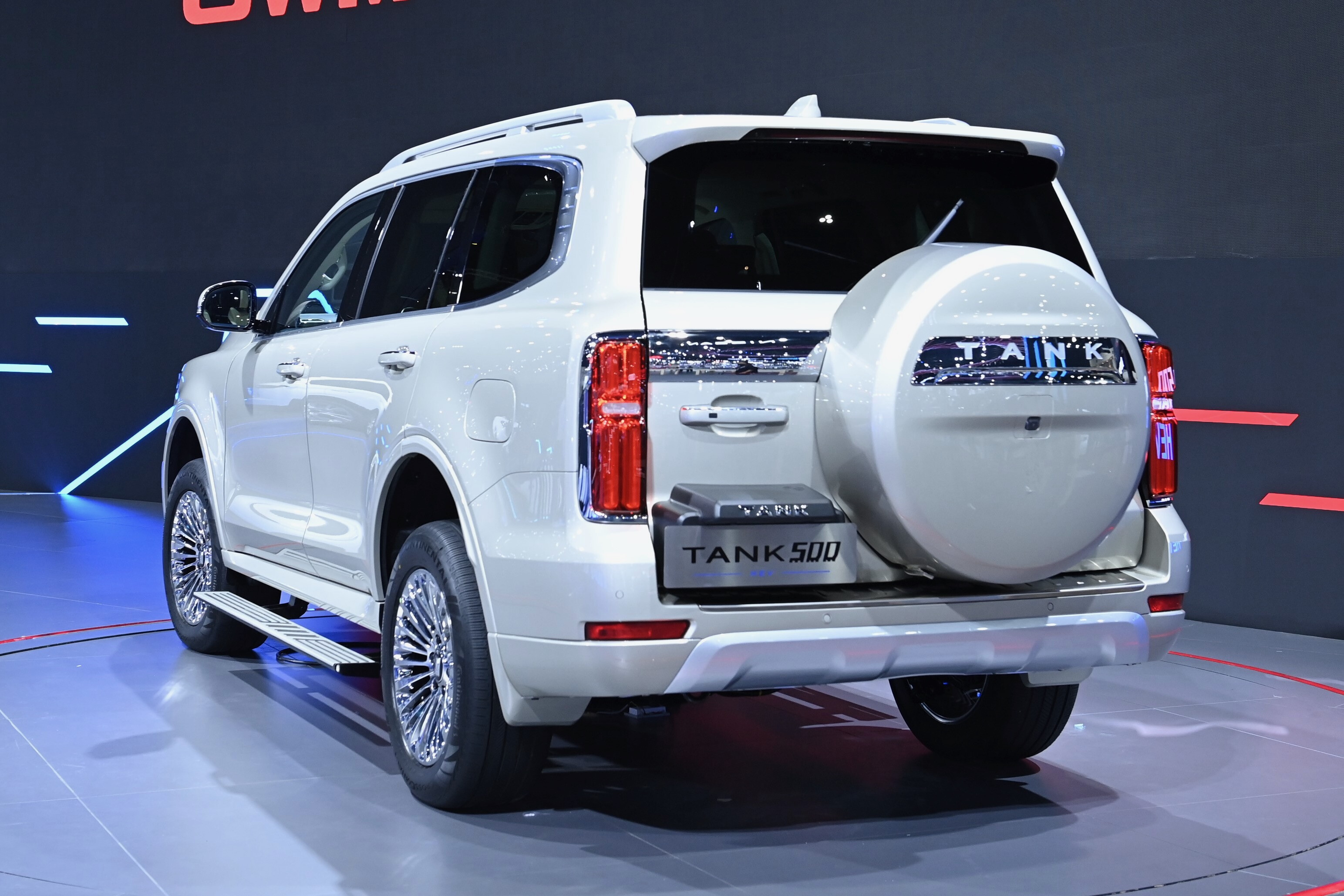
The new powertrain is an alternative to the 3.0-litre turbocharged petrol V6 originally revealed in the Tank 500 – an engine which began full-scale production last week.
Code-named the 6Z30, the Miller-cycle V6 engine uses a variable-geometry turbocharger, water-to-air intercooler, and a 48-volt mild-hybrid system to deliver a total of 260kW and 500Nm.
The company’s nine-speed automatic transmission also entered production alongside the engine.
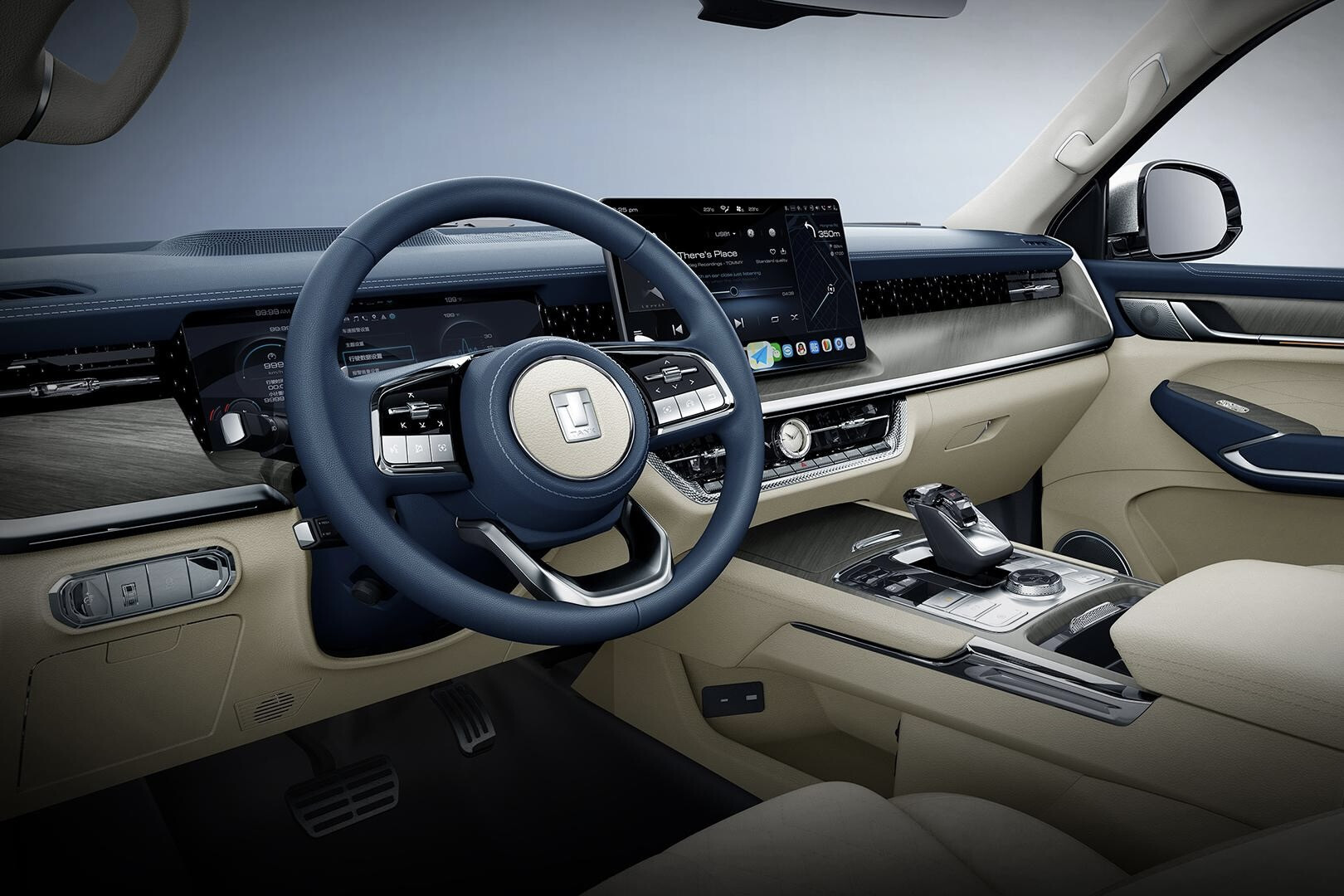
While the Tank 500 is closer in dimensions to the Toyota LandCruiser 300 Series, pricing for the model appears to be targeting the Toyota LandCruiser Prado – a model which has been on sale in Australia for years without a direct competitor.
According to China Car News, GWM took more than 13,000 orders for the V6-powered Tank 500 during a 20-minute pre-sale event.
4X4 Australia understands GWM Haval is considering the Tank 500 for the local market.
Nissan Australia has finally been able to officially launch its Navara PRO-4X Warrior to the market.
Despite being on sale since September, COVID restrictions have prevented the company from launching the car and letting us get behind the wheel.
After plans for a launch in Central Australia earlier in the year were scuttled, the launch was moved to the Coffs Coast of New South Wales in November, and with wet weather around, it was the perfect place to put the new ute to the test on the slippery hills.When Nissan Australia updated its Navara range earlier in 2021, giving it a bold new look, it made its range-topping variant, the PRO-4X.
Following on from the success of the previous iteration’s Navara N-Trek Warrior collaboration with Melbourne engineering firm Premcar, it was a no-brainer that the marque would create a Warrior edition of the new model.
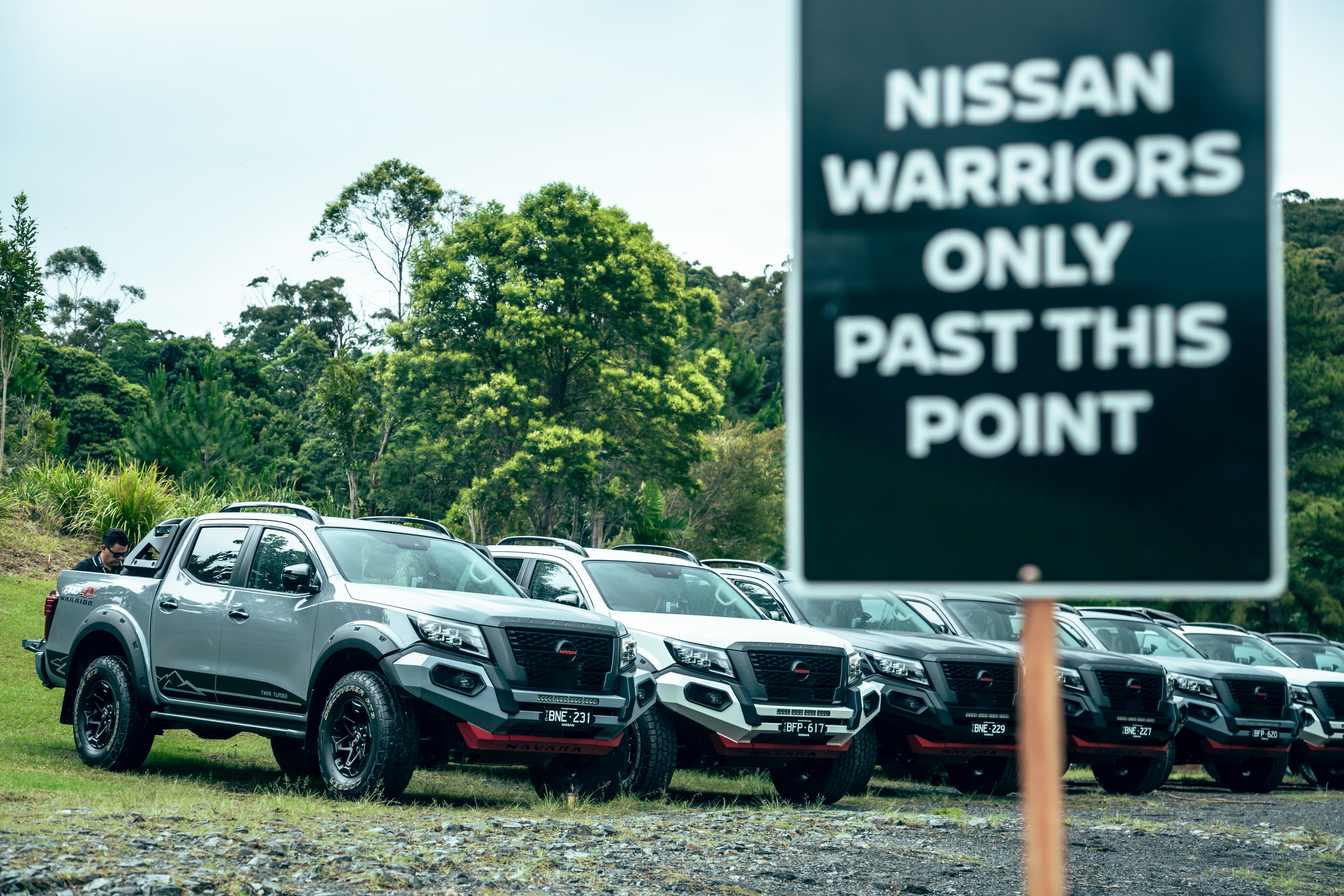
Enter the PRO-4X Warrior, again another venture with Premcar which follows a similar formula to the original, only varying to improve on elements of the older model based on customer feedback.“Any new model should be a true evolution, and that’s exactly what we’ve achieved with this Warrior,” said Premcar’s Bernie Quinn.
“It benefits from all of our learnings, our customer feedback, and from the improvements made to the Navara PRO-4X, creating a new ute that is tailor-made for Australian conditions. The result is a Warrior that’s tougher, safer and smarter, but no less practical and capable.”Premcar has taken the top-spec Navara PRO-4X and updated its suspension to improve both performance and comfort; widened the wheel track by 30 millimetres with bespoke alloy wheels and all-terrain tyres for improved stability and off-road performance; and increased the front-end protection with a steel bumper that incorporates an auxiliary LED light bar with three-millimetre metal-plate underbody protection.
The new Australian-designed and made front bar is also capable of supporting a winch and Nissan offers a Warn winch as a genuine accessory. Over fender flares are included to cover the bigger tyres and increased track.
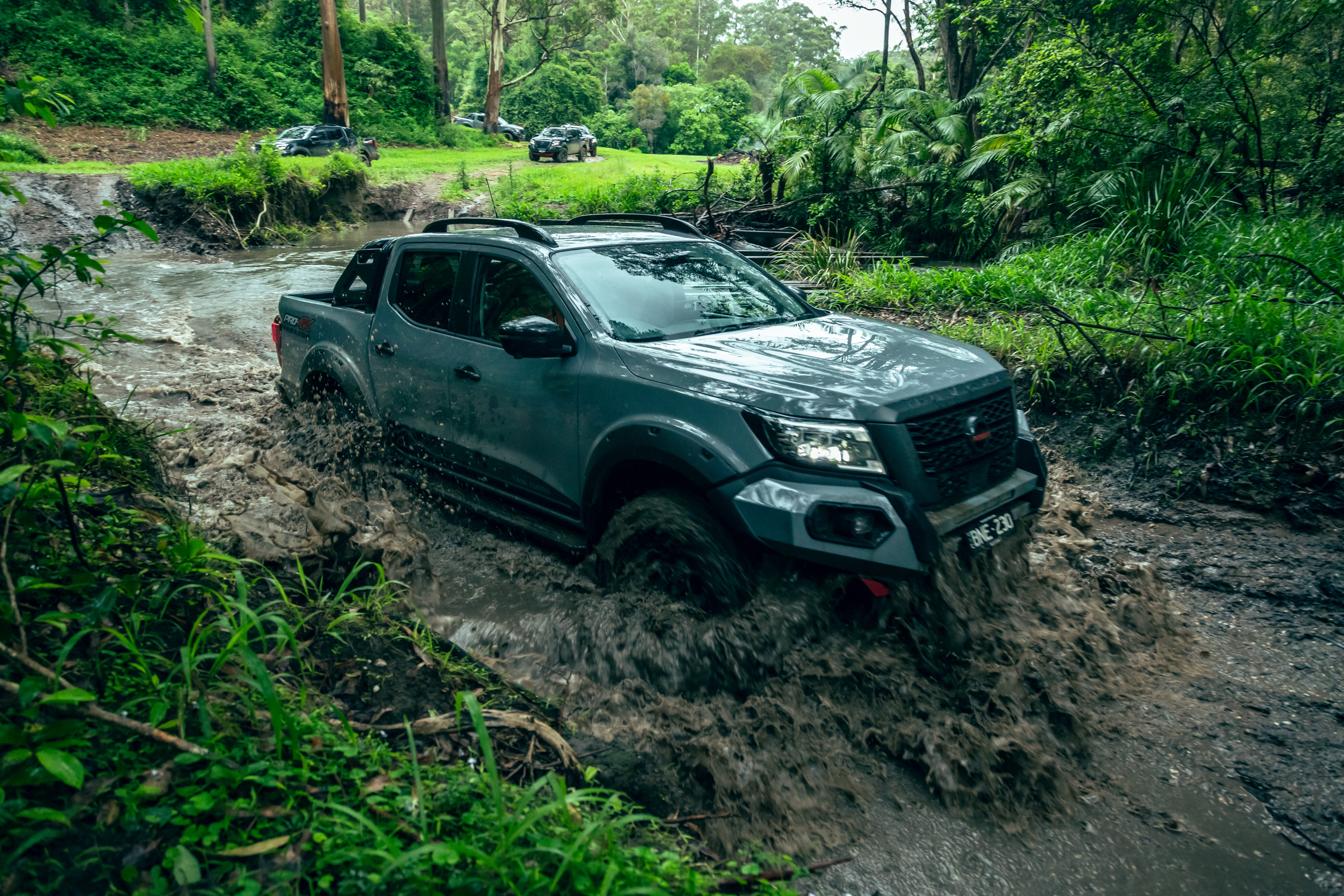
The steel bumper is now painted to match the body colour and this is done as part of the Warrior conversion using a new process co-developed by Premcar and paint supplier PPG.
Premcar wanted a finish that matches the body paint, yet has the chip resistance of powder coating, so it worked with PPG to develop the new paint formula.
The bars are powder-coated black when they are made at the Nissan factory in Melbourne and are only available in black for non-Warrior Navaras. Premcar then has them painted using the new PPG paint to match the car.At the back end, Premcar had to develop a new towbar for the Warrior that allows for space to fit a matching-size spare wheel and tyre in the standard location.Premcar has actually softened the suspension from that of the standard Navara to make it more supple for improved ride quality and control. And it has done this without sacrificing too much in terms of payload or any of its 3500 kilogram towing capacity.The front coil springs are seven per cent softer, while the rear coils are progressive with a six per cent reduction in the initial stage but 16 per cent stiffer in the second stage, such as when heavily laden or being subject to big bumps.
Working with the springs are bigger shock absorbers with increased oil capacity, rebound and compression dampening. Longer bump stops, or jounce bumpers, are fitted to better absorb the shock when maximum suspension compression is reached.The suspension package has been tuned specifically for the PRO-4X and takes in to account the added weight of the new front bumper, with or without a winch fitted, and how well it performs when loaded to GVM. The tyres and suspension combine to give the Warrior a 40mm increase in ground clearance to 260mm.
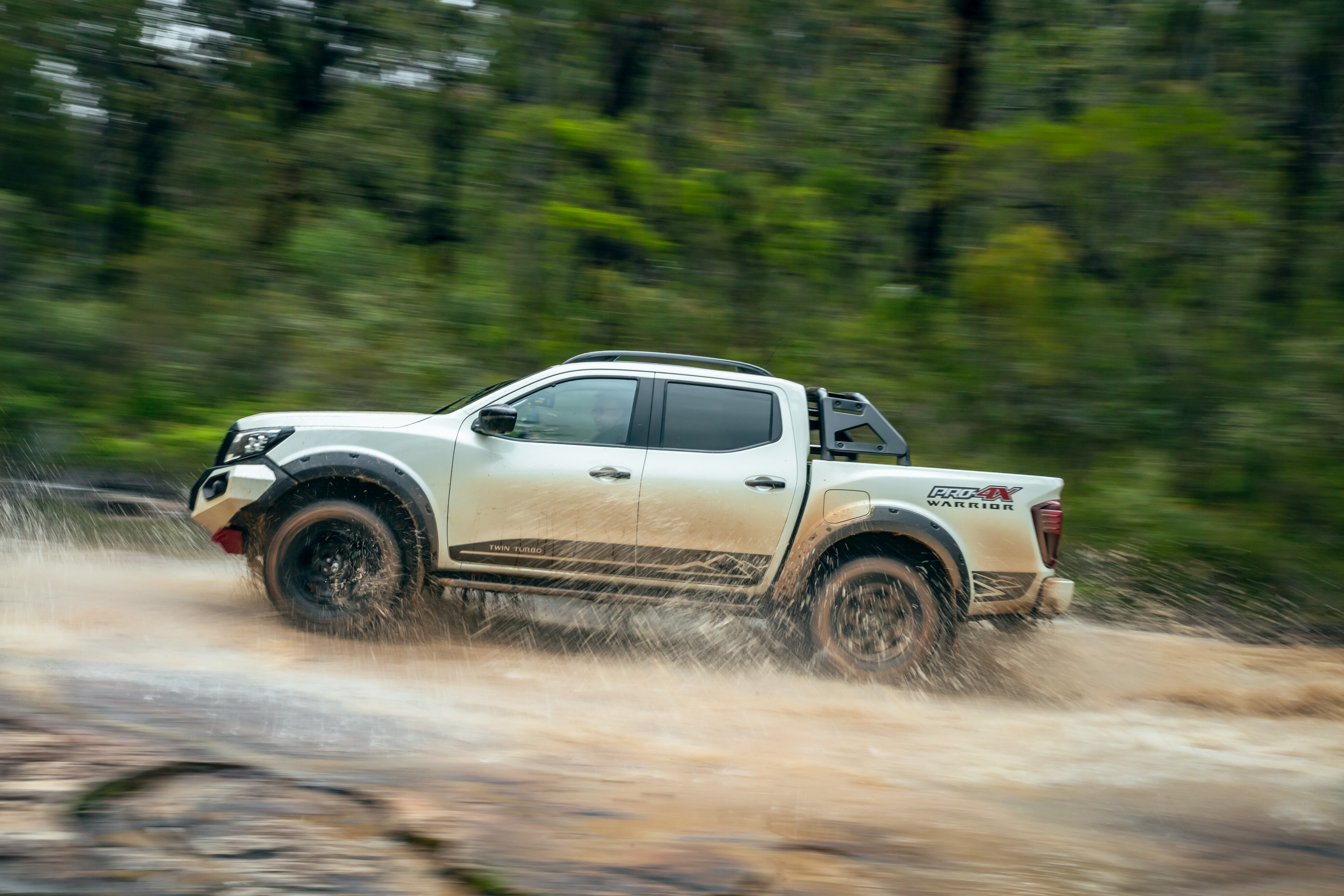
Speaking of GVM, the Premcar package gives the Warrior an extra 100kg over the regular Navara PRO-4X, so it is not sacrificing too much payload with the heavier steel bumper and other Warrior accessories.
The GVM is now 3250kg. That said, the Warrior is the only variant in the double-cab 4×4 Navara range that doesn’t have a full 1-tonne or more payload.
When fitted with the 7-speed automatic transmission the payload is 952kg or 961kg when equipped with the 6-speed manual, so its still outdoes many other utes in this class.
POWERTRAIN & PERFORMANCE
The powertrain remains standard spec for the PRO-4X; that is the 2.3-litre bi-turbo, 4-cylinder diesel engine that puts out a modest 140kW of power and 450Nm of torque, backed by the choice of 6-speed manual or a 7-speed automatic transmissions and a part-time, dual-range transfer case.
It’s great to see that Nissan is still offering the choice of a manual gearbox, not only across the Navara range but also in halo models like the Warrior.
The bi-turbo engine is middle of the road in terms of outputs when compared to competitors, but the set-up of its turbo chargers allows it to deliver its torque in a linear fashion from low in the rev range. It does get a bit rowdy as it gets higher in the revs and Nissan has helped subdue that with extra sound deadening in the 2021 Navaras, but it’s still noticeable.
Nissan’s 7-speed automatic transmission does its job and only becomes disagreeable when trying to downshift in low range and it doesn’t always let you do it.
ON-ROAD RIDE AND HANDLING
The sealed road part of the launch drive was limited to a relatively short freeway run between the hotel and the mountain tracks, where the Warrior was smooth and comfortable. The suspension felt controlled when hooking in to the off-ramps and there was no discernable road noise from the Cooper AT tyres.
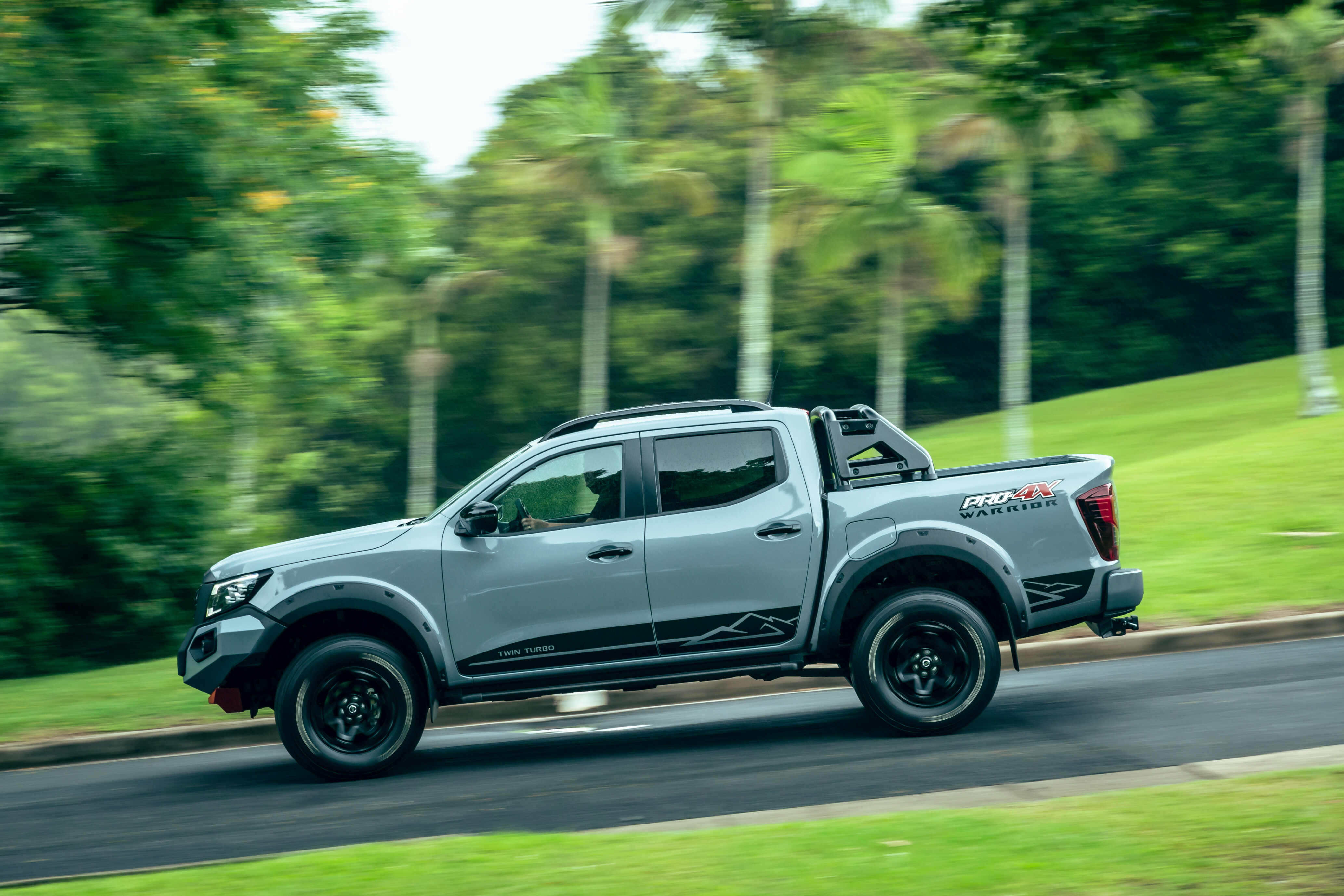
The tyres really came in to their own when the tarmac turned to wet gravel, offering a level of grip that highway-style tyres wouldn’t match. The suspension again did a stellar job of keeping the car controlled and on track as the surface got rougher.
The roads were relatively low-speed as they wound their way up in to the hinterland but the Warrior kept its composure with whatever it was faced with. There were a few whoops and crossings where I know the OE Navara suspension would have bottomed out and bumped hard, but there was no such dilemma for the Warrior.
OFF-ROAD
The forestry tracks were not what you would normally call ‘off road’ but some sections were heavily rutted and sloppy due to the recent rain. The tyres soon filled up with mud becoming slicks and getting caught in the ruts would find the bash plates on the high spots. It was nice to know that the extra protection is there in such conditions.
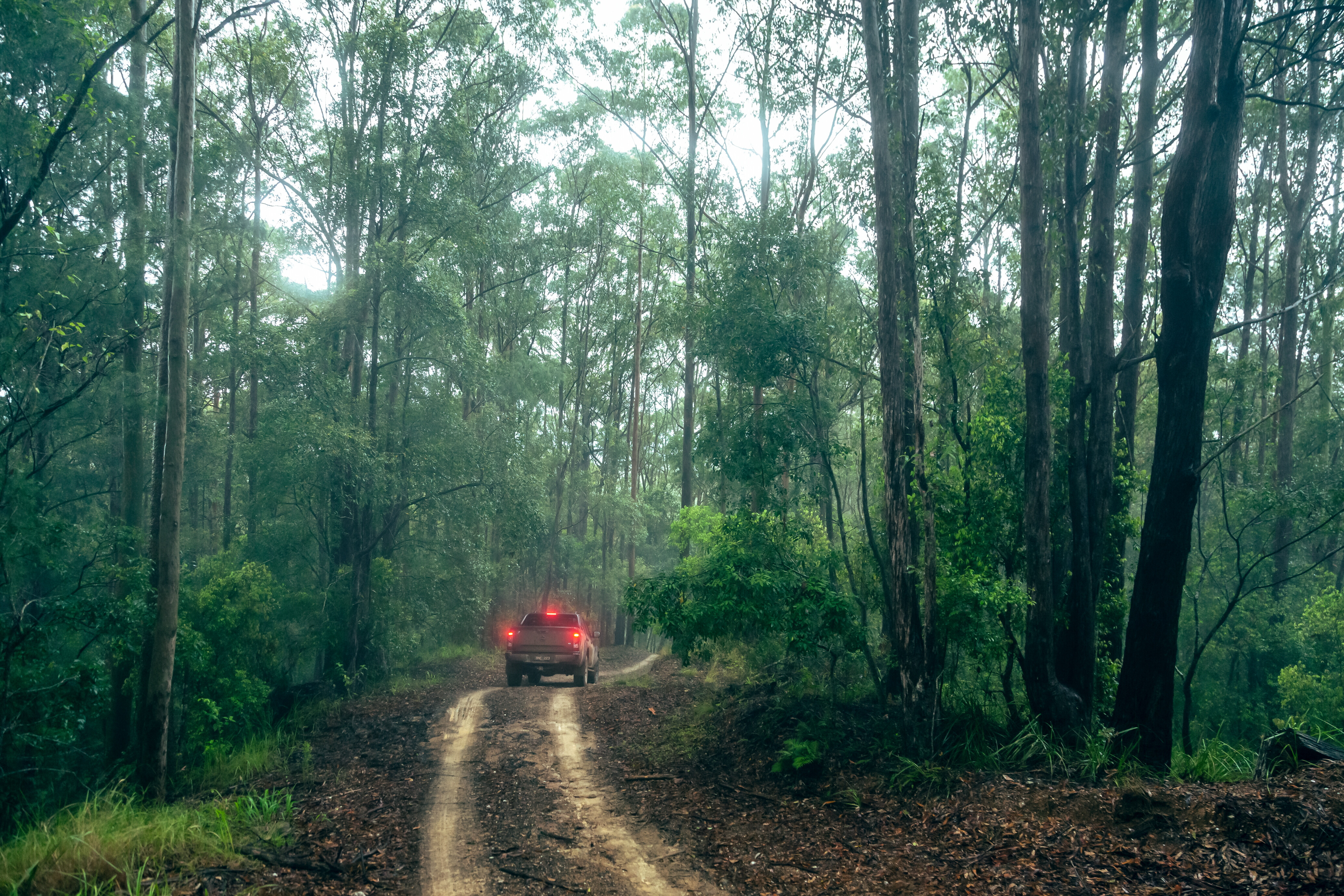
Low range was selected for control and the Warriors made their way up without too much struggle by picking the best available lines. The electronic traction control works very well and we didn’t need to employ the factory rear diff lock.Low range also gave the Navara very good engine braking for the steep descents, limiting wheels slip in the tricky conditions. This was in an automatic transmission Warrior and should be even better with a manual trans and its lower crawl ratio. There was no bottoming out under the front diff on the descents, the added ride height and tuned suspension doing their thing to control the front end.It will be very interesting to get the PRO-4X Warrior out on home higher-0speed rough roads to really feel the excellent suspension working its best.
CABIN & ACCOMMODATION
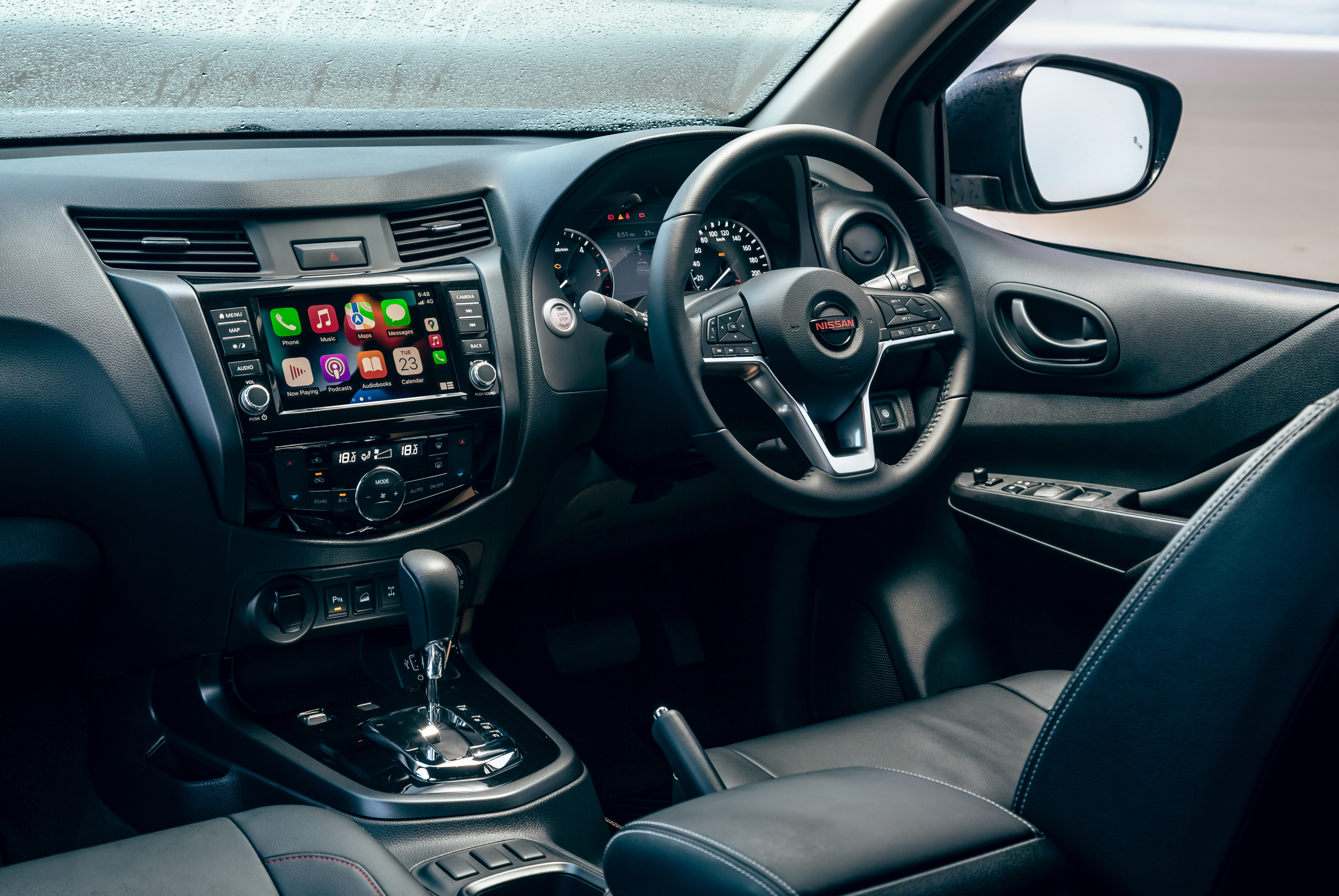
Inside the Warrior is all the same as a regular PRO-4X except for the embroidery on the front seat headrests.
The seats are leather with manual adjustment and no heating, the 2021 updated dash has the new AV unit that includes CarPlay and Android connection, and the leather trimmed steering wheel is fitted to a column that is adjustable for height but not reach.
The Navara is a bit narrower than utes such as the Ranger and Amarok and you’d be hard-pressed to squeeze three adults across the back seat, but it’s comfortable for two.
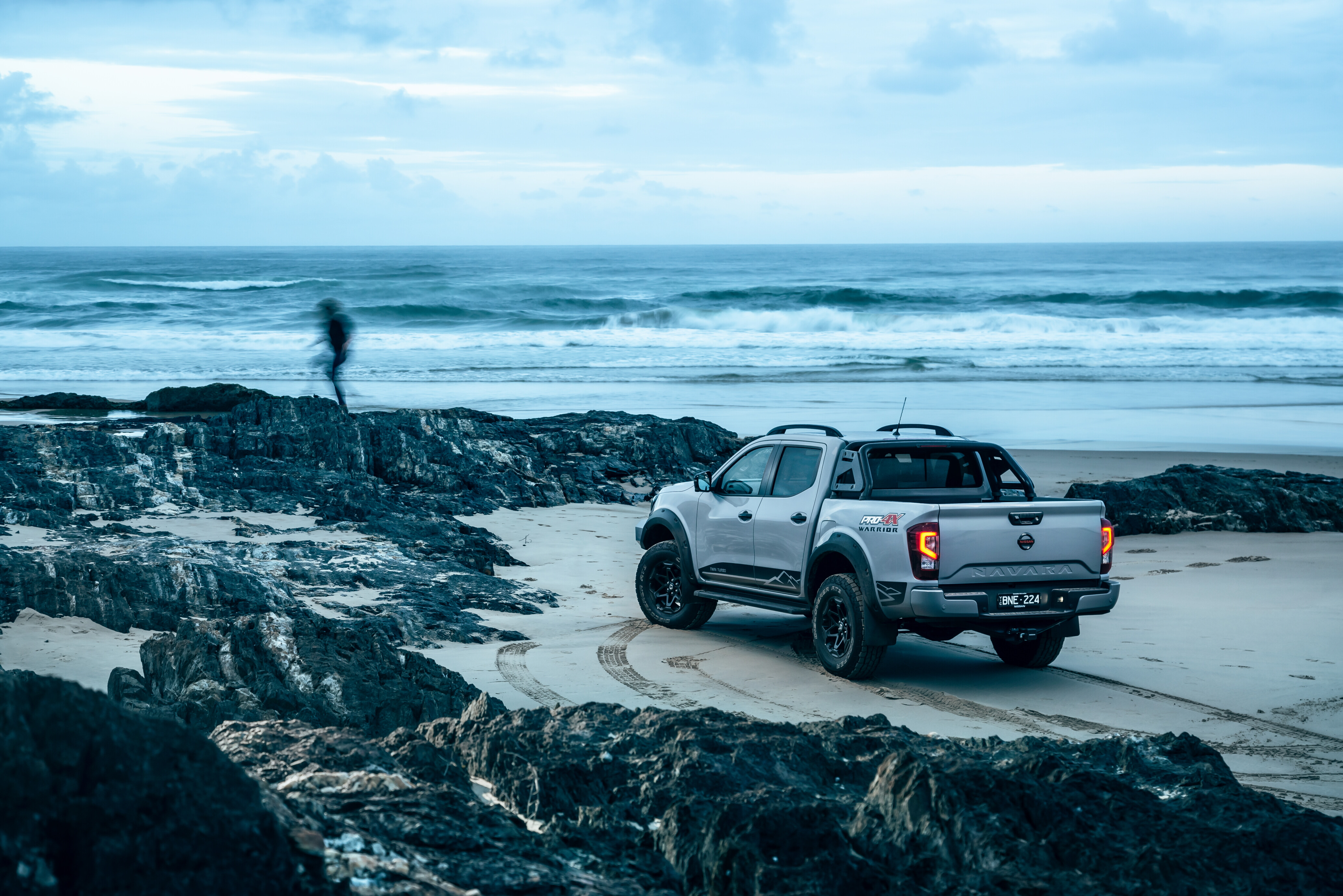
Externally, the big changes are to the front end with the painted bar and underbody protection designed to work in with the bigger 2021 grille and new LED headlights.
The 17-inch alloy wheels are a new design for the PRO-4X Warrior. They are wrapped in 275/70 Cooper Discoverer all-terrain tyres, the same rubber that was fitted to and well-proven on the N-Trek Warrior.
‘Warrior’ specific decals are fitted to the taller for ’21 cargo tub to let everyone know it’s something special.
VERDICT
Of course, performance and looks always come at a cost and for the PRO-4X Warrior, that cost is $67,490 with the manual gearbox or $69,990 with the auto transmission.
While that’s $9360 more than what a regular Navara PRO-4X will set you back, you have to consider the price of all the accessories and that they were specifically developed for this vehicle with OE levels of engineering to be a fully integrated package that enhances the original vehicle.
Other suspension, wheels and tyres, and protection equipment could all be bought via the aftermarket, but you could never have the same level of vehicle integration that comes with the Premcar Warrior package which is fully legal and covered by Nissan’s full five-year warranty.
It creates a vehicle that you can drive out of the showroom and on any adventure around Australia without any further modifications and that is something that can’t be said about many other new vehicles on the market.
One thing for sure is that this is the best-performing version of the D23 Navara yet.
2021 NISSAN NAVARA PRO-4X WARRIOR SPECS
| ENGINE | I4 diesel |
| CAPACITY | 2298cc |
| MAX POWER | 140kW at 3750rpm |
| MAX TORQUE | 450Nm at 1500 to 2500rpm |
| GEARBOX | 7-speed automatic |
| CRAWL RATIO | 44.57:1 |
| 4X4 SYSTEM | Part-time 4×4 w/ high and low range |
| CONSTRUCTION | 4-door ute on ladder chassis |
| FRONT SUSPENSION | Double-wishbone IFS & coil springs |
| REAR SUSPENSION | Live axle located by 5-link & coil springs |
| TYRE/WHEEL | 275/70R17 / alloy wheels |
| KERB WEIGHT | 2298g |
| GVM | 3250kg |
| PAYLOAD | 952kg |
| TOWING CAPACITY | 3500kg |
| GCM | 5910kg |
| SEATING | 5 |
| FUEL TANK | 80L |
| ADR FUEL CLAIM | 8.1L/100km |
| DEPARTURE ANGLE | 19u00b0 |
| RAMPOVER ANGLE | 26.2u00b0 |
| APPROACH ANGLEu00a0 | 36u00b0 |
| WADING DEPTHu00a0 | 600mm |
| GROUND CLEARANCEu00a0 | 260mm |
Writing this the day after the belated Bathurst 1000 touring car race where the traditional Ford versus Holden rivalry is set to become Ford V Chevrolet come 2023, while in the real world, and more relevant to the new car market, the Ford V Toyota duel rages on.
The Ford Ranger and Toyota Hilux have been duking it out for best-selling 4×4 honours in Australia for years now and while the Hilux ute has been Australia’s best selling car overall on a number of occasions to date, the Ranger is chasing that title as well.

Ford will turn the 1-tonne ute segment on its head mid year when it introduces its 2022 Ranger with a V6 diesel engine, full-time four-wheel drive and in an all-new vehicle. Sure, the VW Amarok has had these features for years but it has never been a mainstream seller, while the Ranger continues to be an Aussie favourite that will be boosted by these new inclusions.
The question now becomes: What’s Toyota got in store for the Hilux to keep it in the fight?
By the time the 2022 Ranger lands, the current generation of Hilux, the eighth generation of the nameplate, will have been around for seven years. As the Hilux is such a popular model around the world, we expect the ninth-gen model to be with us in the next couple of years so the boffins at TMC would be well and truly in to the design, engineering and testing stages of the new car.
Are they looking at a V6 diesel engine for the next Hilux? If they’re not already, they’d want to start now!
While Ford hasn’t revealed the outputs of the Ranger V6 engine, we’re tipping 600 to 650Nm, while previous generations of the engine have made up to 700Nm in Ranger Rovers.
Thankfully, Toyota has a freshly minted V6 diesel in its armoury that would be a welcome fit in the next Lux, either in its full 700Nm current tune or a derated, possibly single turbocharger variant.
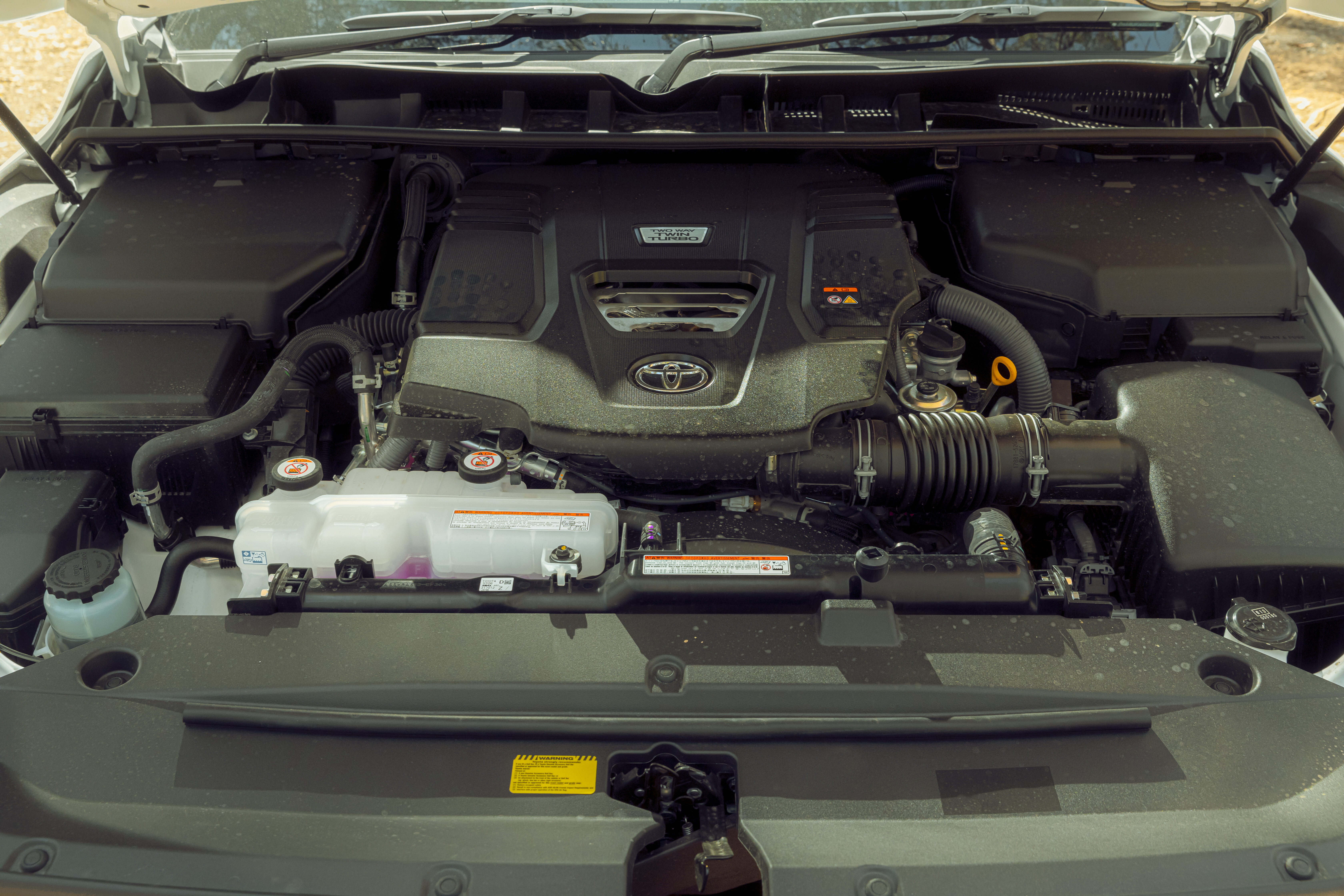
It was a surprise to see Toyota develop the all-new F33A-FTV engine on its own in these days of product sharing and shaming of fuel-burning engines; but we’re happy that they did. And we expect Toyota will want to get the most out of the engine and share it across a few different models. That’s where lower-output or single-turbo versions of the V6 could come in to play.
The hot-V design of the F33A makes it narrower by taking the turbochargers from the sides of the engine and sticking them up in the ‘V’ so theoretically, it should be easier to put it in a smaller, narrower engine bay than that of the LC300.
I reckon we’ll see a version of the F33A in the next-gen Prado (because you can bet that the Ford Everest will get the V6 diesel) as well as some upper-spec models of the next-gen Hilux. Toyota would be crazy to not make this happen and for consumers, you’ll be getting better performing and more refined powertrains in some of your favourite 4x4s.
The Ford versus Toyota war rages on and we’re looking forward to the next (V6) battle.
Killa’s Ford Ranger Raptor with a Coyote 5.0-litre V8 transplant has won the Ryobi Custom 4X4 of the Year competition in 2021.
A creation of Queensland mob, Killa Kustom Kables & Conversions, the V8-powered Ranger Raptor utilises a Ford Performance Coyote crate engine pulled from a written-off Mustang GT – it puts out 345kW at 7000rpm and 570Nm of torque at 4600rpm.
A worthy winner of the Custom 4X4OTY crown, the V8 conversion also includes specifically engineered parts; a PWR cooling system; a new air-conditioning system with all new hard lines; full electronics integration; full exhaust system; and full compliance. In fact, Killa’s V8 Raptor is a drive-in/drive-out conversion that will set you back $56K.
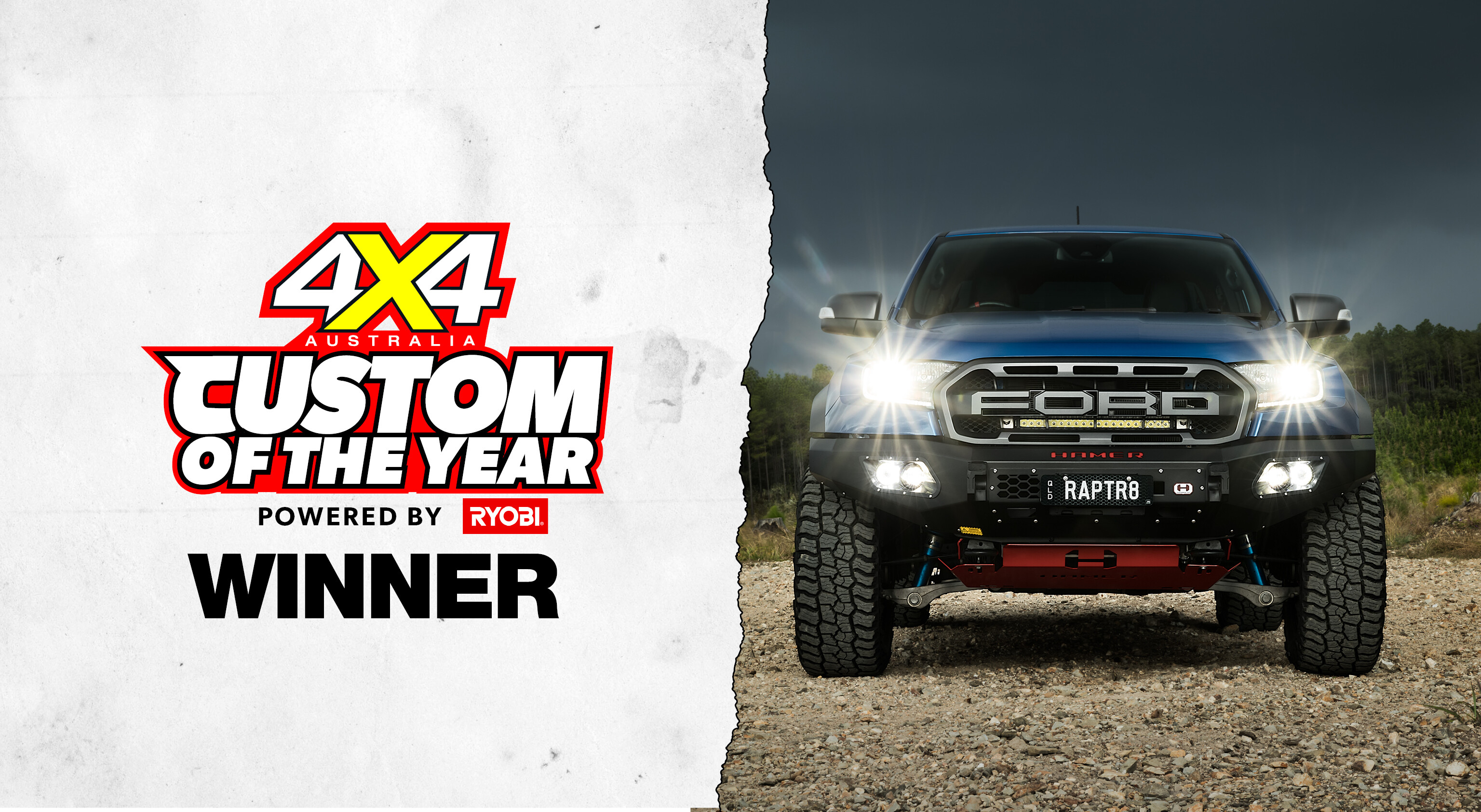
Despite dropping in a V8 engine, Steve Kidley from Killa told 4X4 Australia the most complex part of the build was ensuring everything works and stays fully ADR compliant – stability control, autonomous braking, and other factory systems.
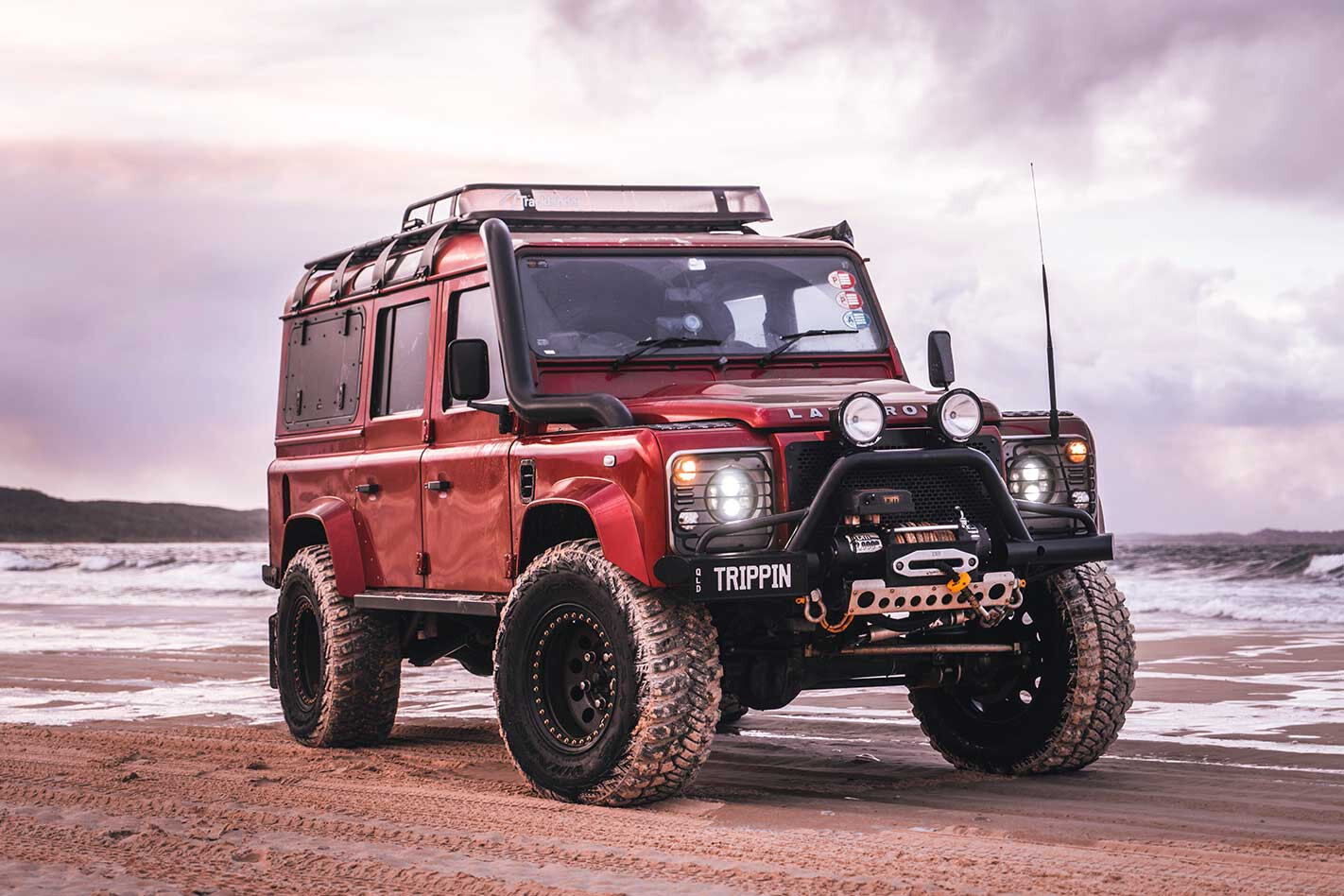
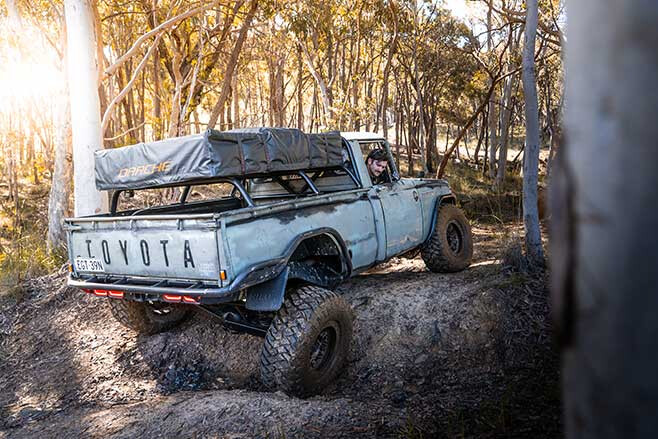
To nab the title in 2021, the Ranger Raptor has to beat some fierce competition – with a 2012 Defender and a killer 69 Stout rounding out the podium.
More than 5000 4X4 Australia readers voted in the 2021 Custom 4X4OTY competition, with one lucky winner plucked at random – Julie Crisp – scoring $5000 worth of Ryobi power tools and $2000 worth of Maxxis tyres.
The owner of the winning vehicle – Steve from Killa Kustom Kables & Conversions – also took home the same prize.
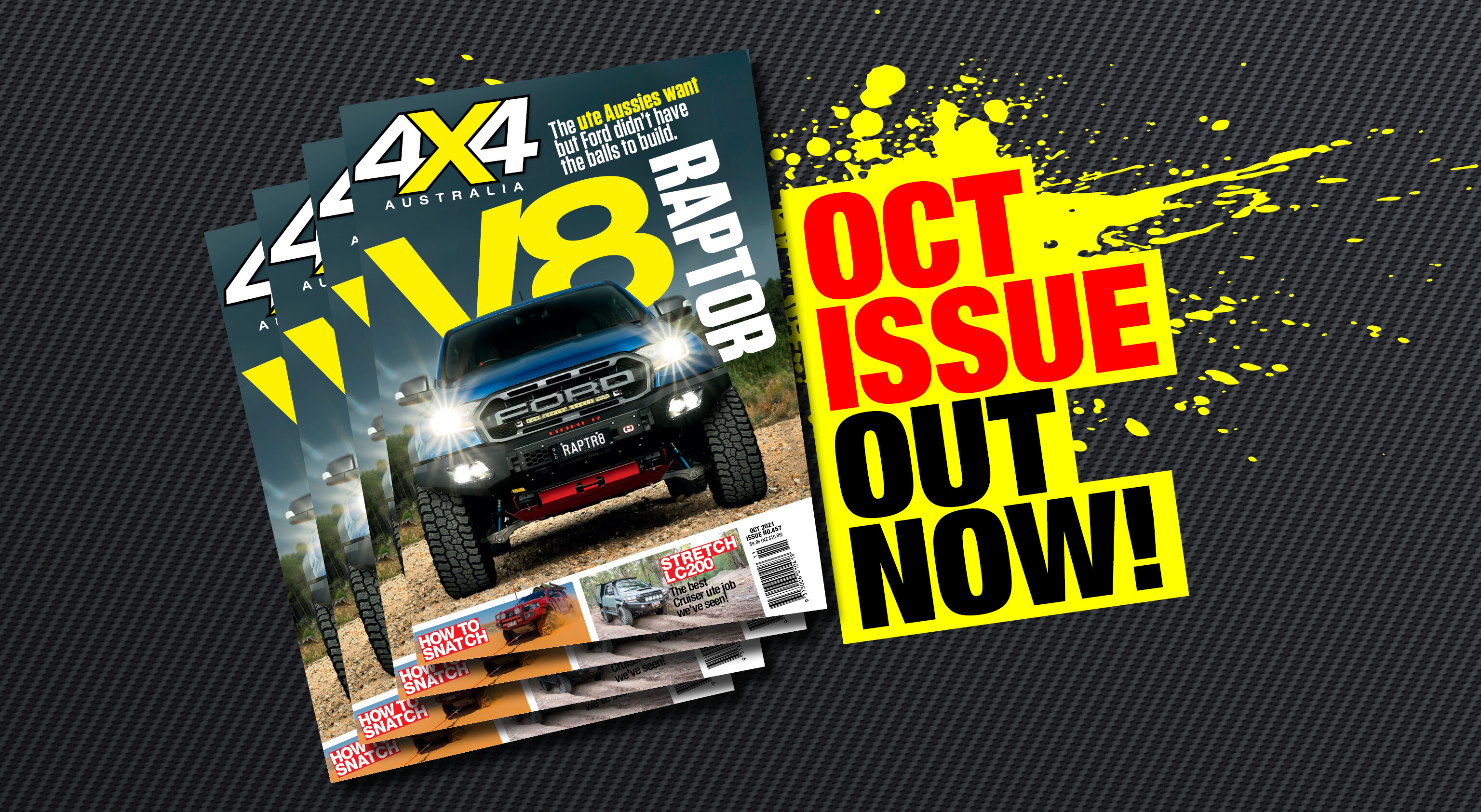
“That’s awesome!” said an excited Steve when we called to tell him he’d won. Steve says he’s been a busy man since we featured his Raptor V8 on the cover of our October issue.
“We’ve currently got four V8 Rangers on the go here now and our fitter in WA has also done four of the conversions.”
He’s also been buying all of the Ford Performance Coyote V8 crate engines he can get his hands on, to keep up with demand.
Congratulations to the winners and a big thank-you to everyone who voted in this year’s competition. It’ll be back in the New Year bigger and better than ever!
Agree or disagree on the winning car? Let us know in the comments below.
The 2023 Suzuki Jimny Long has been given the green light in India, according to local publication Autocar.
As one of the most important markets to Suzuki, the carmaker’s Indian arm has reportedly signed off on the much-anticipated five-door Jimny Long, which is said to be powered by a 1.5-litre four-cylinder petrol engine, potentially with the addition of mild-hybrid technology.
The news comes just days after a report out of Japan suggested the Jimny Long will be unveiled in late 2022, ahead of a launch in the first half of 2023.
These renderings created by artist Aksyonov Nikita for Russian publication Mail.ru provide an idea of what the Jimny Long could look like when it arrives.
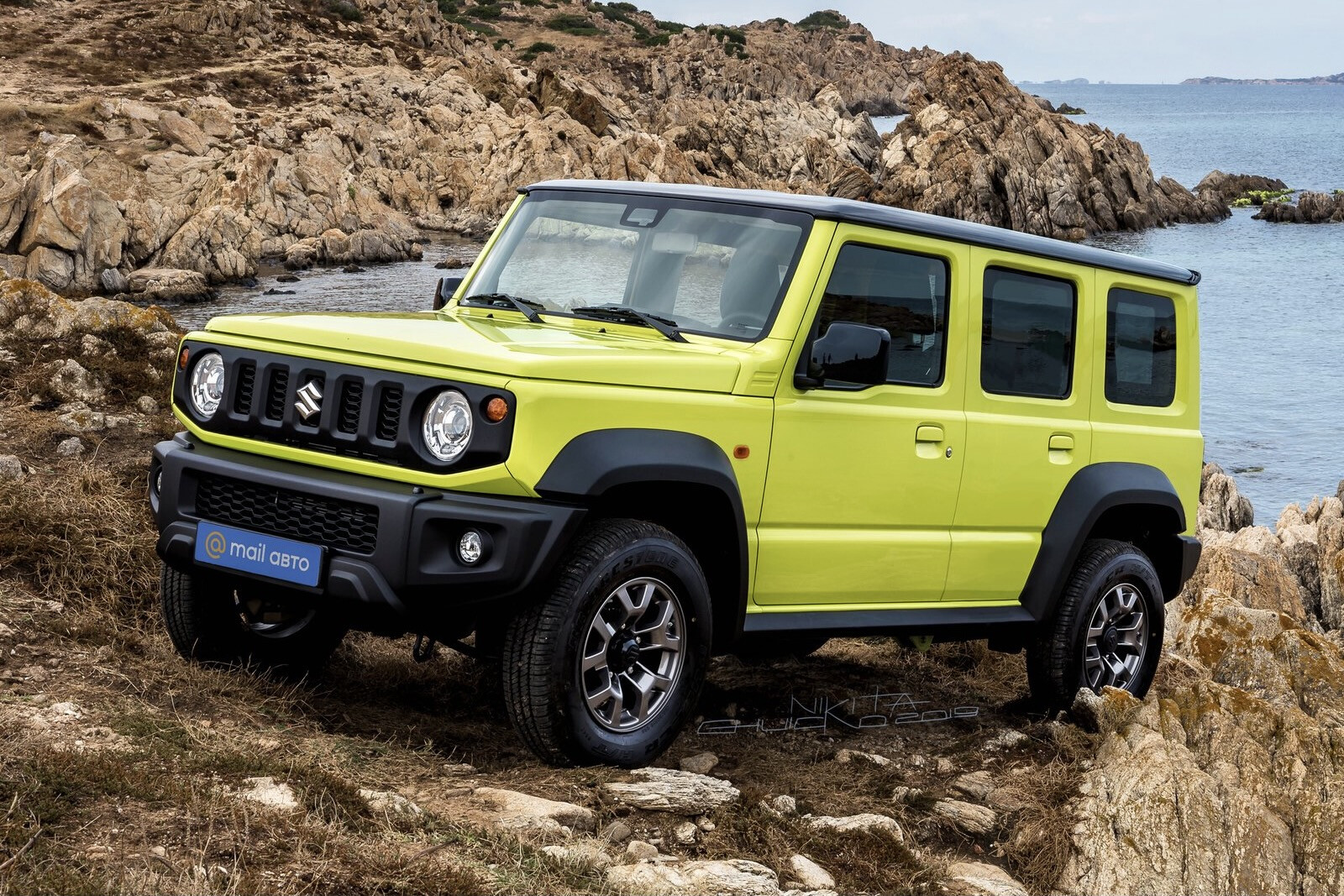
The Jimny Long is expected to add 300 millimetres to the standard model’s length, growing to 3850mm, while the four-wheel-drive’s wheelbase will increase to 2550mm.
Expect the 2023 Suzuki Jimny Long to also feature a horizontal front grille to help differentiate it from its three-door sibling.
An earlier rumour from Japanese publication MOTA suggested the new Jimny could debut with a fresh turbocharged powertrain, and also as a mild-hybrid to help reduce emissions for European markets.
A 20-year-old Nissan Pathfinder with the works leads the pack of reader-submitted four-wheel drives in November.
2000 NISSAN PATHFINDER
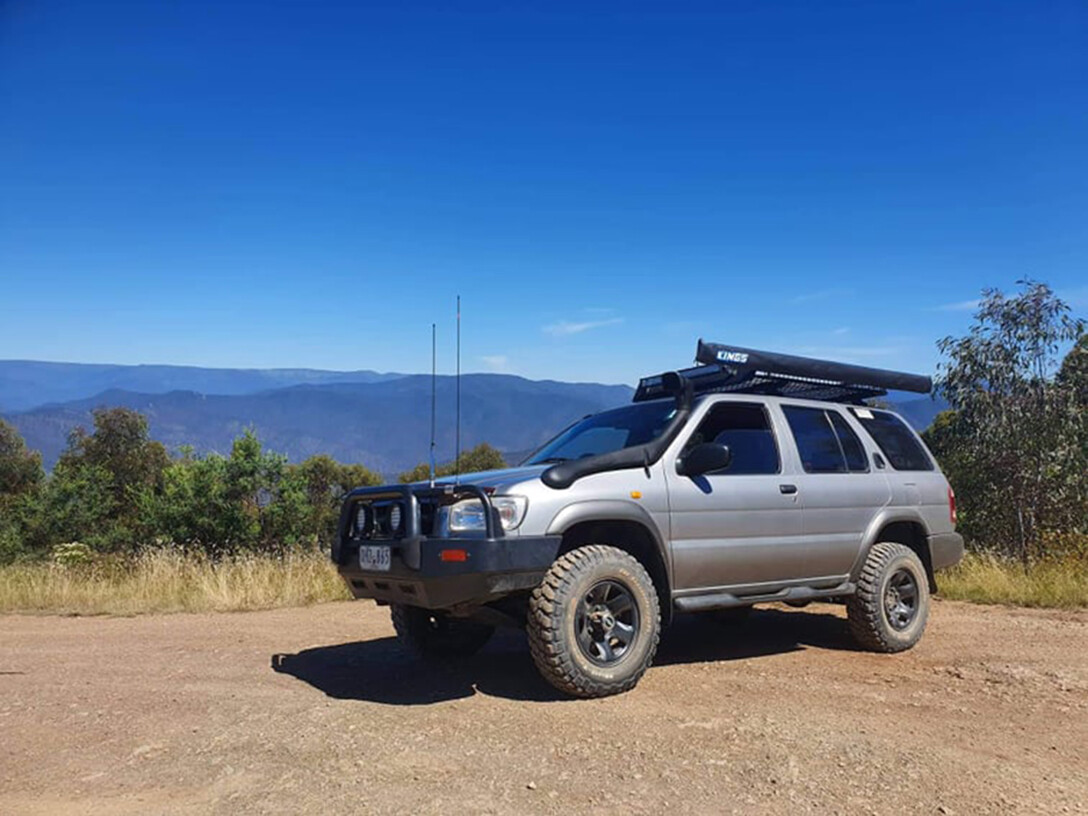
It has been in the family since new. Once I turned 18, I bought it off my Dad and modifications began. In terms of drivetrain and suspension, it has a two-inch lift, airbags in the coils, 31-inch BFG KO2s and, most importantly, a front auto Lokka. Basic modifications include spotlights, light bar, roof rack, rear light and snorkel. It also has a Brown Davis 125L main replacement tank in addition to a 60L gas tank. Being weight-conscious, I opted to build a drawer system to house the fridge on a slide and two drawers. While it is more of a touring rig, it has conquered many tracks around Victoria such as Billy Goat Bluff track, Blue Rag Range and many more – Xavier Wick
2008 NAVARA D40
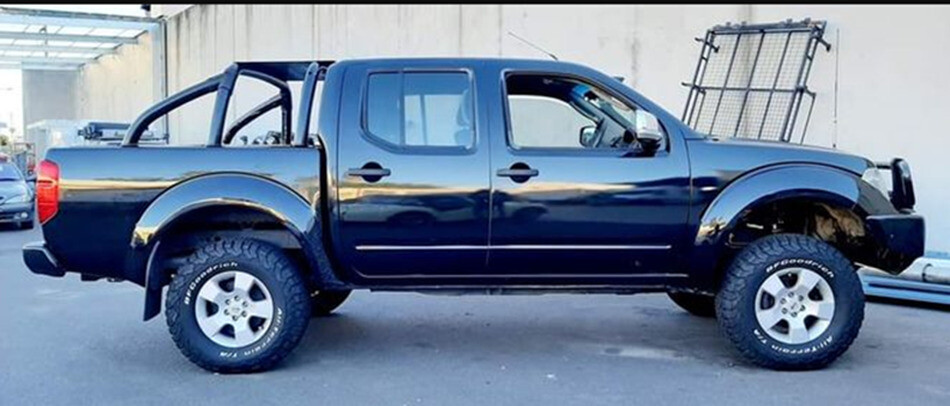
I’ve owned her for eight years and it’s only ever needed a clutch and alternator – no major issues at all. It has a four-inch Outback Armour long travel lift kit; PSR deluxe diff drop and bash plates; CCT custom billet wheel turbo (flowed to 31.5 psi); three-inch cat delete; stainless Xforce exhaust; Exedy HD clutch and flywheel; Tillix valve; iDrive (I only use it for retarding the throttle off-road); and 256/75/16 BF KO2s. It’s one of the best utes I’ve ever owned – Mattie Bell
FORD RANGER
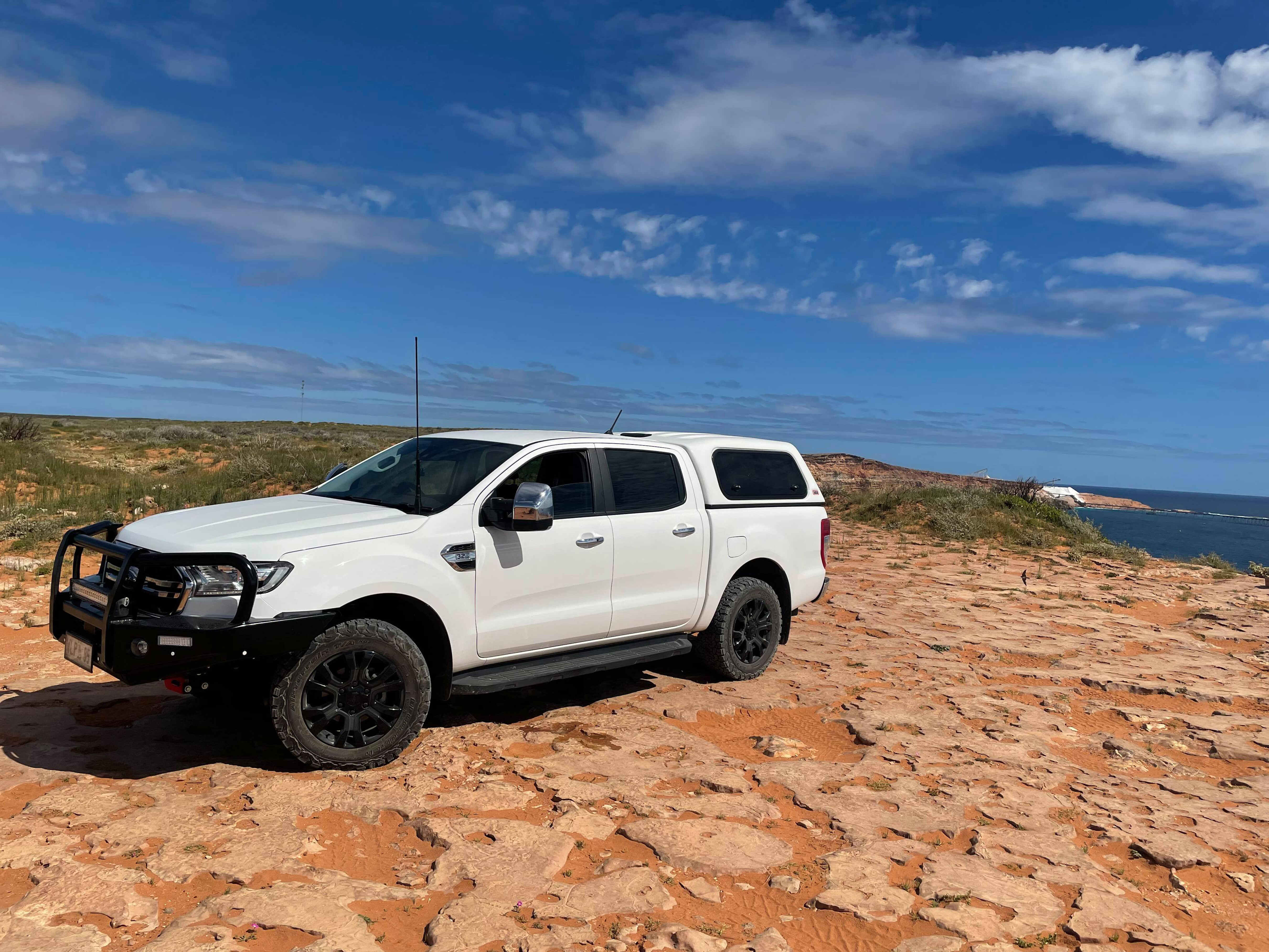
Our PX3 Ranger exploring the coastline at Quobba Station, Western Australia. It’s an amazing coastline, especially when the swells are up – Peter Masters
2015 ISUZU MU-X
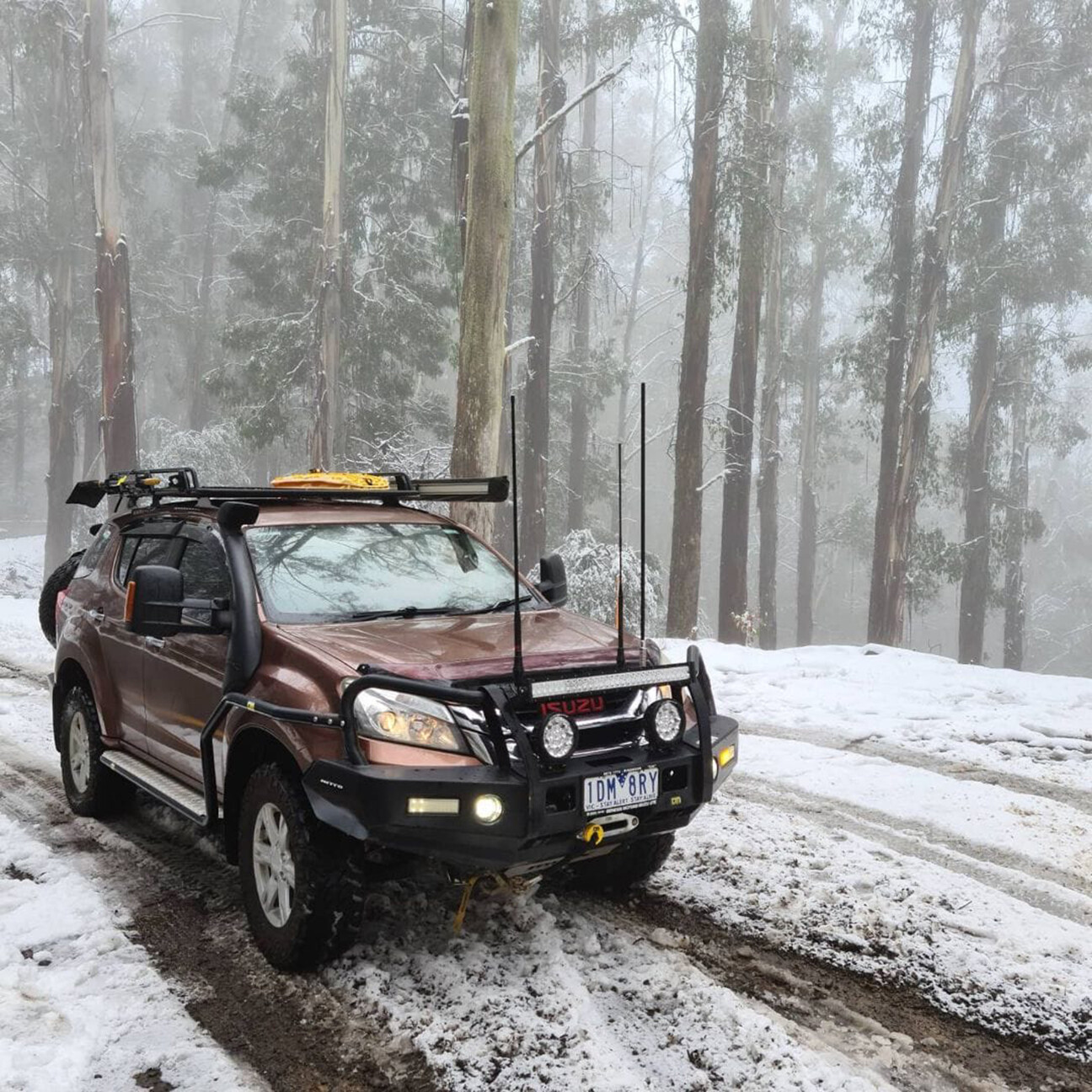
My MU-X has every mod! It has been to all of the Vic High Country, Cape York, most of SA, and it has done a fair bit of NSW and Canberra including Brindabella, Snowies and around Hill End – Siobhan Jamie Thornberry
2006 NISSAN PATHFINDER
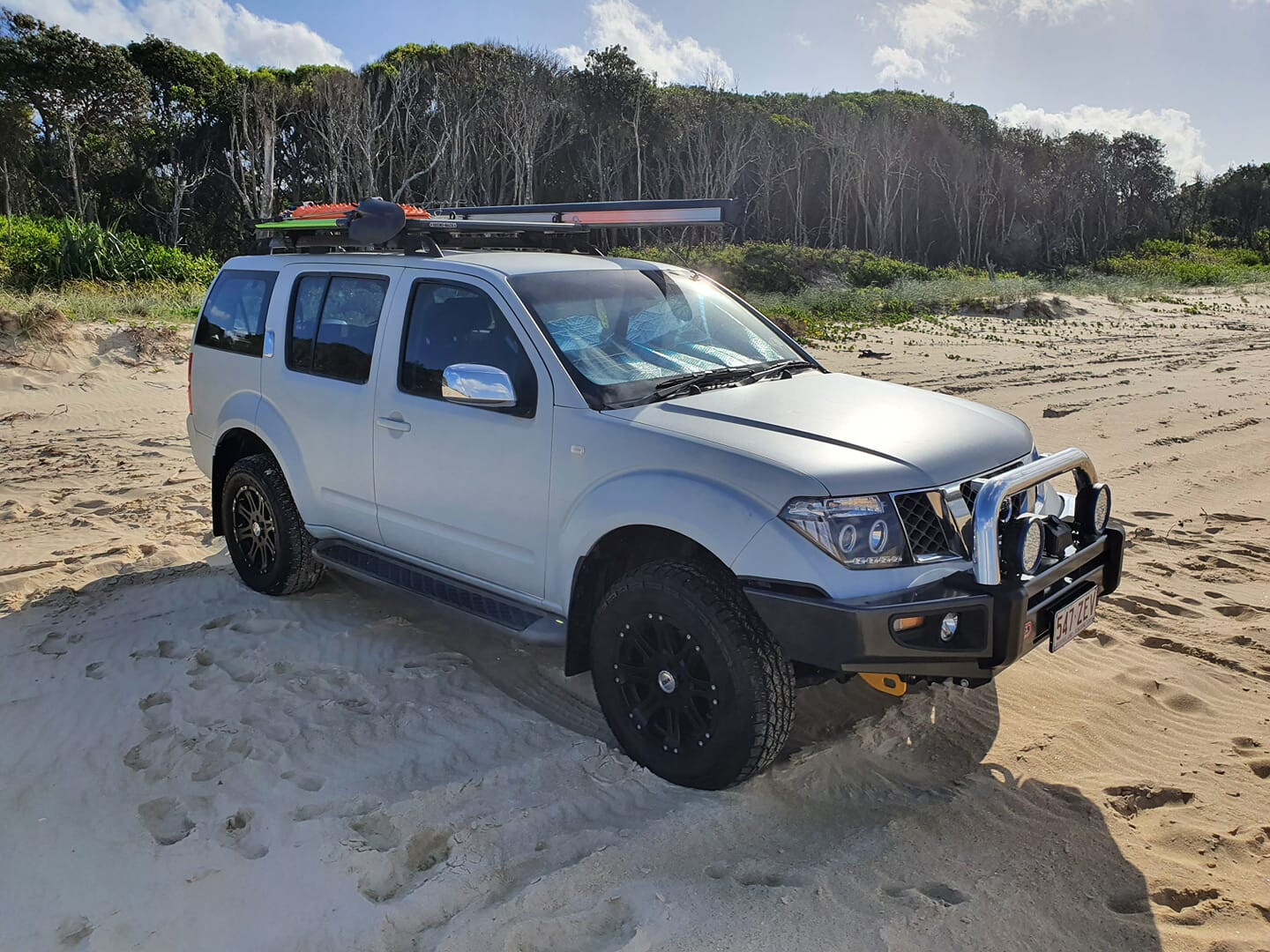
It was stock when I bought it and it has never been bogged. Kit includes OME suspension; ARB Sahara bar with Bushranger Revo winch; Pioneer platform with awning; Mars headlights; spotties; and a Raptor liner paint job – Alec Harvey
2018 79 SERIES
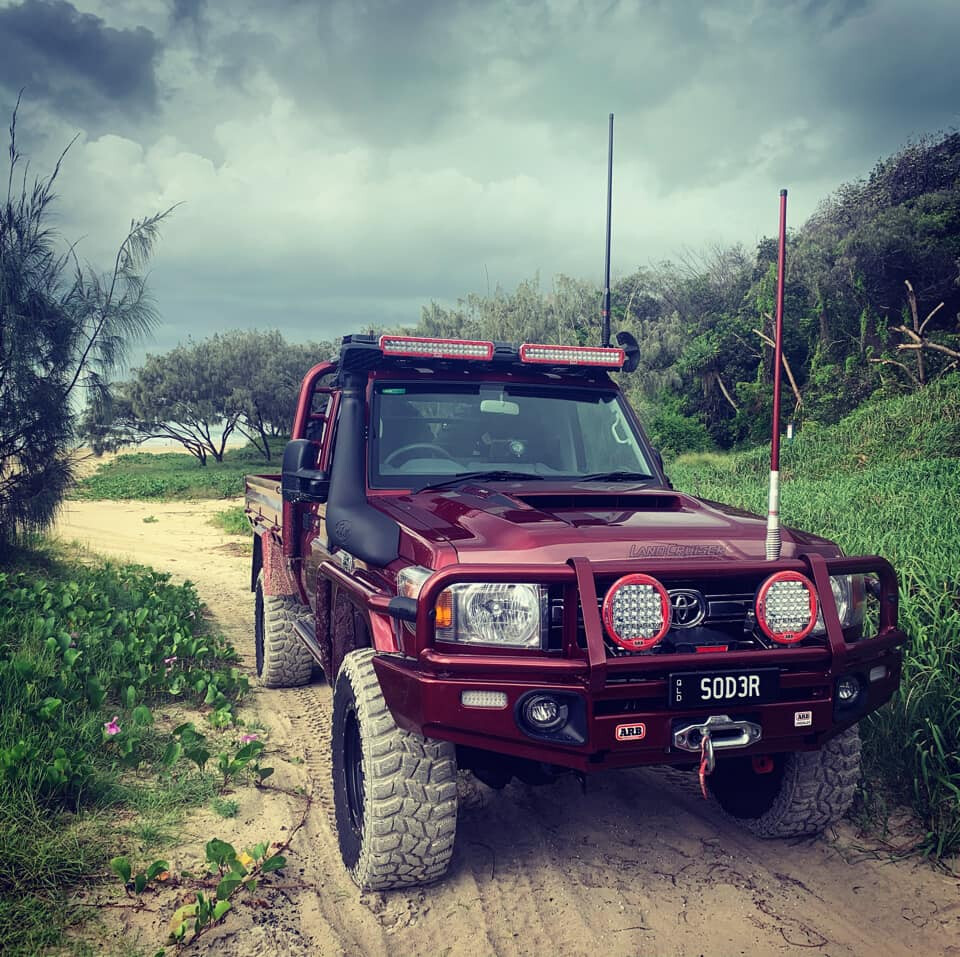
I call it MJ the Mistress. It has a custom AMVE timber deck tray; custom interior with Recaro seats; custom Alpine sound system including subs; and KMC Wheels Bullys wrapped in 305/17 Cooper STT Pros. It is fitted out with all ARB accessories by ARB Jindalee – Kaz Smart
Don the sombrero, mix up some margaritas and get stuck into these nachos – this spicy take comprising pulled pork.
INGREDIENTS
For the pork
• 6kg of pork butt or boneless shoulder roast • 1 cup stock • 1 cup apple juice • 2 apples • 2 onions • 1 cup barbecue sauce of choice (we used Stubb’s Smokey Mesquite)
For the BBQ rub
• ¼ cup brown sugar • 2 tbs paprika • 2 tbs black pepper • 1½ tsp chilli powder • 1½ tsp onion powder • 1½ tsp garlic powder
For the nachos
• Bag of corn chips • 1 tbs sour cream • 1 large avocado • 1 small lime cut into wedges • 1 cup shredded cheese • Salsa (optional)
COOKWARE NEEDED
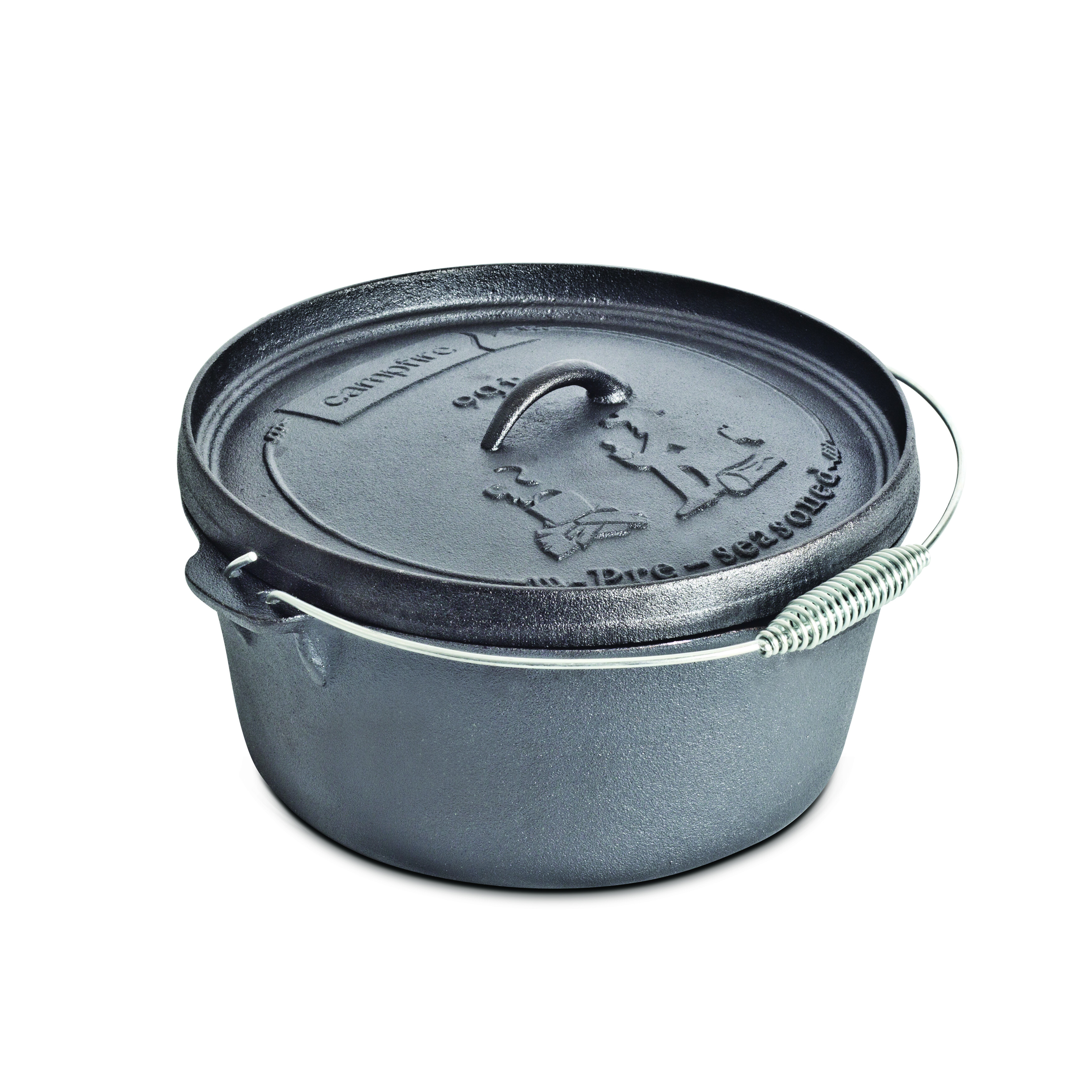
• Campfire 9 or 12 Quart Camp Oven
METHOD
For the pork
1. Mix together barbecue rub ingredients, then coat over pork. 2. Braise the pork in your camp oven until brown, making sure to get some nice burnt ends. 3. Remove pork and add chopped apples and onions. Place pork back in and fill with stock and juice to cover ¾ of the pork. 4. Cook low and slow for up to six hours or when the pork pulls apart. Try and regulate a slow heat, approximately 150˚C at most. 5. Once finished, place shredded pork into a tray and thoroughly coat in barbecue sauce.
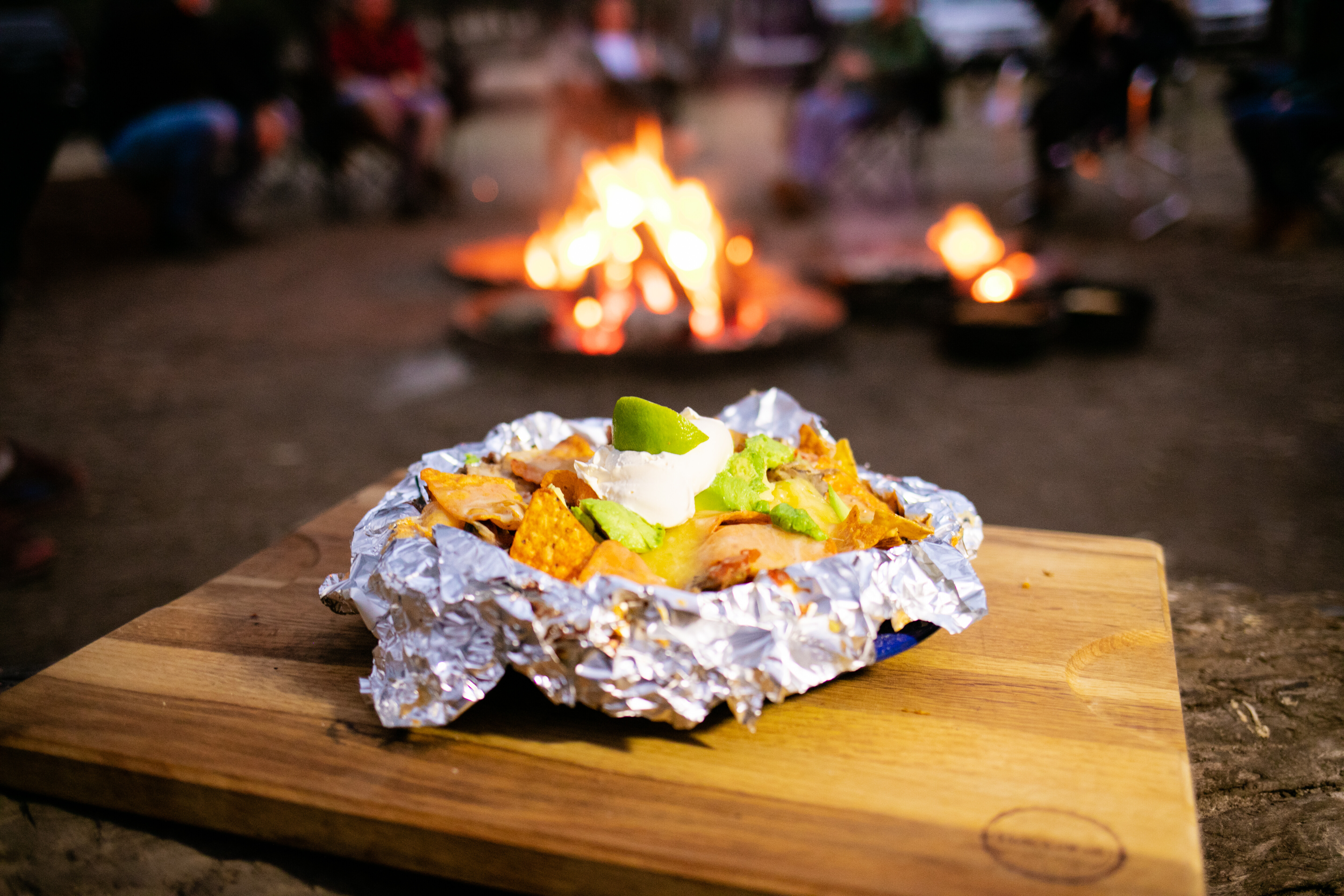
For the nachos
1. Line your camp oven with tin foil. 2. For the first layer, evenly spread 1/3 of the chips into the camp oven, topped with shredded pork, salsa and ¼ cup cheese. Repeat for second and third layer. 3. Cover camp oven and place on metal grill over fire (or over hot coals) for about 10 minutes or until the cheese has melted. Serve with smashed avo, dollop of sour cream and lime wedges.