
The Nissan Navara D23 copped a major facelift as part of a mid-life update in 2021, with a chunky new grille and higher bonnet and bodylines among the changes designed to give the little pick-up a bolder look. Add in a revised interior and improved safety equipment and the revitalised Navara has found a new lease on life.
While we’ve had the chance to review a few of the grades since launch, this was our first chance to get behind the wheel of the most luxe spec ST-X grade, which is $59,770 with the automatic transmission.
Powertrain & performance
All D23 Navaras in Australia are powered by the 2.3-litre diesel engine. The variance comes with the choice of single or dual turbocharger induction systems, while most of the four-wheel drive Navaras get the dual-turbo set-up, certainly in this upper-spec ST-X grade.
With the bi-turbo arrangement the four-cylinder engine makes 140kW of power and 450Nm of torque. While not enough to match the 500Nm of some of its competitors, the Nissan engine is capable of getting the Navara along at a good pace when unladen and sufficiently with a load on board.
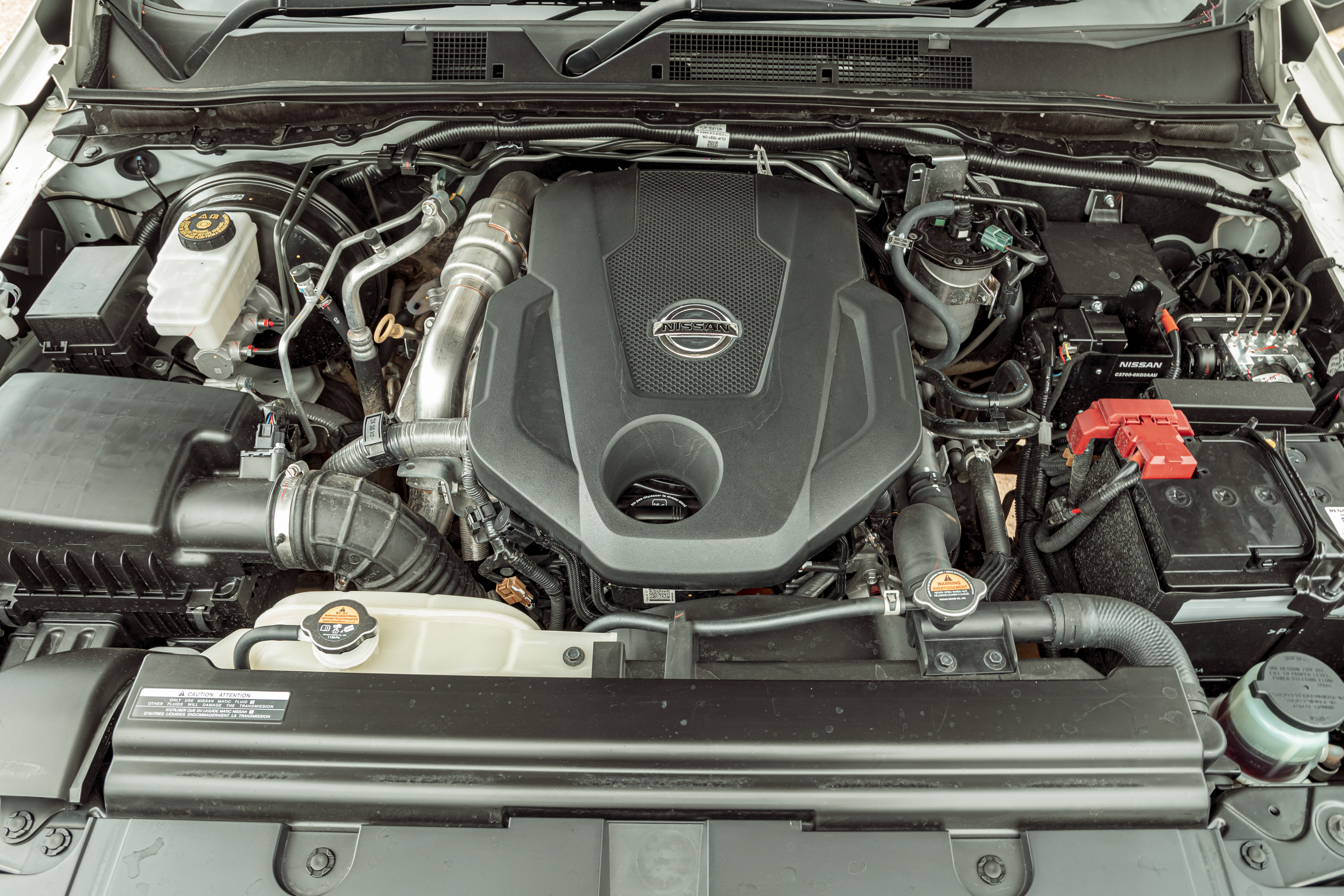
Its torque comes in at low revs, which matches well with the seven-speed automatic transmission. The Navara ST-X is also available with a six-speed manual transmission.
Under light throttle applications the engine is relatively refined, but the harshness of a four-cylinder diesel is unavoidable under load and becomes evident when you put your foot down in the Navara.
We got pretty good fuel use from the ST-X during our week in it, recording 8.3L/100km over a mix of driving conditions.
On-road ride & handling
The D23 Navara is one of the few one-tonne utes to come with a choice of leaf or coil springs in the rear suspension’s system, although the upper-spec models like this ST-X all come with the coils as standard.
The coil-spring rear end does deliver better ride quality and chassis control than a leaf-spring design, although the difference in the Navara isn’t as evident as you might expect.
Nissan has tweaked the calibration of the suspension and steering of the D23 numerous times since the model was launched in an effort to get it right, and the latest calibrations make the current model the best riding and handling model to date, short of the Premcar-tuned PRO-4X Warrior variant.
Off-road
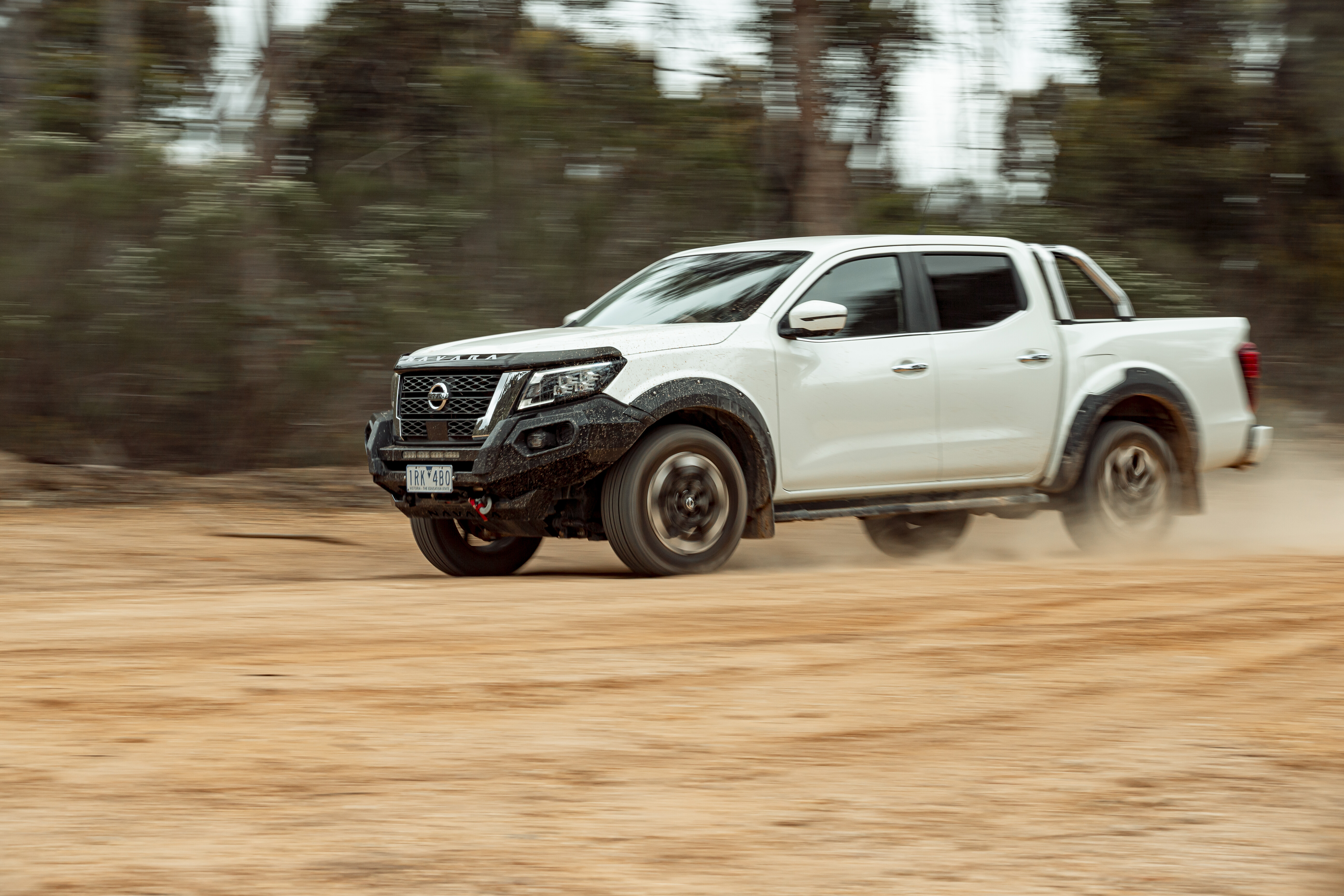
The coil-sprung rear suspension does allow a bit more travel at the rear wheels, although not as much as hoped for, so the Navara does suffer from a lack of wheel travel both front and rear, as do all the utes in this class.
The Navvie makes up for it with electronic traction control (ETC) which has been sharpened in its latest calibration but is still not as seamless or fast-acting as the class leaders. The ETC is backed up by a driver-activated rear differential lock, although using the RDL cancels out the ETC across both axles.
The Navara has moderate levels of ground clearance and 600mm wading depth. The ST-X rides on 18-inch alloy wheels with 255/60 highway tyres.
The 17-inch wheels from other grades can be fitted to allow more tyre options with a taller sidewall for better off-road use. Notably, the ST-X is the only variant in the range to get a matching alloy wheel as a spare, while the other grades get a same-size steel rim under the back.
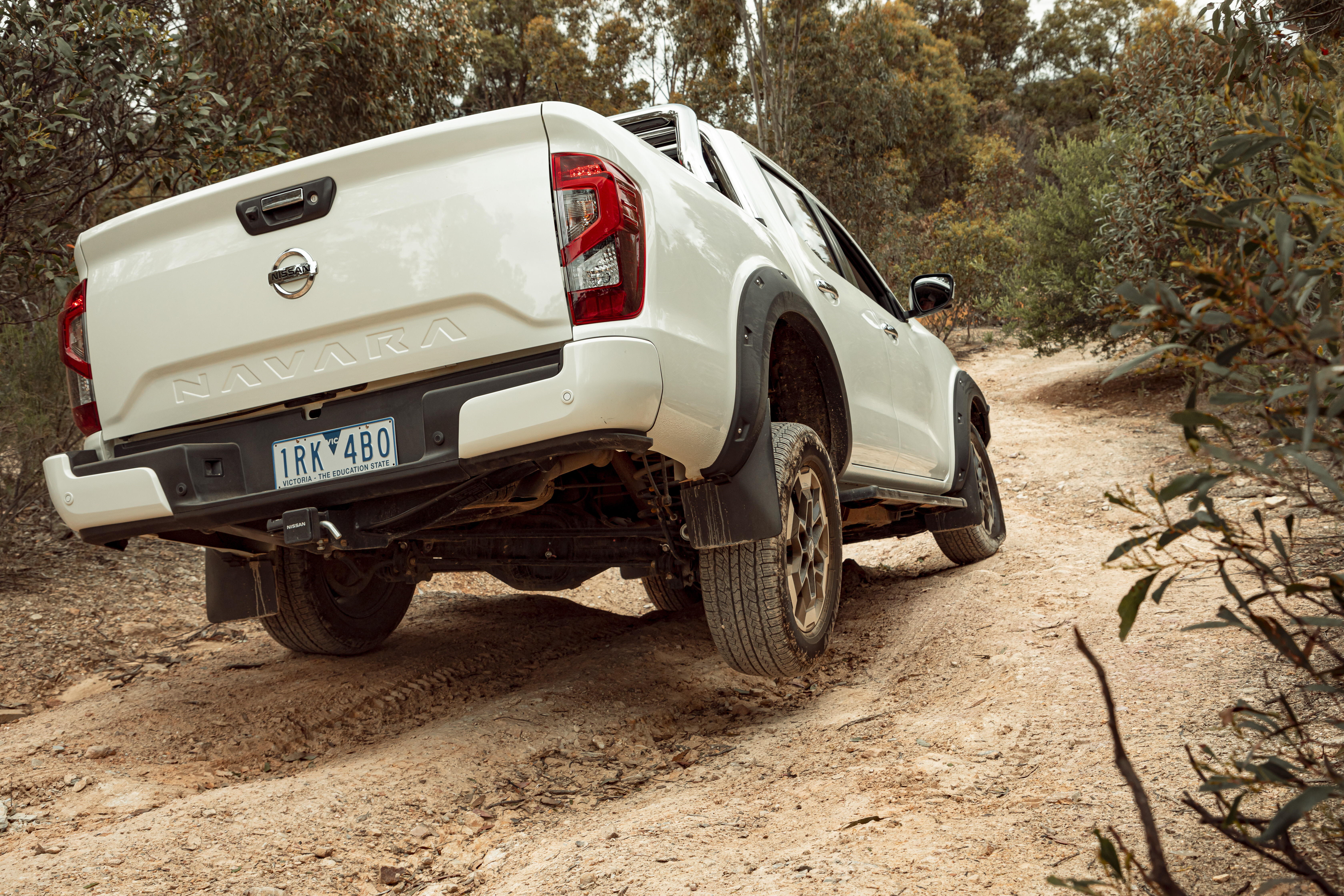
This car was fitted with the factory steel loopless front bumper and Warn winch option, which are handy items to have straight from the dealer and are covered by your new-car warranty.
Unlike another Navara we had tested previously, the weight of these accessories over the front axle wasn’t as detrimental to the ride and handling as it was felt to be on that previous test – there was none of the hitting of the front bumpstops and springiness in the front end in this ST-X model that was evident in the ST previously reviewed with these accessories fitted.
This makes us think that perhaps the ST wasn’t fitted with the heavier duty front springs that are required to accommodate the added weight over the front end.
Cabin & accommodation
The 2021 styling upgrades extend to the interior, with the inclusion of a new eight-inch centre screen that features Apple CarPlay and Android Auto, new seat trims, an off-road monitor and surround-view cameras.
The ST-X gets the best-specified interior, as it is the only Navara available with power adjustable and heated leather seats as part of an option pack. There is also the option of a powered sunroof, which is not available on other grades.
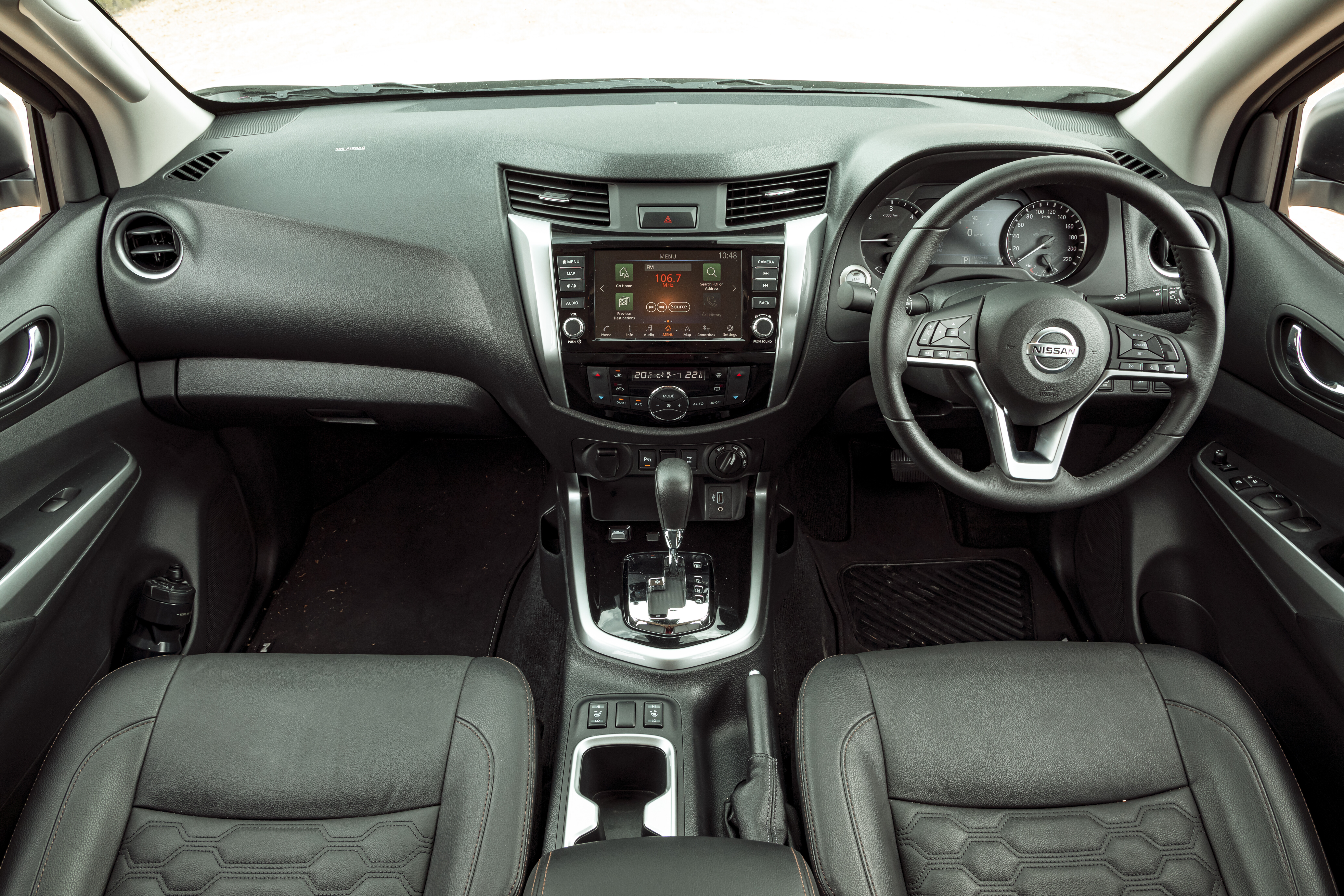
The seating position takes a bit of getting used to when you first enter any Navara – it’s low and flat and I initially hate it. After a few days, though, I adapt and begin to like it, finding the position very comfortable and accommodating. If you feel the same when you test drive a Navara, give the seating position a second chance.
Upgraded safety kit from 2021 models onwards includes the aforementioned around-view monitor, reverse parking sensors and camera, rear cross-traffic alert, lane departure warning and intelligent lane intervention, blind spot warning with intervention, forward collision warning with AEB, and a TPMS.
This puts the ST-X right up there with the class leaders in terms of looking after its occupants.
Practicalities
The powered and heated seat option takes 5kg off the usually 1024kg payload of the ST-X, and the steel bumper and winch will eat in to that even further. However, a top-spec 4×4 ute that has close to 1000kg payload is doing alright; better in fact than most in the class. You can thank the heavier duty rear diff that Nissan fitted to 2021 Navara 4x4s for that excellent payload, while all 4×4 variants also have a 3500kg towing capacity.
The taller cargo tub on 2021 models will help accommodate that load, and the ST-X’s adjustable ‘Utili-Track’ tie-down system will help keep it secure. It’s a shame the Utili-Track is only on the tub sides and not on the floor, as it was in the older D40 Navaras.
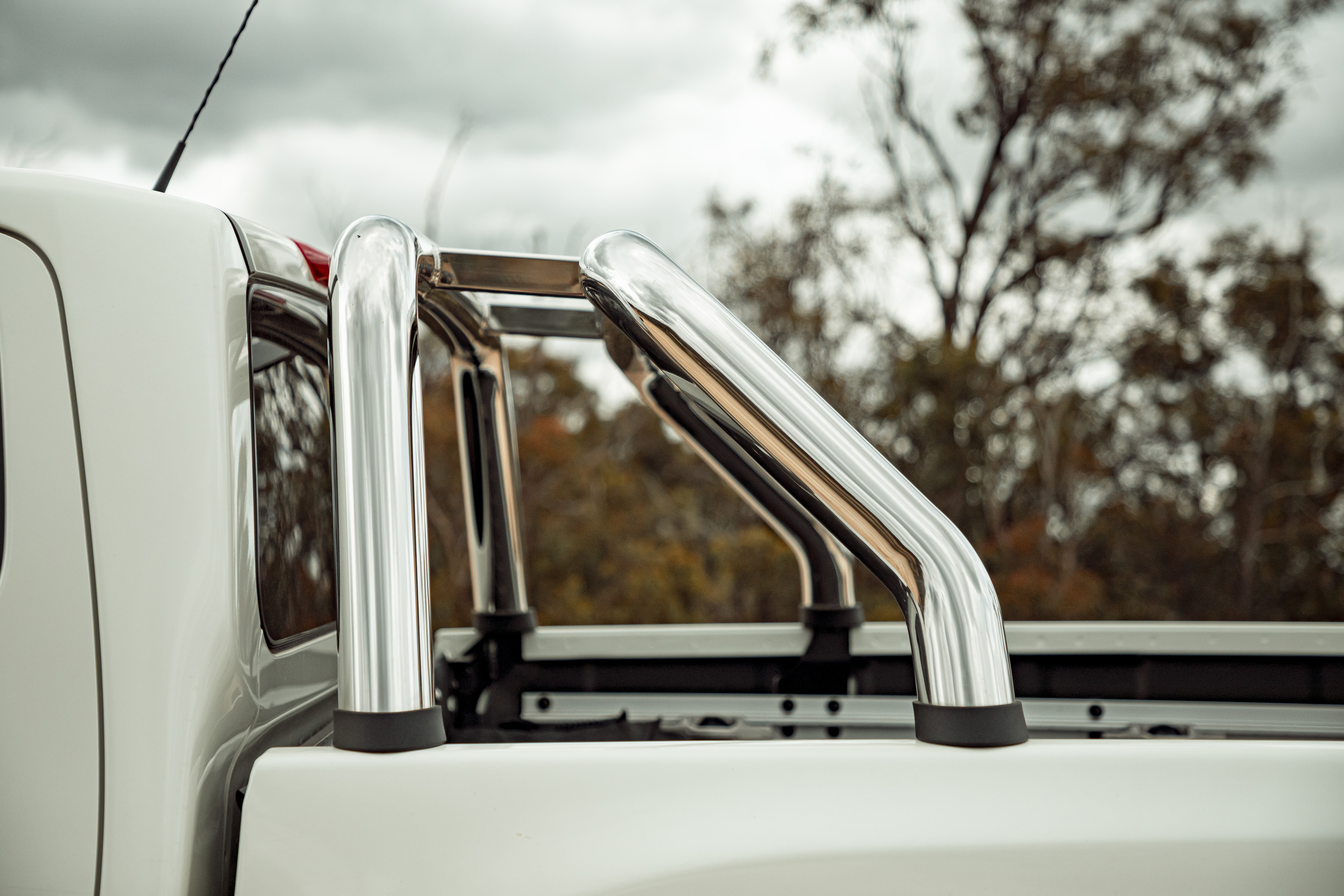
As well as the choice of Australian-made front bars and other factory accessories, the Navara has always been well-supported by the aftermarket industry to help you equip it to suit your needs.
It’s no longer the case that we’d say you need to replace the suspension ASAP for regular use, as the standard kit in this latest model is just about right. Past experience has shown you might still want to beef it up for regular heavy towing on the coil-spring rear end.
Verdict
With its premium white paint, steel front bar, winch, LED light bar and other accessories fitted, this Navara ST-X tips the till to the tune of $68,017 plus ORC – so you won’t be getting any change out of $70K by the time you get behind the wheel. The ST-X is not a cheap ute by any measure but it is well-equipped, drives well and gets the job done no matter what you throw at it.
The Navara remains a mid-pack performer in terms of its cabin size and the performance of its engine, but both are adequate for the majority of buyers. The mid-life updates make the Navvie a safer, better equipped and more appealing option in the category, so if the competitiveness of the 4×4 ute market allows you to drive your dealer for a better price than what’s quoted, an ST-X could be a very good deal.
2021 Nissan Navara ST-X specifications
| ENGINE | Bi-turbo I4 diesel |
|---|---|
| CAPACITY | 2298cc |
| MAX POWER | 140kW at 3750rpm |
| MAX TORQUE | 450Nm at 1500 to 2500rpm |
| GEARBOX | 7-speed automatic |
| CRAWL RATIO | 44.57:1 |
| 4X4 SYSTEM | Part-time 4×4 w/ high and low range |
| CONSTRUCTION | 4-door ute on ladder chassis |
| FRONT SUSPENSION | Double-wishbone IFS & coil springsu00a0u00a0u00a0u00a0u00a0u00a0 |
| REAR SUSPENSION | Live axle located by 5-link & coil springsu00a0u00a0u00a0u00a0u00a0u00a0 |
| TYRE/WHEEL | 255/60R18 / alloy wheels |
| KERB WEIGHT | 2151kgu00a0 |
| GVM | 3150kg |
| PAYLOAD | 1019kg |
| TOWING CAPACITY | 3500kg |
| GCM | 5910kg |
| SEATING | 5 |
| FUEL TANK | 80L |
| ADR FUEL CLAIM | 8.1L/100km |
| ON-TEST FUEL USE | 8.3L/100km |
| DEPARTURE ANGLE | 19.8u00b0 |
| APPROACH ANGLEu00a0 | 32u00b0 |
| RAMPOVER ANGLE | 22.9u00b0 |
| WADING DEPTH | 600mm |
| GROUND CLEARANCEu00a0 | 224mm |
There are few images as quintessentially Australian as the sight of a road train barrelling down a dusty highway in the Red Centre.
While many experimented with early prototypes of road trains – in many cases resembling actual trains by using steam engines – arguably the first successful example was created by Australian bush mechanic Kurt Johannsen in the years following World War II.
Johannsen was born on January 11, 1915, to a Danish father and German mother, and spent his life living throughout the Northern Territory.
He acquired his first driving license at 11 when living in Deep Well, around 30 kilometres south of Alice Springs, and won the government contract for sanitary and garbage services there when he turned 15, by virtue of owning his own truck.
“From the age of 15 onwards, it was all work and I became another breadwinner in the family,” Johannsen wrote in his memoir A Son of ‘The Red Centre’.

In his early 20s, while using a Dodge 4 for his monthly mail run – with a crate on the back for transporting rams, essentially making one of the first utes – Johannsen created his first truck, the ‘Bitzer Mulga Express’.
Made from “bits and pieces from various vehicles,” the machine was much larger than the Dodge, and was able to carry large loads while handling the outback tracks, as well as driving off-road through mulga bushes.
Further iterations of the Bitza ended with the Mulga Express III, which was able to haul up to 22 tonnes – a significant capacity for the time.
After the war, Johannsen was transporting cattle and race horses, when a property owner asked him why he didn’t build a truck capable of transporting 100 head of cattle at a time.
“I told him I already had plans made in my mind for building a road train with self-tracking trailers for negotiating bush tracks, but I didn’t have the money to buy all the equipment, which would probably cost about £10,000 pounds just for starters.”
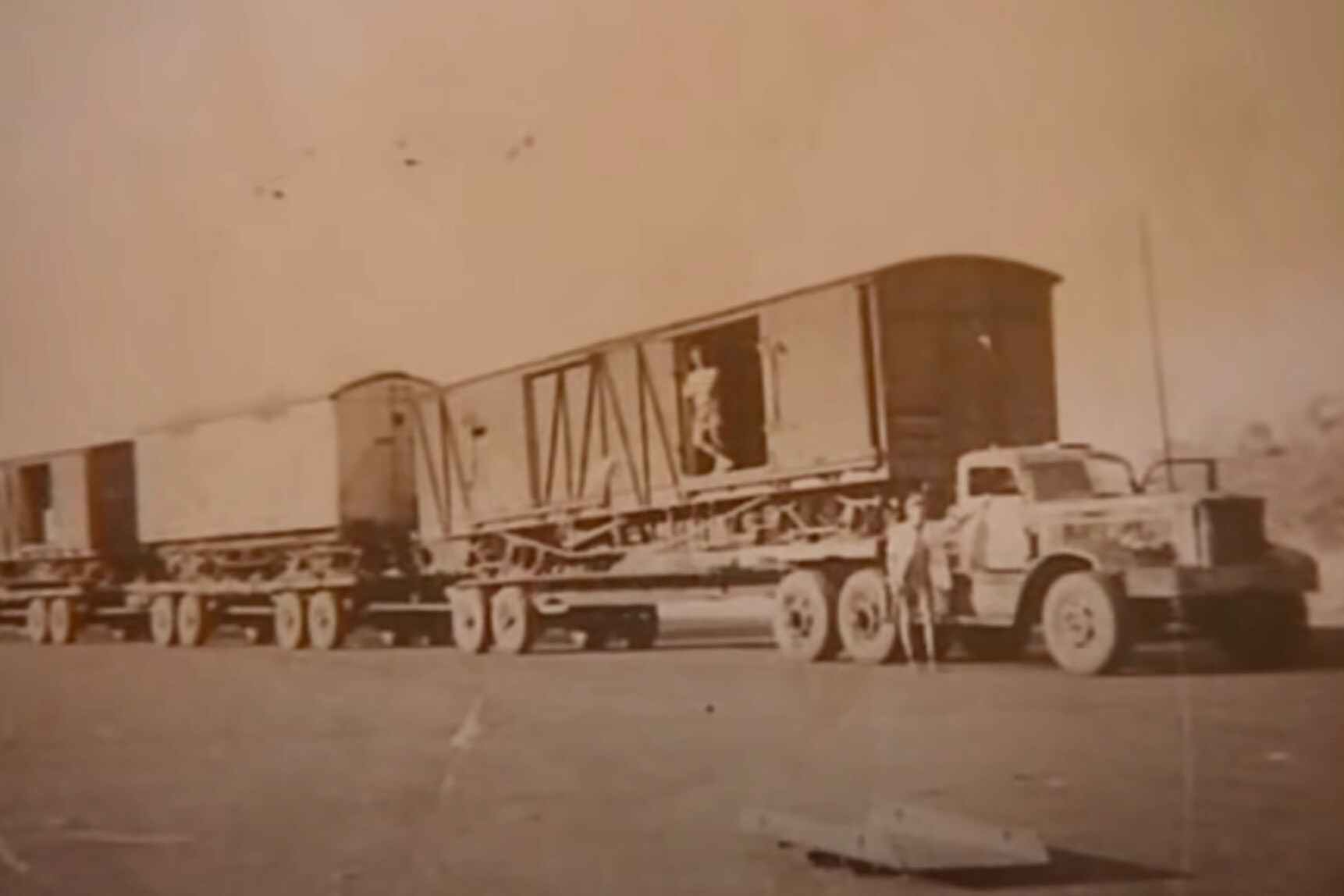
The property owner offered Johannsen a £2000 interest-free loan, which he used to buy 23 surplus army gun trailers, using the wheels and axles to build bogies for the trailers.
“I think the idea of the self-tracking trailers for my road trains, which I built after World War II, originated in my imagination when I was about 10 years old,” Johannsen recalled in interviews compiled by the Australian Stockman’s Hall of Fame.
“I loved to make all sorts of weird contraptions out of tin lids, kerosene boxes and other bits and pieces and hooked my models together with two, three, and sometimes four trailers with wire towbars around bent nails. I pulled them around with a piece of string or a stick.
“I also made up a wind-driven prime mover using a 15-inch fan with 12 blades, cut from a piece of galvanised iron.”
After finding more money to purchase a Diamond T 980 truck, also from army surplus, Johannsen built three 13-metre trailers, specifically designed to follow the tracks of the prime mover.
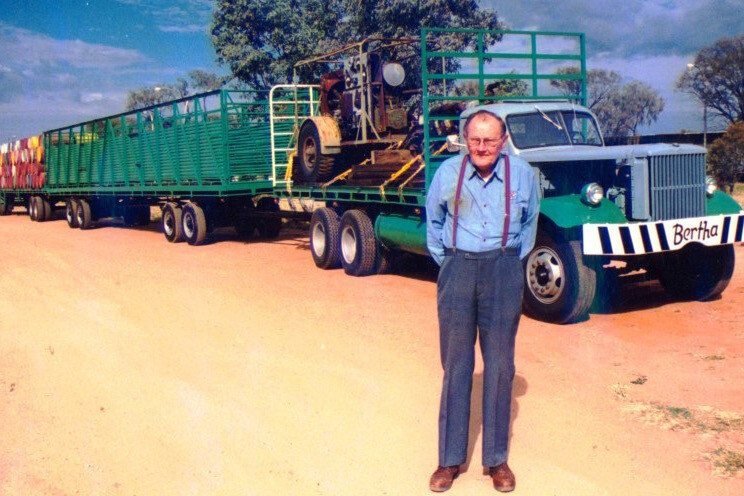
The total length of ‘Bertha’ was 54 metres, and was able to navigate the “narrow, unmade, winding, sandy bush tracks” of the Northern Territory with 100 head of fully-grown cattle on board. He eventually grew the fleet to three prime movers and nine trailers.
Kurt Johannsen died shortly after his 87th birthday on January 23, 2002 – 20 years ago today – but his contribution to the Australian outback remains.
Bertha has been restored and is on display at the National Road Transport Hall of Fame in Alice Springs, and you can see an interview with Johannsen on Jeremy Clarkson’s Motorworld TV show on YouTube.
The 2022 Brabus 800 XLP Superblack has been unveiled by the high-performance German tuning company.
Based on the Mercedes-AMG G63, the dual-cab Brabus ute is powered by a 4.0-litre twin-turbo petrol V8 producing 588kW and 1000Nm, allowing the XLP Superblack to hit 100km/h from a standstill in a claimed 4.8 seconds.
The vehicle has some off-road credentials too, sporting front and rear portal axles, improving under-car clearance, and a heavy-duty winch mounted in the front bumper.
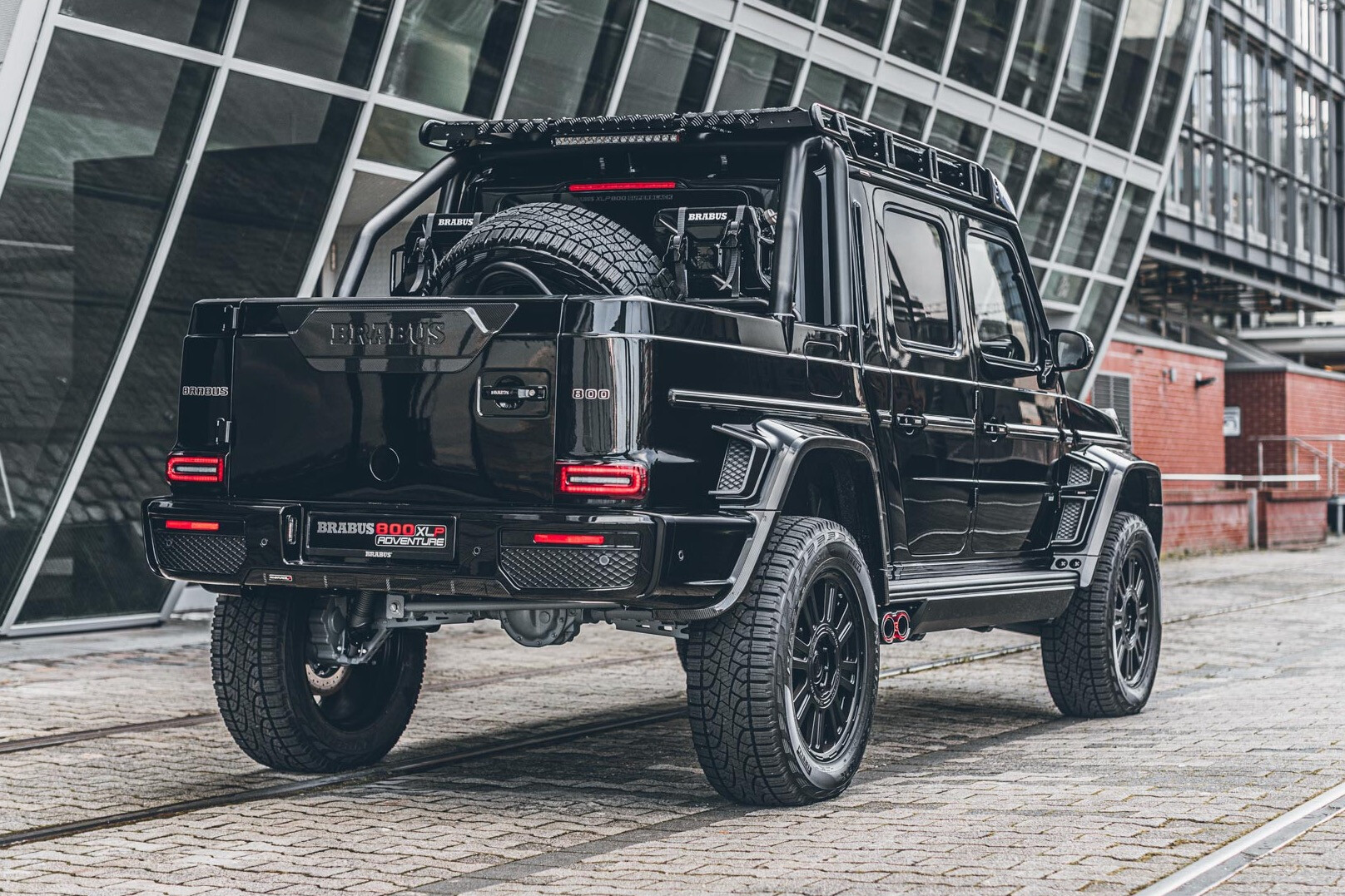
A set of 22-inch Brabus Monoblock HD wheels are fitted, clad in either Pirelli Scorpion all-terrain or Yokohama Geolander X-Treme tyres, while additional roof-mounted LED lamps help to light the way.
Black is the theme across the exterior and interior, with carbon-fibre featuring throughout, and signature seashell leather quilting inside.
While it might be difficult to source a Superblack in Australia, buyers in Europe can pick one up for around €726,260 – or around AU$1.15 million.
UPDATE, February 22, 2022: New Ford Ranger Raptor revealed!
The new 2022 Ford Ranger Raptor has been unveiled at last, and we’ve got a comprehensive rundown on everything you need to know. Catch our stories and big reveal video at the links below.
The story to here
January 21, 2022: The 2022 Ford Ranger Raptor has been snapped undergoing testing in Thailand, this time wearing a digital camouflage wrap.
The performance flagship of the Ranger line-up is believed to be in the final stages of development, with the Raptor expected to be teased by Ford ahead of its full unveiling in the coming months.
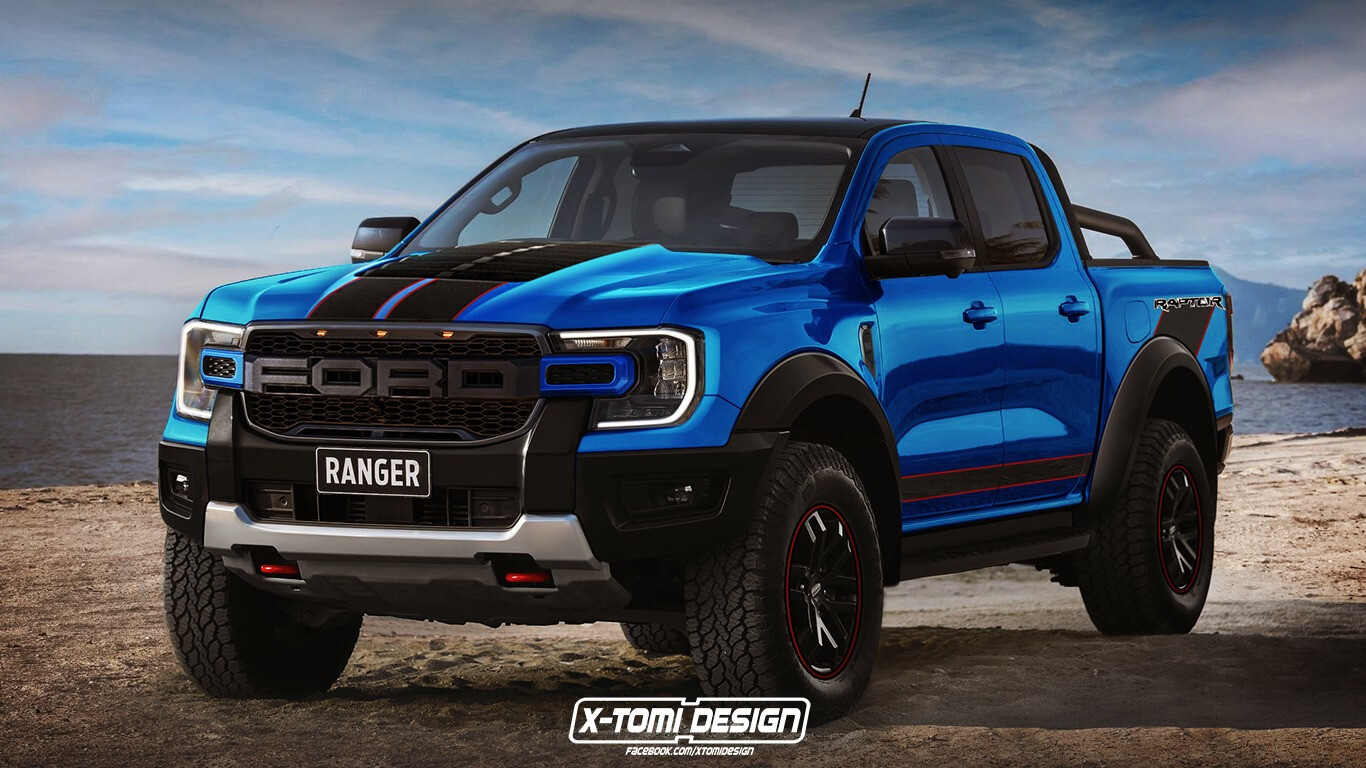
The Ranger Raptor appears to lose the innovative step integrated into the rear bumper found on lower models, but looks as if it will continue to get the side-steps as standard, according to these images posted by the Kurdistan Automotive Blog.

Larger wheel arches, redesigned front quarter panels with unique vents, dual exhaust tips, and chunky all-terrain tyres also feature on the new ute, together with bi-LED headlights reserved for range-topping models.
While there’s no confirmation on powertrains, previous teaser videos from Ford have the model sounding very similar to an V6 EcoBoost petrol engine rumoured to be coming in the Raptor.
Rumours suggest this could be the 336kW/692Nm 3.0-litre turbo-petrol V6 from the US-market Explorer ST, but the 242kW/542Nm 2.7-litre twin-turbo V6 petrol engine from the F-150 and Bronco cannot be ruled out at this stage.
Another possible option is Australia could receive a version of the 3.0-litre Power Stroke turbo-diesel V6, as has already been outlined for selected Ranger variants, while North American markets get an EcoBoost V6.
Ford recently announced it was investing US$39 million (AU$54 million) to modernise its Straundale engine plant in South Africa’s Gqeberha (formerly Port Elizabeth), with manufacturing lines dedicated to the 2.0-litre single and twin-turbo diesel engines, as well as the 3.0-litre turbo-diesel V6.
“Through this investment we are introducing a third diesel engine to the Straundale operations, in the form of the new 3.0-litre V6 turbodiesel engine that will power selected next-gen Ranger models when production commences next year,” Ford South Africa Vice President Operations Ockert Berry said.
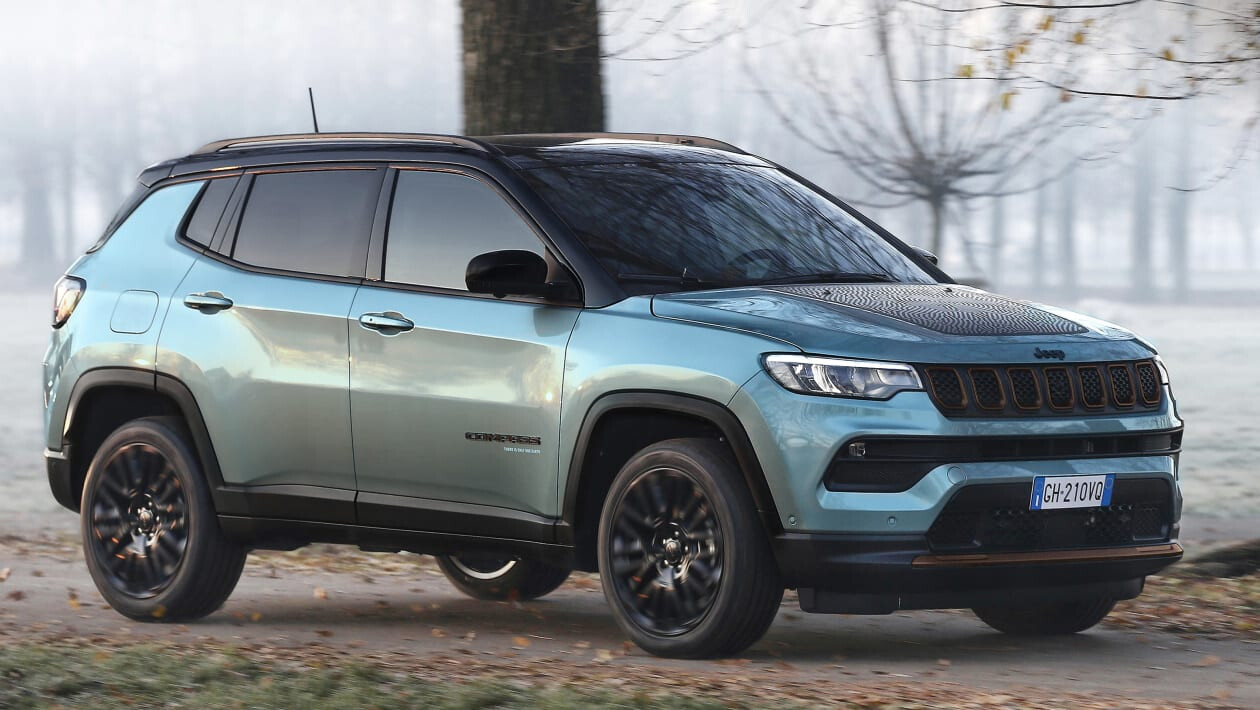
Jeep has revealed new ‘e-Hybrid’ versions of the Compass and Renegade globally, although the latter model is no longer on sale in Australia.
Both models have been offered in overseas markets with plug-in hybrid (PHEV) power and the new e-Hybrid versions bring simpler electric assistance that doesn’t require a charging cable.
With a smaller battery powering a 15kW electric motor in a 48 volt system, both power and torque are lower than in the PHEV versions. The main point of motivation is a 1.5-litre four-cylinder turbo petrol engine producing 95kW and 240Nm.

The new hybrid system isn’t just for electrically assisted driving either, as it has a ‘coasting mode’ to seamlessly shut down and start up the engine for fuel-free driving.
The system can also propel the vehicle from a standstill for silent start-up and slow speed moving when the battery has a high enough charge – self-charging using regenerative braking to capture energy.
Jeep has yet to detail any fuel economy figures, but claims fuel savings of around 15 per cent in total – as well as a lower emissions output over the normal petrol version of the same engine. Depending on spec, the Renegade e-Hybrid emits 130-139g/km CO2, while the larger Compass expels between 133-140g/km.
While the new Compass is on sale in Australia, neither the plug-in hybrid or this new e-Hybrid are yet available, however, Jeep plans to offer the e-hybrid system in two versions of the Renegade and the Compass in right-hand drive configuration overseas.
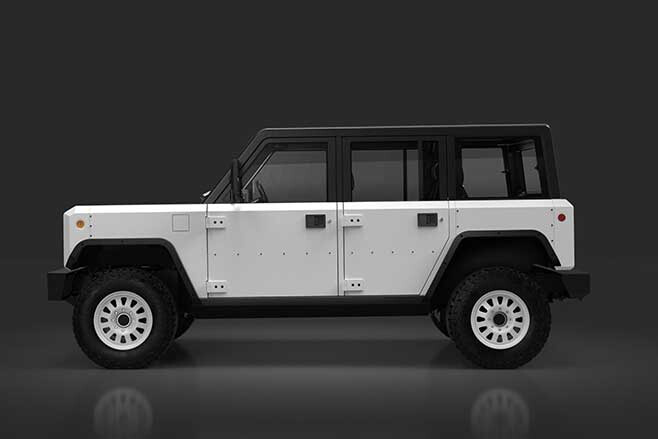
USA EV start-up Bollinger Motors has announced it has stopped the ongoing development of its B1 and B2 SUV and pickup, to focus on developing its EV commercial-vehicle platforms.
“We started Bollinger Motors in 2015 with a dream and a desire to make the best trucks possible,” said Robert Bollinger, CEO of Bollinger Motors.
“We’ve put countless hours of hard work and passion in to making something that makes us proud. However, today we’re postponing the consumer trucks’ development and shifting our focus to commercial trucks and fleets.”

Of all the EV companies that have popped up over the past decade, the B1 and B2 promised to be the most exciting off-road vehicles, with their bespoke in-house-engineered portal axles, height-adjustable suspension and proper off-road capability.
The prototypes have been undergoing testing in a range of conditions in the USA over the past five years and certainly look capable and super practical.
We crawled over the B1 prototype at the SEMA Show a few years ago and were suitably impressed with the engineering, innovation and design of the vehicle, and were very much looking forward to seeing the vehicles come to market.
Bollinger Motors will continue to develop and manufacture all-electric platforms and chassis cabs for commercial vehicles under Classes 3 to 6 trucks. These EV platforms are designed to slip under truck and bus bodies to suit a wide range of applications.
Hopefully, the success of the commercial truck platforms will enable Bollinger to renew development of the B1 and B2 at some time in the future.
UPDATE, January 19: The Back to the Future Toyota Pickup replica has sold at auction for more than $34,500.
The hammer fell last night on the HiLux, with the winning bid of $32,100 (plus 7.5 per cent buyer’s premium) securing the pop culture icon for the new owner.
The story to here
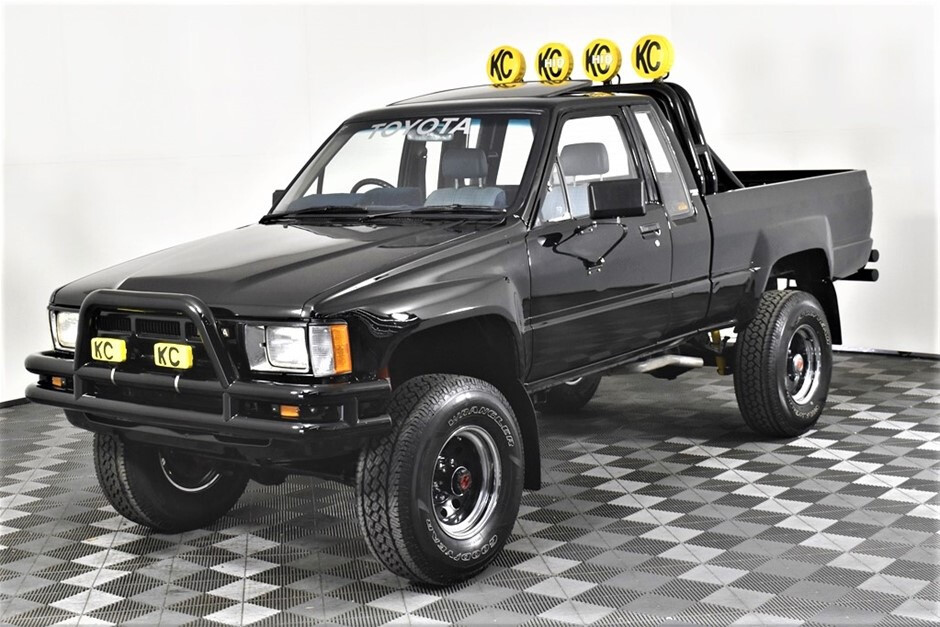
January 17: A replica of the 1985 Toyota Pickup SR5 from the classic 1980s’ trilogy Back to the Future is up for auction in Australia by Grays.
Badged as a HiLux locally, the Toyota extra-cab ute comes complete with custom bar work, KC lights, ‘TOYOTA’ windscreen decal, and black with chrome steel wheels on Goodyear Wrangler tyres. The only thing missing is the US-spec amber parking lamps.
Maybe our favourite detail is the ‘Statler Toyota’ sticker on the rear window, from Hill Valley, California.
While the 2.4-litre ‘22RE’ four-cylinder petrol engine fitted to the US-market Pickup probably wouldn’t have had much of a chance against Needles’s Ford F-150, this particular model is powered by a 2.2-litre ‘4Y’ Toyota engine, showing 315,000 kilometres on the clock.
The ute might have been overshadowed by the DeLorean time machine – credited with being the most recognisable movie car of all timelines – but the vehicle did help cement Toyota as a ‘cool’ alternative in the 1980s, when Japanese cars didn’t enjoy the reputation they have today.
Despite playing second fiddle to the DeLorean, replica BTTF Toyota utes have been pulling big money in recent years, with one selling for US$110,000 (AU$153,000) back in October 2021.
At the time of writing, the auction was already above AU$25,000. If you’re wanting a truck to head up to the lake with, you can check out the Grays auction listing by clicking here.
While all the automotive talk these days is of alternative power systems, there’s still plenty of development work going into the humble old internal combustion engine (ICE).
New technologies have allowed engineers to extract more performance and refinement from both petrol and diesel engines, while at the same time reducing emissions and improving fuel efficiency. It will be a long time before we see the end of the ICE. This is certainly the case in Australia, where our long distances and lack of EV infrastructure ensure that the ICE is the only viable automotive power source.
Land Rover is one brand leading the way in developing the ICE to keep it viable for as long as possible, and its Discovery 5 wagon now employs the brand’s latest petrol and diesel engines to keep them current.
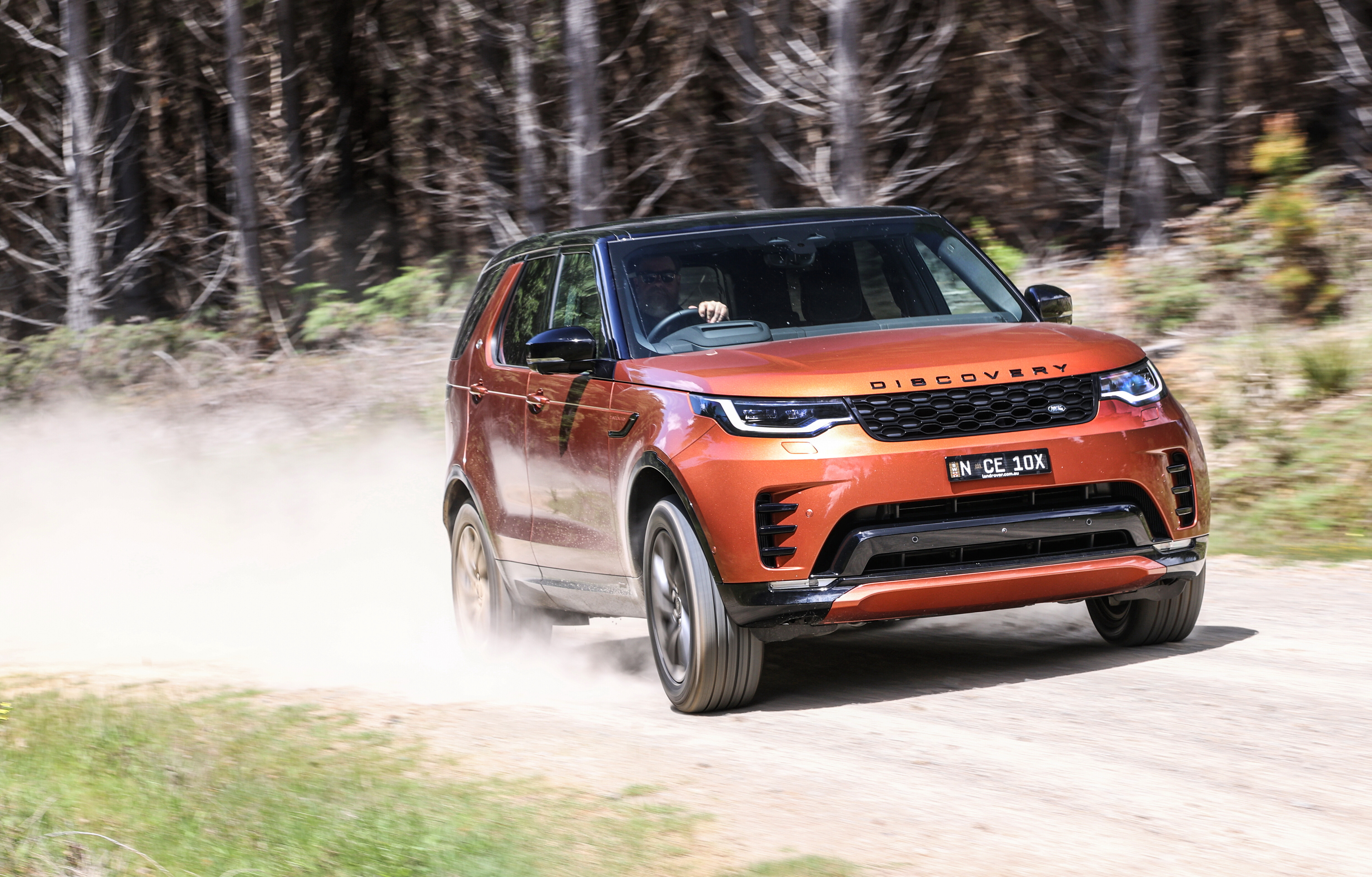
The 2021 model Discovery received a mid-life refresh which introduced new powerplants from the Ingenium engine family. Gone are the in-line four-cylinder and V6 diesel engines and in their place a choice of 3.0-litre in-line six-cylinder engines in both petrol and diesel.
We spent some time behind the wheel of the Discovery S P360 and D300 to compare the petrol and diesel offerings and note how the differences between the two are narrowing.
The MY21 Discovery S R-Dynamic P360 we are testing here retailed for $107,175, but as tested with options the price went up to $127,289. That was an older vehicle and there has been a MY22 Discovery since, but order a new Discovery now and you’ll be looking at the MY23 models where the R-Dynamic S P360 starts at $110,845.
POWERTRAIN & PERFORMANCE
It’s been many years since the Land Rover Discovery has been offered with a petrol-fuelled engine in Australia, so we were keen to get behind the wheel of the new offering. This is the 3.0-litre, mild-hybrid, supercharged and turbocharged in-line six-cylinder mill from the Ingenium family of engines.
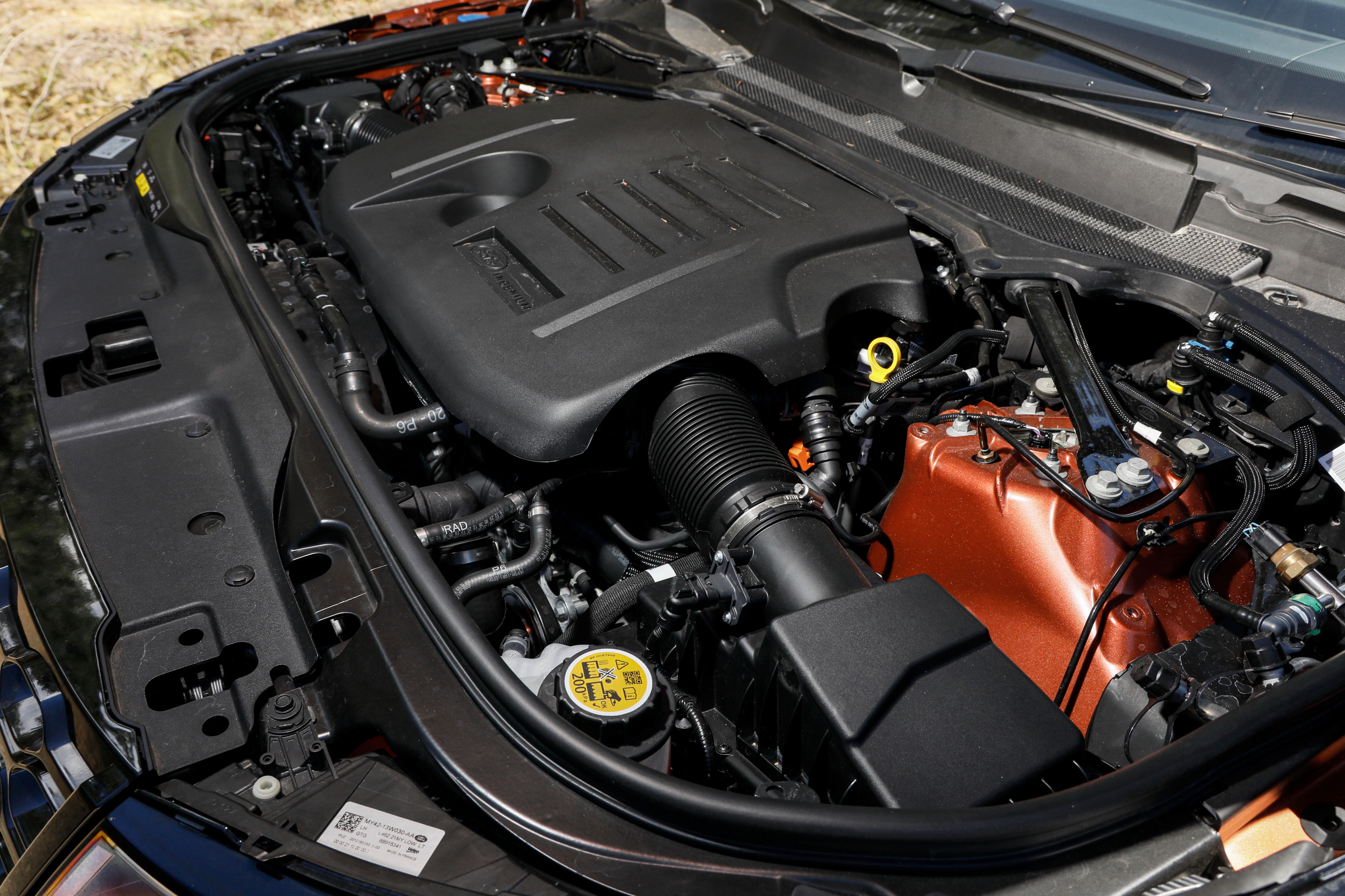
It is essentially the same engine as found in the P400 Defender 110, although this one runs a slightly milder tune to produce a still-healthy 265kW and 500Nm. That’s opposed to the 294kW and 550Nm of the Defender’s P400 variant and it leaves Land Rover Australia space to introduce a more powerful Discovery model should the re-introduction of petrol power prove popular here.
That said, the P360 tune lacks for nothing and is perfectly matched to the dynamic chassis of the Discovery. Petrol power brings a sporty feel that has been missing from the Disco for some time, as this engine loves to rev. With its 48V electric supercharger providing boost through the lower rev range and the turbocharger providing the crescendo up top, it’s a sweet package perfectly mated to the eight-speed ZF transmission.
ON-ROAD RIDE & HANDLING
An indicator of the type of buyer that today’s Discovery is aimed at is that 20-inch wheels are now the minimum size they are offered with, and factory options include 21- and 22-inch alloys. That’s not to say you can’t fit the 18- and 19-inch wheels of earlier Discovery 5s, but you would need to check with your LR specialist to see if they fit; particularly over the rear brakes.
The 20s clad in 255/55 liquorice straps combine with the height-adjustable independent suspension to deliver on-road dynamics that spur you to explore the range of the P360 engine and enjoy the performance the package presents.
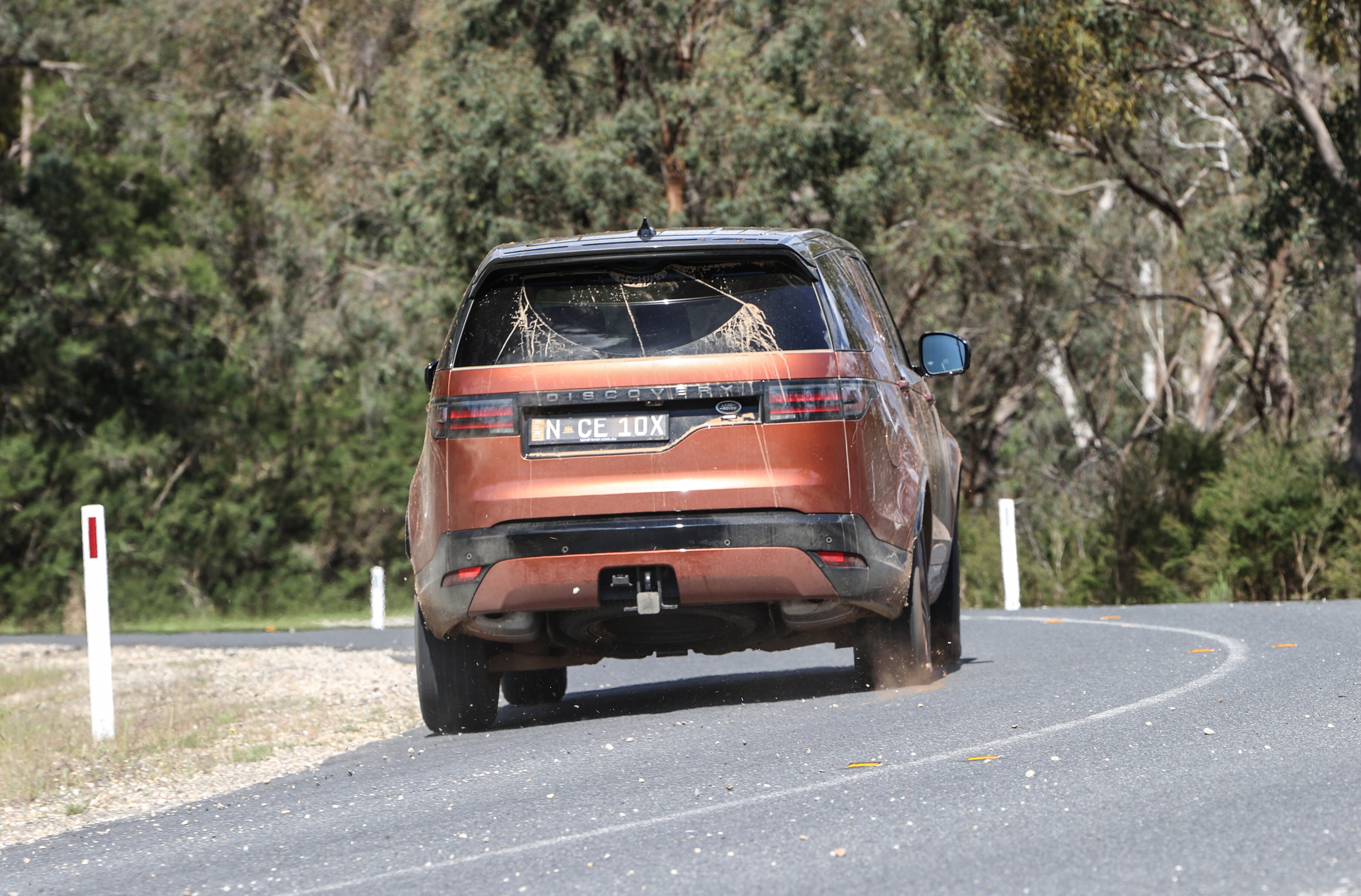
The modern Discovery is a superb on-road wagon delivering both a comfortable ride and exceptional handling, especially when you consider this car still has huge off-road potential. Assisting with this best-of-both-worlds feeling are adaptive dampeners which react to driver input, speeds and road conditions to adapt the shock absorbers to best suit the driving climate. These are standard across the Discovery range.
All petrol-fuelled Discoveries get the R-Dynamic pack, which is purely a styling pack and does nothing to the suspension or chassis.
OFF-ROAD
While the Disco is a superb and rewarding on-road drive, it still has plenty of off-road credentials. Sure, the low-profile, high-speed tyres are less than ideal for off-road use, but there are a few all-terrain tyre options available to suit that size if that’s your want.
The S might be the entry level in to the Discovery range, but it still comes standard with the height-adjustable suspension which allows for the road-hugging on-road height to be cranked up to give plenty of ground clearance for off-road use.
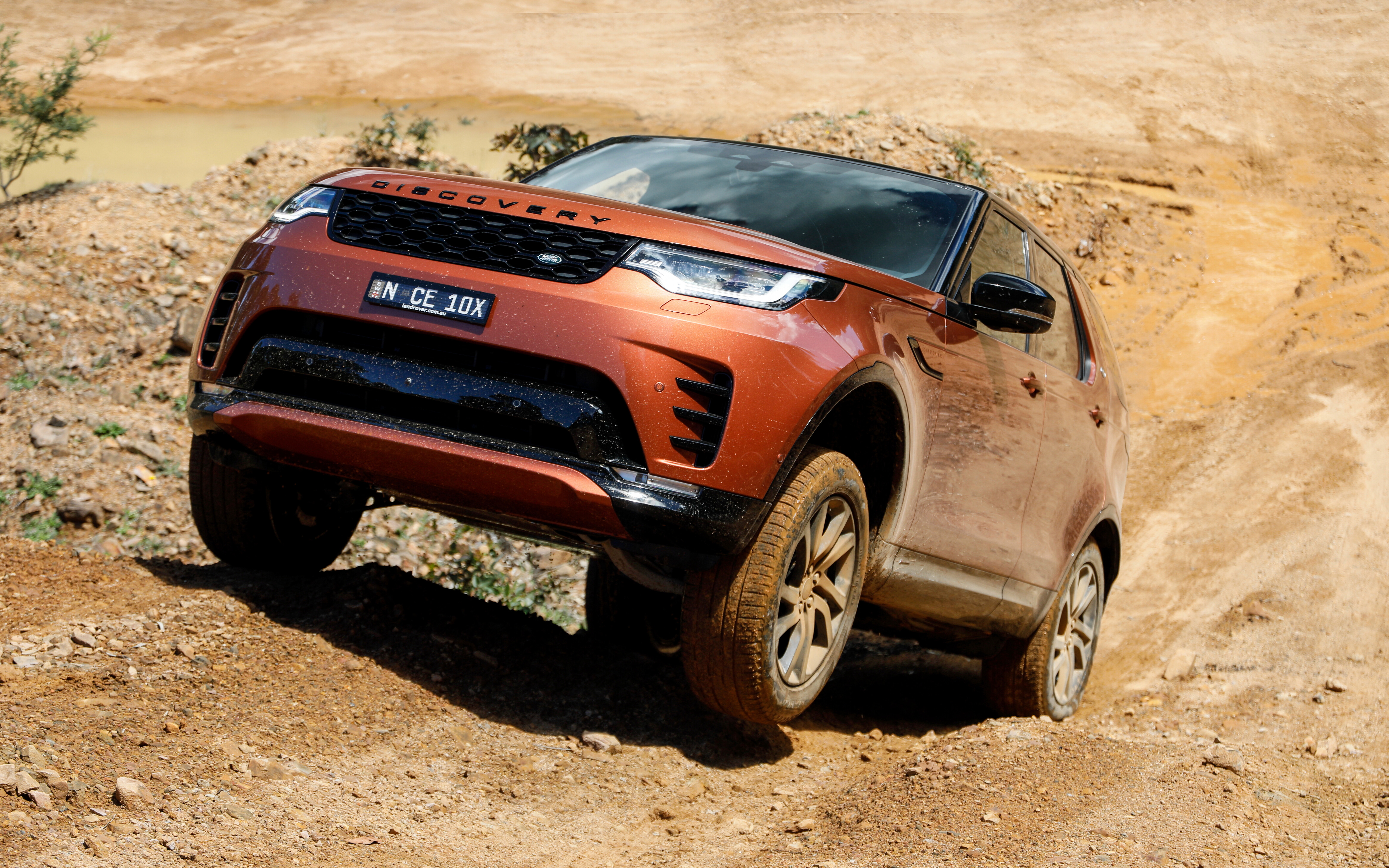
This was a MY21 model car, so the dual range was still standard – it’s an option now – and it was equipped with the $1110 optional rear locking differential, which is a must-have for off-road use. Along with the centre differential, it’s automatic and not driver selectable, but watching its operation on the off-road screen and you see how well it works in rough terrain.
Terrain Response now has an automatic mode among its selections, and you can leave it set there in all but the toughest conditions – be it sand, snow or rock. Selecting one of the specific modes, you can again see how the centre and rear differentials are sharper in their locking function and you can feel the slower throttle response and transmission holding its gears.
The functions all combine to give the Discovery plenty of forward drive, even when it’s lifting wheels or spinning tyres in mud. Ground clearance is rarely an issue in most reasonable conditions and the car’s dirt capabilities belie its on-road dynamics.
CABIN & ACCOMMODATION
All Discovery 5s are now sold as seven seaters and the third-row pew is suitable for adults, although getting in and out of the back can be awkward. This car also has power-operated third-row seats, which is an option and one we wouldn’t choose. We found them to be fussy in their operation, not always doing what we needed them to, while manual adjustment would have been quick and simple.
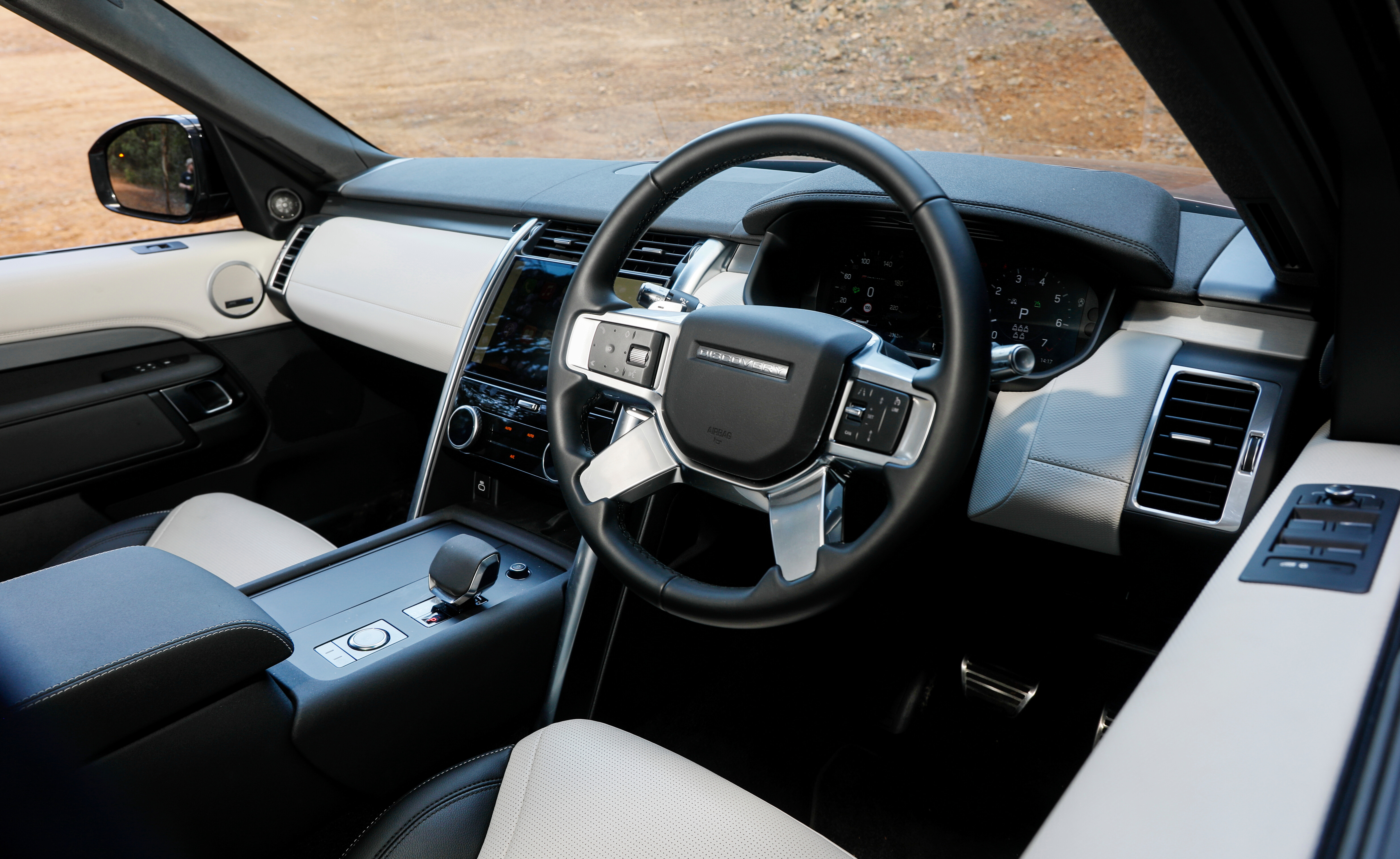
All seats are large and accommodating, making the Discovery an ideal all-road wagon for family use. The passengers are protected by a full suite of safety technologies including autonomous emergency braking, blind-spot monitoring, rear cross-traffic alert and 360° around-view cameras.
The Discovery’s cabin is very much that of a luxury SUV and in 2021 received an upgrade to accommodate the latest Pivi Pro entertainment system with its larger 11.4-inch centre touchscreen with Apple CarPlay, while the driver is greeted by a new dash with a 12.3-inch display behind the leather-wrapped tiller.
PRACTICALITIES
Such levels of safety, luxury and performance can blind the user to the fact that the Discovery 5 is still a wagon with true 4×4 capabilities. All Disco models have a 3500kg towing capacity, with sophisticated electronic towing programs to make towing easier and safer. Unlike other 4×4 wagons that claim such towing capacity, the Discovery has the power, torque and stability to haul such trailer weight.
As mentioned, the standard 20-inch tyres are not ideal for off-road or even all-road use, but there are some all-terrain tyre options available for these wheels and it’s worth investigating if the 18-inch wheels from earlier Disco 5s can be used. We’ve seen 265/60 BFG muddies fitted to aftermarket 18s on earlier D5s and these would prove very handy off-road.
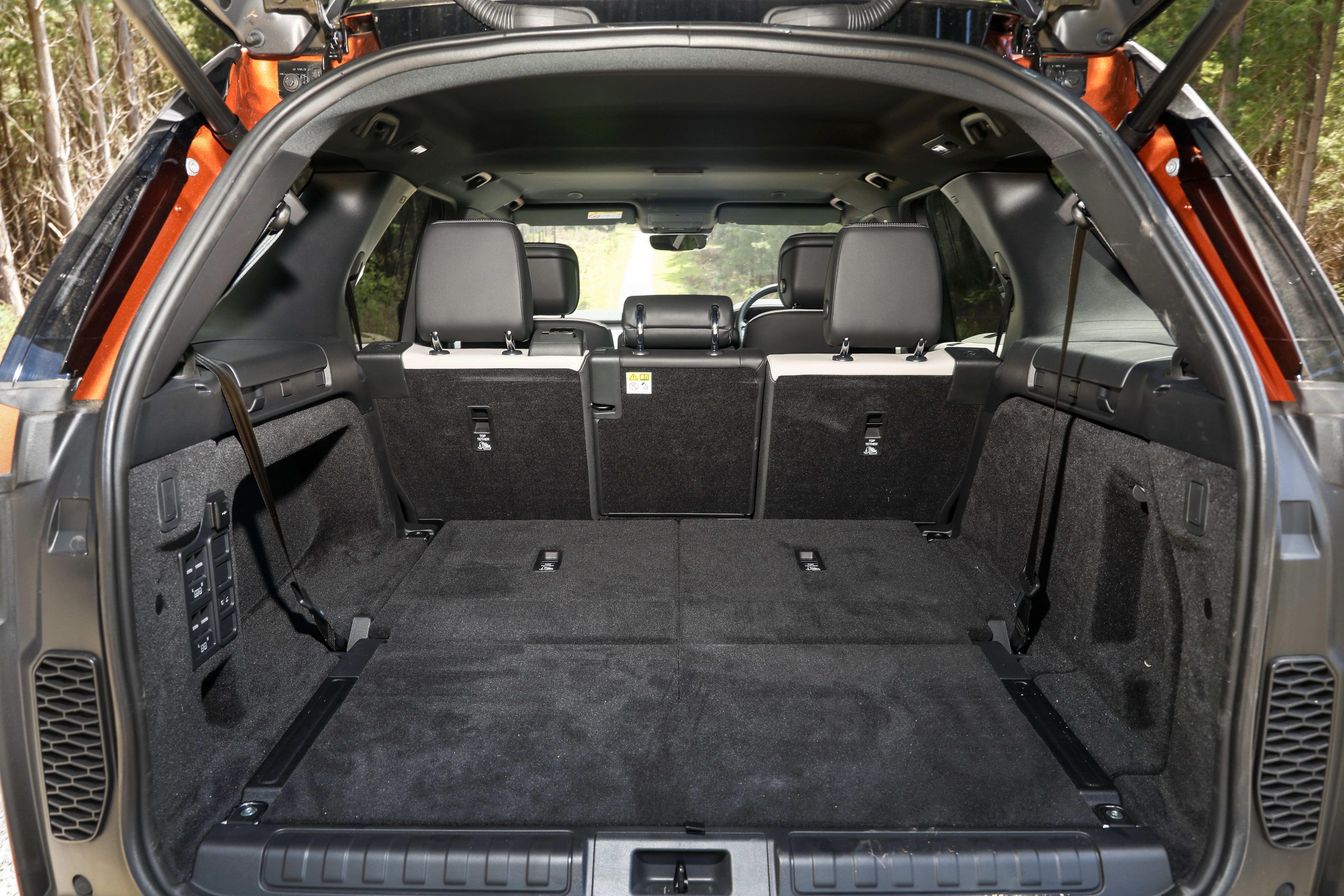
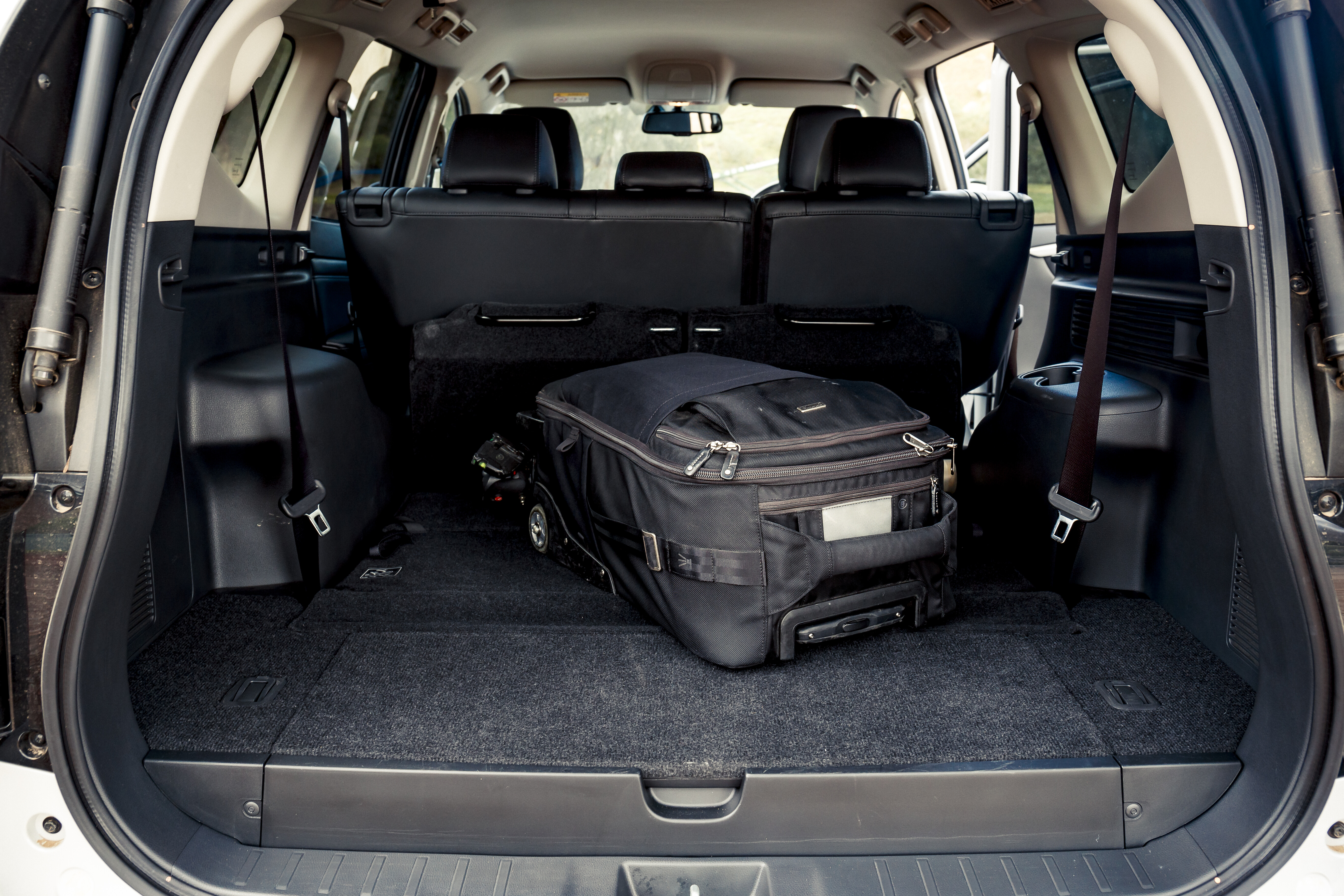
The Disco’s interior is big enough to accommodate family travels, and with the third-row seats folded into the rear floor, the cargo space is cavernous. There are cargo tie-downs in the rear plus a 12V power outlet to go with multiple 12V plug and USB power outlets throughout the cabin.
Unfortunately the Disco 5 has never been well-supported by the off-road aftermarket industry, so you’ll have a hard time finding a bullbar for one. There is a factory nudge bar available as well as a factory intake snorkel, while items like roof racks and other storage options are also available. You can also get lift rods to work with the air suspension to give the Disco a full-time 50mm suspension lift.
The Discovery’s greatest strength has always been its breadth of abilities and, while the D5 mightn’t be the all-road tourer its predecessors were, it has developed in the other direction toward more luxury, refinement and equipment.
PETROL VS DIESEL
The P360 Ingenium petrol engine produces its peak 500Nm torque from as low as 1750rpm right through to 5000rpm, delivering a very diesel-like feel to its bottom-end performance while still peaking higher in the rev range. At the same time as petrol engine technology has changed to allow such numbers, diesel engines have progressed to rev higher, run quieter and produce more power and torque as well.
As petrol and diesel Ingenium engines are relatively new and represent the latest in ICE development, we thought it ideal to compare them in the Discovery 5.
The Disco’s only diesel engine choice is the 221kW/650Nm D300 3.0-litre in-line six, and we again have it in the entry-level Discovery S model which starts at $101,875, although this one ticked the option boxes to take it up to $110,910.
As both cars were the S specification, they have similar levels of features and equipment and the same interior features, eight-speed auto, and suspension and 4×4 systems. So it was a great way to compare engines in vehicles that were similarly equipped and a similar price.
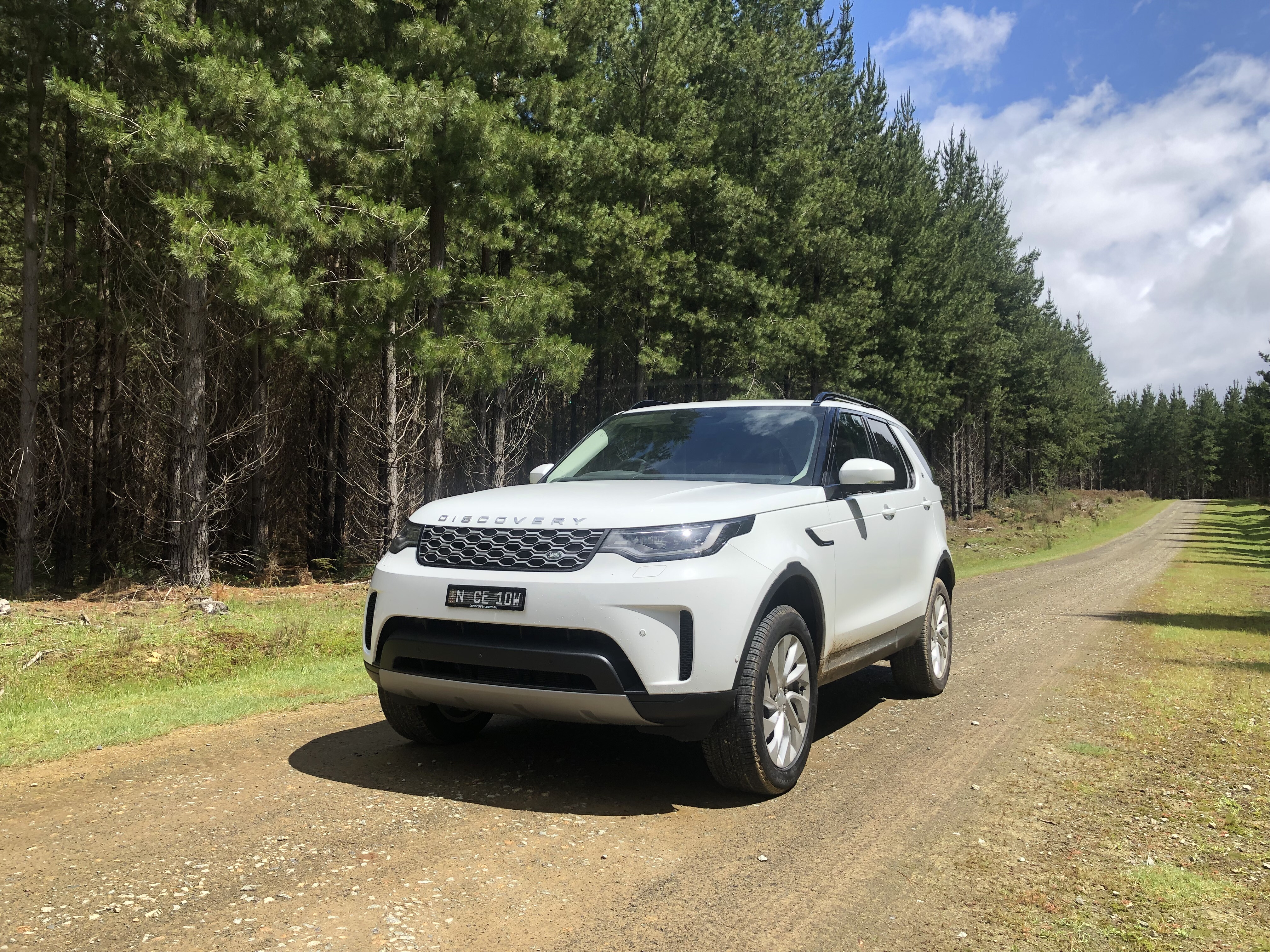
Push the start button on the D300 and the clatter of a diesel engine is evident, although it becomes less discernible as road speed increases. The diesel Ingenium engine doesn’t have the added boost of the electric supercharger that its petrol sibling enjoys, but it does use a twin turbocharger arrangement to supply its boost to make ample grunt.
Interestingly, Land Rover’s official zero to 100km/h figures show that the P360 is just 0.3 of a second quicker than the D300 to cover the dash, reaching that speed in just 6.5 seconds. So both wagons are reasonably quick considering their size, weight and intended function.
The D300 has more of a growl to its engine sound while the P360 is more subdued, but when the diesel is looking for the next gear around 5500rpm, the petrol keeps on accelerating, emitting a pleasing howl.
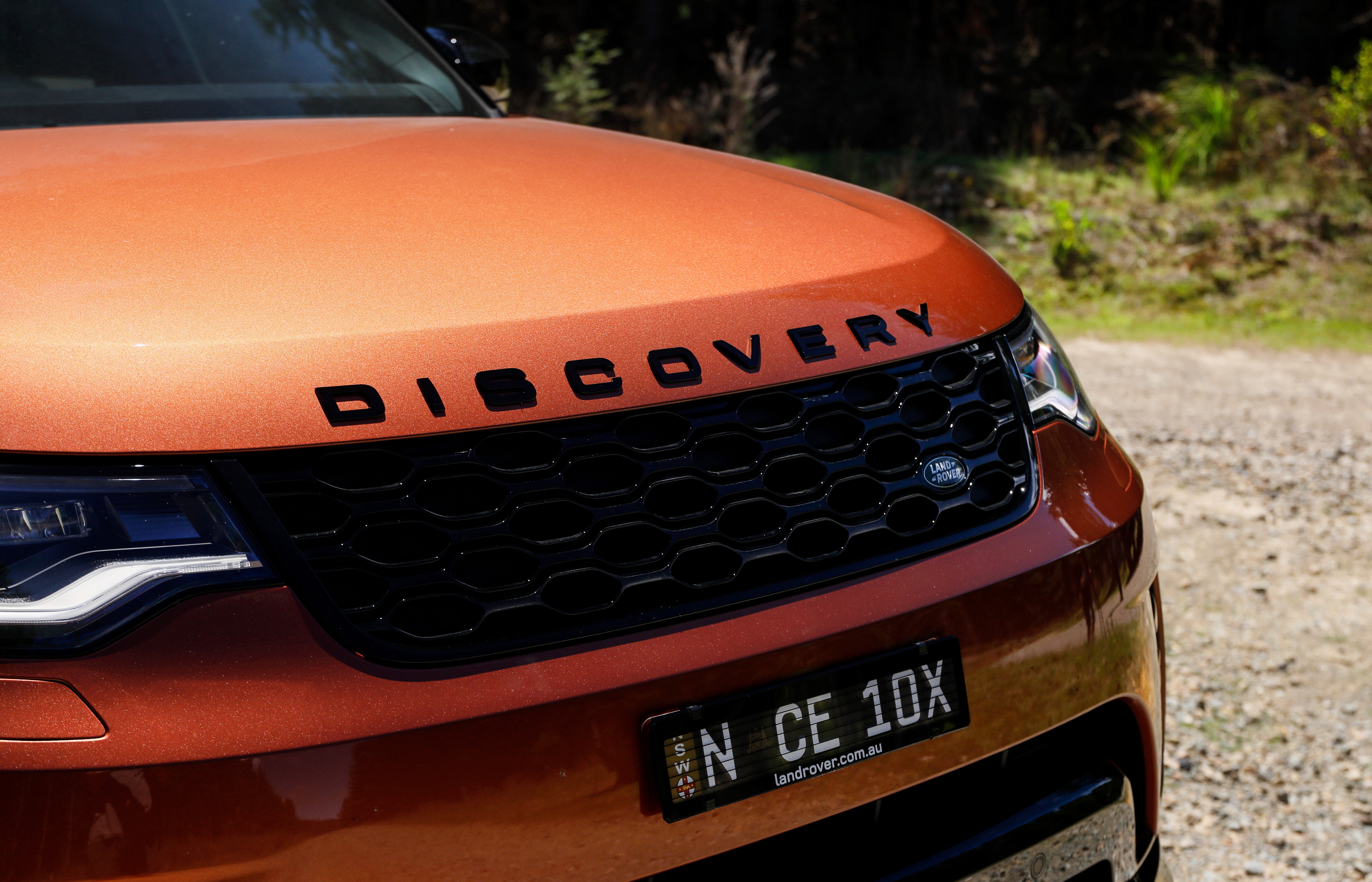
It’s this top-end rush that brings out the sporting character of the Land Rover’s chassis and rewards the enthusiastic driver on a mountain road. While a petrol engine has been absent from the Discovery for many years, the P360 Ingenium six is the perfect comeback.
Where petrol engines can’t match diesels is in terms of fuel usage, but, like the way they deliver power, the numbers are getting closer. Land Rover’s figures list the P360 as sipping 9.2L/100km driven and the D300 at 7.5L/100km. Our testing bagged 12.2L/100 in the gold P360 and 10.1L/100 in the white D300.
Unless doing long-distance, remote-area driving where every litre of fuel becomes essential, I couldn’t think of a reason to choose the diesel D300. The P360 petrol has the low-down torque of the diesel and adds a top-end charge to make the Discovery feel sporty, while at the same time being a little more refined in the way it does it.
DISCOVERY OR DEFENDER?
Ever since Land Rover introduced its L663 Defender, people have been asking where does this leave the Discovery model? After all, these two off-road-capable Land Rover vehicles are both five-door wagons (Defender 110) riding on variants of the D7 platform and sharing many of the same engines. Yet they do serve different owners and Land Rover has taken steps to further distance the two.
While they both ride on the same aluminium monocoque architecture and fully independent, height-adjustable suspension, the Defender’s D7x platform is made to be more off-road suitable with heavier duty suspension components and cross members, and taller ride-height available to deliver superior ground clearance.
The Defender’s cabin feels tall and narrow compared to the L462 Disco’s, which has more of a luxury SUV feel to it; and while the Defender certainly isn’t a stripped-out vehicle, it doesn’t have the same level of equipment, big screens and comfort features of its older sibling.
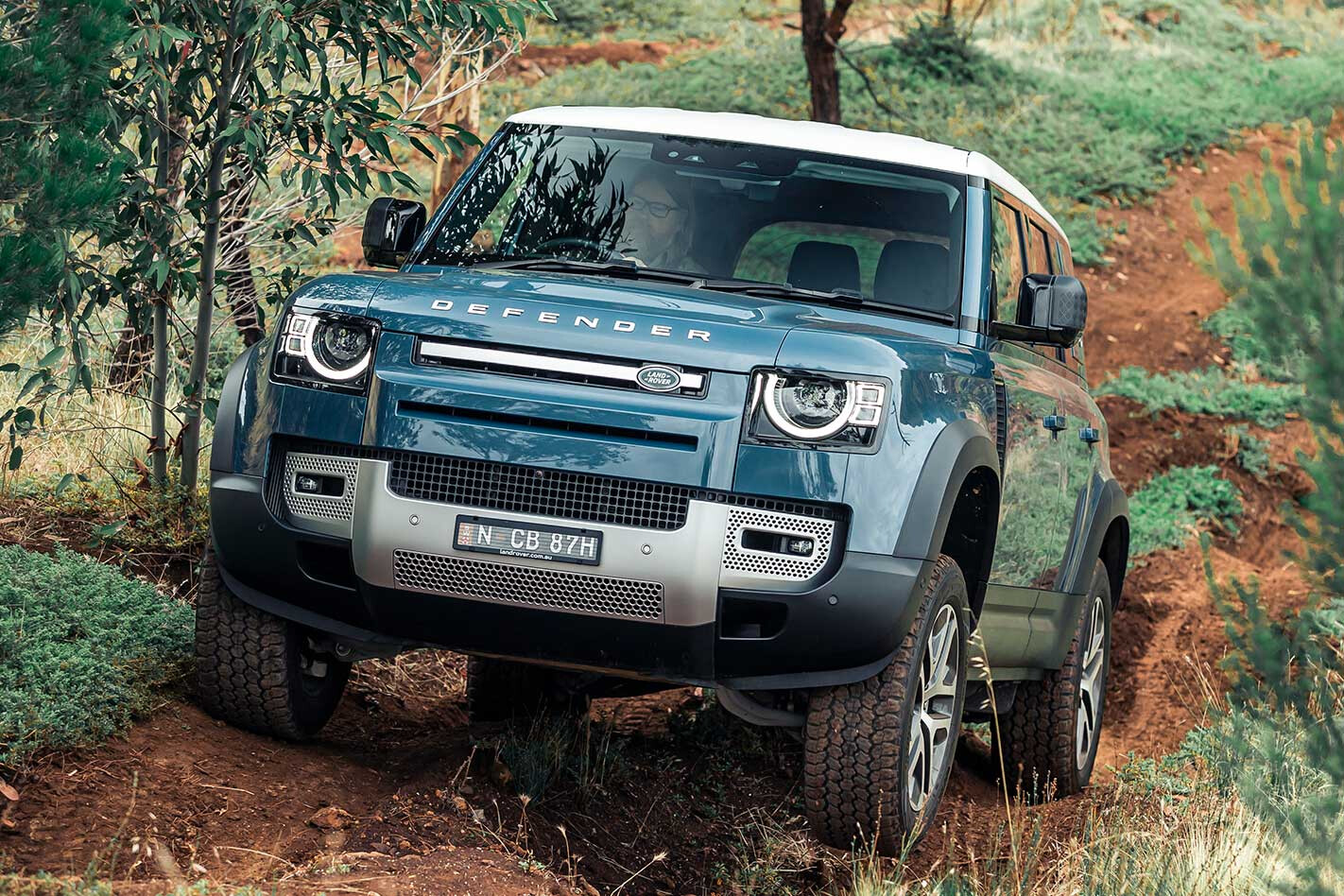
The Defender 110 is available in three, five, six or seven-seat configurations, while the three-row seven-seat model is more of a 5+2, with the third row of seating not so well-suited to adults.
From the MY22 model onwards, all Discoveries in Australia are sold as seven-seaters and the third row easily accommodates full-size passengers.
While the two models are mechanically similar and both are available with dual-range transfer cases, for the MY23 Discovery, a single-range, full-time transfer case is standard and dual range becomes a $940 option across the line-up, which is in keeping with the on-road use most Discovery owners will have for their vehicle. It will be interesting to see how many owners select this option in the future.
While they might share many of the same powertrain components and chassis designs, the Land Rover Discovery and Defenders are built to fill different niches and feel like very different vehicles. The Discovery remains an off-road-capable luxury SUV wagon, while the Defender has a sharper focus on off-road ability.
Early reports suggest the next generation of Discovery could switch to a new lighter duty platform that is more suitable to EV and hybrid powertrains, which would further distance itself from the Defender.
Land Rover Discovery S R-Dynamic P360 specifications
| ENGINE | Mild hybrid petrol I6u00a0 |
| CAPACITY | 2995cc |
| MAX POWER | 265kW @ 5500-6500rpmu00a0 |
| MAX TORQUE | 500Nm @ 1750-5000rpm |
| GEARBOX | 8-speed automatic |
| CRAWL RATIO | 57.21:1 |
| 4X4 SYSTEM | Full-time, dual range 4×4. Auto locking centre and rear diffs |
| CONSTRUCTION | 5-door wagon on monocoque chassisu00a0u00a0u00a0u00a0 |
| FRONT SUSPENSION | Height-adjustable independent airu00a0u00a0u00a0u00a0u00a0u00a0 |
| REAR SUSPENSION | Height-adjustable independent airu00a0u00a0u00a0u00a0u00a0u00a0u00a0u00a0 |
| TYRE/WHEEL | 255/55-R20 on alloy wheels |
| KERB WEIGHT | 2417kgu00a0u00a0 |
| GVM | 3210kgu00a0 |
| PAYLOAD | 793kgu00a0 |
| TOWING CAPACITY | 3500kg |
| SEATING | 7 |
| FUEL TANK | 90L |
| ADR FUEL CLAIM | 9.2L/100km |
| ON-TEST FUEL USE | 12.2L/100km |
| DEPARTURE ANGLE | 30u00b0 |
| APPROACH ANGLEu00a0 | 34u00b0 |
| RAMPOVER ANGLE | 27.5u00b0 |
| GROUND CLEARANCEu00a0 | 283mm |
Snapshot
- Range bolstered with cheaper 4×2 variants and new GSR hero
- Existing grades pick up additional equipment
- Updated model set to arrive in dealers this month
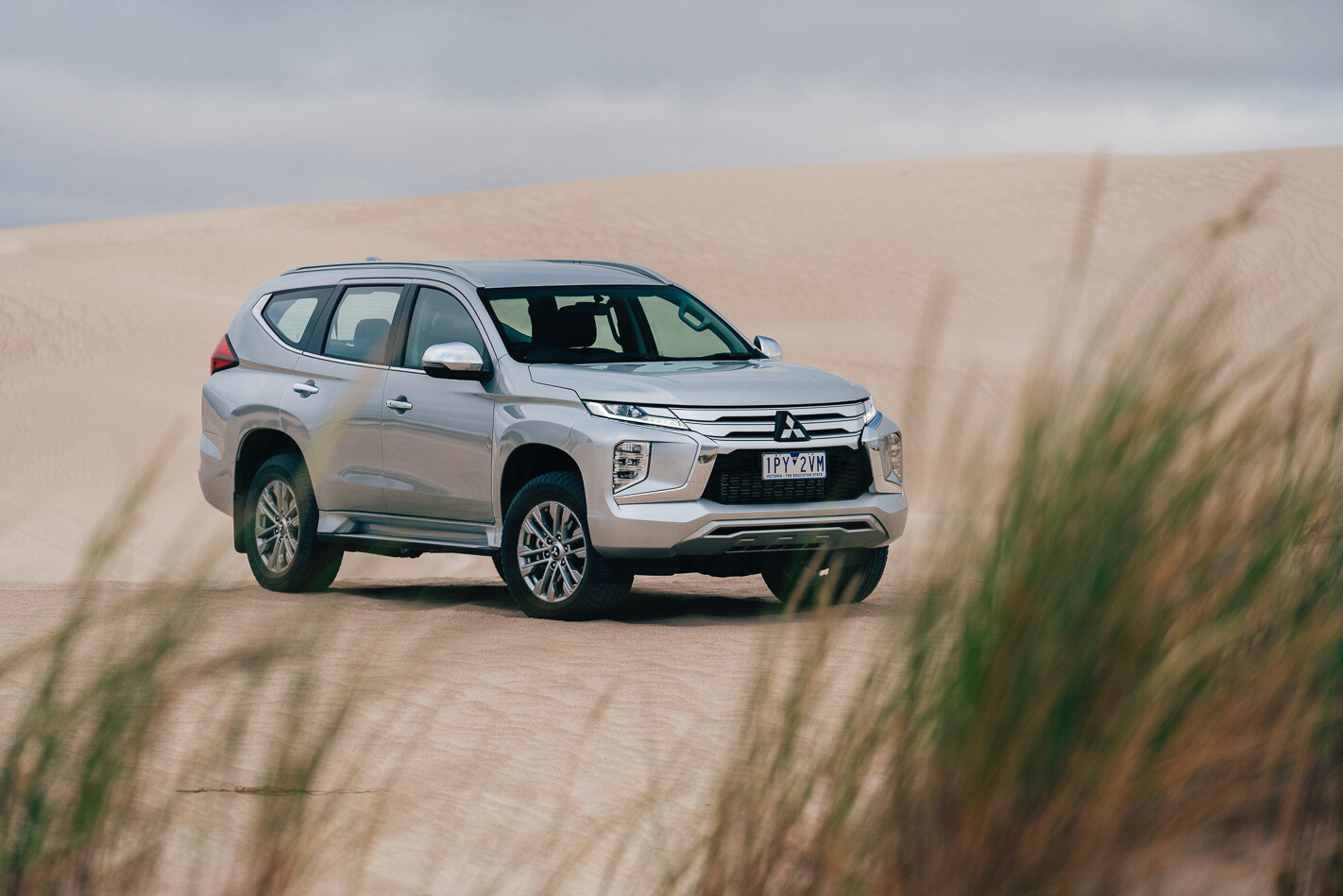
The 2022 Mitsubishi Pajero Sport is to gain more accessible two-wheel drive variants, a new blacked-out GSR range-topper, and additional features on existing grades.
The updated flagship of the Mitsubishi line-up (with the recent demise of the full-size Pajero) starts cheaper than its predecessor thanks to the addition of two new entry-level 4×2 variants, with the base GLX 4×2 starting from $43,940 before on-road costs.
Mitsubishi has confirmed pricing for the GLX 4×4 will jump by around $1500 for the new model-year, to $48,990 before on-roads, with the drive-away cost yet to be announced.
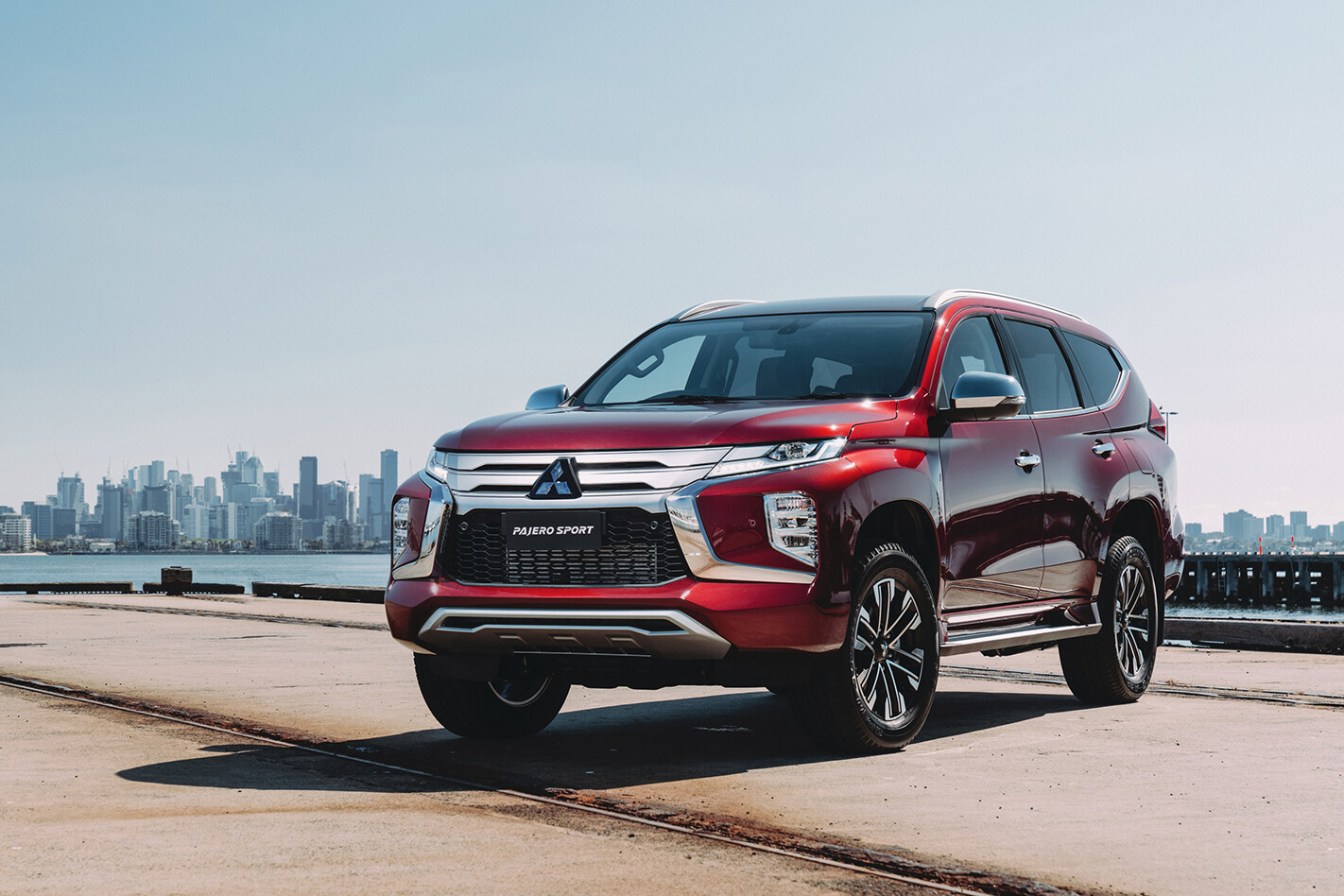
A two-wheel-drive version of the mid-range GLS variant is also available, priced at $48,690 before on-road costs.
These 4×2 versions miss out on Mitsubishi’s Super Select II system, selectable off-road modes, paddleshifters and hill descent control – in addition to a rear differential lock.
Meanwhile, at the other end of the Pajero Sport range, the position of the Exceed has been overtaken with the addition of a GSR range-topper, priced from $60,940 plus on-road costs.
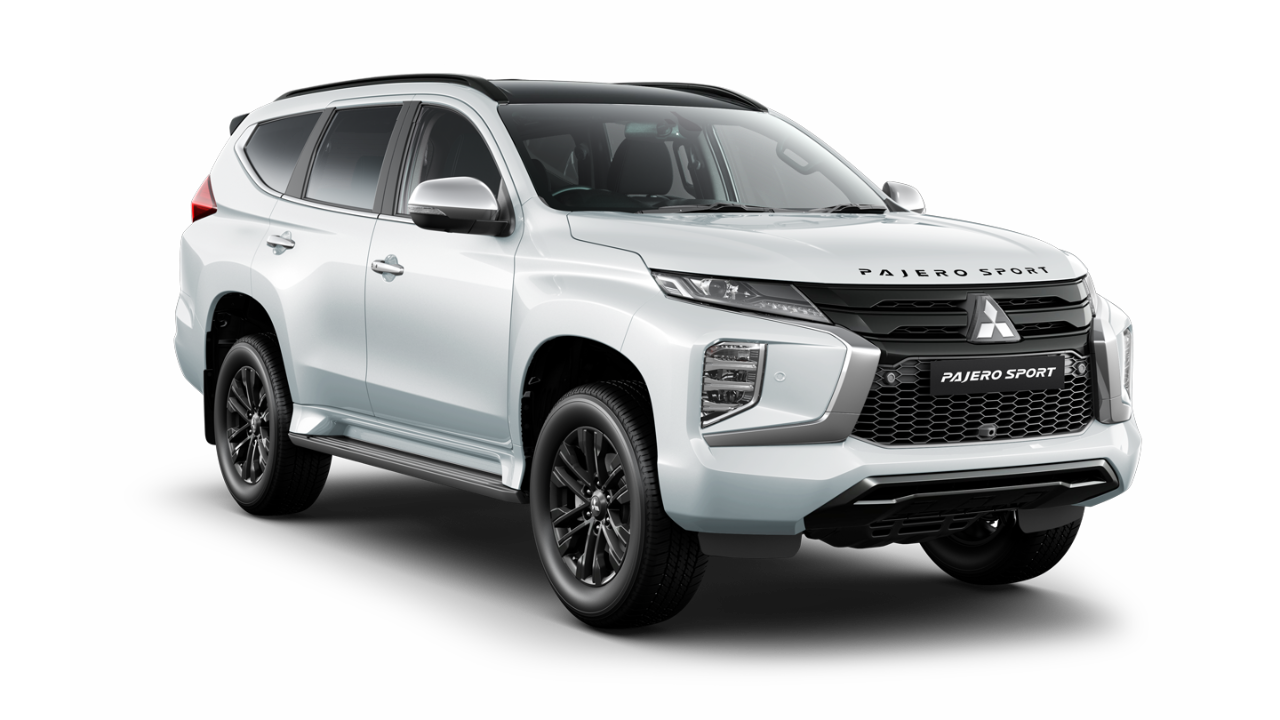
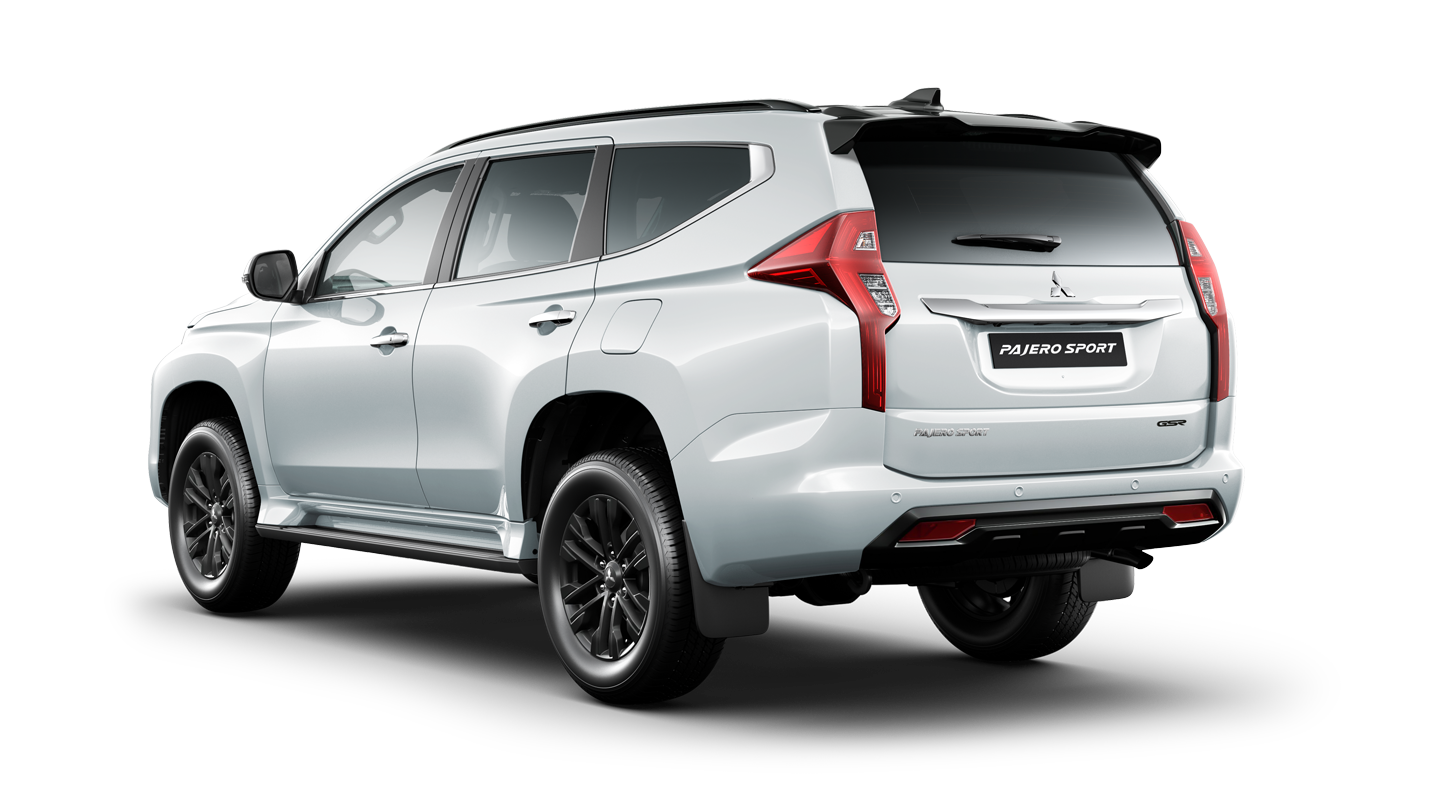
It adds a host of blacked-out styling elements, including; black 18-inch alloy wheels, dark front/rear bumper garnishes, a black rear spoiler, grille and headlight garnish, a ‘Pajero Sport’ bonnet emblem, GSR tailgate badging and a two-tone black roof and rails.
The colour range for the GSR is limited to white diamond or black, with further hues available across the remainder of the line-up.
In addition, driver’s seat lumbar adjustment has been added across the wider Pajero Sport range, while GLS and Exceed variants regain a body-coloured rear spoiler – a feature previously standard before being removed from the specification list in 2020.
2022 Mitsubishi Pajero Sport Australian pricing
| Variant | Price (exc. on-road costs) |
|---|---|
| GLX 4×2 five-seat | $43,940 |
| GLX 4×4 five-seat | $48,940 |
| GLS 4×2 seven-seat | $48,690 |
| GLS 4×4 seven-seat | $53,690 |
| GLS Deluxe Option 4×4 seven-seat | $55,940 |
| Exceed 4×4 seven-seat | $59,190 |
| GSR 4×4 seven-seat | $60,940 |
Note: Prices exclude on-road costs.
2022 Mitsubishi Pajero Sport features
GLX
| Five seats |
| 18-inch alloy wheels |
| 8-inch infotainment system with wired Apple CarPlay, Android Auto and digital radio |
| Four speakers |
| Front and rear USB ports |
| Keyless entry |
| Push-button start |
| LED headlights |
| LED daytime running lights (DRLs) |
| Cloth seats |
| Driveru2019s seat lumbar adjustment (new) |
| Forward collision mitigation |
| Adaptive cruise control |
| Choice of two-wheel drive (new) or four-wheel drive |
| Rear parking sensors |
| Single-zone climate control. |
GLS
| Seven seats |
| Integrated satellite navigation |
| Electrochromatic rear-view mirror |
| Rear spoiler (new) |
| Privacy glass |
| Power tailgate |
| 18-inch two-tone alloy wheels |
| Six speakers |
| Rear floor storage box |
| Automatic headlights |
| Rain-sensing wipers |
| Dual-zone climate control. |
GLS Deluxe Option
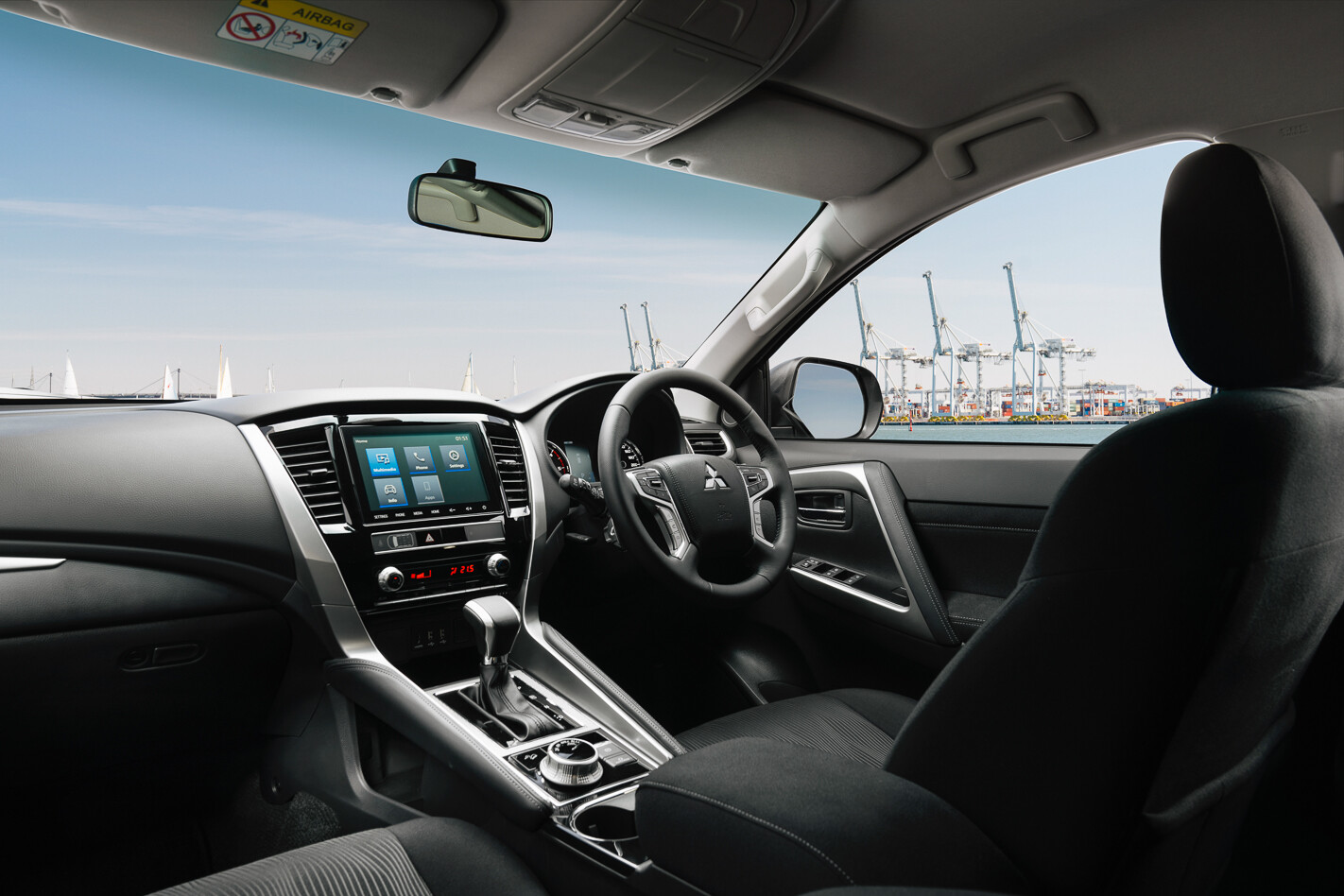
| Leather appointed seats |
| Power driver and front passenger seat adjustment |
| 360-degree camera system. |
Exceed
| 8-inch digital instrument cluster with speed limit display |
| Heated front seats |
| Eight premium speakers |
| Remote smartphone app functionality |
| Ultrasonic mis-acceleration mitigation system |
| Front parking sensors |
| Blind-spot warning |
| Rear-cross traffic alert |
| Lane departure warning. |
GSR (new)
| 18-inch black alloy wheels |
| Black rear spoiler |
| Black front bumper garnish |
| Black rear bumper garnish |
| Black grille |
| Black headlight garnish |
| Two-tone roof (black) |
| Black u2018Pajero Sportu2019 bonnet emblem |
| GSR tailgate badging. |
4×4 variants:
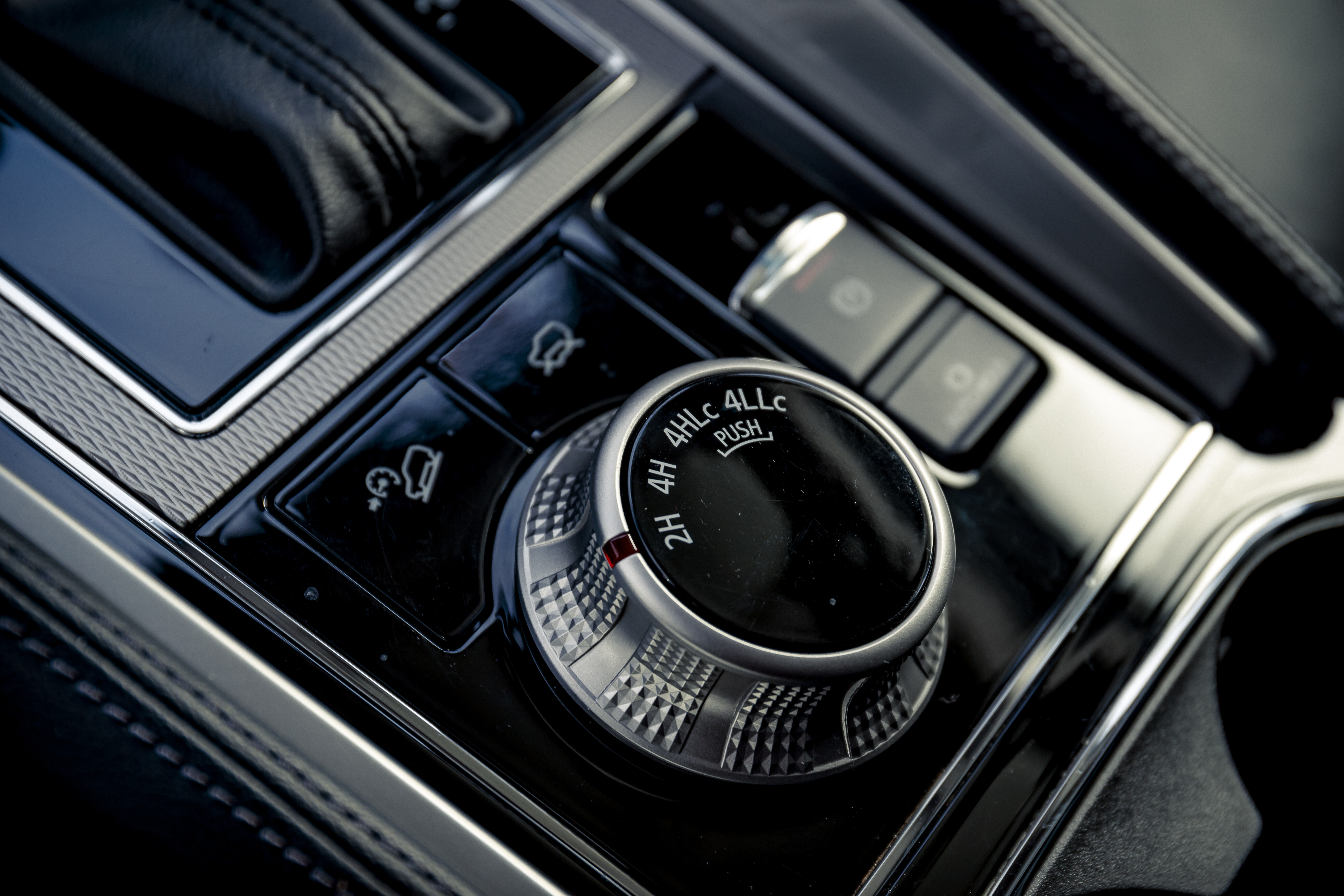
Four-wheel-drive models add Mitsubishi’s Super Select II system with selectable off-road modes, alongside paddleshifters and hill descent control.
A rear differential lock is also standard on four-wheel-drive GLS, Exceed and GSR grades, but not available on the GLX 4×4.
Engine, drivetrain and fuel economy
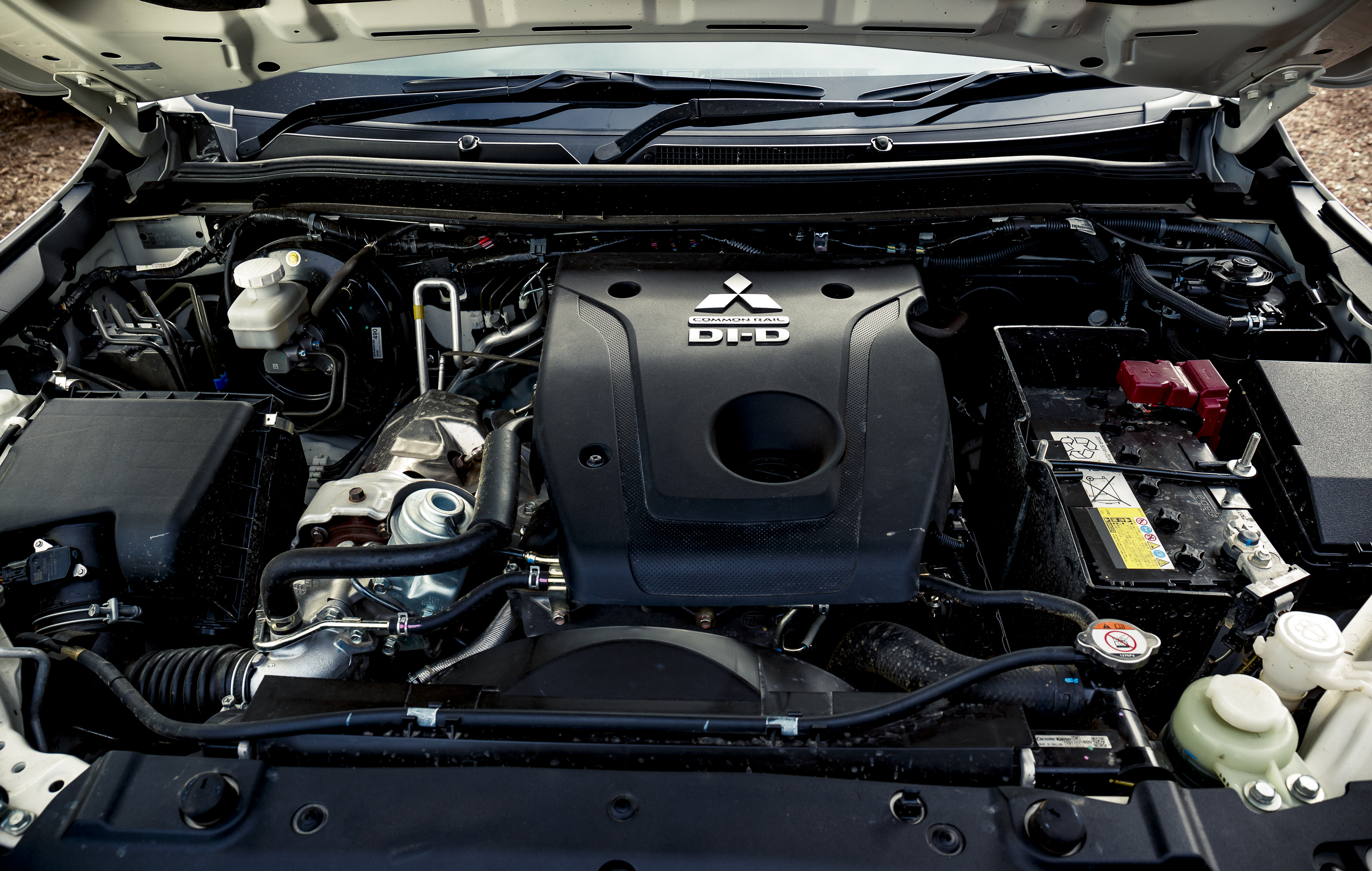
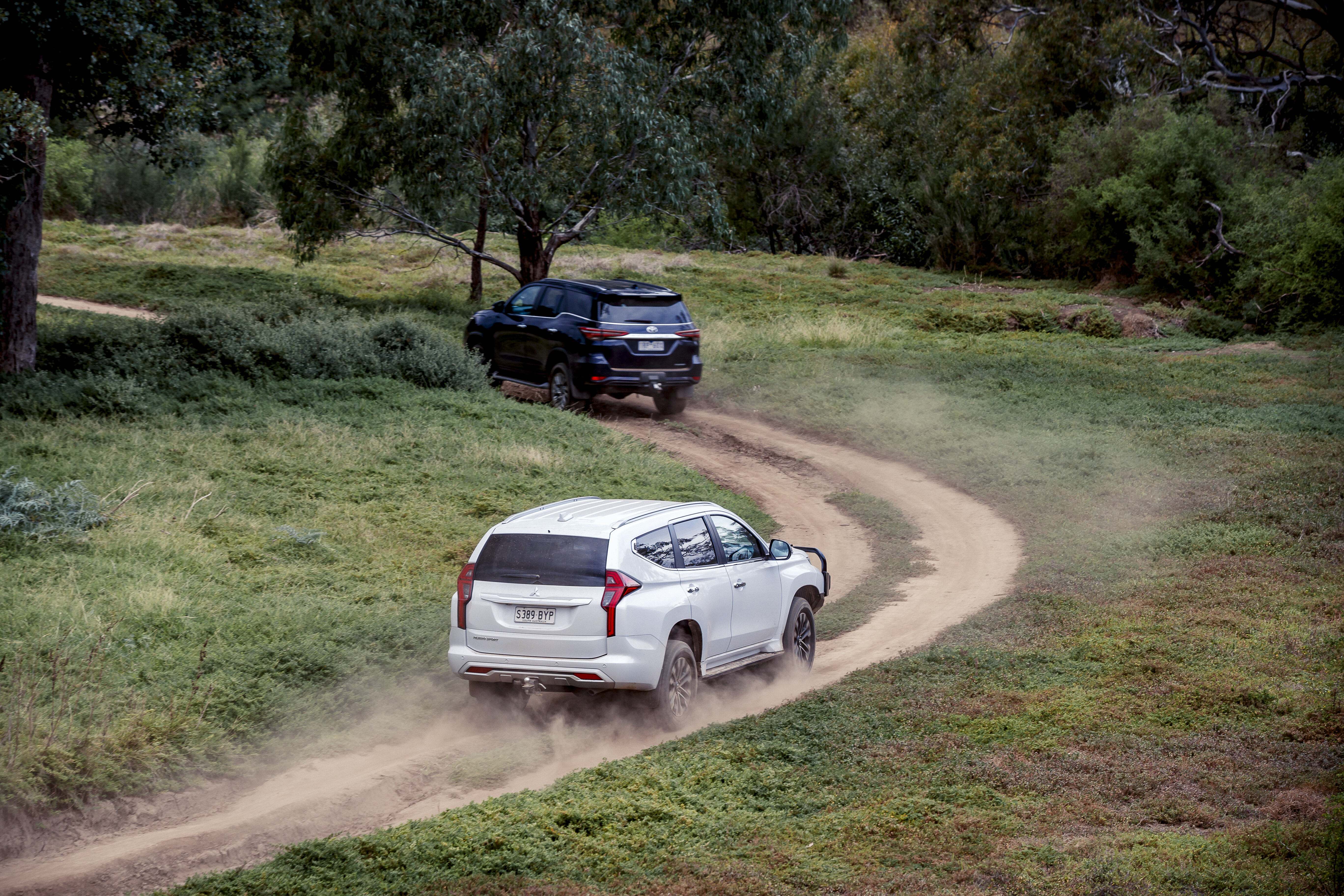
As standard, the Mitsubishi Pajero Sport is powered by a 2.4-litre turbocharged four-cylinder diesel engine with 133kW of power and 430Nm of torque coupled to an eight-speed automatic transmission.
Fuel consumption is listed at 8.0L/100km in either two-wheel-drive and four-wheel-drive configuration, with a maximum braked towing capacity of 3.0 tonnes on 4x2s and 3.1 tonnes on 4x4s.
Safety
The Mitsubishi Pajero Sport is covered by a five-star ANCAP safety rating from 2015, based on testing conducted on the related Triton ute.
The standard-fit safety suite includes:
| Forward collision mitigation system |
| Adaptive cruise control |
| Seven airbags |
| Electronic stability control |
| Anti-lock braking system |
| Emergency stop signal |
| Emergency brake assist |
| Hill start assist. |
GLS variants add rain-sensing wipers, while blind-spot warning, rear-cross traffic alert and lane departure warning are exclusive to the range-topping Exceed and GSR grades.
Warranty and servicing
Like the wider Mitsubishi range, the Pajero Sport is covered by the marque’s 10/10 Diamond Advantage coverage with a 10-year/200,000km warranty and 10 years of capped-price servicing. If the vehicle is serviced outside of the Mitsubishi dealer network, the program reverts to a standard five-year/100,000km warranty.
A complimentary 12-month roadside assist program is available, with the service also able to be expanded for up to four years – provided the vehicle is serviced by a Mitsubishi dealership.
Availability
The updated Mitsubishi Pajero Sport is expected to arrive in dealers this month.
The Japanese aftermarket accessory scene has turned the luxury-focused Lexus LX600 into an off-road machine, adding a number of modifications to bring the 4×4 back to its roots.
Set to come to Australia later this year, the LX600 is Lexus’s luxury take on parent company Toyota’s LandCruiser 300 Series (LC300), although this accessory kit from JAOS aims to make the LX just as capable off the beaten track as the LC.
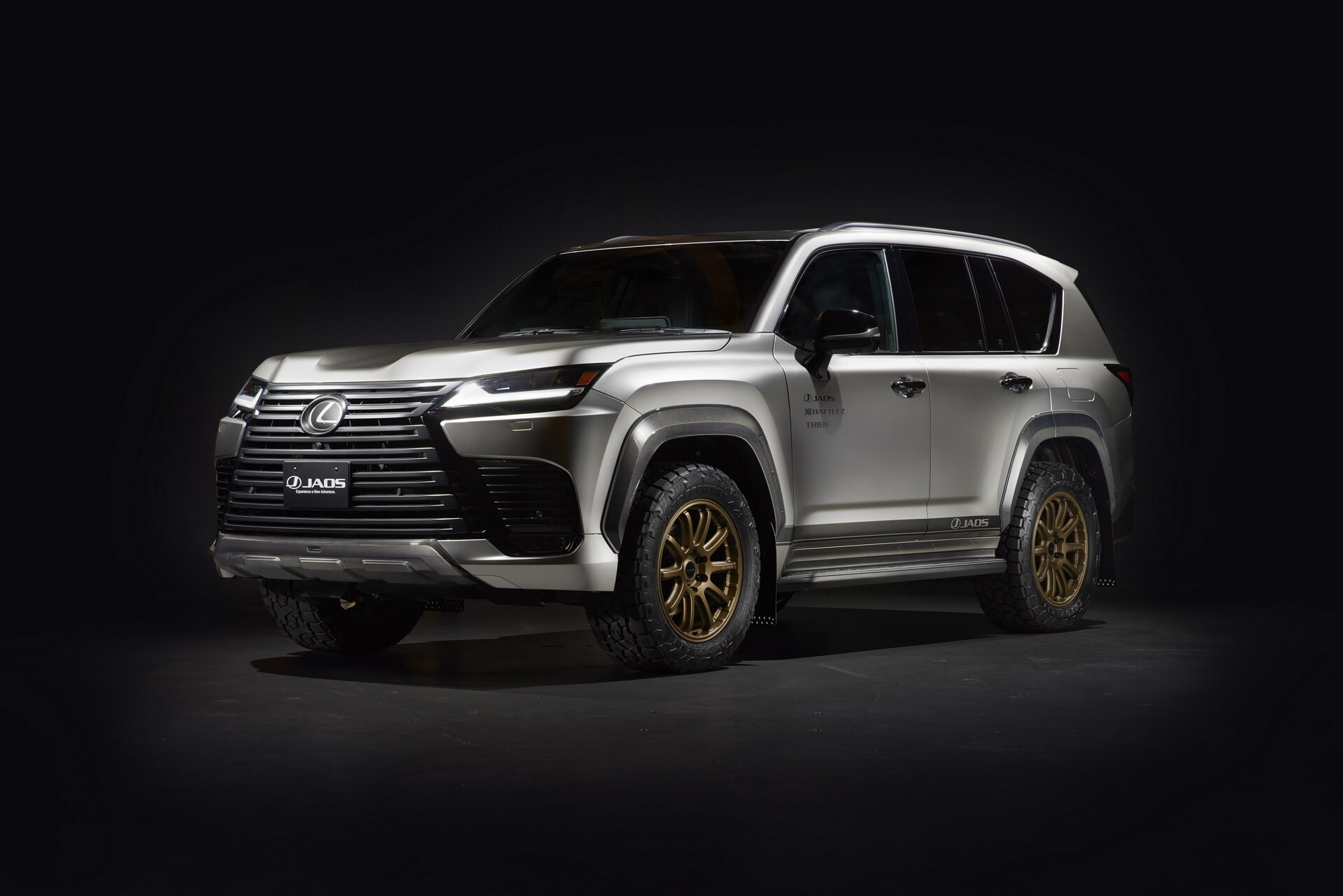
Shown off at the 2022 Tokyo Auto Salon show for aftermarket tuners, JAOS’s Offroad package includes a set of 20-inch, titanium-gold painted Enkei wheels shod in 285/55 Toyo Open Country A/T rubber for better grip in trying conditions.
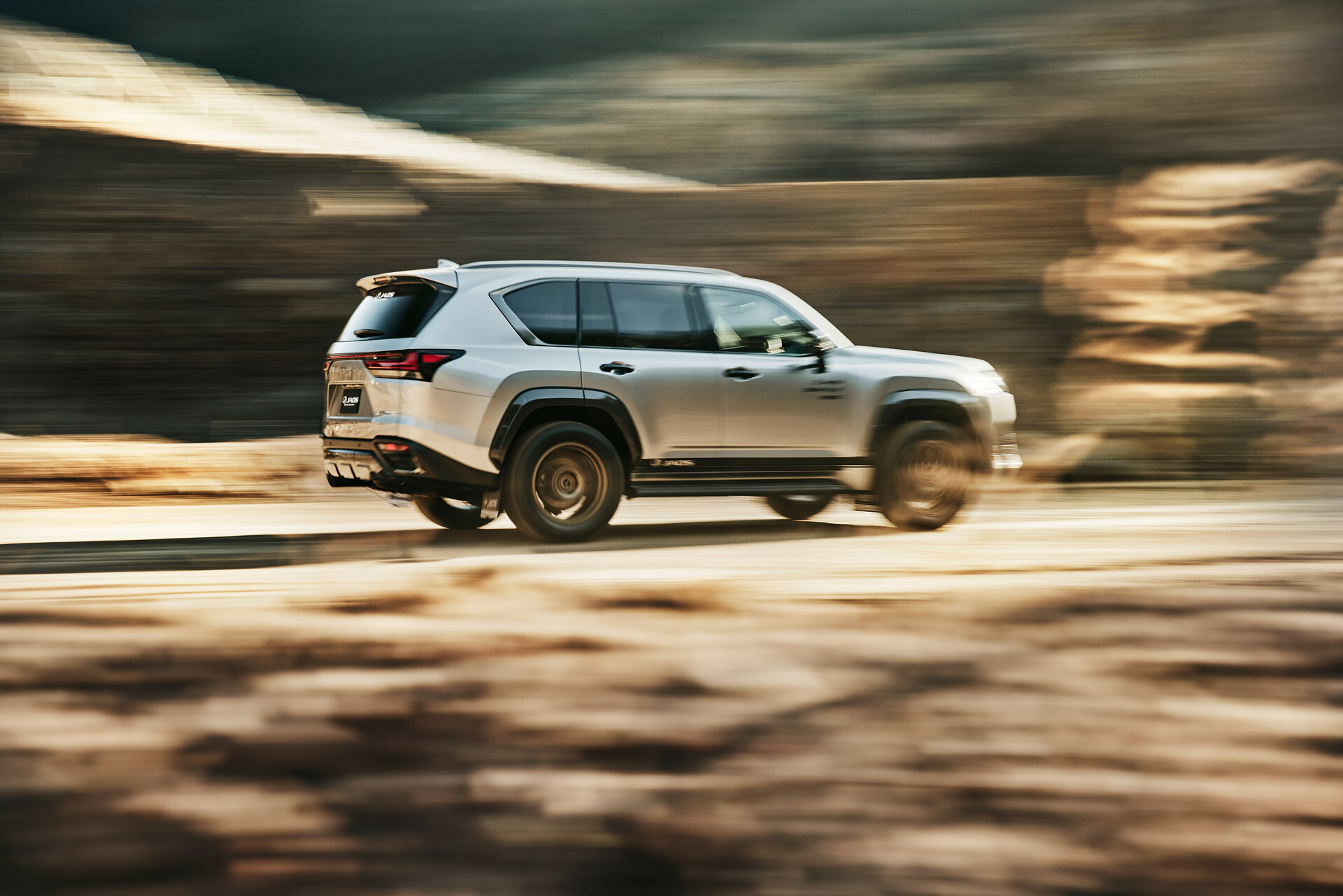
To ensure the large SUV can take on any reasonable environment and come out relatively unscathed, the LX600 has been given front and rear bumper skid plates as well as carbon fibre reinforced plastic guards, vented at the exit side to avoid excessive dirt build-up.
Other common JAOS accessories are included, from mudguards, side steps, door handle protectors and a tidier exhaust tip, all of which will let the LX look tougher on and off-road.
As previously mentioned, the 2022 LX is based on the new LandCruiser 300 series but will be available with a 3.5-litre twin-turbo petrol V6 engine in LX600 guise, whereas the LC300 can only be purchased locally with a 3.3-litre turbo diesel under the bonnet.
The diesel donk is going to power the LX500d, producing identical power and torque outputs to the LC300 227kW and 700Nm while the petrol option offers less low-down grunt but more pull up high, boasting 305kW and 650Nm on tap.
Lexus has yet to confirm local specs and pricing of the LX range, although Lexus has confirmed the flagship four-seater variant of the SUV will be available in Australia, likely alongside the five- and seven-seat options.