The 16th Drive4Life (D4L) event, dubbed the Iconic Corner Country Pubs tour, was an overwhelming success, with the touring party travelling on the ‘Great Desert Tracks’ of Outback SA, Qld and NSW, visiting some of the most iconic pubs and historical sights, and indulging in some breathtaking scenery and points of interest along the way.
Starting at Silverton, NSW, all members gathered for orientation, meet-and-greets and vehicle checks, followed by a few beverages around a roaring campfire. The vehicles were then split into groups, departing in staggered starts with 30-minute intervals, allowing for safe travels on corrugated tracks.
On the first day, the convoy travelled from Silverton to Hawker via Holowiliena Homestead, a heritage outback sheep station established in 1852 and now run by the sixth generation. It is carefully preserved with the original general store, blacksmith shop and underground cellar.
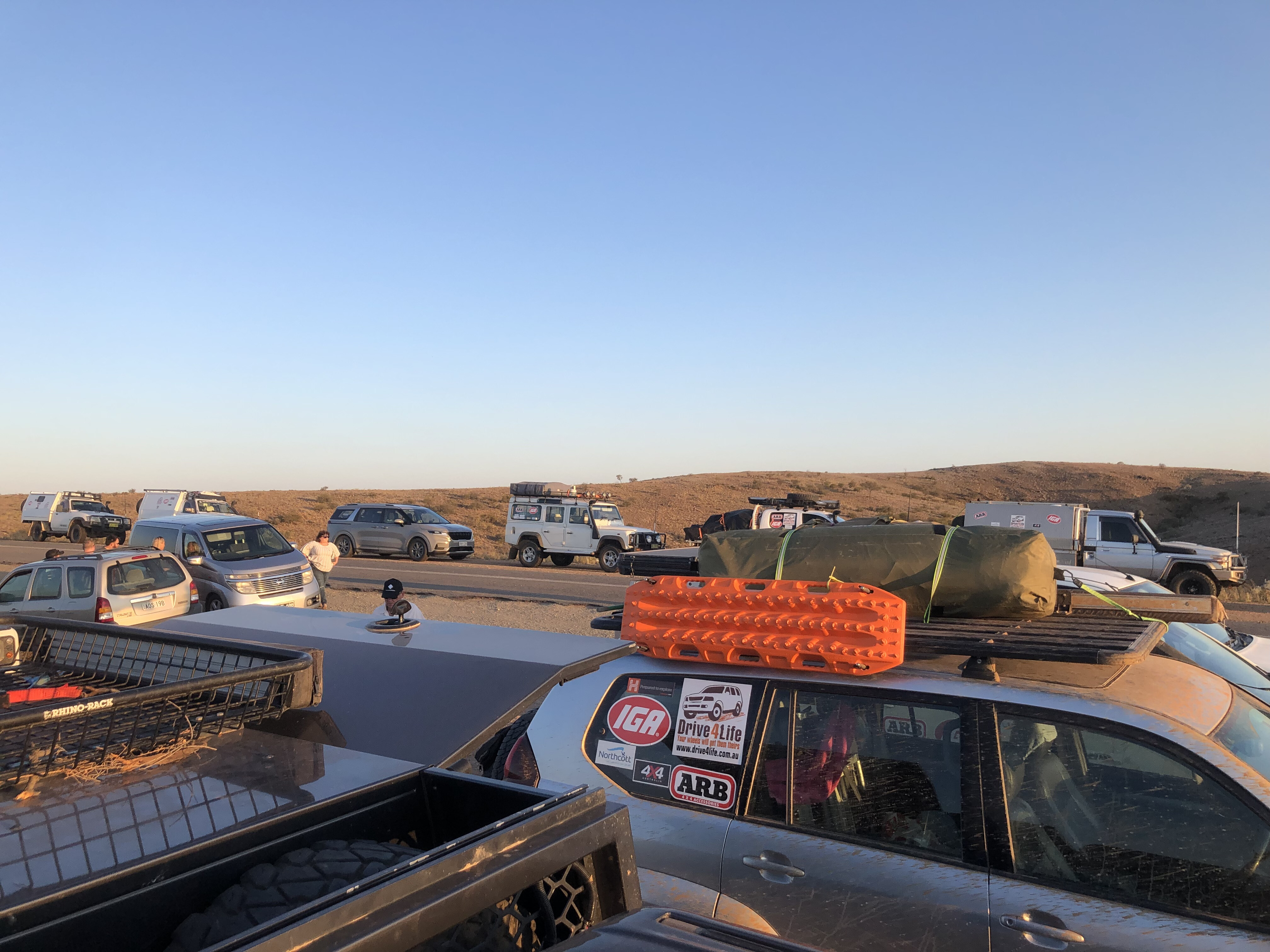
The following day, they left Hawker en route to Farina via Blinman, Parachilna Gorge and Flinders Ranges, visiting the underground copper mine, stunning gorges and Farina historical township ruins.
Day three consisted of a trip from Farina to Mungerannie via Marree, with a 90-minute scenic flight over Kati Thanda-Lake Eyre in Belt Bay, the famous Marree Man and spectacular Willouran Ranges. The day finished with an absolutely entertaining evening at the Mungerannie Hotel, with owners Phil and Deb.
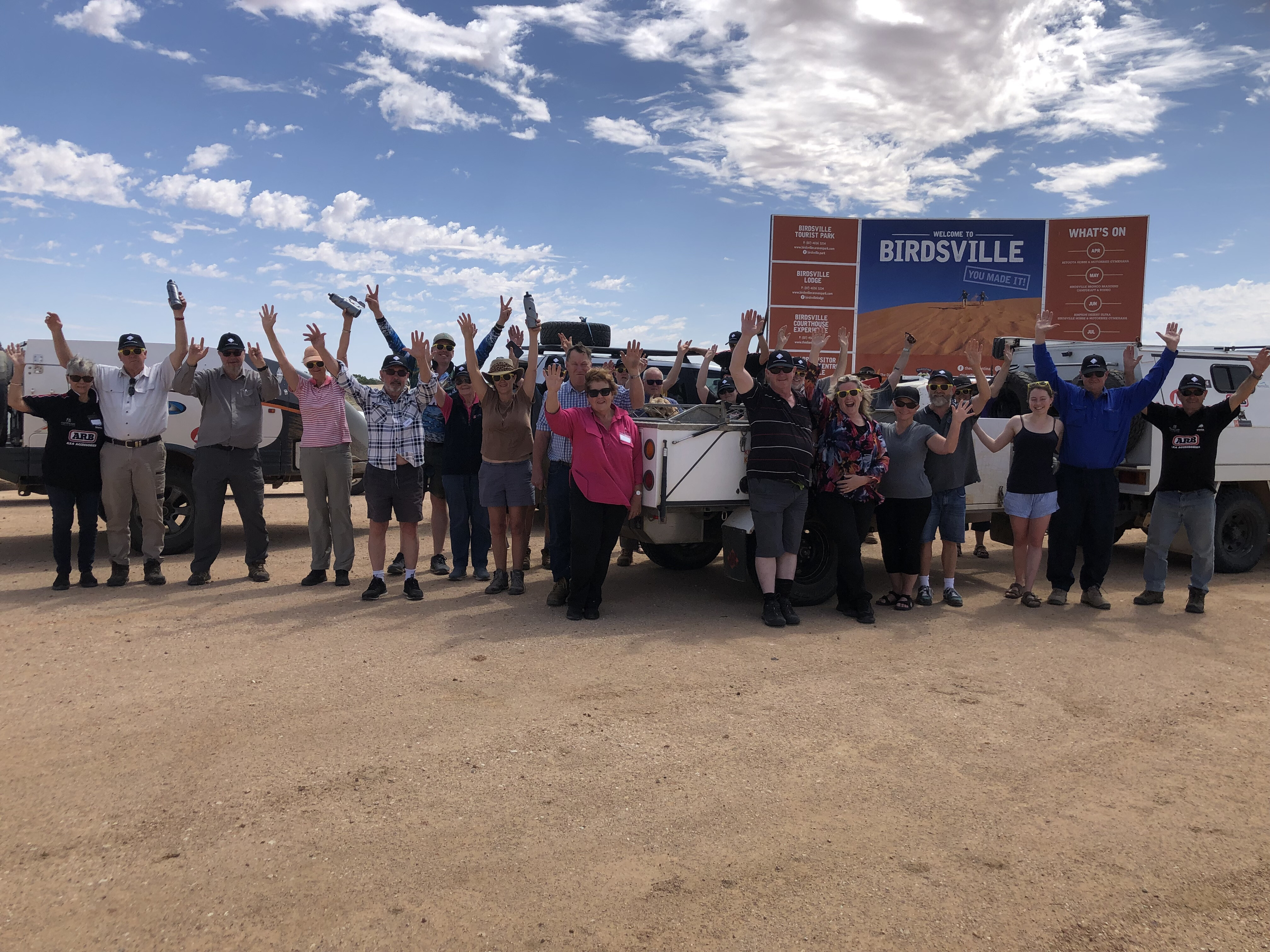
On day four, the convoy left for Birdsville via Clayton’s Artisan Outdoor Spa on the Birdsville Track, with the eager crowd attempting to conquer the Big Red sand dune. Everyone who tried was successful, earning a good meal and many drinks at the Birdsville Hotel. The following morning, they left for Innamincka via the Betoota Hotel for lunch, before settling off the red-dirt track for a night of traditional bush camping with no amenities.
On day six, the party left for Milparinka and stopped by the largest sheep-shearing shed in Australia, the Burke and Wills Dig Tree and Cameron Corner, which borders SA, Qld and NSW. The day was capped off with a quick ale in Tibooburra, before turning back to Silverton via Packsaddle Roadhouse on the final day.
“With the conclusion of this tour, a total of $943,100 has been raised to date”
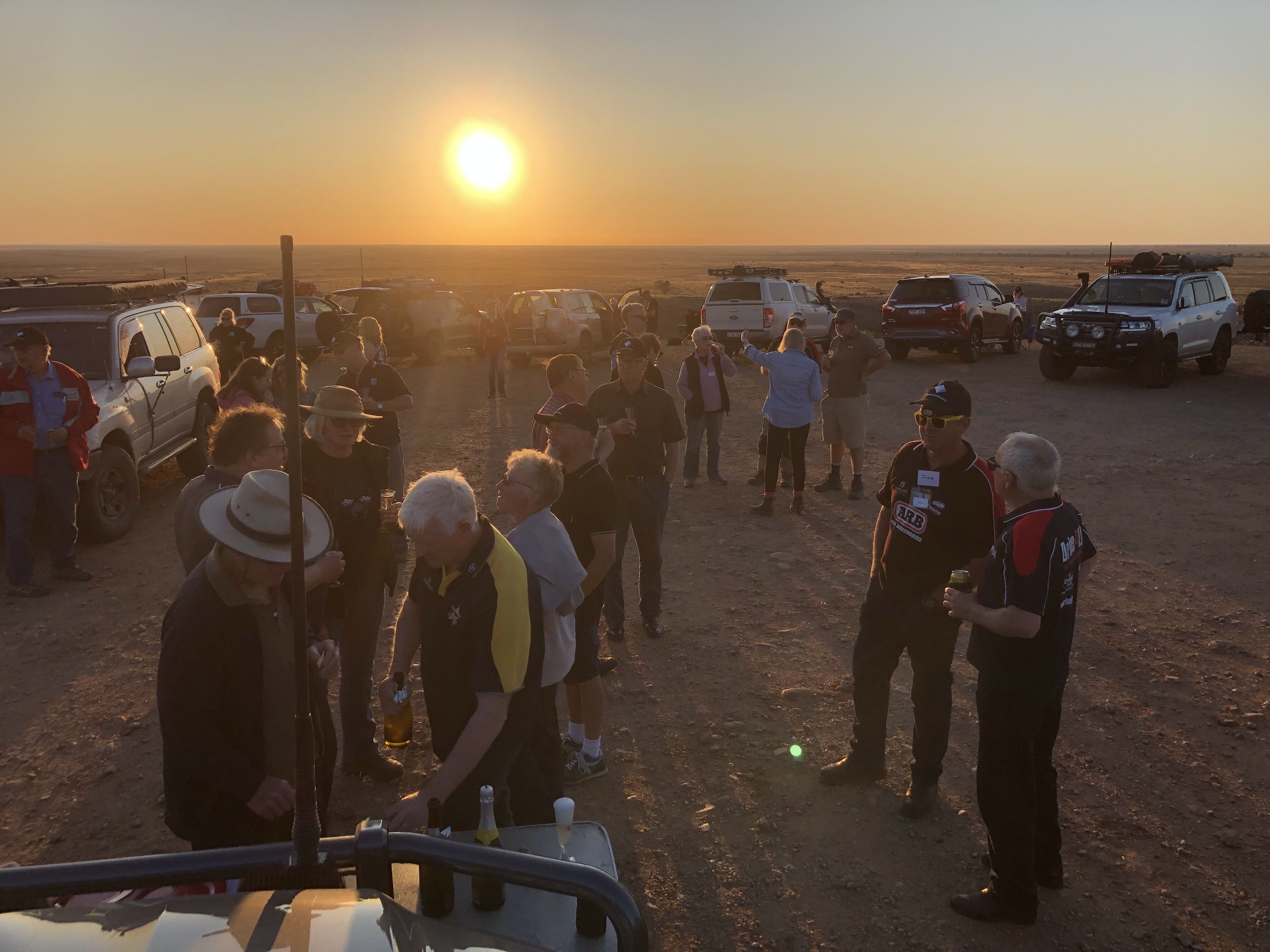
Leaving Packsaddle Roadhouse after lunch, they explored Broken Hill/Silverton at leisure before the events that evening. That night consisted of a champagne-and-cheese sunset viewing over the Mundi Mundi Lookout, the infamous awards presentation, and the traditional D4L nightly campfire buzzing with stories, songs, poems, jokes, quizzes and plenty of laughter.
An inaugural ‘BATSY’ award – in honour of D4L advocate Chris Bates, who passed away earlier in 2022 – was won by Nevin Holland, who shares Chris’s enthusiasm in supporting and promoting the cause.
Drive4Life is a non-profit organisation set up by a group of long-term 4WDers who are like-minded in their objective to raise funds for charitable organisations that require support.
Traditionally, D4L has solely committed its fundraising from 2006 to 2022 to The Northcott Society, which has provided services to people with disabilities, their families and carers for more than 90 years. Drive4Life has now extended its support to additional charities, which are also seeking much-needed funding.
With the conclusion of this tour, a total of $943,100 has been raised to date.
Let me start by saying that of all the kit we’ve fitted to the MU-X to date, these towing mirrors are the best money spent. Every time I get in the Isuzu, I’m impressed by the improved visibility and usefulness of this product.
MSA 4X4 Accessories has been producing its adjustable towing mirrors for a few years now, and has different models to suit most popular makes and models of 4×4 vehicles. The mirrors for the MU-X – although similar to the ones for the D-MAX ute – were only finalised shortly before we sent our MU-X to the shop to have the rear fit-out done.
From the moment I picked up the MU-X after the installation, I was immediately taken by the improved rear vision offered by them – not only because of the bigger and more usable size of the mirrors, but also the improved quality of the image reflected in the mirror glass.
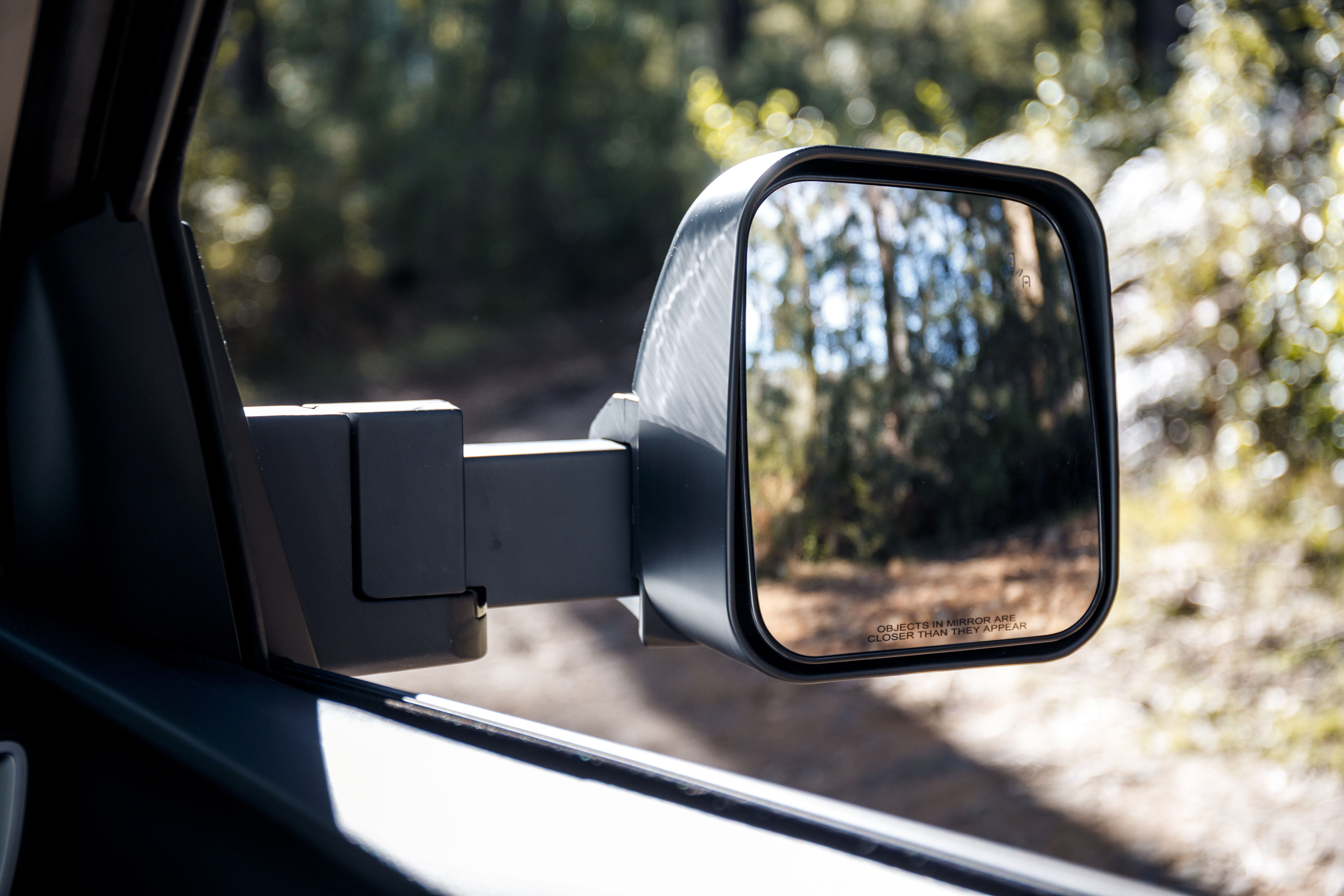
The single glass element in the MSA mirrors is slightly curved to offer an enhanced image of what’s behind you, but not curved enough to distort or change the image you see. Leaving town on the highway and the rearward vision offered by the mirrors over the standard ones was, and remains, exceptional … and that’s without extending them for towing.
The face of the mirror is rectangular, and in the normal position it offers an upright or portrait view. Cleverly, the mirror can be rotated 90-degrees to give a horizontal or landscape view, which broadens the image of what’s behind you.
Even more clever is that when you rotate the mirror 90-degrees, the action of the electric mirror’s adjustment switch remains the same. That is, you push it up to move the glass up, down to go down, and so on. Full adjustment of the mirror glass is retained as per normal.
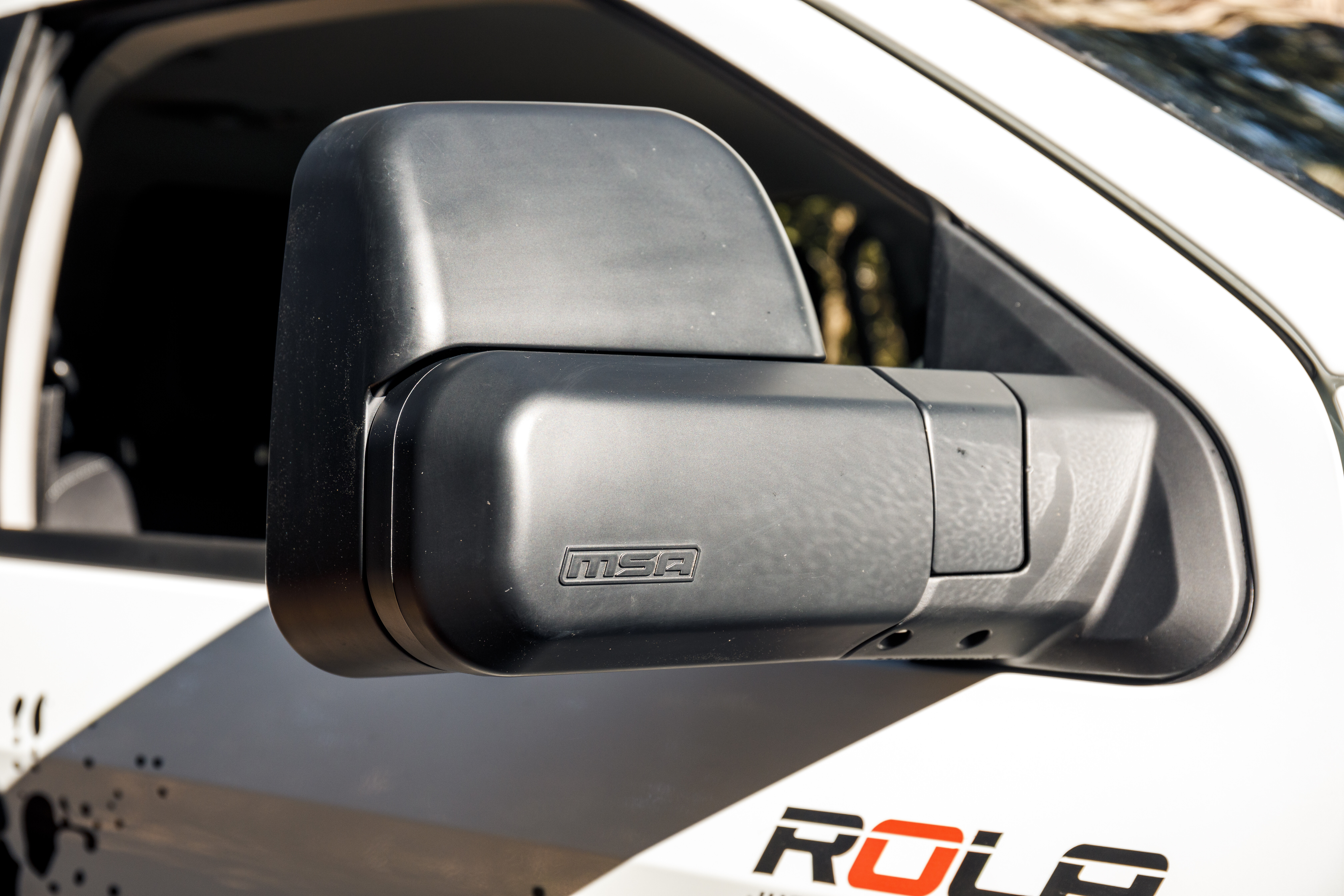
Need a wider view to see beyond your caravan or horse float? The MSA 4×4 mirrors extend out to be more like a traditional towing mirror, which sits farther out from your car door to give a better angle of view to the rear. Rotating the mirror head and extending in and out, or folding the mirrors in, is all done manually – only the glass adjustment remains electric.
Our MU-X LS-M is a base-model car, so the mirrors are relatively simple. They’re plain black, have no power folding, no indicator lens on the mirror and no other fancy cameras for 360° viewing. They do have heated glass and blind-spot indicators, and these are retained on the new MSA mirrors.
If you own a higher-spec vehicle with more features and cameras, these features can also be retained. Check the MSA website to see if the features are retained on your model of vehicle. The mirrors can also be painted to match the colour of the vehicle, or are available in a chrome finish, with or without indicators.
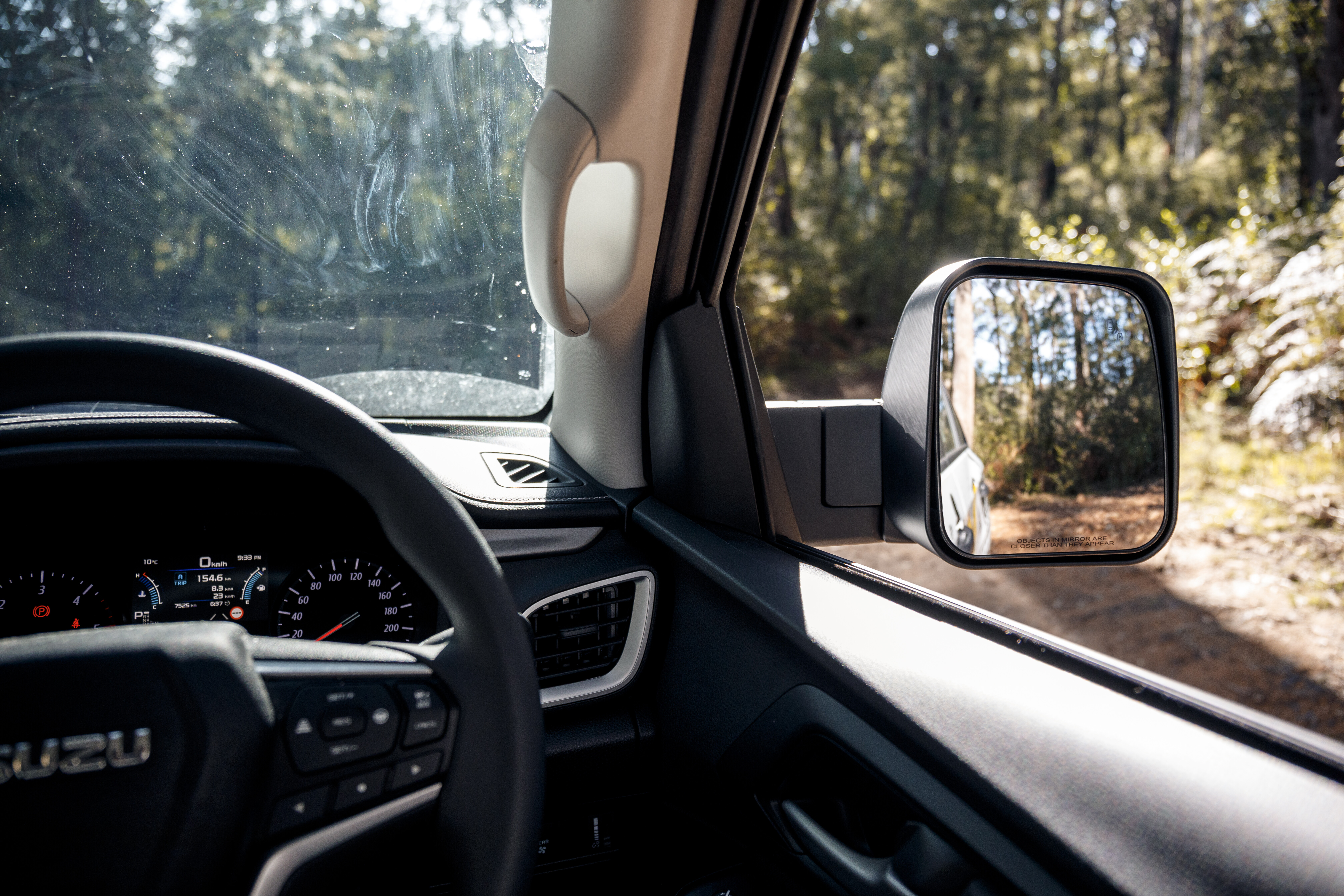
While we haven’t done any towing with the MU-X, we certainly appreciate the improved rear view offered every day, be it driving in town or out on the highway. We had a set added to the Ford Ranger we built a few years ago, which was fitted with a large aluminium service body on the back. The MSA mirrors were super good for seeing well-beyond that wide, slab-sided canopy.
Even though we haven’t towed, we have extended the mirrors out to their farthest reach and ran over a bumpy track to test for vibration. We’re happy to report there was none.
The MSA mirrors are simple to fit and bolt directly to where the car’s standard mirrors were originally fitted. All the wiring is there to plug them straight in using the correct wiring plugs for your model of car.
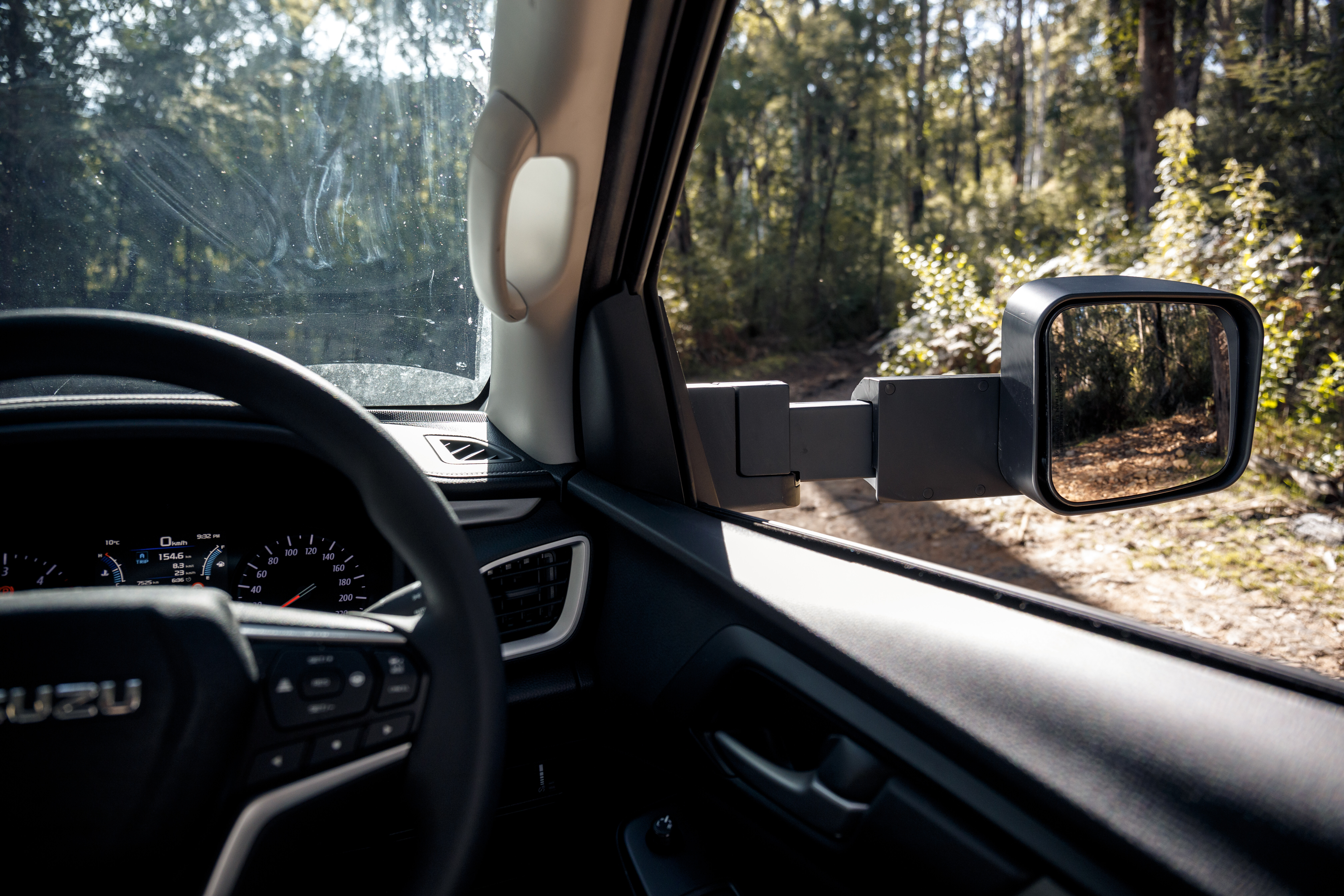
If you will be driving with the mirrors permanently in the extended position, MSA has infill panels available that fit on to the extended arms, to give a more finished and integrated appearance.
MSA’s towing mirrors continue to be a product that improves the Isuzu, and they’re something we appreciate every time we drive it.
Available from: www.msa4x4.com.au RRP: $887
Volkswagen Australia looks set to appeal to current petrol owners with the next-generation Amarok due in early 2023.
The 2023 Volkswagen Amarok dual-cab ute will include an optional 2.3-litre turbocharged four-cylinder petrol engine on the flagship Aventura, sitting beside the 3.0-litre turbo-diesel V6 expected to account for a significant majority of sales.
It produces 222kW and 452Nm, compared to 184kW and 600Nm for the V6 diesel. Both engines are matched with a 10-speed torque converter automatic transmission, with full-time four-wheel drive and low-range.
December 7: NEW AMAROK DRIVEN! Words & Video
We’ve finally driven the new-gen 2023 Volkswagen Amarok, with Jez jetting (Jet jezzing?) to South Africa for a world’s-first spin in the new ute. Get our full story below.
Story continues
2023 Volkswagen Amarok petrol to appeal to current VW owners
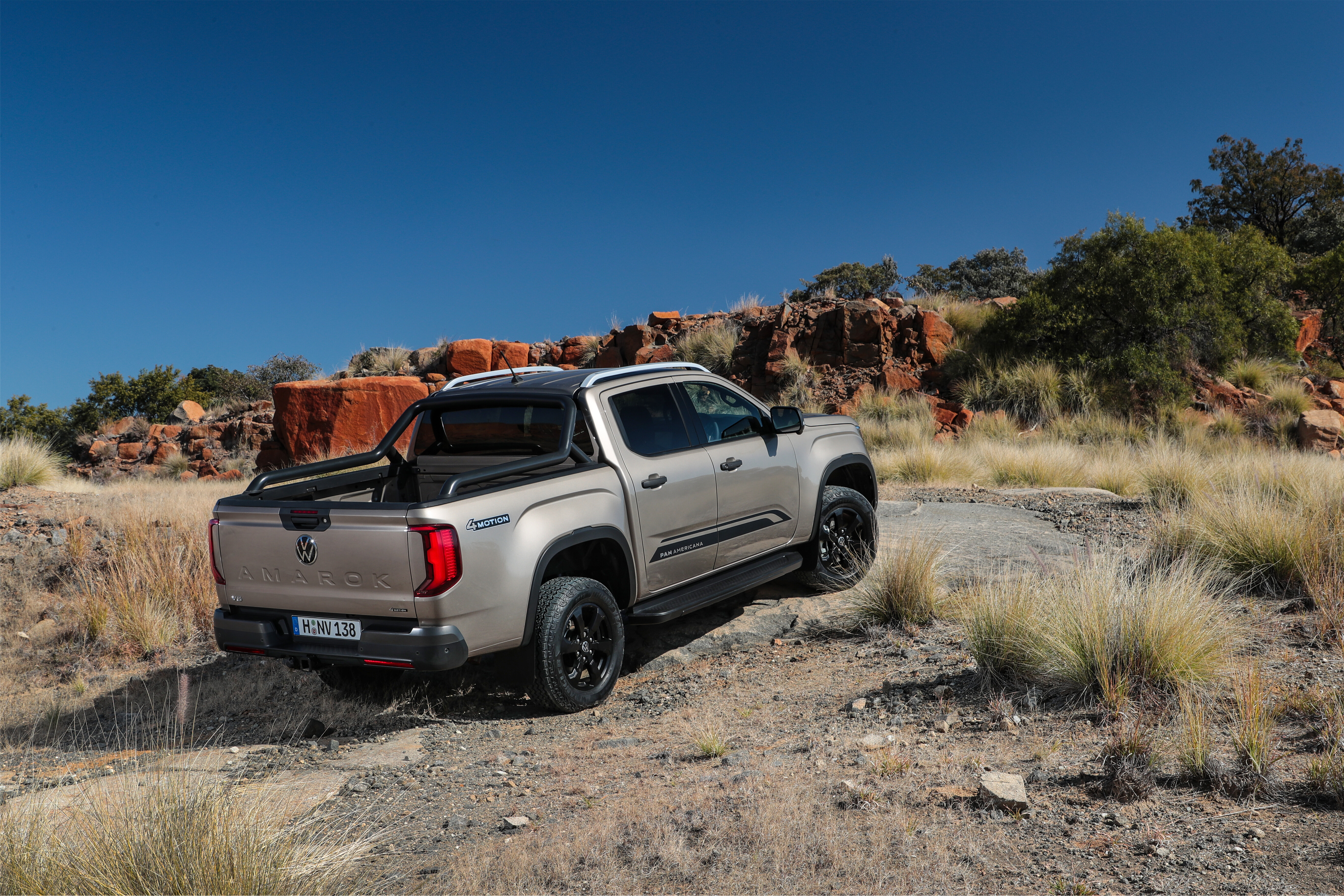
These engines are shared with its twin-under-the-skin, the Ford Ranger, but the Ford-sourced turbo-four – as found in the Mustang and Focus ST – is not available with Australia’s diesel-only Ranger.
According to local Volkswagen Commercial Vehicles director Ryan Davies, the interest in the petrol engine has been greater than anticipated, with the potential for its availability to expand beyond the range-topping variant.
“When we initially looked at it, we thought it was an interesting engine, but we may have slightly under-called the mix of that car. It seems to be a lot more interest in that engine than we anticipated,” he said.
“You have to remember that predominantly we’ve been an 85-90 per cent V6 diesel model for quite some time, so we obviously thought that we’re going to continue to be dominant in that V6 diesel category.
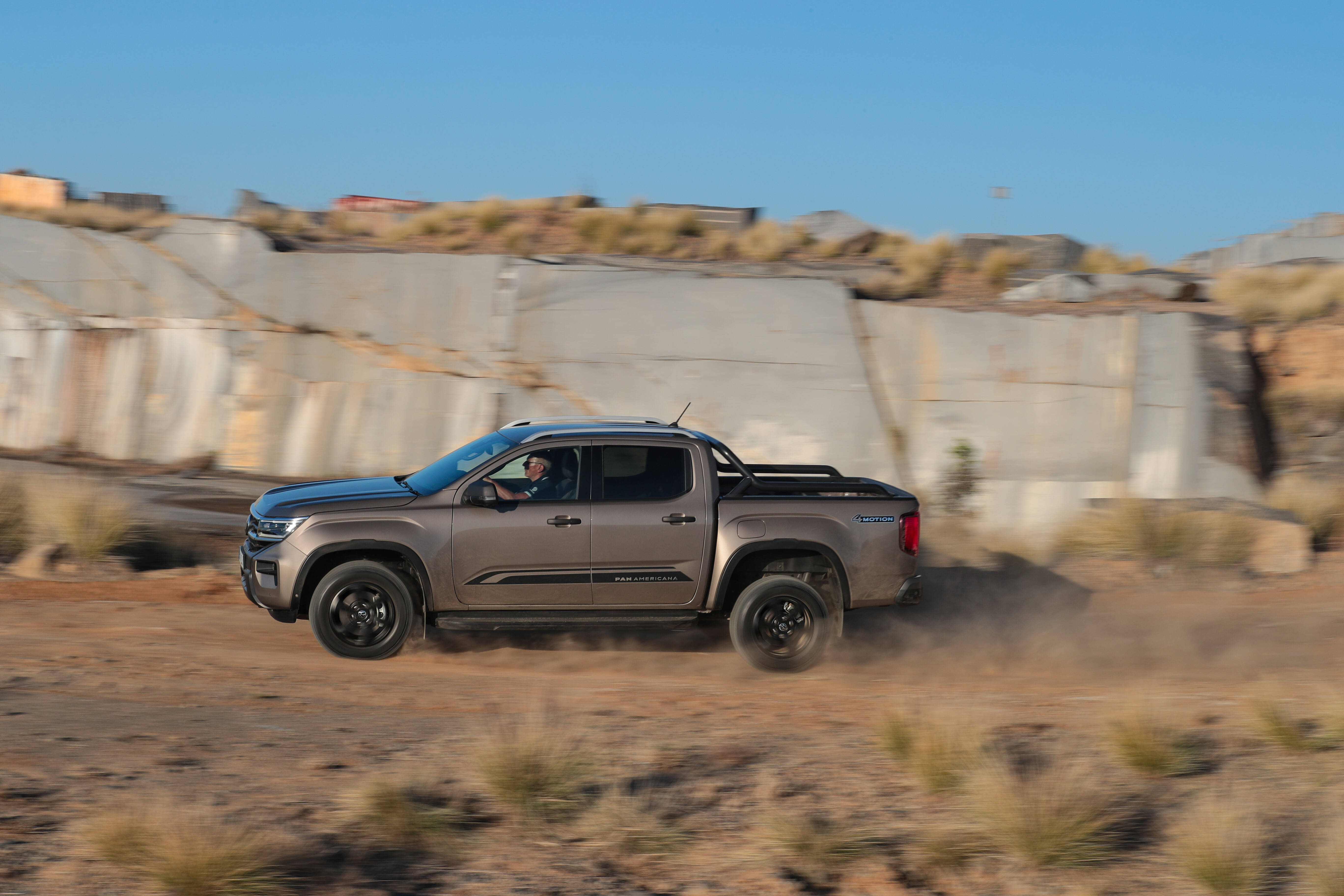
“But there has been a lot of interest in the petrol engine from customers but also, funnily enough, from journalists, so it’s interesting.”
However, the executive quickly emphasised the popularity of diesel engines in the dual-cab ute segment, where strong performance and a 3.5-tonne towing capacity are lauded by customers.
“In that market, a lot of people tow. And a lot of people that tow want diesel, and they want V6 diesel. And the reason they want that is because they need the power to be able to tow, but also the range, and I’m not sure that petrol gives you that type of range if you’re towing,” said Davies.
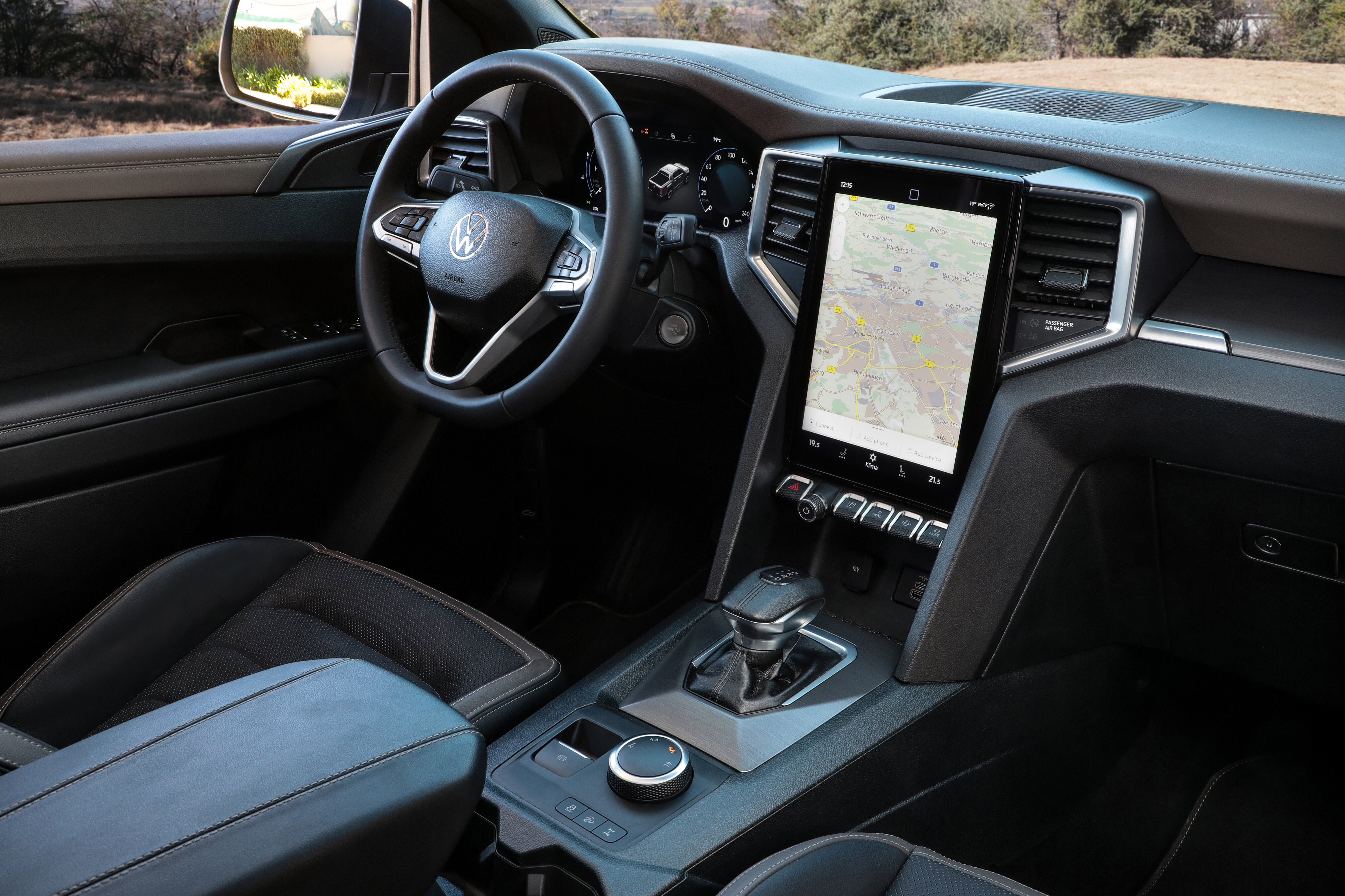
So, who exactly would be interested in a turbo-petrol dual-cab?
Volkswagen Australia spokesperson Dan DeGasperi said it would appeal to current Volkswagen passenger vehicle drivers, and those who need the practicality of a ute without towing, off-road or long-distance requirements.
“In terms of the turbo-petrol four-cylinder, however, this Amarok does give us an opportunity to speak even more to current Volkswagen [passenger vehicle] owners, potentially, than [the previous] generation of Amarok,” he said.
“Volkswagen is renowned for… petrol engines in the Australian market, so there’s potential of some crossover there for people who aren’t buying this car to tow or to go off-road, or so on. But they might be a sole trader, and they might have a family, and they want the added refinement and quietness of a petrol.”
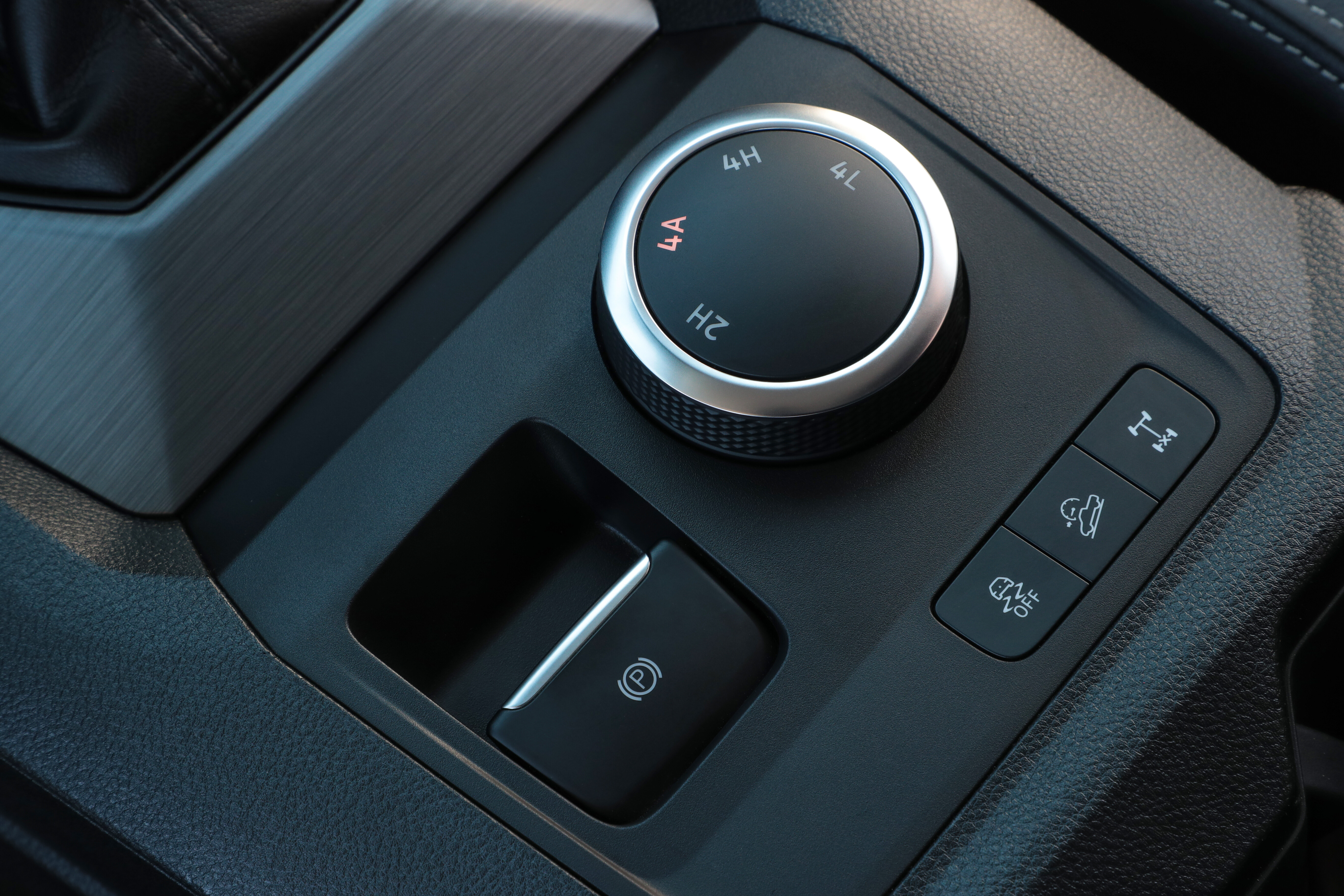
2023 Volkswagen Amarok: What’s coming to Australia
As reported, the 2023 Volkswagen Amarok will arrive in Australian showrooms in the first half of 2023, with full details – including pricing – expected in the coming weeks.
Five grades – Amarok, Life, Style, PanAmericana and Aventura – will be offered, with four engines: a single- or twin-turbo 2.0-litre four-cylinder diesel, a single-turbo 3.0-litre V6 diesel and a single-turbo 2.3-litre four-cylinder petrol.
“We know it’s definitely in the four digits in terms of pre-orders, but nothing’s committed until you’ve got a final price and specification, and then ultimately, allocation of cars,” added Davies.
It will be exclusively offered in a four-wheel drive dual-cab ute body, with single-cab and cab-chassis variants ruled out.
? MORE 2023 AMAROK
Get all of our latest stories in one handy place, with our Everything You Need to Know article at the link below.
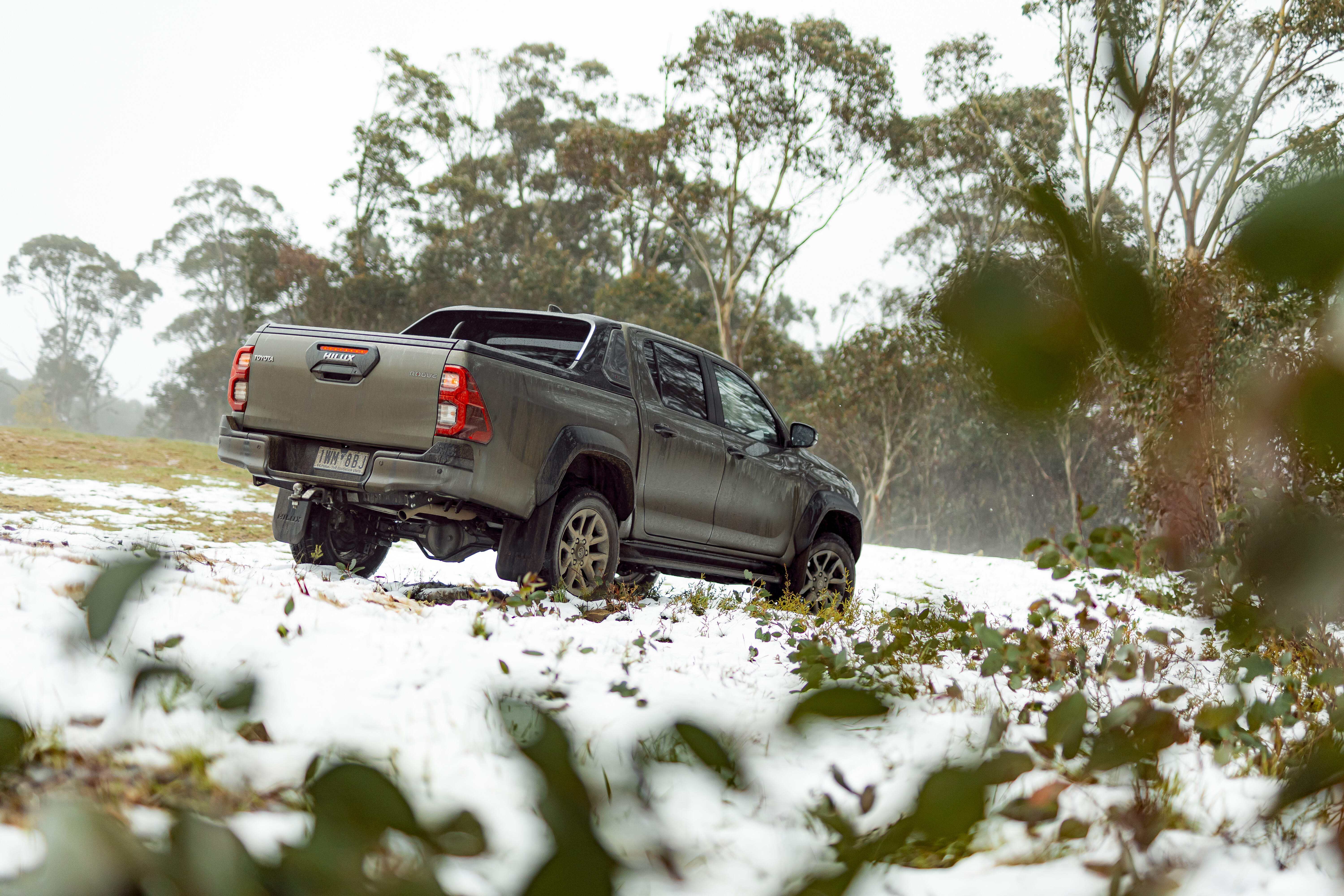
Toyota Australia has thrown down its first challenger in the emerging sports 4×4 ute segment with its 2023 Hilux Rogue.
The big ticket item that distinguishes this Rogue from the previous model and all other current Hiluxes, is a new suspension package featuring wider wheel track, both front and rear.
This is no small track increase achieved by simply change the offset of the wheels as some manufactures have claimed before. No, Toyota has seriously re-engineered the Hilux Rogue’s chassis with a new wider rear differential housing and lengthened front lower control arms to achieve what the manufacturer claims is around 140mm in extra track width.
Upgrade your 4×4
-
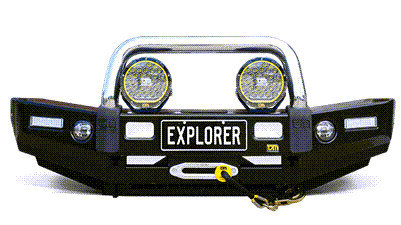
Bullbars
-
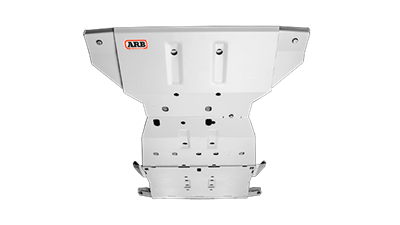
Underbody Protection
-
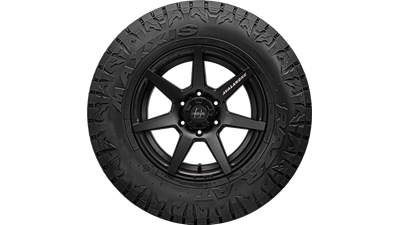
4X4 Tyres
-
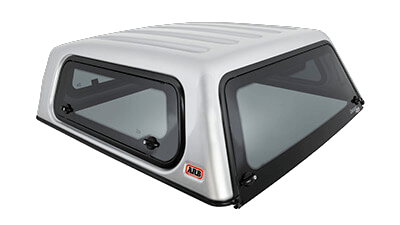
Canopies
-
Roof Racks
-
Storage
This wide track is designed to improve the Hilux Rogue’s stability on and off road by widening is footprint on the road. While they were under there, Toyota raised the ride height a claimed 20mm for improved ground clearance.
The Hilux Rogue had previously been more of a luxury dress-up pack at the upper end of the Hilux model range. Extras like heated leather seats, a JBL sound system, and a powered roller shutter over a carpet-lined cargo tub differentiated it from regular models, but no performance additions, firmly put the Rogue in the accessory-pack realm.
The good news is that the Rogue still gets all those luxe features but becomes the only model in the range with these new wide-track underpinnings.
Not only that, but the price for the 2023 Hilux Rogue remains unchanged at $70,200. It’s not often that you get something new for nothing!
Pricing
| Model | Transmission | Pricing | Change |
|---|---|---|---|
| WorkMate 2.7P 4×2 single-cab CCu00a0 | Manual | $24,225 | u2013 |
| WorkMate 2.7P 4×2 single-cab CCu00a0 | Automatic | $26,225 | u2013 |
| WorkMate Hi-Rider 2.4TD 4×2 single-cab CC | Manual | $29,465 | u2013 |
| SR Hi-Rider 2.8TD 4×2 extra cab PU | Manual | $46,095 | $1,250 |
| WorkMate 2.7P 4×2 double-cab PU | Manual | $33,705 | u2013 |
| WorkMate 2.7P 4×2 double-cab PU | Automatic | $35,705 | u2013 |
| WorkMate Hi-Rider 2.4TD 4×2 double-cab PU | Automatic | $42,795 | u2013 |
| SR Hi-Rider 2.8TD 4×2 double-cab PU | Automatic | $47,115 | $1,250 |
| SR5 Hi-Rider 2.8TD 4×2 double-cab PU | Automatic | $55,700 | $1,250 |
| WorkMate 2.7P 4×4 single-cab CCu00a0 | Manual | $40,155 | u2013 |
| SR 2.8TD 4×4 single-cab CC | Manual | $43,225 | u2013 |
| SR 2.8 TD 4×4 single-cab CC | Automatic | $45,225 | u2013 |
| WorkMate 2.4TD 4×4 extra cab CC | Automatic | $45,855 | u2013 |
| SR 2.8TD 4×4 extra cab CC | Manual | $48,135 | $1,250 |
| SR 2.8TD 4×4 extra cab CC | Automatic | $50,135 | $1,250 |
| SR5 2.8TD 4×4 extra cab PU | Automatic | $59,160 | $1,250 |
| WorkMate 2.4TD 4×4 dual-cab CC | Manual | $47,925 | u2013u00a0 |
| SR 2.8TD 4×4 dual-cab CC | Manual | $50,395 | $1,250 |
| SR 2.8TD 4×4 dual-cab CC | Automatic | $52,545 | $1,250 |
| SR5 2.8TD 4×4 dual-cab CC | Automatic | $59,180 | $1,250 |
| SR5+ 2.8TD 4×4 dual-cab CC | Automatic | $61,680 | $1,250 |
| WorkMate 2.4TD 4×4 dual-cab PU | Manual | $47,425 | u2013u00a0 |
| WorkMate 2.4TD 4×4 dual-cab PU | Automatic | $49,425 | u2013 |
| SR 2.8TD 4×4 dual-cab PU | Manual | $51,895 | $1,250 |
| SR 2.8TD 4×4 dual-cab PU | Automatic | $54,045 | $1,250 |
| SR5 2.8TD 4×4 dual-cab PU | Manual | $59,930 | $1,250 |
| SR5+ 2.8TD 4×4 dual-cab PU | Manual | $62,430 | $1,250 |
| SR5 2.8TD 4×4 dual-cab PU | Automatic | $61,930 | $1,250 |
| SR5+ 2.8TD 4×4 dual-cab PU | Automatic | $64,430 | $1,250 |
| Rogue 2.8TD 4×4 dual-cab PU | Automatic | $70,200 | u2013 |
| GR Sport | TBA | TBA | u2013 |
Powertrain and performance
The N80 Hilux Rogue remains powered by Toyota’s 2.8-litre turbo-diesel engine that produces 150kW of power and 500Nm of torque. The Rogue is only offered with the 6-speed automatic transmission and part-time four-wheel drive.
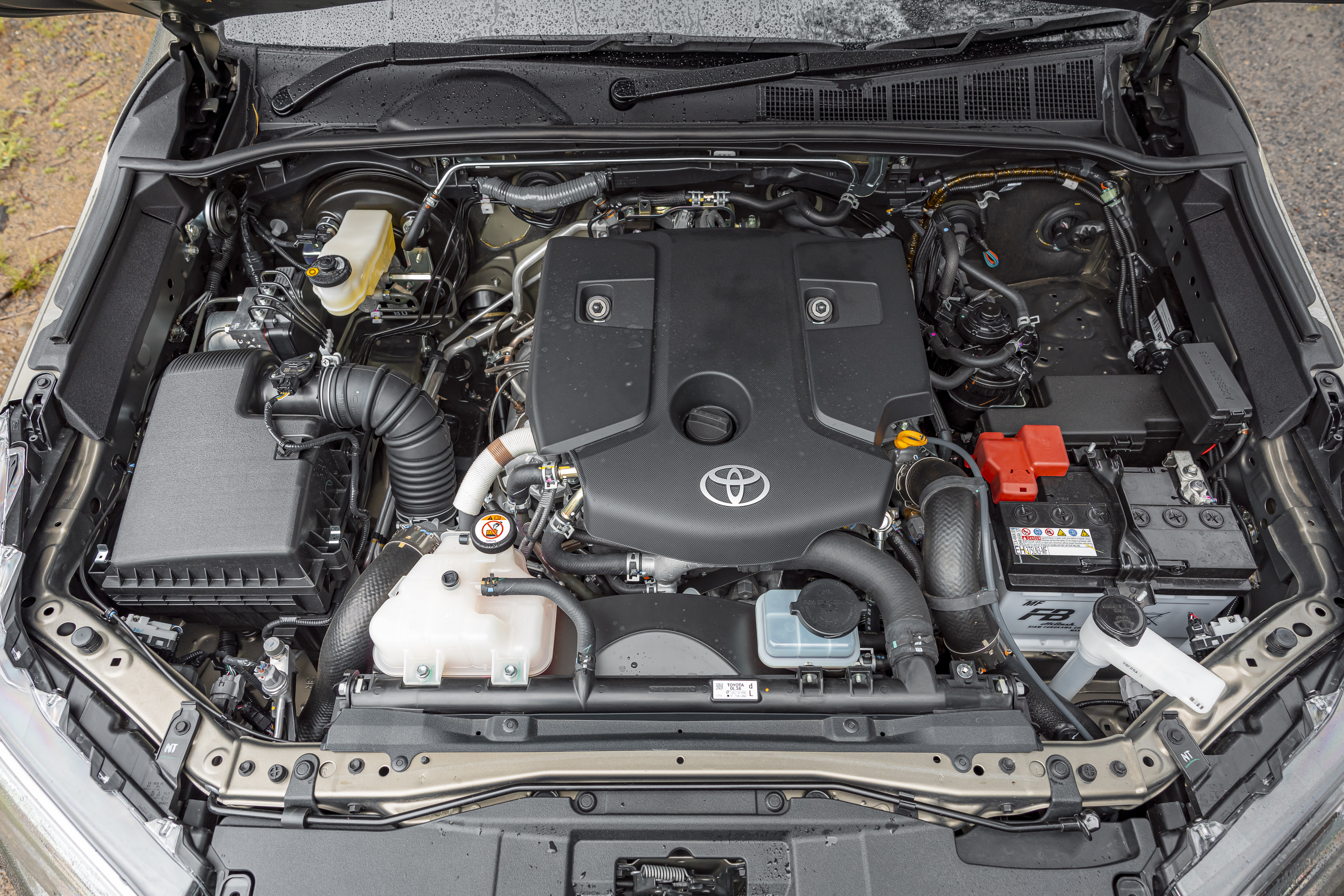
It’s a punchy drivetrain that gets the Rogue along nicely. The improvements to this engine back in 2019 transformed the way it drives and it now has the performance to match its 4-cylinder diesel-powered competitors such as the Ford Ranger, and the Isuzu D-MAX/Mazda BT-50 twins.
Interestingly, we found the engine in this Rogue to be quieter than the one in an SR5 we drove earlier this year, so maybe the Rogue gets some more sound insulation than what’s fitted to the lower-grade models.
On-road ride and handling
The front wheel track on the Hilux Rogue has been widened 135mm to 1670mm. This was achieved using extensions to the control arms to move the wheels outboard.
The engineers also used this opportunity to move the lower strut mounts further outboard, changing the angle of the spring and dampener to improve the way it works. You can see on the new extension where the strut now meets it at the end, where it was previously on top of the arm while a spacer at the top of the strut allows it to be canted outwards and probably accounts for the 20mm of raised height. The front stabiliser bar was also widened to suit the revised front end.
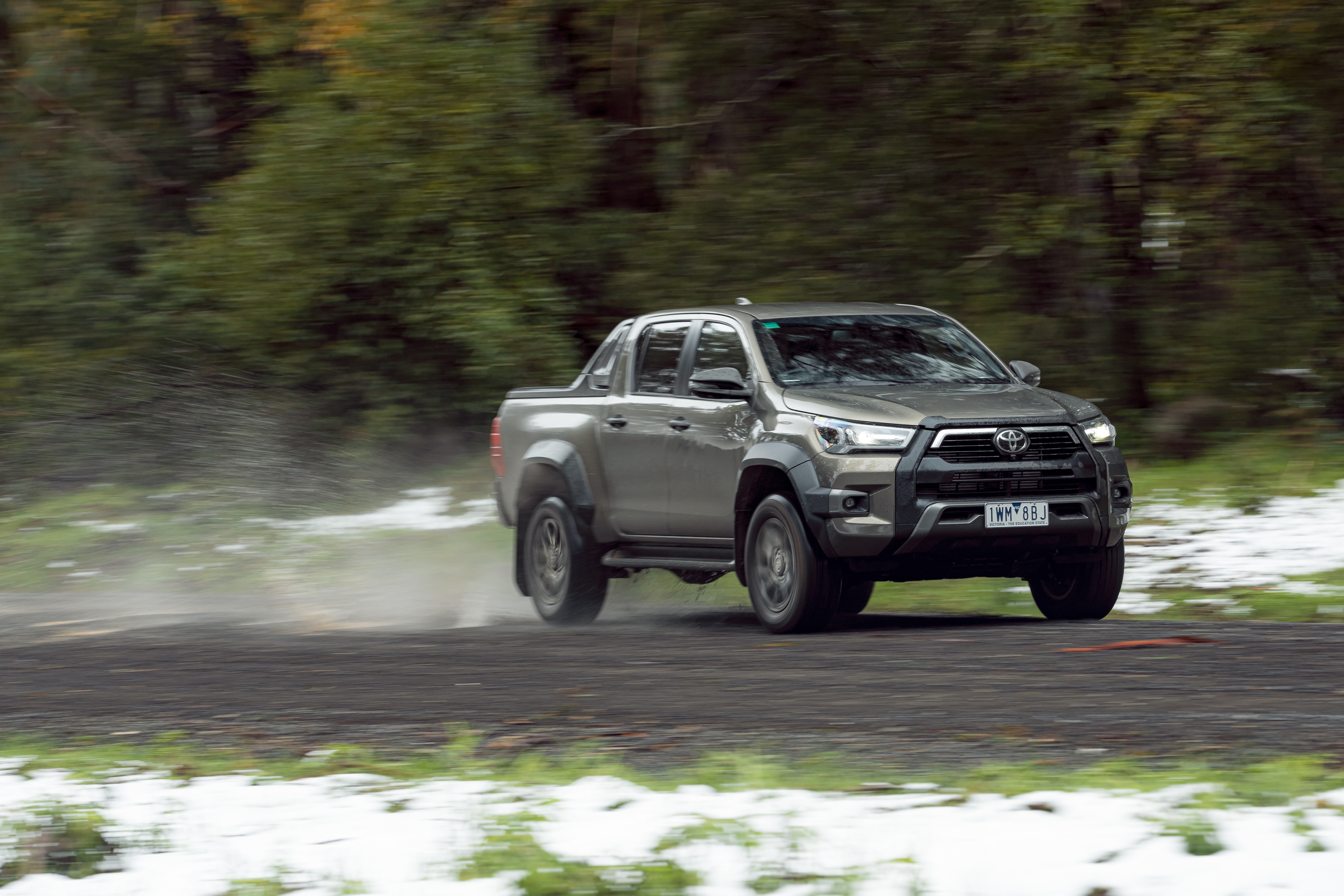
The rear track was widened by fitting a whole new axle assembly; one that is 155mm wider than the old one, taking the track width out to 1705mm – resulting in a front to rear track difference of 35mm.
Again, the way the dampeners are mounted has changed and they are now located on the outside of the chassis rails where they are closer to the wheels to better manage the wider axle.
For the first time ever, a stabiliser bar has been fitted to the rear axle of a Hilux to help keep the Rogue flat on the road.
In another first for Hilux, the rear axle also has disc brakes fitted making this the only current Hilux with 4-wheel discs. The vented rear rotors measure 312mm in diameter and are clamped by single-piston callipers.
The bigger rear brakes are supported by bigger front discs which are up 25mm to 338mm.
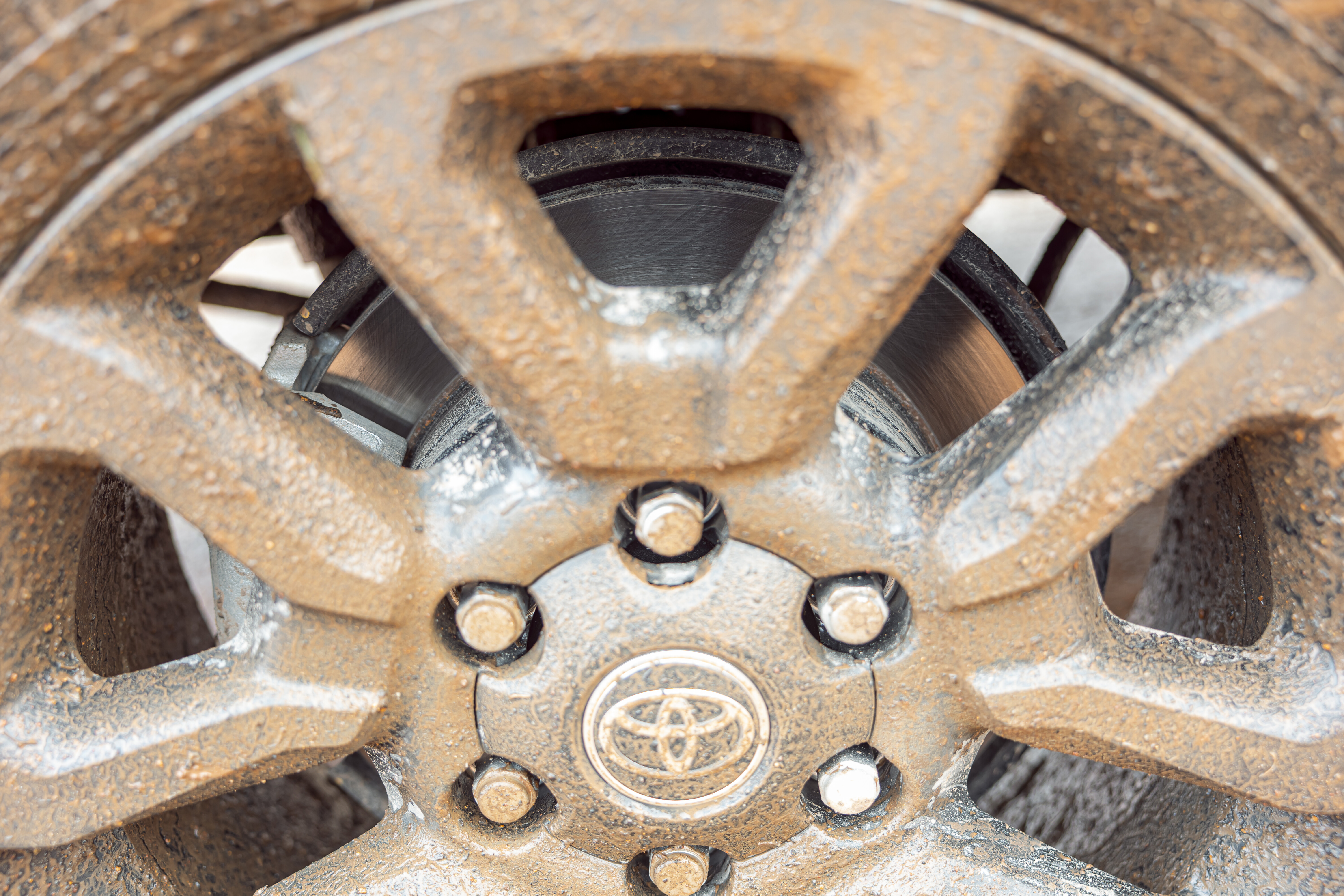
The final chassis change on the new Rogue is the step up to 18-inch alloy wheels in lieu of the 17s that were fitted to the previous Rogue.
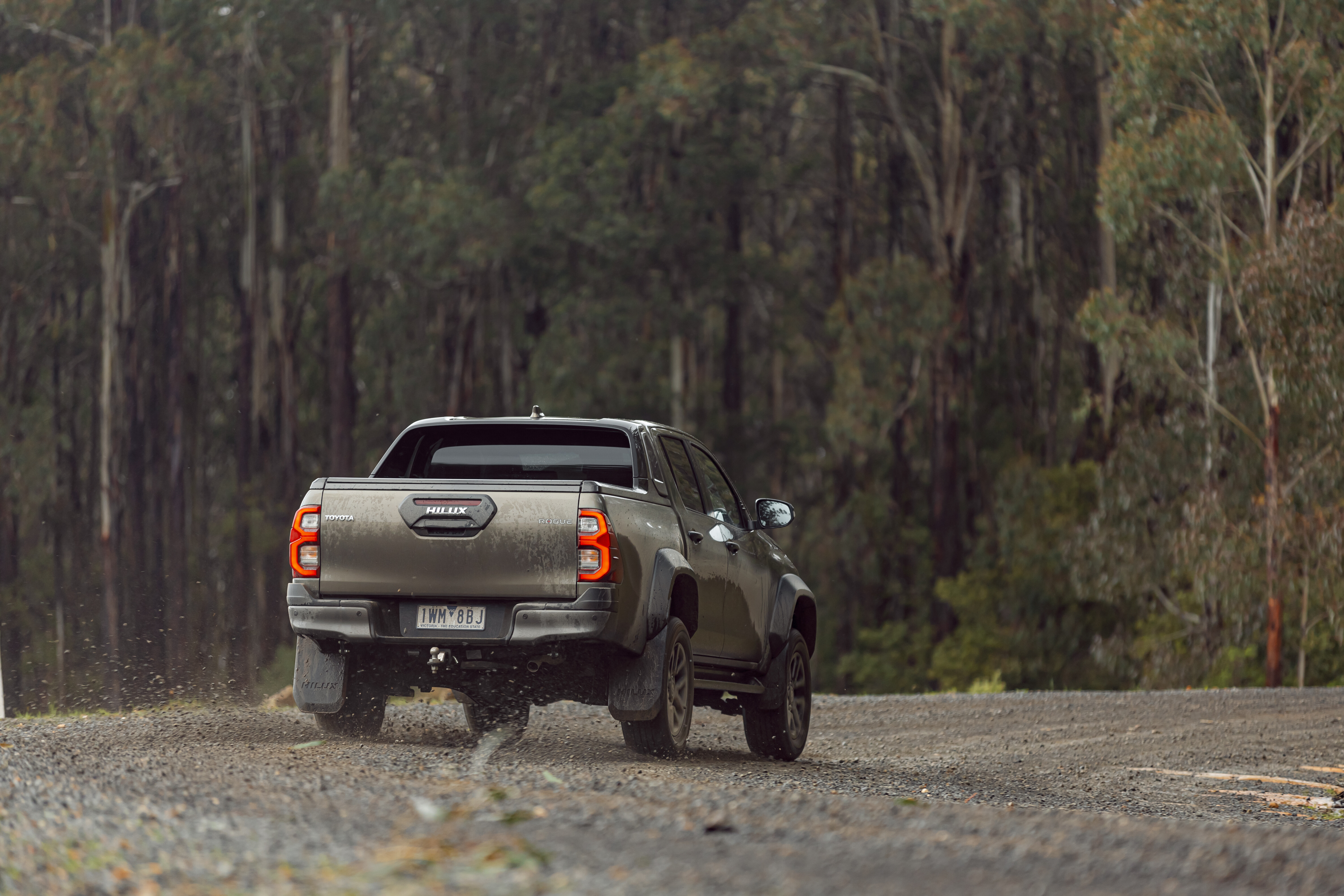
The result of all these changes is a Rogue that corners flatter on roads and can be rewarding on a twisty mountain pass. The ride is still firm as the Rogue retains its load and towing capacities, but the added track width does allow for a bit more travel out at the wheels and the altered shock and strut geometry and rear stabiliser bar help maintain composure.
The new braking package is the best we’ve felt in a mid-size ute. It offers plenty of power and a precise feeling pedal that really pulls the Rogue up promptly. This is especially noticeable when you’ve just jumped out of a new Ranger with its vaguer-feeling brakes.
Off-road
Aside from the 20mm extra ride height, the changes to the N80 Hilux’s chassis do very little if anything for the Rogue’s off road performance. Any additional wheel travel at the rear axle is restrained by the new stabiliser bar.
It’s a bit disappointing that Toyota hasn’t used these chassis updates to give the Rogue better dampeners, but you have to consider that these upgrades have come with no price increase.
“The N80 Hilux’s best off-road attribute is its excellent electronic traction control”
On a gravel road that is heavily potholed from recent rains and traffic, the Hilux was easily upset and pushed off line when crossing them, requiring steering correction by the driver to maintain a line.
While this is pretty standard behaviour for 1-tonne 4×4 utes over such conditions, a Ford Ranger (non-Raptor) showed no such behaviour over the same tracks on the same day.
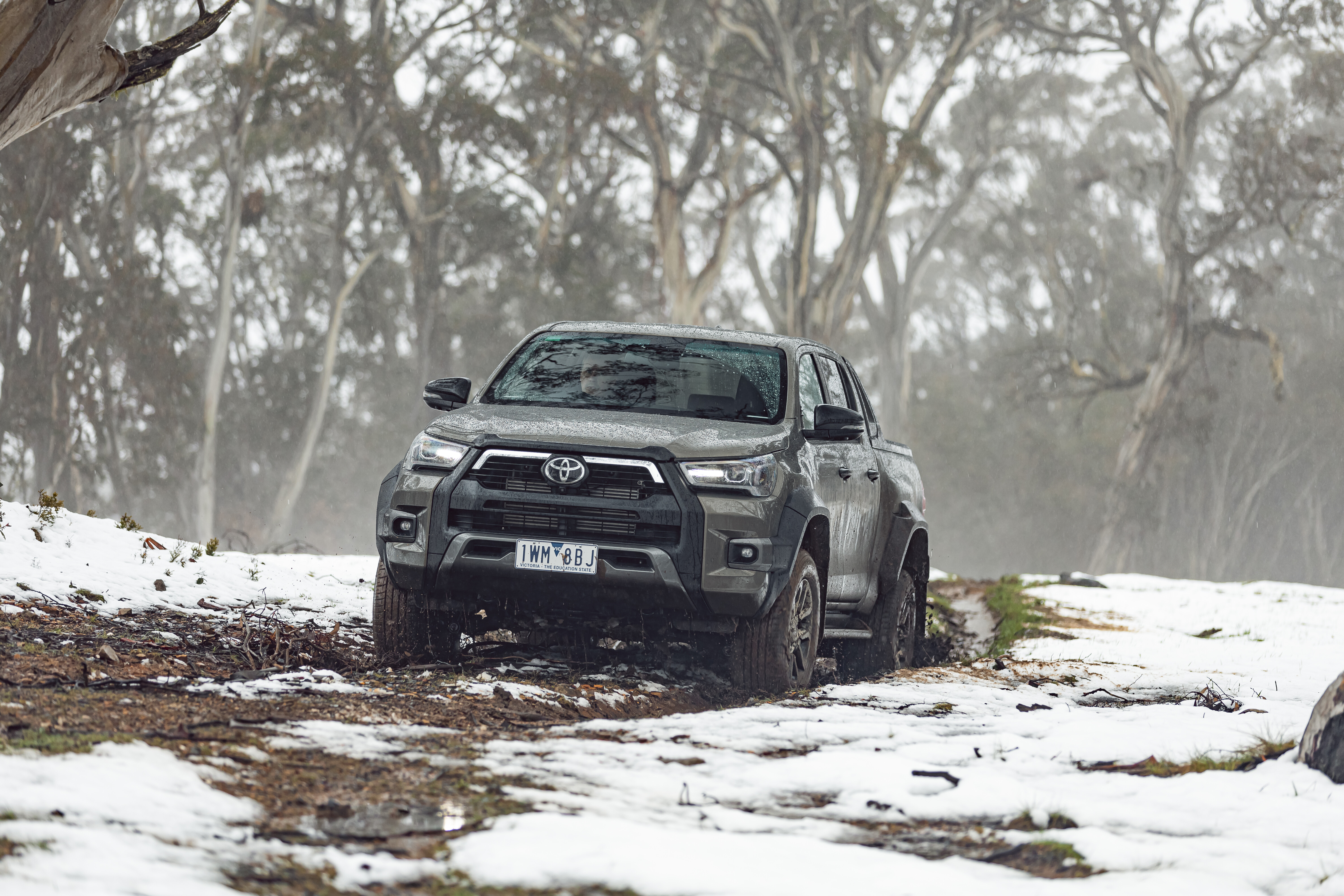
Anyone hoping that the Rogue’s wide-track suspension would be a Raptor-challenging package will be surely disappointed, but we think Toyota will have more to say about that in 2023.
The N80 Hilux’s best off-road attribute is its excellent electronic traction control, the calibration of which is so sharp that you’re usually better off relying on it than employing the standard rear differential lock when traversing rough country.
Interior
With its heated leather seats and nine-speaker JBL sound system, the Rogue’s cabin is a great place to while away the miles, no matter what the terrain. A special mention for that sound system as it’s one of the best you’ll find in a mid-size ute but due to supply shortages, Toyota is currently offering a $750 price discount if you take your Rogue without it. For mine, it’s a feature worth waiting for and $750 makes it a bargain.
The dash’s eight-inch screen has the sat-nav and audio controls in it including connected Apple CarPlay and Android Auto, and the Rogue gets a 360° panoramic camera image as well.
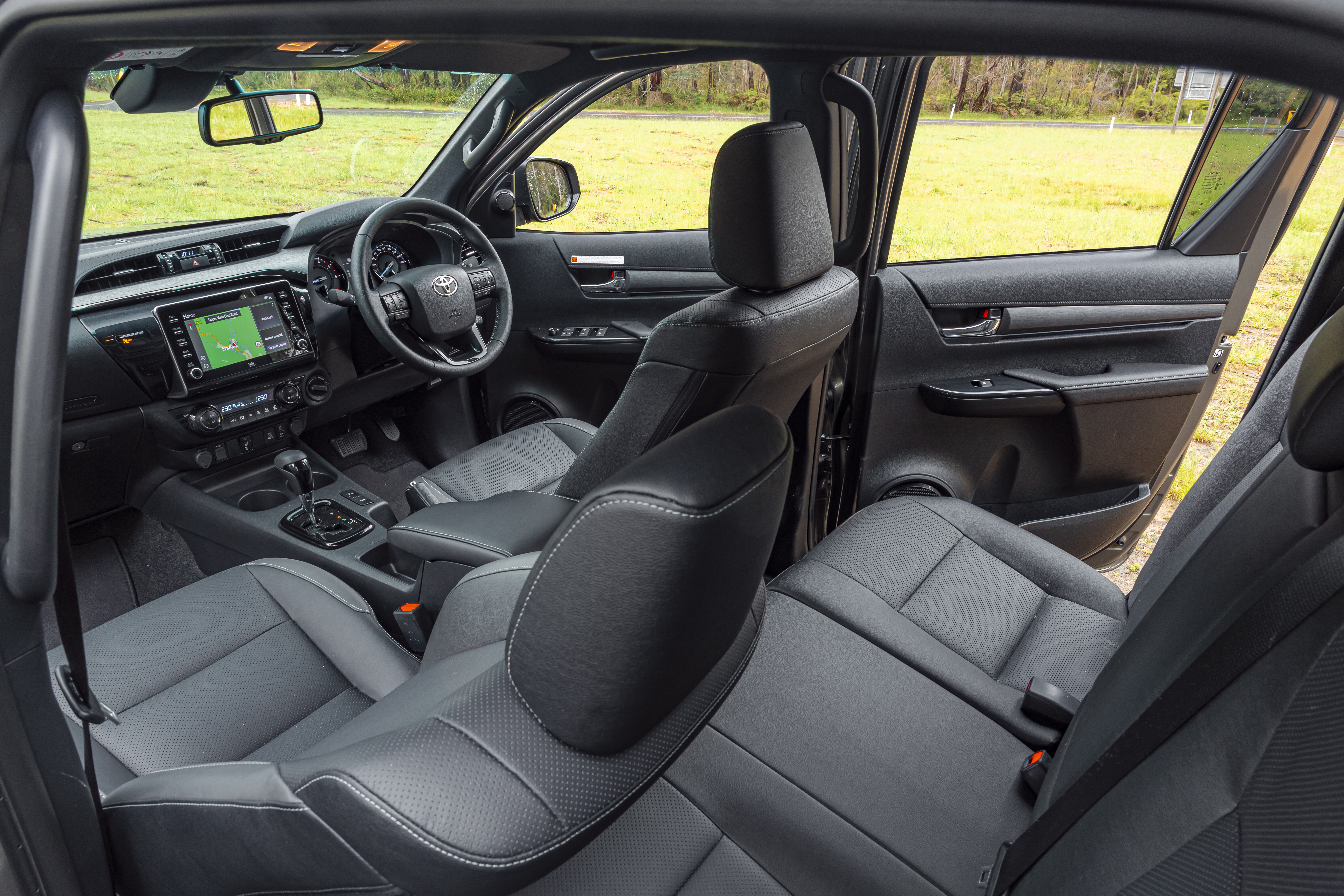
The gauge binnacle is simple affair but still tells the driver everything he or she needs to know. The leather treatment across the top of the dash and piano-black finish on the facia add to the premium look of the Rogue.
The rear seat in the Hilux is pretty standard fare for this size ute although the cabin doesn’t have the width of say a Ranger or Amarok but there’s plenty of head and legroom.
Like all 4×4 Hiluxes, the Rogue has has the safety essentials like ABS, ESC, ETC, AEB, trailer-sway control and radar cruise control, but its lane-departure system relies on brake intervention and doesn’t offer proper steering correction. The wide-track Rogue is the first Hilux to include blind-spot monitors and rear cross-traffic alert in its safety kit bringing it closer to the pack in this regard.
Practicalities
As the Hilux with the highest levels of equipment, the Rogue does lose out on its payload which is down to794kg, GVM remains at 3050kg with a 3500kg towing rating and 5850kg Gross Combined Mass (GCM).
The step up to 18-inch alloy wheels means the Rogue now rides on 265/60R18 tyres which are becoming a common size for utes, so there are all-terrain and tougher LT choices available. Toyota has seen fit to leave the highway tyres on the Rogue and leave the choice of better ones up to the owners to suit their vehicle use.
The cargo tray is lined in carpet which is held in place by Velcro so its easy to remove if you need to carry something that you wouldn’t want to damage the carpet. You might mock, but the carpet does provide a nice cushion for items you don’t want stretched or damaged.
We did notice that the Rogue only has tie-downs at the back end and not at the front of its tub. There’s also a 12V power outlet at the rear of the tub for powering accessories.
The seal kit around the Hilux’s tailgate does an excellent job. We spent a day on dusty tracks in the High Country and were impressed to find no dust ingress in the back.
The power roller shutter is great for securing your goods in the tub and is easy to use but it does eat into the space at the front of the tub if you want to be putting bigger things in there.
The Hilux’s engine bay has space for a second battery and the air intake is well-placed where it draws from the inner ’guard.

As one of the world’s most popular vehicles, the Hilux is extremely well-supported by aftermarket accessories manufacturers and Toyota offers a large range of factory kit for the ute including steel and alloy bullbars.
It’s yet to be seen if the bigger wheel-arch flares needed to cover the tyres and the revised front panels on the wide-track Rogue affect how some bullbars will meet with them at the front or an intake snorkel on the fender.
VERDICT
Kudos to Toyota for stepping up and creating this wide-track chassis for the Hilux. It has improved the dynamics of the Hilux chassis making it a better, more stable performer on twisty roads and mountain tracks and the additional ground clearance will never go astray for anyone who heads off road.
We think that this high-spec Rogue is the perfect variant to introduce this on and appreciate the fact that it has come at no additional cost.
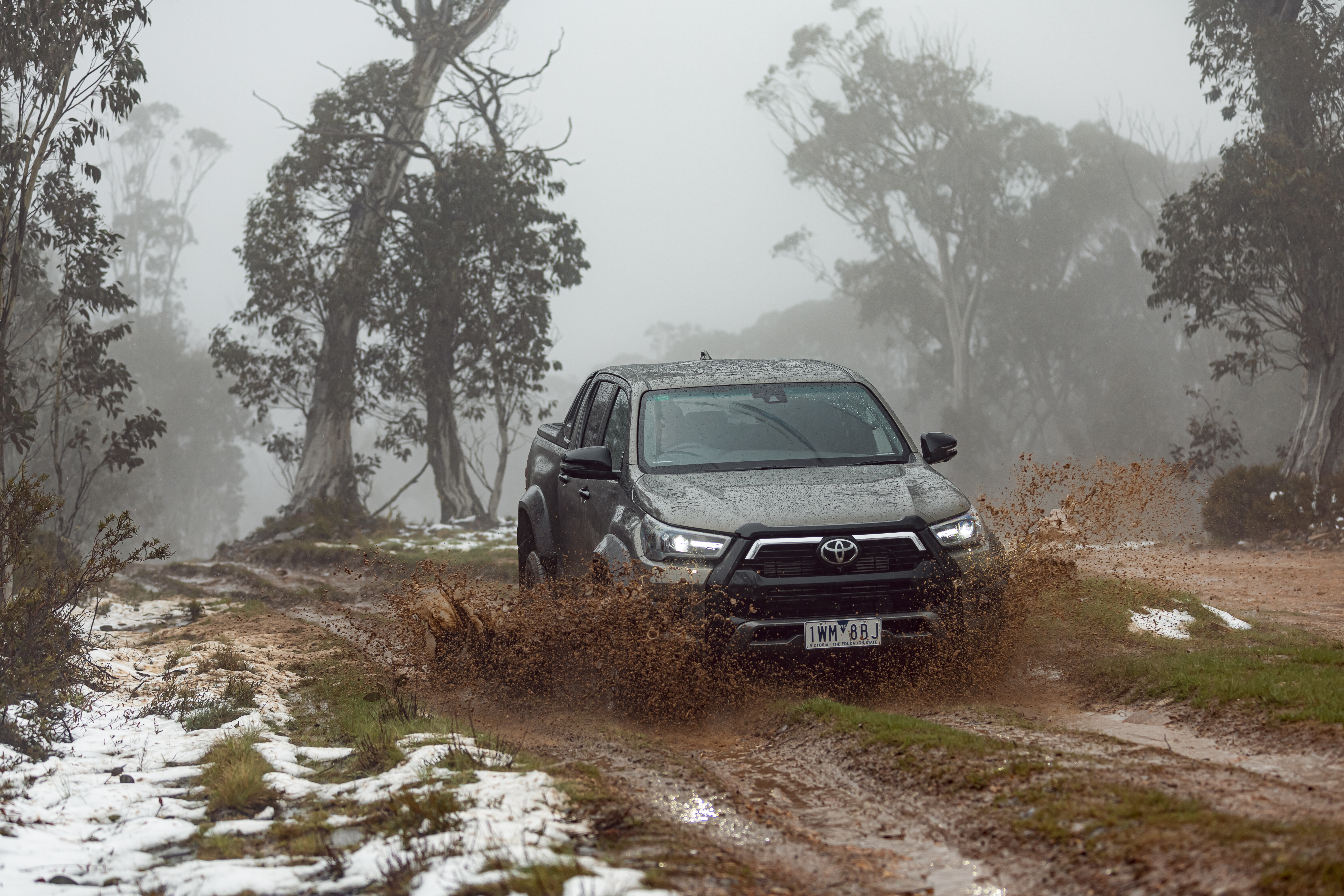
We like to think that this is just a hint of what is to come when the GR Sport variant Hilux is introduced in 2023 and hope that that model will come with the spring and damper settings to make the Hilux more controlled over all road conditions.
Twelve months ago we might have said that the Rogue handles rough terrain as good or better than any other mid-size ute on the market, but the way the Ranger drives over the same potholed roads without fuss or disturbance, shows that the market has moved on and it’s time for the Hilux to step up as well.
4X4 Australia's project builds
2023 Toyota Hilux Rogue specs
| Price | $70,200 +ORC |
|---|---|
| Engine | I4 diesel |
| Capacity | 2755cc |
| Max Power | 150kW at 3400rpm |
| Max Torque | 500Nm from 1600 to 2400rpm |
| Transmission | 6-speed automatic |
| 4×4 system | Part-time, dual-range. ETC and RDL |
| Crawl ratio | 36.11:1 |
| Construction | 4-door ute body on ladder-frame chassis |
| Front suspension | IFS w/ dual control arms and coil springs |
| Rear suspension | Live axle riding on leaf springs |
| Tyres/wheels | 265/60R18 / alloyu00a0 |
| Weight | 2256kg (kerb) |
| GVM | 3050kg |
| GCM | 5850kg |
| Towing capacity | 3500kg |
| Payload | 794kg |
| Seats | 5 |
| Fuel tank | 80L |
| ADR fuel claim | 8.1L/100km |
| On test fuel use | 11.9L/100km |
| Approach angle | 31u00b0 |
| Rampover angle | N//A |
| Departure angle | 23u00b0 |
| Ground clearance | 265mm |
| Wading depth | 700mm |
Snapshot
- Makes it simpler to carry longer loads such as ladders, surf boards or timber supplies
- Sliding load rack can be operated by one person
- 80kg dynamic load limit
Ford is continuing to increase its range of genuine accessories for the 2023 Ranger.
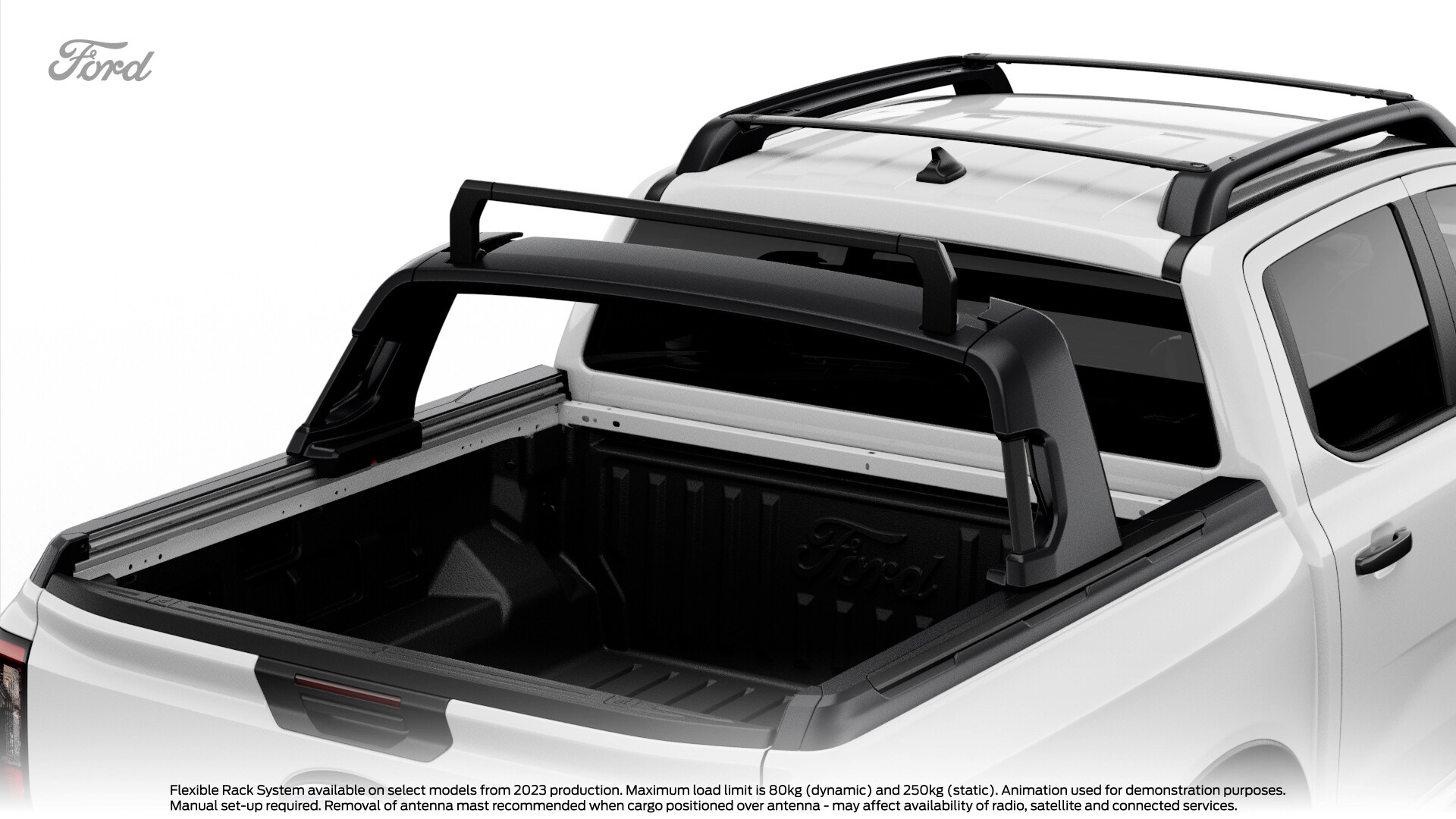
Today it has announced the introduction of a sliding load rack and folding roof rack system designed to allow owners to load longer items the length of the roof and load box.
Ford is dubbing this new load carrying system the Flexible Rack System (or FRS for those into acronyms), and is expecting to have it available on select Ranger models in 2023.
The Flexible Rack System was developed by a team of Ford Australia Special Vehicle Engineers, in collaboration with design, engineering and manufacturing company, JAC Products.
The brief was to create a unique load carrying system, that could be operated by one person.
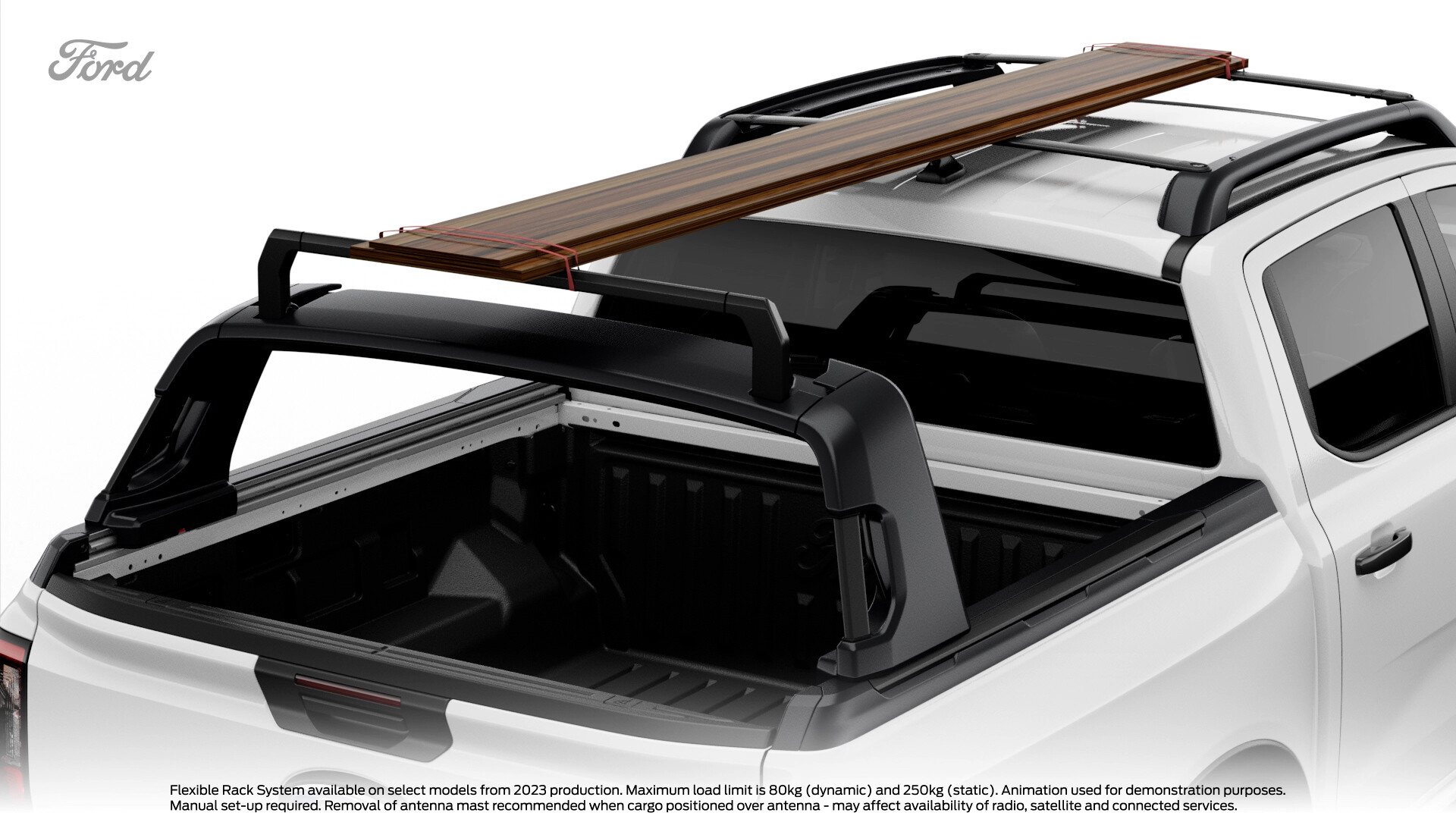
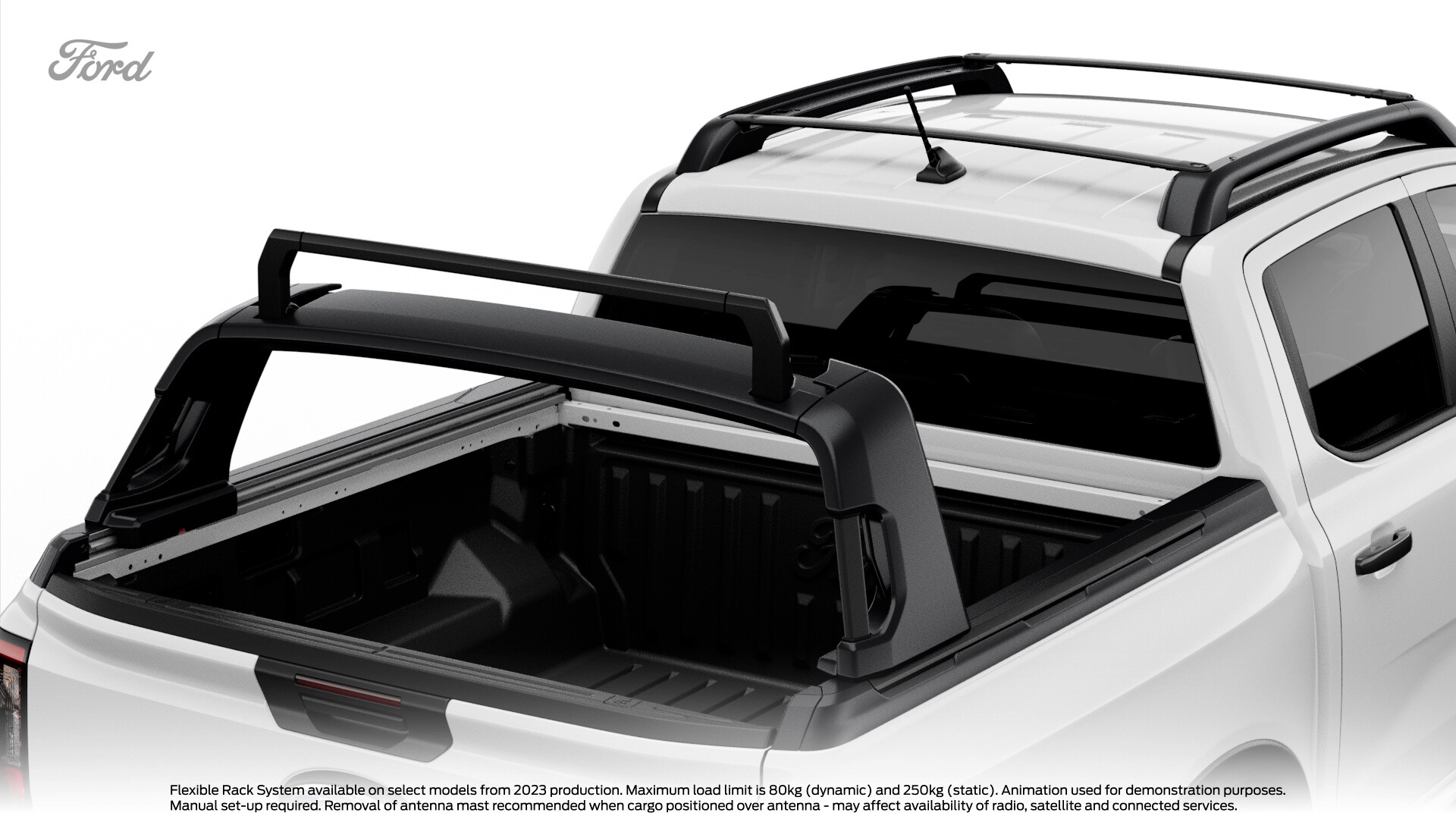
It slides within a C-shaped channel mounted to the top of the load box sidewalls, and is able to be locked into five different positions, allowing for loads of different lengths to be carried simply and easily.
Another feature of the sliding load rack, is the incorporated pop-up crossbar – which increases the height of the loading platform to match Ford’s folding roof racks, which are stowed away within the roof rails when not in use. These crossbars can also be adjusted into two different positions, for further versatility.
By unlocking the sliding load rack on one side it automatically releases it on the other side, which is how Ford has achieved the brief of one-person operation.
Once it is locked into one of the five adjustable points, Ford Engineers tell us it had to lock in rock solid.

Nik Tibhuvan, senior engineer of the Special Vehicle Engineering division, said: “The Flexible Rack System redefines how customers can use their Next-Gen Ranger and is just another example of Ford’s ingenious design features on next-gen product. Both can be operated easily by one person and have been put through a lot of the same durability testing as Ranger itself.”
Danny Trentin, application specialist for the Ford Ranger, added: “We learned from our customers that they would load things like canoes into the load box and then lean them up against the sports hoop before tying them down. This was awkward and meant the load box couldn’t really be used for storing anything else a customer might want to take with them.”
“We also learned of their frustrations when it came to carrying items of longer lengths. With an 80-kilogram dynamic load limit, the Flexible Rack System eliminates those frustrations.”
This 80 kilogram dynamic load limit applies both on-and off-road, with a static load capacity limit listed at a massive 250kg. This has been achieved through the use of four roller bearings angled at exactly 37-degrees, as well as retractable stabilisers and specially designed locks that are easy to operate when unlocked but prevent the sliding load rack from moving when locked.
As well as being strong, functional and easy to use, Ford tells us the Flexible Rack system needed to look like it belonged on the vehicle, not like an afterthought. Thorough testing to ensure the robustness of the system was also critical to the release of the product, with testing conducted at Ford’s Silver Creek Road test track.
“Part of our durability test involves our famous Silver Creek Road test track, which is so torturous we use autonomous driving robots to complete this phase of the testing,” Nik Tribhuvan tells us.
“The FRS was tested at full load and completed 77 runs on the track, passing with flying colours. It completed 400 runs with no load. We tested the system with bulldust, red dirt, salt and water, to replicate the sort of real-world grit and muck owners will encounter.”
To prove this point, further testing included cycling the Sliding Load Rack system 3500 times to replicate approximately 10-yeas of use.
Drainage holes have also been incorporated into the track, making for an easy to clean system using a basic garden hose for those who regularly head off-road.
Expect to see this system in showrooms next year, with Ford announcing a 2023 release for select Ford Ranger models. As a side note, 4X4 Australia Editor Matt Raudonikis has seen this system in the flesh, and reckons it’s an exciting innovation for four-wheel drivers and tradies alike.
Key Points
- Made in Australia
- Especially developed to suit 4×4 vehicles in Australia
- Dual-purpose, starter/deep-cycle battery
One of the many problems we face as a result of the loss of manufacturing in Australia, is that there are less products available to suit Australian conditions.
Products that are designed, tested and made here in Australia to live in and cope with the unique and sometimes extreme conditions we have in this wide brown land.
If there’s a single component on our 4×4 vehicles that has to cope with the extremes of Australian conditions, it’s got to be your starter battery.
You might be turning the key to start you fourby in the sub-zero temperatures of the Victorian High Country one day before dealing with the heat and humidity of the Top End just weeks later, and via the contrasting temperatures of the Simpson Desert along the way.
No matter where you are, you want a battery that you can count on to crank your engine every time you turn the key.
That’s why I was pleased to see the Australian-made logo on the Yuasa Overlander 4×4 battery when I visited Battery World to get a new battery for the Cruiser.
Yuasa is part of the Century Yuasa group and as such, its ‘wet’ batteries are manufactured in the Brisbane facility which is the largest manufacturer of vehicle batteries in Australia.
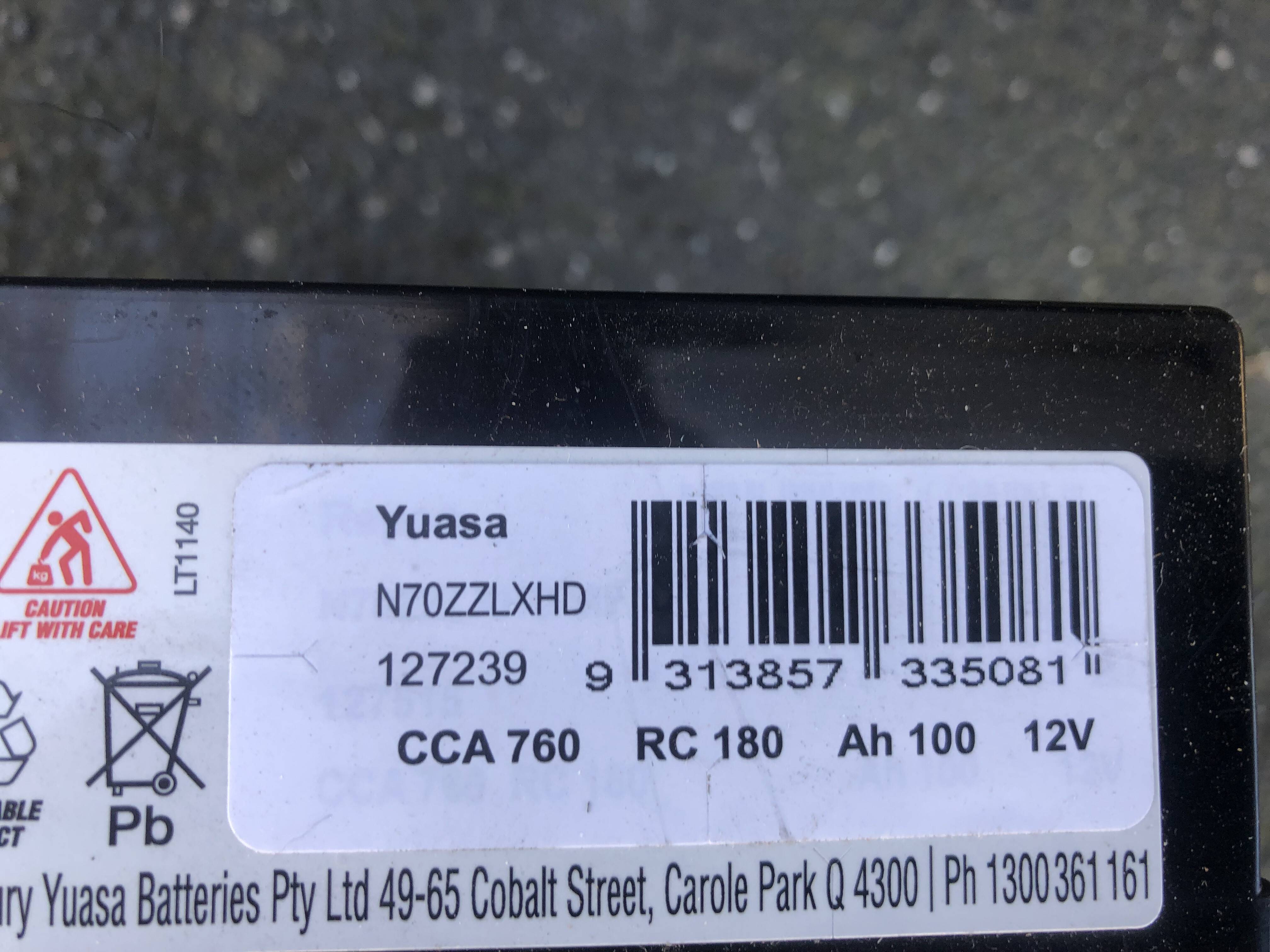
Yuasa’s Overlander 4×4 battery was especially developed to suit 4×4 vehicles in Australia where, not only do they need to put up with extremes of temperature, but also the rough and tumble of long distances on corrugated roads and rocky tracks.
What Yuasa calls Plate-lock technology is used in the construction of the Overlander 4×4 battery to help protect it against the shock and impact of life on the hard roads.
Another thing that makes the Overlander 4×4 battery well-suited to use in a touring 4×4 is that it is what they call a dual-purpose, starter/deep-cycle battery. Not a true deep-cycle battery but its thicker internal plates equip it better to deal with the charge and discharge cycles that come with running accessories or, in my case, irregular use.
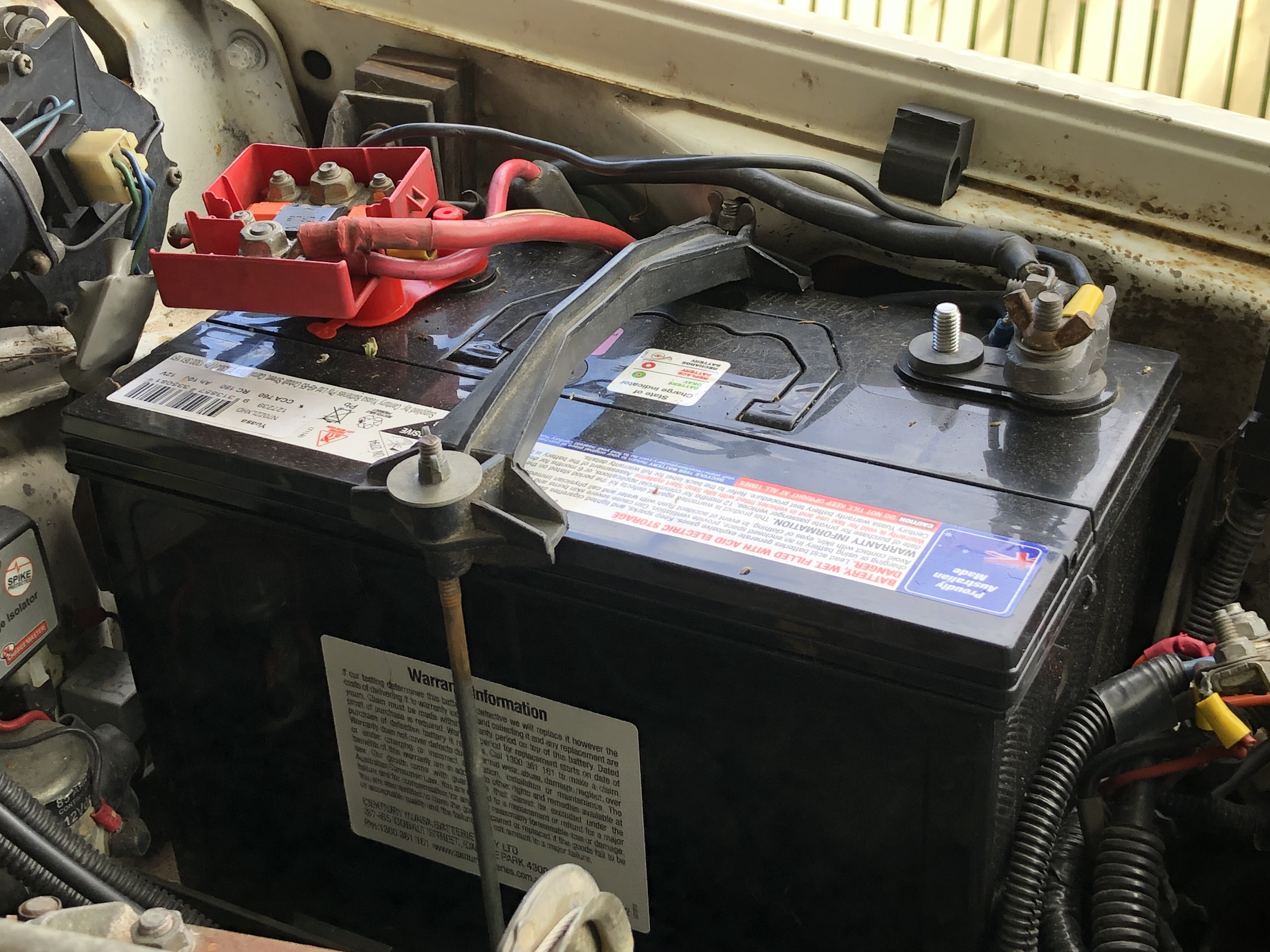
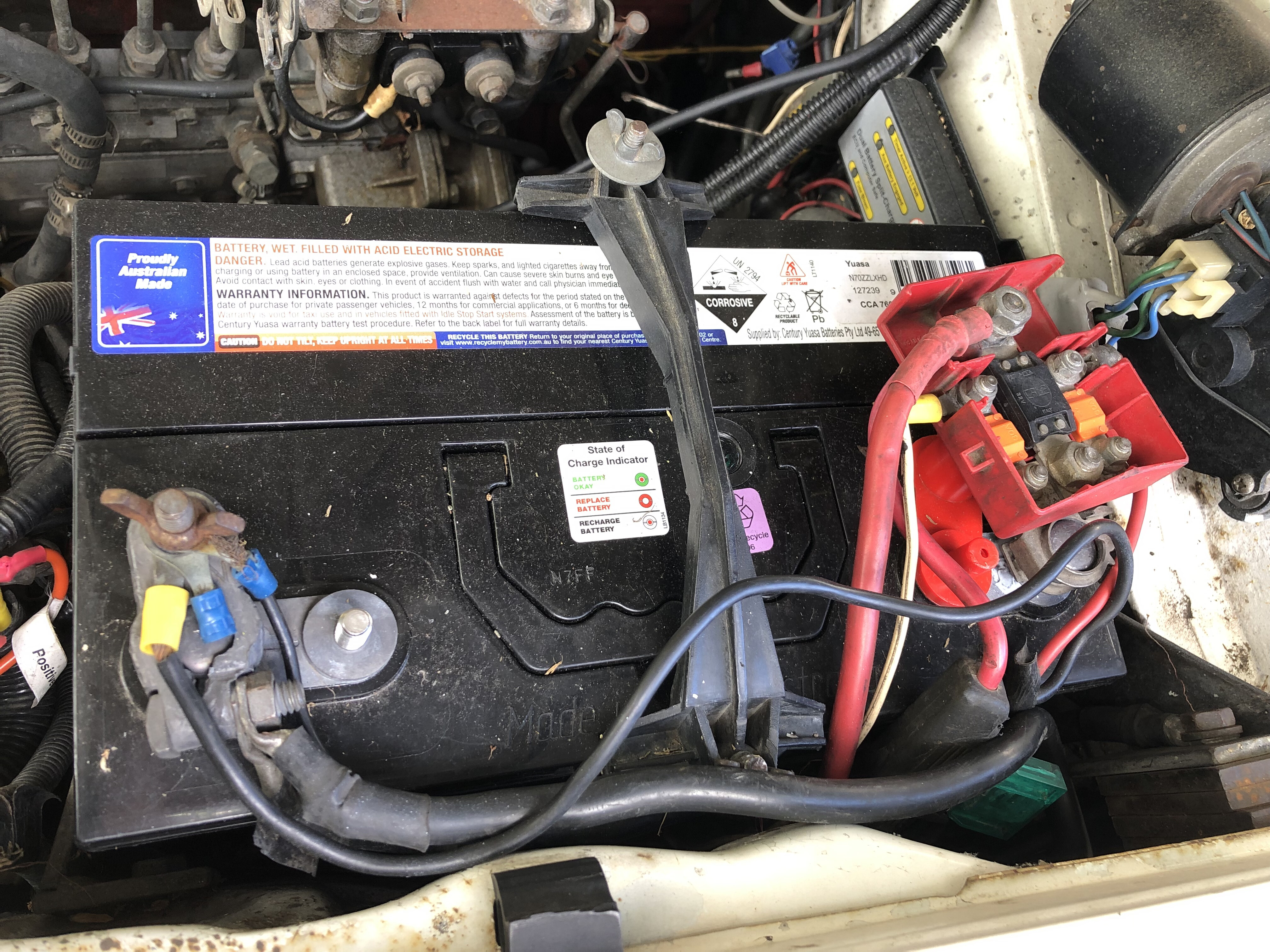
The battery fitted to the Cruiser is a 100amp/h, 760CCA unit in a standard N70 casing so it was simple to fit and meets my needs easily. The Yuasa Overlander 4×4 battery range has six models in its range, which are essentially three different applications in a choice of C and D polarity placement.
The N70 batteries like this one are covered by Yuasa’s 36-month warranty, while the smaller units get a 30-month warranty.
The Yuasa range of 4×4, car, motorcycle and powersports batteries are available from Battery World stores around Australia. This Overlander 4×4 battery was $339 from my local Battery World in Melbourne where there were plenty of other 12V accessories available in store as well.
Check the website to find your nearest store and the right battery to suit your 4×4, and ask the experts there which products will be right for you.
More information: www.batteryworld.com.au Pricing: $339
The 2023 Volkswagen Amarok will arrive in Australian showrooms in early 2023, but single-cab or cab-chassis variants remain off the table.
Volkswagen Australia has confirmed the second-generation, Ford Ranger-based Amarok will exclusively launch in dual-cab, four-wheel drive ute guise in the first half of next year.
Local executives told media this week that the decision is in line with the sales mix for the first-generation model, with a large preference for the flagship V6 diesel variants.
December 7: NEW AMAROK DRIVEN! Words & Video
We’ve finally driven the new-gen 2023 Volkswagen Amarok, with Jez jetting (Jet jezzing?) to South Africa for a world’s-first spin in the new ute. Get our full story below.
Story continues
2023 Volkswagen Amarok to maintain premium focus, no plans for single-cab or cab-chassis variantsEditorSEO AnalysisCurrent version
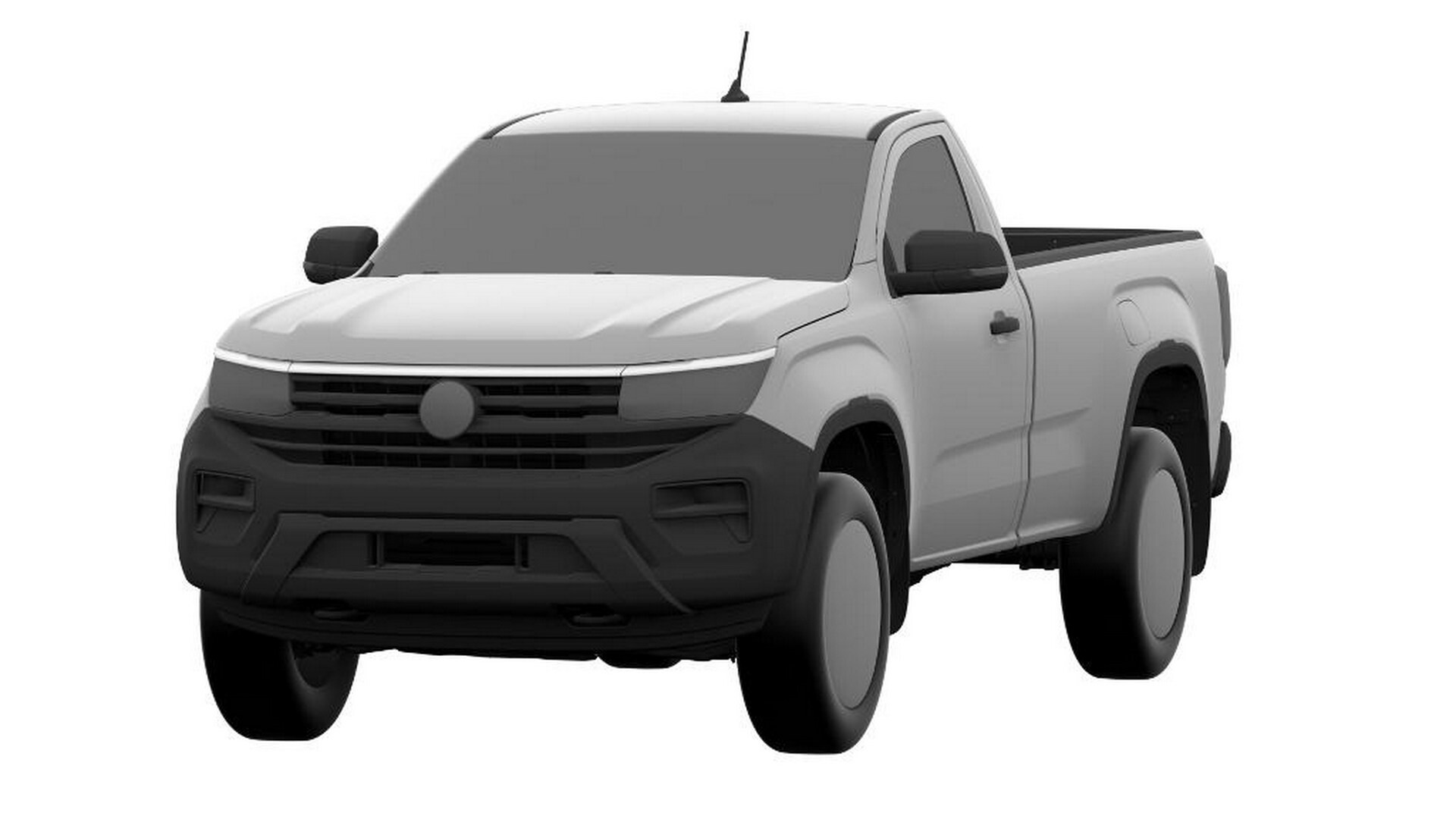
“We’re not going to play in the single-cab space. It’s not an area that we’ve typically, or historically, done well at. We’re just going to focus on 4×4 dual-cabs as our bread and butter,” said local Volkswagen Commercial Vehicles director Ryan Davies.
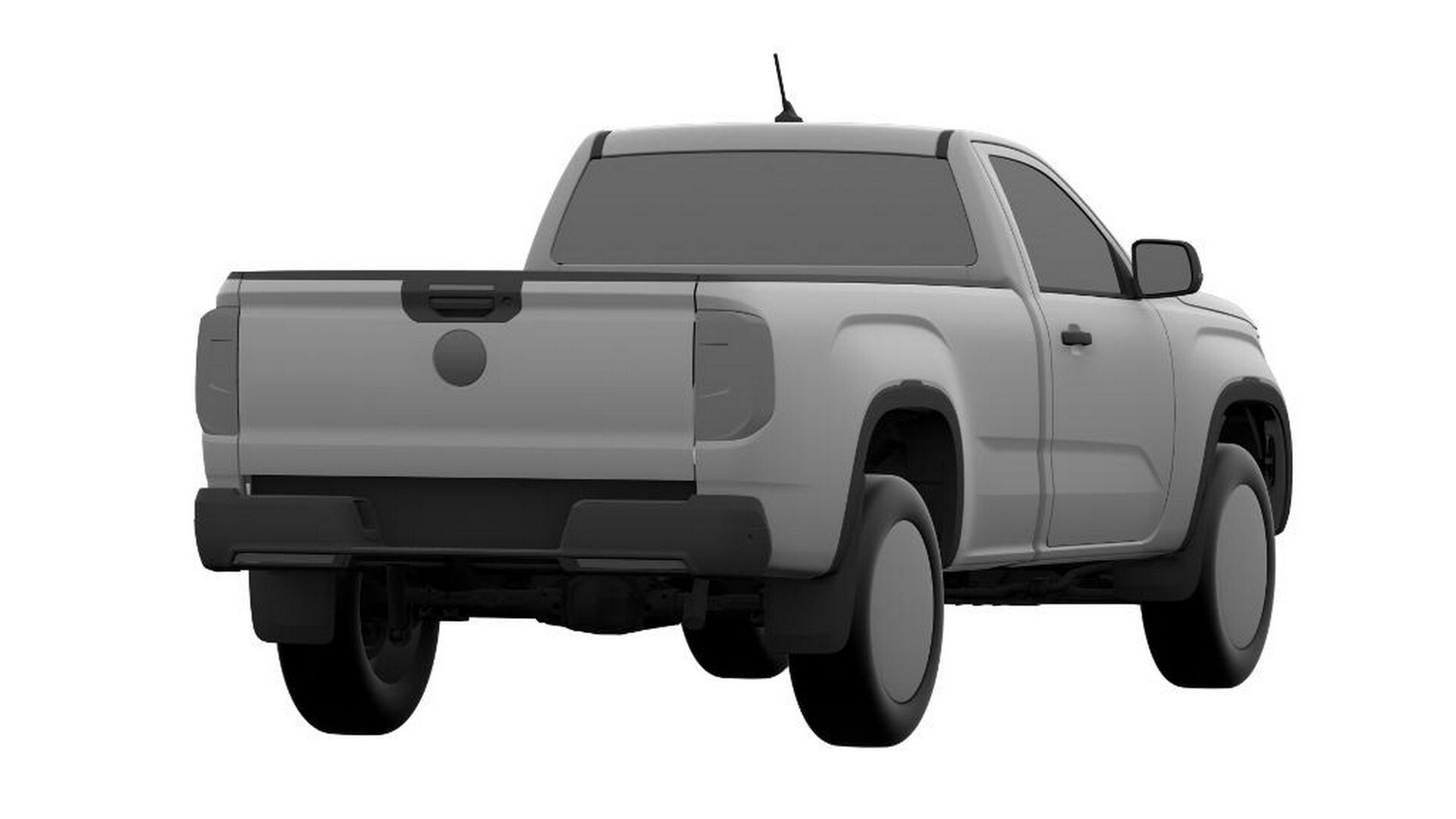
While Volkswagen has yet to unveil single-cab or cab-chassis versions of the new Amarok, official images filed to the European Patent Office reveal a stripped-back model with an unpainted front bumper and, presumably, halogen lighting.
A single-cab version of the previous Amarok was introduced in 2012, but was discontinued at the launch of its mid-life update – which saw the introduction of the V6 turbo-diesel – in 2016. A cab-chassis variant was available until 2019.
“For a start, the Ranger and Amarok are two significantly different vehicles, both from a styling perspective and when you look inside [at] the integration of technology and so on, but they also appeal to very different buyers,” said Volkswagen Australia spokesperson Dan DeGasperi.
“Amarok is certainly going to be a more premium proposition, and that’s consistent with where [the previous-generation] Amarok sits and with the sort of buyers that we see purchasing an Amarok as well, who want that upper edge of premium feel,” added DeGasperi.
As previously announced, the next-generation ute will offer five grades in Australia, with the availability of a single- or twin-turbo 2.0-litre four-cylinder diesel, the 3.0-litre V6 diesel, or an Amarok-first 2.3-litre turbocharged four-cylinder petrol.
The new trims are Amarok, Life, Style, PanAmericana and Aventura.
These powertrains are shared with the Ranger, but only the diesel mills are offered on the Ford locally.
Of note, while the Ford Ranger has gone automatic-only, a six-speed manual transmission will be offered on the entry-level Amarok – joining standard features exclusive to flagship Ranger variants, such as LED headlights, a wireless phone charger and a trailer brake controller.
While a Ranger Raptor-rivalling variant with the twin-turbocharged 3.0-litre petrol V6 is unlikely, the marque’s partnership with Walkinshaw will continue for modified variants engineered locally.
This opens the door for an Amarok W-Series with the four-cylinder petrol unit, joining units with the flagship diesel V6 powertrain.
Australian pricing and full details for the second-generation Amarok will be detailed in the coming months.
? MORE 2023 AMAROK
Get all of our latest stories in one handy place, with our Everything You Need to Know article at the link below.
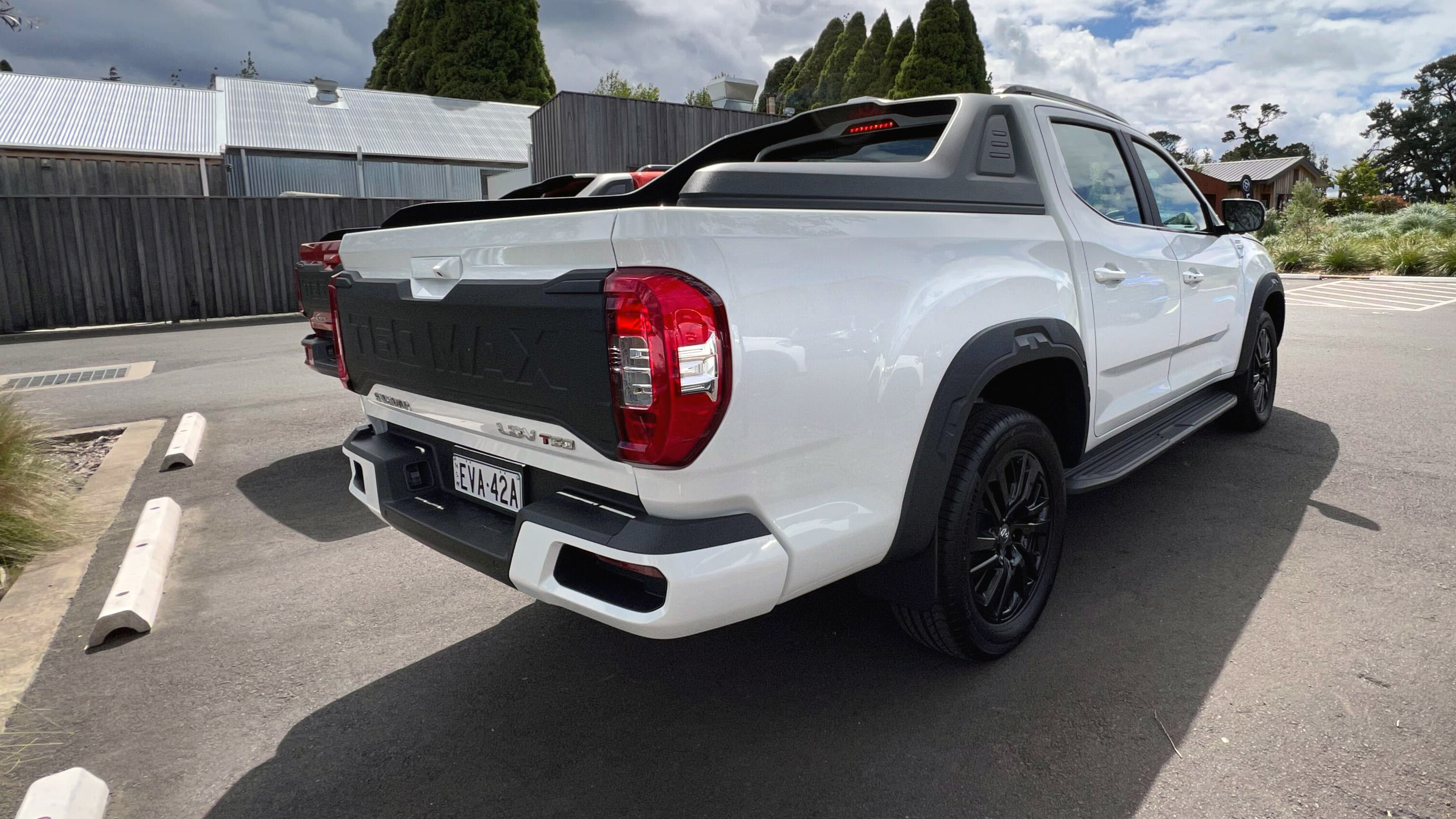
UPDATE, Nov 21: Refreshed LDV T60 Max driven
We’ve now driven the refreshed 2023 LDV T60 Max ute, so hit the link below for the full story or continue reading here for all the pricing and specs.
Nov 16: 2023 LDV T60 pricing
Australian pricing and details for the updated 2023 LDV T60 ute have been announced today during the local launch of the new electric LDV eT60 ute.
The MY23 update also sees the T60 ute‘s warranty upgraded to a 7-year / 200,000km offering, making it the second-longest in the market after Mitsubishi’s 10-year warranty.
NOTE: The details in this story were revealed as part of a wider press briefing. While we await a comprehensive press kit with full specifications, we’ve brought all currently confirmed details together here. We’ll update this story as more comes in. |
2023 LDV T60 Max pricing
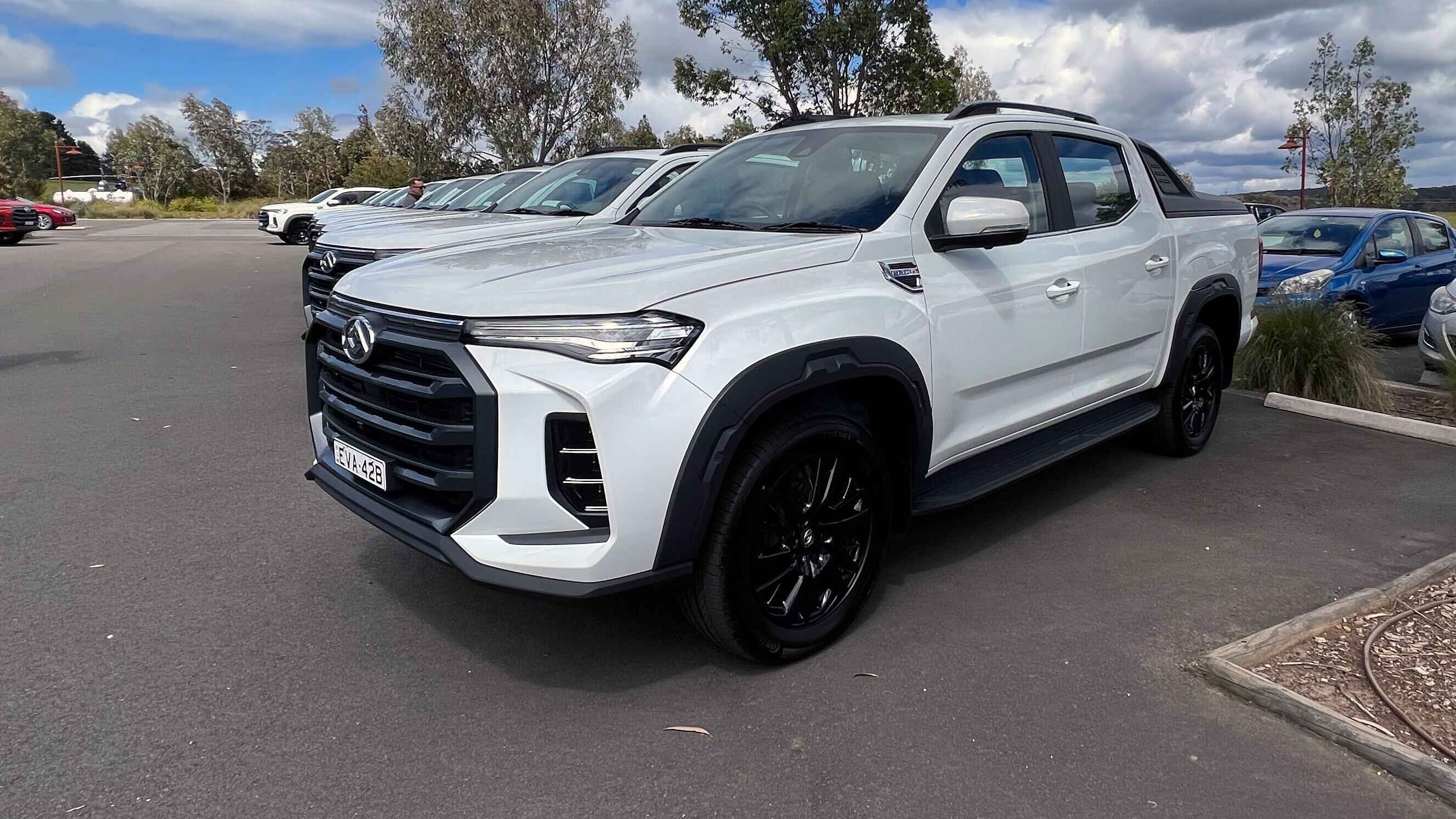
The MY23 LDV T60 Max range will start from $41,042 before on-road costs for the Max Pro manual, although ABN holders will get a drive-away price of $38,990.
The range tops out with the T60 Mega Tub automatic, priced from $49,463 before on-road costs and $46,990 drive-away for ABN holders. Full range pricing is outlined below.
2023 LDV T60 Max features
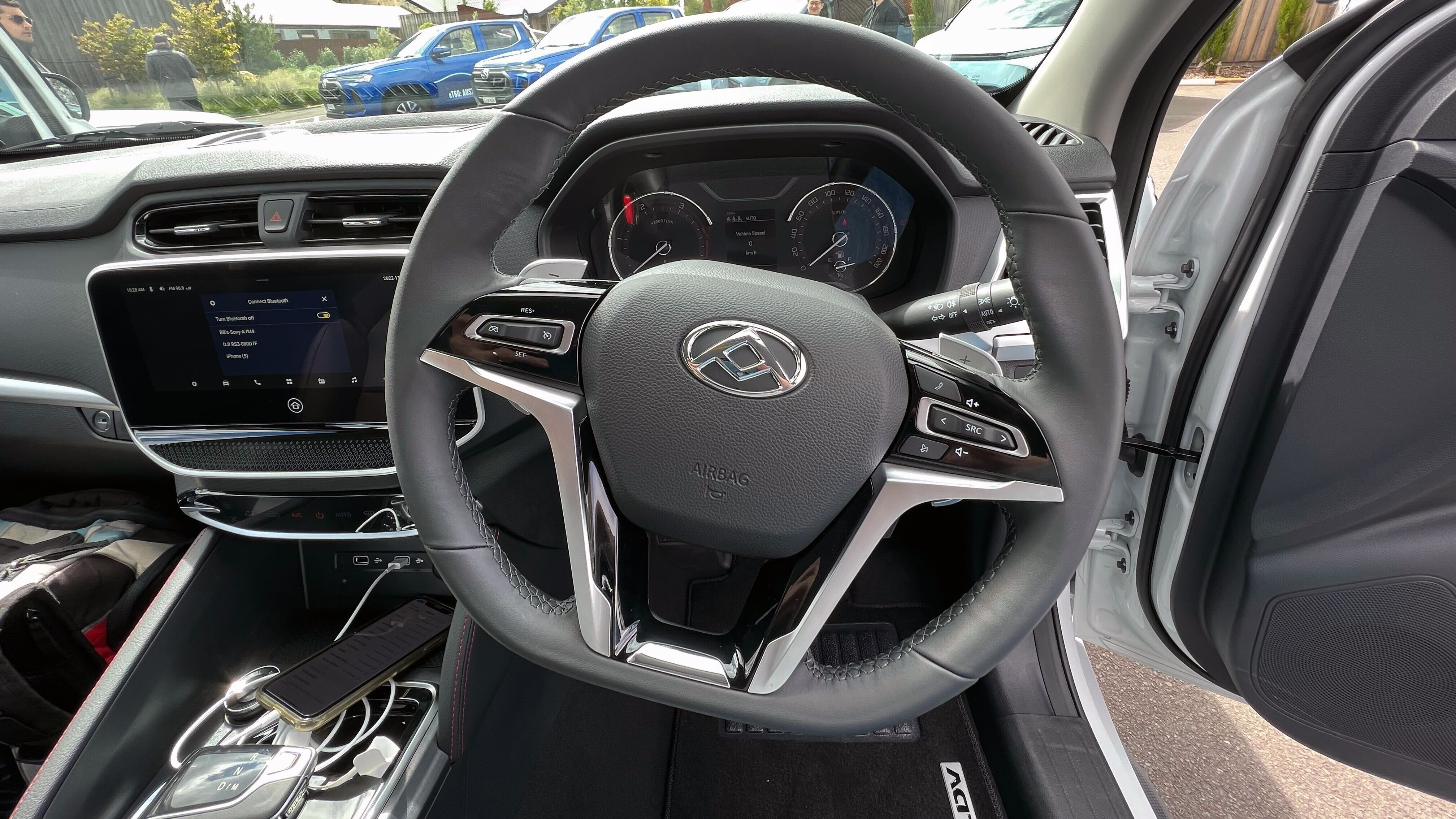
While we await full details, we’ve been able to confirm the following changes.
| 2023 LDV T60 Max Pro models |
|---|
| New sidesteps |
| chrome sports bar |
| chrome roof rails |
| new synthetic-leather steering wheel with paddle shifters |
| soft release tailgate |
| Price is up $2600 over the current Pro |
| 2023 LDV T60 Max Luxe |
|---|
| New steering wheel |
| body-coloured mirrors |
| Black exterior detailing |
| Soft release tailgate |
| 19-inch alloy wheels with Continental tyres |
| Represents u201c$5000 in additional valueu201d compared with current T60 Luxe, LDV says |
2023 LDV T60 engine, drivetrain, and fuel economy
Mechanical specifications are unchanged, which means the below details of the 2022 LDV T60 will likely apply. Again, we’ll confirm these points in the coming hours.
The T60 Max delivers 160kW (at 4000rpm) and 500Nm (from 1500rpm) from its twin-turbo 2.0-litre four-cylinder diesel engine.
Both the Pro and Luxe variants can be optioned with either a six-speed manual or a ZF-sourced eight-speed automatic transmission, with part-time four-wheel drive and low-range.
Fuel consumption is listed as 9.2L/100km for the manual, and 9.3L/100km for the automatic, while braked towing is rated up to 3.0 tonnes.
Safety
Again, the below details are carried over from our MY22 story, and will be confirmed in the hours ahead.
The 2022 LDV T60 Max inherits its 2017 five-star safety rating from ANCAP from the T60, and comes standard with:
| Six airbags |
| Brake assist |
| EBD |
| Hill descent control |
| Fatigue reminder |
The desert-tamed Ford Ranger Raptor racer will make its first appearance at the Baja 1000 in Mexico on November 18.
First announced in early November, the modified Ranger Raptor was built and developed in Australia by Kelly Racing, with final evaluation in the United States by Ford Performance’s off-road team, Lovell Racing.
Under the bonnet, it remains powered by the production car’s 3.0-litre twin-turbo petrol V6, producing 294kW and 583Nm. It is matched with a 10-speed automatic transmission, with additional sensors to monitor key powertrain parameters.
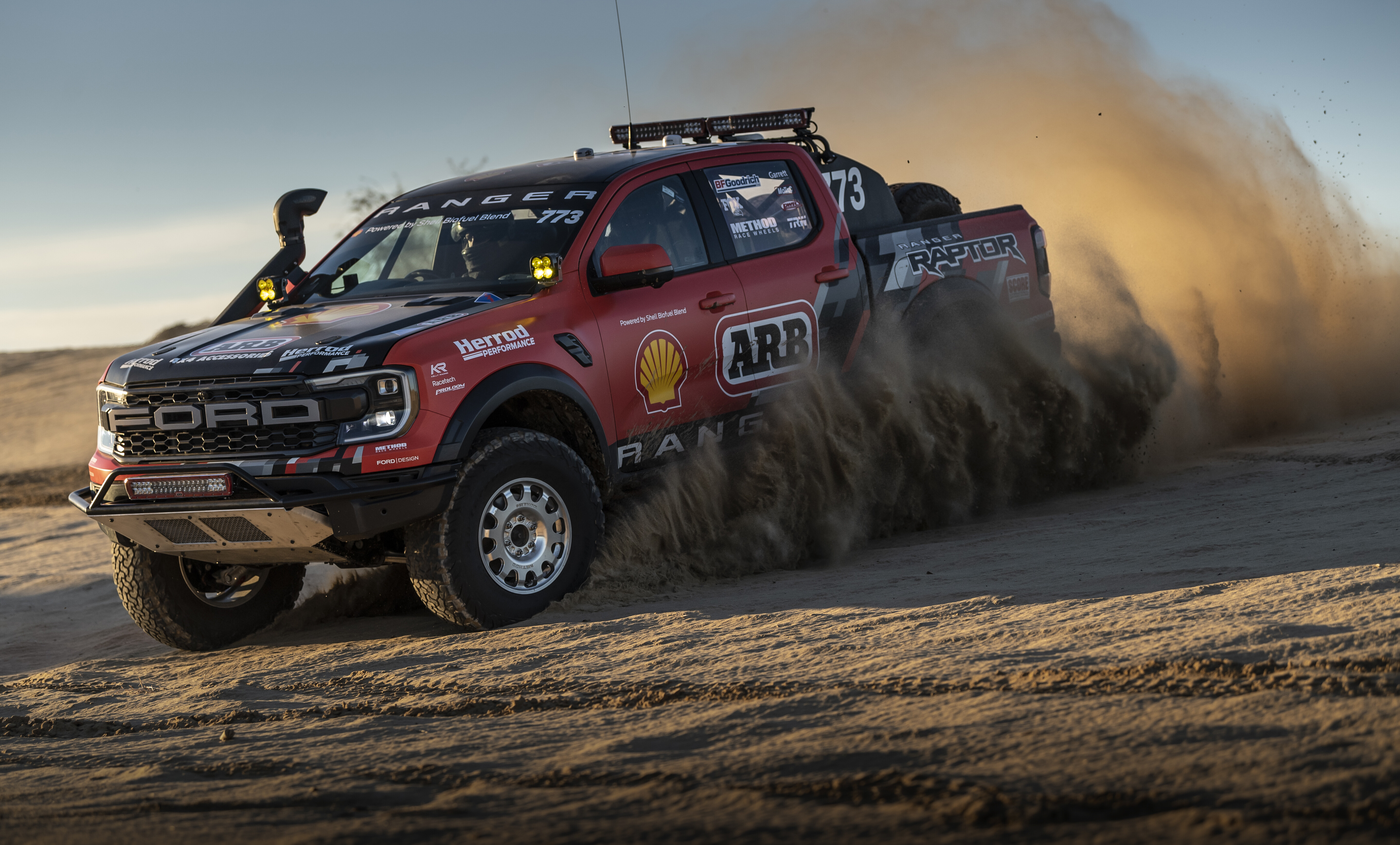
While it may feature the stock engine, a unique aspect is its biofuel compatibility, with its Shell blend a mix of ethanol and 30 per cent ‘bionaphtha’, a synthetic fuel made using renewable energy.
The blend will still produce carbon from the tailpipe, but it is produced with zero-emissions tech rather than being drilled out of the ground for a cleaner result.
For a full run-down on the Ford Ranger Raptor Baja racer, click on the link below:
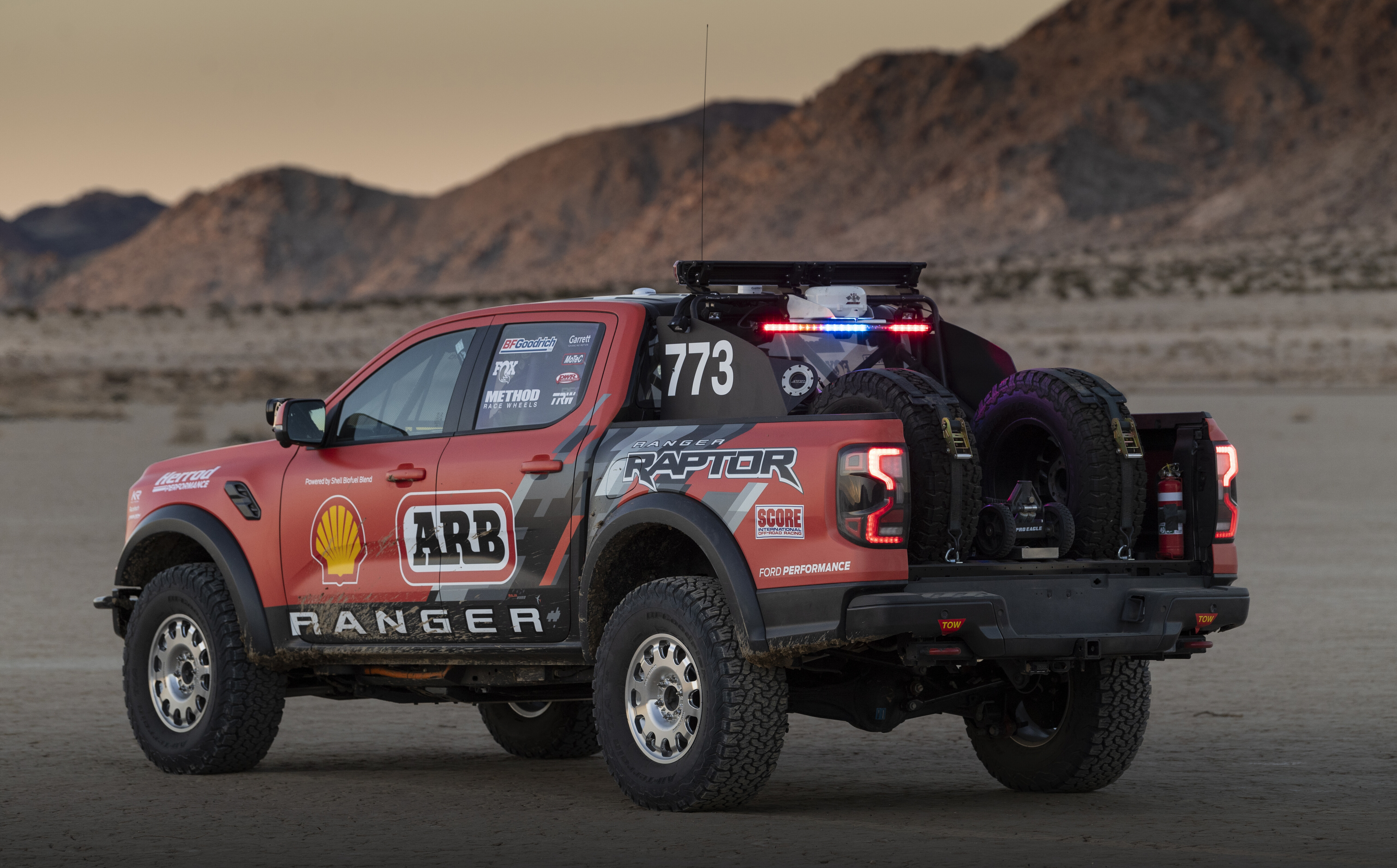
A large 160-litre tank – equipped with a dry-break filler – is integrated into the tub, with the standard exhaust system re-routed to accommodate the fuel cell. Ford has also removed the intermediate muffler and active valve system to enhance performance.
Other stock items include; the front and rear suspension with Fox shocks, front and rear differentials, off-road cruise control, Sync 4 infotainment system, 360-degree camera system, exterior lighting, dual-zone climate control, electronic stability control and anti-lock brakes.
It is fitted with a nudge bar with an ARB-supplied lightbar, enhanced underbody protection, and “additional shielding on key suspension components to protect vehicle performance in the extreme Baja environment”.
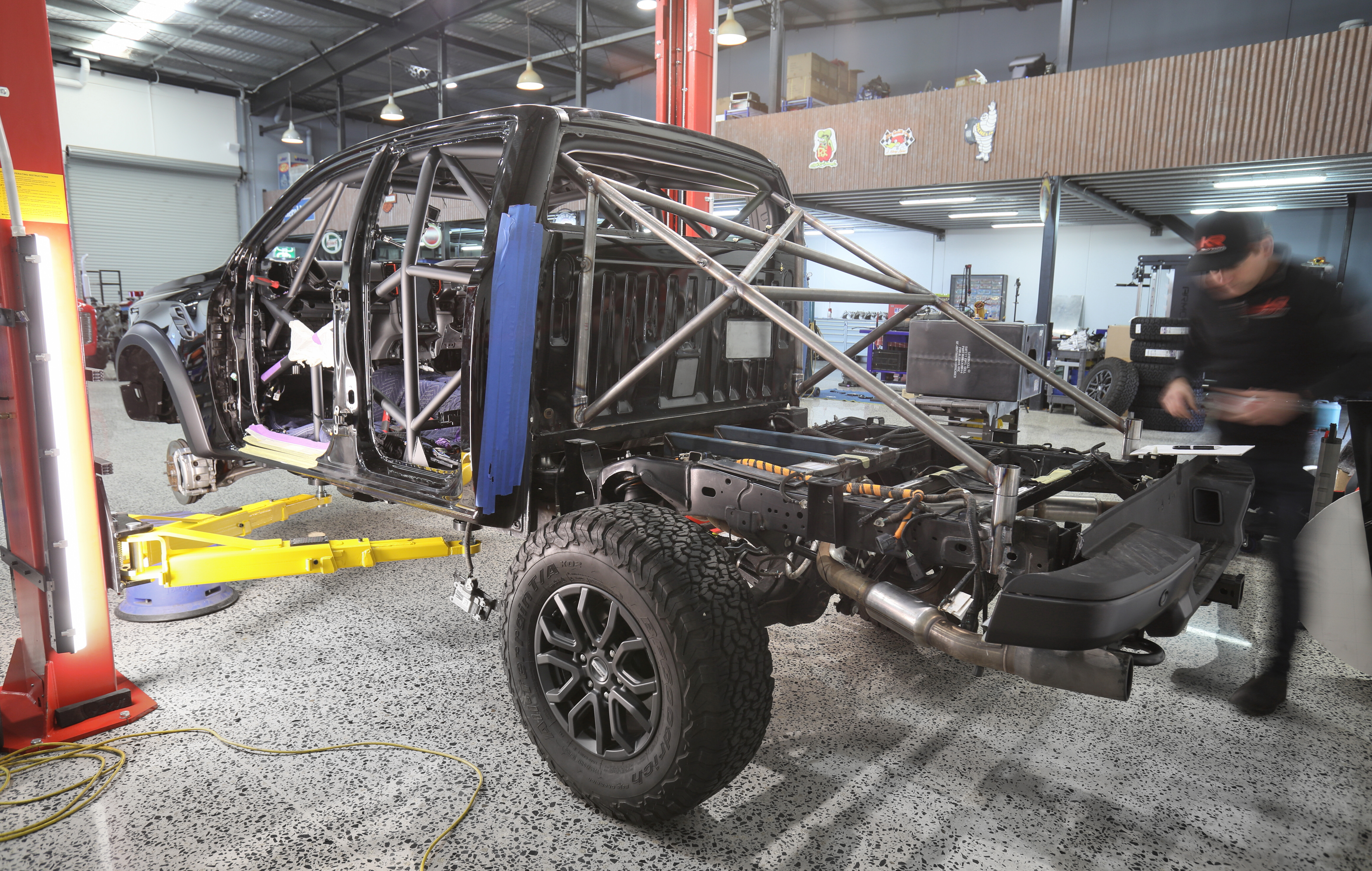
The racer also features 17-inch Method’s Bead Grip forged alloy wheels and 35-inch tyres – the largest permissible in its class. It runs 315/70 R17 BF Goodrich K02 tyres, with ARP racing wheel studs and nuts.
For better track use, it sports high-performance brake pads and DOT4 racing brake fluid, while recovery boards and a bed-mounted spare will assist if it gets stuck on the beaten track.
Inside, the basic fundamentals of the Ranger’s cabin design remain in place, however, Ford has fitted driver and navigator displays, a specialised GPS system, a support toolkit, and a power distribution module to facilitate the additional racing equipment.
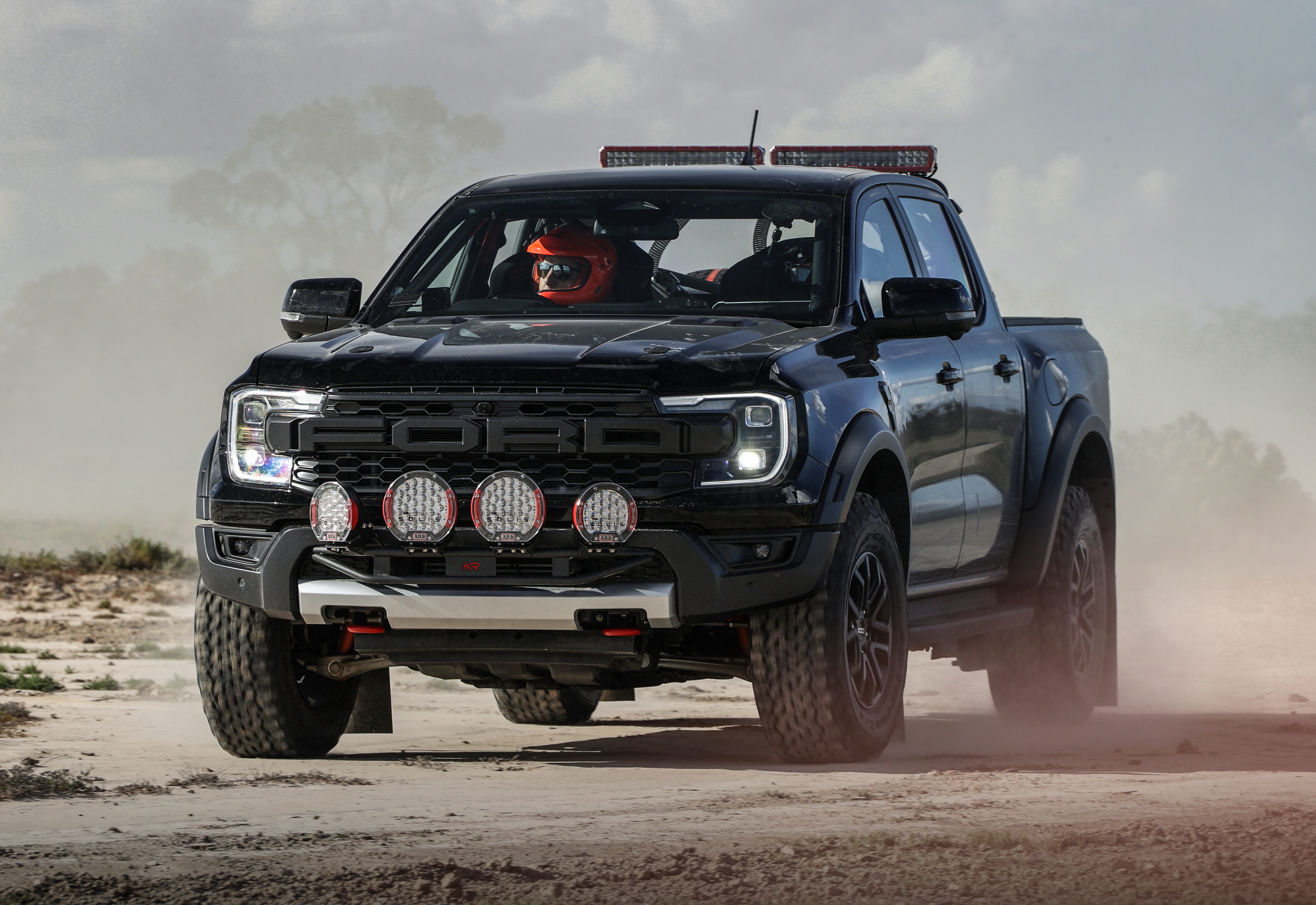
In comparison to the road-going Ranger Raptor, the front and rear parking sensors, nine airbags, and adaptive function for the cruise control have been removed from the racer.
It will be steered by six-time Baja 1000 winner Brad Lovell, off-road driver trainer Jason Hutter, and two-time King of Hammers champion Loren Healy.
And it won’t just be American-based racers getting behind the wheel, with ARB founder Andrew Brown and his son, Danny, confirmed as team navigators.
Both have experience in the Australian off-road racing scene, with Danny Brown winning the 2013 and 2017 ARB Australian Off-Road Racing Championship.
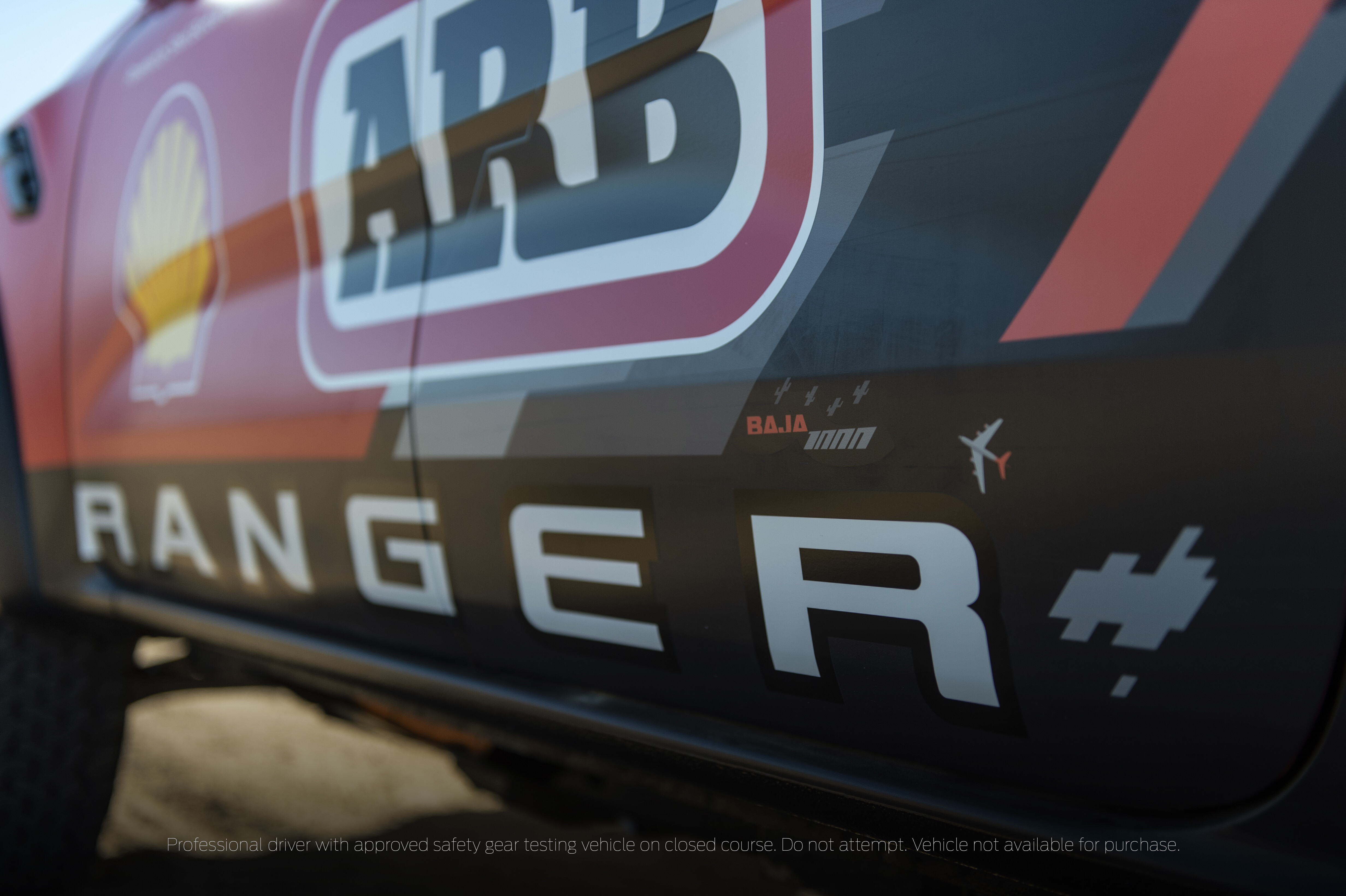
“It’s an amazing piece of gear straight off the factory floor, so I’m looking forward to testing it out against all Baja has to offer,” said Danny Brown.
“The Baja 1000 is the pinnacle event of our chosen sport, so racing this event is a massive deal to us. The icing on the cake for me is getting to share the experience with my dad.”
The race-ready Ford Ranger Raptor will commence its Baja 1000 campaign in Ensenada, Mexico, on November 18, with the event running until November 23.
Ford’s 2022 Everest 4×4 wagon is all new and could be the vehicle to finally challenge the decades-old dominance of the Toyota Prado on the mid-size 4×4 wagon segment.
The aging Prado has really had this segment to itself for so long, while even the second-best selling vehicle in the segment, Isuzu’s MU-X, hasn’t come close to matching the Prado in sales numbers.
Other vehicles in the class such as the previous generation Everest, the Mitsubishi Pajero Sport, the SsangYong Rexton, Haval H9 and even Toyota’s Fortuner haven’t had a look in for many years. Ford Australia is hoping to break that hoodoo.
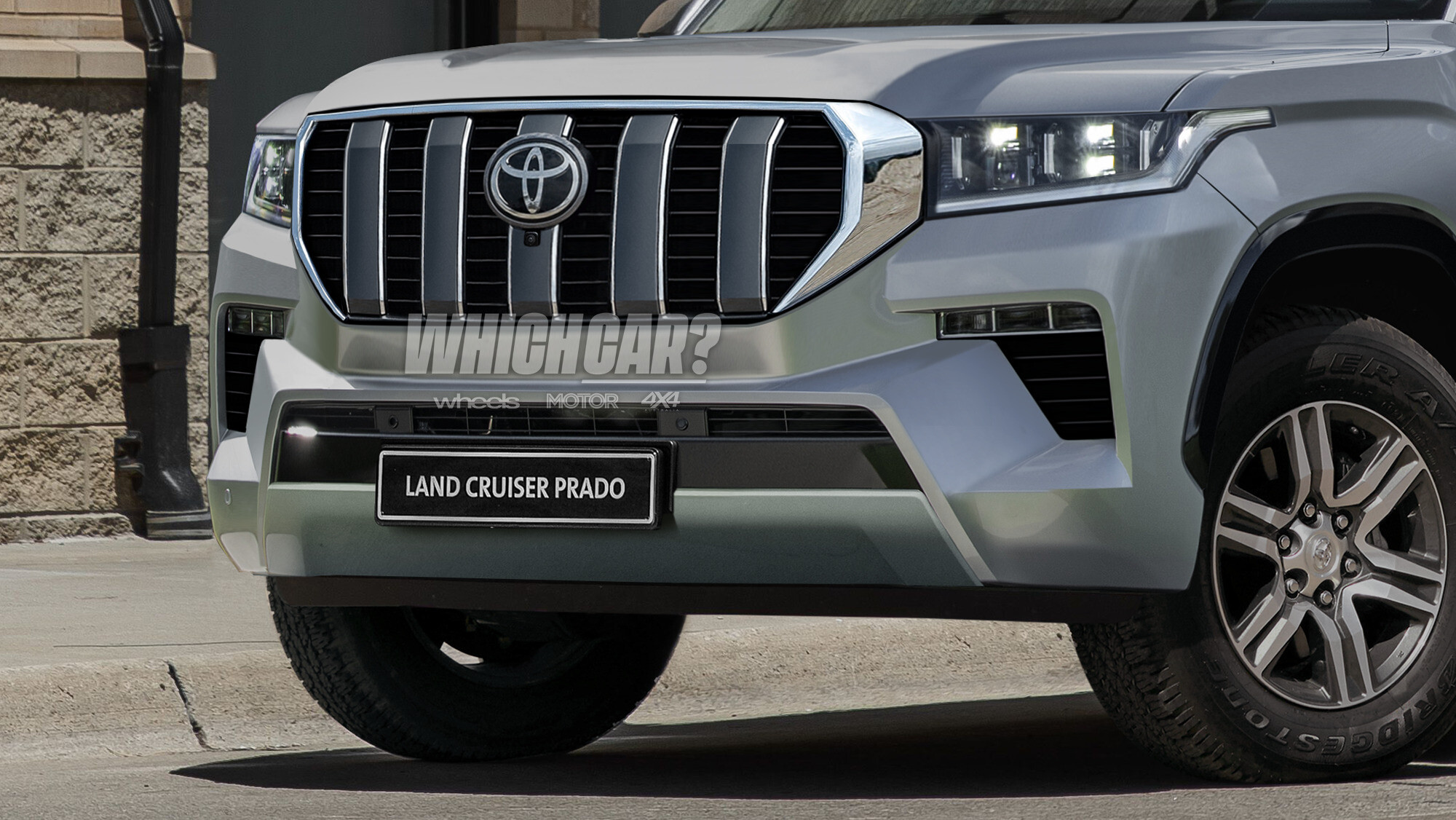
November 14, 2022: Next-gen Prado imagined
With new reports surfacing that the next Toyota Prado will get hybrid powertrains, we’ve commissioned a pair of artist renderings that might offer a look at the new model’s styling. Get all the details, including everything about the hybrid powertrains, at the links below.
Story continues
The 2022 Ford Everest has the potential to turn the segment on its head.
With a bigger, bolder appearance, new levels of features and safety equipment, the choice of V6 or 4-cylinder diesel engines and new models in the line-up, could this be the 4×4 wagon to take it to the Prado’s popularity?
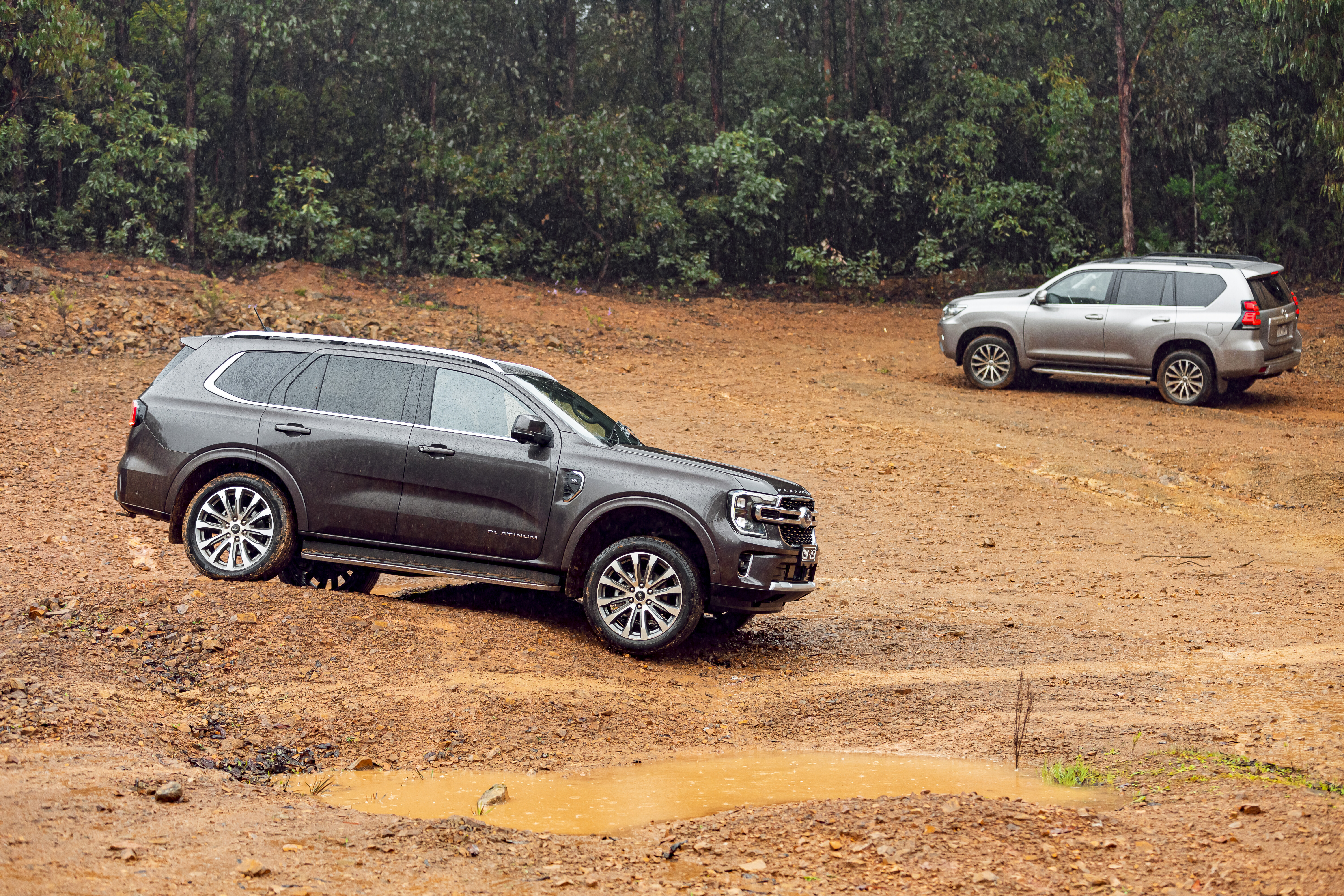
Toyota was only able to offer us its top-of-the-range Prado Kakadu for the review, so we selected the Everest Platinum to test against it here. Price for price, we would have preferred a $76,348 Prado VX.
Pricing
| Model | Price |
|---|---|
| 2022 Ford Everest Platinum | $76,880 |
| 2022 Toyota Prado Kakadu | $86,998 |
The 2022 Ford Everest Platinum starts at $76,880 plus on-road costs and is only offered with the 3.0-litre V6 diesel engine. The 2022 Toyota Prado Kakadu starts at $86,998 plus on-road costs and comes with the only engine offered across the Prado range, the 2.8-litre 4-cylinder diesel engine.
It’s also worth noting that prices of Ford Everest will go up when the 2023 production starts in February. For the Platinum model, this will mean a $649 increase to $77,530, while the steel underbody protection and a black-painted roof will be standard equipment.
Upgrade your 4×4
-
Bullbars
-
Underbody Protection
-
4X4 Tyres
-
Canopies
-
Roof Racks
-
Storage
Ford Everest Platinum
Arriving to the market just months after the 2022 Ranger ute with which it shares its T6.3 chassis architecture, the Everest wagon takes the model to a whole new level of refinement, equipment and drivability. The Everest is offered in entry-level Ambiente models followed by the Trend, Sport and Platinum as we are testing here.
The Ambiente, Trend and Sport models can be bought as 4×2 vehicles, while all are offered as 4×4. The Ambient and Trend models come with the 4-cylinder bi-turbo diesel engine only, while the Sport is offered with a choice of 4-cylinder and V6, and the Platinum only comes with the V6 diesel engine.
Powertrain and performance
The Everest Platinum only comes with the V6 diesel engine which only recently debuted in the latest Ford Ranger. Producing 184kW of power and 600Nm of torque, the V6 diesel which is related to the engine that was used in the Ford Territory SUV, places the Everest as a unique vehicle in its class.
The V6 engine delivers seamless torque throughout its rev range and while not earth-shattering in its performance, its smooth, quiet power delivery contributes significantly to the Everest’s high levels of cabin quietness and refinement.
The engine is aided in this regard by the 10-speed automatic transmission which has been redeveloped since its introduction in the previous model where it was behind the 4-cylinder engine. It’s now smoother and more precise in its shifting and faultless in its performance.
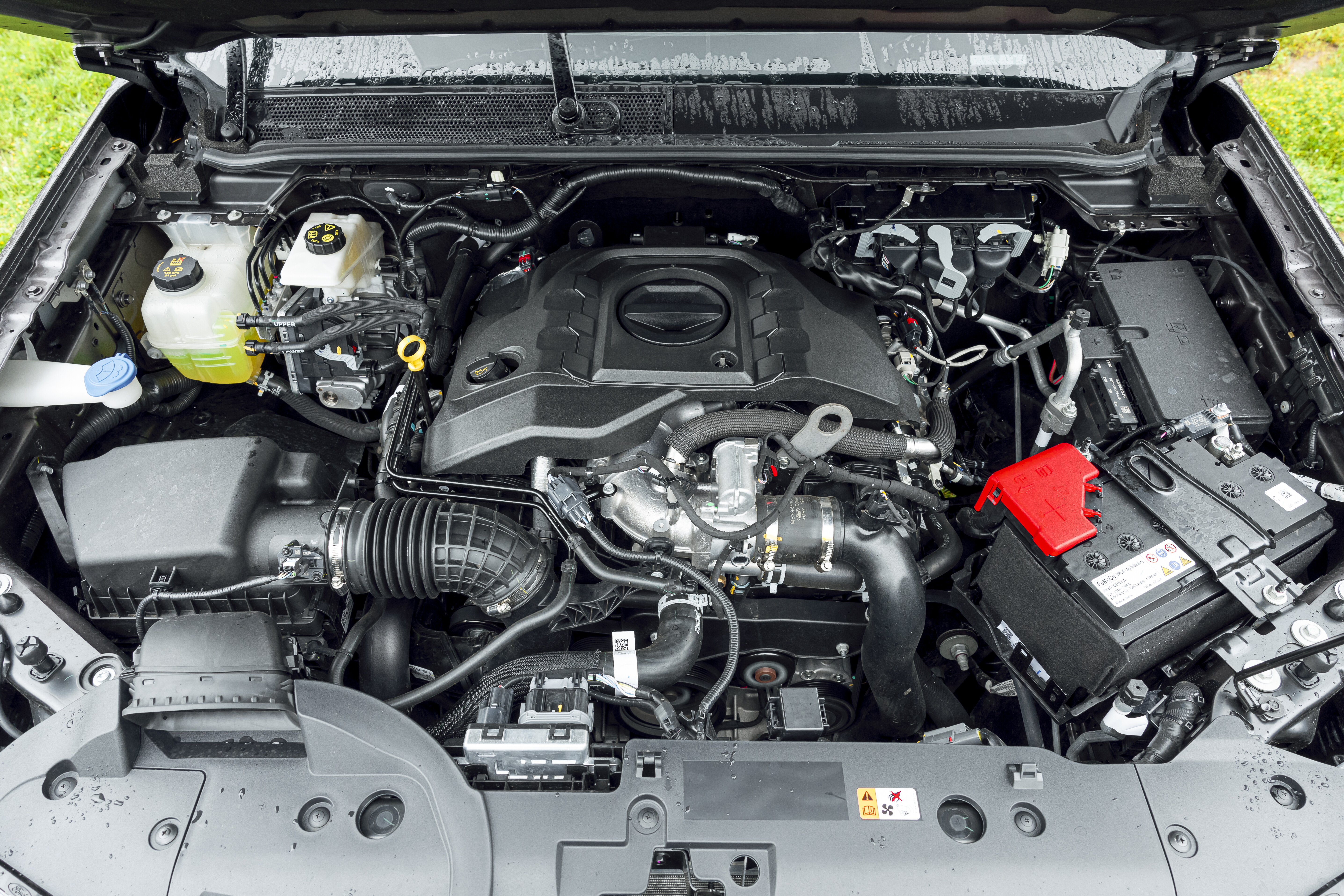
One small gripe we have with the 10-speed is its manual shifting application which is done using thumb buttons on the right-side of the transmission gear selector. These buttons are small and not as tactile or usable as a fore-and-aft movement of the shifter itself or even paddle-type levers behind the steering wheel.
Four-wheel drive Everests feature a new transfer case that offers 2WD, 4×4 auto, 4×4 locked high range and 4×4 locked low range settings. The previous generation of Everest had an on-demand 4×4 system that didn’t give the driver the option of 2WD.
Actuation of the transfer case is easy via buttons within a dial on the console. Turning the external ring of the dial selects the multi terrain modes for normal, towing, Eco, Slippery, Mud/Ruts and Sand driving. There’s also a locking rear differential that integrates with the electronic traction control on the front axle.
All these modes and features can also be selected via the off-road display in the huge centre dash screen after pressing the off-road button on the console.
On-road ride and handling
Like the Ranger ute, the Everest wagon uses a separate ladder chassis to which the body is mounted. Between the chassis and those big alloy wheels is an independent front suspension featuring double wishbones and coil springs, while at the back is a live axle suspended on coils and a multi-link set-up utilising a Watts-link for lateral location of the axle.
It’s a suspension design that has served the Everest well over the previous generation of the model and is made better thanks to a wider wheel track and longer wheelbase for improved stability, handling and ride control.
The suspension features no fancy electronics or air adjustment and nor does it need it. It soaks up bumps and potholes very well, cushioning the occupants against everything our poor roads can serve up.
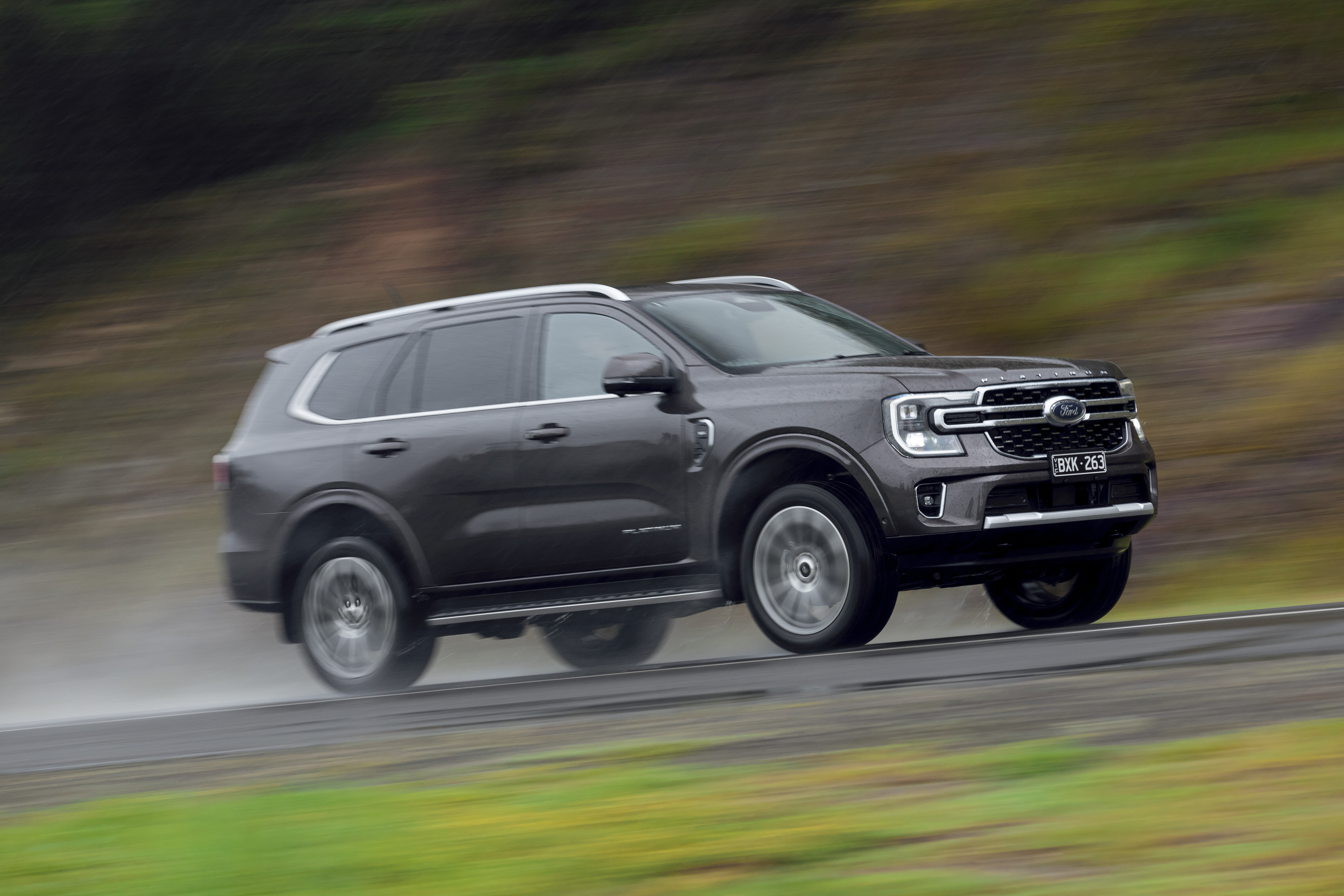
Speaking of big alloy wheels; the Platinum rides on massive 21-inch wheels wearing 275/45 aspect tyres. Even with these large diameter wheels and low-profile tyres, the dynamics, ride and comfort of the Platinum are exceptional. There is a no-cost option for more sensible 18-inch alloy wheels and all-terrain tyres plus metal instead of plastic underbody protection for anyone planning to take their Platinum off road. These tyres should make the ride comfort even better.
The Ford‘s suspension is firmer and more composed than the more compliant and plush set-up in the Prado Kakadu. It delivers a more sporting ride that will better reward enthusiastic drivers.
Off-road
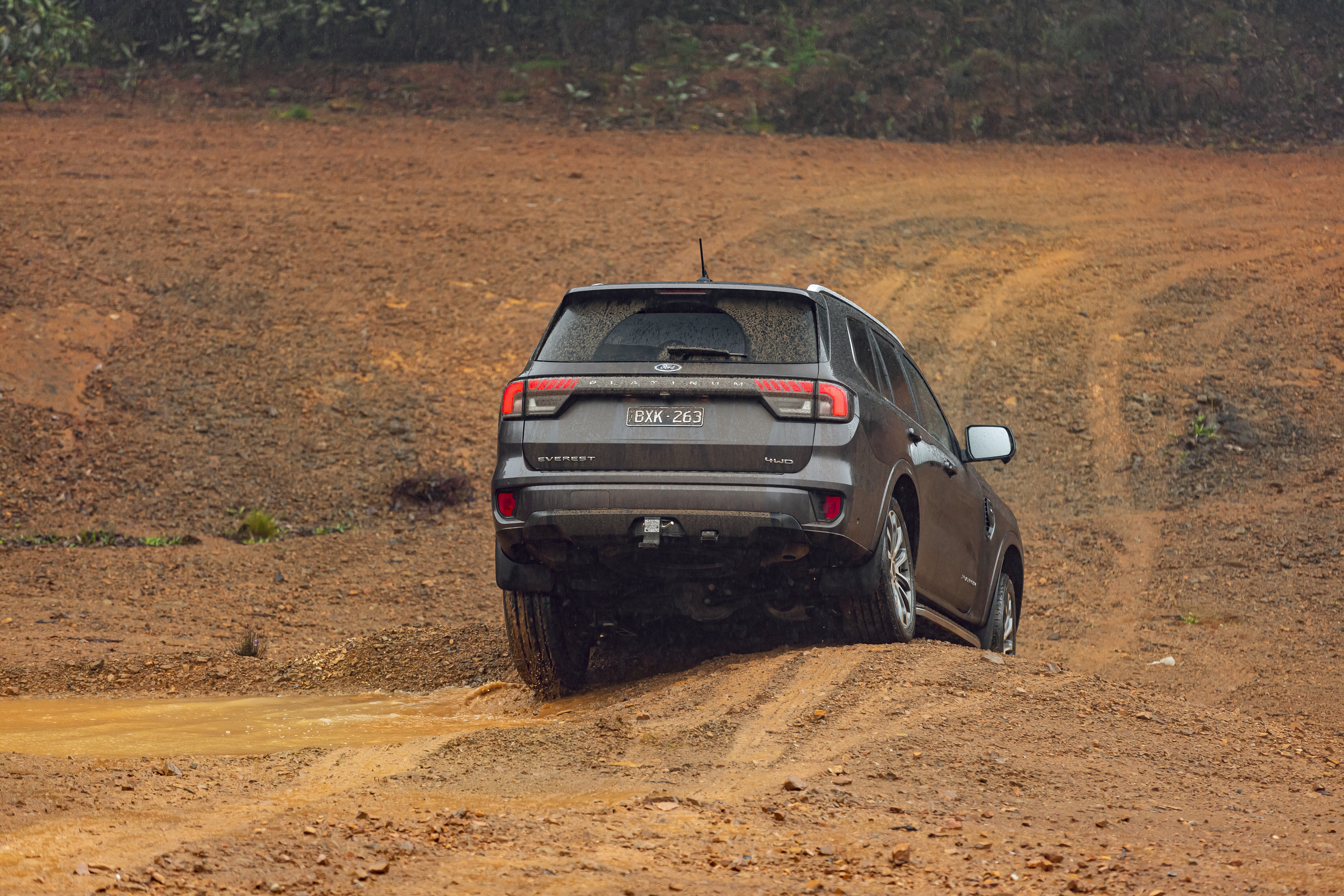
The previously mentioned dual-range 4WD transfer case, rear differential lock, electronic traction control and multi drive settings all combine to make the Everest pretty handy off road.
The wider wheel track of these so-called Next-Gen Fords not only makes them more stable at speed but also gives a bit more suspension travel at the tyre to keep them on the ground for best traction.
It’s still not great wheel travel and the Everest picks up wheels easily but the well-calibrated ETC does an excellent job of keeping the car moving. The low-profile 21-inch tyres don’t help either but again, the optional 18s and all-terrain tyres would be a better choice.
Towing
The Everest has a 3500kg maximum towing weight, which is the class standard and better than many others in the class. The Prado, for example, is only rated to tow 3000kg.
Everest also includes the groundbreaking trailer technology that debuted on the new Ranger including the Sync 4 set-up, integration and towing checklist, and an integrated factory electric brake controller if you tick the optional towing package.
There’s also a Tow/Haul mode in the drive settings that best calibrate the vehicle for pulling weight. The Gross Combined Mass (GCM) is rated at 6250kg.
Interior
As the top model in the Everest range, its 7-seat interior comes loaded with features and safety.
Safety-wise, there is AEB, side airbags that extend through to the third-row occupants, a centre airbag between the driver and front seat passenger, lane-keeping assist that has road side detection so that it doesn’t rely on the white lines, tyre pressure monitoring system, blind-spot indicators, reversing emergency brake, trailer-sway control, 360° camera, and radar cruise control.
The blind-spot indicators work with the Sync 4 trailer set-up to take in to account the length of your trailer and adjust the range it works over – clever tech!
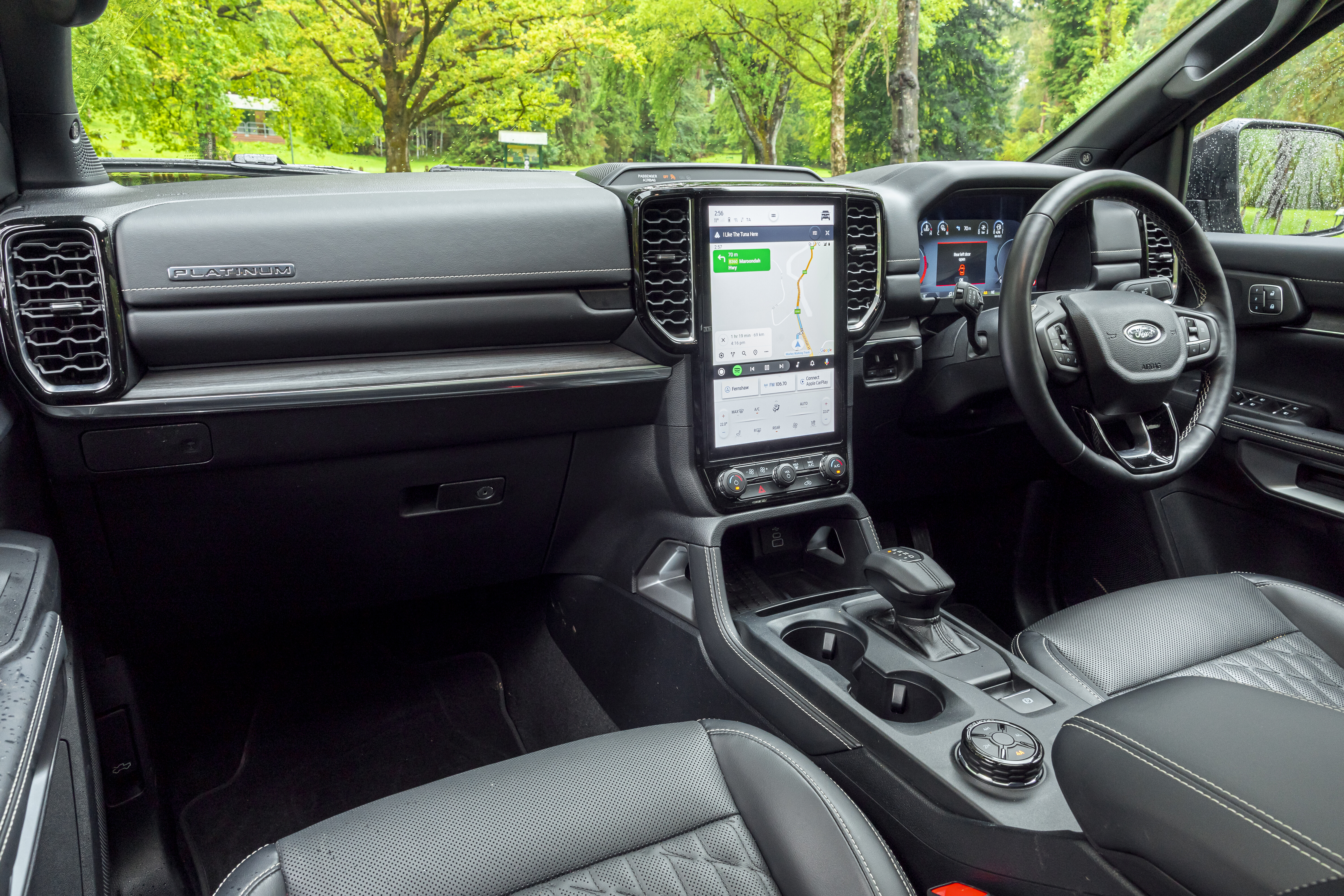
Comfort-wise, there are heated and cooled leather seats with powered 10-way adjustment up front, heated and sliding second row, and split folding third row. The centre of the dash features a 12-inch screen that includes all your A/V controls, HVAC and Ford Sync 4 functions, while ahead of the driver is a 12.4-inch configurable digital dash that allows you to set up your gauges and info to how you like to use it.
Wireless Apple CarPlay and Android Auto are also standard as is a wireless phone-charging pad in the console. We did find that the wireless charging made the phone quite hot and preferred to use a cable plugged in to the USB port.
The Platinum also gets a panoramic glass sunroof and a kick-arse Bang & Olufsen 10-speaker sound system among its standard features.
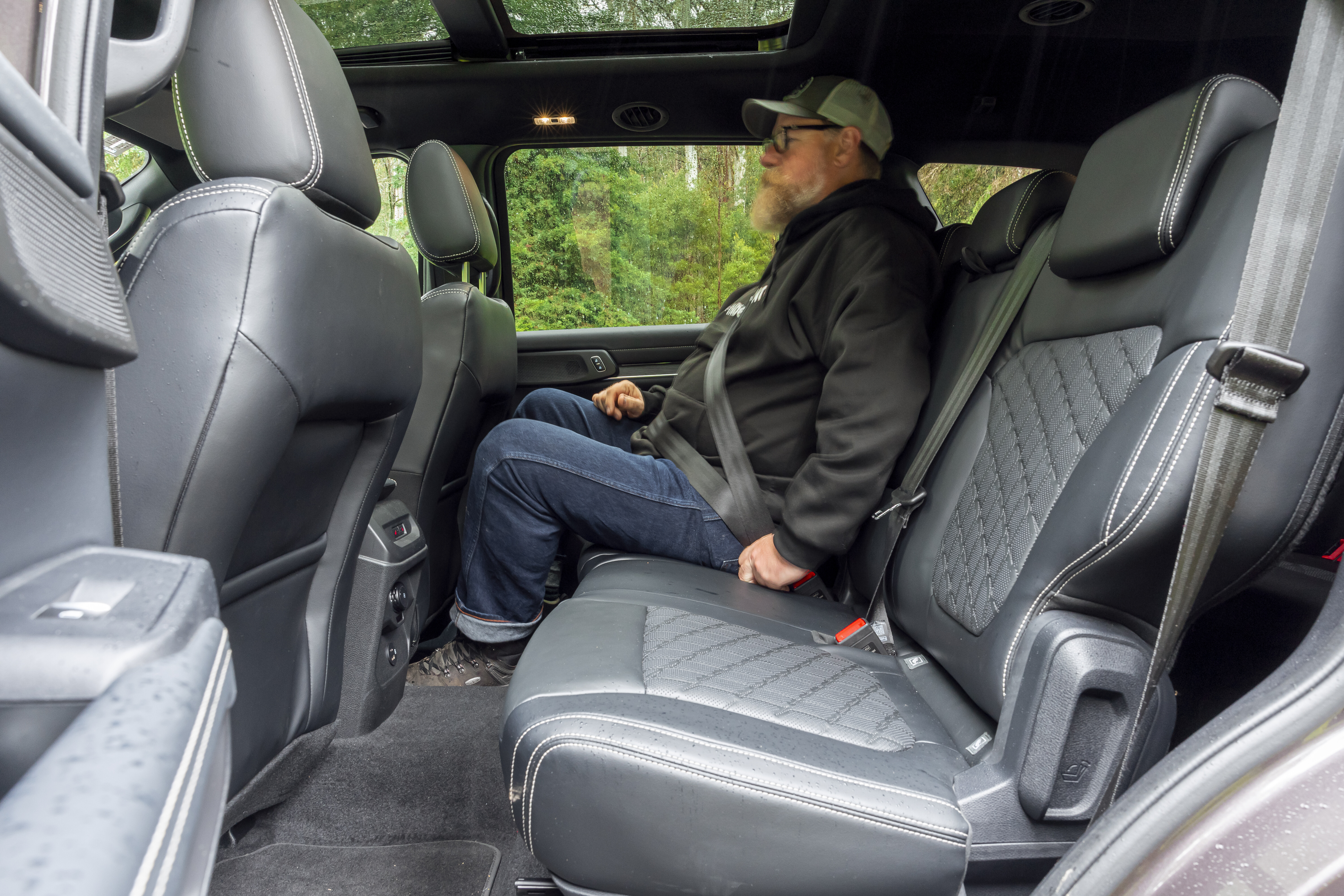
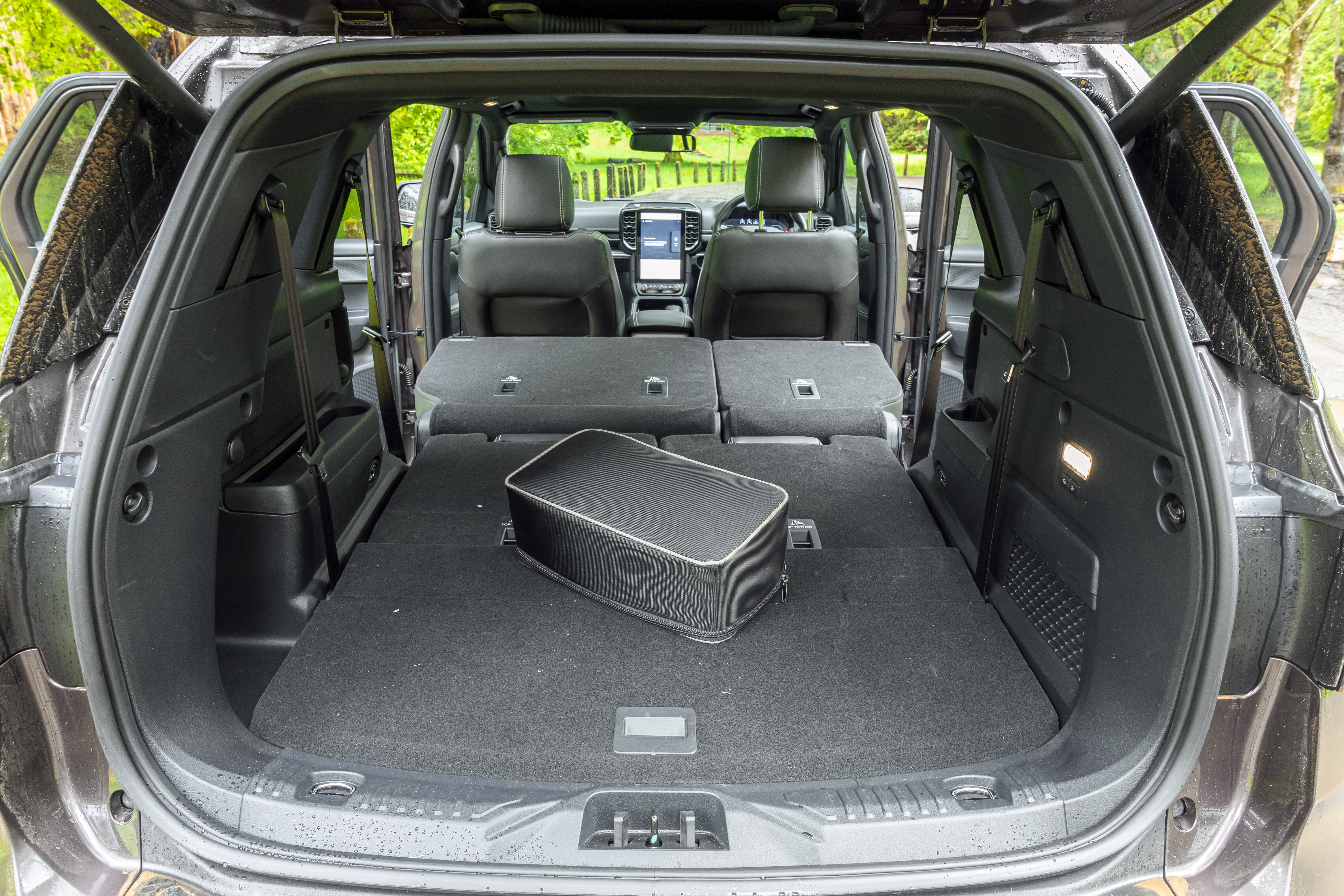
There’s plenty of room for front-seat passengers, while room is adequate for two adults or three kids in the second row. The third-row seat is surprisingly accessible for an adult, but a tight squeeze once you’re in there. They fold flat into the floor when not in use to give a large, long cargo space with a 12V power outlet back there.
The steering column is manually adjustable for both reach and height, and there’s an automatic parking system that reverse parks the car hands-free.
A more useful feature are the Matrix LED headlights that automatically dim and vary the LEDs used when they detect oncoming traffic.
Practicalities
If you’re buying the Platinum to use as a 4WD, then the 21-inch wheels are not very practical so best to tick the option for the 18-inch wheels if getting them dirty is your plan. You’ll find a much wider range of all-terrain tyres to suit the 18s than you will for the 21s, and will be much more secure on rough roads.
Other than that, the Everest presents as a very practical wagon for family adventures. It’s spacious, has class-leading levels of technology, safety and ability, and it ticks all the boxes in terms of features.
You can really see that Ford looked hard at how Australians use their vehicles and what they want in them, and designed a vehicle around those parameters.
Being closely related to the Ranger ute, there is an abundance of accessories available to allow the owner to build the Everest to suit his or her needs. These come from both Ford and the aftermarket, and also include Ford’s partnership with ARB to offer ARB accessories that are covered by the factory Ford warranty, provided they were ordered at the time of vehicle purchase.
Something else to consider if you are kitting your Everest up for adventures, the standard roof rating is 100kg (4×4 models) which is about standard for this type of vehicle, but if your Everest has the panoramic moonroof or 21-inch wheels (which that Platinum has as standard) that capacity drops to 80kg (4×4).
That’s worth thinking about before you buy, particularly when you look at the weight of some of the rooftop tents on the market that could put you over capacity before you get anywhere.
Toyota Prado Kakadu
The Prado might be one of the oldest vehicles still being sold new, but spend some time behind its wheel and you soon know why it is the perennial favourite among Australians who like to get out and explore this great land. It’s a vehicle that is aging very well in our harsh conditions.
The current 150 Series Prado was released at the end of 2009, but it was essentially a reskin of the 120 Series which debuted way back in 2002. So, it’s really a 20 year-old platform, but in that time there has been the reskin, spec changes, new engines introduced, new variants, the introduction and discontinuation of the 3-door Prado, the loss of the V6 petrol engine and manual gearboxes, and plenty of rolling changes.
Australia now has a four-model Prado range starting with the GX and followed by the GXL, VX and top-of the-range Kakadu which we have on this drive.
Powertrain and performance
All current model Prados in Australia are powered exclusively by the latest version of Toyota’s 2.8-litre diesel 4-cylinder engine backed by a 6-speed automatic transmission and full-time, dual-range 4WD system.
In its latest tune which was updated in 2019, it produces 150kW of power and 500nm of torque. Along with the increases in output, the updates included a new turbocharger and fuel injection system plus revised balance shafts resulting a more refined delivery of power. The engine is still not 6-cylinder smooth, but it is an upgrade that was well needed.
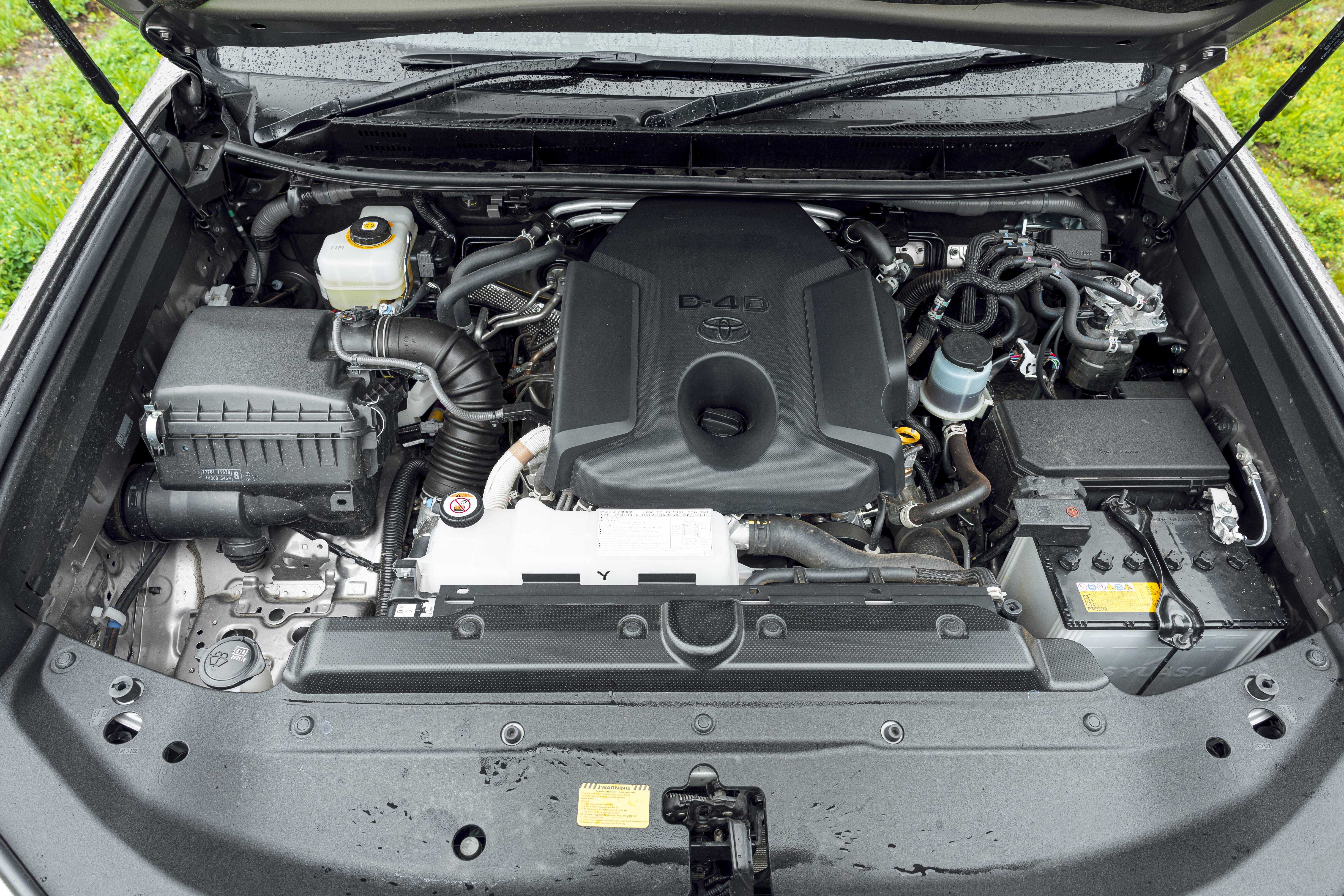
Driving in the Prado Kakadu, you are well-insulated from any driveline noise, and the power and torque are well-matched to the vehicle. The engine is flexible in its wide torque range, but does get noisy when you put you foot down for overtaking or steep climbs.
The 6-speed transmission does a good job in day-to-day driving and the ratios are well-matched, but it’s not as smooth as the 10-speed in the Ford. While I appreciate a smart transmission with grade logic that shifts back when you might want some engine braking, the Prado’s Aisin ’box can be a bit aggressive in this regard, making it annoying in the suburbs when is shifts back and revs high going down hills.
Like the Prado as a whole, its drivetrain shows its age but, like so many older things, there’s nothing really wrong with the way it gets the job done.
On-road ride and handling
Like the Everest, the Prado is a traditional 4×4 vehicle in that it uses a body-on-frame architecture with a live axle at the back and independent suspension up front. But that’s really where the similarities end, as the Toyota is tuned for rougher roads and a more comfortable ride by using a softer, more compliant suspension calibration.
The Prado soaks up bumps and potholes better than the Ford wagon, but it wallows and pitches through corners and under brakes. While neither of these wagons are sports cars, the Prado is less so and less rewarding to drive dynamically.
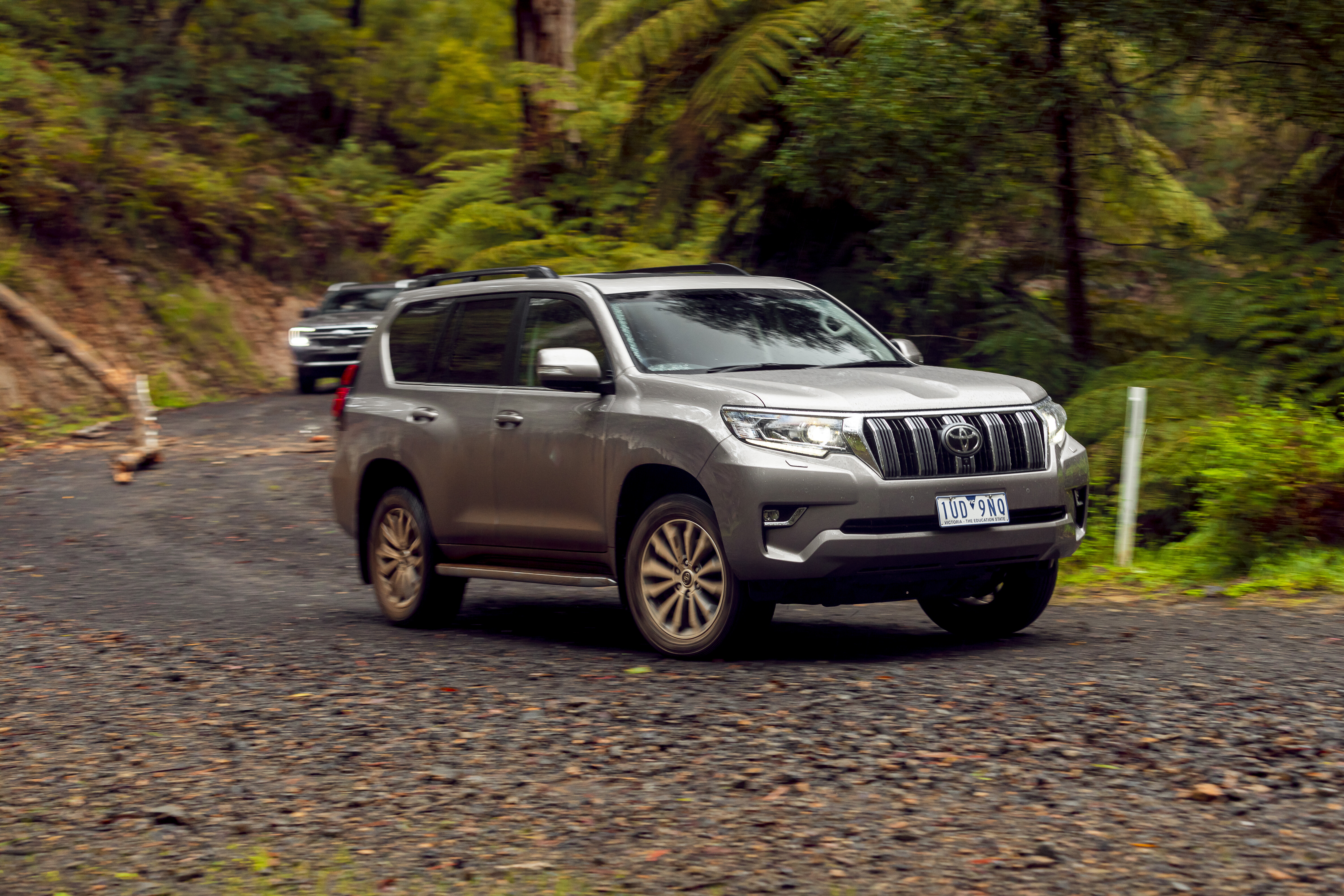
On the other side of the coin, the Toyota delivers a more comfortable ride over rougher roads. The more compliant suspension soaks up bumps and ruts to protect the occupants from the harshness of the road.
The Kakadu is the only model in the Prado range to replace its rear coil springs with adjustable airbags to give a bit of height adjustment for off-road use. We find these to be detrimental to the ride quality from the rear end which doesn’t deal as well with sharp bumps that it does in other Prados on coils. This alone would steer me toward the VX grade that is still well specified but keeps its coil springs.
Off-road
The Prado’s softer suspension calibration makes it well-suited to off-road use, where its long-travel rear suspension works really well thanks to the clever KDSS, allowing the electronic traction control to do its job easier.
The 4WD system in full-time, but you can lock the centre diff in high and low range and there’s a locking rear differential as well.
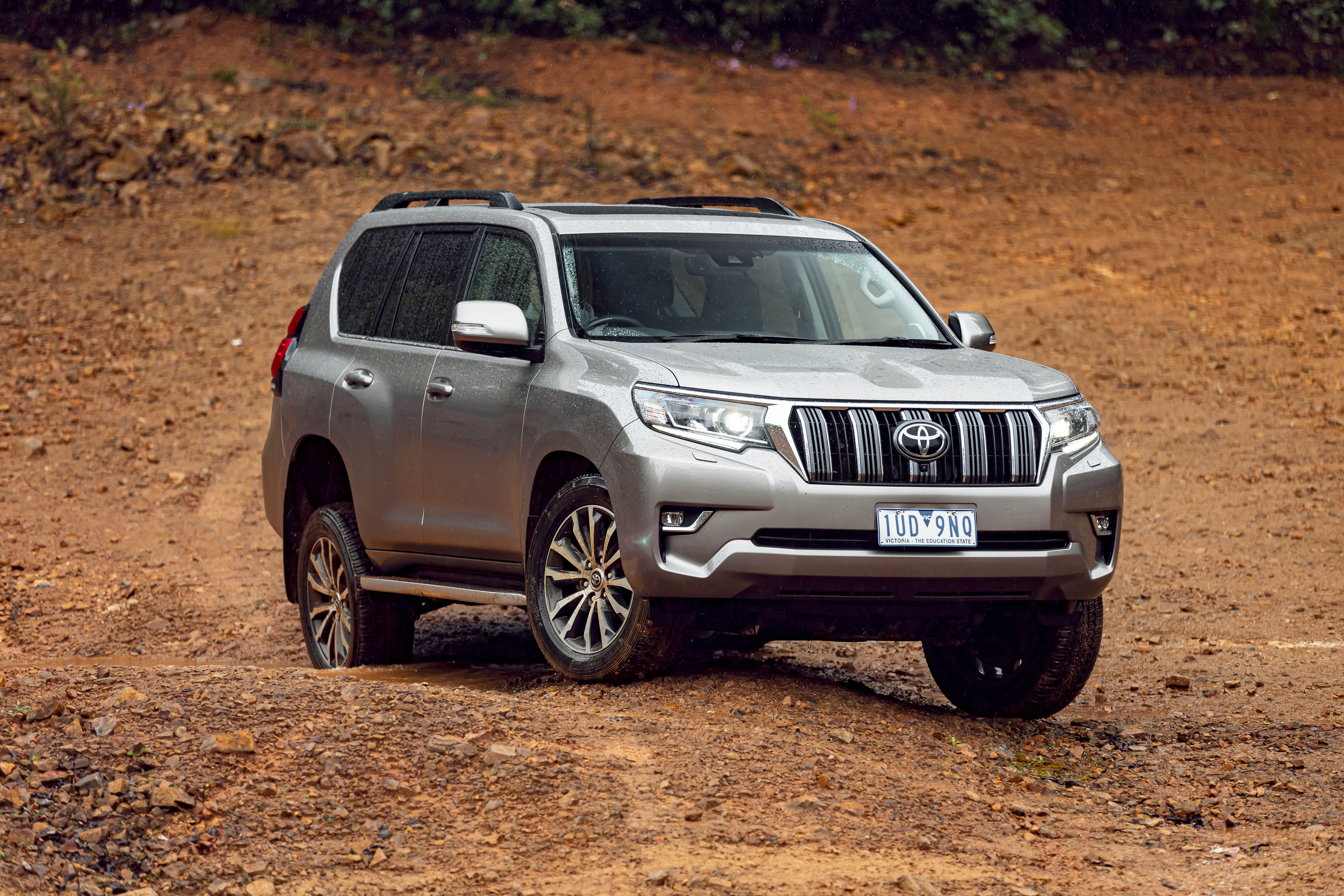
Off-road electronics also include a multi-terrain mode selector and Toyota’s amazing Crawl Control system that edges the car forward though the toughest conditions with no throttle inputs from the driver. It’s essentially a low-speed, off-road cruise-control system with five speed settings, that will get you unstuck when traction is limited.
The Prado’s taller and more upright cabin, when compared to the Everest, is also a benefit off road as the big glasshouse gives plenty of vision for the driver. The Kakadu’s 360° camera helps as well in tight places.
Towing
Ford is the only manufacturer we’ve seen to really think about towing with the systems that it has implemented in the latest Everest and Ranger models.
There’s no such tech in the Prado or any LandCruiser, but the Prado does have a 3000kg weight capacity and built-in electronic trailer-sway control as part of its electronic stability control system.
The Kakadu’s GCM is 5990kg so its trumped by the Platinum even though the Ford is a heavier vehicle.
Interior
The Prado’s more upright and taller cabin space makes it feel more like a 4WD than the Everest does, but in this Kakadu trim it doesn’t miss out on any of the comforts and features you expect in a top-of-the-range model.
The front seats are power adjustable and heated and cooled, all seven seats are leather trimmed, there’s a refrigerated cool box in the centre console, a premium 14-speaker JBL sound system, glass moonroof, 3-zone climate control, a Blu-ray player with a pair of screens for back-seat passengers, and a leather and woodgrain steering wheel. The outboard seats in the second row are also heated.
The Kakadu’s steering column is power adjustable for both height and reach.
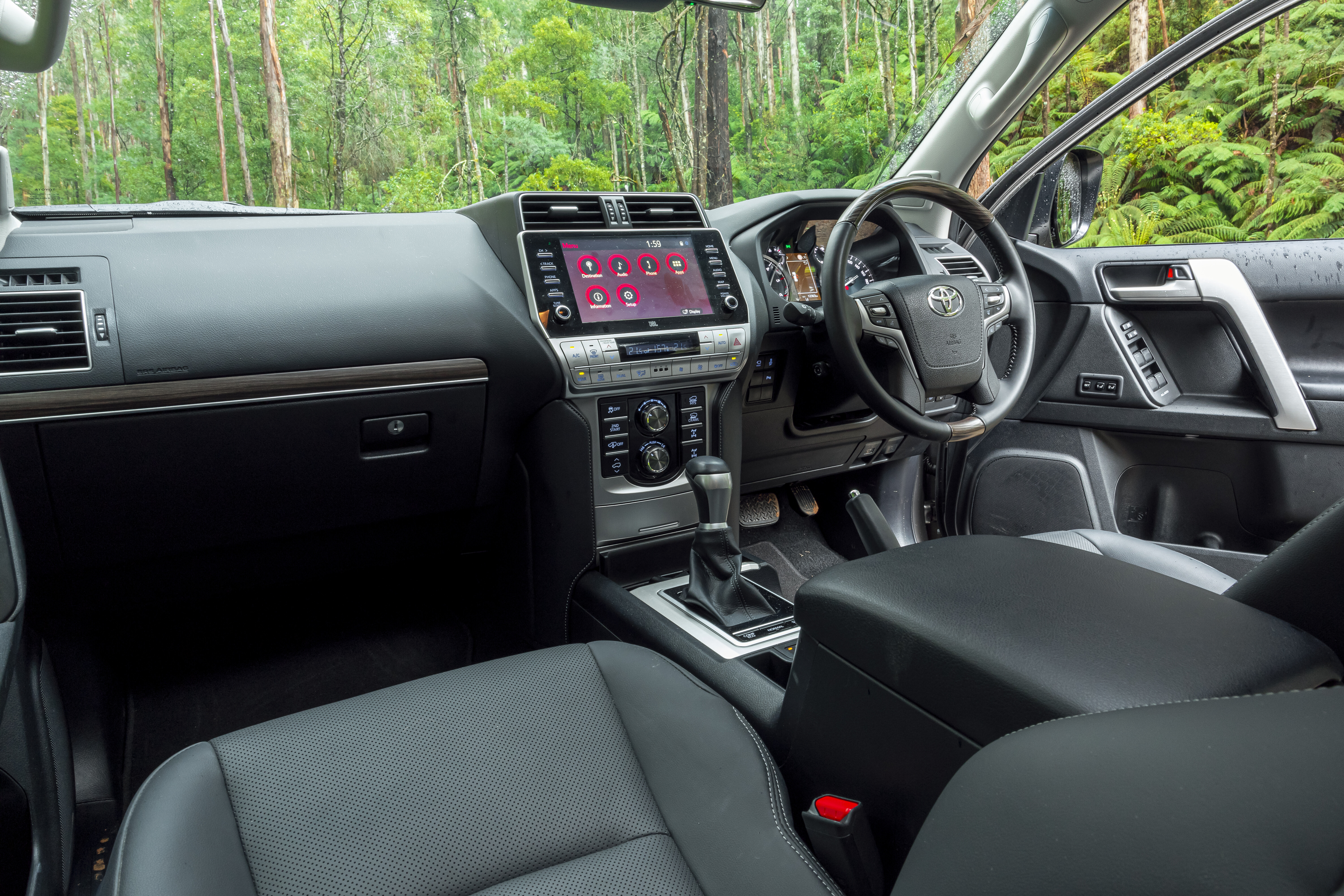
Some things like that woodgrain steering wheel and the silver backing on the switchgear look a bit old school but they are functional and easy to use. Similarly, the 9-inch screen for the A/V and sat-nav looks small when compared to that in the Ford but it contains all you need even if you do need to plug your phone cable in to access Apple CarPlay and Android Auto.
I prefer the simple analogue gauge cluster of the Toyota over the complicated configurable one in the Ford. It’s easier to read at-a-glance and still tells me everything I could want to see while driving. There’s a 4-inch information display between the main gauges that scrolls through the info menus.
The Prado’s safety kit includes Lane Departure Alert with steering assist, Pre-Collision Safety system with pedestrian and daytime cyclist detection, Automatic High Beam, Active Cruise Control and Road Sign Assist, rear cross-traffic alert, blind-spot monitors, rear parking sensors, stability and traction control. Again showing its age, the Prado misses out on some of the latest safety tech such as lane keeping assistance, lane cantering and AEB.
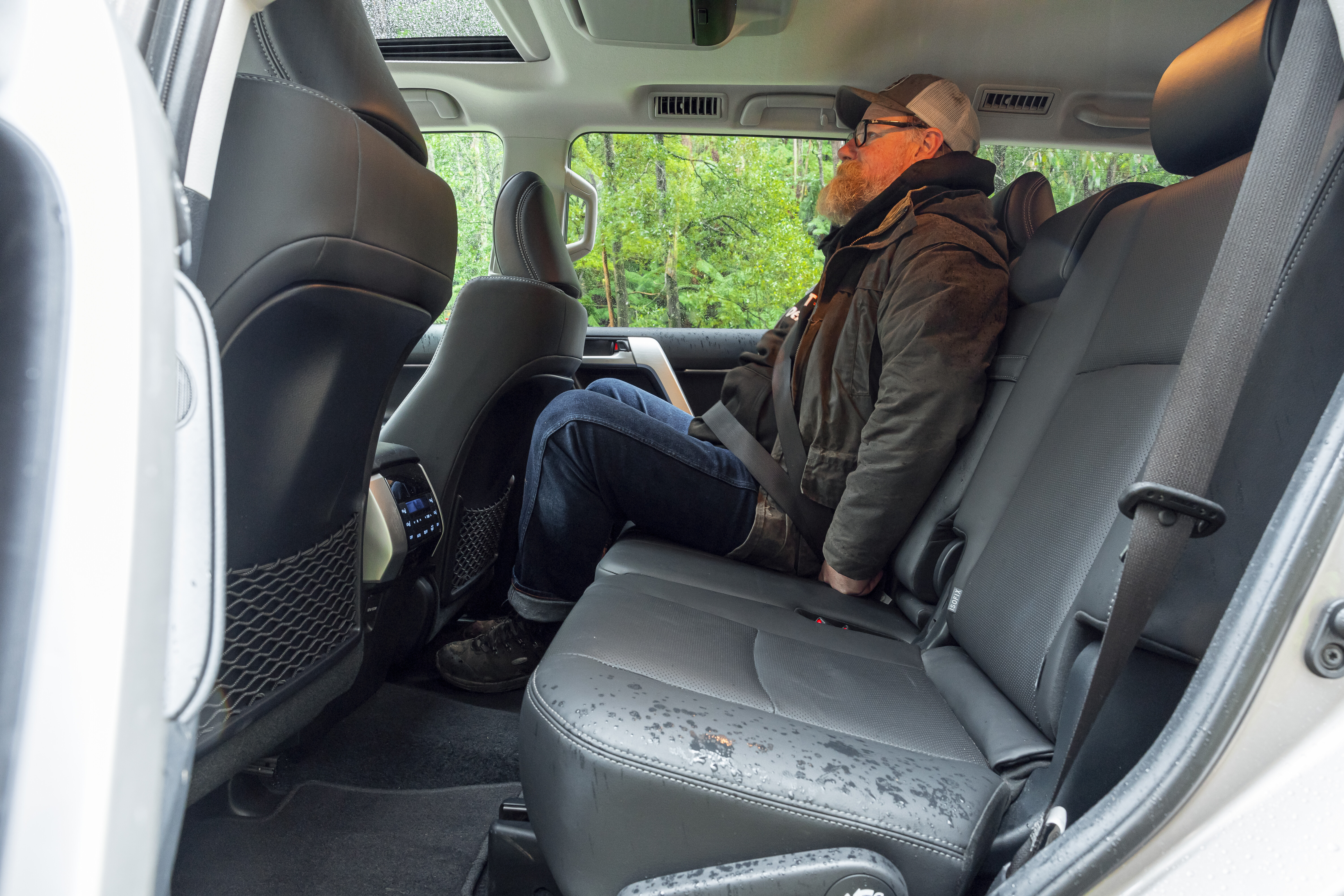
The third-row seats are again tricky to access and best left to the kids, while second-row passengers enjoy plenty of head and leg room but the narrower cabin makes shoulder room tight for three across.
The third-row seats fold flat into the floor, but at a taller height than those in the 5-seat, lower grade Prados so they sacrifice a bit of luggage space. The cargo space is taller and longer than that in the Everest but narrower.
Practicalities
You don’t maintain your position as the market leader in adventure-ready, family 4×4 vehicles for decades without knowing how to make them practical. While many will criticise the Prado for lacking in style and excitement, it makes up for it in practicality.
With a platform that is near-on two decades old, the Prado is well-proven and has had its bugs ironed out. There’s also more accessories available for it than you could ever need, so there’s plenty of kit out there to make it yours.
The Prado comes standard with the spare wheel mounted on the rear door and this allows an extra fuel tank underneath giving the vehicle 150 litres capacity, more than any other standard 4×4 on the market. Our test car was fitted with the optional ‘flat tailgate’ which makes the door easier to open but puts the spare tyre back under the car where that extra fuel tank should be, so it’s restricted to 87 litres of diesel on board.
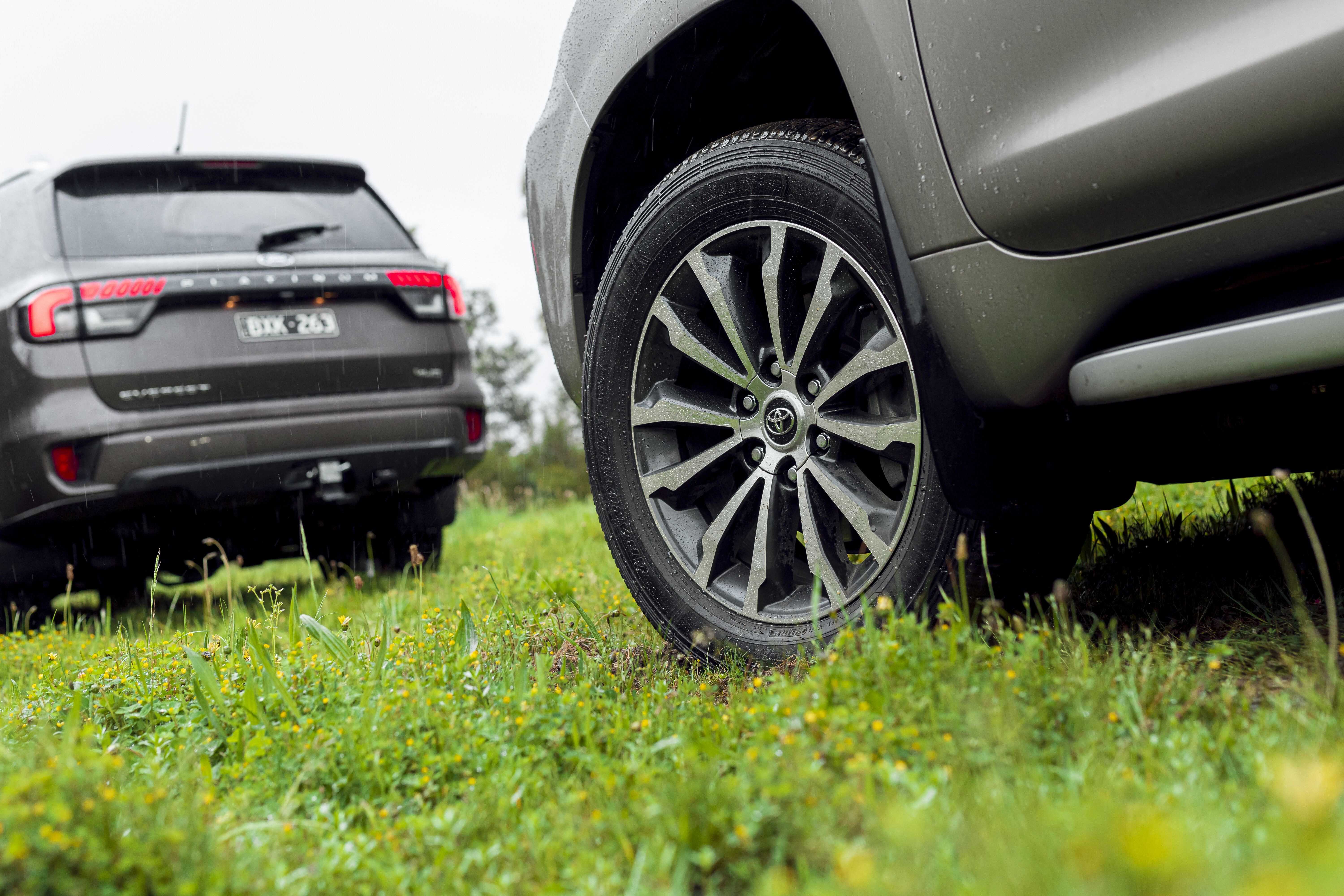
Speaking of tyres, the Kakadu rides on 19-inch alloys from the dealer but the brakes are the same size across the Prado range so there’s no reason you couldn’t fit more practical and durable 17-inch wheels and tyres to it. We recall that when Toyota upped the Prado’s wheels to 19s that the 265/55 aspect tyre was an odd size and there were not many all-terrain alternatives to it without stepping up a size, spurring anger from some buyers.
The Kakadu has a 3000kg towing capacity and 640kg payload so all those luxury features like powered leather seats, console fridge, moonroof and so on really eat into the 2990kg GVM meaning the Platinum Ford trumps the Toyota on weight capacities.
4X4 Australia's project builds
VERDICT
Let’s get one thing straight here – these are both excellent 4WD wagons. Perfect for family use, excellent for adventuring and great baselines to build exceptional touring wagons from.
Which of the two is better is really up to you and what you want of them.
The Ford Everest offers the latest technologies including infotainment and safety plus the refinement and performance of the V6 engine and 10-speed transmission. It has a more passenger-car feel to it than the Prado’s traditional 4×4 wagon delivers, and the way it sits on the road, handles and drive are also closer to a passenger car than a high-riding 4×4.
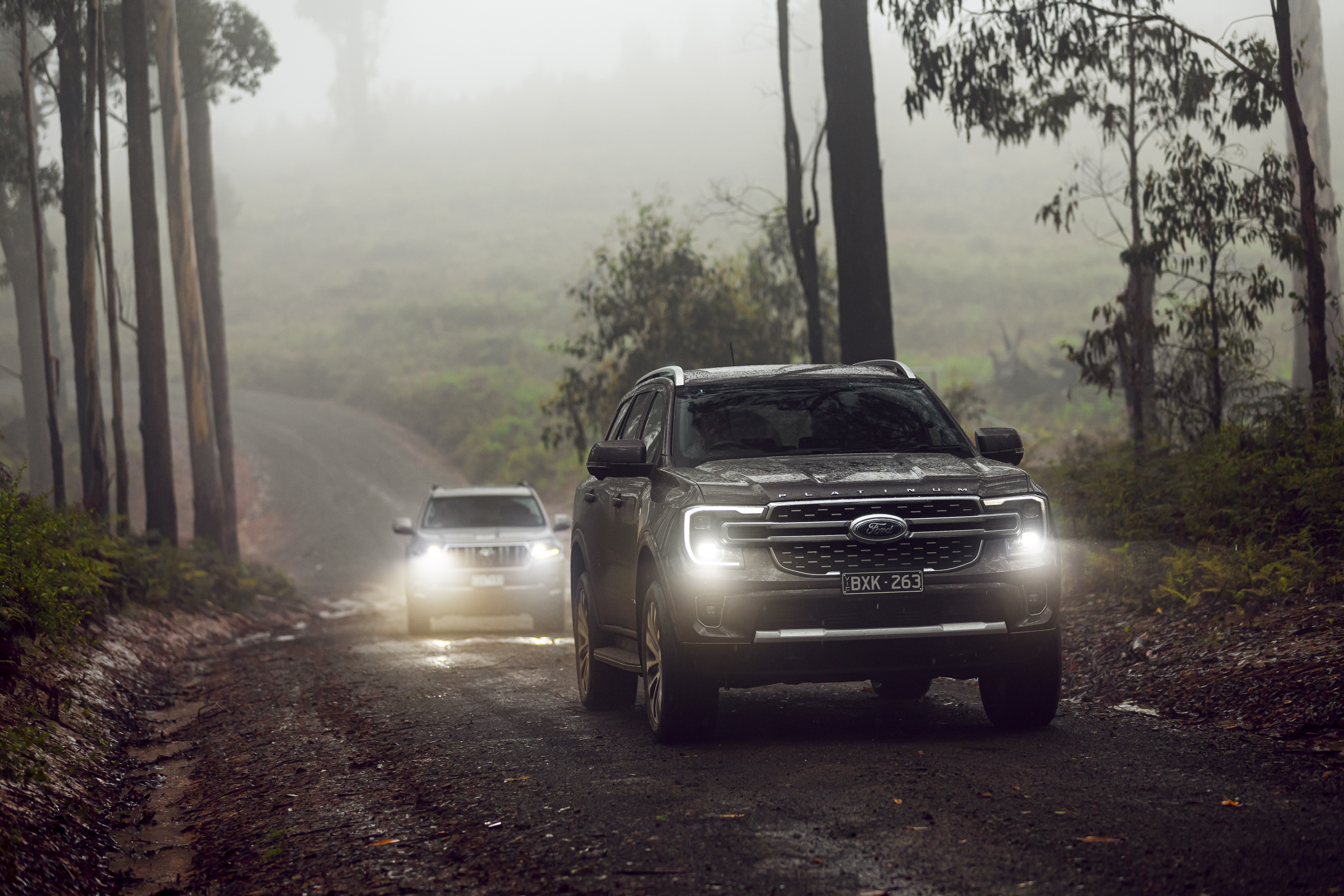
Plus, at this end of their respective model ranges, the Platinum is some $10K lower priced than the Kakadu – for now.
The Toyota Prado is the market leader for good reason. It feels more like a 4x4wagon; it’s tall and upright offering great visibility all around it. It’s 4-cylinder engine rattles more like a traditional 4×4 vehicle’s engine would too, however, we think that Toyota has gone a long way to suppress its sound in the Kakadu; it’s certainly quieter in this application that in the Hilux SR-5 we tested not too long ago.
“If I were buying a wagon to kit up for a lap of the map, it would be the Prado”
For mine, if I was looking for a modern family 4×4 for mostly town-use with the occasional trip away to the bush, it would be the Everest. Its levels of performance and refinement can’t be matched by the Prado and it would be an easier car to live with day to day, particularly for someone who is not accustomed to a large wagon. With a few well-chosen modifications, the Everest would also make an incredible outback tourer, in any of the 4WD models.
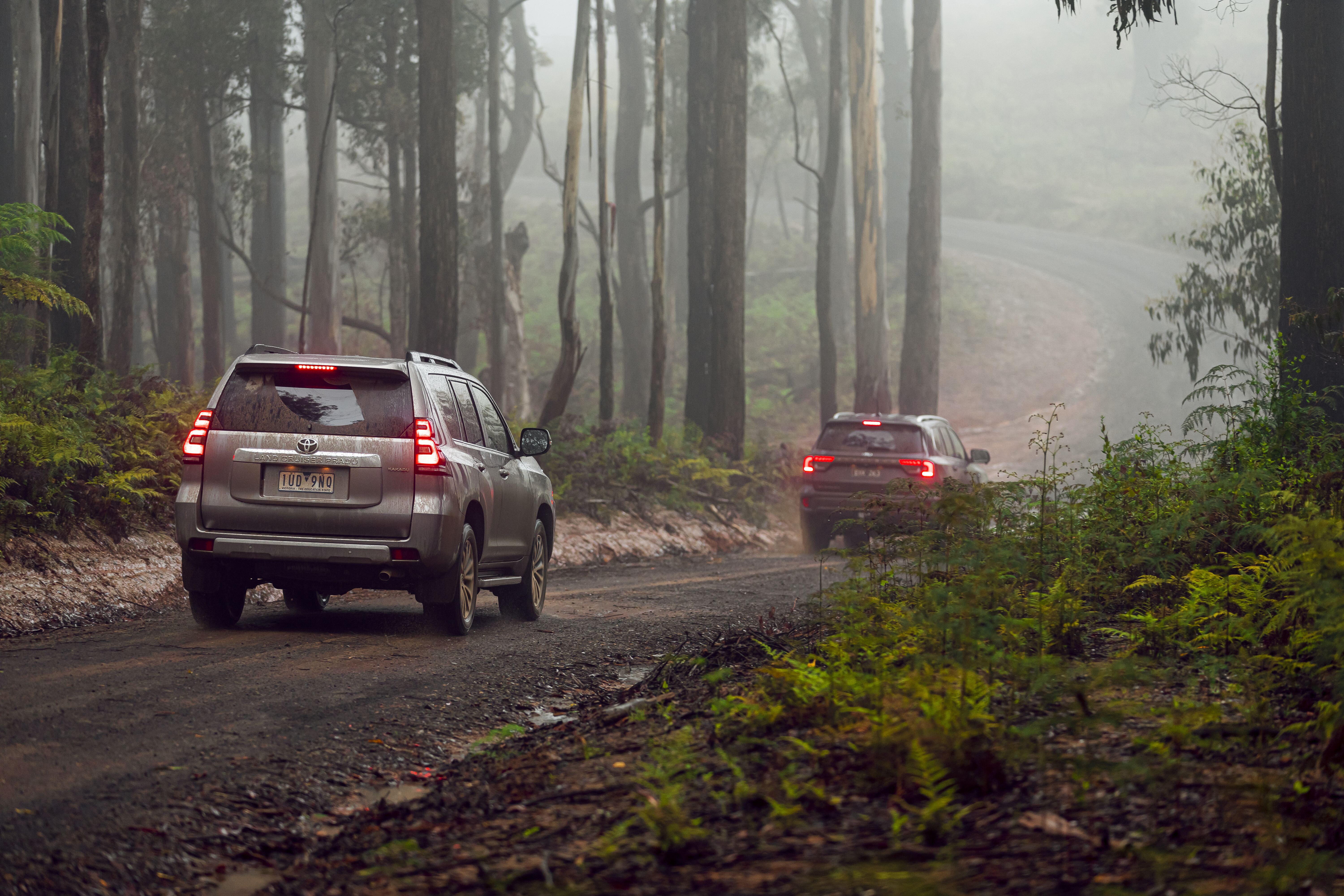
But if I were buying a wagon to kit up for a lap of the map it would be the Prado, but not in Kakadu spec because of the rear suspension. The Prado feels more like a 4×4 should and it’s a well-proven platform to build on, one that’s been tried and tested by tens-of-thousands of adventurers before you.
The gruffness of the engine isn’t so noticeable when you’re ponding along unsealed roads and the ability to carry 150 litres of fuel without fitting an aftermarket tank is a huge bonus.
Scoring
| Ford Everest Platinum | 9.0 |
| Toyota Prado Kakadu | 8.0 |
Specifications
| Specs | Ford Everest Platinum | Toyota Prado Kakadu |
|---|---|---|
| Price | $76,880 | $86,998 |
| Engine | V6 turbo diesel | I4 turbo diesel |
| Capacity | 2993cc | 2755cc |
| Max power | 184kW at 3750rpm | 150kW at 3000 to 3400rpm |
| Max torque | 600Nm at 1750 to 2250rpm | 500Nm at 1600 to 2800rpm |
| Transmission | 10-speed automatic | 6-speed automatic |
| 4×4 system | 2wd, 4×4 auto, 4×4 high range, 4×4 low range | Full-time, dual-range 4×4 |
| Crawl ratio | N/A | 36.1:1 |
| Construction | Body-on-frame 5-door wagon | Body-on-frame 5-door wagon |
| Front suspension | Double wishbone IFS | Double wishbone IFS |
| Rear suspension | Live axle, coil springs, multi-links, Wattu2019s link | Live axle, air springs, multi-links |
| Tyres | 275/45R21 | 265/55R19 |
| Weight | 2492kg (kerb) | 2350kg (kerb) |
| GVM | 3150kg | 2990kg |
| GCM | 6250kg | 5990kg |
| Towing capacity | 3500kg | 3000kg |
| Payload | 685kg | 640kg |
| Seats | 7 | 7 |
| Fuel tank | 80L | 87L |
| ADR fuel use | 8.5L/100km | 7.9L/100km (combined) |
| On-test fuel use | 11.3L/100km | 10.6L/100km |
| Approach angle | 30.2u00b0 | 34.4u00b0 |
| Rampover angle | 21.9u00b0 | 21.1u00b0 |
| Departure angle | 23u00b0 | 23.5u00b0 |
| Ground clearance | 226mm | 219mm |
| Wading depth | 800mm | 700mm |