
Has the LC70 overtaken GQ/GU Patrols as Australia’s most modified fourby? We reckon it must be getting close.
Not only is the LC70 designed to do the tough jobs with a minimum of fuss, it is also arguably the last of the old school 4X4s – simple, powerful, and over-engineered in all the right ways.
The 70 is easy to mod into something special too, like following a recipe from a Michelin Star chef where the second step is “chuck it in the microwave for two minutes.” And there’s no step three.
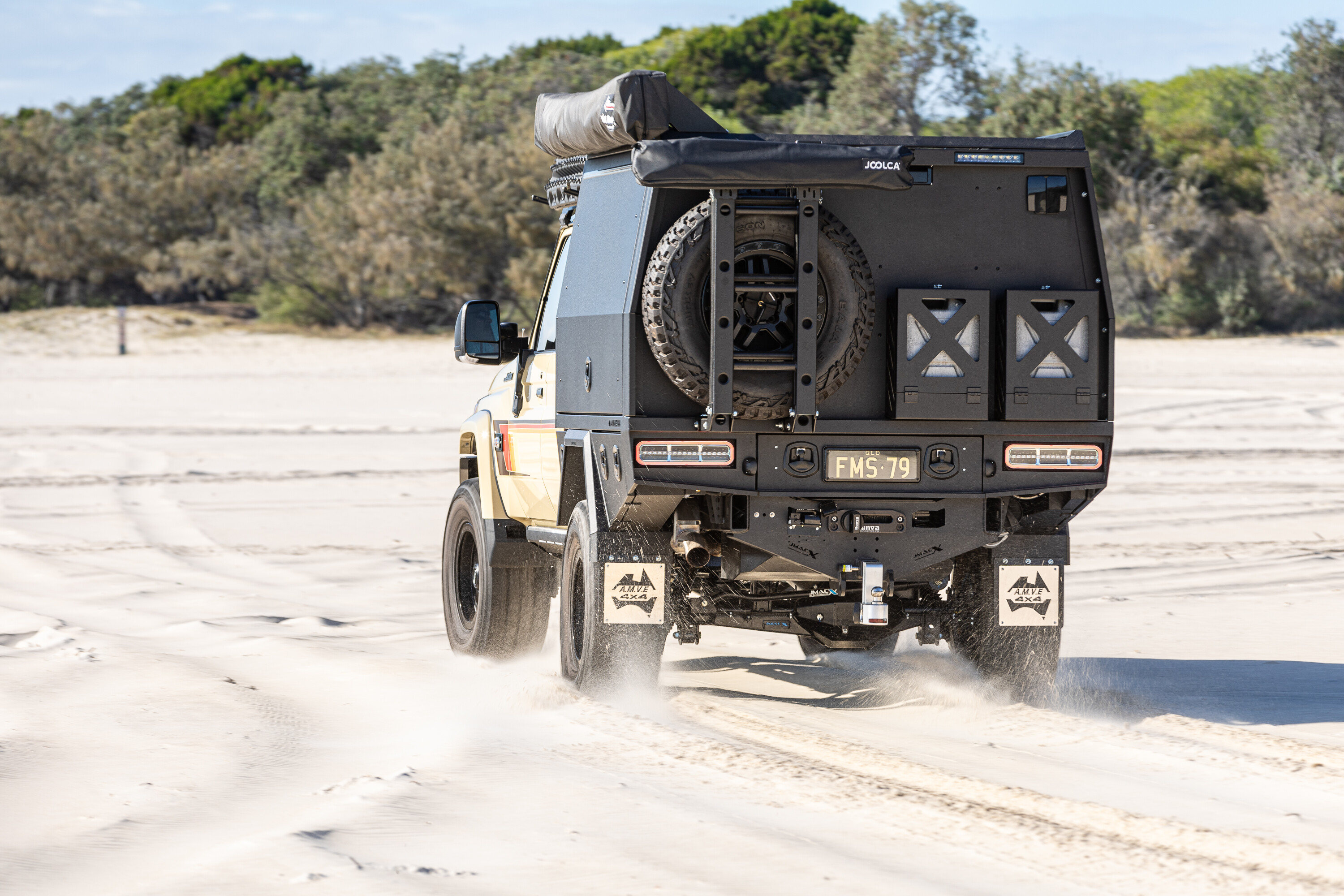
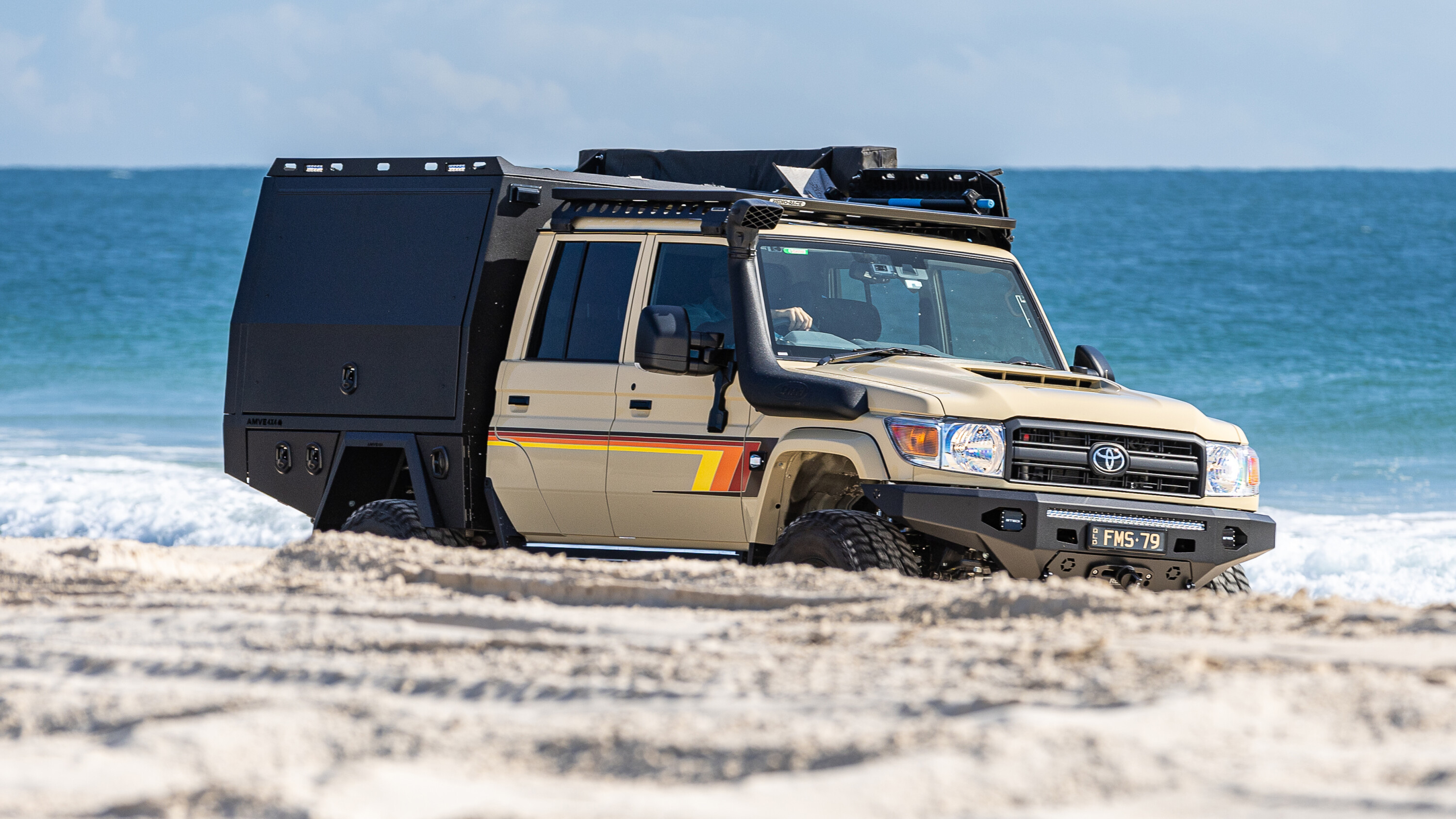
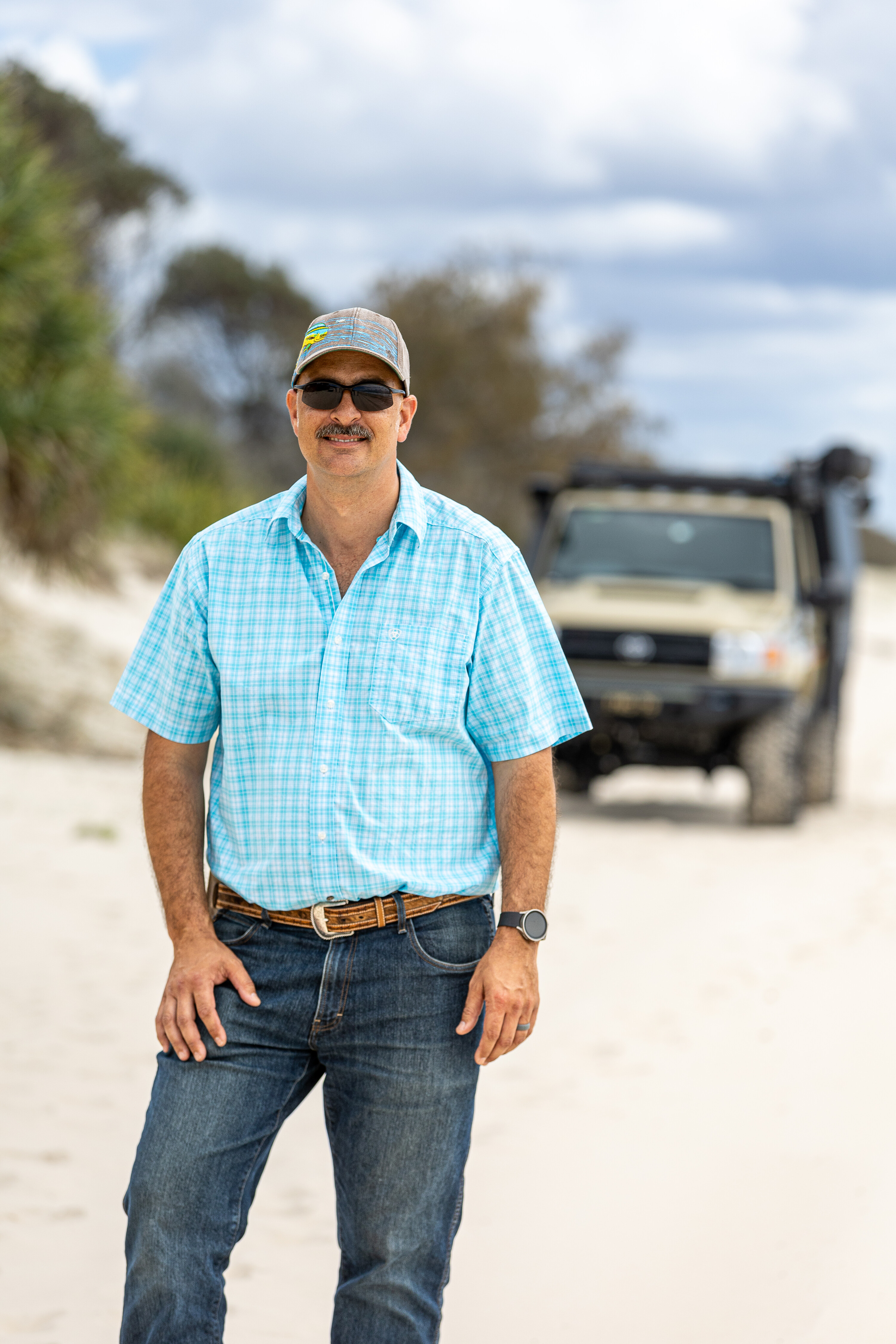
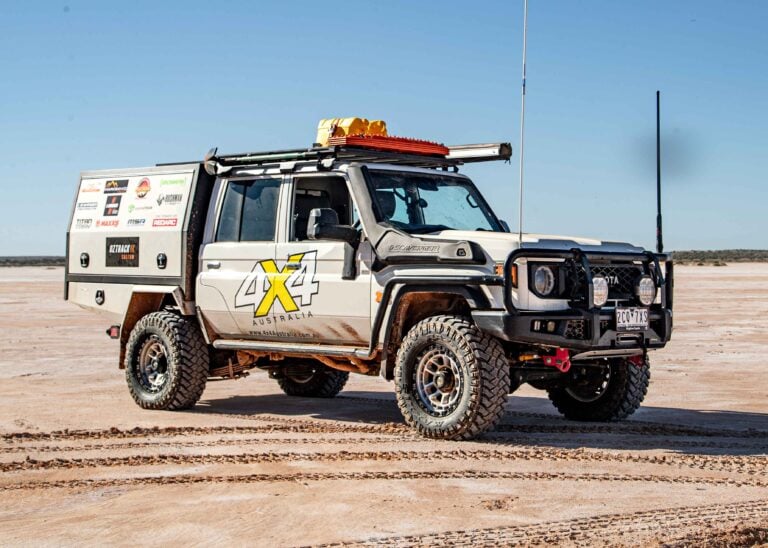
That inherent robustness coupled with the two-minute-noodles ease of modification is what led Mark to build up this delicious Sandy Taupe LC79.
1
With a career in industrial filtration, Mark needed a work truck that could tow heavy machinery to sites, cart a metric buttload of tools between locations, and be loaded up and taken over to Moreton Island for a few nights of R&R without a hiccup.
Having owned a 76 Wagon before this dual-cab, he already had a fair idea of what he wanted out of his updated rig… and he’s not the type of bloke to do things by halves, which would be like paying Gordon Ramsay to whip up a bowl of Nutri-Grain for you.
This inclination to do it right, coupled with a near pathological attention to detail, has helped Mark achieve a masterpiece of a build. The closer you look the more you appreciate the ingredients that have been expertly mixed and brought together.
1
The mods you can see
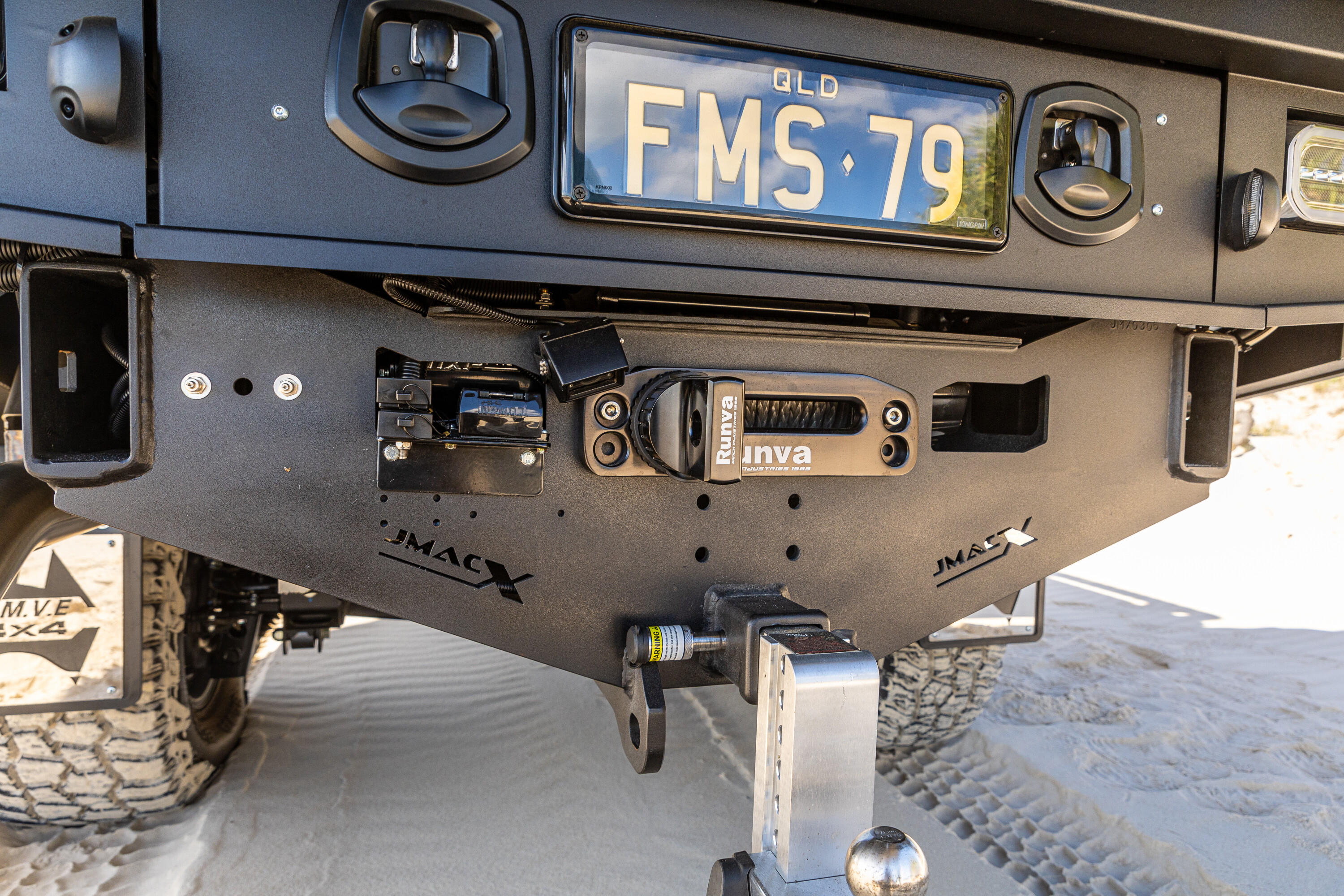
The front bar is a modified Offroad Creative alloy bar that has had the hoops removed and has been powder-coated to match the canopy.
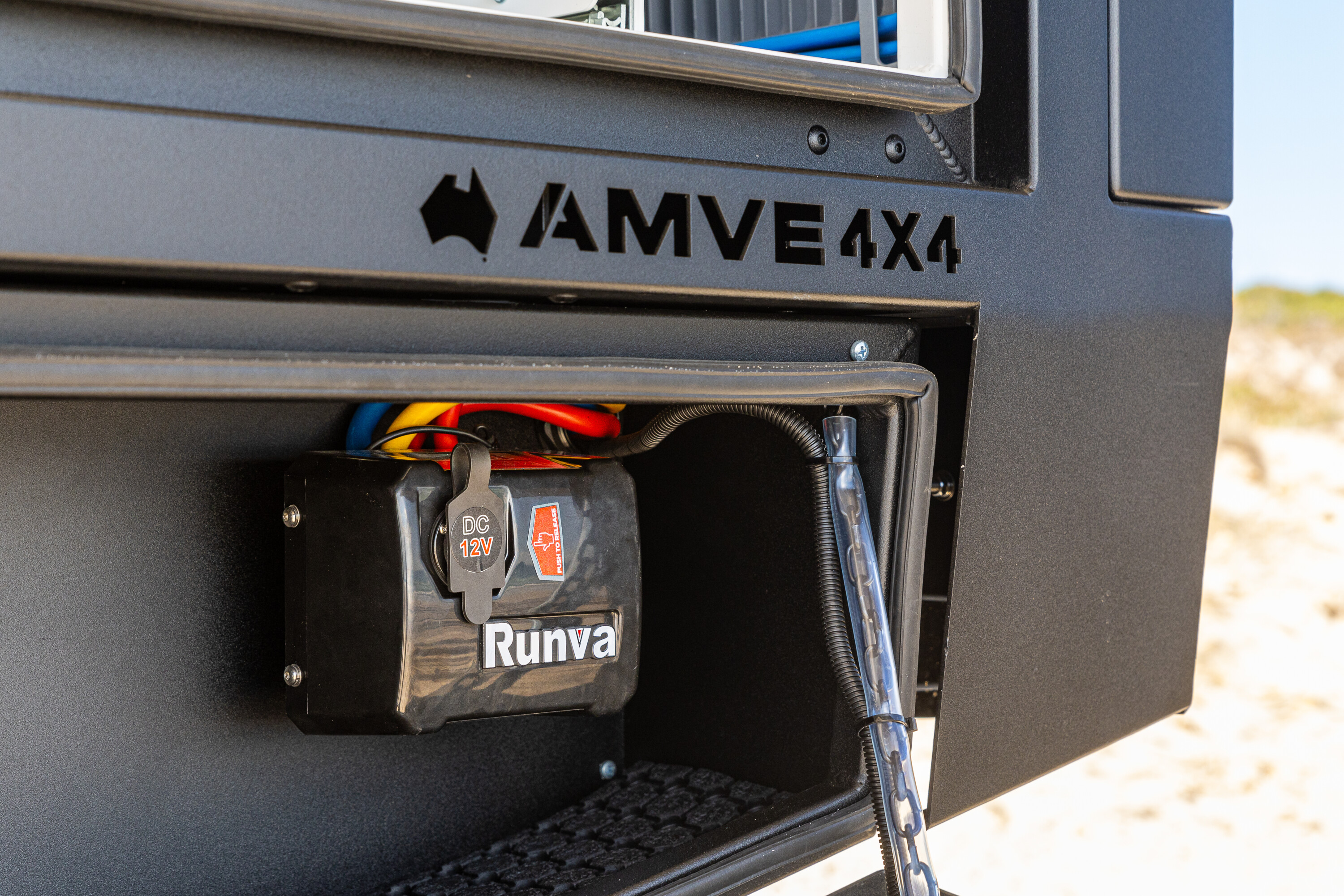
Stedi LEDs have also been integrated to lend a hand should the stock headlights not be up to the task. There’s also a pair of Runva 11XP winches mounted at either end of the chassis should Mark need to recover any mates and not feel like making a U-turn.
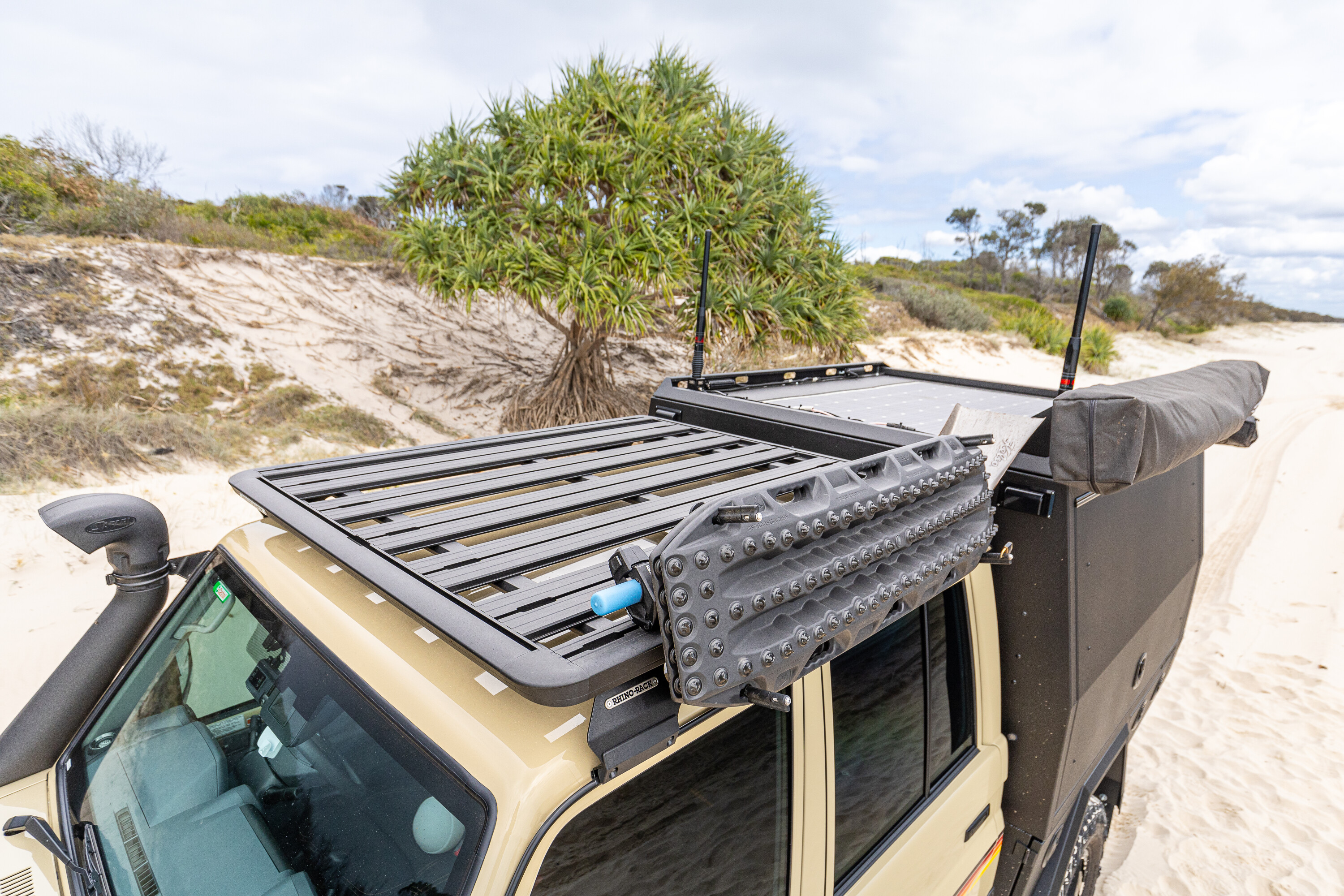
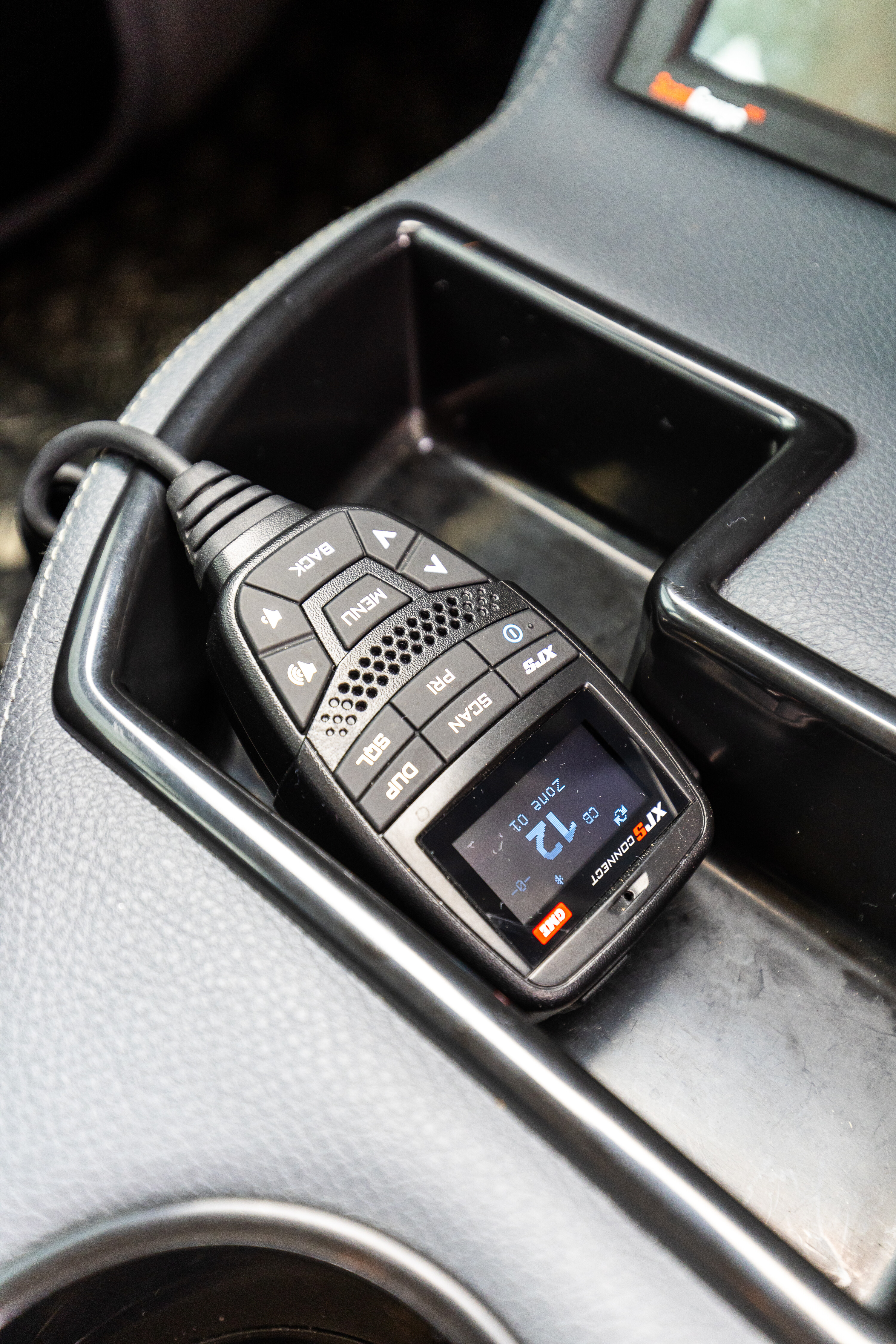
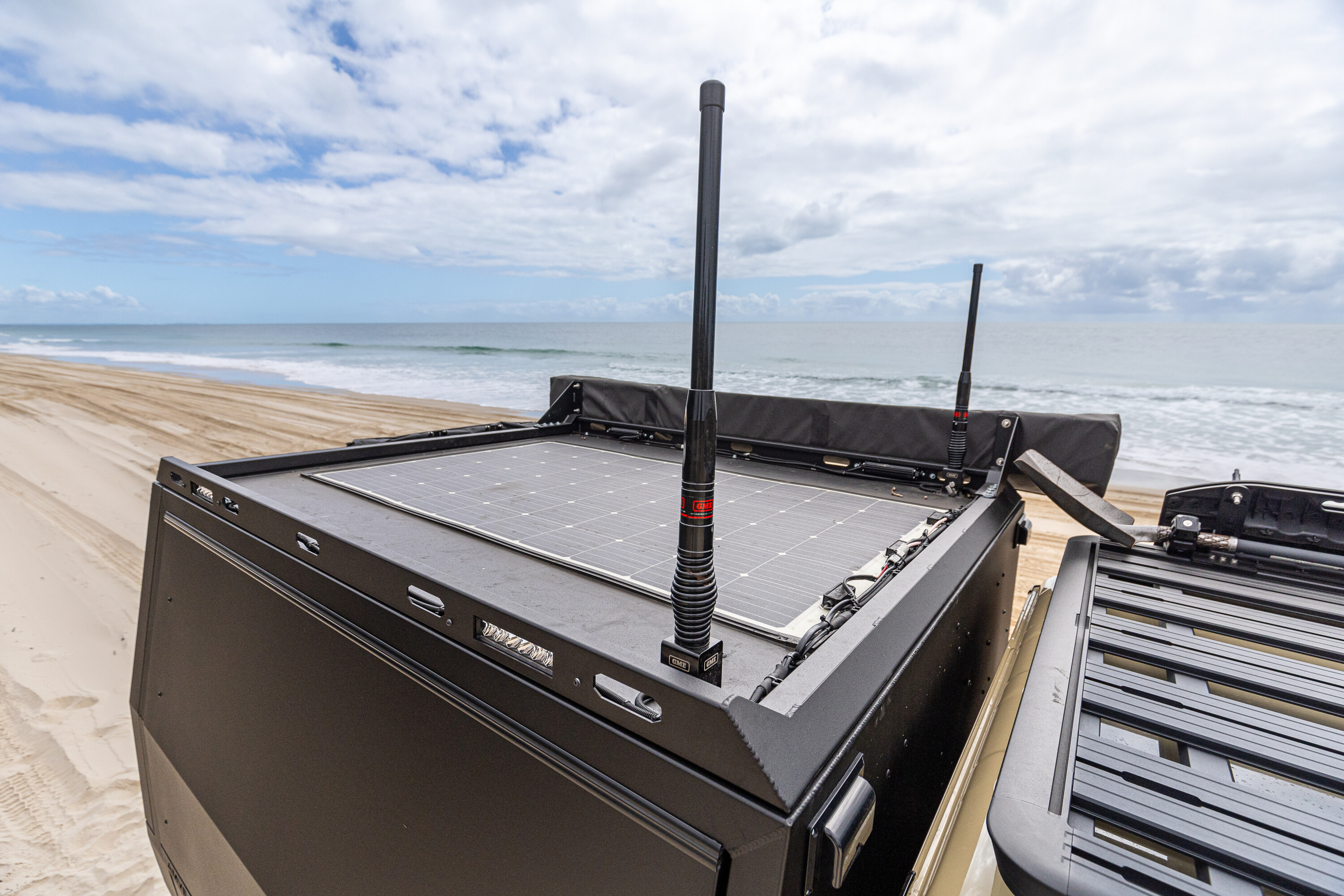
Clearview Compact mirrors allow towing of larger trailers for work (Mark’s currently working on an industrial vacuum that’ll outdo the moon’s gravitational pull) while communication duties are catered for by the aerials mounted to the Rhino-Rack Pioneer platform above the cab.
1
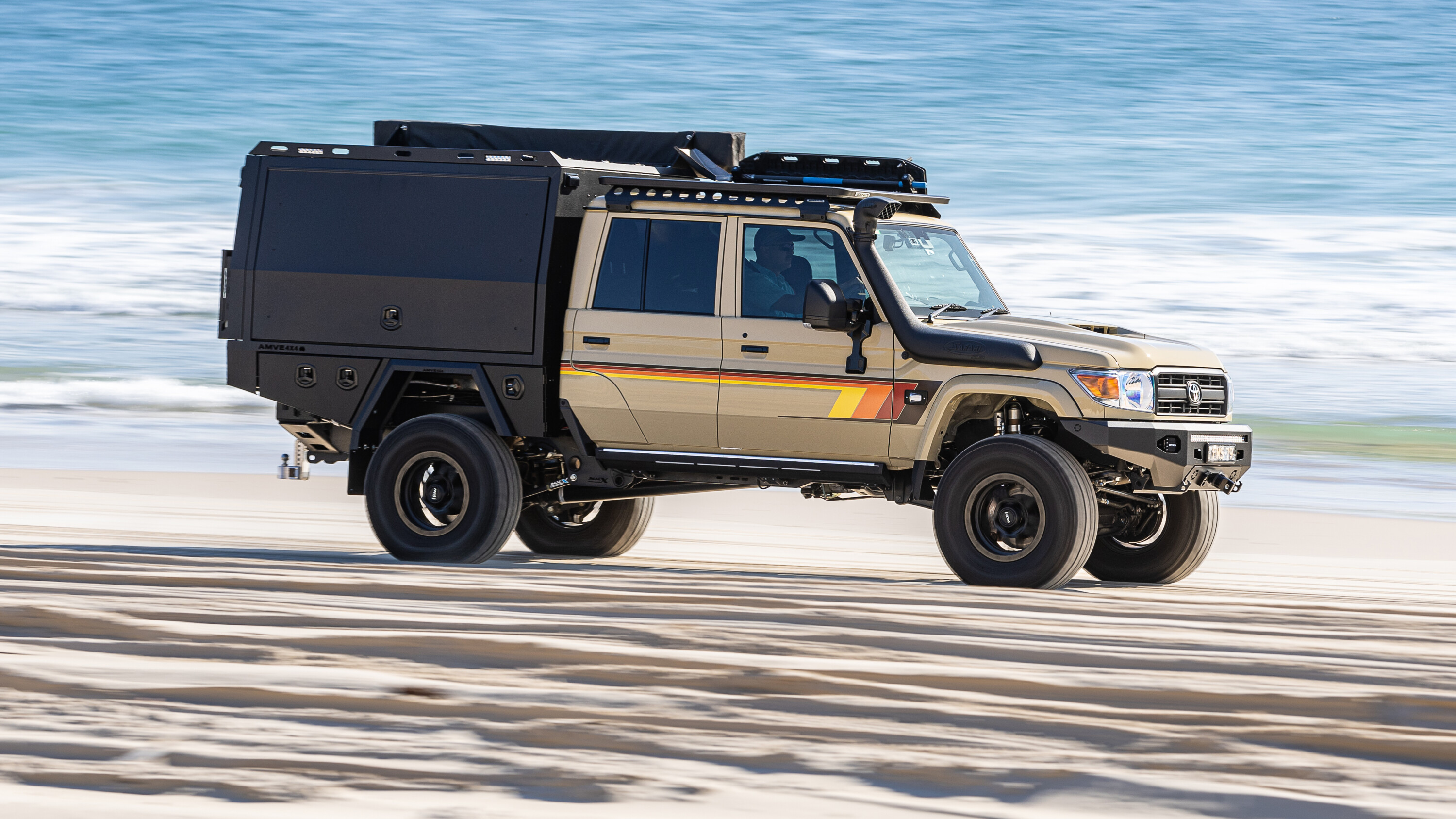
Speaking of the cab, you will have noticed the body stripes running down the side of the Cruiser, but what you probably didn’t see is the entire cab being covered in paint protection film.
In fact, Mark is somewhat fanatical about his vehicle’s looks to the point that he uses a calcium filter on his garden hose when washing his rig.
So, before the canopy went on he dropped the Cruiser off to the guys at Protect Wraps who covered the rear and roof of the cabin with glass coating, fully rust-protected the frame, covered the entire cabin in PPF, then glass coated over the top before adding the stripes and rear window blackout vinyl, making this arguably the most rust-proofed LandCruiser in the country.
1
The mods you can’t see
In case you were wondering if your eyes were playing tricks, nope, this VDJ79 is definitely a little longer than you’re used to.
A 300mm chassis stretch has been performed, making the 4-inch lift and 35-inch Baja Boss rubber seem incredibly proportional, almost as if Mark planned it that way. In fact, the vehicle’s entire frame is remarkably different than when it rolled off Toyoda-San’s assembly line.
Before it had even been registered Mark had it delivered to JMACX Engineering where a 4495 Super Chassis kit was fitted, which bumps GVM up to the maximum (on a standard driver’s licence) 4495kg and lengthens the frame.
1
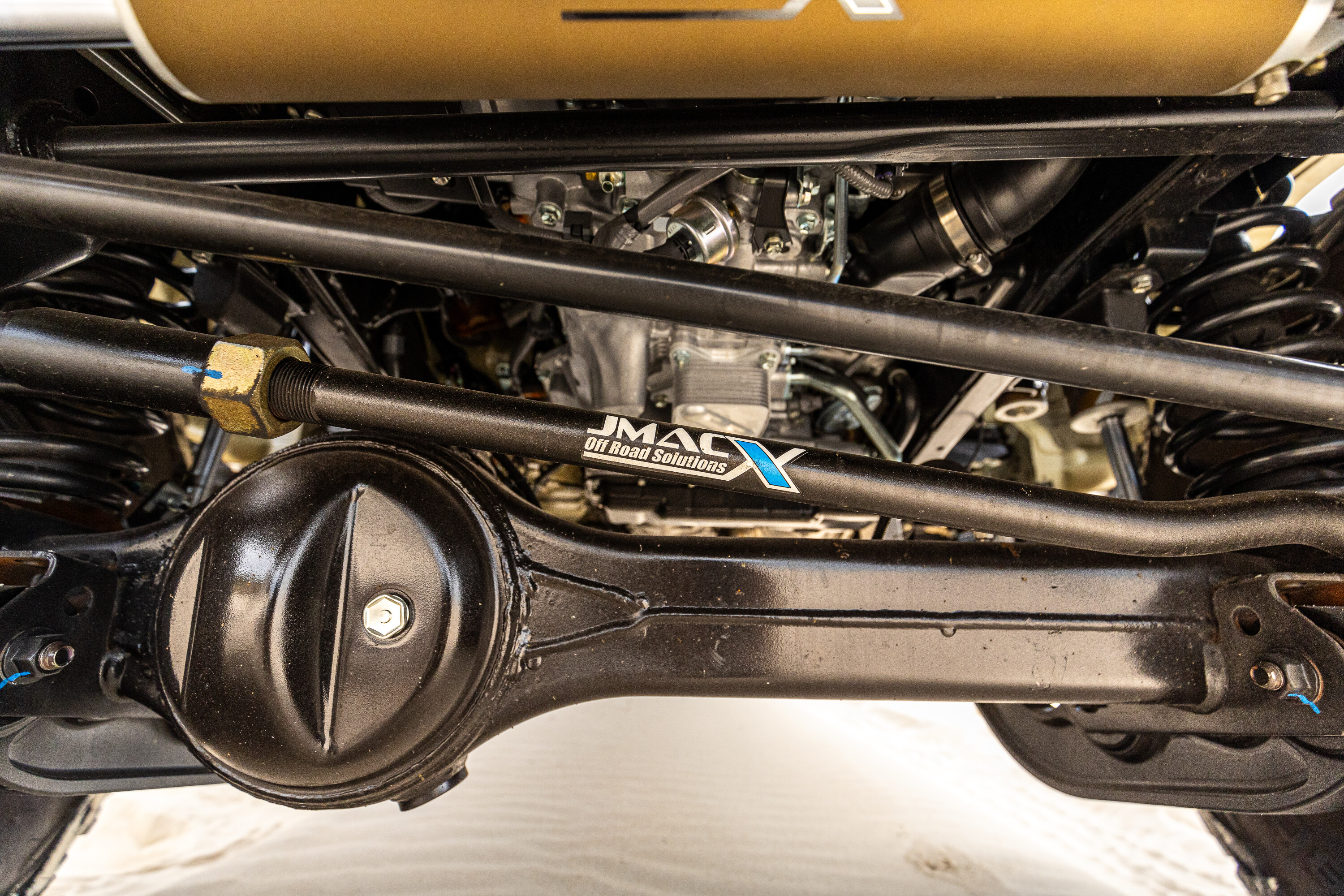
The rear differential housing is also whipped out and replaced with a custom fabricated housing which not only corrects the rear track width discrepancy, but also increases the axle load rating as well.
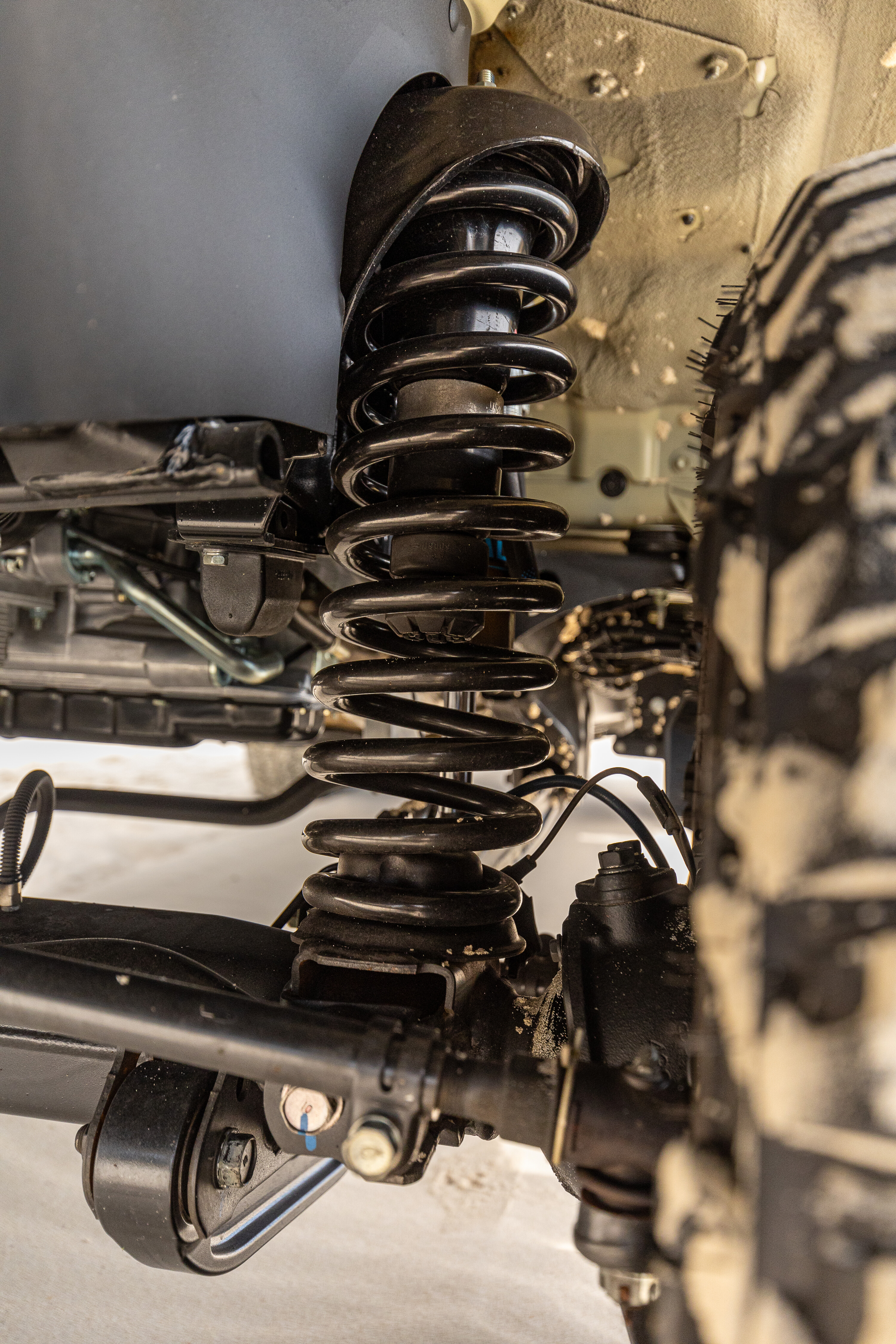
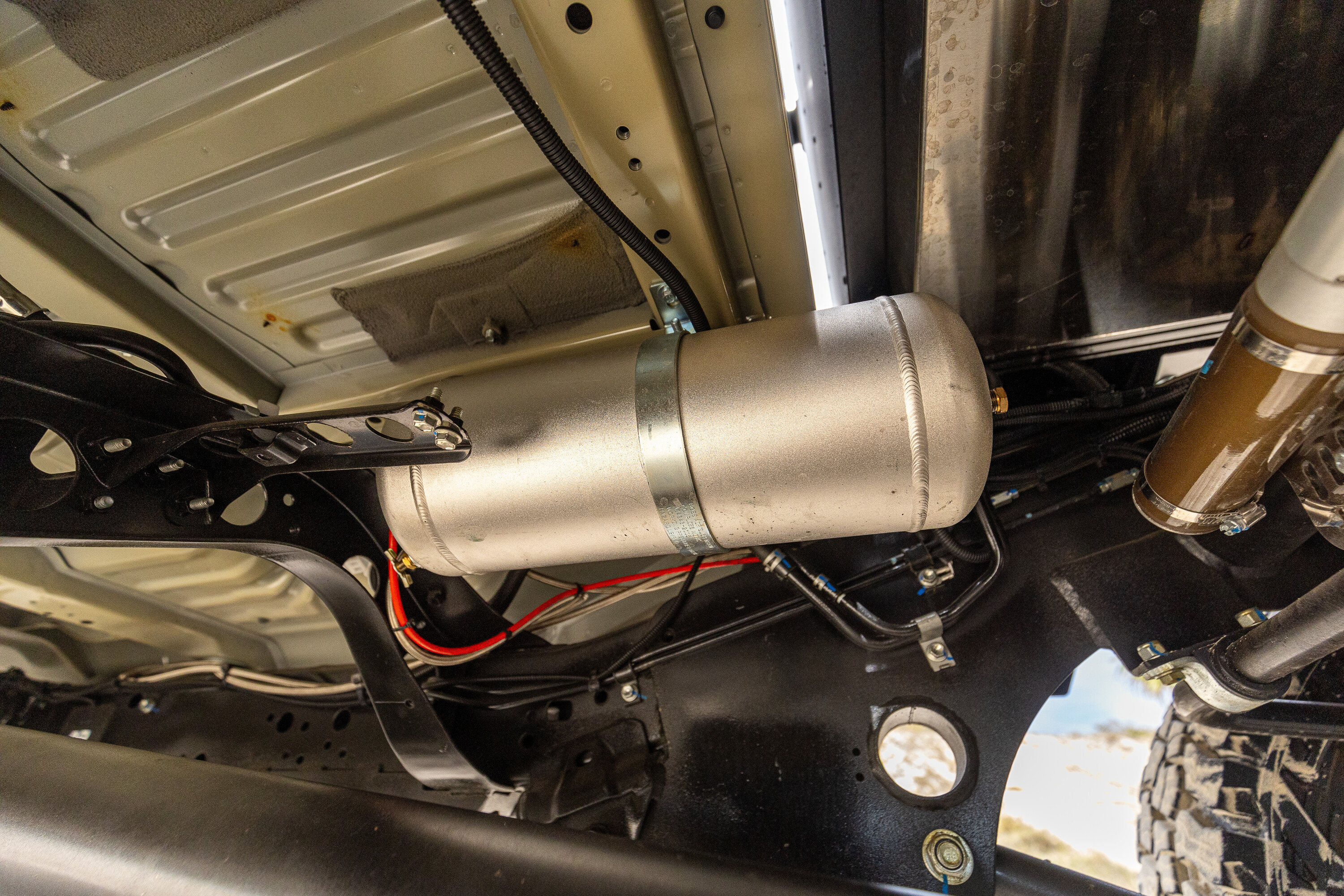
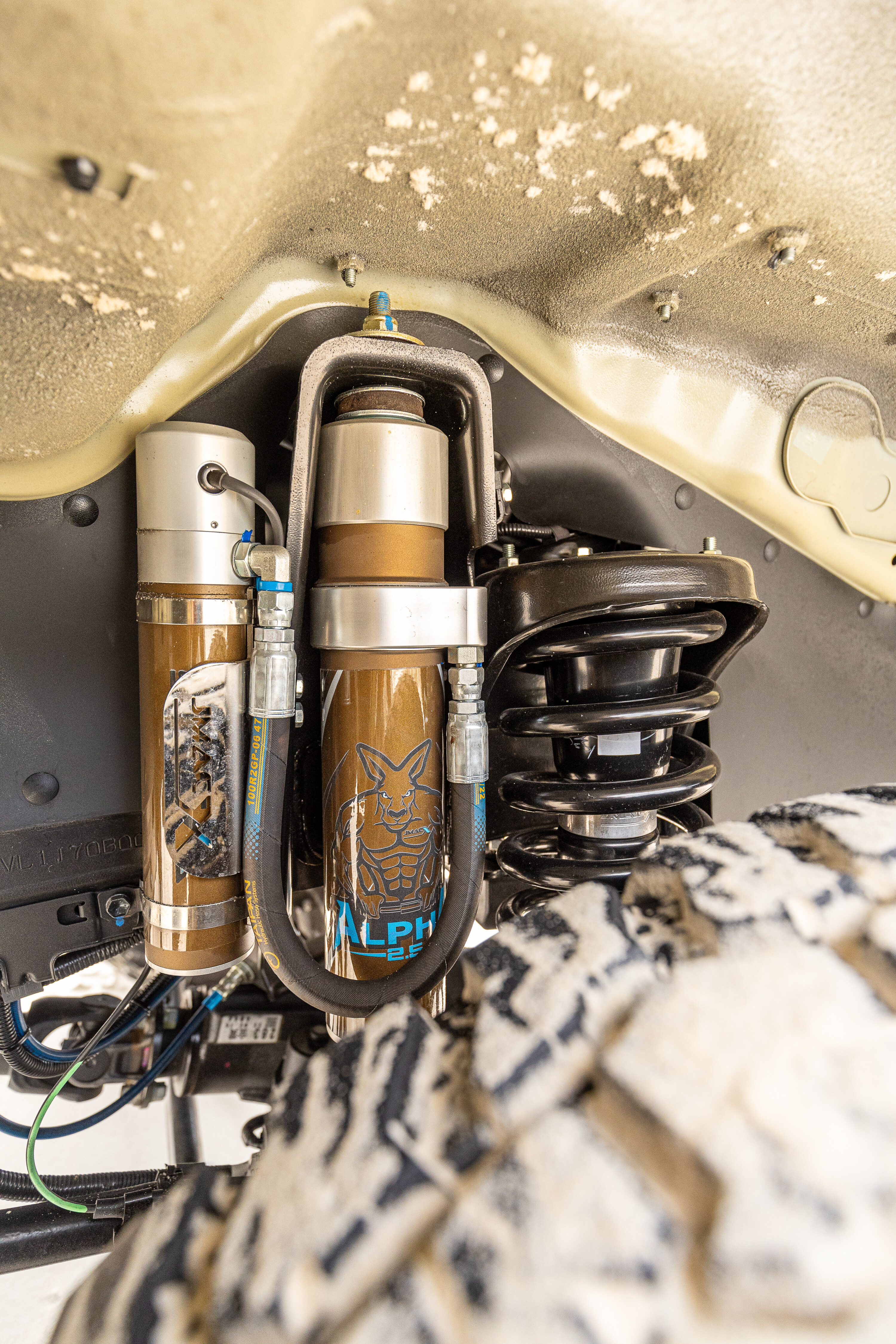
Oh, and the upgraded diff also features mounts for the five-link suspension arrangement, doing away with the factory leaf springs and swapping in a set of progressively rated, 4-inch taller coils with Airbag Man bags to help the ride remain level no matter what’s being carried or hauled.
JMACX’s own Alpha remote reservoir electronically adjustable shocks are used at all four corners to control the bounce, and the front has been treated to a JMACX brake upgrade too. How do six-pot callipers and larger slotted rotors sound? Like increased safety and supercar-spec stopping performance, we’d say.
1
Under the bonnet
While the 4.5L V8 turbo-diesel is a known quantity and capable of big numbers, Mark was not looking to break any dynos.
Instead, he wanted a usable boost in torque and power without rolling coal or taking a bat to the vehicle’s reliability.
After a not-so-good start with a tuner who didn’t know what he was doing, seeing the fuel usage skyrocket without much of a power increase, Mark was put onto G&L Performance who re-did the tune to a much more satisfactory 250-ish ponies… and more than 660Nm. Just the ticket for pulling heavy machinery along.
1
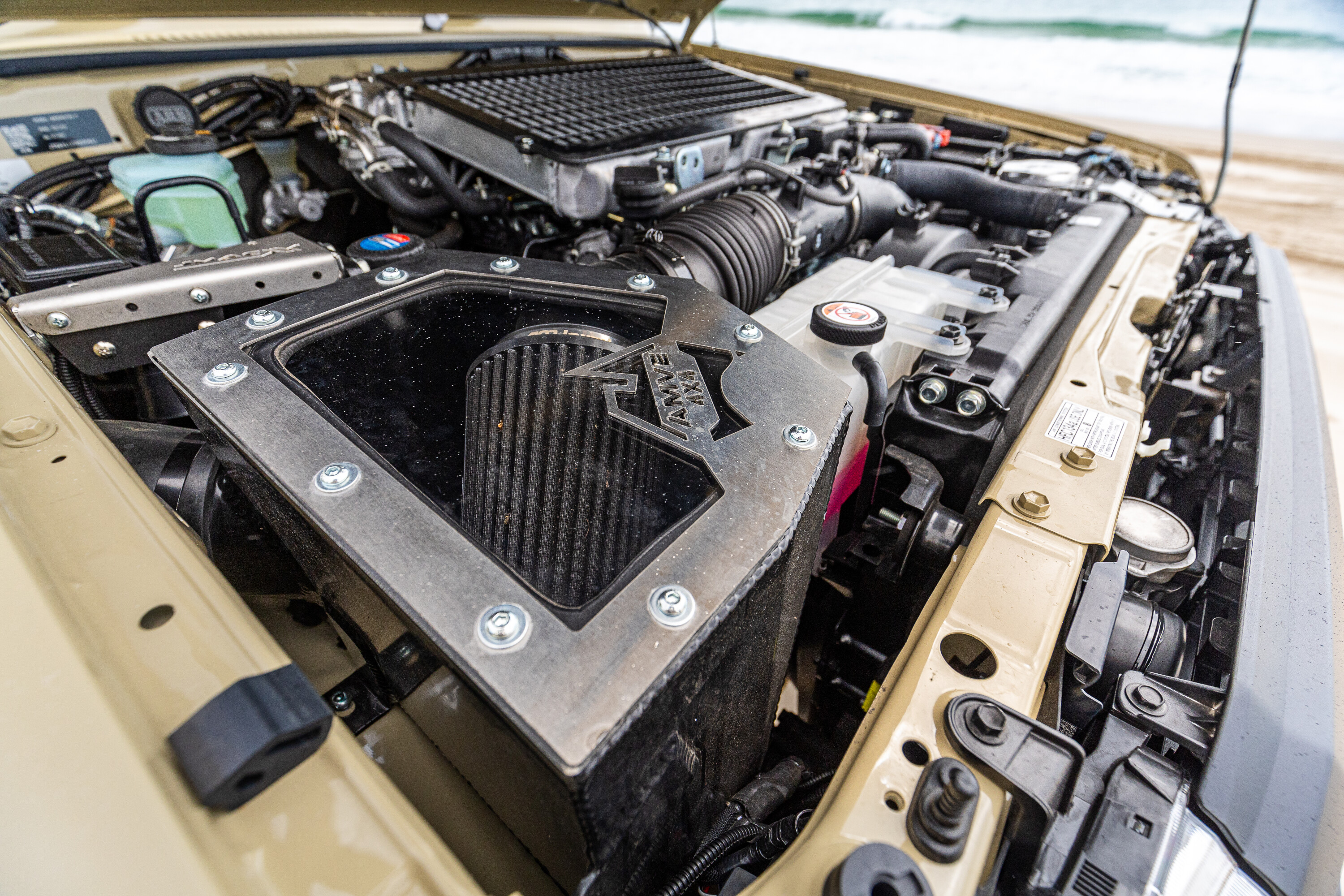
The air is sucked in via a schmick-looking AMVE airbox and is mixed with diesel from the 185L Brown Davis fuel tank, before the spent gasses are pumped rearwards via a 3.5-inch exhaust courtesy of Torqit, which also gives the V8 a healthy bark when the loud pedal is leaned on.
Keeping the five-speed spinning is a 1300Nm NPC Performance clutch, which is more than up to the task of soaking up the torque loads.
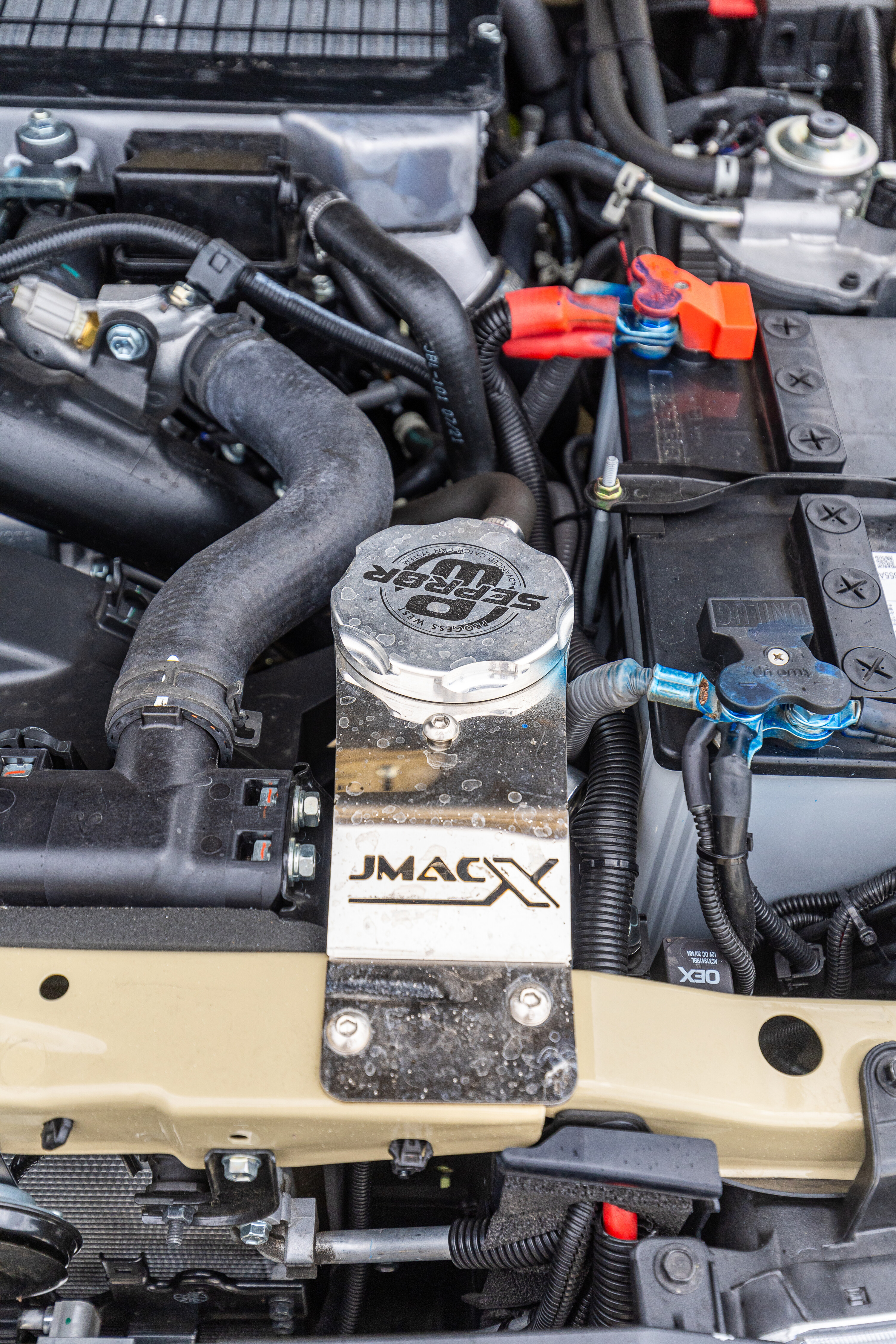
Rounding out the under-bonnet mods is a Process West catch can, which was installed to stop the oil-heavy crankcase vented gasses from being pumped back into the intake.
1
Behind the wheel
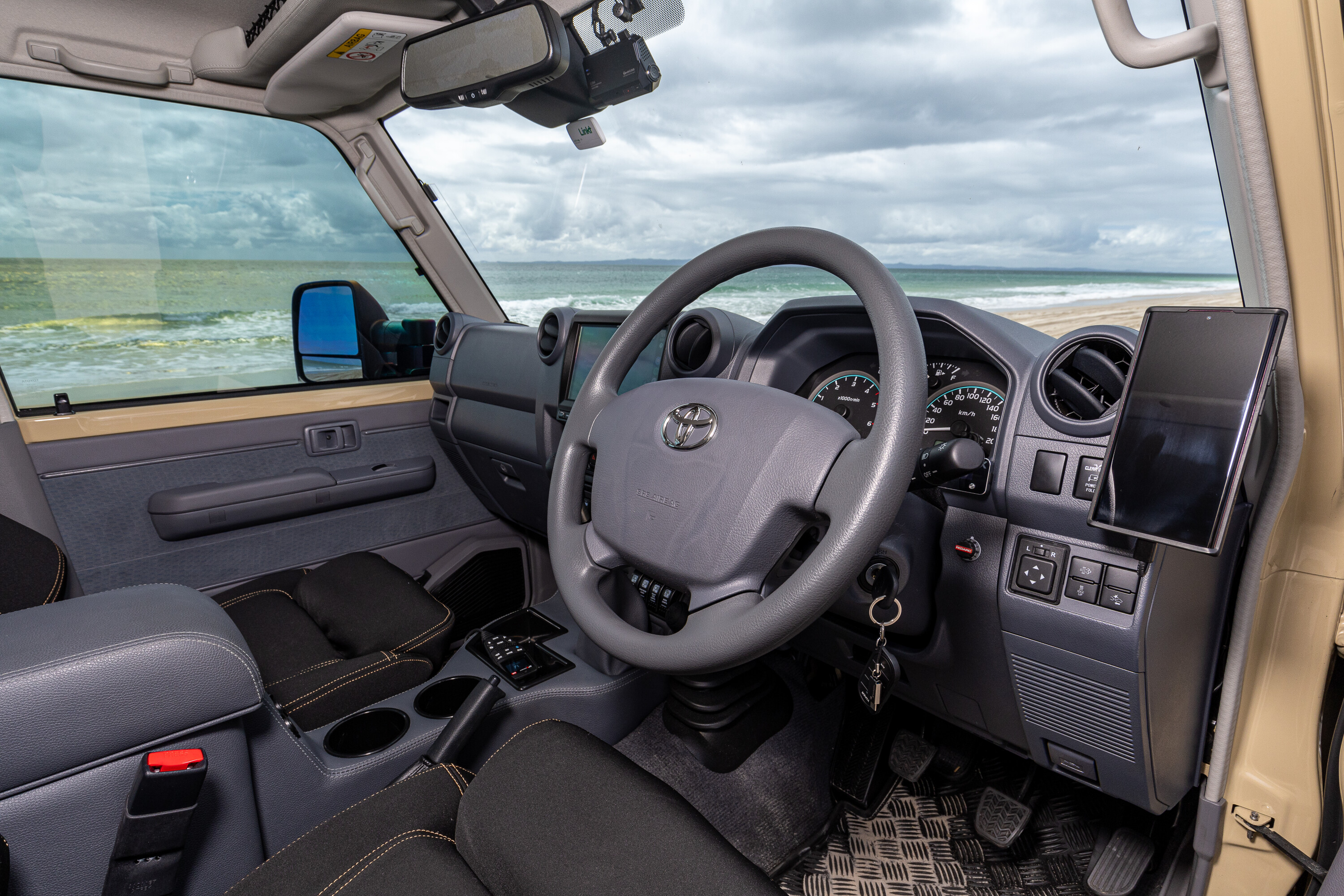
Now, it should be mentioned that Mark has built a couple of competitive stereo systems back when he used to get around in high-performance tarmac-tearers, and as good as Toyota’s single-din CD player with a pair of 4-inch splits was from the factory, Mark was always going to want a little more.
Northfield Car Sound in Nundah started by stripping the interior right down and installing sound deadening everywhere that wasn’t a window.
Then the Alpine catalogue was thrown really hard at the dash and nek minute an i905 head unit with 9-inch touchscreen interface, a pair of R2 6x9s, a couple of tweeters, a six-channel amp and a pair of subwoofers had magically fallen into place.
1
So yeah, if you’re wondering what the NVH levels are like in this Cruiser, the answer is ‘not too shabby’.
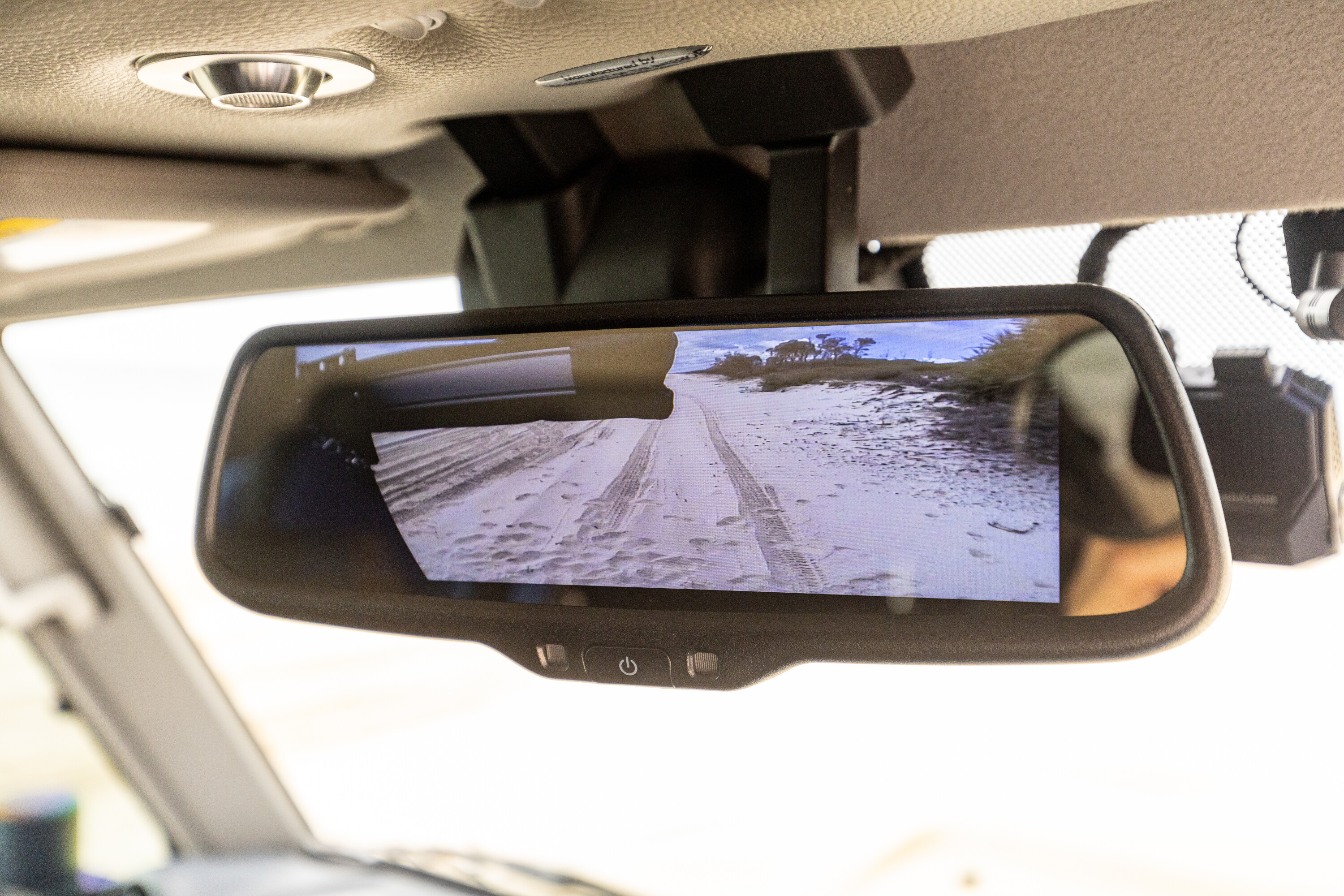
Further interior appointments include the suite of GME comms gear, a couple of Recaro butt-huggers, a NESA 7.3-inch touchscreen rear-view mirror replacement that’s hooked up on a constant feed to the HD camera on the back of the canopy, and a pair of Department of the Interior floor and roof consoles.
Essentially, imagine a stock LC79 interior and picture all of the ways you’d improve it – that’s what Mark has done.
1
The back end
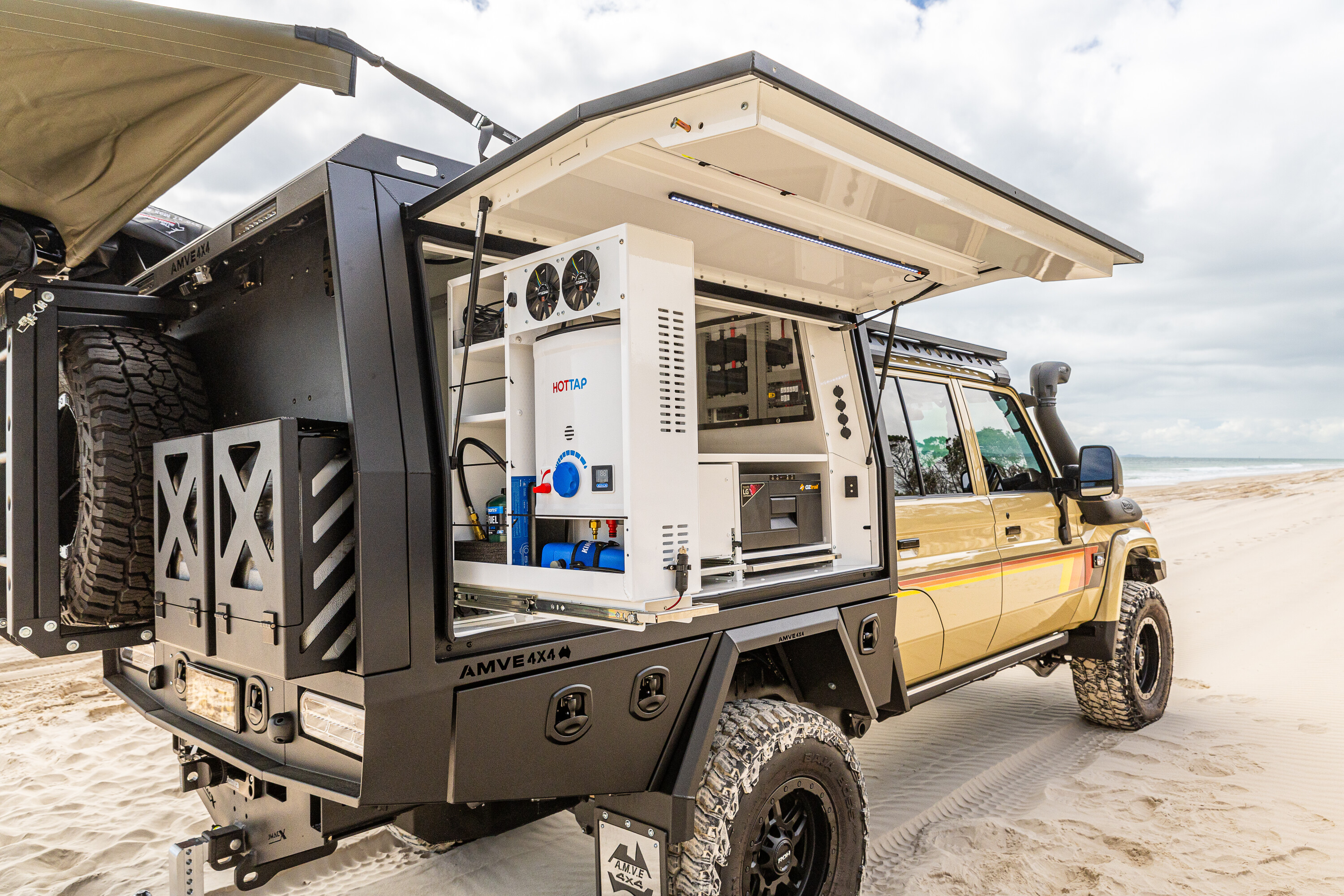
When you’ve stretched the frame, gone to town on the body, completely re-designed the entire suspension system and thrown a brazillion custom touches at your rig, you wouldn’t settle for an off-the-shelf canopy set-up, would you? Mark had AMVE build him a custom rear-end to his specs. The icing on the cake as it were.
The canopy bolts directly to the frame and has been powder-coated externally in Black Textrue finish, while the inside has been coated white to keep internal temps down. A pair of toolboxes sit on either side of the wheels while the rear roller drawer is completely sealed away from the elements.
The doors are lifted by dual-struts and the whale tail locks are all wired in with the central locking system. A Bush Company Maxx awning is mounted over on the passenger side and the rear wall sees a mount for the spare 35 and a ladder to access the inbuilt roof rack system, as well as a pair of jerry can holders.
1
All in all, it looks a lot like an average canopy at first glance, but it’s when you add up all of the little details that you begin to appreciate the extent of the build.
Most canopies have a lip where the door seals, for example, but not this one. The floor is flush with the opening, making retrieving gear and opening internal drawers a snap.
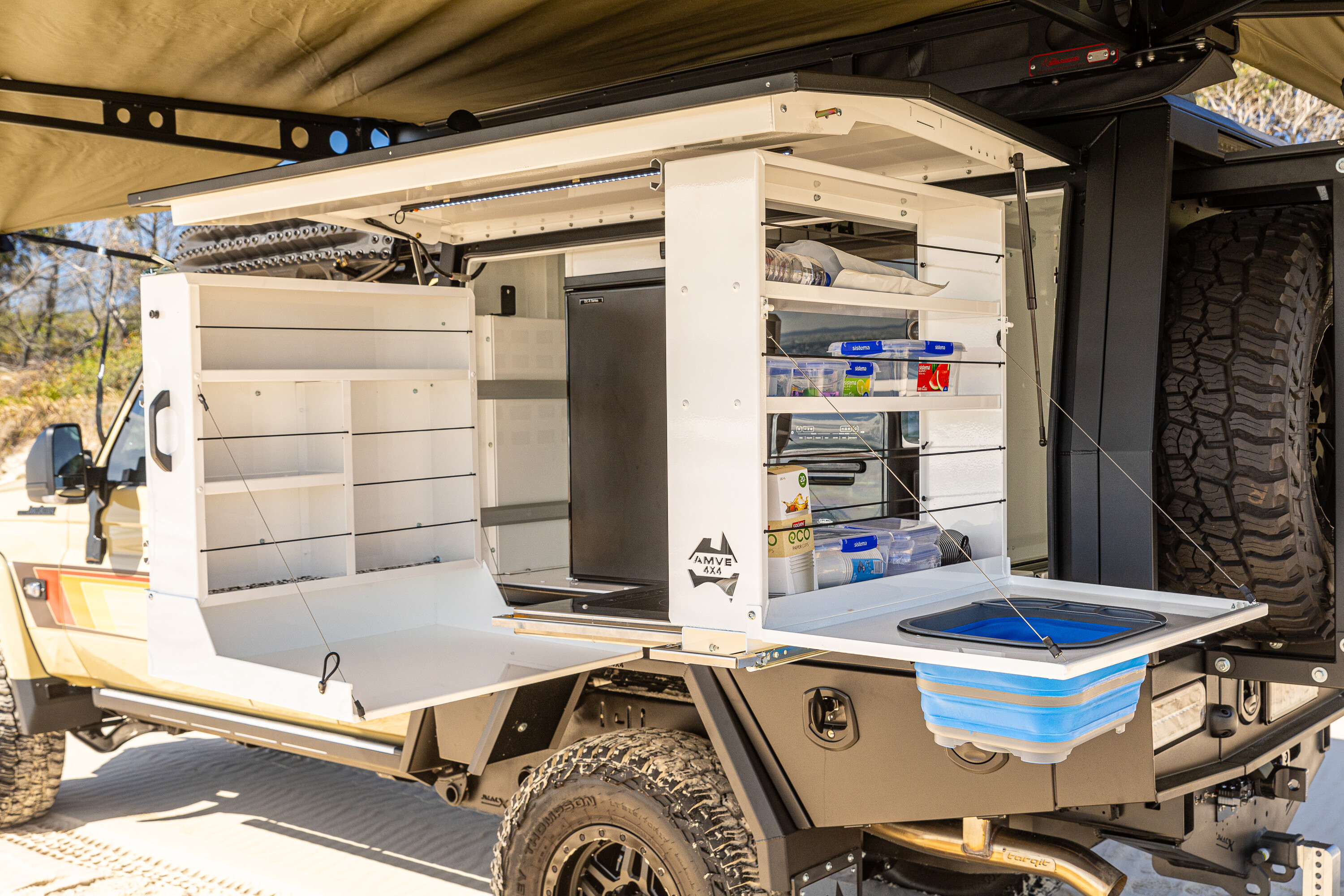
The framework has been recessed for the Renogy 3000W inverter, the Joolca hot water system is fitted on its own slide-out, and there’s a custom bench slide-out for the microwave, air-fryer, Nespresso machine and twin induction stove (which is frankly better decked out than my kitchen at home).
1
A 130L Bushman upright fridge and Oztrail drawer freezer take care of keeping the food fresh, and there’s also a custom 100L water tank for showers and cooking. In other words, if you can’t find what you need in this canopy, you’re not looking hard enough.
It goes without saying that having this much electrical gear onboard necessitated a hell of a battery system, and there are three DCS Compact Lithium batteries that output 180Ah each (if you can’t power your campsite with 540Ah you may need to step away from the PS5, champ).
These are controlled by a Renogy 300A smart shunt (that was specially ordered as they’re yet to be released in Australia) and a Renogy One Core management screen.
1
Up on the roof a 295W 48V solar panel keeps the system topped up when the engine is off, and some redundancy has been built in with four separate four-way fuse blocks for both negative and positive power distribution.
There’s also a 240V power inlet for keeping things at max charge when parked up at home.
And yep, there’s still plenty of storage inside the canopy too. Just goes to show that the perfect 4X4 is not unachievable – the devil is in the detail.
1
The anatomy of a built chassis
It’s no secret that the LC70 has a few compromises in the chassis department.
The skinny rear diff, the ultra-stiff leaf springs, the wheelbase (particularly in the dual-cabs) that doesn’t seem to be quite enough, the GVM that’s really not that amazing…
Don’t get us wrong, the 70 Series Cruiser is still the go-to for Aussie workhorses, but like Mark, there are a few things you can do to make them tick all the boxes.
1
1. Diff correction
There are a few options for widening the rear LC70 rear axle, and most of them increase the diff housing’s load bearing limits too.
Some use spacers (which are illegal), and some use more negatively offset rims (which can flog out your bearings pretty quick), but to do the job properly a full replacement housing and axles are the way to go.
It costs a chunk of change, but again, aftermarket housings are usually exceptionally high quality and offer higher load limits, so it’s money well-spent.
1
2. Coil conversion
You may not think that swapping the leaves out for coils would do you any favours when it comes to load carrying, but you’d be wrong.
Coils offer a heap of advantages both on and off-road and with the correct spring rate (or with the addition of airbags) you can easily tailor them to suit the weights you’re working with.
Leaves are great at load carrying but can be a severe compromise for anything else. Coils take a little more work to dial in but can be made to work incredibly well for just about any purpose.
1
3. Frame stretching
There are a lot of advantages to stretching the chassis from an engineering standpoint. The first is it moves more weight in between your axles, improving the mass distribution.
It also increases ride comfort (there’s a reason limos are so long), especially over corrugations, plus adds stability on hill climbs. You do lose out on rampover angle, but for a tourer, who really cares? The gains far outweigh any lost belly clearance.
1
4. GVM upgrade
Gross vehicle mass is a buzzword in modern vehicles, mainly because it’s shockingly easy to exceed the factory GVM ratings (in some cases) with nothing more than full tanks, a few passengers, some bar work, a couple mods and a camper in tow.
Once again, the aftermarket has come to the rescue with specially designed suspension, and occasionally chassis reinforcement, kits that allow you to legally bump up your rig’s load-carting ability.
A must-do if you’re towing heavy or like to bring your entire household along for your weekend away. We ain’t judging.
1
5. Engineering
All of the above will require signing off by an approved signatory for your state’s motoring authority; aka it’ll need to be engineered.
Because Australia has design rules and state-by-state legislation for the modifications for motor vehicles that may as well have been written by a dyslexic chimp slapping arbitrarily at a typewriter, how each individual engineer chooses to interpret these laws will vary wildly.
Best bet is to do it through a company, like AMVE, who will have its own contacts and know exactly what needs to happen to make everything legal, saving you time and money in the long run.
MORE
Everything Toyota
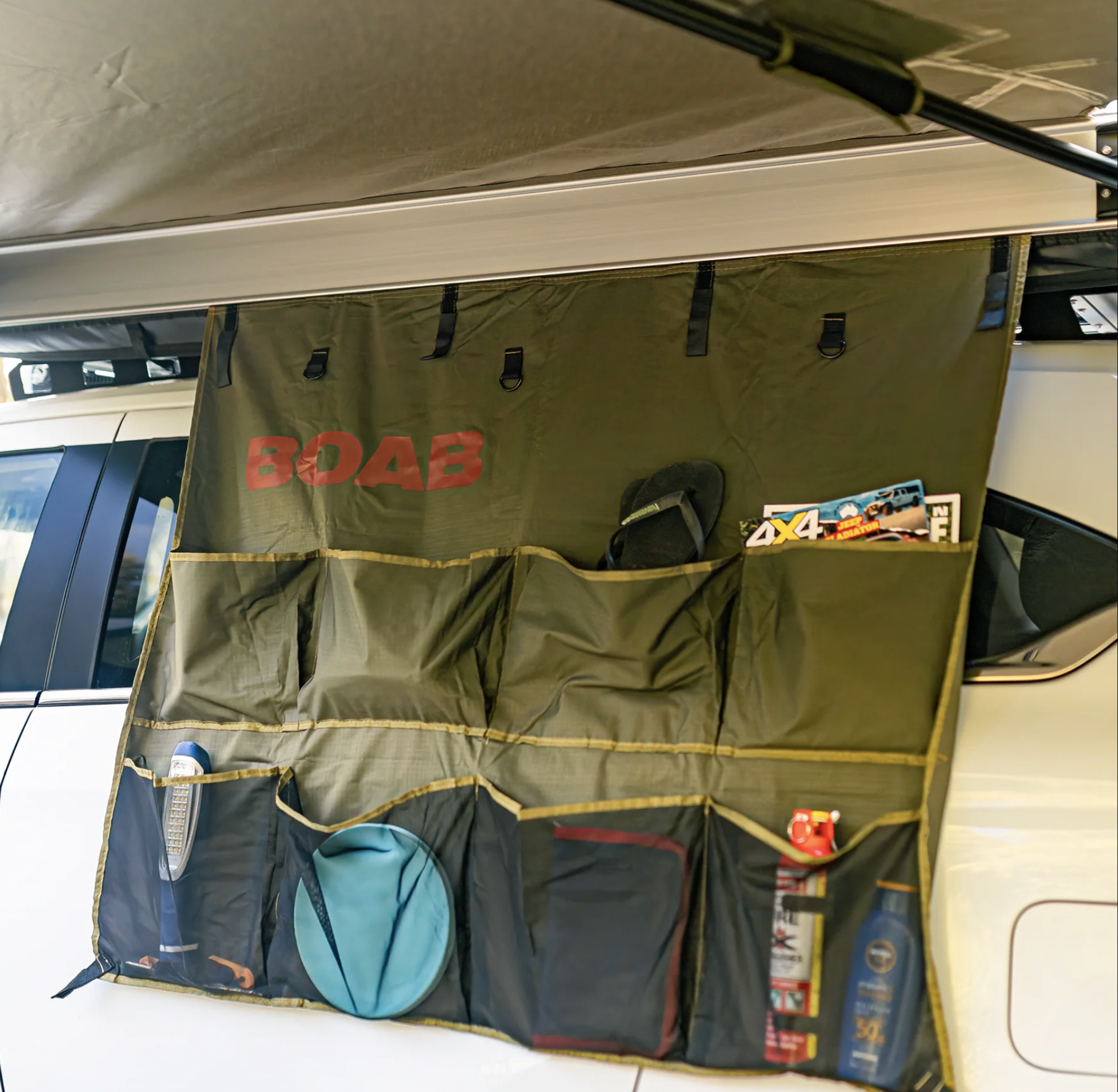
Boab has launched a new website that offers customers an expanded product range, simple navigation, informative blog articles and the ability to purchase Boab products directly online.
Boab was established in 2007 and is a trusted name in the adventure industry for its tough and innovative diesel fuel and water storage solutions, and it’s now part of the Brown and Watson International (BWI) family, which is well-known for brands including Narva and Projecta.
I’ve been using a Boab footwell water tank for years, so it is great to see that, more recently, Boab now offers a diverse range of products that also include high-quality rooftop tents and awnings, roller drawer storage systems, cargo slides, camping accessories, as well as ‘in and out’ cargo-securing solutions.
2
A feature of the latest Boab range is its rooftop tents which are available in both soft-shell cover and hard cover variants, providing comfortable sleeping quarters for up to two people. Offering quick one-person set-up, premium 280gsm ripstop polycotton waterproof canvas and quality aluminium and stainless-steel fittings and hardware, Boab rooftop tents are durable and draw inspiration from the enduring Boab tree which is known for its resilience in the Kimberley.
As well as being manufactured to easily handle tough conditions, Boab rooftop tents are comfortable and convenient to use thanks to their high-density foam mattresses, generous ventilation, superfine insect mesh and LED strip lighting. Boab also offers an annexe extension for the softcover tent variant, as well as a shower cube and several vehicle awnings including 270-degree and straight vehicle awnings to complete the overall camping experience.
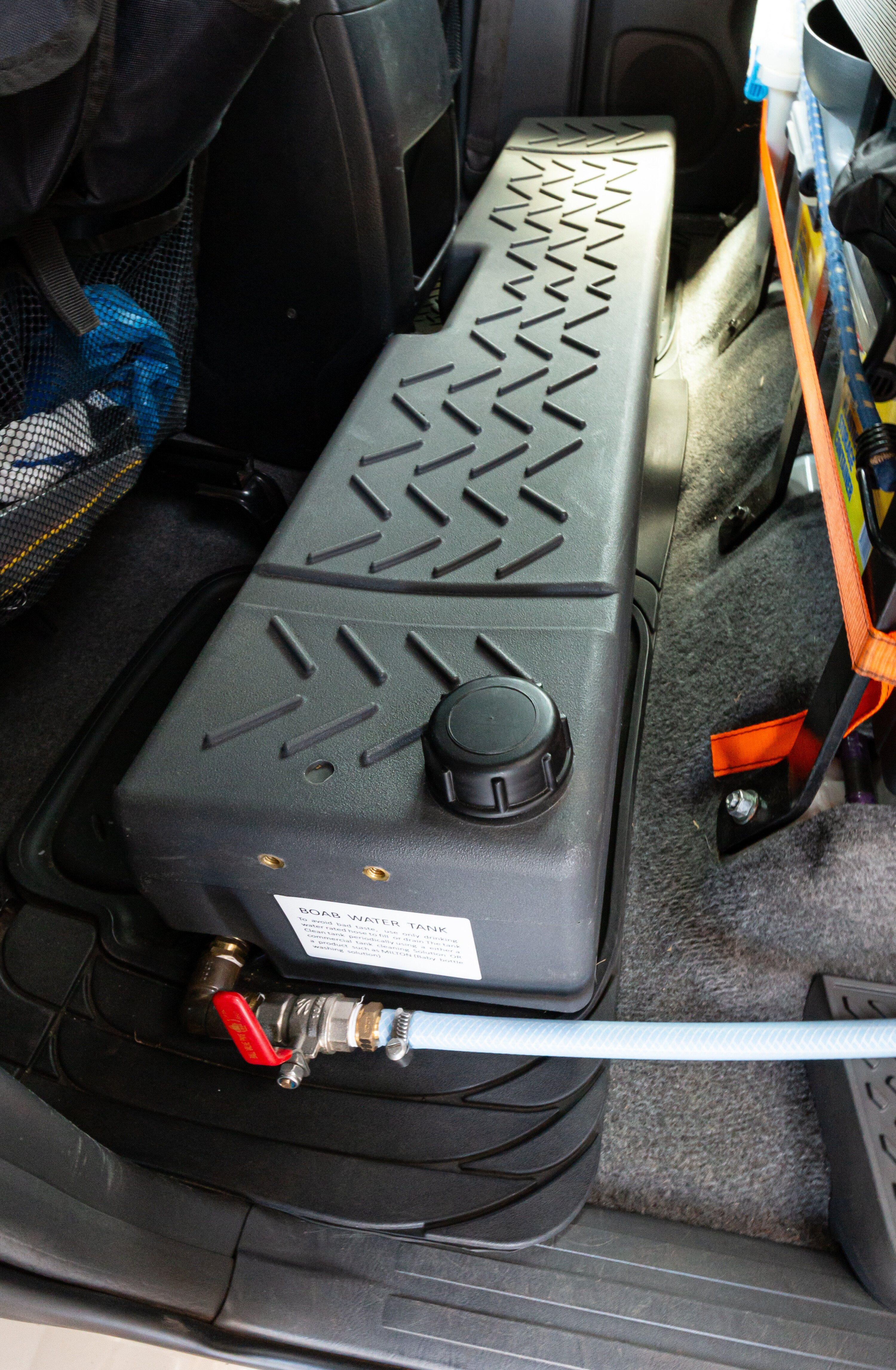
2
Boab Brand Manager, Michelle Cochrane, said she was excited by Boab’s expanding range, along with the greater accessibility the new site provided for both first-time and existing Boab customers.
“Whether it’s a short weekend away, an extended time on the road or any adventure in between, chances are that Boab will have a product to help make the experience more enjoyable and convenient,” Cochrane said.
“And now with the extended capabilities of the new website including e-commerce functionality, more Australians will be able to purchase and enjoy the benefits of the Boab range and receive free shipping straight to their door.”
Product-dependent, the Boab range is backed by warranties of up to three years.
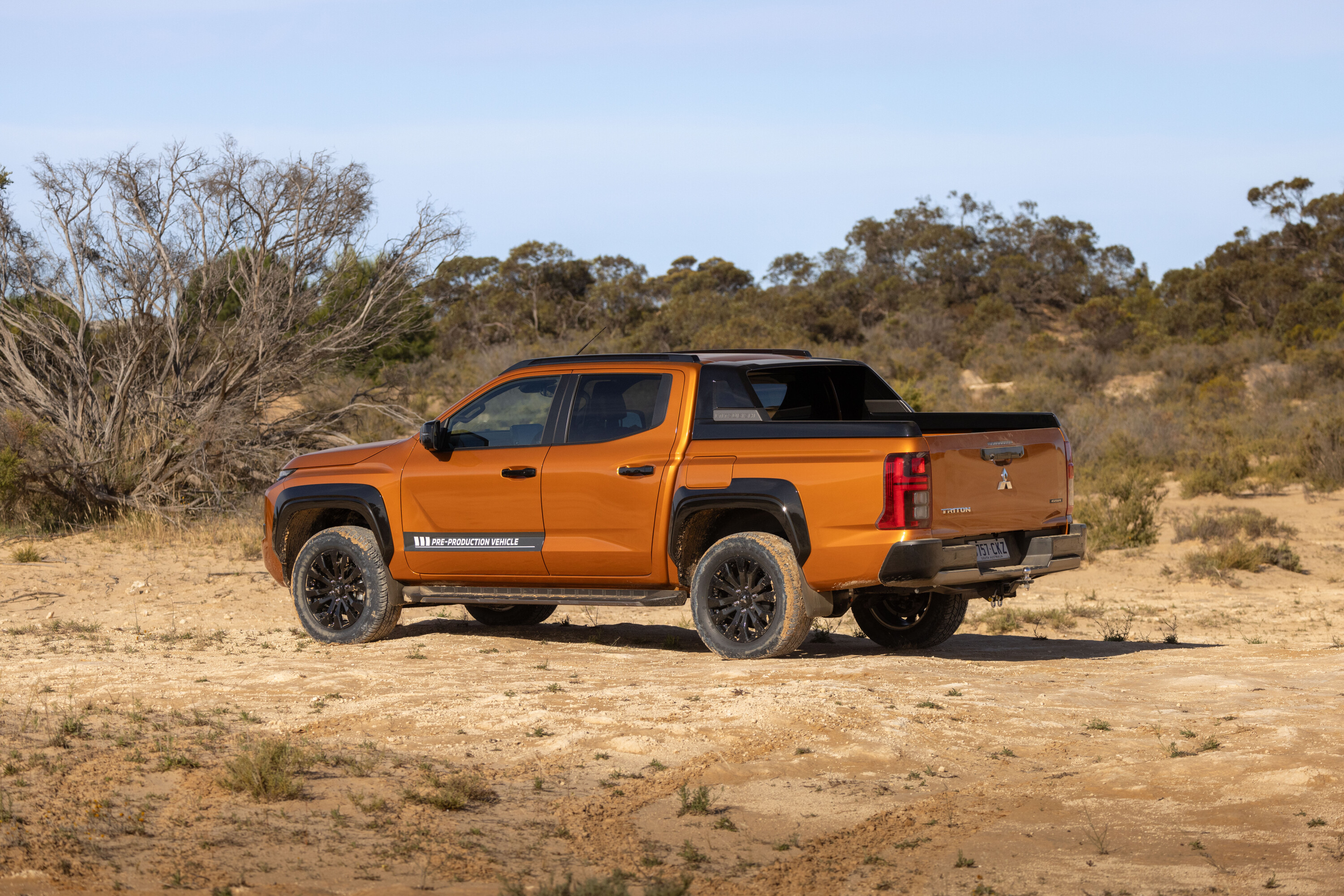
Mitsubishi has been working on the sixth-gen Triton since 2017 – just two years after the fifth-gen launched – and without wanting to spoil the rest of the review, that lengthy gestation period has been well worth it.
A lot of the final development of the new electric power steering system and chassis was done in Australia by embedded Japanese engineers, too, so like the class-leading Ford Ranger, the new Triton should be bloody well-suited to our tough environment.
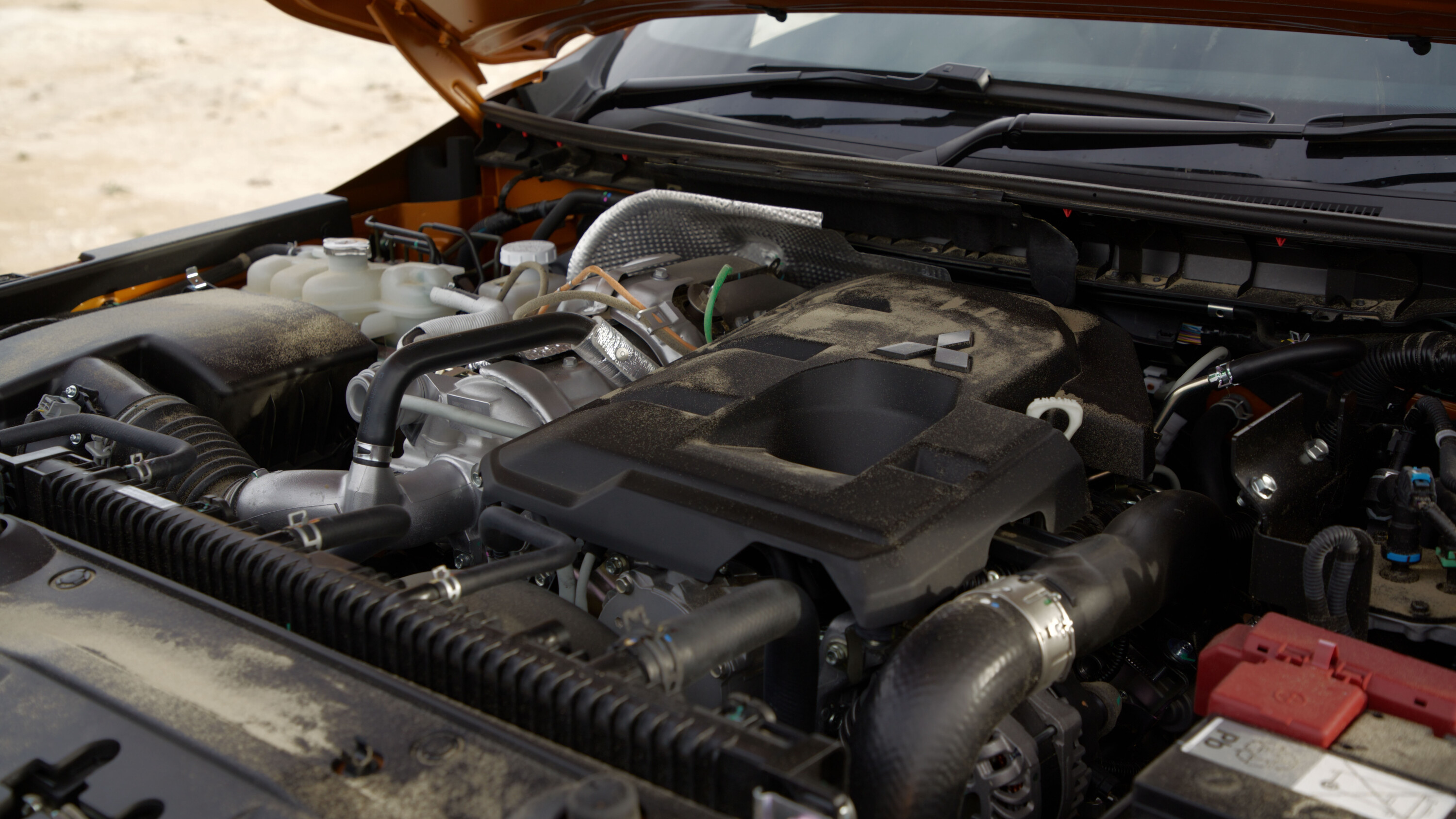
Mitsubishi claims the engine is all new but on paper, this is a little tricky to believe as it remains part of the ‘4N1’ family and shares its 2442cc displacement with the old Triton.
1
We’re told the casting is subtly different and almost every internal part is new; this includes longer conrods, the 250MPa injectors, 15 per cent lighter pistons, and the fairly obvious second turbo.
There’s also an all-new frame (the first truly clean-sheet Triton chassis since 2006) built with stronger steel, an extra cross member and bigger box sections (up from 80x140mm to 145x170mm) resulting in bending and torsional rigidity ratings up 60 per cent and 40 per cent respectively.
It has a bigger footprint, with 50mm extra track width (mirrored in body size) and a 130 mm longer wheelbase than before.
1
The body is also made exclusively from high-strength steel, helping to keep the overall weight down. That said, the larger new Triton has still put on a few kilos (171kg), now weighing 2170kg (kerb).
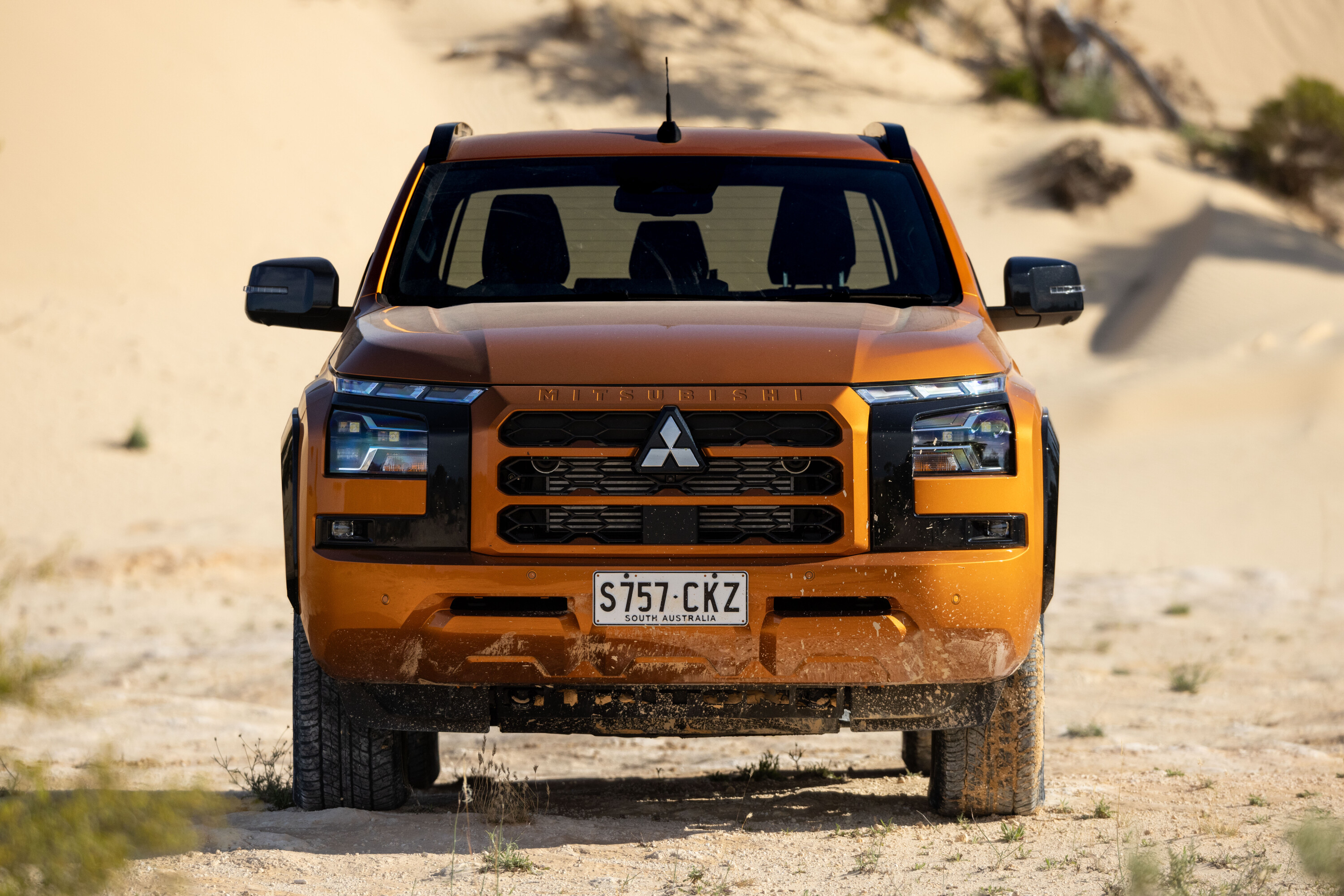
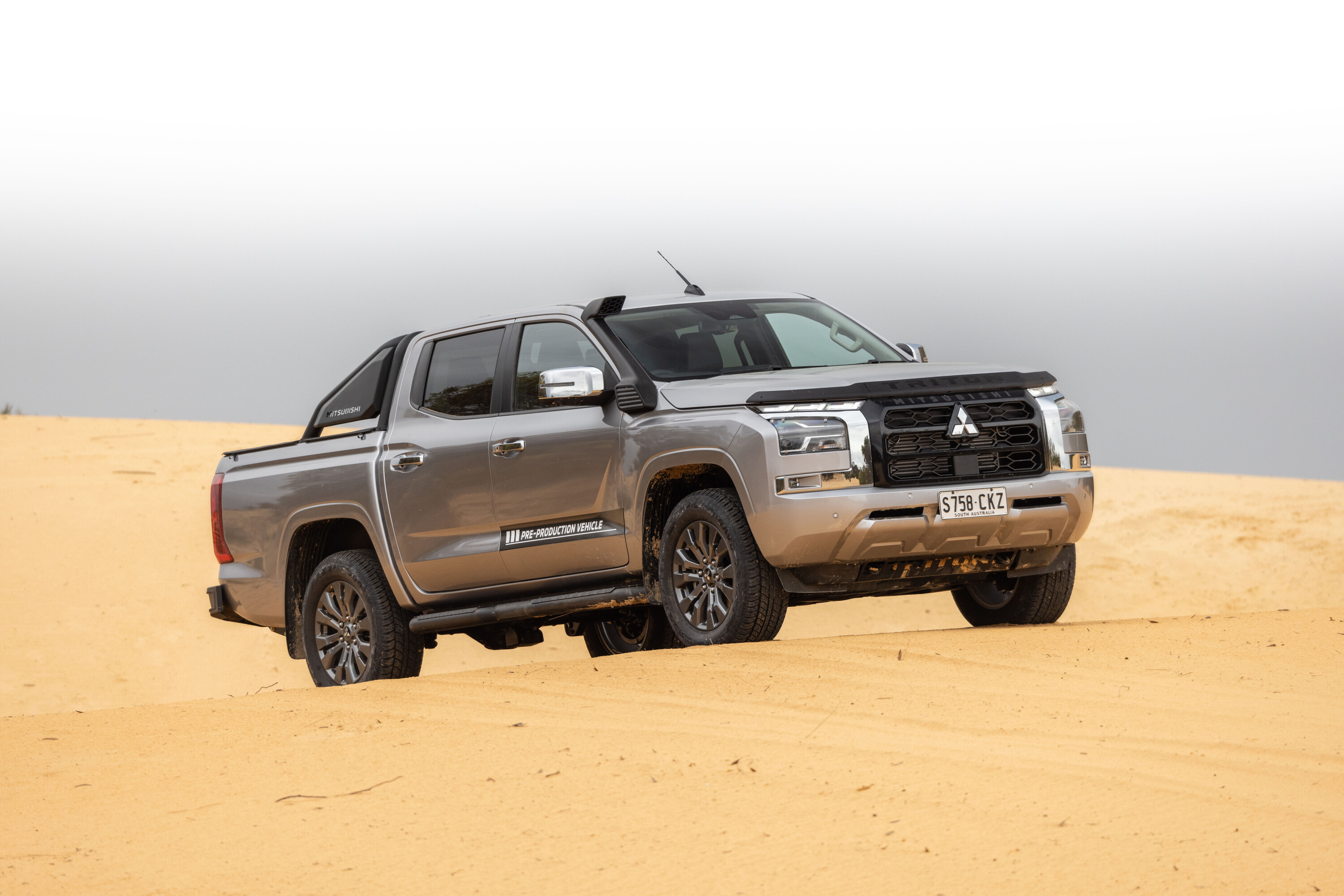
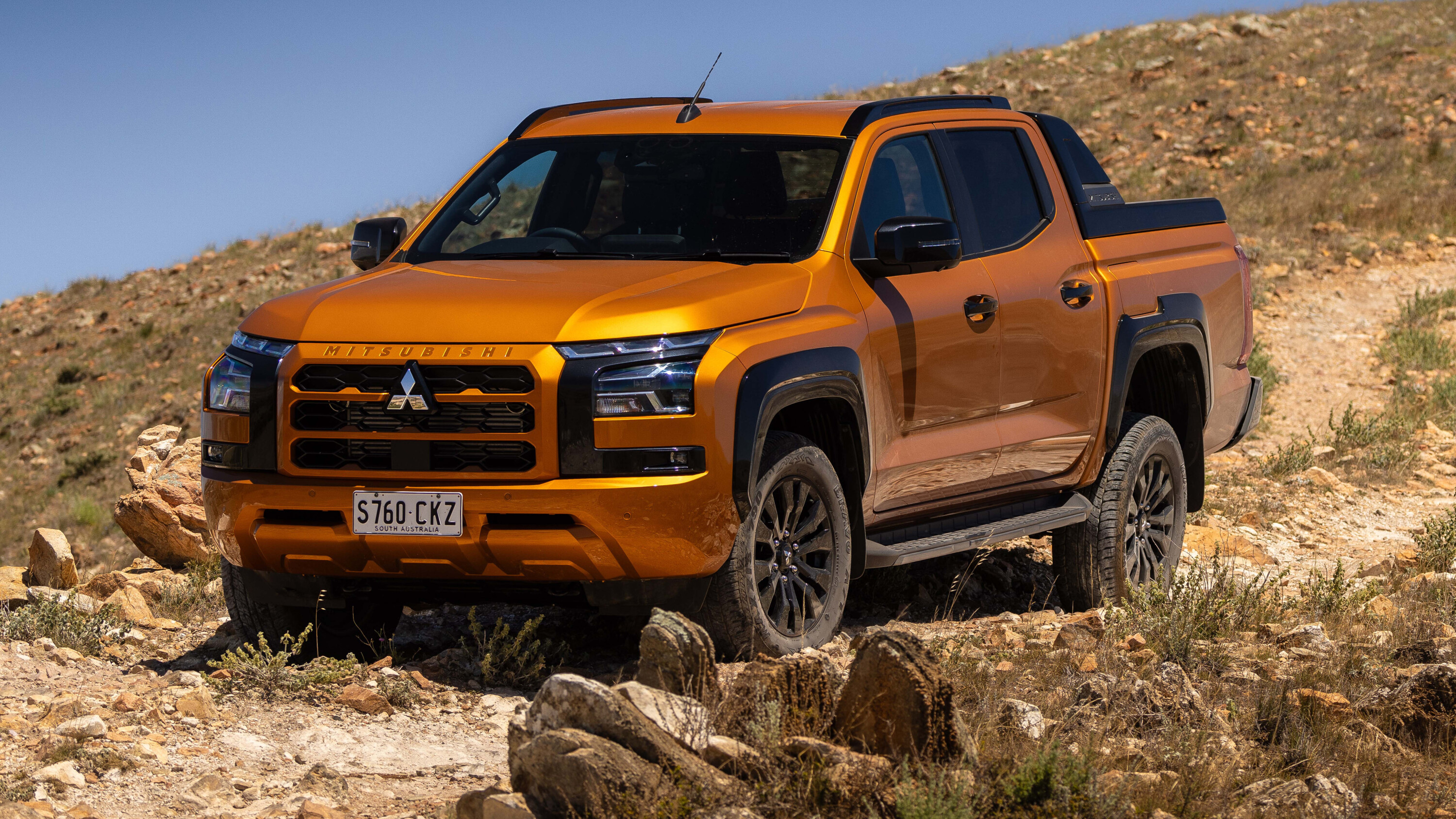
A little awkward in pictures, the Triton’s sheetmetal is handsome in real life, with bluff vertical surfaces and confident lines.
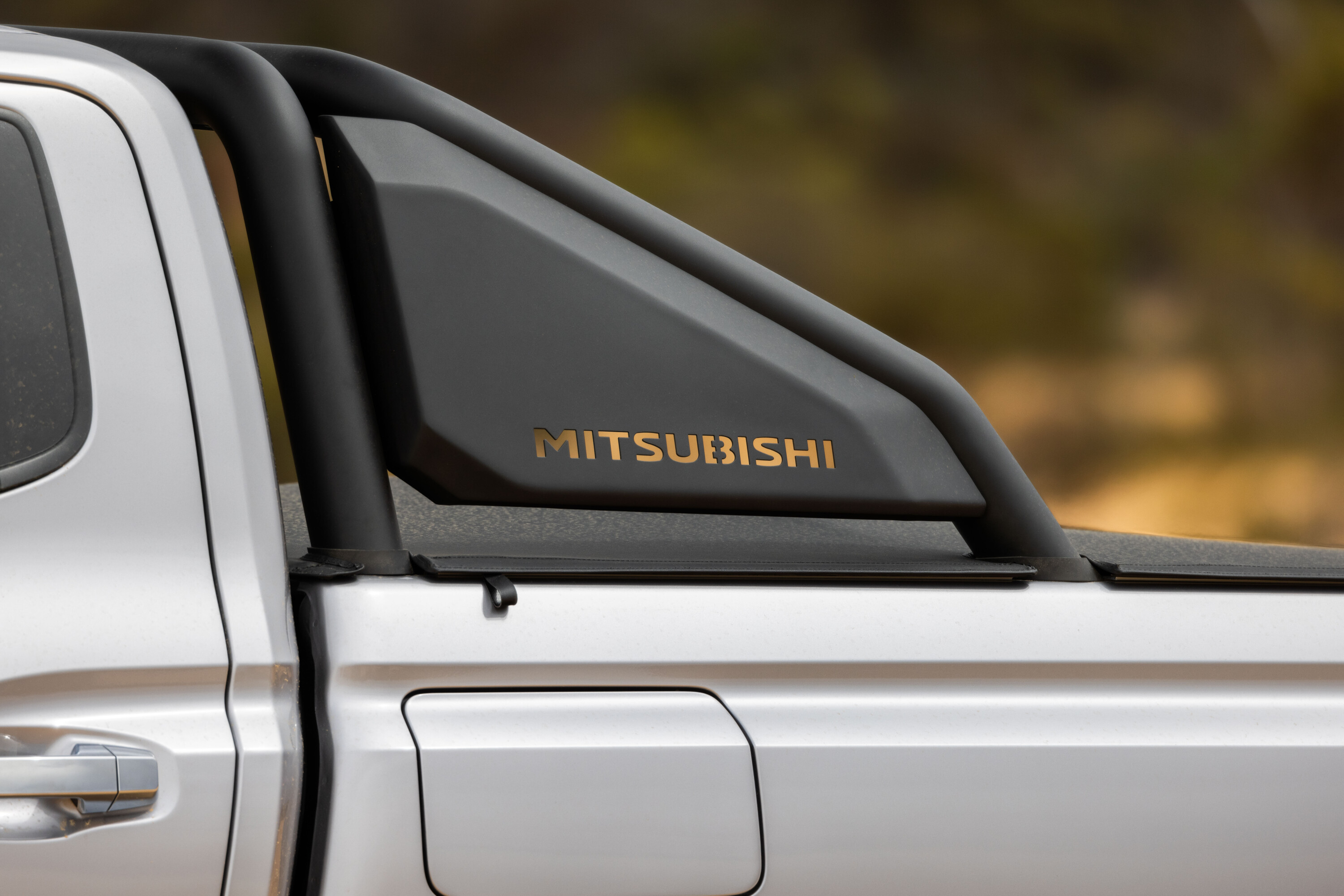
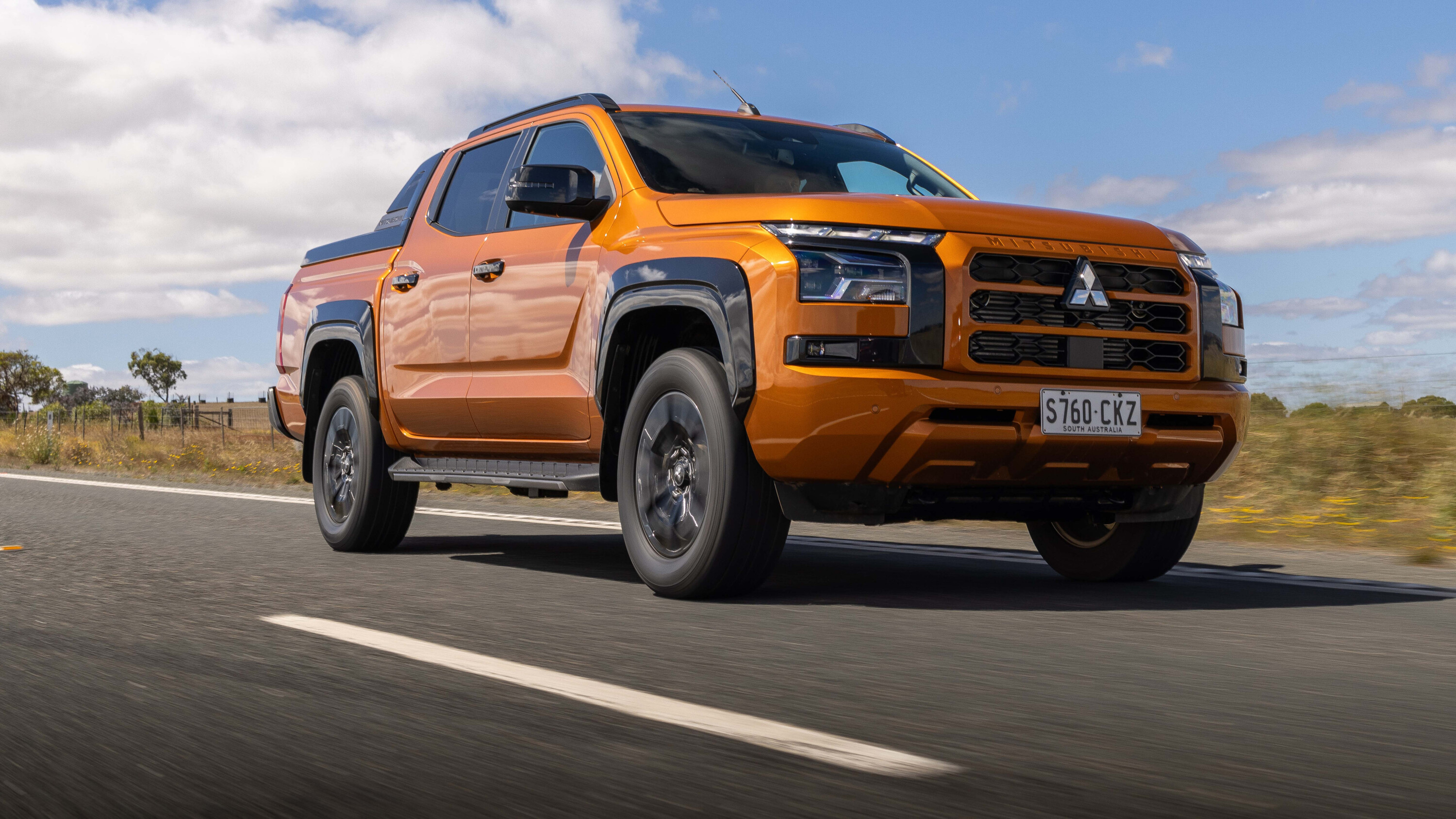
The GSR builds on the visual impact with black wheelarch extensions and a body-coloured grille. Our favourite detail is the debossed ‘Mitsubishi’ script above the grille with a CNC-machined texture that will look awesome once it’s picked up some dust on a long drive.
1
The paint finish is distinctly better; the GSR’s Yamabuki Orange metallic paintwork sparkles in the South Australian sun in a way the old car could never hope to. There’s no overspray or dull paint in the door jambs or engine bay.
It’s also built from the ground up with electrification in mind, however, exactly what configuration (pure battery electric, petrol-based plug-in hybrid or a diesel plug-in hybrid) is still up for debate.
For its use case in Australia, a diesel plug-in hybrid with great towing ability and long driving range would be our pick.
1
JUMP AHEAD
- How much is it, and what do you get?
- How do rivals compare on value?
- Interior comfort, space, and storage
- What is it like to drive?
- How much fuel does it use?
- How safe is it?
- Warranty and running costs
- VERDICT
- Specifications
How much is it, and what do you get?
Now to the elephant in the room: price. The new ute’s ask may cause alarm among existing owners; $6900 more for the $63,840 (before on-road costs) flagship GSR dual cab? That’s a lot of money.
Even at the low end (where the range is currently thin), the ‘traffic controller’ GLX 4×4 dual cab costs $50,490 (before on-road costs).
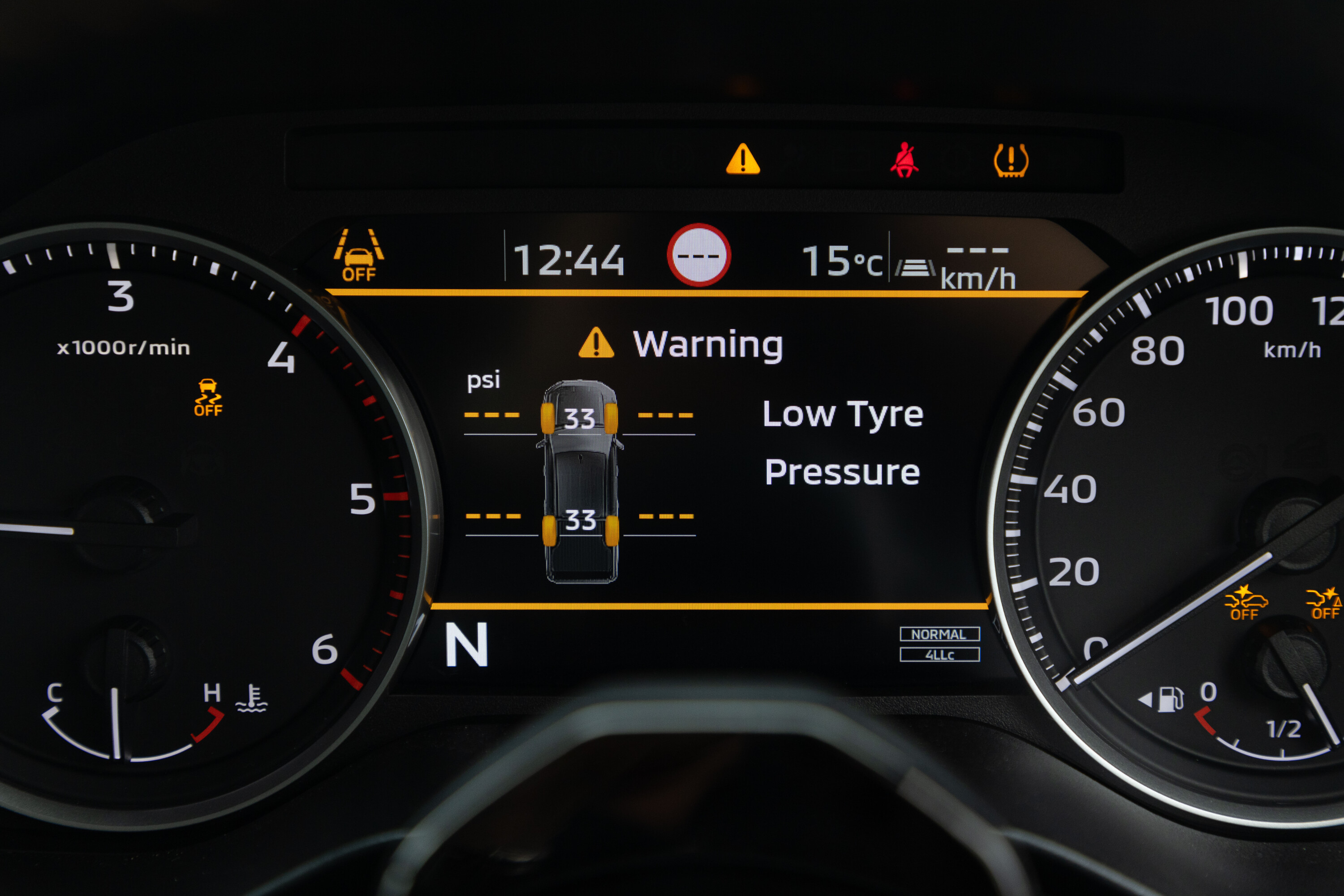
But here’s the rub: the boggo Triton ships packed with standard equipment. Practical vinyl flooring and scratch-resistant plastics are allied with a 9.0-inch touchscreen, 7.0-inch digital driver’s display, tyre pressure monitoring and driver’s seat lumbar adjustment.
1
Features like these will drop risk levels and fatigue behind the wheel for fleet operators – not to mention minimise back-related worker’s comp claims!
The GLX+ offers a little more equipment from $50,340 (excluding on-road costs) as a club cab.
| In addition to GLX | |
|---|---|
| 17-inch alloy wheels | Front fog lamps |
| Rear differential lock | Rear privacy glass |
| DAB+ digital radio | Reverse autonomous emergency braking |
| Side steps | 360-degree camera system |
1
Moving up the range, the GLS is more private-buyer-focused and commands $59,090 before on-road costs as a dual-cab automatic. For another $1500 it can be upgraded with. leather upholstery, heated front seats and power adjustment for the driver’s seat.
| In addition to GLX+ | |
|---|---|
| 18-inch alloy wheels | Wireless phone charger |
| Super Select II 4WD system with 2H, 4H, 4HLc and 4LLC | Tray bed liner |
| Standard-duty rear suspension | Heated, electrically-adjusted side mirrors with LED indicators |
| LED exterior lighting | Mitsubishi-embossed gloss black grille |
| Dual-zone climate control | Terrain control |
| Keyless entry and push-button start | Hill descent control |
| Auto-dimming rear-view mirror | Soft-padded interior surfaces with silver accented stitching |
2
Finally, the GSR sits atop the range with exclusive Yamabuki Orange paint available.
| In addition to GLS Leather | |
|---|---|
| 18-inch alloy wheels (black) | Roof rails |
| Leather upholstery with orange stitching | GSR-specific carpet floor mats |
| Body-coloured grille | Two dash-mounted cup holders |
| Wheel arch moulding | u2018Dark titaniumu2019 interior accents |
| Styling bar | |
1
How do rivals compare on value?
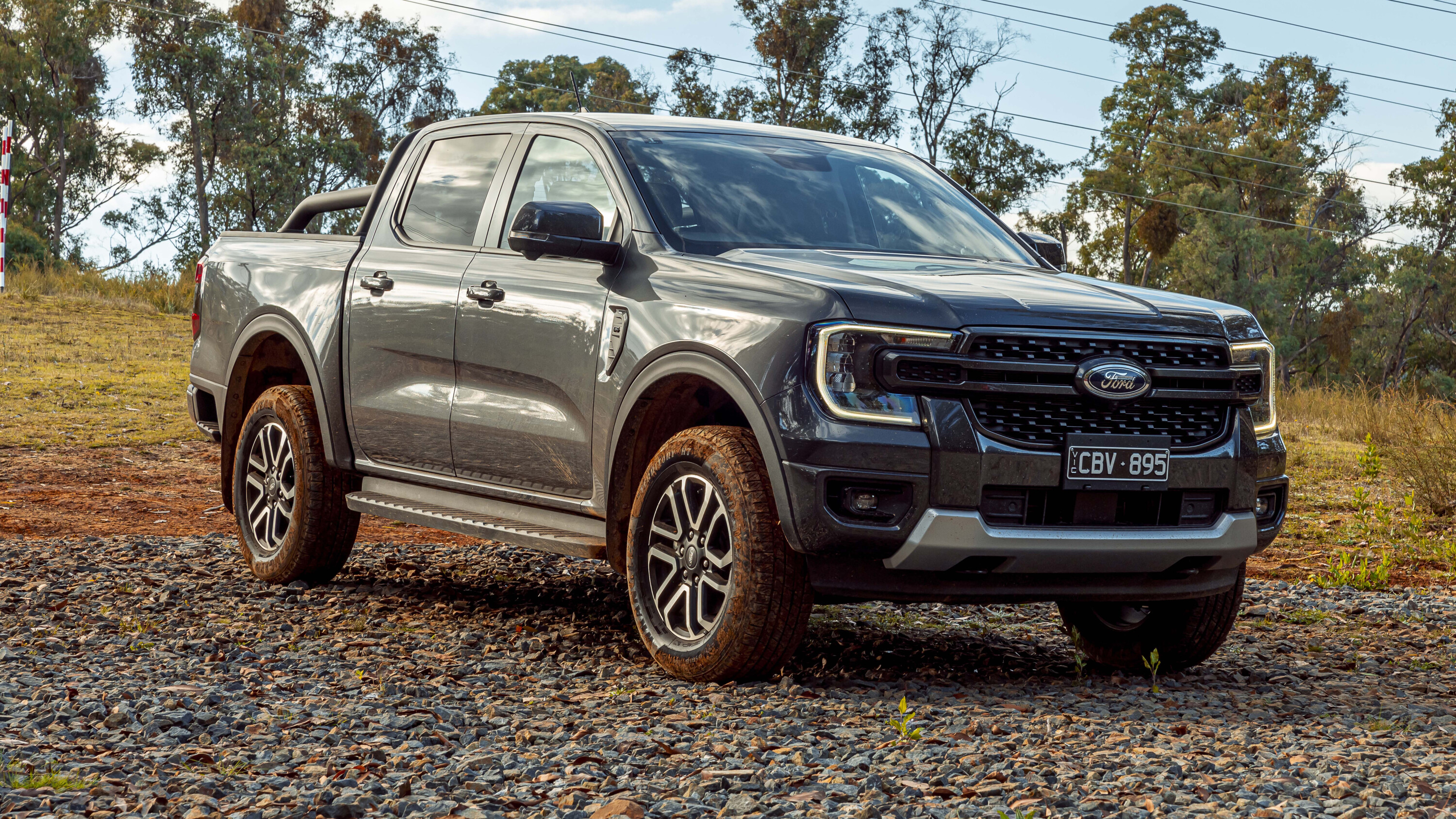
The sixth-gen Triton’s pricing aligns it with popular rivals. In the GSR 4×4 dual-cab’s case, that means the Ford Ranger Sport bi-turbo ($65,690 before on-road costs) and HiLux SR5 V-Active ($63,260 before on-road costs).
The Ford includes everything you need to tow from the factory where you’ll have to get accessories for the Triton, but that’s where the Blue Oval’s advantage ends.
On top of the Sport and SR5, the Triton gets tyre pressure monitoring, front seat heating, more off-road drive modes, a 360-degree camera, and tinted rear windows – and you have to pay extra for leather in the HiLux.
1
Availability of lower-spec tritons is a little lacking right now as Mitsubishi sees the most opportunity in GLS (the previous best-seller) and GSR trims. Manual and cab chassis variants will arrive later.
The Japanese brand expects a richer grade mix at launch with greater demand for GSR and is studying future flagship variants which could include a Ralliart off-road halo or luxurious Ranger Platinum rival.
Interior comfort, space and storage
Whether you opt for the GLS (ideally with the $1500 leather pack) or flagship GSR, the cabin will not disappoint.
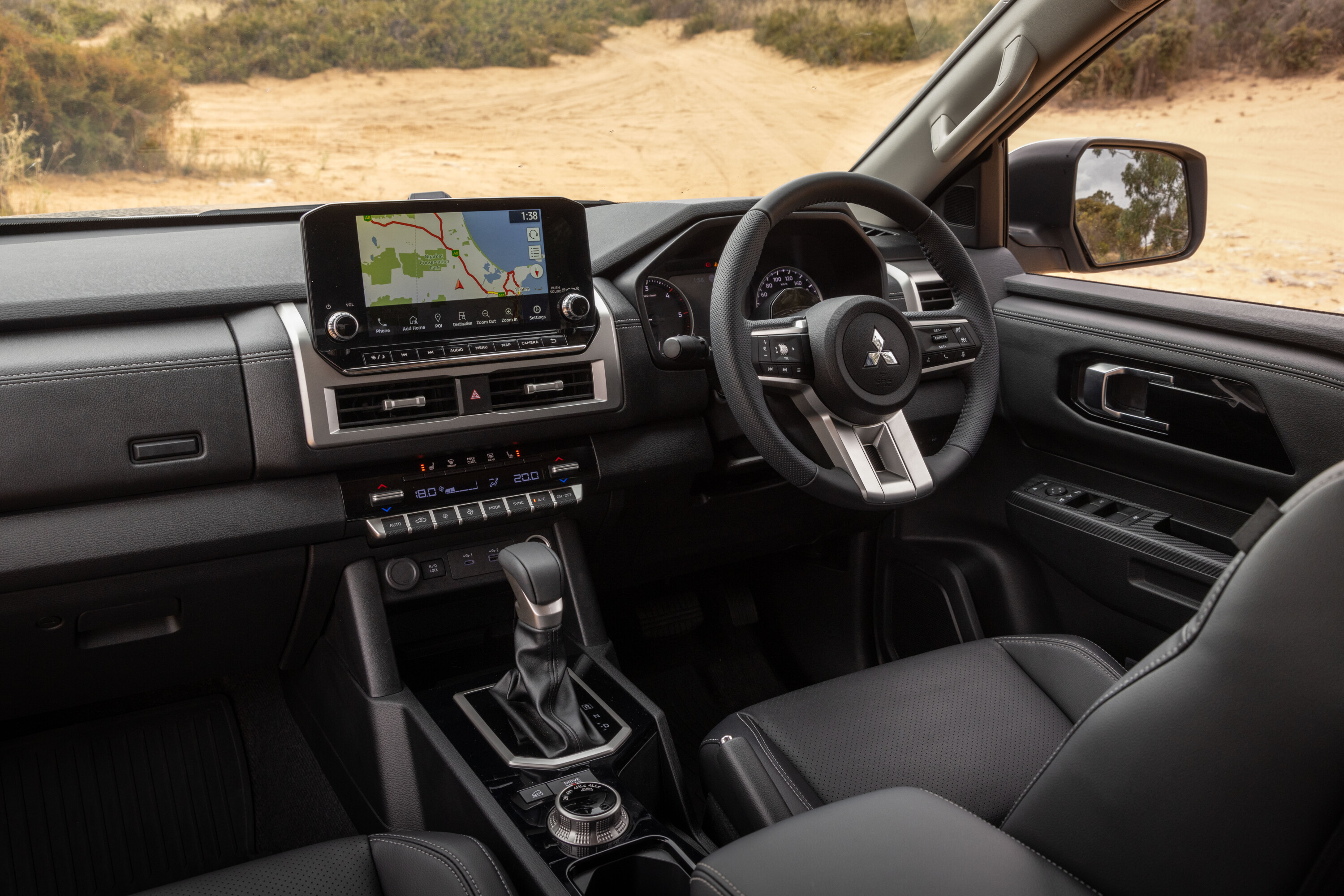
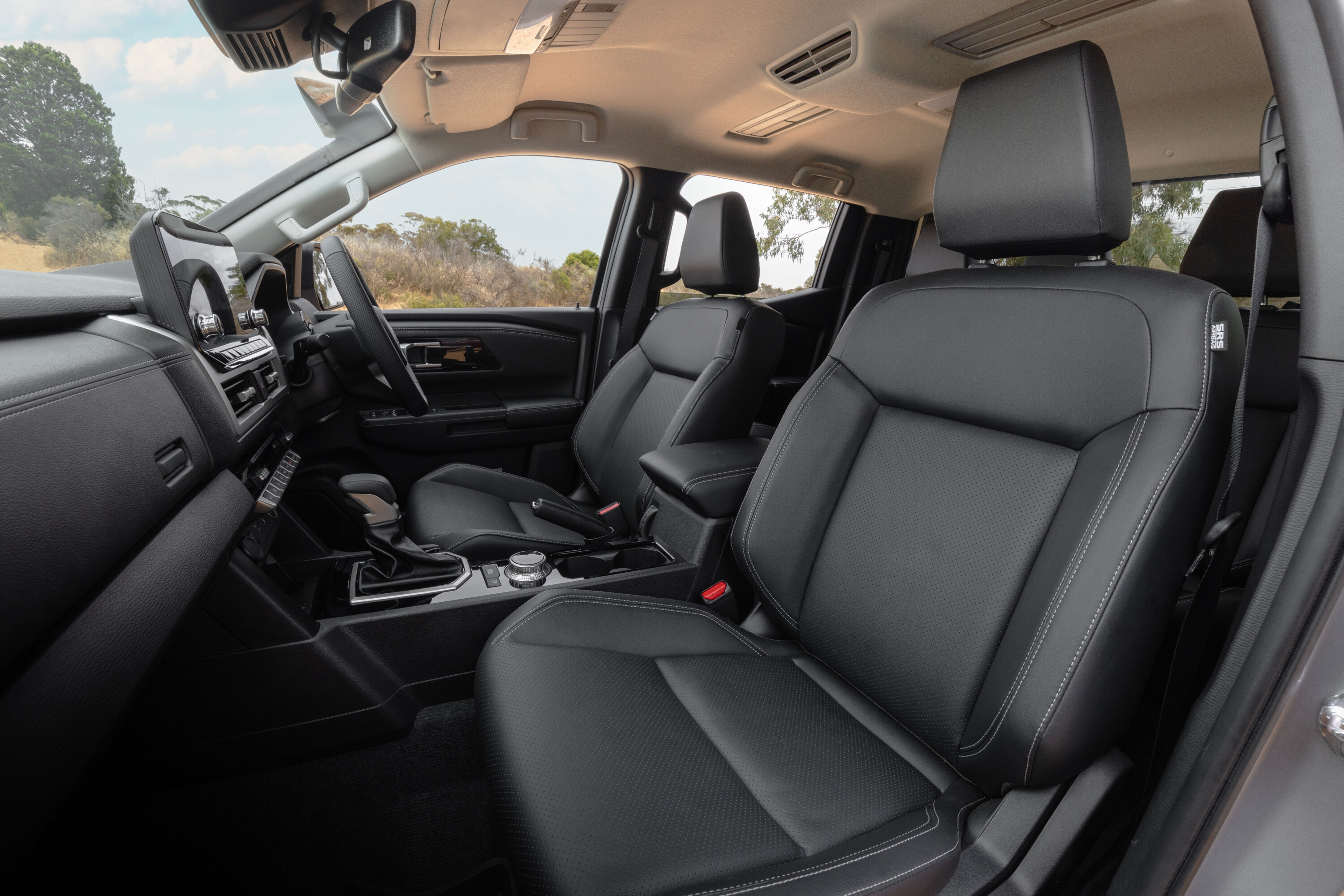
A lot of Outlander DNA is evident here, with a broad horizontal design emphasising the cab’s extra 50mm of width. Soft-touch materials are far more common than in the old Triton, and the steering wheel is appointed in quality dimpled leather.
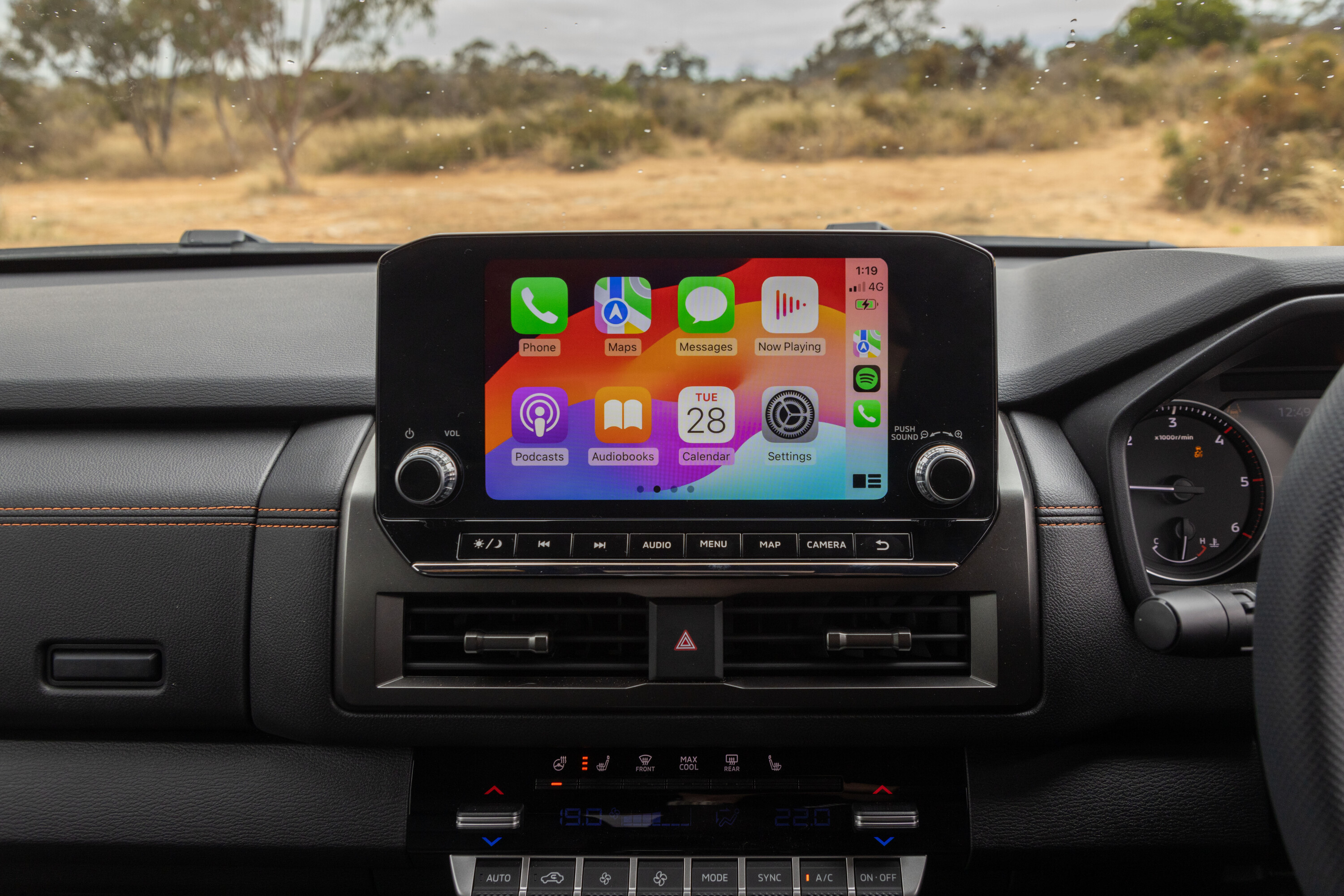
Technology takes a massive step with a 9.0-inch touchscreen (from the Outlander) and 7.0-inch digital readout flanked by legible analogue dials. Mercifully, main HVAC controls remain outside the touchscreen with quality knurled chrome switches for fan speed, direction, and temperature.
1
Apple CarPlay and Android Auto phone mirroring are both wireless, there’s built-in navigation, DAB+ digital radio, and the six-speaker sound system is excellent for a ute.
One of the biggest improvements current Triton owners will notice is the seats. Instead of flat, unsupportive pews that lack adjustment, the new chairs hug you in all the right places with power lumbar support that massively eases fatigue on long drives.
The cloth upholstery (GLX, GLS) is agreeable, but the leather (GLS leather, GSR) is easier to clean and genuinely classy.
1
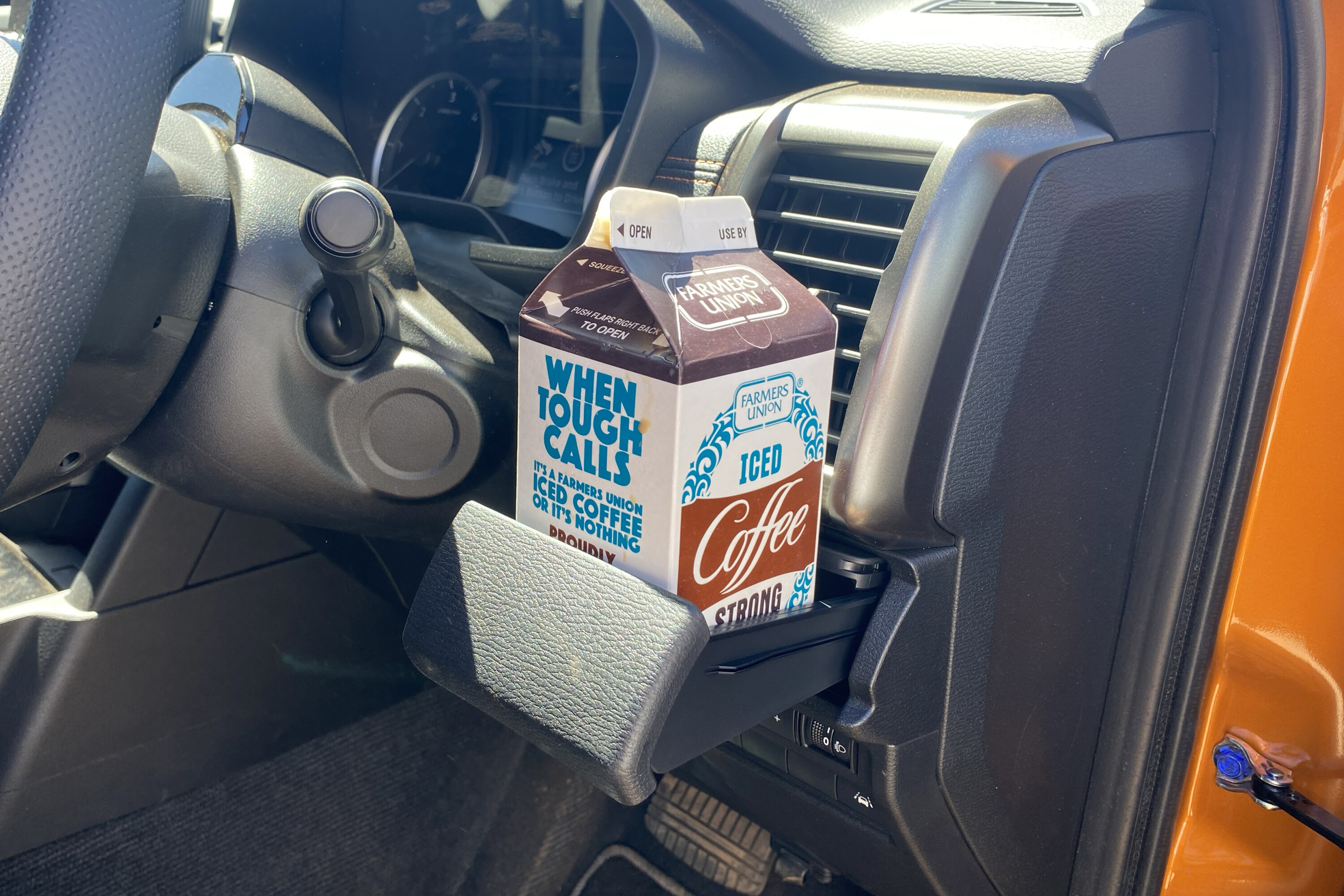
But the single cleverest feature? The pop-out cup holders in the dash trim.
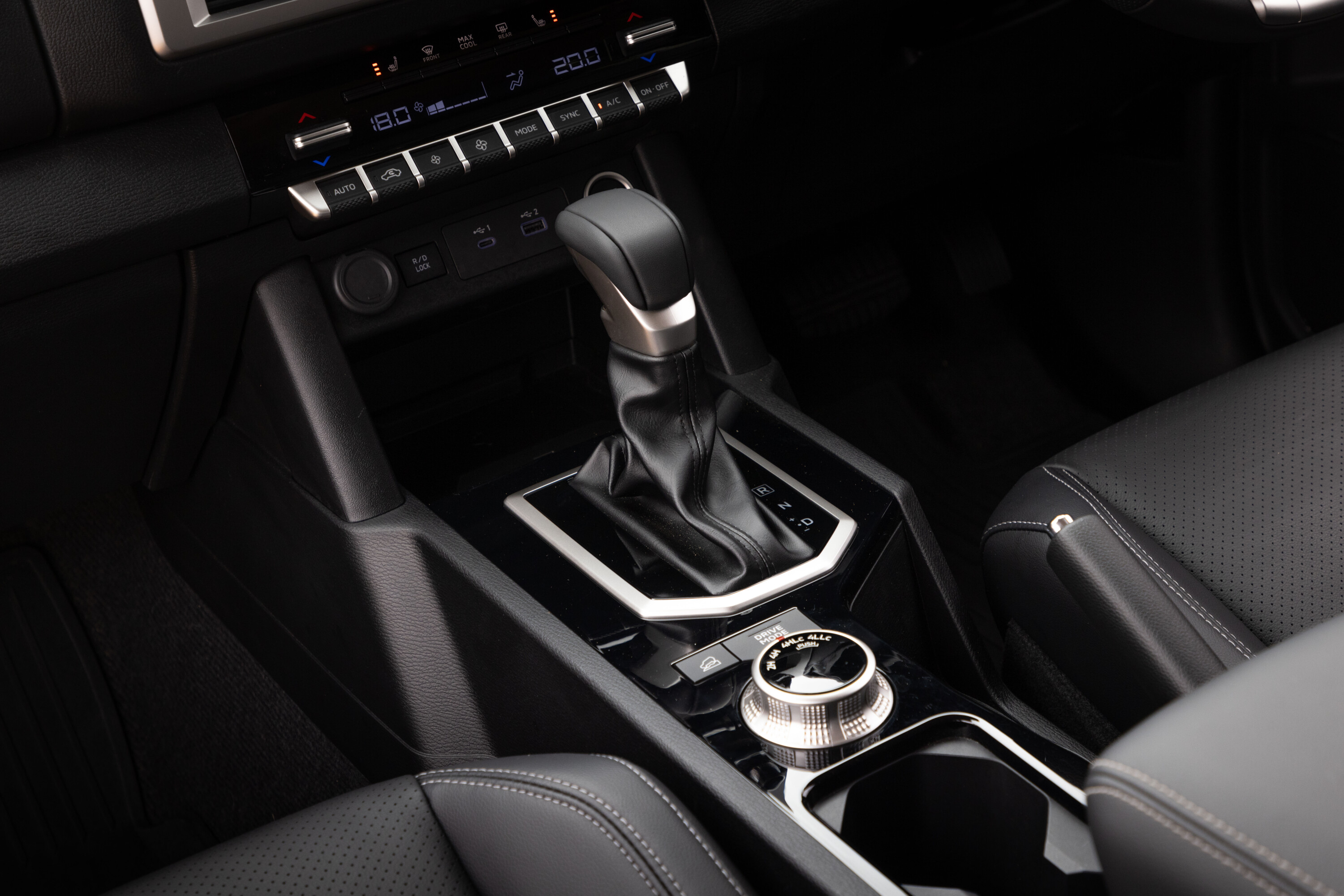
Though the minimal centre console appears more architectural than practical, the Triton packs secret stowage with twin gloveboxes, space for four 600ml bottles in the covered centre bin, big cup holders, door pockets that’ll hold 1.5-litre bottles and an A4 binder, USB-A and USB-C charge points, and a wireless charging pad.
But the single cleverest feature? The pop-out cup holders in the dash trim. Press these in and a perfect takeaway coffee holder appears, but they’re dual-purpose.
Taking on Australian feedback, the cup insert slides away to reveal a square space that is the perfect size for a 600ml carton of South Australia’s finest Farmers Union iced coffee. Yes, other utes have a similar design but the jury’s out on their iced coffee compatibility.
1
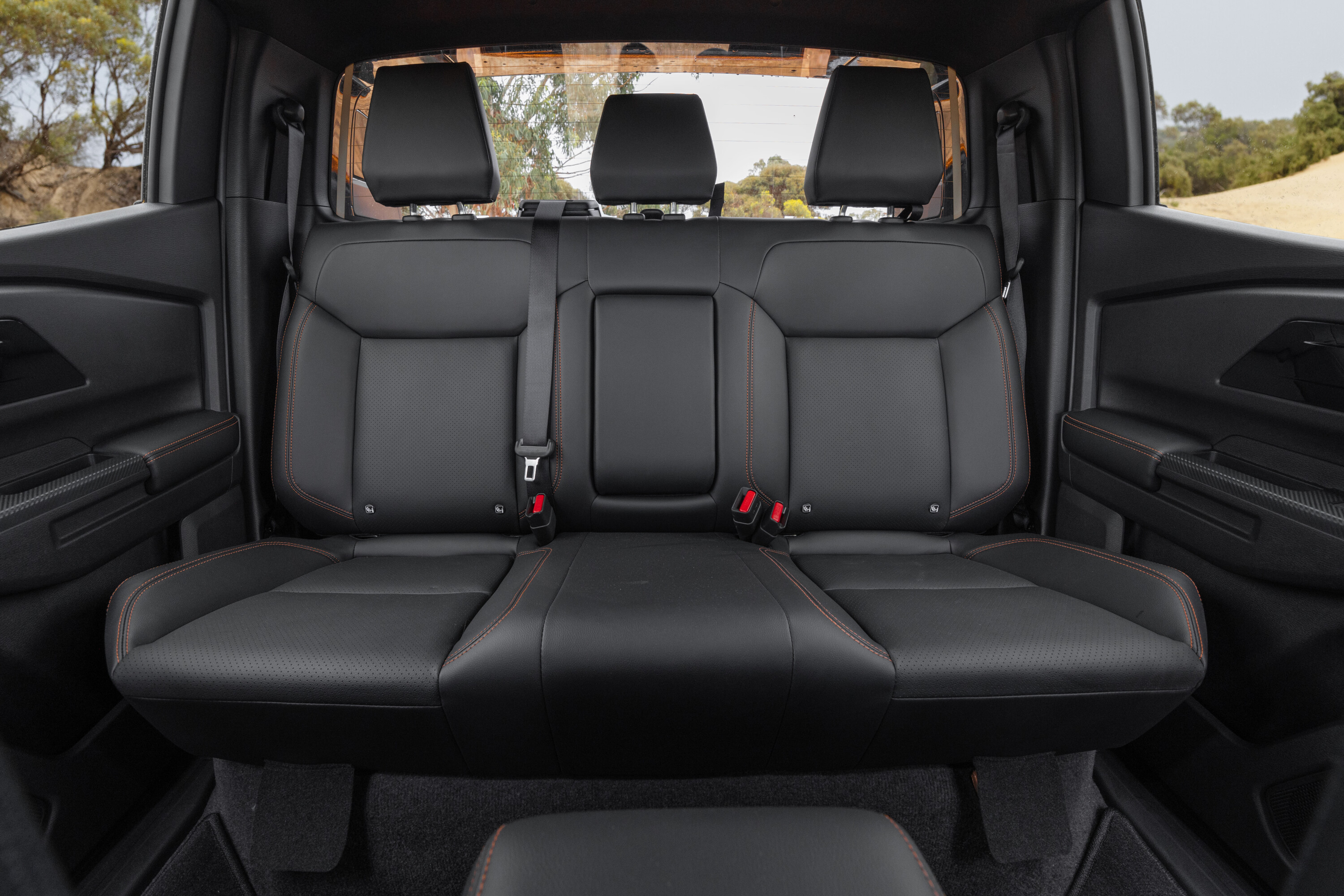
Another pair of USB chargers is accessible from the back seat. It’s still not quite on par with an Outlander for space and comfort, but the new Triton’s second row is a far better place than before.
Squarer door profiles aid ingress and, because the front seats sit 20mm lower, the view out is improved. There’s also a fold-out armrest and the same ceiling-mounted ventilation system as before.
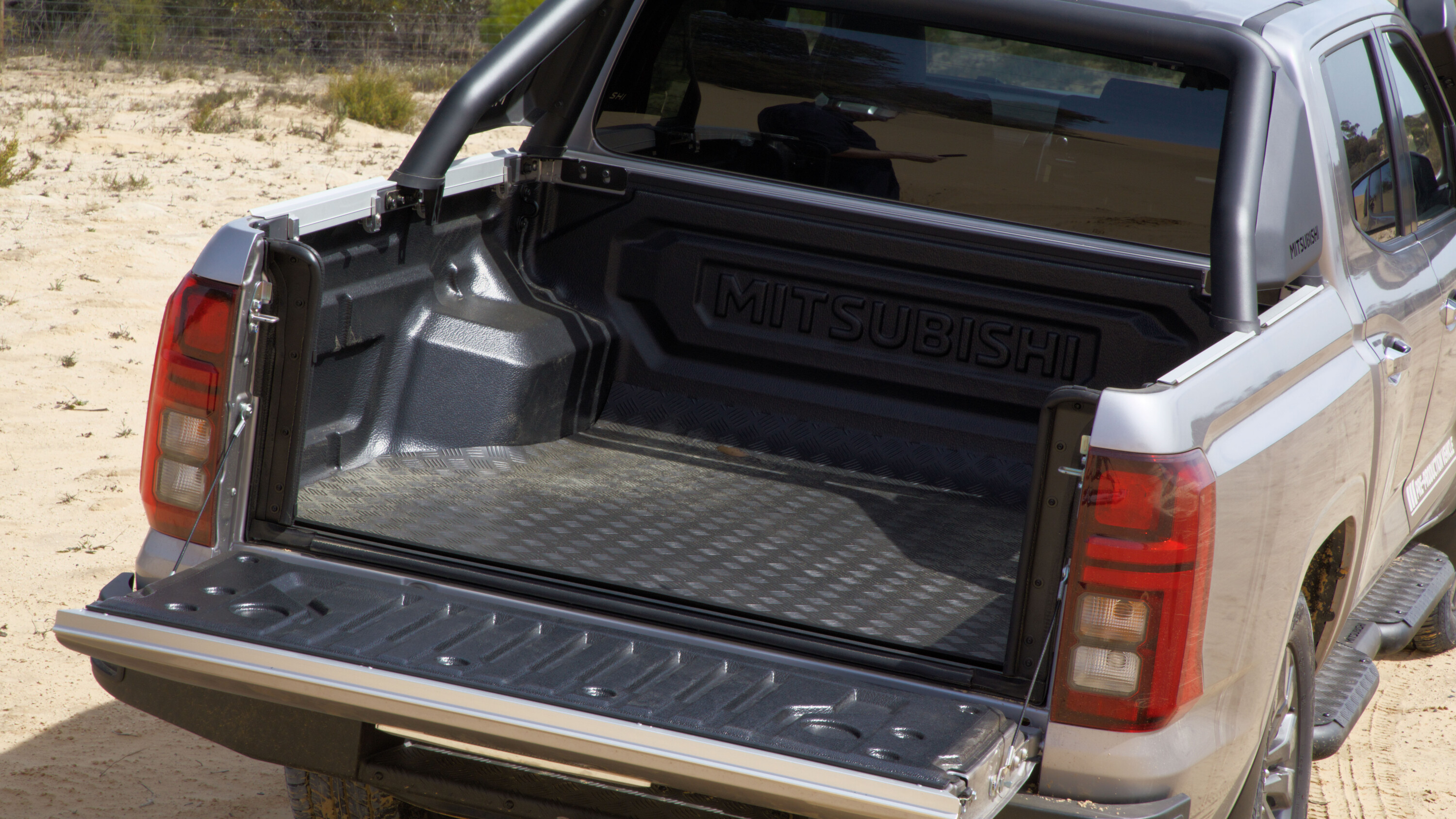
As well as catching up to the field with a 3500kg braked towing capacity, the new Triton also has some solid workhorse credentials. The GSR offers a 1030kg payload in the back and all pick-ups have space for a single 1200x800mm Euro pallet.
Spray-in bed liners, four tie-down points and sports bars are essentially the limit of practicalities. It’s not in the Ranger’s league when it comes to clever touches; rear steps would make it easy to adjust loads in the bed without opening the (undamped) tailgate.
2
What is it like to drive?
Starting the drive, we left Adelaide airport and headed for the hills in a GSR.
The enhanced refinement was immediately noticeable, the 4N16 remaining hushed and impressively smooth around town as the six-speed auto (chosen for reliability and cost over the Pajero Sport’s eight-speed) shifts slickly.
It’s brisk enough with 150kW (up 17kW) and 470Nm (up 40Nm). That torque figure is a little low next to the Ranger’s 500Nm, but Mitsubishi’s twin-turbo magic means it feels beefier: the Triton produces peak torque from 1500rpm right up to 2750rpm, compared with the Ranger’s narrow 1750-2000rpm band.
1
Mitsubishi has implemented an idle-stop system in the new Triton which kicks in once the engine is warm.
It may help save a few litres of fuel (officially 0.1L/100km in ADR testing) but could do with some refinement – the system is lumpy and intrusive when switching off and slow to fire back to life when you need to get away from an intersection.
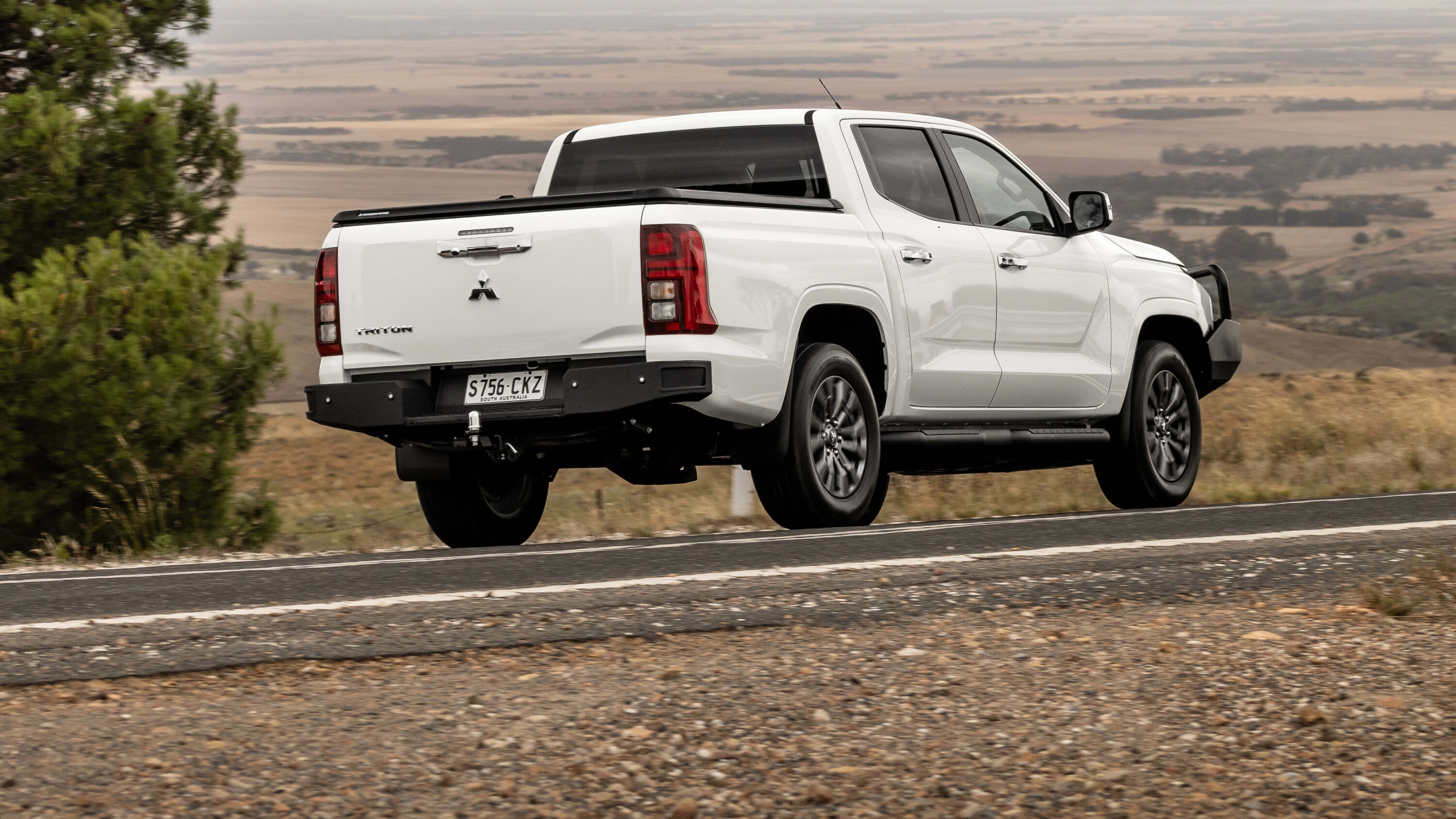
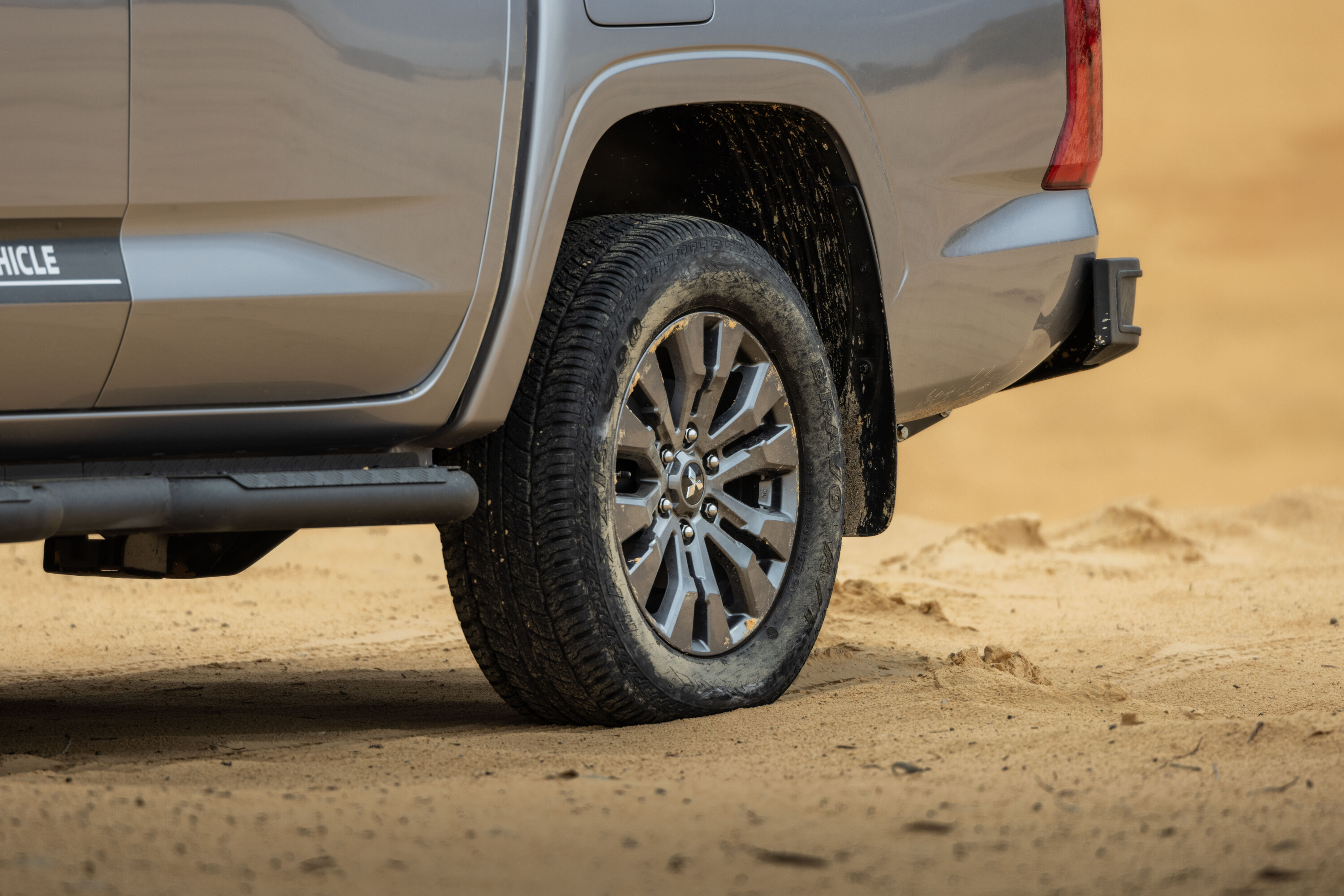
The ride quality on 265/60 R18 Maxxis Bravo A/T tyres was pretty good for an unladen ute and they provided decent roadholding on Adelaide’s twisty mountain roads that would typically be tiring in a dual cab.
1
Thanks in part to some Australian development, the Triton’s 3.3-turn lock-to-lock electric power steering is about perfect.
It’s light enough at low speeds yet weights up naturally as velocity climbs. Crucially, its on-centre response is calm and accurate, making it easy to correct for crosswinds and cambers on long straight roads. Equally natural was the brake pedal, even though the Triton retains rear drum brakes.
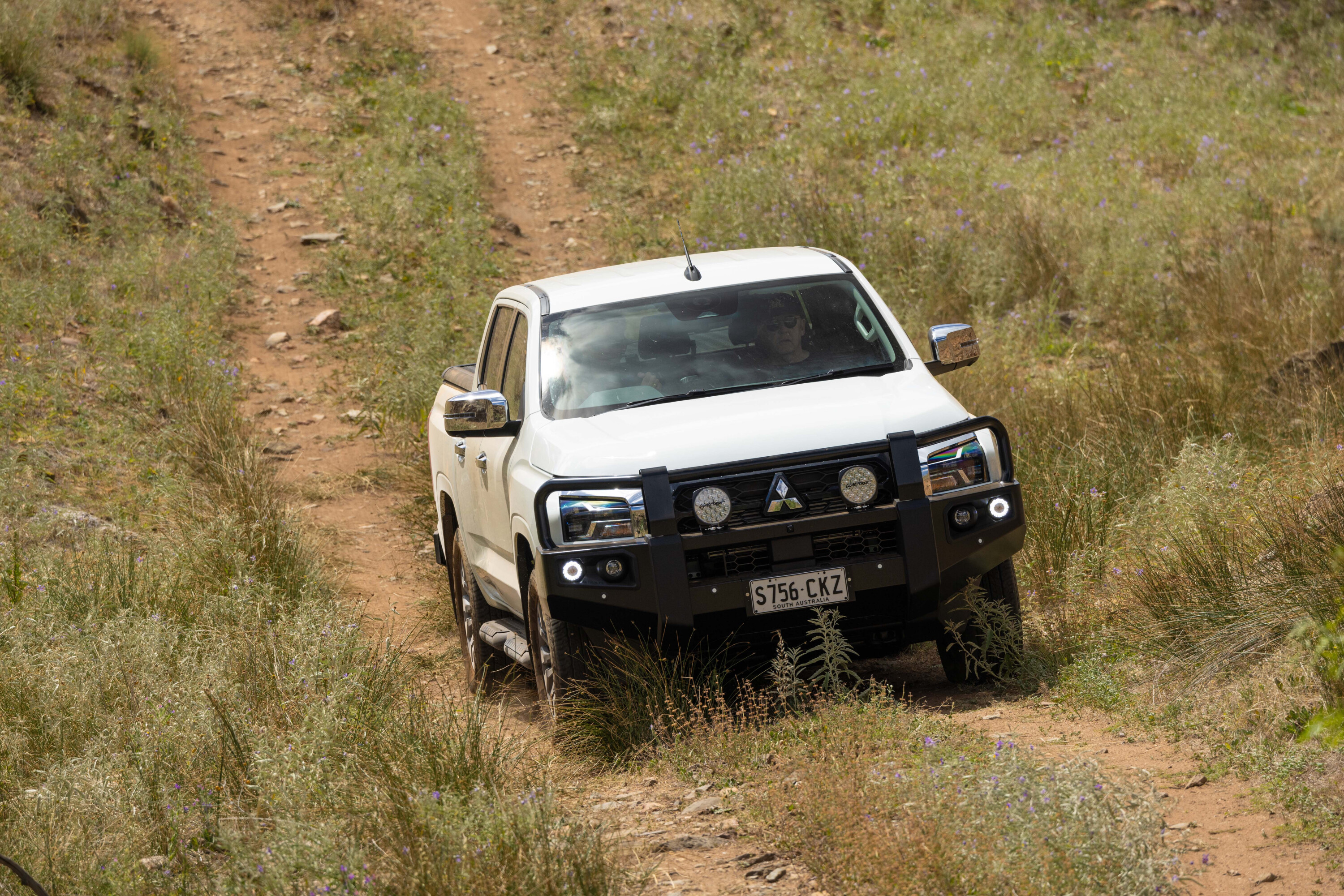
We descended the open and flowing Angas Valley road and turned off at Sanderston to reach Eagle View 4×4 track. The track we encountered was easily dispatched by the Triton with its refined traction control system meaning we didn’t need to engage the rear diff lock on a set of offset moguls.
1
We tried the diff lock on the training course and were delighted by how simply and quickly the Triton’s various off-road settings engage.
GLS and GSR trims both get Mitsubishi’s Super Select II 4WD system which includes a centre differential enabling permanent four-wheel-drive running if you need it – handy for roads that regularly transition between sealed and unsealed surfaces or patches of wet and dry bitumen – and is very easy to use.
More modes are now available, including Normal, Eco, Gravel, Snow, Mud, Sand, and Rock which tweak throttle and traction control characteristics to suit the respective terrains.
Of course, in GSR trim the Triton isn’t a total off-road monster and we did catch the side steps and low-hanging differential on some rocks. A factory-modded Ralliart version ought to sort that out. That said, what is impressive is the compliance and control afforded by the new chassis setup.
1
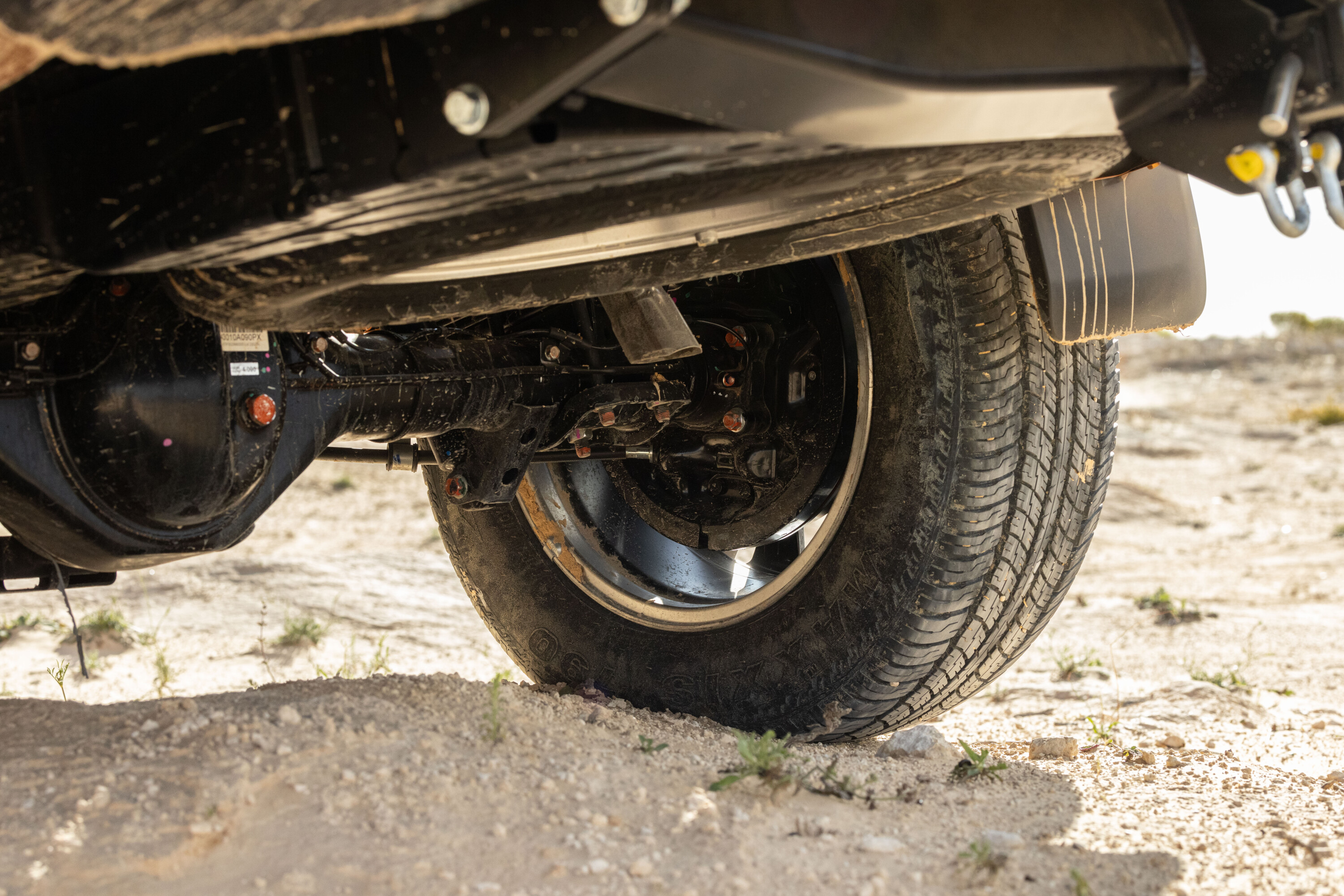
For the new ute, Mitsubishi upped the damper diameter from 32mm (front) and 28mm (rear) to 36mm all round.
The GSR and GLS also move from five to three leaf springs at the back, while front stroke has been increased by 22mm. There’s even a bespoke tune for Australian and New Zealand vehicles to suit the different use styles here compared to South East Asia.
Unusually, Mitsubishi had a few fifth-gen Tritons hanging around and we were encouraged to directly compare and contrast the new vehicle after our technical challenge.
1
Getting into the previous car, the seats are flat and the infotainment screen tiny, but it’s the drive that sells you.
The same corrugated dirt road that posed almost no challenge for the new Triton made the old ute’s rear end shimmy and buck. The extra mid-range punch from the twin-turbo mill was obvious yet the new ute is also quieter – in the old Triton, I had to raise my voice at 100km/h to hold a conversation.
Plus, with its longer wheelbase (but only 15mm of additional overall length) the new version is immensely more stable and planted. You could almost be fooled into thinking it was an SUV.
If any of the terms in this section have left you scratching your head, these articles will help bring you up to speed!
1
- What is a Powertrain or Drivetrain?
- Power vs torque
- Car suspension explained
- Automatic transmissions (‘gearboxes’) explained
- Chassis control systems explained
- Car vs Ute vs SUV: How the vehicle you buy should guide the way you drive
- What is the WLTP emissions and range test?
Mitsubishi has engineered the Triton with five-star safety in mind. That means different cross members and construction with areas designed to soak up impact forces in a crash.
But it also means technology, including a driver monitoring system that may end up being one of the new Triton’s biggest flaws.
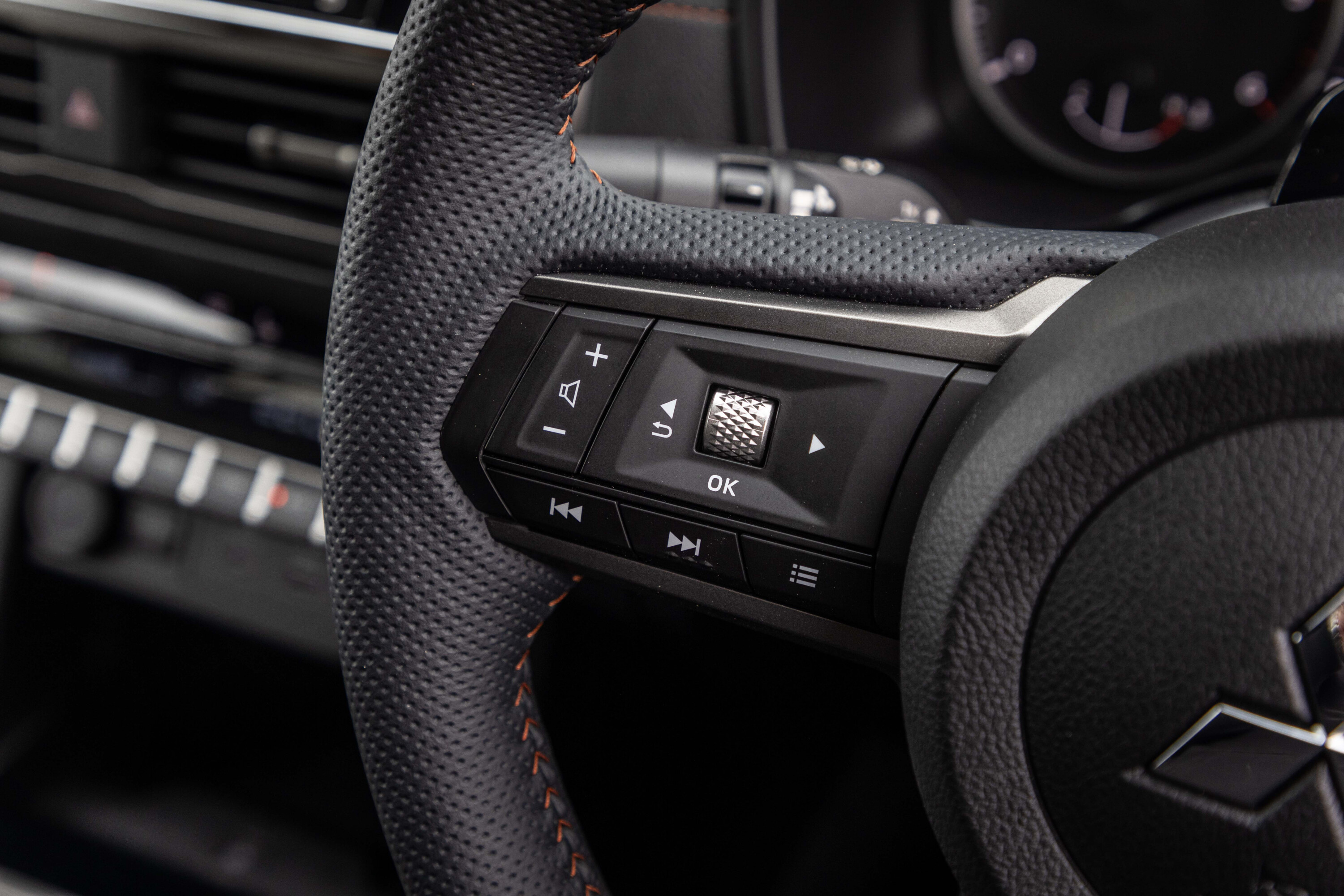
The gloss black growth poking out the top of the steering wheel watches the driver’s eyes for inattention and drowsiness. A great idea in theory, especially for those long monotonous drives.
1
It works if you’re a typical body shape and drive with hands at 10-2 or 9-3 but if you like the wrist on top of the tiller look, the system freaks out, assumes you’re not there and beeps like mad.
You can disable the function but thanks to European regulations, it defaults to on every time you fire up the Triton.
For some, this could be a total dealbreaker. That’s a shame because the rest of the safety assists are far preferable to those in the Isuzu D-Max and Mazda BT-50; about on par with the Ranger.

1
How much fuel does it use?
The new Mitsubishi Triton is rated at 7.4L/100km for a 4×2 auto and 7.7L/100km in 4×4 automatic guise on the ADR 81/02 combined cycle.
It means the 4×4 model is marginally better than its predecessor (7.8L/100km) despite delivering more grunt.
On the launch drive, the trip computer showed 8.2L/100km after a two-hour drive over hilly terrain. All Tritons come with a 75L fuel tank.
1
Warranty and running costs
Mitsubishi continues with its Diamond Advantage five-year/100,000km basic warranty that extends to 10 years and 200,000km if every service is carried out at a Mitsubishi dealer.
These are due every 12 months or 15,000km and, thanks to no more 48-month/60,000km valve clearance adjustments, the new ute is a hint cheaper to service over five years at $2445 on the capped-price schedule.
1
VERDICT
It’ll only take five minutes of driving to realise just how far the new Triton has come.
A few small faults such as the slow idle-stop system don’t spoil the experience, but depending on your driving position and threshold for annoying beeps, the driver monitoring system may be too much to bear.
That said, the new Triton is so much more refined, better finished, quieter, more capable, bigger, and full of the latest technology. All this easily makes up for the price increases and, to be frank, the new ute makes its predecessor feel more like a $30,000 used car than last year’s model.
Is this Triton good enough to vanquish the Ford Ranger and Toyota HiLux though? You’ll have to wait for our upcoming comparison for that verdict.
| 2024 Mitsubishi Triton GSR specifications | |
|---|---|
| Price (drive-away) | $63,840 + on-road costs |
| Drivetrain | |
| Engine | 4cyl, 2.4-litre, twin-turbo diesel, direct-injected |
| Compression ratio | 15.2:1 |
| Drive | Selectable 4×4 w/ torsen centre diff and low-range transfer case |
| Power | 150kW (@3500 rpm) |
| Torque | 470Nm (@1500-2750 rpm) |
| Gearbox | 6spd automatic |
| Chassis | |
| L/W/HB | 5320/1930/1795mm |
| Wheelbase | 3130mm |
| Weight (tare) | 2170kg |
| Payload | 1030kg |
| Fuel/tank | Diesel / 75L |
| Economy (combined ADR81/02) | 7.7L/100km |
| Suspension | Front: Double wishbone | Rear: Live axle, three leaf spring |
| Steering | 3.3-turn Electric power-assisted steering |
| Front brakes | Ventilated disc |
| Rear brakes | Drum |
| Tyres | Maxxis Bravo Q/T |
| Tyre size | 265/60R18 |
| Safety | |
| ANCAP rating | Unrated |
| 0-100km/h | 9.5-10 seconds (estimated) |
The March 2024 issue of 4X4 Australia is on shelves and arriving in subscriber’s letterboxes around the country.
And a pair of killer custom builds steal the limelight of this jam-packed magazine, with both modified vehicles dripping with quality kit and immaculate in both their preparation and presentation.
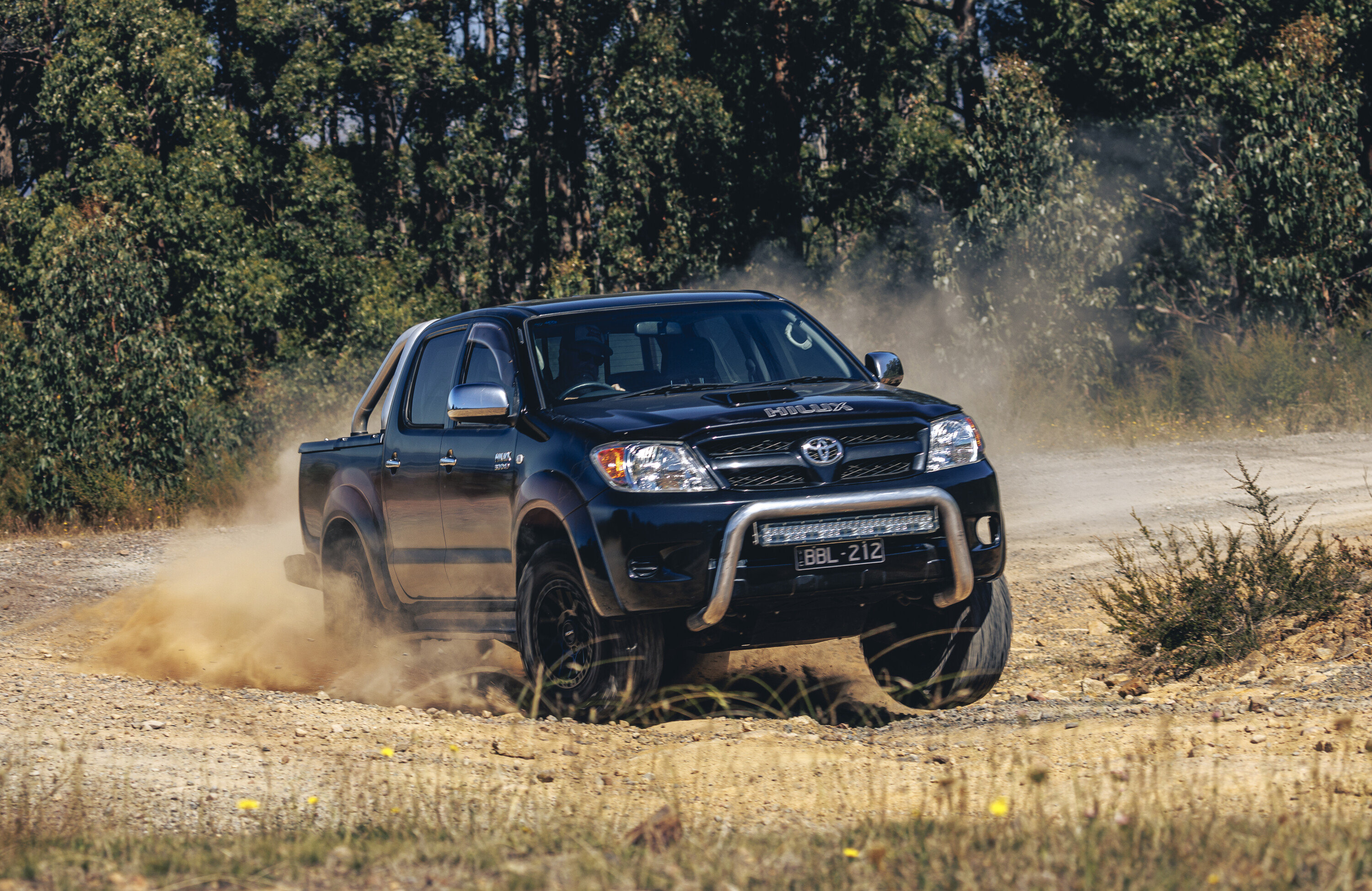
The first is a fierce V8-powered HiLux fettled by the experts at Marks 4WD in Melbourne. This example – a test mule for the Melbourne company’s LS into KUN26 HiLux conversion kit – is an SR5 double-cab 4×4 originally powered by a 3.0-litre diesel engine. That powertrain was replaced with a L98 6.0-litre engine from a VE Holden Commodore!
1
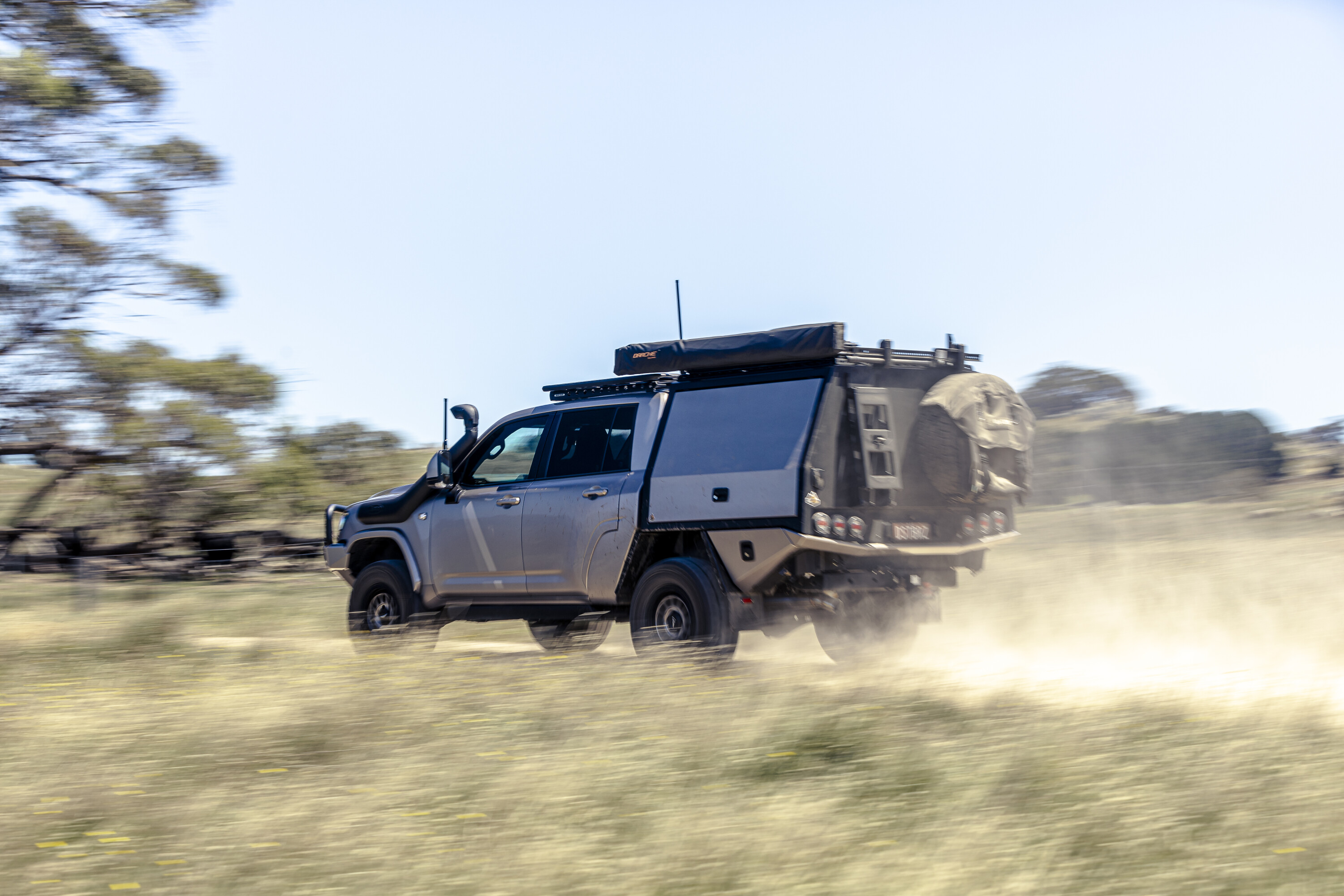
Sticking with Toyota, the second mind-blowing custom in this issue is a chopped LandCruiser 300 Series modified by the owner of Offroad & Outback in Victoria. The folks at ASG 4X4 were tasked with converting the LC300 into a ute, and that deluxe canopy on the back is a Trig Point unit. There’s plenty more intricate details of both builds, but you’ll have to pick up a copy of the mag to read all about it!
1
The spanners have kept spinning at 4X4 HQ, with our Tradie Triton getting a new set of Narva LED lights. Plus, following the completion of our next-gen Ranger – our biggest project EVER – we’ve already started work on our new build for 2024: a Ford Everest Ambiente. We got the ball rolling with the installation of a Yakima LockNLoad platform and a bunch of associated accessories.
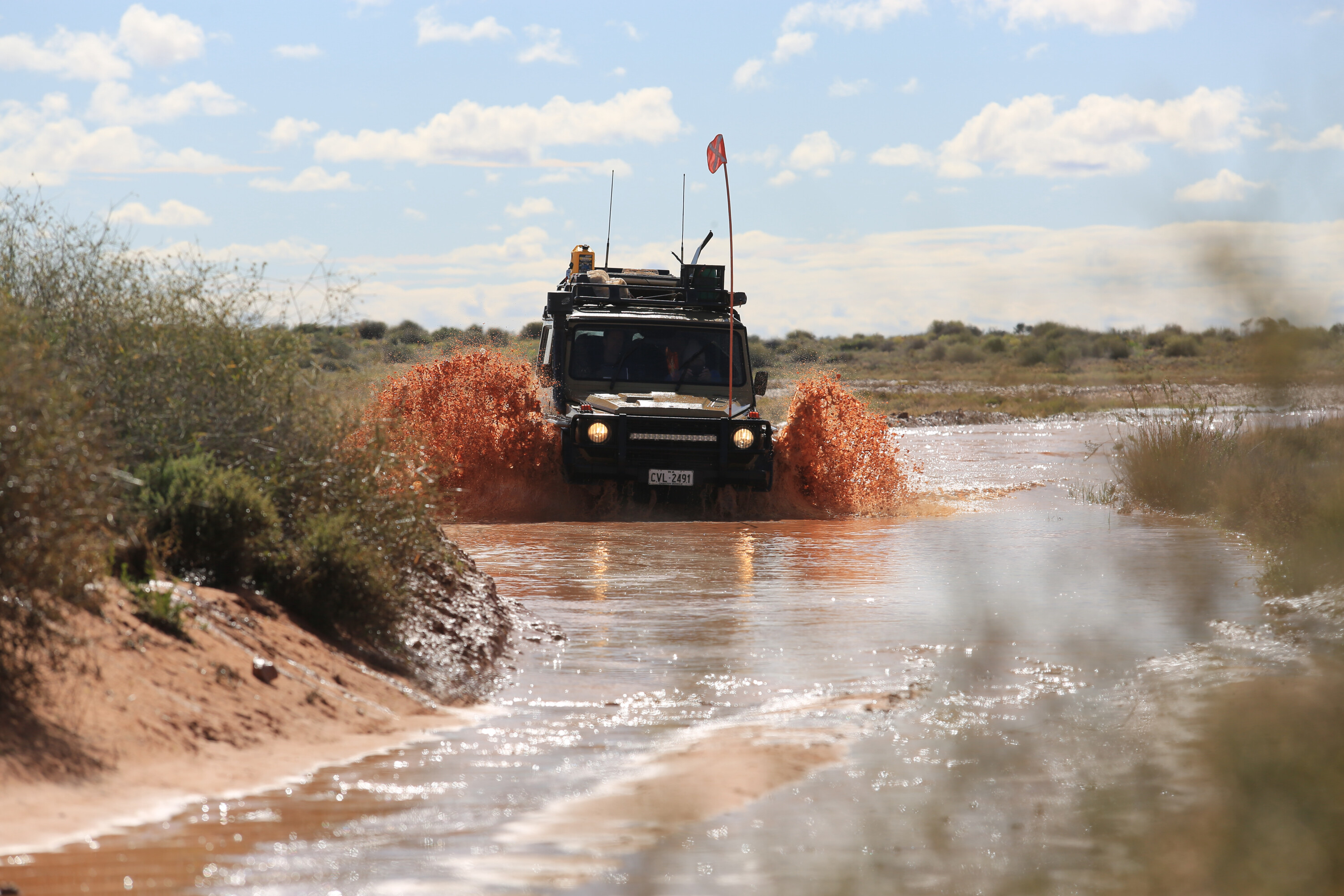
A 12-day Simpson Desert adventure from Alice Springs to Birdsville and back again – with four fully loaded G-Wagens in convoy – was interrupted by heavy rain, closing tracks and forcing the leaders of the trip to think on their feet. But in the desert, sometimes you must find a way through regardless of the conditions.
1
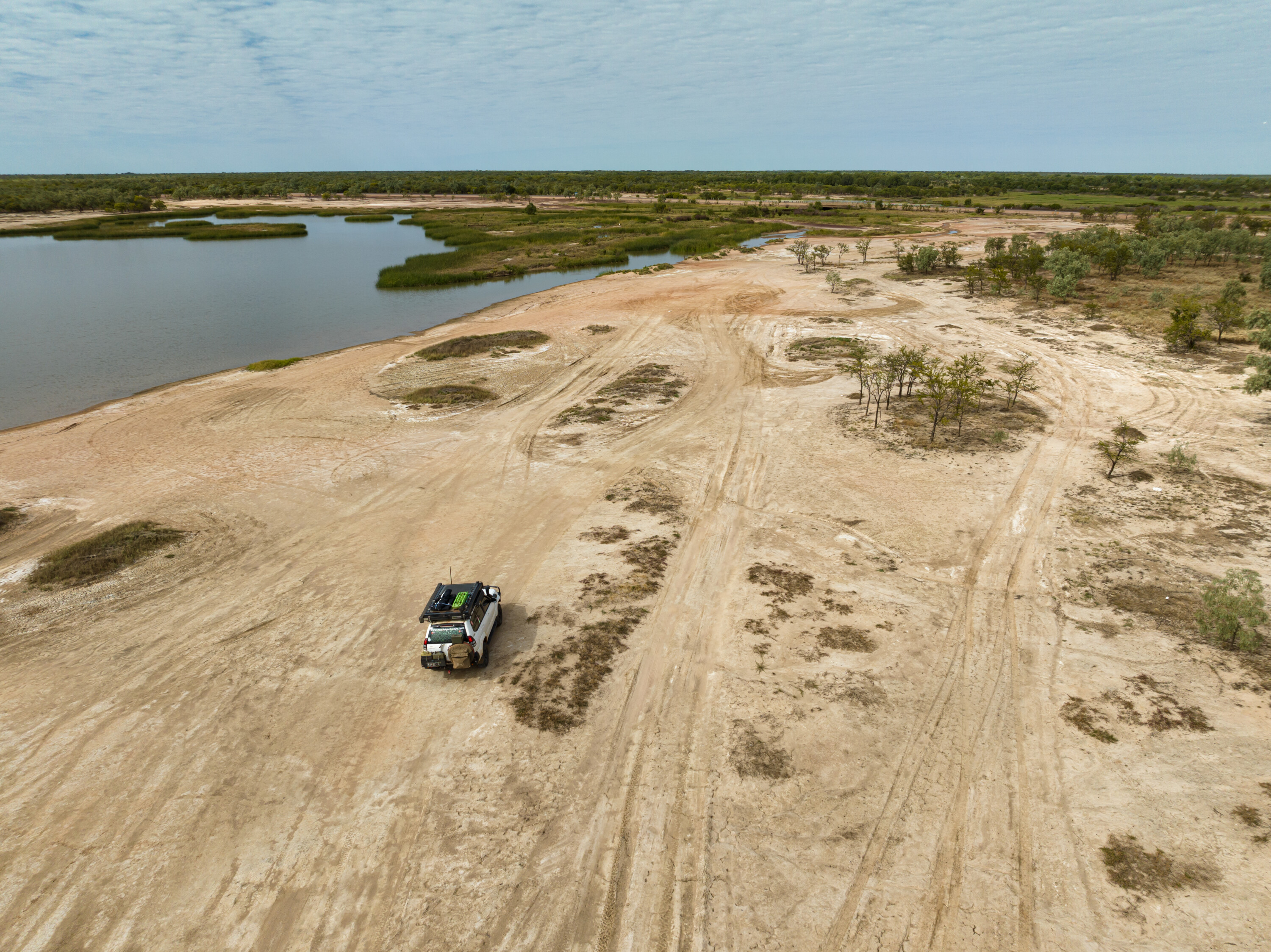
Also on the travel front we venture to Wyndham and Kununurra in WA; embark on a top end adventure to Litchfield National Park; traverse the gold-mining trails around the wider Castlemaine district of Victoria; and list five of the best things do in and around the town of Normanton in Queensland, the entrance to the Gulf of Carpentaria.
1
What else is there?
- Moonie’s Cruiser gets a Terrain Tamer electric secondary park brake
- Ron also takes a look a new UltraGauge unit
- Off the grid with a BLUETTI AC200L power station
- Maxxis RAZR tyres put to the test on 50,000km trip through WA
- Plus new products, the latest news and much more!
The March 2024 issue of 4X4 Australia is out now.
With the range of Bluetti portable power stations available, is there still a need to spend time and money installing an auxiliary battery system or inverter in your 4WD?
Many of the models in the Bluetti line-up can power a 12-volt fridge; safely recharge camera, chainsaw, power-tool and laptop batteries; and be used to run a hairdryer, coffee machine, milk frother, toaster and kettle … so buying a portable power station is a no-brainer.
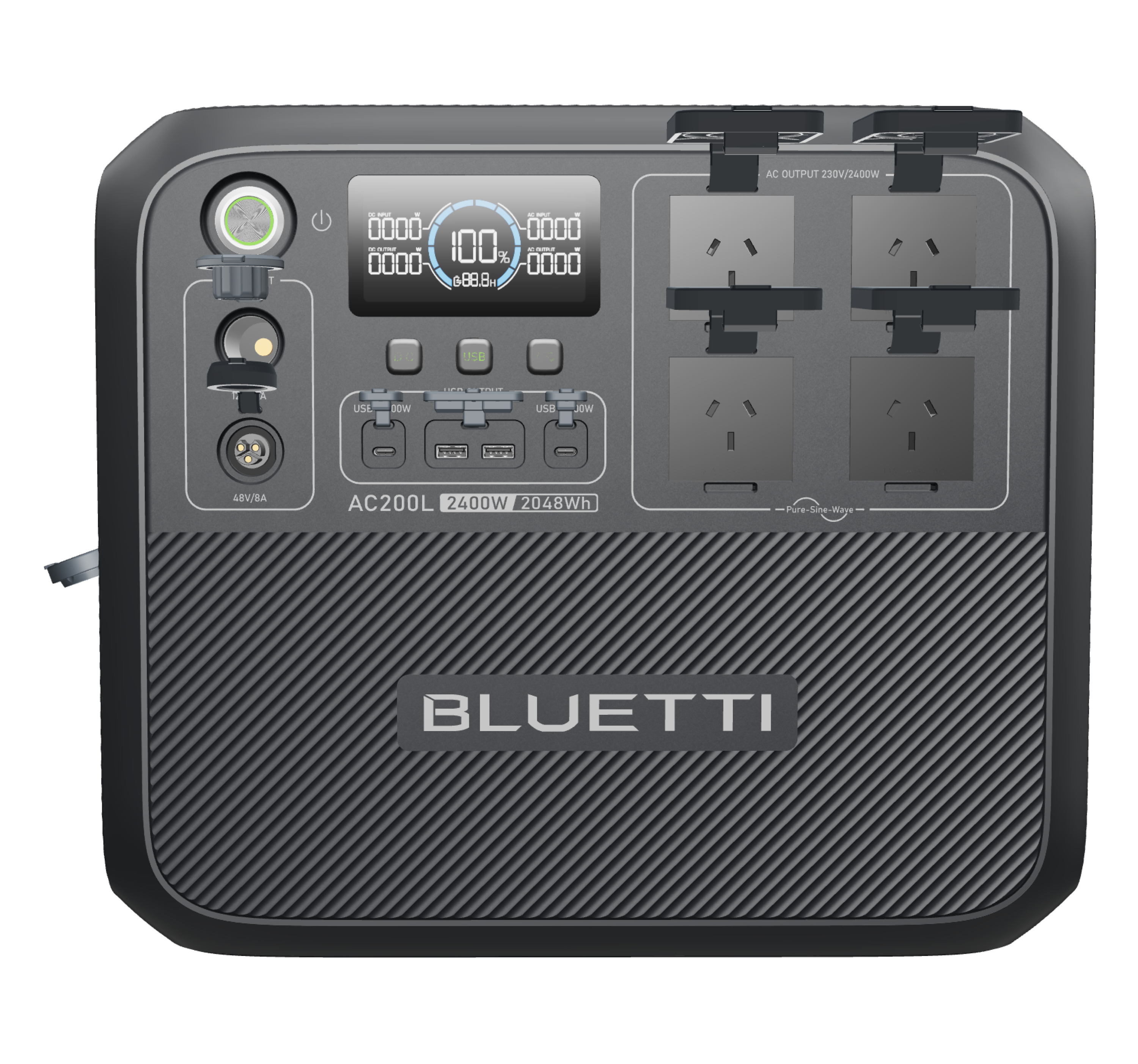
The latest offering from Bluetti is the AC200L, a step up from the AC200MAX. This model leads the pack with groundbreaking improvements in charging speed, output power, more intuitive LCD display, unobtrusive operation and energy efficiency. It has the same capacity as the AC200MAX, but with a higher output of 2400W that can be uplifted to 3600W for heavy-duty equipment. The AC200L provides a one-stop solution to meet your daily electrical needs when camping or exploring.
4
With the AC200L’s 2400W AC input, you can charge the 40Ah LifePO4 Lithium Iron Phosphate battery from 0 to 80 per cent in 45 minutes. Charging times using a Bluetti solar panel are also impressive at 1200W which charges it up from 0 to 80 per cent in only 90 minutes. When you plug it into both AC and solar, the AC200L automatically prioritises the solar intake. You can also recharge the AC200L while driving via the supplied 12/24V power cable.
The pure-sine wave inverter powers four 230V/10.5A AC outlets at a total of 2400W, to keep your fridge and induction cooktop humming for hours. There are also two 100W USB-C ports and two 18W USB-A ports to power-up or charge smartphones, camera batteries and Bluetooth speakers. There is also a 48VDC/8A RV outlet and a 12V/10A power outlet. It is disappointing that there isn’t a wireless charging pad on the top of the AC200L.
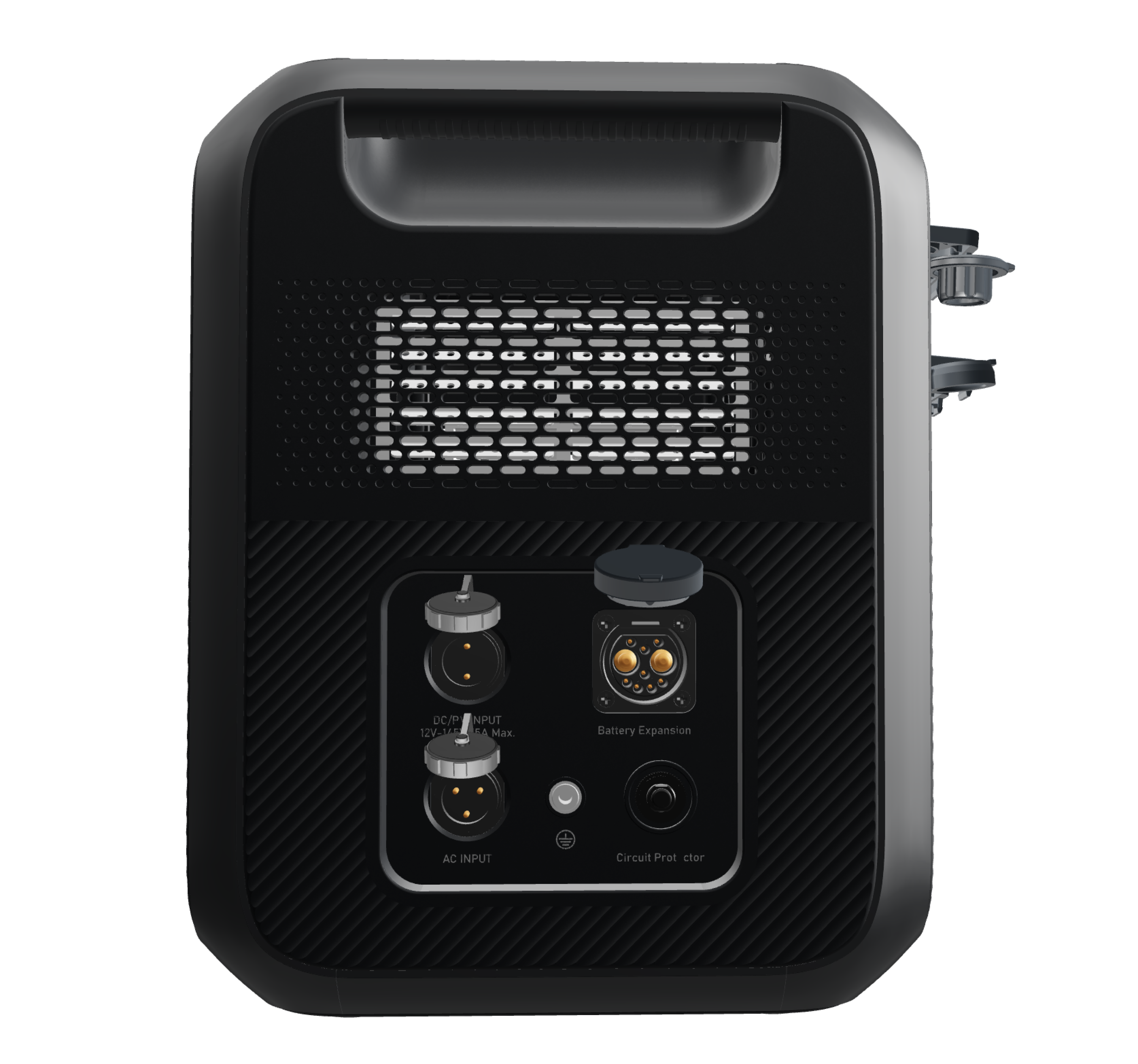
The Bluetti AC200L expands seamlessly with the B210, B230 and B300 expansion batteries so that you can increase the capacity of the AC200L to an incredible 8192Wh; although, we see this as being practical for power outages at home rather than out in the bush.
1
The LifePO4 Lithium Iron Phosphate battery has a shelf life of 3000+ cycles to 80 per cent original capacity, which offers value for money over the life of the AC200L. Bluetti recommends the unit be recharged to 80 per cent every three to six months.
Weighing in at 28.3kg the Bluetti AC200L portable power station is heavy, but the sturdy built-in handles on either side of the unit make it easier to move around. The unit measures 420mm long, 280mm wide and 366.6mm high, and comes with a five-year warranty.
The recommended retail price of the AC200L is $2999, but we have seen it up to $200 cheaper on the website as well as at reseller stores such as Bunnings.
With plenty of fuel-efficient hybrids in the small and medium segments, Toyota is one of the better-prepared brands under Australia’s looming New Vehicle Efficiency Standard (NVES).
Toyota Australia is ultimately for NVES, and while Option B suits the brand’s passenger cars and light SUVs, it’s worried about the effect on its larger models.
Australia’s best-selling brand is angling for some changes in its upcoming submission.
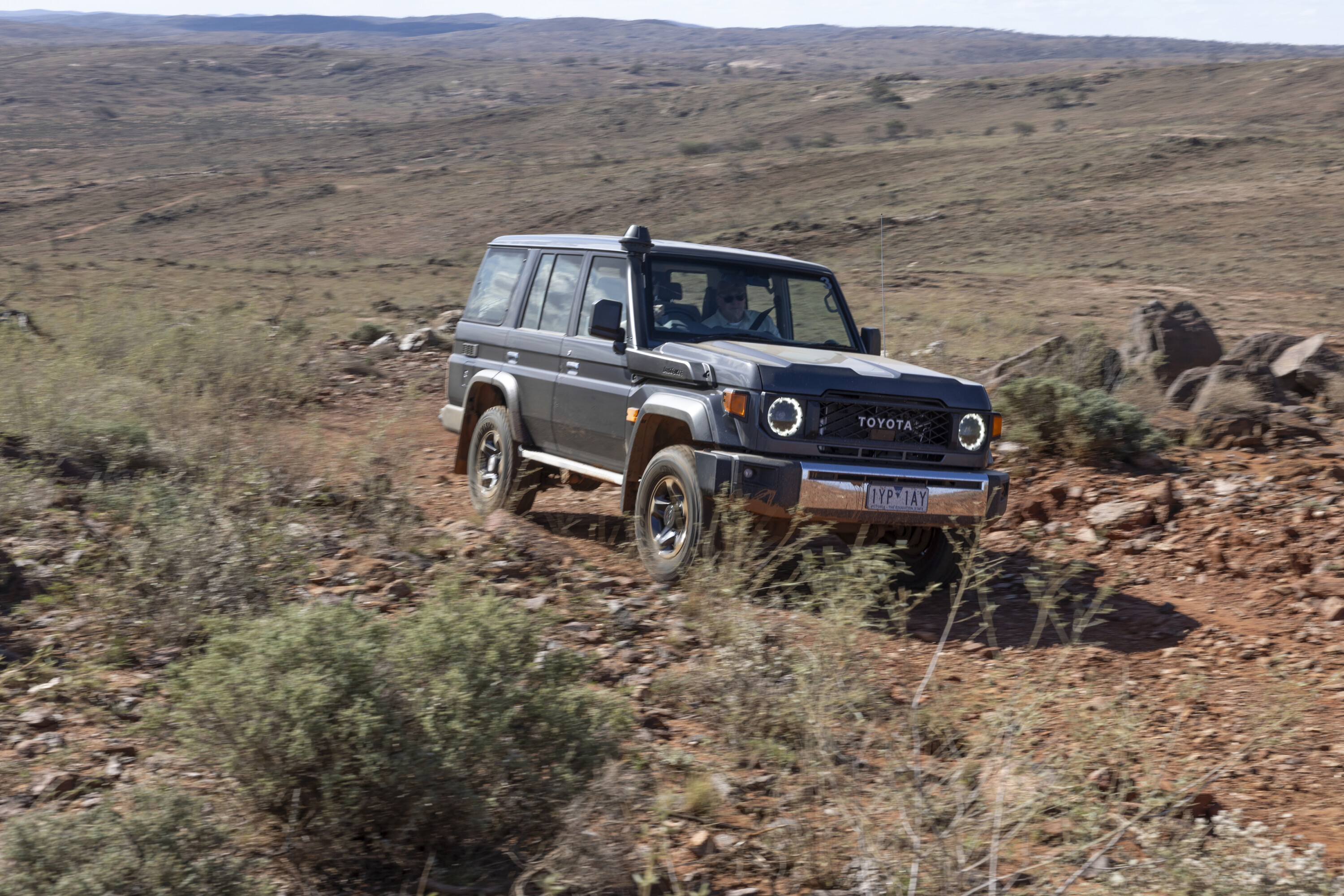
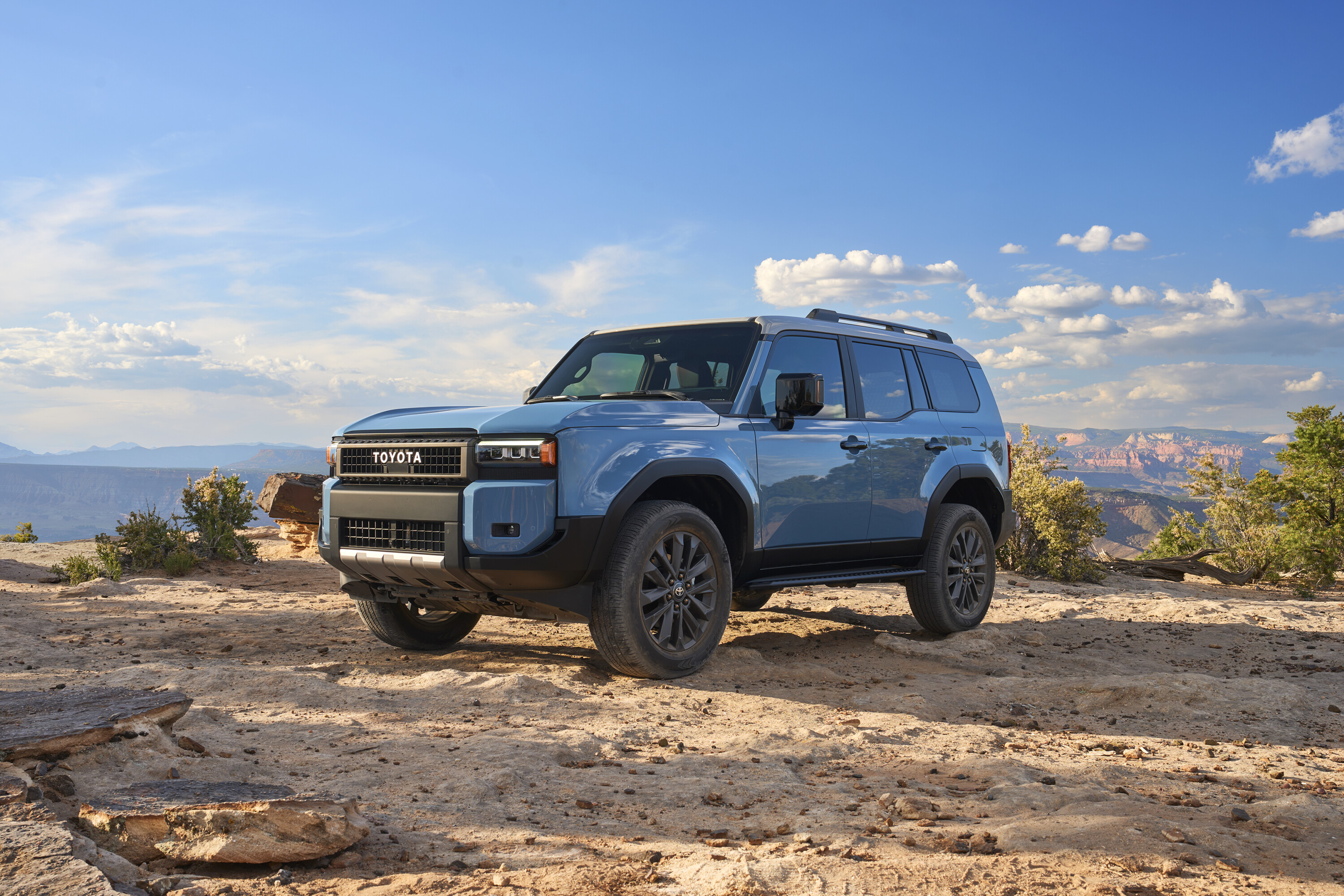
Chief among which is a recategorisation of large SUVs, such as the Fortuner, Prado and LandCruiser 300, into the light commercial vehicle category to more closely mirror the United States’ approach.
“If the fines are imposed, those cars are going to go up. Those people don’t have an alternative right now in any other car.”
The government’s current preferred ‘Option B’ requires an average annual CO2 reduction of 12.2 per cent for passenger cars and 12.4 per cent for LCVs between 2025 and 2029.
Toyota Australia’s sales and marketing boss Sean Hanley is worried about leaving customers behind in Australia – specifically, those who need LandCruiser wagons for work and trade.
“The change points as we see it now are that a LandCruiser wagon, for example, is now under the passenger target. Now we know that in some cases – it’s true – people use them as city cars and they go out and pick children up and go on holidays, we know that.
“But there’s also an awful lot of people that use them for work or live in rural areas where they drop kids 40-50kms to bus stops, go and pick them up on dirt roads,” said a typically impassioned Hanley.
1
Hanley nods to the continued reliance on 70 and 300 Series LandCruiser wagons in sectors that uphold Australia’s economy.
“They’re used for agriculture, mining, transportation of workers to and from mine sites; they’re used for business. So they are actually commercial vehicles.
“So I think when you take [LandCruisers] out of the light commercial vehicle segment and put them into passenger – and the passenger target is significantly less than the LCV target – it’s not right. This is going to hurt people in regional and rural Australia.
“If the fines are imposed, those cars are going to go up. Those people don’t have an alternative right now in any other car,” concluded Hanley.
1
Hanley said Toyota is also interested in pushing back the mandate for light commercial vehicles, noting it will be challenging without technology such as plug-in or series-parallel hybrids in its most popular vehicle, the HiLux ute.
“Many customers will have little choice but to hold onto their vehicle for a lot longer,” he said, suggesting this will ultimately undo any good the NVES does.
There’s intense debate surrounding this topic, with some schools of thought suggesting that driving well-maintained and efficient existing vehicles for longer does more to offset emissions than regularly buying barely more efficient new ones.
Regardless of the specifics, Hanley was keen to point out that Toyota is pro-NVES, going as far as saying that ‘Option A’ is totally out of the question due to how weak it is.
However, he promised that if super-credits are implemented, the brand would rather get hit with fines and the money go to the government than pay Tesla or any other brand it does not have a stake in for carbon credits.
The Federal Government’s New Vehicle Efficiency Standard is open for final feedback until 4 March. Toyota Australia continues to model and study the effects of proposed standards with its proposals to be revealed in detail next month.
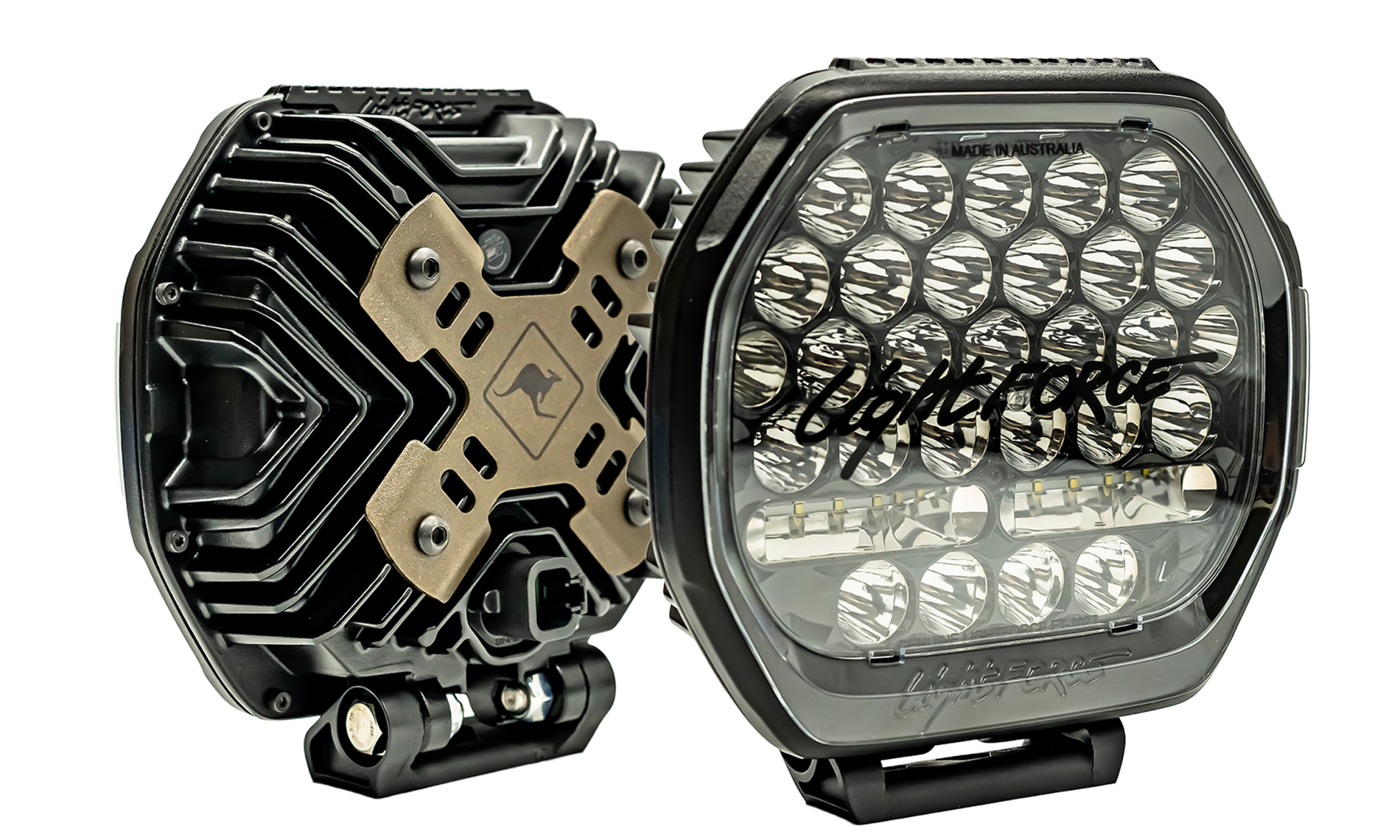
With more than 38 years of expertise in automotive and sporting lighting, Lightforce continues to push the boundaries by creating the BEAST, a product that combines military practicality and ruggedness with bold and unique design styling.
Founder Dr. Ray Dennis expressed his enthusiasm for the BEAST, stating, “The BEAST represents the result of Lightforce’s unwavering commitment to excellence and innovation. We’ve crafted something really special here that sets a new standard for durability, versatility and performance.
“In these times of economic uncertainty BEAST is a demonstration that we continue to do our part by helping to ensure local jobs and local manufacturing remains strong now and into the future.”
1
Key features of the BEAST include a warm white colour temperature range of 5400-5700 that reduces glare and eye strain with consistent and precise beam patterns that will give you the confidence to drive at night no matter what the road type. The slimline footprint and lightweight design allows countless mounting opportunities for seamless vehicle integration, and the hard-coated lens provides extreme impact resistance and durability.
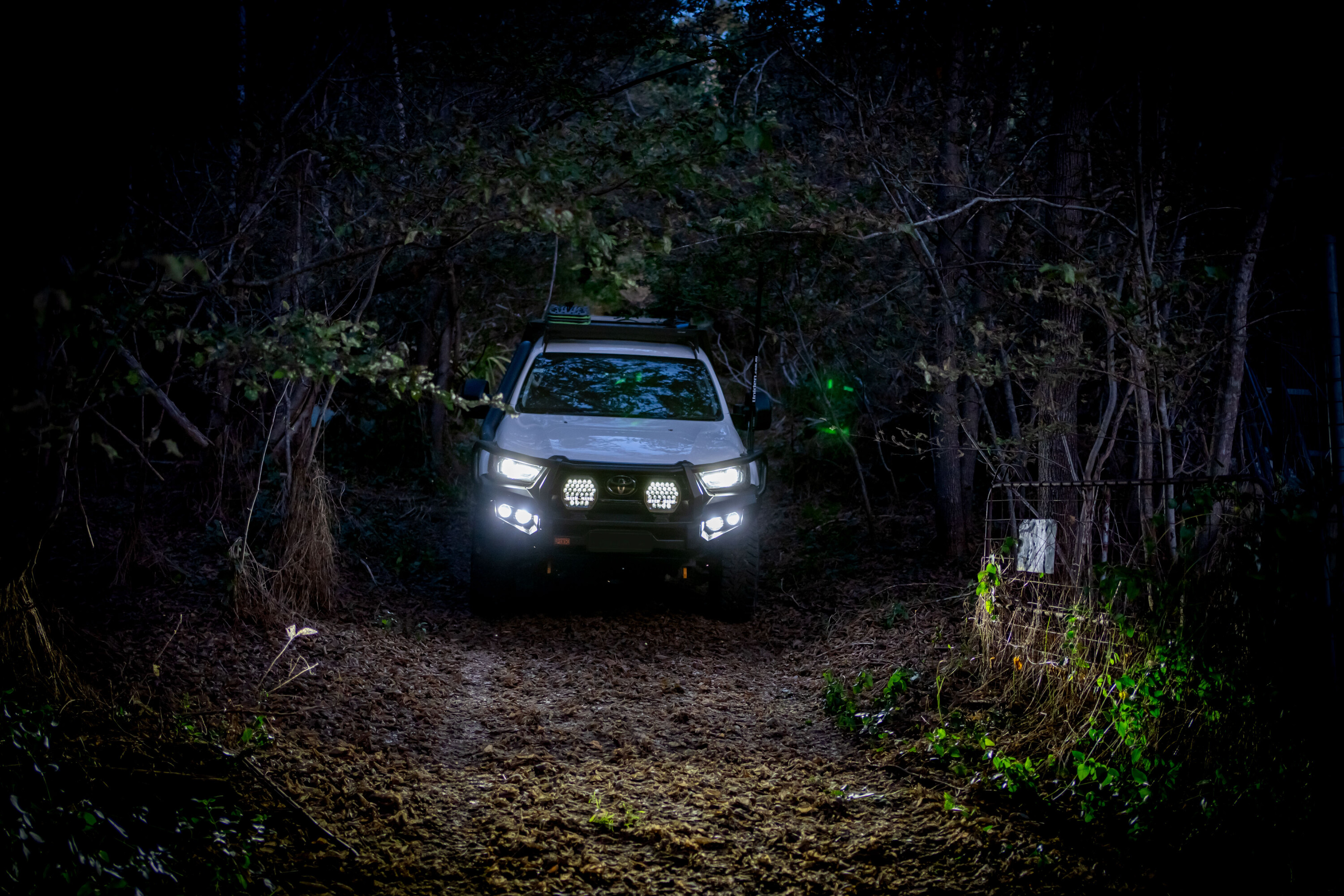
Undoubtedly the most important feature of the new light is summed up by Lightforce’s national sales and marketing manager, David Evans. “The BEAST Driving Light is not just another driving light, it’s revolutionising the driving experience for the end user,” he said. “With its unique three-mode operation, users can effortlessly switch between spot, flood and the powerful BEAST mode all from the comfort of their driving seat.”
1
Three-mode operations
Spot mode
Tame the terrain with BEAST’s spot-beam pattern for long-distance visibility. It has a beam distance of 1 LUX @ 1497m and a beam width of 60m.
Flood mode
Enhance safety on winding roads with BEAST’s flood beam pattern, offering an impressive 160-degree peripheral vision. It has a beam distance of 1 LUX @ 778m and a beam width of 140m.
BEAST mode
Press and hold to unleash the full potential of the BEAST, with extended beam distance and maximum width for long-range vision. It has a beam distance of 1 LUX 1375m and a beam width of 140m.
“We’ve engineered the BEAST to excel in the most extreme driving conditions,” said Dr. Ray Dennis. “It surpasses global test standards for durability and longevity, leading us to consider it the most rigorously tested Australian-made driving light on the market.
“We want end users to be in command of any situation with confidence and assist them to arrive wherever they are going safely.”
Critical certifications
- IP69K Ingress Protection for immersion, steam and fine dust.
- IK16 impact-rated lens survives high-speed rock impacts.
- MIL-STD-810H 514.4 vibration and shock-tested.
- Endures extreme temperatures, salt spray and chemical exposure.
- Compliant to international safety standards for AU/NZ and USA markets.
Pricing
- BEAST single pack: $599rrp
- BEAST twin pack: $1199rrp
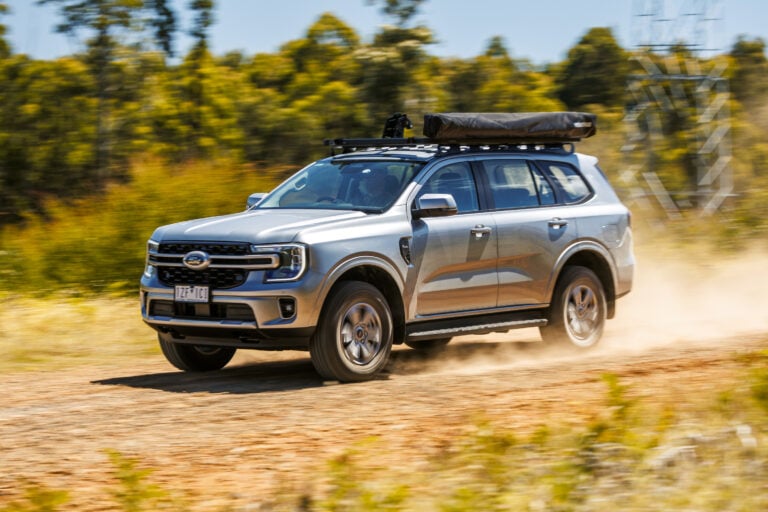
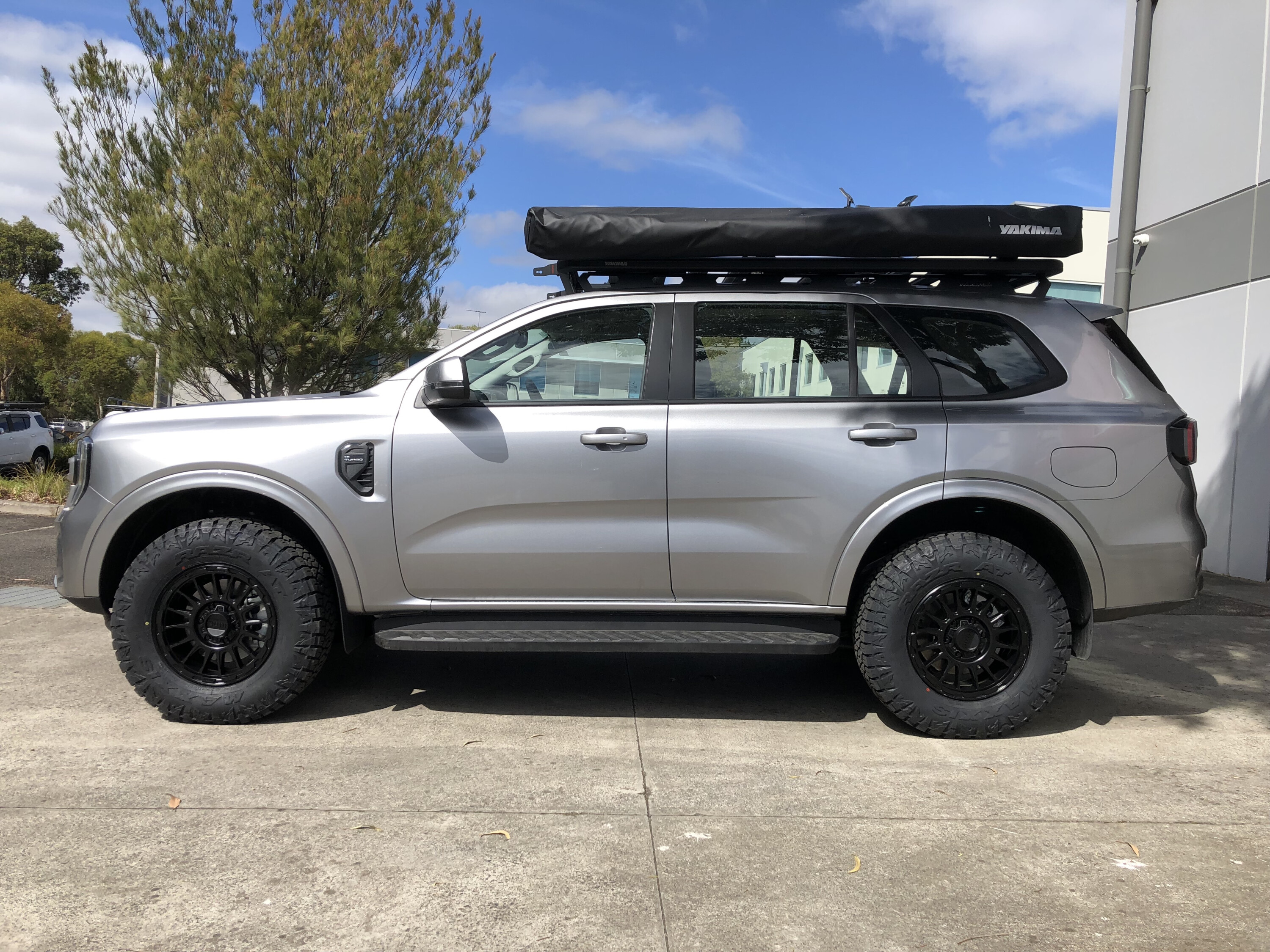
The Everest Ambiente is the base model in Ford’s 4×4 wagon lineup, so it really gives us a blank canvas to build it into a capable and comfortable touring 4×4 wagon.
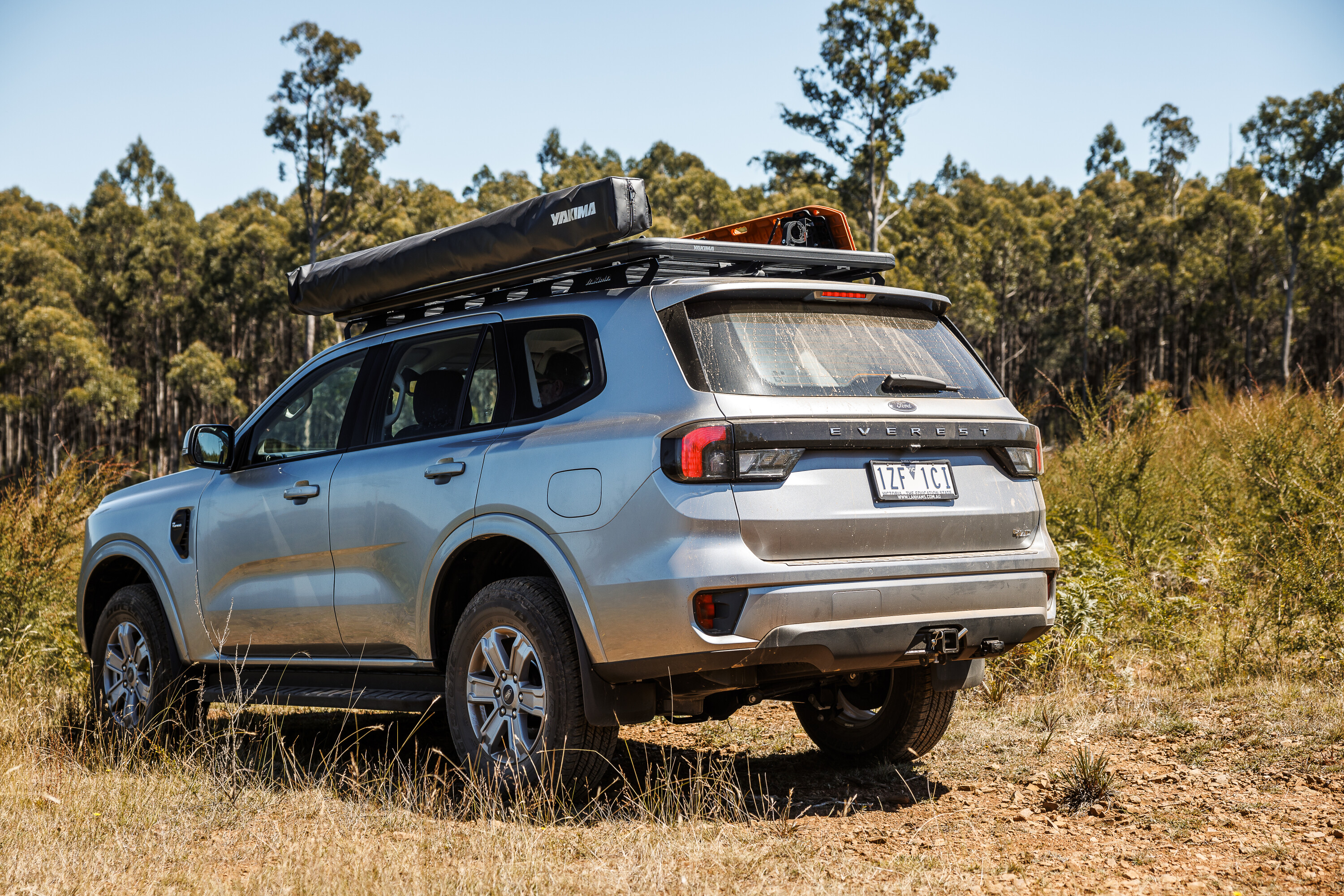
Because it’s a wagon, the Everest has less capacity to carry large objects and gear than our previous Ranger ute builds, so a versatile and quality roof rack is a welcome addition. We’ve opted to fit the Yakima LockNLoad platform to the Everest, mounted on Yakima’s RuggedLine longitudinal mounting system.
With 16 different size platforms in the LockNLoad range, finding the perfect one for the Everest was not a problem, and the RuggedLine mounts not only look the part but provide a stable mounting system for the platform as they run the length of the rack.
1
Mounting the racks can often be a DIY affair, but as our Everest is an Ambiente model with flush-mounted factory roof rails, as opposed to the raised rails on the higher-spec models, the roof lining needs to come out to replace the factory rails with the RuggedLine ones. Bearing this in mind, we sent the Everest to the guys at Roof Rack Superstore in Moorabbin for the fit up.
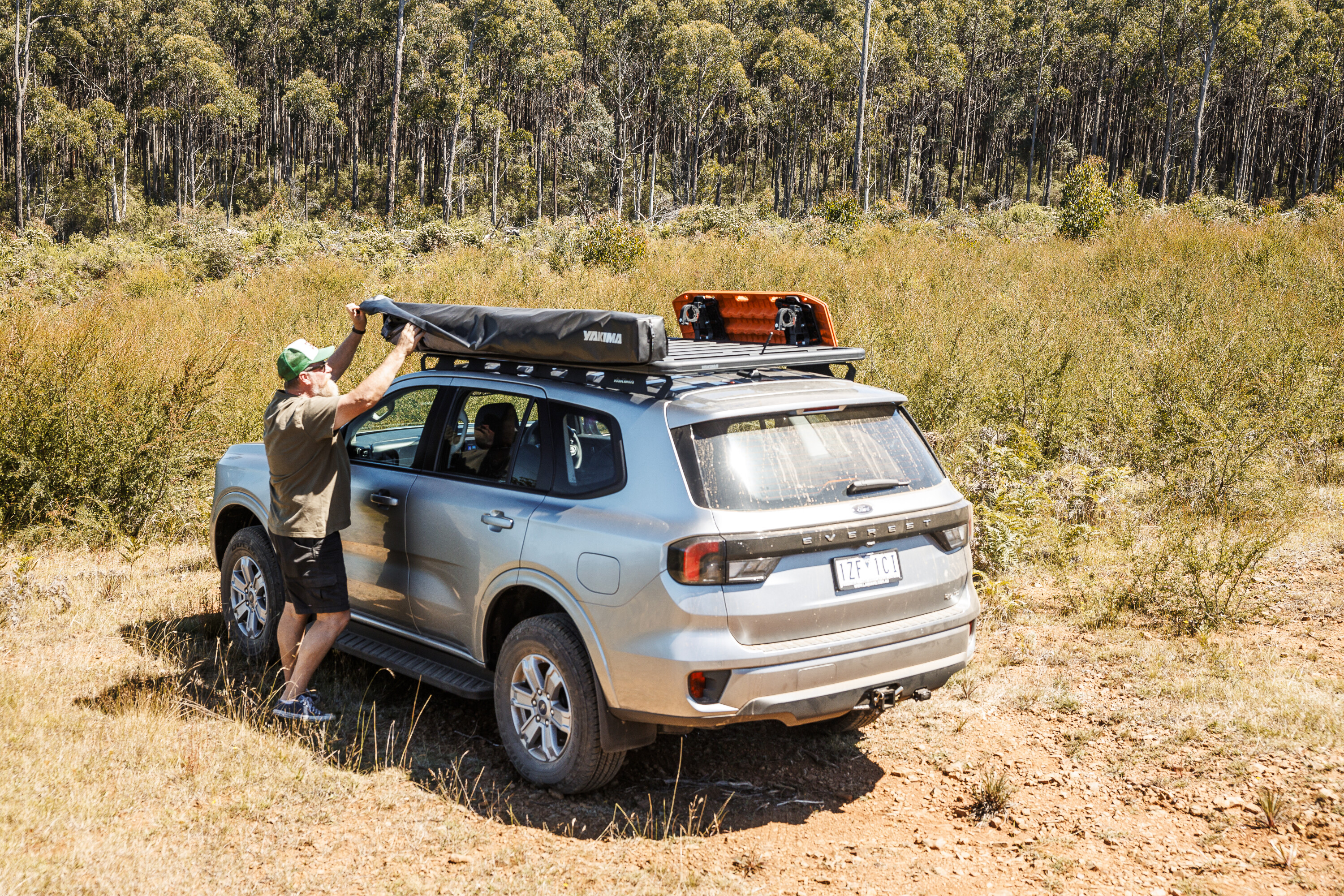
The team at the Superstore did a great job with everything fitting as it should, taking into account clearance for the rear door of the Everest, and where everything will sit on the rack. They mounted the Ace of Spades shovel holder on the back of the recovery track holder where it is still easy to access on the offside of the vehicle, and the awning on the nearside.
We strapped a set of Maxtrax to the mounts using the supplied straps but found this set up a bit awkward, as there is nothing supporting the weight of the tracks while doing up the straps. We’ll adjust this setup by fitting a set of Maxtrax retaining pins to the Yakima mounts, as this will allow for quick and easy mounting and removal, with the ability to lock the Maxtrax to the pins.
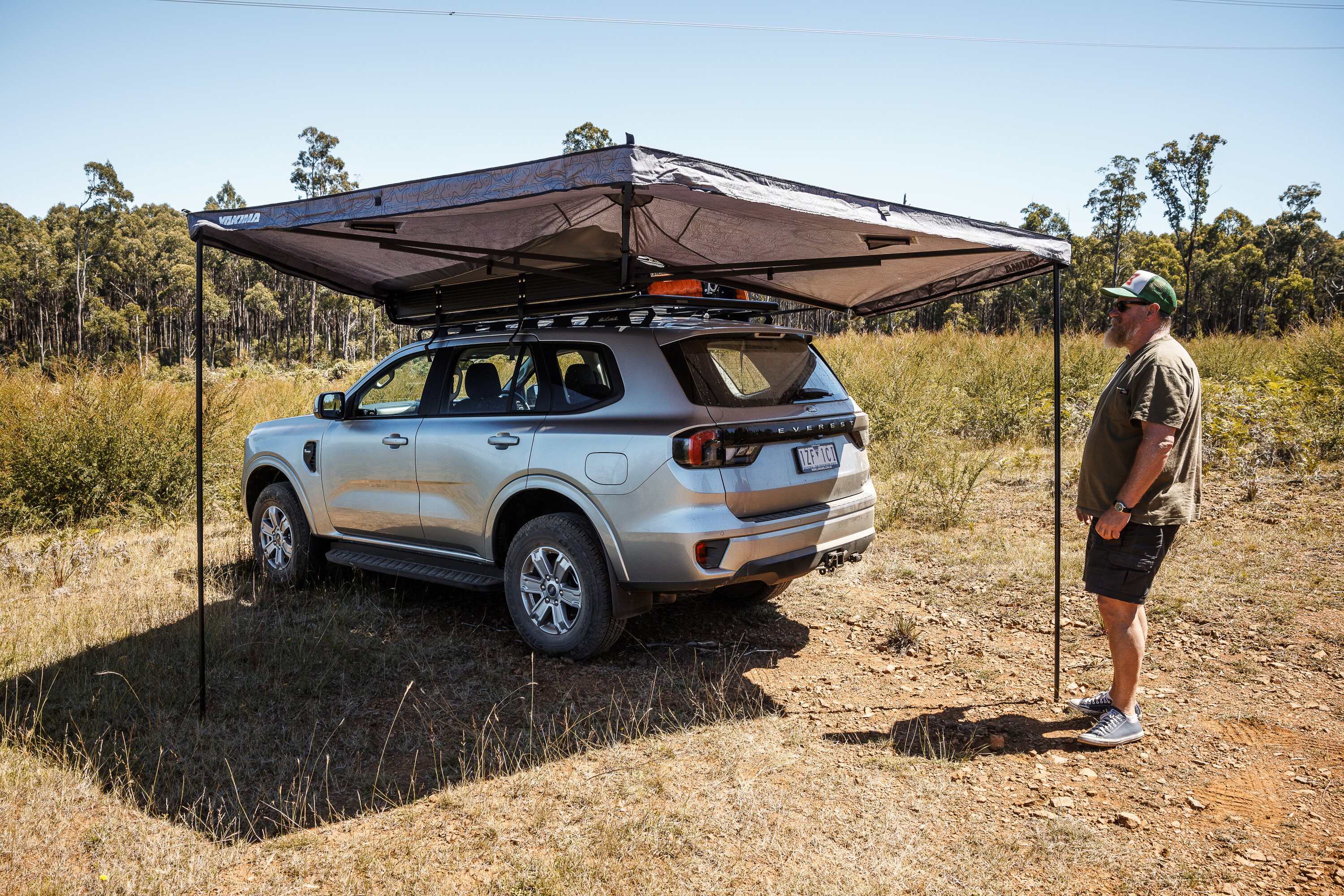
The Yakima Major Shady 270° awning provides a massive 7.4m2 of shade around the side and back of the Everest. The shade material is a 420D polycotton fabric with PU coating to help keep the sun out, and it’s lightweight and waterproof. The awning’s three arms easily deploy out and around the Everest to provide quick and efficient cover from wind and rain, while there are three drop-down telescoping legs to prop it up and tie it down for use in heavier rain and windy conditions.
1
The Major Shady awning folds back into its case and easily zips up, which can be a problem with some awnings. At 21.1kg it’s relatively light compared to some other 270° awnings, but the lighter weight construction means you really need to deploy the legs and tie it down in windy conditions. A small price to pay for a lightweight product that gives you quick cover.
The LockNload platform has its slats running across the width of the vehicle with slots in the slats as well and the perimeter which makes fitting accessories and loads easy and configurable. We’ll play around with the location of the accessories fitted so far so that they best suit our needs, and we plan to fit a lightbar to the front of the rack as the vehicle build progresses.
1
The LockNLoad Platform feels solid, helped no doubt by the longitudinal RuggedLine mounts. These were designed and developed in Australia by Yakima’s local team to suit our harsh conditions. Made from powdercoated stainless steel, they form a spine to support the full weight of any cargo secured to the platform. They also provide a neat place to mount side-facing camplights and somewhere to hook the end of the awning to when it’s fully extended.
It’s early days for our Ford Everest but with Yakima’s platform system and awning installed, we’ll have plenty of options for load carrying and shelter when we are set up at camp.
Pricing
| Product | Price |
|---|---|
| LockNLoad platform | $1150 |
| RuggedLine mounts | $750 |
| Recovery Track holder | $149 |
| Ace of Spades Holder | $109 |
| Light bar bracket kit | $89 |
| Eye bolts | $34 |
| Major Shady 270u00b0 awning | $1099 |
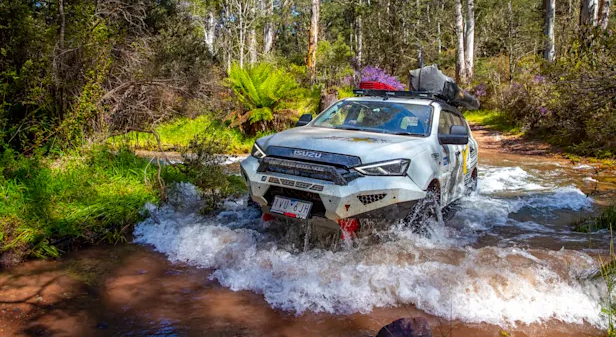
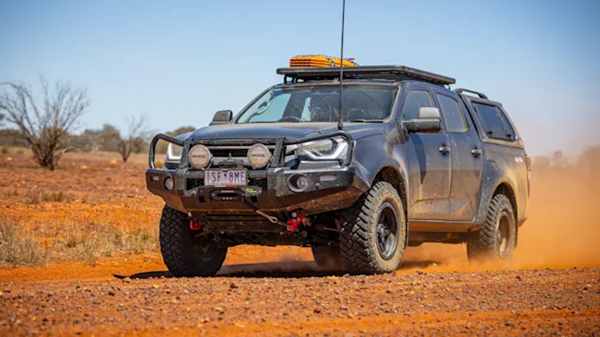
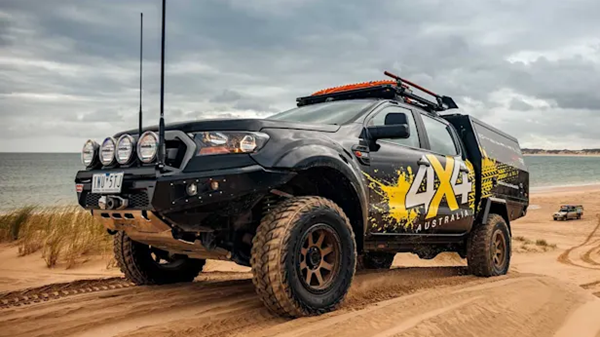
As our Ford Ranger Sport build nears completion, we have selected another new Ford product for this project.
This time we’re focusing on the Wheels Car Of The Year-winning Ford Everest wagon. If Wheels can call it Car Of The Year, we reckon we could turn it into the 4×4 Tourer Of The Year.
We bought a base model 2023 Everest Ambiente with the 2.0-litre bi-turbo-diesel engine and 10-speed automatic transmission. Getting the base model vehicle comes with a few pros and a few cons. Base model means it’s the cheapest in the range, with the Everest 4×4 starting at $58,990.
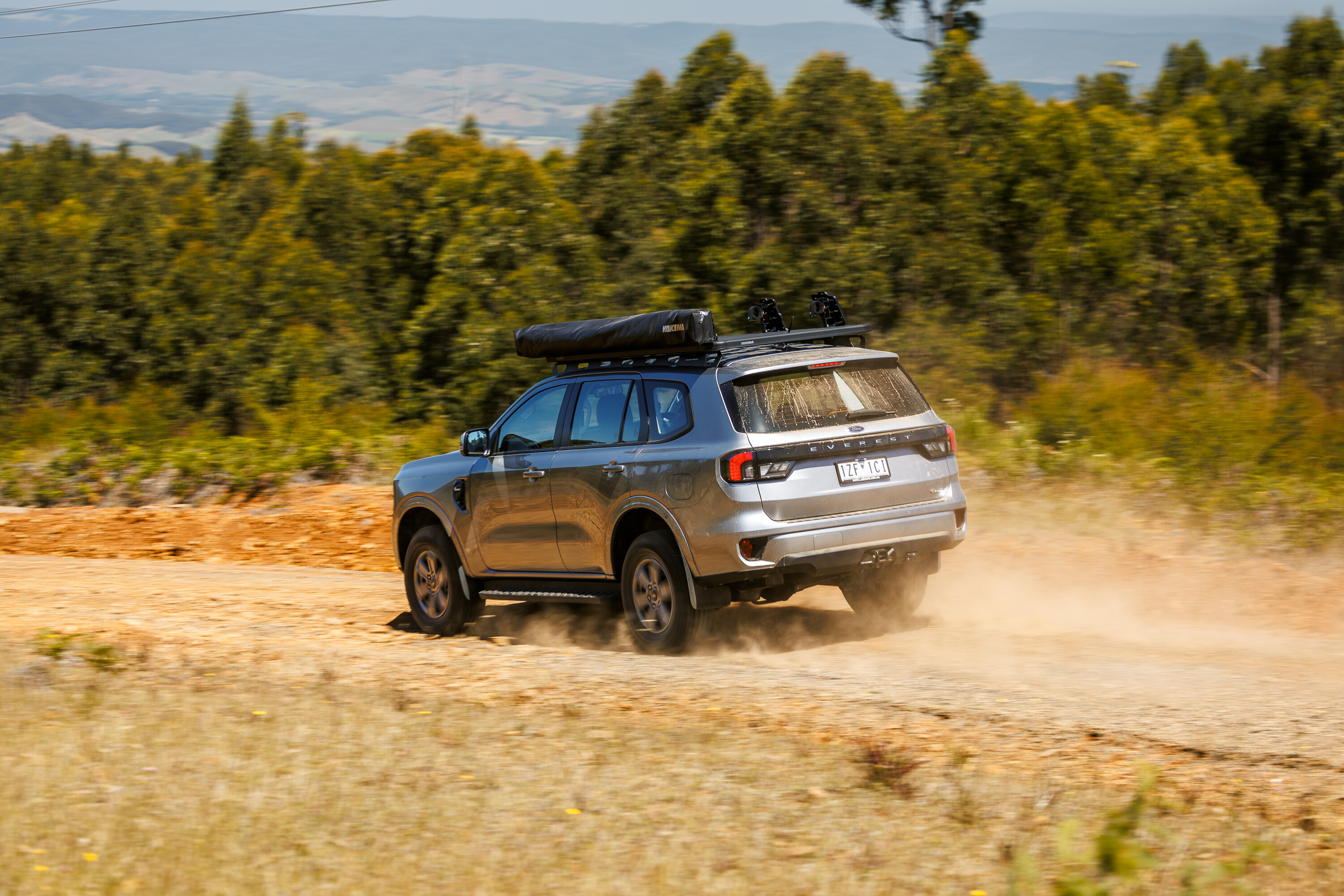
1
Positives include the fact we’re starting with a blank canvas, as the Ambiente misses out on a lot of the features you probably don’t want anyway. On the plus side it comes standard with 17-inch alloy wheels and a high-speed (manual) tailgate. Negatives include the absence of the 4×4 Auto mode in the transfer case, and no tyre pressure monitor as fitted to the higher-spec models.
We wanted to go with a 2.0 bi-turbo after having the V6 in the Ranger and, really, the only thing this engine is lacking compared to its bigger sibling is refinement. It has impressed us so far in the way it drives under all conditions, and it certainly uses less fuel than the V6 Ranger. Of course, this last fact will change as we fit more accessories which will negatively affect the Ford’s fuel consumption.
1
Again we’re teaming up with some top brands to fit-out the Everest, and as seen in the photos we’ve already got the Yakima LockNLoad platform rack and a 270-degree awning up on the roof, as well as Maxxis RAZR all-terrain tyres on KMC Impact wheels fitted. On the still-to-fit list is an AFN front bar; Kaymar rear bar and wheel carrier; Tough Dog suspension; MSA 4×4 drawers and fridge slide; a Powertec phone signal booster; and a host of other great gear.
We’ve put around 2000km on the Ford so far with no problems leading up to its first service. That will change as the Everest is geared up. Stay tuned!
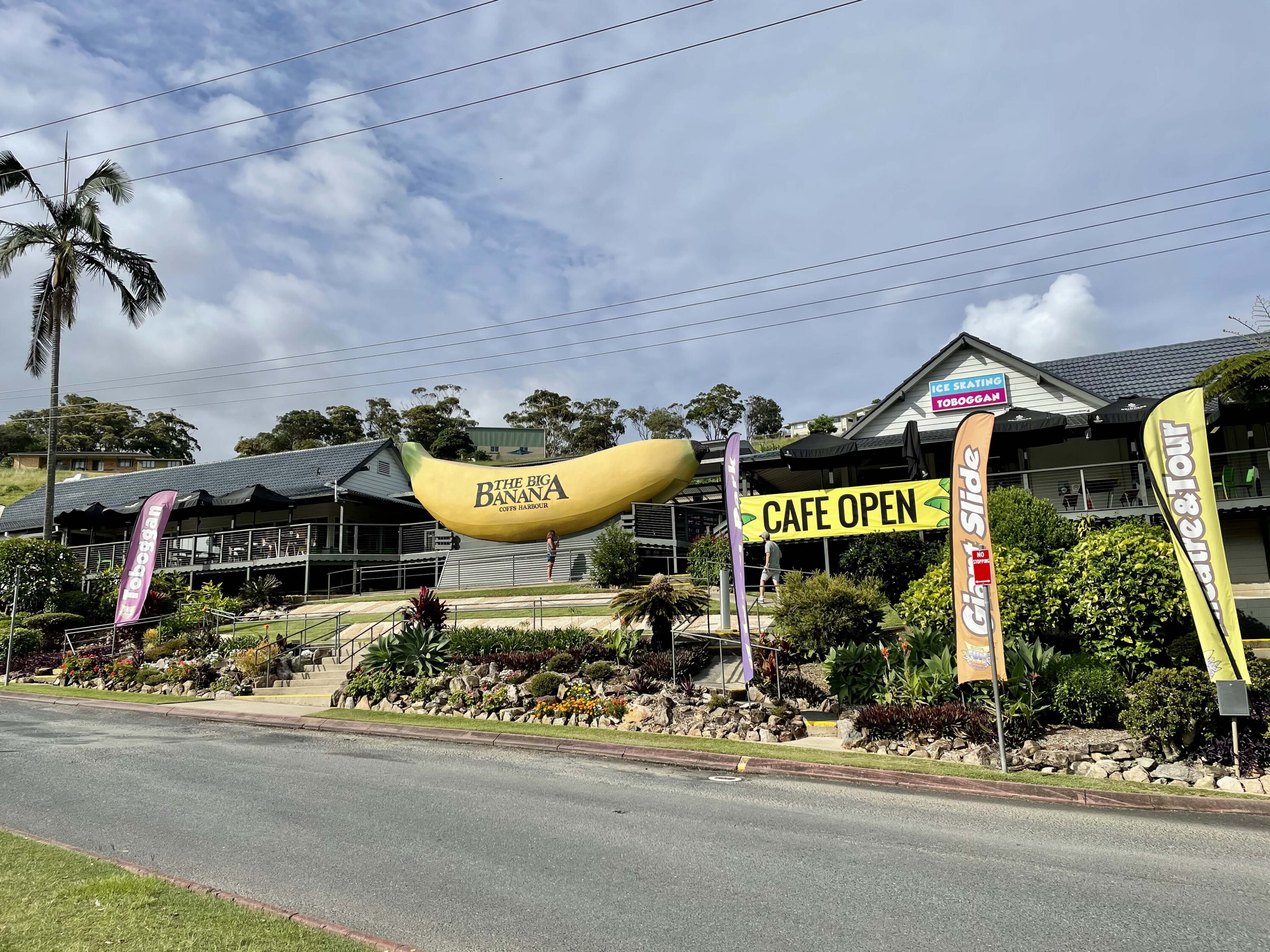
Coffs Harbour, home of the legendary Big Banana and stunning beaches for as far as the eye can see, prides itself on its natural coastal wonders.
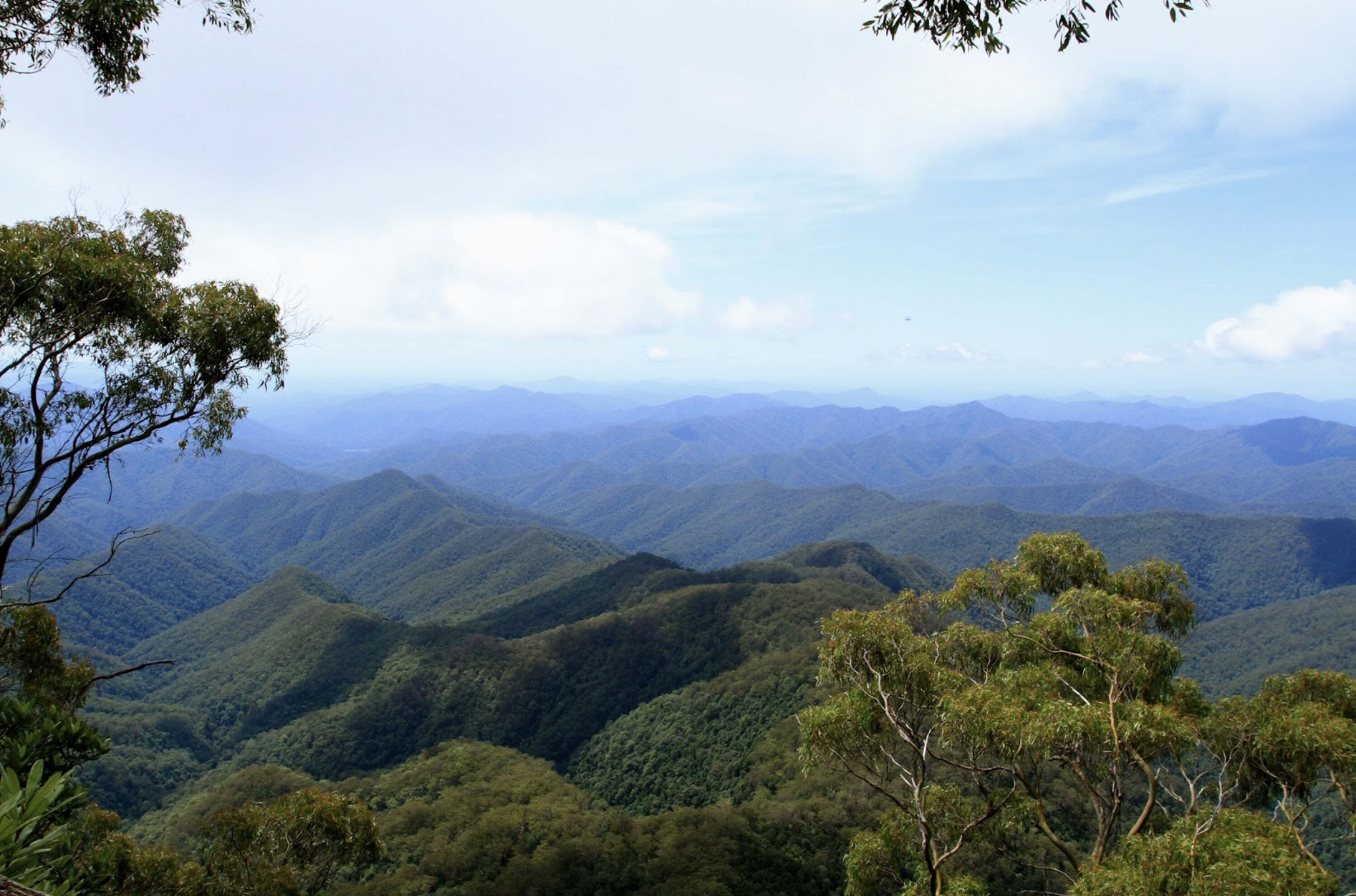
However, it’s the Great Dividing Range that flows right down to the coastline that gives the Coffs coast some of the most diverse and unique areas to explore along the eastern seaboard. Much of the range behind Coffs Harbour was created more than 30 million years ago when a series of volcanoes were active, especially the Ebor volcano some 100km inland from the coast.
This volcanic activity created the rugged valleys and mountain ridges, the spectacular rivers and stunning areas of prehistoric rainforest pockets. And for four-wheel drivers it’s provided us the perfect playground to explore in so many different areas.
1
Make sure you do your research before hitting the Coffs Harbour region as the tracks are like a giant maze criss-crossing through the forested areas.
Driving through this area can be as hard or as easy as you make it, while camping options are plentiful, from free camping in State Forests, booking online for campsites in National Parks, through to the many caravan parks in town. There are plenty of luxury accommodation options in town too.
1
1. History in the hinterland
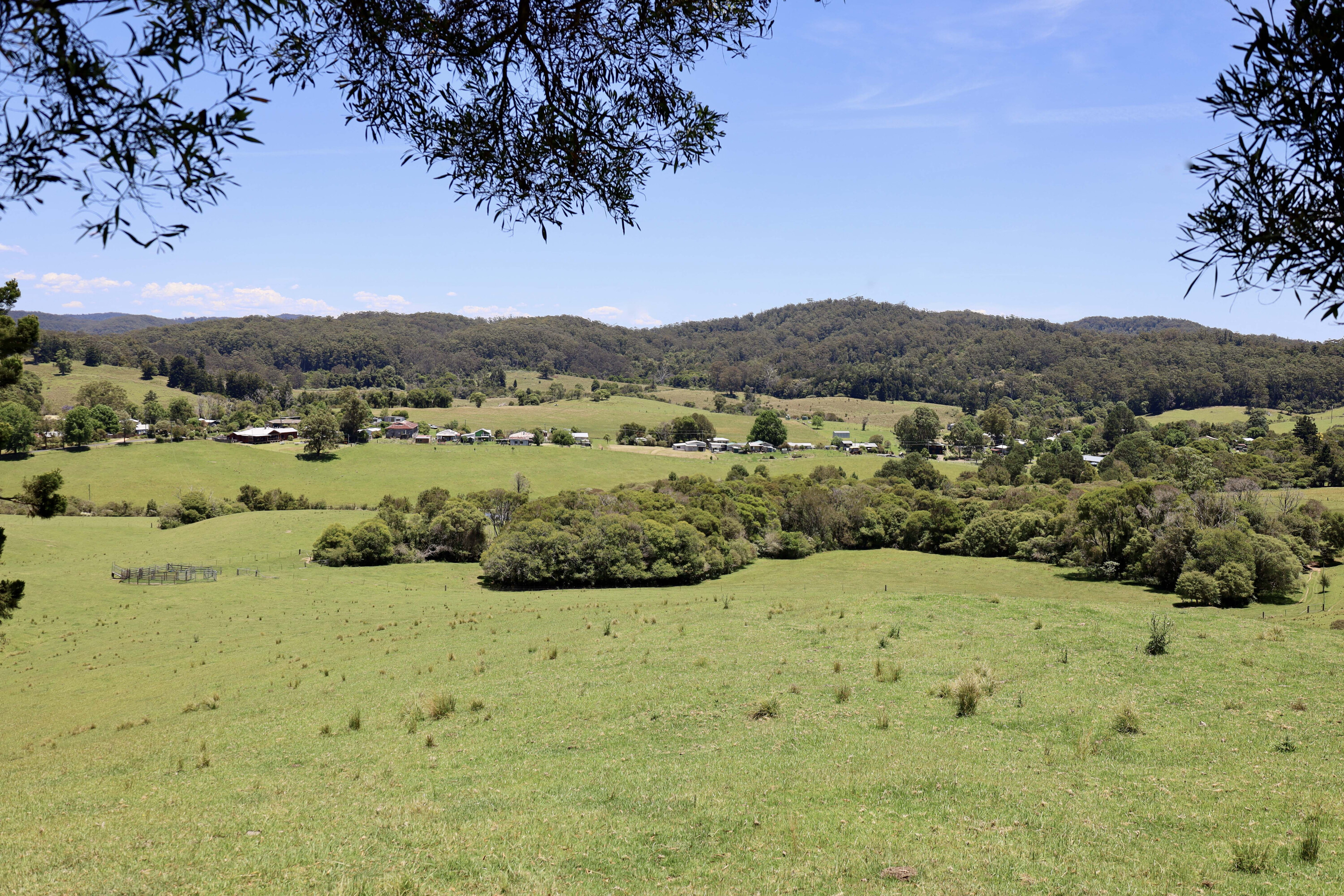
The discovery of timber (mainly red cedar) along the north coast of NSW opened up many areas deep into the thick forests and with this the flow-on effect was the discovery of gold, after which towns were born, rail lines were built and the population grew.
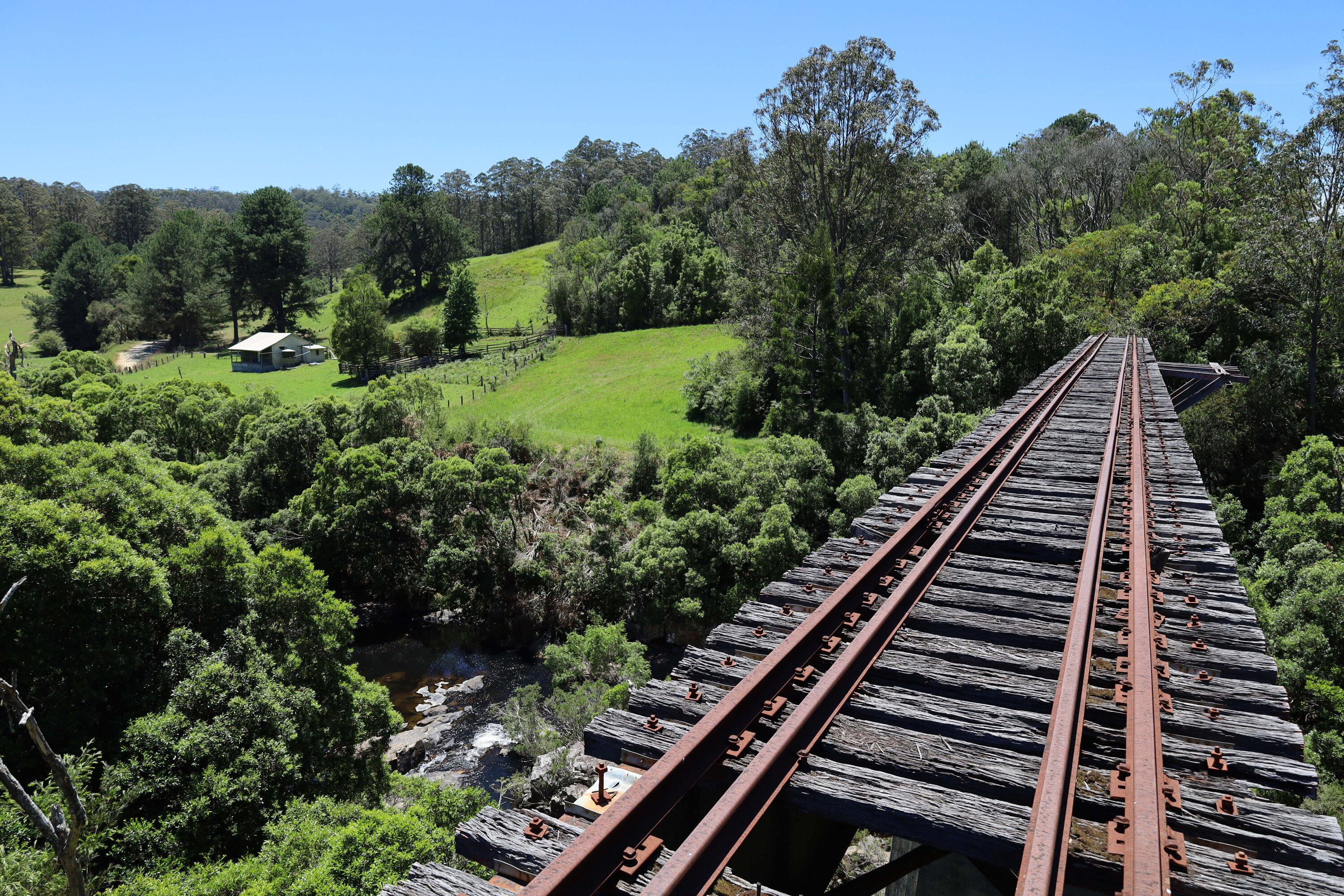
Up in the hills behind Coffs Harbour, history buffs will be astounded by just how much there is to explore, including the remnants of the more than 300 registered gold mines that date back to the mid-1880s, as well as the failed Glenreagh to Dorrigo rail line that covers nearly 70km, but which only ran for a few years.
1
Throughout the hinterland there are some accessible abandoned structures including several tunnels, old trussed and steel bridges, various platforms, and old machinery.
Throw in the old gold mines with their tunnels, shafts and pits, where there were different degrees of success when it came to finding the shiny stuff, and the hinterland is a cool place to explore. The old rail line is marked on the topo maps with plenty of access roads leading to it.
1
2. Off-road tracks
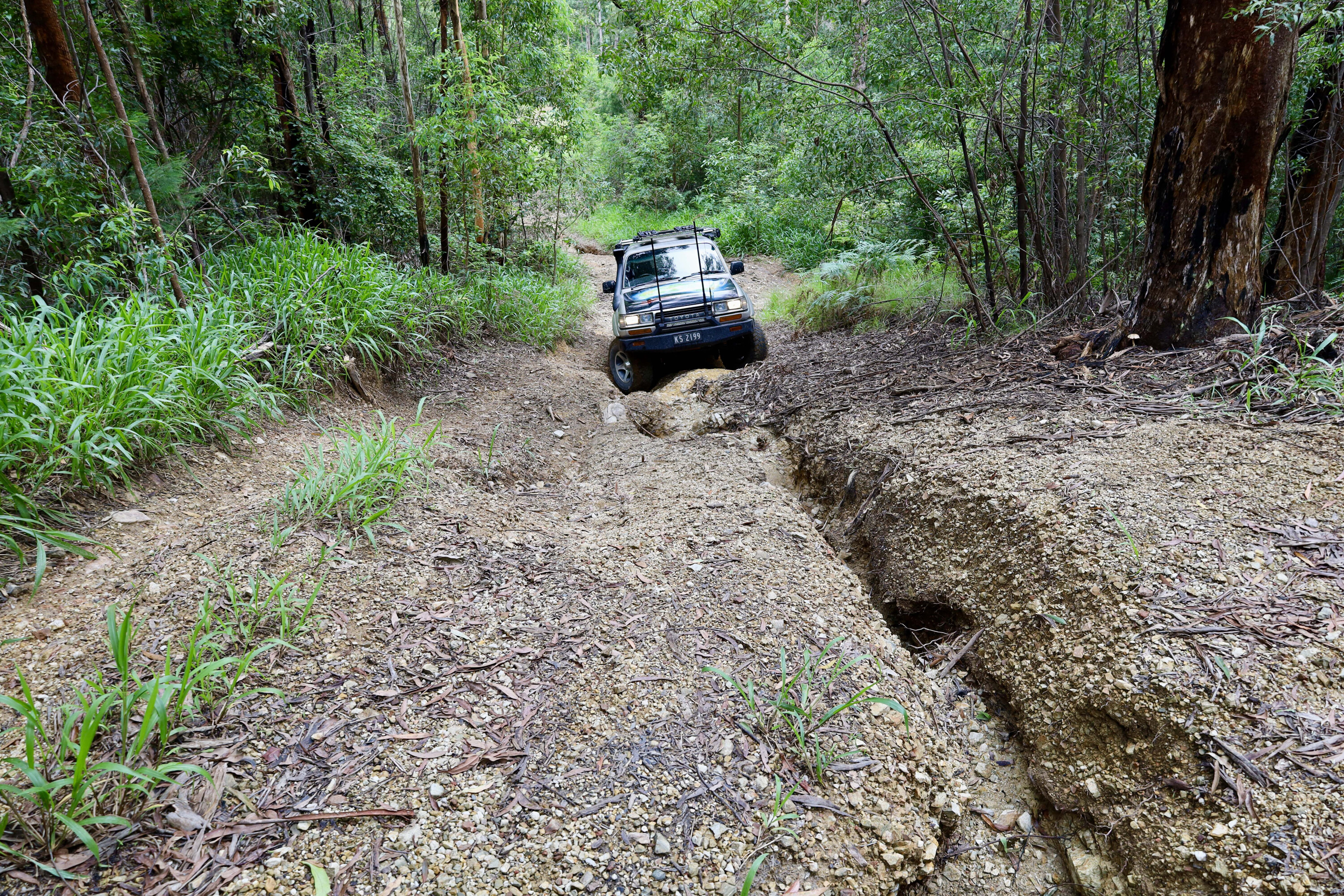
With more than 200,000ha of State Forest and National Parks to explore, getting lost is always a fun way to spend the day on the array of tracks around the Coffs coast.
If you don’t want to get lost you will need a decent GPS or good selection of maps. Along the Great Dividing Range you’ll need to use 1:25,000 topo maps with every bit of detail you can find.
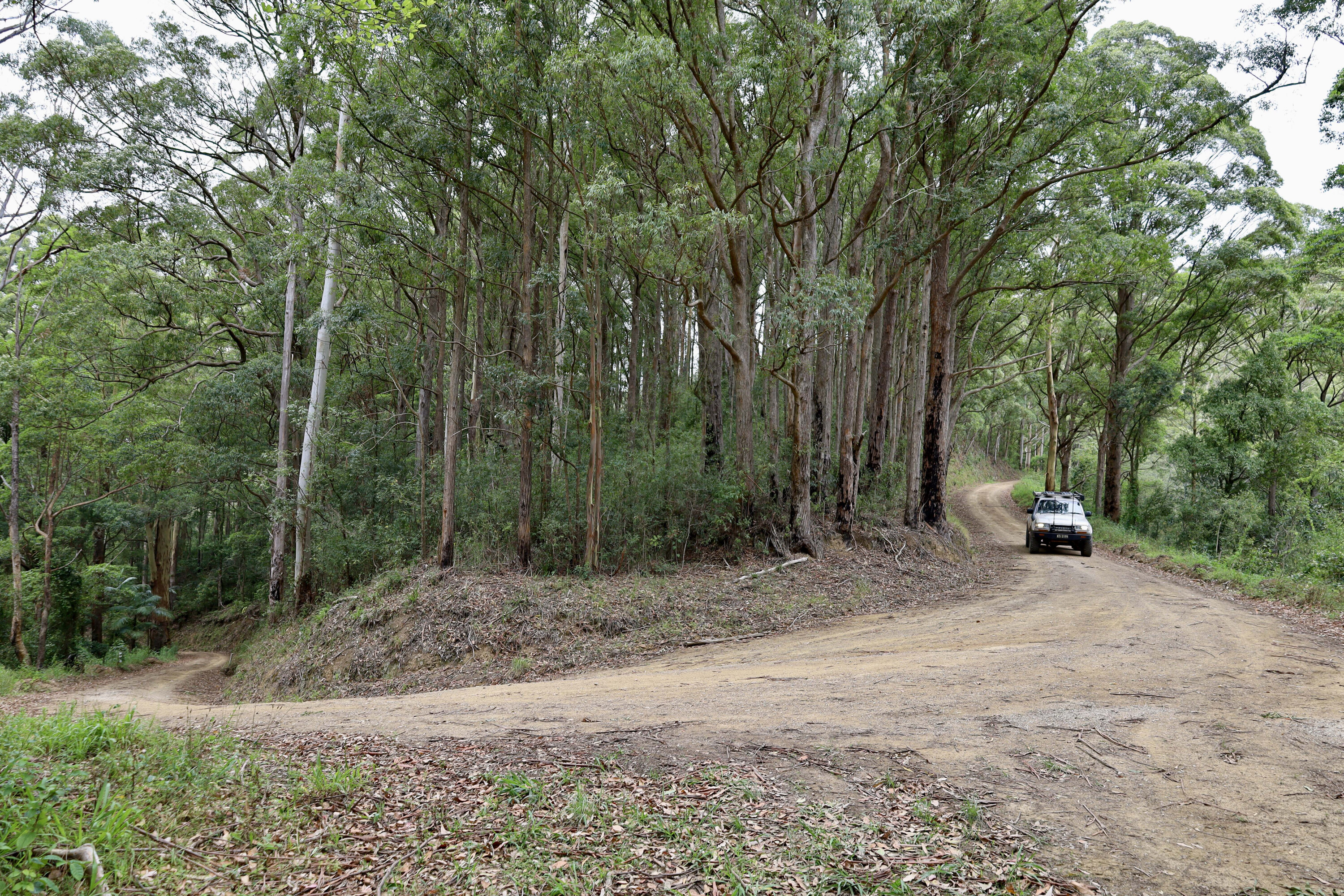
The tracks around Coffs area range from easy forest roads with stunning views to technically challenging off-road tracks that are best left for the hardcore 4×4 clubs.
1
One of the great things is that no matter how much or how little experience you have, the Coffs region is a great playground to get dirty in.
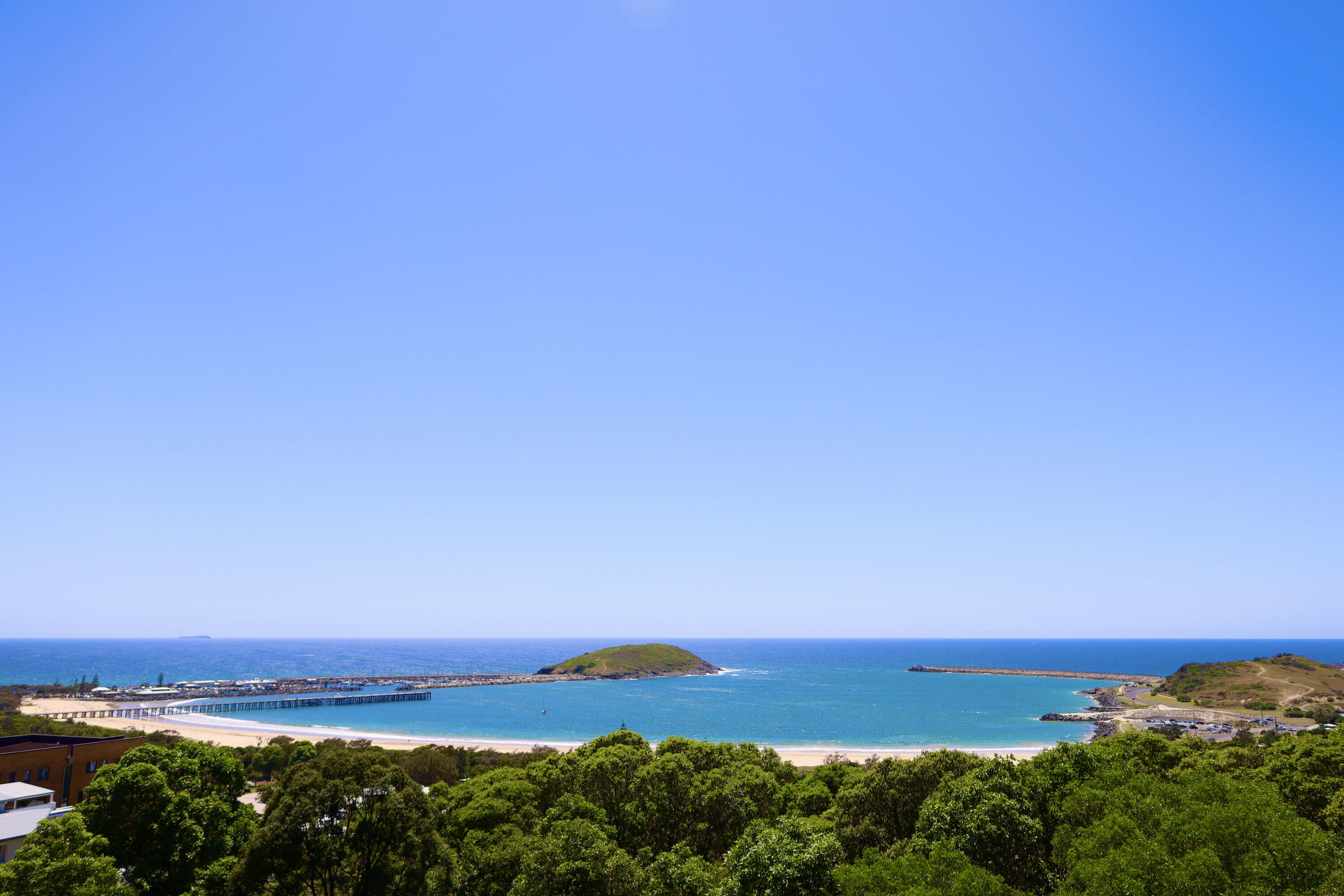
There are enough tracks here to whet your appetite with coastal sea views and through old-growth forests, many that meander their way to little villages along the way, to loops on which you can explore a mix of everything… all in one day.
Quite often you won’t see another vehicle all day simply due to the huge number of tracks there are to explore.
1
3. Pebbly Beach area
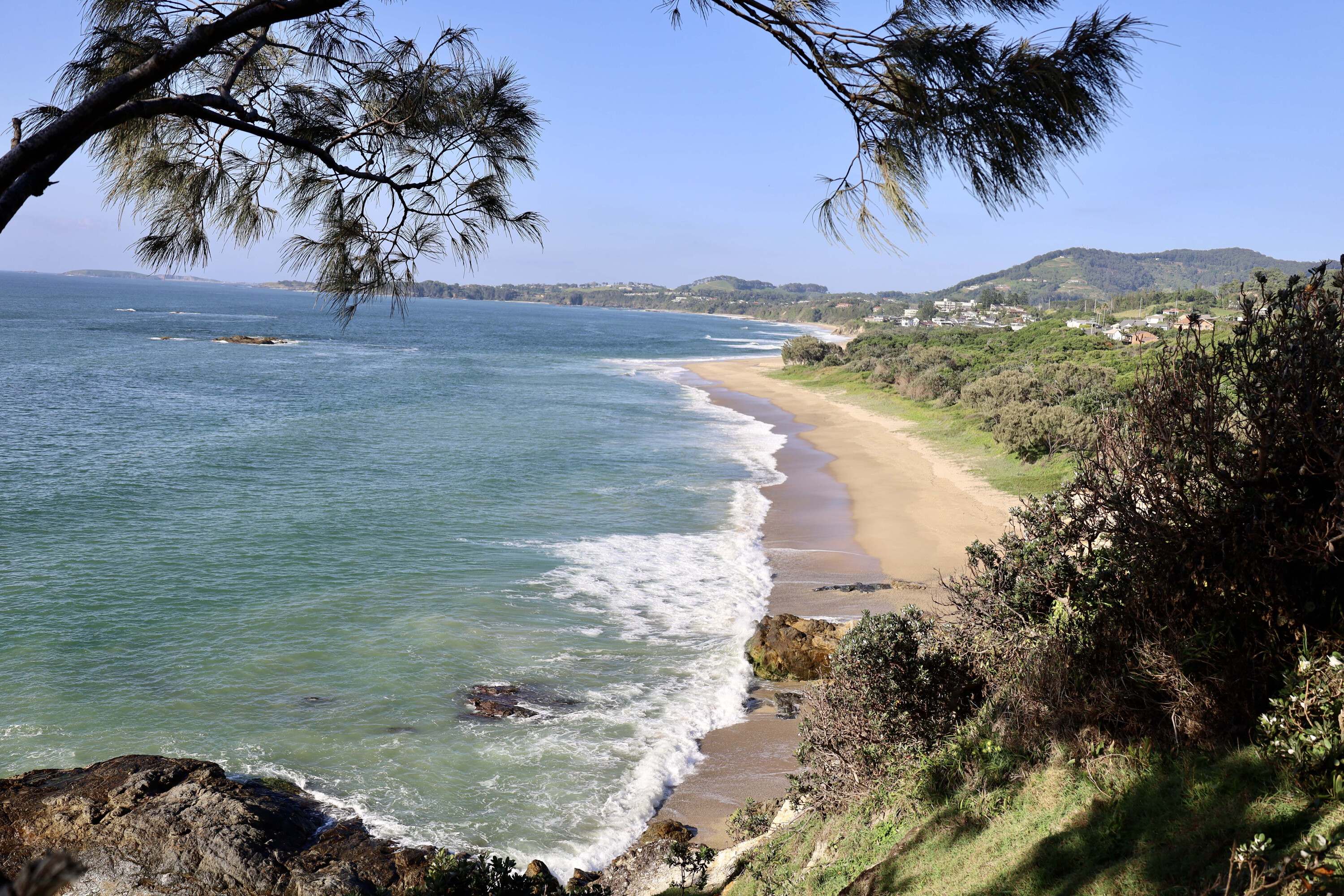
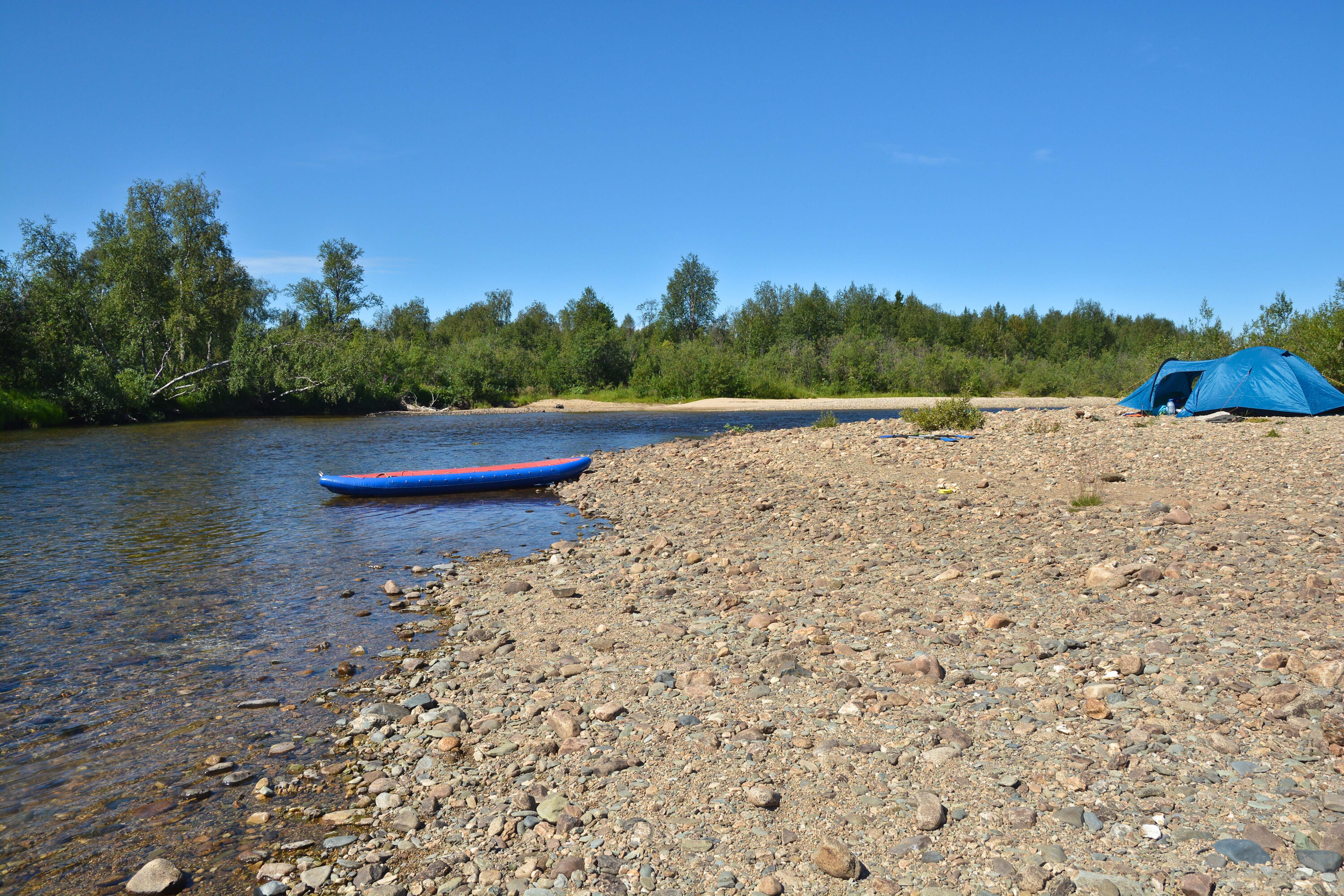
Pebbly Beach has to be one of the most sought after beach camps along the eastern seaboard. What makes this place so special is that it’s only accessible during low tide, and there are limited campsites.
To access this special spot, peel off the Pacific Highway midway between Coffs Harbour and Grafton, after which you’ll meander along nearly 20km of dirt roads with several creek crossings and a mix of pine plantations and dry gum forest.
It’s then a 2km drive along a designated track through sand dunes before you pop out onto a stunning beach, and then head north for a further 2km with the ocean on your right and the dunes on your left.
1
It’s at the end of the beach run that you have to cross the tidal creek, preferably at low tide, in order to access the stunning Pebbly Beach camping area.
If you want a spot, you’ll need to book well in advance through the NPWS website.
After a good night’s rest there’s no better place to wake up with beautiful sunrise views and salt air in your lungs, followed by a magical beach stroll. If by some chance you’re not keen to head up the beach, station creek camping area provides another option where you can base yourself and explore the area on foot.
1
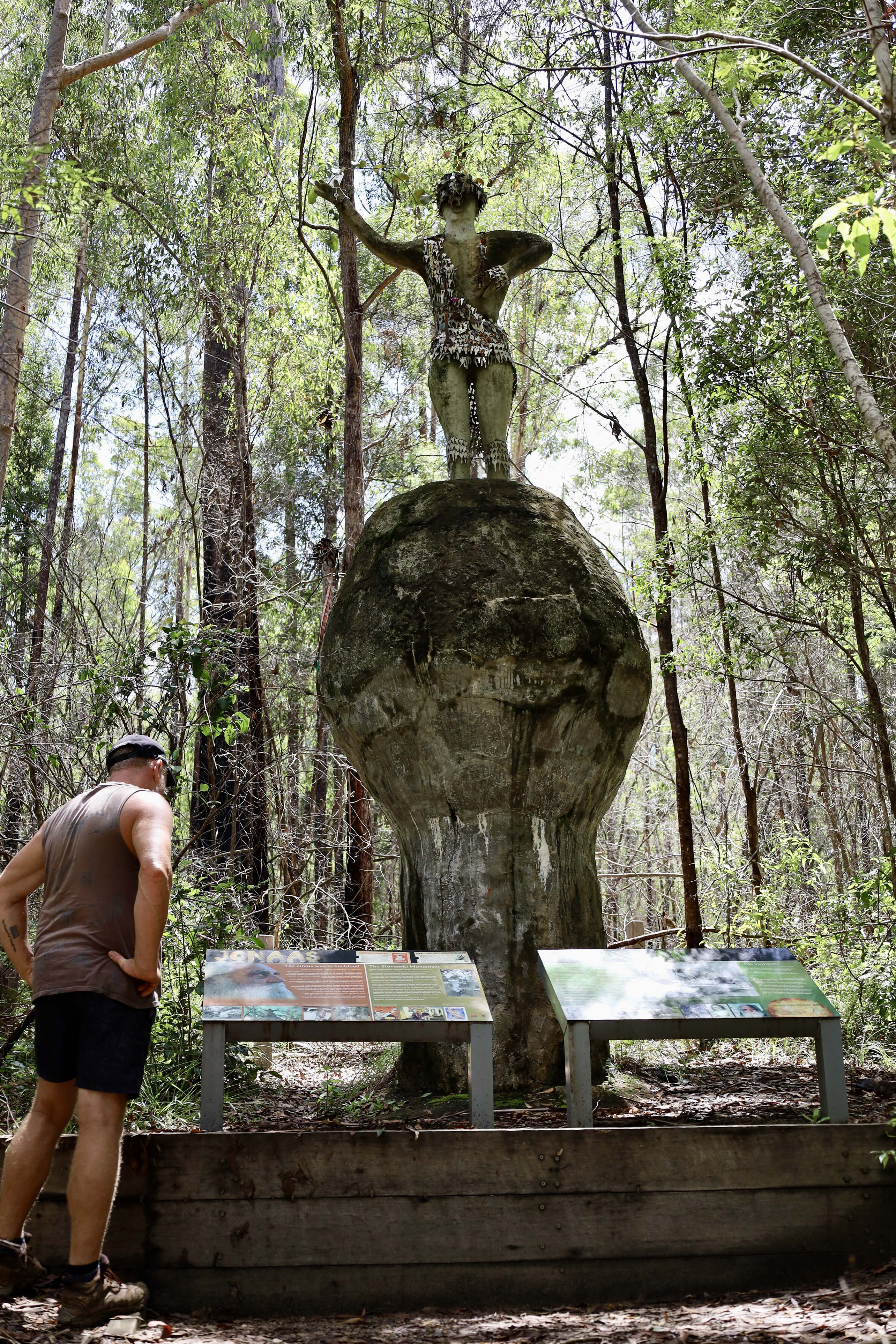
There are some pretty good 4×4 tracks that follow the ridge lines through the pine forests and incorporate powerline tracks. For something quirky head out to the Key Man statue on Yellow Cutting Road. What’s the Key Man all about?
It was created by Jonaas Zilinskas, who was born in Lithuania in 1919, and who migrated to Australia where he was involved in the timber industry. He was a performer with a circus and did many stunts on the high wire, and even today if you look up in the trees here you can spot several cables above.
He built the Key Man statue in 1957, and he was known to work in the nude while in the forest.
1
4. Rainforests and waterfalls
With so much fertile soil, decent annual rainfall and plenty of warm sunshine, the rainforest in this area is lush and there are plenty of stunning waterfalls.
Most people head an hour away from Coffs to explore the Dorrigo region, with its world-class heritage-listed rainforest, complete with suspended walkways and cafes. But closer to Coffs in the hinterland there are many more rainforests that can only be accessed by 4×4.
The Orara River just west of Coffs flows 100km north to join other rivers before it heads east to the ocean. One of the river’s most popular spots is Bangalore Falls.

1
Access is via 4×4 tracks and then a short five-minute walk to the falls, and it makes for a fabulous day out for anyone with a 4×4.
Because the range tracks along the coast, there are a number of other waterfalls wherever the terrain gets steep. Grab a detailed map and create your own adventure by discovering the Coffs hinterland.
There are dedicated roads to access many of these waterfalls, to either their base or top of the falls, which makes finding and enjoying them heaps of fun.
1
5. Mount Coramba and tracks
The Coffs region is now regarded as the 4×4 capital of NSW with its range of challenging tracks that will test most skill levels.
At nearly 700m high, Mount Coramba is the ultimate four-wheel driver’s playground, with never-ending hill climbs and a variety of rocky and clay-based tracks. The mountain demands respect even in the dry, with track names like Rocky, Commando, Army, Morbid, Cyclone and more.
If you want hardcore off-roading, this is the place to come to, and you can easily spend a day on Mount Coramba traversing tracks to the top, and then do another run back down to the base.
1
But be warned, when the weather turns, as it often does here, the rain turns the tracks to pure slop, and often traction is little to none which will have you reaching for the winch. It’s seriously steep country in here; grab a local topo map and look how close the contour lines are!
So what’s so good about Mount Coramba? Well when you get to the top there’s rugged views to the west towards the plateau regions, yet down below you the coastal ranges give you an indication just how close the mountains are to the sea.
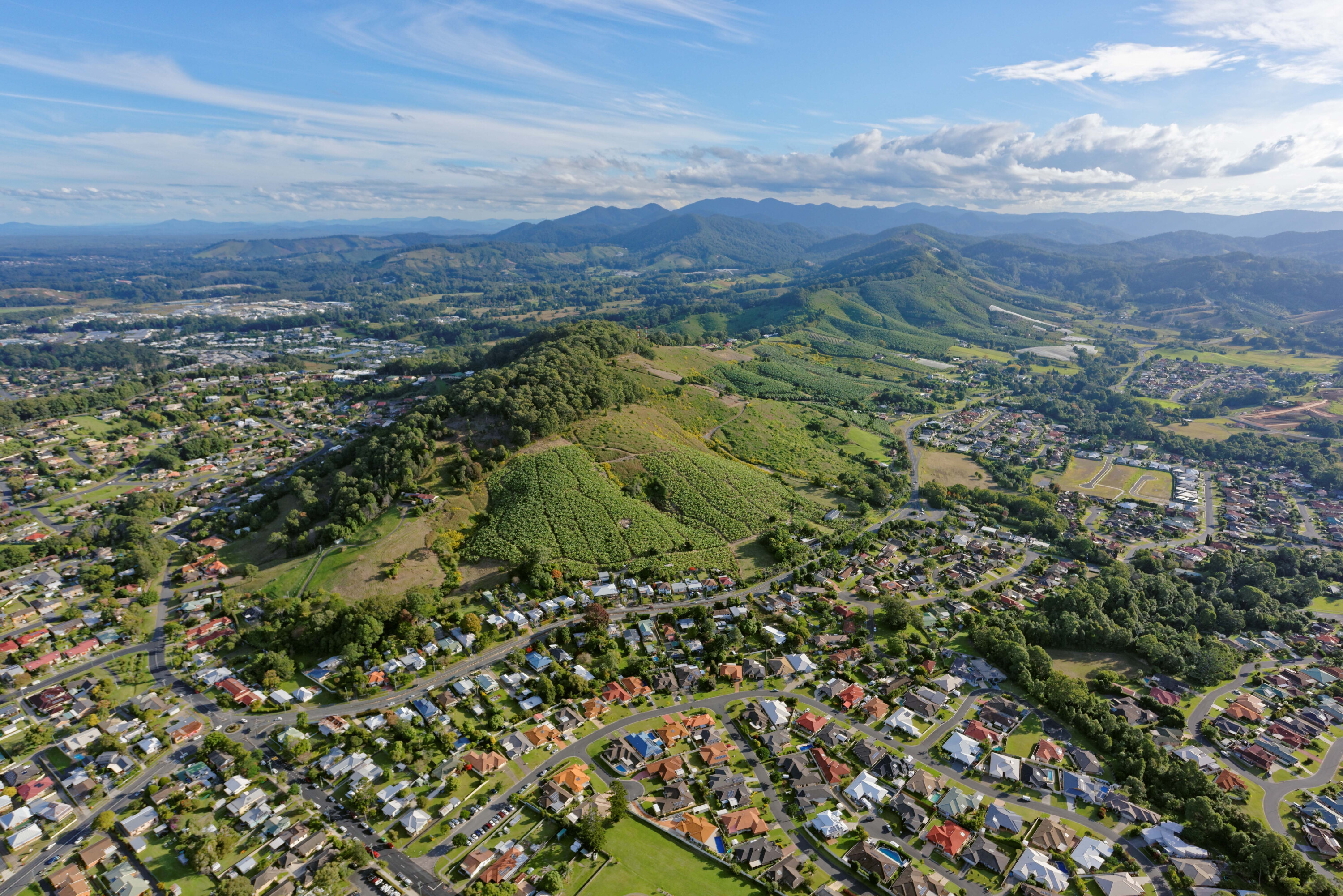
Ironically, you can’t see Coffs Harbour from up here as the city was built in a bowl with the mountains as a close backdrop. Conveniently, Mount Coramba is only a 10-minute drive to the city centre, which makes it perfect for a quick drive… and if you get into strife it’s not too far to access recovery or parts.
More information
Glenreigh-Dorrigo rail line: https://www.railtrails.org.au/trails/dorrigo-to-glenreagh/ [↗]
Dorrigo NP: https://www.nationalparks.nsw.gov.au/visit-a-park/parks/dorrigo-national-park [↗]
Coffs Coast Regional Park: https://www.nationalparks.nsw.gov.au/visit-a-park/parks/coffs-coast-regional-park [↗]
Pebbly Beach: https://www.nationalparks.nsw.gov.au/camping-and-accommodation/campgrounds/pebbly-beach-campground-yuraygir-national-park [↗]