Gear


Gallery 1
Is it too much to expect a modern 4.5-litre V8 diesel to hold top gear while cruising on the highway in a Toyota LandCruiser? A 3.0-litre European six will manage it easily enough, but apparently not Toyota’s 1VD-FTV engine.
We all know the Toyota V8 is a lazy engine that does its best work at low speeds, but a recent drive from Mansfield back to Melbourne highlighted just how ordinary its highway performance can be.
Our Cruiser was perfectly fine for long highway trips in stock standard form. However, once we fitted taller tyres and loaded it up with accessories in the back, it really started to feel the extra weight. On that run home from the mountains, the Cruiser simply wouldn’t hold top gear at the speed limit whenever the road pointed even slightly uphill.
1
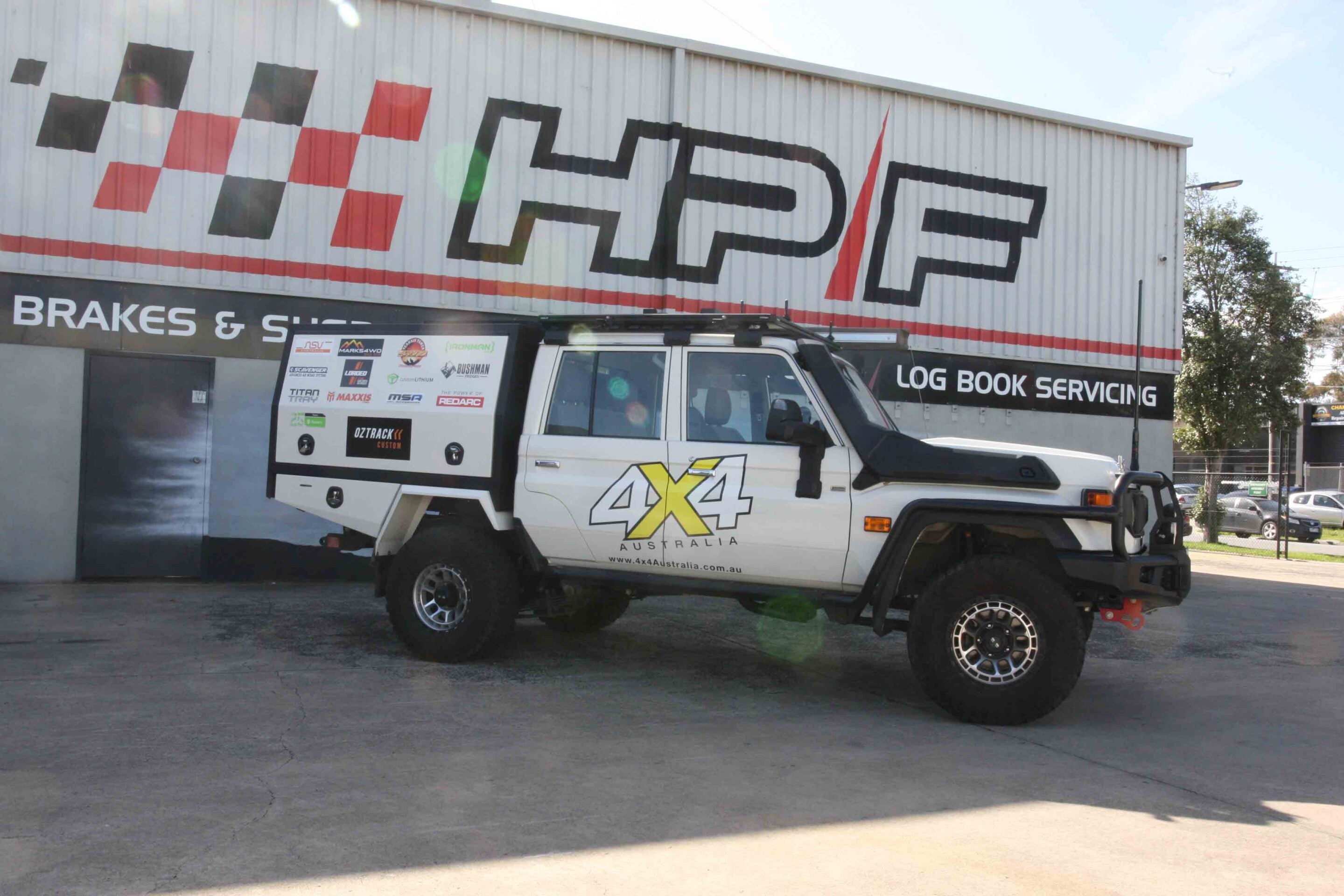
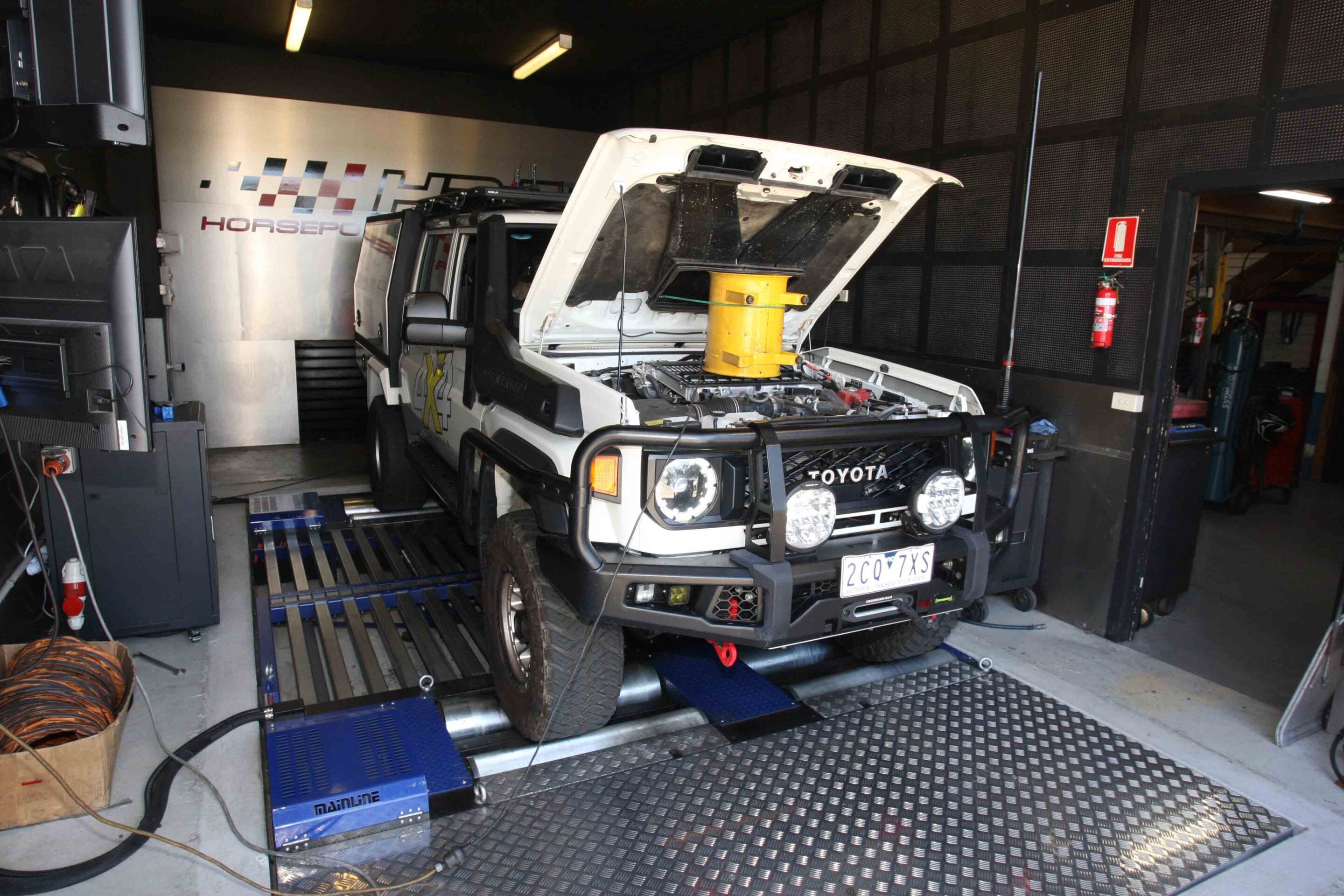
Luckily, the lack of performance is a well-known shortcoming, and Australia has a strong aftermarket industry offering proven solutions. On the recommendation of an industry mate, we contacted Melbourne’s Horsepower Factory (HP-F) to sort the Cruiser out.
HP-F has been in the business of improving the performance of modern vehicles for more than 40 years. While the company built its reputation hotting up Holdens, Fords and other performance cars, it has since turned its attention – and considerable experience – to the four-wheel drive market in line with changing trends.
Diesel Tune Australia is part of the HP-F operation and, as the name suggests, specialises in tuning modern diesel engines as found in four-wheel drives. With two chassis dynamometers onsite at its sprawling Dandenong facility, HP-F is able to build and tune everything from torque-heavy touring 4x4s through to high-horsepower race cars.
1
Spending a couple of days onsite while work was carried out on our LandCruiser was a treat for the senses, with a constant stream of machinery coming and going and the unmistakable sound of high-revving V8s echoing from the performance dyno. While the LandCruiser was never going to reach such dizzying engine speeds, the machinery surrounding it made it clear we were in the right place.
HP-F offers a range of performance packages for Toyota’s V8 diesel, depending on what owners want from their vehicle. Packages run from Stage 1 through to Stage 4, with the top-tier option quoted at more than 1000Nm – well over double the standard engine’s torque output.
Stage 1 V8 upgrade: Torque and power gains
After talking through our needs with Matt Jackson at HP-F, we settled on the Stage 1 package as the best fit for how we use our LandCruiser.
That tune is quoted at 650Nm and 195kW, up from the factory 430Nm and 131kW. More important than the headline numbers, though, is how the torque arrives earlier and lower in the rev range – exactly where a touring four-wheel drive needs it. The HP-F upgrade is more than just an ECU tune. It’s a complete package based around the Diesel Tune Australia calibration, but it also includes the supporting hardware required to make the gains reliable and durable over the long term.
For the LandCruiser V8 tune, this package includes a 4-inch Manta replacement exhaust system, an upgraded clutch to cope with the increased torque, a Safari replacement intake snorkel head, and an oil catch can. The full tune and installation process takes around a day at HP-F, assuming everything goes to plan.
1
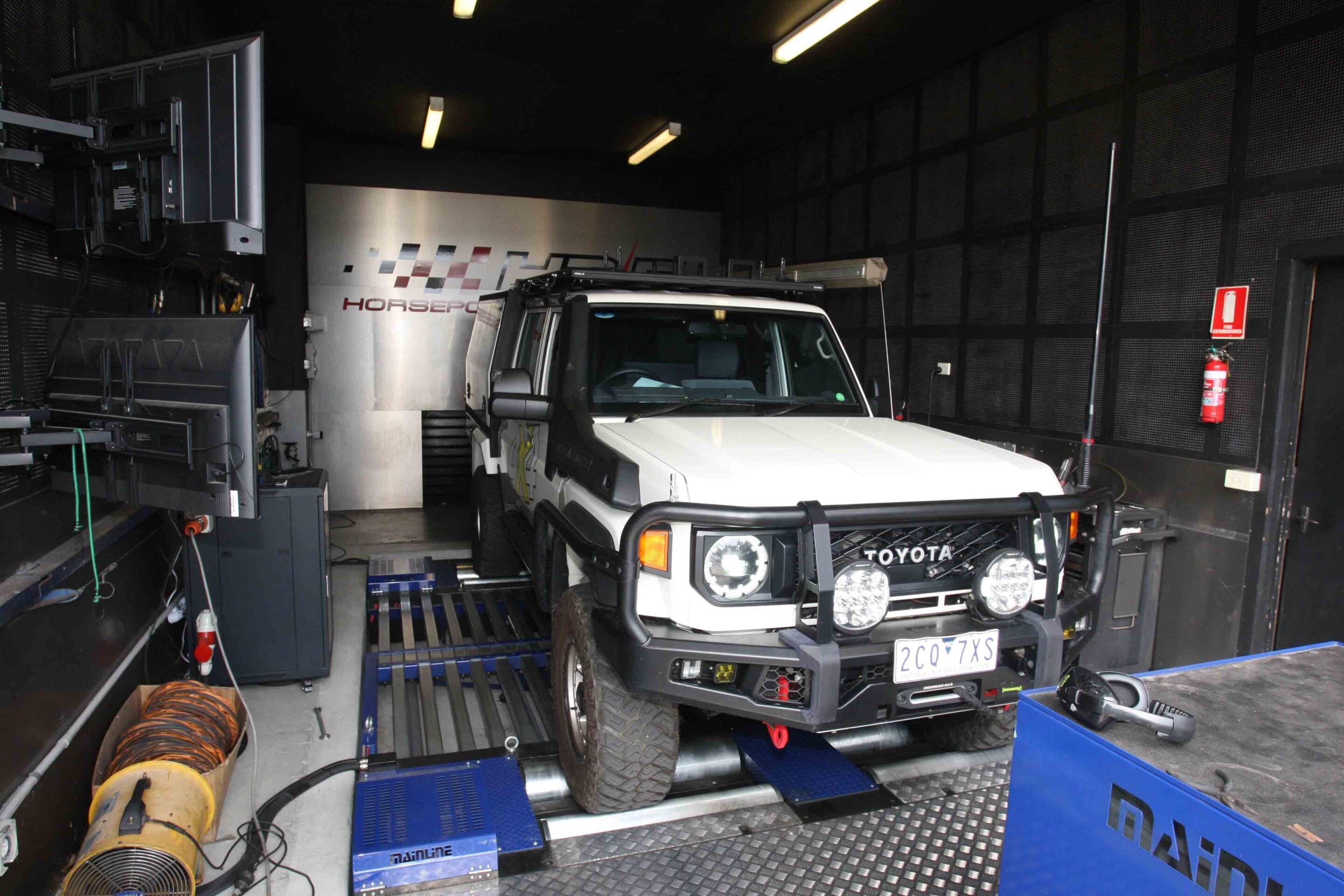
The first step is to strap the vehicle onto the dyno to establish a baseline, confirming where it’s at and ensuring everything is in good health. Our LandCruiser was relatively new at the time of the upgrade, with less than 20,000km on the clock. On the rollers it produced 96kW and 293Nm at the 34-inch tyres. With the baseline recorded, it was then off to the workshop, where the side steps were removed to allow the factory exhaust system to come out, followed by removal of the gearbox crossmember so the gearbox and clutch could be dropped.
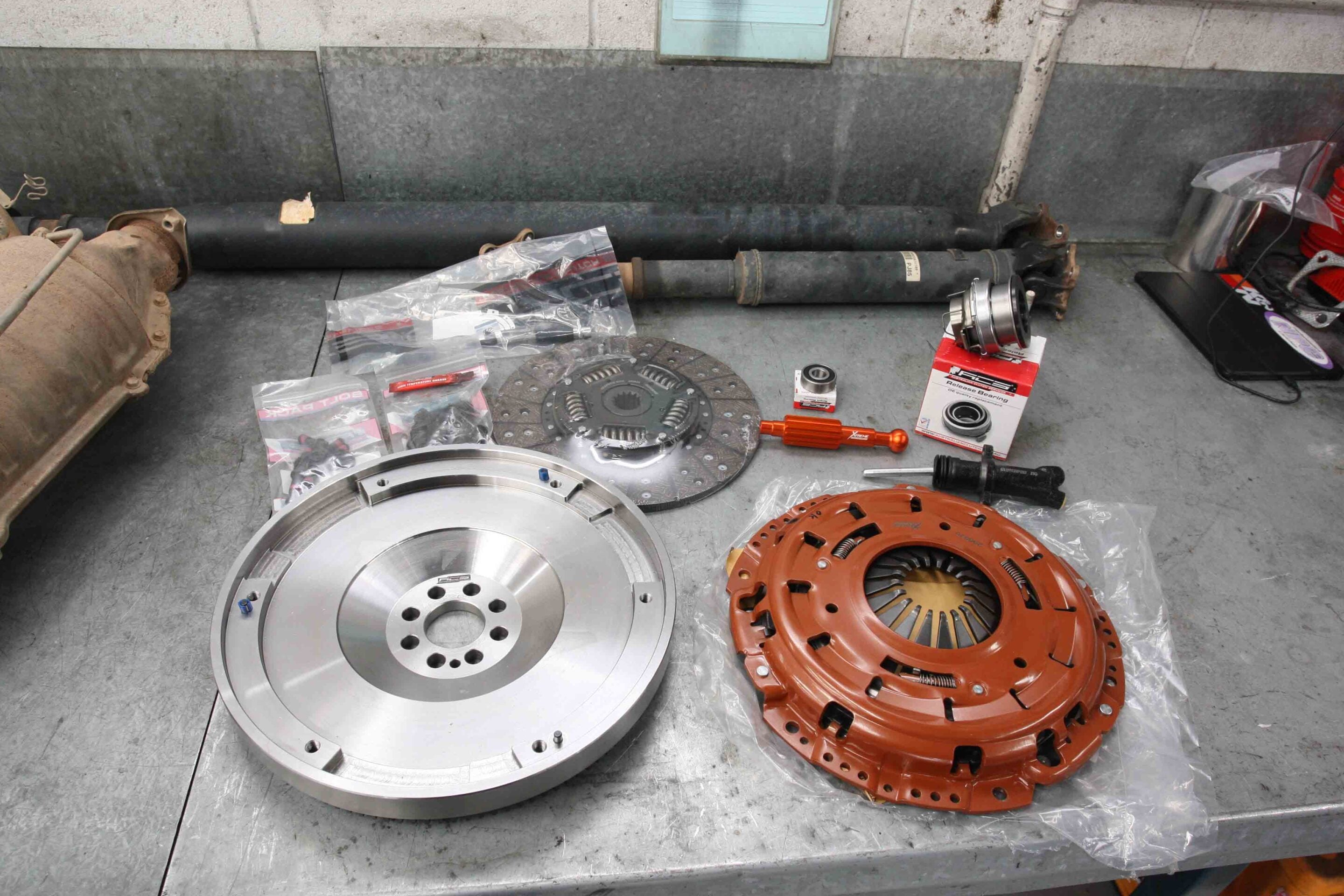
For our clutch upgrade, we’ve gone with the X-Series Organic kit from Xtreme Outback. This is the brand’s latest release for the VDJ LandCruiser and is designed to handle up to 870Nm, so it should be more than capable of coping with the increased output of our Toyota. To ensure it does the job properly, the pressure plate is rated to 1600kg and is actuated by a new self-adjusting slave cylinder. This setup is designed to maintain consistent clutch feel and engagement as the clutch wears over time.
The kit also includes a replacement steel flywheel, which is a beautifully made piece of hardware in its own right. In fact, the entire package is impressive, with all the required components supplied to complete the installation, including a nanosized alignment tool, dual-friction clutch plate and the slave cylinder.
Initial driving impressions are positive. The clutch feels no heavier than the factory unit but delivers a precise, positive pick-up that’s easy to live with in day-to-day driving.
Exhaust, clutch and supporting hardware
The 4-inch stainless-steel DPF-back exhaust system is an equally impressive piece of kit.
It dwarfs the factory exhaust while following the same route beneath the vehicle. The system deletes the rear muffler, as the DPF already takes care of most exhaust noise, leaving the Cruiser with a deep burble at idle and a purposeful note when you put your foot down. The V8 LandCruiser finally sounds the way it should. Importantly, the large stainless-steel outlet clears our Marks 4WD high-clearance towbar, and the system is also designed to allow space for long-range fuel tanks and rear airbag suspension.
With the new clutch and exhaust fitted, the gearbox reinstalled and the side steps bolted back on, it was time to fire the Cruiser up and head back to the dyno. Our vehicle already runs an upgraded snorkel, so there was no need to fit the revised intake.
1
On the dyno, the operator connects the Toyota to a laptop and uploads the tune into the ECU before spinning it up on the rollers. From there, variables such as boost pressure and delivery are adjusted to optimise the torque curve, while closely monitoring air/fuel ratios, exhaust gas temperatures and engine temperatures.
After several runs and incremental adjustments, the final results are impressive. Torque climbed to 548Nm and power to 133.5kW, up from the baseline 293Nm and 96kW. That’s a substantial improvement, and comfortably beyond what’s quoted for the Stage 1 upgrade. We’re more than happy with the numbers, though the real proof will be in how it drives.
Before handing the vehicle back, the team carried out an extended road test to ensure everything was operating exactly as it should, before we headed off for our own drive.
On- and off-road driving performance
Even though the DPF muffles much of the exhaust note, you can still hear the pleasant rumble of the V8 through the 4-inch system as soon as you turn the key. It’s a welcome sound after the muted factory exhaust note.
Likewise, the action of the Xtreme Outback clutch isn’t dramatically different from standard. It’s certainly no heavier, which is a good thing, and if anything the engagement feels smoother as you release it and take off. It’s only once we pull onto the highway and put our foot down that the Cruiser really comes to life, pulling hard as the gears roll past and reaching the speed limit quick smart. It now cruises comfortably in top gear and, importantly, holds it easily when climbing hills while touring.
The grunt is still there on steeper climbs in the lower gears, but the combination of the HP-F tune and supporting upgrades feels like it’s effectively gifted us an extra gear in most driving conditions.
36
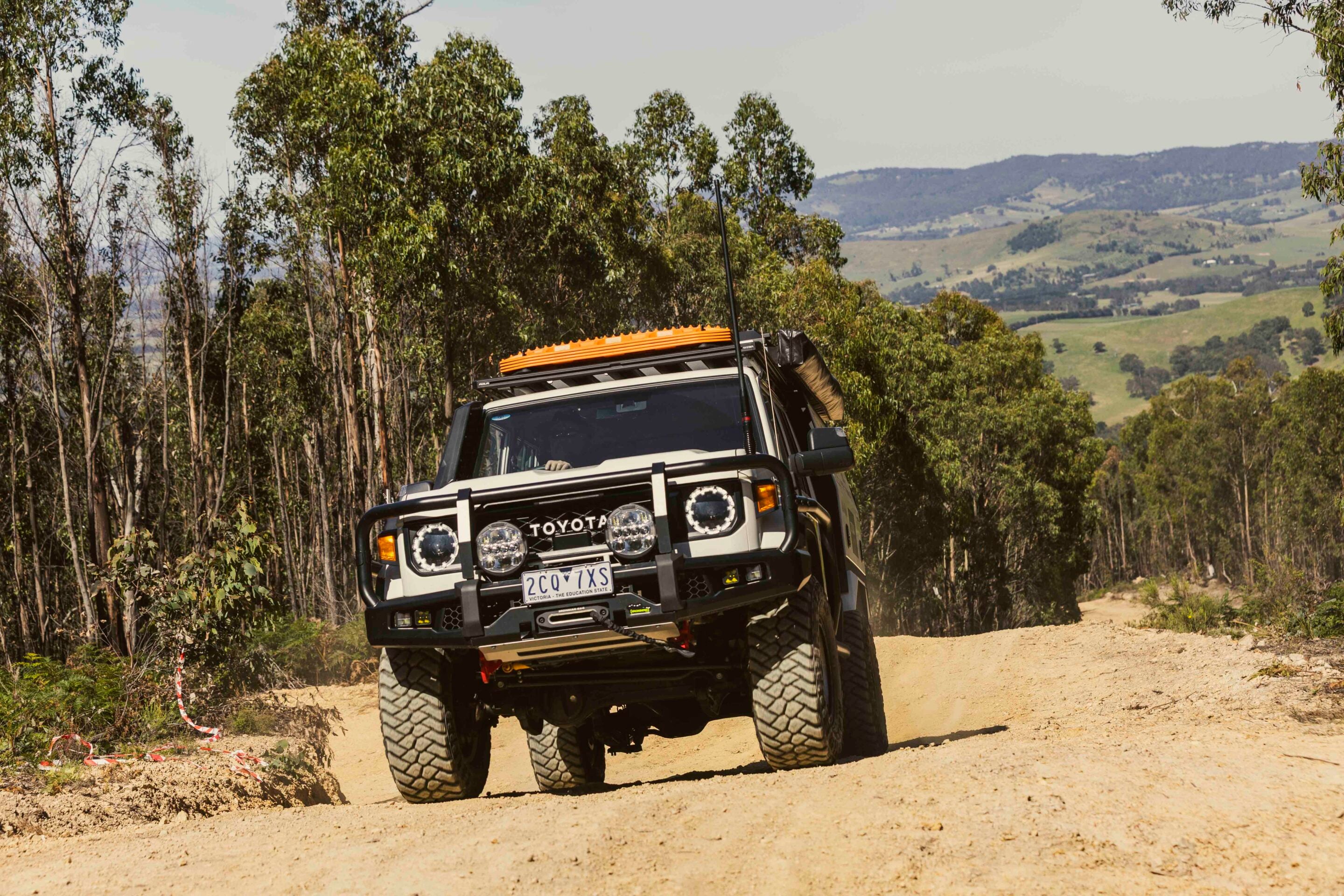
Off-road, we pointed the Cruiser up a steep unsealed fire trail we’ve driven many times before. It’s the sort of climb you’d normally tackle in high-range four-wheel drive, yet the stock LC79 would bog down and require low range. With the tune and modifications in place, it held second gear high range all the way to the top without hesitation – an impressive transformation.
It’s this all-round drivability, particularly in the higher gears, that best highlights the difference the HP-F package delivers. Whether touring on the highway or climbing mountain tracks in the Alps, our LandCruiser is now a noticeably easier and more enjoyable vehicle to drive. It finally goes – and sounds – like a V8 diesel should.
Cost and what’s included
The Stage 1 HP-F upgrade for the DPF-equipped LC79 retails for $4160.
That price includes the ECU tune, 4-inch stainless-steel exhaust system, snorkel head, oil catch can, clutch upgrade, full installation, and before-and-after dynamometer testing. For our vehicle, we opted for the Xtreme Outback X-Series Organic clutch kit, which is priced at $2147.04 through Australian Clutch Services.
Follow 4X4 Australia on Google
Get more 4x4 news, reviews and gear stories from 4X4 Australia in your Google feeds.

We recommend
-
 Gear
GearAlu-Cab Gen 3-R Expedition rooftop tent tested: Effortless, comfortable and tour-ready
We spent weeks living out of the Alu-Cab Gen 3-R to see if it could handle real touring life
-
 Explore
From the outback to the coast: An epic off-road adventure from Tilpa to K’gari
A three-week 4WD convoy through dusty outback pubs, free river camps, and sandy coastal tracks, from Tilpa to K’gari (Fraser Island)