
Nothing beats the smell of a new mag packed with the latest in Aussie 4x4ing.
The September edition of 4X4 Australia is on sale now and compares the New Nissan Navara and Mitsubishi Trition utes with the class-leading Volkswagen Amarok and Mazda BT-50.
We also compare the leading traction boards, and take a look at a stonking V8 Jeep Wrangler.
In the meantime, here’s a taste of what else is inside:
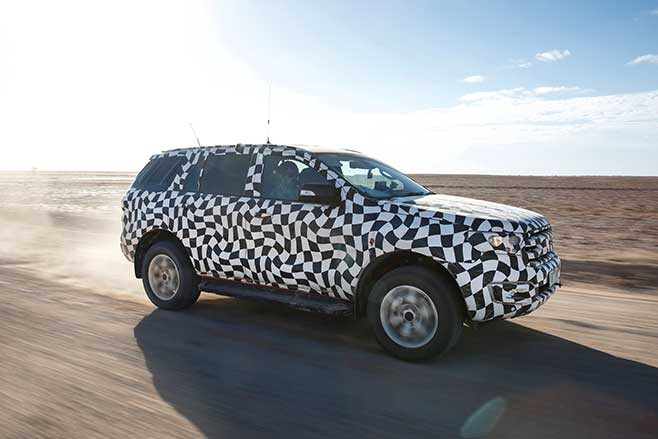
Ford Everest Prototype Drive
We get our hands sandy looking at the fine-tuning of the new Ford Everest on its prototype test in the Simpson Desert last year.
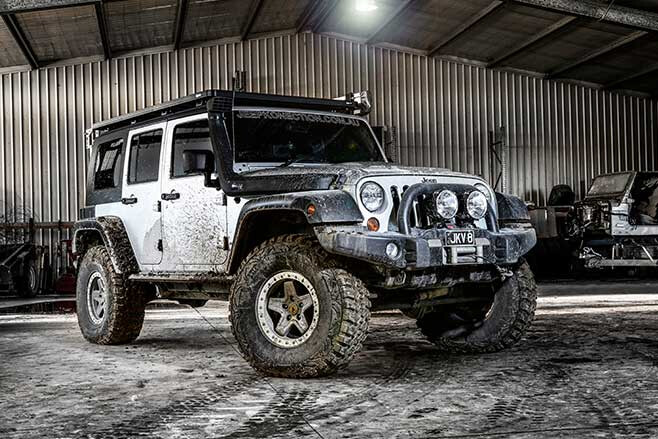
Custom V8 Hemi Jeep Wrangler
There’s no substitute for cubic inches. We put that theory to the ultimate test inside a V8-powered Jeep Wrangler.
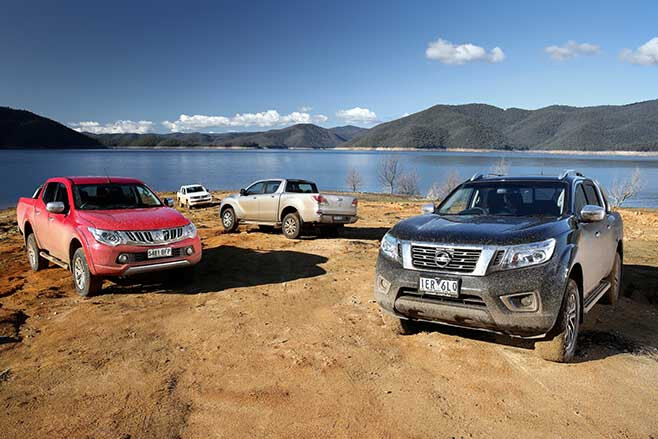
Off-Road Utes Compared
The new Nissan Navara and Mitsubishi Triton are here to shake up the 4×4 market. We see how they stack up against the standard-setting Volkswagen Amarok and Mazda BT-50.
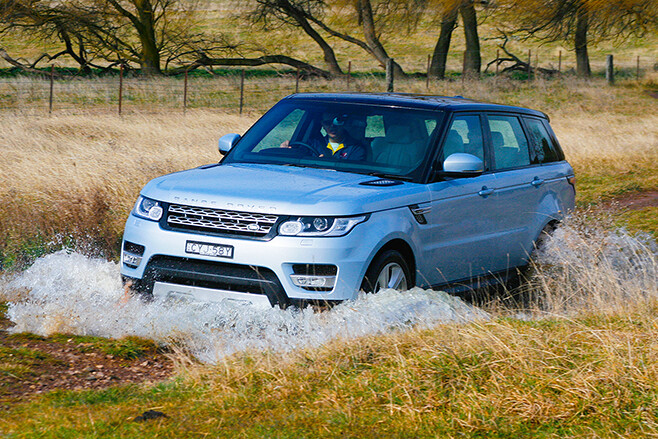
The Range Rover Hybrid
The Range Rover Sport Hybrid breaks new ground in more ways than one. We take a closer look.
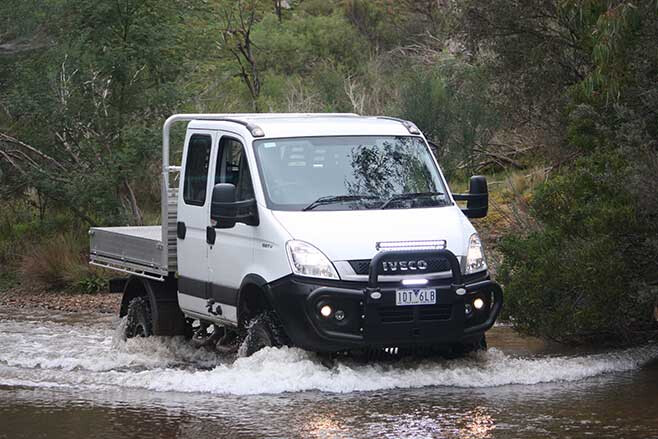
Iveco Daily 4×4
It’s an absolute monster. But is it a realistic alternative to a traditional one-tonne ute? We find out.
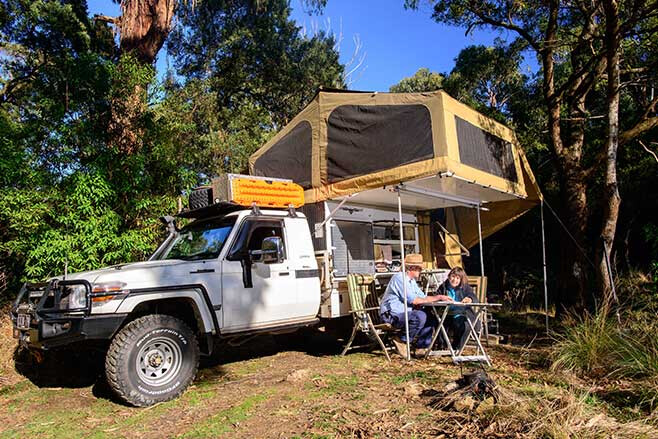
Land Cruiser 79 Camper
It’s big, it’s loud and it’s tough. We go for a ride in a custom Cruiser built for the long haul.
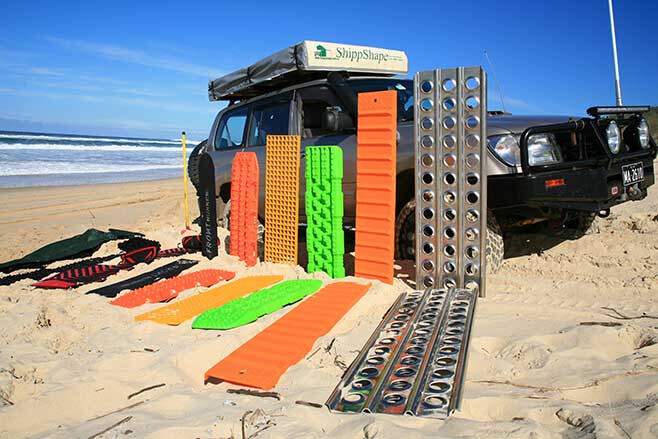
Gear Test: Recover Boards
Want to know which recovery boards will get you moving? We’ve done the hard yards for you. See how the best boards compare.
Explore: East Kimberly, WA
No trip to Western Australia’s north-west would be complete without a visit to El Questro and Purnululu.
Explore: Flinders Ranges, SA
We check out the best of the Flinders Ranges.
Big Bight: Epic Adventure Gear
The 4×4 crew sink their teeth into the bread-and-butter gear of serious off-road adventures.
Drive 4 Life
The Drive for Life crew take us on an adventure through the Victoria High Country.
As always, the mag has the latest news and events, stats and figures, as well as the industry’s most respected names.
Want more clearance but don’t want to raise your suspension?
Check out these portal axles.
Engineered and designed in Victoria by Marks 4WD Adaptors, these clever things already replace the live-axle assemblies fitted to Patrol models from 1988 onwards.
Soon they will also be available for Land Cruiser 70s.
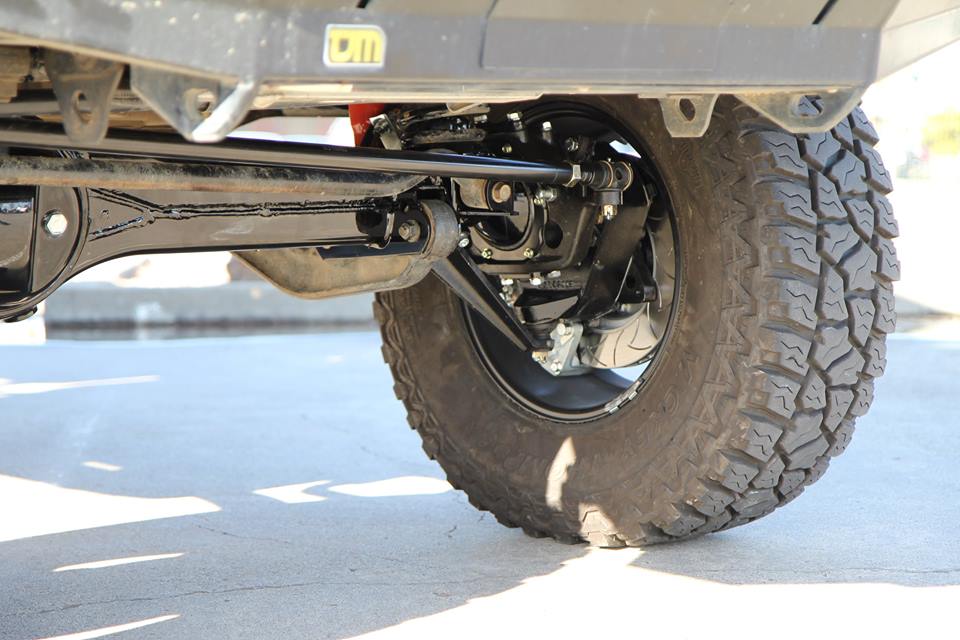
The Land Cruiser prototype (pictured) includes heavy-duty swivel housing, with the rear-axle track width increased to match the front axle.
The finished product will be available once it’s fully tested and certified.
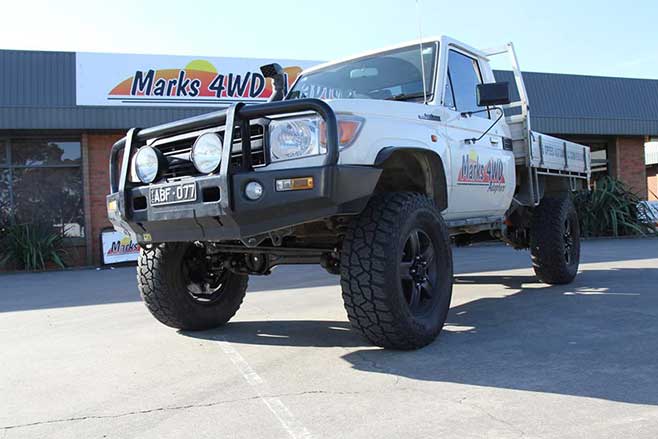
In the meantime, you can ogle this Toyota, with its tweaked V8 diesel engine and six-speed automatic transmission riding high on the portal axle prototype.
Or if you own a Nissan, similar portal axles currently fit to GU Nissan Patrols, Y61 Nissan Safaris, GQ Nissan Patrols, and Y60 Nissan Safaris.
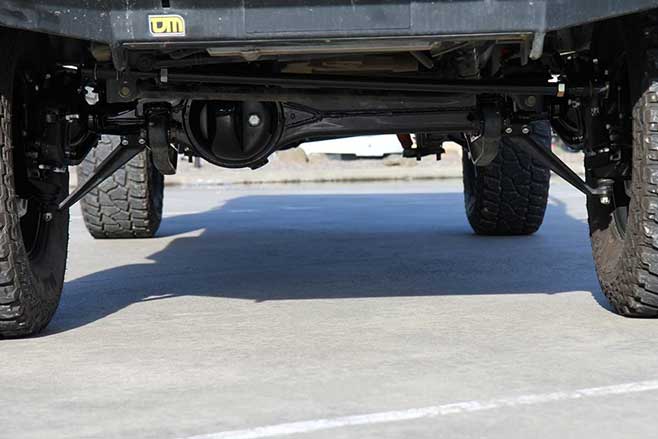
Marks 4WD Adaptors was established in Melbourne in 1979.
Get the latest info on all things 4X4 Australia by signing up to our newsletter.
4×4 Australia Editor Matt Raudonikis and resident truck expert Matt Wood recently took the towering Iveco Daily 4×4 for a spin in the mud.
To see how the giant fared, grab a copy of the September edition of 4×4 Australia, in stores Thursday.
Love your 4x4s? Be the first to see full reviews by subscribing to 4X4 Australia in electronic or print format.
Get the latest info on all things 4X4 Australia by signing up to our newsletter.
The Holland Track was originally established in 1893 by John Holland and his team as a shortcut from the Western Australian south coast to the booming goldfields in Coolgardie.
In little more than two months his team cut a cart track of more than 500km through the previously impenetrable bush. It was used immediately by thousands of optimistic diggers joining the rush north. Within a few years the railway was extended to Coolgardie and this put an end to regular goldfield traffic on the Holland Track. It soon fell into disrepair; the southern end was absorbed into farming land while north of the rabbit-proof fence was all but lost back to the scrub.
Fast forward almost a century and thanks to the efforts of Broomehill farmer Graeme Newbey and researcher Adrian Malloy, the northern end of the track was re-traced and cleared. In 1993, Graeme led a 4×4 Centenary Expedition along the re-established track to mark the centenary of Holland’s historic journey. The Holland Track has since been adopted by the Toyota Land Cruiser Club which maintains the track for the enjoyment of all recreational four-wheel drivers.
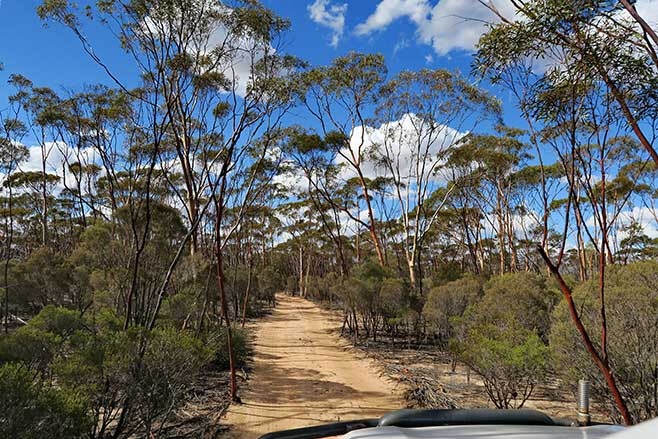
The town of Hyden, 330km east of Perth, marks the starting point for most adventurers set on tackling the Holland Track. The town, though small in population, boasts a good range of services due to its proximity to Wave Rock which attracts more than 100,000 visitors annually. Fuel is available but is the last you will see until Coolgardie, so top up the tanks. A range of approximately 450km is recommended.
The entry point to Holland Track is located 56km east of Hyden, where it intersects Hyden-Norseman Road. There is a large gravel clearing near the entrance which contains a commemorative plaque to John Holland and provides a good space to air-down your tyres and put up the sand flag.
You won’t encounter sand dunes, but visibility along the winding, single-lane track is poor due to the height of the surrounding scrub. The Holland Track can be entered from either end, so you need to be on the look-out for oncoming traffic at all times. A sand flag will increase your visibility to any oncoming traffic.
The first 40km of the track is usually the section which is in the worst condition. It typically has some very deep ruts to contend with, and of course when these ruts are filled with water it can become a very messy affair. There are often bypass tracks around the worst of them, though it’s sometimes hard to choose which is the better option. Due to this mud it’s a good idea to travel in a convoy, as most of the surrounding trees are small and no good as winch anchors.
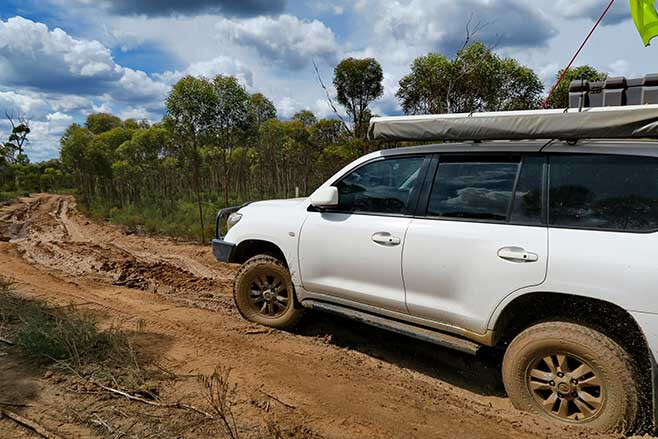
If dealing with mud isn’t your idea of a good time, then this section can be avoided entirely by entering the Holland Track via the Southern Cross-Forrestania Road which T-junctions with the track near Mount Holland. You’ll still encounter some mud if it has rained recently, but nothing to the degree of the first section.
Apart from getting stuck in the mud, the other main danger along the Holland Track is tyre damage. Much of the surrounding scrub has been burnt at various times and there is an abundance of sharp, fire-hardened stakes around (along with plenty of notorious mallee roots) just waiting to stake your tyres’ sidewalls.
All that aside, you’ll be travelling through a superb wilderness region with an ever-changing landscape. It’s pretty much virgin bush land out past the rabbit-proof fence and there are many points of interest to be found along the track.
At regular intervals you will encounter huge granite outcrops that catch the rain and, in the past, provided an important source of water for early travellers. It’s important to stick to the marked tracks when navigating near these outcrops, both from an environmental perspective and to reduce your risk of getting bogged if you break through the dry crust.
The modern and recently upgraded State Barrier Fence will also be encountered when travelling this way. The fence aims to exclude invasive species, including wild dogs, from the state’s agricultural areas in the South-West Land Division. A fence with an open gate defeats the purpose of the fence, so make sure you shut the gate behind you.
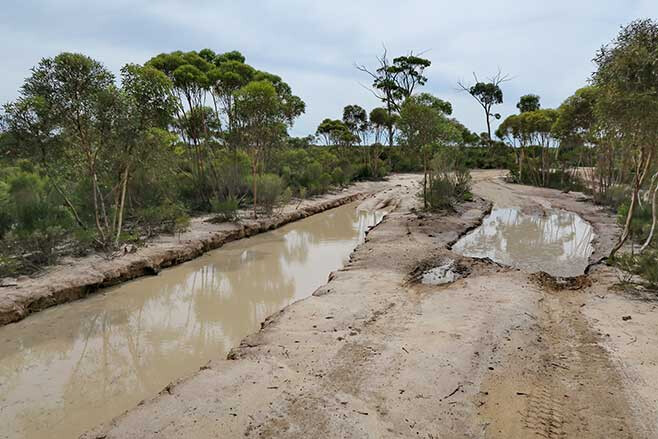
Malleefowl used to be common throughout the Wheatbelt area, though the clearing of land has destroyed much of their habitat. There is, however, a large and reportedly active malleefowl nest right at the edge of the track, marked with bollards and an information board. Further along you’ll find the box with the official track visitor’s book surrounded by an eclectic shrine of offerings.
The track is only around 250km in length, though given your average speed is likely to be around 30km/h you’ll be camping out at some stage along the way. There are a couple of designated campsites for larger groups, though there are no facilities at any of the sites until you reach Victoria Rock. If you are in a smaller group then there are endless campsite options to choose from along the track.
Just past Thursday Rock is the end of the 4WD section of the track and it reverts to a well-maintained gravel road heading towards Coolgardie. Continuing 40km past Coolgardie gets you to Kalgoorlie-Boulder which touts itself as Australia’s largest outback city, with the infrastructure and services to match; a good place to clean up and restock for the onward journey.
The off-road action on our recent Ford Everest drive in Thailand didn’t give us the chance to check the wheel travel of the new Ford Everest wagon, but Ford did give us a display with this interesting cut-in-half Everest.
| SPECS | u00a0 |
| Model | Ford Everest |
| Engine | I5 3.2L diesel |
| Max power | 143kW @ 3000rpm |
| Max torque | 470Nm @ 1750rpm |
| Transmission | 6-speed auto, fulltime 4×4 |
| Fuel consumption | 8.5L/100km |
| Price | $54,990 to $76.990 |
| On sale | October 1, 2015 |
See our most recent test of the new Ford Everest here.
Check out the Ford Everest launch video here.
For an early look at the Ford Everest click here.
You can get the latest info on all things 4X4 Australia by signing up to our newsletter.
The new Ford Everest is a seven-seat 4×4 SUV with genuine off road credentials from the Blue Oval. Designed and developed in Australia, among other places, the Everest will partly fill the shoes of the Ford Territory, while also taking on the likes of Toyota’s Prado 4×4.
Ford’s new Everest is the culmination of a long period of developing a wagon off Ford Ranger’s T6 chassis/platform. It’s also Ford’s short-term replacement for a seven-seat SUV once the Territory ceases to exist at the end of next year.
Everest is not expected to be the only vehicle to fill this role, as it is a light truck-based SUV as opposed to the passenger car-based Territory. Ford’s American-made Edge SUV is tipped to be the vehicle to complete the two-pronged Territory replacement strategy.
Everest should not be considered a replacement for Territory. It can’t deliver the on-road dynamics and passenger-car comfort of the Australian-made, Falcon-based SUV. What it does bring is a broader spectrum of ability, adding true off road capability, durability and a 3000kg towing capacity.
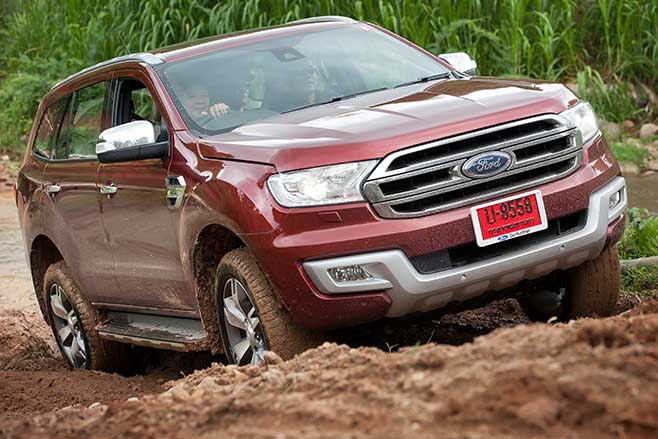
Ford has done well to engineer refinement and functionality into a light commercial-vehicle-based wagon. In difference to the Ranger truck, the Everest wagon employs a multi-link, coil sprung rear suspension in lieu of more commercial leaf springs.
This set up incorporates a Watts-link for lateral location of the live axle to improve on road characteristics, a system that was successfully used on Falcon cars for many years in the past.
While it’s by no means a modern design in terms of passenger cars, this set up provides a good compromise between what’s needed for on- and off-road driving applications. It betters controls the rear end, taming the usual tendency to move around under the car over irregular surfaces and under lateral dynamic loads.
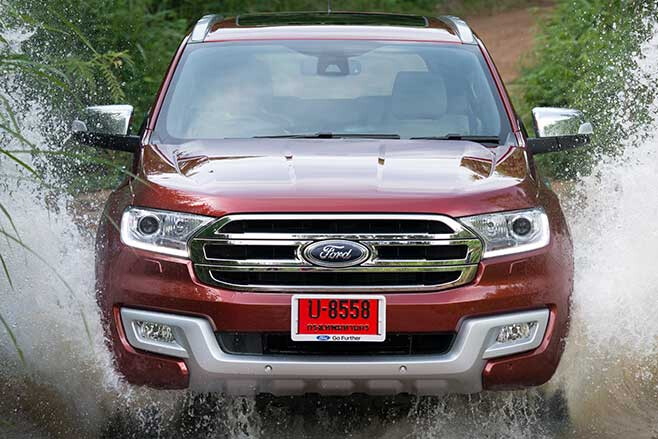
The suspension supported the five-door, seven-seat wagon relatively flat and composed over twisting roads with poor surfaces on our drive in rural Thailand, leading us to think that it will work well on our crook roads in Australia.
It certainly exhibits far less roll and pitch than the Prado, which Everest will be targeting in the market. The electric-assisted steering is light at low speeds where you want to it be and firms up at speed, although it doesn’t give the same connected feel of hydraulic power steering. But this is not a sports car and most SUV drivers wouldn’t be affected by this characteristic of fuel saving electric power steering.
Everest’s separate chassis design helps isolate the body from road NVH even on the low-profile, 20-inch tyres fitted to these test vehicles. Top-spec Australia Everest Titanium models will also ride on the 20s, while the mid-spec Trend is on 18s and the base Everest on more practical and comfortable 17s.
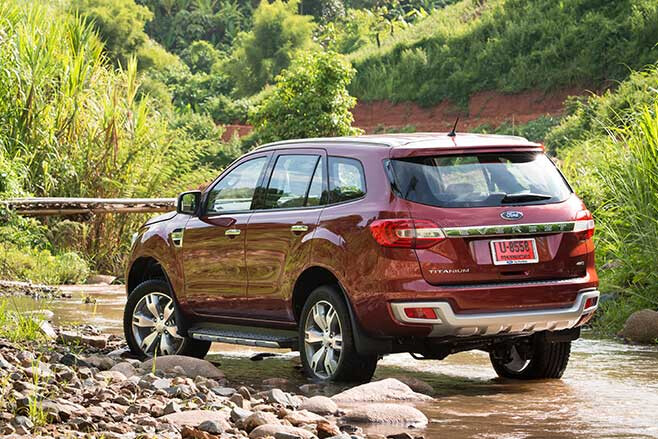
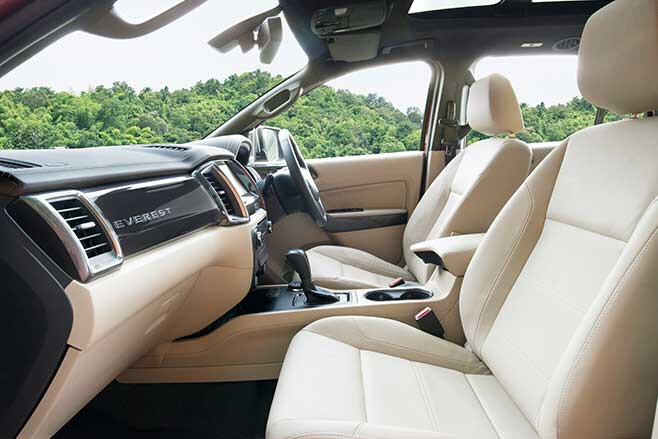
The interior is clever practical and functional. The centre and rear rows of seats fold flat to offer cavernous cargo space. The third row seats individually fold electrically in the Titanium model at the touch of a button from the rear door opening.
Head room in the back seats is limited by the sculptured roof lining that houses the ducting for rear air vents. Notably absent are a keyless start button and entry, and reach adjustment for the steering column, which like the rear seat headroom, should only be an issue for taller occupants.
Cabin refinement is also aided by several technologies, including Active Noise Cancelation, which, like similar technology in high-end audio headphones, transmits an opposing ‘sound’ to the cabin to cancel out ambient noise. This includes the sound of the diesel engine, where the low–frequency growl has been particularly targeted and reduced.
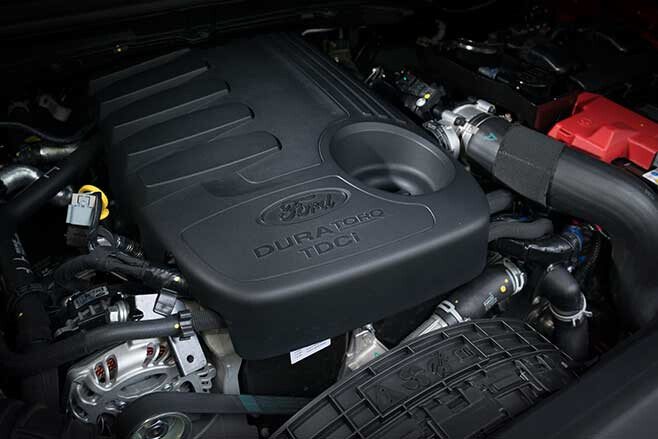
The inline, five-cylinder 3.2-litre diesel engine will be the only power plant offered in Everest in Australia and although carried over from Ranger, it has been refined with new fuel injectors operating at higher pressure to reduce diesel-clatter. It also features a revised EGR system and uses Selective Catalytic Reduction (SCR) to help clean up emissions and meet Euro 6 standards needed for passenger vehicles.
As a result of the cleaner tune in the Everest, the engine makes four-kilowatts less than it does in Ranger; 143kW, but produces the same 470Nm of torque. This is ample enough to keep the hefty wagon on the move, and is aided by a positive-shifting, six-speed automatic transmission. There are no steering column/wheel-mounted shift paddles, although, the transmission can be manually operated using the floor shifter.
All Australian-spec Everests will be 4×4, for now at least. 4×2 is available for other markets and isn’t being ruled out for us down the track. The full-time 4×4 system is aided by the clever Multi Terrain Selector that offers the driver modes for Normal; Snow, Mud, Grass; Sand; and Rock driving. These are designed to make it easier for the novice off-road driver to manage different conditions. Low-range gearing, a locking rear differential, hill descent control, and 800mm wading depth also add to Everest’s off-road capabilities, although we weren’t able to put them to the test on this drive.
This well-equipped off-road armoury will make the Everest the vehicle of choice for families who not only dream of visiting places like Kakadu National Park or the Simpson Desert, but also those who actually go out and experience them.
The drive did show us that the Everest will be a smart choice for family buyers looking for a 4×4 wagon with a good mix of on road refinement, performance and all terrain ability. It will be an alternative to the Prado as well as similar truck-based models such as the Fortuner, Holden Colorado 7, Isuzu MU-X and the just revealed new Challenger from Mitsubishi.
| SPECS | u00a0 |
| Model | Ford Everest |
| Engine | I5 3.2L diesel |
| Max power | 143kW @ 3000rpm |
| Max torque | 470Nm @ 1750rpm |
| Transmission | 6-speed auto, fulltime 4×4 |
| Fuel consumption | 8.5L/100km |
| Price | $54,990 to $76.990 |
| On sale | October 1, 2015 |
See the Ford Everest cut in half here.
Check out the Ford Everest launch video here.
For an early look at the Ford Everest click here.
You can get the latest info on all things 4X4 Australia by signing up to our newsletter.
The new Challenger, which will compete against the Fortuner, Colorado and Everest four-wheel drives when it comes to Australia early next year, was launched globally at the 2015 Bangkok International Grand Motor Sale at the weekend.
Marketed as having ‘rugged luxury’ and ‘genuine four-wheel drive performance’, the seven-seat wagon will include an updated version of Mitsubishi’s Super Select II 4×4 drive system, and a new Off-Road Mode terrain selection system, a first on a Mitsubishi.
Its Hill Descent Control is another first and, along with a greater wading depth, will further improve the SUV’s off-road capabilities.
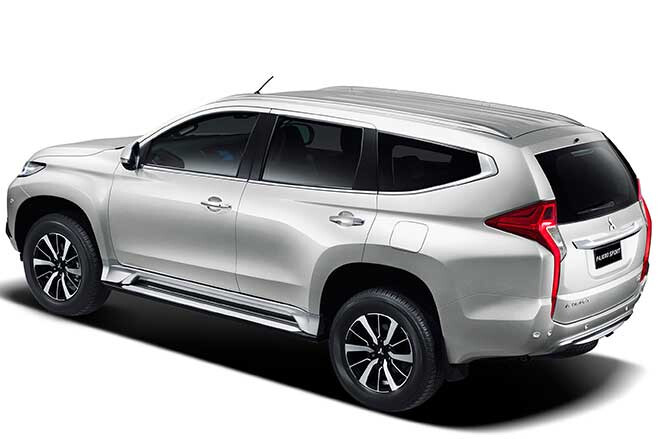
In the power department, the new Challenger has a 2.4-litre MIVEC turbo diesel engine mated to a new 8-speed automatic transmission.
According to Mitsubishi, this ‘punchy’ engine achieves better environmental performance.
Handling, stability, ride and quietness have also reportedly been improved via work on the suspension and the body mounts, while upgraded sound insulation and the new diesel engine also reduces interior noise.
Inside, a high-console proportion dashboard features silver-finish ornamentation and sculpted seats.
New safety features include Blind Sport Warning (BSW) and Ultrasonic misacceleration Mitigation System (UMS) which, while stationary or at speeds of up to 10 km/h, uses ultrasonic sensors to detect vehicle obstructions and regulates engine power if the drive depresses the accelerator hard by mistake.
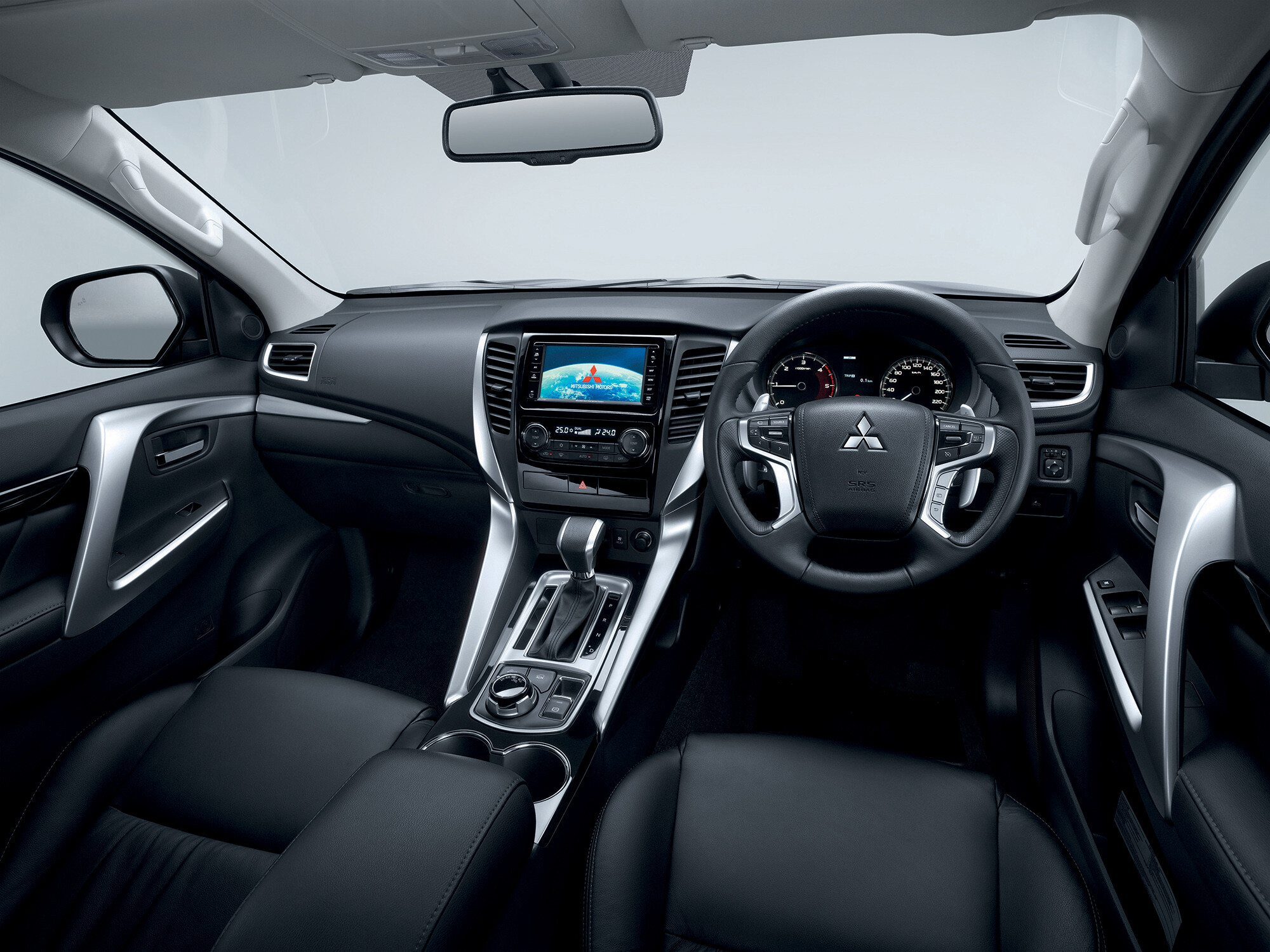
Additional safety firsts include a Multi-around Monitor, which displays a bird’s eye image of the vehicle’s perimeter and the new model also gains an electronic parking brake.
Forward Collision Mitigation (FCM) braking will feature on the new Challenger, while the RISE impact safety body design and seven SRS airbags further improve safety.
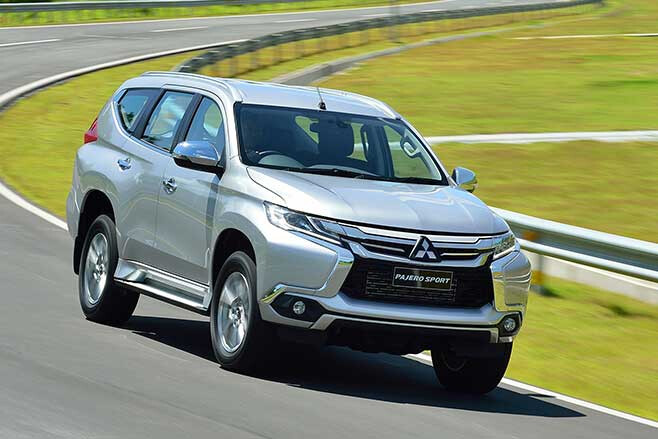
Named the Pajero Sport in markets like Thailand, the Challenger features Mitsubishi Motors’ new Dynamic Shield front face design concept, a revamp of the design seen in models of the Pajero series.
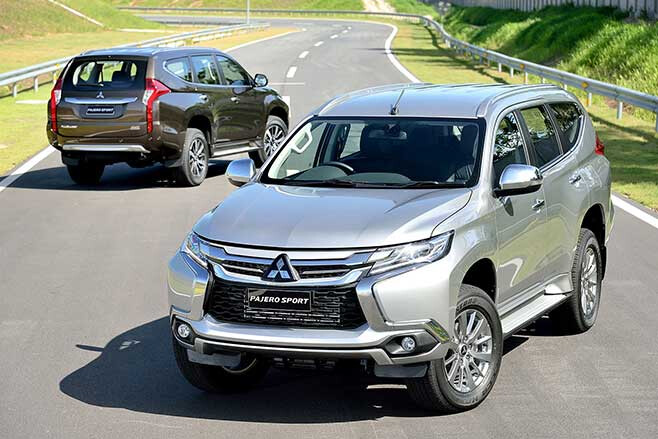
The new SUV will go on sale in Thailand this Spring and will be launched progressively in 90 countries across ASEAN, the Middle East, Africa, Latin America and Russia in coming months.
Mitsubishi Motors Australia will announce details of the new Australian specification Challenger closer to its local launch.
You can get the latest info on all things 4X4 Australia by signing up to our newsletter.
Lake Eyre has the lowest natural point in Australia. But despite draining an immense area of Central Australia (1,200,000 km²), the lake fills with water only a few times each century.
When it does, it attracts waterbirds from across the continent and beyond. Pelicans come from as far away as New Guinea and it has been estimated that up to 80 per cent of Australia’s pelican population come here to feed and breed in these rare periods of plenty.
A 4×4-only track leads from near William Creek on the Oodnadatta Track to Lake Eyre North, the larger of the two sections of the lake. This 60km track runs through station property and in addition to cattle, drivers need to be on the lookout for the occasional wheel-wrenching bulldust hole.
The track passes a monument to a tourist who perished while attempting to walk back to William Creek at the height of summer after she and her boyfriend’s hired 4×4 became bogged in sand at Halligan Bay. Sadly, the police found the vehicle had highway tyre pressures. After the cops dug a little and deflated the tyres, the vehicle was driven out.
Nearing the lake, the track descends from the flat plain and visitors have a choice of continuing several kilometres north to Halligan Bay or heading into nearby ABC Bay. As the latter isn’t particularly scenic and has no facilities, continuing north is the better option.
Near Halligan Bay, the track follows the lake’s shoreline closely. Prominent signs warn that driving on the lake surface is not only exceptionally risky, but also not permitted. Of course, a sign like that is guaranteed to tempt morons to attempt exactly what it says not to, as evidenced by deep holes and drag marks left by previously bogged vehicles.
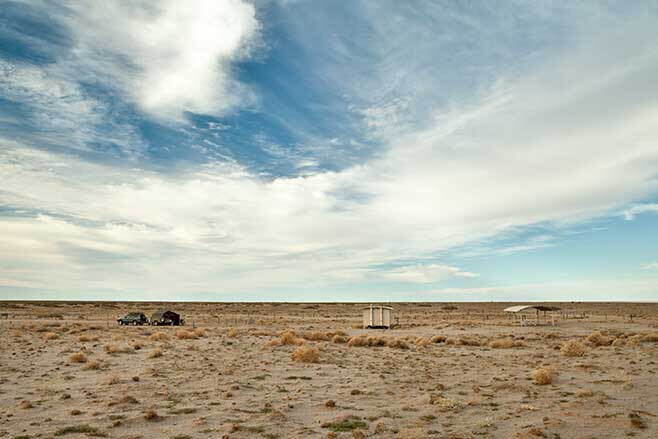
The campground at Halligan Bay consists of a small area of flat stony ground sitting in a landscape that is equally bare and barren, apart from the odd low spindly bush. However, a 50m walk to the top of the low rise beyond the camping area reveals a spellbinding view across a wide expanse of white salt as far as the eye can see.
When walking on the lake the dry salt crunches solidly under your boots, but stand in one place for too long and the apparently hard surface can be felt to slowly soften, testimony to the muddy morass beneath.
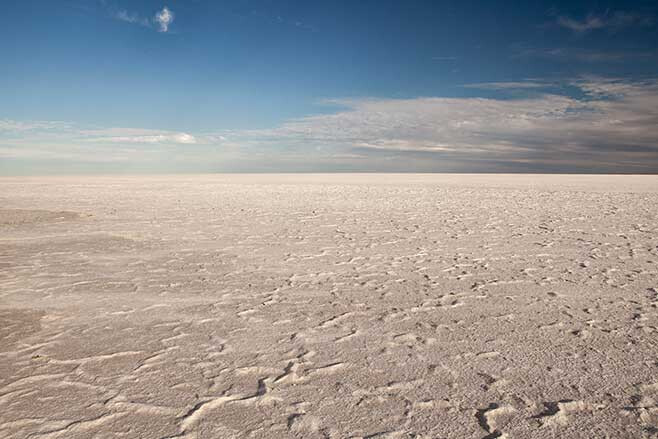
For a surreal experience it’s worth walking a few hundred metres out onto the lake and, surrounded by nothing but white salt, watch the sunrise or sunset over the unbroken 100km horizon.
Anyone travelling along the Oodnadatta Track should take the time, ideally making an overnight stop, to experience the truly alien but marvellous landscape that is Lake Eyre.
Get the latest info on all things 4X4 Australia by signing up to our newsletter.
Shane Armitage had always lusted after a classic American woody station wagon.
But that all changed when he spotted a little Morris Minor Traveller while cruising around the Auckland bays. He was blown away by the coolness exuded by this tiny Pommy Woody and wondered if he’d ever be able to afford one of his own.
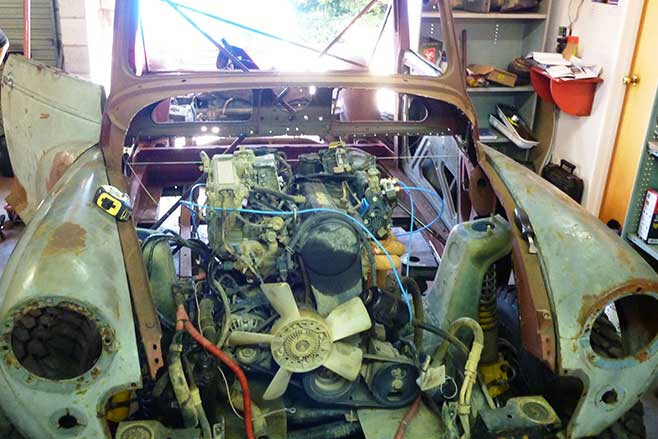
At the time, Shane was touring around in a not-so-cool Suzuki Escudo (Vitara to you and me) and he couldn’t justify the expense of having two toys. Then he came up with a brilliant idea; he’d join the two together!
While casually browsing through the local Autotrader he found a mint-condition Morris Minor Traveller for sale, but he couldn’t bring himself to mutilate such a rare and classic vehicle. So he began to further research the possibility of creating a Suzuki/Morris hybrid, purchasing a few Morris Minor books from the UK and taking some measurements of his Escudo. Once he’d worked out that the Suzuki’s wheelbase closely matched that of the Morris, he hit the go button on the project.
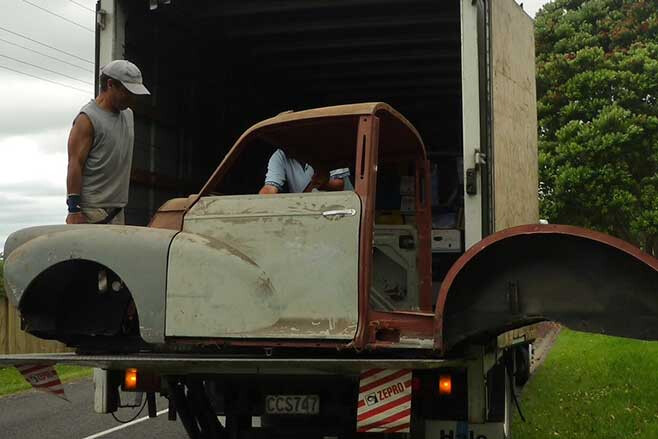
Shane bought the shell of a Morris Minor Traveller and, referring to it as Old Rusty – it certainly wasn’t in good enough condition to complete the project. There was enough there he thought, to at least salvage the floorpan and the roof. As well as Old Rusty, Shane bought a two-door Morris Minor to use for donor parts.
With a growing number of Morris bits and pieces about the place Shane was running out of space, so a mate stepped in and offered his garage (much to his wife’s dismay) “for a couple of weeks,” to store the two-door. With time now of the essence, Shane got stuck in and removed the engine and various other parts that were surplus to requirement and these were sold off in an effort to recoup some of the expense.
A few months later, Shane got in touch with Lance from Freelance Automotive, who had done the low volume vehicle (LVV) certification on his Suzuki, and told him about his Suzuki/Morris hybrid project. Lance thought Shane was nuts, but eventually agreed to help out with the fabrication and welding requirements, so Old Rusty was sent away to Lance’s place.
Meanwhile, Shane had varnished the wood and somehow managed to convince his partner that a romantic weekend away was in order. Off to Waipu Cove they went, where Shane met a bloke who had four Morris vans in his back paddock. Shane’s research had revealed that the back-door hardware from a Traveller is as rare as rocking-horse poo, but he thought the van’s back-door mechanisms could be modified to fit the Traveller.
The project was starting to take shape, but Shane still hadn’t managed to secure a roof or side panels for the wooden frame. Eventually he tracked down a bloke who was modifying his own Morris Traveller (with a V8 no less!) and convinced him to loan out that vehicle’s panels so Shane could make a mould with which to construct his own carbonfibre copies. Shane’s mate Nina, a carbon engineer, came up with a new laminate design, and then another mate Richard, a boat builder, agreed to help with the construction of the panels. After plenty of bogging and sanding, the roof plug was ready to make the mould. Some Karate Kid action later (wax on, wax off) and they popped out the beautiful carbonfibre roof and side panels.
Soon after, another Traveller body popped up for sale in Christchurch. It was in a lot better condition than Old Rusty and although its wooden frame was non-existent, the elusive original back door hinges and locking mechanism were. After consulting with Lance, it was decided it would be cheaper to replace Old Rusty with this Traveller shell.
By the time the new Traveller body was dropped off at Freelance Automotive, the Suzuki body had been removed from its chassis and so the process of cutting and welding began. It wasn’t an easy task and Lance had to spend considerable time on the conversion to ensure it would be roadworthy.
By now, Shane had discovered eBay and was delighted to find that these days you can buy more spare parts for a Morris Minor Traveller than when they were in production! He was in heaven and his internet bill soared. He purchased various rubber seals and hinge refurbishment parts, as well as badges for his new orange cheese-cutter cap that would help him to blend in with the real Morris Minor enthusiasts.
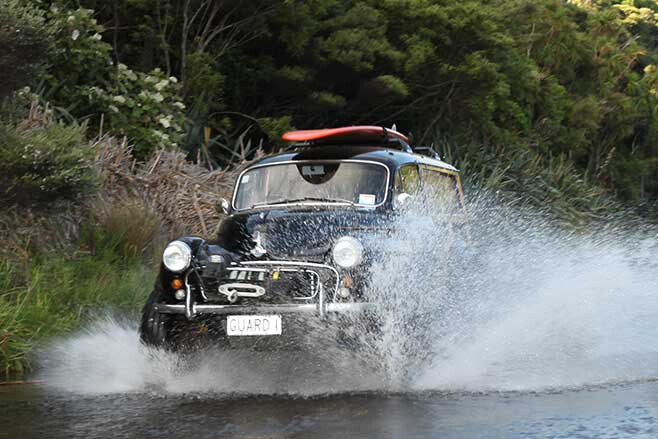
Then, in another stroke of luck, Shane’s partner had to go to England on business, so he jotted down a list of parts for her to bring back including a set of indicator and brake lights, and new back-door handles for the Traveller.
Once Shane had stripped all the parts from the two-door that he needed he sold the remainder, as well as the body of the Suzuki, to recoup some more costs. Cash in hand, he ventured out to Alu-Tech Vehicle & Marine Windows for some custom sliding windows for the back of the Woody. Much more high-tech than the originals, these new units have all-in-one frames with drain holes and tinted glass.
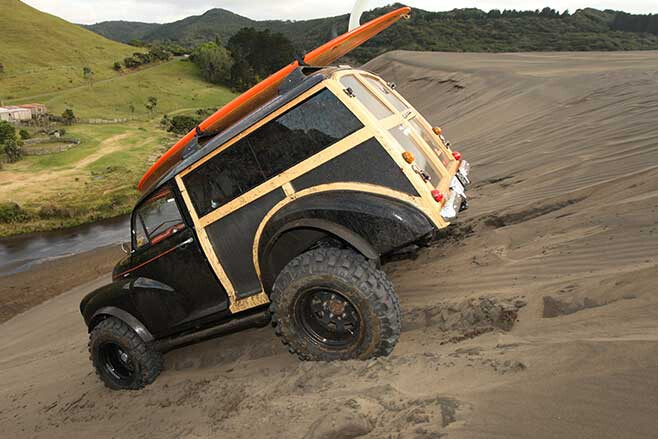
Shane then headed up to Helensville to check on Lance’s progress. They discussed seat positioning, cutting away the wheel arches for big off-road tyres and strengthening the chassis. Shane was concerned about the integrity of the wooden body parts if there was too much chassis twisting when driving off-road. After all, the Suzuki was plenty capable in the rough stuff, with crawler gears, front and rear ARB Air Lockers, Calmini three-inch suspension lift and 31-inch Simex tyres.
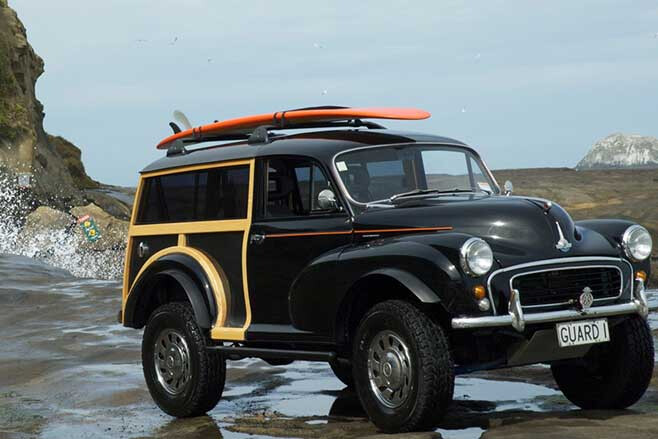
Quite a few months later, all the fabrication was finished and the Morrie was off to the paint shop. The boat builder helped to fit the windows, carbon panels and roof to the wooden frame, which was then attached to the newly-painted body. The shiny chrome lights, trim and handles came out of storage and went on. Then the confusing job of trying to mate the Suzuki’s wiring loom to the Morrie’s lights and other electrical components was tackled.
Finally the key was turned and the old Suzuki donk burst into life. Shane then applied for LVV certification (registration) and the 4×4 Woody passed straight up! After a service at Motortech4x4 in Auckland, the final accessory was added: an old school surfboard to the roof. Three years after spotting that Morris Minor Traveller while cruising around the Auckland bays, Shane could at last drive his dream 4×4 Woody to, and on, the beach.
Want to see the most popular 4X4s of 2015? Check them out here!
You can get the latest info on all things 4X4 Australia by signing up to our newsletter.
Part two – Trekking the southern cliffs
As we crossed the border into South Australia, the cliffs got lower and the many small coves and bays became more accessible, but the sand was softer and the scrub thicker. 4X4 Australia magazine’s trek across the Great Australian Bight continued, but not easily, as we soon discovered.
The long arc of beach swept away from our vantage point, its far end lost in the sea mist of mid morning, while the tall dunes of the Yalata Sandpatch morphed into the dull covering of clouds that stretched across the sky from horizon to distant horizon. We were standing on low cliffs overlooking Twin Rocks Beach at the Head of Bight, in the Yalata Aboriginal Lands, the whale watching facility that some people would know from this region, a few kilometres west of us.
We had permission to enter this normally closed area and run to the beach south from here to Hiltons, a camping spot that is normally the closest access to the beach. Hiltons, along with a few other selected sites further south, are popular fishing camps for those keen anglers trying their luck along this wild, surf-smashed coast. Access and camping is controlled by Yalata Land Management rangers and a permit is required to camp and fish this coast (see our travel planner).
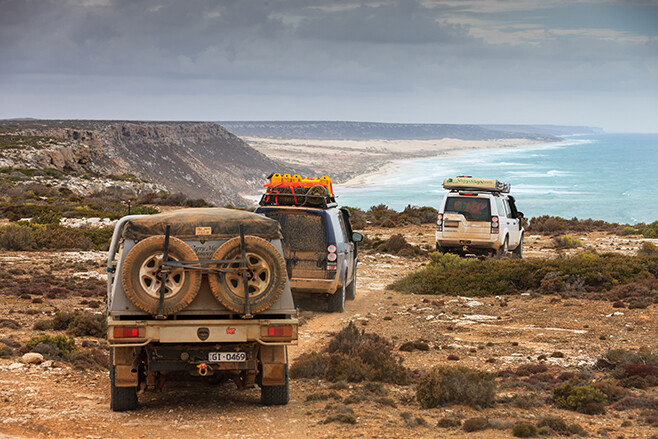
Below us Eyre Well, and just a little further inland, Illcumba Well were hidden by small dense stands of low green scrub. Illcumba is one of the traditional waterholes and meeting places for the Aboriginal people, while Eyre Well was where the explorer Edward John Eyre found a life-giving soak for himself and his party during their 1840 ordeal of crossing the Bight from Streaky Bay to Albany.
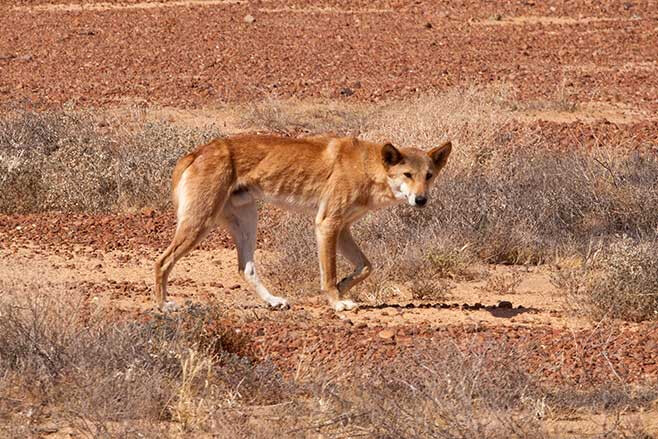
We dropped down the rocky shaly cliff and poked our way between some prickly scrub and drove onto the seaweed-strewn beach. Above and around us whirled hundreds of small birds – mainly swallows – with more joining them as we drove along the sand, disturbing their early morning feeding activity. A large flock of terns lifted off the wet sand in front of me, swept out to sea in a big arc and landed on the sand again behind the last vehicle in our convoy. A dingo, trotting along the sand, looked back over his shoulder and on seeing us sprinted smartly into the dunes and quickly vanished.
Our mid-morning enjoyment of nature and its delights quickly came to an end as the soft clawing sand slowed our wheels and taxed our engines. I thumbed the gear paddle down to second – low and growled along the beach trying to find an easy route, but the whole width of the beach seemed to be one and the same – and that was soft!
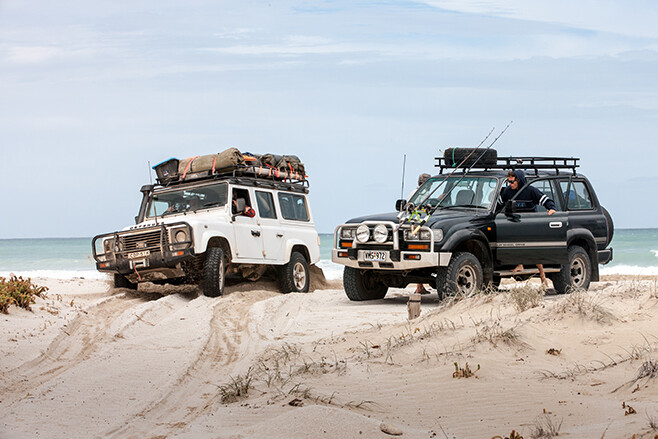
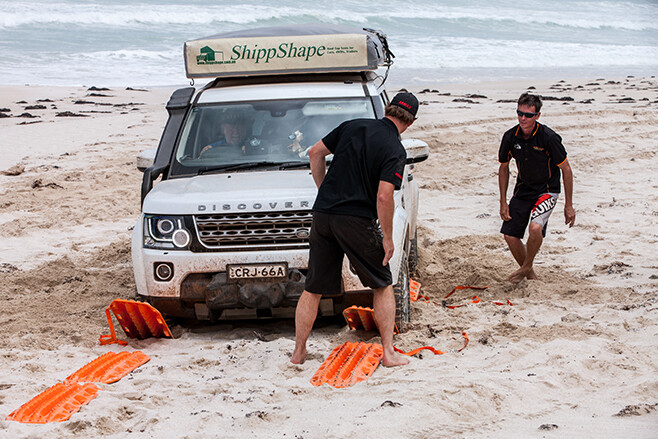
The chatter over the radio indicated a couple of vehicles bogged behind me and as I slowed even further I met the same fate. Slipping out of the vehicle we started a recovery with a few Maxtrax, a wave suddenly washing around the tyres of the Disco and the vehicle behind me. It’s surprising how everyone’s pace steps up a gear or two when waves begin washing around vehicles and for a while there was frantic activity with shovels and tracks until the vehicles were back up above the waves.
Then we went back and helped the others out – there being six other vehicles bogged along a 1km stretch of beach. Some were being snatched out by Ed’s hard-working Cruiser ute, or the worked-over 200 Series from Safari, while others were using a veritable highway of Maxtrax to get going.
The next couple of kilometres along the beach was like that – growling engines with slow and tedious forward movement followed by a sinking feeling as one tried every trick in the book to keep the vehicle in some way moving forward. By now we were pretty well practiced and the Maxtrax were never far away; a bit of digging, a Maxtrax laid in front (or sometimes behind) each wheel and then a dab of the throttle to get up onto the top of the Maxtrax, before flooring the accelerator and heading for higher, drier or firmer land.
By the time we got to Hiltons everyone was glad to drive off that beach. We stopped and breathed a collective sigh of relief, sorted recovery gear and had a bite to eat and a brew.
We’d left Eucla a couple of days earlier after changing a few of the crew over, refuelling the vehicles and filling with water. The first day out from that small hamlet of civilisation was a big one.
The main highway hugs the cliff on the SA side of the border for quite some way and while the cliffs – the Bunda Cliffs along this section – are spectacular, the bitumen is at most a kilometre or so inland. We wanted nothing to do with the blacktop, so our track had first taken us through the small Eucla National Park to cross the SA/WA border at the cliffs above the Merdayerrah Sandpatch before we swung inland and picked up the old highway which strikes arrow straight across the Nullarbor Plain and through the rather unsurprisingly named Nullarbor National Park.
This good dirt road is in far better condition now than when it was the only route across the Nullarbor, which was realigned and bituminised on the SA side in 1976 – the WA side was completed seven years earlier. We travelled it a few times in the late ’60s and it was a horror stretch.
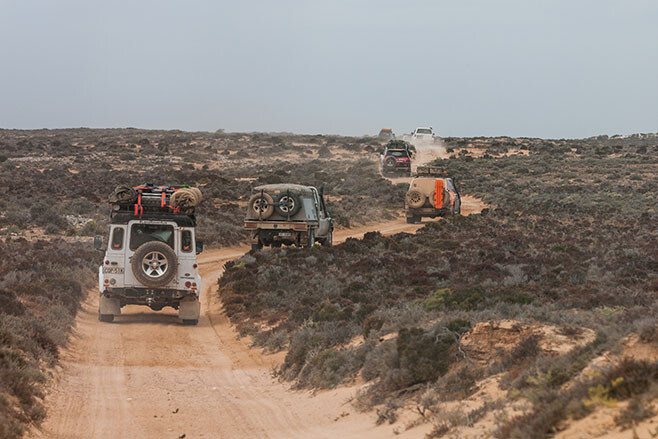
One of the things we did notice out here was that with the area becoming a park and the grazing infrastructure falling into disrepair, especially the water tanks and the like, the number of kangaroos we saw across these flat plains went from scarce, in the grazing lands on the WA side of the border, to absolutely zero within the park. We only again saw ’roos when we left the park further east.
We took the time to stop at the old Koonalda homestead, which now has a non-descript camping area nearby. For many of us the highlight of this visit was the graveyard of the hundreds of old vehicles that didn’t make it across the Nullarbor back in the days of the dirt highway. The homestead built in 1938, mainly from railway sleepers dragged from the Trans Australian Railway Line – 80km north – has been renovated by National Parks.
We also took the opportunity to head out to Koonalda Cave, 5km north of the homestead, which was once the property’s water supply. Entry to the cave is prohibited, but deep in its dark depths, ancient scratching by Aboriginal people, estimated to be 20,000 years old, have made this cave a very significant archaeological site.
That night we camped just back from the Bunda Cliffs south of the Nullarbor Roadhouse, before heading to our meeting with the soft sand at the Head of Bight. Our route from Hiltons then took us behind the beaches along Coombra Track and through the Yalata Aboriginal Lands until we got to the track heading south to Dog Fence Beach.
This track, with deep bulldust patches in places, runs right beside the dog fence as it begins its journey north and then east through SA and along the SA/NSW and NSW/Qld borders to end in far away Queensland. Some say it’s the longest man-made object in the world and its job is to keep dingoes out of the more settled pastoral areas of south-eastern Australia. How well it does that probably depends on your point of view and whether you are trying to run sheep anywhere close to the fence.
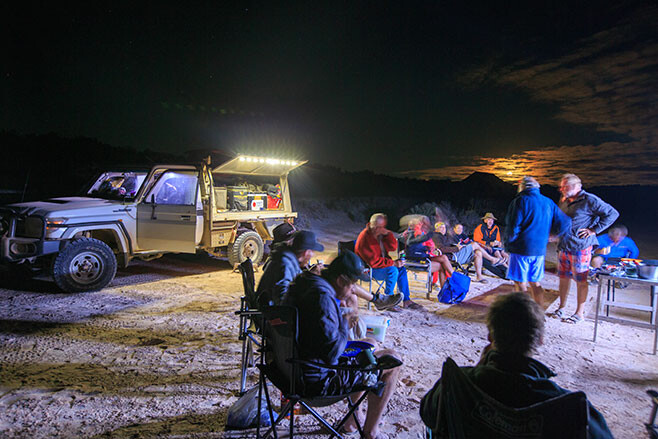
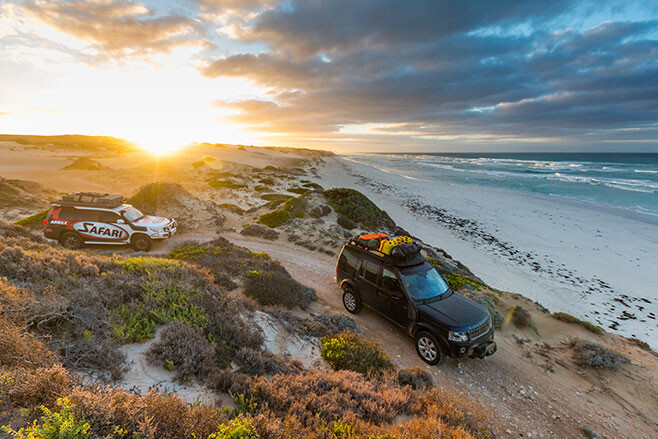
Our camp that evening was a beauty, tucked high on the edge of the Ocock Sandhills, just east of the fence. Dense scrub protected us from the wind, while the view took in a sweep of beach and lines of surf.
This is part of the near 400 sq km Wahgunyah Conservation Park which stretches along the coast from the Yalata lands to near Fowlers Bay. Behind the sweep of beaches, coves and cliffs the Ocock Sandhills run into the Wonginya Sandhills which transforms imperceptibly into the Chalgomnippi Sandpatch, making for one impressive mass of bare white dunes.
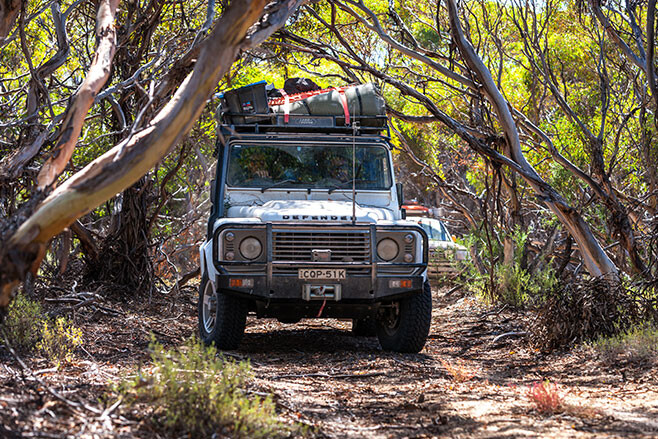
Next morning we followed a track deeper into this world of sand and windblown peaks and after a few kilometres came to a dead end where the beach south was being ravaged by a high tide. We tried to find a way through the scrub that bordered the dune system, but ended up backtracking a short distance where a track took us inland to some old ruins. Turning back towards the dunes, we passed Wahgunyah Well before again getting immersed in some thick scrub and tall stands of mallee trees. A storm had savaged the area sometime recently and we had to clear low overhanging branches before we broke out on a more open and easier track.
I’ve been through this section east of the Dog Fence three times now and never once followed my old route – in fact, I’ve never been able to find it. We have seen the ruins and the old well before, though; the shifting sands change everything as they push inland, enveloping tracks and scrubs in their relentless march north.
Time was slipping away so we continued east, stopping at spectacular Cape Adieu; like many places along this coast, it’s named by the French navigator, Nicolas Baudin, when he passed by in 1802. That night’s camp was at delightful Cheetima Beach and while there was nobody around apart from our group, we were out of the park and starting to get into more settled districts with grazing and cropping country inland behind the dunes.
We stuck close to the coast the next day as we headed to Wandilla Bay and then the protected Mexican Hat, before climbing Scott Point for a great view of the coast both to the east and west. Dropping off the headland we hit the sand at Scott Bay and cruised around the arc of beach ’til we found a track that cut inland over some very tall steep dunes. In this mini-Sahara of windblown sand we couldn’t help but have a short play – all for the cameras of course – before we slipped into the small village of Fowlers Bay.
Eyre had camped here in 1840 and after being resupplied by his support ship, set out to try and cross the Bight. He commented on the whale bones scattered along the bay, the result of this protected bay being used by the whaling ships of the day as a base for their operations. Today the bay’s main attraction is the nearby beaches and the town’s jetty which offers great fishing, day or night.
A day’s travel further east across rocky headlands, around salt mashes and some of the best surf beaches to be found in southern Australia, found us cruising along a relatively easy beach and cutting inland over some low dunes to a protected strip of sand on the southern side of Tourville Bay. In the southern half of the bay, tidal channels wind through a forest of mangroves, the most substantial of which is Davenport Creek, which just happens to have a strip of white sand along its southern edge. This is a popular spot for locals as the protected waters offer good fishing for whiting and flathead while the calm water is good for paddling a canoe or even for water skiing. You can camp nearby – but the mozzies can be thick, as we discovered!
From here we were back in civilisation, relatively speaking, and after a bush camp above the rocky shores of Point Brown, south of Ceduna, we cruised into the diminutive town of Baird Bay where we met with Alan and Trish from Baird Bay Ocean Eco Experience. This was the swansong for the trip with the couple offering one of the best, if not the best, wildlife experiences you can have in Australia.
Just offshore and reached by Alan and Trish’s specially built charter boat is Johns Island, now home to approximately 100 Australian sea lions. Alan anchored the boat just offshore from the island (the island is a conservation park and landing is not allowed) and the small beach that is the main nursery area for the sea lions.
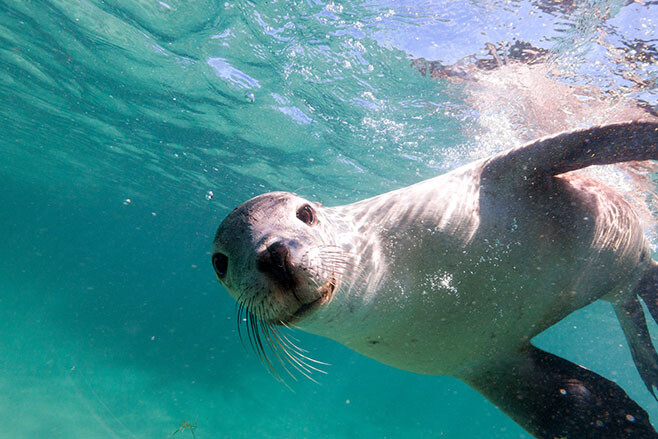
Within a minute a couple of young sea lions were around the boat and we slipped into the shallow water to join them. It’s about then you realise that humans are ungainly and awkward in the sea when compared to these delightful animals as they barrel-roll around you, swoop down to the sand just below you, look up enticing you to follow, then zoom up to your facemask and then barrel roll away to start it all again. If you don’t pay them any attention they’ll more than likely nibble on your feet or pull your hair, barrel-rolling away as you turn towards them. It is absolutely fantastic!
Part of this charter may include swimming with a pod of wild dolphins and while we did see a small group, they weren’t in a playful mood and left us floundering and alone in their wake. Luckily the sea lions are a lot more friendly and playful and while I’ve done this swim three or four times, it is one I’ll never get sick of.
That evening Macca cooked up a spaghetti marinara with the freshest seafood imaginable – what else could you expect when you are in the heart of one of the best seafood regions in Australia? It was a fine ending and a fitting celebration to our journey across the Great Australian Bight – surely one of the best, maybe the best, coastal 4×4 trips in Australia!
Want to see more from our trip? Check out the below videos:
- The Great Australian Bight adventure: part one
- The Great Australian Bight adventure coming soon
- The Great Australian Bight Adventure Teaser II
- The Great Australian Bight Adventure Teaser III
- Big Bight Adventure: Bush Mechanics
- How to prepare for a 4×4 trip
- How to beach drive
- How to 4WD in a convoy: radio communication