
Few things in life are more satisfying than reaching into your vehicle’s 12V fridge to pull out an icy-cold drink while witnessing a stunning sunset in the middle of nowhere.
To power that fridge – plus lights and other accessories – when you’re camping, as well as start your vehicle the next day, you rely on one or two little boxes of magic: your vehicle’s batteries. But different accessories, and the needs of the vehicle itself, mean there are different types of batteries designed and constructed for different tasks…
BATTERY BASICS A battery works by converting chemical energy to electrical energy. The most simple – and most common – vehicle battery design is the flooded wet-cell battery. In this design, a series of metal plates are immersed in liquid acid (the electrolyte) and connected to two terminals, which provide a connection to the vehicle’s electrical system.
Inside the battery the plates are kept from touching each other – to stop destruction of the battery – by separators, resembling something like a liquorice all-sort. It’s all housed in a tough plastic case.
A chemical reaction between the plates and the electrolyte results in power that can start the vehicle and run its accessories. The beautiful part of all this is that the chemical reaction is reversible. Going one way, electrical energy is made available to make stuff (lights, fridges) work.
Going the other way, the application of electrical energy to the battery (from the vehicle’s alternator – a battery charger that plugs into your house supply – or from a solar panel) results in the chemical reaction being reversed. Through this process the battery is recharged and ready to go again.
Fully charged, a conventional lead-acid battery (most batteries rely on lead as the main ingredient of its plates) will show a voltage of around 12.6V. The vehicle’s alternator will generally provide current somewhere in the range of 13.6 to 14.0V; sometimes a little more. It’s this increased voltage from the alternator that provides the pressure (to put it simply) to charge the battery. This voltage – from the battery or from the alternator when the engine is running – provides the force to operate the vehicle’s other electrical devices, too.
Usually, your vehicle battery’s first job of the day is to provide power to unlock the doors and then start the vehicle’s engine. However, only a small amount of oomph is needed to unlock a set of door locks, while the starter motor needs several horsepower to turn over the engine, especially a diesel engine on a cold morning. It’s easy to see that these two tasks have wildly varying power needs.
Things get even more complicated when a battery is asked to provide power for an extended period of time – such as when running a fridge overnight, or for a day or two, with the vehicle’s engine off. To cope with these varying power needs, different types of batteries are available.
The basic lead-acid chemistry principle remains similar; however, differences in internal manufacturing technology provide different performance and durability characteristics. In other words, some batteries are better suited than others for providing power for particular jobs in a vehicle.
GETTING STARTED Starting batteries (sometimes referred to as an SLI: starting/lighting/ignition) are designed for starting vehicles. These batteries are good at delivering a big burst of energy for only a few seconds. A starting battery contains thin lead plates and is typically of flooded wet-cell construction.
Because the plates are thin, more of them can fit inside the battery, which means more surface area is exposed to the electrolyte. This extra exposure allows the energetic chemical reaction needed to produce a sudden jolt of starting power.
In service, the energy lost during starting is topped up straight away by the engine’s alternator, which also provides the power to the vehicle’s electrical accessories. In most vehicles, the battery doesn’t provide much – if any – power while the vehicle is being driven.
There’s a catch for 4×4 owners, though. Without going all white-coat and propeller-head with the chemistry, starter batteries generally don’t like being worked too hard – or, discharged too far – as it damages the internals and shortens the life of the battery. Discharge (or flatten) a conventional starting battery too far, too often – possibly as little as five times – and, chances are, you’ll kill it.
GOING DEEPER Deep-cycle batteries offer different performance that usually makes them more suitable for second-battery use in 4×4 and camping situations. Rather than needing to smack a starter motor with a jolt of power, deep-cycle batteries are designed to spoon out power over a substantially longer period of time.
In the context of battery tech, a cycle refers to a usage pattern whereby a battery draws on its charge reserves to power an accessory before the battery is recharged by a vehicle alternator or some other source of charge. Deep-cycle batteries can provide more power than starting batteries without permanent damage. In other words, they can be cycled deeper – hence the name.
This deep-cycle ability is due, in part, to thicker internal plates that don’t degrade as quickly with repeated deep-cycling (discharging) of the battery.
Deep-cycle batteries tolerate starting duties far better than starter batteries tolerate deep-cycling. But, size-for-size, you can’t match a starter battery’s ability to provide quick hits of power to crank a starter motor.
BETTER ALL-ROUND Different plate technology within the battery – using different materials and construction techniques – can increase performance of both starter and deep-cycle batteries.
According to Century Yuasa Batteries (who assisted with this article), alloys of antinomy can make a deep-cycle battery better: it can have a longer service life; a superior cycle life; and can perform better in hot conditions.
Alloys of calcium enhance starter/SLI battery performance with higher cold cranking amps, quicker recharge and a longer shelf life. And yes, it’s possible to create a hybrid battery using both antinomy and calcium.
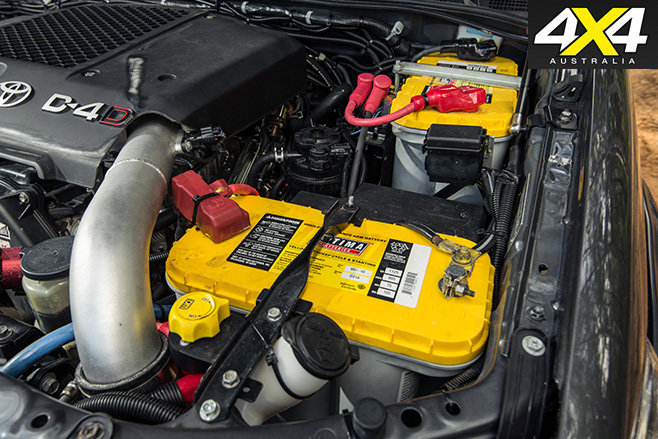
Blend the best performance/power delivery characteristics of starting and deep-cycle batteries and you have what is often referred to as an all-rounder battery. These are particularly relevant for four-wheel drives and other vehicles used for camping and touring, as they offer the best of both worlds: they cope with starting and the engine-off powering of accessories such as fridges for extended periods of time.
They’re usually built stronger, too. Like marine batteries, the internals are better-anchored into a tougher case to survive vibrations and rough movements.
ABSORBED GLASS MAT (AGM) This refers to the construction technique rather than the output performance of the battery. But, because AGM is a buzz-word in the 4×4 world, we’ll take a quick look at it.
AGM batteries hold the electrolyte (acid) in a layer of fibreglass matting between the plates. During manufacture, the plates are pressed together with the glass mat to create a very sturdy matrix before the electrolyte is introduced and the battery sealed. This makes the battery just about spill-proof and more durable – performance-wise and mechanically. Because AGM batteries typically carry slightly bigger plates in the same sized box, they can usually deliver a corresponding increase in cranking grunt and recharge quicker when depleted (if the charging system is up to the task) than a similar-sized wet-cell battery.
Deep-cycle batteries for automotive use are often AGM construction, too, and there is a move towards AGM for starting/SLI in later-model cars fitted with lots of electrical equipment.
Being sealed – and hence maintenance-free – AGM batteries can’t be topped-up like flooded wet-cell batteries. Therefore, they don’t like under-bonnet heat (anything above around 45C can be a problem as it causes fluid loss), which is why in later-model cars – and smart aftermarket 4×4 installations – they are usually installed in the cabin or boot rather than the engine bay.
GEL CELLS Gel cells also hold the electrolyte secure rather than have it present in the battery as a liquid. This holding medium is silica, which results in a jelly-like layer between the plates. Gel cells can tolerate deeper discharges and more of them, and most are used primarily for deep-cycle. Using the silica gel construction for quick hits of power – which is the type of power a flooded wet-cell starting battery is good for – causes damage in the gel. Like AGMs, gels are maintenance-free, so they can’t be topped up and require a comfier environment to give their best.
THE NEXT BIG THING? In the past couple of decades, battery technology has been largely moved forward by the laptop and mobile-phone markets – and, to some extent, hybrid cars – where power output from a lightweight source is a significant requirement. This tech has filtered to the car and camping scenes. Chemically, lithium batteries are a new ball game, compared to lead-acid batteries.
Batteries that use lithium chemistry (such as lithium phosphate) offer similar outputs, but with less weight than conventional lead-acid (wet-cell, AGM or gel) batteries. This lighter weight is significant when many batteries are needed – plenty of weight can be saved – in, for instance, a hybrid car.
Sure, the weight of one battery doesn’t make much difference in a 2.5-tonne 4×4 tourer. But lithium batteries are suited to vehicle-based deep-cycle installations as they tolerate deep discharge (approaching 90 per cent) while displaying life expectancy of several thousand cycles. This deep-discharge ability (think of it as an extended operating range) means the battery installation can be down-sized and meet the same level of performance for equipment and accessories.
There are other benefits, too. Lithium batteries offer a higher, more stable voltage when used under load and over the discharge cycle, and they tolerate storage when partially charged. Being of dry construction, they are also spill-proof and maintenance-free.
They do, however, require a stricter charging regime, and they aren’t cheap – they cost about five times as much as a similar-capacity lead/acid battery.
IS IT CHARGED? A fully charged lead-acid battery will typically show a voltage from around 12.6V to 12.7V, while a flat battery will have 10.5V or less (even though there is measurable voltage there, it’s too weak to get out of its own way because of the way the chemistry works).
Voltages in between can give a guide to the remaining charge in a battery. These numbers are determined by the lead-acid chemistry, so really can’t be changed or tweaked (or fibbed about). Due to the chemical, rather than mechanical, nature of batteries, these voltages are approximates only, so any claims such as, “it’s only 80 per cent charged” or “has 50 per cent capacity” are approximations and are influenced by conditions such as temperature and age.
A battery with a voltage of around 12.1V is regarded as 50 per cent charged, which is a safe and sensible discharge limit for a vehicle-starting battery. Deep cycles can cope with being pulled down to 80 per cent; but, in general, the less charge pulled out of a battery each cycle, the greater the number of cycles its life will have.
WHAT KILLS A BATTERY? Operating a battery beyond what it’s designed to do – asking it to deliver more current than it’s specified for, or discharging it too deeply – will shorten its life.
No matter what type of battery, leaving it discharged for any length of time causes sulfation; a situation which quickly clogs and kills a battery. Batteries that are seldom used – for instance, those fitted to classic vehicles or camper trailers – should be stored fully charged and given a recharge every month or so.
A three- or multi-stage charger (with a storage/maintenance mode) can be used to keep batteries in top shape, ready for the next adventure. Typical float chargers will maintain the voltage at the battery terminals at a little over 13V; many batteries have charging requirements listed in their specs. Conventional old-school chargers intended solely for flooded wet-cell batteries are not suitable for this as they keep the input current at more than 14V, which, beyond the point when the battery is fully charged, causes damage.
WHAT DO THE LETTERS AND NUMBERS MEAN? 12V: Voltage is the motive force provided by the electricity from the battery (and alternator) to make things work. Vehicle electrical systems are described as 12V, in recognition of normal batteries’ charged voltage of around 12.6-12.7V. To charge a battery, however, a higher voltage must be applied, so vehicle alternators are calibrated to deliver somewhere in the range of 13.8V to 14.4V. Many people get the alternator-determined charging-system voltage confused with the voltage – and hence fullness – of a charged battery.
CCA: Cold Cranking Amps. This is a measure of a starting battery’s ability to deliver current to a starter motor at minus 18°C. Of course, it doesn’t often get that cold in Australia, but this is an international standard that looks at the ability of the battery to deliver power. The bigger the CCA, the more starting stamina the battery has. A typical 4×4 battery has a CCA rating of more than 500, so it can deliver 500A for 30 seconds while retaining enough voltage to operate voltage-sensitive ignition systems (sometimes).
RC: Reserve Capacity. This is a measure of the battery’s ability to provide power for more gentle (non-starter) electrical loads. It’s based on how many minutes the battery will provide 25A without dropping below 10.5V, and hence keep a car going after a charging system failure. 10.5V is the accepted number for a flat.
AH: Amp Hours. This is particularly relevant to those of us who wish to use vehicle fridges. It’s the number of amps that can be provided continuously for one hour. Turn the equation around, and 100AH becomes 1A for 100 hours, or 4A for around 25 hours (one day). We’ll cover system size requirements in the future. Based on simple maths, however, and with a fridge cycling on and off and therefore drawing power for, say, one-quarter of the time on a mild day, and taking into account 50 per cent depth of discharge tolerance of a typical starting (not deep-cycle) battery, this battery will provide power for four days.
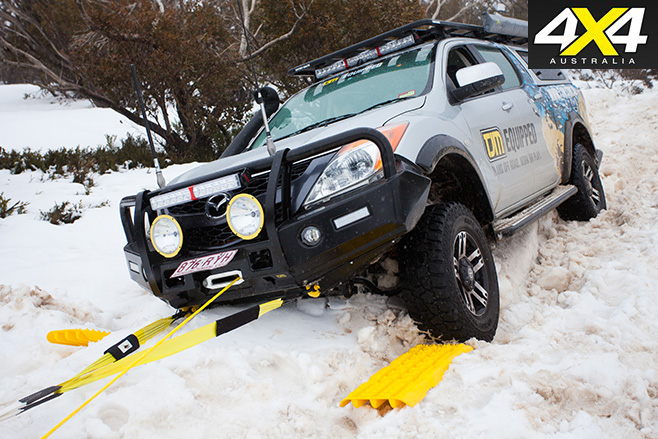
WINCHING? Even with the vehicle’s engine running (therefore charging), winching requires plenty of battery power. A pair of linked batteries is best for winching.
WASTE NOT Driving lights are usually operated while driving – with the alternator charging. However, if your vehicle’s charging system is working too hard, it can greatly increase charging time. So running headlights during the day might be great for safety, but not so great for your battery charge.
AD HOC Fridges generally use a small amount of power for a long time, but a starter motor needs a large amount of power for less than a second. So, different batteries are suited to different power needs and should be matched accordingly.
For more information and tips on Gear, check out our page here.
“How good are gum trees?” my mate Johnny blurted from the passenger seat.
As much as those words could have been spoken by a hippy, it was a thought that had possibly been stewing in my mind, too, as we approached a particularly fine specimen of track-side eucalypt, its twisted cool-grey bark and sparkling olive leaves backlit by the sharp mid-winter sun. The stand-out gum was one of many we’d passed during the first hour or two of our lads’ weekend trek, but for office-worker Johnny, every rotation of our tyres represented one revolution of a mind unwinding.
Weekends away are important like that. They help to clear your head, to consider new perspectives, and to once again appreciate the simple things in life – especially after situations such as Johnny’s recent six-month stint on the weed-killer. That’s why six blokes in three 4x4s had left Sydney earlier on that Saturday morning, aiming for Turon National Park, an easy two hours’ drive west.
Sure, it might not be Cape York or the Simpson, but with just a regular weekend to spare and a couple of newbies in our convoy, we’d chosen Turon as a not-too-near, not-too-far, not-too-scary trek from the excellent guide book 4WD Treks Close to Sydney. Being around 50km long and only 180km from Sydney, this trek can be easily taken in a weekend at a relaxing pace in a higher-clearance 4×4.
With everything we needed, from tucker to a few bevvies and several big bags of pre-cut firewood for our Saturday night campfire, we were stocked – and stoked! – as we crossed the Blue Mountains and passed through Lithgow.
Just after Sunny Corner, where the bitumen ends, we dropped some air from our tyres and stuck the sticks into 4×4 (well, I did – unlike my Hilux, the other two vehicles were full-time 4x4s). Once a mining town, Sunny Corner is now a sleepy support town for the present-day forestry industry and it’s past Daylight Creek Road, among the planted pine trees of the Sunny Corner State Forest, where the trek toward the Turon River begins.
Soon, we were in an ever-changing variety of natural bush; open savannah-like scrubland and rocky – sometimes steep – hills that characterise the most eastern lands of the original inhabitants, the Wiradjuri.
Like many other treks through hilly terrain, this one runs along several fire/management tracks. We soon turned right (roughly north) on to Blackbutt Mountain Trail, before we found a terrific north-facing open area to cook our lunch of sausage sambos.
After crossing Jackass Creek, one of the tributaries of the Turon River, the next stop was Pinnacle Rock.
There’s probably a good story behind the naming of Jackass Creek (maybe it involves a bloke saying “Hey! Get your camera! Watch this!”) but the climb to Pinnacle Rock – a large bluff of sandstone – is the steepest of the trek, and it’s where one of our vehicles, a Discovery 4, popped a tyre.
Our destination for the day was the campground at Woolshed Flat, one of two designated campgrounds in the Turon National Park. After we climbed Pinnacle Rock (and fixed the Disco’s tyre), we headed along the Pinnacle Fire Trail (some of this is through private property, so mind the gates), and eventually dropped toward Woolshed, with the ambition of set-up before sun-down.
With kangaroos watching, we organised our tents and got the fire going using our pre-cut, perfectly seasoned firewood to effortlessly fend-off the chilly winter evening. Yep, it can be cold! Later in the evening, after a terrific feed, I plonked my can of bourbon onto a table and it slid straight off: the evening’s earlier gentle dew had frozen to an ice-slick surface.
Despite the minus-3C conditions, we all slept like logs – even Johnny, who pulled on his beanie and rolled out his trusty swag on open ground next to the fire. With less than an hour’s drive to the bitumen at the end of the trek, there was plenty of time for a sleep-in the next day.
A leisurely hour spent cooking a hot breakfast of bacon, mushies and cackle-berries allowed the morning sun to reach the valley floor and dry our tents and gear before we spent another hour or so exploring the Woolshed area.
After driving past The Diggings campground and splashing through the Turon River a couple of times, we climbed out of this terrific little valley to complete our easy and relaxing two-day trek.
With our souls refreshed, we headed toward the township of Capertee, the bitumen and the commute back to the pickle factory.
Travel Planner
- WHERE: Turon National Park is around 180km west of Sydney. The closest town for fuel and food supplies is Lithgow, on the southern approach to the district from Sydney. Capertee – to the north – has limited supplies.
- WHEN TO GO: NSW National Parks and Wildlife Service recommends travellers visit the area in autumn, spring or summer. The cooler months are better for active adventurers while spring is great for bird watchers and family camping.
- DRIVING CONDITIONS: Some steep terrain. Water crossings. All tracks require a 4×4 vehicle.
- CAMPING: There are two campgrounds in the Turon National Park: Woolshed Flat and The Diggings. Both grounds feature large, flat, unfenced valley-floor camp sites with water frontage.
- PERMITS/RESTRICTIONS: No permits or booking required. Camping is free. No generators.
- FACILITIES: Bush toilets are provided at The Diggings. No tank/tap water. BYO firewood – wood collecting is not permitted – and take your rubbish with you.
- CONTACT: For Turon regional information call NSW Parks Blackheath 02 4787 8877
- WEBSITE: www.nationalparks.nsw.gov.au
The 2015 Tasmanian Campfire Cook Off, sponsored by Opposite Lock (OL) and crewed by the Derwent Valley 4WD club, is a tough gig.
First I was forced to fly all the way to beautiful Tasmania. Then there was an hour’s drive north of Hobart up through picturesque Richmond and the beautiful Coal Valley. Finally, I made my way on to one of farmer Kerry’s lambing paddocks for the annual Campfire Cook Off to undertake several gruelling hours of judging.
Yep, even the wife doesn’t believe this could be classed as work, but I try telling her that, anyway.
I mean, five teams cooking entrees, mains and deserts all on open fire pits on a crisp Tasmania day on the side of a hill with magnificent views all around. Sigh… She just can’t see how tough it is.
I was invited down last year as a guest judge for the first ever Cook Off and I’m kind of hoping it gets to be a habit.
The Derwent Valley 4WD club crew are not only very serious about their vehicles and off-roading, they’re also a wonderfully family-orientated group that really enjoys working and playing together. And they don’t mind a drink, just quietly, either. I’m thinking the band stopped sometime well after midnight and I know I went to sleep to the clink of glasses and tinnies.
Not before I’d had more fun than the average circus. I felt very humbled by the incredible effort put in by Josh and his dad Todd to build a Milo replica that really performed well off-road. Josh let me have plenty of goes with it and I had a ball chasing the kids around and clambering over the log pile.
It was a great way to sort out a few more tricks for the real thing, too. Although, getting Milo to stand up on her front axle by roaring forwards and then slamming it into reverse could be a tad hard on the old cogs.And the old driver…
It’s more than just an afternoon filled with great food and a party, it’s also an opportunity for a whole lot of the different sides of four-wheel driving to come together in an informal way.
I was there representing both LowRange and Unlock Australia, but the other judges also included Brian Hevey, the National Council President of 4WD Australia; my old mate Pat the Track, who leads the way in a portal-axled GU trayback; Yogi, a very senior Parks Tasmania officer; Craig from Lightforce, who co-sponsored the event; and Ken Orr, who’s standing for the Shooters and Fishers Party at the next elections.
That is a wild and wonderful selection of interests, I can tell you! But at heart we all love the bush and want to do what’s right for it and it’s at a function like this when everybody’s relaxed and having fun that some real common ground can be found. To be honest, I reckon a bit of banter on the judge’s table, surrounded by bush-loving 4WDers, probably does more good for the track-opening cause than anything else we do.
Or maybe I just love food. Look, I can’t describe how good the meals were. From the Landy club’s Roadkill pie to bacon and chicken damper; from oysters Kilpatrick to curried scallops; from Chuck wagon stew (everything in the wagon chucked in the pot) to Milo pudding – this was a foodie’s treat! And with a People’s Choice award up for grabs, you can bet the teams were keen to share the love around!
I want to thank the Derwent Valley 4WD club, OL, which always provides plenty of prizes and organisational backing, Lightforce, Hillbilly and Waeco, which helps out with even more prizes, and, of course, my old mate Brad Blackburn from OL Hobart.
He invited me to the event on that first year around. I think we’re looking at a tradition here, folks, and I’d love to see more of this across the country. Like bush cooking itself, get it right and there is nothing better!
We all know that the farther you drive and the rougher the tracks travelled to reach your dream destination, the better the fishing will be when you finally arrive, right? Well, yes and no…
Over the years, I’ve certainly enjoyed my share of rewarding fishing in remote and difficult-to-access places around the country. A few magical spots along the west coast of northern Cape York Peninsula – between Weipa and the Tip – spring to mind, as do other gems hidden away in Western Australia’s wild and woolly Kimberley region. These make up a list of special places that dwell in the happiest recesses of a fisherman’s selective memory.
Up the Top End, the infamous Four Mile Hole on the Wildman River system in Kakadu has a well-deserved reputation for breaking vehicles and drivers. But if you get it right, and are among the first crews to reach the Hole after the Wet Season, the calibre of barra fishing is often nothing short of excellent. It’s the stuff of legend!
These days, it’s rare to have Four Mile Hole to yourself. In fact, by mid-August there can be a hamlet of tents, camper vans, boat trailers and caravans parked before the tree-lined edges of the deep buffalo-made ruts in the black soil. It’s getting harder and harder to find isolation each year. There’s nothing for it but to climb back behind the wheel and push on farther into the wilderness.
Without doubt, there’s something especially rewarding about doing the hard yards to earn a glittering prize. Fish caught at the end of the road less-travelled seem to grow bigger, fight harder, look sexier and taste sweeter than anything found closer to home.
But as great as it is to go the extra mile, it’s surprising how often we drive past truly great opportunities while we rush to what can sometimes turn out to be a mediocre experience. While this grass-is-greener truism applies to a great deal in life, it’s certainly applicable to fishing as well!
I remember a day, many years ago, that was unexpectedly spent on a little mangrove-lined creek somewhere along the North Queensland mainland, up the back of Hinchinbrook Island, between Townsville and Cairns.
My companions and I were full of expectation as we launched the boat at first light. Our aim was to blast out of the short creek and across Hinchinbrook Channel to explore some of the wilder, less-fished waters on the inside of that mountainous island.
What’s that line about the best-laid plans of mice and men? With a sickening crunch everything went pear-shaped just a hundred metres from the launching ramp as we hit a submerged rock, destroying the outboard’s gearbox. Game over… or so we thought.
As the vessel crawled back up the creek, now powered only by the bow-mounted electric motor, we couldn’t resist flicking a few lures towards the snag-lined banks. To our surprise, we immediately hooked a couple of worthwhile fish, all with the sound of traffic whizzing along the Bruce Highway in the background. Interesting.
To cut a long story short, we fished that short creek between the highway and the sea for a solid five or six hours until the electric motor’s battery drained and we had to disconnect the defunct outboard cranking battery and use its juice to limp back to the ramp.
We caught at least a dozen different tropical fish species, including some quite nice specimens. Truth be known, we probably did better than we would have on Hinchinbrook!
My point is simply this: don’t be in too much of a hurry to make tracks for distant horizons. It’s amazing how often the greatest prizes of all are at your feet.
With the recent edition of John Rooth to the 4X4 Australia team, our January issue will also include a bonus DVD for you to enjoy!
In association with Roothy’s LowRange, we proudly offer you the opportunity to grab ‘Episode 3 – The Best In The Bush?’ (RRP $14.95) bundled with our January issue – on sale 10/12/15!
Check out the trailer below for a sneak peek of this awesome adventure and grab the mag in store!
Everest naysayers, cool your jets.
The recent fire that destroyed a Ford Everest on a test drive has officially been declared a one-off incident.
A Ford Australia investigation into the fire found it was caused by the incorrect installation of a replacement battery, post production: one of the battery cables was not properly located under a securing bolt.
The car was one of four Everests that had their batteries replaced in a Thailand holding yard as part of a rework procedure.
Ford Australia will therefore not issue official warnings to customers.
However, at least one owner of the four affected Everests has been contacted.
The New South Wales owner said on social media that Ford had offered to tow the vehicle to a dealer or send an engineer to inspect it.
“I couldn’t believe ours was one of the four cars, but glad it’s okay,” he said after taking the vehicle to be checked.
Ford Australia has inspected 2000 cars in Australia and overseas to rule out a manufacturing fault.
Ford Australia spokesman Wes Sherwood said investigations to date have not found any other vehicles with the same issue.
“The new design of the battery fuse link for Everest and higher-spec Ranger models means it is not common with the prior-model Ranger and Everest,” Sherwood says.
“All of the data collected during the exhaustive investigation to date indicates this is a situation which is not systemic to Everest or Ranger.”
The fire, which occurred in NSW last week, had ignited fears of a knock-on effect for about 1000 Everest SUVs and more than 100,000 Ford Ranger utes on the road.
The Ford Ranger and Everest have the same engine and electrical system and are made on the same Thailand production line.
It took two Fire and Rescue NSW crews almost 30 minutes to control the fire after multiple triple-zero calls were made.
“They were on the scene within six or seven minutes,” a Fire and Rescue spokeswoman told 4X4 Australia after the fire.
“When they got there, the car was well alight. The road itself was blocked while crews fought the fire.”
The vehicle was being driven by News Corp Australia journalist Peter Barnwell when it caught fire.
No-one was injured during the fire.
Legends are not born; they are created over time: carefully crafted, manually formed, sometimes trained but mostly self-taught and often qualified as a Jack of all trades.
When it comes to the world of Jeeps, or more specifically World War II army Jeeps, there is no greater legend than Neil Goodridge – owner, operator and hands-on Jeep collector and dealer of Marathon Spares in Tamworth, New South Wales.
Anyone rebuilding, or interested in these old war horses, would have heard of the company and the man that has devoted his life to keeping these old 4x4s going full steam ahead. He hasn’t just stuck to our Australian shores in his search for parts either – he’s travelled the globe and packed countless shipping containers for return to his headquarters.
Neil is not the first of his family to take up the Jeep interest. His father Maxwell started the Marathon company way back in 1965 and Neil took over the reins in 1986. Since then he has strived to search all corners of the globe to keep his ever-increasing number of sheds fully stocked to be able to supply restorers with any part they need – from a 12 (or 24V) horn button to complete engines or brand new crate bodies and chassis.
That’s right; Neil has brand-new undercoated WWII Jeep bodies ready to be delivered to your door. If you need the windscreen wiper motor, a complete gearbox, or perhaps just one cog out of that gearbox, a decal or driver’s seat, exhaust manifold or even a single conrod or steering knuckle oil seal, of all things, then Neil has it… stored away somewhere in his countless number of sheds at work (in town) or on his nearby acreage property.
Older readers will no doubt recall the waxed paper wrapping that car parts used to be stored in? Well, Neil’s shelves are full of those historical parts and waxed paper – he even allowed us to unwrap a few for ourselves, we felt like kids in a candy store.
While walking through the maze of sheds, carefully stepping over priceless parts that had overflowed onto the floor in places, Neil casually recounts filing systems, part numbers and technical facts on any part we cared to excitedly point out or enquire about.
“Oh, that part I had to chainsaw through the floor of a semi-collapsed timber shed in the jungle and retrieve with a winch rope.
“That lid there is off a Willys Jeep, not Ford Jeep. You can tell because it’s got three hinges spaced at (however) many inches apart instead of (some slightly different number) inches. Oh, and… I found that horn button in an old shed of a mate of mine in outback NSW.”
Our time with Neil was truly amazing. His stories were never ending and had us wide-eyed and shaking our heads in astonishment at all that one man (and a few willing mates) has achieved.SURPRISING FINDS While there are many fascinating finds in Australian sheds, paddocks and in stashes behind houses or backyards, most of these are one-offs or smaller collections of rusted, busted and bent Jeeps or parts.
By far the largest haul for Neil has been from the unlikely jungles of the Philippines. You see, at the end of WWII, practically all unused and unwanted Jeeps and associated parts were sold or given to the people of the Philippines and then warehoused in massive multi-level sheds.
Many of these Jeeps and parts were stripped and re-built to what we now know as the colourful and flamboyant multi-seat ‘Jeepney’ which carries both locals and tourists over the narrow-tracked road network of the country. What wasn’t used to convert the Jeepneys was simply left to be overgrown by the jungles.
Neil and his mates have spent many years and trips to the Philippines equipped with chainsaws, axes and lifting equipment to retrieve every last nut and bolt to pack into shipping containers bound for Aussie shores. Once unloaded, categorised and shelved, Neil then offers them to the public via his shopfront, online and the occasional on-site auction.
The majority of the parts from the Philippines are brand new and perfectly preserved in their original wrapping or boxes. Some are clearly marked with the original manufacturer, be it Ford Motor Company of Willys (there were Ford Jeeps and Willys Jeeps at the time) and both versions of the same part have their own unique part number.
Neil says that the Ford parts numbering system was superior and easier, so carries on with that instead of the Willys version. As an example; any part number starting with a ‘3’ is a steering component, a ‘4’ is a differential part, ‘5’ is a chassis member and a ‘6’ is an engine part. There are thousands of parts, most of which are inscribed into Neil’s memory – who needs those fang-dangled computers.
Other collectors and deceased estates within Australia have also offered their complete collections to Neil, which adds to the efforts of retrieval and storage, but Neil reckons it’s all worth it.
Neil started his formal mechanical career as a motor transport fitter in the Royal Australian Air Force, but worked on every conceivable type of vehicle except aeroplanes – go figure. He also managed 12 years of broad mechanical experience prior to being offered a promotion and transfer to Melbourne. Neil wasn’t interested in the move south, so he took to the mines for two years as a plant mechanic… not working on Jeeps.
Neil’s father, Maxwell Goodridge, started Marathon Spares in 1965, yet Neil didn’t start until a good 21 years later in 1986. Maxwell started collecting army surplus while still farming the family property and gradually bought out small Jeep parts dealers around the countryside to help with his stock pile of Jeep parts. That, combined with Neil’s 10 years efforts of bringing containers of Jeep parts from the Philippines, has set them to be one of the major suppliers of WWII parts worldwide.
Initially set up in Yarrowitch (near Walcha) in New South Wales until 2000, he eventually moved into the current location in Tamworth. Neil runs the store with a core group of enthusiasts, but also stores much of his equipment at his nearby home on acreage having ‘outgrown’ the available space in town.
While Neil’s first love is, well we better say his wife and family… but, outside of that, it’s WWII Jeeps and early model CJ Jeeps, and in recent years he has also developed a huge interest in all things JK Wrangler.
Neil has, with the help of a handful of mates, designed and built a handful of JK masterpieces from four-door Wranglers, one of which (Marathon Mauler) appeared in 4X4 Australia. The other (Aussie Hauler) was a tray back Wrangler ute built to prove the vehicle could be adapted to suit the farming life, with factory comfort combined with great on and off-road handling characteristics – something that some other breeds don’t have.
Neil is proud of his low budget (compared to overseas one-off vehicles) achievements and we can attest the brilliant (better than) factory driving feel of the Marathon Mauler, both on and off-road, during our previous drives. At the time of our meeting, Neil had plans to build more prototype vehicles including twin-cab Wranglers.
Regardless of the exact specs, we can assure you it’ll be yet another masterpiece and will be more practical and useable than anything built overseas on much higher budgets. If you happen to be in the market for something a little different – so long as it’s a Jeep – you won’t find a more knowledgeable fella than Neil to help with the project.
REPRODUCTIONS While most Jeep parts that Neil carries are genuine Jeep (Willys and Ford manufactured), there are some reproductions available from various suppliers around the world. One notable part is the repro bodies, which Neil has played a major role in ‘getting them right’. Stamped in the Philippines, the initial moulds seemed to be incorrectly manufactured and of dubious quality – many bolt holes and brackets simply didn’t line up with original equipment.
With painstaking, meticulous scrutineering from Neil’s all-knowing military-mind, and 12 trips from Australia to the Philippines, he has managed to rectify the wrongs to enable a brand-new correct body to be stamped, crated and sent to him for Australian customers.
Sure, they are not authentic and to some will never be ‘true’, but when there’s nothing else on offer, how can you go past them, especially given they are rust, dent and bullet-hole free.
It’s Neil’s passion for Jeeps and WWII history that keeps him going. Sadly, none of Neil’s kids seem to be willing to take on the challenge of Marathon Spares, as they have all carved out other careers (some in the 4×4 industry) but Neil jokingly reckons he’s got plenty of kick left in him for at least another 10 years. Perhaps there’ll be a grandchild that might take it all on; none-the-less it’ll be a huge task of learning all that Neil has accumulated in life. Like we said, legends are made not born.
Neil, you are a living Jeep legend and we salute you for all you’ve done for the Jeep community. To be able to purchase anything from a brand-new authentic wheel nut to a complete driving WWII Jeep is simply a remarkable achievement.
CONTACT 4 ln Street, Tamworth, NSW Ph: (02) 6762 8666 Web: www.marathonspares.com.au
Just like a Swiss Army knife, the Mupu (multi-purpose) trax product offers many uses beyond its main purpose as a recovery board.
The tracks are made of a 32mm-square-holed grate that originates from the FRP industrial grating industry. The top surface is impregnated with a hard-wearing quartz grit to enhance traction and grip. It’s also non-corrosive, non-slip, UV-stabilised and fire retardant.
The larger tracks measure 123cm long by 31cm wide by 3cm thick and weigh 5.9kg per track, while the shorter versions are 84cm long by 31cm wide by 3cm thick and weigh 4.3kg per track. The leg kits are manufactured from 6063-T5 marine-grade aluminium and SS316 surgical-grade stainless-steel, so they will resist rust and corrosion.
The Muputrax can be used in most off-road situations as a traction board on soft ground (sand, mud and snow), but they can also be used as a bridging ladder or ramp to bridge over difficult terrain, to help your vehicle climb rocks and steep slopes, and to aid in tackling washouts or other harder-to-drive tracks.
When put to the test as ramps and bridges, they deflected a lot under the weight of our Land Cruiser, but they returned to their original shape without damage once the Cruiser was removed.
Each Muputrax is rated to carry a load of 5000kg as a sand ladder, 1500kg as a temporary bridge, 250kg when set up as a bench seat, 150kg when used a step stool and 50kg when used as a table.
The complete Muputrax kit includes the two recovery tracks, one bench leg kit, one table leg kit, two padding layers, plus all associated fitting gear to allow you to use the tracks as jacking base plates, pet beds, walkways, camp shower bases, levelling ramps, fridge stands or door mats.
Plus, the standard leg kits allow you to use the tracks as tables and chairs.
To top it all off, when tipped upside down with the legs in place and webbing stretched between, the tracks can be used as a clothesline.
All up, there are many good uses for these boards as stated on the Muputrax website, but, realistically, some are little more than gimmicky and wouldn’t be used by most people. Same goes for the toothpick on a Swiss Army knife… sure you can, but does anyone actually use it?
RRP is $250 (plus delivery) for the larger set including leg kit and $225 (plus delivery) for the smaller set including leg kit, and both have a three-year warranty. Also available are storage bags for $55 (large) and $50 (small). The track colours on offer are yellow, black and aqua.
For more information and tips on Gear, check out our page here.
Christmas – and the New Year – have come early.
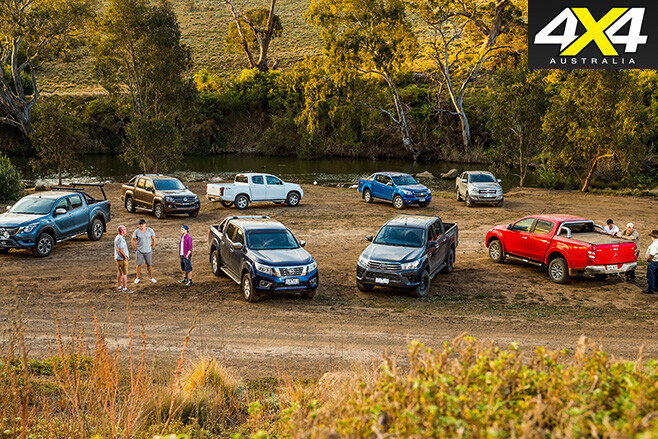
The January edition of 4X4 Australia will be on magazine stands from December 10 and it’ll come with a bonus LowRange DVD. Inside the mag we compare and rank eight of Australia’s best-selling 4×4 dual-cab utes – including the new Hilux!
We also look at a custom 6×6, Hemi V8 Hellhog; a land-eating Unimog; and the history of the Land Rover.
You can grab your copy of 4X4 Australia from newsagents or get it early by subscribing to 4X4 Australia in electronic or print format.
In the meantime, here’s more of what’s inside:
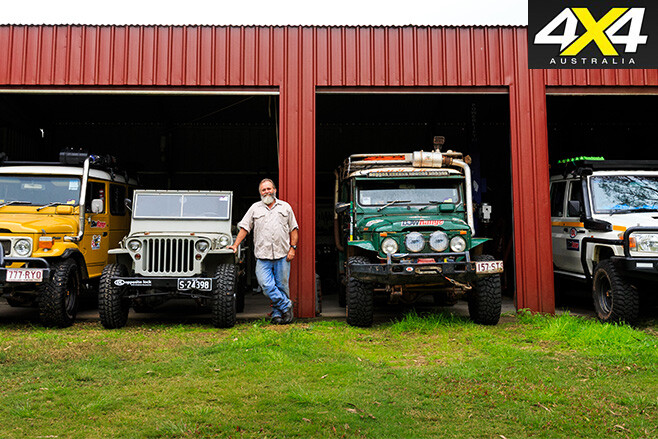
ROOTHY’S RIGS The only thing Roothy has more of than stories to tell is gear in his shed. We peak inside.
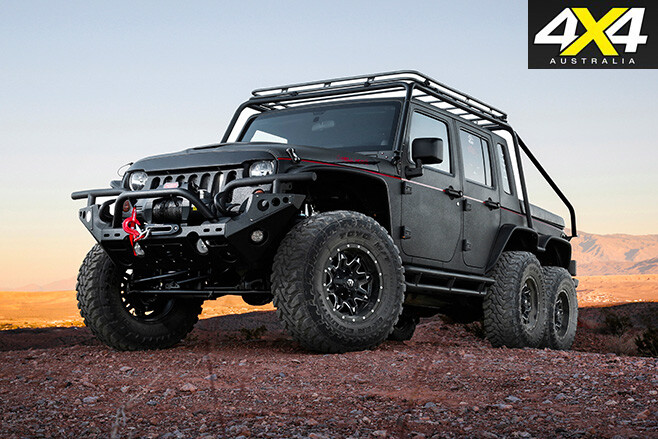
WILD BOAR If you look at Wild Boar Off-Road’s 562kW supercharged Hemi V8-powered 6×6 Wrangler and need to ask ‘why?’, then you haven’t thought about it hard enough.
BATTLE CABS Toyota’s eighth-generation Hilux is here and it means business. But how does it compare with its rivals? We test it alongside Australia’s top-selling dual-cab utes.
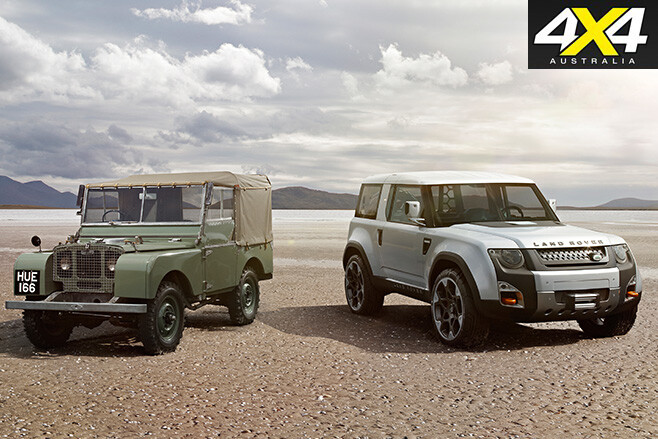
LAND ROVER As Land Rover Defender production draws to a close, our resident Landiphile, Dean Mellor, looks back on an amazing story that began 67 years ago.
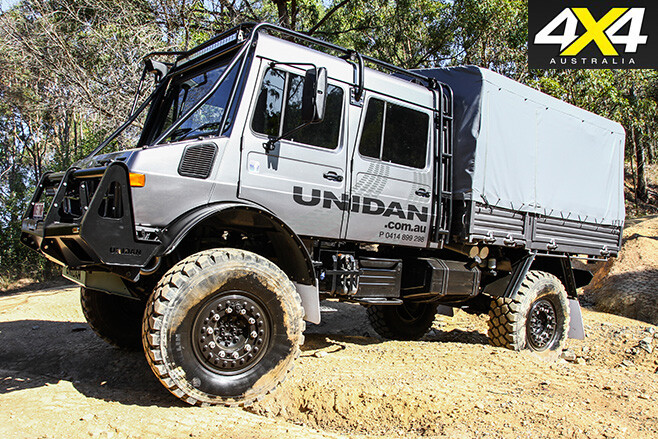
PHAT CAT Cut-and-shut cabin, raised roof, custom bar work and go-fast engine modifications – this Mog stands taller than most.
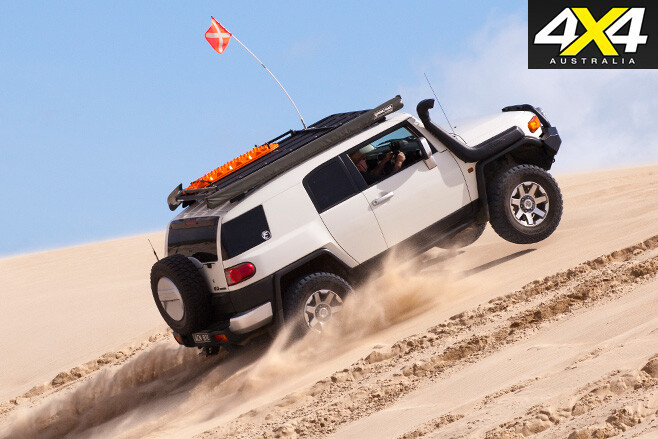
DUNE HOONS The Portland Coast Park is the only place in Victoria where you can legally drive coastal sand dunes to your heart’s content.
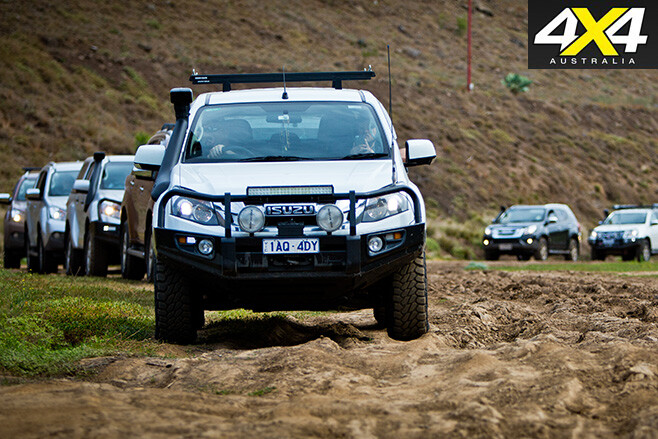
HUMBLE PIE Isuzu’s utes are basic beasts – but with the right attitude, and training from the guys at the Isuzu I-Venture Club, almost anyone can take these 4x4s on the rough stuff.
ISLAND FEVER Infamous as Queensland’s least tourist-friendly island, Moreton Island has more to offer than you might think – from clean, quiet beaches to views to die for.
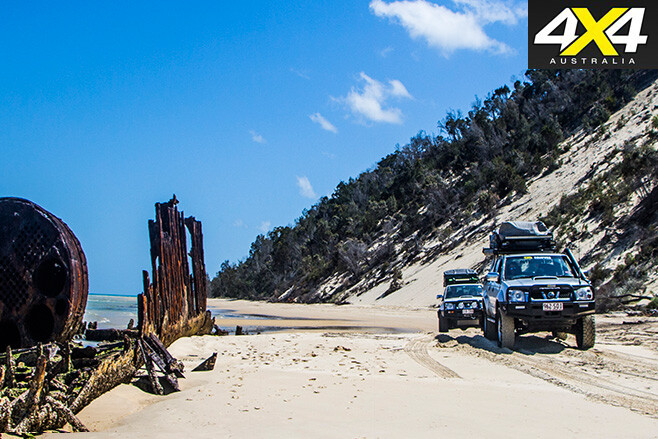
MAD BASTARDS The Outback Challenge has changed a lot over the years, but one thing remains the same for its loyal following: it is hard yakka!

EXPLORE: COORONG, SA Check out lagoon hopping and wetland exploration along South Australia’s south-east coast.

4X4 RECOVERY GUIDE: PART ONE 4X4 Australia has kicked off a series of tried and true vehicle recovery techniques to keep you safe and on-track.
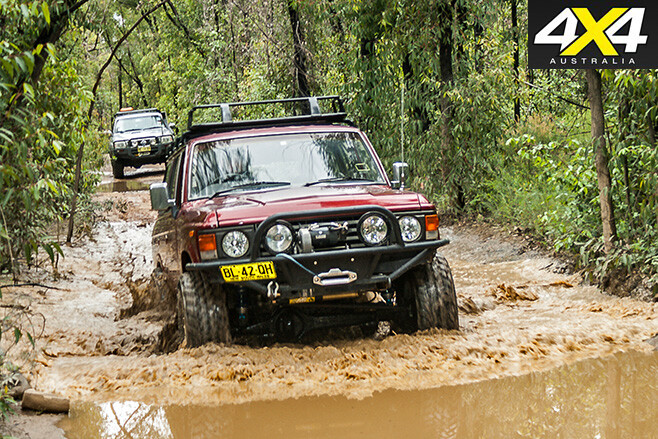
10 STEPS TO SAFE SAND DRIVING Follow these 10 simple steps to ensure you have a great time when you’re out on the sand next.
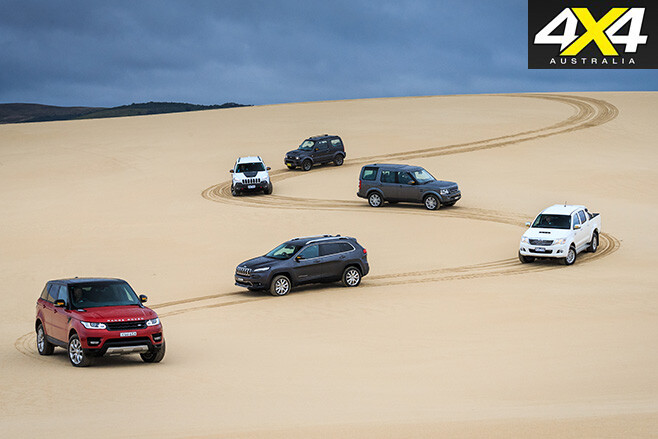
LOADED LUX GIVEAWAY In the third part of our Loaded Lux Giveaway, our Hilux project car gets new dancing shoes.
THE REST As always, the mag also has the latest news and events, gear reviews, stats and figures, as well as columns by the industry’s most respected names.
Grab your copy of 4X4 Australia from newsagents or get it early by subscribing to 4X4 Australia in electronic or print format.
Mitsubishi’s new Pajero Sport replaces the Challenger and, despite the new-for-Australia name, it shares nothing with its bigger brother Pajero.
That’s not necessarily a bad thing.
The Sport is available in three models – GLX, GLS and Exceed – and like the two Aussie-market Challenger series before it, they’re five seaters.
Prices for the three models are $45,000, $48,500 and $52,750, which is appealing considering the high level of kit included. However, buyers need to keep in mind that those prices are for five-seater vehicles not seven-seaters – as offered by other brands.
Driveline and chassis
Like the two generations of Challenger before it, the Pajero Sport is built on the chassis of the Triton tradie truck rather than the Pajero (although, if you really want to dig deep into the vehicle’s heritage, the 1990s’ Triton, Challenger and Pajero all rolled on the same platform). Like similar vehicles (Ford Everest, Colorado 7, Isuzu MU-X, Toyota Fortuner), the Pajero Sport runs coil rear springs with its beam rear axle; in this case they’re set up with a three-link system: a simple, durable and compact layout used by Mitsubishi since the days of the late 1980s’ Pajero V6. The front retains the coil-sprung upper and lower A-arm layout of the Triton/Challenger but has softer springs for its passenger-carrying role.
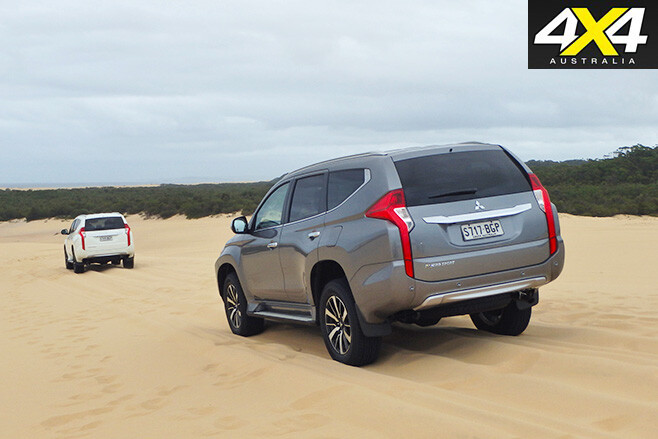
The new Sport debuts an AISAN eight-speed automatic transmission behind Mitsubishi’s excellent new MIVEC (variable-cam timed) 2.4-litre turbodiesel launched in the 2015 Triton. It offers 133kW at 3500rpm and 430Nm.
Mitsubishi’s versatile and well-respected Super Select system allows full-time on-road four-wheel drive operation as well as the rear-wheel-drive ability of a part-time 4WD system. The oily bits are backed up by a full suite of chassis electronics, too, and new for Mitsubishi are push-button modes to tune the chassis for the terrain. The settings are Gravel (the default setting when 4WD is selected), Mud/Snow and Rock. There’s also a hill-descent control.
The Exceed does have a rear diff lock, but – with excellent traction control offered – it is hardly needed (the traction control is disabled when the diff lock is switched on – why do manufacturers do this?).
Interior
Mitsubishi sales people will tactfully take you by the elbow and guide you toward a Pajero if you need seven seats and genuine off-road ability, because the Sport, like Challenger before it, is a five-seater. However, the new model is designed for three-row seating and Mitsubishi will be making a seven-seater announcement soon.
Hopefully, it will be an option pack rather than a compulsory purchase as, for many potential buyers (honeymooners, silver gypsies and families), the time-honoured wagon layout, with lots of space behind the rear seats, is terrific for carrying camping and sporting gear. Mitsubishi offers a cargo barrier.
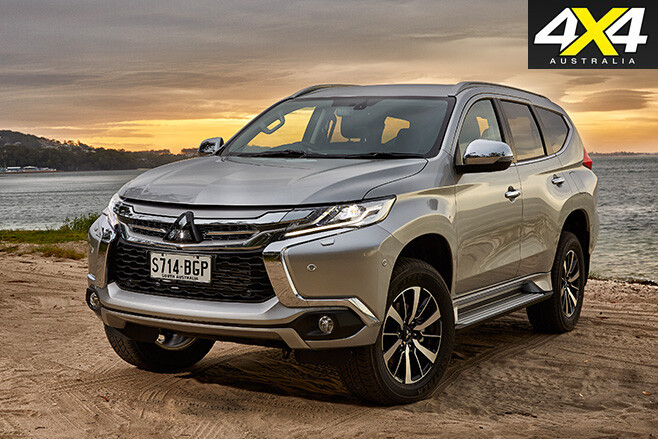
The rear seats are split 2/1 and tumble forward easily using one lever per side. People intent on long-term touring will be happy the seats appear to easily unbolt to provide a reasonably flat load area for a tourer fit-out. With the dark trim and privacy glass, the Sport feels a little narrower than most wagons in the back seat and gangly teens will find there’s only just room to poke toes under the front seats.
Up front, the centre console is quite high. Of course, Mitsubishi explains this adds a premium feel to the cabin, but some of us find the proximity of its hard edges a little intrusive; the door pulls, too, are a little sharp, although the armrests are soft-touch. Trim is cloth on the GLX and leather on the GLS and Exceed, and front seats feature three-densities of foam for comfort; the foam seems to work better under the leather than cloth.
The driver’s seat is height-adjustable, but there’s no lumbar support. The steering wheel is leather in all models (adjustable for reach and rake) and the instrumentation is clear and concise – including the operation of the single- (GLX) and dual-zone climate control system.
The Exceed has blind spot warning, multi-around monitoring and unintended acceleration mitigation – this is all good because the swept-up rear-side window line results in a blind spot big enough to hide a Commodore.
On-road
Our first test drive in the New South Wales, Port Stephens area – the Wategans Forest and back to Sydney – included a good dose of freeway and a smaller dose of bumpy back roads but, unfortunately, not a real lot of open gravel, which will be the natural weekend environment for wagons such as this. From the feel of the Sport on-road and on some slower fire tracks, we reckon it will be more Toyota Prado, in the gravel-handling stakes, than its rally-bred Pajero brother; it won’t be quite as confident, with the ride/handling compromise skewed towards ride.
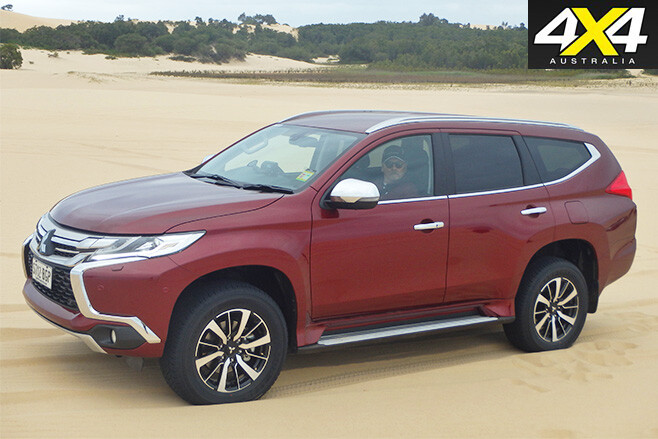
The engine/trans combo is delightful. Some driveline combos with too many cogs shift and hunt relentlessly, even on the freeway. But this one seeks and holds top gear by 80km/h and doesn’t deviate from its locked-in-top 1600-ish revs unless it’s given a shove from the right foot or – of course – the steering column paddles (or +/- shifter). With the vehicle unloaded, except for two occupants, pedal-to the-metal reveals an impressive mid-range sprint that will rub off as good towing performance.
That unfussed driveline, Mitsubishi’s use of larger rubber body mounts – and the noticeably pillowy suspension that doesn’t quite live up to the expectation of the Sport badge – contributes to an overall sense of hush and quietness in the cabin that is unfortunately disturbed at about 100km/h by more wind noise than we’d expect from an all-new design.
Mitsubishi also claims best-in-class fuel economy of 8.0 litres combined consumption, although we couldn’t test it for ourselves yet (that will come later).
Off-road
Unusually for a vehicle launch, Mitsubishi let us loose in the Sport before explaining the new vehicle to us. In fact, with the blessing and supervision of the traditional owners, Mitsubishi let us loose on the sand of the Worimi Conservation Lands, which really highlighted the willingness and cog-for-all-occasions character of the trans/engine.
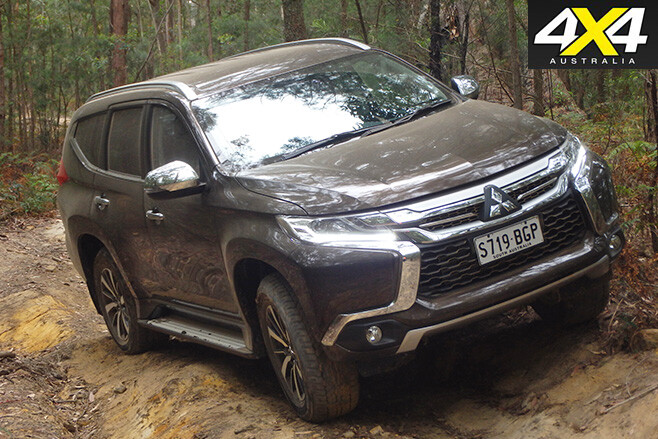
The Sport has good ground clearance – plus approach, ramp-over and departure angles – so it’s no surprise it’s a competent and confident off-roader in rougher stuff, too.
As mentioned, the Exceed has a rear diff lock, but our off-road time was spent in the base GLX, which performed flawlessly: the tracks we drove on – though admittedly short – saw wheels off the ground on several occasions, revealing how smooth and effective the wheel-spin mitigation (traction control) system is.
It’s not mentioned anywhere, but there seems to be a downhill braking strategy – independent of the switchable hill-descent control – that comes into play when descending sand dunes.
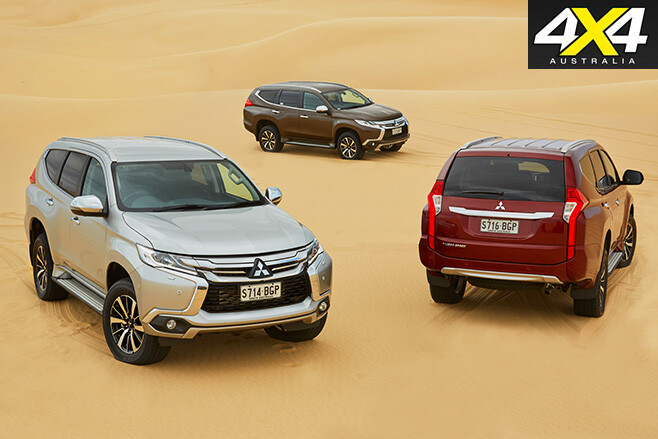
However, we’re not convinced some underbody components will survive gravel rash for too long – there are some components and lines outboard of the chassis rails that will cop a spray from the front wheels; time will tell.
Our test vehicles were wearing Mitsubishi’s accessory under-vehicle protection, which, while a nice idea, is more of an early warning system than the bush-tough aftermarket stuff many off-road adventurers are familiar with. There are single recovery points (as well as export/tie-down loops) front and rear.
Those small comments aside, the Pajero Sport looks like being a winner for Mitsubishi and a terrific, if slightly smaller, choice for buyers in the fast-simmering family 4WD market.