
Jonathan Ward’s Californian-based company ICON 4×4 has made a name for re-engineering legendary off-roaders, including Ford Broncos and Toyota FJs.
Vote for Jonathon’s FJ44 to decide this year’s Custom 4×4 of the Year.
This FJ44, called the Petersen Special, is its latest and most advanced build so far, put together by Jonathan to celebrate both the delivery of the 100th ICON vehicle and the reopening of downtown Los Angeles’ legendary Petersen Museum after its complete rebuild and overhaul.
A centre for vehicle history since 1994, the Petersen Museum houses some of the most historically important and culturally significant cars ever made, and gives an important insight into the various niches and genres that make up the whole of car culture. Still located on Wilshire Boulevarde in Miracle Mile, the museum was recently reopened after the largest renovation to the building since it was constructed as a department store back in 1962.
The ICON FJ44 Petersen Special is another old frame built into a striking modern beast, with a modern 6.2-litre Chevy Gen IV V8 and heavy-duty off-road suspension. But it also has air conditioning, LED lighting, tough powdercoated finishes throughout and many tiny yet stunning detail pieces thanks to Jonathan’s background as an automotive designer.
That’s nothing unusual for an ICON-built vehicle, but the Petersen Special started as an internal project to showcase new engineering and design ideas. The new ideas run from the Sierra Brown powdercoating colour through to the redesigned buttons and controls in the cabin, as well as an all-new radius arm suspension system that ICON claims improves on-road driving performance.
The redesigned suspension features new Fox Racing 2.5 nitrogen-charged shocks with external reservoirs and Eibach springs. There’s a Panhard front linkage and a four-link in the rear, married to Currie Anti-Rock swaybars, heavy-duty Johnny joints and equal-length two-inch steel control arms.
The build starts as per all ICON Reformers – FJs and Broncos – with a new body stamped out of heavy-duty 5052 H32 aluminium, saving time that would otherwise be spent fixing rust or other maladies that normally appear on 60-year-old tin work.
Jonathan has the stretched extra-long-wheelbase bodies built and finished by hand, with the bonnet a brand-spanking-new OEM Toyota-stamped steel piece, and the grille a vintage original part.
ICON off-roaders are normally finished in a high-tech Teflon-polyester hybrid Cardinal powdercoated finish but the Petersen Special introduces the new Sierra Brown colour to the company’s palette of hues.
The Cardinal powdercoating was originally conceived for exterior industrial architectural uses before ICON refined it for automotive use. The ICON craftsmen treat the underside of the body, ’guards and inner floor surfaces in a heat-cured polyurea coating for reduction of vibration and heat transfer.
As with all ICON builds, the original frame has been binned in favour of a CAD-designed custom chassis by Art Morrison, featuring boxed and mandrel-bent mild steel rails. This is far stronger than the original frame and ICON also has had all accessory mounts precision laser cut to exact dimensions, meaning everything bolts together with far greater ease than old 1960s parts.
ICON not only uses jig tables for assembly, but also chassis-specific ones. This keeps every FJ, Bronco, Derelict or Reformer aligned and in perfect position, and it makes it far easier to fit the emissions-certified 420hp, 6.2-litre LS3 GM e-Rod crate motor, along with a custom Griffin aluminium radiator and twin thermos fans.
Legislative changes in America allow small-volume houses like ICON to bypass the strict emissions controls applied to the major manufacturers, which means the optional Magnusson supercharger can be fully road legal. With a 0-100km/h time of 5.9 seconds, the supercharged Petersen Special is no slouch.
A hand-built half-million-dollar FJ Land Cruiser needs the fit and finish expected of any exotic vehicle from Bentley or Mercedes-Benz, even if the FJ44 is an off-road vehicle. A modern electronically controlled 4L65 Hydra-Matic auto got the nod in the Petersen Special, and is optional on regular ICON builds.
It’s a heavy-duty but highly refined transmission that’s available in both rear-drive and four-wheel-drive outputs. It features adaptive shift electronic controls as well as electronically controlled capacity clutch (ECCC) technology to provide smooth shifting, while the 4L65 also reads signals from the engine ECU to prevent hunting between gears when climbing hills.
It has been paired to an Advance Adapters Atlas II transfer case to allow part-time 4×4 use, making for excellent on-road manners with tough-as-nails off-road ability. The Atlas II transfer case has a 3.0:1 low-range and 1:1 high-range transfer case, with an optional 5.0:1 low range. Twin-stick controls allow individual front and rear axle manipulation for maximum control in tricky ruts or riverbeds.
The diffs are custom built, using 0.75-tonne to 1.0-tonne Dynatrac Dana 60/44-based axle assemblies filled with 4.09-ratio final drives. ICON gives the choice of a late-model VW 2.0-litre diesel four cylinder or a Gen-IV Chevy petrol V8. This means driveshafts that are capable of handling plenty of torque and off-road abuse are required; General Driveshafts units are paired with heavy-duty 1310 units.
ARB air lockers and the matching on-board compressor system are optional and, given Jonathan ticked all the boxes for the Petersen Special, they’ve been added to the new build.
Wheels can make or break vehicles, so cast aluminium 18×8-inch rollers come standard on ICON FJs, while the Petersen Special wears new CNC-machined units wrapped in BFG 285/70 all-terrain rubber. They hide the optional Brembo six-piston and four-piston brake package featuring 355mm rotors up front and 345mm rotors on the rear.
Jonathan takes pride in his vehicles’ ability to be used off-road, so the 75L fuel tank has been boxed in by the chassis and fitted with a steel skidplate to protect it on trails. The tank itself has been powdercoated black, as are all fittings on the FJ44, while serviceability is as good as factory, with an in-tank sock filter and a large Bosch filter mounted on the chassis rail.
The waterproof cabin features a Polyurea floor surface coating and removable rubber plugs for drainage, while the seven (heated) seats have been covered in Chilewich inserts to match the floor mats. Dakota Digital made custom electronic gauges to be housed within a redesigned cluster.
This replicates an old-school style while ensuring modern reliability, as does the custom wiring loom with MIL-spec connectors, isolated engine harness, LED lighting throughout and 140A single-wire alternator.
As part of an update to the ICON FJ range, Jonathan revised the HVAC controls with closable floor and face vents, a demister and fourth-generation Vintage Air a/c. They’re trimmed either with black anodised aircraft-grade or jewellery-grade aluminium that’s enamel-coated. ICON has also included warning lights for turn signals, high-beam, parking brake, the ‘check engine’ feature, and 4×4 system lights.
Both 12-volt and USB-style marine-rated power ports live in a centre console using a locking system rated for gun safes! Special touches like this abound through the build, right down to the heavy-duty stainless-steel latches allowing the windscreen to fold flat for better vision and clearance.
As part of celebrating the reopened Petersen Museum, the Petersen Special has been put on display for six months. Once it has done its time on display, it will be up for sale, like all other ICON vehicles. However, if you have to ask the price, it’s unlikely you’ll be able to afford it, given even second-hand ICONs go for more than US$300,000.
Built to enjoy
You might think a company that’s invested US$350,000 into building a show vehicle would keep it wrapped up. However, ICON was only too happy to take it out to the desert for our photo session straight after the SEMA show. Then a week later this photo popped up.
ICON 4×4 CEO Jonathan Ward explains: “We had displayed the truck at SEMA and completed studio shots of it in high detail. Next step was to take it off-road. We did extensive rock crawling and were very pleased with the performance and all of our changes. As the sunset approached, we decided to try to get some glory shots of the vehicle turning at speed.
We found a flat area with a small oval track with shoulders on the turns. Got some great shots, and then the photographer asked me to do it a bit faster and let it slide through the turn. So we disengaged 4×4, and went for it.
I miss-factored the extra power from the supercharged motor, came in to the turn a bit too hot, and when it started to slide, the rear of the vehicle went up on the berm of the turn and dug in, resulting in me putting it down on its side. Other than some road rash and a bruised ego, all was okay!”
Vote for Jonathon’s FJ44 to decide this year’s Custom 4×4 of the Year.
Back in the mid-1980s, so-called ‘flying cars’ were being talked up as the way of the future.
They were going to make roads obsolete and traffic jams a thing of the past. 30 years later we are still waiting for them to take off.
Now driverless, or ‘autonomous’, cars are making all the headlines and, if you believe the hype, are about to become commonplace on our roads. A recently released research paper by commercial UK ‘think tank’ Juniper Research predicts autonomous cars will be widely adopted by consumers in five years, and in ten years there will be 20 million self-driving cars on the world’s roads.
I guess there’s nothing like positive thinking, but it seems this is very much a pipe dream. Lots of things will stand in the way of the adoption of autonomous cars. Some of these are obvious:
- For people who don’t wish to drive, there are alternative forms of transport including taxis, buses, trams and trains. Perhaps more significant will be the rise of ride-sharing, phone-app-driven services like Uber, as they provide an easy and convenient way to get about without having to drive yourself or even own a car.
- Autonomous cars won’t be cheap. They will need a whole raft of high-end technology such as radar, cameras and proximity sensors, not to mention sophisticated control software as well as robotics to control the steering, brakes and throttle.
- Conventional vehicles come in myriad types such as sports cars, hatchbacks, sedans, wagons, people movers, vans, utes and four-wheel drives. There is no way that autonomous cars will be offered in such a wide range. They will probably be restricted to small, city runabouts that will potentially satisfy just one segment of the new-car market. That alone will limit their market penetration, at least in the short and middle term.
- Autonomous cars will present a difficult challenge for lawmakers and vehicle insurers. Who is to blame if an autonomous car runs over a pedestrian? Will it fall back on the carmaker, the car owner or the software developer? If an autonomous car is faced with the dilemma of hitting a pedestrian or veering off to the side and into another car, what decision will it make and who is to blame if it makes the ‘wrong’ decision?
- Driving a car in heavy traffic on a multi-lane expressway, or in wet or slippery conditions, or down a winding and unsealed country road with varying levels of grip, or in any other demanding driving environment requires a driver to make complex and rapid decisions based on experience. This will be difficult to replicate in the central control unit, or ‘brain’, of an autonomous car. Even something as simple as a plastic bag blowing in front of a car, which a human driver will quickly perceive as a non-threat, may trigger hard braking from an autonomous car, potentially causing a rear-end accident. Likewise, when a pedestrian is waiting to cross a road, or is already crossing a road, a human can quickly access whether the pedestrian has seen the vehicle. If a pedestrian is looking the other way, a human will be alert to a potential problem. It’s hard to see how an autonomous car will be able to achieve the same level of sophisticated decision making.
- Autonomous cars will need their central control unit, or ‘brain’, to be 100 per cent reliable and ‘freeze-free’, something that has not been achieved with PCs, laptops, tablets, or even smartphones to date.
- Advocates of autonomous cars claim that they will be able to ‘talk’ to each other to help traffic flow. Nice idea, but only if they all have the same operating system with current updates. And, either way, autonomous cars will always have to share the road with conventional vehicles and put up with the foibles and often inconsistent driving of other road users. Experienced drivers can readily spot an ‘idiot’ driver and give them a wide berth, but will autonomous cars be that savvy?
- Google is currently leading the way in autonomous car development, but it has zilch experience as a carmaker. Moreover, Google cars will rely on Google Maps for navigation, a critical technology for any autonomous car. Google Maps and its associated sat-nav is poor at the best of times. This doesn’t bode well for a Google car being able to find its way, especially away from major population centres.
GOOD In a utopian society, the self-driving car would rid the world of traffic congestion. Who actually believes that’ll happen, though?
BAD RELIABILITY. No matter how good your PC or phone is, sometimes it’s gonna freeze. Same goes for the self-driving car.
Follow The Leader
Many of the technologies that will feature in autonomous cars are already in use and are becoming increasingly common. This includes adaptive cruise control, which automatically limits your vehicle’s speed to the speed of the vehicle in front, and will only allow your chosen ‘cruise’ speed if the lane ahead is clear.
Adaptive cruise control relies on forward-facing radar, also central to the automatic braking systems on many of today’s newer cars. With automatic braking, the car will apply the brakes if it perceives a threat that the driver hasn’t reacted to. Other current technologies that will be used on autonomous cars (but in a different role, given there won’t be a driver to alert) include blind-spot monitoring and lane-departure monitoring.
On current vehicles all of these technologies have some use, but none are perfect and some are even flawed, so there’s some work to do to perfect these basic autonomous vehicle features.
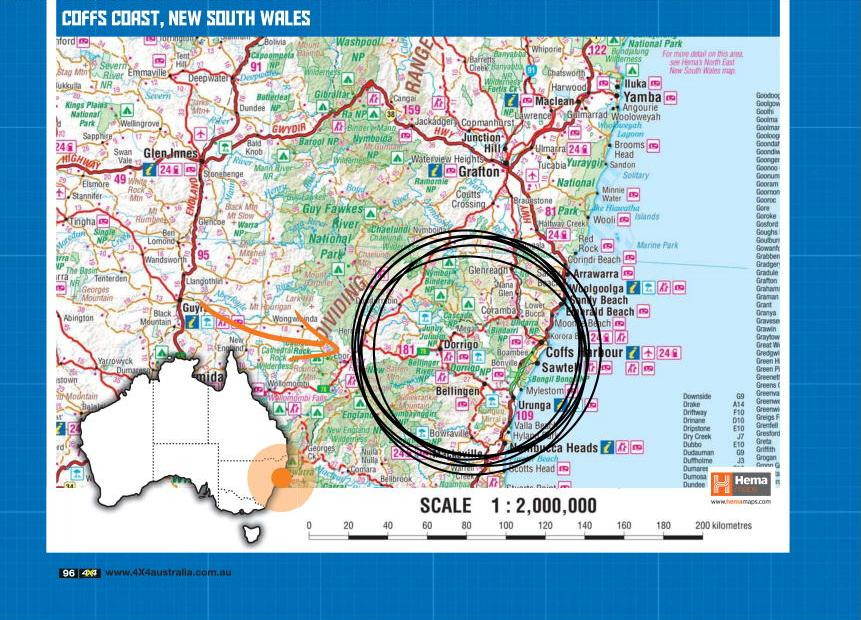
About 80 million years ago the Ebor Volcano erupted and created some of the best fourwheel driving Australia has to offer: the mountain region behind Coffs Harbour.
Here the mountains come closer to the sea than anywhere else on the east coast, and the terrain constantly changes from easy plateaus to sections of extreme four-wheel driving that can push drivers and their rigs to the limits.
From pristine rainforest pockets and lantana-infested areas to heavily timbered oldgrowth sections with some of the oldest and hardest timber in New South Wales, there are many features that make the Coffs Coast’s trails special. With ocean views, you can pick your way through huge gums along the ridges, while remaining close to the city centre’s creature comforts.
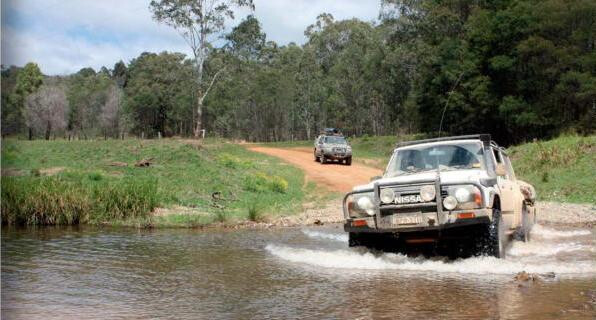
There is no need to have a fully specced-out comp truck to enjoy the Coffs hinterland, as there are enough tracks, from easy to mild, for any explorer.
But care still needs to be taken in the wetter months or even when storms are about, as track conditions can turn nasty, fast. As with any trip or adventure, preparation and maintenance need to be prioritised, especially because phone and UHF radio signals in the region can be sketchy.
There are many 4×4 workshops and accessories stores located on the Coffs Coast, but it is still best to head to the hills with a plan. Get some local knowledge at a friendly 4×4 shop and grab a handful of maps for an overview of the area. As on any trip, you will need to carry the basic recovery items; a UHF radio is handy, plus correct clothing for the conditions.
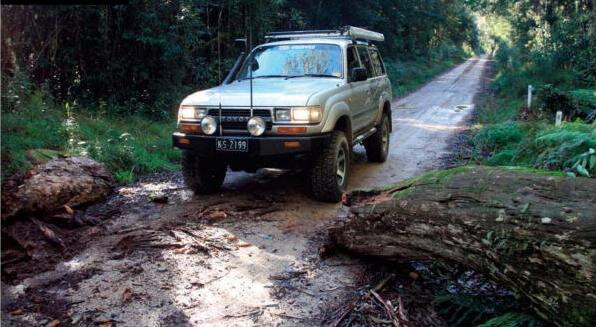
Several tracks are worth mentioning, but, again, you will need to seek local advice, as conditions do change constantly. The Rover Trail hugs the coast from Coffs north for several kilometres to give you coastal views towards the Solitary Islands. Another great one to tackle is Morbid Trail, which heads upwards towards Mount Coramba, the highest point on the Coffs Coast, giving you views across rugged terrain as well as ocean views.
Situated 6km from the heart of Coffs, this mountain is 700m above sea level, and with track names such as Rocky, Commando, Dump and Spur, you will need to come prepared. Or you could just head to Friday Creek, where you can spend hours relaxing in crystal-clear water filtered down from the hinterland – in summer the water is very refreshing.
The wilder tracks on the Coffs Coast demand respect. These tracks can break even the hardest and meanest 4x4s and drivers. But if the tracks still aren’t enough fun for you, there are activities such as sky diving, white water rafting on the Nymboida River, chasing elusive marlin off the coast, mountain bike riding in the local forests, scuba diving around the Solitary Islands, whale watching, on-road and off-road motorcycling, and even camel riding on the beach.
CAMPING AND ACTIVITIES From bush camps with river views to beach frontage sites where you can lose yourself for days, the region has some fantastic caravan parks for those who like to be spoilt with pools, shopping centres and local attractions.
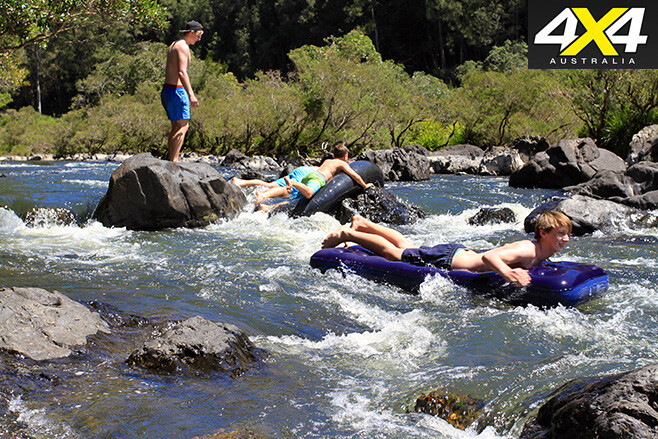
Nymboida, 60km west of Coffs, has some of the best river frontage camping spots you can find. Camp locations have picturesque views beside the mighty Nymboida River, where rafting companies begin trips downstream to tackle grade 4-5 rapids. The camp spots, which include grassed areas, also grant travellers access to pit toilets.
To camp out here, though, you will need to be selfsufficient, as there are no shops to duck back to and there is no phone reception. Nymboida is true gorge country, and although it’s only about two hours from the coast, travellers to the region may not see anyone else for days.
Keep an eye on weather conditions here, too, as storms in other gorge areas may cause the river to rise quickly.
The Coffs Coast region also includes the rainforest escarpments of Dorrigo, the golden beaches of Hungry Head and Urunga in the south, the Red Rock in the north and the blue waters of the Solitary Islands Marine Park. It boasts a temperate climate all year and has many activities and attractions.
It’s also one of those places where the Great Dividing Range meets the sea, allowing for a host of national parks and reserves: there are, in fact, 11 national parks, 14 nature reserves, 84,000 hectares of World Heritage Area, several Aboriginal sites and a regional park, 37 state forests, 90km of beach, and 71,100 hectares of Solitary Islands Marine Park.
You can also leave the bush behind for a while to explore other wonders of the Coffs Coast if the weather turns ugly or the missus wants to shop. From jetty jumping and cycling around town to eating out at first-class restaurants, there are many options.
The City of Coffs Harbour itself has several major shopping centres, fuel stops and mechanical workshops.
To slow down, visit Dorrigo, where there are several walks through World Heritage national parks. Or you can spend time angling for a variety of species of fish in one of many local rivers.
The hub of the Coffs Coast revolves around the historic Coffs Harbour jetty. The jetty juts out several hundred metres past beaches and the Coffs marina, where an evening stroll should definitely be on the to-do list when visiting the area.
For history buffs, there is a host of places to visit around the Coffs Coast, including the WWII gun bunkers, the old Glenreagh to Dorrigo railway line, which has a handful of sidings still standing, and about 200 registered gold mines that still can be found today.
There are several old gold mining villages, and don’t forgot the old loggers’ stumps that still litter the bush – you can see in the stumps the plank cutouts where old-timers stood with axes and saws up to 15 feet above the ground. The old mill at Cascade NP in the hinterland is always a hit with the kids, too, and for those who don’t scare too easily, the heritage listed Coffs Harbour Cemetery is worth a look.
If you love the ocean, you can camp so close to the water that you’ll breathe salt-sea air as you sleep. Situated just 40 minutes north of Coffs in the Yuraygir NP, Pebbly Beach has been earmarked as one of the top campsites on the eastern seaboard of NSW.
Timing is paramount here, as you cross a tidal creek to access the pristine campgrounds after a drive north along the coastline. Facilities include basic pit toilets, so again being selfsufficient is a must for those on long stays.
Camping on the Coffs Coast is suitable all year round, but be prepared for cool nights in winter and warm summer days. Cool nights mean fires are possible at some locations, while the hot summer days mean swimming in crystal-clear waterways, or riding the waves along the coastline. For those who need extra camping gear or just plain forgot something, there are several large camping stores in the Coffs area.
Perhaps the best thing about these iconic camping locations is they are available to those with tents, swags or camper trailers. National Parks and Wildlife Service (NPWS) looks after several camping locations here, and with the minimum fee paid, there are benefits such as the pit toilets, clean sites and even firewood.
TRAVEL INFO
WHERE Coffs Harbour is found midway between Sydney and Brisbane, allowing easy access by road, rail or air. It’s an easy day’s drive from either Sydney (550 km) or Brisbane (400km).
CAMPING Standard NPWS fees apply to camping areas. Most camp areas offer pit toilets, fire pits and National Parks often provides timber offcuts. Caravan park fees often change due to holiday peak times.
FACILITIES Available are standard National Parks and Wildlife Service (NPWS) facilities such as pit toilets and fire pits, which are clearly visible at most campsites. Camping is free in any state forest but there are no facilities. Caravan parks offer full amenities.
TRIP STANDARD Your level of experience and how your truck is set up should determine the tracks you tackle. Tracks range from extreme to easy. Some tracks have stunning coastal views while others traverse ridges and enter gullies where there are pristine waterways.
MAPS AND GUIDES Local state forest maps, guides and a 4×4 guide are available from 4WD & Ute Extras, Coffs Harbour.
PERMITS No permits are required to drive on 4×4-friendly beaches on the Coffs Coast or in the state forest area surrounding Coffs Harbour. Standard fees apply to designated NPWS camping areas.
CONTACTS AND INFORMATION NPWS: www.nationalparks.nsw.gov.au 4WD & Ute Extras, Coffs Harbour: 02 66 516 461
We hadn’t given them much thought for several years, but then we saw one on a Troopy in Papua New Guinea and remembered just how great they were.
We are talking about windscreen sun visors. Remember them? They have graced the windscreens of many vehicles, including the Holden Kingswood, and you wouldn’t have been seen beyond the ‘black stump’ without one ‘back in the day’.
We were struck with nostalgia at the sight of one on a Land Cruiser Troopy negotiating the battlefields of Buna at the end of the Kokoda Track, and we knew we had to have one for the Hilux. But when we got back to Australia, we were surprised that Toyota only offered sun visors as an optional factory extra for the Land Cruiser 70 Series. And so the web search began.
Solid colour-matched models are available as an aftermarket accessory for the Hilux via a few manufacturers, but the price range varies from $600 to $800.
Searching on, we found Sunshade Products at Roof Rack World in Adelaide. It manufactures and supplies a lightweight aluminium mesh visor for medium and large trucks, as well most four-wheel drive vehicles.
For a Hilux, the standard visor costs $275 with a further $55 for fitment. With an additional cost, custom fits are available to accommodate snorkels. All visor models have stainless-steel mounts, aluminium mesh and piping.
After fitting, the utility of the visor was immediately evident. The instrumentation on the dashboard – and the various aftermarket LCD displays (GPS, tyre pressure gauge, reversing camera, etc.) were far easier to see. The sunlight striking the driver and passenger was dappled and diffused. The cabin temperature and glare were markedly reduced, too.
The only downside was a slight hum from the airflow, which would vary with each model and application.
Rated WE SAY: Australian-made, old-school and high-value. RRP: From $275 (make/model dependent) AVAILABLE FROM: www.roofrackworld.com.au
Most Australian boat fishers spend the bulk of their time on estuaries, rivers, bays and harbours.
A good number also regularly visit freshwater lakes or man-made dams. As a result, one of the most popular classes of fishing vessel sold in this country is the ‘semi-flat water’ or estuary rig.
Typically, the hulls of these vessels are between 3.7m and 5.2m in length, with their outboards producing between 15 and 50hp – although, in recent years, there’s been a noticeable shift to more powerful donks, and it’s no longer rare to see pocket-rockets loosely based on the American ‘bass boat’ concept, sporting powerplants with ratings from 60 to 150hp.
My idea of the perfect estuary/freshwater rig is an open boat with a centre or side console, although there’s much to be said for tiller-steer set-ups, especially at the smaller end of the size range under discussion here. Tiller steering opens up a lot of additional workspace in a boat, and that’s important.
My dream estuary rig would have a reasonably modest V-hull up front, transitioning to a flat underside amidships. It should draw no more than 20 to 30cm of water and be stable at rest, even with two adult anglers (three or even four in larger vessels) moving about as they stand and cast.
Naturally, the trade-offs in such a fishing-friendly hull design include diminished sea-handling capabilities. I accept that my dream rig may bang a bit in a decent chop (especially if built from alloy) and it’d be rather wet in a quartering sea with any sort of breeze. But I’d carry a decent set of wet-weather gear for the latter scenario.
Without question, my dream rig would run a bow-mounted electric motor; ideally one that boasts a wireless remote control and has GPS-actuated ‘spot lock’ or ‘anchor’ capabilities. There would be a powerful sounder/GPS combo unit on the console or back by the tiller steer position, and there would be a smaller unit up in the bow, where it’s easily visible while casting.
As a dedicated lure and fly fisher, I place great store in having a generous casting deck located in the bow of my estuary/freshwater boat. Ideally, this flat deck would be set as high above the water as practical, taking into consideration stability and safety issues. Every extra centimetre of elevation here adds significantly to the effectiveness of such a platform, increasing an angler’s visibility and casting range.
Having a smaller but functional casting deck in the stern of the vessel is also extremely handy, both for a second or third angler and also on those occasions when it works best to fish over the transom (such as is often the case when using your bow-mounted electric motor’s ‘anchor’ or ‘spot lock’ function to hold the boat in position against tide, current or wind).
Something my dream boat won’t have is a permanent canopy or fixed Bimini top. Sure, these niceties can be great for escaping the weather (both rain and sun), but in any boat less than 5.5m in length, they’re also guaranteed to adversely affect your casting, inhibit your vision and reduce the vessel’s ability to navigate tight country. If you insist on having a canopy of some sort (this may be desirable if the rig is going to double as a family fun boat), make sure it’s easily removable, or able to be stowed without impacting the vessel’s fishing capacity.
Abundant under-deck storage is highly desirable, as is an enclosed or partly enclosed rod locker capable of stashing half-a-dozen spare rod and reel outfits up to at least 2.2m in length.
If you’re starting to get the idea that my dream estuary rig isn’t the average 4.5m runabout straight off the showroom floor, then you’re right. Rigs of this ilk are relatively rare. A year or two back at the Sydney International Boat Show, I scoured every hall from end to end and found only a handful of set-ups I’d have been happy to take as-is for this role. Incredibly, just two of them were made with my preferred hull material of fibreglass, and only one of those was Aussie-made.
When you consider the thousands of rigs and tens of millions of dollars’ worth of toys on display at a show of that size, it’s staggering so few tick all the boxes in such a popular style of fishing. Perhaps it’s time a few more local boat builders began talking to keen anglers and actually listening to their responses?
When it comes to bush adventure, there’s nothing quite like driving over untravelled country – not to ‘bush bash’ it, but to open up alternative routes for people who’ve already driven Australia’s major tracks.
The Hay River Track was once a set of tyre tracks running north from Poeppel Corner on the main Simpson Desert crossing to Jervois on the Plenty Highway. This track was blazed by Aboriginal elder, the late Lindsay Bookie, and Jol Fleming, and is now a popular trip with bush adventurers, and a source of income, via permits and camping fees, for the Aboriginal people at the Bookie Family’s property, Batton Hill.
This new track, which I think should be called Jol’s Track, will also contribute to the Bookie Family funds, because visitors will drive via the Hay River Track and Batton Hill to access it.
At this early stage of development the track is permit-only, sourced from Jol Fleming’s Direct 4WD Awareness business in Alice Springs. The permit covers transit through Aboriginal Lands and also includes through-travel access to the Bush Heritage-owned property of Ethabuka, located north-west of Bedourie.
Bush Heritage is an organisation dedicated to protecting the natural environment, by acquiring and preserving properties that have high conservation value or environmental significance.
Ethabuka is a haven for desert wildlife and is home to a wetland system of national significance, brimming with shrimp, fish and waterbirds (following good rains). It also has one of the richest lists of reptile species in Australia, including Australia’s largest goanna, the perentie.
At the request of the Bookie Family and the Bush Heritage organisation, the initial trips will be tag-alongs, run by Jol Fleming.
The Hay River to Bedourie Track runs east from the Hay River Track, close to the turnoff to Lake Caroline. The initial tag-along groups will meet up at Jervois, allowing access on the Plenty Highway via Alice Springs or Boulia. They’ll then head south-east, on the northern section of the Hay River Track, to Batton Hill.
Camping there is excellent, with flushing loos, donkey-fired hot showers, fire pits and even a wood-fired oven. From there, the convoy will head south and cross the Hay River’s sandy watercourse, before visiting the dry bed of Lake Caroline to camp the night on a firm claypan.
The starting point of Jol’s Track is on the eastern side of the Hay River, where the new adventure begins. As with the Madigan Line, there has been no official track construction, so drivers will follow our 2015 tyre tracks through low scrub and over spinifex humps. Another similarity with the Madigan Line is that the dunes have much steeper eastern faces than their western sides.
The track traverses vegetated dunes and swales that gradually increase in size as the track nears the Queensland border. The permit conditions specify no deviations from the track and no deviations from graded private property tracks, other than campsite access. On the inaugural trip, we found great Gidgee campsites close to our tyre tracks so there was no need to stray.
There are no significant landmarks on this trip, but the enjoyment comes from travelling through desert country that has probably never been traversed by anyone. Driving through such country is tough on vehicle suspensions, because much of the route is through spinifex country. Negotiating grass mounds is a lumpy business that uses full suspension travel. One of our vehicles had a spring breakage and a cracked bracket that required some bush-welding attention.
Key GPS points along the route are the national park marker post at the Northern Territory-Queensland border and the east-west fence line on Ethabuka Station.
The dunes on Ethabuka are high, but progress is eased by the fact that these fence line tracks are graded regularly.
Needless to say, this track is remote and there are no water sources or services between Jervois on the Plenty Highway and Bedourie.
Most diesel four-wheel drives should manage the Jervois-Bedourie trek on one and a half tanks of fuel, but extra capacity is wise. Petrol vehicles use much more fuel in sandy conditions, so double tank capacity is essential.
Jervois sells fuel and is also your last chance for an ice-cream until Bedourie some five to six days later.For more information on Jol’s Track or to book your permits, go to www.direct4wd.com.au or call Jol Fleming on (08) 8952 3359
Diamantina National Park
Diamantina NP covers 5000km² of Queensland’s channel country. The park encompasses weathered sandstone ranges, floodplains, expanses of Mitchell grass, claypans and sand dunes.
The land, a former grazing property called Diamantina Lakes, was sold to the Queensland Government in 1992. The property is well-sited alongside one of two permanent waterholes created by the ‘Diamantina Gates’ – two gaps at the junction of the Goyder and Hamilton ranges – that concentrate the Diamantina channels into narrow streams, running between the low limestone hills.
The narrowing is clearly visible from ‘Janet’s Leap’, a vantage spot above the river. It is so named because, at the handing over of the Diamantina Lakes Station, one of the onlookers said: “Janet Holmes à Court might as well jump off the cliff as sell the property to National Parks.” She didn’t jump and we all can appreciate the results of the transfer.
A visit to the park properly begins at the old homestead, at the Ranger’s Headquarters. Hunters Gorge campsite has a deep waterhole and sits on the Diamantina, and the other site at Gum Waterhole is on Whistling Duck Creek.
Shady campsites behind waterfront coolabahs let campers witness a display of birdlife unexpected in such a remote region. Kings of the waterhole are undoubtedly the pelicans that ‘sail’ up and down the water courses, taking time off to fish and to squabble with one another. Cormorants, ducks and swamphens take their chances, fishing beside the much larger pelicans. The waterhole trees are home to thousands of birds, with the noisiest being corellas and galahs.
Bedourie
Bedourie, meaning ‘dust storm’, is a small town with a population of 120 people and is situated between Birdsville and Boulia. There’s an artistic representation of a dust storm in Herbert Street.
Set on a sand ridge and surrounded by Eyre Creek, Bedourie is the administrative centre of the Diamantina Shire’s 95,000km².
In the 1880s, Bedourie was a major watering and rest stop for drovers moving cattle from the Northern Territory and north-west Queensland to the customs collection point in Birdsville, 200km south.
The town has an airport, hotel/motel, caravan park, hot spring baths, a restaurant and tavern, general store, wireless internet, fuel services, a police station and a medical clinic.
Attractions around Bedourie include the Vaughan Johnson Lookout, the wetland at Cuttaburra Crossing, Carcory Ruins and Diamantina National Park.
Cuttaburra Crossing, a permanent waterhole and wetland on Eyre Creek, is located between Lake Koolivoo and Lake Machattie and is home to many species of birds. This birdlife can be viewed from a roadside rest and viewing area.
When we first showed you the 4.2tdi-powered VW Amarok from German tuning haus MTM a few years ago, it was set up as more of an on-road performance car with low-profile tyres and stiffer suspension.
For the 2016 Geneva Auto Show, the company set things right with a cranked-up version of the rod that it calls Desert Passion.
Beneath that matte-orange skin lies the VW/Audi group’s sensational V8 diesel engine making a stonking 302kW of power and 930Nm of torque between 2,000 rpm and 3,000 rpm. With raised suspension and Cooper 305/50 ZR 20 under flared ’guards, the tyre choice still isn’t ideal, but at least it should offer some off-road performance.
But who cares with that snarling V8 diesel under the bonnet!
For many years the range of VRS winches have been sold in Australia and around the world with thousands of them proven in the field, providing users with safe and reliable recovery from those often found hazards when out exploring this great country of ours.
This is advertiser content.
Users of the VRS winch range have benefited from the IP68 water & dust rating amongst the highest available in the market. Combine the performance, compact size and the limited lifetime warranty, the VRS product range is great value and is supported by a manufacture with over 40 years 4wd industry.
So it’s no surprise the manufactures of the VRS winch range VRS have now released to market a great range of recovery gear to complement their winches.
VRS had the plan to produce a quality product with improvements to the normal recovery gear, but without high hi price point.
Developed by dedicated 4X4 industry people with decades of real life four wheel driving, the VRS team have taken their many years of 4X4 knowledge and experience to develop and test the new range of VRS recovery gear in the field and in real life situations. Many hundreds of hours were spent in the field to prove the reliability and performance of the range before going to market.
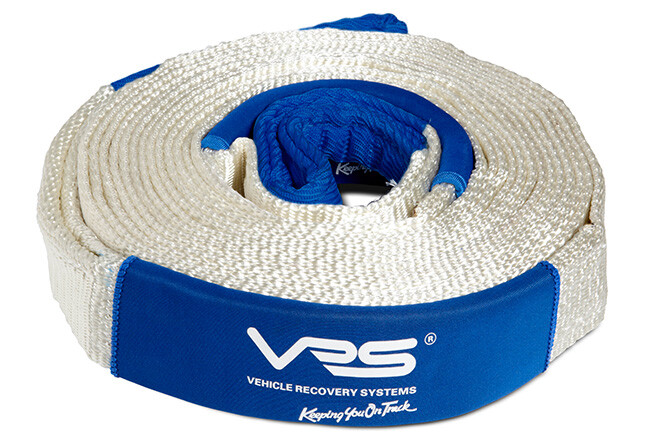
The new blue range of VRS Recovery gear has many improvements over other brands in the market, like the new snatch strap that comes in a 10mt length and has neoprene sleeves as standard. The tree protector is now 5mt long with neoprene sleeves a standard and the winch extension strap is 5000kg rated.
Although the recovery items are sold individually, the VRS range can also be purchased as starter recovery kits through to complete recovery packages with pretty much everything you need to get you out of trouble should you find yourself in a sticky situation.
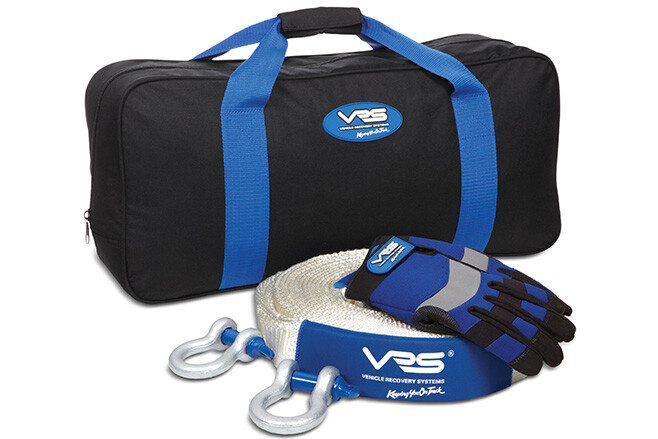
VRS have also made their starter recovery kit to include a full size recovery bag, this gives the customer room to grow and expand their recovery gear collection and still have somewhere to store it.
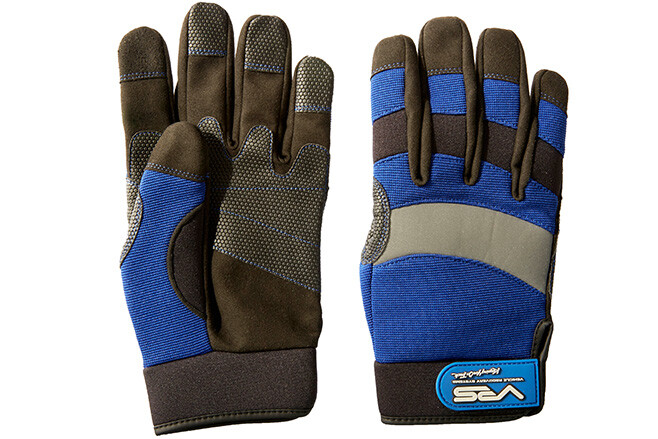
Some other unique benefits to the VRS range are the recovery gloves. No need to take your gloves off when answering your phone, the VRS gloves are compatible with most touch screen phones and tablets.
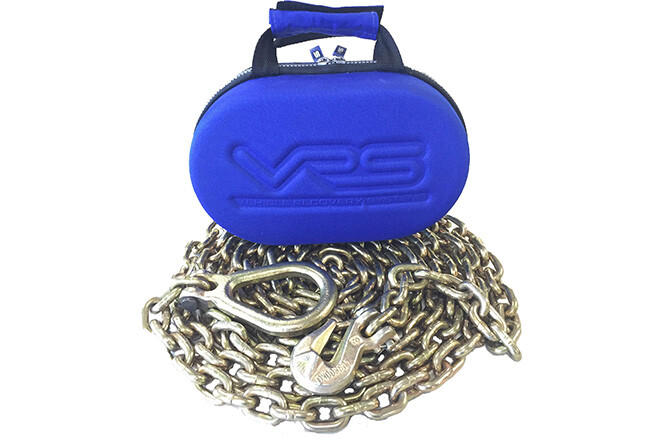
The VRS drag chain has a semi hard pressed clam shell pack that not only looks good but will also keep the things around it safe and clean.
VRS Winches and Recovery gear is available from most 4wd stores with prices starting at $12.95.
VRS plan to increase their range of accessories and equipment. If you want further information or stay up-to-date via the VRS web site www.vrswinch.com.au or like them on their Facebook page.
The Amarok is the first vehicle in line for Volkswagen Australia’s diesel emissions recall program.
The voluntary recall program will start with the 8,694 Amaroks affected by the global emissions matter and will involve a software upgrade performed by a Volkswagen dealer technician at no cost to customers.
VW Australia says the upgrade will take about half an hour and will have no effect on vehicle performance, torque, fuel consumption, or engine acoustics.
“Volkswagen Group Australia assures its customers that the implementation of the measure does not lead to a deterioration of the fuel consumption, CO2 emissions, engine performance, torque and vehicle acoustics and all vehicle values related to type approval remain unchanged; and continue to outperform the minimum emissions requirements of both Euro 4 and Euro 5 standards,” a statement says.
VW Australia emailed Amarok owners this morning, and will also send letters inviting them to make appointments with local Volkswagen dealers.
The company has advised that customers should wait until they receive a letter before booking a dealer appointment.
Recalls for other Volkswagen Group models with 2.0-litre EA189 diesel engines will continue throughout the year, progressing model by model. A recall for affected 1.6-litre vehicles will start later this year.
For more info visit: www.volkswagen.com.au
Other models in the program will follow in the coming months.
Customers can also contact VW customer care on 1800 504 076.
By the time you read this, I’ll be back in Oz, looking for some desert country after experiencing the almost stifling verdancy of north-east North America, where we have been travelling for the past few months.
We’ll be preparing the Patrol for a latish trip up to the northern Flinders Ranges in South Australia, the Corner Country of New South Wales, and south-west Queensland. I normally wouldn’t go up that way in October but, with the rain the region has had in the past few months, the countryside will be in great condition and the waterholes will be brimming and full of life. Such conditions only come about every couple of years, so I’m grabbing the opportunity to see it while it lasts.
There are some magical waterholes to visit when travelling that part of our outback. High on the list for this trip will be the waterholes in and around Arkaroola in the northern Flinders region (see: www.arkaroola.com.au). There are the Stubbs, Bolla Bollana, Echo Camp and Nooldoonooldoona waterholes (try pronouncing the last one after a few beers) to name a few, and all of them attract wildlife and birds, despite the normally arid climate that surrounds.
It’s best to get to such places early in the morning or in the early evening when animals and birds come in to have a drink. Park the truck and sit with a drink and a pair of binoculars under a tree and you will be surprised at what starts to move in and around the waterhole after about 10 or 15 minutes.
On the way north and slightly south, but still in the Flinders, I’ll take a wander out to Warren Gorge to see if the creek through the small gorge is flowing and the waterholes are brimming. It’s a place I’ve been going to since I was a kid and I used to catch tadpoles in and along the creek. Located just north of Quorn, Warren Gorge is a top spot to camp for a few days and the local council has set up a few toilets and rubbish bins for those staying for a day or two, or longer.
Warren Gorge is also a good spot to spy the shy and elusive yellow-footed rock-wallaby, one of our most delightful and magnificently marked native animals. Restricted to the Flinders Ranges and rocky hills to the east, as far as the Barrier Ranges north of Broken Hill, the yellow-footed wallaby has had a hard time dealing with foxes, cats and humans. This has resulted in wallaby numbers plummeting. The good news is that, with a lot of effort by numerous groups and government departments, the wallabies are bouncing back. The last time I was in Warren Gorge last year, one sat on a rock ledge no more than 10 metres from me.
Heading north, we’ll also check out the camping area and ruins at Farina, just north of Lyndhurst. The camping area here, set on Gum Creek, is one of our favourite camping spots when heading north of the Flinders or along the Strzelecki or Birdsville tracks (see: www.farinastation.com.au). There are a lot of birds along the shady creek and the old ruins of Farina (which are being renovated by the Farina Restoration Group) are well worth putting some time aside to investigate.
Cutting across the top of the Flinders Ranges on a remote track brings you to Hamilton Creek, and just up from the track crossing is Terrapinna Waterhole, which should be a lot bigger than it was the last time I saw it a couple of years ago. Even then, the 30-metre-long waterhole, confined by its low, rocky cliffs, played home to a group of 20 or so cormorants, while in the evening a heap of other birds came in to drink.
Further north along the Strzelecki Track, there’s a couple of waterholes. The best and certainly the most permanent is the man-made Montecollina Bore, with its overflow and cooling ponds nearby. You’ll be surprised at what birds you’ll find here; from mobs of corellas to banded stilts and other feathered wanderers.
We’ll poke through Sturt National Park to Tibooburra and Milparinka (a couple of good waterholes for humans are through there). Then we’ll go down the back way to the Barrier Ranges and Broken Hill, checking out a few waterholes along the way. It’ll be a great way to spend a week – you should do the same while the country is relatively green and the waterholes are full and brimming with life!