I can hardly contain myself; I just caught the train to Sydney to pick up a Land Rover Defender 90 Heritage, which is currently waiting in my driveway for a long drive in the bush, although I am under strict instructions not to damage it in any way … in any way! Not even bush pinstripes are allowed.
Despite the limitations put on my test drive, I’m so excited by the prospect of driving this little green beastie that even the pissed, drug-affected moron on the Sydney-bound train – who proposed to an equally drug-riddled biddy and outlined his unobtainable plan for a future together in a quaint shack on an acre block – couldn’t dampen my enthusiasm.
Prolonging the delay to drive the vehicle that has been my desktop picture for the past 12 months was also a 10-minute wait at the Land Rover dealer in Concord, located on the banks of the picturesque and tranquil Parramatta Road. Lucky for me they have a comfy white leather couch.
Unlucky for me the reading material at the dealership is aimed more at the Range Rover buyer than the Defender enthusiast. Nevertheless, flicking through Gourmet Traveller I learnt how to roast the perfect Chrissie turkey and then had the opportunity to purvey spectacular images of restaurants I will likely never be able to afford to eat at.
Just as I picked up a copy of Men’s Health to learn how I could transform my natural beer-drinker’s physique into a try-hard six-pack bod, the amicable Don from Concord Land Rover rescued me from a potential lifetime of agony in the gym by ushering me into his office, where he asked for my driver’s licence.
Like renting a car from Avis, this is standard procedure when picking up any press vehicle. Except this time, he checked my licence details extra closely, just in case I was tempted to not return the pristine and very limited edition Defender.
Paperwork sorted, we descended to the basement carpark where the Defender stood tall, surrounded by modern, swoopy Land Rovers with names like Sport and Evoque. Even in the dim light of the carpark, it was easy to see that this was no ordinary Defender.
Other than the unique Heritage-style grille, colour-matched steel rims and special HUE 166 logos that pay homage to the original Land Rover, this example had deep, lustrous paint with just a hint of metallic.
After completing the obligatory 360-degree walk-around, I pointed the key-fob at the Landy and unlocked the doors … remotely! Despite this surprising touch of modernity, familiarity returned when I approached the door and pressed the button to open it.
And although the interior was decked out in fancy Almond cloth seat trim, with special Heritage stitching and a leather-clad steering wheel, the oft-complained-about driving position remained.
Personally, I like the Defender’s driving position. Sure, it’s only really comfortable when the window is down so you can rest your right arm on the sill, but the high seat gives the Defender driver a commanding view out the upright windows, and forward vision over the stubby little bonnet is unequalled in today’s world of wind-tunnel-designed four-wheel drives.
As I eyed the ceiling of the carpark, Don assured me that the Defender had plenty of clearance, and then he bid me farewell. I fired up the little 2.2-litre diesel donk, selected first and eased out the clutch.
It took a couple of goes to make the sharp left turn out of the Defender’s tight parking spot; it may have a short 2360mm wheelbase, but it still has a massive 13.4m turning circle. Sure, this is less than convenient in the city, but in the Defender’s natural habitat, out in the scrub, it’s hardly an issue.
So far I’ve only driven the D90 Heritage about 100km on the road, straight back to my joint, but soon I’m going on a ‘proper’ drive. I already love it and I’m already trying to figure out how to raise the funds to buy one.
Perhaps I could accidently scratch this one and pick it up for a song? Nah, I could never do that to such a beautiful Landy … and, after all, I’m under strict instructions.
We all know that we should value our time and spend it wisely, seize the day and live life to the fullest.
Troy Shortland does it well, heading out in his prized fourbie at every opportunity. Maybe it’s because Troy is a paramedic and gets daily reminders of just how precious our time is on this big, blue planet. Or maybe it’s because wife, Keryn, shares his strong passion for camping.
Sure, Troy went camping as a kid – squashed into the back of the Sigma station wagon with his two brothers, with no room for the cricket bat, as the family headed north to the rellies’ beach shack at Green Head, but it was Keryn who dragged him north for a very serious first trip.
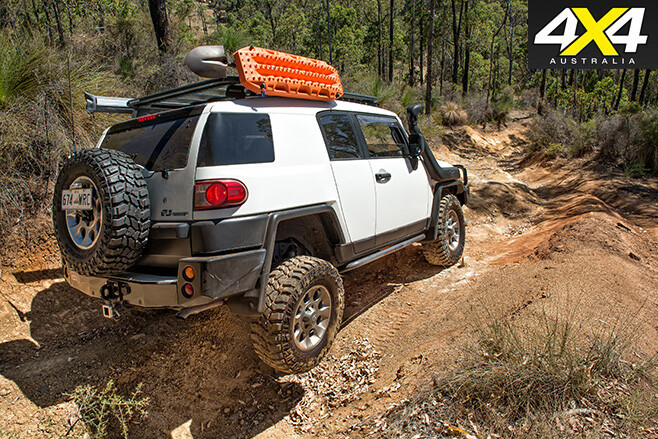
Traveling from Perth to Darwin – stopping off at Karijini and Millstream-Chichester national parks, Tunnel Creek and Windjana Gorge, they wisely decided that remote touring was totally awesome but not best experienced in an ’84 Ford Telstar.
As a young couple on a limited budget, they spent their pennies on upgrading to a 1989 Subaru L Series. Troy had no problems flying up the Lancelin sand dunes ahead of his mates in Pajeros and Vitaras. True, the Subie did have help, with a slippery diff out of a Dato 1600, a 50mm body lift, plus the extra power of a Jap-import turbo implant giving the Subie an impressive power-to-weight ratio. Bigger rims and tyres made sure none of the extra power got wasted.
Next was a ’92 Subaru Liberty AWD sedan, and finally a low-range gearbox, so things started to get serious. Crossing the Nullarbor three times, Troy and Keryn checked out the Flinders Ranges, Arkaroola, Strzelecki Track, Innamincka, Oodnadatta Track, Coober Pedy, Chambers Pillar, Rainbow Valley, Uluru and the Great Central Road, and parts of the Gunbarrel Highway.
“The look on Patrol and Land Cruiser owners’ faces outside the Oodnadata Pink Roadhouse, seeing our unmodified Subaru, was priceless,” Troy reckons.
His love of travel and the Aussie bush saw him finally leave the Subarus and cross over to the dusty side, in the guise of an ’08 NS SWB Pajero. With a few mods, the shortie was ready for adventure.
Revisiting some favourite locations as a shakedown, they embarked on the next big trip, heading north-east of the Flinders in 2010. This included visiting the Burke and Wills Dig Tree before travelling back through to Birdsville, only to find the Simpson Desert closed with five meters of water at the base of Big Red!
Not the best year for touring, Keryn and Troy enjoyed Fraser Island, but widespread flooding prevented them from passing north of Port Douglas – so no Cape York, the Savannah Way was too soggy to drive, Litchfield and Kakadu weren’t much better, and back in Western Australia the Gibb River Road was closed as well. Troy sums it up with: “Even the helicopters had stopped flying to the Bungle Bungles as it was too wet to land.”
On Troy’s days off, he started helping a friend he met through the Mitsubishi 4WD Club of WA. Richard Nicholls runs Adventure Offroad Training and he taught Troy plenty about getting the most out of his 4WD. It was while Troy was helping Richard out on a Toyota Corporate Day, he got to drive an FJ Cruiser off road.
Rememering the experience, Troy says: “Wow, what a difference from the Pajero. Exceptional rear-axle articulation, the FJ was quiet, no diesel rattle, no turbo lag, and power in spades, and the new updated model was due in a few months, which included rear locker, auxiliary tank and crawl control, all standard. Price-wise it was $13K cheaper, as well as smaller, lighter, better approach, better ramp-over and departure angles than a Prado. Only one problem: gee it’s ugly.”
After six frustrating years of diesel particulate filter issues and engine-check lights with the Pajero, it had to go, and despite the suspicion of a tear in Keryn’s eye, Troy pulled into the driveway in his new 2014 4L V6 FJ, complete with slick five-speed auto, sat-nav touch screen and reversing camera. “Now,” Troy said, “for the mods to start!”
Off he went to ARB for front and rear protection, before adding OME Nitrocharger suspension, Adventure Products recovery points, a front locker for good measure, and a Safari snorkel for the FJ to breathe above the dust on those dry tracks. Then he swapped over the XD9000 Warn winch from the Mitsi.
Troy chose a Rhino Backbone roof rack with Pioneer tray because of the numerous accessories it accommodates. He says: “We have had our rooftop tent up there doing the Holland track with no issues at all. It allows easy fitting and removal of the ARB 2.5m awning and the Maxtrax/shovel holder mounts.”
After a few months Richard and Troy hatched a plan to take the FJ to the next level. Icon Remote Reservoir long-travel coil-overs with Total Chaos upper control arms got the nod for the front end. This provided 20mm more suspension drop than the OME and brought the wheel alignment back within spec.
Troy says: “The ride difference was amazing; great road holding yet plush and it soaked up the bumps.” But as is often the case with importing gear from the US, Icons for the rear became cost-prohibitive with the decline in the Aussie dollar – so Troy waited for ARB’s BP-51 system. With the front Icons removed for sale, the FJ now sports a full set of OME BP-51s with remote reservoirs and adjustable compression and rebound.
“The result is exceptional,” Troy says. “Plenty of adjustment to set up for towing, high-speed gravel work and low-range rock crawling. With the amount of remote touring we do, I couldn’t look past the nationwide back-up service ARB can provide. I have been unable to bottom-out these shocks and the progressive valving rate the further the shock compresses is awesome.”
Next, he looked to the underbelly of the beast. An FJ basically sits on a Prado chassis that’s had 100mm cut out just behind the front doors. Since Troy’s mate Richard had already designed a set of 5mm bash plates for his Prado, he was able to modify the design to suit the FJ. Troy was more than keen to get a set.
“They are so strong I can actually jack up the FJ.” With that level of protection, the FJ’s driveline has solid insurance.
Under the bonnet, relocating the fuel canister created enough space for an ARB battery tray (intended for a 120 Prado diesel) to be slotted in, and placing the battery in the back corner meant Troy and Richard could then tackle the task of fitting an ARB twin compressor under the FJ’s bonnet.
With Richard’s CAD expertise and a little laser cutting, metal folding and welding, they had possibly the first OEM-quality twin-compressor installation bracket for an FJ. Able to inflate his tyres, those of a 200 Series, a Prado and a 79 Series, all in succession, the compressor is “one of the best investments” Troy has ever made.
A Redarc SBI212 battery isolator with an in-cab switch can join batteries for winching or to overcome a flat starter battery. There’s also a Redarc BCDC1225; a 25amp, three-stage DC-DC battery charger to look after both batteries’ needs.
To keep the night at bay, the Rallye 4000 lights got a 75W external ballast HID kit. Troy says they now provide a fantastic spread pattern. He also swapped the interior globes for LEDs.
Comms are via a remote-head 80-channel Uniden UHF mounted in the rear quarter panel. To make sure he never gets lost in the dust, a Hema 6 navigator sits on a ClicOn mount. There are dual USB charging points for phones and cameras, with a dual volt meter is mounted in the OEM switch bank. Comfort and practicality are provided by Wet seat covers and there’s ample rear storage thanks to Drifta Drawers with a custom table and bed extension for overnight stays.
Apart from the FJ’s looks, Troy reckons you need to be aware of the large blind spot created by the C pillar and the suicide doors – but says you get used to it.
“I can’t see myself ever going back to diesel. Servicing, fuel and repairs are all cheaper with the petrol. It’s quiet, smooth and has plenty of instant power on the highway, with no diesel smell lingering in the car or on your hands after refuelling.”
So far, the FJ has travelled the Holland Track, the south-west corner of WA through to Israelite Bay, north to the Murchison Offroad Adventures Camp, and enjoyed numerous weekend trips out of Perth. 2016 should be big, with Troy and Keryn looking at doing the Madigan Line and then trying again for Cape York and the Savannah Way in 2017.
Troy confesses: “Without my wife’s support, and passion for camping and adventure, I would not have seen the countless beautiful spots this country has to offer and the memories we have created together.
“We are both looking forward to seeing and enjoying many more places and meeting lots of amazing people on the way, all made possible in our trusty FJ.”
Buy any two of the following magazines at a participating Coles Express store and pay only $14! Save up to 29%!
|
Promotion available at participating stores from March 31 to May 4, 2016
When it comes to installing a 12-volt electric winch, there used to be two schools of thought: buy the big-name brand that has stood the test of time, or buy cheap ’cause you can’t afford the real deal.
Well, that was yesterday. Step into the new age and you’ll find plenty of decent winches that perform as well or better than the big names, cost a little more than the ‘el cheapo’ brands, plus offer other features once available only to the deep-pocketed.
One of those features is synthetic rope, which in the past was more expensive than the total cost of some winches. Synthetic rope has many advantages over traditional steel cable, especially regarding safety, ease of use and weight.
I was in the market recently for a winch for my Troopy, so I searched the internet for bargains, and talked to sellers of branded and rebadged winches, users and general touring bodies. One name that kept coming up with rave reviews was Runva.
Now, before I go any further – yep, I know Runva winches are made in China, I know they cost far less than the premium-branded gear and, yep, on the surface they do look like many other ‘winch-in-a-box’ units.
So, like all potential buyers not wanting to hand over a wad of cash for a dud, I called the Australian Runva offices with a fistful of questions, some to which I already knew the answers. But I wanted to hear it from the horse’s mouth.
One unexpected fact, however, that helped me choose Runva, was that it’s a world-wide company; as in, there is Runva Australia, Runva USA, Runva Korea, Runva China and Runva Canada. This, in my mind, gives it more credit than a company that imports a container of winches, tents, barbecue plates and air compressors, and then whacks on a sticker before flogging them off without back-up services.
The Runva line-up includes hydraulic winches, industrial winches, lifting winches, ATV winches and, of course, 4×4 winches, from which there are plenty of different purpose-built models to choose.
Runva’s newly released 11XP 12V Premium, with 26.5m of 11mm Dyneema Rope, comes with attractive extras such as a 15,000lb-rated snatch block, wired and wireless remotes, black powdercoated aluminium hawse fairlead, a rated bow shackle and shackle thimble attached to the rope’s end, plus a neoprene winch body cover for applications where the winch is exposed to the elements.
The motor is a large 6.5hp model, plus, importantly, it is IP67-rated, meaning it’s totally guarded from dust ingress and protected from water ingress at down to one metre deep.
Being new to the market, the braking system is a variation of the standard system and features an automatic ratchet load-holding mechanism built in to the gearbox. The low gearing of 228:1, combined with the 6.5hp motor and three-stage, planetary, full-steel gear train grants a rated line pull of 11,000lb, and having a standard bolt pattern allowed straightforward fitting to my Opposite Lockwinch bar.
Another attractive inclusion is the sealed, waterproof 600Amp solenoid, which should provide many years of hassle-free use. On the safety side of things, I was particularly impressed with the inclusion of an override power-isolating switch and mounting bracket, which I’ve hidden under the bonnet so that no-one can operate the winch without a key.
To date, I haven’t used the Runva winch in anger to extract myself or anyone else, but a few things I’ve noted while mucking around in the backyard, trying to haul the kids across the paddock, is the slight delay in the wireless, handheld controller (which is similar to most others), compared with the instant control of the wired version.
The winch clutch is very easy to engage via the low-profile handle, fit and finish is perfect and, as hard as they tried, seven kids had no chance of holding back the 11,000 pounder!
Considering the Runva’s limited lifetime warranty, Australian-company back-up and online parts availability, I am confident the winch will be useful for a long time – now I’m off to go and get bogged.
Rated
Available from: www.runvawinch.com.au RRP: $879.00 We say: Price, motor size and specs are just right.
We don’t always have the time or disposable income to head off for a couple of weeks, travelling long distances to reach and explore iconic locations like the Top End. But what’s stopping us from enjoying remote areas closer to home?
No matter where we live in Australia, we’re fortunate to be able to easily reach remote locations – sometimes by driving for just one day. Accessible by a standard four-wheel drive and in the far west of outback New South Wales is one of these places: Kinchega National Park.
An area of many contrasts, this park boasts glistening lakes, dominant rivers and spectacular night skies while offering a sense of remoteness that will all but quench your appetite for adventure.
On our recent trip to Kinchega, we set off from Sydney, setting the compass for the banks of the Darling River, close to Menindee in the Kinchega NP. We had planned a couple of nights’ camping along the majestic Darling River, using this as the base from which to explore the remote lakes, tracks and plains before arriving at our final destination, the Silverton Hotel, a famous outback pub west of Broken Hill.
As an Irishman who has recently visited the birth and home place of Robert O’Hara Burke in his native County Galway in the west of Ireland, I was excited about visiting this part of outback NSW, where Burke and his men camped at Menindee along the Darling River. It was here where the expedition made final preparations before embarking on the ill-fated journey across the continent, heading towards the Gulf of Carpentaria.
After a day of driving east along the Sturt Highway, passing through Hay and Mildura, we decided to camp for a night on the Murray River. There are plenty of choice when it comes to good bush camps along the Murray and this was but a taste of what was ahead.
We continued on towards Wentworth and then took the High Darling Road, heading north-east on the Darling River run, as it’s often referred to. This will be the start of your adventure, too, if you’re coming from the south.
It will not be long before you hit the dirt and start kicking up dust behind your vehicle as you make your way to Kinchega NP. You will notice the landscape dramatically change from light greens to vast areas of low shrub land, sandy plains, and the distinctive shiny grey lakes that make the Kinchega NP a unique place to visit.
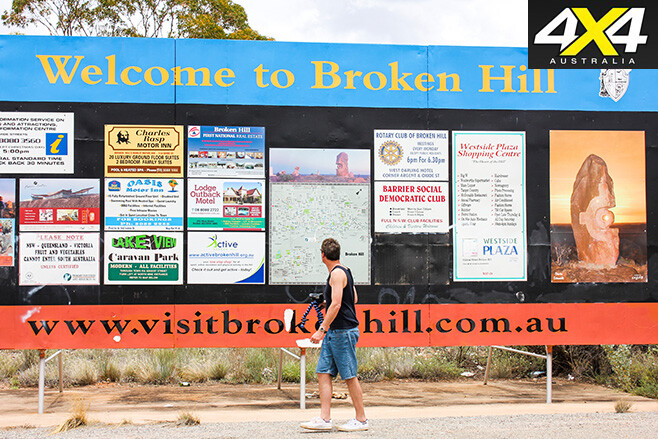
Just before reaching the park you’ll pass through the small settlement of Pooncarie, another stop-over for Burke’s expedition. From here it’s about 127km of good-quality unsealed outback road to Menindee.
Kinchega NP is about 800km from Sydney or 750km from Melbourne. On the eastern side of the park you will find the Darling River, which runs from the southern banks of Menindee and covers 62km of river frontage, offering some truly great camping.
Menindee was a strategic base for a number of Australia’s explorers. Most notable were Sir Thomas Mitchell, who used it in 1835, Charles Sturt in 1844, and Burke and Wills, in 1860. When you arrive in the quiet settlement, go into the local shop and ask for directions to some of the 30-plus bush camping sites along the Darling River. They are situated about 10km from the town. You can also pick up your last-minute supplies while you’re there.
Menindee and the adjoining Darling River was a significant stop-over for Burke’s expedition, which stayed there for more than a week before his team split into a smaller group to eventually make its way to the Gulf of Carpentaria.
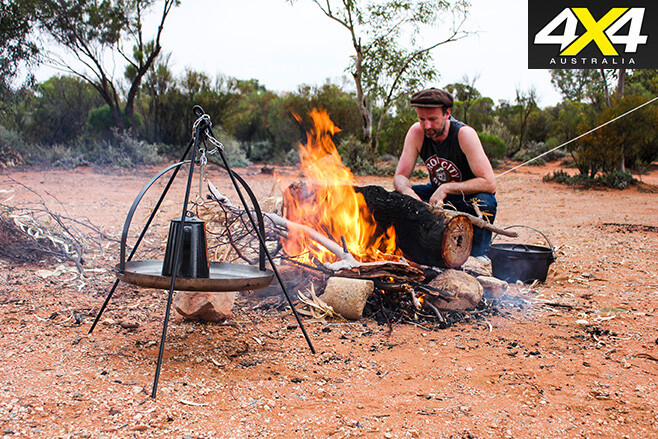
We chose to camp along the Darling River for a couple of reasons. First, we wanted to experience the riverside environment that Burke’s expedition encountered prior to continuing its expedition, but we also wanted to enjoy the superb camping spots along the meandering river. Take your time when choosing the site that suits your needs. There are plenty to chose from, many with concrete fire pits near the riverbank if you want to light a fire to cook your evening meal.
After checking out a couple of options, we found a great spot right on a river bend where we were enchanted by the sounds of noisy cockatoos as well as the local water birds.
After setting up camp and taking some time out to absorb the picturesque river setting, we decided to get the fire going, get the Dutch oven hot and bake traditional Irish soda bread accompanied by some superb lamb shanks that we purchased in a butcher’s shop in Hay.
The Burke and Wills expedition party arrived along this river bank on October 14, 1860, and when you sit by the fire, it’s easy to imagine what the scenes must have been like back in those days – the setting up of the large canvas tents, the hustle and bustle of carts, horses and camels mingled with the sounds of the men preparing their expedition equipment for the journey north. You can only really experience and bring to life these scenes by seeking out these historic and often hard-to-get-to locations. This is why we drive 4WDs.
As the light faded and the final flurry of birdlife came to an end, we enjoyed a couple of cold beers from the fridge – Burke’s crew probably drank warm rum. Ah, the beauty of having a fridge in your 4WD. Modern comforts – they definitely have their merits.
Out here, early risers will be treated to a spectacular red and orange tinge on the red gum trees and sandy river banks. We decided to spend some time simply soaking up the atmosphere. It’s easier to stay longer than planned.
Kinchega NP offers plenty of choice when it comes to exploring and enjoying the freedom of driving on its many remote dusty tracks. As you get closer to Menindee Lake, you will be struck by the unusual sight of the black gum trees that eerily protrude from the still and vast lake. This iconic landscape will definitely draw you and your camera close to the lake’s edge for a photo that will be hard to replicate anywhere else in Australia.
Another unique feature of the lakes is the odd-looking murky-grey water that fills Lake Menindee, which enhances the sight of the dead gum trees scattered across its surface. There is a lot of lake out there. In fact, the combined expanse of the Menindee Lakes is considered to hold more than three times the volume of Sydney Harbour when full; now that’s a lot of water.
The NP also boasts a number of activities. This includes trekking along the lake’s shores, fishing in the Darling River and exploring ancient Aboriginal and early European sites throughout the park. The area is also famous for having some of the country’s best-kept wool sheds, including Kinchega Station, established in 1875. Worth a look for another step back in time.
If you have come to see the wildlife, you will not be disappointed; bearded dragons and sand monitors can often be found basking on the park’s tracks, while kangaroos and emus can be seen in abundance throughout the surrounding plains.
So, if you are itching to pack up your 4WD and head off on a mini-adventure that won’t consume too much of your valuable annual leave but still offer you a sense of remoteness, this location ticks all the boxes. It’s an area with some great unsealed tracks, and it’s rich in natural history and heritage. It’s a place for nature lovers, photographers and those who just want to experience the unique camping along the Darling River.
TRAVEL INFO
- WHERE: Kinchega NP is situated right on the fringe of the arid zone in western NSW. The national park covers a total area of about 443km² The eastern edge of the Kinchega NP is formed by the Darling River, Australia’s longest water course. Coordinates: 32°32’39”S 142°17’50”E / 32.54417°S 142.29722°E / -32.54417; 142.29722
- MAPS: The Outback Travellers Track Guide (Series 1) NSW State Map (UBD) 24th edition HEMA Outback NSW Regional Map (3rd edition) Outback NSW Holiday planner published by NSW Tourism www.outbacktravellers.com.au
- TRAVEL DISTANCES: The National park is 839km west of Sydney, 111 kilometres south-east of Broken Hill and 630km north-east of Adelaide.
- ACCESS: The main entrance to Kinchega NP is just north-west of the town of Menindee. Website: www.nswnationalparks.com.au
- CAMPSITES: We camped along the Murray River on the way there and set up our camping base along the Darling River on the eastern side of Kinchega NP. There are 34 shaded campsites scattered along the banks of the river, accessed via the river drive. The designated camping areas offer basic amenities with no powered sites provided. For bookings, contact the Broken Hill park office on (08) 8080 3200. It costs $6 per adult per night to camp along the river. Other campsites in Kinchega NP include Cawndilla and Emu Lake campgrounds.
- FUEL AND SUPPLIES: From the north-west, fuel is available at Broken Hill. If you plan to travel using the unsealed roads off the Silver City Highway, or from Pooncarie, bringing extra fuel is advisable. This is outback country, so it is important to be prepared; carry plenty of water and food. You can top-up on fuel when you reach Menindee. You will also be able to restock on all of your necessities in Broken Hill.
- ROAD CONDITIONS: Most of the trip is grade C-D, although roads can be tricky in wet weather. It is always advisable to check road closures and ask for local advice at Menindee prior to entering the national park. Keep the tyre pressures down while in the national park as the tracks can be quite sandy in spots.
- KEY CONTACTS: Kinchega National Park Phone: (08) 8080 3200 Useful websites: http://www.visitnsw.com/destinations/outback-nsw/broken-hill-area/menindee/attractions/kinchega-national-park
- RESTRICTIONS AND PERMITS: Kinchega National Park is open year-round unless it has to close due to poor weather or fire danger. It’s worth noting that a total fire ban exists in the park from October 1 to March 31. The park operates on a ‘pay and display’ envelope system and it’s advisable to keep some spare coins handy.
Burke’s backyard
Burke’s home place in the west of Ireland was a very different environment to the one he experienced in the Australian heat of October 1860. Burke came from a privileged background and was raised in a 17th century, 11-bedroom house perched on 44 acres at St Cleggans near the village of Craughwell in County Galway.
Surprisingly, Burke is not very well-known in Ireland. In fact, when locals are asked about the magnificent house that Burke was born and raised in, they often refer to its most recent owners, the famous American Huston family – movie producer John Huston and his daughter, academy award-winning actress Angelica Huston, most famous for playing the mother, Morticia, in The Addams Family movies of the ’90s.
Angelica Huston converted Burke’s home into a luxury hotel before selling it on to an Irish businessman.
It’s easy to see why many of the world’s famous explorers, most from privileged backgrounds, were prepared to give up their creature comforts at the drop of a hat to live in a canvas tent, exploring a largely undiscovered world.
I don’t think much has changed today for the majority of us who own 4x4s. Given the choice, I would certainly swap a stay in a luxury hotel for a swag, dusty riverside campsite and a warm campfire under a star-filled solar system. That’s my idea of five-star accommodation.
There’s an old joke about hire cars being able to go places no other vehicle can reach.
It’s a tongue-in-cheek reference to the fact that some hirers are more likely to flog and mistreat a vehicle they don’t own. In reality, those of us who have spent a fair amount of time at the wheels of hired cars know that the fine print in most rental contracts frowns upon such behaviour, and typically backs up its terse written warnings with potentially hefty additional fees and charges.
Ironically, many of the larger companies that hire out four-wheel drive vehicles specify in those rental agreements that their rigs are not to be driven off-road – at all! Some even preclude their use on unsealed dirt roads. It makes you wonder.
As a regular visitor to New Zealand, I spent a long time tracking down a Kiwi business that rented 4x4s that I was allowed (even encouraged) to get down and dirty with. I enjoyed several great years as a customer of a Christchurch-based outfit, but, sadly, the business eventually closed its doors when its affable proprietor moved across the ditch to Oz and joined the burgeoning 4×4 tag-along tour industry. I sure do miss the unique service!
Of course, a lot of ‘proper’ off-roaders no doubt look down their noses at the notion of hiring a 4×4. The same is true of serious anglers when it comes to the subject of hiring boats.
There’s nothing quite like your own tweaked and customised set-up. But the fact remains that we sometimes find ourselves in a position where we’re unable to make use of our own vehicles and watercraft, typically because we’ve flown to a particular destination. At such times, hiring may be the only viable option.
As a case in point, on a recent visit to Tasmania, my wife Jo and I took advantage of a wonderful new hire outfit intended to service the island state’s significant FIFO (fly-in, fly-out) recreational fishing market. Clinton Howe is a tackle shop proprietor based in Ulverstone, on the north coast of the Apple Isle.
Operating simply as Tassie Boat Hire, Clinton offers a fully kitted-out 420 Quintrex Renegade side-console tinnie with a 40hp outboard, bow-mounted electric motor, depth sounder, marine radio and all the other important ‘fruit’ demanded by high-end sport fishers. This rig is more than capable of tackling anything from highland lake trouting to estuary bream work, or even near-shore coastal action, in the right weather.
Better still, Clinton also offers a 2011 Mitsubishi Triton 2.5-litre turbo-diesel, twin-cab ute with an auto transmission, as a tow vehicle, to complete the turn-key package. We used this full rig for a week of high-country trout fishing and were absolutely delighted with the package, not to mention Clinton’s pick-up and drop-off service at the airport!
For less than $350 per day, all-up (boat, ute and airport transfers), it was excellent value, particularly when compared with the cost of getting your own vehicle and boat across Bass Strait and back for a short-term visit.
Not surprisingly, Clinton’s first 4×4 and boat hire rig is already heavily booked, especially for the busy summer/autumn period, and he has recently put a matching set-up on the road. I reckon he’s on to a winner and may eventually need a third package.
If you’d like to find out more about this interesting option, have a look at Clinton’s Tassie Boat Hire page on Facebook, or visit his website at: tassieboathire.com.au
Why did I choose the latest Cooper S/T MAXX tyres for my Troopy?
Sure, they have the latest Amor-Tek technology and an extra ply in the rubber to increase sidewall strength. And sure, their new chemically bonded silica tread compound improves grip. But none of these features is why I chose another set of Coopers for the Troopy.
Nope – I chose Coopers again because I had a great run on my last set of S/T MAXX and an earlier set of STs that copped more than 75,000km. I figure that when you’re on to good thing, stick to it.
As I’ve stated before, I know there are other treads out there that would plug away better in the mud, and others that would perform better on twisty bitumen roads, but if you want a capable all-rounder, it’s hard to go past these aggressive-looking all-terrains.
People have tried to nudge me towards the new Cooper STT PROs – but as good as they seem to be, they are not what I want in a tyre that will cover huge kays touring through sand and mud, plus rock driving and the dreaded school run.
For me, the 285/75R16 S/T MAXX has the perfect all-round tyre pattern, and it’ll see the Troopy eat up plenty of tracks.
One problem I’m faced with – because I have offset Dynamic steel 16×8-inch rims on the Troopy’s rear and slightly wider than standard rubber – is tread protruding past the bodywork, which is illegal.
This will be easily fixed by adding wheel arch flares – it’ll be my first job to prevent fines. While I’m at it, I’ll also widen the mud flaps to suit the flares. This’ll minimise the gunk that gets flicked out the rear. It’s not major job but worth mentioning for anyone contemplating something similar.
For more information and pricing visit www.coopertires.com.au
Rated
Available from: www.coopertires.com.au RRP: 285/75R16 – $389 (location dependent) WE SAY: Excellent all-round rubber to tackle anything
Thanks
Leicht’s Tyre and Auto in Port Macquarie fitted and balanced my Coopers S/T MAXX tyres.
The guys there have won awards for their supply of Cooper Tires, and when my tyres were fitted I spotted the lads using a torque wrench to manually tighten my wheel nuts. I wish more tyre mobs would do this instead of incorrectly using rattle guns to overtighten nuts.
I appreciate the time spent doing it correctly, especially when I have to remove a wheel and don’t have Arnie close by to help undo the wheel nuts. Also noteworthy were the correctly set air pressure settings, which I did check back home. Overinflating seems to be common practice at some tyre stores.
Leichts Tyre and Auto can be found at 97 Hastings River Drive, Port Macquarie. There are also other outlets in Kempsey and Tamworth. See www.leichtstyres.com for details.
While we were out for our 4X4 Of The Year award, our mates at Camper Trailer Australia magazine were over Dargo way, doing similar things with the latest camper trailer offerings.
They conducted a thorough test of the trailers in the Victorian High Country, and at the end of their test week, the Patriot Campers’ updated X1 took the win, making it three titles in a row now for the Patriot team.
Updates to the already impressive Patriot X1 include a wider chassis and 150mm-wider wheel track that results in a 30 per cent lower centre of gravity, for even more stability off-road.
Quality EFS shocks are now standard and ROH alloy wheels are available on the Limited Edition variants, which can be ordered in a choice of colours. The internal battery has been moved to give more room in the redesigned storage boxes and the battery is now charged via a Redarc BMS1230 system.
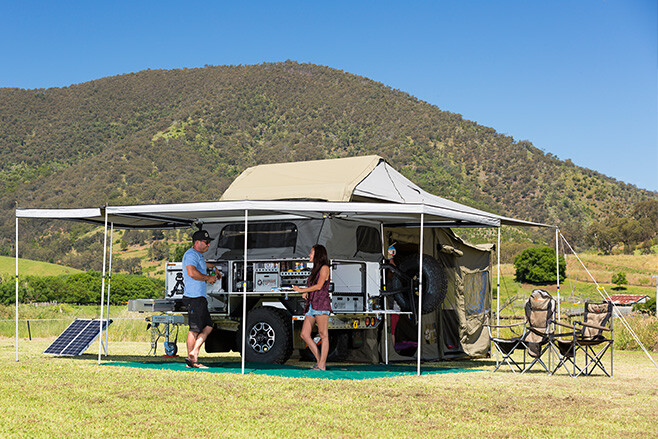
Significantly, the roof-top tent that was standard on the X1 has been replaced with a camper trailer tent to give more covered space for users, and there’s now also the option to add a canvas patio to the driver’s side.
At the end of 2015 Patriot Campers relocated to a massive new facility at 1 Activity Crescent, Molendinar, Queensland. From there they will be producing the X1, X2, the Toy Haulers, the Patriot Super Tourers – such as Norm’s 79 double-cab, featured last month – and the mighty 200 Series. Drop in to see them, or get online at www.patriotcampers.com.au.
Our Hilux giveaway car was looking pretty daggy. It is an ex-Telstra car, after all. Following its tour-of-duty fixing phone lines in country Victoria, it was due for a new lease of life.
Click here for your chance to win 4×4 Australia’s Custom Toyota Hilux.
While the TJM barwork and flares have helped toughen it up a bit, it was still rolling on the stock steel wheels and well-aged OE suspension.
It was the suspension that caught the keen eye of Phil Cochrane as we rolled the Hilux in to his OnTrack Automotive workshop for an EFS upgrade. “It looks very sagged, so I’m wondering what we have to work with here,” he said as the 2010 vintage Toyota went up on the hoist.
Despite having 161,000km on the clock, the Hilux had a full factory service history and it still drove very well. It was just way too low for our liking. Queensland’s EFS Suspension came to the party with a fix, supplying a kit complete with new front coils, rear leaves, XTR shocks and all the associated hardware. The suspension is listed as giving a 40mm lift in height, but once installed it showed just how saggy the OE stuff was, as the new suspension propped up the Lux by more than 40mm.
A suspension kit install is run-of-the-mill stuff for Phil and Chris at OnTrack, after 30 years in the fitting-out and servicing 4×4 vehicles. In fact, it’s just about a daily occurrence there. All that experience has taught them what works and what doesn’t work, so they recommend EFS suspension products whenever possible.
That experience has also taught Phil that time working on a car can be saved with a bit of preassembly. So, with the parts ordered in advance, he was able to have the front struts assembled and ready to bolt in before we arrived. Phil even does this for the DIY customers who may not have proper spring compressors at home, allowing them to buy the complete ready-to-bolt-in struts that have been correctly and safely put together in the workshop.
With this done in advance, fitting the front struts was relatively quick and easy. Phil completed the job as though he could do it with his eyes closed. The rear leaf springs took a bit more heavy lifting and some supporting of the rear axle to get the parts in place. It’s not rocket science, but the job’s made all that much easier by experience and the right tools.
When we selected the springs for our Hilux, we considered the steel bar and winch up front, and the fact that the canopy that is on the car now will be coming off. We had also stated our preference for a comfortable ride over load-lugging ability, so the medium-spec rear springs were chosen for this job.
EFS’s XTR shocks are a premium product designed for 4x4s that do a lot of outback travel. They are a twin tube design with a 64mm diameter; a 2mm wall thickness; and an external tube for increased oil capacity and resistance to stone damage. A 40mm piston rides on a 20mm hardened chrome shaft for the ultimate in control and durability.
With some newfound space to fill inside the flared ’guards, we took the chance to fit the Cooper STT Pro tyres and ATX alloy wheel combo we have had waiting for a couple of months. The 265/70-17 Coopers fill the gap sweetly and will give the Hilux some genuine off-road ability to go with its tougher street appearance. Best of all they look the part without stepping outside the legal boundaries, so there’ll be no heat from The Man on whoever wins this sweet ride.
With the Hilux riding higher and rolling tough, it was sent around the corner for a wheel alignment, including castor correction. Then we were on our way. Initial impressions on the short road drive back to 4X4 HQ were: one, the view over the bonnet now seems much higher with better all-round visibility; two, the mud terrain pattern STT Pros are obviously noisier on road than the stockers, as you would expect, but they are not intrusive all; and, three, the suspension rides firmer but not overly so as some aftermarket kits do. The EFS guys obviously got the product selection right to match our request.
Of course, it won’t be until we get to take the Hilux bush that we can really gauge its improved performance, but we have to say it will be a whole lot better than it was. Before then we’ve got more gear to fit to it as the build continues and the giveaway promotion kicks off next month. Stay tuned!
OnTrack Automotive
Phil Cochrane has been running his specialist 4×4 workshop OnTrack Automotive in Ferntree Gully for near on 30 years. That’s experience you can’t put a price on and with plenty of outback miles under his belt, Phil knows a thing or two about what’s needed for a capable and reliable vehicle in the bush.
OnTrack is a supplier and fitter of EFS Suspension products, Lightforce lights, GME radios, Exedy Clutches, Piranha, IPF, DTS Turbos, Redback Exhausts and Ironman 4×4 products. The workshop can also carry out log book servicing and pre-trip inspections on your 4×4 to make sure it is in top condition.
You can find OnTrack Automotive at 4 Thomas Street, Ferntree Gully, online at www. ontrack4x4.com.au, or via phone on 03 9753 5565
Contacts:
EFS Suspension – Available nationally. Find your nearest stockist at www.efs4wd.com.au
OnTrack Automotive – Ferntree Gully, Victoria. www.ontrack4x4.com.au
Want to see more of our Project Hilux build? Check out the below:
- Part 1 of our Project Hilux build
- Part 2 of our Project Hilux build
- Part 3 of our Project Hilux build
- Part 4 of our Project Hilux build
- Part 5 of our Project Hilux build
Toyota USA pulled the wraps off the TRD Pro version of its Tacoma ute at the Chicago Auto Show in February.
The Tacoma is similar in style and size to our Hilux ute – just a little bigger and, of course, there’s no diesel engine option for the Yanks. The Tacoma is powered by a 3.5-litre, direct-injection, Atkinson-cycle petrol V6 with a choice of manual or automatic transmission.
The excitement starts with a TRD-tuned suspension featuring FOX 2.5 internal bypass shocks and TRD-tuned front springs with a one-inch lift and corresponding rear leaf spring upgrade. The off-road goodies continue with 16-inch TRD black alloy wheels wearing Goodyear Wrangler All-Terrain rubber, a TRD Pro aluminium front skid plate and Rigid Industries LED front fog lights.
Then there are all the dress-up parts, including a bespoke TRD bonnet vent, colour-coded body parts, model-specific badging and so on.
On the inside, TRD Pro buyers get black TRD Pro leather-trimmed heated front seats with TRD Pro logos, premium audio with navigation, a TRD shift knob, TRD Pro floor mats and a GoPro camera mount integrated in to the rear-view mirror. This is a neat accessory available on many Toyota 4x4s in the USA for owners who like to capture their off-road action on camera.
The TRD Pro Tacoma joins the bigger TRD Pro Tundra that was released a year ago, and these models with their good looks and high-performance off-road suspension are Toyota US’s answer to the Ford Raptor.
Don’t hold your breath for any such exciting models from Toyota Motor Corporation Australia. A TMCA spokesman told us that, while he loves the looks and concept of the TRD Pro vehicles, Toyota Australia had no such plans for the Hilux here.
This comes despite the fact the Hilux has no competitor to Ford’s popular Ranger Wildtrak, and new car sales so far in 2016 show the Ranger is putting up a strong challenge to Hilux’s dominance of the sector.
Ford’s dress-to-thrill Wildtrak lists at $57,890 to cap the Ranger line-up, while the top-spec Hilux SR5 double cab is $53,990, suggesting there’s room for a sportier-looking model – the specs list suggest the same.
Our tip is that at some time this year we’ll see a dressed-up Hilux range-topper that, like the Wildtrak, has all the add-ons but sans the good bits like uprated suspension and tyres.
The last and only time TMCA applied the TRD touch to the Hilux was back in 2008 with a limited run of utes featuring a supercharged V6 engine, Bilstein-tuned suspension and a smart-looking body kit. But the blown engine failed to deliver a worthwhile performance increase and the suspension tuning was off the mark.
The TRD Hilux died a quick death along with the TRD brand in Australia. Toyota says there are currently no plans to re-introduce TRD to Australia but “never say never”. We live in hope.