
Our latest trip saw us heading south on the Stuart Highway at around the time the annual migration of grey nomads was heading north, and there was a steady stream of caravans and tow vehicles heading for the sun of northern and central Australia.
Many of the caravans were being towed by the latest dual-cab utes on the market, and many of the ’vans were bloody monsters, easily weighing 2.5 tonnes. And that’s before they were loaded with water and all the paraphernalia that some travellers can’t seem to do without.
There are currently six one-tonne utes on the market that can supposedly tow 3500kg – if you believe the figures spouted by the car manufacturers. These are the Mazda BT-50, Ford Ranger, Isuzu D-Max, Holden Colorado, Nissan Navara and the latest Toyota Hilux. The Mitsubishi Triton is rated at 3100kg, while the VW Amarok comes in at a still-healthy and maybe only slightly exaggerated 3000kg. Whatever the numbers, it’s all a bit of marketing hype, I reckon.
In the smallprint of a manufacturer’s handbook you’ll find less publicised figures of GVM (gross vehicle mass), which is the maximum allowable weight of the vehicle fully loaded, and GCM (gross combined mass), which is the combined total weight of the vehicle and any trailer it is towing.
For example, the Ford Ranger dualcab weighs 2200kg with an impressive 1000kg payload capacity. Even that figure is overrated, because without doing something to the suspension you’ll be dragging the bum if you have the vehicle at its maximum GVM of 3200kg – yet plenty of people do.
The rated tow figure of the Ranger is 3500kg, while the GCM is 6000kg – much the same as many of the dual-cabs. This means the maximum car weight has now dropped to 2500kg – a payload decrease of 700kg. That means the maximum weight you can carry in a Ford towing a 3500kg caravan is just 300kg. That’s not much more than two healthy adults, a pet dog and a full tank of fuel.
The other common dual-cab utes are much the same, some even worse. So you can bet your bottom dollar that there are very few rigs towing a heavy ’van that would be legal, given those figures. But while legality may be an issue, it’s the safety concerns that are paramount.
I can’t believe a tow vehicle weighing an average of two tonnes can provide a stable platform for a trailer that weighs 50 per cent more than it. In my eyes it just defies physics.
Such a weight discrepancy means you can easily get into a situation where the tail wags the dog, upsetting the balance of the ute and badly influencing steering and braking. Some of the ’vans we saw on the Stuart were also loaded badly, meaning the tow vehicle was down at the bum with the front pointing skywards.
Then there’s the towing performance of these small diesel engines. They may be fine on flat stretches, but give them a hill to climb and they lose any leeway to pass or even stay anywhere near the speed limit – and fuel usage under such conditions is chronic.
Dual-cab utes are popular because they can be so many things to so many different people. However, towing big heavy ’vans that weigh more than 2500kg when loaded is not one of them.
Stick to a camper trailer or a small caravan weighing less than 2000kg!
If you need to tow one of the bigger ’vans, get a 200 Series LandCruiser at the bare minimum. Better still, get it behind a Ram or a Ford F-250. You’ll not only appreciate the effortlessness of such a tow vehicle, it’ll be legal and you and every other road user will be a lot safer for it.
High-tech common-rail diesel engines gracing the latest crop of 4x4s are brilliant, powerful and economical machines, but they need particular care with regards to cleanliness in a few key areas – one of which is the fuel filter.
Slurping a gutful of dirty diesel into your engine could see you up for a hefty repair bill of up to $20,000.
While you may intend to only fill up at reputable stations, that’s simply not a realistic or failsafe plan. The better option is to ensure only clean fuel finds its way into your high-pressure fuel pump by filtering everything – the clean and the not-so-clean. Enter the Flashlube diesel pre-filter. For a small outlay (compared to a huge repair bill) most home mechanics could fit one of these kits in an hour or two.
The pre-filter kit is placed before the original equipment filter. It’s more coarse (at 30 microns) compared to most standard filters (at five microns) and incorporates a water separator to prevent water travelling into the injectors and lines. The tap at the bottom of the glass viewing bowl allows easy draining of water, while the replaceable cartridges simply push on and off for fast replacement.
The idea of pre-filtering is to get rid larger-diameter foreign particles (fungus, rust, scale and dirt, as well as water) that would quickly clog the OE filter, rendering it useless. It potentially prevents dirty fuel from flowing into the injector lines and ultimately blocking or fouling the injectors.
The pre-filtering kit doesn’t impede the job of the OE filter, nor does it negatively affect OE sensors and OE dash-mounted warning lights. Should the pre-filter become blocked with contaminates, it can simply be replaced – a much cheaper option than replacing the more expensive OE unit. Ultimately, the OE filter will stay cleaner for longer but I’d be sticking with the manufacturer’s recommended change intervals just to be sure.
The kit we fitted to the Troopy came with a 12-volt water warning kit that features an LED warning light to immediately alert the driver should water be captured in the bowl. It also comes with a vehiclespecific bracket and hose kit (along with all necessary nuts, bolts and mounting hardware) to make the job simple.
This kit is so damn simple to fit and can potentially save you a fortune in repair bills. It should be one of the first accessories fitted to all 4x4s to ensure clean fuel is fed into an engine.
RATED Available from: www.flashlube.com RRP: Kit $190; replacement element $55; fitting kit from $120; hand primer $80; water sensor $181. We say: A must-have.
TEAM Peugeot Total and Red Bull have unveiled the Peugeot 3008 DKR.
The rear-wheel-drive rally machine succeeds the 2016 Dakar-winning 2008 DKR, which was steered to victory in January this year by the uber-talented Stephane Peterhansel and co-driver Jean-Paul Cottret.
The updated rally raider, based on the road-going Peugeot 3008, has the 2017 Dakar Rally firmly in its sights, with Peugeot Total working tirelessly over the past eight months to get it ready for a tilt at the prestigious title for the second year running.
“The new 3008 symbolises the next step,” team director Bruno Famin said. “Our goal with this car was to take the weaker points of the existing car and make them stronger, while capitalising on all the existing strengths to improve them still further. There are also some new regulations, which we obviously needed to comply with.”
Intensive work at the company’s Velizy facilities in France has seen improvements made to the 3008 DKR’s mechanical strength and engine management. Tweaks to the latter mean the 3.0-litre V6 twin-turbo diesel engine now delivers greater torque at lower revs.
In trying to maximise engine performance, engineers also had to deal with stricter Dakar regulations – a smaller restrictor on engines (down 1mm to 38mm), which reduces a vehicle’s horsepower – for next year. Peugeot Sport overcame this by making the power accessible from further down the rev range.
The suspension set-up of the 2008 DKR was already first-class, yet engineers have spent time refining the geometry and dampers of the 3008 DKR.
“Our new Dakar car is the most extreme expression of Peugeot’s latest SUV,” added Sébastien Criquet, Peugeot’s senior exterior designer. “It keeps the distinctive design language of the road car, but transports it into a rally context. And that’s the dream job for any designer; when you create a car, you always have a competition version at the back of your mind.”
The all-new 3008 DKR will be officially unveiled at the 2016 Paris Motor Show, which kicks off on October 1.
The 2017 Dakar Rally begins on January 2.
WHEN did car ownership stop being about the driving experience?
When did that buzz a car gives you when behind the wheel cease to matter? I’m lucky enough to work in a job that I often refer to as ‘just having fun with cars’, but it seems having fun no longer matters to the folks making and selling new cars.
The 4X4 Australia office recently received an invitation to the launch of a heavily revised new 4×4. This is normally cause for excitement as it means we get to go to some cool place to be wined and dined by the car company, have the chance to speak with the engineers and developers of the new vehicle, and, most importantly, get to drive the thing and see how good (or otherwise) the latest developments are.
Yet the headline grab on the invitation didn’t mention anything about new and improved 4×4 ability, class-leading on-road dynamics, plate-shifting torque increases, or ground-breaking developments in performance. No, the highlight this car company used to get us excited about its new car was the inclusion of Apple CarPlay in the vehicle’s AV system.
I appreciate music and phone integration into a vehicle, but it’s not a deal-breaker when it comes to my buying choices. Things like drive ability, performance, capability and functionality are the things that matter to me – and I’d like to think you folks, too. Piping your music through the car stereo is nice but it’s not going to put a smile on my dial when the car steers like a pig on a mountain road, the transmission can’t make up its mind what gear it wants, or the tractive systems can’t get you up the simplest of off-road hills.
It seems car companies have given up on building the driver’s car, as they know that the ability to drive them ourselves is being taken away from us. All they talk about these days is phone integration, electric power and autonomous driving technology, which doesn’t leave much for those of us who love to drive.
I’d like to think autonomous tech won’t take these vehicles to stunning tracks like the Canning Stock Route, the Simpson Desert, Border Ranges or the Oodnadatta Track – all of which we visit in this issue. However, Land Rover recently displayed its autonomous systems for off-road use. Is nothing sacred?
I’m glad I won’t be around in 20 to 30 years when driving yourself will be outlawed, along with older cars, motorcycles and off-road adventures. The fun police are taking over and I’d rather not be here to witness the Brave New World.
I have said it before and I’ll say it again: it’s not just the new 4x4s we get to drive and all the great places we get to travel to that make working for 4X4 Australia so good.
More than anything else, the best part of this gig is working with amazing and talented people in an industry that is cranking out some of the best 4×4 products in the world.
With that in mind, our favourite time of year is when we get together for the annual advertisers’ adventure, and this year we took a swag of folks from 4×4 businesses that support our magazine for a few days on south-east Queensland’s Moreton Island.
We do the advertisers’ trip once a year and usually alternate it between Victoria and Queensland to best suit our main advertisers. On this trip we had representatives from ARB Queensland, Ironman 4×4, Cooper Tires, MaxTrax, Evakool, Williams Race Services (Samco), ERPS, Australian Offroad Academy, AFN 4×4, Wolf 4×4, MSA Accessories, Yakima and EFS Suspension.
We also had Emma from Moreton Island Adventures showing us the best spots on the island, while a team of 4X4 Australia staffers took up the opportunity to escape the Melbourne winter for some Queensland sunshine.
While we deal with these folks all throughout the year, the great thing about this trip is that it’s not about business. There is no agenda, no boardroom table, no signing on the dotted line.
Just sandy tracks, locked diffs, lowered tyre pressures and a chance to get out and enjoy what four-wheel driving is all about.
Our convoy of the who’s who in the 4×4 aftermarket industry convened midweek at the Moreton Island Adventures terminal in Brisbane’s port district, to board the MiCat vehicle ferry for the transfer across the bay to the island. Moreton is an all-sand island, so a 4×4 is essential.
The ferry ride is the perfect time to drop your tyre pressures to a suitable level so you don’t become the joker who gets stuck straight away and holds up the disembarking process.
With 15 vehicles and 30 or so people we set up camp at Comboyuro Point, where there are facilities and designated campsites. This is a national park and your campsite needs to be booked in advance, plus you need a permit to drive on the island.
An afternoon drive took us across the island and up to the Cape Moreton Lighthouse and then across the north shore and back down to Comboyaro – just what was needed to help us all forget about offices and budgets.
And that’s how it went for the next couple of days – sitting around the campfire at night and exploring the island’s attractions in a 4×4 by day. The weather was so good a few even took a swim at Blue Lagoon, an activity the Melbournians in the group rarely get to indulge at this time of year.
Ideally you’d want to spend more than a week exploring and relaxing on Moreton, though after just a few days we were back on the MiCat to the mainland. The island is an amazing and accessible place, not only for Queenslanders but to anyone travelling through Brisbane from around the country. Our next visit can’t come soon enough.
FORD Motor Company of Australia Limited has issued a recall for its PX and PXII Ranger double cab utes (campaign number, 16S10; target number, 58 066).
The fault involves a rear folding seatback latch spring that may break and cause the latch mechanism to fail.
This news correlates with the recall of Mazda’s BT-50 dual cab ute, where the rear seat is compromised by the suspect spring.
If the latch mechanism fails in either the Ranger or the BT-50 there’s a chance that the rear seatback won’t lock correctly in an upright position.
According to the report, “this may increase the risk of injury to rear seat occupants in the event of a collision”.
It’s recommended that owners do not use the rear seats unless they have confirmed that the seat has completely clicked into position.
To check that it’s fully engaged, firmly pull the seat forward. If it moves forward, you have an issue and you should avoid using the rear seats.
Owners of the affected Ford Rangers will receive a recall notice in the mail as soon as replacement parts become available.
If unsure, or if you have any questions, contact Ford’s customer relationship centre on 1800 503 672.
Earlier this month FCA Australia issued recalls for its 2014-2015 (KL) Jeep Cherokee due to a wiring harness fault. FCA also recalled its 2014-2016 (KL) Jeep Cherokee as wheel-flare protection spats weren’t installed on some models.
To top off a busy month for manufacturers, GM Holden recalled its RG Colorado and Colorado 7 due to a faulty bolt on the front seatbelt.
There’s no denying the popularity of Toyota’s Land Cruiser 70 range among 4×4 enthusiasts.
Vote for Marks 4WD LC79 to decide this year’s Custom 4×4 of the Year.
The recent demise of Land Rover’s Defender and Nissan’s GU Patrol makes the 70’s position in the market even more unique; it’s now one of the few remaining real 4x4s you can still by, and is certainly the toughest. Its do-it-all ability, along with its bellowing V8 diesel engine, has won it many fans over its long history.
Yet the LC70 is far from perfect, and there are many points that keep it off the shopping list of some potential buyers. It’s a 35-year-old vehicle design, and with that age comes not only its rugged and bush-worthy underpinnings, but also design compromises in cabin ergonomics, features, safety and comfort.
Then there’s the fact that Toyota doesn’t offer the 70 with an automatic transmission and hasn’t since the 1980s, which leaves it off the radar of many older buyers and those who tow stuff.
The track width differential, which has the rear tyres following the fronts on a different line thanks to the narrower rear diff housing, causes all sorts of dramas with handling and ability. And while the 4.5-litre V8 is pretty good, it’s softly tuned and quite underpowered for its size and design, so tuners are having a field day with it.
In fact, tuners, engineering shops and accessories manufacturers are all going to town on the LandCruiser 70 Series, supplying just about everything you could want for it, and many of these mods go some way to rectifying the factory shortcomings. But what if there was a one-stop shop that could transform your 70, a workshop that could address some of the factory shortcomings and take your 70 Series to a whole new level? We’re happy to say there is such a place: Marks 4WD in Melbourne.
Marks 4WD has a history as long as the 70 itself, a history of converting and transforming 4×4 vehicles into the more powerful and capable vehicles off-road enthusiasts want.
Probably best-known for its V8 and V6 engine conversions in popular 4x4s, Marks has gone on to develop portal axles for Patrols and Land Cruisers, auto trans conversions for 70s, and a host of other products to improve a swag of different vehicles.
This LC79 double-cab is a showcase of the upgrades and products that Marks 4WD can do for the 70 Series ute, be it the double-cab like this one or the farmers’ favourite singlecab.
It was built so the company could get Commonwealth certification for the portal axle conversions – that includes running on 35-inch tyres. With this approval, you can now legally run the portals and 35s under your 79 in any Australian state.
STEP BY STEP Leigh Hardman of Marks 4WD started with a brand new LC79 for this vehicle. To be eligible for second-stage manufacturer ‘type’ approval, modifications need to be completed before a vehicle is registered for the road. The same goes for GVM upgrades, chassis stretches and other major modifications, otherwise the vehicle needs to be individually inspected and approved by an engineer. Type approval certifies that the modification has been tested and approved, and if fitted correctly meets all the national considerations for roadworthiness.
The portal axles effectively give you a 150mm lift in ride height under the axles (as opposed to over the axles, as would be the case with an equivalent suspension or suspension and body lift).
This means you don’t have the problems of altered suspension geometry and handling issues that come with big suspension lifts – not to mention the legalities of such lifts.
The rear axle has been widened 50mm to match the front end track width and then the portal boxes at either end of the axle housings add another 100mm to the track width. LC200 style wheels with a +60 offset are used to bring the width back in a bit to a total of 80mm over stock.
The modified front axle also features heavy-duty, one-piece swivel hubs and air-operated free-wheeling hubs. These are activated at the push of a button in-cabin, and allow quick and easy shifting to 4WD without having to get out and manually lock in the hubs.
Upgraded brakes are part of the package and include slotted rotors, high-performance pads and braided stainless-steel brake lines. This truck also features the Marks 4WD hydraulic brake booster conversion, which transforms the vehicle’s stopping ability. Anyone who has driven a 70 will know how poor the standard brakes can be, but the stoppers on this truck are powerful and assuring, both on- and off-road. They provide a positive pedal feel, where the OE ones would get very spongy. A worthy modification for any 70 Series Cruiser.
Speaking of stoppers, another 70 Series weakness is the OE park brake’s inability to hold the vehicle on a hill. Marks 4WD fixed this, too, fitting a drum-style brake on the back of the transfer case (Nissan-style), for sure-footed hill-holding. We confidently propped the 79 on a steep rocky track near Melbourne while we photographed it, something you would never entrust to the standard park brake.
The portal axle conversion also gives the 79 a GVM upgrade to 3780kg, so you’ll appreciate the better brakes with the heavier loads on board.
PERFECT MATCH The next big change to this 79 is the six-speed auto conversion.
Marks has fitted dozens of these conversions since they debuted more than a year ago, and they make living with a 70 Series easier.
The transmission is a 6L90 unit from General Motors. It has been mated to the Toyota V8 engine block at one end and factory transfer case at the other with adapters designed and made at Marks 4WD – along with all the hardware and gear needed to make it work. This includes a shifter and custom-made console that looks factory in the Toyota cabin. The transmission is calibrated to suit the engine tune, be it standard or modified, for more grunt. And, in the case of this tuned 1VD, it’s a perfect match.
The 1VD-FTV engine benefits from a host of upgrades to improve its breathing and efficiency, starting with a flash tune to make the most of the added hardware. That hardware includes a Safari Armax four-inch snorkel that draws air into an airbox modified with larger openings. A fabricated four-inch intake tube then leads to the factory turbocharger. The pressurised charge is pushed through an Australian-made HPD intercooler that, with its billet tanks, is pure parts porn and improves the efficiency over the standard top-mount cooler.
Combustion gases exit through a Redback three-inch exhaust, accompanied by a V8 sound that bellows through the bush.
The engine upgrades have been designed to make the most of the factory turbocharger and injectors, and they deliver a 70 per cent increase over factory performance.
DRIVE TIME Regardless of its hulking height, the Marks 4WD 79 has an OE feel about it. Climb inside – and you do have to climb to get in it – and the auto shifter and bespoke console have factory feel, but turn the key and the V8 grumble lets you know there’s more on offer. The first squeeze of the brake pedal is the next indicator that things are not as Toyota engineered, as the pedal is firm and positive with none of the factory sponginess.
Slip into suburban traffic and the auto feels at home. It’s sweetly matched to the engine and gives smooth yet firm shifts through its six ratios. A towing mode holds gears longer for hauling, while a full manual mode lets you choose the shift points when you want them.
On-road curves and bends pose an odd mix of 70 Series familiarity and new-found prowess. On the one hand this 79 doesn’t pitch and roll like a stock 70, or any other six-inch-lifted 4×4, yet midway through the bend you’re reminded of the Toyota’s slow steering, as you’re provoked to dial in more lock.
Leigh is still playing with the suspension on the car and at the moment it rides on stock front coils, Tough Dog shocks and rear leaves lifted just enough to level the stance.
The ride is a bit firm, but we know Leigh likes to load up his utes with firewood at this time of year, so the carrying capacity is retained. Lifting logs into the high tray could be an issue, though.
The extra height of the Cruiser comes into its own when you get off-road, so we threw it at a steep, rocky track to test its mettle. Like the freewheeling hubs, the factory front and rear lockers have been converted to air-actuation, so it’s simply a matter of priming the ARB air compressor and hitting the Hubs button on the Switch-Pro panel to put it in 4×4. It’s then a matter of actuating the transfer lever and factory locker dial to get everything locked and loaded – you can leave the transfer in 4WD-High when on-road and just disconnect the front hubs via the button.
We expect any well-set-up 4×4 with front and rear lockers and 35s to take on this track without raising a sweat, but few would do it with the poise and ease of the Marks 79. There’s no lurching and pitching around on tall springs, and you’re never worried about touching down on any of the many rocks and boulders on the track. In fact, the diff housings and MCC sidesteps went untouched on the few passes up and down the hill for photography.
On forest tracks the Cruiser climbs, descends, turns and drives with a confidence that is unheard of in a standard vehicle, yet it still feels to have the quality of a factory 4×4. The car is the total package, delivering on- and off-road regardless of the terrain. With the auto transmission, better brakes and improved engine performance, it does it all with an ease that the standard LC79 never could.
Marks 4WD has fixed many of the problems of the standard 70 Series, but the one issue it can’t address is price. Many consider the dealer price of a 70 to be too high, and this conversion adds upwards of $55K to that purchase price, so it’s not cheap. However, you don’t have to take one with the lot (like this Cruiser).
At the end of the day the mods work, and if you have the money they are worth it. Irrespective of price, there are few, if any, new 4x4s that deliver the same ability as the Marks 79 – perhaps a heavily modified Jeep Wrangler would match it off-road, but it wouldn’t have the driveability or the load-carrying capacity of the Land Cruiser.
The car is a showcase of Aussie engineering and ingenuity and the results speak volumes on the rough tracks the 79 was made to conquer. Leigh’s plan for this car includes a metal canopy/camper box on the back and a long road trip to show it to as many customers and shops as possible
SPECS Engine: Owner-modified V8 turbo-diesel Capacity: 4.5-litres Max-power: 172kW Max torque: 680Nm at the tyres Gearbox: 6-speed automatic Crawl ratio: 39.07:1 4×4 System: Part time 4×4 with low range Construction: Double-cab ute on ladder chassis On-test fuel consumption: 16.13L/100km
Check out our video of Marks 4WD LC79 driving in the High Country.
Vote for Marks 4WD LC79 to decide this year’s Custom 4×4 of the Year.
MAZDA AUSTRALIA has issued a recall for its BT-50 dual cab ute (series number: UP0YF1 and UR0YF1).
The affected dual cab BT-50 series was sold between September 19, 2011 and December 17, 2015.
According to recall report, “the end of the return spring for the rear folding seatback latch may break, causing the seat latch mechanism to malfunction”.
So, if you’ve heard a strange noise coming from the rear seats, it may be because they are not correctly locked in an upright position.
This is dangerous on two fronts. Firstly, the rear seats may fall forward when braking and injure backseat passengers.
Secondly, and more importantly, it can cause serious problems if a rearward-facing child-restraint system is installed. If the backseat moves due to it not being clicked into position, the safety of the child seat could be compromised.
This recall follows a number of recalls last week, including two by FCA Australia. The first was for 2014-2015 (KL) Jeep Cherokees due to a wiring harness fault and the second was because wheel-flare protection spats were not installed on 2014-2016 (KL) Jeep Cherokees during the assembly process.
GM Holden also issued a recall last week due to a dodgy bolt on the front seatbelt of its RG Colorado and Colorado 7s.
Owners of affected Mazda BT-50s will get a letter in the mail as soon as parts become available.
The quick fix will take place at a Mazda dealership, free of charge.
OUR 3.0-litre Toyota Hilux just returned from a nine-day jaunt from Melbourne to the Simpson Desert and back again. It completed the trip without an issue – mind you, we did do a few things to make the job easier for the vehicle.
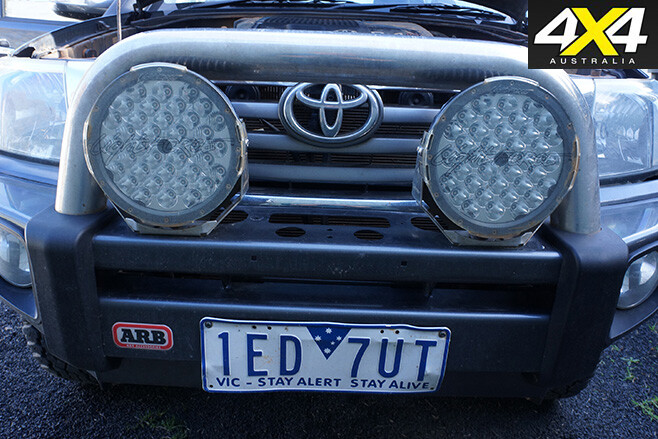
We’d previously fitted an ARB Sahara bar, OME suspension system all ’round, Cooper ST Maxx tyres, a Safari snorkel, Rhino-Rack roof bars, an ARB ute liner and a Hayman Reese tow hitch.
We had given them and the vehicle quite a workout in the Victorian High Country over the summer months, but now the Hilux was being geared up for its first outback trip. We took it to Outback 4WD in Bayswater, Victoria, for all the planned work.
We also fitted an iDrive throttle tuner and couldn’t believe the difference it made to step-off and overtaking. We generally run ours at U4, which is around the mid-point for ‘Ultimate Performance’. We could get even snappier performance if we cranked the setting up to U8 or U9, but we don’t think we need it.
With two people and all our gear, along with a motorbike and subsequent extra fuel, storage was going to be an issue. To make it possible to carry all the necessary equipment we added a large Rhino-Rack XTray to the set of Rhino-Rack bars we’d fitted. The XTray is of black powder-coated steel construction and weighs just 21kg – its carrying capacity of 75kg was pushed to the limit with a spare tyre and more.
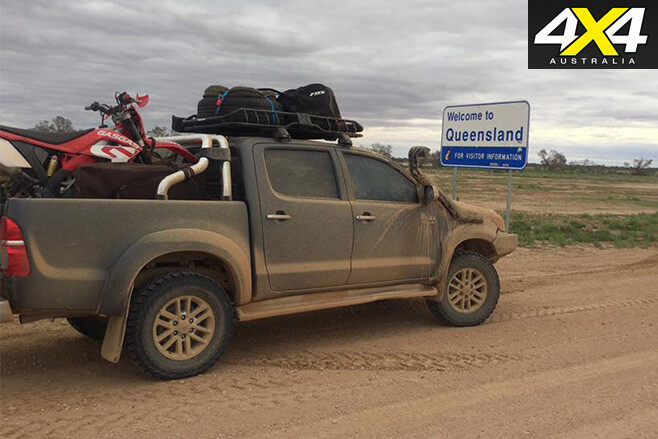
The OME suspension we’d fitted earlier wasn’t suitable for all of this added weight, so we went and fitted an OME extra leaf to the rear spring pack. This stopped the Hilux sagging in the bum when fully loaded and gave it a great ride over whoopty-doos and corrugations. There is a difference in ride quality when the vehicle is empty, but you can’t have everything.
The Hilux returned a thirsty 20.0L/100km for the trip, which is a big and surprising jump from its normal range of 11.0-12.0L/100km. Mind you, we weren’t standing still on the highway or backroads and we did play on Big Red with a few mates for a few hours. Whatever the cause, we got to Mount Dare running on fumes – highlighting the paltry 76-litre fuel capacity of the OE fuel tank.
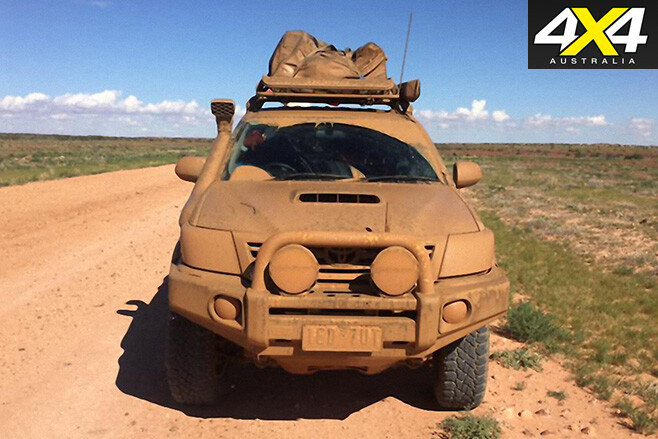
Tread depth on the rear tyres is down to 10.5mm (from a max of 12.5mm when new) so at that rate we’ve got another 50,000-60,000km left before we start looking for new rubber.
SPECS Total kilometers: Date acquired: Feb 2015 Price: $48,000 Km this month: 5700km Av fuel: 16.2L/100km
Beer Soup with Caramalised Onion and Beef: a delicious, manly version of the good old French Onion Soup.
Preparation time: 15-20min Cooking time: 20-30min
Ingredients
2 tbs butter 1 tbs oil/butter 3 large brown onions – peeled, halved and thinly sliced 1 tsp brown sugar (less if you want – onions are naturally sweet) 1 tsp balsamic vinegar (optional; don’t use if you find the onions too sweet when cooked) 1 tbs plain flour (optional; use if you would like a slightly thicker soup) 1 garlic clove, crushed 1 cup dark beer (Guinness, etc) 1 bay leaf 3 cups beef stock (use good stock to get the best flavour) salt & pepper 300-500g good steak, cooked to your liking and thinly sliced 2 tbs chopped fresh flat-leaf parsley, to garnish
Cooking it
• Heat the butter and oil in a heavy-based saucepan or your camp oven. • Stir in the onion and sugar. • Cover the pan and cook, stirring occasionally over low/medium heat for 10 minutes. Make sure you don’t burn the onions! • Remove the lid, increase the heat slightly and continue to cook, stirring frequently, for another five minutes or until the onions have softened and turned golden brown. Again, don’t burn them. • Sprinkle the flour over the cooked onions, stir well to combine and cook for a few minutes. • Add the garlic and stir through, then slowly add the beer and mix well to make a smooth soup. Add the bay leaf. • Bring to the boil, then reduce heat and simmer uncovered for five minutes. • Add the stock and mix well, season to taste. • Bring back to the boil, reduce heat and simmer gently for another 5-10 minutes. • Remove from heat and discard the bay leaf. • Spoon the soup into a bowl, top with some sliced cooked steak and sprinkle with a little parsley. Serve with some garlic bread or fresh bread on the side.
Viv’s hint
Look for onions with dry, clean, paper-thin skin, and be sure they are firm and have no opening at the neck.
Onions, shallots and garlic will keep for months in a cool, dry, dark place with plenty of air circulation, away from excessive heat or light. Do not store in a high-moisture environment such as your fridge or under the kitchen sink.
Also, while it’s common practice, don’t store onions and potatoes together. Potatoes have a lot of moisture and give off a gas that causes onions to spoil more quickly.
If you have a mandoline, this is going to make slicing the onion so much easier. Watch your fingers and use the safety cap! Or to save an awful lot of time, use a 280g jar of Beerenberg Caramelised Onion – all the hard work is already done for you!
If you already have some leftover steak from a barbecue, slice that up and put it in the soup instead of cooking up some more.