
BUILDING a top-notch tourer can be a lengthy process, especially if you’ve started with a showroom-fresh new vehicle. It can be weeks of figuring out what to fit, what you can afford, and waiting while it all happens. Then you have to sweat it out regarding what insurance coverage to get for all your just-fitted goodies, and then consider if your now heavily modified rig is still covered by its factory warranty.
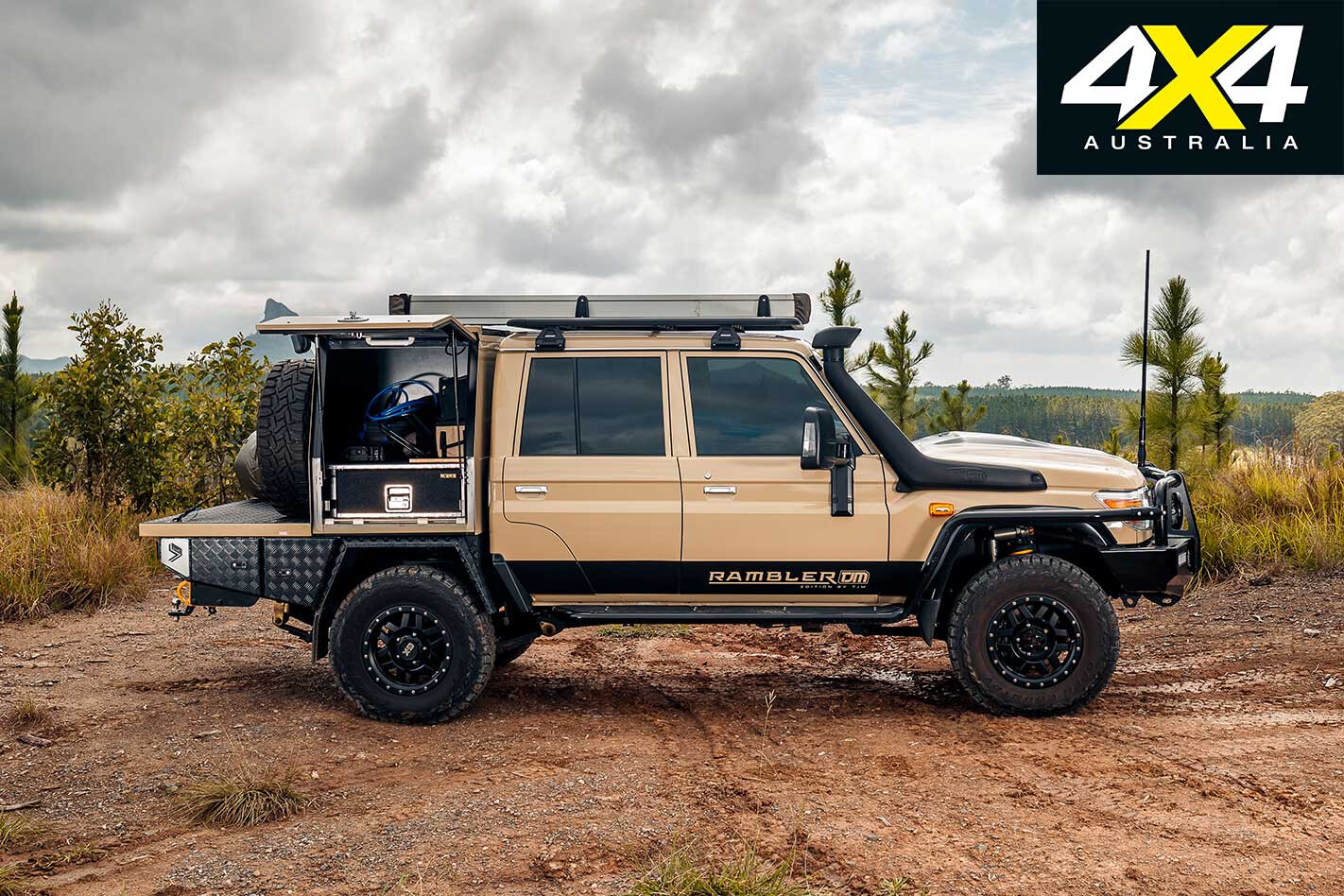
Or, you could head to TJM 4×4 Megastores and jump behind the wheel of something exactly like this Sandy Taupe monster: the Rambler Edition LC79 by TJM. It’s a rig built to be the ultimate answer to any tourer’s question of “what vehicle do I need to tackle any and all off-road adventures?”
Covered in all essential touring kit, the Rambler is bloody impressive. Adding to that is the fact this big bopper is covered by its original five-year factory warranty, along with a three-year warranty on all fitted accessories. Yep, the Rambler is a turnkey tourer with everything included, right down to the small print on the warranties. A spark of genius, if you ask us.
Dreaming a reality
TOYOTA’S 79 Series is a hugely popular vehicle for touring; its combination of a big V8 diesel engine, large fuel capacity and tough build quality and engineering sees it as the ubiquitous outback tourer, in many and varied modified incarnations.
Even with that, Kris Humphrys, director at TJM 4×4 Megastores, and business partner Brad Russell, saw there was a space in this modified tourer scene for a full turnkey offering that wasn’t only an effective tourer but a vehicle that could be used every day as general transport.
“When we approached this, we felt there was a hole in the market for doing these at an affordable price,” Kris says. “Our approach to this is we’ve always wanted to – well, we put it on the website – ‘built in the real world for the real world’.
“We wanted a vehicle you could drive to work Monday to Friday and then take the family to the beach on the weekend. We felt that a lot of the offerings out there were a park-in-the-shed car and take it on a trip twice a year, type of thing; it wasn’t practical Monday to Friday.”
The idea for this type of tourer had been kicking around for a while, Kris reckons.
“Me and my business partner Brad, we’d been talking about building vehicles for a long time,” he explains. “We’d seen plenty of people building 70s and we’ve always thought there are things that we’d do differently… Brad and I have travelled all over Australia – we know what works, we know what doesn’t work. We’ve combined all of that knowledge into building these vehicles and, like I said, it’s about being practical for the real world.”
Helping the project happen is the fact Kris runs three TJM stores and an independent TJM 4×4 Megastore, as well as Spinifex Manufacturing, which specialises in tray bodies, canopies and electrical accessories.
Being able to utilise excellent TJM accessories, build a fully custom tray and canopy specifically for Rambler (more on that later), and build the Rambler up from a new vehicle, is a huge advantage.
Even bigger – and better for all concerned – is the fact the vehicle still retains its full Toyota warranty once the build is complete. Plus, owners know they can drop into one of the 70-plus TJM 4×4 Megastores around the country and, if the unlikely happens, get any damaged accessory fixed or replaced easily. They call it peace of mind … and that is something you won’t lack when you’re driving the beast, either.
Sending a subtle message
MODIFYING a single or dual cab LC79 for touring isn’t new, but the Rambler presents as just that, thanks to numerous as-expected mods mixed with some unique to this vehicle.
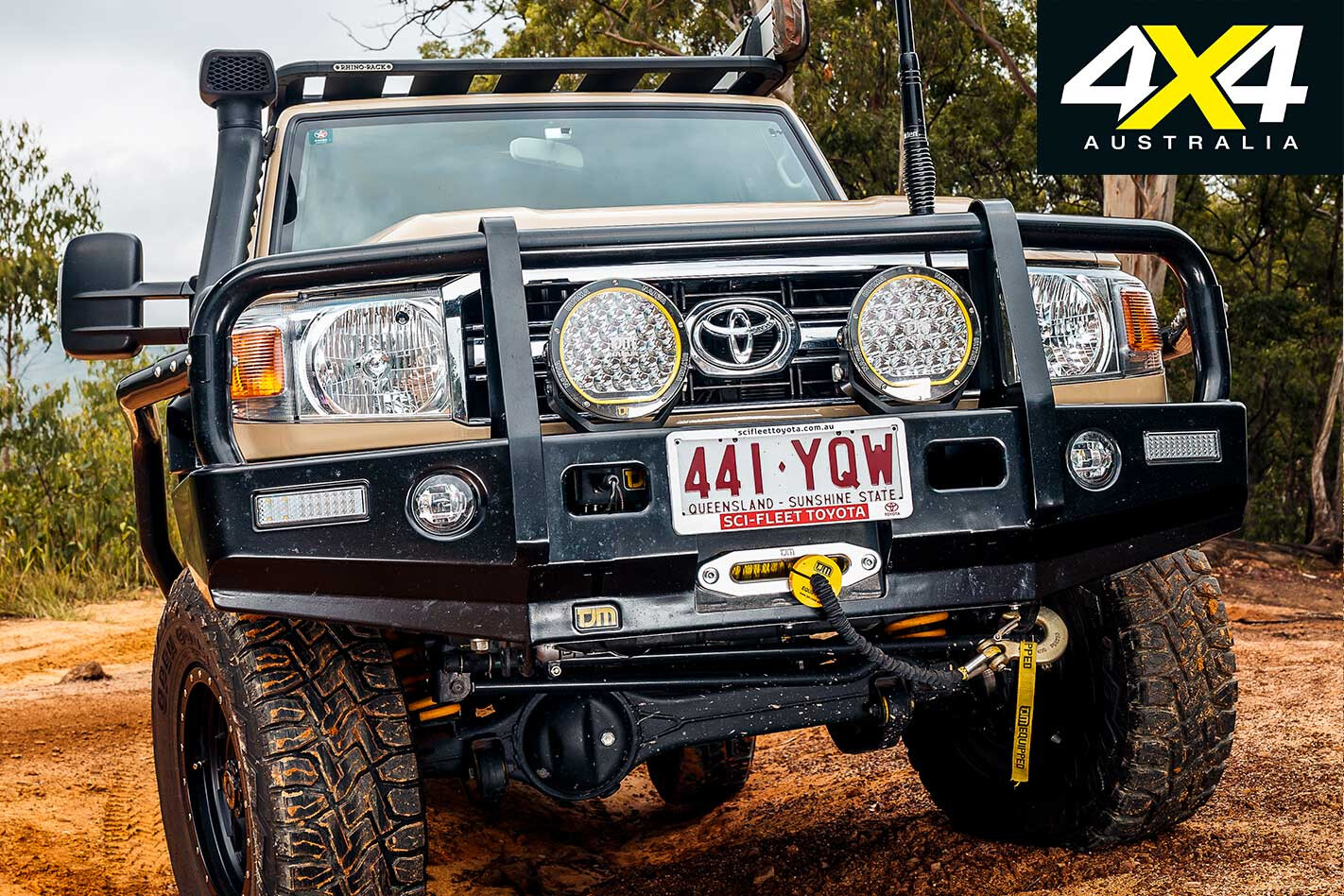
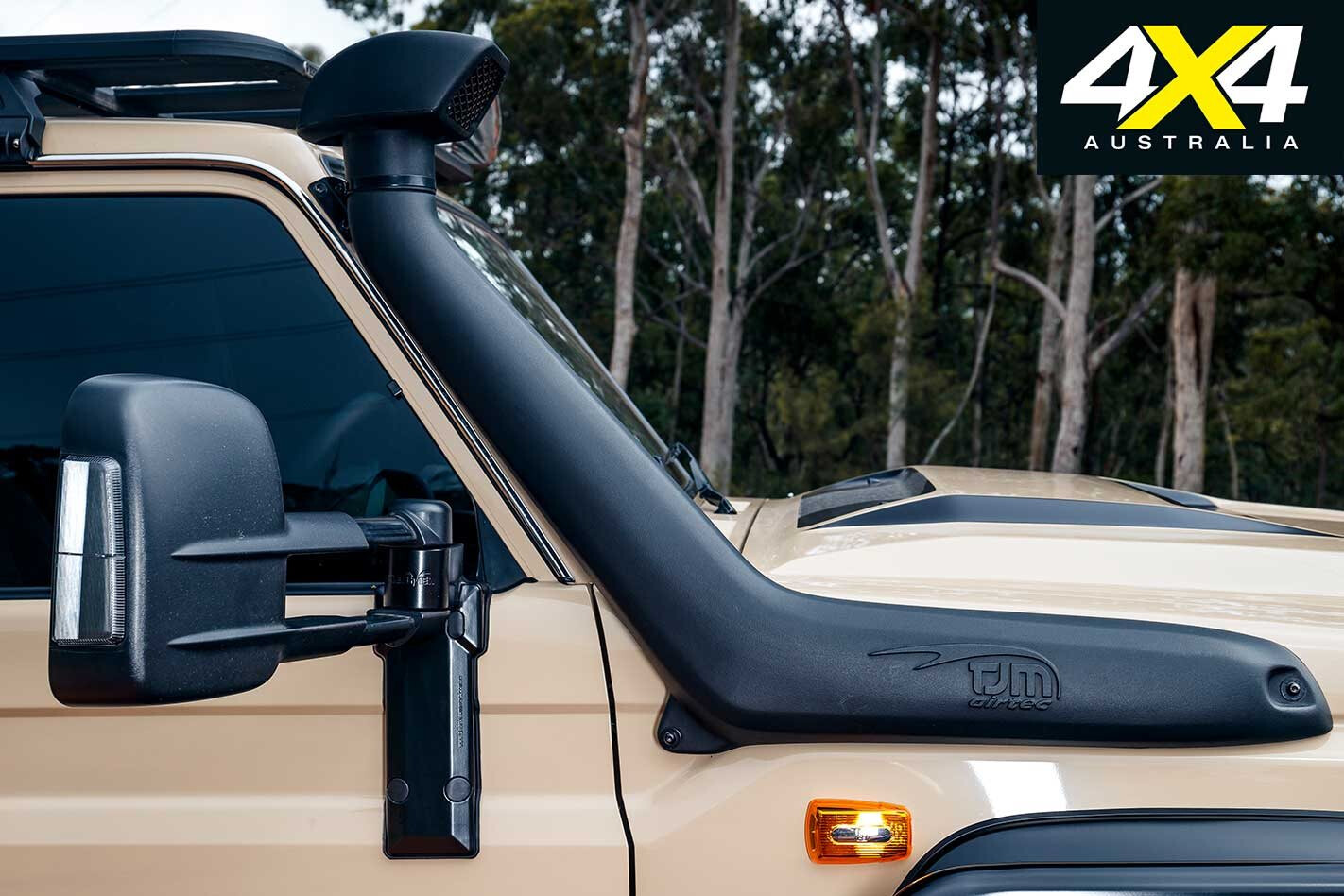
The exterior is visually subdued, belying the Rambler’s serious intent. A TJM Outback bullbar, side rails and steps take care of that schmick Sandy Taupe paintwork, while the TJM Torq 12,000lb winch ensures recovery (if the unlikely happens and this thing is ever stopped) and the TJM Airtec snorkel keeps that tweaked 4.5TDV8 (it now pushes out 40 per cent more power thanks to a TJM 4×4 Megastore ECU tune and a sweet-sounding Torqit exhaust) breathing easy.
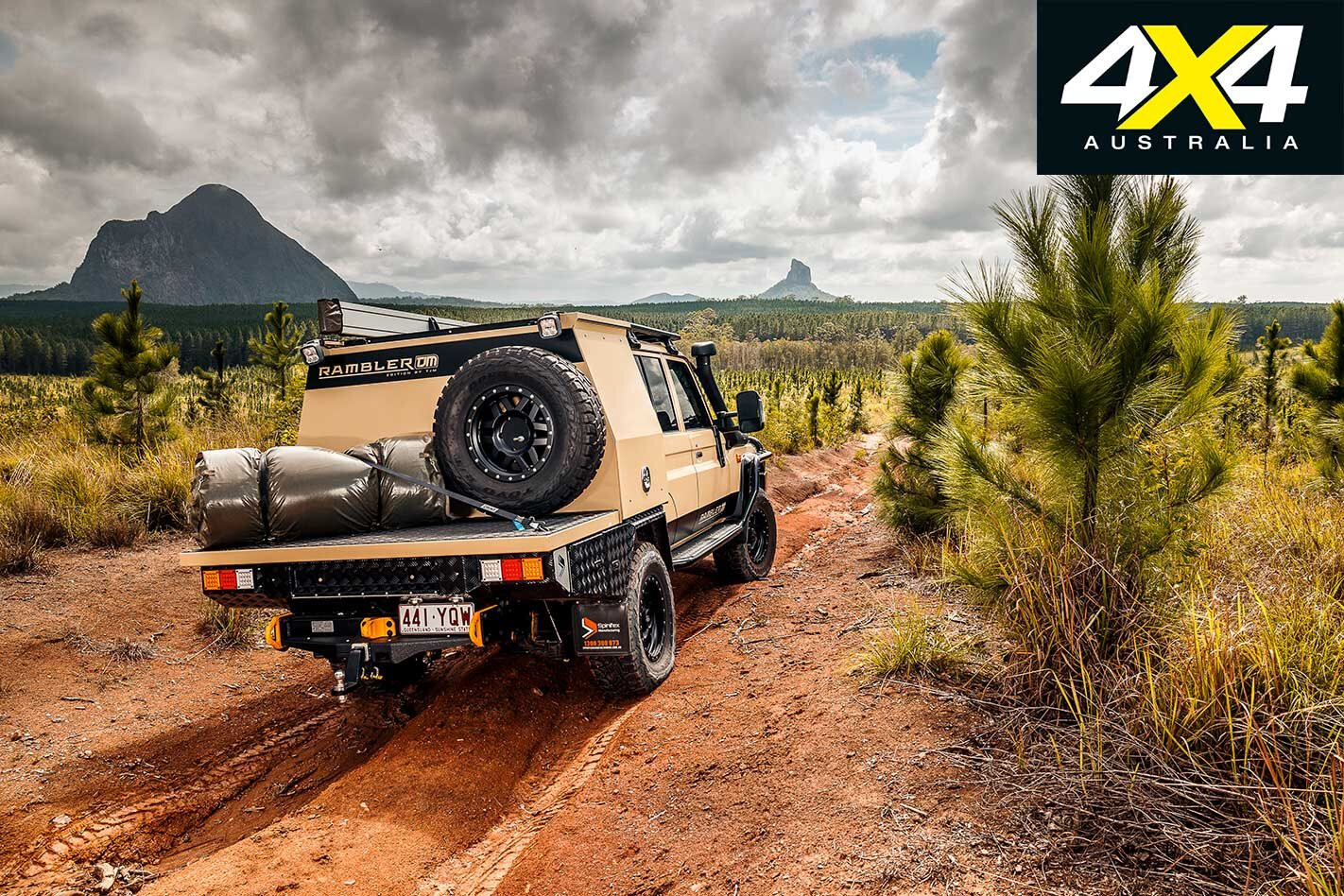
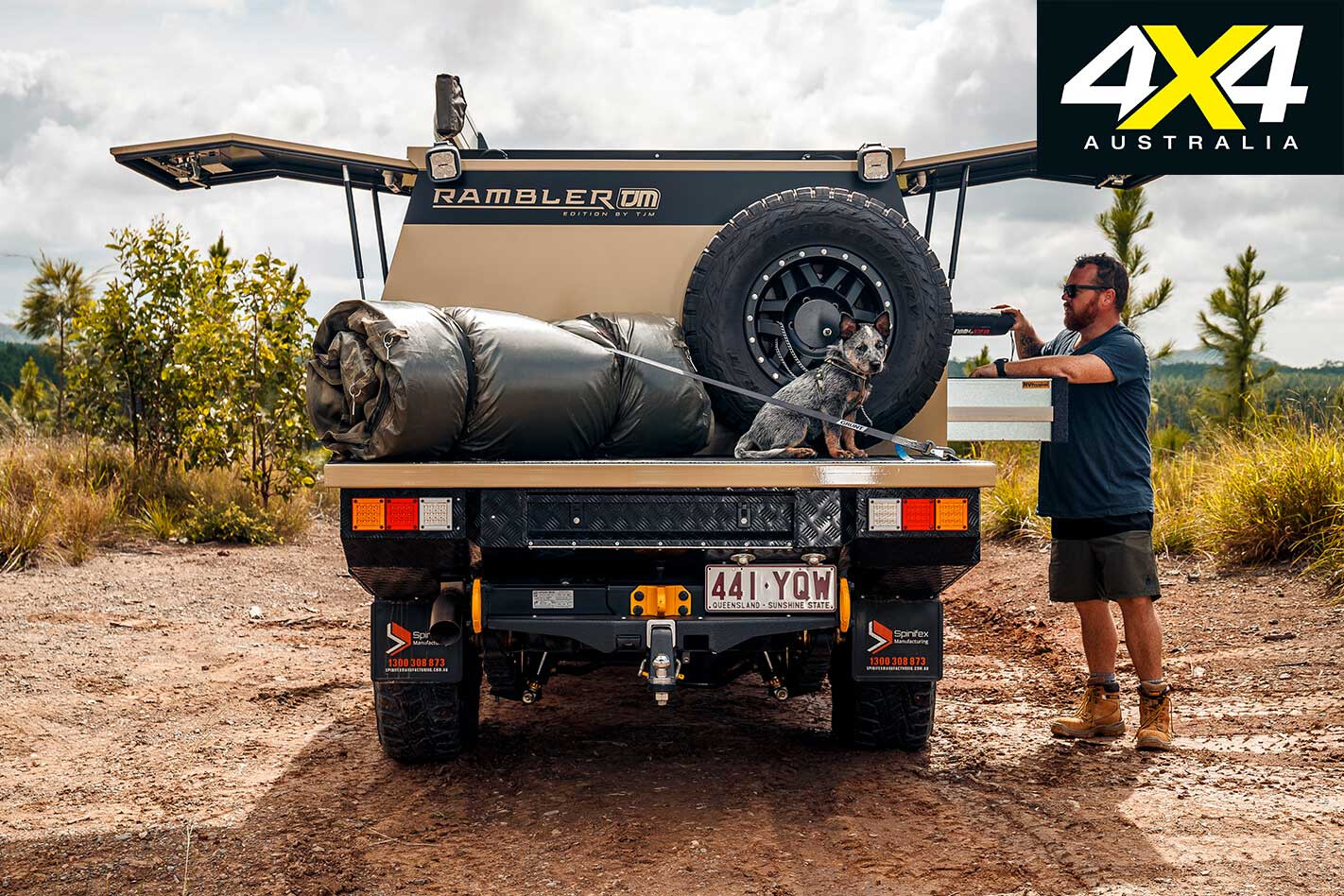
Move around the rear and it is here where you see more distinctive Rambler-only mods, with the rear tray and canopy (both powdercoated) the handiwork of Spinifex Manufacturing.
“The body on the back of that was the first one we’d built that way out of our Spinifex business,” Kris says. “We’d been getting requests for that half-canopy and we’d never done one. We took the plunge on that and built one and integrated it into a tray so it is a one-piece body – it’s not just a bolt-on canopy that sits on the back of a tray.”
Incorporated on the rear of the chassis is a Hayman Reese X-Bar tow bar with included recovery points. The tray also includes six flush-mount tie-downs and, like the canopy interior, is coated in protective Raptor Coat; the Spinifex team also added underbody tool boxes.
The canopy houses a utility tray setup on the driver’s side, with a cargo drawer and storage space above that for luggage, gear, etc. For this particular rig – build No.001 – the crew added one of the optional extras: a TJM Connect compressor kit (canopy-mounted compressor, pressure perfect module and 10m air hose).
The left-hand side of the canopy continues with the options showcase, featuring the optional upright fridge and power upgrade comprising a Bushman’s 130-litre upright fridge housed in a neat surround panel, two cigarette sockets, one USB (a double) wireless switchgear for all the lights, and a Spinifex Power Panel.
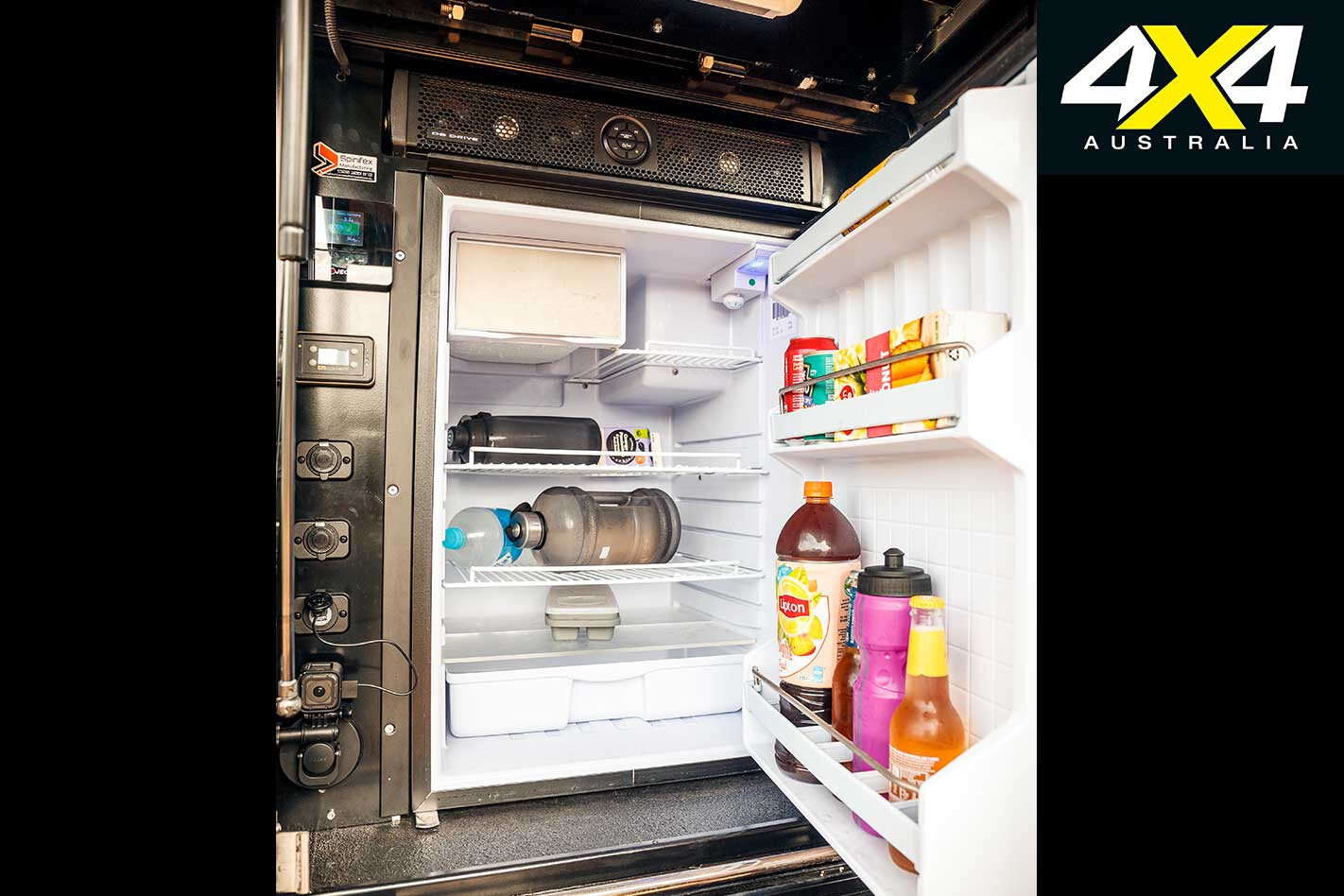
The result is a full-house, fully functional canopy that looks like a factory fit. The rear of the tray remains empty for stowing swags, tents or other bulky items, and there’s a Rhino-Rack Pioneer Platform on top of the cab for additional load-lugging.
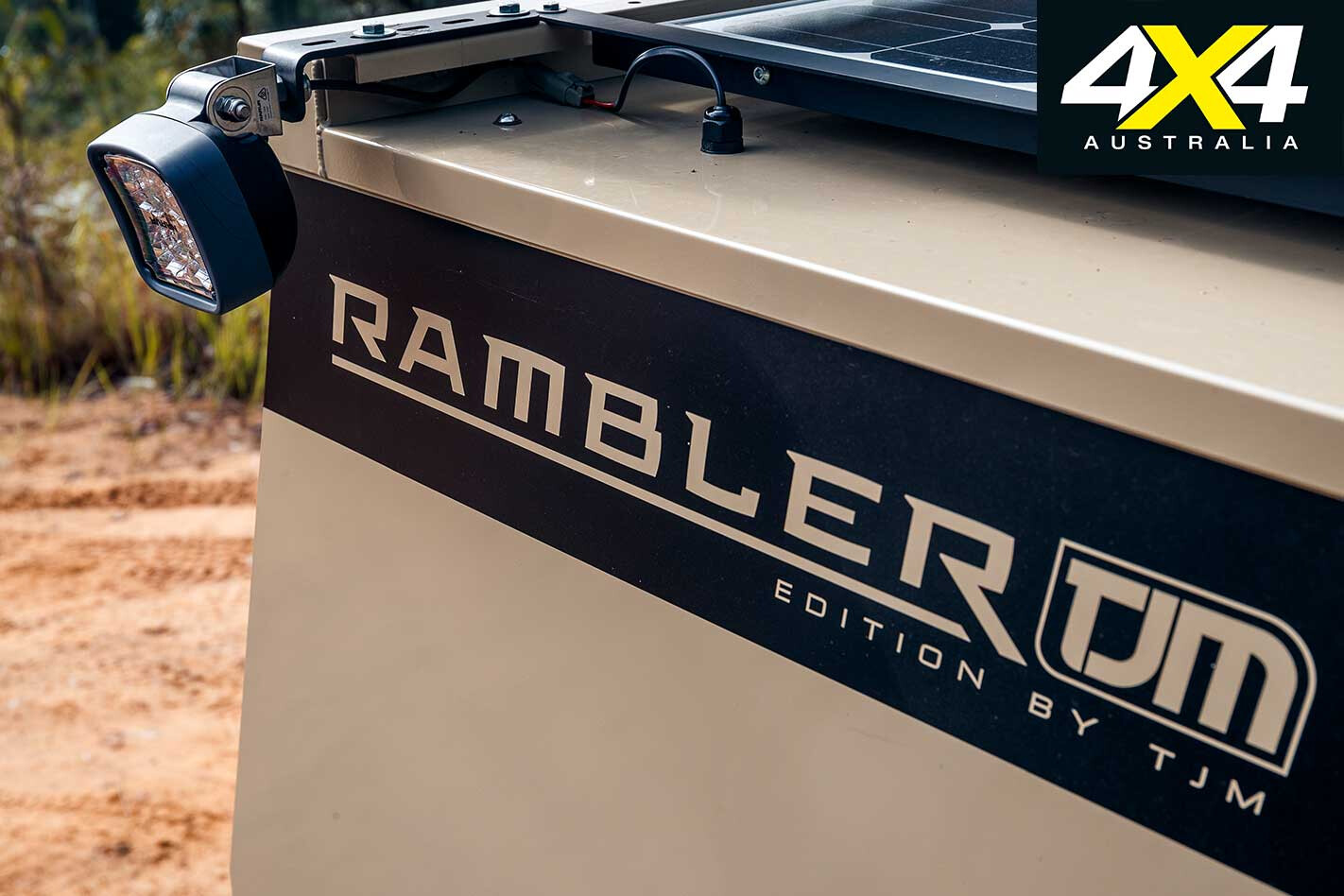
The canopy, tool boxes and utility hatch all include LED lighting, plus there’s a 100W fixed solar panel atop the canopy. Other lighting enhancements include the fitment of an LED headlight upgrade kit, and LED door lights and tail-lights. The Rambler decals are subdued, too, with a dark strip down each side and one along the rear of the canopy. I guess when you’re this capable, there’s no need to shout.
A lift in driving experience
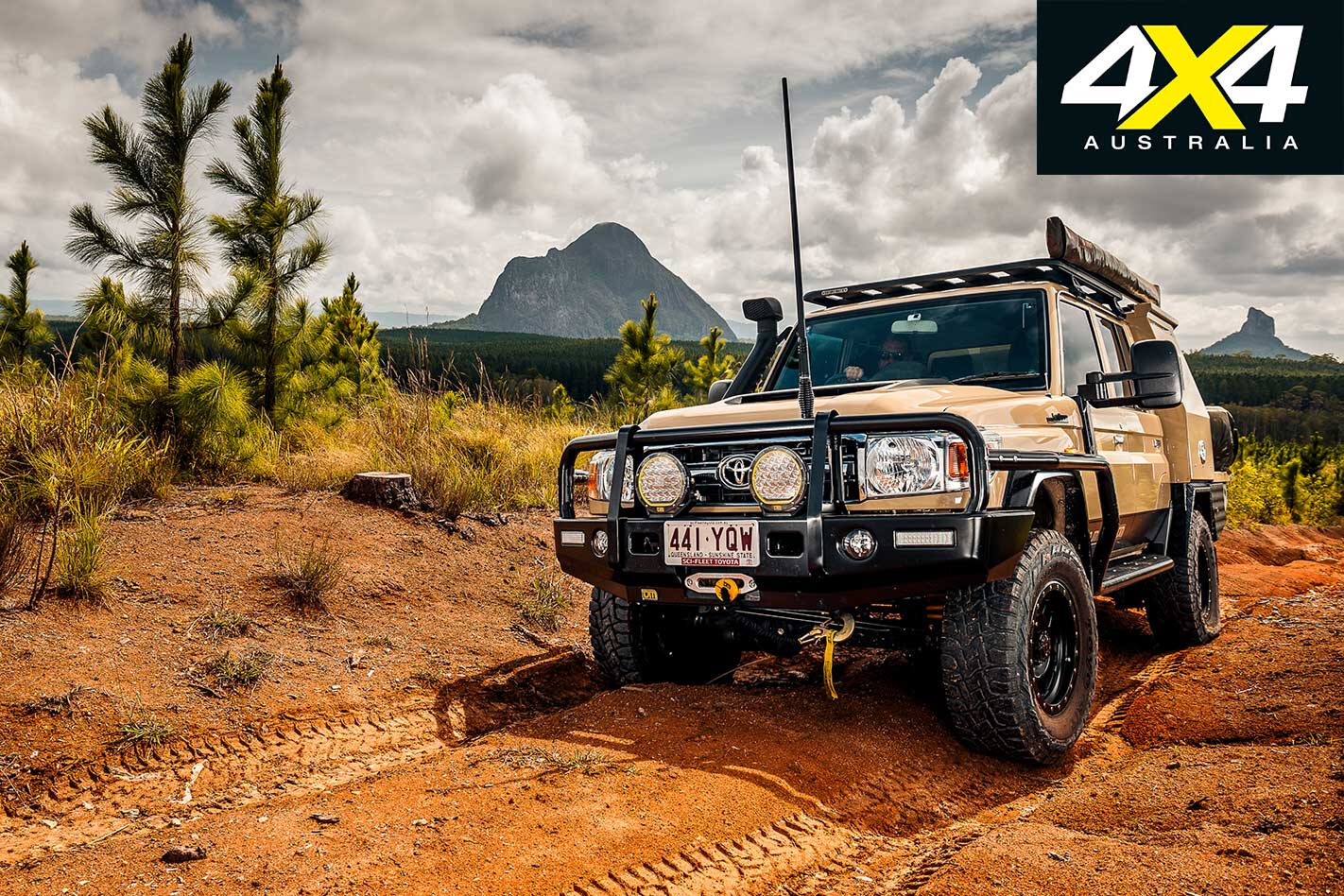
LONG-DISTANCE touring requires plenty of gear, so you obviously need a rig that is up for it in terms of off-road capability, load-lugging capacity and driveability – there’s nothing worse than trying to manhandle an over-weighted pig of a 4×4 on- and off-road.
Kris and his team were determined to ensure the Rambler could walk the talk, so they started off by fitting durable, touring-oriented suspension in the form of TJM’s adjustable Pace remote reservoir shocks and upgraded coil/leaf springs.
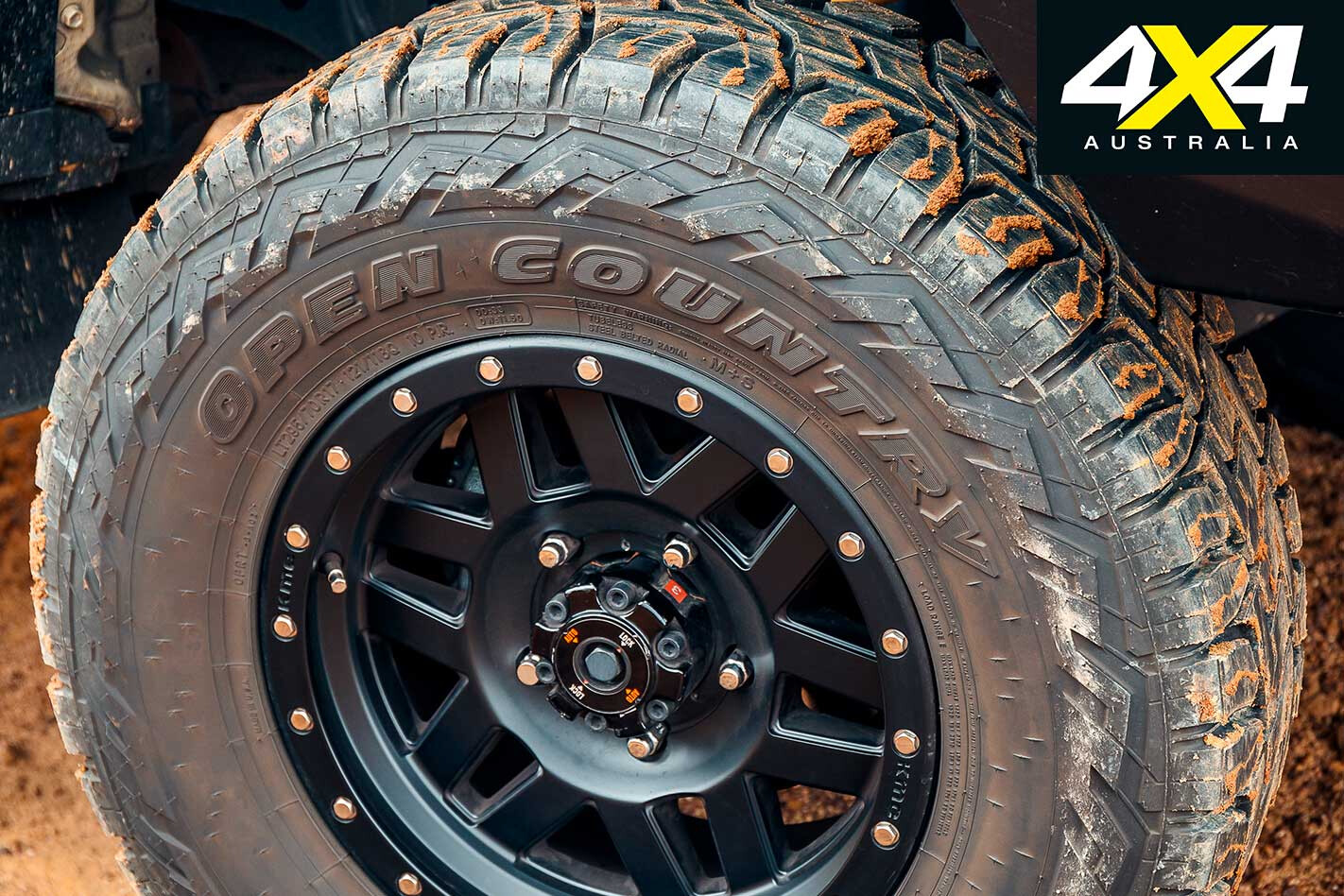
Added to this was TJM’s heavy-duty sway bar, a TJM steering damper, plus bush touring-friendly 17-inch KMC alloy wheels shod with 285/70R17 Toyo Open Country R/T hoops (with the spare wheel/tyre the same combo). Finally, to stay legal and safe when fully loaded, the team added something a little special.
“That LC79 is the first one in the country to have the TJM second-stage manufacturing GVM upgrade done to it, with the remote canister shocks,” Kris affirms. “So that is brand-new to market, with 3950kg GVM and 3500kg towing capacity. The vehicle weighs 3180kg dry, so there’s plenty of payload in it, too.
“The vehicle would be more than suitable without a GVM upgrade, but at 3180kg with everything in it – a full tank of fuel, the whole lot – that upgrade gives you almost 800kg. You put four adults in that and a big boat on the back and you’re still legal. I don’t know what other vehicle you can do that with.”
The interior of a Toyota LC79 is hardly what you’d call comfortable for long-distance driving, but Rambler No.001 showcases what can be done with that big utilitarian interior. There is now an Alpine stereo complete with Apple CarPlay, with the sound pumped through three-way Alpine speaks up front and two-way jobbies in the rear.
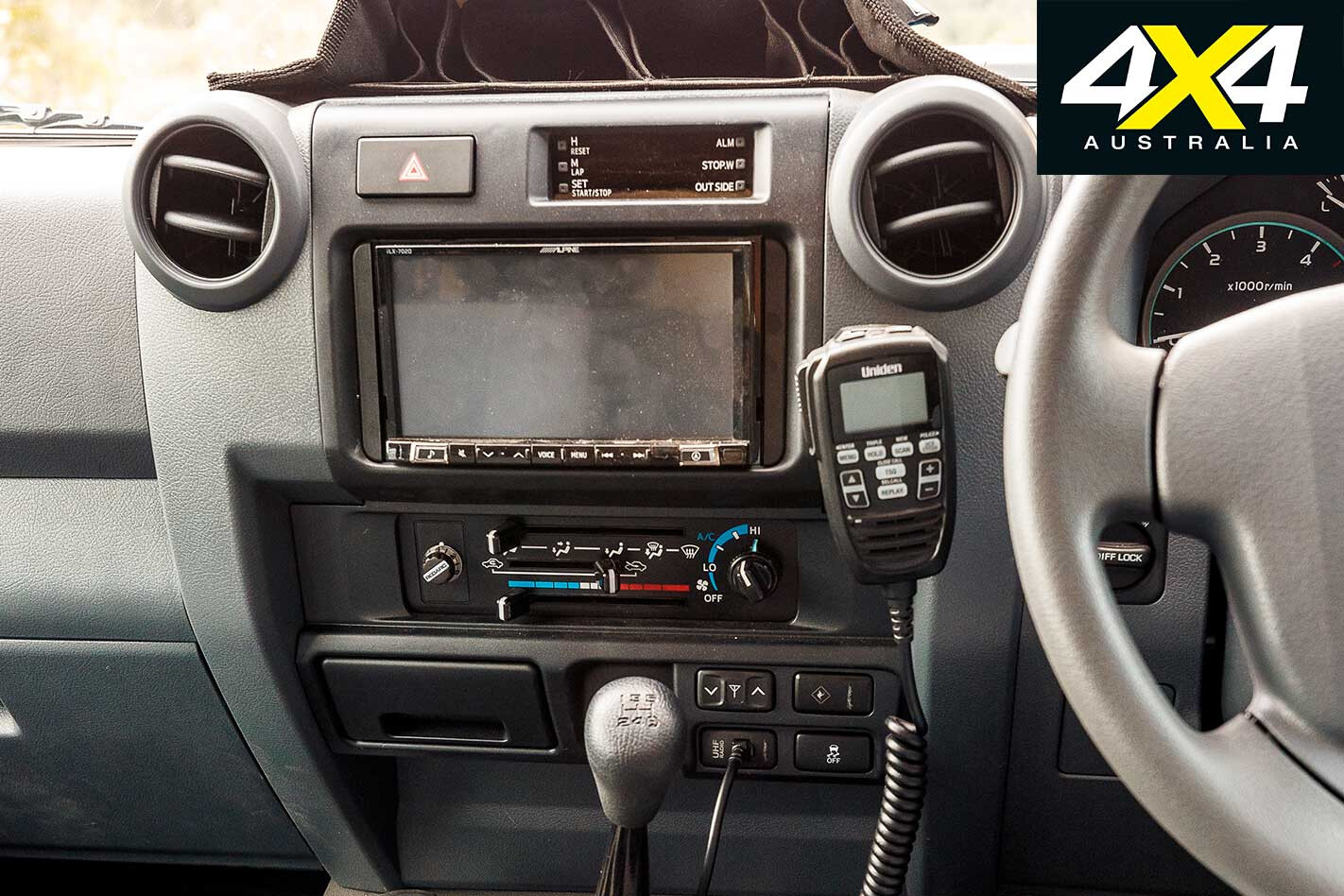
Kris enlisted fellow Queensland Toyota specialists, Cruiser Consoles, to fully overhaul the trim and storage with front door pockets (including bottle holders), rear door speaker pods and a sweet-looking, functional centre console and gear surround. Yep, seeing a centre console inside an LC79 takes a little bit of time to get your head around, and a 3M window tint ensures nobody sees just how much you enjoy that interior.
All this is standard kit, too (barring the aforementioned two options). Depending on how big your wallet is, you can pretty much go to town on additional extras, with numerous upgrades that include bigger mud-terrain tyres, Brown Davis long-range fuel tanks, beefed-up brakes, even more sound system, a lithium-ion battery upgrade, and plenty more.
High demand
WHEN I asked Kris if he’s taken Rambler Edition No.001 for a big trip, he just laughed. “We finished it, photographed it, shot a video of it, and then put it up for sale. In three days, it was gone.”
The team’s concept of a versatile, tough outback tourer seems to been borne out, and it means they’re already onto the next Rambler, plus a few other pretty intriguing ideas…
“Mate, it’s gone nuts,” he says. “I’ve got another one that’s being delivered this week … a silver one. We’re in the middle of building a red one, which I have three people talking to me about. And we’re about to do a 200 Series (in partnership with ASG 4×4 Toowoomba).”
Picture: Ian Richardson, owner of Rambler 001, with Lacky the pup.
The sheer demand for this turnkey terror is easy to understand; the fact it’s a super-capable modified vehicle with the added lure of a factory warranty (and three on the accessories) makes it a no-brainer. Equally a no-brainer is Kris’s plan to give the 200 Series the same treatment and also make the ‘Rambler package’ available to any off-road vehicle a client may wish for.
“We have taken the approach that we’ll build them (the Rambler option) to what the customer wants,” Kris says.
“If you don’t want a 70 Series but you want a Hilux or a Colorado, we’ll build your Rambler around that platform. We can package it – that whole package of being able to finance it and insure it – (and) give them a driveaway package.”
This ready-for-anything Rambler LC79 must be close to the ultimate ‘driveaway deal’ on the Aussie new-car market.
After stamping its name in the world of tuner Ford Mustangs, RTR, led by professional drifter Vaughn Gittin Jr, has unveiled its second “publically available model”, the 2019 Ford F-150 RTR.
The F-150 RTR is sold as a dealer-fitted package from select Ford dealerships in the United States for all Ford F-150 variants, with the exception of the F-150 Raptor. For existing F-150 owners, the full package is available directly from RTR for US$12,750.
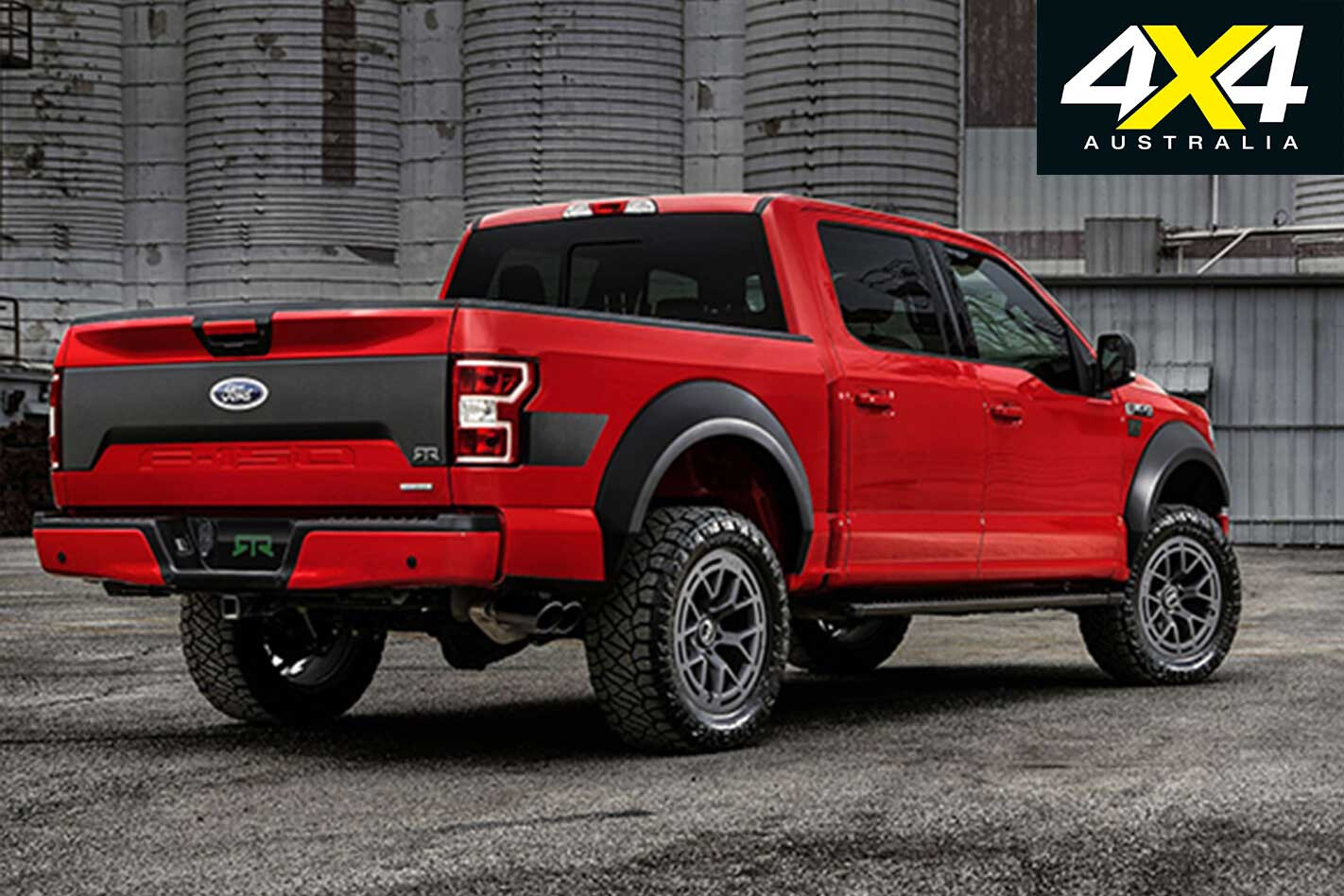
Based on the F-150 RTR concept that was unveiled at SEMA 2017, the RTR package includes RTR’s signature upper front grille with the iconic geometric LED light inserts, fender flares, front off-road skid plate, and 20-inch wheels wrapped in Nitto Ridge Grapplers.
For customers looking to customise the F-150’s interior, RTR also offers an optional RTR-designed and branded leather upholstery.
As far as performance tuning goes, the RTR package only features a cat-back sports exhaust. While that won’t turn any F-150 into a Raptor-fighter, RTR’s suspension package, which comprises of Fox 2.0 coilovers and shock absorbers, will give it some trail-bashing capability.
HERE are six reader-submitted 4x4s that were recently featured in the April 2019 issue of 4X4 Australia.
To get involved, post a pic and a description of your rig on our special site here or post it to our Facebook page.
1980 TOYOTA LAND CRUISER FJ40: ADAM SMYTH (4×4 Australia Readers’ Rigs Winner of the Month)
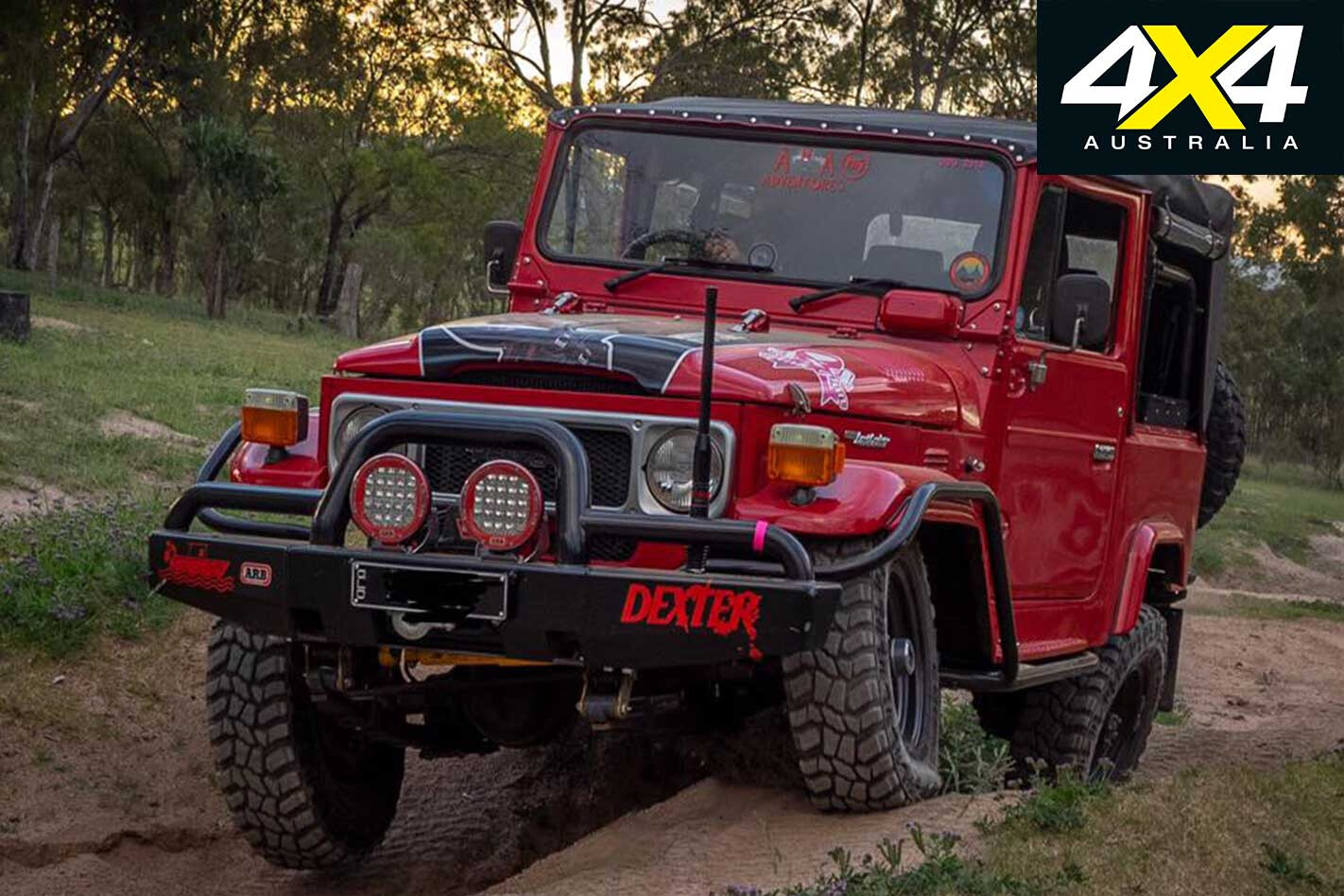
THIS IS Dexter, an old-school FJ40. It has been restored, trying to keep its original look.
Kit includes: 2F engine, extractors, Aisan carburettor, twin diff locks, ARB bar, Warn winch, custom rock sliders and brush bars, a waterproof sound system that’s used in boats, ARB LED spotlights, UHF radio, OME suspension (50mm lift), 16-inch steel rims, Cooper muddies, custom bonnet wrap, dash cam, and two soft tops.
It’s an original Toyota design, and I kept the narrow profile to preserve its look. I’m currently on Fraser Island as I write this.
2011 JEEP WRANGLER: DAVID DOBINSON
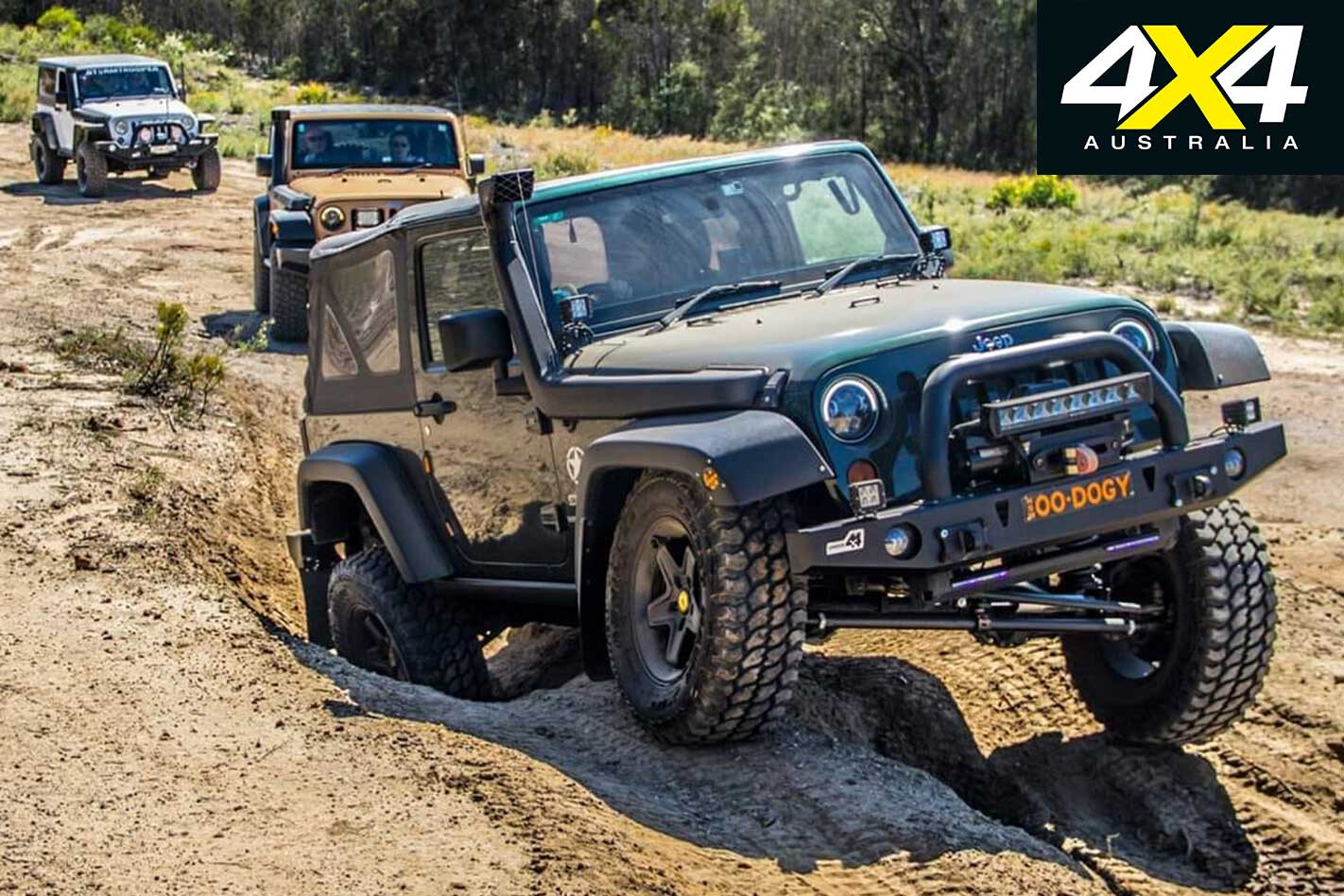
KIT includes a 3.8V6 auto, 2.5-inch AEV lift, 4.11 diffs, HD drive shaft and steering links, reversed HD steering damper, Uneek Baja front bar with loop and 12,000lb winch, STEDI light bar, LED headlights, fog lights and spread lights, Uneek rear bar, LED reversing lights, LED tail-lights, various underbody armour, AEV Pintler alloys shod in 33-inch Achilles XMTs, Rubicon rock rails, a snorkel, and an axle-back exhaust.
Favourite trails include Mt Airlie, Coxs River, Stockton Beach, Yarwal and Monkey Gum, but there are many more to mention.
1988 DAIHATSU ROCKY: CRAIG SAINSBURY
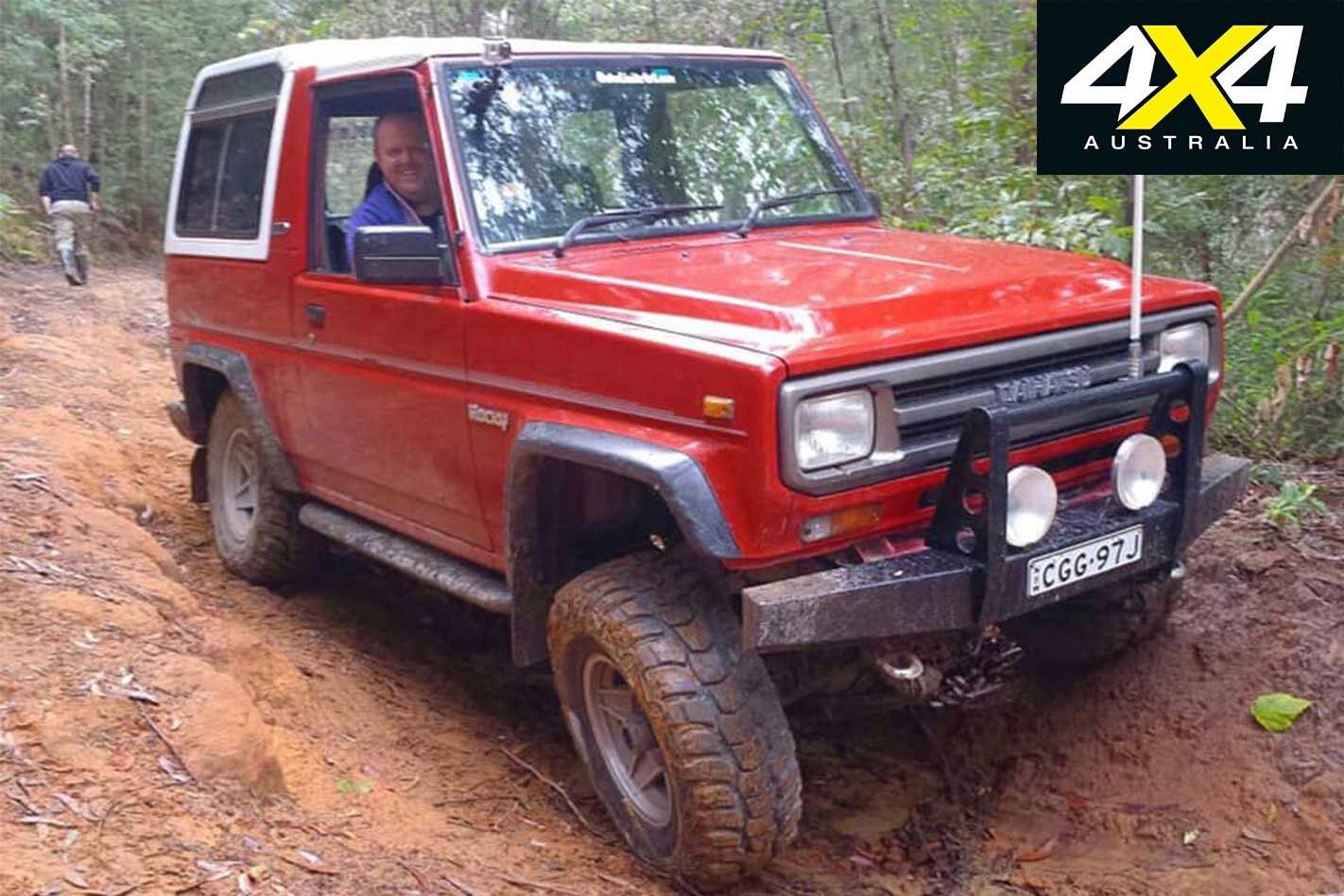
IT RUNS a V6 Commodore engine and has a two-inch lift. It loves all tracks.
1997 1FZ-FE TOYOTA LC80: BAILEY MCQUAKER SILMAN
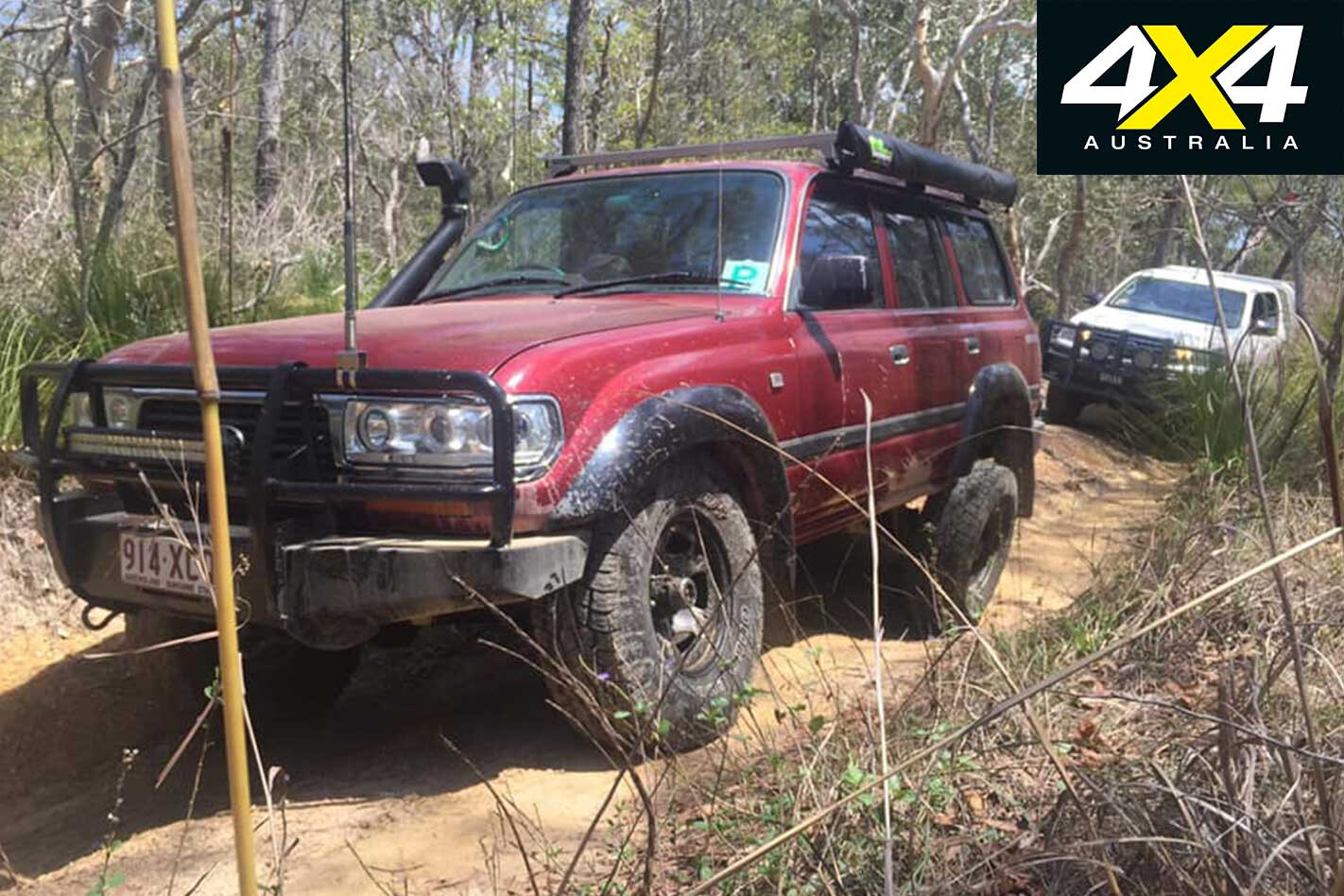
IT HAS a 2.5-inch lift with coils all around, Safari snorkel, LED light bar, Rhino roof racks, rear LED tail-lights, LED indicators, 2.5 x 2.5 Ironman awning with built-in LED lighting, 2.5-inch stainless steel exhaust system, Toyo Open Country all-terrains, halo headlights, 40-channel UHF radio, air horns, and Titan drawers in the rear to store recovery gear, tools, oils, etc.
I’ve taken it to the beach tracks south of Mackay, and to the state forest tracks both north and west of Mackay. I am still yet to do some wheel-lifting, as my Cruiser just seems to flex over everything.
2007 TOYOTA LC76: MARK SPAGNOLO
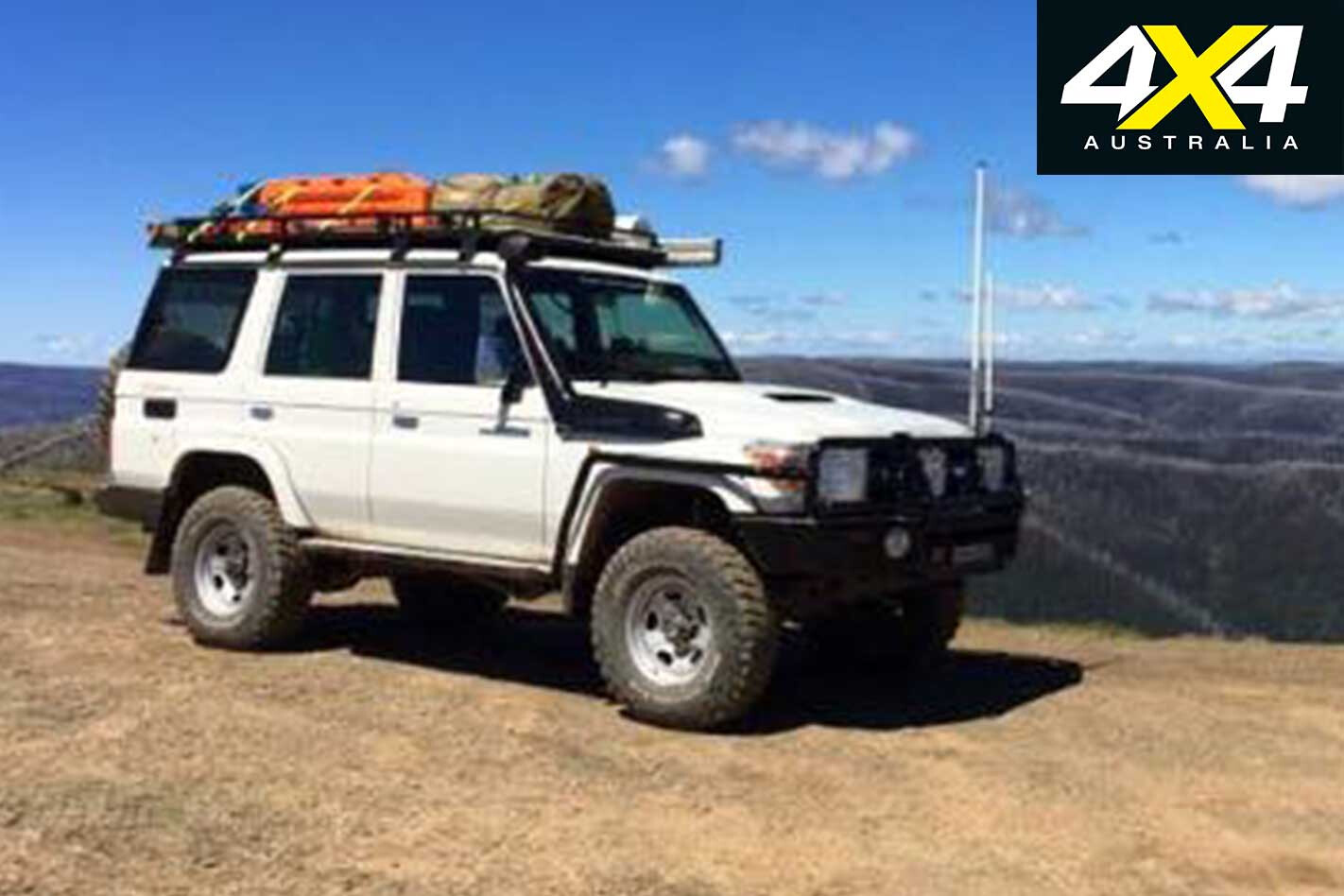
MY LAND Cruiser features ARB lockers and bar work, Recaro seats, three-inch exhaust, Outback drawers, Redarc battery system, and a TJM roof rack. The list goes on. Best places are the Kimberley, Alice Springs, Vic High Country, Cape York and Fraser Island.
1996 NISSAN PATROL UTE TD42: CALLUM NORRIS
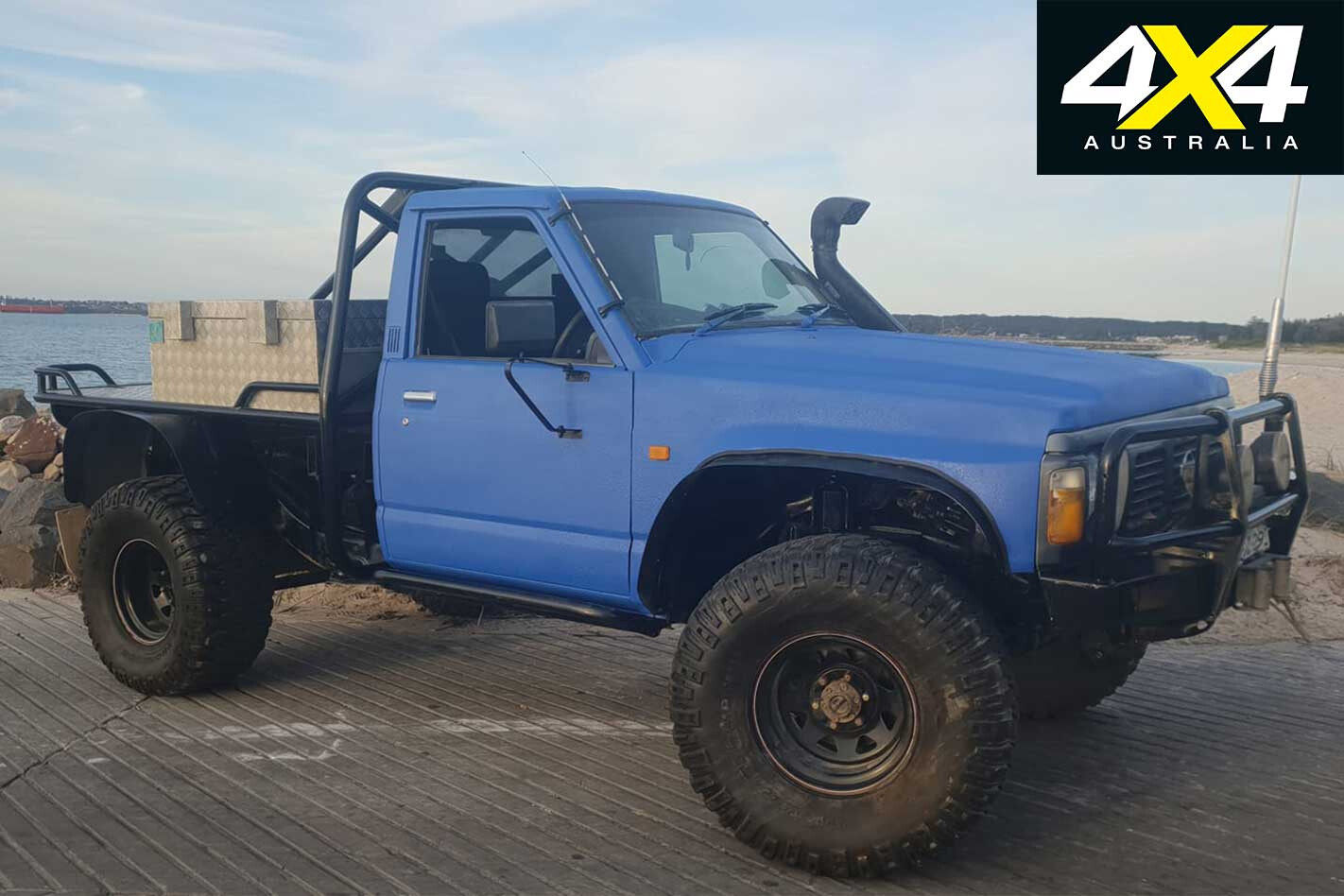
THIS PATROL has been rebuilt. The engine has a 12mm pump and injector to suit, with a Hi-Flow Garrett and water-to-air intercooler. It runs a two-inch lift and 36×15.5 R16 MTZs, it’s twin-locked, and there’s an ELocker in the front and ARB rear. The custom tray can mount a rooftop tent, and the body is coated in Raptor liner. The majority of the work done was with my mate, Connor Browne.
THE Rambler Edition Land Cruiser 79 is a full turnkey tourer put together by the folks at TJM 4×4 Megastores.
The tricked-up LC79 – you’re ogling Rambler Edition No.001 – runs a full gamut of off-road essentials, with the base Toyota chosen for its V8 diesel engine, tough build quality and large fuel capacity.
The subdued exterior is coated in that Sandy Taupe paintwork, with the front-end featuring a TJM Outback bullbar (running to side rails and steps); a TJM Torq 12,000lb winch, and a TJM Airtec snorkel. Moving to the rear and the powdercoated rear tray and canopy are the work of Spinifex Manufacturing, while a Hayman Reese X-Bar tow bar sits at the tail.
The V8 is tweaked via a TJM 4×4 Megastore ECU tune for 40 per cent more power, with a Torqit exhaust helping with the added grunt.
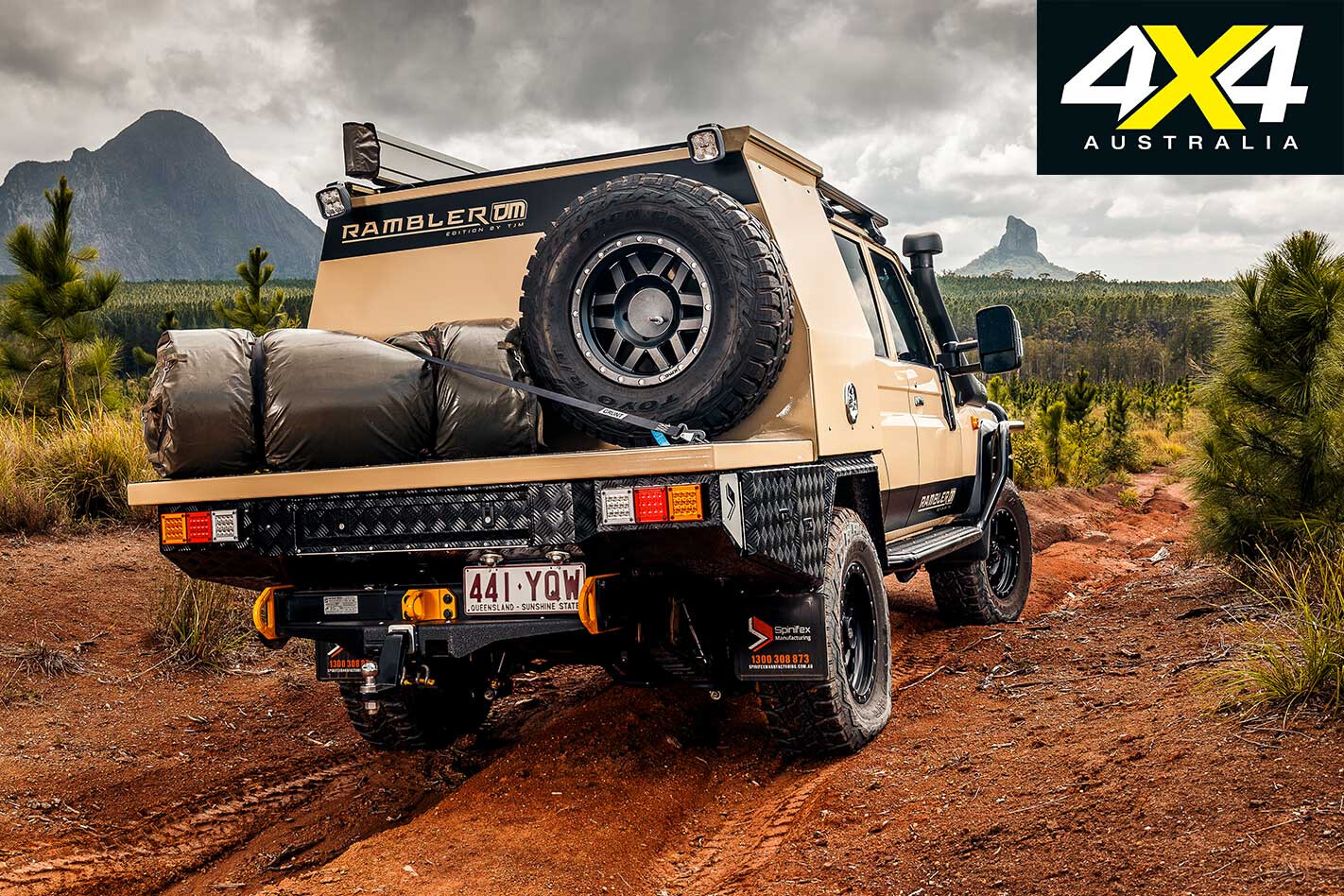
In addition to a canopy chock-full of practical equipment (Bushman fridge, Spinifex power panel and TJM Connect compressor … to name a few), the Rambler’s ride quality was enhanced via TJM’s adjustable Pace remote reservoir coil/leaf springs, a TJM heavy duty swaybar and a TJM steering damper. TJM also gave the rig its second-stage manufacturing GVM upgrade, upping GVM to 3950kg.
Amazingly, once the build is complete the Rambler LC79 retains the full Toyota warranty.
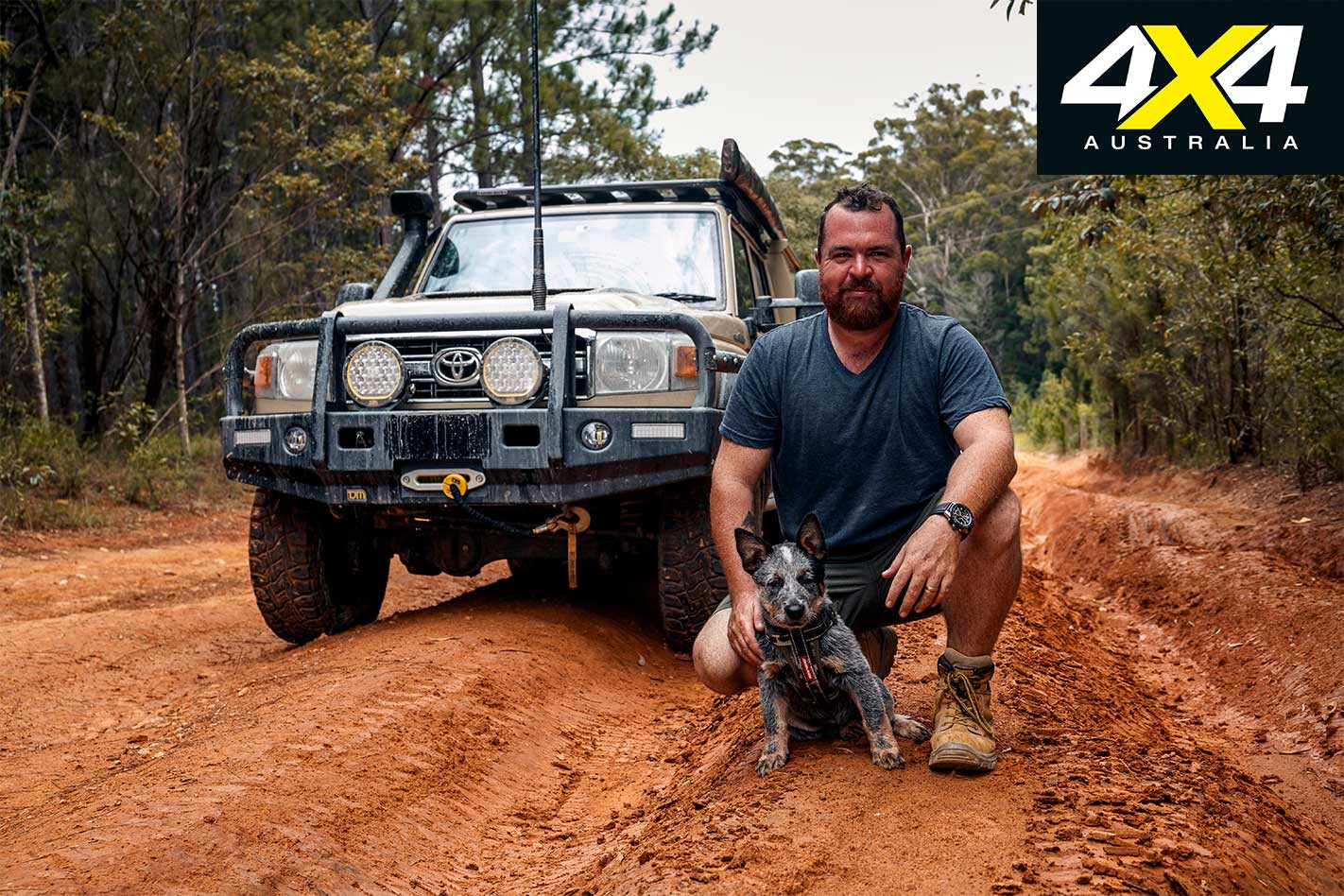
The Rambler Edition LC79 by TJM is running a truck-load more kit, but you’ll have to read all about it in the April 2019 issue of 4X4 Australia – in stores now.
RATING THE utes in the 2019 tow test in a one-to-six finishing order is difficult due to the big difference in price and the big difference in how the six performed in our load and tow testing. What’s fairly easy, however, is to slot them in three groups: outright winners; those which are good bang-for-your-bucks work horses; and those that aren’t well-suited to hard yakka.
In the winners group, but in no particular order, are the Amarok 580 and the Ranger 3.2. The 580 is a winner thanks to its muscular powertrain, clearly the most potent here. It backs that with a stable and competent chassis that’s as good as any here, and it gets the added security and safety of full-time 4×4. But then there are the safety omissions: no rear cabin airbags and no AEB.
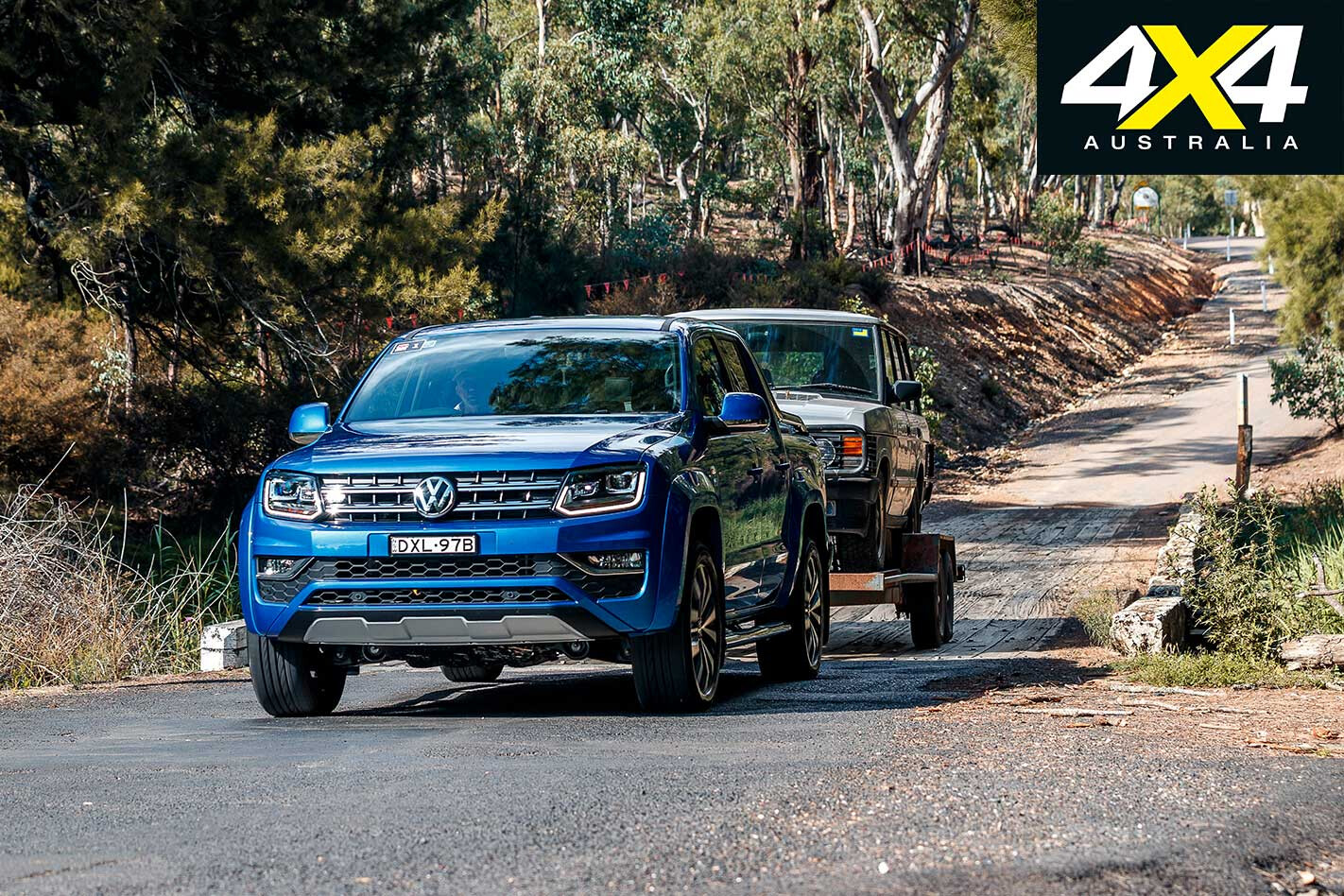
Plus, if you wish to tow a heavy camper trailer in the High Country, its lack of a two-speed transfer case may be an issue – still, the Amarok is excellent off road, despite not having low range. The 580 also isn’t cheap, but that’s offset by the fact an Amarok 550 Core, which should do 90 per cent of what the 580 does performance-wise and 100 per cent of what it does chassis-wise, can be had for just $50,990 driveaway.
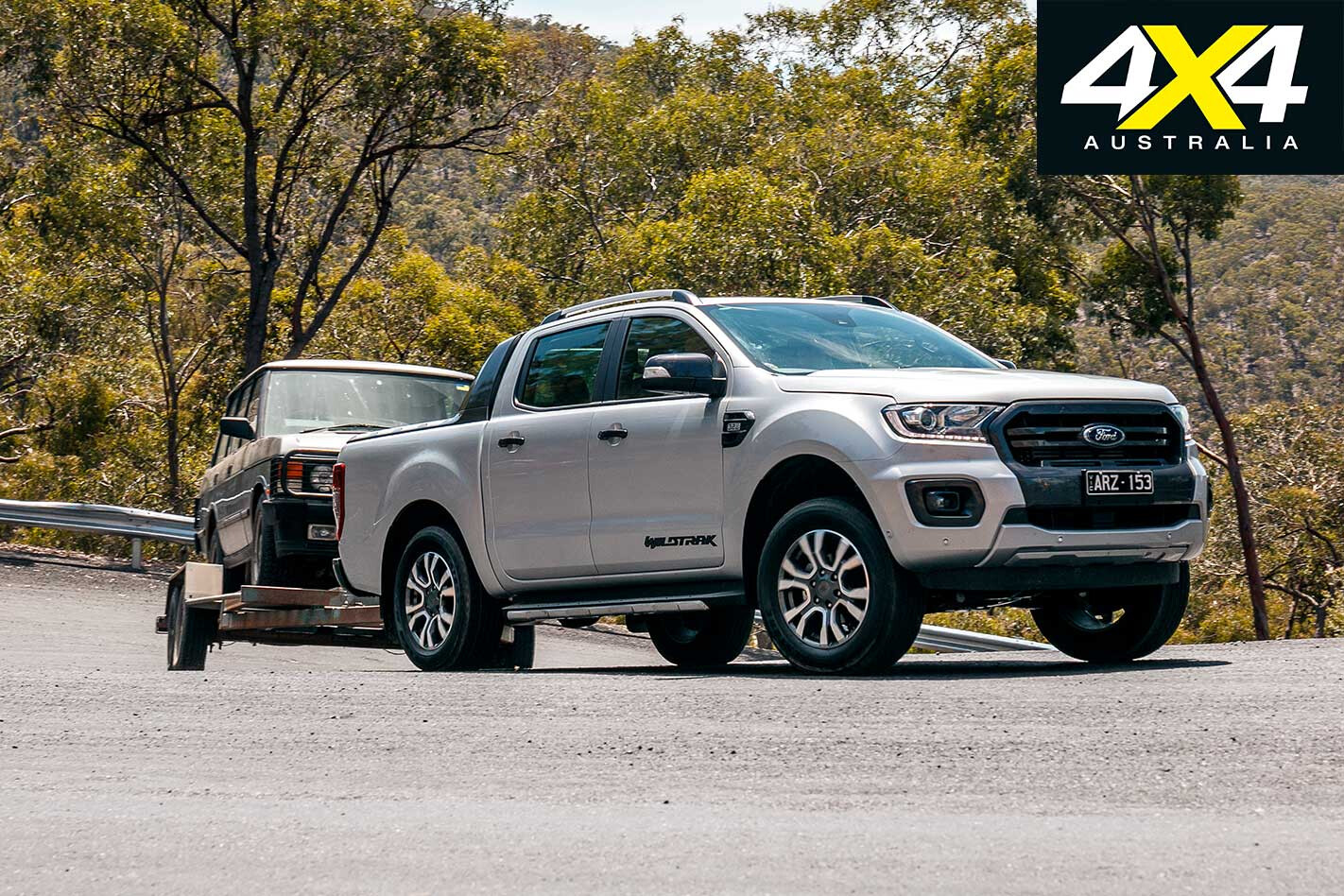
The Ranger 3.2 is also a winner thanks to its stable tow- and load-friendly chassis and torquey, relaxed, low-revving and endearing five-cylinder engine. It’s the largest capacity engine here, which helps when there’s hard work to be done.
The 2019 revisions – the extra convenience and safety kit – make it a better package than it was before, and it’s always been very good in every role you could ask of it, load hauling included.
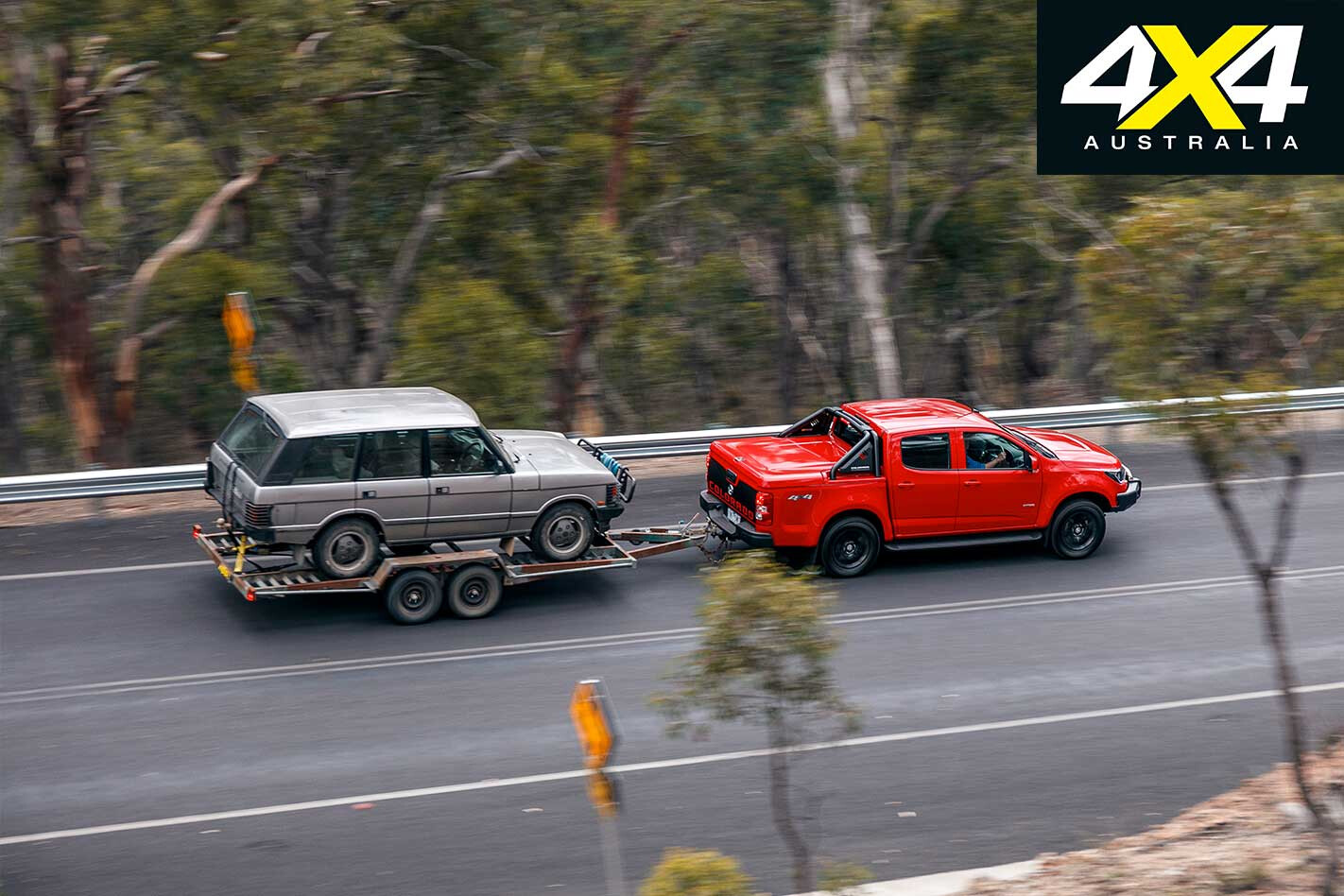
The Colorado and D-Max fall into the category of good bang-for-your-bucks load and tow rigs. On equipment parity, they are the two least expensive utes here: The D-Max, in the same mechanical spec as our test vehicle, starts at $46,600 (plus on-roads); while for $600 more you can get into a base-spec version of the Colorado we have here.
Both came through the test well. The Colorado has a bit more chassis finesse and more general towing power, while the D-Max relished the hard work of the steep climb and has the reputation of being the cheapest and easiest to service of all the popular dual cabs.
That leaves the Ford Ranger 2.0-litre and the Mercedes-Benz X350d, neither of which performed with distinction. As good as the Ranger’s new 2.0-litre bi-turbo engine is for general driving – where it outperforms the Ranger 3.2 – it wasn’t as fuss-fee in its general load-and-tow ability and dropped in a hole hauling the test load up the steep incline.
Its ‘little’ engine has to work harder than a big engine to do the same job and, while that harder work involves higher engine revs, it also means higher effective cylinder pressures. At least it has a good chassis for load and tow duties.
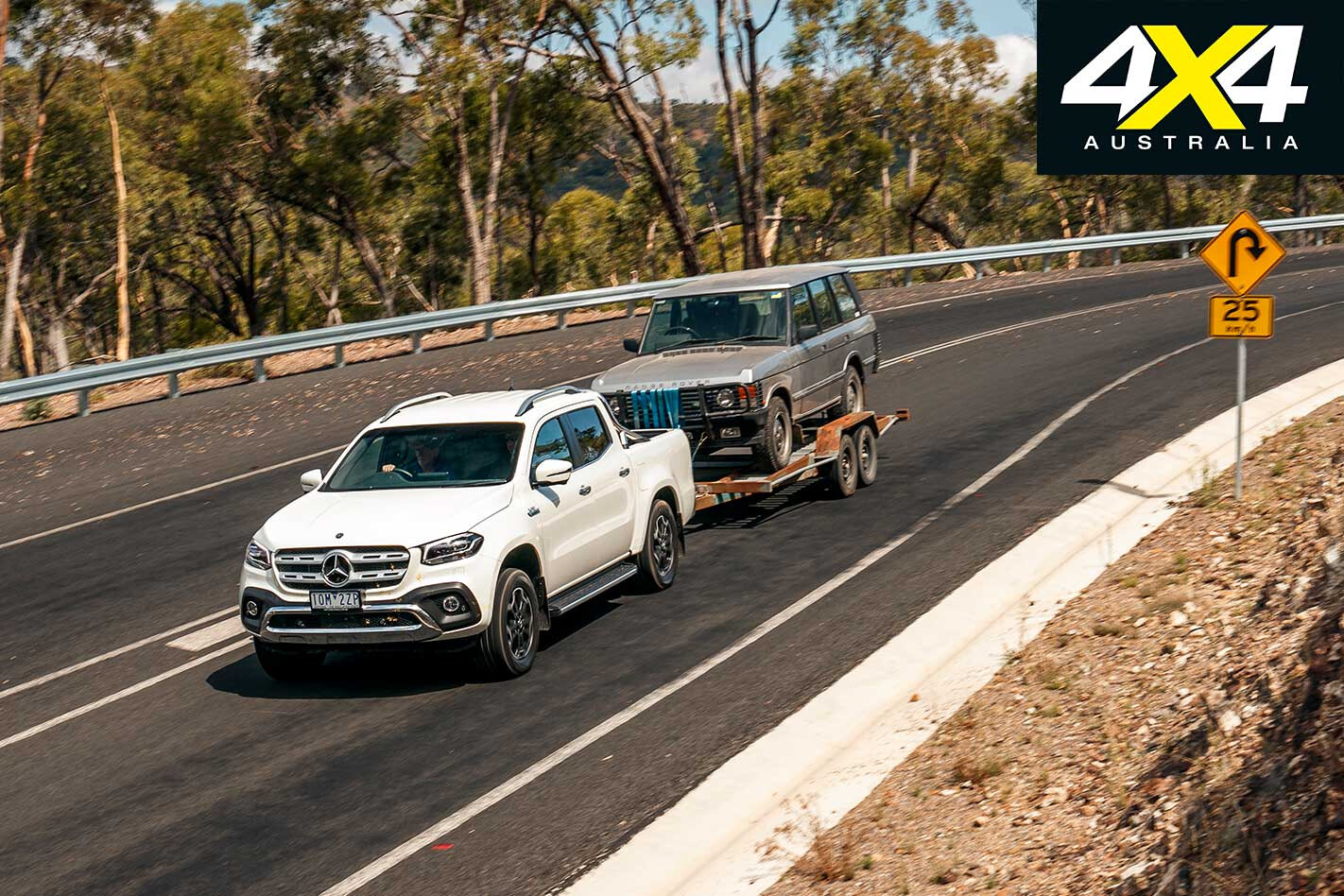
For the most expensive vehicle here by a good margin, the X350d’s chassis – in terms of its stability and the ease and confidence in which it carried and towed the load – was disappointing. In this regard it was the poorest performer; although, some recognition goes to the safety and convenience benefit of its full-time 4×4 system. And while the engine generally lived up to its promise of extra performance, it still couldn’t match the Amarok 580 when push came to shove. It should have been more of a close match, but it wasn’t.
Omissions from the 2019 Tow Test
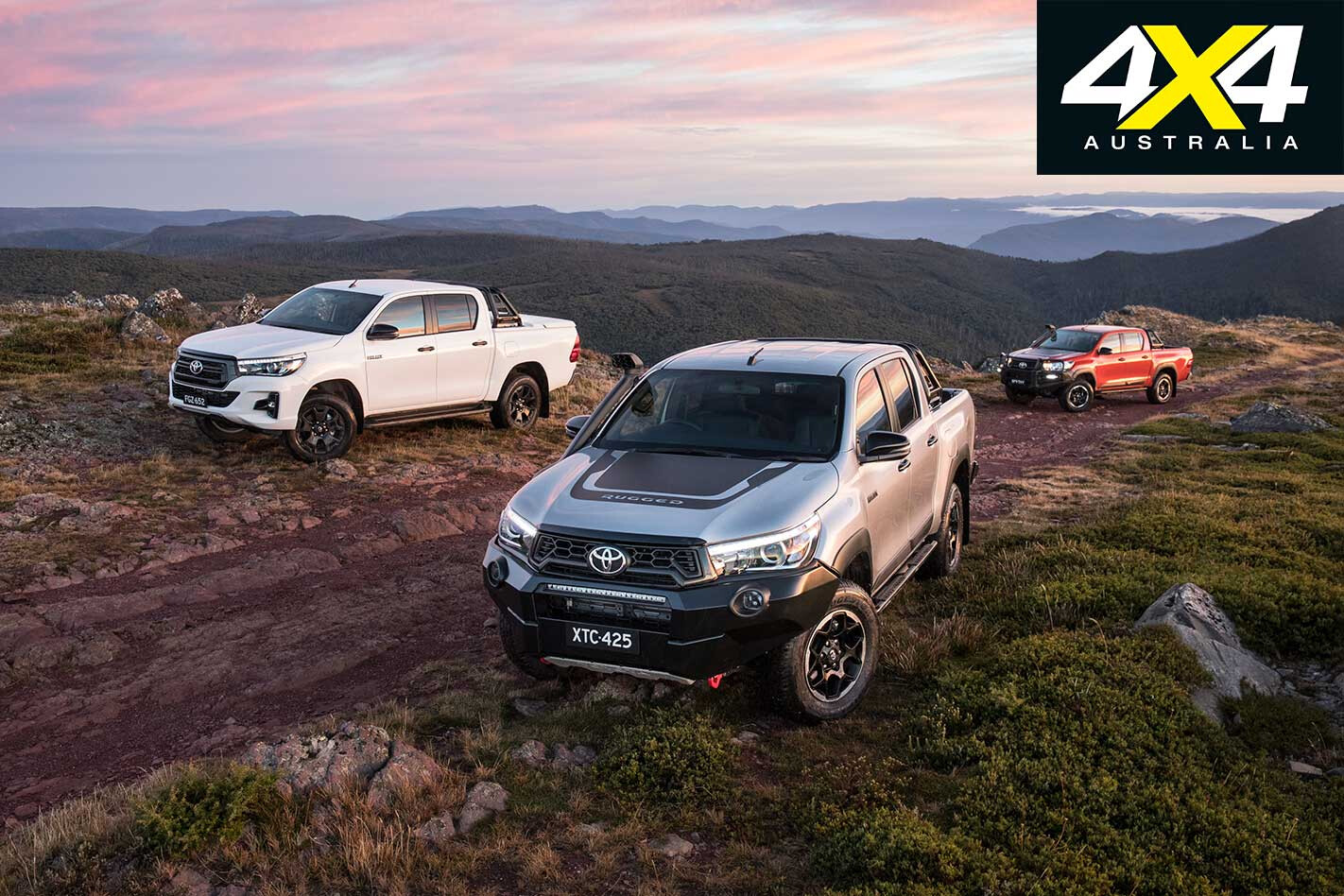
IDEALLY, we would have liked to have had a Toyota Hilux along as well, but Toyota Australia was unable to supply a Hilux with an electric-brake controller. We also couldn’t get hold of a new Mitsubishi Triton in time.
THE ‘580’ on the 2019 Volkswagen Amarok 580 Ultimate stands for 580 Newton metres, the standard measure of torque, or turning force, at the engine’s crankshaft. The 580 tag also distinguishes it from all other Amarok V6s, which claim 550Nm and are less powerful as a result – where the 580 produces up to 200kW, the 550 tops out at 180kW.
Those power figures are what Volkswagen calls ‘overboost’ figures, attained with 70 per cent or more throttle and only in third and fourth gears; it’s there to improve response for hill climbing or overtaking at highway speeds. The 580 otherwise claims 190kW, while the 550 claims 165kW under normal, non-overboost operation. We haven’t tow-tested any Amarok V6 before, 580 or 550, but we have tested both at maximum payload, which didn’t worry either of them.
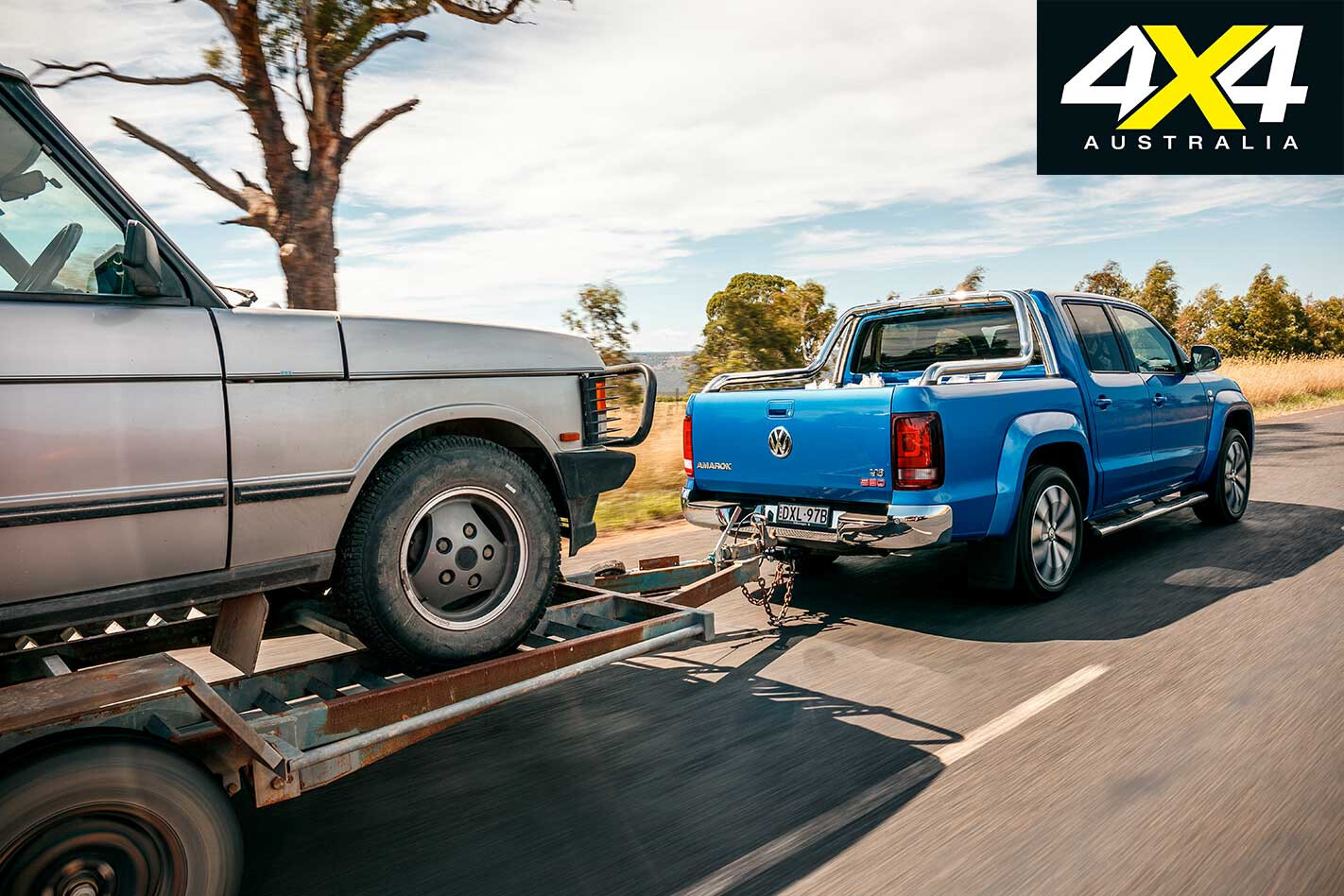
The Amarok 580 is the second most expensive ute here at $73K, plus on-road costs, but at least at that price all the good kit – sans towbar – comes standard.
On paper the 580 should be the most troubled by our load and tow test, as it will be operating closest to its GCM due to the fact its full-tank kerb weight of 2296kg makes it the heaviest ute here – so there’s less GCM left before you even add the Range Rover, sand bags and occupants.
Even so, the 580 had around 560kg GCM in reserve under our test conditions, while the next ‘worst-off’ is the Ford Ranger 3.2 (the second heaviest ute) with 578kg left in reserve.
Volkswagen Amarok 580 General Load & Tow
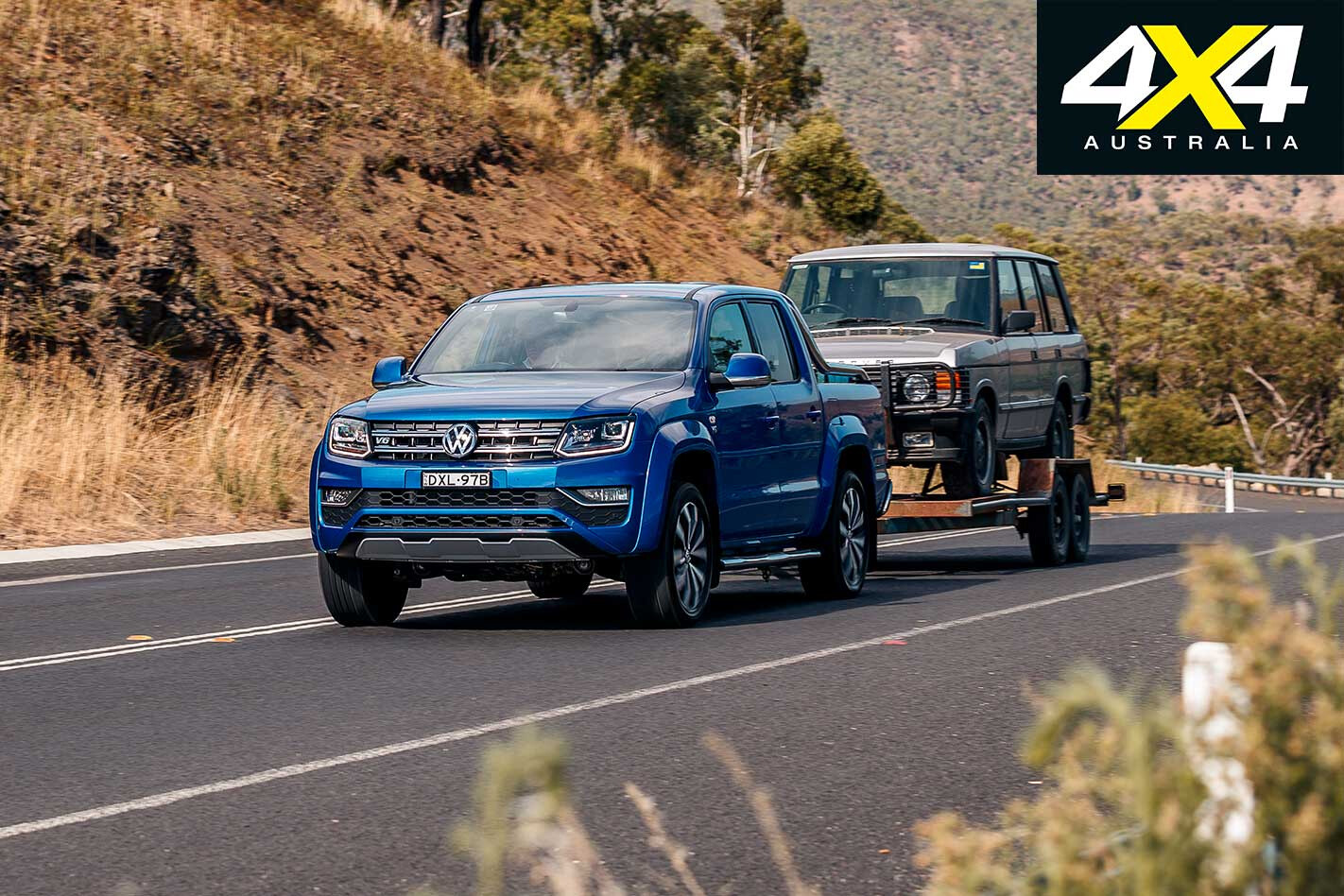
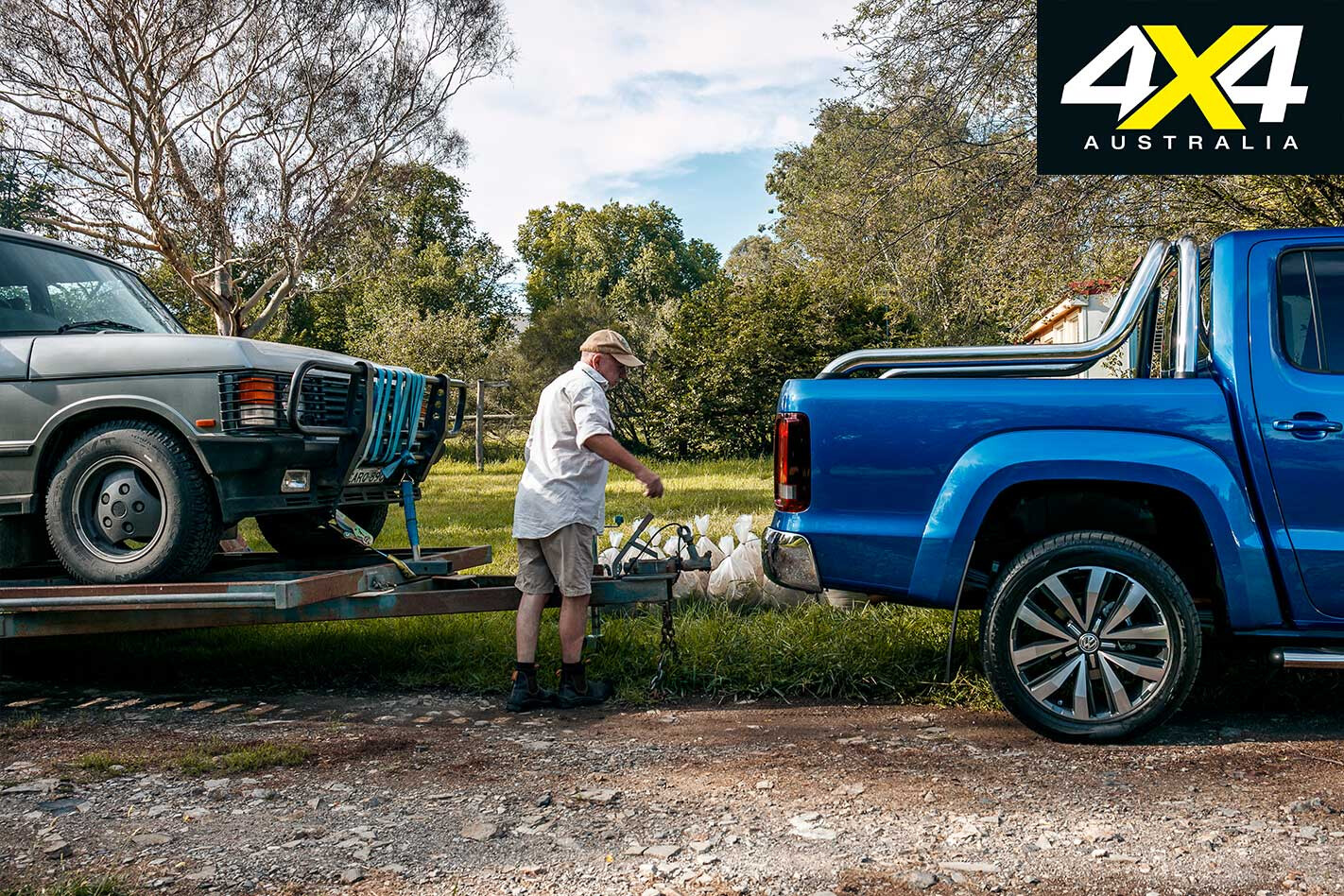
WITH THE sand bags in the tub and the trailer load hooked up, the rear suspension dropped around 70mm; so a similar amount to the two Rangers, which effectively levels up the 580’s stance.
Once underway and up to highway speeds on the country road course – with all its undulations, corners and varying surfaces from smooth to bumpy – the 580 felt stable, comfortable and as good chassis-wise as any ute here. Had our test been done when the road was wet, its full-time 4×4 would have given it a further advantage over any ute with part-time 4×4.
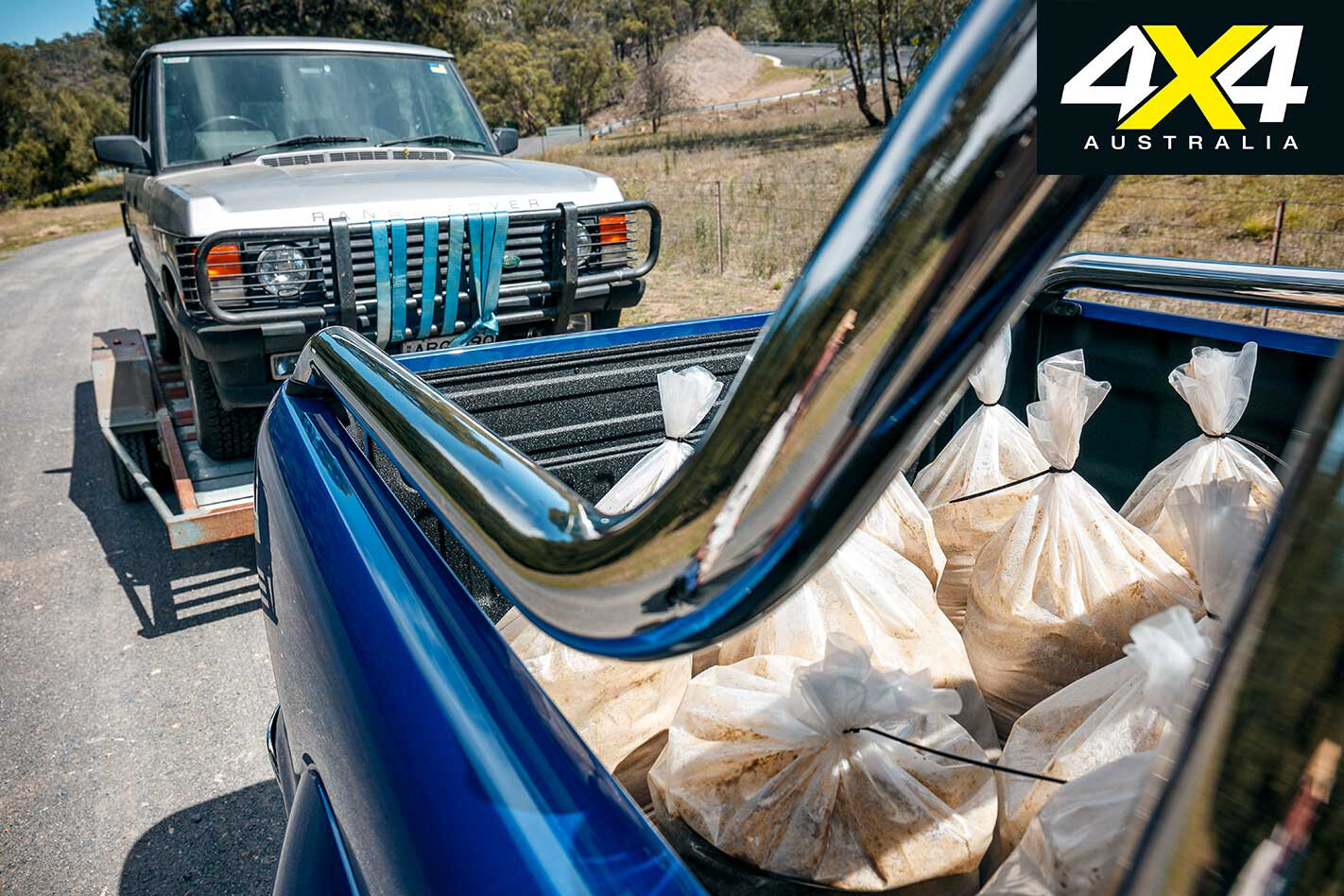
A top-of-class performance too from the 580’s powertrain, which is noticeably stronger than the four- and five-cylinder utes, even if it didn’t feel much different in general highway load and tow duties to the X350d.
Both of the V6s had sufficient power to get along with the test load at legal highway speeds and weren’t too fussed by the modest hills; the difference was with chassis performance, as the 580’s was very good … the X350d’s not so good.
Volkswagen Amarok 580 Steep Gradient Load & Tow
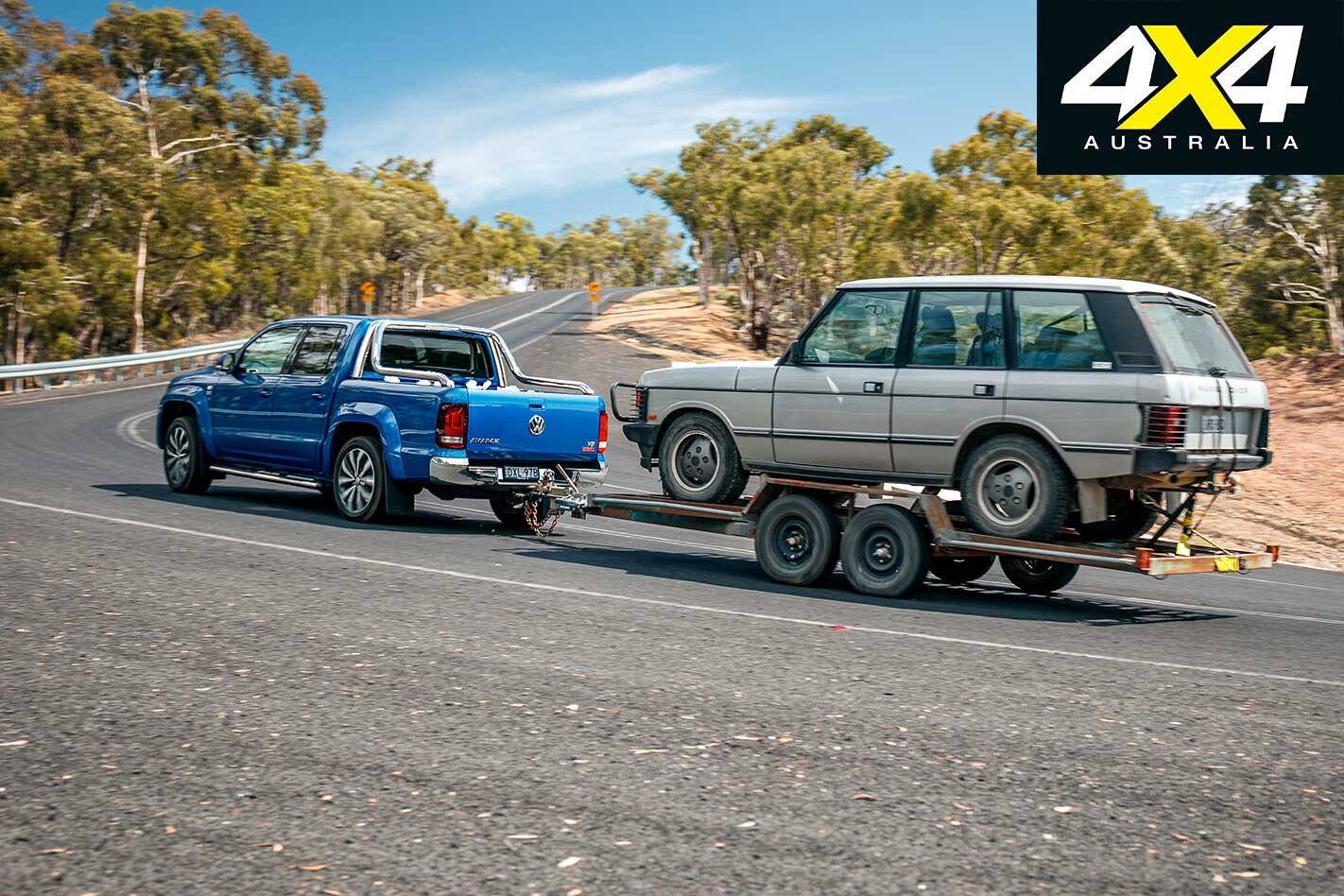
THE DIFFERENCE between the performances of the two V6s, let alone between the four- and five-cylinder utes, became starker with our steep gradient climb. By its very nature this is a test of full-throttle power with a test load – not part-throttle power, as is the case with the general test course, at least with the two V6-powered vehicles.
To say the 580 stormed up the steep climb is an understatement. It was comfortably quicker than the X350d, which in turn was comfortably quicker than the rest. As this climb is effectively all about full-power performance in first and second gears, the 580 wasn’t even operating on overboost mode, except for a very short period when it picked up third before having to slow for one of the tight corners.
All good on the downhill section, too, thanks to decent engine braking and disc brakes all around. The paddle shifters also make for easy ‘manual’ control of the gearbox.
Volkswagen Amarok 580 Tow Test Results
Towing Capacity: 3500kg Towball Download (max): 300kg Payload: 785kg
2019 VOLKSWAGEN AMAROK 580 ULTIMATE SPECS: Engine: 3.0-litre V6 turbo diesel Max power: 190kW @ 3250-4500rpm Max torque: 580Nm @ 1400-3000rpm Transmission: 8-speed auto 4×4 system: Single-range full-time Kerb weight: 2296kg Fuel tank capacity: 80 litres ADR fuel consumption: 8.9L/100km
| 2019 VOLKSWAGEN AMAROK V6 PRICES* | |
| CORE 550 | $52,590 |
| SPORTLINE 550 | $56,590 |
| HIGHLINE 550 | $61,090 |
| ULTIMATE 580 | $72,790 |
| *Not including on-road costs | |
WHETHER parking your behind on the driver’s seat of your 4×4 or on a camp chair around the campfire, it’s essential to ensure both pews are comfortable and durable.
Terrain Tamer seat cover
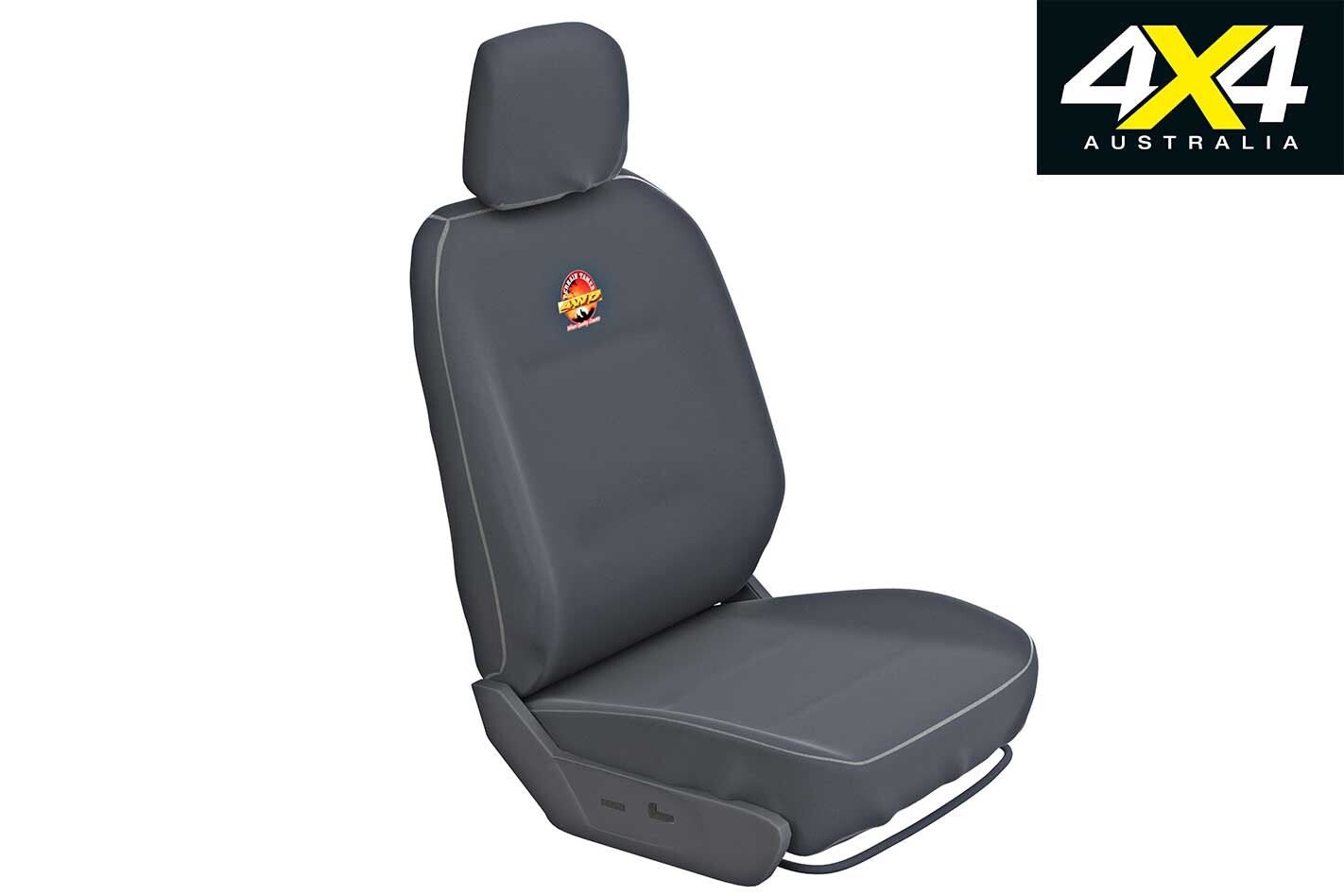
Seats cop an absolute hammering on an outback trip – and even just during general everyday use. Terrain Tamer has launched its own seat covers, with a unique vehicle-specific design and one that is compatible with various side-impact airbags.
The patented-design seat covers are made from super-tough water-repellent 12-ounce canvas and are designed to be a snug fit around your vehicle’s seats, thanks to the use of an elasticised fitting system.
That means you don’t have to worry about the seat cover pulling or dragging itself out of shape when you’re jumping in or out of your rig. The seat covers are available in a dark grey colour and will last for many years of wear and tear, as you’d expect from a brand which has decades of off-road touring experience.
Website: www.terraintamer.com
BlackWolf compact directors chair
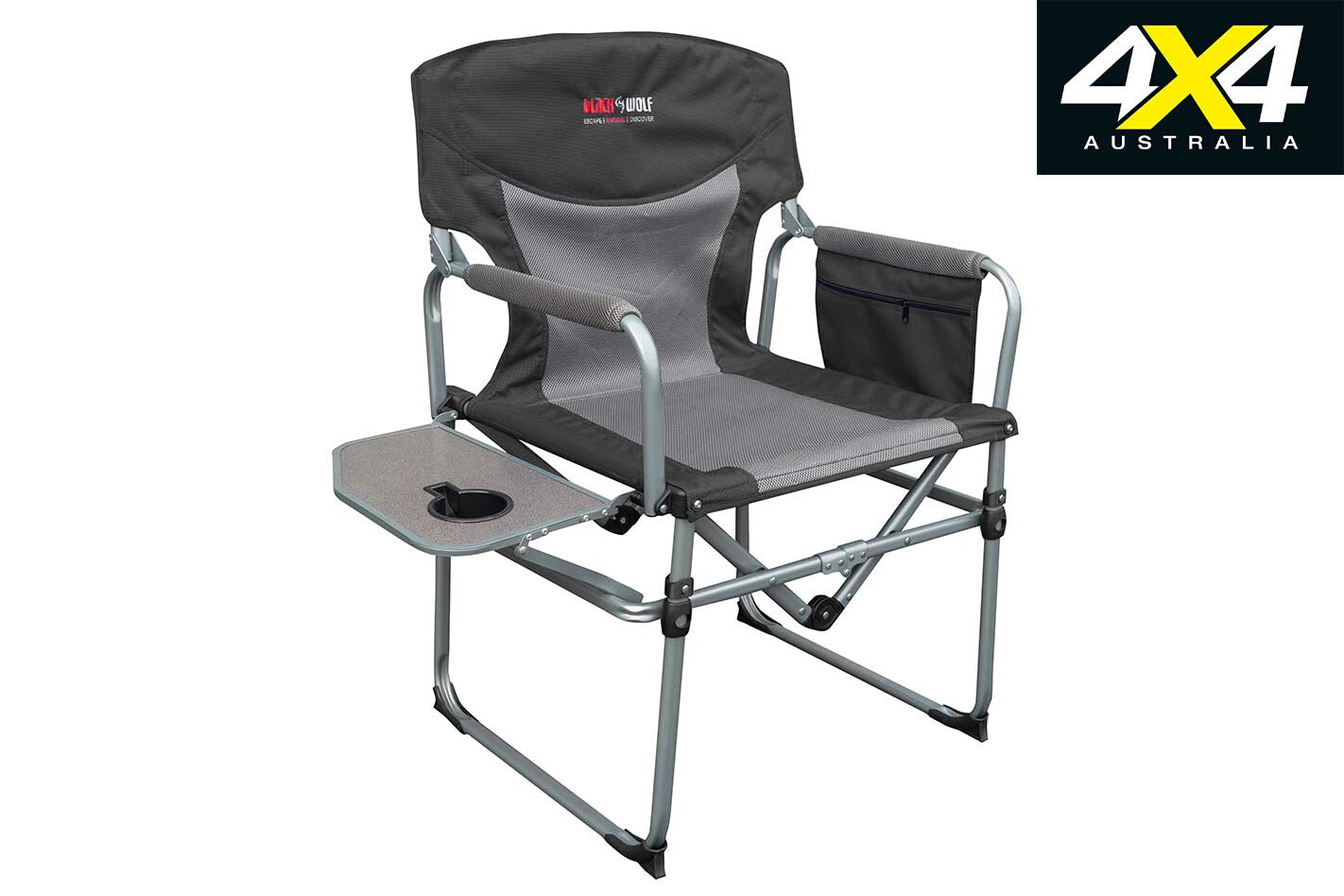
BlackWolf’s new camp chair adds a bit of luxury and convenience to your campsite with a heavy-duty steel frame and handy fold-away side table (with a drink holder; perfect for the coldie). The chair is built tough and this is reflected in its 130kg weight capacity, while it is also built smart; the non-slip foot design ensures you and the chair stay put.
The seating is padded and the high back section and wide arm rests add to the comfort levels. Impressively, the chair is quick to set up and also to fold down flat and, when stored, it takes up hardly any room in the back of the 4×4. There’s also a zipped accessory pocket and the chair weighs a featherweight 6kg. Available in blue and khaki.
RRP: $140 Website: www.blackwolf.com.au
IT’S NO SECRET Mercedes-Benz’s new X-Class ute is based on the Nissan Navara. Mercedes wanted to fast-track a ute into what is a booming global ute market so turned to strategic partner Renault-Nissan for its Navara D23.
However, don’t think for a minute the X-Class is just a rebadged Navara … far from it. Strengthening the ladder frame and widening the body is just the start of the detailed re-engineering Mercedes-Benz applied to the Navara to create the first X-Class models, and all that was before they threw out the Navara’s entire four-cylinder powertrain and slotted in their own V6 diesel complete with a full-time dual-range four-wheel drive system.
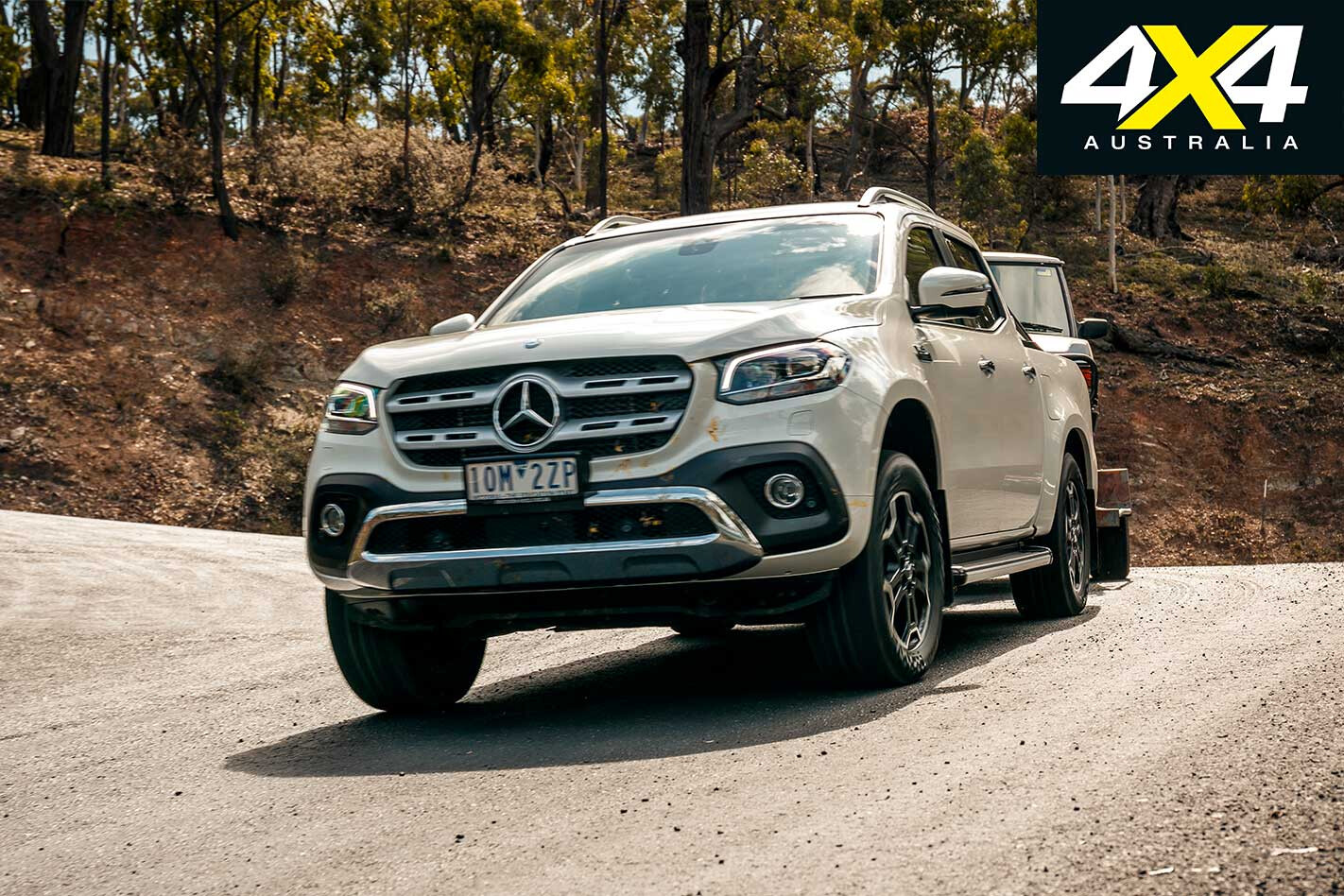
All this comes at a price, as the Mercedes is comfortably the most expensive vehicle here. As tested it’s $89K before on-road costs; that’s about $15K north of the Amarok 580, the second most expensive vehicle here.
One design aspect Mercedes carried over from the Navara is the use of coil springs for the rear axle, a feature that hasn’t gone down well for heavy load carrying and towing and has seen Nissan revise the rear suspension, not once but twice, since this coil-spring Navara arrived late 2015.
The X-Class’s re-engineering does mean different springs, dampers and bushings – at the very least – as well as a wider track and higher GCM than the Nissan Navara. At 6180kg, the X350d’s GCM is the highest here.
Mercedes-Benz X350d General Load & Tow
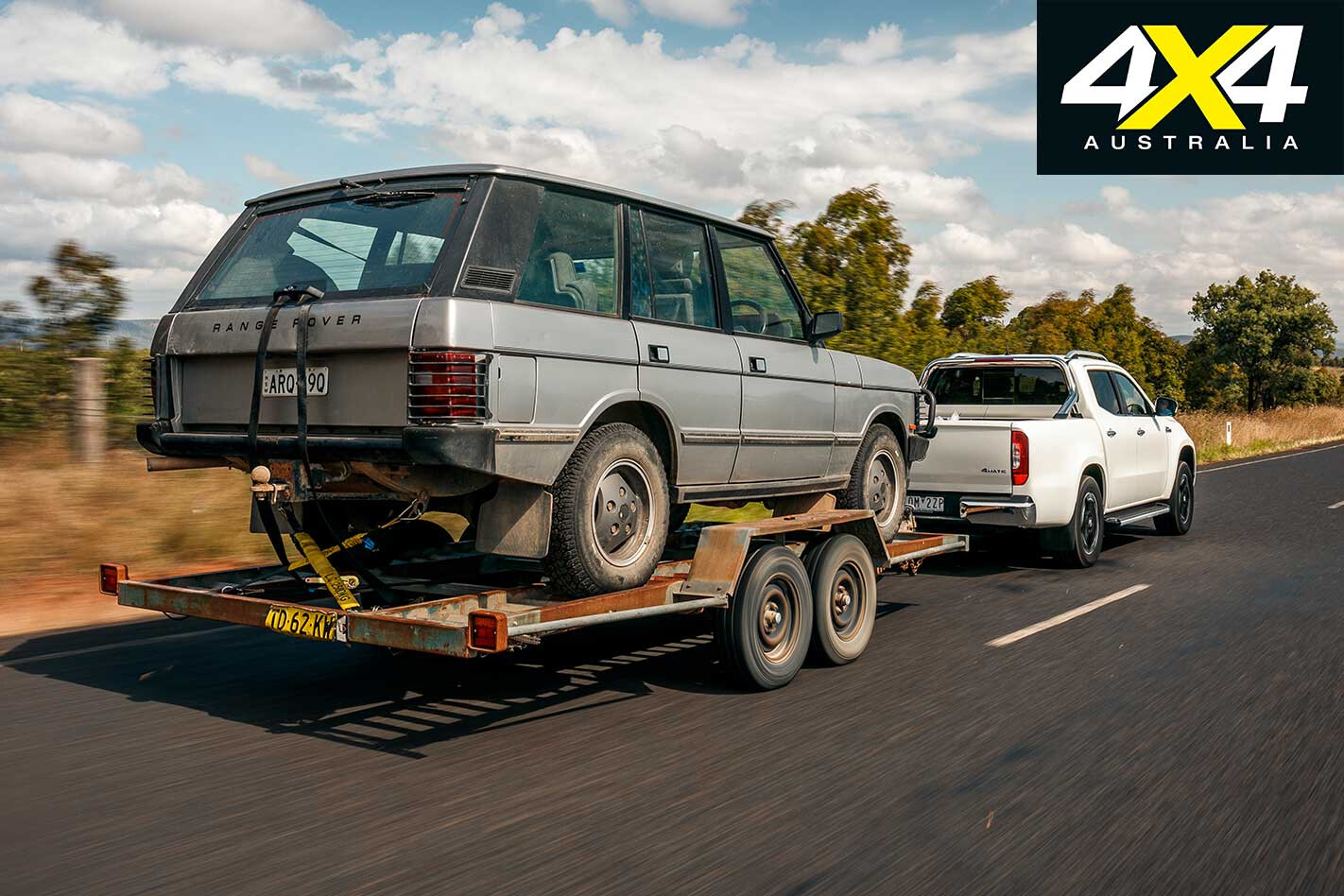
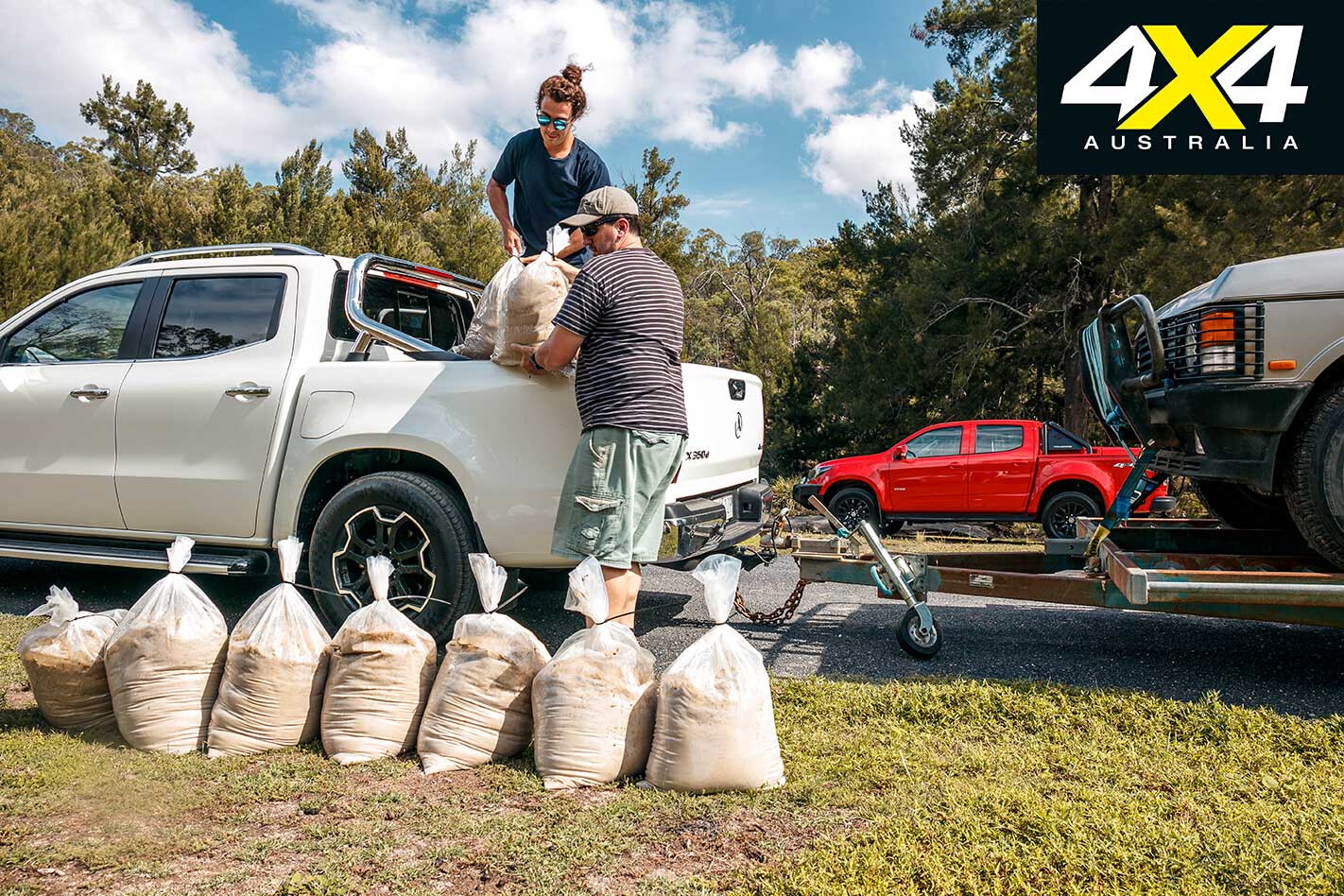
BY CIRCUMSTANCE rather than design we used the X350d to pick up the 450kg of sand bags the day before the test got underway, and straight away the signs weren’t good. This sort of weight in the tub should be near undetectable beyond a more compliant ride, but there was a noticeable change in front-to-back attitude to the detriment of the steering and the chassis’s overall stability.
Hooking up the trailer and Rangie the next day – with the sand already in the tub – saw the X350d even more nose-up, bum-down. With the combined weight the X350d dropped some 80mm, the most here, which was made more significant as the X-Class’s rear suspension isn’t a notably long-travel design.
Once underway with the full load onboard and trailer behind, the X350d’s general stability on the country road course was acceptable but, at the same time, the least confident of our six utes. The steering felt the least connected and the directional stability the poorest. If the roads were wet its full-time 4×4 would have been handy, given the other utes bar the Amarok have comparatively primitive part-time 4×4 systems.
Better news is with the notably quiet and refined 190kW/550Nm V6 powertrain, which offers sufficient performance to make relatively light work of the load. Nice gearbox, too; it’s a long-serving and widely used Mercedes unit and not the same seven-speed automatic as seen in the Navara.
Mercedes-Benz X350d Steep Gradient Load & Tow
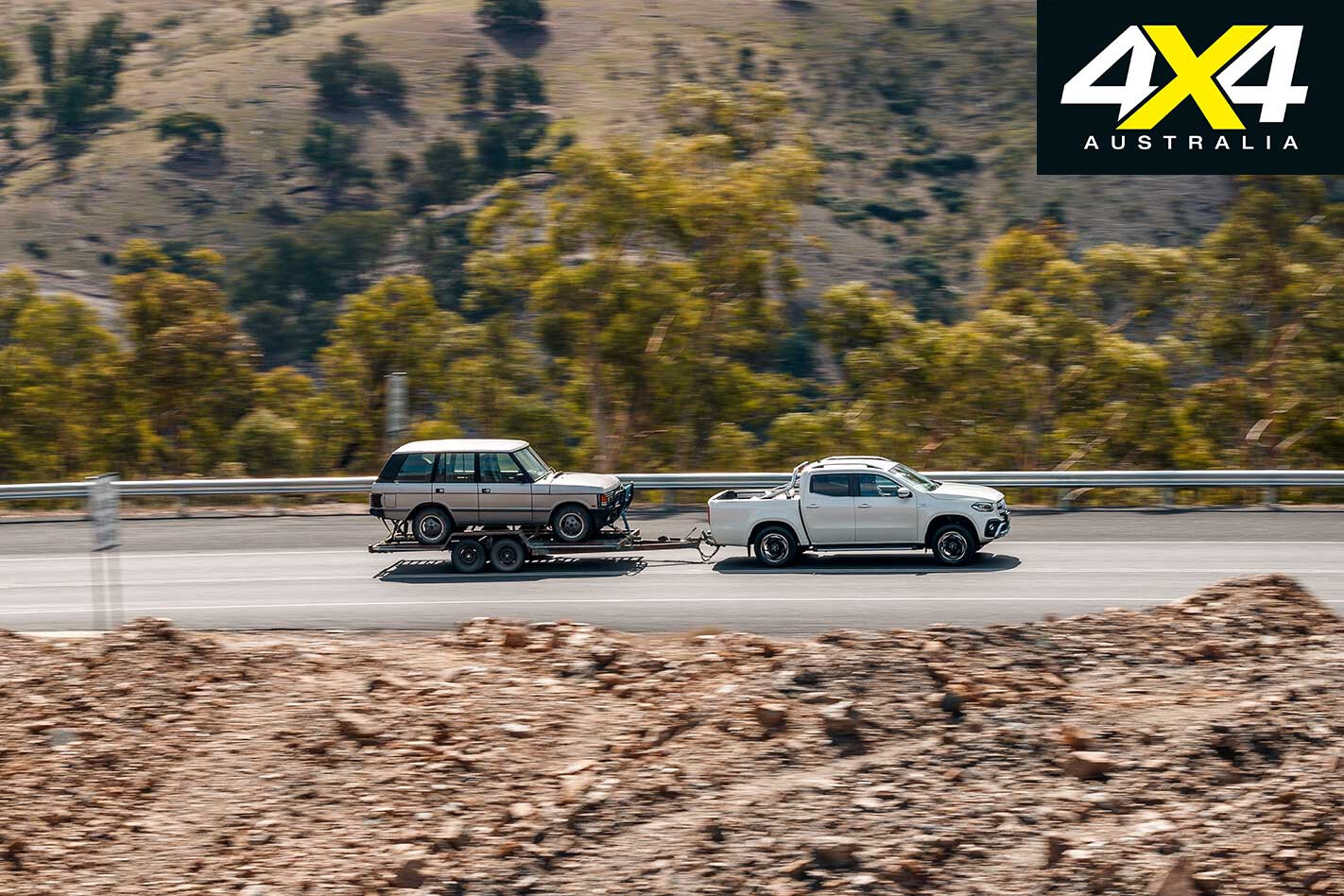
NOT SURPRISINGLY the X350d was strong up the steep test incline, even with the significant weight it was carrying and towing – it comfortably bettered the five-cylinder Ranger, the best of the rest, and the lesser performing four-cylinder utes. However, the X350d was still no match for the Amarok 580.
Good engine braking, four-wheel disc brakes and a well-performing automatic transmission (with paddle shifters) were positives on the steep descent.
Mercedes-Benz X350d Tow Test Results
Towing Capacity: 3500kg Towball Download (max): 350kg Payload: 1060kg
2019 MERCEDES-BENZ X350d POWER SPECS: Engine: 3.0-litre V6 turbo diesel Max power: 190kW @ 3400rpm Max torque: 550Nm @ 1400-3200rpm Transmission: 7-speed auto 4×4 system: Dual-range full-time Kerb weight: 2190kg Fuel tank capacity: 80 litres ADR fuel consumption: 8.8L/100km
| 2019 MERCEDES-BENZ X350d PRICES* | |
| PROGRESSIVE | $73,270 |
| POWER | $79,415 |
| *Not including on-road costs | |
HAVAL has added a suite of safety technology to its 2019 Haval H9 range, with the off-road-capable SUV now getting Autonomous Emergency Braking, Forward Collision Warning, Adaptive Cruise Control, Blind Spot Monitoring, Rear Cross Traffic Alert and Lane Departure Warning as standard.
Despite these additions, the thrifty Haval maintains a budget price tag, with the driveaway prices of the SUV remaining unchanged: $41,990 (H9 Lux) and $45,990 (H9 ULTRA).
“Instead of the traditional approach of charging more for safety and luxury features, Haval is making them standard and at the same price” Peter Mercuri, General Sales Manager of HAVAL Motors Australia, said.
The H9 continues to be powered by a 2.0-litre four-cylinder turbo-petrol capable of churning out 180kW and 350Nm, which is mated to an eight-speed auto transmission and runs through a Borg Warner Torque-On-Demand transfer system.
Key features of the H9 LUX include tri-zone air conditioning, a rain-sensing sunroof, auto Xenon headlamps and wipers, an electro-chromatic rear-view mirror, a rear camera and park guidance.
The H9 ULTRA adds heated and ventilated massaging front seats, a rain-sensing panoramic sunroof, a 10-speaker INFINITY sound system, heated steering wheel, Comfort-Tec seating and adaptive front lighting.
Haval now offers a seven-year unlimited and five-year national roadside assistance (through the Australian Motoring Clubs) standard across its entire range.
IT MAY SEEM like little has changed with the 2019 Isuzu D-Max in recent years, but in 2017 a Euro 5 emissions upgrade to the 3.0-litre four-cylinder diesel bumped max torque from 380 to 430Nm, and a six-speed auto replaced the five-speeder. All this was done subsequent to our multi-ute load and tow comparison tests in late 2016.
These tests involved 800kg in the tub and a 3500kg tow test, conducted separately as these utes can’t carry and tow that much at the same time. In both tests the D-Max’s chassis was generally up to the task, but the 130kW/380Nm five-speed powertrain let it down and struggled with the work asked of it.
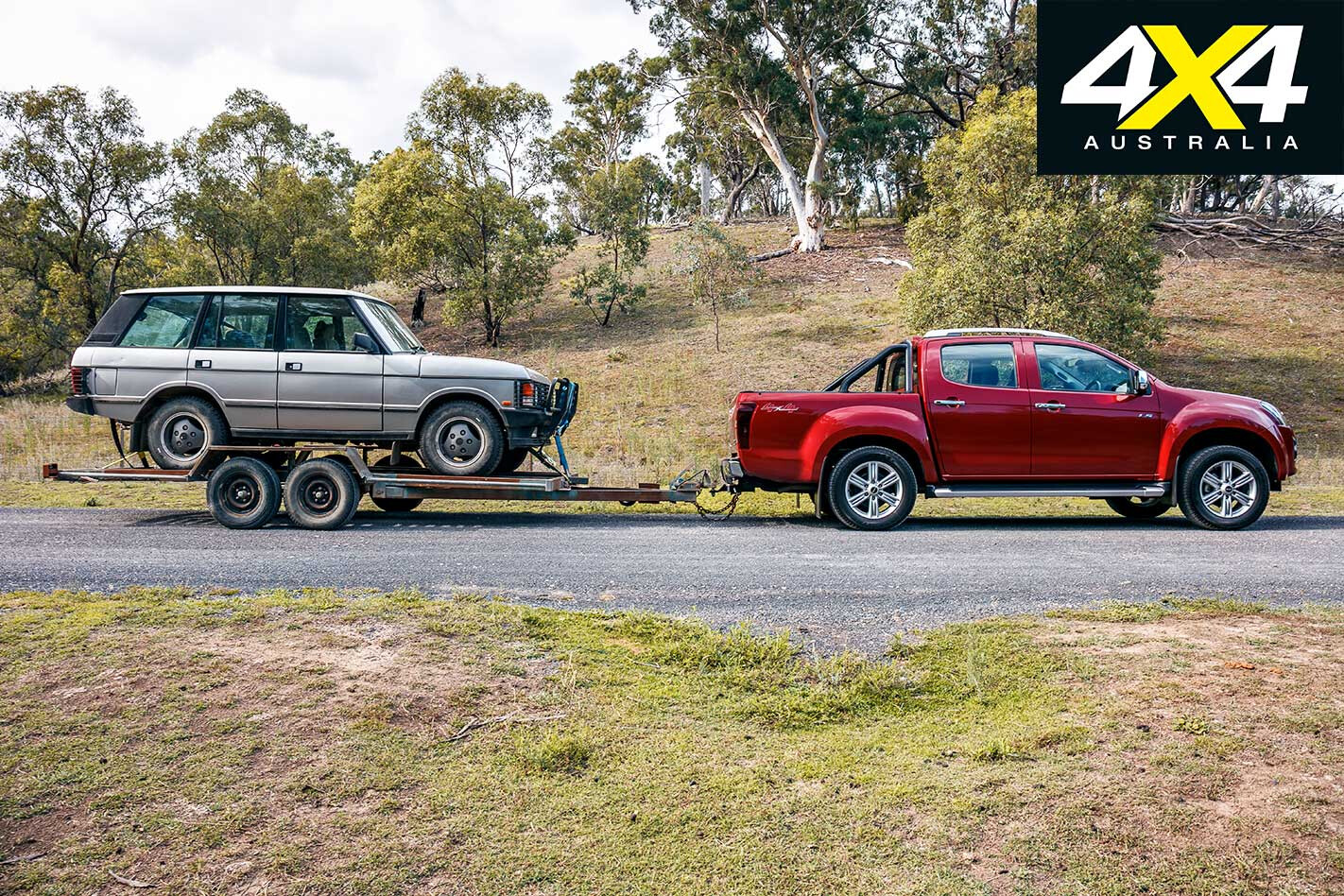
In 2018 all SX, LS-U and LS-T dual cabs received revised suspension, with three-leaf springs at the rear instead of the five-leaf used previously; to improve unladen ride. LS-M models retaining the five-leaf springs. Despite this change the GVM of all 4×4 models was increased by 100kg to 3050kg, which seems counterintuitive.
So what we have here is effectively a new powertrain (130kW/430Nm engine and six-speed auto) with a revised chassis. Our test D-Max is the top-spec LS-T, but it’s still the second cheapest ute here.
Isuzu D-Max General Load & Tow
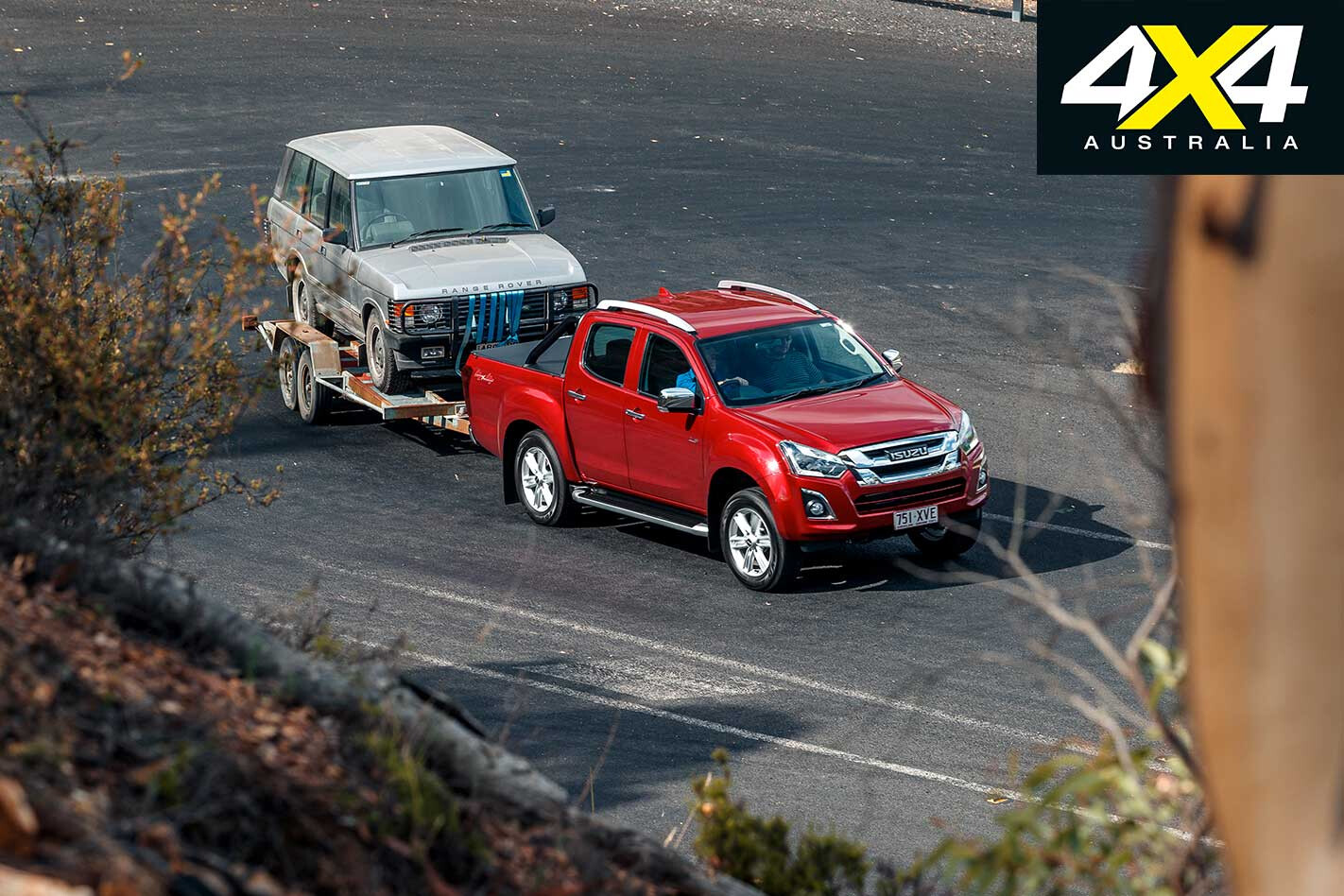
WITH THE trailer hooked up and sand bags in the tub, the D-Max’s rear dropped 60mm; that’s less than all but the Colorado, with which the D-Max shares the basic chassis but not the spring and damper tune. Like the Colorado there’s less total suspension travel than with the Rangers or Amarok, so it’s unusual there’s not as much suspension compression under load.
Once loaded and underway the D-Max’s steering is confident without being special and the handling is stable enough. It’s not quite as good as the Ranger or Amarok which are the best here in that regard, nor is it up to the Colorado; but it’s still more than acceptable.
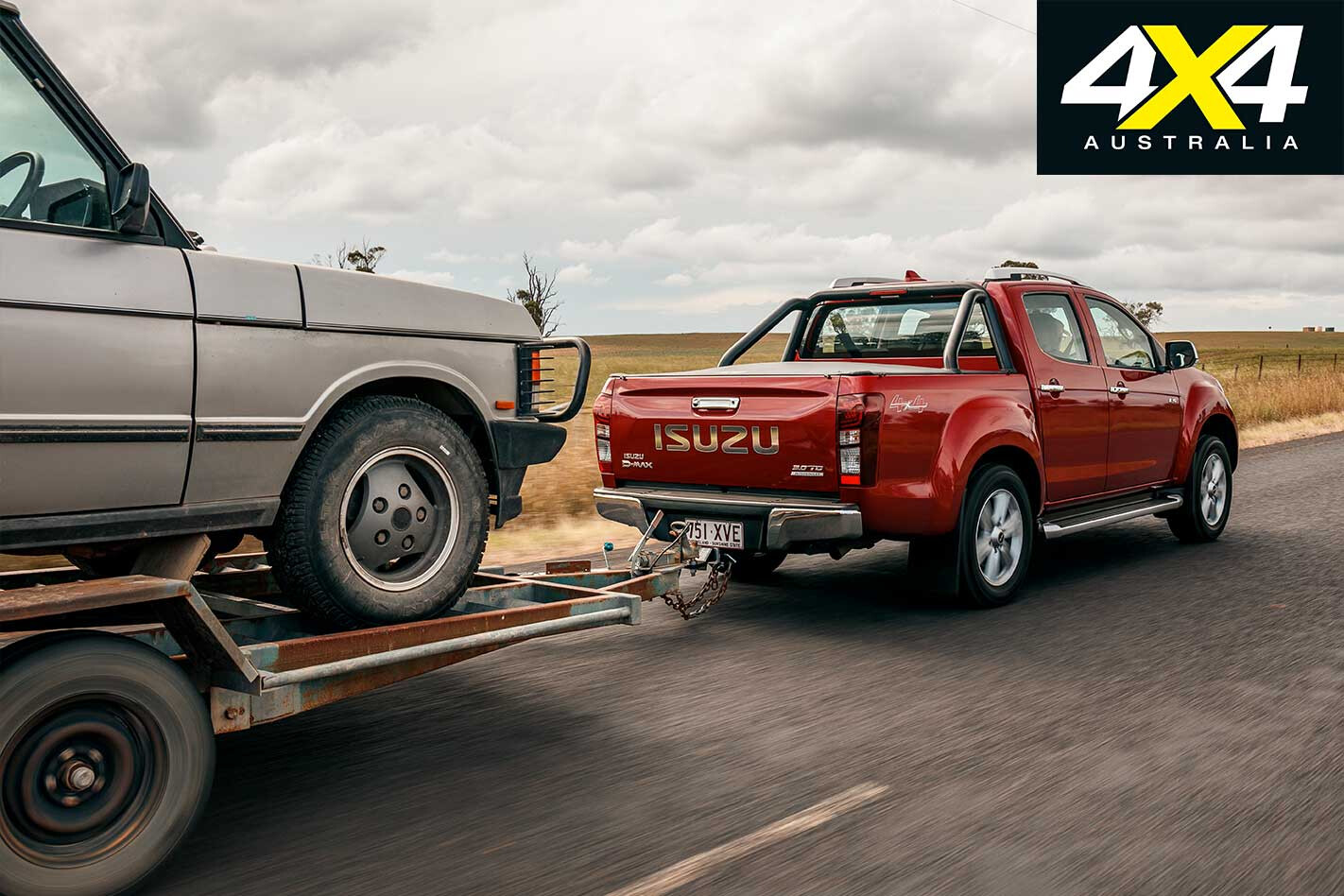
How it compares to what it was like before the rear suspension revision is hard to say, as our last heavy duty tow test involved different parameters. Only testing an LS-M retaining the five-leaf springs with this exact load would answer that question; although, Isuzu claims the same GVM and GCM regardless of the springs fitted.
The engine’s performance under general touring conditions hauling this load is reasonable without being a front-runner, as you’d expect with the two V6s in play. It still works away without much fuss and shuffling around from the reasonably refined Aisin six-speed automatic, a similar gearbox as to what’s found in Toyota’s Hilux and Prado.
Isuzu D-Max Steep Gradient Load & Tow
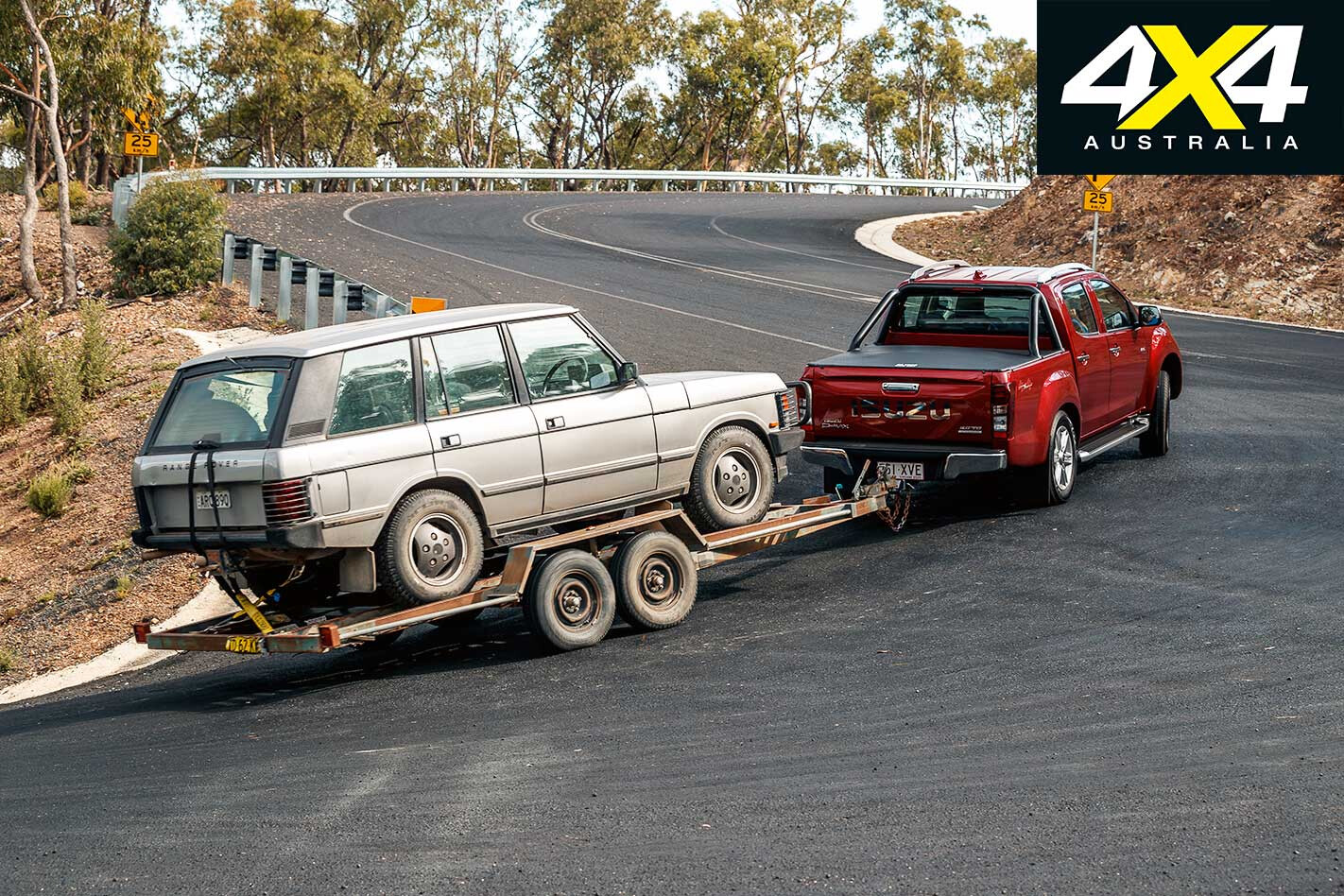
GIVEN ITS modest power and torque outputs – the lowest here on both counts – and its generally commensurate highway towing performance, we didn’t have much hope the D-Max would mount our steep climb at anything but a pace that would find it at the back of the pack.
Well, it didn’t charge up the hill but the combination of hard work, lots of revs and a decisive gearbox that happily shifted back to first on the slowest bits, and the D-Max was bettered only by the two V6s and Ranger 3.2. Perhaps it’s Isuzu’s truck-engine heritage shining through, but it certainly seemed to relish the hard work. Decent engine braking on the way down, too.
Isuzu D-Max Tow Test Results
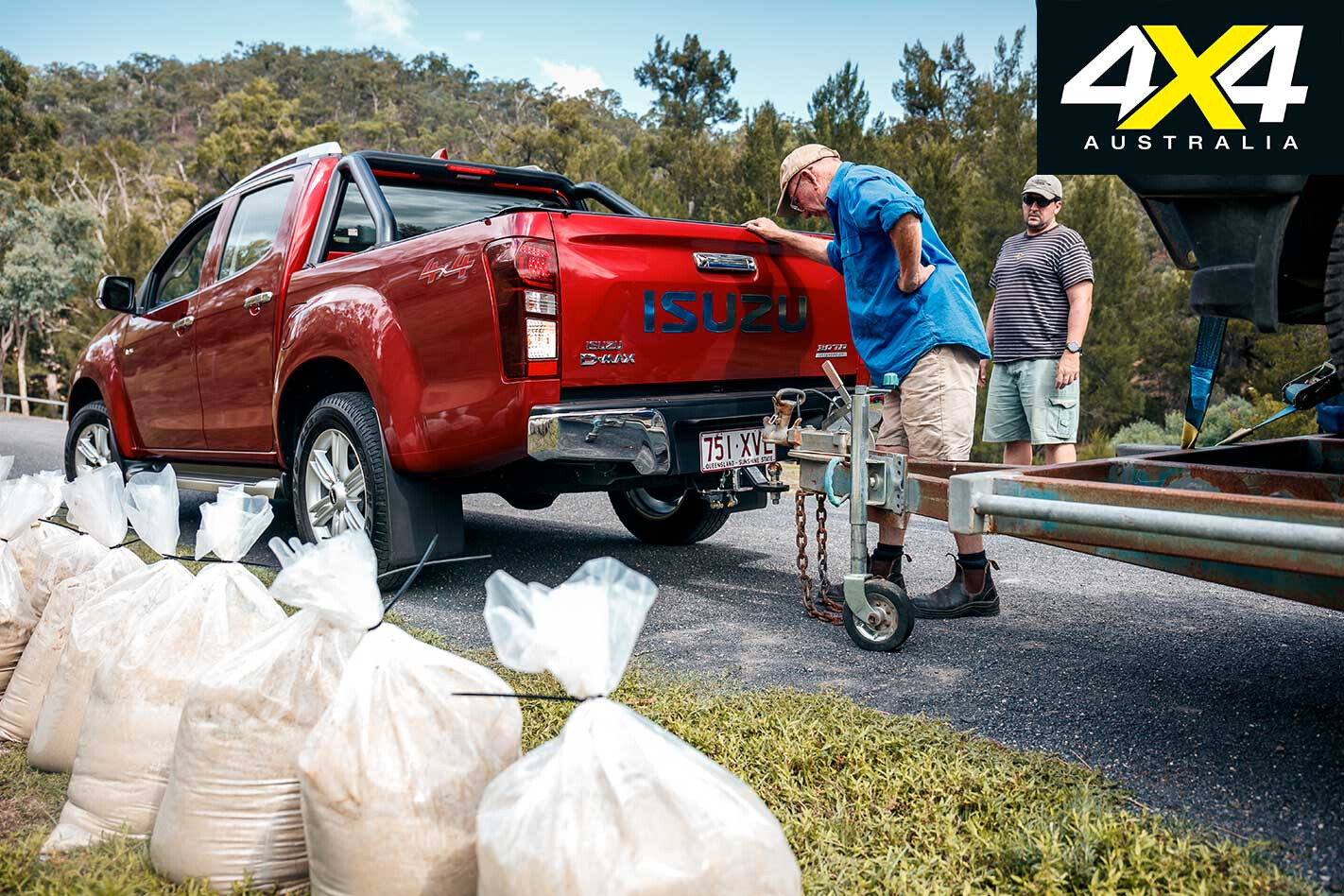
Towing Capacity: 3500kg Towball Download (max): 350kg Payload: 1024kg
2019 ISUZU D-MAX LS-T SPECS: Engine: 3.0-litre 4-cyl turbo diesel Max power: 130kW @ 3600rpm Max torque: 430Nm @ 2000-2200rpm Transmission: 6-speed auto 4×4 system: Dual-range part-time Kerb weight: 2026kg Fuel tank capacity: 76 litres ADR fuel consumption: 7.9L/100km
| 2019 ISUZU D-MAX 4×4 PRICES* | |
| SX 4×4 DC/PU (auto) | $46,600u00a0 |
| LS-M 4×4 DC/PU (auto) | $48,900u00a0 |
| LS-Uu00a04x4 DC/PU (auto) | $50,800u00a0 |
| LS-Tu00a04x4 DC/PU (auto) | $54,700u00a0 |
| *Not including on-road costs | |