A PAIR of Unimogs has reached new heights, with the duo climbing the world’s tallest volcano to break the altitude record for wheeled vehicles.
Led by Matthias Jeschke – the owner of Extrem Events – the expedition prepped two Unimog U 5023 vehicles for high-altitude duties, before heading to the tallest active volcano on the planet – the Ojos de Salado in Chile. The Ojos de Salado, part of the notorious Pacific Ring of Fire, stands 6893 metres tall and is said to be one of the driest places on earth.
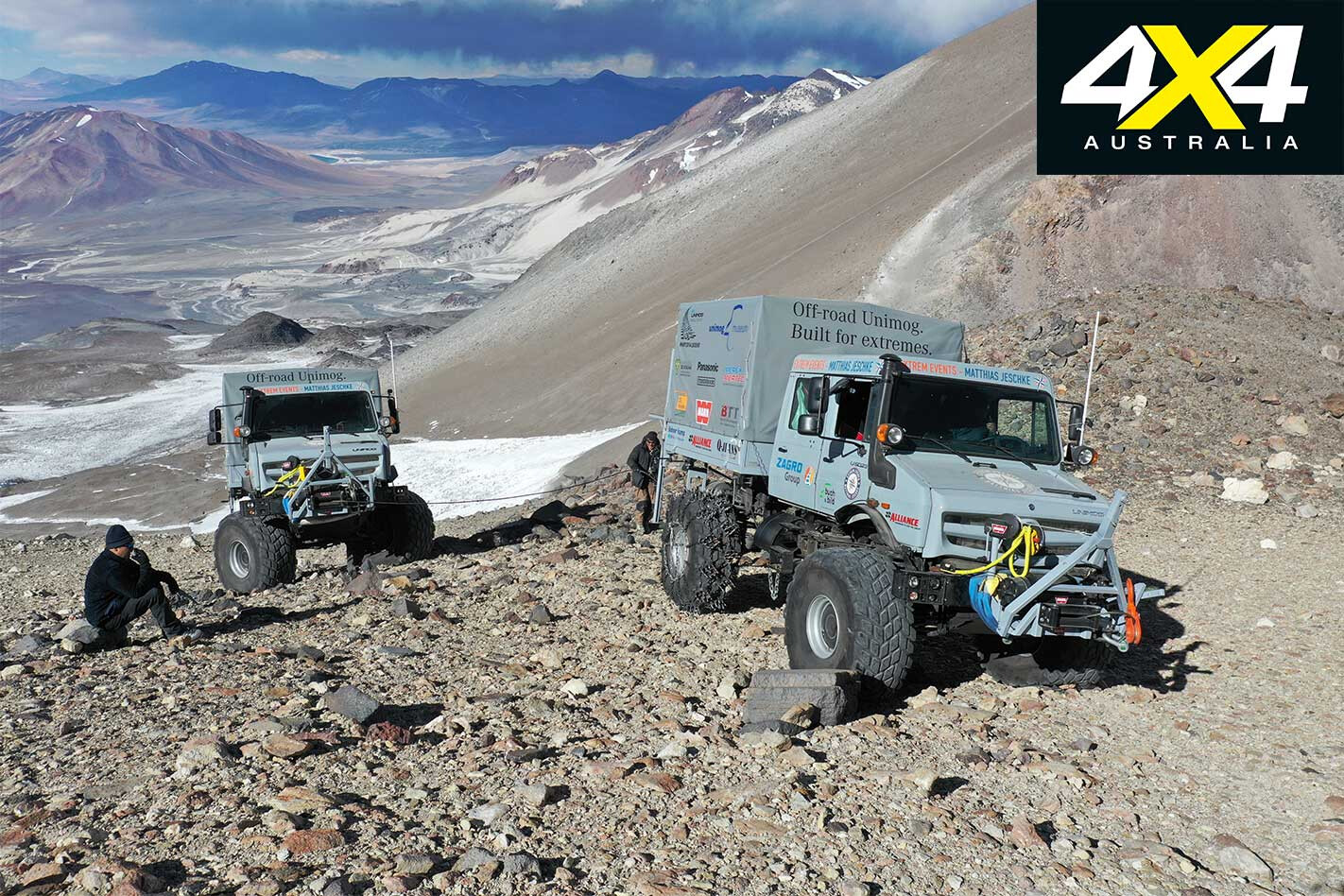
The team’s first assignment was to install four emergency radio units at various high-altitude camps and, once the last unit was pegged down, the ten-strong team honed in on breaking the world altitude record.
“[Both vehicles] mastered the extremely steep and rocky passages thanks to a combination of the best, reliable technology, a balanced centre of gravity and amazing tyre technology to bring the materials and equipment to these enormous heights,” said Matthias Jeschke. “At no point in time around the world have motorised altitude expeditions taken two trucks simultaneously to such an altitude.”
The two Unimogs, which were equipped with tailor-made rubber, heavy duty winches and special bodies, surpassed the previous record by registering an altitude of 6694 metres.
THE JEEP Wrangler Rubicon has won the 2020 4X4 Of The Year award, beating six rivals to the coveted crown.
The award was revealed at the 2020 Australian Motoring Awards, held at the Showgrounds in Flemington, Melbourne.
After an exhaustive testing process – at the Melbourne 4×4 Training and Proving Ground in Werribee and then out past Healesville and Marysville in Victoria – the seven vehicles were compared against the proven 4X4 Australia judging criteria: value for money; breaking new ground; built tough; bushability; and doing the job.
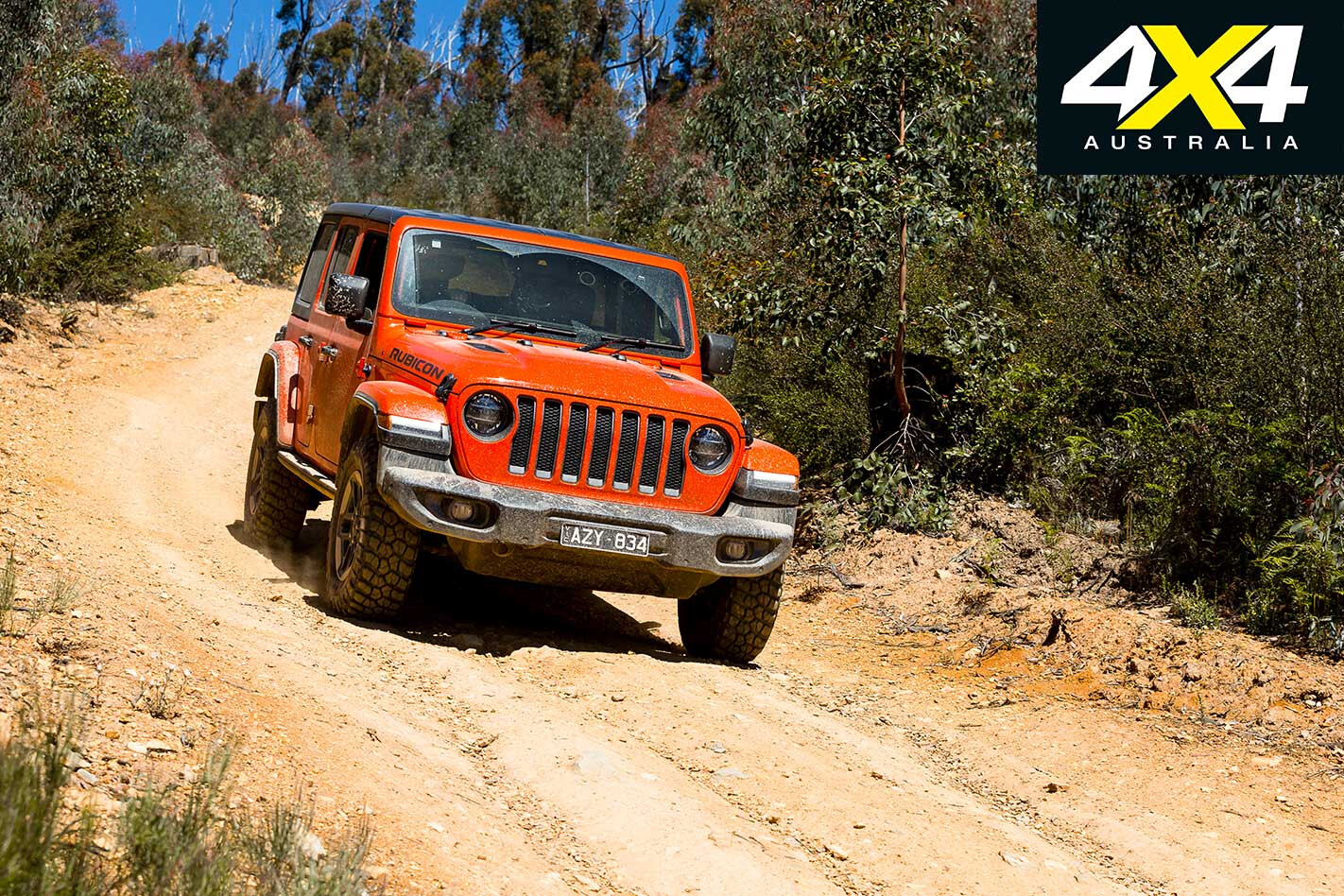
Following lengthy – and often heated – debate, Jeep’s Wrangler Rubicon proved the best of the lot, but by a very slim margin.
JUDGES’ TOTAL SCORES
Jeep Wrangler Rubicon: 246 Suzuki Jimny: 244 Land Rover Discovery Sd6: 238 Nissan Navara N-Trek Warrior: 232 SsangYong Musso XLV: 225 Mitsubishi Triton: 224 Mercedes-Benz X350d: 211
It’s more than fitting that the Jeep Wrangler Rubicon climbs to the top level of the podium here and not just for what it does. It’s what the Rubicon represents in terms of 4×4 history and its impeccable bloodline back to where the 4×4 world as we know it today all begun.
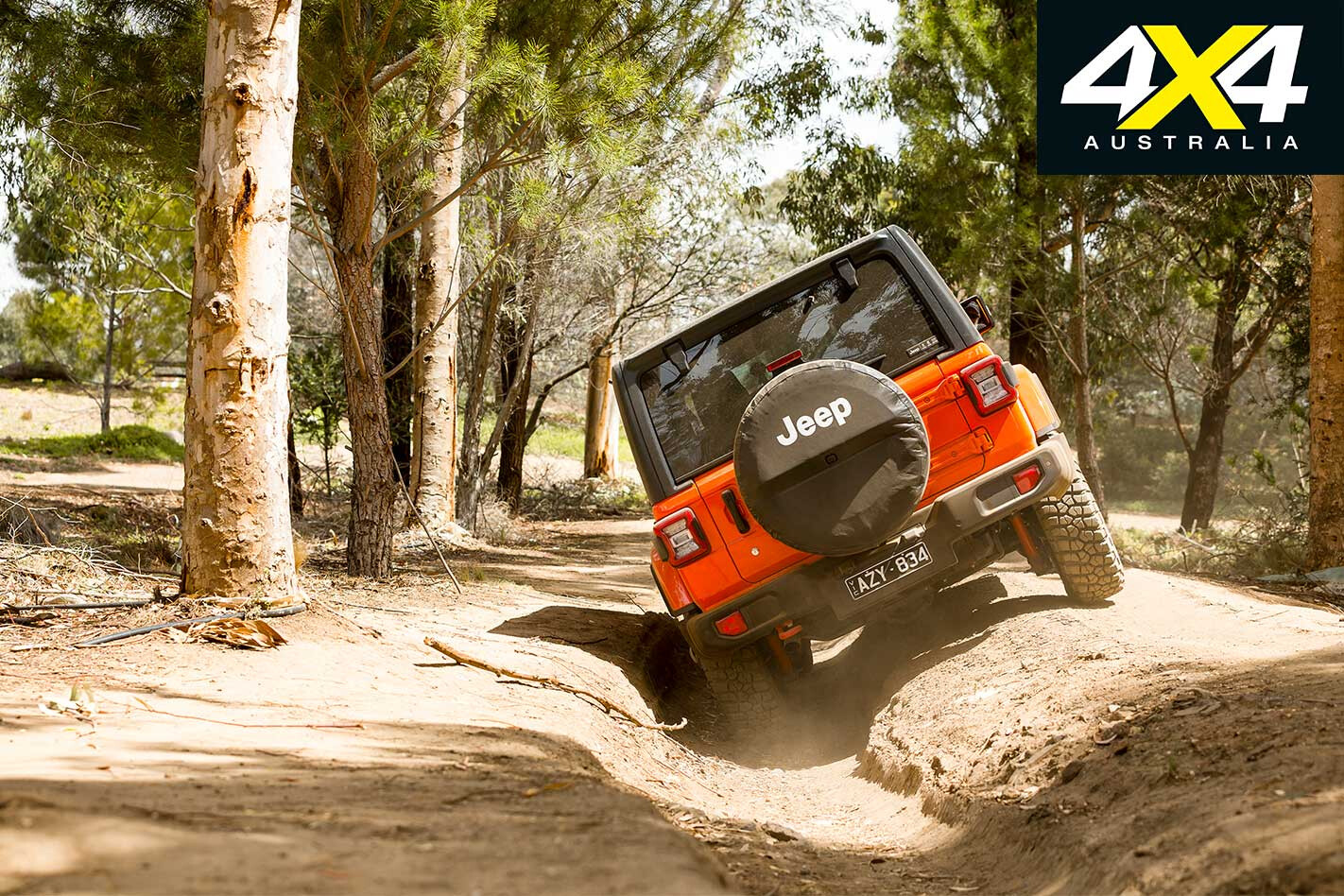
Hats off to Jeep for sticking to the basic 4×4 design principles of a separate chassis and front and rear live-axle suspension when other 4×4 manufacturers have turned their back on this old-school approach, which is still the best way to build a serious 4×4.
For comprehensive 4X4 Of The Year coverage, pick up a copy of our February 2020 issue, in stores February 6.
THIS time last year we’d have been hankering for a local version of Arctic Trucks’ Navara AT32, but our appetite for a ballsy Navara has been somewhat satiated by the local arrival of the Navara N-Trek Warrior.
The brainchild of a joint venture between Icelandic off-roaders, Arctic Trucks, and Nissan, the OFF-ROADER AT32 is a more off-road-focused version of Nissan’s venerable Navara.
The first iteration of the AT32 debuted in 2018, with Nissan recently revealing an updated version for 2020. The refreshed AT32 now utilises full aluminium underbody protection – lightweight and designed to further protect underbody componentry – as well as 31.6-inch Nokian tyres fitted with dual valves, surrounding satin black alloys.
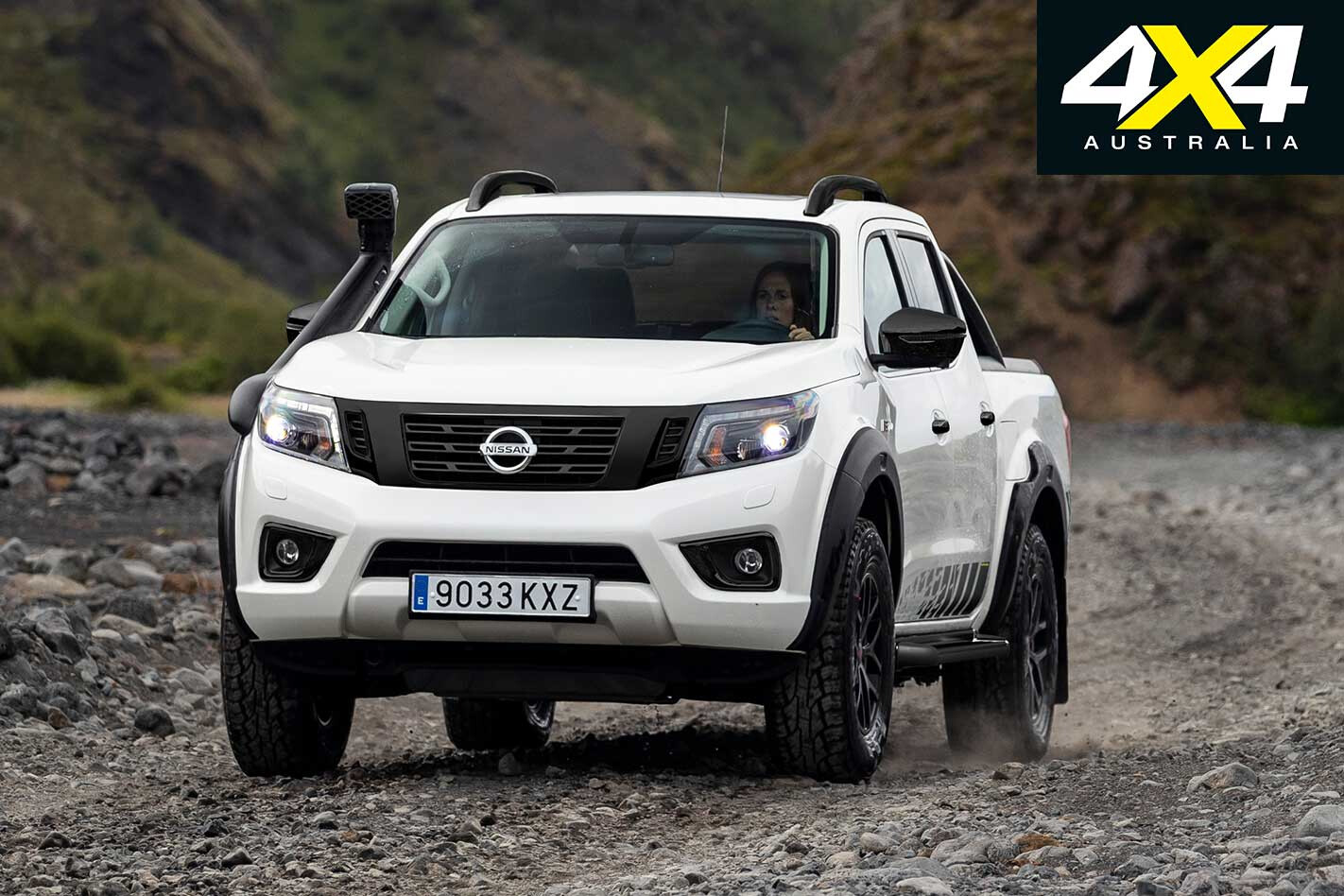
“The Nissan Navara OFF-ROADER AT32 was a sell-out success and proved incredibly popular with adventurers seeking elegance and toughness,” said Manuel Burdiel, General Manager Europe, LCV Sales and Business Development. “We have upgraded the OFF-ROADER AT32 so it can maintain its position as the ultimate Navara … it’s the perfect blend of in-car technology, comfort and extreme off-road performance.”
The updated AT32 carries over the older model’s Bilstein performance suspension and bespoke wheel-arch extensions, while special badges have again been applied from head to tailgate.
For comparison’s sake, the suspension package fitted to the N-Trek Warrior features dual-rate coil springs, progressive bump stops and shock absorbers with larger diameter tubing. Among other tweaks, the Warrior also gets bespoke alloy wheels wrapped in Cooper AT3s which, when combined with the uprated suspension, nets an overall lift of 40mm.
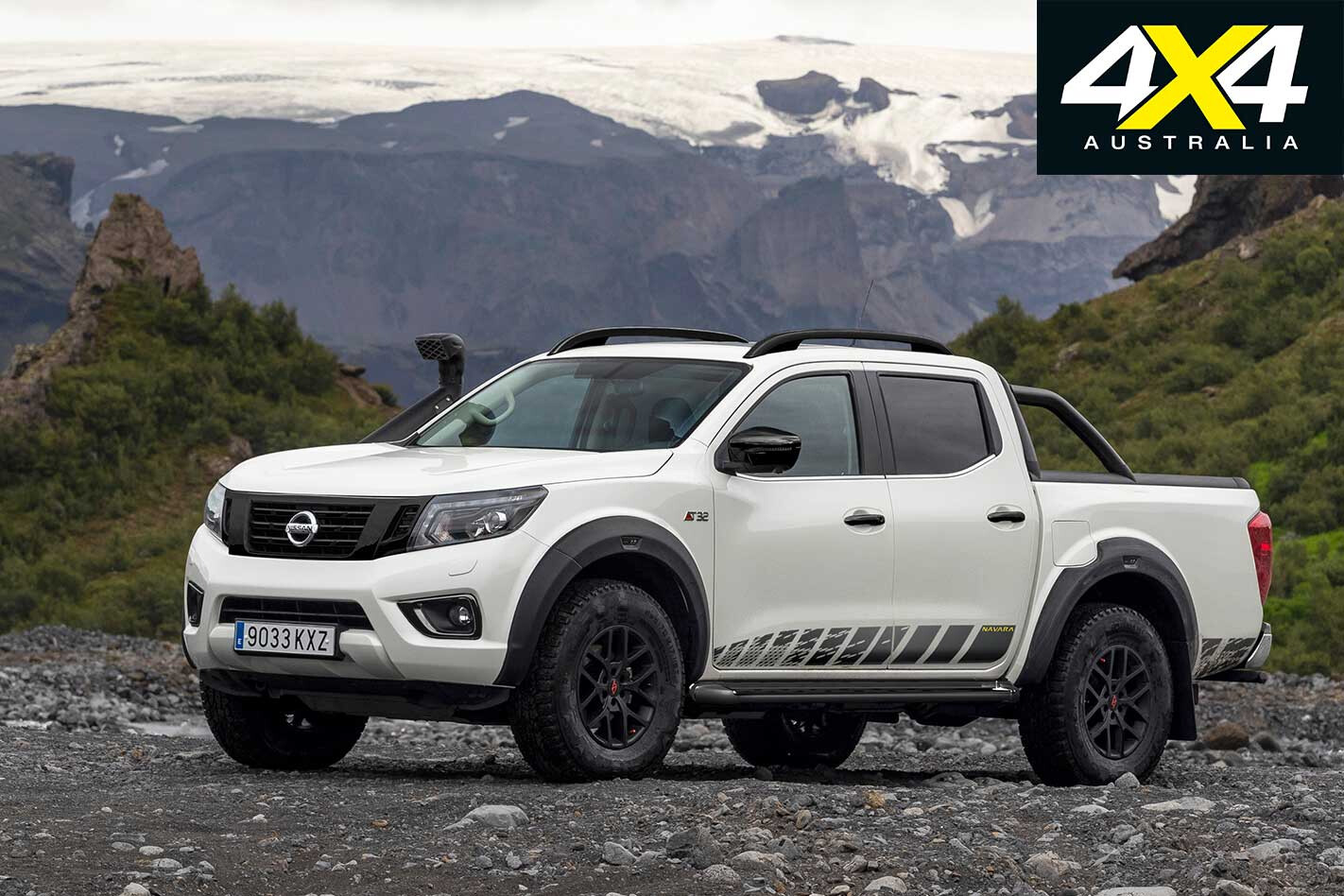
The AT32 comes with a bunch of optional accessories including an electronic front diff lock and an air intake snorkel, which increases the rig’s wading depth to 800mm.
The OFF-ROADER AT32 will hit European showrooms in February 2020, with pricing to be announced closer to launch.
After sailing beside the treacherous Zuytdorp Cliffs and the rugged west coast, Dirk Hartog anchored in Turtle Bay, a sublime anchorage sheltered from the southern swells. Here he climbed the dunes to consider the view from the top of the cape; to the north and east he saw only the vast open ocean and must have assumed he had reached the western edge of the great South Land, or that he was on an island.
Standing on the same point as Dirk Hartog some 400 years later, on an extremely hot and clear day, I peered east and caught the faintest glimpse of a strip of orange floating on the horizon. Having been to Cape Peron, I knew this mirage on the ocean was orange dunes, some 40km away. If Dirk Hartog had glimpsed this phenomenon all those years ago, I wonder if he would have set sail to explore Shark Bay to the east. Instead, after three days, he left a plate with an inscription on what is now aptly known as Cape Inscription, and left for Batavia.
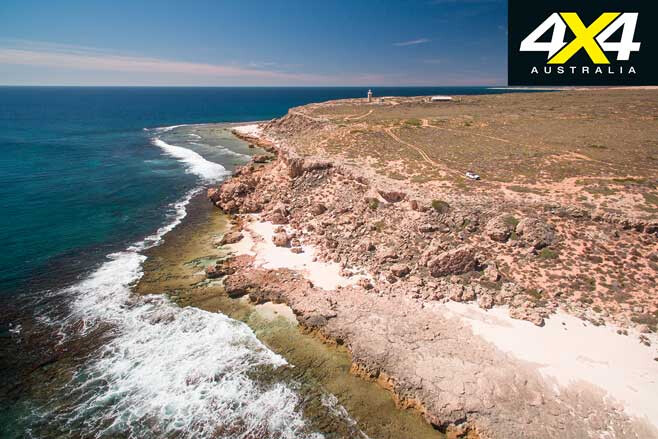
Dirk Hartog Island (DHI) is a finger of land that protects Shark Bay. The island is 76km long and averages about 11km wide, but just 3km wide at it’s narrowest point. It’s the largest island in Western Australia, and it has a diverse coastline with 200m-high cliffs, blowholes, sand dunes, coloured lakes and calm bays that offer a myriad hue of blues. The abundance and variety of fish around the island is incredible.
The camping on DHI is superb – and exclusive – with no more than 20 vehicles permitted at any one time, and visits must be pre-booked. It’s possible to fly or barge over to the island from Denham, but if you want to take your vehicle across you will have to put it on the barge at Steep Point.
The Overlander Roadhouse, 700km north of Perth on the North West Coastal Highway, is the turnoff point for Shark Bay, and while it’s possible to reach Steep Point from here in just a few hours, there are a few destinations on the way that are worth extending your trip for.
About 40km from the turnoff is Hamelin Pool and the stromatolites. A boardwalk here allows you to look at these ancient lifeforms, representative of life some three billion years ago. Facilities here include a small shop and a caravan park, and there’s the old telegraph station that houses artefacts from the early days of settlement.
The bitumen ends about 20km west of the turnoff to Denham and Shark Bay. A gravel road leads out to the salt works at Useless Loop, which is on the Heirisson Prong, a peninsula that juts out into the waters of Shark Bay. Useless Loop is a company town with a solar salt mine, and while you can’t see much of it as you drive by, these salt beds look stunning from the air with pools of different colours.
After Useless Loop you reach a junction; turn right for Steep Point and left to False Entrance, which is a gap in the Zuytdorp Cliffs. This gap was named False Entrance after being mistaken for South Passage, and the track to this site is well-formed but turns to soft sand as you approach the beach.
This is an ideal spot for fishing and beachcombing, and there’s plenty of ocean life about including sharks and manta rays. There are also blowholes in the cliffs and, for those who want to spend the night, informal camping.
At the base of the hill on the Steep Point track is a sign that reads “4WD access only and please deflate your tyres to 20psi”. The climb here is the worst section of the track; you have to climb up and down dunes and the track itself is very narrow, the sand is soft and it’s likely you’ll meet oncoming vehicles, some towing boats.
The track winds through picturesque dunes and eventually you reach the beach at South Passage. Here you can check in to the Ranger’s House or book your camping for the night. There are many campsites along the beach here at South Passage, the water is clear and blue, and the fishing is great. Pull out a chair and sit back with your rod in the water; I caught a massive spangled emperor from my campsite on the beach.
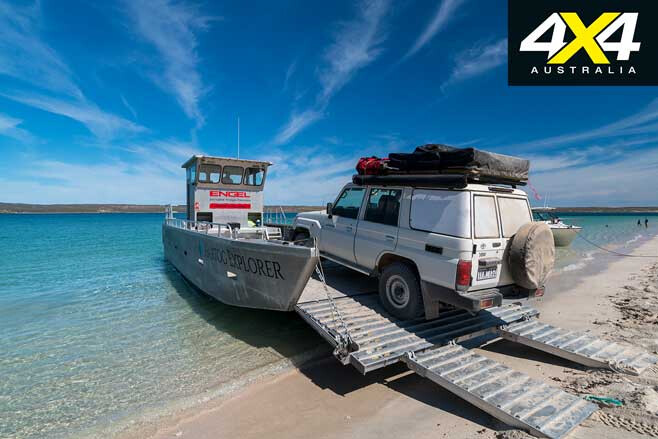
The barge, which can carry a 4×4 and camper trailer, pulls up at Blackies Beach about 600m west of the Ranger’s House. The crossing to DHI is only about 15 minutes, but it’s enough time to get out and have a look around. The barge lands at Cape Ransonnet and by the time you arrive here you should have already booked your campsites. There are national park campsites around the island, which are all bush or beach camping.
The southern part of the island has some tracks leading to amazing features: near Cape Ransonnet the white dunes meet the sparkling blue waters of South Passage; and on the west coast is Surf Point, where you can take in a magnificent panorama of the island from the rocky headland overlooking the surf and Steep Point on the mainland. You can walk through the shallows here and watch the amazing marine life, including hundreds of small sharks.
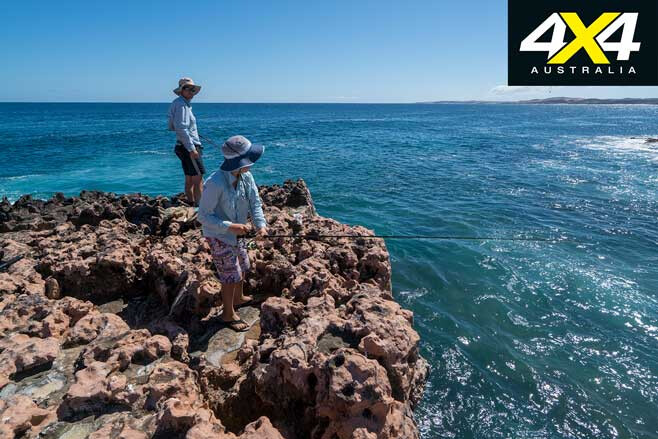
Farther north the track heads over the dunes to some tall and dramatic cliffs, and there is a giant blowhole nearby that in huge swells sends spray towering overhead. The rock shelfs are good for experienced fishers.
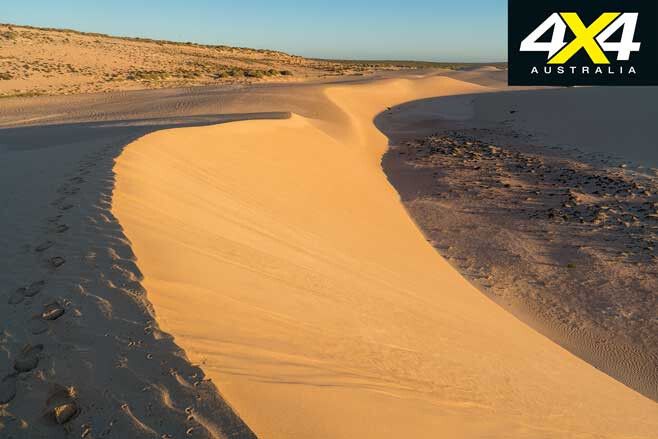
Just north of the Homestead is Tetrodon Loop, which is a bay that’s encircled by Quoin Bluff South and Notch Point. Tracks up to these points provide high views across Shark Bay. From Quoin Bluff we watched small sharks circle a cormorant roost, and you will often see tiger sharks cruising in the shallows as well. To the west are some of the largest dunes on the island, as well as Cliff Lookout which is the highest point on the island.
There’s beachside camping at Homestead Beach, with facilities and a camp kitchen. Most of the campsites are in the northern part of the island, so it can be worth staying at Homestead Beach for a while if you want to explore the southern section. It’s a great place to stay before leaving the island, as many return transfers are in the morning.
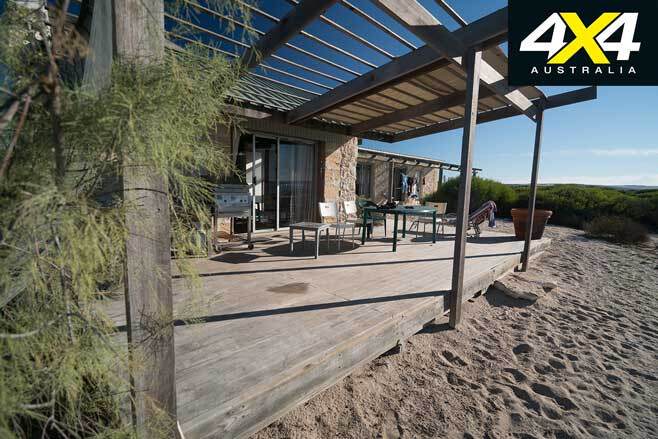
The homestead also offers accommodation at the Ocean Villa, which is a self-contained cottage at the water’s edge, or in the Eco Lodge, which is the original homestead and has six rooms, all fully catered. It’s a stunning spot right on the beach – one of those first class eco-stays that attracts people wanting to escape the ordinary.
From Dirk Hartog Island Lodge the track winds up the east coast of the island and is mostly a hard surface with some corrugations and soft patches. It will take between three and four hours to reach Cape Inscription from the barge landing, and on the way you will pass some amazing sights including red and pink salt lakes.
The lighthouse and keeper’s quarters are among few manmade features on Dirk Hartog Island. These were built at Cape Inscription between 1908 and 1910, and here you’ll find a plate that commemorates Dirk Hartog. On the beach below are the remnants of an old jetty.
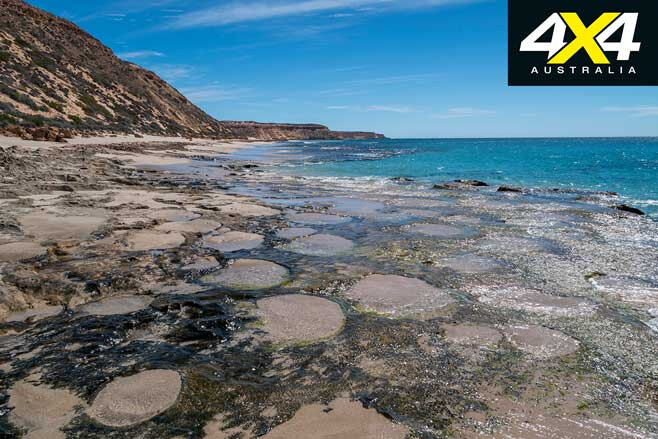
The headland is great place to explore; below the lighthouse there are interesting rock pools and to the east you’ll find the stunning expanse of Turtle Bay that stretches about 6km towards Cape Levillian, the north-eastern point of the island.
About 20km south of Cape Inscription, on the west coast, is Mystery Beach. This is a great day trip from the northern campsites, and the spectacular drive south winds through dunes near the beach. Mystery Beach was named after a mystery shipwreck, and it’s littered with natural sponges, driftwood and all sorts of flotsam. The sand on the beach is very soft, and impressive dunes near the cliffs make for interesting walks.
Camping
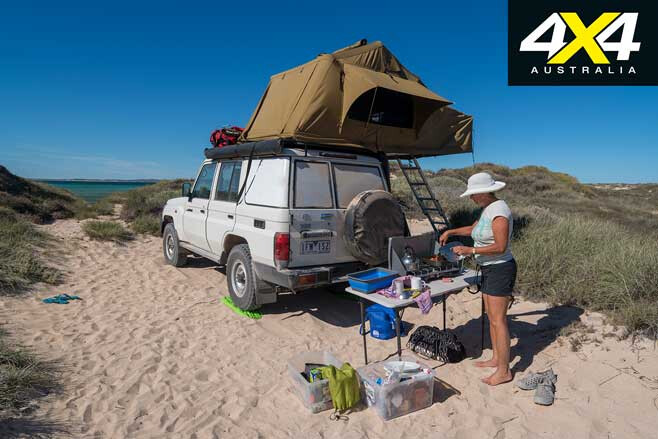
The national park campsites on the island are spread between the east and west coast, and they are all near the water and offer very different experiences. The winds are predominantly from the southwest so the east coast is quite sheltered, offering flat water in shallow bays and making it good for paddle boarding, snorkelling, kayaking or putting in a small boat. The west coast is rugged with wild swells and scenery to match, mostly rocky shorelines and spectacular fishing. The national park campsites have no facilities.
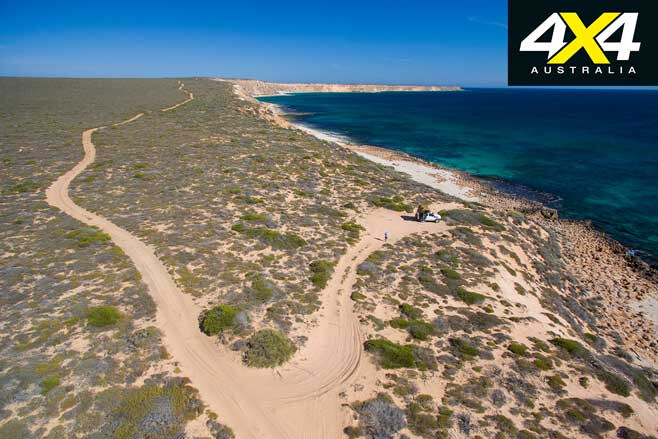
Turtle Bay Campsite is about 4km east of Cape Inscription. It’s a single site right on the edge of the cliff above the eastern end of Turtle Bay, which is the largest loggerhead breeding colony in Australia. In summer the turtles nest on the beach, and even as late as April there are still stragglers coming ashore. There is a short but steep track down to the water and it’s a great place for a beach walk and a swim. It’s mesmerising just looking out to sea, waiting to spot dolphins, whales or sharks.
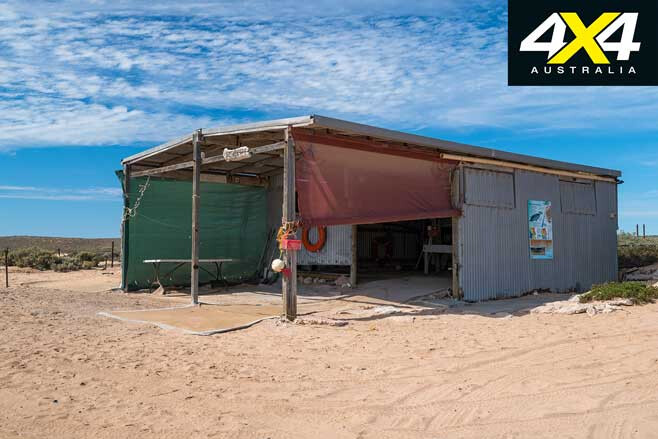
Urchin Point Campsite is about 4km from Cape Inscription on the west coast. The site is on a platform cliff shelf above the ocean. There is a shed/shelter here which provides shade and protection from strong winds, and a small stretch of sand is good for fishing with floats or lures due to the rocky bottom. There is a left-hand surf break here as well.
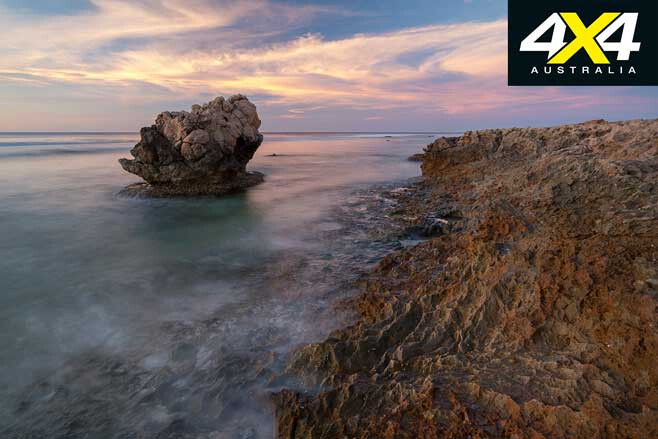
The Block Campsite is on the west coast about 6.5km from Cape Inscription. It’s named after a large and bizarre rock that’s shaped like a large cube, which was washed up in a tsunami. The site is set on a rock shelf that drops steeply into the ocean, and it’s well-suited to cliff fishing but not for swimming as the swells break right onto the rock ledge. The site has a shed and can be booked for up to four vehicles. If fishing isn’t your main interest it’s still a good site where you can make a more permanent type of camp, and is not too far from Cape Inscription.
Dampier’s Landing Campsite is about 6.5km east of Cape Inscription. It’s a single site for up to three vehicles and is positioned right near a beach on the west coast. The sand is part of a spit that points out at Cape Levillain, and is pure white and very fine, hence very soft for beach driving and not recommended for trailers. This is where William Dampier landed in 1699 and named Shark Bay, and there is a plaque here to that effect. The beach has fish and turtles that swim close to shore, and there are hundreds of crabs scurrying about.
Withnell Point Campsite is about 16km south of Cape Inscription on the east coast. It’s a sandy point on a large bay and can accommodate three separate group bookings. It’s right on a flat, shallow and safe beach, and it’s great for small kids and beach fishing.
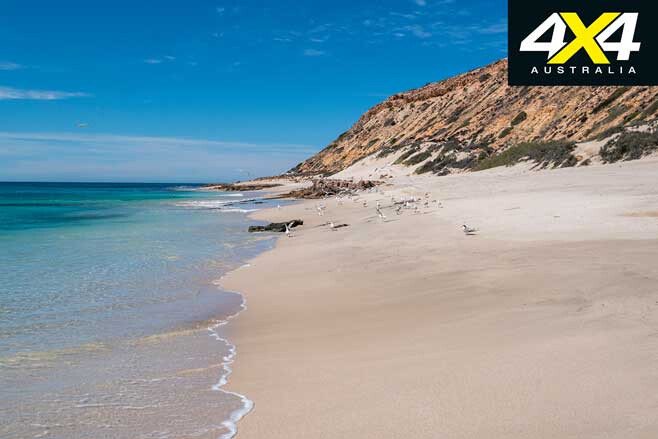
Sandy Point campsite is about 32km south of Cape Inscription on the east coast. It’s near a flat, sandy beach and is good for beach fishing or launching a boat. Offshore there’s a coral reef that’s located in a sanctuary zone.
Quoin Head is located on the western side of the island near it’s midpoint, and it’s a 17km drive across the island from Sandy Point. The campsite is on a rocky ledge above reefs and shelves, and while excellent for fishing it’s not easy to access the water. It’s near Charlies Harbour which has inspiring cliff formations, and you’ll be able to spot an osprey nest on top of one rocky outcrop. Campers here try their luck with balloon fishing for pelagic species like mackerel, as the winds will take your line out into bay.
Louisa Bay campsite is on the eastern side, another 10km south of Sandy Point. A single site that can take up to four vehicles, the bay has a sandy beach with shallow waters and is a great sheltered site suitable for fishing and snorkelling. You can launch small boats and kayaks from the beach here, and there are coral reefs offshore with reef fish.
Fraser Comparisons
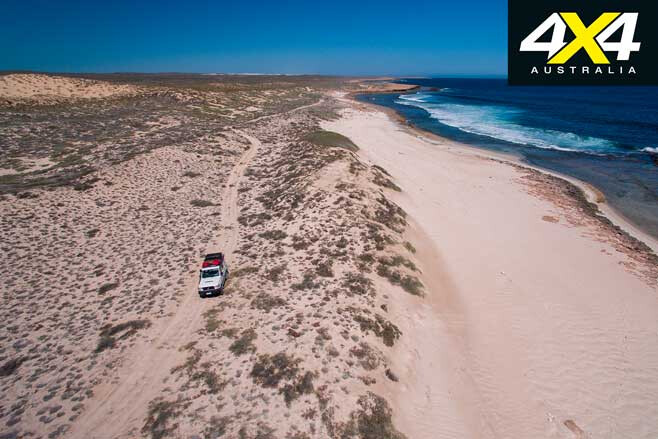
It’s inevitable that Dirk Hartog Island will be compared to Fraser Island; both are amazing 4×4 locations and DHI is definitely the west coast equivalent. However, it’s the remoteness and exclusivity of DHI that makes it worthy of its bucket-list status. It’s a big island with diverse opportunities and the marine life here is amazing and very easily seen, with sharks on the west coast and dugongs on the east.
You feel the remoteness here, too; although, you’ll frequently spot sea eagles, osprey and other birdlife. DHI recently became a Wildlife Ark, with native species released after feral cats and goats were culled. In the future, a camping trip here could also include sightings of rare animals like the chudditch, dibbler or boodie.
Travel Planner
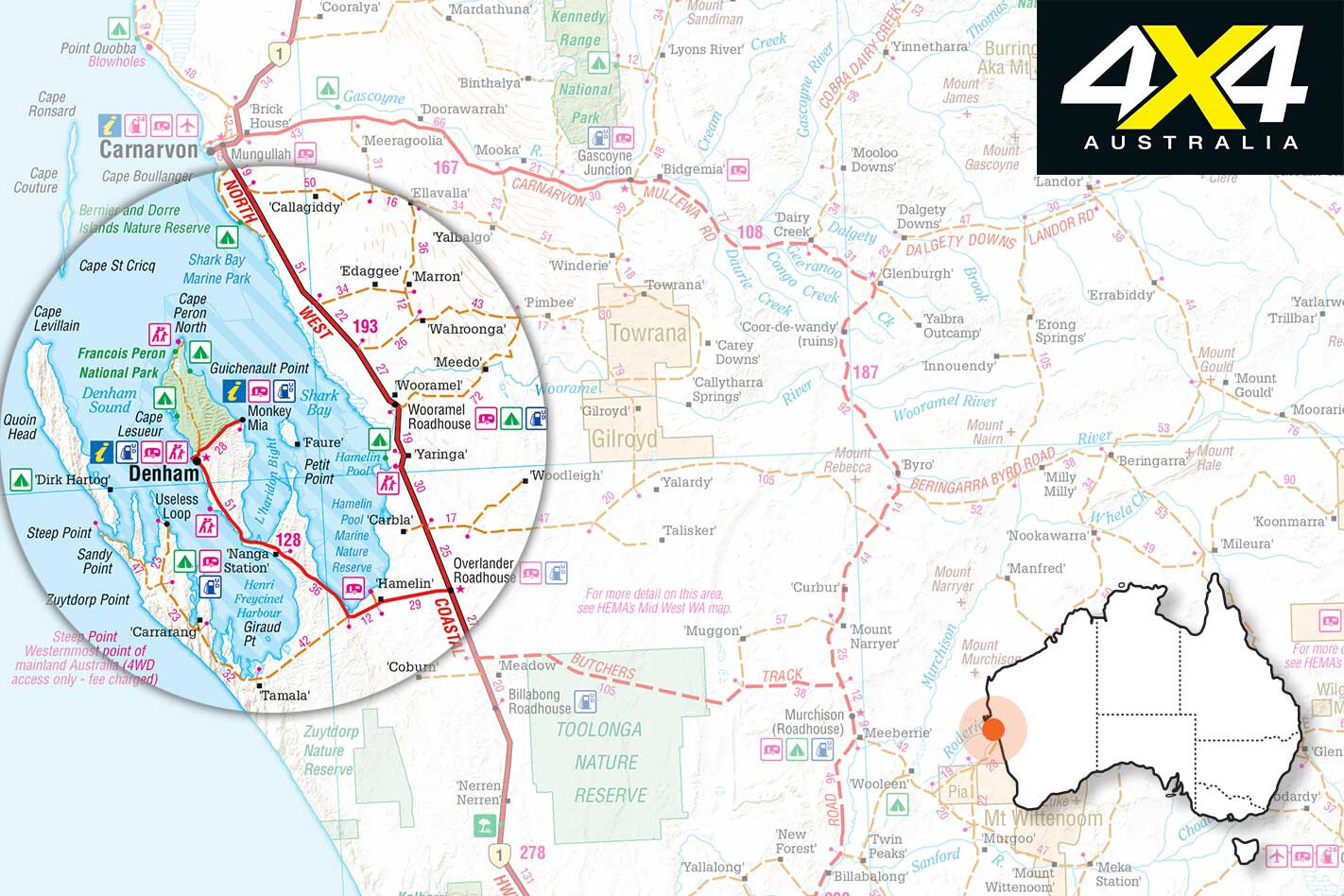
It takes quite a bit of commitment to get to DHI, and the people who do often make return trips. While you can enjoy just a few days here, if you take a week or more you’ll be able to explore the north and south of the island. I found it easy to travel simply with a rooftop tent, and as it’s one of the best fishing locations in Australia, you can always catch a fish or two to stretch your supplies.
WHERE On the western edge of Shark Bay, 700km north of Perth. Access is from Steep Point, a three- to four-hour drive from the highway. From here take the 15-minute barge across South Passage to DHI.
DRIVING CONDITIONS Many of the tracks on DHI are well-formed but there are soft sections, particularly on the entry and exit points near the barge, and on the beaches. Access to Steep Point and DHI is all sand so it’s only suitable for 4x4s. Tyre pressures need to be dropped, and there are some very soft sections out to Steep Point and on DHI, so recovery gear such as tracks and shovels should be carried. You need to be fully self-sufficient.
CAMPING Camping on the island is all basic – there are no facilities – and you need to bury your waste. There is no water, so you must bring all supplies if camping in the national park. Some sites are exposed so you need plenty of water and shade. Be prepared for strong winds. There is camping available at Homestead Beach, with some facilities.
PERMITS Camping must be pre-booked through the website. Accommodation at the homestead also needs pre-booking. The barge transfers also need to be pre-booked.
CONTACTS See www.dirkhartogisland.com for camping permits and barge transfer bookings.
Department of Parks and Wildlife – Shark Bay District Address: 61–63 Knight Terrace, Denham, WA, 6537 Phone: (08) 9948 2226 Email: [email protected] Website: www.sharkbay.org; www.dpaw.wa.gov.au
Steep Point Ranger Station Phone: (08) 9948 3993 Email: [email protected]
AMERICA’S Car and Driver magazine has released a set of renderings it thinks is pretty close to what the 2021 Ford Bronco four-door will look like, and we reckon they are on the money.
The CGI renderings come just months before the new Bronco will officially be unveiled in the northern hemisphere in spring, and they show a big and boxy body with short overhangs for great off-road ability.

The dish on the alloy wheels chosen looks a bit deep, but off-road rubber to match the Ranger Raptor’s 285/75 17 BFGs is expected on the most off-road-capable models.
The new Bronco is built on the Australian-engineered T6 platform shared with the Ranger and Ford Everest. Recent spy photos have confirmed the Bronco has a coil-sprung live rear axle, which was expected to be the same as that used under the Everest. However, unlike the Everest, the Bronco’s suspension seen in the pics uses a Panhard rod to locate the rear end laterally in lieu of the Everest’s superior Watts link set-up. The front suspension is the T6 Ranger’s IFS set-up.

Not evident in the C&D renderings are the removable roof and doors that are expected to be offered on the Bronco, after patents lodged by Ford were revealed in 2019. These features will line the Ford squarely up against the Jeep Wrangler. Like the Wrangler, the Bronco is expected to be made available in both five-door and three-door configurations and will go on sale in the USA and China.
There are no plans for Australian-friendly, right-hand-drive production. With its T6 underpinnings you would have to think a RHD Bronco would be a dead certainty. Let’s face it, which wagon would you rather be driving, the super cool Bronco or the non-descript Everest?
Source: www.caranddriver.com/news/a30434471/new-ford-bronco-design
A TOTAL of 544 Jeep JL Wranglers have been issued with a recall notice due to a fault with the vehicle’s transmission harness.
According to the ACCC report, “the transmission harness may have insufficient clearance to the catalytic converter”.
This is worthy of a recall, as the consequences can be significant if the battery cable contacts the catalytic converter. If this happens, it could potentially cause a vehicle fire; or it could disable safety systems and lead to an engine stall.
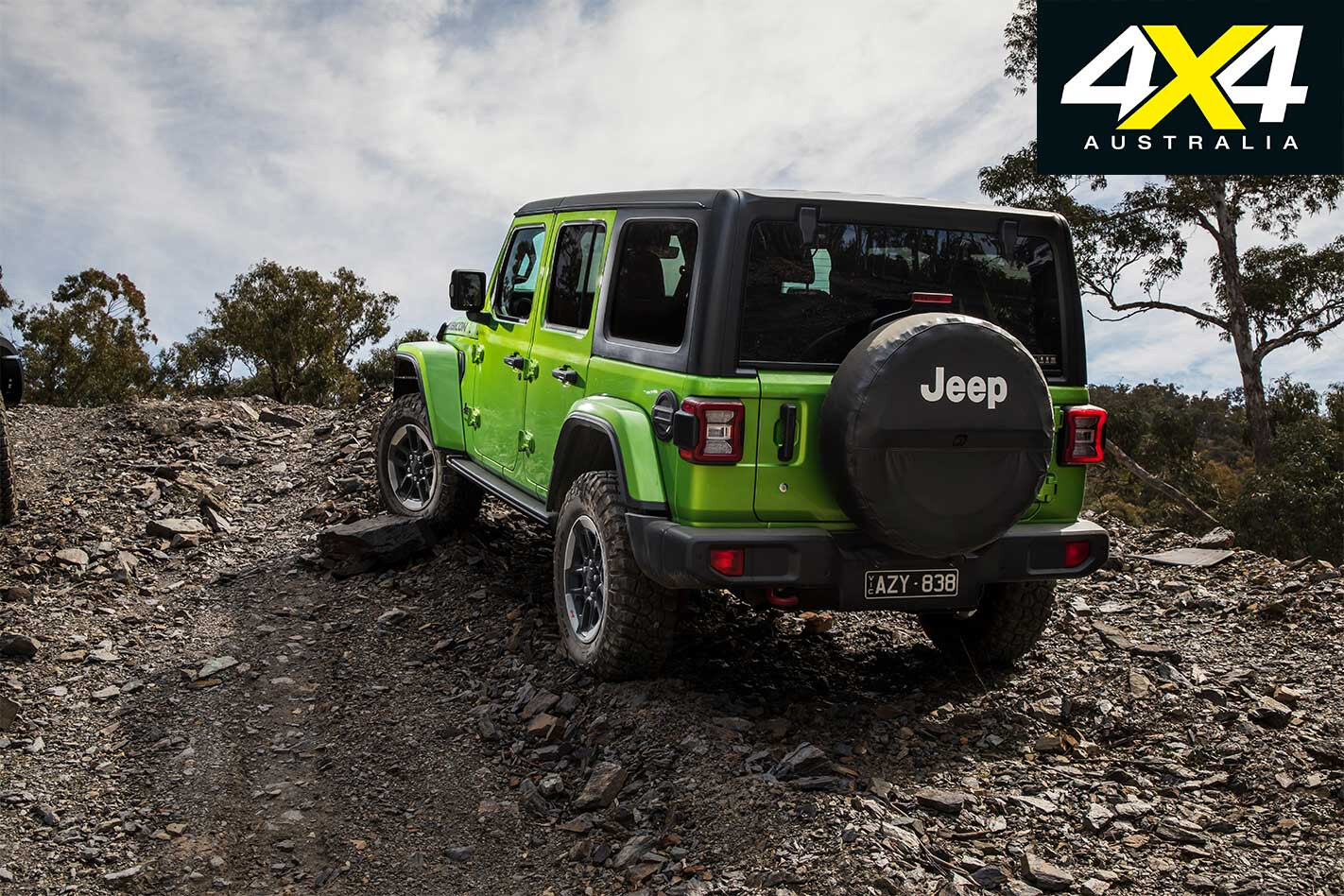
“This could result in a crash without warning, increasing the risk of injury to vehicle occupants and other road users,” the report continues.
The recall notice was issued for MY2018-2019 Jeep JL Wranglers sold nationally between June 1, 2017 and December 11, 2019. For a complete VIN list of affected vehicles, click here.
If you’re the owner of an affected vehicle, FCA Australia will be in contact and advise you to present the vehicle to an authorised Chrysler Dodge and Jeep Dealer, where they will inspect the transmission harness for damage. Any reparations will be free-of-charge.
For more information, contact: www.jeep.com.au/contact-us.html or call FCA Australia on 1300 133 079.
Preposterous, jaw-dropping, monstrosity … or perhaps what you see here is all of the above.
Either way, this quirky Toyota Supra 4×4 concept penned by Estonian digital designer Rain Prisk is definitely different, or as the VW GTI Club put it, a “beautiful monstrosity”.
The concept will never become a reality – and that’s probably a good thing – but, while Prisk’s version of the Japanese sports car might look ludicrous, he’s included quite a few neat touches and made it look pretty darn realistic.
Credit: https://rainprisk.artstation.com/
The lifted Supra wears chunky off-road tyres beneath humongous wheel arches, a step to get into the cabin, a snorkel intake, and recovery points and a winch up front.
Prisk is well-renowned his obscure redesigns of, well, anything really. Take for example the lifted GT-R 4×4 with BFG muddies and the hiked Bugatti Chiron with a roof rack. Some are ‘somewhat’ more believable, like the Range Rover pick-up.
Credit: https://rainprisk.artstation.com/
Check out Prisk’s entire range of computer-generated images here: https://rainprisk.artstation.com/
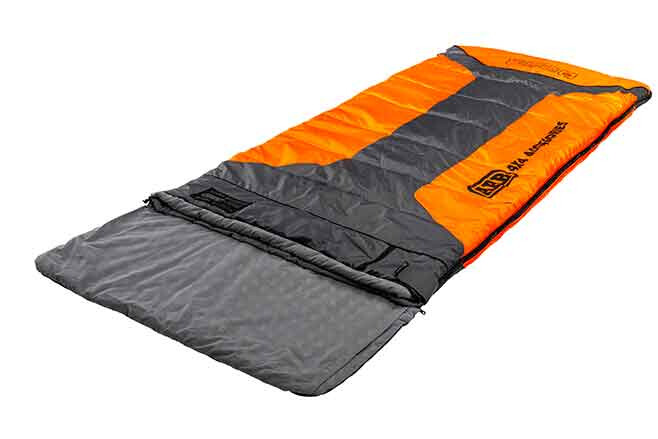
ARB COMPACT SLEEPING BAG
The new Compact Sleeping Bag from ARB is lightweight yet warm and has been designed for temperatures ranging from -5°C to +5°C. The bag weighs just 2.85kg and features an Alu-tech breathable internal liner that is claimed to aid heat retention and breathability. Other features include a removable hood with an inbuilt pillow holder, a brushed Microfiber Plus liner for added comfort and temperature control, drag barriers along all zips and a water-resistant roll-top carry bag. The sleeping bag has also been designed so that it can be connected to a second ARB sleeping bag. It’s covered by a two-year warranty.
RRP: $139 (Australian East Coast Metro)
Website: www.arb.com.au
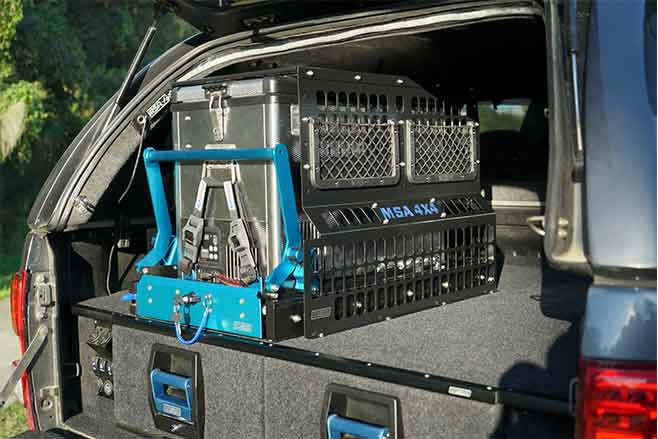
MSA 4X4 FRIDGE BARRIER
The new MSA 4X4 Fridge Barrier allows you to safely and securely store accessories and luggage around your fridge, while retaining access to fridge contents without having to unpack gear. It features a black powder coated steel frame for safety, strength and durability, and has practical side pockets to store small items such as stubbie coolers, cups and bottle openers. The Fridge Barrier has been designed to fit perfectly around the MSA 4X4 Drop Slide and Fridge Slide range, and the smallest possible footprint maximises vehicle cargo space. The barrier is easy to install and is covered by a lifetime guarantee.
RRP: From $399 (plus delivery)
Website: www.msa4x4.com.au
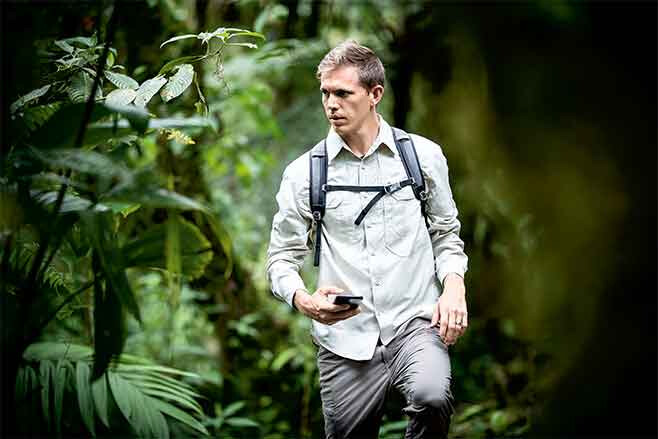
ROYAL ROBBINS BUG BARRIER SHIRT
If you don’t like the mozzies and other insects that go with four-wheel driving in the summer months then perhaps you need to throw on a Royal Robbins Bug Barrier Expedition long-sleeve shirt. Available in men’s and women’s sizes in a variety of colours, the shirt is made from Bug Barrier fabric which is claimed to provide odourless insect protection. The material is lightweight, breathable and quick-drying, and it provides 40+ UPF protection. Features include classic chest pockets, clean styling, tabs for sleeve adjustment and a hidden button-down collar.
RRP: $129.95 (women’s); $139.95 (men’s)
Website: www.paddypallin.com.au
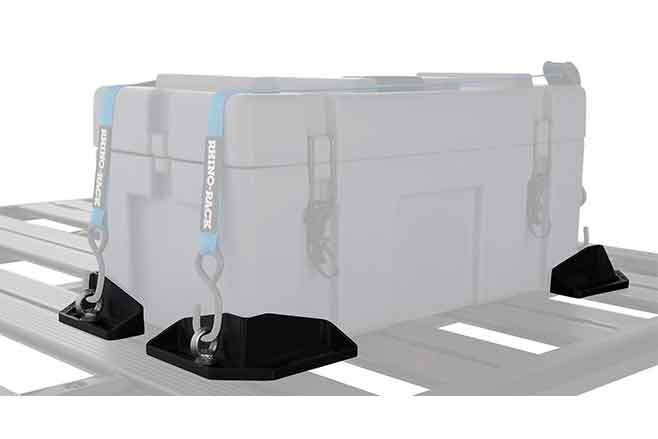
RHINO-RACK PIONEER CORNER BRACKET KIT & TIE DOWN KIT
Designed to make securing gear easy on Pioneer Trays, Tradies and Platforms, the new Rhino-Rack Corner Bracket and Tie Down kits are made from durable aluminium alloy with a powder-coat finish. The corner brackets are designed to wedge against the side of your gear, allowing you to easily strap and secure items using the integrated eye bolts as anchor points, while the Tie Down Kit includes four tie-down points with a low-profile design making them an ideal load-securing system when height is an issue.
RRP: $129.95 (Corner Bracket Kit); $55 (Tie Down Kit)
Website: www.rhinorack.com.au
Updated 23/1/2020
VOLKSWAGEN Australia has listed the RRP for its upcoming six-speed manual Amarok V6 Core 4×4, with the three-pedal cog-swapper up for grabs for less than $50,000.
While the manual ’Rok doesn’t launch locally until next month, VW Australia has revealed its six-speed manual V6 Core 4×4 will officially be priced at $49,590.
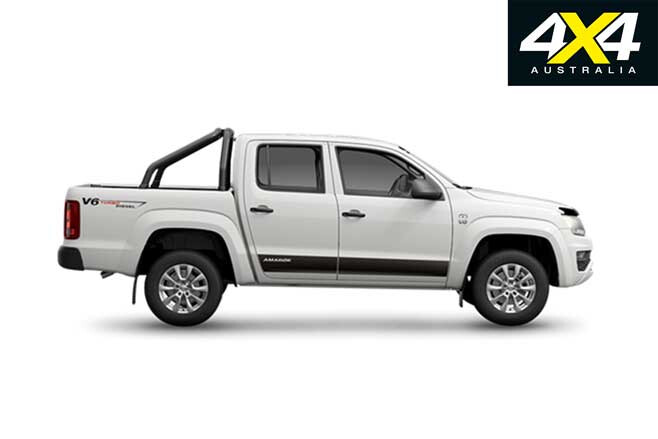
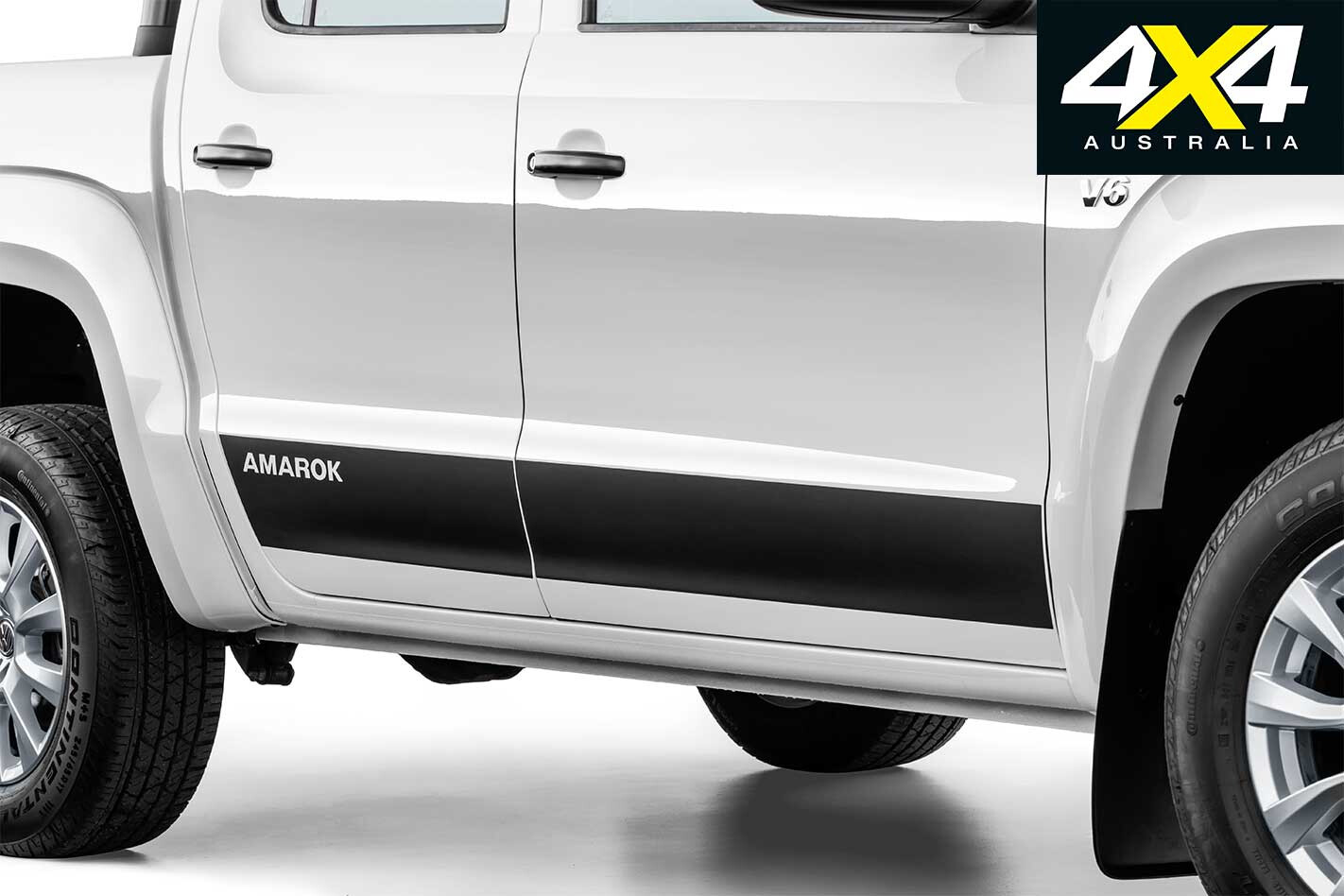
A V6 Core Enduro with manual transmission will also be available for the same amount of coin. The Enduro accessory pack – just like the Enduro pack for the V6 Core auto – includes the addition of a black sports bar, front bonnet protector and black side decals running down the flanks. The Enduro pack is said to be worth $1200 in extra kit.
The manual Core, the first manual V6 diesel-powered dual-cab in Australia, will be fitted with a low range transfer case, a mechanical diff lock and run the same 17-inch Posadas alloys found on the eight-speed auto Amarok V6 Core Enduro 4×4.
The V6 manual Amarok has less towing capacity than its auto equivalent – 3000kg versus 3500kg – and a payload capacity of 1004kg. The full suite of Apple CarPlay and Android Auto connectivity will be accessible via a 6.4-inch touchscreen.
VW’s V6 turbo-diesel engine generates 165kW (with 180kW on overboost available), but in manual guise it will top out at 500Nm instead of 550Nm (auto V6 variants) and 580Nm (Ultimate 580). Unlike the auto’s full-time single-range 4×4 system, the manual Amarok will get a part-time 4×4 system with the as-mentioned two-speed transfer case (high and low range).
The manual V6 variant will launch in Australia next month; stay tuned for our first drive impressions.
Is it just us, or does it seem extraordinary that Australia’s top-selling car brand, which also claims the country’s top-selling vehicle, seems to almost wilfully ignore the high-performance space in a market with such a well-established taste for it?
What we’re trying to say is: where the hell is a high-performance Hilux?
Ford Australia has acknowledged that its Ranger Raptor is a ‘nearly there’ proposition, and is poised to correct that with the eagerly anticipated Mustang-V8-powered Ranger. HSV, meanwhile, has the SportsCat, and Nissan has weighed in with the Navara N-Trek Warrior. Admittedly these latter two are all about chassis upgrades, rather than heavy-hitting under-bonnet muscle, but it still begs the question: where’s Toyota?
Well and truly AWOL, we’d suggest. With the GR Yaris, the parent company has shown its willingness to produce a niche performance model that’s loaded with bespoke bits that are expensive to develop.
We reckon Toyota is missing an opportunity for a premium-priced, low-volume, seriously high-performance variant of the Hilux; one that would target cashed-up buyers who want the visceral thrill of a petrol V8 in a family-friendly 4×4 ute.
So let’s have a rifle through the various Toyota parts bins to see how such a model could be pulled together.
For starters, Toyota has a choice of V8 engines that would drop straight in, while the TRD catalogue from the USA bristles with bolt-on bits like suspension and brakes.
And before anyone shouts, “What about the TRD Hilux offered around the middle of 2017?”, let’s be clear: it was a classic shit ’n’ glitter job that is precisely what we are NOT looking for. Throwing on a bunch of exterior accessories – like the TRD-branded skid plate, black grille, and fender flares – with zero attention to chassis or powertrain, is never going to create a desirable Raptor V8 rival.
But locally, the company does have form with injecting some performance appeal into its ubiquitous 4×4 ute. Those with long memories may recall that back in 2008, Toyota Australia offered two grades of a TRD Hilux, both based on the V6 SR5, with the 3.0-litre petrol engine fitted with an Eaton M90 three-lobe blower that boosted outputs to 225kW and 453Nm.
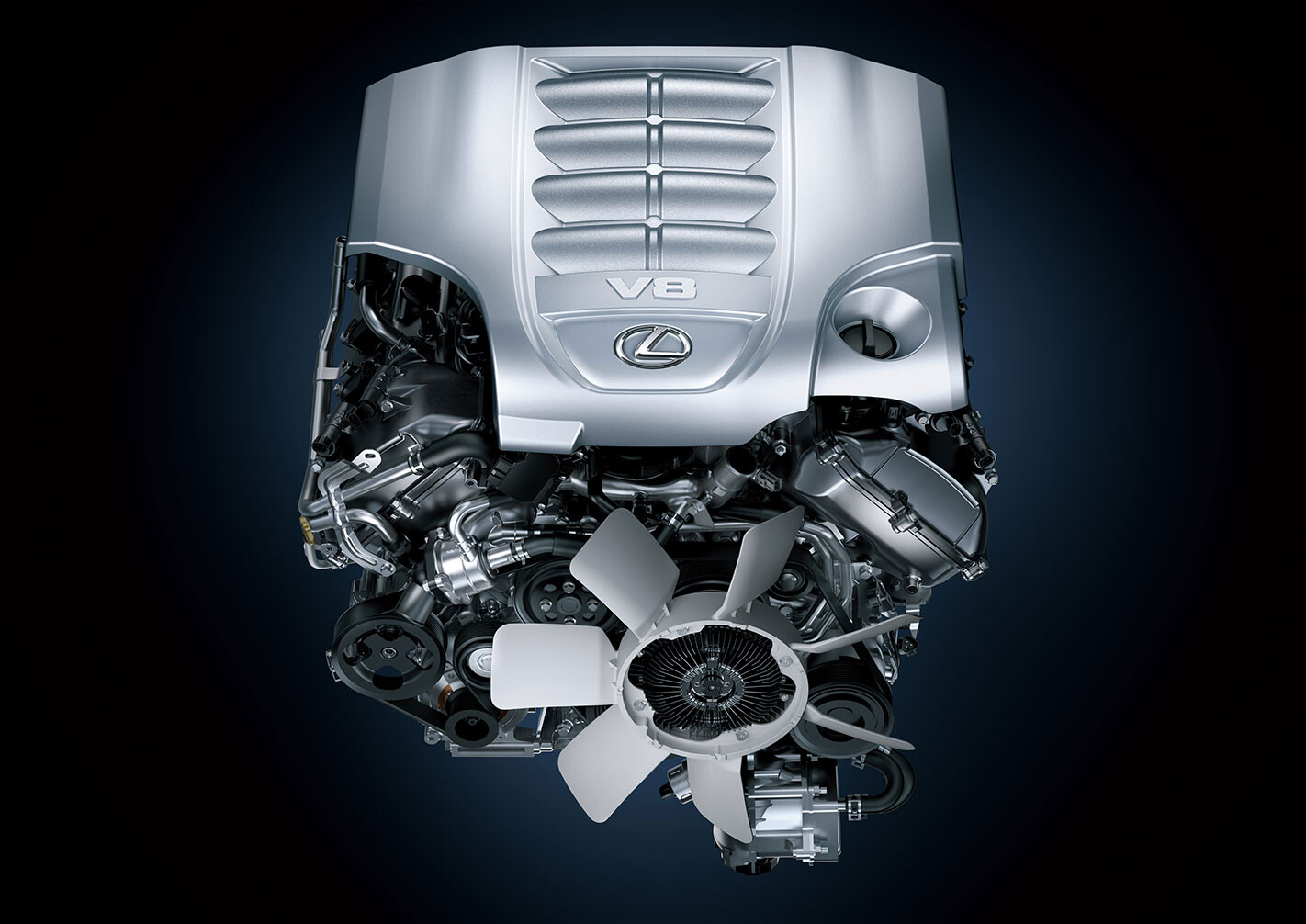
So, which engine could power a contemporary GR Hilux? First inclination may be towards the 2UR-GSE, the 4969cc naturally aspirated V8 fitted to the Lexus IS-F, RC-F, GS-F and LC 500. It’s an all-alloy, DOHC, four-valves-per-cylinder unit with Yamaha-designed high-flow cylinder heads, titanium inlet valves, high-lift camshafts and a dual-length intake. It’s good for around 350kW at 7100rpm and 540Nm, depending on final tune and exhaust routing.
But we can grudgingly acknowledge that this engine would likely be too top-shelf for a Hilux application, and its rev-hungry character wouldn’t be a natural fit for a vehicle of this weight.
So more realistically, the 5663cc V8 (coded 3UR-FE) would be a more viable choice, especially as it’s already been proven in heavy-duty applications: in the USA, it’s fitted to the Toyota Tundra, Sequoia and Land Cruiser, and in Australia, does duty hauling the Lexus LX570.
The 3UR-FE is port injected (no direct injection) but does feature variable valve timing on both inlet and exhaust, and is easily capable of producing around 285kW at a lowish 5600rpm, backed by 540Nm at a very accessible 3600rpm.
The all-aluminium construction means this engine weighs in at around 230kg, so it has a handy weight advantage over the Hilux’s current 2.8-litre diesel four (the 1GD-FTV). The oil-burner weighs a hefty 280kg, so there’s a circa-50kg weight saving over the nose to be had straight off the bat.
Now here’s the even better bit: it’s supercharger-ready. For a time, Toyota offered a bolt-on TRD Eaton Twin Vortices Series roots-typesupercharger kit for the USA Tundra and Sequoia models, which was dealer-installed and covered under factory warranty. With the blower fitted, this engine instantly cranks out 375kW, right on the magic 500hp in the old money, backed by a very healthy 750Nm.
That level of muscle would make the hi-po Hilux one sprightly jigger in a straight line. The likes of Porsche’s Cayenne Turbo – similar power- and torque-to-weight ratios – suggests 0-100km/h acceleration comfortably in the sub-five-second bracket.
Moving to the chassis, it again appears that Toyota has a ready-to-go solution offered by Fox, as evidenced by the TRD catalogue available to the US market.
Dig around there and you’ll find a Fox set-up developed for the Toyota Tacoma, the US model most closely related to our Hilux. The TRD Pro Tacoma front struts feature eight bypass zones (five on compression, three on rebound) and are paired with TRD-tuned springs that provide an additional 25mm of front lift. The matching rear shocks have seven compression settings, four for rebound, and are paired with 50mm piggyback reservoirs.
According to the TRD website, TRD and Fox co-developed this suspension package via multiple tuning sessions to ensure it provides an optimum balance of damping control and ride comfort. So there’s every reason to believe that such a set-up under the Hilux could come close to matching the supple, long-travel damping we’ve admired in the Ranger Raptor.
And getting the thing to stop? Again, the hardware is right there in the TRD parts bins: 370mm vented and cross-drilled front discs clamped by six-piston calipers, and a slightly less aggressive rear set-up to replace the drums, all needing little engineering work to fit onto existing Hilux components.
Finally, garnish the interior with supportive sports seats, a liberal lash of Alcantara and a splash of aluminium trim. Give the exterior enough embellishment to make it look primed for battle; not so much that it looks like a cartoon character. Given that Toyota Australia retains a local design studio, and showed its expertise in 2018 with the restyling and accessorising of the Hilux Rogue, Rugged and Rugged X variants specific to our market, the exterior styling would likely be the expeditious part of the development process.
So, job done. Even with a six-figure price tag, can anyone really claim there wouldn’t be a healthy queue forming for the mythical GR Hilux? So how about it, Toyota?