
The Readers’ Rigs feature in the December 2019 issue of 4X4 Australia features a several customised raised adventure-ready 4×4 rigs from our enthusiastic readers.
To get involved, post a pic and a description of your rig on our special site here or post it to our Facebook page and stand a chance to win an ARB High Output Air compressor valued at $335.
NISSAN TD42T GU PATROL: RYAN JACOBSEN (4×4 Australia Readers’ Rigs Winner of the Month)
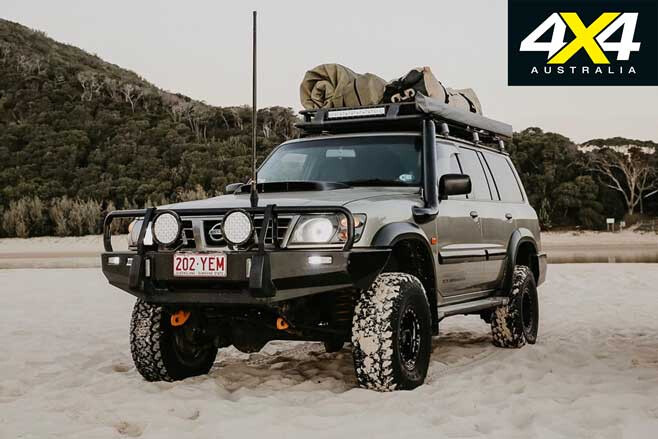
Modifications include Cross Country Ultimate Intercooler, ARB bullbar, Kaymar rear bar, front and rear ARB air lockers, rear drawer system, Radius Fabrications stainless-steel snorkel, three-inch Tough Dog lift, three-inch exhaust, ARB Aluminium Series roof rack, awning, ARB long-range tank, Micks HID headlights, and a GMW UHF … that’s just off the top of my head.
By far the best place I’ve taken it is Fraser Island. I love a good Double Island trip as well.
1998 NISSAN GU PATROL: FRASER COLLINS
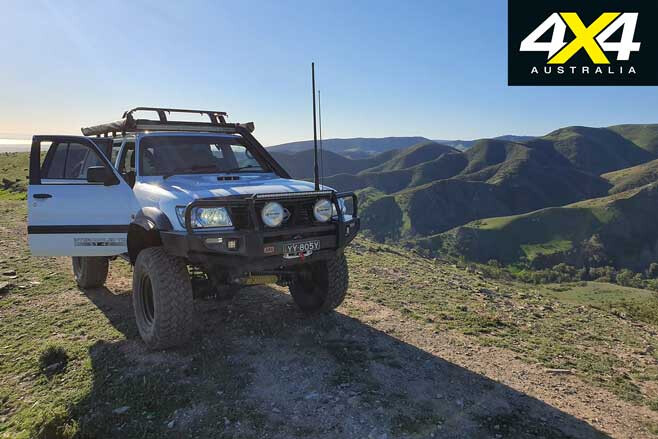
Kit includes 2004 GU 4.2 motor; UFI 18g turbo, pump and fan hub kit; six-inch Dobinsons coils (soon to be Fox shocks); rear drawers; FG XR6 seat conversion; 37-inch tyres; rear ARB locker; ARB Deluxe front bar; and an Outback 4×4 rear bar. The best place I’ve taken it to is the Flinders Ranges.
1991 TOYOTA LC80 SAHARA: MATTHEW LILLEY
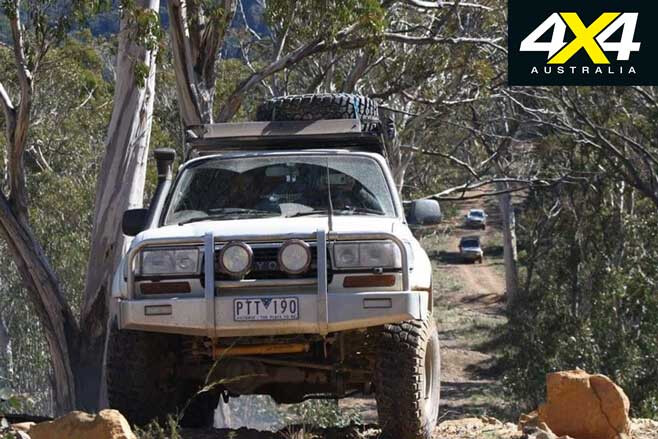
It has a reconditioned 1HD-T, high-flow turbo, top-mount intercooler, brake calliper upgrade to later model, rebuilt pump, three-inch straight-through exhaust, reinforced diffs with solid spacers, and 33-inch muddies and ATs. It’s been to the Vic High Country, the Pyrenees ranges and tracks including Old Bluff, Oodnadatta Track and Mereenie Loop. It has gone everywhere I have pointed it!
JEEP WRANGLER RUBICON: PETER COLTHUP
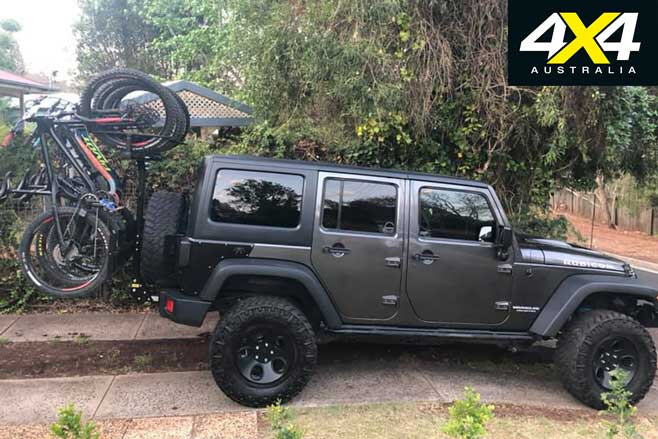
Mods include four-inch Dobinsons Flexi coils, Bilstein 5100 shocks, Nitto Trail Grapplers, High Steer conversion, Synergy drag link, TeraFlex Monster trackbar, sector shaft brace, longer brake lines and swaybar links, front control arm drop brackets, and a RackPRO bike carrier. The best places would be in and around the Burdekin River, as well as Vinegar Hill.
HOLDEN RODEO: RYAN BOLTON-TURNER
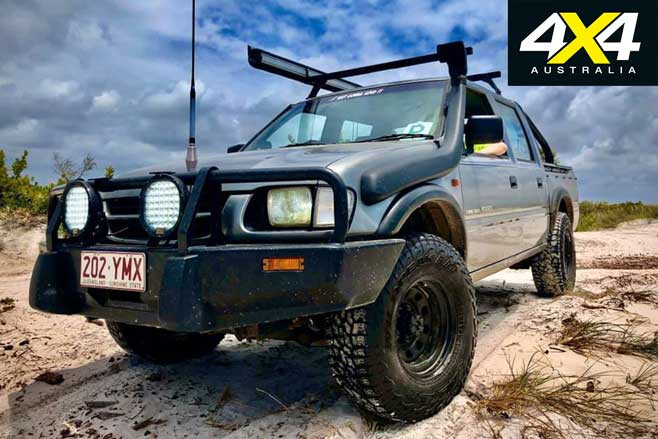
I’ve had it for about a year now and fell in love with it as soon as I bought it. It has an ARB bullbar off a Holden Jackaroo with custom mounts housing eight-inch spotties and HID headlights, a snorkel, roof racks, a Kings awning, custom-made sports bar with rear-facing rock lights, two-inch extended shackles with T-bars wound up, Raptor-coated flares, and 31-inch Falken Wildpeaks.
The best place I have taken the little ’Deo to is Fraser for a week for schoolies last year. It shows you don’t need big, done-up rigs to get to the places you want to go.
2003 NISSAN PATROL: DANIEL TADIJA
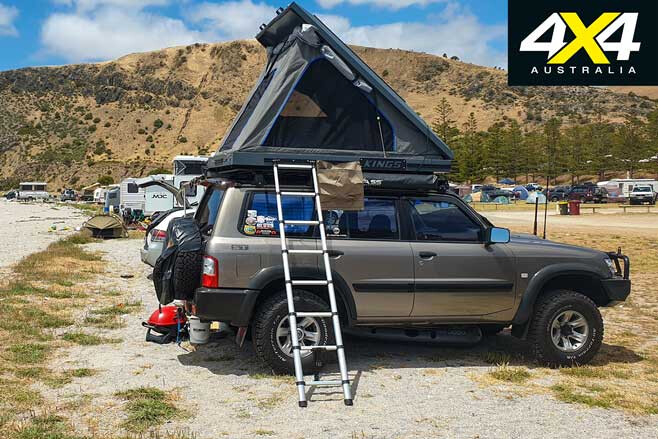
With 33s, a Kings rooftop tent, a two-inch lift and an Opposite Lock bullbar, it’s taken me everywhere I want it to go.
If Jeep’s new Gladiator pick-up doesn’t deliver the retro vibes you’re chasing then a restored Jeep CJ8 Scrambler might be just what you’re looking for. The Scrambler was the last pick-up made by Jeep in 1986 and they are still around in good numbers for enthusiasts, even in Australia.
Better than a 30-year old Jeep is one that’s been fully restored with a few improvements to improve the decades old design; a so-called restomod.
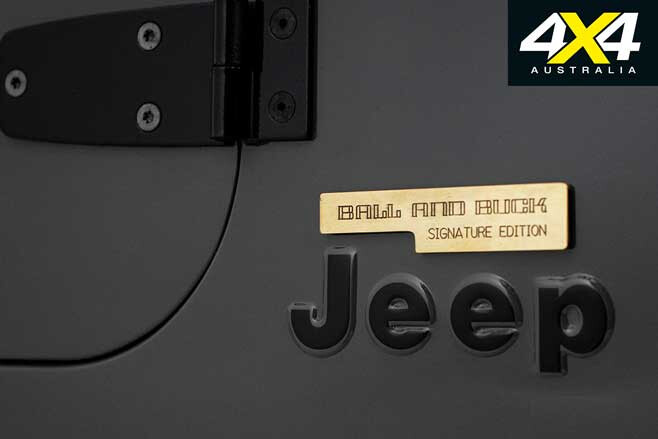
American outdoor sportsmen outfitters Ball and Buck, has recently added a signature edition CJ8 Scrambler to its catalogue with prices listed between US$65 to $105,000. For that money you get a classic Jeep that has been subjected to a ground up, nut and bolt restoration with custom touches reflecting Ball and Buck’s style.
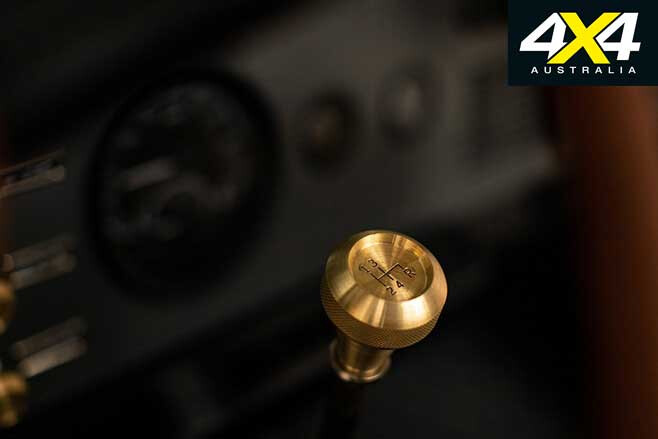
These include Ball and Buck Signature canvas and camo seat covers and door panels, a leather wrapped steering wheel, grab bar and dash, hand-turned brass shift knobs and heater controls, and a Ball and Buck gun case.
The restored Jeep chassis is updated with full ARB suspension, alloy wheels with BFG All Terrain tyres and uprated brakes. Power comes from either a restored original ANC 6-cylinder, a Cummins 2.8-liter turbo diesel or a GM LS3 petrol V8.
The Ball and Buck Scrambler isn’t cheap but it is exclusive. Once a deposit is paid and the order details finalised it will take up to six months for your Scrambler to be built. Add some Ball and Buck apparel, a B&B Zippo lighter and book yourself on one of the exclusive hunting expeditions and you’ll complete the look.
IF YOU’RE keen to witness one of Australia’s most coveted off-road events, then now is the time to sign up as a spectator for the 2020 Outback Challenge.
Held this year from September 19-26, the 2020 Outback Challenge will once again see the best 4×4 steerers and navigators converge on Broken Hill for a brutal seven days of extreme off-roading.
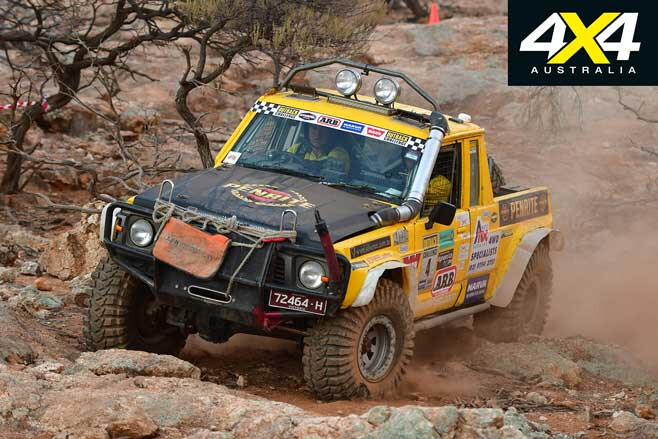
Throughout the week, teams will navigate from waypoint to waypoint via GPS, punishing their 4x4s – loaded with extreme suspension set-ups and state-of-the art winches – on some of outback NSW’s most relentless terrain.
“It’s the smart competitors with teamwork and reliable machinery that prevail,” the Outback Challenge website says.
Outback Challenge Spectator Adventure packages are strictly limited, so entry is granted on a first-in, first-served basis.
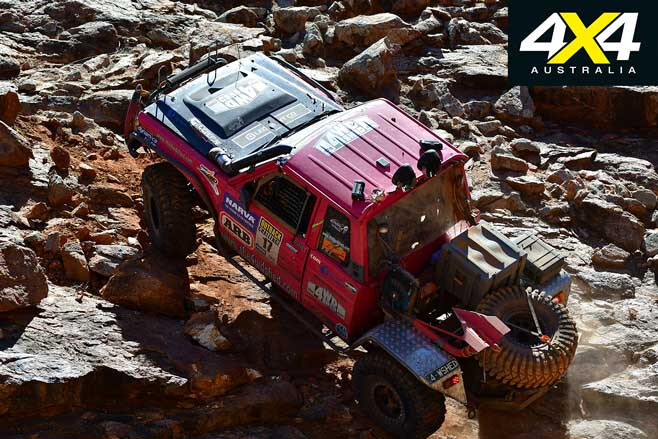
Spectators will be granted exclusive access to the “most extreme and spectacular locations of the Outback Challenge”. To get to some of these unique spots, spectators will be required to drop their 4x4s into low range to get through some pretty serious scrub. These locations will not be open to the general public.
In addition to the daily four-wheelin’ shenanigans, spectators will be treated to nightly entertainment and they’ll have the opportunity to join in on navigation competitions to try and scoop some prizes. Plus, entry opens access to all areas of the Outback Challenge.
To sign up, visit outbackchallenge.com.au.
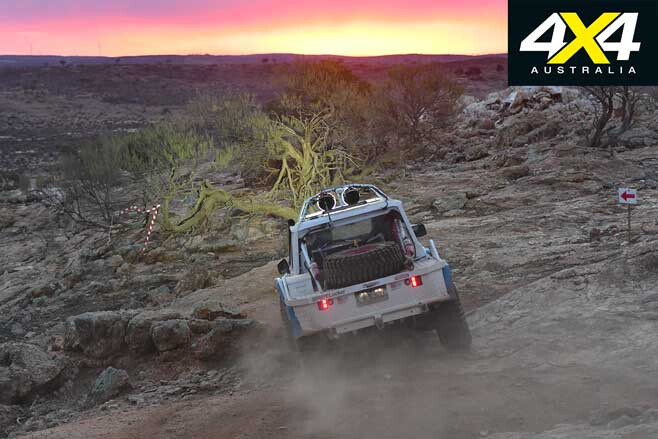
2020 Outback Challenge pricing
- $550 per vehicle (including driver)
- $120 per adult passenger
- $65 per child passenger (Children under 10 free)
- $700 for a family ticket – 1 vehicle, 2 adults and 2 children
LAND ROVER has used its involvement in the upcoming James Bond film No Time To Die to show off the new Land Rover Defender’s capability in off-road terrain.
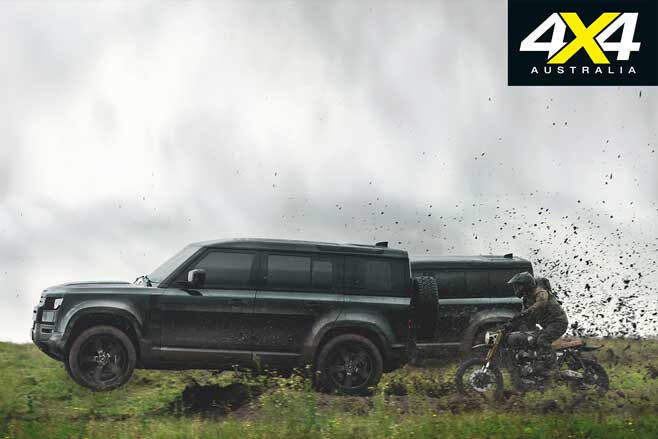
A new UK-based James Bond-themed television commercial depicts several examples of the all-new Defender flying through the air and landing hard in a muddy field, and then sliding through swamps and rivers at high speeds.
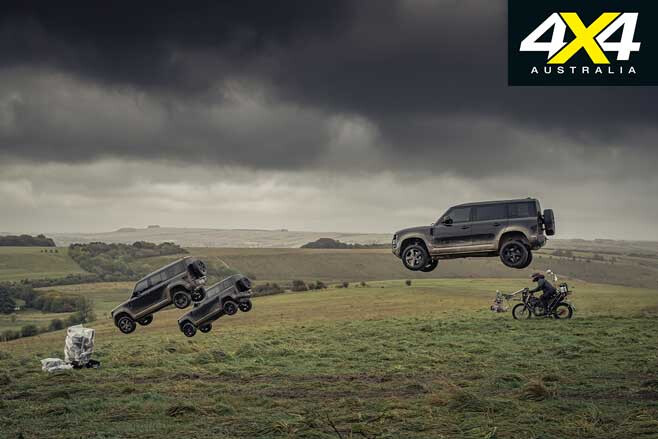
In a humorous twist, the advertisement ends with a rollover… and no attempt to disguise the resulting panel damage. There’s not much chance the extreme Defender commercial would ever be allowed on Australian TV screens, but you can view the footage in the video above.
The commercial uses rehearsal footage from a chase sequence filmed for the upcoming Bond film, which was led by stunt coordinator Lee Morrison, who said, “We pushed the Defender further than we believed possible to generate the maximum excitement, and to give fans an insight into the uncompromising challenge of producing an incredible chase sequence which you can look forward to seeing in No Time To Die.”
The Santorini Black Defender 110 X models used in No Time To Die were the first cars off the production line at Land Rover’s Nitra factory in Slovakia, and were equipped with darkened skid pans, 20-inch dark-finish wheels and professional off-road tyres. Land Rover’s design team worked with Special Effects and Action Vehicles Supervisor, Chris Corbould, on the specification of the Defenders used in the film.
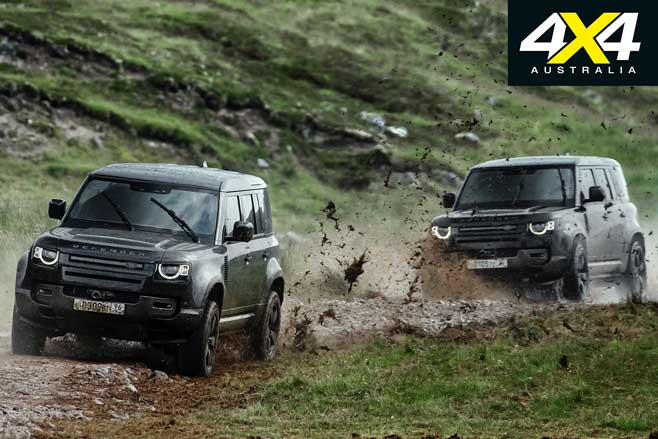
“Physical strength and durability is measured by a number of different tests including a bridge jump test which gave us confidence to deliver what the stunt team needed to create for No Time To Die, with no modifications to the body structure except the installation of a roll cage,” said Nick Collins, Land Rover Defender vehicle line director.
Appropriately, included in the 10 Defenders used in No Time To Die was VIN 007, the seventh Defender off the production line.
Land Rover claims that it has received unprecedented demand for the new Defender since it was revealed in September 2019, and expects demand to outstrip supply for the foreseeable future.
Australian customers are unlikely to get their hands on their new Defender until late-2020 but, in the meantime, can catch the new Bond film No Time To Die in cinemas this April. See www.007.com for more details.
THE Jeep Wrangler Rubicon is the latest and ultimate embodiment of the go-anywhere spirit and core mechanical design of the original and iconic World War II Jeep, created not by Ford or Willys alone, but by a large number of military and civilian engineers, the most influential of whom worked for the Bantam car company.
It was truly a design by committee, but one that worked brilliantly. And so much so it changed history. The Toyota LandCruiser, the Nissan Patrol and Land Rover all owe their existence in one way or another to the original WW2 Jeep.
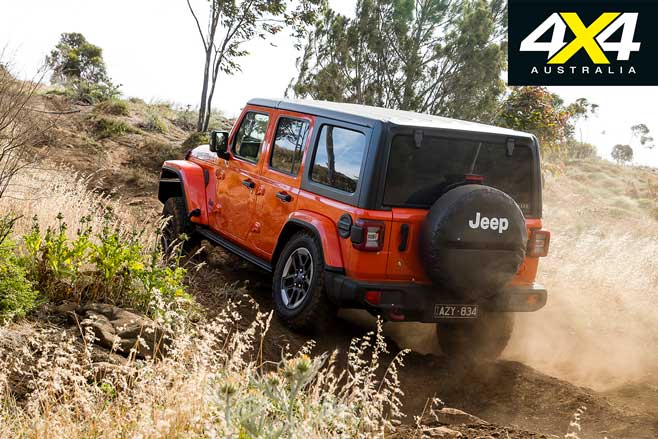
The latest iteration of the Rubicon – the JL – brings a new 2.2-litre diesel, the first diesel to ever power the ‘hero’ model Wrangler. Ironically, the Rubicon is also now the only model in the wider Wrangler JL range to have a diesel engine! There’s also a new ZF eight-speed automatic, the only gearbox offered locally.
The Rubicon is only available as a four-door – no short wheelbase Rubicon unfortunately – and is distinguished from ‘lesser’ Wrangler models by its impressive off-road arsenal that runs to front and rear lockers, a bespoke transfer case with deep low-range gearing, lower axle ratios, a front swaybar disconnect, and mud-terrain tyres.
Touring
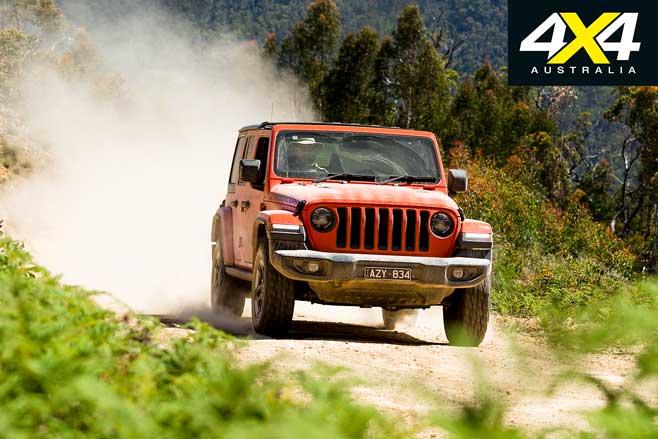
The Rubicon’s diesel engine offers strong off-idle response with decent power at high engine speeds. On the road it provides fuss-free and relatively spritely performance despite the Rubicon’s garden-shed aerodynamics and reasonably hefty (over 2200kg unladen) weight. This new engine is also notably quiet and smooth and is backed by a world’s best-practice eight-speed ZF automatic.
The chassis is only so-so in terms of on-road dynamic sharpness, especially on bumpy roads, but this comes as no surprise given it has live axles at both ends and the steering is no doubt deliberately made vague on centre to mask the bump steer.
Still, all is not lost. The full-time 4×4 mode gives security of power delivery on slippery roads plus the convenience of a set-and-forget drive mode when road conditions alternate back and forth between sealed and gravel and/or wet and dry. And while bumpy-road dynamics aren’t all that flash, the Rubicon still settles and corners well enough on smooth roads, even on its stock muddies.
Trail Driving
You’ll love the Rubicon once you hit the trails. Here the long-travel live-axle suspension works a treat keeping the wheels on the ground, and providing a soft and comforting ride. And if you want it softer and more comfortable again you can decouple the front sway bar via a dashboard switch. There’s no need to use the lockers unless it gets very gnarly as the off-road tuned electronic traction control does such a good job. In low range, leave the ZF auto in Drive for perfectly timed auto backshifts on descent without resorting to the paddle-shift manual mode.
It’s comforting too knowing that the BF Goodrich Mud-Terrains not only provide grip but their light-truck construction and low speed-rating means they are less likely to be damaged off-road.
Set-Piece Hill Climb
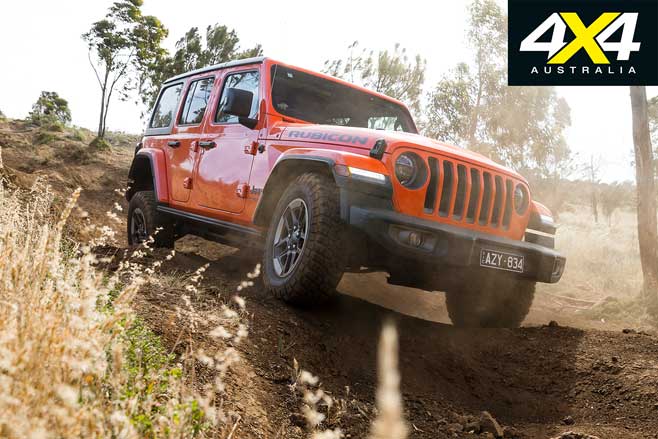
The Rubicon scaled the set-piece hill climb without lockers engaged or front swaybar decoupled thanks to the generous wheel travel and the electronic traction control. With lockers in and front swaybar decoupled, it proved totally effortless. Engine braking in descents is superb but ramp-over clearance could be better, due in part to the long wheelbase.
Cabin, Equipment and Safety
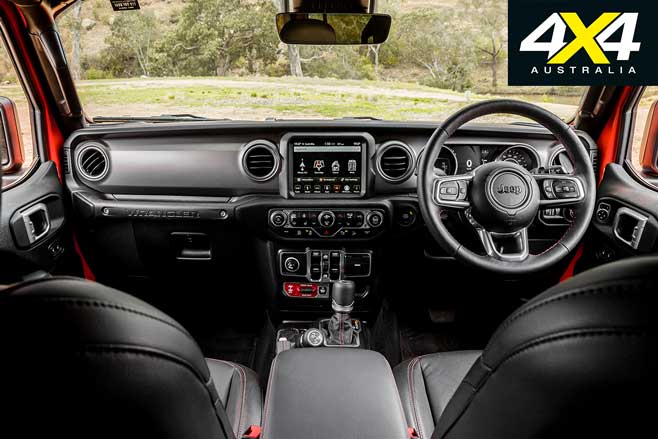
The Rubicon’s cabin has a premium feel even if all the leather, as well as the heated seats and steering wheel, are part of an options pack that adds $4325. We nicknamed the Rubicon the “Reverse Tardis” as it feels small on the inside, and is, but more noticeably in the rear seat and luggage area rather than up front where the driver’s cramped footwell is the only annoyance.
Tilt and reach steering adjustment and comfortable front seats are positives, as is the radar cruise control that can be readily switched to manual mode, the big touchscreen, and embedded satnav with its notably good off-road mapping.
The Rubicon also comes with plenty of high-end safety kit including automatic emergency braking, blindspot monitoring and rear cross-traffic alert, but rates three out of five stars under the new and tougher ANCAP safety test protocols.
Practicalities
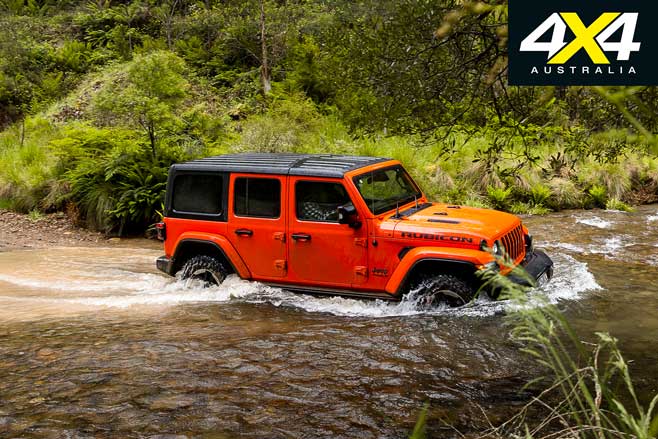
The Rubicon can’t tow or carry big loads like other 4×4 wagons but it does have a unique side of its personality that other 4x4s can’t match. You can take the roof off and the Rubicon becomes an instant ‘beach buggy’, or even an on-road convertible, if you wish to think of it in that way. And while removing the whole roof takes a bit of effort and a couple of people, the two large roof panels above the driver and passenger can be easily removed to create a part open-air driving experience.
It should also be noted that Australian Rubicons come with smaller tyres than US-model Rubicons (255/75R17 versus 285/70R17) due to the full-time 4×4 drive system using lighter duty axles than the US model’s part-time 4×4 system, which may compromise fitting a larger wheel/tyre package.
You would expect nothing less but the Rubicon comes with solid front and rear recoveries while the air-intake is mounted high, up against the underside of the bonnet.
Summary
The Jeep Wrangler Rubicon is still the ultimate showroom stock 4×4 when it comes to getting seriously dirty, but it’s now more endearing and liveable thanks to its new diesel engine and full-time 4×4 system.
JEEP WRANGLER RUBICON SPECS: Engine: 2.2-litre 4-cyl turbo diesel Max Power: 147kW at 3500rpm Max Torque: 450Nm at 2000rpm Gearbox: 8-speed automatic 4×4 System: Dual-range full-time (+ 2wd) Kerb Weight: 2221kg GVM: 2630kg Payload: 409kg Towing Capacity: 2495kg GCM: 4876kg Fuel Tank Capacity: 81 litres ADR Fuel Claim: 7.5L/100km Test Fuel Use: 12.2L/100km Effective Range: 658km Base Price: $68,950 (plus ORC) As-Tested: $73,275 (plus ORC)
4X4 of the Year Verdict – WINNER
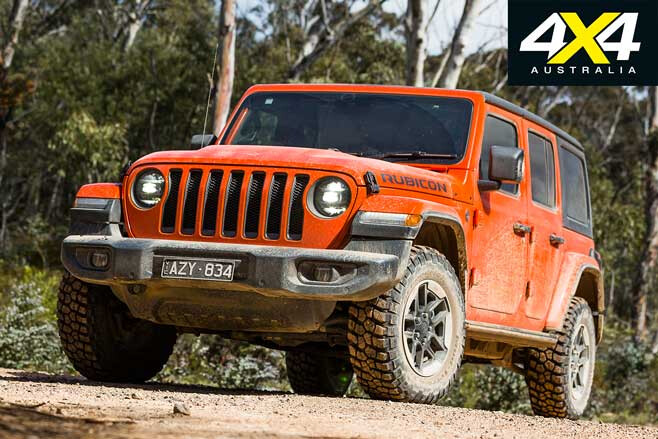
It’s more than fitting that the Jeep Wrangler Rubicon climbs to the top level of the podium here and not just for what it does. It’s what the Rubicon represents in terms of 4×4 history and its impeccable bloodline back to where the 4×4 world as we know it today all begun. Hats off to Jeep for sticking to the basic 4×4 design principles of a separate chassis and front and rear live-axle suspension when other 4×4 manufacturers have turned their back on this old-school approach, which is still the best way to build a serious 4×4.
2020 4X4 of the Year Judges’ Scoring
1st – Jeep Wrangler Rubicon: 246 2nd – Suzuki Jimny: 244 3rd – Land Rover Discovery Sd6: 238 4th – Nissan Navara N-Trek Warrior: 232 5th – SsangYong Musso XLV: 225 6th – Mitsubishi Triton: 224 7th – Mercedes-Benz X350d: 211
THERE’S now a cheaper way to get into a Hemi V8-powered 1500 with full-size rear doors, with RAM Trucks Australia taking the covers off its 1500 Express Crew V8 Hemi.
The four-door Express Crew will sit above the entry-level 1500 Express Quad, but for the extra coin – RRP is $89,950 plus on-road costs – buyers will nab more space and more features including the addition of an 8.4-inch Uconnect touch screen with Apple CarPlay/Android Auto, as well as a dual-zone air conditioning system.
Space will now be on par with the more premium Laramie variant, with the Laramie donating its larger cabin for more head, shoulder and leg room.
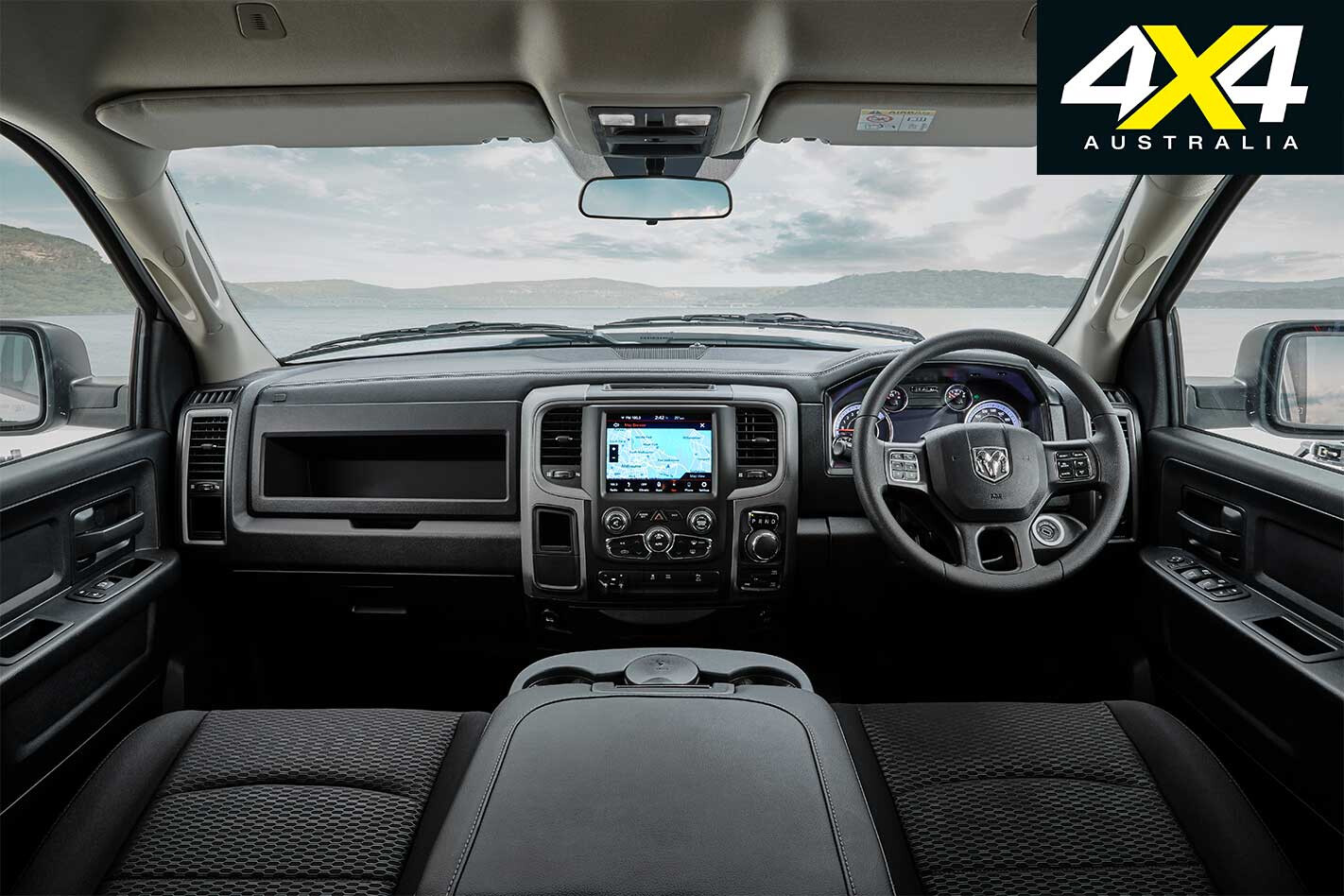
A sports hood and a black accent package give the Express a fresh look, but it’s still the older DS model from the States – Americans currently get the fifth-gen DT. And if more innovative storage is what you seek, the tub, complete with a spray-in bed liner, can be optioned with the RamBox Cargo Management System.
The powertrain remains unchanged, with the 291kW and 556Nm 5.7-litre Hemi V8 enabling the tough ute to tow up to 4.5 tonnes, clearly an industry leader in that respect.
“We’ve assessed the market and feel the time is right to build on the huge levels of passion for the RAM Trucks brand in Australia,” says Jeff Barber, National Sales Manager, RAM Trucks Australia. “The 1500 Express Crew allows us to grow our product portfolio and offer a premium version of our entry level Express range. It also marks the first step in what will be an exciting product roll-out in 2020.”
The 1500 Express Crew V8 Hemi is backed by a three-year/100,000km warranty.
TODAY’S announcement that the Holden brand will be axed at the end of 2020, as the parent company General Motors concentrates on left-hand drive markets only, left us wondering where that leaves Holden’s current best-selling car, the Holden Colorado.
The Colorado is built at GM’s Rayong plant in Thailand, and a statement from GM says that it would withdraw Chevrolet from the domestic market in Thailand by the end of 2020.
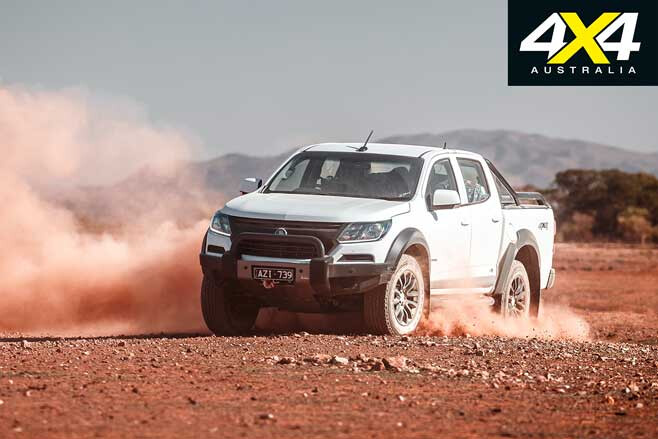
GM undertook a detailed analysis of the business of future production at Rayong and concluded that the low current and forecast volumes have made “continued GM production at the site unsustainable”.
Further to that, GM has signed a binding term sheet with Great Wall Motors to purchase the facility in Thailand. The information wasn’t clear as to whether the Great Wall deal was for the factory only or any assets as well, which could signify the vehicles continue to be built by Great Wall. Both the Holden Colorado ute and Trailblazer are built at Rayong.
READ MORE
- Holden brand axed by General Motors
- Holden’s factory closure statement
- Why did Australia fall out of love with Holden?
- Two years on from Holden’s factory closure
- The best performance Commodores
- Clay modelling at Holden’s design studio
It seems that the best we might hope for from General Motors in Australia could be left- to right-hand drive converted pick-up trucks coming in to the country from importers like HSV and others.
These include the Chevrolet Silverado 1500 and 2500, GMC Denali and could include the future return of Hummer which will be an electric truck brand.
UPDATE (20-02-2020)
Further to the news of the closure of Holden in Australia and New Zealand and General Motors’ operation in Thailand where the Holden Colorado and Trailblazer were manufactured. Jak Punchoopet, adviser to the Thai Minister of Labour, told Reuters that “The agreement was only for the sale of the plants”.
This pretty much puts paid to any hope of future production of the Holden 4x4s by the factory’s new owners, Great Wall Motors.
The Colorado ute was Holden’s top-selling vehicle in Australia and the loss of it to the line-up now appears to have been the straw that broke the camel’s, or in this case the Lion’s back and pushed General Motors to shutter the Holden brand. Whether or not this was sooner than GM had planned to close the brand remains unclear.
Jak Punchoopet also said, “Their (General Motors) plan is to lay off 1,000 employees in the auto parts manufacturing line in June, and then around 300 to 400 in the assembly line in October,” and that the GM operations will be wrapped up in Thailand by the end of 2020.
MORE HOLDEN NEWS
Holden departure will cost $1.6 billion
Ford: we will miss you, Holden
What now for Corvette in Australia?
Holden’s demise catches government by surprise
THE Suzuki Jimny is the gift that keeps on giving.
It’s back again at 4X4OTY after last appearing five years ago thanks to the introduction of electronic traction control off the back of the then-mandatory introduction of Electronic Stability Control.
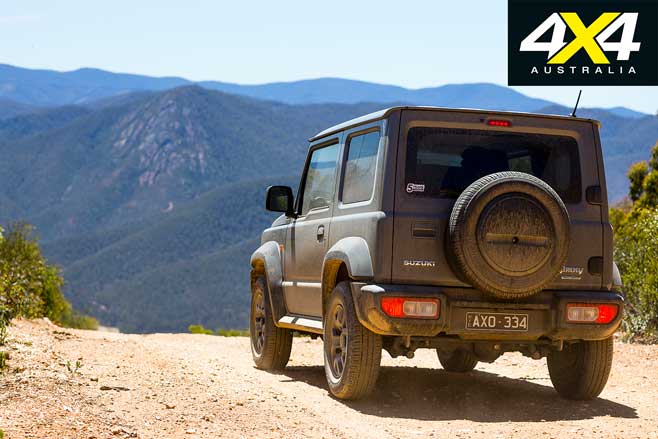
That was the last iteration of the previous generation Jimny that dates back to 1998. What we have here is the latest generation Jimny that brings a new 1.5-litre four-cylinder petrol engine (replacing the previous 1.3) and is marginally heavier, wider and taller, and rides on a wider track and on skinnier tyres than the superseded model. It also has an all new but nicely retro body.
If you’re starting to get the sense that there’s a lot of history here you would be right, as only a rare few of today’s 4x4s can trace direct ancestry back 50 years. What started in 1970 with the LJ10 and its 360cc air-cooled twin-cylinder two-stroke engine, a reflection of Suzuki’s motorcycle heritage, has culminated in this latest model.
Between 1970 and today much has changed but two things have remained constant, namely a separate ladder-frame chassis and live axles front and rear. That puts the Jimny in the same ‘old-school’ club as the also shortlisted Jeep Wrangler Rubicon.
Touring
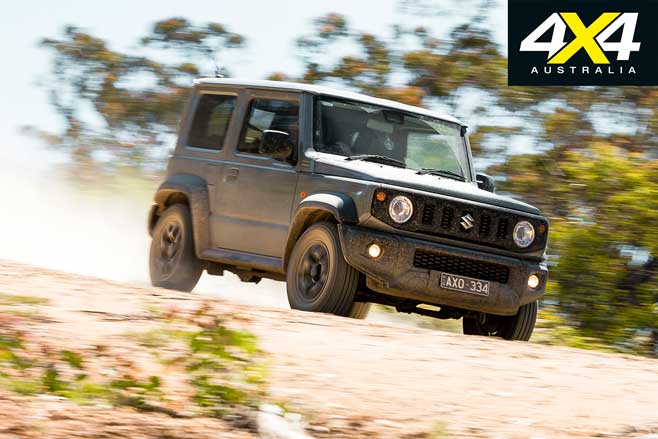
This new model may have the biggest and most powerful engine ever to appear in a Jimny, but 75kW still isn’t anything to shout about. Thankfully, that 75kW only has to deal with a vehicle weighing 1100kg, so it’s like having 150kW in something like a Prado. That respectable power-to-weight ratio means that the Jimny is nippy enough off the mark and up towards highway speeds, but once there it starts to run out of puff given the engine has to fight weight as well as aerodynamic resistance.
While the engine is generally flexible in easier driving, to get the most out of it you need lots of revs and rowing along via the light-shifting manual gearbox. The relatively short overall gearing sees the engine is singing along at over 3000rpm at 110km/h in top gear. Still, the little petrol four thrives on revs and is smooth enough even if it can get a little noisy and tedious for longer highway stints. Long-distance touring is not the Jimny’s forte.
The chassis feels great at lower speeds and on tighter roads where it’s nippy and responsive but it doesn’t like higher speeds, especially on bumpy roads where its confidence and composure fade. Its general ride quality and comfort are still pretty good though, especially for something so light.
Trail Driving
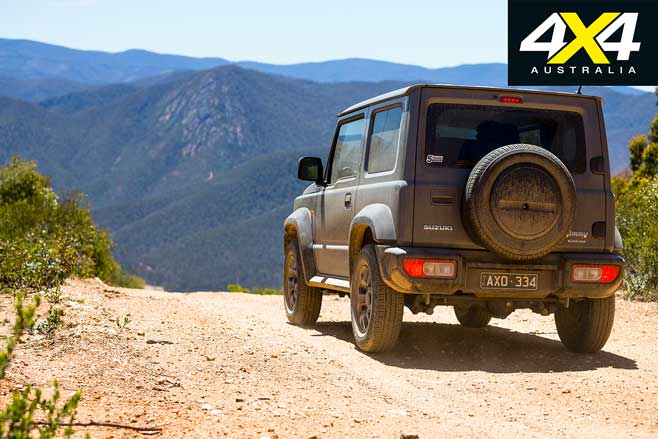
If the Jimny works better at low speeds on the road, it really comes into its own on trails, the tighter, the better. More than anything else, the Jimny’s tiny size and great visibility make it ridiculously easy to drive around an obstacle if you can’t drive over it, which you can do most of the time thanks to the very short front and rear overhangs and generous ground clearance. Its light weight also results in strong performance on soft surfaces.
On the other side of the ledger, a larger wheel/tyre package would help as the standard 195/80R15s tend to fall into holes, especially on tracks worn by larger 4x4s. The gap between first and second is also noticeably wide, even if the low-range reduction is handy enough, so you need to be attentive to engine speeds if you don’t wish to lose momentum on climbs.
Set-Piece Hill Climb
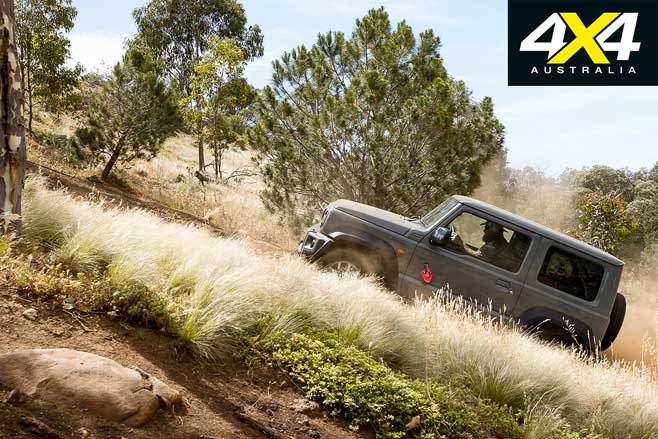
Our steep set-piece climb is littered with deep holes, which had the little Suzuki working hard with its small tyres. Still, the live-axle suspension gives plenty of articulation and the electronic traction control helps if and when it lifts a wheel. The Jimny got to the top of the climb and didn’t have to work as hard as some of the others despite its highway-pattern tyres, and it got down easily enough thanks to its lowish first gear.
Cabin, Equipment and Safety
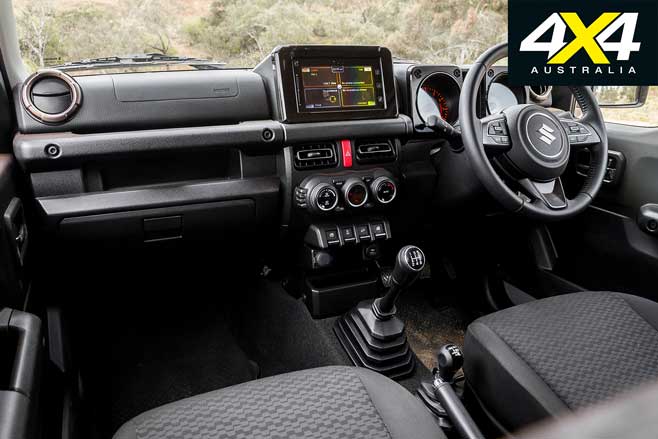
The Jimny may be tiny on the outside but feels bigger inside even if it only seats four. Despite the lack of steering-wheel adjustment, drivers of seemingly all shapes and sizes can get comfortable and with the rear seats down there’s a surprising amount of luggage space although there are no tie-downs.
The equipment list runs to Apple CarPlay/Android Auto and while it also has forward collision warning, lane departure warning and rear cross-traffic alert, under the newer and tougher ANCAP safety assessment, the Jimny only rates three out of five stars. Tested under the ANCAP protocols of two years ago, the Jimny would have been a five-star car.
Practicalities
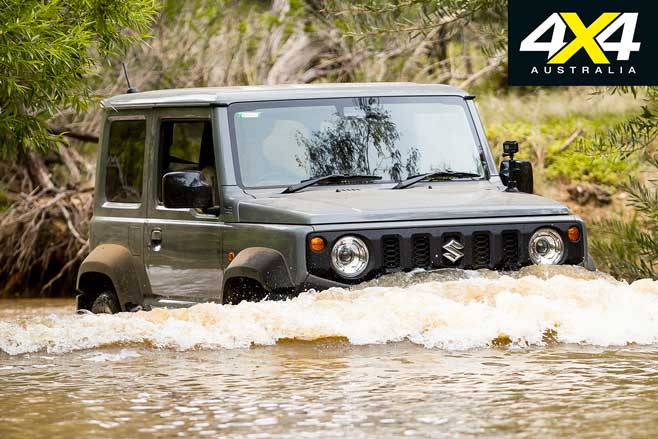
The Jimny’s short fuel range is its practicality Achilles heel. The consumption isn’t bad but the 40-litre fuel tank it doesn’t take you all that far. Meanwhile, the modest 1300kg tow rating and 360kg payload aren’t a surprise and perhaps even better than you would expect. Solid front and rear recovery points are a bonus but the vulnerable engine air intake would need to be addressed with a snorkel for deeper water crossings.
Summary
Nowhere else do you get a seriously capable 4×4 weekend fun machine and a brilliant city runabout in one. And nowhere else can you have as much driving fun for so little money.
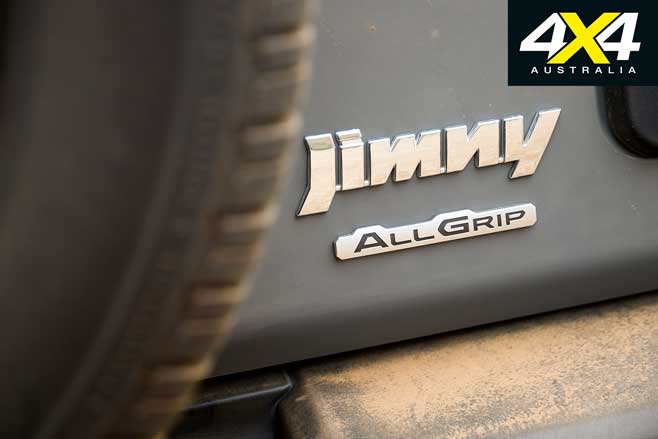
SUZUKI JIMNY SPECS: Engine: 1.5-litre 4-cyl petrol Max Power: 75kW at 6000rpm Max Torque: 130Nm at 4000rpm Gearbox: 5-speed manual 4×4 System: Dual-range part-time Kerb Weight: 1075kg GVM: 1435kg Payload: 360kg Towing Capacity: 1300kg GCM: N/A Fuel Tank Capacity: 40 litres ADR Fuel Claim: 6.4L/100km Test Fuel Use: 8.3L/100km Effective Range: 432km Base Price: $23,990 (plus ORC) As-Tested: $23,990 (plus ORC)
4X4 of the Year Verdict – 2nd Place
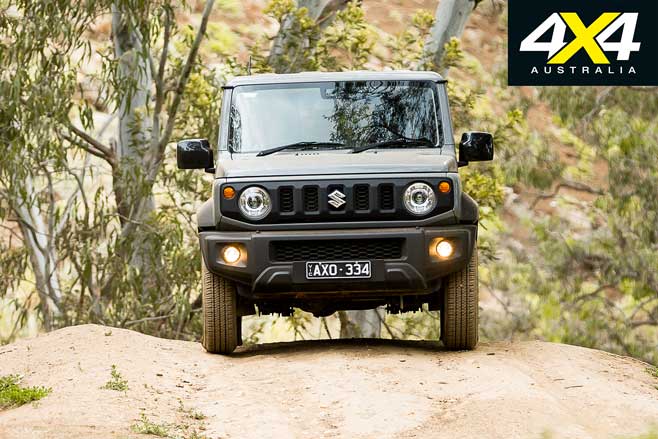
The Suzuki Jimny might not be the 4×4 you want for a long highway drive but that’s about the only place you won’t be happy driving it. Judge Dave Morley hit it on the head when he said: “I love the way this thing brings four-wheel-driving back to reality price-wise. Good fun, and more capable than I imagined”.
Navman MiVUE860 DC Tyre
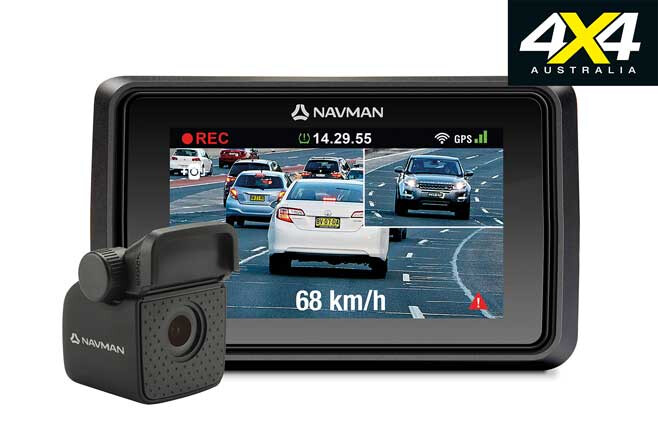
The Navman MiVUE860 DC Tyre is a dashcam and tyre pressure monitoring system (TPMS) all in one. With two cameras, it records full HD 1080p front and rear, and footage can be instantly uploaded to a phone via WiFi for safe keeping or for sharing via email or social media.
The dashcam also features Advanced Driver Assistance Systems (ADAS) including lane-departure alert and forward collision warning, and it has speed and safety camera alerts with monthly updates. The TPMS displays tyre pressures and temperatures on a 2.7-inch touchscreen and it provides audible and visual alerts if parameters exceed the set thresholds.
A built-in high sensitivity GPS receiver automatically records driving information including location, direction and speed. The kit includes the MiVUE860 unit, four valve-stem-type tyre pressure monitors, rear camera with 5m connection cable, Y-splitter cable, vehicle power adaptor and windscreen mount.
RRP: $599 Website: www.navman.com.au
Redarc 52mm gauges
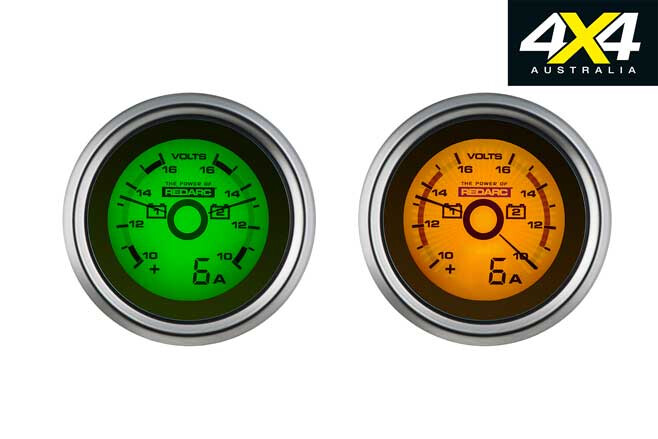
Tailored to meet the requirements of 4×4 and camping enthusiasts, Redarc 52mm gauges are ideal for monitoring vehicle vitals including battery voltage, current draw, exhaust gas temperature (EGT), manifold boost and vacuum pressure, oil pressure and a range of temperature applications including ambient, cabin, oil, water, coolant and fridge cabinet.
The gauges use unique LCD/LED technology and combine needle point and digital display on the one dial. Each gauge can be customised with 13 different backlit colours, program multiple alert levels.
These Aussie-made gauges combine dual or triple functions in the one unit, and are simple to install and operate. Redarc also offers a range of compatible optional sensors, mounting solutions and accessories.
RRP: $184 to $484 Website: www.redarc.com.au
TWO YEARS ago, Land Rover’s all-new Discovery won 4X4OTY powered by a 2.0-litre four-cylinder bi-turbo diesel, the Sd4.
Amongst the finalists that year was another variant in the new Discovery range powered by a 3.0-litre V6 turbo diesel, the Td6, which finished midfield, penalised by costing more but not really giving a lot more than the Sd4.
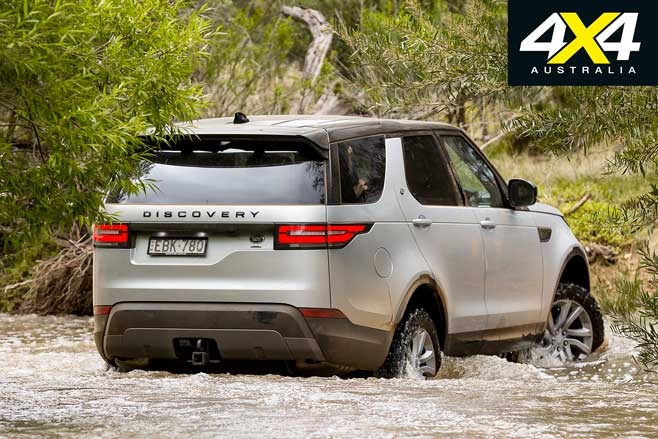
That V6 engine, along with a single-turbo four-cylinder, has been dropped from the Discovery range and replaced by a more powerful, but still 3.0-litre V6 diesel, the Sd6. Claiming a muscular 225kW and 700Nm, a decent hike up from the 190kW/600Nm of the Td6 it replaces, the Sd6 gets there by gaining a second turbo.
Otherwise this Discovery is largely unchanged, which means a cavernous eight-seat body, height-adjustable fully-independent suspension, dual-range full-time 4×4 and an eight-speed automatic ZF gearbox. And all in a notably light package thanks to a mostly aluminium monocoque construction tailored from the then all-new Range Rover platform that arrived here in 2013.
Touring
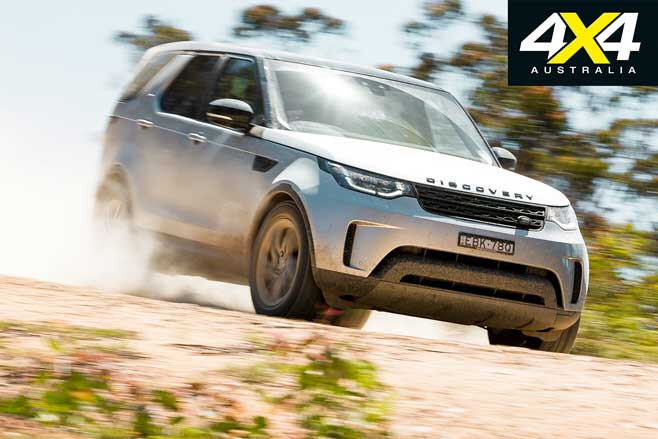
The Sd6 uses Land Rover’s unique sequential-parallel bi-turbo arrangement where a medium-sized variable geometry turbo does most of the work most of the time, and by itself. Under wider throttle openings and at higher engine speeds, however, a secondary fixed-geometry turbo joins the party to help feed the engine. The end result is seamless response right from idle, the linear power delivery providing acceleration that’s quicker than it feels.
It’s not quite rip and tear but in this company, Mercedes-Benz X350d included, it’s on another level when it comes to performance. All the while the engine is quiet, smooth and civilised while the ZF eight-speed also does everything you want and nothing you don’t want.
The powertrain’s five-star performance is matched by a chassis that offers a plush ride, despite the 20-inch wheels, combined with flat handling, two usually mutually exclusive attributes. And high speeds on bumpy roads don’t faze the Discovery either thanks to its long-travel, fully independent suspension. The suspension also automatically lowers at higher road speeds, which gives the Discovery another string to its dynamic bow.
There’s excellent feel too from its electric steering despite the test vehicle wearing Land Rover’s off-road tyre option for the Discovery – Goodyear Wrangler Duratracs, an all-terrain-style tyre in the factory 255/55R20 size. These aren’t an LT tyre, but the relatively low-speed rating (160km/h) means far sturdier construction that the standard 270km/h-rated tyres.
Trail Driving
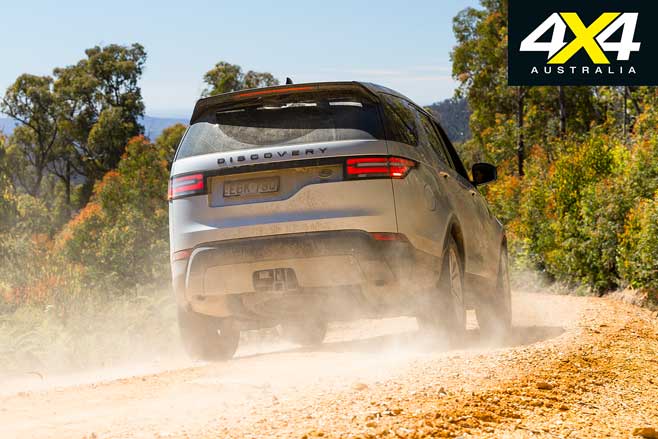
With properly robust tyres the Discovery can revel in its clever off-road technology. Pumped up on its air suspension it has far more clearance than any vehicle here, Rubicon included, while the suspension’s long-travel combined with the automatic proportioning 4×4 system, deep low-range gearing and superb automatic gearbox make any and all off-road driving a breeze.
Not so good is the fact that when it’s jacked up to its highest setting the air suspension can bang and crash as it tops out, and the general trail-driving visibility is not as good as previous Discovery models as you sit farther back and lower down than you did in either the Discovery 3/4, let alone Discovery 1/2.
Set-Piece Hill Climb
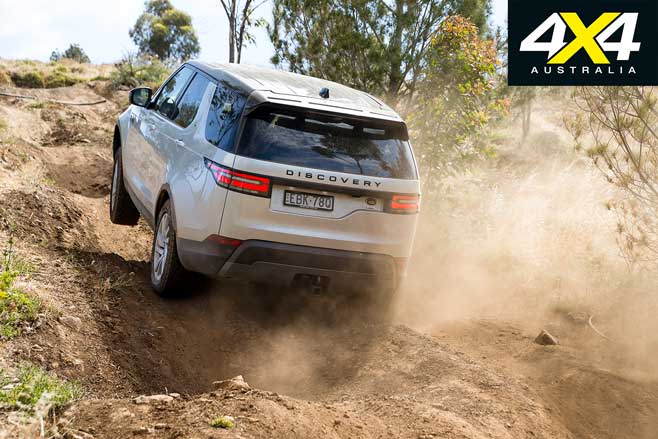
Our test Discovery wasn’t fitted with the optional rear locker (automatic, not driver switched) but still managed the set-piece hill climb without fuss, even with the Terrain Response program set to the default ‘Road’ programme.
It was even better on the ‘Mud and Ruts’ programme but less so in ‘Rock Crawl’, perhaps because that locks the centre diff, whereas the other programmes mentioned allow the centre diff to proportion the drive mostly to the rear, which is where you want it on a steep climb. Previous expereince suggests the optional rear locker is a dead-set bargain at $1110 as it takes the Discovery to a whole new level off road.
Cabin, Equipment and Safety
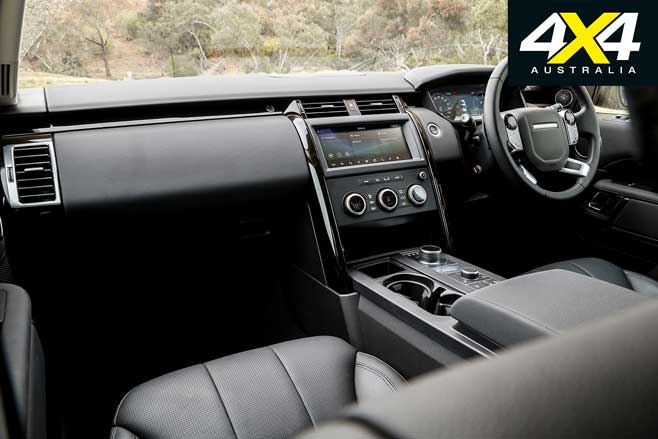
The Discovery’s cabin is beautifully finished and detailed, combining luxury with a high-tech feel. The driver and front passenger have space aplenty and ‘armchair’ seats, the rear seat can take three adults while even the third-row will accommodate full-size adults. There’s excellent luggage space too. Negatives? The rotary-dial gear shift doesn’t feel right and the cabin isn’t as airy and open feeling as that of the earlier Discovery 3 and 4 models.
Automatic emergency braking leads a full suite of advanced safety features and not surprisingly, the Discovery has a five-star ANCAP rating.
Practicalities
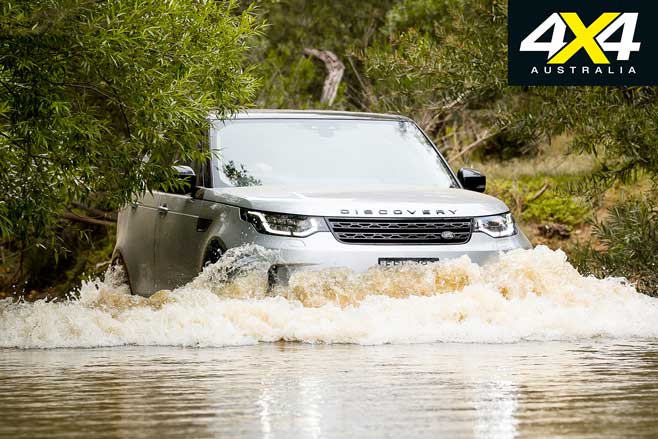
The Discovery may not look like a rugged 4×4 wagon but its substantial GVM figure (3050kg) and even more substantial GCM figure (6650kg) provide a payload rating (827kg) that would do justice to a ute, and a tow rating as good as any ute or 4×4 wagon.
This approach is reflected in the very substantial front and rear recovery points. The rear is integrated with the inbuilt factory towbar, while the equally solid front recovery point is under a clip-off panel that’s probably best removed before any serious off-road adventure. Meanwhile the engine air-intake location in the inner guard, plus the ability to jack up the suspension, gives a very reassuring 900mm wading depth.
Summary
The Discovery offers an incredibly broad spectrum of performance with superb on-road finesse combined with serious off-road ability. But it’s complex and expensive.
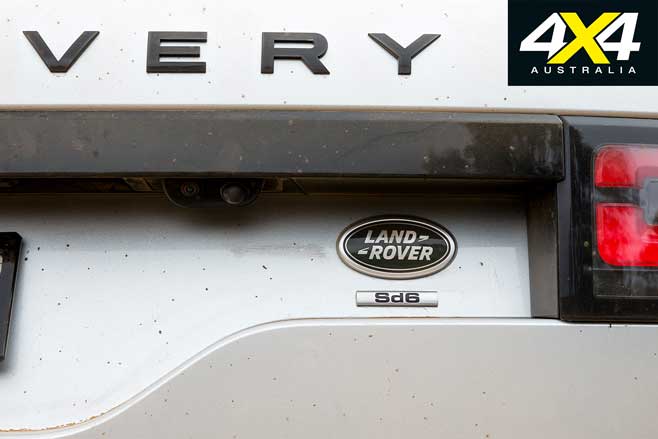
LAND ROVER DISCOVERY SD6 SPECS: Engine: 3-litre V6 bi-turbo diesel Max Power: 225kW at 3750rpm Max Torque: 700Nm at 1500-1750rpm Gearbox: 8-speed automatic 4×4 System: Dual-range full-time Kerb Weight: 2223kg GVM: 3050kg Payload: 827kg Towing Capacity: 3500kg GCM: 6650kg Fuel Tank Capacity: 85 litres ADR Fuel Claim: 7.7L/100km Test Fuel Use: 12.0L/100km Effective Range: 658km Base Price: $98,778 (plus ORC) As-Tested: $117,628 (plus ORC)
4X4 of the Year Verdict – 3rd Place
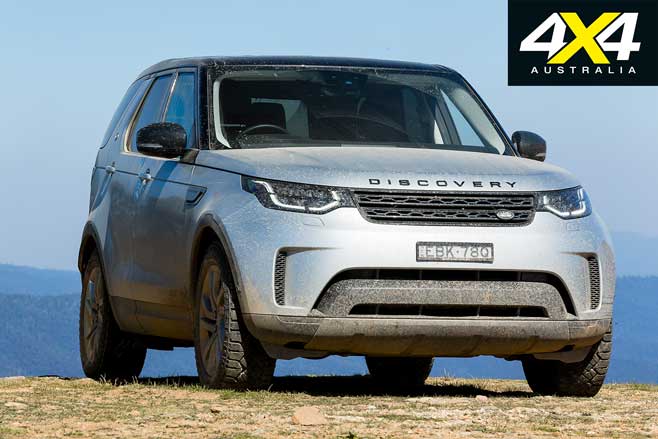
Judge Dean Mellor summed up the Discovery Sd6 when he said: “There’s no doubt that with its new bi-turbo-diesel-V6 engine the Discovery is one of the best performing on- and off-road 4×4 wagons money can buy … but at $100K you’ll need a lot of it to get behind the wheel”.