
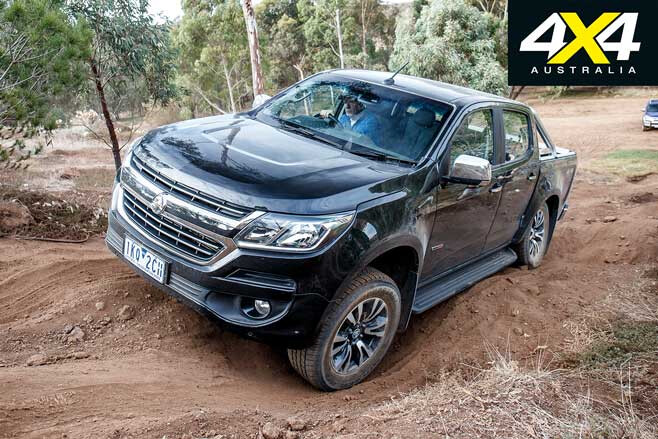
MONTHLY sales of the Holden Colorado 4×4 lifted by a total of 1678 units in March 2020, due to the cost cuts implemented after the closure of Holden last month.
People flocked to Holden dealers following the announcement of Holden’s departure, with dealers offering substantial bonuses across its entire range.
However, overall new-vehicle sales were hit hard by the global coronavirus pandemic, with sales for the month totalling 81,690 – a drop of 17.9 per cent compared to March 2019, with 99,442 sales registered.
The Light Commercial Vehicle market suffered a 15.5 per cent year-on-year slump, with 3326 fewer vehicles purchased. Amazingly, this has resulted in the 24th consecutive month of negative new-car sales.
Expect the dramatic slide in sales to linger, as the coronavirus pandemic continues to halt 2020 and people prefer to hold onto their hard-earned.
Despite these tough conditions, Tony Weber, the chief executive of the FCAI, said many dealerships remain open.
“Many dealerships have opted to remain open to maintain support for their customers, particularly from a service perspective, during this difficult period.”
In the 4×4 segment, the Ford Ranger and Toyota Hilux remain the market leaders with 2947 and 2804 sales respectively in March. The ever-popular, value-packed Triton finished up with 1582 sales for the month, slotting in behind the (as-mentioned) hugely discounted Colorado (2186).
Here are the 20 best-selling 4x4s in March 2020:

THERE WAS a time when a simple solenoid-type of dual-battery system was enough to happily supply your auxiliary 12-volt power needs – it’d keep the Engel cold without draining a vehicle’s main starter battery, and perhaps run a camp light every now and then.
This still does the job for many folks and their vehicles, but in an age when vehicle manufacturers are filling the cars with complex electronics systems, travellers never leave home without every conceivable electronic gadget, and 4×4 builds that include everything including the kitchen sink, our auxiliary power needs have changed considerably.
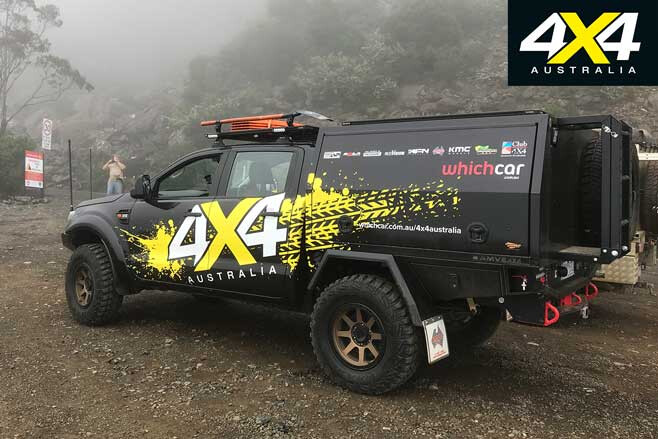
Our Ford Ranger has become one of those ‘everything including the kitchen sink’ type builds, so a good source of reliable power was essential for powering fridges, lights, gadgets, an inverter and charging the batteries for the team’s tools. For the right gear we went straight to the good folks at Redarc Electronics for proven, Australian-made hardware.
Redarc has extensive technical information available on its website to help you design the right system for your needs, and this is backed with online wring guides and tech support. We spoke directly with the technicians at Redarc’s Adelaide HQ and described our vehicle build and expected electrical needs, to get the best advice on the right product for the job. They recommended we run a Redarc Manager30 BC-DC charging system for battery management and a 2000-watt inverter for 240-volt power supply. These would be controlled via a RedVision TVMSKIT04.
The Manager30 is Redarc’s state-of-the-art battery charging system and is designed to work in vehicles with multiple batteries including the vehicle start battery, auxiliary batteries and any batteries in the camper trailer or caravan. The Manager30 is a 30-amp unit, and there is a smaller 15-amp version available.
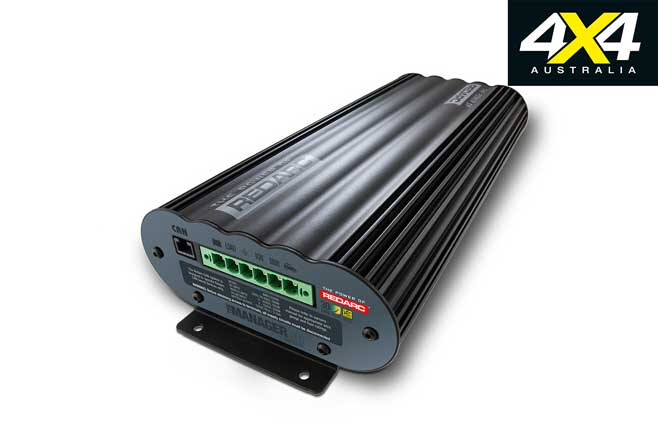
The Manager30 works with all types of automotive batteries: Lead Acid, Gel, Calcium, AGM or Lithium-Iron Phosphate. On the technician’s recommendation we went with Lithium-Iron batteries and purchased a trio of 60-amp/h units from Revolution Power Solutions in Brisbane.
The Manager30 is capable of charging and maintaining your batteries via multiple sources including the vehicle’s alternator, so-called ‘smart alternators’ like that fitted to the Ranger, via 240-volt when plugged into mains power, or via a solar panel or blanket.
RedVision is Redarc’s vehicle electrical system management unit that accepts input from all of the vehicle’s accessories to control, switch and monitor them. This is done on the included control unit and display or via an Apple or Android device using a Bluetooth connection.
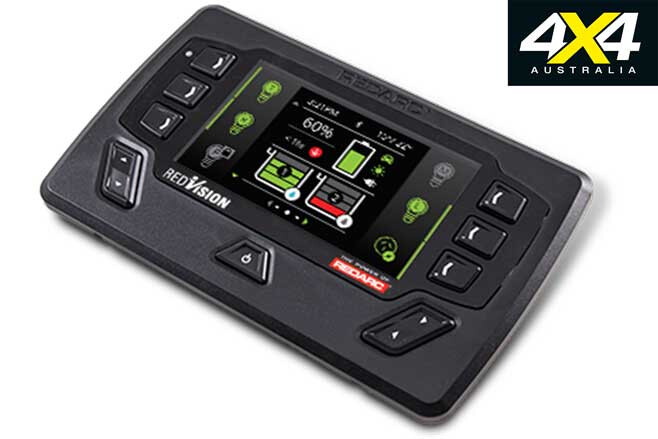
On our Ranger, the accessories running through the RedVision system include the Redarc inverter, the MyCOOLMAN fridge, work lights on the rear of the canopy, Narva LEDs on the roof rack, and the water pump for the canopy’s water tank. These can all be controlled via the display panel inside the AMVE canopy or on a smartphone.
One feature we haven’t hooked up yet is the ability to monitor the level in our water tank. The RedVision can monitor up to six different water tanks in a vehicle and trailer, but we need to hook up a sender unit on our tank to make that work. Another useful feature is the temperature input from the fridge. With a phone mounted in a cradle on the vehicle dash, we can see the temperature inside the fridge at any time to ensure all its contents are cool and safe.
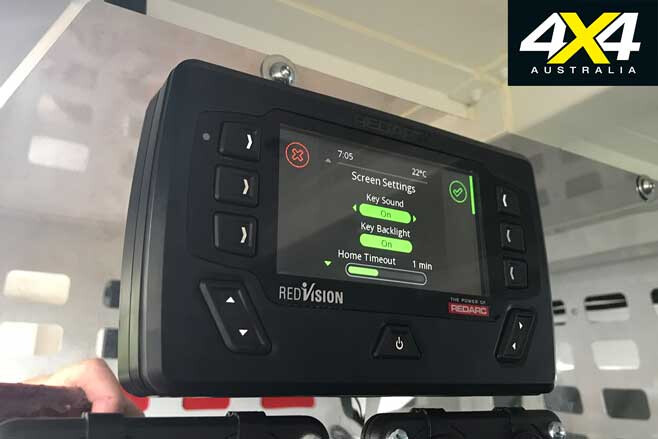
Our aluminium canopy was built by the team at Allsafe Mining Vehicles & Equipment (AMVE) in Brisbane and, as they fit Redarc controllers to all their builds, the team there handled the Redarc and battery installation during this build, before shipping the canopy to us for installation.
The Manager30 and RedVision units are mounted in a panel on the headboard, with the control panel within easy reach from an open side door. There’s also a host of power outlets and circuit-breakers for any extra items that need charging.
The Redarc 2000W pure sine-wave inverter is mounted on the fridge divider, where it can be used to power 240-volt accessories or charge gadget batteries. It has a pure sine-wave output for powering sensitive electronics such as computers, while its grunty 2000-watt capacity means we can run things like toasters, a coffee machine or even some microwave ovens. Our trio of Li-po batteries are housed in a separate box behind the fridge enclosure.
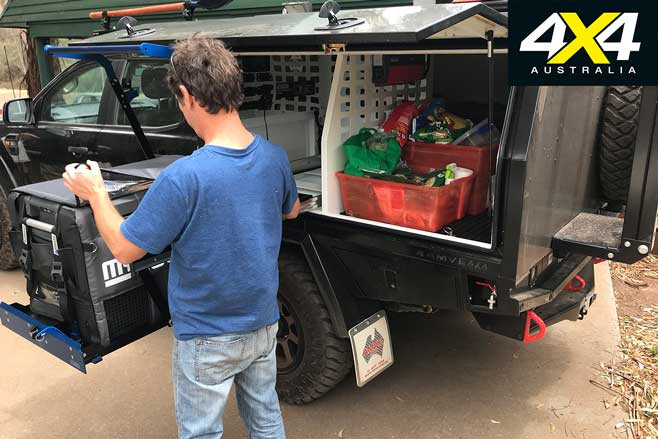
With the Manager30 and the accessories running through the RedVision we are able to see exactly how much power we have in our battery bank, how much charge is being inputted via the alternator or 240-volt, and how much power is being sucked out by the accessories. It even gives us an indication of how many days of power we have in store depending on the inputs and power consumption, which is handy if set up at camp for a while.
As the Ranger doesn’t get used every day and is saved for trips, we plug the Manager30 into the 240V to keep the batteries topped up if it has been sitting idle for any longer than a week or two. We always like to do this in the days before a trip, and we switch the fridge on to cool things down so that it’s ready to be loaded and hit the road.
Operating the various systems has been a bit of a learning curve for us all, but the more time spent with it the more logical it becomes. While in the High Country we broke a power plug off the fridge cord and it was knackered. It was the second last day of the trip, but we powered the fridge off the invertor for the remainder to keep things cool.
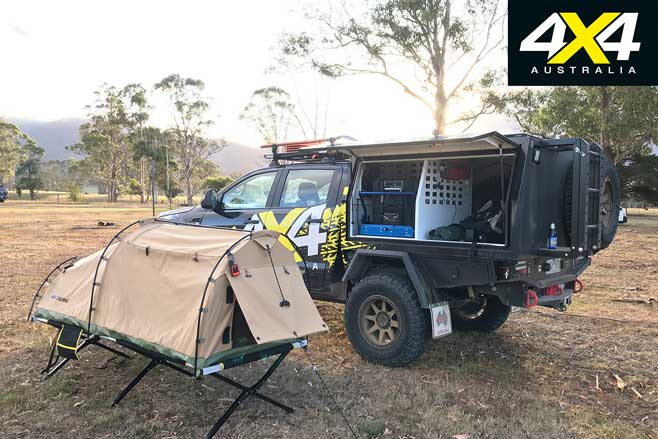
Unfortunately the Ranger went into the shed with the fridge still running off the invertor, which drained our auxiliary batteries. The Li-Po batteries go into ‘sleep’ mode before they are totally dead, and they require ‘waking up’ before they will accept a charge. Tech support from Revolution Power clued us in to how to do this and they were booted back up via 240V on the Manager30.
Cameron from Redarc then showed us how to set a cut-out minimum in the RedVision system, to prevent draining when that low again. Now it will automatically shut the system down once that preset mark is reached, to avoid killing the batteries again. Lithium batteries are more resistant to damage from being fully discharged, but it’s not recommended to do it often and best to keep them topped up. With the Redarc systems now working, we are best equipped to do this.
The Ranger was built for trips and supporting our crew when out on shoots. With the right 12-volt power management system onboard, and us slowly working out how best to use it, it’s getting the job done without issue. And the best part is we’ve used Australian companies and Australian-made products to showcase the great work our brands do.
RATED RRP: RedVision Manager30 kit: $3186.81 Redarc 2000W pure sine invertor: $1991.65 Revolution Power 60Ah slim lithium batteries: $1306 (each)
An American aftermarket company, Lingenfelter Performance Engineering, has shoehorned a supercharged 6.2-litre LT4 V8 engine into a Chevrolet Colorado ZR2, and then pushed it further for good measure.
That V8 in question, more commonly found in a Corvette Z06,has been tickled to deliver a whopping 720hp (537kW) thanks to the addition of a Lingenfelther pulley kit and tune. That amount of ponies is considerably more than the ZR2 in stock V6 form.
To deal with the added surge of grunt, Lingenfelther also calibrated the eight-speed automatic transmission.
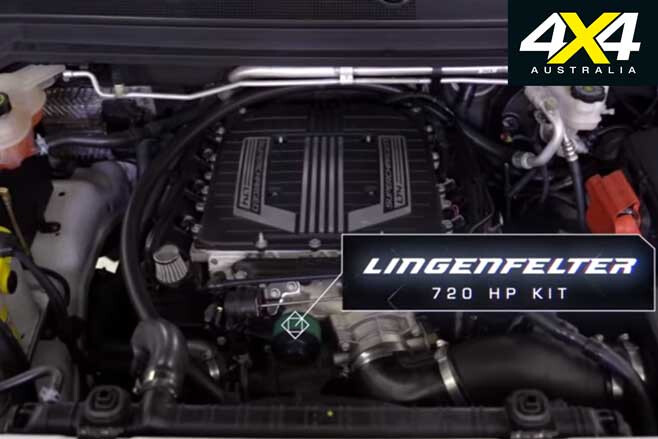
The dyno video, recently published to the Lingenfelter YouTube channel, shows the newly transplanted engine pushing 534hp to the rear wheels.
Lingenfelter, with its HQ based in Brighton, Michigan, has a history in building, tuning and installing engine and chassis components for most GM vehicles, for more than 46 years.
This specific powered-up ZR2 build is a customer car. Would you be lining up for one if you lived Stateside?
RedVision by REDARC is the Total Vehicle Management System.
The unit allows you to control and monitor multiple on-board devices for your 4WD, caravan, camper trailer, or motorhome in one place.
RedVision is proudly Australian Made. View the kits at https://www.redarc.com.au/total-vehicle-management-system
Rumours are circulating that a Wrangler-challenging five-door Suzuki Jimny is in the works.
Indian publication Autocar India recently published an article claiming that a five-door model is currently in development and will eventually be sold in India.
The report claimed the longer five-door model would employ the three-door’s ladder-frame chassis, 4WD system and 1.5-litre petrol engine.
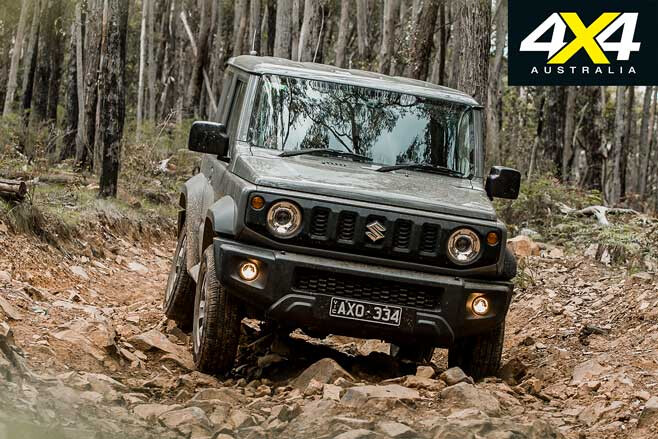
We previously touched on this very subject, when 4X4 Australia editor Matt Raudonikis explained how a LWB Jimny would spark interest from a new breed of Suzuki enthusiasts.
“Imagine a LWB Jimny with four doors to make it more applicable to family use,” he wrote. “A whole family of new Jimnys would reinvigorate the nameplate by appealing to a much wider buying audience.
“This would spark a new breed of Suzuki enthusiasts modifying them to suit their needs, in-turn fuelling the aftermarket industry to produce products for them. It would be a win-win situation for buyers, the industry and the manufacturer.”
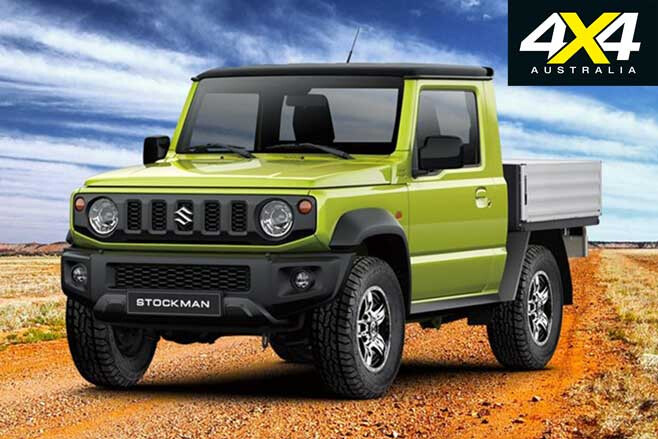
WhichCar spoke to Suzuki Australia last year at the launch of the three-door Jimny about the prospects of Australia getting a five-door version of the iconic nameplate, with Suzuki Australia general manager Michael Pachota saying it was clearly a desirable product.
“If the name starts with ‘Jimny’, we’ll sell it,” Pachota said. “A five-door would broaden the range of customers beyond just the thrill seekers, the adventure seekers and the young drivers who just want the cutest 4×4 on the block. It would really broaden our demographic.”
“The five-door would be great as an added bonus, but once you develop a long-wheelbase platform, you’ve got both ends covered – it’s just about the shell,” he said.
With the steep price of the new LWB JL Wrangler affecting sales in Australia (starting at $53,450 for the four-door Sport S), a five-door Jimny would be a considerably more affordable way into the 4×4 wagon segment.
The AutoCar India report claimed the manufacture of the three-door Jimny is slated to begin “around June 2020” at Maruti Suzuki’s Hansalpur plant, with production of the five-door version “to commence six months later”.
DUE to the current coronavirus pandemic facing the entire planet, businesses are finding ways to make ends meet. Aussie company ARB is one such company employing different strategies to adapt during these challenging times.
To this end and to abide by new regulations, ARB stores and stockists have implemented procedures including offering phone consultations, phone ordering and home delivery on a range of 4×4 products.
So if you find yourself stuck at home, fiddling your thumbs, now’s the time to purchase some 4×4 gear and get stuck into your build in preparation for your next (or postponed) 4×4 trip.

To make it easier, ARB provides extensive fitting instructions for home installation. Plus, if you find yourself stuck during the process, just pick up the phone and give ARB a buzz.
The company has also improved its hygiene and social distancing practices – “ARB has increased both frequency and depth of cleaning within all ARB stores, warehousing and office sites as well as setting up boundaries and guidelines for safe distancing measures,” it said. “Staff who handle customers’ vehicles are taking additional precautions to ensure a heightened level of sanitisation and surface cleanliness both before and after working on any vehicle.”
For more information and to suss out ARB’s range of products, head to: www.arb.com.au
GET YOUR hands on another massive issue of 4X4 Australia, with the April 2020 mag hot off the press and ready for your eyeballs.
In this issue we wrangled a drive of the all-new Defender, in Namibia of all places. The first taste of the new Defender whet our appetite for more, but we’ll have to wait until it lands in Australia later this year before we get to drive it locally.
We fanged a Musso XLV and stole the keys to an Aussiefied Chevrolet Silverado 1500, to find out if longer and bigger is better. Plus, we threw HSV’s SportsCat and Nissan’s NTREK Warrior into the ring for an all-out brawl on the rocky stuff – and then took a stroll along the Warrior’s assembly line.
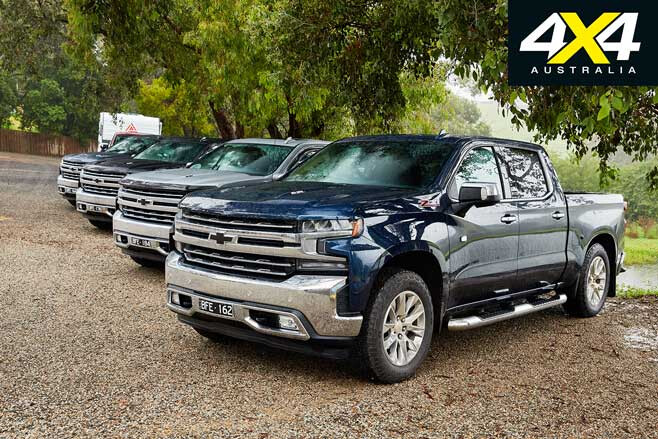
It wouldn’t be complete without some custom metal, and in this issue we examined a Prado 150 built for mountains, not school runs.
As always, we’ve toured some amazing places around the country to inspire you on your next adventure. In this issue we’ve included 4×4 trips to Corner Country, Hell Hole Gorge and Yorke Peninsula. Plus, Ronnie lays down the Five Peak Challenge in Victoria.
WHAT ELSE IS THERE?
-New gear tested: MSA 4×4, Narva, Rhino-Rack and Goodyear – Monthly columns and long-term updates – Rainforest Challenge Adventure Tour – Bottoms up at the Pub in the Paddock, Tasmania
The April 2020 issue of 4X4 Australia is OUT NOW!
Land Rover has pressed 143 vehicles into the service of aid and health organisations to help with efforts to stem the coronavirus pandemic.
Of the total, the largest recipient would be the International Federation of Red Cross and Red Crescent Societies, which will receive 105 models, the bulk of which, would be comprised of the all-new Land Rover Defender.
The UK Health Authorities received four Discovery vehicles from Land Rover, which will be used to help aid workers to carry out home-testing.
According to Land Rover the intent for lending its vehicles was to help health and aid workers to reach people, especially in vulnerable areas.
Land Rover joins a growing list of car manufacturers and motorsports teams which are using its down time to contribute to the fight against the coronavirus pandemic.
Ford recently released a sketch of how it plans to build ventilators for health workers using parts that are already used for the F-150’s seat blower fan, with General Motors offering its factories and workers to produce medical equipment.
On the motorsports front, leading Supercars team, Erebus Motorsport have been instrumental in the design and production of a new patient screen device. Whereas Le Mans racing team, Scuderia Cameron Glickenhaus, have been working on a filter adapter for the common snorkel face mask.
The sign once read: “Free power, free shower, turn left at the road, go down to the pub, buy a beer or just say gidday.” These days the sign has mysteriously disappeared, but the deal hasn’t. Ring ahead and you’ll find a free campsite literally on the doorstep of one of the best pubs and locations in Victoria’s East Gippsland.
We’re in Lake Tyers, a small coastal hamlet barely ten minutes from the recreational mecca of Lakes Entrance. It’s a quiet, secluded spot, yet on the Australia Day long weekend just gone the Water Wheel Beach Tavern is the local hub and is buzzing with life.
At a time when many of the local businesses in East Gippsland and beyond are doing it tough – losing seasonal income during their typically busiest holiday period, due to the 2019-20 bushfire crisis – it feels good to be injecting some money into the area, knowing that every little bit makes a difference.
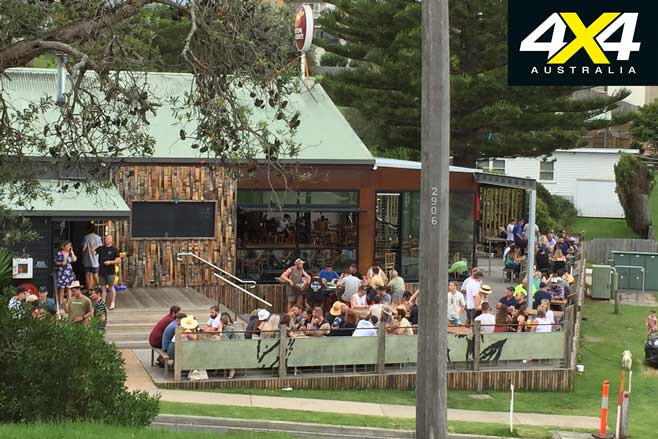
Over the course of the weekend it becomes clear that the Water Wheel Tavern is both an oasis for travellers and a local haunt for many. They come in their droves, many of them utilising the services of the tavern’s courtesy bus. For campers, the best bit is the area out the back. With free power and even a free shower, this has got to be one of the best finds in East Gippsland.
Part owner of the tavern is Kevin Campbell, who’s a chef by trade. Growing up in nearby Bairnsdale with a love of the sea, it’s perhaps understandable he’d end up in a tavern at Lake Tyers. Seven years ago, Kevin bought the tavern, which included the tiny caravan park out the back, and in 2019 he decided to remove the small cabins and convert the space to a free camp area. Now you’ll find marked-out sites with free power and water on each one, and access to a shower and toilet plus a small barbecue area.
It’s a clever and generous idea that’s proving very popular with campers passing through. The biggest attraction is undeniably the tavern just up the laneway where most campers end up, and there are no strings attached. It’s hard to deny the appeal and ambience of sitting on the decking, the structure of which is incredibly impressive. Kevin tells me that part of the material was sourced from the Sydney Opera House. The tavern has seen a lot of change over the years.
We do our part, enjoying drinks on the first afternoon, but then we’re back again at dinner time for the best pork belly I’ve ever eaten in my life. We return the following night to do it all again and to enjoy the lively music of a visiting Irish band.
It’s little wonder people come from miles away. Aside from the live music and the amazing food, the deck overlooks the expansive lakes system. Barely 500 metres away, the spectacular Ninety Mile Beach also beckons fishermen and sun lovers.
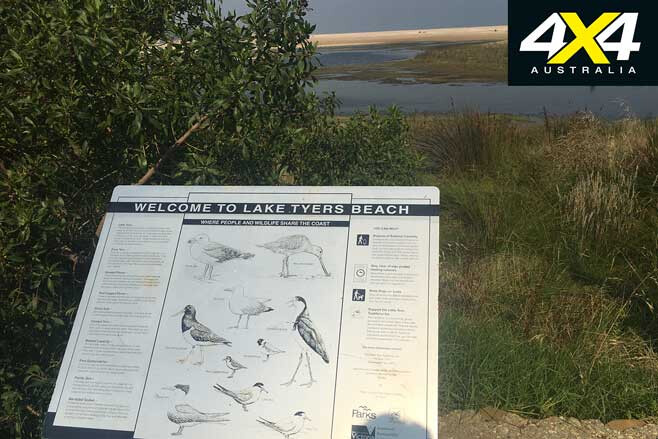
On the doorstep of the Tavern is the lake and, though the water was low on our visit, seasonal changes see amazing cycles. The lakes range from calm, sandy mudflats and wetlands to the raging torrent of the estuary breakout. Lake Tyers beach is undeniably unique. Located at the mouth of the Lake Tyers estuary, it’s a fisherman’s paradise.
In town, there’s a distinctly common theme in the street names: Flounder, Eel, Marlin, Mullet, Brim and Barracuda. The town surveyors must have all been fishos. That afternoon we watched from the decking of the tavern as a fisherman drove off with a four-metre shark on the roof rack, clearly the catch of the day.
Another way to explore the area is by kayak. The tavern has free kayaks available for those who want to get out there and explore the inlets and shallows of the lake, as well as the peaceful waters where the motorboats can’t go.
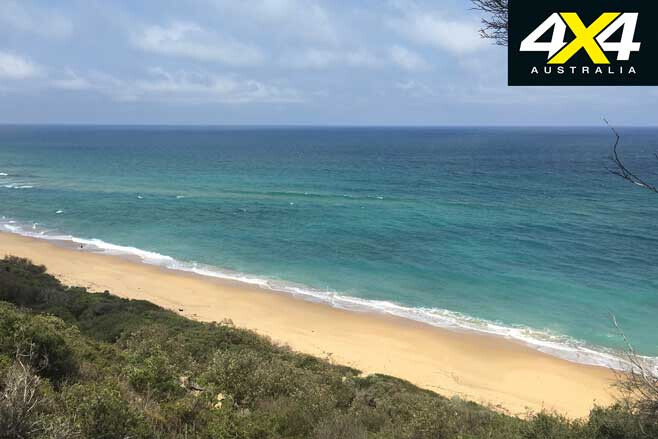
Close by are the spectacular stretches of the Ninety Mile Beach, and beyond the lakes are walking tracks above the town that lead to cliff-top views of the glistening shoreline. Down below, it’s not hard to wile away the days here; fishing, swimming and lazing along sandy shores that stretch as far as the eye can see.
There’s another side to Lake Tyers, but to get there you’ll need to leave the beach. Here, farther out from the Lake Tyers State Park, you’ll find four-wheel drive tracks and scenic forest drives into nearby hills. Less than 20km up the road is the small town of Nowa Nowa, located at the northern end of the lakes region where Boggy Creek enters and feeds the system.
The town and General Store came perilously close to being wiped out by the recent bushfires. Stopping for supplies and to get directions at the General Store, I spoke to the owner who told me the fires were coming straight for them before the wind changed direction.
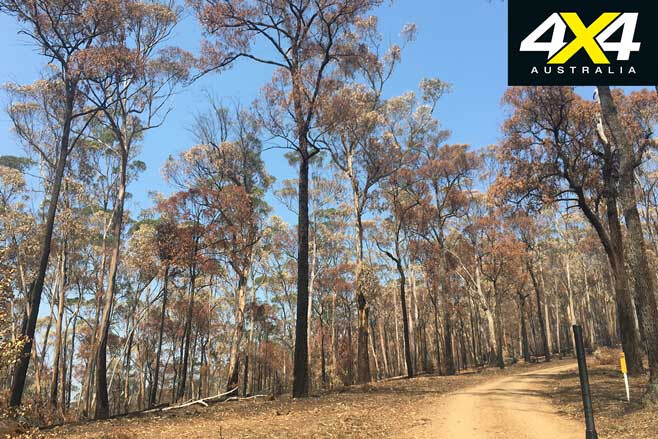
We made our way up to Mount Nowa Nowa via Two Mile Road, which had only recently reopened after the fires whipped through. It felt surreal to drive through scorched forests, where one side of the road was burnt and trees survived on the other. At the summit, under a blue but hazy sky, we could just make out the lines of the fires through the charred forests below. Sadly, there wasn’t much left of what would have once been a scenic picnic ground. However, the tower was still standing.
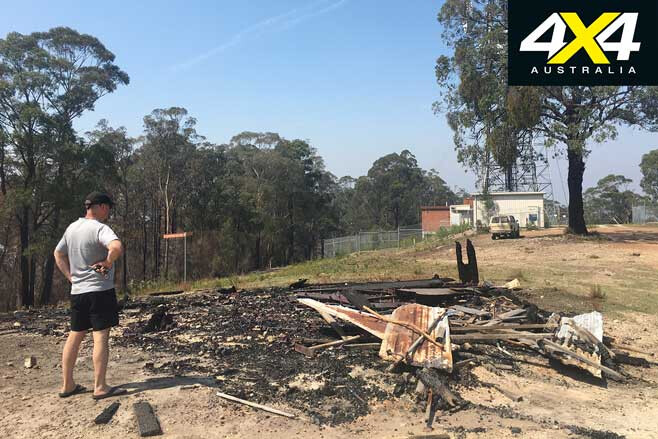
We drove back down along the powerlines, a steep track which had us locking the D-MAX into low range before backtracking onto Gorge Road and on to Nowa Nowa. The driving, though not overly challenging, was scenic, and we could see several difficult tracks branching off in many directions.
Within the state park is the Nowa Nowa Mountain Bike Path, with 20km of mountain bike trails for those who love action on two wheels. As we drove through, it was heartening to see some wildlife in the scrub including a few kangaroos, lizards and even a monitor that narrowly missed becoming flattened as it scampered across the road.
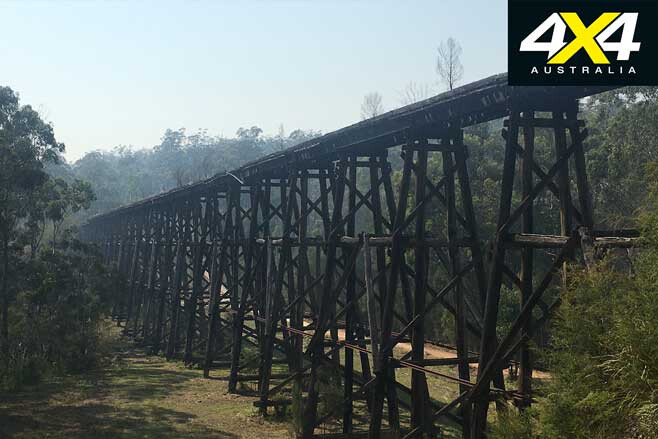
Not far away in the Colquhoun State Forest is the Stony Creek Trestle Bridge, built to service the 97km Bairnsdale to Orbost rail line extension in 1914 – the last train crossing the bridge in 1988. You can’t walk on the trestle bridge anymore, but there’s a rail trail alongside the bridge allowing walkers and cyclists to marvel at the engineering feats of a forgotten era. It’s an impressive structure constructed mainly from red ironbark and grey box. At 247m long and 20m high, it’s one of the largest of its kind in Victoria, standing there almost like the embodiment of survival.
Back in Lakes Entrance at the Fisherman’s Co-op on Bullock Island, we stocked up on fresh seafood for our Australia Day dinner that night. With our table overlooking the boat ramp of Lake Tyers, we watched the pelicans feast before laying out our own banquet of oysters, prawns and local wine.
Australia might be doing it tough during this current crisis, but, as travellers, and in true Aussie spirit, we can all do our bit to help the fire-affected regions by getting out there, spending a bit of money and helping these small communities get back on their feet.
Here in Lake Tyers, with free camping, beer on tap and four-wheel driving on your doorstep, what more could you possibly want?
Water Wheel Beach Tavern location
Address: 577 Lake Tyers Road, Lake Tyers, Victoria
KROOMBIT Tops National Park, located about three hours’ drive west of Rockhampton in Queensland, has been on our bucket list for quite some time. And, after much digging, we found more than what we bargained for.
Most people who visit the park generally come in from the north, but our exploration began from the east at a little town called Miriam Vale. After talking to some locals they suggested we cut through the Boyne Valley and enter via Ubobo towards Kroombit. “As long as you’re totally self-sufficient,” they said.
The road is narrow and unsealed west of Ubobo, passing through extremely dry paddocks and dried-up creeks and dams. We followed Cedarvale Road and then Clewleys Gap Road for a good 20km, where small signs along the route indicate you’re heading in the right direction.
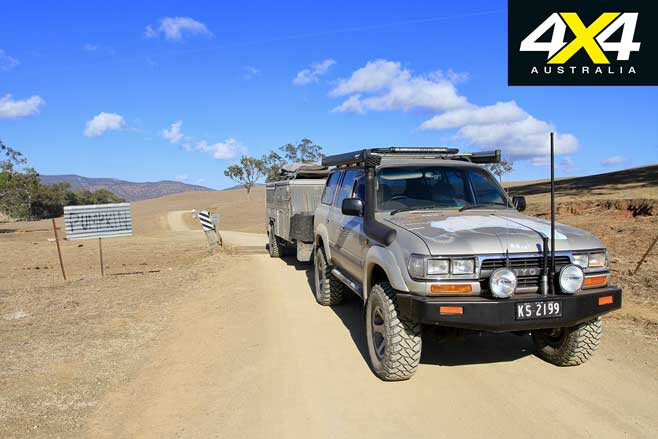
Eventually we arrived at the Kroombit cattle station, where we turned south and followed Mahoon Creek Road through some pretty steep ridgeline tracks and eventually onto Monal Road.
It is here, along Monal Road, we were told to keep an eye out for old mining relics and cemeteries the Queensland Heritage Association has signposted. Back in the 1890s gold was discovered in this valley, and by 1892 a proper road was cut in and a town emerged with hotels, a store, post office, market gardens and a little school.
However, by 1912 the gold had all but dried up; some miners persisted with little success, but by 1916 the school and post office had closed and eventually the buildings were gone by 1925.
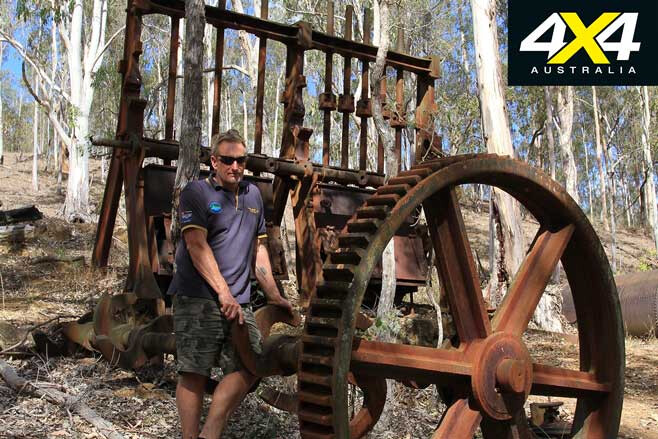
Today you can walk around the mining relics, which include a huge 10-head stamper, boilers, a steam-driven engine, tower buckets and various wheels. Due to the extremely remote and rough conditions of the area, it’s reported that the boiler and stamper were brought in by a team of 52 horses pulling a single dray at any one time. It was low 4WD when we tackled the same hill, both up and down. If you follow the track past the mining equipment it will take you into the Monal Valley, where the main mine was located.
Following another lead we headed back up the main road, where we found the historical cemetery of Monal. A memorial plaque pays respect to the several dozen people buried here in unmarked graves in the open paddock – it was obviously a hard life when you see the ages of the deceased.
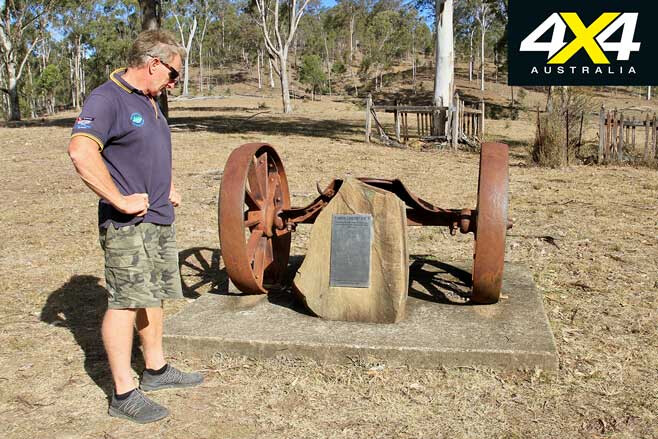
Retracing our steps back to the property we’d passed earlier, we turned left towards the signposted Kroombit Tops NP. The diff-busting roads coming in from the east are narrow, steep and rocky, yet the views across the mountains are nothing short of spectacular.
An old dray that was once used to drag massive logs can be seen as soon as you hit the NP entry sign. An information board provides relevant tips on where to camp, points of interest and other relevant details. As we were towing a camper our choice of camp was Griffiths Creek camping area, which has tall gums that provide plenty of shade, huge fire pits and around 50 acres of manicured grass – kept neat by the wild horses that roam the area. A great spot to stop en route to the camping area is at Griffith Creek lookout, which has stunning views into and across the Boyne Valley.
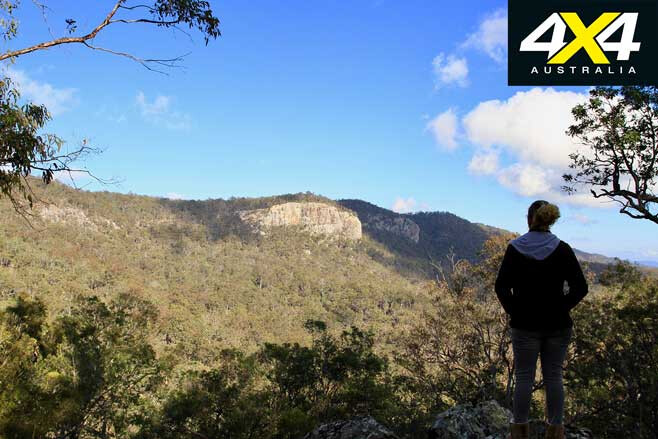
There are only three roads in and out of Kroombit Tops, plus one loop road to an aeroplane wreck. Heading to the wreckage is as simple as jumping back onto the loop track just 6km from the camping area. It’s a rough 35km loop track, where you really need to knock some air out of the tyres due to the harshness and sharpness of the rocks.
It has been said that Kroombit Tops has some of the most inhospitable mountains around, and as you drive along it’s easy to see why with sheer cliff faces and massive drops either side. Midway along you’ll come to the Bomber Crash Site parking area, where a 400-metre walking track leads to the wreck.
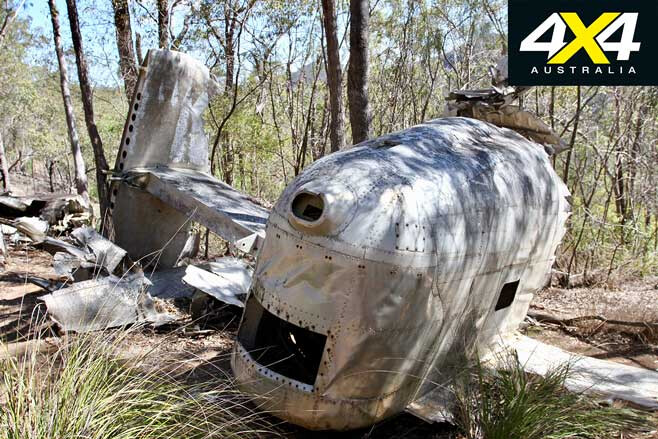
According to experts, the flight crew only had seconds notice that something was amiss, hence why no SOS was sent out, the landing gear was still up and the propellers were at full pitch speed (see Beautiful Betsy below). At the wreck site, the four engines are located about 100 metres from the main wreckage and the intact tail section – the main body exploded – is twisted among the trees. You can also find old instrument gear scattered around.
Upon leaving the crash site the track leads past the Wall camping area, which is 4WD only and one-way, with steep rocky sections leading into camp. The Wall track follows the ridgelines along the western side of the park, where there are plenty of views across sandstone escarpments and deep gorges.
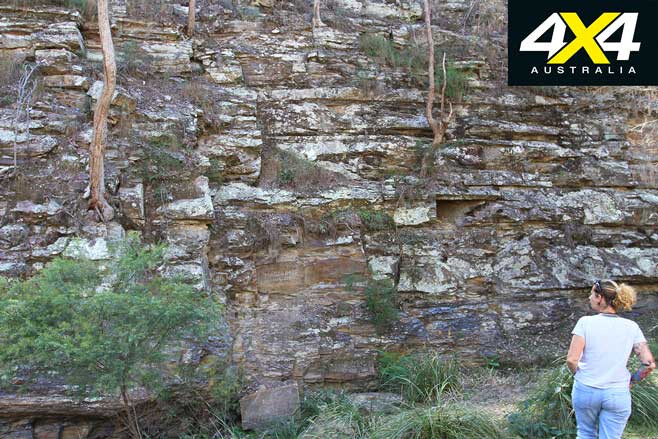
Kroombit is home to nearly 800 different tree species, as well as the critically endangered Kroombit tinker frog – experts say only 300 tinker frogs exist in Kroombit. The one-way loop track eventually joins back up to its starting point and back to camp. From Griffiths Creek camping area the track passes Forestry Barracks Camp, while the 4WD-only Razorback Trail back to Biloela isn’t recommended for trailers due to its steep, narrow sections.
The well-maintained Tableland Track past the Barracks is the track most visitors use, as it wanders past the Calliope Range, with Mount Chapman, Mount Rideout and the impressive Amys Peak in the distance. The road flattens out at Callide Creek, and once out of the park it’s a good run through private stations until bitumen returns at Calliope.
Kroombit is a harsh place, with little traffic and minimal phone reception, so you need to be totally self-sufficient. The park is aimed towards the visitor that is happy to take on the rough stuff, and it demands respect.
Beautiful Betsy
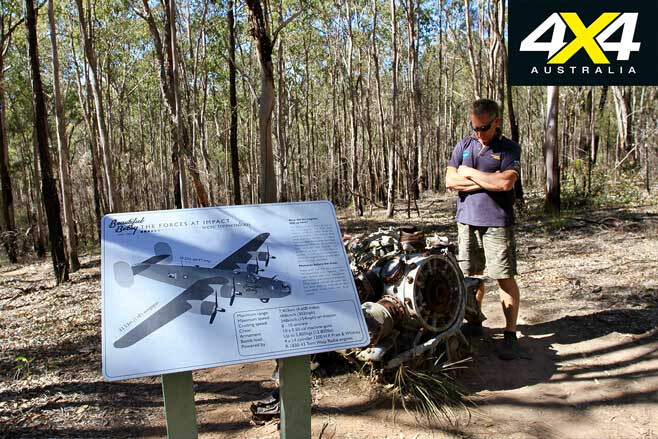
EIGHT crewmen died when Beautiful Betsy crashed on the mountain early one morning in 1945. What happened remains relatively unknown, but investigators have tried to piece the puzzle together.
Beautiful Betsy was an American WWII Liberator bomber which served its time during the war, but after it was found to be unsafe for further missions it was decommissioned for civilian life.
Repainted, it was used to fly throughout Australia, doing what was known as ‘fat-cat’ runs where it would collect fresh produce, ice-cream, alcohol and live animals for drops at Darwin. Named after the wife of the aeroplane’s first pilot, Betsy, it was also used for several parachute training drops.
On the night of February 26, 1945, when it set out from Darwin towards Brisbane, it never made it and was lost for many years. In 1994, when a park ranger was conducting a burn-off in the area, the wreckage was found with all onboard dead.
A team from the USA was sent out to retrieve skeletal remains, along with personal items, military goods and coins. The wreckage was left as it crashed all those years ago as a mark of respect to the eight onboard. Sadly, Flight Officer Cannon was onboard flying to Brisbane for his wedding day in four days’ time, and his best man, Lieutenant Cook, was also onboard.