
AS TRAVEL restrictions start to ease and even lift by varying degrees, depending on what state you’re in, most of us are itching to get back out there and kick up some red dust beneath our 4x4s.
None more so than the good folks at Drive 4 Life, who had to cancel the original planned 2020 tour as travel bans prevented it from passing through aboriginal communities. However, the hard-working team has planned a fresh trip, which will take in some iconic outback locations and stop at some well-known bush pubs.
The revised 2020 tour will start and finish in Broken Hill, NSW, and will run over the week from Saturday September 26 to October 3.
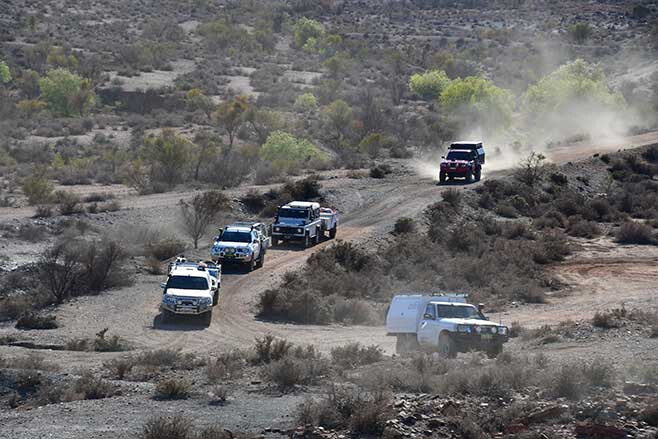
The tour will visit Blinman, Maree and Mungerannie in South Australia; duck in to Queensland for Birdsville, Big Red and Betoota; back to SA for Innamincka and Cameron Corner; before returning to NSW to visit Tibooburra, Milparinka, Packsaddle and Silverton.
This is not a difficult 4×4 trip, but your vehicle will need to be well-maintained and properly equipped, as would any trailers and caravans which are also suitable for the tour.
Participant numbers will be limited to 20 vehicles in total, and these will be split into two groups. with one going clockwise and the other going anti-clockwise around the same route.
As with all Drive 4 Life tours, entry is via a $1000 tax=deductible donation to Northcott Disability Services (www.northcott.com.au). Tour logistics and operating costs are covered by long-time Drive 4 Life partners ARB 4×4 Accessories, IGA Supermarkets and 4X4 Australia magazine.
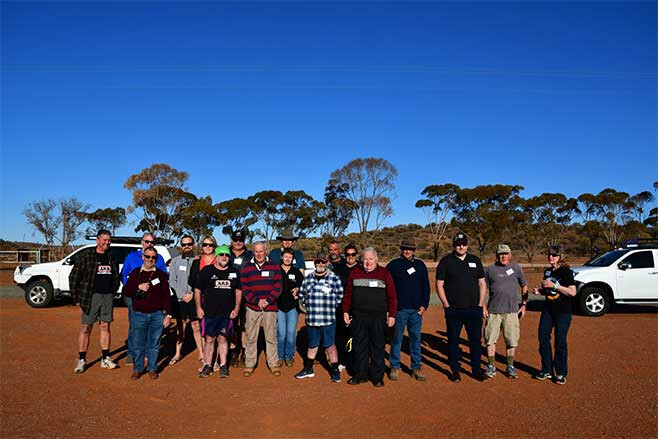
These tours are always a lot of fun, with a great crew of people along to take in the awesome tracks and, in this case, visit some top Aussie pubs.
Of course, this trip will be subject to interstate travel being allowed by the end of September, as we hope and expect they will be. If restrictions or any other reason prevents the trip going ahead, the donation is fully refundable.
The guys tells us they already have seven vehicles signed on for this tour and spots are filling fast. So head to the website at www.drive4life.com.au for all the details and the registration form, so you don’t miss out.
WITH THE popularity of the Ram 1500 pushing Walkinshaw to up the production of the re-engineering process, to meet demand in Australia, the inevitable comparison between it and the new Chevy 1500 has to be made.
While you can get in to a Ram from $79,990 for the base model Express Quad cab, a closer comparison here is with the Ram 1500 Laramie Crew Cab V8. Even so, the Laramie starts at $99,950 to the Chevy’s $113,000.
BIGGER AND BETTER
- Chevy Silverado 1500 off-road test
- Is the Silverado 1500 too big for Oz?
- Silverado 1500 v Ram 1500 video review
Feature-wise the two are similarly equipped but the Chevy, being a newer model, takes a clear lead on safety equipment as it comes with forward collision warning with low-speed autonomous emergency braking (AEB), lane departure warning and adaptive cruise control, none of which are fitted to the Ram. The Chevy leaps ahead on power and torque numbers, while the Ram edges back with a higher payload. Both are rated to tow 4500kg when specified accordingly.
The Chevy feels more spacious and comfortable inside and offers a more refined drive. Overall, its driving experience is preferred over the Ram. Part of the reason the Silverado is better is that it is a newer car.
The Ram 1500 sold by Ram Trucks Australia is the older DS model which, even though it is still produced new and sold as a 2020 model in the USA, has been superseded by the DT Ram. Both models are sold alongside in the US, while RTA says it will be 2021 before it introduces the DT here.
CHEVROLET SILVERADO 1500 LTZ SPECS
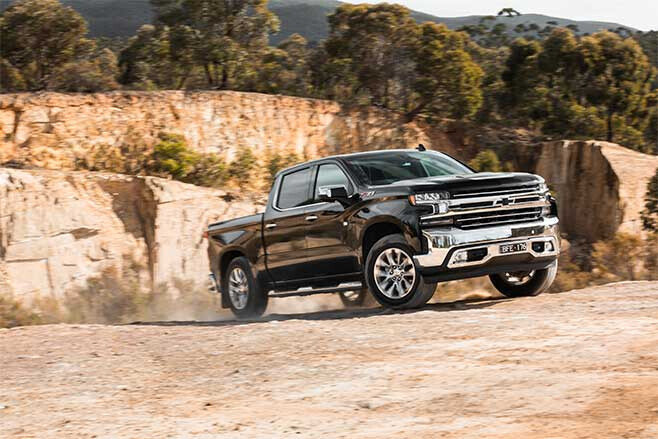
- ENGINE: 6.2L OHV direct-injection petrol V8
- MAX POWER: 313kW at 5600rpm
- MAX TORQUE: 623Nm at 4100rpm
- TRANSMISSION: 10-speed auto
- CRAWL RATIO: 40.69:1
- 4X4 SYSTEM: Dual-range part-time
- CONSTRUCTION: 4-door cab and tub on ladder chassis
- FRONT SUSPENSION: IFS with wishbones & coil springs
- REAR SUSPENSION: Live axle with leaf springs
- WHEEL AND TYRE: 20-inch alloys with 275/60R20 AT tyres
- WEIGHT: 2588kg
- GVM: 3300kg
- PAYLOAD: 712kg
- TOWING CAPACITY: 4500kg
- GCM: 7160kg
- SEATING CAPACITY: 5
- FUEL TANK CAPACITY: 91L
- ADR FUEL CLAIM: 12.23L/100km
- TEST FUEL USE: 12.4L/100km
CHEVROLET SILVERADO 1500 LTZ OFF-ROAD SPECS
- DEPARTURE ANGLE: 23.0°
- RAMPOVER ANGLE: 20.0°
- APPROACH ANGLE 21.0°
- WADING DEPTH: N/A
- GROUND CLEARANCE: 235MM
CHEVROLET SILVERADO 1500 LTZ BASE PRICE
- $113,000
RAM 1500 LARAMIE SPECS
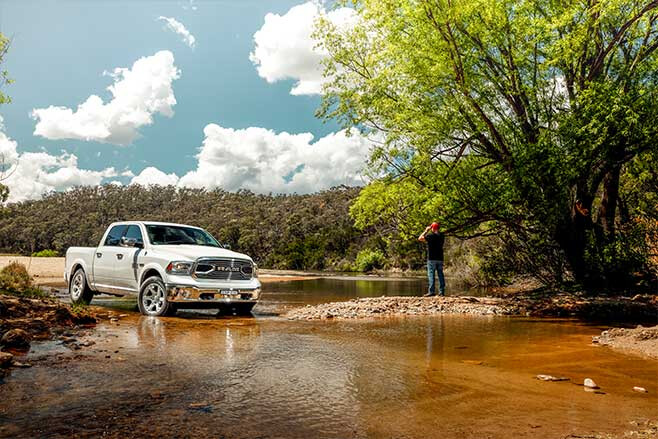
- ENGINE: 5654cc OHV petrol V8
- MAX POWER: 291kW at 5600rpm
- MAX TORQUE: 556Nm at 3950rpm
- TRANSMISSION: 8-speed automatic
- CRAWL RATIO: 48.74:1
- 4X4 SYSTEM: On-demand 4WD with low range
- CONSTRUCTION: 4-door cab and tub on ladder chassis
- FRONT SUSPENSION: IFS with wishbones + coil springs
- REAR SUSPENSION: Live axle with coil springs + 5-link
- WHEEL AND TYRE: 20-inch alloys with 275/60R20 HT tyres
- KERB WEIGHT: 2650kg GVM: 3450kg
- PAYLOAD: 800kg
- TOWING CAPACITY: 4500kg (with 3.92:1 final drive)
- GCM: 7237kg
- SEATING CAPACITY: 5
- FUEL TANK CAPACITY: 98L
- ADR FUEL CONSUMPTION*:12.2L/100km *Australian Design Rule ‘Combined-Cycle’ claim
RAM 1500 LARAMIE OFF-ROAD SPECS
- DEPARTURE ANGLE: 24.4°
- RAMPOVER ANGLE: N/A
- APPROACH ANGLE: 17.8°
- WADING DEPTH: N/A
- GROUND CLEARANCE: 219.5mm
RAM 1500 LARAMIE BASE PRICE
- $99,990
A timeline of the Range Rover Classic’s evolution, from 1970 to 1994.
1970: Range Rover launched with long-travel coil-spring suspension, full-time 4×4 and V8 power from a state-of-the-art Buick-sourced 3.5-litre all-alloy V8 being defining features separating it from the Land Rover models then in production.
1972: The Range Rover arrives in Australia and commands the princely sum of $7475 at a time when Toyota LandCruisers (40 and 50 Series) were priced between $2700 and $4800.
1973: Power steering and a wash/wipe for the rear window introduced as options across the range.
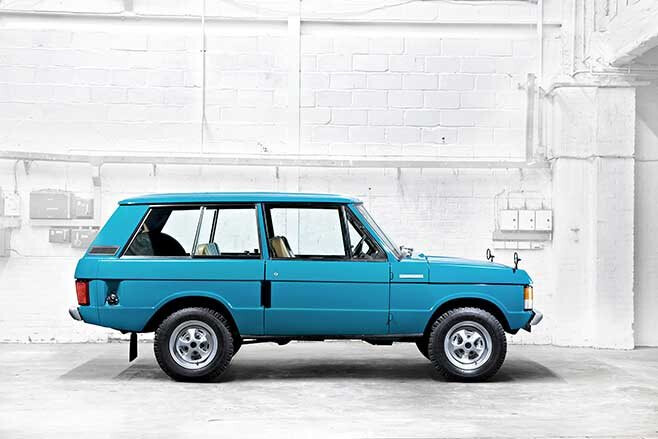
1970 Range Rover Classic four-door
1978: Emission controls first introduced. Engine compression ratio reduced to 8.13:1, automatic choke fitted to the carburetor, and air pump and air-injection introduced. Power steering made standard by year’s end.
1979: Jaguar Rover Australia begins local production of the Range Rover at its Enfield plant in Sydney using knockdown kits supplied by the factory in Solihull, UK.
1982: The four-door model introduced in Australia, soon to become standard as the two-door is phased out. Australian models get a more powerful (up to 93kW) ADR-compliant engine with a 9.35:1 compression ratio and manual choke. The manual gearbox gets revised ratios and shift gate, while a three-speed Chrysler Torqueflite automatic becomes an option. Carpet and cloth trim replace the rubber floor coverings and vinyl seat coverings used previously.
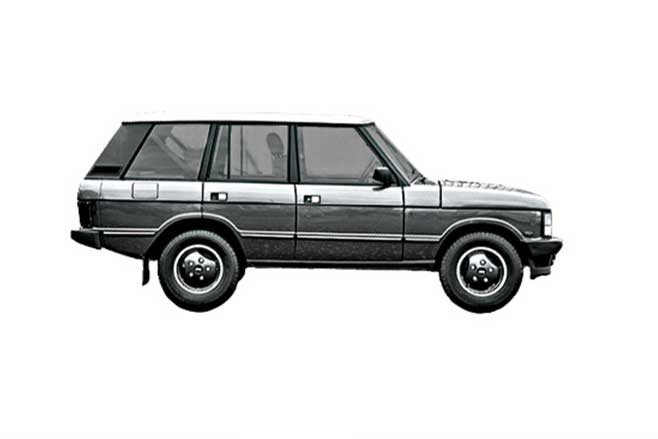
1974 Range Rover Classic four-door
1984: Due to increased government tariffs on automotive parts, Australian assembly ceases. The Highline model also joins the range with either the automatic gearbox or a new five-speed manual, replacing the previous four-speed. Alloy wheels, armrests and timber door cappings are also standard.
1984: The five-speed manual becomes standard across the range and the Torqueflite automatic is upgraded. Central locking and factory air-conditioning introduced. In late 1984 the engine gains electronic ignition and the suspension is raised by 38mm. The front quarter windows are dropped, the external rear view mirrors relocated to the doorframes, the front seats gain height adjustment and the dashboard redesigned.
1985: Range Rover sales in Australia exceeded those in England for the first time. A new luxury model – the Vogue – introduces electronic fuel injection (Lucas L system) and a four-speed ZF automatic transmission.
1986: Fuel injection and the four-speed automatic become standard, while the power is increased to 110kW. The suspension is lowered by 38mm via dual-rate coils. A turbo-diesel model using a 2.4-ltre VM Motori engine is launched in the UK and arrives in Australia the following year.
1987: The Range Rover is launched in the USA. A new grille and concealed bonnet hinges lead a number of styling changes.
1989: The introduction of the Vogue SE brings new levels of luxury with leather, a CD player, sunroof, walnut-wood trim and colour-coded alloy wheels. Mechanical changes in 1989 run to a chain-driven transfer case and an automatic-locking viscous-coupling centre differential replacing the manually lockable centre diff used previously.

Range Rover Vogue four-door
1990: The 250,000th Range Rover is built and the long-serving 3.5-litre V8 is replaced by the new 3.9-litre V8 complete with a new fuel-injection system and claims 130kW. Ventilated front brake rotors and electronic anti-lock braking provide more consistent stopping, while the ZF auto is revised to cope with the extra power. For the first time in Australia, the Vogue SE climbs above $100K.
1991: A special CSK model (named after Range Rover designer Charles Spencer King) is introduced. Much to the dismay of off-road enthusiasts, anti-roll bars are introduced to the suspension, which reduces the wheel travel meant for flatter on-road handling. Cruise control also introduced.
1992: Electronic traction control and electronic height-adjustable air suspension introduced on Australian Vogue Plus and Vogue SE models. Meanwhile, the UK sees the introduction of the LSE model riding on a long wheelbase (108-inch rather than 100-inch) and powered by a new 4.2-litre V8.
1994: The second-generation model, code-named P38, makes its debut.
LIFE AFTER THE CLASSIC
WHILE production of the ‘Classic’ Range Rover continued until 1996, the second-generation model widely referred to as the P38 arrived in 1994.
Initially developed under the code name Pegasus and Discovery, the latter to confuse journalists, the P38 name came from the building (Block 38) at Land Rover’s Solihull plant where the new model was developed.
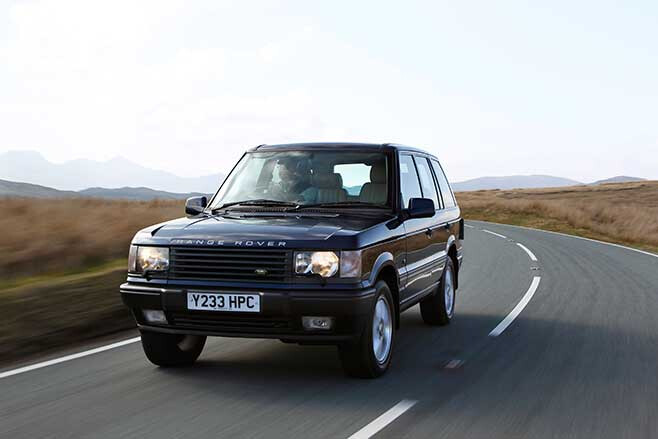
Second-generation Range Rover
While the P38 bought 4.0- and 4.6-litre developments of the original Buick-sourced 16-valve pushrod V8, the new generation model retained the defining features of the original, namely separate-chassis construction, front and rear live axles, full-time 4WD, and aluminium body panels. The P38 also bought height-adjustable air springs but this feature, along with electronic traction control, had already appeared on the last of the first generation models.
With BMW’s purchase of Land Rover/Range Rover from the state-owned British Aerospace at the time the P38 was launched, it wasn’t long before the new German masters wanted to move the game along. Perhaps the P38 didn’t perform well hot-lapping the Nurburgring?
Following a relatively short eight-year life span the P38 was replaced by the third generation, or L322, in 2002. The L322 shared much with BMW’s first-generation (E53) X5 including the powertrains, basic floorpan structure, electronics, switchgear and numerous ancillary items.

Range Rover’s second generation
More notably the L322 bought a whole new BMW-inspired design philosophy by employing monocoque construction and fully independent suspension, a complete about-face from the first and second-generation models. Cleverly, the new suspension still offered a generous amount of wheel travel, and combined with third-generation height-adjustable air springs, provided a lofty ride height when needed.
With Ford’s purchase of Land Rover/Range Rover from BMW in 2000, where BMW used the fully-developed and ready-for-production L322 as a deal-sweetener, Ford bought the L322 to production and from 2005 onwards Ford engines replaced the original BMW units.
The L322 lasted some ten years and in 2012 was replaced by the L405, another completely new clean-sheet design. Funded by a open cheque book courtesy of India’s Tata Motors, which had purchased Land Rover/Range Rover from Ford in 2008, Range Rover’s engineers literally aimed for the stars with the use of aerospace technology in the L405’s aluminium-alloy monocoque structure.
Compared to the steel monocoque used with the L322, the L405 saved more than 400kg in weight, which brought significant benefit to performance, fuel efficiency, on-road dynamics and off-road ability. Initially Ford designed engines, both diesel and petrols have been used but increasingly the L405 is using new generation ‘Ingenium’ engines designed in-house off the back of Tata funding.
“WE DID IT off our own bat. It wasn’t management saying ‘do this’, we did it ourselves because we thought it was a worthwhile thing to do, and the management accepted it.
“The sales department thought it was stupid: ‘What? A Land Rover costing two thousand pounds – you must be mad.’” So said the late Charles Spencer King of the birth of his brainchild the Range Rover in an interview given in 1995 to Australian motoring journalist Shane Nichols.
Spen King, as the Rover Company senior engineer was known, was many things, but mad he was not. When the Range Rover made its debut to a group of prominent (and almost exclusively British and European) motoring journalists in West Cornwall in 1970, it was immediately clear that here was a whole new type of vehicle. What wasn’t so obvious was the profound effect on motoring during the close of the 20th century and into the 21st century that the Range Rover would have.
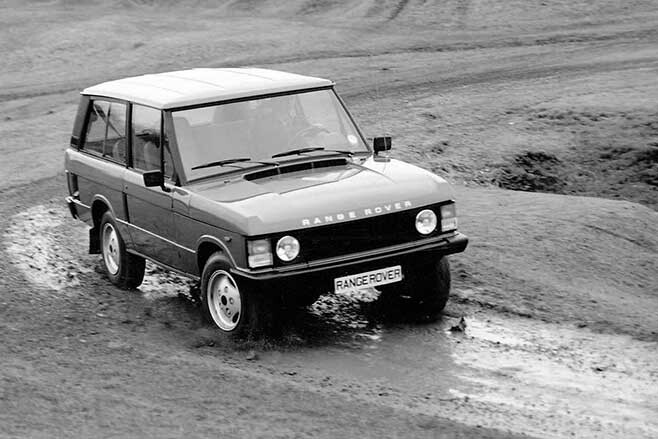
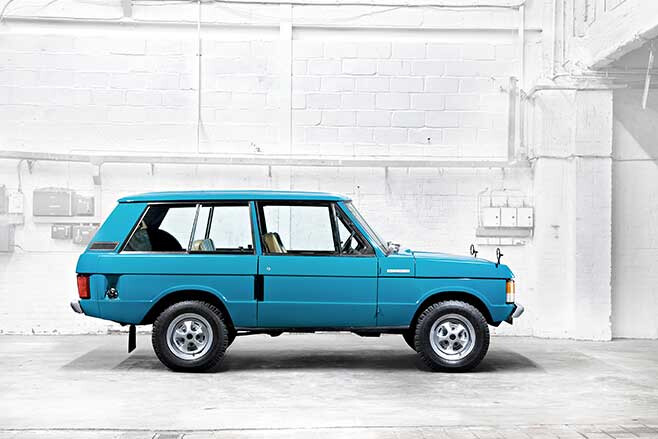
Two-door Range Rover Classic (1st gen)
Arriving in Australia in 1972 priced at $7475 – when the most expensive Toyota LandCruiser was under $5000 – the Range Rover came at a time when 4x4s where generally crude and utilitarian. Yet, the Range Rover managed to better its contemporaries in genuinely difficult off-road conditions due largely to its long-travel coil-spring suspension while at the same time providing on-road comfort and performance to shame many a luxury car.
In essence, the Range Rover did what all modern passenger 4WDs attempt to do, namely mixing on and off road performance in such a way that neither are unduly compromised.
It wasn’t until Nissan launched its GQ Patrol late in 1987 and Toyota its 80-Series LandCruiser in 1989 that Japanese 4WDs approached the Range Rover’s unique blend of off-road prowess and on-road civility, and even then they fell short.
The Range Rover was quickly adopted by the gentry as the first Toorak Tractor.
THE FIRST LUXURY 4×4? NOT QUITE
THE RANGE ROVER is often called the first luxury 4×4 but that’s misleading, and wrong on both accounts. The first Range Rover wasn’t even luxurious and as for being the first 4×4 that ventured down the ‘luxury’ road that accolade is more fairly given to the original Jeep Wagoneer, which preceded the Range Rover by seven years and had some influence in the Range Rover’s conception.
Somewhat ironically the Range Rover wasn’t developed out of the Land Rover side of the Rover Company but rather the new-vehicle development unit of the passenger-car side of the company. What’s more many in the Land Rover side of the business, including Tom Barton, Land Rover’s chief engineer of the time was very skeptical of the Range Rover as he was a firm believer that 4x4s should have leaf springs.
Spen King, as the chief engineer of Rover’s new-vehicle projects, was looking for product and was interested in combining the comfort of a Rover P6 ‘executive saloon’, one of his earlier designs, with the off-road ability of a Land Rover.
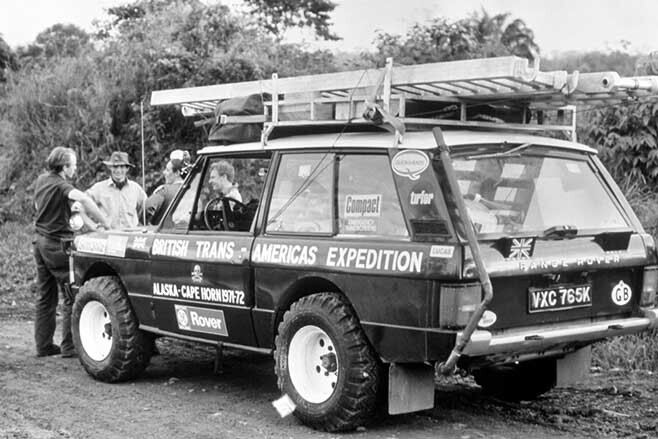
Range Rover’s Classic TransAmerican Expedition rig.
To this end, in 1966 King took a P6 for a drive on the company’s private test track at Solihull, effectively bumpy field, and was surprised how good it felt, remembering of course that passenger cars of the times – the mid 1960s – had a lot more ground clearance than passenger cars of today. What’s more, he was also surprised how good it felt compared to the company’s Land Rovers of the time.
At this stage the Range Rover ‘project’ wasn’t a company condoned or authorised endeavor and King and two other key members of the design team, Geof Miller, a 4×4 expert and chief project engineer, and Gordon Bashford, the chassis engineer who was involved with every Land Rover since the original Series One, worked on the project in their own time.
Rover management soon got on board however, as there was a belief that 4×4 sales would expand beyond the rural and military sectors into the recreational market where towing boats and caravans and having a vehicle just as adept at high speeds on the motorway as it was off-road could bring sales that the Land Rovers of the day could never achieve.
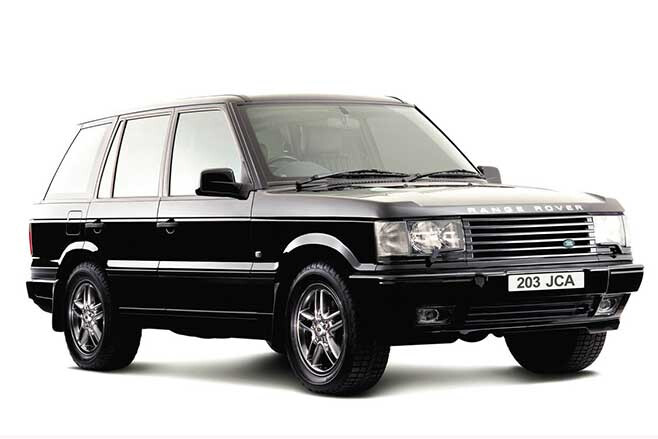
Second-generation Range Rover
The 1960s had already seen the seeds of this in the USA where the Jeep Wagoneer, Ford Bronco and the International Harvester Scout were early signs of the emergence of a new style of 4×4. The USA was targeted as potential Range Rover market but emission and safety regulations made it too expensive to comply so the idea was dropped and the Range Rover didn’t actually find its way to the USA until 1987, some 17 years after it was launched in the UK.
IMPROVED VERSATILITY
THE ORIGINAL CONCEPT of the Range Rover was never to produce a luxury vehicle but more a premium vehicle that could offer far more versatility than any of the existing Land Rovers. King listed site foremen, skiers and army officers who wanted something better than a Land Rover, as potential buyers.
It certainly wasn’t aimed at the ‘landed gentry’ as one look at the simple and utilitarian interior with its rubber floors and vinyl seats of the original would reveal. Of course it would become a vehicle of choice of well-heeled country folk but that was a role it grew into rather than being designed for.
Around this time, and very fortunately so, Rover had already agreed to buy the tooling and blueprints for an all-alloy 3.5-litre V8 from Buick for Rover’s passenger cars. This was timely as the Land Rover’s existing 2.5-litre four-cylinder and 2.6-litre six-cylinder engines wouldn’t have given the Range Rover the 145km/h-plus motorway speeds and heavy towing capacity that was envisioned for the Range Rover.
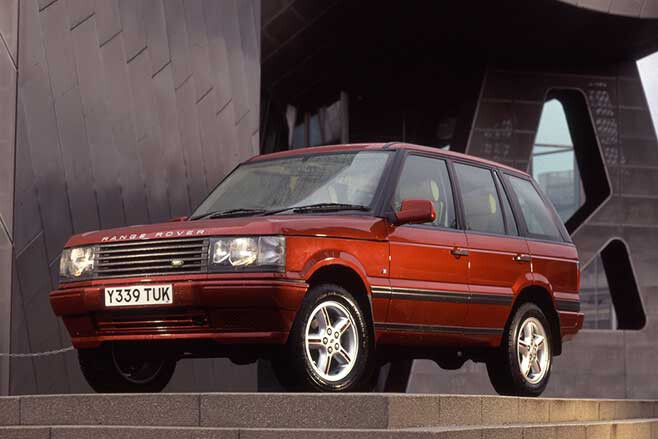
The second generation ran from 1994-2002.
At that time within the Rover Company the Land Rover was still seen as the stopgap measure it was originally designed as, and its development was still slow paced and underfunded, hence the lack of a more modern engine in the Land Rover stable until the Buick V8 came along.
The first prototype was built in 1967 using a Land Rover chassis and many Land Rover parts including the part-time transfer case, Land Rover axles, and drum brakes. But the springs were adapted from the Rover P6, and the rubber mounts to isolate the body from the chassis also came from a Rover passenger car, as King was keen to achieve Rover passenger-car NVH levels with the Range Rover.
The second prototype moved the game on considerably introducing full-time 4×4 and disc brakes. It also brought the Boge Hydromat self-leveling strut, which helped maintain the vehicle attitude when heavily laden, something that’s essential when you have soft, long-travel springs. For the first 20 years of its life the Range Rover didn’t even employ anti-roll bars, which allowed the suspension to work freely through its full travel off road.
FULL-TIME 4×4
THE DECISION TO use full-time 4×4, in retrospect a breakthrough design, came about as King wanted to use Land Rover axles rather than heavy-duty truck axles as these would ruin the on-road handing due to the extra unsprung weight. The trouble was the extra torque from the V8 might be too much for the lighter axles, so by using full-time 4×4 the drive torque was spread front to rear.
As King was to say some years later: “You have the rotating machinery at both ends so you may as well use it. It saves on tyre wear and confers better grip – a prime safety factor. The security on slippery, nasty roads is just wonderful.”
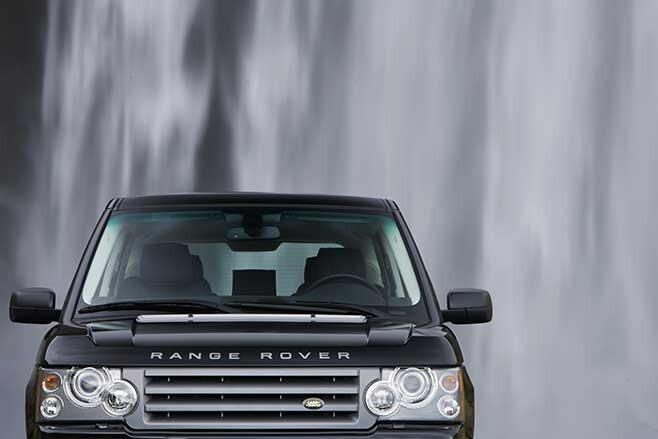
Third-gen Range Rover.
As the project moved from design to development, King was offered a more senior position within the then new British Leyland group and departed the Range Rover project content in the knowledge that “it was going to be a successful and iconic vehicle”. From there it was up to the development team to take the Range Rover to production, among them Roger Crathorne, who within Land Rover circles is still today referred to as ‘Mr Land Rover’.
The third prototype that came along was built in 1969 and produced what is more recognisable as the initial production model. Initially Rover’s head of styling, David Bache, wasn’t keen on the car and King did much of the initial work himself. Then King ‘borrowed’ a stylist – Geoff Crompton – from the styling office without Bache’s knowledge. Crompton helped with the styling and eventually Bache helped to finish it off and, in King’s words, “did a great job”.
Much of the design was centered on making the vehicle as compact as possible to make it more useful off road. Hence the relatively short wheelbase (better ramp-over clearance) and short front and rear overhangs for better approach and departure. The only dimension that wasn’t kept to a minimum was the roof height, deliberately so to allow the driver and passengers to sit upright and look through an enormously deep glasshouse. Even to this day there’s not a 4×4 that offers anywhere near the vision of the original Range Rover.
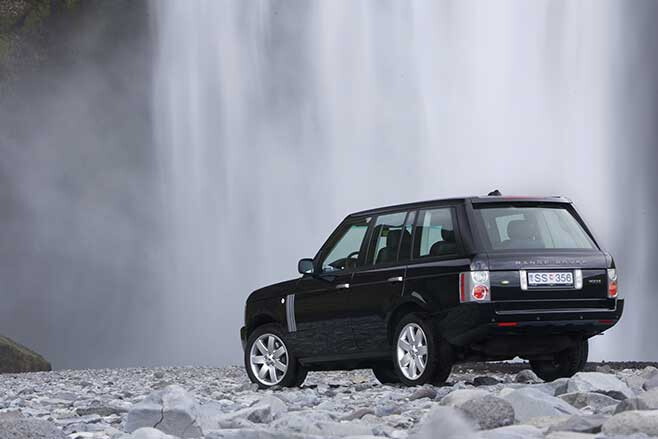
Range Rover third generation.
Initially the whole body was to be made from aluminium-alloy panels but the complex shape of the bonnet required steel. Steel was also used for the rear window frame for strength.
Developed at a time of much turmoil as the Rover Company was merged into British Leyland in 1967, the Range Rover went from concept to production in four years, and in the final year was rushed even faster as the then British Leyland chairman Sir Donald Stokes wanted a new car every six months! This bought the release date forward to mid-1970.
Most of the prototype testing was done at the Motor Industry Research Association (MIRA) test centre and at Rover’s off-road proving ground at Eastnor Castle. Hot-weather testing was done in North Africa in 1969 and, while cold-weather testing was done in simulators in England, an official cold-weather test – in Finland – wasn’t conducted until after the Range Rover went on sale! In the words of Crathorne “fortunately it did well!”
DON’T FORGET THE ASH TRAY
MISTAKES were made along the way. As none of the design team were smokers there was no ashtray and that was only added as an afterthought. During severe on-road testing the rear diff nose also fouled the A-frame, which meant a sight redesign of the brackets and trailing links just before the sales started. A few vehicles that had had already left the production line had to be retrofitted with the changes. The torque-sensing centre differential proved noisy and was phased out after a few hundred units to a manually lockable non-torque-sensing unit.
The idea behind the two-door body was essentially for strength and while this was well received in the UK it wasn’t liked in the Middle East by wealthy sheikhs or in Africa by rich leaders who generally had chauffeurs and found it was somewhat unbecoming to have to clamber into the back seat. Still it took 11 years after the initial launch before the four-door appeared.
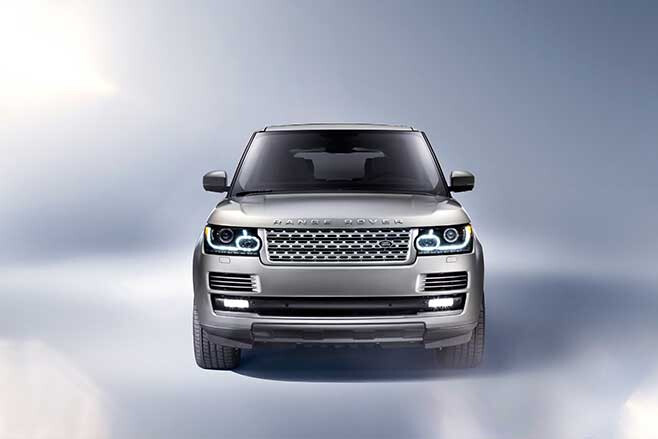
Range Rover PHEV features an Ingenium petrol engine and electric motor.
The export market was important for the Range Rover and played a significant part in making the Range Rover more globally influential than the Jeep Wagoneer and Ford Bronco, significant as they were in their own right.
Given the huge domestic market, USA automakers weren’t as export orientated as Rover where the success of the Land Rover right from the beginnings in 1948 was based very much on export off the back of commercial networks established in British Commonwealth countries such as Australia. This was an advantage the USA automakers didn’t enjoy.
Despite its many fiddly flaws and rushed development the soundness of the original design was well vindicated as the Range Rover’s core elements – long-travel coil-spring suspension, full-time 4×4 and flexible V8 power – remained essentially unchanged throughout its 26-year production run.
References: Born in Lode Lane by Roger Crathorne with Gavin Green; Suspension King – How it all Began by Shane Nicholls in Range Rover, A History.
CHARLES SPENCER KING
CHARLES Spencer King (1925-2010) was far more than the father of the Range Rover, a fair claim to fame by any measure.
His life as an engineer started in wartime England in 1942 as an apprentice with Rolls-Royce, arguably the pinnacle of British engineering at the time – Spitfire fighter-plane engines and all that – but at the end of the Second World War he moved from aeronautics to the Rover Car Company where he joined his uncles, Maurice and Spencer Wilks. Maurice Wilks was responsible for the original Land Rover that debuted in 1948.
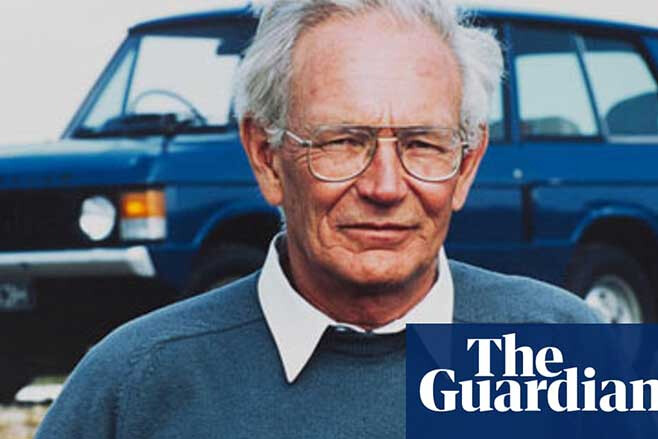
At Rover, Spen King worked on the Jet1 and T3 gas-turbine cars and led the teams that developed the innovative Rover P6 and the SD1 passenger cars.
He was also involved in the Rover-BRM gas-turbine racing car that competed at and finished the 1963, 1964 and 1965 24-hour endurance races at Le Mans. He also led the development teams that created the Triumph Stag, and the Triumph TR6 and TR7 sports cars, and designed the famous 16-valve head for the Triumph Dolomite Sprint.
He retired in 1985 but not before heading up a British Leyland advanced research team tasked with designing vehicles of the future, including the ECV3, a lightweight aluminium space-frame three-cylinder hatchback that used as little as three litres of fuel per 100 kilometres. He is remembered as an engineer’s engineer for his pragmatic, down to earth approach to problem solving.
WHEN I first started in this four-wheel driving caper some 30-odd years ago, we used to deflate tyres by finding an appropriate-size twig and pushing it down on the tyre’s valve.
Then, if we’d forgotten to throw in a gauge, we’d guesstimate tyre pressure by counting to 30, 60 or 90 seconds, screw the valve cap back on and hope for the best.
This was a long and tedious process, so it was little wonder various clever people came up with better alternatives.
First up was the innovative Staun Valve that could be set to a predetermined pressure and simply screwed on to the valve stem. Because there were four of them in a set, this significantly sped up deflation time.
Then along came the ARB E-Z Deflator (and other similar products) that allowed the valve itself to be removed from the valve stem but in a captive state for super-fast yet safe deflation.
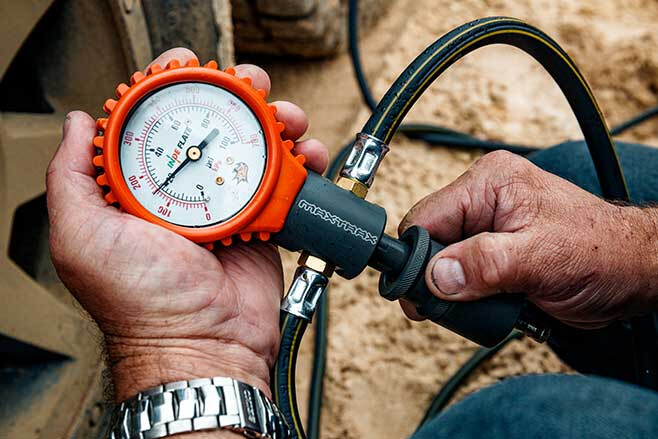
The latest in tyre-deflation technology is being distributed in Australia by MaxTrax and is called Indeflate. It’s called Indeflate because as well as allowing for easy tyre deflation, it allows for easy tyre inflation… and two tyres at a time.
Indeflate is attached to two tyre valve stems at a time with clip-on chucks, and it features a dump valve that allows for equal deflation of those two tyres simultaneously. It also has a built-in pressure gauge so you can quickly and easily monitor deflation, and it has two 3m-long hoses so you can easily reach all tyres on a vehicle.
Deflation is not as fast as an E-Z Deflator that removes the actual valve from the stem, but as it fits so quickly via the clip-on chucks, and as you’re deflating two tyres at a time, there’s not much in it.
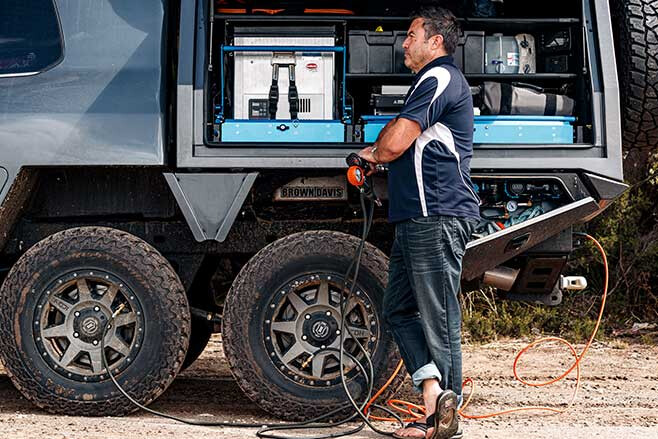
However, the best thing about using the Indeflate is you can stand upright while using it rather than crouching down near your tyres. If your knees are a bit buggered like mine, this makes a helluva difference!
When it’s time to pump your tyres back up again, simply refit the clip-on chucks to two tyres, attach your air compressor hose to the base of the dump valve, open said valve and two tyres will be inflated at once. Again, you can stand while doing this rather than crouch, the pressure gauge is easy to read, and you’re guaranteed that both tyres will be inflated to the same pressure.
Indeflate is well made with quality components and is supplied in a durable carry bag. It’s bloody brilliant!
ESSENTIAL INFORMATION
AVAILABLE FROM: maxtrax.com.au RRP: $215 WE SAY: Easy deflation, easy inflation and easy on the knees.
THE TRACK ends quite suddenly, the line of trees marking the channel of the north-west branch of the Cooper Creek barring progress any further northwards.
To the east a low ridge of sand blocks any expansive view while behind the screen of trees to the north and west there’s often a duct of muddy shallow water, a hangover from the last flood that had oozed down this outback waterway.
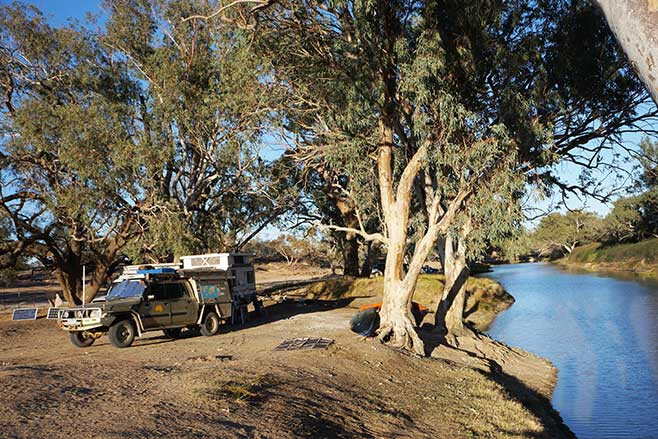
We were at the most northerly camping spot in what is now the Malkumba-Coongie Lakes National Park. The route to the park and the campground had only recently opened (September 2019) after being closed for some months after a flush of water had found its way down through the Channel Country of South West Queensland and into the Cooper Creek.
I had been at Arkaroola in the Flinders Ranges of SA when I heard the track to the lakes was finally open so without any further ado I headed across the flat plains that border the eastern edge of the ranges and onto the Strzelecki Track.
Montecollina Bore
I can’t travel this route without stopping at Montecollina Bore though, one of the rare permanent water spots, albeit manmade, along the way.
Surrounding this life sustaining waterhole, where huge flocks of white corellas sit under any shady spot aloof from any passing cars, are the Cobbler Sandhills where the dunes of the Strzelecki Desert have been replaced by steep-sided mounds that are topped with tough wiry vegetation.
In days gone by this area of the desert was extremely challenging for vehicles to get through, and the shearers, who were the main people to travel this route, gave it the name ‘Cobbler’, which referred to the most difficult sheep in a mob to be shorn.
Strzelecki Track
Crossing the dry bed of the Strzelecki Creek a little further north I shunned the main dirt road that is often dusty with the passing truck traffic and turned onto the original Strzelecki Track near Merty Merty homestead.
This lesser used route follows the creek northwards to Innamincka and while it’s no less dusty, maybe even more so, at least there are fewer trucks roaring past. Along here you’ll drive by the nodding arms of beam pumps drawing their liquid gold from deep underground.
Innamincka
It is at Innamincka that the Cooper splits into three main courses of braided channels, the main stream draining southwest towards a distant Lake Eyre (flows occasionally), the Strzelecki flowing south (flows rarely), while the north-west arm of the Cooper flows towards Coongie Lakes, the more common way for the water to flow.
Which way the water goes all depends on how deep the water is over the causeway at Innamincka and over the natural sandbars that are at each of the creek junctions.
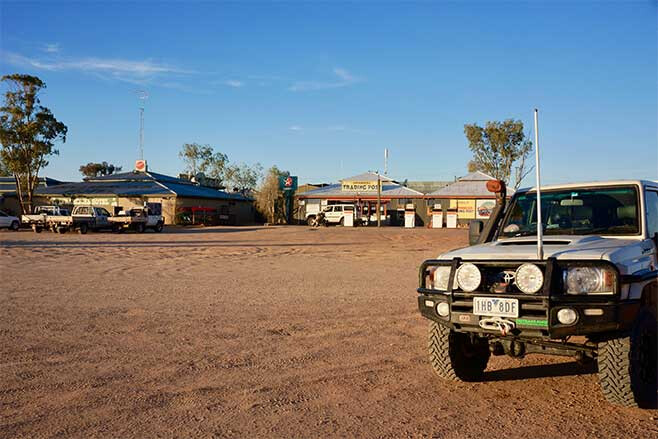
After a stopover at Innamincka to get some supplies and a camping permit I headed across the Cooper, the causeway now dry, and turned onto the road to the local racetrack and the Innamincka station trucking yard.
Innamincka Station was established in 1872, about 10 years after Burke and Wills had met their fate a little downstream along the Cooper. The homestead is just a few kilometres north of the present-day Innamincka township, while the property itself covers 13,800km² of the surrounding Innamincka Regional Reserve, which had been established in 1988.
Cattle grazing and gas and oil production are allowed in the reserve, so you’ll find fences, cattle, watering points, and a lot of signposted tracks leading to distant oil and gas wells and pumping stations (all closed to the public) as you head towards Coongie.
Coongie Lakes NP
In 1996, Coongie Lakes and the popular Cullyamurra Waterhole, the latter just a short distance from the township, were fenced and cattle excluded from these areas. In 2005 the Coongie Lakes NP was proclaimed, its name changing to its current moniker in 2014.
The national park covers an area of 26,661ha, and while there are a number of ephemeral lakes in the area, Coongie Lake itself is the largest and the first one to receive water flowing down the NW branch of the Cooper.
When water flows this far north the internationally significant wetlands, listed under the Ramsar Convention, not only includes the lakes but also interdunal swamps, billabongs, channels and shallow floodplains that border the creek and major lakes.
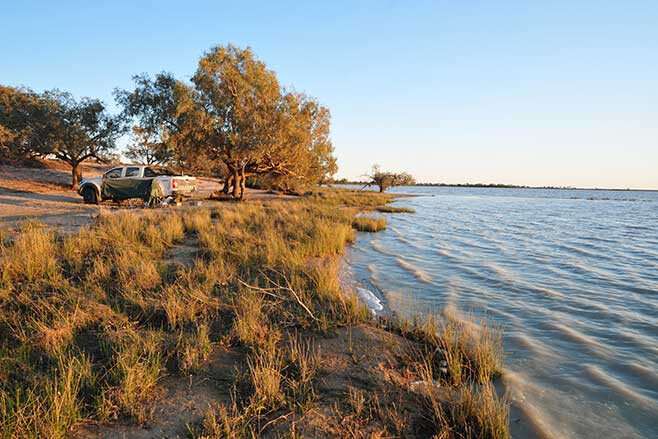
Just as you get to the park you’ll come to Kudriemitchie Outstation which now operates as a base for researchers and has been restored with help from the Toyota Landcruiser Club of SA; well done guys. Nearby along the north-west arm of the Cooper you’ll find a few shady spots to camp under a crowd of old river red gums close to the water.
The lakes and waterways you find here are a wildlife haven with more than 200 species of birds reported from the region. At times, like now when the lakes are brimming with water, the sheer number of birds is fantastic, with a figure of more than 100,000 birds being present on a number of occasions. At peak times up to 50,000 pelicans nest here while up to 20,000 grey teal and pink-eared ducks come here to breed.
Numerous species of native animals can also be found here including red kangaroos, dingos and even the Rakali, which we once knew as the native water rat. Reptiles include turtles, numerous snakes (luckily rarely seen) and lizards of all shapes and form.
I backtracked a short distance from the formal campground and took the track around the southern shores of the lake. Here you’ll find more secluded camps close to the lake’s edge which I reckon make for a whole better experience.
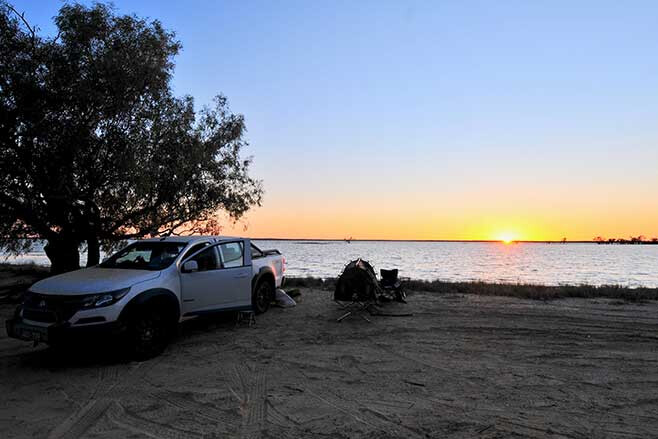
There were a few birds around but nowhere near as many as there will be when the Cooper and its adjoining floodplain and pans dry out over the coming months. Then they will come together at this near-permanent spread of water in one of the great wildlife congregations you’ll see in Oz.
While there weren’t many birds on my recent visit, a couple of birds of prey circled overhead. Sitting under a shady tree in a parched desert with water lapping at my feet though was bloody enjoyable … and a little surreal and a whole lot magical.
Make sure you get to experience it while you can!
Essential information
Malkumba-Coongie Lakes National Park is located 100km northwest of Innamincka.
A campground with toilet facilities is located at the creek at the end of the track. Camping is also available around the lake’s edge.
Kudriemitchie campground is located on the southern edge of the park and campfires and generators are permitted here.
Elsewhere in the park, wood and solid fuel fires are banned, as are generators and chainsaws. Motorboats and fishing are not allowed in Coongie Lakes.
Camping fees apply and you must book in advance HERE.
There is no mobile phone coverage in the park and no other facilities so be well prepared. And while there may be a lot of water, you’d probably prefer some cleaner stuff for drinking!
IT MIGHT look more at home on the set of The Walking Dead, but this impenetrable 2020 Toyota LandCruiser is perfect for cashed-up survivalists.Yep, not that’ll be much use to us in Australia, but, if you really wanted to, you could get yourself a bulletproof 200 Series.
Specced by Canadian mob, INKAS, the Land Cruiser GXR is equipped with a BR6 armour level, meaning it’ll survive a barrage of assault rifle ammo (7.62mm) and up to two hand grenade attacks (DM51).
The engine bay has been up-armoured; the suspension has been reinforced, as have door hinges and critical structure points; the entire perimeter of the passenger compartment has been strengthened; there’s added protection for the battery and electronics; and it utilises run-flats.
Let’s just hope it passes the “ball-bearing test”, unlike Elon’s Cybertruck.
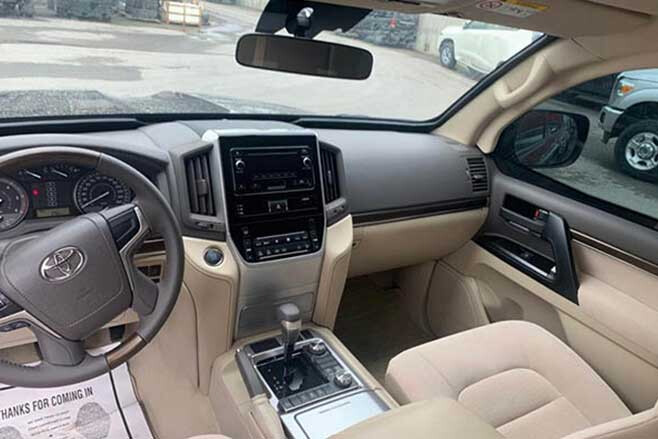
Tick some boxes on an optional equipment list and you can get a lightweight armouring package, a heavy duty brake system, heavy duty wheels, a siren/PA/intercom system, an emergency lights system, and/or a fire suppression system.
The guts of the seven-seat SUV remain unchanged, with the 4.5-litre V8 running through a six-speed automatic transmission and permanent AWD system.
There’s an information box on the INKAS website, specifically for Aussies, where you can request further info. Head here to check it out: inkasarmored.com
CHEVROLET IMPORTER and converter HSV has revised its range of Silverado pickups as it introduces the 1500 model and is running out of the heavy-duty 2500 models.
With the cessation of Holden and its supply of Commodore and Colorado vehicles and the end of the Chevrolet Camaro muscle car, the Silverado 1500 will, for the time being, be the only vehicle in the HSV line-up.
The Chevy joins the Ram 1500 truck in Australia which has been a popular model for importers Ateco Automotive/Ram Trucks Australia (RTA). While there are many companies importing and converting American vehicles in Australia, HSV and RTA are unique in that they are semi-factory operations and the conversions are approved by the head offices back in Detroit.
SALVAGED: The curious case of the sunken Silverados
Of note is the fact that both the HSV and RTA trucks have their left- to right-hand drive re-engineering carried out at Walkinshaw’s Clayton, Victoria facility for the respective companies.
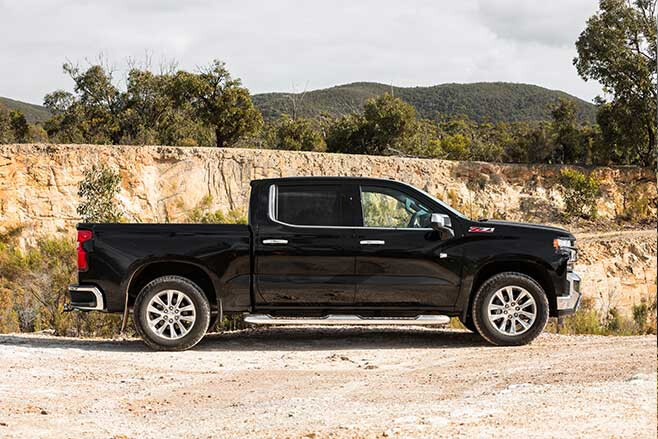
The 1500 pickups are what the Americans call half-ton trucks in reference to their load ratings. The heavy-duty 2500 and 3500 models are three-quarter-ton and one-ton trucks respectively, and when you’re looking at Ford trucks they are designated F150, F250 and F350 as you go up in capacity. They are generally the same trucks in size, it’s just the increased parameters of the chassis, axles and suspension that give them the added capacity.
The 2020 Silverado 1500 differs from the 2500 previously offered by HSV as it is the latest generation vehicle while the 2500 was the older model and hence why it has now left the HSV range.
HSV is only offering the Silverado 1500 in a single model and specification with a range of factory options available and more being locally developed by HSV. That LTZ spec is relatively high and it is loaded with features and hence wears a $113,000 (+ORC) sticker price.
POWERTRAIN AND PERFORMANCE
THE 1500 IS only available with one powertrain option comprising a petrol-fuelled V8 engine backed by a 10-speed automatic transmission and part-time, dual-range 4×4. The mill is the latest 6.2-litre GM LT1 V8 that pumps out a healthy 313kW of power and 624Nm of torque. While those numbers might suggest a brute of an engine, nothing could be further from the truth as the V8 delivers smooth, refined performance under most throttle applications and opens up to a mild roar when you plant the right boot.
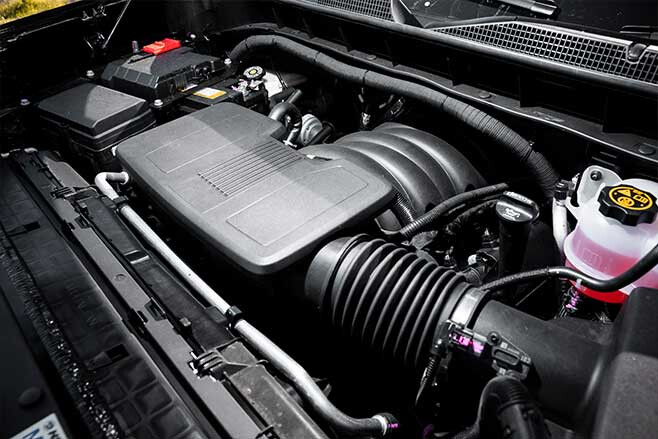
HSV does offer an intake and exhaust package for the 1500 that delivers a mild performance upgrade and a bellowing exhaust note that most enthusiasts would appreciate.
DRESSED-UP ‘RADO: Tuned PaxPower Jackal
The LT1 features fuel-saving cylinder deactivation and stop-start functions and delivers a claimed 12.23lt/100km. Over the course of our testing, which including highway driving and a bit of mild off-roading, the Chev returned 12.4lt/100km
The column-shifted automatic transmission is also smooth and refined, slipping unnoticed through its ratios. Manual shifting of the gears is via up/down buttons on the shift stalk while 4×4 and low-range selection are via buttons on the dash.
ON-ROAD TEST
AS IS THE case with the powertrain, driving the Silverado is a refined surprise. The cabin is massive and luxurious with its leather-covered, heated and cooled power seats and all the trimming, with the chassis and suspension delivering better than expected ride and dynamics.
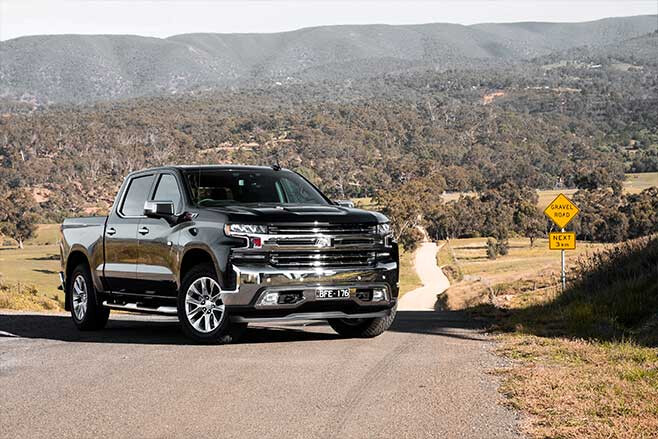
The 1500 uses an independent front suspension with coil-over shocks using Rancho dampeners in Z71 pack-equipped models which all the Aussie ones are, and electric-assist power rack and pinion steering. It might be a pickup but the 1500 doesn’t steer like a truck, instead proving precise and easy to place on the road.
In true load-hauling fashion, the rear end uses a live axle on leaf springs and it is firm and does feel a bit jittery when unladen as it was on our drive. A bit of weight in the tray or on the ball should address this.
OFF-ROAD TEST
IN STANDARD trim the Silverado would make a great all-road tourer while it’s not such a great off-roader. It’s just too long and low and it touches down the front bumper and side-steps way too easily on even mild off-road terrain. Thankfully there’s an endless supply of suspension kits available from the USA to accommodate everything from a sensible lift right up to nosebleed material. HSV is also working on a suspension kit it will offer soon.
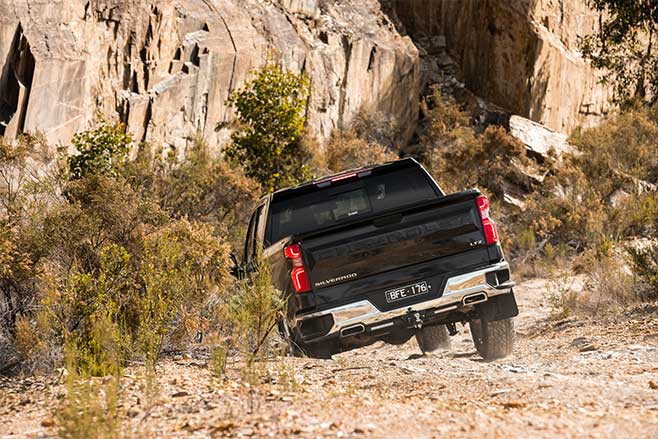
All of the HSV delivered 1500s come with the Z71 Off-Road Equipment Package which includes the previously mentioned Rancho shocks, Electronic Hill Descent Control, two-speed transfer case, an auto-locking rear differential, front skid plates and a heavy-duty air filter.
The rear diff works well but comes on pretty hard whenever there’s any wheelspin at the back. It takes a second or two to kick in but when it does, it propels the truck forward with gusto; you’ll want to be ready for it! The stock suspension doesn’t offer much travel, so lifting wheels and loosing traction comes easy and that rear locker is needed.
INTERIOR
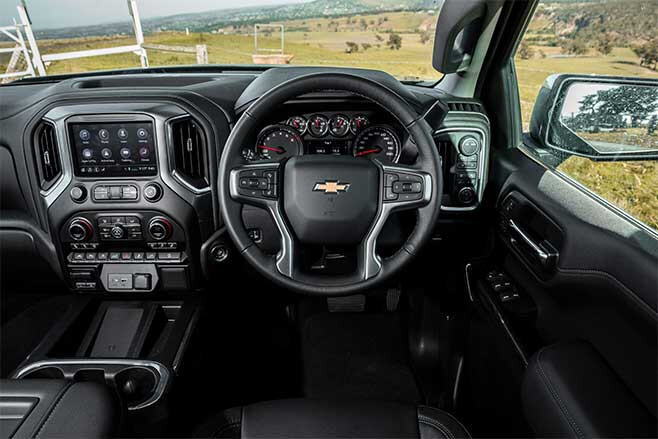
As mentioned, the cabin in the Silverado is huge and well-appointed. The console in between the two front seats is massive and could easily accommodate another passenger while the rear seat is similarly spacious for three passengers.
The LTZ is the second highest specification of six specs available in the USA but is the only spec offered by HSV. As such it includes all the features and comforts you would expect in a luxury vehicle and when you match that the space inside, it becomes a perfect mile eating machine.
Nothing is lost in the left- to right-hand drive conversion carried out by HSV and you would be hard-pressed to find any indication that things are not as they were when the vehicle left its original factory on the other side of the Pacific.
BORN IN THE USA: Chevy versus RAM
UTES OR PICKUP trucks, call them what you like but they offer unrivalled practicality with the ability to carry a load, haul a trailer and carry the family all in one vehicle. US trucks like the Silverado amplify this ability over any of the popular one-tonne utes here with more space and towing ability, however the general payload is usually lower than or on par with the one-tonners.
Key numbers for the Silverado 1500 include 3500kg towing on a 50mm ball or 4500kg on a 70mm ball, a 7160kg GCM and a 712kg payload. Unless you’re hauling cotton wool, you won’t even start to fill that massive cargo tray before you reach that payload capacity especially if you’re towing with some weight on the ball.
The standard 91-litre fuel tank is a handy size but we reckon you’d start to eat into it pretty quickly if you were towing or carrying a load on the V8 1500. The US market gets V6 petrol and an inline diesel six-cylinder engines among its many Silverado 1500 variants and the diesel could be preferred by Australian buyers. There’s even a 2.7L four-cylinder turbocharged petrol engine offer in the lower spec trucks in the States. Interestingly, the inline-six diesel and the LT1 are both rated to the same 623nm of torque, with the diesel bringing its peak grunt in at 1500rpm.
PRACTICALITIES
UTES OR PICKUP trucks, call them what you like but they offer unrivalled practicality with the ability to carry a load, haul a trailer and carry the family all in one vehicle. US trucks like the Silverado amplify this ability over any of the popular one-tonne utes here with more space and towing ability, however the general payload is usually lower than or on par with the one-tonners.
Key numbers for the Silverado 1500 include 3500kg towing on a 50mm ball or 4500kg on a 70mm ball, a 7160kg GCM and a 712kg payload. Unless you’re hauling cotton wool, you won’t even start to fill that massive cargo tray before you reach that payload capacity especially if you’re towing with some weight on the ball.
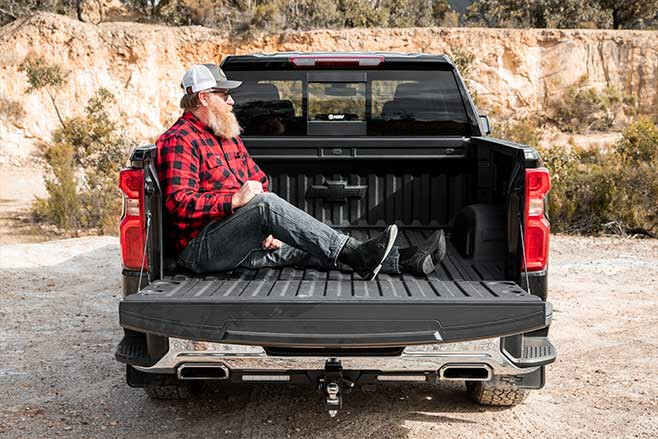
The standard 91-litre fuel tank is a handy size but we reckon you’d start to eat into it pretty quickly if you were towing or carrying a load on the V8 1500. The US market gets V6 petrol and an inline diesel six-cylinder engines among its many Silverado 1500 variants and the diesel could be preferred by Australian buyers. There’s even a 2.7L four-cylinder turbocharged petrol engine offer in the lower spec trucks in the States. Interestingly, the inline-six diesel and the LT1 are both rated to the same 623nm of torque, with the diesel bringing its peak grunt in at 1500rpm.
FINAL SAY
THE 1500 IS a beautiful truck to spend time in. Big, spacious and comfortable and with a V8 engine that will appeal to those that like a bit of performance or tow. But serious long-haul towers in Australia will prefer the torque capability and efficiency of a diesel engine which, at this point, HSV doesn’t offer in the Silverado. That’s not to say the petrol Chevy won’t do that job well, but a diesel will do it more efficiently.
The 1500 is a great truck for around down, towing the boat and general duties, is a step up from the small diesel one-tonne 4×4 utes and a worthy replacement for the old Ford and Holden 2WD utes.
CHEVROLET SILVERADO 1500 LTZ SPECS
ENGINE: 6.2L OHV direct-injection petrol V8 MAX POWER: 313kW at 5600rpm MAX TORQUE: 623Nm at 4100rpm TRANSMISSION: 10-speed auto CRAWL RATIO: 40.69:1 4X4 SYSTEM: Dual-range part-time CONSTRUCTION: 4-door cab and tub on ladder chassis FRONT SUSPENSION: IFS with wishbones & coil springs REAR SUSPENSION: Live axle with leaf springs WHEEL AND TYRE: 20-inch alloys with 275/60R20 AT tyres WEIGHT: 2588kg GVM: 3300kg PAYLOAD: 712kg TOWING CAPACITY: 4500kg GCM: 7160kg SEATING CAPACITY: 5 FUEL TANK CAPACITY: 91L ADR FUEL CLAIM: 12.23L/100km TEST FUEL USE: 12.4L/100km GROUND CLEARANCE: 235mm APPROACH ANGLE: 21 degrees DEPARTURE ANGLE: 23 degrees RAMPOVER ANGLE: 20 degrees
PRICING
BASE PRICE: $113,000
TOYOTA has issued a recall notice for MY2016-2018 LandCruiser VDJ76, VDJ78 and VDJ79 models, to have a modified heat shield fitted to the exhaust to prevent the build-up of dry grasses that could ignite and cause a vehicle fire.
The recall covers some 22,971 vehicles fitted with Diesel Particulate filters (DPF), with build dates between June 2016 and November 2018.
OPINION:
The potential fire risk occurs when these vehicles are driven in conditions where dry grass, bushes or seeds come into contact with the underside of the vehicle and could create a build-up of dry mass around the exhaust system. The exhaust system in vehicles equipped with a DPF runs at a very high temperature when it conducts a DPF burn–off, and this has the potential to ignite any build-up of dry matter and cause a serious vehicle fire.
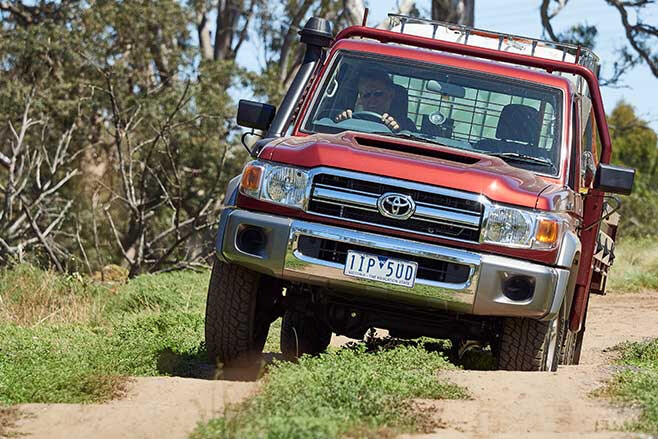
The rectification for the recall is to fit a modified heat shield to the area of the exhaust system, and also enable the DPF manual regeneration customisation mode, which allows owners to conduct manual regeneration in a safe location prior to entering off-road environments with dry vegetation.
Instructions on removal of accumulated vegetation will also be placed in vehicles with a revised DPF information label affixed to the interior of the driver’s door.
Toyota acknowledges that many owners of VDJ Cruisers will have fitted aftermarket or modified exhausts systems to their vehicles and suggest that these vehicles should also be presented for inspection, but say that in order to complete the recall, the complete exhaust system must be returned to original manufacturer condition.
Toyota Australia will be contacting owners of affected vehicles to advise them that their vehicles need to be looked at, but should you own a LandCruiser 70 produced within the date range, you should contact your Toyota dealer for advice.
The LandCruiser isn’t the first vehicle to have had such issues with hot DPFs potentially igniting dry grass under the vehicle. This is a timely reminder to anyone driving any vehicle, but particularly those using hot DPF-equipped exhaust systems, to never pull the vehicle to a standstill over tall dry grass that could be in contact or close to the exhaust system. Also, if driving through long grasses, regularly stop, get under the vehicle and check for any build-up of grasses around the exhaust and DPF. A piece of fencing wire or a coat hanger can be used to clear away any build-up of grass and debris.
Some grasses, such as spinifex, commonly found in the Australian outback, contain seeds with ahigh content of oil, which is particularly flammable and easily ignites when near a hot exhaust, and your vehicle could be well alight by the time you smell it burning and it’s too late to save.
Toyota LandCruiser owners can contact the Toyota Recall Campaign Helpline on 1800 987 366 (Mon-Fri 8.00-7.00pm AEST) for more information, and it’ll help if you have your Vehicle Identification Number (VIN) handy when you do.
Ford has announced a new Tradesman option package for the Ford Ranger, which sees it receive more than $5500 in extras for just $1000.
The Ford Ranger Tradesman is listed officially as a ‘Special Edition’ on Ford’s website, but the option pack is only available on the Ranger 4×4 XL dual-cab variant with the 3.2-litre five-cylinder engine.
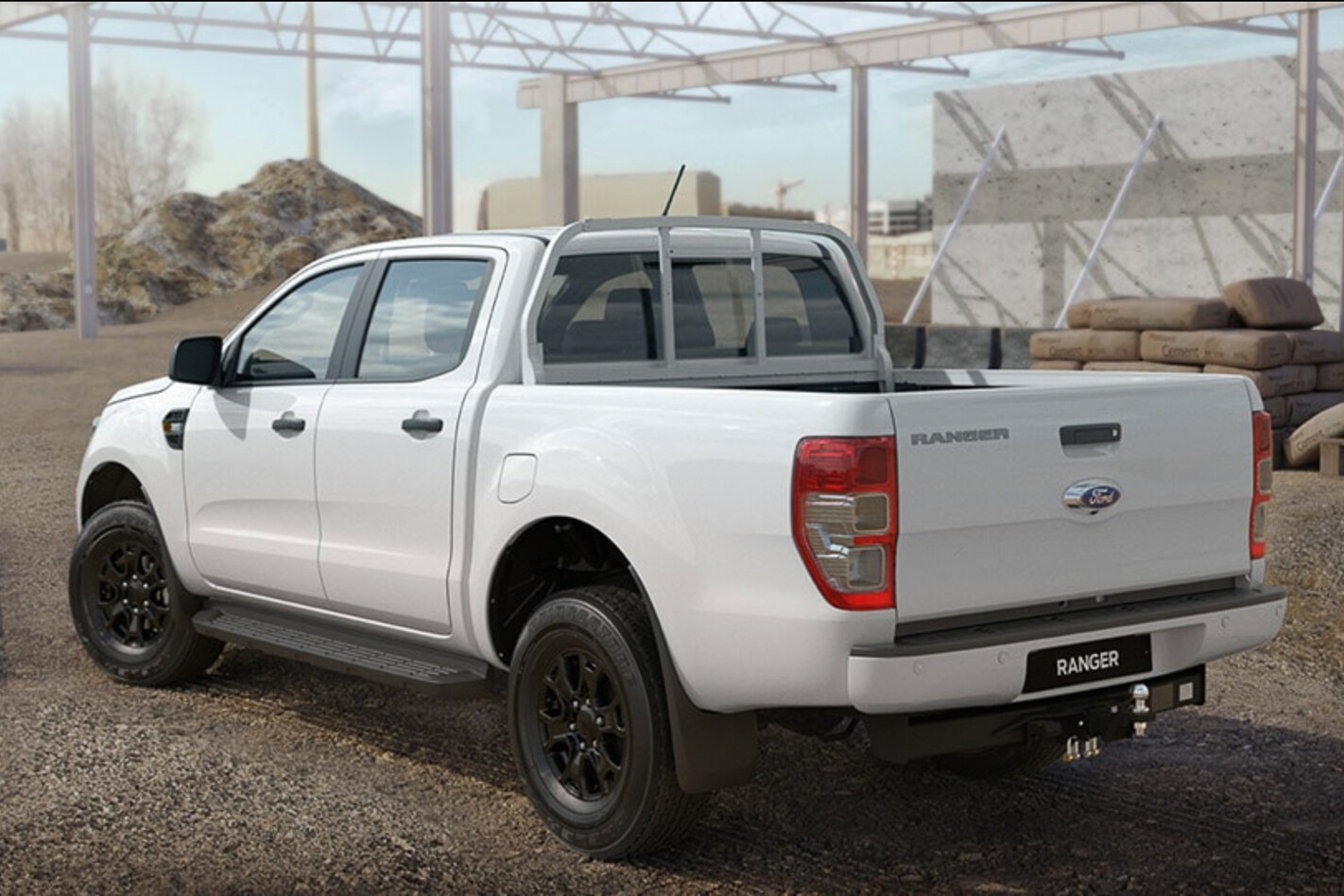
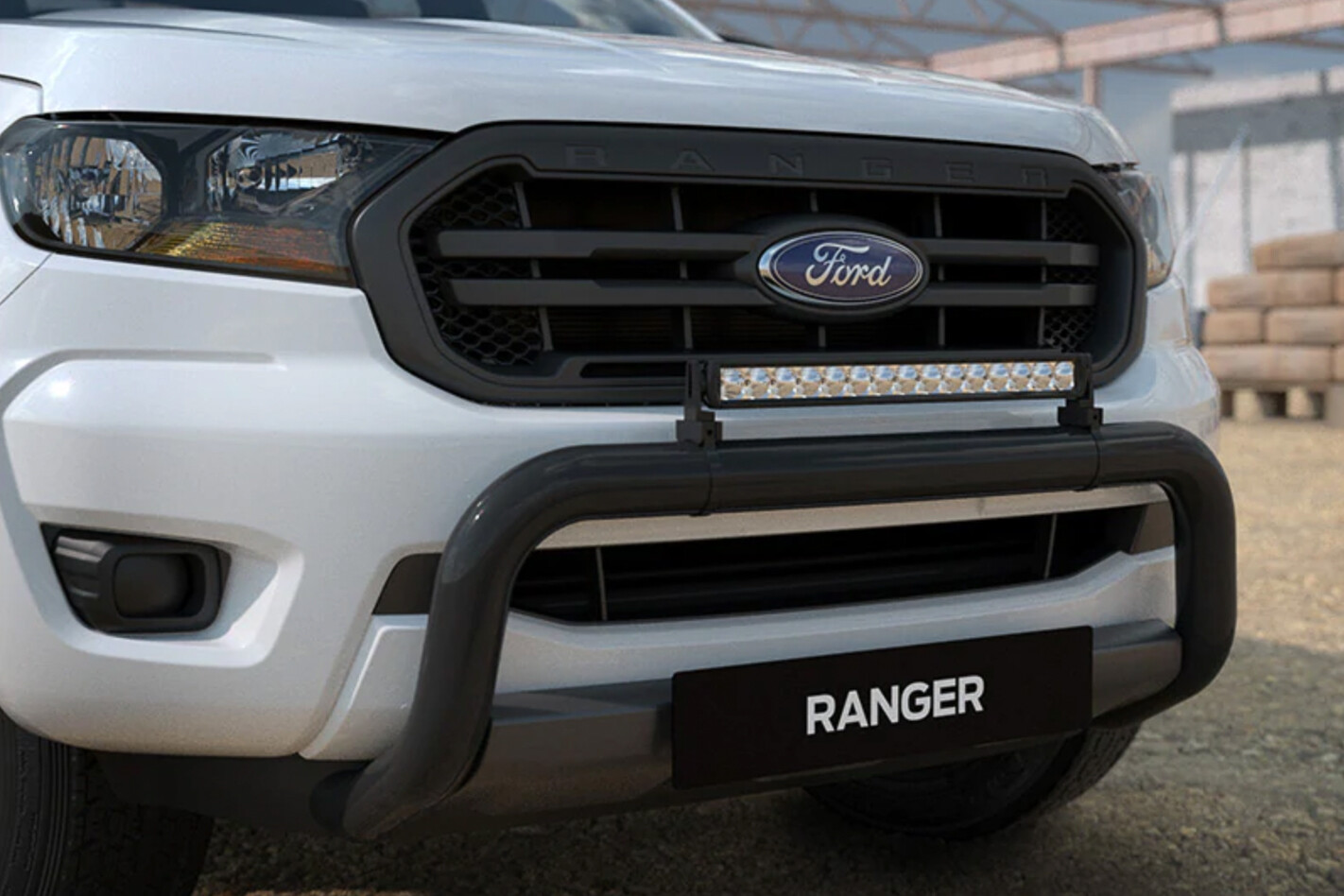
The $1000 package includes a black nudge bar with integrated LED light, a black plastic bedliner, tow bar, black side steps and a set of 16-inch alloy wheels.
Ford’s Tradesman pack builds on equipment that already includes lane-keep aid, AEB with pedestrian detection, infotainment with smartphone-mirroring capability and part-time 4×4 with an electrically-locking rear differential.
4×4 ute sales continue to slide during the coronavirus pandemic, so this option pack may be a way for Ford to entice new buyers into a Ranger to arrest the sales downturn.
It is available now, with the option pack taking the price of the 2020 Ford Ranger 4×4 3.2L dual-cab automatic to $51,790 (before on-road costs).