THE ACCC issued a recall notice on June 3 relating to potential transmission problems on Ford Ranger utes and Everest wagons built between May 30, 2018 and October 16, 2019.
Some 20,925 of the Thai-built Ford vehicles are affected, and only those fitted with the 10-speed automatic transmission working behind the 2.0-litre bi-turbo diesel engine. The six- speed auto that comes behind the 3.2-litre engine is not affected.
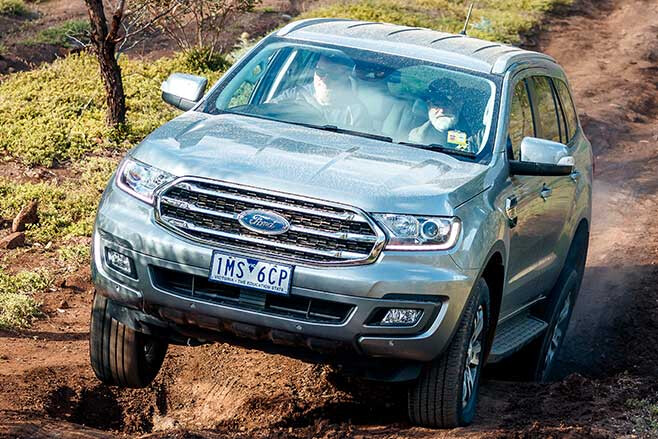
The potential transmission fault come from the failure of transmission fluid pump gears, which can cause the loss of hydraulic fluid pressure in the transmission and result in a loss of drive.
Ford is contacting owners of the vehicles that fall under the recall notice, and many vehicles have already been checked and rectified. The ACCC notice comes on the back of action by Ford Australia that has seen vehicles already checked over the last three months.
If you have not already had your vehicle looked at and think your vehicle falls under those in the manufactured date range, you should contact Ford’s Customer Relationship Centre on 1800 503 672.
THE covers have officially been lifted on the 2020 Toyota Hilux, with the upgraded model going straight after its arch-rival, the Ford Ranger, with a significant hike in power, retuned suspension and improved towing capacity.
The Hilux has battled the Ford Ranger for superiority in the dual-cab ute sales race over the last two years, with the two sides coming within a handful of sales of each other month to month.
The Ranger is also due for an overhaul in 2021, but it will be far more comprehensive than that for the relatively simple Hilux model line.
More power and torque for Hilux 2.8-litre engine
The venerable 2.8-litre engine that powers the best-selling 4×4 (year-to-date) has been beefed up to deliver 150kW/500Nm (six-speed auto), up from the outgoing model’s 130kW and 450Nm.
Toyota Australia puts this growth down to “multiple new components and enhanced cooling”.
Though no details were offered, the updates will also likely include a permanent fix for the troublesome diesel particulate filter issues that have plagued the HiLux, which have resulted in a class action against Toyota in Australian courts.
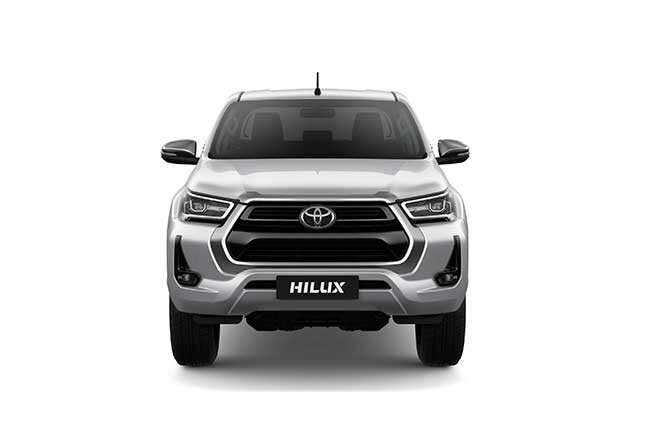
In addition to more power, six-speed automatic Hilux variants now boast an increased towing capacity, now matching the six-speed manual variants with a maximum rating of 3500kg (up by 500kg).
For comparison’s sake, the Ranger delivers 147kW/470Nm in five-cylinder 3.2-litre guise, and 157kW/500Nm from its twin-turbo four-cylinder 2.0-litre diesel engine.
Suspension and traction control updates for Hilux
Toyota has also added an additional traction control function to 4×4 models equipped with downhill-assist control, which reroutes torque in 2WD mode to provide more grip.
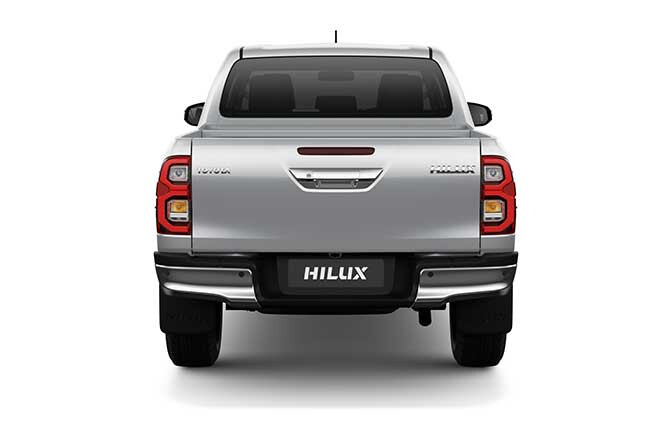
Updates to the vehicle’s suspension layout include revised shock-absorber tuning all round, new bushings and an improved leaf-spring design, which will be aimed at improving the Hilux’s low-speed and unladen ride quality.
Apple CarPlay now available for Hilux
On the multimedia front, the entire Hilux range comes with an eight-inch display screen with Apple CarPlay and Android Auto.
A 4.2-inch display in the instrument binnacle finally adds a digital speed readout, among other new functions.
A range of active safety systems were fitted to the HiLux in 2019, including day/night pedestrian detection, cyclist (daytime only) protection, lane departure alert with steering assist, high-speed active cruise control and road-sign assist.
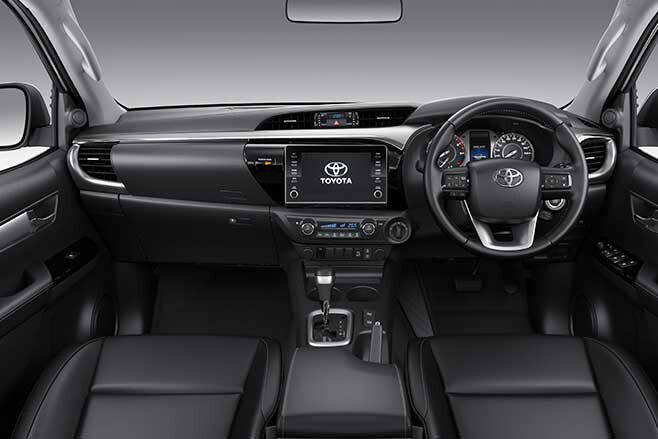
The updated Hilux range retains three body styles (single, extra and double cab), two configurations (pick-up and cab-chassis) and five equipment levels (Workmate, SR, SR5, Rogue and Rugged-X).
If you’re wondering how much the 2020 Toyota Hilux will cost, expect pricing to be announced closer to the updated Hilux’s arrival in local showrooms in August.
MAY 2020 might have represented a big improvement for new 4×4 sales over April, but the overall market is still way down on previous years; some 33 per cent in total.
The strongest player overall as always is Toyota, especially in the 4×4 ranks where it held four of the top six positions for the month.
Significantly, the Hilux’s 2800 sales were enough to take over the number one sales position year-to-date from the Ford Ranger, which only managed 2499 sales in May.
Each of those 4×4 utes sold close to 1000 units more than they did in April, showing that the market is on the way back and it looks like another two-horse race to the post for 2020.
As predicted last month, a strong sales month for the Toyota Prado was enough for it to edge its way into third place year-to-date, bumping the Mitsubishi Triton back to third spot.
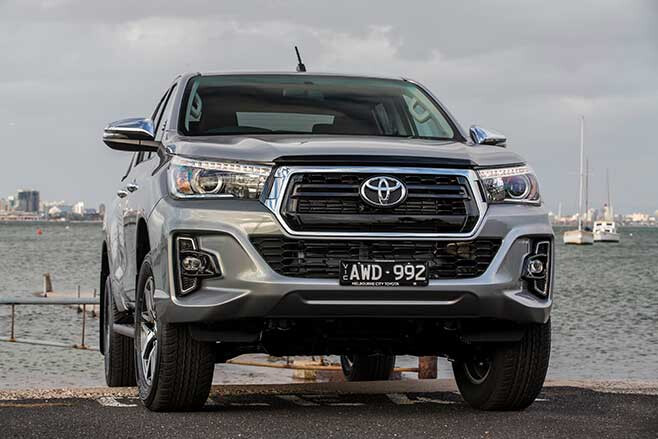
The Prado and LandCruiser showed there’s still a strong appetite out there for full-size 4×4 wagons, while even the LC79 outsold the popular one-tonne utes such as D-MAX, Navara and Triton.
A new addition to the charts for May was the Jeep Gladiator pick- up, with 71 registrations against its name. These were the dealer demos and marketing fleet, as the first Gladiators only started to go out to customers at the start of June. It will be interesting to see how well the new Jeep sells in Australia.
The 4×4 ute segment totalled 10,979 sales in total for May, only beaten by the popular and packed medium SUV class which moved 11,477 unit.
Significantly for the utes, that’s only 23.4 per cent down on May last year, while some other segments of the new car market are down 40, 50 and 66 per cent.
4X4 SALES IN MAY 2020
1. Toyota Hilux: 2800 2. Ford Ranger: 2499 3. Toyota Prado: 1358 4. Toyota LC200: 1260 5. Holden Colorado: 729 6. Toyota LC79: 872 7. Isuzu D-MAX: 662 8. Nissan Navara: 625 9. Mitsubishi Triton: 728 10. Mazda BT-50: 587
YEAR-TO-DATE 4X4 SALES
1. Toyota Hilux: 12,465 2. Ford Ranger: 12,314 3. Toyota Prado: 6258 4. Mitsubishi Triton: 5952 5. Toyota LC200: 5339 6. Holden Colorado: 5271 7. Toyota LC79: 3540 8. Isuzu D-MAX: 3458 9. Isuzu MU-X: 2359 10. Nissan Navara: 3264
MAHINDRA has given its Pik-Up workhorse a mild facelift for the second part of 2020, as well as a few improvements.
Most of the changes centre on the fresh front-end treatment with a new grille, headlamps and bumper to liven up the look.
The mechanical package remains unchanged, with the four-cylinder, 2.2-litre turbo-diesel producing a modest 320Nm and backed by a six-speed manual transmission and part-time 4WD. There is no automatic transmission offered just yet. That should be coming in 2021.
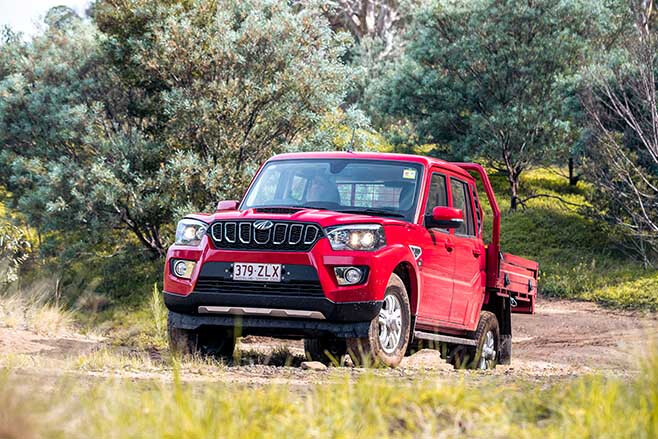
While each update to the Pik-Up adds more features and refinement, it remains a no-frills worker that represents great value for money. The S10 Dual Cab Pik-Up as tested here is available with drive-away pricing from $32,990 with the factory tub.
Factor in that it comes with a five-year/100,000km warranty, five-year roadside assistance and four-year/55,000km capped-price service program and the Mahindra is worth a look in.
POWERTRAIN AND PERFORMANCE
AS mentioned, the Pik-Up’s powertrain remains the same as the last model, and that’s not a bad thing. The Mahindra ‘mHawk’ is very flexible in the way it responds as you go though the gears, with peak torque coming on from 1600rpm.
The Dana-Spicer sourced six-speed gearbox which replaced the old five-slotter two years ago, is smooth-shifting and simple to use. A minor annoyance when getting accustomed to the Pik-Up is that reverse gear is up and left beside first gear; you want to be sure of that when picking first or reverse; although, there is a beep from the dash screen when you select reverse and the camera comes on.
Speaking of that screen, we were critical of it when last we tested one as it had low-resolution images that were difficult to see, especially if you wear polarised glasses. There’s a new seven-inch screen there now and it’s crystal clear in all conditions.
It’s still located low in the centre stack so it’s not in the ideal spot for the driver, but it’s better than it was and it’s nice to know that the company has responded to past criticism.
ON-ROAD
THE Pik-Up is a tall-riding upright work truck so don’t expect any sports car-like performance from it on-road. That said, it’s quiet and relatively refined inside, willingly keeps up with highway traffic, and isn’t afraid to overtake with a little fiddle of the gearbox.
The suspension feels a bit underdone in the shock absorber department, as the Pik-Up tends to wallow over undulations – and this was unladen. The Pik-Up has a torsion bar independent front suspension and leaf-sprung live axle at the back.
The driving position is possibly the best of any four-wheel drive ute on the market. Upright and high, it offers excellent vision all around you through a massive windscreen and low side windows.
The seats are a bit narrow for my fat arse and wouldn’t be friendly on long drives, but they are okay for local work. Interior plastics are also a bit harsh and indicative of the Pik-Up’s price point and working class nature.
OFF-ROAD
THE Pik-Up continues its no-fuss approach when you engage 4×4. This is done using a dial on the console, and there was no delay switching between 2WD, 4WD and 4WD low range.
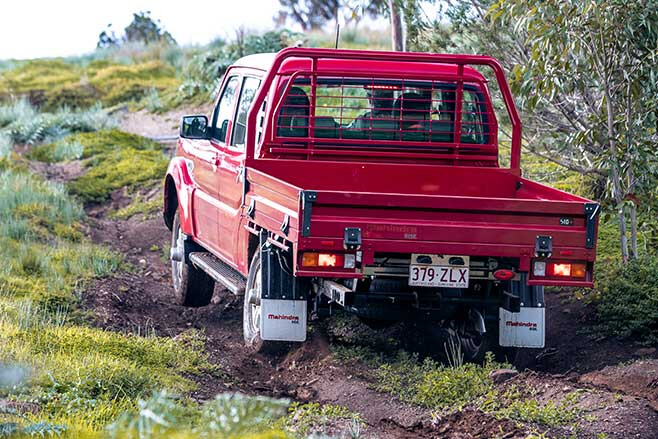
The great visibility comes to the fore again, making the Mahindra easy to place on track, which is extra handy as the torsion bar front end offers very little wheel travel and you need to put the wheel in the right place to avoid lifting them.
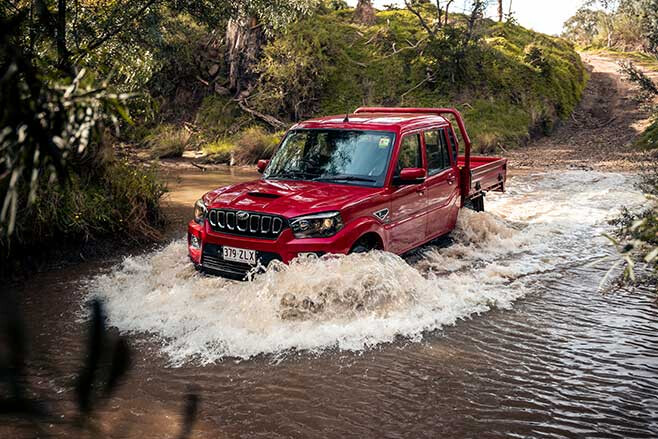
Traction is aided by electronic traction control plus an Eaton auto locker in the rear axle. This is not driver selectable and instead locks the rear diff once wheel slip is felt at that axle. Its effect was really noticeable on one particularly rutted hill climb that had the Mahindra lifting a wheel and scrabbling for traction.
The vehicle comes to a stop with wheels spinning for a second before you feel that rear diff lock up and propel you forward. It eventually got us up a hill which has stopped some other 4×4 utes in their tracks.
This car is fitted with the optional factory side-steps, which we did bash down on a few times as they infringe on ground clearance. An option that would be better ticked for regular off-road use is the suspension upgrade, which also includes mild lift and a metal bash plate under the front.
PRACTICALITIES
MAHINDRA is a huge manufacturer of tractors, trucks and buses, so it knows a thing or two about building vehicles that are fit for purpose – and the Pik-Up is no exception.
It’s built to last and is more a workhorse than a show pony, which it seems many buyers in this segment are interested in. Put it to work on the farm, job site or courier run and it shouldn’t let you down.
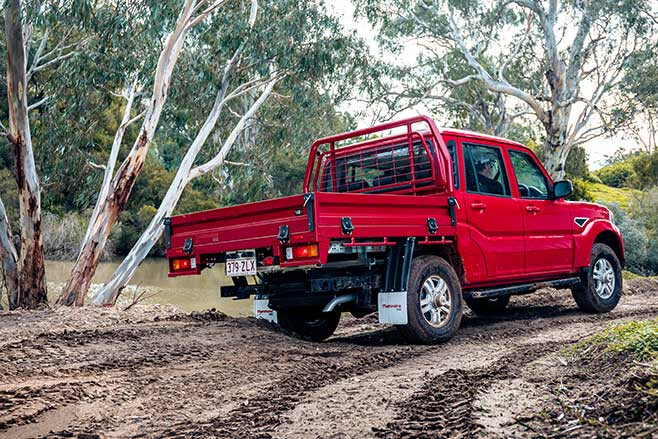
It has an 80-litre fuel tank to keep you going, around one-tonne payload (depending on model specification) and 2500kg tow rating. While that’s a tonne down on most utes, it’s also enough to get most users by.
We see the Pik-Up as being more popular as the single-cab work truck than the S10 double-cab tested here, as the Mahindra doesn’t offer the style, comforts and safety features that many buyers are looking for in a family 4×4 ute. If that doesn’t bother you then the Pik-Up could be the budget ute for you.
SPECS
Engine: 2.2-litre 4-cyl diesel Max Power: 103kW at 4000rpm Max Torque: 330Nm at 1600 to 2800rpm Transmission: Six-speed manual 4×4 System: Dual-range part-time Kerb Weight: 2080kg GVM: 3150kg Payload: 1070kg Towing Capacity: 2500kg GCM: 5150kg Tyres: 245/75R16 111S Fuel Tank Capacity: 80L ADR Fuel Claim: 8.8L/100km Test Fuel Use: 10.4L/100km
PRICING
Base Price: $31,990 (drive-away) As Tested: $37,500 (drive-away with steel tray)
Australian deliveries of the Jeep JT Gladiator are finally getting out to customers this month in both the Gladiator Overland and Gladiator Rubicon ‘International’ specification.
This is a big moment for a 4×4 we’re calling one of the most significant launches of recent times.
A variant we won’t be getting is Jeep’s latest JT model the Gladiator Mojave, which has been built as desert rig more so than an off-road crawler like the Rubicon.
To see what makes the Mojave special, our man in the USA, Chris Collard, took one out to the Nevada dunes for a blast.
The Jeep Wrangler has set the bar in the off-road world for decades, and its reputation as a capable trail rig is undisputed. But when the Gladiator JT debuted in 2019, the brand’s first pickup in nearly 30 years, it rattled the industry, receiving praise and persecution.
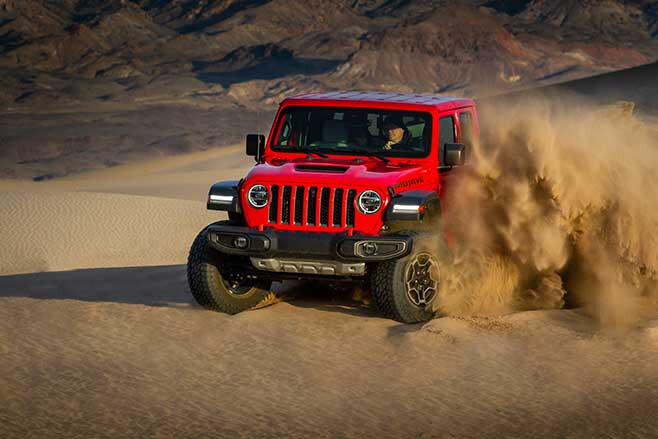
The cynics sited its length, wheelbase, and reduced break over angle simply didn’t fit the bill for serious four-wheeling. But for truck guys like me, a Jeep pickup was long overdue. Comfortable seating for four adults, live axles, a nimble suspension, vetted drivetrain, and room for heaps of gear…what’s not to love.
While the Rubicon model is crafted for the rock-crawling crowd and the Overland is ideal for adventure seekers, the seven-slot powers-that-be realised the JT might be the perfect platform for dust-loving dirt aficionados that like to go fast in the desert. Enter the ‘Desert Rated’ Gladiator Mojave.
Having spent thousands of hours in various Jeeps on a multitude of continents and terrains, I was curious as to what differentiated the Mojave from the masses. And what is “Desert Rated” all about?
To settle the discussion, fellow journalist Ned Bacon and I borrowed a Mojave for a multi-day, 500-mile (800km) evaluation through the deserts of Northern Nevada.
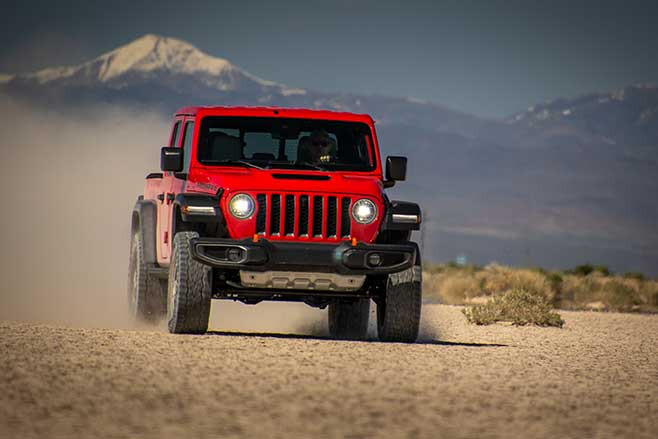
Between us, we’ve raced the Baja and Mexican 1000, tested shocks and suspension systems, crossed the world’s seven continents by four-wheel drive, and have a pretty good feel for what works and what doesn’t. But first, let’s examine the platform.
When developing the Gladiator, Jeep went beyond simply stretching a four-door JL. Working with Ram Trucks, they beefed up the frame, axles, and suspension to improve handling, and increased payload and towing capacities.
The powertrain remains the venerable 3.6-litre Pentastar V6, which produces a respectable 213kW and 353Nm. Transmission options are a 6-speed manual (base) and 8-speed slushbox backed by the CommandTrac NV241 transfer case.
Either combination provides a good balance between performance, economy, and off-road prowess.
The interior features all of the amenities we expect from a new Jeep; an ergonomically comfortable cockpit, 80-plus safety systems, Gen IV U-connect touchscreen nav/audio panel, Apple CarPlay, Siri, and plenty of connectivity options and power points.
Overall mass was reduced via the use of aluminium doors, fenders, tailgate, and other components, and as is the case with all descendants of the Willys, you can kick the windshield down for a grand view of the world.
Pack all this into a 4-door pickup and it’s everything a truck guy could ask for. Well, almost everything.
DESERT RATED
It’s been a long time since Jeep dipped its grill in the go-fast desert scene, so it was a bit of a surprise when they announced ‘Desert Rated’ badging.
The designation indicates a focus on five key attributes; maneuverability, traction, ground clearance, ride control and stability, and desert prowess—a few of which are lofty goals for a live axle rig (think, unsprung weight).
The magic of the Mojave is found in its suspension, which is supported by electronics enhancements.
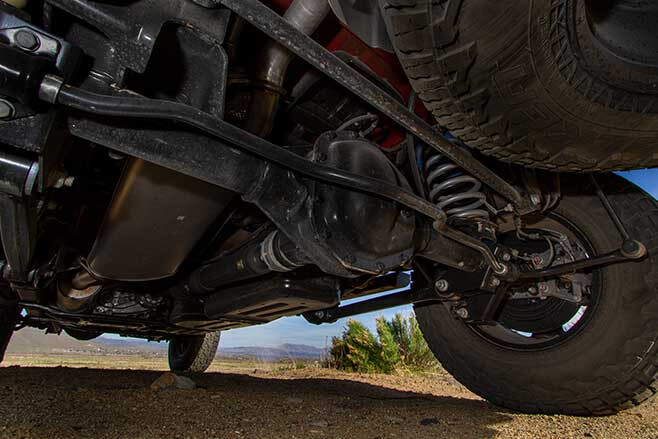
Fox Racing’s 2.5-inch internal bypass shocks top the list. Sporting 22mm heat-treated chrome-plated shafts, aluminium bodies and remote reservoirs, they are specifically tuned for controlled damping in rough high-speed conditions.
The progressive front coil springs are out of the Rubicon’s playbook, but complemented by Fox hydraulic (nitrogen) bump stops—an industry first for an OE offering.
Rear spring rates are slightly reduced, a balance that retains load capacities while providing a lighter feel at speed over uneven terrain.
Interior enhancements are subtle. Climbing behind the wheel, you first notice the seats have a sportscar feel. Lumbar support, headrests, and more pronounced bolsters and wings tuck your body into place like a cocoon.
The leather-wrapped steering wheel rim features raised thumb rests just above the lateral spokes, and Mojave Orange accents run throughout. Toggling through the apps screen we find the forward-facing off-road camera, which provides a wing-to-wing view of the bumper and immediate foreground.
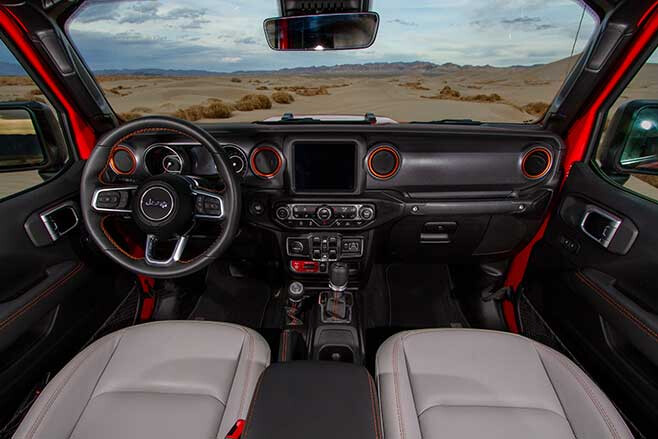
Moving on to electronic wizardry, this desert dueler includes a new variant of the brand’s Off-Road Plus mode. Pressing this delightful button modifies transmission shift points, throttle response, and de-tunes the Traction Control system.
You can also permanently disengage electronic stability control (ESC), giving the driver full command (and responsibility) of the vehicle without an electronic babysitter overriding his/her judgement. If you’ve had ESC cut power while carving turns on big dunes, you will agree this is a huge safety enhancement.
Off-Road Plus will also allow rear locker engagement in high range. This was not available on our test rig, but we are told it will be standard issue in late 2020.
ON THE TRACK
Testing began in a remote dune field south of Tonopah, Nevada, which provided ample opportunity to evaluate the Mojave in its native environment.
We immediately noticed that Off-Road Plus rendered the throttle more responsive and raised shift points dramatically. In drive, they were spot-on when mashing the happy pedal to the floor. But when taking it easy, the mill still spooled up to about 5,000rpm before finding the next cog.
I’m a manual transmission guy, so sliding the shifter to the left and toggling through the gears was natural—it also allowed me to manage RPM and power to the ground more precisely. With ESC furloughed, carving big turns and high-speed sidehill drifts was a thing of beauty.
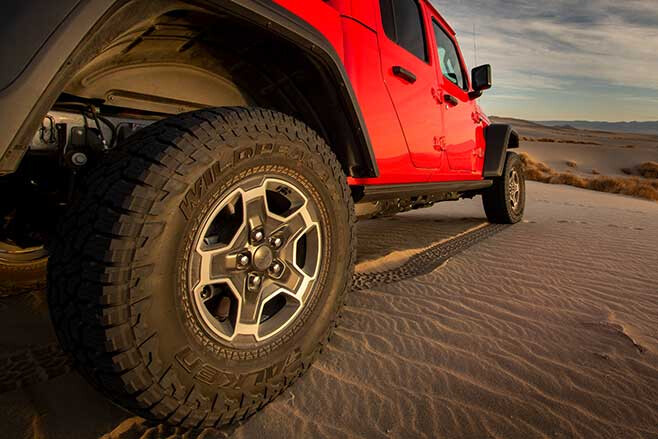
Day 2 found us running endless miles of two-tracks through the ghost towns of Nevada’s mining districts. The Fox bypass shocks earned their keep in the realm of yaw damping after hard turns (think emergency lane change).
Return-to-neutral cycling was excellent, especially for a live-axle, off-the-shelf vehicle. We also experienced less ‘head bobbing’ as the vehicle rolled left and right; another result of a properly balanced shock/spring combination.
Corrugated roads (low amplitude high-velocity conditions) are king when it comes to assessing harshness and thermal buildup. If a shock doesn’t properly control how fluid moves past the piston and valving, the ride will be harsh and associated friction will generate heat.
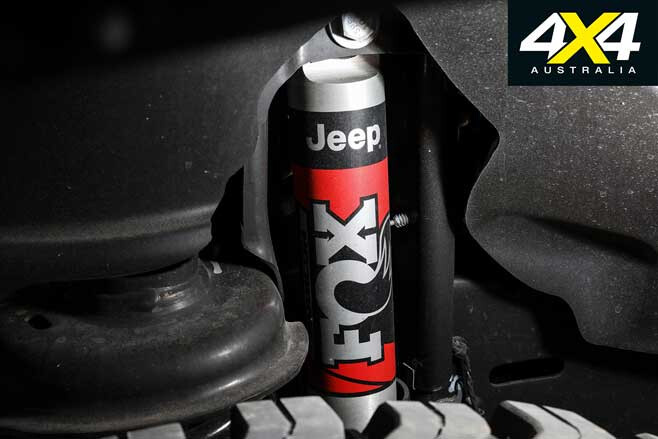
This can lead to cavitation, which will eventually cause the shock to ‘fade’ in performance.
After several hours of high-speed twin-tracks, the shocks were still cool to the touch—another benefit of good valving and remote reservoirs. I don’t think there is a live-axle vehicle made that can match a well-tuned IFS on washboard, but the Mojave comes pretty close.
General damping—the ability of the shock to absorb impact firmly and rebound under control—was very impressive. In G-out situations (full compression), we could feel the hydraulic bump stops engage, easing the last two inches of travel without feeling we hit a hard bottom.
The combination of these attributes lent the Mojave to be very predictable, instil driver confidence, and blast through most terrain without flinching.
I do have one gripe, maybe two. With the driver’s side visor rolled out to shield against the afternoon sun, it rattled like a snare drum against the window. A simple clip could eliminate this. The second is more of an industry grievance.
I’ve yet to get used to drive-by-wire accelerators. It doesn’t matter what vehicle I’ve driven; they all seem to suffer from jetlag syndrome – the time between when my brain tells my foot to go fast, and when the engine responds to the data. I suppose I need to think faster.
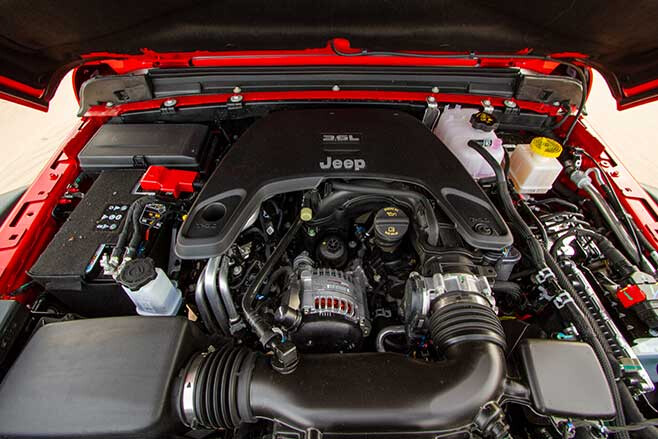
Lastly, and more of a wish list item is the need for a HEMI. I’m a fan of the Pentastar V6, but when you want to go fast…you want to go fast faster!
The Mojave’s 213kW of power is ample for most conditions, but there is nothing like the seat-of-your-pants feel (and acoustic bliss) of 395 ponies under the hood. Come on guys, give us a 5.7!
When the dust settled, we had three days and more than 800km of mixed terrain under the tyres.
Considering this is an off-the-shelf offering, Ned and I were surprisingly impressed, and agreed this new Gladiator is well-deserving of its Desert Rated badge.
The Mojave gobbled up rough desert tracks like a hot fudge sundae and dove back into the menu for more. It is just plain fun to drive.
WE’VE handpicked six 4x4s that our readers submitted last month, including a 105 Series, an RX Navara, a Disco II, an Everest Trend and two neat Patrols.
2002 TOYOTA LANDCRUISER 105 SERIES
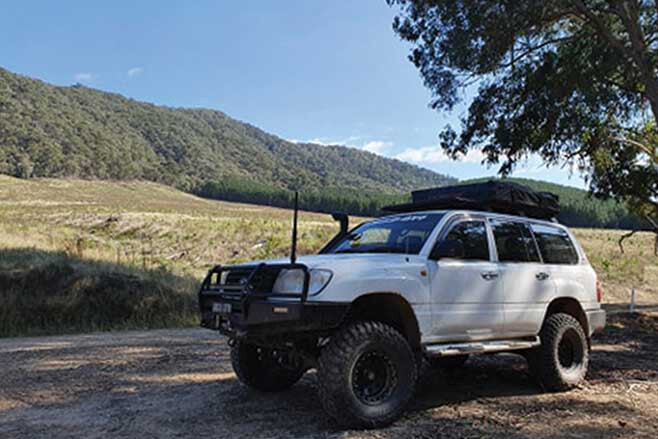
It’s running a four-inch lift that comprises a mix of Superior Engineering, Dobinson, Ironman and Fox kit. Other gear includes 35-inch BFG mud-terrain tyres, ARB bar, 150-litre sub tank,12,000lb Warn winch, GME UHF, 60-litre Engel fridge on an MSA 4×4 slide, custom drawers, and a flat rack with the Darche Panorama 2 rooftop tent -Bailey Nicholson
2013 NISSAN D40 RX NAVARA
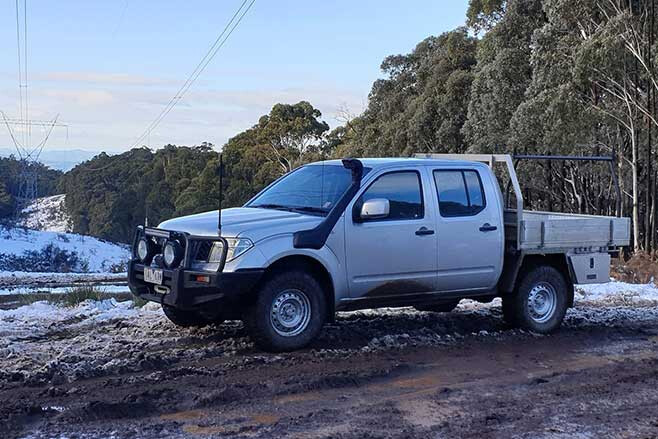
I have done the usual two-inch Ironman lift and heavy-duty 500kg constant load. Plus it has a winch, spotties, Ironman snorkel and a genuine Nissan alloy tray which can be fitted for work or play –Bradley Nicholls
2002 LAND ROVER DISCOVERY II
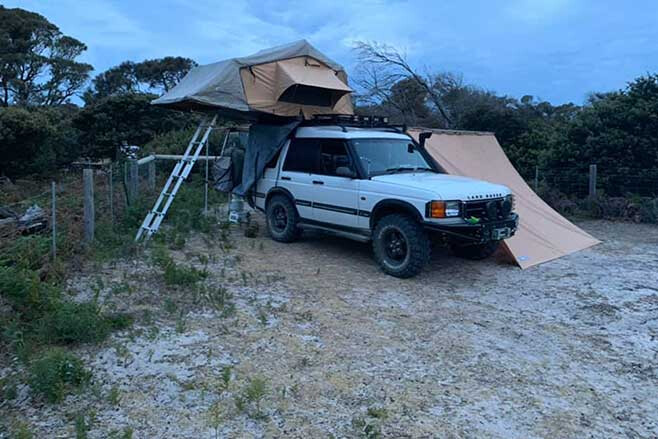
It’s a V8 with 340,000km on the clock. Kit includes an OME two-inch lift; 33-inch mud terrains; kitchen fit-out in rear including gas stove, water tanks with pump and fridge slides; tube front bar with winch; steel rear bar; snorkel; UHF; small custom roof cage in front of an ARB rooftop tent; extractors; custom exhaust; driving lights; and a heap of other little mods and extra accessories needed for a family tourer –Daniel Connelley
2015 FORD EVEREST TREND
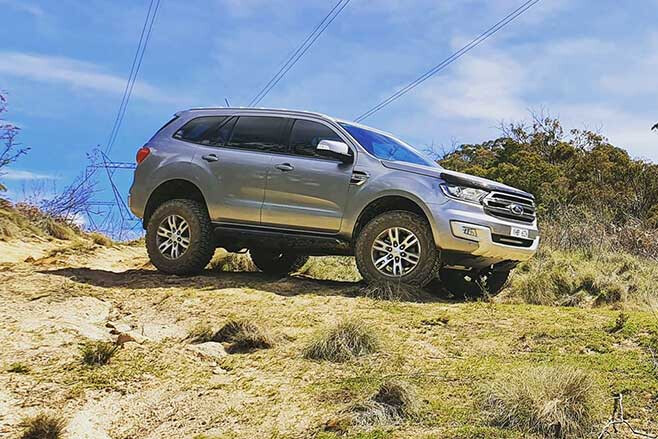
Gear includes a Dobinson MRR 60mm lift, AirBagMan HD bags, Yoko Geolandar X-AT 275/70/18 tyres, SC FabWorks sliders, BushSkinz UVP, Yakima LockNLoad platform and gear, Stedi LEDs all ’round, Provent200, Fuel Manager secondary system, and Plazmaman silicone hoses –Garth Mack
2008 NISSAN PATROL
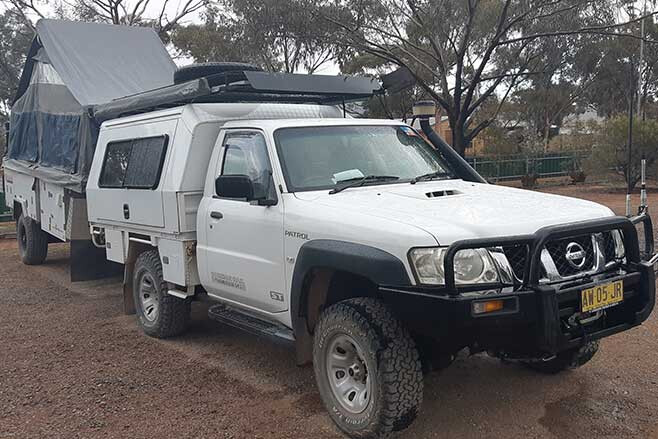
It has plenty of gear including a Catch can; DP Chip; two-inch lift; OME suspension; water tank; stove; 65-litre fridge/freezer; three batteries; insulated canopy with lighting and power sockets; dual awnings; two spares; TJM winch and smaller winch on steel roof rack (to raise and lower the roof-mounted spare); Uniden 40-channel; Garmin GPS/nav unit; and the list goes on. It has no problem at all towing a Bluewater Murray camper trailer. It’s a great touring rig – Greg Cook
2016 NISSAN PATROL
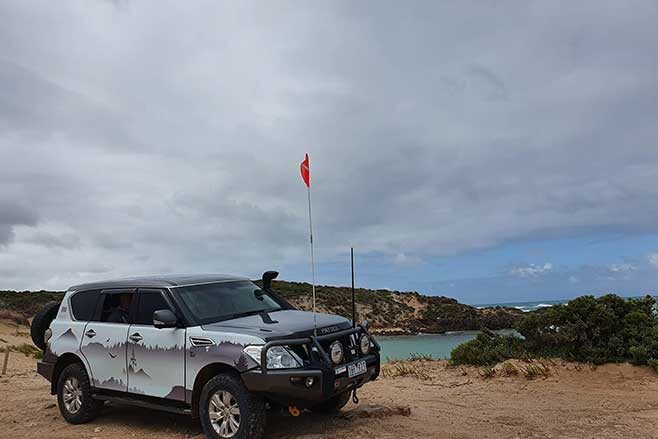
It has an ARB bar; Kaymar rear bar, LRA long-range tank with 290 litres of fuel capacity which gives a range of about 2000km, and a two-inch lift. It’s easily the best car we’ve ever had -Matt Hoskin
THE Amarok V6 arrived here in December 2016, but only with an eight-speed automatic gearbox and a single-range full-time 4×4 system.
At the time Volkswagen Australia said a V6 with a manual gearbox and dual-range part-time 4×4 was just 12 months away. As it has turned out the V6 manual took more than three years to arrive. And while the V6 automatic comes in everything from farm stripped to Toorak fleshed out, and with two different engine tunes (550Nm and 580Nm), the manual only comes in base spec with two same-price ($49,590 plus orc.) variants, the Core and the Core Enduro.
POWERTRAIN AND PERFORMANCE
THE Australian Amarok V6 manual is unique as it gets it own engine tune not available elsewhere in the world where the manual gearbox is mated at best to a 150kW variant of this now long-serving and widely used (inc. Porsche and Audi) VW-family 3.0-litre turbo diesel V6.
Here we get a 165kW version of the engine, complete with the over-boost function that bumps the power up to a very healthy 180kW. The overboost function comes into play between 50km/h and 120km/h but can extend to 140km/h and ramp-ups from 70 per cent throttle, and is fully available at 95 per cent throttle and beyond.
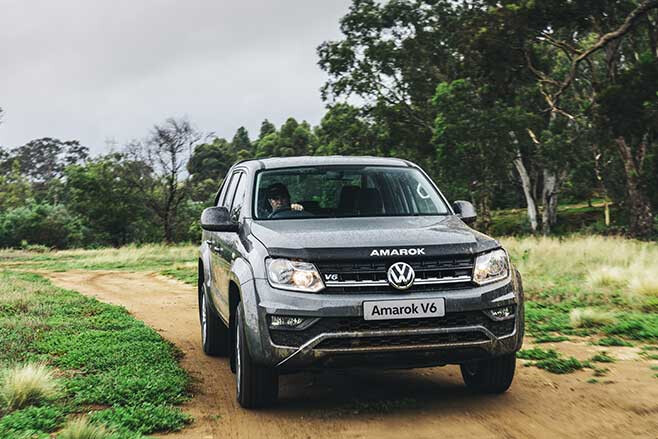
If all that sounds all a bit erratic, it’s not, as this engine delivers seamless power regardless of gear or throttle openings and offers superb in-gear flexibility where all 500Nm of torque is available from just 1250rpm and remains undiminished until 3000rpm, or 3500rpm under overboost conditions. This flat torque line gives a perfectly linear power progression throughout the normal and commonly used operating speeds of the engine.
The six-speed manual is geared to give around 60km/h/1000rpm top gear, which has the engine loping along under 1700rpm at legal highway speeds. But such is the engine’s torque at low revs that it will comfortably carry top gear on highway hills, even if relatively steep. At the same time this is also a fast ute – pedal to the metal – off the back of its 180kW, which is available when you want it most, namely overtaking speeds. All the while the engine is relatively smooth and refined although not as quiet as some of the more recent-design diesels.
For its part, the gearbox has a light action but could be a slicker and quicker in the low-gear changes. Not a deal breaker, as the engine’s flexibility means less shifting anyway, but the box isn’t as sweet as it could be.
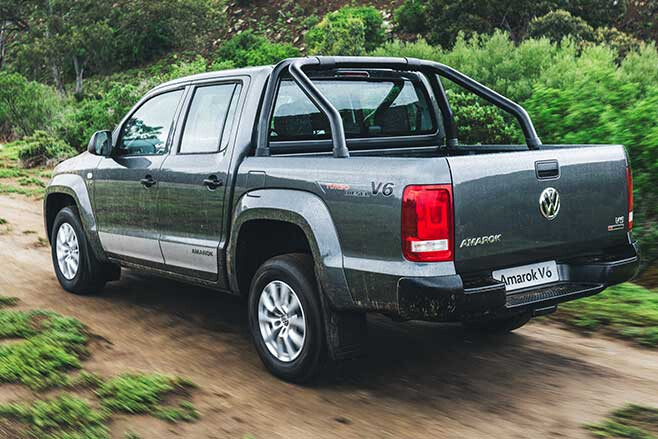
While top is tall and relaxed, first gear is sufficiency low to provide a nicely slow, idle-speed, no-throttle crawl with good stall resistance, which means you’re not looking for low-range as soon as you head off road. What the farmers might call “a good paddock gear”.
Interestingly, while the manual’s official ADR fuel consumption is notably poorer than the automatic, on the road the manual proved to be more economical than the automatic, which we have driven and tested on numerous occasions. For easy highway driving the manual uses less than 9lt/100km while our overage test average of 10.3lt/100km is 12 to 15 per cent better than what we have typically achieved with the automatic in the past.
ON-ROAD DYNAMICS
COMPARED to the automatic V6, the manual’s on-road dynamics are the same but also very different. You get the same agile and nippy feel through the wonderfully connected steering combined with stability and poise thanks to the well-sorted front to rear suspension match. Utes shouldn’t be this good.
But with the manual you also get part-time 4×4, which means rear-drive only on the road, so a significant downgrade from the automatic’s full-time 4×4 in terms of safety, driveability and convenience under more demanding driving conditions. Wet roads and constantly changing road surfaces is where the disadvantage is most felt, but for dry-weather bitumen and easier driving conditions the playing field levels out.
OFF-ROAD
GIVEN the manual comes with dual-range gearing and the automatic is single-range only you would expect that off-road conditions would provide the manual with the knock-out blow against the automatic if this was a contest between the two. But the decision is not that clear cut.
While both the manual and the automatic Amarok V6s have driver-switched rear lockers, engaging the locker on the manual cancels the electronic traction control (ETC) on both axles. With the automatic, when the rear locker is engaged the ETC stays active on the front axle, which gives an advantage on gnarly climbs and the like, and something that we have previously found with the manual and automatic variants of the four-cylinder Amarok.
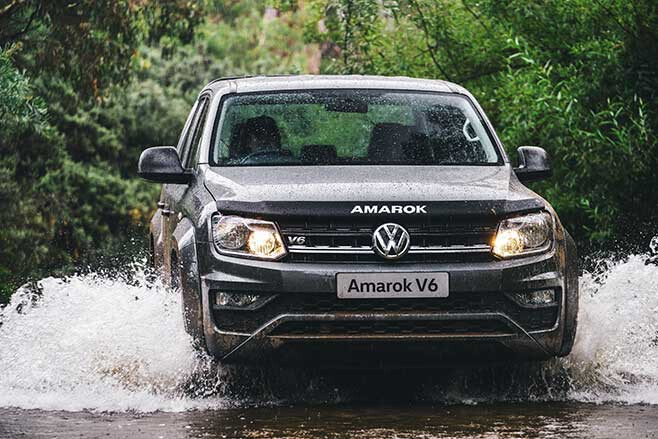
That aside, all Amaroks do well off road thanks to their generous wheel travel that puts them well ahead of most utes on the market and in the same league as the standard setting Toyota Hilux and Ford Ranger when it comes to off-road performance. With good wheel travel there’s less reliance on ETC and diff locks, it’s as simple as that.
Where the manual Amarok V6 will shine compared to the automatic V6 off road is for towing camper trailers and the like, especially in steep country, and or on sand or soft-surfaced tracks. With an excellent low-range reduction of 2.72:1, the V6 manual’s crawl ratio is also a class-leading 51:1.
Being a Core model also means the off-road practicality of 17-inch wheels, the smallest wheel that the V6 will take given the V6 gets bigger brakes than four-cylinder Amaroks and won’t take 16s. The standard-fitment light-truck all-terrain Michelins are another practical touch for straight-out-of-the-showroom off-road use.
CABIN, ACCOMMODATION AND SAFETY
THE V6 manual only comes in base ‘Core’ specification, which means rubber floors rather than carpets and the deletion of two of the 12-volt outlets in the cabin, including the handy one on the dash shelf.
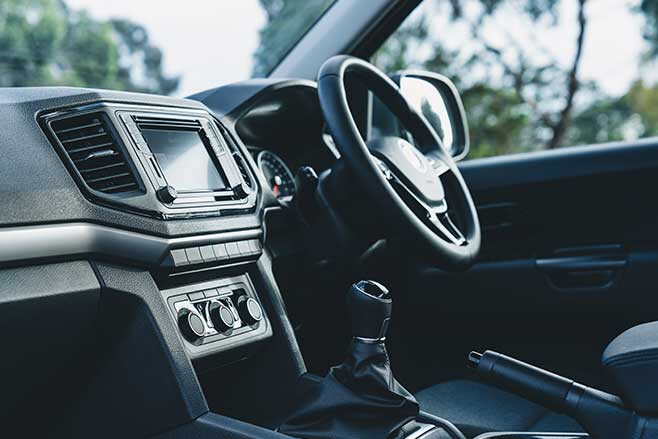
There’s no smart-key entry either, nor is there any embed sat-nav (see ‘What You Get’ sidebar) but like all Amaroks you still get a big, well-finished and nicely detailed cabin. You also get tilt-and-reach steering wheel adjustment, a welcome but still uncommon ute feature. The Amarok’s seats are also notably comfortable and the driving position excellent while the rear seat is class-leading for width even if the combined front and rear legroom isn’t as good as Ranger or Mazda’s BT-50.
The Amarok gained five-stars under the ANCAP safety system when tested years back but wouldn’t get that in 2020 given it lacks rear cabin airbags and doesn’t have any high-end safety features such as automatic emergency braking.
PRACTICALITIES
THE manual V6’s maximum tow rating is 3000kg, which is 500kg less than the automatic. This is due to a reduction in the Gross Combined Mass (GCM) from 6000kg for the automatic to 5550kg for the manual. This doesn’t affect the maximum payload rating, which remains at a tonne. As with all Amaroks you can fit a full-sized pallet between the wheel arches, a distinct advantage over all of the popular utes in this class. The location of the tub’s tie-downs on the load-bed floor is another Amarok ‘smart’ most other utes don’t get. The manual also gets a standard steel tub (no plastic) although a multi-piece plastic tub liner is offered as a factory accessory.
WHAT YOU GET
CORE specification may be entry-level but is sufficiently well-equipped to cover the basics. The safety kits runs to driver and passenger front and front-side airbags, ISOFIX child seat tethers and all of the usual electronic chassis controls including trailer-sway control. Like all Amaroks it gets tilt-and-reach steering wheel adjustment, cruise control, Apple CarPlay and Android Auto, voice-control phone function, rear parking sensors, a reversing camera, front and rear fogs, and a rear diff lock.
Unique Core specification includes single-zone air-con, a 6.33-inch touchscreen, a six-speaker audio system with CD, Aux, USB and SD inputs, cloth seats, rubber floor coverings, and a protection plate under the engine. The Core Enduro variant, as tested here, adds $1200 worth of extras in a black sportsbar, bonnet protector, and graphics, all for no extra cost.
FINAL SAY
THE Amarok V6 manual might well be a last milestone in this generation Amarok’s evolution in Australia. The Amarok is ten years old now (nine in Australia) and is the oldest of the current mainstream utes in terms of its generational positioning and is up for replacement. What’s kept it ‘new’ is, of course, the V6 engine, which only appeared here in late 2016.
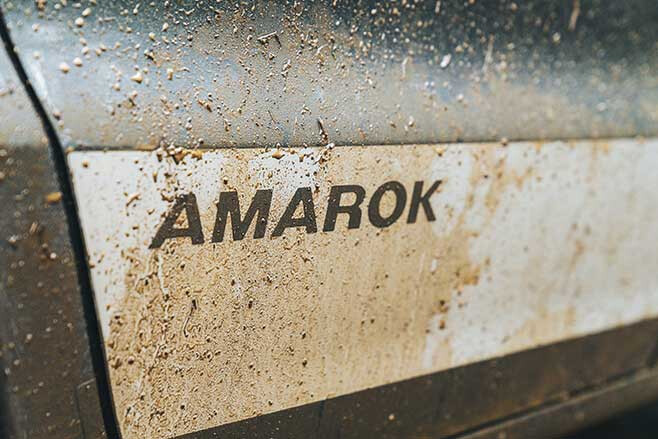
Given the next generation Amarok looks to be a design shared with Ford, and more Ford than VW, will this make this generation Amarok unique and perhaps the best ever? As good as the current Ranger is, it still lags behind the Amarok in many ways.
So has the manual Amarok been worth the wait? Well if you’re towing in difficult off-road conditions, most certainly it has been. If you like the control and driving pleasure that only a manual can bring, then most certainly again. But given the automatic doesn’t want for off-road ability even without low range, and brings the safety, convenience and ease-of-driving of full-time 4×4 complete with a self-locking centre diff, it’s still arguably the better all-rounder.If God designed the Amarok it would have a full-time dual-range 4×4 system available with both automatic and manual gearboxes. But given VW designed the Amarok and its engineers have been no doubt shackled by the bean counters you’re limited to an automatic with a full-time single-range 4×4 system or a manual with a part-time dual-range 4×4 system. Take your choice.
AMAROK V6 CORE MANUAL: SPECS
Engine: 3.0L V6 turbo diesel Power/Torque: 165kW/500Nm Gearbox: Six-speed manual 4×4 System: Dual-range part-time Crawl Ratio: N/A Kerb Weight: 2076kg GVM: 3080kg Payload: 1004kg Towing Capacity: 3000kg GCM: 5550kg Fuel Tank Capacity: 90 litres ADR Fuel Claim: 9.7L/100km
Approach Angle: 28⁰ Ramp-over Angle: 23⁰ Departure Angle: 23.6⁰ Wading Depth: 500mm Ground Clearance: 192mm
PRICE
$49,590
SECOND OPINION: LAUNCH REVIEW
Tristan Tancredi – 21/02/20
Volkswagen Australia has taken a gamble releasing a niche six-speed manual variant of its V6-powered Volkswagen Amarok ute.
Granted, the V6 variant makes up almost 90 per cent of all private Amarok sales in Australia, which isn’t surprising when you consider it makes around 100 more Newton metres than its four-cylinder stablemate, and you don’t have to swipe the credit card for that much more coin. In fact, owners can now get all of the benefits of six cylinders and have change from $50K. So, offering a manual variant is a gamble well worth taking, we reckon.
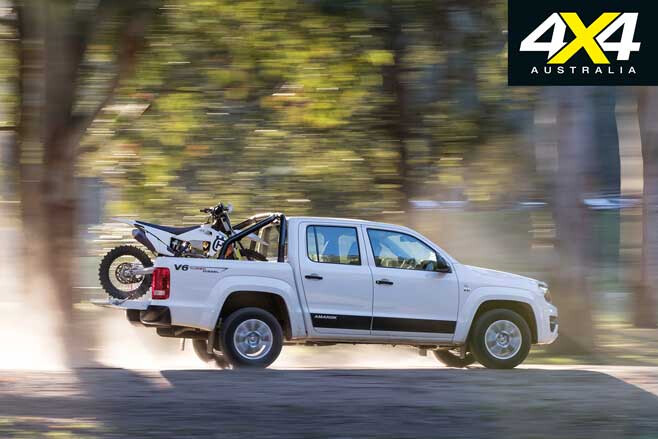
The stick-shift entry into the market means this Amarok is the only V6-powered manual dual-cab on sale in Australia – very niche, you could say. Volkswagen has already sold 60 V6 manual variants, and demand for more is on a pure wait-and-see basis, with VW officials biding their time to see how many units shift in initial months.
The six-speed manual gearbox in question is the same gearbox used in the Amarok four-cylinder variants, but the shifts have been recalibrated and materials strengthened due to the increased torque running through it. The shifts are clean and there’s plenty of power from the V6 engine on tap early, which helps when overtaking slow caravanners on freeway entry ramps. Planting the throttle to the rubber footwell provides ample urge without much fuss; the engine is smooth and quiet for a diesel.
The V6 is the 3.0-litre turbo-diesel unit with 165kW (180kW on overboost) and 500Nm – 50Nm less than the auto V6 variants but 80Nm and 100Nm more than the four-cylinder models. Engineers spent some time strengthening aspects of the V6 variants to cater for the hike in torque, including adding bars in front of the radiator for added protection, and strengthening the front diff housing.
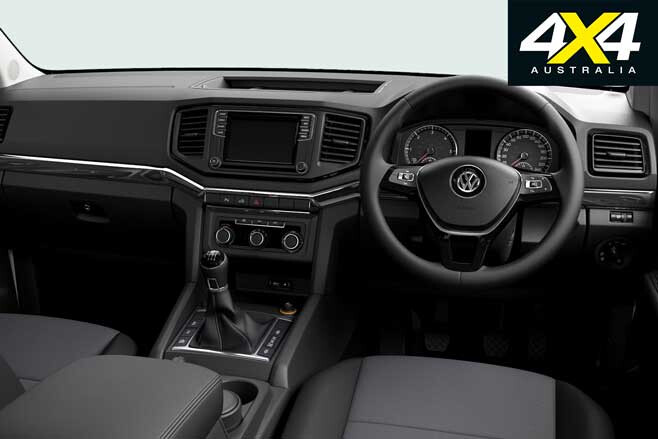
It’s on the highway when you have to remind yourself that you’re driving a dual-cab ute. Yes, really. The combination of the smooth, punchy engine and the slick-shifting six-speed manual, as well as the uniquely located leaf springs at the rear – positioned beside the chassis rails rather than beneath them, and in-line with the rear diff – sure-up balance, ensuring the Amarok remains passenger-car-like on freeway runs.
Off-road, though, is where the manual Amarok V6 reaps the biggest benefit, with VW pairing the six-speed manual with a traditional part-time 4WD system with a two-speed transfer case (high and low range); in lieu of the auto’s permanent single-range 4WD system. Now with a locked 50/50 torque split and low range, the manual V6 Amarok should appease 4×4 purists who questioned the auto’s full-time set-up.
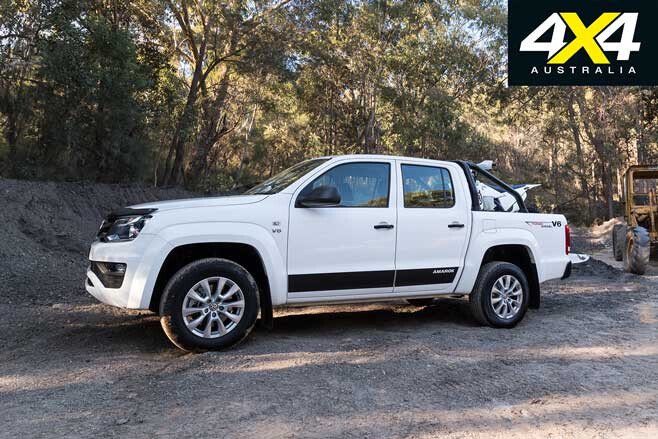
In addition, the manual V6 Amarok is equipped with a mechanical diff lock for extreme low-speed off-roading – ABS/ESP deactivates once the diff lock is engaged – as well as an Off-Road Mode which activates electrical interventions including Electronic Stability Program (ESP) and hill-descent assist (with a control range between 2km/h and 30km/h).
For troglodytes who believe electronic aids are for wimps, there’s the option to go old-school low-low without technological intervention. However, you’re not entirely on your own, with electronic brake support remaining in play to ensure you don’t end up belly-up.
With the 4WD systems activated, via simple-to-use buttons either side of the gear stick on the centre console, the manual Amarok V6 proved it’s just as capable on the dirt as it is on bitumen. With grip often akin to an ice-rink on the test route at the Melbourne 4×4 training and proving ground in Werribee, the Amarok – on all-terrain rubber, mind you – excelled on the slippery slopes.
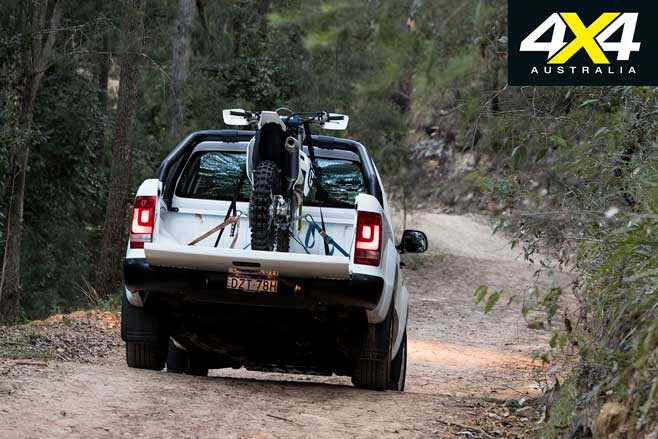
These slightly aggressive all-terrains (deflated to 22psi) are stock ’Rok equipment, meaning they’ll be slapped beneath Amaroks leaving showrooms, and they provide a fine balance between on- and off-road performance.
Despite tricky inclines saturated from constant rain and torn up by the recon rigs, the Amarok remained well-planted and composed, with adequate approach (23°) and departure (23.6°) angles and plenty of wheel travel. However, V6 ’Roks have a wading depth of just 500mm, so a snorkel would be a great addition.
Readers of this magazine know the Amarok V6 auto is a very comprehensive vehicle, in the upper echelon in terms of premium dual-cab offerings despite its ageing platform, and that won’t change until the Ford-Volkswagen partnership swings into full motion for the next-gen in a few years’ time.
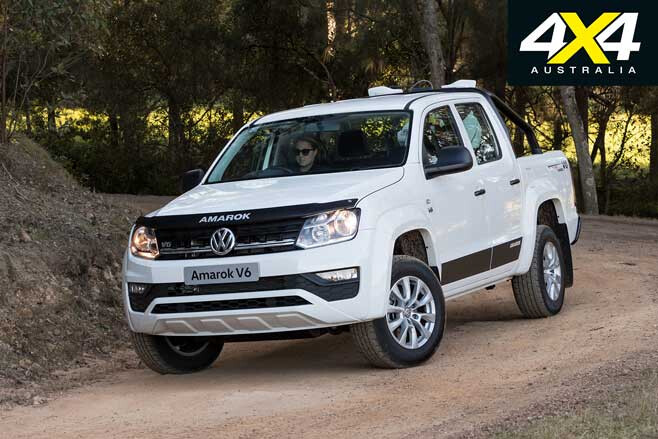
Even in base Core spec the current Amarok is well equipped, with a well-appointed cabin that’s simple yet effective in its layout. It gets cloth seating, a leather-wrapped steering wheel, heavy duty front and rear rubber floors (extremely useful on our test day) and a touchscreen with modern apps including Apple CarPlay/Android Auto. The touchscreen can be controlled via buttons and dials, of great benefit when off-road.
The three-pedal cog-swapper has a load capacity of 1004kg and less towing capacity than the V6 auto – 3000kg versus 3500kg. On the safety front it may still lack rear and side curtains, as well as autonomous emergency braking, but it’s encouraging that brands are listening to what fans want. While it might be very niche, it’s nice to know that there are brands like Volkswagen that are still willing to bring to market something for the traditionalists.
The Amarok V6 Core 4×4 manual and V6 Core Enduro 4×4 both have an RRP of $49,590, the latter adding black ‘Enduro’ side decals, a front bonnet protector and black sports bar.
AFTER pitching a tent at Willow Springs, the crew begins part 2 of the Flinders Ranges adventure trundling through the Brachina Gorges at Bunyeroo, with Wilpena Pound, Beltana, Warraweena and beyond on the radar.
With red dirt building up in the tyre treads, the convoy stopped at Wilpena Pound where Keith Rasheed provided us with a quick history lesson of the station and surrounding area.
Wheels hit dirt from Wilpena for Beltana, a mine-servicing outpost, before continuing on to Warraweena Station, where we found some sensational technical tracks out past Cockatoo Hut – a great spot to set up the swag for a few nights – especially up Mount Gill.
The tracks in this area are quite challenging and it’s important to always concentrate on tyre placement to preserve your rubber’s sidewall. It’s also extremely remote, so you need to be properly set-up with the right gear.
The episode ends at Moro Gorge, where the gorges meet the plains. In the next episode, the crew has their eyes set on Arkarua and beyond.
WHEN WE SET out to build our Ranger, a full replacement cargo body for the rear of the ute was an integral part of our plans from the start.
We wanted to retain the versatility of a ute that allows us to carry and store all sorts of equipment in the back, but we wanted to keep it all secure and protected from the elements.
We looked at several canopies from various manufacturers, but the one that impressed us most was the one fitted to Jamie Facer’s monster Ford F250 that we featured in the magazine back in 2019.
The aluminium canopy was beautifully made and had all the features we wanted in practicality and security. We just weren’t sure the unit off the big Effie would fit on our little Ford.
Jamie is the man behind Queensland’s Allsafe Mine Vehicles & Equipment (AMVE) and we spoke to him about building the body specifically for our Ford. With a growing business in building such bodies for mining and industry, as well as trade and recreational 4x4s, we knew AMVE was the team for us; especially when we found that each body is custom built to the owner’s needs and specifications.
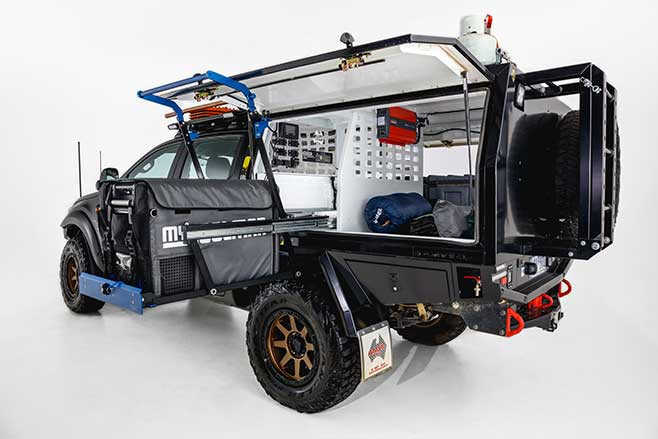
“AMVE started in 2013, mainly supplying the mining industry with steel tray bodies, canopies, service bodies and full vehicle fit-outs to mine compliance,” Jamie told us. “Due to our experience in this sector and the harsh conditions of mining we became well-known in the industry for our quality and strength in our products. Our supply chain was, and still is mainly motor dealers, and with increasing demand from the recreational industry, we were constantly getting requests to build custom tray bodies and canopies. So we turned our years of industry experience to this part of our business in this area and hence the name AMVE 4X4 was born.
“Our motto has always been to build specific products to suit the customers’ needs and this has been a very good approach as we are prepared to build exactly what the customer wants,” he concluded.
An important factor for our Ranger build from the start was overall weight, as we wanted to stay in the right side of our GVM. So we didn’t want a canopy filled with drawers, partitions, shelves and other elements that would add unnecessary weight. However, we did want the canopy to house a large fridge on a drop slide and all of our 12-volt management system, while leaving plenty of open space inside to carry things like swags, camera cases or even a Space Case when needed.
Jamie’s team took all this on board and recommended a full replacement body that replaces the tub or tray and bolts straight to the vehicle’s chassis. This saves considerable overall weight, as you don’t have a separate tray, and allows a lower floor height to maximise interior space and make access easier. Just two large doors are used to allow easy access while keeping the back of the canopy free to carry an extra spare wheel, the ladder and a couple of LED work lamps.
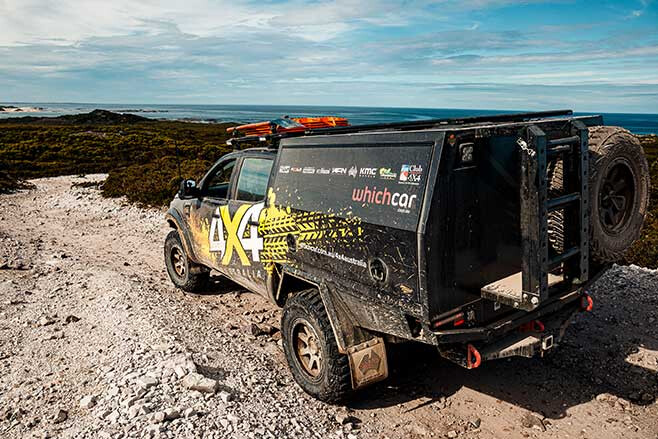
AMVE also went through the optional extras available and we went with a trundle tray that slides out from under the rear, lockable tool boxes on both sides, a ladder to access the roof rack, and a 30-litre water tank that sits beneath the front of the canopy and is plumbed to a tap at the rear.
There were also smaller details such as colour choices, interior LED lighting, where we wanted things located, the style of the tail-lights, and matching the overall height to the cabin. With separate Rola Titan trays on both the vehicle cab and the canopy, we wanted them to line up as best as possible. Once we’d agreed on what we wanted and what could be done, the AMVE crew drew it up in CAD and sent us the files for approval before the actual manufacturing could begin at AMVE’s factory.
“Weight is a common problem across the board on all 4×4 utes with these types of builds,” explained Jamie. “So we have invested heavily in R&D and CAD software to design the product and present it to the customer prior to even laser cutting, so we can check weights etcetera.”
The AMVE body is beautifully custom-made from 2.5 to 3mm high-grade aluminium and the pieces laser cut, zinc-primed and powder coated before the final assembly. We went with matte black on the outside to go with our black Ranger and white inside to brighten it up in there. Some sections are welded while others are joined using Huck rivets and bonding, to allow an amount of flex in the body when driving off-road. This and the use of high-grade aluminium prevent stress cracking from the constant pounding they cop on rough tracks.
“We build all canopies out of high-strength aluminium with minimum of 2.5mm and certain items 3mm aluminium, to ensure a high-strength, light-weight product that will last many years in our harsh conditions,” says Jamie with a confidence that comes from years in the trade.
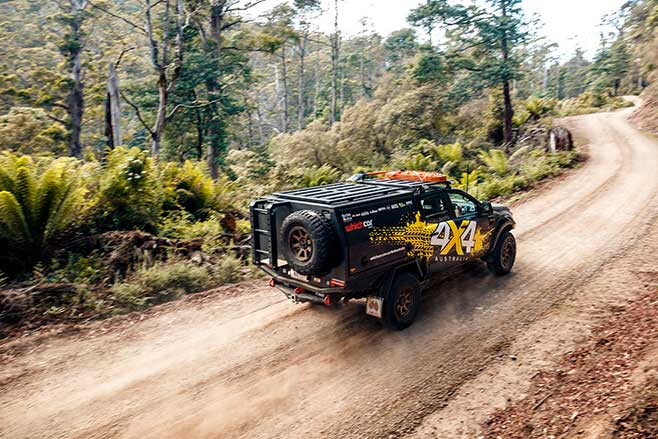
AMVE also installed the MSA DS60 Drop Slide for our myCOOLMAN 60L fridge, some adjustable tie-down points to secure luggage and storage boxes, and LED strip lighting. It also took care of the Redarc power management system; AMVE uses Australian-made Redarc products on most of its builds, be they for industry or recreational users.
For us, we needed to power things like the fridge, lights, water pump and other accessories, so the Ranger copped a comprehensive Redarc system incorporating the Manager 30 DC-DC charger to charge and maintain a bank of lithium batteries from Revolution Power Solutions. The batteries are mounted in their own box at the front of the canopy.
AMVE also installed the Redarc 2000-watt pure sine wave inverter to allow us to power and charge appliances using 240V power when out on the road, and a RedVision Total Vehicle Management System that monitors and switches all the inputs, outputs and accessories via this control panel or the Redarc App on the smartphone.
The Redarc system is integrated in to the AMVE body and using it and the lithium batteries we can power our fridge and accessories for up to a week in camp or indefinitely using a solar panel input, giving us the security we need for self-sufficient remote-area travel.
The canopy and all the systems inside it have lived up to our expectations on a few trips now, including serving as the back-up/tucker truck on our 4X4OTY test in the Victorian High Country, and a recent two-week jaunt through Tasmania.
Priority number one for the canopy was always keeping gear secure and protected from the elements, and it’s done that exceptionally well. Everything is easy to access, the adjustable tie-down points in the floor allow us to strap everything down, and it’s all kept out of the rain and dust when we’re travelling.
The ladder on the back makes it easy to get up on top to put things on the roof, and our photographers have found it as a great way to get up high for pics. We recently fitted an ARB awning on the passenger’s side of the Rola rack to offer some additional protection while in camp.
Likewise, the MSA Drop Slide makes getting to the fridge easy and the Redarc system keeps everything powered up. Having that 30-litre water tank onboard and easy to access from the tap at the back is another bonus.
The AMVE body really is the complete package that makes life on the road so much more practical and hence easier. It’s been the perfect addition to our Ranger and meets all the original ideas and concepts we had for it to carry our gear in secure shelter.
WITH everything that has happened, it’s hard to believe we’re already halfway through 2020.
Regardless of COVID-19 and all that’s come with it, it’s been a quiet first half of the year when it comes to new 4×4 models – and this hasn’t been helped by the extremely slow new-vehicle sales numbers.
The second half of 2020 is looking brighter and, with some lockdown restrictions already being softened or lifted, we’re set for a swag of new 4x4s ready to hit the market. Let’s have a look at what we can expect, as well as a few 4x4s we’ll say goodbye to.
JEEP GLADIATOR
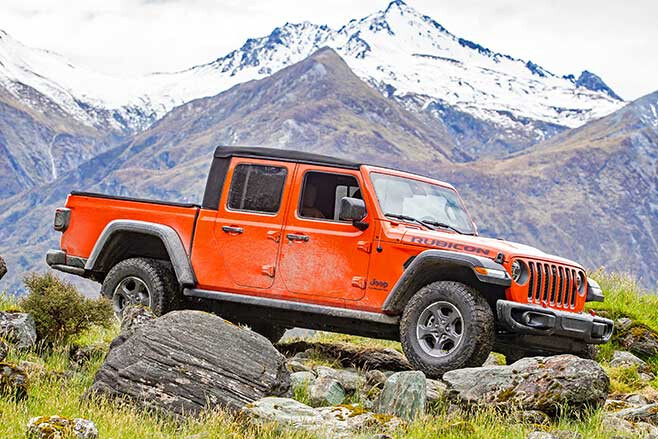
JEEP’S long-awaited pick-up hits our shores in June in both Overland and Rubicon models. At launch Gladiator will only come with a V6 petrol and 8-speed auto drivetrain and there’s no word yet on alternative power plants. such as diesel or hybrid.
Gladiator will land at a starting price of $75,450 for the Overland and $76,450 for the more off-road capable Rubicon.
There will also be a limited run of 100 Launch Edition models based on the Rubicon-spec Gladiator and priced at $86,450, making it one of the most costly double-cab 4×4 utes on the market.
ISUZU D-MAX
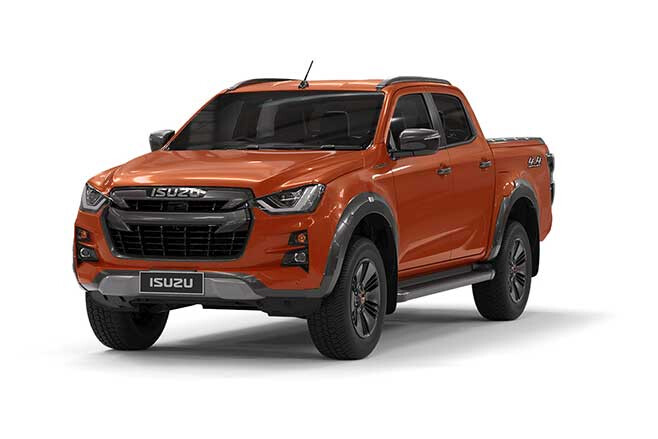
THE 2020 D-MAX lands in dealers in July and is an all-new vehicle with a bigger, more refined body, an uprated version of the venerable 3.0-litre diesel engine and a rear diff lock.
Expect the D-MAX to have all the latest safety and convenience features across an extensive model range, to compete head-on with the most popular four-wheel drive utes.
LAND ROVER DEFENDER
THE Defender nameplate has been missing from Land Rover showrooms for four years, and the all-new replacement has to be the most anticipated new 4×4 launch of the year.
The first of the new Defenders is expected in Australia in August and these will be the long-wheelbase 110 variants. The short-wheelbase 90s are not expected until the end of the year, and there is expected to be a delay between the first and second shipments of Defenders following the plant shutdown due to C19. The Slovakian factory only restarted making Landies mid-May after being idle for two months.
The new Defenders will be priced from $69,990 through to $137,100, covering a range of six spec levels and a choice of three engines including diesel and petrol options.
MAZDA BT-50
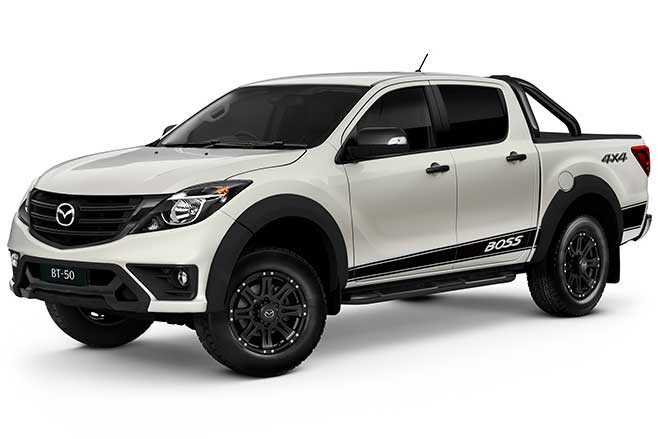
Mazda moves away from its long-time partnership with Ford for the 2021 BT-50 ute, which now will be based on the Isuzu D-MAX.
This is the new D-MAX, so expect the Mazda BT-50 to be similar in size to what it is now with an Isuzu powertrain and Mazda styling. The new BT-50 is set to go on sale in November or December.
WHAT WE’LL LOSE
WHILE there’s plenty of shiny new metal to tempt us, there are a few 4x4s we’ll be seeing for the last time in 2020. If you haven’t already got your X-CLASS ute or G300-PROFESSIONAL from Mercedes Benz then you’d better get in quick. Whatever is left in dealerships now is the last of these models from Benz.
It’s a similar story for HOLDEN’S COLORADO and TRAILBLAZER models, as what’s out there now is the last of them since the Holden brand was knifed. Discounted pricing has seen the last of the 4×4 Holdens walking out of dealers quicker than expected.
The long-serving MITSUBISHI PAJERO wagon will finally say sayonara come August, when the last of the iconic 4x4s are sold. The Pajero has lived a 38-year history to be one of Australia’s favourite family fourbies and it will be missed by many. The Pajero name will live on in the Pajero Sport, although that smaller wagon is no substitute for the real deal.
THE RUMOUR MILL
AS always there are plenty of rumours about new vehicles, but here are a couple that are yet to be confirmed but seem likely to happen in Q3.
Toyota is the master of keeping details of future product secret, but it appears we’ll get a face-lifted HILUX in the coming months. We don’t expect much more than a facelift on the same platform, but rumblings of a high-output version of the 2.8L diesel engine will be much appreciated if they prove true.
Ford Australia isn’t about to let any of its competitors get the edge on its hot-selling RANGER, and with a new D-MAX and revised Hilux throwing daggers at it, we expect to see a revised Ranger around August-September. An all-new Ranger, which will share its platform with the next VW Amarok, won’t be seen until 2021.