
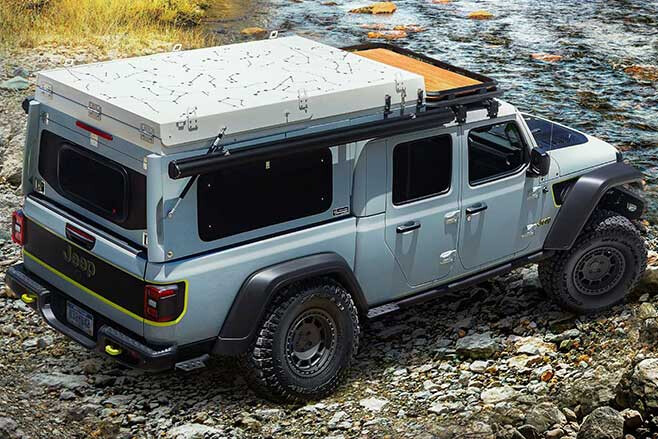
REMEMBER the Jeep Wayout concept from 2019? Well, Jeep has backed that up and cranked the dial up to 11 with the debut of its Gladiator Farout concept.
Jeep had originally planned to reveal the Farout concept at the 2020 Moab Easter Jeep Safari back in April of this year, but had to cancel the event due to the ongoing COVID-19 pandemic.
“Although we didn’t get to celebrate in Moab this year with our latest round of concept vehicles, we’re pleased to introduce the Jeep Farout concept today as a vehicle that blends Gladiator EcoDiesel’s fuel efficiency with an area of features fans of overlanding will love,” said Jim Morrison, Head of Jeep Brand – FCA North America.
“Building on the popularity of last year’s Gladiator Wayout concept, and as overlanding continues to grow in popularity, this year’s Farout concept is another opportunity to gather feedback from our passionate customer base,” Morrison added.
The Farout concept is powered by a 194kW/599Nm3.0-litre EcoDiesel V6 engine, an engine to be made available in the US market in the third quarter of 2020 for the Gladiator Sport, Overland and Rubicon models.
Currently in Australia the Gladiator is sold solely with a petrol-powered 3.6-litre Pentastar V6. Don’t expect it here, though, with the V6 diesel certainly not on Jeep Australia’s radar.
2019 Jeep Gladiator Wayout concept
Another stand-out feature of the Farout concept is that customisable roof-top tent. Measuring a comfortable 4.88m long and 2.29m tall, the deployable tent is said to sleep four and open and retract in seconds.
The Farout also boasts a fully functional fridge and stove, a built-in table and seats, a Jeep Performance Parts (JPP) two-inch lift kit, Fox performance shocks, 37-inch muddies around 17-inch rims, a 12,000lb Warn winch within a modified Gladiator Rubicon steel bumper, amd custom rock rails front and rear.
Not to be outdone by the revelation of the all-new D-MAX and pricing changes for the Toyota Hilux, Ford has bolstered its Ranger line-up.
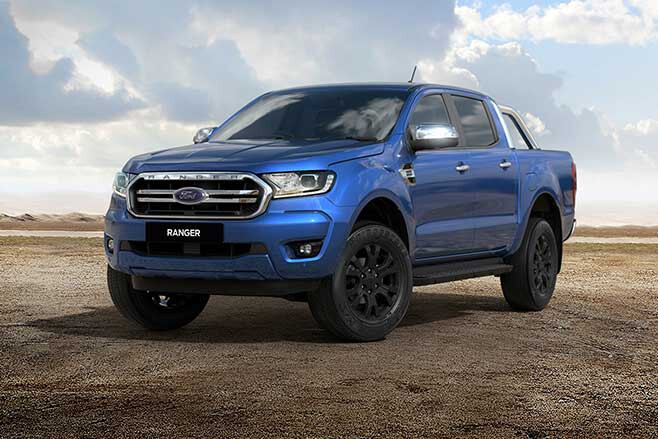
Arriving in Australian showrooms from this month, Ford has released details of a new Ranger XL Special Edition model, a Fully Loaded pack for the Ranger XLT, and a selection of Heavy Duty upgrade packages for Australian buyers.
“Ranger has been designed and engineered in Australia, and our harsh continent is an ideal place to develop, test and test again to ensure Ranger meets the Tough Done Smarter mantra,” said Andrew Birkic, President and CEO of Ford Australia and New Zealand.
“We’re working hard to ensure that tradies and their teams across the country, and businesses pushing to get back on their feet, have the right equipment and support to get on with what matters to them most,” he added.
The XL Special Edition is based on the double-cab chassis 3.2-litre automatic variant, but adds key components: a factory-fitted steel bull bar with integrated mounting points for lighting and UHF antennae; an LED light bar; and a Ford Genuine fixed-head snorkel.
The XL Special Edition is launching with a recommended drive-away price of $49,990.
In addition, consumers who opt for an XL variant can now deck-out their 4×4 with optional, factory-fitted Continental ContCrossContact all-terrain tyres wrapped around 17×17/5-inch steel wheels (RRP: $500).
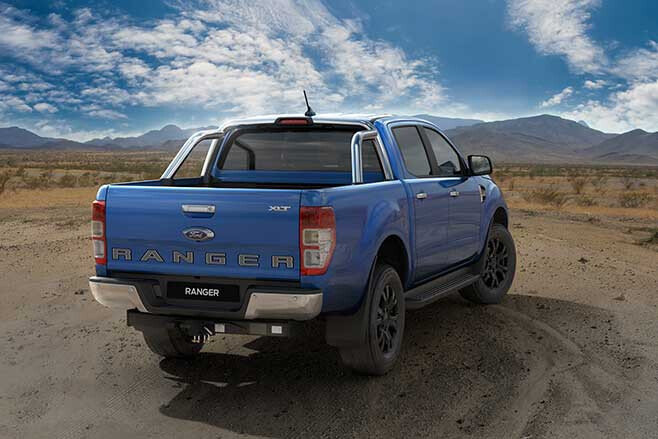
Consumers can also now get a Spray-in Bedliner from factory on all XL, XLS and XLT double-cab pick-ups, and XLS models can now be personalised with black-finish 17-inch alloys instead of the standard 16s.
The Heavy Duty Pack can be optioned with a number of Ranger models – single-cab, super-cab and double-cabs in cab-chassis and pick-up configurations – and comprises the as-mentioned Continental ContCrossContact all-terrain, black side steps (excluding single cab-chassis) a heavy duty suspension set-up, and a rear-view camera kit for cab-chassis models (it’s already standard fare for the pick-ups). It comes with a price tag of between $1600 and $2000 (depending on the variant).
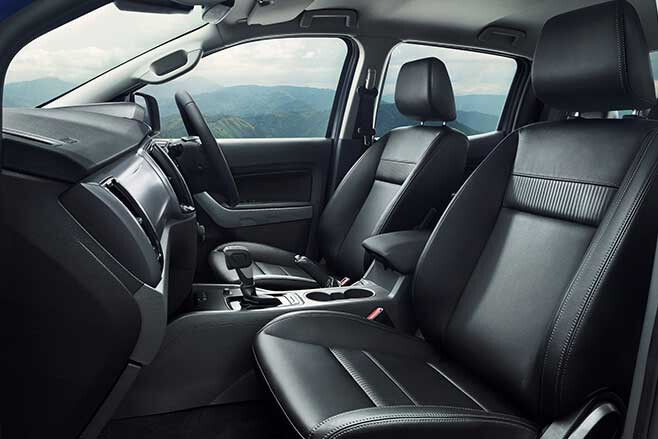
The Fully Loaded Pack is exclusive to the Ranger XLT double-cab (3.2 and 2.0 arrangements) and comprises 18-inch black alloys, adaptive cruise control, leather-accented seat trim and semi-automatic parallel parking.
RANGER PRICING: 4X4 MODELS
XL Single C/C 3.2L MT: $43,090 XL Single C/C 3.2L AT: $42,290 XL Super C/C 3.2L MT: $45,590 XL Super C/C 3.2L AT: $47,490 XL Super P/up 3.2L AT: $49,190 XL Double C/C 2.2L AT: $47,290 XL Double P/up 2.2L AT: $48,690 XL Double C/C 3.2L MT: $47,590 XL Double C/C 3.2L AT: $49,790 XL Double P/up 3.2L MT: $48,990 XL Double P/up 3.2L AT: $51,190 XLS Double P/up 3.2L MT: $50,290 XLS Double P/up 3.2L AT: $52,490 Sport Double P/up 3.2L MT: $53,540 Sport Double P/up 3.2L AT: $55,740 XLT Super P/up 3.2L AT: $57,440 XLT Super P/up Bi-Turbo AT: $58,940 XLT Double P/up 3.2L MT: $57,240 XLT Double P/up 3.2L AT: $59,440 XLT Double P/up Bi-Turbo AT: $60,940
UPDATE, July 2022: New 2023 HiLux detailed for Australia
Toyota has announced Australian details for the updated 2023 HiLux, including a wider new look for the Rogue. Get more at the link below.
HOT on the heels of Isuzu unveiling its new D-MAX ute, both Ford and Toyota have announced updates to ther respective models which are the sales leaders in the class.
For the Hilux, the announcement confirms the previously previewed facelift and, more significantly, beefed-up 2.8-litre diesel engine.
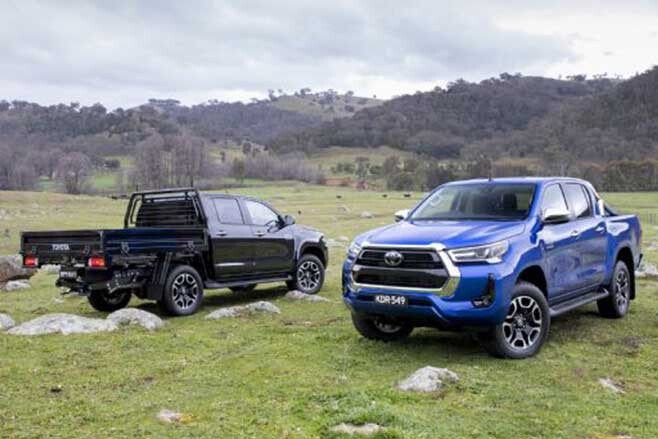
Toyota has tweaked the 1GD engine to now produce 150kW and 500Nm, bringing it inline with the torquiest four-cylinder diesels in the class.
The 1GD was criticised in the past for offering lacklustre performance, and we’re hoping these improvements rectify this and inject some life into the Hilux.
To extract the added performance, Toyota treated the 1GD to a new heavy duty, ball-bearing turbocharger and an updated fuel injection system with a higher maximum fuel pressure of 250 MPa.
The updates are claimed to improve overtaking and towing ability, with maximum torque now available across a wider range of 1600 to 2800rpm for the six-speed auto and 1400 to 3400rpm with the six-speed manual gearbox.
Manual gearbox-equipped Hiluxes are limited to 420Nm, but all 4×4 ‘Luxes now step up to 3500kg towing capacity.
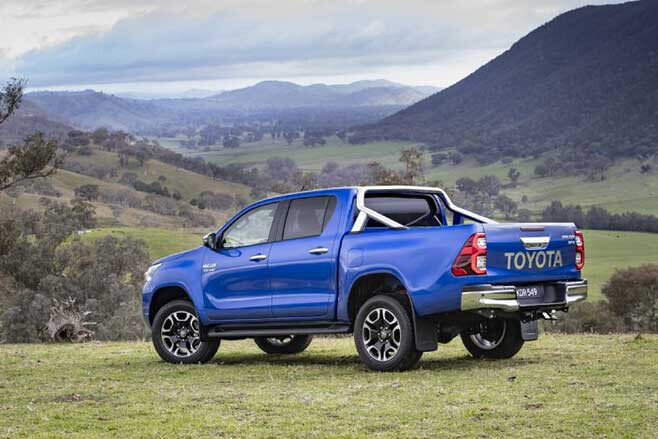
The suspension and power steering have also been revised to improve ride comfort and driver feel, particularly when unladen where the previous Hilux had been criticised for being too harsh. This has been achieved while maintaining the load-carrying capacity and ability, which has always been a strong point for the model.
Inside, Hilux gets a new audio system and screen with Apple CarPlay and Android Auto now supported, as well as Toyota’s own myToyota app. Answering another criticism of the previous model, the audio system now used knobs in lieu of buttons. Knobs are faster-reacting, more tactile and easier to use than small buttons, particularly when driving over rough terrain.
The dash gets a new speedometer and tachometers, with a cleaner and more premium look. These sit astride a colour 4.2-inch multi-information display that includes a digital speed readout and front-wheel angle, which is beneficial when driving off-road.
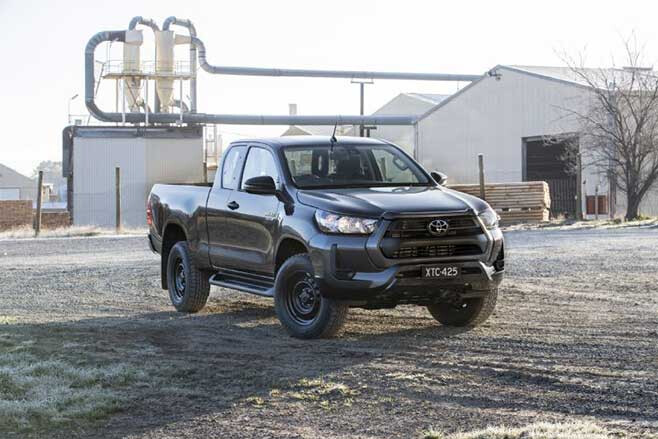
PRICING: 4X4 MODELS
Single-Cab (cab-chassis)
| Workmate, 2.4TD, 6M | $39,520 |
| SR, 2.8TD, 6M | $42,590 |
| SR, 2.8TD. 6A | $44,590 |
Extra-Cab (cab chassis)
| Workmate, 2.4TD, 6M | $45,220 |
| SR, 2.8TD, 6M | $46,250 |
| SR, 2.8TD, 6A | $48,250 |
Extra-Cab (pick-up)
| SR5. 2.8TD, 6A | $58,400 |
Double-Cab (cab-chassis)
| Workmate, 2.4TD, 6A: | $47,290 |
| SR, 2.8TD, 6M | $48,510 |
| SR, 2.8TD, 6A | $50,660 |
| SR5, 2.8TD, 6A | $58,420 (new) |
| SR5+, 2.8TD, 6A | $60,920 (new) |
Double-Cab (pick-up)
| Workmate, 2.4TD, 6M | $46,790 |
| Workmate, 2.4TD, 6A | $48,790 |
| SR, 2.8TD, 6M | $50,010 |
| SR+, 2.8TD, 6M | $52,010 |
| SR, 2.8TD, 6A | $52,160 |
| SR+, 2.8TD, 6A | $54,160 |
| SR5, 2.8TD, 6M | $57,920 |
| SR5+, 2.8TD, 6M | $60,420 |
| SR5, 2.8TD, 6A | $59,920 |
| SR5+, 2.8TD, 6A | $62,420 |
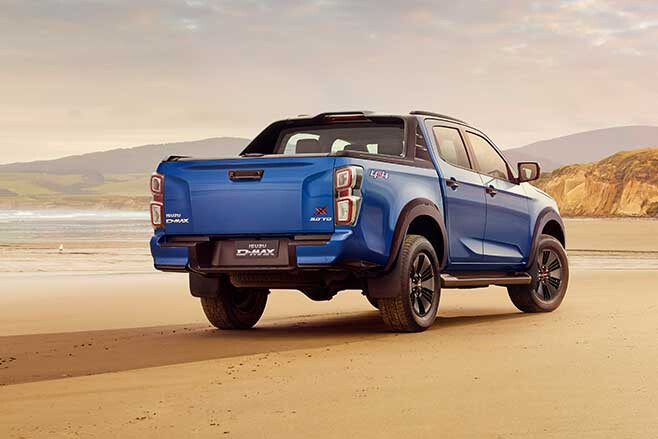
ISUZU Ute Australia (IUA) has pulled the covers off its newest D-MAX mid-size ute, which will be on sale in Australia on September 1.
The new third-generation D-MAX represents a step up in style, equipment and price for the well-regarded pick-up, and IUA now see it as a product that will compete head-on with segment leaders’ Ford Ranger and Toyota Hilux.
The new D-MAX lands with a line-up of 20 model variants, taking in two- and four-wheel drive; single-, extra- and double-cab cabin styles; ute and cab-chassis; and four trim levels.
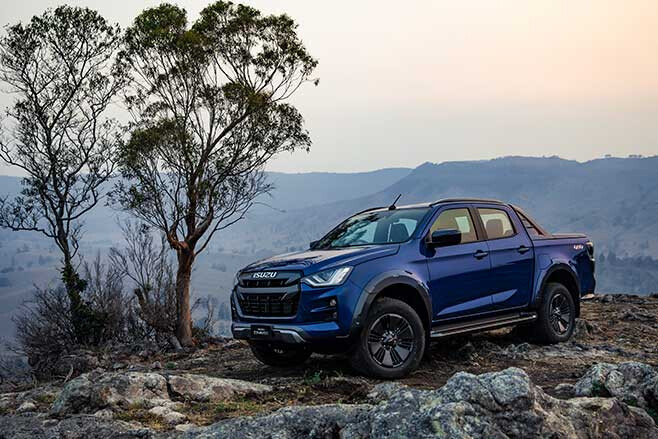
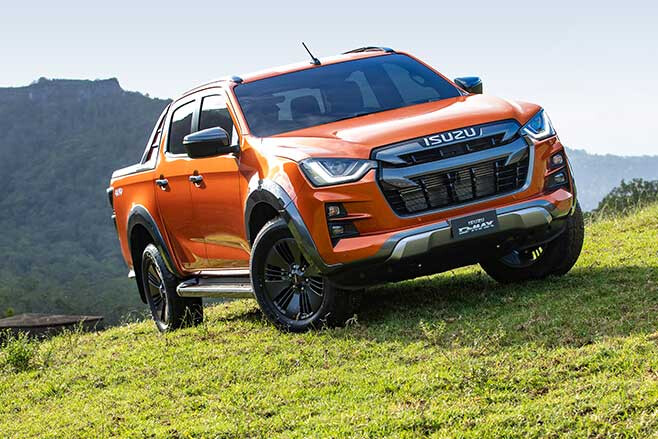
The range starts with the 4×2 Extra-Cab SX ute at $38,900 and runs through to the range-topping X-Terrain Double-Cab ute at $62,900; although, introductory drive-away pricing will get you in to a 4×2 D-MAX Single Cab-Chassis SX manual for $29,990 or $58,990 for an X-Terrain.
Looking at the other top-spec utes in this class and a Ranger Wildtrak lists at $66,290; the most expensive Hilux, the Rogue, is $62,490; a Nissan Navara Warrior is $63,790; and even the outgoing, top-of-the-line D-MAX LS-T is listed at $54,800.
There was no X-Terrain equivalent in the previous D-MAX line-up, but it’s a sizeable step-up in price to play with the top dogs in the game and it will be interesting to see if Isuzu has the bite to match its bark when we drive the new car.
SAFETY FEATURES
Safety is a leading factor in the new D-MAX, with the company claiming it has the most standard safety kit in the segment.
Isuzu’s Intelligent Driver Assistance System (IDAS) is standard across the range and includes eight airbags (double-cab); Autonomous Emergency Braking (AEB); Turn Assist with AEB; Post-Collision Braking; Forward Collision Warning (FCW); Mis-acceleration Mitigation (MAM) (*auto trans only); Adaptive Cruise Control (ACC) (*AT only); Traffic Sign Recognition (TSR); an intelligent speed limiter; Lane Departure Warning (LDW); Lane Departure Prevention (LDP); Lane Keep Assist (LKA) (*AT only); Emergency Lane Keeping (ELK); Driver Attention Assist; Blind Spot Monitoring (BSM); Rear Cross Traffic Alert (RCTA); ABS; electronic stability and traction control; trailer sway control; roll over mitigation; and more.
On paper at least, that’s the most safety kit you’ll find in a one-tonne ute. The new D-MAX has yet to be tested for an ANCAP rating but IUA is shooting for the highest available score.
It should be noted that extra-cab D-MAX variants no longer have a rear seat, as this has been dropped to achieve the maximum safety rating; something that wouldn’t be possible with the compromised jump seat.
CHASSIS AND DRIVETRAIN
The D-MAX retains the ladder chassis with a live leaf-sprung rear axle and coil IFS that are standard fare for the class of ute. The drivetrain remains Isuzu’s robust 4JJ 3.0-litre diesel engine backed by either a manual- or auto-shifting six-speed transmission; although, these components have undergone considerable changes.
Extensive use of high strength steel in key areas has reduced weight and increased strength in both the body and chassis, for added safety and improved dynamics. However, any weight savings have been countered by additional levels of standard equipment and noise insulation materials.
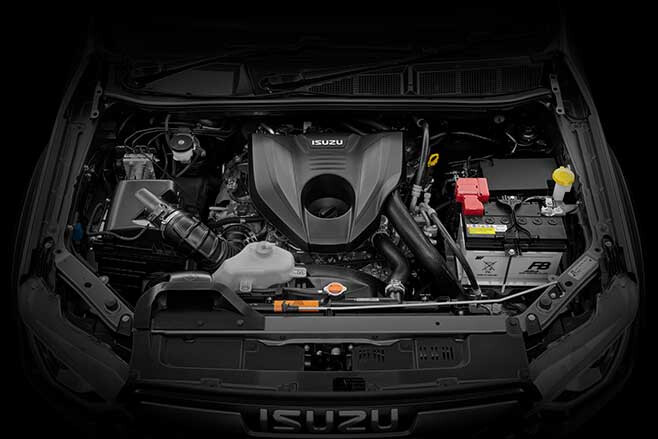
The venerable 4JJ engine has a new block, cylinder head, pistons, fuel injection system and turbocharger, so it is essentially a new powerplant.
Isuzu says these changes make it smoother and quieter to address some of the complaints voiced of the old engine, plus add an extra 10kW and 20Nm to deliver 140kW at 3600rpm and 450Nm from 1400rpm through to 3250rpm.
There has been no significant improvement in fuel consumption due to an increase in overall vehicle weight, although the D-MAX has always been one of the most efficient utes in its class in real-world driving conditions.
Best claimed figure for the new car is 7.7L/100km ranging up to 8.0L/100km, depending on the model and specification.
The six-speed auto is the latest generation of that ‘box by Aisin, while the manual has been updated for improved shifting and feel plus a lift-collar reverse lockout. It now runs behind a new double-mass flywheel that improves drivability and feel.
The D-MAX now has front brake rotors measuring 320mm in diameter by 30mm in width, which IUA claims are the biggest in class, and they are clamped by twin-piston calipers. The rear brakes remain the segment-standard drum units.
The power steering is now electrically assisted rather than hydraulic, which supports some of the IPAS safety functions that intervene with the steering control when required.
The bigger brake rotors require that 17-inch wheels are now the smallest on offer, with 18-inch alloys fitted to up-spec variants.
Australia is an important market for Isuzu and we are the second biggest market for the D-MAX after Thailand, giving IUA a fair amount of sway in the specifications of the new car.
Central to that is updating and retaining the 4JJ engine while other markets have a smaller 1.9-litre engine, but also adding items like the new standard rear diff lock and increasing wading depth to 800mm on 4×4 models.
OFF-ROAD SPECS
4×4 represents the majority of one-tonne utes sales here, and that’s why 14 of the 20 D-MAX variants are four-wheel drive. Increasing the wading depth required rerouting the engine air intake and high-vented differential breathers, which only happened following input from IUA.
The new D-MAX should be a strong off-road performer with the aforementioned rear diff lock plus increased rear axle travel improving its tractive ability on uneven terrain.
Ground clearance has also improved and is now 240mm on the models on 18-inch wheels and 235mm for those on 17s. Approach, departure and rampover angles now measure at 30.5°, 24.2° and 23.8° respectively, on the 265/60R18-clad X-Terrain.
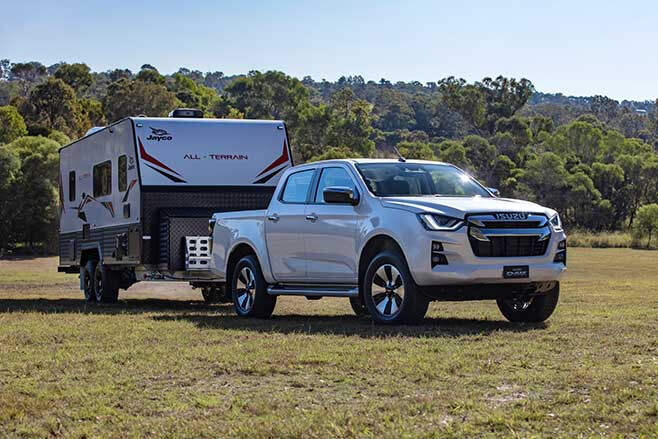
The new D-MAX has a 30mm longer wheelbase than the outgoing model at 3125mm, but with shorter front and rear overhangs it is marginally shorter overall.
All 4×4 D-MAX models bar the X-Terrain double-cab have more than one-tonne payload and 3100kg GVM, while towing capacity remains at 3500kg on a 5950kg GCM. Payload on the fully equipped X-Terrain in 970kg.
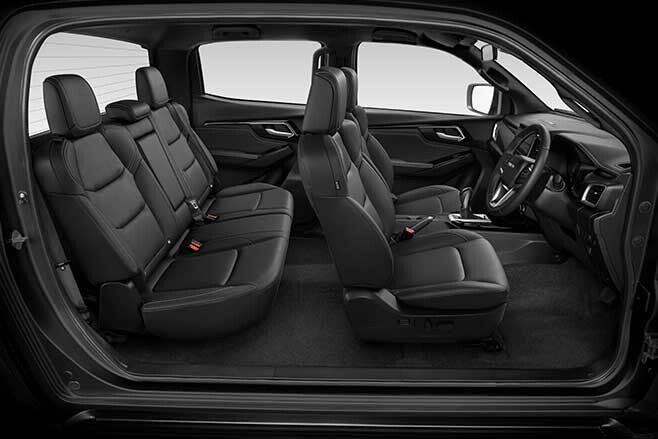
From the photos and specs list, the interior of the new D-MAX looks like a step up in terms of features and materials, which it will need to be to justify its price point.
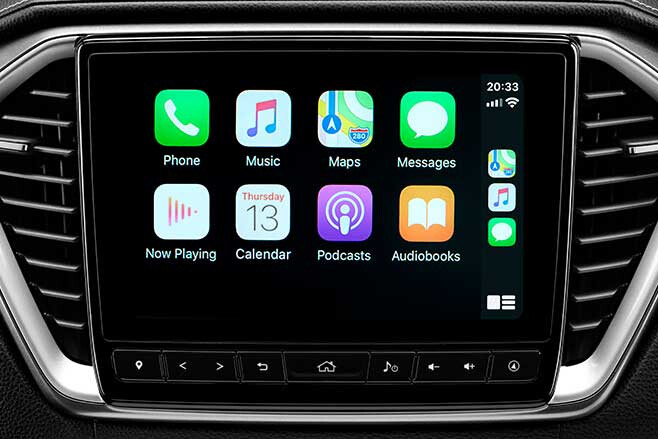
The big nine-inch screen is standard on X-Terrain and LS-U models and will include Apple CarPlay, while the lower grades get a seven-inch unit. The extra wheelbase will hopefully equate to a bigger cabin and IUA tells us it has more space for occupants. We’ll have to wait to get in one to confirm that.
The new car looks the goods and seems to have the kit it will need to step up in popularity and price, but IUA has to be careful here in that it doesn’t want to lose its traditional fan base who has bought the D-MAX on the grounds of reliability, durability, economy and price. We’ll have to wait until we drive it next month to see if it succeeds.
PRICING

THE short wheelbase is the definitive Jeep Wrangler variant, as it best represents the relatively tiny original Jeeps of the WWII era on which the brand was built.
Unfortunately for us in Australia, since the launch of the current JL series of Wranglers, the SWB has only been offered in Sport S and Overland specification, with no off-road-focused Rubicon shorty sold here.
This changes in Q4 of 2020, with Jeep Australia to introduce a Rubicon Recon special edition.
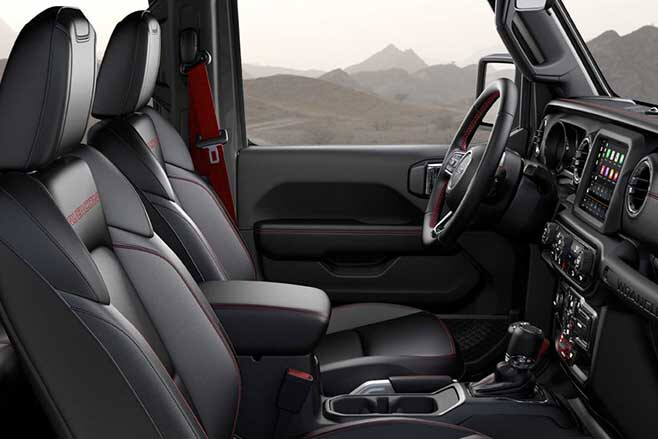
Only 100 of these will be coming, with just 40 shorties and 60 Unlimited LWB models. The two-door SWB Rubicon Recon will retail for $66,950, while the four-door Unlimited Rubicon Recon is $71,450.
Like all Jeep Rubicon models the Recon edition will get the serious off-road hardware that makes them unstoppable, including the Rock-Trac 4×4 system with 4.0:1 low range gearing, Dana 44 axles with locking differentials and low 4.11:1 gears, 32-inch mud terrain tyres on model specific 17-inch wheels, and a disconnecting front swaybar for added axle articulation.
It’s this quiver of off-road weaponry that makes the Wrangler Rubicon the most off-road-capable production vehicle you can buy, and the reason it won 4X4 Australia magazine’s most recent 4×4 Of The Year award.
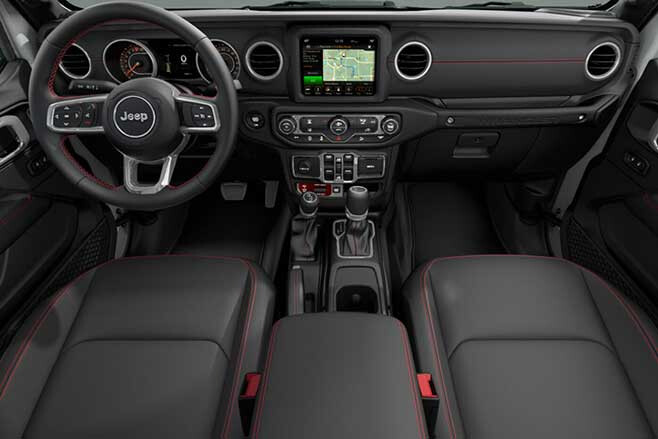
Special features for the Recon editions over and above the Rubicon gear includes a gloss black radiator grille; a matte black bonnet decal; fender vent decal; Recon Badge on side fenders; the steel Rubicon front bumper; Jeep Performance Tailgate Reinforcement System; Jeep Performance Bumper Hoop; red seat belts; premium-wrapped instrument mid-panel with red stitching; black leather-trimmed seats with heating on the front buckets; a heated steering wheel; and the Trail-Rail cargo management system for the LWB four-door only.
With just 40 of these Rubicon Recon short wheelbase Jeeps being made available in Australia, they are sure to be in demand and unique vehicles for our market when they hit the tracks towards the end of the year.
TOYOTA’S FJ Cruiser was an odd 4×4 wagon that, thanks to its unique styling, was a vehicle people either loved or hated.
However, those who love the funky FJC really love them, and examples of the short-lived model can be found with all sorts of modifications and customisations to reflect the tastes of the owners.
Being unusual and quite a standout vehicle, the Toyota FJ Cruiser caught the eyes of many a non-four-wheel drive enthusiast and introduced them to the unlimited pleasures of off-road adventures. This is exactly what happened when Western Australian Andrew Phan discovered the FJC.
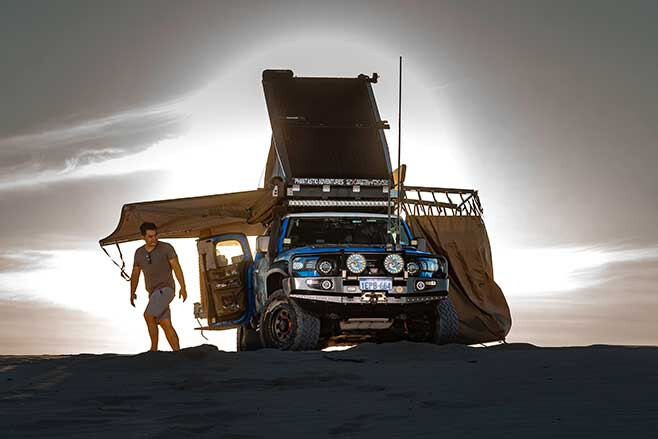
“To be honest, I used to be in the JDM scene,” admits Andrew. “Japanese sports cars were my first passion. I started to look into getting a car more suited to outdoors activities when I stumbled on the FJ Cruiser.”
With its Prado-derived underpinnings and simple and reliable V6 engine, the FJ Cruiser makes a good choice for the 4×4 newbie. Andrew also recognises the reputation of a Toyota vehicle, “I love the Toyota brand and badge, and I was interested in the FJ as it had the capabilities of a Toyota Prado without feeling like a soccer mum’s car. I caught the 4WD bug and it spiralled into a massive passion it is today.”
Sound familiar?
While it shares much of its driveline with a 120 Series V6 Prado, there are pros and cons when choosing an FJ over the proven family wagon. The FJ is generally a better off-road vehicle than the Prado thanks to its shorter wheelbase and shorter overhangs, which are less likely to get hung-up than the long wheelbase of a Prado.
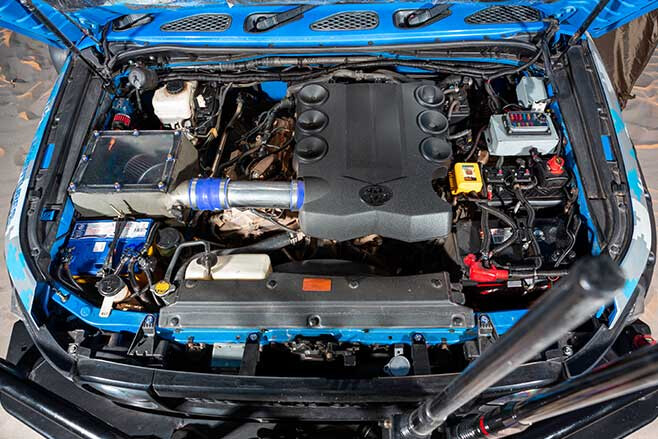
The FJ takes its part-time four-wheel drive system from the Hilux, which is simpler than the full-time system of the Prado and, because the FJ was so popular with enthusiasts in the USA, there are heaps of gear and modifications available for them.
On the downside, the shorter wheelbase of the FJ means there’s less room inside, so you need to think smart if you’re building it as a tourer. Plus, that funky body style does have some limitations for vision outside of the cabin.
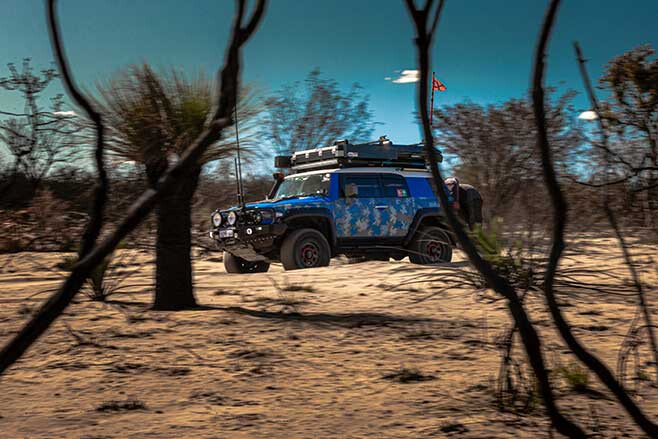
These things didn’t deter Andrew, who picked up a 2011 model FJ in the standout Voodoo Blue hue, and the spiral began.
“I wanted something that could do a mix of everything,” says Andrew. “Touring and overlanding, as well as tackling some difficult tracks.”
While there is plenty of equipment available to build up an FJ, Andrew soon discovered that the relatively compact size of the vehicle pushed him to come up with a custom solution to carry all his gear.
“One challenge I did face was trying to maximise the space inside the FJ to store all my camping and touring equipment.”
Working with Chris at Custom Installations and 4×4 Storage Solutions, they came up with a rear setup that maximises all the available space while retaining the rear seat for when it’s needed.
“The unit is made for camping and storing everything I would ever need,” says Andrew. “The drawer system houses everything including the cooker and camping equipment, ARB air compressor, 3000W inverter, lithium battery, table, recovery gear, two fridges, and more!”
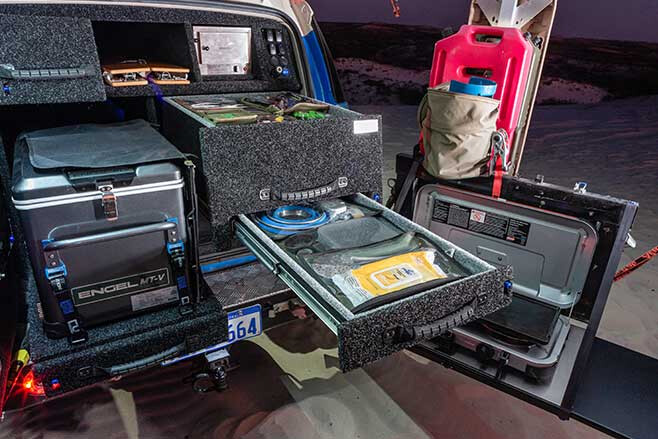
The clever fitout even has storage boxes built-in to the rear wall/barrier which can be accessed from the back seat. There’s a 65-litre water tank tucked in there and the area at the rear of the vehicle is maximised with a drop-down table on the right side swing-out that also extends out to create a large working and cooking space.
The interior mods continue up front with the factory seats being covered in leather and an Android head unit fitted to view Hema maps, internet and data from the OBD reader. Oh yeah, it plays tunes, too, and Andrew’s favourites are blasted out via a pair of Alpine amps, a 10-inch sub and a plethora of Clarion speakers. There’s never a dull moment when this FJ is out on the tracks.
Getting out to the best 4×4 tracks necessitates the right wheel, tyre and suspension package, and the FJ doesn’t hold back. Tucking a set of 295s into the wheel wells required a body mount chop, which is a common mod to give a bit of added clearance; while a set of Super Pro upper control arms help as well, plus keeping the geometry in line with the increase in ride height.
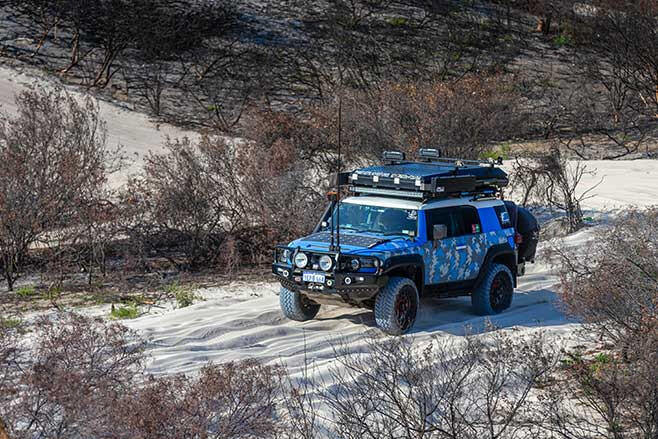
A set of coils from Dobinsons provide around 50mm of added height, and they are kept in check by Outback Armour adjustable shocks; while a set of airbags are fitted at the rear for added support with the extra weight on board.
Some of that weight is up on top where an Alu-Cab rooftop tent sits on a Front Runner rack along with an Alu-Cab 270° awning and Quick Pitch en-suite tent. There’s also a 50-inch light bar across the front of the rack and LED lights out to the sides. The setup is all the accommodation Andrew needs while he’s out exploring all the great Western Australian tracks with his partner Ashley.
The FJ is Andrew’s first and only four-wheel drive and it has taken him up the length of the West Coast from Albany to Broome “and everywhere in-between”. He says the highlight has to be the Pilbara. “I love the Pilbara,” he says with enthusiasm. “It’s an amazing place and absolutely breathtaking!”
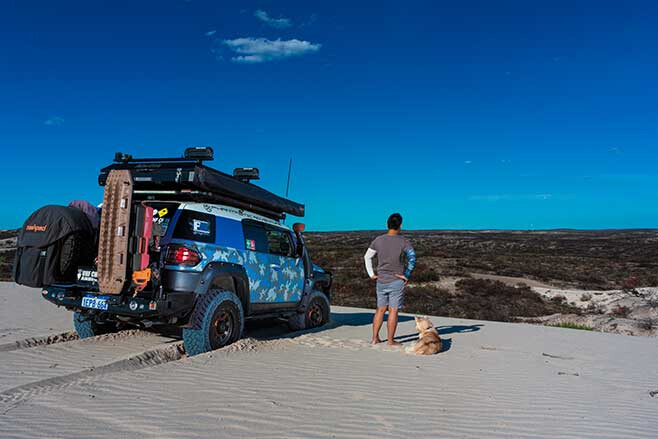
The FJ Cruiser truly is an enthusiasts’ 4×4 and, even though it’s his first 4×4, it has become a big part of Andrew’s life. His Phantastic Adventures Insta blog is loaded with images and videos of his travels and he’s become a member of the Perth FJ Cruiser Club and is the state coordinator of the FJCC Australia.
You could say that Andrew is well and truly living the FJ Life.
THE HOTLY anticipated Ford Bronco broke cover last month, with Ford USA finally unmasking its off-road-proficient SUV.
- BUCK SHOT: All-new Bronco revealed!
- SIDE BY SIDE: 2021 Bronco vs Wrangler Rubicon
- OPINION: The Bronco’s absence will be Ford Australia’s lament
The videos show Ford’s engineering team, as well as members from The Bronco Nation, thoroughly testing the Bronco off-road in Moab, Utah.
In the main video posted above the 2021 Bronco can be seen tackling the famous Escalator climb on the Hell’s Revenge Trail. While the video posted below has the Bronco covering the Poison Spider, Golden Spike, Golden Crack and Gold Bar Rim trails outside of Moab, Utah.
Both videos were uploaded to The Bronco Nation YouTube channel.
We’ve also assembled a collection of pics in the above gallery for you to ogle.
Available in both two- and four-door models, as well as a Sport edition, the Bronco boasts a long list of class-leading off-road specs.
At the pointy end of that list are front and rear locking diffs and 35-inch tyres. Much like the Jeep Gladiator, the Bronco also comes with a removable roof and doors.
The Bronco will be available with either the 2.3-litre EcoBoost four-cylinder or the 2.7-litre EcoBoost V6. It’ll also be available with either a seven-speed manual or 10-speed auto transmission.
Here’s an in-depth look at the new Bronco.
Source: The Bronco Nation
Bronco’s absence will be Ford Australia’s lament
MOST vehicles bought from the showroom floor these days come with an embedded satellite-navigation system of some sort – of varying levels of competency.
The problem when it comes to our lifestyle is that manufacturer sat-nav systems will lack the functions and features for proper off-road use. Sure, some will come with off-road features, but for guidance when it comes to ‘real’ off-roading you need to trawl the aftermarket industry.
“As any keen four-wheel driver will understand, stock vehicles are a great base to build upon for a more purpose-specific off-road setup,” explained Adam Jane, editor at HEMA Maps. “In the same way that drivers might wish to upgrade to more capable tyres, suspension and lighting, it’s often a good idea to step up from the generic in-car GPS system to something purpose built.”
A purpose-built sat-nav system for 4×4 use will feature topographical maps (detailed and accurate two-dimensional representations of features on the Earth’s surface), precise mapping of remote tracks and the ability to function when off-the grid – as well as a bunch of useful tools like POIs (point-of-interests), the ability to sync waypoints and save favourite off-road routes.
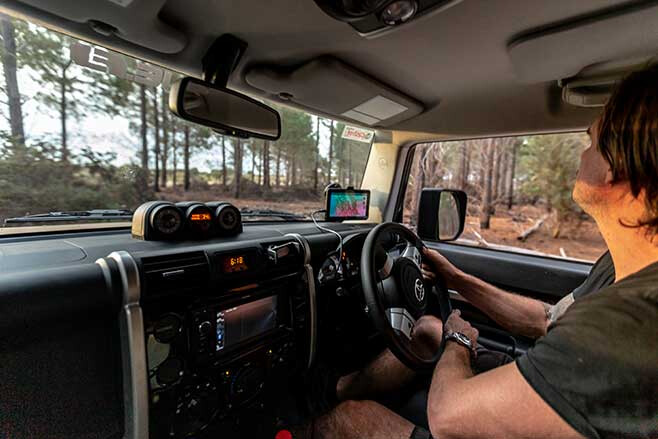
Another key reason to scrap the manufacturer sat-nav system in favour of an aftermarket device is the ‘update’ factor. Due to map updates releasing regularly it’s important to have a model that can update hassle-free, multiple times a year.
And, as Matthew Thomas, Garmin Australia’s general manager, reminded us: “Updates can be expensive and can usually only be done when service is due. It is not unusual for vehicle manufacturers to charge $500 for a single update.
“Garmin units usually have at least four updates a year and, for some models, it will notify you on the Garmin connect phone app if you have an update,” he added.
Two key players in the 4×4 GPS world are HEMA Maps and Garmin, so we had a chat with them to learn more about the devices saving heaps of Aussies from getting lost in the scrub.
OFF-ROAD ESSENTIALS TO LOOK FOR
TO BE suitable for proper off-road, remote-touring use, an adequate sat-nav system needs to tick a few boxes. Not only does it need to have adequate mapping database for offline use and the ability to work when you’re hundreds of kilometres from the nearest town, it needs to be built tough.
“A good off-road GPS unit needs to be tough enough to withstand the Aussie outback and reliable enough to trust in the middle of nowhere. A good mount, solid construction and an intuitive operating system will make life a whole lot easier,” Jane said.
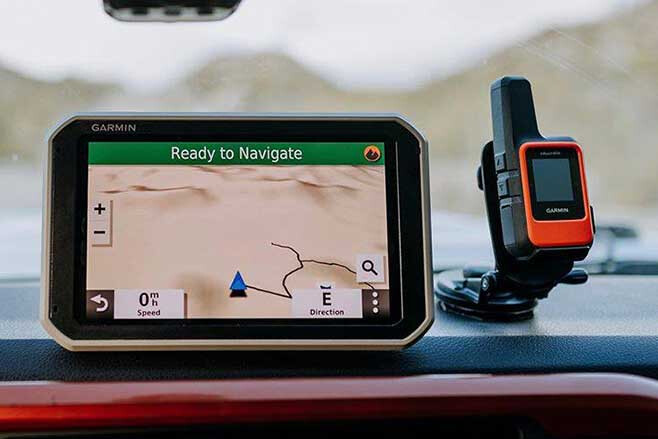
Matthew Thomas from Garmin Australia agreed: “GPS units used for off-roading will be subject to much harsher vibrations than driving on sealed roads, it will also be subjected to more extreme weather conditions such as dust and moisture.”
As mentioned, topographical mapping is essential, with Garmin units in particular using topo maps from various sources (including HEMA). The benefit of units from HEMA and Garmin is that they’ll feature POIs (point-of-interests) like campsites, dump points, rest areas, water points and fuel stops. Also look for GPS units that have the ability to record your trips, add geo-tagged photos, sync waypoints, and save and share favourite routes.
Outside of the core essentials of a sat-nav unit, there are some other features that are handy and make off-road travels that little bit more comfortable and/or fun.
Garmin Overlander units, for example, feature a pitch-and-roll function, as well as a digital compass and barometric altimeter for accurate bearings and elevation data. Plus, the units can be paired with Garmin inReach devices for two-way text messaging, interactive SOS and weather forecasts.
“Get yourself a sun visor to keep the glare off the screen. The Hema HX-1 sun visor is a no-brainer if you’re heading into the desert,” Adam Jane advised.
STANDALONE UNIT OR SMARTPHONE APP?
THERE are pros and cons of using either a smartphone app or a standalone unit (either inbuilt or portable) for sat-nav guidance, as HEMA’s Adam Jane explained to us.
“Our phones are so much a part of our lives these days that it’s easy to have a good app on hand. The fact that a phone is almost permanently connected to the internet means it’ll keep everything up-to-date, but can mean the app is useless when the signal drops out,” he said. “Apps such as Hema Explorer and CamperX have offline modes, which enable users to access information without being connected to data networks.
“A standalone unit allows you to plan out your trip before leaving and then you just let it run while you’re out there. This way, your GPS unit is a GPS unit, and that keeps things nice and simple, it avoids distraction and makes the process of navigating a whole lot more reliable.
“A standalone unit is designed for the purpose of GPS navigation, whereas an app on your phone can be more like a secondary function.
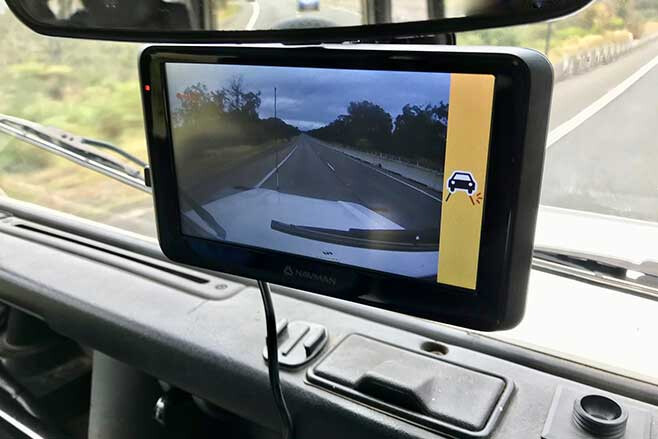
“On the flip side, your phone may also be your camera, your stereo system, your communication device and a torch – you could even have it Bluetoothed to your tyre-pressure monitors or connected to your UHF radio – all this means you’re constantly switching apps and moving it around,” Jane said.
Unlike a dedicated standalone unit, a smartphone isn’t built solely for sat-nav duties. It’ll lack in the durability stakes and its battery life will drain at a far faster rate than a quality sat-nav unit. Plus, as Matthew Thomas explained: “Many GPS phone apps only work when there’s mobile reception.”
In contrast, standalone units – including the Overlander device within Garmin’s range – feature more than 36,000 HEMA verified POIs built-in, so you can search what you need and find the closest to your location without mobile phone reception. As well, dedicated GPS units include features such as trip logs, off-road mode, route planning, and speed camera and school zone locations. “Plus, our RV/Overlander/Dezl devices also allow users to enter their vehicle dimensions for routing that take this into account (e.g. bridge heights, road weight and length limits),” Thomas said.
Hence the reason why standalone units are often the preferred – and recommended – devices by tourers with a bit of experience and grey in their beards.
HOW MUCH DO THEY COST?
THERE ARE smartphone apps on the market which are free to purchase, including the Newtracs app, though you’ll still have fork out some cash for premium content; and HEMA sells the CamperX app for only $9.95, which features topographic mapping, full offline mode, more than 100,000 POIs, and access to plenty of campsite information.
Spend a few more pennies on the app store and you could be the owner of the more comprehensive HEMA Explorer App on both iOS or Android ($49.95).
Then there are premium products, such as the Garmin Overlander (RRP: $999), which comes loaded with key features including pitch and roll gauges, navigation sensors, the Garmin explore app (allows syncing to smartphone and desktop), and it comes preloaded with iOverlander POIs and HEMA 150K top maps of Australia – all in a sturdy, seven-inch screen.
Another premium product is the HEMA HX-1 (RRP: $699), which contains topographic mapping, trip planning and trip recording tools, and more than 45,000 POIs, among a host of extras.
Clearly there are considerably more products on the market, but this should give you a heads up on what prices you’ll be looking at.
More info: www.hemamaps.com; www.garmin.com.au
WHAT SHOULD I AVOID?
CONSIDERING you’re trusting a sat-nav system to guide you to a remote campsite beyond the black stump, it’d be a worthless piece of scrap if it didn’t do the job it was intended for – and, let’s be honest, the results could be disastrous.
“It might sound dramatic, but you may be trusting your life to the gear you take out into the remote parts of Australia,” says HEMA’s Adam Jane. “There’s no point taking your chances on a cheap knock-off; just save up a few more pay cheques and invest in a proper device. That way, you can be confident it’s backed by a good reputation and is serviced by a reliable warranty. One less thing to worry about means more time to enjoy yourself.”
With a plethora of units on the world-wide web only three clicks away from arriving in your mailbox, it’s important to remember that not all units are built to the same quality.
The biggest concerns found with inferior products include the sub-standard quality of the device, and the accuracy (read: inaccuracy) of the mapping. “You need to be careful when buying from international sellers that the device has the correct Australian mapping,” Thomas said.
There are other important factors to take into account including warranties and technical support, or the lack thereof. If you’re eyeing off a second-hand unit, battery deterioration and how old the map version software are important considerations.
SMARTPHONE RECEIVERS
MOBILE phones or tablets have inbuilt autonomous receivers which can utilise multiple Global Navigation Satellite Systems (GNSS), but this is dependent on the internal GPS hardware (single- or dual-band frequency chip) capability of said device.
Newer devices (such as the Oppo Reno) have dual L1 and L5 frequency chips allowing access to more satellites. This ensures there are more available to them in the event of interferences (infrastructure, vegetation, topography, etc.) in turn providing better accuracy and precision.
SAT-NAV PHONE APPS
IN ADDITION to HEMA and Garmin’s extensive range of phone apps and standalone units, there’s a rising number of phone apps on the market, specifically for four-wheeling.
Apps like Gaia GPS have free, membership-based and premium offerings, while an app gaining popularity is Newtracs, which gives “up-to-date 4×4 track conditions using world-first crowdsourcing technology”.
Only available on the iOS platform – coming soon to Android – the app provides detailed track ratings, with specific track obstacles. For example, it’ll pinpoint steep sections and areas other users have encountered problems. You can also log trips, drop pins and access tracks offline.
HEMA MAPPING
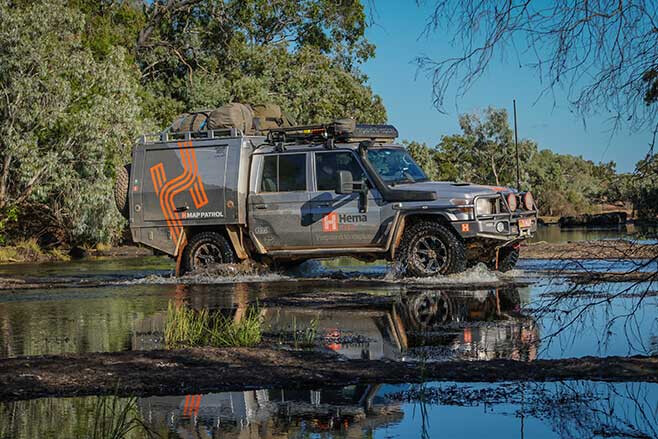
HEMA has GPS-mapped more than 690,000km of tracks and 545,000km of unsealed roads throughout Australia, ensuring the HEMA Maps’ database is continually up-to-date and accurate. It is the job of the fields’ team, known as the ‘Map Patrol’, to collect and update the data which is used to navigate thousands of adventurers to remote campsites every year.
HOW DOES A GPS UNIT PINPOINT YOUR LOCATION?
1. GPS receiver, working with time signals, needs at least four satellites to acquire a position. 2. The receiver calculates the distance from four or more satellites (trilateration). 3. This triangulation deduces/pinpoints your location.
MERCEDES-Benz X-Class models (MY2018-2019) with Active Brake Assist fitted have been recalled due to a fault with the Brake Assist system software.
According to the ACCC recall report, the Active Brake Assist system may mistakenly detect an obstacle and brake suddenly or unexpectedly. The obvious safety concern with the defect is the increased risk of an accident.
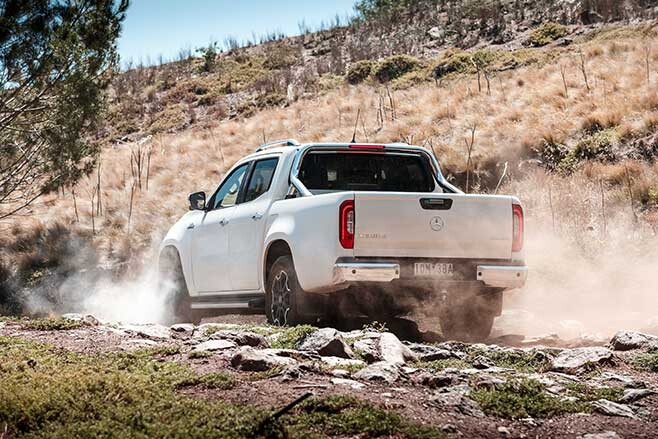
The recall affects a total of 5826 vehicles sold nationally between February 1, 2018 and August 30, 2019. For a complete VIN list of affected vehicles, click HERE.
X-Class owners affected by the recall are asked to contact their Mercedes-Benz retailer for a free software update.
“The software for the DAS control unit and front radar sensor will be re-calibrated to reduce the ‘cone’ angle used to monitor the area in front of the vehicle,” Blake Vincent, Mercedes-Benz Vans’ PR and Corporate Communications Manager, told WhichCar. “This was set too high in certain X-Class vehicles.”
The Navara-based X-Class was discontinued earlier this year, less than three years since it was launched to specific markets around the globe including Argentina, Brazil, South Africa, New Zealand and within Europe, but not the USA.
Buyers in Australia were hesitant to fork over their hard-earned for the premium ute offering, and it struggled on the sales charts before it was eventually cut from the Mercedes-Benz Vans Australia line-up.
IN PREPARATION for the imminent arrival of the all-new D-MAX, here’s a rundown of everything we’ve learned so far about the truck-tough ute.
While official specs and pricing information won’t be available until next Thursday, August 13, there’s been a trail of info as well as a few video and pics in the build-up to the reveal (see below).
The all-new 2020 D-MAX represents the first major change since the second-gen debuted eight years ago in 2012 – including updates in 2015 and 2017.
The 2020 model – already on sale in overseas markets – will get an updated version of the venerable 3.0-litre turbo-diesel engine of Isuzu Truck origins, and it will be available in both automatic or manual transmissions. Whether we get the 1.9-litre twin-turbo-diesel engine used in other global markets is yet to be confirmed.
Plus, for the first time in a D-MAX – and to appease those crying out for one – it will be offered with an electromagnetic rear differential lock. The new D-MAX is expected to have a wading depth of 800mm.
Clearly, judging by overseas models (video below) and the sneak-peak video (above) released by IUA, Isuzu’s design team has radically redesigned the profile and silhouette of the new model.
“The D-MAX’s design is so distinctively new that it’s over and above the conventional pick-up trucks, transforming it into a whole new pick-up,” said Isuzu Japan, via a press statement back in October 2019.
The cabin has also been updated with a nine-inch digital display and a redesigned cockpit that is, according to Isuzu, “designed to enfold the driver and passenger as if they were in a cockpit of an airplane”.
Full details, specifications and pricing will officially be revealed on Thursday, August 13, 2020, so ensure you check-in to get all the official information when it drops.
The 2020 D-MAX goes on sale from September 1, 2020.