
School’s out for the day after the students have been up since 5.30am and in class since 6.30. It’s 27 degrees and not yet 10am and we’re camping in an area just a stone’s throw from the Coral Sea in Far North Queensland.
Already this morning, the five-year old read for an hour with mum in bed and then worked through handwriting technique on the camp table before doing some maths that had something to do with coloured blocks. The eight-year-old has been at a picnic table under the casuarinas rattling through his maths and journal so he can work on his major project: an illustrated comic combining much of the term’s curriculum, including embracing compound words, possessive apostrophes and the proper use of quotation marks. And the 10-year old just wants to fish, so he’s under the awning checking the work he toiled on late last night – project on sugar mills, as well as the obligatory maths and spelling – so he can fish the incoming tide before lunch. My wife is dipping into a novel and I’m preparing a ‘second breakfast’ of pancakes which we’ll devour before jumping into the hopefully stinger-less water for a cool-down before we plan the day. Bushwalk or spear some fish? Maybe we’ll do both?!
It’s paradise. Well, at least it is when it’s written down. The truth about travelling around Australia while schooling your kids is of course different and complicated. By some measures it’s even better than what is described above. By others – and at other times – it’s a nightmare.
First, the bad. Your kids never go home when the bell goes. They just put away their books and sometimes they don’t even do that. Any and all classroom conflicts continue throughout the day and may go into the night. When you envision most things, it’s without the extremes of temperature and the flies. And on the road, there is little room to hide. Climate control is certainly an issue as getting those assignments done in 40 degrees can be bordering on cruelty while in the mornings in the Victorian Alps, the kids are writing in mittens.
The rewards, however, can be lofty. Guiding your child towards independent study and analysis is a buzz. Conquering trigonometry problems together is fun. And the wealth of shared experience is irreplaceable: your inputs, your experience, your culture is totally shared. You are not only adjusting the airbags on the Land Cruiser together, you’re choosing the pressure for the terrain. Together you discuss lines of attack on tricky tracks, and the kids are superb scouts: jumping out of the cab and running up to check the state of the sand. They know as much about the lay of the land as we do because we all leant from the base: zero. Together you all discuss societal issues that crop as you drift around Australia: the state of the rivers, crops, the Indigenous people, pasture. You listen to the same audio books on the and tie it in with creative writing units from school. You know the kids’ units on marketing-speak, so when ads come on the radio, you all comment. You’re doing it all together. Everything.
If you’re hitting the road with your children, there are two major options: distance education; home-schooling.
Distance education
All state and territory governments provide distance education for students whose ‘special circumstances’ prevent them from attending school on a regular basis. Travelling within Australia is generally seen as one of these special circumstances. In a happy coincidence for those seeking travel as a lifestyle choice, distance education is maintained by states and territories to allow access and equity for people just like you.
New South Wales alone has 12 distance schools, some dedicated to correspondence like Sydney Distance Education High School, the School of the Air, and the Sydney Distance Education Primary School, while others like the Camden Haven High School, have a distance-education arm.
As more parents opt for travel as a temporary lifestyle, specialist schools further adapt. Broken Hill’s School of the Air was established in 1956 to cater predominately for the geographically isolated students within a radius of approximately 300km. Over the last two years, however, students who come under the category of ‘travellers’, have also been enrolled.
We chose distance education (Sydney Distance Education Primary School, SDEPS) because the New South Wales regulations on home-schooling (see the below information) were frankly too demanding. SDEPS do so much of the work for us. The structure of this sort of distance schooling is based around a conventional classroom approach (SDEPS is even located in a decommissioned primary school in inner Sydney, so it’s actually a concrete school just minus the screaming kids). Each child has a teacher and classmates (that they may get to know through projects and online). We (the parents) are not the teachers, but we are the ‘supervisors’.
Like most distance education schools around the country, SEDEPS works in a number of ways: paper-based, phone, Skype, electronic audio files, video, and iPad are some of the tools used. But the basic recipe goes like this: each child enrolled receives a giant envelope at the start of each term. In that bubble-wrapped monster are library books tailored to each child’s level and interest, resources you might find in any classroom such as protractors and compasses, and clearly marked folders, each with two weeks’ of lessons complete with attendance sheets, lesson summary guides, and supervisors’ notes.
Our 10-year-old was keen to join the iPad generation and slotted quickly into a trial of sorts, where almost all work was done on an iPad which needed to be regularly synced (saved and uploaded) to the SDEPS system so the teacher knows exactly where he is and how he’s going. He can watch videos of his teacher outlining strategies and explaining concepts. He can fill in worksheets by typing or writing with a stylus on screen.
The issue with this online system is obviously internet access. But by working and saving onto the iPad and then syncing when there is access, that issue can be overcome.
There is also the entirely paper-based system. For some people this is easier and we certainly found that planning lessons and workloads was more straightforward when you could spread everything out in front of you and shuffle it around. In the giant envelopes received from school, there are reply-paid addressed stickers to any work and resources. We find this system the best with our two younger children. If we’re flustered, we can always find a worksheet or text to occupy them. There are no hidden tricks, just work through the folder, and chuck the bits of paper you didn’t finish into tomorrow’s pile.
No matter what technology style you choose, your distance teacher will need direct contact with their student. They need to watch and/or hear them read and write. They need to talk to them about their work so they can get a first-hand understanding on how they are doing and ensure they are working and thinking independently.
SEDEPS supply and help you to install simple audio-recording software and systems to transfer large electronic files. It’s part of their classroom brief so the school takes a good deal of ownership of this process.
The old and the new
- Hotspotting. Most smartphones have the ability to act as a ‘modem’ for your laptop or iPad or other device. You’ll need to go into ‘settings’ or similar function and investigate.
- 4G modems. Expensive but fast and versatile, you can choose to have fast and reliable internet anywhere a Telstra signal is obtainable.
- The old Post Office. Your mail can be sent to you care-of any post office in Australia. It is an oddly thrilling process to pick up your bubble-wrapped education goodies at a post office in a town you picked on the map because you knew you’d be motoring through it.
Home schooling
While state and territory governments support parents’ rights to educate their children, ‘school’ remains compulsory. That means that, to varying degrees, states reserve their right to ensure your ‘teaching’ is not ad-hoc and irrelevant. You will need to apply for and be granted registration to teach your child. If you want to take this ‘home-schooling’ route, it is certainly not the easy way out.
Don’t expect to hit the road and to make it up as you go along – pointing out bits and bobs of information that occur to you along the way. The fact that you and your kids might be having a ball and catching fish and talking about weather patterns is not formally of interest to the education authorities. Children need to be achieving certain standards and ticking boxes, so home-schooling is not the easy option.
As usual, the details differ from state to territory. NSW and Queensland have the strictest documentation guidelines for registration. You might expect to submit an application for each child you would like to home school. This application may need to include an educational program, learning philosophy or curriculum that has been developed or adapted by you or by a registered teacher. This program may be very detailed, and it will certainly be closely examined by your state or territory education department for its pedagogical relevance and coherence.
Victoria is the simplest – you really just need to fill out a form and notify the Victoria Department of Education. The other jurisdictions fall somewhere in the middle of the spectrum. Registration in Western Australia includes a visit from a moderator and evidence of a learning program based on the WA curriculum framework. In the ACT, you will need a learning program but it doesn’t need to be based on a set framework. In South Australia you need to provide a broad overview of your learning program including eight key learning areas that mirror the National Curriculum; you will also be visited by an official. In Tasmania, you won’t be visited but the Tasmanian Home Education Advisory Council will handle the application. In the Northern Territory you are granted an interim registration which will be approved (or rejected) later by a moderator.
Add to all the above is the fact that you’ll probably have to repeat the process to continue in a new year and you may need to provide a report that demonstrates the educational progress of any children you are schooling. So consider that if you’re trip will go over into another year. On the bright side, proof of registration from one state or territory is recognised throughout Australia, so you won’t have to reapply each time you cross a state border.
And there is plenty of help available. There are numerous homeschooling support groups that can offer advice, support and companionship for children as well as parents. An online search will turn these up easily. For instance, Home Education Australia is not-for-profit volunteer association encouraging and promoting home educating in Australia, and providing members with benefits – hea.edu.au.
The major reported benefit of homeschooling while travelling is the magic of tweaking the curriculum for circumstances and place, and of course workload management. If you’re in Port Arthur, looking into colonial Australian history is obviously perfect. When you’re in the Daintree, ecology would be a nice touch, as are indigenous culture and mining issues in the Top End. The dovetails can be fascinating and fun.
Our own style
We are halfway through a year-long odyssey, and our major discovery is that there is no magic formula to make school easy. Nothing is new. Here are some of our tips which you may well have seen in other settings. We have travelled for a time with a family who ignored weekends. Each day was a school day. That’s just part of the deal. We have found the weekends provide the structure we and our kids enjoy.
- Start early. When you’re not making school lunches or running off to work yourself, it makes sense to get into it straight away. Kids usually wake early and have energy in the mornings. Harness that and go hard early. Especially in the heat.
- Reward. When school has finished for the day, there needs to be some change or reward to signify that. Snack time, play time, fishing time, swimming, it’s up to you.
- School is business. We have met parents who wear different clothes when working through school with their kids – when school’s out, off comes the tie.
- Work space. You need to have a system for storing schoolwork and for both you and your children to concentrate. This can of course be difficult, so be creative.
- Get buy-in. Sometimes it can be beneficial to have the kids plan the lessons. Let them take ownership and dream up rewards. If they are planning the courses, their navigation might just work superbly.
- Libraries are your friend! Wi-Fi, enforced quietness, air-con … paradise.
The goal u2013 for our family anyway u2013 is to make sure our children can slot back into the school system with ease when we return home. Itu2019s not fair to them or their new teachers that they arrive back to regular school not knowing the terminology or have fallen behind in the basics. We work particularly hard on reading, writing and maths. We donu2019t really want to ace the NAPLAM, but we want to keep things ticking along. You may also find that, as a traveller, the education overseer u2013 whether it is the distance education school or the stateu2019s home schooling authority u2013 will take a slightly different tack with you. Not quite as much will be expected of your children than perhaps other students who are enrolled in distance for other reasons such as geographic isolation.
Education and training contacts
ACT: act.gov.au/education-and-training
NSW: education.nsw.gov.au
Northern Territory: education.nt.gov.au
Queensland: education.qld.gov.au
South Australia: education.sa.gov.au
Tasmania: education.tas.gov.au
Victoria: education.vic.gov.au
Western Australia: education.wa.edu.au
Get the latest info on all things 4X4 Australia by signing up to our newsletter.
The July issue of 4×4 Australia Magazine goes on sale June 11 with Part 1 of our Great Aussie Bight Adventure. Along the trip we camped under the awe-inspiring Bilbunya Sand Dunes. Check ‘em out here.
Click here to watch Across the Bight: Part 1.
Grab your copy of 4X4 Australia from newsagents or subscribe to 4X4 Australia in electronic or print format.
Many of the Vic High Country tracks will close for winter later this week so get in while you can and you might catch some early snow up there.
We dropped down the steep 7km drop of Billy Goat Bluff last month and were disappointed to find it had been recently graded. Still, it offers one of the most stunning descents in The High Country.
Get the latest info on all things 4X4 Australia by signing up to our newsletter.
The July issue of 4×4 Australia has just landed on our desk and goes on sale June 11.
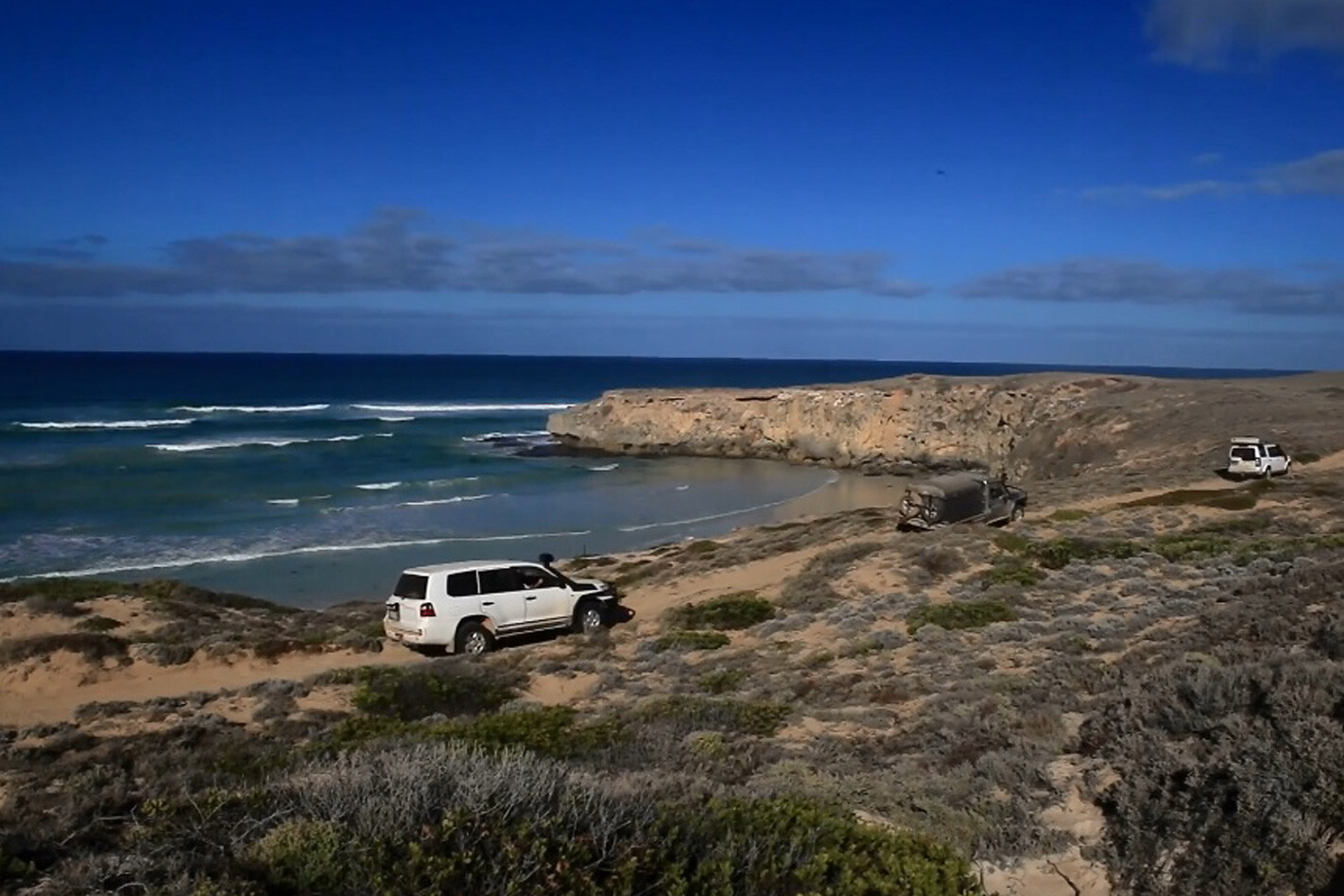
In it you’ll find Part One of our epic 4×4 adventure across The Great Australian Bight. Here’s a teaser of the stunning scenery and adventure.
Click here to watch Across the Bight: Part 1.
Grab your copy of 4X4 Australia from newsagents or subscribe to 4X4 Australia in electronic or print format.
WHAT’S THE DEAL
The NP300 Navara replaces both the current D40 and well-aged D23 utes from Nissan and when the full range lands there will be some 27 different variants available. But that’s not happening until September and for now buyers will have to be content with just 14 models – four 4×2 and three 4×4; all dual-cab utes with pick-up style rear tubs; with a choice of six-speed manual or seven-speed automatic transmissions. The models to come will include single and king-cab variants plus cab-chassis to take a tray on the back.
Powering the Navara 4×4 models is a new 2.3-liter diesel engine that is available in two states of tune – making 120kW and 403Nm with a single turbo in the RX grade or 140kW and 450Nm with a pair of turbos in the ST and ST-X spec vehicles. The engine offers as good as 6.5L/100km fuel consumption in 4×4 Navaras with the new 6-speed manual ‘box while the new 7-speed returns 7.0L/100km on the ADR combined cycle.
All double-cab NP300s, or D23s in the old speak, are fitted with a coil sprung, multi-link rear suspension set up. In a workhorse segment where old school leaf springs are the usual fare, the Navara’s rear suspension is an indication of the changing face of the ute buyer offering more passenger car like ride and handling characteristics. The single and king-cab models will retain leaf springs in recognition of their load-lugging focus.
Speaking of loads, the 4×4 models are rated to tow 3500kg capacity with a factory tow bar which is optional on all vehicles. GVM is 2910kg for the 4x4s giving between 930 and 1034kg load capacity depending on spec. Gross combined mass is 5910kg. The load capacities of the Navara will be relatively close between the coil or leaf rear suspensions and all will have the 3500kg towing.
ON ROAD
The Navara retains a double-wishbone coil sprung independent front end to go with the new coily live rear axle. It’s a firm without being harsh ride with flat corning and reasonable dynamics for what is still a light truck. The steering feel is a bit doughy on the road but didn’t feel so bad on gravel tracks.
Driving on corrugated outback gravel roads in the Gawler Rangers of South Australia, where conventional leaf springs would be prone to axle hop and skip, the composure of the coil sprung multilink rear suspension impressed, keeping the Navara controlled and relatively smooth riding.
There’s nothing lacking in the performance from the twin turbocharged diesel engine delivering its torque in droves from low in the rev range up to redline, where it is a bit noisy and harsh in the upper reaches. The seven-speed auto transmission is unremarkable in general driving being smooth and effortless but it became fussed when pushed on hilly twisting roads where the manual shifting function gave more control.
The 120kW/403Nm, single turbocharger version of the same 2.3L diesel engine proved up to the job as well when sampled in the six-speed manual equipped base spec RX Navara. If anything it felt as punchy as its twin-turbo counterpart although that could have more to do with the manual gearbox and different gearing. Both the clutch action and shift quality of the manual car are adequate and certainly not inspired or sporting.
The cabin is quiet and comfortable although the lack of reach adjustment for the steering wheel means getting the driving position perfect is impossible. Visibility is good but it takes a bit of getting used to the high front ’guards and knowing where those front wheels are. A reversing camera is standard on ST and ST-X Navaras.
OFF ROAD
Our drive was on station tracks and outback roads with no low range or actual off road driving. As such ground clearance was never an issue and the traction was only questioned on the sandier tracks where switching off the stability control helped. A rear diff lock is standard only on ST and ST-X but it didn’t get a workout on this drive. Low range ratio is 2.717:1 and the part-time 4×4 system is switched using a dash dial.
Water fording depth is listed at a relatively low 450mm and with the air intake located at the front of the bay above the headlight we can see why. We know the aftermarket companies are working to have an intake snorkel available ASAP. Fuel capacity is 80-liters. The wheels are 16-inch steelies on the RX, 16-inch alloys on ST and 18-inch alloys on the ST-X.
The standard 12-volt outlet in the cargo tub will be handy if you want to carry a fridge or use a camp light at the back of the car while the adjustable utili-track tie-down point that come in the ST-X are a ripper feature that you’ll wish were in your ST if you buy one.
INSIDE
The specifications and features offered on the new Navara are indicative of the evolving use of utes as they become more popular as family transport. Power adjustable, heated leather seats, dual zone climate control, satellite navigation, Bluetooth and USB ports are all included in the top-spec ST-X grade 4×4 we are driving here.
The comfort and convenience features make the cabin of this new Navara a much nicer place to be than inside the utes of yore. The seating position is comfortable even though the steering column is not adjustable for reach, and the general ride and refinement are more passenger car-like than in the past. With a shorter wheelbase under the chassis, the rear seat leg room is a touch smaller than the outgoing D40 Navara but it’s still adequate for adults.
Five star safety ratings are also de-rigueur in this class and Nissan Australia is hoping for the full rating when the Navara is tested by ANCAP, although the omission of a head rest in the centre rear seat could be an issue. Standard safety kit includes seven airbags, reverse camera (ST and ST-X only) ABS, electronic stability and traction control and brake assist. Missing are some of the latest safety technologies that, while yet to appear in the ute class are expected on other new models before years end. Features like autonomous emergency braking, emergency stop warning, blind spot indicators and lane departure warning are not offered at all on Navara, although not having any or all of these features will not prevent a five-star ANCAP rating.
SUMMARY
The new Navara isn’t a game changer in the ever-competitive ute segment but it is a better vehicle all round than the two Navara models it replaces. It hasn’t made the great leap forward in terms of size and dynamics that competitors like the Volkswagen Amarok and the Ford Ranger/Mazda BT-50 siblings did a few years ago and with updates to the Ranger/BT-50 coming soon, a new Triton just delivered from Mitsubishi and a new model of the sales-leading Toyota Hilux just around the corner, the Navara will have its work cut out for it to maintain its popularity.
We’ll have to wait until we can line the Navvie up with those competitor vehicles before we pass judgement but the Nissan will remain a good choice for both work and play and it’s certainly a step up from the previous models. It might not be the biggest or most powerful ute in the class but it’s in a price competitive segment and Nissan has positioned the NP300 well to keep it as one of the better sellers in the booming class.
SPECS
Model: Nissan Navara ST-X 4×4
Engine: 2298cc 4cyl, dohc, turbo diesel
Max power: 140kW @ 3750rpm
Max torque: 450Nm @ 1500-2500rpm
Transmission: 6-sp manual or 7-sp automatic
44x system: Dual range, part-time
Crawl ratio: 47:1 (Man) 44.5:1 (auto)
Weight: 1921kg
Towing: 3500kg braked
Load: 930kg- 1034kg dual-cab 4×4
Fuel economy: 6.5-7.0L/100km ADR combined
NAVARA NP300 4X4 RANGE & PRICES
RX manual dual cab | $39,990 |
RX auto dual cab | $42,490 |
ST manual dual cab | $45,990 |
ST auto dual cab | $48,490 |
ST-X manual dual cab | $51,990 |
ST-X auto dual cab | $54,490 |
MSRP does not include on road costs
Get the latest info on all things 4X4 Australia by signing up to our newsletter.
Price and specifications
Price: $59,000
Engine: 2.2-litre four-cylinder turbo diesel, 140kW at 4000rpm, 420Nm at 1750rpm
Transmission and 4WD system: 9-speed auto, single range 4WD with Terrain Response
Braked tow capacity: 2200kg
Spare tyre: Full-size
Fuel tank: 65 litres
Fuel use (claimed): 6.1L/100km
Fuel use on test: 8.8L/100km
Approach/departure angles: 25 degrees, 31 degrees
Ground clearance: 212mm
WHAT’S THE DEAL?
It’s all about the diesels with the Discovery Sport; of the six models on offer five of them are diesels. Within that mix are three trim levels – SE, HSE and HSE Luxury.
It’s the SE we tested here, complete with the more powerful of the two 2.0-litre turbo diesel engines. At $56,500 (plus on-road costs) the price is reasonably competitive, although it jumps to $59,000 once you factor in the nine-speed auto.
For that you get leather trim, dual-zone air-conditioning, a reversing camera, rear parking sensors and electric front seats. Safety is also well taken care of with a full complement of airbags, auto emergency braking and a unique-to-the-class pedestrian airbag designed to protect the heads of pedestrians if they’re struck.
PRACTICALITY
Owners of the existing Discovery should be prepared for a lot less space in the Sport. While it shares the Discovery name, the Sport is a replacement for the Freelander, so significantly smaller.
That said it’s relatively spacious. There’s good head and leg room up front and excellent storage, including a small shelf above the glovebox. People with plenty of gadgets to charge will also be well taken care of, with five USB plugs throughout the cabin.
The rear seats, too, are welcoming and broad. A sliding mechanism allows you to trade off between rear seat leg room and luggage space.
There’s a seven-seat option for the Discovery Sport, but they’re small seats best suited to kids or the more flexible among us. Plus they mean you lose the full-sized spare tyre that is a big part of the off-road sales pitch.
The boot has a flat floor and is relatively broad. Those rear seats can split-fold in a 40/20/40 configuration, for added flexibility.
ON THE ROAD
The Disco Sport is one of the best driving Land Rovers ever thanks to well sorted independent suspension and a driver-focused feel. It’s also quiet and well behaved, although push on too hard and the stability control will gently chime in to slow proceedings.
Grip from the 19-inch tyres on our car (18s are standard) is good and the car sits competently through bends, with only some gentle, well-controlled leaning.
Less impressive is the 2.2-litre diesel engine, which lacks refinement. It can be noisy and vibrate at lower revs, something more noticeable when cruising at 100km/h or 110km/h. Even the stop-start system – which shuts the engine down temporarily when stationary – leads to some rumbling when the engine re-fires.
OFF-ROAD
Discoverys have always been about off-road prowess, and Land Rover says the Sport delivers a “compelling combination of off-road capability and on-road dynamics”.
It starts with 212mm of ground clearance, which is acceptable rather than great. The 600mm wading depth is more impressive and makes for good river crossing credentials.
Less impressive is the approach angle, which is just 25 degrees. That may outdo some rivals, but it’s not at the levels traditional Land Rover owners have come to expect.
It’s particularly noticeable when tackling deep ruts or rocky climbs, where the lower black plastic bumper is susceptible to damage. Land Rover says it can be removed, but it’s not exactly a clip-on/off process – and few owners will be bothered.
The departure angle is a lot better, at 31 degrees.
The Disco Sport does without a dual-range transfer case and diff locks, instead relying on its Terrain Response system, which adjusts the throttle and traction control for various conditions – regular driving, grass/gravel/snow, mud and ruts, and sand.
There’s some pulsing as it directs the drive to wheels with traction, but it generally does a decent job, albeit without the effortlessness of a locked diff.
One limiting factor is the marginal wheel articulation. It doesn’t take much to kick a wheel in the air or hang diagonally opposing wheels once some semi-decent angles enter the equation.
VERDICT
It’s far from a traditional Discovery in the way it tackles really difficult terrain. That’s mainly because it lacks the hardware – suspension with excellent articulation, for example – of one of the world’s most capable off-roaders. But the Discovery Sport is a big step up on its medium luxury rivals, with a willingness to clamber up some relatively challenging obstacles. And it’s complemented by great on-road dynamics, although the diesel engine is showing its age.To read the review on the full Land Rover Discover range, click here to visit WhichCar.com.au
Get the latest info on all things 4X4 Australia by signing up to our newsletter.
Nissan’s rugged old faithful Y61 Patrol might be not long for this world when it comes up against the next generation of EU emission regulations in 2016.
The aging Y61 live-axle Patrol is still sold alongside the new generation Y62 and is still the choice for owners wanting an affordable, off-road capable Nissan 4×4, and the only choice if you want a diesel Patrol. The luxurious Y62 is only available with a thirsty 5.6-litre petrol V8 engine.
Speaking at the launch of the NP300 Navara this week, Nissan Australia CEO Richard Emery told 4×4 Australia that the future of the old workhorse was still undecided.
“To continue with it (Y61) beyond 2016 would mean meeting EU5 emissions and that would require considerable investment,” he said. “It would really be for us (Australia) only so it’s a very limited market. A decision on whether to go ahead with it will have to be made by the end of this year (2015)”
Emery told us that there are no plans to fit any other diesel engine to the Patrol and meeting the future regulations would mean cleaning up the aging current four-cylinder ZD30 turbodiesel. He also went on to say that there are no plans to fit a diesel to the current generation of Y62 Patrol.

“There’s no diesel in the pipeline for the current vehicle and if anything were to change it wouldn’t be until the next generation due in 2018-19,” he said.
This leaves the potential that Nissan could have no diesel Patrol and no diesel 4×4 wagon in its line up for the last part of the decade. If Y61 were to disappear in 2016 and with no possibility of a diesel Y62 until 2019, Australian Nissan buyers looking for an outback touring vehicle will be left wanting and looking elsewhere.
One possible solution would be a 4×4 wagon based on the new NP300 Navara ute, but again Emery hosed down that prospect for the immediate future. “It (a Navara-based wagon) is being talked about but there is nothing locked in at this point,” he said. “And if such a vehicle was to be built we (Nissan Australia) would have to look very hard at it as that is a very small segment of the market.”
A Navara-based wagon could be seen as true successor to the earlier Nissan Pathfinder models as the current US-sourced Pathy is more people mover than 4×4 SUV. It would join other ute-based wagons already on sale including the Isuzu MU-X, Holden Colorado 7 and the Mitsubishi Challenger, which itself it due to get a new model before year’s end.
Also soon joining the class will be Ford’s new Ranger-based Everest wagon (September launch expected) and Toyota’s new Hilux-based Fortuna (early 2016), so it will become quite a competitive, if relatively small, segment.
Y62 Patrol will get a model re-alignment in the coming months when the next shipment of vehicles arrives with the current three models cut back to two and sharper pricing. The Y62 has been a slow seller and there are still ‘new’ 2013 plated Y62s available if you look around. Getting rid of them has meant some heavy discounting by Nissan dealers. The new pricing and specification is expected to better reflect what the market is prepared to pay for a large, luxury, but petrol-only, 4×4 from Nissan.
Get the latest info on all things 4X4 Australia by signing up to our newsletter.
Nissan is launching its new Navara in Australia over the next couple of days and we’re heading out to drive it. But we had a sneak peak of the D23 in the Victorian High Country last month when we took Ironman 4×4’s development vehicle for a spin.
Check back here next week for our report on the Australian Navara launch.
Get the latest info on all things 4X4 Australia by signing up to our newsletter.
Price and specifications
Price: $78,000
Engine: 3.0-litre V6 turbo diesel; 184kW @ 4000rpm, 570Nm @ 2000rpm
Transmission and 4WD system: 8-speed auto; dual-range 4WD
Braked tow capacity: 3500kg
Spare tyre: Full-size
Fuel tank: 93 litres
Fuel use (claimed): 7.5L/100km
Fuel use on test: 9.8L/100km
Approach/departure angles: 35.8 degrees (with front lower bumper removed)/29.6 degrees
Ground clearance: 287mm (in fully raised position)
WHAT’S THE DEAL?
The Summit is the flagship version of the Grand Cherokee and the Platinum adds some unique trim elements to further tart it up. It’s loaded with fruit, including sat-nav, leather, electric front seats, active cruise control and 20-inch wheels. There’s also a great 19-speaker Harman Kardon sound system and panoramic sunroof.
Unique to the Platinum are various “platinum chrome” finishes, including the alloy wheels, grille inserts, bezels around the tail lights and much of the badging.
The Summit also picks up active noise cancelling speakers and laminated windows to reduce interior noise (it’s quieter but the diesel drone is still a constant companion).
It adds up to $78,000 worth of Grand Cherokee.
PRACTICALITY
The interior is nicely presented and has comfortable seats up front. Jeep’s colour touchscreen display is one of the best in the business, with logical icons and menus that make it easy to dart between functions.
The main negative for the driver is the foot-operated park brake that digs into your left shin on the run; it’s a mild aggravation at best, downright annoying at worst.
Unlike similarly priced rivals such as the Toyota Prado or Mitsubishi Pajero the Grand Chorokee is strictly a five-seater. That reduces its usefulness on the Saturday morning sport run, but it’s fine for those planning to load it up and head into the wilderness, where a sizeable boot and good space for five is on offer.
The Grand is also claimed to tow up to 3.5-tonnes, which is fantastic; it’s easy to understand its popularity with those planning to tow.
ON THE ROAD
There’s plenty to like with the 3.0-litre twin turbo diesel, starting with the hearty 570Nm of torque. It’s a good shove and makes light work of shifting the chunky SUV body, although there’s some turbo lag so it initially feels lethargic before finally unleashing the full 570Nm whack at 2000rpm.
It teams nicely with the eight-speed auto, doing away with unnecessary downchanges but decisively shifting gears as required. The electronic gear selector isn’t always intuitive and if you’re parking or performing delicate off-road manoeuvres it’d pay to double check the readout in the centre console to make sure you’re about to go forwards or backwards.
It’s no car-based SUV in the way it steers – there’s a lack of directness that gives it a waffly, less-than-accurate feel – but it’s responsive enough to be more enlightening than many traditional off-roaders. Cornering, too, is respectable without being outstanding. It’s more relaxed and confident than something like a Land Cruiser, but push too hard into a corner and the limits are soon exposed, with some noticeable leaning and a squeal of rubber.
With standard ground clearance of 221mm and the ability to lower than by 40mm, the Grand Cherokee is relatively easy to get in to.
OFF-ROAD
The Grand Cherokee makes light work of moderate off-road challenges, with its decent ground clearance and solid underbody protection. Adjustable air suspension – independent front and rear – allows you to raise the ground clearance to a towering 287mm.
But it’s the Quadra Drive II traction system that is the Grand’s best off-road asset. Teamed to a limited slip rear diff it makes for great traction up challenging tracks. We had wheels hanging in the air – a product of moderate wheel articulation; one area the Grand Cherokee is let down – and it quickly and efficiently directed torque to the wheels with traction. It was genuinely impressive the way it scampered up a steep, slippery and challenging slope.
Less impressive is the approach angle, which is limited by the lower bumper. It’s removable, but the chances of anyone doing it are slim. With it in place it can more easily snag a rock or steep step, something we did when easing down a hill.
The 20-inch wheels are also a hindrance in rougher terrain; we’ve pinched some sidewalls previously in the outback. But at least there’s a full-sized spare as a backup.
The air suspension can also be noisy, with disconcerting clunking off big suspension movements (typically above 20 or 30km/h).
VERDICT
The Grand’s appeal lies in its sensible (read: not too hulking) size, great towing credentials and decent blend of on- and off-road ability. It doesn’t have the hardware to follow a Prado or Wrangler into the rough stuff, but it has enough electronic smarts and above average on-road manners to make for a great compromise that won’t shy away from some pretty hard going.
Get the latest info on all things 4X4 Australia by signing up to our newsletter.
For years, Alan Johnson from Piranha Offroad pondered whether it was possible to build an electrically-driven, solar-powered four-wheel drive capable of crossing the Simpson Desert. And so, after setting up a Suzuki Sierra-based prototype over the last year or so, in whatever spare time he could muster, it was finally time to try out his creation…
Check out the videos of the first solar-powered test drive in Murrayville, north-west Victoria, and stay tuned here for the latest developments as the project rolls on.
The Murrayville Test (Day 1):
The Murrayville Test (Day 2):
Latest instalment:
Get the latest info on all things 4X4 Australia by signing up to our newsletter.