
Using the Twozone box to add 21 litres to the top of my old 40-litre Engel fridge seemed cheaper than forking out for a new fridge. The bonus was that the Twozone created two separate cooling zones – a fridge at the top and freezer at the bottom.
This simple plastic box now allows me to take a larger variety of food without overcooling or destroying it – have you seen what happens to a tomato when it gets too cold or ends up under cans or bottles… it’s not pretty!
Floor space isn’t encroached on, as the new section of fridge is on top of the existing fridge. Now, this may not suit everyone or all vehicle set-ups, but quite often the area above a fridge is wasted.
For some, the overall height issue may be a concern; trying to stand on tippy-toes to see into the top of the unit may be impossible for the vertically challenged. And the overall height may also not fit into some vehicles, so be sure to measure-up before committing.
The Twozone doesn’t have working parts (other than hinges and a latch) and it’s constructed from a heavy-duty polyethylene plastic, with high-density refrigeration foam inside, so it should be pretty much indestructible.
A downside is that tilting the Twozone section fully open can cause food inside to slide to one end. Plus, the roof of your 4WD may hinder the fully open option – check your measurements first and consider a fridge slide, which will allow full opening of the lid.
Accessing the rear-mounted temperature control on the Engel was also very difficult. This is more a design problem with the fridge than the Twozone, but, nevertheless, you can’t see the dials at the rear with the Twozone in place. A Waeco fridge (the other type of fridge a Twozone can attach to) is designed differently, so viewing dials in those isn’t a problem.
The standard Engel-fridge travel cover doesn’t fit with the Twozone in place, which means you lose a little insulation performance. Twozone does offer a cover that attaches to the standard Engel cover, but we didn’t opt for one.
On the subject of whether or not the Twozone causes the fridge to work harder, here’s what the company has to say on its website: “No, but it will run a little longer due to the increased capacity. When it first starts up, it will take longer to cool down, but once it reaches the temperature that you have set, it will only increase your power consumption by less than 10 per cent.
“Cold air is dense, so it sinks. Once your fridge-freezer reaches the temperature that you have set, the fridge turns itself off. It doesn’t try to pull the Twozone down to the same temperature; therefore it doesn’t over load or over work your fridge-freezer.”
All up, I’ll give the Twozone the big thumbs up. It’s enabled me to take all the food needed for a family without having to outlay for a larger fridge. It doesn’t use much more power than the 39-litre fridge we already had and it doesn’t impinge on our storage set-up.
If it’s not needed, it’s easily unclipped and left at home. The main drawback is that the old transit cover (which helps with insulation) doesn’t fit with the Twozone in place… oh, and the family now expect even more yummy food to be taken out bush.
Rated
Models: The Twozone is available to fit most Engel models, from the old 29 and 39 models right up to the current range of 32, 40, 60 and 80-litre units, as well as the Waeco 50 and 60-litre CF range. Info: www.twozone.com.au
For more information and tips on Gear, check out our page here.
The automotive industry and western government bureaucracy have rarely been good mates and, ironically, the home of the greatest car industry the world has ever known has also fathered some of the most zealous government bureaucracies, seemingly hell-bent on regulating that same car industry out of existence.
I’m talking about the US of A; a country where a once-mighty auto industry is on its knees thanks to the government’s seemingly all-powerful Environmental Protection Agency (EPA). That’s the same country where another arm of its government is propping up what’s left of its auto industry via the Automotive Industry Financing Program.
The latest outbreak of hostilities in this ongoing war is the Volkswagen diesel engine scandal. As is well documented now, VW installed hidden ‘cheat’ software in the engine programming of various four-cylinder diesel engines so that they could pass exhaust emissions standards tests for nitrogen oxides, collectively known as NOx.
Due to their high combustion pressures and their lean-burning nature, diesel engines produce much greater amounts of NOx than petrol engines, a major problem in their ‘greening’ despite the fact that diesel engines have otherwise found favour thanks to their lower production of carbon dioxide.
Volkswagen was busted in the USA, where EPA standards for NOx are particularly stringent. The EPA system is based on a manufacturer’s fleet-average emissions. It allows manufacturers to sell dirtier cars as long as there are cleaner models to compensate.
Under the EPA’s current Tier 2 system, which was introduced in 2004 and fully implemented by 2009, manufacturers allocate individual models to what the EPA calls ‘Bins’, where each Bin has its own suite of standards for various exhaust-gas pollutants, NOx included.
The VWs in question (Jetta, Passat, etc) were allocated to Tier 2 Bin 5, a particularly clean Bin that allows just 0.05gm/mile of NOx. Unfortunately for VW, Tier 2 Bins 9 to 11, which allowed up to 0.6gm/mile of NOx were closed in 2009. Had they still been open after 2009, VW may not be in the trouble it is now.
VW’s sins should also be looked at in the context of the monster pick-ups trucks so favoured in the USA – these trucks are not required to meet the same standards as smaller vehicles, so they can be much dirtier but still legal.
Making matters far worse for VW is the fact that the so-called ‘defeat’ software has been apparently fitted to some 11 million vehicles worldwide. In some markets, like Australia, the emissions standards are more lenient than in the USA and may not have required the defeat software to meet the standards in play at the time.
According to Outback Australia Travel’s Allan Whiting, this isn’t the first time that defeat software has been used to circumvent EPA standards. In 1998 no fewer than seven heavy-truck diesel-engine makers in the USA were found to have used ‘cheat’ engine software in order to pass EPA tests.
The engine makers in question – Caterpillar, Cummins, Detroit Diesel, Mack, Navistar-International, Renault and Volvo – were found guilty of violating the US Clean Air Act and were forced to make huge compensation payments.
Ironically, they then successfully countersued the EPA for unrealistic emissions expectations, which in turn forced the EPA to relax some standards.
The latest news is that VW is accused of also cheating fuel-consumption and related carbon-dioxide (CO2) test results on some models in Europe, although this is something seemingly far more widespread, as most new vehicles fail to achieve real-world fuel consumption/CO2 that matches government-mandated test figures. In Australia this figure is quoted on the yellow windscreen labels attached to new cars (see False Economy, below).
If all this is bad news for the auto industry, there’s worse to come.
In the USA, the EPA plans to introduce Tier 3 emission standards in 2017. In doing so, this will bring the EPA mandate into line with the even stricter Californian Air Resources Board (CARB) standards. In Europe, stricter regulations are proposed for 2020.
All of this could conceivably spell the end of diesel engines – and the diesel engines most at threat are those that power the popular large 4×4 wagons and dual-cab utes.
False Economy
The fuel-consumption figures on the yellow windscreen labels on all new cars sold in Australia relate to Australian Design Rule 81/02. In this test, the vehicle isn’t driven in the real world but run through a test sequence in a lab, on rollers.
The test covers a theoretical 11km and is done in two parts; the Urban Cycle consists of a cold start then a series of accelerations, steady speeds, decelerations, and idling. The maximum speed is 50km/h, the average is 19km/h and the distance ‘covered’ is 4km.
The Extra-Urban Cycle is conducted straight after and consists of steady speed for about half the test, with acceleration, deceleration and idling for the other half. The average speed is 63km/h with one spike to 120km/h. The distance is 7km.
The Urban and Extra-Urban figures are quoted separately and tallied for the Combined Cycle. Combined Cycle figures are consistently lower than real-world figures, the disparity seemingly increasing with engine and drivetrain sophistication.
There can be only one.
Inside the February edition of 4X4 Australia – on magazine stands now – six of the nation’s best four-wheel drives battle it out in the highlands and lowlands for ultimate victory: the 4X4 Of The Year award.
On the shortlist for 4X4OTY 2015 were the Toyota Prado, Mitsubishi Triton, Toyota Fortuner, Nissan Navara, Toyota Hilux and Ford Everest.
Our expert panel of judges punished the 4x4s for days on some of the best tracks in the Victorian High Country, as well as Melbourne’s premier 4×4 proving ground, judging each vehicle’s value for money, innovation, durability, bushability and practicality.
To see which vehicle won and why, drop in to the newsagent and grab a copy of the mag.
Also inside, we take the new Pajero Sport and new Navara workhorse range for a spin, we look at a stretched custom 79 Series Land Cruiser, and we get high in a beasty Unimog U430 and a 6×6 Zetros.
You can grab your copy of 4X4 Australia from newsagents or get it early by subscribing to 4X4 Australia in electronic or print format.
In the meantime, here’s more of what’s inside:
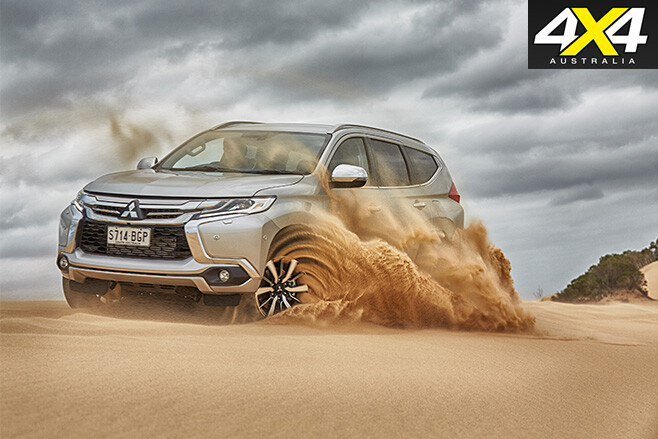
SPORTS RORTS Mitsubishi has ditched the Challenger for an all-new Pajero Sport to compete in the 4×4 wagon segment.
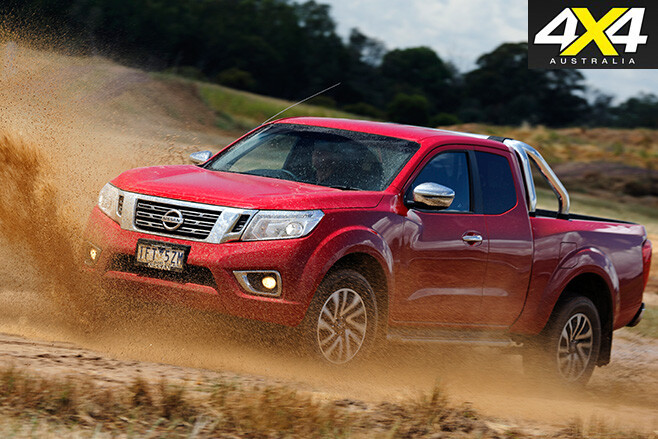
NEW NAVARAS SPRUNG Nissan’s new Navara NP300 ‘workhorse’ variants are spring-loaded with options designed to appeal to commercial and fleet buyers.
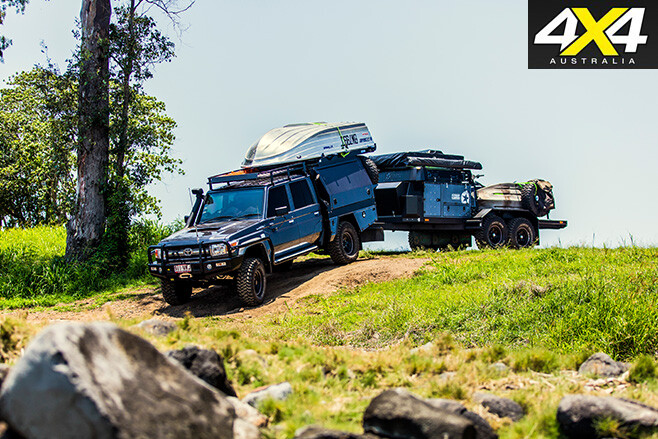
GOLIATH It’s not every day you find a Land Cruiser that leaves you speechless. But this VDJ79 is not your everyday Land Cruiser.
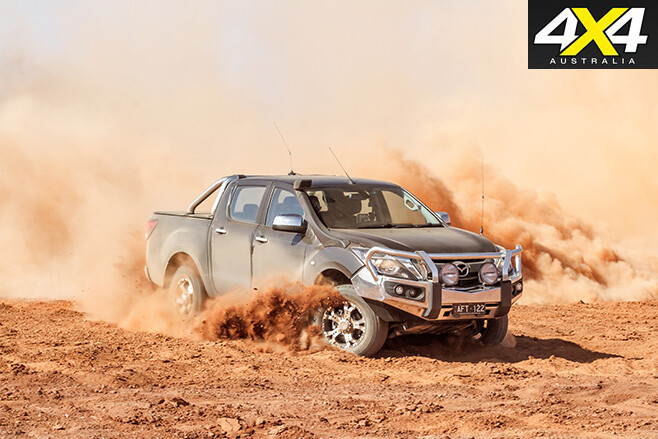
RED HEAT When you are chasing adventure in outback Australia, you have to take the good with the bad. If you can do this, you’re guaranteed a great adventure. A kitted-out Mazda BT-50 will help, too.
JOL’S TRACK Outback legend Jol Fleming has opened up a new track connecting the northern Simpson Desert’s Hay River Track with the western Queensland town of Bedourie.
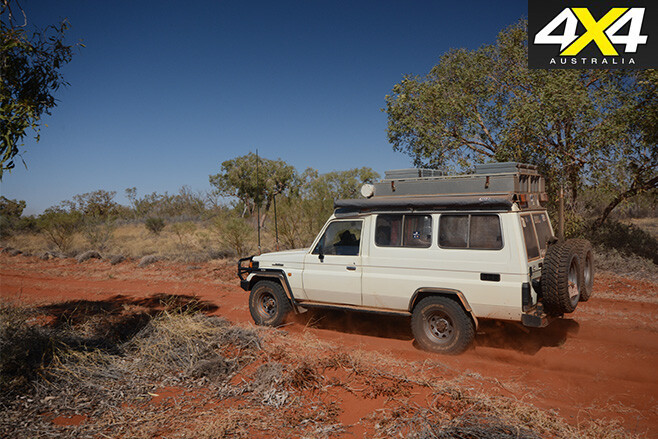
SNAKE PATROL These two Nissan Patrols aren’t yellow when it comes to heading bush with a belly full of snakes.
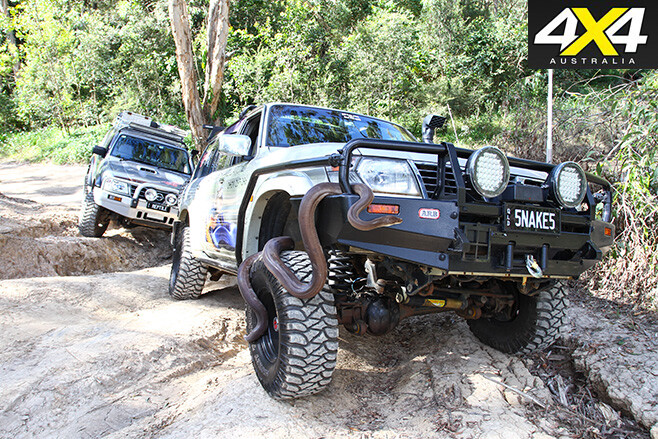
FOLLOW THE SUN In the Murray-Sunset National Park there’s an east-west track that offers solitude, history and sandy four-wheel drive tracks.
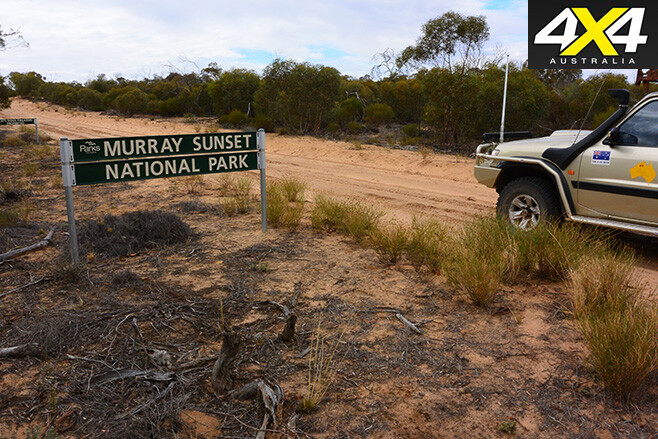
MOG BLOOD With great power come great responsibilities. Almost nothing can stand in the way of super-tough blood-brothers: the Mercedes-Benz U430 and 6×6 Zetros.
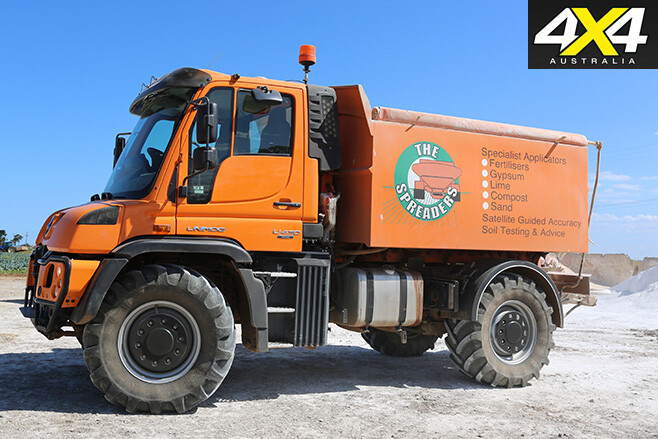
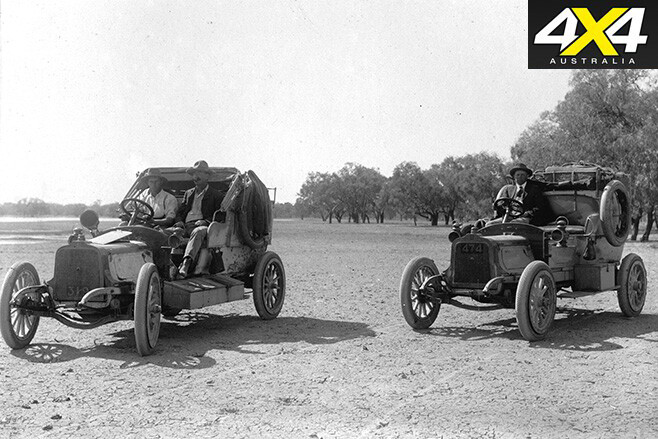
TALBOT TRAILBLAZERS At the dawn of the motoring age, adventurers Harry Dutton and Murray Aunger drove a 19kW Talbot through the heart of Australia, from north to south. We follow their tracks.
Grab your copy of 4X4 Australia from newsagents or get it early next time by subscribing to 4X4 Australia in electronic or print format.
It’s not often Toyota updates its Land Cruiser. So when it does it tends to be pretty big news. This is the latest Cruiser tweaked: the 200 series.
WHAT’S THE DEAL?
A 200 Series Land Cruiser ain’t cheap, but for its fans there aren’t many alternatives (would-be competitors such as the petrol-only Y62 Patrol are largely overlooked by those looking to go off-road, while other vehicles are either too small or less convincing). This latest update to the 200 Series, which arrived in 2008, adds a new look, especially around the front, where the grille, headlights and bonnet have been revised.
The price tag has also come down slightly but starts at a hefty $76,509 (plus on-road costs) for the GX, typically reserved for mining fleets and tour operators. That car gets barn rear doors, vinyl flooring, steel wheels and five seats. But it’s the only one fitted standard with a snorkel (on others it’s another $500).
From there it’s a step up to the GXL tested here. It’s $82,000 as a petrol V8 or $87,000 as a diesel V8, but the difference is more pronounced if you add the $3250 Kinetic Dynamic Suspension System (KDSS, which effectively decouples the stabiliser bars for off-road work). That is an option on the diesel, but it is standard on the petrol model. The GXL also picks up a reversing camera, eight seats, alloy wheels, dual-zone climate control, satellite-navigation and smart key entry.
The VX ($92,500 as a petrol and $97,500 as a diesel; both with KDSS) adds partial leather seats, auto headlights and wipers, sunroof, front and rear parking sensors, infotainment control buttons on the steering wheel, powered front seats and four-zone air-conditioning.
VIDEO REVIEW: What difference does KDSS make?
At the top of the Land Cruiser tree is the Sahara ($113,500 for petrol, $118,500 for diesel), which adds heated front- and middle-row seats, a cooled centre console, powered tailgate, wireless phone charging, twin rear seat TV screens, auto high beams and various active safety systems, including blind spot warning, auto emergency braking and lane departure warning.
Heavier models (the VX diesel and petrol/diesel Sahara) make do with seven seats, due to issues of exceeding the grow vehicle mass (GVM) with eight people on board.
PRACTICALITY
The 200 Series is a big machine and delivers on interior space. The width across the middle-row seats, in particular, is impressive, allowing for three people to travel side by side in comfort; it means you can easily fold the third-row seats up against the side of the car (they don’t fold into the floor as with the latest 150 Series Prado), or you can remove them completely for extra luggage space and still comfortably carry five.
Basic controls are well laid out and logical, with one exception – the colour touchscreen in the GXL. It’s fiddly and frustrating, especially when you’re trying to line up the virtual buttons while on the move; they’re too small and often require two or three prods to get the desired result. The screen can also be difficult to see in direct sunlight, even when in the daytime mode.
ON THE ROAD
Few cars munch the miles as effortlessly as a Land Cruiser. The 200 Series is seriously quiet and refined, making for easy long-distance touring.
The suspension is also soft and supple, arguably too much so when fully laden, with the vehicle often leaning noticeably through bends and sitting down slightly in its tail, thereby reducing ground clearance a tad.
But it is relatively easy to manoeuvre, given its 2.7-tonne heft. Steering is light and relatively accurate, although the Dunlop tyres will be the first to protest if you push too much through a corner.
The 4.5-litre twin turbo V8 diesel has been tweaked for this latest update, with new fuel injectors and the addition of a particulate filter to clean those exhaust emissions. But it’s essentially the same old girl, with a hearty 650Nm of torque that makes light work of hill climbing and building pace. Power has crept up to 200kW (a benefit of 5kW), but good luck picking it.
Fuel use has also come down slightly in the diesel, to a claimed 9.5 litres per 100km. We found it used more like 13L/100km, which is still enough for upwards of 1000km, from the super-handy 138-litre fuel tank.
OFF-ROAD
For such an accomplished and well-rounded 4×4, the 200 Series is surprisingly capable in the rough stuff. Ground clearance of 230mm is good, without being exceptional, but it does a great job of keeping its extremities out of harm’s way. Similarly, the 32-degree approach angle and 24-degree departure angle (the location of the spare tyre underneath does not help the latter on sand dunes) work impressively.
Also, the Land Cruiser’s full-time four-wheel-drive system is largely ‘set and forget’. It’s immensely capable, even in high-range, but adds extra control and smarts in low-range.
There is a penalty, though; there’s plenty of whining when in low-range, and the Crawl Control function is even noisier, with clicking and graunching that’s seriously off-putting. But, hey, it’s effective, especially for slow-speed ascents, where it perfectly controls torque delivery for slow-speed consistency.
Crawl Control also gets a Turn Assist function (like other Crawl functions, it’s available only in low-range). It heavily brakes the inside rear wheel on tight turns to lock the wheel temporarily but significantly reduce the turning circle. It’s clever stuff that improves off-road manoeuvrability.
The 200 Series continues to offer a better off-road package to those who spend more; from a marketing perspective, it’s a popular ploy, but anecdotal evidence suggests it’s the GXLs that are more likely to do the serious off-road work. Yet the VX and top-whack Sahara are the only ones to get Multi-Terrain Select, which tailors traction systems and throttle control to various conditions.
The Sahara adds to that with three additional cameras that give a better view of what’s around the car and what you’re about to drive over. One of the camera functions is a delayed view that shows exactly what the front wheels are about to drive over.
The Land Cruiser 200 can tow up to 3500kg and carry 200kg on its roof – the latter double the rating achieved by many competitors.
Less impressive is its GVM of 3350kg. It can only carry 610kg of people, luggage, accessories and fuel; that’s not much when you’re going bush.
VERDICT
The latest Land Cruiser update doesn’t mess with a proven and popular formula. It’s almost identical to drive and as capable as ever in the bush.
Indeed the 200 Series remains a mighty machine and one that continues to deliver supreme on-road refinement and comfort as well as excellent off-road capability. But you pay for the privilege, and by the time you get to the VX and Sahara, you’re looking at seriously expensive machines.
PRICE AND SPECIFICATIONS
Toyota Land Cruiser 200-Series GXL
Price: $87,000
Engine: 4.5-litre twin-turbo V8 diesel, 200kW at 3600rpm, 650Nm at 1600-2600rpm
Transmission and 4WD system: Full-time dual-range 4WD
Braked tow capacity: 3500kg
Spare tyre: Full-size
Fuel tank: 138 litres
Fuel use (claimed): 9.5L/100km
Fuel use on test: 13.6L/100km
Approach/departure angles: 32 degrees/24 degrees
Ground clearance: 230mm
I remember tootling around the countryside with 100W halogen driving lights, upgrading them with whopping 120W and 150W bulbs, melting the reflectors and replacing the bulbs after a few thousand corrugations.
And I was still a little unsure of what lay along the sides of the road, waiting to pounce into the path of my 4×4.
Enter HID lights. My trusty Land Cruiser spent close to seven bright years with a set of superb 35W HIDs blazing away. Sure, I could see almost a kay down the track if it was straight enough for the laser-like beam to cut through the mist, but I was still left a little unsure of the sidelines.
Most recently, LED lights hit the scene. That, combined with this magazine’s light testing, which has seen close to 40 sets of lights grace the Cruiser’s front bar, led me to think that my newly acquired LEDs were the duck’s nuts of aftermarket driving lights.
Then came FYRLYT, with its crew declaring the advantages of good old halogen driving lights. They suggested that their latest and upgraded product, the Nemesis 9000, was not only as bright as HID but was also safer to drive with, given that the projected light spectrum was similar to natural daylight.
Wow, huge claims indeed! Claims that had to be tested.
With 500W of firepower (yep, you read right – each light packs a 250W halogen globe), we set out with another two sets of lights – HID and LED – fitted to our test vehicle’s bullbar.
Now, before we get into the lights’ performance, I need to point out that, because of the current draw, we had to install a completely new wiring loom to FYRLYT’s specs, with much thicker wiring, two 40-amp fuses, two relays and a 12V-24V converter. Yep, although this light kit is designed to run on a 12V vehicle, the actual bulb is a 24V unit, so it requires a DC-DC stepdown converter, which is included in the kit.
Next, we need to examine a couple of FYRLYT’s claims, which are that halogen’s CRI (colour rendering index) light output (colour, not brightness) is closer to real daylight than LED, and that LED light output can make it harder to detect objects in the 600 to 800 nanometre colour range – that’s the orange/brownish/reddish darker end of the colour chart. Crikey, isn’t that the colour range of most of the beasts involved in animal strikes?
Holy cow, roo, wild pig and wombat – that means the very animals we are trying to spot while piloting our rigs at 100km/h through the back blocks are the ones that are hardest to see if you’re using the wrong type of driving light. Surely not!
There are a few technicalities that need to be remembered when testing and comparing lights of different types (halogen, LED and HID). For one, brightness is not whiteness. That is, a light can be bright without being white.
Conversely, whiteness is not a measure of brightness. That is, just because it’s a white light doesn’t mean it’s a bright light. Got it? Good!
Now, as halogens are a ‘warmer-coloured’ light than LEDs – that is, not as white or blueish – they may seem less bright, but that’s not really the case. A warmer light can be brighter.
The reason I’ve outlined this very important point is that it’s all too easy to write off a warmer light being not as good as a whiter light.
That was my first reaction when I unleashed 500W of Nemesis – they didn’t seem very white. But when my brain clicked in and I realised I could see a lot of the road, the trees and the paddock out to the sides, both close to my vehicle and a long way away, I understood how good these lights really were.
Running multiple wiring looms, I had the ability to switch between halogen, HID and the LED light bar, and I found everything was easier to see, the drive was more comfortable and the colouring with the halogen FYRLYT lights was more realistic. By contrast, the LED and HID lighting seemed less natural and their tinged colouring made some roadside furniture look almost fake.
Sure, I could see a long way down the road with the HIDs, although they didn’t have a huge, even spread-pattern. And, yes, the LED bar gave great spread, but it lacked outright range. I liked the Nemesis halogens more and more each time they were flicked into action.
Strangely, I felt more comfortable with the warmer glow, but I still had to get my brain around the fact of being able to see just as much (if not more) as I could with white light. The same went for my passenger during the testing; he agreed he could see more and that Nemesis halogens were kinder to the eyes.
The broad spread of light from the Nemesis comes down to the design of the reflector, not just the light colour or brightness. The deep-dished housing has been designed perfectly to turn a treacherous track into a flood-lit scene.
The Australian-made Nemesis light incorporates a hard-coated lens and reflector, a reinforced high-impact resin body, and a German-made Osram halogen bulb purpose-designed and manufactured for FYRLYT. The light body fits via an aluminium billet base with a vertical bolt for rotational adjustment and a horizontal bolt for tilt adjustment.
A highlight of the system is that each light can be set as a spot or a spread beam via a push and twist of the bulb holder (no tools are needed), plus there’s a Gortex breather to allow air pressure equalisation and waterproofing.
FYRLYT has resisted the use of an additional separate lens protector to allow as much light as possible to pass through the single-layer sacrificial cover. This is easily removed and replaced if needed, without tools. The bulb is also easily replaced without tools, rounding out a light that is fully serviceable and repairable via replacement parts.
The overall dimensions for the deep-dished and simply-designed housing plus its high-strength, vibration-resistant machined-alloy foot is 208mm wide by 220mm high and 150mm deep. Weighing in at 1.1kg each, the 9000-lumen Nemesis is much lighter than most other lights of this size.
Each light comes complete with the DC-DC voltage converter, plug wiring and bulb, and they retail for $990 per pair. FYRLYT does have two cheaper options – a 5000-lumens pair for $599 and a 3000-lumen pair (also $599), while the ground-breaking 9000s are available as a straight 24V system for the trucking industry, for $630 per pair.
For me, the hardest part of fitting the kit was the wiring; there is no off-the-shelf DIY wiring loom available that will handle the current draw, so I assigned the job to my local sparky.
Fitting the lights to the bullbar was as easy as it was in the old days – one bolt into the bar to adjust the direction of the light and one bolt through the base to adjust the tilt of the light; no hard-to-get-at skeleton brackets in sight!
The double-pinned plug is like no other, but it’s included in the kit and plugs straight into the rear of the light body.
While the spot beam is great, I would use the spread beam, as there is no easily discerned loss of illumination distance in this mode as compared with the spot mode. On top of that, the sheer ‘volume’ and quality of light is impressive, and it’s evenly dispersed, both horizontally and vertically. This allows for variations in road surface, while maintaining plenty of light where it’s needed.
Safe night driving is all about having vision far and wide enough to spot any sudden attempts by suicidal animals to cross outback roads. Driving on major highways requires drivers to constantly flick from high to low and back again, and the halogens provide instant-on lighting, with no warm-up time needed.
What does all this tell us? Sure, drool over the photos as much as you like, but keep in mind that photos will never tell you the complete story. Also, never take notice of anyone who hasn’t tested and compared all the different kinds of lights for a decent amount of time.
At 4X4 Australia we have fitted the lights correctly and driven with them, and I can tell you these Nemesis 9000 driving lights won’t be moving from my bullbar – I reckon they are the best set of lights I have ever driven with and I don’t see any reason to use additional lights or bars to get me through my long-distance night drives, other than perhaps some ultra-wide lighting for the odd occasion that I would like to see almost 180 degrees.
So there it is – ‘old’ technology combined with a pile of smart development has tackled the latest and greatest high-tech world and arguably come out on top. For more information or to pick up a set, visit: www.fyrlyt.com.
Cheerio
Huge thanks go out to my local sparkies at Camden Haven Auto Electrical for installing the FYRLYT wiring loom. They constructed the new wiring loom as per the specifications to ensure maximum light output was achieved. Call them on (02) 6559 5511. They’re based at: 9 Bayside Circuit, Laurieton, NSW.
For more driving lights goodness, check out our Round LED driving lights comparison.
In a year of all-new-vehicle abundance, the Toyota Prado was the only simply-updated four-wheel drive to make our list of finalists.
Toyota’s 2.8-litre 1GD-FTV engine is now the go-to mill for the company’s smaller 4x4s and has been transplanted, along with a new six-speed automatic transmission, to the Prado, bringing more power, torque and, significantly, improved refinement to the popular family wagon.
Toyota didn’t do much else to the Prado. The mid-spec GXL model, as tested here, now gets sat-nav as standard, while the top-spec Kakadu gets some fresh safety tech. Otherwise, it’s business as usual and that’s not such a bad thing.
TOURING The 120 Series and the more-recent 150 Series Prados have always been supreme tourers, and there’s no reason to change that for the updated model. The Prado has plenty of interior space; compliant suspension that gives a silky, though sometimes wallowing, ride; and a no-frills level of specification.
These ingredients are just right for a long-road hauler. The improved NVH, and hence refinement of the freshly fitted engine, just adds to the perfect recipe.
Throw in an unmatched 150 litres of fuel capacity and the Prado beats any standard vehicle for touring range. The Prado needs that capacity, too, as it was the thirstiest car at 4X4OTY, gulping down 13.5L/100km, yet it still runs the longest between fill-ups. The official figure for the auto wagon is 8.0L/100km.
The new six-speed transmission gives a second overdrive for highway touring, but tends to search between fifth and sixth at 100km/h.
TRAIL DRIVING The supple suspension, big cabin and commanding view of the track ahead make the Prado just as dominant on the tracks as it is on the open roads. The Toyota is really at home here and the rougher it gets the happier it seems to be.
The high-riding wagon is never challenged for clearance and its long-travel rear end tackled the toughest tracks the High Country could throw at the showroom-spec cars.
As seen in the Hilux and Fortuner, the new 2.8-litre/six-speed powertrain was flawless in this terrain, although it requires a heavy stomp on the throttle to get it up steeper hills.
SET-PIECE HILL CLIMB Speaking of hills, on the rutted climb at the Melbourne 4×4 Proving Ground, the Prado put that plentiful rear-wheel travel to good use to conquer the climb. It needs it, too, as there is no rear diff lock (RDL) in this spec Prado (it’s in Kakadu-spec only) and the ETC feels a generation or two older than that in the new Fortuner and Hilux. The ETC pulsed and grinded its way up the hill but got the Prado there in the end.
As expected, there are no clearance issues for the Prado, and low range, first gear, is all you need for a controlled descent – no electronic wizardry required!
CABIN, EQUIPMENT AND ACCOMmODATION It’s always nice to jump in to the cabin of a decent-sized 4×4, and the Prado just makes the mark here. It is so much more accommodating than any of the 4×4 utes or their wagon derivatives, with a seating position that only a bespoke wagon body can deliver. In fact, on a few occasions our judges mentioned the seating position in the Prado as a positive.
The Prado isn’t left wanting for much, even if the GXL’s cabin is pretty basic and the inclusion of standard sat-nav barely makes up for the fact that, spec-for-dollar, the Toyota is trumped by its newest competitor, the Ford Everest. Sure, the Prado is basic, but it does everything it needs to and it all feels good quality and easy to use. Maybe that’s just the familiarity of the ageing model.
The GXL offers rear seat control for the climate control and has vents right through to the rearmost seats, which are best left for the kids on short trips. The Prado also has tie-down points in the cargo area, unlike its new sibling. There’s a 12-volt outlet, a USB outlet and a 220-volt outlet in the cabin.
SUMMARY Even as the highest-priced car in this bunch, the Prado GXL is still an affordable family 4×4. It does everything asked of it without fuss or fanfare and is a near-on perfect blank canvas on which to create a long-distance tourer.
About the only criticisms the Prado scored from the judges centred on its looks and its dopey-eyed front-end treatment, but the Prado has never been a looker. It just gets the job done without being pretty, and that’s what so many people find appealing about it.
One of our judges at 4X4OTY must be one of those people, as he gave the Prado the highest score among the finalists.
Dean Mellor summed up the Prado by saying: “It ain’t pretty, but a fantastic driving range, impressive off-road capability and superb on-road comfort combine to make the Prado one of the best long-distance touring wagons on the market”. ’Nuff said!
SPECS
- Engine DOHC 16-valve 4-cyl turbodiesel
- Capacity 2.8-litre (2755cc)
- Power 130kW @ 3400rpm
- Torque 450Nm @ 1600- 2400rpm
- Gearbox 6-speed auto
- 4X4 System Full-time dual-range
- Crawl Ratio 36.1:1
- Construction separate chassis
- Front suspension independent/coil springs
- Rear suspension live axle/coil springs
- Wheel/tyre spec 265/65R17 112S
- Kerb Mass 2205kg
- GVM 2900kg
- Payload 695kg
- Towing Capacity 2500kg
- Seating capacity seven
- Fuel tank capacity 150 litres
- ADR fuel claim 8.0L/100km
- On-test consumption 13.5L/100km
- Touring range* 1292km
- Price $61,990 (inc auto)
*Based on test consumption and 50km ‘safety margin’.
MORE 4X4 OF THE YEAR
HOME: 4X4 OF THE YEAR 2016
On the shortlist for 4X4OTY 2016 were the Hilux, Triton, Fortuner, Prado, Navara and Everest.
THE FINALISTS
The six best 4×4 vehicles of 2015 battling it out to be crowned 4×4 Of The Year 2016.
THE RESULTS
Only one of the six best 4x4s from 2015 can be crowned 4×4 Of The Year 2016
4X4 OF THE YEAR HOME
Finding Australia’s Best 4x4s
Nissan threw tradition to the wind when it launched the NP300, or D23 Navara, midway through 2015.
While many will tell you a load-lugging ute needs leaf springs under its tray, forward-thinking companies such as Land Rover have proven otherwise, opting for coils and links on the rear axle. Nissan became the first to apply this to a mainstream one-tonne ute when it released the coil-sprung NP300 double-cab models, though the single and king cabs retain leaf springs.
Nissan also used the new model to release a new high-tech diesel engine. It’s a relatively small 2.3-litre unit with a pair of turbochargers that boost power and torque numbers to competitive heights. The Navara at 4X4OTY was a top-of-the-range STX double cab, equipped with the seven-speed auto transmission.
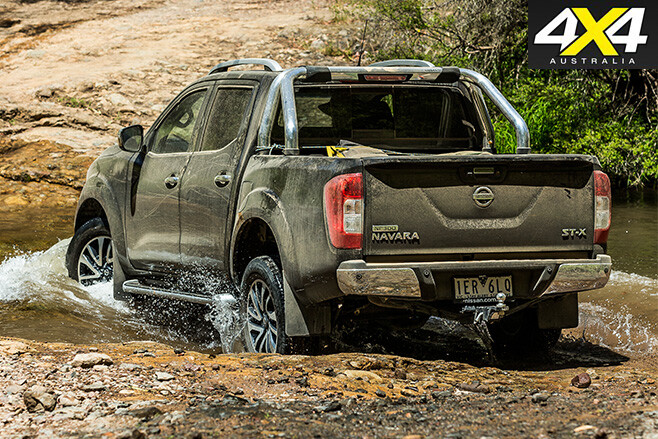
TOURING With Navara’s coiled-for-comfort-and-compliance rear end, it’s a smoother tourer than most other one-tonne utes. The coils ride over bumps better and grant more control of the rear axle over uneven road surfaces and corrugations. Axle tramp when accelerating out of corners is more controlled than it is in leaf springs, but the improvement is not the huge a leap forward you might expect.
Nissan still had to spring the coils stiff enough to carry loads and hasn’t reduced its payload capacity. But, from our experience, the coiled Navaras don’t like half a tonne in the tray.
The little 2.3-litre mill powers along thanks to 450Nm, which is enough to compete with the bigger engines in the class. The four-cylinder engine is a bit harsh and noisy when you ask it to deliver its best performance, but this is a light truck after all. It’s well-assisted by the seven-speed automatic transmission, which is far better calibrated than the last seven-speeder in Nissan’s old Navara TDV6 550. This one will hold the gears you manually select, but it’s not always happy to select the ratios you want.
11.7 litres of sweet diesel fuel went through the Nissan mill for every 100km, making it one of the more frugal cars along for the ride. The official figure sits at 7.0L/100km. A plus for touring in the STX is its spacious, well-appointed interior, which was a favourite with all of our judges.
TRAIL DRIVING The Navara is probably the lowest ute in its class and was the first to bump and grind over rocks and ruts on this drive. It’s certainly a contender for a suspension lift if you’re going to take it off-road regularly.
We also found the front end to be noisy when cornering on gravel roads. The low height is also a concern for water crossings; Nissan only quotes a 450mm wading depth, as opposed to 800mm for the class leader.
The engine and transmission work well on hilly terrain, holding the gears as mentioned, and the vehicle always has enough power on tap thanks to the complex bi-turbo set-up.
SET-PIECE HILL CLIMB Ground clearance was again the demon when it came to the rutted hill climb: the Navara scraped its undercarriage more than any other car.
The STX comes with a rear diff lock, which keeps the ETC active even when the RDL is engaged. It needed it, too, because, even with the diff lock in, it scrambled and struggled to make it up. There was no chance of it going up without the RD, as the ETC couldn’t keep up.
The NP300 is better suited to all road touring than heavy-duty off-road driving.
CABIN, EQUIPMENT AND ACCOMMODATION The strong point of the STX is its cabin. Comfortable, spacious, well-appointed – it’s what you expect of a top-of-the-range model. The lounge-like, heated, power-adjustable leather front seats are just the tip of the iceberg, as there’s also sat-nav, climate control and more – it even has a power-opening rear window to the cargo tray, which some of our judges reckon is a good thing.
Lack of reach adjustment for the steering column is an oversight in any new vehicle, but the Nissan tiller feels nice in your hands.
Despite its big feel, the rear seat doesn’t work so well for three passengers across, although it does fold up nicely for extra flat stowage space.
Navara passengers have to make do with just one 12-volt outlet and one USB power outlet.
PRACTICALITIES A boon for previous STX Navara owners was the car’s unique ‘Utili-Track’ adjustable cargo restraint system in the tub. Utili-Track rails used to be on both the sides of the tub and on the tub floor, giving the best factory tie-down points on offer. Unfortunately, the floor rails are now left out and the side rails are up high on the sides, so you can’t tie anything down in the tub. The tub is still big and does come with a protective liner.
The STX wears 255/60-R18 rubber; has two tie-down/tow points at the front but none at the rear; and the air intake breathes above the headlight, which doesn’t help the relatively low wading depth. There’s no space to easily fit a second battery in the engine bay.
SUMMARY “Small motor, big heart, even bigger cabin,” is what John Rooth said about the STX. “The Navvy is a tad soft off-road but so well thought-out in the detailed stuff that it’ll make heaps of friends in the real world.”
That’s it – the Navara is well-appointed and goes alright, but when the going gets tough it is let down, whether by its ground clearance or its ability to carry a heavy load in the tub. The steering feel was also criticised, as it is heavy and unwieldy – it feels like you have two flat front tyres.
Full marks to Nissan for thinking outside the square; unfortunately, the execution isn’t quite what it could and should be.
SPECS Engine: 2.3 litre 4-cyl bi-turbo- diesel Max power/torque: 140kW/450Nm Gearbox: seven-speed automatic 4X4 system: dual-range part-time Kerb weight: 1865kg GVM: 2910kg Payload: 1045kg Towing capacity: 3500kg GCM: 5910kg Fuel tank capacity: 80 litres ADR fuel cons: 7.0 litres/100km PRICE: $54,490 (inc auto)
* Automatic bi-turbo 4×4 Dual-Cab Pick-Ups only. Manual saves $2500.
MORE 4X4 OF THE YEAR
HOME: 4X4 OF THE YEAR 2016
On the shortlist for 4X4OTY 2016 were the Hilux, Triton, Fortuner, Prado, Navara and Everest.
THE FINALISTS
The six best 4×4 vehicles of 2015 battling it out to be crowned 4×4 Of The Year 2016.
THE RESULTS
Only one of the six best 4x4s from 2015 can be crowned 4×4 Of The Year 2016
4X4 OF THE YEAR HOME
Finding Australia’s Best 4x4s
Approaching half a century of Hilux production, Toyota has delivered its eighth-generation Hilux workhorse and – as was the case with each new generation before it – it’s more passenger car-like, more functional and more capable than its predecessor.
As the best-selling 4×4 vehicle in Australia in 2014 (it’s shaping up to take that gong again in 2015), a new Hilux is big news for 4×4 buyers, and the new model was one of the most keenly anticipated launches of the year. Toyota made us wait, as it was the last of the new and updated utes to hit the market in 2015.
The wait was worth it. While the Hilux doesn’t raise the bar in the one-tonne ute segment, it has caught up with the competition, and the new model surpasses the old model both on- and off-road.
The new Hilux ticks all the boxes; with its new 2.8-litre 1GR diesel engine; new six-speed transmissions; longer-travel suspension for better off-road ability; vastly improved electronic chassis and traction aids; heavier-load and towing capacities to match the class leaders; and a more modern look inside and out.
The model supplied for 4X4OTY was the double-cab SR5 auto, with the optional leather seats pack.
TOURING The first thing you notice about the latest Hilux is that it has a more modern and accommodating interior. It is more passenger car-like and better suited to long-haul driving with the family on board, especially in this top-spec model.
Drive away, however, and you’re instantly reminded that this is a load-hauling truck. The rear suspension is firm and jittery on poor and broken road surfaces – to the point of being downright uncomfortable. This is worse at low speeds, but it gets better as you go faster. From past experience, it isn’t such a problem with a load in the tray.
The 1GR-FTV engine is adequate but no rocket ship, and the six-speed auto can get busy over undulating highway as it hunts for the most efficient cog. Interestingly, the Hilux consumed 11.8L/100km – the same amount of diesel as the Fortuner on test. Its official ADR figure is 8.5L/100km, and the tank holds 80 litres of fuel.
TRAIL DRIVING As expected, the Hilux applies itself well to off-road tracks. It has the same powertrain and part-time 4×4 system as the Fortuner. Visibility is good, performance is adequate and the traction control system is excellent.
We might have expected the longer wheelbase of the ute to smooth out the ride a bit, but the heavy-duty leaf springs under the back counter that idea.
SET-PIECE HILL CLIMB Just like what happened with the Fortuner, the ETC did a far better job of getting the Toyota up our rutted hill than the rear diff lock did. This is because the RDL cancels out the ETC and limits your traction aids to just the rear axle.
It feels like a rear-drive-only car with the diff lock engaged and struggles to climb. The longer wheelbase did do it some favours here, but that had more to do with the spacing of the ruts and holes in the track.
In low range, first-gear engine braking provides nice downhill control and the auto SR5 also gets downhill-assist control, which seems to do its job well, too.
CABIN, EQUIPMENT AND ACCOMMODATION The Hilux now has a much more comfortable and passenger car-like interior and that’s a good and a not-so-good thing. While all of our judges appreciate the added comfort and functionality, none of them liked the tablet-style media screen and its fiddly buttons – reflections on the screen’s surface also make it hard to see its display. The way it’s placed on the dash makes it seem like it was an afterthought.
A few of our drivers also criticised the grab handle on the driver’s-side roof. It almost knocked a couple of us out when we banged our heads on it at different times when driving over rough terrain. It isn’t needed there, or at least it could be a folding one that sits flush when it’s not being used.
There is plenty of power available in the SR5 cab – two 12-volt outlets and a single USB outlet up front, and a 220-volt outlet in the console. The fold-out shopping bag holders on the backs of the front seats are another nice and very useful touch. The seats are small but comfortable, and rear-seat accommodation is good. Our taller drivers felt that the steering wheel reach didn’t come out far enough, but at least the Hilux now has reach adjustment, unlike some utes.
PRACTICALITIES The SR5 wears 18-inch alloy wheels and 265/60R-18 tyres but happily accepts the 17s that are fitted to lower-grade models, or aftermarket wheels, offering more tyres choices. Like the Fortuner, the Hilux has very limited space inside the front ’guards, so fitting larger tyres is an issue, but we expect the aftermarket to come up with some fixes for that.
The SR5 has a smooth-sided cargo tub without the external tie-off points that the Workmate and SR models have. That can be good or bad, depending on your use of the vehicle. Inside the tub there is a hitch point at each corner, but they are placed halfway up the sides rather than at the bottom, which is where you’d ideally want them. A few of our judges commented that they would expect a tub liner as standard at this top-spec price point.
The engine bay is the same as the Fortuner’s, so there’s plenty of space for accessories. The air cleaner is easy to access and breathes through the inner ’guard, and the underbody protection is substantial.
The inclusion of an additional fuse block for accessories shows that Toyota is thinking of its end user, although the terminals used are not a common type. Toyota will happily sell you factory accessories such as a snorkel, lights, winch and bullbar.
SUMMARY While the new Hilux is a leap ahead of the previous model in most ways, it still hasn’t taken the segment by the horns, let alone advanced it.
Sure, it will still be the biggest-seller, thanks to its legendary reputation and its thousands of fleet and business buyers, but Toyota has simply caught up with the competition, rather than surpassing it.
While other markets for the Hilux have got new tech including emergency autonomous braking and crawl control, Toyota Australia is holding back on those features for its buyers. But that won’t stop the Hilux selling its arse off and potentially being the best-selling car in the country in 2016.
SPECS
- Engine: DOHC 16-valve 4-cyl turbodiesel
- Capacity: 2.8-litre (2755cc)
- Power: 130kW @ 3400rpm
- Torque: 450Nm @ 1600-2400rpm
- Gearbox: 6-speed auto 4X4 System: part-time dual-range
- Crawl Ratio: 36.1:1
- Construction: separate chassis
- Front suspension: independent/coil springs
- Rear suspension: live axle/leaf springs
- Wheel/tyre spec: alloy/265/60R18
- Kerb Mass: 2125kg
- GVM: 3050kg
- Payload: 925kg
- Towing Capacity: 3200kg
- Seating capacity: five
- Fuel tank capacity: 80 litres
- ADR fuel claim: 8.5L/100km
- Price: $57,990 (inc auto and leather seats)
*Based on test fuel use, claimed fuel-tank capacity and a 50km ‘safety’ margin.
MORE 4X4 OF THE YEAR
HOME: 4X4 OF THE YEAR 2016
On the shortlist for 4X4OTY 2016 were the Hilux, Triton, Fortuner, Prado, Navara and Everest.
THE FINALISTS
The six best 4×4 vehicles of 2015 battling it out to be crowned 4×4 Of The Year 2016.
THE RESULTS
Only one of the six best 4x4s from 2015 can be crowned 4×4 Of The Year 2016
4X4 OF THE YEAR HOME
Finding Australia’s Best 4x4s
The Fortuner is another new nameplate for Australia and, like the Everest, it’s one that has been used overseas for previous generations of the vehicle.
While the Fortuner is new to Australia, it could have easily been called the 4Runner, as it carries on the tradition of that vehicle as a wagon version of the popular Hilux ute. Sound familiar?
With the eighth-generation Hilux also fresh off the boat, Toyota has re-introduced the wagon variant and given it the name used in Asian countries, whereas the US still uses the legendary 4Runner moniker. In line with the latest Hilux, the Fortuner gets the new 2.8-litre four-cylinder 1GD diesel engine with a six-speed auto, or a manual transmission, and part-time 4×4 with a two-speed transfer case.
The Fortuner has a 335mm-shorter wheelbase than the Hilux ute, while multi-links with coil springs at the rear replace the utes leaves, and disc brakes are used in lieu of drums down back.
Toyota has given its wagon bespoke front sheet metal, so the Fortuner isn’t instantly recognisable as a Hilux derivative. Inside, there’s a different dash treatment to provide a more upmarket feel than that of the workhorse. It has succeeded here, as the cabin has a quality feel and look about it, especially if the brown seat trim colour grows on you. There are more soft-touch points around the cabin than in the Hilux (and other wagons in the segment) to give a premium feel, even in the mid-spec GXL variant we had at 4X4OTY.
TOURING Toyota has delivered a sweet suspension tune on the Fortuner, giving it a relaxed and comfortable ride over broken back-country and gravel roads.
The engine has adequate power, but it’s no missile and you find it lacking when you want to overtake from around 80-90km/h – the go pedal doesn’t seem to want to go down far enough.
The Fortuner is geared very tall for fuel economy, and out on the open highway the engine ticks over at around 1300rpm. As a result, the six-speed auto willingly shifts back a cog at the mere hint of an incline, and that makes it feel busy at times as it hunts for a ratio and converter lock-up. It’s also annoying on arterial roads when it drops to top gear/locked converter at 80km/h and the engine thrums and drones at such low revs.
On test, the Fortuner sipped 11.8L/100km (on the back of an 8.6L/100km official rating). It has an 80-litre fuel tank, so it offers a good highway touring range.
TRAIL DRIVING With just a part-time 4×4 system to work with, you need the centre diff locked any time you are in four-wheel drive, which can be annoying when you have tight manoeuvring, multi-point turns or varying sealed/unsealed roads to contend with. The electronic traction control does an excellent job of keeping drive to the wheels with grip, regardless of the surface or incline.
Low-speed punch from the engine is always on tap; the auto is quick to shift back to control-descent speeds even when you leave it in drive or use the paddle shifters; visibility over the bonnet is good; and all-in-all the Fortuner’s extremely capable on the tracks.
SET-PIECE HILL CLIMB The way we tackle our rutted climb is to use every piece of tractive weaponry a car has on offer. We then run each car up the same straight line through the deepest parts of the ruts. The idea is that if you employ all the kit available, you’re giving the vehicle the best chance of making the climb. For the Fortuner, and most of the cars on this test, that meant using low range with the rear diff lock (RDL) engaged.
To our surprise, the Fortuner struggled with its RDL engaged – the rear wheels spun excessively, slewing the car off track and kicking up a dust storm. It made it up, but only when driven off the hard line.
We then disengaged the RDL and, lo and behold, the electronic traction control made the climb look easy. The Fortuner got to the top with no wheel spin, no fuss and no sweat.
In the name of durability, Toyota has designed the car to disable ETC when the RDL is engaged, but it’s done such a top job calibrating the ETC that we were left wondering if there’s a use for a diff lock at all.
CABIN, EQUIPMENT AND ACCOMMODATION The Fortuner cabin has a premium look and feel about it. That said, a few of our testers found that the driver’s seat was too small in the squab; we were surprised there was no climate control air-con and no sat-nav in GXL trim; and everyone hated the omission of the volume dial for the audio system, as the buttons on the tablet-style unit are fiddly and slow to use.
The third-row seats fold up to the sides of the cargo area and infringe on space when not in use. The seats are okay for kids but not as comfortable as those in the Everest, and the small rear windows restrict the vision of anyone sitting back there. The absence of any tie-down points in the cargo area is also a huge negative.
Power-wise, there is a 12-volt outlet and a USB outlet up front, a 220-volt outlet in the console and another 12-volt outlet in the back. Just be careful if you’re plugging your car fridge in the back, as there’s nothing to safely tie it down to.
PRACTICALITIES 265/65R17s, as fitted to the GXL, are one of the most common 4×4 tyres sizes, so there are plenty of options available just about anywhere. But your smile will fade if you want to go up a size, as the Fortuner and Hilux have very limited space in the wheel wells.
Even a 265/70 will scrub on vehicles with a legal suspension lift. Without extensive modifications, you can forget about big tyres on these new Toyotas.
There’s space in the engine bay for a second battery and probably a third if you wanted one. The air cleaner is a good size and accessible without tools, and it sucks via the inner ’guard. Toyota offers a factory snorkel among a massive range of off-road accessories, and the clever aftermarket companies already have ranges of off-road gear available.
Heavy-duty protection plates under the Fortuner are a nice touch from Toyota, as are front and rear tow hooks.
SUMMARY Roothy reckons: “The Fortuner is going to make someone somewhere very happy, but in this pack it’s lost by Prado’s perfection and Ford’s form. It’s a great vehicle, but I’m not sure why Toyota bothered.”
That pretty much sums up what most of us thought: the Fortuner does what you expect of it but doesn’t shine in any particular area. It’s no Prado! Of more concern, though, was the lack of equipment and mediocre highway performance that let down an otherwise neat package.
SPECS
- Engine: DOHC 16-valve 4-cyl turbodiesel
- Capacity: 2.8-litre (2755cc)
- Max power: 130kW @ 3400rpm
- Max torque: (man) 420Nm @ 1400-2600rpm
- Max torque: (auto) 450Nm @ 1600-2400rpm
- Gearbox(s): 6-speed man/6-speed auto
- 4X4 System: part-time dual-range
- Crawl Ratio: man/auto 44.0:1/36.1:1
- Construction: separate chassis
- Front suspension: independent/coil springs
- Rear suspension: live axle/coil springs
- Tyre size: (GX/GLX) 265/65R17 112S
- Tyre size: (Crusade) 265/60 R18 110H
- Kerb Mass: 2110-2135kg
- GVM: 2750Kg
- Payload: 615-640kg
- Tow rating: man/auto 3000kg/2800kg
- GCM: man/auto 5745kg/5545kg
- Seating capacity: seven
- Fuel tank capacity: 80 litres
- Fuel use on test: 11.8L/100km
- ADR fuel use auto: 8.6L/100km
- Price: $54,990 (inc auto)
MORE 4X4 OF THE YEAR
HOME: 4X4 OF THE YEAR 2016
On the shortlist for 4X4OTY 2016 were the Hilux, Triton, Fortuner, Prado, Navara and Everest.
THE FINALISTS
The six best 4×4 vehicles of 2015 battling it out to be crowned 4×4 Of The Year 2016.
THE RESULTS
Only one of the six best 4x4s from 2015 can be crowned 4×4 Of The Year 2016
4X4 OF THE YEAR HOME
Finding Australia’s Best 4x4s
It seems insane that in a country as big as Australia – with a large appetite for four-wheel drive vehicles and miles of unsealed roads – that there has never been a mass-produced 4×4 wagon built here.
Who knows, if Ford and Holden had designed and built home-grown 4x4s 20 years ago, they might still be in a position to be making cars here instead of shutting up shop.
Something we can do here and do well is design and engineer cars, and the Everest from Ford is the latest vehicle with roots in Victoria. A continuation of the T6 development, which first spawned the Ford PX Ranger and Mazda BT-50 utes, the Everest is a seven-seat wagon riding on a modified T6 platform. It is built in Thailand along with the Ranger ute.
By modified T6 platform, we mean everything from under the front seats rearwards is new, including the shortened wheelbase (in relation to Ranger) and rear suspension design. We say new as it’s new to T6, but the rear end uses a live axle with coil springs, trailing arms and a Watts link – a design tried and tested in Ford passenger cars for years and well-adapted to the Everest. It works well with the independent coil-sprung front end.
TOURING Like Australian-made station wagons of yore, the Everest is a supreme tourer. The torquey 3.2-litre, five-cylinder diesel engine lopes along at a relaxed pace but keeps plenty of muscle tucked up its sleeves for when it’s needed. The tweaks Ford has made to the engine for the Everest and upgraded PXII Ranger give it more usable grunt – even though the numbers are no higher – while at the same time it’s quieter and more refined.
Clever tuning of the fuel system and a smaller turbocharger are to thank for that.
The aforementioned suspension soaks up road bumps, yet it’s relatively taught and nimble when compared to other 4×4 wagons in this segment. The Everest is no sports car, but it feels like it when you step out of some of the other wagons.
The Everest has an 80-litre fuel tank and an ADR combined fuel figure of 8.5L/100km. On this 4X4OTY test it was the thirstiest vehicle, gulping down a hefty 13.0L/100km over the on and off-road trial.
The Everest also uses AdBlue to help clean up its emissions, which is stored in an 18-litre tank at the rear of the car. Under normal driving conditions those 18 litres should be good for between 12,000km to 16,000km, so you shouldn’t need to worry about it. Drivers doing big mileage or heavy towing may want to carry a top-up bottle of the urea with them.
TRAIL DRIVING The Everest feels just as at home running the tracks of the Victorian High Country as it does on the open roads. The view over the big bonnet is good and the driver’s seat has plenty of adjustment for different drivers. Unfortunately, though, there is no reach adjustment on the steering column.
The powerful engine requires little throttle on all but the steepest climbs, and the automatic transmission continues its fine job of holding the right gears for the steep descents. There’s manual selection via the floor shifter but no column paddles. The suspension still feels firm on the rough stuff, but it’s never uncomfortable.
SET-PIECE HILL CLIMB With its Multi Terrain Selector left in ‘normal’ mode, low range selected in the transfer case, ‘Drive’ nominated in the transmission and the rear diff lock (RDL)engaged, the Ford didn’t raise a sweat climbing our steep and rutted hill, and its electronic descent control offered a smooth and seamless ride downhill.
It wasn’t so successful without the RDL engaged and couldn’t drive up the same line without losing traction. With the RDL in, the Ford keeps its electronic traction control active on the front axle, which is the key to its success here.
The Everest had no clearance issues.
CABIN, EQUIPMENT AND ACCOMMODATION The Everest is only offered as a three-row seven-seater, and it fills that role well. The rearmost seats will accommodate children and adults for shorter rides, while the other seats are big and roomy. The third row is a bit awkward to access, but not as bad as some we’ve tested. Both it and the second row fold flat to give a handy cargo area or somewhere you could lay a mattress over to sleep on in camp.
The Everest is well-equipped with standard features including multiple 12-volt and USB power outlets, a 230-volt power outlet, air-con vents right to the back of the car and dual-zone climate control up front. About the only complaint we have about the Everest’s cabin are the small, fiddly buttons that control the HVAC and how low they are placed in the centre stack. All our drivers appreciated the big-car feel of the Ford cabin.
PRACTICALITIES The 265/60-18 tyre size, as fitted to the Everest Trend, is becoming more common, so there should be reasonable tyre choices available and access to spares in remote areas. Alternatively, you can fit the 17-inch wheels from the base model and open up the next level of choices. The Everest has a full-size matching spare hanging under the back.
Under the bonnet, the engine breathes from over the headlight but via the grille, so it’s not a bad set-up. The air cleaner is large and can be serviced without needing tools. The engine bay is pretty busy, so you’ll have to find somewhere else for an auxiliary battery or powerpack.
If the position of air intake poses a potential problem for you, Ford offers an accessory snorkel among its extensive range of factory options, which includes bullbars and a luggage carrying kit.
Expecting it to be a popular model, the aftermarket accessory regulars are hard at work producing their catalogues for the Everest, too.
SUMMARY
The Ford Everest is an exciting new player in the 4×4 wagon segment. It does everything it claims to and does it well; be that ferrying the family, taking on rough and tough terrain or riding with refined comfort.
It brings leading safety and crash-avoidance technology down to a price point not seen before in this segment, making it more accessible to more buyers. It might not be manufactured here, but we should be proud of what Ford Australia has done with the Everest.
As 4X4OTY judge Dean Mellor commented, it has “loads of equipment in a tough package that has obviously been engineered for local Australian conditions”.
SPECS
- Engine: DOHC 20-valve 5-cyl diesel
- Capacity: 3.2-litre (3198cc)
- Power: 143kW @ 3000rpm
- Torque: 470Nm @ 1750-2500rpm
- Gearbox: 6-speed auto
- 4X4 System: Full-time dual-range
- Crawl Ratio: 38.6:1
- Construction: separate chassis
- Front suspension: independent/coil springs
- Rear suspension: live axle/coil springs
- Wheel/tyre spec: 265/60R18 110T
- Kerb Mass: 2407kg GVM: 3100kg
- Payload: 693kg
- Towing Capacity: 3000kg
- Seating capacity: seven
- Fuel tank capacity: 80 litres
- ADR fuel claim: 8.5L/100km
- On-test consumption: 13.0L/100km
- Touring range*: 719km
- Price: $60,990 (auto only)
*Based on test consumption and 50km ‘safety margin’.
HOME: 4X4 OF THE YEAR 2016
On the shortlist for 4X4OTY 2016 were the Hilux, Triton, Fortuner, Prado, Navara and Everest.
THE FINALISTS
The six best 4×4 vehicles of 2015 battling it out to be crowned 4×4 Of The Year 2016.
THE RESULTS
Only one of the six best 4x4s from 2015 can be crowned 4×4 Of The Year 2016
4X4 OF THE YEAR HOME
Finding Australia’s Best 4x4s