As the road train in front of us lumbered towards some far off destination, the odour of cattle wafted into the cabin of my new Land Cruiser ute.
But it was the truck’s sudden uphill change in direction that really got my dander up, when gallons of effluent suddenly came out of pipes hanging suspiciously at the rear of the stock crate. For the following 10 seconds, my car became a magnet for this ooze and the result was a new, and unwanted green and brown paint job resembeling camo.
This rather annoyed yours truly and I duefully instructed the person driving to “get past the bloody thing, at any cost.” Maybe I should have given him a safety briefing that specified, at “any cost” other than our lives.
Now, anyone that’s travelled on outback roads will know from the signs that road trains can be in excess of 50 metres long, so that’s a lot of rig to pass.
My new V8 turbodiesel Land Cruiser ute would have normally been up to the task of overtaking the truck but, with a trailer attached and running into a head wind, this was a big ask of the Tojo.
The overtaking manoeuvre started well but nearly ended in disaster. It was there and then that I thought I’d see whether there was a power upgrade that would save me from ever having to send my pants to the drycleaners again.
I checked out a few brands and settled on one, which I’ve happily used now for about five years. But technology further developed and new engine models and fuel management systems became available, so it was time for me to see how far things had come.
Unichip came to my attention for a number of reasons. I wanted a system that would suit my vehicle in a range of scenarios – for instance, towing. Some jobs require that I tow a trailer.
On one trip, I took gear to a scientific expedition in the northern Simpson Desert, and my vehicle and trailer combination went over the weighbridge at close to six tonnes. So, low-down grunt and maximum torque for overtaking long road trains is essential.
Then there’s the need for a neat and nimble set-up when there’s no load on the vehicle and it’s just a run-around, requiring almost standard off-the-production-line specs. And sometimes you want an in-betweener, where a little more power goes a long way.
Well, the Unichip is so advanced that all of these scenarios are covered. It comes with a dash-mounted module that allows you to change the mapping of your engine to suit your situation. Switching from standard mode to higher power is just the touch of a button away, but what is even better is that it can be done on the fly.
For example: if you were driving in standard (factory) mode and wanted to overtake the vehicle in front, that’s fine. But if you found you weren’t making forward progress quite as quickly as you thought, just press the button and instantly you will have up to 30 per cent more power and nearly 60 per cent more torque.
The figures and the change in engine performance are what I can only describe as astonishing. Having said that, though, it’s all done within specs of what the motor was originally designed to do. But, for once, the motor has been tuned perfectly at every operating step.
Installation generally takes a couple of hours, and mapping of the new set-up means that your car will spend most of that time on the dyno, tweaking the engine ’til peak performance is achieved.
The Unichip has taken my standard TD V8 from being a great all-round engine and drivetrain combination to a fire-breathing, angry and determined savage. And, because my engine has finally been tuned properly, I’m using less fuel at every stage in the programmed settings.
Engine output has gone from 117kW to 154kW and torque from around 300Nm to 500Nm (measured at the tyres). The guys at Unichip said that these figures are typical performance improvements, but they are also absolutely positive that it will not harm the engine. The engine is still running within its rated tolerances and the benefits are increased power and torque, with a reduction in fuel use.
In addition, I asked for the Bluetooth upgrade, which means I can control the whole engine mapping system from my smart phone. It even has an immobiliser setting that will only allow your engine to idle. Even if you slam your foot to the floor, the engine will continue to purr as if nothing is wrong.
How it works The system is best described as a ‘piggyback computer’, because it doesn’t alter the standard ECU set-up. Instead, it allows the independent of variables such as fuel:air ratios, boost, and timing.
Unichip’s advantage over most other systems is that it’s individually programmable by trained technicians, using a chassis dynamometer to set the unit to each engine’s requirements and driver parameters.
This process can best be described as ‘live’ or ‘real time’ tuning. Once the Unichip is fitted, the vehicle is run on a chassis dynamometer. The technician can then adjust the timing and air-fuel ratios, while watching real-time power and torque readings, to set the optimum and most efficient settings for the job.
For example, if the main driver of the vehicle only tows for a couple of months of the year, then, using one of the five map settings, the vehicle can be tuned to cater for the increased load and subsequent drag. Once home, the driver can use a smart phone app or in-dash switch to set the computer back to standard.
So, there are actually five map settings that can be programmed into the Unichip, giving a range of correctly calibrated, tuned and efficient settings for all of the vehicle’s needs.
Another advantage of the Unichip is that it can be adjusted as more modifications are made to your four-wheel drive. If say a different exhaust, or higher profile tyres are fitted, the computer can be adjusted so that the vehicle will still be running at its most powerful, yet efficient, settings.
While the Unichip mightn’t be the cheapest ‘chip’ on the block, it has to be one of the most versatile. When it’s time to upgrade your 4WD, just uninstall your Unichip and, according to the manufacturers, there’s a 99 per cent chance that it will fit your new car. A quick run on the dyno and new settings downloaded and you’ll be on your way to more efficient and safer driving, getting power to the drive wheels in the safest, most cost-efficient way.
For once, my vehicle doesn’t belch out clouds of unburnt fuel. And the reason for that? It is finally tuned specifically for the vehicle’s tyre and accessory set-up, and my engine is properly tuned.
More info Unichip Q4 installed and tuned by the manufacturer Dynomotive in Bayswater, Victoria. (03) 9762 6500 www.dynomotive.com.au
The Unichip Q4 for the TDV8 70 Series starts at $1924 plus fitting and tuning (which varies from workshop to workshop) Optional Bluetooth Map Select Switch adds $390. to the cost.
4x4Australia Magazine teamed up with the lads down the hall at WHEELS and MOTOR Magazines for a big toodoo presentation of our respective Car of the Year Awards.
It was a pleasure to give the bitchin’ new 4x4OTY trophy to the chaps from Ford Australia who played a big part in the development and engineering of the winning Everest Trend.
We reckon they were pretty happy about it.
Check out our full Ford Everst Trend Review and stay tuned for the Australian Motoring Awards coming early 2017…
MORE 4X4 OF THE YEAR
HOME: 4X4 OF THE YEAR 2016
On the shortlist for 4X4OTY 2016 were the Hilux, Triton, Fortuner, Prado, Navara and Everest.
THE FINALISTS
The six best 4×4 vehicles of 2015 battling it out to be crowned 4×4 Of The Year 2016.
THE RESULTS
Only one of the six best 4x4s from 2015 can be crowned 4×4 Of The Year 2016
4X4 OF THE YEAR HOME
Finding Australia’s Best 4x4s
You don’t even need a road to enjoy the latest updates to Lexus’s rolling palace.
This article was originally published in Wheels magazine on Dec 21, 2015.
WHAT IS IT? The most expensive Lexus in the line-up that’s also the most opulent, feature-loaded SUV from Japan.
WHY WE’RE DRIVING IT The Lexus LX570 has been given a raft of changes, with significant styling updates that include the Lexus spindle grille, as well as a new eight-speed auto that should improve economy, smoothness and drivability.
MAIN RIVALS Infiniti QX80, BMW X5 xDrive50i, Range Rover Sport HSE Dynamic, Mercedes-Benz GLE500.
THE VERDICT The LX570 is a spacious, sumptuous, well-made off-road machine that’s as at home in an arid dustbowl as it is in the CBD. Yet it’s let down by its high price, lack of driveline choices, thirst and minimal dynamic ability that shows its utilitarian underpinnings and rugged origins.
PLUS: Eight-seat space, build quality, off-road ability, smooth transmission MINUS: Expensive, still excessively heavy and thirsty, no hybrid or diesel option
THE REVIEW SOME people have to have the best. The Top Dog. A larger house, longest yacht, and regardless of whether it’s actually better. Hence the existence of the V12-engined AMG models that are usually no better than their eight-cylinder stablemates but are there for the customers with the loot who want to out-do those around them. That’s part of the reason why the Lexus LX570 exists.
It’s arguably a relic of industrial scale: a 5.0-metre long, 2.5-tonne eight-seater truck powered by a thumping great V8 that has an official fuel use claim of 14.4L/100km. Oh, and like a despot’s personal steed, it’s swathed in leather, woodgrain and more features than a late-night television fitness apparatus.
Unashamedly a V8 Toyota Landcruiser underneath, the LX570 gains a fresh look for 2016, with the Lexus spindle grille and jagged, tangram styling festooned with LED daytime running lights to look more like the next-of-kin against its younger showroom siblings. Only the doors and roof are unchanged.
The biggest improvements have been saved for when you’re seated in the captain’s chair of the Lexus liner. The revised interior remains as welcoming as before, with acres of space in any of the three leather-lined rows, and loads of room and seat support for the burliest and/or tallest of drivers. There’ll be no problem viewing the 12.3-inch centre display, and a new electronic park brake in place of the Landcrusier’s traditional bar cleans up the revised centre console. There’s a head-up display before you, while standard safety gear at your fingertips now includes pedestrian pre-crash safety, an alert to stop you from backing into an oncoming iceberg, and adaptive cruise control. The smart cruise also incorporates low-speed automated braking, and can bring the 2.5-tonne Lexus to a complete stop from any speed.
The 5.7-litre V8 has been under the bonnet of the LX570 since 2008, and remains at 270kW/530Nm, but the eight-speed transmission brings tangible benefits. It’s the same cog-swapper that’s used in the Lexus GS sedan range, and on paper it reduces the LX’s fuel economy by three percent, even if it’s still an alcoholic 14.4L/100km. The six-speed auto that it replaces was by no means a bad unit – in fact, it was one of the previous model’s strong points – but the new auto is another step up in terms of smoothness and refinement.
There are not only more gears, but a broader spread of ratios, with top much taller than before. You won’t even notice the silken shifts, on or off-road, in the refined and comfortable cabin, and the V8 is also even quieter thanks to operating at lower revs. There’s also a 0.1sec faster 0-100km/h claim, now a handy 7.7sec.
The LX has multiple drive modes that adjust the standard adaptive suspension, as well as the throttle – which remains long, meaning a load of right foot is necessary to get the LX to respond, a legacy of its off-road genesis. (The idea is that a sudden throttle stab doesn’t have you lurching over rocks and into things off-road, where a delicate touch is required).
On road, the adaptive suspension’s comfort setting is perhaps too soft on the standard 20-inch alloys, with a fidgety ride and excessive body roll. The sport mode is much more liveable, as it irons out bumps quickly and confidently, and has the LX responding in a more predictable manner. It’s far less benign than comfort mode, but regardless there’s no forgetting the Lexus’s size and weight whether you’re around town or on the open road. It’s far from sloth-like, but the ladder-chassis underpinnings can’t match the dynamic finesse of similarly price Euro opposition.
For some buyers, the off-road skill of one of the world’s most accomplished machines will be a serious plus, and this update sees the slow-speed crawling drive mode that operates between 2.8 and 5.5km/h recalibrated, with less time between pulses. The result is better rock-hopping and crevice-climbing control.
Yet even Lexus knows that most buyers – around 90 percent – will never risk that paint finish, those ritzy wheels or entertain the possibility of muddying up the LX570’s sumptuous interior, and will use it as rolling point of pride that can carry numerous animals, children and paraphernalia in comfort. In that sense, the LX570 is far better than before, with its improved economy, upgraded road manners and minor fettling proving its changes have been well considered. The major downside – despite the increased spec – is that it costs even more.
SPECS Model: 2016 Lexus LX570 Engine: 5663cc V8 (90°), dohc, 32v Max power: 270kW @ 5600rpm Max torque: 530Nm @ 3200rpm Transmission: 8-speed automatic, four-wheel drive Weight: 2510kg 0-100km/h: 7.7sec (claimed) Fuel economy: 14.4L/100km Price: $140,500 On sale: Now
A few years ago, on a tour of Land Rover’s production facility in Solihull, I witnessed first-hand the vast differences between the latest 21st century vehicle manufacturing technologies and some rather old-school manufacturing methods dating back to the middle of the 20th century.
In one of Solihull’s massive buildings, I saw the separate chassis and body sections of Discovery 4s and Range Rover Sports swishing around on automated tracks before meeting and being bolted together by robotic machinery in a matter of seconds.
In another building, I gazed in wonderment at the incredible power of a machine that stamped the huge aluminium body sections of the then-new Range Rover. And then I entered a hall where Defender production took place.
It was like a time warp. Instead of frantic robots melding big and complex components in the blink of an eye, there were blokes in green overalls wielding spanners and rivet guns, carefully and methodically putting vehicles together by hand. As a result, the Defender production line ran at a far slower pace than that of the more modern Land Rovers rolling out of the building next door.
This outdated manufacturing technology is one of the reasons why, after an incredible 67 years, Defender production is coming to an end. Sure, another reason is that Land Rover has been unable (or unwilling) to modernise the current Defender design to meet current and future safety and emission standards, but the labour-intensive (and therefore expensive) production line is certainly a strong factor.
1947: In the beginning
Unless you’ve been hiding under a rock, you’d have heard the story about Rover’s then-technical chief Maurice Wilks sketching the first Land Rover in 1947 on the sands of Red Wharf Bay on his farm at Newborough, Anglesey, Wales.
He was inspired, supposedly by a question posed by his brother Spencer, then-managing director of Rover, who asked Maurice what he would do when his old army surplus Jeep wore out.
The pair then became intent on building a multi-purpose, go-anywhere vehicle that Rover could export to boost the company’s post-war output. Ironically, a Jeep chassis was used underneath the first prototype.
That prototype featured a centre-mounted steering wheel (so it would be suitable for use in left and right-hand-drive markets) and was painted in military-surplus cockpit paint, of which there was plenty after WWII.
By the time the vehicle was unveiled at the Amsterdam Motor Show in 1948, the centre-steering had been flicked in favour of a more traditional set-up. The Land Rover Series I featured its own unique box-section galvanised steel chassis on which was mounted a very simple sheet-aluminium body – steel was hard to come by but aluminium was plentiful as aircraft production wound down after the war.
The engine was Rover’s existing pre-war design 1.6-litre four-cylinder petrol unit with overhead inlet and side exhaust valves, mated to a four-speed gearbox and a two-speed transfer case, and a permanent four-wheel drive system.
Adding to the vehicle’s versatility, power take-offs (PTOs) were fitted to enable the Land Rover to be used as a stationary power unit, and early marketing brochures often showed various pieces of farming equipment attached to the vehicle.
The simplicity and robustness of the Series I proved hugely popular, with the Land Rover going on to become a British manufacturing success story that far exceeded initial expectations. In the first year of production, just 3048 Land Rovers were built, but that rose to 8000 in 1949 and by 1950 that jumped to 16,000.
Over the next few years the Land Rover slowly evolved; the permanent four-wheel drive was replaced in 1950 with a system that allowed drivers to select two or four-wheel drive in high range. The Series II was introduced in 1958, followed by the Series IIA in 1961 and the Series III in 1971. By this point, the engine options included 2.25-litre petrol and diesel fours, while a little later, a 2.6-litre petrol six was introduced.
By 1976, one million Land Rovers had been produced and the vehicle was now significantly improved from the original design, with two wheelbase options (up from the original 80-inch model to 88-inch and 109-inch models) and a huge variety of body variants. But the essence of the first Land Rover was still clearly visible in the vehicle’s design and underpinnings.
1979: Coil revolution
In 1979, Land Rover introduced a V8 version of the Land Rover that featured a flat grille. The designers couldn’t have known it at the time, but this simple styling change (albeit with a revised grille) would see the Defender through to the end of its production some 36 years later.
Land Rover had gained plenty of experience with long-travel coil spring suspension with the introduction of the Range Rover to its line-up in 1970, and this technology was applied to the Land Rover in March 1983 with the launch of the 110. The following year, the coil-spring 90 (actually on a 93-inch wheelbase) variant was introduced.
These models were available with a choice of 2.5-litre diesel, 2.25-litre four-cylinder and 3.5-litre V8 petrol engines. An extended-wheelbase variant (the 127) was also introduced, and the petrol four was given an increase in capacity to 2.5 litres.
The Defender nameplate was finally introduced in 1990, at which time the vehicle was equipped with the same 2.5-litre turbo-diesel engine (200Tdi) used in the Discovery, which had been introduced a year earlier.
In the early 1990s, production of the Land Rover had decreased significantly due to increased competition from around the world (most notably Japan), but in July 1993 the Defender range celebrated another sales milestone: the 1.5 millionth vehicle sold since production began in 1948.
2000: Defender evolution
Over the next three decades, production of the Defender plodded along at the Solihull plant in much the same way as it always had, while other Land Rovers such as the Range Rover and Discovery would undergo revolutionary revamps.
All-new models, including the Freelander and Range Rover Sport, would also be introduced. Nevertheless, Land Rover managed to ‘evolve’ the Defender just enough over the years to keep it relevant – and compliant – with much of the world’s emissions standards.
The 200Tdi engine was replaced by the 300Tdi in 1995, with various changes including Bosch electronics. Then the Td5 with Electronic Unit Injection came along in 1998.
The Defender Xtreme (as it was marketed in Australia) scored electronic traction control from 2000 and then, in 2007, a 2.4-litre Ford turbo-diesel engine replaced the Td5.
In the same year, the Defender’s interior received a much-needed upgrade, with an all-new dash that incorporated a much more efficient air conditioning system, while the flip-up air vents below the windscreen were scrapped. The current 2.2-litre four-cylinder turbo-diesel engine was introduced in 2012.
Land Rover in Australia
The first Land Rovers to land in Australia arrived towards the end of 1948, which also marked the first year of the vehicle’s production. Land Rovers played a big part in Australia’s largest engineering project, the Snowy Mountains Hydro Electric Scheme, and by the mid-1950s there were more than 800 Land Rovers being used on the project.
Land Rover was also pivotal in opening up vast parts of inland Australia. Explorer Len Beadell used Land Rovers to open up routes such as the Gunbarrel, Connie Sue and Anne Beadell highways.
The Australian Army has been a huge Land Rover customer for many years. While it ran a small number of Series I Land Rovers, the fleet grew significantly with the introduction of the Series II. The ADF also took delivery of Series III models, powered by a 2.6-litre six-cylinder petrol engine.
Throughout the 1960s and 1970s Australian-market Land Rovers were built in a manufacturing facility in the Sydney suburb of Enfield, while in the 1980s Australian Army Perentie Defenders were manufactured at Jaguar Land Rover Australia’s (JRA) Liverpool plant in western Sydney.
The Australian Army is only now replacing its fleet of Land Rover Defenders, and if you want your own slice of Aussie Land Rover history you can pick one up through specialist auction houses.
2015: The end game
The final Limited Edition Land Rover Defenders to roll off the Solihull production line pay homage to the model’s long and distinguished history; they are the Autobiography, Heritage, and the Adventure (pictured l-r above).
The Heritage Limited Edition is, according to Land Rover, “designed in the spirit of the original 1948 Land Rover, brought up to date with modern design and engineering”. It’s painted in classic Grasmere Green, inspired by the original post-WWII RAF surplus paint applied to the first Land Rover. It even pays tribute to that vehicle by wearing HUE 166 graphics that recall the original vehicle’s registration plates.
As well as a number of unique styling cues and special features, the Adventure Limited Edition features special graphics and additional underbody protection plates, while the Autobiography has boosted power and torque outputs as well as a host of luxury appointments including a “Full Windsor leather environment”.
While there have been many rumours regarding a possible replacement for the Defender, Land Rover has remained tight-lipped on the subject.
A concept vehicle called the DC100 was unveiled at the 2011 Frankfurt Auto Show but, since then, Land Rover design director Gerry McGovern has been quoted as saying a new Defender will bear little resemblance to that concept.
Ups and downs
While Defender production has plodded along reliably for 67 years, the same can’t be said for the company that manufactures this iconic vehicle.
Land Rover was a part of the Rover Company when it was conceived in 1948. Rover became a part of British Leyland in 1975, and then in 1978 Land Rover Limited was established as a separate subsidiary, completely taking over the Solihull production facility in 1982.
The British Government, which owned British Leyland, was keen to offload the company to General Motors in 1986, but the deal never went through due to public and parliamentary outrage. The company was renamed the Rover Group and was sold to British Aerospace in 1988.
In 1994, BMW bought the Rover Group and attempted to inject German efficiencies and manufacturing technologies into the company. Unable to turn a profit, in 2000 BMW sold Rover Cars to a UK consortium called Phoenix, and off-loaded off-road brand Land Rover to Ford. BMW was so desperate to get rid of Land Rover that it agreed to take on the company’s long-term debt, rumoured at the time to be close to $500 million.
In 2008, Indian company Tata Motors bought Jaguar and Land Rover from Ford, and formed the Jaguar Land Rover (JLR) company. So far Tata Motors has given JLR free rein in the design and development of new models, and this has proved to be an extremely successful and profitable business decision. The company was reported to have sold a record 425,006 vehicles in 2013.
You don’t have to look far these days to see someone getting seriously injured off-road, often because they have cheap gear and it fails, or they simply have no idea what they’re doing. So we thought we’d take the initiative to try and do something about it.
Call us sentimental, but we’ve kind of grown fond of our readers over the years, so we’d like to keep you lot around as long as possible. Starting from right now we’re launching a series telling you everything you need to know about recoveries.
From the gear you need and how to use it, right through to advanced winching techniques and driving out of sand with your floor mats. Every month we’ll be touching on a different topic that can help get your 4×4 back on solid ground and, more importantly, save your life.
To kick it off we’re taking things back to basics – getting yourself out of strife before you’re in real strife. It may seem like an odd point to start with, but the reality is people often call it quits long before they’re actually stuck. If you’re stuck in mud, sand, or rocks, these tips can see you back where you want to be without reaching for the recovery kit.
1. Back off and back up Now this one should be the first tool in your recovery arsenal, but it’s surprising how many ‘experienced’ people don’t get this simple concept. If your 4×4 is bogging down and you’re not going to make it, stop, immediately. Continuing is likely to dig you down to a point where you’re so stuck it’s going to take a whole heap of winching to get you out. It will also rip the track to shreds, making it impassable for folks behind you.
Unless you were carrying a heap of momentum, you know that the terrain just a metre ago was solid enough for you to drive on, so before burying your foot and sinking your 4×4 to its axles, back off, back up and follow the tracks you’ve just made. If you had minimal wheelspin until now, the weight of your 4×4 should have compressed the terrain you just drove on. It’s nature’s own recovery board and allows you to try again.
2. Rock the steering wheel If you’re stuck in mud, your tyres might be the key to success. Any mud tyre worth its salt is going to have side biters, which add weight to a tyre and extend the tread. These grip from underneath the tyre and onto the sidewalls. Use them.
By steering back and forth while you’re in the slop you can do two things. First, you’re able to push the slick mud out from underneath your tyres, allowing you to dig down to the hard base that’s hopefully just under the surface. The other benefit of this technique is that it allows the sides of your tyres to dig into either side of the rut you’re sitting in.
It’s never going to get you as much traction as the base of your tyre, but if it’s the difference between no forward momentum and a little bit of forward momentum, it can be just the ticket to get you back on solid ground.
3. Spin the wheels Now, in normal circumstances spinning the tyres excessively is a sure-fire way to get you branded as the numpty of your group, with no idea what you’re doing, and rightfully so.
But in certain conditions a quick spin of the wheels can be exactly what the situation calls for. Let me explain. Mud tyres work by acting like hundreds of little shovels strapped to your tyres. They’ll move the soft stuff out of the way until they find something to bite into and then push you forward.
In thick mud the tread on your tyres can build up with mud clogging the gaps between tread blocks. Rather than a hundred shovels strapped to your tyres you end up with what is basically a large slick tyre and no chance of grip. A quick blip on the throttle is often enough to dislodge the mud, flicking it clear and giving your tyres half a chance.
4. Drive back and forth Reversing out of strife should always be your go-to self-recovery technique, but if you start reversing and find yourself stuck again, the fat lady still hasn’t sung. If you have any sort of movement at all, you’re not stuck yet – it could be a build-up of mud or sand in front of your tyres, or you could simply be in a soft section with a lip in front and behind you.
By driving back and forth over the same section of track you can hopefully push any built-up mud or sand out from in front of your wheels. This should enable you to find just enough traction to get yourself up and over with a little momentum, either forwards, or back the way you came.
5. Give yourself some grip The only reason you lose forward momentum in any situation is because your tyres don’t have enough grip to push you forward. It’s pretty simple when you look at it that way.
Now this can either be caused by there not being enough traction on the surface that your tyres are spinning on, or something high-siding your 4×4, taking just enough weight off your tyres to make them spin uselessly.
Both situations can be solved by track building. If you need to lift yourself up over an obstacle, or smooth out a steep surface such as a ledge, the best way to achieve this is by packing rocks where you want your tyres to run. If you’re in mud or sand you can simply jam anything harder than what you’re driving on in front of your tyres to give yourself a solid foundation. Branches, sticks, and rocks are normally the go.
6. Drop the pressure Most 4x4ers know to drop tyre pressures off-road, but a surprising amount of them don’t fully understand why. Dropping pressures doesn’t make your contact patch wider – it makes it longer.
Think of it more like a tank tread than a tyre tread and you’ll get the idea. The problem with dropping pressures too low is that it can do tyre damage at speed, and you also run the risk of the tyre unseating itself from the wheel. It does take a bit of force to make that happen, though.
If you’re heading straight, you can often safely drop tyre pressures down to high single digits to provide a massive increase in traction. It’s almost a given you’ll roll a bead if you turn too sharply, so drop pressures, drive straight out and pump them back up again – you don’t want to be trying to reseat a bead in mud.
Quick Tips
- If you have any form of movement, you’re not stuck… yet.
- Tyres can be dropped to single digit pressures in emergencies.
- Track building can be used to solve almost any situation.
- Tyre side biters can be dug into ruts to keep you moving.
- A quick spin of the wheels can clear mud from tread blocks.
- Part 2 of our 4×4 recovery guide: recovery kits
- Part 3 of our 4×4 recovery guide: the snatch
If you’ve ever enjoyed Fraser Island, you’ll love Moreton Island.
It has the same feel, but it’s only a quarter of the size. The best part of the island, though, is that, of its 420km of tracks, all are only accessible with a four-wheel drive. It’s not often you get to drive around an entire island that promises something new to look at around every corner.
Jump on the MICAT Ferry from the Port of Brisbane to enjoy a 75-minute ride to the island – kick back and take in the view. This is also the best time to drop your tyre pressures, because the ferry delivers you straight onto the beach – you don’t want to be ‘that’ person who holds up everyone in the convoy while you end up buried to your belly in sand.
The Tangalooma Island Resort is a five minute drive south on the beach or a 20-minute walk past the shipwrecks. The resort is the place to get money from an ATM, re-stock your supplies and arrange activities such as quad biking, parasailing and scuba diving. This is done through Tangatours, situated in the centre of the resort – bookings are essential.
Only 1400 campers are permitted on the island at any one time. This saves it from getting over-populated, and it’s rare to see oncoming traffic on a single-lane beach track. You really feel like you’re alone, which adds to the relaxation and sense of being at an island hideaway.
Direct access from the western beach to the eastern beach is via Middle Road, which basically cuts the island in half. This is a one-way track, so you won’t meet anyone coming from the other direction. One-way tracks are a good idea as the surface doesn’t get cut up during peak times.
Popping out on the beach, the aquamarine water slaps you in the face. It’s nothing like you’ve ever seen before. Add the white sandy beaches and you pretty much have paradise.
Look north and you’ll spot the lighthouse in the distance. Follow the beach as far as you can and you’ll find an exit from the beach that leads you to an intersection. Turn right here and you can access the Information Centre car park at the base of the lighthouse. It’s worth the trip.
Walk up the stairs until you reach the viewing platform and you’re treated to a wonderful view of the island, as well as a view into the history of the family that worked and lived there – their graves explain the story.
Back on the track, head west and you will pass the access point to North Point Camping area. This is a clean campsite with toilets, but no fires are allowed; Yellow Patch campsite, near North Point, does allow fires but check that no fire bans are in place and bring your own firewood. Don’t bring a chainsaw, as cutting wood on Moreton Island is prohibited and, as always, make sure fires are small, kept clear of vegetation, and are extinguished with water when unattended.
Yellow Patch is secluded and set back from the beach. The seclusion means these sites can be enjoyed without other campers right beside you. Campsites such as site 14 are accessible, but you must drive through freshwater holes to get into it. There are four sites to choose from and walking the route first is best, as the holes can be deep.
If you’re up for sightseeing, head to the Five Hills Lookout. It takes about 10 minutes to walk to the top, where there’s a good view to the northwest, with the lighthouse in the distance.
The inland tracks can be unpredictable, with soft chopped-up stretches. This is where the right air pressures are vital; the wrong tyres with wrong air pressures churn the tracks and make them harder for others to drive. If you hit the chewed-up sections with too much speed, you’ll damage your suspension and you don’t want that when you’re on holiday.
Heading south past Tangalooma, the beach isn’t drivable for at least two to three hours after high tide. It’s also not very wide and there are a lot of dead trees, so you’ll need to weave your way through.
The beach leads towards Kooringal, but before you get there you will drive past Toulkerie. You may not have heard of it, but you can buy the best oysters you will ever taste here! Make sure you drop in and grab some – you won’t be disappointed.
Put the oysters in the fridge and keep heading south, through Kooringal and on to Reeders Point, where you can soak up views to North Stradbroke Island, dip your feet in the water or wet a line to catch something to complement those oysters.
Heading back north towards the lighthouse, about halfway up, Middle Road comes into view again. Take the turn and head west – not far along the track you’ll see signs to Mount Tempest. Hang a right and drive up to the entrance of the walking trail.
It’s about a 2km walk up the hill and it’s best tackled in the early morning or late evening – take water with you. At 285m above sea level, Mount Tempest is the highest sand dune in the world and gives you breathtaking 360-degree views of the island; you can even see the Brisbane coastline and the Sunshine Coast.
After you’ve made it back down to the carpark, keep heading west toward the western beach, then turn left towards the Wrecks at Tangalooma. What better way to cool off than snorkelling around these beauties, witnessing the abundance of fish that live in the wonderland below the water’s surface?
This place truly is amazing; a real heaven for four-wheelers. Book a spot on the MICAT, book your camping and get a vehicle permit, then head on over to experience it for yourself.
Travel Info
Where Moreton Island is situated 75 mins offshore. Tracks are only accessible by four-wheel drive. The MICAT Ferry departs from the Port of Brisbane.
Camping $5.95 per person per night or $23.80 per family per night. Moreton Island has plenty of different campsites, some with full facilities and others without any facilities.
The campsites on the western side are more sheltered and offer calmer waters. The campsites on the eastern side are set back up in the dunes to protect you from the offshore winds, but the beach is pristine and has some of the best fishing spots.
Facilities There are toilets and showers at most of the main campsites, which are clearly marked by the signs at the entrances.
Trip standard The tracks can be soft and boggy, but after rain they become a lot firmer, making them easier to drive. Keep an eye on the tides, as the south-western side is impassable at high tide. The water crossings have firm bases, but walk them first to test their depths.
Maps and Guides South East Queensland – HEMA
Restrictions and permits A vehicle ferry permit needs to be booked through the MICAT website.
The beach access permit and camping permit are both booked through the National Parks website.
Contacts and information MICAT: moretonislandadventures.com.au/ (07) 3909 3333.
National Parks: www.nprsr.qld.gov.au
Tangatours: www.tangatours.com.au (07) 3410 6927
Click here to explore more of Queensland.
Having always had all-rounder, all-terrain tyres on my trucks, I’ve often weighed up the pros and cons of changing to a more aggressive mud-terrain tyre.
Sure, mud-terrains are great for playing off road in muddy, rocky high-country trails, but how will they serve me on my daily drive. Will the road noise be too much? Will they handle Melbourne’s wet roads?
It wasn’t until recently when my all-terrains struggled in the mud at Mount Matlock that I started seriously thinking about a tyre change. Given that I spend most of my time up bush in the Victorian High Country, I decided it was time to consider something more aggressive.
Now, after a month with the Bridgestone Dueler M/T 674, I’m happy to say they have been a pleasant surprise.
On the black top, grip’s been a real improvement on the old boots. The Duelers feel safe and secure, and the road noise is nothing like I had feared. Sure, you can hear it, but it’s in no way as intrusive as I had feared, and it’s nothing a tweak of the stereo can’t cure.
Fuel economy? Not sure about that just yet. I’ll need to do a highway test on my next weekend away. Speaking of which, with the long and cold Melbourne winter inching to its end, and my under-nines footy coaching duties just about over, I can’t wait for some free weekends to give the tyres a run.
First I’ll take them for a weekend up the Avon-Mount Hedrick Scenic Reserve, where the scaly tracks and river crossings will give them a once over.
Then I’ll take them on a boys’ trip to Hattah-Kulkyne National Park to test them in the sand.
They won’t be exactly perfect for the terrain, but I’m confident they’ll go alright after a pressure adjustment. We’ll see how I go.
Rated We say: Not as loud as we thought. Grips surprisingly well on the black-top Info: www.bridgestonetyres.com.au
For more information and tips on Gear, check out our page here.
Technology is not a dirty word. Dean remembers when disks were floppy and the ‘cloud’ was just what sits over melbourne.
My smartphone has 128 gigabyte capacity. So, as well as using it to make calls, I use it to take and store photos and videos, to record and store interviews, to listen to and store music, to send and receive emails and text messages, to upload pics and stories to social media platforms, to make and receive video calls, to navigate with and to store maps on, to do my banking… well, it’s a bloody handy device and I’d be fairly stuffed if I lost it (although, its content is all backed up to the Cloud).
Regardless of the obvious benefits of smartphones, they are complained about a lot these days. People say they’re a technological blight on society and that they detract from real human interaction and the like, but I reckon they’re grouse… because I remember what life was like before smartphones.
When I scored my first job as a four-wheel drive journo in 1994, there was no email.
Imagine that! We had to pick up the phone (a landline) and call people to source information… and if they were out of the office, the only option available to us was to leave a message, usually with a secretary (who also went the way of landlines), who would then occasionally send a text to your contact’s pager, if they had one.
There was no internet. If we wanted to source information, we’d either have to call someone and hope they answered the phone (see above) or spend several hours rifling through files, microfiche, books or magazines until we found what we were looking for.
Press releases were printed on paper and accompanying photos were black-and-white prints or 35mm colour transparencies, the latter usually duplicated so many times that the colours were all washed out and they were blurry. They were delivered to you by a postman or a courier, so they could take several days to arrive.
Things that should have been big were small, and things that should have been small were big. My first office computer was a tiny Macintosh Classic with a black and white screen that was only good for word processing.
If I wanted to transfer any information to another person, I had to record said info to a magnetic floppy disk and carry it over to that person, who would then insert it in their own Macintosh Classic and attempt to download it in a reasonable time frame.
My first mobile phone, on the other hand, was too big to fit in my pocket, yet it had no other function than to make calls and send texts, and I had to clip it to my belt.
There were no digital cameras, and unless you were a good professional photographer (I’m not), taking good photos of moving four-wheel drives in the bush was always a hit-and-miss affair. The first problem was the expense of film, which meant you were very limited in the number of photos you could take.
The second problem was that you couldn’t instantly review your shots to make sure they were framed properly, lit properly and in focus, so you just had to take as many as you could afford and then hope for the best. The third problem was that you had to store the film in a cool, dry place, which was always difficult on extended bush trips, and you had to be wary of 400 ASA (now-called ISO), or above, film going through airport security x-rays. Oh, and then there was the issue of opening up the back of the camera to change film on a dusty track…
There were no hand-held video cameras. To do a video, you needed a whole film crew, so we just couldn’t afford to do them.
GPS was in its infancy and Selective Availability (Google it) made navigating with a GPS receiver a fairly inaccurate art. And anyway, GPS receivers had such a huge appetite for AA batteries that it was prohibitively expensive to switch them on, and even when you did, they gave you nothing more than vague co-ordinates that you would then have to plot on a paper map.
If you wanted to take music with you, you’d need a bag full of cassettes. Sound quality was generally awful, especially on corrugated roads, and the tapes would often get jammed in a car’s cassette deck.
By the mid-90s, ATMs had been around for a while, but if you wanted to do anything at the bank other than withdraw or deposit cash, you had to queue up to see a teller. These days, you can do just about all of your banking on the phone.
One of the things I love about my smartphone is that the hardware becomes more useful as smarter people than I invent and develop new apps for it. When I think of all of the things my smartphone can do, all of the devices it replaces and all of the access to information it gives me, I’m amazed. And it all fits easily in my pocket!
[SPONSORED] Fostered by generations of ingenuity and resourcefulness, Australia’s start-up business landscape continues to blossom. Amongst a horde of enthusiastic young entrepreneurs, one Aussie is dedicated to changing the way enthusiasts buy tyres.
Founded in 2015, TyreCompare is an online service that aims to take the hassle out of tyre shopping. It gathers all the inventory and prices from your local tyre retailers and features them all in one place, so buyers can easily find the tyres they need and get the best deals available.
Once buyers find the tyres they need, they can reserve them and the winning merchant will call to schedule a suitable time for fitting.
Tyre Compare does the ground work behind the scenes to help us get back on the road quickly—minus the frustration and unnecessary expenses.
Tyre Compare now has over 300 dealers and retailers on board its platform, and the numbers are expected to increase as more retailers look for a low-cost e-commerce solution that can will give them much needed visibility in the online space.
If you want to experience the convenience of tyre shopping with TyreCompare, or want to join its growing network, visit TyreCompare.com.au today.
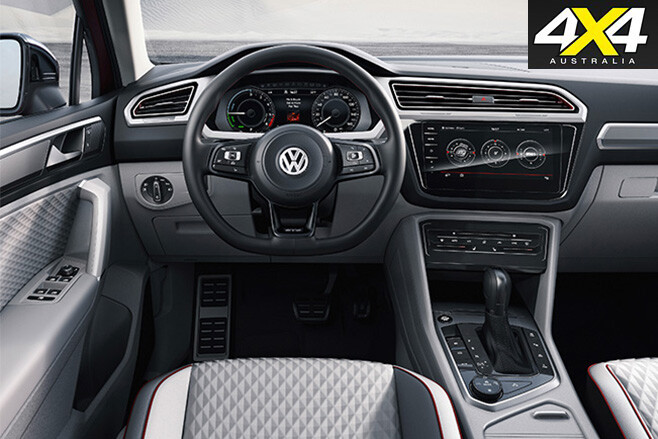
Volkswagen has launched a plug-in hybrid version of the Tiguan compact SUV at the Detroit auto show, but most of the interest was around its meeting with the EPA this Wednesday.
In his first appearance before US media since the scandal broke, VW Group chief executive Matthias Mueller said Volkswagen would “offer some solutions and then we will see what the reaction will be,” in Wednesday’s meeting.
The EPA is reportedly unhappy with Volkswagen’s proposals so far to fix the 580,000 US vehicles afflicted with the emission cheat software. But Mueller is confident, telling media VW has made “huge progress”, and that the company’s solution “is satisfactory”.
In what appears to be back-pedalling from earlier unequivocal admissions of guilt, Mueller stopped short of saying the company lied about the defeat device, or that it cheated consumers.
“Whether we did lie or not – that is the issue of the investigation,” he said. “We are not a criminal brand or group. We haven’t been that. We have made a huge default, technical default, but there was no intention against customers or authorities.”
Volkswagen sales fell nine percent in the USA in 2015, contributing to a total of 9.93 million sales globally for the Volkswagen Group. In Australia, Volkswagen notched up its best year ever, selling 60,225 passenger cars and commercials (up 9.9 percent on 2014). Despite being at the centre of the Dieselgate scandal, the Golf small car led the sales charge, up 15 percent.
The VW Tiguan GTE Active Concept has a turbocharged 1.4-litre petrol engine producing 112kW and 250Nm, with assistance from a 41kW electric motor at the front, and an 86kW motor at the rear. Volkswagen claims the system’s combined output is 167kW.
The car can be driven by just the front, the rear or all four wheels. It always starts off in EV mode, and can cover up to 32km on electricity alone.