
TOYOTA has dropped the covers on a special edition Land Cruiser Prado Altitude.
Based on the well-equipped GXL, the Prado Altitude is powered by a 2.8-litre four-cylinder turbo-diesel capable of pumping out 450Nm at 1600-2400rpm. The Prado is mated to an automatic transmission and equipped with constant four-wheel drive.
However, there’s one change that isn’t beneficial for long-range tourers: Toyota has shifted the spare tyre from the tailgate (where it normally resides on Prados) to underneath the vehicle (replacing the second fuel tank). This change dramatically lessens the Prado’s off-road credentials, as fuel capacity is now limited to the main tank’s 87 litres of diesel.
The Prado Altitude won’t be atop many off-roading wish-lists. Instead, Toyota’s focus for the city-bound Prado was to add convenience, value and on-road appeal. To this end, a glass hatch that opens independently of the tailgate was installed.
Toyota Australia’s executive director of sales and marketing, Tony Cramb, said: “Buyers will appreciate all the new features that make Prado Altitude even more luxurious and practical, including a lighter tailgate that is easier to open – particularly useful in tight city parking.”
Features also include new 18-inch alloys, a tilt-and-slide moon-roof, auto-levelling LED headlamps, chrome side mouldings, and a host of interior luxuries.
It also maintains plenty of features found in the GXL variant including a reversing camera, sat-nav, rear parking sensors, stability and traction control, anti-skid brakes, hill-start assist, and downhill-assist control.
The Prado Altitude special edition is priced from $68,230.
There’s nothing quite like the experience of jumping in a rare, classic vehicle, and fortunately for us here in Australia, prices of classic old four-wheel drive vehicles mean this retro experience is still relatively attainable.
This article was originally published in the July 2013 issue of 4X4 Australia.
Early LandCruisers, Patrols, Jeeps, Landies and Range Rovers can be picked up for a couple of grand, and good roadworthy examples for less than $10k. Real early stuff, such as WWII Jeeps and Series I Land Rovers, can be yours for a lot less money than buying classic cars of the same vintage, although prices are on the way up.
Things are different on the other side of the Pacific, where old LandCruisers are harder to come by, not only because of their age, but compounded by the fact they were only imported to the US in very limited numbers. FJ40 Cruisers are highly sought after and while still nothing like the domestic muscle cars, they fetch big dollars from collectors.
Take at look at sales online and you’ll be amazed at what people are asking for early FJs in the US, with prices upward of US$40K to US$50K (AU$41,000 to AU$51,300).
Californian Jonathan Ward saw the growing interest in early Cruisers in the US and in 1996 he formed TLC. Tender Loving Car, Toyota Land Cruiser; call it what you want but the company set out to be a one stop shop for early Cruiser sales, service and restorations, concentrating on the legendary FJ40 but also delving in to FJ45 and later 55 and 60 Series Cruisers.
Read about ICON’s custom ‘Petersen special’ FJ44.
After many FJ restorations, Jonathan saw that original parts were getting harder to find and collectors were still willing to pay a lot of money for retro vehicles. Toyota itself had even commissioned TLC to produce three prototype vehicles for what eventually became the modern FJ Cruiser.
“As our global reputation grew and grew, I began to work as a consultant for Toyota, and TLC began to handle special projects for Toyota, ranging from outfitting vehicles for special events to eventually being asked by Mr [Akio] Toyoda to build three running and driving prototypes of what became the 2007 Toyota FJ Cruiser. Our original prototypes paid more direct homage to the LandCruiser tradition than the new FJ Cruiser,” Jonathan says.
This project, and seeing how Toyota transformed it in to the FJ Cruiser, prompted Jonathan to ask himself how he would build a tribute to the original FJ and hence ICON was born. ICON builds 4X4 vehicles that pay homage to the originals but utilise modern materials, technologies and manufacturing practices to create vehicles that drive as you would expect of a modern car, yet still have that old school cool that only a classic car can provide.
ICON started with the FJ40, 45 and 43 models, but has since expanded its line to include the Jeep-inspired ICON CJ3 and Ford Bronco-inspired ICON BR series vehicles.
ICON vehicles are built to order; if you thought the price of restored original Cruisers was high, you will be gob-smacked by the price of an ICON. Depending on your specs, an ICON FJ will cost you from US$125,000 to US$195,000. They are available in short (FJ40), mid (FJ43/44) and long (FJ45) wheelbases; with petrol V8 or four-cylinder turbo-diesel engines and a range of drivetrain, trim and feature options for buyers to choose from. Anything from a leaf-sprung replica to a race-bred Baja brawler is possible, although the leaf springs are no longer offered as standard.
The vehicle pictured here is a bit of a phantom FJ and shows the scope of ICON’s inventiveness. Toyota never made a four-door FJ but the inquisitive minds of the crew at ICON thought it would be a cool idea.
“Over the years we looked at ways of taking the brand forward and we did a quick rendering of what a four-door would look like,” says Jonathan. “We shelved the plan while we developed the CJ range, but people kept asking for it, and this one guy persisted with it. I couldn’t talk him in to a FJ43 so I emailed him the rendering and he said ‘Yeah, that is it’ and after we sold five of them in a month, it became our newest model.”
The FJ44 is similar to a four-door Jeep Wrangler in concept, although this one is set up with seating for six, in three rows of two bucket seats – just the thing for taking the family out on the tracks. The 44 rides on a 2895mm wheelbase, whereas the ICON FJ40 sits on a 2362mm wheelbase and the FJ45 ute has 2971mm between the front and rear wheels.
As all the ICON bodies are hand-made from aluminium, creating the four-door was no special task. All the panels, bar the bonnet, are 5052-H32 aluminium; the bonnet is a new steel part from Toyota. The panels are powdercoated in a special material developed for ICON, while the undersides are polyurethane coated for protection and reduced heat and vibration transfer.
It’s when you start talking hand-made body panels that you see where the money goes in one of these beauties.
The chassis is specially manufactured for ICON, this time by renowned chassis shop Art Morrison. Each one is made on a jig using 2”x 4”x 0.180” mandrel-bent mild steel rails and state-of-the-art bending technology to create rigid, wrinkle-free rails. All accessory mounts are precision laser-cut and formed to exact dimensions to ICON’s specification.
Morrison helped with the suspension design as well, with a triangulated four-link used on the rear and three-link and panhard rod used under the front. Adjustable coil-over shocks are used at each corner, as are front and rear blade-style sway bars. The sway bars and lower control arms are made the same front and rear so as to be interchangeable in the field and require less spares to be carried.
Diffs are a Dana 44/60 front/rear combo from Dynatrac, manufactured to ICON’s specs. ARB air lockers are one option, another is the Stop Tech brake package featuring six-spot calipers on the front and four-potters on the rear, grabbing massive custom discs. The standard brake package uses OE parts from GM over slotted and vented rotors.
ICON offers numerous powertrain options for the FJ, including two petrol V8 engines and a 2.8-litre, four-cylinder turbo-diesel that is tuned to run on biodiesel.
The intercooled turbo-diesel engine comes from International Harvester and uses a VNT to help it make 101kW at 3800rpm and 375Nm at just 1400rpm, with far better fuel economy that the V8s.
Petrol V8s are the engines of choice in the US and this FJ44 runs the 5.7-litre LS V8 from GM, making 313kW at 5500rpm and 620Nm at 4500rpm. The transmission is a four-speed auto, also from GM; a five-speed manual is also available. The transfer case is the indestructible Atlas II off-road unit, with 3:1 low range as standard or ultra-low 5:1 gears for crawler work.
Like all the drivetrains offered in the ICONs, this one is designed to offer simple and reliable performance, with servicing and replacement parts easily available from regular suppliers. It works with the other modern components used in the cars to give that ‘new car’ performance and drive experience while wrapping the package up in a head-turning retro body.
This FJ44 is even more neck-snapping – any Land Cruiser enthusiast who sees it will know that Toyota never made such a vehicle. And, on top of that, its four-door configuration makes it stand out even more from the “standard” ICON FJ.
NOT A TOYOTA FAN?
Like the idea of a classic 4×4 with a modern drivetrain but not keen on a FJ? Then maybe an ICON BR or CJ would be more to your liking.
Just like the ICON FJs, the CJ and BR feature a specifically made chassis with modern suspension and brake components, contemporary drive lines and hand-made body panels styled to replicate the classics from Jeep and Ford. They can be built to retain the full classic look or with some more modern features visible. The BR Bronco tribute is fitted with a 5.0-litre ‘Coyote’ V8 engine, as found in the latest Ford Mustang, and it is backed by a five-speed manual gearbox, Atlas II transfer case and Dynatrac Dana diffs.
The CJ stays true to the original with a small 4-cylinder power plant but it’s a modern 2.4-litre ECOTEC petrol engine from General Motors. Again backed by a five-speed manual gearbox but with a NP transfer case and Rubicon spec Dana axles. Take your pick of either a Toyota, Ford or Jeep tribute from ICON and you’re sure to have a unique vehicle in Australia. Jonathan Ward says there is no reason an ICON can’t be made in right-hand drive configuration and the possibilities are only limited by your budget and imagination.
Local road registration would be another story though.
FOUR hundred is a milestone number – in international cricket, only the great Brian Lara has notched up the quadruple tonne (400 not out) in an innings.
So it seems fitting to celebrate 4X4 Australia’s 400th issue with an extra 25 pages, paying homage to some of the great events and vehicles we’ve covered since the late 1970s.
In this bumper issue we dissect and drive an LS3-powered Holden Colorado, we head Stateside to trial Land Rover’s new Discovery, and we take a lap of luxury in Merc-Maybach’s insane G650 Landaulet.
We also track the famous Rabbit Proof Fence in a GU Patrol, and drive a couple of F-150s back to back.
Grab your copy of 4X4 Australia from newsagents or by subscribing to 4X4 Australia in electronic or print format.
Here’s what you’ll get for your hard-earned this month.
400TH ISSUE Reminiscing memorable moments following 38 years of off-roading.
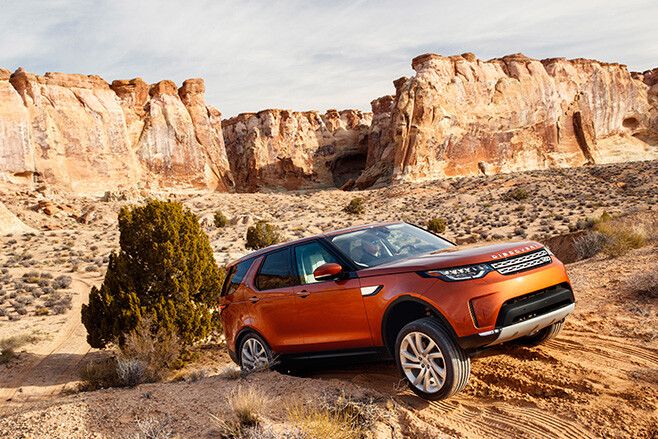
DISCOVERING DISCOVERY Driving the all-new Discovery in the American desert.
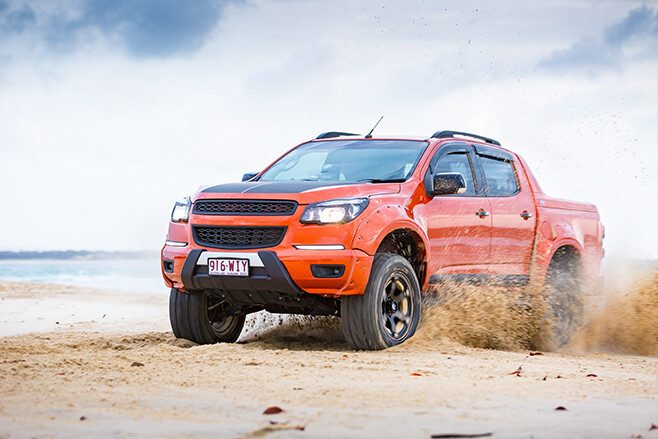
HEART TRANSPLANT Holden Colorado gets an LS3 engine injection.
F-150 ENGINE COMPARO We pit the F-150’s V8 against the EcoBoost V6 version…
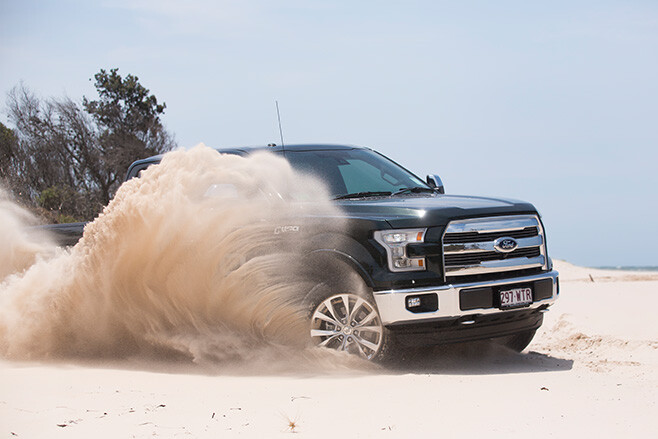
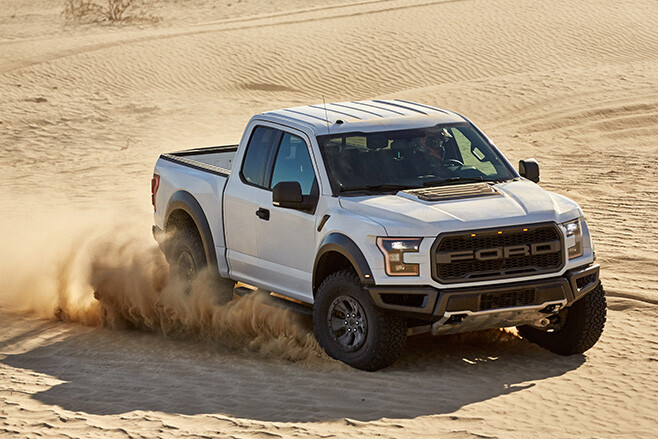
RAPTOR ATTACK …Before smoking the dust in an F-150 Raptor.
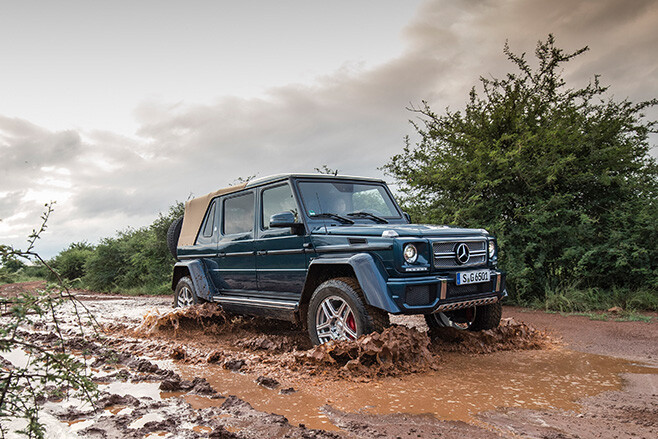
LUDICROUS G650 LANDAULET What the pope would take off-road.
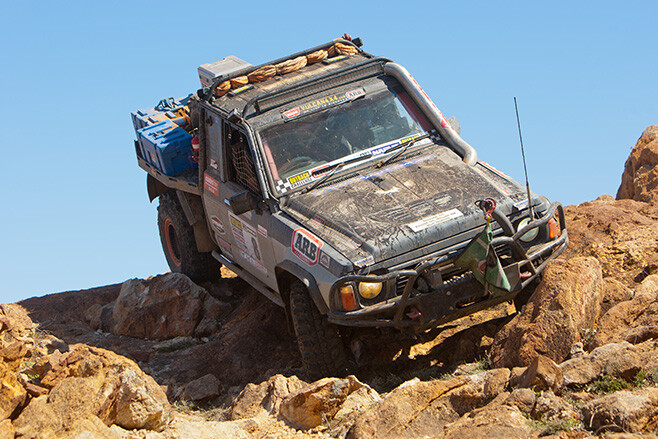
GQ PATROL AT THE OUTBACK CHALLENGE You don’t need a lot of money to tackle the Outback Challenge.
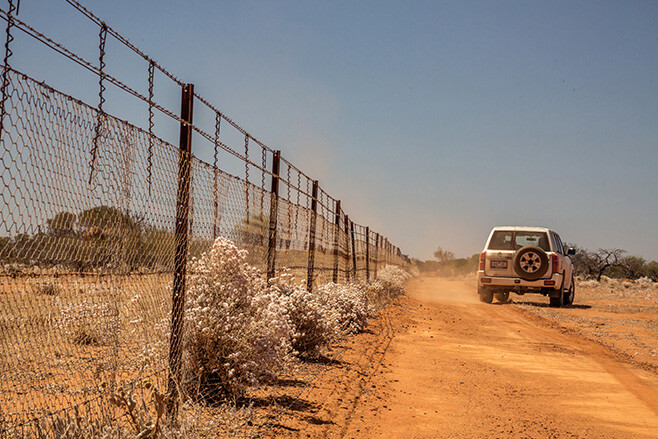
FENCE PATROL Tracing WA’s Rabbit Proof Fence in a loyal GU Patrol.
CAPE YORK EXPEDITION Venturing to the widely remote regions of FNQ.
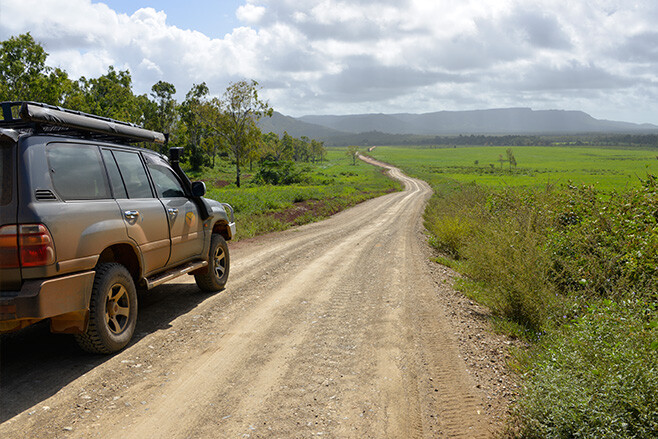
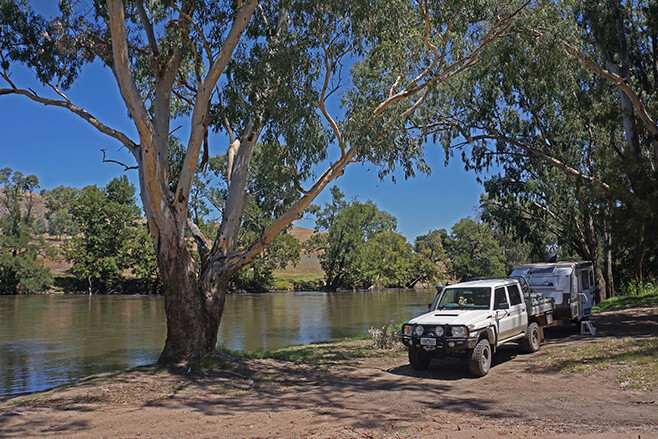
’BIDGEE QUEST Following the Murrumbidgee River to where it meets the Murray.
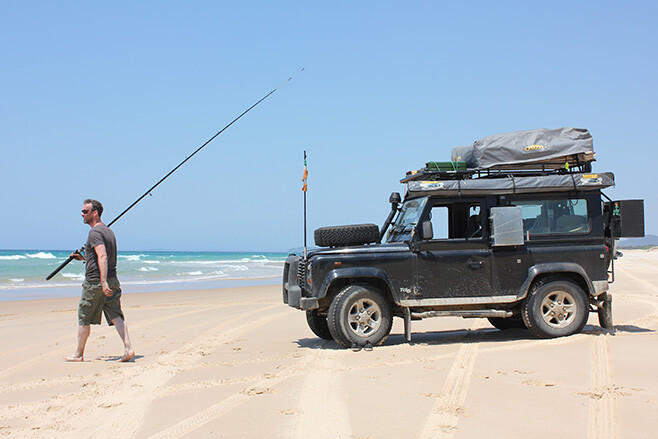
PORT MACQUARIE Sand-hopping along the beautiful east coast.
TECH VERSUS TRADITION Are off-roaders being left behind with the current crop of around-town tourers?
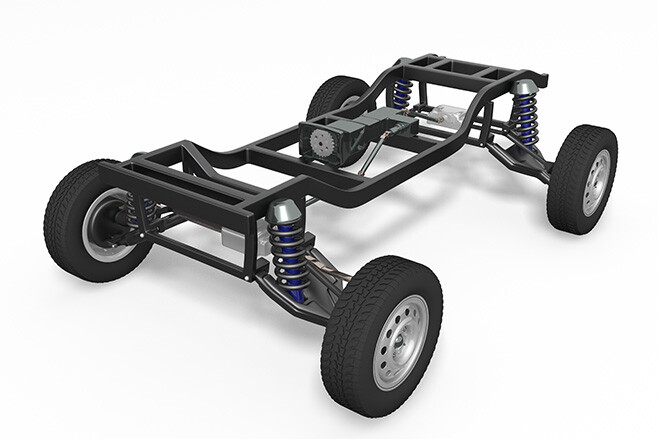
THE REST We explain EGR tech and why you shouldn’t tamper with it, we run through the types of jacks best used for particular off-road situations, and we test a couple of new products on the market: a Sea To Summit Nomad duffle and a Pressure Perfect tyre inflation system.
After more than 40 years in the industry Roothy’s still learning about engines, Fraser explains how Electronic Traction Control has changed 4WDing, Deano heads interstate for his dream ride, and Ron’s worried about the increasing amount of tar on outback roads.
Plus, our resident single-cab Cruiser spends a month in the ’burbs – how does it handle shopping centres and Melbourne traffic?
The May issue of 4X4 Australia is in stores Thursday, April 6. Note: there may be a delay for subscribers in FNQ due to the recent cyclone.
WHEN Toyota, the biggest and most successful car company in the world (ranked by group production volume), says something about the state of play of the auto industry, it pays to listen.
After all, Toyota got to its pre-eminent position by judging the mood and demand of the market and producing high-quality vehicles that have satisfied that demand over and over again all around the world.
So, what has Toyota said that’s so important? Well, it’s basically rubbished the idea that fully driverless cars will be here anytime soon.
Speaking at the giant CES consumer electronics show in Las Vegas, USA, in early January, Toyota Research Institute CEO Gill Pratt said, “None of us in the automobile or IT industries are close to achieving true Level Five autonomy.” By Level Five autonomy Pratt means fully self-driving cars. Things you can jump into, tell them where you want to go, and have them drive you there without constraints of location or particular road and traffic situations.
Pratt then went on to say, “It will take many more years of machine learning and many more miles than anyone has logged of both simulated and real-world testing to achieve the perfection required”.
Pratt is one bloke who should know, as the Toyota Research Institute was specifically set up in 2015 with a big chequebook to recruit top US brains on artificial intelligence, robotics and material science, with a view to the development of autonomous cars, among other things. Pratt was a senior robotics engineer for the US military, which has played a big part in the whole driverless vehicle thing.
Toyota’s announcement is notable as it’s the first voice of caution from an auto industry otherwise seemingly falling over itself to get on the self-driving bandwagon, thinking they might miss out on what could be the next big thing.
Pratt’s naming of the IT industry alongside the automobile industry is of course a reference to Google and its position at the front of the charge to driverless cars. Google has said it will bring a fully autonomous vehicle to market as early as 2018, although that timeline has more recently been pushed back to 2020.
In essence, what’s happened is that Google, along with Tesla to a much lesser extent, has thrown a spanner in the works of the otherwise methodical and cautious car industry. Google is scary to the auto industry because it’s big and cashed-up, while Tesla is worrying because, without any auto industry background, it has still brought a ‘new-world’ electric car with self-driving functions to market in relatively quick time.
Pratt says Level Two autonomy is what the auto industry is realistically going to achieve in the immediate term (the next couple of years). Level Two autonomy means the ability to follow the car in front up to a pre-selected speed, automatically brake if need be, and self-steer to keep in the lane.
Most manufacturers, even on relatively less-expensive models, already offer Level One autonomy via technologies such as radar cruise control, auto braking, lane-keeping assistance or blind-spot monitoring. By combining a number of Level One technologies, Level Two isn’t all that difficult to achieve.
Level Three autonomy is where the car can move out of lanes and navigate through traffic in an active way rather than the essentially passive/reactive Level Two mode. However, a human driver has to be ready to take control in an emergency. This switching between autonomous mode and human driver is fraught with problems, according to Pratt, and he feels Toyota and other automakers will bypass Level Three and go directly to Level Four, which is full autonomous control but only on roads specifically approved or designed for this purpose.
Limiting where an autonomous vehicle can go gives it a big leg-up in terms of knowing where it is; obviously a key prerequisite for the successful operation of any driverless vehicle. Instead of relying solely on its GPS system, with all its associated vagaries, the autonomous car will have a photographic record of what that street looks like at that particular spot, which can be matched with what the on-board cameras are ‘seeing’.
If, for example, you want to go to 350 Fifth Avenue, New York, and the GPS has taken you to the right place, what the on-board camera sees (ie, the Empire State Building) can be matched to the built-in photographic image of the Empire State Building. On this count Google is already there with its ‘Street View’, and Level Four autonomy has obvious applications for a driverless taxi service that operates within fixed city or town boundaries.
Having a driverless vehicle operate with fixed boundaries also means it can be pre-programmed to ‘know’ what traffic conditions to expect at any given time of day, at any point in its area of operation. All of which means that Level Four autonomy should be achievable, and the more limited the operating area the easier it will be to achieve. That leaves Level Five autonomy as a pipe dream, which means most of us will be driving ourselves for a good while yet.
IN THE PIPELINE
CURRENTLY Audi, BMW, Ford, General Motors, Hyundai, Mercedes-Benz, Nissan, Peugeot, Renault, Toyota, Tesla and Volvo (among a few others) are all developing autonomous vehicles, or at least autonomous technologies. Automotive component giants like Bosch and Delphi are also working on off-the-shelf autonomous technology to sell to car companies in much the same way as they sell electronic chassis-control systems.
Aside from Google other tech-based, rather than automotive-based companies, are also working on autonomous vehicles. In Singapore, for example, tech-company NuTonomy plans to have self-driving taxis commercially available as early as 2018.
It had been a while since I had driven the route between Woods Point and Jamieson, but as I cruised along this good dirt road, skirting along the edge of a nascent Goulburn River, I wondered why it had taken me so long to return. This time I was back with the 4X4 Australia crew on a road test but it would make for a great weekend escape for any Melbournite.
This article was originally published in the June 2014 issue of 4X4 Australia.
Our trip had begun at Healesville in the morning and we had headed to a picturesque and rejuvenated Marysville and then travelled east of Cambarville, before passing through the scattered remains of the old ridge-top village of Matlock.
This one-time town of 11 hotels and numerous stores grew up as a handy staging point at the junction of the tracks from Woods Point to Jericho (on the Jordon Goldfields) and the Yarra Track from Melbourne.
These tracks were once bridle-horse trails between the goldfields around Jamieson, south to Woods Point and on to Walhalla, but they quickly became stagecoach routes as more gold discoveries were reported in the area. Today, much of the road network and a majority of the four-wheel drive tracks owe their existence and their actual routes to those early gold prospectors and miners who cut their way through the virgin scrub in search of their Eldorado.
Striking north from Matlock, we dropped off the high ridges and down into iconic Woods Point. Gold was discovered near here at Gooley’s Creek in 1861 and it wasn’t long before the fabled Morning Star reef was found and underground mining commenced.
This became one of Australia’s premier gold mines and in the following 100 years it produced more than a million ounces of gold. Today it is owned by Morning Star Gold and promises even more riches.
Heading north, the road sticks close to the Goulburn River for a short distance, quickly passing Scotts Reserve and climbing the range to Frenchmans Gap before winding on to the A1 Mining Settlement, the site of another rich gold producer. Gaffney’s Creek, a short distance on, was the site of the first gold discovery on the Jamieson-Walhalla goldfields in 1859. Little remains of the town, the result of raging bushfires, most notably in 2006, while the once famous hotel here was burnt down by two escaped convicts in 1993.
The route north rejoins the Goulburn River north of Knockwood and from here to Kevington the road sticks close to the river, passing many delightful camping areas, including Snake Edwards Reserve, Picnic Point and Tunnel Bend.
Along the way, 4WD tracks on both sides of the river climb deeper into the ranges and in most cases they lead to old mines and the scattered remains of ephemeral hotel and town sites. Some that head east, such as the Snake Edwards Divide Track, meet with the Jamieson-Licola Road. At Kevington there is a pleasant camping area right beside the famous hotel that has been here since 1862.
While the main road north of Jamieson enters more gentle farming and grazing country on its way to Mansfield, we headed east towards Granny Flat, a delightful camping area on the Jamieson River. A 4WD track crosses the river here and climbs steeply to the top of the ridge to Mitchells Track before joining the more sedate Steiners Road, which will still require a 4WD.
The descent from here to Fry’s Flat via Tobacco Flat (private property) is pretty steep in parts and can be a challenge when it’s wet.
Fry’s Flat on the Howqua River, enclosed by the Howqua Hills Historic Area, is one of our favourite camping areas and is a bit quieter than the nearby 2WD-accessible Sheepyard Flat. Fry’s Flat owes its name to Fred Fry, who built the nearby hut and lived here until his death in 1971. Fred’s legendary standing among the mountain people was due to his skill as a bush carpenter.
The next morning we tore ourselves away from the Flat and headed to Merrijig before taking Buttercup Road into the Mansfield State Forest. This dirt road skirts along the edge of Buttercup Creek, where there are a couple of designated campsites that were a bit too close to the road.
Winding deeper into deeply forested hills covered with woollybutt and mountain grey gums, we came to Tomahawk Hut, one of the first huts built in the High Country by the Forest Commission of Victoria. While logging had probably begun in this region in the 1920s, this was greatly expanded in the 1930s and after World War Two.
Passing through Tomahawk Gap, we took the Buckland Spur Track, which skirts the western edge of the Alpine National Park. It’s an easy run at first, our passage only disrupted at times by fallen trees, but the descent into the King River valley is one most people would remember if they have ever done it. Luckily for us it was dry and the descent uneventful, but I wouldn’t want to travel this route if it was wet.
At the bottom of the descent, you are basically at the very back end of Lake William Hovell. There’s a maze of tracks around Sandy Flat and a couple of crossings of the river, along with a number of pleasant campsites. As we camped on the King River, we were treated to a flight of ducks, clear starlight skies and the coughing bark of nearby deer.
It’s a relatively easy drive out to the main road near the dam wall, where the bitumen leads you north to Whitfield and the gastronomical delights of the King Valley. That makes a fitting end to a weekend of travelling some of the finest mountain country in Victoria.
TRAVEL PLANNER
- ACCESS: No permits are required to travel this area. Most of the area detailed is state forest, although the route does skirt the edge of the Alpine National Park in places and passes through the Howqua Hills Historic Reserve. Some of the tracks are closed during the winter. See Four Wheel Drive Victoria and go to ‘Track Information’ for updates.
- ACCOMMODATION & CAMPING:
- Woods Point
- Upper Goulburn River within the surrounding state forests.
- The Kevington Hotel
- Jamieson
- Merrijig
- Camping is not allowed around Lake William Hovell, but there are camping spots on the King River, upstream from the dam at Sandy Flat and Top Crossing Hut.nAlso look into Whitfield, including the boutique Mountain View Hotel.
- BEST MAPS: Hema Maps produce a couple of maps that provide a good overview of the whole region. Rooftop Maps produce more detailed maps of the area, while the Adventurer Maps (Ghost Town series) by Paolettiu2019s Maps show great detail on tracks and mine sites.
When I first bought my Land Rover back in 2003 it had just 17,000km on the clock and it looked as good as new.
This article was originally published in the December 2014 issue of 4X4 Australia.
I remember driving away from the garage in the south-east of Ireland after negotiating a good deal and feeling like a giddy child who had just received the best present in the world.
Ever since my parents bought me a dinky toy Series II Land Rover, with the bolted spare wheel on the bonnet, it was always my ambition to own a squared, bouncy, go-anywhere Land Rover Defender.
On leaving the garage I remember driving home slowly; as this was my first four-wheel drive, I wasn’t used to its clunky manoeuvrability, loud diesel engine and its sluggish acceleration. But all of this was overshadowed by the ability to see over ditches and view the lovely surrounding countryside that I had been deprived from seeing when driving my previously owned low-to-the-ground cars.
As I was enjoying the newly found height, all I could think about was the endless opportunities this vehicle would offer me in terms of getting off the beaten track and further embracing the outdoor lifestyle that I loved.
This was never going to be a ‘Chelsea Tractor’; I had plans for this yoke, and little did I realise how much enjoyment this machine would bring me over the next 12 years. Like most 4WDers, I’ve always enjoyed a sense of adventure and a real desire to get off the beaten track as often, and as far away, as I could.
Having had the travel bug over the last few years, I’ve been fortunate enough to have negotiated bogs, green lanes, rainforests, vineyards, deserts, beaches, Boreen (Irish rural) roads, mountain ranges and glaciers in my standard Land Rover Defender 90. I’ve now nearly clocked 140,000km, with a big proportion of that travelling to some incredible places in both the Northern and Southern Hemispheres.
Since purchasing the 90, the engine has been relatively flawless. My vehicle came off the production line in 2002 and so was fitted with the Td5 – a 2498cc, 5-cylinder direct injection turbodiesel intercooled engine.
It has plenty of pull with 300Nm (manual ’box) of torque at 1950rpm with a respectable 90kW at 4200rpm. The ‘new’ Td5 engine also claimed to offer more power than the previous 300Tdi and also use a new electronic engine management system that allowed the engine to be tuned easier.
At the time it was introduced, the change to the electronic management unit (EMU/ECU) made some buyers nervous, particularly the military as there were some concerns about its reliability and fix ability out on the field. Despite initial reservations, time has shown that the Td5’s electronics have proven to be very reliable.
Over the years, I have built my vehicle up as a tourer as opposed to an offroad weapon. As a day-to-day vehicle it has to bring me to work, collect the kids from school and lug the shopping, as well as every other day-to-day function our primary vehicles must carry out.
I’m more interested in building a functional tourer that will help make my family’s camping experiences as comfortable as possible, whilst also enabling us to get to those ‘off the beaten track’ campsites in our tightly packed short wheelbase.
The vehicle has also physically evolved in order to help accommodate storage space, amongst other things. The 90, being a short wheelbase, doesn’t exactly provide ample space for touring, particularly now that I have two kids – the kiddy seats take up a fair bit of room in the back.
To overcome this, I’ve added a second roof rack and additional storage space to the vehicle’s exterior in the form of three external dustproof and waterproof storage boxes.
Two of these are custom-made, with one sitting neatly within the frame of a South African made Front Runner jerrycan holder which is attached to the side of the vehicle.
The second custom-made unit attaches to the ladder at the back of the vehicle; this box holds all cooking equipment and utensils. And finally, the large plastic hard case attached to the spare wheel on the rear door holds all of the dry food and some cooking equipment.
These storage boxes have a number of advantages, one being that by externally storing frequently used essentials, including cooking equipment and dry food, there’s easy and quick access when you pull over for lunch or when setting up camp in a hurry.
This system helps to avoid pulling stuff out of the back of the vehicle when looking for a missing can of beans, particularly when you’re starving after a long days drive. It also provides easy access to the essentials that are all at arm’s reach when the side table/bush kitchen is set up.
Other useful accessories I’ve added include forward facing seats in the back of the vehicle, instead of four side-facing seats, a camp kitchen and workbench/side table with a basin that slides under the roof rack, a second spare wheel, a Foxwing Awning, jerry and water can holders, a GME radio, a shovel and high-lift jack mount, a battery operated shower, external fishing rod holder ,a rooftop tent that comfortably accommodates two adults and two small kids, a portable dual battery system and, finally, an Engel fridge-freezer.
Since purchasing the vehicle back in 2003, I spent the first couple of years touring Ireland in search of hidden and idyllic camp locations. After a couple of trips to Wales and England I then decided to plan a trip further afield.
Following extensive research and planning I decided to take the 90 to the best 4WD destination in the northern hemisphere: Iceland, the ‘Land of Fire and Ice’. This trip would incorporate Scotland and the Faroe Islands en route.
I have also toured France; as it’s accessible – it’s a 24-hour ferry ride across the Celtic Sea and English Channel – and affordable from Ireland. And finally, a few years ago, I had an opportunity to move to probably one of the world’s best 4WD destinations in the world: Australia.
Before departing Ireland, I had some very important life decisions to make. One was whether I’d take my Land Rover Defender with me? The answer, of course, was YES! My wife didn’t blink an eye when I told her I’d be shipping the Defender to the other side of the world, as she has come to understand that where I go the Landy must go too – I had officially developed an inseparable bond.
After eight weeks at sea she arrived at Botany Bay and was pretty mouldy on the inside after being cooped up in a 20ft container for the duration of the voyage. It then had to go through an onerous customs clearance process before I was handed the keys. After which I was finally able to enjoy the vast, and probably the best, continent on the planet when it comes to 4WD exploration.
I had one huge smirk on my face as I left the port and drove towards the Sydney Harbour Bridge. I was very excited about the prospect of exploring the endless dusty tracks and unique environments that Australia has to offer. Coming from a small island in the northern hemisphere, and being able to cross Ireland in just over three hours, I would soon adapt to having to drive long distances, and hence further prepare my vehicle for extended touring periods.
Since arriving I have also learnt a lot while driving through Australia’s many diverse environments and some of the toughest terrain in the world; the vehicle has definitely been put through its paces.
Highlights so far include the Flinders Ranges, Corner Country, Menindee Lakes, Deua National Park, White Cliffs, the Strzelecki Desert up to Coffs Harbour, the Gammon Ranges, down the south coast and around the Blue Mountains. The Cape, the Kimberley and the Northern Territory, in general, are places that we have yet to experience. With so many places to visit in Australia, you could spend a lifetime exploring this vast and ancient land.
No pain no gain! The challenging Australian terrain has taken its toll on the Land Rover since she arrived. So far, I’ve had a couple of damaged shocks and springs, a split propshaft and a reconditioned gearbox replaced after a trip up along the Coffs Coast. Overall I can’t complain about this machine’s overall ability, as it has proven its capabilities time and time again. The 90 has conquered harsh environments and taken us to some memorable and remote camping gems.
I can’t see myself getting rid of this rectangular offroad workhorse anytime soon. I guess as it ‘matures’ in the future I’ll just have to keep patching it up. I would much prefer for my Land Rover to wear itself out as opposed to rust and be forgotten in the corner of some garden.
IN ANY camping scenario, things can go ‘pear-shaped’ fairly swiftly if you’re not careful. And the threats can come from the most unexpected quarters.
Specifically, I’m sure that the prospect of giardia and gastroenteritis are not at the forefront of your mind when you pick a spot to camp, but if you plonk yourself down just anywhere, without due consideration to basic environmental factors, bacteria and parasites can lead to the types of unpleasant illnesses that can really destroy your camping experience. As always it’s about location, location, location.
When deciding on the location of your campsite, consider the health threats the site may be unexpectedly hiding. With that in mind, the following should be avoided:
a. Infrastructure, industry and agriculture, in particular known: wet areas such as wells, dams, drains and semi-permanent creeks (stagnant water, mosquitoes and disease); animal feeding and watering areas (animal faeces, ticks, other insects and disease); drainage areas from sites such as shearing sheds and club houses (grey water and animal faeces); ablution areas, sewer systems and disposal areas; disused mining areas (asbestos, mine shafts and mosquitoes); and old farm garbage tips and communal waste disposal areas and bins.
b. Terrain such as thick undergrowth (ticks, among other things); steep slopes and valley floors (guess what happens when it rains); broken ground (snakes, insects and mice dwell in them); swampy areas (snakes, mosquitoes, leeches, etc); and banks of lakes and rivers (flash flooding, mosquitoes, crocodiles and other biting nasties).
Some of these areas make great 4WDing and hunting grounds or great photographic backdrops, but they should be avoided as camp sites. Besides, you will scare-off the wildlife.
Ideal sites to establish your ‘home away from home’ include high ground, well grassed, on a gentle slope with good natural drainage. And make sure you site yourself upstream from local infrastructure such as farm houses or established campsites with facilities.
CAMP LAYOUT As a general guide you should consider the following points when laying out your campsite:
- Your accommodation should be sited up-wind with the, kitchen and fire behind (or at least side-on) to blow away smoke, mosquitoes and other airborne vectors of disease;
- Shower areas and water points should be downhill or to one side, with drainage to avoid water logging;
- Toilets should be further downwind, but reasonably accessible to you;
- Toilets must be: at least 50 m from kitchens and potable water sources; 100m from the nearest well, bore hole, river, creek or dam; and 600mm deep.
- When toilets are of the excavated type, care must be taken to prevent pollution of underground water supplies;
- Store food and rubbish in sealed containers to prevent birds, foxes and other animals from ransacking your food supplies and spreading your rubbish all over the camp site;
- The camp should, if possible, have surface drainage.
So-called ‘cat scratches’ are for short stops of the emergency kind: ie. utilise a shovel to dig a personal hole and then replace the earth removed. This is the minimum sanitary requirement and should be strictly enforced.
Shallow trenches are adequate for three days to a week depending on the size of your group. These are approximately 900 mm long, 300 mm wide and 600 mm deep at minimum. After each use, a shovelful of soil should be placed over the excrement. When the trench is half full, it should be filled in, using the soil excavated from the hole. The soil should be rammed hard and the turf replaced. Mark the area with a ‘FOUL GROUND’ sign (these signs should be made of cardboard and a stick, by the time the sign degrades it should be relatively safe).
You may like to know that the Army and associations such as the Boy Scouts write manuals on this topic. US author Kathleen Meyer even wrote a book – How To Shit In The Woods – about it. Perfect toilet reading. In the military, the topic is generally covered in Preventative Health and First Aid training. This training is enforced at all levels.
And, obviously, when you’ve been dealing with your toilet space, at the first opportunity, wash your hands and your shovel.
WATER The site from which you choose to draw water should not be exposed to possible sources of contamination. An ideal water source is fast flowing, or has a very large volume and has no human activity upstream or nearby. A rule of thumb is if there are bubbles and rapids this should be your first choice.
Simply collecting water is not enough. UNICEF has assessed access to clean water across the planet and estimates that a lack of sanitation kills children at a rate equivalent of the death toll of a passenger jet crashing every four hours. If you source water locally while outdoors, individual water treatment is a three-step process: draw water from the best place you can; filter water; and purify it by treatment, such as puritabs, and/or boiling.
FIRE Everyone likes a fire when camping. However, fires are inherently dangerous – particularly when camping with children. So utilise a fire screen wherever possible. These can be bought or made.
I use an old play pen [see photo, below] that my two-year old daughter has out-grown. It gives me those precious seconds that I might need to prevent her venturing too close to the flame.
You should also site your fireplace downwind or off to the side of your camp – not on its doorstep. After all, you don’t want the smoke blowing straight into your sleeping area.
Also consider a cooking fire as opposed to a comfort fire. They are fundamentally different things requiring a different set-up to achieve different levels of heat intensity. Cooking fires do not have a large amount of flame and the heat is distributed evenly by an even spread of coals.
Whereas a comfort fire is there for light warmth and luxury for more than one person with indiscriminate amounts of high heat that will quite simply turn your T-bone into toast.
Also, be alert to local fire bans in your area. The last thing you want to do is to be responsible for a bushfire. And regardless of whether the Fire Danger Rating is ‘Low-Moderate’, always rake the area clean before you light up so as to not start a grass fire that could burn down your camp site – and all those things you have spent your hard-earned money on.
STRIKING CAMP Remember to leave your camp site clean and safe when you leave. After all you might be coming back to the same location soon, or someone else might be setting up camp in your location just hours after you leave. Don’t leave others to deal with your waste and carelessness after you’ve gone.
So remove your garbage to the nearest collection point, tip, bin or take it back to your home. And make sure that your fire place is well and truly ‘out’. Douse it with water, and be careful as the coals may still be hot.
Just remember, each campsite has unique features, and each state has different rules. Treat the area like you would like someone to treat your own backyard. Try to set a good example for those around you – and be particularly careful to make sure that your kids learn the value of ‘doing things right’ in the outdoors. By doing so, you’ll set up the next generation to enjoy the bush in the same way that you’ve been able to – and importantly you’ll keep your loved ones safe and having fun.
I like to think along the lines of Albert Einstein when he said “Look deep into nature, and then you will understand everything better”.
Want to learn more about camping and 4WDing? Here are 10 videos on how to 4×4
LAST month we mentioned we lost a number plate off the Land Cruiser when driving off-road. This wasn’t the first plate we’d lost off a 79, so it may be a problem for anyone with one.
It turned out to be a bigger problem for us than first anticipated, as Toyota grounded the vehicle when we told them, and VicRoads had to inspect the vehicle before issuing a new set of plates for it. Apparently, plate theft is a big problem in crime-plagued Victoria.
So the Cruiser was off the road for two weeks while we waited for the new plates, but we hit the highway as soon as we got it back. Not an off-road trip this time, but north to Bathurst for a weekend of camping and motorsport.
It’s on the open road where you feel the benefits of the 2016 70 series upgrades. The taller top gear makes highway speeds more relaxing, and the lower touring revs help keep fuel consumption down.
The new seats are also now more comfortable for long days behind the wheel, and the inclusion of factory cruise control makes keeping your licence a bit easier.
The massive tray behind the singlecab easily accommodates camping gear, with six sturdy tie-down points to secure the load. A second battery would be nice to keep the fridge running on such weekends and, although this truck doesn’t have one, an auxiliary battery kit is now available as a genuine Toyota accessory.
That big tray was put to use again back in town when MOTOR magazine needed something to transport a go-kart to the track. With its 2400mm length and no wheel wells to intrude on the cargo space, nothing short of a light truck beats the 79 for this job.
The tray might be a bit high for such a job, but two people can lift the kart in with relative ease. Plus, there’s still space left for tools and race kit.
Total KMs: 5917km
Date Acquired: Dec 2016 Price: $74,715 KM this month: 3862km AV fuel: 13.78L/100km
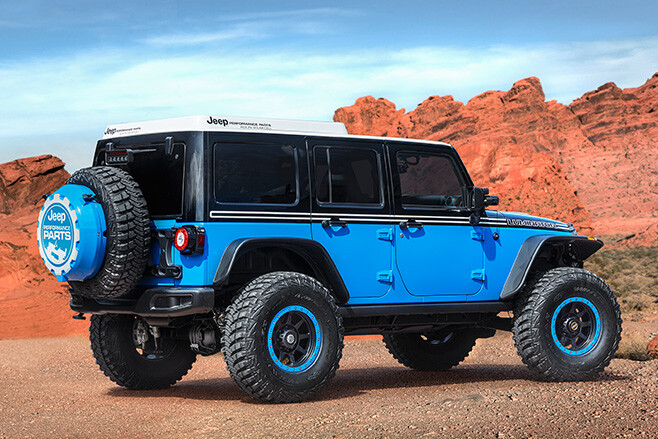
JEEP and Mopar have once again combined forces to develop a team of concept vehicles that will debut at the annual Easter Jeep Safari in Moab, Utah, from April 8-16.
The co-operation is a way for both brands to display an assortment of production and prototype Jeep Performance Parts – Mopar-tweaked aftermarket parts built to enable Jeep owners to spruce up their bog-standard 4x4s.
“Jeep and Mopar have teamed up over 15 years to create unique, fun and highly capable concept vehicles for the popular Easter Jeep Safari in Moab,” said Pietro Gorlier, Head of Parts and Service (Mopar), FCA – Global. “These concept vehicles are a perfect example of how off-road enthusiasts can use Jeep Performance Parts to personalise and enhance already outstanding Jeep capability, allowing them to face the toughest trails in the world.”
This year marks the 51st running of the Easter Jeep Safari, an event which debuts stunning off-road vehicles and put them straight into the furnace on challenging tracks.
“It’s truly a labour of love for the Jeep team to develop exciting, capable concept vehicles each year for Moab and the Easter Jeep Safari,” said Mike Manley, Head of Jeep Brand – FCA Global. “We look forward to the reaction and feedback from enthusiasts and our most loyal customers as these new Jeep concepts are put through their paces on the trails in Moab.”
JEEP GRAND ONE
The Grand One concept brings the 1993 Grand Cherokee ZJ into the modern world.
Features include front and rear axles equipped with selectable locking diffs, a two-inch suspension lift, an extended wheelbase and high-clearance fender flares.
It’s powered by a 5.2-litre V8 mated to a four-speed auto.
JEEP SAFARI
As its name suggests, the Wrangler-based Safari is all about providing great views to occupants. This is achieved via a translucent hard-top roof panel, and unique windows made of lightweight aluminium and clear vinyl.
A front and rear Dana axle equipped with selectable diff lockers and a two-inch lift make it an off-road certainty. Other features include custom full-length skid plates, steel front and rear bumpers, upgraded brakes and unique cold air intake. It’s also got a two-level aluminium cargo rack with an incorporated drone.
It’s powered by a 3.6-litre Pentastar V6 mated to a five-speed auto.
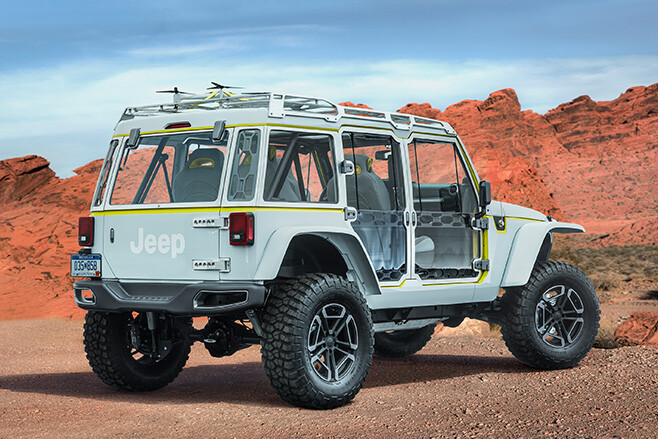
JEEP QUICKSAND
Despite its quirky name, this Jeep won’t sink in the sand.
It’s based on a Wrangler but with a longer wheelbase, a trimmed front and rear body and a chopped hard top and windshield.
Its staggered tyre setup has never before been seen on a Jeep concept, while a Warn winch is concealed in a front-mounted Moon tank.
A Mopar 392 Crate Hemi engine with eight-stack injection powers this steed, and it runs through a six-speed Getrag manual.
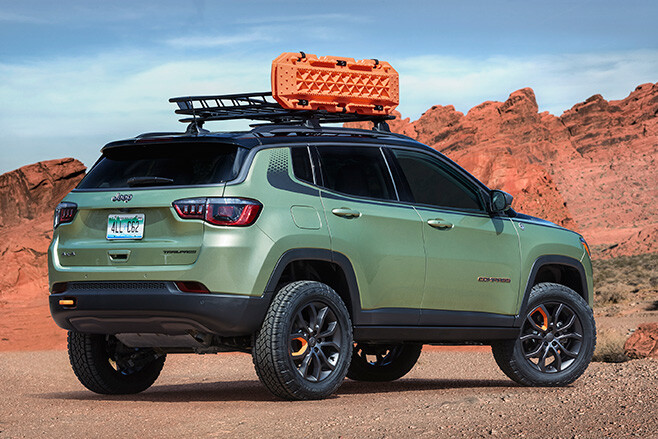
JEEP TRAILPASS
The Trailpass is a Trailhawk Compass dialled up to 11 thanks to a 1.5-inch lift and Jeep Performance Parts: a roof basket, cross rails and rock rails.
Aesthetic enhancements include Gloss Black side mirror caps, a custom bonnet graphic, side stripes, tinted head- and tail-lamps, and a Mopar/Thule roof basket.
Power arrives via a 2.4-litre Tigershark mated to a nine-speed auto.
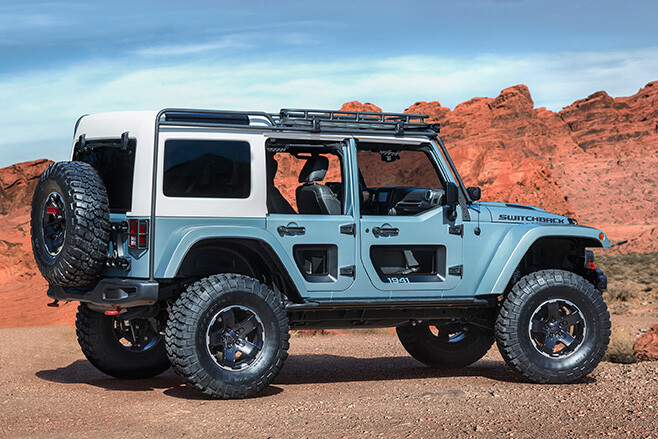
JEEP SWITCHBACK
The Switchback comes packed with a host of Mopar and Jeep Performance Parts.
These include a front and rear Dana 44 axle, a four-inch lift with remote reservoir Fox shocks, heavy duty cast diff covers, steel front and rear bumpers, a Rubicon winch, winch guard, cold air intake, and an axle-back exhaust.
The hard top and roof rack system of the Safari concept is utilised, as well as high-top fender flares.
Like the Safari, the Switchback is powered by a 3.6-litre Pentastar V6 mated to a five-speed auto.
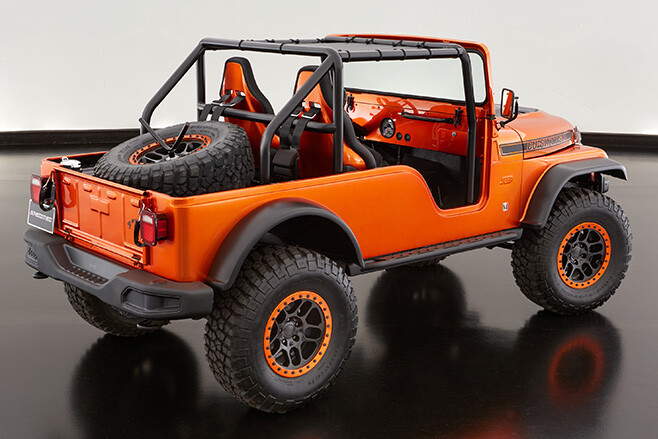
JEEP CJ66
The CJ66 made waves at the 2016 SEMA Show in Las Vegas, but what is it exactly?
It utilises a Wrangler TJ frame, a 1966 Wrangler CJ universal Tuxedo Park body and Wrangler JK elements, and then it’s powered by a Mopar 345 Crate Hemi Engine Kit-enabled 5.7-litre Hemi.
For off-road duties it features front and rear Mopar Dana 44 Crate axles, a two-inch lift, a two-way air system to quickly air tyres up or down, oversized fender flares, Mopar 10th Anniversary Wrangler JK Rubicon Bumper kits, and Jeep Performance Parts’ skid and front bumper plates and rock rails.
It’s topped off with a Mopar Warn winch.
JEEP LUMINATOR
As you probably already guessed, the Luminator is all about off-road lighting. To this end, the Luminator is packed with more lights than a Christmas tree.
Jointly developed with the Automotive Lighting division of Magneti Marelli, the Luminator features LEDs from head to toe, including underbody rock lights.
The Luminator will definitely be a highlight in the Moab desert this April.
4X4 Australia was at SEMA as part of the Global Media Awards program, where media representatives from around the globe are asked to choose 10 products from the New Products Showcase that would do well in their respective markets. The showcase contained more than 2500 new products, so it was an all-day job to go through them and choose our favourites. Here’s what we picked:
BUBBA ROPE ROCK-N-ROLL RECOVERY KIT JUST like your usual recovery kit, but instead of a snatch strap it includes Bubba Rope’s kinetic energy recovery rope, and in lieu of metal shackles it has a pair of the Gator Jaw synthetic soft shackles. This kit isn’t cheap at US$419, but it’s full of US-made products that are innovative and of high quality. Website: Bubba Rope
THE GRABBER FROM BUBBA ROPE ONE of those clever little inventions that make you wonder why didn’t you think of it. The Grabber simply holds the last few rolls of winch rope to the winch drum to ensure you never roll it all the way out. Folks have probably been making their own similar items, but Bubba Rope has brought it to the market. Website: Bubba Rope
PROLINK EXPERT FROM FACTOR 55 THE latest winch thimble from Factor 55, the ProLink Expert features a bigger opening in the head to allow either the shackle pin or the bow to be fitted through. Like other Factor 55 ProLinks, the Expert is made from hard anodised Aerospace billet aluminium and features convenient titanium shear pin installation and rubber guard to protect the front of the fairlead. Website: Factor 55
TOW-PRO ELITE FROM REDARC ELECTRONICS THIS is a great example of an Australian product taking on the global market. Aussies are familiar with Redarc’s electric brake controllers, but here is the brand’s premier product that is suitable for vehicles towing trailers fitted with electric brakes. The compact, remote head of the Tow Pro Elite ensures it can be fitted to all manner of vehicles, no matter what side the steering wheel is on. Website: Redarc Electronics
FAST FID FROM FACTOR 55 ANOTHER clever but simple product that comes from something folks have been cobbling together themselves for years but is now a commercial product. No more stealing nanna’s knitting needles with the Fast Fid ready to help you with your synth rope with splicing and repairs. Website: Factor 55
DYNATRAC DYNALOC 40-SPLINE LOCKING HUB DYNATRAC is well-known for its heavy duty axle upgrades, including its ProRock 44, 60 and 80 replacement axle assemblies. Those upgrading to the heavier duty assemblies often select 40-spline axle shafts, and now Dynatrac has introduced its DynaLoc 40-spline hubs for the front end. These American-made hubs claim to be up to three times stronger than any others on the market and work with Dynatrac’s 40-spline chrome-moly axles and exclusive 40-spline ARB Air Lockers to deliver the ultimate in strength. Website: Dynatrac
BILSTEIN BILSTEIN USA had a number of great offerings at SEMA, including its new adjustable coil-over suspensions for the Toyota Tacoma and Chevy Colorado, both of which should transfer to the Australian-equivalent utes without too much trouble. Bilstein did an epic off-road R&D trip to Las Vegas and displayed its vehicles covered in mud at the show. With Bilstein Australia looking to expand its off-road offerings, we will be keen to see what they come up with for our popular 4x4s. Website: Bilstein US
CARRICHS ACCESSORIES TABLET DASH KIT SOMETHING a bit different but certainly a valuable accessory, the Tablet Dash Kit from Carrichs is a moulded pod to mount your iPad or other tablet device to the dash of your vehicle. No more windscreen mounts, the Carrichs pod puts your tablet up high where it’s easy to read for navigation or whatever other apps you use in your 4×4. Set to be available early in 2017 and initially for the JK Wrangler, more models are expected throughout the year. Website: Carrichs Automotive Accessories
LS V12 ENGINE OKAY, so this one is a bit self-indulgent and may not be the first engine swap a 4x4er goes for. But it’s the work of a couple of Aussie mad professors who chopped up a pair of General Motors LS V8 engines and melded them together to create a V12. They’ve now cast a bespoke engine block and heads for the creation, and turn-key engines are available for around $40,000. We’d love to see one nestled in the nose of an FJ55 sleeper. Website: V12LS.com
AMERICAN TRAIL PRODUCTS’ JEEP JK WRANGLER BILLET GRAB HANDLES ADD some bling to your Jeep with these beautifully made billet grab handles. They don’t just look good but mount solidly to give you something to hang on to when climbing aboard or bouncing along the tracks. Check out the product vid from SEMA here.