
The premise was simple: prove a bog-standard Ford Everest could be mastered off-road by the brazen amateur and, in doing so, be a capable weekend warrior-cum-workday plodder. The location? None other than the Apple Isle, where journos were invited to bring along a family member or friend with little or no four-wheel driving experience for a weekend bash on backcountry roads.
The contingency gathered at Devonport Airport, where a selection of Everest Trends and a couple of Titaniums awaited. With the inexperienced eager to learn how to turn all four wheels on mud and dirt, those of us travelling solo were paired up and sent on our way – us in a mid-spec Trend.
A spurt along sealed tarmac from Devonport Airport lead to the picturesque Bakers Beach in Narawntapu National Park, which provided the backdrop for a quick lunch stop – where we sampled some fine campfire-cooked tucker – and the obligatory safety/how-to chat from the boffins at Ford.
Under the expert guidance of James Stewart and Ford Australia’s vehicle integration supervisor, Richard Woolley, the contingent of journos and partners – mums, dads, partners and kids (more eager to spot a Tassie Devil than learn about the Everest’s power-to-weight ratio) – were run through the ringer on the intricacies of the Everest’s off-roading nous.
Everything from tyre pressures, basic recovery techniques and the Everest’s Terrain Management System (Rock, Mud/Snow, Normal and Sand) were ticked off and, once everyone was comfortable with which dials did what and how to use a comms system, we rolled out to the first Ford Everest Experience challenge.
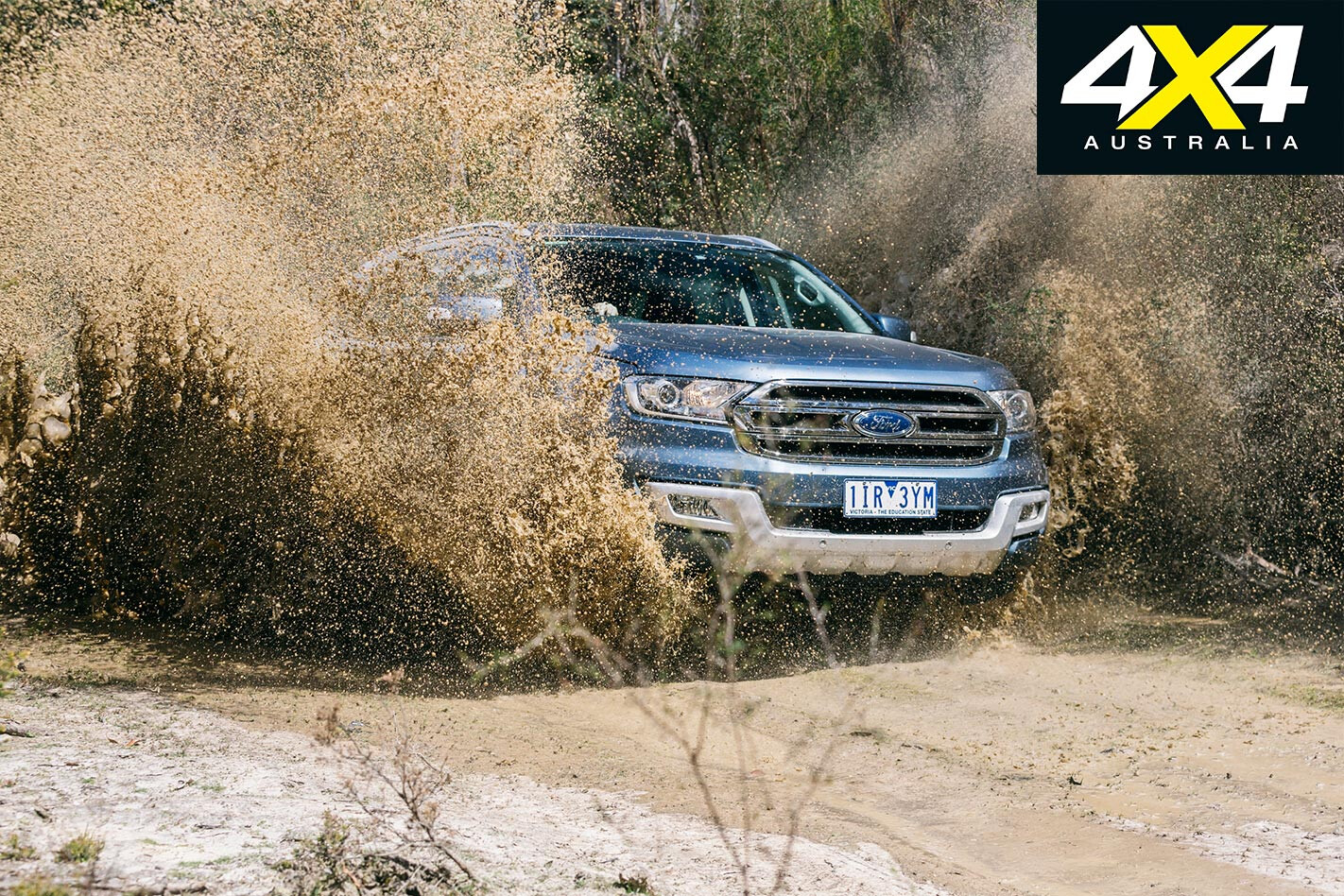
We arrived at Briggs Regional Reserve, where a makeshift off-road course had been set up by the Ford team. The course was sculptured to test the Everest’s departure (29.5°), rampover (25°) and approach (21.5°) angles, as well as ground clearance (225mm). In what was a blessing in disguise, my co-pilot had limited off-roading experience, which provided the perfect opportunity to see first-hand how easy it was for her to adapt to the various obstacles the set route provided – it also tested how intently we listened to the instructions given earlier in the day.
With low range selected and Rock mode engaged (and with the support of the cross-axle diff lock at the rear), the Everest calmly negotiated the relatively subdued track, overcoming the steep inclines and driving itself downhill with descent control activated. My co-pilot’s initial trepidation was soon replaced with confidence as she realised an unmodified Everest was highly capable at traversing mud, sharp rocks, and slippery ascents and descents.
As confidence in the Everest’s abilities piqued, we followed a rutted route littered with corrugations and potholes, where the Everest’s coil-sprung rear end, in combination with 18-inch Bridgestone Dueller H/Ts, tied the vehicle down nicely – countless hours of local testing will do that. The cabin is also a peaceful place to be due to soft-touch interior materials and improved NVH, thanks in part to active noise cancelling tech.
The broken tracks were soon abandoned as we took the paved path toward the town of Sheffield – famous for its murals – and then on toward O’Neills Creek for traditional Aussie damper and tea. A local bushman wooed us with his knowledge as we tucked into our afternoon snack, before we were whisked away to our overnight digs at the iconic Cradle Mountain Lodge (within the World Heritage-listed Cradle Mountain National Park) some 50 minutes’ drive away via some of Tassie’s famous winding roads.
Some of the weekend’s best fun was to be had on these twisties that are traditionally better suited to MX-5s and Subaru BRZs than 2.5-tonne Everests; not that this troubled the burly 4×4. Despite its hefty weight and considerable size the Everest remained planted through the tight 100km/h hairpins, its 147kW/470Nm 3.2-litre turbo-diesel engine feeling sprightly and unfussed.
An early start the following morning had us back on some fine examples of the Apple Isle’s switchbacks, heading towards the historic town of Waratah in the state’s north-west, with coffee in hand. The bitumen ended once more as we headed off-road to experience Savage River National Park’s stunning landscape – avoiding stranded pieces of tin strewn throughout the tall grass at Hellyer Gorge, which, apparently, is where you’re likely to find tiger snakes basking in the sun.
The Ford team then scoped out an old mining site with a couple of water crossings that’d make some pretty cool photos, and the group had a bit of fun with some high-speed puddle-bashing – not that the water was deep enough to test the Everest’s 800mm wading depth. A 98km bitumen run from Waratah north to Boat Harbour for lunch again showed off the Everest’s on-road credentials. From here, and with bellies full of pizza and soft drink, the weekend jaunt ended with a dash back to Devonport Airport.
The action-packed weekend provided ample time to sample the Everest over a range of surfaces, and it proved that you don’t have to throw the aftermarket catalogue at it; a stock-standard Everest is a capable off-road tourer sans any mod support. But can amateurs with no off-roading experience venture from the shopping centre to the outback in an Everest? Absolutely. The Everest is designed for ease of use; anyone should be able to flick it into low range and escape the bright lights of the city.
Granted, you wouldn’t take an Everest from the showroom floor straight to the remote regions of Australia or down Billy Goat’s Bluff, but, within reason, a stock Everest strikes a good balance between day-to-day chores and weekend adventurer. And, yes, this new-age of off-roading does take away the skill of old-school four-wheelin’, but if it gets more people on tracks and experiencing our great backyard, then that has to be a good thing.
INTO THE WILD
WE spent the night bunkered down in our overnight digs at Cradle Mountain Lodge, with a roaring fire but no internet or TV – a welcome change. There are a number of short walks from the lodge: Enchanted Walk (20-minute circuit); King Billy Walk (30 minutes); and Kynvet Falls (45 minutes to the top of Kynvet Falls). Dove Lake, a must-see attraction, is located 8km from the lodge and takes about 15 minutes to drive there – you’ll need a permit.
2018 FORD EVEREST TREND SPECS: Engine: 3.2L 5-cyl turbo-diesel Max Power: 143kW at 3000rpm Max Torque: 470Nm at 1750-2500rpm Gearbox: 6-speed auto 4×4 System: Dual-range full-time Crawl Ratio: 38.6:1 Tyre Spec: 265/60 R18 Kerb Weight: 2407kg GVM: 3100kg Payload: 693kg Towing Capacity: 3000kg Fuel Tank Capacity: 80L ADR Fuel Claim: 8.5L/100km Price: $58,990
Departure Angle: 29.5˚ Rampover Angle: 25˚ Approach Angle: 21.5˚ Wading Depth: 800mm Ground Clearance: 225mm
VOLKSWAGEN Commercial Vehicles has let loose its special edition Amarok Dark Label onto UK showrooms.
Much like what Nissan did with its Navara N-SPORT Black Edition last year, VW Commercial Vehicles has launched a can of black paint at its Amarok Highline to create the special-edition model.
Like the Nissan, the changes are aesthetic – 18-inch Rawson alloy wheels; matte black mirror housings, side bar and rear bar; black door handles; a black rear bumper; and all complemented by an exclusive Carbon Steel grey metallic paintjob – with a few practical additions thrown in: rain-sensing windscreen wipers; automatic headlight control; and power-adjustable, heated and folding door mirrors.
The interior also received a touch-up, with Alcantara and chrome silk gloss prominent. Other interior niceties include front seats with manual lumbar support, Dark Label floor mats and Discover Media with 6.33-inch touchscreen.
Not surprisingly, the powertrain remains unchanged, with Volkswagen’s V6 3.0TDI 150kW/500Nm engine pairing with an eight-speed auto and permanent four-wheel drive.
The Dark Label is priced from £33,650, with production limited to around 200 units. UK punters can order their dark steed now, with the first deliveries scheduled to arrive in May this year… Australians cannot.
THE Malloy family from the Gold Coast have just returned from their 10 month ‘Big Lap’ around Australia, where they (Craig and Kelly) continued to manage their business remotely, with the help of some very competent staff.
Australia may get a big tick for its amazing outback and culture, but it unfortunately has a red cross against it in regards to regional and remote mobile phone coverage. So, how did the Malloy family overcome their communication conundrum?
The Government recently funded almost $600 million in new investments to improve mobile coverage across Australia. The funding covers 499 upgraded or new mobile base stations, more than 68,000km² of new handheld coverage in regional Australia, and more than 150,000km² of new external antenna coverage. While this sounds substantial, it’s really just the start. The rough Australian terrain doesn’t lend itself to an easy solution for traveller communication, so many 4×4 drivers have to resort to alternative means to be able to run their business and keep in touch when on the road.
Craig states that one of the reasons they were able to do their ‘Lap’ was the ability to work and keep the business running while travelling. Installing Cel-Fi GO ensured they had great phone and data for much of their trip via the Telstra 3G and 4G network, and being able to keep in contact with staff and clients was a business lifesaver for them – and it was great for the children when doing their online schooling.
Cel-Fi GO is a mobile phone repeater that can boost a 3G or 4G Telstra signal. It requires an outdoor antenna to pick up the signal and an indoor antenna to provide signal to any Telstra mobile device in range. An inbuilt amplifier will boost a very poor signal and make it usable. The Mobile Cel-Fi GO version is perfect for vehicles and those on the move, and the stationary version is perfect for homes, offices and caravans.
Time and time again, right around the country, when the Malloy family parked at camps, beaches or rainforests, they were able to access mobile coverage. Without utilising a GO, accessing mobile coverage would be a struggle, as many of their fellow travellers could attest to.
Craig remembers one situation very clearly on a beach in Mutee Head, on the way to Cape York. A group of men camping close by were struggling to make a phone call, while Craig was able to run a video conference with a client from his car. The ease of set-up was also a bonus – once set up in an area with a sniff of a signal, you were connected. There was no hassle or dealing with giant aerials and accessories.
“The GO is really quite impressive. Several times we have been the only person in the camping ground or attraction with internet and reception of a level that is very usable for business,” said Craig.
For more information on Cel-Fi GO solutions for your vehicle, contact Powertec Telecommunications for details of the pack appropriate for your travels on (07) 5577 0500, or email [email protected]
Website:www.powertec.com.au/mobile-products/repeater-types/vehicle-repeaters
Relive the Malloy family adventure here.
THE January 2018 issue of 4X4 Australia is available in stores.
To kick off the new year, we drove Jeep’s new JL Wrangler, Toyota’s updated Hilux range, the HSV Colorado SportsCat and the all-new Disco TD6.
We also punted the 2017 F-150 Raptor in the Mojave Desert, and took a trip south to Tassie for the Ford Everest Experience.
Get your copy of 4X4 Australia from newsagents or by subscribing to 4X4 Australia in electronic or print format.
What you’ll get in the January 2018 issue:
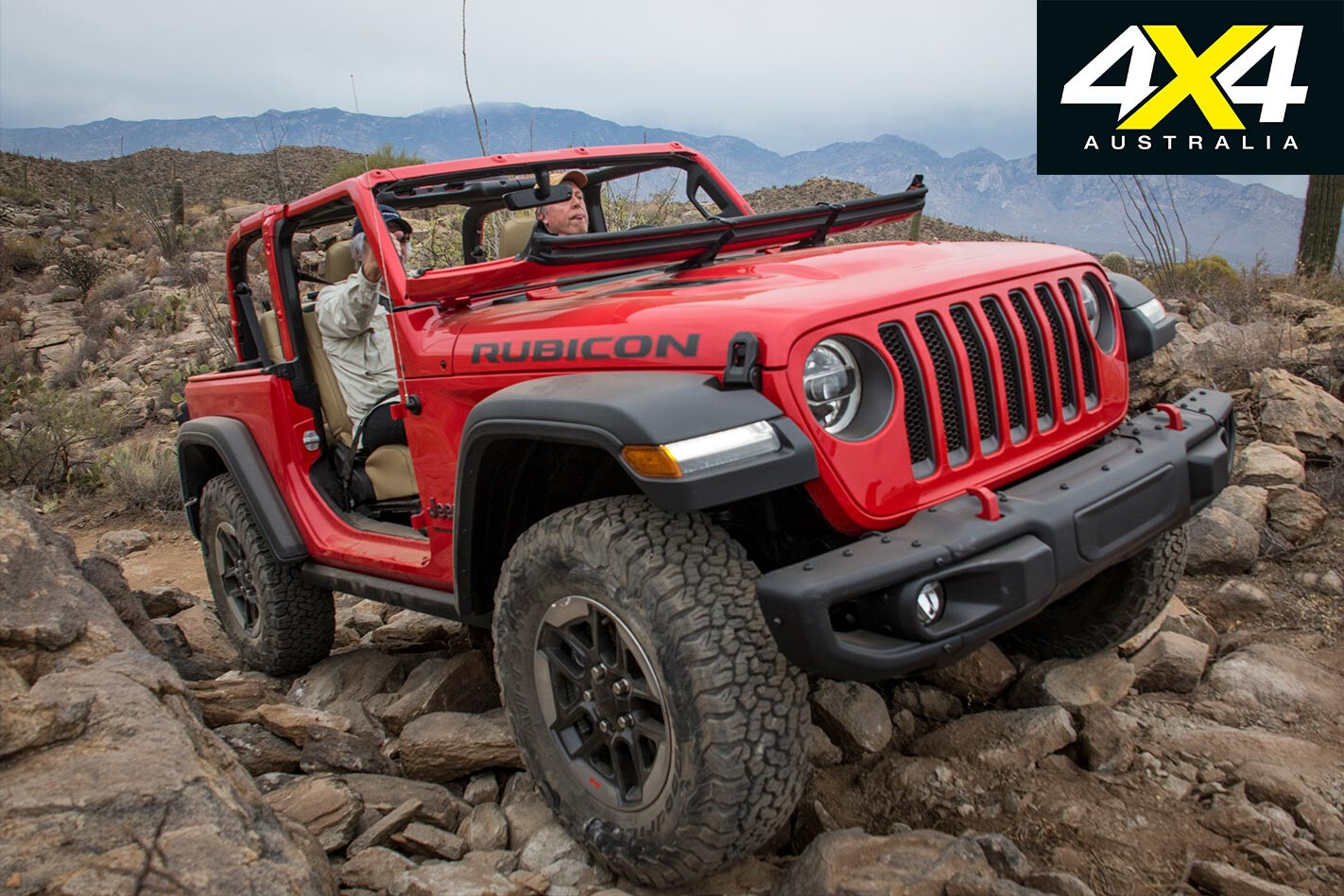
FIRST DRIVE: 2018 Jeep JL Wrangler In the US of A for the first fang of Jeep’s new Wrangler.
FIRST DRIVE: 2018 Toyota Hilux SR+/SR5+ Sampling the rejigged Hilux range.
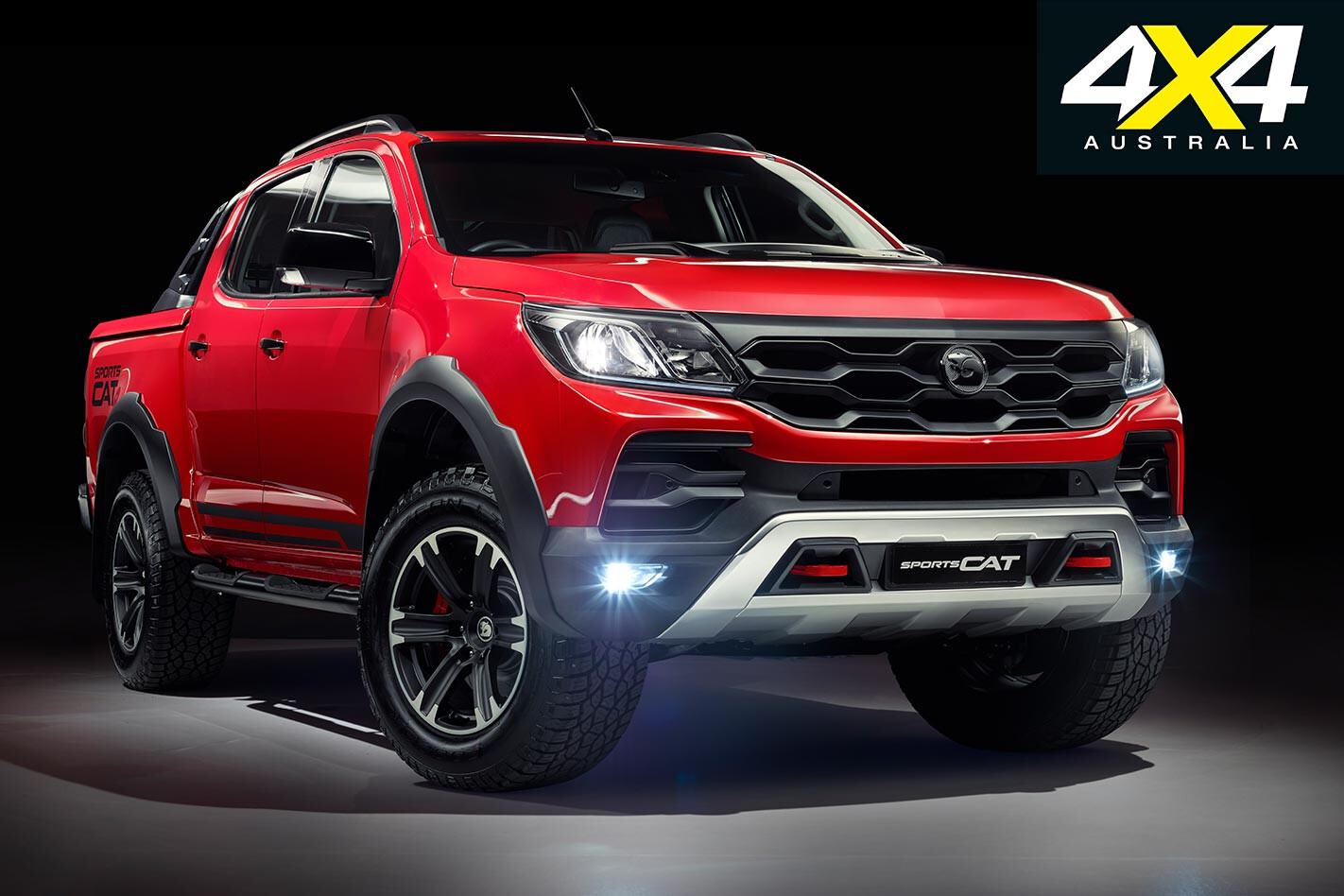
FIRST DRIVE: HSV Colorado SportsCat Dressed-up SportsCat puts the cat among the pigeons.
FIRST DRIVE: Land Rover Discovery TD6 Grooving in Land Rover’s new-from-the-ground-up Disco.
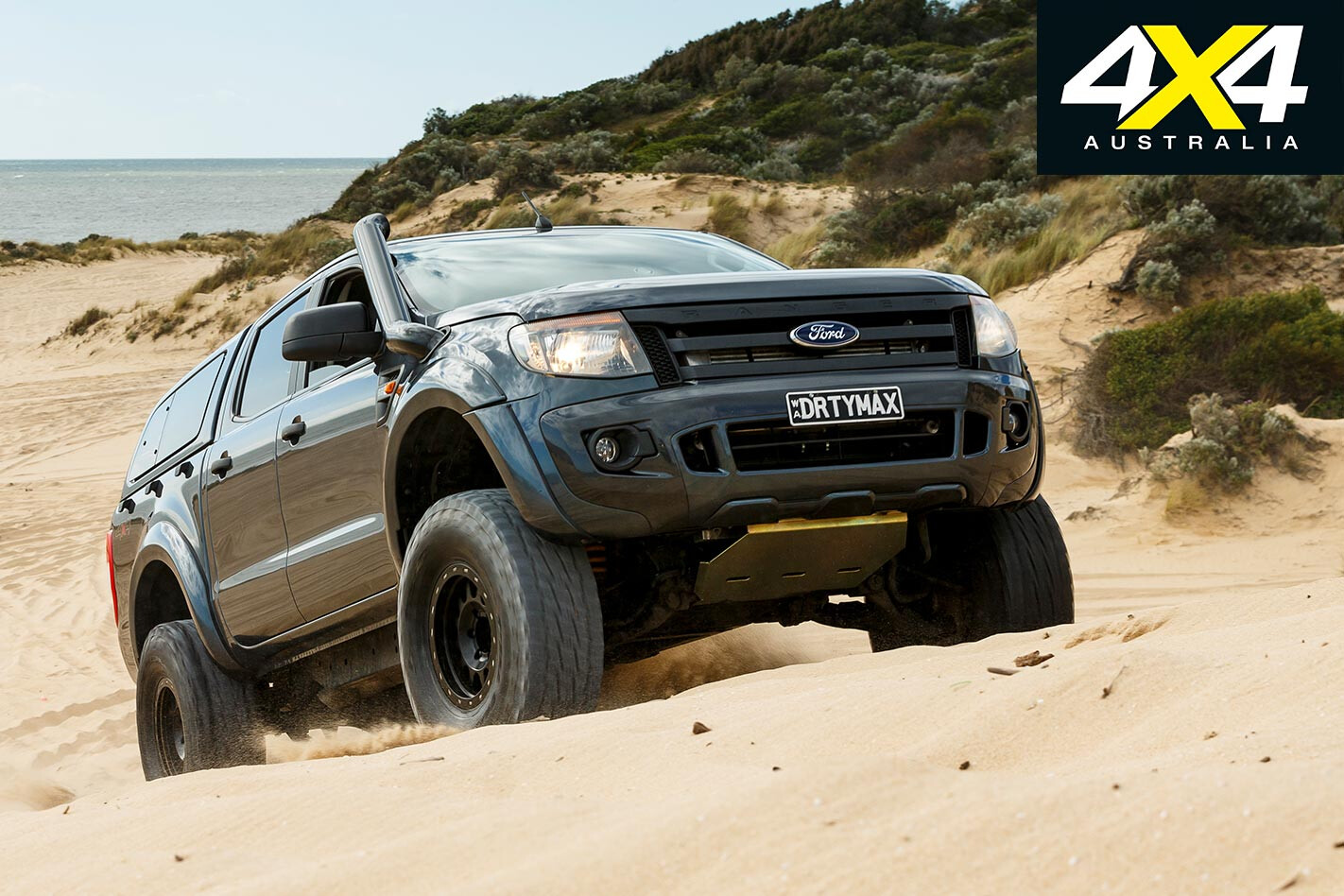
CUSTOM: Duramax V8-powered Ford Ranger 6.6 litres of V8 fury.
DRIVEN: Ford F-150 Raptor With a Ranger Raptor coming to Oz, we head back to the States to drive the F-150 that spawned it.
EVENT: Ford Everest Experience, Tasmania Off to the Apple Isle with a convoy of Ford Everests.
GEAR: Compliance Testing On why you should always try and buy compliance-tested equipment.
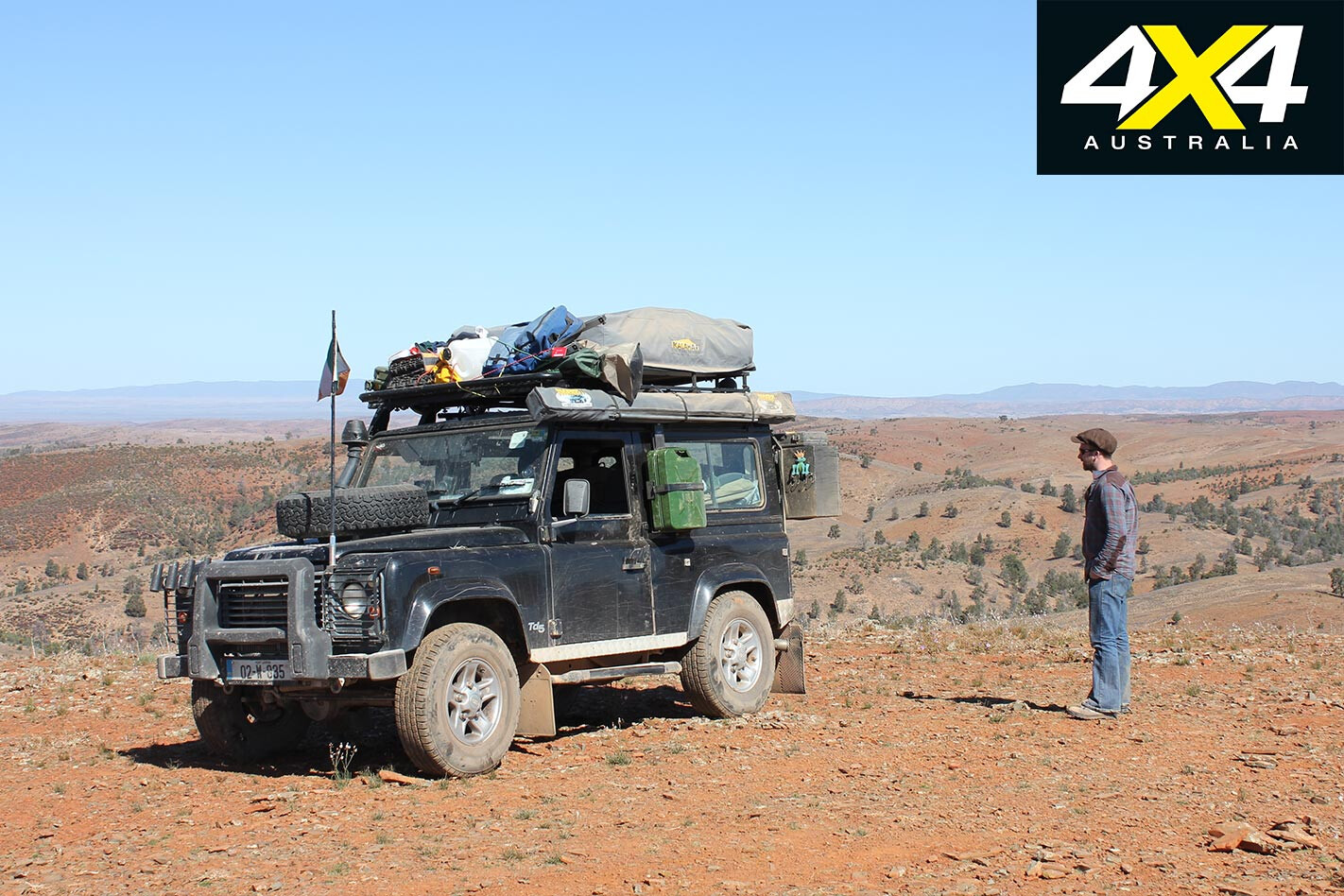
EXPLORE: Flinders Ranges, SA Tracking along some of the country’s best self-drive tracks.
EXPLORE: Jeep Heritage Museum, Georgia, USA Visiting the most complete seven-slot grille collection on the planet.
EXPLORE: Narrabri, NSW Much more than a gateway to the west.
GEAR: Fuel Tank Buyers’ Guide Why an aftermarket fuel tank will prove a lifesaver on remote-area adventures.
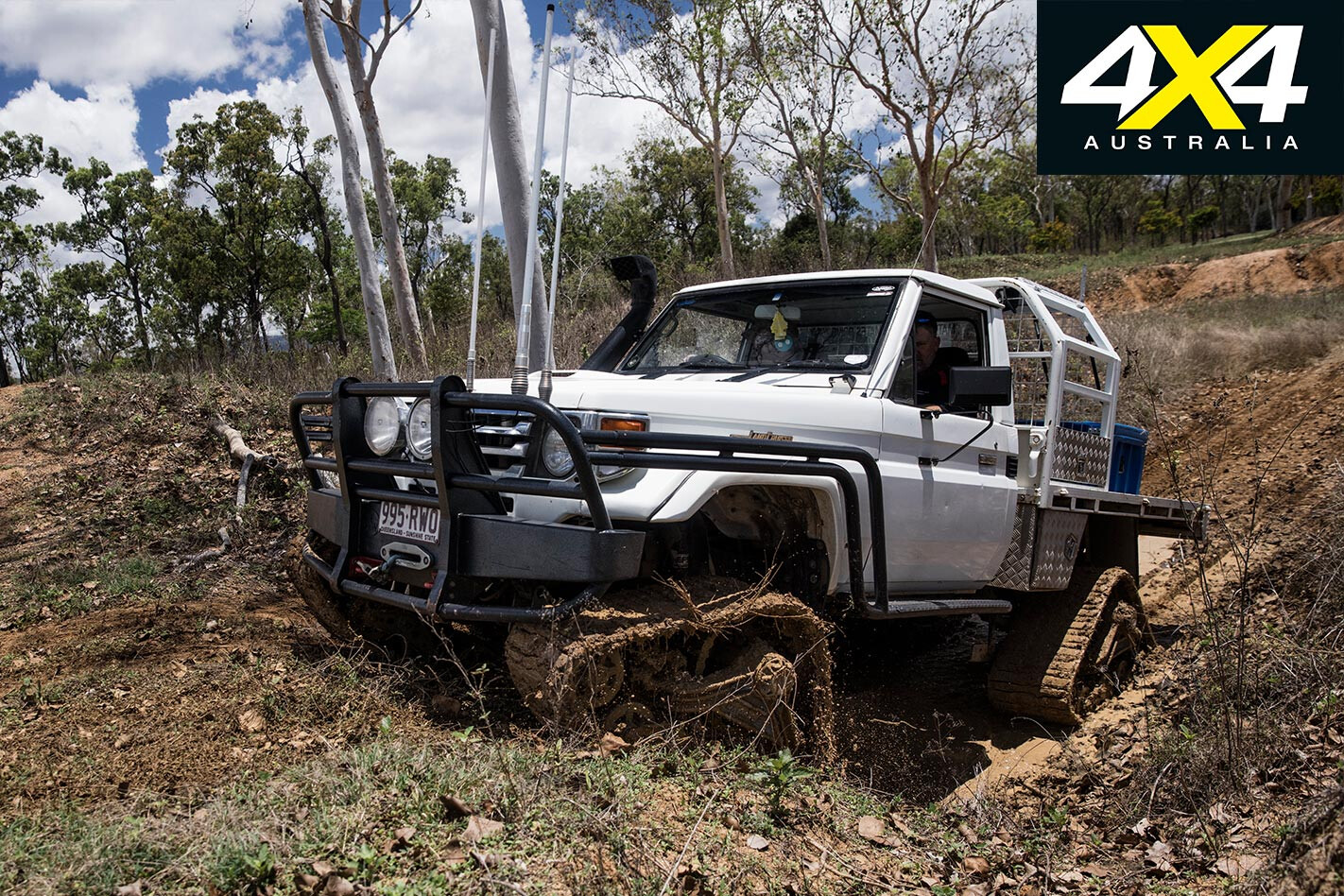
CUSTOM: Mattracks-equipped LC79 Swapping rubber for tracks on the uber-tough LC79.
WHAT ELSE?
We list and review a bunch of the best aftermarket gear currently in catalogues, including ARB’s Linx and Ultra Vision’s Nitro 140 Maxx lights. We also outline what’s necessary for a brake upgrade.
In the 4×4 shed this month we’ve got Matt’s 1985 BJ73, Ron’s 79 Series and our resident G300 Professional.
Plus, Dean Mellor explains the ‘Victorian Shuffle’, which anyone travelling along the Hume Highway will know all too well.
Enjoy the issue!
To celebrate the brand’s 70th anniversary this year, Land Rover has announced a special-edition V8-powered Defender will be available direct from its Classic division.
The high-performance Defender Works V8 will feature the most powerful engine ever created by Land Rover – a 5.0-litre petrol V8 capable of delivering a whopping 298kW and 515Nm, up from the standard TD4 Defender’s 90kW and 360Nm.
Punters best get in quick to snare a 70th Edition special, as only 150 Defenders will be selected for re-engineering to cater for the V8 powertrain transplant. That V8 will be complemented by an eight-speed ZF automatic with Sport mode. Other features include upgraded brakes, springs, dampers and anti-roll bars; 18-inch diamond-tuned Sawtooth alloy wheels; and 265/65 R18 all-terrain rubber.
Tim Hannig, Jaguar Land Rover Classic Director, said: “It’s fitting that we’ve been able to release the full potential of the iconic Defender, whose much-loved shape remains synonymous with Land Rover, 70 years since it was seen in public for the first time.
“The idea of reintroducing a V8 Defender was something we were discussing as far back as 2014, when we were still building the Defender in Solihull. We knew the demand was there for a powerful and fast Defender; the Land Rover authenticity is the ultimate finishing touch for discerning clients purchasing these collector edition Defenders.”
Land Rover, owned by India’s Tata Motors, has engineered the vehicle to pay homage to previous high-powered donks from the marquee’s past: the Stage 1 V8 from 1979 and subsequent Defenders (including the 50th Anniversary edition).
This bonkers V8 version will be available for purchase in both 90 and 110 wheelbases direct from Land Rover Classic, with prices starting from £150,000 (UK) for the shorter-wheelbased version.
Sadly, we won’t get this beast Down Under, with the Defender Works V8 only available in the UK and Middle East/North Africa markets (on an import basis). Worth noting, however, is that a number of the upgrades fitted to this monster Defender will be available to purchase from Land Rover Classic, including (significantly for Aus Defender owners) power upgrades for the TDCi diesel engine, as well as what Land Rover terms “high performance suspension and braking kits”.
It seems my quest to get my old Middy back on the tracks in 2018 has opened a giant can of worms.
Every time the mechanics at Terrain Tamer pulled a component apart they found it worn beyond repair or something else that required attention. More than 400,000km of use will do that to a vehicle, and even things I thought ‘felt okay’ showed signs of wear and tear.
Sometime in the life of this 1985 BJ73 Cruiser, a previous owner has swapped out the standard naturally aspirated 3B diesel engine for a factory turbocharged 13B-t as was fitted to the BJ74 Cruiser. While the odometer shows more than 400,000km on the clock, it is unknown how many kays are on the engine or if the gearbox was also swapped out at some point.
Aside from its characteristic rattling noise and vibration, the direct injection 13B-t engine goes well and the oil leaks from the rear main seemed to be the only major problem with it. Terrain Tamer’s Shadin King pulled the gearbox out to access the rear of the engine and replace the seal, which revealed the seal had been leaking extensively and the heavy-duty clutch fitted by a previous owner was shot because the clutch plate was oil-soaked. The clutch joined the growing pile of parts that were headed for the trash, and a new replacement was sourced from Terrain Tamer’s extensive warehouse.
Allan Gray took a look at the gearbox and transfer case as there were oil leaks there too, and he was impressed to find one of Terrain Tamer’s modified gears had already been fitted. This part is indicative of what Terrain Tamer does: it looked at the OE part (and where they are known to fail) and then had a re-engineered part made to solve the problem and built to OE or better quality. For these gears and many other parts, they are made in Japan in factories that make the OE parts.
Inspection of the gearbox’s input shaft also showed wear there, so the job was passed over to ‘Gearbox Dave’ to give it a full overhaul. Dave does these full-time, stripping them down, diagnosing the faults and reassembling them with new and improved components. It’s not just old Cruiser boxes, either, as there are always V8 70 Series boxes in the shop and those from other 4×4 makes and models.
Even though I thought the old five-speed shifted fine, Dave found a number of components that showed wear and replaced them with Terrain Tamer parts as needed. With new seals throughout, the leaks will be gone and, combined with the new Terrain Tamer clutch, it should now shift better than a new one.
The steering box was another source of oil that had the Cruiser leaking like an old Land Rover – I was always topping it up whenever the power steering pump started screeching, so it needed a fix. Shadin stripped the pump and revealed that the surface on which the offending oil seal ran was badly worn and pitted, rendering the box unserviceable. There are no new replacements for these available, so a second-hand box in better condition than mine was found and reconditioned before being fitted to the chassis.
With new clutch master and slave cylinders, the new Terrain Tamer clutch, and the rebuilt gearbox, the driveline should be top notch now. The reconditioned steering box, along with freshened-up swivel hubs including new wheel bearings and stub axles, will have the front end feeling schmick, too.
What you see here is only the third new-from-the-ground-up Discovery in nearly 30 years and one that shares very little with its forebears.
Most significantly it’s a monocoque design whereas all previous Discoveries since the original debuted in 1988 have used a separate chassis, which is the traditional – some would say old-school – way to build a 4×4. However, this new Discovery is not just any monocoque but one fabricated largely from aluminium – 85 per cent, in fact – rather than steel. This makes it significantly lighter than the previous Discovery and brings wide-ranging benefits.
Land Rover isn’t new to building monocoque 4x4s, as the marque’s first appeared in 2002 in the form of the then-new third-generation Range Rover. This Discovery has been developed from the current Range Rover and Range Rover Sport, which debuted essentially the same aluminium monocoque platform in 2012. So while all this may be new to the Discovery, it’s certainly not new to Land Rover.
POWERTRAIN AND PERFORMANCE
This new-generation Discovery comes with three new diesel engines in Australia. What we have here is the Td6 – a 3.0-litre V6 and the premium engine in the Australian range – and two 2.0-litre fours. The V6 is available in all model grades and has been developed from the V6 diesel in the previous Discovery, but it drops the bi-turbo system for a simpler single turbo and introduces a new injection system and Euro 6 compliance, among other changes. Despite reverting to a single turbo, it claims 7kW more power (now 190kW) than the outgoing SDV6 – the more powerful of the two V6s in the previous Discovery – while its maximum torque of 600Nm comes on earlier than it did in the SDV6.
However, it’s the overall 400kg weight savings over the last-generation Discovery that makes this new Td6 Disco far livelier. It will sprint to 100km/h in just 8.1 seconds, whereas the previous SDV6 took 9.3 seconds and the less powerful (but still bi-turbo) TdV6 took 10.7 seconds.
The Td6 is more than a punchy and responsive engine, though; it’s also effortless and refined – even more so in this new Discovery – and is particularly relaxed and quiet at highway speeds. As ever, the super-slick and quick-shifting eight-speed ZF provides a wide spread of ratios to enhance low-speed response yet provide very long highway legs.
ON-ROAD
The Discovery’s lightweight aluminium monocoque rides on fully independent suspension with either coil springs (standard on the base model) or height-adjustable air springs (optional on base model and standard elsewhere).
This new Discovery also brings electric power steering, which reduces steering effort at parking speeds but firms up at highway speeds. On the road the Discovery can sometimes feel disconnected as it’s so effortless to steer and handle in normal driving situations, but it becomes more alive on winding and demanding roads.
The significant weight savings help dynamically and it feels poised and secure, even when road conditions deteriorate. Compared to competitor vehicles that offer similar off-road ability, the Discovery’s on-road handling is “sporty”, thanks in part to the height-adjustable air suspension allowing a relatively low ride-height as the default road setting and then automatically lowering the car further at highway speeds.
The ride itself is generally comfortable, too, but it still has a touch of firmness about it on the 255/55R20 tyres of the HSE. No doubt the 235/60R19s fitted to the S and SE models would provide a suppler ride on bumpier roads.
OFF-ROAD
The Discovery’s long wheel travel, aided by the height-adjustable suspension, provides 283mm of ground clearance as the default off-road setting (it can lift further if the vehicle is grounded) and is the starting point of a very capable 4×4. Add in a deep low range reduction (2.93:1), a self-locking and self-proportioning centre diff, the (inexpensive) option of a rear e-locker (not fitted to our still-capable test vehicle), adjustable chassis electronics (via Terrain Response) and a 900mm wading depth, and you have all the bases covered.
Well, almost all the bases. The tyres, at least the standard high-speed-rated (W, or 270km/h no less) items, are too fragile in the sidewall to be useful in rocky off-road conditions, even if they are okay on mud and sand, despite being designated as All Terrains. Given the Discovery’s smallest OEM wheel is a 19, the tyres are also relatively low profile, which places more demand on the sidewalls.
The good news is that this new Discovery has a one-size-taller tyre for any given wheel size than the Discovery 3 or 4 (a 255/60R19 replaces the previous 255/55R19; a 255/55R20 replaces the previous 255/50R20, etc.), which opens up the aftermarket tyre options considerably, especially in the 20-inch sizes.
CABIN AND ACCOMMODATION
Compared to the Discovery 3/4, the new Discovery’s body – honed in a wind tunnel as it has been – is longer, but not as tall or wide. In a cabin that feels very ‘Range Rover’ you sit lower and farther back than in the previous Discovery, in a driving position that’s not as commanding off-road but is more than comfortable otherwise. There’s plenty of adjustment, too, for taller or shorter drivers.
Despite the rejig of the body shape the new Discovery still has a big and comfortable second-row seat and, like the Disco 3/4, the best third-row in the business, LandCruiser 200 included. There’s decent luggage space, as the third row folds flat and the second row adjusts fore and aft (by 170mm) to optimise second-row leg space or rear load space. Somewhat controversially, the split tailgate has been dropped for a top-hinged single door; although, an internal lower ‘tailgate’, which helps keep items in the luggage area in place and is strong enough to sit on, is standard on some models and optional on others. All models also come as five-seaters for those who want the extra luggage space and don’t need the extra seats.
PRACTICALITIES
As you’d expect of a Discovery you get a high tow rating (3500kg), excellent payload capacity (827kg for the Td6, and more with other models) and a very high GCM – 6650kg for the Td6, which is 650kg more than the best of the dual-cab 4×4 utes. All models, bar the S, also come with a pre-wired factory-fit towbar.
But, as ever with Discovery, the fuel capacity (85 litres with the Td6) could be better; although, the significantly lower weight of this new model means lower fuel consumption and therefore more touring range.
Land Rover offers a good range of load-carrying accessories (various roof bars and pods, etc.) and items such as sidesteps, but no frontal protection… not even a nudge bar. At this stage there’s nothing from the aftermarket in the way of frontal protection or other functional enhancement. Whether that changes will depend on demand.
“Td6” EQUIPMENT
The least expensive V6, the ‘S’, has a single-range 4×4 system, standard coil-spring suspension and five manual-adjust cloth seats in a very basic car. Dual-range gearing is an additional $920, while height-adjustable air suspension is another $2060. Unfortunately the very useful rear e-locker is not available on the Td6 S as an option. If you want that you’ll at least need an SE. Even then the rear locker is an additional $1020; although, dual-range gearing and height-adjustable air suspension are standard on the SE, as is leather/electric adjust seats, sat-nav, an up-spec audio, LED auto headlights, LED DRLs, auto wipers, and a factory towbar. Those wishing to spend more can move up to the HSE or the HSE Luxury, or indulge themselves in the extensive array of options.
SUM UP
There’s no doubt this new Discovery is a significant step forward in terms of providing the virtues of a big, spacious, comfortable and refined 4×4 wagon in a package that also offers sporty on-road handling, strong performance, formidable off-road ability and benchmark fuel economy.
But it’s expensive, particularly so with the Td6 engine. If you want to go bush in your new Discovery you’ll also have to fork out for some more robust tyres. And, if you want a Td6 with maximum off-road ability (courtesy of the optional rear locker), you’ll need to start with an SE rather than the base S model.
LAND ROVER DISCOVERY Td6 PRICES* Td6 S: $78,750 Td6 SE: $92,650 Td6 HSE: $103,000 Td6 HSE Luxury: $116,800 *five-seat models only, seven seats optional. Prices don’t include on-road costs
LAND ROVER DISCOVERY Td6 HSE SPECS Engine: 3.0-litre V6 turbo-diesel Max Power: 190kW @ 3750rpm Max Torque: 600Nm @ 1750-2250rpm Gearbox: Eight-speed automatic 4×4 System: Dual-range full-time Crawl Ratio: 44.3:1 Construction: Monocoque Front Suspension: Independent/air springs Rear Suspension: Independent/air springs Kerb Weight: 2223kg (five-seater) GVM: 3050kg (five-seater) Payload: 827kg (five-seater) Towing Capacity: 3500kg GCM: 6650kg (five-seater) Fuel Tank Capacity: 85 litres ADR Fuel Claim: 7.2L/100km Test Fuel Use: 10.8L/100km Touring Range: 737km
IT’S an interesting time we are in, as the increasing popularity of 4×4 vehicles – specifically utes – changes the dynamic of who is buying them and what’s on offer.
We’ve seen traditional performance-car tuners jump on the bandwagon with 4×4 utes from Tickford and Harrop, and now we see the Colorado SportsCat by HSV. Even MotoGP champion Valentino Rossi has put his VR46 brand on a Ford Ranger.
As four-wheel drivers, a lot of the stuff we see going on these vehicles seems silly, which is sometimes detrimental to the vehicle’s intent; that is, to drive off-road. Low-profile tyres on large diameter wheels, low-hanging plastic bumpers and gaudy bonnet scoops aren’t going to get you to your secret campsite off the beaten track. It’s indicative of the style of buyer that is now being drawn to 4x4s and, with the end of local Holden manufacturing, a company such as HSV has nowhere else to turn. Buyers who might have once looked at a HSV Maloo might be looking at a Ranger or Colorado now, and HSV has jumped in with its own offering. And if the stories are true, HSV’s parent company, Walkinshaw Performance, will have some wilder versions coming soon as well.
A performance 4×4 isn’t new, and Ford Performance has been doing it for years in the US with the F-150 Raptor. With a Ford Australia Ranger Raptor set to hit our showrooms later this year, we sampled the go-fast F-truck for a test in this issue.
But should we or vehicle manufacturers be encouraging faster vehicles out on off-road tracks? Most four-wheel drivers will say ‘no’, as our adventures are usually enjoyed at a more leisurely pace. Driving the F-150 Raptor on the tracks in the Mojave Desert revealed that having all that expensive, Baja race-inspired suspension technology at your disposal wasn’t just about going faster on the tracks; no, the King suspension under the Raptor allowed us to drive more comfortably and controlled over rough and rutted terrain, putting less stress on both the vehicle and driver for a safer delivery to our destination.
While we don’t think the Ranger Raptor Ford Australia is producing will have the performance of the F-150’s EcoBoost V6 or a V8 engine, we hope it will get some quality high-end suspension componentry to deliver a similar controlled ride for our local conditions.
FOLLOWING months of leaked photographs of camouflaged boxy wagons in the bush, Mercedes-Benz has unveiled the 2018 G-Class wagon, which represents the biggest changes to the iconic off-roader in four decades.
The changes centre around a bigger body to allow a more accommodating cabin, lightweight panels to reduce mass, and a new, independent front suspension (IFS) to improve on-road dynamics without sacrificing any of the off-road ability the Gelandewagen has been famous for.
The familiar shape and door handles of the G-Wagen have been retained, but instantly noticeable are the more-rounded edges around the vehicle. Those familiar with the wagon will also notice the extra width in the rear door and windscreen. The new G is 53mm longer and 121mm wider than before, giving 38mm more shoulder and leg room in the front seats and 68mm more elbow room. Many people would think the G-Wagen was already big, but it was relatively small when compared to more modern vehicles in its class.
Aluminium has been used for the bonnet, front ’guards and doors and, when combined with specific metals in other parts of the vehicle and the lighter weight IFS, the G-Class has shed some 170kg, despite its bigger dimensions.
The switch from a live front axle to IFS raises alarms for off-road enthusiasts as, traditionally, IFS compromises ability in terrain where axle articulation and ground clearance are important. However, Benz assures us this won’t be the case with the G, and these images indicate more travel at the rear axle and adequate travel at the front. The current live-axle model doesn’t have great articulation to begin with, so the G-Wagen will continue to rely on its driver-activated front, rear and centre differential locks, as well as updated chassis electronics.
The new IFS utilises a double-wishbone design, where the arms are mounted directly to the ladder-chassis without an additional sub-frame. The attachment points for the lower wishbone to the chassis are in a Z-formation to keep them as high as possible, and ground clearance between the axles is now 241mm (6mm higher than the current live-axle model), while fording depth is 100mm higher at 700mm. The rear axle remains a live arrangement mounted on a parallel four-link set up, and coil springs are used all around.
The 2018 G was revealed at the Detroit Auto Show in G500 trim – the most popular model in the USA – with the new twin-turbo 4.0-litre petrol V8, which isn’t offered in Australia. Our G-Class allocation will start with the AMG version in the second half of 2018, expected to use a hot-rodded version of that same engine, with the more practical diesel-engine offerings to come later. We’ll know more about exactly what models we will be getting here in April, but it is predicted the diesel engine will be Benz’s new straight-six, replacing the venerable V6 that has served them so well in the past.
A nine-speed automatic transmission will be used across the range, and the dual-range transfer case now has a deeper 2.93:1 low range ratio.
The new model has allowed more technology to be integrated into the 40-year-old vehicle. Electric-hydraulic-assisted rack-and-pinion steering replaces the old steering-box arrangement to improve the feel and turning circle but also allow driver aids such as automatic parking assist and adjustability, for a more sporting feel on-road and a slower feel off-road. The interior also has the latest electronic systems, and the new dash and its features are closely tied in with the latest E- and S-Class sedans.
The G-Wagen will be available with Dynamic Select, which has driver-selectable modes for different driving styles: Comfort, Sport, Eco, Individual and G-modes, which each tailor the transmission, throttle, suspension, steering and exhaust sound to best suit the conditions. G-Mode is for off-road and is automatic whenever you select low range or lock the centre differential.
While these features are all based on the luxury 463 model G-Class, it hasn’t been confirmed what will become of the 461 G-Professional vehicles. It’s been suggested these workhorses may continue with the smaller body and live axles at each end, so there is hope for hard-headed G purists.
We can’t wait to drive the 2018 G-Class on Australian outback roads to see if it lives up to the legend the badge has established as Mercedes-Benz’s longest running model.
AUSTRALIA may be a land of vast expanses and remote, unforgiving country, but when it comes to exploring this wide, brown land it is Japan we’ve typically turned to for off-road transport.
Far from the neon high-rise wilds of Tokyo and its surrounds comes the Toyota Land Cruiser, Nissan Patrol and Mitsubishi Pajero, which have been staples of outback life. Not that the nation that settled in Australia more than 200 years ago is silent on the matter of four-by-fours that get the job done. Since the early 1990s the Discovery has been a mainstay of the Land Rover line-up and a car that has appealed to families and adventurers alike.
For the latest Discovery the boxy styling has gone, replaced by a softer look with Range Rover-esque curves. But is the all-new Discovery soft underneath, or is it fifth time lucky for Land Rover’s quintessential family off-roader? To determine its fate we’ve assembled a trio of intercontinental rivals and a few thousand kays of remote and punishing West Australian roads. The Discovery straddles the luxury and off-road segments, something we’re putting to the ultimate test in this showdown.
Our chosen ride has the Sd4 engine, the more powerful of the two 2.0-litre diesel units. From Ford is the flagship Everest Titanium riding on a new 18-inch wheel-and-tyre package. Its most direct rival is the Toyota Prado, joining us here in top-of-the-range Kakadu trim. And it’s a left-fielder from Jeep in the form of the most capable Grand Cherokee, the newly minted Trailhawk.
FORD EVEREST TITANIUM
IF Wikipedia had a page dedicated to 4×4 success stories, the Ford Ranger ute would surely be somewhere near the headline. Accounting for more than half of Ford Australia’s sales, the stylish and capable ute has changed the dynamic of the booming dual-cab market. Its wagon offshoot, the Everest, has been less successful, in part because it goes up against the might of the Prado, a car that slots neatly beneath the Land Cruiser and nails the off-road brief.
Not that the Everest has anything holding it back. Its basic mechanical package is shared with the Ranger, right down to the grunty 3.2-litre five-cylinder. It doesn’t take long behind the wheel, though, to notice substantial differences. Active noise cancelling (using a trio of microphones in the roof) quietens the engine; although, it’s still the most vocal of this bunch. Compared with the Jeep and Land Rover, the Everest is almost raucous; you know when it’s working. Still, the power delivery is near instant, arguably the best of the lot, a result of careful throttle tuning that gives the impression it’s dishing out more than the 143kW and 470Nm in the brochure.
That immediate and predictable throttle response makes for easy going off-road, especially when clambering over rocks or slushing through sand. No waiting for turbos to spool in this baby. Yet while it’s a stout performer, it’s honest rather than exciting, and that’s not helped by its near 2.5-tonne heft, something that also hurts fuel consumption. On our test it used 11.3L/100km, a fraction less than the Prado, but enough to make the Everest’s modest 80-litre tank the one we needed to feed first. Regular refuelling aside, the further you go in the Everest the more it grows on you.
As with all ute-based SUVs the rear suspension is a more sophisticated coil-spring setup, something that ties the Everest down nicely. The extensive local development undertaken by Ford engineers shines on myriad surfaces, as the Everest copes beautifully with big hits while also smoothing the thrum of corrugations. There’s a settled and consistent nature to it.
Our Titanium was fitted with the recently arrived 18-inch wheel and tyre package. Instead of the 20s formerly fitted exclusively to the Titanium, it gets the option of 18s from the mid-spec Trend, something teamed with revised springs and dampers to ensure it is optimised to the rubber. However, it was the only one of our quartet not running All Terrains, which is less than ideal for a trip like this, albeit something easily solved from the aftermarket.
Even so, the extra air between the rim and the road dishes up compliance while allowing more sidewall flex to (hopefully) ward off punctures.
Our drive consisted of plenty of sharp rocks, high speed gravel and sand, and the Everest’s Bridgestone Duelers never faltered. Indeed, the Everest’s easy-going nature continues in rugged terrain. The traction control is nicely tailored, ensuring effortless progress, even without a locking centre diff (only the rear locks). However, it’s a shame the Terrain Management System – which adjusts throttle, traction control and braking – doesn’t allow Rock mode until you select low range.
Then there’s the price. At $74,701 the Titanium is a big whack for a car with lots of grey plastics that don’t do a lot to justify the price. The list of standard gear is also thin, doing without things such as smart-key entry or auto braking (the latter available on all three rivals). And, while it’s a sizeable (and heavy) machine, the Everest doesn’t have the interior space of the Prado.
Middle row headroom, for example, is only average for tall adults, and the 25mm it gives away on width to the Prado makes for a narrower cabin. So, it’s a car oozing driving appeal, but one that trips in some key areas.
JEEP GRAND CHEROKEE TRAILHAWK
AS A strict five-seater, and with the shortest body by at least 64mm, the Trailhawk won’t be on every consideration list from the get-go. However, the most off-road-capable version of the Grand Cherokee strikes a chord for smaller families and couples looking for a tourer that favours luxury over interior space.
At $74,000 it’s loaded with kit including leather and suede, and it also comes with a tantalising sales pitch among this quartet: more power. The 3.0-litre V6 twin turbo-diesel musters 184kW and 570Nm. Weave it through the standard eight-speed auto and it makes for a lively companion, albeit one that calls for careful attenuation of the throttle – hints of turbo lag and a less direct correlation between what your right foot is demanding and what ends up happening can make for jerky progress. Easing over something bumpy or technical demands careful prods of the throttle. With the cruise control dialled up, though, it’s a comfy and effortless companion; its above-average on-road manners shining.
The air suspension is a mixed bag. Without much weight on board it delivers a nice blend of control and comfort, but throw corrugations or washouts into the mix with some weight out back and things deteriorate. It lacks the control and elegance to cope as well as its rivals with the high-speed outback roads Australia does so well. It’s also less convincing the more weight you pile into it. For example, the rear end can be left purpoising as the dampers try to contain things.
But the Trailhawk’s reason for being is solid, serious off-roading, a role it slots into eloquently. Dial-up the highest of its two off-road heights and the air suspension leaves 260mm between the beefed-up underbody protection and rocks. And, being based on a previous generation Mercedes-Benz ML (remember when Jeep and Chrysler were part of the Daimler family?), it not only gets an independent front-end – as with its three rivals here – but matches the Disco with an independent rear.
Articulation is modest, though, even with the additional droop of the air springs; it doesn’t take much in the way of undulations to kick a wheel in the air as the travel reaches its limits. Thankfully the Quadra-Drive II 4WD system does a beautiful job of apportioning drive.
It pays to muck around with the Off-Road pages included in the central touchscreen, to understand when the rear diff is locking and what’s going on with those mechanicals. The air suspension, in particular, is sometimes too eager to automatically lower, often when you really don’t want it to. Even with one or two wheels dangling, the Grand Cherokee motors on until all four get stuck.
Dig deeper, though, and the off-road promise is partly laced in marketing icing rather than engineering meat, at least in some key areas. The spare tyre, for example, is a Kumho without the Kevlar-reinforced puncture resistance of the four Goodyears. It’s also a different size, just 245mm wide versus the quart-et of 265s. And the flashy red tow hooks on the nose aren’t matched by a tow point of any sort at the rear. That alone is one reason a tow bar would be a worthy option, at least giving some sort of hitch point to be towed from strife. The Trailhawk excels on towing duties, able to lug 3500kg, and you get the impression its 3.0-litre wouldn’t have an issue with a load out back.
Despite being by far the smallest car here – and the only five-seater – the Grand Cherokee is the only car with a V6, something that makes it the most powerful of our quartet, with 184kW. Its stout 570Nm, too, is handy, especially on the open road; the Jeep is rarely lacking in thrust. Despite its grunt there’s decent touring range courtesy of relative economy – we used 10.7L/100km – and a 93-litre tank.
LAND ROVER DISCOVERY SD4 HSE
STEPPING into the Discovery is like teleporting into a car from another class. With more than a few hints of Range Rover – such as the digital instrument cluster and immaculate trimming – the Disco is in another league for cabin ambience.
Storage, too, is brilliant, from the twingloveboxes to the handy hidey hole behind the ventilation controls, one of many odds-and-ends binnacles that house everything from maps to the activity key that is like a swimming-friendly fitness band.
You pay for the privilege, though. Our HSE Sd4 starts at $93,550 ($3400 more if you want an extra row of seats). Sure, you could opt for an S (with cloth trim and coil spring suspension) or SE with the same mechanical package, but with each step down you’re deleting some of that luxury fare.
There’s even plenty left on the extensive options list for the luxurious HSE: any colour other than white, tyre pressure monitors, digital radio, heated seats, adaptive cruise control… Sure, the basics are right, but to get that real luxury feeling you’re into six figures. For a big spend you get a big body. There’s impressive width to the cabin and, while it’s arbitrary for a trip like this, the third row of seats is the only one here that can comfortably seat adults.
The attention to detail is more than skin deep, starting with the new Ingenium engine. With 177kW and the Disco’s aluminium-intensive body, it makes for a willing combination. Its performance is impressive, building pace effortlessly when called on, in turn relying on its hearty 500Nm that arrives way down at 1500rpm. Teamed with supple air suspension it’s a fine way to travel in style and also in total comfort.
Plus, it’s impeccably smooth and refined, the intuitive eight-speed auto adding to its luxury credentials. The HSE we’ve chosen here comes shod in 20-inch rubber, which works beautifully on the road. Compared with its competition the Discovery feels borderline sporty, at least as much as a 2.2-tonne off-roader can. Cementing the high tech drivetrain injection is fuel economy we’ve not experienced in something this size.
Claimed consumption is just 6.5L/100km and, while you’re unlikely to get that in the real world – we averaged 9.9L/100km across a range of terrain – it still makes the compact 77-litre more useful than you may expect.
Off-road, though, is where the core engineering shines, but only if you tick more option boxes – the Terrain Response system is optional, for example. At least the HSE gets adjustable height air suspension and a dual-range transfer case, two things you pay extra for on the S model. On its highest level that air set-up delivers a towering 283mm of clearance and, despite independent suspension front and rear, there’s monstrous articulation that does a brilliant job keeping rubber on the track.
The Disco can also ford 900mm of water and has excellent approach and departure angles, something that ensured effortless progress across rocks and occasionally rutted tracks. The optional rear e-diff – which lock electronically as required – also does a brilliant job in sand (there was plenty) and other low grip situations. The high tech set-up doesn’t open itself to aftermarket upgrades as much as something with coil springs and mechanical diffs, but for a package out of the box it’s beautifully sorted.
There are foibles, though, starting with the recovery points. It seems Land Rover either isn’t expecting it to get stuck or isn’t expecting its owners to muddy the tyres. The front tow hooks are hidden beneath the plastic styling panel forward of the proper sump guard, and the owner’s manual recommends removing the garnish before going off-road. The sizeable 20-inch rubber sparked heated campfire discussions about their suitability to Aussie terrain.
Land Rover’s large hoops have traditionally fared poorly, but on this occasion – and across a broad and punishing selection of surfaces – the Disco emerged without a puncture. At times we were running 20psi or less, something that allowed sufficient bagging of the tyres for added traction.
TOYOTA PRADO KAKADU
FOR a car that was largely untouched for years since its 2009 arrival, the 150 Series Toyota Prado has undergone a recent transformation.
A new generation 2.8-litre engine arrived on the scene in 2015 and, as we were washing the red dirt out of our clothes from this trip, Toyota announced an update that’s recently arrived in dealerships. Revised bumpers and a 200 Series-esque bonnet are the headline visual changes, while Toyota’s latest active safety features were added for good measure. None of which impacts how the soon-to-arrive Prado drives – the suspension is unchanged, as is the drivetrain.
Given our deadlines and its significance to the 4×4 scene, we decided it was worth getting the outgoing Prado along for the ride. And while we’ve typically gone for the rough-and-ready GXL, for this test it’s the Kakadu gracing the WA outback, complete with airbag self-levelling rear suspension and KDSS sway bars to better control the body through bends.
It’s the no-nonsense design of the Prado that shines, and the tow hooks are a prime example. There are no lairy colours or clips and screws; just a sizeable tow point at either end, ready for business. Unfortunately, that simplicity continues through to the engine, which is honest but uninspiring. The 2.8-litre four-cylinder manages just 130kW and a more respectable 450Nm, which arrives from just 1600rpm to make it a handy performer on initial throttle applications. There’s no zing or excitement, though, and the more pace you build the harder you have to work it; make sure you have a decent run up for overtaking road trains.
None of this affects its performance off-road, as the engine is, after all, better suited to grunt work – which is where the Prado starts to win back points. There’s solidity to its construction that comes through every time you thunder into a washout or over a craggy cattle grid.
Great articulation and a well-tuned traction control system also help; plus there’s a locking centre and rear diff for when things get sticky. It’s a shame Toyota’s MTS (multi-terrain select) system dominates so much of the dash with its plastic dial (it gets a welcome refresh with the new model) that delivers so little.
All it does is alter the level of slip allowed by the traction control; the sand setting, for example, allowing more wheelspin. It’s the self-levelling rear end and adjustable sway bars, part of the KDSS system, which give the Prado its biggest leg up. Fully laden, Prados can drag their rumps over peaky obstacles, something the Kakadu solves nicely.
The added body control of the KDSS system makes for less rocking from side to side, making the Prado a far more pleasant thing to punt along trails at 30 or 40km/h.
One negative with the Prado generally, and the Kakadu more specifically, is how much you can carry. The 2990kg GVM limits people and luggage to 545kg, something you can easily reach with a few days’ camping supplies and a family with their gear. At least you don’t need to worry about carrying extra fuel, as the Prado’s 150-litre capacity means that even when laden it’ll comfortably cover more than 1000km.
Plus, the Kakadu comes loaded with fruit, including heated front- and second-row seats, a fold-down rear screen to keep back-seaters content, and a deep cooler box that keeps drinks and snacks chilled.