
In 1832 ferocious dogs guarded the Eaglehawk Neck isthmus that joins the Tasman and Forestier peninsulas in an attempt by colonial authorities to keep Port Arthur convicts from escaping.
This article was originally published in 4×4 Australia’s November 2011 issue.
The infamous dog line proved quite effective, but it wasn’t enough to prevent the escape of Martin Cash who went on to become one of Tasmania’s best-known bushrangers.
Other escapees hatched quite bizarre plans to breach the vicious canine barrier – such as convict Billy Hunt’s attempt to hop across the neck in a kangaroo hide. His plan was brought to a sudden halt when one of the soldiers decided to shoot the unusually large (and probably rather ungainly) roo.
The Tasman Peninsula is no longer a place to flee; instead it offers a perfect mix of fascinating Tassie history, set alongside dramatic coastal scenery, including the highest vertical cliffs in Australia. There is a beautiful campground right on the beach at Fortescue Bay, with fantastic swimming and a boat ramp, where you could easily spend the entire weekend – but you wouldn’t want to miss out on everything else there is to see.
The Tasman’s Arch, Devil’s Kitchen, the Blowhole and the Tessellated Pavement are awe-inspiring sites of natural grandeur. To lose the crowds, follow Waterfall Bay Road (turn off Blowhole Road) and absorb the views at Morley’s Lookout without having to wait your turn. The last couple of kilometres are dirt, but it is a perfectly good road.
On a clear day there are beautiful views over Waterfall Bay, with the cliff walls rising straight out of the water. Rainfall gives the bay its namesake. Time permitting, visit the Port Arthur Historic Site – but allow at least a full day to do the place justice.
Different ‘experience’ passes are available, including a Port Arthur After Dark Pass, which includes the popular historic ghost tour. The Coal Mines Historic Site provides an interesting insight into Tasmania’s first operational mine, and the site also served as a place for punishment of the worst class of convict.
Tasman NP is a bushwalking mecca. The famous Tasman Coastal Track follows the sea cliffs from Waterfall Bay through to Fortescue Beach, out to Cape Hauy and on to Cape Pillar. Walks range from a couple of hours to extended four-day hikes.
For a more leisurely stroll, or something more suited to young families, follow the track at the northern end of Fortescue Beach to the rocky shore at Canoe Bay. Fairy Penguin burrows can be found along the way and, with a bit of luck, you may even spy the occupants.
Of course, there are plenty of 4X4 tracks to explore, just be sure to have a detailed map handy and be careful on forestry roads. In a nutshell, Tasman NP has something for everyone and, happily, nowadays you don’t have to concern yourself with snarling dogs or trigger-happy policemen if you do decide to hop across Eaglehawk Neck.
Travel Planner
WHERE Tasman National Park is 80km south-east of Hobart, on the Tasman Peninsula.
GETTING THERE Access from Hobart is via the A9.
CAMPING There are bush-camping facilities at Fortescue Bay, 22km south-east of Port Arthur (12km dirt road). For enquiries, ring the Parks and Wildlife office on 03 6250 2433 or email [email protected]. Cost is $13 per couple, per night (creek water, drop toilets and $2 hot showers). Bookings are advisable. There is no power, but generators are allowed in one part of the campground. There are limited sites suitable for caravans.
WHAT TO BRING Bring your own drinking water as well as supplies. There is a small supermarket in Port Arthur. Note restrictions on what foods can be brought from mainland Australia.
MAPS Tasman National Park: Map and Notes, TASMAP, 1:75,000, $9.95. Available from the Fortescue Bay Parks and Wildlife Office, or tasmap.tas.gov.au.
PERMITS You need a National Parks Pass, available at Fortescue Bay (day pass, $24).
Lexus has added to its luxury off-road LX range by launching the twin-turbo V8 diesel-powered LX 450d.
The 450d, with a 4.5-litre twin-turbo direct-injection V8 diesel engine, delivers 200kW at 3600rpm and a whopping 650Nm from 1600-2800rpm – meaning it can tow 3500kg without much fuss. The engine is mated to a six-speed automatic transmission and full-time all-wheel drive. A pressure discharge valve and low-inertia turbochargers with electric motors enhance performance and responsiveness.
Off-road tech extends to multi-terrain anti-skid brakes, crawl control, and a four-camera multi-terrain monitor, while 285/50R tyres wrap around 20-inch alloys.
The premium off-roader also features five drive modes, variable gear-ratio steering, adaptive variable suspension and active height control.
“We have had consistent demand for the LX with a turbo-diesel and Lexus has responded by developing an extremely well-specified vehicle that we are able to offer at a remarkable price,” Lexus Australia’s chief executive Scott Thompson said. “The turbo-diesel engine is smooth, quiet and powerful and will suit a wide variety of applications.”
In-cabin, the diesel-powered LX houses a 12.3-inch high-definition screen, satellite navigation, four-zone climate control air-con, a premium audio system, heated front seats with leather-accented trim, a wireless phone charger, a cool box and rear-door sunshades.
The LX 450d has retails for $134,500.
Located some 30km south of Omeo in the heart of Victoria’s scenic High Country, the Haunted Stream Track reopened late in 2017 after being closed for two years as a result of damage caused by irresponsible drivers.
While the eastern end of the Haunted Stream Track runs off the Great Alpine Road near Ensay – 60km down the bitumen from Omeo – the scenic route is via Cassilis through the bush to the track’s western end.
When checking conditions with the local office of DELWP (Department of Environment, Land, Water and Planning) before making this trip, their recommended option was to enter from the western (Dawson City) end of the track.
Part of the repairs DELWP had undertaken involved rebuilding a short uphill section comprising principally yellow clay. With a forecast for thunderstorms, the rangers suggested that, if it became wet, this section would probably only be conquered with the use of a winch, and so tobogganing downhill from the west was perhaps a better option than trying to climb that slippery slope from the east.
From Omeo the journey to the Haunted Stream passes the Cassilis Historical Area, 20km south of Omeo. A busy goldmining centre in the late 1800s, little remains today of that activity, and Cassilis is just a scattering of farms and small rural lifestyle allotments.
When passing through Cassilis it’s worth checking out the King Cassilis Mine ruins, with its scattering of relics, including old vehicle bodies and remnants of ore-processing machinery.
From Cassilis, the well-made gravel Mt Delusion Road winds through the forest before picking up Brookvale Road and then Angora Road, from where Dawson City Track descends steeply to the Haunted Stream in the valley below. The tracks through are generally in excellent condition, being well-maintained to support the significant logging activity undertaken in the area.
Dawson City Track was bulldozed prior to its re-opening, making what had been a rough and rocky descent much less so. Undoubtedly, with its large sections of yellow clay, once it has seen some use and copped some rain it is likely to revert to its former self. Even as it is, this track would make for an ‘interesting’ drive after rainfall.
The Dawson City Campground is a grassy area large enough to accommodate three or four vehicles. It’s arguably better than the other couple of camping areas along the Haunted Stream, so anyone planning to use it for an overnight stay should get there early or risk missing out. The thick forest and steep hillsides that surround Dawson City make it hard to envisage that this was once the site of a township with a population of 3000.
The Haunted Stream Track takes about two-and-a-half hours to complete and has 54 river crossings, where small trout can regularly be seen skittering through the shallow, crystal-clear water.
Many of the water crossings have steep entry and exit points, with clearance-challenging rocks thrown in for good measure. Potholes and deep wheel ruts also contribute to the slow going. Anyone with a shiny, new 4×4 should expect a few scratches by the end of the journey, given thick bush encroaches on the narrow track in places.
Other mining towns sprang up along the river, but, like Dawson City, apart from the rusting remains of an old ore crusher alongside the track at Dogtown and a dry stone wall at Stirling, there is little obvious evidence of the area’s history.
However, walk into the surrounding bush (with care given to the numerous unmarked diggings throughout the area) and the remnants of water races and other mining activity can readily be seen. Down a short side track near Stirling, the site of the Victoria Mine makes for an interesting stop.
The last leg of the journey from Stirling to the highway sees the narrow track cut into the steep hillside, high above the river below. With limited opportunity for approaching vehicles to pass, this would be a manoeuvre best avoided if at all possible. The track eventually leaves the State Forest and passes through private farmland, before exiting onto the highway.
DELWP’s warning about the clay section near Stirling proved to be unnecessary, as the storms stayed away. However, it and another nearby steep, slippery approach to the river would certainly present challenges after significant rain.
That said, the Haunted Stream is probably not a place to be in the wet. A significant black earth section near Dogtown was already deeply rutted, even though the track had only been open for a couple of weeks. It would seem quite likely that, without due care and responsibility exhibited by users of the track, it may soon become, once again, impassable and closed to the public – perhaps permanently next time.
A few years ago we took a Tvan Camper on this very same trip, so it’s possible (but not necessarily recommended) to tow a camper along the Haunted Stream. The track is narrow with limited opportunities for overtaking, but, in the company of others, with an appropriate 4×4 and an experienced driver, in dry conditions, towing a small off-road camper would not be an impossible task.
The quickest route from Melbourne to the Haunted Stream is via the A1 to Bairnsdale and then north on the Great Alpine Road.
The more scenic route is via Mt Hotham, where stunning panoramic views of blue mountain ranges stretching into the distance make it easy to understand why this part of Victoria is called the High Country. The Haunted Stream offers a mildly challenging 4×4 drive, great scenery and secluded camping along a trout-filled stream.
It’s a great destination for the entire family and, being in the State Forest, the furry, four-footed family members of the canine persuasion can come along as well.
Park Stay
Anyone planning to drive the Haunted Stream Track who doesn’t want to bush camp should certainly consider the Omeo Caravan Park and campground as a base. The Park offers numerous powered and unpowered grassy sites scattered along the Livingstone Creek in the shade of tall poplar trees.
Old Haunt
The Haunted Stream was given its name following the suspected murder of a local identity, Sir Roger Tichborne, better known as ‘Ballarat Harry’. Ballarat Harry disappeared on a trip to Omeo with a mate, who subsequently returned to the diggings at Stirling with a large amount of money and some of Harry’s possessions.
While nothing was proven and a body never found, locals began to report strange sounds in the night and ghostly apparitions which ultimately led to many considering the area haunted. In reality, the strange noises were probably the calls of the powerful owl which sounds not unlike someone screaming, and the ghostly apparitions were most likely due to the alcohol-fuelled, overactive imagination of superstitious miners.
Travel Planner
- WHERE: The Haunted Stream is near Ensay, 350km north-east of Melbourne.
- WHEN TO TRAVEL: Oct to April are the best months to travel, with summer temperatures rarely exceeding the mid-20s. Winter is cold and harsh, with many tracks seasonally closed between June and Oct.
- CAMPING / ACCOMMODATION: Bush camping is available at Stirling, Dogtown and Dawson City on the Haunted Stream. Omeo Caravan Park offers good camping facilities, while a full range of services are available in the township.
- ROAD CONDITIONS: The Haunted Stream Track is a 4×4 track of medium difficulty. Very popular on weekends and holidays, extreme caution is required on blind corners. In dry conditions, with an appropriate 4×4, an experienced driver would find it possible (but challenging) to tow a small off-road camper.
- PETS: Dogs are permitted in Victoria’s State forests provided they are ‘under effective control’, something DELWP rangers interpret as being on a lead. With large areas of State Forest baited with 1080 poison, your much-loved pet should never be allowed to roam.
- CONTACTS: For more info phone the Department of Environment, Land, Water and Planning (DELWP) at Omeo on 13 61 86.
THE April issue of 4X4 Australia will land in stores just in time for the Easter break.
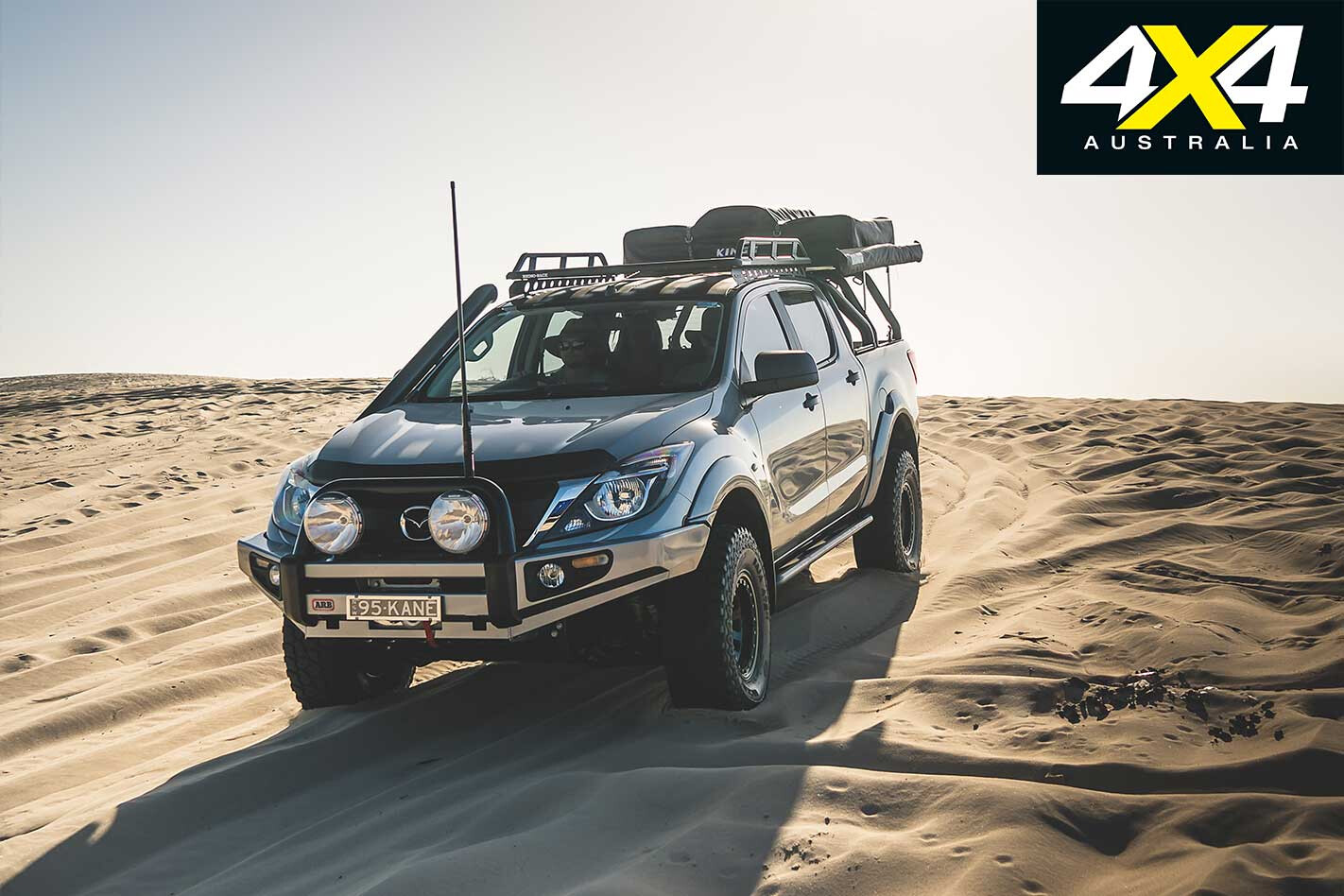
Headlined by a crazy, chopped Y62 Patrol dual-cab ute we reckon Nissan should build, the April issue is packing an arsenal of customised metal in the form of a bonkers BT-50 and an LSA-powered Range Rover.
We also share our thoughts from our first experience behind the wheel of Mahindra’s second-gen Pik-Up and Toyota’s MY18 Prado GXL.
The Toyota Hilux celebrates its 50th anniversary in Australia, so this month we pay tribute to the iconic and successful stalwart of the ute market.
Also in this issue, Ron and Viv Moon took off in search of the graves of the men lost during the famous Burke & Wills expedition, and we also list the best weekend escapes from Adelaide – perfect for the upcoming four-day weekend.
WHAT ELSE IS THERE?
- Holden 1 Tonner – the strip show begins
- Patrol Ti-L shed update
- Water sports at NSW’s Wave Hill Station
- Radiators explained
- Time for an alternator upgrade?
- Gear tests, and monthly rants by Ron and Fraser.
FORGET reinventing the wheel, ARB has decided to reinvent the high-lift jack, with the release of its long-travel hydraulic jack.
Simply called Jack, it retains all the functionality of a mechanical jack while significantly lifting safety levels and load capacity (Jack is rated to 2000kg). It also adds overload protection (through implementation of a blow-off valve), features an additional safety stop on the lowering lever (when compared to a bottle/trolley jack), and offers the ability to quickly lower the jack in situations where the vehicle being recovered may move.
Jack also has a wider lifting range when compared to a 48-inch mechanical high-lift: 160mm to 1230mm versus 115mm to 946mm. The unit weighs 10.5kg, is constructed from 6061 aluminium for strength, has a cast alloy base (also shaped to help break a tyre bead if necessary) and is hard-anodised for durability and protection against corrosion.
For additional protection and ease of storage, ARB includes a heavy-duty carry bag. Jack can be used in tight spaces thanks to its 890mm compressed height, which is considerably lower than equivalent mechanical high-lift jacks.
Smart thinking is behind the rotatable base (or foot, as ARB dubs it), as it ensures as much load weight as possible is transferred directly to the ground (and base), making for a safer and more effective recovery.
A big selling point of Jack is how straightforward it is to use. You don’t need to go through a full stroke of the lever and it can be engaged in any position which, as anyone who has completed a tricky recovery can tell you, is bloody handy for fine control of the jacking and recovery process.
The two-stage lowering lever also aids recoveries and the aftermath by ensuring the jack doesn’t ‘drop down’ suddenly, with the first two-thirds of lowering completed at a lower speed than the last third. This minimises the chance of the vehicle moving unexpectedly if the jack is dropped away too quickly.
The strong cast handle and its four-bar slide linkage combine very effectively to lessen the effort required (read: your arm/shoulder strength) when under load and lifting a 4×4.
Speaking of strength, ARB is claiming Jack’s teardrop body shape increases overall strength of the unit, while the inbuilt body bumper ensures you aren’t going to lose any paint if/when Jack bangs or slides up against your vehicle.
Even things like the handle-retaining clip are well thought-out – there’s nothing worse than a handle banging about in the back of your rig, not to mention the potential for the thing to break and then you’re left with, potentially, no recovery capabilities.
The ARB Jack isn’t cheap at $995.00 (RRP Australian East Coast Metro pricing). But having said that, with the additional safety features, robust build quality, top-notch engineering, higher load capacity and overall ease of use, Jack still makes for a great investment. Look for an extensive product review in a future issue.

EASTER is just around the corner, and so is the 30th Anniversary Condo 750 navigational rally.
Condobolin is just 450km west of Sydney and is regarded as the centre of off-road racing. With 34 vehicles already signed up for this iconic race, there’ll be plenty of action, so why not plan an Easter break in the Australia bush?
Friday morning (March 30) will kick off with scrutineering taking place at the showgrounds from 9am till 12pm. This is your opportunity to get a close look at all the machinery and talk to the competitors.
A 34km prologue will start at 12:30pm, with each competitor getting the chance to shake down their vehicle and settle the nerves while sorting out who is quickest for the Saturday race start.
Racing gets underway early Saturday, with the first competitor hitting the track at 6:30am. Autos race one course, while bikes/quads race a separate course. These are then reversed for Sunday’s race.
Racing will be tough, with competitors racking up more than 1000km in two days, including 778km of competitive racing! On Sunday evening it’s time to kick back with the presentation dinner and a few drinks.
Camping and admission are free for spectators, so bring the family, bring your friends and enjoy some country hospitality.
The sense of remoteness is tangible as you travel north-west from Marree, a small, isolated outpost on the edge of the driest and harshest country you’ll find in Australia, 380km north of Port Augusta in the bleached outback of South Australia.
This article was originally published in 4×4 Australia’s February 2011 issue.
But for a fluke of geology, few people would come this way and history as we know it would not have been written.
Dotting this country in a great arc from near Lake Callabonna, north-east of present day Arkaroola in the Flinders Ranges, through Marree to north of Oodnadatta, is a series of so-called mound springs.
These springs, where ancient water (some say over a million years old) bubbles up to a parched land and transforms it, were the basis for the ancient Aboriginal trade routes that crisscrossed the dry heart of Australia. When Europeans started exploring this country, those same mound springs were the key to the centre and beyond.
The mounds were first discovered by Major Peter Warburton in 1858. John McDouall Stuart, arguably Australia’s greatest explorer, used the springs as stepping stones to the interior and for his successful crossing of the continent in 1862. Pioneer pastoralists followed, quickly taking up the land around each and every spring.
Stuart’s route was so practical that 10 years later, when the Overland Telegraph Line (OTL) was pushed through from Darwin to Adelaide, it followed virtually the same track across the continent. With the OTL as a safe and known line on an otherwise blank map, other explorers set out from its repeater stations into the vast western interior.
Then, as the railway was pushed north from Port Augusta, it too followed Stuart’s route, reaching Marree, originally known as Hergott Springs, in 1884. Oodnadatta was then connected to the railway in 1890, but there the railhead stayed until it was finally pushed through to Alice Springs in 1928.
The track that sprang up beside the OTL was tramped by budding explorers, pioneer pastoralists (my great grandfather among them), Afghan cameleers, itinerant workers, missionaries and early adventurers. The steam trains that followed the route were almost entirely dependent on the waters of the mound springs and the occasional artesian bore dug along the way.
Today when you travel the route you are rarely out of sight of the old Ghan Railway Line, and often you come to the scattered ruins of the OTL. Here and there are other iconic features of our arid inland; an ephemeral water-covered Lake Eyre, the oasis of Algebuckina Waterhole and the nearby historic bridge of the same name that spans the sometimes mighty Neales River.
The Oodnadatta Track is more like a good dirt road these days, its only challenge being a wayward rock that can easily tear the sidewall out of a tyre, or after heavy rain when the creeks wash across the road and the track becomes, for a short time at least, a set of wheel marks vanishing into the distance.
The rewards for travelling are many. The sense of history is palpable, the vastness succour for the soul, while the characters you meet, like the commodore of the Lake Eyre Yacht Club, are more than memorable.
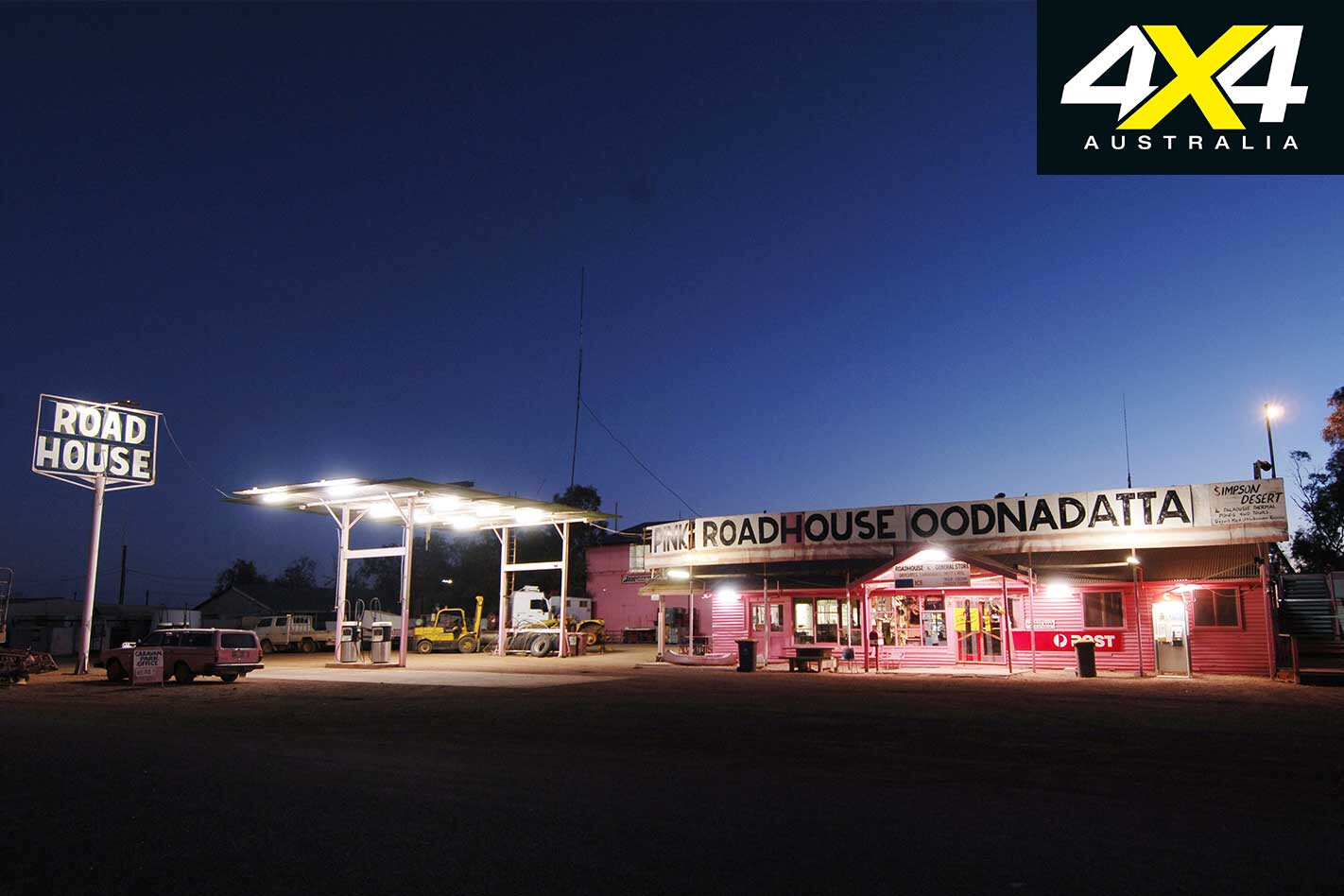
Then there are the harsh natural wonders of the region, the mound springs and Lake Eyre among them, while the quirky places along the route, such as the ‘artistic’ sculptures just north of Marree, the rustic interior of the William Creek Hotel, or the gaudy exterior of the Pink Roadhouse, say more about the Australian psyche than any encyclopaedia on the subject!
Travel Planner
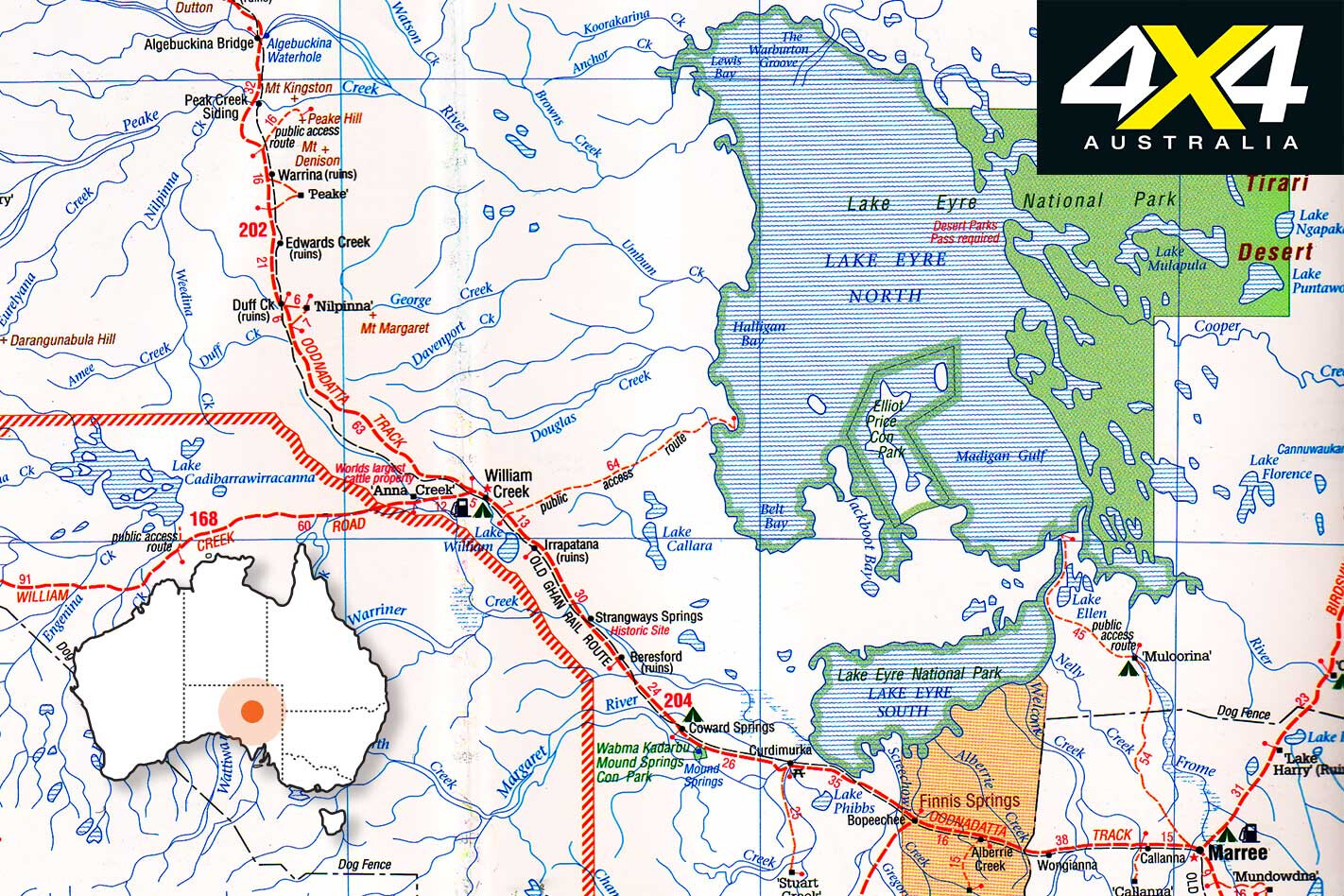
START Marree
FINISH Oodnadatta
LENGTH 405km
LONGEST DISTANCE WITHOUT FUEL 204km between Marree and William Creek
BEST TIME TO TRAVEL March to September
More info marree.com.au williamcreekhotel.net.au pinkroadhouse.com.au lakeeyreyc.com www.wrightsair.com.au environment.sa.gov.au
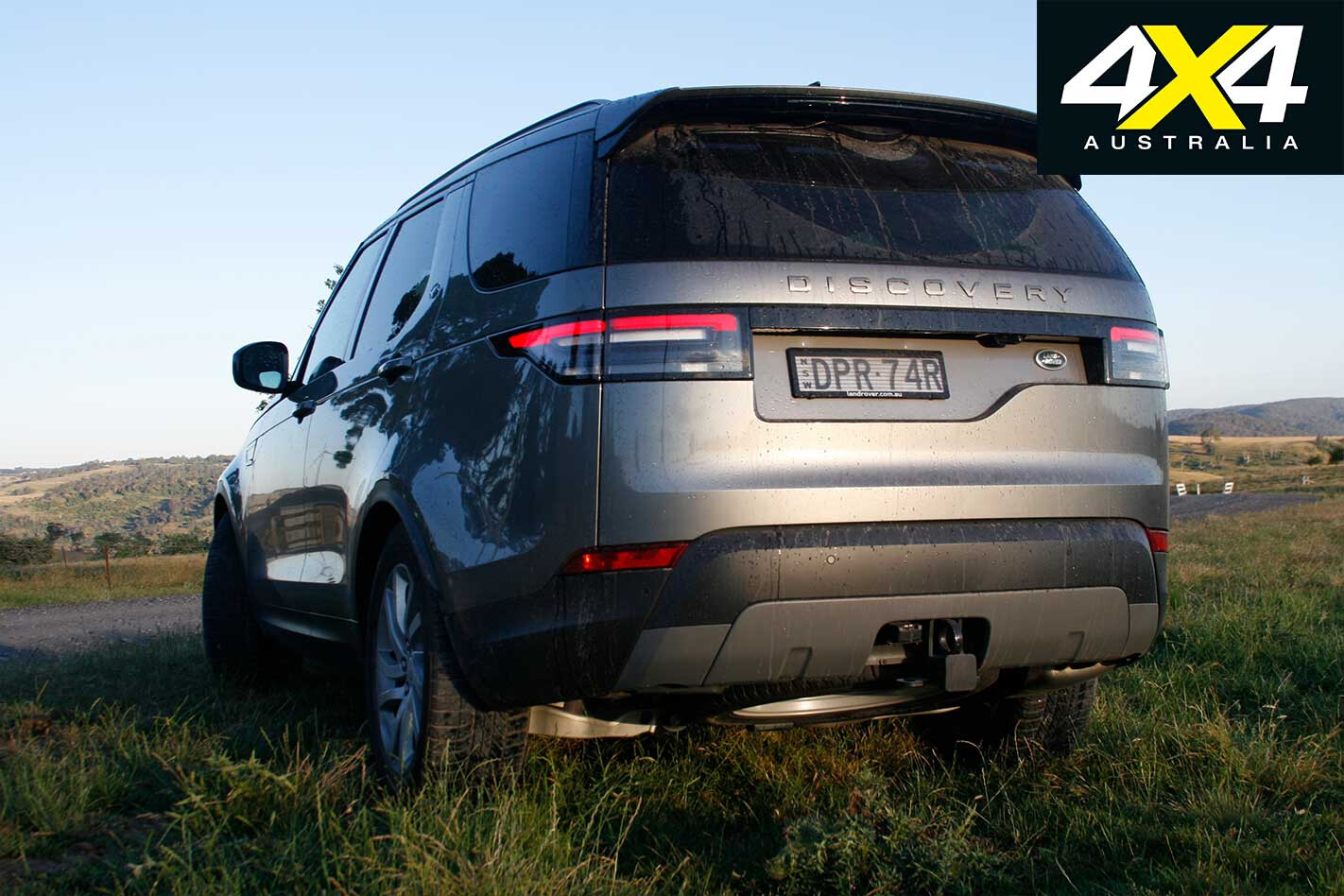
A recall has been issued for specific MY18 Land Rover Discovery, Discovery Sport, Range Rover, Range Rover Sport, Evoque and Velar models due to incorrectly manufactured engine-mounted fuel rails.
VIN ranges of affected vehicles:
– SALGA3BY1JA343646 to SALGA2AY5JA387693 – SALWA2BY2JA146054 to SALWA2BY6JA185973 – SALVR2RX4JH226559 to SALVP2RX3JH296852 – SALYA2AX9JA700000 to SALYA2BX5JA746759 – SALCA2AX0JH685128 to SALCR2SX4JH748920 – SALRA2BX3JA014201 to SALRA2AX6JA039854
The recall report indicates that “some engine-mounted fuel rails installed on Ingenium I4 2.0L petrol engines have not been manufactured correctly”. This fault increases the risk of fuel vapour and liquid leaks occurring in the engine bay, which could create a fire hazard.
Owners of affected vehicles may notice an excessive fuel odour, and liquid fuel may be seen in the engine bay.
Owners of affected vehicles will be advised by JLR “to contact their preferred authorised repairer who will inspect the vehicle’s fuel pipes and replace them where required. Two additional clips to ensure correct design clearance will also be fitted”.
The affected vehicles were sold nationally.
THE Mahindra Pik-Up has been in Australia since 2007 and, while there have been a few updates along the way, what we have here is a second-generation model with a new powertrain, a new cabin, more equipment, revised styling and ramped-up safety.
As ever, sharp pricing is what the Pik-Up is all about, with this single-cab/chassis model (the least expensive of the 4x4s) a $26,990 driveaway proposition. The top-spec 4×4 dual-cab ute is $31,990.
Ideally, we would have liked to test the dual-cab, but the single-cab was the first of the new Pik-Ups available and we were keen see how the new powertrain performed, as well as sample the other changes. A test of the dual-cab shouldn’t be too far off.
Climb into the Pik-Up and the first impression is of an airy, spacious and upright cabin that’s more light truck than ute. The new dash and interior make the Pik-Up feel more contemporary than before; the seats are comfortable, there’s great vision for the driver and there’s a handy amount of storage behind the seats. Tilt but no reach adjustment for the steering wheel, and there’s a lack of storage space for small items like phones.
The new engine is quiet and, while its 103kW (up from 90kW) means it’s no rocket, it’s still very flexible and generally effortless. Holding highway speeds uphill poses no problems, and the Pik-Up feels more relaxed at freeway speeds than it has any right to be.
The Pik-Up’s engine is a modern Euro 5-compliant design, so while its 103kW and 330Nm isn’t anything special, at least it’s very understressed. The new six-speed manual has a light but positive shift action and is nicely geared for both slow-speed and highway work.
For a ‘farm truck’ the Pik-Up’s on-road steering and handling is surprisingly reassuring and confident, even if the unladen ride is very firm – much firmer, for example, than something like a Toyota Hilux or Ford Ranger. And the general on-road refinement and noise abatement, save for some wind noise around the snorkel (a factory accessory), is also surprisingly good.
Off-road, the Pik-Up has clearance, vision and deep low-range gearing on its side, but wheel travel at both ends isn’t anything special. Thankfully the Pik-Up now has electronic traction control (new for this model) and retains the Eaton rear locker that’s been fitted since 2011.
The Eaton locker is fully automatic and, being a mechanical locker, works independently from the traction control. So while it overrides the traction control on the rear wheels, it keeps the traction active on the front wheels. The end result is that the Pik-Up performs well in difficult off-road conditions, despite its lack of wheel travel.
As a work vehicle the Pik-Up has plenty of payload capacity (see Payload Test below), but the 2500kg towing limit is short of what other utes offer these days.
At this stage this new Pik-Up hasn’t undergone ANCAP safety testing, but the previous model achieved a three-star rating when tested in 2012, so this new model with new safety features such as electronic stability control and rollover mitigation should do better if and when tested.
The Pik-Up is sold and serviced through 40 dealers nationally and comes with a three-year/100,000km warranty, with an additional two years warranty on the powertrain if the vehicle hasn’t covered 100,000km. Service intervals are 15,000km or 12 months and Mahindra will soon offer fixed-priced servicing.
Practical touches include gas bonnet struts, a manual fuel-pump prime and an easy-access fuel filter. Not so good is the lack of a lock on the fuel filler.
All up the Pik-Up is a very impressive vehicle, especially at its price. It doesn’t feel like a budget vehicle and does all the basics well – very well, in fact – and is difficult to fault except in some details. For a farm or work ute it makes an awful lot of sense and deserves to sell in far greater numbers than it has previously.
PAYLOAD TEST
AS WE try to do with all the utes we test, we loaded 800kg into the tray of the Pik-Up to see how it would cope with a heavy payload. Legally, the Pik-Up can carry more than that – around 920kg, once you take into account the weight of the bullbar, towbar and have both a driver and passenger aboard – but 800kg is the standard load we use.
With the load placed directly above the rear axle rather than up against the headboard, the Pik-Up’s rear suspension settled a mere 45mm, which is less than the best of the popular dual-cabs we’ve previously tested; although, the load in a dual-cab would sit farther back. The Pik-Up felt stable and secure on the road, the rear suspension didn’t bottom on bigger bumps nor did the front top out.
The most noticeable effect of the 800kg was positive due to the improved ride quality. The engine performed better than expected; it felt the extra weight, but didn’t struggle and remained generally effortless. Top marks all around.
*Thanks to Taralga Rural for their invaluable assistance with the 800kg payload test.
WORK READY
MAHINDRA offers a range of factory accessories for the Pik-Up, including a galvanised steel tray ($2959), winch-compatible steel bullbar ($2574), a tow bar ($872) and an air-intake snorkel ($765), all of which were fitted to our test vehicle. The snorkel unfortunately came loose where it mounts to the A-pillar, something Mahindra will hopefully address.
Mahindra also offers aluminium trays and colour-coded steel trays. A suspension upgrade and lift kit, a stainless-steel nudgebar and a bashplate are all in the pipeline.
2018 MAHINDRA PIK-UP SINGLE CAB 4X4 PRICES* S6 Single-cab/chassis 4WD: $26,990 S6 Dual-cab/chassis 4WD: $29,490 S6 Dual-cab ute 4WD: $29,990 S10 Dual-cab ute 4WD: $31,990 *Prices are drive-away
2018 MAHINDRA PIK-UP SINGLE CAB 4X4 SPECS Engine: 2.2-litre 4cyl turbo-diesel Max Power: 103kW at 4000rpm Max Torque: 330Nm at 1600-2800rpm Gearbox: Six-speed manual 4×4 System: Dual-range part-time Construction: Separate-chassis Front Suspension: Independent/torsion springs Rear Suspension: Live axle/leaf springs Unladen Weight: 1780kg (no tray) GVM: 3150kg Payload: 1370kg (minus tray) Towing Capacity: 2500kg GCM: 5150kg Fuel Tank Capacity: 80 litres ADR Fuel Claim: 8.6L/100km Test Fuel Use: 9.8L/100km Touring Range: 766km*
*based on test fuel use, claimed fuel capacity and a 50km ‘safety’ margin.
When compared to manually-operated differential locks (which we looked at earlier), auto lockers require no driver input, but they also help the inexperienced off-roader to get further down a difficult track than his or her ability might otherwise allow.
This article was originally published in 4×4 Australia’s July 2012 issue
Conversely, they may take such a driver further into trouble as there is no need to read the terrain ahead, as is the case with a manual locker that needs to be switched on and off. The auto locker does all that for you on- and off-road.
These lockers are at work all day every day on all road surfaces. Driving up a slippery boat ramp, skating around on slimy, muddy tracks as well as tackling your favourite rocks and ruts, the auto locker will be helping you look the hero at all times. Besides having a much lower price tag than manual diff-locks, the big plus with auto lockers is the fact that they are more suitable for front diffs as they offer easier steering compared to the (almost) non-existent steering you have with an engaged manual locker.
Now, this is where many people become a little confused with the operation of (most) auto lockers. They are, in fact, in the locked position when you are driving straight ahead and unlocked when you turn a corner when the outer wheel is turning faster than the inner wheel.
This wheel overrun is then re-locked when both wheels are rotating at the same speed again. So now you have a locked diff for those hairy situations plus a diff that’s effectively open for on-road use and ease of steering, all rolled into one.
There are however a couple of negatives including some clicking and/or clunking as the locker’s teeth disengage and engage. Also, with some 4X4s, or when tackling tight turns and roundabouts, you may feel a slight resistance to the steering input and your turning circle may be larger as the locker cuts in and out.
Your driving style may also affect the workings of an auto locker as too much on and off with the throttle while cornering tends to upset some units. You’re also likely to get a little higher tyre wear with this type of on-road use.
In off-road situations, though, while powering through a difficult obstacle, the diff will remain locked regardless of whether you’re turning, during wheel slip or even with wheels lifting off the ground, and that’s exactly what you want. It’s the driving torque from the engine, acting on the diff’s internals, that keeps the locker in the locked position.
So, without any input from the driver and no predisposition of how difficult the terrain, your auto-locker-packed 4X4 will outperform stock-standard vehicles hands down. Onlookers will bow down on the tracks in disbelief at your driving skills – just don’t tell them your ride is modified and no one will be any the wiser.
Oh, and your ride need not be a highly modified semi-competition vehicle to benefit from installing auto lockers. The average family 4X4 will reap the rewards equally, as will dad with his kids strapped into the back seats. Conquering those harder tracks is always news-worthy stuff for kids when they get back to school.
POWERTRAX LOCK-RIGHT
The Powertrax Lock-Right automatic locker is manufactured in the USA by Richmond Gears and incorporates couplers with ramped teeth that are maintained in the locked position when the vehicle is driven straight ahead. The higher the drive input, the more firmly the opposing teeth are locked into position.
The unlocking happens when the faster (outside) wheel overruns the slower (inside) wheel via the ramping and cross shaft. The Lock-Right replaces the planetary gears, but retains the OE carrier, crown wheel and the ring and pinion gears.
For more information see www.Richmondgear.com.
DETROIT LOCKER
Probably one of the best known auto lockers in the world, the Detroit was one of the first of its kind to offer a differential effect and total automatic locking. It provides full drive to wheels on both sides of an axle via a series of spring-loaded clutches with interlocking teeth. The automatic disengaging of these teeth happens during wheel overrun (turning corners). The automatic re-engaging happens when the axle speeds equalise. This, in effect, provides (on-road) differential effect while offering off-road locking qualities.
Over the years, the Detroit has evolved to the current Soft Locker version where the interlocking teeth have been ramped on the leading and trailing faces to help avoid the severe clunking often associated with auto lockers during operation. Belonging to the same Detroit family is the No Spin, but it comes without its own hemisphere casing and is aimed more towards industrial and truck use. The Detroit, however, is set in its own case and drops into your diff housing.
Yet another offering from Detroit is the Truetrac. Not really a true diff lock, it uses a helically-geared limited-slip diff centre, as opposed to an OE clutch-pack-style limited-slip diff centre. The Truetrac will certainly get you further down the track than an open diff, but it’ll never perform as well as an proper auto locker for 4X4 use. There’s a comprehensive range of Detroit lockers available for front and rear fitting for most 4X4s.
For more information visit www.harrop.com.au, call 1300-HARROP, or check out Harroptv on YouTube.
LOKKA LOCKER
Made in Australia, the Lokka has very few moving parts (a pair of cam and axle gears, plus springs and pins) and utilises a cam mechanism to keep itself locked. The heat-treated alloy Lokka replaces the planetary gears, but keeps the OE carrier, crown wheel, ring and pinion gears.
The locking action happens when the pinion cross shaft engages its mating surfaces. The more power that is fed into the diff via more throttle, the harder the surfaces clamp together. The unlocking happens via the ramping effect of the low-profile teeth when one wheel tries to overrun the opposite side wheel. The low-tension springs allow this unlocking action to take place even on surfaces with poor traction.
For more info see www.4wdsystems.com.au, call 08 8369 0033 or drop into the head office at 599 North East Road, Gillies Plains in South Australia.
SPARTAN LOCKER
Manufactured by USA Standard Gear in the States, the Spartan Locker is a mechanical-locking unit that drops into the OE carrier and replaces the spider gears. The Spartan utilises high-nickel-content chrome-moly parts and maintains the standard case.
Low-profile ramped mating teeth, combined with springs and pins allow easy unlocking and locking action.
For more information visit www.wooders.com.au or call Wooders Garage on 02 9477 4312 or drop into unit 2/4 Leighton Place, Hornsby, NSW.