
BRABUS is the latest tuning company to throw its spanners at the Mercedes-Benz X-Class, designing what it calls “a sporty-elegant designer outfit” for the all-new pick-up.
The “subtle” changes include an onslaught of Brabus badging, quad exhaust outlets, dual overhead LED light bars (12 LEDs per bar), integrated LED side markers and … even more plastic.
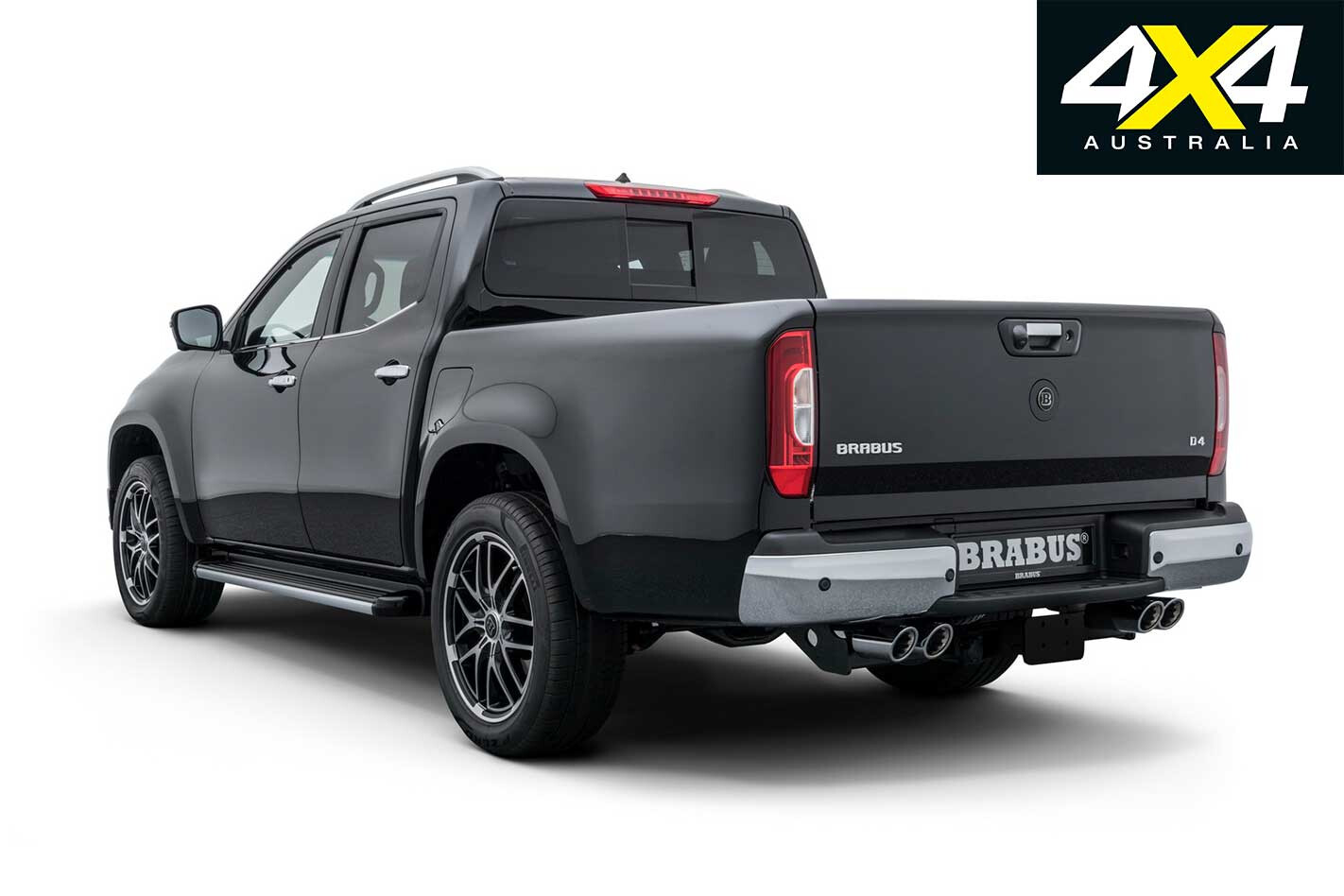
The X-Class rides on exclusive, tailor-made Brabus Monoblock X 20-inch wheels that can be shod with Continental, Pirelli or Yokohama 285/45 R20 high-performance tyres.
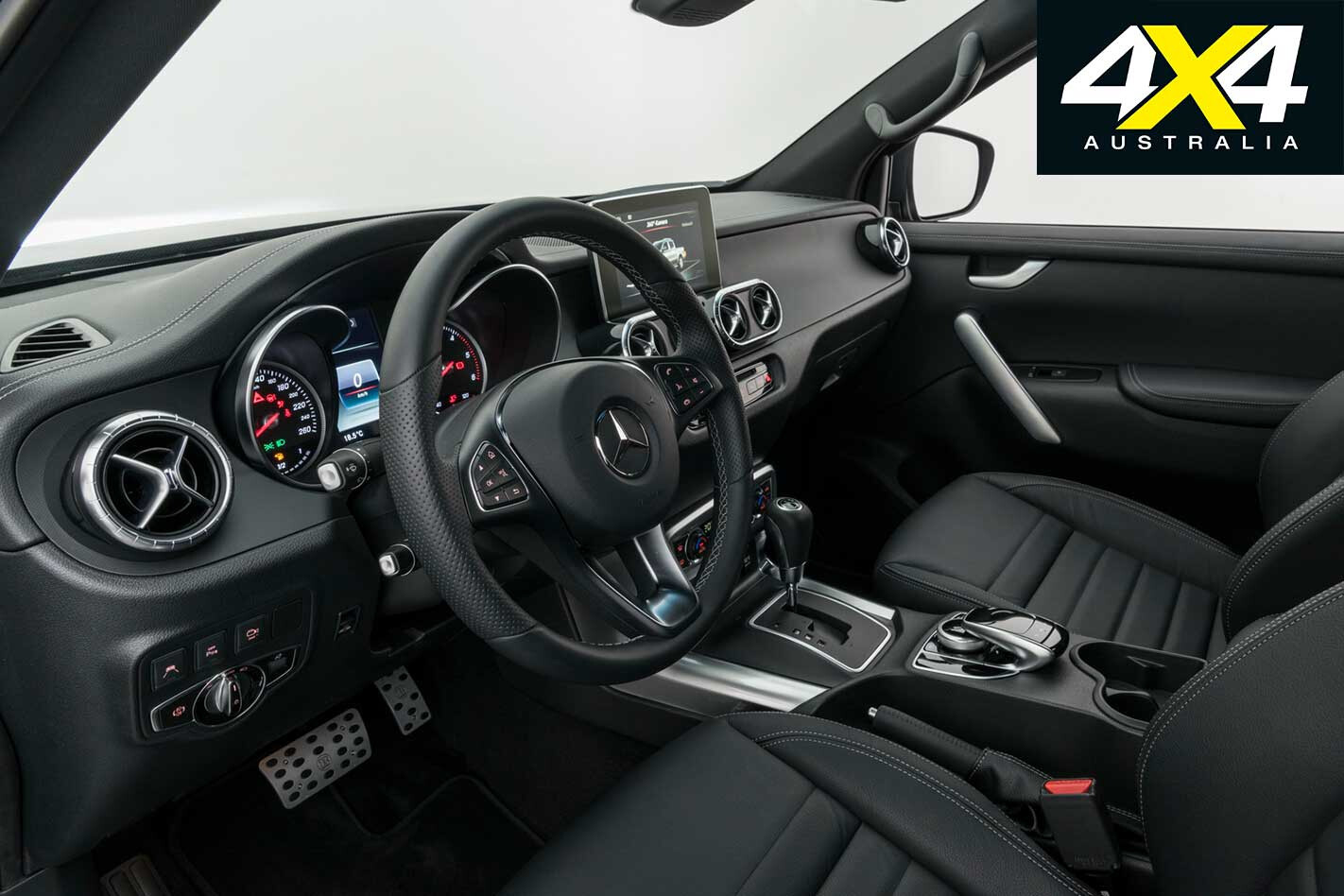
On the inside you’ll find aluminium pedals and an aluminium footrest, as well as stainless scuff plates and a swathe of leather and Alcantara.
Known for its specialisation in tuning Mercedes-Benz engines, Brabus has also developed a D4 PowerXrta performance upgrade for the X250d.
The upgrade, afforded via the plug-and-play installation of the tuning module – an hours’ work at an MB workshop – ups the output of the 2.3-litre turbo-diesel engine by pumping out an extra 15kW and 60Nm for a total of 155kW and 510Nm.
With the upcoming V6-powered X350d delivering more power and torque (190kW and 550Nm) than the Brabus-tweaked four-cylinder, it makes more sense to wait for a performance update for the X350d which is already in the development phase, according to Brabus.
The Brabus X-Class follows the revelation last week of a wild X-Class fettled by Pick Up Design, the pick-up division of Carlex Tuners in Poland. The wild X-Class ‘Exy’ will be available in ‘Urban’ and Off-Road’ trim.

The city-dwelling Urban gets a beefy carbon body kit – front bumper, rear bumper, front bumper diffuser, bonnet lip, arch extensions, a rear spoiler, and headlight and rear-light frames – and the obligatory stickers plastered from head to tail.
Lazer lights are up on the roof, a sports bar sits up front, while an application-controlled V8 exhaust system sound booster creates a fake soundtrack to set the mood. It rides on 20-inch wheels.
In addition to aesthetic changes, the Off-Road variant gets raised suspension courtesy of Pedders, and it rides on BFGoodrich All Terrains that wrap around 18-inch alloys. The Off-Road Extreme adds a sump guard and winch.
Stay tuned for pricing and availability information.
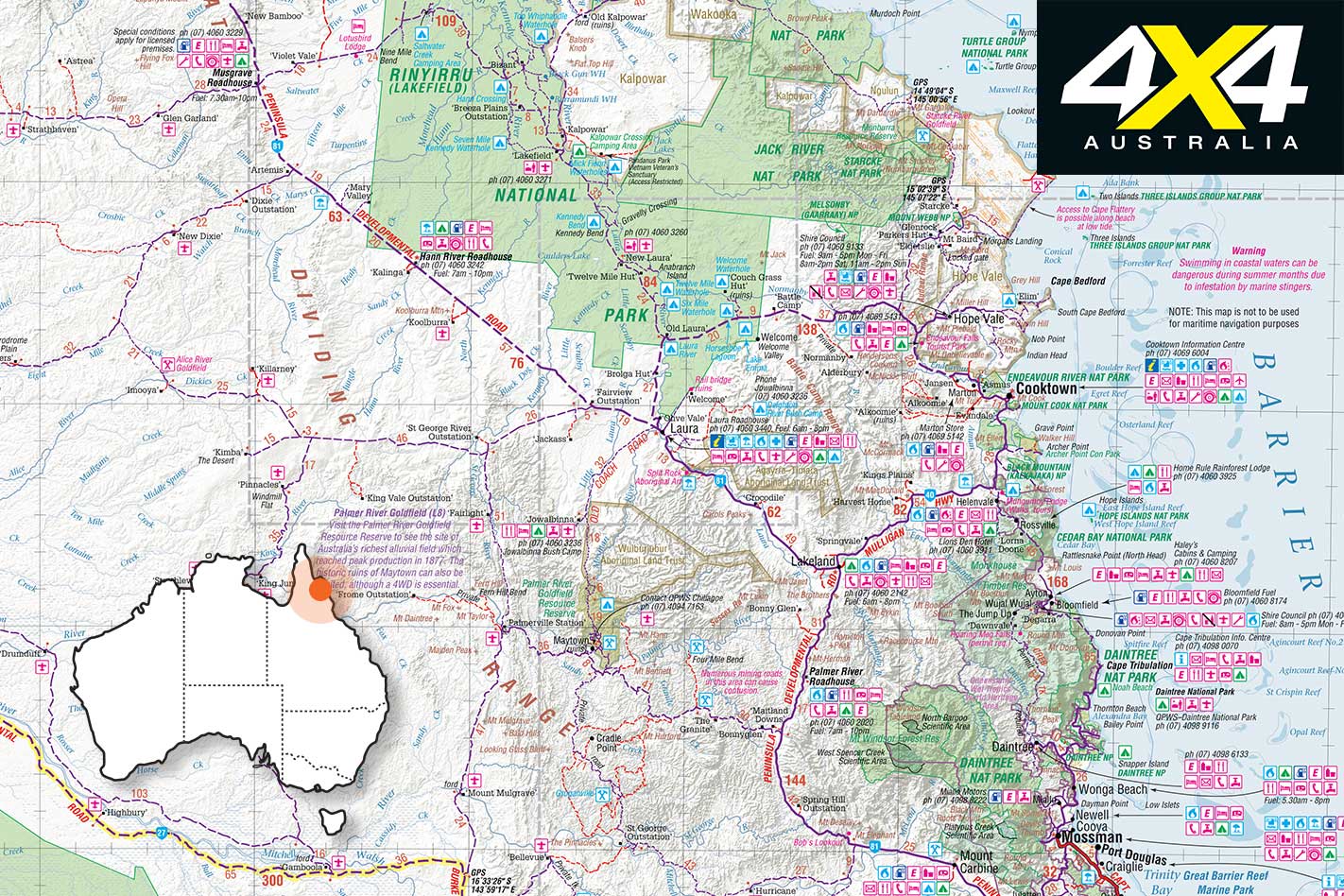
IT STANDS to reason that the vast majority of Cape York Peninsula travellers have one goal in mind: the Tip. There are several routes that will take you there, with routes either skirting or directly accessed via national parks.
THE INLAND ROUTE
The inland route on the Peninsula Developmental Road (PDR) is the most popular journey to the Tip, as most people are always pressed for time. Unfortunately, by opting for this passage, punters will miss the best parts of what the region has to offer.
Most Cape York journeys start from Mareeba on the northern Atherton Tablelands. From here, take the Mulligan Highway at Mareeba to Lakelands, before turning onto the PDR to Laura. It’s a sealed road with long stretches of bitumen all the way to Weipa, and with sealing expected to be completed by the end of 2018. Expect delays en route.
The PDR is rated as a boring drive by some, especially by those in a hurry. But pull-up here and there (apart from roadhouses/townships) and discover strange and new flora and fauna. Boil the billy, suck up the fresh air and live the life.
THE COASTAL ROUTE
The Cairns route is the most exciting and scenic journey to the Cape. Take the Cook Highway, visit Hartley’s Crocodile Adventures wildlife park, and have lunch at Port Douglas and stay overnight.
The next day visit the Great Barrier Reef Marine Park on a diving or fishing trip before heading north across the beautiful Daintree River. En route visit Mossman Gorge in Daintree National Park, Daintree Village and take a crocodile-spotting river cruise.
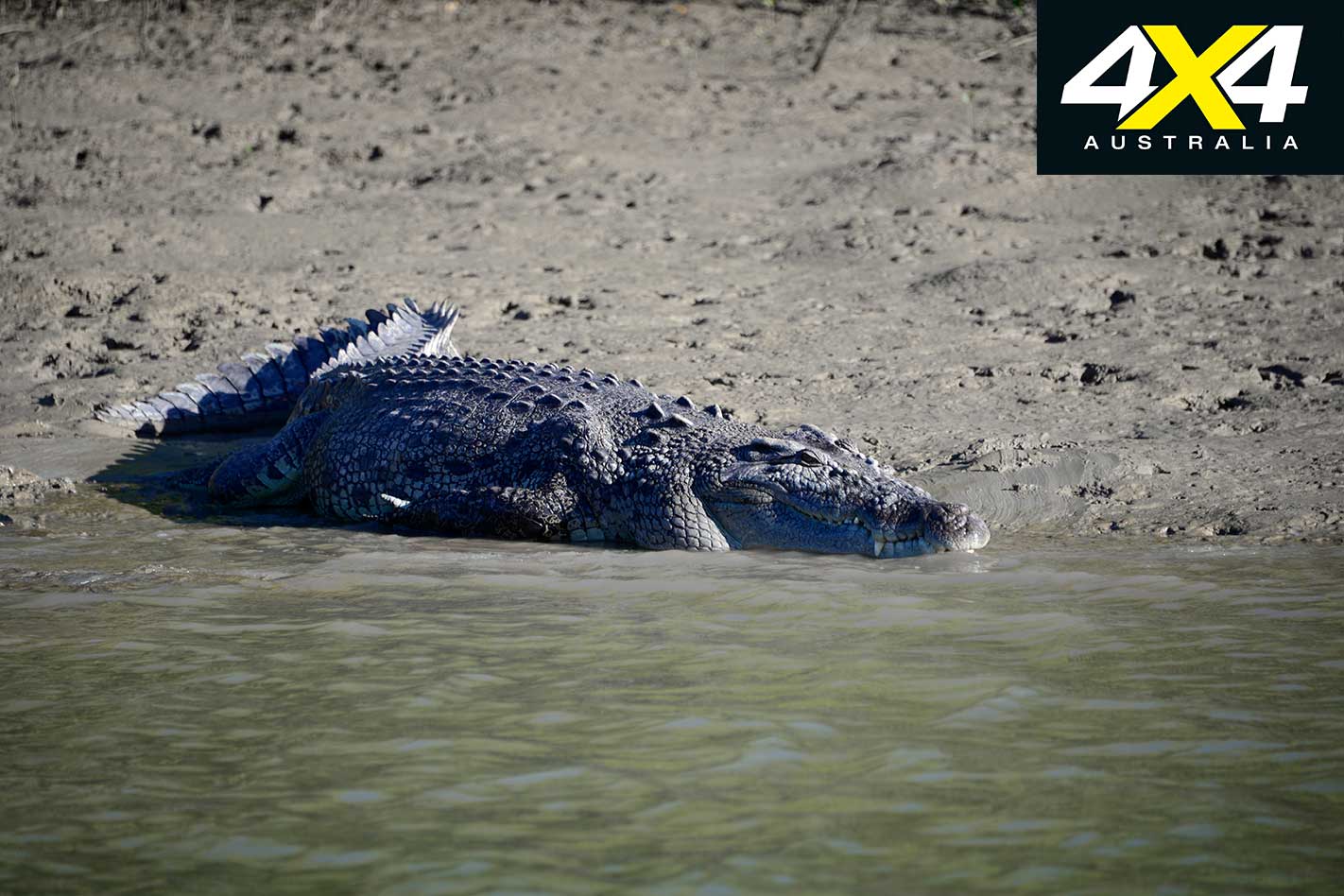
There are also cruises at Noah Creek and Cooktown, but book ahead or you may miss out. Do the crocodile cruise as it will help you to understand the Saurians a little, including the often imaginary danger they pose.
You have a choice of taking the CREB Track from Daintree Village, or the Bloomfield Track via Cape Tribulation. The CREB is challenging and closed when it rains on the mountains, and it often does in the dry season when the southeast tradewinds blast the coast.
After crossing the Daintree River on the ferry, there is much to see and do on the way to Cape Tribulation and beyond. The Daintree rainforest is the oldest continual rainforest in the world, and take a stroll on one of several boardwalks in the area – the Noah Creek walk is my favourite, as it continues into the tidal forest beyond the realm of the jungle.
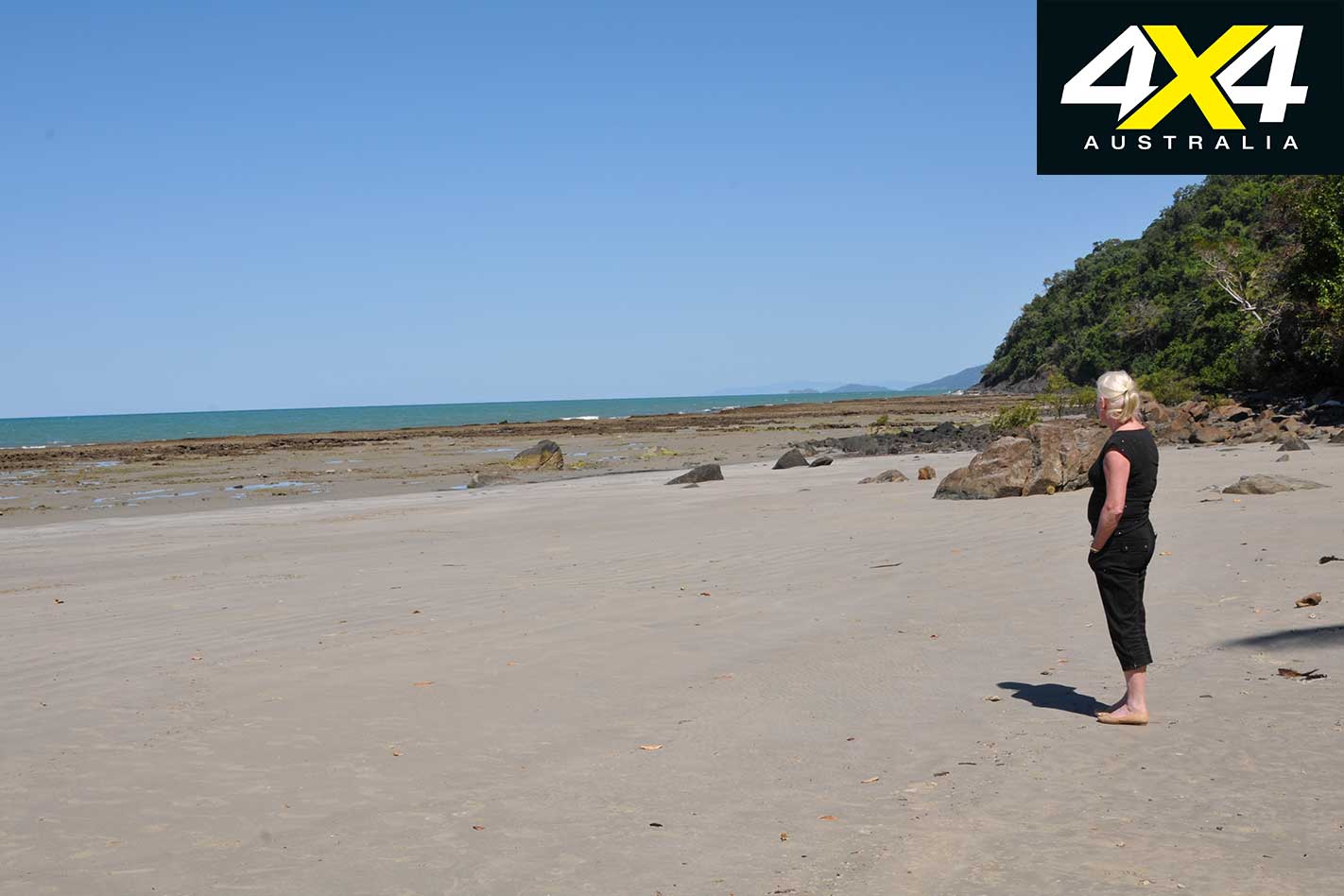
Beyond Cape Tribulation the bitumen runs out when you enter the Bloomfield Track. It’s a great drive, but take it easy on the steep declines and inclines, especially when towing a camper or an off-road van during wet conditions. There are some nice lunch and safe swimming spots on the track, and just after crossing the Bloomfield River bridge take the track upriver to the Bloomfield Falls.
The road bypasses Wujal Wujal, an indigenous community – don’t enter it if you have alcohol on board. Ayton is a small village fronting the river and Weary Bay. There is a store with fuel, basic supplies and a private campground before the beach turnoff. Take time off and see beautiful Weary Bay as Lt. James Cook named it after getting stuck on a reef on its northern perimeter. The beach track ends at the river mouth.
Rossville, followed by the overrated Lions Den, falls behind as you junction with the Mulligan Highway. Black Mountain National Park is on your right, where boulders of all sizes are piled mountain high on top of each other. Only a few fig trees grow in the granite pile, and a lookout is on the highway.
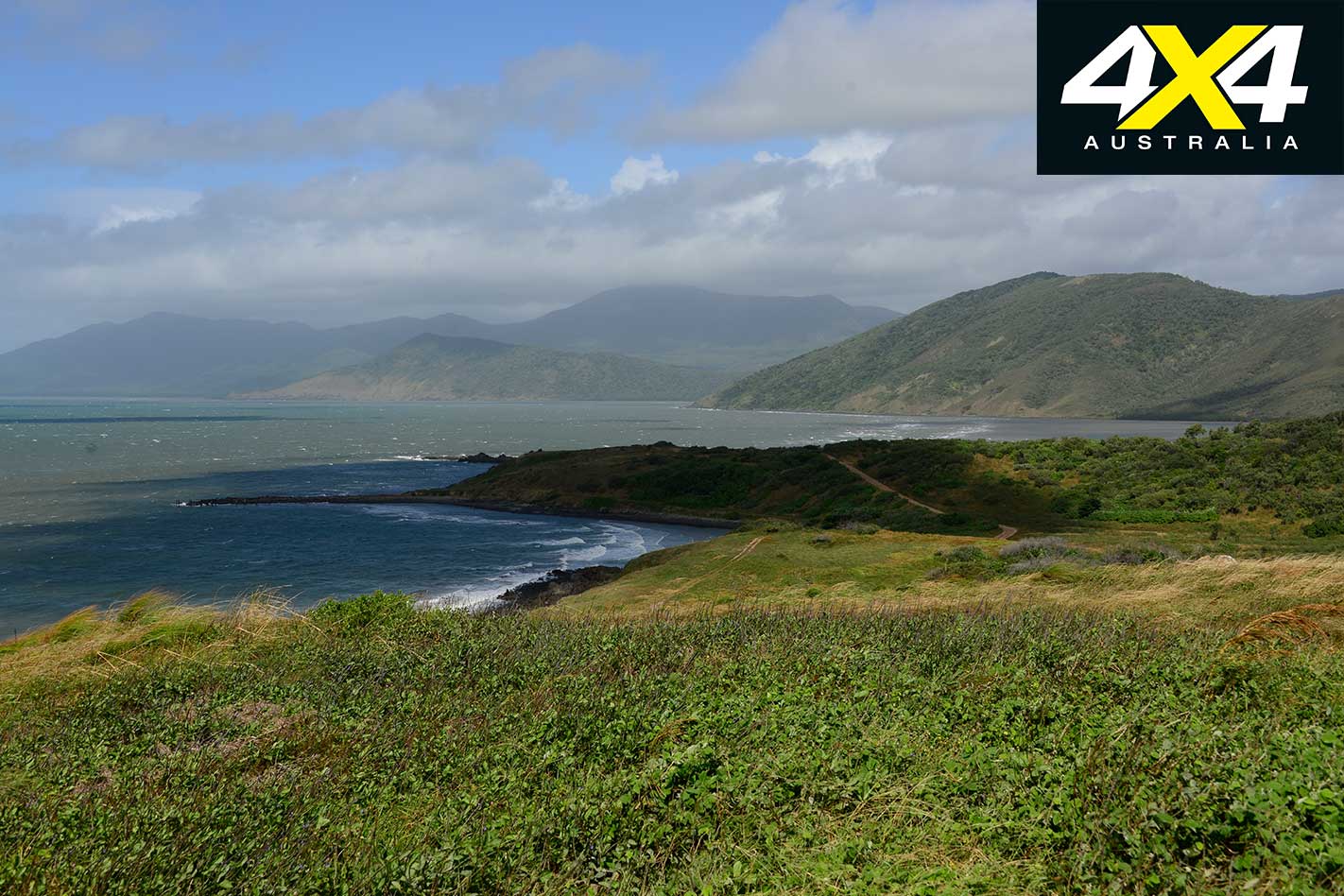
Don’t miss Archer Point, it has an awesome view of the Daintree Coast and Cape Bedford. It can be very windy at the lighthouse, but when it’s calm and the sea is serene the views spread out to the reef 40km away.
It amazes me that many visitors avoid Cooktown. It is part of the adventure and is truly a great little historical town with fine eating and much to do. It has several small national parks and conservation areas that are well worth the walks.
At Cooktown you have a choice of heading south to Lakelands and onto the PDR, north on the Battle Camp Track to Rinyirru (Lakefield) NP and Laura, or take the Starcke Track to Muundhi, Cape Melville and Rinyirru national parks and Bathurst Head. Don’t miss a couple of nights’ camping on Elim Beach, via Hopevale.
Both tracks are maintained, though the Starcke only as far as the Starcke River, where it turns into long stretches of bulldust. The Starcke Track is the most scenic and adventurous route to Rinyirru and the track closely follows the coast. From Mount Webb National Park views unfold of the Cape Flattery dune fields and old Starcke Station.
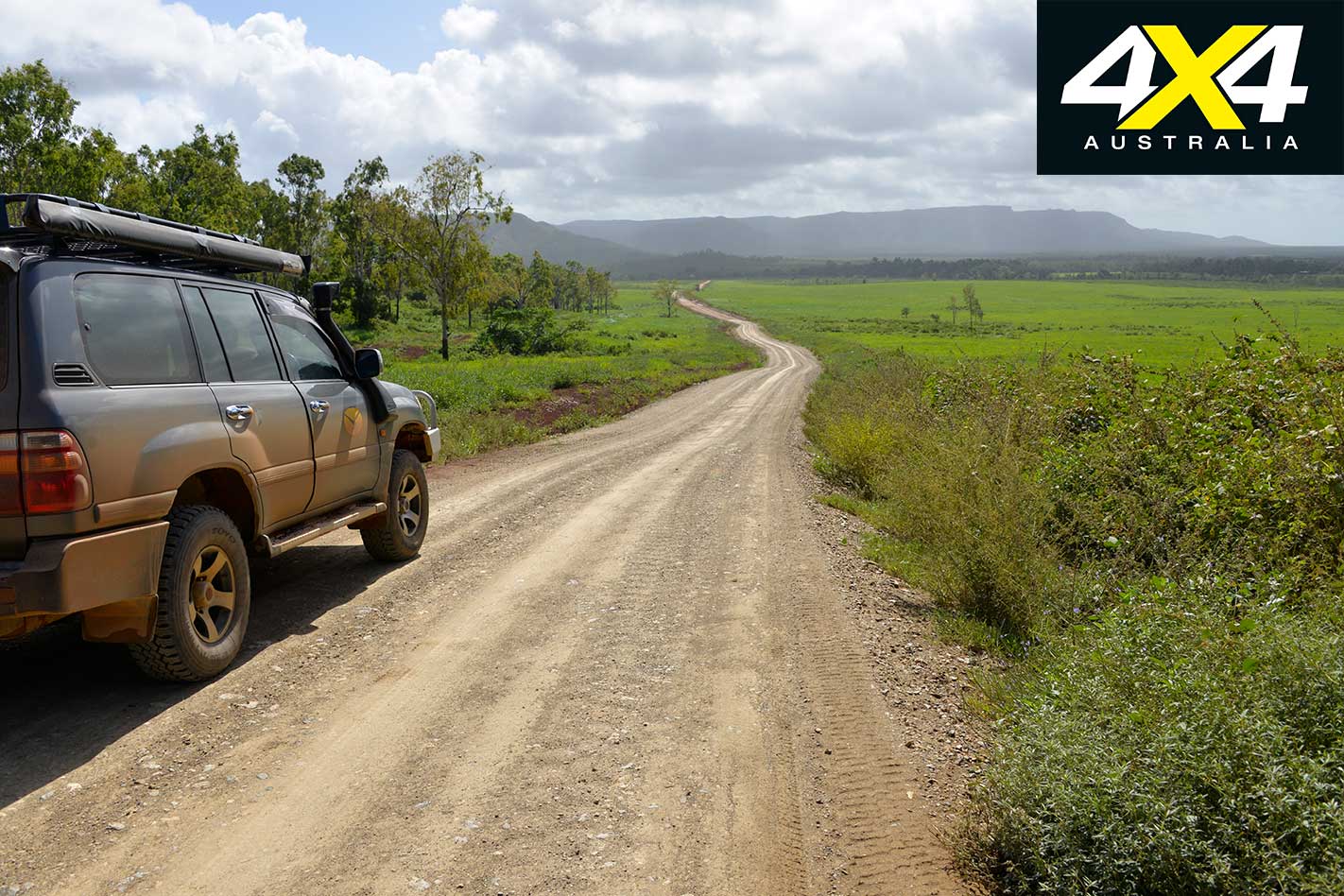
From here there are more than 100 creek and gully crossings before the Starcke River. There is a bush campground and a boat ramp at the river mouth.
The first park encountered is Muundhi NP, which is part of Rinyirru NP and is located on its eastern border. It connects with Cape Melville NP. Combined, they cover a huge area, but access is limited, as are tracks. Check with the park’s office at Cooktown or the Lakefield ranger base for access and camping information.
CAPE MELVILLE
At abandoned Wakooka Station there is the choice to head north to Cape Melville NP and Ninian Bay, or head west to Bathurst Bay and Kalpowar Crossing on the Normanby River. It marks the border of Rinyirru.
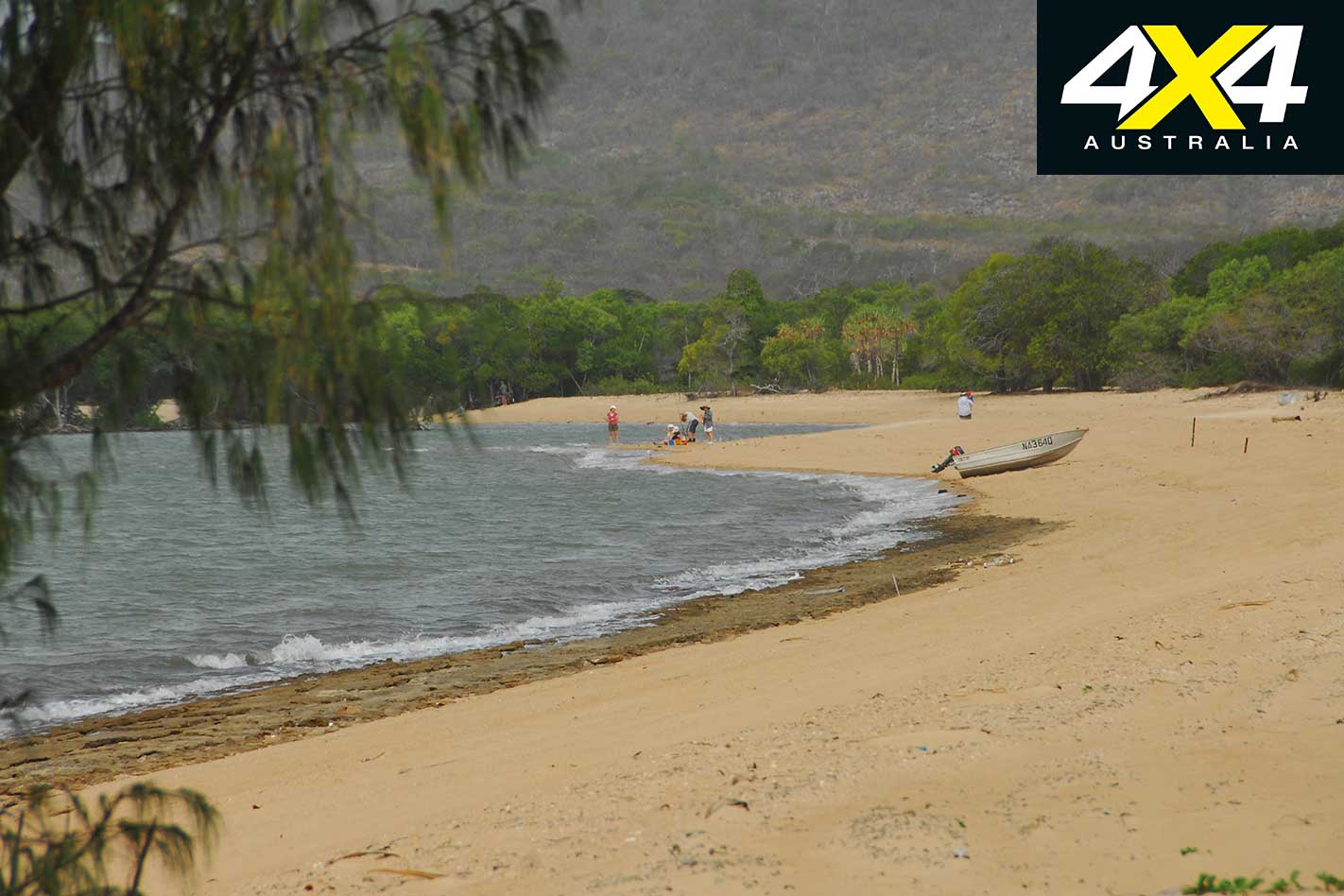
The Cape Melville route is challenging when towing a trailer as the northern section has lots of deep washouts and sandy sections. It’s a good idea to air down to 16-18psi as you will be driving on the beach to the campsites.
The park is well worth the visit. There is a spring-fed creek between 432m-high Bay Hill, an outlier, and Abbey Hill on the Melville Range. This range, Bay Hill and the distant western Bathurst Range are similar to the Black Mountains, being composed of even larger granite boulders. Huge fruit trees, figs and Burdekin plums alive with birds separate the beach from the range.
The area has a dark past with the dubious honour of having Australia’s largest loss of lives record. Just before midnight on March 4, 1899, the entire Torres Strait pearling fleet, consisting of 109 luggers, eight schooners and six cutters, plus the Channel Island lighthouse ship, were hit by Cyclone Mahina and wiped out. Only the aptly named schooner Crest of the Wave survived.
In total, more than 300 people died including many Aborigines camped under the trees on the beach. They, along with many ships, were washed ashore and smashed on the rocks when a 15-metre tidal surge swept over them.
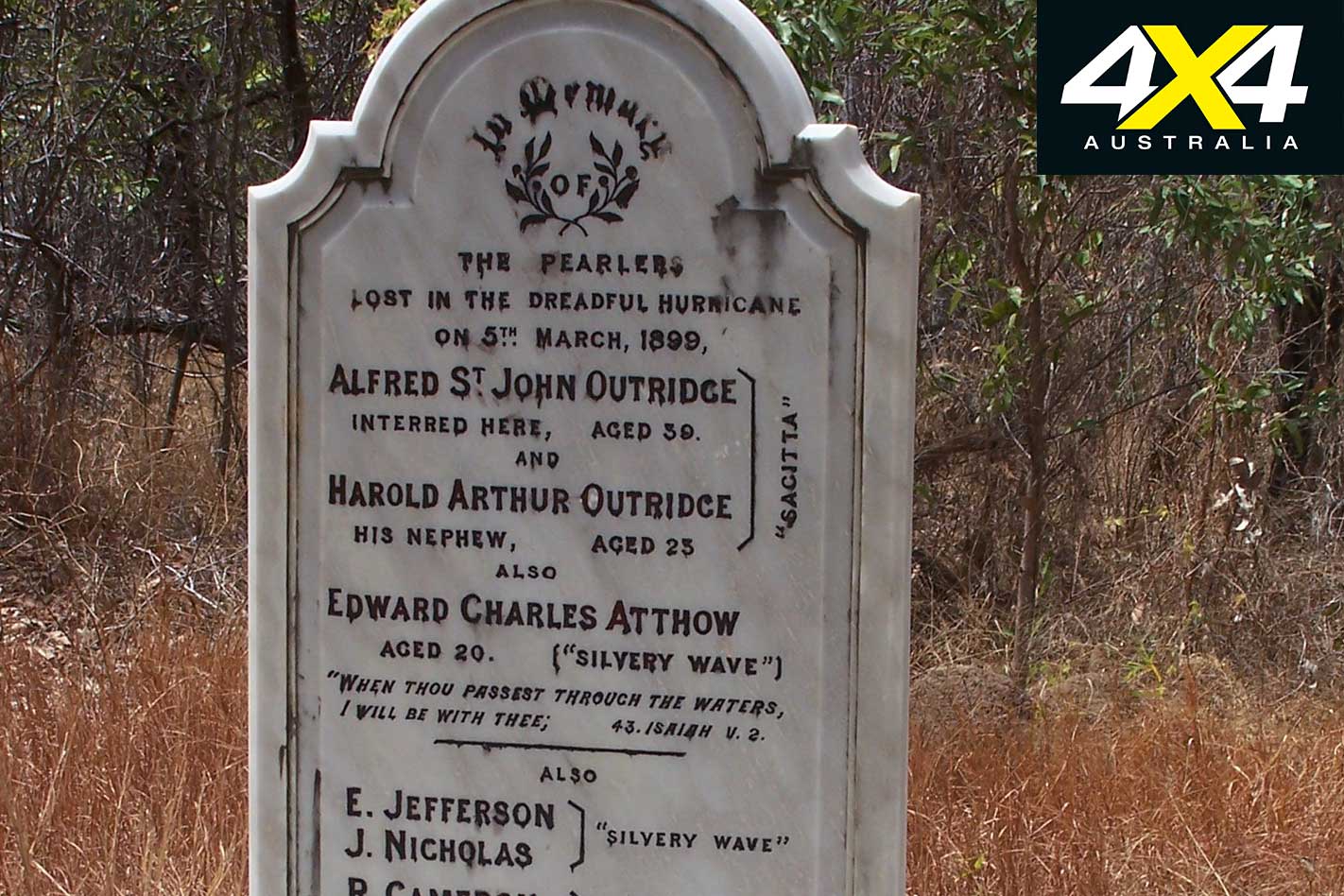
The evidence of that dark night can still be found along the rock walls, where bits of pearl and trochus shells, timber and rusty iron remains. A monument is sited between Abbey Hill and the Bay Hill outlier.
The park has good beach fishing, while the Muck River to the west also fishes well if you have boat or tinnie. Needless to say, beware of crocodiles, as a land attack in the beach camps happened a few years ago.
RINYIRRU NATIONAL PARK
It matters little where you enter, from east, south or west. It’s a huge area that drains seven rivers from the Laura Basin, making it an extremely important wetland region. In the 1980s several large cattle stations were forcefully resumed by the Qld Government to form a park that would match Kakadu in the NT.
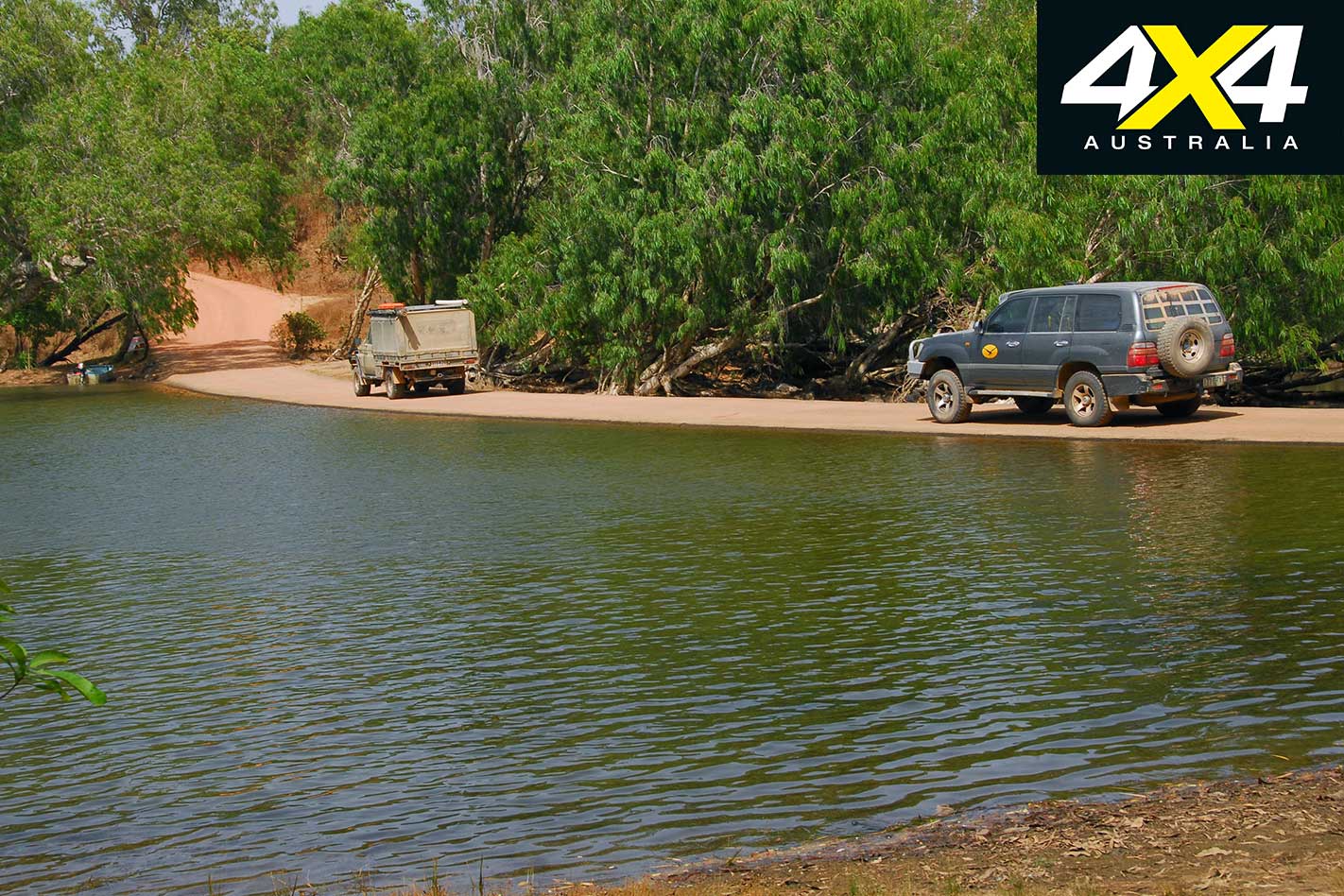
While the area is similar in size there was never enough money to even remotely match Kakadu and it remains similar as before the takeover.
The park is composed of open monsoon woodlands interspersed with vine forests, paperbark wetlands, swamps, billabongs, rivers and open plains like the Nifold Plains region. The park is an important fishing destination for keen anglers.
There are many campsites scattered about the park with bush boat ramps available for easy launching. Nearer to the coast are vast tidal flats and mangrove forests fringing huge tidal inlets. Estuarine boat access is also available.
Every waterhole, swamp and billabong holds crocodiles, with both freshwater and estuarine species being present in numbers. Rinyirru has the largest population of saltwater crocodiles in Qld. A canoeist was killed by a crocodile in the Normanby River some years back, so leave the canoe or kayak at home unless you have a death wish.
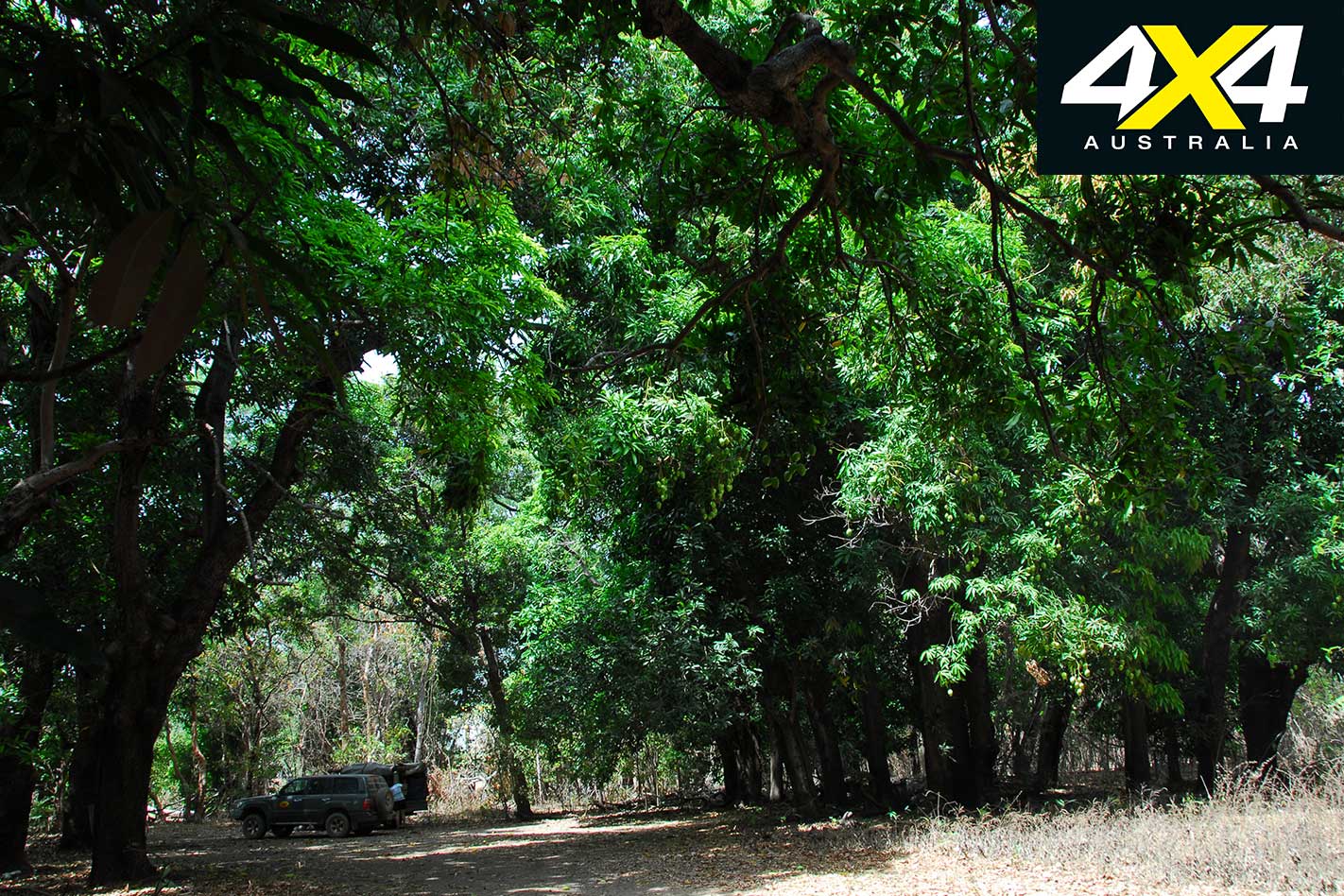
The park is a renowned bird-spotting area and birders armed with field glasses and iPhone apps roam the park in the dry season. The park has important Aboriginal significance and is jointly managed by the Qld Parks & Wildlife Service and the traditional owners – as is every other national park on the Cape under the CYPAL agreement.
The park is closed on November 1 when the east coast barramundi season closure commences. It reopens on June 1.
If you love nature, birds, photography, fishing and hiking, Rinyirru NP is for you. You can spend weeks here and still feel like you have missed most of it when you depart in a cloud of trailing dust.
PALMER GOLDFIELD RESOURCES RESERVE
The River of Gold, the Palmer, has a rich mining history that dates back to the 1870s, when explorer Frank Hann first reported gold. The field was later proved by Mulligan, but he took credit for the find.
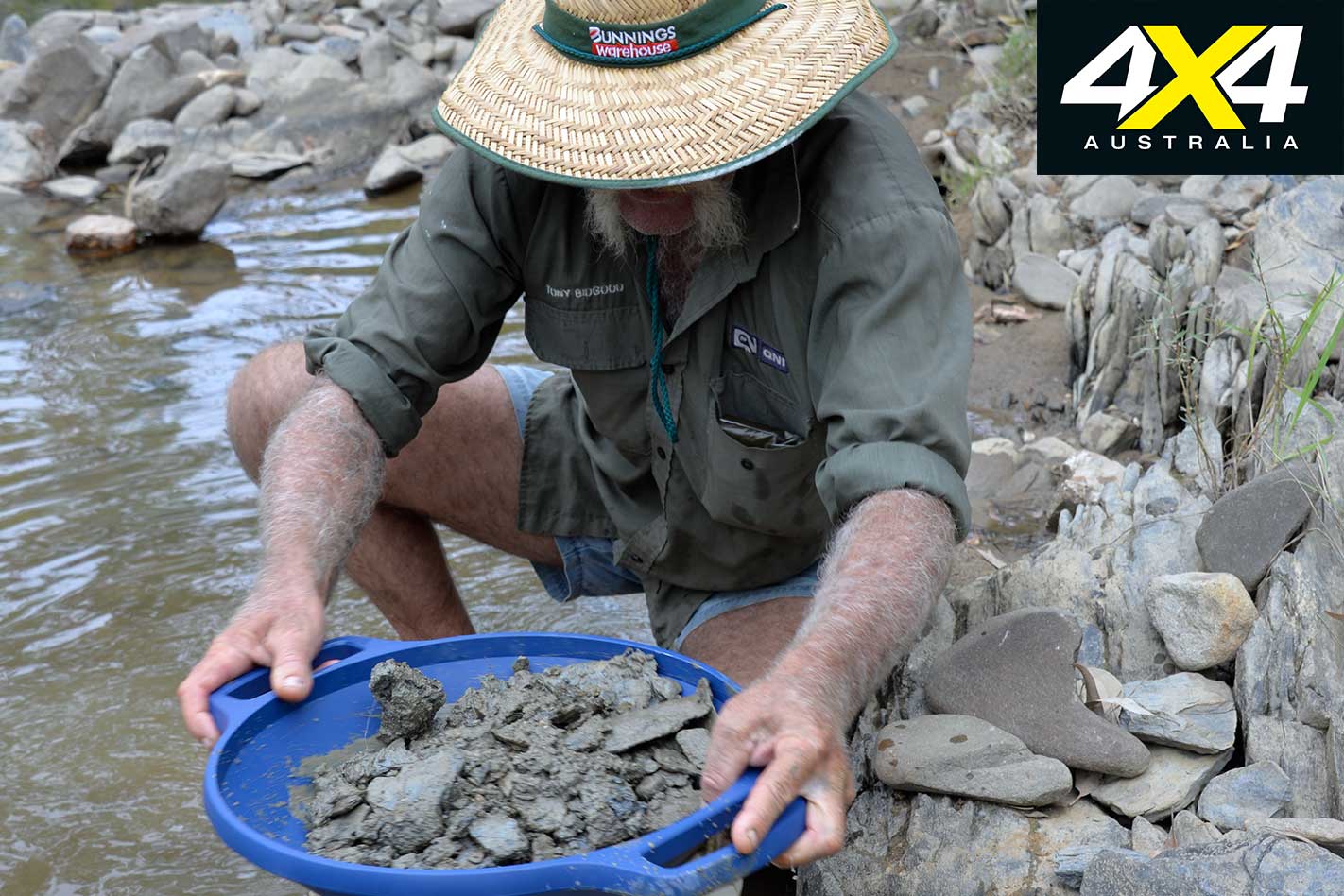
It started a gold rush from Cooktown, via the Battle Camp Track, which was so named after Aborigines attacked a party of diggers on their way to the new field.
The Palmer still has gold and is a popular prospecting destination, while a whole army of small miners still eke out an existence on the field.
The Palmer reserve is reached via Whites Creek Road, 67km north of Mount Carbine on the Mulligan Highway. There is a free camping area about 12km from the reserve.
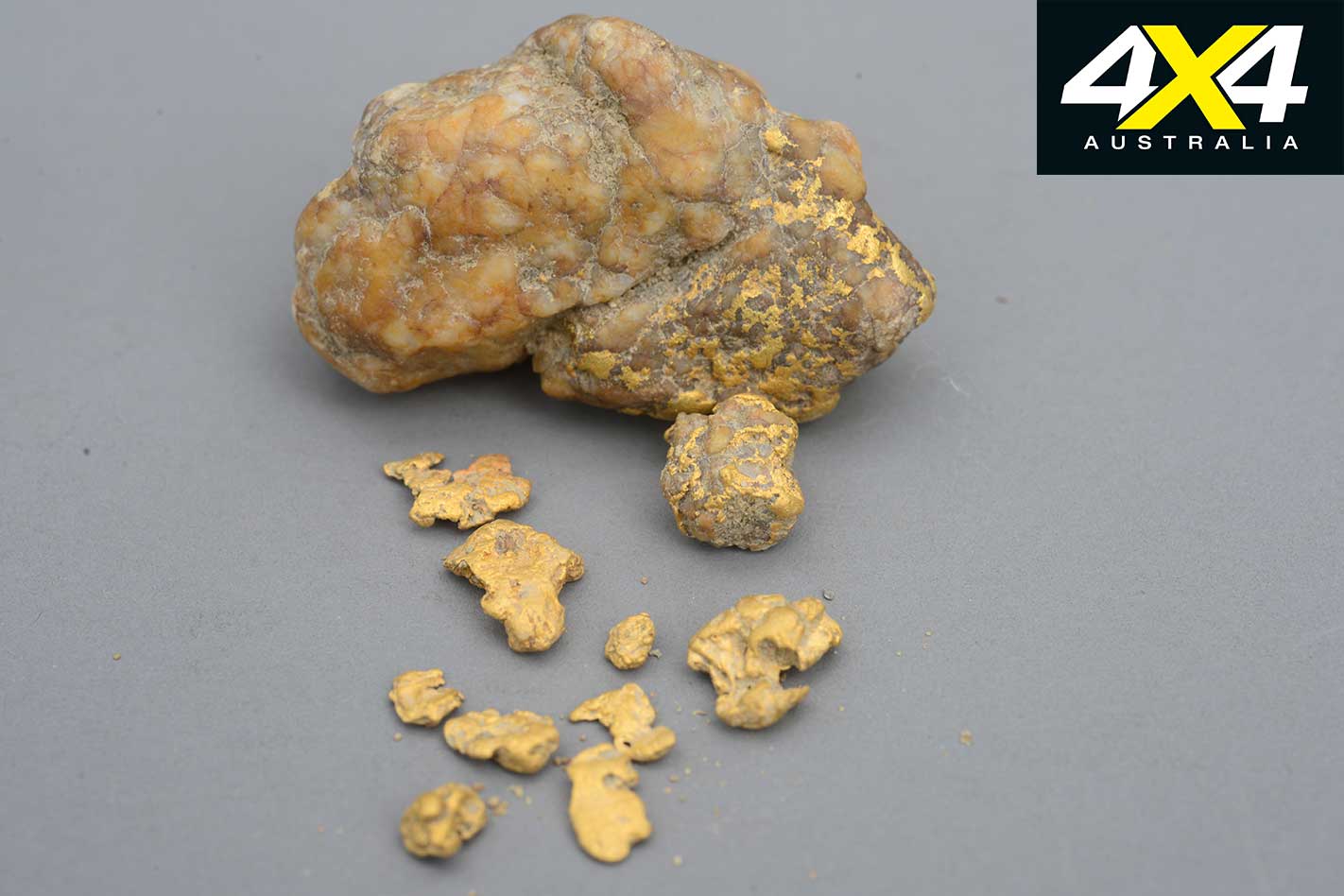
Other tracks lead in from the Burke Developmental Road and from Laura on the original Old Coach Road, a challenging but not insurmountable 4WD route.
ERRK OYKANGAND NP
Formerly known as the Alice-Mitchell NP, it’s at the bottom of the Cape and arguably the least visited park on the Peninsula. It largely consists of open woodlands interspersed by vine thickets, swamps, billabongs, dry creeks and the boundaries of the Mitchell and Alice rivers. It’s very isolated and managed by the Kowanyama Land and Sea Rangers.
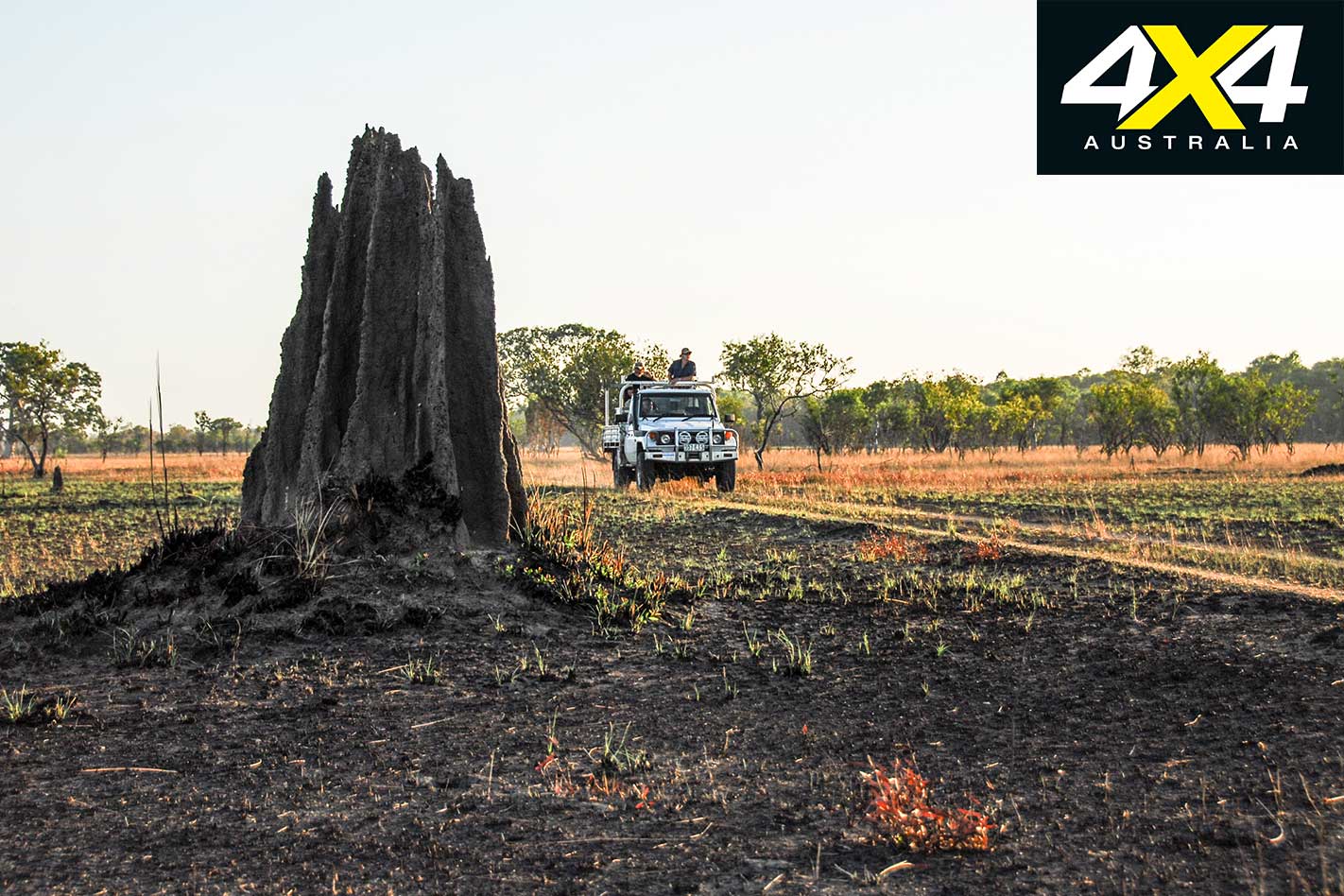
Call the Kowanyama Aboriginal Land & Natural Resource Management office on (07) 4060 5187 for details, camping and entry when planning a trip there.
The park is accessed from Kowanyama, via Shelfo Crossing on the Mitchell River, and from the Dixie Station turnoff, 21km south of Musgrave Roadhouse on the PDR, via the Dunbar Station Junction.
MORE PARKS
West from the Hann River Roadhouse are two new national parks, Alwal and Olkola, as well as the Olkola Conservation Park. They are accessed from the Dixie and Fairview Roads and from Hann River Roadhouse. There is currently no access to these parks as grazing cattle continues, while the Government and the traditional owners struggle with an agreement under the CYPAL framework.
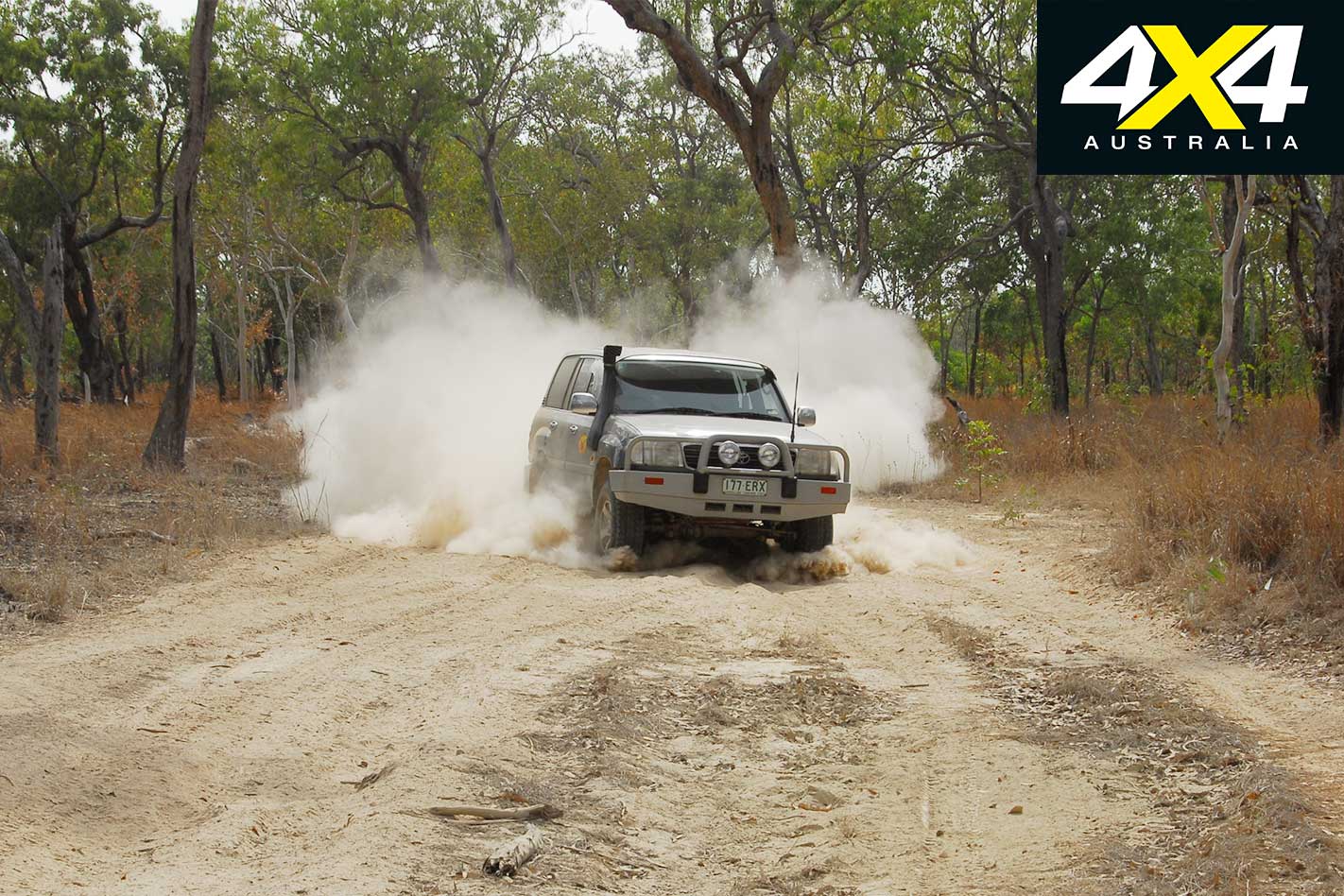
It’s an attractive area being composed of low escarpments, undulating hills, seasonal wetlands and patches of monsoon vine thickets dominated by monsoon woodlands. The parks are home to the very rare golden-shouldered parrot and some threatened plants. So it’s worth keeping an eye on future developments.
Travel Planner
WHEN TO VISIT The dry season from late May to September is the most popular time to visit the Cape, though many people put up with the warm, humid nights and hot days into December, depending when the first storms of the wet season reach the Cape.
The cool months of June and July are favoured by southern visitors unaccustomed to tropical climates. Many Cape visitors are on discovery and some on 4WD wrecking missions during this time, which often spoils the true wilderness escape for others.
Most parks are closed from November to April when wet season conditions make bush travel impossible in most areas. Some parks are closed from December until June, and sometimes even later if the Wet ends late.
NATIONAL PARK REGULATIONS You can book online using a credit card or camping credit. Some parks have a self-service facility. Most ranger stations take credit cards when booking in.
Self-service booking facilities are available at the QNPWS offices in Cairns, Cooktown and Coen, and at ranger bases at Rinyirru and Kutini-Payamu National Parks and the Heathlands Resources Reserve. Over-the-counter camping permits are available at the Atherton Visitors Centre, Cooktown’s Lure Shop and Moreton Bay Telegraph Station. Also use a public payphone or mobile phone where coverage is available by calling 13 QGOV (13 74 68).
VEHICLES Cape York’s National Parks are 4WD-only country. Travel with another vehicle if possible.
You must be self-sufficient, have insect repellent, navigation and maps, recovery gear, spare parts, drinking water, food, and daily-needed supplies. Take a shovel to bury your personal waste. Take a PLB, a sat-phone or VHF radio for emergencies.
CROC ADVICE • Keep away from steep banks when fishing and always have an escape route. • Educate your children about the danger and guard them. • Camp at least 50 metres away from water. • Do not dump food waste and fish remains near camps. • Do not harass crocodiles or attempt to feed them. • Do not use canoes or kayaks in crocodile waters.
SURVIVAL CHECK-LIST • Do not disturb, take away or cut down plants and trees. • Do not take pets into a national park. • Drive only on existing tracks. • Take care with campfires. Use existing fire places in campgrounds. • Do not use soap or detergents in streams. •Take your rubbish out with you when you leave. • Firearms are prohibited. • Only use generators that operate at less than 65dB(A) and only in generator-approved camping zones. • Book well ahead for campsites during June to September. • Quad bikes and chainsaws are forbidden in NPs and on all beaches. • Use the vehicle wash-down facilities at Lakeland to avoid carrying weeds and seeds in and out of the Cape. • Don’t dump rubbish in the chemical toilet tanks at campgrounds. • Camp only in approved campsites. • Respect the indigenous culture and sites of the Cape York traditional owners.
USEFUL WEBSITES www.queenslandnationalparks.com.au www.qld.gov.au/camping for online booking. www.tourismcapeyork.com/know for alcohol restrictions and general information. Road conditions: www.131940.qld.gov.au or phone 13 19 40. Road conditions: www.cook.qld.gov.au/services/roads for current road status. Waste disposal sites: www.lawmac.org.au Quarantine: www.daf.qld.gov.au Emergencies: dial 000 or 112 with a digital or satellite phone. Fishing: www.fisheries.qld.gov.au Great Barrier Reef MP: www.gbrmpa.gov.au Vehicle Recovery: Phone 13 11 11. Contact: www.racq.com.au Weather: 1-14 day forecast: www.meteovista.com/oceania/australia/capeyork/3769030
TO ensure track surfaces are protected from damage during the wetter months, select tracks in Victoria’s forests and parks’ north-east region have been temporarily closed.
The first official changes came into effect at the start of this month, with the closure of the remaining tracks taking place today.
Forest Fire Management Victoria (FFMVic) and Parks Victoria implemented the closures chiefly to protect the tracks, but also for driver safety.
“The program assists to mitigate damage to forest roads and tracks during the wetter months,” said Hume’s Assistant Chief Fire Officer, Gill Metz. “It also ensures dangerous and difficult sections of road are closed for driver safety.
“These measures also help maintain water quality in rivers, creeks and reservoirs, by reducing the amount of erosion and silt washed away from roads and tracks.
Some of the tracks closed in Alpine National Park include McCready Track, Davies Plain Track and King Plain Track.
“Some roads and tracks will also be closed east of Jamieson, in the Toombullup State Forest and Mt Stirling,” Metz added. “There will also be track, road and bridge closures in the Strathbogie, Toolangi, Tallarook and Rubicon State Forests.”
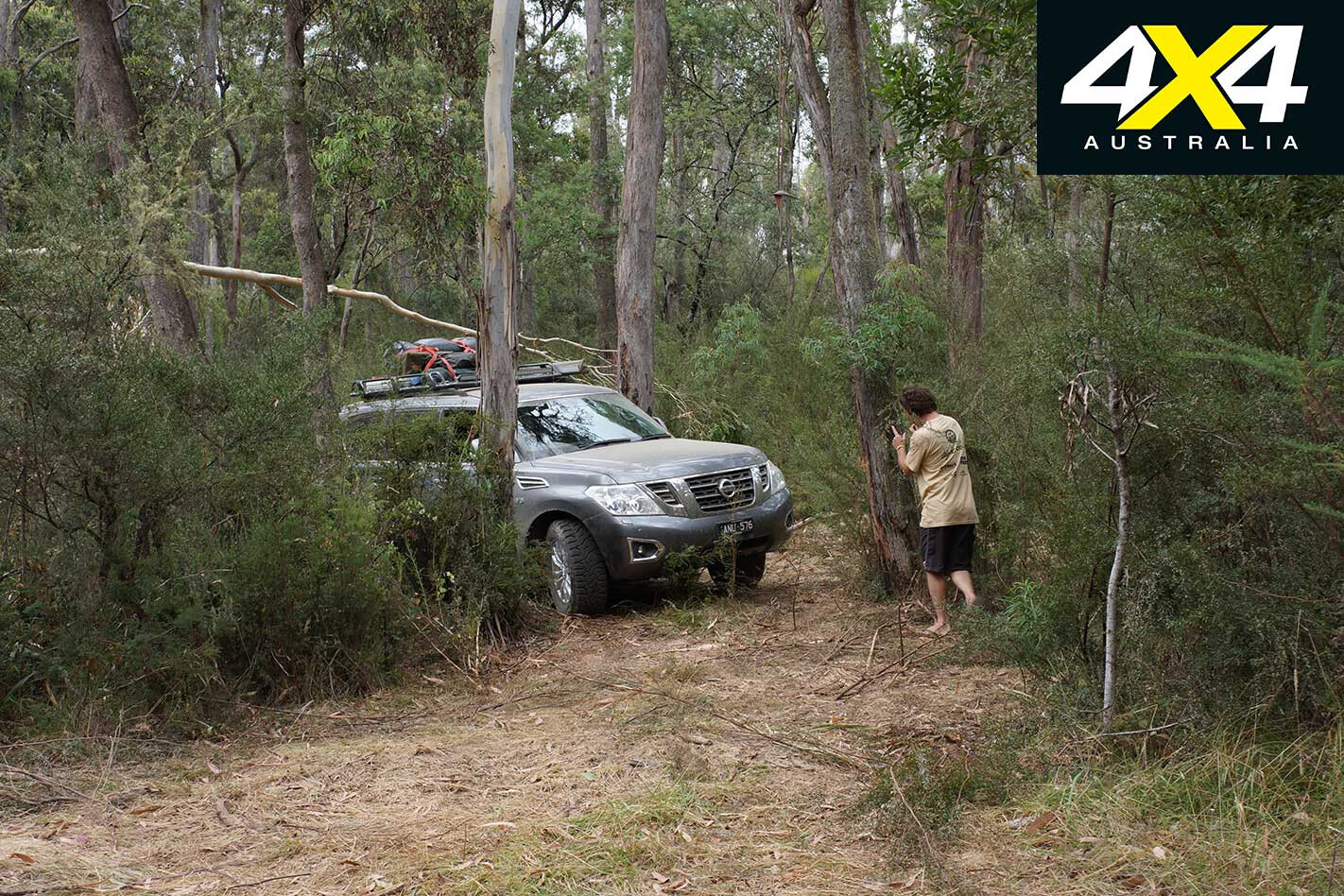
Access tracks to recreational areas in the region may also be closed, so before taking off on an adventure, tourers are advised to visit the Forest Fire Management Victoria website here.
The tracks are expected to re-open in time for the Melbourne Cup long weekend, on November 3-6.
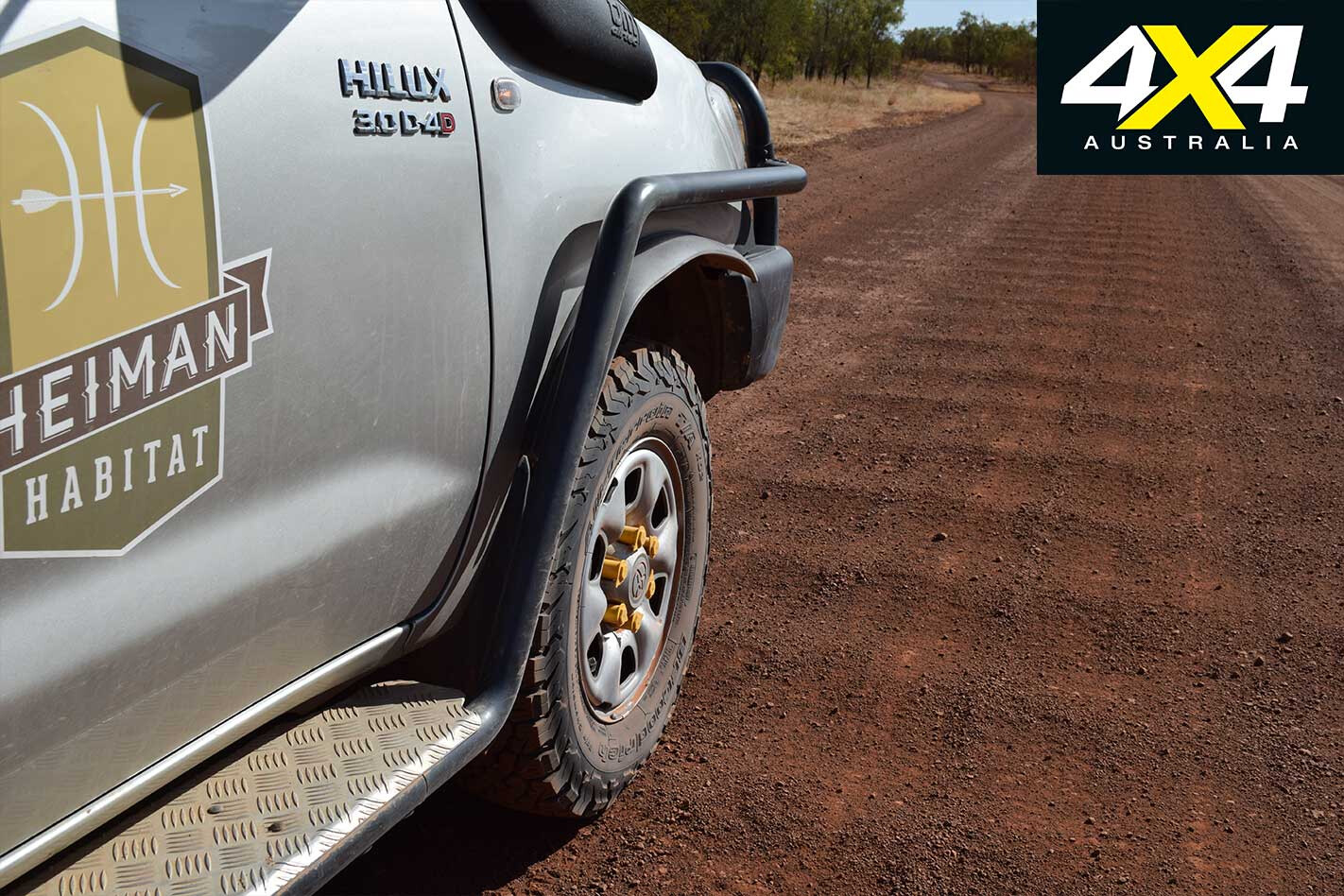
THERE comes a time in a young girl’s life when she loses the spring in her step. So it came to pass with the Hilux in the shed.
Indeed, her factory rear leaf springs were riding flat as a tack, even when nothing was weighing her down except a simple toolbox and some bog-standard accessories like a rear bar, canopy and fridge. Time for an upgrade.
Eighteen months ago she’d had a new set of shocks fitted – the second set in the eight years since originally rolling out of the showroom. Not happy with mainstream, we’d looked at the market and gone with OzTec’s Australian-made Outback Range.
Brisbane-based and supplying suspensions for 4×4 and commercial use, OzTec originates from George Shepheard’s experience with racing and rallying. The shocks have proved their worth over the last 40,000 kilometres, easing us through four states and covering every sort of road surface this country has to offer (to check out our review of OzTec’s Outback Range, see issue 387).
The OzTec shocks use a 20mm OC Chrome Piston Rod with a 40mm OD Piston and Foot Valve, and they’re made with 64mm OD bodies to carry as much oil as possible. This all helps to keep the shocks nice and cool when the going gets rough. What’s more, they come with the option of Comfort or Cargo Valves.
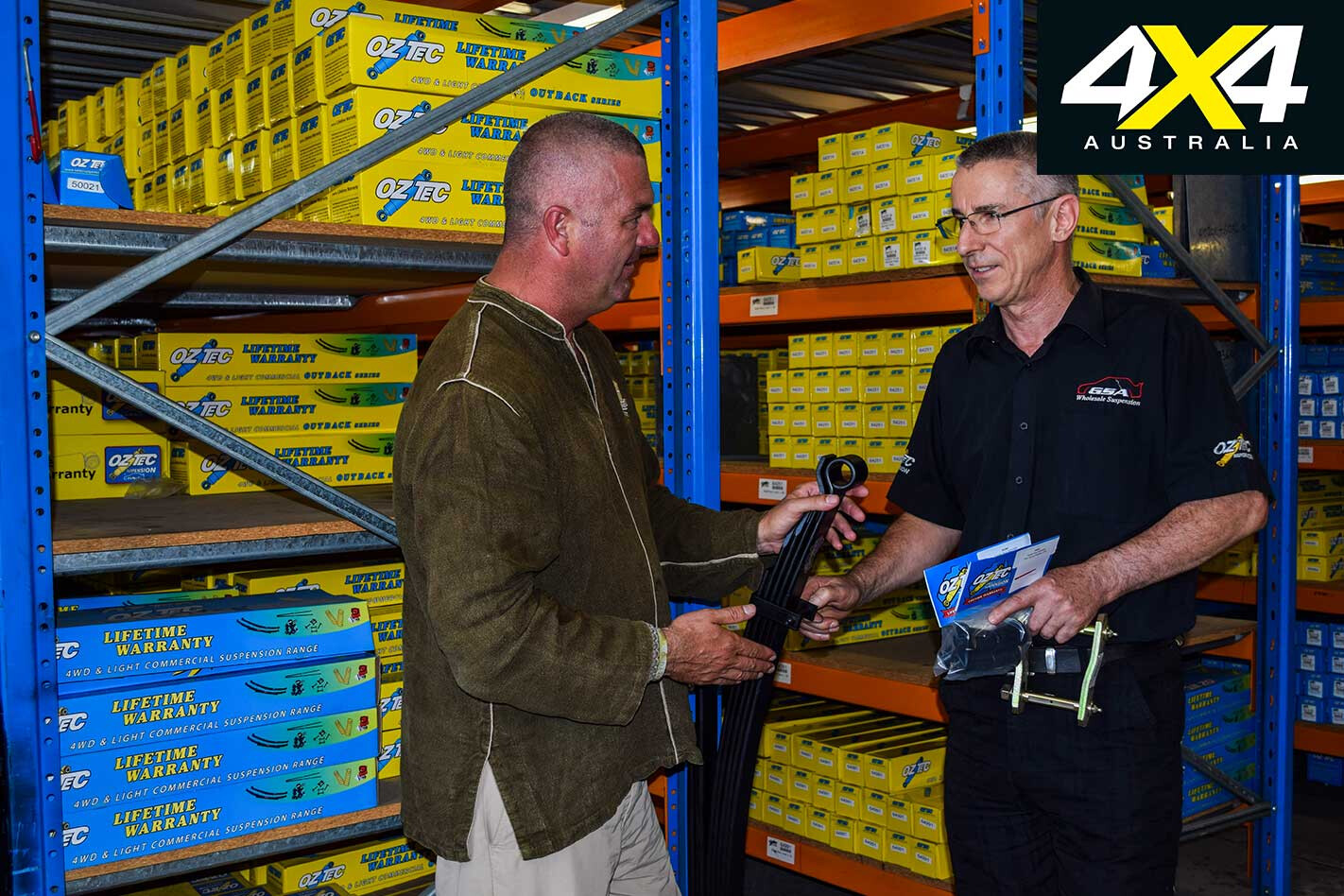
So, when it came time for the spring upgrade, we approached OzTec again to see what this manufacturer has on offer. Planning to test the suspension setup over 9000 kilometres of punishing terrain across the breadth of Australia – and back again – we needed springs that weren’t going to let us down.
The upgrade also needed to account for the fact the Hilux already had a set of Airbag Man rear-spring helpers fitted, and we were keen to retain these to reduce sway (‘waste not, want not’ as they say). The other unwritten requirement was that we didn’t achieve a ride that was so stiff that the missus would accuse the rig of emulating The Princess and the Pea when we hit the road.
So we had a chat with OzTec’s operations officer Jamie MacFarlane, to see if he had something that would fit the bill.
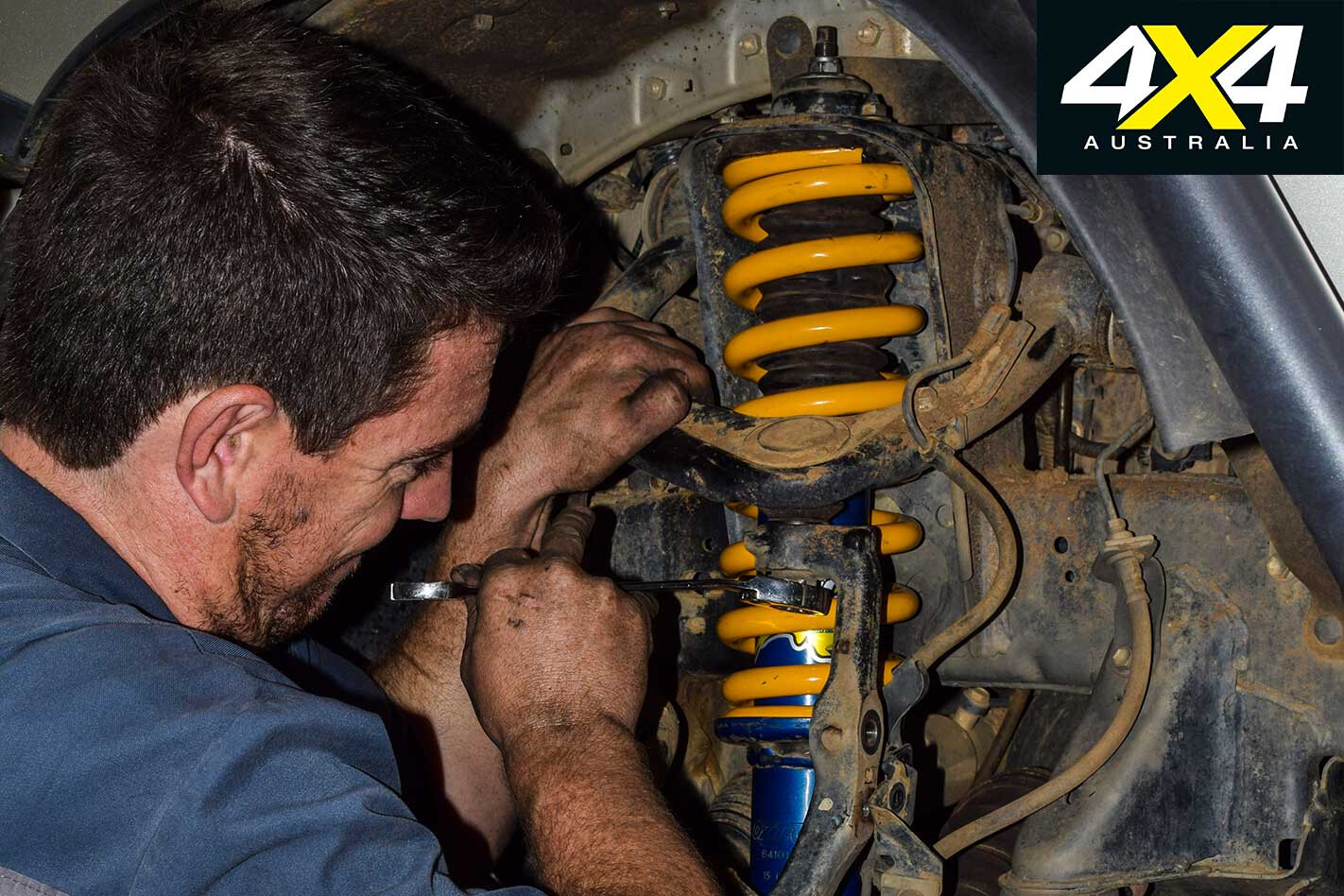
OzTec has several spring options to cater to users’ differing vehicle setups and load-carrying requirements, and the team aims to match its products with clients’ stated requirements. Chatting with Jamie about how we use the ’Lux, we chose the mid-range spring options for their versatility – rather than the more robust setups which are better suited to rigs that are constantly loaded.
After fitting the front and rear springs, the ’Lux feels like she’s had a new lease on life. Indeed, it feels like a new model.
And, far from an uncomfortable ride, with 7500 kilometres of our test-run under its belt, the consensus (from both front- and back-seat drivers) is that the rig’s more comfortable than ever. And there’s no discernible difference between the ride loaded or unloaded.
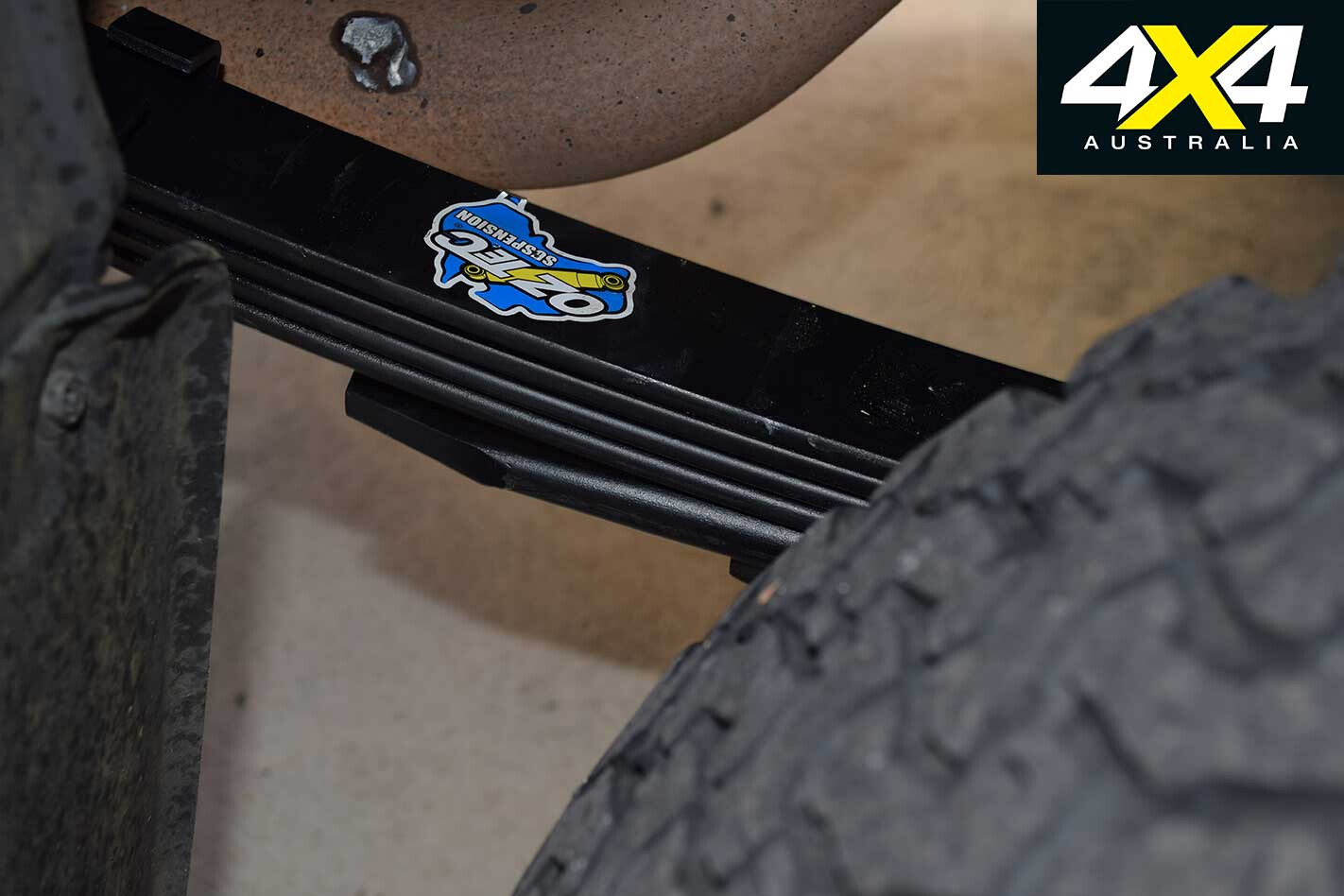
Overall, the vehicle is sitting proud and indeed looks like she’s had a lift. With a half-inch gain in height when empty with no lift-kit fitted, this change – though unexpected – is welcome.
The most noticeable change in performance comes on corrugated roads. The Hilux now glides over road surfaces that previously sent teeth chattering. Sway has also been noticeably reduced, and only the rig’s engine notices the difference when a load is attached to the towball.
In short, the ’Lux has been transformed by this upgrade, and the change is all good. In combination with the previous upgrade to the shocks, it feels like it’s undergone a GVM upgrade. While she might need a few more tweaks to hit that mark, the Hilux is well on her way towards another 100,000 kilometres or more of faithful service.
Spring Loaded
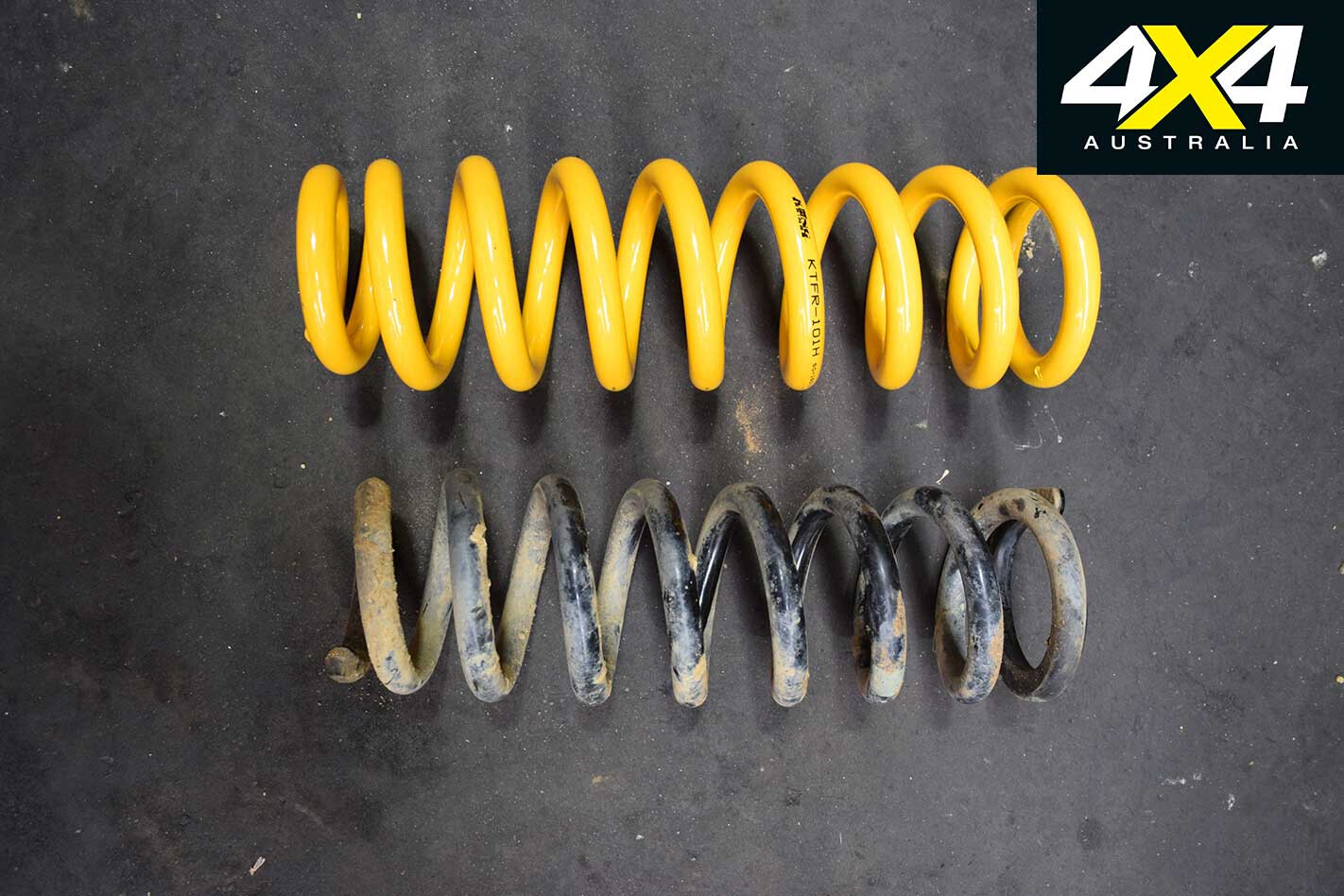
All of the OzTec spring options are suited to a two-inch lift, but don’t require it. For a Hilux (and most other similar vehicles), OzTec offers four different front coil options: – Up to 65kg of frontal accessories. – 65 to 120kg of frontal accessories (this is the option we chose for the Hilux). – 120 to 160kg frontal accessories. – 160kg-plus of frontal accessories.
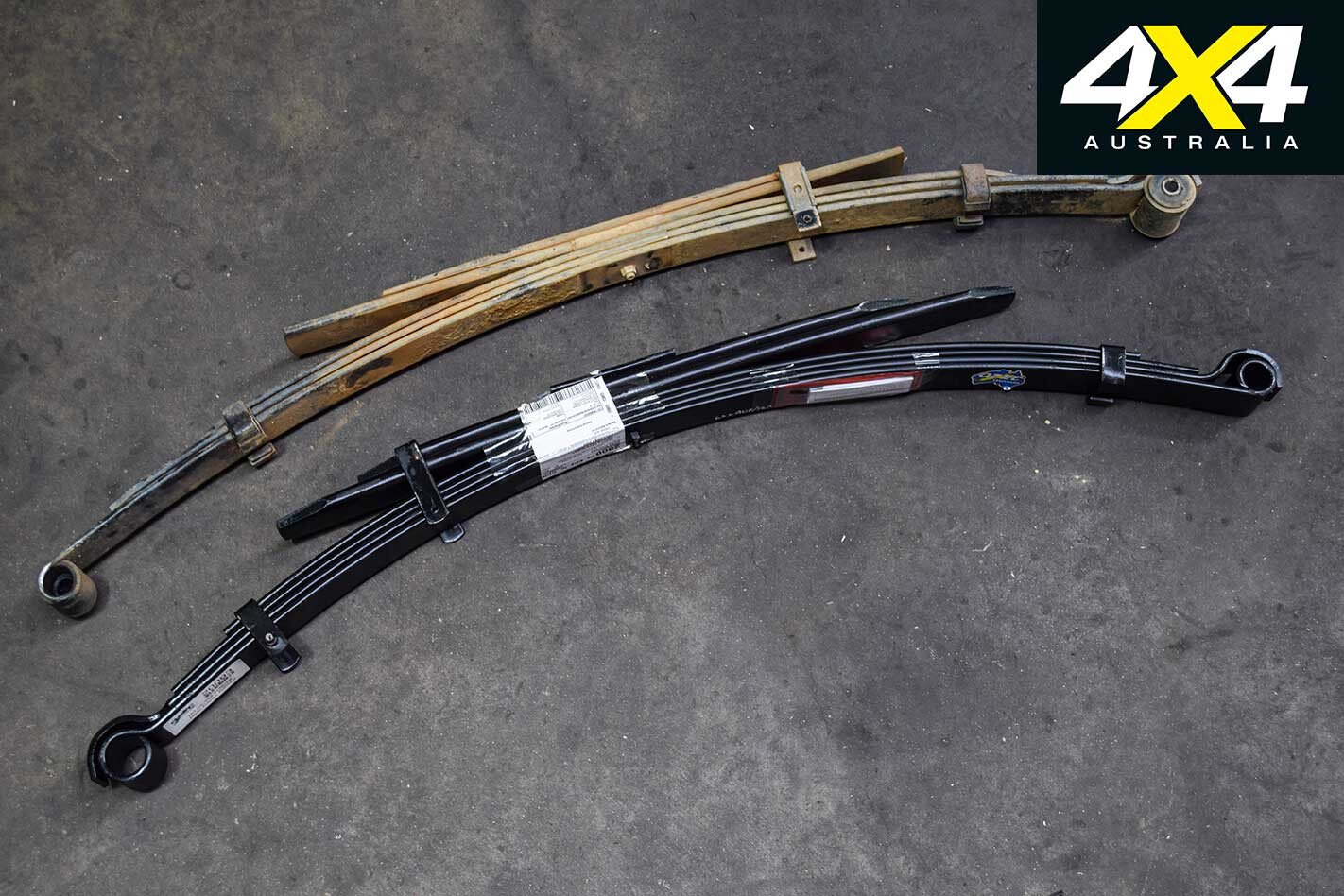
For the rear, OzTec offers three setup options: – 100 to 300kg constant load (more weight can be carried, but obviously the height will be lower). With this spring setup, OzTec recommend its ‘Comfort’ valved shock. – 300 to 500kg constant load (more weight can be carried, but obviously the height will be lower). With this setup, the OzTec ‘Comfort’ valved shock is generally the way to go (although with less than 300kg load, the ride height will be higher than quoted). If running at the top end of the weight range, the OzTec team recommends combining this spring setup with its ‘Cargo’ valved shock. This is the unit we had fitted to the crew’s ’Lux. – For a constant minimum load of 500kg or more in the rear tray. OzTec recommend combining this spring with the ‘Cargo’ valved shock.
If you’re keen for a day-trip adventure right on Brisbane’s door step, head to D’Aguilar National Park. This beautiful location, about 45 minutes north-west of Brisbane via Petrie or Samford, is well worth the trip.
This feature was originally published in 4×4 Australia’s September 2012 issue
Made up of approximately 36,000 ha of open eucalypt and pine forest woodlands, freshwater creeks and rainforests, D’Aguilar National Park even has magnificent lookouts over Wivenhoe and Somerset dams – plus on a clear day you can see Brisbane city from Kluvers Lookout.
There are kilometres of well maintained off-road trails and 20km of walking track so spending one action-packed day here is not a big ask.
I hadn’t been to D’Aguilar NP for a while – and there were a few tracks I wasn’t familiar with – so I took along a copy of the Dirty Weekends in South East Queensland for guidance.
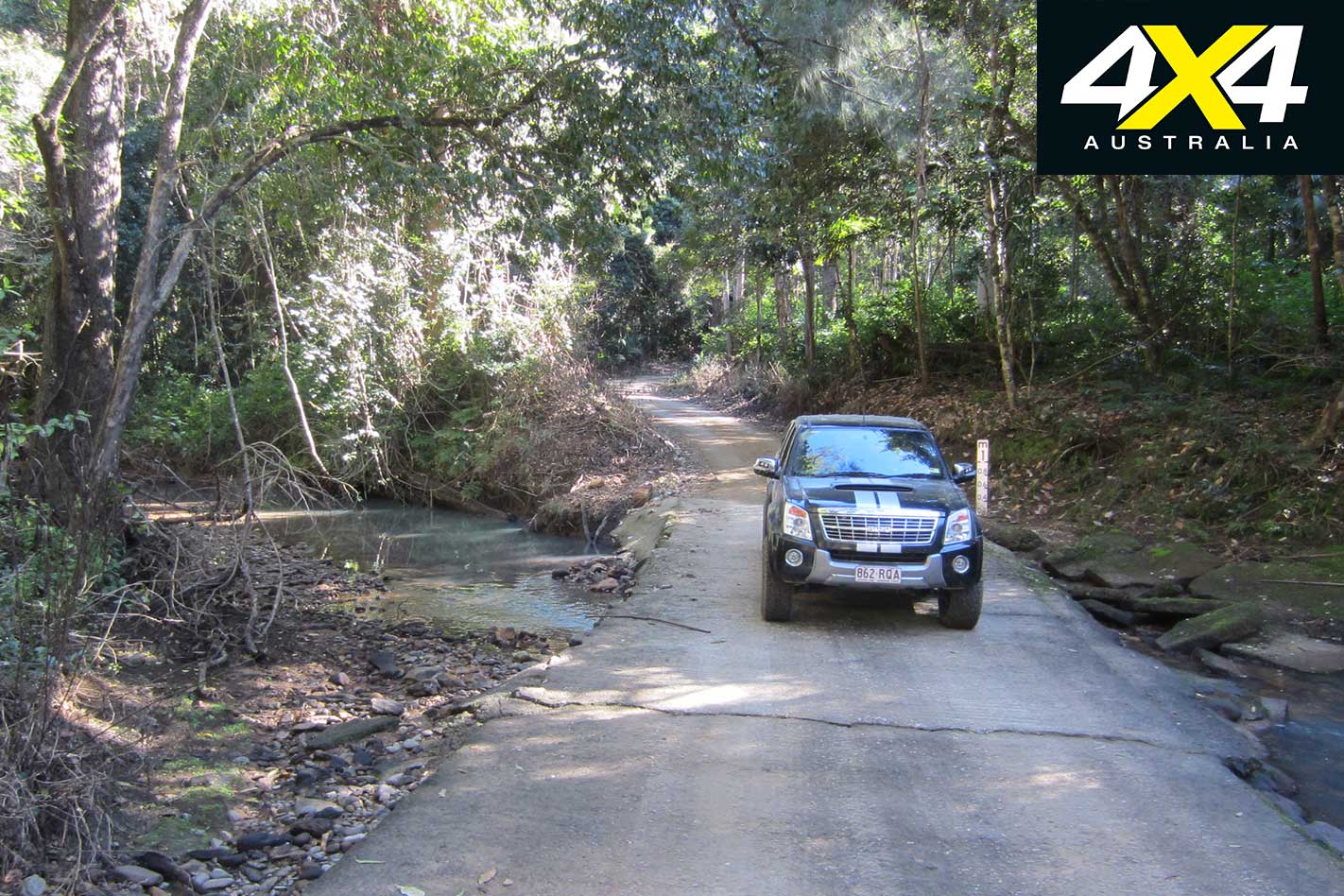
On the day we travelled to D’Aguilar we left Brisbane around 8.30am, fuelled up and headed through Petrie along Dayboro Road through Dayboro, over Lacey’s Creek onto the gravel and through two small creek-crossings into the forest.
I had spent a lot of time in the area riding dirt-bikes over the years and the terrain had been quite challenging, however, since Queenland’s devastating floods of January 2011 the tracks had been groomed so well the route was easy-going; most softroaders could tackle this trip.
For the majority of the beginning of the tracks, driving is mostly all up-hill stuff, with magnificent winding tracks overlooking the range and forests.
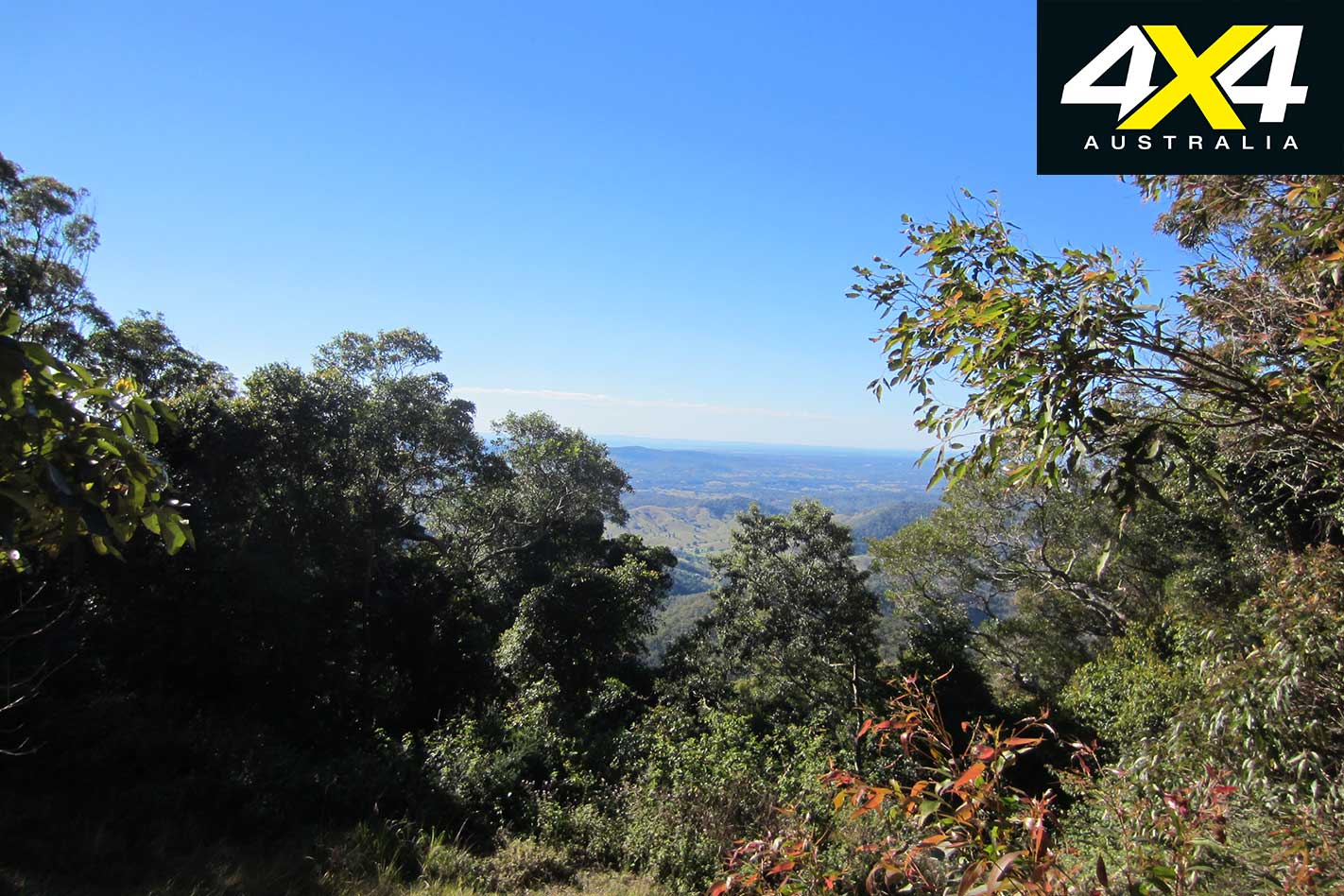
One of the first lookouts you’ll discover is Kluvers. It is a bit overgrown but if you are tall enough to see over the trees you can see out to Moreton Bay and, if the day is clear, Brisbane city to the right. There are several great spots to stop for a break, such as Diana’s Bath waterhole (access only by a 2km walk on private land from the Diana’s Bath car park), the Mt Mee sawmill and some delightful creeks. There are graded walking tracks throughout the park’s north and if you have enough energy for hiking it is a great way to experience the area’s fantastic variety of flora and fauna.
Somerset Lookout, about half-way through the Dirty Weekends trip, is a definite must-see. Park at the big boulders and head 20m down the path to the man-made viewing point – then savour the spectacular view of Somerset and Wivenhoe dams.
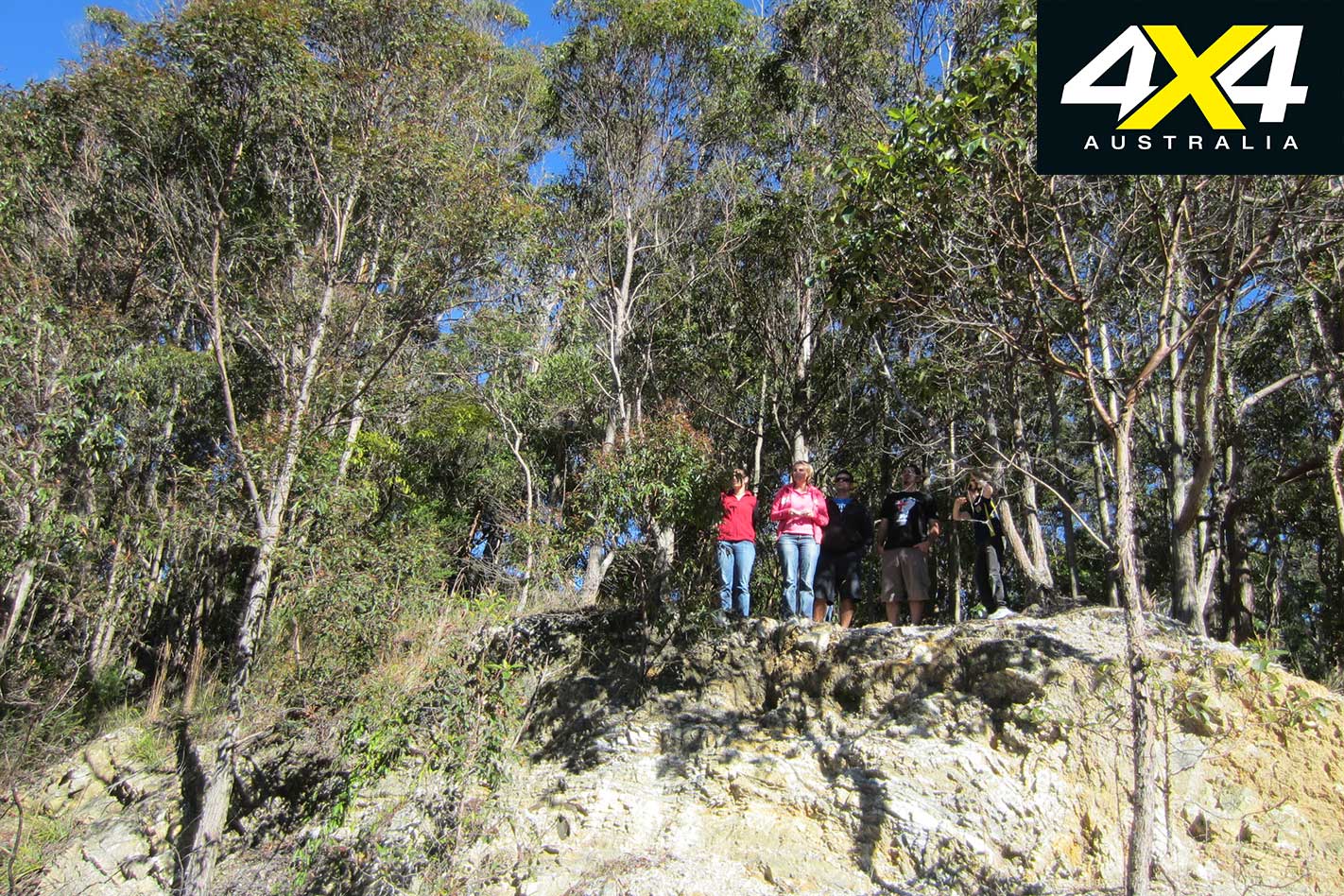
The Gantry, a short drive past Somerset Lookout, is a great place for lunch. It has a spacious grass area for picnics, as well as bathrooms and a large carpark.
The 1km Piccabeen walk – a great walk and easy enough for everyone – is one of many walks here. It begins opposite The Gantry and leads visitors along a boardwalk and track through piccabeen palms. Signs provide information about forest types and the region’s timber-industry history.
About 2km past the Gantry is the Mill rainforest walk, a beautiful 1.4km circuit which takes you through rainforest and a creek.
We left The Gantry about 2pm and headed along Peggs and Sellins roads, then Mt Mee Road to Dayboro. The drive to Dayboro from The Gantry is via sealed bitumen roads with magnificent views of the rolling hills and picturesque range.
Dayboro is a great spot to fuel up, have a beer at the pub, and grab a pie from the local baker. The area is popular with off-road and road motorcyclists and there are always a heap around the town centre, so drive carefully.
Our early-afternoon departure gave us enough time to look around Dayboro, grab a bite to eat and head back to Brisbane to wash the vehicles and still enjoy the tail-end of the weekend.
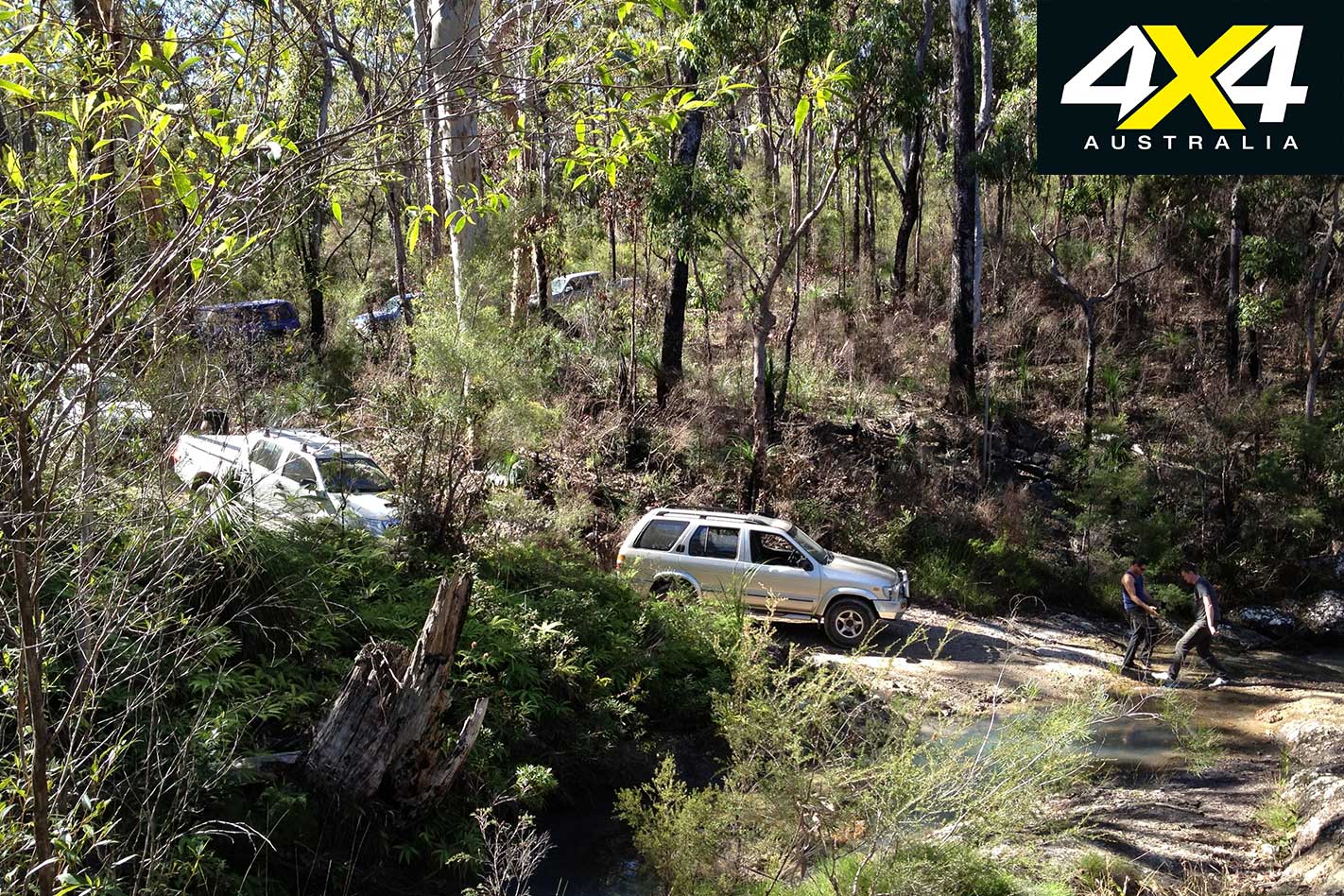
D’Aguilar NP is an easy-to-moderate day-trip depending on weather conditions. If there has been consistent recent rain, give this trip a miss as a few creek-crossings will be impassable. Some steep bits require the use of low-range, but if you have the right maps, or a copy of Dirty Weekends in South East Queensland, you can avoid these if you choose to.
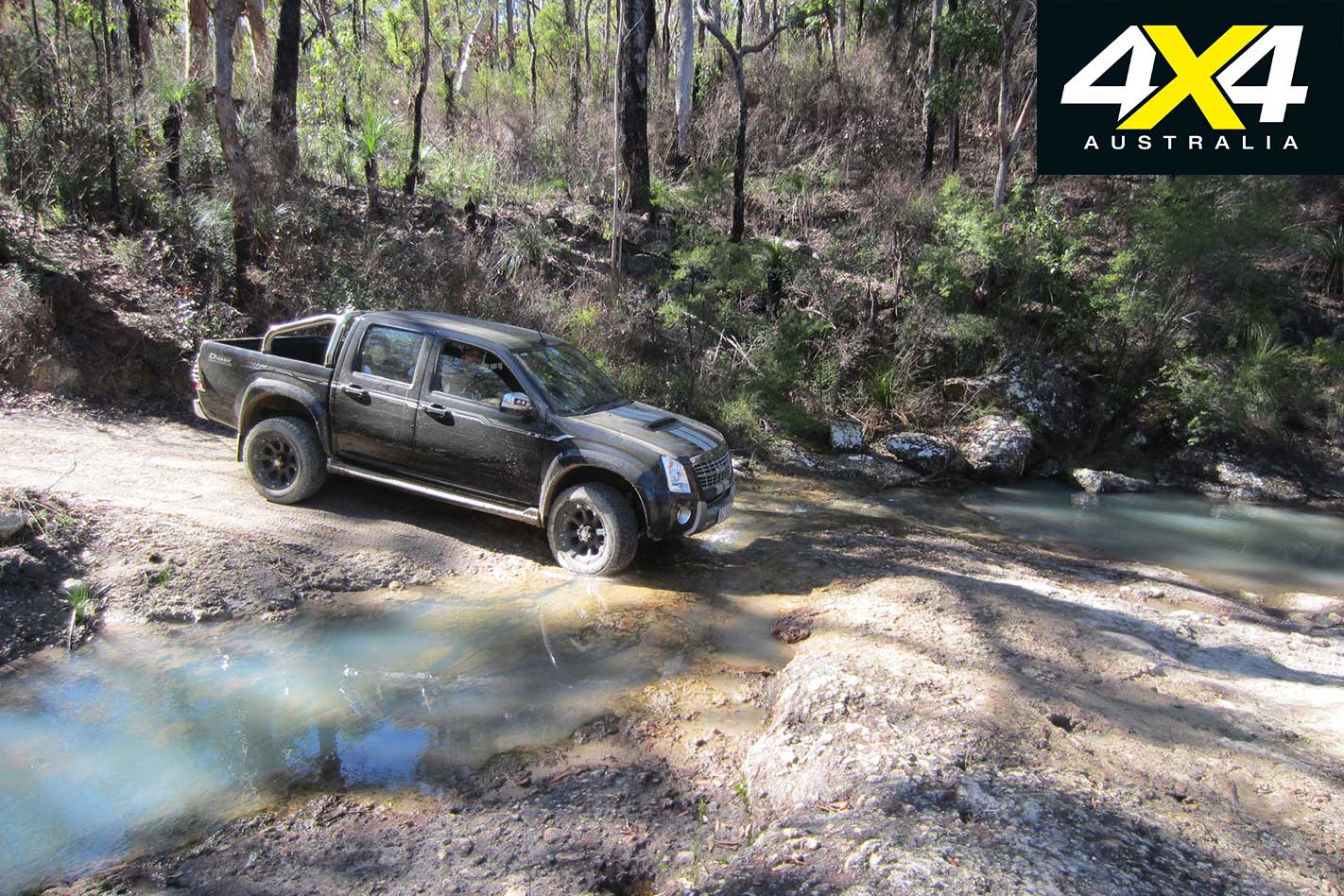
If you make a full day of it and head past The Gantry, visit the swimming spots, such as Rocky’s Hole and Broadwater Hole. Rocky’s Hole can be a little dry if there has been no rain. There are nine camping spots along a grassy strip on a creek bank at the Archer Camping Area.
There have been some track closures for safety reasons in the region since the January 2011 floods, according to the Department of Environment and Resource Management. As of the DERM’s June 26, 2012 update, the Audax loop, parts of Lawnton Road and England Creek Road (fire trails) had been closed, and part of the Maiala day-use area had also been closed for reconstruction.
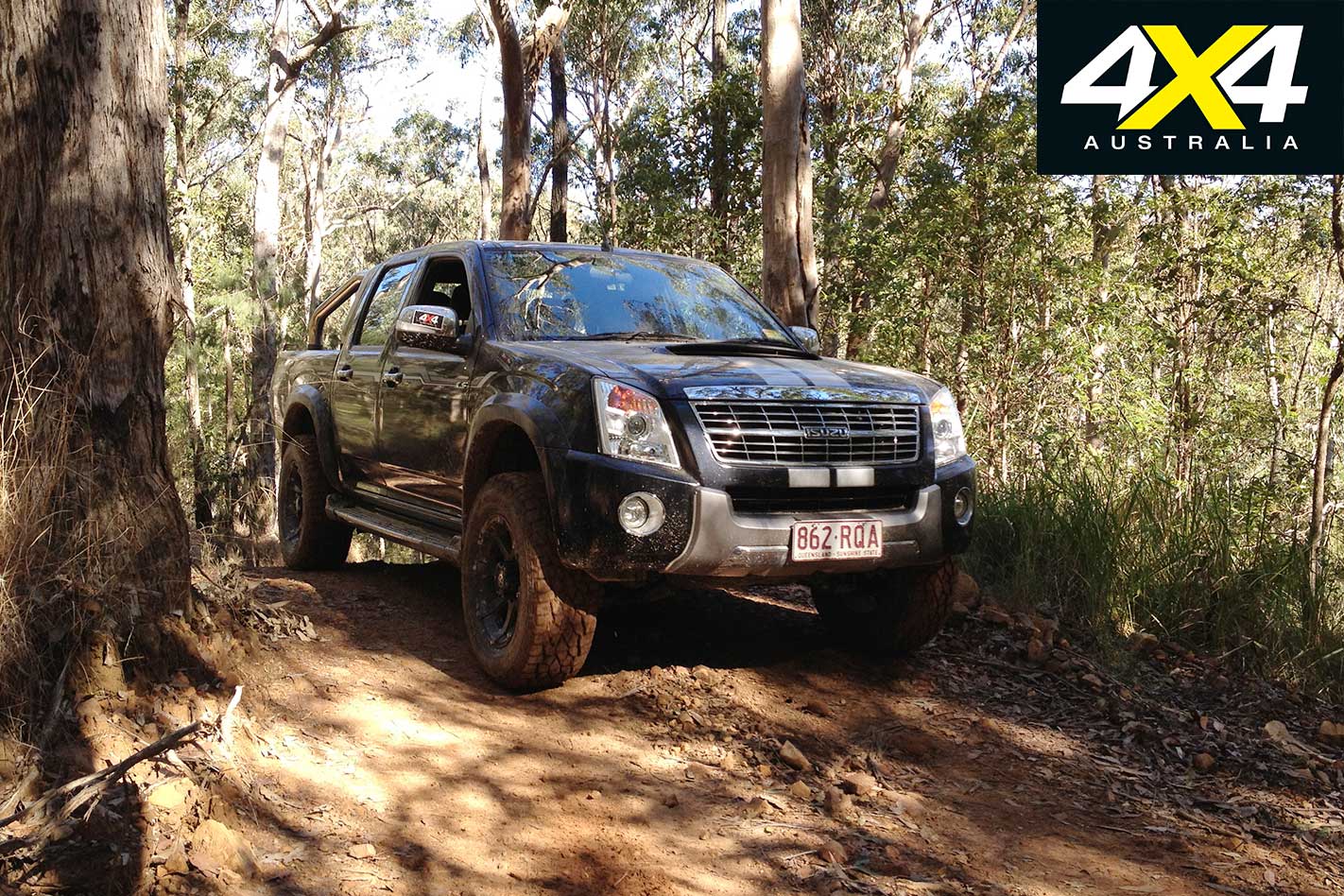
RETURN OF THE D-MAX We’ve clocked more than 25,000km of on- and off-road driving and some towing in our long-term Isuzu D-Max. At time of writing it had been through a 30,000km service and we’ve had no problems in 12 months, so I reckon it’s about time to deliver my verdict: the D-Max is a great off-roader.
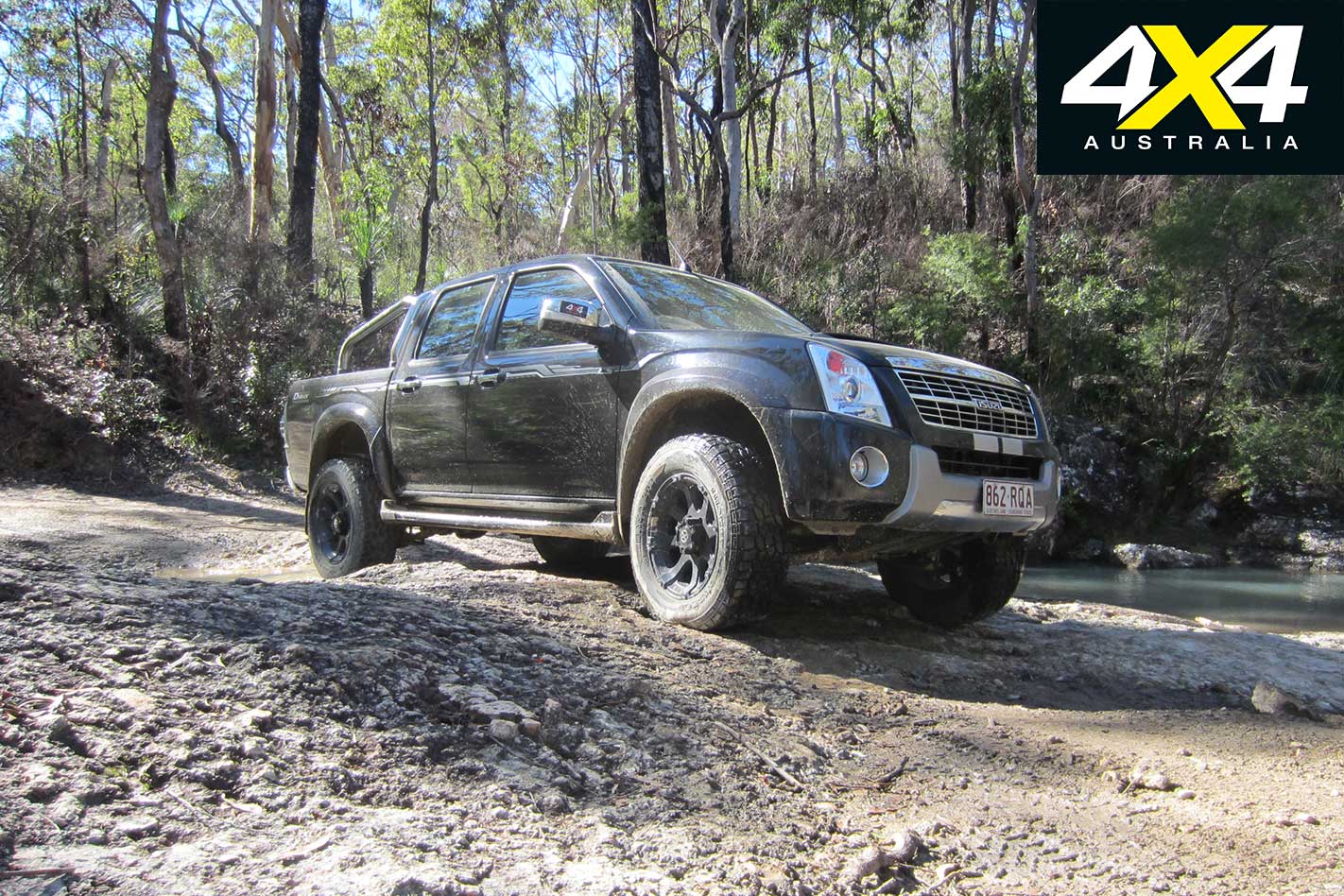
The 3.0-litre turbo-diesel is a little noisy, but has a robust under-stressed feel. Fuel consumption has been outstanding: it has averaged more than 700km per 76-litre tank.
Ride was initially a little stiff, but a Fulcrum suspension fix solved this. The guys at Fulcrum recommended RAW shocks, EFS rear leaf springs and Super Pro polyurethane bushes. There were some problems with the set-up as vibrations were evident through the chassis and body when accelerating.
Diagnosis? The lift had taken the prop-shaft angle out of its tolerance level. Fulcrum’s staff had the car fixed and back on the road in under a few hours. Since then we have driven more than 10,000km and there has been no more vibration strife.
A trip to Coffs Harbour hinterland for the 4X4 Australia advertisers’ weekend really pushed the D-Max with some challenging tracks. The hardy Isuzu went everywhere that weekend, keeping up with 100 Series LandCruisers, a new Ranger, Amarok, Triton and a Patrol or two. The D-Max was that weekend’s quiet achiever.
We’ve put more than 18,000km on a set of Mickey Thompson Baja STZ 265/65 R17s, running on ATX teflon-coated wheels. These tyres have been great all-rounders, tackling sand, mud, rock, water crossings, corrugations and bitumen with ease.
The Bajas’ tread pattern is not overly aggressive so they have been a quiet on-road tyre and very grippy in the wet. The multi-angled and -serrated tread blocks look good and improve the tyres’ self-cleaning ability. Even though the tyres pick up rocks like a kid at the beach, thankfully the damage these rocks can do is negated by the tread-block angle that stops them from ‘drilling’ into the tyre. After 18,000km the tyres show little to no sign of wear; the sidewalls remain smooth and there are no cuts in the tread.
The ATX wheels have copped a hiding on rocky trips that have left other vehicles’ wheels looking worse for wear, but the ATX Wheels have not suffered a scratch.
We hope to put these tyres on another long-term vehicle, so we can evaluate them again in another 20,000km.
We have had an electronic rust-prevention system on the D-Max for a year. In that time the Isuzu has been exposed to salt water at least twice every month on beach drives. After a thorough inspection of common areas where rusting occurs I’ve seen no sign of rusting or oxidisation, but long-term testing is required.
Travel Planner
WHERE 40km north-west of Brisbane.
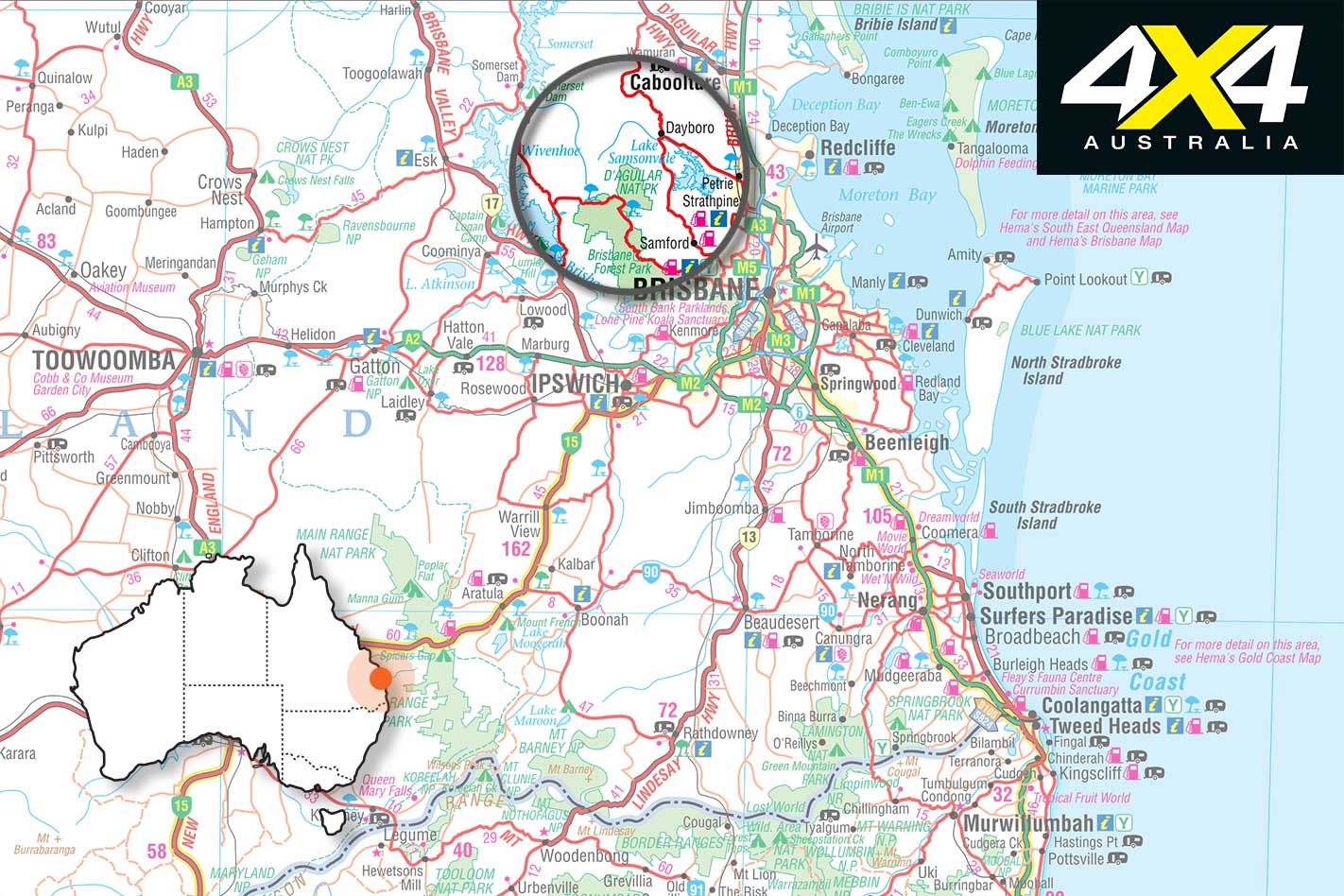
CAMPING PERMITS D’Aguilar National Park has two formal campgrounds in Mount Mee section (Neurum Creek and Archer), eight remote bush camp sites in south D’Aguilar section (formally Brisbane Forest Park). Camping permits are required and fees – at time of writing $5.30 per person per night or $21.30 per family per night – do apply.
BEST TIME TO VISIT All year round and especially the warmer months if you fancy a swim.
GETTING THERE You can reach the park by travelling the route we did – through Dayboro or via Mount Nebo Road (tourist route number 8) from The Gap – or via Samford along Samford Road (tourist route number 9).
We generally don’t need electrical power when we’re away from town, but our photographers and videographers sure do.
With countless cameras, lights, drones and laptops that are used all day, they have a lot of gear that needs to be charged to stay operational.
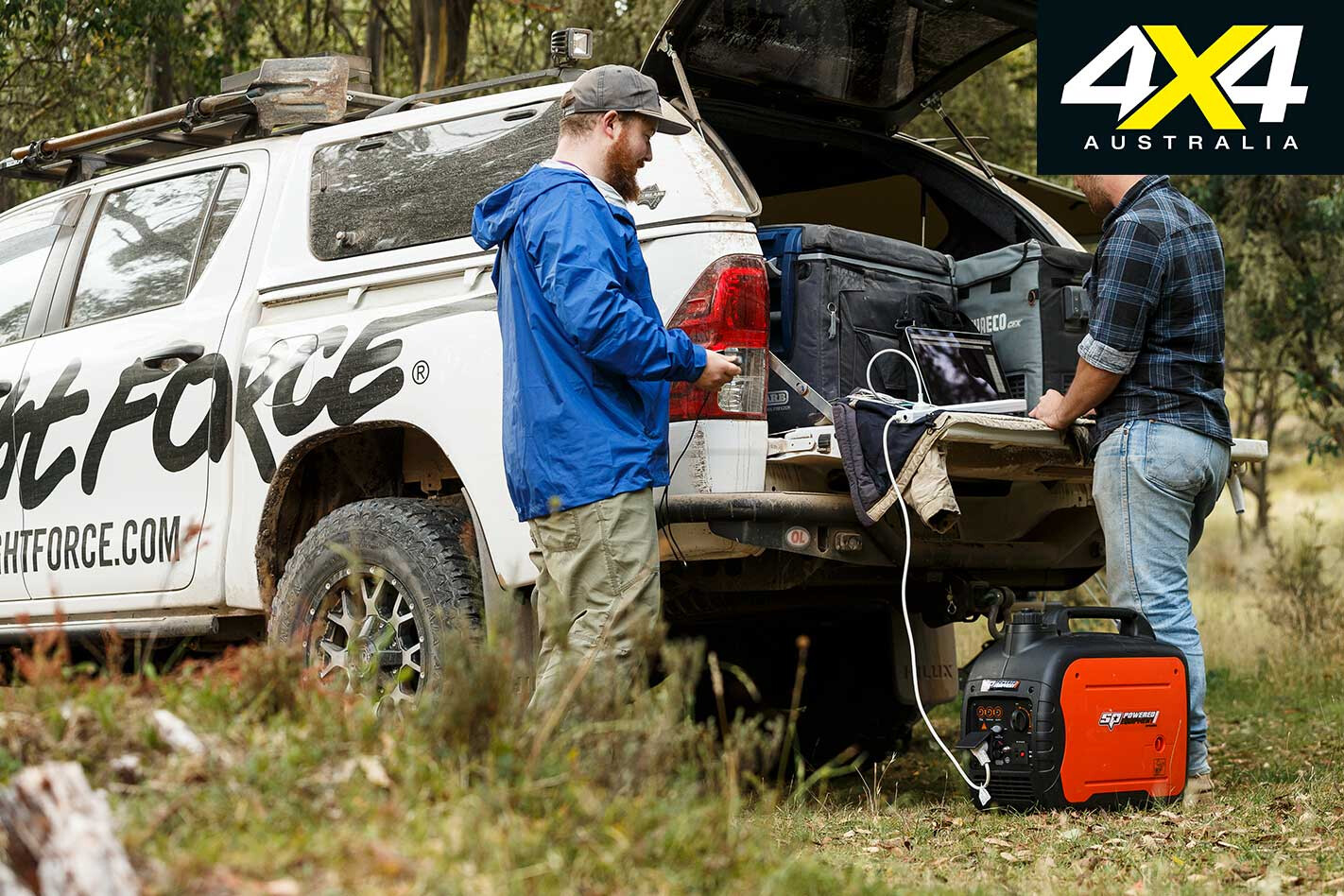
A recent trip to the Victorian High Country meant we would spend two weeks away from a powerpoint and, as we are on the road every day, solar charging wasn’t an option, either.
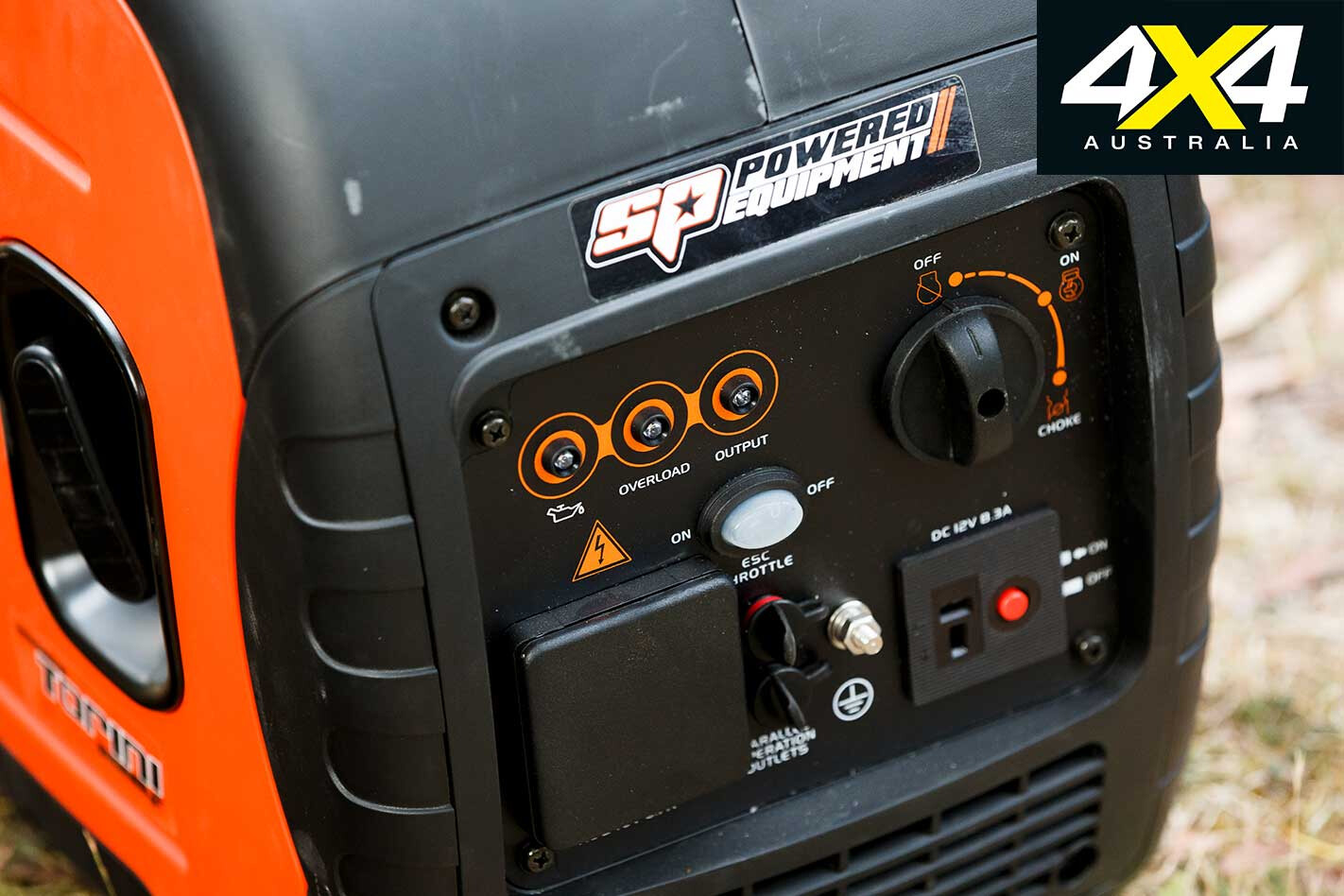
Enter the SPGi2000 generator from SP Tools, just the thing to keep all those gadgets powered and running. The SPG is a four-stroke gennie rated at 2kVa and 1600W, with a maximum output of 1800W. To create that sort of power it employs a Torini engine, with a pull-cord starting her up through a 32-bit inverter.
The control panel features a single 240V outlet and a 12V outlet, as well as warning lights for low oil and overloading. The fuel tank holds four litres of ULP which, according to the specs, should be good for around seven hours of use at 50 per cent load.
The SPGi2000 is easy enough to use. We simply fuelled it, switched it on and it started with a few pulls of the cord. Subsequent starts were even easier, and we ran a powerboard off the 240V outlet to power laptops and charge batteries each afternoon.
The specs quote the sound output at 52 to 61dB, so we tried to keep it away from our campsites and shut it down as early as possible to maintain the tranquillity of the bush.
The SPGi2000 is relatively compact and weighs 22kg. We strapped it in the canopy-protected back of a ute for the trip, along with a five-litre fuel can which we didn’t use throughout the two weeks.
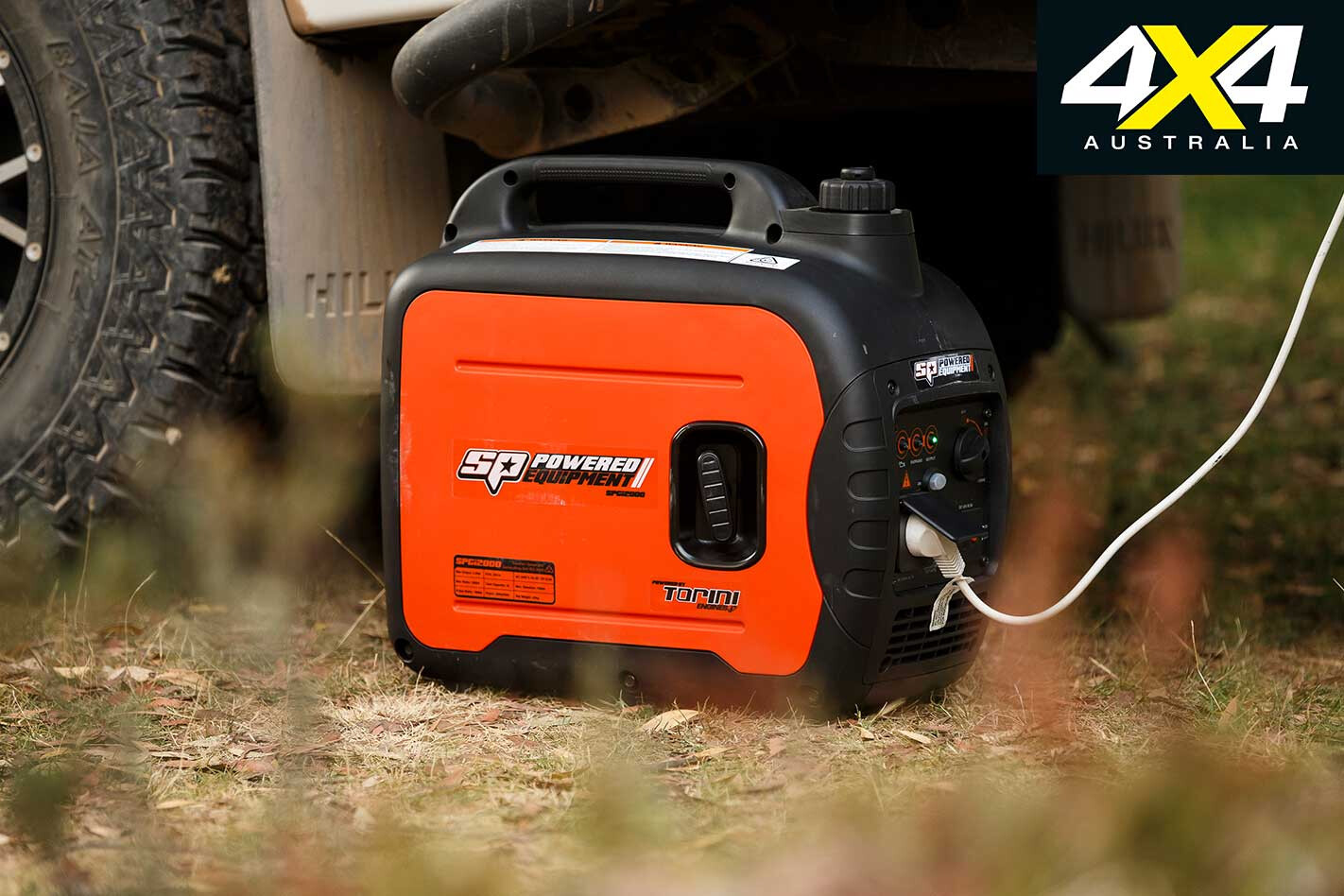
SP Tools sells a bigger SPGi3300E generator, which is a 7hp 300W inverter unit. Plus it also sells bigger industrial gen-sets that are probably too big for use on your average 4×4 trip. An interesting feature of the SBGi2000 and SBGi3300E is that you can link two of them to double the output without loss. That is, a pair of SPGi2000s puts out 3200W and a pair of 3300Es produces a whopping 6000W.
The SPGi2000 lists for $1584, but the SP Tools website had them at $995 when we looked, so check the site before you buy.
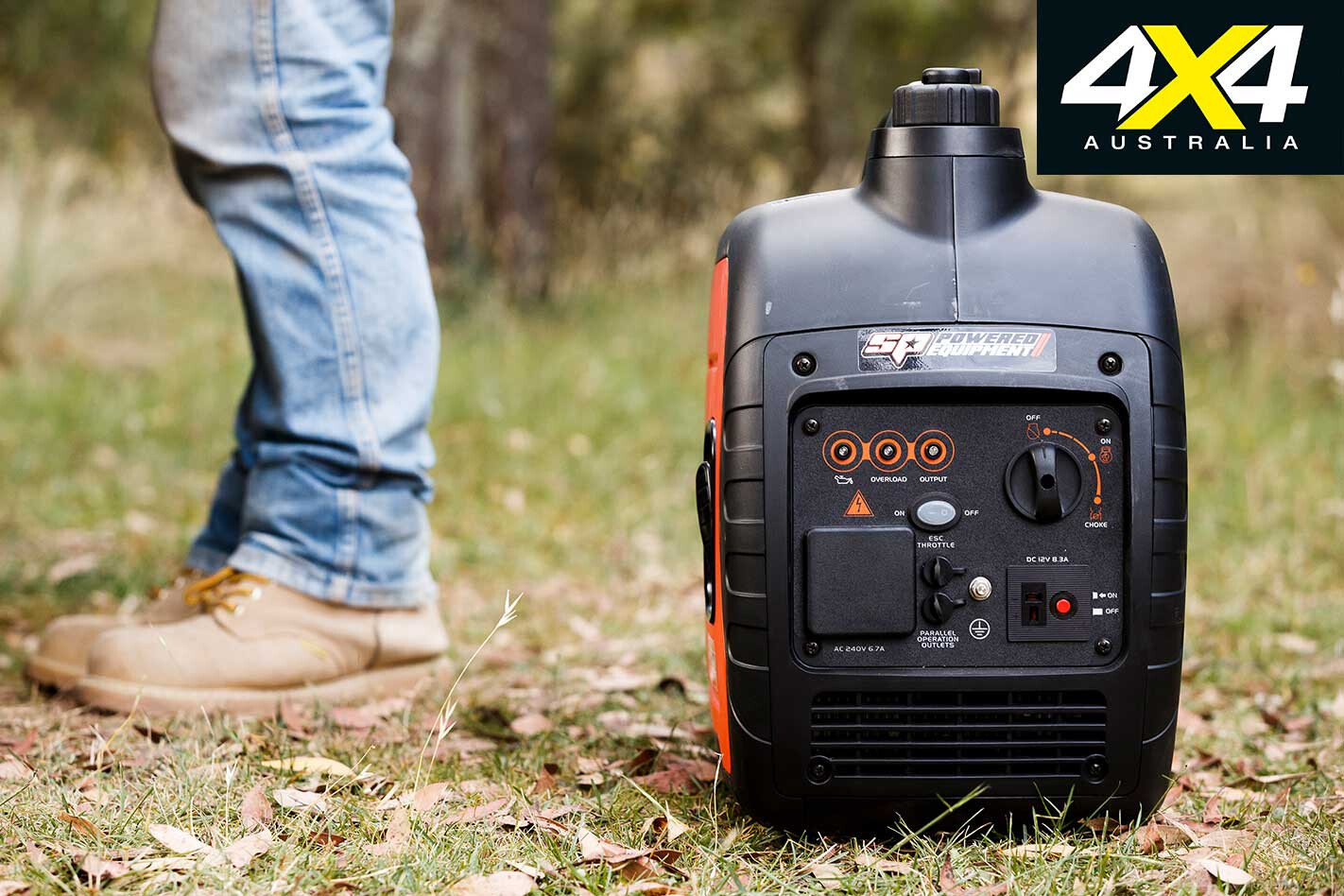
RATED Available from: www.sptools.com RRP: $995 We say: Simple and easy to use.
The Wilderness Coast is an apt description for the far eastern reaches of the Victorian coastline, with more vegetation than cleared land and significant wilderness tracts that are havens for plants and wildlife. With both cool and warm temperate rainforests, unspoilt beaches, coastal heaths and plentiful native plants, it’s a magical area to explore.
This feature was originally published in 4×4 Australia magazine’s March 2011 issue
The Wilderness Coast extends from Cape Conran in far East Gippsland to the NSW border; about 100km of rugged coastline. Its seaside bush campsites are the pinnacle of tranquillity in a region with rainforest walks, four-wheel driving and a host of beach activities.
Cape Conran Coastal Park attracts a thousand visitors a day in summer to the magnificent coastline for surfing, diving, snorkelling, rock pooling, boating, swimming, beach walks, or just relaxing. It is one of few areas managed by Parks Victoria that allows our canine counterparts to tag along.
Bush camping at Banksia Bluff Camp provides a unique beachside experience – a septic system featuring flushing toilets, and shower stalls that allow you to add your own hot water.
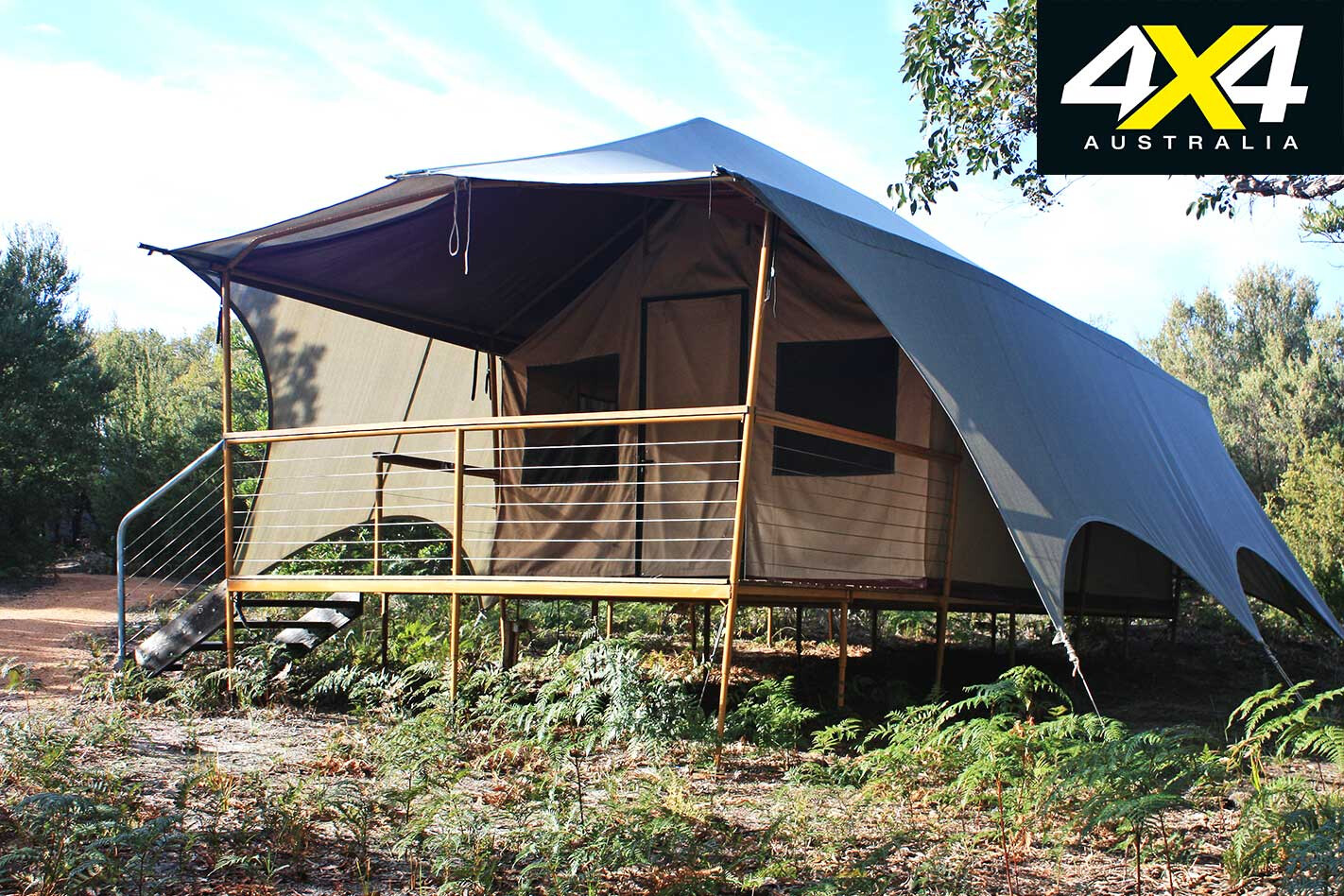
As an alternative to camping, the park has timber cabins and wilderness retreats, the latter being the closest thing I’ve seen to five-star camping. Picture a safari tent on stilts, with a hardwood floor, queen-size bed, plush linen and big cuddly towels. The retreats are ideal for couples, but can sleep four people at a pinch. They’re tucked neatly into the bushland away from the camping area, with easy beach access.
Short beach and bush walks beckon you to discover the wilderness elements of the park. The Heathland Walk steps off from the campground and features grass trees, coastal heath, and a variety of birds and other wildlife.
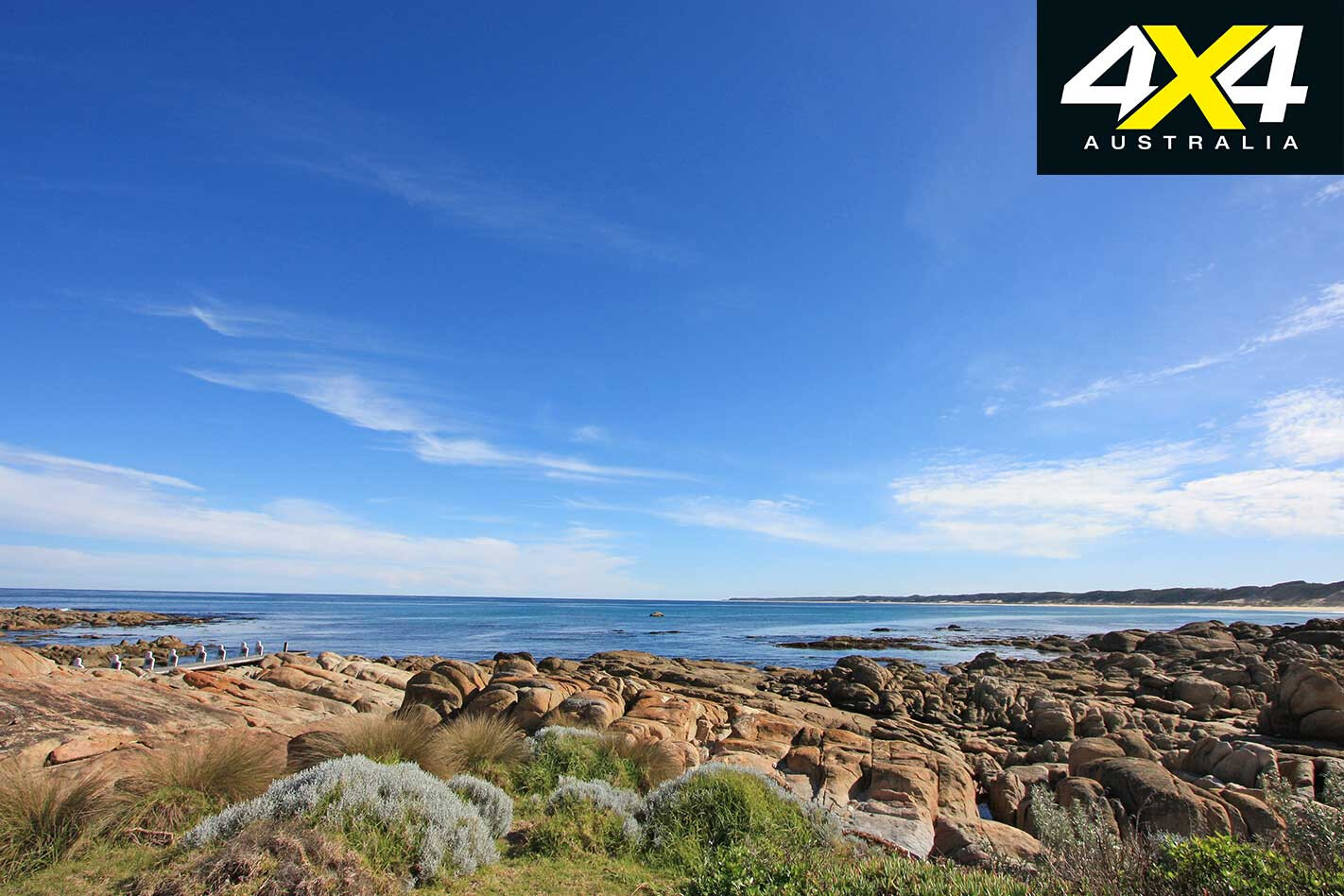
The East Cape Boardwalk starts at Sailors Grave on East Cape Beach and traces the rocky headland, scattered with ocean kelp and sponges. The East Cape Nature Trail is another short walk that includes interpretive signs describing some of the birds, animals and plants of the area and how to identify their tracks.
There are a number of longer walks, such as the 14km return hike to the freshwater Dock Inlet, separated from the sea by a dune barrier, or further afield to Pearl Point (25km), a popular fishing spot.
Yeerung Gorge is a jewel of the cape, with its rock pools fed by the Yeerung River. South of the gorge, a walking trail follows the edge of the estuary to the sea. From the camp, the gorge can be accessed from East Yeerung Track or the Old Coast Road from the north; both are subject to seasonal closure.
Off the coast, you’ll see whales between May and October as they migrate north. Dolphins and seals are also popular. Beware Reef Marine Sanctuary (220ha), 5km offshore, has granite reefs that rise 30m off the sea floor. Bull kelp hides a diversity of corals, sponges and anemones and many species of fish, making it a diver’s delight. The fish are protected in the marine reserve, so it’s observing only, folks.
On the land, there are a wide variety of birds, potoroos, bandicoots, wallabies, wombats and goannas. The goannas often skulk around the campsites in summer looking for eggs.
There are a number of great back roads in the area to explore. They are mainly unsealed, documented in the excellent Far East Gippsland Back Roads Touring Guide, a joint venture between Parks Victoria, the Department of Sustainability and Environment and 4WD Victoria.
Cabbage Tree Creek Flora Reserve is worth a visit, the forest dotted with examples of the palm that gives the place its name. They are normally found in NSW and Queensland, this being the only known location in Victoria.
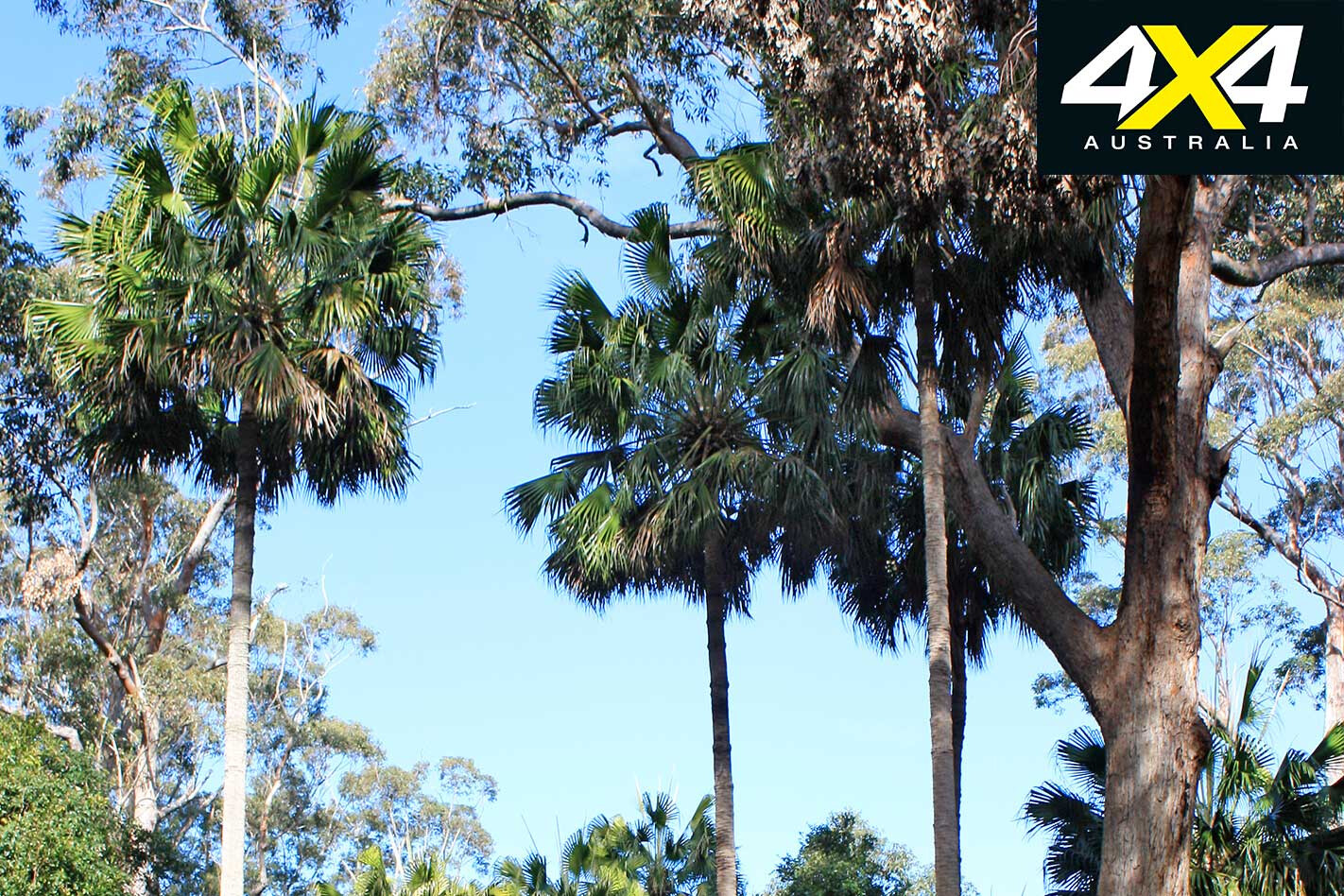
The reserve has picnic tables in a grassed area under a light tree canopy, making a perfect location for morning tea or lunch. Reach it via Palms Track, off the Marlo-Cabbage Tree road or from the Princes Highway. The Bemm River Scenic Reserve has a meandering one kilometre rainforest walk, crossing two suspension bridges en route.
Onward towards Mallacoota, the Princes Highway reaches Cann River, the major gateway to Croajingolong National Park and the turn-off to Thurra River and Mueller Inlet campgrounds, via Tamboon and Point Hicks roads Tamboon Road is a narrow bitumen affair weaving through Tamboon State Forest, eventually giving way to unsealed road. It deteriorates as it closes in on Point Hicks and enters Croajingolong NP, with corrugations the common theme.
Point Hicks was the first part of the Australian mainland sighted by Captain Cook in the Endeavour in 1770. He named it after his first lieutenant, Zachary Hicks. There was some dispute about what Cook actually saw, as George Bass was unable to identify the point when he sailed past in 1797. As such, the area was then named Cape Everard. However, it was renamed Point Hicks in 1970.
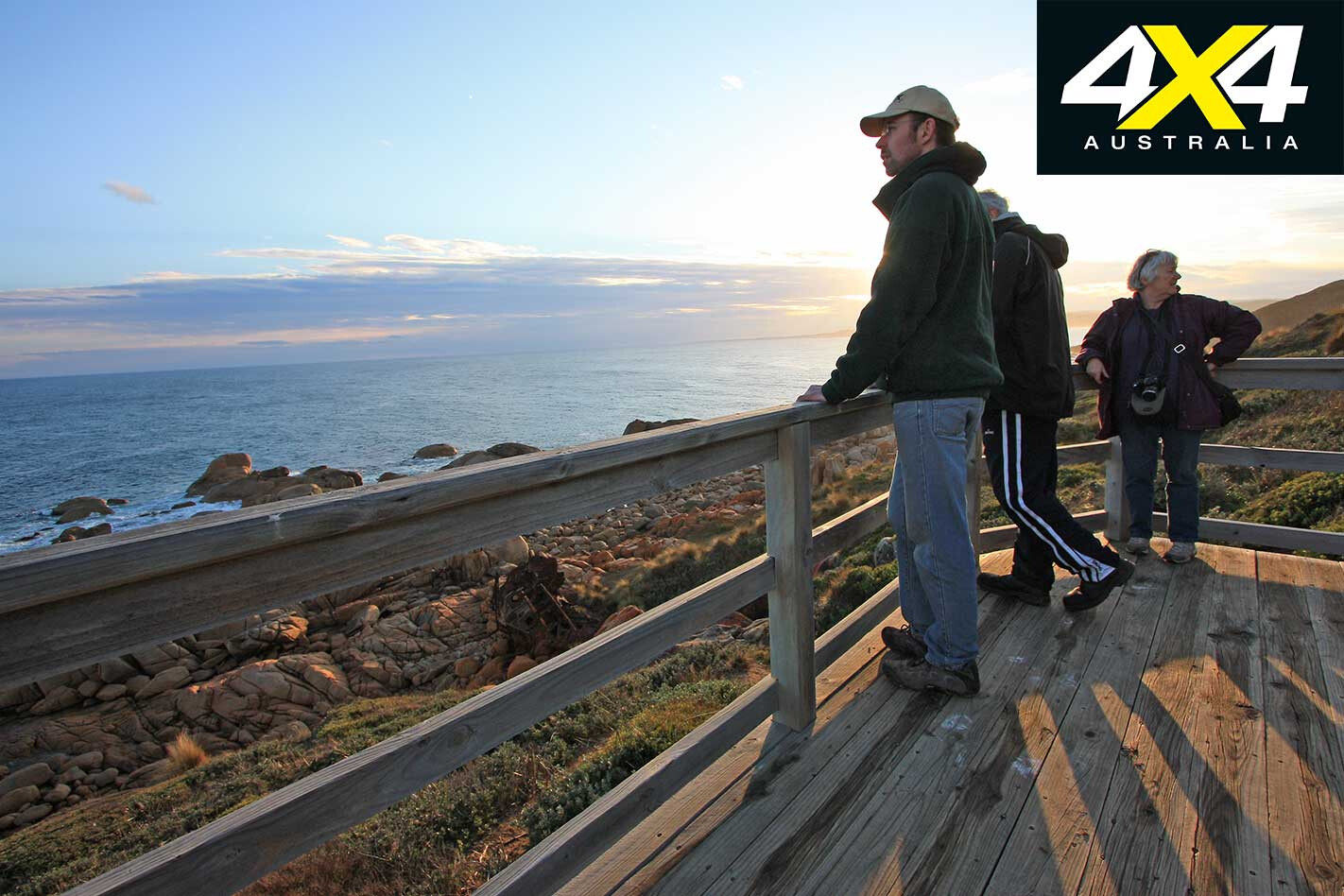
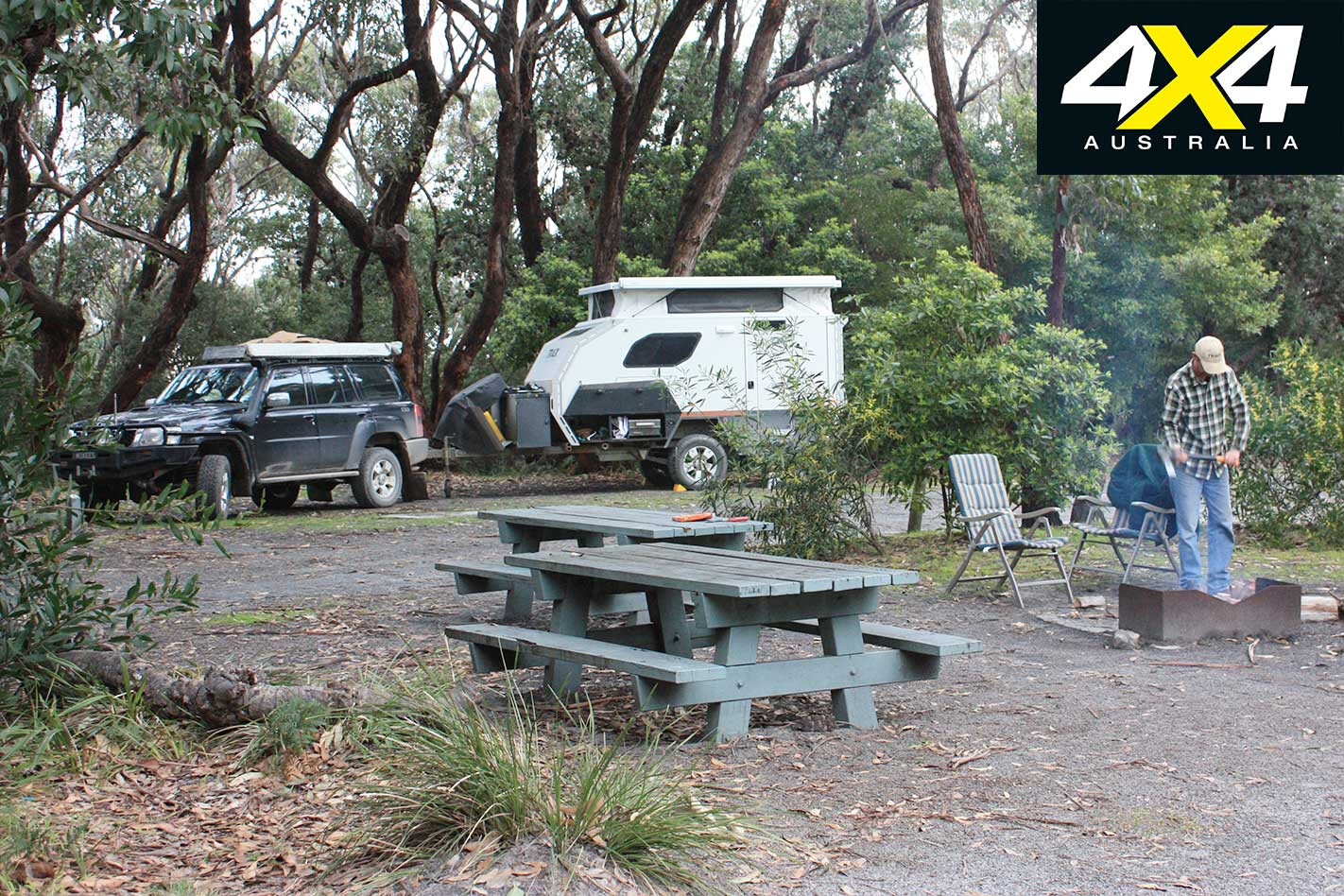
Thurra River and Mueller Inlet are part of a private leasehold, run independently within Croajingolong. Thurra River is the largest bush campground in the region, with 46 sites that vary in size and suitability for tents, campervans and caravans.
Shade provided by the tea-tree canopy makes it ideal for the warmer months – but not so great when the mercury drops. Finding a patch of sunlight for a solar panel or two is a challenge, and generators are not permitted.
The tea-tree woodlands also make many of the campsites unsuitable for caravans. Our 16-foot (4.8m) Topaz pop-up van squeezed in okay, but anything bigger would prove tricky. Most of the sites border the beach, with the sounds of the Tasman’s pounding surf lulling you into deep relaxation.
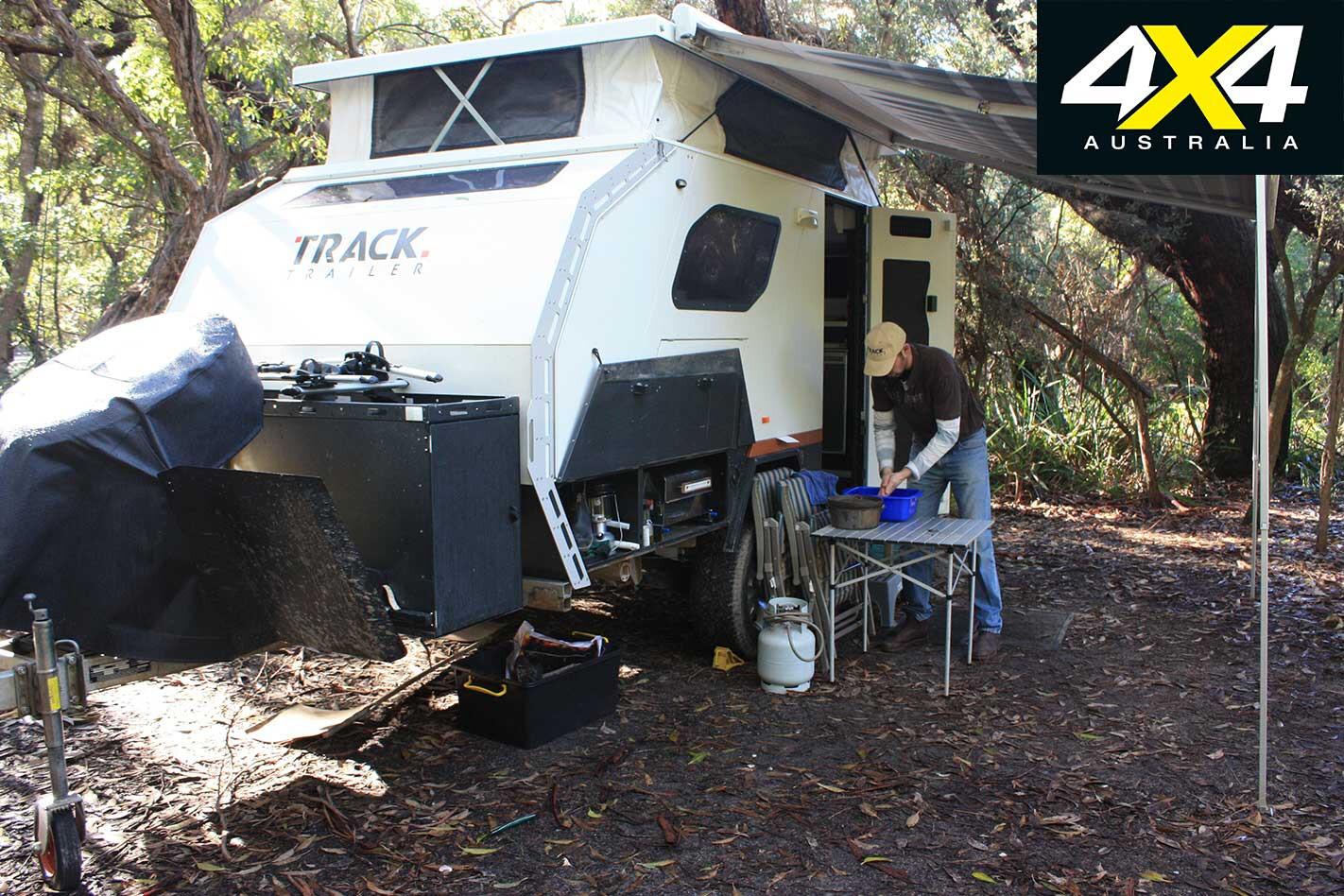
By comparison, Mueller Inlet campground is perched directly on the inlet, with direct water access for each of its eight sites. There’s little room to manoeuvre a camper or van. The inlet is closed to the sea, creating an ideal location for flat-water canoeing without tidal or current impacts. Canoes can be hired from the lighthouse caretaker and dropped off at the inlet.
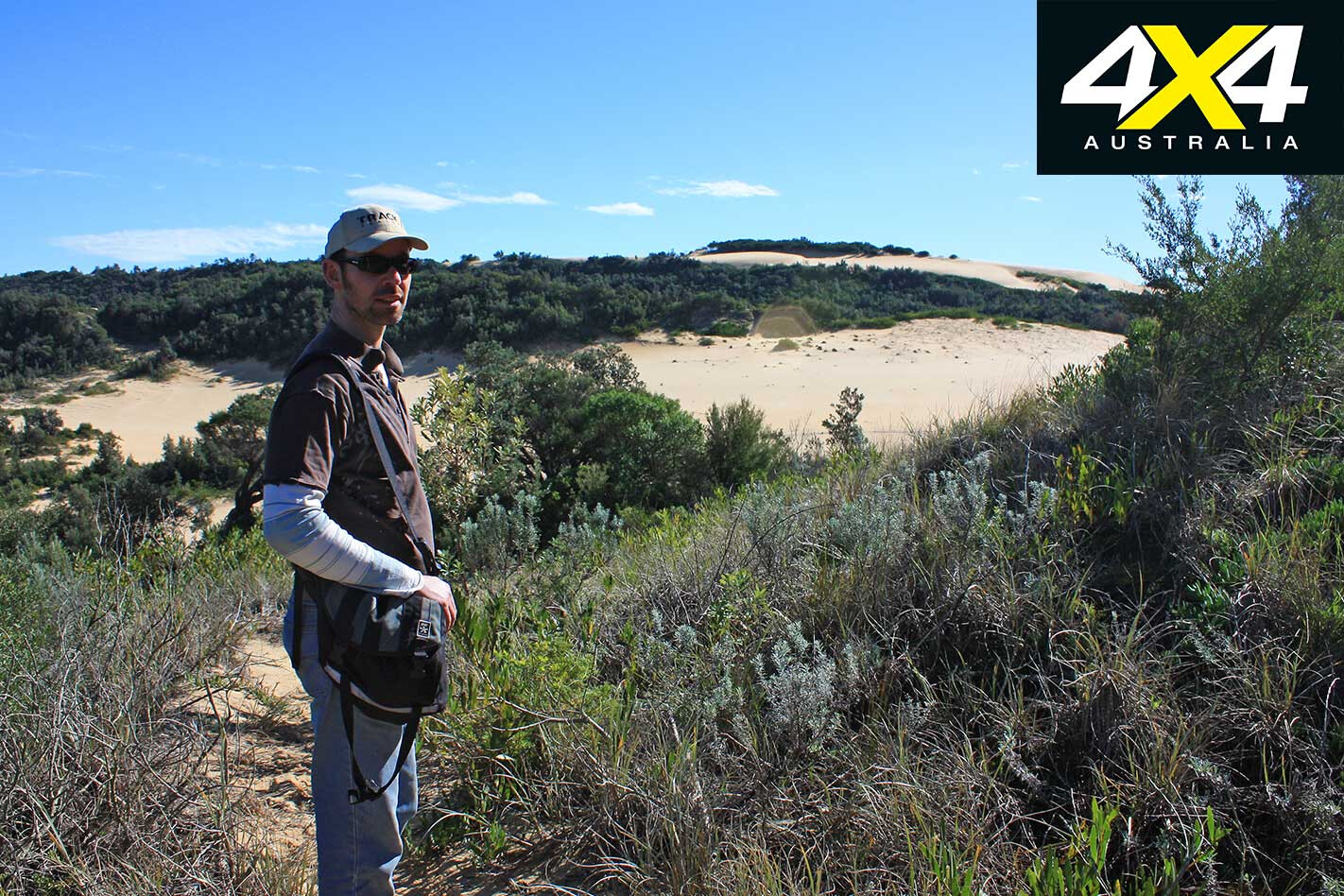
There are a number of walks at Thurra River. The Dunes Walk is the highlight, rising 145m on Victoria’s highest dunes; it’s uphill for most of the journey. The path treks through coastal banksia woodlands, and native wildflowers.
You could easily spend the best part of a day exploring this amazing area. The walking track spears out of the growth on the verge of the dunes, with the highest peaks at least a kilometre or so further afield. We found dingo tracks on the sand and peculiar dark circular patterns that, on closer examination, appeared to be ash fallout from a bushfire. Alas, no evidence of extraterrestrial activities!
In the warmer months, you can drop down the dunes and walk the path of the shallow Thurra River back to camp. It can be very warm out on the dunes, so take plenty of food, water and sun protection.
Other walks here include the Saros wreck, the jetty remnants, Sledge Track from which supplies were ferried to the mainland years ago, and the Mueller Inlet beach walk. Mt Everard lookout is accessed from Point Hicks Road via Cicada Track; subject to seasonal closure. The track winds through burnt eucalyptus forest, dotted with termite mounds and fresh forest-floor regrowth.
In season, the Cicada Track weaves its way to Wingan Inlet, with its campground set in the forest. In the colder months, access is from the Princes Highway via West Wingan Road or East Wingan/Wingan Link roads.
Following West Wingan Road, it’s about an hour from the highway, the road passing through Alfred National Park, Wingan State Forest and finally entering Croajingolong NP. There are logging trucks, so keep the UHF on channel 40 or the signposted channel and transmit occasionally to warn others of your proximity.
The varied plantlife at the Wingan Inlet campsite gives it a magical quality. The sites are generally larger than Thurra River, with more sunlight to charge those solar panels, but the campground circuit is similarly tight, restricting manoeuvrability for larger vehicles and trailers. The West Wingan Road is designated as unsuitable for caravans, but we found it easy going. The track does become much narrower as you approach the campsite, but otherwise it is standard off-road fare.
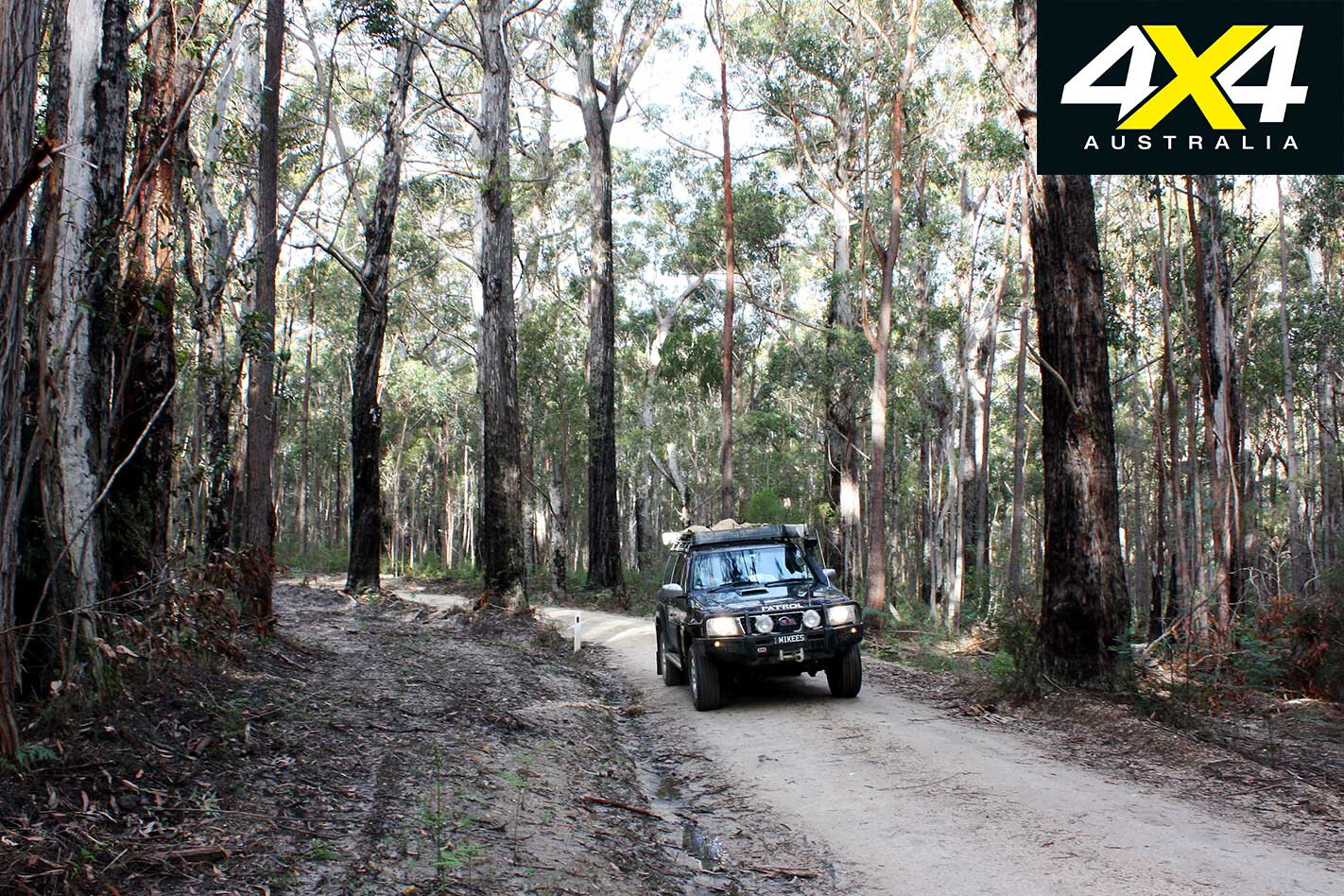
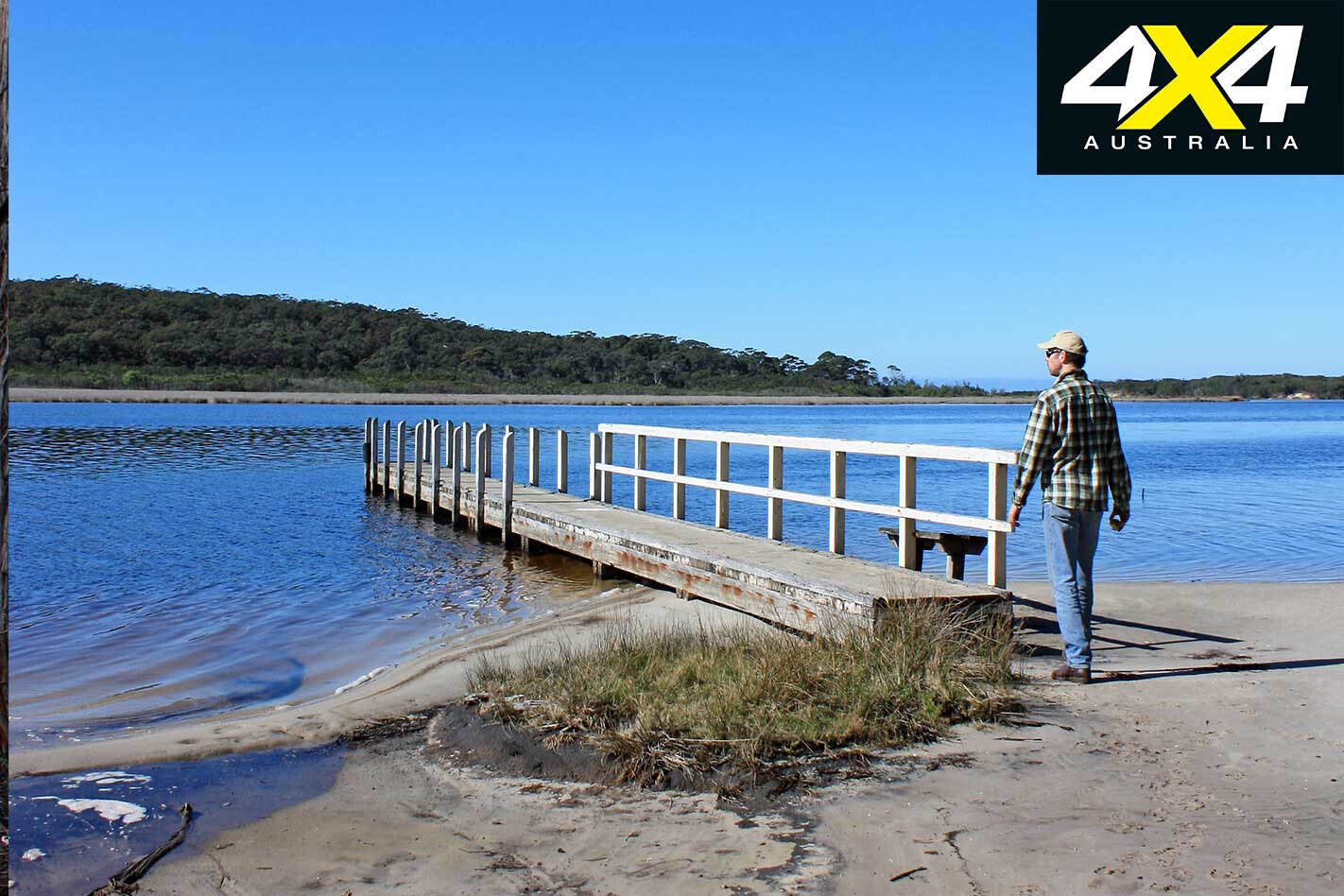
Following the access track to the inlet, the water is stained brown by tannin leeched from the tea tree leaves. It doesn’t look altogether appealing, but it’s safe for paddling around in. Like Mueller Inlet, no campfires are permitted, only gas appliances.
The campground has a jetty and beach-like surroundings where you can drop in a tinny. Boat engines are limited to 20 horsepower and speeds restricted to five knots to reduce shoreline erosion. Fresh, untreated water is pumped to the day visitor area, or you can wander down Boundary Track to the Wingan River for fresh supplies.
If the kids want to wander along the beach and collect shells and other ocean flotsam, the only option is Fly Cove, a 3km return walk. Other walks include Elusive Lake, a fresh water lake with a sandy beach, Wingan rapids, or the stream gauge off Boundary Track.
For the ultimate kayaking adventure, paddle up the Wingan River – its 6km of flat water providing views of the rainforest, and granite outcrops forming rapids and small waterfalls.
In the warmer months, you can make your way through forest back roads to Mallacoota, via the Wingan Link Road, Hard to Seek Track, Stony Peak Road, Betka and Centre Tracks. The creek crossings on Hard to Seek Track and Betka Track are subject to seasonal closure.
Otherwise, the family holiday mecca of Mallacoota is accessible from the blacktop along the Princes Highway. I remember holidaying at Mallacoota as a child with my family; a tinny propped on the roof of the Kingswood, and the Jayco trailing along behind. We’d fish by day and prawn by torchlight at night. Nothing much has changed in the last 30 years.
The Foreshore Caravan Park still has pride of place overlooking the inlet, with no less than 710 sites. Fish, including leatherjacket, flathead, bream, snapper, salmon and tailor, can be caught off the numerous platforms around the inlet. And the locals love to talk up the lifestyle of such a great location. The braggers!
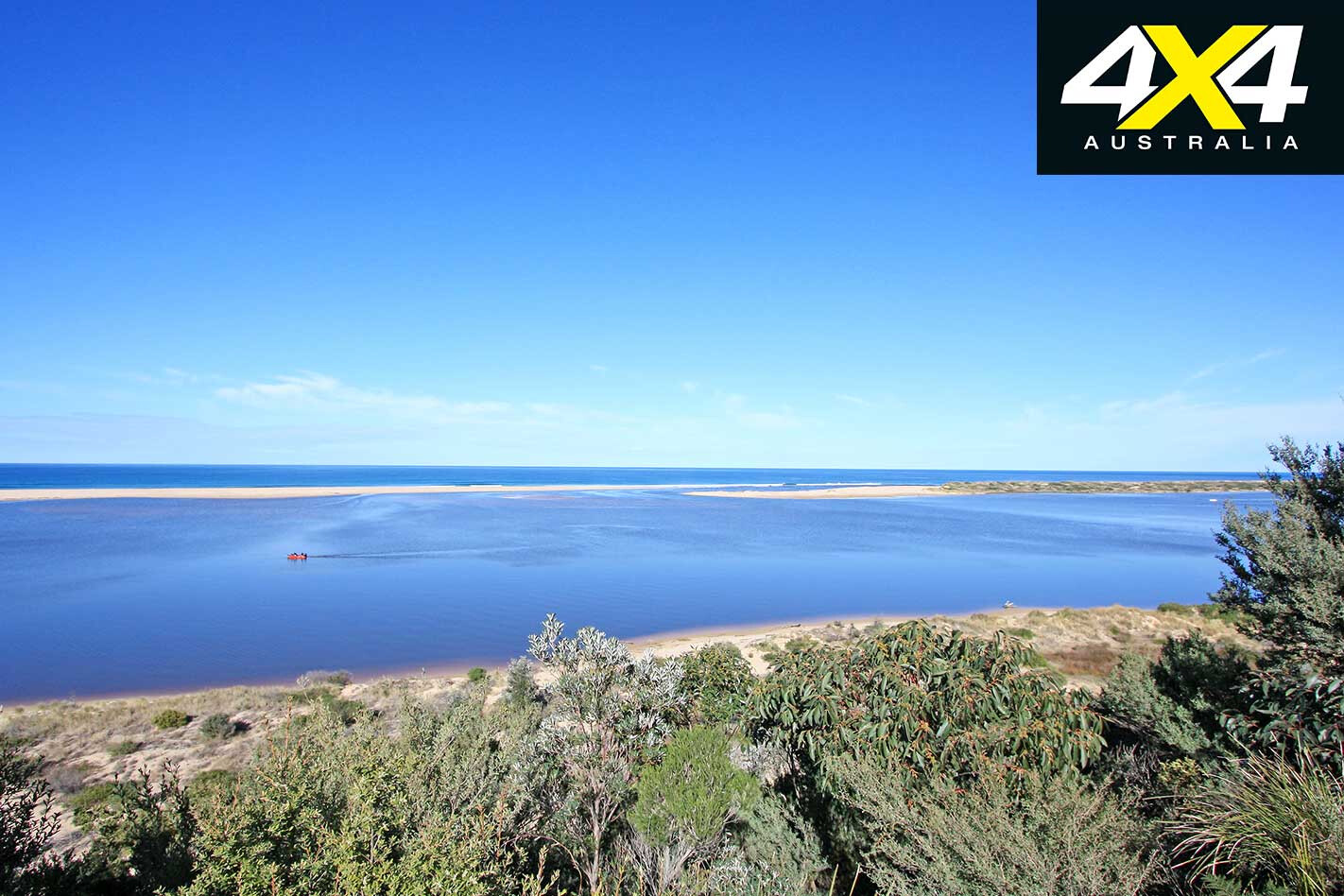
Some of the best views of the lakes are at the Bastion Point viewing platform, Captain Stevensons Point in Foreshore Caravan Park, or along Lakeside Drive around the lake; turn right wherever possible to remain on the water’s edge. Climbing Karbeethong Road, beyond the jetty of the same name, provides an elevated perspective and views of the palatial abalone divers’ homes.
Bush camping is prohibited around Mallacoota, but Shipwreck Creek, named after the 20-odd wrecks along this stretch of coast, is only 15km away and has five sites. It is easily accessed via Betka Road and Centre Track, which parallel the beach before weaving through a tall forest. Once in the forest, signs warn of a rough track ahead, although we found it easy going apart from the soft verges.
Beyond the Wilderness Coast there are myriad green family adventures ripe for the picking. There’s Snowy River NP, deep gorges and forests; Errinundra NP, with its plateau and granite outcrops; and the lesser-known Coopracambra NP, featuring cascading waterfalls and more greenery.
If you thought the Victorian High Country offered the pinnacle family four-wheel driving, a few weeks exploring far East Gippsland will quickly challenge that.
Travel Planner
WHERE The Wilderness Coast is in Far East Gippsland, 450km east of Melbourne. The best times to visit are November to May, when all the tracks are open (access to the camps is allowed all year). The Wilderness Coast often records Victoria’s highest temperatures and is warmer than you might imagine, even during winter.
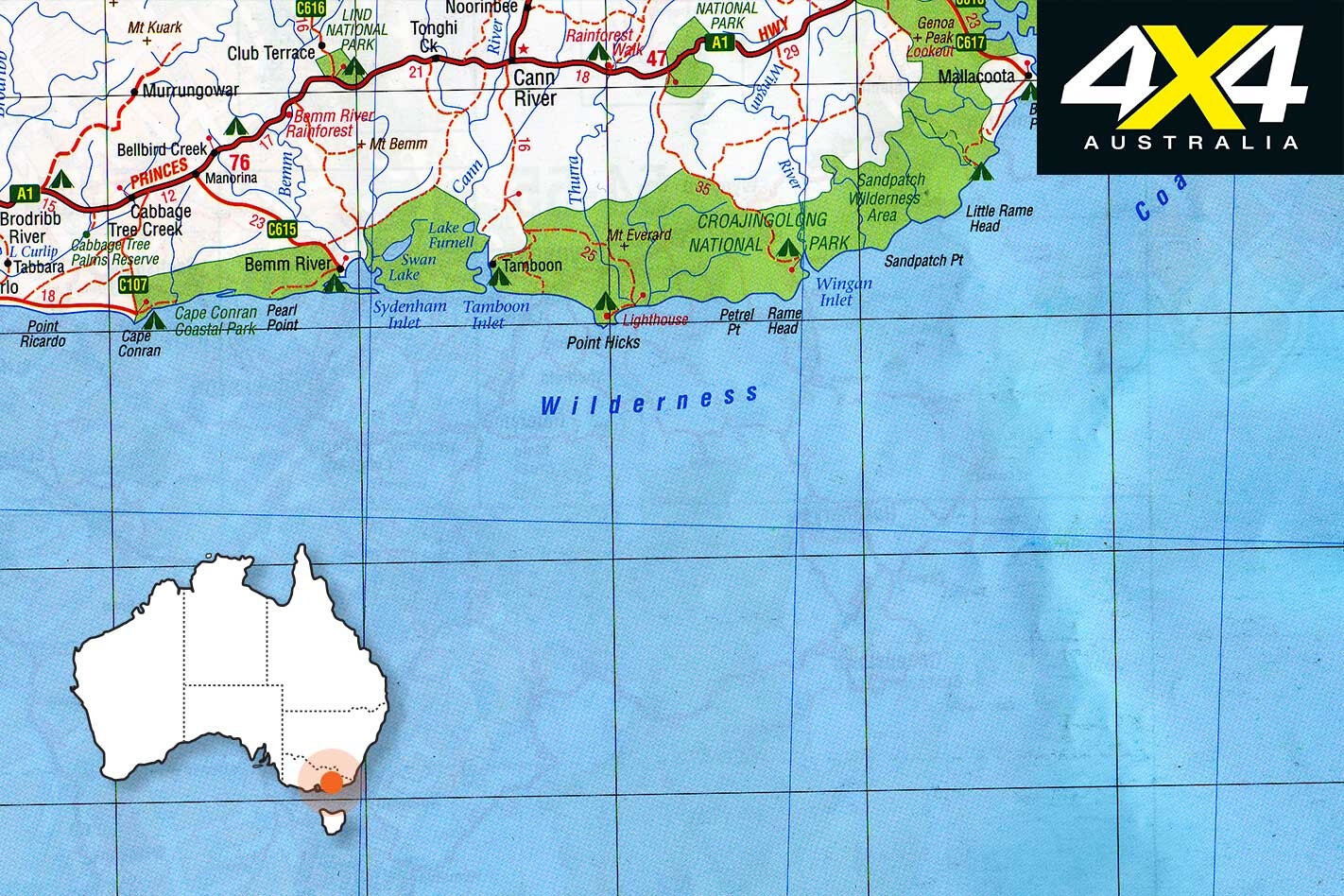
CAMPING There are dozens of options. Be sure to check prices and availability before arriving. A ballot system applies to many campsites during the peak periods of Christmas, Easter and some public holidays. The pricing range is for low and high seasons.
WHAT TO TAKE Insect repellent, drinking water, fishing gear and firewood in season.
SUPPLIES Orbost, Cann River and Mallacoota provide most. Newmerella and Marlo have basic supplies only. Fuel is available from Orbost, Marlo, Cann River and Mallacoota.
TRIP STANDARD Sealed roads to Marlo, near Cape Conran. Good unsealed roads within the Banksia Bluff Camping Area and to the Cabbage Tree Creek Flora. Roads to Thurra River, Mueller Inlet, Tamboon Inlet and Wingan Inlet are unsealed and badly corrugated in some sections. The back road touring options are mainly easy four-wheel driving.
MAPS AND GUIDES Rooftop’s Cann River-Orbost-Delegate Adventure Map and Mallacoota-Merimbula Adventure Map. Walking the Wilderness Coast by Peter Cook and Chris Dowd, Wildcoast Publications. Far East Gippsland Back Roads Touring Guide, Department of Sustainability and Environment (DSE).
CONTACTS AND INFORMATION Cape Conran Coastal Park Cabins and Camping – 03 5154 8438, conran.net.au. Point Hicks Lighthouse – 03 5158 4268 Lakes Entrance Visitor Information Centre – 1800 637 060, [email protected]. DSE – 136 186, [email protected].
A RARE 1952 former Royal Air Force Land Rover Series 1, recently found wasting away in a barn in Gloucestershire, will soon go on display at Land Rover Legends, a new-format Land Rover show.
Lost in a shed in England’s south-west since 1979, time has taken its toll on the classic steed, with much of the vehicle’s paint stripped clean.
The ‘rolling’ restoration remains a work in progress, but this is where things get tricky: due to the early records of ex-RAF Land Rovers getting lost over time, “detailed information of allocations within the RAF from 1952 right up to the early 1960s are unknown”, making the restoration efforts difficult.
Still, work has begun to reach the final aim of the resto: “to replicate the condition of the RAF vehicle as a glider tow vehicle, not intended to be in a Concours condition”. To this end, work includes removing the rear body section; cleaning and preparing the running gear; painting the remaining body panels; and adding RAF emblems and markings.
The unique vehicle is running the correct 1997cc Siamese two-litre engine, but the rebuilt gearbox is a military replacement. Also fitted is a stainless petrol tank and side screens and doors with the correct pattern.
Eager eyes will notice the incorrectly positioned lights through the grille, which “are believed to be an ex-Military of Defence replacement”. As expected of such a vehicle, few original replacement parts or panels are supplied.
This year, Land Rover celebrates its 70th year, and we’ll have comprehensive coverage of the marque brand’s Australian history in our June 2018 issue, in stores May 24.
Land Rover Legends will take place at Bicester Heritage in Oxfordshire on May 26 and 27, 2018.
Toyota’s Land Cruiser 200 Series is a decade old but is selling more strongly than ever after a boost in sales, especially the more expensive VX and Sahara models that followed the 2016 model-year upgrade.
That upgrade brought a major restyle to the front end, including a distinctive scalloped bonnet, new headlights and grille, new rear styling, and extensive equipment upgrades right across the four-model range – particularly to the VX and Sahara. That 2016 upgrade also saw the 4.5-litre V8 diesel fitted with a particulate filter (for Euro 5 emissions compliance) and gain an extra 5kW to bring it up to 200kW, with maximum torque remaining at 650Nm.
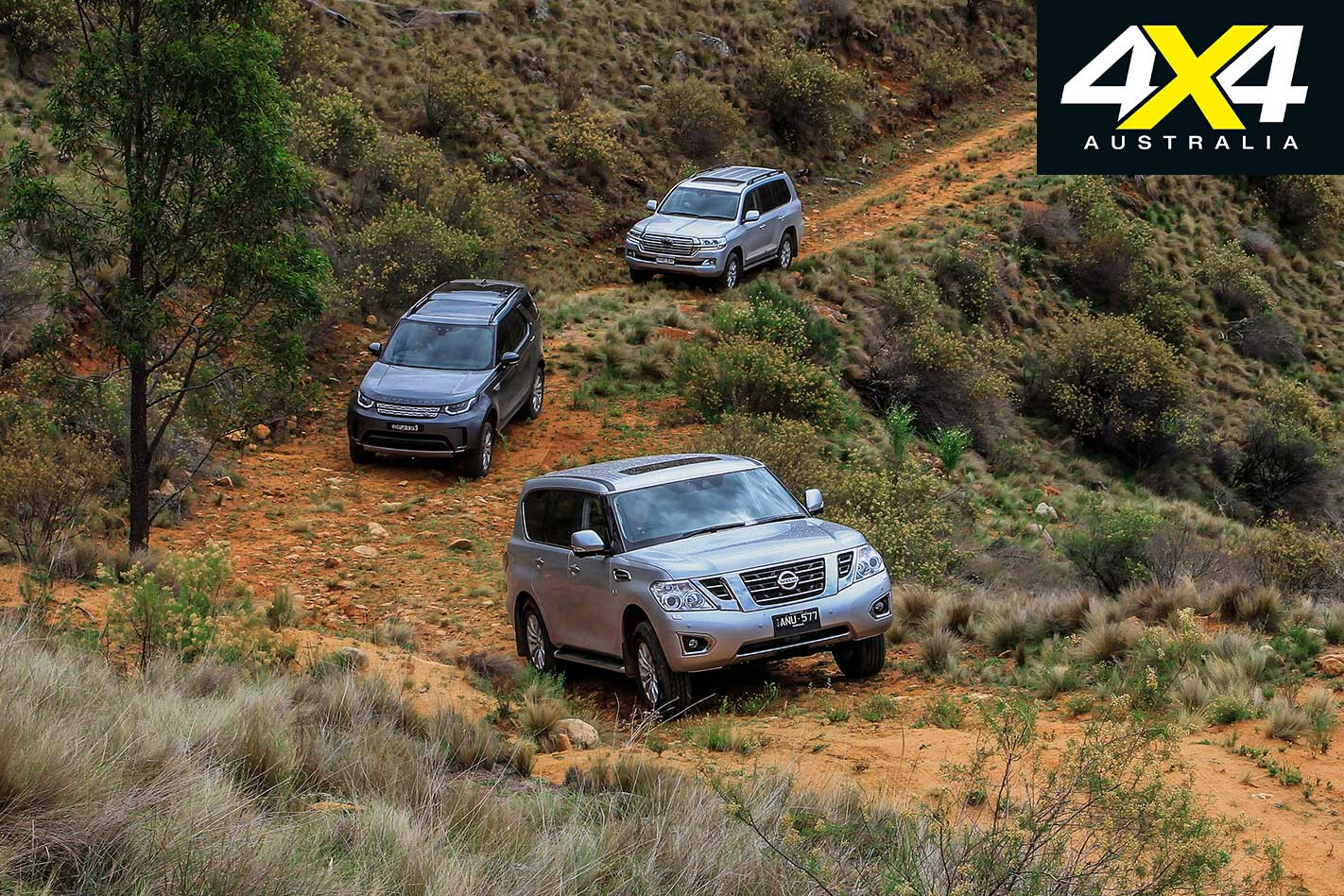
However, if you don’t want a 200 Series, what are the affordable options for a large, off-road-capable wagon with at least seven seats? Well, not much really, only the Land Cruiser’s longstanding rivals: the Nissan Patrol and the Land Rover Discovery.
The Patrol in question is the Y62, which has been around in Australia since 2012 and is only available with a petrol engine. The Discovery, on the other hand, is diesel-only and all-new.
If Land Rover had stuck to its time-honoured naming system it would be a Discovery 5, but even that badge would be a little confusing, as this new Discovery is only the third all-new Discovery since the original appeared in 1989.
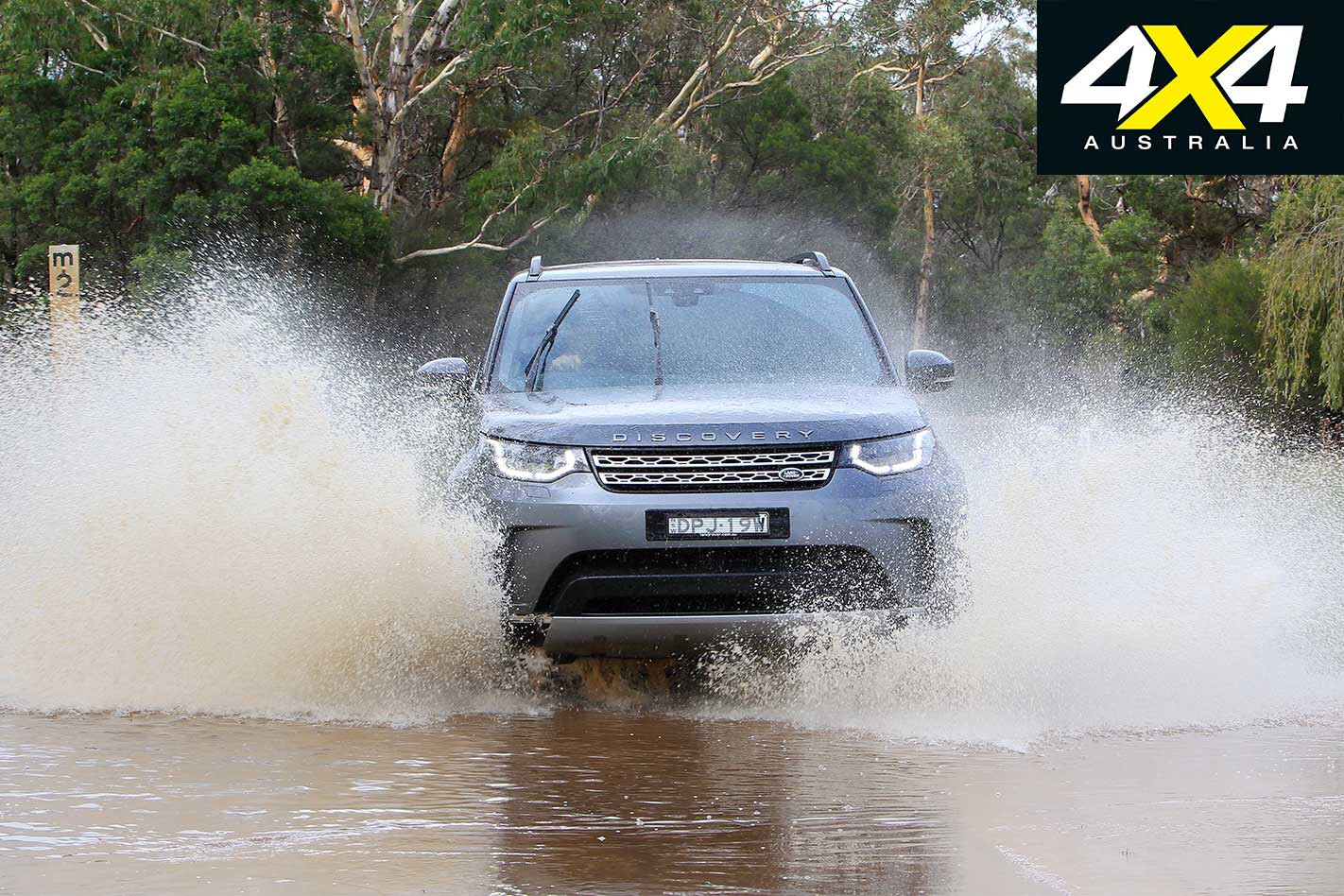
In the current market, both the Discovery and the Patrol are relatively unloved compared to the Land Cruiser, but do they deserve to do better?
LAND ROVER DISCOVERY TD6 – Light is Right Thanks largely to its Range Rover DNA, the new model brings technical sophistication never before seen in a Discovery.
“Welcome to your flight,” you may think when climbing aboard this Discovery. You see, this new-generation Discovery is fabricated not from steel but largely from lightweight aluminium – much like aircraft – using processes developed in the aircraft and aerospace industry. It also has a body honed in a wind tunnel, influenced greatly by aerodynamics.

The body is the main structure with no separate chassis, as there has been with all previous Discovery models. That technically makes it a monocoque; although, the structure still comprises many different elements, and while 85 per cent of it is aluminium – both pressed and extruded – it also includes magnesium (which is even lighter than aluminium) in the nose structure, composite in the tailgate, and steel (for durability) in the suspension subframes.
Why go to all this bother? The answer is simple: to save as much as 480kg over the previous Discovery, which was built from steel and on a separate chassis. Less weight means stronger performance, sharper handling, quicker braking, improved fuel economy and superior off-road ability, especially on soft surfaces like sand and mud.
POWERTRAIN AND PERFORMANCE
The new Discovery comes with three engines in Australia: two four-cylinder diesels and a V6 diesel, as tested here.
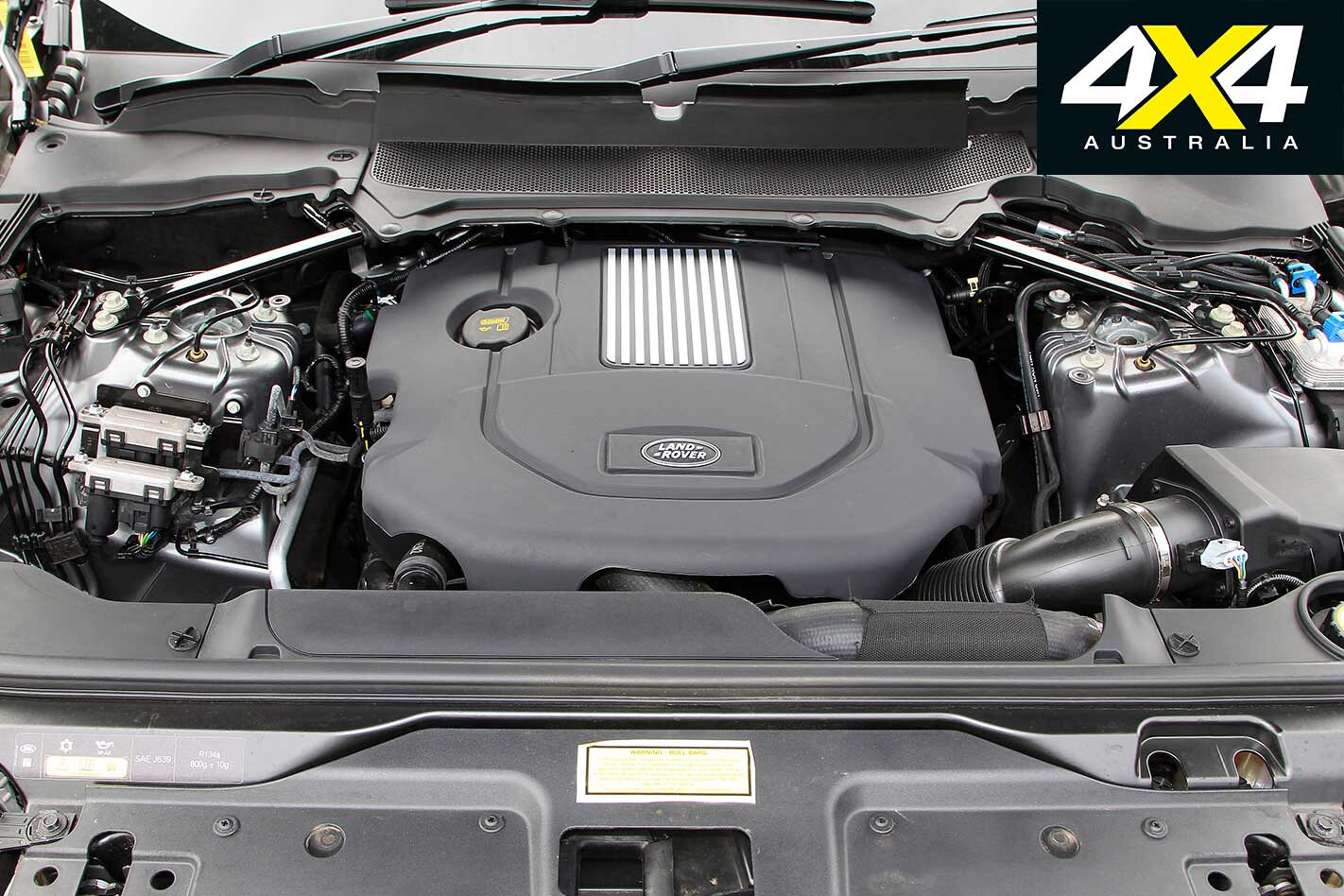
The V6 is the most expensive and powerful of the three and has been developed from the V6 in the Discovery 4. But where that engine had two turbos the new engine utilises a simpler single-turbo design. However, that doesn’t stop it claiming more peak power (now 190kW, up from 183kW) and the same maximum torque of 600Nm.
Those sort of numbers aren’t lost on what’s a very light vehicle for its size and bring effortless cruising and plenty of top-end zing in what’s a surprisingly revvy, but still quiet and refined engine. Thanks in part to its eight-speed automatic, the Discovery has more zip than the relatively lazy 4.5-litre V8 diesel in the 200, which also has to deal with 500kg more weight.
The Discovery’s weight advantage and aerodynamically shaped body also help it achieve the best fuel economy here – 2.0L/100km better than the 200 and 7.0L/100km better than Patrol. The Discovery’s V6 is also far more quiet and refined than the 200’s diesel; although, neither diesel can match the Patrol’s V8 in terms of refinement or punch.
ON-ROAD RIDE AND HANDLING
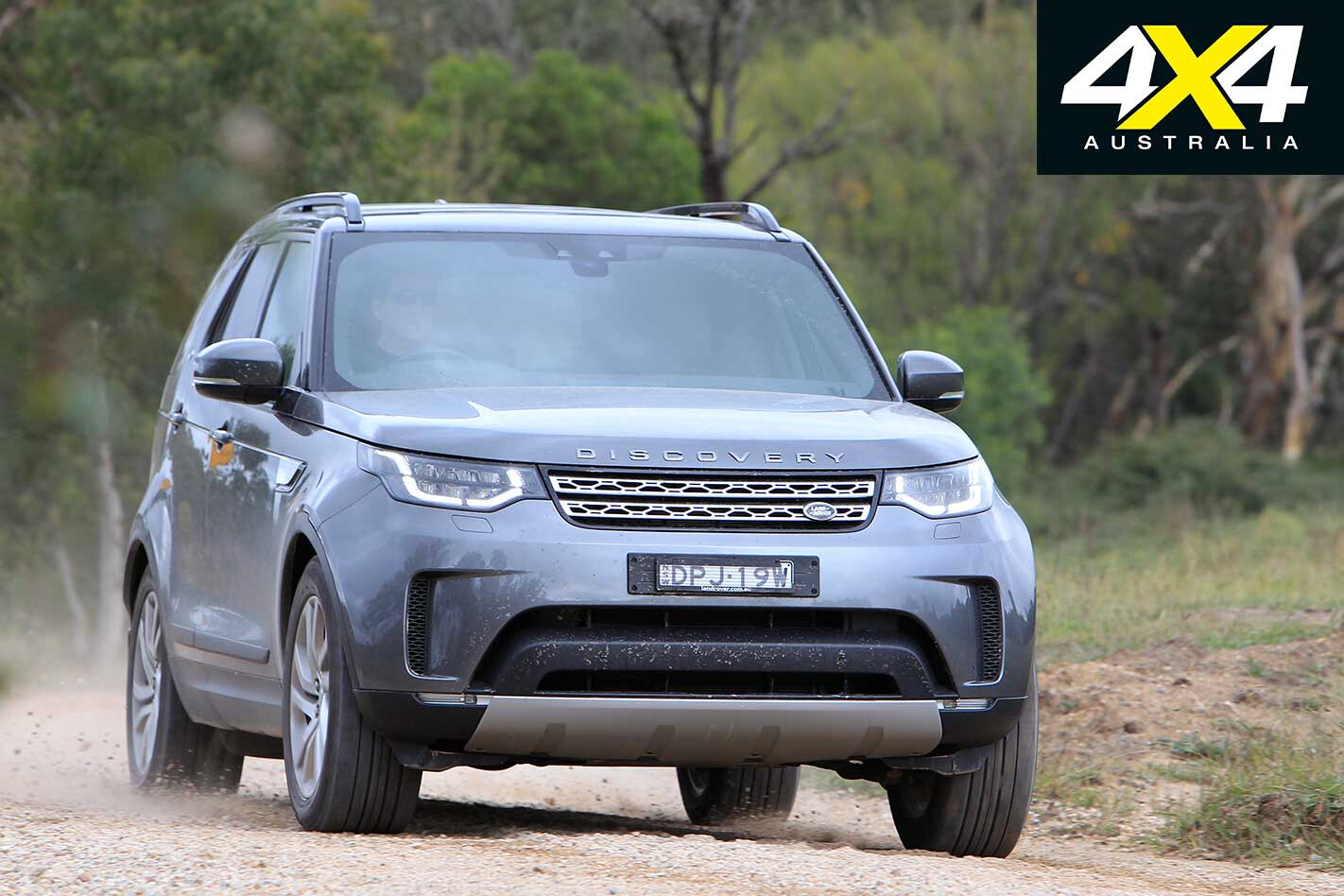
Weight, or rather the lack of it, is also the defining element of the Discovery’s on-road dynamics. It is 500kg lighter than the 200 and some 600kg lighter than the Patrol, but it also has another trick up its sleeve compared to these behemoths, namely its height-adjustable air suspension.
As it can be jacked up for off-road use, the default on-road ride height is relatively low for improved stability and agility and is automatically lowered further at higher speeds. The driver can also manually select the lower height at speeds below the automatic engagement.
Throw in its beautifully weighted electric power steering and the road-oriented tyre spec and the Discovery feels like a darty go-kart on tight, winding roads compared to either the 200 or the Patrol, both of which are cumbersome in comparison; although, still notably different to each other.
The only negative is the Discovery’s ride on the 20s, as fitted to this HSE. The ride isn’t generally harsh by any means, but it lacks the plush feel of the 200 in particular and also the Patrol at lower speeds on rough roads.
OFF-ROAD
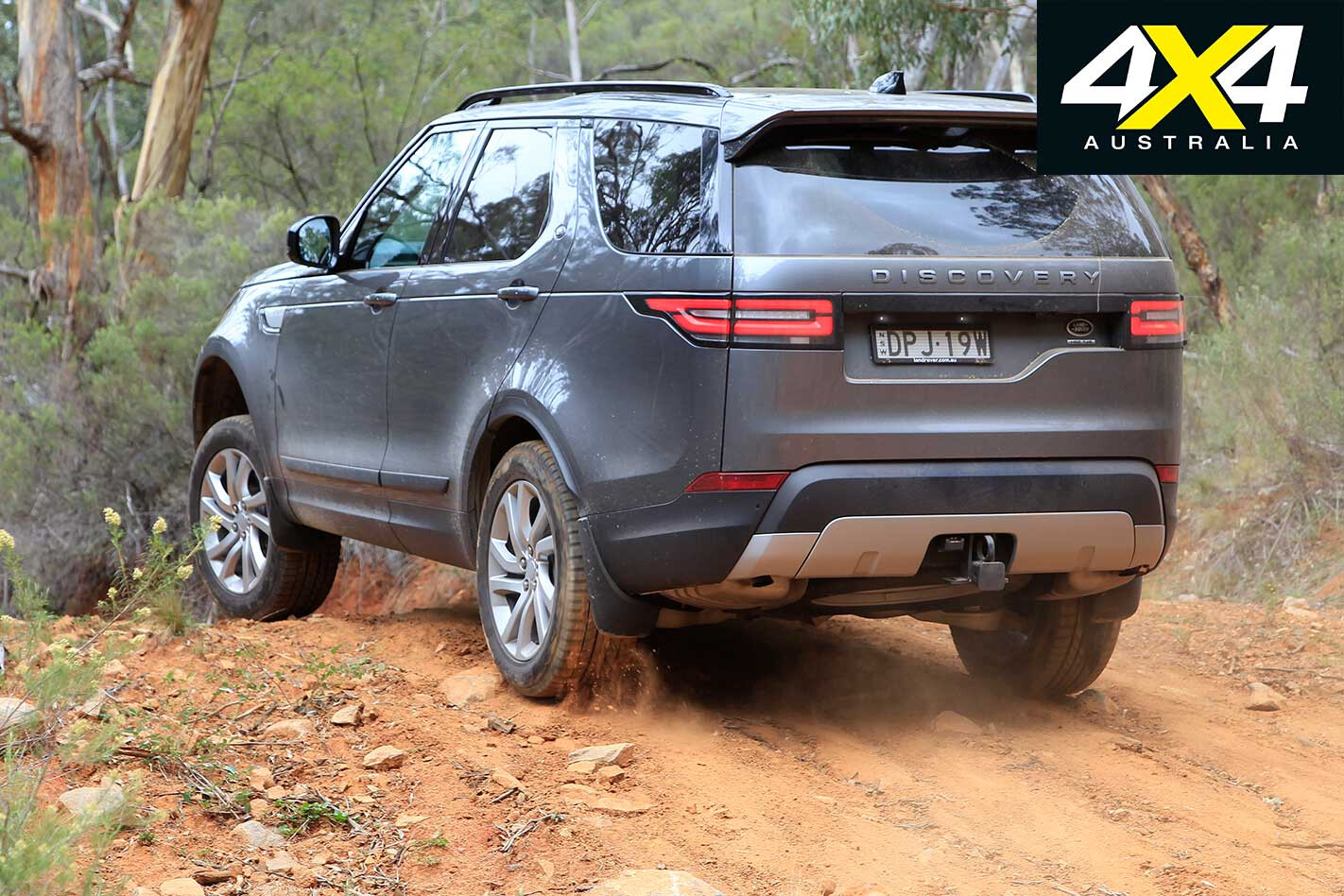
The Discovery’s height-adjustable suspension is its number one party-trick off-road. The fact you can jack it up so far means it will go down a rocky trail without dragging its well-protected undercarriage.
Better still, there’s a decent amount of wheel travel – it’s especially good for a fully independent system – so even in the standard off-road position (40mm up from the default ride height) the ride quality is still good and the suspension doesn’t top-out too readily.
The long travel suspension also means less reliance on traction control, which is tuneable via Land Rover’s clever and logical Terrain Response system. However, those wanting to get the most out of their Discovery will need to select the rear-locker option, which wasn’t fitted to our test vehicle.
The Discovery’s biggest off-road failing is the standard high-speed (V, or 270km/h) rated tyres with their fragile sidewalls.
RIDING ON AIR
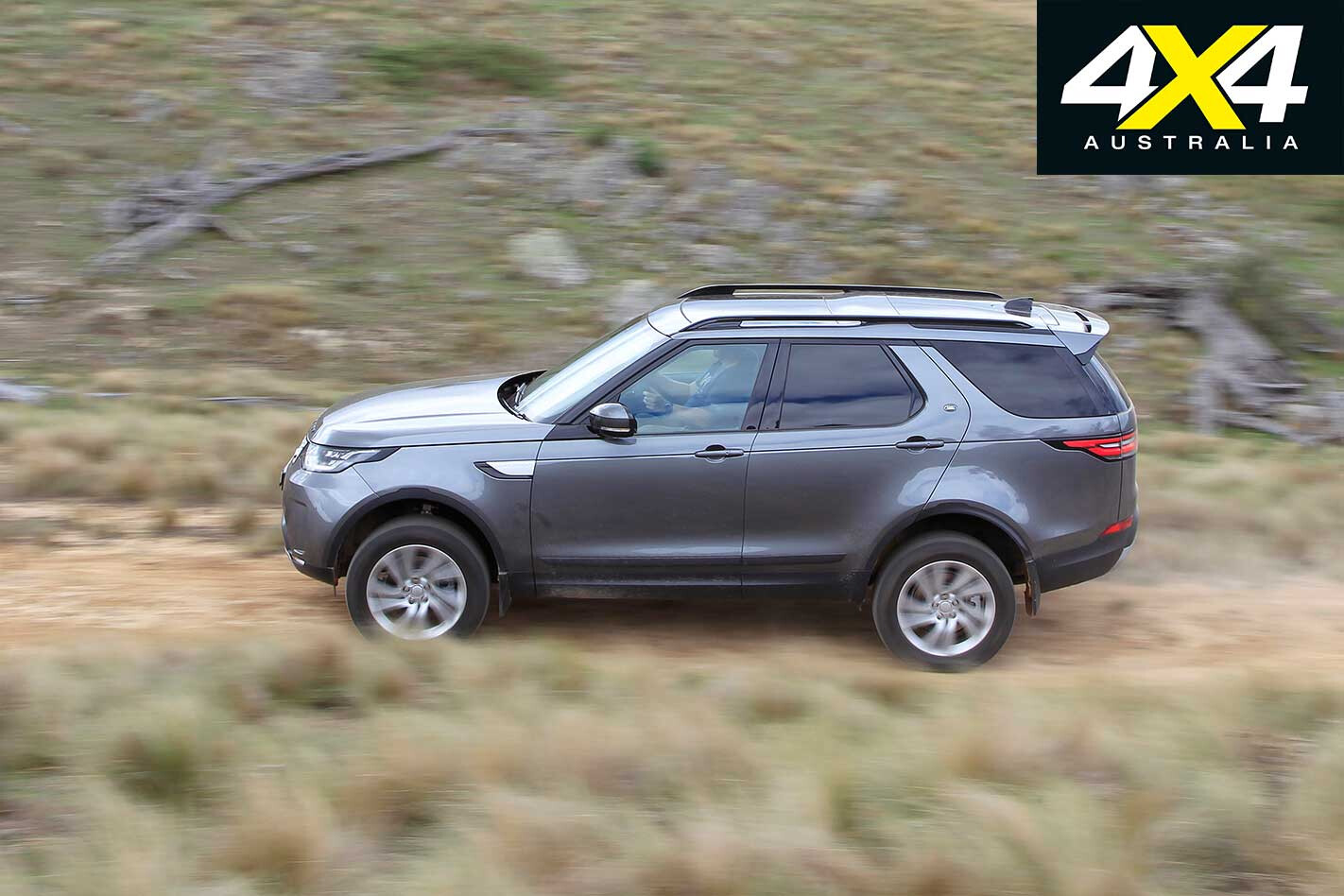
The Discovery has fully independent suspension and most models come with height-adjustable air springs, which brings benefits both on- and off-road and to day-to-day functionality.
From the default ride height of 208mm the suspension can be jacked up 75mm for off-road use in a couple of stages to give 283mm of ground clearance and an impressive 900mm wading depth.
For highway driving the suspension automatically drops by 13mm to enhance handling and aero efficiency. Access height is also 40mm below the default ride height, making it easier to get in and out of the car, load gear in and out of the car, or hook-up a trailer or caravan.
CABIN, ACCOMMODATION AND SAFETY
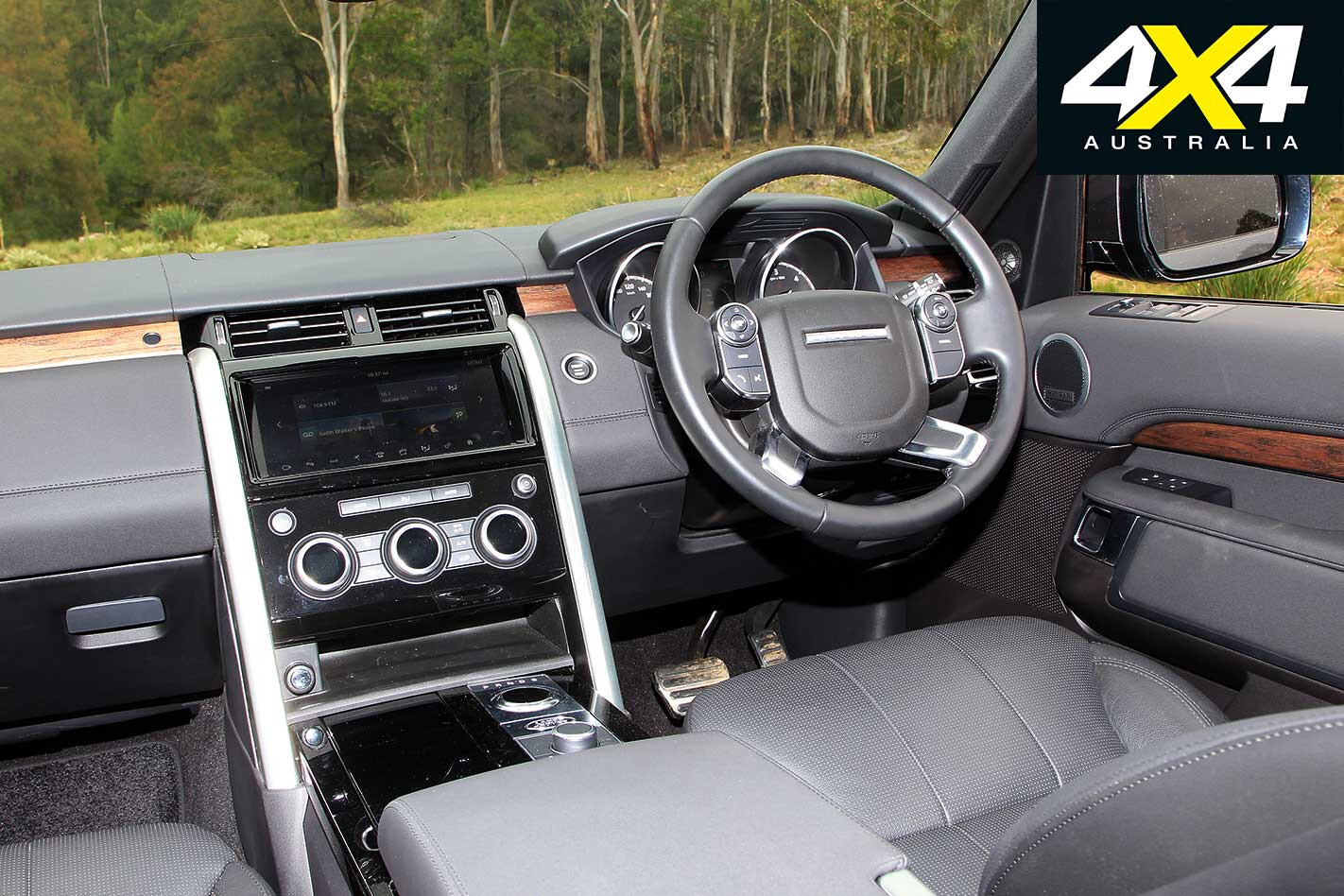
The new Discovery’s body is longer, narrower than and not as tall as the Discovery 4. The windscreen is more raked and the driving position lower and not as commanding off-road. The rear of the car is also tapered in rather than squared off, as was the case with Discovery 4, which has been done to reduce aerodynamic drag.
Inside, the Discovery feels more closed-in than the Discovery 4, and it’s smaller than the 200 and the very large Patrol. The Discovery still has the most spacious third-row seat, and there’s plenty of space and comfort up front. Although, in this company, it has the tightest middle-row seat and the least luggage space.
Not surprisingly the Discovery, being a completely new design, has a five-star ANCAP safety rating.
PRACTICALITIES
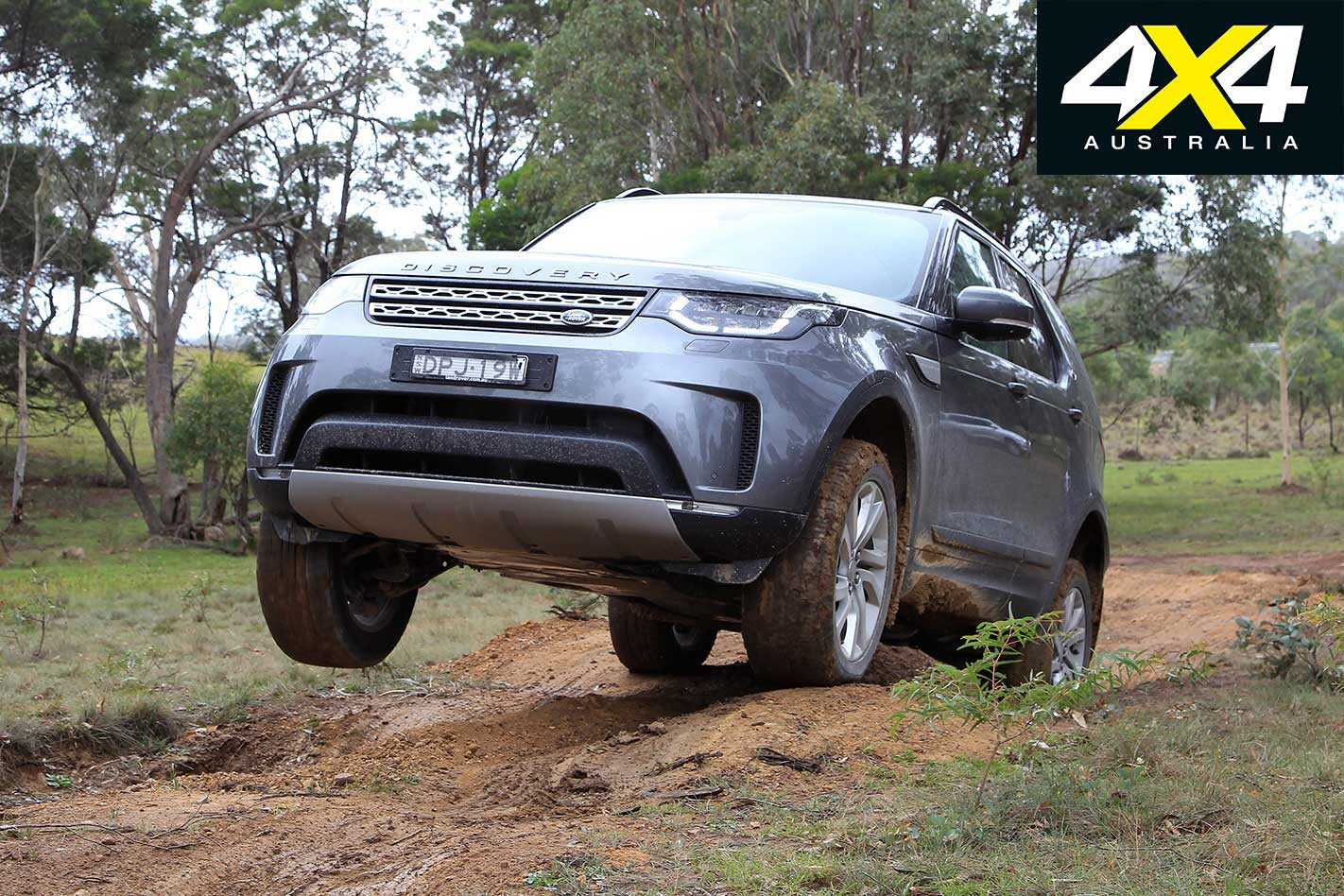
The Discovery excels on and off the road, but some of the gloss comes off in terms of practicality, especially in terms of a 4×4 tourer.
The 85-litre fuel capacity is too small despite the engine’s excellent economy, and fitting a long-range fuel tank looks difficult if not impossible.
At this stage the aftermarket doesn’t appear keen to produce a bullbar for the Discovery either, but it’s technically possible. Better news is that the Discovery is rated to tow 3500kg and has the best payload figure here.
WHAT YOU GET
The TD6 engine can be had in four equipment grades, from the bare-bones, cloth-seat $78,750 S model to the $116,800 HSE Luxury.
The S doesn’t have dual-range gearing or height-adjustable air-spring suspension, but these can be optioned on the S for $920 and $2060 respectively, or come standard with the $92,650 SE. The S TD6 can’t be optioned with the rear automatic e-locker, so if you want to go this way you have to start with an SE and add $1020 for the locker.
The SE adds leather, sat-nav, up-spec audio, LED headlights, DRLs and a factory towbar, and looks the best buy of the four equipment grades. In addition to the four specs levels there’s a huge range of options. Our test HSE, for example, starts at $103K but was loaded with $17K worth of extras.
TOYOTA LAND CRUISER 200 – The Benchmark The 200 embodies Toyota’s design philosophy that champions simplicity and durability over technical sophistication.
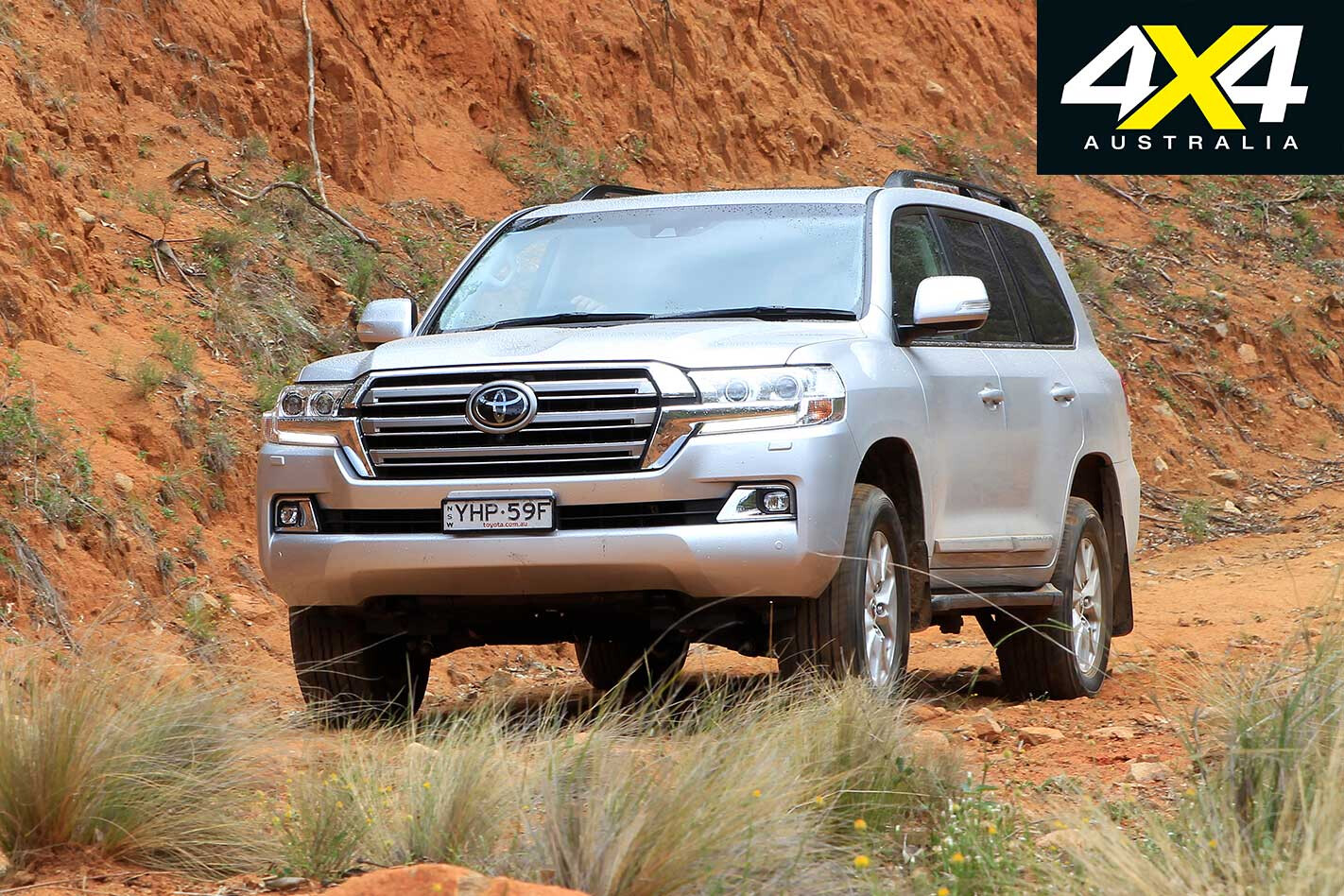
It is almost 10 years since the 200 Series arrived in Australia to replace the 100 Series. Over those 10 years the 200 has changed little, save for the introduction of the work-spec GX diesel in 2011, a new-generation V8 petrol engine in 2012, and the late-2015 styling, equipment and emission upgrade that led to its recent sales explosion.
The Land Cruiser is the oldest design here and certainly the most ‘old-school’ in 4×4 terms. The Patrol also has a separate chassis, but the 200 is the only vehicle here with a truck (or live) axle at the rear. And, apart from its KDSS suspension – effectively swaybars that can automatically tension up for on-road use and then de-tension for off-road use – there’s nowhere near the suspension trickery that you’ll find under the Patrol or the Discovery.
What we are driving is the top-spec Sahara, at $120K plus on roads it’s the most expensive vehicle here. The Sahara wasn’t our first choice – we would have preferred a GXL for better price parity – but the Sahara is still essentially the same mechanical package, except that KDSS is standard on Sahara and an extra-cost ($3250) option on the GXL.
POWERTRAIN AND PERFORMANCE
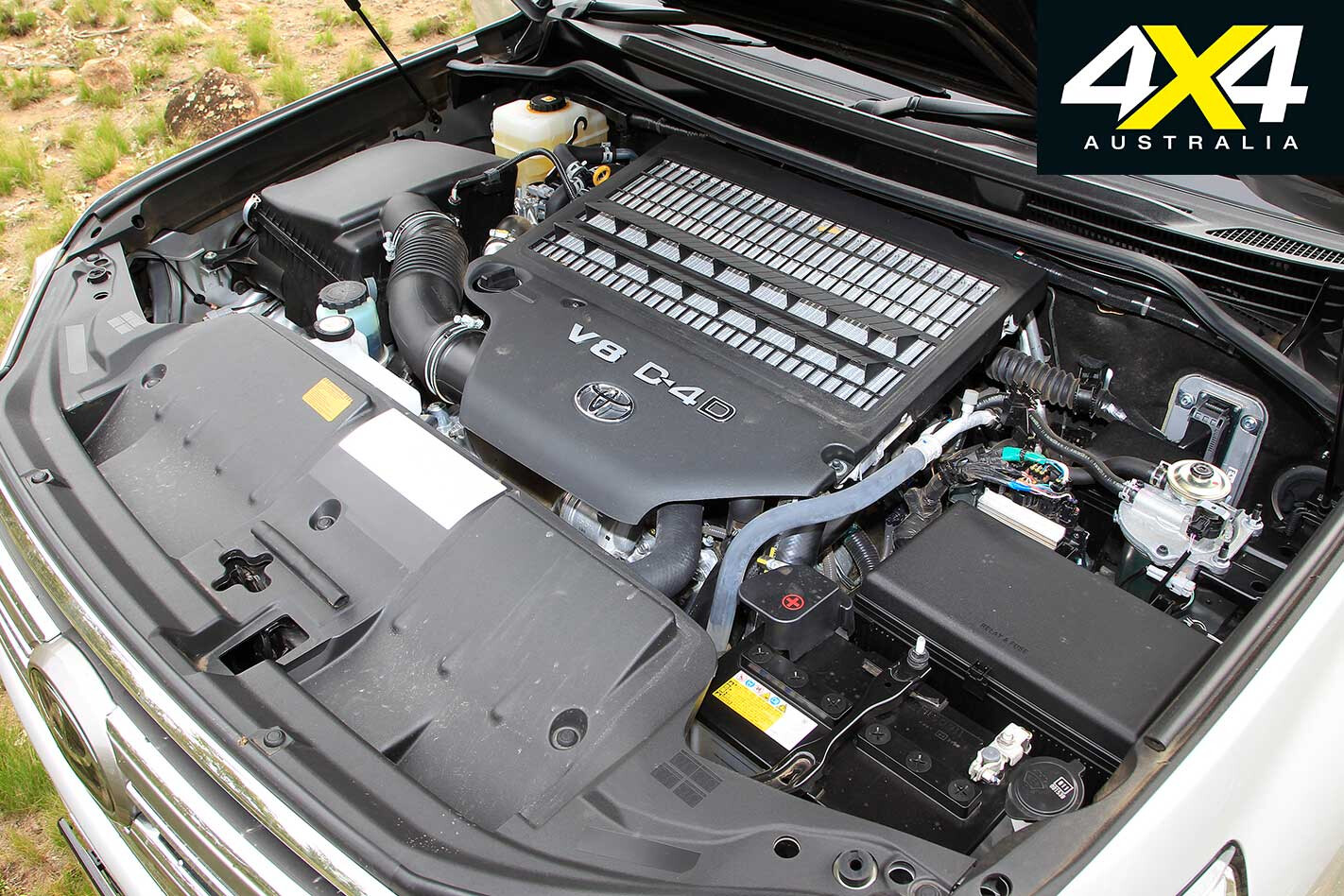
Despite gaining piezo injectors and a particulate filter as part of the late-2015 Euro 5 emission compliance, the 200’s 4.5-litre V8 diesel is relatively low-tech and under-stressed compared to most modern diesel engines. The V6 in the Discovery, for example, makes similar power and torque despite being only two-thirds the capacity.
The 200’s engine is effectively a twin-turbo version of the V8 used in the various 70 Series Land Cruisers; although, the twin-turbo system is a relatively simple parallel arrangement where one turbo serves each bank of four cylinders.
While quieter than it was before the Euro-5 compliant injection system arrived in late 2015, the 200’s V8 oiler is still noisy and gruff compared to the Discovery’s diesel, let alone the very refined petrol engine in the Patrol.
In this company it sounds and feels ‘truck-like’, and while comparisons to the Patrol’s petrol V8 may be unfair, even the Discovery tips it for performance and is in a different league refinement wise. Still, for all that, the 200’s engine is effortless and rarely has to work hard to get the job done.
ON-ROAD RIDE AND HANDLING
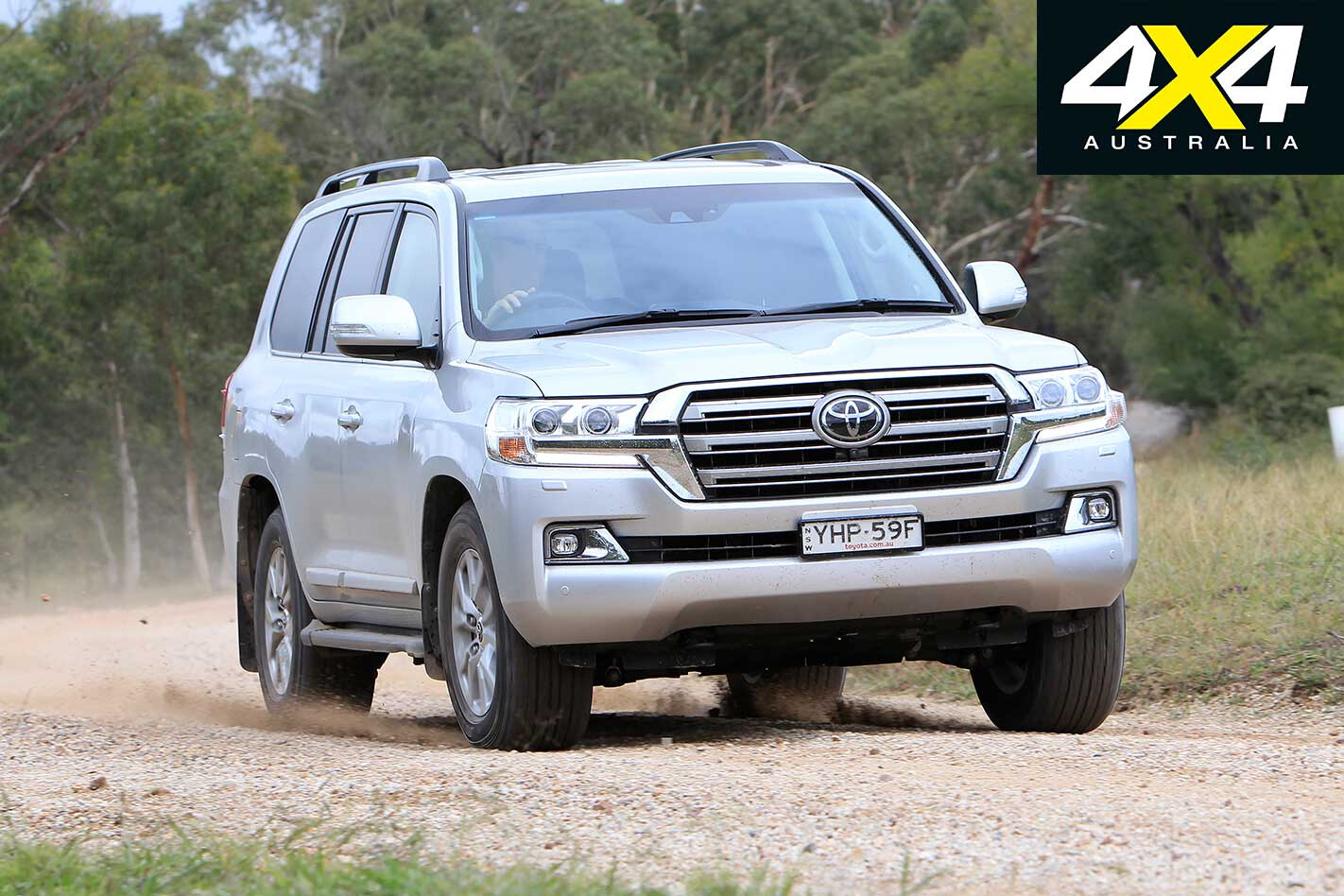
The 200 feels heavy on the road in this company, even though the Patrol weighs more. The 200’s steering is certainly the heaviest here, yet doesn’t particularly reward with feel – try to push the 200 down a winding road briskly and it’s the one that will protest the most.
Drive it fast and hard on a rough back road and you’ll also feel the sometimes unsettling nature of the rear live axle compared to the independent rear suspensions of the other two.
That’s the bad news. The good news is it has a plush and quiet ride that’s noticeably suppler than the Discovery – especially at slow speeds – and generally more compliant than the still smooth-riding Patrol.
KINETIC TWIST
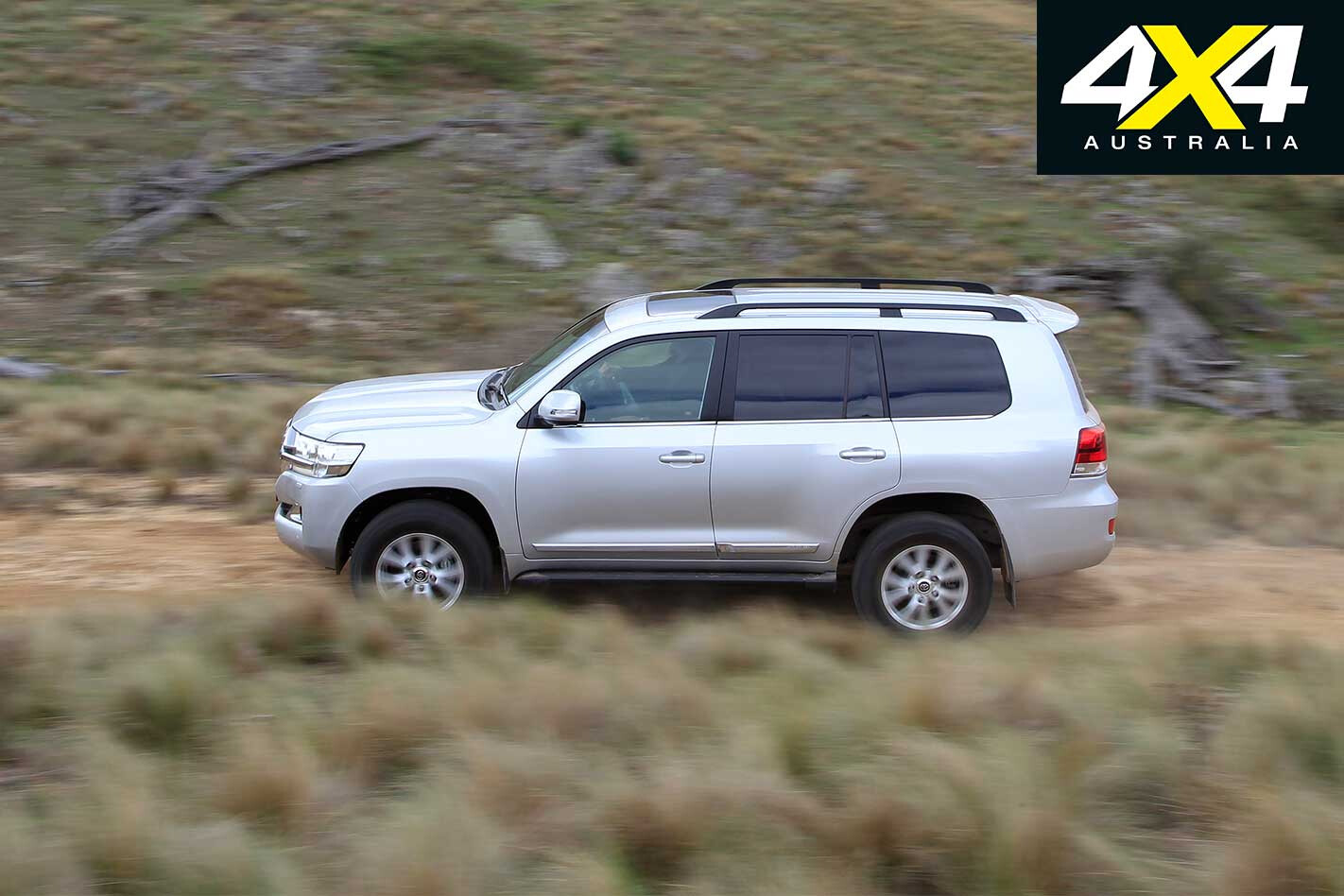
The LC200’s chassis might be old-school compared to the Discovery or the Y62, but is has one trick up its sleeve: its Kinetic Dynamic Suspension System (KDSS).
Standard on the Sahara and VX and optional on the GXL (but not the GX), KDSS is a simple yet effective means of automatically adjusting the tension on the suspension’s swaybars.
On the road KDSS automatically holds the tension on the swaybars to limit bodyroll when cornering, but off-road it allows the swaybars to relax to maximise the wheel travel. It does this via interlinked hydraulic cylinders fitted between the swaybar ends and the chassis.
OFF-ROAD
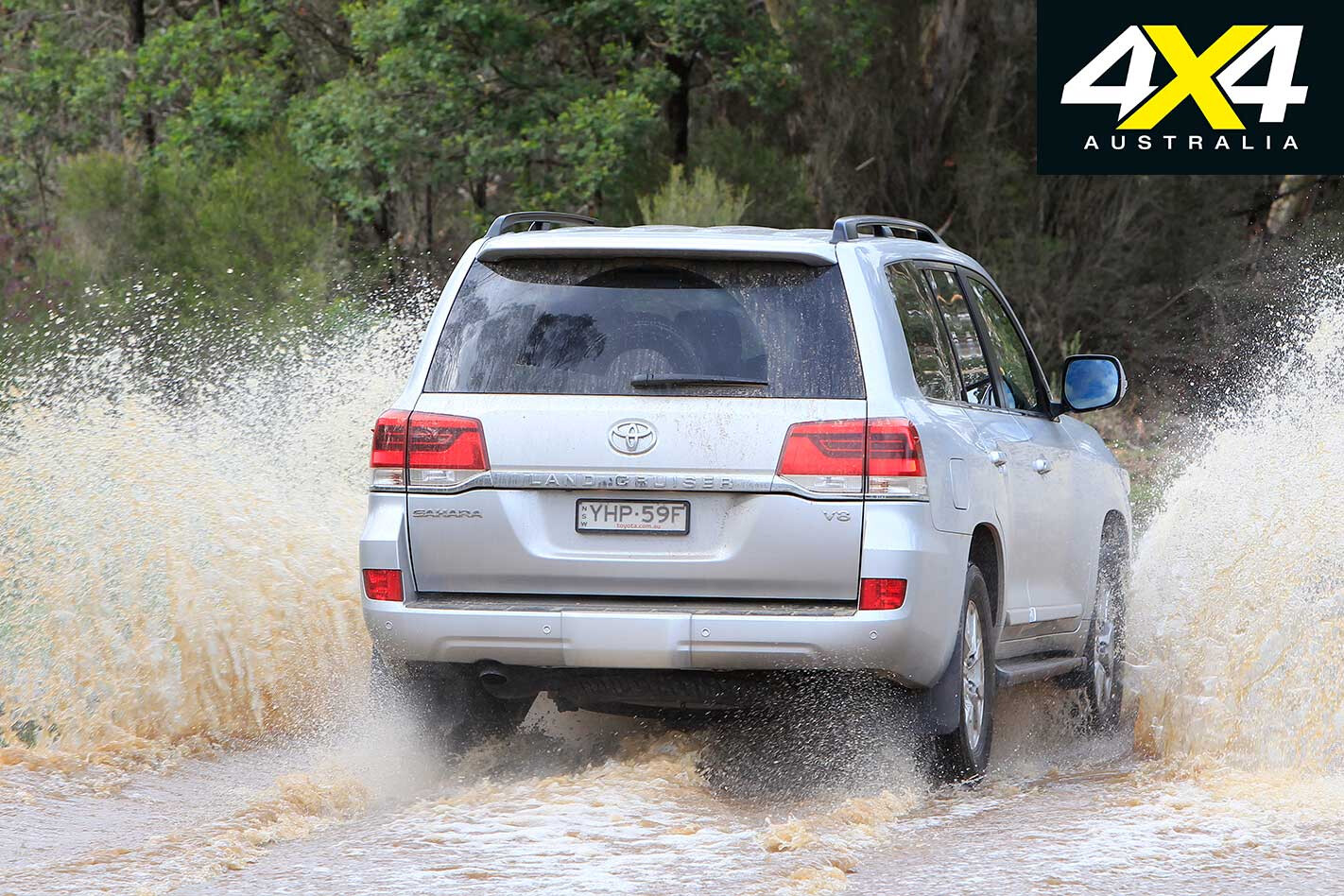
The softly-sprung long-travel suspension is the secret behind the 200’s formidable off-road ability. While the Discovery and Patrol have impressive rear-wheel travel they can’t match the 200’s live axle, even if there’s not much between them up front.
The Sahara’s full-time 4×4 system is the same as lower-spec 200s and has three open diffs, with a driver-activated lock on the centre diff. However the Sahara, like the VX, has ‘Multi-Terrain Select’, which is a take on Land Rover’s Terrain Response except that it’s only available in low range.
The various modes are also somewhat confusing with ‘Mud and Sand’, ‘Loose Rock’, ‘Mogul’, ‘Rock and Dirt’ and ‘Rock’. You would think there should at least be ‘Gravel’ and ‘Sand’ modes available in high range and simpler selection in low range. Still, the 200’s basic 4×4 attributes are so good that the MTS set-up is largely irrelevant.
CABIN, ACCOMMODATION AND SAFETY
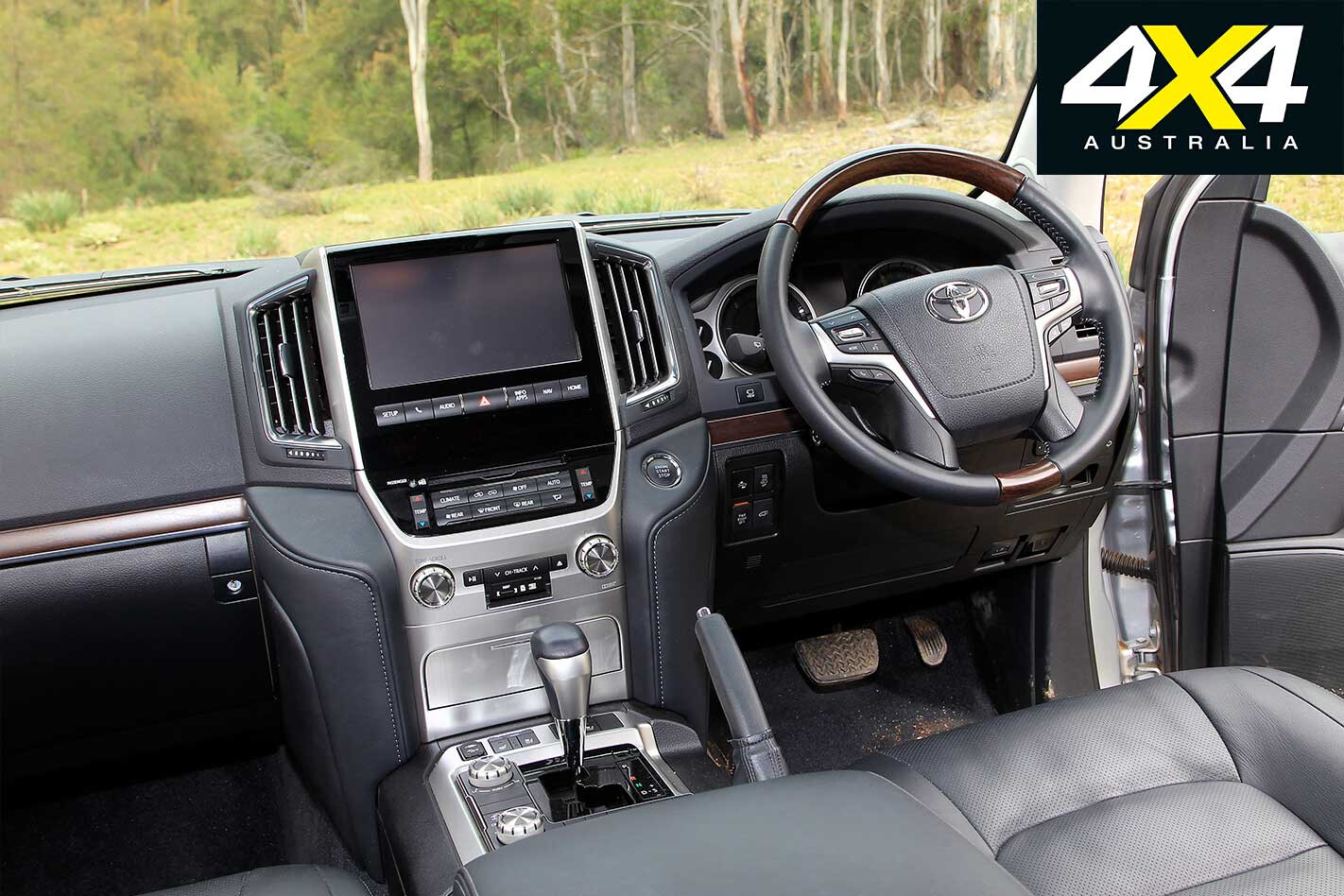
The 200’s cabin is big and spacious and, while it shades the Discovery for space, it’s not as big as the Patrol, especially with regards to luggage space behind the third-row seat and the width of the rear seat.
The fact the third row (which seats two in the Sahara and VX rather than three as in the GXL) folds up against the side windows means a low luggage floor, which is a bonus even if the seats eat into the cargo volume.
The Sahara and the VX get 10 airbags where the GXL and GX get eight, the difference being the rear-seat side airbags; although, all 200 variants have a five-star ANCAP rating.
PRACTICALITIES
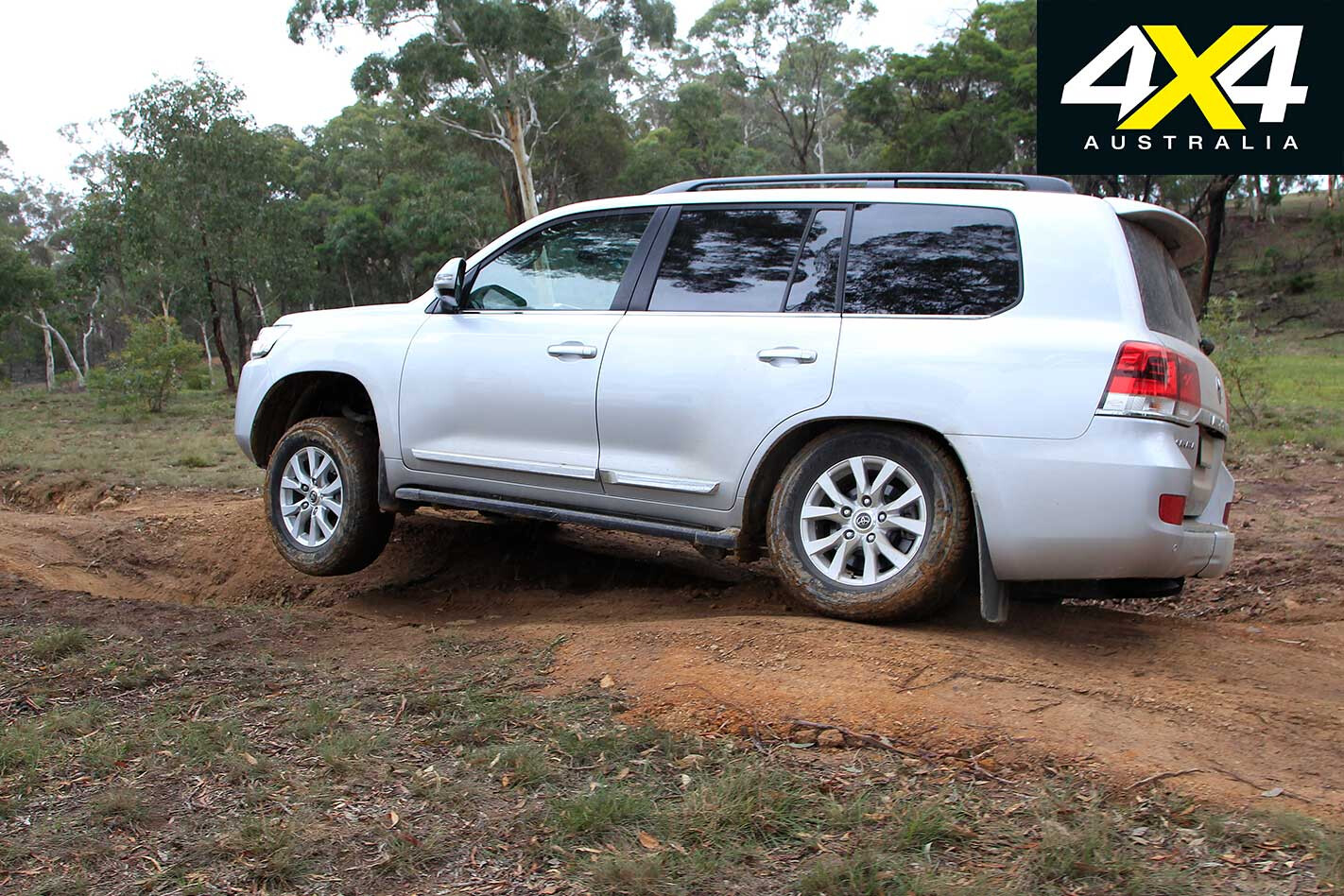
The 200 is the practicality king in this company. Thanks to its diesel engine and decent fuel capacity – a combination the other two can’t match – it has the best fuel range by far.
The 200 is also unmatched in terms of aftermarket support and comes with a practical wheel and tyre spec, even if tyres to suit the 18s on the Sahara and VX (which comes standard with V-rated rubber) aren’t nearly as readily available as tyres for the 17s on the GXL and GX. At least you can fit the 17s from the lower-spec models to your Sahara or VX.
WHAT YOU GET
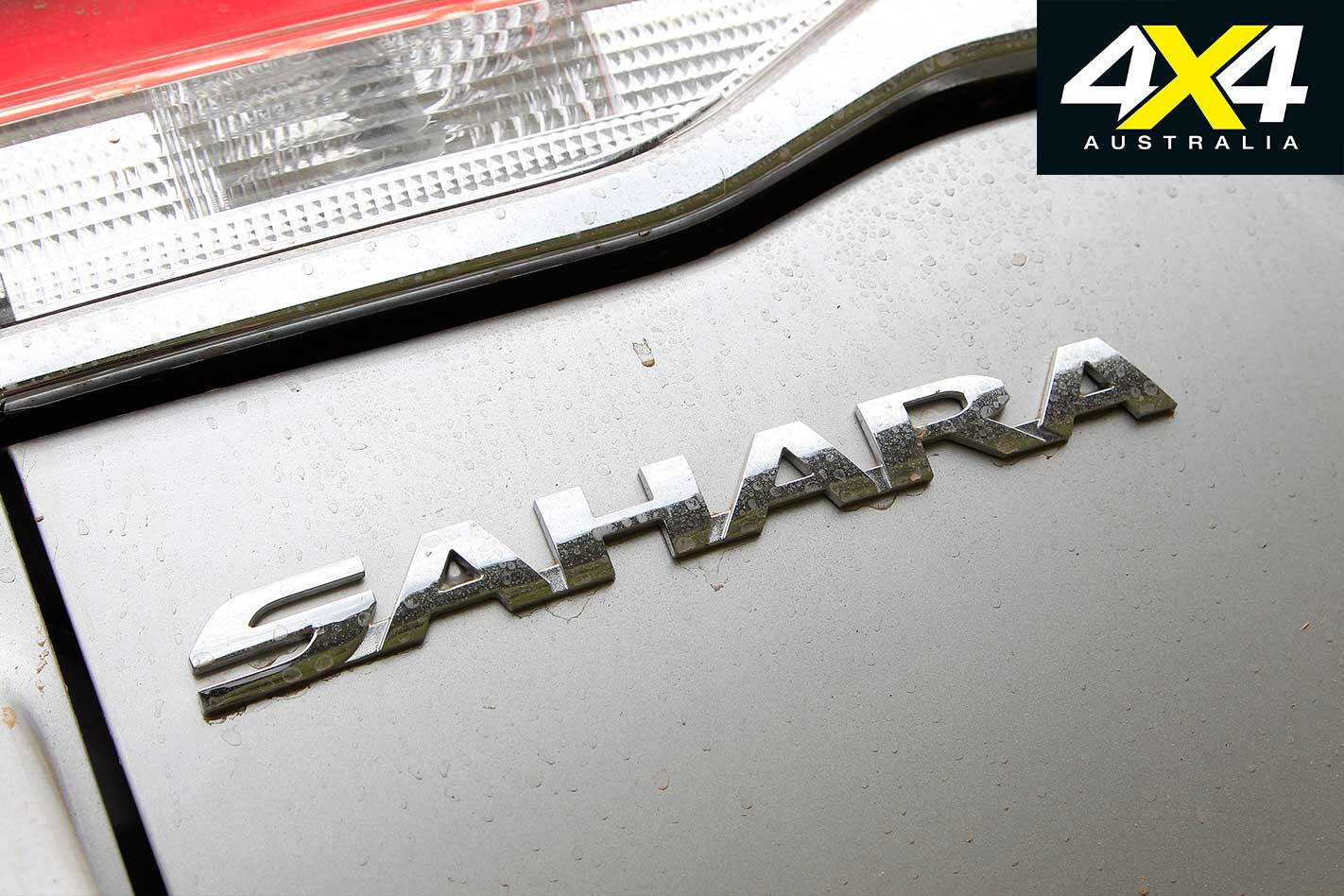
Land Cruiser 200 diesel prices start at $78,261 for the GX, the basic five-seat model with rear ‘barn’ doors, steel wheels and a snorkel.
For $10K more the GXL adds sat-nav, a reversing camera, side-steps, third-row seats, dual-zone climate, alloy wheels, and smart-key entry and stop/start. Another $10K will get the $98,881 VX, which adds leather, two additional airbags, front and rear parking sensors, auto LED headlights, auto wipers, a sunroof, KDSS, 18s and Multi-Terrain Select.
The $120,301 Sahara (as tested) then adds heated and cooled front seats, heated second-row seats, four-zone climate, rear DVD player, a cooler box, a power rear tailgate, Multi-Terrain Monitor (via external cameras) and high-end safety equipment including radar cruise, lane departure warning, blindspot monitoring and rear cross-traffic alert.
NISSAN PATROL Y62 – Petrol Head Nissan’s Y62 Patrol struggles for sales in a world where diesels rule, but are buyers looking close enough?
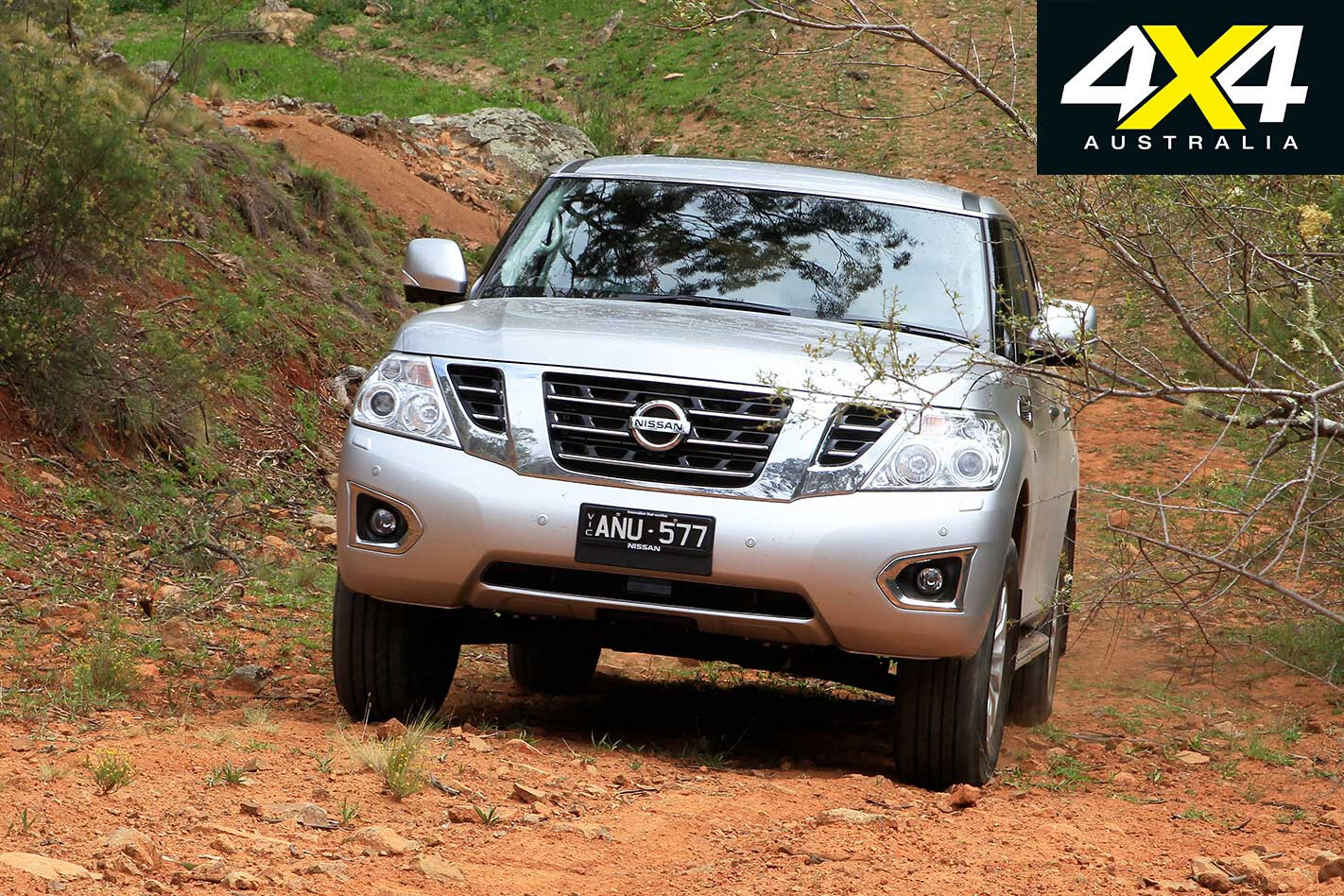
So it has come to this.
If you want a new Nissan Patrol, then it is petrol or nothing given the last of the diesel Patrols (the Y61) has been killed off by the latest Euro 5 emission regulations from last year. The Patrol you can buy isn’t a petrol version of the old Patrol but a ‘new from the ground up’ design.
However, ‘new’ in this case doesn’t mean recent, as this Patrol, the Y62, first appeared eight years ago in the Middle East and arrived here in 2012.
Ever since the Y62 first showed up there’s been talk of a diesel engine, but one hasn’t appeared and there doesn’t seem to be one on the horizon. So for now it’s petrol only.
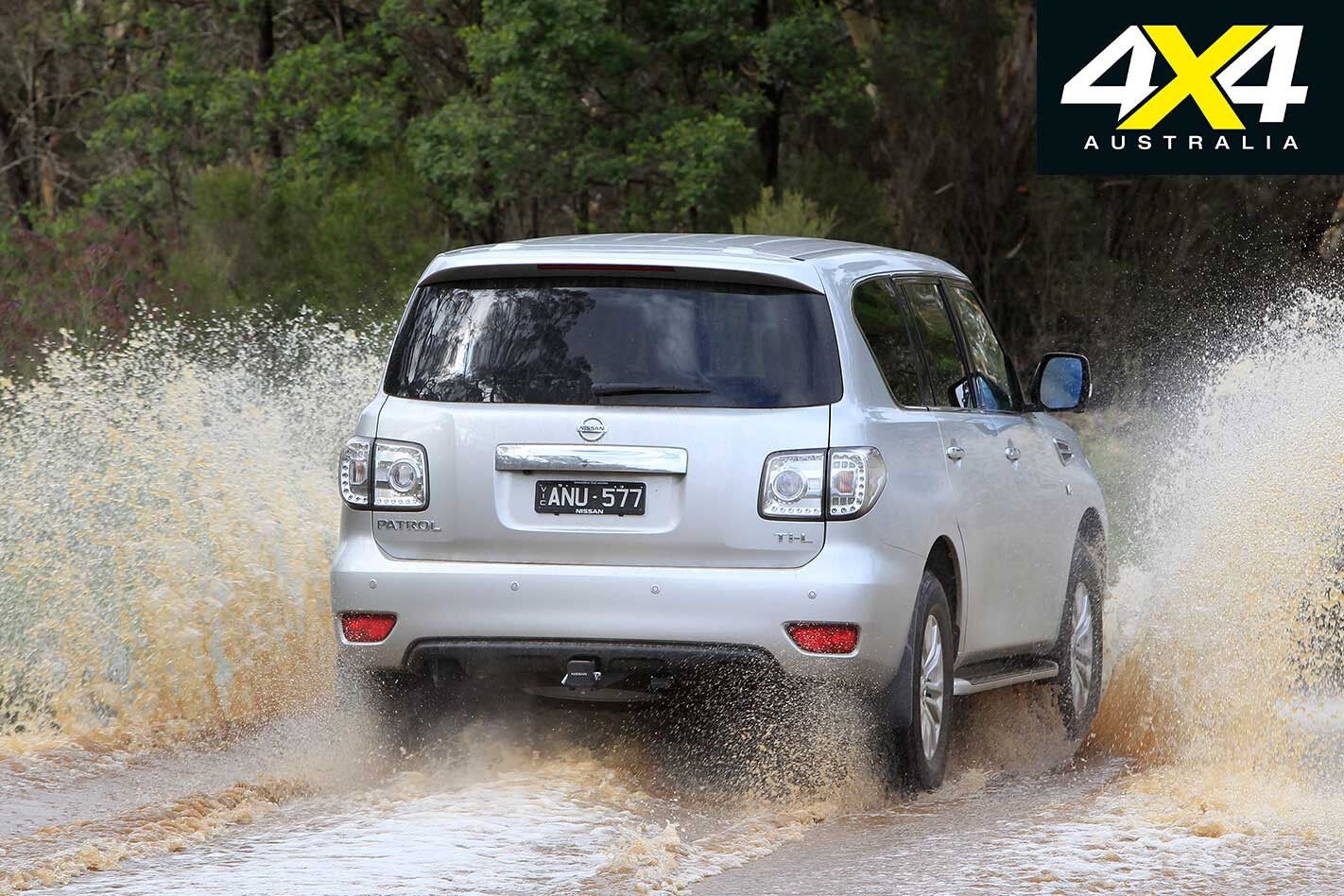
To combat slow sales in a diesel-loving market, Nissan slashed the price of the Y62 in mid-2015 by $25K, at the same time making way for the QX80, effectively an up-spec Y62 from Nissan’s luxury brand Infiniti. Those 2015 prices have more or less held since and see the Y62 priced well under a Land Cruiser 200.
The top-spec Ti-L we have here is $89K, despite offering equipment more akin to the $120K Sahara. In fact, the Ti-L is even cheaper than the relatively ‘bare bones’ GXL when optioned with KDSS, something it needs to give its best on and off the road.
POWERTRAIN AND PERFORMANCE
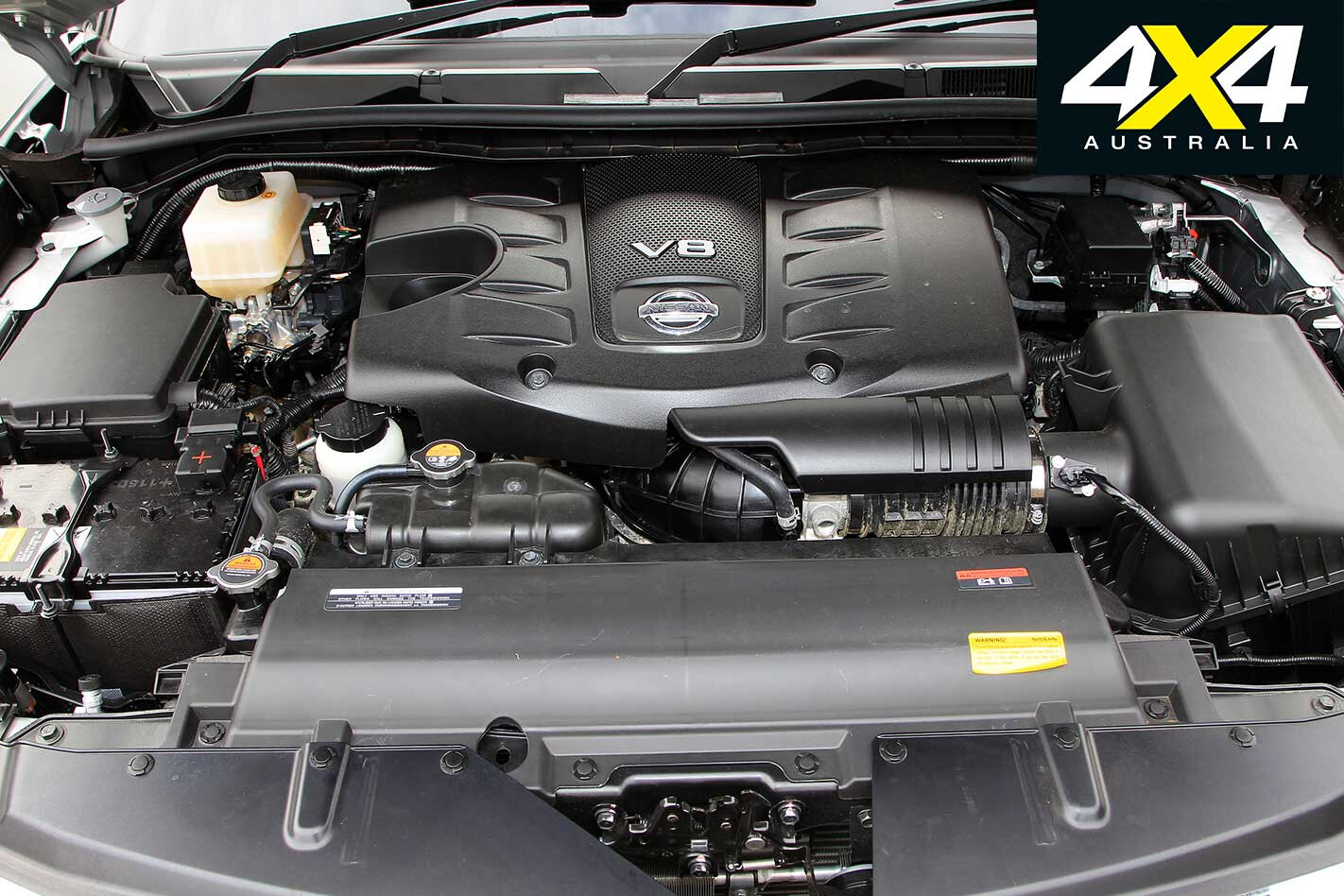
Petrol-only may be bad news for sales, but the good news is that the Y62’s 5.6-litre V8 is a cracker. For a naturally aspirated petrol engine it is state-of-the-art, with direction injection, and variable valve timing and variable valve lift on both inlet and exhaust cams.
It punches out 298kW, which is 50 per cent more – give or take a little – than either diesel here.
On the road it feels like it, too. Pedal to the metal it’s the Patrol first and daylight second. All the while the big V8, which hails from an engine family widely used in motorsport, is flexible, smooth, refined and sweet to the ear.
It’s also thirsty, due in part to the Y62’s big frontal area and hefty weight. On this test it averaged 19.2L/100km. At the very best – easy highway cruising – it will get down to 12-13L/100km, but any sort of city or off-road driving quickly sees the consumption skyrocket. Likewise, if you drive the Y62 hard you pay the price in fuel – which is a shame, because if you have 300kW you want to use it.
ON-ROAD RIDE AND HANDLING
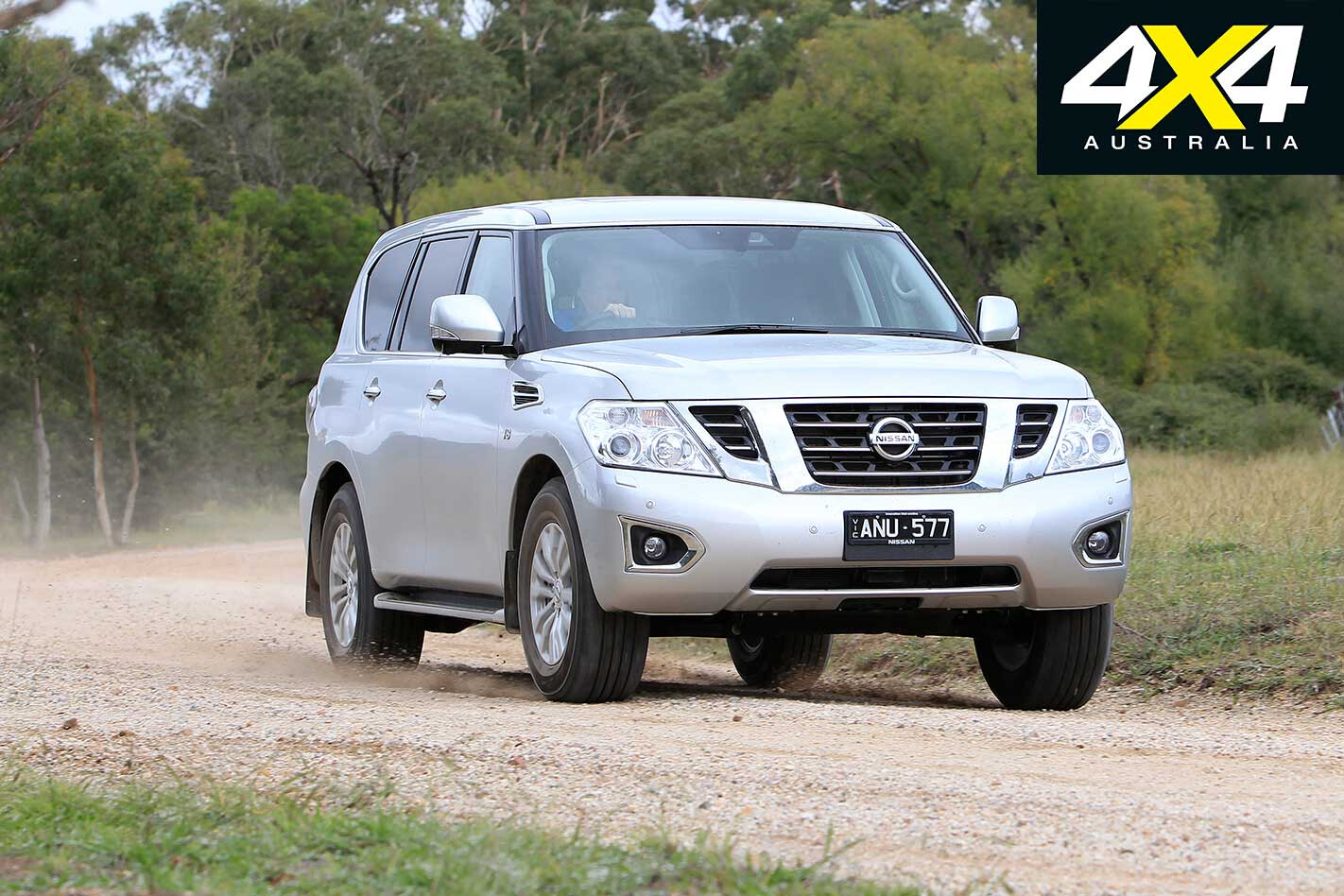
All this power and performance isn’t lost on a chassis that offers near physics-defying on-road handing. Push the big Patrol as hard as you like and there’s hardly a hint of bodyroll thanks to the brilliant HBMC suspension.
For its size and weight the Y62 is light on its feet (far lighter than the 200) and feels surprising agile, yet at the same time stable. It’s still no Discovery, but then it gives away 600kg and sits higher on the road, so there’s only so much the HBMC can do.
Nice ride comfort, too, no doubt helped by the tall wheel and tyre spec. On its 18s the Y62 has even more sidewall and a bigger overall diameter than the 18s on the 200.
THE REAL KINETIC
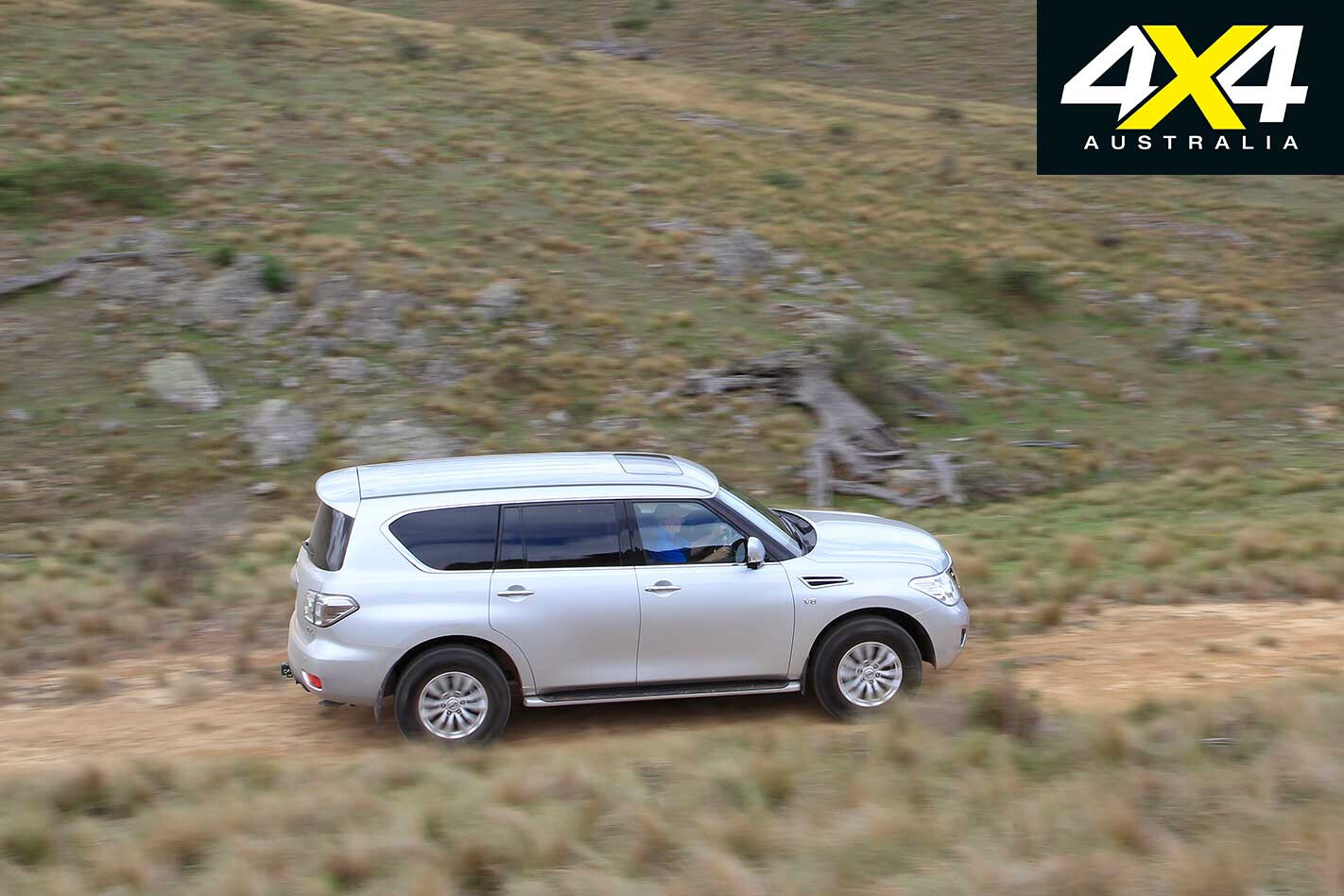
The Y62 Patrol has fully independent suspension and what Nissan calls Hydraulic Body Motion Control (HBMC). Ironically this system is closer to the Western Australia-developed Kinetic system than Toyota’s KDSS, despite Toyota buying the rights to the original Kinetic system.
With HBMC, four hydraulic rams replace the dampers and mechanical swaybars of a conventional suspension system. These rams are interlinked allowing hydraulic fluid – managed by nitrogen-charged accumulators and body motion sensors – to be pumped from one to the other. This allows the wheel travel, body roll, body pitch, ride comfort and overall stability of the vehicle to be controlled, and it’s automatically optimised for both on- and off-road driving.
OFF-ROAD
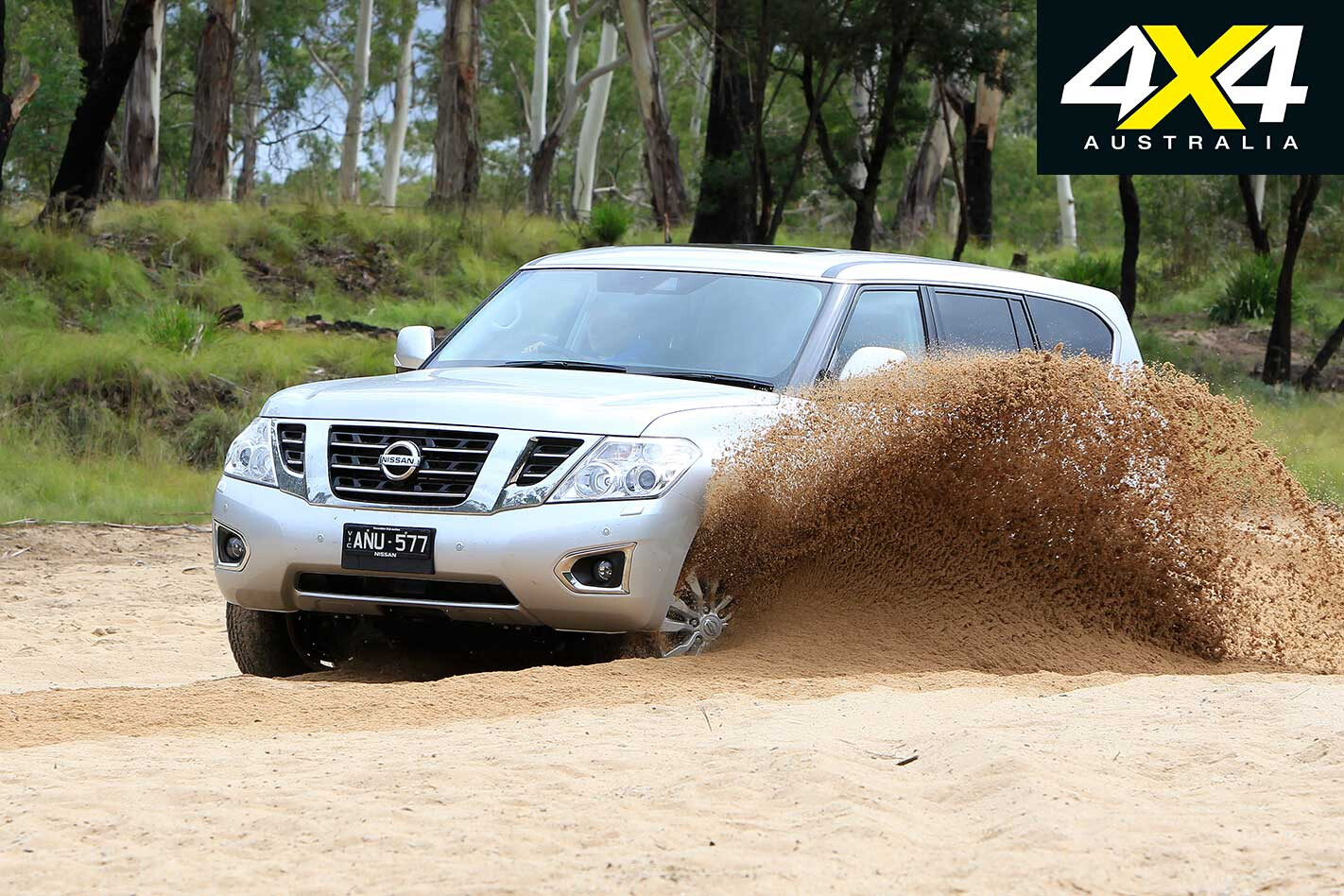
The Y62 has an on-demand 4×4 system (rather than a full-time system), where the default ‘Auto’ mode directs some drive to the front wheels if there’s any traction issues at the rear.
The drive can also be locked 50:50 in 4H mode or with low range selected. There’s also a rear diff lock that can be engaged in either high or low range; although, engaging the locker cancels the traction control on both axles. The driver can also select ‘Sand’, ‘Snow’ or ‘Rock’ modes in both high and low range.
If all this sounds complicated, it’s actually simple to use. What’s more, the Y62 is excellent off-road thanks largely to the HBMC suspension being able to go from taut on-road to supple off-road automatically and instantaneously, due in part to the fact there are no swaybars to limit wheel travel.
Given the HBMC’s sophistication it’s somewhat surprising Nissan didn’t build in a height adjustment feature, as the Y62’s ground clearance could be better despite the 287mm factory claim from Nissan.
CABIN, ACCOMMODATION AND SAFETY
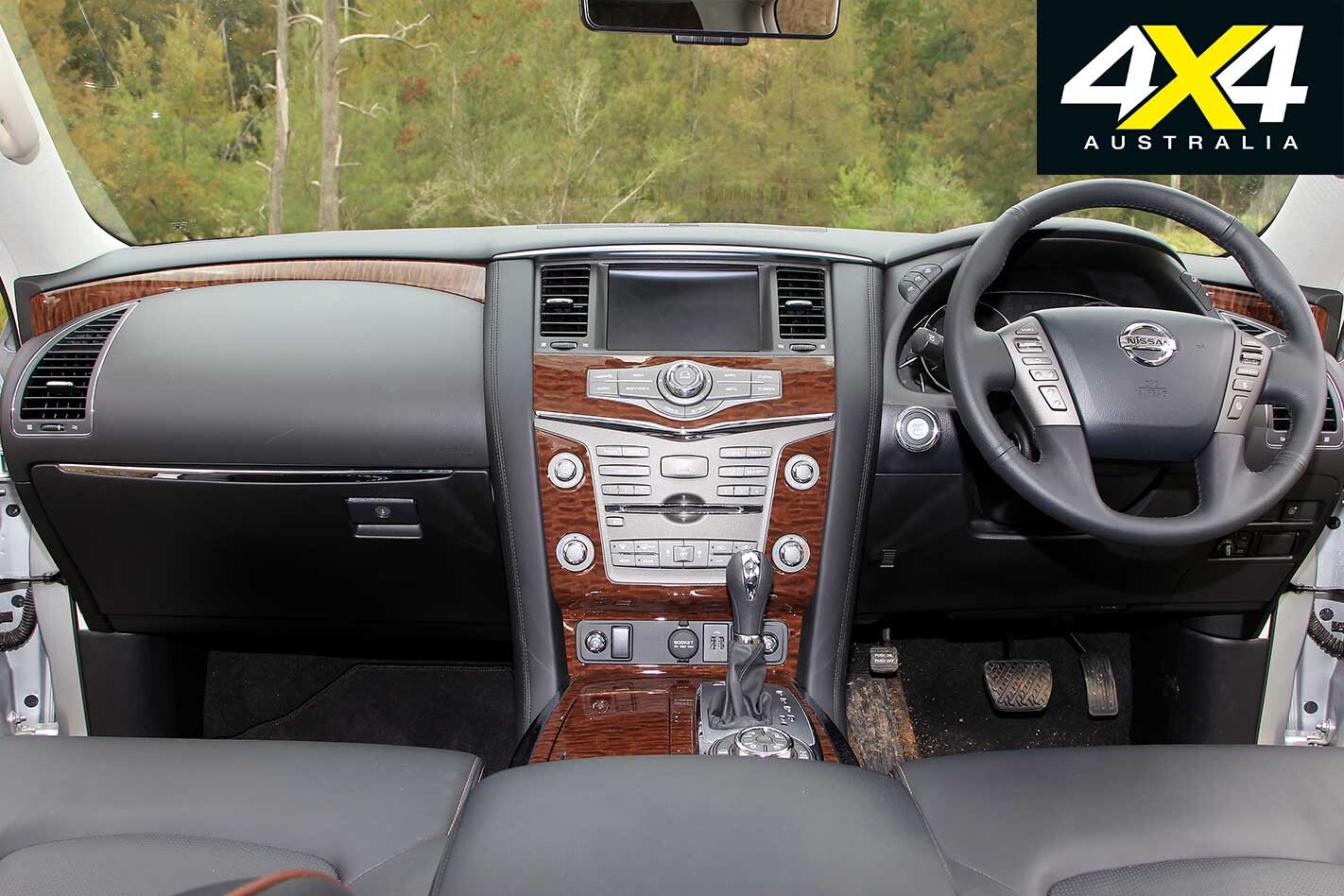
The Y62 has the most spacious and airy cabin in this company and is particularly good in terms of load space – the best here by a good margin – and the space behind the third-row seats when they’re deployed. It also features the widest second-row seat among these three; although, the third row isn’t as adult-friendly as the Discovery.
The Y62 has a high quality but overstated – lots of chrome – dash and cabin finish. Did someone say “a bit like a Haval?” The Ti-L, like the other two wagons here, seats seven; although, the lower-spec Ti seats eight. The Y62 doesn’t have an ANCAP safety rating as it hasn’t been submitted for safety testing, which isn’t mandatory in this country.
PRACTICALITIES
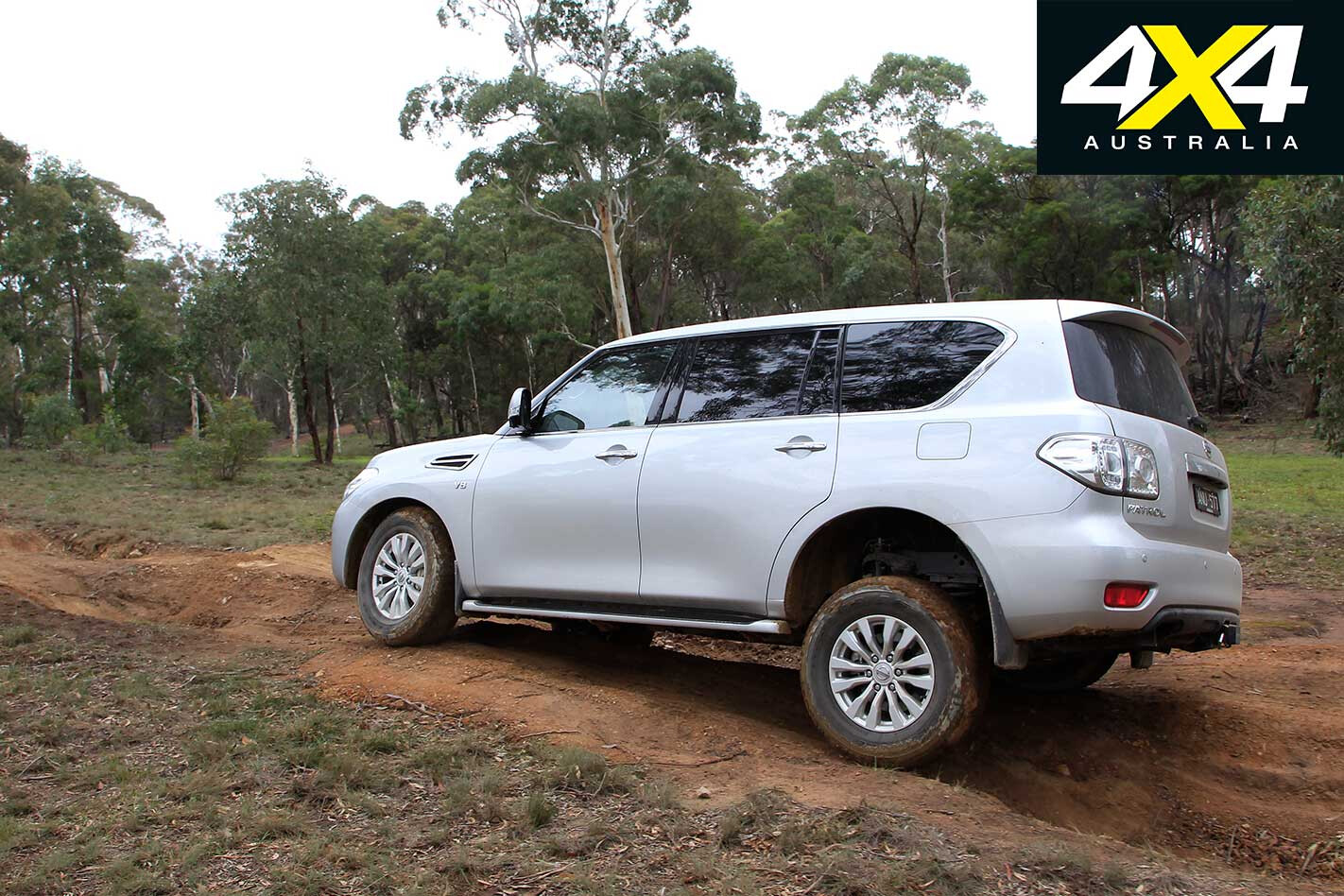
THE Y62 has the highest Gross Combined Mass of the three wagons: a mighty 7000kg, which is testament to its size if you even needed convincing. The Y62 is also rated to tow 3500kg and would no doubt do that with ease, even if thirsty in the process.
Given its thirst, it’s a good thing it has a decent-sized fuel tank; although, its 140 litres doesn’t take it much farther than the Discovery’s 85 litres. The Y62 asks for premium-grade fuel, but it appears to run satisfactorily on lower-octane fuels including E10 and even 91.
WHAT YOU GET
The Y62 Patrol comes in two model grades: the $71,990 Ti and the $88,990 Ti-L. Even the Ti is well-equipped with leather, sunroof, six airbags, eight-way adjustment for the driver’s seat, three-zone climate control, a rear-view camera, sat-nav, parking sensors, auto headlights and wipers, tyre-pressure monitoring, external-view cameras and a rear locker.
The Ti-L adds heated and cooled front seats with memory settings for the driver, rear DVD entertainment, a 13-speaker premium Bose audio system, Xenon headlights, a power tailgate, radar cruise, forward-collision alert, lane departure and blind spot warning, and mitigation systems.
THE VERDICT The tourer’s choice
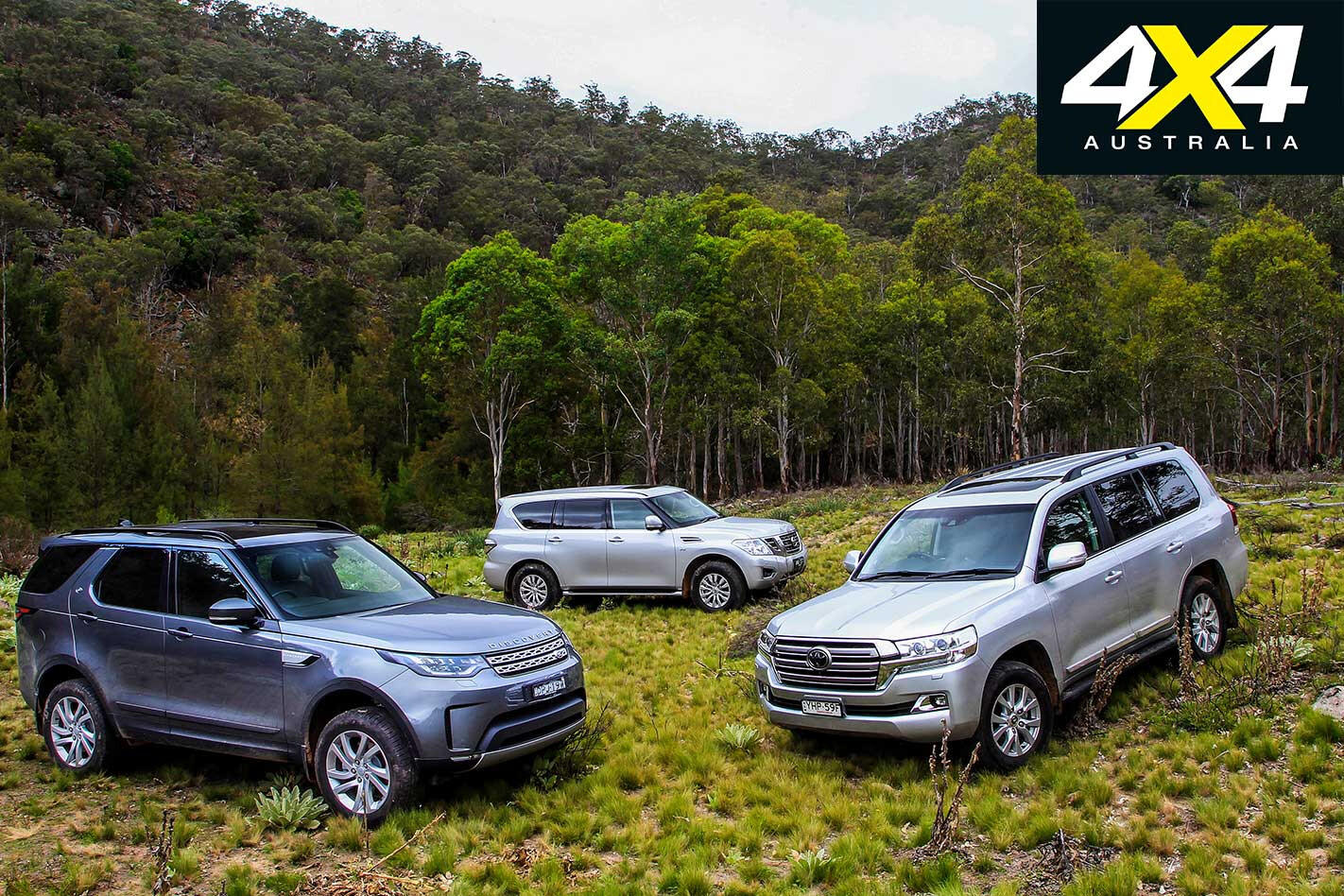
For every Nissan Patrol sold Toyota sells nearly nine LC200s. For every Discovery sold, six LC200s are sold. The market’s preference is clear – it’s 200 all the way.
The Patrol can’t get a look in given the market’s liking for diesel power. After all, Toyota offers a petrol-powered V8 in the 200 and hardly anyone buys it. Perhaps if petrol was cheap, as it is in the Y62’s prime markets (Middle East and USA), things might be different.
It’s a shame really as, fuel-running costs aside, the Y62 has everything else going for it including performance, refinement, cabin space, on-road dynamics, off-road ability, equipment and very sharp pricing. The $30K you save on a Patrol Ti-L over a 200 Sahara will pay for the first 100,000km of premium petrol at current prices, assuming an average consumption of 20L/100km.
With a decent diesel engine from Nissan’s central ‘Alliance’ partner Renault or, better still, technology associate Mercedes-Benz, the Y62 could be brilliant.
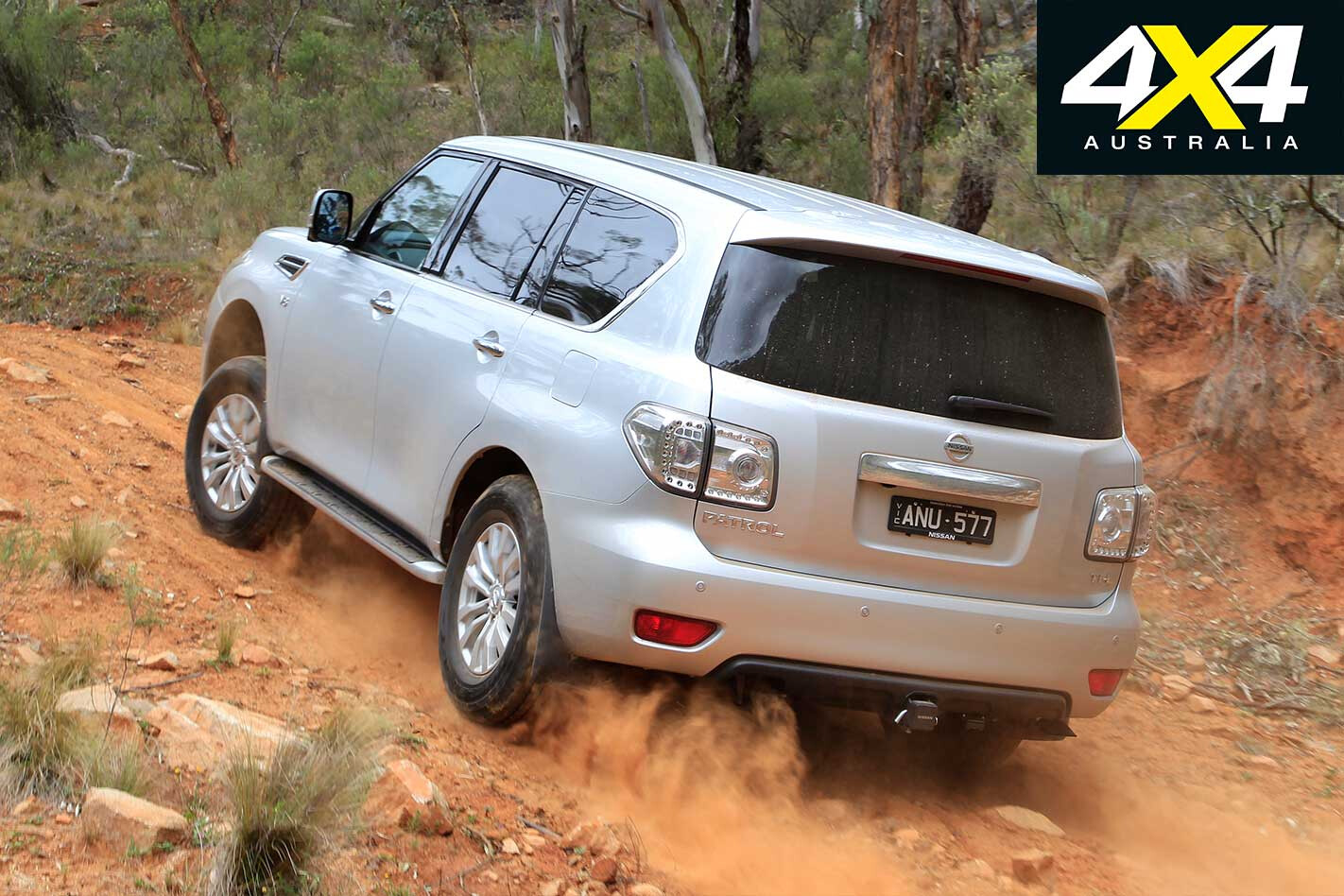
Land Rover’s new Discovery is already brilliant, thanks to its unmatched spectrum of capability. Off-road, the Discovery easily matches the 200 and the Patrol, and it’s even better in situations where ground clearance and wading depth are paramount. At the same time, its off-road dynamics are in a different and better class.
The Discovery is also more efficient. Not just fuel efficiency, but for the fact it’s a big and spacious wagon – close to the 200 inside – that’s also notably fuel efficient. Still, that fuel efficiency isn’t sufficient to overcome the modest fuel capacity, one of the major shortcomings of the Discovery if you’re looking to buy a remote-area tourer. Plus, there’s not much point looking at the aftermarket for a long-range tank or a bullbar.
The only good news with this new Discovery in terms of bush practicality is that, for any given wheel size, there’s more tyre than with the Discovery 4. The smallest factory rim remains 19 inches, but given the brakes are no bigger than Discovery 4, bespoke 18s will theoretically fit.
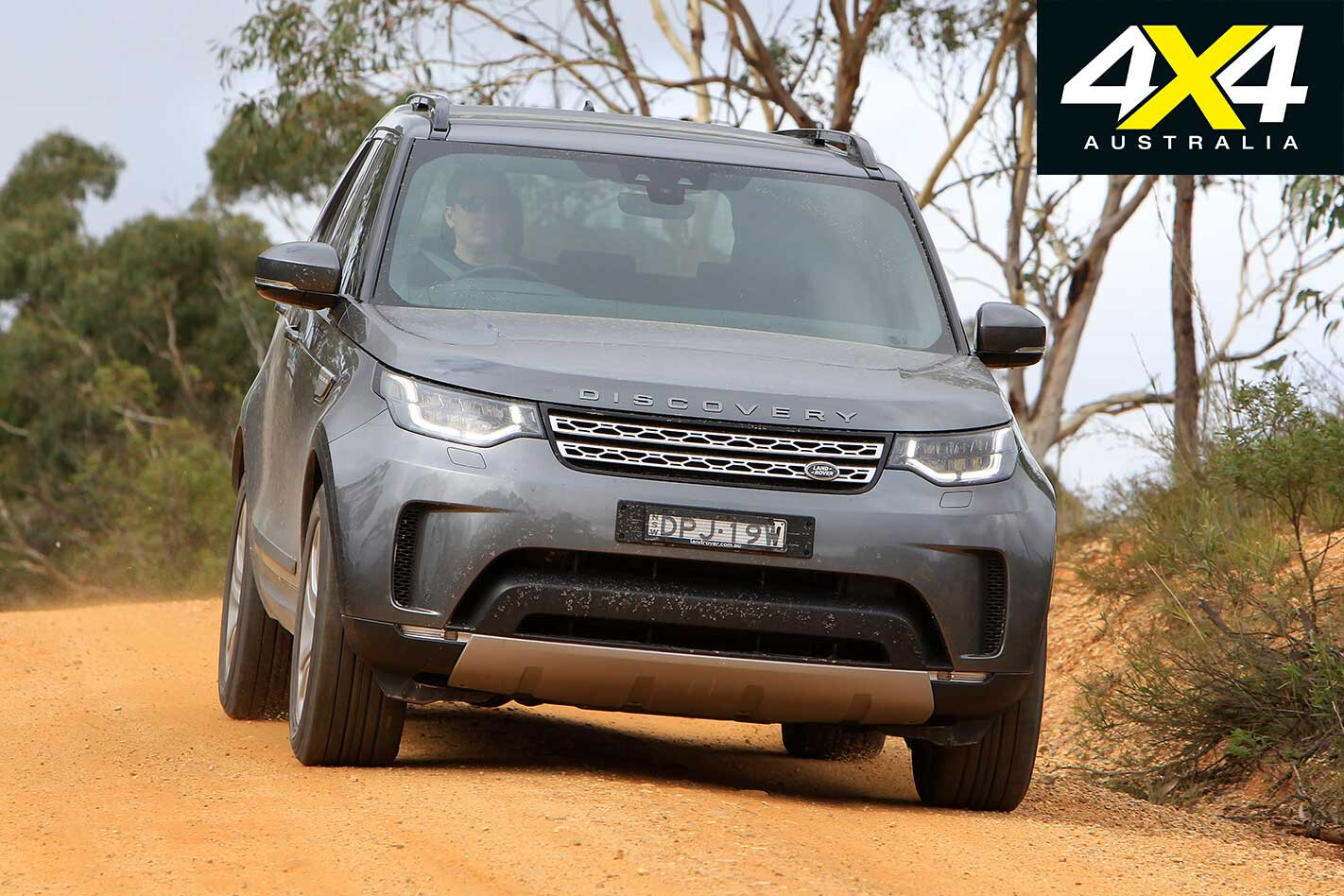
This new Discovery also has sufficient guard clearance to run a one-size-bigger tyre than standard spec, which means readily available 275/75s all-terrains – some in Light Truck construction – can be fitted on a 20-inch rim.
Practicality is, of course, the very last concern you have with a 200 Series. It’s practical enough straight out of the box, yet the support from aftermarket for just about any accessory or enhancement is second-to-none.
Compared to the complex Discovery it’s also simple and conservatively engineered, which is just what you want the farther you get from civilisation. No wonder it’s the market favourite and the first pick if you wish to go bush.
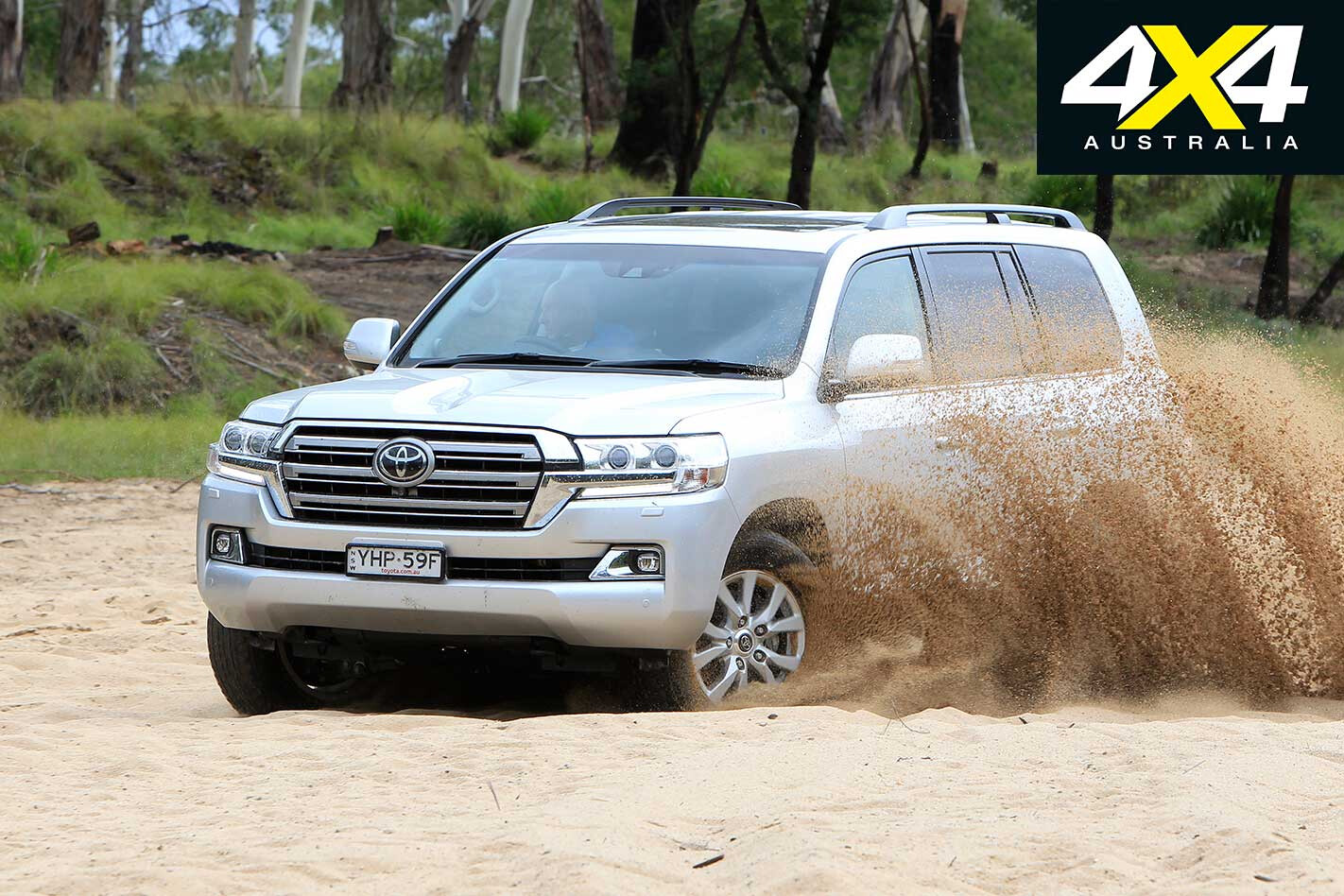
Acknowledgement Many thanks to Great Divide Tours for the use of its ever-improving 4×4 testing and training facility near Braidwood in the NSW Southern Tablelands. See more at www.4wd.net.au.
SPECS
| u00a0 | 2018u00a0Land Rover Discovery TD6 HSE | 2018u00a0Toyota Land Cruiser Sahara | 2018u00a0Nissan Patrol Ti-L |
| ENGINE | 3.0-litre V6 turbo-diesel | 4.5-litre V8 twin-turbo diesel | 5.6-litre DOHC V8 petrol |
| POWER | 190kW at 3750rpm | 200kW at 3600rpm | 298kW at 5800rpm |
| TORQUE | 600Nm at 1750-2250rpm | 650Nm at 1600-2600rpm | 560Nm at 4000rpm |
| GEARBOX | Eight-speed automatic | Six-speed automatic | Seven-speed automatic |
| 4X4 SYSTEM | Dual-range full-time | Dual-range full-time | Dual-range on-demand |
| CRAWL RATIO | 44.34:1 | 34.1:1 | 43.9:1 |
| CONSTRUCTION | Monocoque | Separate-chassis | Separate-chassis |
| SUSPENSION (front) | Independent/air springs | Independent/coil springs | Independent/coils + HBMC |
| SUSPENSION (rear) | Independent/air springs | Live axle/coil springs | Independent/coils + HBMC |
| KERB WEIGHT | 2223kg (five-seat) | 2740kg | 2842kg |
| GVM | 3050kg (five-seat) | 3350kg | 3450kg |
| PAYLOAD | 827kg (five-seat) | 610kg | 608kg |
| TOWING CAPACITY | 3500kg | 3500kg | 3500kg |
| GCM | 6650kg (five-seat) | 6800kg | 7000kg |
| FUEL TANK | 85 litres | 138 litres | 140 litres |
| ADR FUEL CLAIM | 7.2L/100km | 9.5L/100km | 14.4L/100km |
| TESL FUEL USE | 12.2L/100km | 14.3L/100km | 19.2L/100km |
| TOURING RANGE* | 647km | 915km | 679km |
*Based on test fuel use, claimed fuel capacity and a 50km ‘safety’ margin.
OFF-ROAD CAPABILITIES
| u00a0 | u00a0Land Rover Discoveryu00a0 | Toyota Land Cruiser 200 | Nissan Y62 Patrolu00a0 |
| Departure Angle | 30u00ba | 24u00ba | 26.2u00ba |
| Rampover Angle | 27.5u00ba | 21u00ba | N/A |
| Approach Angle | 34u00ba | 32u00ba | 34.1u00ba |
| Wading Depth | 900mm | 700mm | N/A |
| Ground Clearance | 283mm | 230mmu00a0 | 287mm |
PRICES*
| u00a0Land Rover Discoveryu00a0 | Toyota Land Cruiser 200 | Nissan Y62 Patrolu00a0 |
| TD6 S (five-seat): $78,750 | GX: $78,261 | Ti: $71,990 |
| TD6 SE (five-seat): $92,650 | GXL: $88,541 | Ti-L: $88,990 |
| TD6 HSE (five-seat): $103,000 | VX: $98,881 | |
| TD6 HSE Luxury (5-seat): $116,800 | Sahara: $120,301 |
*Prices do not include on-road costs
Spy photos out of the USA have surfaced of General Motors testing what appears to be a production version of the AEV ZR2 Colorado concept that wowed onlookers at the 2017 SEMA Show in Las Vegas.
The concept truck was built by American Expedition Vehicles (AEV), and those familiar with the expedition outfitter brand would know it is usually associated with Jeep and RAM vehicles from the FCA stable.
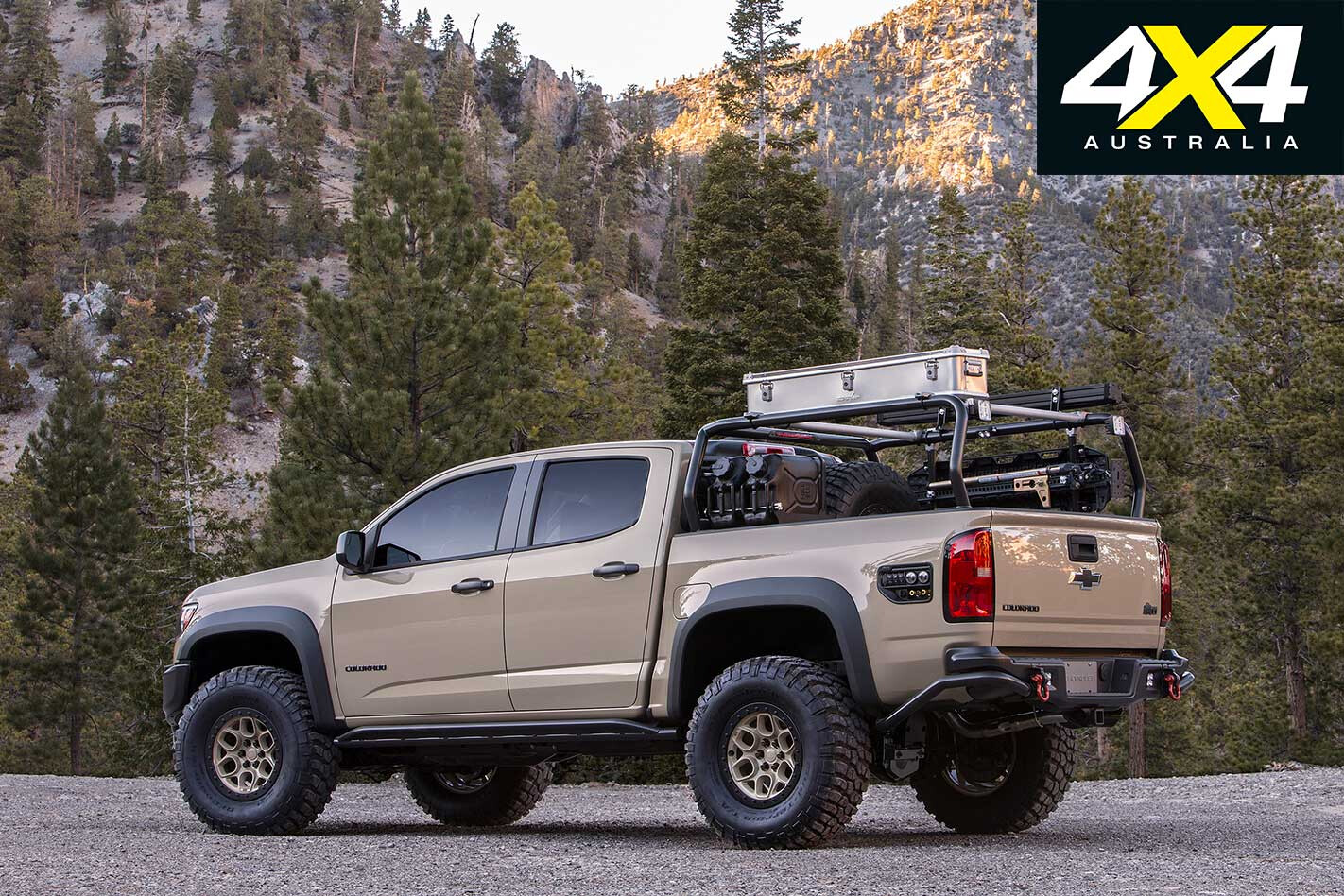
They would also be aware that AEV, which is now headquartered in Detroit but originated in Montana, uses a bison in its logo and graphics. Following the SEMA Show Chevrolet trademarked the ZR2 Bison name, hinting that a production version of the off-road-ready pick-up was in the works.
The AEV ZR2 Colorado concept was fully equipped for expedition overlanding in the top-shelf way that only AEV gets so right, and it represented a new venture for AEV as it branched out from exclusively outfitting FCA products. The concept was shod with 35-inch BFGoodrich muddies bead-locked to AEV Borah alloy wheels.
The suspension was lifted, with AEV tuning the springs and hardware to retain the optimum geometry for the best ride and handling both on and off the road. Interestingly, AEV retained the factory ZR2’s acclaimed DSSV spool-valve Multimatic shocks that have been adapted from sports car use and are said to give the Colorado truck amazing off-road credentials.
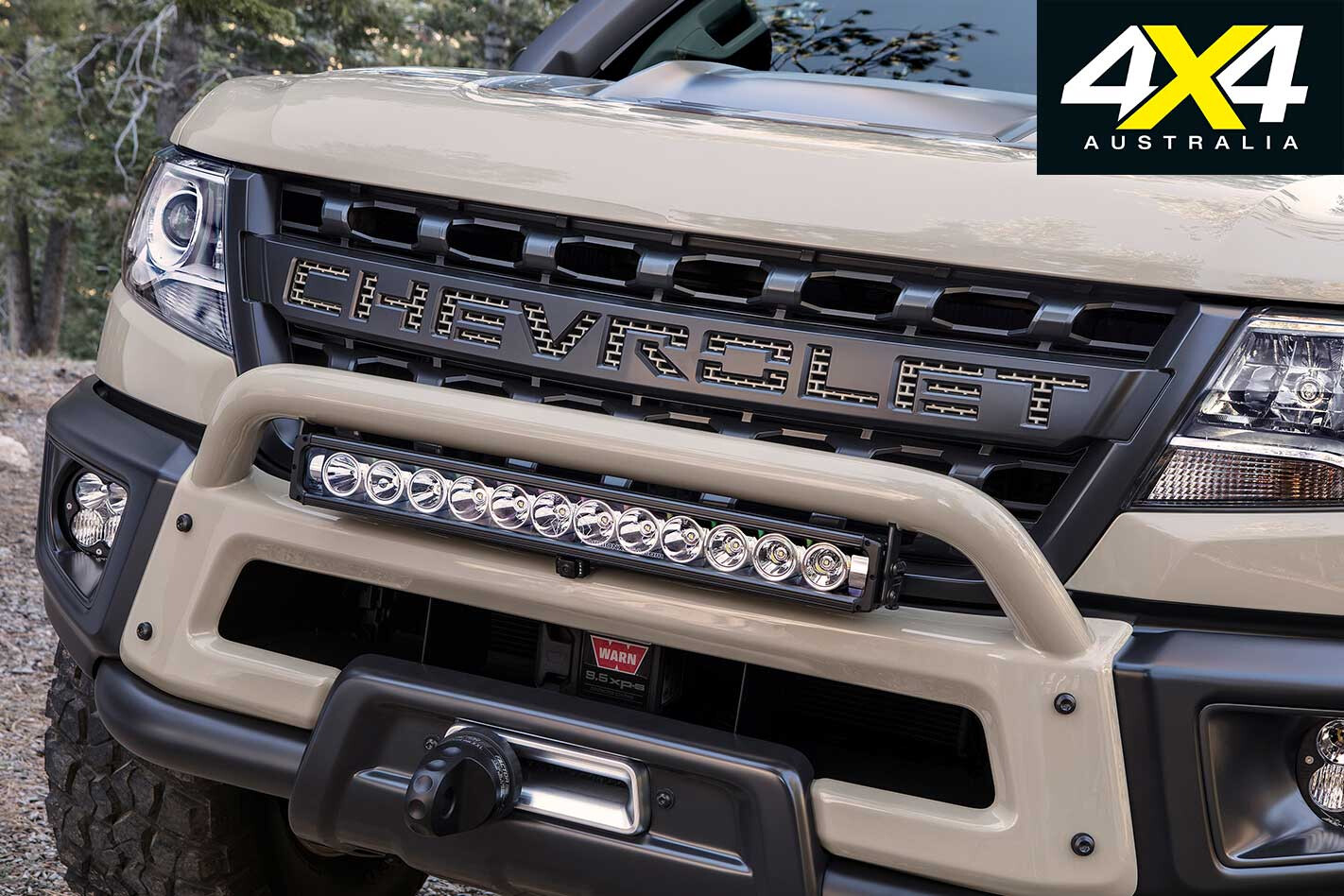
AEV bumpers were fitted front and rear, with a Warn winch slotted inside the front bar and an LED light bar mounted atop. Custom-made rock sliders ran down the flanks. A custom-made rack enshrouded the cargo bed and formed the platform to mount jerry cars, a Hi-Lift jack, a storage box, a spare wheel and tyre, and an awning.
Aussie gear was well represented, with a set of MaxTrax recovery boards and an ARB fridge included. A neat feature was the panel on the outside of the bed that puts outlets for the on-board compressed air, water pump and 12-volt power systems within handy reach.
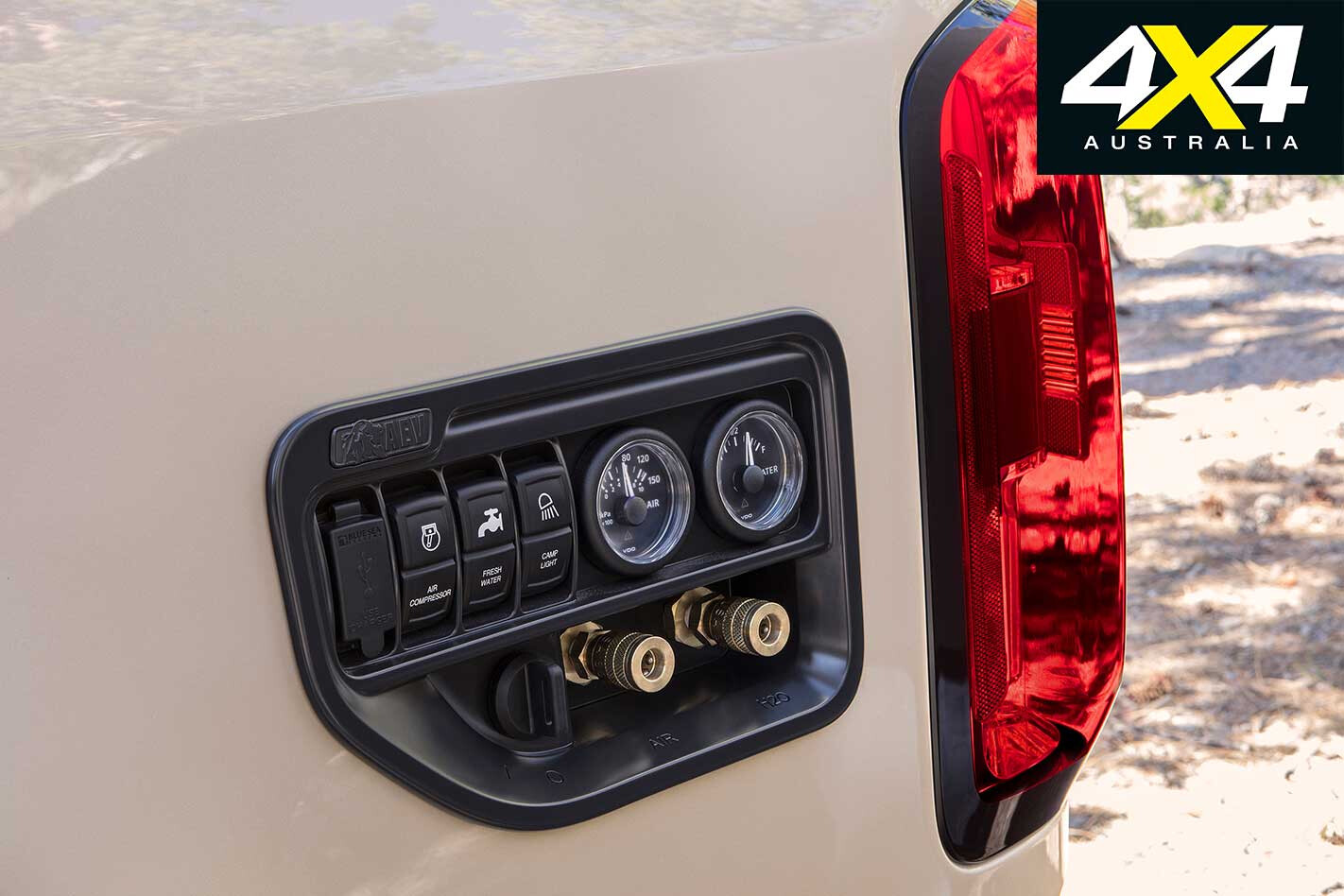
Under the custom bonnet scoop the engine remained the standard 2.8-litre Duramax diesel, which we get in our Colorado in Australia yet it remains a bit of a novelty for petrol-guzzling US buyers. On the ZR2 concept the engine breathed through an AEV intake snorkel, while the body was cloaked in a desert tan hue and custom graphics.
Just how much of this super-cool overlanding kit makes it through to a production version ZR2 Bison is yet to be revealed, but the spy photos of the camouflaged vehicle show the snorkel, Chevrolet scripted grille and underbody protection all remain.
We doubt Holden would ever implement any of this gear to a local Colorado, but an Aussie-developed competitor to the upcoming Ford Ranger Raptor is on our wish-list.