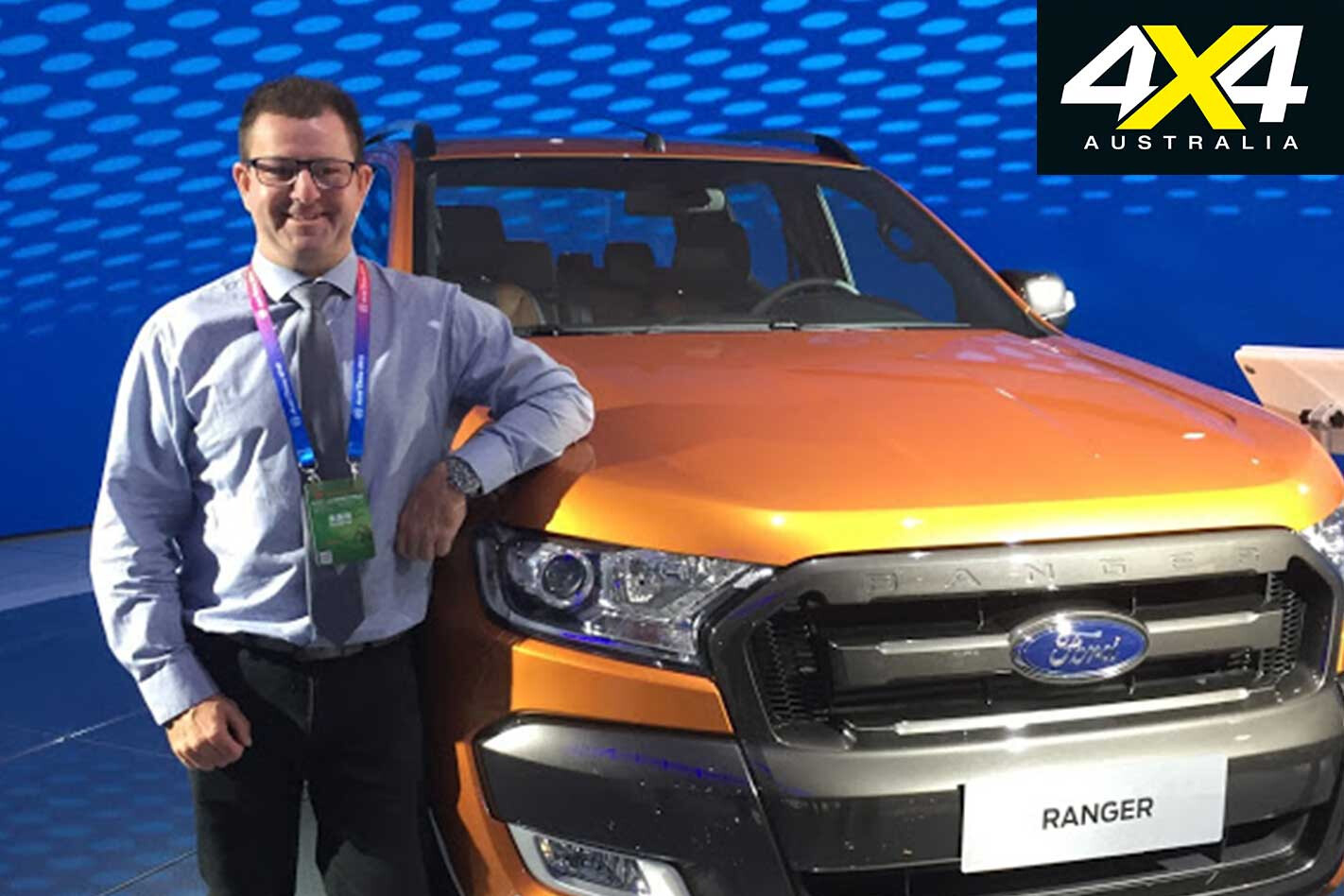
MY ROLE is in product development and I am based at the Ford Asia Pacific You Yangs proving ground in Victoria. Integration is the key word within my job title; my team ensures all the performance targets and engineering requirements roll up and work together, to deliver what Ford expects in terms of overall performance and features.
There are four main pillars within my role: Water Management, Off-road Trailer Towing, Vehicle Integration Attribution, and Label Engineering.
Typically, during a development cycle, we set vehicle targets and work with the engineering parameters during the development stages. This culminates in vehicle level testing, development and sign-off prior to production.
It has been a very busy time at Ford in 2018, with the release of the new Ranger and Everest series, as well as the Ranger Raptor for the Asia Pacific market. We’re also involved in the new North American Ranger.
We’ve been busy completing reviews of owner’s guides, final calibration drives around off-road modes within the TMS (Terrain Management System), and trailer towing.
The off-road team has been out driving the vehicles at the limits to ensure robustness around all the final designs. We had completed a full suite of water management tests around wading capability and other water management tests, including wind tunnel tests to simulate high speed torrential rains.
Within a typical work week I use my time to review each vehicle program status. Where the team needs help with a particular issue, we work together to align the engineering teams with our suggested direction. Pulling the data together and presenting in a fashion that is clear takes a lot of effort and time.
Most people won’t realise that, here in Australia, we are working on vehicle lines in China, and supporting models that will come into the Asia Pacific market from Europe, India and North America.
Within the off-road attribute, we have everything we need within the proving grounds, including a dedicated 4×4 park with rock sections, a mud and ruts area – which we can fill with water as required – many different hill grades, a sand pit, and other obstacle types.
This facility is large enough to test calibrations and hardware including suspension or underbody protection. We still complete all of our testing and sign-off in real world locations like the Victorian High Country, Simpson Desert and many others.
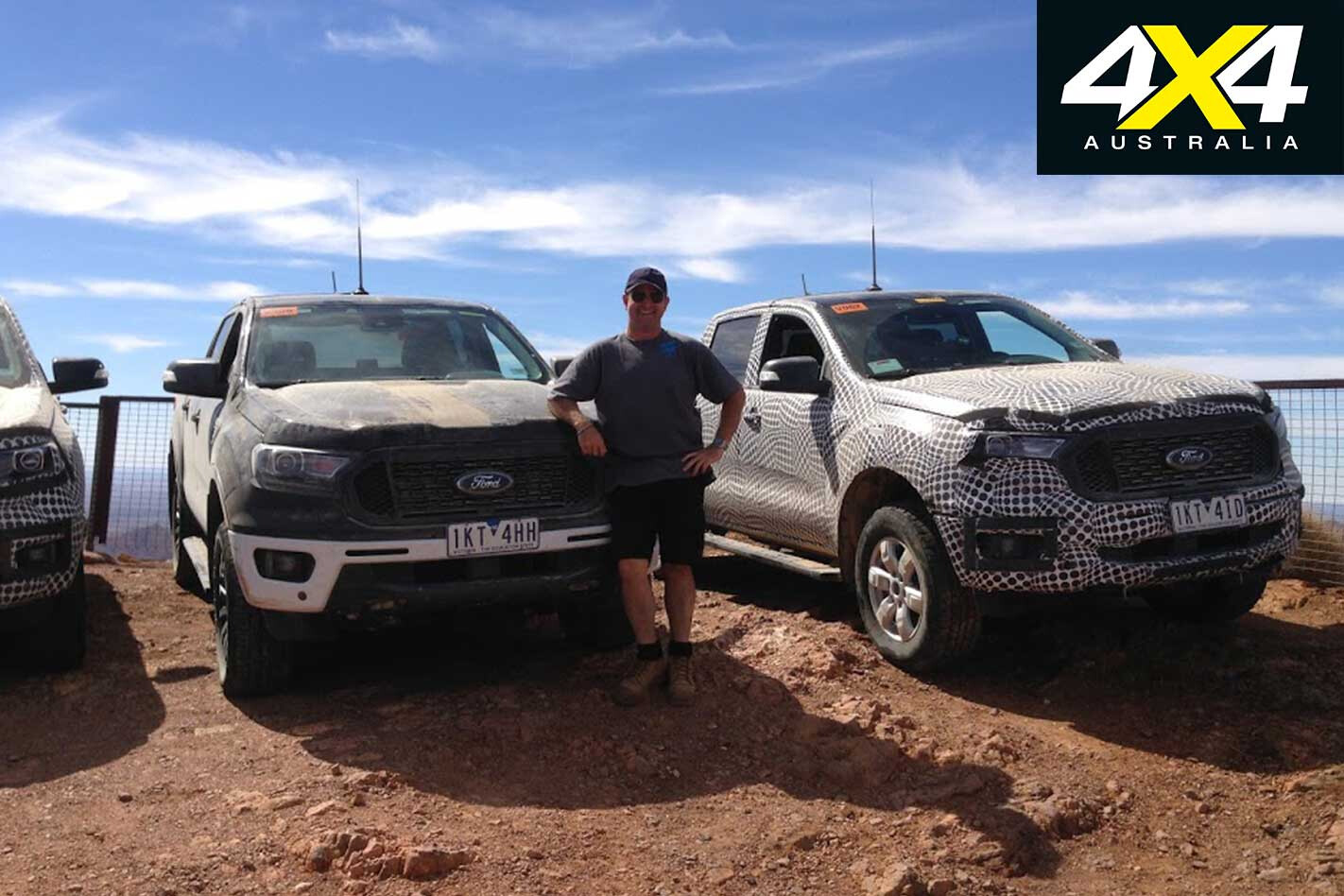
I have had many memorable experiences in this role. One of the highlights during the development of the Ranger Raptor was during a transit drive while on a test trip. We were travelling the road from Yunta into Arkaroola, in convoy, connected by radio signal.
At that time of year the road was quite smooth and in good condition. I jumped behind the wheel of the Ranger Raptor and off I went. Part of our safety process is to reset trip meters and GPS so we can call out cautions around road conditions, oncoming traffic or wildlife.
So I start calling cattle grids and culverts in the road and rating them for speed and harshness; to my surprise the following cars were re-calling them over the radio with higher harshness and soon after that we stopped getting any communication.
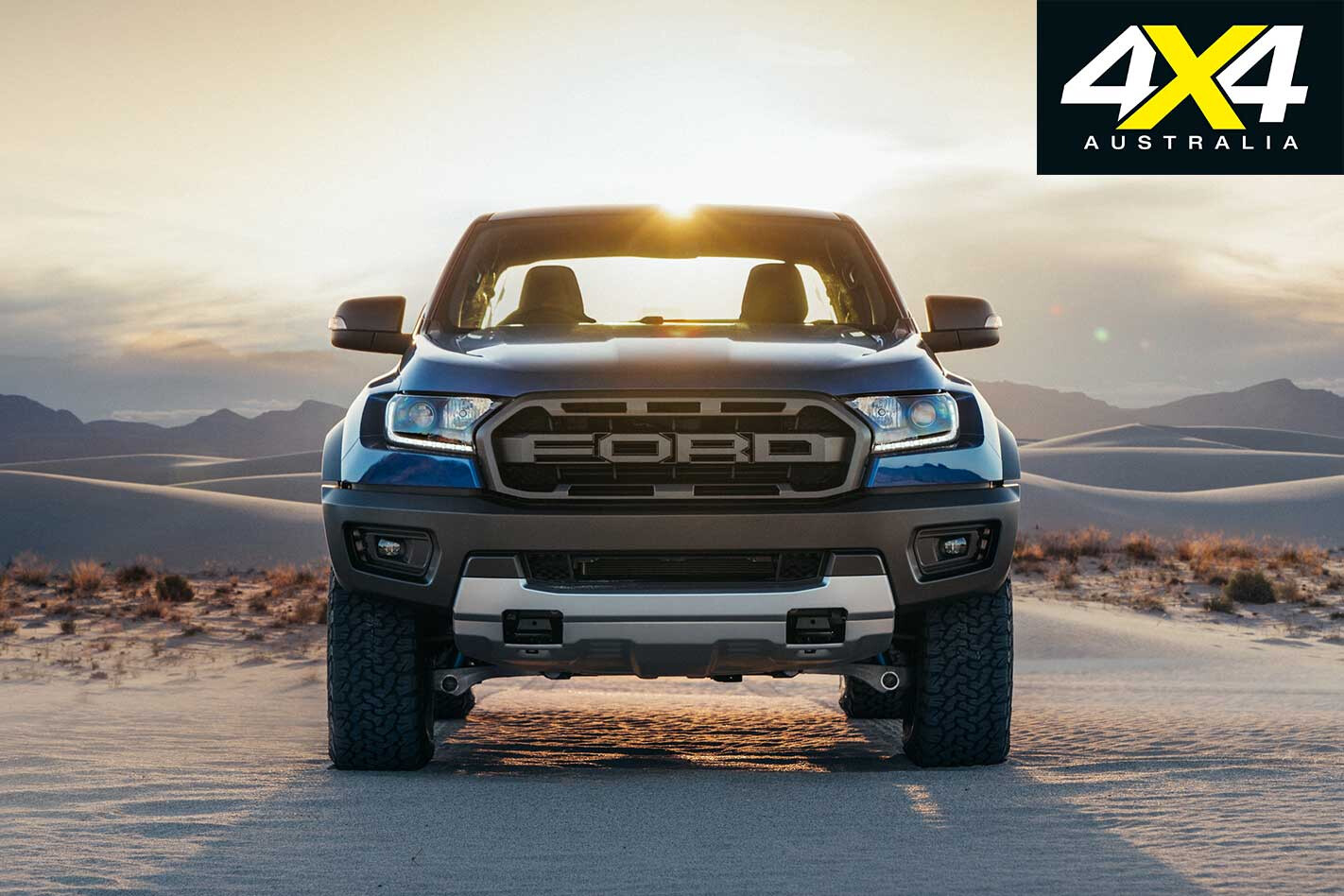
It soon dawned on me that the Raptor was soaking up the road at speed, and we had left the others behind. For me, it was a highlight of how capable the Ranger Raptor is in this environment.
I am very fortunate in this role to drive in some very iconic locations and tracks. The best part of my role, though, is meeting customers and having great conversations, getting feedback directly while out on the road. I can then take that information and feedback and translate it into future products.Meet the Expert Name: Richard Woolley Role: Vehicle Integration Core Attributes Supervisor Experience: “I’ve been with Ford for 30 years.”
I’VE SEEN a fair bit of Aussie-based dash-cam footage recently that’s been posted on various trucking Facebook pages, and it paints a pretty bad picture of how some drivers of cars, vans and 4x4s behave when they’re driving near big rigs.
Driving in urban areas, there’s footage of blokes (and blokettes) who swap lanes and pull-up in front of semi-trailers just as the lights ahead are turning red, and then there are those who try to sneak up the inside lane despite trucks clearly indicating they’re about to turn left.
I’ve seen footage of vehicles on multi-lane freeways diving across three lanes or more, right in front of B-doubles, hitting other cars, causing rollovers and continuing on their merry way.
On smaller country roads, I’ve viewed footage of impatient drivers overtaking trucks on double lines, on blind corners and even when there’s clearly oncoming traffic. There would most certainly have been several head-on crashes if it weren’t for the truckies, who were being overtaken, pulling on to the verge to let the passing and oncoming vehicles squeeze past each other.
And then there’s footage of caravanners who drive too fast, get the wobbles up and then hit the brakes in a vain attempt to slow down, only worsening their lot and ending up on their lids.
Of course, the trucking Facebook pages only show footage from the truckies’ perspective, and they make out like “professional” road users can do no wrong. But, as you and I know, when it comes to poor on-road behaviour, it’s always a two-way street.
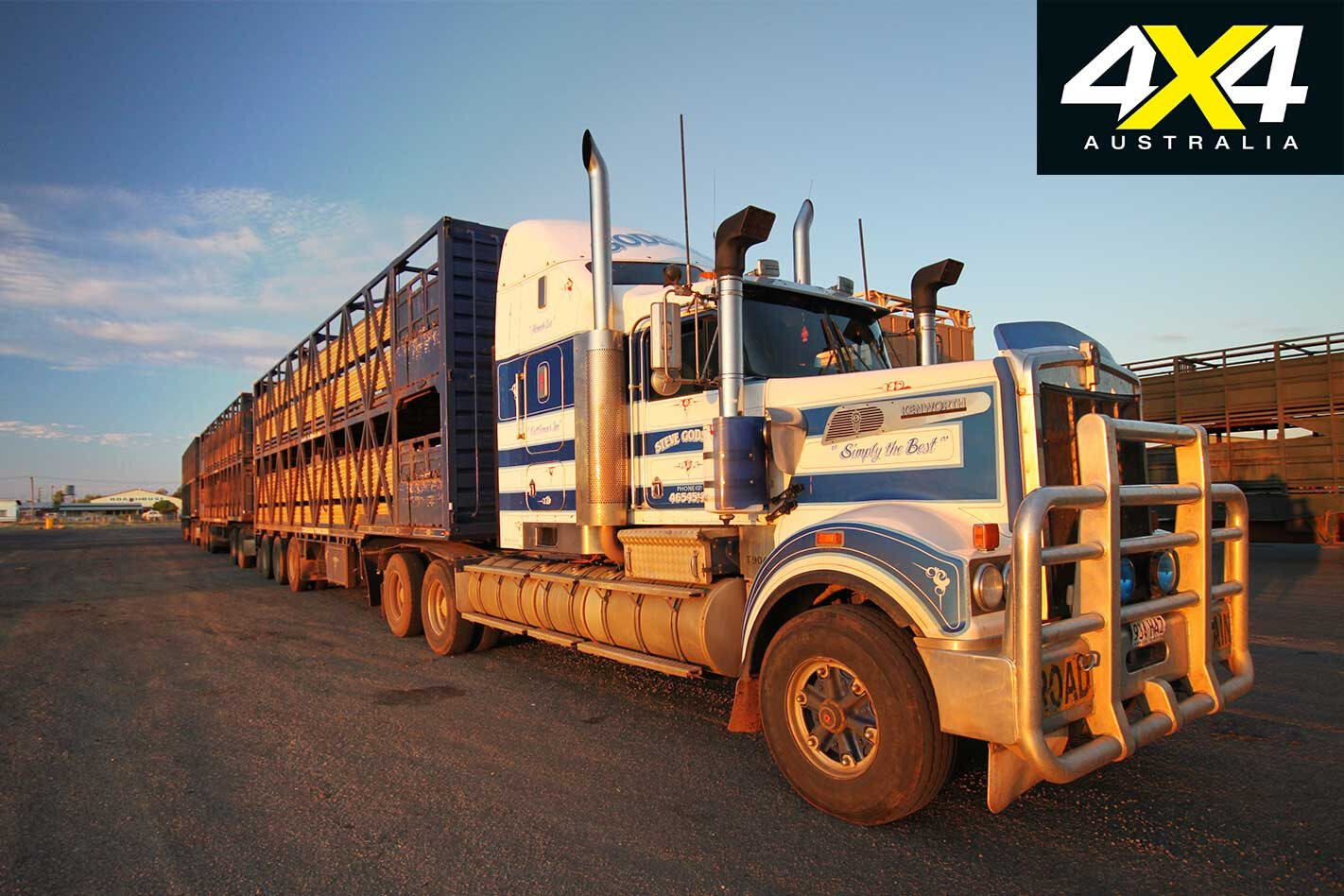
A few years ago, when I used to work in the city, I lived a stone’s throw from the Princes Highway in Sydney’s inner west. At Sydenham and St Peters, the highway is chock-full of trucks hauling shipping containers day and night.
Between the roar of A380s flying over the house, you couldn’t hear the neighbour’s barking dogs for the compression braking, screeching tyres, air horns and the abusive road-rage rants that were seemingly always taking place between truckies and little old ladies in their Camrys and Corollas.
As for trucks on freeways, how many times have you been held-up because one semi driver is trying to pass another semi driver? This usually takes place up long hills with about a 1km/h speed variation between the two trucks; the whole process can take at least several minutes, sometimes culminating in a failure of the attempted pass, with the “passing” truck giving up and pulling back in behind the “passee” truck.
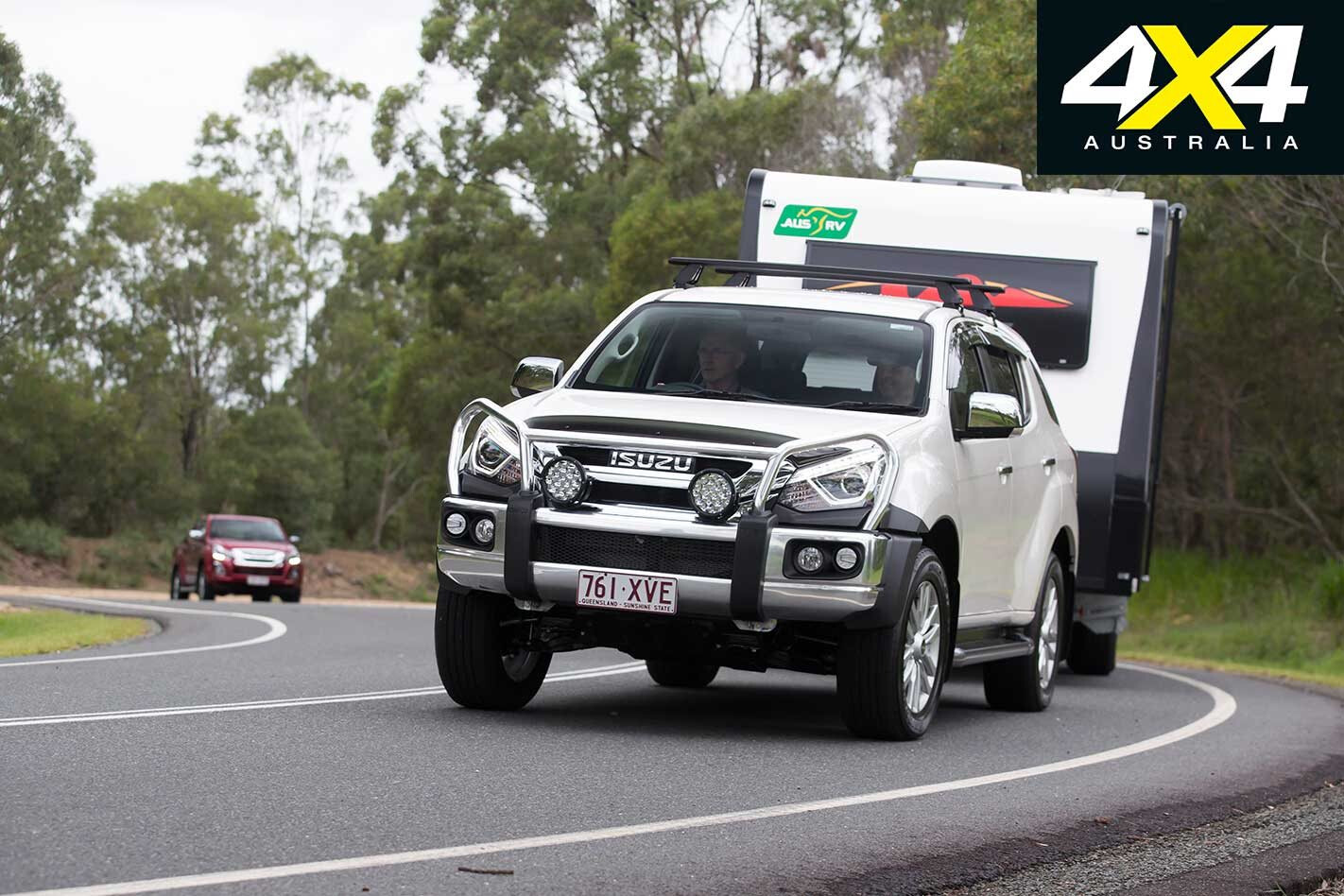
Then there are the angry truck drivers who seemingly hate caravans … and there are plenty of them. Sure, an inconsiderate caravanner can slow down a truckie with a deadline, but that’s no excuse for trying to run someone off the road.
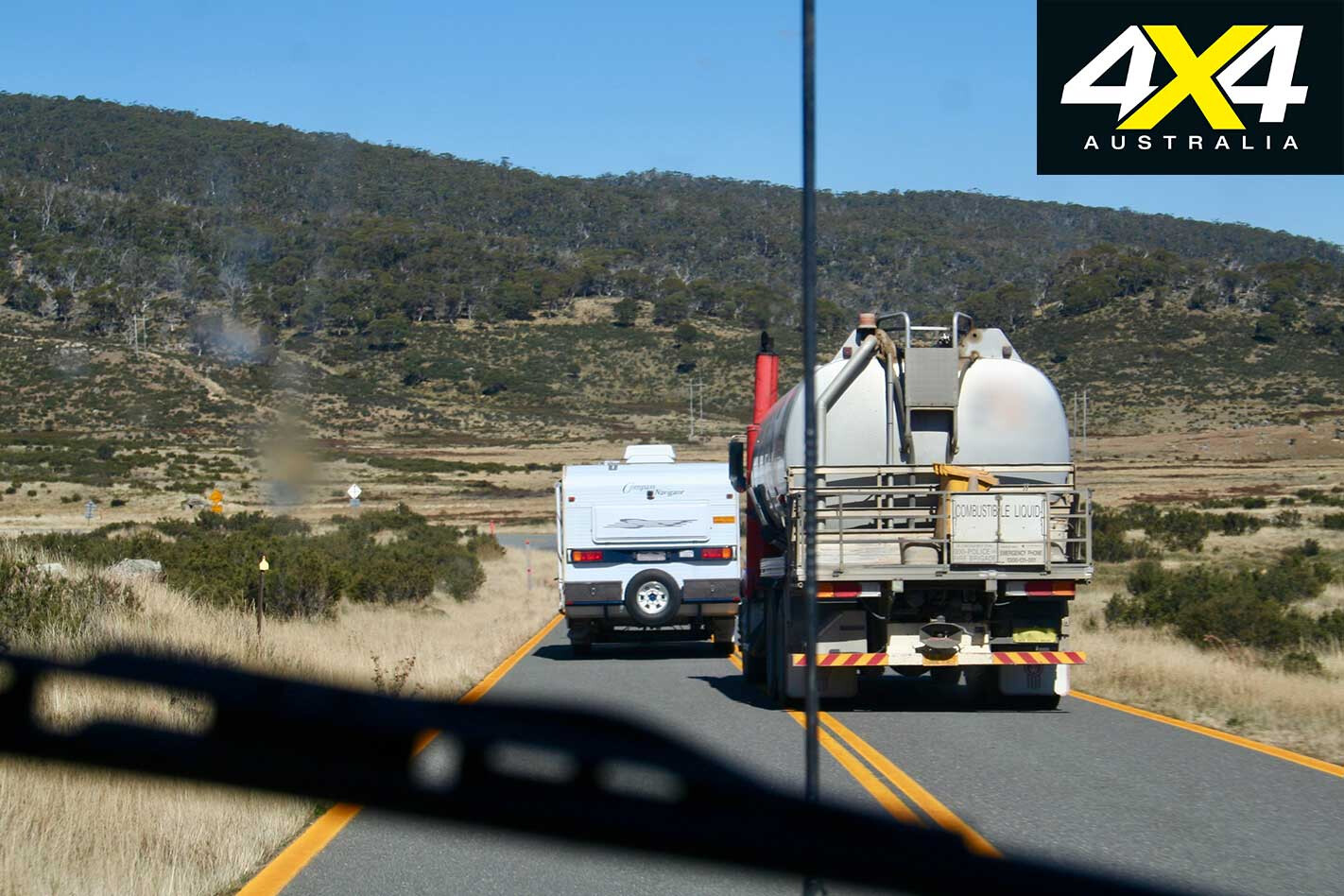
Driving along the Snowy Mountains Highway a few months ago, I watched in horror as a fuel tanker hounded a bloke in a D-Max towing a caravan. Initially the tanker was behind me, but overtook on the approach to a long uphill section after getting a big run-up. I reckon he must’ve been doing well over 100km/h when he went past, despite several ‘60km/h’ road-work signs dotted along the side of the road.
After he passed me, he stuck to the back of the caravan like a magnet to a fridge. I suggested my wife grab the camera because I knew he would try something silly, and, sure enough, that’s exactly what he did, pulling into the oncoming lane on several occasions … on double lines, on crests and on blind corners. And it’s not like the bloke in the D-Max was holding back; he was hitting 100km/h where appropriate and slowing slightly for the corners.
Now I’m not going to tell you I have an unblemished driving record, or that I’ve never done anything silly on the road, but I also don’t go out of my way to be an arsehat, endangering the lives of others just because I’m in a hurry.
I’m not a fan of traffic. Heading back home to the Illawarra the day after watching ol’ mate in the fuel tanker try to make a fireball out of everyone, I skipped the highways and the freeways wherever possible, taking every back-road I could find by peeling off at Bredbo and heading through Jerangle, Ballalaba, Braidwood, Nerriga and on to Nowra for the final run up to the ’Gong.
I’m happy to report it was an uneventful and enjoyable trip, and we stopped to take photos along the way and enjoy the ever-changing scenery.
Yep, give me a lonely old back-road over a heavily trafficked highway or freeway any day of the week.
From compact tenting gear, to complete canopies, and M/T tyres, turn your ute from a tradie’s workhorse into a veritable go-anywhere home away from home with these ute gear.
OZTENT RS-1
OzTent has brought its many years of experience building what are some of Australia’s toughest touring tents to the swag market, with the release of its new RS-1 swag.
This king single swag offers the same 30-second set-up time of its larger OzTent brethren thanks to its internal frame, thus doing away with that sometimes painful process of threading swag poles through eyelets.
The RS-1 includes an integral awning fly for additional weather protection, answering that concern of all swag owners of how to stay dry when exiting their swag when it’s raining. The awning can also be flipped over the swag to act as a fly if need be.
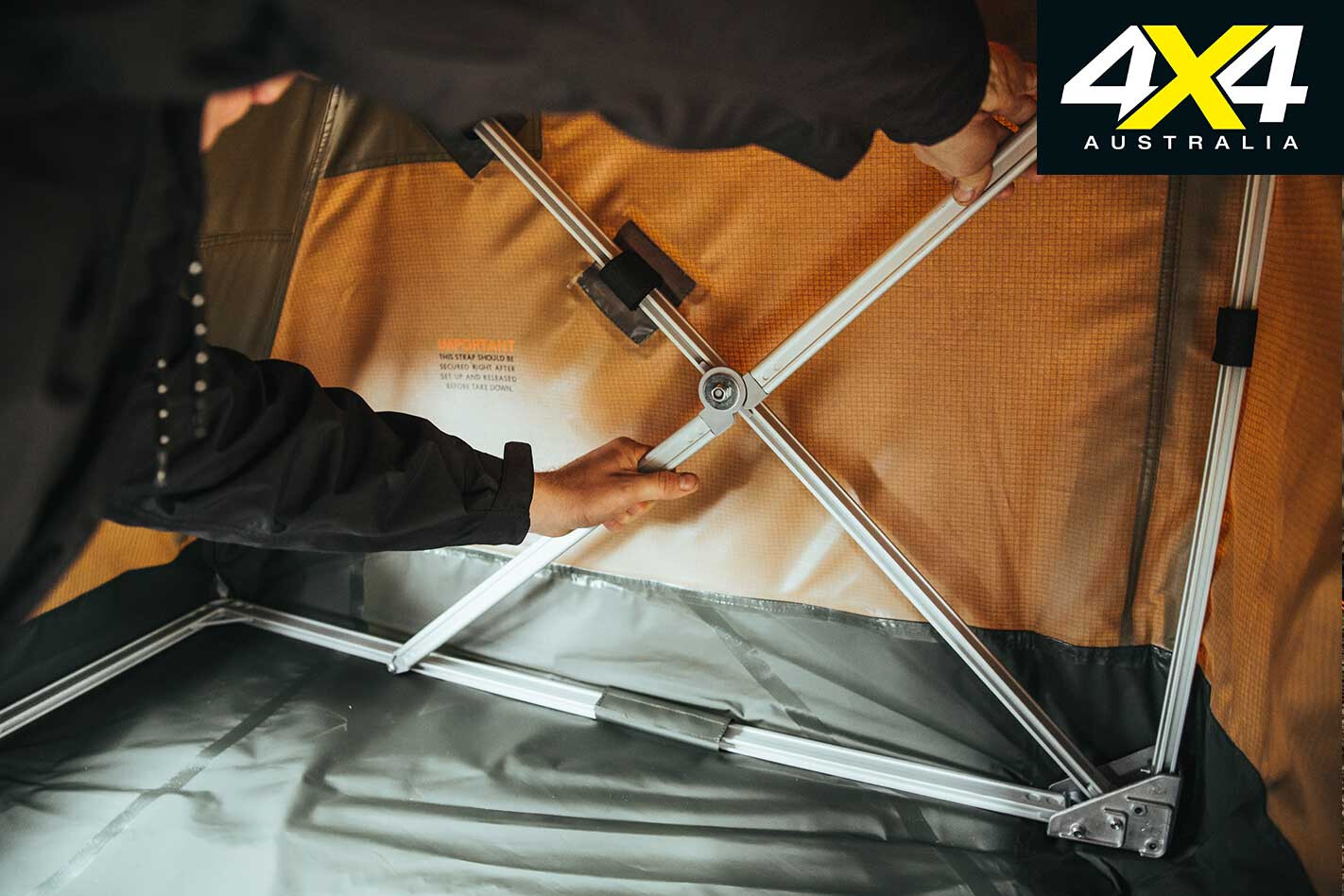
The mattress is a 50mm jobbie, ensuring plenty of comfort, while the new ModCan material used is rated CPAI-84 flame retardant. The 350g PVC tub floor keeps you dry, while the No-See-Um fly mesh keeps biters out.
The swag measures 215cm (L), 105cm (W), 100cm (H) and packs down to 154cm (L), 14cm (W) and 39cm (H). The weight is 14kg and it comes with a two-year warranty, four guy ropes, 12 pegs, two awning guy ropes and two telescopic poles (for the awning). It packs in easily to its own zippered carry bag.
Website: www.oztent.com.au
Vigilante Power down jacket
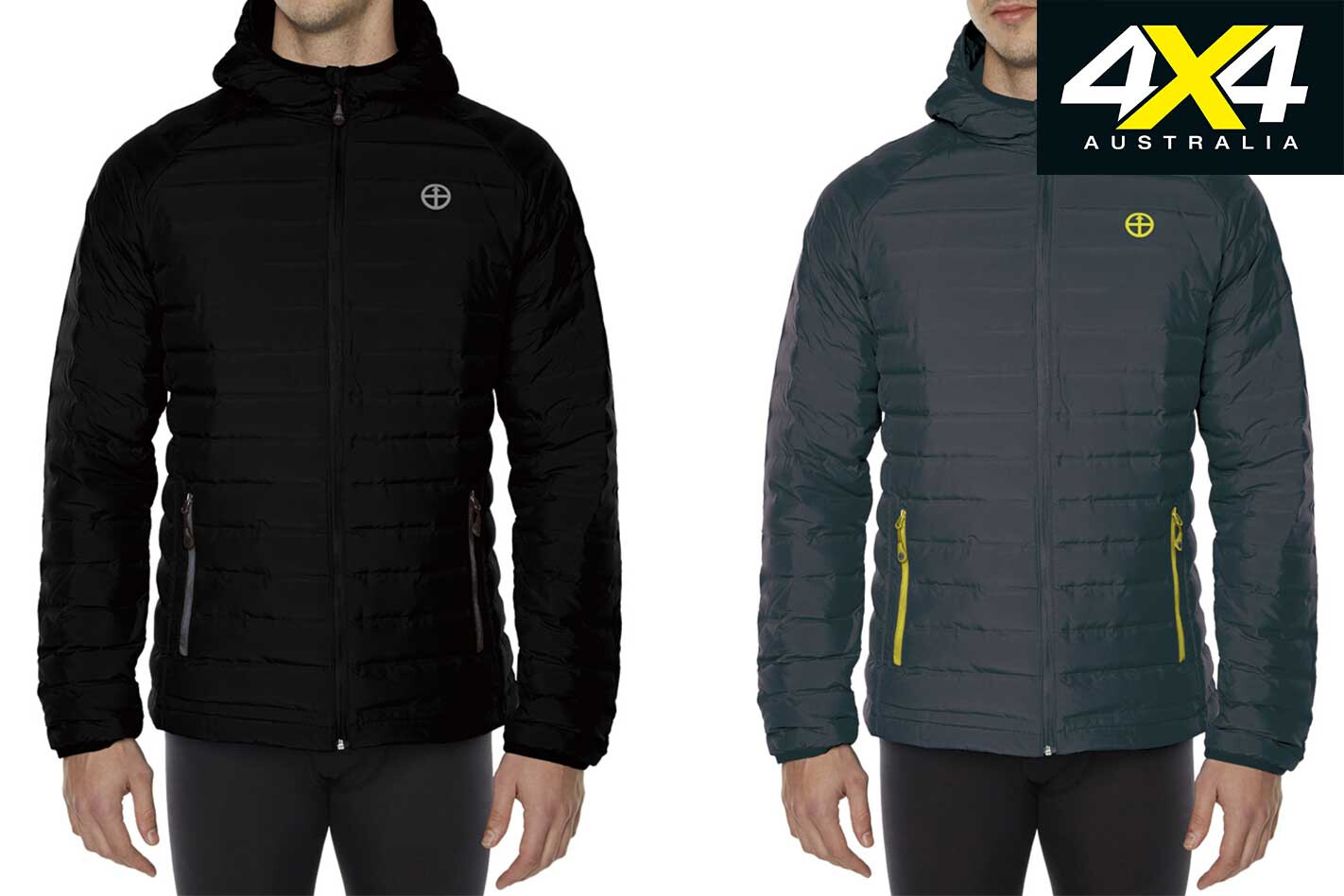
Winter is coming and it’s time to think of how to keep warm while still getting outdoors. Vigilante’s Power jacket is super lightweight, easy to compress down to a small packed size, and offers excellent warmth retention for those cold nights around the campfire.
The jacket features woven stitchless quilted down, meaning no stitch holes for wind to pass through. It also includes a DWR (Durable Water Repellency) coating for protection against rain, and the high-denier outer fabric offers impressive abrasion resistance.
Down-filled cuffs minimise cold air getting inside the sleeves, while zipped pockets allow you to warm hands easily if it gets really chilly. The down fill is 80 per cent down/20 per cent feature so you’ll not lack for warmth in winter conditions. The jacket also comes with a small stuff sac for storage.
RRP: $170 Website: www.escape2.com.au
Sammitr Steel Canopies
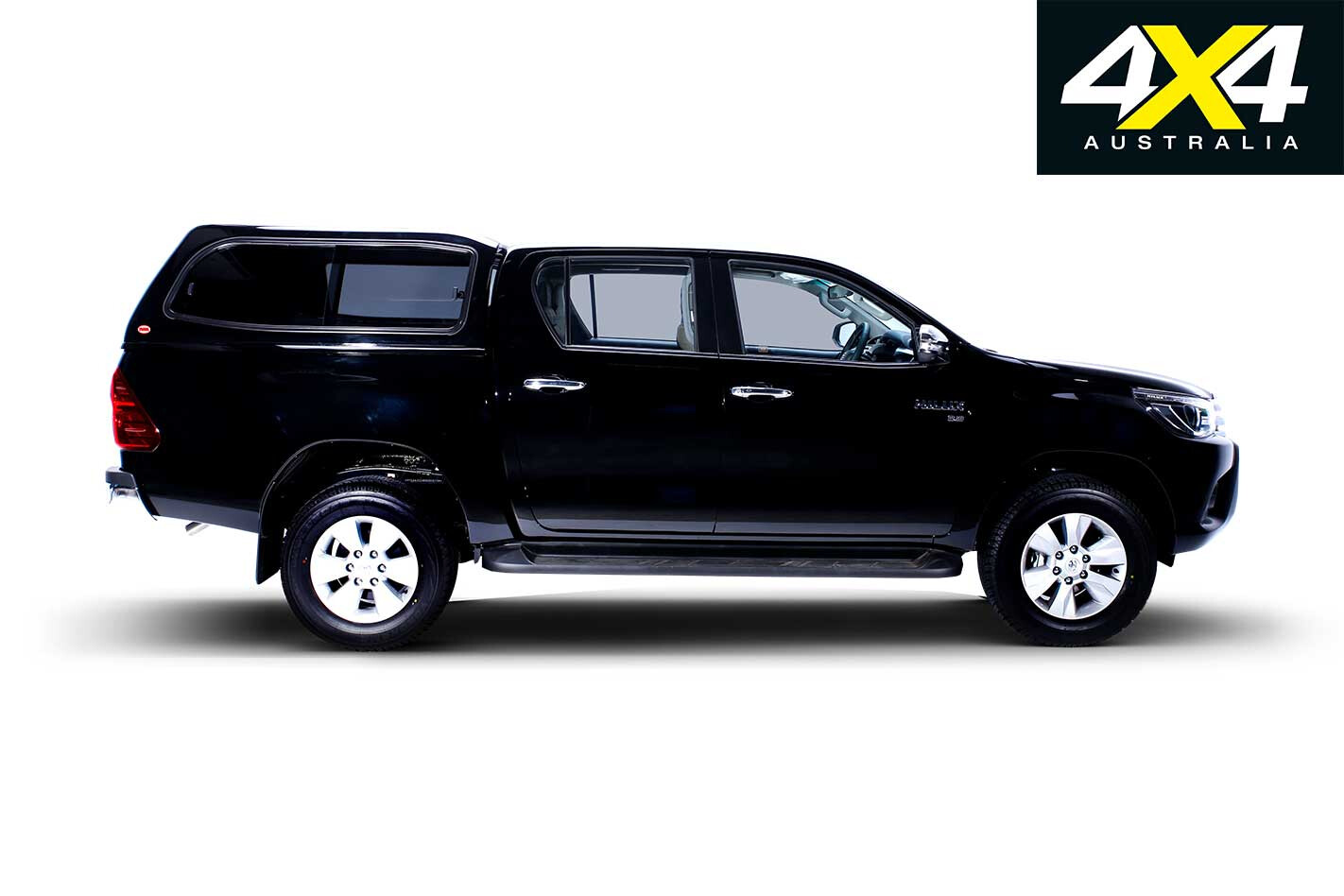
Utilising the most up-to-date manufacturing processes, SMM steel canopies are made using high-quality automotive steel to provide maximum strength, durability and security. SMM produce three canopies – SMM V2 Executive, SMM V2 Tradesman and SSM V4 Executive – suitable for a wide range of dual-cab utes.
Features vary for each model, so head online to check out what each canopy offers. For example, the range-topping V4 Executive features tinted lift-up side windows, a strong-pressed GalvanNealed 0.8mm steel shell and frame, colour-coded baked paint system with EDP coating, twin-rotary door locks, remote control locking, rear window demister, automatic interior light, a fully lined interior, and epoxy-coated roof rails.
The SMM canopy range comes with a full five-year warranty. SMM also stocks a range of 4×4 accessories, as well as a range of roof racks.
Website: www.smmcanopies.com.au
TJM SIGNATURE BAR – TRITON MQ
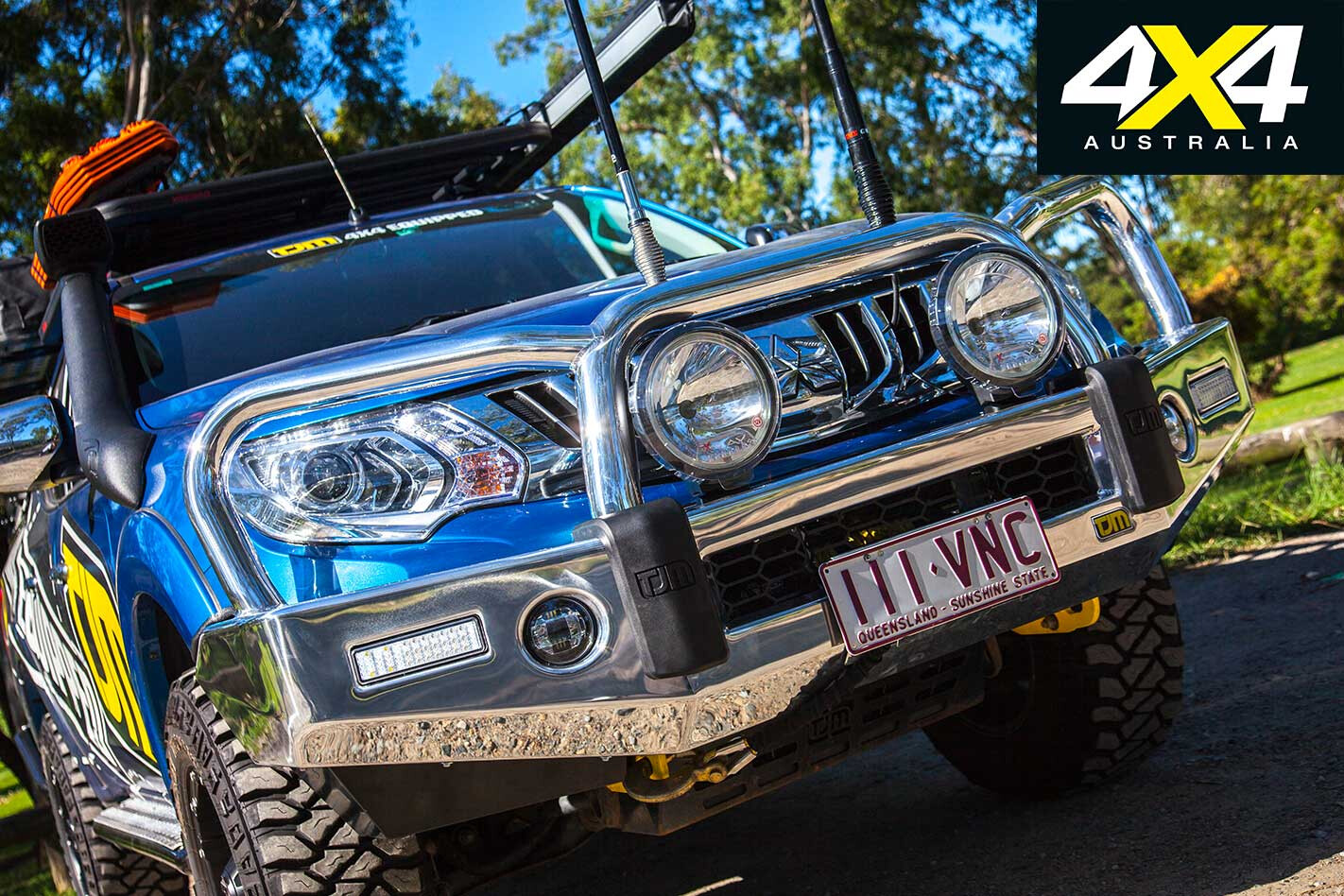
TJM’s all-new bar for Mitsubishi’s Triton MQ has arrived. The alloy Signature Bar design features a large polished centre loop (76mm) bookended by two 63mm side loops (also polished) for optimum headlight protection.
The bar is airbag- and winch-compatible (it can take a winch of up to 9500lb capacity), and includes a high strength steel mount system. The lightweight bar has been designed to ensure the best possible airflow through to the engine bay.
LED indicators and fog lights are included as standard and the recovery points are rated to 8000kg (when used in a straight-line pull, with 8000kg equaliser strap and two 4.75T bow shackles). There is space for two 220mm spotties and two aerial tabs, while the energy/impact-absorbing bumperettes take care of those low-speed nudges.
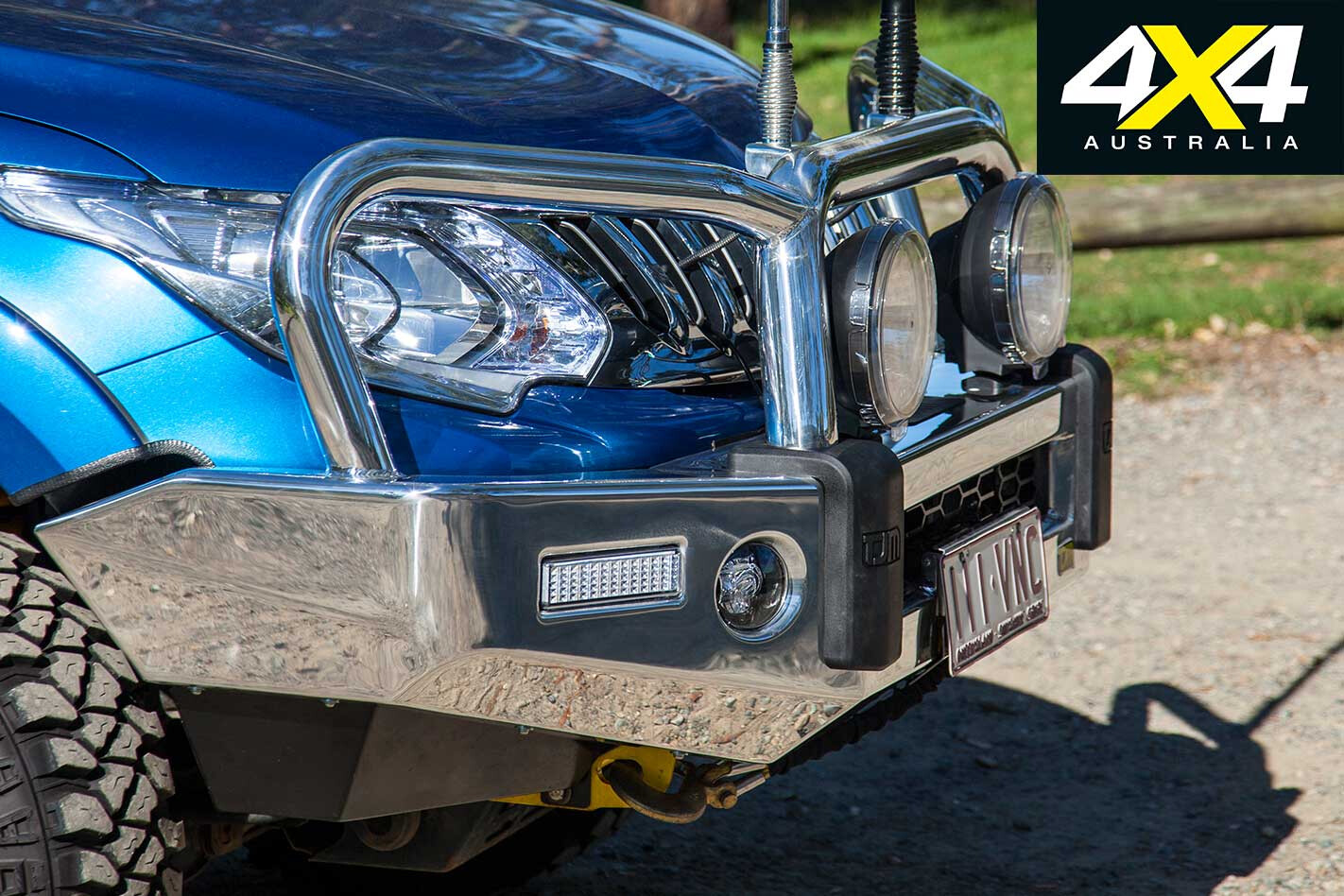
There are two optional kits available: a LED combo lamp Plug and Play wiring harnesses for GLS and Exceed models, and an identical kit for the GLX model Triton. Available from all TJM outlets.
Website: www.tjm.com.au
Maxxis Razr MT
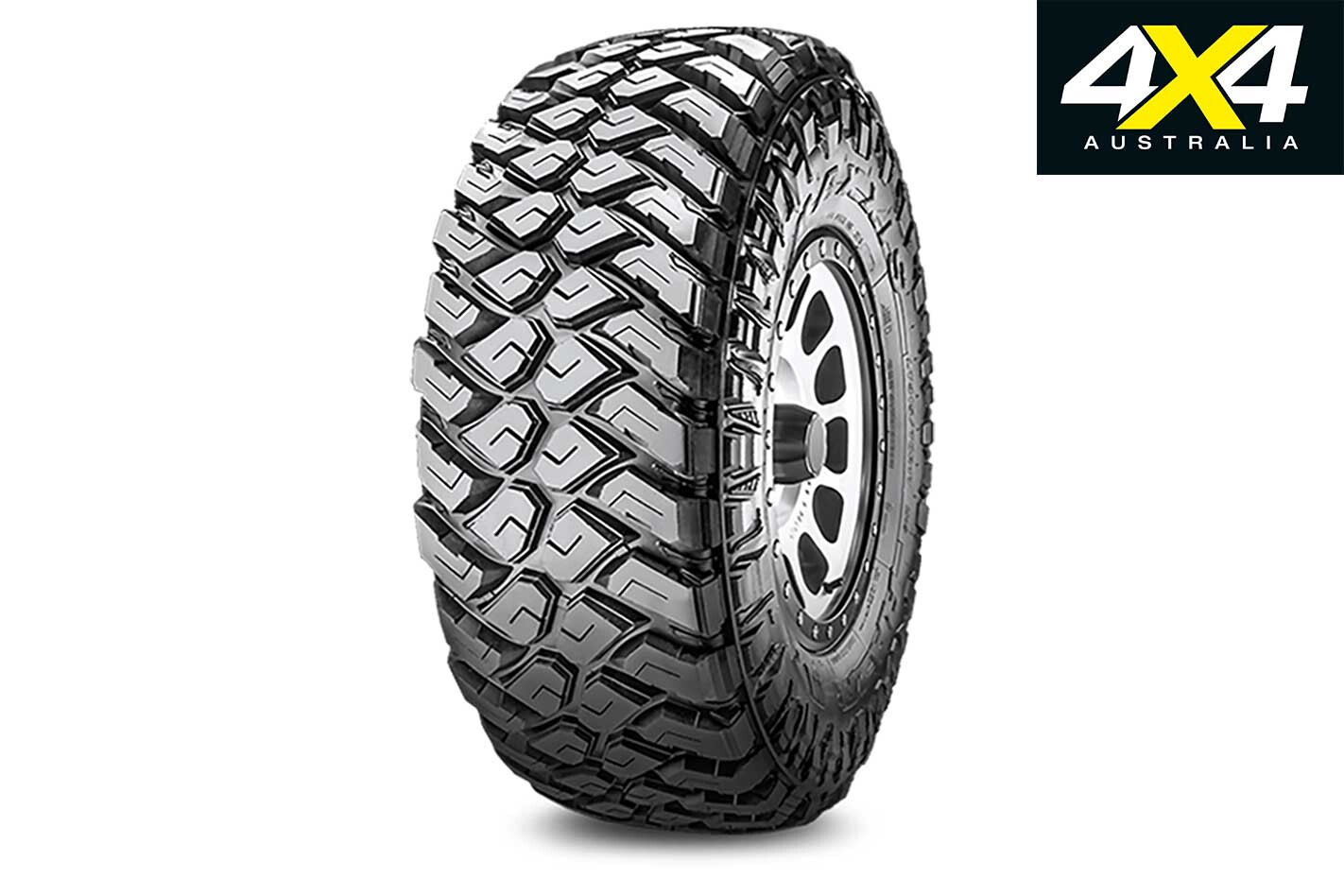
Highly regarded tyre brand Maxxis has released a new tyre – the Razr MT – and it is packed with the expected toughness and some impressive new tyre technology.
The Razr MT uses an evolutionary cut and abrasion resistant tread compound, in combination with a new three-ply casing construction and the company’s latest in “harsh terrain” tread pattern development. These include a deeply sculpted centre block that retains excellent traction but quietens the on-road noise, along with stone and mud ejectors that ensure the tyre keeps on gripping. This results in a durable tyre that will perform in the most rugged conditions.
The Maxxis Razr MT is available in 22 sizes, starting from 15-inch and going all the way through to big-bopper 20-inch wheels. What’s not to like?
RRP: Prices start from $253. Website: www.maxxistyres.com.au
SOMETIMES the problem with driving the latest model 4×4 is that the aftermarket industry can take a while to catch up. As was the case with our facelifted 2017 Patrol Ti-L, as we were unable to get a bullbar to fit the revised front end. They’re available now, but at the time it meant we had nowhere to mount a set of auxiliary driving lights to the front.
A compromise was to mount an LED light bar on a roof rack, and there are plenty of options available. However, we didn’t want one of the many cheap and generic LED products, so we went with quality from legendary Australian company Lightforce.
As well as its range of exceptional round, LED, HID and halogen driving lights, Lightforce does a line-up of LED light bars in various lengths and in single- or double-row to suit many applications.
We fitted a Lightforce CB40XP single-row 40-inch bar to an Ironman 4×4 alloy roof rack, and our good mate Phil at Ontrack Automotive in Ferntree Gully took care of the wiring.
The CB40XP kit includes the light bar, a pair of stainless steel mounting brackets, and a full wiring harness with switch and relay. There are optional brackets available to mount the bars to other surfaces, but the supplied brackets were perfect for our rack mount.
The ‘XP’ in the name indicates the bar is dual-wattage, meaning it utilises both 10W and 3W LEDs to punch light out (forward from the 10W LEDs, and broader from the 3-Watters). There are two 3W Osram LED chips at either end, then two 10W chips and more 3-Watters filling in the centre of the bar.
This makes it an all-in-one combination lamp that blasts light out beyond 600m to the front of the vehicle, as well as to the sides where you’ll be looking for animals ready to run in front of your car.
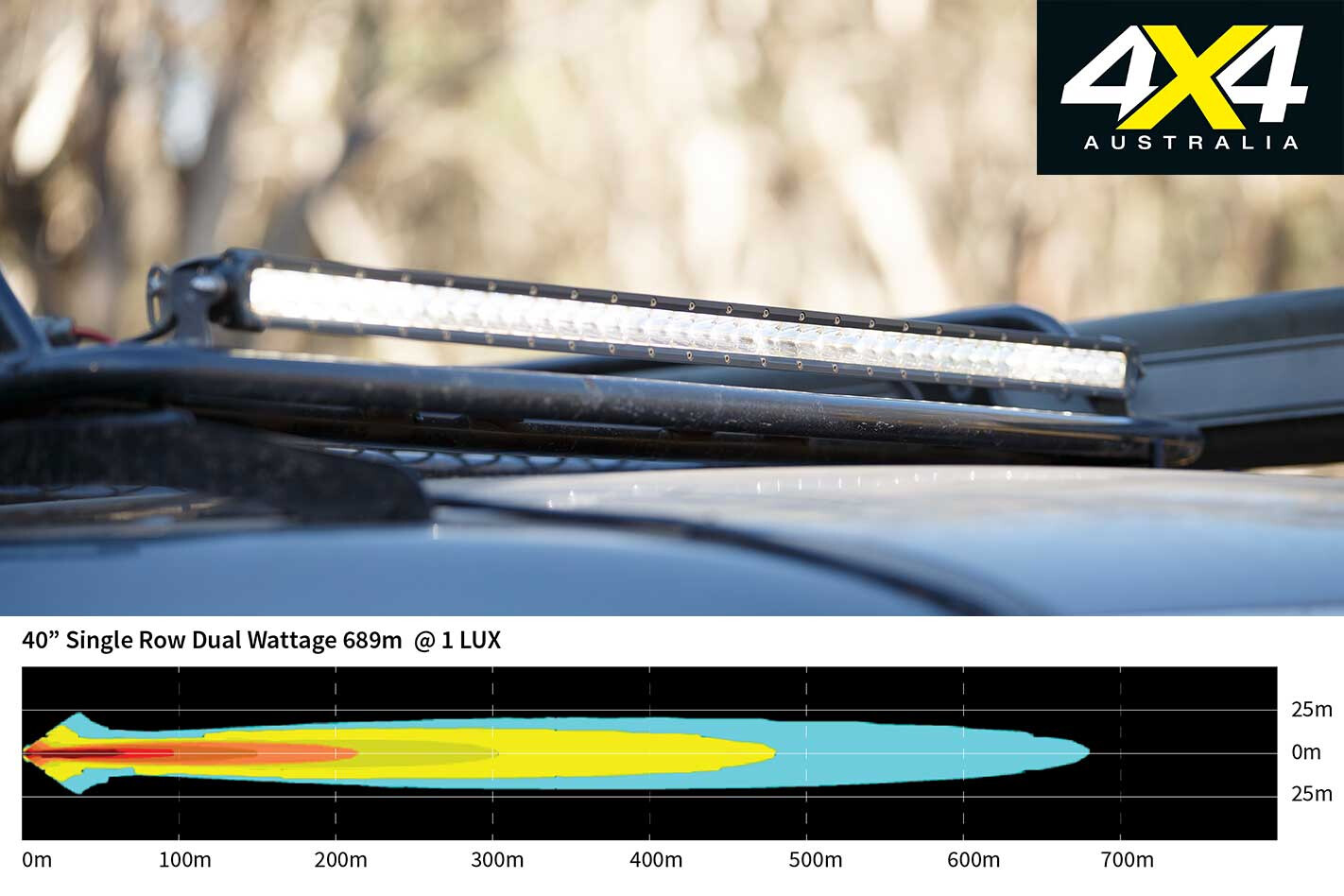
The LEDs are cased in an extruded aluminium housing anodised for protection against the sun and elements. The bar is IP69K rated against dust and moisture ingress, and there’s a Gore-Tex breather to let moisture out. So it’s made to cope with the worst conditions and be submersible to three metres.
The Lightforce bar has a strong and very usable light for general night driving, both on- and off-road. It also has that usable spread of light, which is a great compromise for a single light bar.
Lightforce driving lights and light bars are available at select stores nationally and are covered by a three-year warranty, which is more dependable than anything from your cheap eBay fly-by-nighters.
RATED Available from: www.lightforce.com RRP: $899.80 We Say: Quality product, amazing light output.
REMEMBER the Rezvani TANK XUV that was hiding a Jeep Wrangler beneath its composite shell? Well, Rezvani Motors, the California-based designer and manufacturer, has twisted the dial further to create the TANK Military Edition.
Powered by a 6.4-litre 500hp (373kW) engine – an optional 6.2-litre 707 supercharged Hellcat V8 is available – the bulletproof war rig is decked out with kit to keep its occupants breathing, including Ballistic Level 7 opaque glass and body armour, underside explosive protection, ram bumpers and military run-flat tyres.
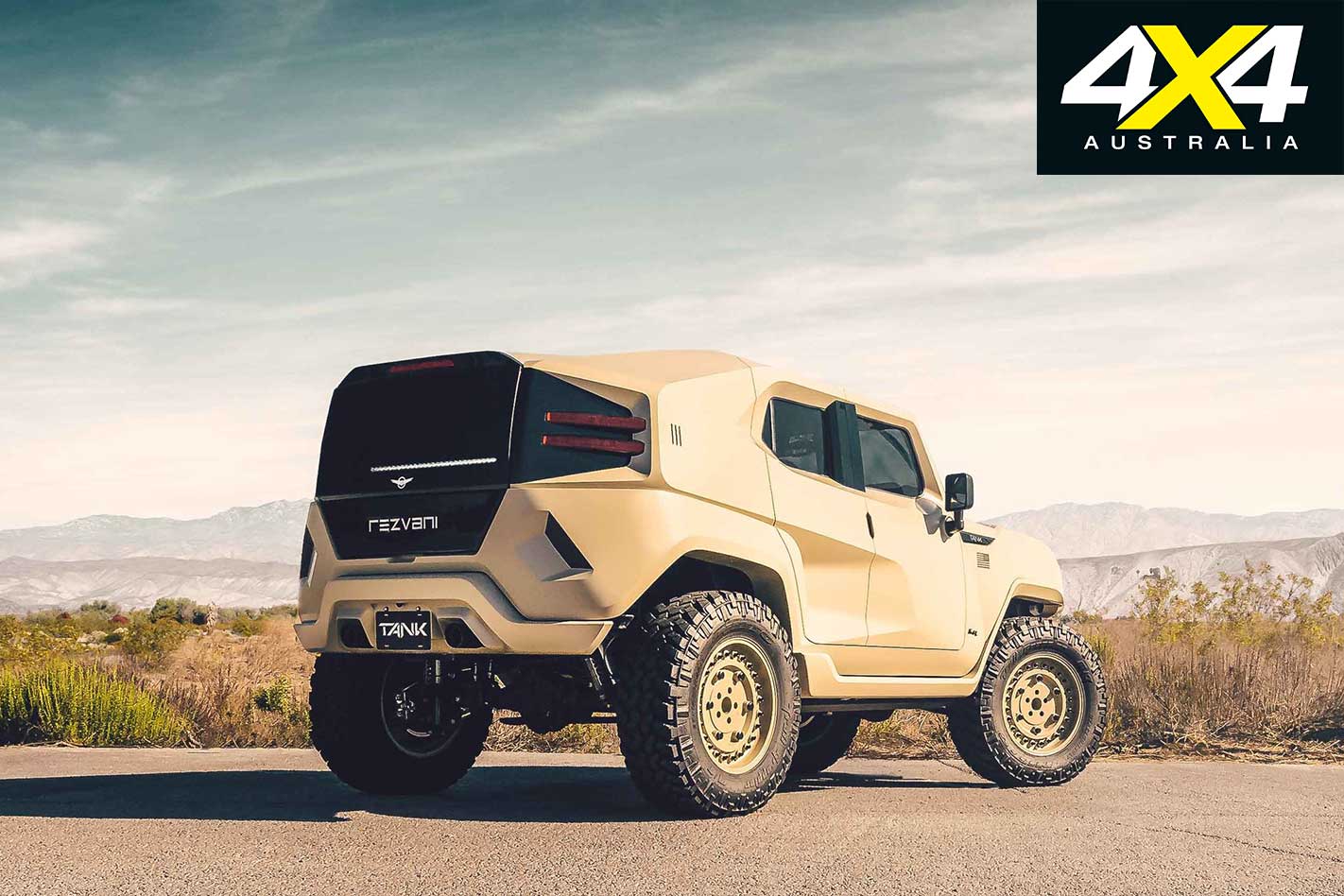
The radiator, battery and fuel tank are secured in Kevlar, and it’s even got gas masks and a hypothermia kit in stowage.
It gets crazier. Electrified door handles and magnetic dead bolts will stop anybody without permission from entering the rig, blinding and strobe lights will disperse unwanted followers, sirens and horns will help pave the way through congestion, and a smoke screen – yes, a smoke screen – can be initiated via an in-cabin button to lose a tail.
Tracking down the enemy when the sun sets is made possible thanks to a FLIR thermal/night vision system, which displays heat signatures and standard night vision.
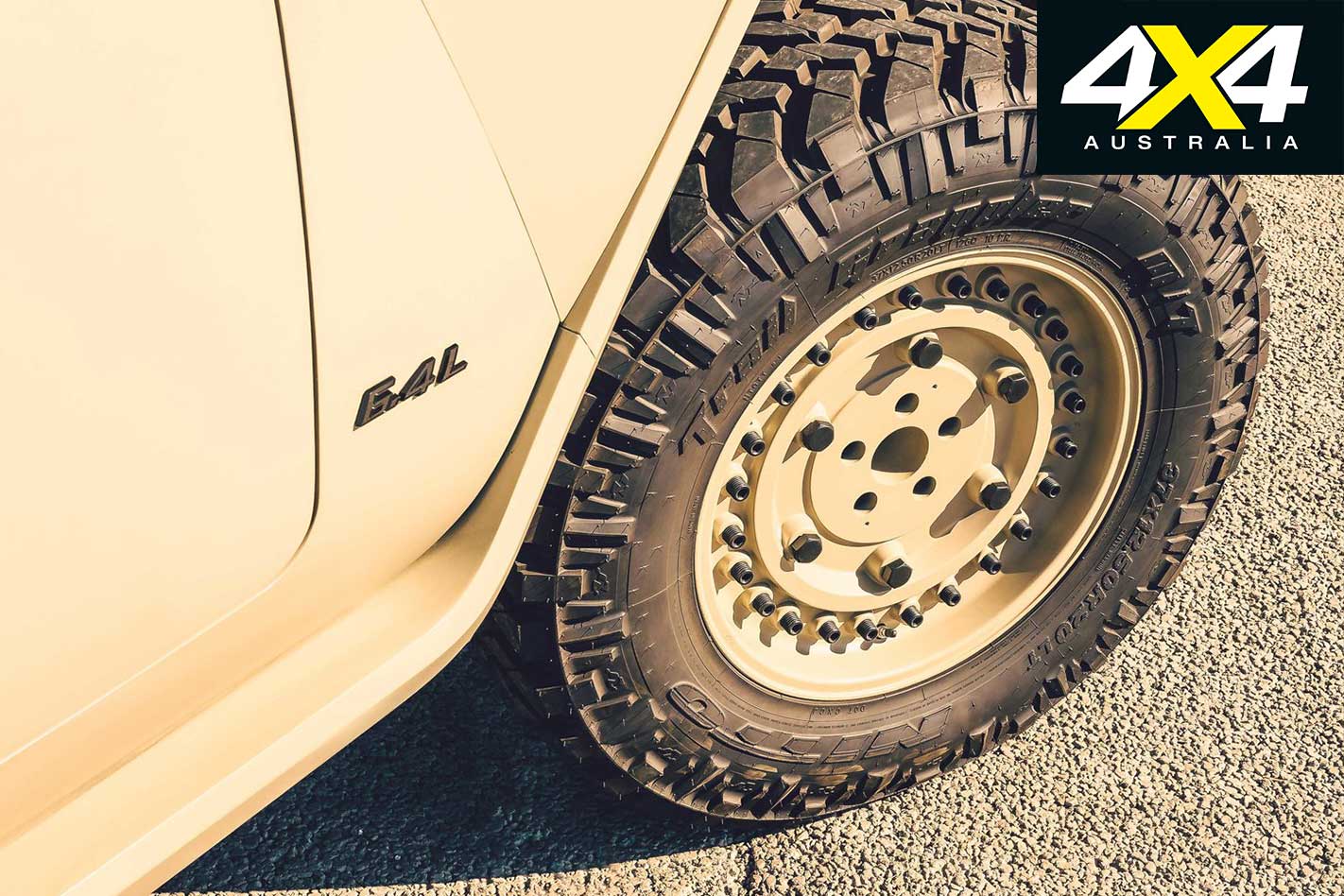
An Off Road Package will get you a six-inch lift, 37 x 12.5-inch tyres, a Dynatrac ProRock 44/60 axle set with Elockers, front and rear 1350 driveshafts and FOX 2.5-inch remote reservoir shocks.
The TANK Military Edition starts from US$295,000 for American buyers.
Rezvani TANK dimensions Height: 83 inches (2108mm) Length: 196 inches (4978mm) Width: 84 inches (2134mm) Weight: 4300lbs (1950kg)
JEEP lovers in Europe will be celebrating the annual Camp Jeep event in Austria this coming weekend (July 14-15) and with it the European media launch of the JL Wrangler.
This is significant for a number of reasons. Firstly, July 15 1941 was when the agreement to supply the US Army with the Willys MA/MB vehicles was signed, and this vehicle went on to become instrumental in the Allied Force’s campaign to win the war in Europe.
Secondly, it reveals the engines for the first right-hand-drive JLs for the UK market, which gives us an indication of what we might expect when the latest Wrangler lands here in January 2019.
The JL Wangler will be launched in Europe and the UK in September, with a choice of three engines and two 4×4 systems. There will be two petrol engines – a new turbocharged petrol four-cylinder and the familiar V6 Pentastar engine – plus a single turbo-diesel.
The diesel isn’t the highly anticipated V6 turbo-diesel that is set to launch in the US market in 2019, rather a 2.2-litre Multijet II turbo-diesel engine that’s also found in the Jeep Cherokee and some Alfa Romeo vehicles.
The Multijet II engine is a 16-valve, aluminium-head-and-block design with a VGT and common rail injection that meets EU6 emission regulations by employing both EGR and SCR. In this Wrangler application it makes 150kW at 3500rpm and 450Nm at 2000rpm, so it should propel the new and lighter Wrangler along pretty well.
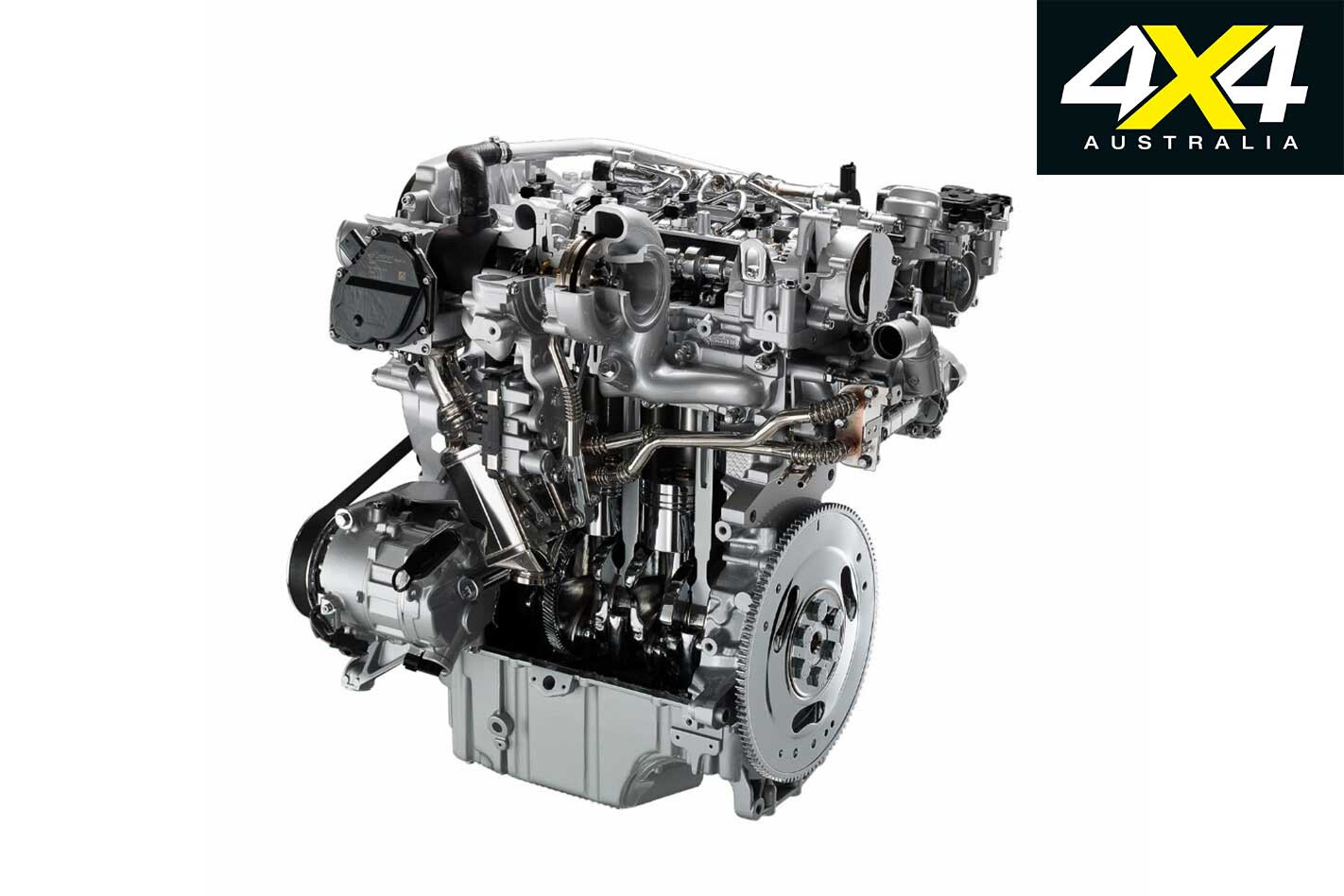
The 2.0-litre turbo-petrol engine should also be sprightly, pushing 203kW at 5250rpm and 400Nm at 3000rpm; the V6 remains pretty much unchanged making a tad more power at 212kW at 6400rpm and 347Nm at 4100rpm. Both petrol engines feature the auto stop/start function.
The Euro launch information only mentions the new eight-speed auto transmission, with no word of a manual option, possibly confirming the rumours that we’ve seen the last of stick-shift Jeeps. The JL might retain its traditional ladder-frame and live axles, but it won’t be the same without a manual gearbox.
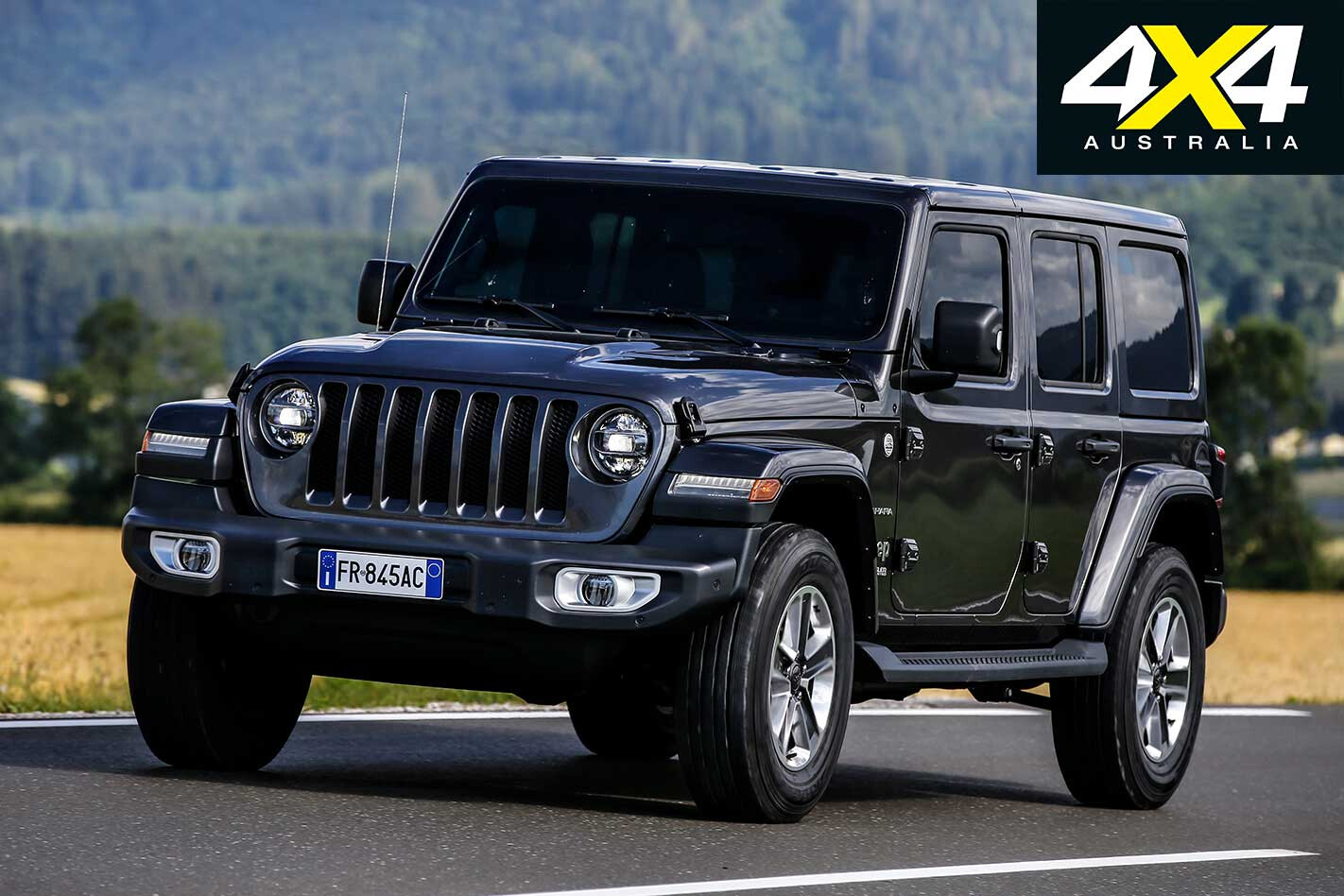
Command-Trac remains the 4×4 system for most Wrangler models, with the Rock-Trac standard on Rubicon variants. Command-Trac remains part-time 4×4, offering rear-wheel drive, locked high-range 4WD and locked low-range 4WD. However, for the first time it adds an Auto mode that allows on-demand 4WD depending on road conditions.
Rock-Trac doesn’t get the Auto mode but, as in the past, features a lower 4.01:1 low range gear-set in the transfer case and 4.10:1 final drive gearing in the next-generation Dana 44 axles, when powered by the petrol engines (3.73:1 in the diesel-powered Rubicons).
That’s right, there are diesel Rubicons on offer, which are the Jeeps everyone has always wanted, complete with locking front and rear diffs, a front swaybar disconnect, and taller BFG KO2 tyres.
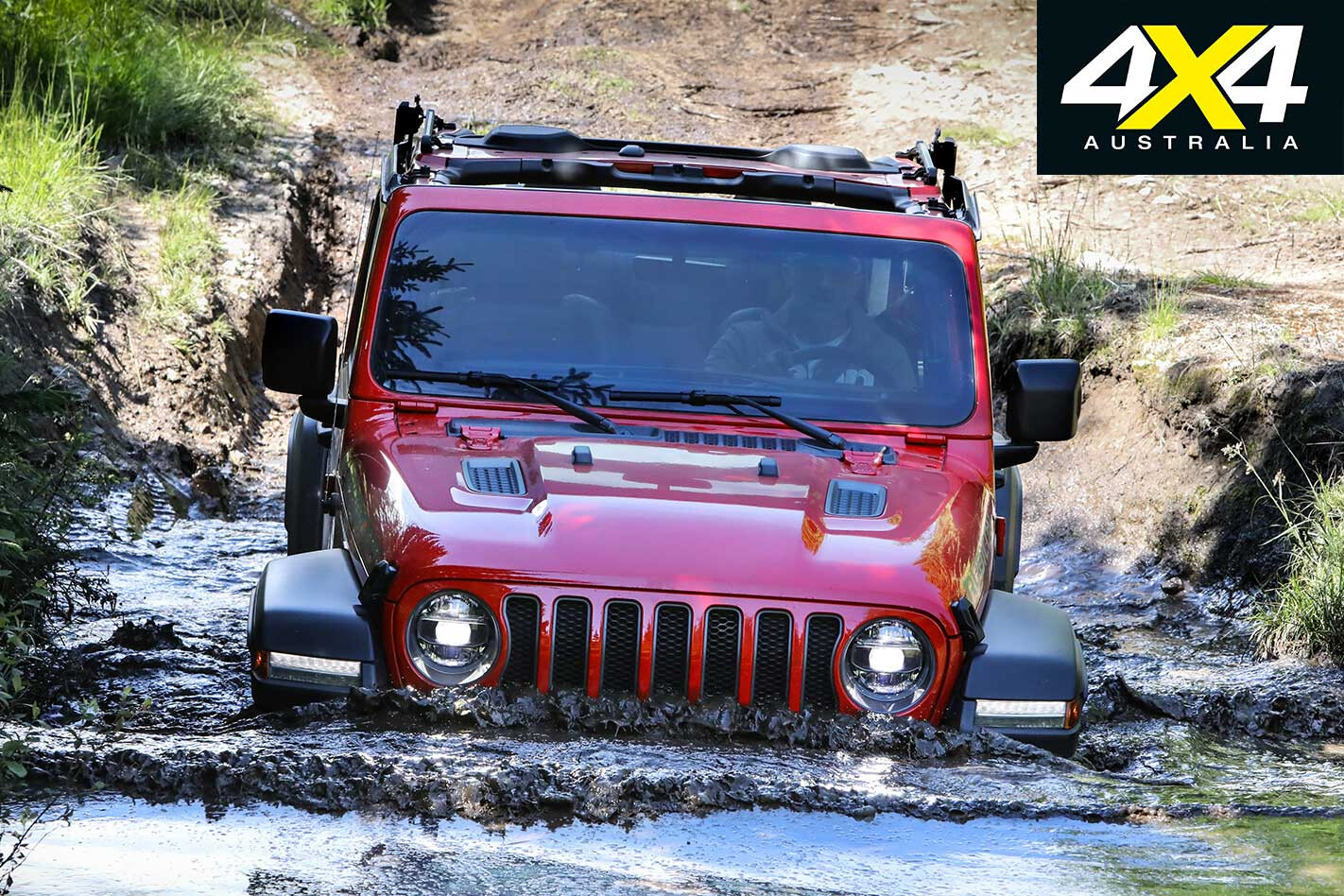
While these driveline specifications are for the European Wranglers, we’re tipping we can expect a similar line-up here as they include the first RHD variants. FCA says it is not ready to reveal details of the Australian JL Wrangler range just yet and will do so closer to the launch in 2019.
The 3.0-litre turbo-diesel V6, yet to appear in any JL Wrangler, is slated to go into production later in 2018, along with the Scrambler pick-up variant. We were told earlier that the JT Scrambler was earmarked to come to Australia at some point, so we’ll keep our fingers crossed that it arrives with the V6 diesel and petrol options.
WHAT do you get when you merge a Russian military truck with a luxury sedan?
The W140-66 you’re ogling right now is the brainchild of Russian gearhead, Ilya Nikolaevich Belyakov, whose off-beat idea saw him transplant a Mercedes W140 S-Class body onto the chassis of a GAZ-66.
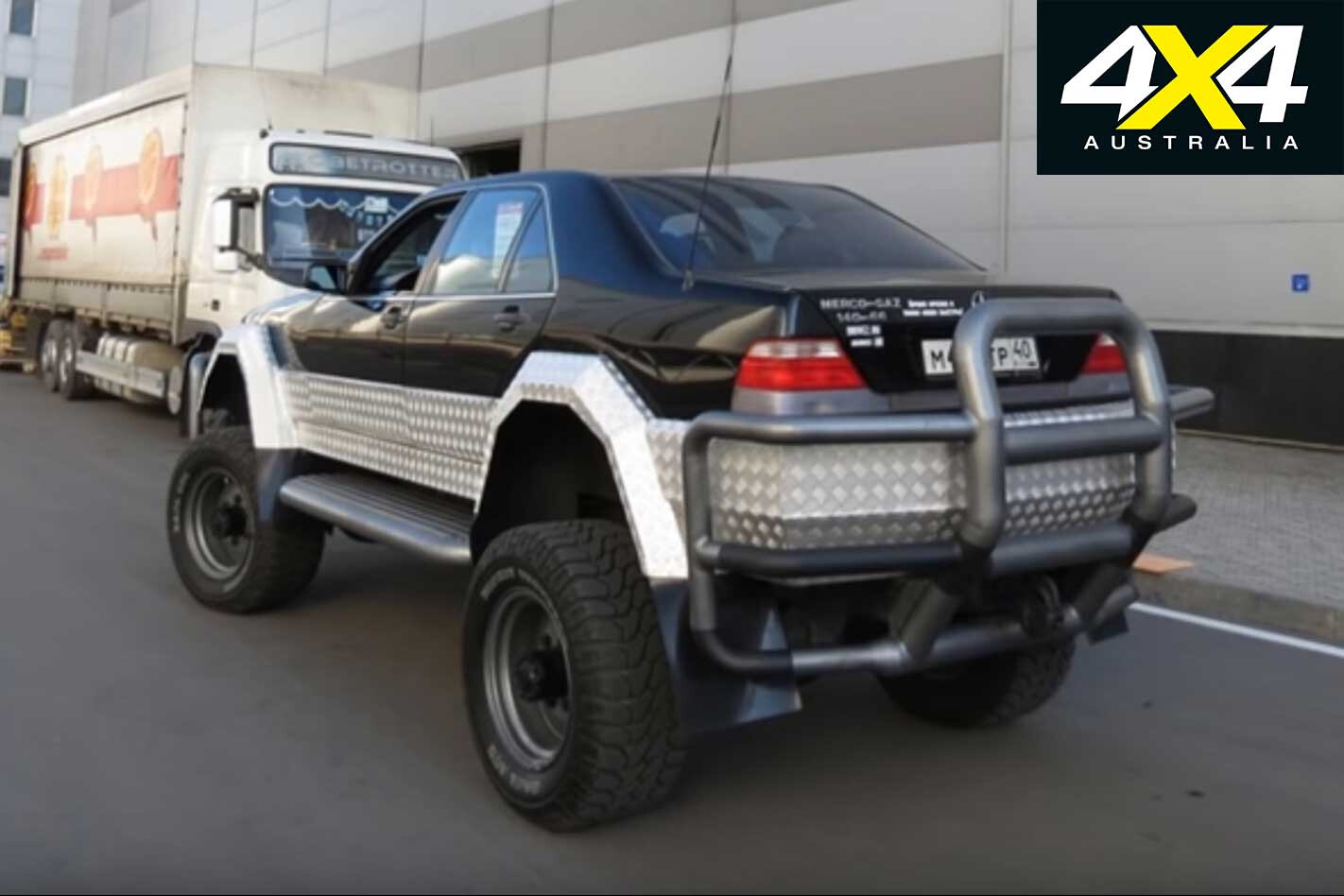
The (what seems to be a mainly backyard) build took three years from go-to-whoa, with a heap of parts – both large and small – either custom-made or fettled from other cars.
The beast is urged up hills and through streams by Mercedes’ 5.0-litre V8 engine, capable of 320hp (240kW), which is mated to the Merc auto transmission.
Stopping power is courtesy of DAF Truck brake rotors and machined VW Touareg calipers. The one-of-a-kind sedan/truck hybrid rides on Mickey Thompson 38 R20 rubber.
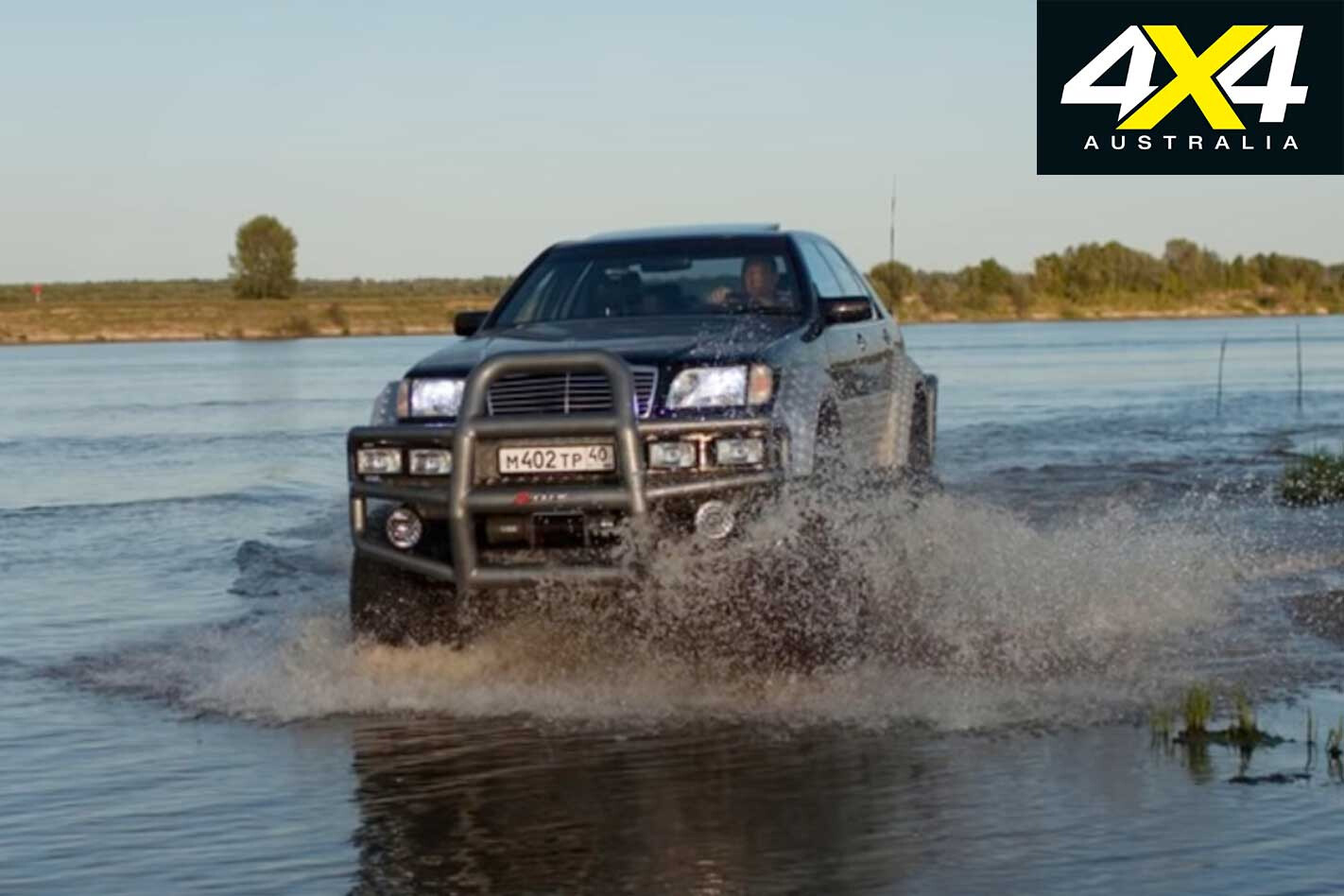
Hear the V8 purr in the above clip, watch it win the tow tug-of-war against miserly competition, and see it plough through snow, ford rivers and kick up dust.
The video was posted to the DIY Garage YouTube channel where, as you’d expect, opinions are divided. Abomination or awesome? Let us know.
JOIN 4X4 Australia’s Matt Raudonikis and Ron Moon, along with some of the biggest names in the 4×4 industry, on a three-part touring adventure to one of Australia’s top off-road destinations.
Ron shares his wealth of knowledge of the High Country as we tackle steep and notorious tracks, visit iconic huts and meet some of the characters of the region.
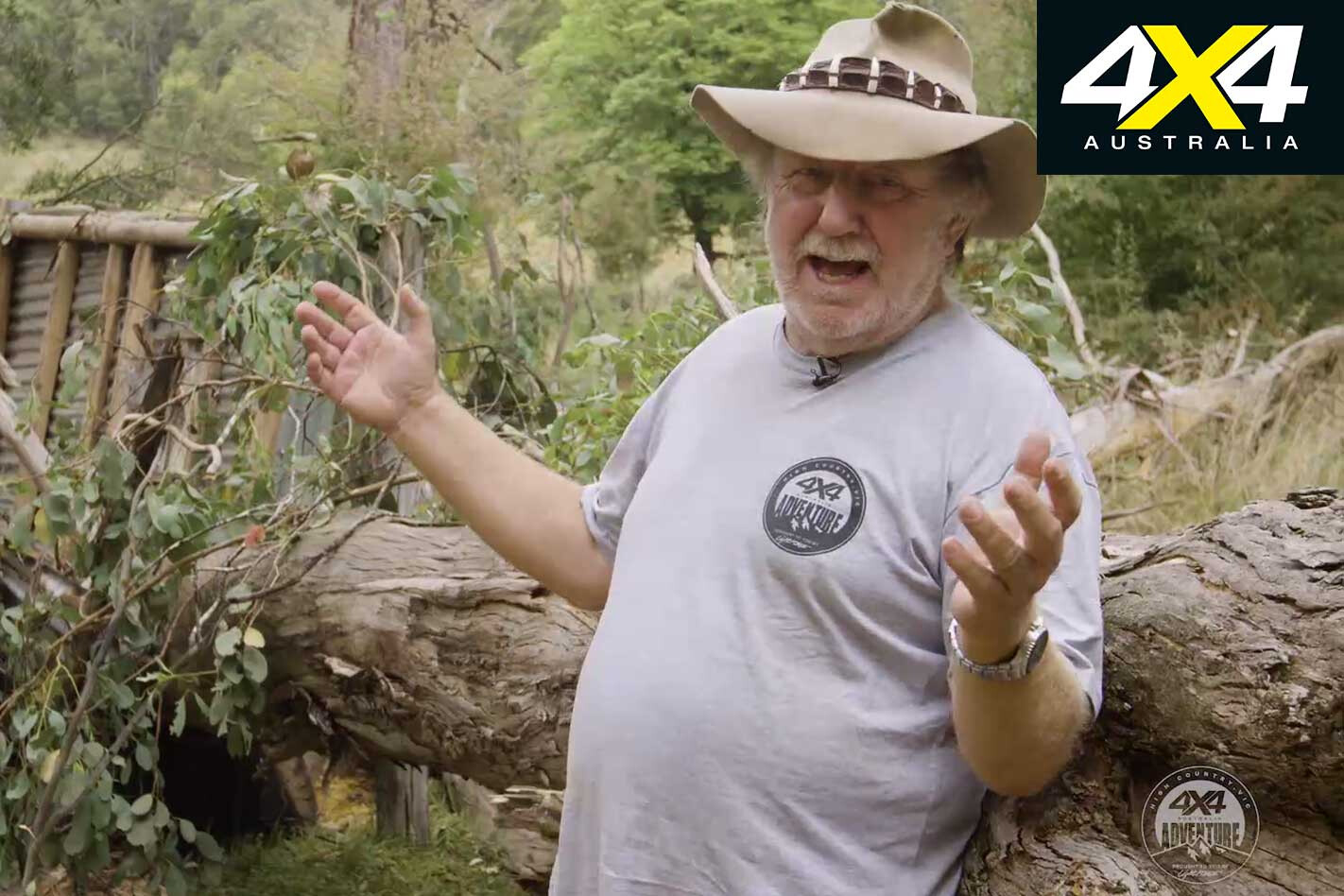
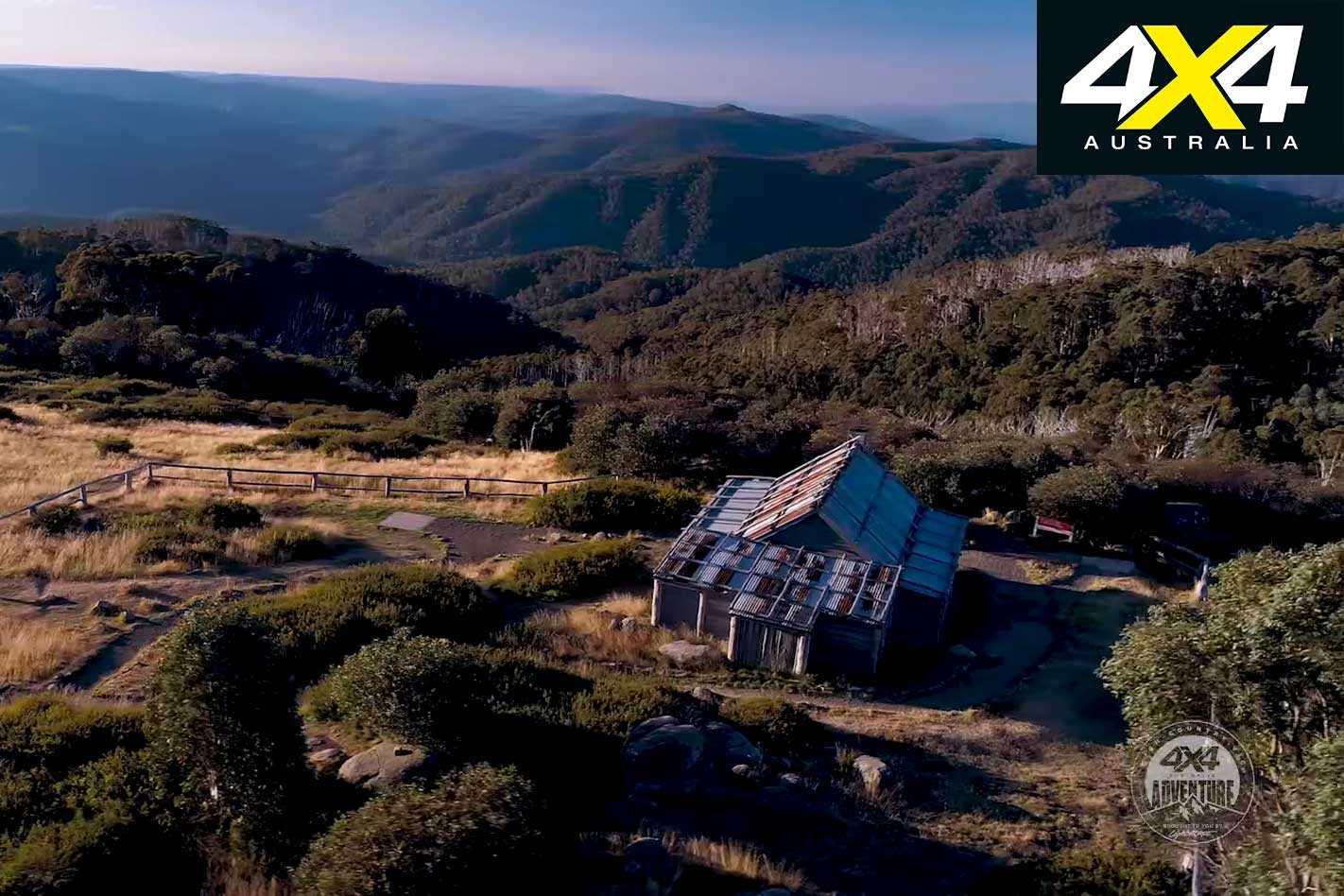
In Episode 1 the crew explore the historic High Country huts and talk to the mountain cattlemen who have worked this region for generations by moving their stock through the steep and rugged ranges.
Lovicks Hut, Bluff Hut, Bindaree Hut and The Man From Snowy Rivers’ Craigs Hut are all must-see locations for the 4×4 traveller, and we stop by all these and more with Ron explaining the story behind each. From hut to hut our convoy travels spectacular mountain scenery that will have you planning your own Vic High Country trek next summer.
Keep an eye out for Episode 2, where we explore the High Country’s rich, old gold-mining sites.
YOU wouldn’t know it by looking at it, but this 45 spent a good part of its life as a makeshift dog kennel.
It was rescued by Billy McKinnon, and it didn’t take him long to turn it into the one of the best Troop Carriers in the world – not an exaggeration.
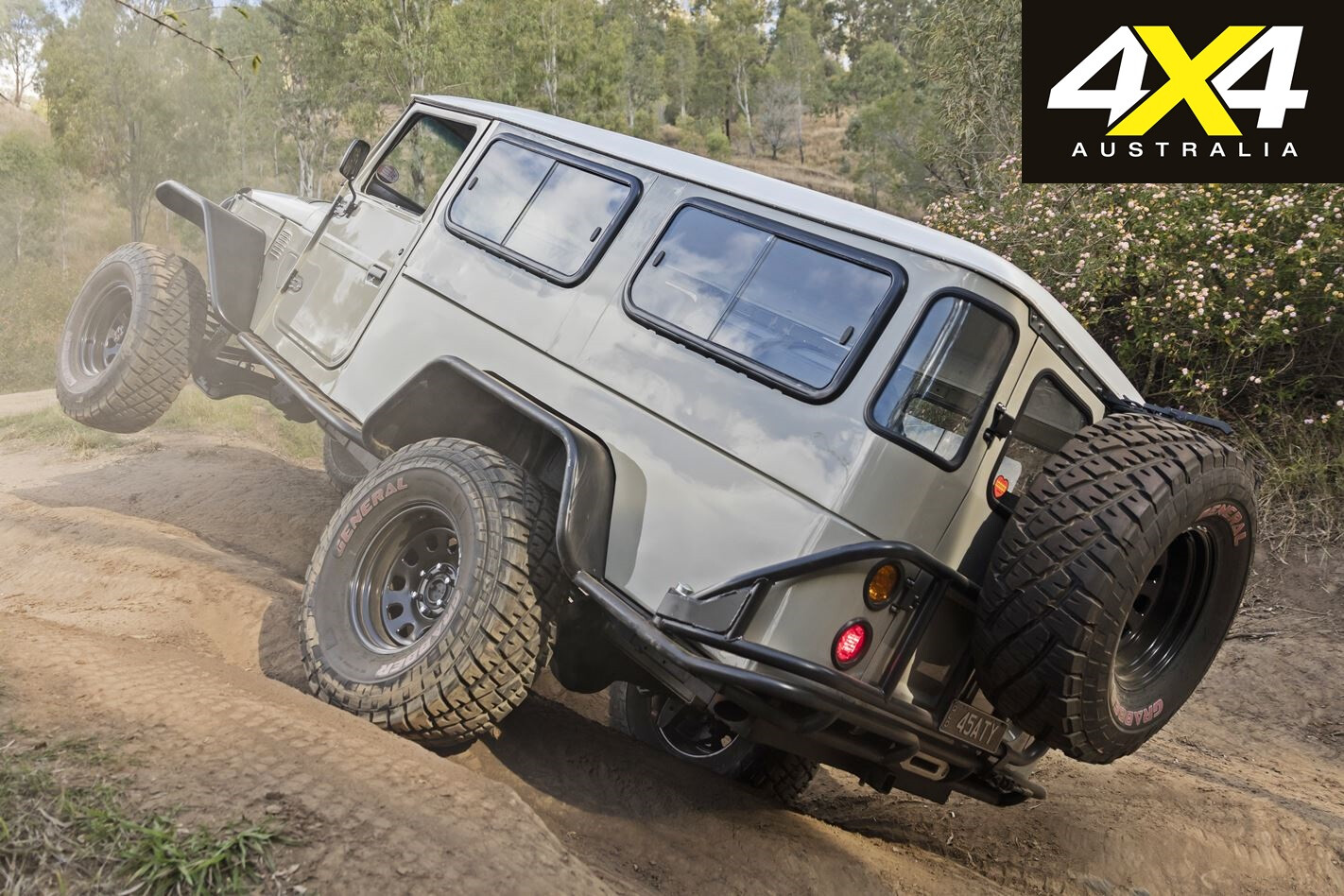
The amount of work that went into the build – as well as the head-turning gear – is evident in the final product. You can read about it in detail here.
A highlight of the build is the 5.7-litre LS1 V8 engine mated to a TH400 auto transmission. It’s a serious vehicle, and on its first dyno run it pushed out an impressive 340hp at the wheels.
WHAT ELSE IT’S PACKING: – 5.7-litre LS1 V8 – TH400 auto transmission – NP205 transfer case – GTX42 turbocharger – 3.5-inch custom exhaust – Hooker muffler – EFS 50mm suspension lift – RAW 4×4 shocks – 37-inch General Grabber SRL tyres – 17-inch Dynamic steel wheels – Runva 11XP winch (rear) – Warn 8274 winch (front) – Corbeau race seats – 1Gauge gauges – Navman GPS
SSANGYONG, the Mahindra-owned Korean manufacturer, is relaunching back into Australia in the fourth quarter of 2018.
The familiar Musso 4×4 ute and Rexton 4×4 wagon will form part of its arsenal, with the Tivoli compact SUV to complete the initial line-up. More models are expected in 2019.
The Musso and Rexton are new vehicles since the last time they were sold here and benefit from new engines and technologies. Both vehicles are built on a ladder-frame separate chassis featuring IFS and a live rear axle, with coil springs at all corners.
Both are powered by a new Euro 6-compliant 2.2-litre turbo-diesel engine which delivers 133kW and 420Nm (400Nm in the Musso). The 4×4 system is selectable part-time with low range, while the transmissions used are a six-speed Aisin automatic in the Musso (similar to that found in some Toyota and Isuzu 4WDs) and a seven-speed auto from Mercedes-Benz in the Rexton.
The Rexton is a large, seven-seat wagon in the same vein as a Prado, Everest, MU-X and Trailblazer. In the UK market, where the latest version was introduced in 2017, it has a 3500kg tow rating.
The new Musso, only recently released in the UK, is a double-cab pick-up only and, at 5095mm in length, is on par with most of the popular dual-cabs currently on the market. Australia will also get a Musso XL with a longer cargo tray, taking the overall length to around 5400mm.
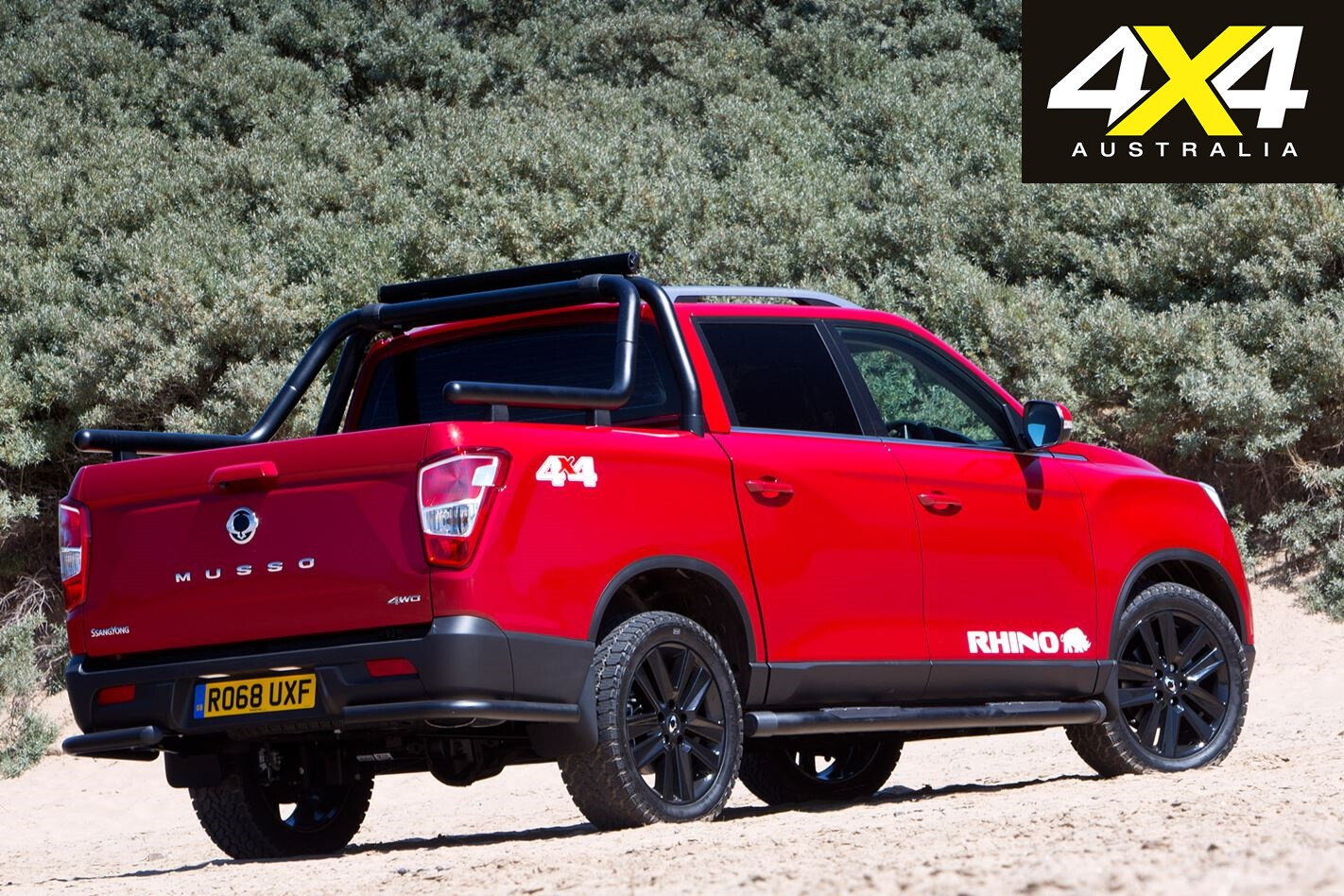
In the past the Musso has always had a more spacious rear seat than other utes, to better accommodate back-seat passengers. In the latest Musso, SsangYong also claims class-leading leg and elbow room for rear-seat passengers.
With coil springs all around, the Musso will join the Nissan Navara and Mercedes-Benz X-Class as the only such sprung utes on the market, and, like them, it will have a one-tonne payload and 3500kg towing capacity. It will be interesting to see how it handles such loads.
Both the Rexton and Musso will be well-appointed and include the prerequisite safety tech and convenience features such as Apple CarPlay and Android Auto.
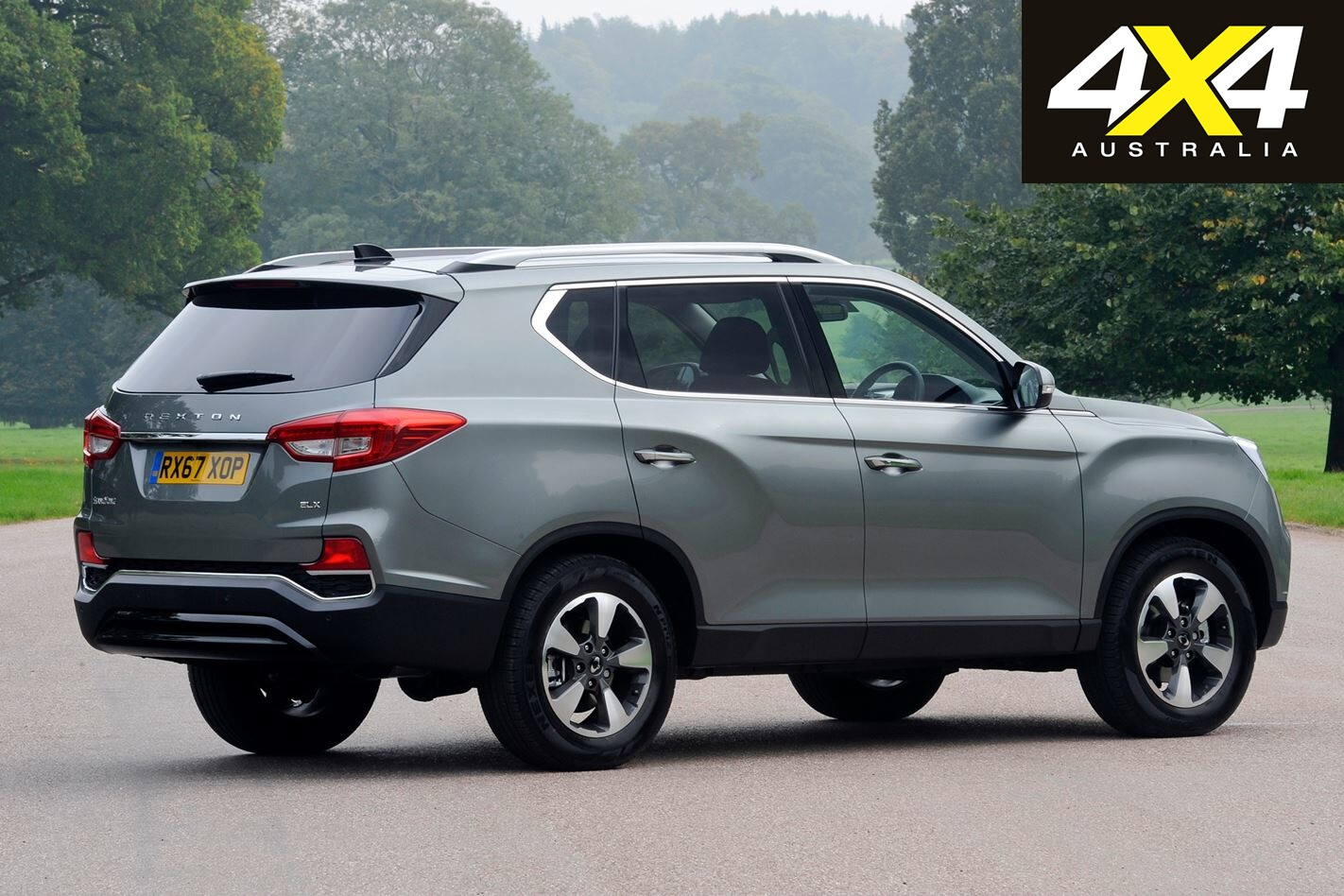
We expect them to be well-equipped for the money and, while Australian prices are yet to be released, we’d expect the SsangYongs to be priced in the respective segments somewhere between the Chinese and the other Asian manufacturers. When the double-cab 4×4 ute was last offered in Australia is was called the Actyon and it was priced around the $30K mark.