
EFS 4×4 Accessories has added a Ford Everest lift kit to its range of products.
This is advertiser content
The kit will improve the big Ford’s off-road tenacity and enable tourers to tackle harsher terrain and go further into deep scrub.
EFS is offering two different coil rates for both the front and rear of the Everest, to suit your accessory needs. There’s also an option for the bigger bore (40mm) XTR front struts, to tackle any terrain.
Included in the kit is front struts, rear shocks, and front and rear coil springs.
FRONT
- Ford-120E: EFS coil springs up to 60kg
- Ford-120HDE: EFS H/D coil springs 60-90kg
- 37-6201: EFS XTR 40mm extra big bore strut
- 38-5650: EFS 35mm big bore strut
- 10-1091: 6mm strut trim spacer
REAR
- 36-5601: EFS 35mm big bore elite shock
- Ford-121E: EFS coil springs up to 150kg
- Ford-121HDE: EFS coil springs 150-300kg
The lift kits start from $1258.99 (RRP inc. GST). Price does not include fitment.
For more information, visit www.1300efs4wd.com.au or call 1300 EFS 4WD.
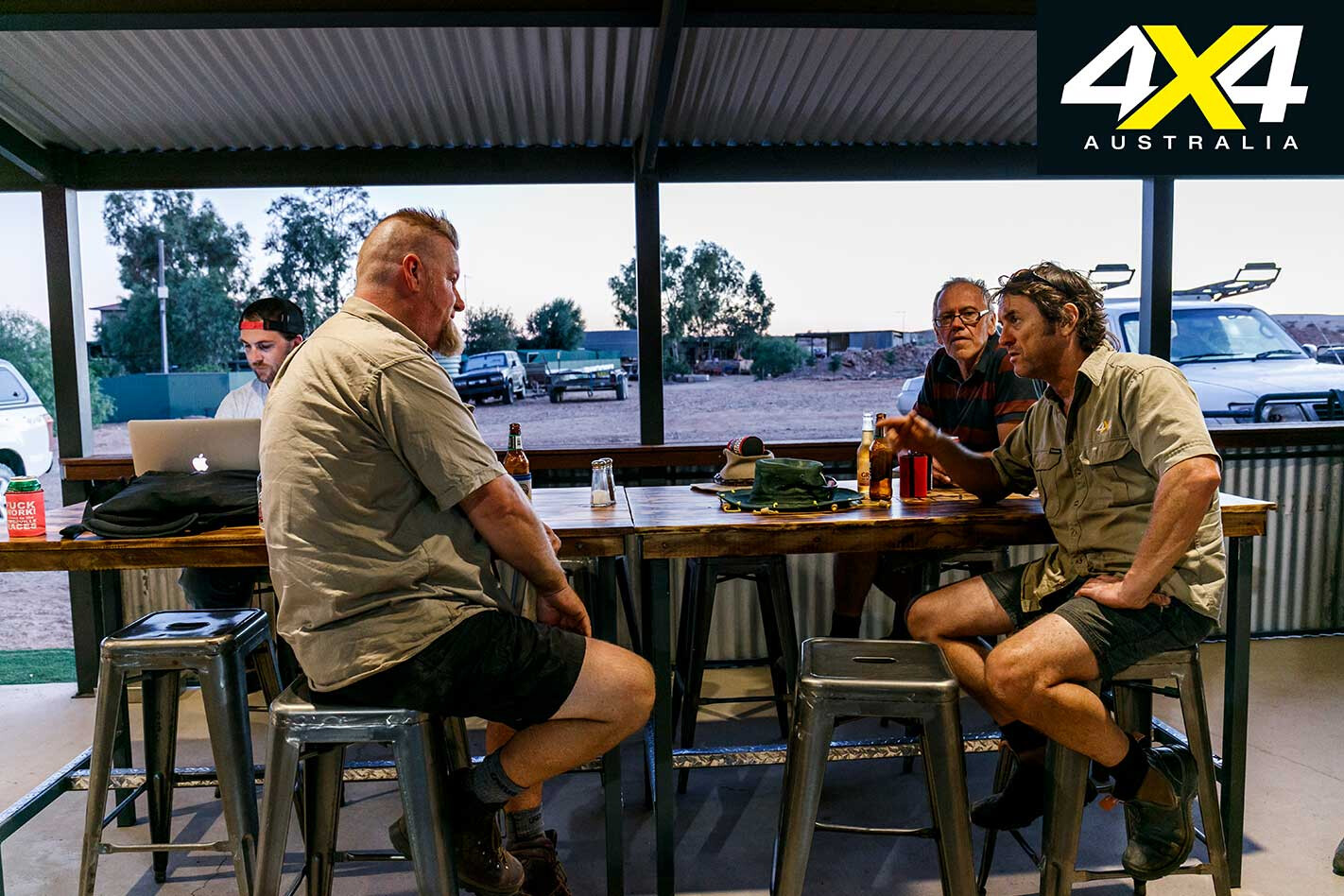
NOT much beats watching a sunset while enjoying a beer with a good crew, and that’s exactly what we did in Milparinka during a recent NSW outback trek. We plonked our butts down on the bench at the Albert Hotel’s verandah to enjoy the last rays of another cracker outback day.
Located in the top left corner of NSW, Milparinka is just off the Silver City Highway some 294km north of Broken Hill and 42km down the road from Tiboburra. As such, this tiny town is perfectly placed to be a great drop-in for any Corner Country trek.
We arrived from the west after looping through the Mundi Mundi Plains from Broken Hill, Silverton and Eldee Station, driving through the type of country that challenged 19th century explorers Sturt, Burke and Wills.
Milparinka was established in the 1880s, with the pub, former police station and courthouse – built from locally cut sandstone – standing as a testament to the flurry of activity and investment in the area after gold was discovered. The ruins of the local post office and bakery can also be found.
The buildings within the Milparinka Heritage Precinct are maintained by a proud and capable bunch of volunteers, and the former courthouse is now the Milparinka Heritage Centre.
Spend a bit of time walking around in the dry heat and the chances are you’ll end your walk at the Albert Hotel, just like we did. This pub has one of the oldest liquor licences in Australia, so it’s obviously a good place to have a drink.
In contrast to the surrounding hot, dry landscape, there’s a bit of greenery around Milparinka, and the trees create some well-shaded campsites on the banks of Evelyn Creek, which was dry when we visited, as it is most of the time.
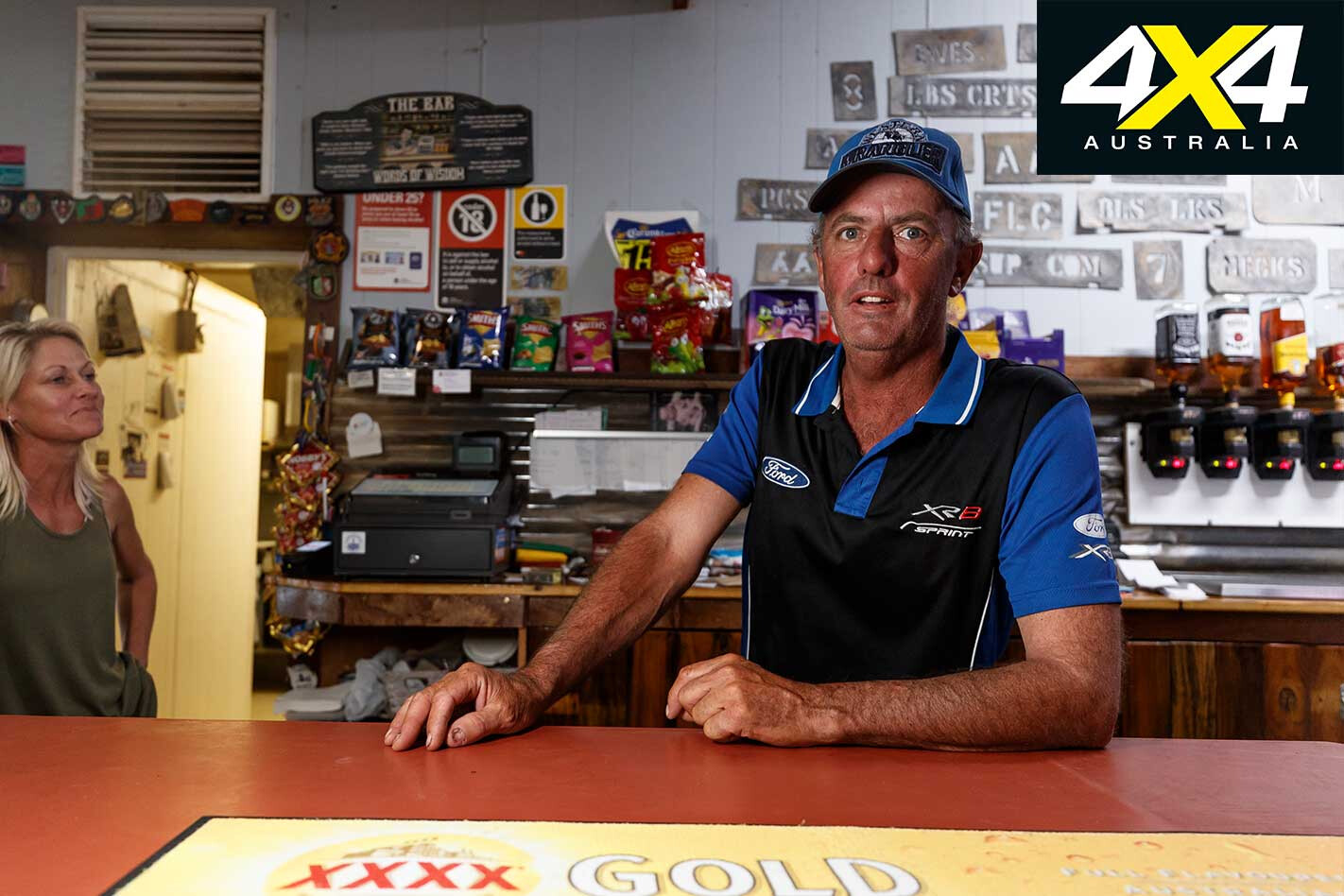
Publicans Rebecca and Phillip Young, South Australians who have owned the Albert for 15 years, told us of their plans to improve the camping facilities with an amenities block. However, a more ambitious plan is to bring Evelyn Creek back to its former glory.
Prior to the 1880s there was a large, semi-permanent waterhole, but in just a few years it was silted by mining activity. Trees now grow where there was once a deep pool, and the Youngs plan to remove the trees and dig out the waterhole to recreate the oasis it was when the Maliangaapa people called this place home.
4×4 Pub Guide
Website: www.outbacknsw.com.au Phone: (08) 8091 3863 Address: If you’re in Milparinka, you can’t miss it!
Beers: Bottled Coopers, Great Northern, XXXX Gold, Carlton Dry, ciders, etc. Food: Dinner: steaks, schnitties, barramundi. Lunch: chips, steak sandwiches, burgers. Breakfast: by arrangement.
Fuel: Closest fuel is in Tibooburra (50km). Accommodation: Single and double rooms. Family and en suite cabins out the back. Campsites: Open campsites to the rear of the pub suitable for caravans and trailers. Or go another 50m and camp under the trees of Evelyn Creek, like we did.
GT SAYS: A ripper pub to divvy-up a dusty drive. Pub Rating: 4 out of 5 thumbs up
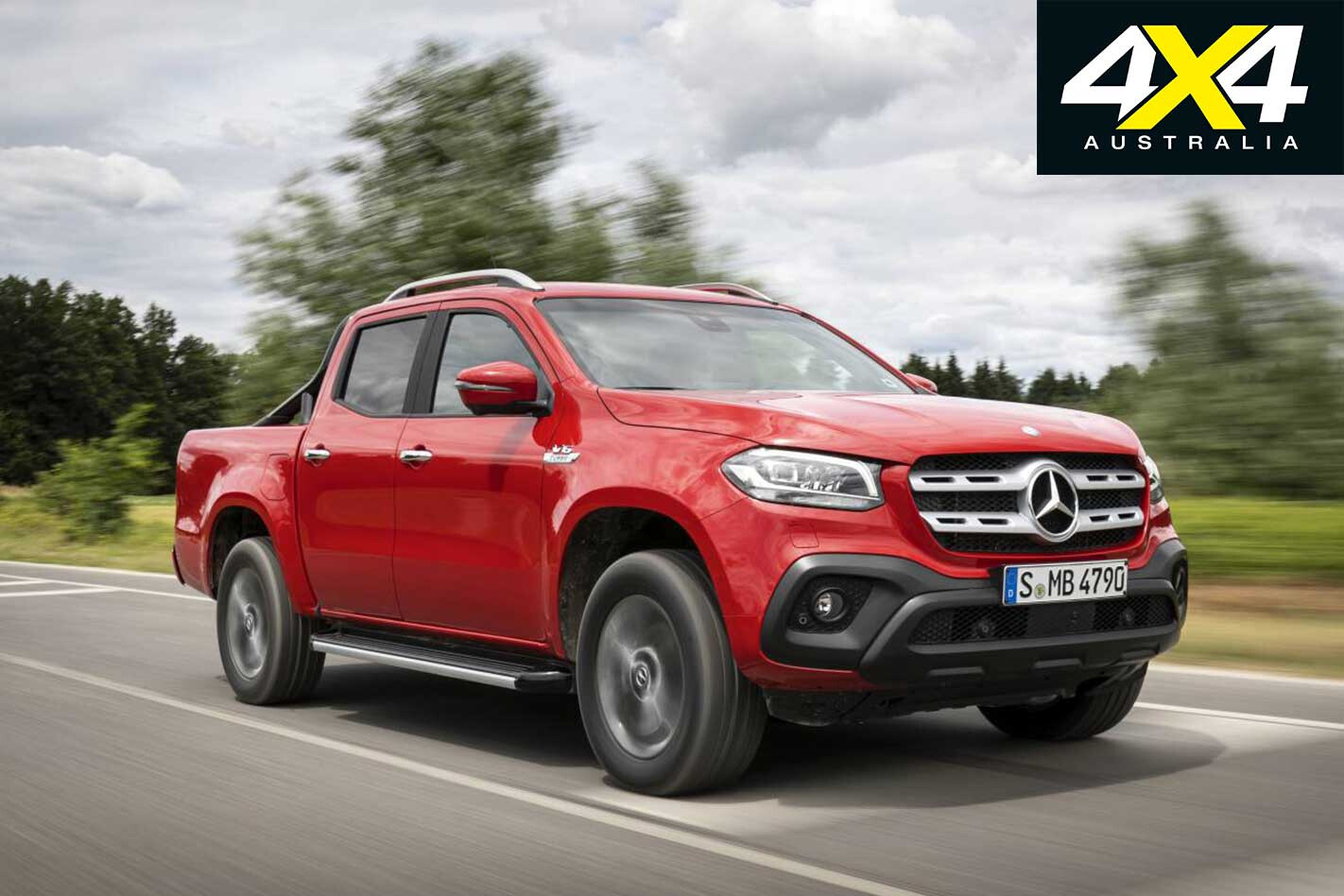
THE V6-powered Mercedes-Benz X350d will arrive locally in December, with a price tag starting from $73,270.
The 3.0-litre six-cylinder turbo-diesel engine, mated to a 7G-TRONIC PLUS seven-speed automatic transmission, punches out 190kW and 550Nm (from 1400-3200rpm). For comparison’s sake, the X250d gets 140kW and 450Nm from its four cylinders.
The X350d will be available in two grade levels: Progressive (listed at $73,270) and Power (listed at $79,415). Engine aside, the X350d will maintain much of the specifications of its four-cylinder stablemates. However, a few compelling extras have been added.
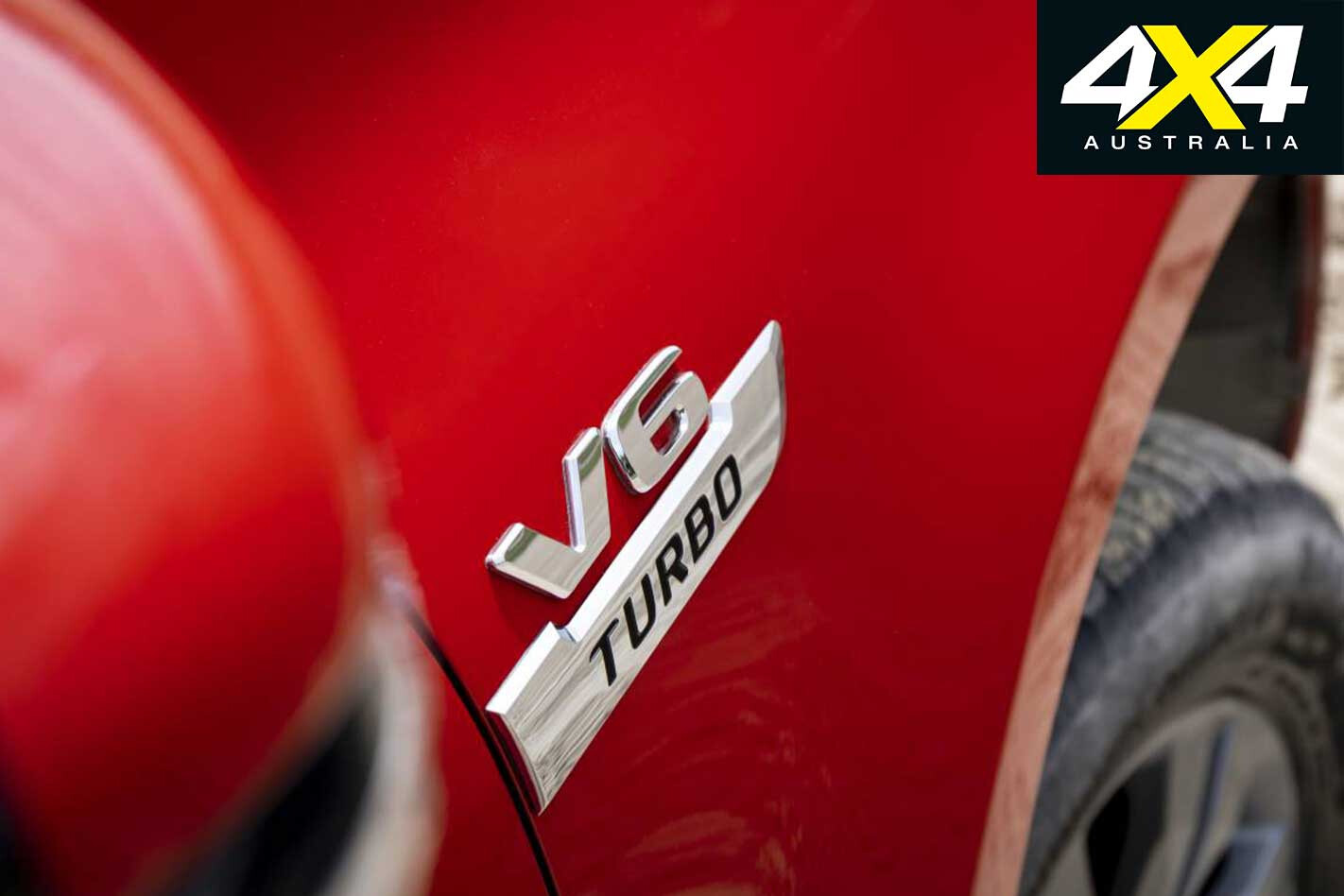
To distinguish the V6 from the models with fewer cylinders, both variants get V6 badging on the fender and X350d 4MATIC badging on the rear tailgate. The lower-grade Progressive then adds Keyless-Go, two-zone Thermotronic air-con and 18-inch light-alloys; while the Power gets an aluminium dash trim, a black roof liner and 19-inch light-alloys.
In addition to the safety features carried over from the X250d, the X350d gets Active Lane Keeping Assist, to keep the vehicle on track via one-sided braking and steering-wheel vibration alerts if one should veer. The Power also gets a 360-degree camera as standard.
The X350d also gains 4MATIC permanent all-wheel drive with low-range reduction gear, a diff lock on the rear axle, and a centre diff lock with a 40/60 front-to-rear torque distribution.
The driver will also be able to select between three all-wheel drive modes – 4MAT, 4H and 4L – as well as driving modes through a Dynamic Select system – Comfort, Eco, Sport, Manual and Offroad – which, among other things, can modify engine response and transmission shift points.
The X350d’s off-road capabilities mirror those of the X250d.
Wading depth: 600mm Ground clearance: 222mm Approach angle: 30° Departure angle: 25° Rampover angle: 22°
The four-cylinder X-Class landed in Australia in April this year. In the latest VFACTS report – June, 2018 – Mercedes-Benz has sold 722 X-Class 4x4s.
FORD has been busy gearing up for the updated 2019 Ford Ranger’s on-sale date of September, but the Blue Oval has also finalised spec and pricing details of the updated 2019 Ford Everest, which is also scheduled to go on sale in September.
Like the 2019 Ranger, headlining the updated Everest will be the Ranger Raptor’s 157kW/500Nm 2.0-litre inline-4 bi-turbo diesel engine that’s coupled to a 10-speed automatic transmission. The Raptor’s drivetrain will only be available on the mid-range Trend and range-topping Titanium variants.
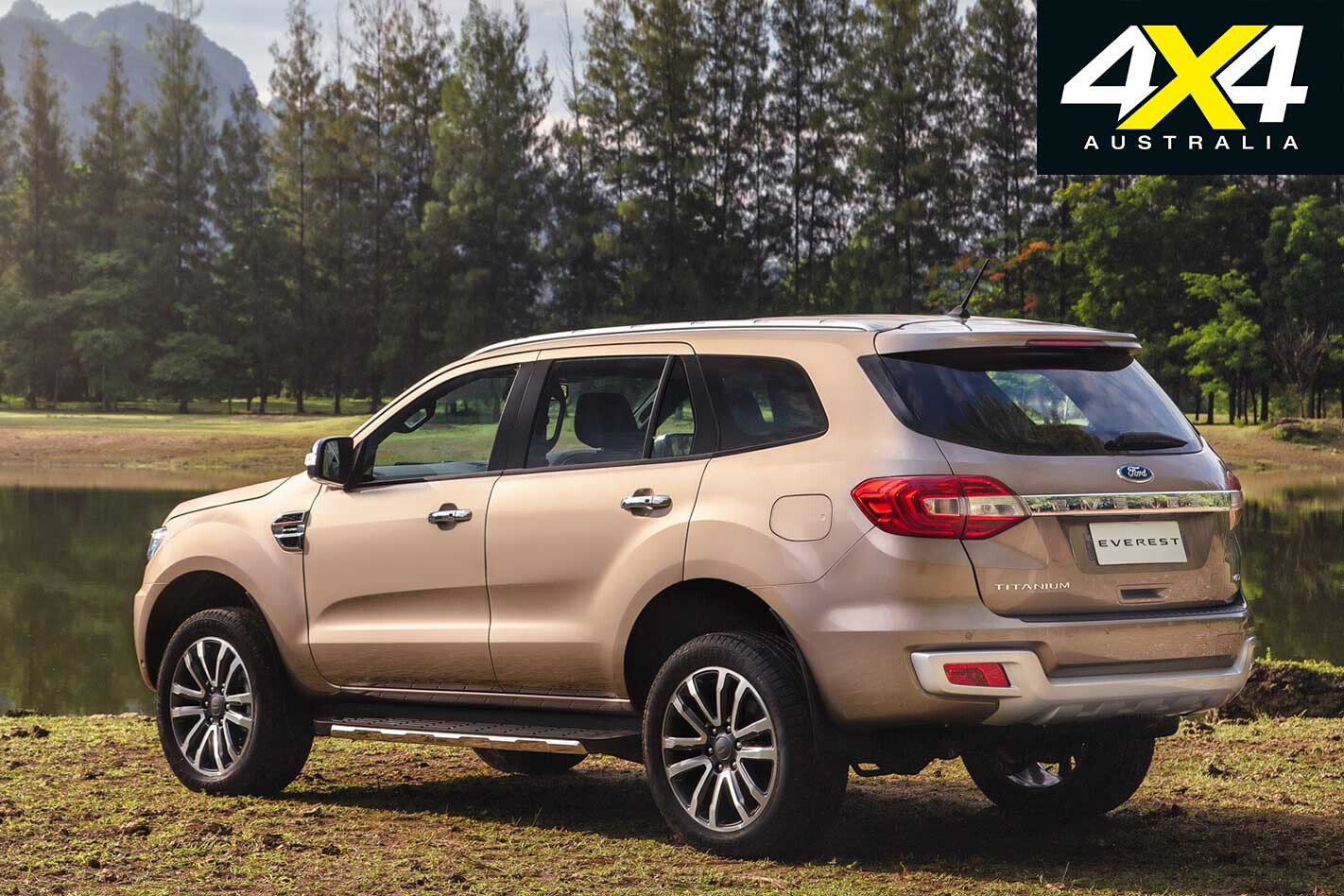
In the meantime, the existing 143kW/470Nm 3.2-litre 5-cylinder diesel powerplant with the six-speed automatic drivetrain will carry on in the entry-level Ambiente range and Trend 4WD models.
Likewise, the updated Everest’s touted Pre-Collision Assist with Pedestrian Detection AEB feature, along with the Traffic Sign Recognition system, will only available in the Trend and Titanium models.
Other features that are now standard across the range are keyless ignition, SYNC3 with Apple CarPlay and Android Auto, and satellite navigation with traffic updates. Trend variants receive new HID headlamps with auto levelling, LED daytime running lights, and a hands-free power rear tailgate.
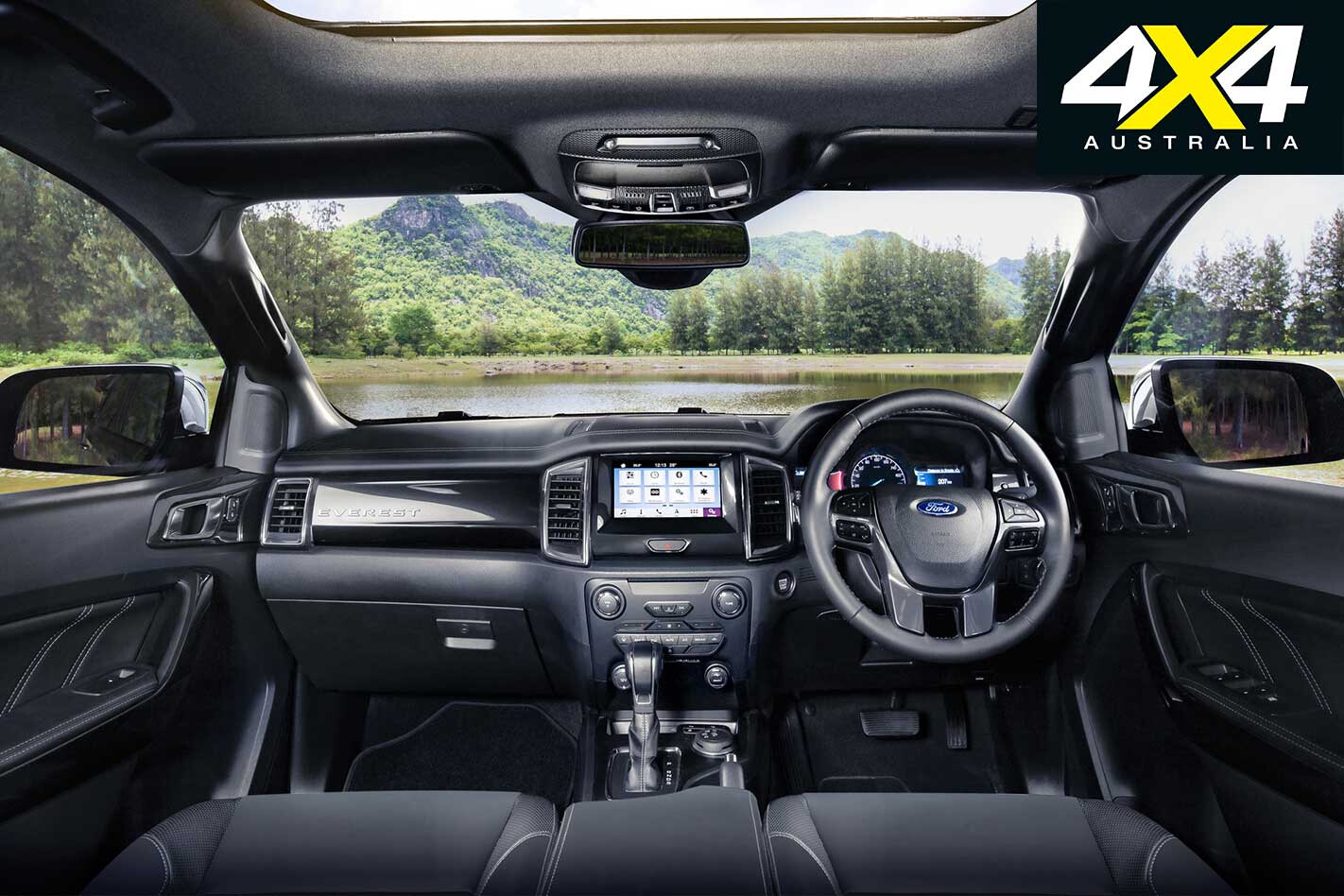
Customers who want to opt for something more utilitarian for the Trend can spec the non-power driver’s seat pack no-cost option, which swaps the leather-accented seat trim and eight-way power driver’s seat for a fabric seat and six-way manual driver’s seat adjustment.
That being said, the new powertrain, features and tweaks come at a cost, as the Manufacturer List Price for the 2019 Ford Everest sees an increase of $1200 for variants with the 3.2-litre 5-cylinder engine and $2200 for recipients of the Raptor donk, with the only exception being the range-topping Titanium sporting a marginal $700 decrease.
All 2019 Everest models will come covered with a five-year unlimited kilometre warranty.
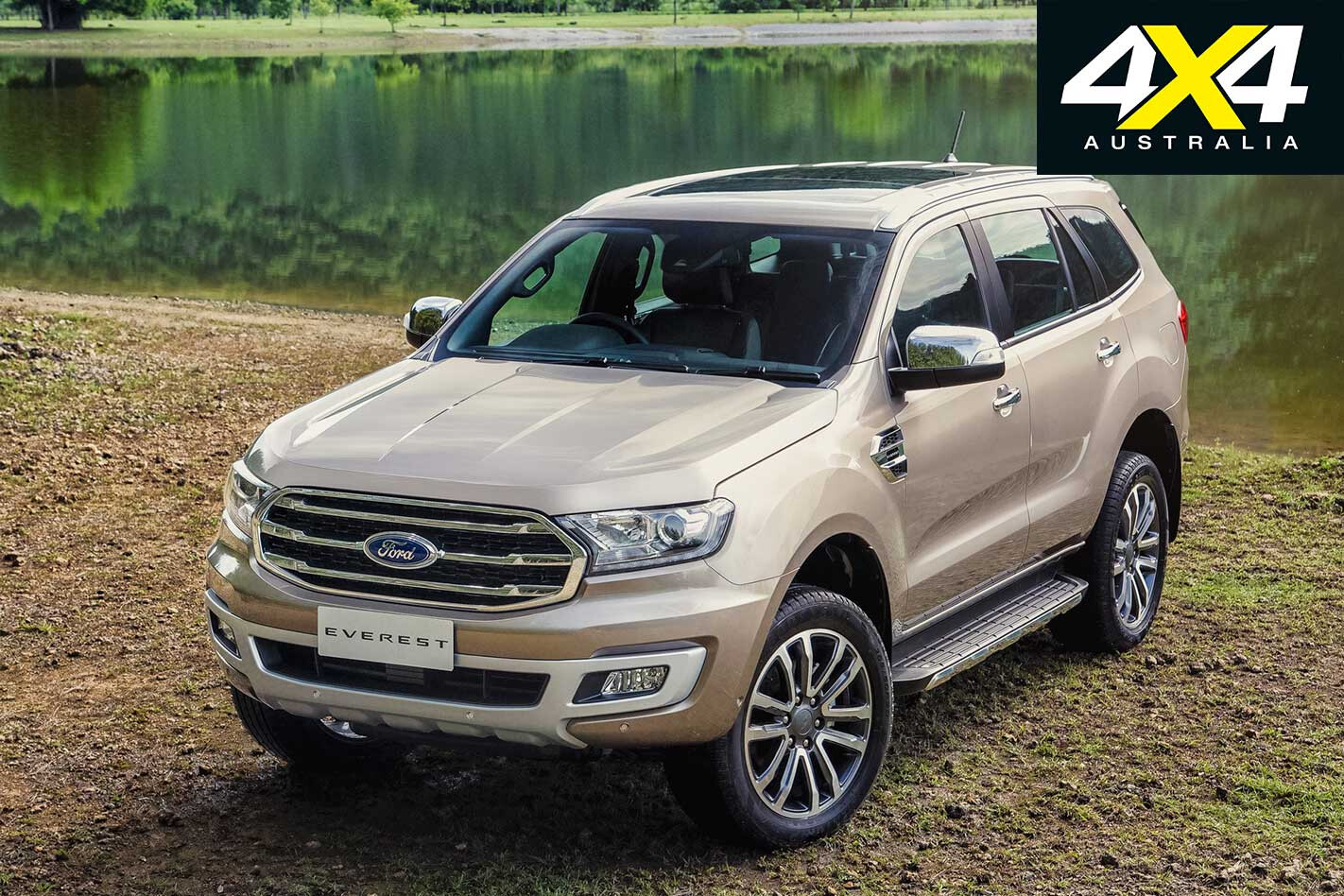
2019 FORD EVEREST PRICING
Ambiente 4WD 3.2L 6AT five-seat – $54,190 Ambiente 4WD 3.2L 6AT seven-seat – $55,190
Trend 4WD 3.2L 6AT seven-seat – $59,990 Trend 4WD 2L Raptor Bi-Turbo 10AT seven-seat – $61,190
Titanium 4WD 2L Raptor Bi-Turbo 10AT seven-seat – $73,990
Options Pricing Tow bar (Ambiente & Trend) – $1000 Prestige Paint (Ambiente & Trend) – $600 Prestige Paint (Titanium) – $780
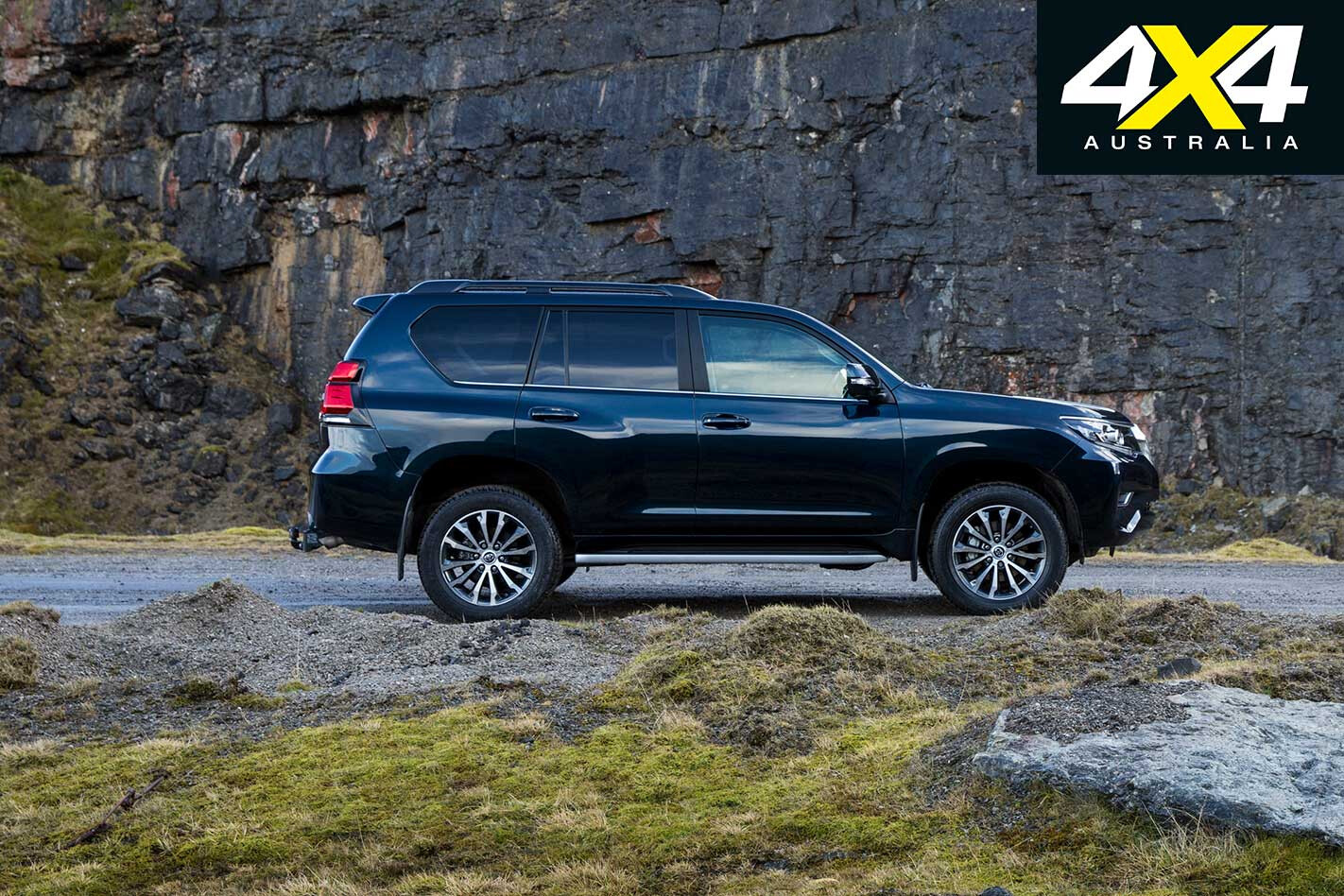
The popular flat tailgate with the lifting glass panel hatch of the Toyota Land Cruiser Prado Altitude special edition will be making a comeback on the top three variants of the Toyota Land Cruiser Prado as a no cost option from next month.
Alongside the new option, all Prado variants will also come fitted with a diesel particulate filter (DPF) regeneration switch.
The flat tailgate option, which will be available for the GXL, VX, and Kakadu variants, will have its spare wheel fitted beneath the rear floor. To facilitate this, optioned Prado models won’t come fitted with the standard 67-litre sub tank, reducing the Prado’s total fuel capacity of 150-litres to 87-litres.
Based on Toyota’s quoted combined fuel consumption figures of 8.0L/100km for automatic variants of the Prado, the sub-tank deletion will knock the maximum range from 1875km to a still-respectable 1087km.
With the absence of tailgate-mounted spare, the flat tailgate option won’t have an interior tailgate door handle, rear wiper intermittent function, and the spanner from the toolkit.
According to Toyota Australia, the decision to reintroduce the flat tailgate option is in response to the popularity of Altitude special edition. Toyota believes that the option will be particularly popular among customers who don’t plan on using their Prado for long distance travels and live in more urban environments.
That being said, Toyota recognises the importance of the Prado’s 150-litre fuel capacity in regional areas and will continue to offer versions with the sub tank for customers who really need the increased fuel capacity.
As part of the ongoing grade changes, Toyota Australia will also be fitting a DPF regeneration switch to all Prado variants to address issues of clogging DPFs.
DPFs are used to clean up diesel emissions by trapping harmful diesel combustion particulates such as soot. However, every now and then as the filter gets filled from routine use, the engine management system will increase exhaust temperatures to burn off the collected material, thus ‘regenerating’ the filter.
The problem with this is that the process requires the high exhaust temperatures, which can only be achieved at an engine’s operating temperature. Drivers who don’t drive their vehicles on long enough journeys – particularly around cities – to get the engine up to operating temperatures might run the risk of matter build-up in the filters, potentially needing a filter replacement if the situation is not addressed.
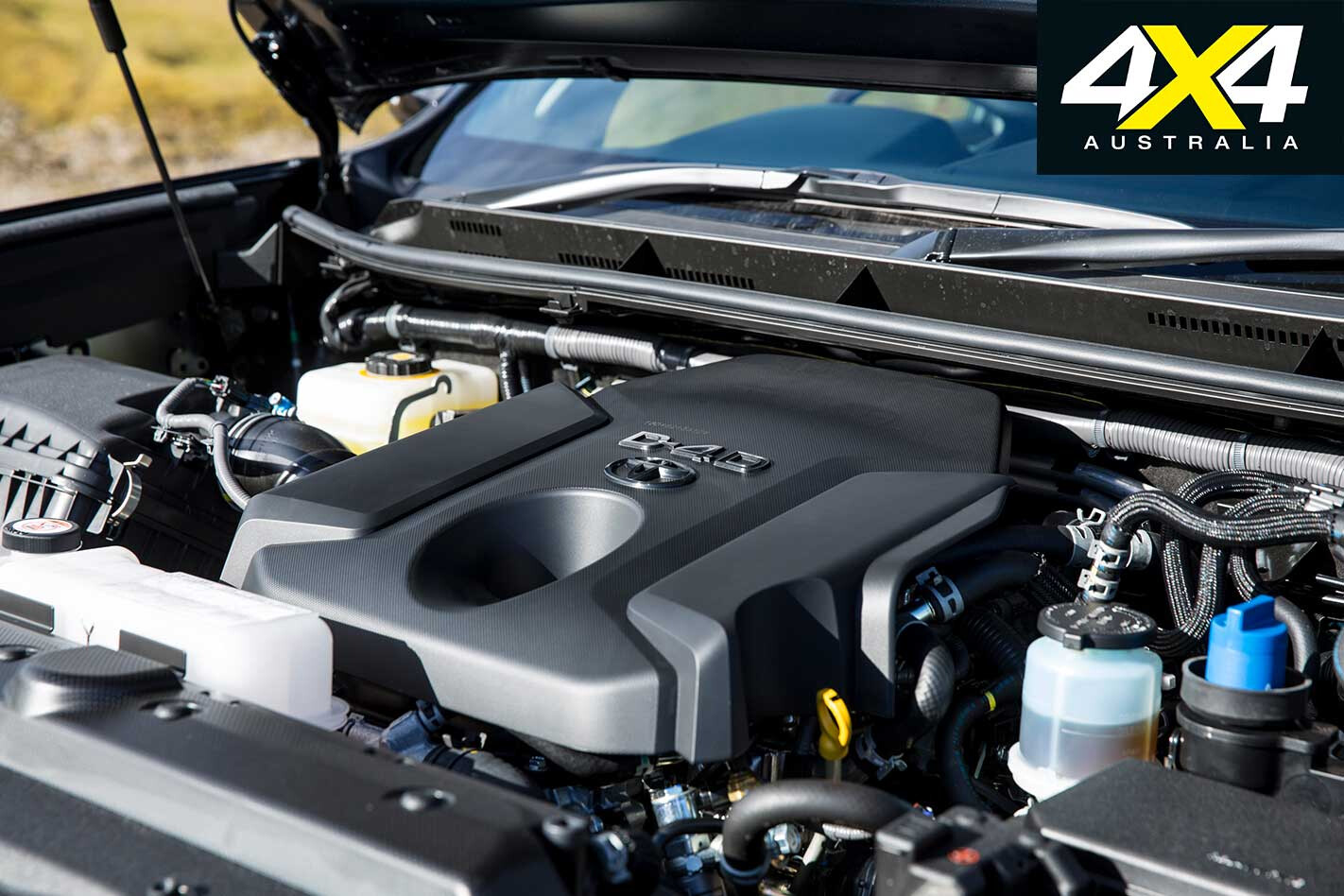
To circumnavigate this issue, Toyota Australia will be fitting a DPF switch to the Prado range for owners to burn-off any accumulated particulate matter in the filters on demand.
It is understood that the DPF switch will be fitted to all variants of the Hilux as well with the grade changes.
According to Toyota the grade changes for the Prado and the Hilux will be available from August onwards, with dealers already taking bookings for the updated models. Toyota Australia will make an official announcement of the Prado and Hilux grade changes soon.
*Model shown is the UK-market Toyota Prado
One of the key things to come out of our nine-way ute test was just how much vehicles like the Mercedes-Benz X-Class and Volkswagen Amarok are raising the bar in this segment and changing people’s expectations of what to expect in a dual-purpose 4×4 pick-up.
And those expectations will only get higher with the release later this year of utes like the X350d V6 X-Class, Ranger Raptor and even the updated Ranger with its 10-speed automatic gearbox.
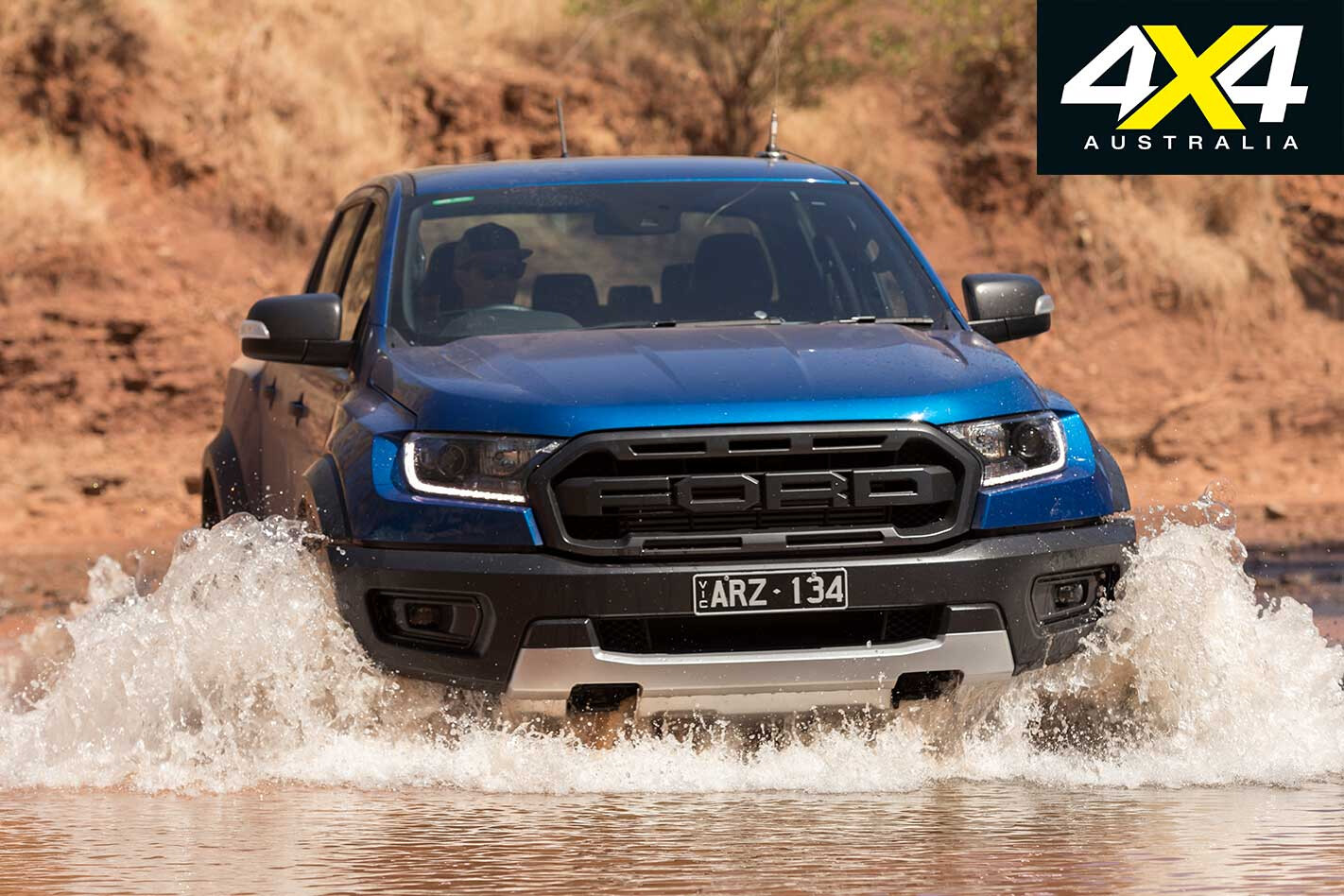
Along with heightened expectations come higher prices, but the market has shown that it is prepared to pay for more features and performance. Top-of-the-range models like the Wildtrak, SR5 and now the V6 variants have been big sellers and the manufacturers are only too happy to load them up and raise the prices.
While vehicles like the Ranger, X-Class and Amarok have shown they can up-spec and carry a higher price tag, our testing showed the once-dominant Toyota Hilux would need some pretty serious re-engineering work to maintain the same level as this trio.
The new top-of-the-range Hilux, the Rugged X, is a nice looking piece of kit and its accessories work well, but they also eat into the payload and there’s no step up in performance. The 1GR 2.8-litre diesel engine is the only engine offered in the Hilux and it goes alright, just not great; it’s no powerhouse and is buzzy in its operation at highway speeds.
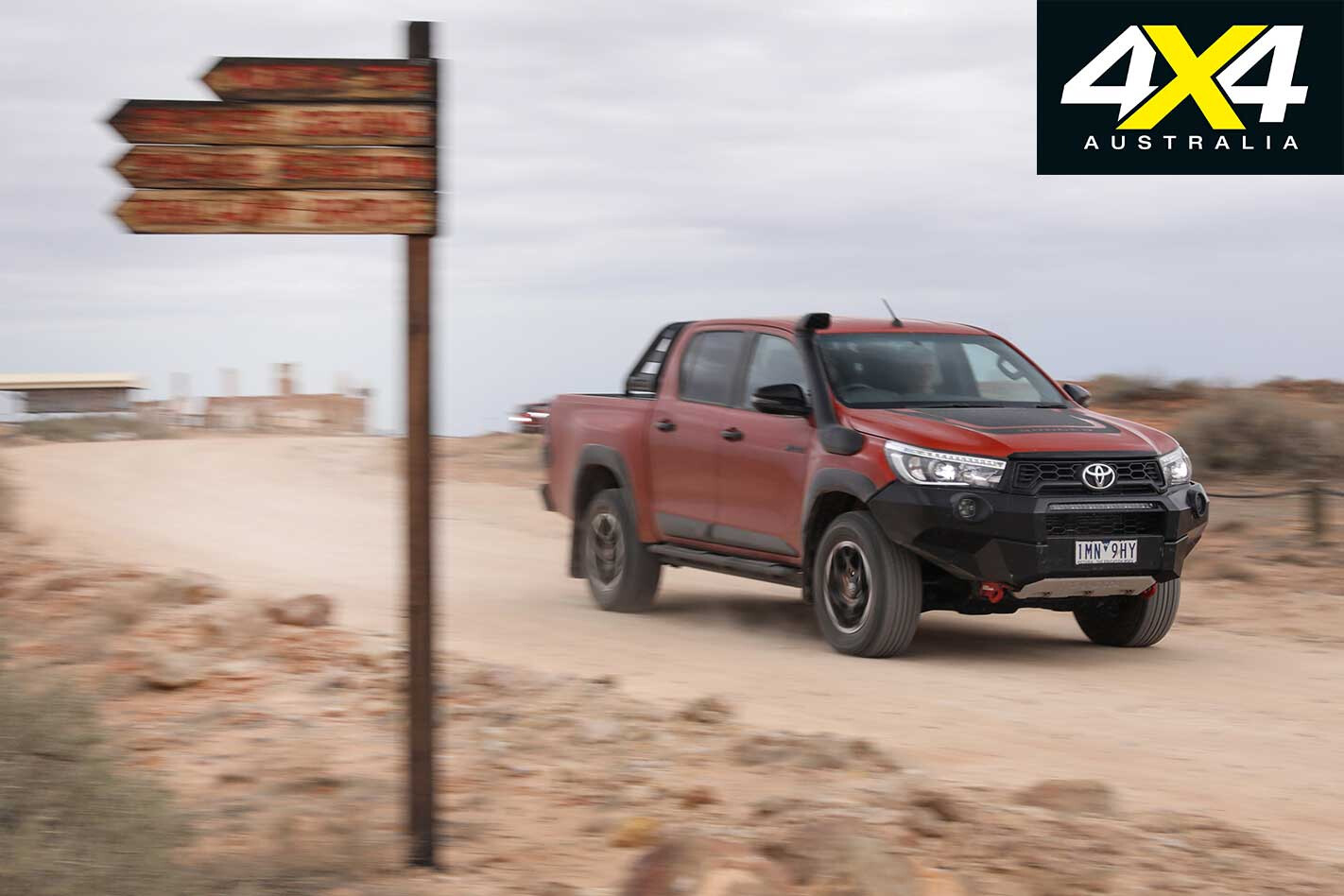
Compared to the other top-spec utes mentioned, the Hilux still feels like a tradie-truck and, while that’s not a bad thing, there’s no way it could ever match the performance and refinement of these new V6 diesel models – and in no way can it command the same higher prices.
We had a Rugged X along for the ute test in the Flinders Ranges for the August issue and it had some reliability issues. It isn’t the first time, as we’ve seen similar problems in a current Hilux/Fortuner with the 1GR engine. This begs the question, is Toyota’s long-held reputation for reliability starting to fray under the pressure of the new competition?
Toyota needs a good V6 diesel or even a V8 petrol engine, as well as improvements in suspension and NVH, if the company hopes to sell in the $70K+ ute segment. Let’s hope it can come up with something. Time will tell Toyota’s story, but the 4×4 ute market isn’t showing any signs of slowing, so it will be testing times ahead.
Ford has added a new range-topping variant of its Ford F-150 pick-up line-up that packs not only all the bells and whistles, but more importantly the 335kW/691Nm 3.5-litre EcoBoost V6 from the F-150 Raptor.
Called the F-150 Limited, Ford says the new variant is aimed at “fans who love Raptor power but want a more upscale package”.
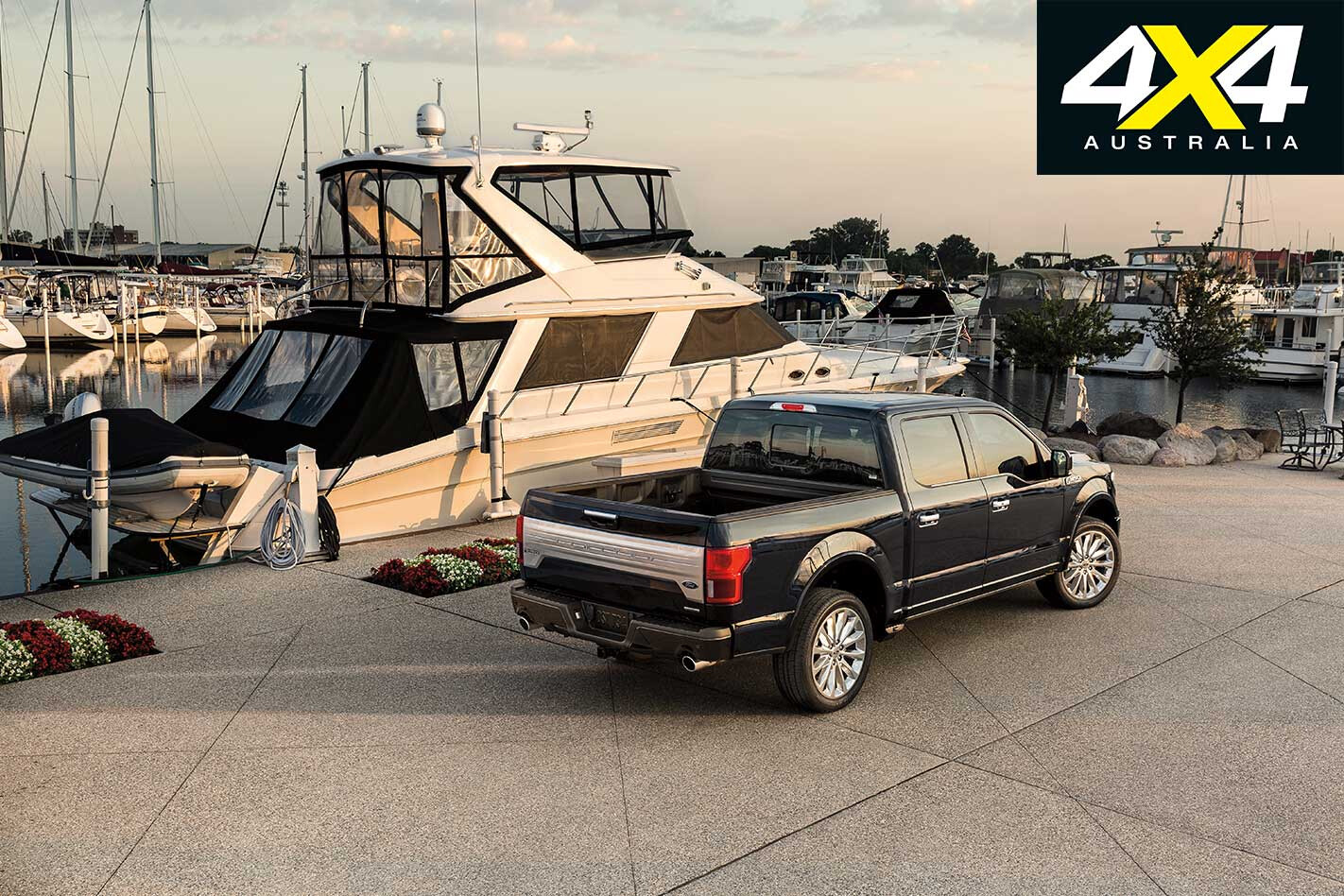
On the outside, the Limited does away with the Raptor’s dominating front grille and blackened out wheel arches for a more contrived and demure look. Instead, the Limited sports a unique satin-finish grille and tailgate applique, satin-finished window trim and door hands, polished aluminium 22-inch wheels, and power-deployable running boards.
The upscale trim continues on the inside with the fitment of two-tone leather upholstery, massaging heated and cooled front seats, a heated steering wheel, leather-topped instrument panel and door panels, ash swirl wood trim, and a suede headliner with a twin-panel moonroof.
To lend that touch of exclusivity, each Limited will sport a laser-etched plaque on the centre console armrest with its serial number.
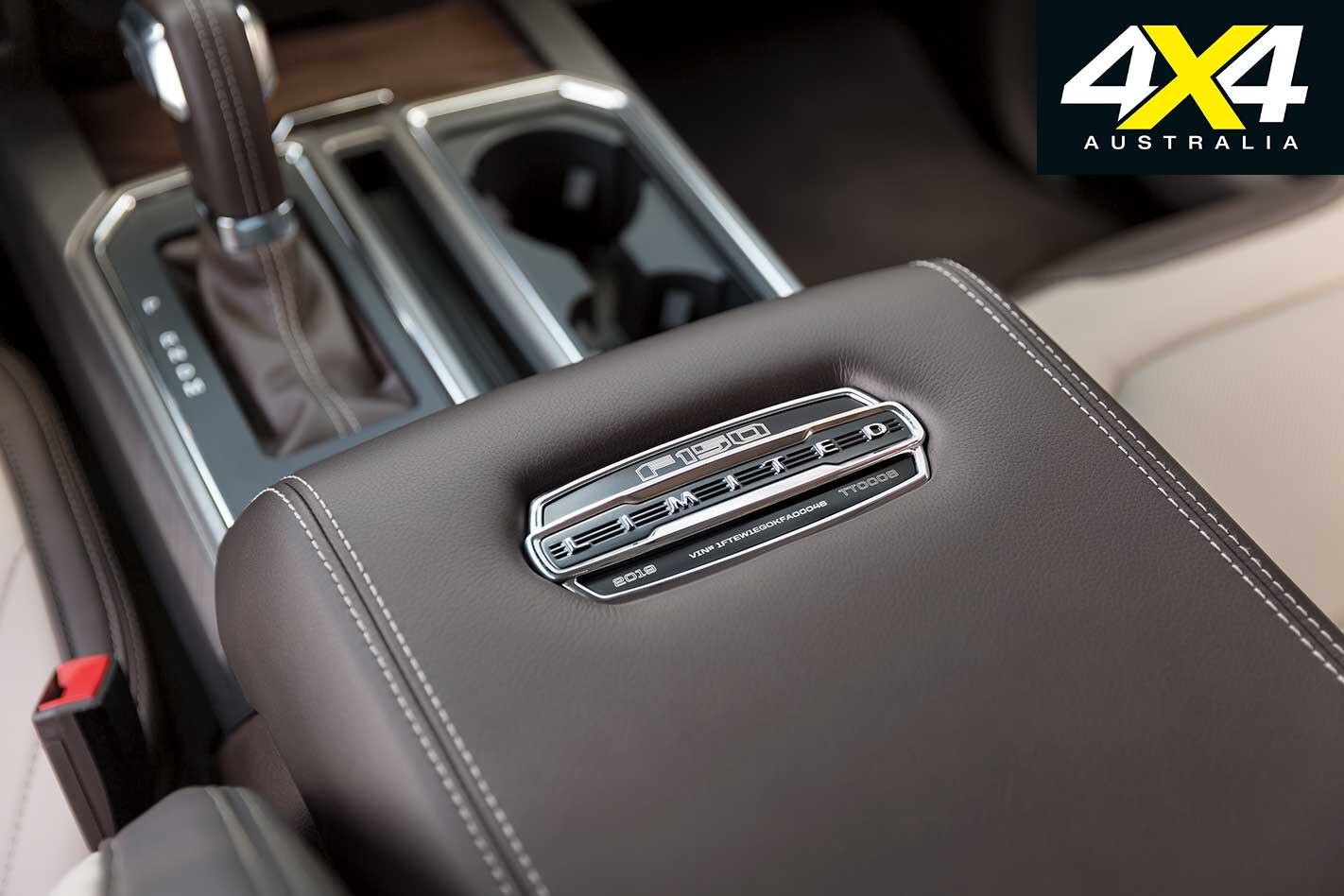
On the features front, the F-150 Limited is fitted with useful features for those who plan to do a lot of towing such as an integrated trailer brake controller, 360-degree camera with split-view and dynamic hitch assist, and Pro-Trailer Backup Assist.
That being said, infusion of Raptor power aside, the F-150 Limited won’t be an upscale Baja-attacking Raptor as it will do without the Raptor’s Fox Racing shocks. There is also no mention of the Raptor’s Baja drive mode.
IN THE PAST few years the 4WD community has experienced a barrage of new options when it comes to vehicle-based abodes. For many, the concept of slipping out of the driver’s seat and into a living room is very appealing.
Merge this theory with a compact and reliable platform that will go just about anywhere and you’ll have a vehicle that is ready for a jaunt across the Rubicon or around the globe in comfort. American Expedition Vehicles (AEV), running ahead of the curve as it usually does, developed the original Outpost back in 2006.
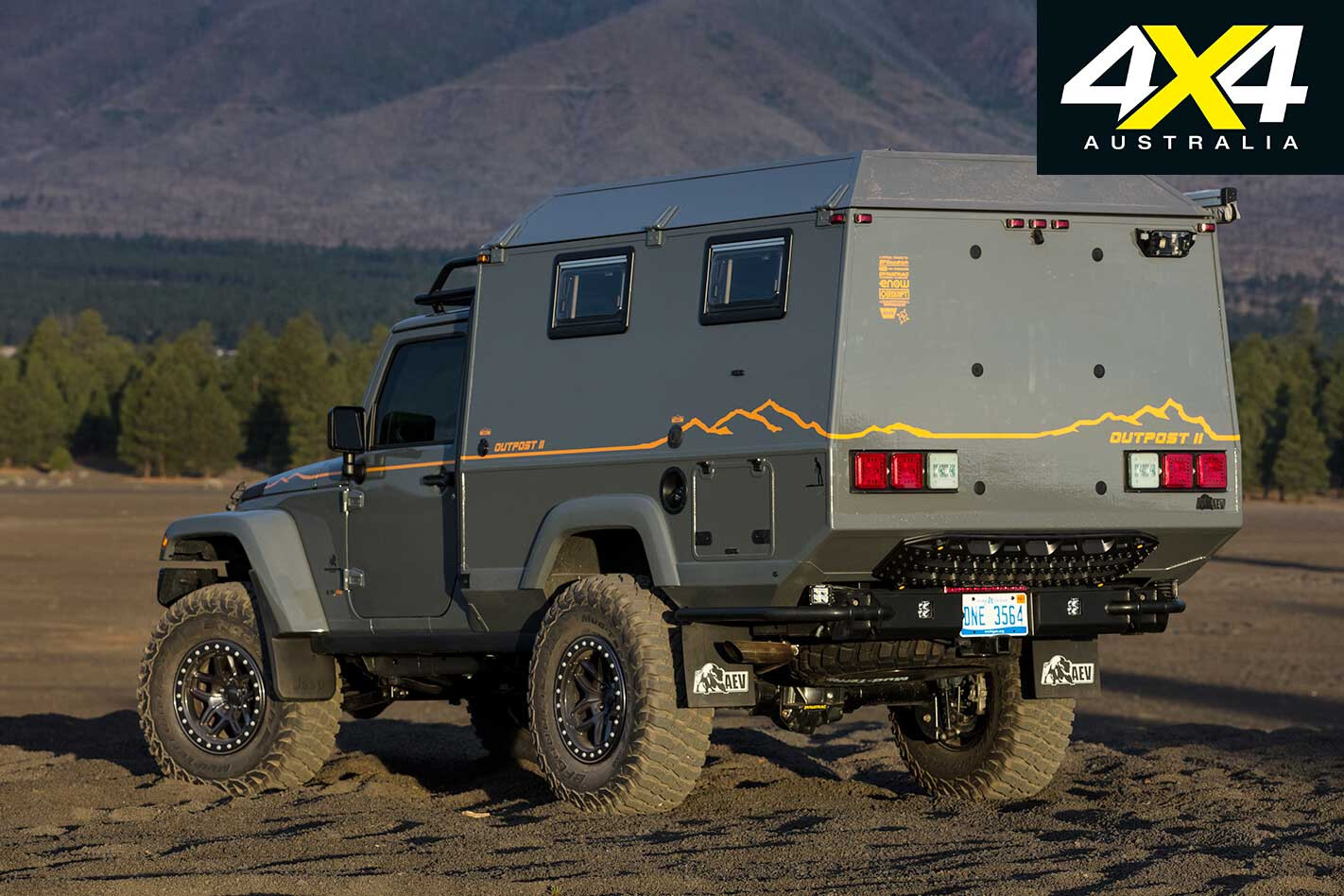
With another decade of experience building OE-quality conversions under its belt, founder Dave Harriton took it upon himself to create the next generation of the ultimate overland Jeep. Enter the Outpost II.
DRIVETRAIN, SUSPENSION AND ARMOUR
AS ONE of the first companies to offer factory-fit V8 conversions for the Wrangler, powerplant choice was a given.
Popping the bonnet reveals a 5.7-litre HEMI that produces 375hp (280kW) and 390lb-ft (528Nm). Everything from the radiator and wiring loom to fuel lines and battery tray are AEV components.
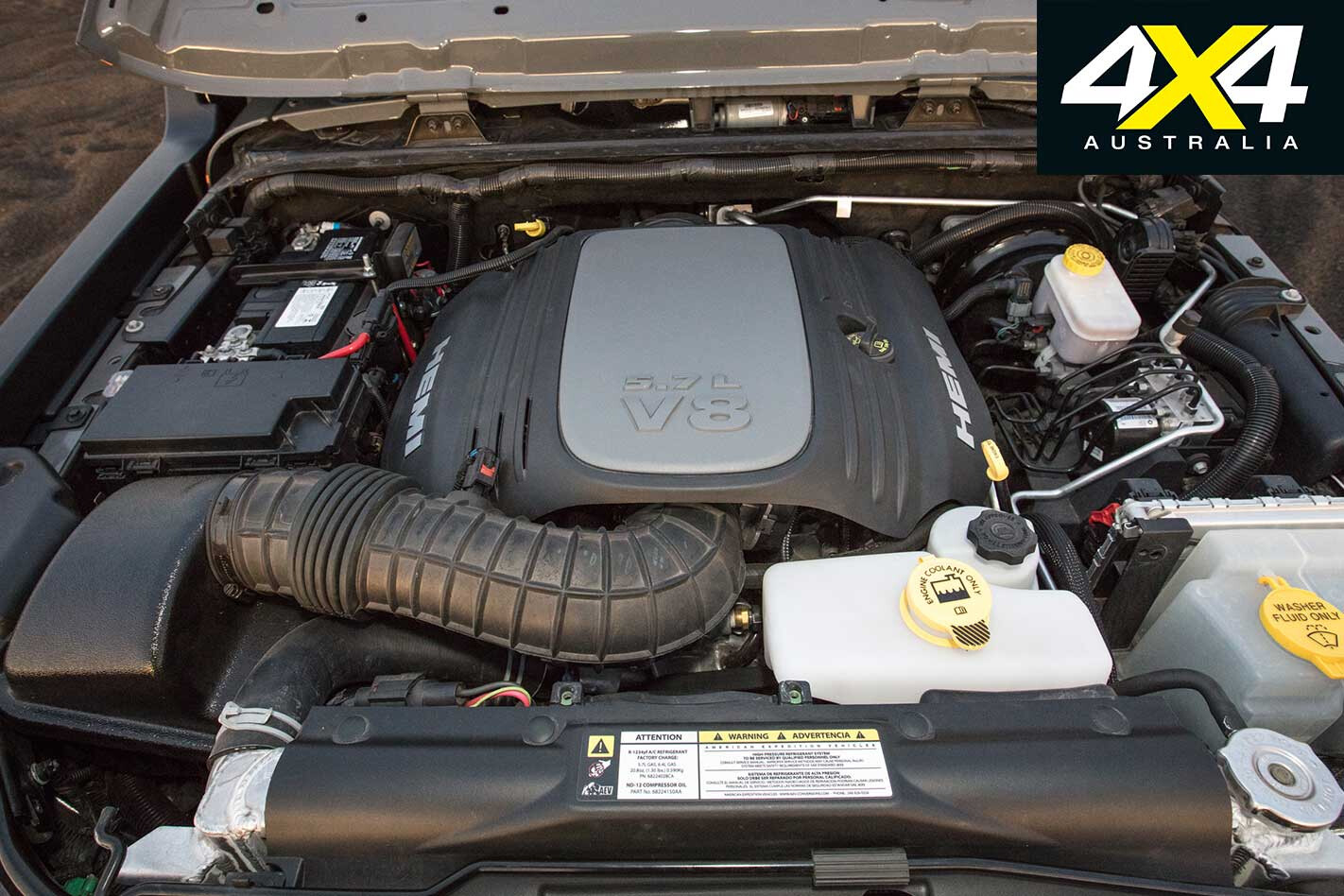
Assisting with aspiration is AEV’s custom air box, snorkel and pre-filter, and upon close inspection one would lose a bet that the entire ensemble did not roll out of Jeep’s Toledo, Ohio, facility as-is. Aft of the torque converter we find an A580 five-speed automatic transmission, tuned and with shift points modified to accommodate the HEMI’s power curve.
Receiving those ponies out back is Dynatrac’s new high-clearance low-pinion Dana 60 fitted with 4.88:1 gears, an Eaton locking differential and a big brake kit. Up the front rides a Dana 44, also by Dynatrac, with an electric locking differential from a Wrangler Rubicon.
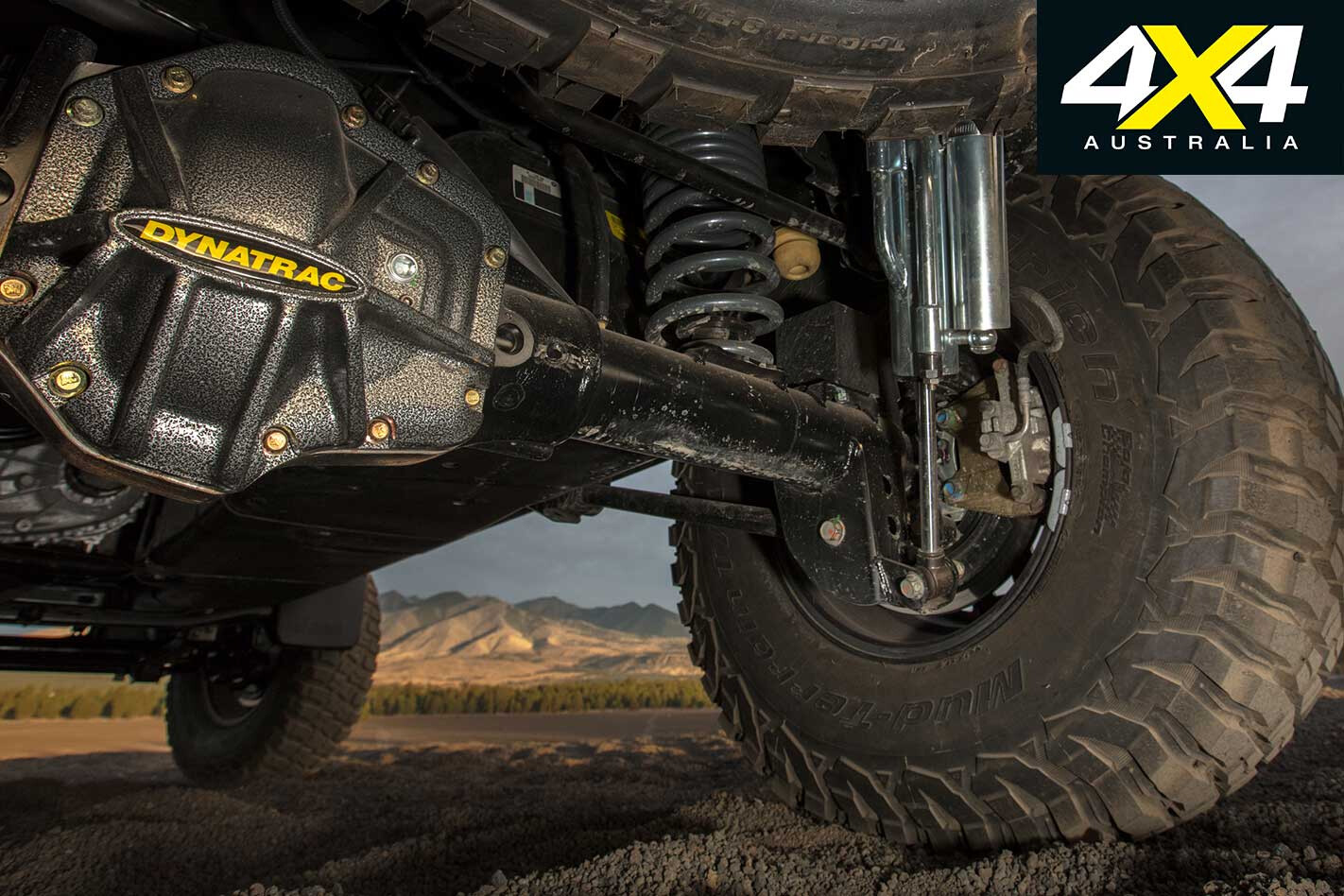
Keeping the axles in place is AEV’s 4.5-inch DualSport suspension. To manage the additional unsprung weight, as well as that of the abode and accessories, Dave incorporated AEV’s high-capacity coil springs, prototype Bilstein 8100 shocks, and a custom .875-inch sway bar. The combination provides near-factory on-road handling, excellent off-road control and articulation in cross-axle terrain like no caravan we’ve seen.
Keeping the rig in contact with the tractive surface is a set of 37-inch BFGoodrich Mud-Terrain KM3s and AEV’s 17-inch Borah 356-T6 aluminium wheels with forged beadlock rings. The Borah is a unique concept, as it can be utilised as a true beadlock and can accommodate a traditional non-beadlock mounting.
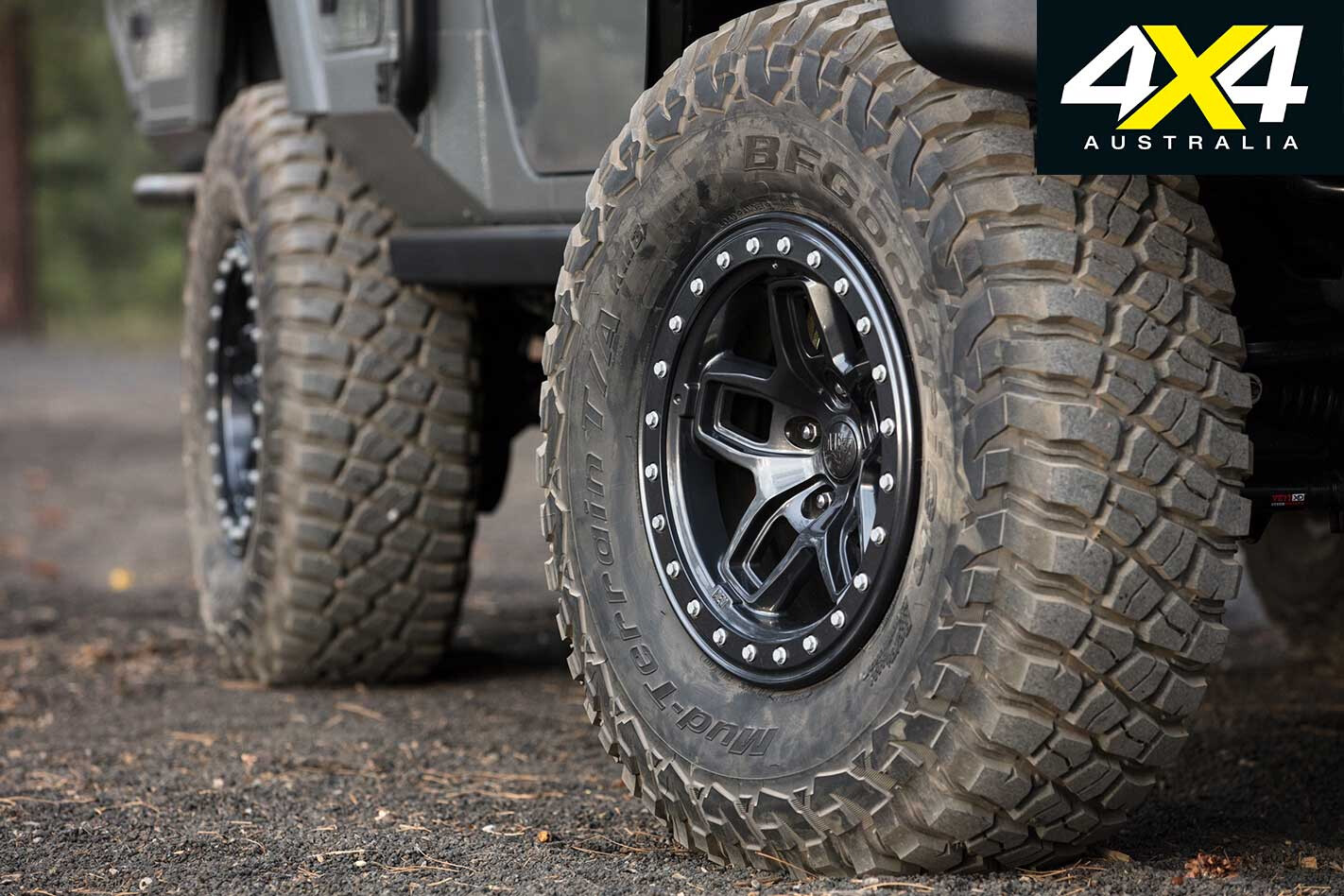
No trail rig would be complete without proper armour and recovery equipment. Up front is an AEV Premium front bumper fitted with IPF auxiliary lights and a Warn Zeon 10.0 winch wrapped with synthetic rope.
Protecting soft body parts are a pair of full-length Rubicon rock sliders. To protect the tail end of the camper, Dave fabricated a wraparound rear bumper replete with a pair of crank-down stabiliser jacks and weld tabs for an array of Rigid Dually LED lights.
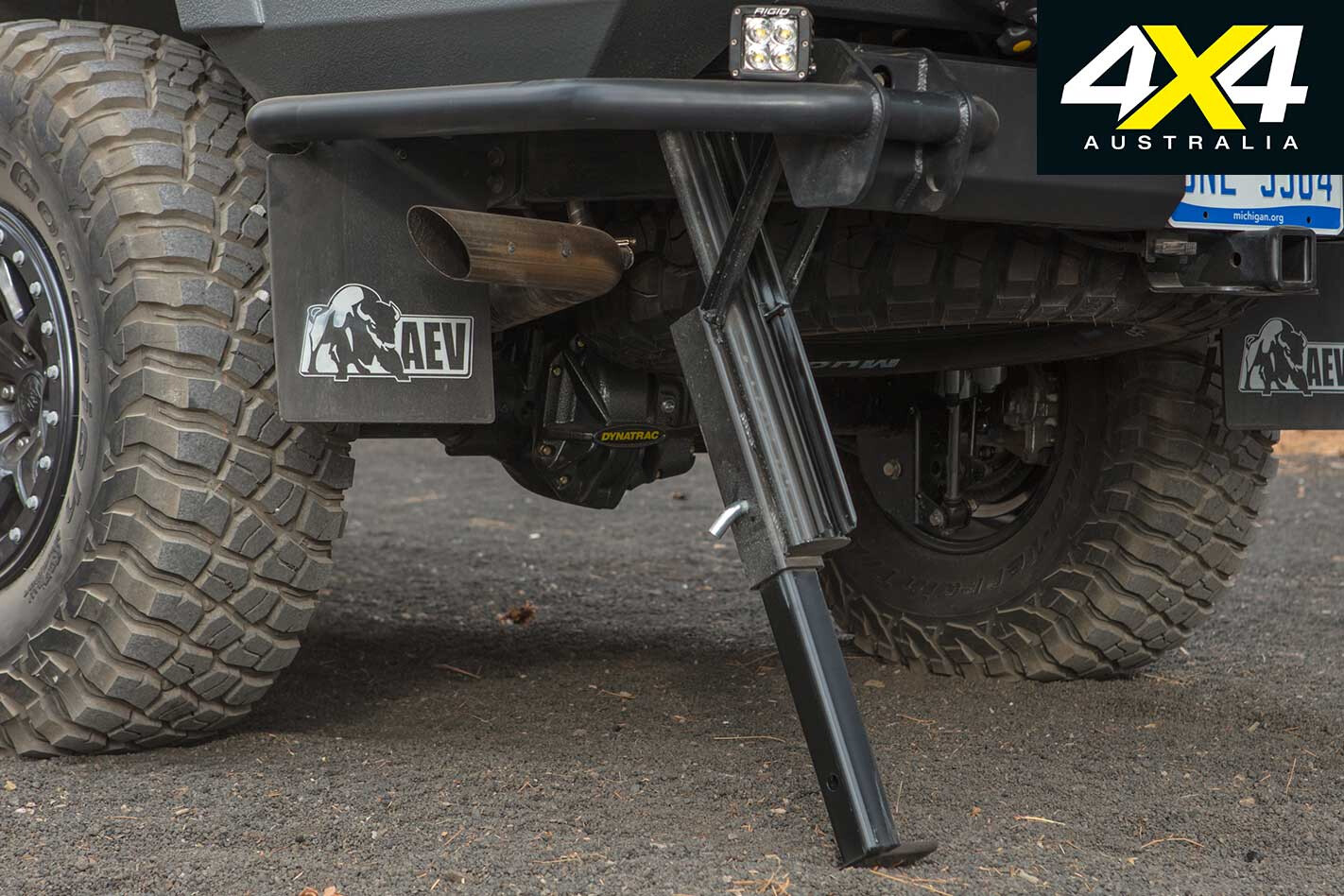
A frame extension from AEV’s Brute Double-Cab was incorporated to support the camper and provide proper attachment points for the rear bumper. This allows for the spare to be mounted under the rear deck, while overall length was increased by 279.4mm over that of a stock four-door Wrangler. A set of MaxTrax secured to the back of the camper and an ARB recovery kit are close at hand if needed.
THE ABODE
THERE is a lot to consider when creating a comfortable and functional living space: efficient use of real estate, keeping increased mass to a minimum, and constructing it to withstand the rigours of legitimate off-road travel.
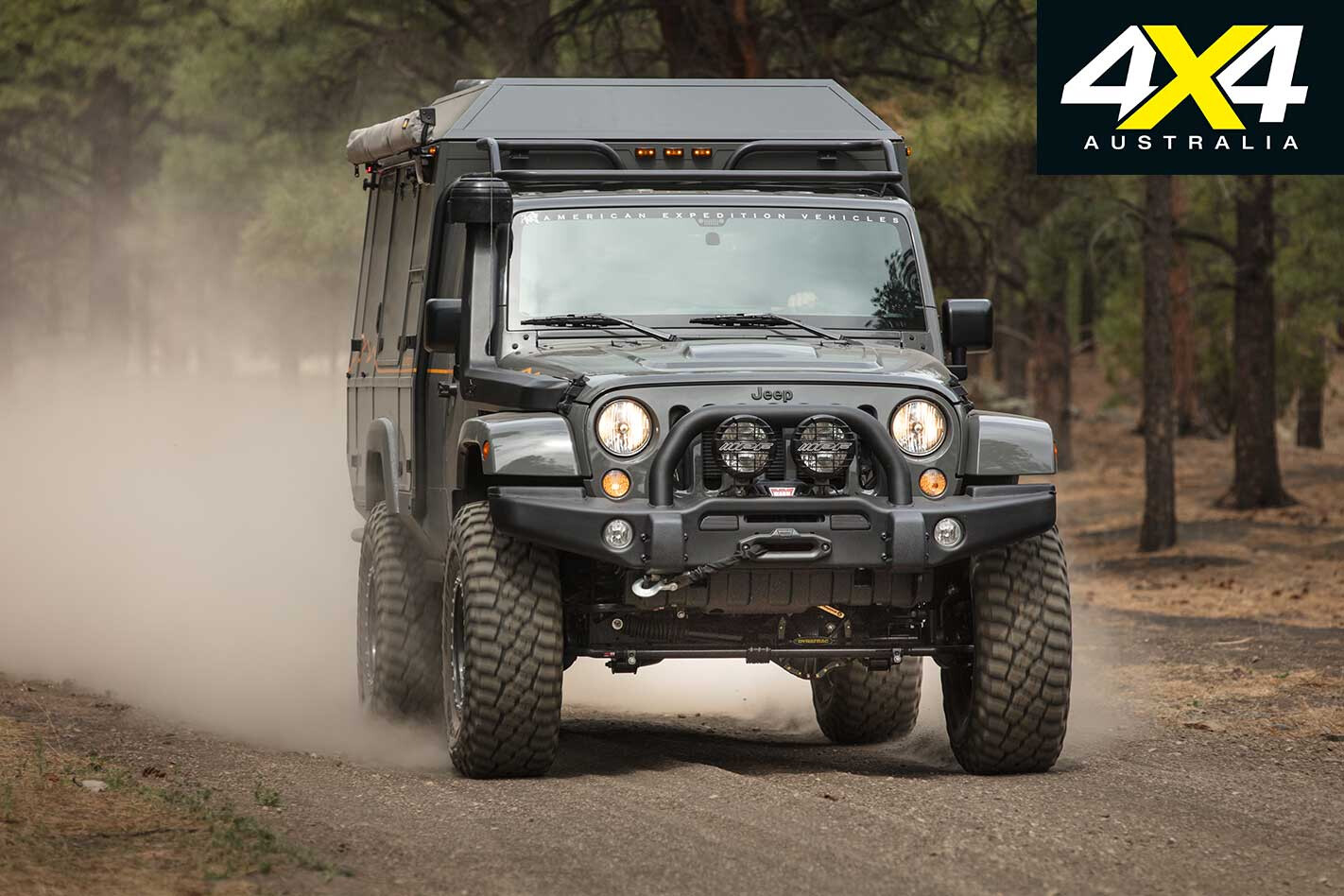
To address the latter, the “house” began with a steel birdcage frame formed from 14- and 16-gauge square tubing, which was tied into the rollbar and floor (to add torsional rigidity) and powdercoated. It was then fitted with CNC-milled polypropylene honeycomb panels and skinned with fibreglass. The result was a rigid box with an R9 insulation rating.
The top opens in clamshell fashion with a pair of electric jacks, revealing a breathable enclosure that provides nearly eight feet (243cm) of headroom. Walking around the Outpost II revealed several storage compartments, a fill cap for the 83-litre water tank, 120-volt shorepower receptacle, an AEV awning, and motion-sensing exterior lights.
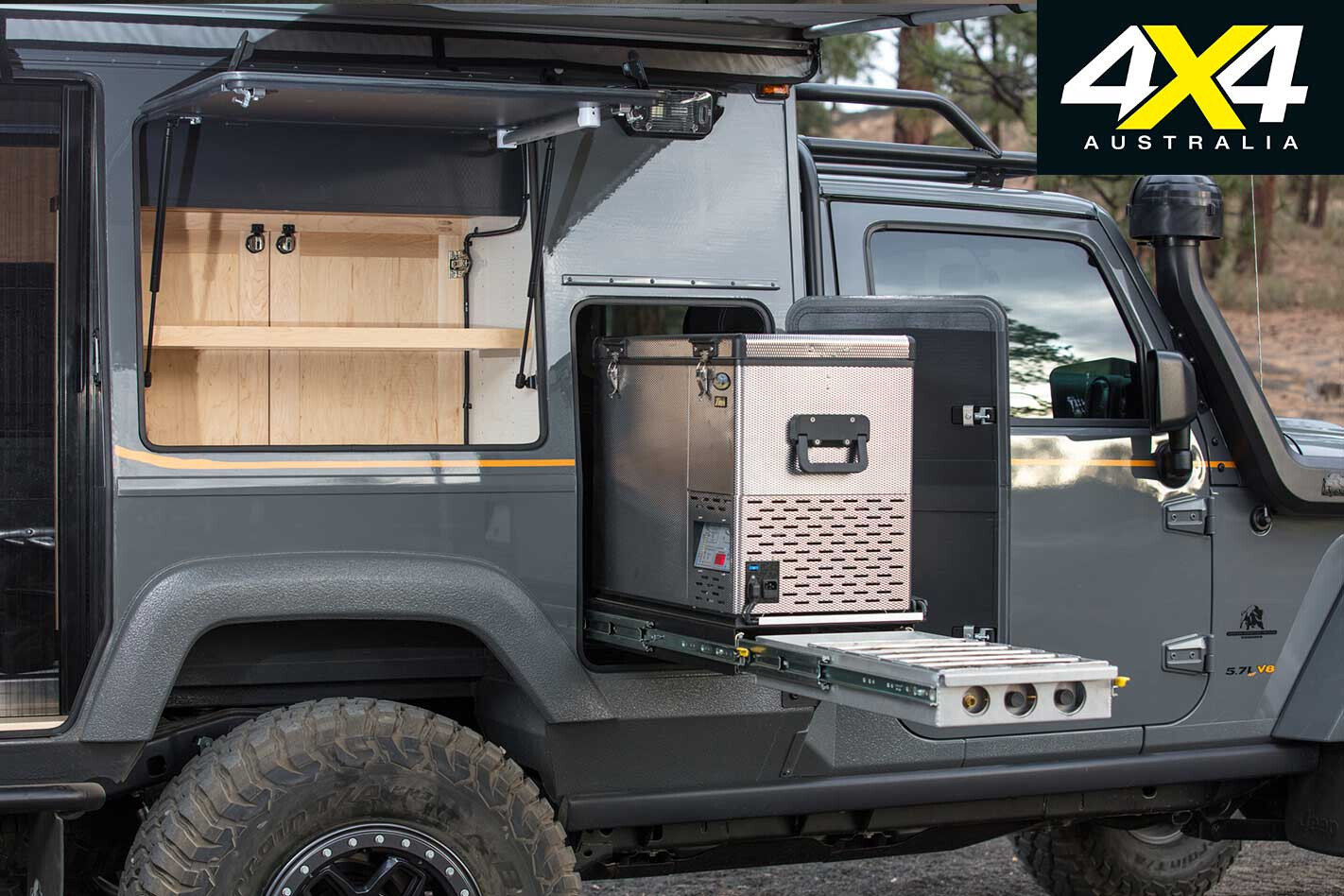
Because living on the road is about being one with nature, the pantry, National Luna fridge/freezer and Partner Steel stove are accessible via two additional portals under the awning. While the fridge and pantry are also accessible from the inside, exterior access is handy for stocking provisions after shopping.
Stepping inside is reminiscent of entering a luxury yacht. A laminated hardwood counter rests to starboard, and much of the hardware and accessories are adaptations from the marine industry.
To port is a two-metre couch that converts to a bed, with additional storage and household systems underneath. Keeping occupants warm is an Espar B5 13,500 BTU petrol heater, and the 15-litre hot-water tank is heated and controlled via a marine heat exchanger and thermostatic mixing valve (shorepower can be used as a backup if needed).
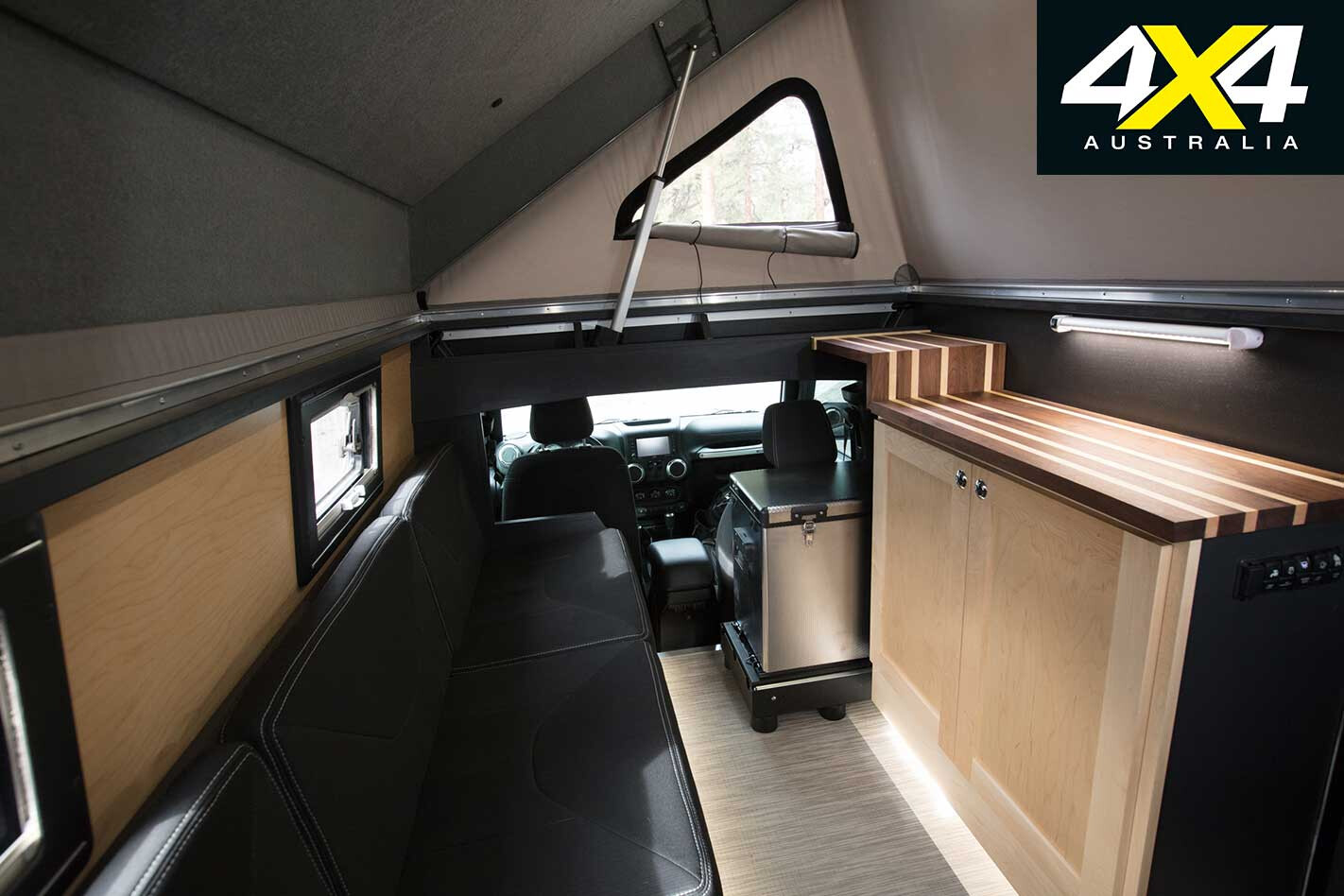
To safely vacate spent gases from the heater, the manifold was creatively tied into the vehicle’s exhaust system at the tailpipe. Keeping the system energised is a roof-mounted eNow 265-Watt solar panel, dual Optima Blue Top deep-cycle batteries and a National Luna charge controller.
Other clever touches include a proper closet for hanging clothes, LED interior lighting throughout, ARB twin compressor, custom roof rack, and camper hinges thoughtfully designed to match those of the JK’s hood.
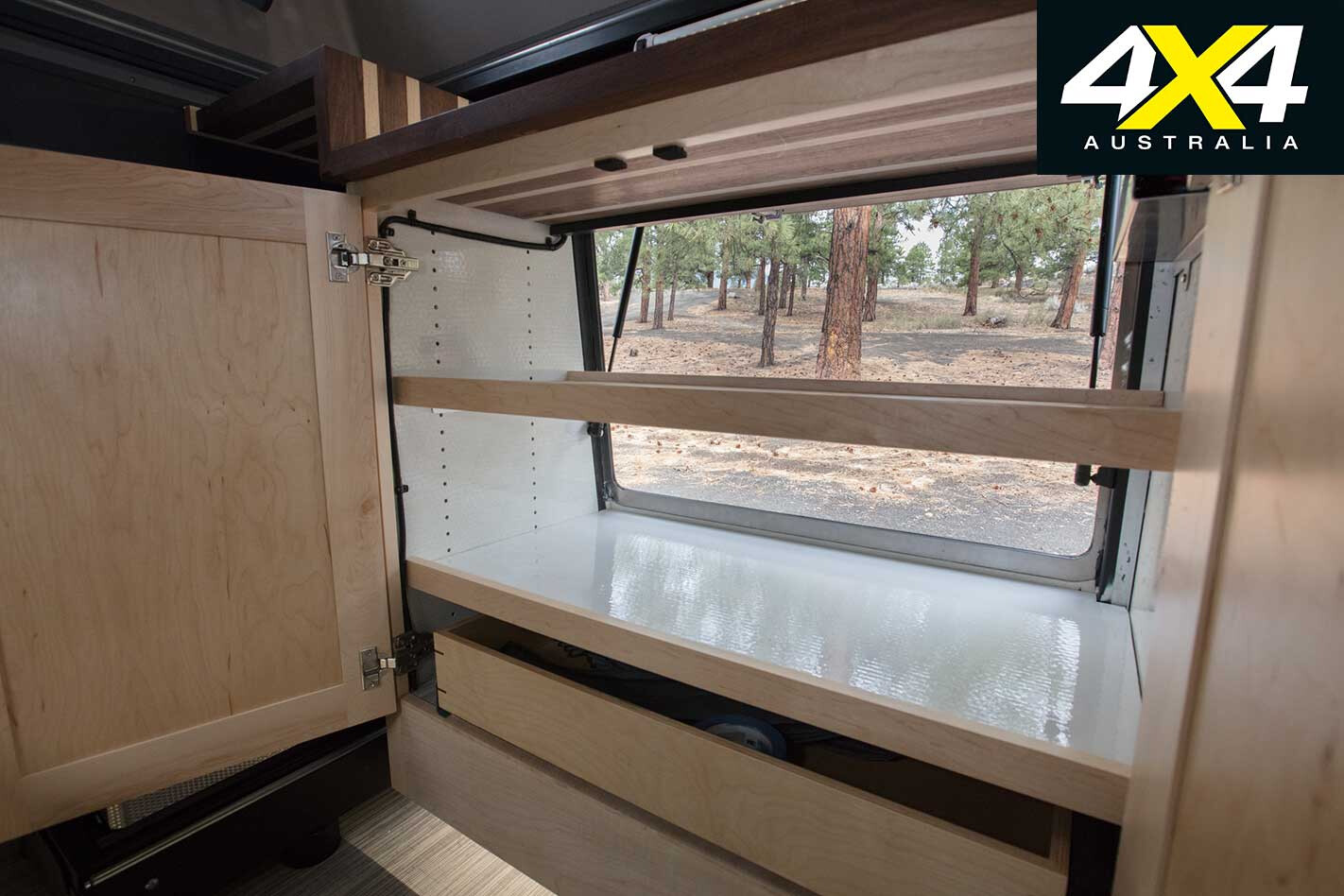
AEV has come a long way since its humble beginnings in a one-room, dirt-floor shop in Missoula, Montana. This success is largely due to its extraordinary attention to detail in every product it produces. This ethos is evident in the Outpost II.
When asked what he would do differently and if the Outpost II will be available as a public offering, founder Dave Harriton said: “I built it for two people and a dog to travel comfortably. As far as manufacturing the Outpost II for retail sale, I’m not sure. We aren’t quite done with it, but I will keep you posted.”
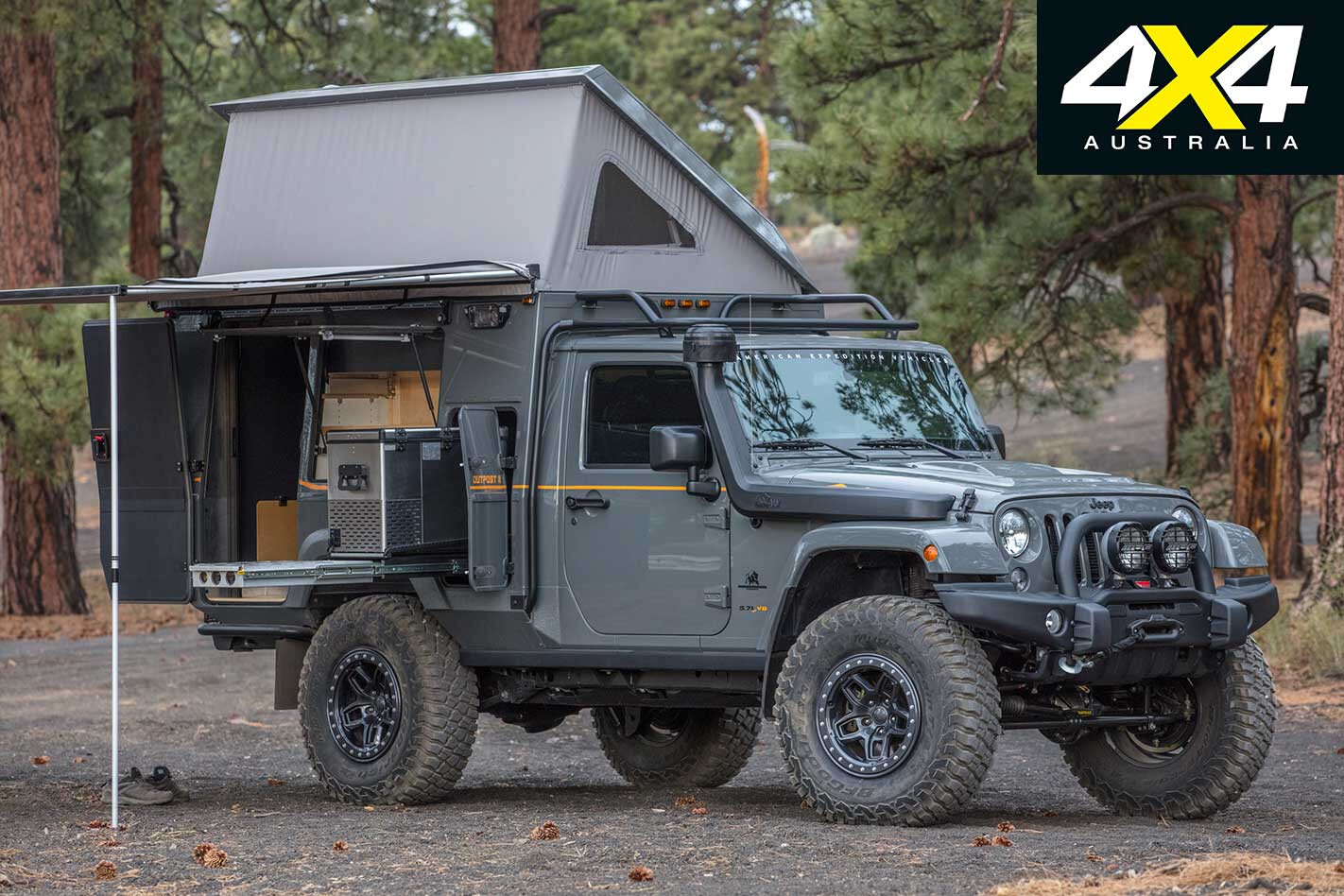
From the owner
“I REALLY love the sideways-lifting roof. The space it creates feels like much more than a typical RV or lifting roof. It’s very relaxing and at the same time very functional. If you park with the solar panel facing west, its output is optimised and the insulated walls are taking the heat, leaving the windows and tent in the shade most of the day. I also love the gasoline heater and couch. It’s nice to have a place to escape when the weather turns foul; most small RVs don’t have the space or seating area required to wait out a storm in comfort.”
Cooloola Recreation Area is between Noosa Heads and Rainbow Beach. It is beach-accessible from Tewantin, 155km north of Brisbane, and Rainbow Beach, about 240km north of Brisbane.
This feature was originally published in 4×4 Australia’s July 2012 issue
If you’re travelling from Brisbane for a daytrip or a camping weekend, the best way is through Tewantin. Catch the Noosa River ferry across to the North Shore then head five minutes past the Noosa North Shore Retreat. Hit the beach here and continue past Teewah and the Coloured Sands all the way to Rainbow Beach and Double Island Point.
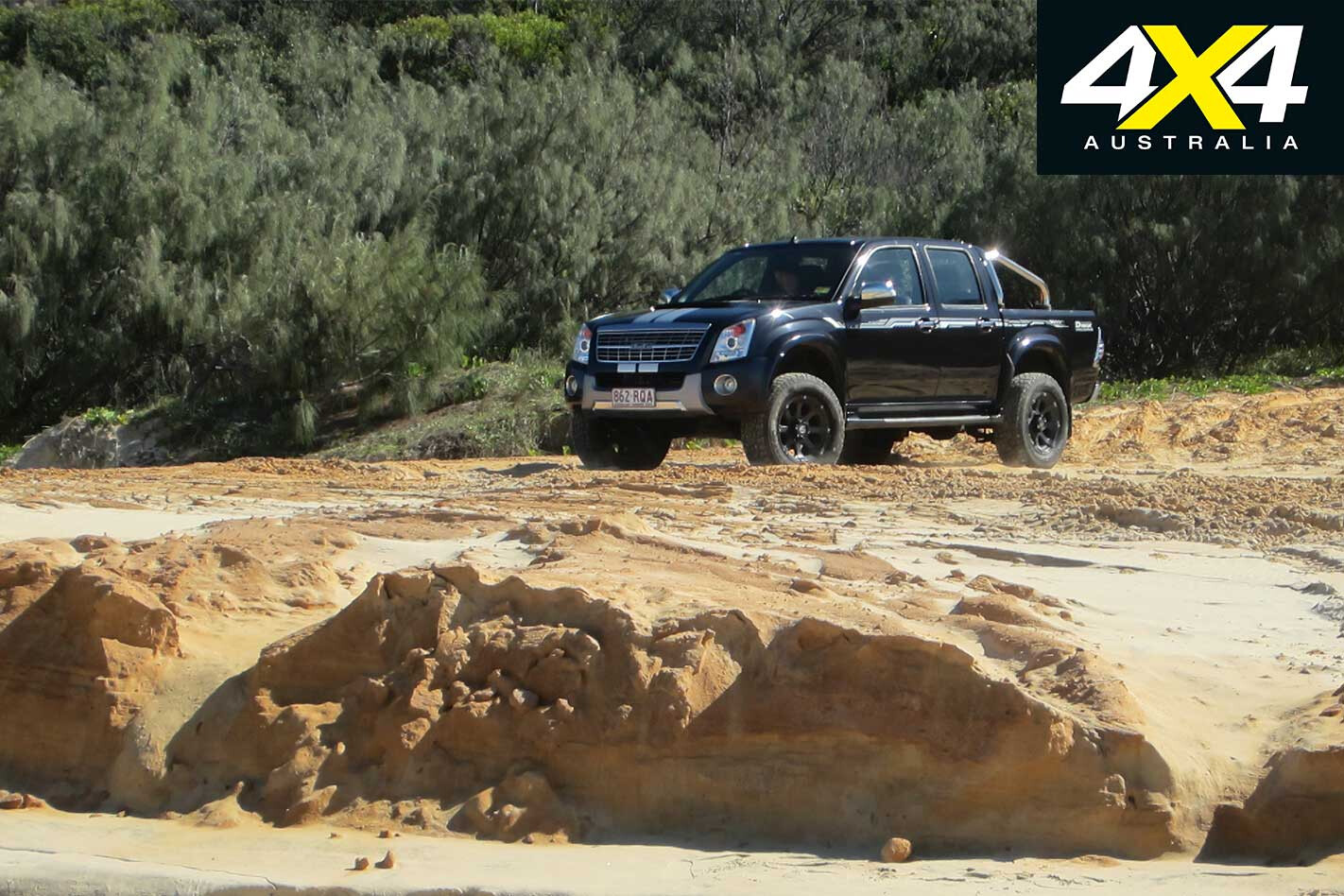
Over the last year we’ve been putting an Isuzu D-Max LEIII (Limited Edition Three) through its paces and we couldn’t wait to give it a solid nudge on the sand here.
Beach access is fairly easy; once on the sand abide by normal road rules and stick to the signed speed limits. The drive is a quick one – less than an hour – up the beach to Double Island Point or Rainbow Beach.
There is a designated beach-camping zone about 10km north of the North Shore beach. Open fires are permitted unless otherwise specified, but bring firewood as gathering wood is prohibited.
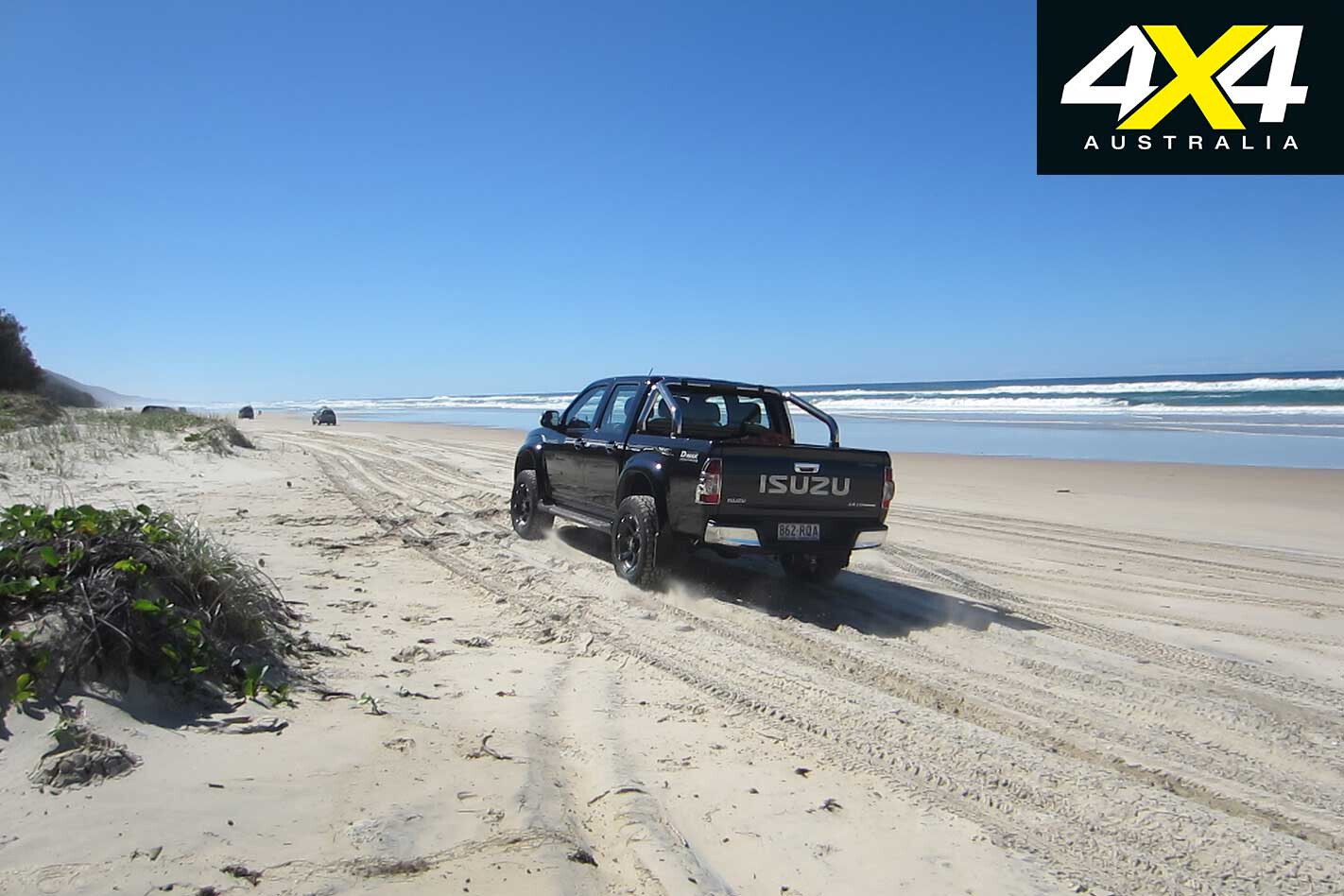
There are plenty of great spots along the beach to throw in a line; whiting and dart are the main catch during the day. Late afternoon and early morning is the time to chase tailor in the gullies along the long stretch of beach.
Besides fishing there are plenty of things to do and see, with beautiful coloured sand cliffs and sandy bushwalking tracks into lush rainforest. You can travel to Rainbow Beach and Double Island Point straight up the beach to Teewah Beach’s northernmost tip, then head inland via Leisha Track.
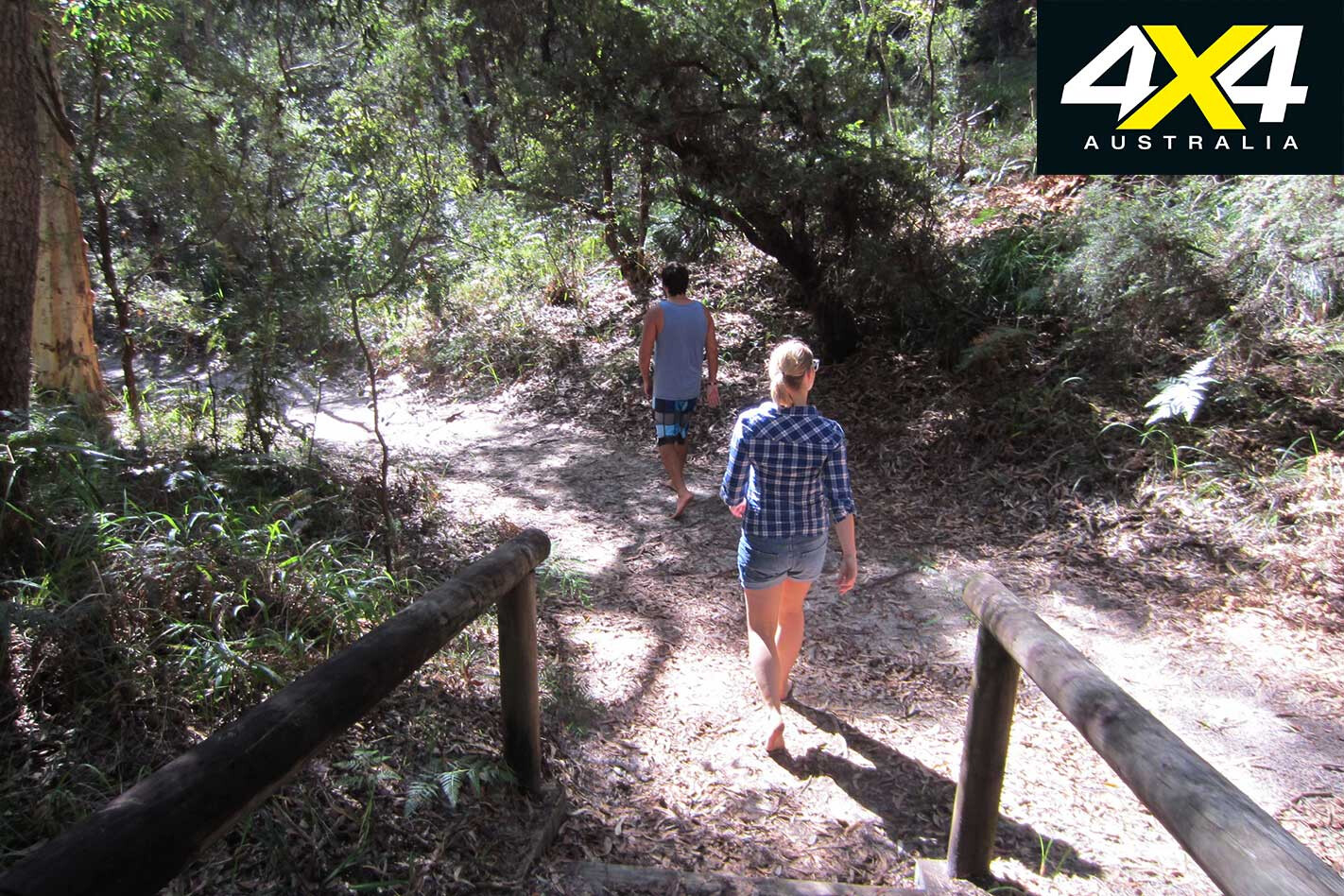
The entrance to the track is constantly affected by tides and swells and it can be eroded so severely that access is prohibited or restricted to low tide only. Check the Cooloola Condition Report (derm.qld.gov.au; updated fortnightly) before visiting the area.
The easiest and most popular track up to Rainbow Beach and Double Island Point is Freshwater Track. The entrance is about midway up the Teewah Beach camping zone. Freshwater Track is 14km of easy sand-driving to Rainbow Beach Road. It is a beautiful route with kilometres of canopy-covered track – we relished the trip in the 3.0-litre turbo-diesel D-Max.
Once you pop out at Rainbow Beach Road, turn right and head four kilometres onto Rainbow Beach. This stretch is a terrific spot, with accommodation to suit everyone, from campers to hotel-fans. You’ll find many conveniences here including tourist info, service station, under-body car wash, clothes shops and restaurants.
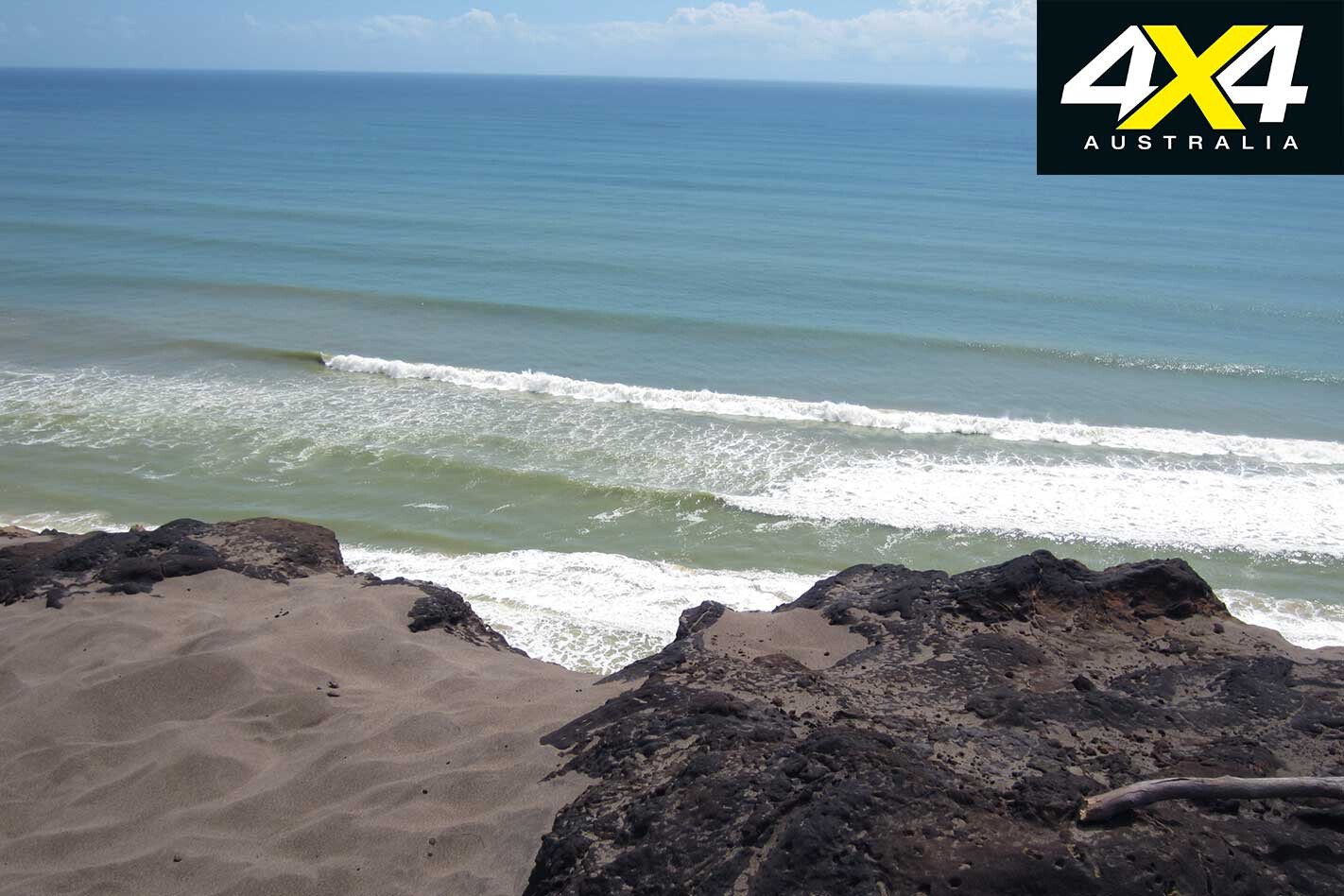
With luck, visitors to the area are able to spot whales, dolphins and turtles from Double Island Point lookout and the Rainbow Beach Carlo Sandblow – 15 hectares of sand overlooking the coloured sandstone cliffs at Rainbow Beach. The Sandblow is well worth the 600m bushwalk, with magnificent 360-degree views taking in Fraser Island, Tin Can Bay, Double Island Point and Inskip Point.
Cooloola Recreation Area is a great place for family fishing, camping and bushwalking. Spend a day, a weekend or a week exploring all it has to offer.
Travel Planner
WHERE 155km north of Brisbane
PERMITS $10.35 per vehicle per day
CAMPING Camping fees are $5.30 per person per night, or $21.30 per family per night. Bookings and fees can be paid online.
BEST TIME TO VISIT Spring to autumn
SUPPLIES The closest main areas for supplies are Rainbow Beach to the north and Noosa North Shore to the south.
MORE INFORMATION Visit derm.qld.gov.au/parks/cooloola.
%MCEPASTEBIN%
So you manage to conquer the slopes, forge relentlessly through the bush, and find yourself on a pristine patch of nature at last where it is time to pitch tent and crack open a cold one. But is that it?
Though the fun in any 4×4 adventure is mostly in the journey, the destination is also worth the effort, so pick up a good book, boots, and GPS gear to spend some quality time while you are there.
Garmin inReach Mini
Honey, Garmin has shrunk the inReach! The new inReach Mini is tiny – 100mm x 50mm and a paltry 100g in weight – but packs plenty of punch when it comes to comms capability. The inReach Mini (when combined with an Iridium satellite subscription) features two-way messaging, 24/7 SOS and GPS tracking.
When paired with the Earthmate app (via a smartphone) the Mini gains access to unlimited aerial images and mapping. That app also means inReach Mini users can access all the inReach features through the paired smartphone, enabling, among other things, easy messaging via the contact list.
The inReach Mini is impact resistant and rated to IPX72 for water-resistance. The internal battery offers a claimed 50 hours of use (10-min tracking mode) and 20 days if you extend the interval to 30 minutes using track mode 3.
RRP: $499 Website: www.garmin.com.au
Keen Targhee EXP
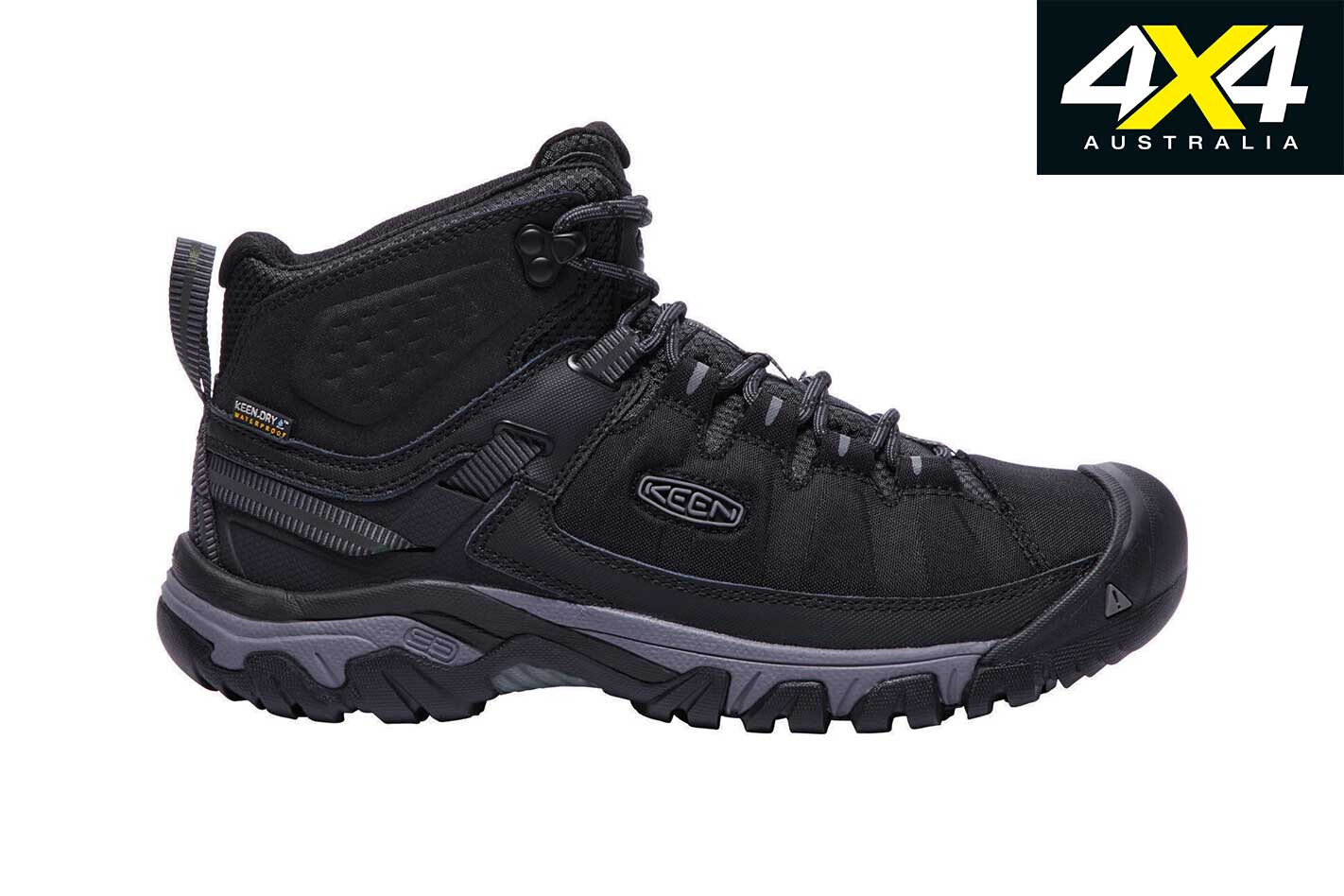
A great all-rounder trail shoe that is equally at home on a family camping trip as it is on an overnight hike, the Targhee EXP from Keen is built tough as you’d expect from this popular footwear brand.
The all-terrain outsole is grippy on all surfaces (wet, dry, rock, mud) and you can happily plough through any puddles and mud thanks to the waterproof membrane which also offers excellent breathability, meaning no sweaty feet at day’s end. The Targhee EXP’s metatomical footbed moulds to the natural contours of your foot, ensuring maximum comfort and minimising fatigue.
Further reducing fatigue is the light weight of the Targhee EXP: at only 455g it offers the stability of a more ‘heavy-duty’ boot without the additional weight. This light weight is achieved via its mix of leather and mesh upper, along with the internal nylon shank.
RRP: $269 Website: www.keenfootwear.com.au
Napoleon’s Australia

Yep, you read it right – or you will if you grab this book – France’s diminutive boss-man in the early 19th century had big plans to invade Australia, turf out the Poms, and convert our predecessors into advocates of French cuisine.
It sounds ludicrous, but Napoleon Bonaparte was very serious about conquering the then relatively young English colony, and renowned Aussie writer Terry Smyth writes a cracking account of this little known ‘nearly’ part of Australian history.
Proving that love is indeed grand, Bonaparte’s designs on Australian conquest stemmed from his great love, Josephine, who was an avid fan of all things Australian. The story is brilliant and well worth a read.
RRP: $35 Website: www.penguin.com.au