
TOYOTA’S Australian design team based at the company’s Port Melbourne HQ in Melbourne – in conjunction with the Toyota engineering team in Thailand – has restyled the Hilux SR and SR5 with a front-end facelift.
The redesign affects only extra-cab and dual-cab variants, with the new look mirroring the Hilux Rogue that was launched earlier this year. The more menacing presence is afforded courtesy of a more vertical profile, a large trapezoidal grille, a honeycomb insert, outboard fog lamps and chrome treatment. The SR5 gets LED headlights and fogs, while the SR adds halogen fog lights.
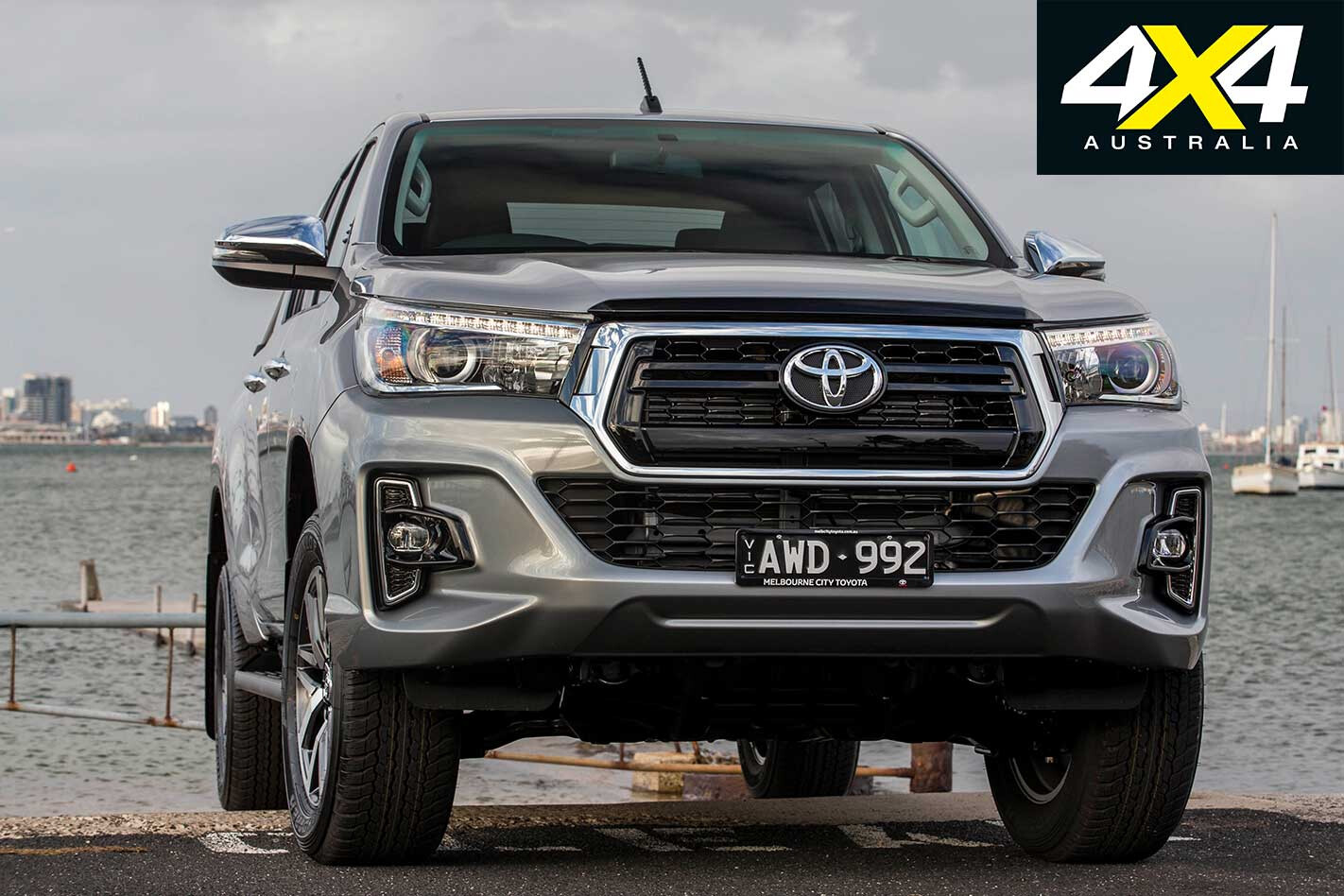
“When we styled the Rogue, we knew it was the right design for the growing top-end recreational ute market, and our faith in that has now been borne out with the same face adopted on SR and SR5 Hilux models,” Toyota Australia‘s vice president of sales and marketing, Sean Hanley, said. “The ute market has clearly shifted in the past decade, and as Australia’s best-selling vehicle, Hilux now offers a more contemporary, bold and refined style to go with its ‘unbreakable’ reputation.”
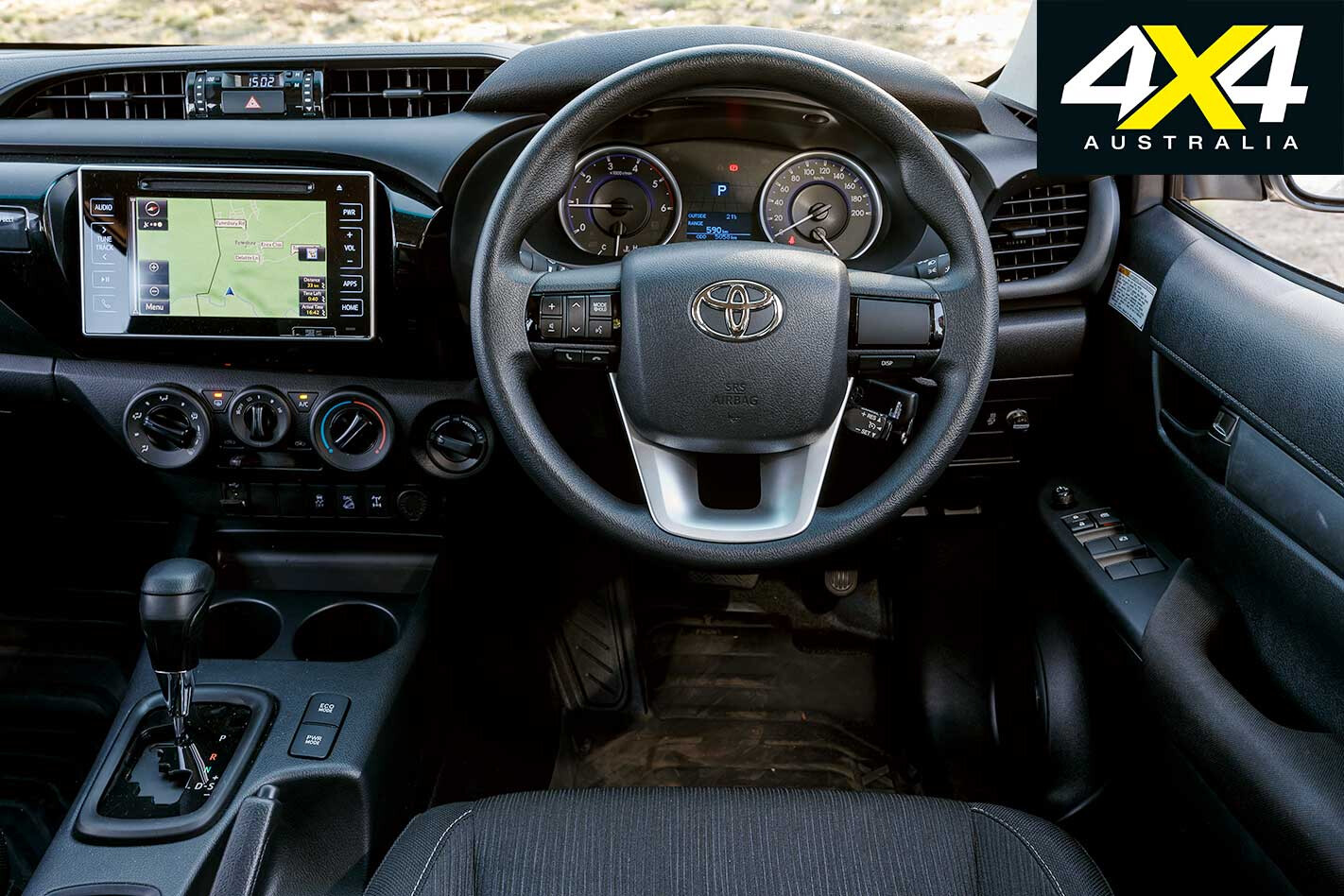
All diesel Hiluxes now also feature an in-cabin DPF switch – the same system revealed earlier this month with the Prado range – to manually moderate emissions. The switch also finds its way into all 2.8-litre turbo-diesel-powered Fortuners.
In addition, the six-speed automatic transmission of the SR and SR5 models has seen an incremental improvement in combined fuel consumption, registering a saving of 0.1L/100km.
Due to the changes the SR extra cab-chassis and SR double cab-chassis and pick-up models have been hiked by $80, but all other models remain unchanged.
The SR extra cab-chassis (manual) is priced from $42,990 and the double cab-chassis (manual) from $45,140. The auto adds $2K, while pick-up variants have a $1500 premium.
The SR5 prices remain unchanged, meaning the extra-cab (auto-only) and double-cab pick-up are priced from $54,440, with the SR5 double cab pick-up commanding a $2K premium.
MORE: Toyota Hilux Range Review
MORE: Toyota Hilux Specs, Range & Price
FORD has confirmed European punters will be able to get their hands on the barnstorming Australian-engineered Ranger Raptor from mid 2019.
The Euro-spec Raptor will be powered by the 2.0-litre four-cylinder bi-turbo-diesel engine – yep, the one we’re familiar with here in Oz – which generates 157kW at 3750rpm and 500Nm from 1750-2000rpm. It’ll be mated to the 10-speed automatic transmission.
It’s the Raptor’s performance-engineered chassis and suspension package, however, which will give the burly Ford a leg-up on Europe’s high-paced, high-impact corrugations.
“The standout experience of the Ranger Raptor, hands down, is how far you can push it off-road and still ride like a millionaire on-road,” said Damien Ross, chief program engineer, Ranger Raptor, Ford Motor Company. “Everything about the Ranger Raptor builds on the already outstanding sophisticated feel and functional capability of the Ranger, and then goes further. From a driving dynamic and fun standpoint, it is really an exceptionally special vehicle.”
A few months ago we buckled up and tested the upcoming Ranger Raptor on high-speed trails, and it “ate up whoops, bumps and bulldust like a Baja racer, instilling driver confidence and encouraging you to push further”. Read the full review here.
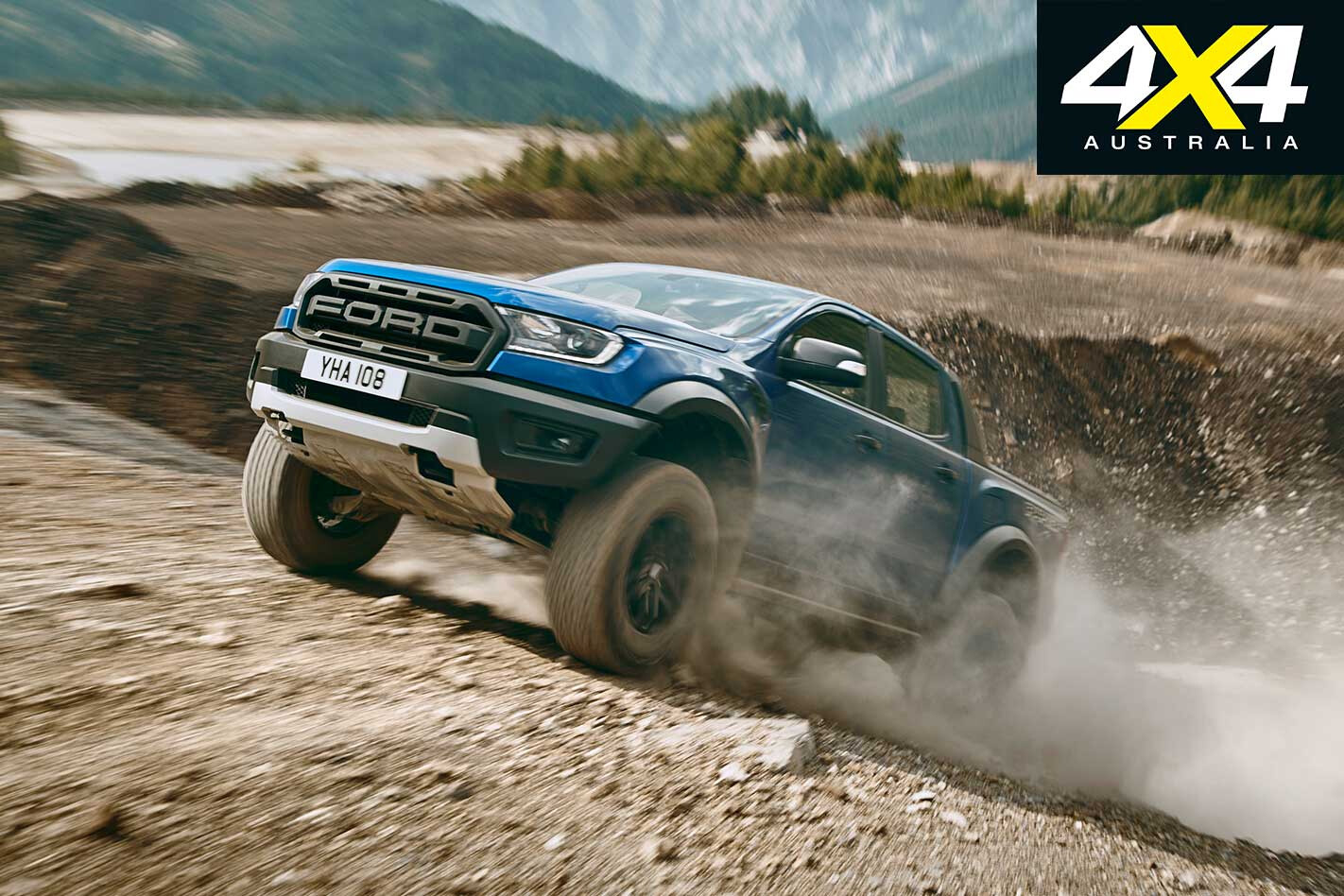
“Forget everything you think you know about pick-ups,” said Leo Roeks, Ford Performance Director, Europe. “Our new Ranger Raptor is a different breed – a thoroughbred desert racer and extreme lifestyle off-roader that can toil with the best of them in the harshest of working conditions.”
Ford’s rock-skimming Raptor was revealed at Gamescom 2018, a massive trade fair for interactive gamers held annually in Cologne, Germany. Why at a gaming convention? Well, Ford and Microsoft used the revelation to announce that the Ranger Raptor will feature in the upcoming Forza Horizon 4 video game, set for release later this year.
The Ford Ranger will arrive in the USA in 2019, but the Raptor variant is still unconfirmed.
THE FORD F-250 heavy-duty pick-up is no shrinking violet, but for US-based vehicle customisers, EVS Motors, there was still room for improvement.
Drawing from previous experience in customising a handful of Hummer H1s, EVS turned to its attention to the F-250 to give it that “post-apocalyptic” treatment and aptly rechristened it the Search and Destroy F-250.
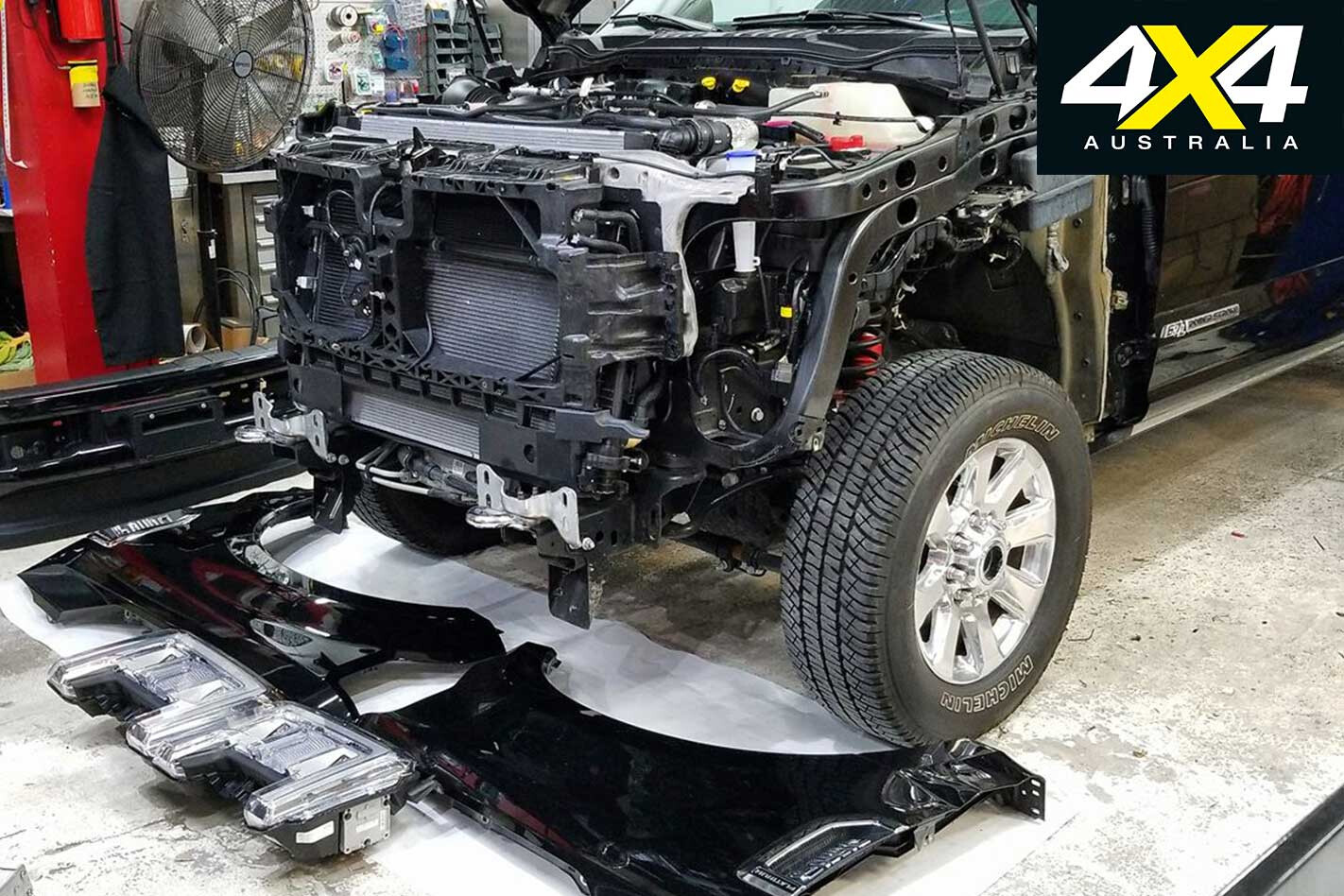
Despite its menacing looks, EVS’s makeover mostly involves the fitment of aftermarket parts in the form of ViCowl windshield armour, an Addictive Desert Designs HoneyBadger Chase rack base and a Fab Fours Grumper Bumper.
Additional lighting includes four Rigid Lights installed into the windshield armour, as well as a rear-facing full-length LED light bar attached to the sports bar.
To give it that imposing military-truck look, the body is wrapped in black satin Avery vinyl wrap, while the Forgiato 12 x 25-inch forged wheels are wrapped in Toyo Open Country R/T tyres.
JUST AS we are spoilt for choice when it comes to buying a new 4×4 vehicle, there is no shortage of options when it comes to equipping and accessorising that vehicle.
There are plenty of companies out there that can sell you quality products for your 4×4, and a few that offer not-so-good quality you should probably stay clear of.
There’s only one company that offers a complete vehicle fit-out – top to bottom and bumper to bumper – all with its own engineered and branded products. Ironman 4×4 doesn’t sell products from other companies; instead, if it sees a need for a product in the marketplace, it engineers its own and either manufactures it or seeks out the right company to source it from.
Ironman 4×4 mightn’t be the oldest brand of 4×4 products in Australia, but it’s one that can trace its roots back six decades as it celebrates its 60th anniversary in 2018.
In 1958, Gunter Jacob was making leaf springs for trucks in a backyard shed in Melbourne’s eastern suburbs. He soon moved his fledgling business to a workshop at the back of a blacksmithing shop in Oakleigh, where Gunter would help the owner Harry Lark shoe horses in return for the rent on the shed.
It was no surprise that Gunter would be working as a spring-maker in a blacksmithing workshop; the Jacob family had been in the steel business in Europe since the 1950s, when they were in the scrap-metal trade. In the 1960s in Australia, spring-making was a growing trade as more and more people bought cars and trucks in the growing nation.
Gunter opened a second workshop in Oakleigh and established Jacob Spring Works (JSW) and, four years later, opened Dandenong Spring Works a bit farther east. At that time, 4x4s were mainly trucks like the Chev Blitz and other war-surplus vehicles like Jeeps, while Land Rover was an emerging brand. Using a 4WD for recreational use was almost unheard of.
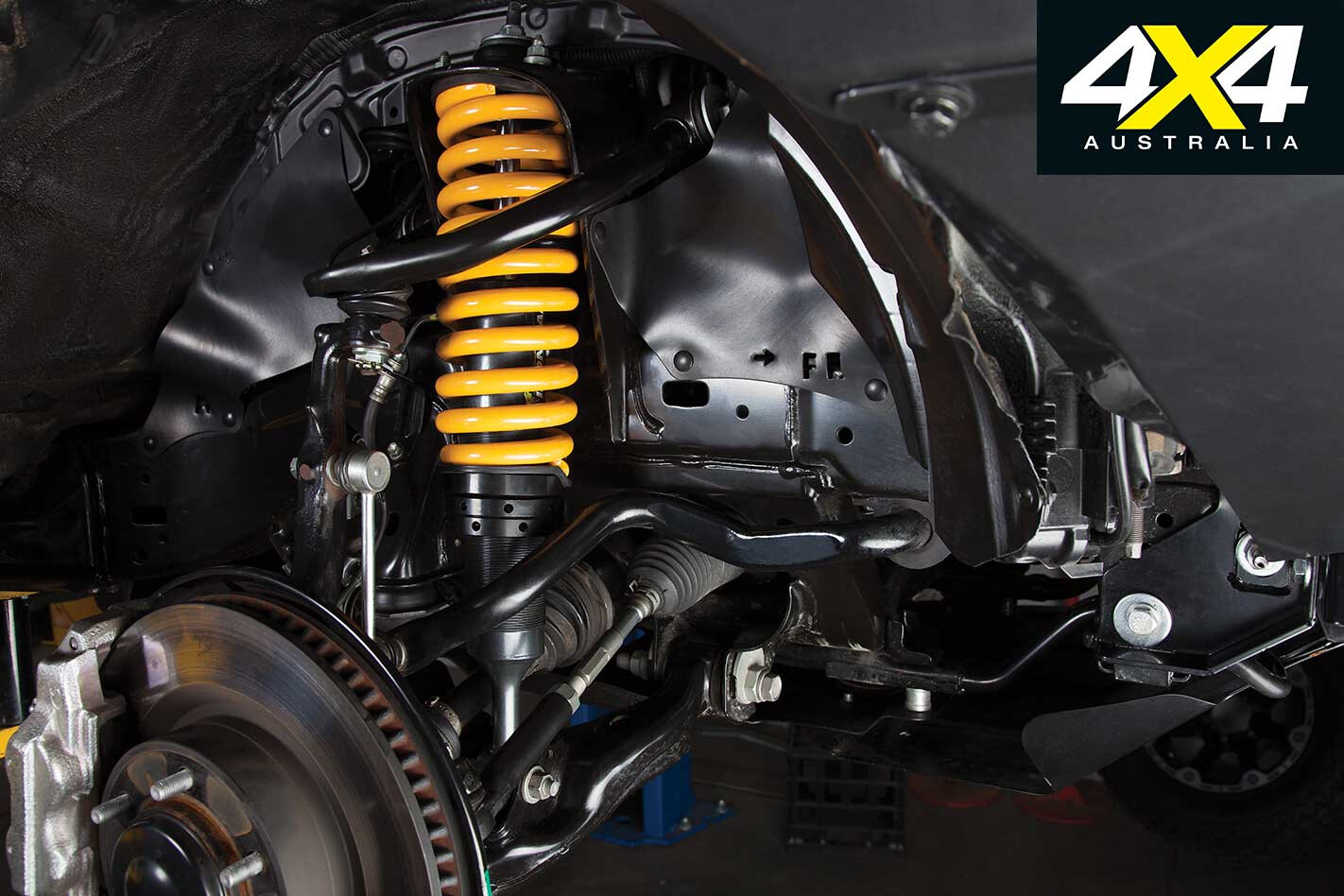
The Australian Army was having troubles with the suspension on its Series 2A Land Rovers and approached JSW for a solution. Gunter redesigned the factory springs and shock absorbers to solve the fault, and JSW suspension went into the many Land Rovers in the army’s fleet.
The Land Cruiser FJ25 and the more popular FJ40 Series spread the popularity of 4x4s for both exploratory work and recreational use, but Tom Jacob recalls that it wasn’t until the 60 Series Land Cruiser was released in 1980 that recreational four-wheel driving spread further.
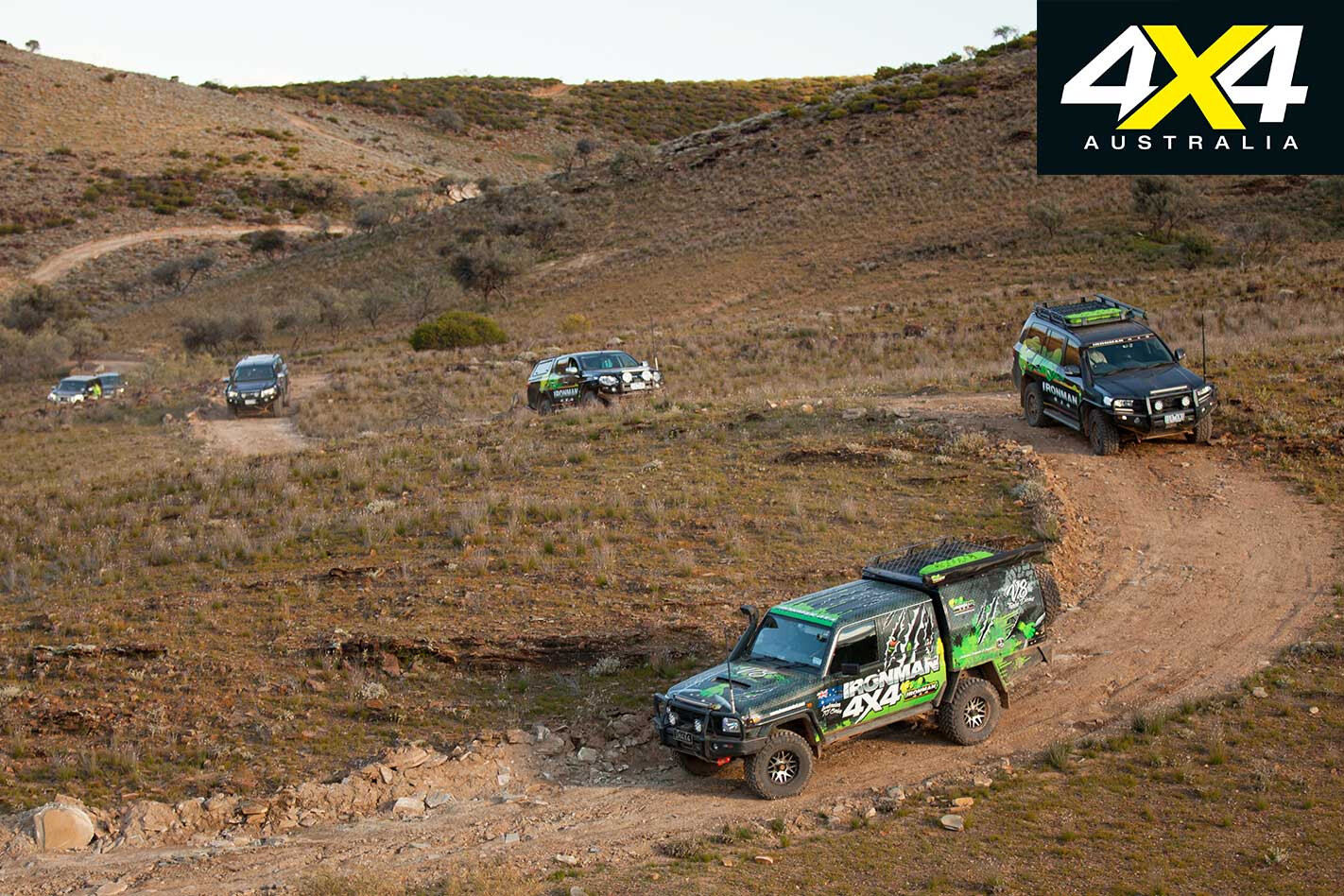
“The 60 Series was the first wagon that Australia fell in love with,” Tom told us at Ironman 4×4’s headquarters in Dandenong, Melbourne. “It became the replacement for the family vehicle that could tow a van or boat and discover Australia.”
Tom and his sister Barbara had both joined the family business just two years earlier and were witnessing the growth of the 4×4 as a privately owned family vehicle used for towing and exploring. More and more owners were coming to JSW for uprated suspensions to better support their 4×4 vehicles, and the business grew through the 1980s.
By the end of the 1990s, JSW was manufacturing and exporting suspensions to more than 20 countries globally.
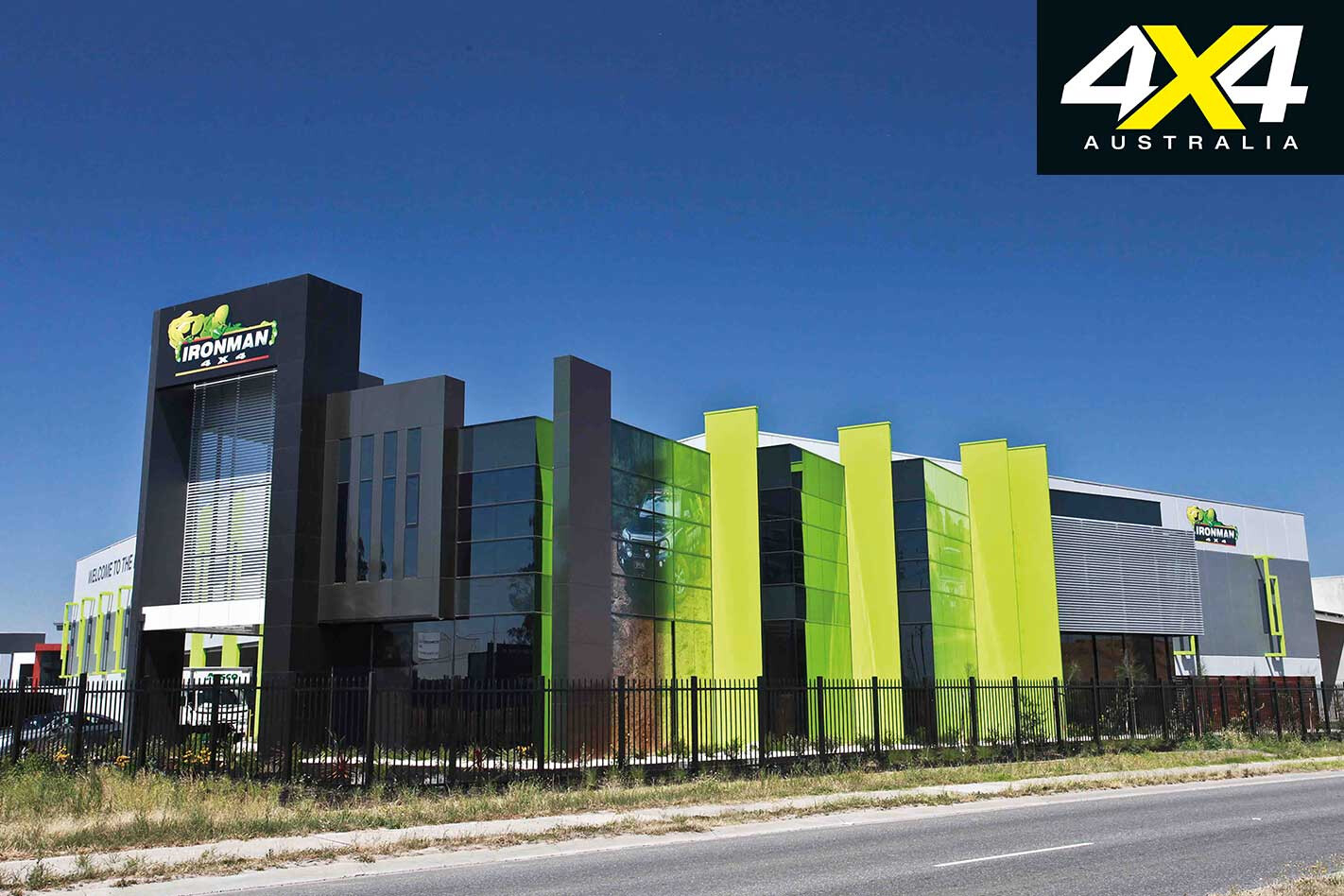
Around 2003, Tom asked himself, “Why do so many people need updated suspension on their 4x4s?
“It was because they made the cars heavy,” he recalled. “They had bars and racks and accessories and luggage on the cars and they just weren’t able to carry the load. We thought that maybe we could supply the accessories as well.”
It was also around 2002-03 when JSW brought in two key employers that would see the company successfully make the move to the 4×4 accessories business.
“What Kristian Ristell and Adam Craze brought to the business was a real-world understanding of how a 4×4 vehicle should perform,” Tom said. “These guys were consumers and we started thinking less like a manufacturer and more like a consumer. This in turn allowed our product processes to change from not just making the best springs, to making what the buyers want.”
In 2003, JSW imported a container-load of 12-volt recovery winches that it had engineered to its own specification. Tom says they sold well, with auto-parts giant Repco taking the lion’s share of what was the first Ironman 4×4 product. It then became a progression of what products came next.
“We had a customer-base buying suspension for their 4x4s,” Tom said. “We asked them what accessories they wanted. We were already under the cars and now we were on the front of them as well.”
From the front to the rear and all points in between, the Ironman range has boomed and the catalogue now holds more than 400 products, each driven by what the customers demand.
Tom marked 2005 as the next major landmark in the business. “It was a really important year for us, for the 4×4 industry and for the direction of where 4x4s were heading,” he said. “The 2005 evolution of the dual-cab was the critical point.”
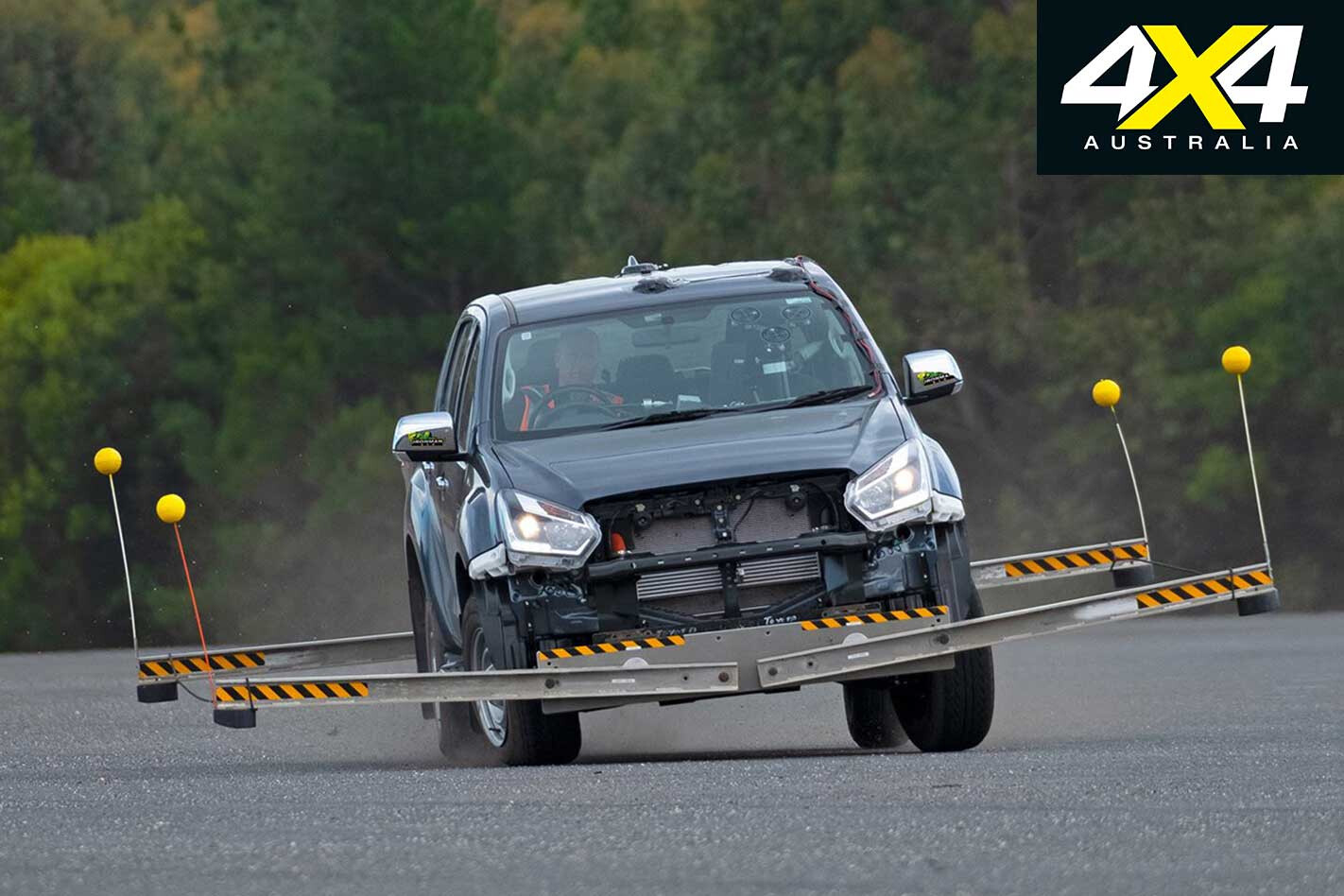
Dual-cab 4×4 utes are now among the most popular-selling vehicles in Australia and around the world. In line with that growth has been the number of Ironman 4×4 stores.
The first opened in 2014 in Ballarat and by the end of 2018 Tom says there will be 100 stores around the country. These stores are fed by massive warehouses in Melbourne, Brisbane, Townsville, Newcastle, Adelaide and Perth, while hubs in Thailand, the UAE and South Africa supply Ironman 4×4 retailers in more than 160 countries around the world. All the markets are different in what they want and need.
“The Middle East market is very different to Australia,” Tom told us. “It feeds the African market as well as the Gulf States and it is a dynamic, solutions-based business. We can supply end-to-end solutions for government, NGOs and fleet solutions in these markets.”
While Ironman 4×4 grows globally, it remains a family business. Both Tom and Barbara still work there and, earlier this year, Tom’s son Samuel joined the team.
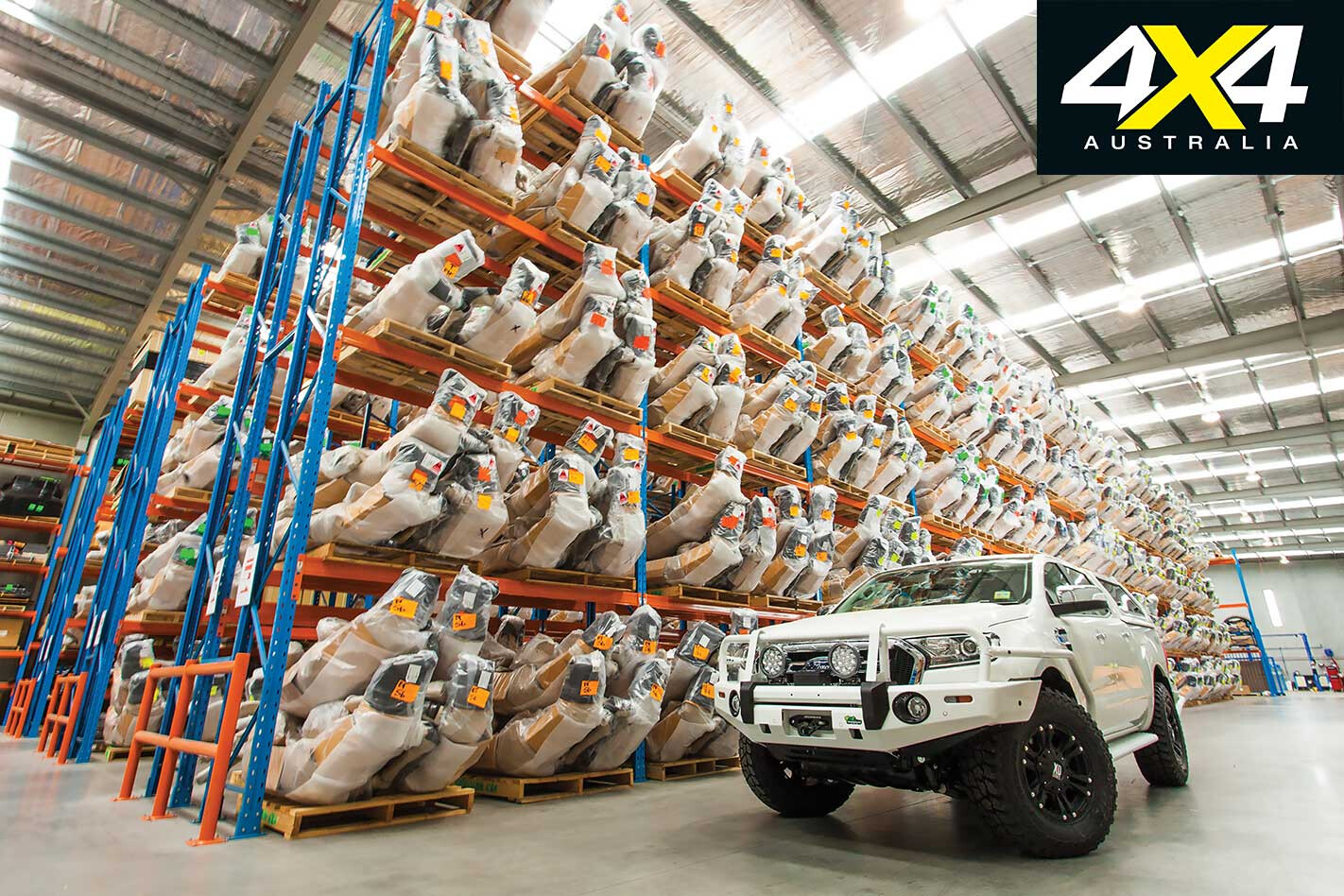
The trade market is where Tom sees Ironman’s products; products that are affordable, dependable and functional for every person. “Affordability respects the fact that the average family should be able to go four-wheel driving, not just an elite few,” Tom added.
This stays true to the vision of what Ironman 4×4 has come to represent: great products, good value for money, and ensuring people can enjoy four-wheel driving safely. It’s a mantra that has seen growth for six decades, and with the third generation of Jacobs joining the business among a staff of more than 200 people nationally, we see that success continuing for many years to come.
There are plenty of things to consider when packing for a camping trip. It isn’t as though you could pop into the local Woolies if you forgot to pack an extra set of tools or your torchlight breaks.
To that end, you need something robust and well suited for life on the move, such as these new 4×4 gear.
Thunder LED Torch
Take your pick from the two rechargeable LED torches – a 5W and 10W – now available from Thunder. The 5W model lights up the night via a Cree XP-G LED that pumps out 480 lumens.
It has adjustable focus for varying lighting conditions and uses a rechargeable Li-ion battery. It has four settings – 100%, 50%, 25% and flash (you need to hold it for three seconds for flash mode) – and it measures 162mm long by 41mm diameter and weighs 260g.
The 10W rechargeable model features a Cree XP-G LED that produces 800 lumens, with a fixed spot beam. The beam distance is rated to 300 metres and it has two different settings (100% and 50%) plus the flash mode, and measures 283mm by 58mm, while the weight is 540g.
RRP: $41 (5W); $89 (10W) Website: www.thunderauto.com.au
Leatherman Heritage pocket survival tool

It’s hard to believe Tim Leatherman’s now-iconic pocket survival tool (PST) has been around for 35 years.
This Heritage model celebrates that milestone and is based on Tim’s original 1983 design. It is completely handcrafted (as per the original) and includes a sheath and commemorative packaging. The Heritage PST uses super-strong 420 stainless-steel in its construction for optimum durability.
The Heritage includes needle-nose pliers, regular pliers, hard-wire cutters, wire cutters, 420HC knife, bottle opener, wood/metal file, quarter- and 1/8-inch flat screwdrivers, 5/16-, 3/32- and 3/16-inch screwdrivers, can opener and an awl – in other words, all the tools you’ll need when outdoors. Reflecting the impressive build quality, there’s a 25-year warranty.
Website: www.leatherman.com.au
Women’s Weekly: Food for camping
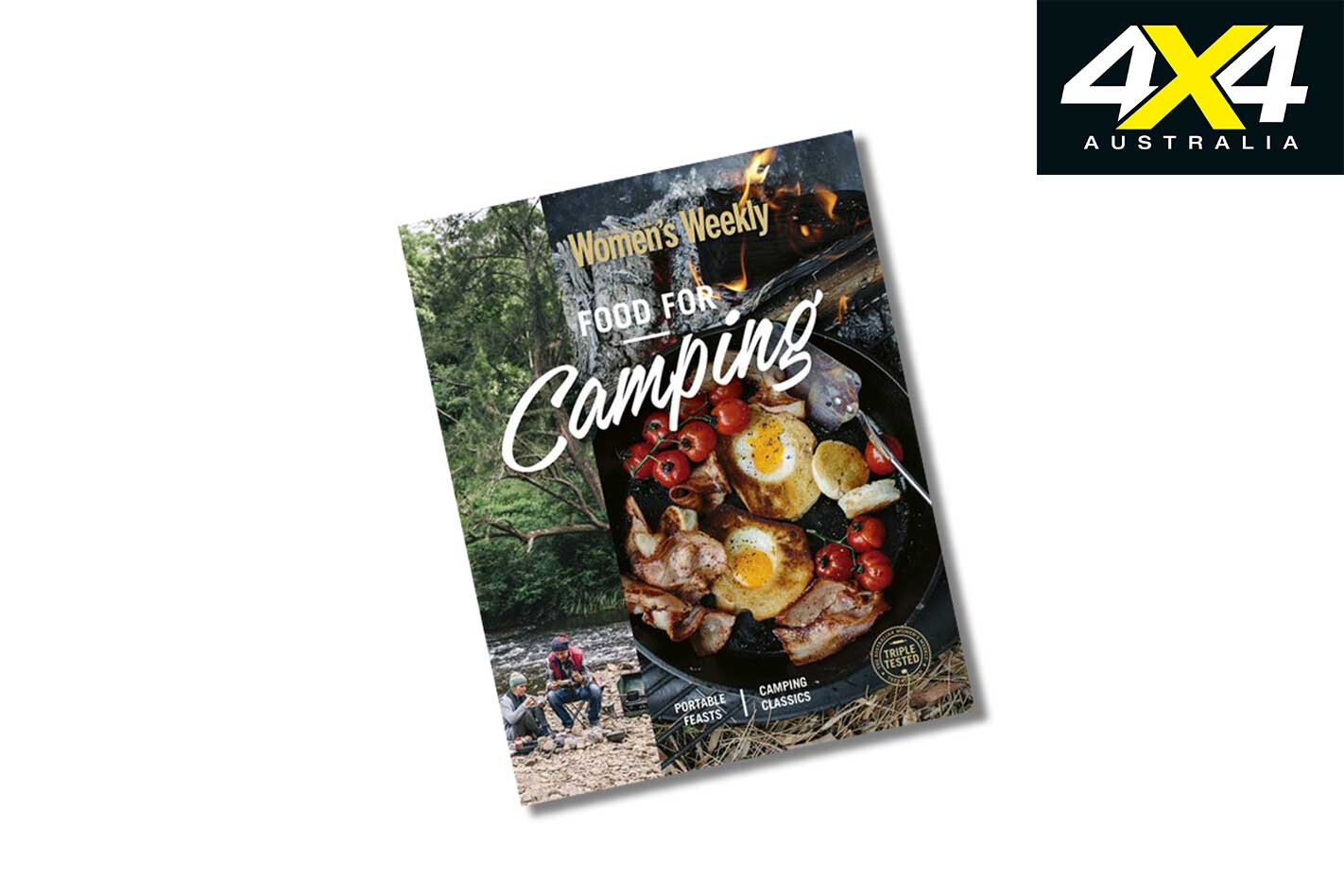
The Australian Women’s Weekly has assembled a selection of hassle-free camping recipes for its Food for Camping cookbook.
Breakfast, lunch, dinner and dessert meals are sorted, and while some may look tricky for time-pressed campers – we’re looking at you cauliflower dhal with chutney yoghurt – there are a bunch of easy-to-make meals on offer.
As well as delicious ideas the cookbook also features a guide to camping, with advice on how to be organised, what kit you need, how to prep and store food on the run, and how to reduce waste and re-use ingredients. There’s also a nifty conversion chart, so you won’t be stumped by a recipe ripped from an international cookbook.
RRP: $24.99 Website: www.awwcookbooks.com.au
BEFORE beginning any build like this, an engineer should be consulted to ensure the vehicle is legal and can be registered for on-road use. Not doing so could relegate your dream machine to a private paddock.
I wanted my Tonner to be totally legal, insurable, safe (for me and other road users) and capable for use as an everyday driver, a long-distance tourer, and an off-road mauler.
After initial consultation with Jason at Total Care 4WD he was happy to undertake my project, but he discussed my wild ideas with his regular engineer to ensure it’d have any chance of seeing the streets.
Surprisingly, most of my ideas were given the green light, but not all, and I was instructed to “do as I say and I’ll pass it all no problems”. I had no problems with that, even though that ruled out larger than 33-inch rubber and higher than a two-inch suspension lift.
I was given the option of going full-on-nuts with an Individually Constructed Vehicle (ICV) build, but I quickly ruled that out given the costs and stricter engineering that was needed.
Even though my Tonner looks like an old Holden Tonner, it’ll be registered as a GQ Nissan Patrol (re-bodied). That’s the main reason why I chose a GQ over a GU, as the older Nissan doesn’t have a lot of the higher tech safety features of which I’d have to incorporate into the build. While it’s not impossible to do, complying with later-model vehicles makes the job harder and more expensive.
I chose to purchase three complete cars to access all of the smaller parts I needed, so I didn’t have to waste time and money foraging for them. Once each vehicle was stripped, we hoarded a heap of the unused gear we thought we might need and flogged off the rest to net some huge returns on my outlay.
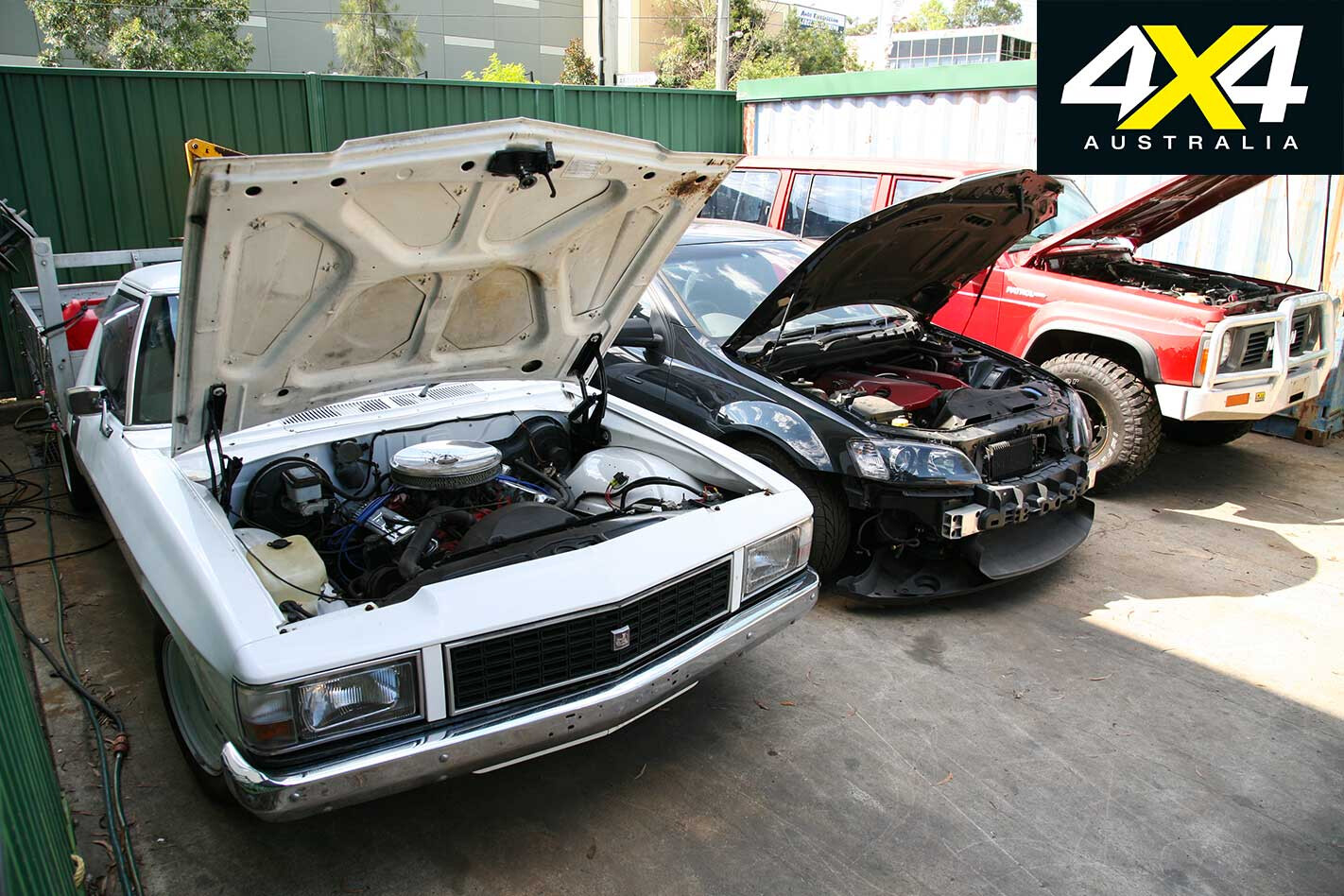
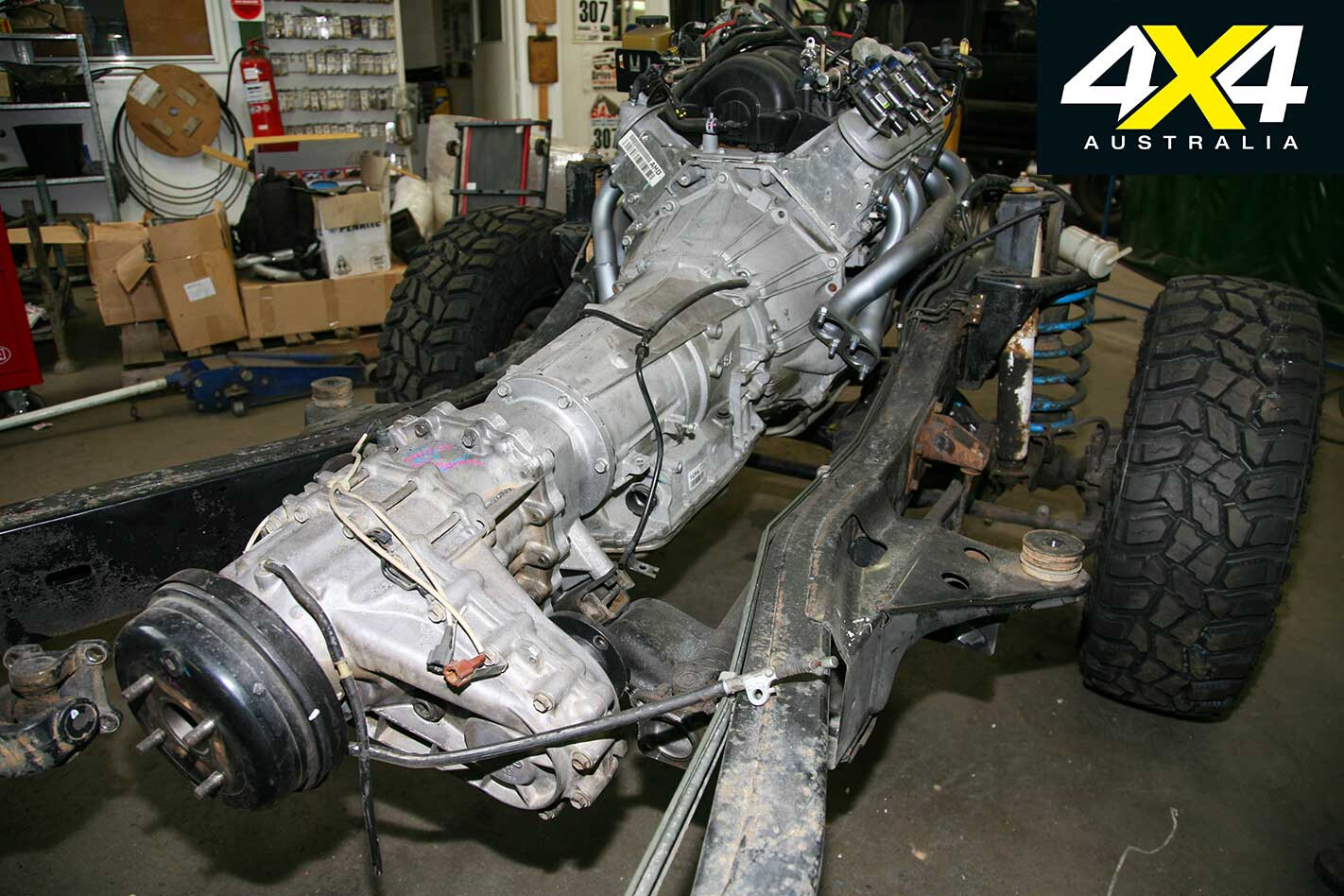
The Maloo’s retractable seatbelts, drive-by-wire accelerator pedal, electrically operated bucket seats, 6.2-litre LS3 engine, 6L80E six-speed auto gearbox, and a pile of parts from the engine bay were all kept.
We initially kept the HSV brakes, but ended up selling them as the engineer was happy with me utilising Nissan Patrol brakes – I dished out the HSV stoppers for new discs and pads from Terrain Tamer.
While we didn’t think we’d need the radiator and twin-thermo cooling fans, we stashed them away just in case. Lucky, too, as we needed them after finding there was no way a mechanical viscous coupling fan would fit.
My engineer insisted on utilising the Nissan steering column to gain a little extra arm-reach from the drivers’ seat, so it was modified to fit and grafted through the Holden firewall and dash.
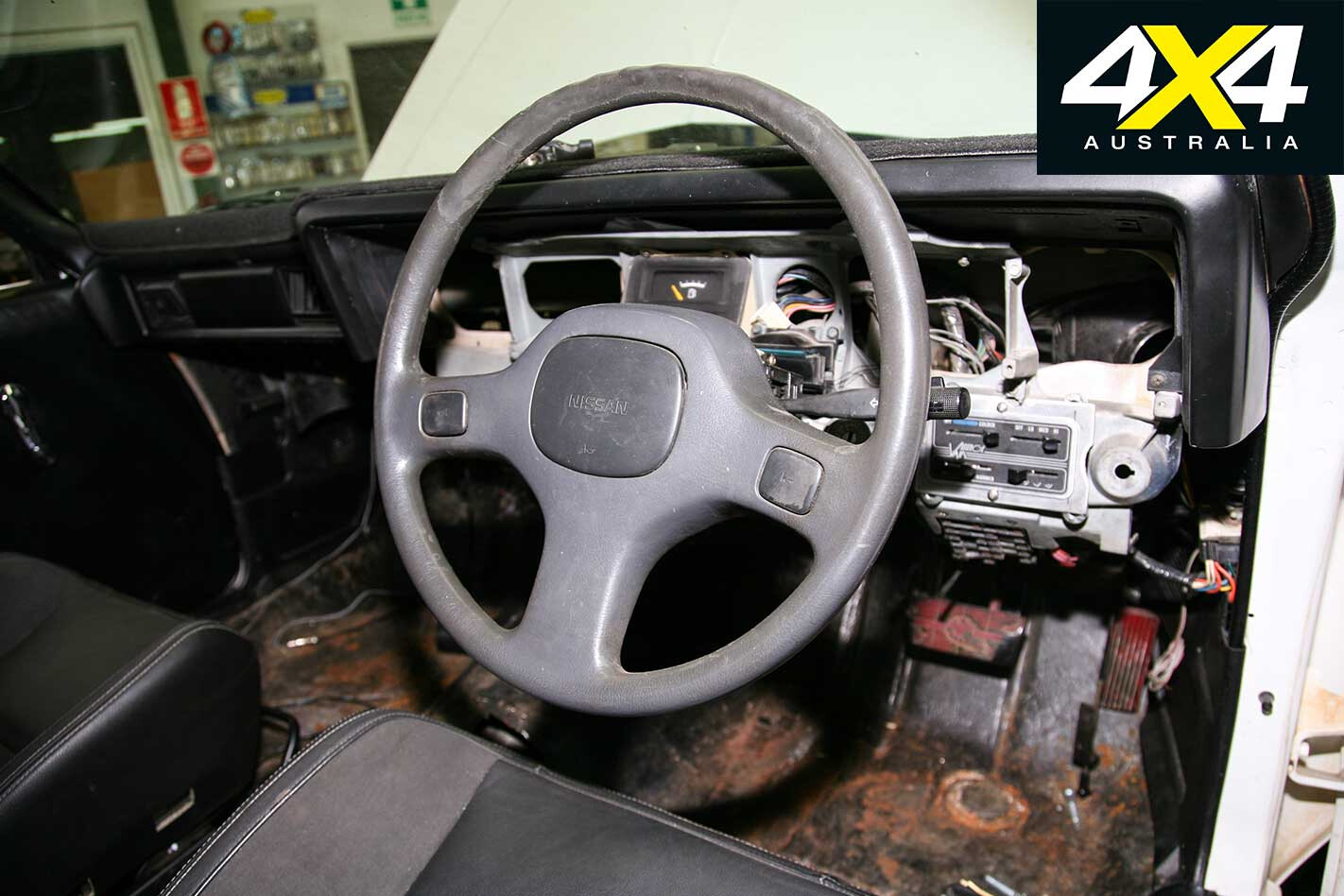
My want for a period-correct Holden sports steering wheel was vetoed, given it didn’t have a padded horn button – an ADR requirement for my year model Patrol – so an ADR-approved Autotecnica version was chosen.
Notably here, because my GQ doesn’t have airbags, I didn’t have to abide by the higher ADR requirements of using an airbag steering wheel that would have been deemed a must if I used a GU chassis.
Most people faint at the sight of the huge amount of wiring in modern cars. My Maloo was no exception, with miles of the stuff which incorporated many unwanted attributes we effectively ‘blanked off’.
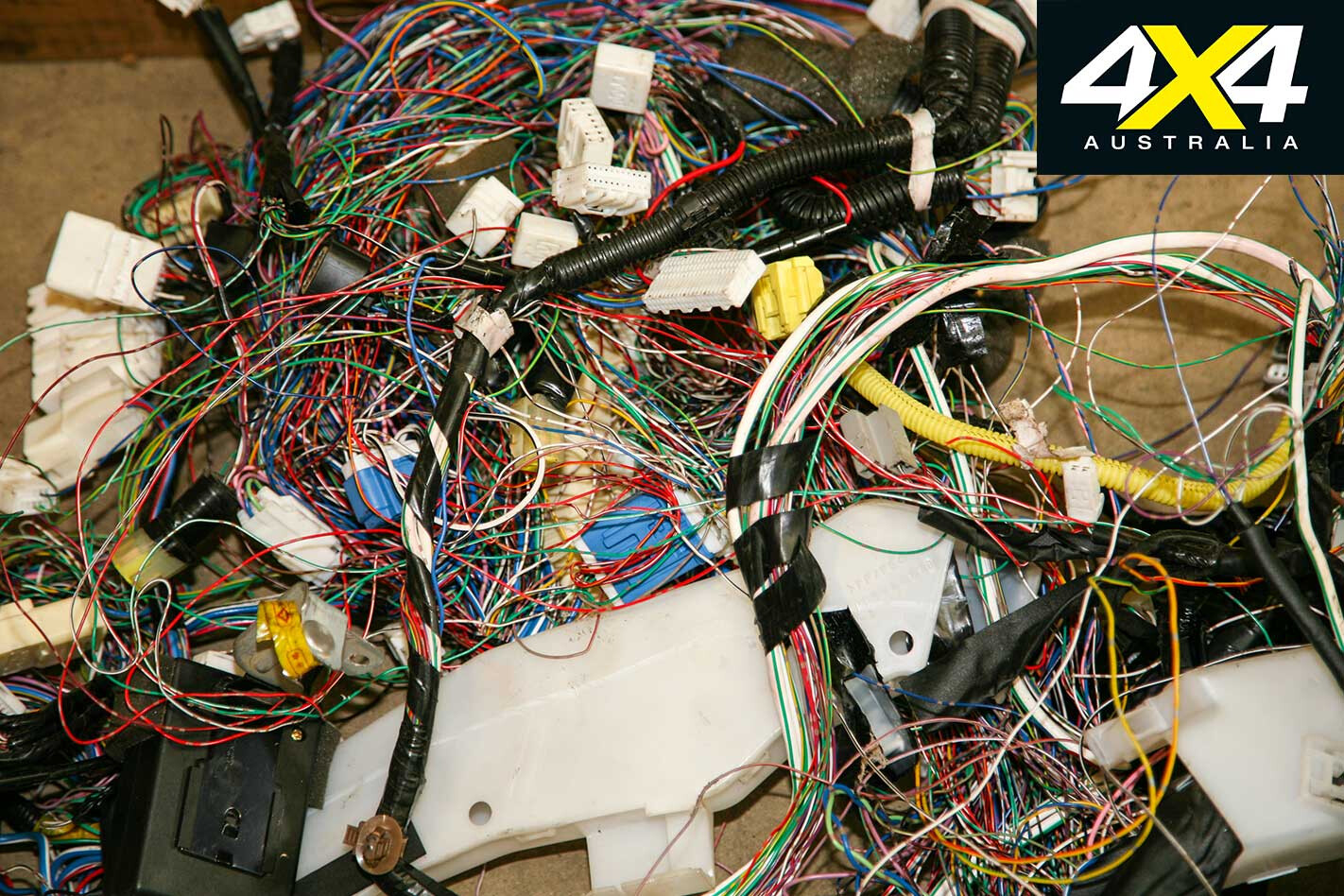
We sent the whole loom to Sideshows Performance Wiring in Queensland to delete cruise control, traction control, launch control, missile tracking (if it had it), plus all the other electronically controlled systems that aren’t 4×4 friendly. The modified loom allowed for a relatively simple plug-in system that let the gearbox, engine, accelerator pedal and basic controls talk with each other.
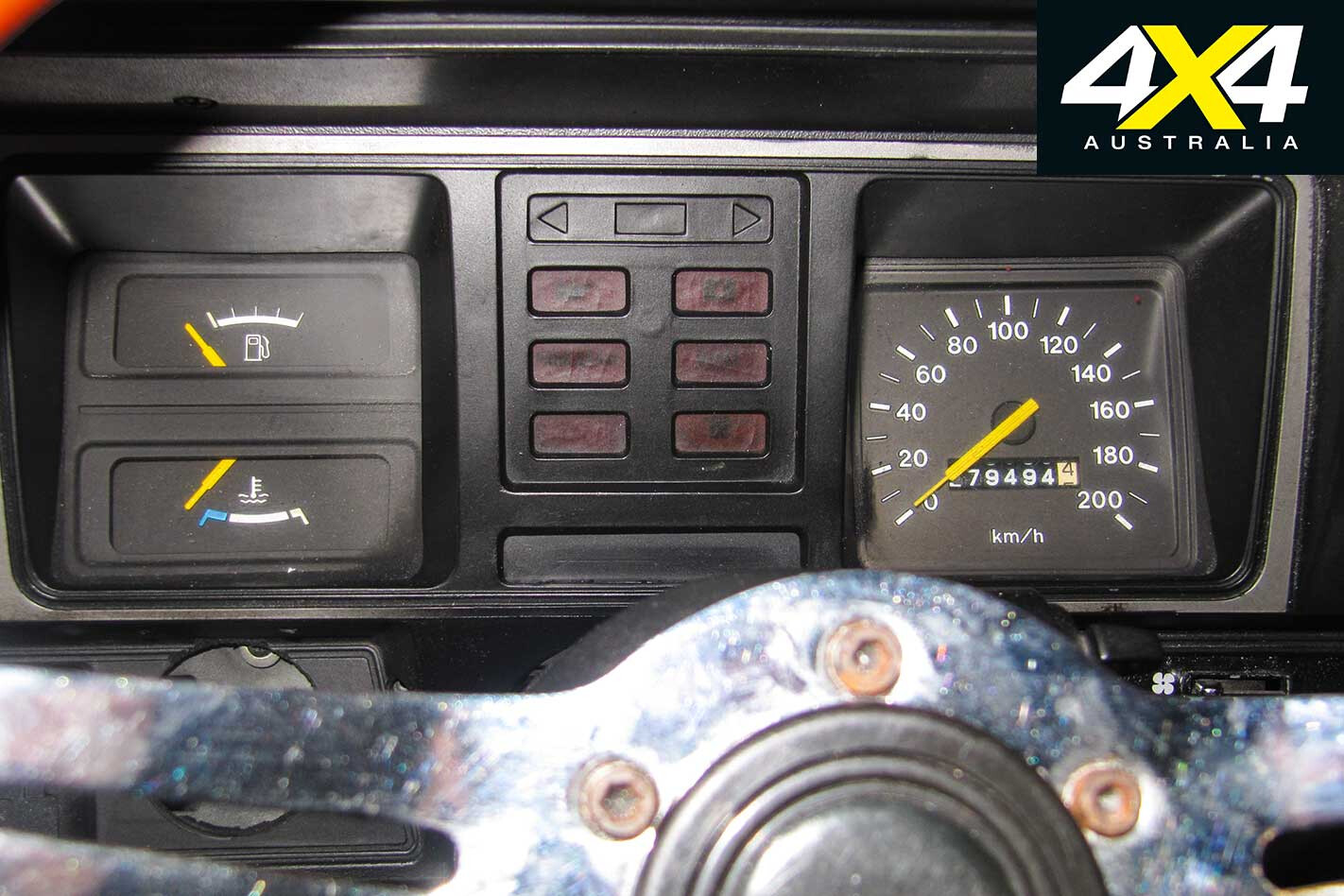
One small hurdle that needed attention was the speedo. I didn’t want a fang-dangled digital display in the old dash and wanted to keep a needle if possible. To my relief, Total Care 4WD managed to fit a speedo box adaptor to interface with the electronic accelerator signals from the GQ transfer case (yep, the old Patrol speedo was electronically controlled) and transform them into a mechanical output that is geared correctly into a cable drive that then turns the standard Holden speedo.
ADR restrictions state you cannot change the wheel track (centreline of the left-hand wheel to the centreline of the right-hand wheel) by more than 50mm. Damn, I wanted my Tonner to achieve as wide a stance as possible, but no amount of discussion would change my engineer’s mind on this.
Given the standard Patrol rim offset is plus (inwards) 10mm, I chose a negative 13mm (wider) offset rim, making 23mm change each side for a total of 46mm (legal by 4mm). I could have grafted a set of GU axles into the GQ chassis, given they are wider and have stronger CVs, but the coin toss landed on sticking with the GQ gear.
My GQ wagon had a petrol 4.2-litre with an LPG conversion. While I chose it mainly for the model year and diff ratios of 4.11, it came with an aftermarket 50-litre mid-mount petrol tank, as well as the rear-mounted gas tank. This has proven perfect with the inclusion of a Long Ranger 145-litre rear tank.
Fuel will always be drawn from the new rear tank, and I can choose when to transfer from the auxiliary mid-mount tank via a cabin-mounted switch. An extra 50 litres of juice will be much needed for some of the outback trips I have planned.
Many people have asked me how we mounted the Holden body to the Nissan chassis. Technically, we have used the standard Nissan body mounts, but they have been removed from the chassis, repositioned front to rear, and reattached to the chassis. The engineer was consulted and gave the nod.
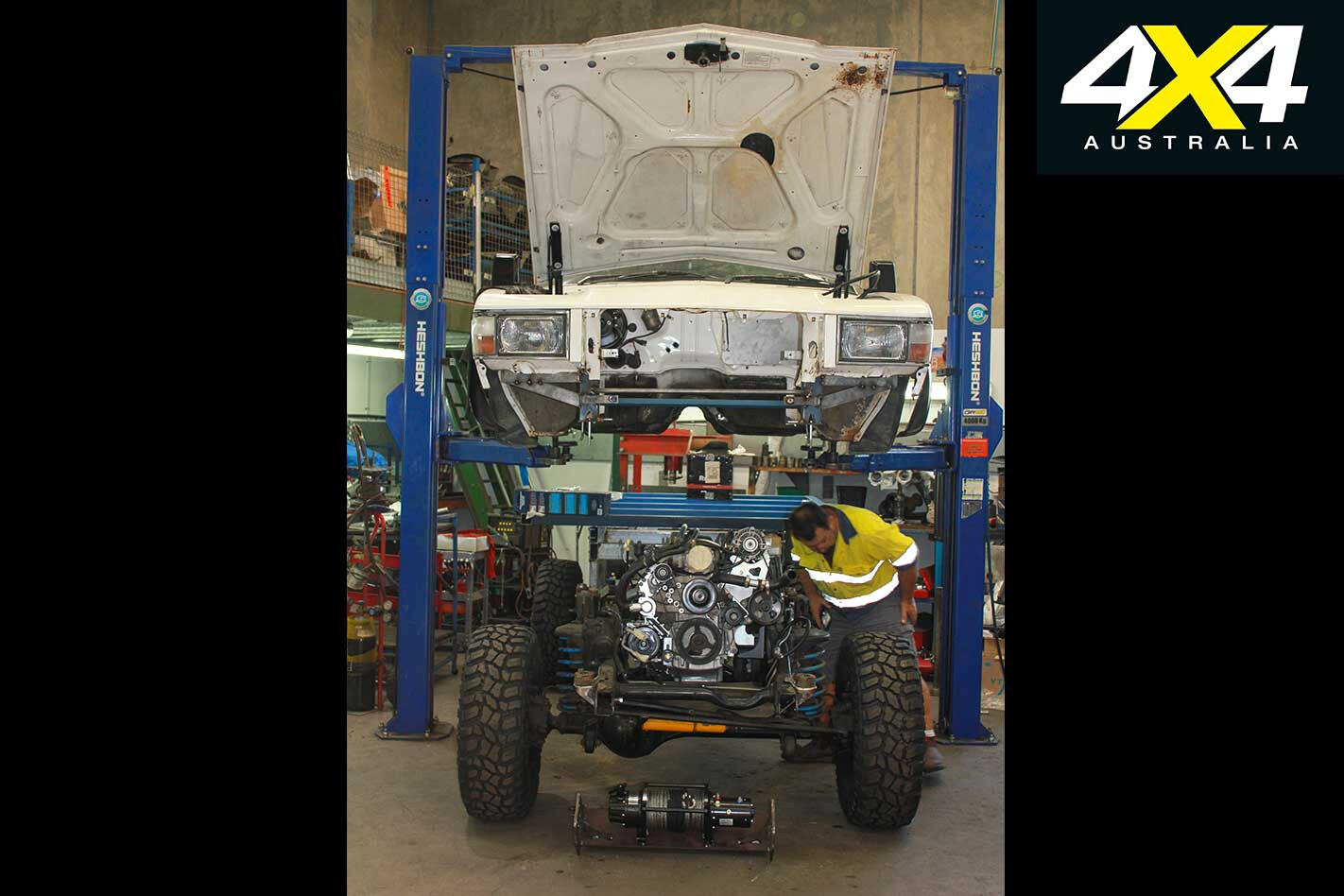
Once my engineer approved each mod, that mod had to be carried out in a professional manner (read: no backyard welding) then inspected by said engineer to ensure compliance, workmanship and safety.
Every single mod was then recorded and noted. If I get pulled up for a roadside inspection, I need to provide the engineer’s report to prove legalities or I could get whacked with a defect notice. My want for total legality has cost me more money in the short term, but knowing I won’t get defected and can fully insure the Tonner is peace of mind that far outweighs the initial dollars spent.
Lockers are the ultimate hidden accessory – they’re hidden away in the diffs and make all the difference off-road. I wanted my 4×4 Tonner to be a fair dinkum off-road beast; not a competition rock-bash machine, just damn capable in all terrains over and beyond the norm.
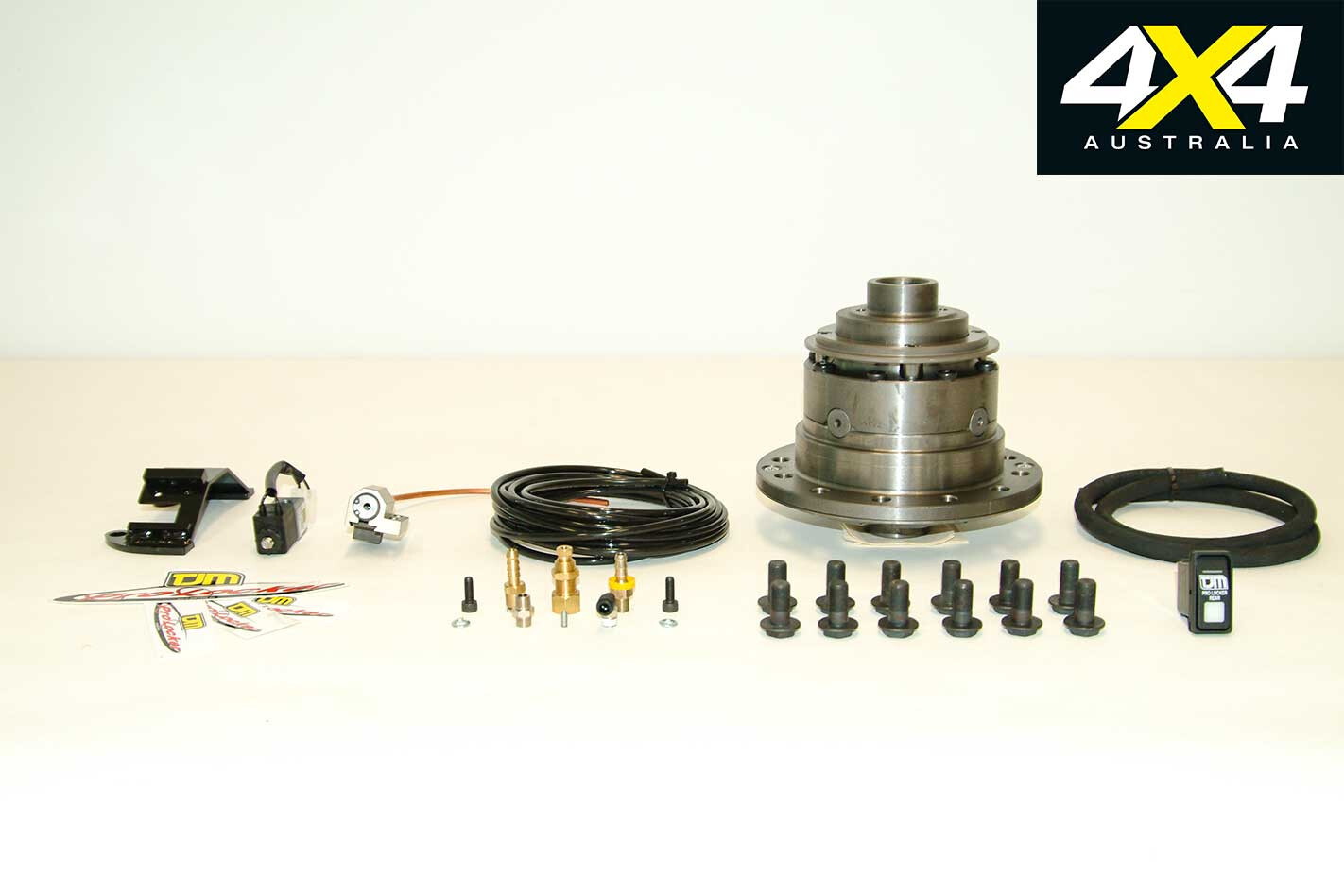
I’ve packed an air-operated, manually selectable TJM Pro Locker into the rear GQ diff. Flicking the in-cab-mounted switch makes it 100 per cent locked, regardless of terrain and vehicle position, and it works in both directions until you choose to switch it off.
I’ve then chosen an automatic diff lock in the front by fitting a 4WD Systems LOKKA. There is no driver input to make it work, it just does it automatically and allows far greater steering than a manual front system.
Together, the rear TJM Pro Locker and front LOKKA should drive my Tonner to the end of the earth. I’ve also hidden a Uniden UHF 9080 radio beneath the dash, with the full-function handpiece hooked onto the dash. A 1.2-metre long 6.6dBi gain antennae fits perfectly into the custom bullbar tabs.
Start Her Up!
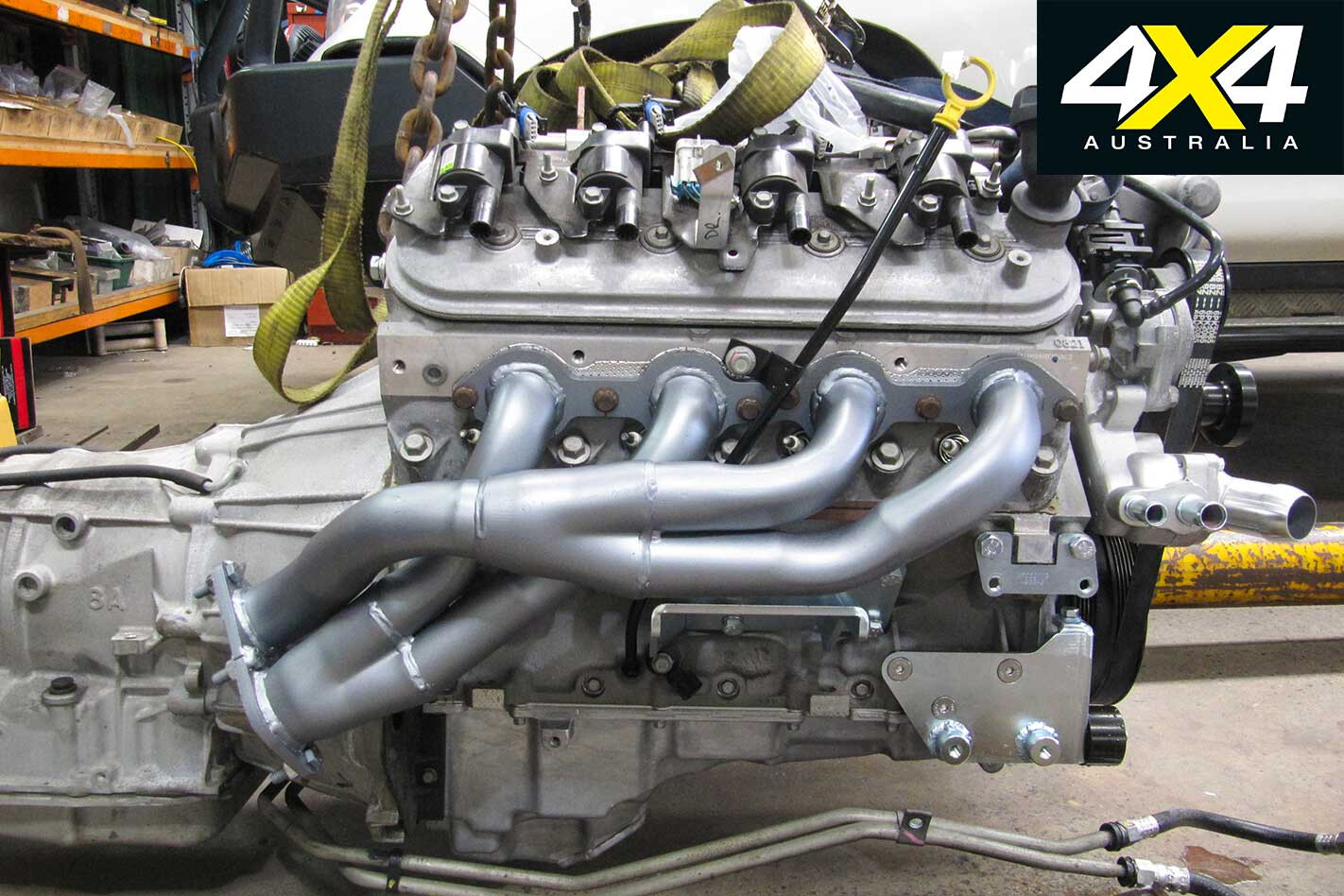
WITHOUT fanfare, fuss, coughing or spluttering, the behemoth 6.2-litre LS3 roared into life for the first time in 12 months and, let me tell you, it sounded bloody awesome. I’ve recently had final engineering done on the Tonner, too, and it passed with flying colours.
We’ll tidy up things in, on and under the Tonner prior to presenting it for a blue slip, which will concentrate on all the mechanicals of how the whole machine works, rather than the engineering that comprised of safety, design rules and quality of workmanship.
Once the blue slip is done and dusted, it’ll be time to whack some rego plates on, bung on the stereo, and punch the go-pedal until white line fever catches on. Catch ya next month for the grand finale of my ultimate 4×4 conversion.
HERE’S are five reader-submitted 4x4s picks that was recently featured on the August issue of 4×4 Australia.
To get involved post a pic and a description of your rig on our special site here or post it to our Facebook page.
We feature a bunch of readers’ rigs in the magazine each month, where we award one lucky punter with a $200 voucher to spend at Piranha Off Road.
2014 VOLKSWAGEN AMAROK ULTIMATE: FELIX KO (4×4 Australia Readers’ Rigs Winner of the Month)
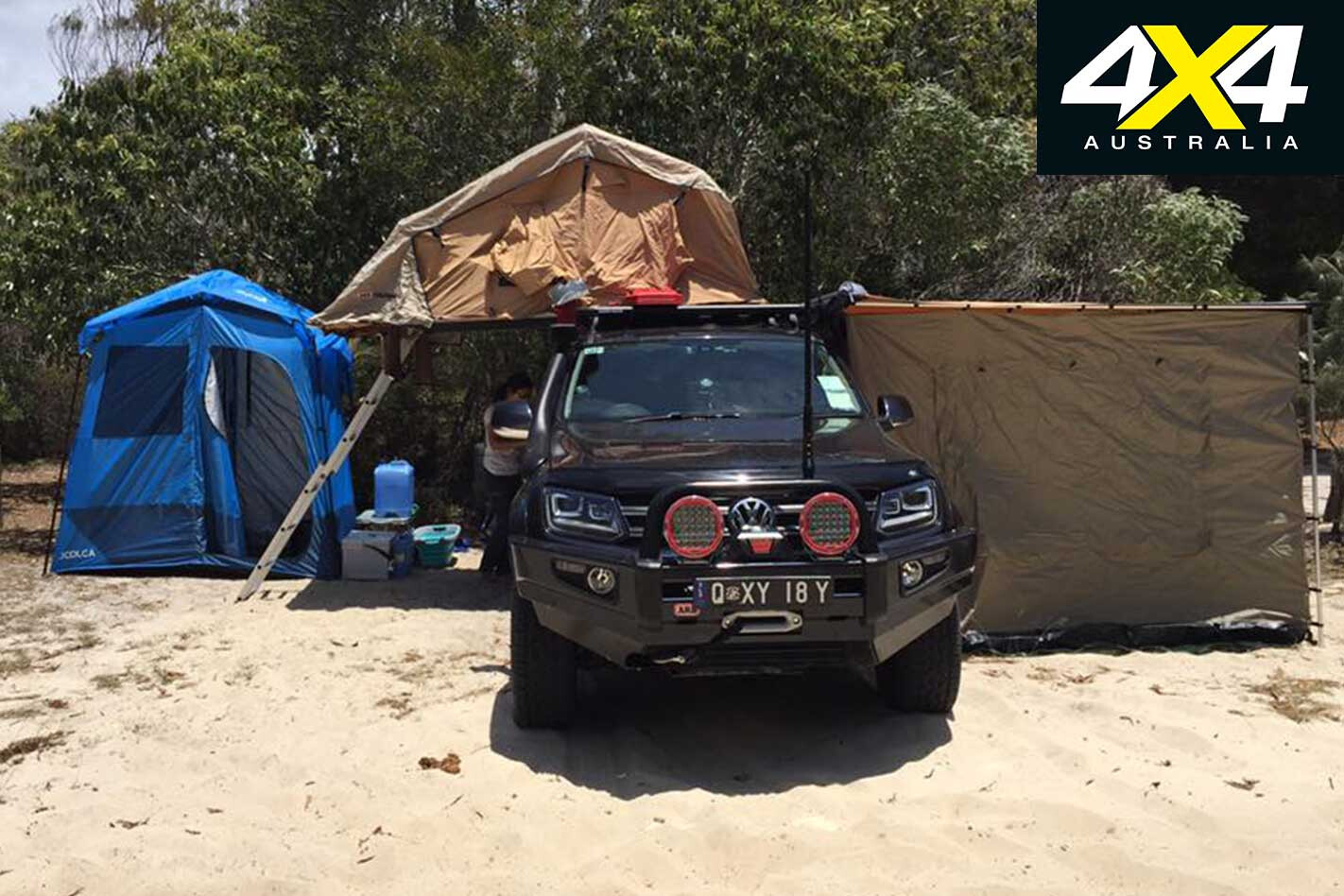
I’ve had it since 2015. Mods are: ARB Sahara Bar, ARB Intensity AR32 and AR40 lights, STEDI fog lights, Warn winch, ARB sidesteps, Kaymar rear bar, ARB Ascent canopy, 55L water tank, Outback Solutions drawers and fridge slide, Rhino Pioneer roof rack, ARB awning, PWR intercooler, Crispmods intake, CouplerTec rustproofing, Delta 18-inch wheels, Cooper ST Maxx tyres (33s), 3-inch Manta exhaust, TJM snorkel, ARB bash plates, ECU tune by Euro Car Upgrades, GME XRS connect, ARB twin air compressor, Redarc BMS, Long Ranger auxiliary tank, Outback Armour Expedition front coils, Roadsafe diff drop kit, Marks 4WD upper control arms, OME rear leaf springs, and more. I’ve taken it to Bribie Island, Moreton Island, Reedy Creek, Land Cruiser Mountain Park, Coffs Harbour, Glasshouse Mountains and Fraser Island.
2003 JEEP TJ WRANGLER: LIAM KELLY
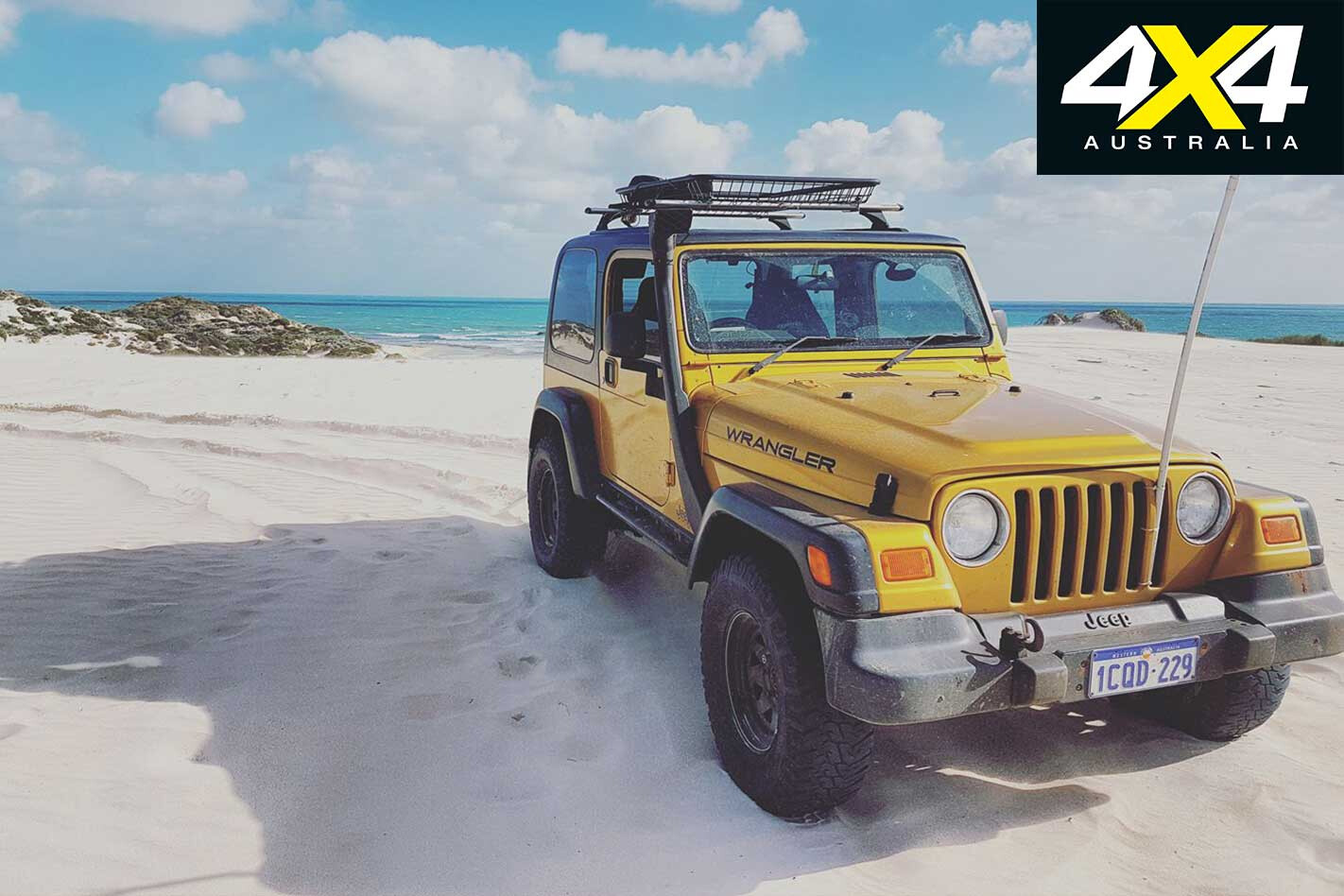
I’ve had it around a year now and it’s fairly standard. It has a 2-inch lift, 31-inch all-terrains, an upgraded aluminium radiator, a snorkel and UHF radio. I haven’t had it out as much as I’d like, but Wilbinga just north of Perth is my favourite location. It has twisty tracks, hill climbs and decent fishing if there’s not much seaweed around.
2012 NISSAN GU PATROL ZD30: KEVIN COOKE
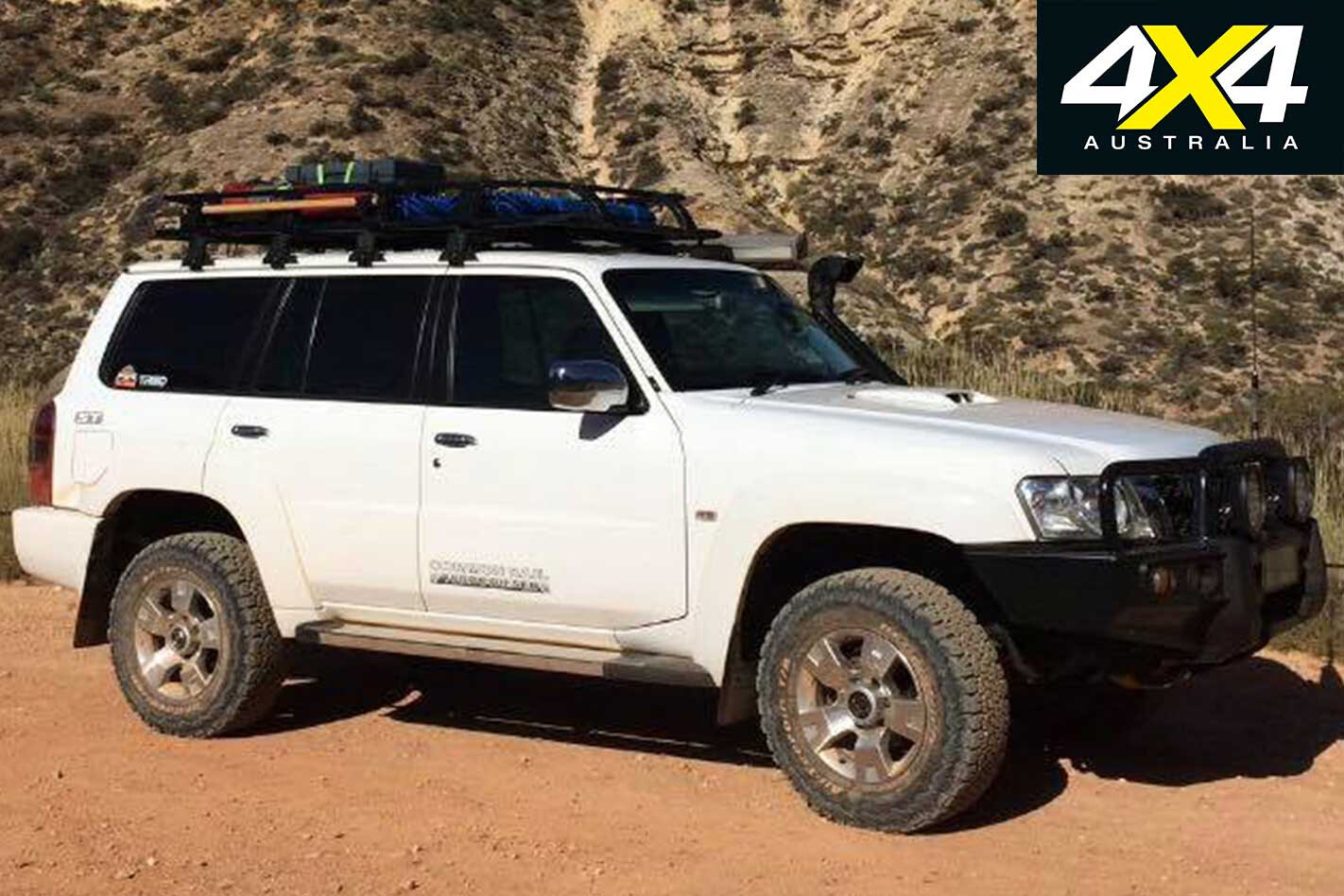
I have had it for 2.5 years and it was stock when I bought it. I’ve added a 2-inch Old Man Emu lift, 3-inch Manta exhaust from Turbo Back. ECU tune, Kings winch, rear drawers, Redarc DC/DC charger, dual batteries, roof rack, and BFG KO2 tyres. The best thing about living in the Pilbara is that there are plenty of nice places to take it.
2012 FORD RANGER PX XL: ANDREW WILLS
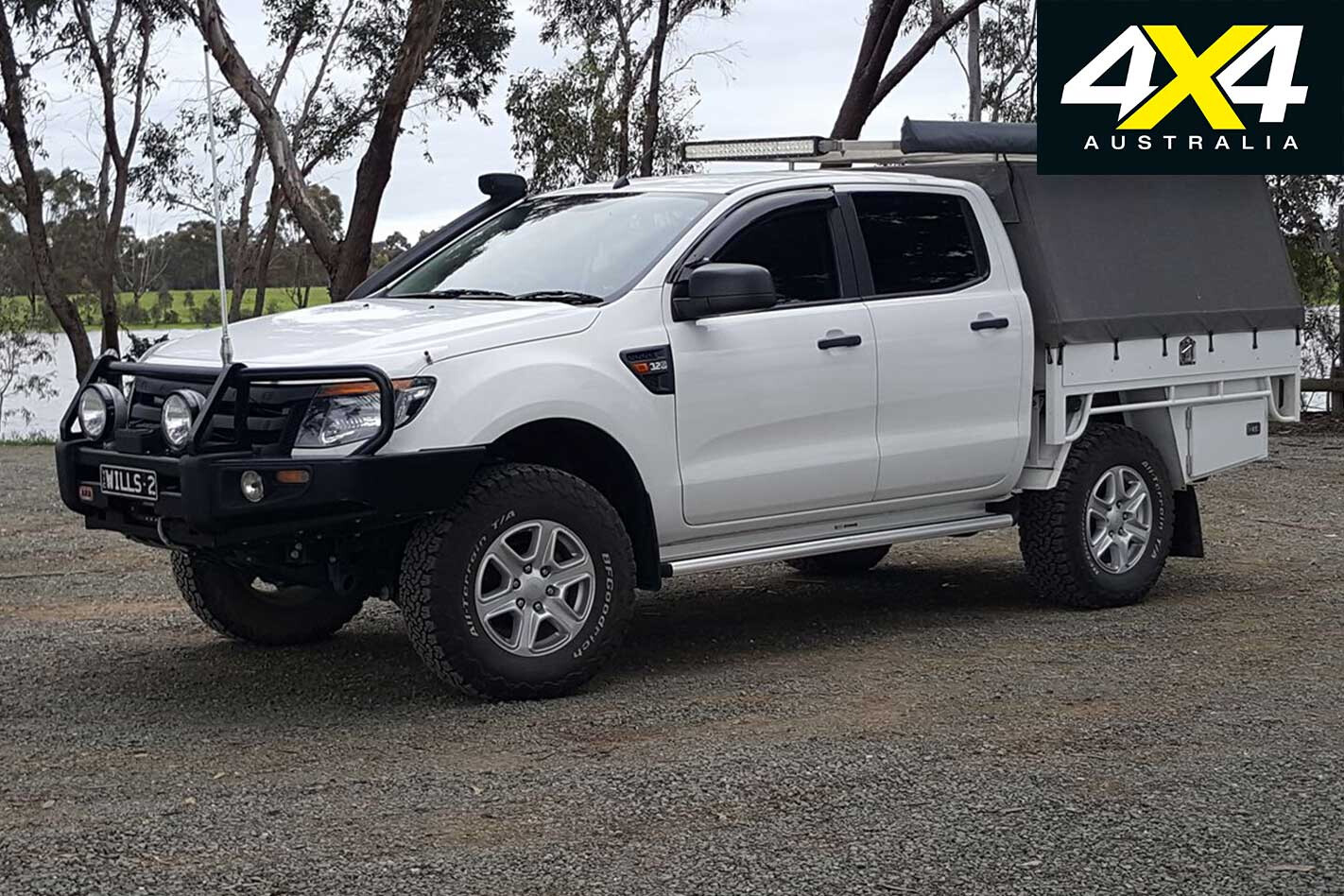
I removed the tub and built the custom tray and canopy (with roof rack). It’s got a 2-inch lift kit with 300kg springs in the rear, as well as airbags, 33-inch BFG KO2s, ARB bullbar with 12,000lb winch, spotties, light bar, snorkel, awning, solar setup running through a Redarc BCDC unit, two 120amp/h batteries, a water tank, and a centre roof console housing UHF and switches for lights, winch isolator and to change cranking battery. An oil catch and secondary fuel filter are about to be installed, followed by a 3-inch exhaust and either a remap or a chip. Then I’ll get out and use it for touring with the wife and kids.
1985 TOYOTA LAND CRUISER HJ75: KEVIN ROBY
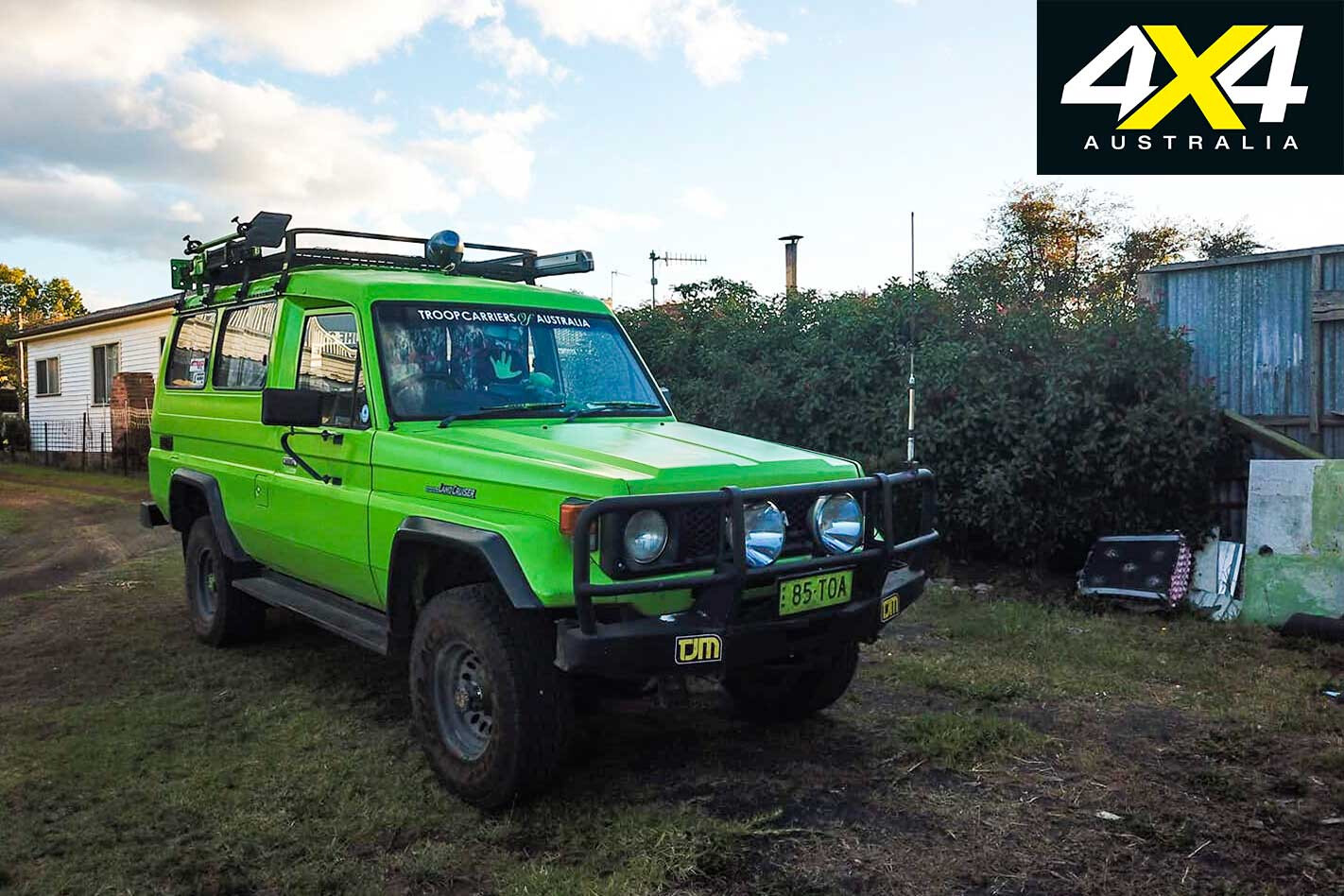
I’ve had it for 16 years. The only modifications are a new bumper bar with a swing-out tyre carrier, as well as a colour change. I take it to Winter Ramble with Troopcarriers of Australia.
I WAS wandering around Beechworth Cemetery not long ago, checking out some of the interesting gravestones, when a complete stranger walked up to me and started telling me about some of the graves there.
At first I thought it was a bit strange, but then walking around a cemetery is peculiar and even a little macabre to some. However, I don’t mind wandering around an old burial ground; in fact, I go out of my way to find them and see what ‘fascinating’ graves and headstones I can find.
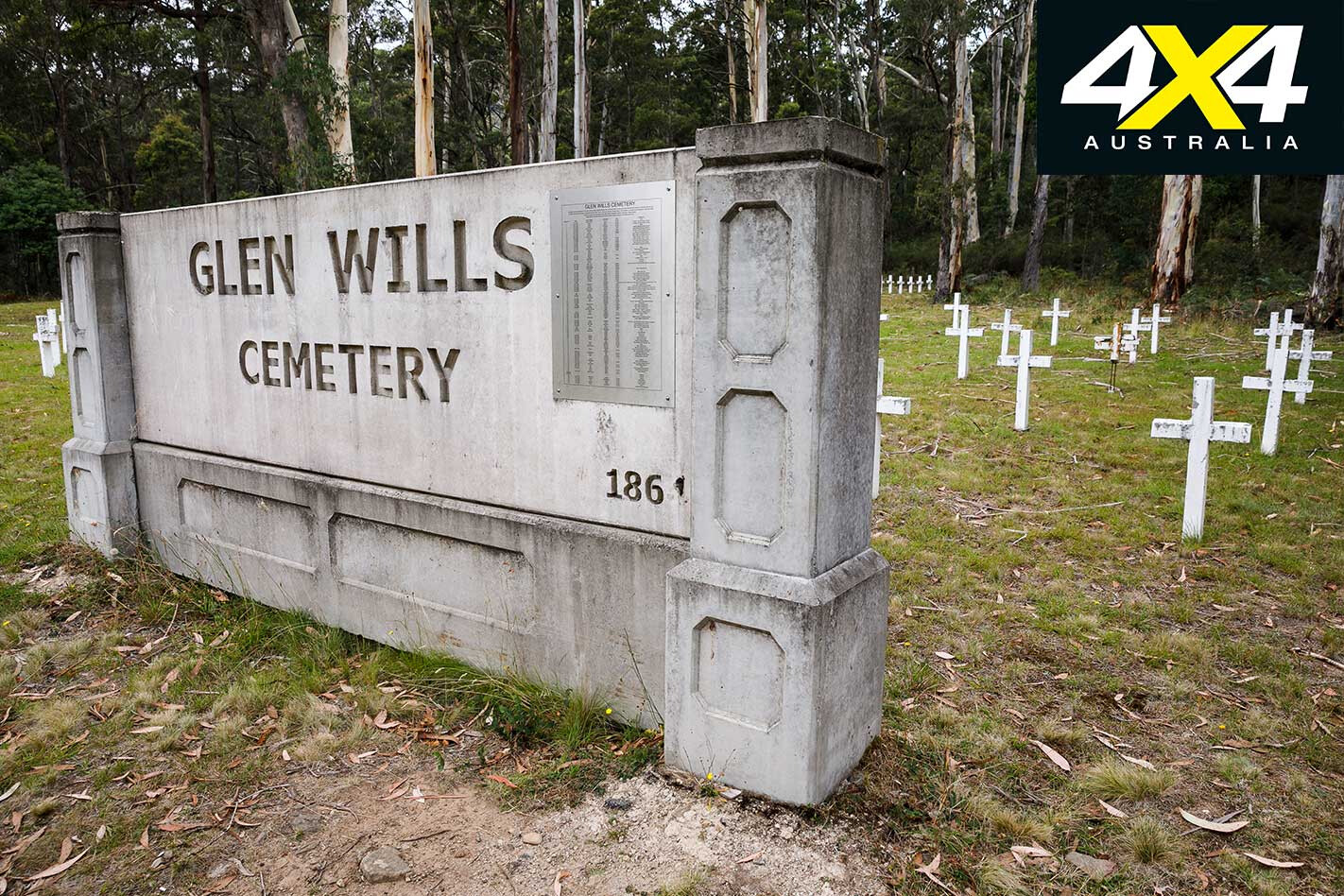
In my defence I’m not alone in this. If you do a cursory search on the web you’ll find all sorts of websites dedicated to our cemeteries and graves and the people and history contained therein.
At the entrance to the Beechworth Cemetery is a plaque, which goes some way to explain the fascination some people have with graveyards.
In cemeteries lives are commemorated, testimonies of devotion and pride are there for all to see, and communities pay their respects to those buried there. Finally, a cemetery is a history of people, which goes some way to explaining why the National Trust of Australia has set a goal of recording all the known burial sites; first in NSW, but hopefully and eventually in all of Australia.
The website www.australiancemeteries.com.au is a good spot to start with your search on cemeteries, while there are books, guides and more information available on our historic burial grounds to be found in Sydney and Melbourne. The oldest cemetery in Australia is the St Johns Cemetery in Parramatta, with the first interment being a child in 1790.
You don’t have to visit too many cemeteries to realise that in the early days of Australian settlement – and even into the 1900s – being a child was a fairly risky undertaking. I remember finding one headstone in a remote graveyard in outback Queensland, on what was an old goldfield, of five children under the age of 11 years old, all lost to the one family in the course of just 10 years.
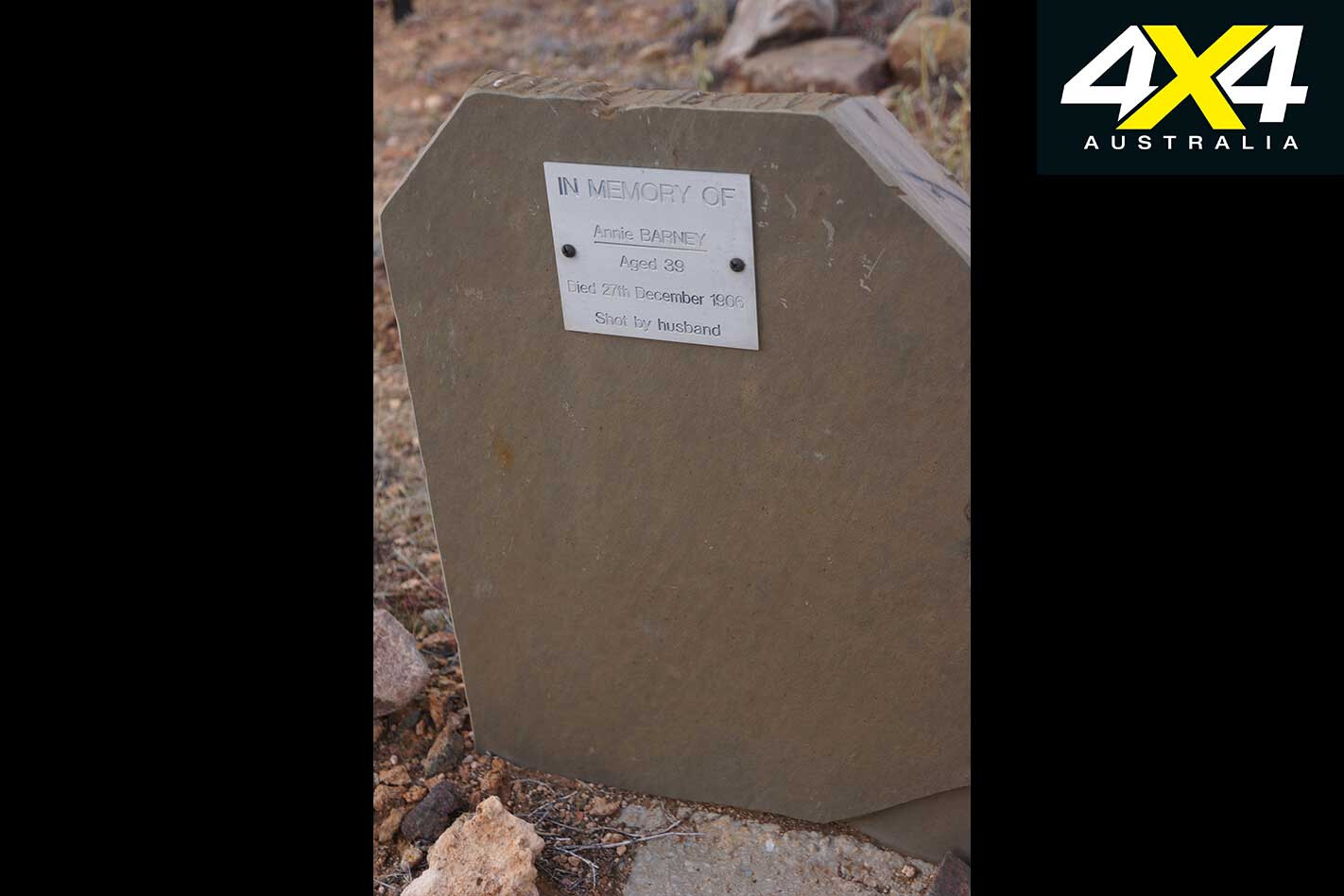
A bit of searching in the remote northern Flinders Ranges at the Yudnamutana mining site will reveal a small burial ground. While there are some early pioneer prospectors buried there, probably the saddest headstone belongs to Annie Barney, aged just 39, who died on December 27, 1906, two days after Christmas, the plaque simply reading, ‘Shot by husband’.
Right across Australia, especially in those often short-lived mining areas such as Yudnamutana, you’ll find cemeteries that record how tough life was in these remote fields. Some of the older ones died of thirst, while some were killed in falls or crushed in mining accidents.
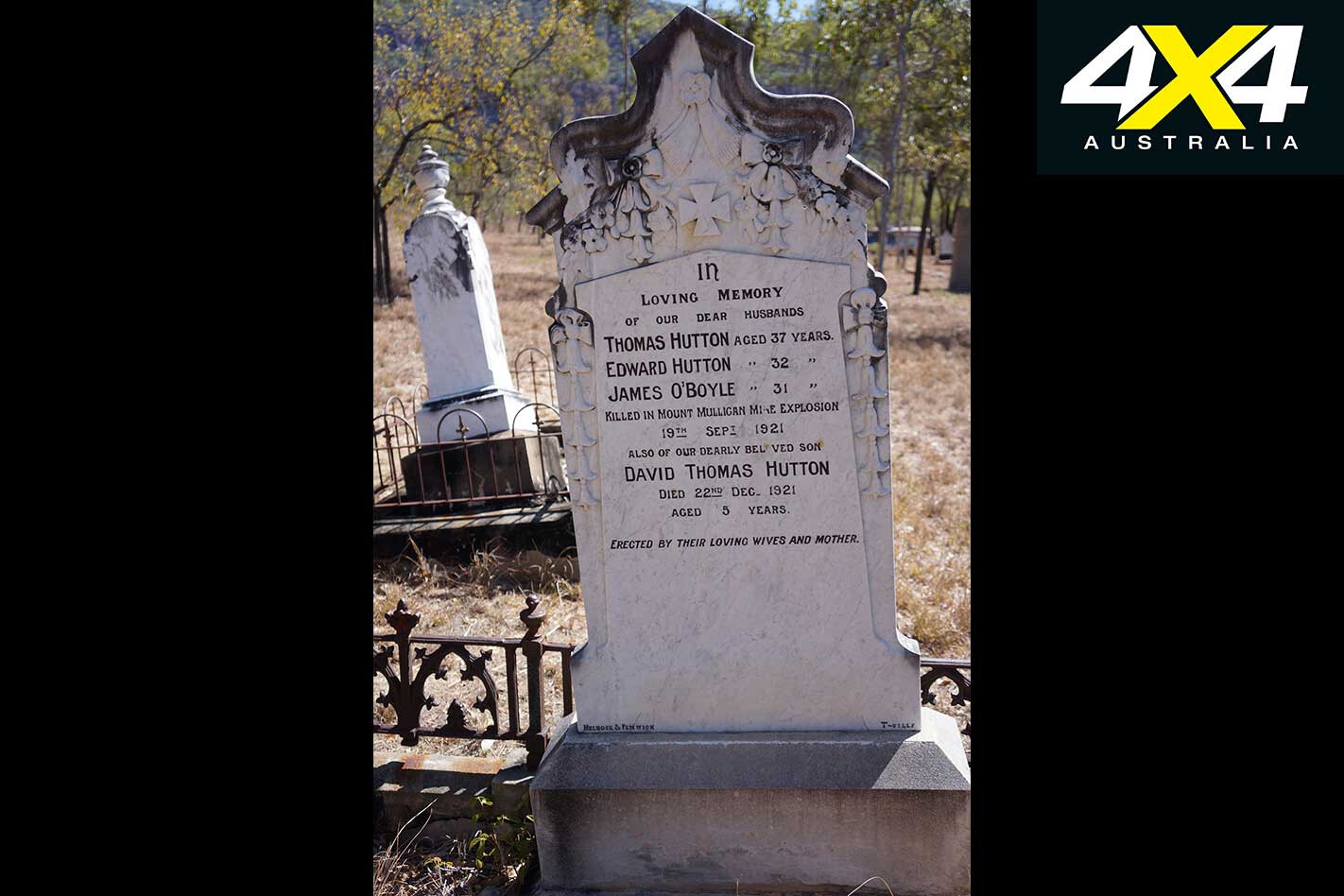
At Mt Mulligan, in Far North Queensland, the nearby cemetery is testimony to the worst mining disaster in Australian history: in 1921 a series of underground explosions resulted in 75 miners being killed.
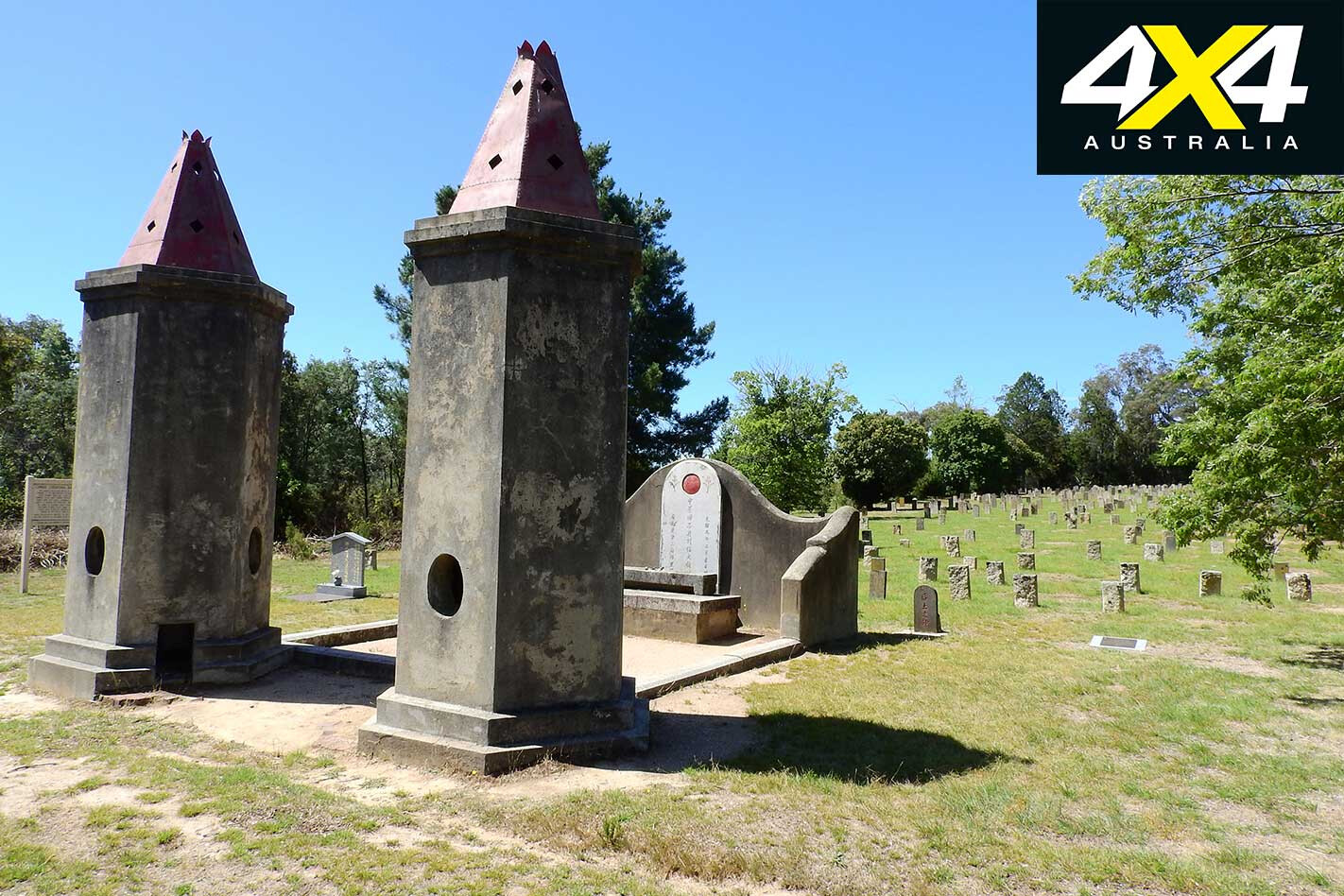
Of course, not all of our burial grounds are Anglo-European. Some are Afghan (think of our desert towns that were once railheads, like Marree), a few are Japanese (think Broome and TI) and quite a few Chinese (think Beechworth and other mining towns). All are direct links to our rich history.
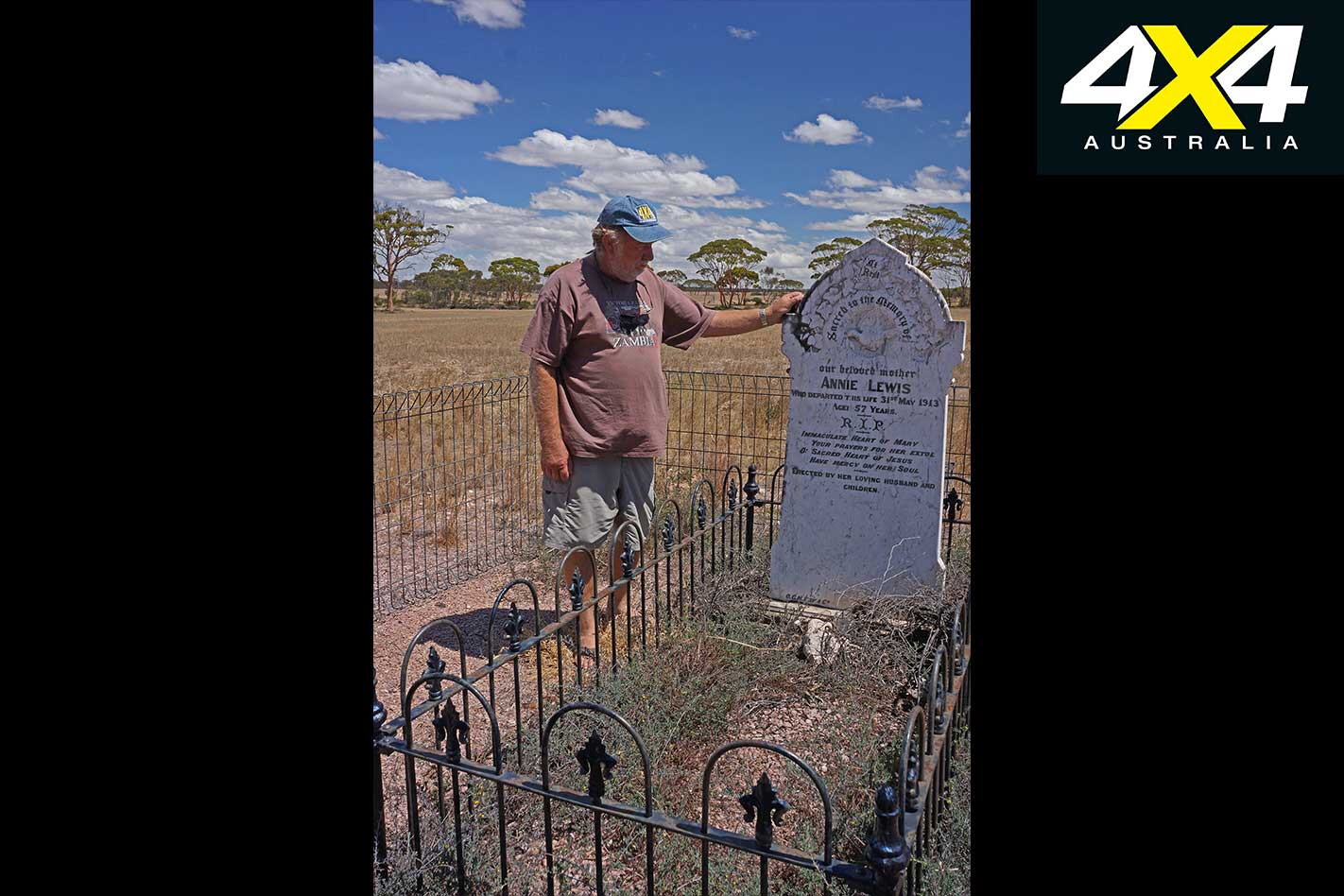
Not all those who died in the remote areas of Australia were buried in a cemetery. My great grandmother was one of them, and she lies buried amongst a small copse of trees in the middle of a wheat paddock not far from Salmon Gums, inland from Esperance, WA. Such lonely graves can be found all over Australia, poignant reminders of our past and the endeavours of our forefathers and mothers.
It is a little ironic that the birthplace of Queensland is one of the least developed areas on the state’s coast.
This feature was originally published in 4×4 Australia’s December 2012 issue
Residents of – and visitors to – the town of Seventeen Seventy on Bustard Bay enjoy beautiful beaches and unspoilt wilderness, all without a high-rise in sight. [The town was gazetted in 1936 as ‘Seventeen Seventy’ but is generally referred to as the ‘Town of 1770’.] The region is flanked by pristine national parks to the north and south, providing ideal hideaways for a nature-based family adventure.
Lieutenant James Cook sailed the HMS Endeavour past the Round Hill Head in May 1770. It is believed that one of his crew shot a large bustard (turkey) on which the crew dined, giving Bustard Bay its name.
Cook’s crew only stayed for a day, but during that time botanist Joseph Banks collected samples of plants said to be common to the north and the south of Queensland, hinting of a subtropical climate. This was Cook’s second landing, but the first in what is now known as Queensland.
Agnes Water, 6km south, is the region’s commercial hub and home to Queensland’s northern-most surf break; there’s even a lifeguard-patrolled area for swimmers. The town works well with Seventeen Seventy; there’s a warm, low-key kind of feel. Services include a supermarket, bakery, visitors information centre, pharmacy, surf shop and a couple of cafés.
Diving into the wilderness, Eurimbula National Park (11,970ha) is accessed from Round Hill Creek Road, 10km out of Agnes Water. Turn into Eurimbula Road, a reasonably wide, gravel surface that cuts through private land before entering the national park.
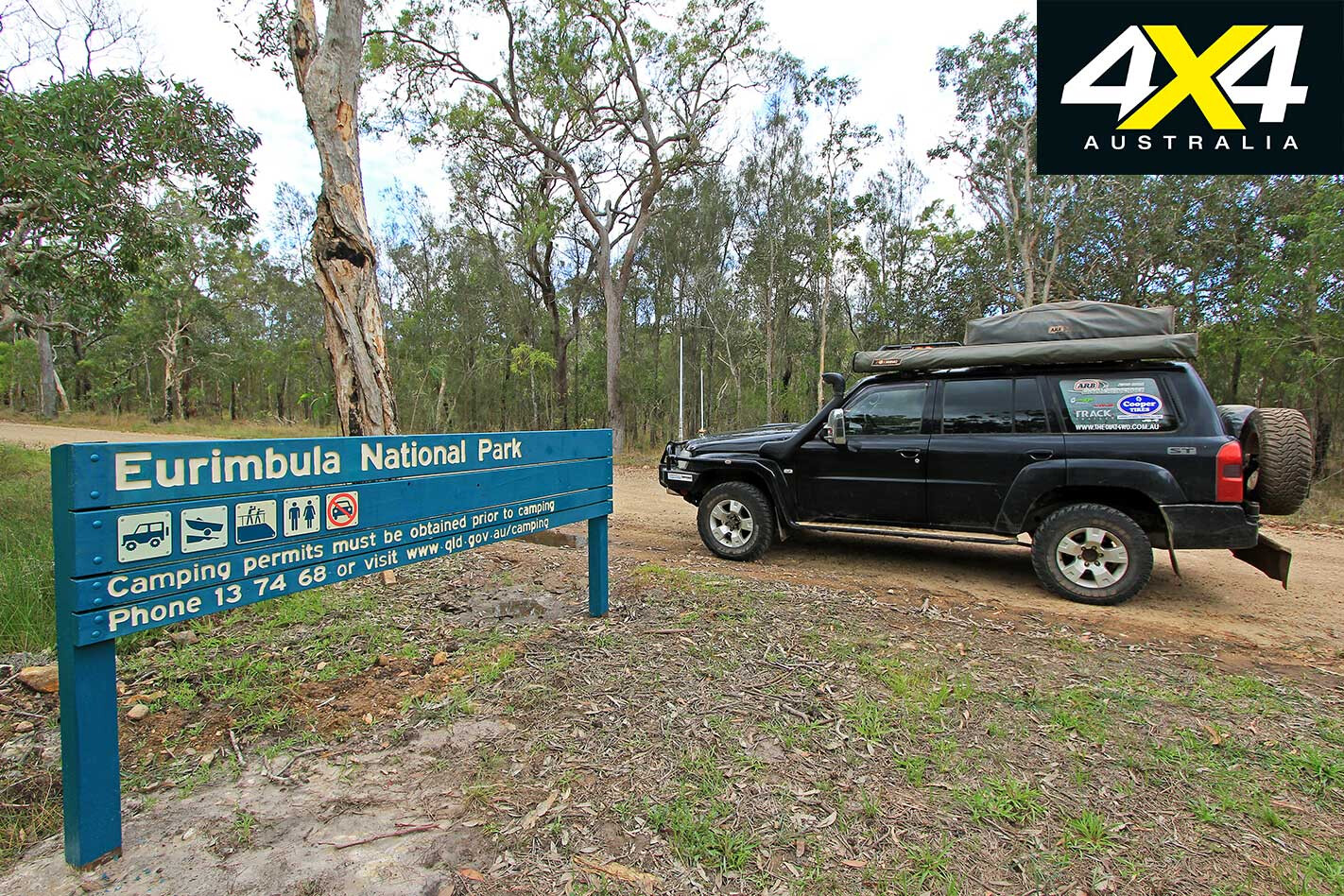
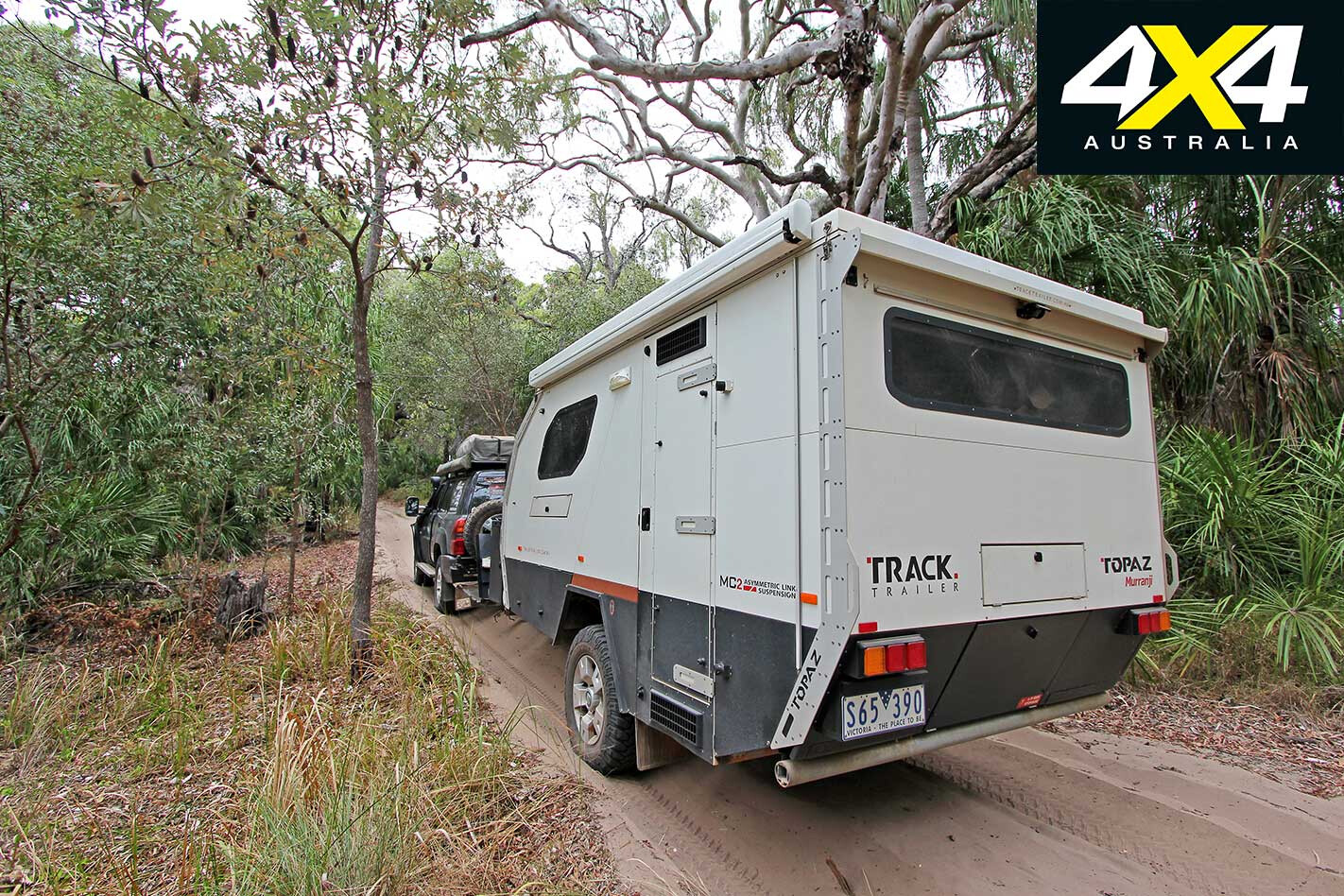
Caravans aren’t recommended within the park and the reason why becomes apparent the further you travel – there are a few tight turns with low clearance that would result in a serious case of bush pinstripes on anything longer and larger than a small camper-trailer.
At the forked track junction, take the right turn that weaves through eucalypts and cabbage palms on its way to Bustard Beach campground, on Eurimbula Creek.
The campground has the park’s best facilities including 17 allocated sites, plenty of shade, compost toilets and a covered eating area with untreated water. The beach is nearby and you can drop a tinnie into the creek or just relax and admire the wildlife.
There are no formal walking tracks in the park, so take a topographical map or GPS if you decide to go walkabout. The vegetation is superb, and includes freshwater paperbark swamps, eucalypt forests and tall rainforest.
Eurimbula Creek is a mud crab sanctuary so it is illegal to use traps of any type. The sandflats are gofisod for flathead, bream and whiting and even queenies and trevally, while a tinnie will help you fish the upper reaches. As it’s a mud crab sanctuary, it doesn’t see as much action as the other creeks in the area, which can work in your favour.
Backtracking along Bustard Beach Track, you’ll find the carpark for the Ganoonga Noonga Lookout 3km from the main track junction. It’s about a 10-minute climb to the peak via a steep-ish walkway, rewarding walkers with good views in all directions. On a clear day you can see from the Joseph Banks Conservation Park across swamps, heathlands and sand dunes to Rodds Peninsula in the north.

Back in the carpark, return to the main fork in the road and turn right to the 4X4-only Middle Creek campground. The track is subject to seasonal closure and can be closed after rain. There is a constant barrage of spoon drains all the way to the beach and a few creek crossings, but otherwise it is easy-going.
Middle Creek campground is the more isolated of the two, reflected in the facilities, with only a drop toilet. There is no site allocation, so just find a place to prop. As the name suggests, the campground abuts Middle Creek.
Beach-front sites here provide visitors with views across the creek and bay. The camp is a little more exposed than Bustard Beach – meaning more sun for campers – and it suits self-sufficient types, particularly fishermen or wilderness enthusiasts. The boat ramp is sand and rock and best suited to tinnies at anything but low tide.
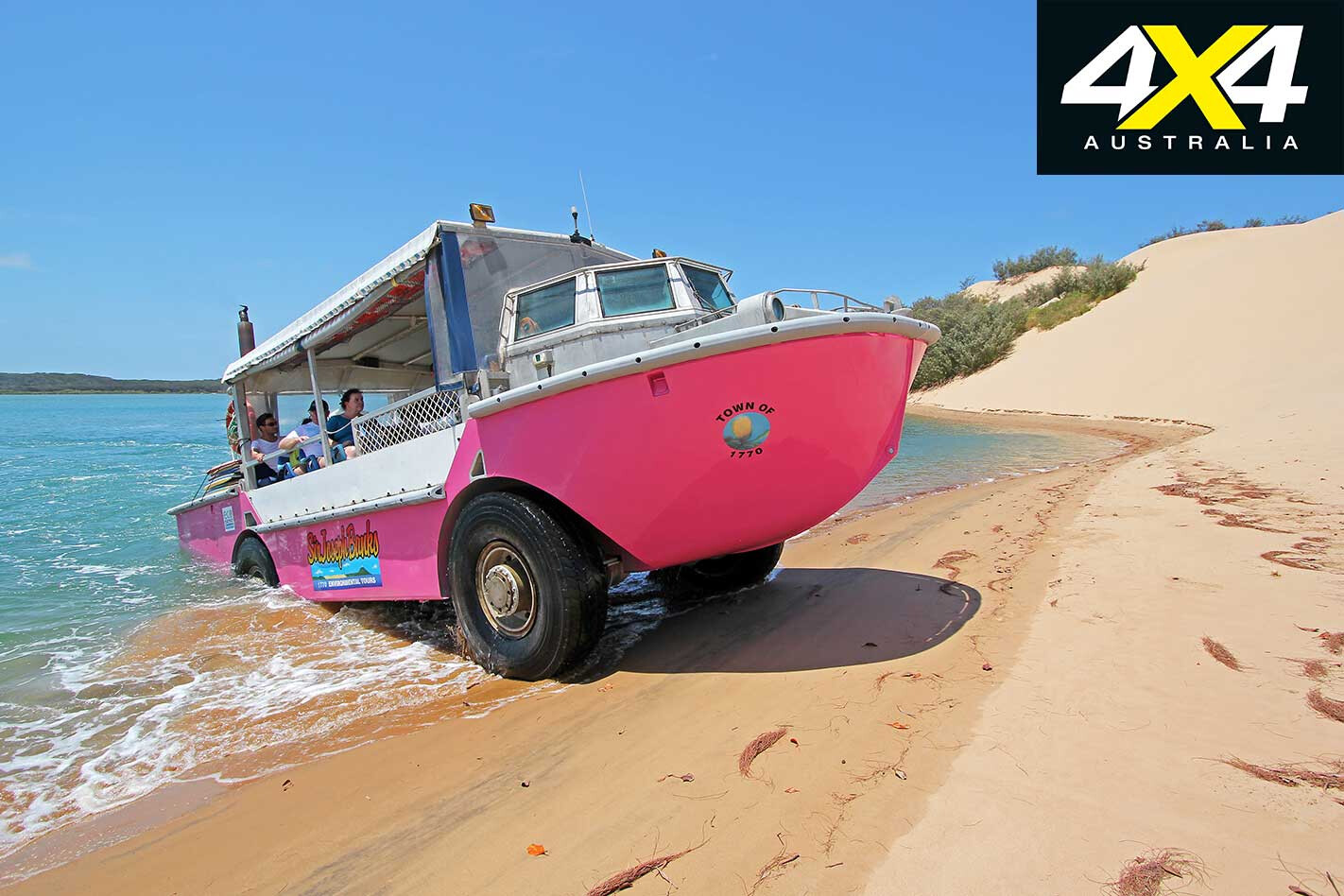
Given the restricted vehicle access to the park and lack of formal walking trails, one of the best ways to explore the geographic boundaries is to join the crew of 1770 Environmental Tours aboard a LARC (Lighter Amphibious Resupply Cargo). You can enjoy a full day, sunset or sandboarding tours, all departing from the marina in Seventeen Seventy.
We jump aboard the Paradise day tour, which starts by driving-diving into Round Hill Creek. The LARC traverses the length of Bustard Bay, crossing four tidal creeks on the way to the lighthouse on Bustard Head.
As we splash through the shallows, stingrays, sharks and other fish dart out of our way. We pass the campgrounds at Bustard Beach and Middle Creek before crossing to Middle Island which is part privately owned, part conservation and part resources reserve, set aside for mining.
Once up the steep track on Bustard Head, enjoy magnificent views back to Seventeen Seventy and across Middle Island. The lighthouse dates back to 1868, when a lightkeeper would light the lamp each evening, to ensure safe passage for passing ships. It was automated in 1986. Lighthouse volunteers still look after the lighthouse reserve.
The trip includes a tour of the Bustard Head lightkeeper’s cottage, which has been restored, and a museum within replete with artefacts from the area. The highlight of the afternoon was sandboarding on Middle Island. If you haven’t done this before, it’s pure gold.
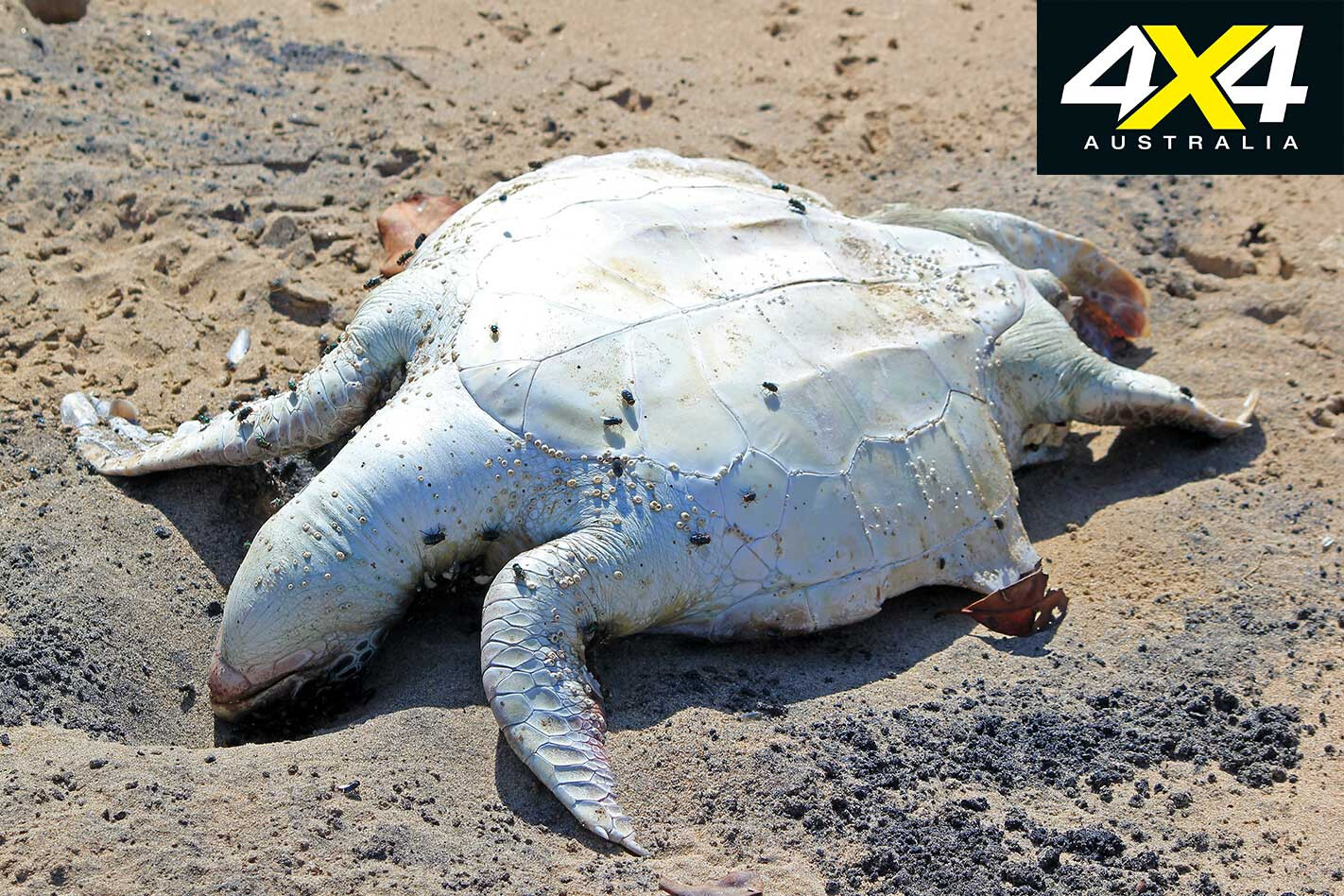
On our return journey to Seventeen Seventy, we spot a dead turtle near the high-water line. The LARC performs a voluntary wildlife rescue and reporting service. Many turtles die each year as a result of ingesting plastic bags, having mistaken them for jellyfish. GPS co-ordinates are provided to the authorities for any dead turtles found, before a burial in the sand.
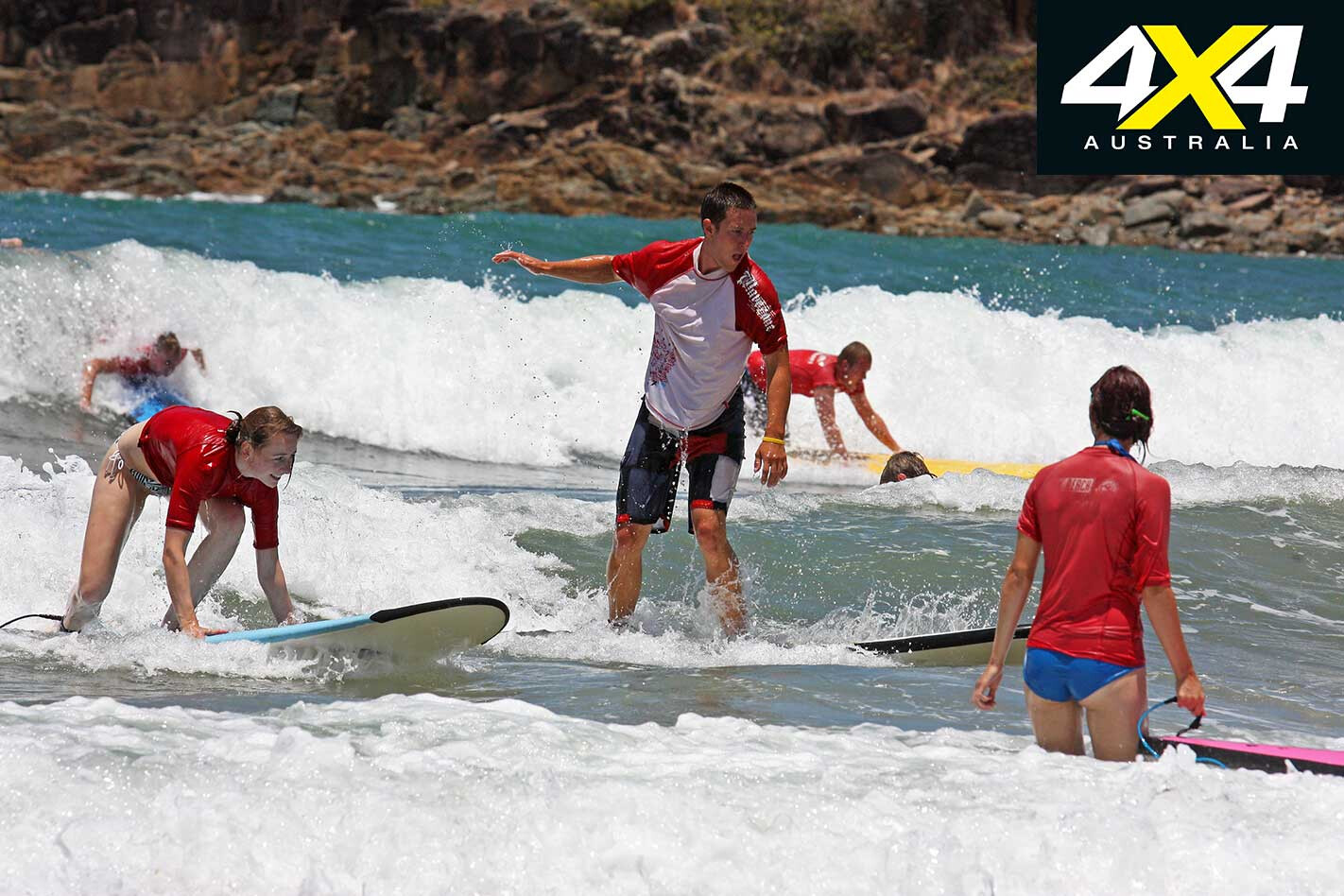
There are snorkelling tours of the Barrier Reef outer coral cays including glass-bottom and semi-submersible boats, starting from $180 per adult. For something a little kinder on the wallet, check out the Reef 2 Beach Surf School in Agnes Water. Meet up at the local surf shop, drop $17 on the counter and you’re in for an entertaining morning of fun.
The other main Discovery Coast wilderness area, in Deepwater National Park, is a short drive south of Agnes Water. Follow Springs Road out of town for about 4km until you see the sign pointing right to the national park. The track gives way to a single lane of deep, soft sand, so drop your tyre pressures as soon as possible, to avoid blocking the track.
Deepwater National Park (4730ha) gets its name from the undisturbed coastal freshwater stream that runs through the park; one of only a handful in Queensland. Sand dunes along the beach shield campgrounds. Vegetation includes lush cabbage palm groves and wetland vegetation around the creeks.

There are three visitor areas. Flat Rock is day-use-only with no facilities; Middle Rock offers bush-camping-only with no allocated sites or facilities; and Wreck Rock has 14 allocated camping sites, compost toilets, a cold outdoor shower, picnic tables, rainwater and bore water. The sites have a sandy base and most get some shade.
There are no formal walking tracks or vehicle tracks other than the main 4X4 access track through the park. There is no authorised access to the beach, although you may see the quad-bike tracks of turtle volunteers. As such, the park is best for those seeking a remote escape among natural surroundings.
Turtles visit each year to nest in the sand from November to March, as they do at Mon Repos further south. They hatch six to eight weeks later. During the egg-laying period, volunteers patrol the beach at night waiting for turtles to appear. Rangers tag turtles, record turtle measurements and assist in relocating eggs above the high-water line if necessary, but otherwise interfere as little as possible.
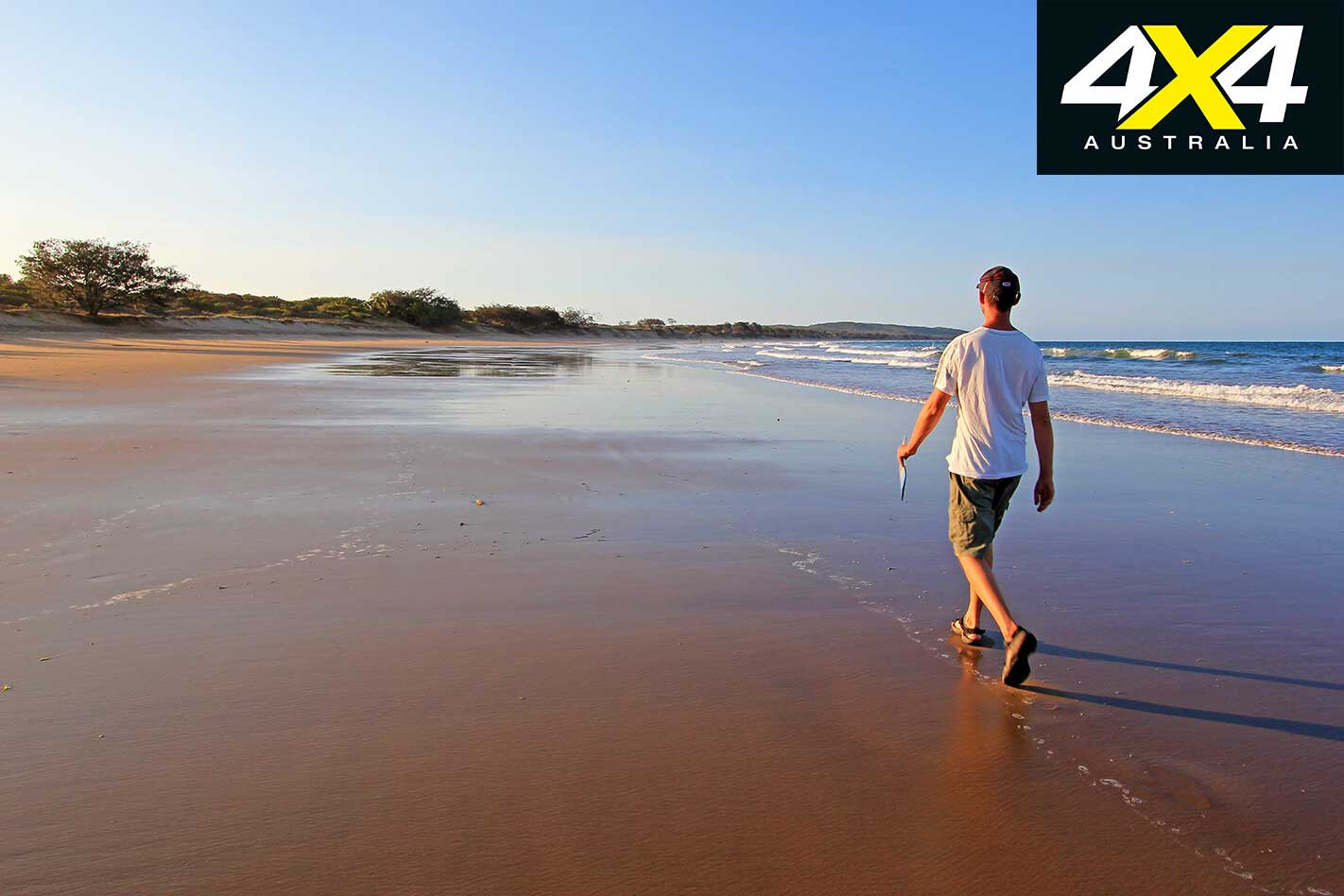
Their objective is to improve on estimations that only one in 1000 turtle hatchlings will survive to reach reproductive age. If you want to witness the turtle egg-laying and hatching experience, do it at Mon Repos Conservation Park, north of Bundaberg, where the Department of Environment and Resource Management runs nightly turtle tours during the season.
All beaches within Discovery Coast national parks are unpatrolled, so take care in the water. Stonefish are common in creeks, and sharks and/or rips are a danger. Marine stingers are around between October and May.
Research by the QPWS shows that locals – and those from Bundaberg and Gladstone – are the most common visitors to this region’s wilderness camping areas. The Discovery Coast is one of Queensland’s best-kept secrets; it’s one of those few special places where development hasn’t quite caught on yet and that is a beautiful thing. Enjoy it before the word gets out.
Travel Planner
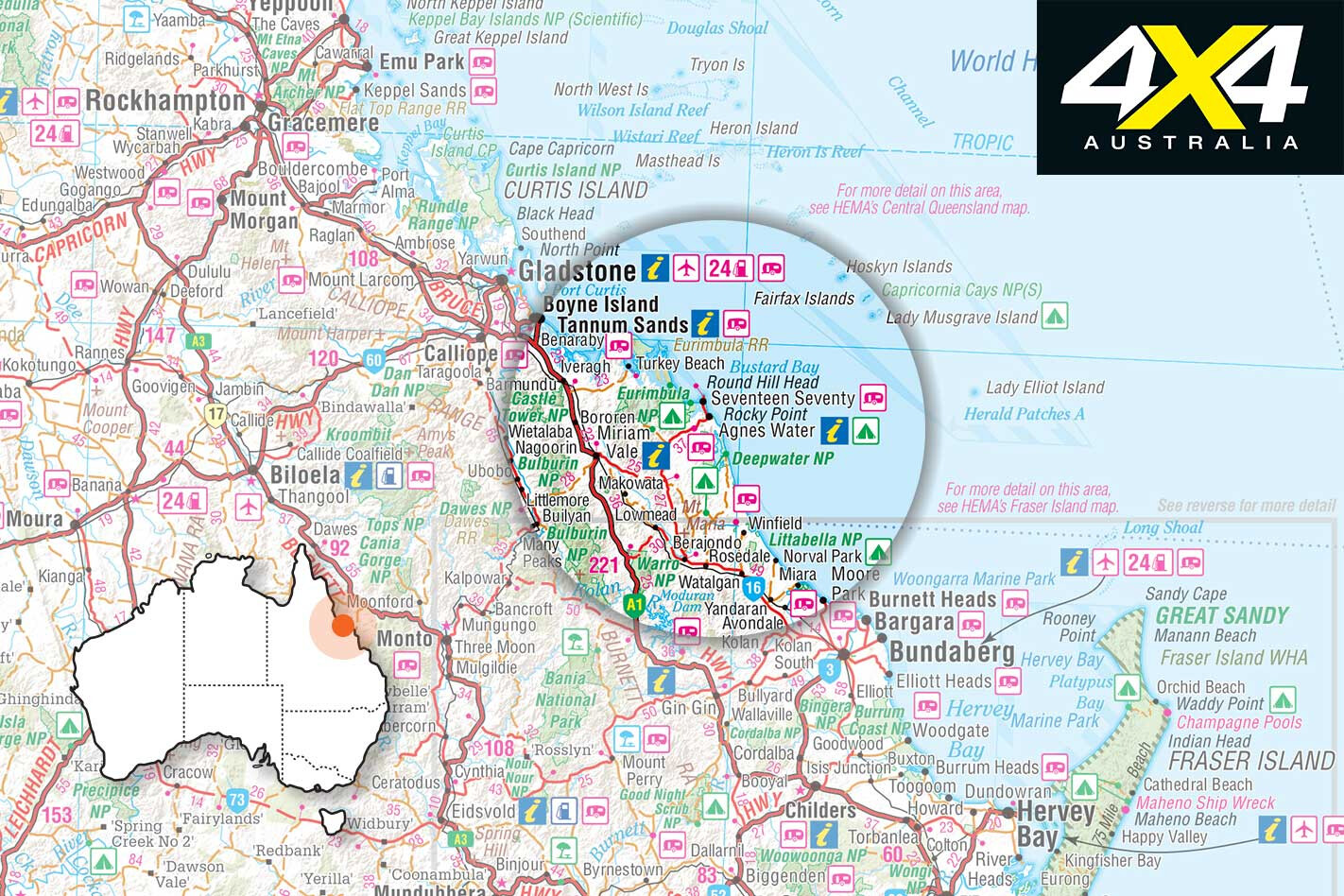
WHERE The town of Agnes Water, on the Discovery Coast, is about 120km north of Bundaberg and 480km north of Brisbane.
CAMPING Deepwater and Eurimbula national parks; Broadwater and Mouth of Baffle Creek conservation parks. Fees are $5.30 per person, per night.
Children under five camp free. A family rebate is offered for families of up to two adults and six children with a flat rate of $21.30 per night. You must select the family rebate checkbox if booking online. Campsites must be booked in advance and there is no self-registration. No fires or generators.
WHAT TO BRING Insect repellent, drinking water, fishing gear, boogie/surf boards, binoculars, walking shoes, protective waterproof shoes for fishing in the creeks (stonefish) and a fuel stove.
SUPPLIES Agnes Water, Miriam Vale, Euleilah and Bundaberg.
MAPS AND GUIDES QPWS Deepwater & Eurimbula National Parks Brochure – available from the information centres or at the campgrounds.
CONTACTS AND INFORMATION Agnes Water Visitors Information Centre, call 07 4902 1533. Queensland Parks and Wildlife Service, call 13 74 68. Visit http://tackleworldbundy.com.au/ for angling info. LARC tours, call 07 4974 9422, or visit www.1770larctours.com.au. Lady Musgrave Cruises, call 1800 63 1770 or see www.lmcruises.com.au. Mon Repos Turtle Experience, call 07 4153 8888
The Victorian High Country – approximately 23,000 square kilometres of rugged mountain ranges, deep river valleys and almost impenetrable bush – stretches from the Great Dividing Range, north of Melbourne to the Murray River in Victoria’s far north-east corner.
This feature was originally published in 4×4 Australia’s December 2012 issue
Subject to climate extremes, from snow on the higher peaks during winter to raging bushfires in summer, the High Country doesn’t exactly encourage permanent occupation. Apart from the ski resorts and several small villages there are few facilities. Those planning to visit the area need to be self-sufficient.
The jewel in the High Country’s crown is the extreme north-east corner, which forms part of Alpine National Park. This area is largely the domain of four-wheel drivers due to its limited access and mountainous terrain. The only direct access from NSW requires fording the Murray River at Tom Groggin – not something to be taken lightly (or at all) when the river is flowing strongly.
This area also has some of the highest tracks in Victoria; parts of Davies Plain Track are more than 1700m high. Mt Pinnibar (1727m) and Mt Gibbo (1716m) have the best 360-degree views you’ll experience anywhere – and you can park your 4X4 right on the summit.
To the east of Mt Pinnibar, across the Murray Valley, is the impressive Kosciuszko Range, while to the south, endless blue ranges recede into the distance above the ghostly branches of snow gums. After a bushfire, snow gums regenerate from their stump, not from their trunk and branches like other eucalypts, which leaves their bleached branches reaching into the sky like gnarled fingers.
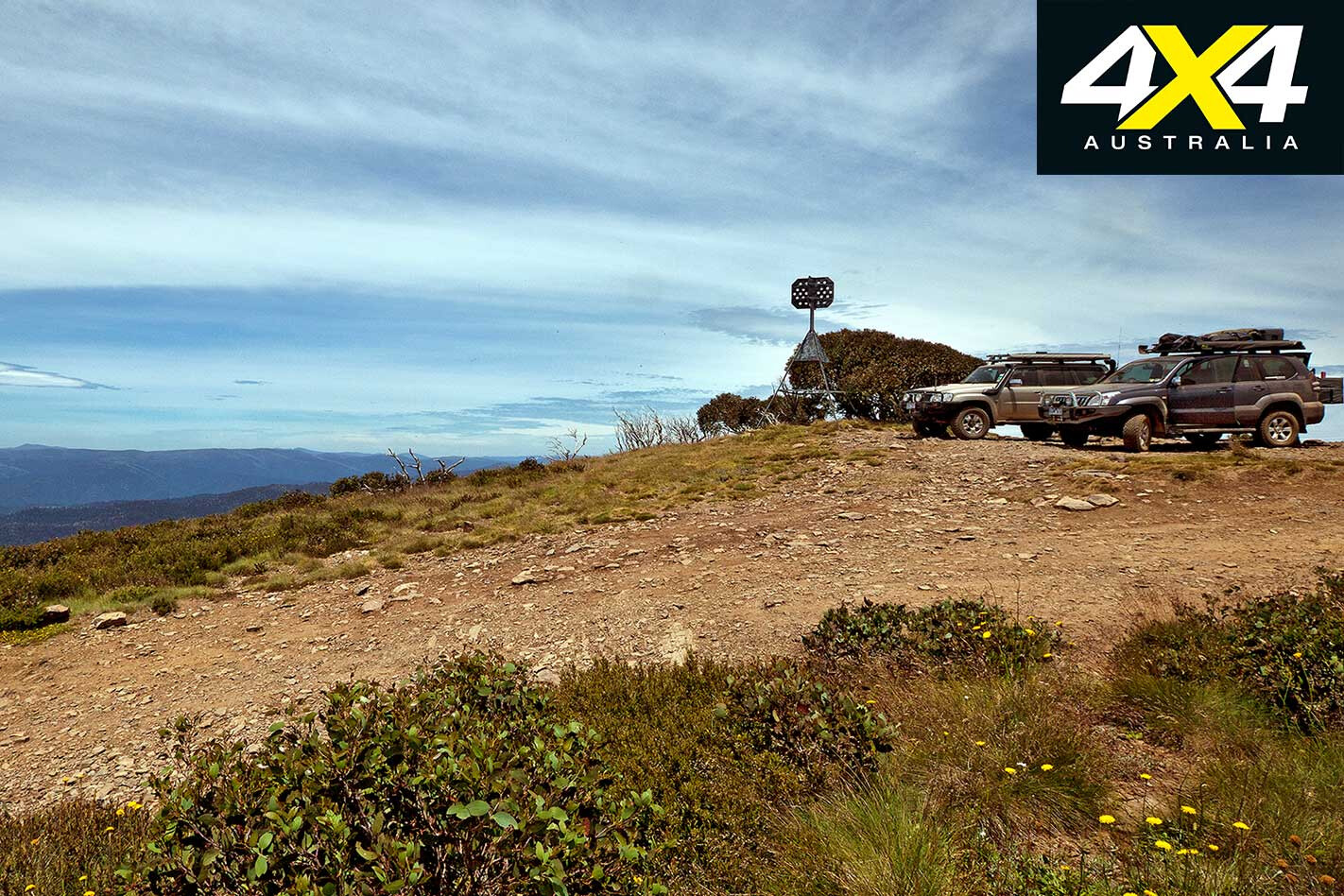
In the middle of all this beauty is Davies Plain Track, which runs from Tom Groggin on the Murray to the southern end of Alpine National Park. This track is only open from December to April in order to protect the delicate alpine environment.
While it is a relatively easy drive from the Murray up to Davies Plain, there is a 1000m difference in altitude. This, along with the various red clay sections, makes it easy to see why the track becomes exceptionally difficult in the wet. In fact, it doesn’t take much rain at all to render red clay dangerous to drive on.
From Melbourne, the most popular access to Davies Plain is via Benambra to the south, where you leave the bitumen and head 40km east into Alpine National Park via Limestone Road. Here, you will find the dry-weather-only 4X4 Limestone Track, which winds into The Poplars – the highest vehicular access to the Murray River near its source.
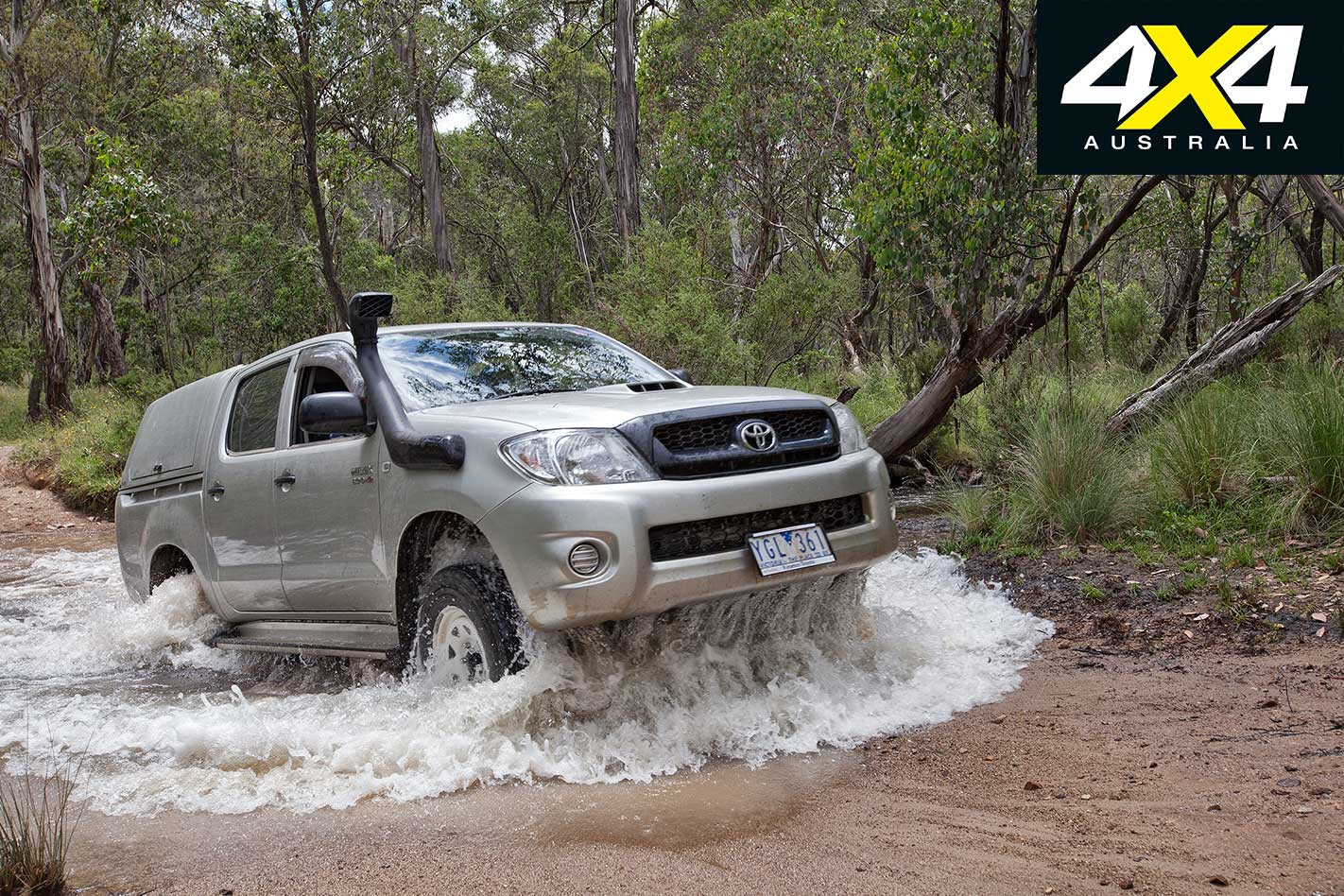
Limestone Track has a bit of everything – steep climbs and descents, water-crossings and beautiful scenery. Though it’s an easy drive when dry, the last section, as you near The Poplars, is not a place to be in the wet.
Early in the season or with heavy rain, this section becomes a quagmire, with large quartz rocks hidden underneath. Just to add extra interest, if you’re heading towards The Poplars, the boggy bit is uphill. In summer, the deep-wheel ruts set like cement and you need to be careful not to fall into them.
The Poplars has a toilet and several campsites separated from each other by sections of bush. It’s a popular place for an overnight stop but when we were there, we still managed to find a grassy spot right next to the river to set up camp.
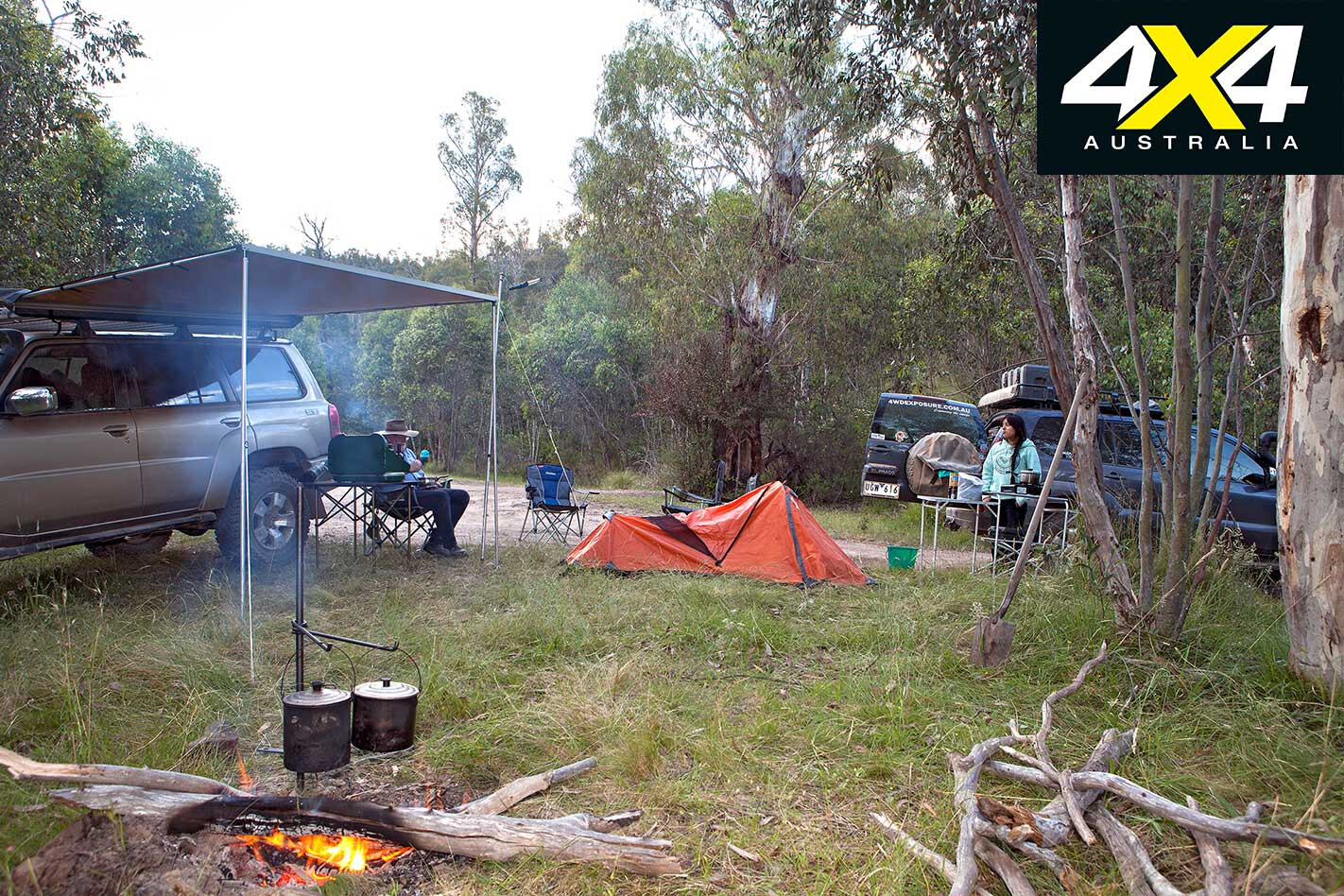
In some places, the water is only a few metres across and it’s hard to envisage that this is the mighty Murray River that winds its way 2600km to the sea through three states. There was plenty of firewood lying around. What could be better? A warm summer’s evening, the sound of the river bubbling away, a steak on the barbie, and a cold beer next to the fire.
The next morning, we climbed away from the Murray via McCarthys Track, which has some steep, rutted red clay sections that would also be challenging after heavy rain. Passing over Davies Plain Track we drove down Buckwong Track and past the delightful Buckwong Hut camping area. Set beside a stream, this grassy site and shady trees would make a perfect bush camp.
We continued on via Mt Hope Road and Buenba Road– both good quality gravel roads– to pick up the southern end of Mt Gibbo Track and climb towards the summit of Mt Gibbo in a series of steps. This is a steep climb, followed by an easy run along the ridge for a few hundred metres before another slightly rough and rocky climb to the next ridge.
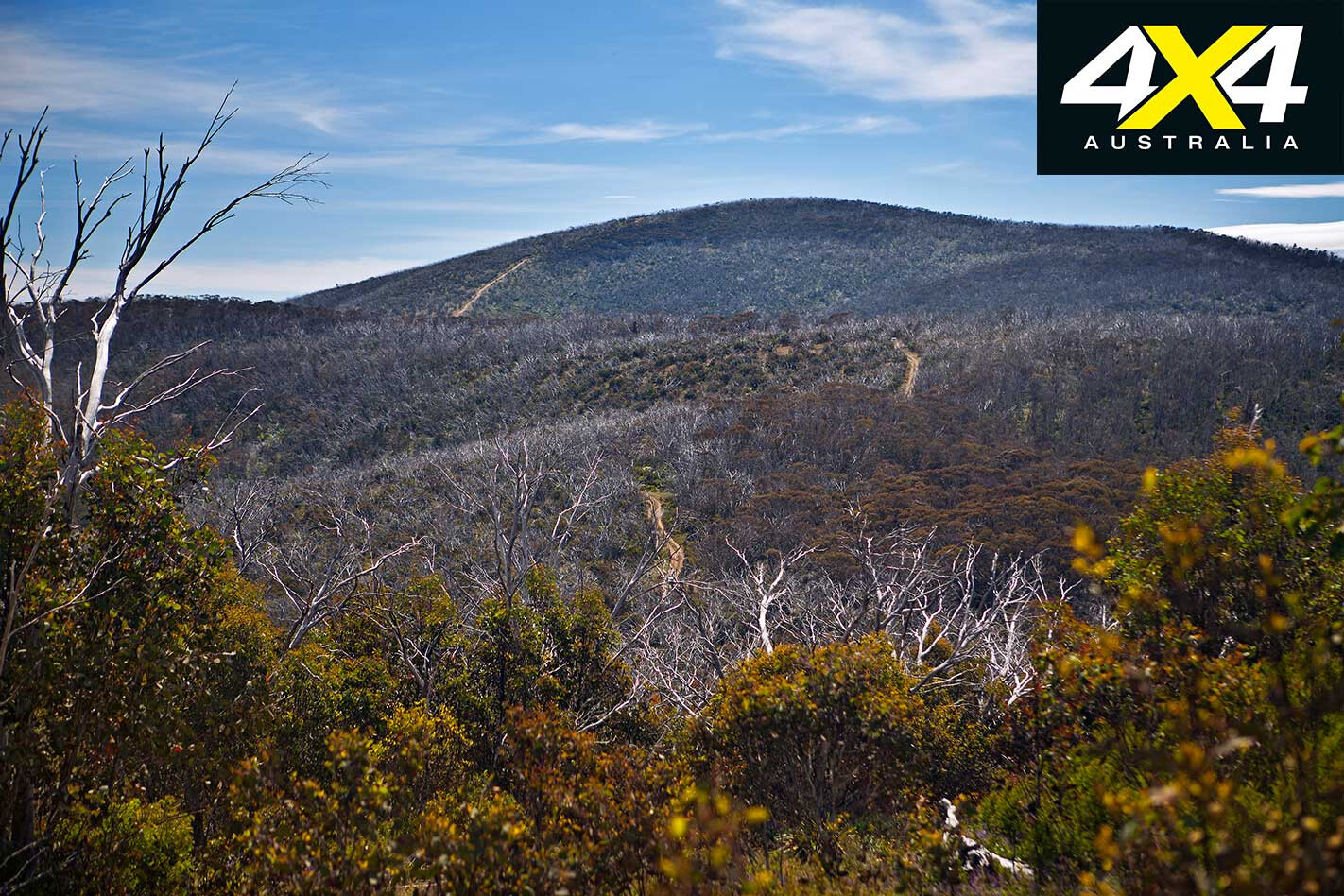
Near the summit of Mt Gibbo there are a couple of rock ledges to look out for, but once at the top you are greeted with sublime views. Despite being the middle of summer, wildflowers were everywhere.
The descent off Mt Gibbo has a few rough and rocky patches but once onto nearby Mt Anderson Track driving conditions improve and it is only a short distance to Mt Pinnibar. While the views here can be magnificent, if there is any rain or low cloud around, you can almost guarantee that’s all you’ll see. We know people who have been to Mt Pinnibar more than once and have seen nothing but cloud.
After winding our way down to Tom Groggin we forded the Murray River, and even though the water was very low, driving this river crossing was still an experience. The NSW side is usually a tent city given it has 2WD bitumen access but Dogmans Hut on the Victorian side is much less frequented.
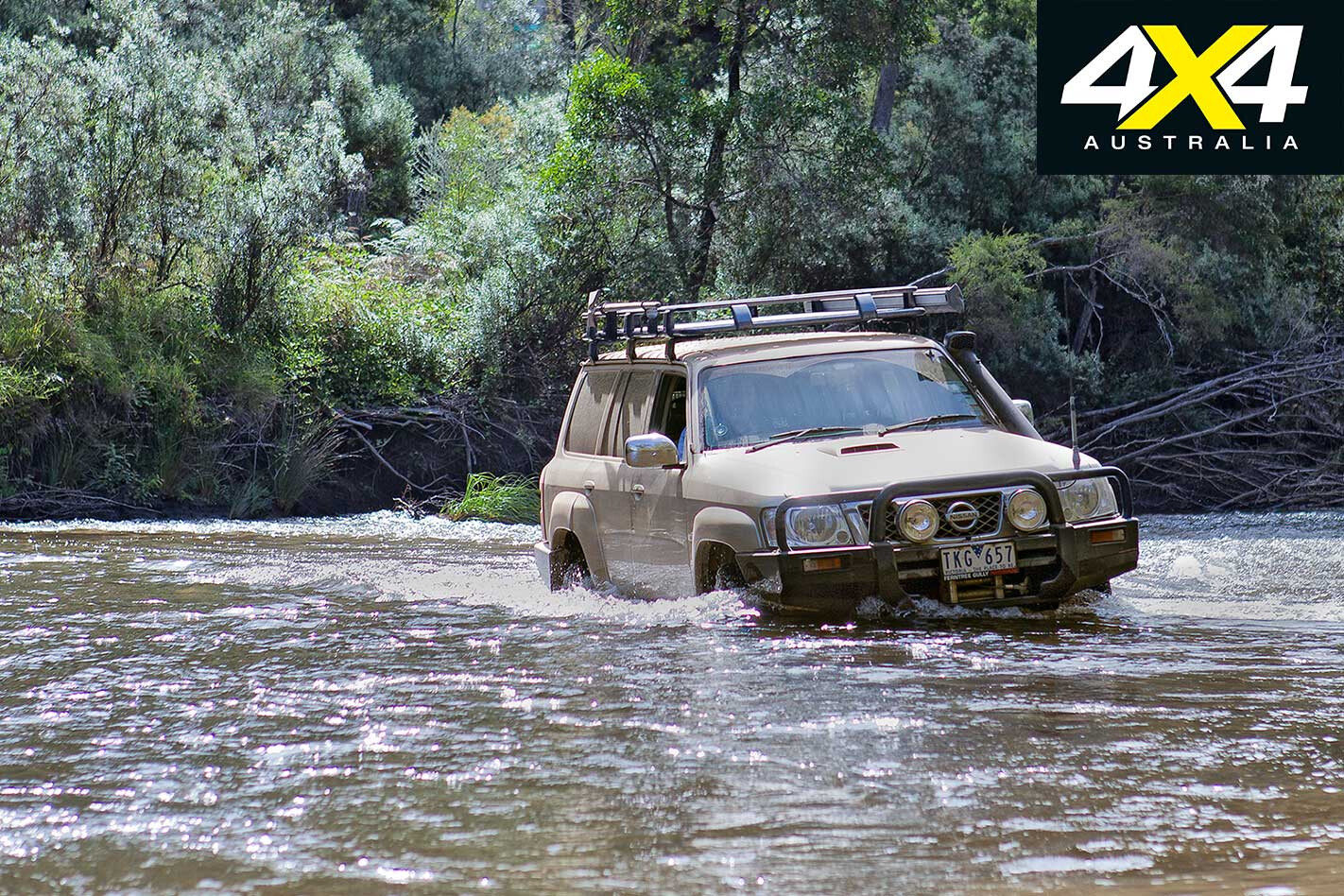
Another great tree-filled and grassy bush campsite can be found 6km south of the Tom Groggin ford, where Davies Plain Track crosses Buckwong Creek. The creek carries a surprising amount of water as it rushes towards the Murray. If it’s been raining don’t be surprised to find water over your bonnet.
It’s not uncommon to see brumbies on Davies Plain Track but the day we were there the weather closed in and they would have had to be standing on the track to be visible. However, in swirling mist silhouetted snow gums took on a ghostly appearance and made great photographic subjects.
Midway along the track is Davies Plain Hut which, like many High Country Huts, was built by cattlemen. Constructed in 1939 by the Gibson family, who originally took up a lease of the area in 1892, it was grazed until 1956. Largely rebuilt in 1995 and surrounded by a grassy camping area with toilet facilities, it has become a popular overnight spot for off-road tourers.
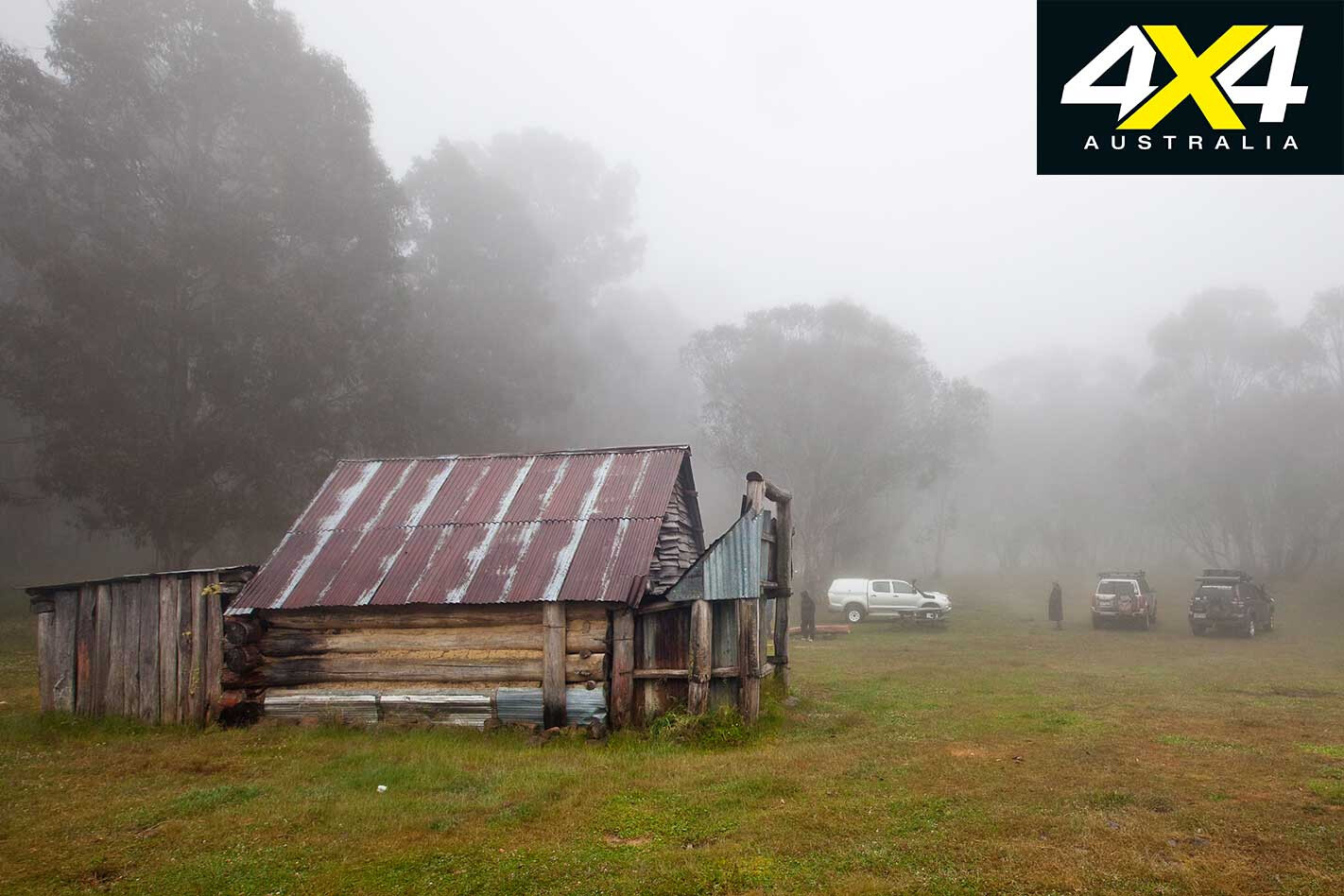
A little further south is another delightful camping area, Charlies Creek, from where it is only a short distance to the junction with McCarthys Track, which is your exit from the high plains back to civilisation. In dry conditions this trip could be undertaken by any 4X4 with reasonable clearance. While we have taken a heavy-duty off-road trailer on this route, including over Mt Gibbo, it is not recommended.
In terms of driving time, from Melbourne to The Poplars was seven and a half hours. Tom Groggin via Mt Gibbo and Mt Pinnibar was another seven hours and the return via Davies Plain to Melbourne was 12 hours. It’s a long time behind the wheel, but worth every second of it.
Travel Planner
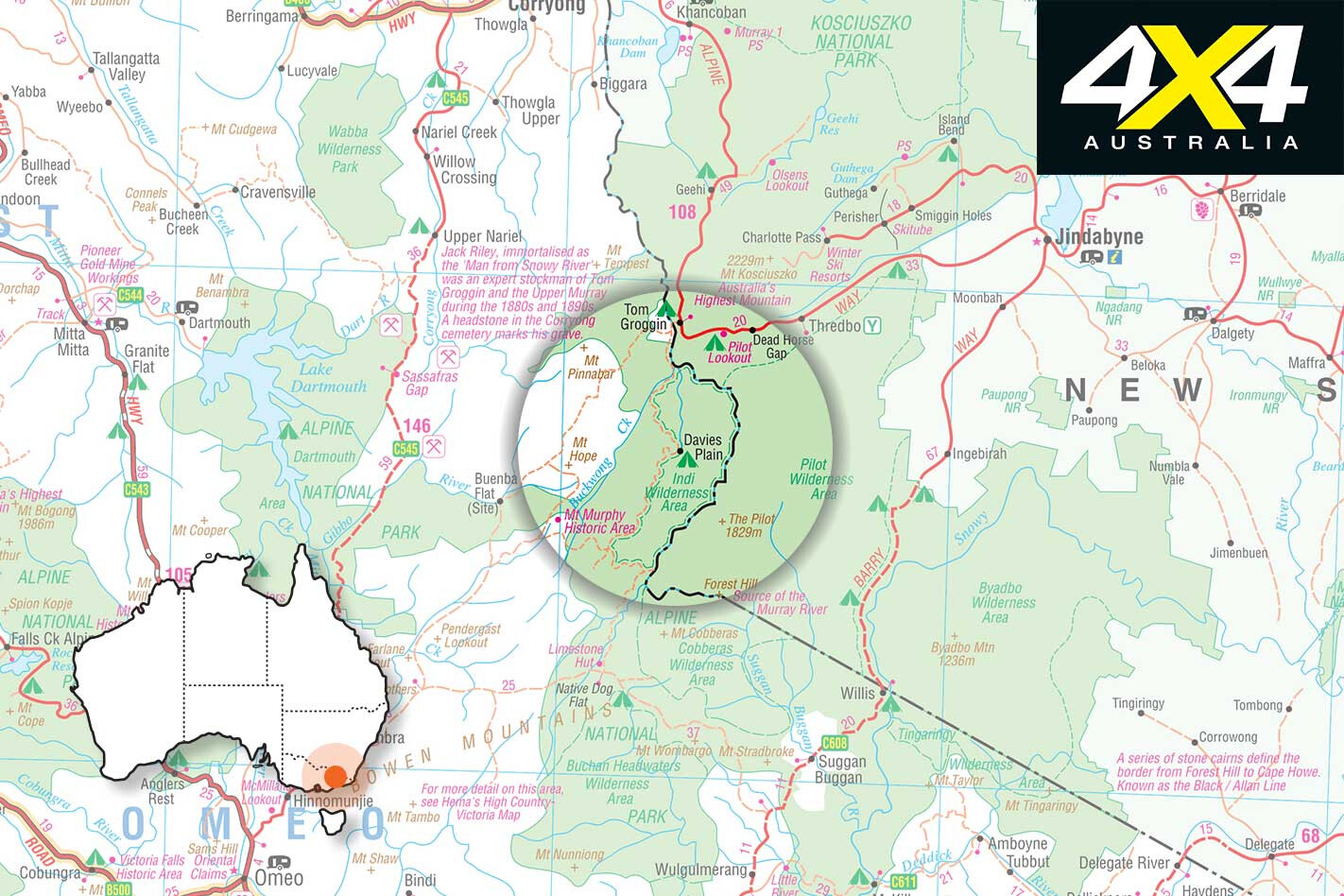
GETTING THERE From Melbourne take the Princes Highway to Bairnsdale to meet the Great Alpine Road. Follow for 120km to Orbost. From Orbost it is 20km to Benambra, turn east into Limestone Road. About 40km east of Benambra is Limestone Track. Davies Plain can also be reached from Sydney via Tom Groggin on The Alpine Way south of Thredbo or Khancoban.
PLACES TO STAY Free bush camping is available throughout the Victorian High Country with few restrictions, however, camping at Tom Groggin on the NSW side of the Murray requires a permit.
Campsites with toilet facilities and fire places are available at many designated campsites, including The Poplars, Dogmans Hut, Tom Groggin, Charlies Creek and Davies Plain Hut. Drinking water is not provided and it’s recommended to boil water taken from mountain streams.
FUEL & SUPPLIES Melbourne, Benambra or neighbouring Omeo are the last chance to buy supplies and top up with fuel. On the NSW side, Khancoban or Thredbo are the last major centres you pass.
Take food and water for the duration of your trip. Plan to be self-sufficient and include clothing for all types of weather as snow is possible even in summer. Ideally, travel in the company of others and if possible carry a chainsaw and recovery gear. A HF radio or satellite phone is recommended in case of an emergency.
MAPS Hema and Rooftop maps (paper and GPS) are recommended, as is a quality 4X4 GPS.
THINGS TO DO Bushwalking, photography, bird-watching.
IMPORTANT CONTACTS Parks Victoria, Omeo – 03 5159 0600. NSW Parks & Wildlife, Khancoban – 02 6076 9373.