
BY transforming the Y62 into a dual-cab, Peter’s aim was to build an ‘all-rounder’ that’d be equally adept at camping adventures, as well as fishing and hunting expeditions – plus, it would see a lot of towing work. Encouragingly, his idea didn’t seem that far-fetched after he proposed it to On Track 4X4’s Andrew Cassar.
“I rang Andrew and said this is what I want to do,” Peter said. “No-one else has done one … while everyone else has had Land Cruisers cut and other things cut, nobody has cut a Y62. He said, ‘Yep, let’s do it’.”
Peter knew the exact crew of specialists to entrust, firstly checking with the engineer that he uses for his work at On Track 4X4 and then enlisting Les at Tinman Fabrications to do the cutting work.
The Y62 is a high-tech 4×4, and it was here that the team struck a few small problems, most notably with the air-con system and the Patrol’s airbags. The vehicle’s air-con ducts go through to the third-row seating, which meant having to reroute them to ensure they finished at the back of the second row.
The next issue was the Patrol’s airbags, which meant designing a bracket that would retain the side-pillar airbag. The rewiring took a bit of time to figure out, again to ensure the vehicle met ADR and safety regulations.
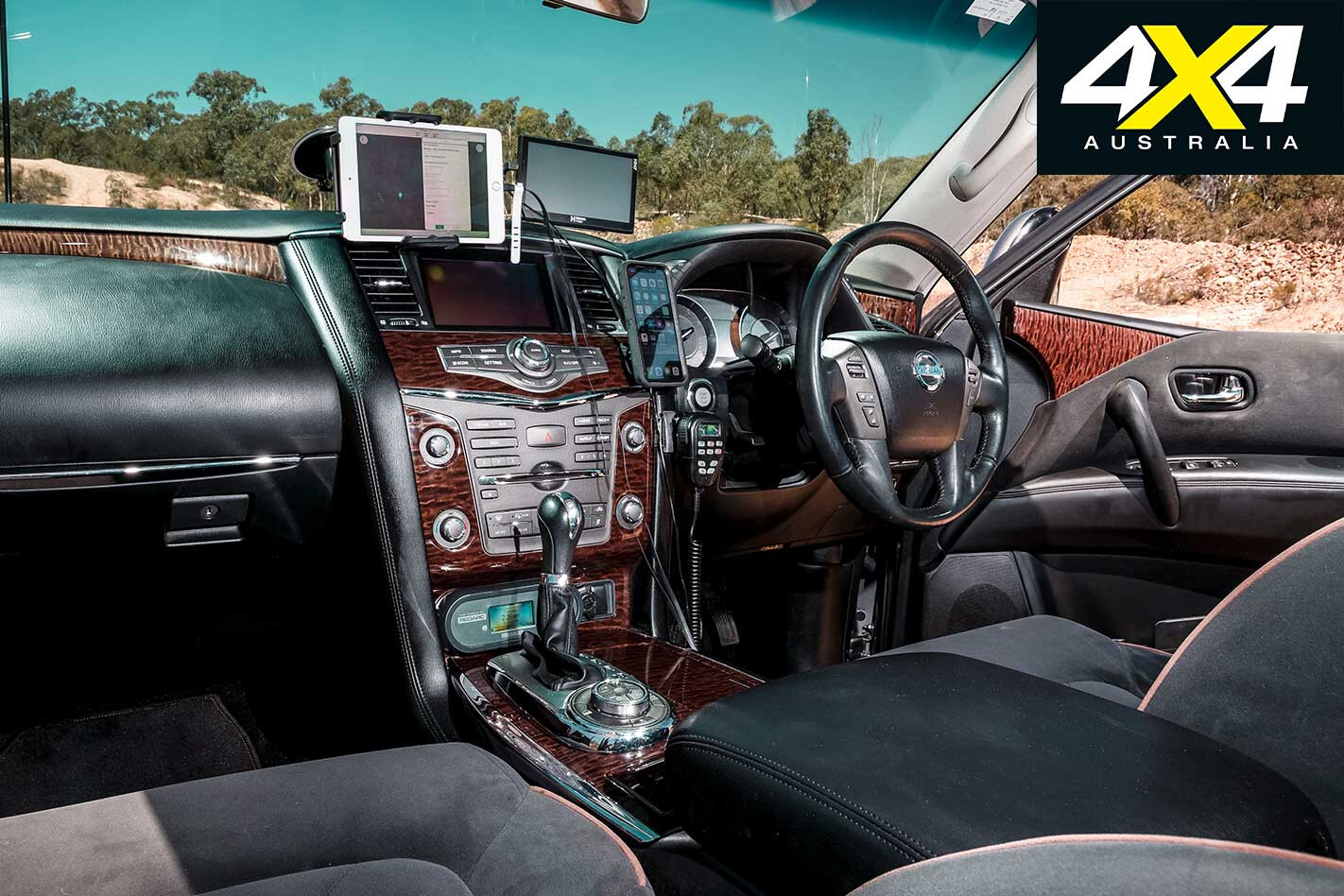
Trying to ‘trick’ the engine management system was a challenge, with the vehicle still ‘looking’ for the tailgate, as one example. Perhaps, surprisingly, the actual cutting of the vehicle was straightforward, with Les removing the back section and welding the ute-back onto the body and finishing all the fabrication work.
Upon the return to On Track 4X4, the chopped Nissan was repainted before Andrew got stuck into the rewiring and refitting of the interior. Peter decided to fully rewire the Patrol so as to accommodate all the power-reliant accessories that were to be fitted. This entailed fitment of a Redarc dual-battery management system and some tricky positioning of two aux batteries in the powder-coated tray – the tray also has a slide-out drawer.
An all-aluminium canopy built by WF Fabrications features a separate dog cage, along with another storage box (housing the 60L Engel fridge/freezer on a Clear View Easy Slide) and a dual spare-wheel carrier setup.
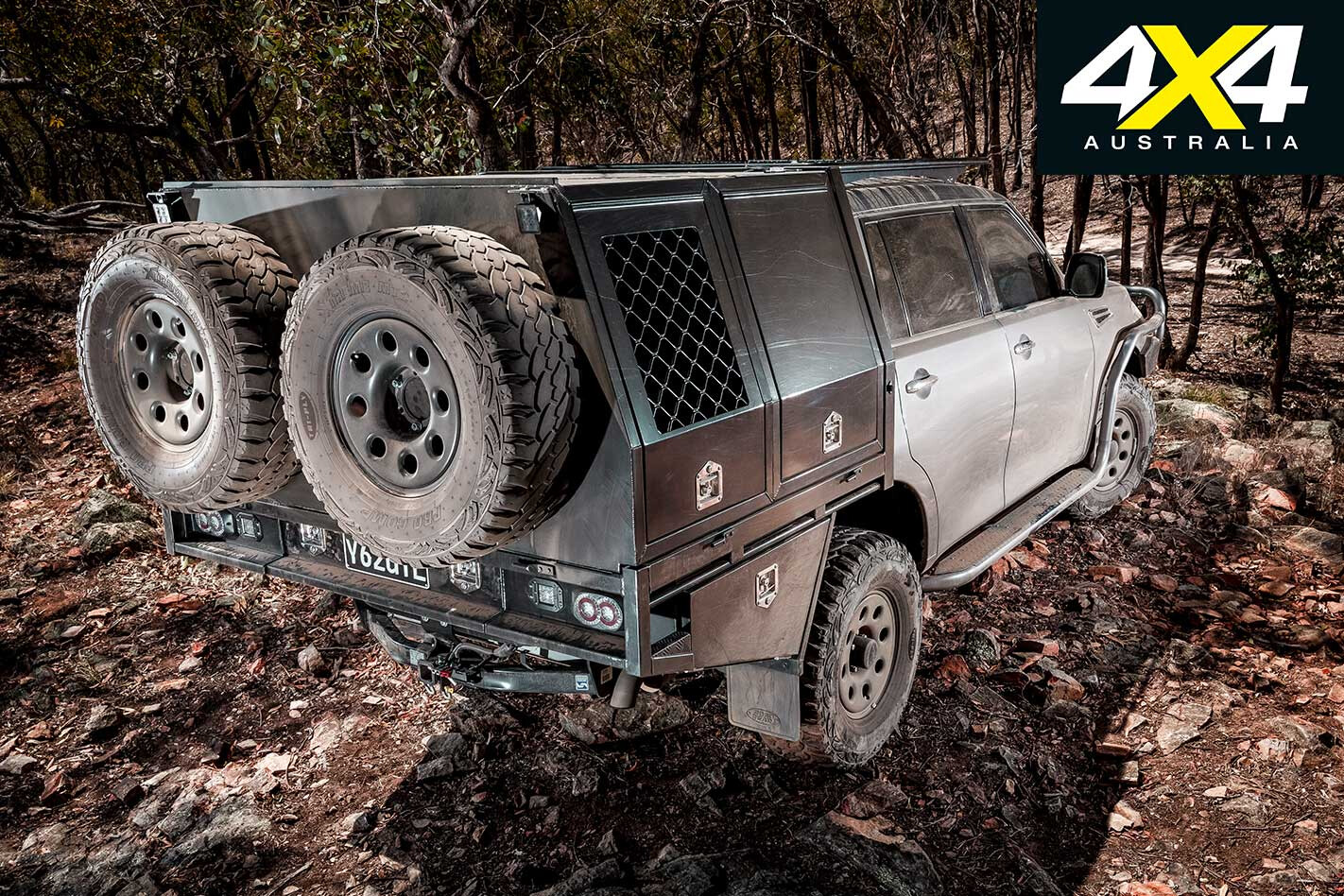
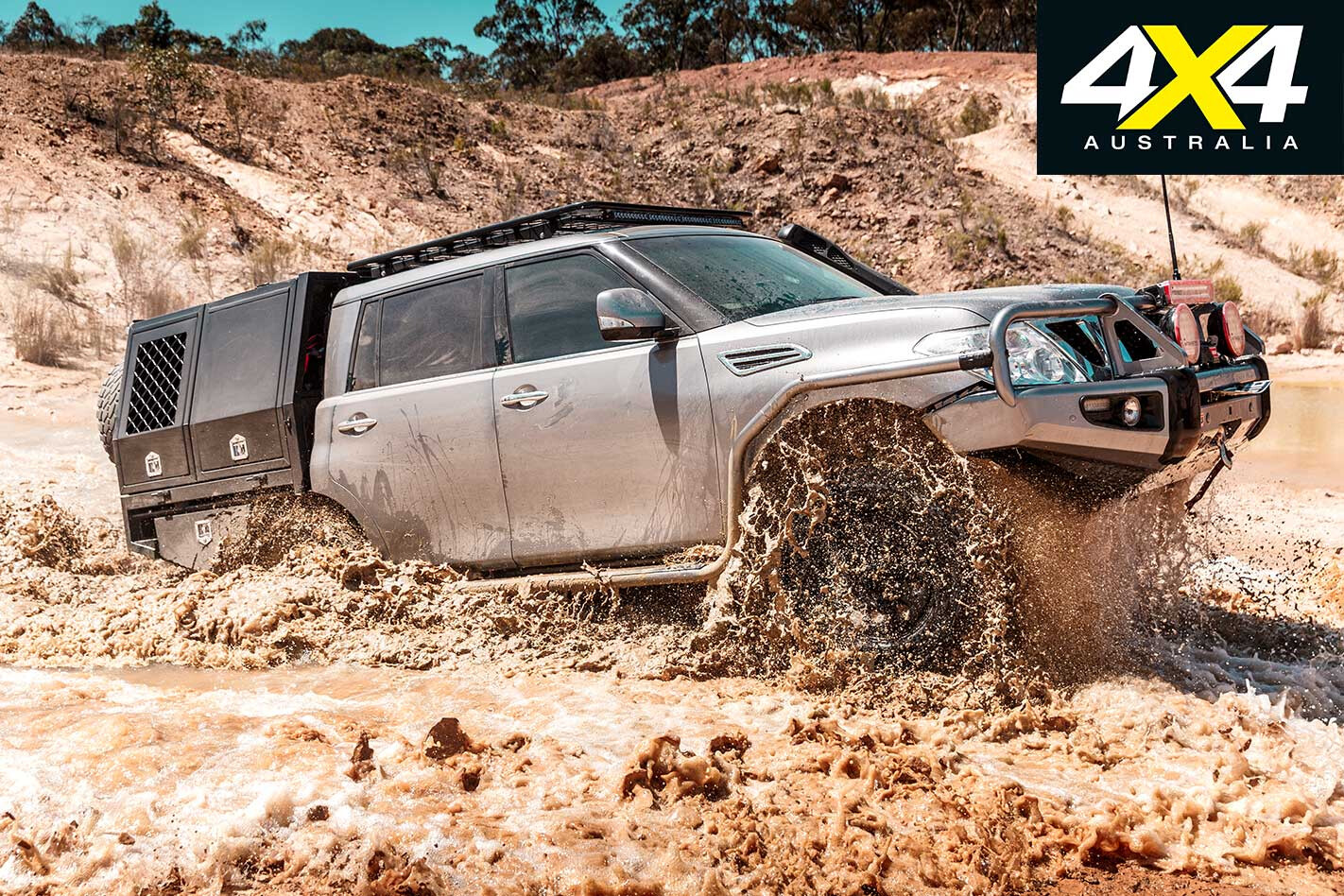
The front end features ARB bar-work (front winch bar with Warn winch, side-rails and side steps) and an ARB Intensity light setup. A TJM Airtec snorkel keeps the V8 (fitted with a Unichip) breathing freely, while Pro Comp XTreme MT2 315/70R17s roll on Black Rock Crawler 17×8 steel rims.
Peter has lifted the Patrol by two inches and fitted ARB’s BP51 remote-reservoir shocks (along with Airbag Man airbags in the rear). A 150L Long Ranger fuel tank ups the Patrol’s total fuel capacity to 290 litres.
“I am absolutely rapt with it,” Peter said. “It is just an amazing vehicle off-road; it has heaps of power. On the dirt, it’s just unbelievable how good it is.”
Check out the Top ten finalists of the 2018 Custom 4×4 of the Year, cast your vote and be in the running to win a Maxxis voucher valued at up to $2000!
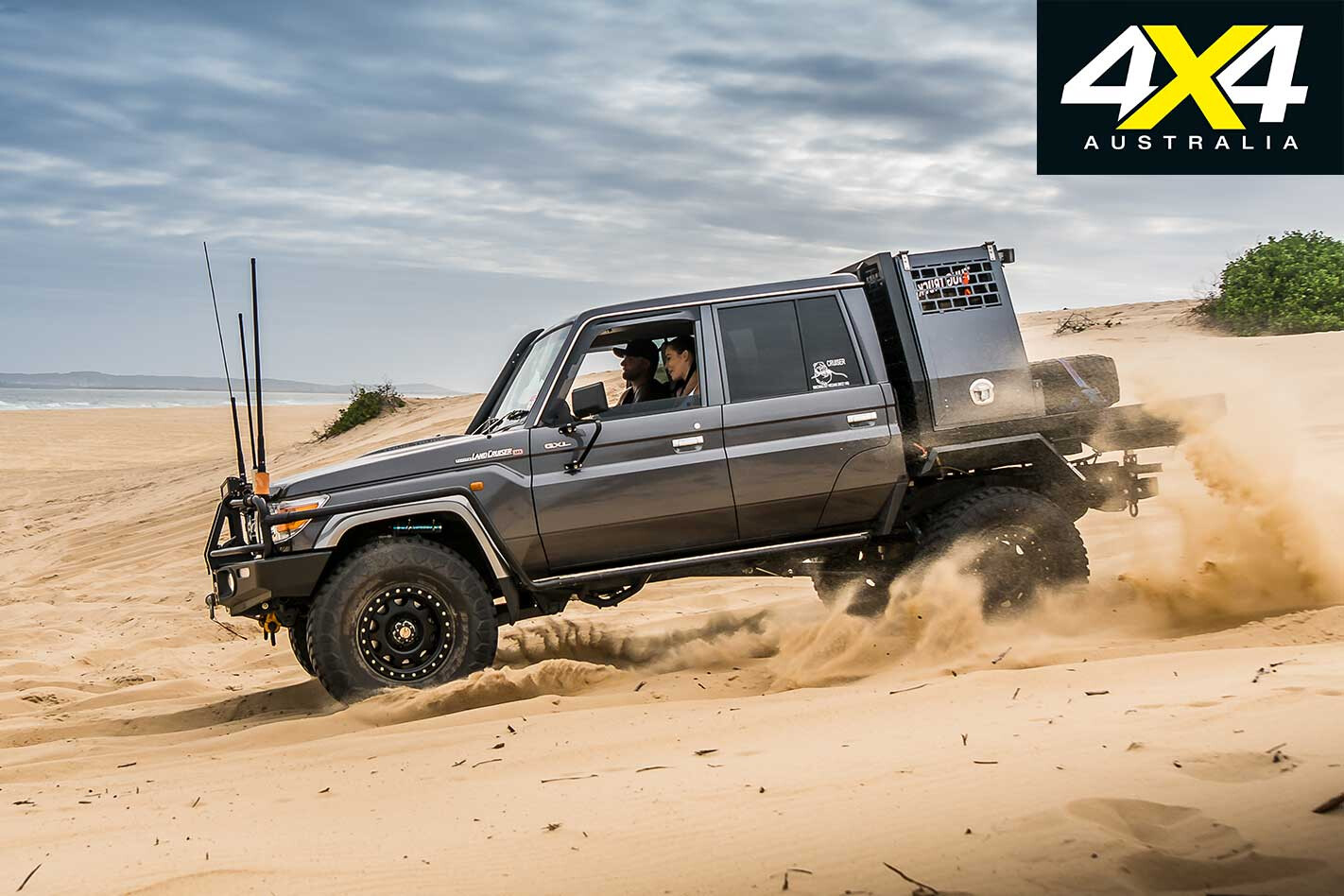
If an LC79 with a five-poster is a clean-cut country boy, Blake Oldham’s wild incarnation is a gruff outlaw.
To kick things off, Blake went straight to custom guru Steve Etcell of Automotive Etcellence in Sydney’s West. With the LC79 on the hoist, Steve pieced together a custom triangulated four-link arrangement, which uses rebuildable Johnny Joints at the end of each link. From here, CNC-cut brackets were fabricated to the diff and chassis.
Heavy-duty coils keep the rear end afloat, while adjustable remote reservoir King 2.0 shocks are fitted to custom mounts. A set of progressive bump stops smooth out landings. Body roll is kept in check by ramping up the bound and rebound rates on the King shocks with the manual clickers.
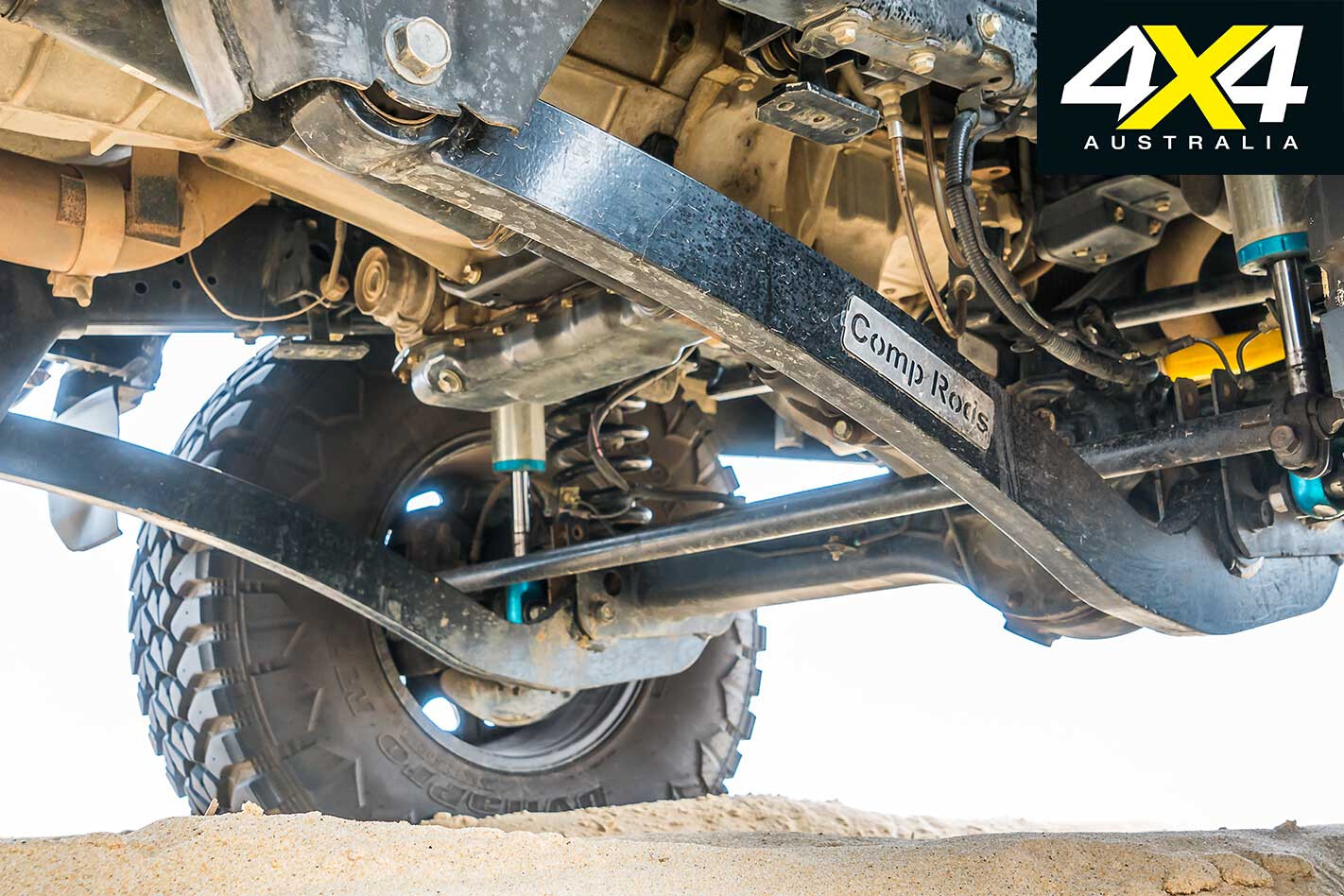
It copped similar treatment up front; with factory coils right out of the box, the job was considerably easier. The stock cast radius arms have been binned; in their place are a set of super-flexy replacements from the guys at Comp Rods.
The heavy-duty offerings not only suit the lift but correct caster, without changing to flex-robbing caster correction bushes. A Tough Dog adjustable Panhard rod keeps the front axle tracking right, while a matching set of King shocks provide the smooth ride.
Cruiser tragics will spot the custom shock mounts, too, and while Steve had the welder out he converted the front shocks to an eye-eye setup to suit the big-dollar shocks. The arrangement lets Thug Truck flex its way through gnarly bush tracks and allows room for the 37-inch Hankook Dynapro MTs wrapped around 17×8.5-inch Method 311 Vex simulated beadlocks. Thug Truck also runs a trick axle-widening kit in the rear from Kinetic Engineering that perfectly matches the front and rear wheel track.
The 4.5L TDV8 breathes easily thanks to a stainless steel snorkel from AAA Exhausts. It then huffs fresh air through the AAA Exhausts airbox. From here the job is handed off to the bent-eight, which Automotive Etcellence dyno-tuned to put out a respectable 204rwhp and 680Nm, with a 3.5-inch turbo-back exhaust dumping spent gases.
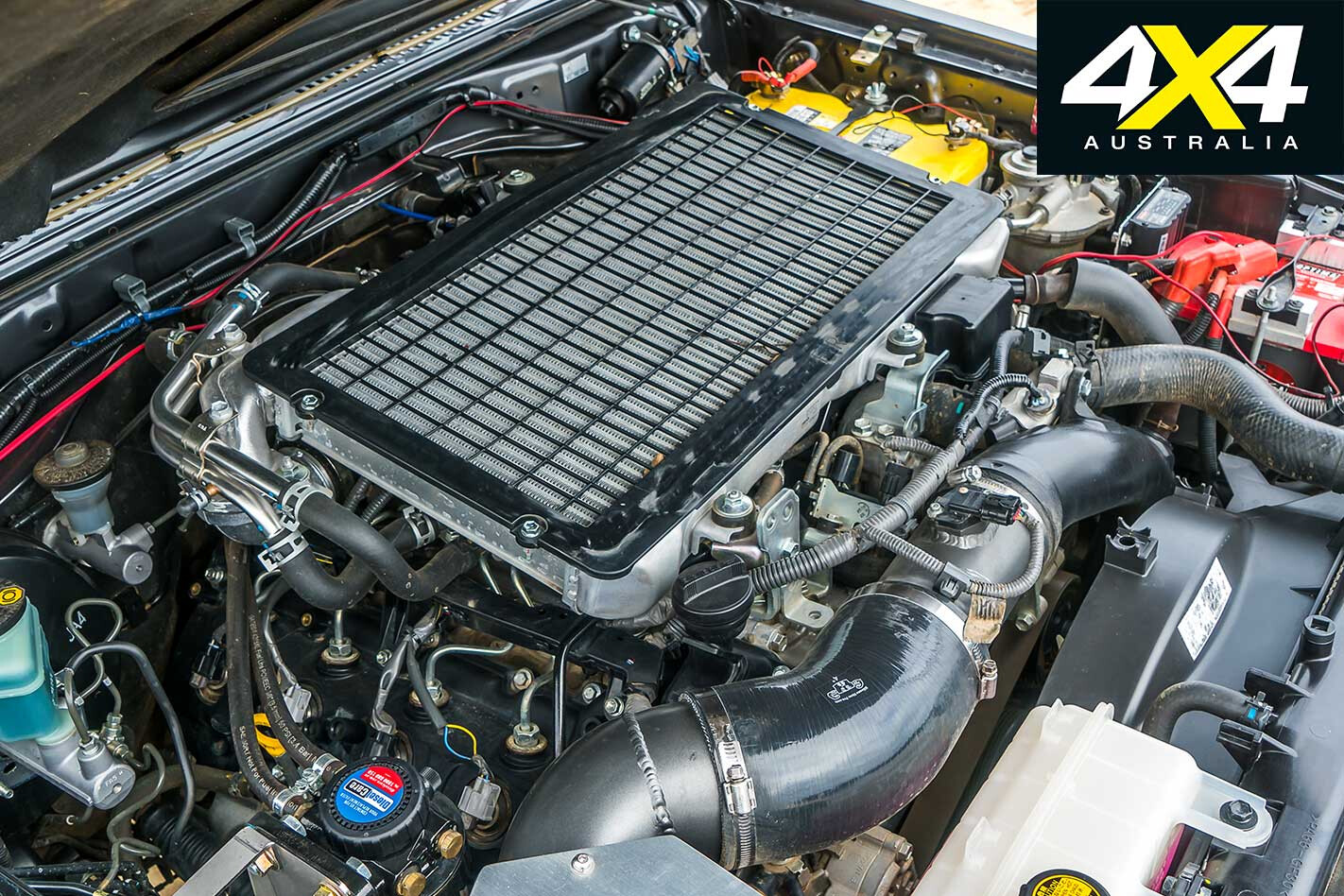
Tucked in on either side of the donk is a Diesel Care pre-filter, with a Redarc BCDC charger keeping the Optima batteries at capacity.
The standard bucket seats were replaced by FPV GT deep buckets customised by the guys at InCharge Automotive; a set of Hurricane adaptor plates fix the seats to the stock Cruiser rails. Cruiser Consoles are responsible for almost everything else in the interior, with Blake running its centre console, roof console and gear stick surround, as well as a set of ‘Mack’ door trims.
Above the revamped rear suspension is a stout tray from the guys at Coldy’s, which sports twin dog cages up front. Plus, there’s also a 120-litre water tank hidden underneath the tray.
CAST YOUR VOTE FOR BLAKE’S ‘THUG TRUCK’ HERE
Check out the Top ten finalists of the 2018 Custom 4×4 of the Year, cast your vote and be in the running to win a Maxxis voucher valued at up to $2000!
NISSAN is currently evaluating export markets for the US-made dual-cab that competes against the Ford F-Series, Chevrolet Silverado and Ram – and Australia is high on the hit list.
Speaking to 4X4 Australia at a Nissan truck and SUV event in Morocco this week, chief product specialist Pedro Deanda confirmed the Titan would expand beyond its North American base.
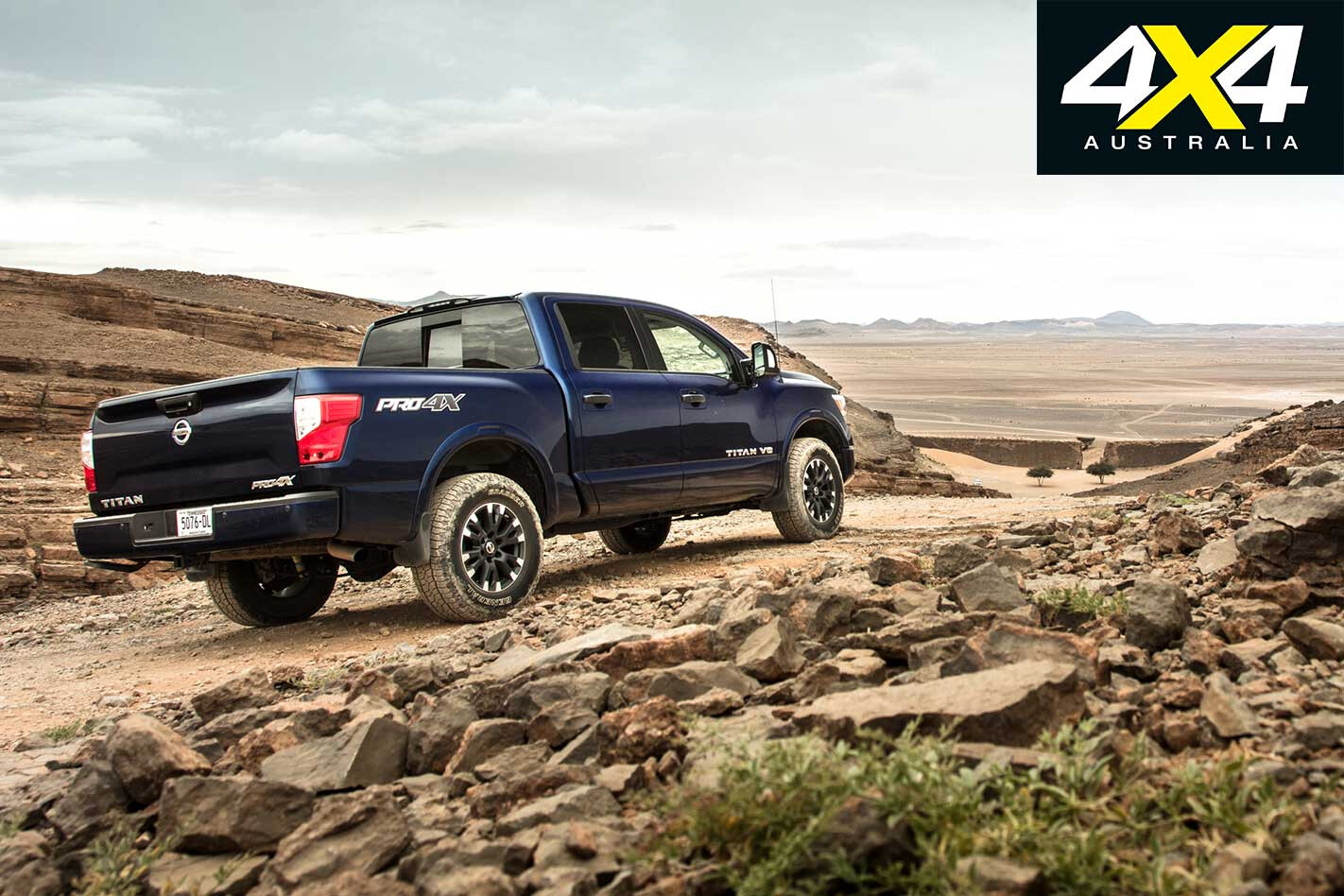
Deanda wouldn’t say where else the made-in-America truck would be sold, nor confirm if it would leap one giant hurdle to make it available to Australia: the multi-million-dollar investment required to engineer it for right-hand drive.
“Our intention is to take Titan beyond those [North American] markets,” said Deanda. “I cannot tell you which ones.”
He acknowledged the keen interest in large trucks in Australia – Chevrolet and Ram have recently begun selling factory-approved local right-hook conversions – and that there were studies underway to see if a viable business case could be made.
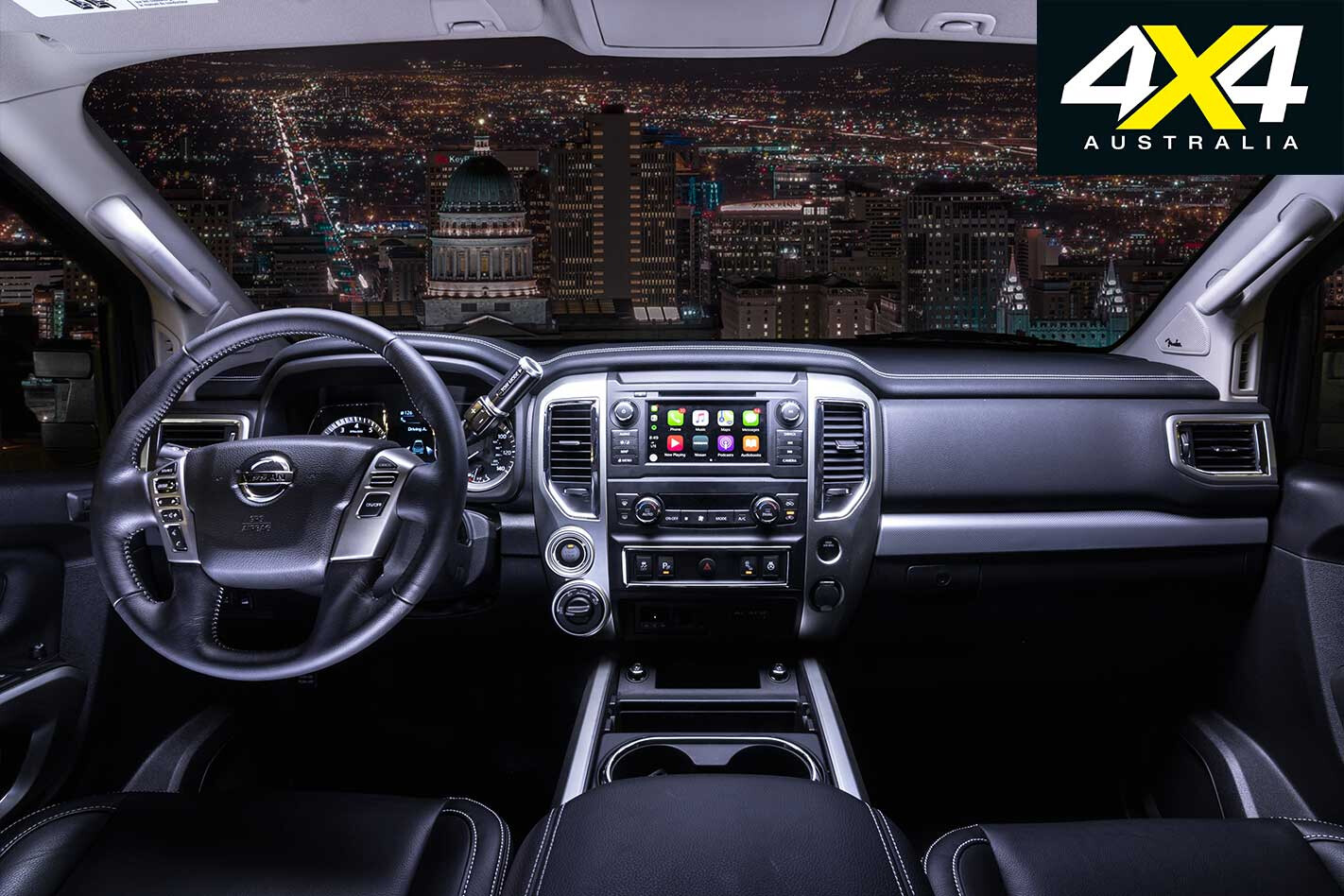
“We have seriously studied right-hand drive markets … with Titan,” he said, adding that the evaluation was ongoing. “We continue to explore the opportunities.
“We know that there is interest from Australia, but to make it right-hand drive is a challenge in terms of volume.”
One challenge for Australia is the preference for diesel powertrains in large utes and SUVs, which often get used for heavy-duty towing. Other countries that have a similar desire for large pick-ups – predominantly America and the Middle East – prefer petrol engines.
The basic Titan comes exclusively with petrol propulsion, but the heavier duty Titan XD comes with the option of diesel power, something that would be more appealing to Australians looking to tow.
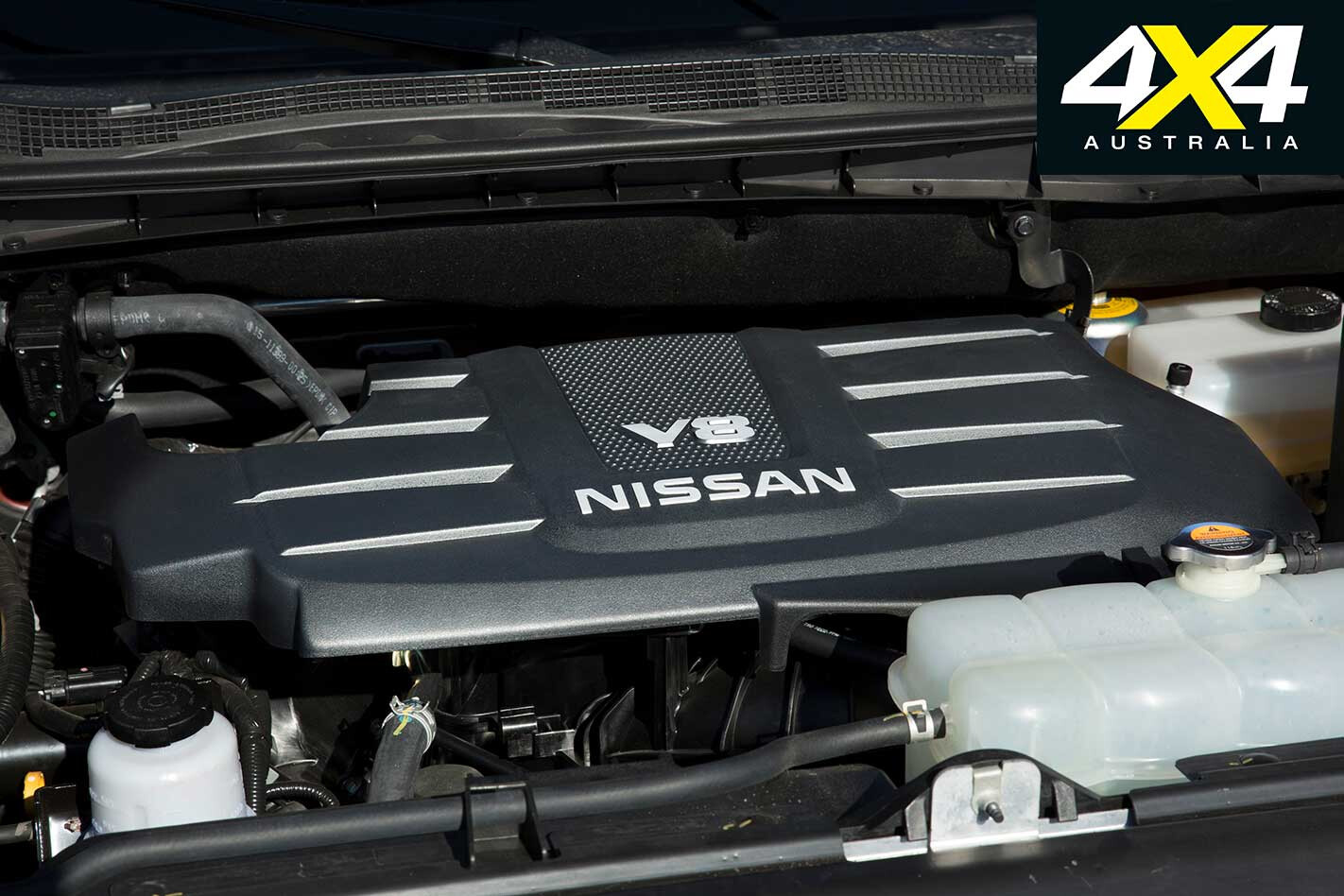
However, the 5.0-litre Cummins V8 diesel calls for additional cooling over the 5.6-litre petrol V8, something that requires the larger bonnet and nose of the XD. Companies such as American Vehicle Sales and Performax are already selling converted Titan XD diesels here, so this really shouldn’t pose a problem.
No issues with performance from the 5.6 V8, though; the same basic engine is used in the Patrol, and in the Titan it produces 291kW and 591Nm.
While Deanda isn’t giving any clues on the likelihood of a right-hand drive Titan program, he said any decision would likely be made soon.
“If we can find a business case, the sooner the better,” he said. “[Titan] is still in the early stage in its lifecycle.”
In other words, Nissan would want to maximise any engineering investment by spreading it over more years.
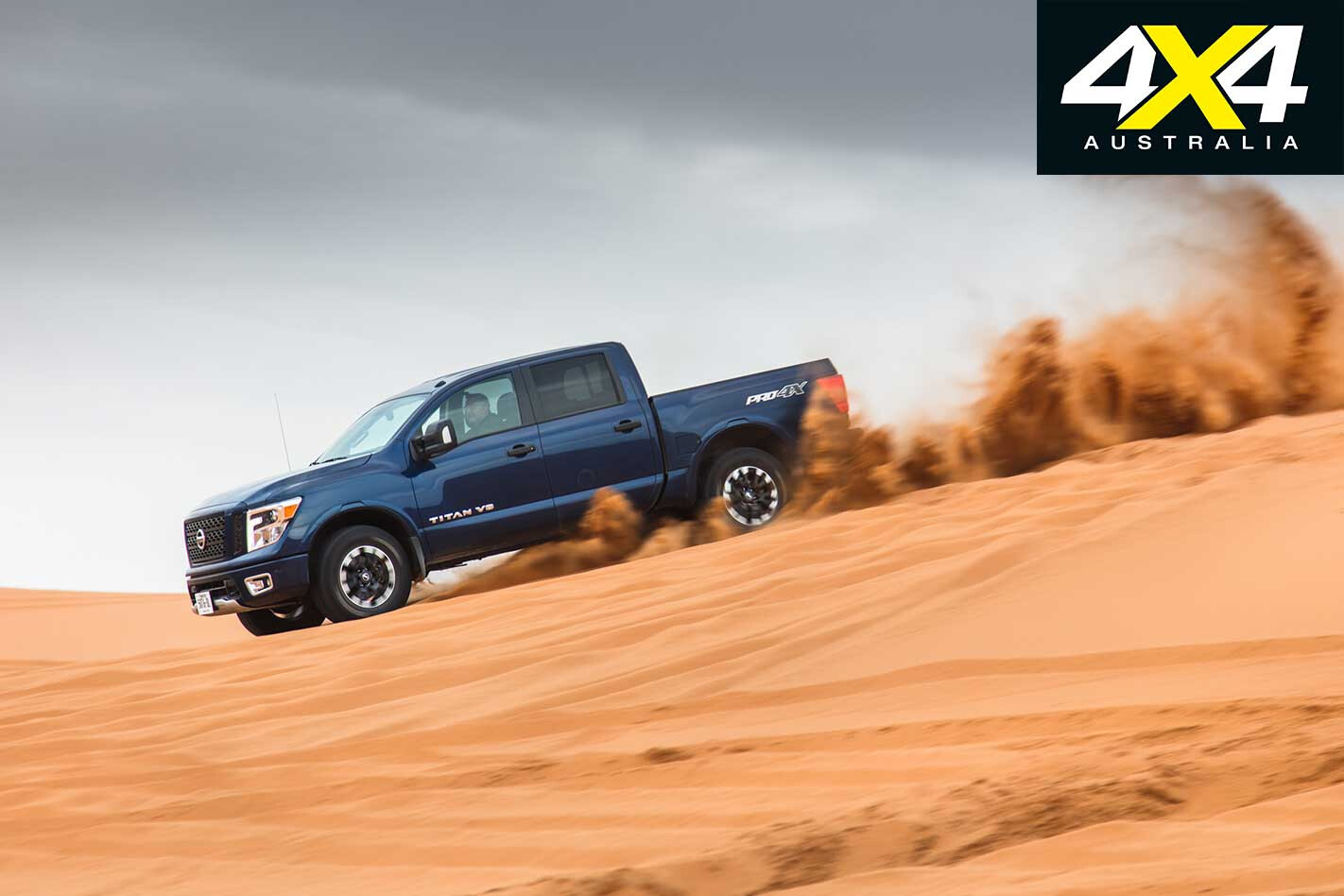
The Titan is a relative minnow in the US truck market, one dominated by the Silverado, F-Series and Ram. The top-selling Ford tops almost one million sales annually, whereas the Titan is around 60,000; those lower volumes could potentially help in justifying an expansion to right-hand drive.
While Australia would likely only account for a few thousand sales annually, it’s still a higher percentage of overall Titan production than it would be with Ford’s F-Series.
If any other right-hand drive markets could be brought into the consideration set – South Africa is one option – we could soon be seeing Titans down under.
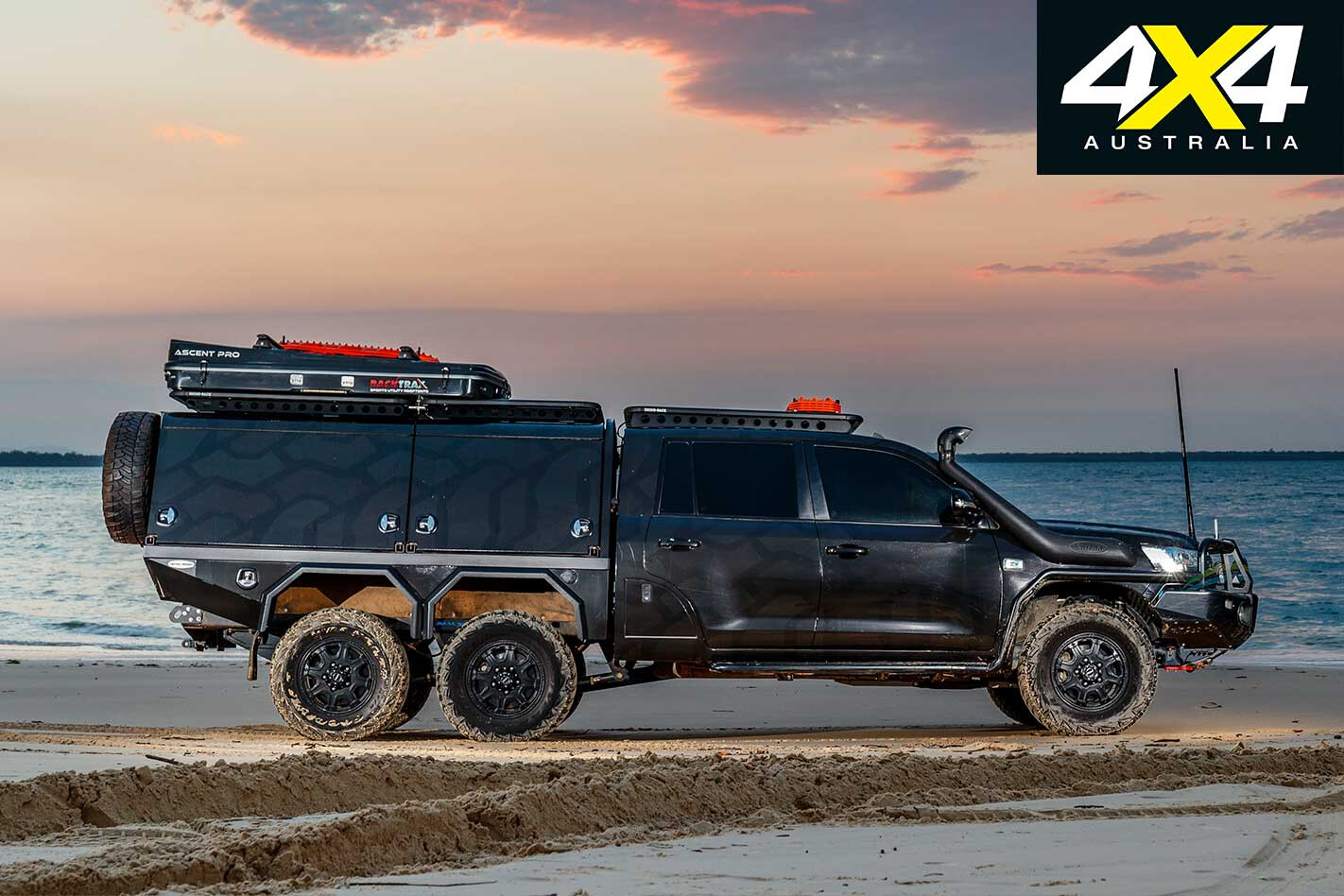
YOU would think the guy who invented a recovery device that helps take you anywhere might have a bit of an idea when it comes to building a touring rig that promises the same. And, in the case of Brad McCarthy, the brains trust behind MAXTRAX, you’d be absolutely spot-on, as his big six-wheel LC200 proves.
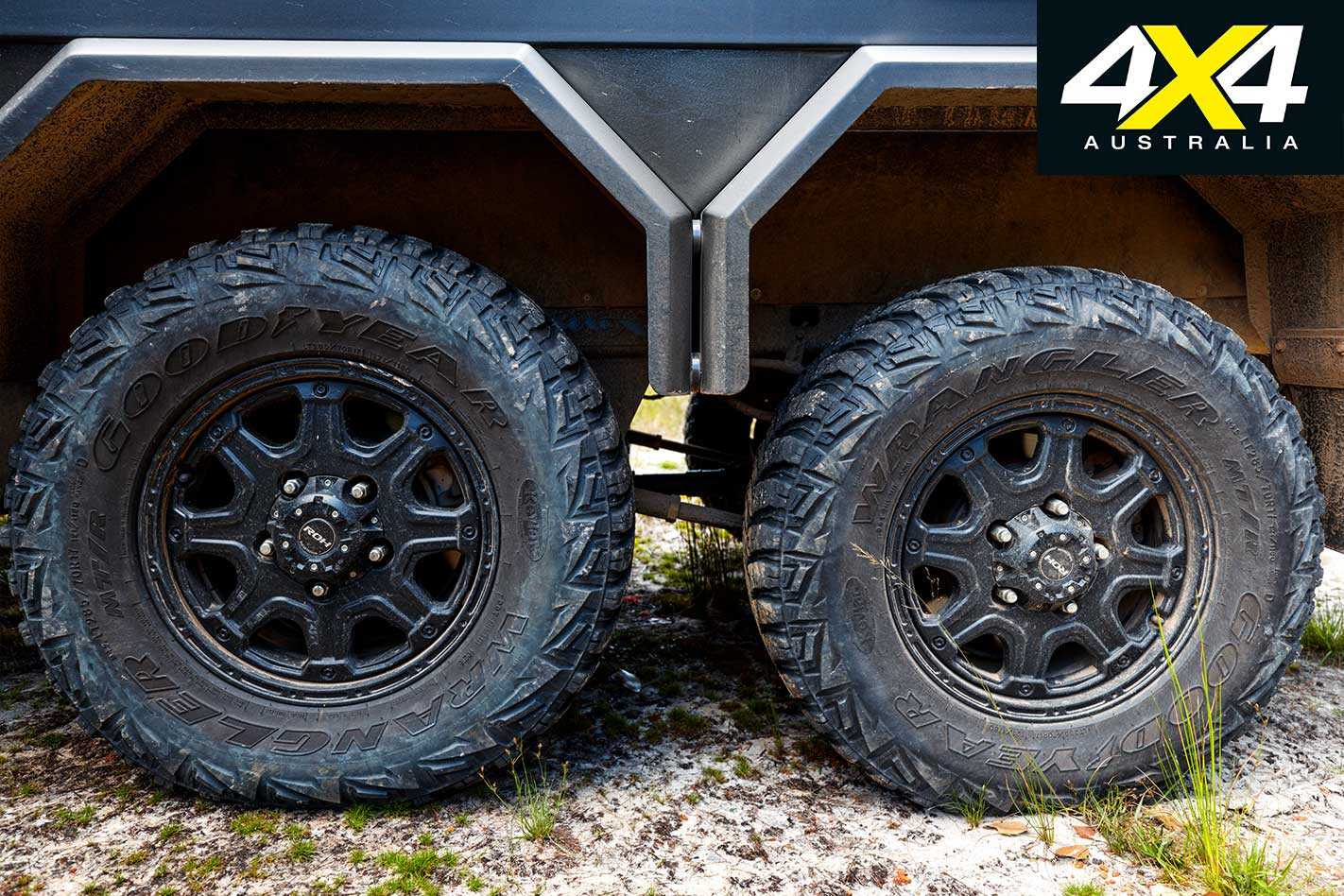
To fit an extra pair of hoops under the Cruiser, Brad enlisted Australian Expedition Vehicles’ (AEV) Mick McMillan. Getting the extra-wheel configuration to work ‘as standard’ at the rear of this stretched Cruiser is the result of AEV fitting what is basically a double JMACX coil setup with a few trick components to ensure it works a treat.
“The system is basically a double JMACX with a drive-through centre diff,” Brad explained.
“So you’ve got good articulation, and the six-wheel drive system just happens automatically. So, normally, if you’ve got it in four-wheel drive, it’s driving just the four wheels. As soon as there’s 20mm of slip in that middle axle it engages that centre diff and locks in the rear axle, and then you’ve got six-wheel drive. You don’t have to press any buttons or engage anything, it just automatically occurs as you need it.”
Brad reckons it transforms the Cruiser’s tractive capabilities, making it – nearly – all too easy. “As soon as you lose traction you’ll feel the system kick in, it’s almost like you’ve hit the diff lock button,” he affirmed.
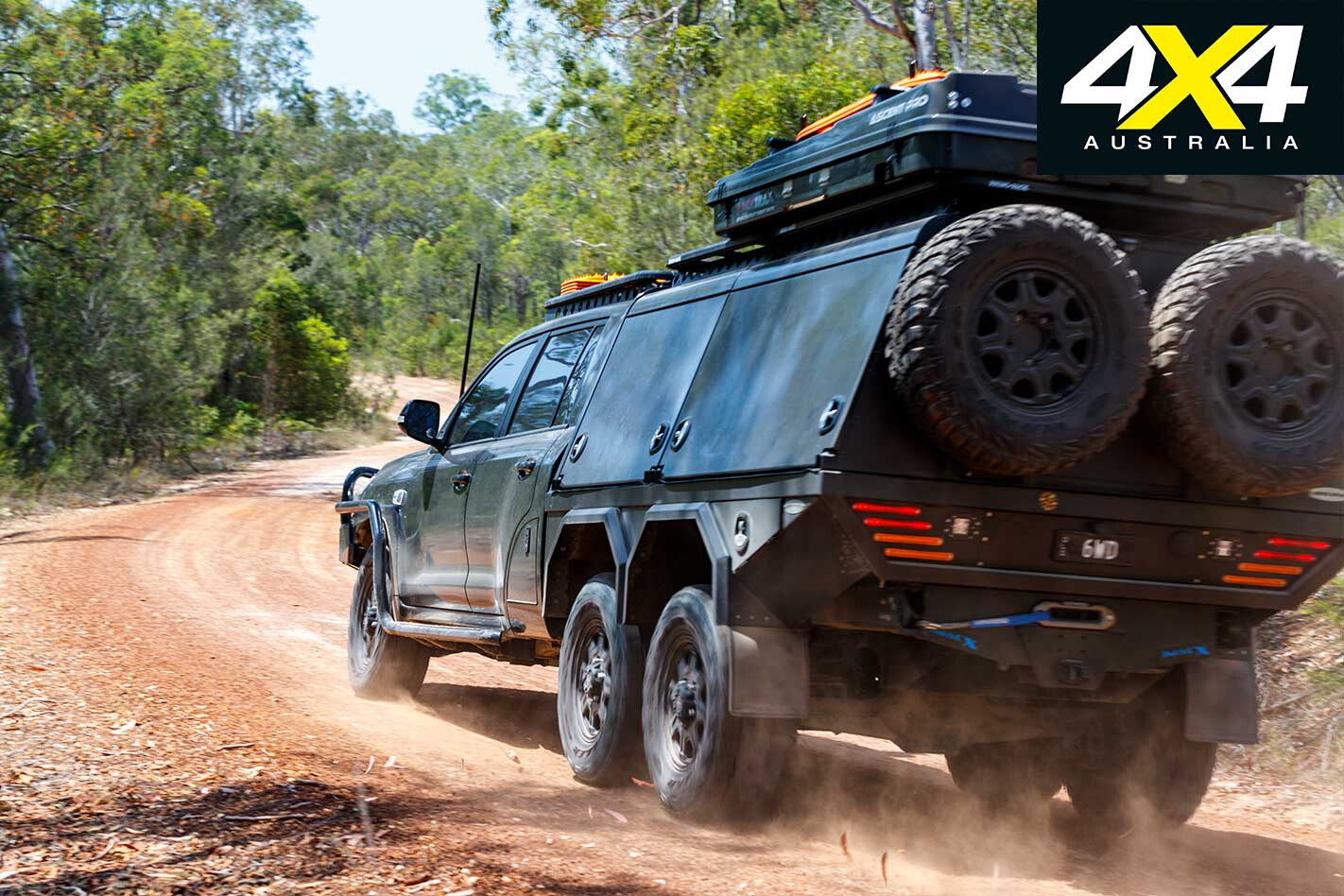
“You get that instant traction at the back and, once you don’t need it, it backs off. It’s such a difference; it’s unstoppable. You point it at anything and it walks over it like the terrain is concrete.”
The Cruiser has been further modified with an AEV-sourced GVM upgrade (it is now certified for 4500kg) and had a custom canopy fitted from Outback Customs, a setup which comprises two removable canopies (the front one doubles as Brad’s sleeper cab).
There are minimal permanent fixtures in the canopies; only the fridge/freezer (with MSA drop-down slide) and a few other items are what he considers must-stay items. This tray measures three-and-a-bit metres long, which allows Brad to load up any of his toys when the canopies are removed.
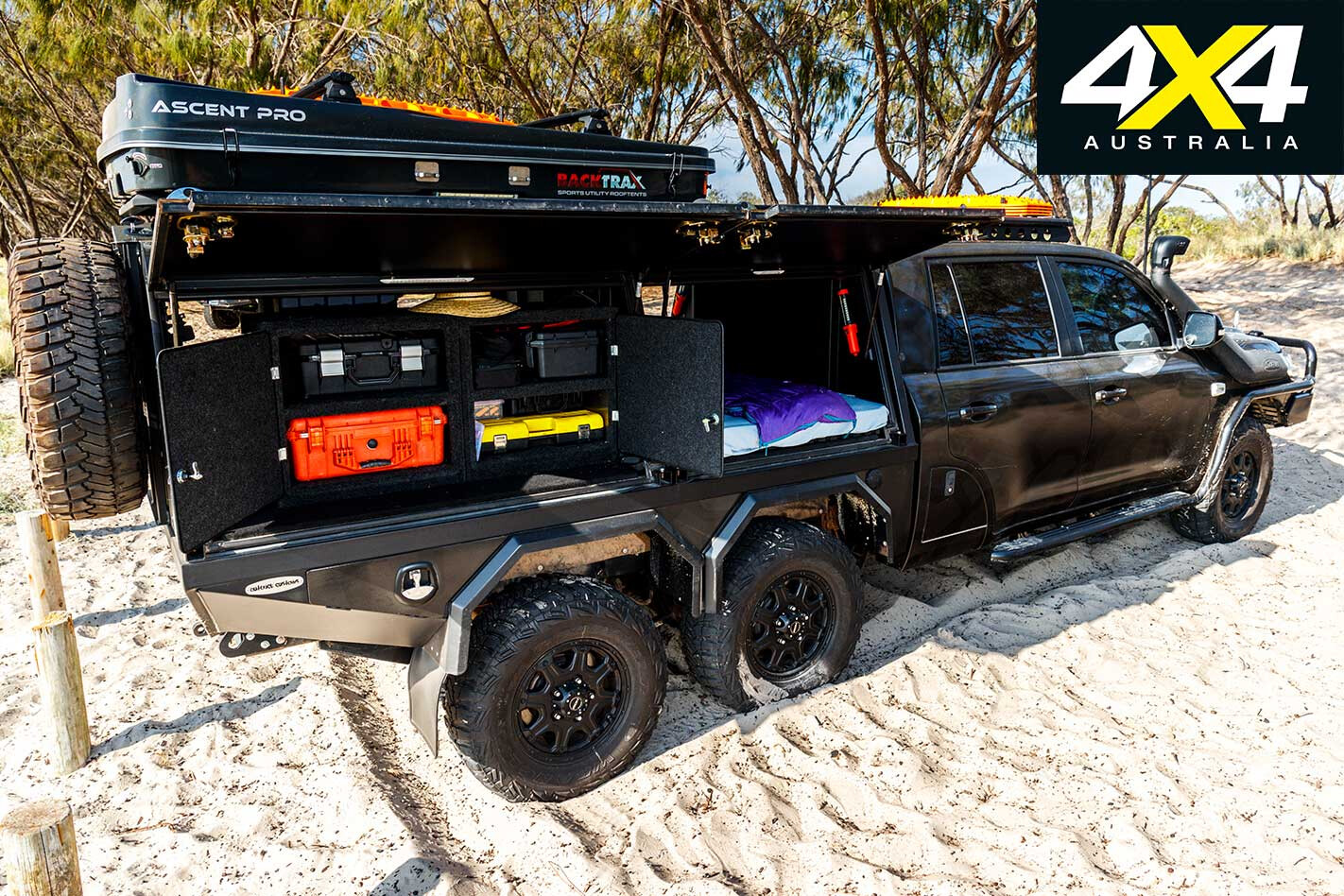
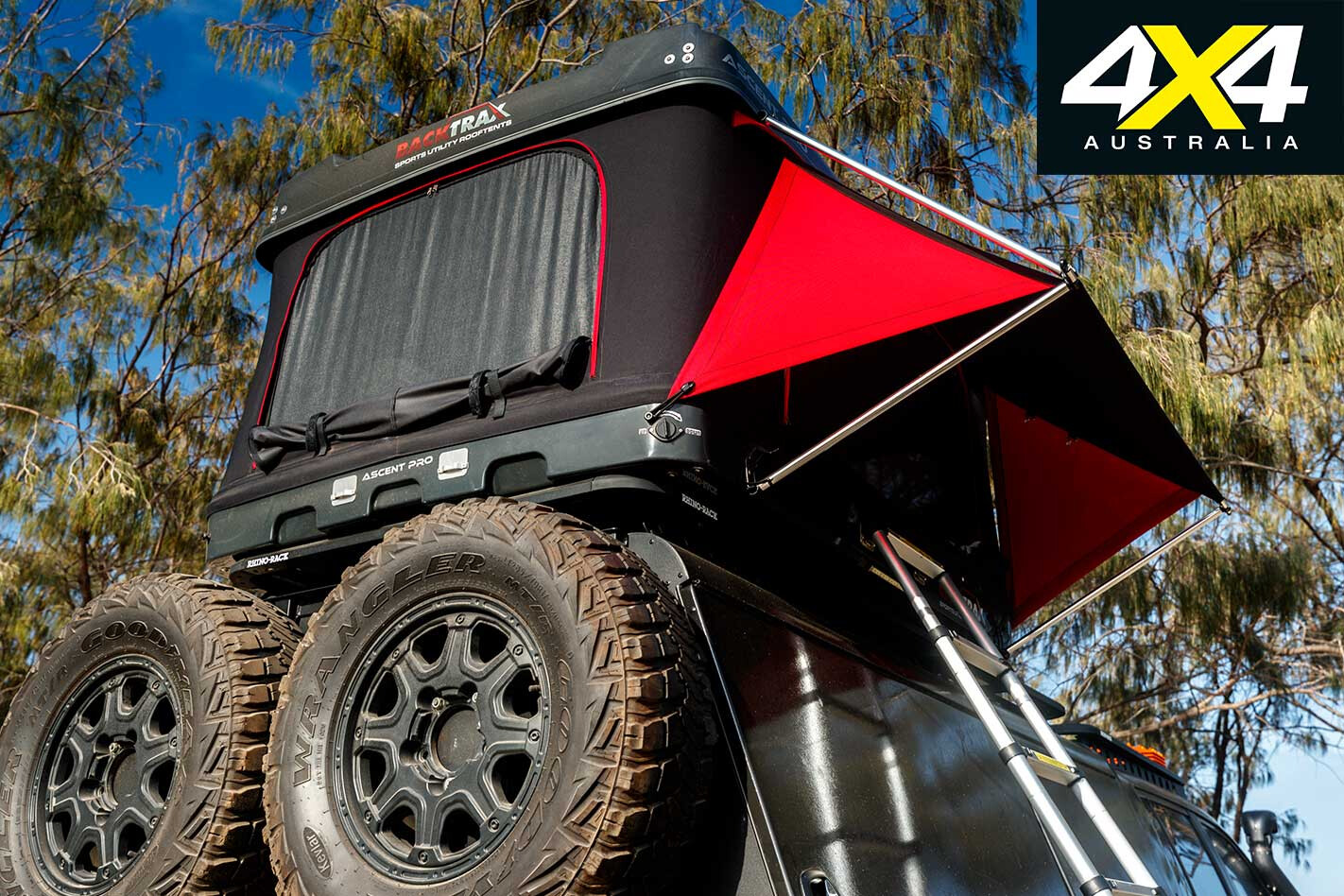
As well as the sleeper cab, the canopy is set-up with a Backtrax Ascent Pro rooftop tent atop a Rhino-Rack roof rack. This hard-roofed unit is operated via remote control (once you open a couple of exterior latches).
One thing that’s quite noticeable is that, besides the rooftop tent, there is a distinct lack of additional gear up on the roof of the Cruiser. Another part of Brad’s ethos when creating this mega tourer was to keep it self-contained, self-sufficient and as frugal on fuel as a seven-metre-long 6WD Land Cruiser can be.
This meant fitment of the two spare wheels to the rear of the custom tray, to minimise wind-resistance, as well as a 250-litre Long Ranger fuel tank on top of the stock 138-litre jobbie.
A Redarc solar power setup, with BC/DC and an inverter sit in behind the passenger seats, ensuring there’s plenty of juice flowing to the dual-battery setup – the lithium-ion batteries sit inside custom boxes set into the wheel arches either side of the cab. All of this gear means Brad and his fellow travellers can disappear into the desert for weeks on end.
Finishing off the vehicle is some exemplary ARB bar-work, Goodyear Wrangler (with Kevlar) MT/R LT285/70R17 rubber wrapped around ROH alloy wheels, and some comfy Recaro seats in the cabin. These, Brad reckons, top off the Cruiser’s comfort levels.
“It’s a pretty comfortable ride as it is, but the Recaros make it even better. Like I said, we took it to Cape Melville in October and it was only a short, two-week trip, so we did around five- to six-thousand kays and you can sit behind the wheel all day and still be comfortable.”
Getting this Cruiser on the tracks hasn’t been a short journey for Brad. He estimates that, between the AEV work, the custom tray and canopy build, and chopping off the back, it took around five months.
Still, that’s not too bad for the end result: a purpose-built, self-sufficient, super tough outback touring vehicle that will definitely get you to places few have been. And then get you back again so you can brag about your adventure with your mates over some cold bevvies. That has to be a good thing, don’t you think?
CAST YOUR VOTE FOR BRAD’s 6×6 LANDCRUISER HERE
Check out the Top ten finalists of the 2018 Custom 4×4 of the Year, cast your vote and be in the running to win a Maxxis voucher valued at up to $2000!
IT HASN’T taken long for chop shops and tuners around the globe to focus their attention to Suzuki’s pint-sized off-roader.
Japanese tuner DAMD Inc. has unveiled a styling kit that has shapeshifted the Jimny into a mini Land Rover Defender, and they’ve aptly called it ‘Little D’.
Distinct Defender horizontal bars replace the Jimny’s vertical slats, while the number of headlight dimples has doubled from two to four. Mud flaps, off-road-specific rubber and a redesigned front bumper/skid plate complete the makeover.
Other than placing the images side by side for comparison, specific information is scarce, but it’s a cool-looking ride nonetheless.
That number plate – S90HUE – is special too, as it is the plate adorned to the two-millionth Land Rover Defender ever built. That Defender was built at Land Rover’s Solihull plant and purchased at auction in 2015 for US$600,000. The plate is also a fitting tribute to the first pre-production Land Rover (HUE166).
The fourth-gen Jimny will arrive locally toward the end of 2018 and is slated for release early in the New Year, with a compelling price tag expected. Speaking to WhichCar.com.au earlier this year, Michael Pachota, general manager of Suzuki Australia’s automobile division, said: “We’ll have the full range under $30,000”.
In September, the Jimny was handed an underwhelming Euro NCAP crash-test rating of three out of five stars.
AUSSIES love things big: deserts, beaches, bananas and utes, and it’s the reason WA native Ant first got behind the wheel of a first-gen Ford PX1 Ranger. The only problem is, the 3.2 Duratorq isn’t exactly renowned for its reliability.
“We started playing with the performance side of things,” Ant said. “Larger turbos, larger injector nozzles, tuning, etc., but being a PX1 they were quite dulled down on engine safety systems. I went through three motors, two turbos and a transmission.”
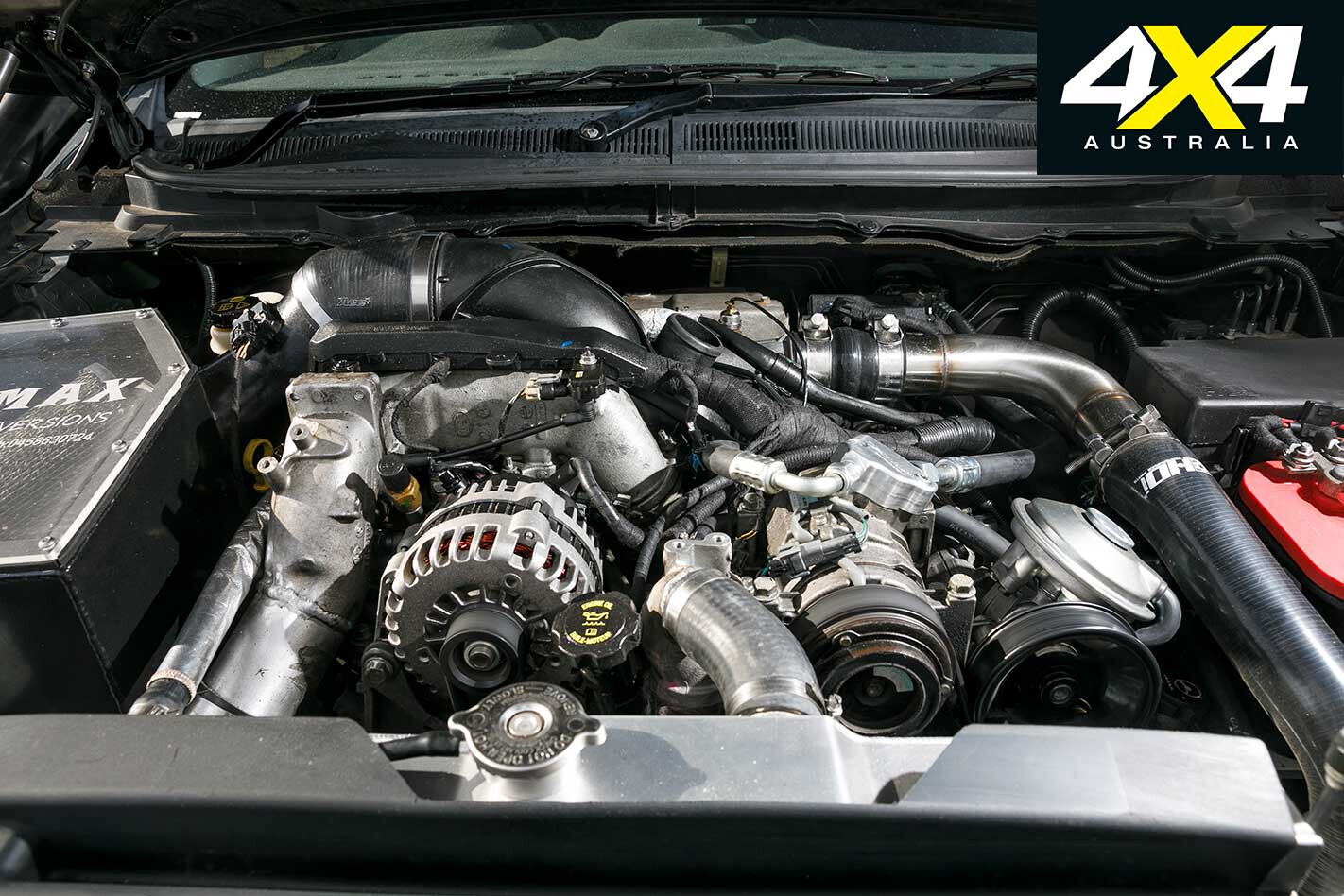
Despite Ant currently swinging the tiller on a Ranger, he’s actually built a cult following for his Duramax kits and conversions at Ozmax. Duramax engines are the holy grail of diesel V8s, with 6.6 litres of capacity, iron blocks, alloy heads, four valves a cylinder, and a whopping turbo nestled in the V. In their lowest standard tune they push out 250hp/624Nm, right up to 397hp/1037Nm in later years.
Despite all that, Ant reckons it’s almost perfect for converting into the comparatively pint-sized Ford. To kick things off, the old 3.2 came out, as did the six-speed and transfer; in their place went a six-speed auto Allison transmission and a New Process NP263 transfer case. Due to the IFS arrangement, Ant was able to use the existing sump to simplify the process.
“The communications system on the PX1 Ranger isn’t that smart,” he told us. “We wired the Duramax ECM in as a stand-alone unit then sent a few signals into the stock setup so the speedo and tacho still work. As far as the stock electronics are concerned, there’s still a 3.2 under the bonnet.”
While the standard diffs are up to the task, Ant had a positive side effect swapping out to the new transfer case and control unit. “It now functions a little like full-time 4WD. If it senses slip between front and rear, it’ll kick itself into 4×4.”
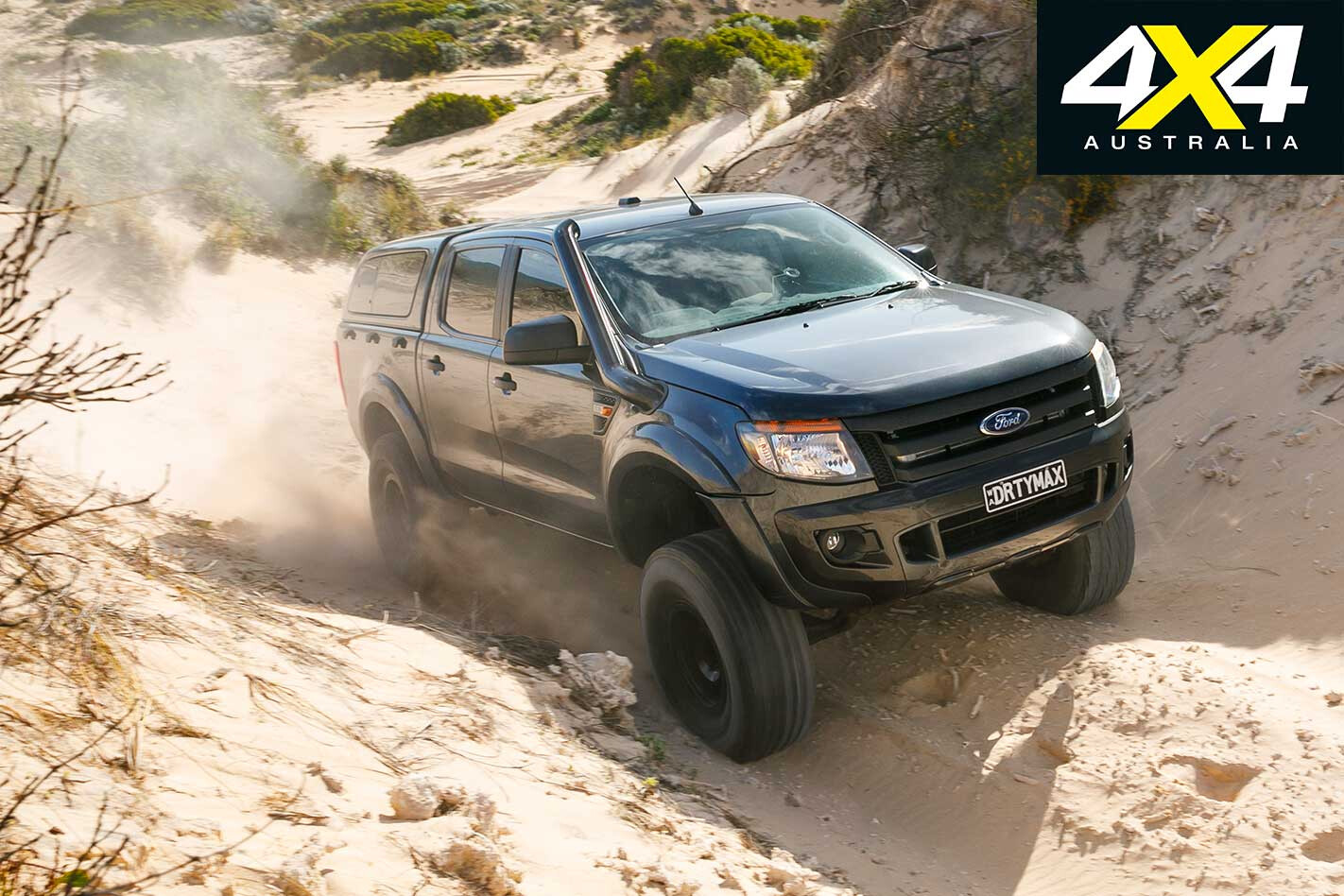
At twice the capacity of the stock 3.2L, Ant was able to run up to 468rwhp and 1320Nm on a recent dyno tune. The big concern of any engine conversion like this, however, is weight distribution. “It actually only dropped 10mm on the standard springs,” Ant said. “The 3.2-litre and six-speed is a heavy combination, and the NP263 transfer case is magnesium which keeps weight down with the conversion.”
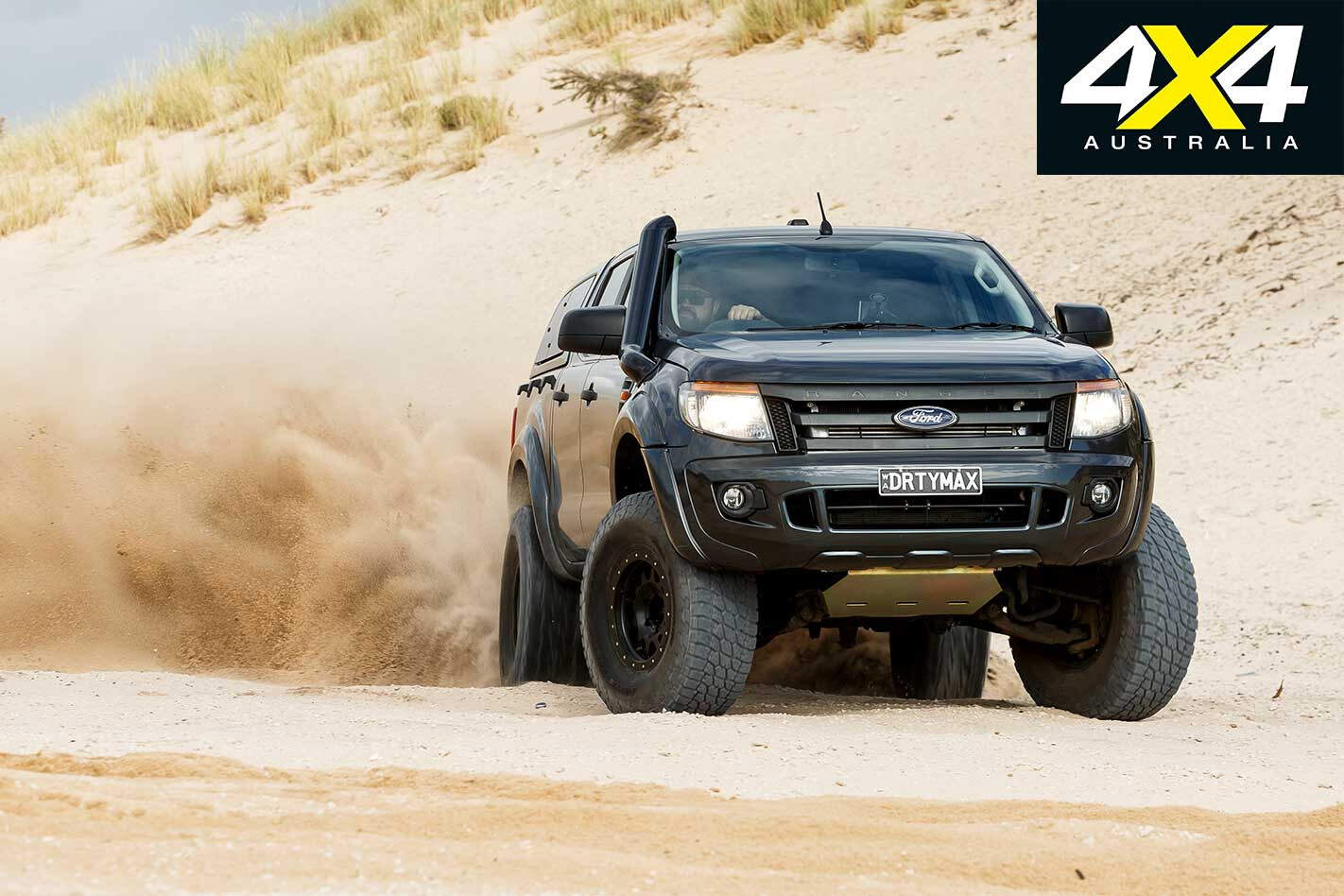
With goals of a pre-runner-inspired build, Ant figured the Ranger could do with a tickle underneath. It’s running heavy-duty XGS two-inch-lifted springs up front, wrapped around Ironman Foam Cell Pro shock absorbers.
The rear has a matching combination; although there’s a 50mm body lift, bringing the overall ride height up and allowing Ant to slot the big Allison automatic in the transmission tunnel without any body modifications. A set of Total Chaos upper control arms get the alignment back into spec. An Aeroklas canopy covers the rear end, while a brake controller teams up with sat-nav inside.
CAST YOUR VOTE FOR ANT’s DURAMAX-V8 RANGER HERE
Check out the Top ten finalists of the 2018 Custom 4×4 of the Year, cast your vote and be in the running to win a Maxxis voucher valued at up to $2000!
The Volkswagen Amarok Ultimate 580 is the German brand’s entrant into the fast-growing premium 4×4 dual-cab ute market, up against the Ford Ranger Raptor, Toyota Hilux Rugged X, HSV Colorado SportsCat+ and upcoming Mercedes-Benz X-Class X350d.
The Ultimate 580 is powered by a turbo-diesel V6 that produces 190kW and a heady 580Nm, with VW pitching it as a ‘performance vehicle’. The Amarok was already the most powerful dual-cab ute on the market in its 165kW/550Nm (TDI550) form, and this new engine puts it even further ahead of competitors in the outright grunt stakes.
Power Play
At $71,990 the Ultimate 580 sits near the top end of the dual-cab market pricing wise, with only the Ranger Raptor ($74,490) and the upcoming Benz X-Class X350d (expected to be around $80K) for company.
It’s a fair chunk of cash but, as you’d expect, the Ultimate is loaded with a high level of standard equipment – the only option is metallic paint, at $610. On top of that monster V6 engine, other Ultimate 580-only kit includes 20-inch alloy wheels, black Nappa leather 14-way electric-adjust seats, a black roof lining and a different styling treatment for the front end.
Even with the boost in outputs the Ultimate 580 requires less diesel than the previous TDI550; VW claims a combined average fuel burn of 8.9L/100km (down from 9L/100km). This is higher than the rest of its class (Raptor uses 8.2L/100km; SportsCat+ 8.7L/100km), but the performance trade-off balances that out.
VW has upped the warranty on new Amaroks to five years and unlimited kilometres, matching others in the segment.
Whatchaya Get
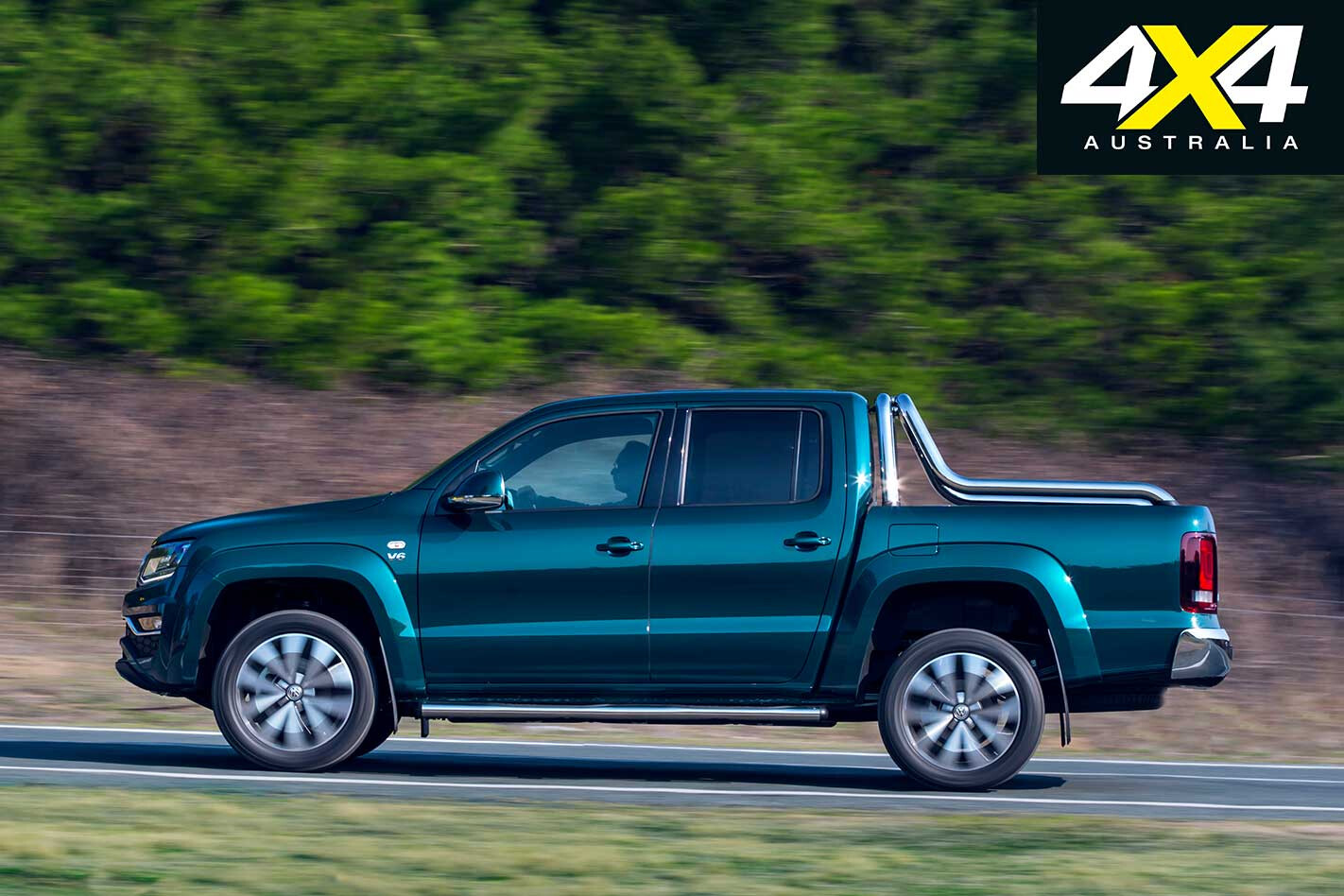
The Ultimate 580 is fully featured and, as mentioned, the metallic paint is the only option. The Bi Xenon headlights are accompanied by LED DRLs, as well as fog lights which include a cornering function to aid illumination at night.
The easy-to-use Discover Media infotainment system features GPS, two SD card slots, App Connect for Apple CarPlay, Android Auto, and six speakers. The 6.33-inch colour screen is small, though.
The Amarok is one of the few dual-cab utes to run four disc brakes, and is currently the only ute (aside from Mitsubishi’s Super-Select equipped Triton) that offers constant 4WD on-road – a real boon. More of a boon, though, is the disc brake size being the same across the range, meaning those keen on putting that 580Nm to use off-road can swap the 20-inch hoops for more bush-friendly 17-inch or 18-inch wheels.
Front and rear parking sensors are standard, as is a rear-view camera and a tyre pressure monitoring system.
Still the Same
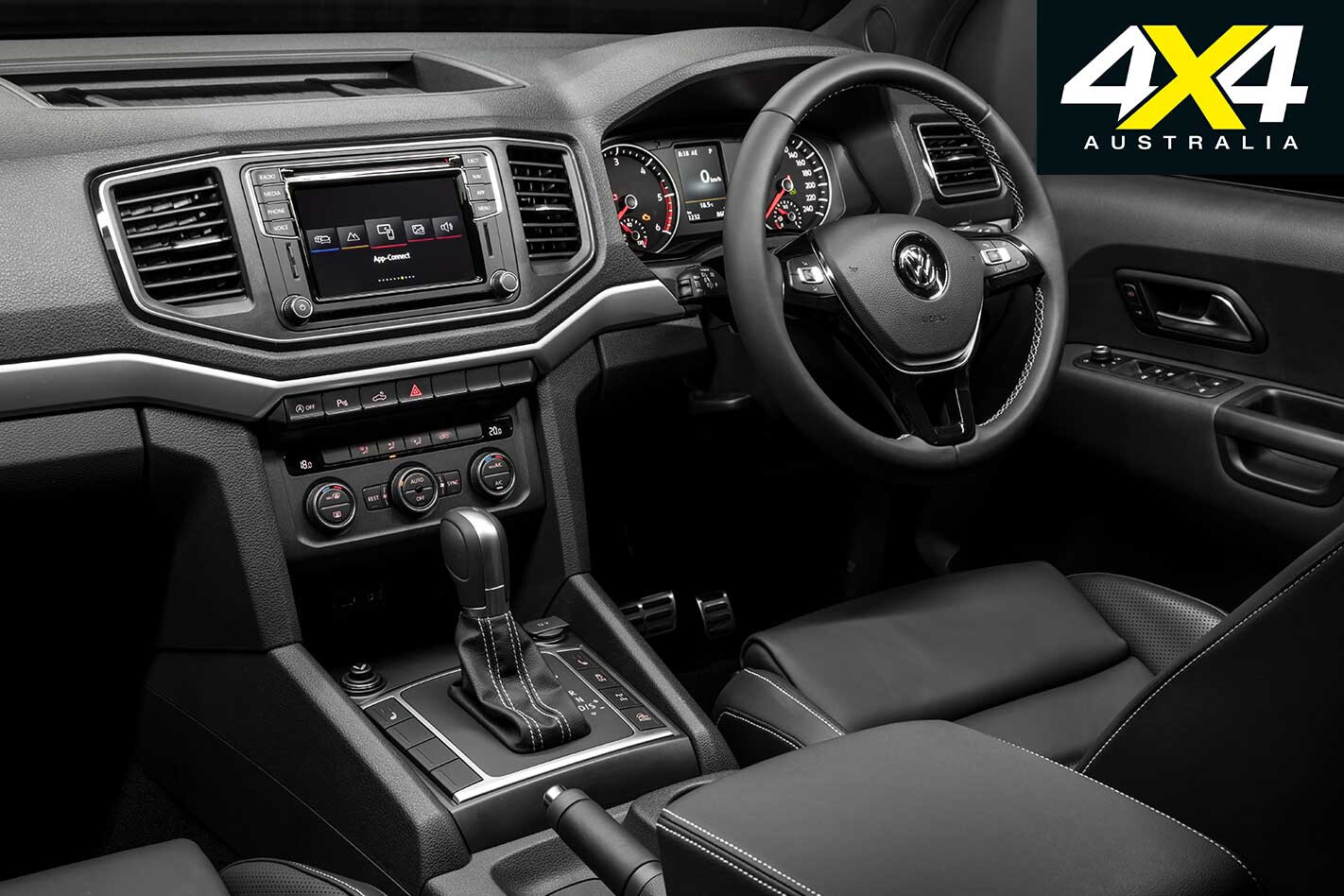
The Ultimate 580 has a five-star ANCAP safety rating. The driver and front passenger get front and side airbags, but, ridiculously, VW persists with no airbags at all for rear passengers – in stark contrast to the majority of its competitors. For family buyers, this could be a deal breaker.
The Ultimate 580 also does without Auto Emergency Braking, which is standard on some, but not all, competitors. It is here, with the steady increase of automated safety tech, that Amarok is falling behind.
On the Road
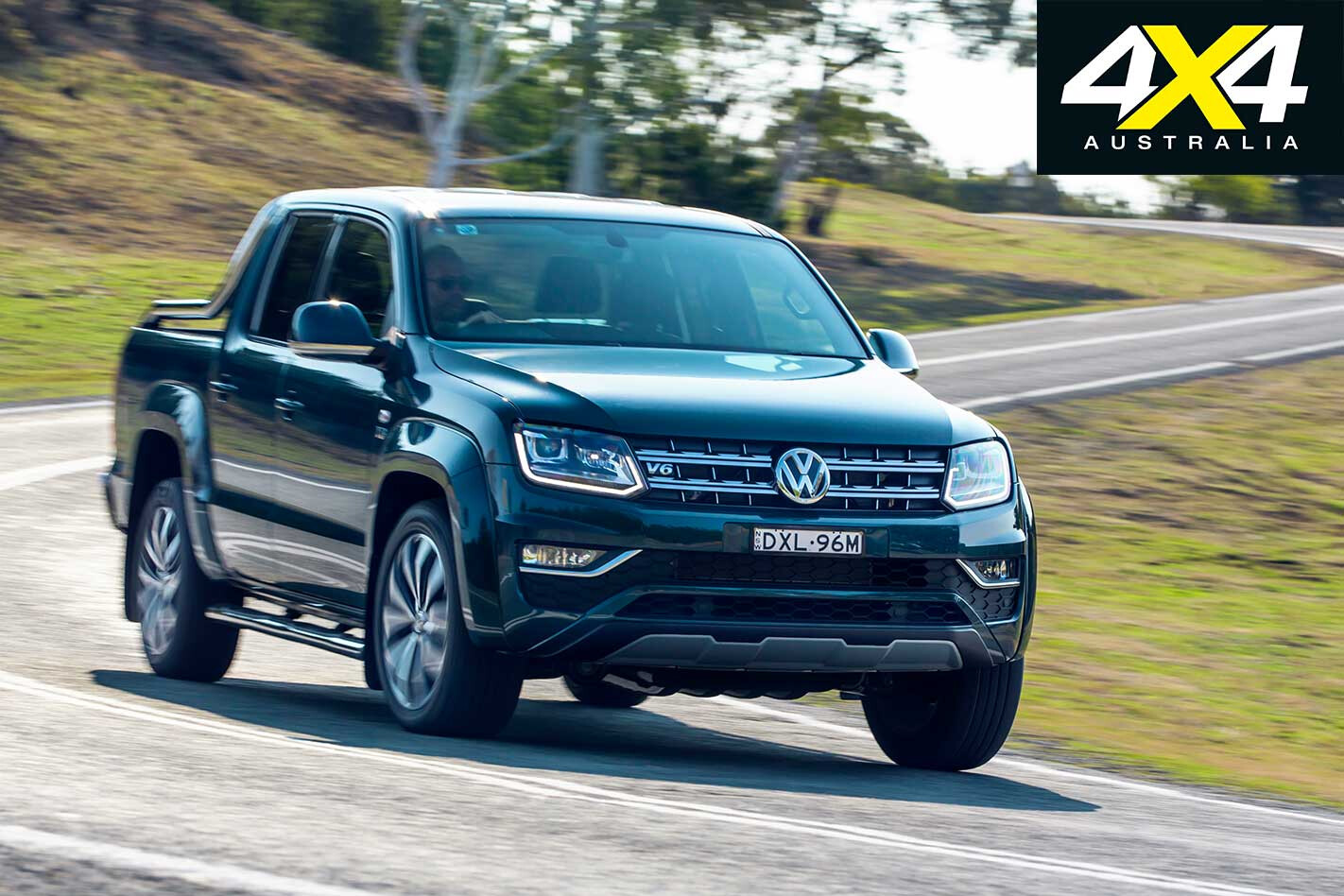
Trundling around town the Ultimate belies its size with impressive manoeuvrability. Get out on the open roads and, for a dual-cab, it goes quickly. The fact you’re driving a 2244kg, high-riding vehicle with inherent body roll is never forgotten, but on a winding road the 4MOTION constant 4WD system’s ability to apply all that grunt to the road, the four-wheel disc brakes’ to rein it all in, and the well-calibrated eight-speed auto do a decent job of muting those negatives.
With a 0-100km/h claimed time of 7.3 seconds the Ultimate 580 is the quickest in its class, and its roll-on/overtaking acceleration is equally as impressive.
Off the Road
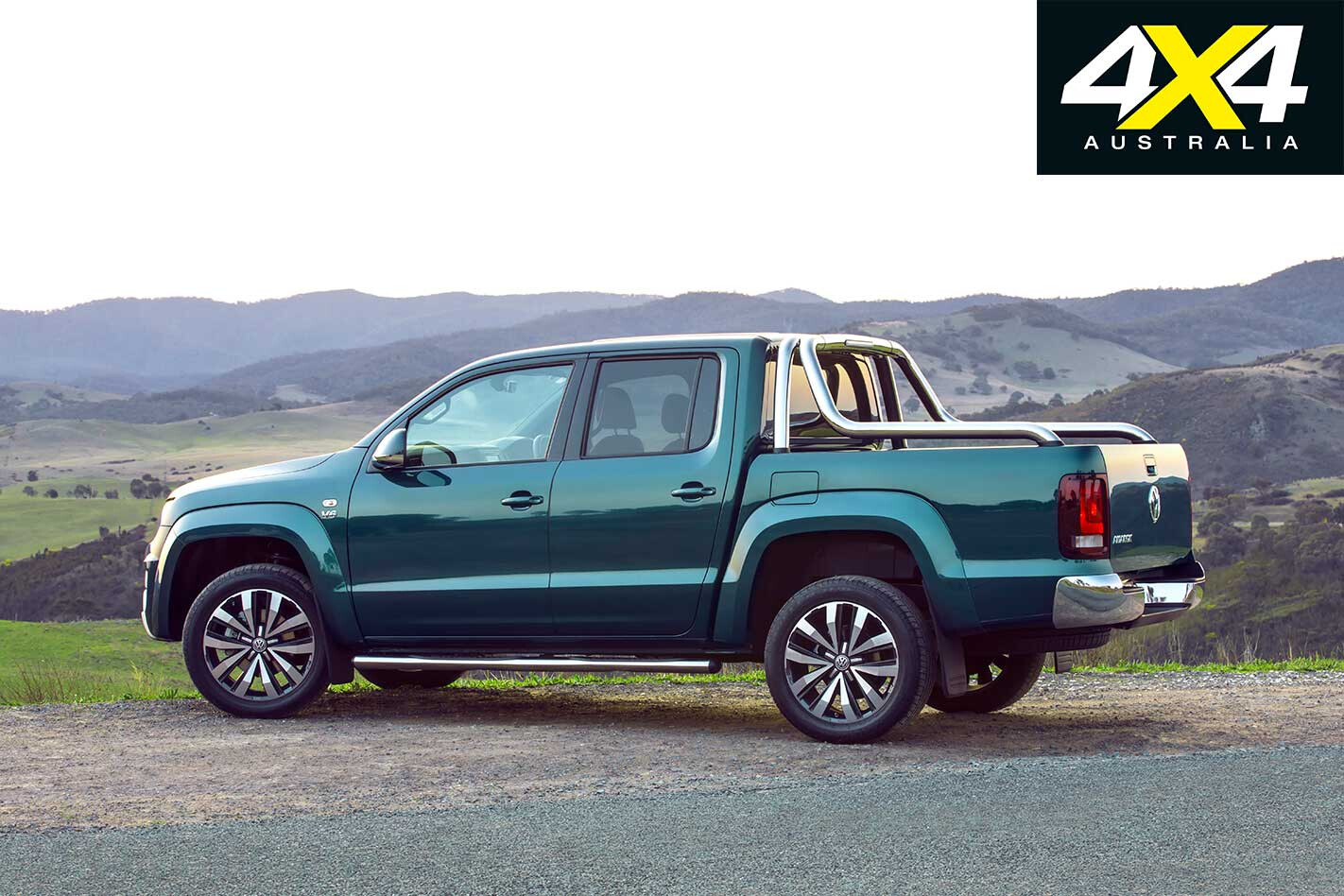
The Amarok has always been very capable off-road, even without low-range. Its aggressive torque converter and low first gear, plus traction control and locking diff, ensure it can tackle most off-road tracks drivers will point the wheels towards.
Is it Enough?
The Amarok Ultimate 580 meets the premium performance ute criteria easily, barring that big miss of no rear airbags and lack of up-to-date safety tech. This is balanced out by the increased traction offered by a constant 4WD system, which is excellent, and you do get plenty of bang for your bucks.
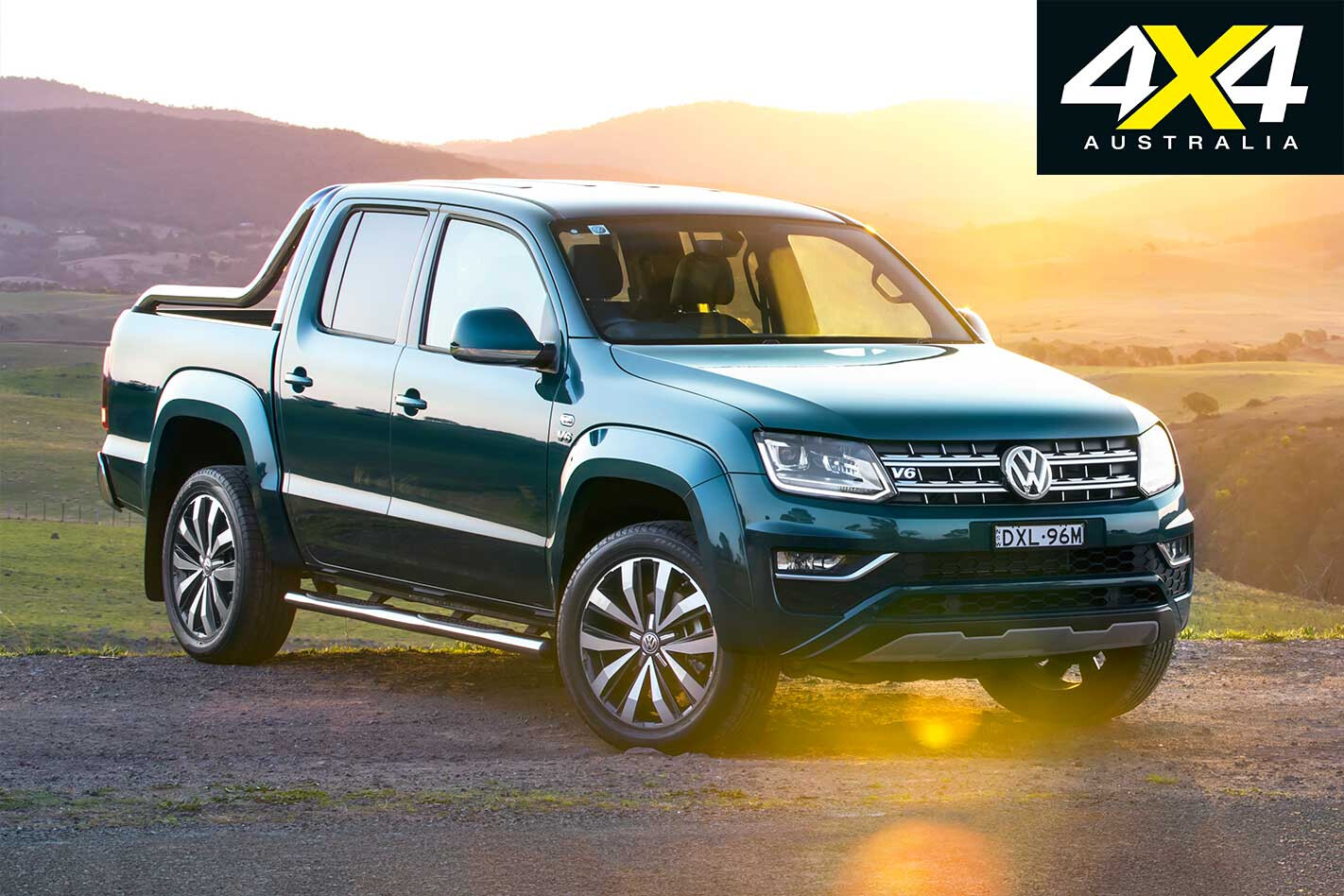
2019 VOLKSWAGEN AMAROK ULTIMATE 580 SPECS: Engine: 2967cc V6 turbo diesel Max power: 190kW @ 3250–4500rpm Max torque: 580Nm @ 1400–3000rpm Transmission: 8-speed automatic L/W/h: 5254/1954/1834mm Wheelbase: 3095mm 0-100km/h: 7.3sec Weight: 2244kg GVM: 3080kg Payload: 836kg Towing capacity: 3500kg Departure angle: 23.6° Rampover angle: 23° Approach angle: 28° Wading depth: 500mm Ground clearance: 192mm Seating capacity: 5 Fuel tank capacity: 80L ADR fuel consumption: 8.9L/100km Price: $71,990
The Outback Deluxe package from Challenge Campers is its most popular model and, once we had taken it for a short drive into the Adelaide Hills, we could understand why.
This review was originally published in 4×4 Australia’s June 2009 issue
Easy to tow and handle the Challenge Camper is built on a no-nonsense 60mm-wide, eye-to-eye seven-leaf spring suspension with a rebound helper spring sitting on top of the spring pack. If that is not to your liking Challenge can add either an independent coil sprung, trailing arm suspension or an Alko independent rubber suspension.
There’s a 45mm square axle fitted with six-stud hubs complete with mechanical drum brakes, although you can opt for hydraulic override brakes or electric brakes – the latter being my choice of brakes for any off-road trailer. Standard fitment on the camper are 15×7 Sunraysia steel wheels fitted with 31×10.5R15 tyres, but these can be changed to suit the tow vehicle if required and I’d certainly go for that!
A fully galvanised heavy-duty RHS chassis and drawbar sits underneath a 2.1×1.2m by 51cm-deep box, the trailer floor of which is chequer-plate and, once painted, is covered in marine carpet. The mudguards are braced and linked into the whole body structure fore and aft with the resultant sidesteps used to carry three jerry cans and a 4.5kg gas bottle.
When I was at the factory I had the opportunity to inspect a completed chassis-suspension-box unit before it was painted. I was impressed by the welding and how the whole chassis, A-frame, box trailer and mudguards were all tied together into one strong unit.
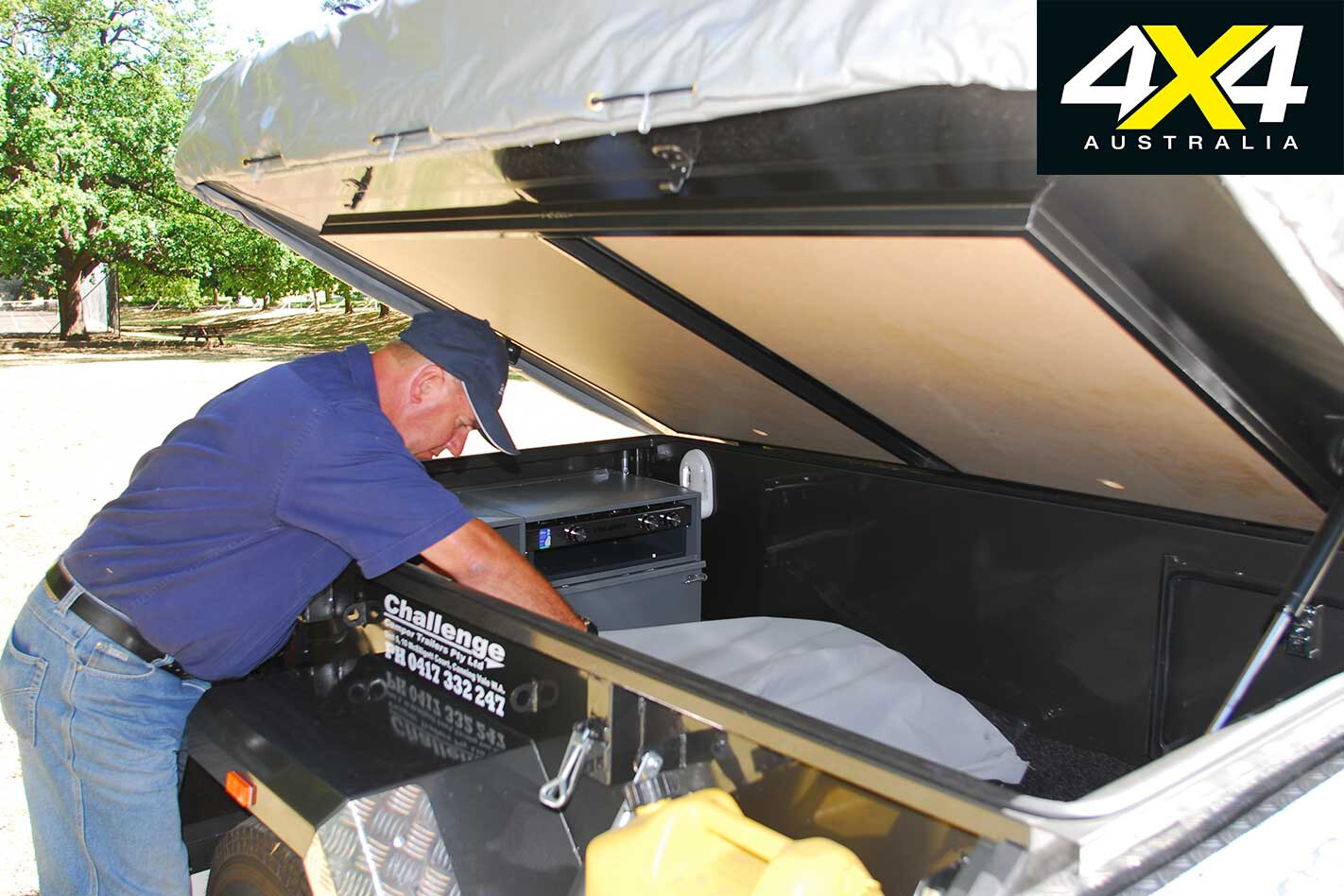
The hinged rear tailgate is fitted with a camlock compression latch ensuring when the unit is packed for travelling it is as close to being dustproof as any trailer can be.
A side hatch on the near side front of the trailer allows access into the box cargo compartment whether the camper tent is erected or not. Spring loaded, zinc-plated stabiliser legs are fitted at the rear of the trailer.
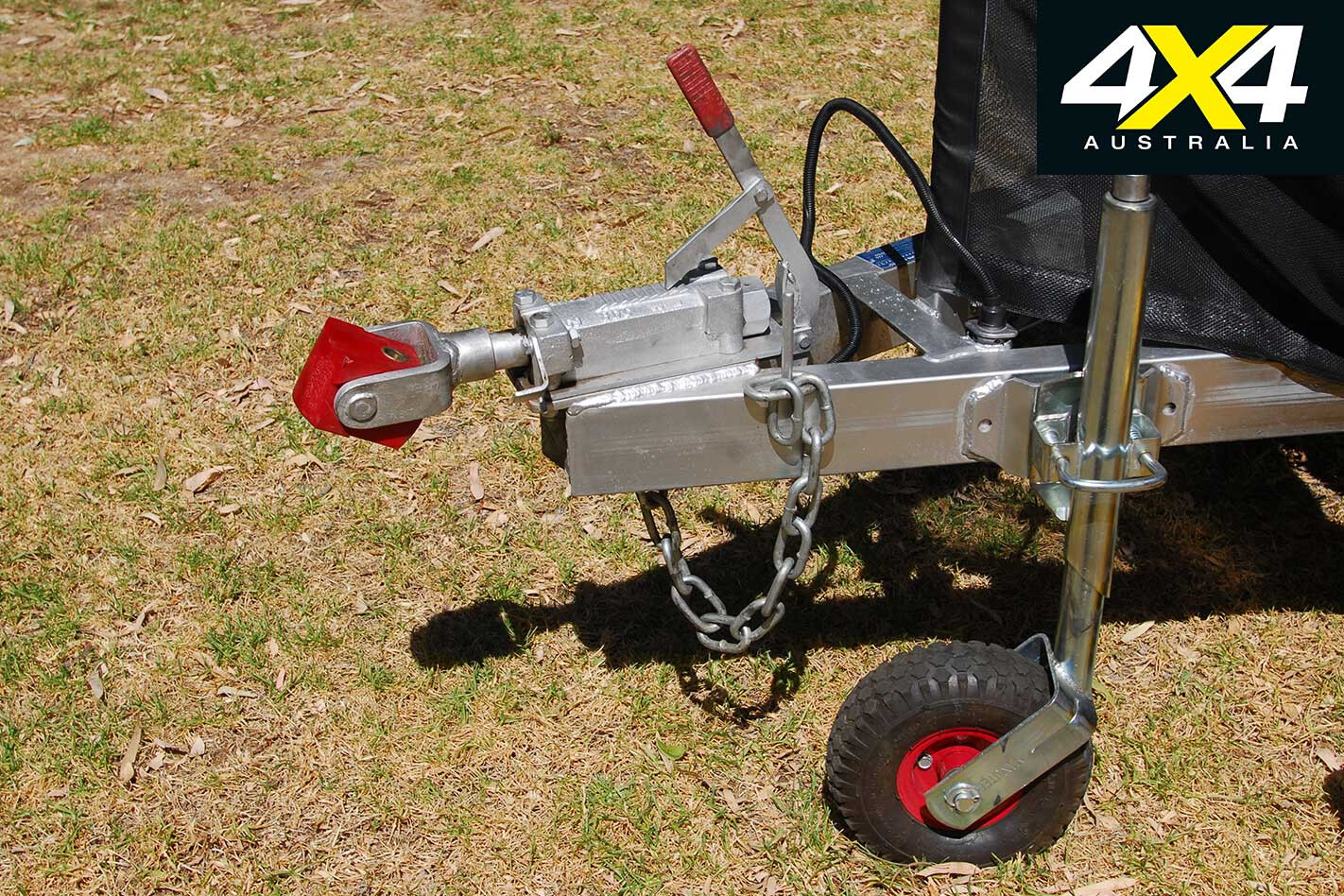
Up front there’s an off-road polyblock coupling, similar to a Tregg coupling, with its mechanical override handbrake set-up and a swivelling jockey wheel. Sitting on the A-frame is a large alloy chequer-plate storage box along with the spare wheel.
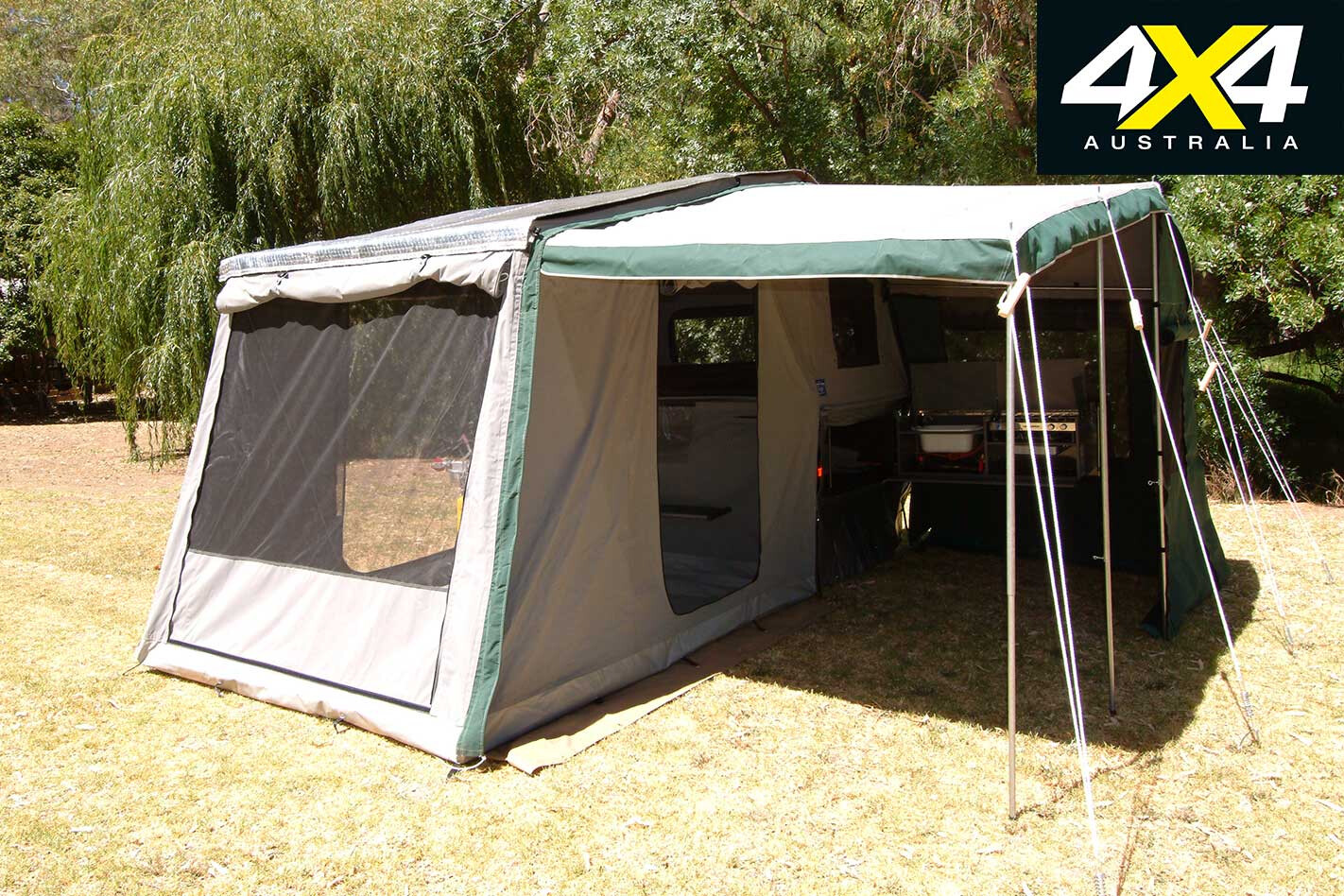
The three-metre standard tent is easily erected off the trailer’s left side. An overnight set-up takes two people just a couple of minutes while pegging out the 1.83m annex, kitchen annex and draught curtain adds a few more minutes to the timetable. It’s as simple and as quick as any tent of this design can be.
Larger tents or tents that open out the back – or on the opposite side of the trailer – can also be provided. When travelling all the canvas is stored under a zippered, tied down, heavy-duty PVC dust cover.
The canvas used throughout is ‘Wax Converters’ dyna-proofed canvas; 425g in the roof and 312g in the walls. There’s three internal opening windows at bed level, one external opening large window on the far tent wall and two zippered canvas doors with screens on the side walls.
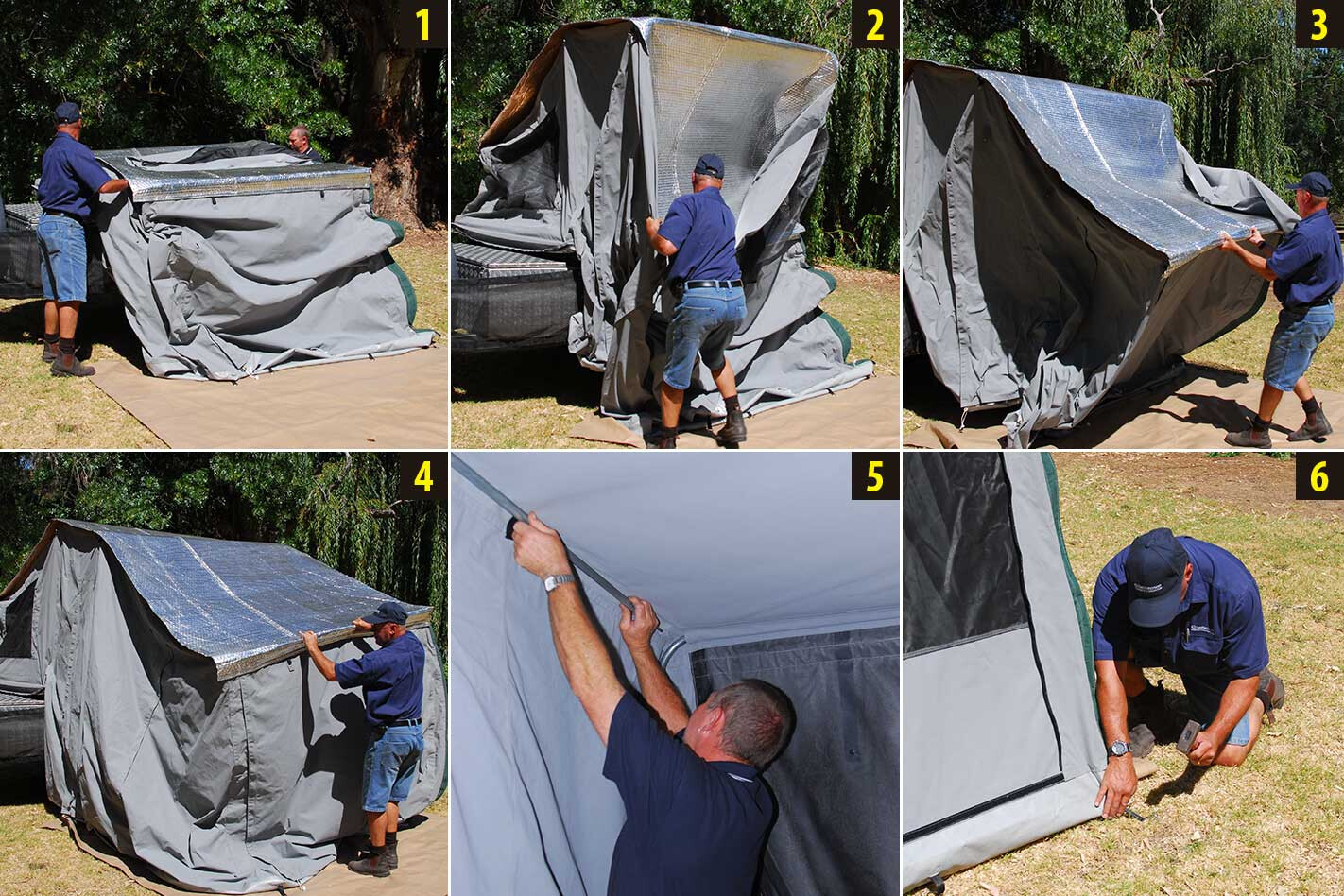
All mesh is fine ‘Tentex’ screen. Zips are high quality units, all sewing is even and all seams are reinforced where required, while the internal steel framework has all the bows held in position with reinforced pockets and retainers. The welded PVC tub floor is the very best for being durable and waterproof. Finally, there is a choice of seven canvas colours.
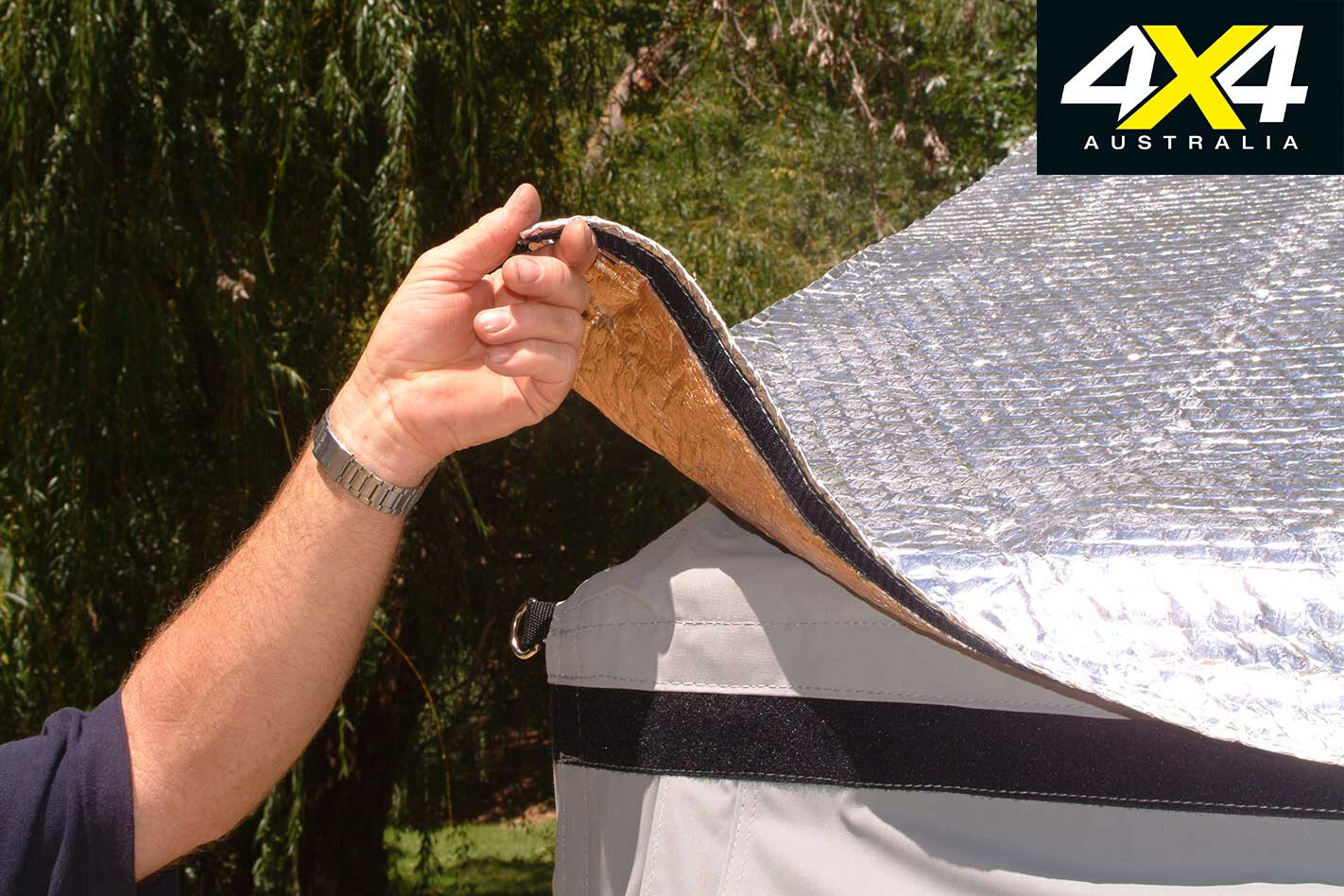
One option this camper unit had fitted was a ‘tropical roof’ and this particular style was one I hadn’t seen before. Looking a bit like heavy-duty ‘bubble wrap’ with both sides covered in shiny alloy foil it certainly looked like it would repel a lot of sunlight and heat.
Challenge reckons it makes the tents a good ten degrees cooler on a sunny day! I reckon it would do that and more. The tropical roof, once fitted, can stay where it is and be packed away as the tent is folded up.
Once the tent section is erected the queen-size innerspring bed is readily accessible via a large step. There’s plenty of window and door area giving the camper excellent ventilation and access. One of the things I particularly liked with this camper is that the whole tent unit is mounted on the bed base. This comes with gas struts that allow lifting of the base so the cavernous storage area under the bed can also be accessed from the top – whether the tent is erected or not!
The deluxe kitchen package is located inside the rear tailgate and is accessible all the time for just a quick brew on the side of the road or once the camper is set-up. Probably the only disadvantage of it being located on the tailgate is that if the weather is inclement you need to put up the kitchen annex to be able to cook under some protection.
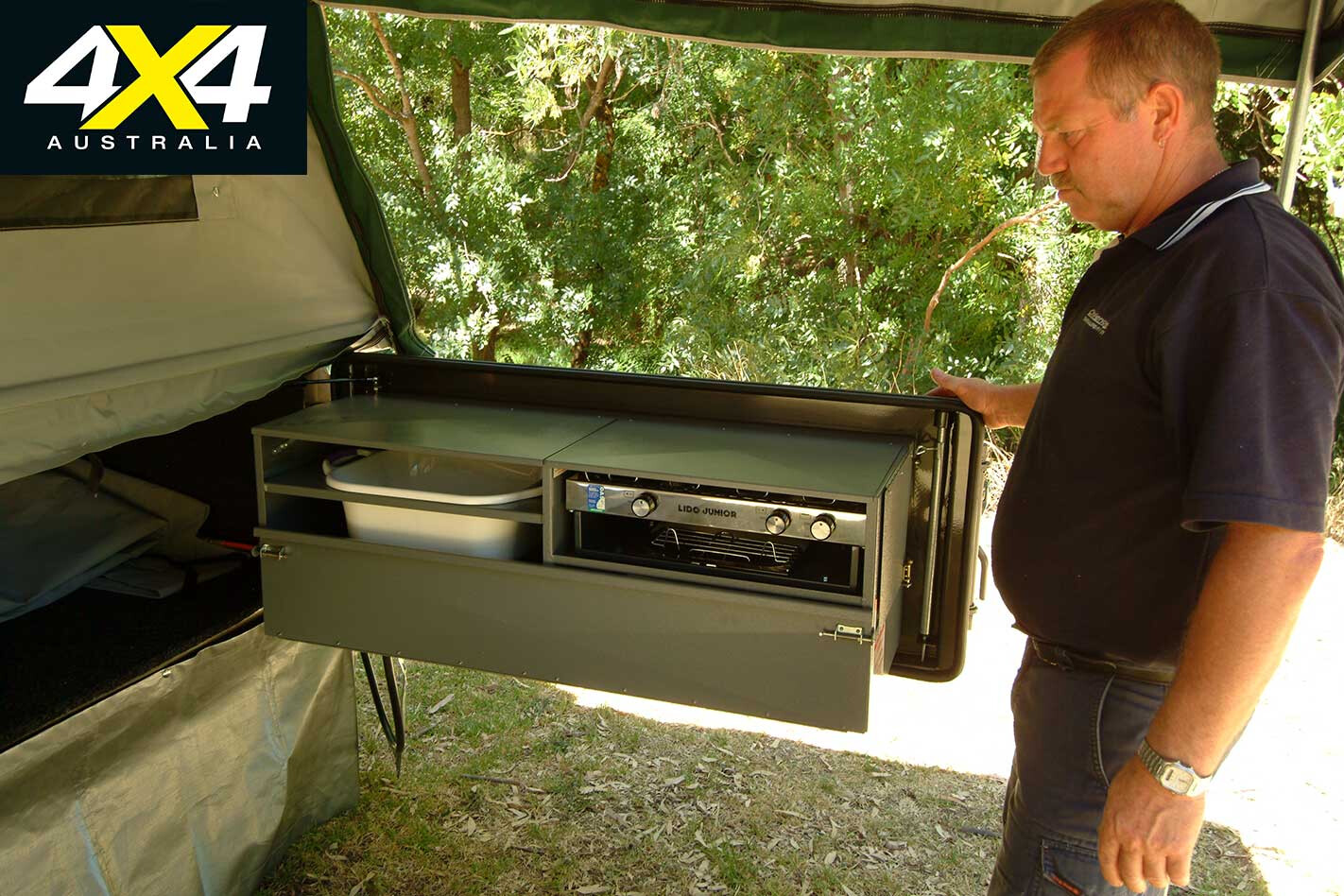
The standard stainless steel stove has two burners and a grille with storage underneath. The removable plastic sink beside the stove has a hand pump and more storage underneath that includes room for the provided fire extinguisher. Water comes from a standard fitment 86-litre water tank (with stoneguard) mounted under the trailer, with the filler near where the gas bottle mounts. An extra water tank can also be fitted.
The Deluxe camper’s standard electrical lighting package includes a heavy-duty 90-amp hour battery, two 12-volt power sockets, a number of lights along with a 240V battery charger, voltmeter and fuse box.
There wasn’t much we could see that we would add, although a second battery always comes in handy.
The Numbers
The Outback Deluxe Camper is valued at $16,950. The only options on the one we tested were the tropical fly roof and a better battery charging unit, all of which adds a few hundred bucks to the overall cost.
Challenge makes a wide range of trailers (in steel or alloy), tents and annexes, along with a range of camper-trailers valued from just under six grand to nearly $20,000. The company often builds custom camper trailers to suit people’s particular needs and can include boat and outboard motor racks, additional awnings and more. Challenge has agents in each state.
For more information contact, Challenge Camper Trailers P/L, Edwardstown SA, on 08 8277 9853, or check out the website at challengecampertrailers.com.
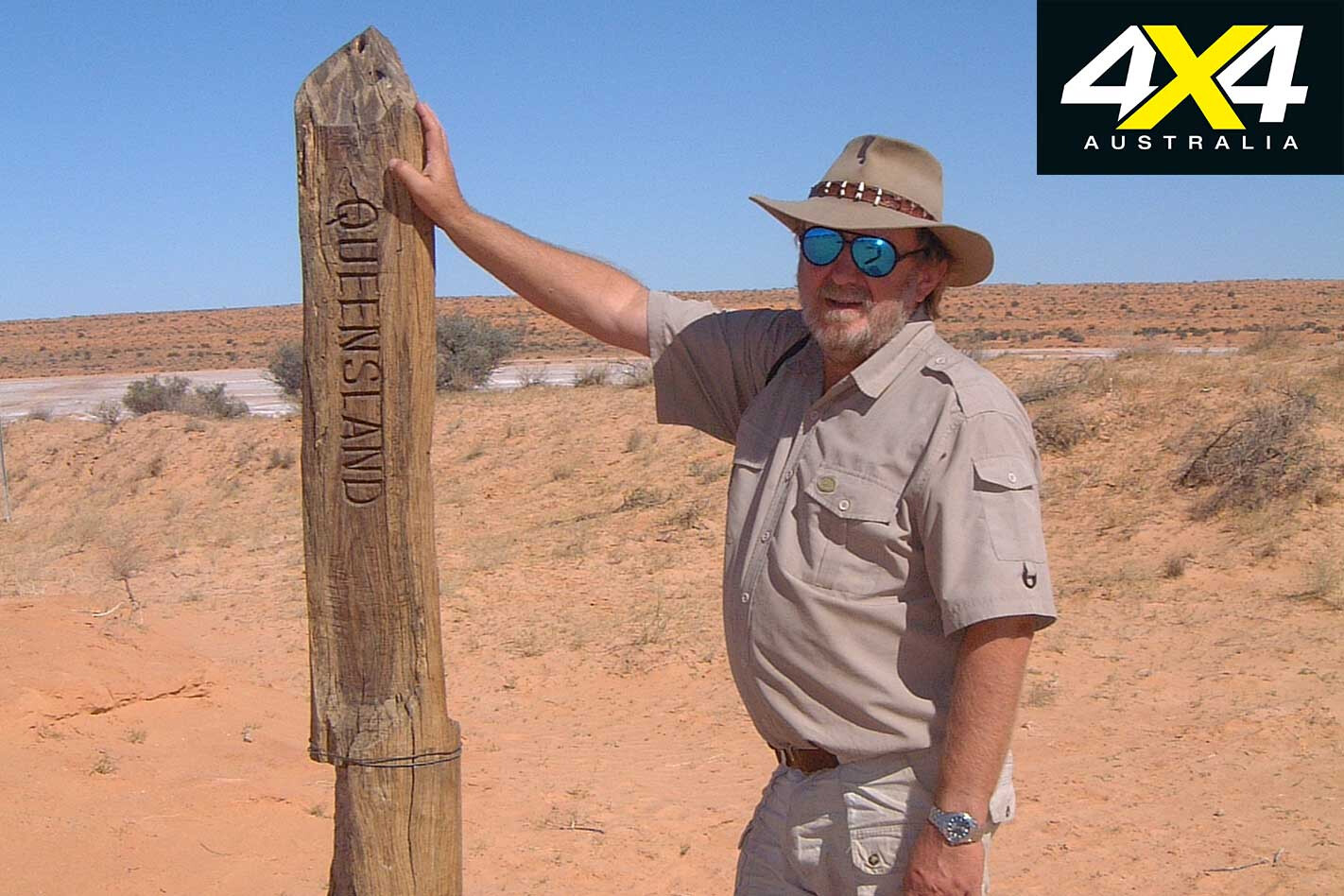
LAST year, while heading north to the Gulf and trying to stay off the blacktop, I took the opportunity to head out to Haddon Corner, the meeting place of the SA and Queensland borders. It was somewhere I hadn’t been for nearly 30 years, the last time having nearly come to grief when a poorly run fridge wire short-circuited and nearly took the whole vehicle with it.
This trip was far less dramatic, and while the track from the main road to the corner post is easy enough for most of the way, as you get closer there are a couple of sand dunes to cross. Near the corner is a small camping area and shed put in by the Queensland and SA Royal Geographical Societies a few years ago, while the corner post was erected by them in 1985.
Last December, I then went looking for a corner post that few people had heard of: MacCabe Corner. Named by the Surveyors General of the states involved, the corner officially only came into being in 2008, and it marks the corner of NSW, Victoria and SA.
There’s a post and information sign on the Victorian bank of the Murray River at this point, but getting to it by vehicle or on foot is difficult. The track network shown on any map bears no resemblance to what is on the ground, and private land and wet boggy tracks thwarted my last attempt. This summer, I’ll make a more concentrated effort to get to what is the last corner post I’ve yet to visit.
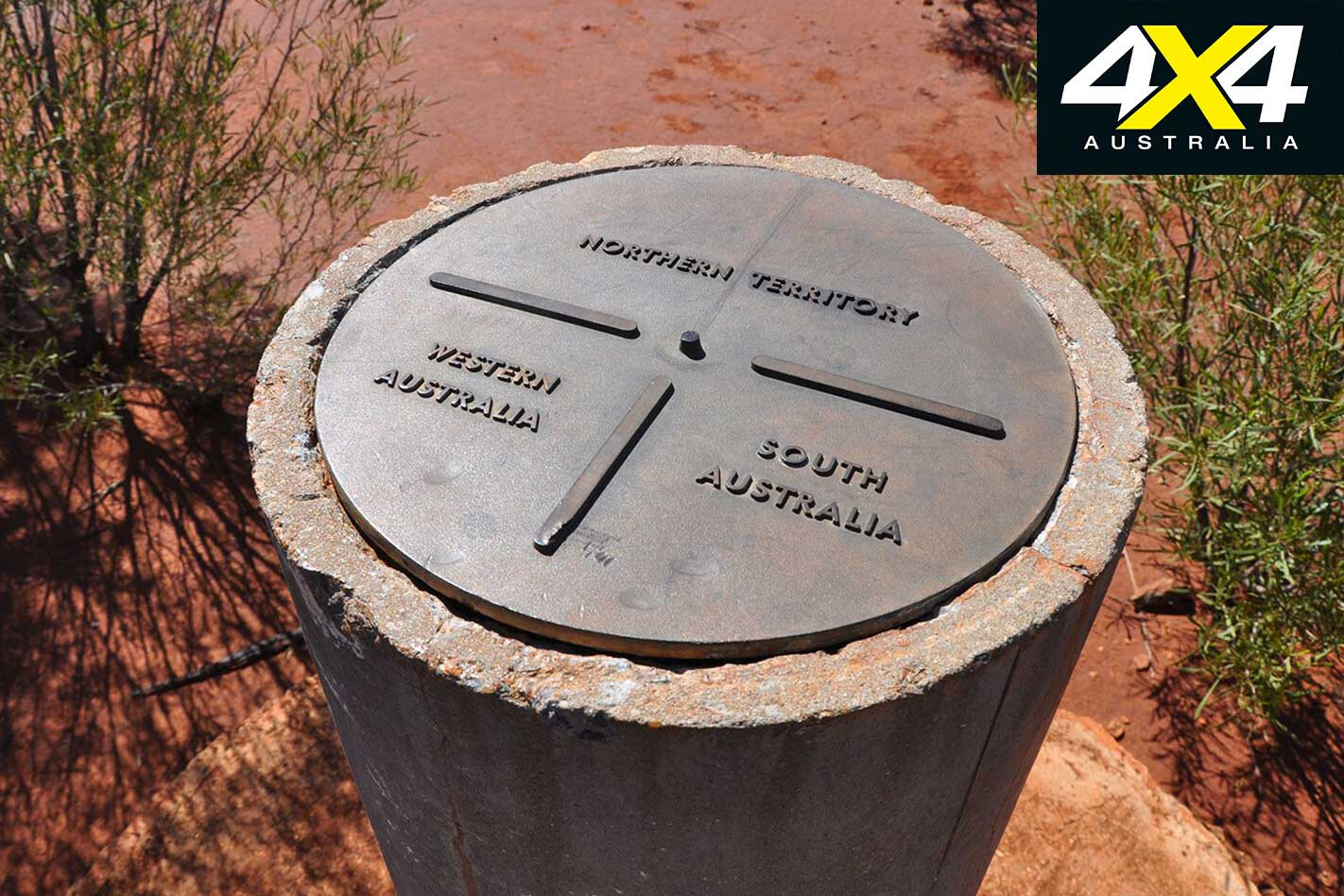
More recently, the missing plaque at Surveyor Generals Corner (where the borders of SA, NT and WA meet) was replaced with a new one by a small group of people including Barry Allwright who had surveyed the SA/NT border back in the 1960s; the current Surveyor General of the NT, Rob Sarib; and the Aboriginal Traditional Owner (TO) of the area, Linda Eddy.
A new information sign has also been erected to explain why there are two corner posts located here about 50 metres apart. I can remember being there with the late Lance Eddy, then the TO of the corner area, who laughed when he detailed his reasons: “Those silly surveyors, they didn’t get it right,” he told me, emphasising with a thump of his hand on the selected post.
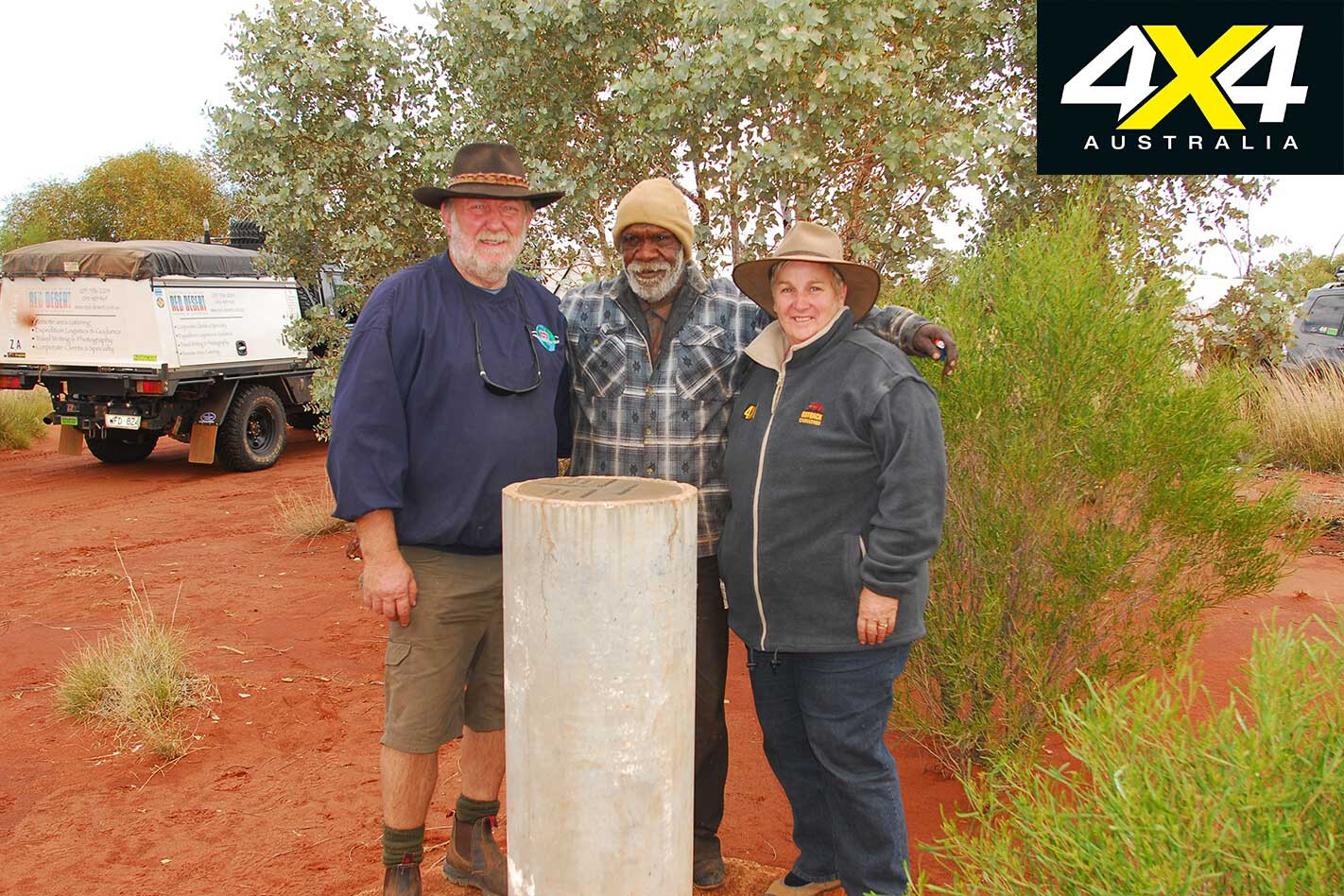
“This one here is the right one!” The real reason is a little more technical than that, but you can’t say you have been to that particular corner unless you visit both corner posts.
Most outback travellers visit the Cameron Corner post (NSW, SA and Qld borders), north-west of the outback oasis of Tibooburra. Having the Corner Store nearby with pleasant camping, good food and cold beer makes it an even more attractive destination.
Poeppel Corner (NT, SA and Qld borders) is another well-visited corner post, with most Simpson Desert travellers stopping there for the obligatory pic.
The one that stands there today is a replica, with the original hidden away in a museum warehouse in a leafy suburb of Adelaide. Reg Sprigg recovered the first one in the 1960s and, while this original marker was first erected in 1884, Reg had given it to the Surveyors Museum in Adelaide for safekeeping.
When that august institution folded, the post vanished. I spent six months and a few visits to Adelaide trying to track it down before I found it under a dusty white sheet in a musty building. It was in remarkably good condition, but, sadly, it went back under the cloth and into the warehouse after I left.
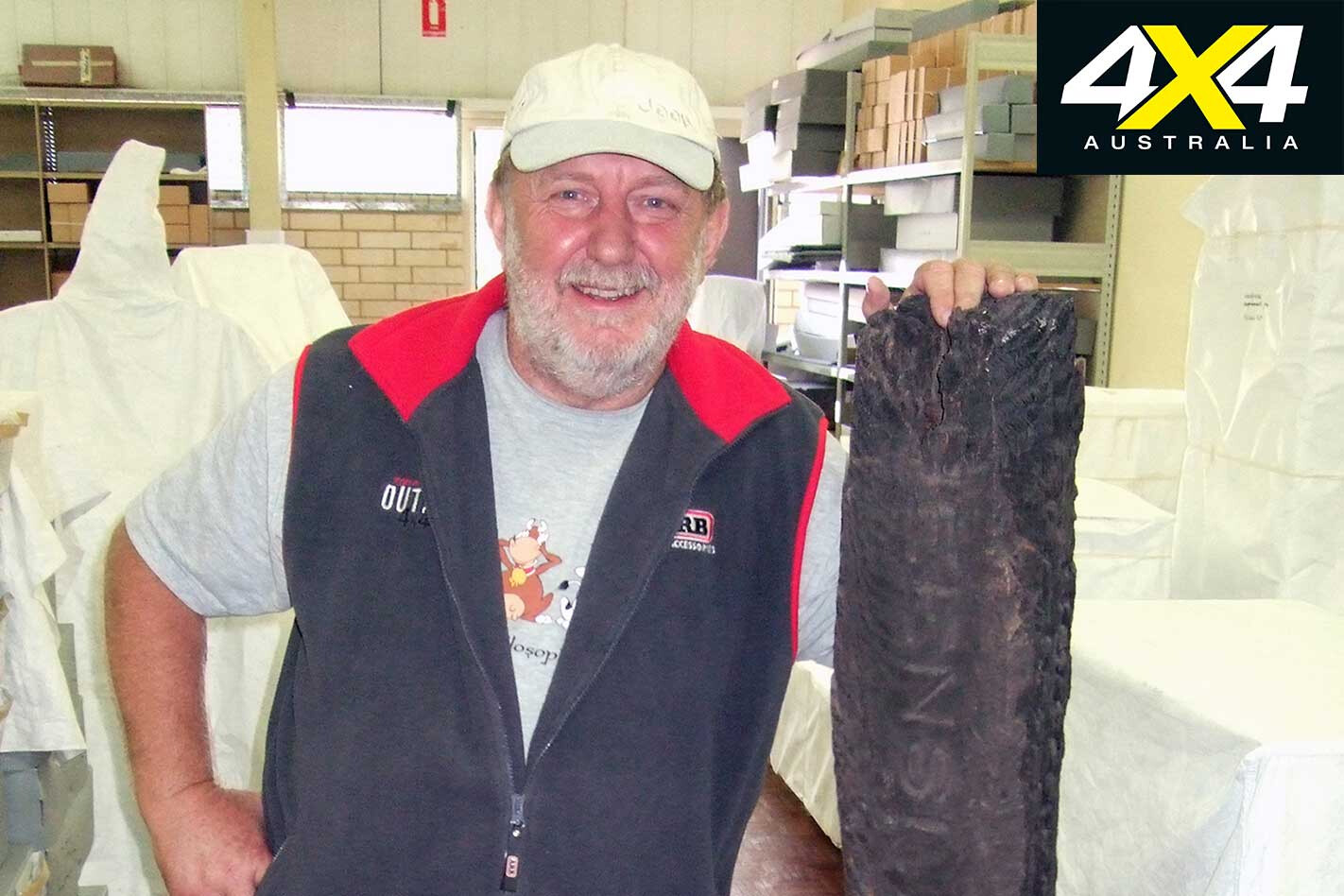
With just one corner post left to visit, I’m close to the end of my quest. You should give it a try and start ticking off the borders and the corners on your next outback trip.
As we rounded a corner and accelerated down the short straight, Steve’s voice crackled over the headphones: “There’s 500hp under the bonnet but the trick is to use it only when you need to…”
This feature was originally published in 4×4 Australia’s April 2009 issue
The noise of the motor was growling in response to Steve’s insistent right foot, the cacophony of engine and gearbox noise was still loud over the muffling effect of the headphones I was wearing.
Sweat was trickling down my face, down the middle of my back and I felt like I was sitting in a pool of it, the tight racing seats clamping me into my own personal plunge pool. I could feel the heat radiating up from the engine firewall; there was no airconditioning, the side windows were sealed up for safety compliance and there were no air scoops in the new roof panel that had just been fitted.
Being in the middle of Victoria’s hottest heatwave in 100 years didn’t help one iota and, all-in-all, it wasn’t the greatest time to be blasting around the bush… but what the hell… it beats a real job!
Steve flicked the long thin lever of the sequential Holinger six-speed gearbox, the engine note reaching a crescendo as the gearbox stepped down a cog. The big four-piston AP Racing calipers clamped pads to discs as we rammed into the corner, then we were away again, accelerating quickly up through the gears.
“It’s a pretty tight box. First is higher than a normal Pajero first gear, sixth is 1:1; there’s no overdrive and she howls a bit when you have her flat out at over 200km/h,” Steve commented in an under-stated, off-hand way as we slowed for a water channelling whooptee-do.
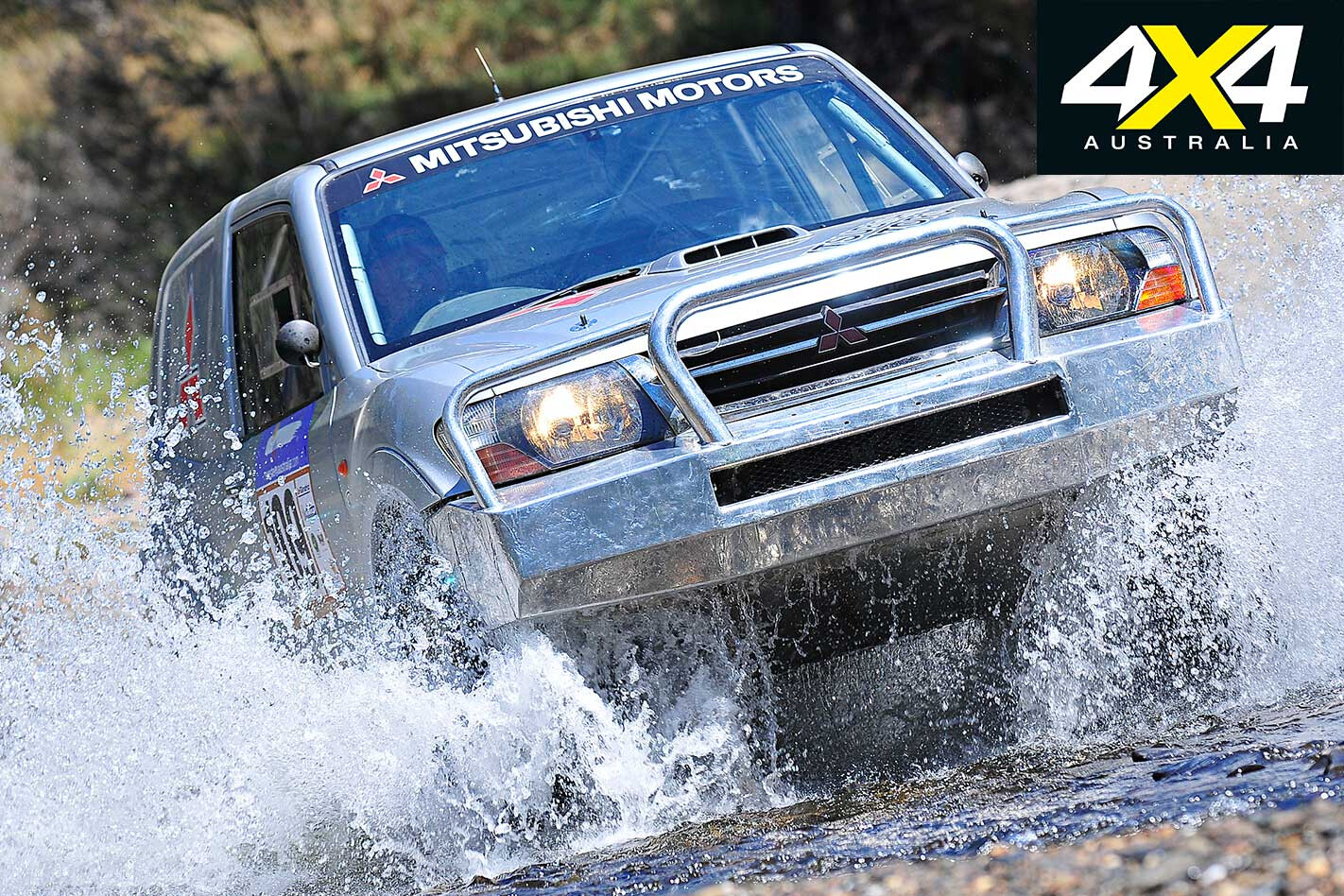
The suspension of the SWB Mitsubishi stretched to its maximum but only rarely was their any air under the wheels. Steve was taking it easy. “Had it out here testing the suspension before the Safari last year and the suspension expert put it on its roof!”
Steve had just got the Pajero back from a lengthy stay at the panel beaters after he had collected a tree during the Safari. Luckily, dented panels were the only problem from that minor mishap.
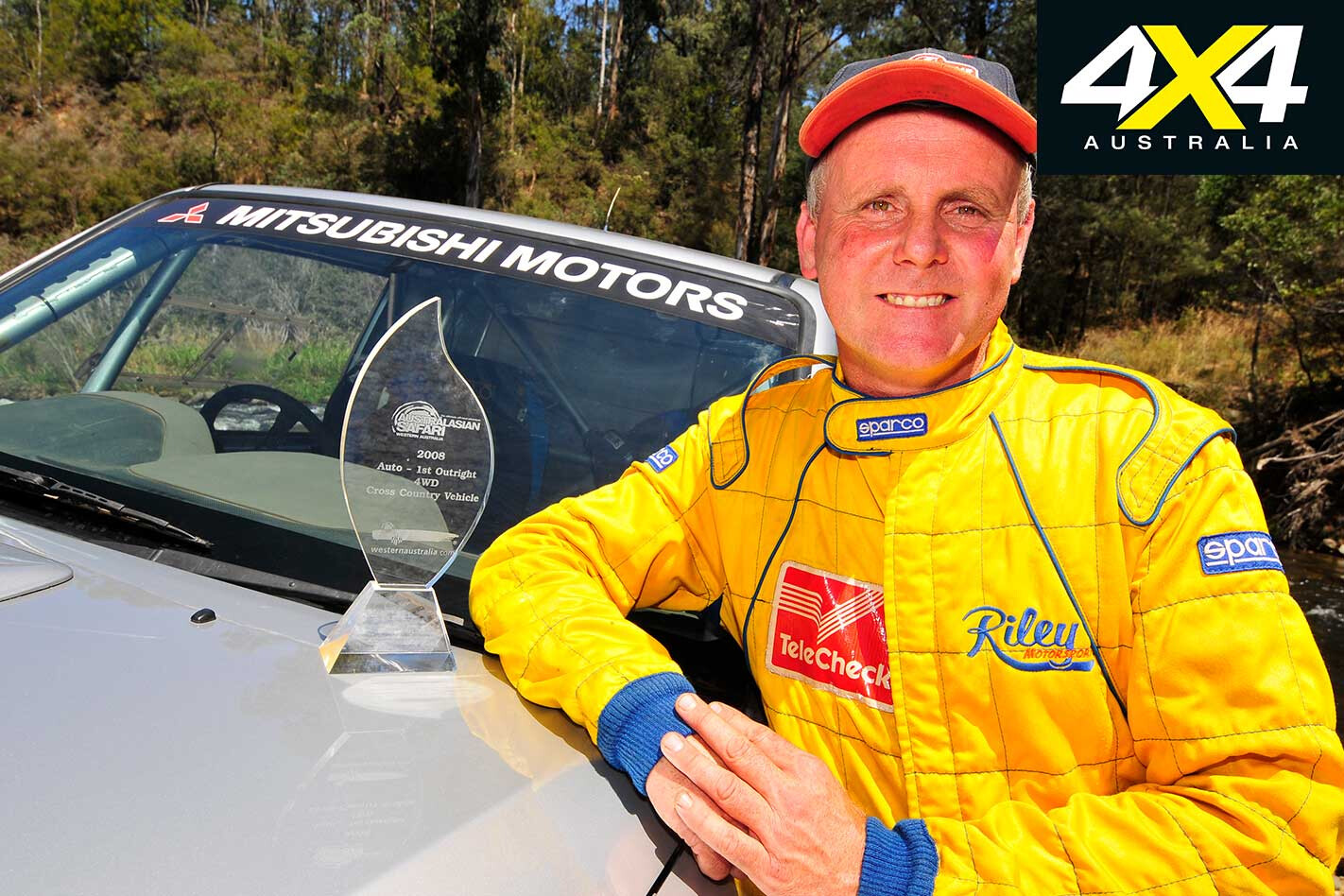
But I knew I was in good hands. Steve Riley, a dairy farmer in East Gippsland, started racing in the Australian Safari riding a Honda XR600 on which he completed 12 or 13 safaris. In 2001 he changed to a Pajero and before the 2008 event decided he needed something a touch more competitive if he was ever to get onto the winner’s dais. Hence the 2006 model SWB Pajero.
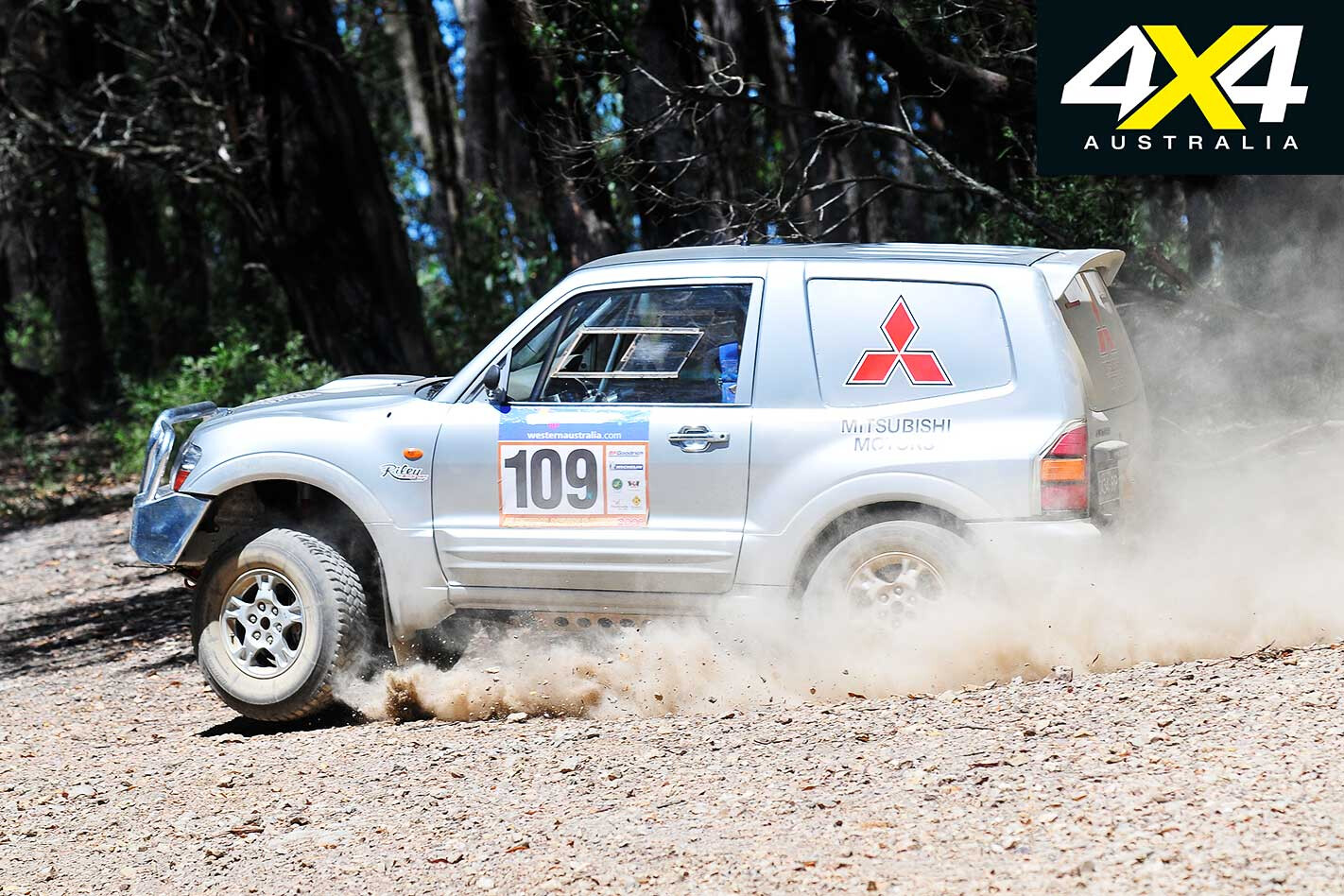
The modification from standard Pajero to successful race car was a long and tedious one, as they always are, and there is still plenty that Steve would like to do. His two friends and part-time helpers in the workshop and in the support truck, Chris Stone and Troy McAinch, know the vehicle intimately.
First up, the Mitsubishi V6 engine was replaced with a blue-printed, 6.0-litre GM V8 motor. The V8 features a hot cam, heavy-duty valves and custom extractors. To shoe-horn the bigger, longer motor into the engine bay, the firewall had to be shifted back six inches.
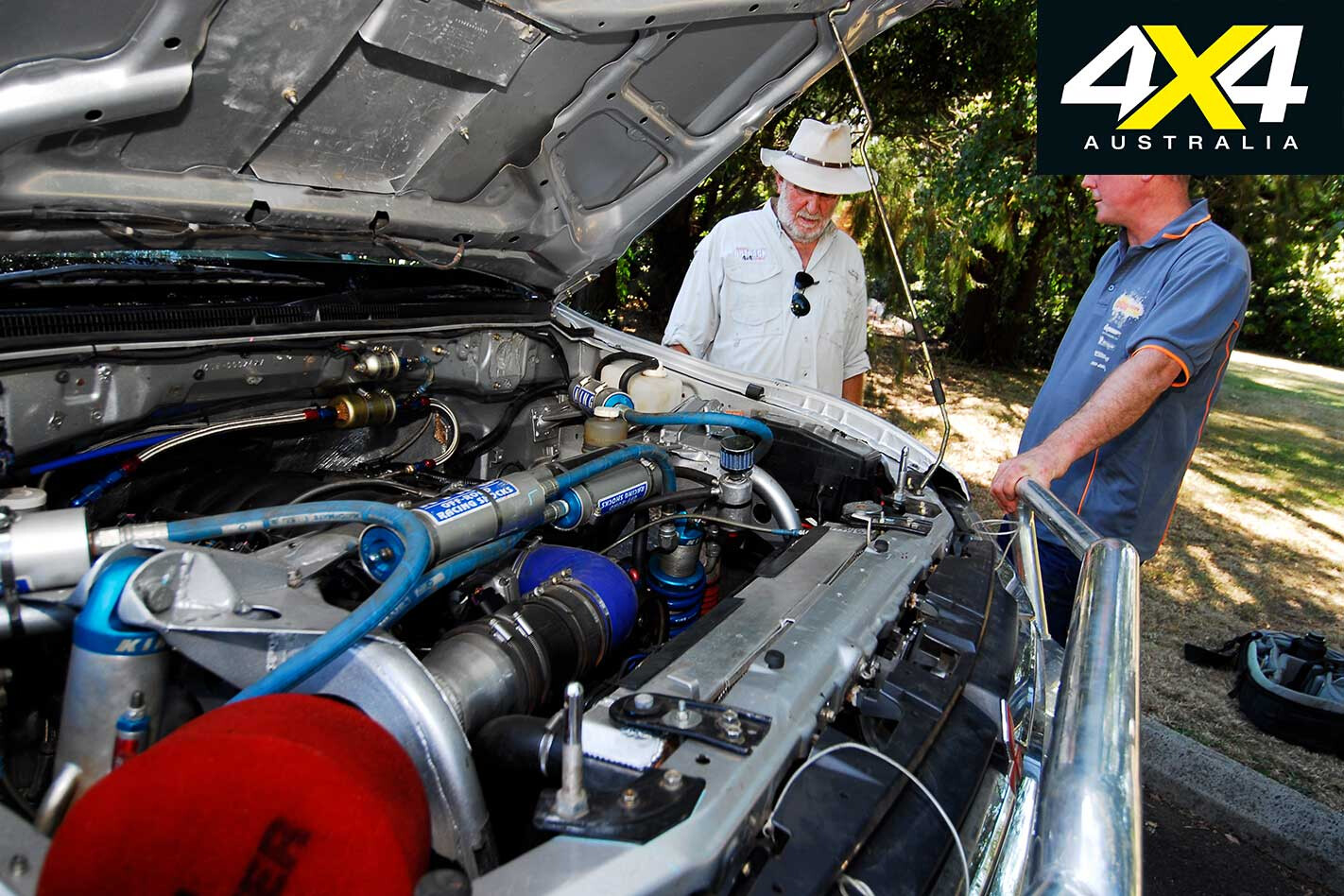
Surprisingly, the standard EFI and ECU on the engine have been retained but this will be replaced by the next Safari with a more easily programmable MOTEC unit. A custom built, large capacity radiator has also been fitted while twin AU Falcon fans help feed cool air to the unit.
Once the Holinger gearbox was fitted and mated to the standard Pajero transfer box, the rear tailshaft was very short! Differentials remain standard Mitsubishi fare and have proved very strong. Protecting all the under-works from front to back are large sheets of alloy plate.
The suspension has undergone a huge transformation with new strut towers up front that are braced together and are also tied into the substantial roll cage to make the whole set-up as strong as possible. These allow longer King shocks and springs (not to be confused with King Springs out of Queensland), offering much more wheel travel.
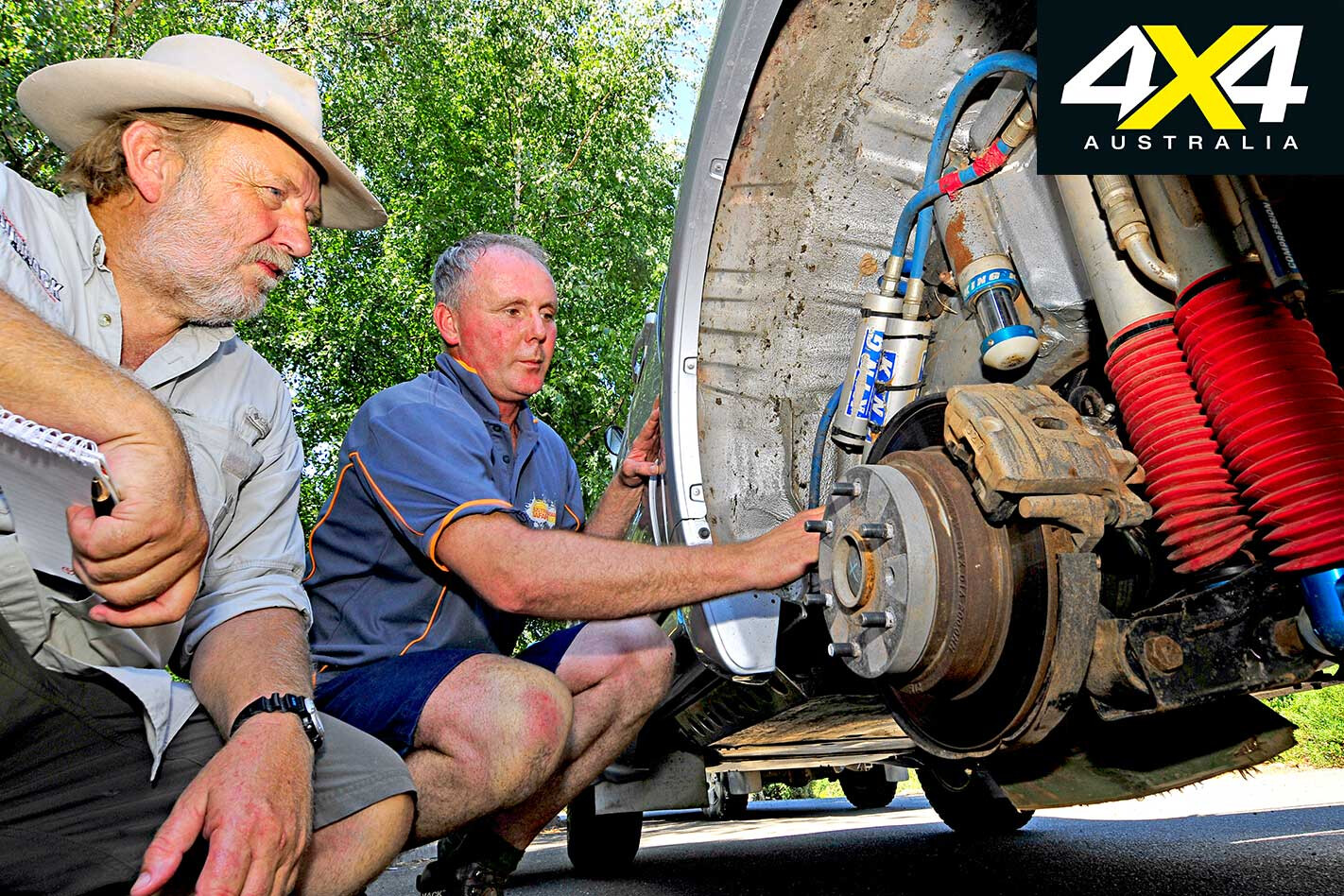
There are twin shocks on each corner while large remote reservoirs help keep the oil cool, and the shocks working, no matter the speed or the track. Hydraulic bump stops also feature at each corner.
Wheel track has been increased by 44mm; each wheel sporting a 22mm spacer. “You chase every bit of track width with a SWB, just to increase stability”, Steve explains. Alloy wheels are shod with somewhat bland looking but super tough BFGoodrich 235/85R16 Dakar special tyres.
Two fuel tanks feed the engine: a chassis-rail mounted 70-litre tank and a 170-litre tank mounted behind the driver in the separated cargo area of the Pajero. The fuel system is designed to be as simple as possible, to the stage that there is only a dip stick on the main tank, which is rarely full as the high centre of gravity effects the vehicle’s handling.
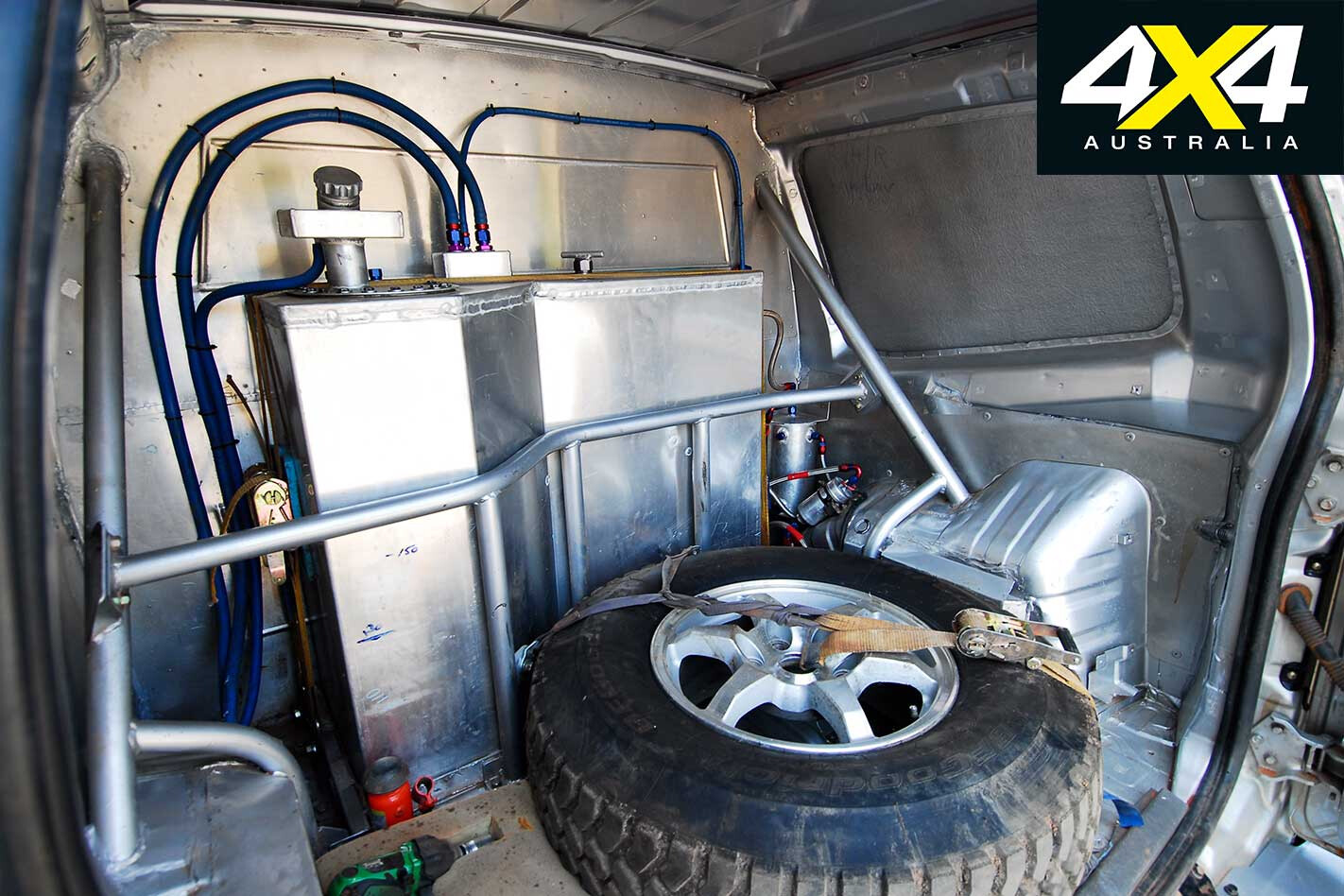
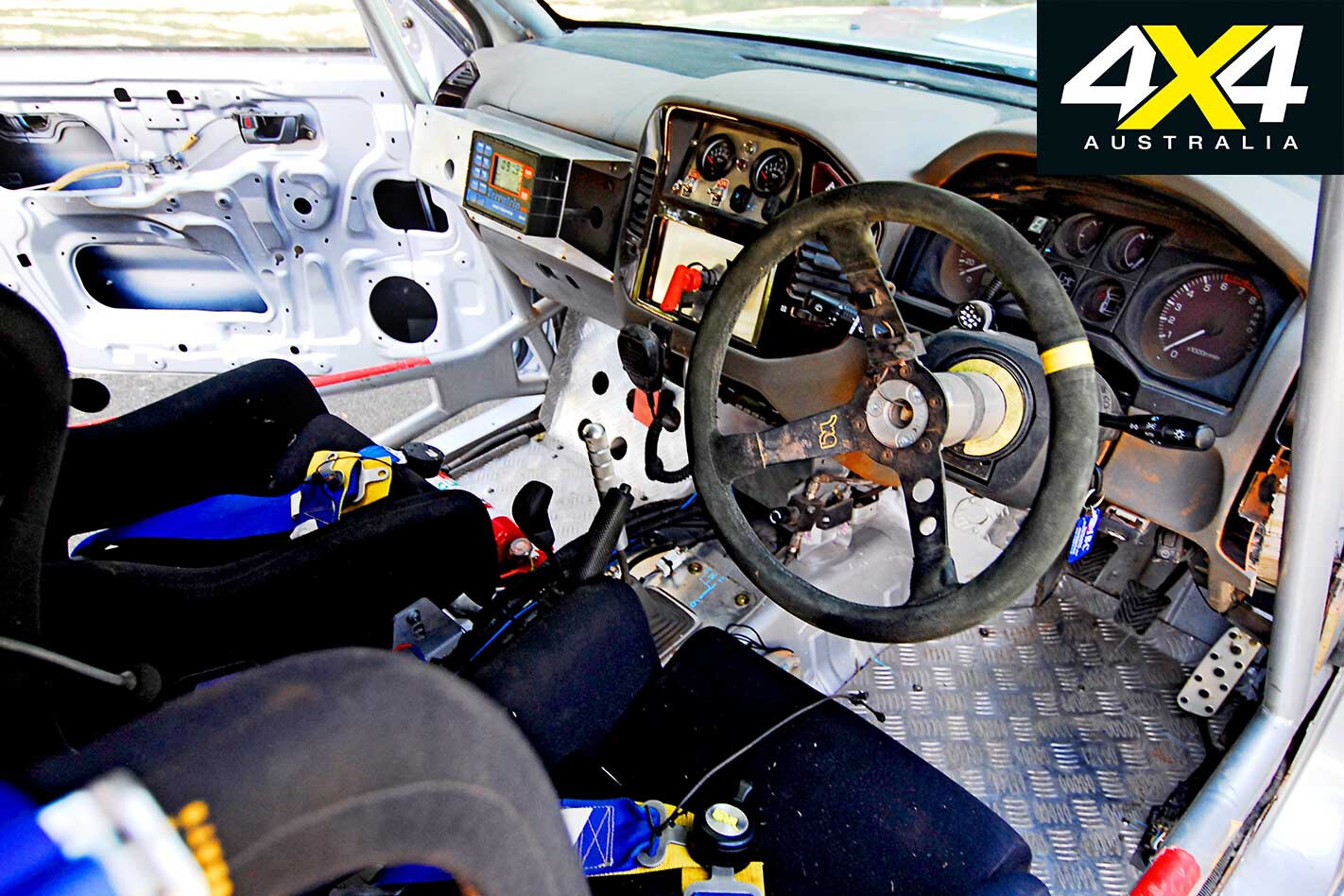
Inside the cabin is spartan. Two race seats and a full harness is as comfortable as it gets. There’s no instrumentation apart from oil pressure, fuel pressure and high-temperature gauges.
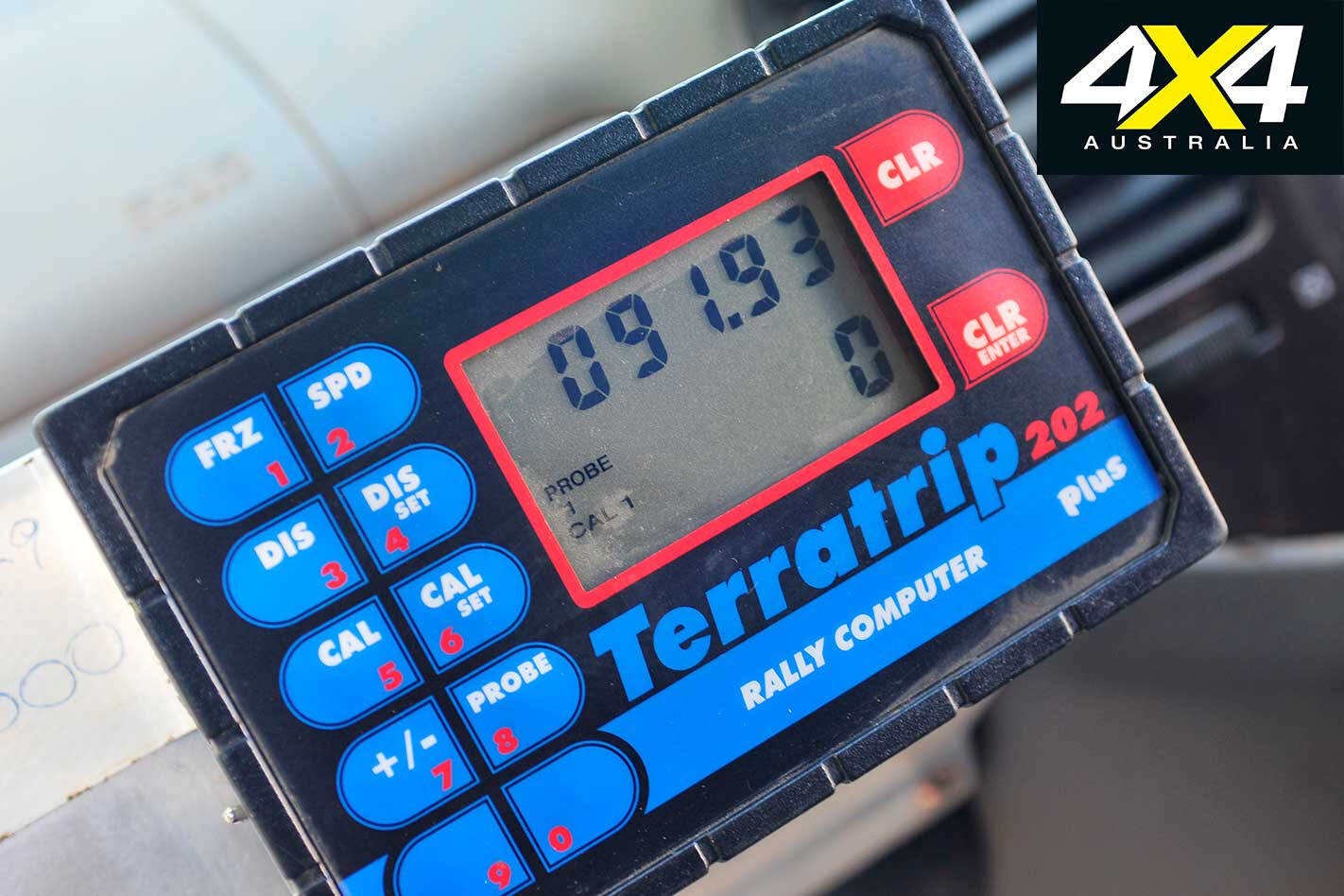
The navigator has a TerraTrip meter, with a foot operated reset switch. Headphones for communication between the driver and navigator are a necessity as the noise in the cabin under full acceleration is near deafening.
I was surprised to learn that the stripped-back Pajero weighs two tonnes. Steve had been chasing an 1800kg race car but that was denied him. “We can lose a bit of weight though – the roof, bonnet and all the doors are steel, so we’ll start there,” he says. His mates are going to have plenty of work ahead of them before the next Safari.
I took the Pajero for a short blast: the clutch is light; the throttle sensitive; the engine response from too heavy a right foot angry and brutal. The SWB Pajero is an absolute beast that needs a deft hand and smooth, controlled footwork to keep it in a straight line and under control.
Ooh, did I mention the steering mod? This is cool! A small extra gearbox in the steering column changes the steering response and now it is 1.5 times more direct than standard. I liked it once I got used to it, but I couldn’t help but think that around each and every corner it seemed the front and rear of the SWB Mitsubishi wanted to swap places. Maybe I’m getting too old for this sort of caper… or maybe this is simply way too much car for me.
As I handed the Pajero back to Steve I was relieved that I hadn’t binned it into a tree or some other obstacle!
With a bit of luck, that’s the way it will stay. Steve has plans for the Pajero once there’s been a bit more time in the workshop. The Condo 750 this Easter will see its first big test before lining up for the next Australasian Safari in August in WA. I reckon Steve and the Pajero are odds-on for another win in 2009.
Holinger gearbox
Holinger Engineering, based in Croydon South, Victoria, provides speciality gearboxes to the world including Dodge Vipers, Nissan GTRs Trans-Am cars and a host more. The six-speed rear-wheel drive gearbox is available in H-pattern as well as sequential-shift for engines with up to 680Nm of torque, more than 880Nm of torque and for drag cars. The input shaft and fixed output flange are available in various configurations; weight is around 37kg; and there’s provision for connection to an external oil cooler if required.
There are Dog Change Conversion kits designed to fit into OE transmission cases that provide wider stronger gears, shorter faster gear shifts, as well as alternative ratios. They’re available for high performance cars such as the Mitsubishi Lancer EVO, Subaru Impreza WRXs, a number of Porsches and Lamborghinis, amongst others.
No wonder Steve Riley chose a Holinger box for his racing Pajero. For more information check out holinger.com.au.