
AS WITH many things 4×4, it’s a case of Land Rover leads and the others follow.
A measure of Land Rover’s influence on other 4×4 manufacturers is well illustrated by just how much Land Rover’s Terrain Response system, first introduced on the Discovery 3 in 2004, has been copied. Toyota now has its ‘Multi-Terrain Select’, Jeep has its ‘Selec-Terrain’, Nissan has its ‘All-Mode 4×4’ and Ford has its ‘Terrain Management System’.
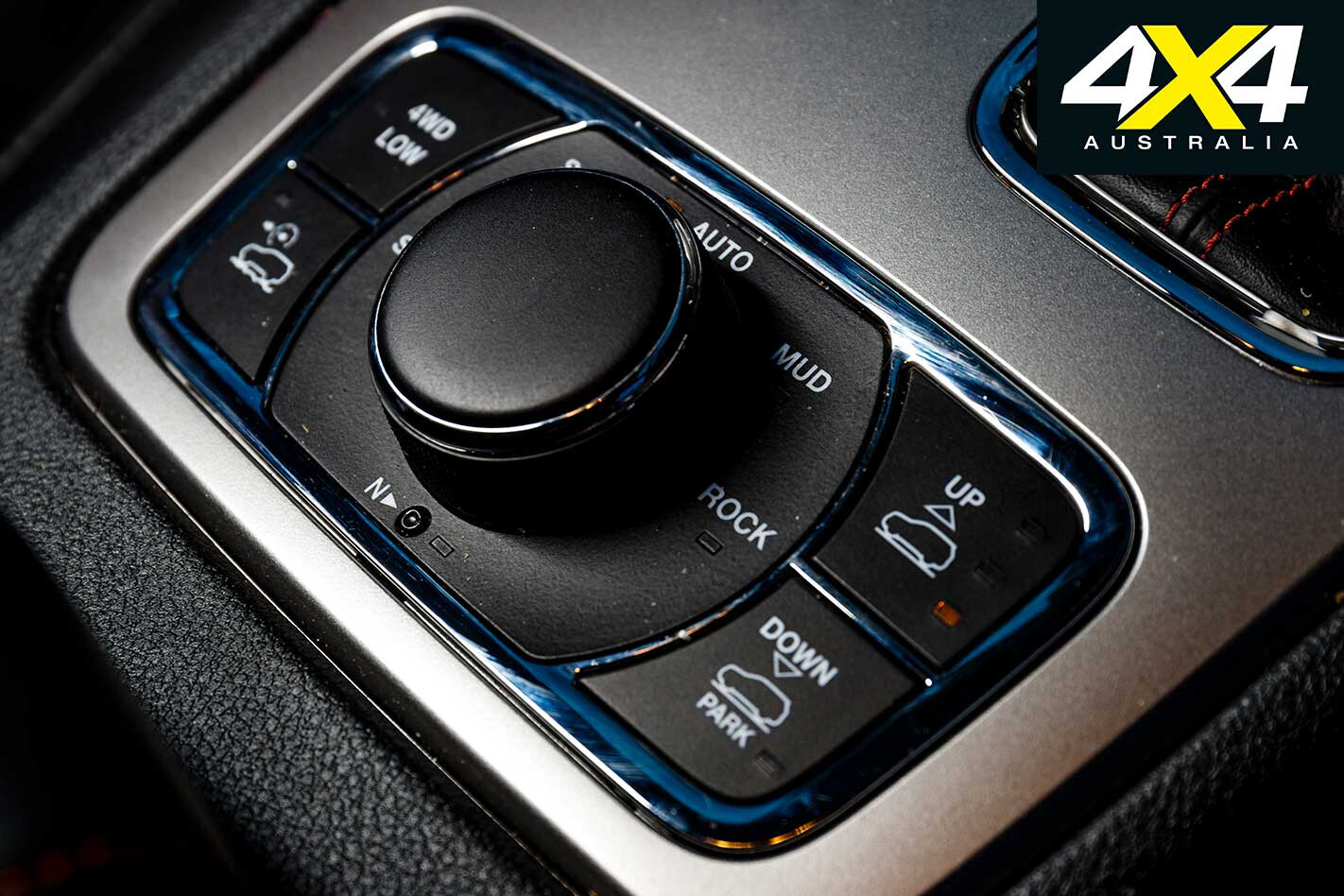
In essence, all these systems do the same thing but vary in detail in what they control and what settings they offer.
Common to all of them is their ability to alter the engine’s throttle mapping; in other words, how the engine responds to the throttle. For example, for extremely slow-speed driving over rocks and the like you want a soft and gradual throttle, but for sand driving you want a sharper and more immediate throttle action.
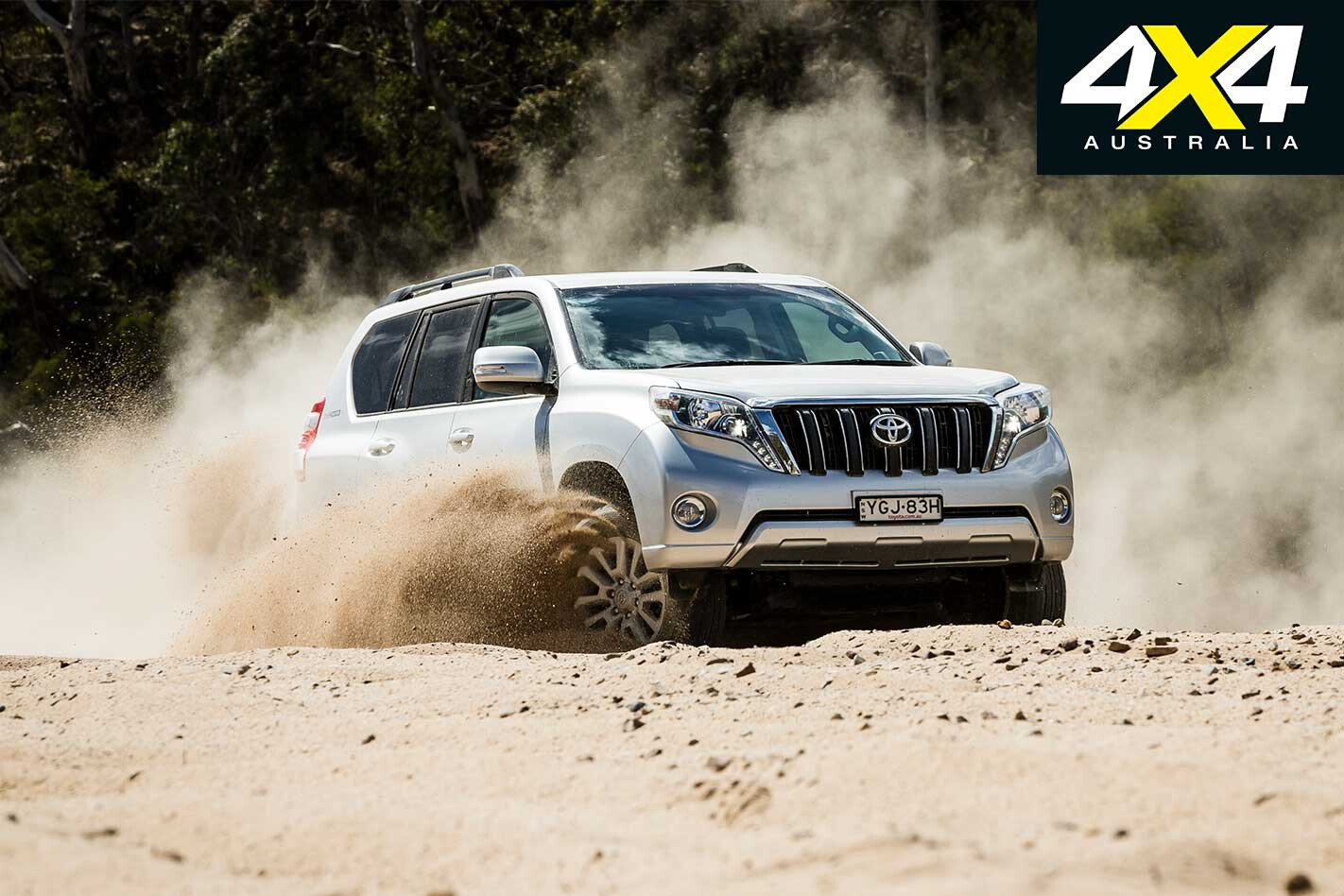
All these systems can also vary an automatic gearbox’s shift protocols which determine when and under what conditions the gearbox will shift up to a taller gear or shift down to a lower gear. For sand driving, for example, you want the gearbox to keep the engine spinning at higher revs so that you don’t lose momentum if you hit a particularly soft patch of sand.
Conversely, on a rock climb you want the lowest gear you can get away with, but you also don’t want the gearbox to shift to a taller gear half way up a climb just because you can ease off the throttle pressure a little.
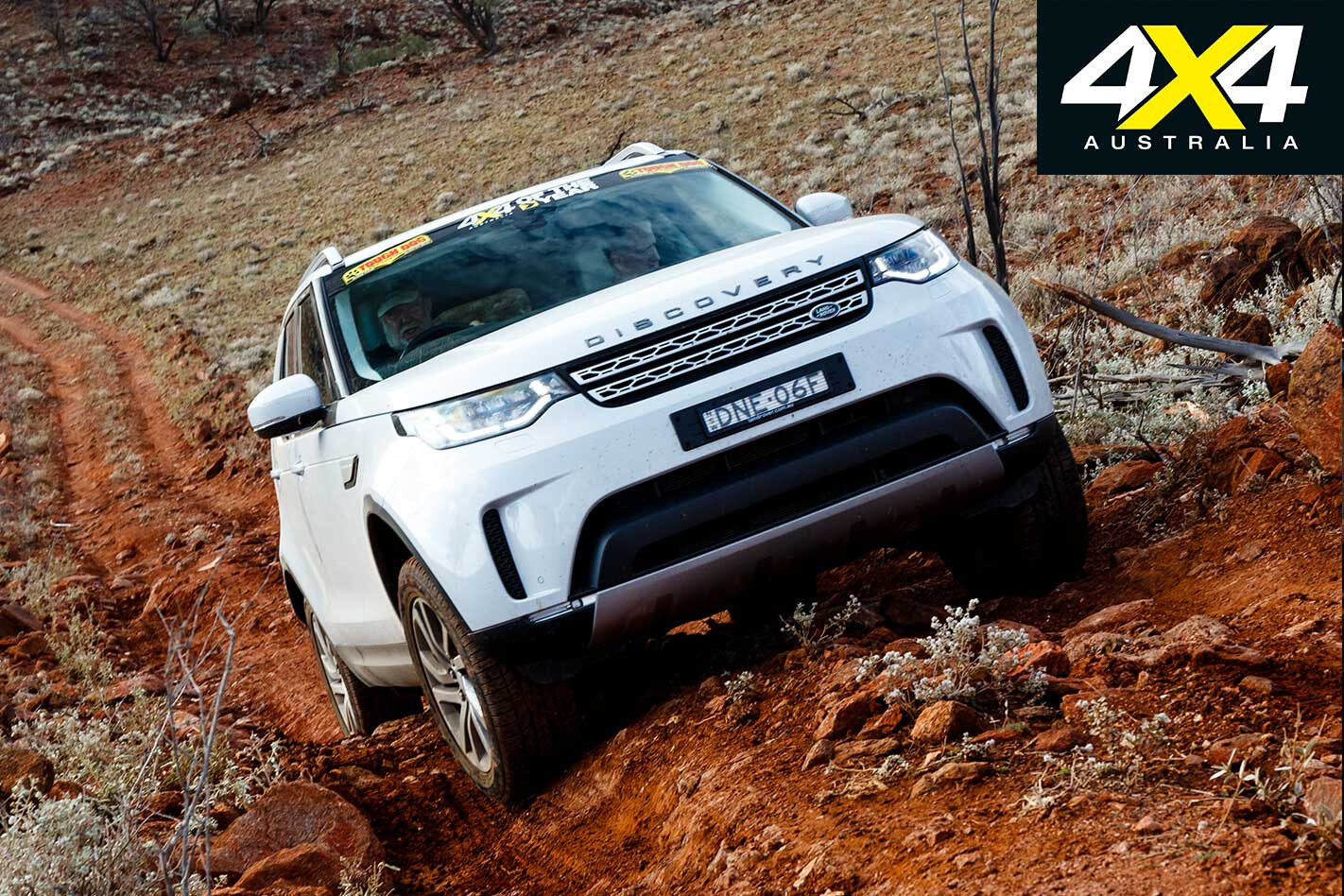
All these systems also modulate the electronic stability control (ESC), which is now mandatory on all new cars and 4x4s. ESC offers significant on-road safety benefits, but it’s a nuisance off-road especially in sand or mud. ESC detects if the vehicle is heading in a direction other than where the front wheels are pointing – which often happens in sand or mud – and tries to correct this by applying individual brakes or cutting engine power.
Given that in sand or mud momentum is the key, the last thing you want is a cut in engine power or to have the brakes applied. What all these terrain systems do is either reduce the sensitivity of ESC, or cancel it all together when the ‘Sand or Mud’ settings are selected.
Electronic Traction Control (ETC) is another vehicle system that’s modulated by these terrain systems. Unlike ESC, ETC is a significant advantage off-road as it limits wheelspin by applying the brake of the spinning wheel, thus directing the power (via the differential) to the other wheel on that axle. ETC can also cut engine power.
While power-cutting ETC is not what you want in most off-road situations, brake-force ETC is extremely useful, although how much ETC effect you want depends on the terrain. On rocky climbs you want the ETC to respond strongly and immediately, whereas some wheelspin can be tolerated in sand.
In vehicles such as the Range Rover, Range Rover Sport, Land Rover Discovery and Jeep Grand Cherokee, the terrain control system can also control the response of the electronic centre diff in terms of front-to-rear drive proportioning and how readily it locks up.
Likewise, when an electronic locker is fitted to the rear of these same vehicles (as standard or as a factory option), the terrain systems can also tweak how readily the locker will engage. And again, this will depend on the particular terrain setting that’s been selected by the driver.
To paraphrase Steve (Chippa) Tjepkema at the initial driver briefing for 2018: “The fact that you guys are here is evidence that the event’s new format is working.”
The inaugural Outback Challenge was run in 1999. It was fully supported by the publishers of 4X4 Australia and then editor Ron Moon, sponsored by ARB and Warn, and organised by Sharyn and Paul Vanderhorst (Sharyn being Ron’s deputy at the time). The event developed over the next decade from a muddle of stages more like a travelling 4WD club gymkhana, to a week-long, true hardcore off-road navigational race.
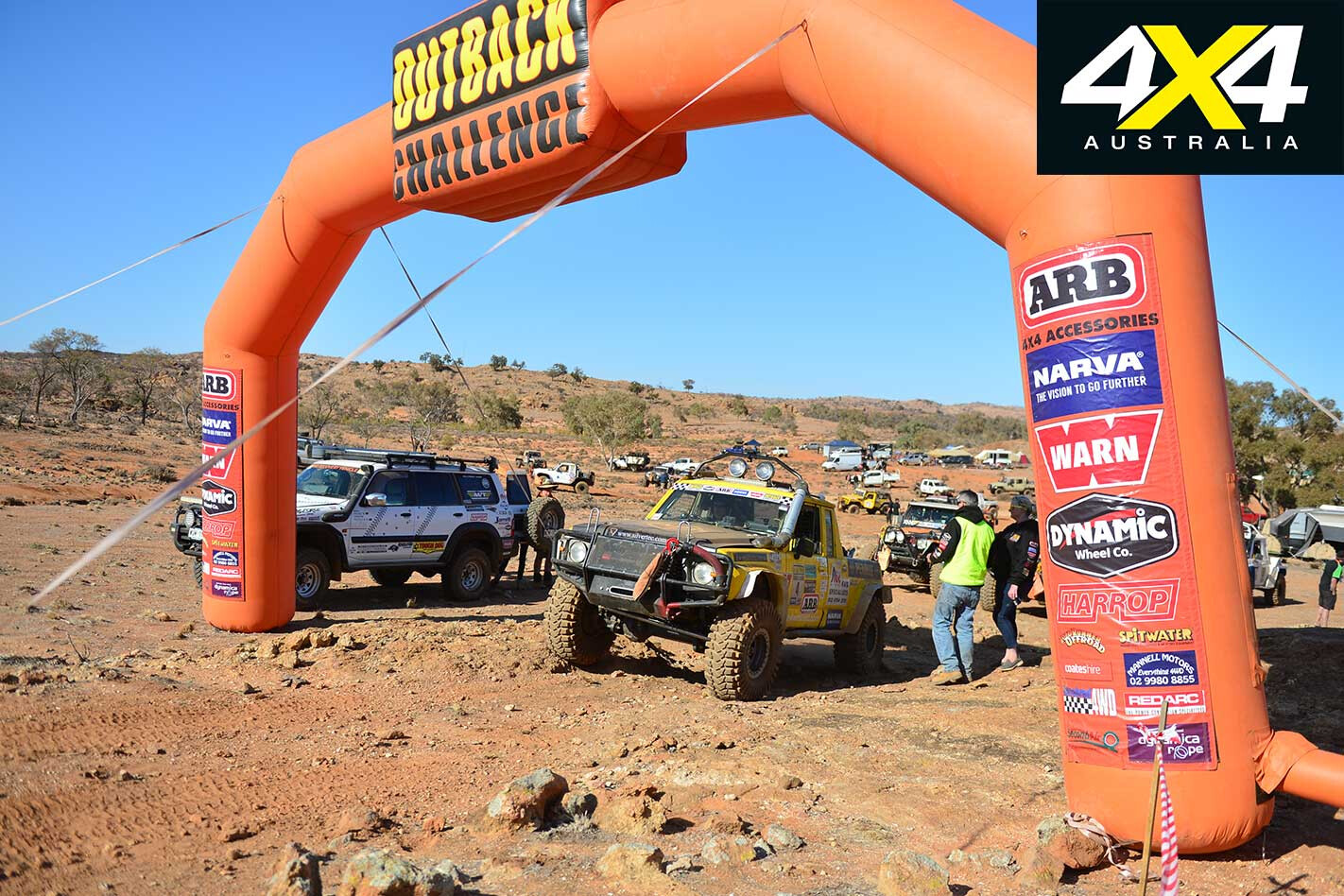
Chippa, a two-time winner of the event, reinvented the Outback Challenge in 2014. Using the traditional format of six days and up to 25 special stages – in terrain varying from the cloying mud of the Darling River overflows around Menindee, to the yellow sand dunes of Denien and the brutal rocks of the Barrier Ranges – he finessed the event further, to make it a true trial of vehicle and a demanding test of the crew’s navigational skills.
A big part of the event was always the self-reliance aspect, where crews were penalised for seeking outside assistance. Crews could help each other, and great effort was put into completing stages and achieving as few DNFs (did not finish) as possible. The camaraderie, the compromise and the improvisation in repairing breakages became legend.
But the event’s participation rate was waning. Maybe the cancellation through wet weather of the 2016 event disheartened many; it wasn’t the wet conditions of the competition areas that saw it cancelled, but the closing of public roads between those areas. Or perhaps it was simply getting too hard for some?
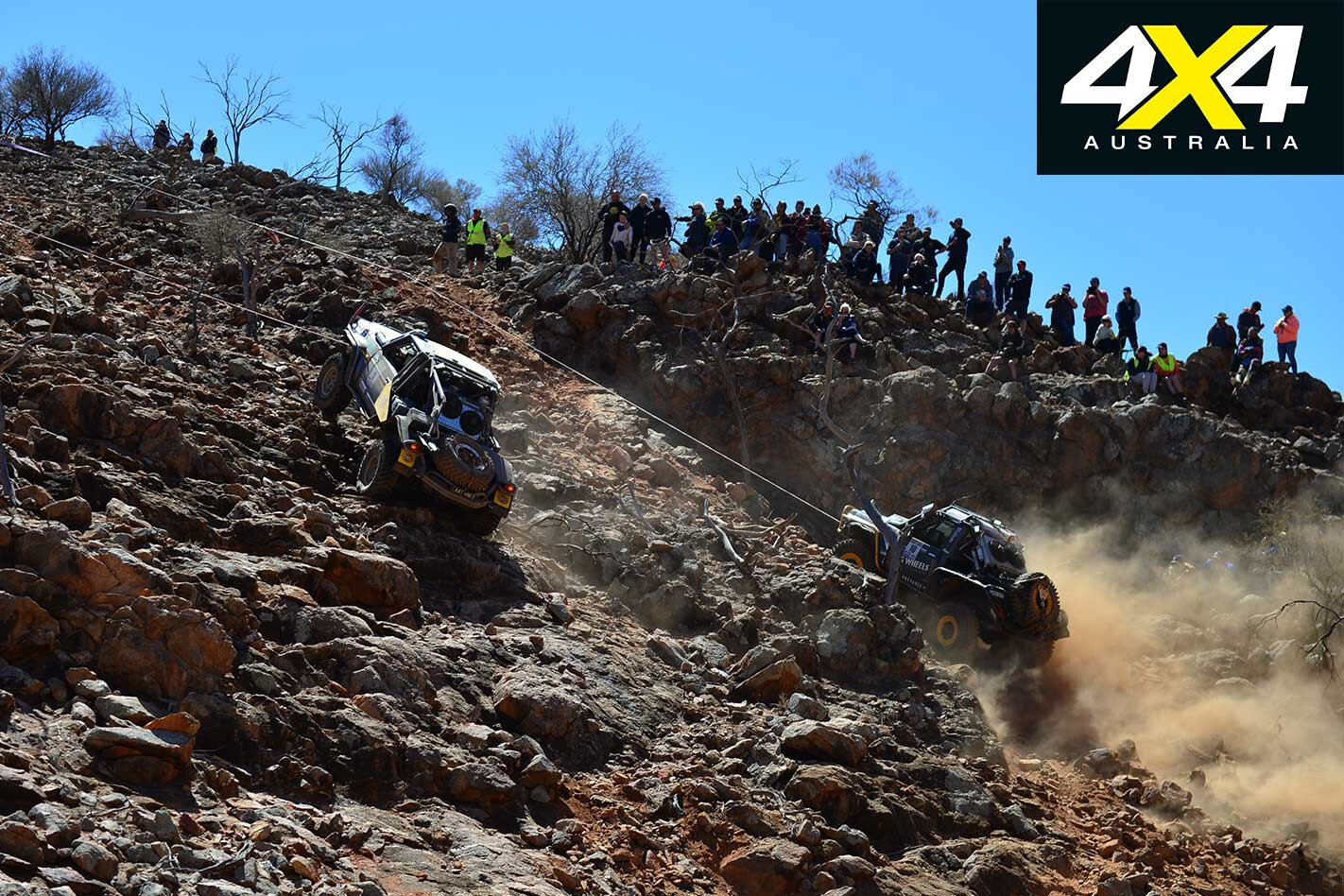
Myriad ideas were thrown around to generate interest. Many diehard, long-time competitors wanted no change, but changes were needed or the event faced extinction. Shortening the OBC to three days and having a central camp with pits where vehicles could be repaired was the chosen format. And for the first time, motorcycles were included in the final, long special stage (dubbed Mad Max because of nearby Silverton’s association with the Mad Max movies). For the bikes, the 200km special stage was promoted as a “hard enduro” with the catchword being “epic”.
The four-wheeled vehicles, which have now developed into much specialised winch-event machines, competed for the traditional trophy of a mounted Barrier Ranges rock, over the three days. Obstacles included crawling and bouncing over boulders, fast sandy creek runs, and punishing dust over seven special stages (plus Mad Max), most involving cross-country, point-to-point navigation, with some random navigation stages.
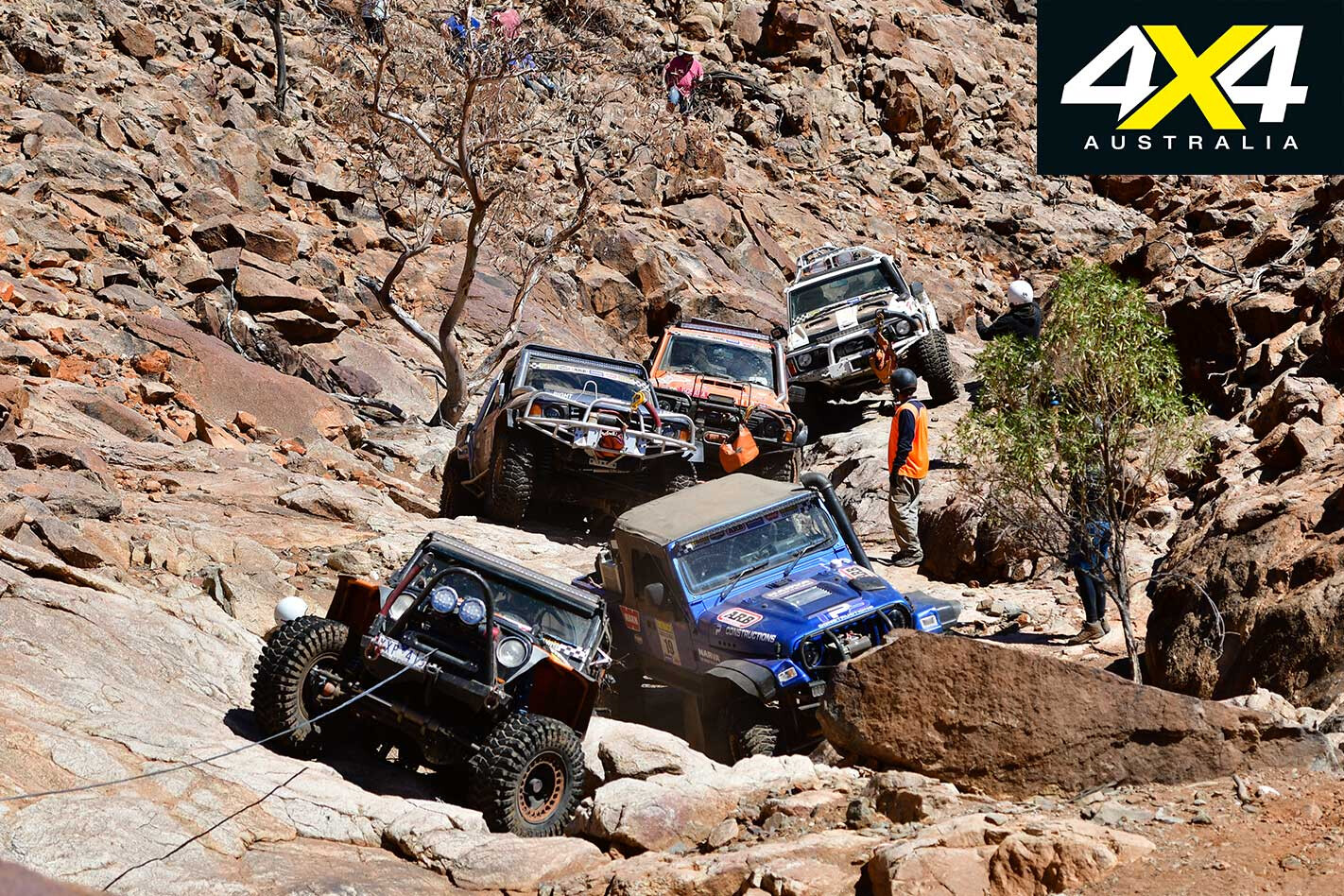
All special stages were on private property, with the base camp being on Mount Gipps, about 35km from Broken Hill. Other properties used included Wendalpa and Poolamacca. Because of the Silverton Hotel’s support in the past, a meet and greet was held there on the Wednesday preceding the event – a cheerio to the publicans, Pete and Patsy.
Much of inland Australia is currently in drought and, with the Barrier Ranges receiving little rain at the best of times, the area can be best described as a dustbowl. Major creeks on the properties used are totally dry, and farm, feral and native animals are all suffering – kangaroos rest lethargically in meagre shade.
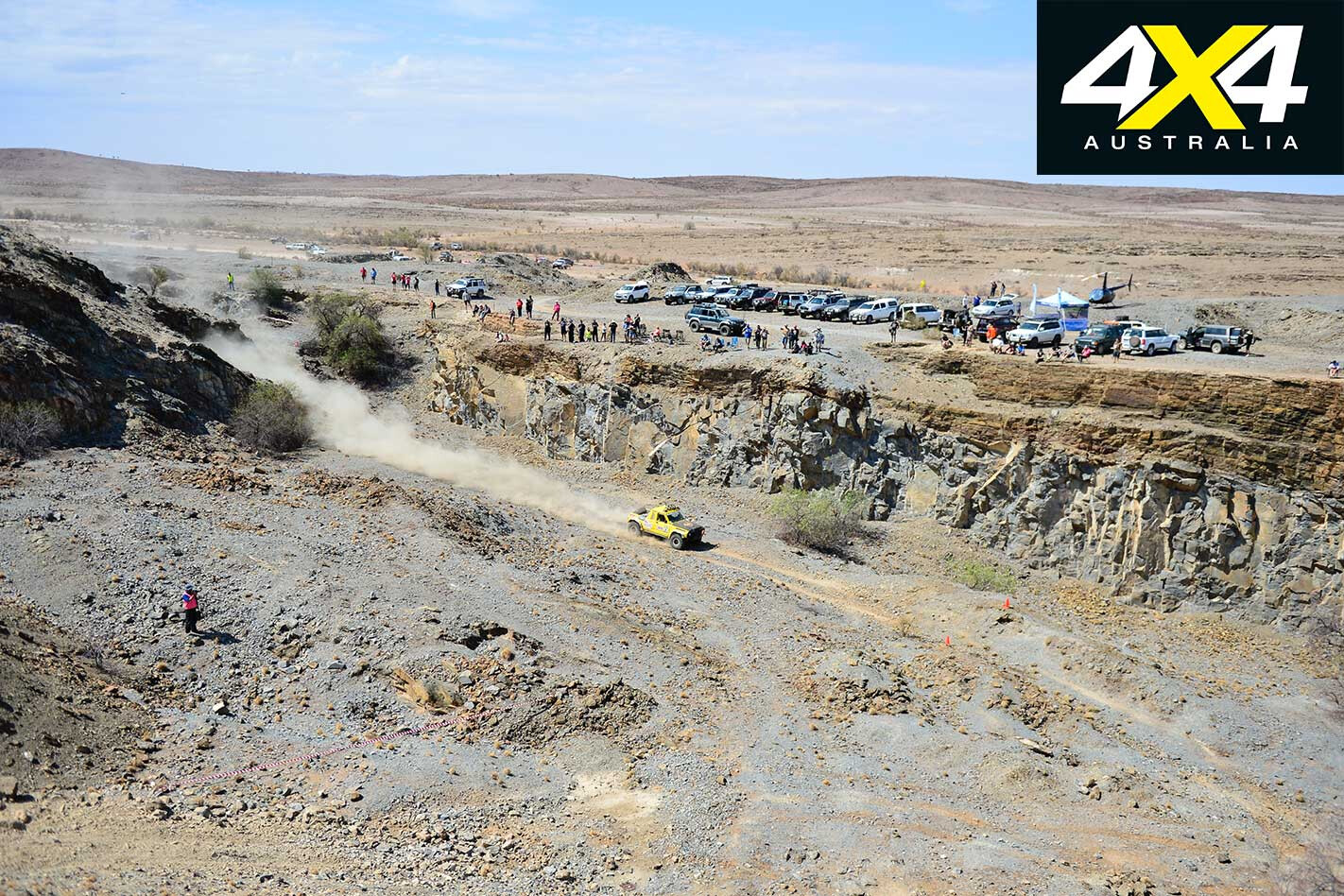
The several hundred people, spectators’ and support vehicles, combined with the 60-odd bikes and 30-odd competing cars, churned the central camp into something resembling a scene from an old Middle Eastern-based desert movie. But that’s the Outback Challenge: take the conditions as they come and conquer them.
Scrutineering took place on the Wednesday afternoon and Thursday morning at ARB Broken Hill, and teams were into it by 14:00 on the Thursday. The first and second special stages seeded the competitors for the following day’s five special stages.
SS1: Rock ’n’ Roadsafe
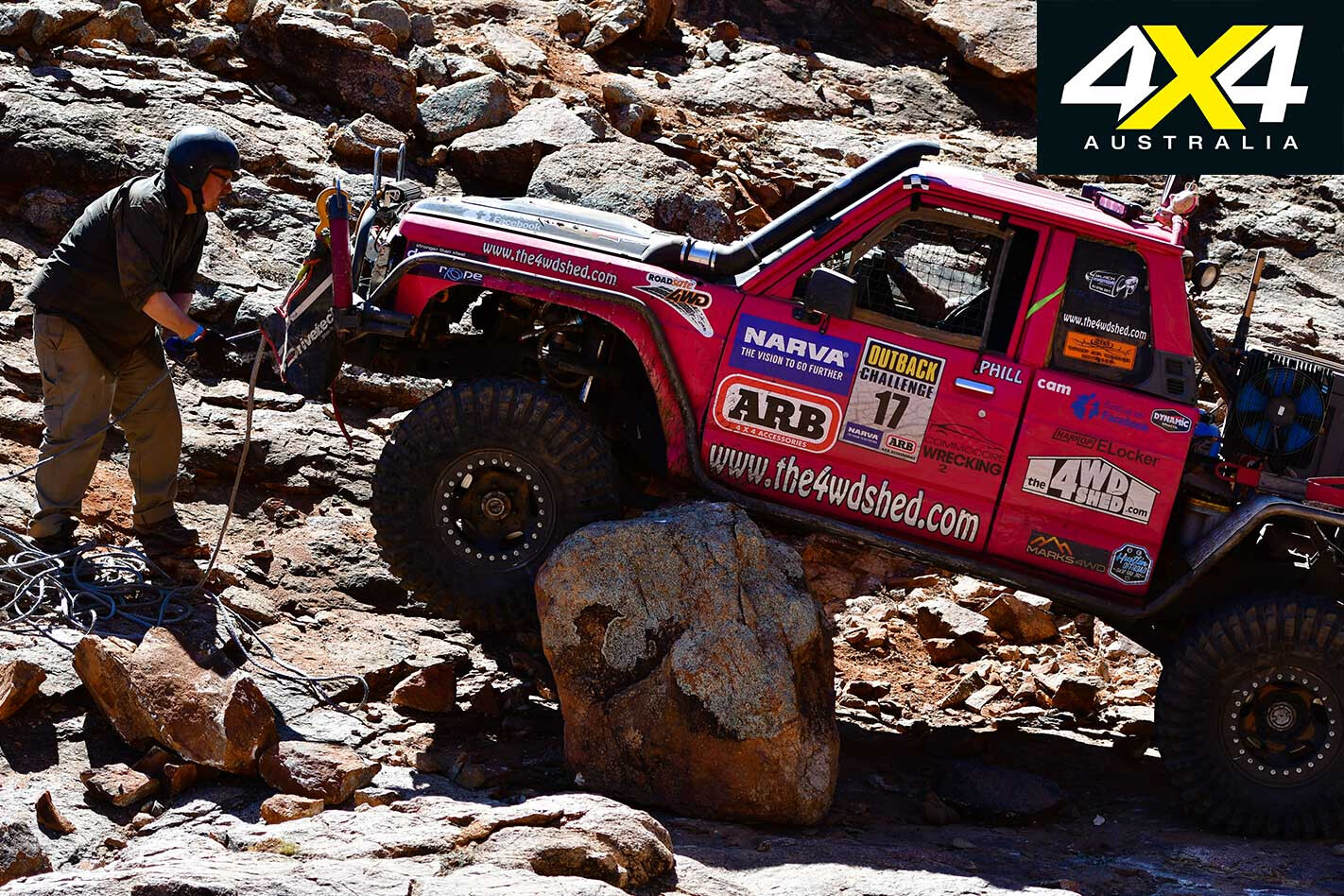
A short course (relatively speaking) right by the central camp saw the vehicles clambering over rock formations the size of buses, and there was a mandatory winch only 50 metres from the start. Traction was king, and a good third of the field drove a second point where it was thought winching would again be mandatory,
SS2: Dynamic Darkness
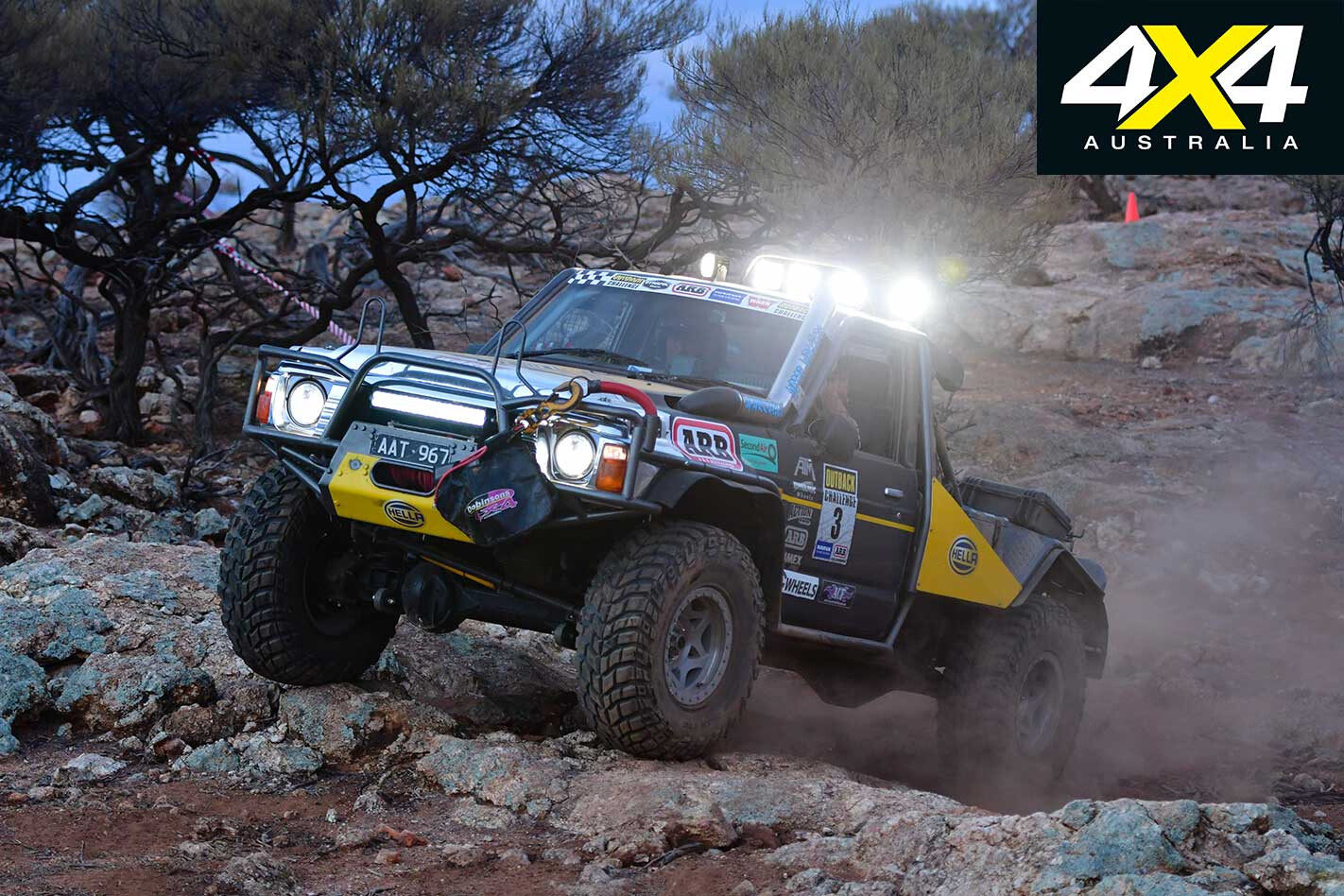
At 19:00 the field left the camp for a random GPS point stage; the object being to reach as many points as possible, including compulsory points, within the two-hour DNF time.
Now seeded, competitors faced a day and evening of virtually nonstop racing. Point-to-point navigation was the order, through rocky terrain, with loose climbs on spectacular hills and ultra-fast creek-bed runs. Checkpoints between stages meant time management was paramount.
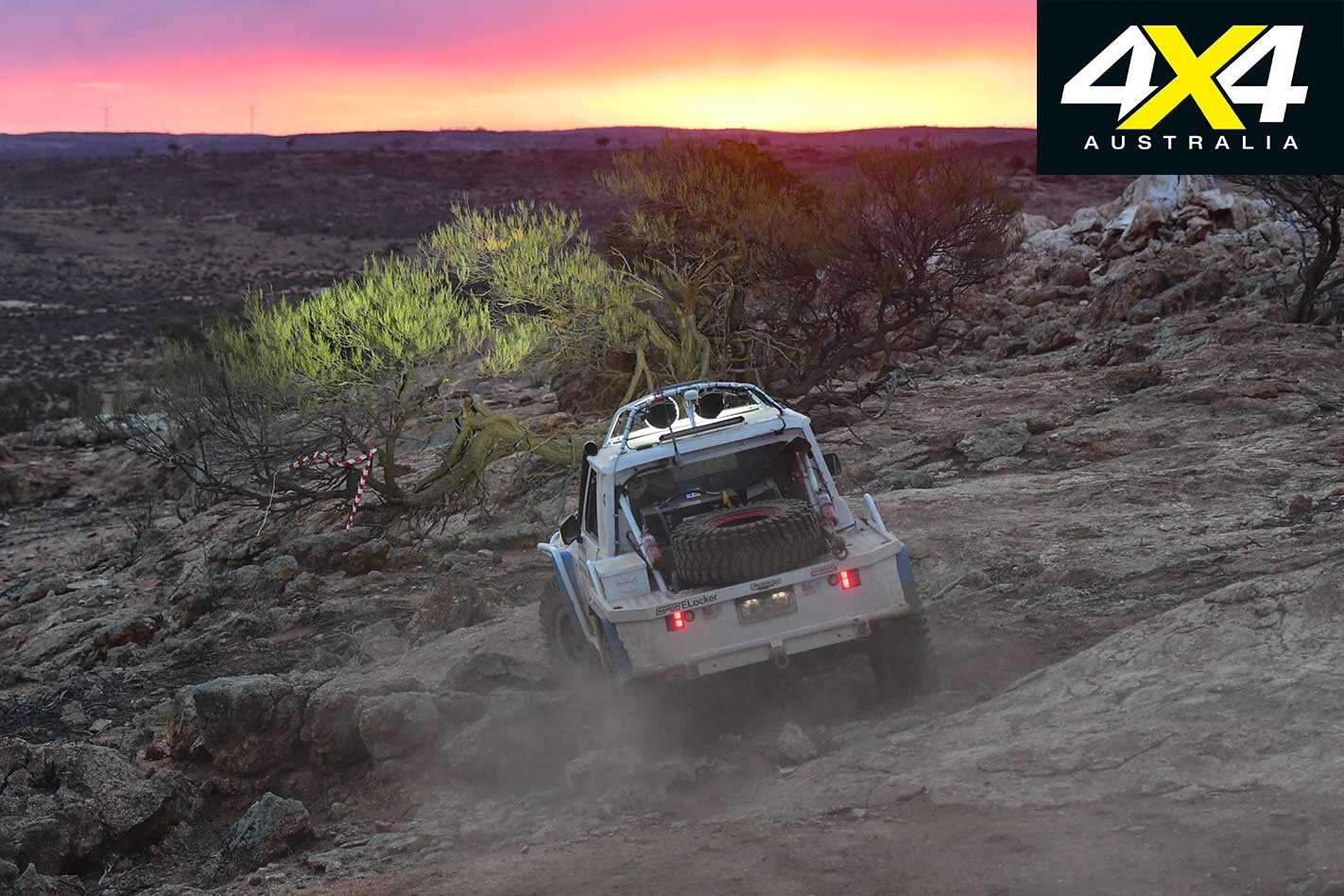
The Rallysafe system (app.rallysafe.com.au) was used to show in real time where all competitors were on the 156km of the five stages: Racebred Rocks, ARB Safari, WARN White Knuckles, Harrop Highway and Narva Night Moves. The stage names reflected sponsorship, with ARB, WARN and Narva being majors.
At 08:00 on the Saturday the bikes started the 200km special stage, Mad Max. The cars started two hours later; the same course for most part with the plan being that bikes would be well clear before the cars came through. It worked. Eight hours was the time allowed and, while a number of cars crossed the finish line, only four of them made it through the 86 waypoints and home within the allotted time.
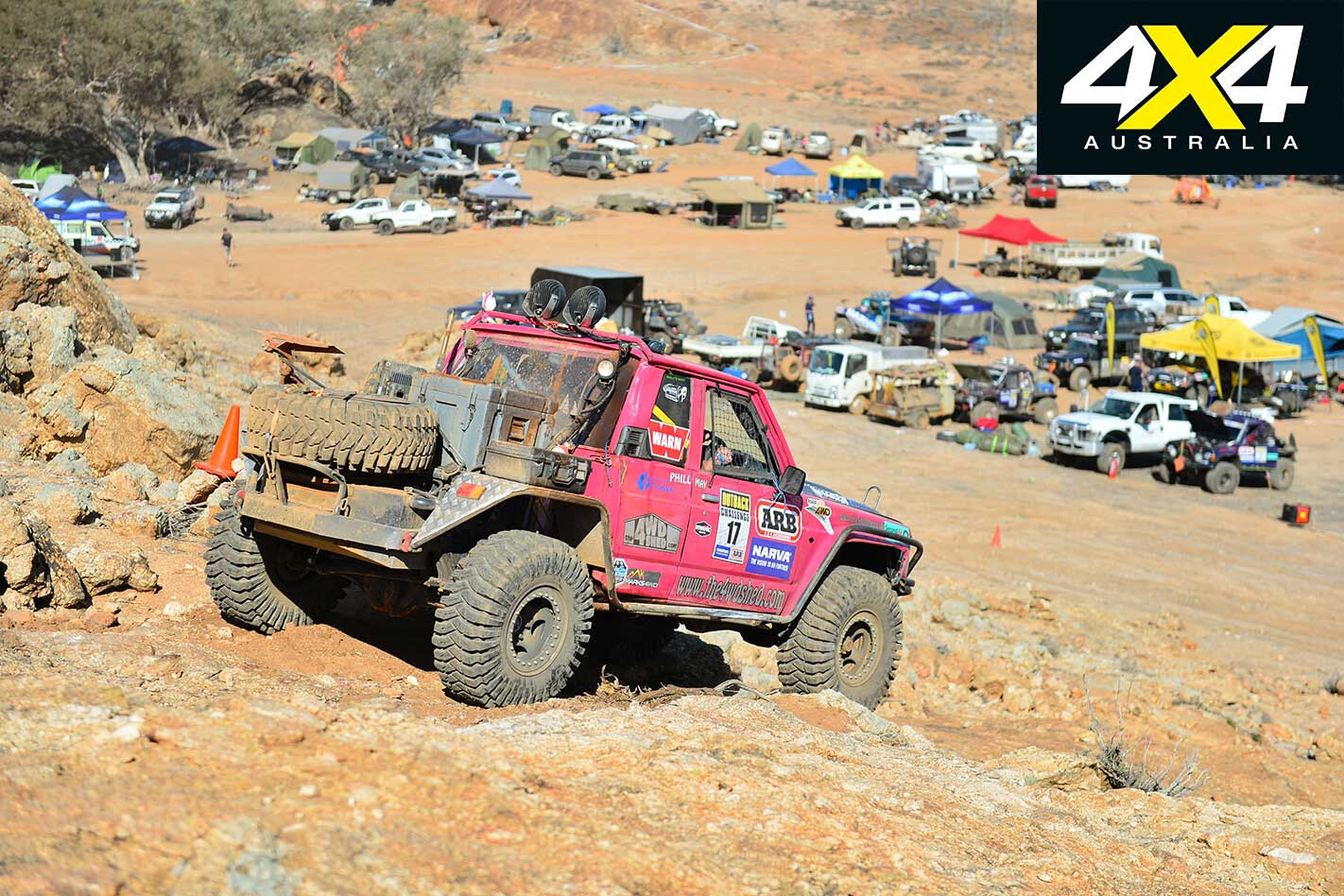
The Barrier Ranges, and particularly the property Poolamacca, are known for their rocky terrain. Of particular roughness are the gorges and hills around the abandoned Paragon copper mine. A convoy of spectator vehicles (about 50 4WDs in all) ably led by Christian Whamond and a jovial local known simply as Simmo (a longtime supporter of the OBC) were escorted to points of interest during the Friday Stages, and to the old copper mine for Mad Max. There was action aplenty as the cars scrambled and scraped their way over boulders and winched up impossibly steep gorge walls to reach waypoints.
In the washup there can only be one winner, but to finish the Outback Challenge, and particularly to just have a go at the Mad Max stage (arguably the toughest event in Australian off-roading) is a worthy achievement. So, in that regard, all entrants are winners.
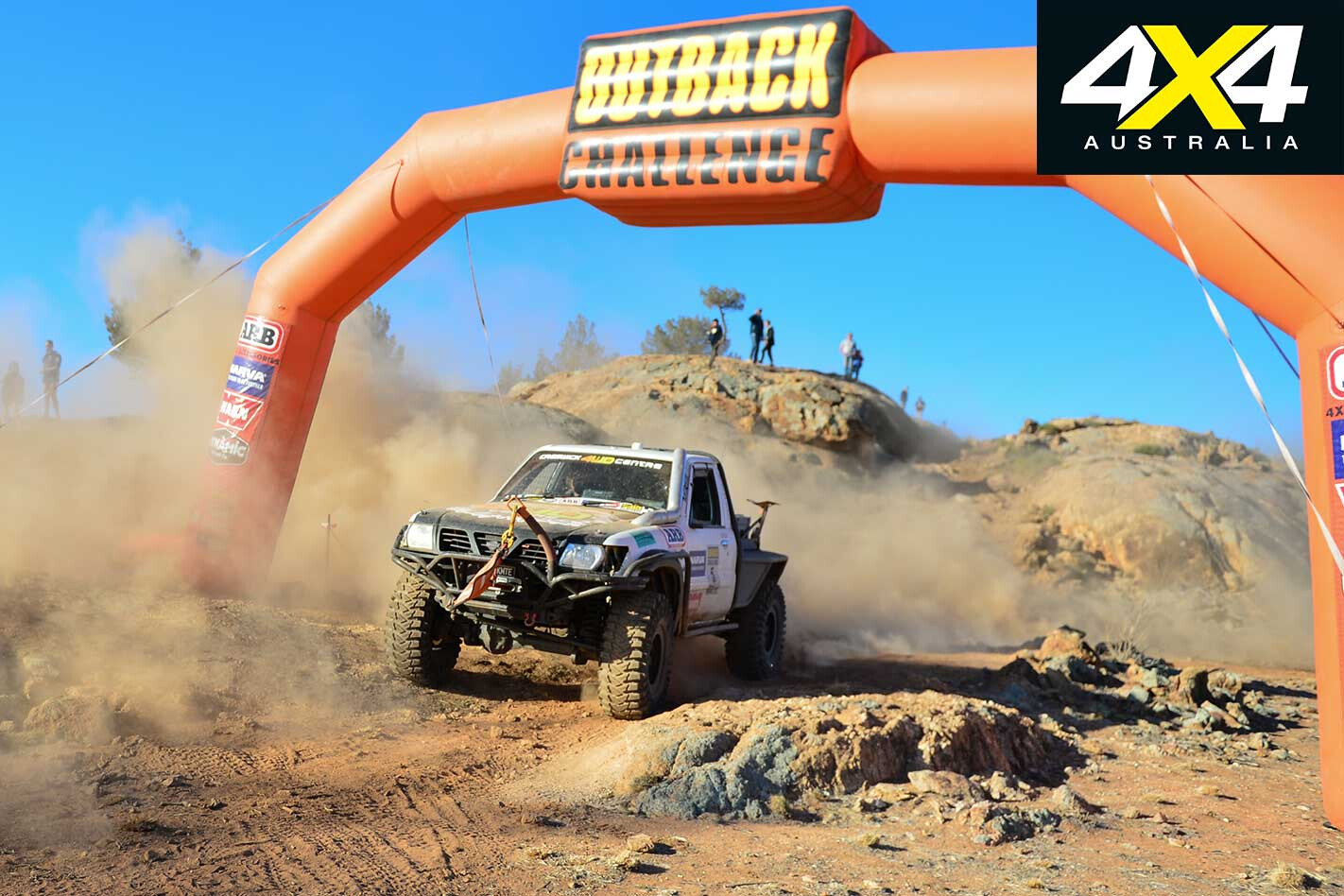
The 2018 event saw driver Dan Moulday and navigator Glenn Thomas, as team Silvertec, victorious. Previous winners Coops and Hummer (driver Neil Cooper and navigator Chris Hummer) rolled into second place, with driver Peter Thorpe and navigator Russell Andrew taking out third. Full results are available on the Outback Challenge Facebook page.
Unsurprisingly Dan’s car is a GQ Patrol, which runs an LS3 with manualised GU four-speed auto. GU diffs with ARB air lockers complete the running gear, and Dan made his own engine/gearbox adapters. Dan and Glenn first raced together this year in the Patrolapart Winch Challenge, but both have wide experience in major comps including a fourth place for Dan in the 2017 Outback Challenge, as a rookie.
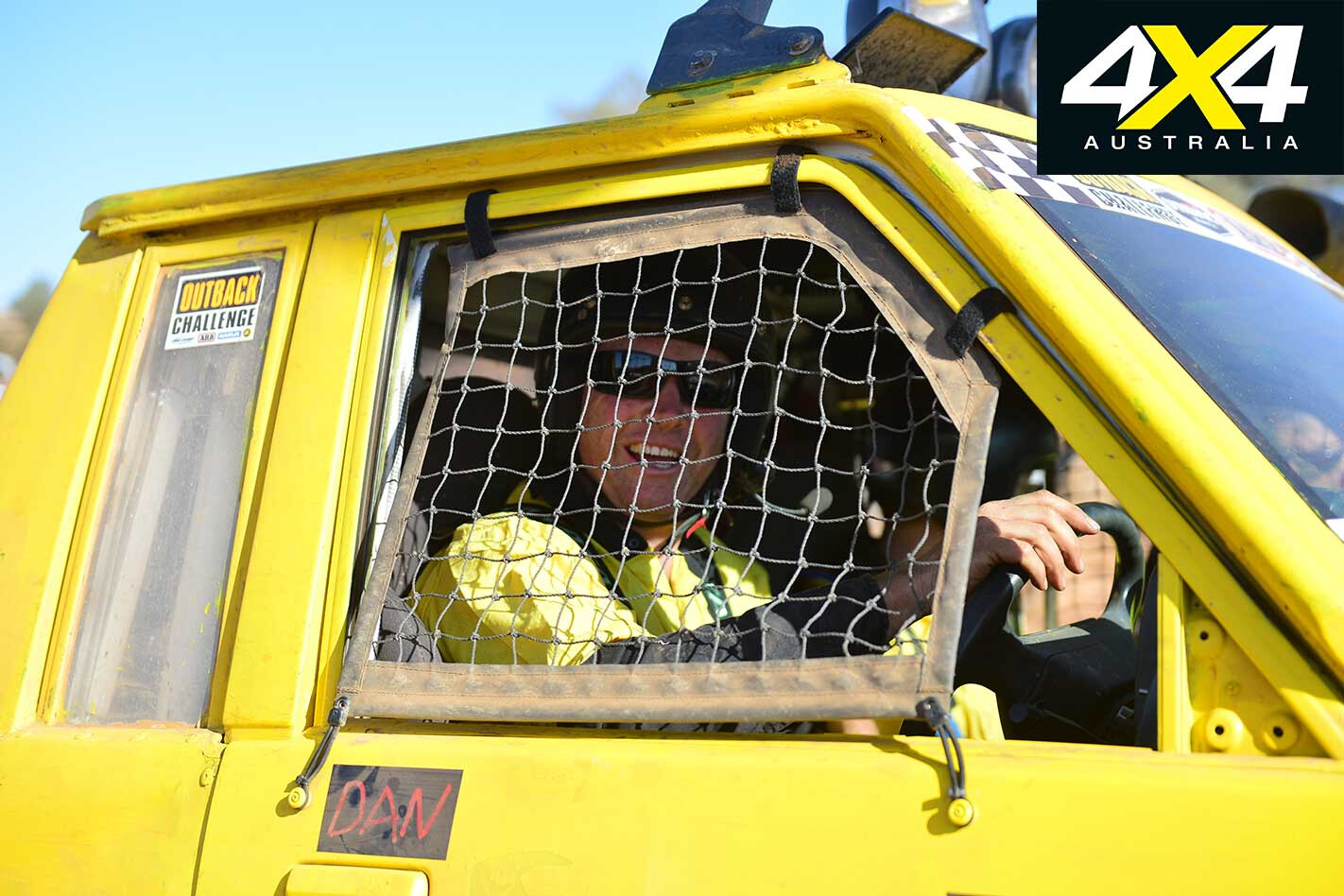
Like most motorsport events, the Outback Challenge runs with the help of volunteers. Working tirelessly, the OBC marshal team did a miraculous job, often late into the night recovering broken vehicles from impossible situations.
ROCK ON!
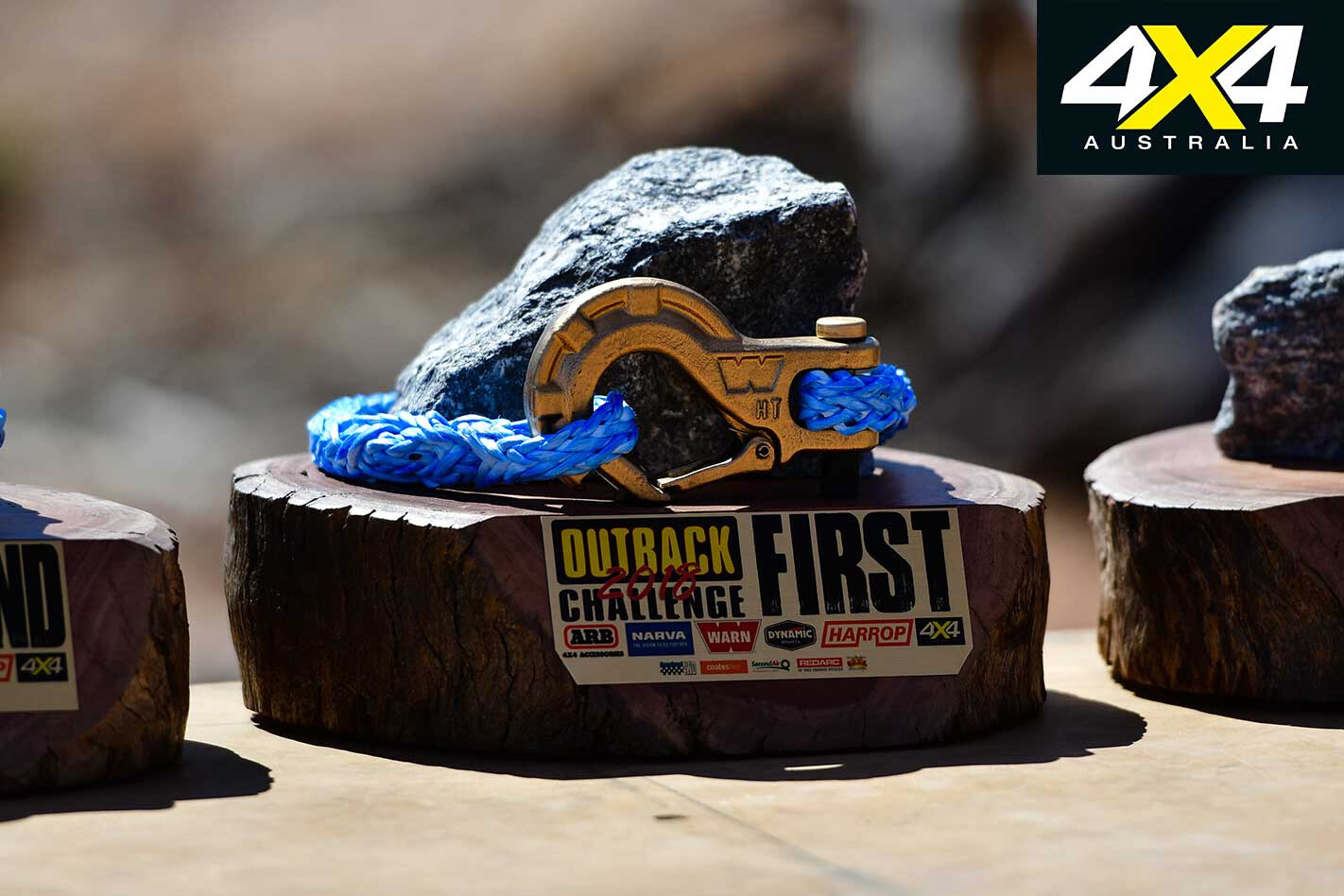
Thanks to all volunteers and sponsors that made this event happen. With a staff of more than 90, 2018 was epic in every way. The amount of work that takes place behind the scenes is unbelievable, but the volunteers love it; they see spectacular places and are rewarded with being part of something epic. It’s about mates, old and new.
I met so many amazing new people this year who worked their butts off and left with a smile. It’s our goal to make the Outback Challenge a great experience for everybody, and that is how we get more volunteers every year.
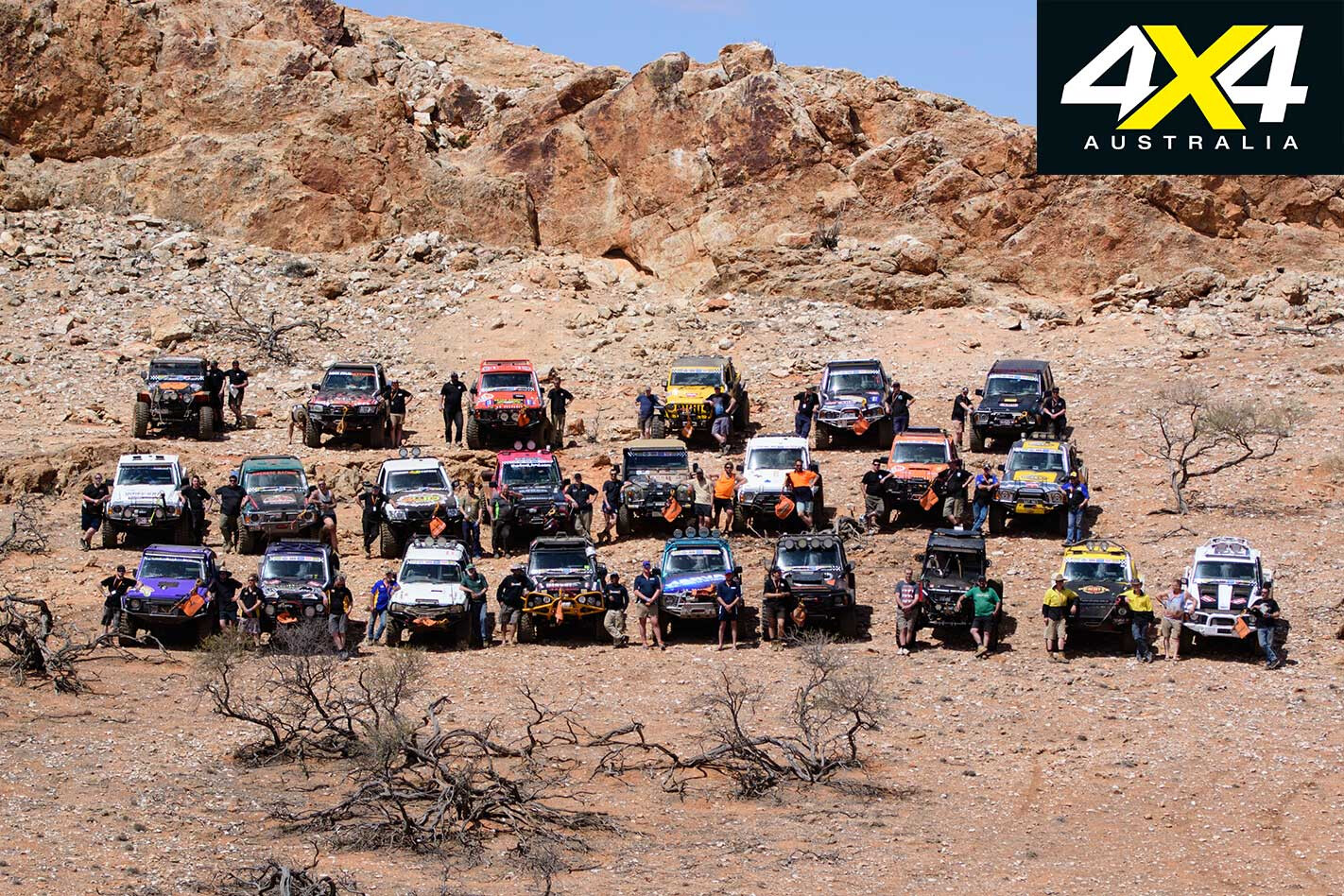
The sponsors also make the Outback Challenge what it is and give it a prestigious name. Narva, ARB, Warn, Dynamic Wheel Co., Harrop Engineering, Roadsafe 4WD, Racebred 4WD, Coates Hire, Secondair and Dynamica Rope; you all know most of these companies and know the quality of their products. Please support our event by supporting these companies and make your next purchase with them.
Lets take 2019 to the world! – Steve ‘Chippa’ Tjepkema
SOME YEARS ago Hitch-Ezy launched the impressive five-tonne-rated off-road hitch. As good as it was, it was overkill for anything but heavy caravans.
Now, the company has released the 3.5-tonne version for use on most camper trailers and caravans. It’s now a one-piece, anodised, aircraft-grade alloy body that is fitted with Acetal bushes that don’t require lubrication. The tow pillar is a case-hardened oxy nitro-carburised unit, while all painted parts are zinc-nickel alloy; plus the handbrake and yoke bolts are 316 stainless steel.
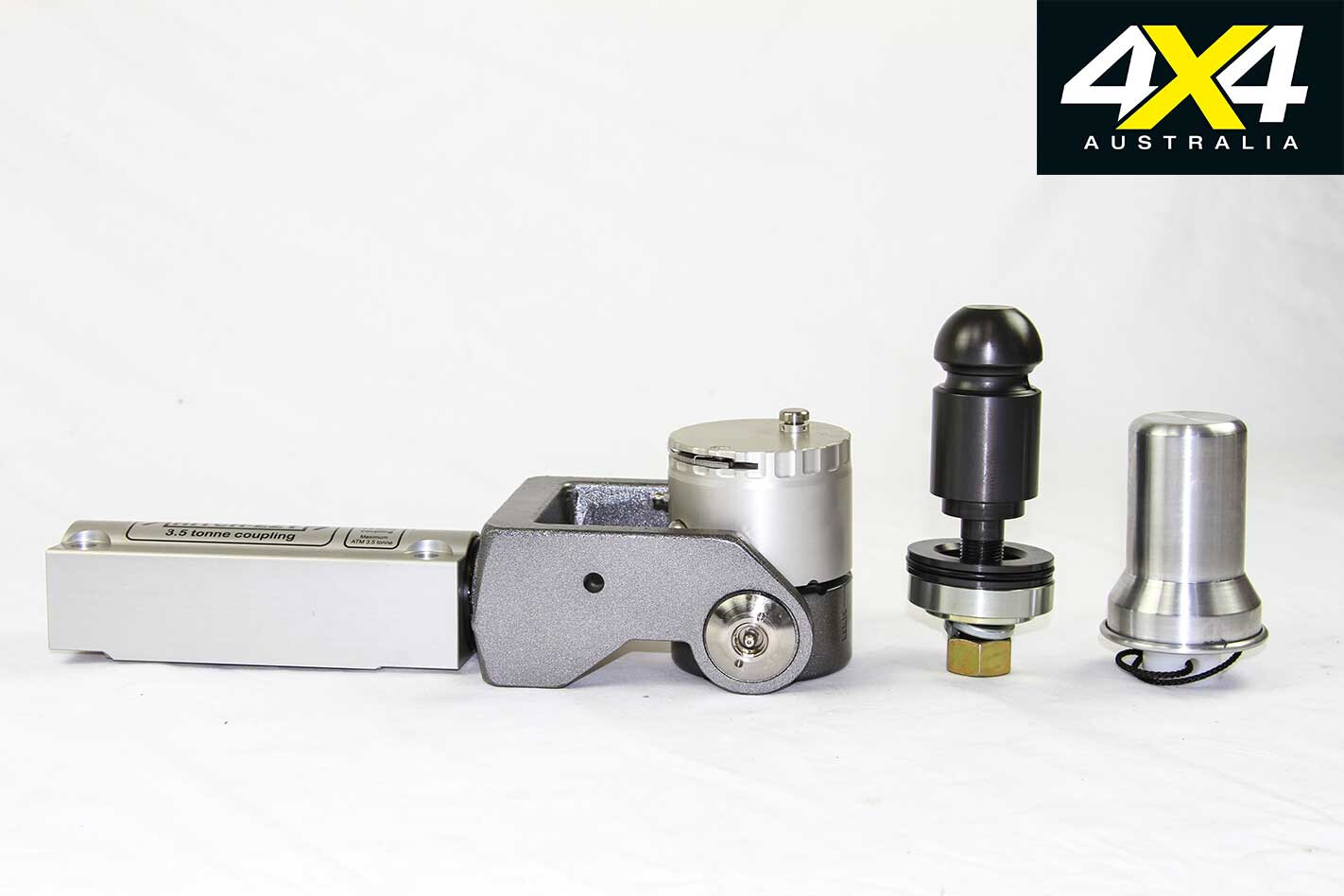
The Hitch-Ezy is ADR compliant and can be utilised with level riders where needed, but these must be removed for off-road use. The system replaces the standard 50mm tow ball with a dedicated 55mm tow pillar that is dome-shaped to aid in self-centring of the hitch’s main body as it is lowered via the jockey wheel.
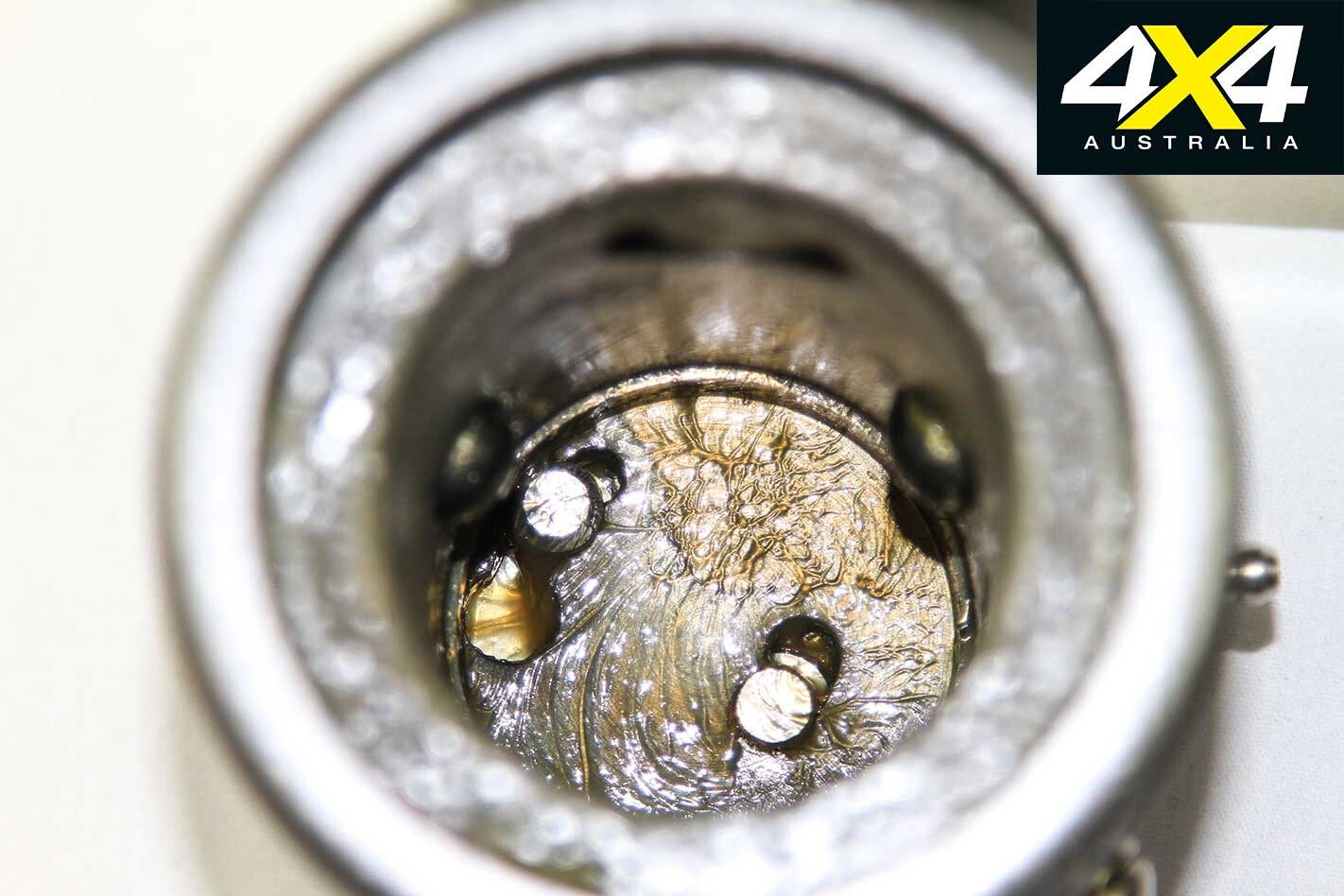
The recessed (concave) section of the main post is where the three large cam-operated ball bearings auto double-lock onto the pillar. There’s no manual locking required, as it all happens unaided when the hitch is lowered; plus, it will relock automatically should the hitch be raised and then lowered again.
The tow pillar’s flange incorporates a neoprene O-ring to seal against the ingress of water and dirt, both when the coupling is in use and when the supplied aluminium tow pillar cover is in place.
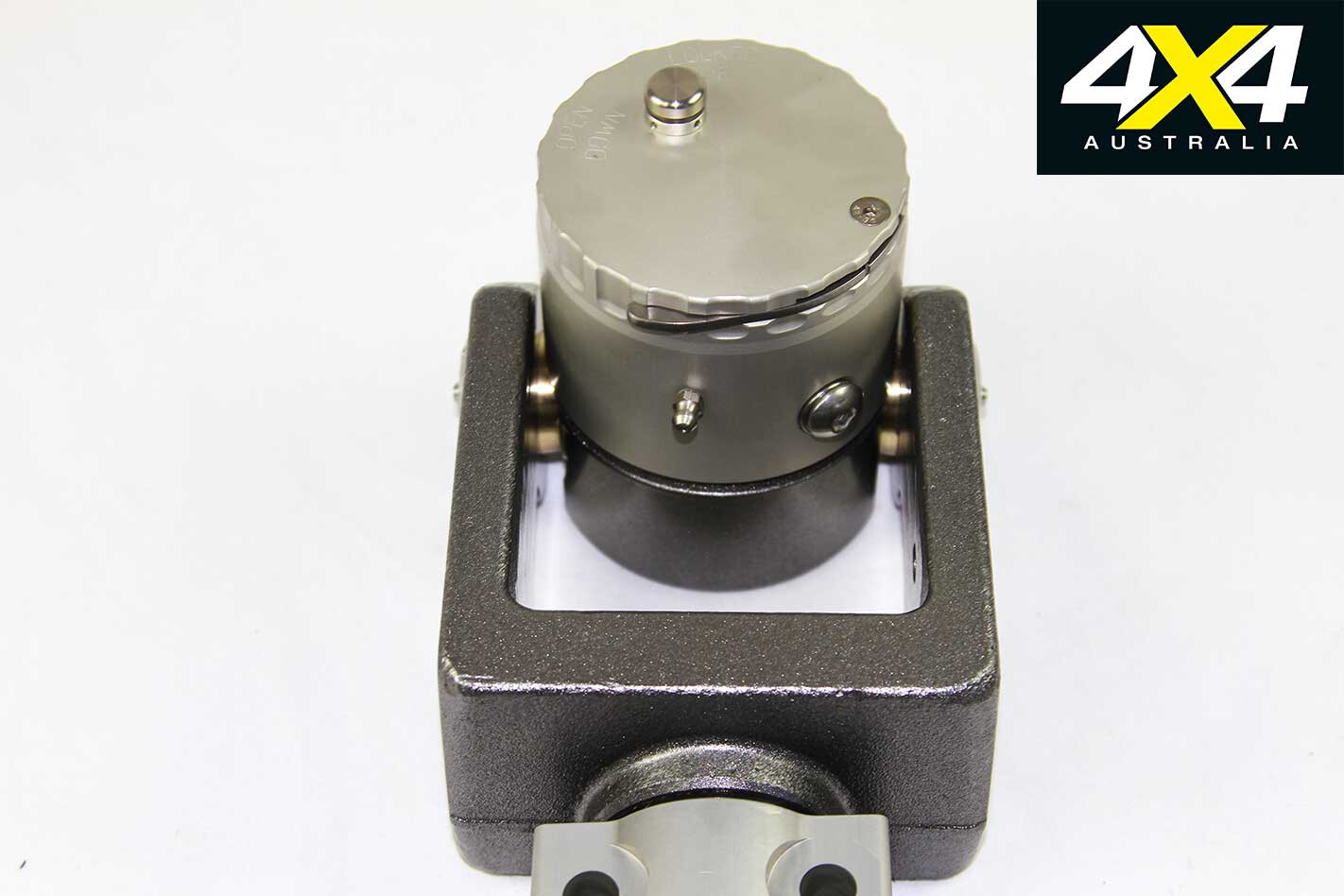
The system can be safely and easily hitched or unhitched regardless of loads, twisting forces or angles of the caravan or camper trailer. The Hitch-Ezy will twist a full 360 degrees along its axis, and it will also articulate 90 degrees in both the up and down as well as left and right directions. The overall height of the hitch is 135mm, which should clear most rear doors.
A major point that sets this hitch apart from many others is that the pivoting and load point of the Hitch-Ezy is exactly where the hole in your tongue is, not rearwards. This system doesn’t put extra load via leverage or cantilevering onto the tow bar, which can add unnecessary stress.
The Hitch-Ezy covers all bases for ease-of-use, safety, off-road ability, functionality and outright precision of manufacture. It’s currently only available via caravan manufacturers and retailers. If you’re getting a van or camper trailer made or want to retrofit, ask your local mob to get it in for you.
For more information, see www.hitch-ezy.com.au or phone 0407 246 407.
RATED Available from: www.hitch-ezy.com.au; www.thetrailershop.com.au RRP: $686 + freight We Say: Precision-engineered hitch that’s easy and safe to use.
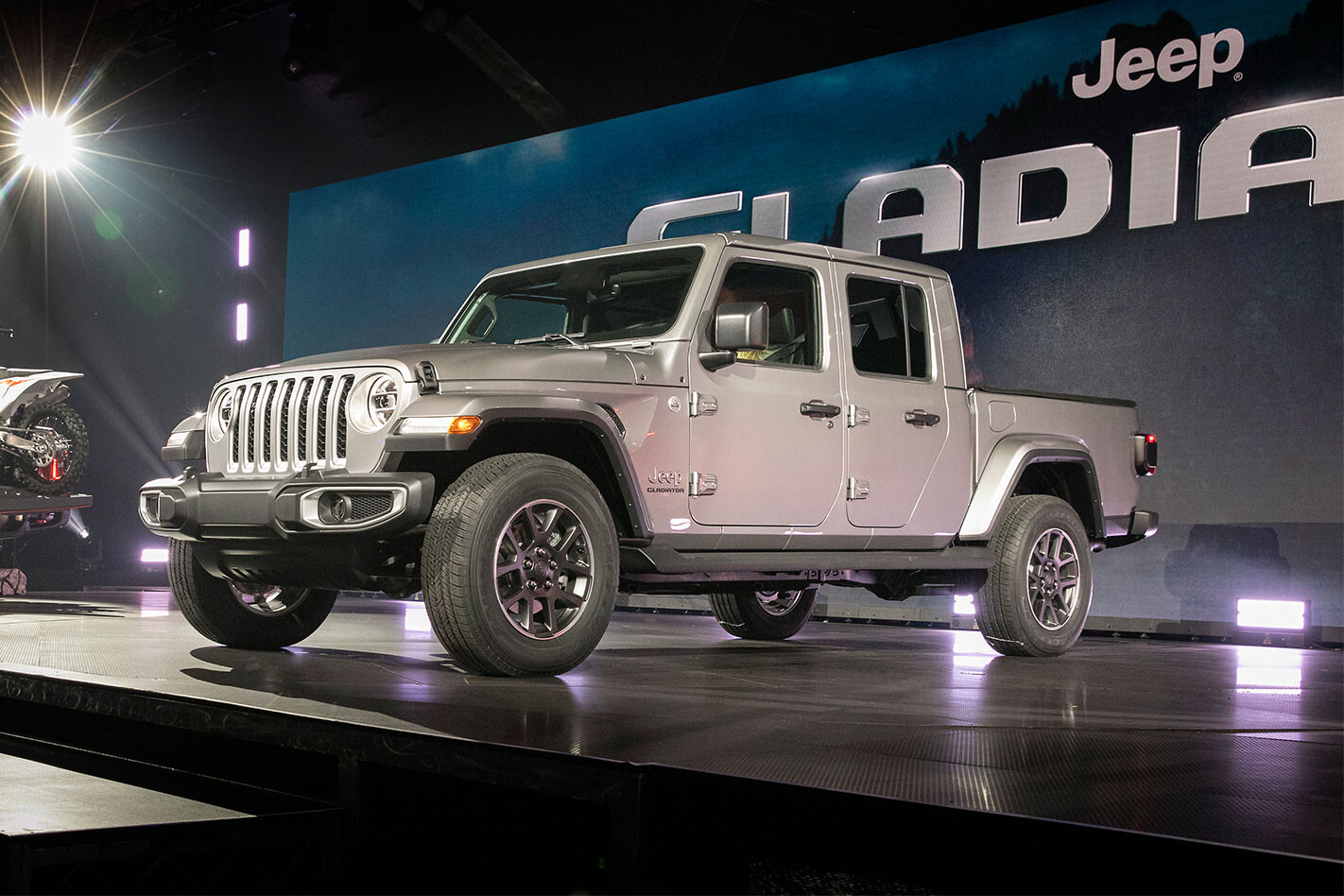
GONE is the Scrambler nameplate, with the all-new 2020 Jeep Gladiator officially debuting at the 2018 LA Auto Show.
The mid-size pick-up, set to arrive in US showrooms in the second quarter of 2019, will be available in Sport, Sport S, Overland and top-of-the-range Rubicon configurations.
Building on the Gladiator nameplate’s rich history, the 2020 model pays homage to the Jeep’s heritage but packs state-of-the-art tech and class-leading performance into its crew-cab form.
When the Gladiator starts rolling out of Jeep’s Toledo, Ohio, plant it will be powered by the brand’s well-established 3.6-litre Pentastar V6 engine (213kW and 353Nm). This will be mated to a six-speed manual transmission as standard, but an eight-speed automatic transmission can be optioned. However, from 2020 Jeep will offer a 3.0-litre EcoDiesel V6 engine mated to an eight-speed automatic transmission.
The eight-speed auto delivers a 77.2:1 crawl ratio, as well as a 4.7:1 first gear ratio coupled with a 4.1:1 final drive; the six-speed manual features a 4.41 ratio spread.
Two advanced 4×4 systems will be available for the Gladiator pick-up. Sport and Overland models get the Command-Trac system as standard, which features a two-speed transfer case with a 2.72:1 low-range gear ratio, and Dana 44 front and rear axles with a 3.73 rear axle ratio.
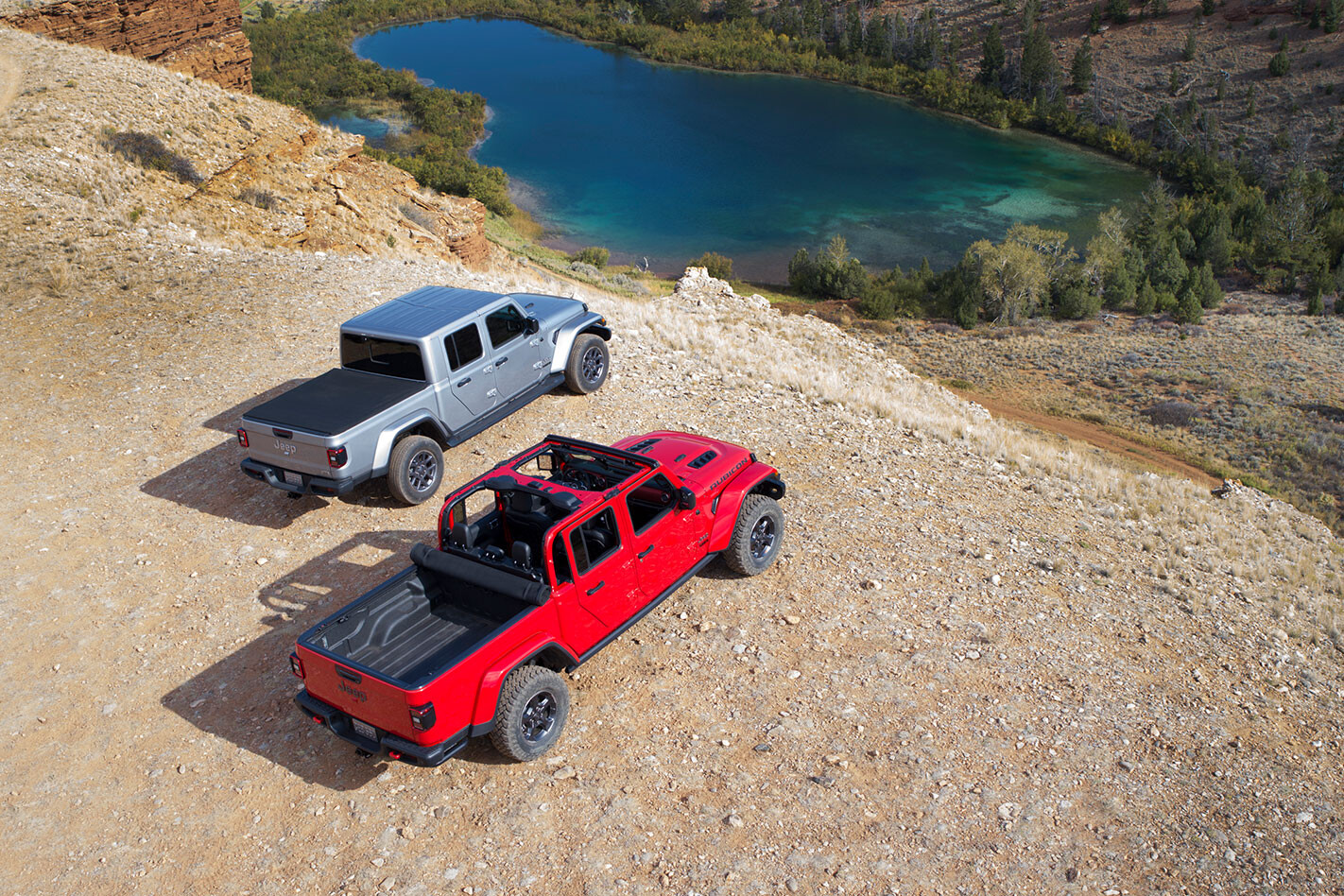
Rubicon models get the Rock-Trac 4×4 system, which features the Dana 44 front and rear axles with a 4LO ratio of 4:1. Also standard is a 4.10 front and rear axle ratio and Tru-Lok locking diffs. The Rubicon’s suspension travel is aided via an electronic sway-bar disconnect.
The Gladiator utilises an exclusive five-link coil suspension design down back, with the springs tuned to find a balance between off- and on-road driving situations.
The Gladiator’s off-road credentials stack up further when you include the front and rear tow hooks, skid plates, bars, approach angle of 43.6 degrees, rampover angle of 20.3 degrees, departure angle of 26 degrees, and a ground clearance of 11.1 inches (282mm). It can also ford water at depths of up to 30 inches (762mm), tow up to 7650 pounds (3500kg), and it has a payload capacity of 1600 pounds (725kg).
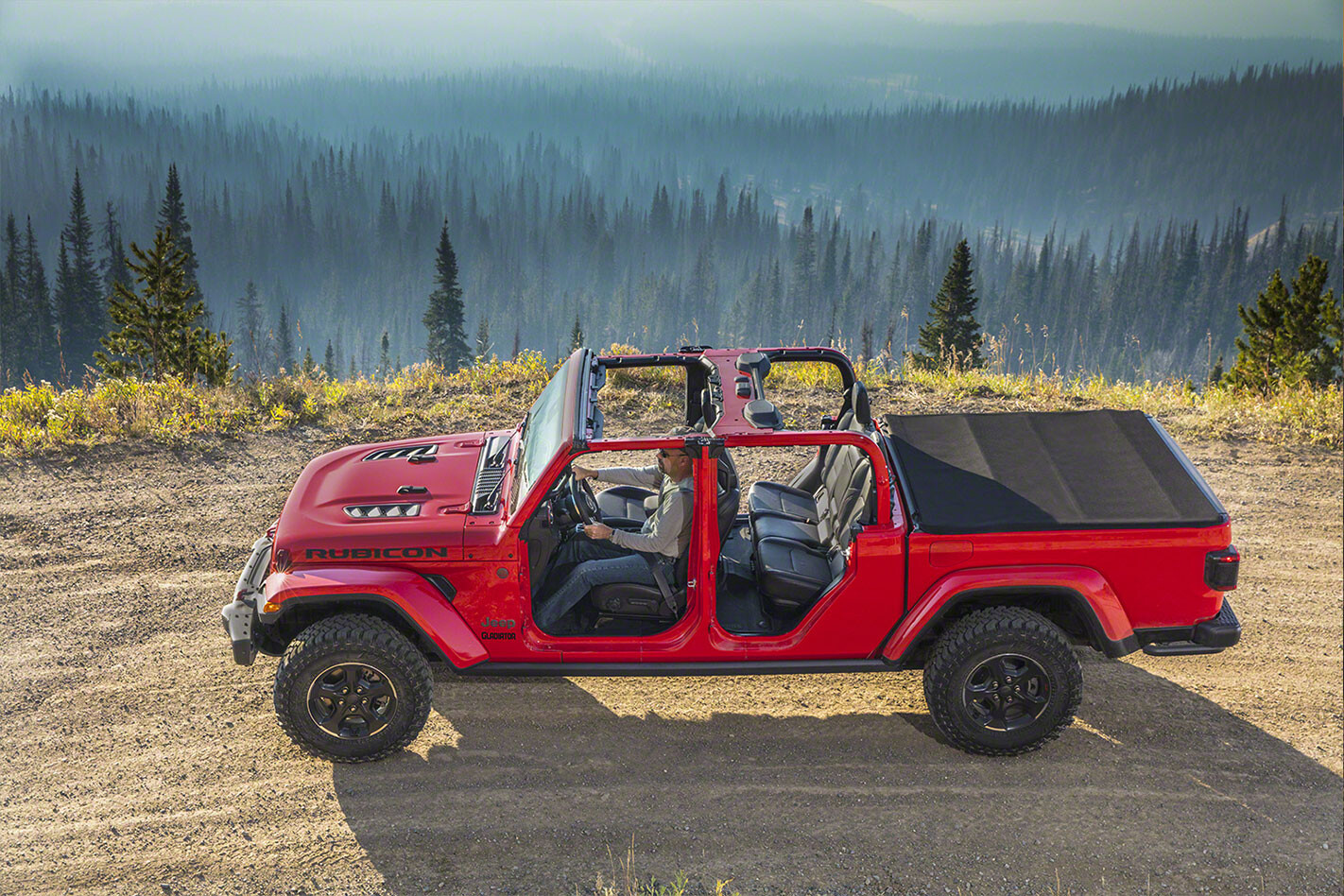
The Gladiator is available with a premium soft-top, as well as a black three-piece hard-top option – Overland and Rubicon models can be had with a three-piece body-colour hard-top. For the off-road purist who wants the windscreen gone and dirt in their eyes, a four-bolt design allows it to be easily folded down – with the rear-view mirror locked into place thanks to the A-pillar’s connection to the header bar.
The Gladiator’s legendary seven-slot grilled remains (obviously) but the slots have been widened to boost engine air-intake, which Jeep claims is to assist with the vehicle’s increased towing capacity.
The body-on-frame design features an all-new lightweight, high-strength steel frame, which is 31 inches (787.4mm) longer and has a 19.4-inch (492.8mm) longer wheelbase than the four-door Wrangler. To lose more weight, lightweight aluminium is utilised for the doors, hinges, bonnet, fenders, windscreen frame and tailgate.
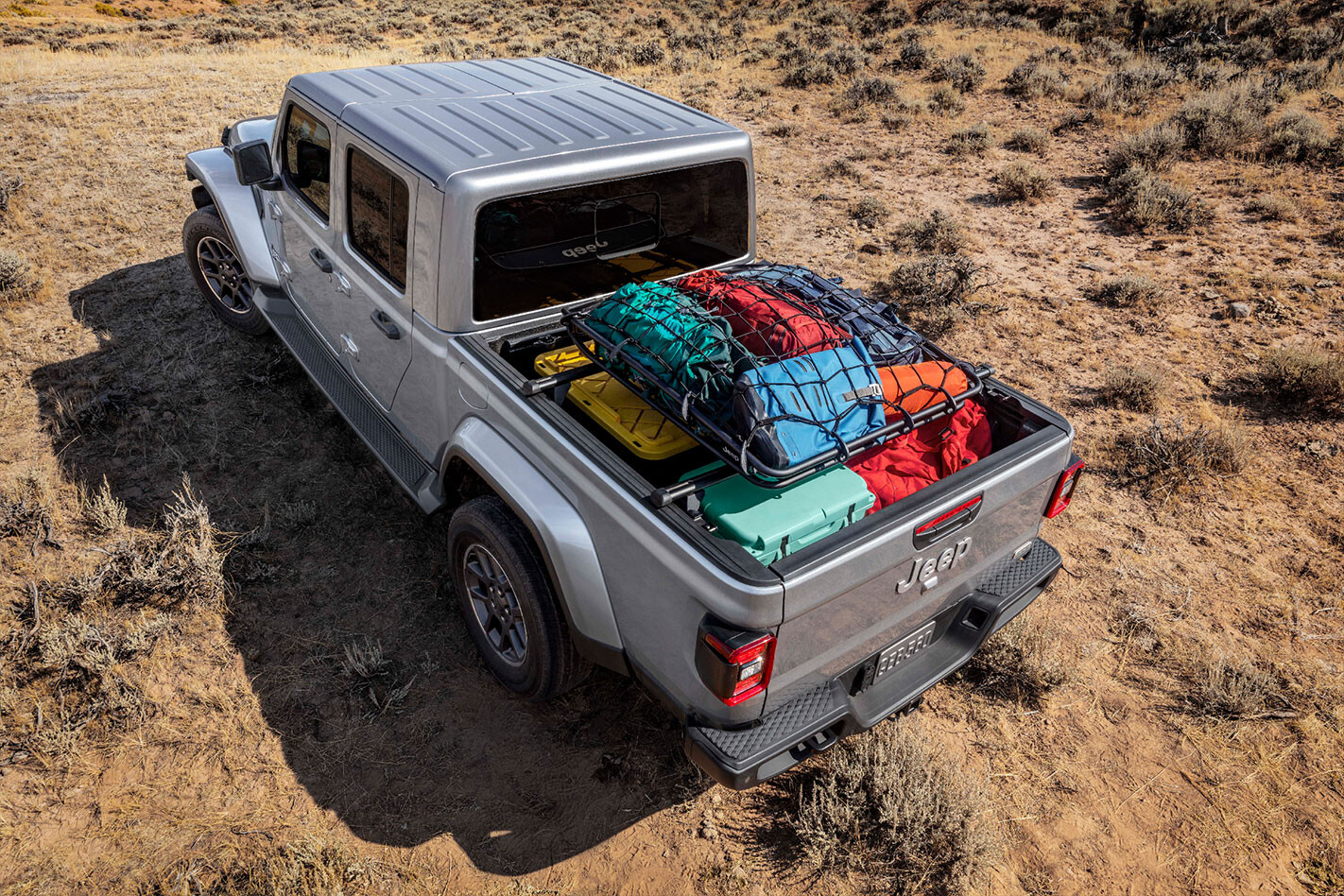
Ample storage space down back is enhanced via a wide tailgate opening, strong integrated tie-down points and a power-locking tailgate. Four steel crossmembers reinforce the five-foot (1524mm) steel bed, and a full-size spare and mount capable of fitting up to a 35-inch tyre resides beneath the tray and behind the rear axle.
It wouldn’t be a Jeep without aftermarket support, and Mopar has already stated that more than 200 new or redesigned Jeep Performance Parts will be available for the 2020 Gladiator at launch. Products include a spray-in bedliner, lift kits, lighting, rock rails and wheels.
Gladiator production is set to begin in the first half of 2019. Specs and local launch dates are yet to be revealed.
The curtains have dropped on the hotly anticipated Jeep Gladiator.
Revealed overnight at the LA Auto Show, the Gladiator is set for arrival in the second quarter of 2019 and will be available in Sport, Sport S, Overland and top-of-the-range Rubicon trim.
Jeep’s 3.6-litre Pentastar V6 engine will be offered with all variants, and it will be mated to a six-speed manual transmission as standard – an eight-speed auto is optional. A 3.0-litre EcoDiesel V6 will be offered in 2020.
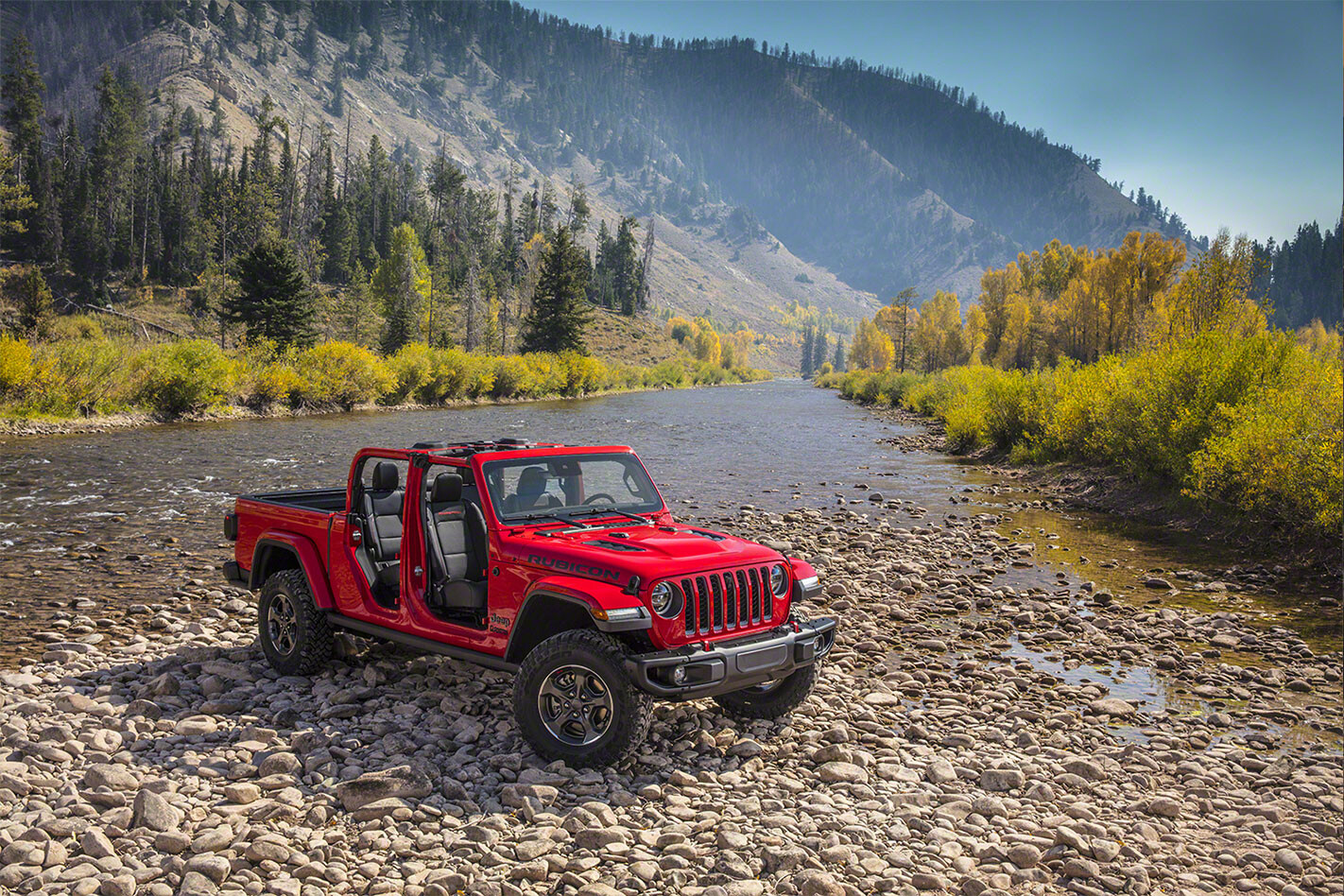
Allowing you to better hear that V6 pounding away at unrelenting terrain is that the Gladiator is the only true open-air pick-up – a soft-top and two hard-tops are available.
“Unquestionably a truck and instantly recognisable as a Jeep, the all-new 2020 Gladiator is the ultimate vehicle for any outdoor adventure,” said Tim Kuniskis, Head of Jeep Brand – North America. “There is tremendous demand for this unique vehicle from our loyal Jeep customers and pickup truck buyers everywhere. Born from a rich and proud heritage of tough, dependable Jeep trucks, Gladiator combines rugged utility, versatility and functionality resulting in the most capable mid-size truck ever.”
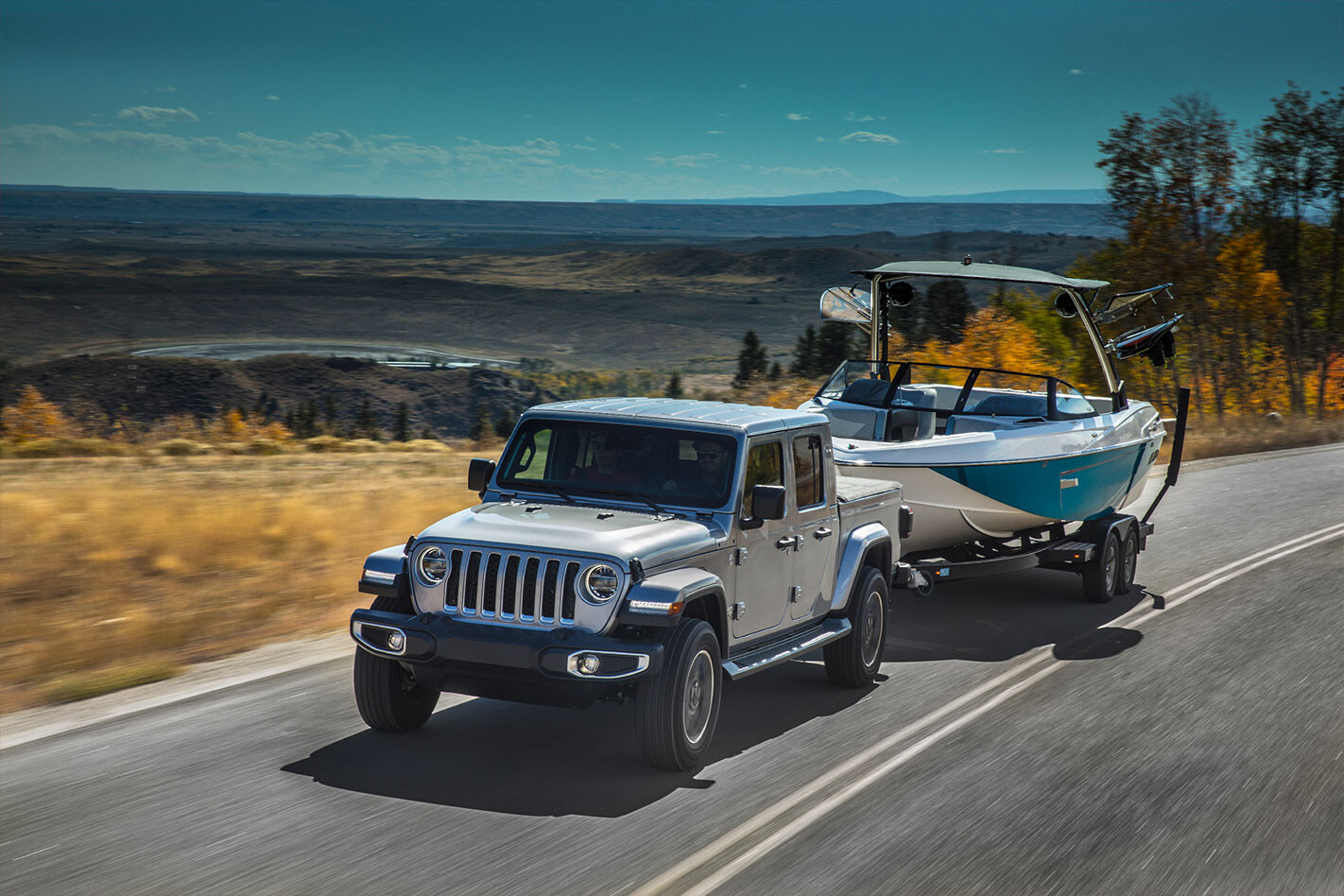
Other highlights include third-gen Dana 44 axles, Tru-Lock electric front- and rear-axle lockers, a Trac-Lok limited-slip diff and swaybar disconnect. The Gladiator can ford water at depths up to 30 inches (762mm); it can tow up to 7650 pounds (approx. 3500kg); and has a payload capacity of up to 1600 pounds (725kg).
A more detailed report can be found here; or just enjoy gorging on these photos.
RIVIAN Automotive has unveiled its two ‘Electric Adventure Vehicles’ ahead of the LA Auto Show, the R1T pick-up and the R1S seven-seat SUV.
The electric start-up company, based in Detroit, USA, debuted the vehicles at a press conference held at the Griffith Observatory in LA.
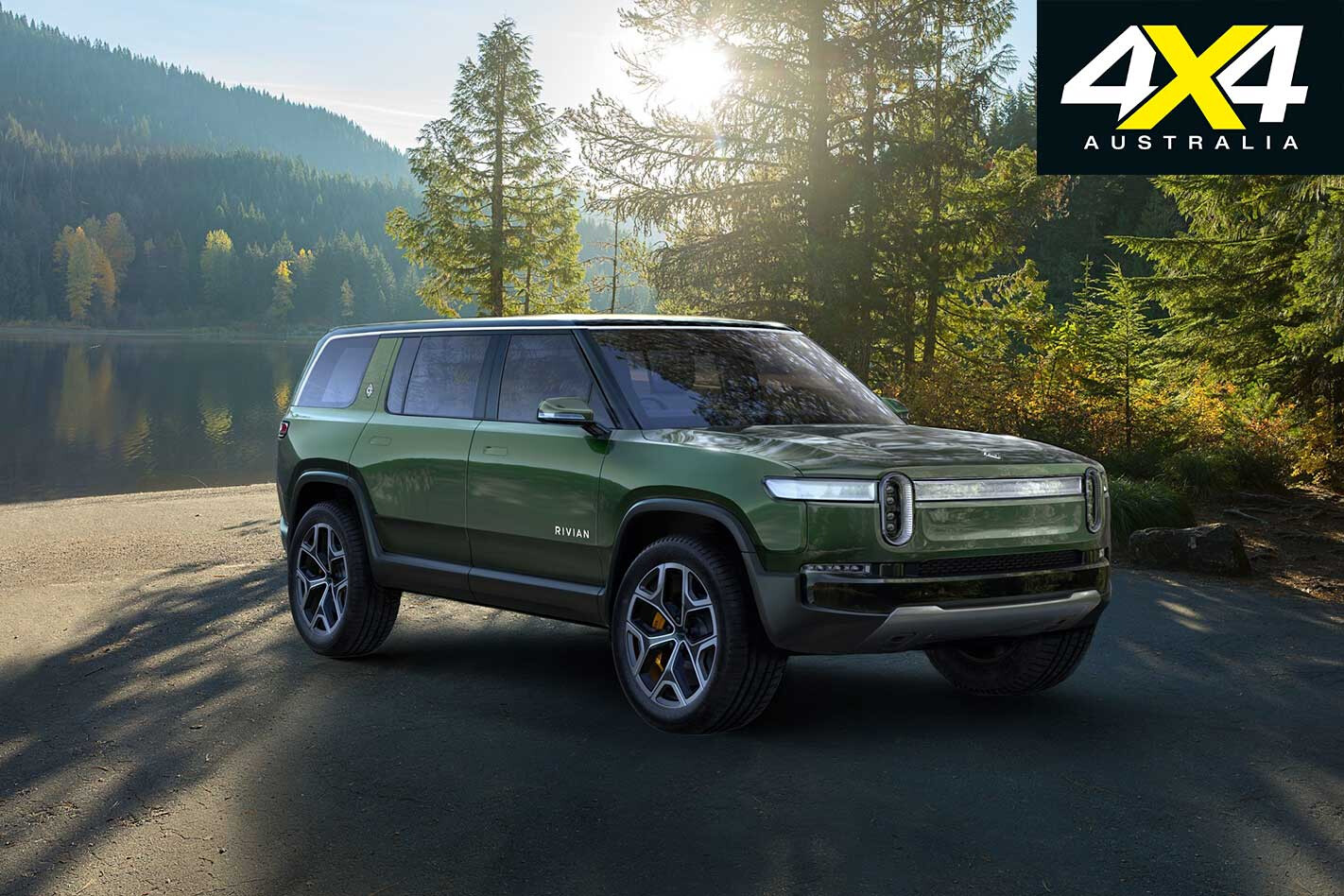
“We’re launching Rivian with two vehicles that reimagine the pickup and SUV segments,” said Rivian Founder and CEO, RJ Scaringe. “I started Rivian to deliver products that the world didn’t already have – to redefine expectations through the application of technology and innovation. Starting with a clean sheet, we have spent years developing the technology to deliver the ideal vehicle for active customers.
“This means having great driving dynamics on any surface on- or off-road, providing cargo solutions to easily store any type of gear, whether it’s a surf board or a fishing rod and, very importantly, being capable of driving long distances on a single charge.
“From the inside out, Rivian has developed its vehicles with adventurers at the core of every design and engineering decision. The R1T and R1S are the result of all this work and we are excited to finally introduce these products to the world.”
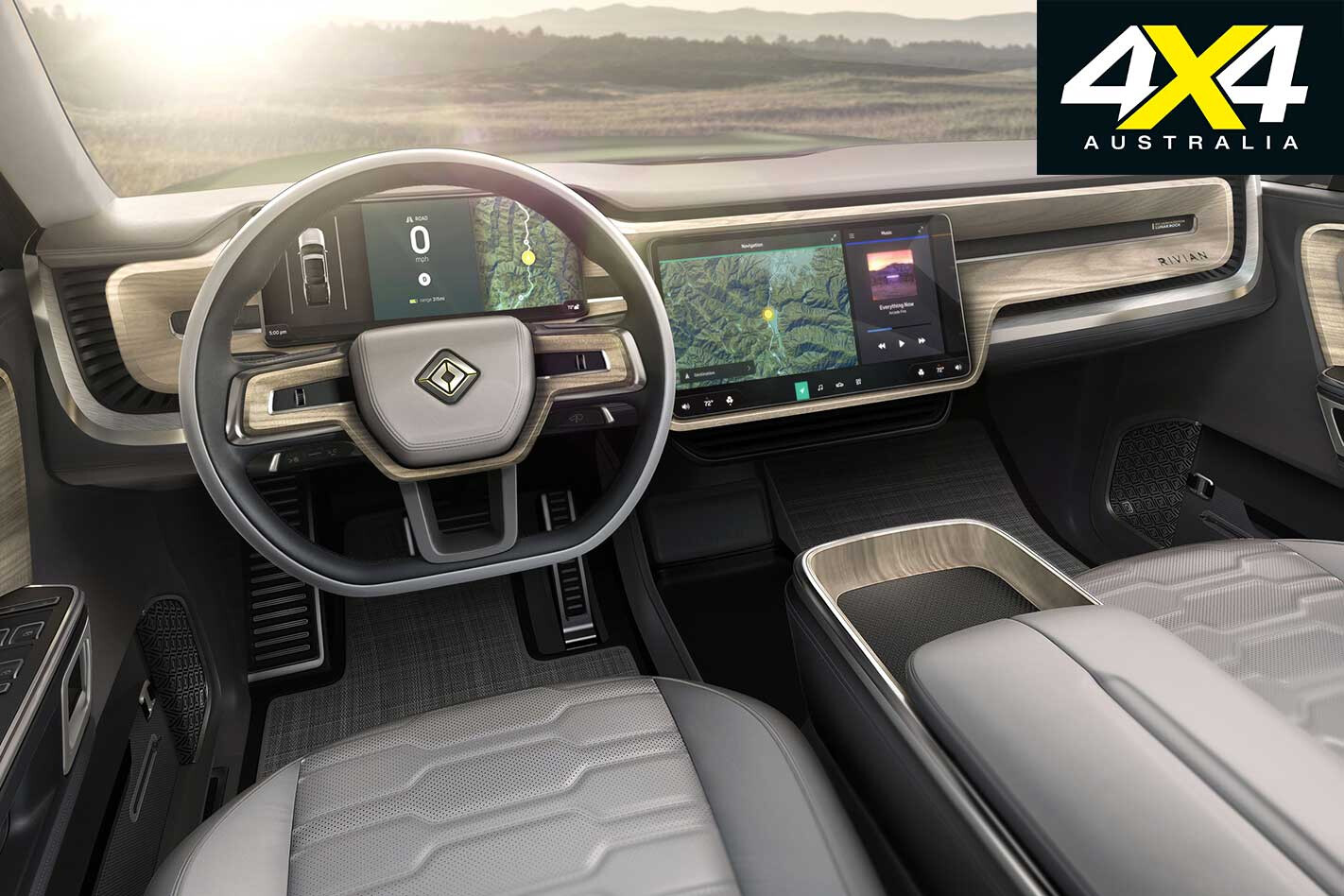
The R1T and R1S will share what Rivian has called a ‘Skateboard Platform’, which essentially packages the vehicle’s vital components – battery pack, drive units, suspension, braking and thermal systems – below the height of the wheel. This not only frees up plenty of space up top for storage (including 330 litres of storage beneath the hood, as well as the R1T’s lockable Gear Tunnel for another 350 litres), but it lowers the rigs’ centre of gravity.
The suspension system entails unequal-length double wishbones up front and a multi-link rear, along with dynamic roll control and adaptive dampers, and ride-height adjustable air suspension.
Both vehicles feature a quad-motor system that delivers 147kW to each individual wheel, and there are three battery sizes planned: 105kWh (400+km range), 135kWh (480+km range) and 180kWh (640+km range). The batteries can be charged at rates up to 160kW, enabling approximately 320km of range to be added in 30 minutes.
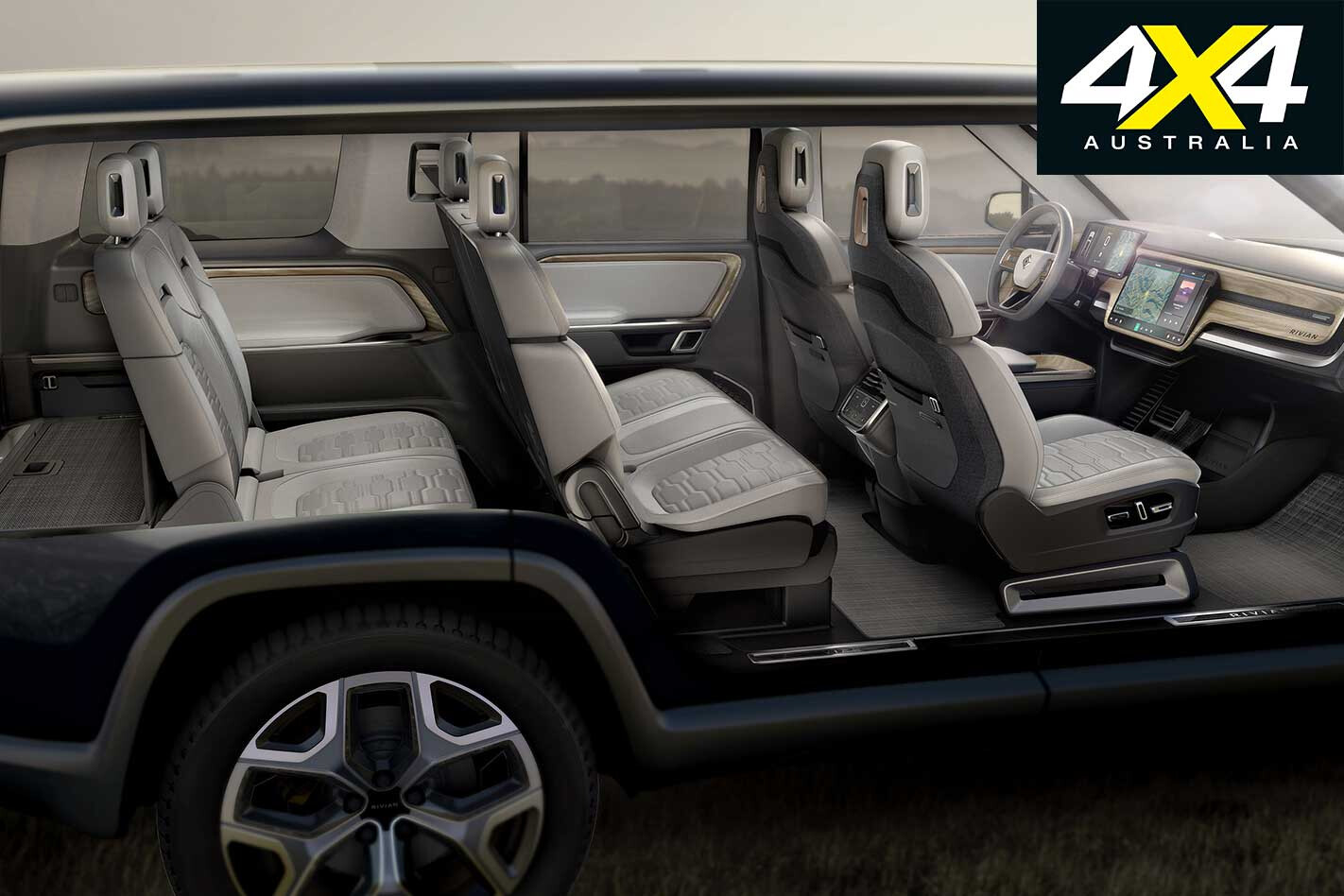
“The beauty and elegance of our quad-motor setup isn’t just about brute power; this architecture provides instantaneous torque with extremely precise control at each wheel, which is completely game-changing from a dynamics perspective, both on- and off-road,” said Executive Director of Engineering and Programs Mark Vinnels.
The R1T has an official payload capacity of 800kg, a listed tow rating of 11,000 pounds (approx. 5000kg), 34-degree approach angle, 30-degree departure angle, 26-degree rampover angle, and a wading depth of one metre.
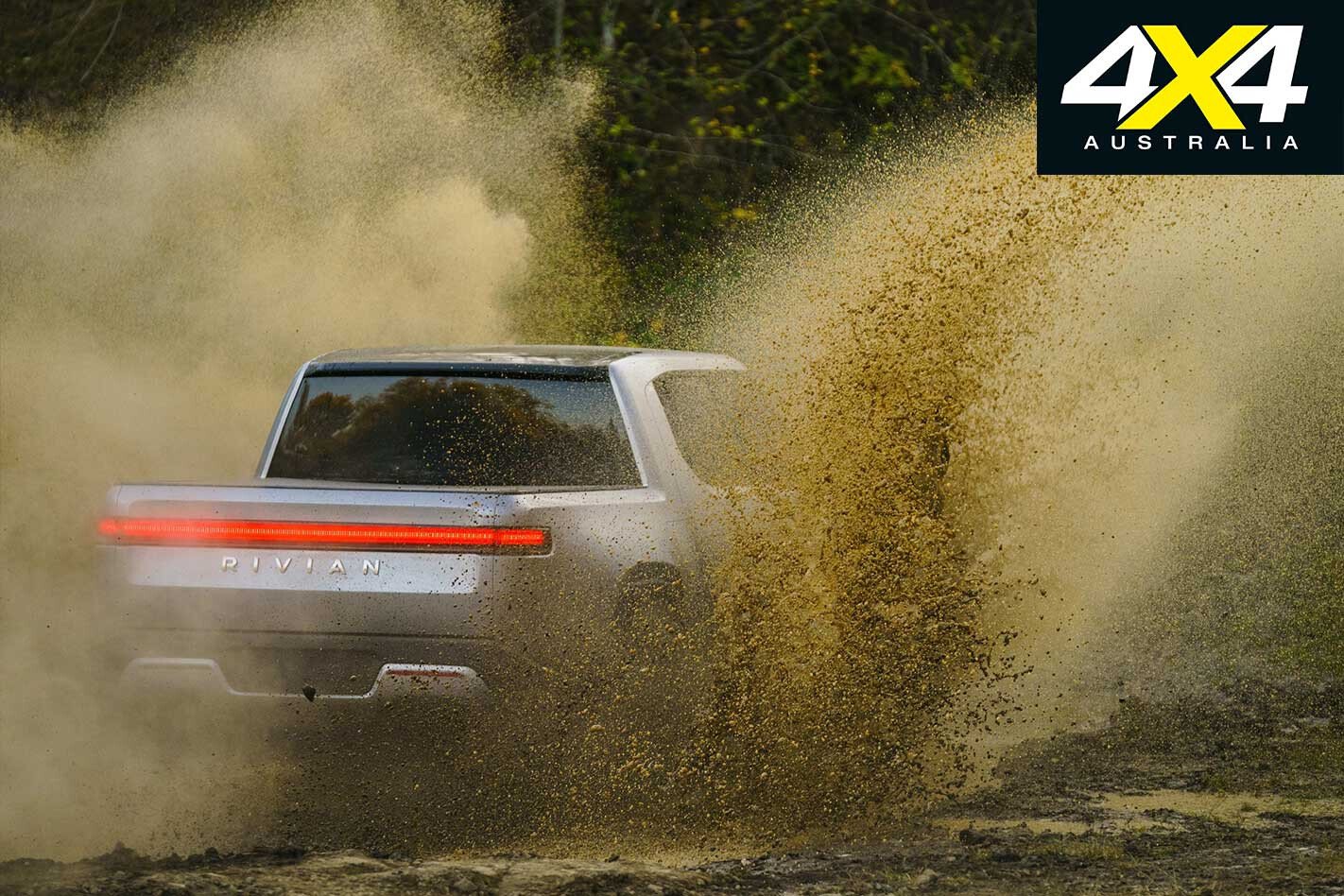
The R1S gets 20kg extra payload capacity to claim 820kg, a listed tow rating of 3500kg, 34-degree approach angle, 30-degree departure angle, 29-degree rampover angle, and a wading depth of one metre.
The full specs list for both cars can be found below.
| Battery Pack Configuation | 105 | 135 | 180 |
| Seats | 5 (R1T) / 7 (R1S) | ||
| Powertrain | 4 motor electric AWD | ||
| Motor power output | 147kW per wheel | ||
| Total rated power output | 300kW | 562kW | 522kW |
| Total rated torque output | 560Nm | 1120Nm | |
| Total grounded torque output | 7000Nm | 14,000Nm | |
| Range | 230+ miles (R1T) 240+ miles (R1S) | 300+ miles (R1T) 310+ miles (R1S) | 400+ miles (R1T) 410+ miles (R1S) |
| Top speed | 125mph | ||
| 0-60mph | 4.9sec | 3.0sec | 3.2sec |
| 0-100mph | 12.5sec | <7.0sec | <8.0sec |
| Curb Weight | 2670kg (R1T) / 2650kg (R1S) | ||
| Weight distribution (front:rear) | 52:48 | ||
| GVM | 3470kg | ||
| Payload | 800kg (R1T) / 820kg (R1S) | ||
| Trailer weight rating | 5000kg (R1T) /u00a03500kg (R1S) | ||
| L/W/h | 5475/2015/1815mm (R1T) 5040/2015/1820mm (R1S) | ||
| Wheelbase | 3075mm (R1T) /u00a03450mm (R1S) | ||
| Track width | 1710mm | ||
| Ground clearance (Park) | 200mm (R1T) / 205mm(R1S) | ||
| Ground clearance (Standard) | 280mm (R1T) / 285mm(R1S) | ||
| Ground clearance (Aero) | 240mm (R1T) /u00a0245mm(R1S) | ||
| Ground clearance (Off-Road) | 360mm (R1T) /u00a0365mm(R1S) | ||
| Water fording depth | 1m | ||
| App/Dep/Ramp (Off-Road mode) | 34u00ba/30u00ba/26u00ba (R1T) 34u00ba/30u00ba/29u00ba (R1S) | ||
| Climbing gradient max | 45u00ba | ||
| Frunk volume | 330L | ||
| Rear bin volume | 200L (R1T) /u00a0180L (R1S) | ||
| Bed length | 1400mm (R1T) | ||
| Bed width | 1385mm (R1T) | ||
US pricing for the R1T pick-up begins at $61,500, while the R1S SUV starts at $65,000 (after federal tax credit). American deliveries will begin in late 2020.
TO GET to the heart of what makes this Hilux special, we’ll need to kick things off up front. That PSICO intercooler is part of a package that sees the 3.0-litre turbo-diesel pushing 179kW to the rear wheels – a huge jump over the factory 89kW.
To achieve those results, the PSICO intercooler draws air through a four-inch Phat Bars stainless steel snorkel, before compressing it with an S3 GTurbo. From here the factory ECU teams up with an HKS controller to fine-tune the oil burner’s parameters.
Just Autos mapped the stock ECU with an aggressive tune, and then used the HKS controller to fine-tune it. Upgraded injector caps have given the setup an increase in fuel volume without ramping up pressure or duration to dangerous levels, and a three-inch turbo-back exhaust barks spent exhaust gases rearwards.
To get the power to the ground, owner Justin installed a heavy-duty MV Automatics torque convertor and valve body to tighten the standard transmission. Two external oil coolers stop the red rocket from getting too hot, 4.56 gears at either end account for the larger rolling stock (35s), and twin auto lockers (a Detroit in the rear and LOKKA up front) ensure traction is never an issue.
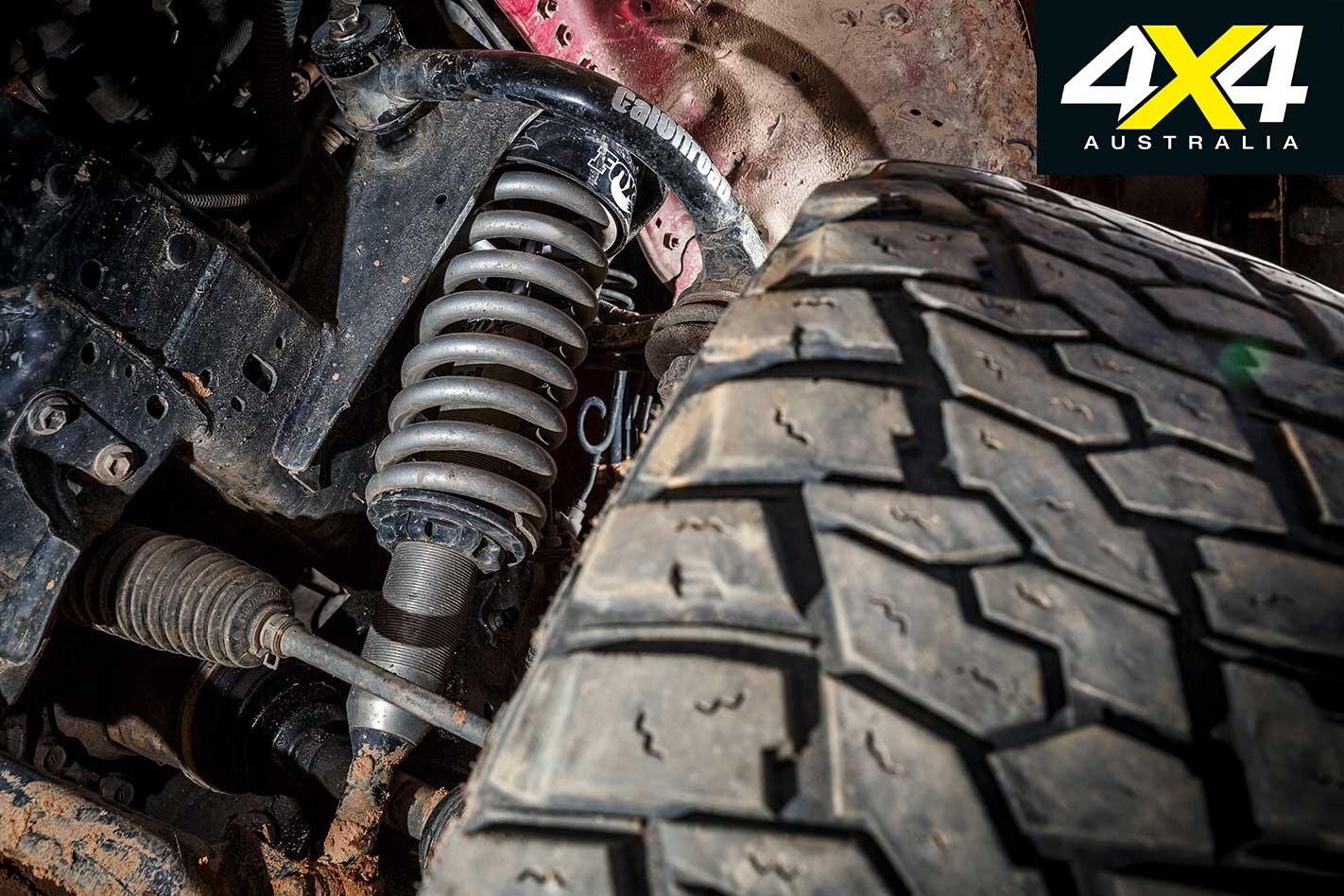
It takes a hell of a lot of work to shoehorn 35s beneath a Hilux, and Justin reached out to the crew at Phat Bars, who replaced the sagged front factory struts with a set of Fox 2.0 units. They’ve been fitted with 700lb Eibach coils on both sides, helping boost ride height 50mm over stock – a further 50mm in body lift helps with the aggressive stance.
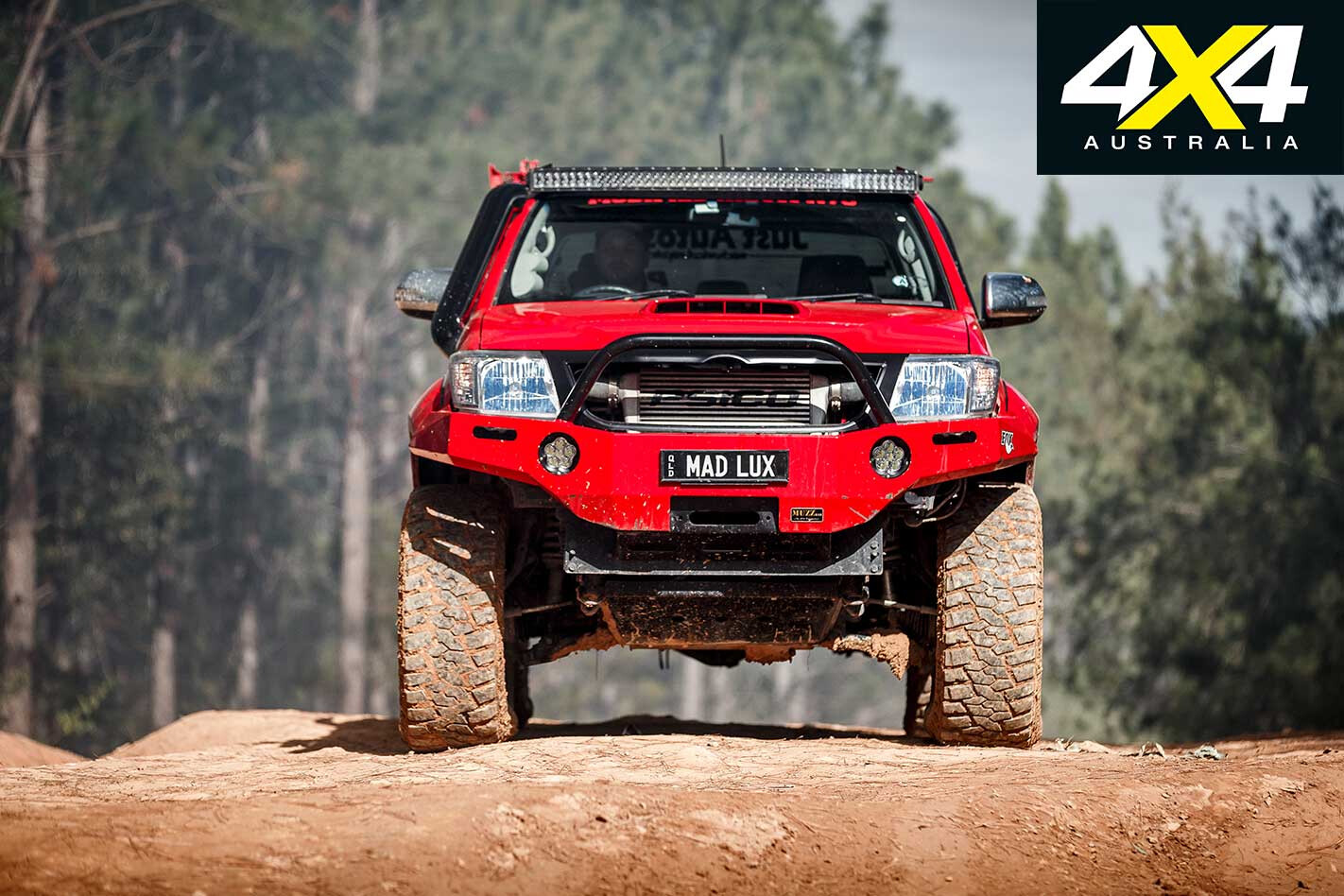
A diff drop flattened out the CV angle, getting them back inside their safe operating angles. The upper control arms have also been swapped out for adjustable units from CalOffroad, with the adjustable ball-joint offering a strength upgrade from the stock unit and allowing the alignment to be dialled in to free up much needed down travel.
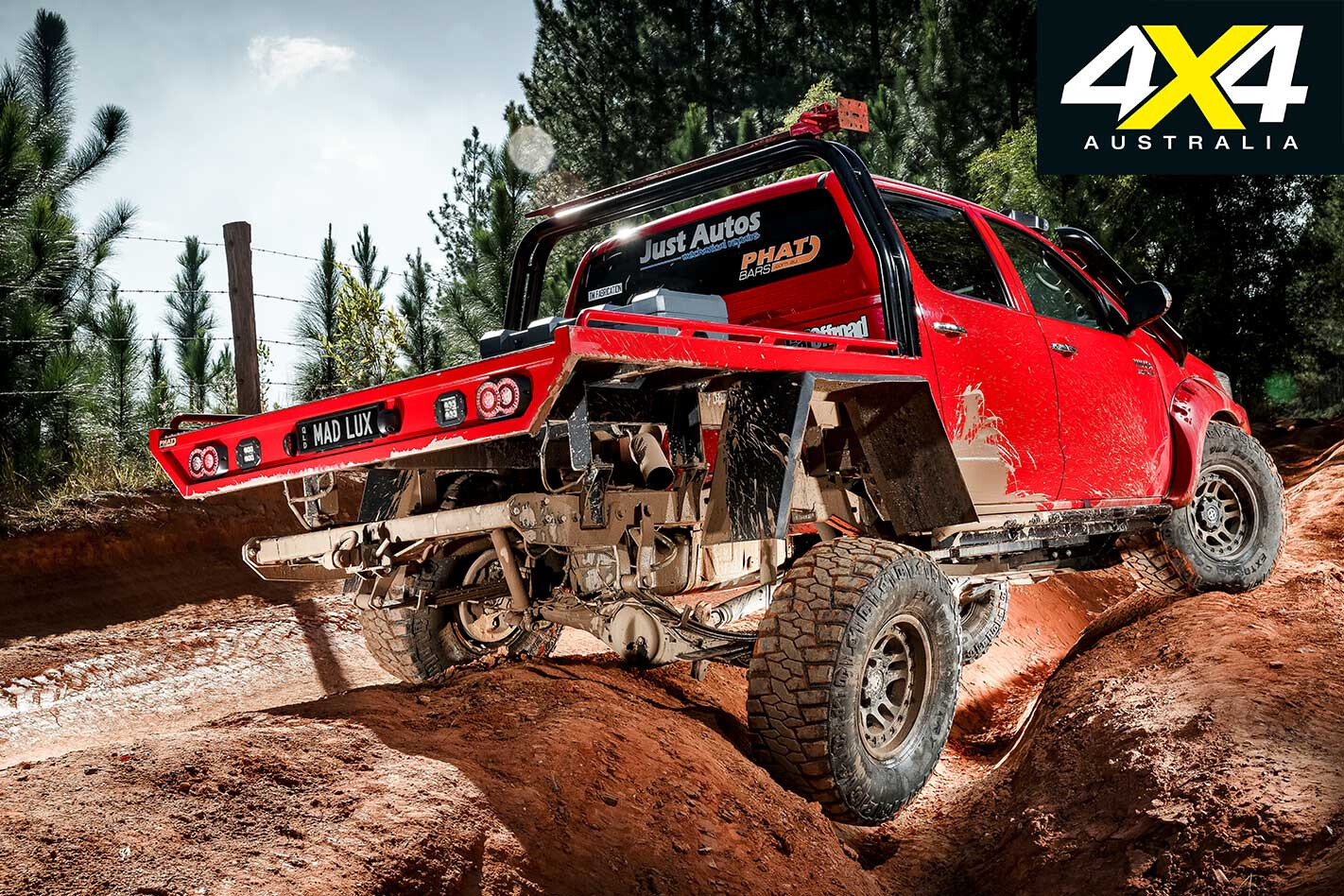
Things are more customised in the rear. Rather than a bolt-in lift kit, Justin opted for a set of stock leaf springs from an RG Colorado, which have been reset to allow for additional lift over stock height; however, their longer length gives the perfect shackle angle for ride and comfort when paired with 200mm extended shackles. The lot is kept under control with another pair of Fox 2.0 shocks.
A stout ‘Muzzbar’ is backed with 5mm of reinforced-steel bash plates from Phat Bars. They’ve up-armoured the driveline from the radiator right back past the sump and transmission, before finishing up just after the transfer case. The flanks have been similarly armoured-up, with high-clearance Phat Bars rock sliders.
That form-and-function mentality has been applied all the way to the tail-lights. Justin placed an order with Phat Bars for a one-off tray, which was zapped together with a 4mm-thick box section running along either flank; giving Justin a full-length slider that’ll take the full weight of the Lux.
CAST YOUR VOTE FOR THE JUSTIN’S HILUX HERE
Check out the Top ten finalists of the 2018 Custom 4×4 of the Year, cast your vote and be in the running to win a Maxxis voucher valued at up to $2000!
Summer time always seems fleeting but only because there are plenty of events and 4×4 activities taking place all throughout Australia to fill your calendars. Here is are some of the events that are set to take place over the next three months.
Tackle Tassie (TAS)
The warmer weather and longer days means it’s time to put the Apple Isle back on the 4×4 adventure calendar. For a small island, Tasmania offers an oversized amount of off-road touring opportunities, whether it’s following tracks down the wild west coast or exploring the mountain regions of the southwest.
Of course, being able to jump on-board the ferry that takes you from Melbourne to Devonport means you can bring your rig and all your gear, meaning you can camp at Tassie’s many beautiful campgrounds and caravan parks.
Head to www.parks.tas.gov.au for all of the information regarding tracks and permits.
Woodford Folk Festival (NSW)
This famous festival has been running for 33 years and is the 24th held at the temporary village of Woodfordia. Running from December 27 to January 1, the festival brings together a mix of cultures through concerts, parades, dance, a film festival, and a fire display that closes the event on New Year’s Day.
The festival also incorporates a separate (and just as big) children’s festival that includes 55 acts dedicated to keeping the little folk entertained while the adults kick back to some cranking music. There are also arts and craft workshops, and many volunteers.
Moruya Rodeo (NSW)
The south coast town of Moruya will be hosting its annual New Year’s Day Rodeo on January 1, 2019. The rodeo has been running for decades and promises plenty of action, with numerous events to challenge the pros and anyone else keen to give it a crack.
Events include the always spectacular bull ride, saddle ride, bareback ride, novice saddle ride, roping events (breakaway, open, team), steer wrestling and barrel races. Plus sideshows, food and refreshments. The action kicks off at midday and runs until 9.30pm, then there’s a DJ on-site until midnight.
Mountain Cattlemen Get Together (VIC)
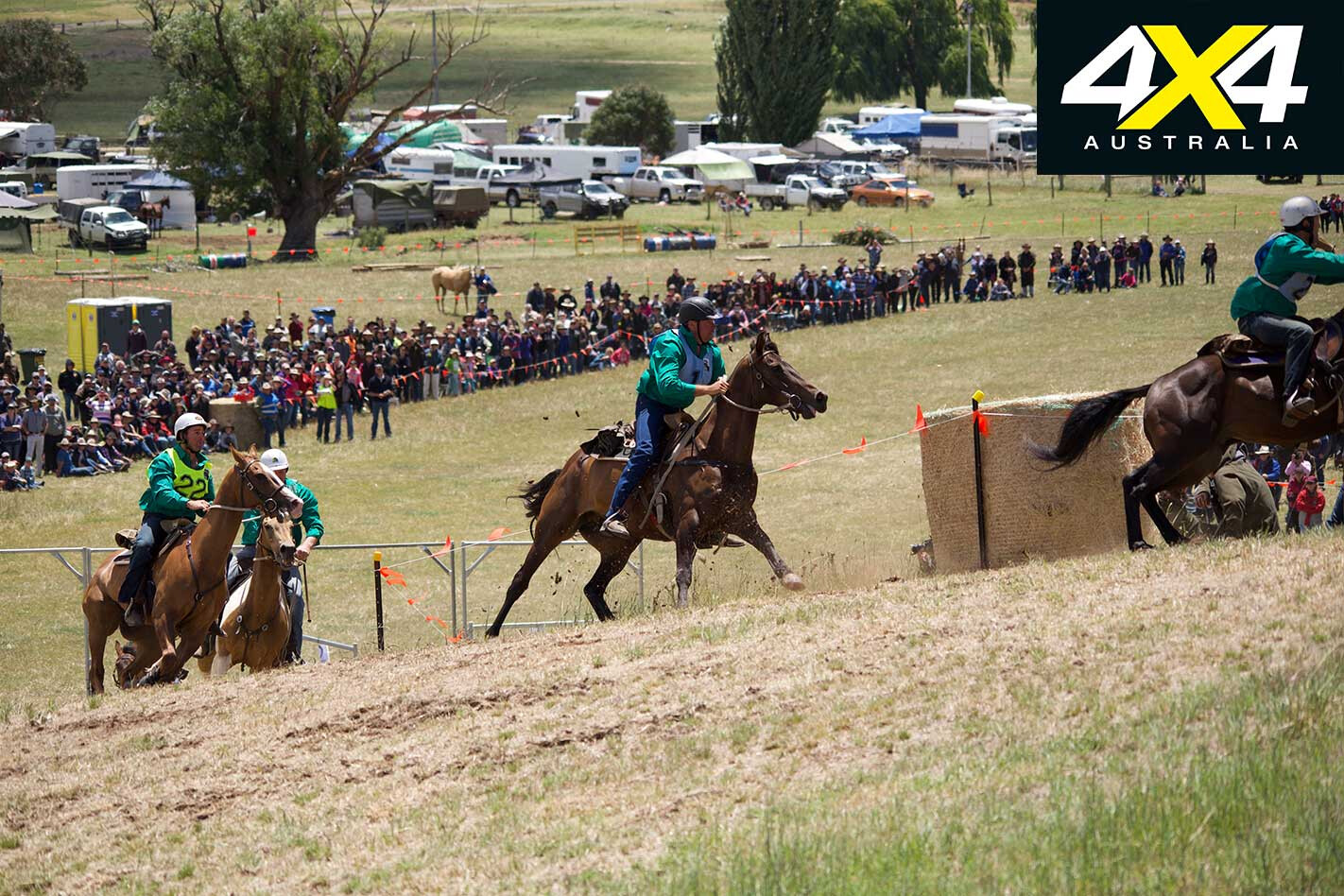
The 2019 Mountain Cattlemen Get Together, scheduled for January 11-13, 2019, will be held at the Oxley Recreation Reserve (near Wangaratta), beside the King River. The venue is slightly smaller this year and camping will be restricted, so get in early.
The Get Together will include the usual awesome activities and events including the Cattlemen’s Cup, parades and live music. It’s a great family-friendly event.
For more info: www.mcav.com.au
Bright days ahead (VIC)
The Victorian mountain town of Bright is a brilliant ‘base-camp’ for any number of adventures over spring through to autumn. With close proximity to some of the Victorian High Country’s best 4×4 tracks and campsites, the town is perfectly situated.
Add in mountain bike trails, rail-trail cycle-ways, bushwalking tracks, canoeing opportunities and prime fishing spots, it’s the one-stop town for a fantastic long weekend.
For some great ideas, head to www.visitbright.com.au
Victorian Caravan, Camping and Touring Supershow (VIC)
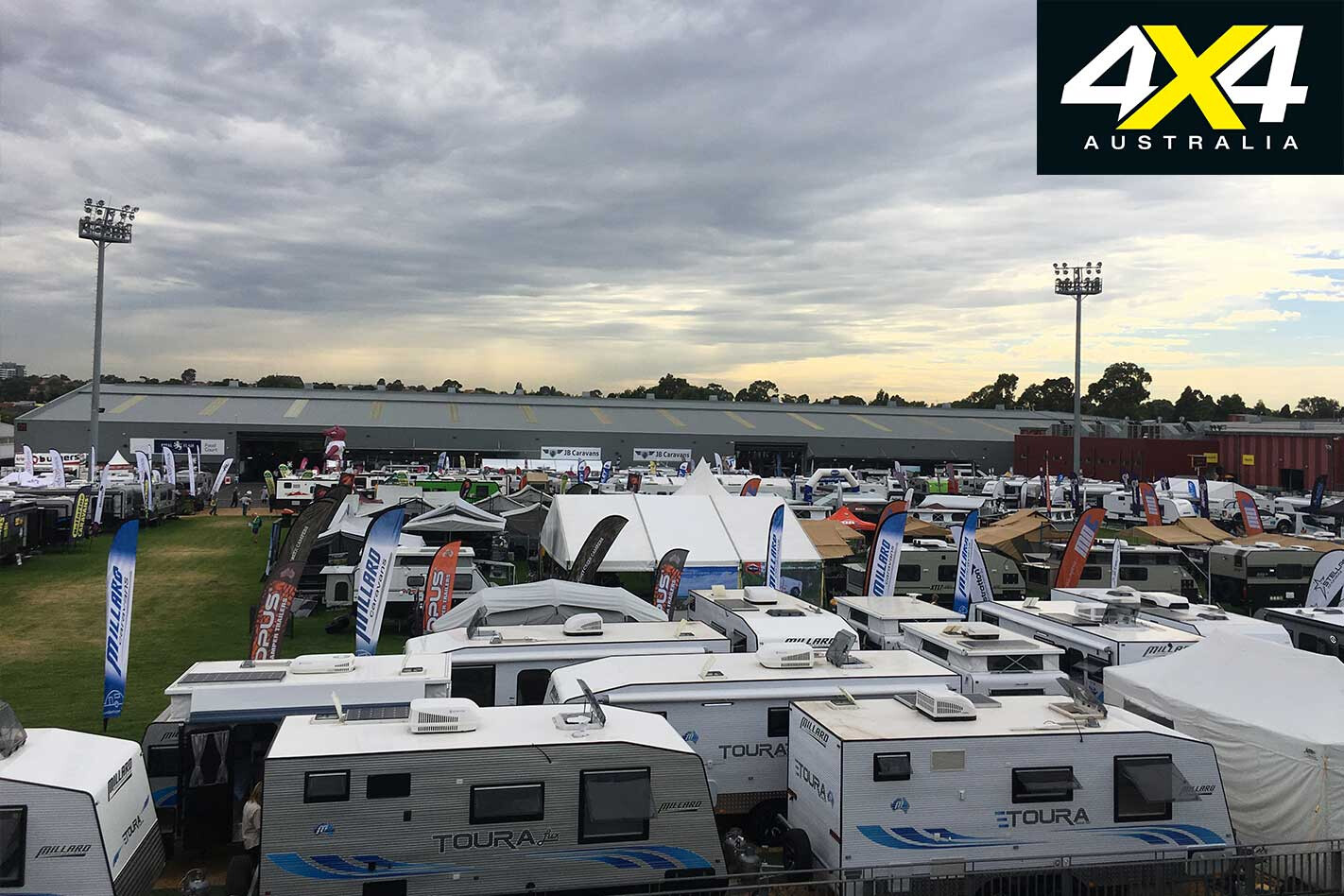
One of the biggest shows of this kind in Australia, the event runs from Feb 20-25, 2019, and is the place to go to buy or upgrade a new caravan or camper-trailer, or any other camping- and travel-related gear.
As well as plenty of goodies for the big kids to ogle, the little ones will be kept entertained with free rides, activities, face painting, movies and show bags.
Check out to www.caravanshow.com.au
Bushfire season (AUS)
After a very dry year we are now into bushfire season, so keep an eye out for any suspicious behaviour when touring and camping. Also ensure you follow fire-safe practices wherever you camp and be aware of all current fire warnings and the seasonal limitations on open fires in some national parks and reserves.
Same goes for households if you’re located near bushland; clearing out gutters, having a fire escape strategy and ensuring there’s some type of firebreak area between your residence and the surrounding bushland is a must.
Check with your relevant state bushfire authorities as to warnings and prevention tips.
TODD Bonnard wanted a 4×4 ute that was “the perfect all-rounder”, so when this half-finished project vehicle, complete with transplanted Duramax 6.6-litre V8 turbo-diesel and six-speed auto, came up for sale, Todd jumped on it.
It’s a straightforward answer when Todd is asked about the appeal of the Duramax engine. “Definitely the power,” he says. “And in terms of what you can do with them to extract more power. They’re pushing pretty big power in the US in those big utes and rigs, so you can imagine what it is going to do in a smaller Patrol; the power-to-weight ratio is much better.”
Any engine/gearbox transplant requires mods to the engine bay to ensure proper fitment, along with numerous add-ons to make it run smoothly with the rest of the Nissan’s drivetrain. The Allison six-speed auto is mated to the Nissan transfer case via an adaptor, while engine management is through an Edge Insight CTS2 system.
There’s a custom-made ARE Cooling radiator and front-mount intercooler, and the transmission cooler has been moved beneath the tray with an additional fan to aid cooling. There’s a Patroldocta four-inch snorkel and airbox, three-inch hot-and-cold side piping, and a four-inch custom-made (from scratch!) titanium exhaust with a 100-cell catalytic converter. The Patrol’s donk punches out 335kW and 1200Nm at the rear wheels, and Todd had a hydro booster fitted to the brakes.
Suspension comprises a three-inch lift and a two-inch body lift, with custom rock sliders installed. Boosting ride and handling is AmadaXtreme remote-reservoir dampers, front and rear.
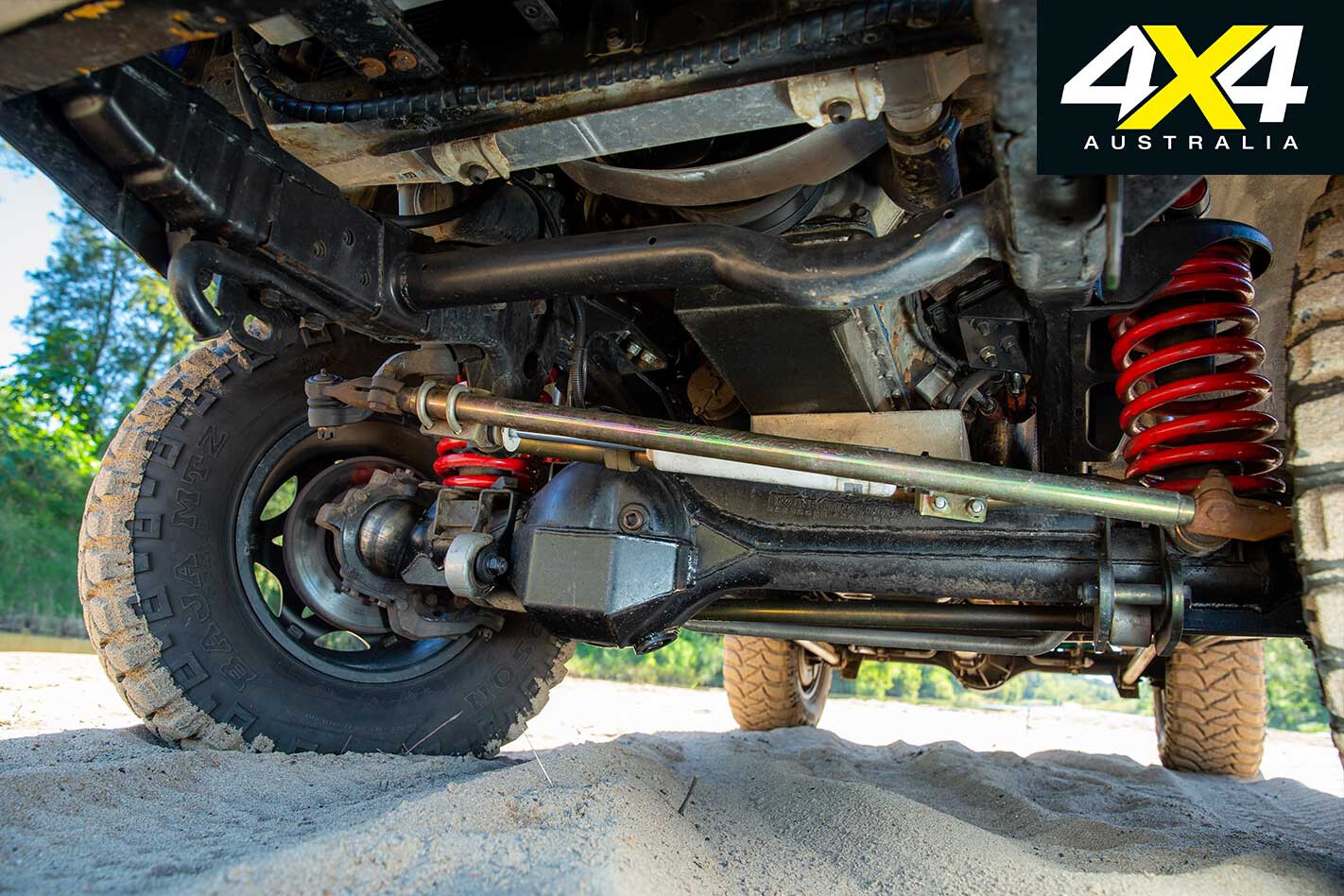
Todd also fitted custom-made Pedders coils, rated to a 500kg constant load, up front. Superior Engineering Superflex sway bars front and rear tie it all down, along with Super Engineering Superflex radius arms, Panhard rods and long arms. It rides on 17-inch Walker Evans Beadlock wheels shod with Mickey Thompson Baja MTZ LT315/70R17 rubber.
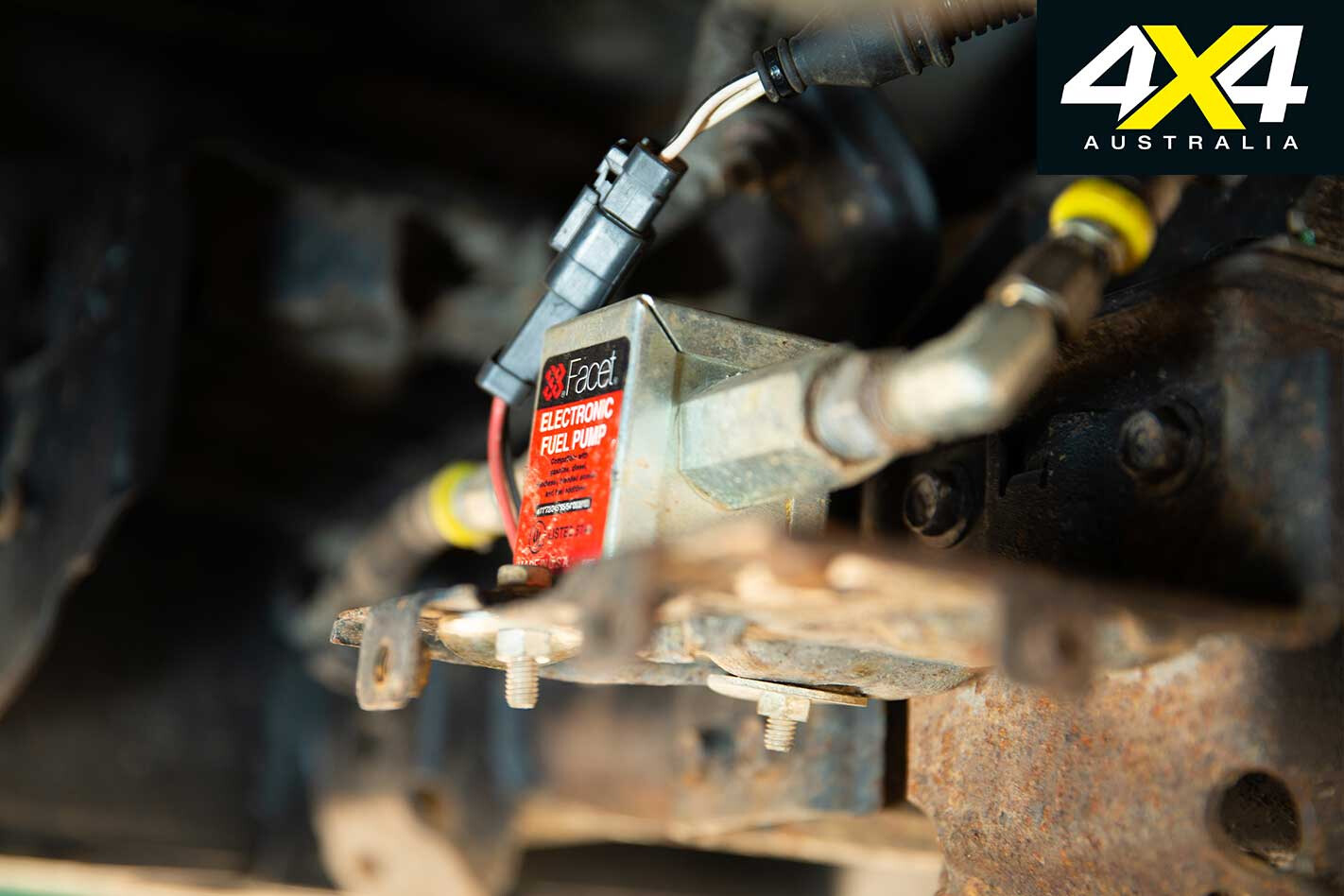
An ARB Air Locker diff lock has been fitted to the front axle (with air supplied via an under-bonnet compressor). Two 40-litre water tanks are fitted beneath the tray, while a FASS fuel pump ensures quick ignition and a Facet pump ensures the juice from the main and sub tanks keep flowing.
One of the main issues when the Patrol was bought was getting the wiring sorted so the engine/gearbox transplant worked perfectly. It was then onto the fitment of a heavily modified Nissan factory bullbar.
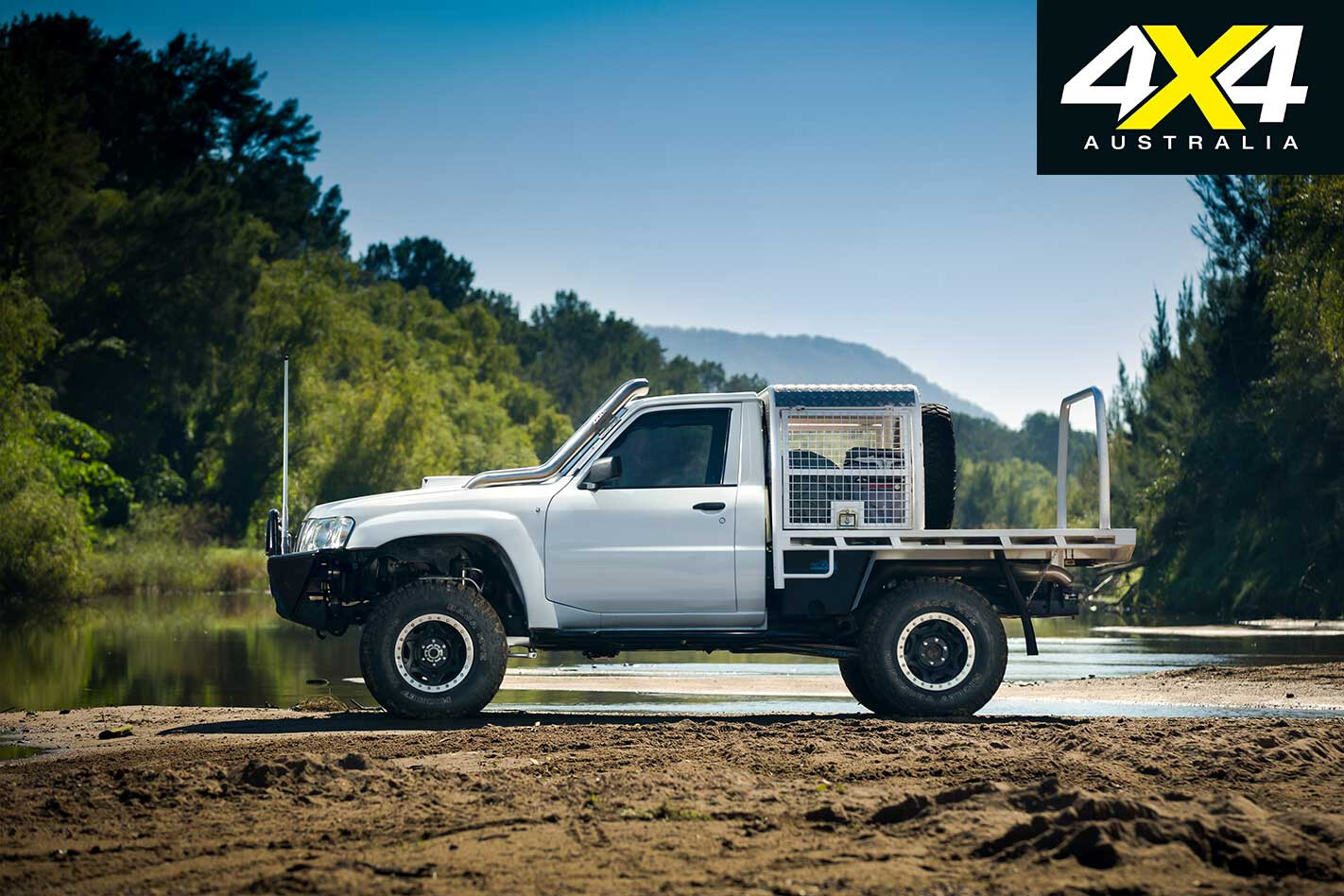
Panel work was limited, with the most noticeable mod being the fitment of custom-made Fairline fibreglass front guards and an air intake atop the bonnet. A set of Lightforce HID spotties, a GME radio aerial, and a custom grille complete the front-end.
With thanks to Wild 4×4 & Customs, PJM Auto Electrics, Dave’s Paint & Panel, Precision Paint & Panel and PID Diesel Conversions, the end result is pretty damn close to the perfect all-rounder.
CAST YOUR VOTE FOR THE TODD’S PATROL GU HERE
Check out the Top ten finalists of the 2018 Custom 4×4 of the Year, cast your vote and be in the running to win a Maxxis voucher valued at up to $2000!
ALLAN and Kathy Huxtable initially built this LC79 for shorter escapes, but circumstances changed when Allan accepted a redundancy and the couple sold everything and hit the road on a more permanent basis. The vehicle already had a schmick canopy, rooftop tent, kitchen, fridge and electrics, but a few things needed to be added such as a caravan and a tinny, which, in turn, meant more mods.
The canopy and its internal setup has been tweaked slightly over the years, but the setup (two side doors and one large rear slide-out tray underneath) retains all the essentials, with the kitchen accessed via a large lift-up door. Allan has also utilised one of MSA 4X4’s excellent drop-down fridge slides for the Waeco fridge.
The opposite side of the canopy is where larger gear is stored, as well as a Coleman hot-water camp shower. Also fitted inside the canopy is the power system, comprising two 120amp/h deep-cycle batteries, an ARB air compressor and a Redarc 1000-Watt inverter; while Redarc’s Manager30 battery management system keeps it all running smoothly. Hidden underneath is a 110L stainless steel water tank, accessed via a 12V pump.
The rooftop tent, capable of fitting a double mattress inside it, features a heavy-duty PVC outer with a full-mesh inner. The tent’s solid top incorporates a boat loader for the couple’s Sea Jay 3.9 Nomad tinny, along with a permanently affixed Redarc 200W solar panel. Allan has built a unique boat-loading system that uses the Cruiser’s Runva 11XP winch, which is housed in an ARB bullbar.
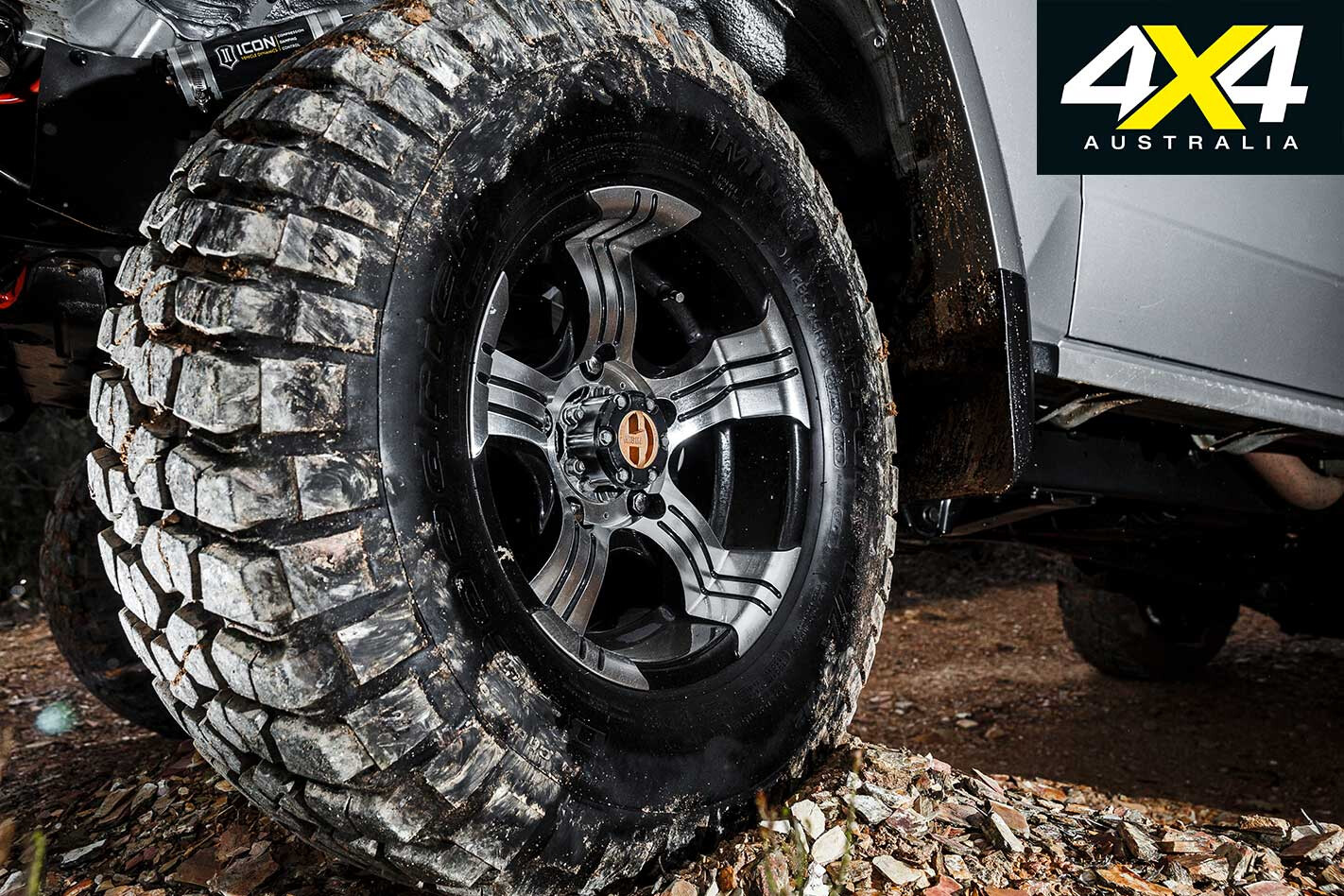
The addition of the caravan saw Allan replace the LC79’s standard leaf-sprung rear suspension with a trick JMACX Offroad Solutions rear coil-spring conversion, while also upping the GVM to 3900kg. This kit offers a wider rear track to match the 79’s front end, hardened axles, Lovells coil springs, Icon remote-reservoir dampers, and airbags (controlled via an in-cabin setup) for towing. The Cruiser sports a four-inch lift as a result and rolls on 16×8-inch Allied Wasp wheels shod with BFGoodrich LT285/75 R16s.
A subtly modified 4.5L TDV8 donk punches out 160kW and 603Nm; the turbo has been tweaked by Munro Turbochargers, a Unichip Q4 has been fitted, and there’s a two-inch crossover pipe, with a three-inch stainless steel straight-through exhaust. Stopping the rig is an upgraded brake booster with braided lines and slotted rotors up front.
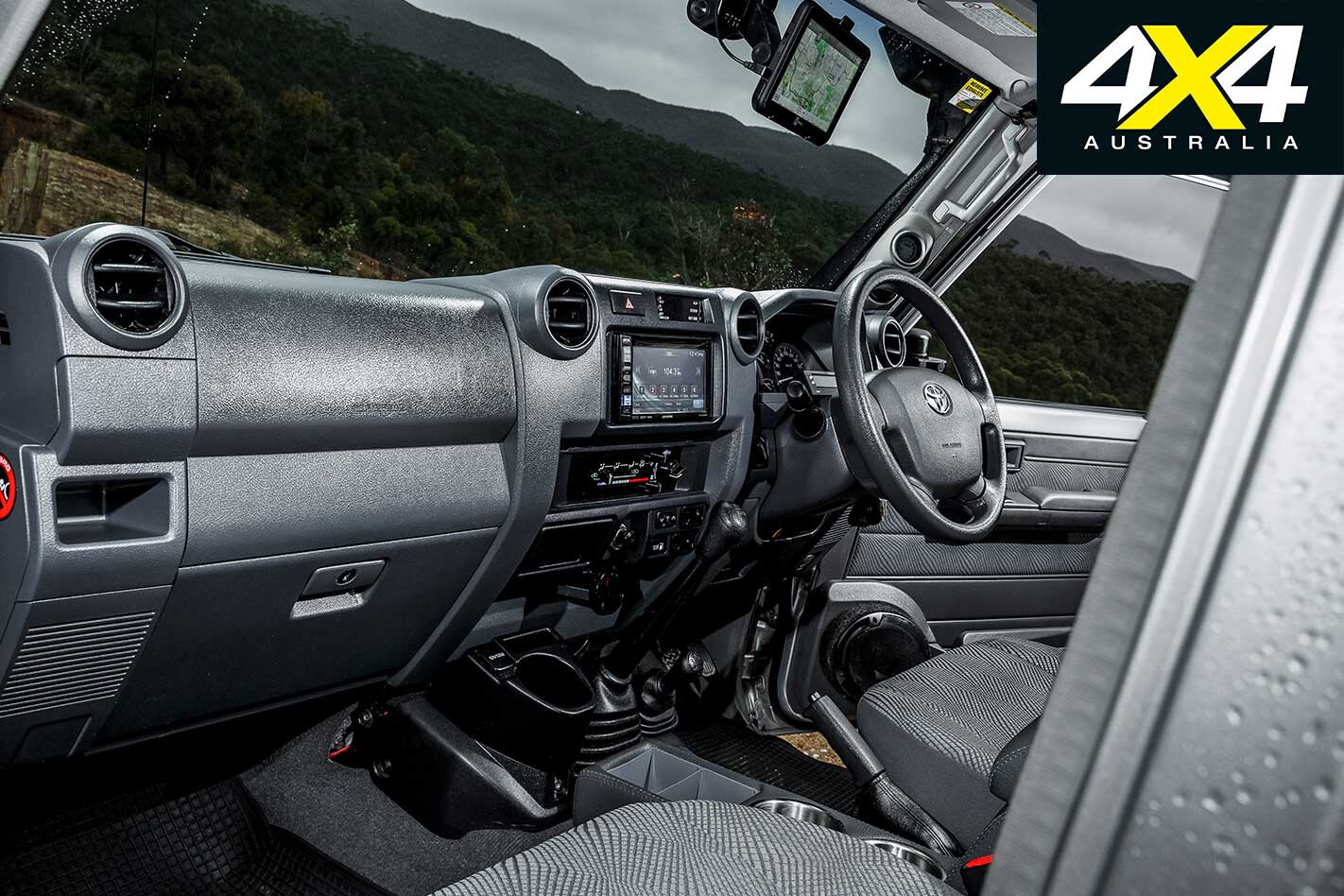
The cabin has all the essentials: EGT exhaust gas temp gauge, boost gauge, airbag controls, and gauges. Allan has also added a roof console, centre console and door pods, with the latter housing the Alpine sound system’s speakers. Dynamat sound deadener was added throughout, while new seats will replace what Allan describes as “shit” stock items.
CAST YOUR VOTE FOR THE ALLAN & KATHY’S LC79 HERE
Check out the Top ten finalists of the 2018 Custom 4×4 of the Year, cast your vote and be in the running to win a Maxxis voucher valued at up to $2000!