
THE final VFACTS report for 2018 wasn’t great reading for the motoring industry, with overall sales considerably down compared to the previous year. In fact, 36,005 more vehicles were purchased in 2017. The passenger car led the slide, posting a considerable drop of 15.9 per cent from 2018 to 2017 (378,413 versus 449,949).
The reason for the slide in sales can be attributed to a number of core issues, according to Tony Weber, Chief Executive of the Federal Chamber of Automotive Industries (FCAI). “New vehicle sales results in 2018 reflect a challenging climate across the Australian economy including a slowing housing market, tightening of money lending and the drought,” he said.
Despite the sluggish year for new vehicle sales, more SUVs and Light Commercial Vehicles were sold in 2018 than the previous year. A total of 237,972 new LCVs found owners throughout the year, up from 236,609 in 2017 – marking a slight growth of 0.6 per cent.
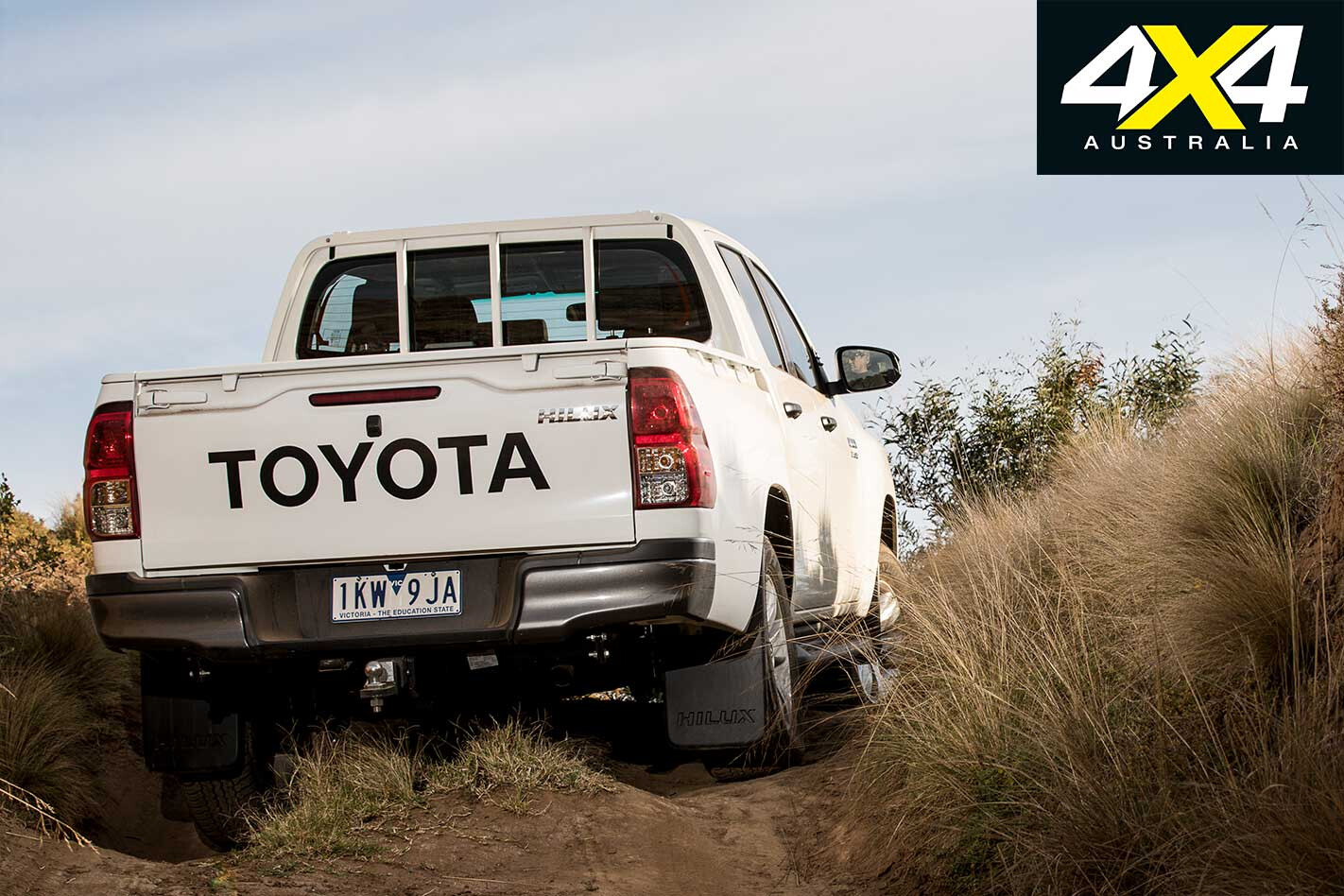
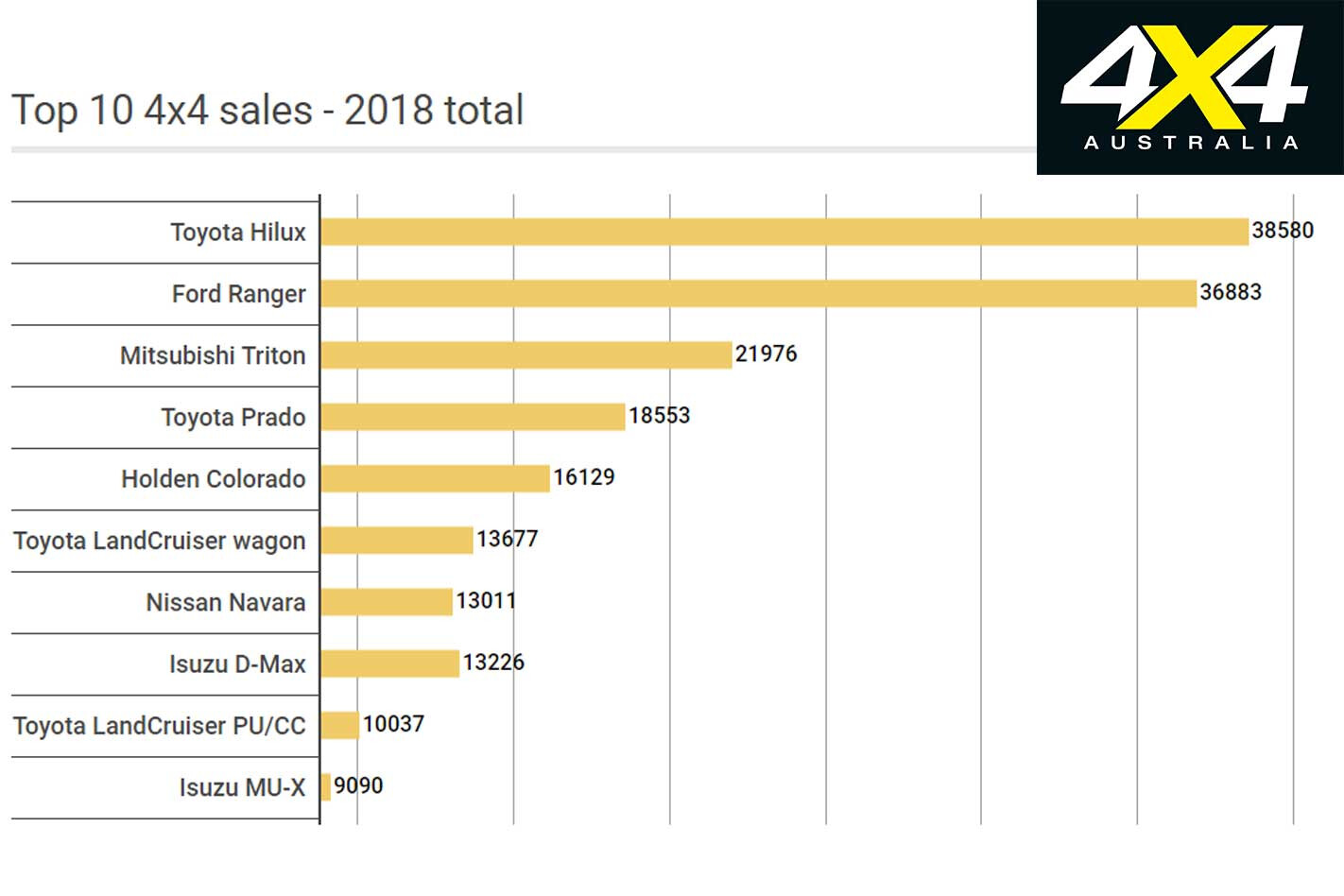
It was the Toyota Hilux which not only claimed the best-selling 4×4 gong for the year, but also the best-selling overall vehicle when combining 4×4 and 4×2 variants. With 51,705 sales, the Hilux 4×4/4×2 was trailed by the Ranger 4×4/4×2 (42,144) and Toyota Corolla (35,320). In the 4×4 market, the Hilux (38,580 sales) was joined on the podium by the Ranger (36,883) and Triton (21,976).
Isuzu success
Isuzu Ute Australia (IUA) also bucked the dipping sales trend in 2018, posting a sales increase of 7.1 per cent compared to 2017.
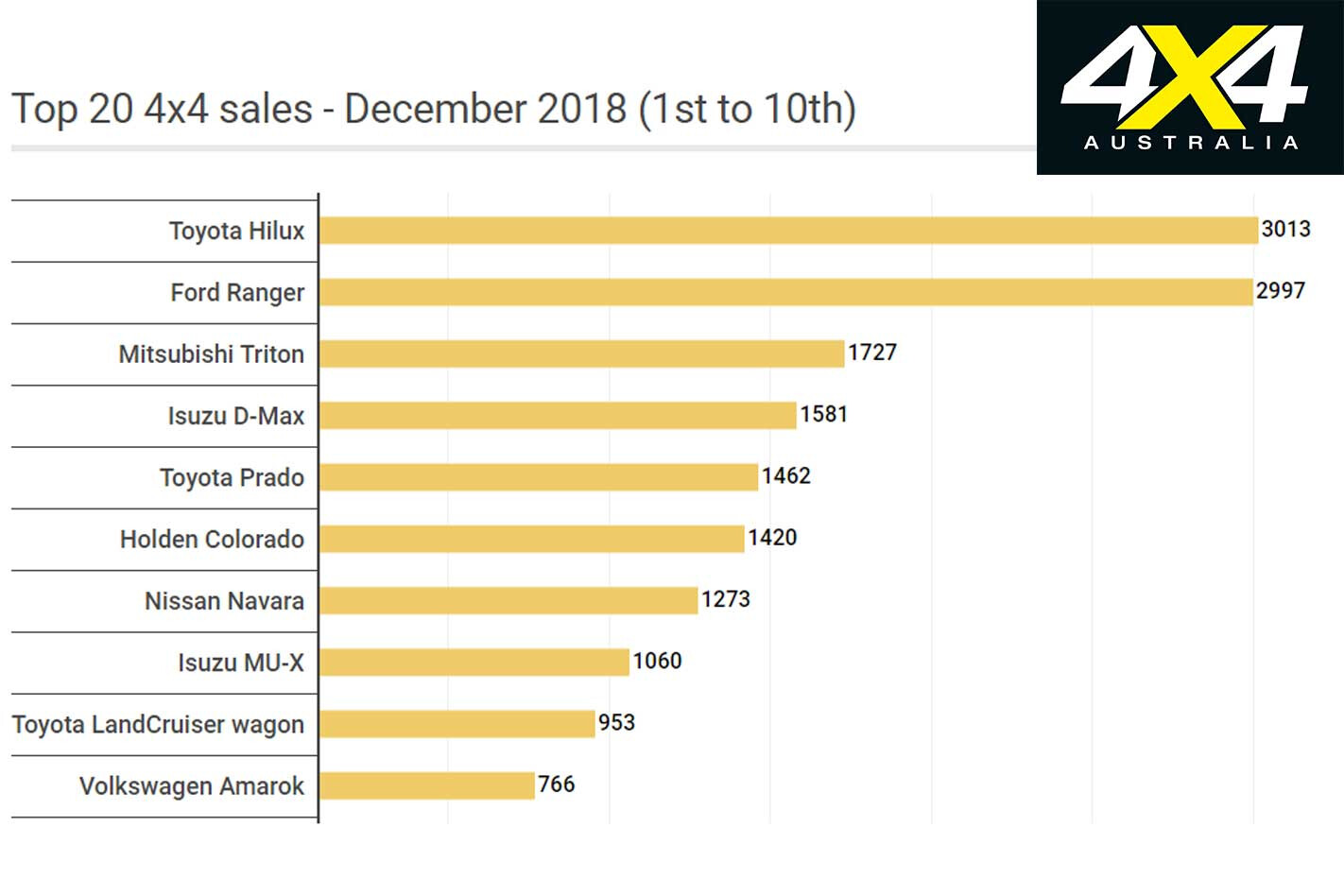
The trusty D-Max 4×4 netted 13,226 sales for the Japanese brand, up from the previous year’s 12,795, giving it a 7.6 per cent share of the PU/CC 4×4 market. In December 2018, the D-Max was the fourth best-selling 4×4.
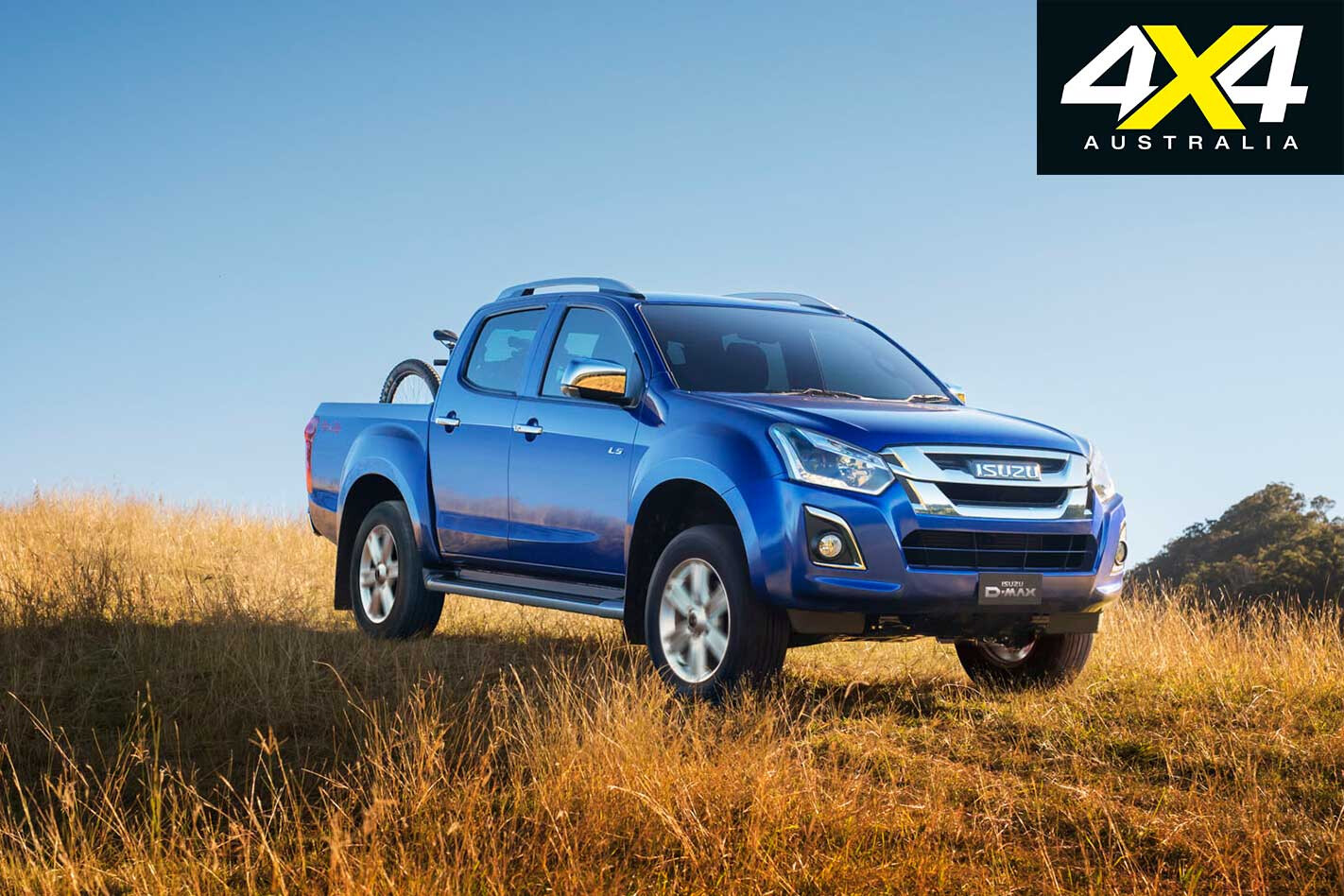
Isuzu also retained the mantle for the best-selling ute-based SUV, with its MU-X achieving 9090 national sales during 2018 (a 12.4 per cent increase on 2017).
“The Australian market is unique, with over 70 automotive brands bidding for a spot in customers’ garages nationwide.” commented IUA Managing Director, Mr. Hiro Kuramoto. “However, the sentiment towards Utes and SUVs has never been stronger and are the leading segments within the market — the exact segments the D-MAX and MU-X sit — and in 2018 we witnessed our strongest result in 10 years, with more customers choosing an Isuzu than ever before.”
Both the D-Max and MU-X were among the 10 best-selling 4x4s for 2018.
THE Mercedes-Benz X-Class launched in Australia early in 2018 into a booming dual-cab segment, and 1520 sales were recorded by years’ end.
Based on the Nissan Navara D23, the X-Class has been re-engineered from the ground up, with a strengthened ladder frame, widened front and rear tracks, a retuned suspension system, a wider body, fresh interior, and the introduction of rear discs at the back.
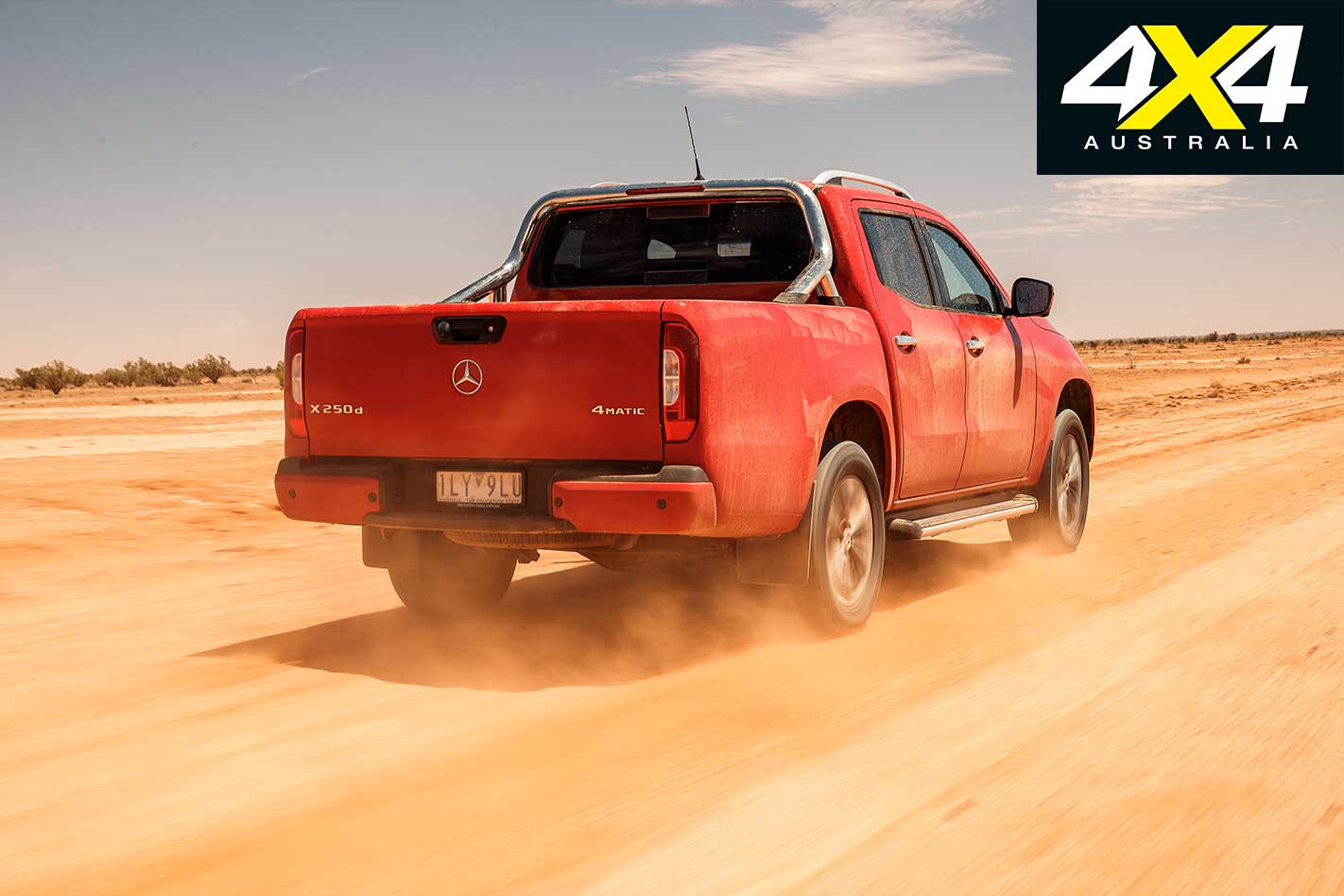
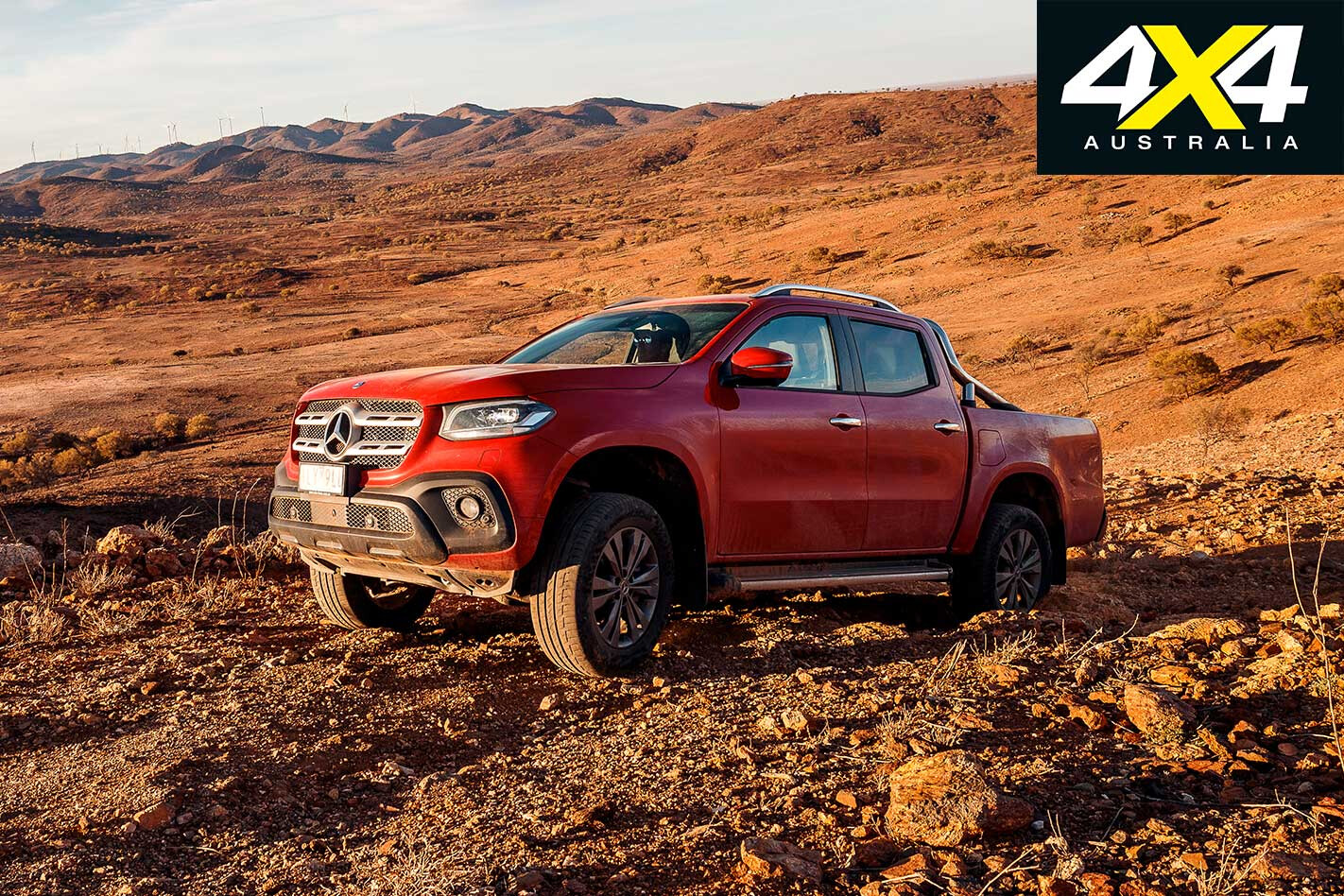
Along for the ride at 4X4 of the Year was a mid-spec Progressive, which comes with a wide range of options that varies the price from $57K to $71K. Our test rig came with a 360° camera (+$1750), Style pack (+$3750), COMAND system (+$2990), tub liner (+$899) and Style bar (+$1551).
The engine and transmission combo – a Renault-sourced 2.3-litre bi-turbo diesel and seven-speed auto – is carried over from the Navara, and it’s good for 140kW and 450Nm. The X runs a dual-range part-time 4×4 system and is capable of towing up to 3.5 tonnes.
It’s a well-rounded package, but are the changes implemented by Merc’s boffins enough to award the X-Class the 4X4OTY gong?
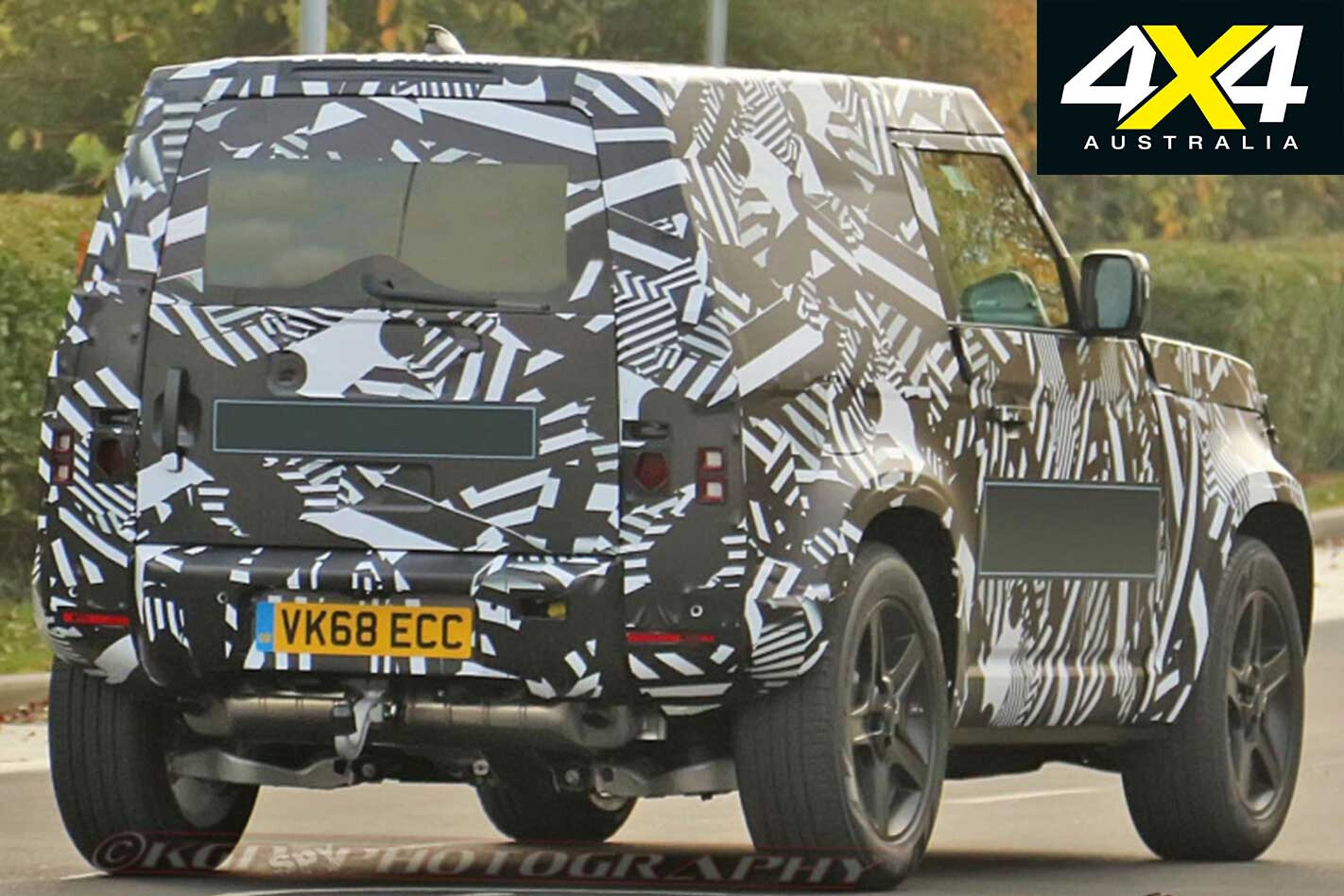
MORE BY design than accident, ‘spy’ photos of Land Rover’s new Defender, complete with camouflage livery and disguised body panels, are popping up everywhere ahead of its European debut in late 2019.
The new Defender is not before time and Land Rover devotees could be excused for thinking it is well behind time, given the last Defender rolled off the assembly line some three years ago. The Defender is, after all, the very essence of Land Rover, having evolved from the very first Land Rover of 1948. Can you imagine Toyota ceasing production of the 70 Series and not having a new one ready for three years?
In Land Rover’s (or, more correctly, Jaguar Land Rover’s) defence, it’s been flat-out busy since the 2008 buyout by India’s Tata Motors, which has brought about the most prolific new model rollout in the company’s history.
Starting with the Range Rover Evoque in 2011, a new Range Rover, Range Rover Sport and more recently a new Discovery have all come along. New model lines in the form of the Discovery Sport and Range Rover Velar have also been introduced.
That’s not to mention the new Jaguar models, including battery-powered full-electric models that the company – given Jaguar and Land Rover effectively work as one – has produced in the meantime.
Given this model investment has brought unprecedented sales success off a customer base who would look at the old Defender in the same light as a Massey Ferguson tractor, there may have been a time when JLR may not have even seen a Defender in its future. Thankfully that’s not the case and, while it may be late, it’s certainly coming.
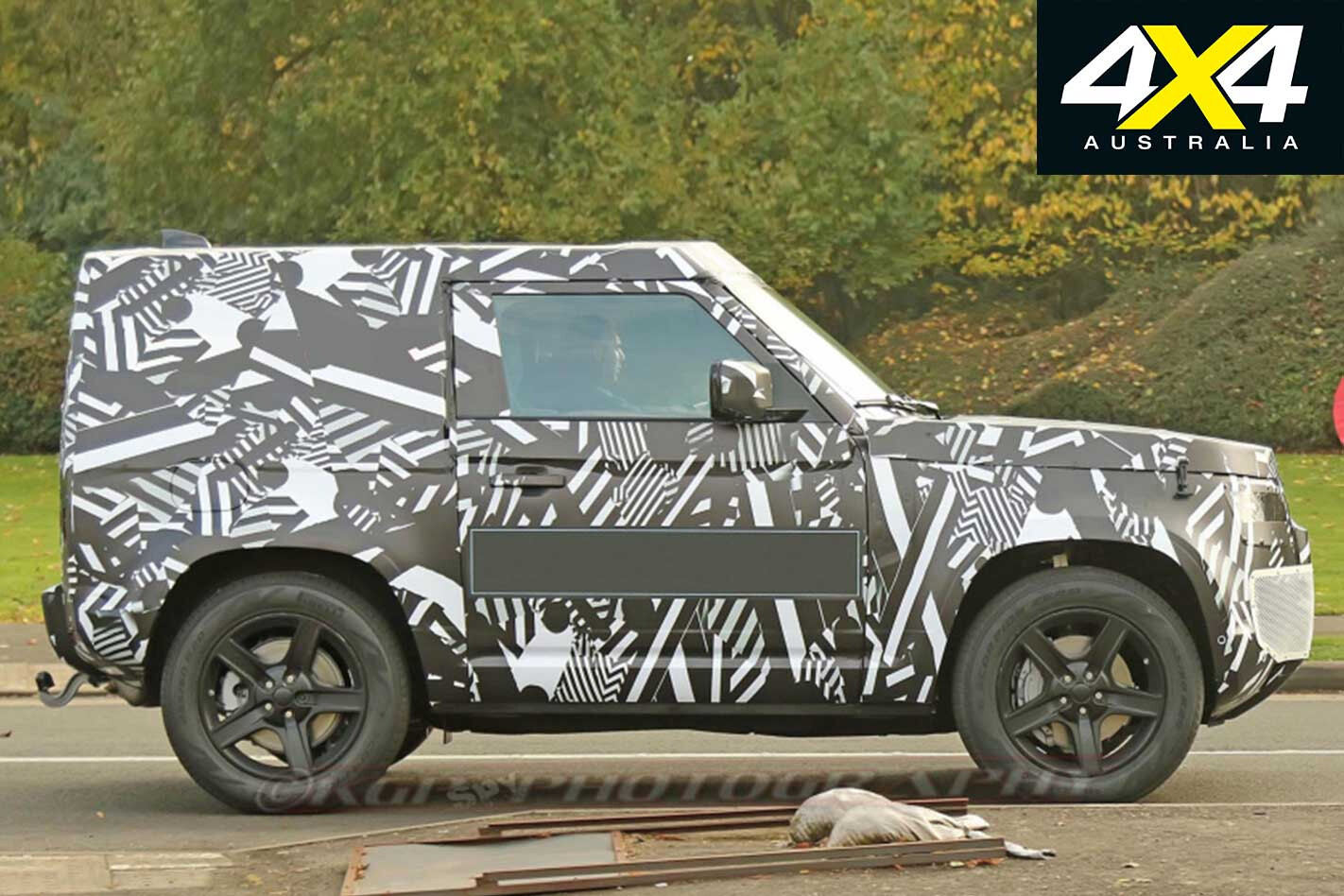
So what do we know about the new Defender? From the spy photos we know it will come in short and long wheelbases with a traditional ‘square’ 4×4 body rather than a more aerodynamically sculptured body like the new Discovery, or indeed any of the other current Land Rover or Range Rover model. Reportedly the styling cues have been taken from the Discovery II, so the look will definitely be retro.
It will also be built off a version of Land Rover’s premium platform as per the Range Rover, Range Rover Sport and Discovery. This means a monocoque fabricated largely from aluminium that is both notably light and structural rigid and rides on long-travel fully independent suspension with height-adjustable air springs. In the above mentioned vehicles this translates to broad-spectrum performance offering both sharp on-road dynamics and formidable off-road ability.
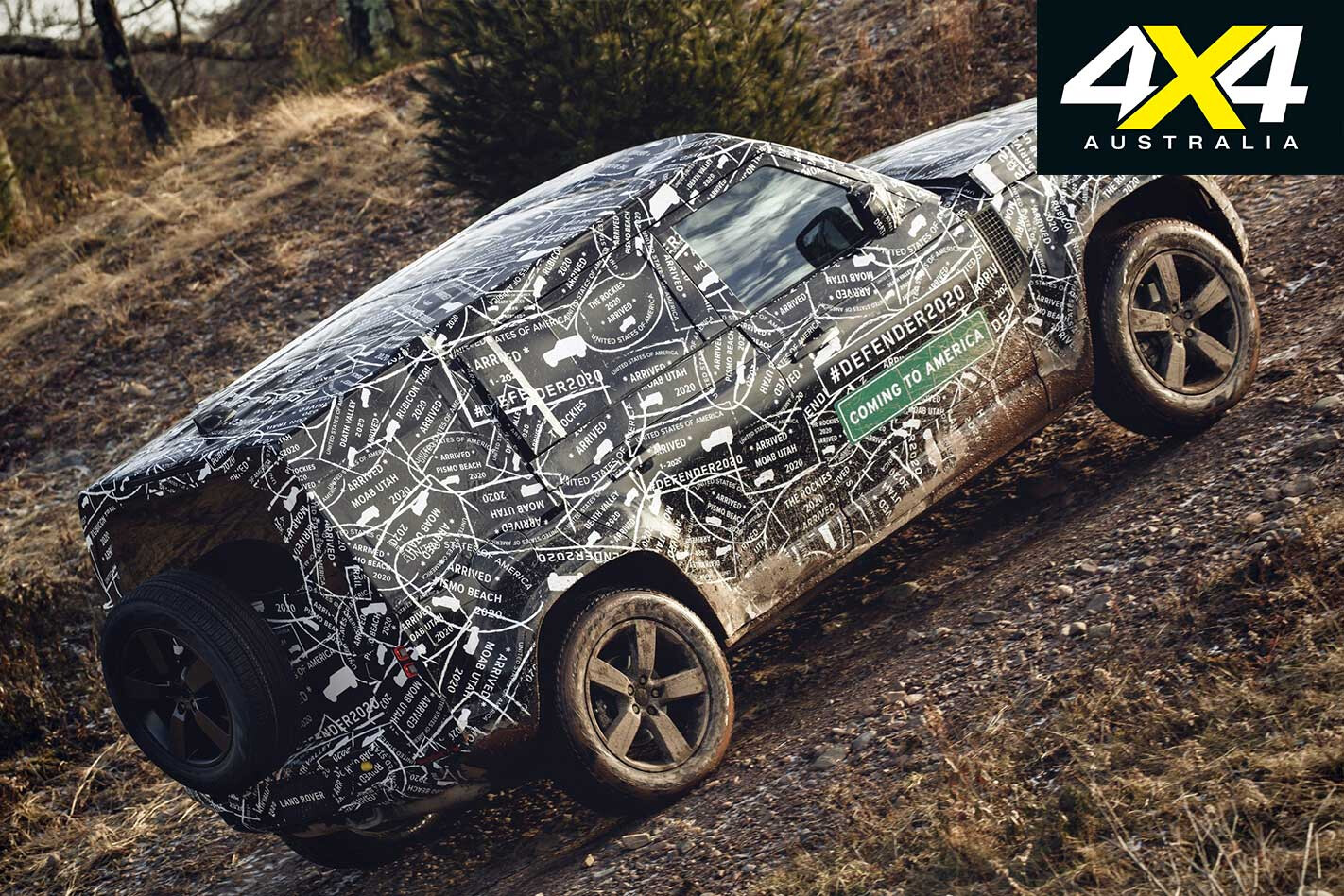
We also know the new Defender will be offered with a choice of diesel and petrol engines from Land Rover’s new, cutting-edge ‘Ingenium’ engine family. There will be at least two 2.0-litre four-cylinders diesels, most likely the 132kW (single-turbo) and 177kW (bi-turbo) engines from the Discovery, but perhaps also an entry-level 110kW diesel, as currently used in the Discovery Sport. A 2.0-litre four-cylinder turbocharged petrol engine anywhere in the 180-200kW range will also be offered.
In a sign of the times there will also be a petrol-electric hybrid with plug-in capability for additional battery charging beyond regenerative braking, a so-called PHEV (Plug-in Hybrid Electric Vehicle) model.
The conventional part of this powertrain will be a 1.5-litre three-cylinder petrol engine created by lopping off one cylinder from one of the Ingenium 2.0-litre petrol fours. Given Ingenium 2.0-litre petrol fours currently produce anywhere between 177kW and 220kW the ‘little triple’ could make anywhere between 133kW and 165kW, so still pretty handy. However, there are no plans at this stage for a fully electric Defender, as electric vehicles don’t fit with Land Rover’s go-anywhere image.

If you’re hoping for a manual gearbox in the new Defender, you’re probably going to be disappointed; although, a manual could be a possibility with the entry-level diesel engine. Otherwise you can count on the familiar eight-speed automatic.
Likewise, there’s no reason to suggest why Land Rover will depart from the dual-range full-time 4×4 system, as used in the Discovery, Range Rover and Range Rover Sport, complete with its self-locking centre diff and optional rear self-locker.
The new Defender will be pitched across a broad-spectrum that will include the fashionable urban market (think Jeep Wrangler buyer who never goes off-road), all the way to those wanting a serious off-roader.
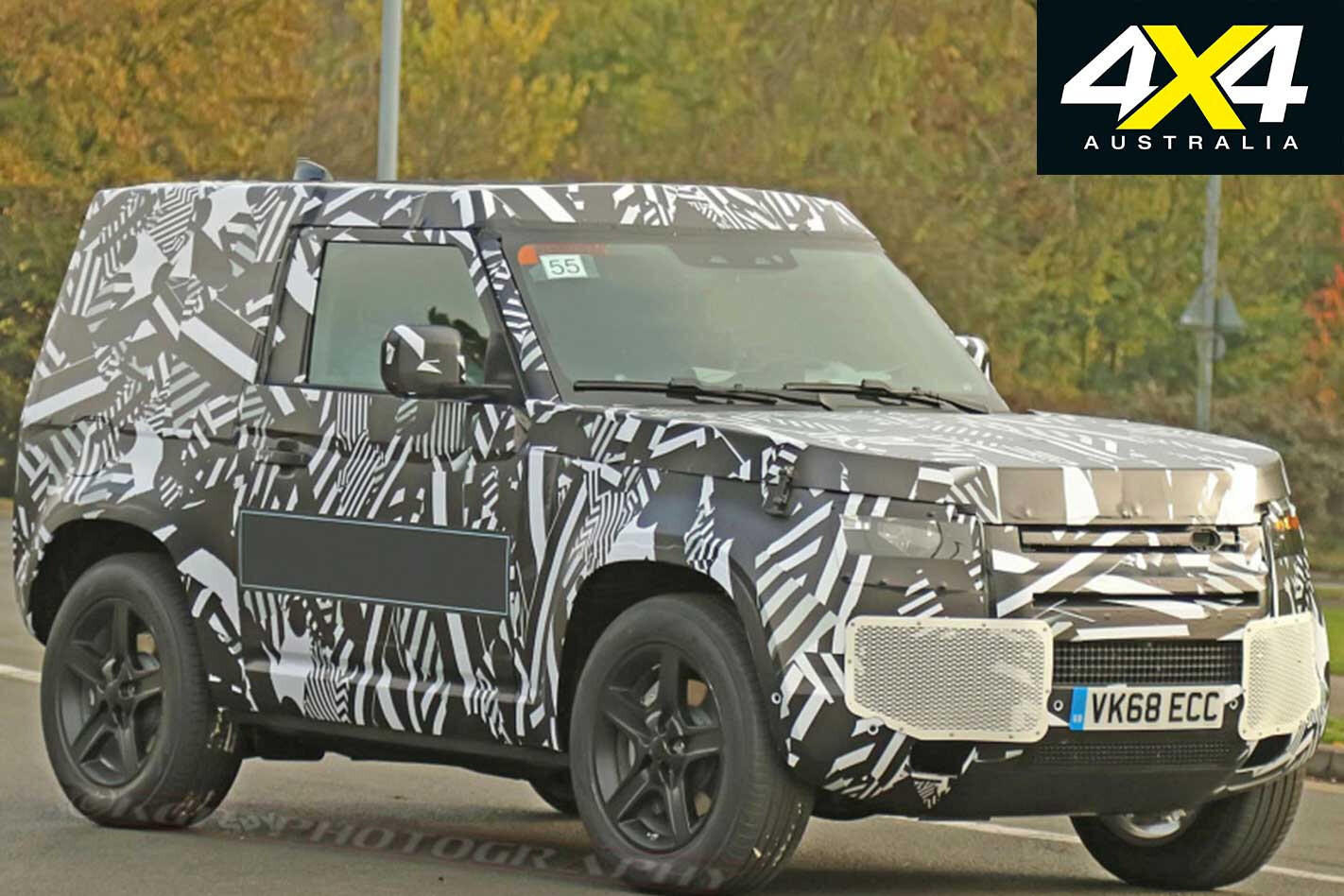
Indeed, reports suggest the new Defender will be the most off-road capable Land Rover ever and will even be offered with an off-road practical wheel and tyre spec with rim sizes down to 18- and possibly 17-inch, something that has been somewhat of an Achilles’ heel on recent Land Rover models.
What we don’t know, and what Land Rover seems to be denying at this stage, is the possibility of a Defender ute sometime in the future. With the Defender wagon switching to the aluminium monocoque platform, a ute may have to be constructed on a new and unique traditional separate chassis platform; so it could be some years away yet, if it comes at all.
We expect to see more ‘leaked’ spy pics of the new Defender over the coming months, before the final product is revealed later this year.
THESE days you can’t get a Maloo ute or Commodore V8 from the showroom floor; in their place are showroom-stock performance-based dual cabs like the SportsCat and SportsCat+. We had the top-spec SportsCat+ along for the ride at this year’s comp.
In addition to a taller wheel and tyre package, beefier front springs, MTV dampers all around and braced front spring/damper strut top mounts, the SportsCat+ then adds larger brake rotors and four-piston AP Racing callipers up front, as well as a rear swaybar.
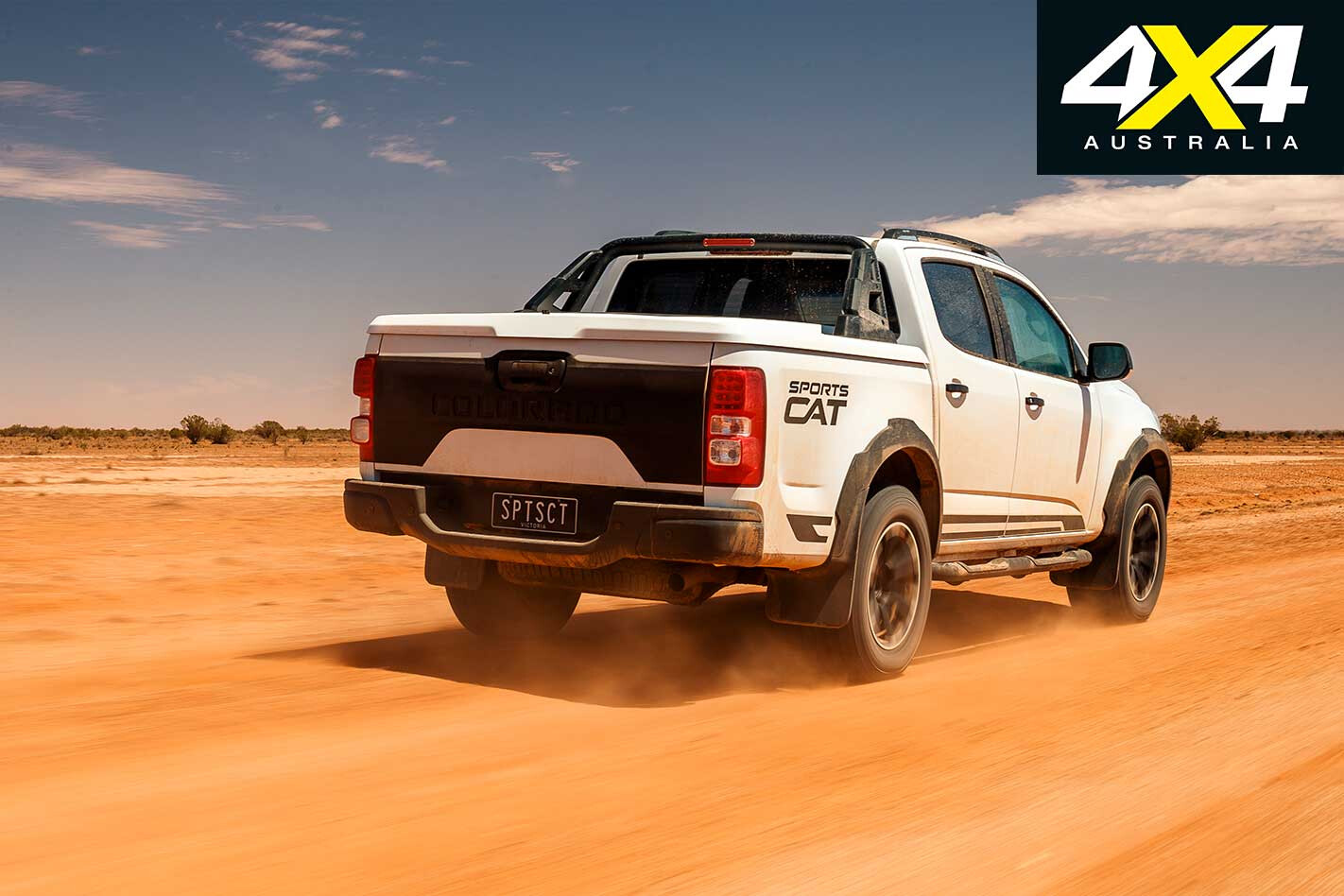
The 2.8-litre four-cylinder Colorado engine – 147kW and 500Nm – is aided by a six-speed auto and remains unchanged.
The SportsCat+ tow capacity remains at the same level as the Colorado (3500kg), while the lower payload capacity sits at 876kg. The 4×4 system implemented is dual-range, part-time. Our SportsCat+ had the optional sailplane and tub liner, to lift the overall cost from $68,900 to $70,500.
The SportsCat+ may be better than the Colorado, but does it keep up with the Ranger Raptor?
The bitumen runs out at Blinman, the highest town in South Australia, after which good gravel roads wind farther north through scenic gorges carved through the rugged red ranges and out onto the flat, seemingly endless plains surrounding Lake Frome. The lake’s pure white salt surface shimmers in the distance and, with a reflectivity of 70 per cent, when seen from space it is one of the brightest objects on earth.
For what it’s worth, Australia also has the darkest place on earth – Lake Argyle in the Kimberley – with five per cent reflectivity.
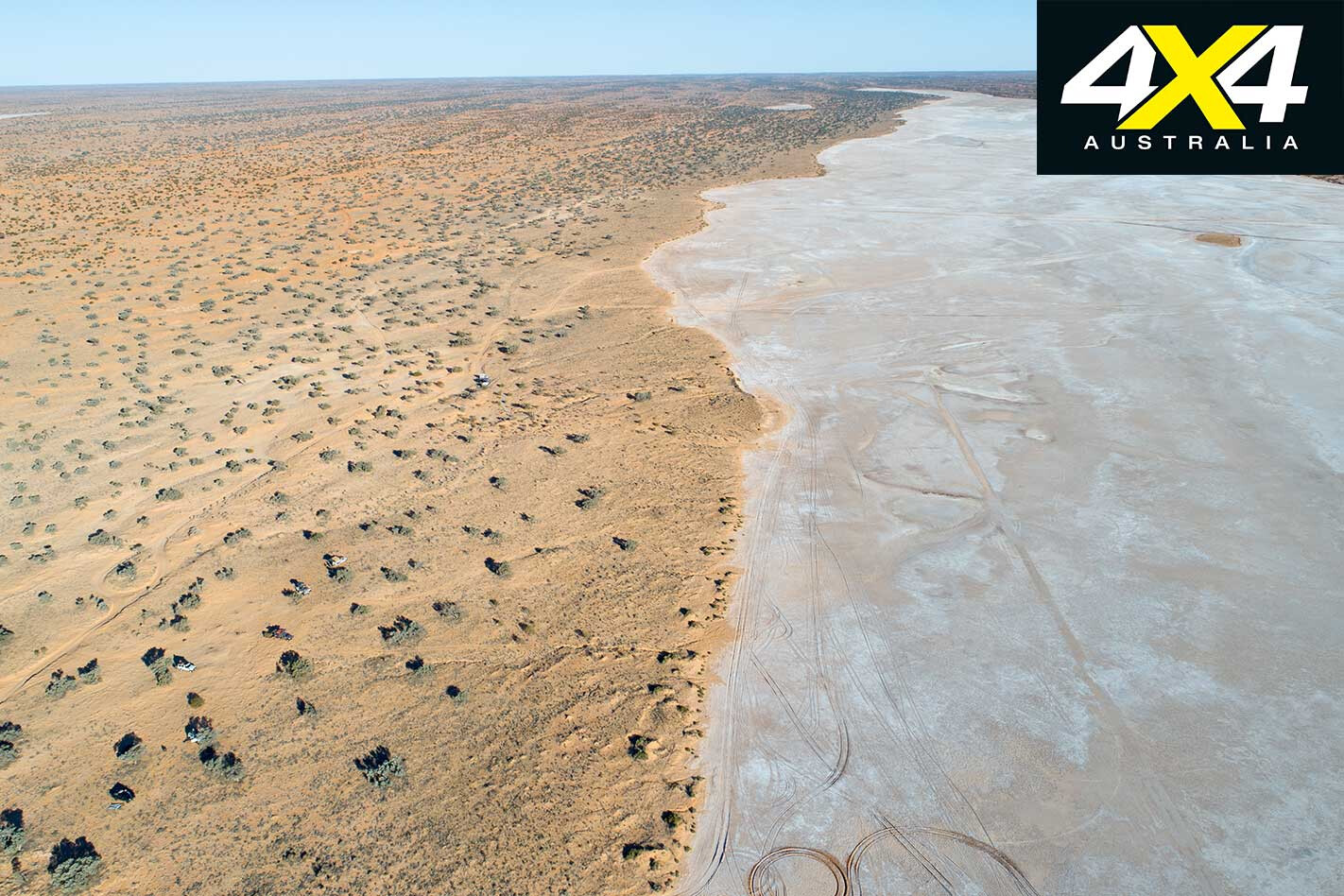
North of Arkaroola the road condition deteriorates and is subject to numerous dry creek crossings before meeting the Strzelecki Track.
Whether the Strzelecki is getting knocked around by more traffic or just seeing less maintenance these days (or more likely I’m just getting old and soft) it was a long, unpleasant drive to Innamincka. While the odd bulldust hole and heavy vehicle with dust trails that reduce visibility to zero are to be expected, the rough road surface can literally shake your 4×4 to pieces.
Despite a full mechanical check before the trip and driving conservatively, both headlight low beam filaments blew on the way to Innamincka, the fuel tank filler hose fractured and the bushes in both steering arms had to be replaced after the trip. These were minor concerns compared to also finding one of the two retaining bolts in the differential upper control arm had disappeared and the other was hanging by a thread.
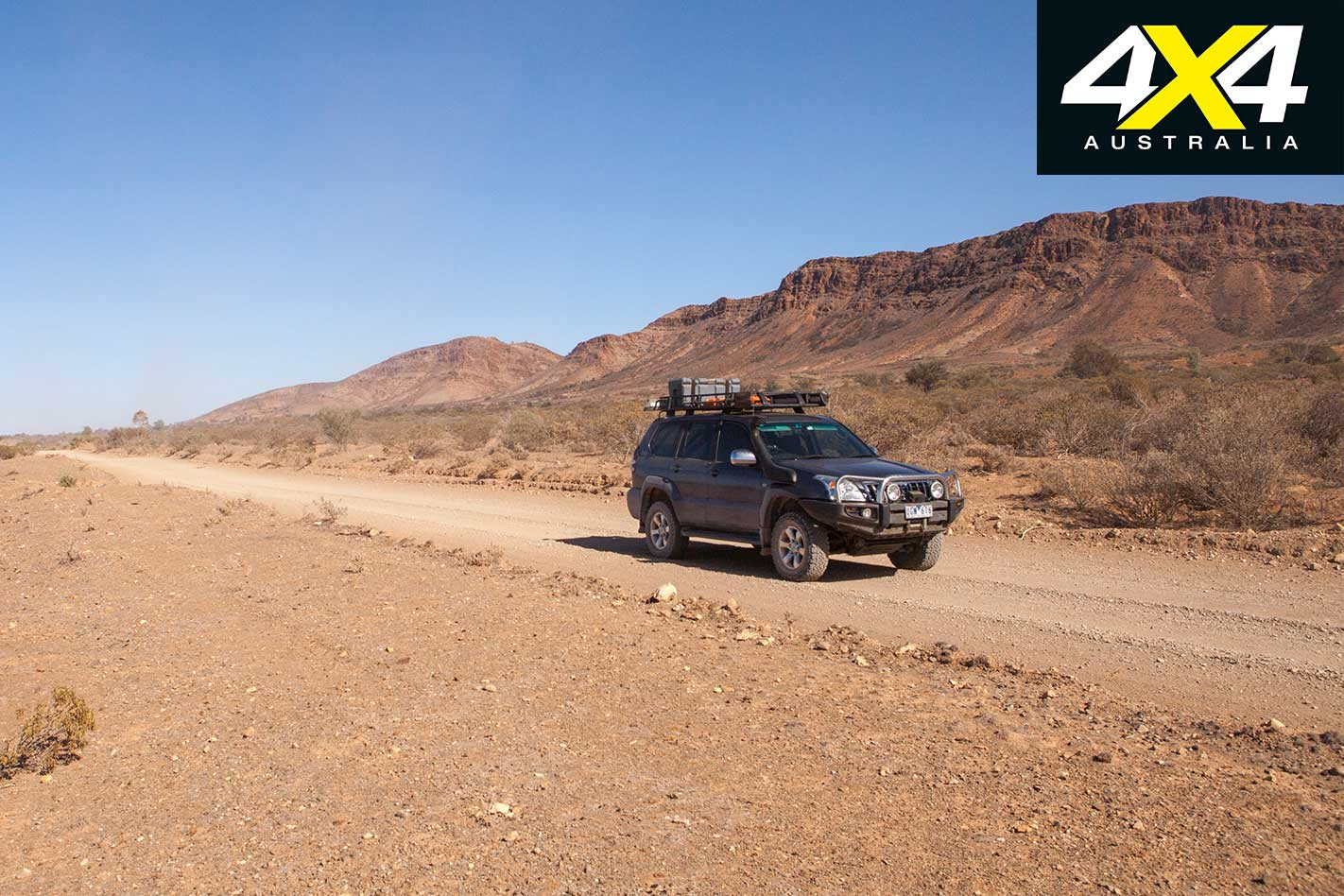
The Diamantina River had been running for several weeks, flooding areas around Birdsville and, when there is enough water, some of it eventually finds its way into Lake Eyre.
Local sources before the trip assured us that the Warburton Track (our proposed route into the Simpson) wouldn’t be cut, but on fronting the Innamincka Store for our desert passes we discovered the track had been closed by floodwater just 24 hours earlier.
We overnighted at Cullyamurra Waterhole and, with the surrounding countryside bone dry, this huge body of water, Australia’s largest billabong, seemed out of place. It’s a delightful camping area; although, several days of unseasonably warm nights had allowed the fly population to explode and sunset was a welcome time of the day when they finally abandoned their persecution and disappeared for the night.
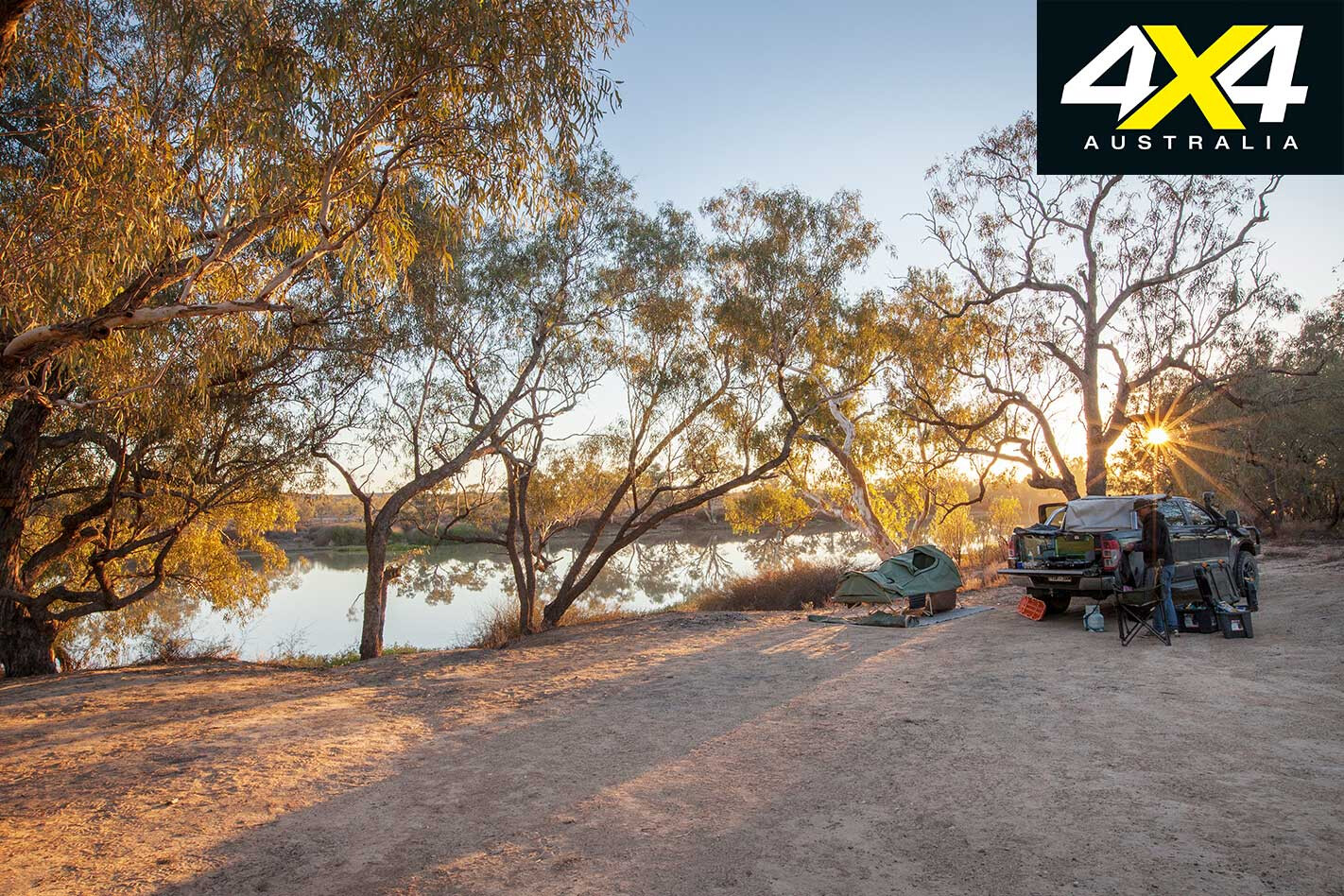
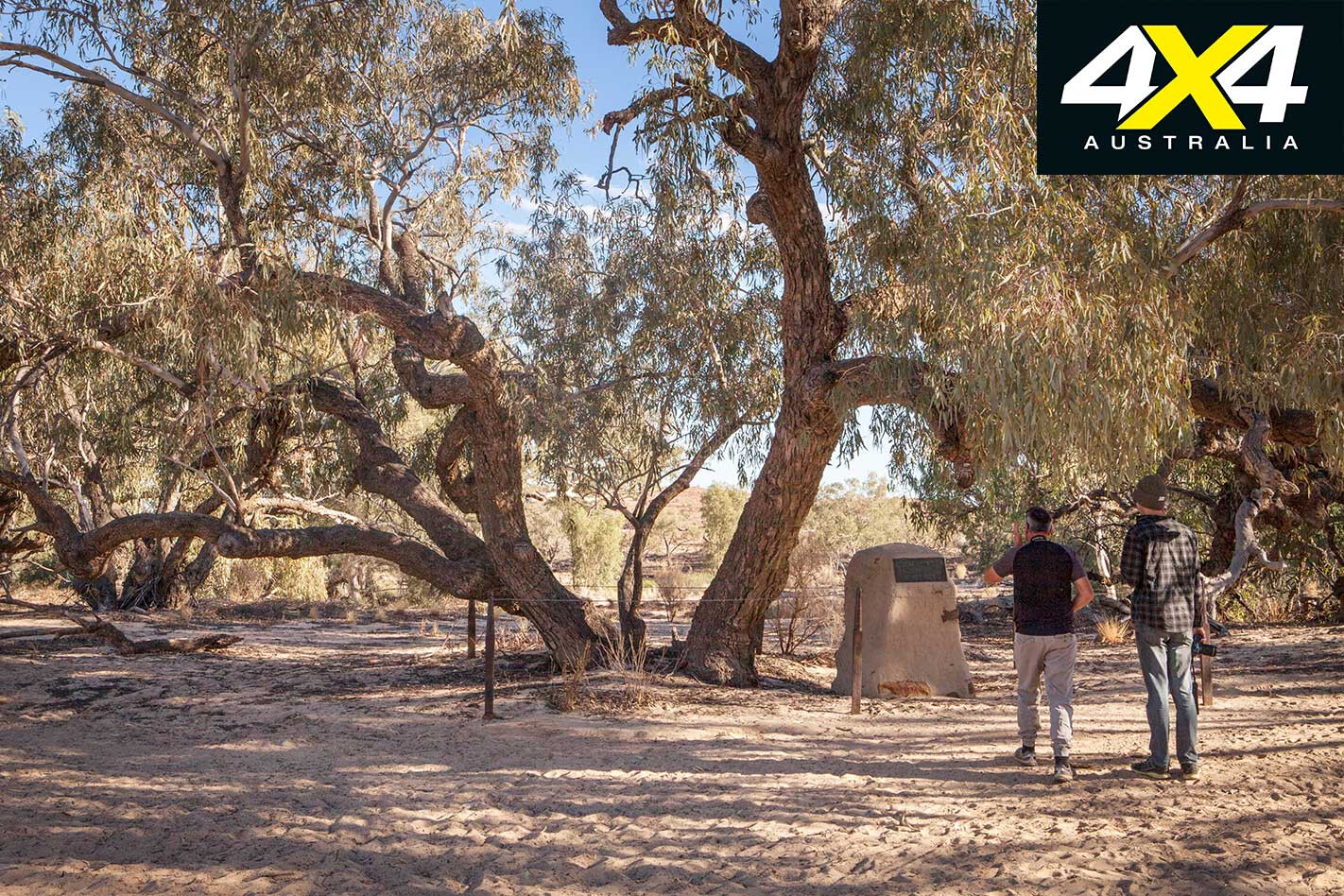
The current hadn’t been apparent at Cullyamurra because it is such a large body of water, but the next day we stopped off at the gravesite of Wills (of Burke and Wills fame), a little downstream of Innamincka, and were surprised at the strength of the flow where the Cooper was much narrower.
Walkers Crossing Track follows the Cooper west to the Birdsville Track, and with the vast flood plain stretching for kilometres either side of the creek, it gives some idea of just how much floodwater flows here on occasions. While the road surface of fine sand and silt generally makes for a smooth run, the dust gets into everything and just hangs in the air, ensuring a need to keep decent separation from other traffic.
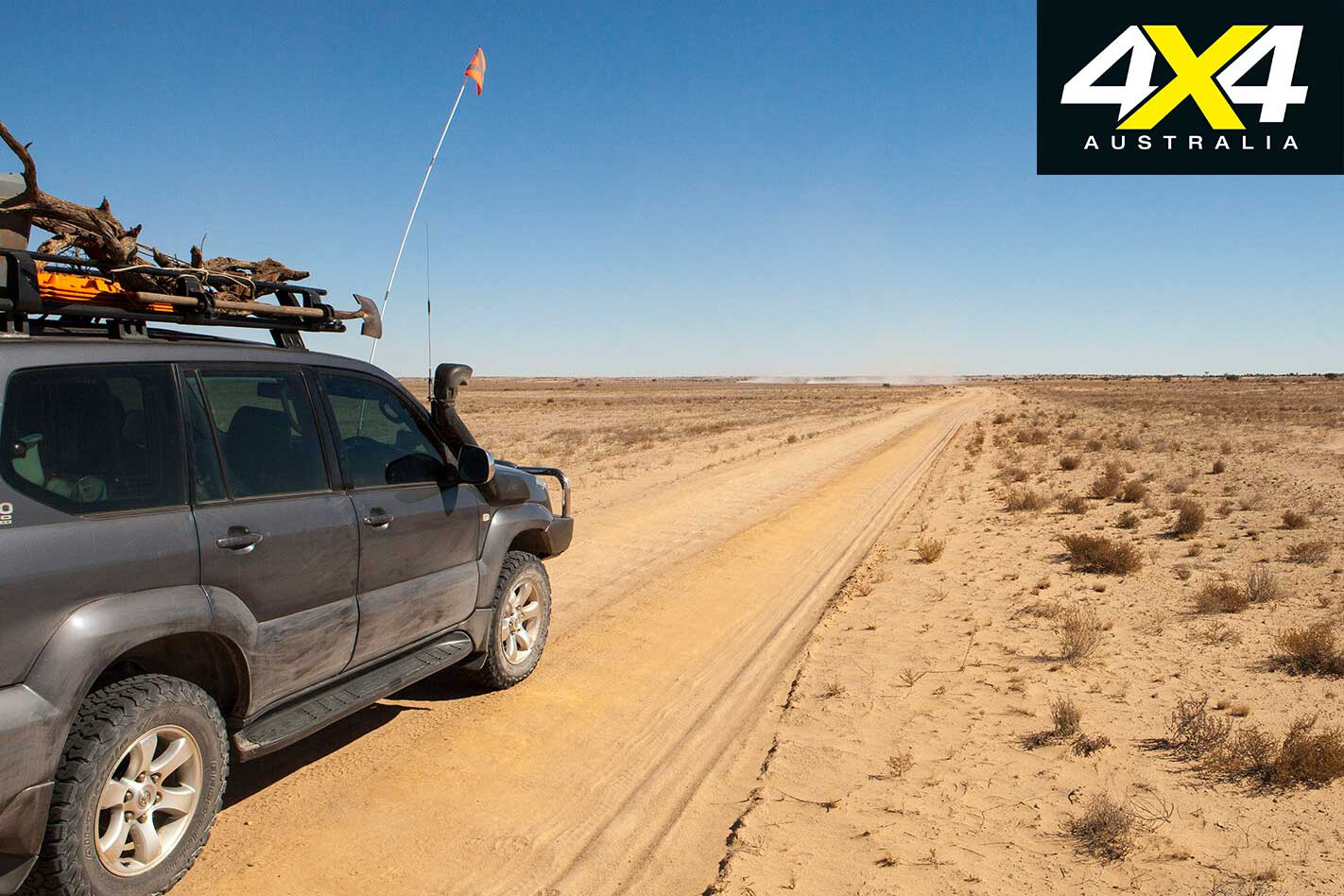
Halfway to the Birdsville Track the road crosses the Cooper (there is also a bridge for use when the road is cut) and, while only 70km as the crow flies from where the creek was flowing strongly, at the crossing itself it was as dry as a chip.
The last half of Walkers Crossing Track passes through increasingly stony country as it nears the Birdsville Track and enters Sturts Stony Desert. The dark red gibber plains glint in the sun, but now dry bog holes suggest this to be a treacherous drive in the wet.
In places, gnarly, softball-sized rocks that had been knocked onto the track lay waiting for a moment of inattention, and sharp stones looking for a passing sidewall jutted from the sides of muddy wheel ruts now baked as hard as cement.
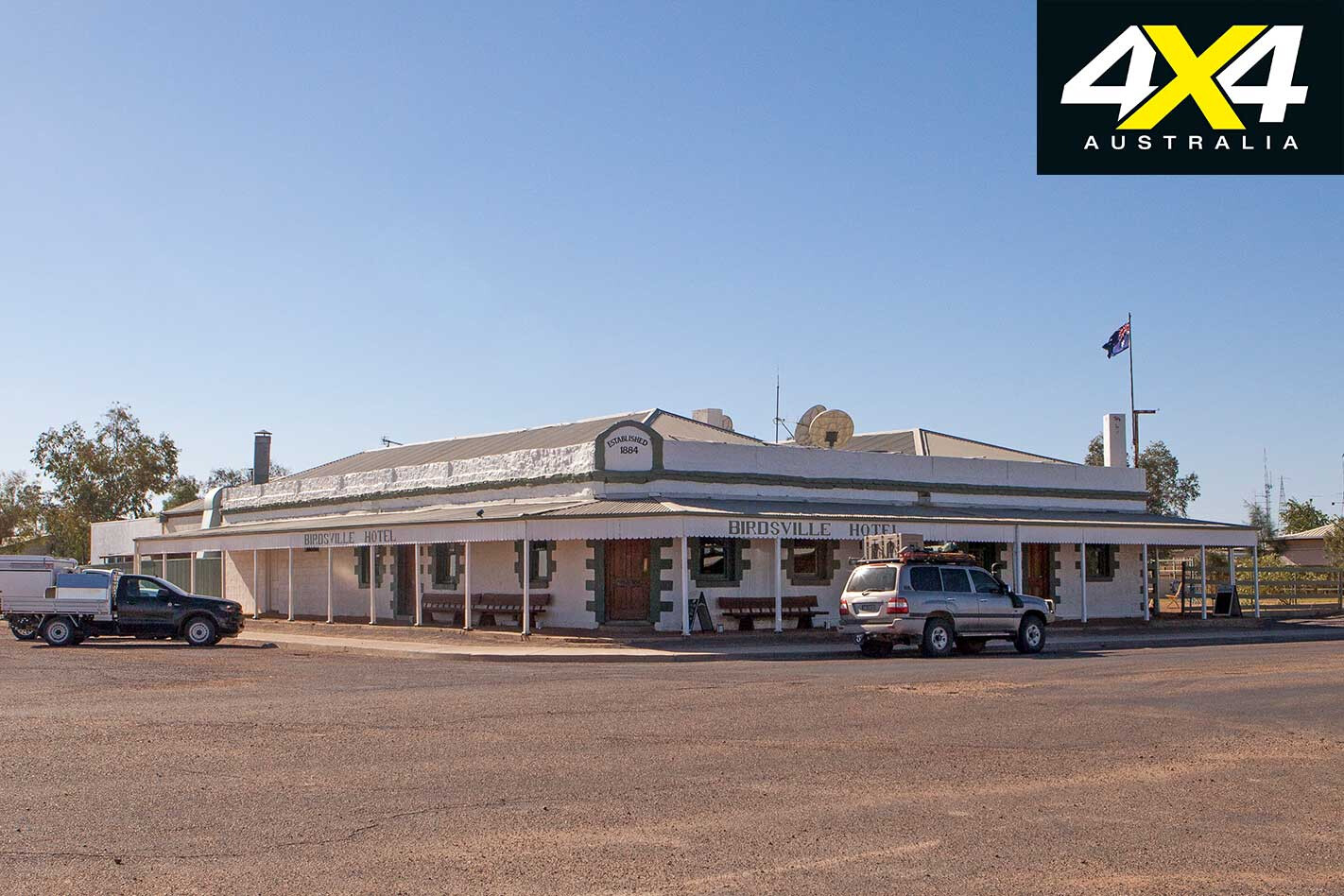
With the Warburton Crossing Track no longer an option, on reaching the Birdsville Track we headed north to the iconic outback town of Birdsville and the compulsory ice cold beer or three in the front bar of the local pub.
While there were many more tourists and blow-ins like ourselves than locals, the latter were easily identifiable by their weather-beaten complexion, laconic sense of humour and, of course, their wide-brimmed, sweat stained stockman hats. The rodeo was in town and the pub was jumping, so meals were a long time coming, but, as always, they were worth the wait and a pleasant change from campfire food.
The first stop on our run out to Poeppel Corner was Big Red, which was initially deserted apart from a film crew and a highly modified Toyota that sounded and performed as if it had a motor that would be more at home in a Kenworth truck. It was the only 4×4 I’ve ever seen simply drive up Big Red’s steepest approach without even needing a run-up.
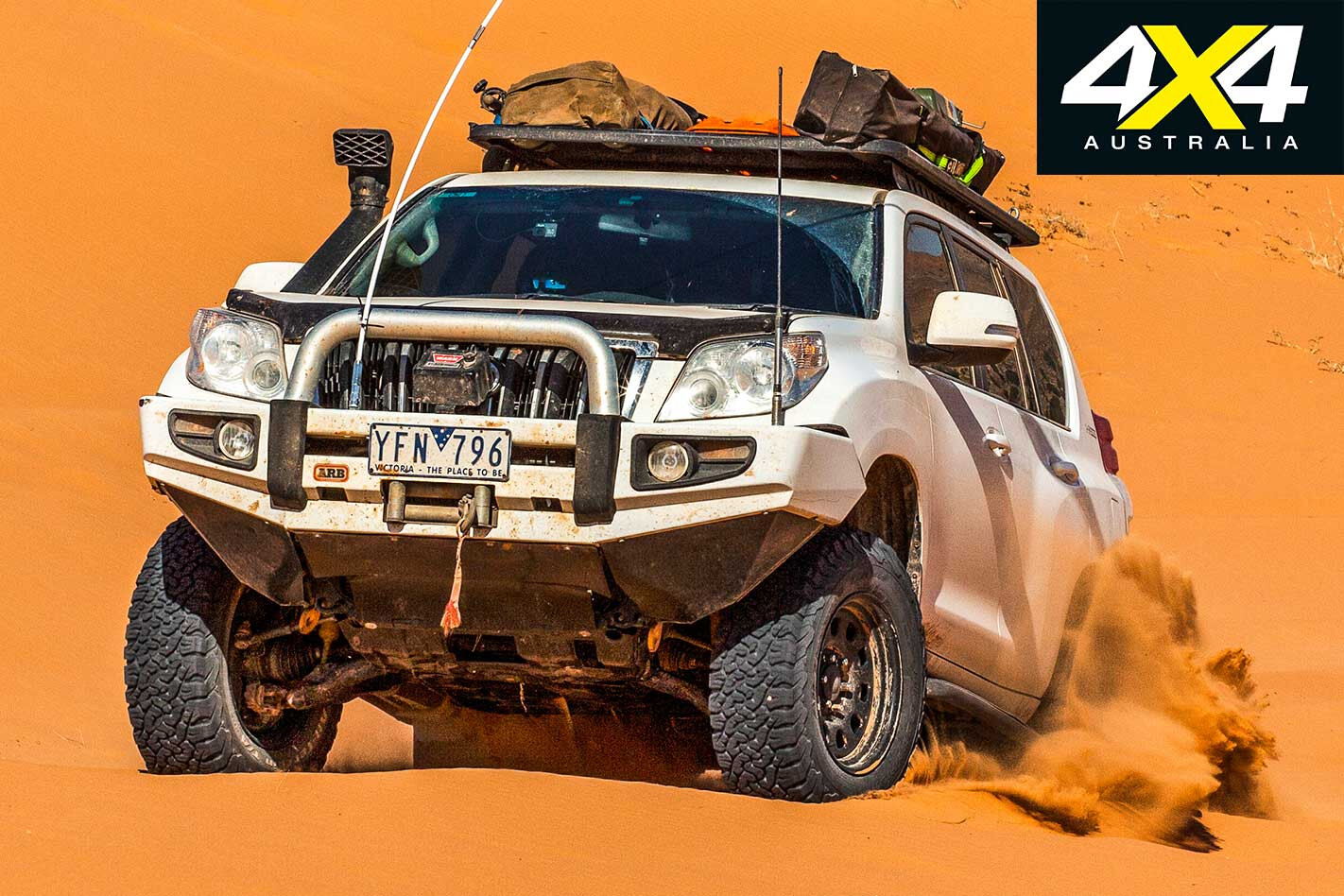
The drive from east to west across the Simpson is said to be the more difficult passage because the prevailing wind makes the eastern side of the dunes steeper than the west. That proved to be true and the drive to the Corner took seven hours, whereas the return journey (west to east) was an hour quicker (although this could have had something to do with thoughts of beer o’clock at the Birdsville pub influencing the right foot).
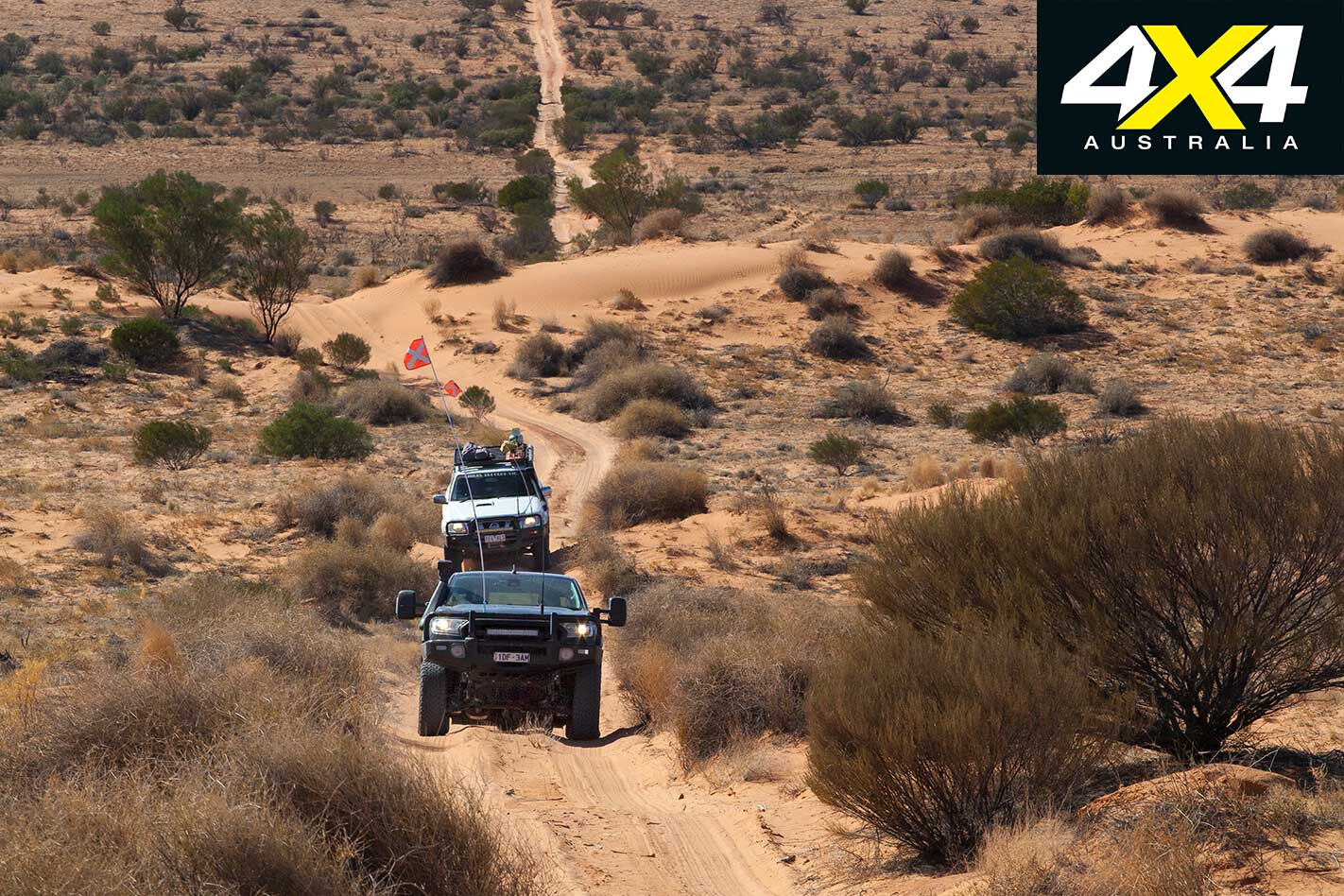
The seemingly never-ending QAA Line disappears into the distance, while the occasional chatter on the radio gives some idea of what oncoming traffic might be met over (rather than on top of) the next dune. The track was relatively busy, with a number of convoys small and large being met along the way.
The QAA, like all the Simpson’s tracks, was badly scalloped, with undulations perfectly spaced to resonate with a 4×4’s suspension, so that once over a certain speed (about 20km/h) vehicles would bounce ever higher only to land heavily – followed by a second crash, being the contents of the vehicle exiting freefall.
A stretch of a few hundred metres without scallops would see vehicles pick up speed only to be caught out by the next rough section. Some dunes were very rough from the over exuberance of previous drivers, and too fast an approach risked vehicles nosing into the sand.
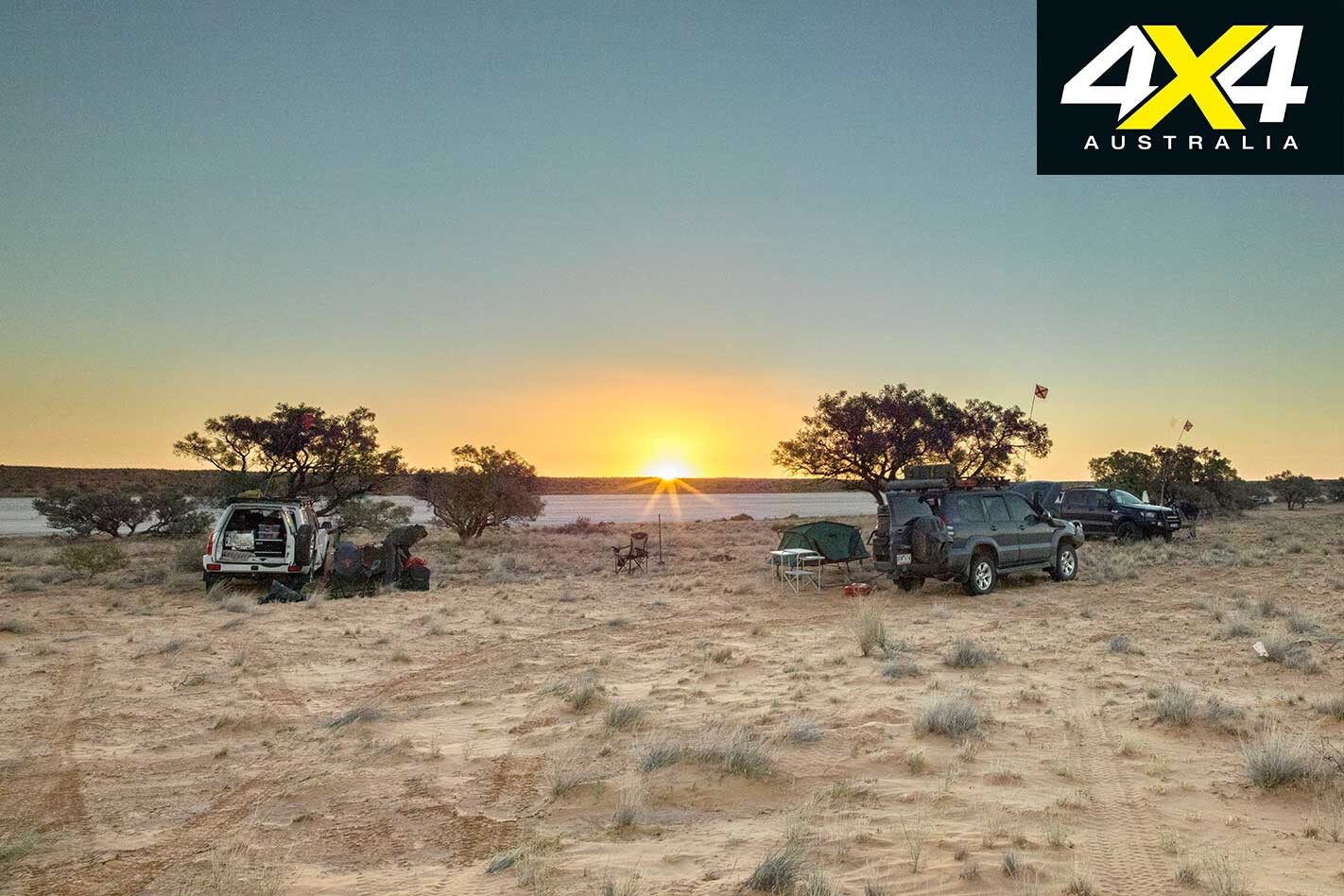
Just after entering the Northern Territory, the QAA crossed one of the many dry salt lakes in this area before following its shoreline south. The hard, smooth salt surface saw the speed demons put in an appearance and we rapidly closed on our overnight camp site at Poeppel Corner. Here, a dozen or so campsites were scattered over a large area along the edge of dry Lake Poeppel, each staking claim to one of the many Mulga trees that punctuate the sandy shoreline.
The surveyor, Augustus Poeppel, marked the border with a post in 1880 by using a chain to measure the distance from Hadden Corner 300km to the east. Unfortunately, the chain stretched slightly during this process and that original marker was incorrectly placed some 300m west of its true location.
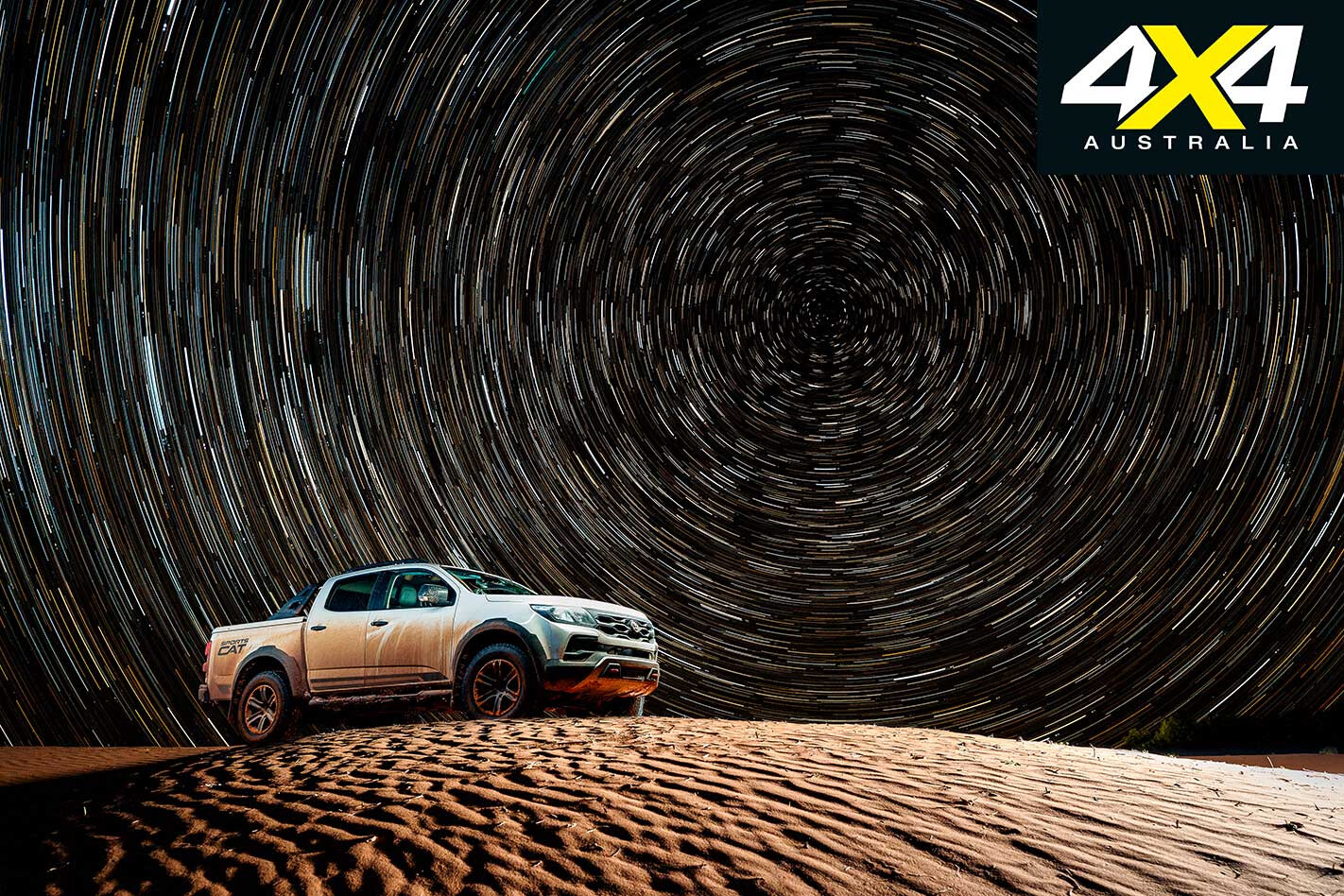
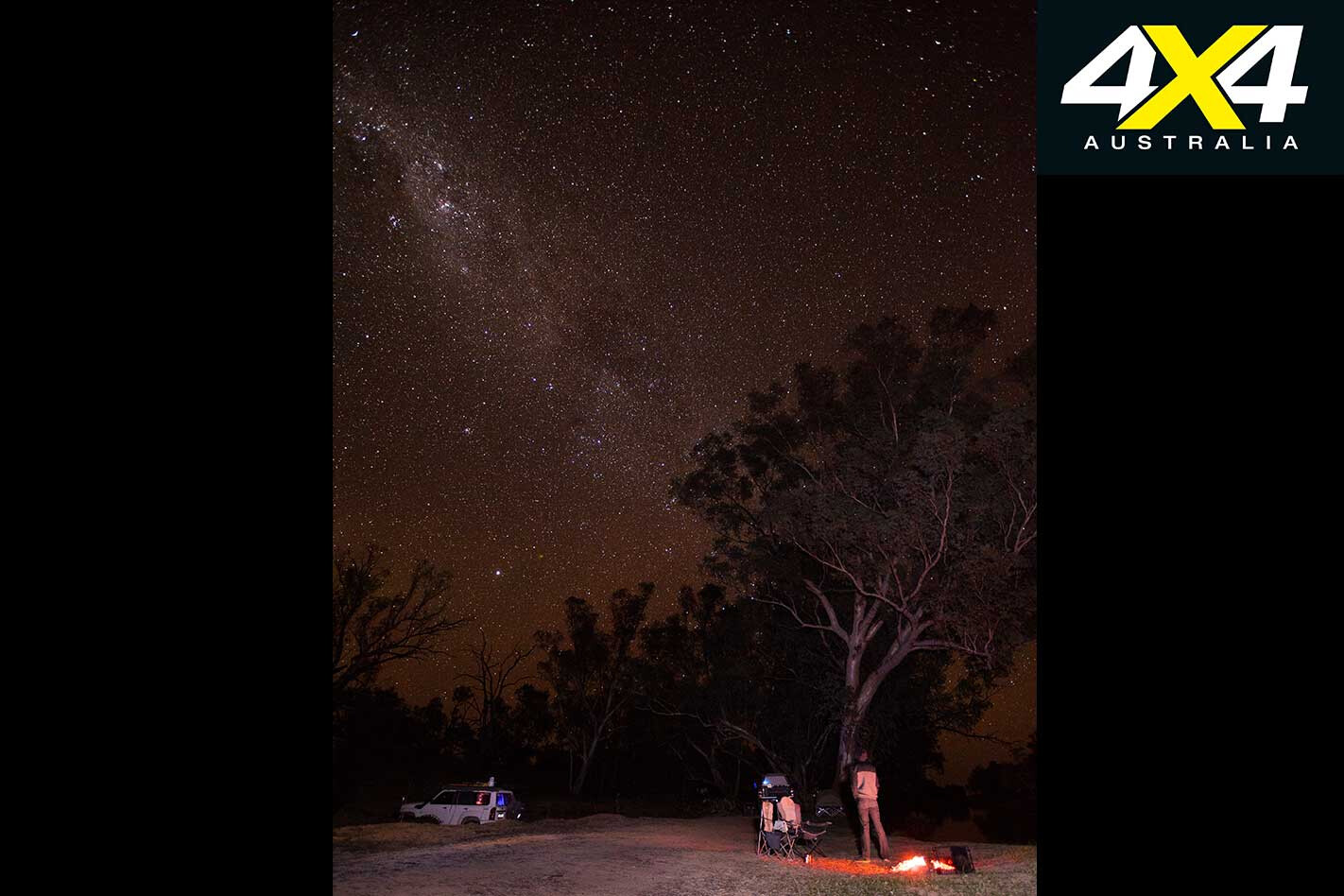
One of the great joys of camping in the desert is watching the red ball of the sun sink below the horizon and the dusk sky gradually take on delicate hues of pink and purple as night approaches. Once the darkness is complete, there’s no better pastime than relaxing around a crackling campfire and watching the stars ablaze in the firmament above.
The journey back to Birdsville was uneventful apart from pilot error on the rough track which resulted in a brief attempt at flying. A carton of eggs failed to survive the subsequent landing and ensuing attack from several cans of beer, leaving the contents of the fridge a sticky mess.
The return to Innamincka was by way of Cordillo Downs, one of 3.5 million hectares of station properties controlled by the Brook family of Birdsville, and famous for having the largest shearing shed in Australia. The shed was constructed from stone rather than wood due to the absence of suitable local timber, while the surrounding stony landscape provided a ready supply of alternative building material. The shed is no longer used for shearing, as dingos decimated early sheep flocks, forcing the station to restock with cattle.
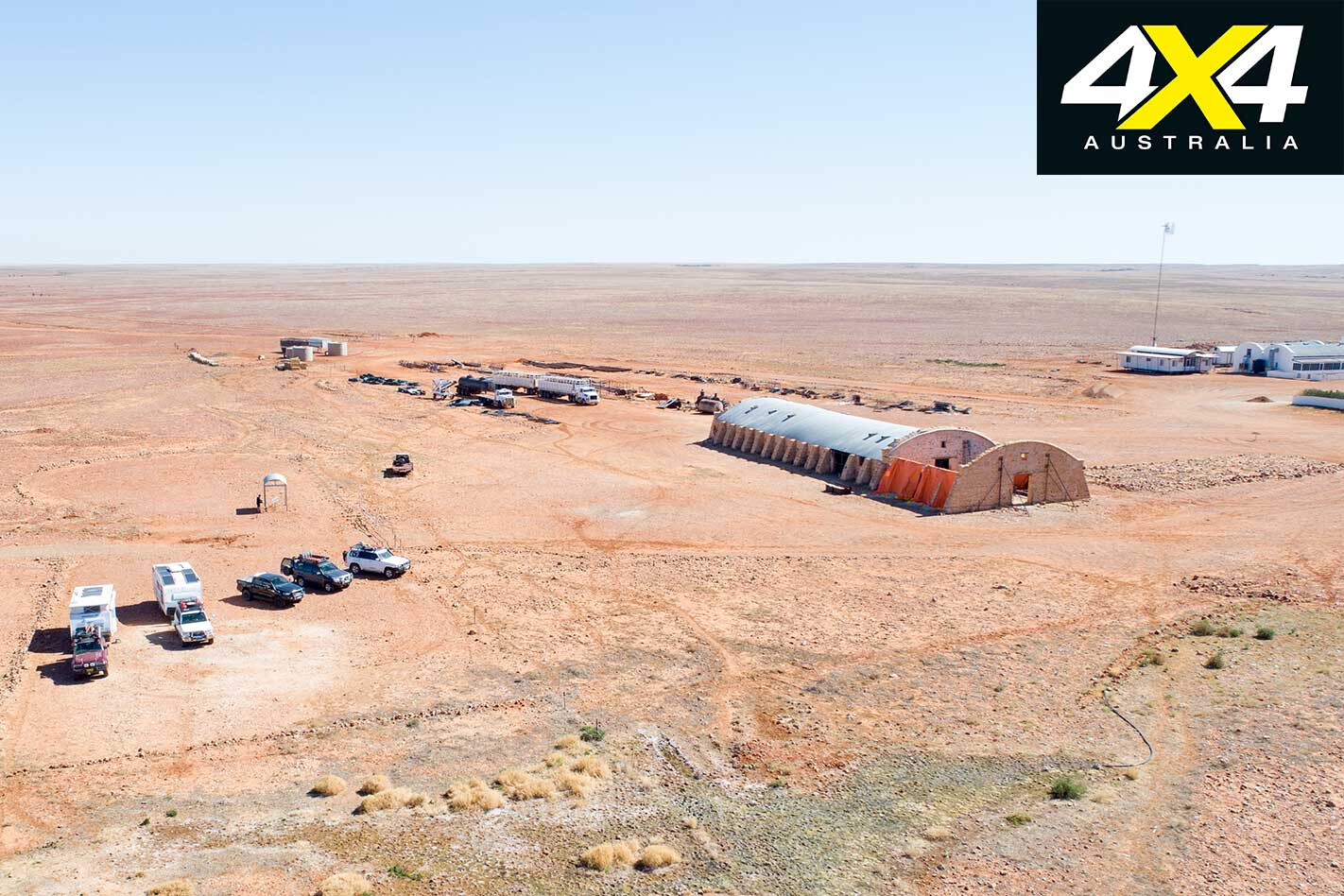
The road from Birdsville to Cordillo Downs is notoriously very rough, but on this occasion it had been recently graded and proved an easy run. Farther south, after crossing back into Queensland, the freshly graded rich red clay road was wide and smooth enough to land a passenger plane.
Having heard good things about Policemans Waterhole campground on the Cooper just to the west of Innamincka, we thought we’d check it out and were pleasantly surprised. Camped right on the waters’ edge under huge river red gums, you can kick back and watch the antics of pelicans as they paddle up and down the wide expanse of water.
It is incongruous in such an idyllic setting to think that 157 years ago Burke and Wills (the latter’s grave is close by) would have passed by within metres of this site shortly before they perished.
While the first motorised crossing of the Simpson happened less than 60 years ago, today thousands of 4x4s descend on the desert each year, and a trip that used to be classed as a serious adventure is now something anyone with an appropriate vehicle can complete in air-conditioned comfort in a few days. For some, the desert possesses a magical attraction that keeps drawing them back time and time again.
If you are yet to experience the joy of camping in remote places like the Simpson, you really don’t know what you are missing.
Travel Planner
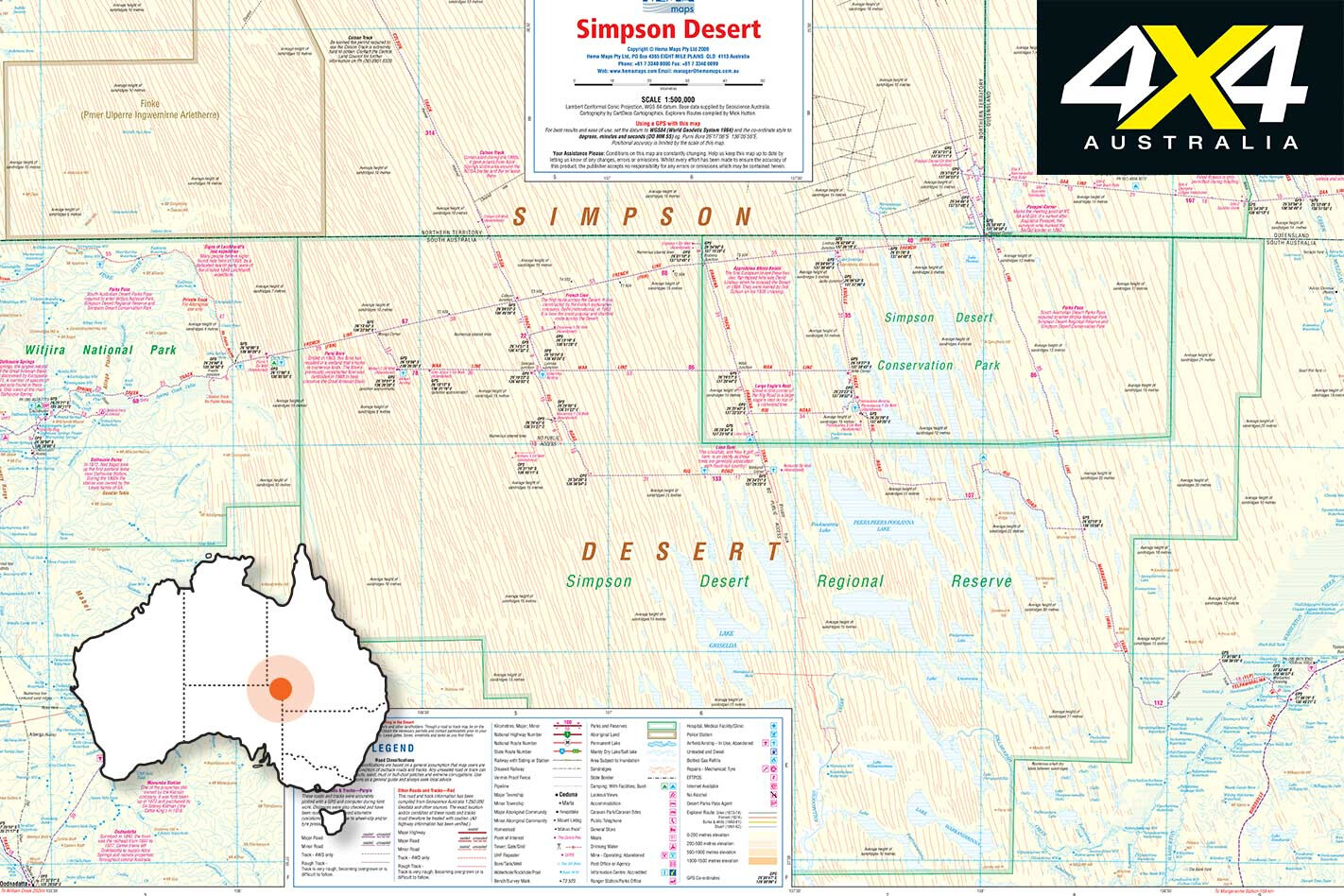
WHERE The Simpson Desert, 2000km from Sydney or Melbourne, is located at the juncture of South Oz, the NT and Qld.
WHEN TO TRAVEL Desert summers are unforgiving with temperatures regularly in excess of 40ºC, making the cooler months of April to September the best time to visit. Expect daytime temperatures around 25ºC and single digit overnight lows.
STAYING THERE Your vehicle needs to be in top condition. Vehicles are required to have a UHF radio and a 3m sand flag. Visitors require a National Parks Desert Pass – purchase it online.
SUPPLIES Be self-sufficient with food, water and fuel – all of these can be purchased at Birdsville, Oodnadatta or Innamincka.
CONTACTS – SA Dept of Environment & Natural Resources: www.environment.sa.gov.au/parks (08) 8648 5300 – Birdsville “Wirrarri” Information Centre: 1300 794 257 – Mt Dare Hotel: www.mtdare.com.au (08) 8670 7835 – Innamincka Trading Post: (08) 8675 9900
THE Ford Everest is no stranger to the 4X4OTY competition, claiming the title three years ago. It returns, however, with a new powertrain, significantly changed front suspension and added safety tech.
The new powertrain is the same 2.0-litre bi-turbo-diesel arrangement (157kW/500Nm) found in both the Ranger XLT and Ranger Raptor, again mated to a 10-speed automatic transmission.
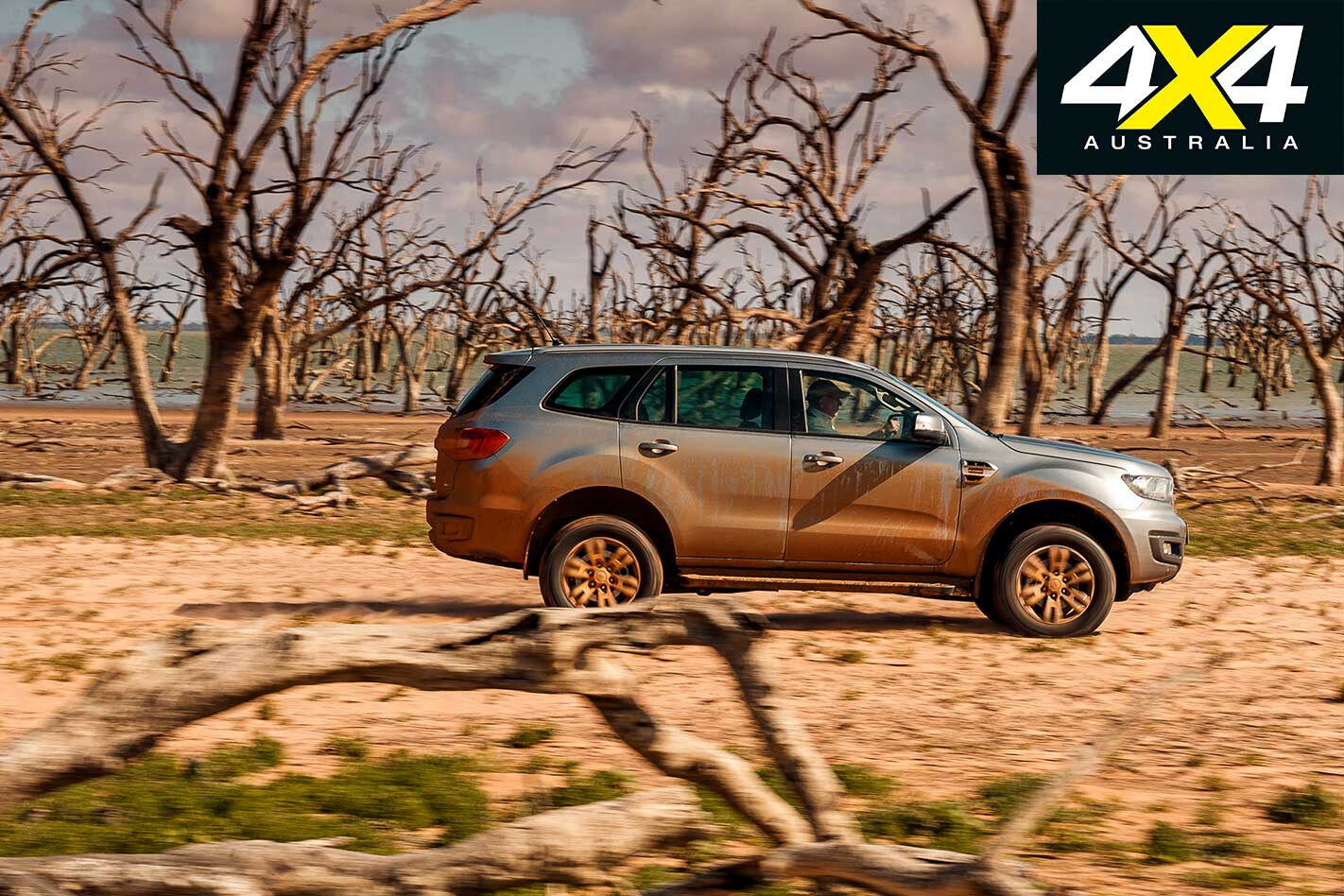
The seven-seat family wagon differs from the Ranger as it comes with a dual-range full-time 4×4 system, which apportions 40 per cent of the drive to the front wheels and 60 per cent to the rear on high-traction surfaces (though that can change as conditions dictate), and coil springs in lieu of leaf springs for the rear live axle.
The burly wagon gets a self-locking centre diff, and the Terrain Management system changes the drive dynamics and includes Normal, Rock, Snow/Mud/Grass and Sand modes.
The Everest Trend’s cabin is spacious and well kitted-out, and the vehicle’s capable of towing up to 3100kg and a maximum payload of 687kg. The Trend on test retails for $61,190 (plus on-road costs).
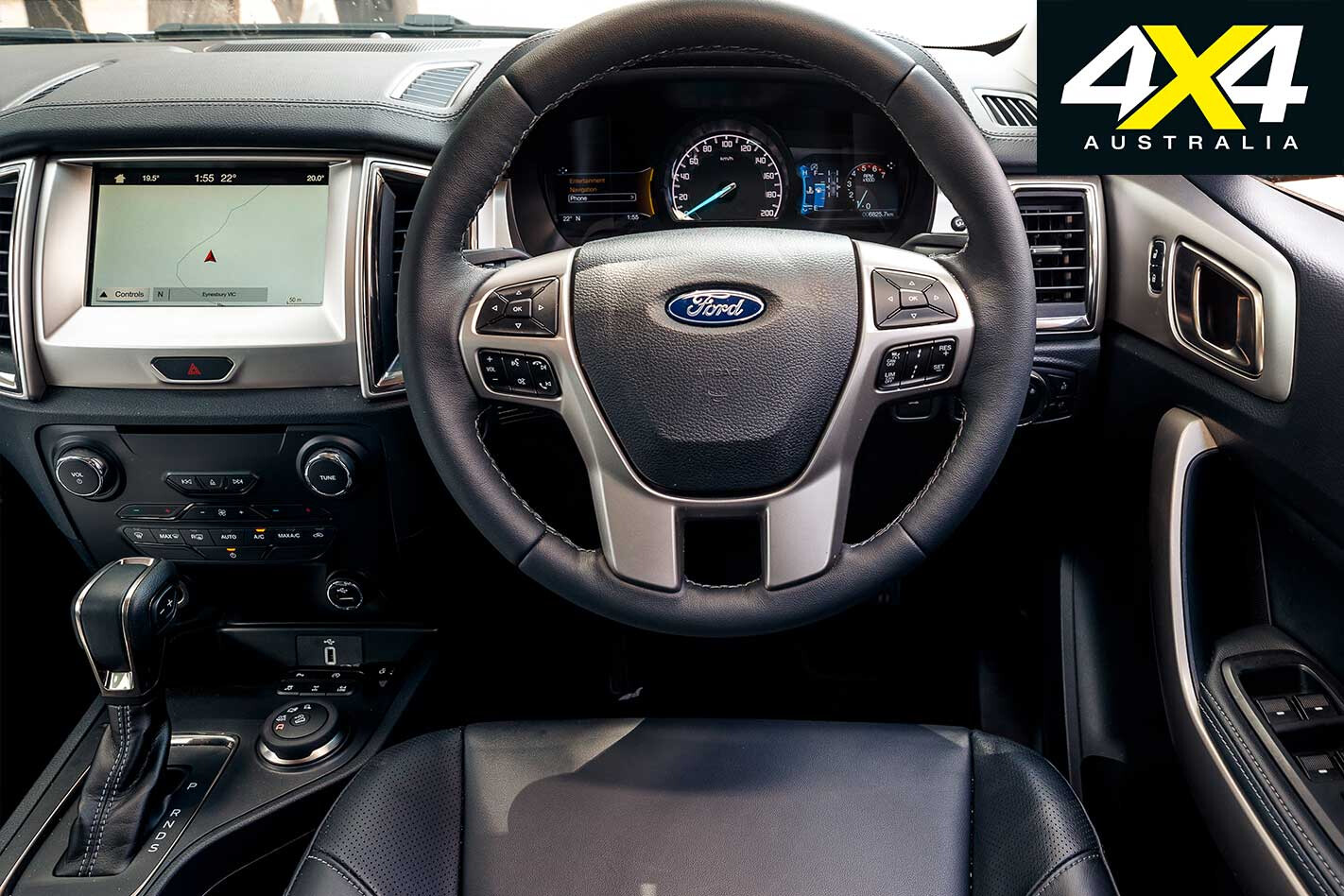
Is the 2.0-litre/10-speed powertrain good enough in the Everest to give the big wagon its second title?
THE Ranger XLT joins the Ranger Raptor and Everest Trend as Ford’s representatives at this year’s 4X4OTY competition.
This XLT features the 2.0-litre four-cylinder bi-turbo-diesel engine (157kW/500Nm) and 10-speed auto combo, which debuted with the Ranger Raptor in 2018. The new engine, as well as closer gearbox ratios, gives the Ranger more power and better running refinement.
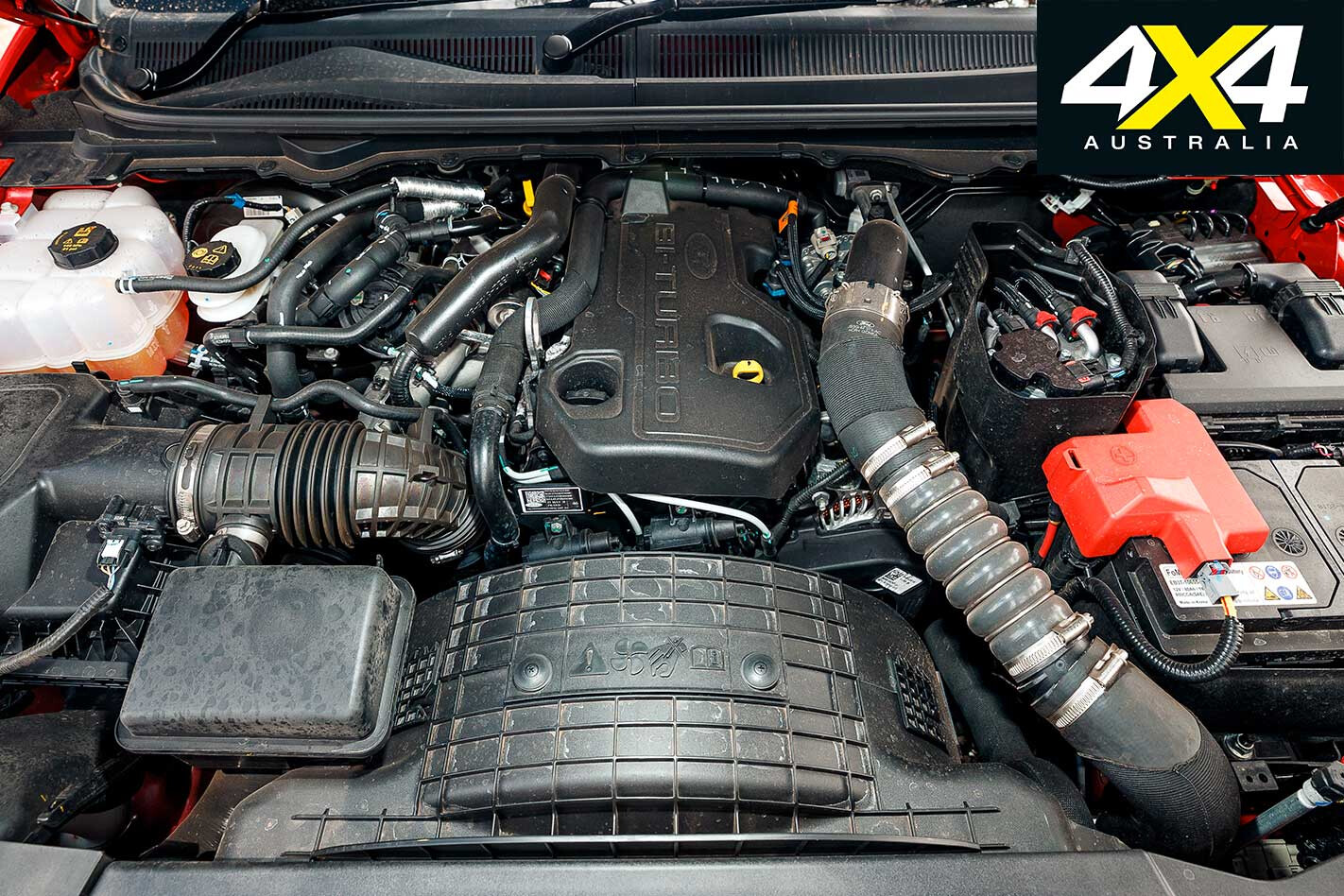
In addition to the powertrain changes the chassis has been significantly revised, and the dual-cab now comes with autonomous emergency braking.
The Ranger XLT maintains a towing capacity of 3500kg, a one-tonne payload (1003kg, to be exact), and features a dual-range part-time 4×4 system.
With an excellent 800mm wading depth, long wheel travel, well-calibrated electronic traction control and a driver-switched rear locker, the XLT is a highly capable off-roader.
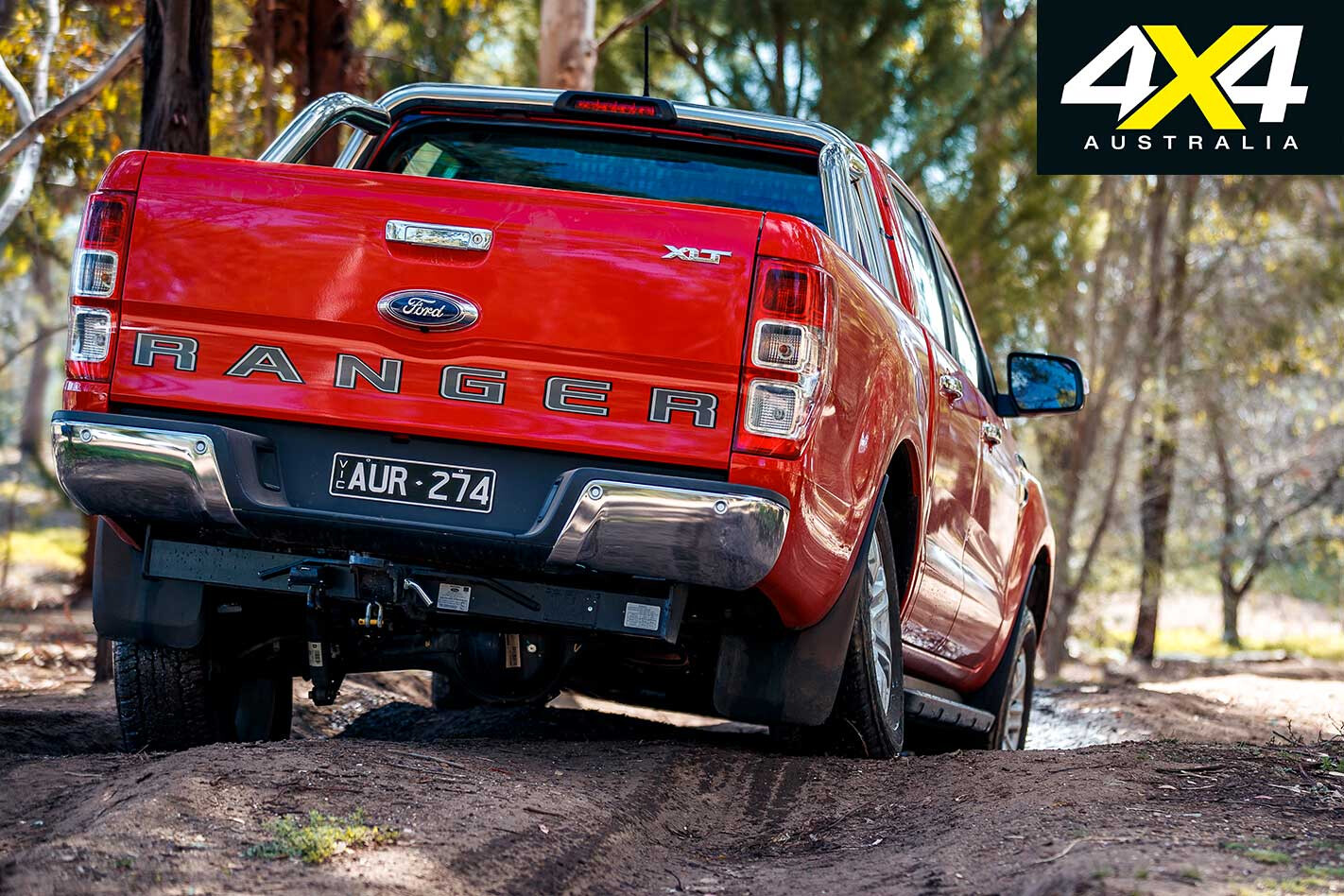
The XLT on test was optioned up with leather seat trim (+$1650) and the Tech Pack (+$1700), making it a $57,340 proposition.
At $17,650 less than the Raptor, it ticks a lot of boxes and stacks up as a viable option.
Toyota’s Land Cruiser 200 Series has been around for more than a decade now, with the replacement seemingly a long way off. One reason for the delay is the simple fact that, even in the twilight of its career, the LC200 is still one of the best all-round rigs on the planet.
This, of course, comes with a correspondingly steep asking price for that capability – and that is before you fit any gear to improve on near-perfection. But, when you want to build the best of the best, the expense doesn’t matter. As Matt Szczesny’s gleaming white 2018 LC200 VX proves, it is the end-result – in this case one of the sweetest, smartly built LC200s in Oz we’ve seen – that counts.
A close call
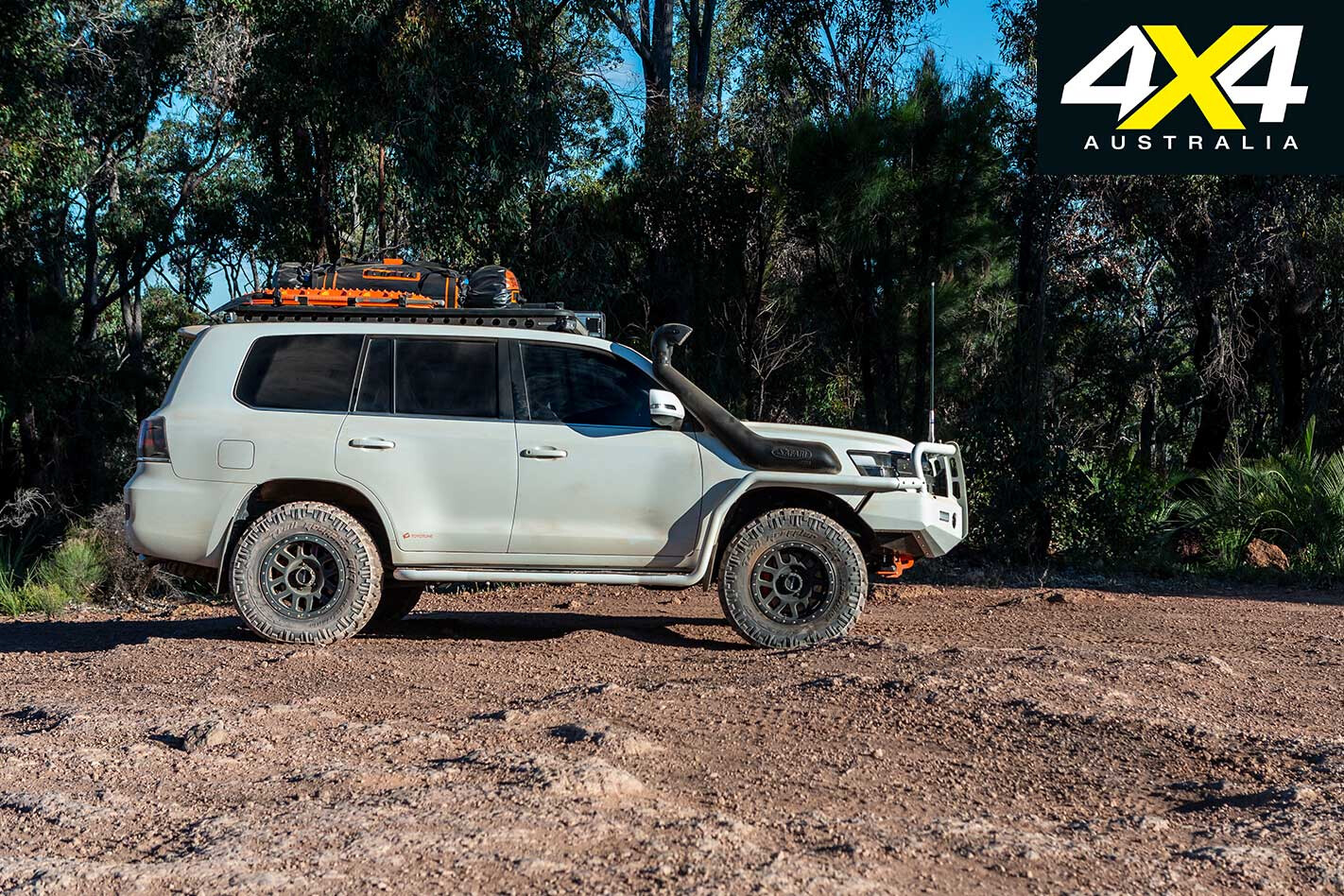
Ironically, Matt’s uber-tough LC200 nearly didn’t happen. Matt and wife Tori were expecting their first child and needed to juggle their passion for off-roading with family-focused fun. This meant that, initially, their plans revolved around a Prado Kakadu and a ‘project car’ – in this case, either a HSV GTO or a twin-turbo Supra. But then Matt hopped in a Prado for a test drive…
“I was coming out of a 3.0-litre Hilux SR5 and even that was a little bit underpowered with 33s on it,” he says. “And I thought ‘God, going to a 2.8 – I don’t think I can do it!’”
Matt’s appreciation of power in a 4×4 then led him to think about a 200 Series, with an early check of the second-hand market revealing just how well these big boppers hold their price.
“A second-hand one was more than 100 grand,” he says. “I thought bugger it, I will just buy a new one.”
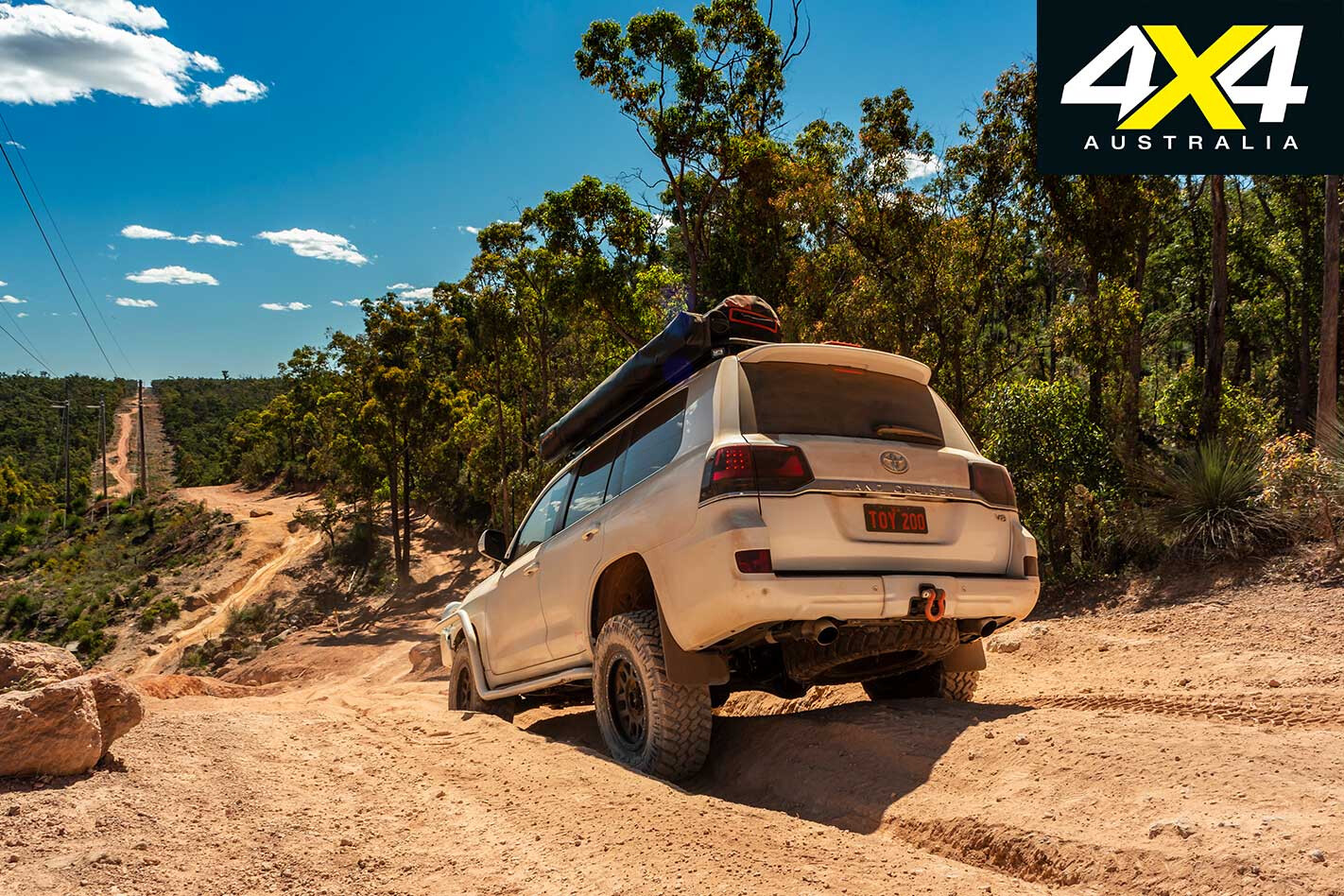
This decision was reinforced after Matt chatted to a mate of his who used to test the LC200 suspension setups and the vehicle’s durability.
“He said everything in them is oversized, it’s just overkill – they’re unbreakable, so I thought ‘Righto, bugger it, I will just lay down the best base I can and do it on that, rather than cutting corners on the car and adding stuff to it.’”
Devil from the details
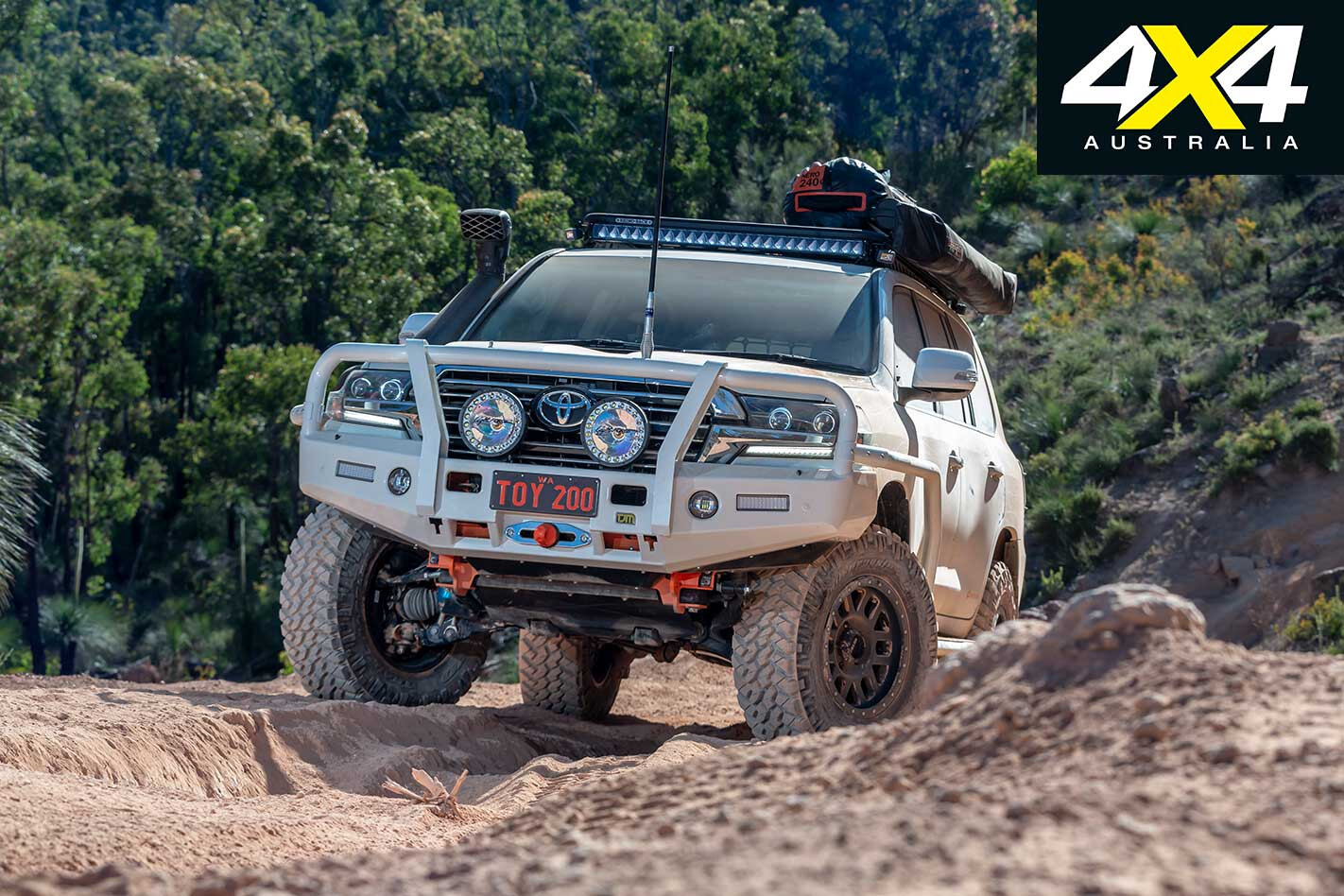
Having the opportunity to build up a rig that has come straight from the showroom floor – to the exact specs and features that suit you perfectly – is rare.
Matt was super keen on ensuring every piece of gear he fitted was exactly what he wanted for optimum performance, which meant plenty of research into every single part. He also didn’t want to over-build the Cruiser; besides being capable off-road, it still had to function as a daily driver.
“I had a plan in mind – I had favourites of everything,” he says. “I had done my research; I loved Process West from when I was younger; I knew it did really nice stuff, so I used its catch-can. I had worked with Harrop when I was younger, so I used its breather kit (for the transmission and diffs).”
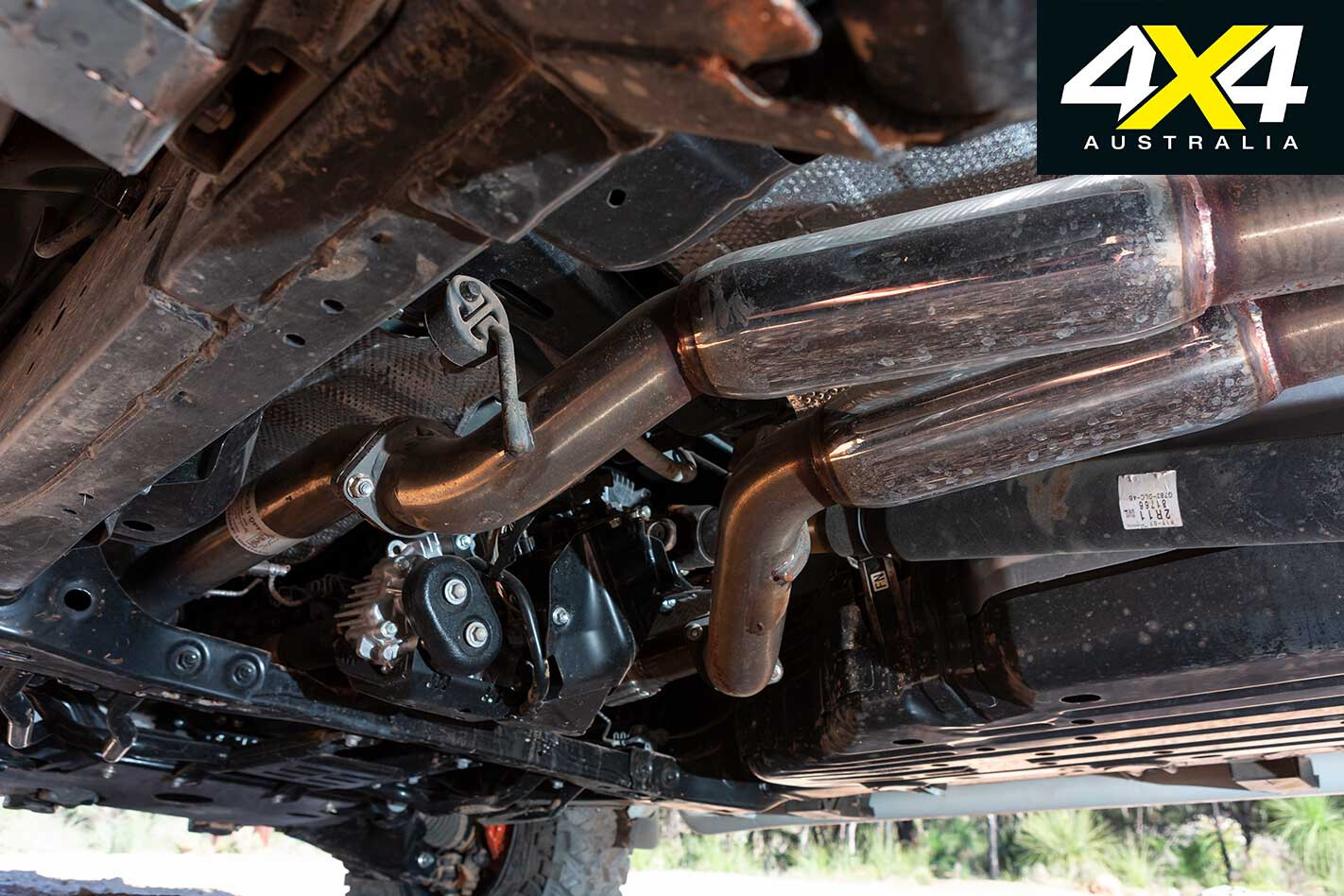
Matt had his own plan well-sorted, but still went to other experts for advice on crucial components, such as the LC200’s suspension, with a mind to how heavy the vehicle would be once all the mods were complete. This saw him head to WA Toyota gurus, Toyotune, owned by Alan and Maria Vial.
“With the suspension, I didn’t know what to think – whether Fox, Ikon or something,” he says. “Alan at Toyotune showed me the King suspension setup and he’s like, it’s a bloody heavy car you’re gonna want to do it right.
“I had Old Man Emu in the Hilux and it was good and didn’t get hot, but did bottom out and was a rough ride. The King stuff is tuneable.”
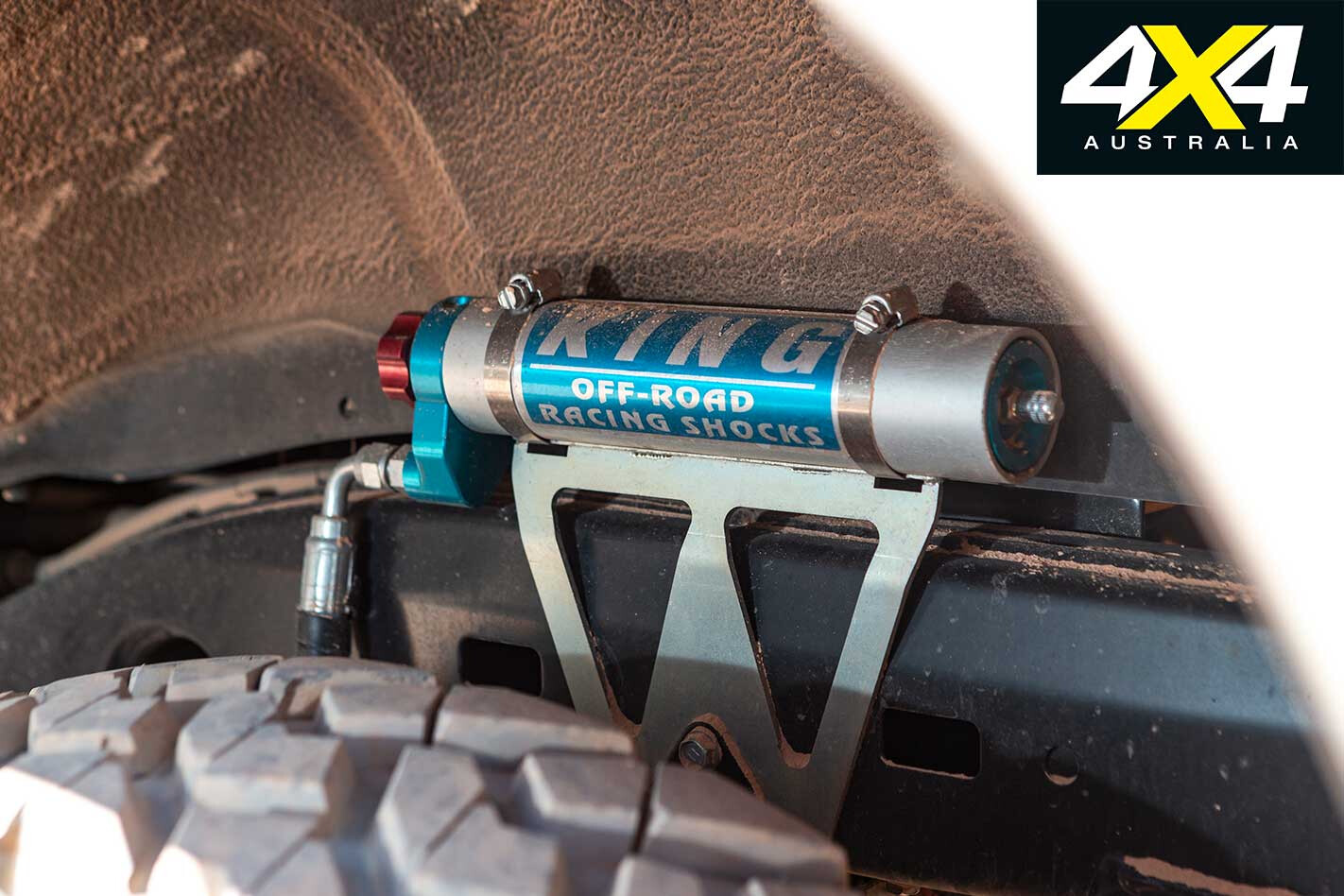
As well as the King 2.5 adjustable remote reservoir shocks and accompanying springs (resulting in a two-inch lift), also added were Blackhawk castor/camber corrected UCAs, progressive bump stops, a diff drop kit, adjustable rear panhard rod and Airbag Man rear bags, meaning the Cruiser rolls super smooth. Aiding that is a set of Method MR309 18×9-inch rims, shod with Nitto Trail Grappler 295/70R18 rubber for a perfect balance of on- and off-road performance.
These choices – along with all the others on the Cruiser – reflect Matt’s dedication to research and wanting to fit the best and most applicable part, regardless of brand.
“I haven’t gone down the road of fitting a full catalogue of gear from ARB or TJM or Toyotune – I picked every part individually and it just works,” he affirms.
A louder grunt
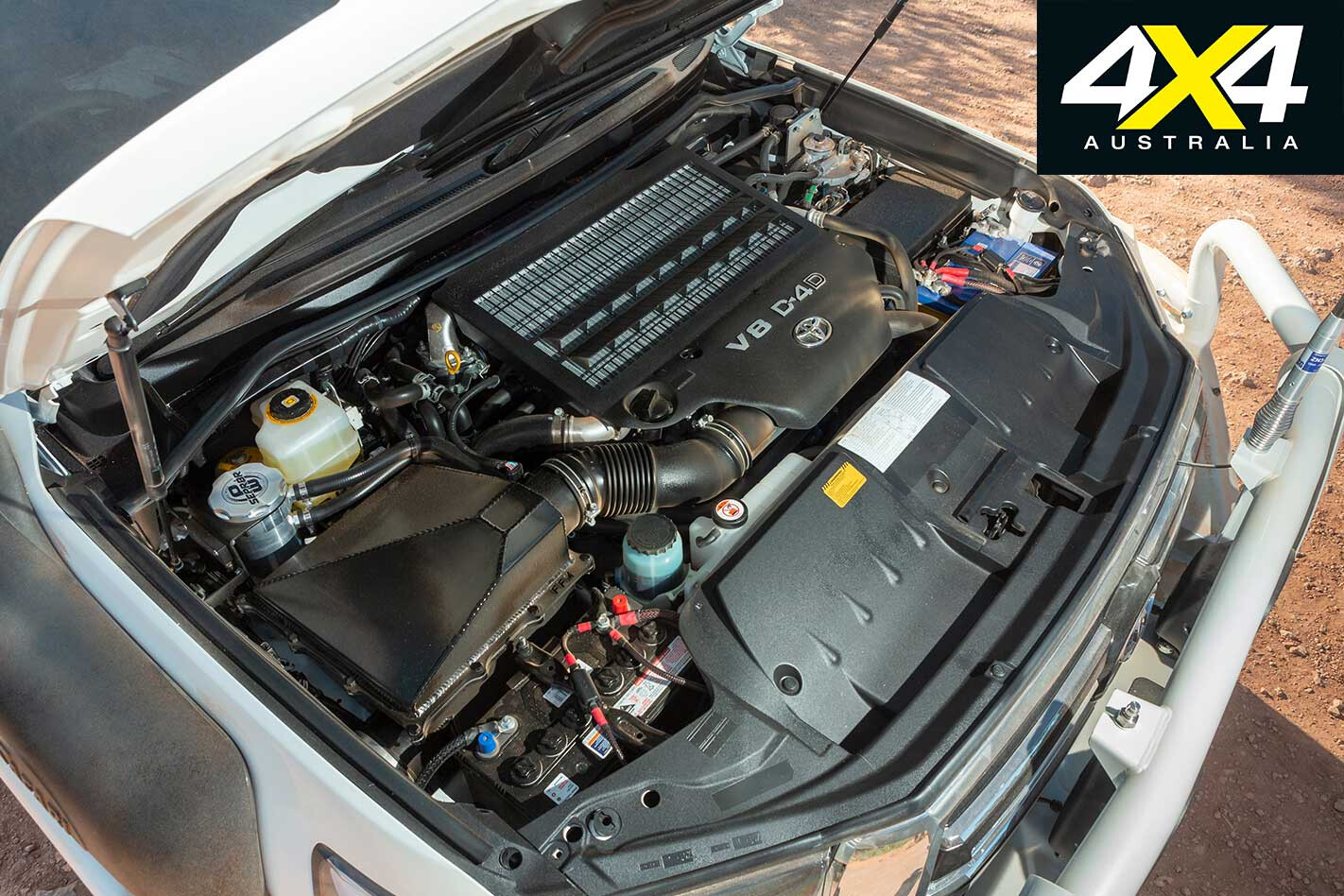
The 4.5TDV8/six-speed auto combo in the LC200 offers impressive performance already, but with a background in modifying vehicles Matt knew he would want to squeeze some additional oomph from the big oiler.
“There’s a fair bit (of power) already in them; they are torquey and a lot of fun, but I like to have 300kW at the wheels,” he laughs.
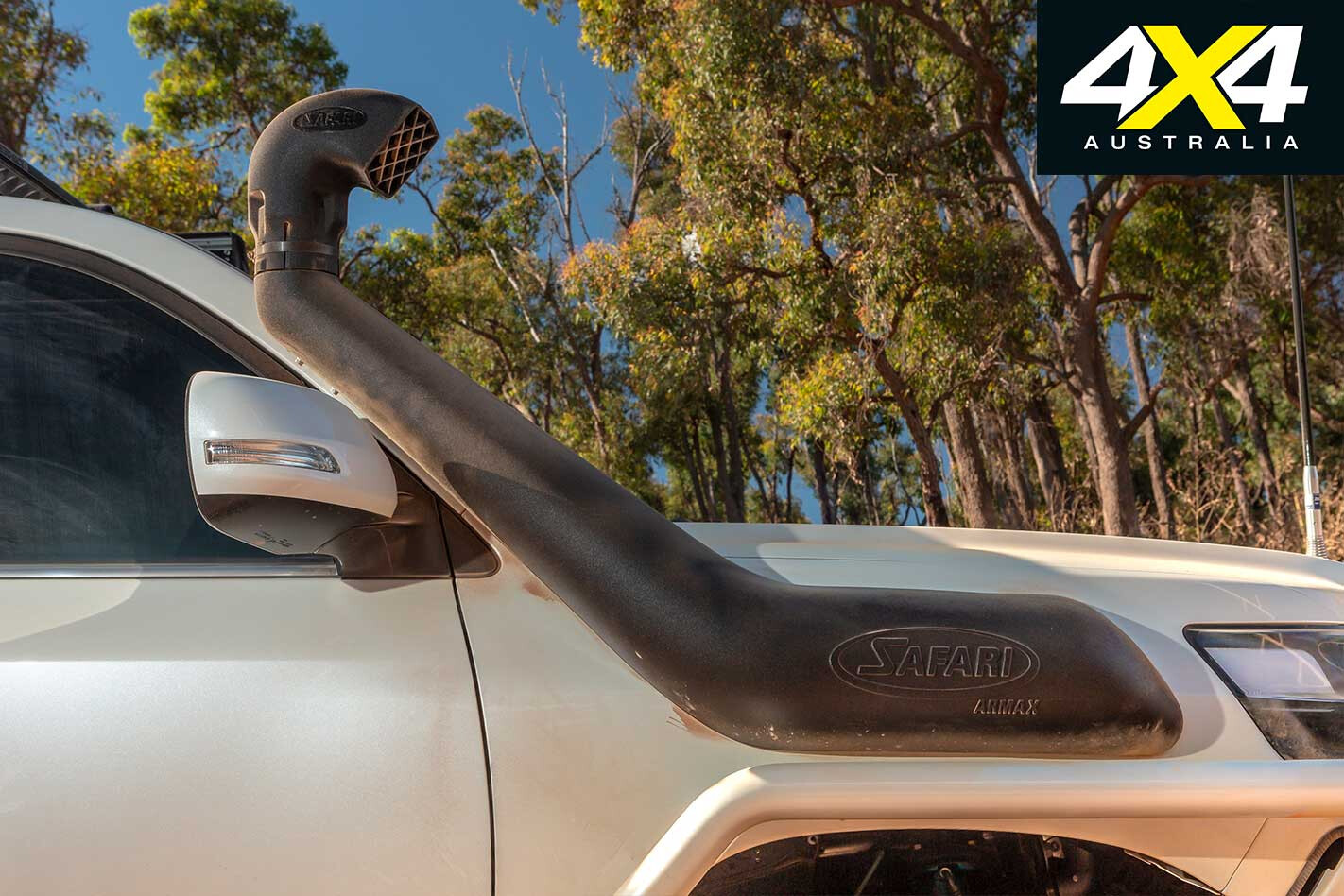
Toyotune’s team of owner Alan and head mechanics Nick and Dylan set to work. A Safari Armax snorkel was fitted, along with a Toyotune EGR and throttle butterfly upgrade, Toyotune’s own custom ECU and throttle remaps, a Richards Auto Electrical High/Low torque converter lock-up kit, and a secondary fuel filter kit.
Then – yep, we haven’t finished yet – there’s the Manta/Toyotune custom dual three-inch exhaust system, with a high-flow stainless steel cat and twin 3.5-inch pipes to dump it all out the back. The end result is, to put it bluntly, very bloody impressive.
“It weighs 3.6-tonne and it will break traction on all four wheels,” he enthuses. “The front will point in the air – it scares people. It’s pretty good.”
And before anyone asks how you stop this behemoth, Matt has already answered that question, fitting DBA T3 ventilated and slotted discs front and rear, along with DBA XP650 pads. He highly rates the ‘strong’ discs and reckons the pads perform perfectly even under heavy load and, most importantly, offer enhanced cooling properties for urban stop/start driving.
The dirty side
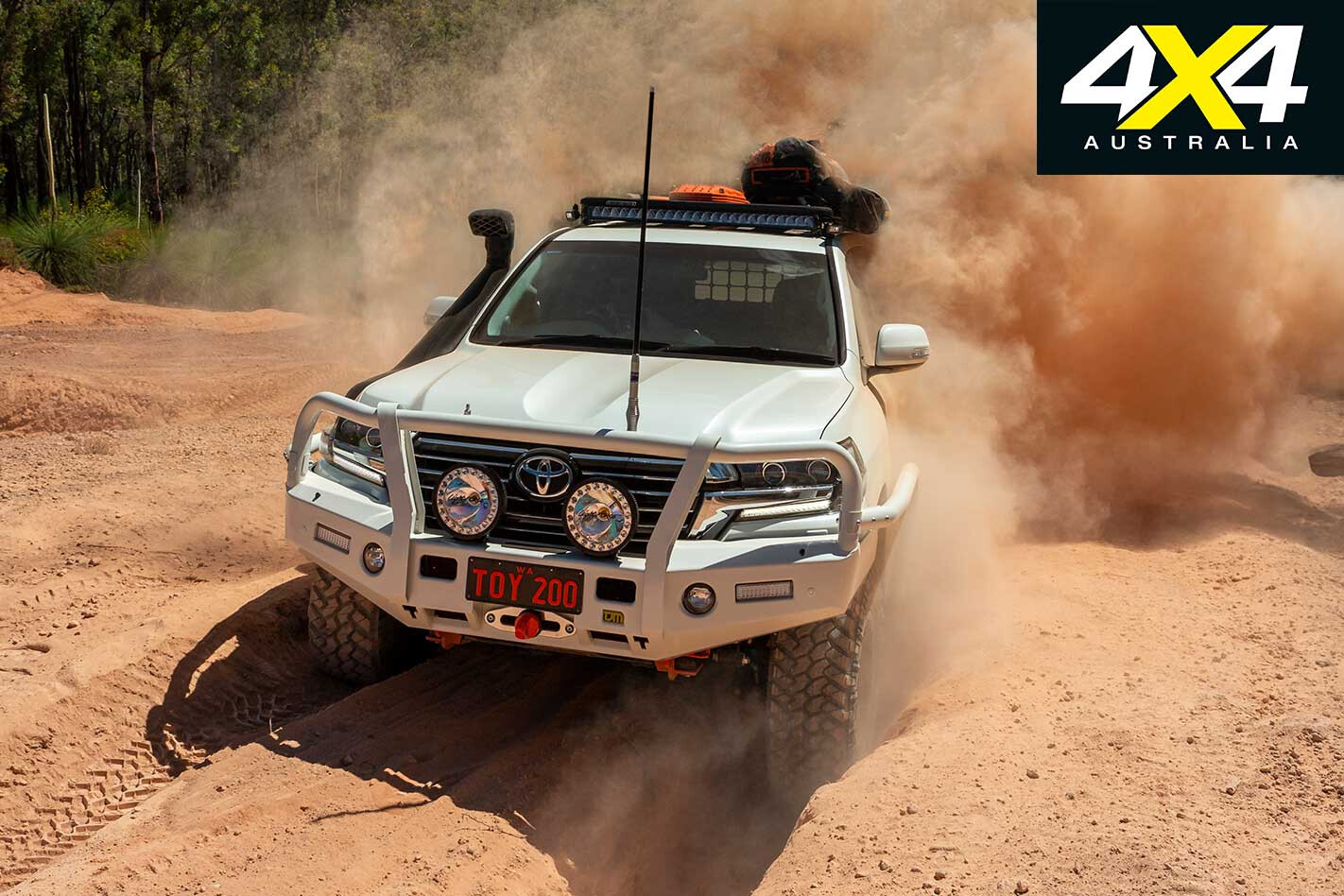
Yeah, this LC200 is shiny and new, but don’t think for a second that stops Matt getting out on boys’ weekends away and dune driving near home. To make sure that all goes smoothly, he’s fitted the Cruiser out with all the essential bush touring items.
Under the bonnet there’s an Intervolt dual-battery setup with deep cycle batteries to take care of additional power requirements. Matt raided TJM’s exterior protection catalogue to ensure that schmick paint job (with MOS full body paint correction and quartz glass coating) stays just that.
Up front is a TJM colour-coded bumper cut bar, matched with rock sliders and Raptor-coated steps and scrub bars. Hanging off the front bar is a TJM 12,000lb winch, nestled in an orange colour-coded cradle.
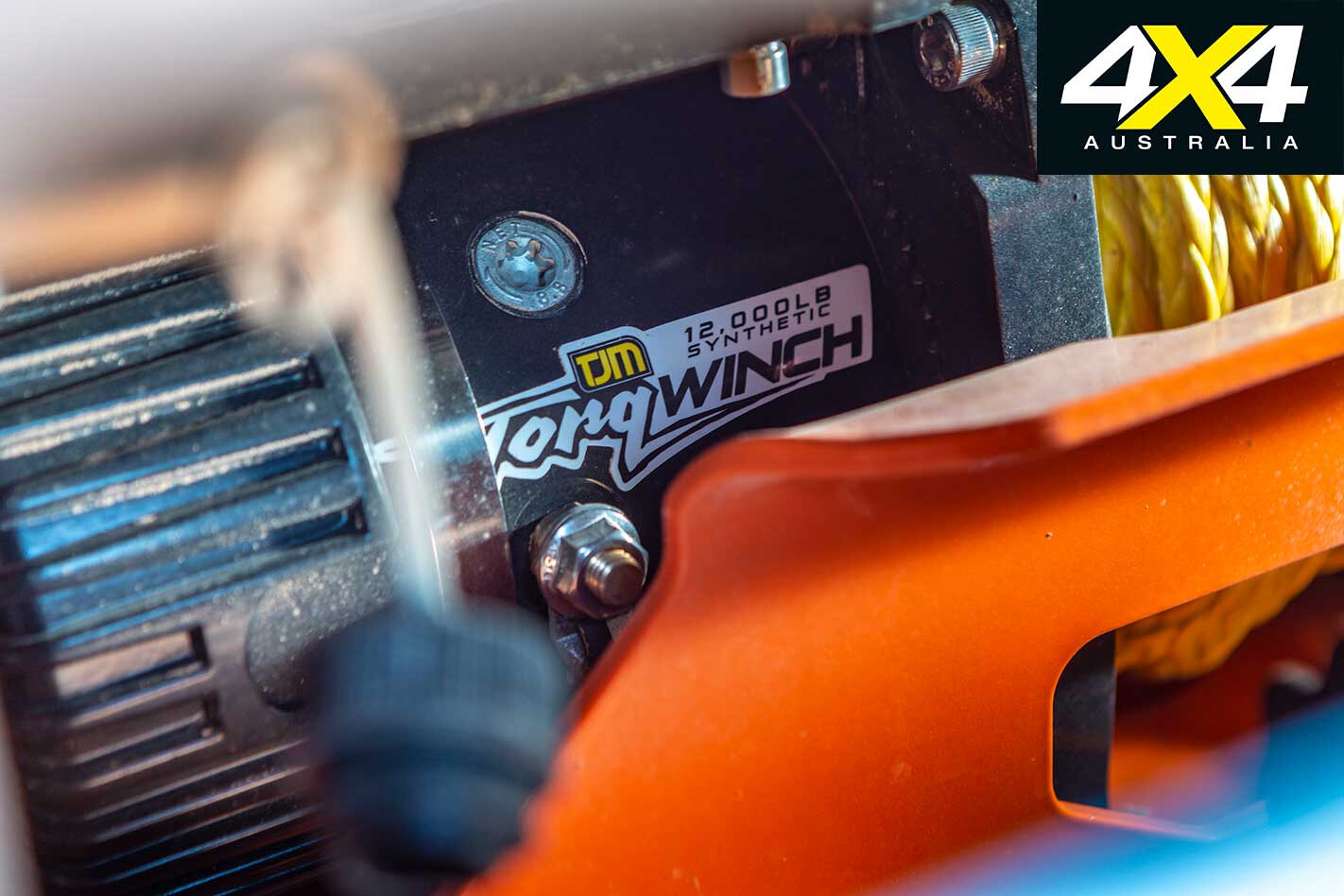
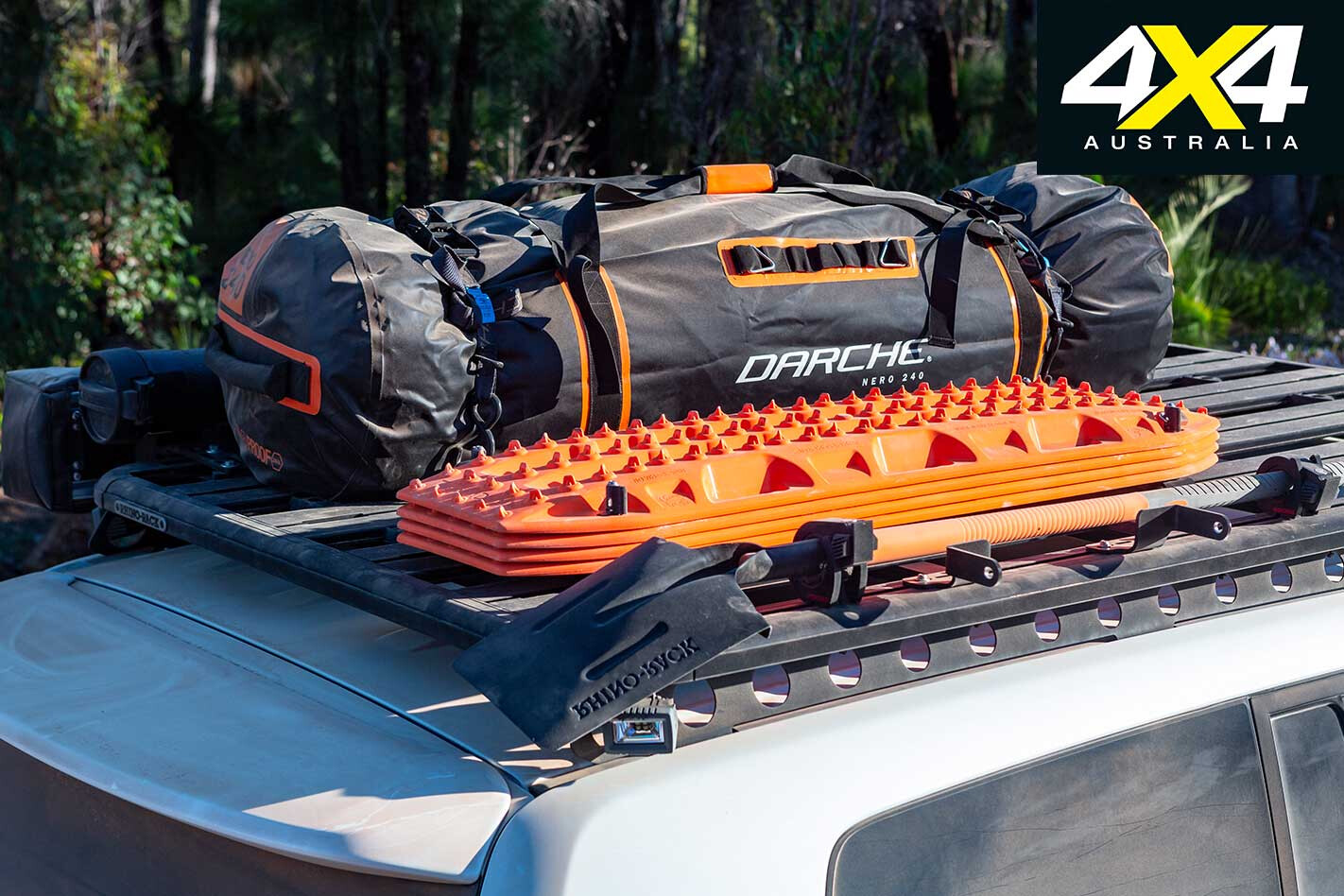
For night-driving duties, Matt has gone the full monty, with a LazerLamp light bar, and Lightforce HTZs supplying the driving lights, rear floods and tailgate light. The LC200 is a relatively big wagon allowing for plenty of kit to be carried, but Matt has, again, ensured the vehicle is ready for any test and fitted a Rhino-Rack Pioneer platform on backbone roof rack system, and used Yakima lockable mounts for his Rhino shovel.
Also up top is provision to store Maxtrax and there’s a lockable bazooka tube and brackets (Raptor coated). Hanging off the side of this is a Darche 270 awning (complete with its own light – a custom-adapted Korr Marine unit), and there’s a Darch telescopic ladder for easy access to the gear up there too.
And there’s more; as with everything Matt has done with this LC200, future-proofing it has been the driving force. For those boys’ weekends and, no doubt, those longer family journeys once the little’un is up for it, there’s an ARB 60L fridge/freezer, a 10L water tank, ARB dual-compressor and reserve tank (cleverly fitted into the rear quarter panel), and a Custom Installations drawer system that features an inbuilt 12-inch JW subwoofer and 600W amp. The interior includes the standard VX leather, with Matt adding essential comms (a GME UHF radio and ZCG dual-whip 6dB antenna) to finish it off.
Now or never
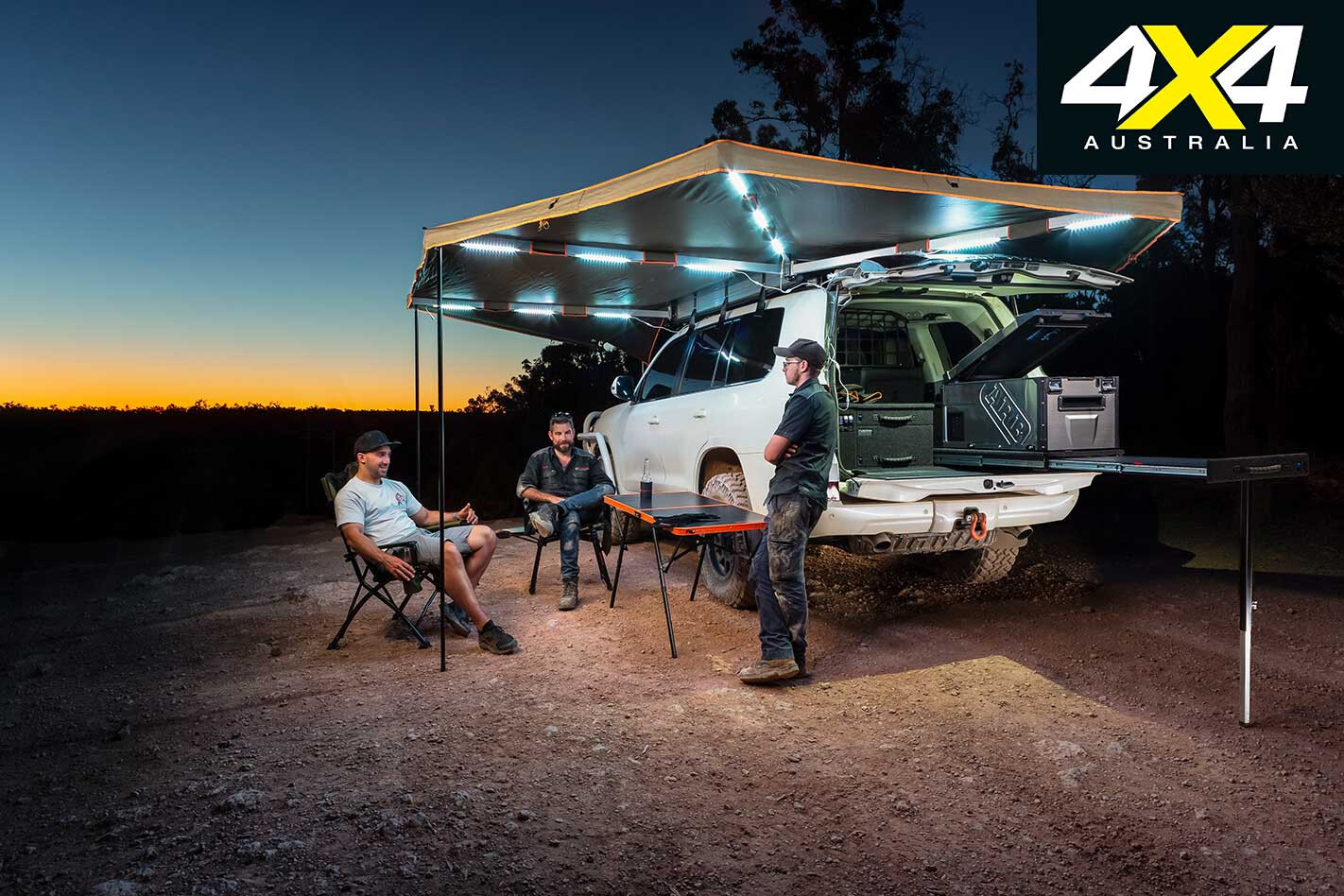
By planning every mod, then researching the best one for each job, Matt has created a rig that performs brilliantly now, but is also more than capable of tougher stuff in the future, or – just maybe – some leisurely sojourns. Still, that stuff’s a long way off, Matt reckons, and in the meantime there’s a shit-tonne of fun to be had in the Cruiser.
“I am not a grey nomad; I didn’t buy it to tow shit around and go slow in,” he laughs. “It’s for launching off the lights, boys’ weekends away and just a bit of fun, jumping the dunes, all that kind of stuff. “Maybe when we settle down a bit, we’ll put a caravan on the back. But, for now, I am still rocking a swag and we’ll just thrash it about.”
After all the research and hard work that’s gone into this tough LC200, we reckon it’s more than up for a damn good thrashing.
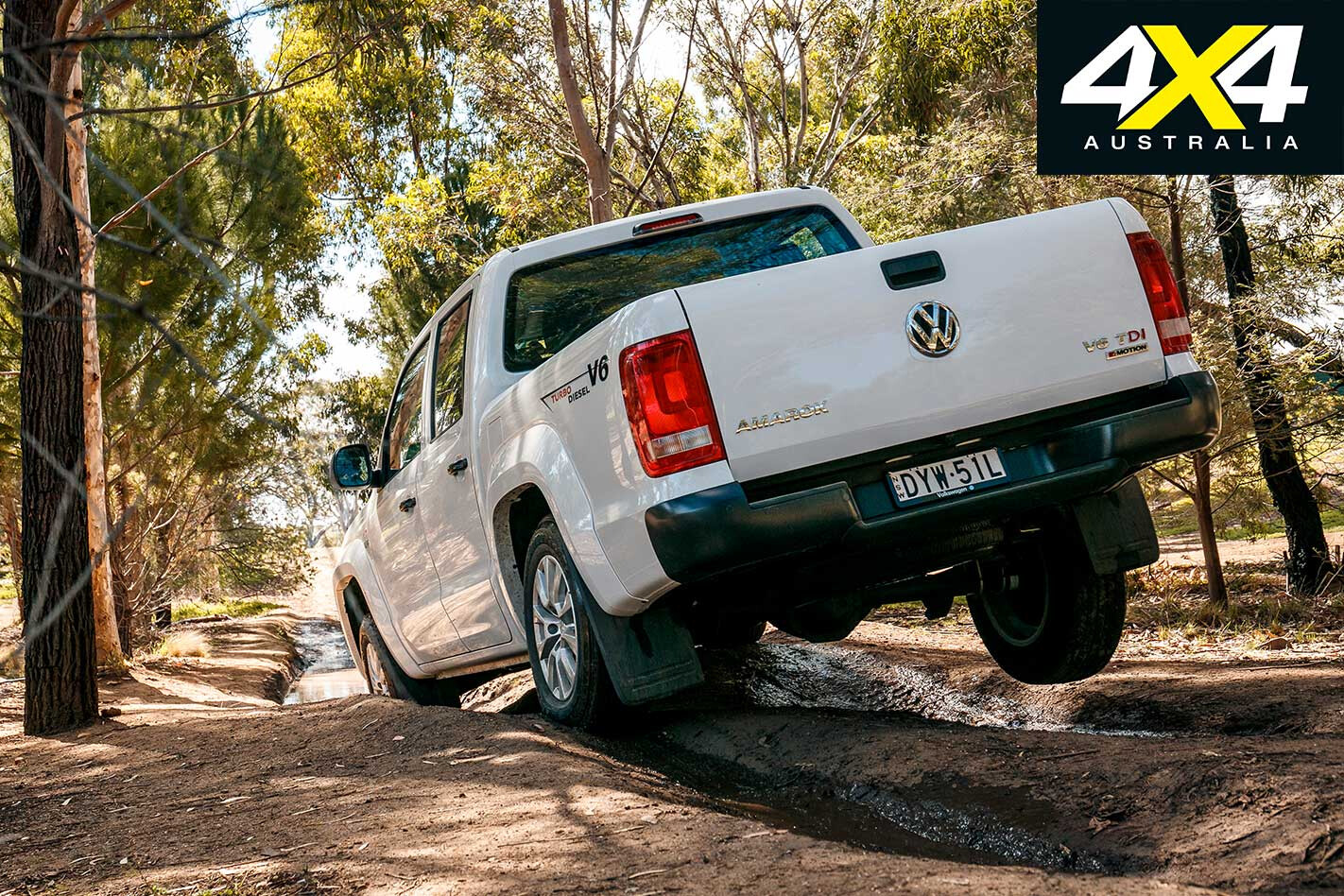
THE Amarok V6 Core is Volkswagen’s version of a stripped-out budget ute, and it’s the third cheapest vehicle in this year’s competition; behind the Mahindra and SsangYong.
Ample grunt is generated from that 3.0-litre V6 turbo-diesel engine, with 165kW (180kW on overboost) and 550Nm (at just 1500rpm) available, and it runs through a slick eight-speed ZF automatic transmission.
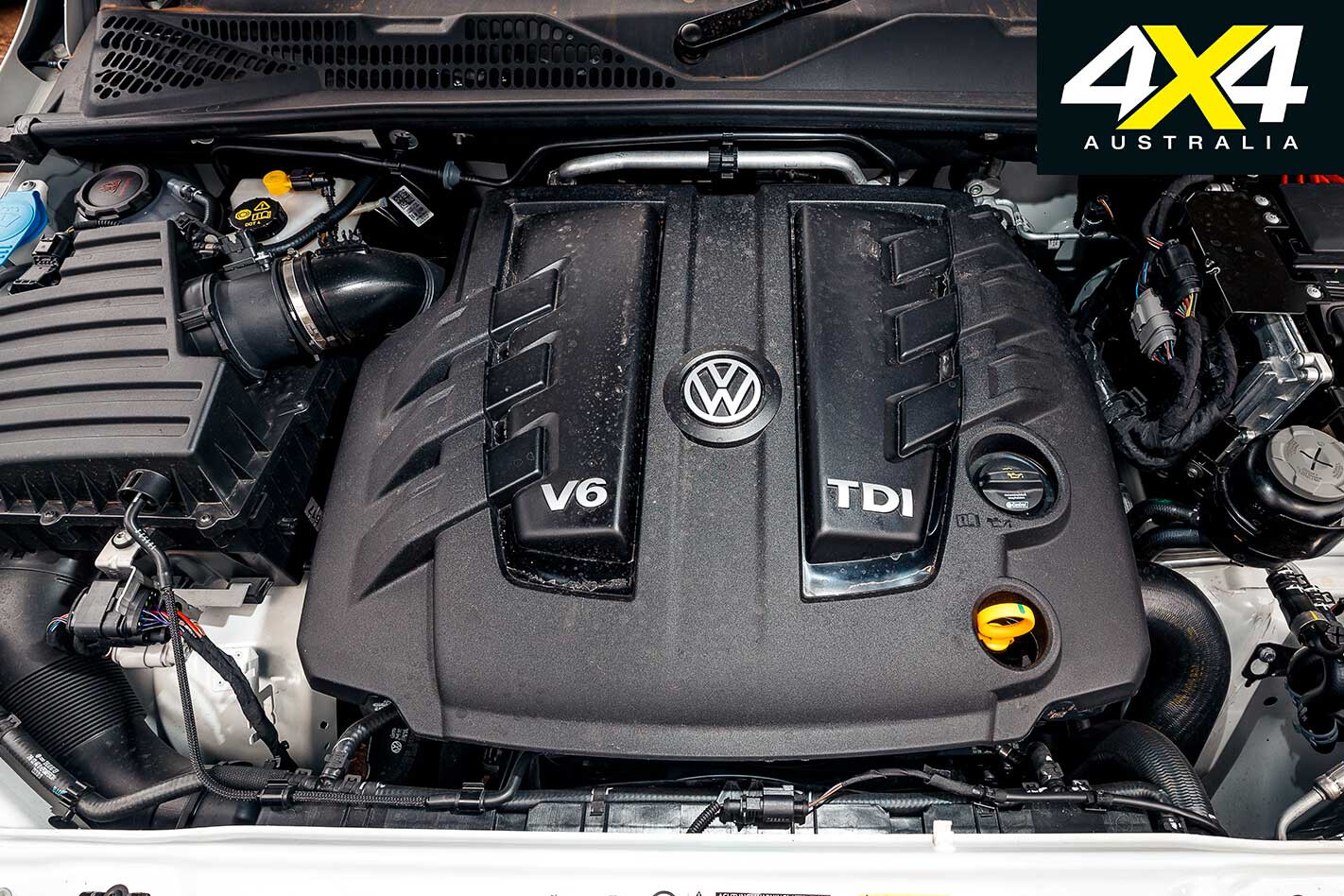
The Core’s full-time 4×4 system is an obvious bonus and excels on wet roads and trails. The centre diff locks automatically, too, so you can just sit back and get on with the job at hand.
Good wheel travel and visibility is negated by a low wading depth of only 500mm, but plenty of aftermarket support can help overcome this issue.
The V6 Core has a 3500kg towing capacity, a maximum payload of 989kg, well-positioned tie-down hooks and enough gap between the wheel arches to fit a full-size pallet.
For $50,990 drive-away you’re getting plenty of bang for buck, which could sway the title in the way of the German marque.
4×4 gear isn’t just the oily bits that go onto your 4×4, but cool gear and essentials for any 4×4 tourer.
From Narva under-bonnet LED lights, to 12,000lb winches, tailgate mounted bike carriers, and drawers to organise your belongings, here are some of the best 4×4 gear to be released in 2018.
Narva SeeEzy LED rechargeable under-bonnet lamp
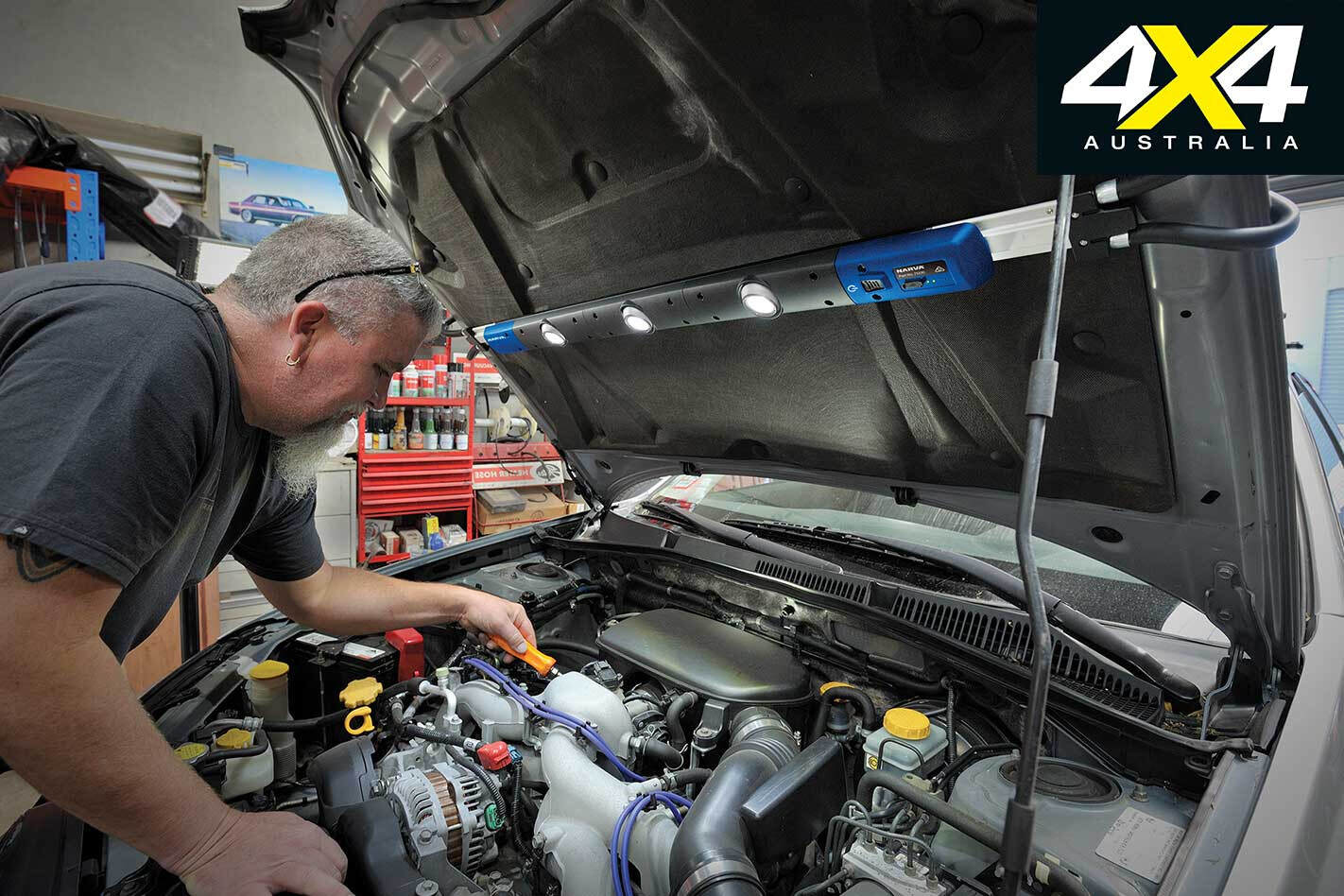
Working on an engine or other under-bonnet components often means doing so in limited light. Head torches and inspection lamps can help, but we reckon this lamp from Narva, featuring three 5W LEDS that offer a 6000K (white) light output, is a top solution.
The SeeEzy is powered by a lithium-ion battery (recharged via USB) with a claimed 6-15 hours of running time (output dependent). Users can select from one, two or all three LEDS for output, providing 350, 675 or 1000 lumens respectively. The three LED housings can be adjusted to swivel up to 40°, ensuring the light is illuminating the working area.
The aluminium, ABS and polycarbonate construction ensures the SeeEzy is robust, while the adjustable padded arms can be extended from 1200 to 1750mm, allowing fitment to any number of vehicles.
Website: www.narva.com.au
Carbon Winches’ 12K winch
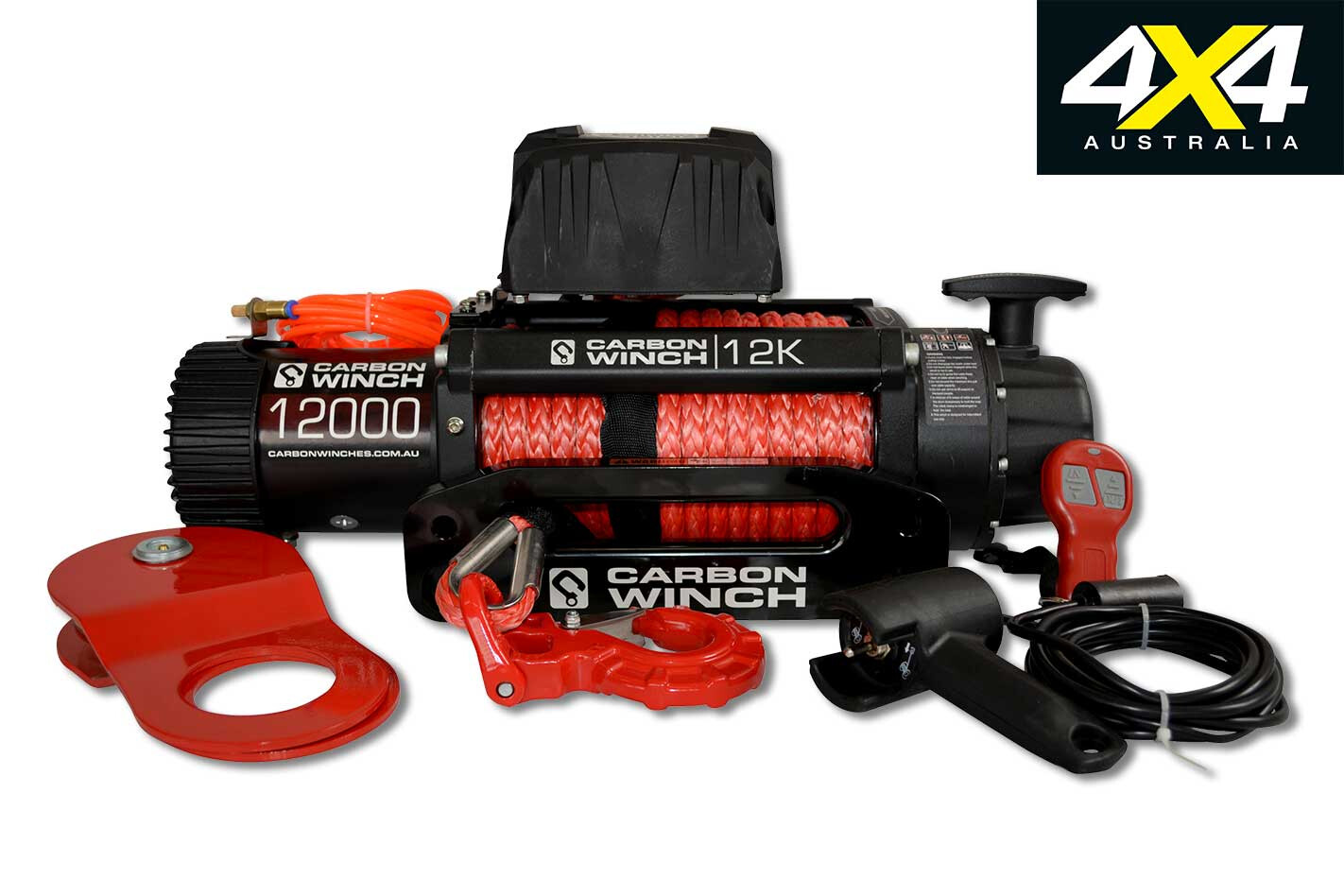
The 12,000lb winch from Carbon Winches is designed to handle the toughest recovery tasks when you’re off-roading. The winch features a 6.2hp wound motor, a 216:1 three-stage planetary gearbox and a hoist-style camming brake that engages through the geartrain, thus having no contact with the winch drum. The rotating ring gear free-spool clutch assembly is designed to minimise free-spool drag, while also doing away with any clutch engagement issues, making any recovery situation a fast and easy process.
The power in and out for the winch is via either a wireless remote controller or a plug-in hand-held remote. The 500-amp solenoid unit is sealed and has a three-position mount bracket that means you can mount the control box over the drum, the motor or remotely on your 4×4’s bullbar. The winch also comes with a pre-installed winch motor breather.
MSA 4×4 Explorer drawer system: LC 100
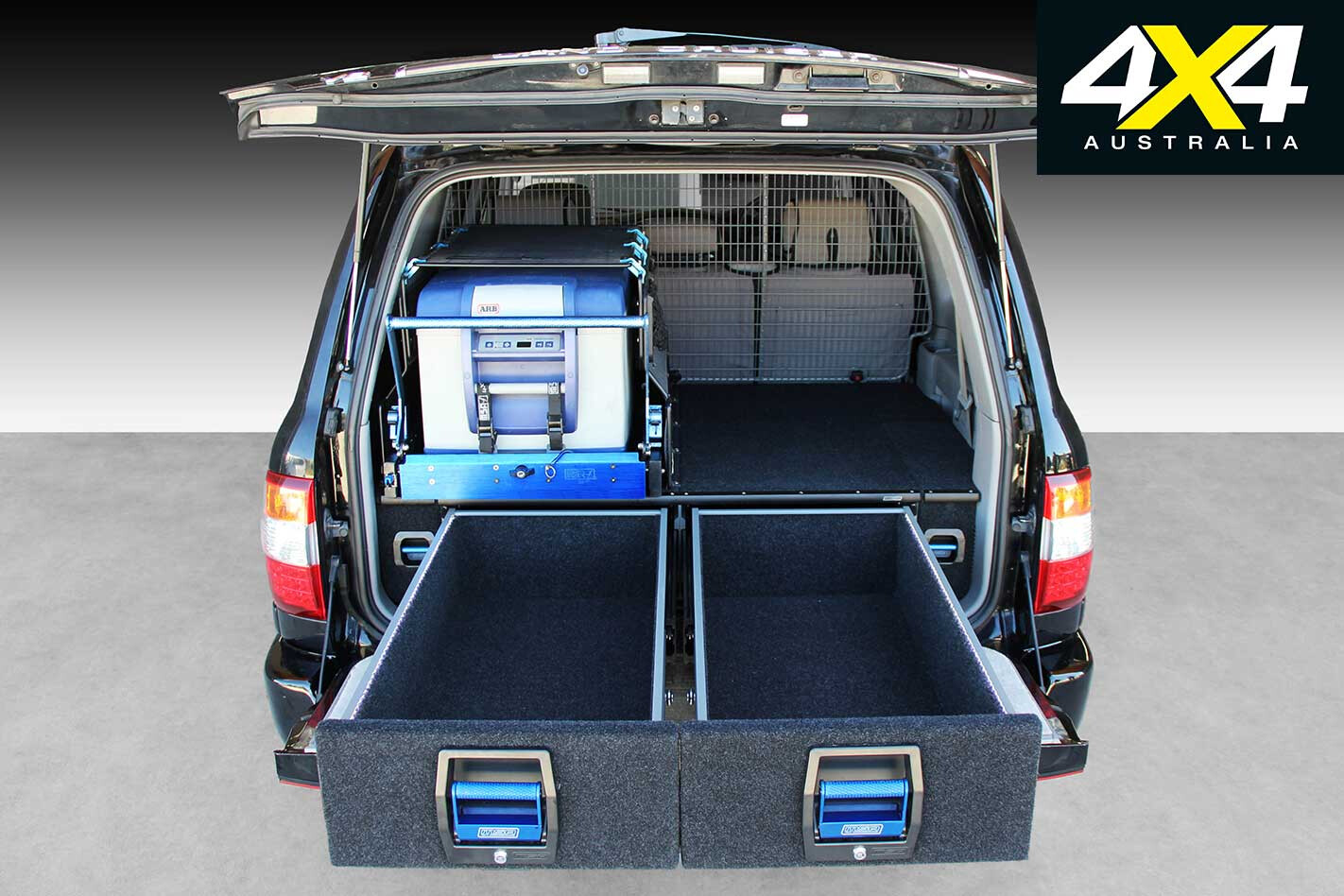
The Explorer Aluminium Storage Drawer System for Toyota’s (still) popular 100 Series Cruiser is fully ADR crash-tested and compliant to all relevant ADRs. Cargo barrier mount points – and the child seat restraint points – are incorporated into the rear of the drawer frame.
Patented features include the stay-open block that stops a heavy, loaded drawer from accidentally shutting, and it also acts as twin electrical contact when the drawer is open, thus creating a circuit that powers the unit’s LED strip lighting.
The ‘Pro Glide’ system ensures the sides of the drawers aren’t wasted space – they are part of the actual slide unit, so no need for side-mount slide runners. Custom-sealed bearings are utilised in the over-extension, eliminating the need for extra slide components, and it’s all backed by a lifetime warranty.
Website: www.msa4x4.com.au
Yakima Gatekeeper
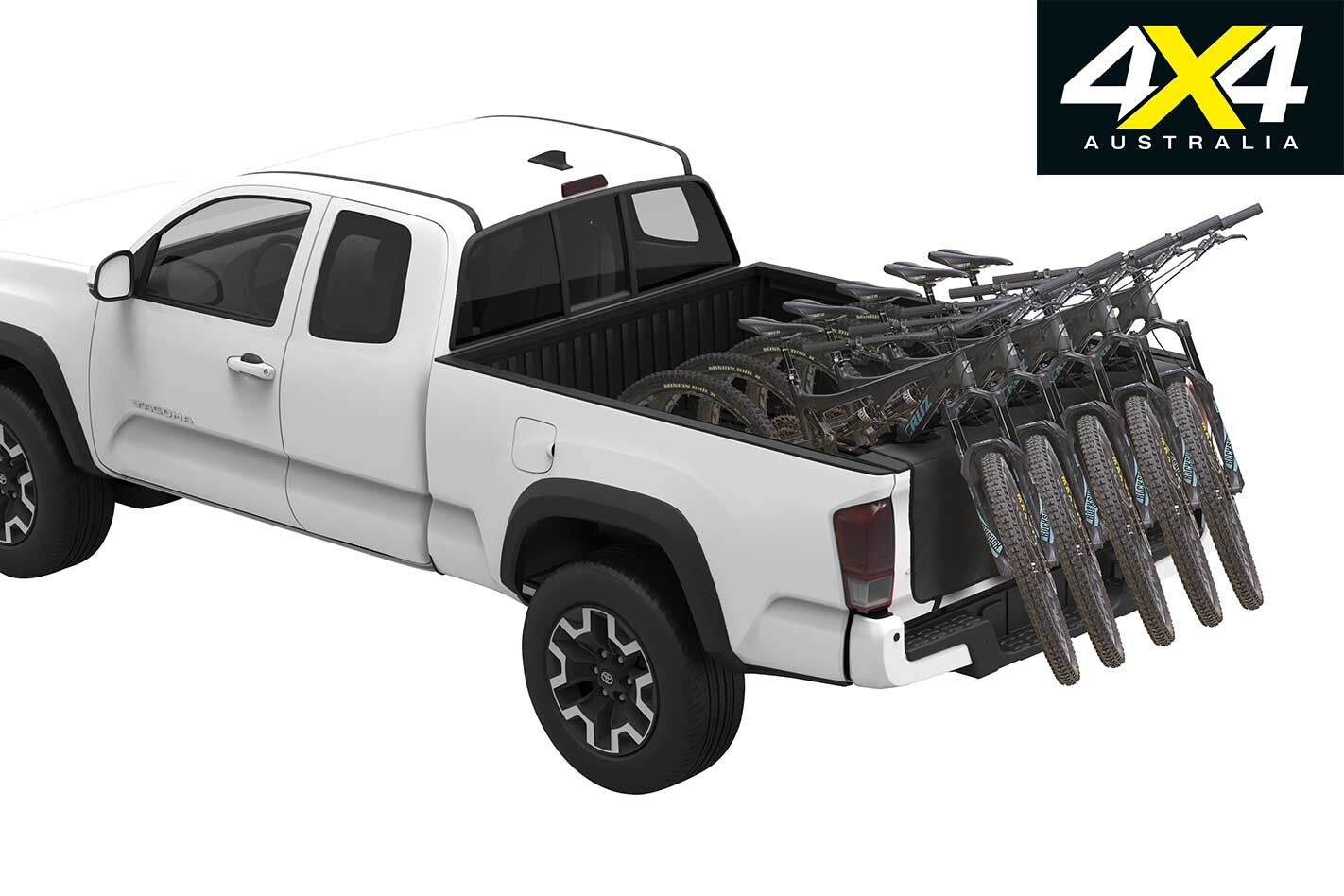
Lugging multiple mountain bikes in your tray just became easier thanks to Yakima’s new GateKeeper tailgate pad, with its five-bike capacity. The GateKeeper’s tough nylon outer material is great, while under the GateKeeper is one of its unique features: soft-felt backing that protects the tailgate from wear and paint damage.
In addition, the GateKeeper’s integrated SitTight padded bike cradles do the same for your MTB’s paintwork. With this new cradle closure system the bikes are well secured and stable, which means they don’t move around or rub on the bike downtube. Add in the HindSight tuck-away cover for the ute’s reversing camera and you’re sweet.
RRP: $199 Website: www.yakima.com.au