
It’s been well-documented that the Mercedes-Benz X-Class is based on the Nissan Navara D23, but just don’t think Benz simply whacked a three-pointed star on the Navara.
In creating the X-Class the Navara has been re-engineered from the ground up. Most notably the ladder frame has been strengthened, the front and rear tracks widened, the suspension retuned, the body widened, and a new interior added. Disc brakes replace drums at the rear, while other changes are aimed at improving NVH.
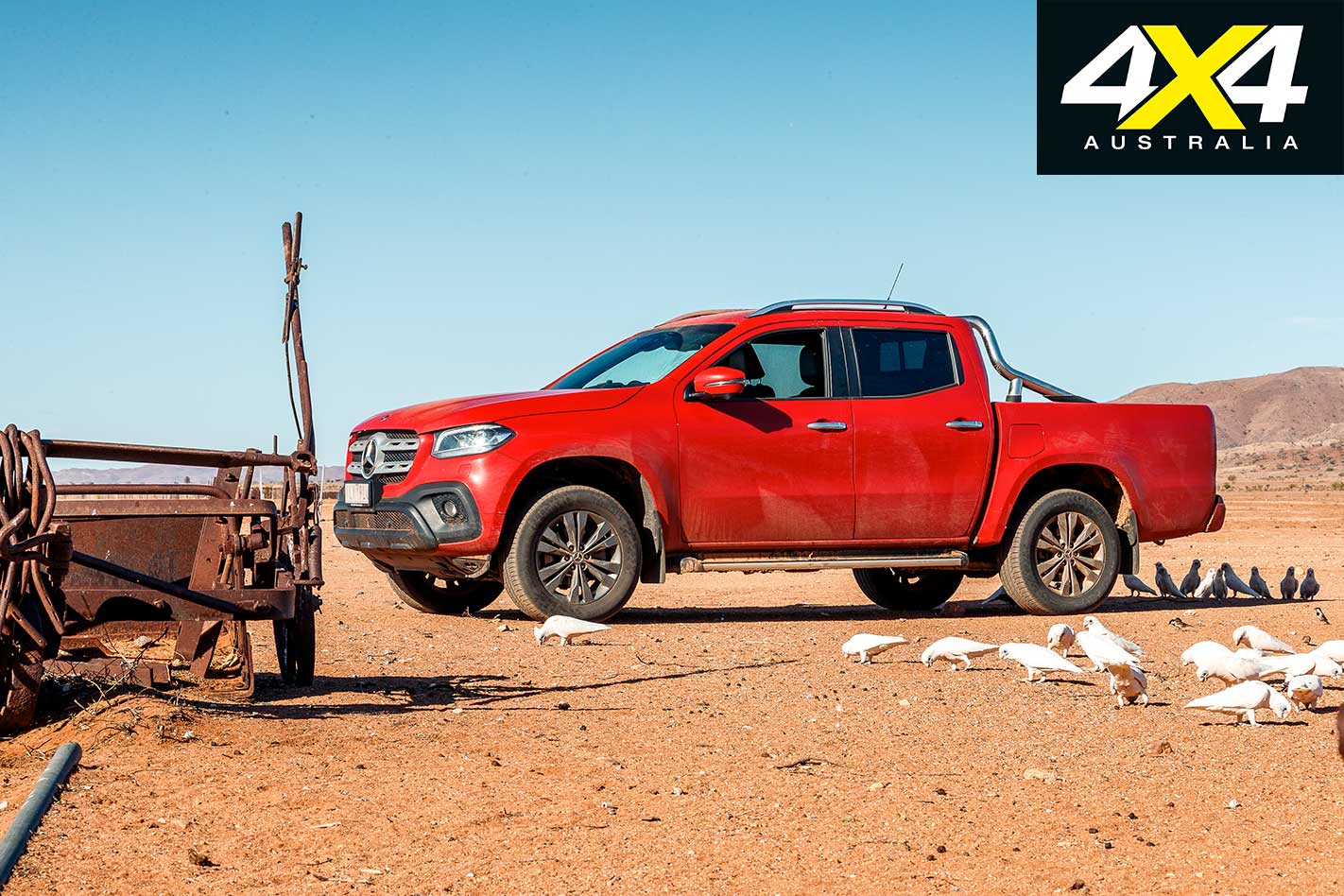
The X-Class’s Renault-sourced 2.3-litre bi-turbo diesel and seven-speed auto (as well as the single-turbo and manual gearbox available in other models) are carried over from the Navara.
Why did Mercedes start with the Navara rather than build its own ute from the ground up? Well, once the decision was made that the company wanted a contender in the globally popular one-tonne ute class, it was a matter of expediency, given Mercedes already had a technology-sharing arrangement with the Renault-Nissan alliance and thus access to the Navara.
Our test vehicle is a mid-spec Progressive, but, as is the usual way with the luxury German carmakers, there’s a long list of options that bumps the list price from $59K to $71K.
Touring

The 2.3-litre bi-turbo diesel may be unchanged from the Navara, but Benz has done much to improve the NVH of what is a fairly noisy engine especially under full load.
The end result of Benz’s work is a new-found level of refinement more in tune with the Mercedes name, but the extra 200kg+ that’s been added with the wider body and strengthened chassis does take some edge off the still-good performance that’s helped by the relatively short overall gearing it shares with the Navara.
Where contemporary diesel 4x4s are usually geared taller in top gear than 60km/h/1000rpm – and even up to 70km/h/1000rpm – the X-Class is under 60km/h/1000rpm. For its part the seven-speed automatic is smooth, slick and generally agreeable.

Benz’s changes have also brought a feeling of refinement and quality to the ride and road feel of the X-Class that the Navara lacks. The X-Class feels notably solid and well ‘bolted together’ and is especially quiet on the road, while the ride, even unladen, is supple and compliant for a ute; although, it’s a bit underdamped at higher speeds on rough roads.
Confident handling and steering response, too, which is no doubt helped by the wider track and high-speed road tyres.
Trail Driving

The high-speed (V-rated) road tyres don’t bode well for durability on rocky tracks, but fortunately we had no problems.
Aside from being a little low-slung, the X-Class worked well enough on the more gnarly tracks thanks largely to the compliant suspension and effective traction control. The gearbox’s sequential ‘manual’ mode works well off-road, and low-range in the basic part-time 4×4 provides a very useful low-range reduction.
Set-Piece Hill Climb

The X-Class managed to scale our set-piece hill climb, but it needed the driver-switched rear locker to do so – engaging the rear locker doesn’t cancel the traction control on the front wheels, which is a bonus. In other tests the Navara has struggled on the same hill, so Benz’s engineers have done some good work here. However, the deep ruts and holes of the climb did expose the X-Class’s modest ground clearance.
Cabin, Equipment and Safety

The cabin has a sophisticated, luxurious feel about it. If you want a ute that doesn’t feel like a ute when you’re sitting in it, this is it. Welcoming and comfortable front seats, too, while the extra cabin width (of X-Class over Navara) makes its presence especially felt in the rear.
All X-Class models are five-star ANCAP rated and have automatic emergency braking, seven airbags, lane-keeping assist, a reversing camera and four-wheel disc brakes. The Progressive (as tested) adds auto wipers, sat-nav, a seven-inch tablet-style screen, and adjustable load-rails on the sides of the tub among other features.

On top of that our test vehicle was optioned with the Comfort Pack (includes electric-adjust seats, faux leather and climate control), the ‘Command’ System (a multi-function control for media, sat-nav, etc., that requires familiarity to use properly) and a 360º camera. Other options on our test vehicle included the Style Pack (18s, side-steps, roof rails, LEDs, privacy glass and rear sliding rear window) and a sports bar.
Practicalities

The X-Class claims a class leading GVM of 3250kg and GCM of 6130kg, so more than the Navara and Ranger. In a recent payload test the X-Class wasn’t a standout performer with a heavy load onboard and, while the tub cargo restraints are adjustable, the rails they move on are too high in the tub to be useful for securing low-sitting items. The tub has a 12-volt outlet and work light, while the tub liner fitted to our vehicle was an optional extra.
Fitting more robust tyres would be a first-up change, and moving to the popular 265/60 R18 size from the standard 255/60 R18s would fractionally improve ground clearance and open up a wider choice of off-road tyres. The modest 600mm wading depth (the air intake is under the bonnet lip) needs to be addressed for deeper water crossings.
Summary

Mercedes-Benz has done an excellent job re-engineering the Navara, but it needed to, as the Navara is far from the pointy end of its class. In fact, in every multi-ute comparison we’ve conducted with the D23 it has finished near the bottom. However, while the X-Class is far better, it’s also more expensive, especially when options are added to flesh-out the skinny standard equipment list.
2019 MERCEDES-BENZ X250D PROGRESSIVE SPECS: Engine: 2.3-litre inline-4 bi-turbo diesel Max power: 140kW at 3750rpm Max torque: 450Nm at 1500-2500rpm Transmission: 7-speed automatic 4×4 system: Dual-range part-time Kerb weight: 2137kg GVM: 3250kg Payload: 1113kg Towing capacity: 3500kg GCM: 6130kg Tyres: 255/60R18 112V Fuel tank capacity: 73L ADR fuel consumption claim: 7.9L/100km On-test fuel consumption: 9.6L/100km Base price: $57,800 (plus ORC) As tested: $71,230 (plus ORC)
Holden Special Vehicles (HSV) is a company commonly associated with tweaked Commodore V8s, HSV’s main game since its arrival in 1987. With the demise of the locally built Commodore and indeed any Commodore with a V8, HSV has now turned its expertise to the Colorado ute which just happens to be Holden’s best seller.
HSV has taken the Colorado dual-cab 4×4 and produced two models, the SportsCat and SportsCat+. Both get a new off-road-friendly taller wheel and tyre package and beefier front springs, the combination of the two providing around 45mm of lift at the front, 20mm of lift at the rear and a wider track.
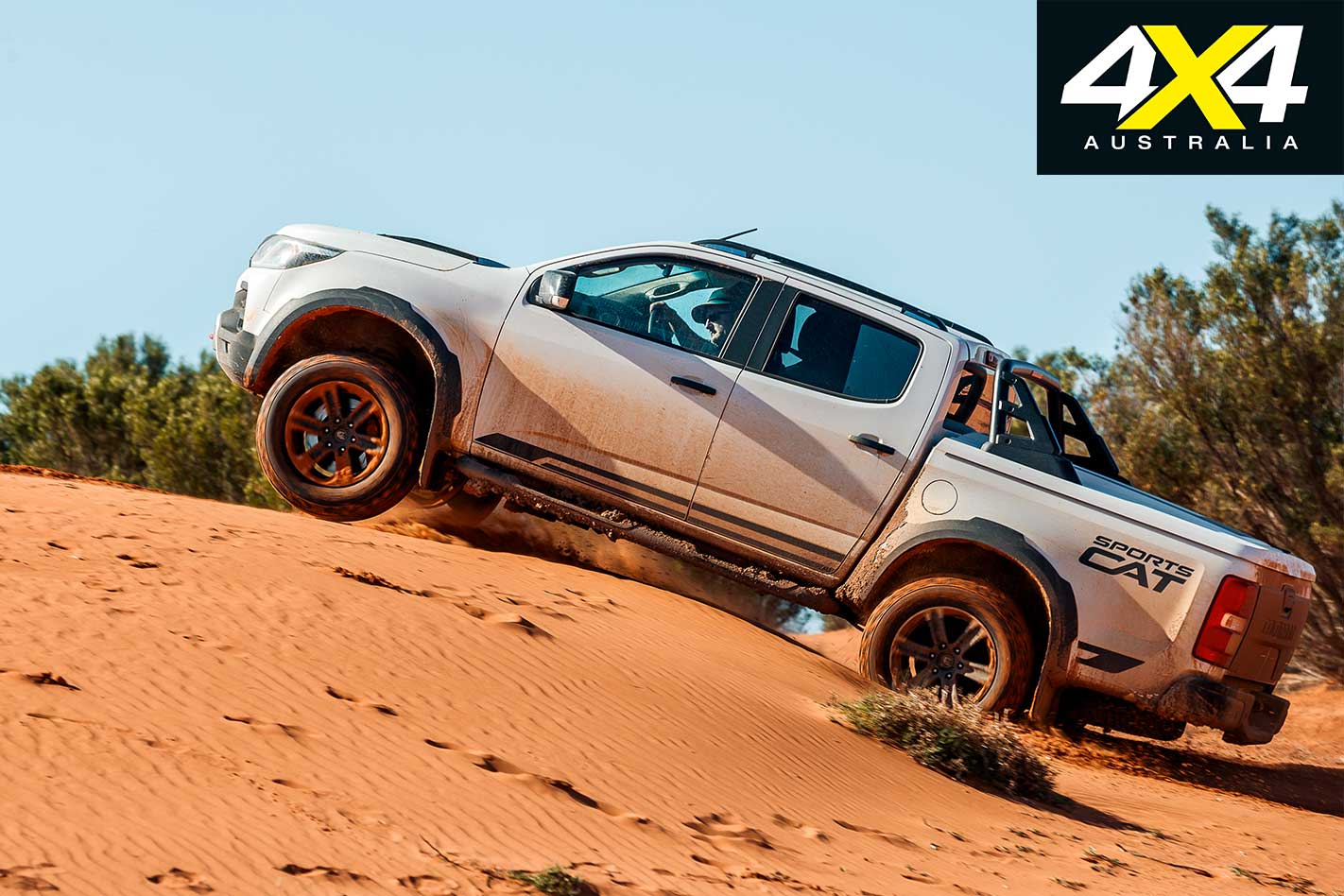
The rear springs remain stock, while MTV dampers are fitted all ’round. In an important piece of engineering HSV has braced the front spring/damper strut top mounts, which helps eliminate chassis flex in this critical area and achieves better suspension control.
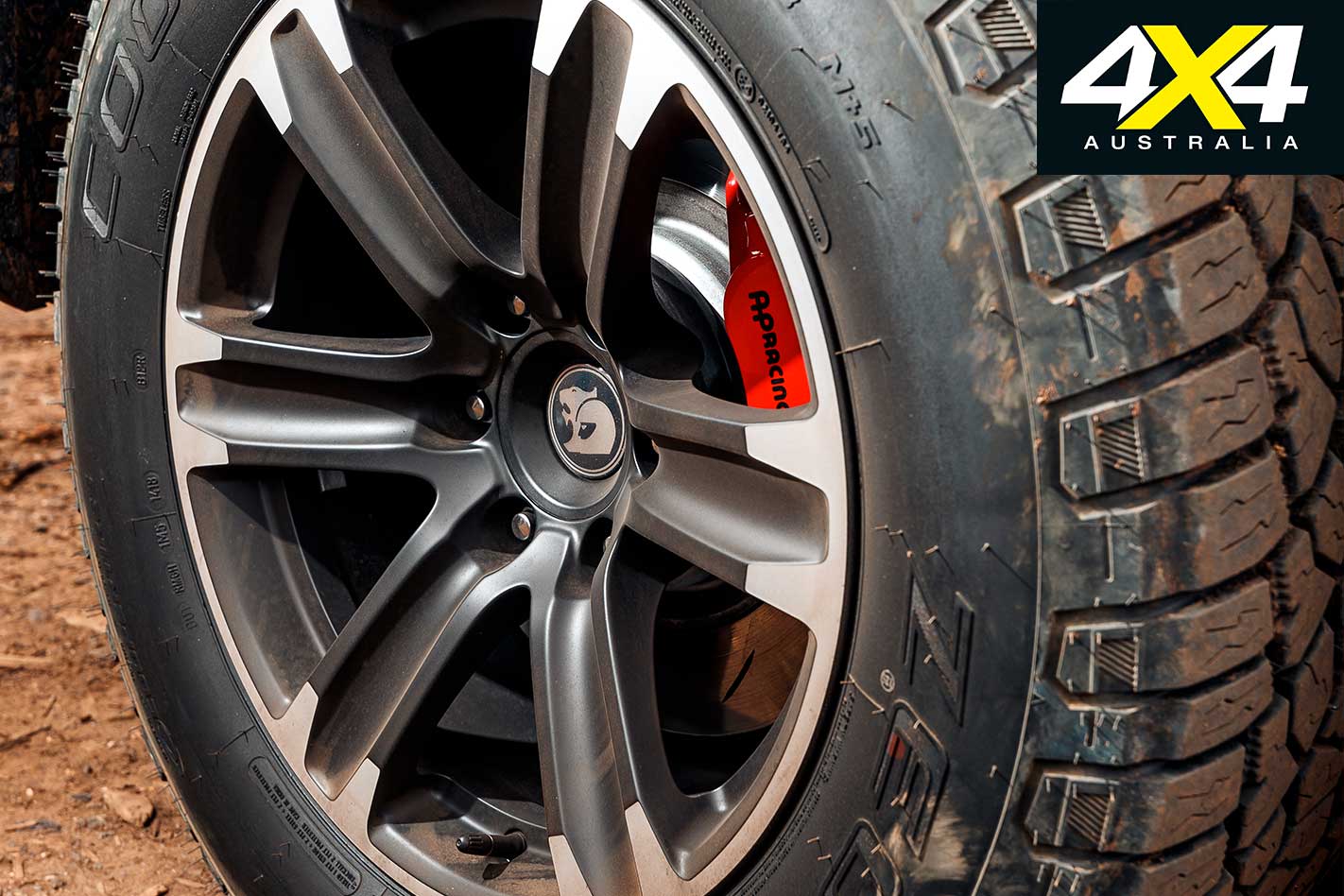
The SportsCat+ (as tested here) then adds larger brake rotors and four-piston AP Racing callipers up front and a rear swaybar that automatically decouples when low-range is engaged. The price for a SportsCat+ starts at $68,900, with our test vehicle adding a couple of options (sailplane and tub liner) to take the price to $70,500 (plus on-road costs).
Despite its association with high-performance engines, HSV has left the Colorado’s 2.8-litre four-cylinder diesel untouched in the SportsCat. Not that it’s a problem as the 147kW/500Nm engine lives up to the promise of its on-paper outputs to deliver plenty of punch when needed, all helped by what is a very sporty and proactive six-speed auto.
The slightly taller gearing and increased rolling resistance of the new wheel/tyre combination, plus the extra weight and increased aero drag, will mean some diminution in performance from a standard Colorado, but it’s not noticeable.
What you do notice, and something that’s less pleasing, is the fact this engine is somewhat noisy and harsh compared to more recently designed diesels which are becoming more refined and less diesel-like with each new model.
Much of HSV’s chassis work has gone into producing a more sporty on-road drive, which the SportsCat delivers; but this comes at the expense of ride quality, which is on the firm side. Plenty of tyre noise, too, on some road surfaces.
Suspension control is very good – even at higher speeds on poor roads – and the SportsCat feels better the harder you drive it. Terrific performance from racing-quality brakes, too.
Trail Driving
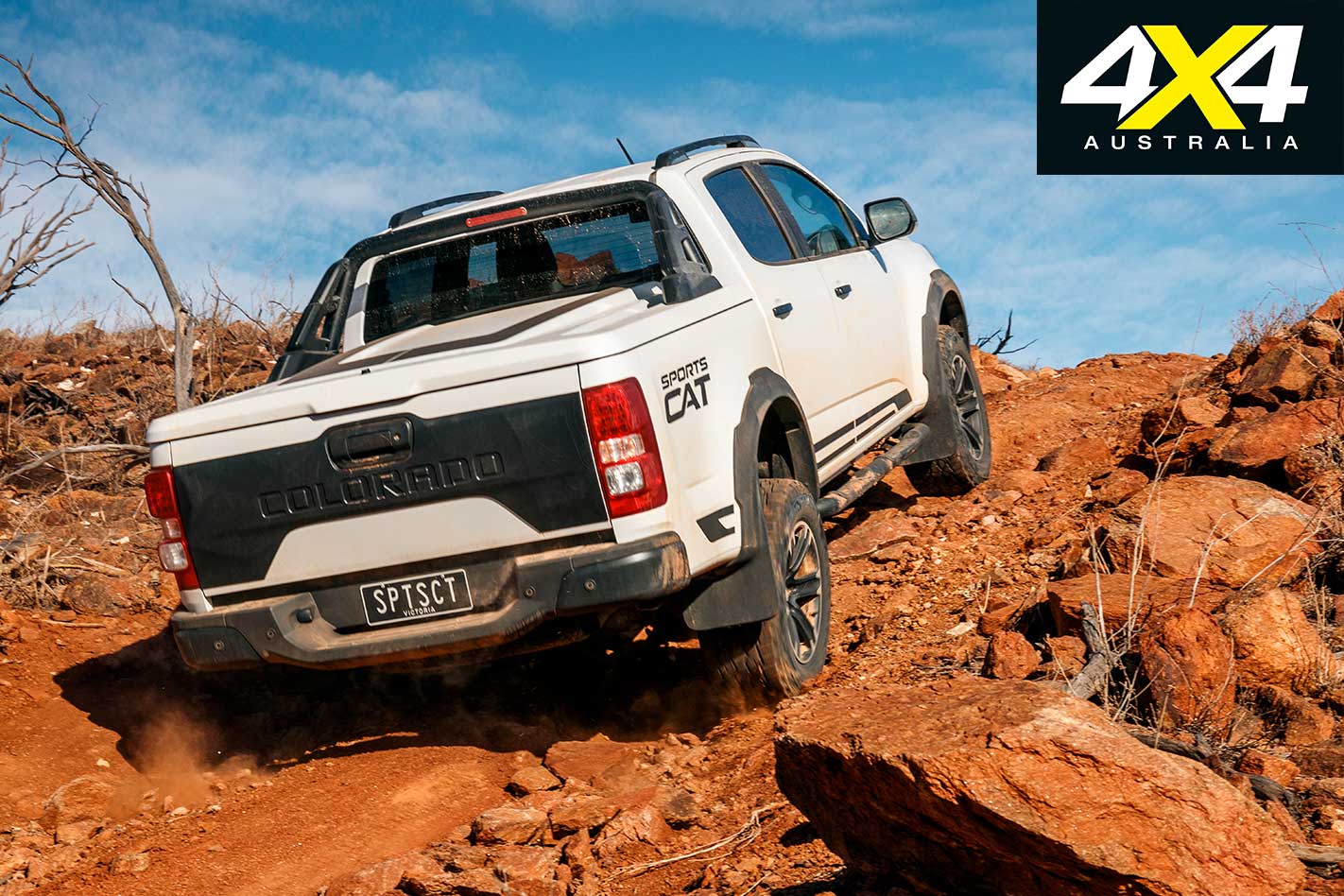
The SportsCat’s extra ride height and robust Cooper Zeon LTZs make for worry-free driving on the roughest tracks, given there’s less chance of damaging the undercarriage or shredding the sidewall.
The SportsCat isn’t overly endowed with wheel travel, but effective traction control helps it get over the gnarly bits without fuss. The gearbox’s shift protocols also work well off-road, as does the sequential-style shift in the gearbox’s manual mode.
Set-Piece Hill Climb
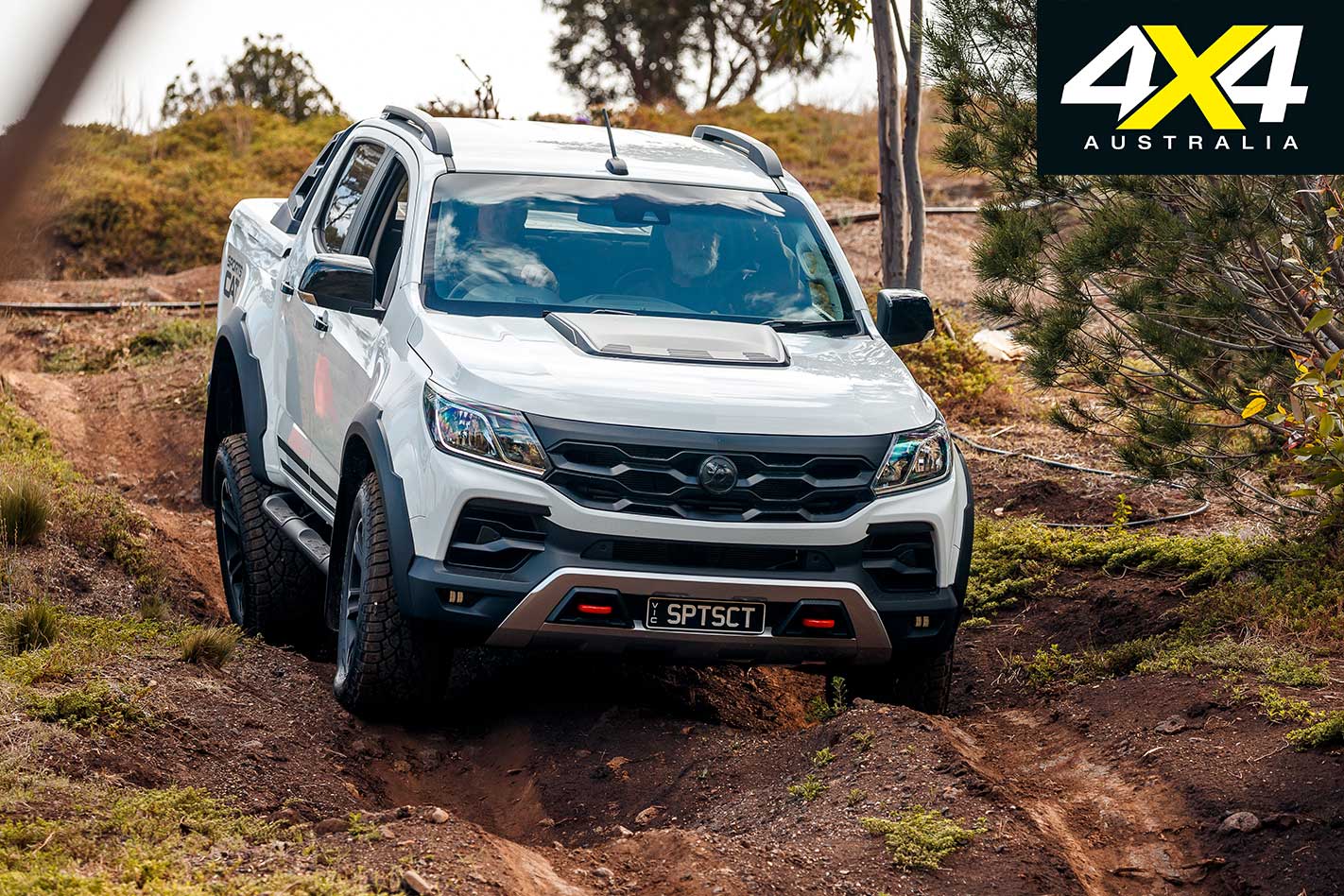
The SportsCat managed to clear our set-piece climb without much fuss. You can put that down to its more aggressive tyres and good performance from the electronic traction control. Before the Colorado’s MY17 upgrade the traction control didn’t work too well off-road, but that was one of many things Holden engineers addressed very successfully at the time.
HSV then recalibrated the system for the SportsCat. The SportsCat’s auto decoupling rear sway also comes into play here, as it restores the rear wheel travel to what it would be. The SportsCat doesn’t have a rear locker, but it didn’t need one to clear the climb.
Cabin, Equipment and Safety
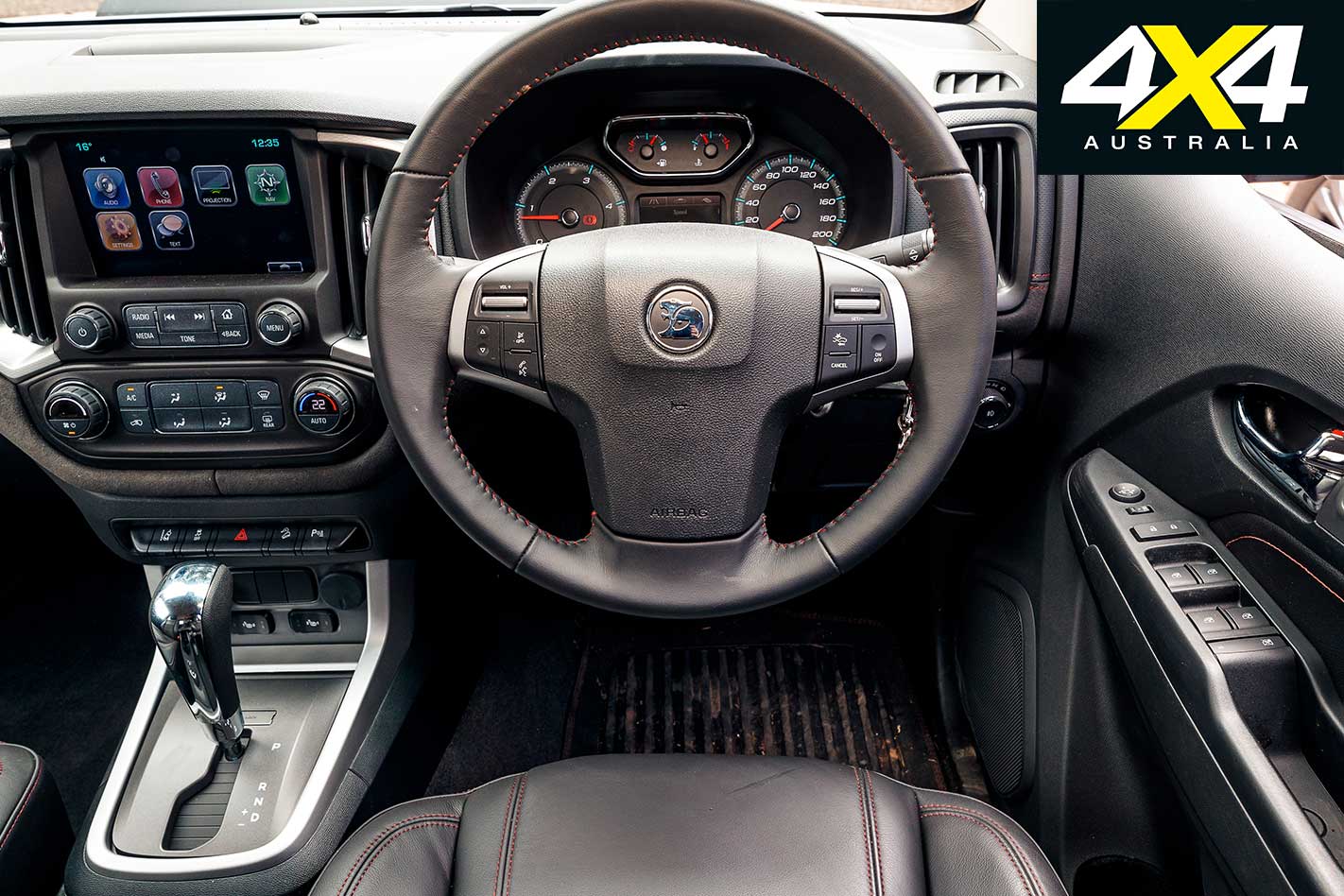
The SportsCat retains the simple dash layout and controls of the Colorado, but isn’t notably well-finished. Most of our judges complained of the hard seats and the lack of reach adjustment for the steering wheel. Like the Colorado, the SportsCat’s rear seat is mid-field in the dual-cab ute class in terms of room.
Standard equipment includes leather trim, heated front seats (with electric adjust for the driver), sat-nav, auto headlights and wipers, Apple CarPlay, Android Auto and a rear-view camera. Safety kit runs to seven airbags, tyre pressure monitoring, lane-departure warning and forward-collision alert.
The SportsCat itself hasn’t been ANCAP tested, but the Colorado, with the same safety features and body structure, is five-star rated.
Practicalities
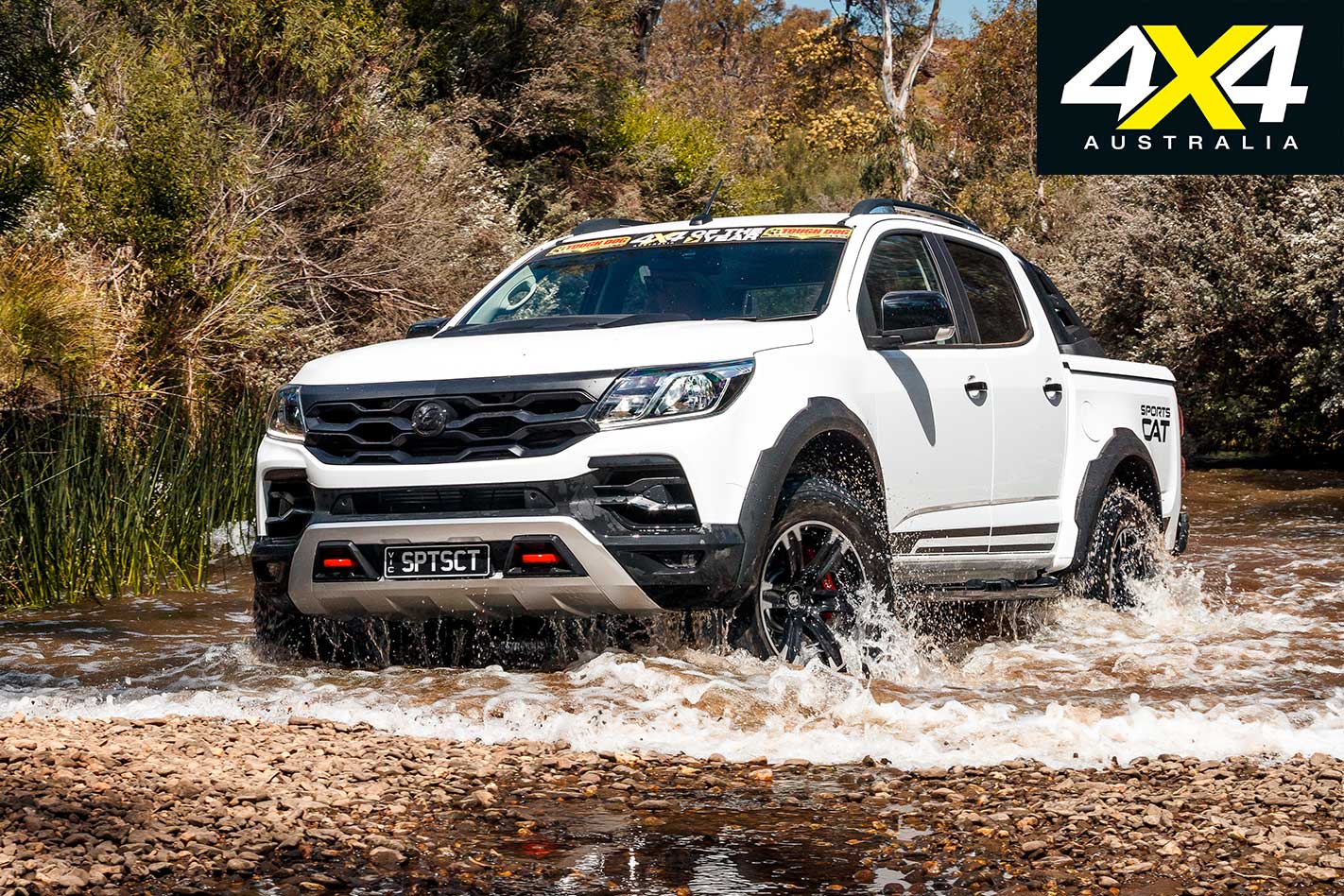
The SportsCat comes with two heavy-duty recovery hooks up front, but their shape means thicker shackles can’t be used. As with most utes there are no rear recovery hooks. The SportsCat has the same 3150kg GVM as the Colorado and therefore a lower payload, given the higher kerb weight. It does have a higher (6300kg) GCM; although, max tow rating stays at 3500kg.
The SportsCat comes with a hard tonneau complete with a quick-release system for easy removal, though this requires at least two people. The soft-open tailgate is a nice touch.
Like the other ‘modified’ ute on the shortlist (the Ranger Raptor), the SportsCat paid the price for its modifications with increased fuel use, though not to the same extent as the Ford.
Summary
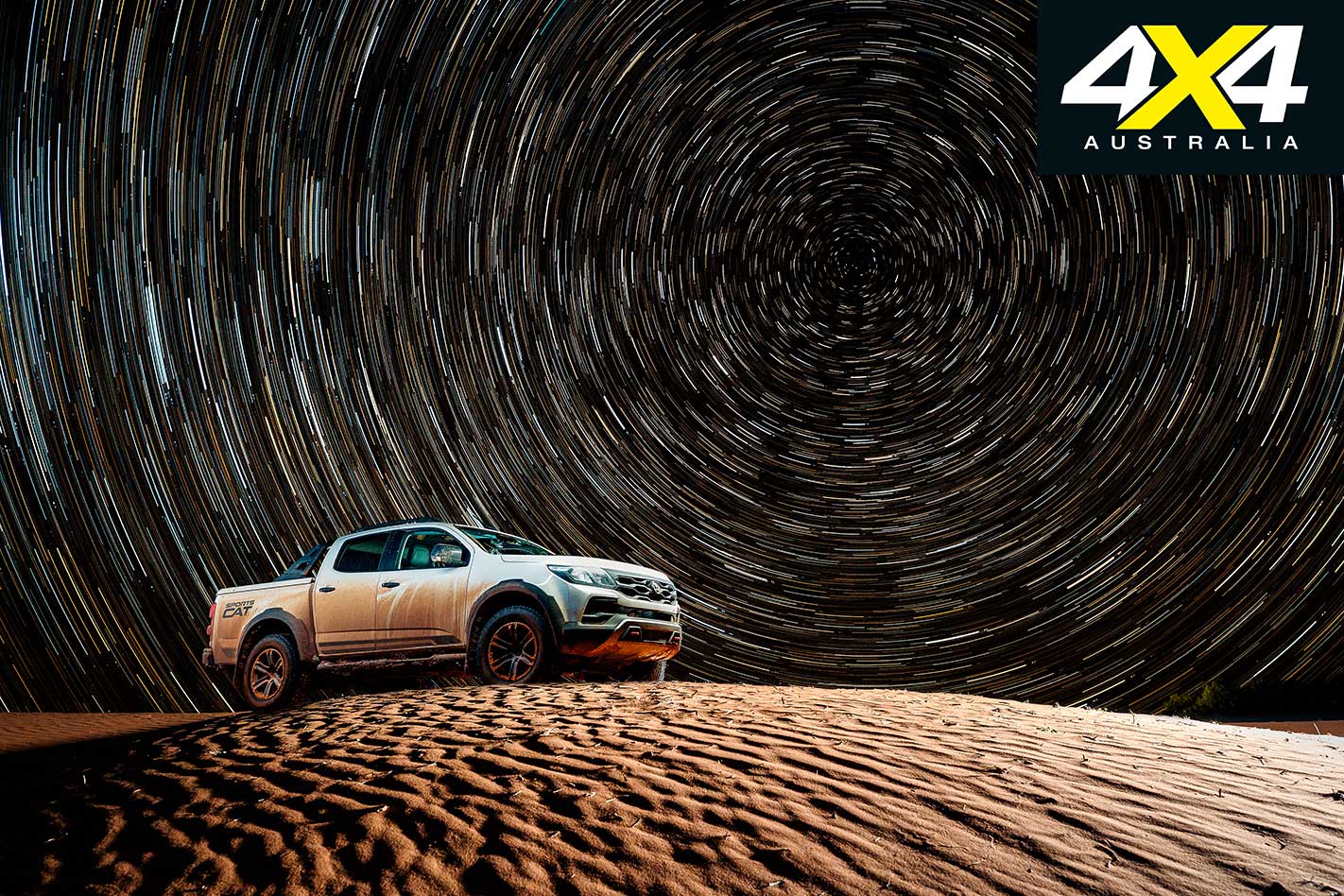
HSV engineers have managed to make a ute that is both better on-road and better off-road than a standard Colorado, a fair achievement in anyone’s books as these two ideals are generally mutually exclusive.
2019 HSV COLORADO SPORTSCAT+ SPECS: Engine: 2.8-litre inline-4 turbo-diesel Max power: 147kW at 3500rpm Max torque: 500Nm at 2000rpm Transmission: 6-speed automatic 4×4 system: Dual-range part-time Kerb weight: 2274kg GVM: 3150kg Payload: 876kg Towing capacity: 3500kg GCM: 6300kg Tyres: 285/60R18 120S Fuel tank capacity: 76L ADR fuel consumption claim: 8.7L/100km On-test fuel consumption: 11.7L/100km Base price: $68,900 (plus ORC) As tested: $70,500 (plus ORC)
IT DIDN’T long for Bruiser Conversions, an aftermarket garage based in Florida, USA, to turn its spanners towards the all-new 2019 Jeep Wrangler JL.
The American mob has plenty of experience with Jeep products, fettling plenty of JKs over the years and turning them into insane dual-cabs, single-cabs, open-roof and four-door wagon versions.
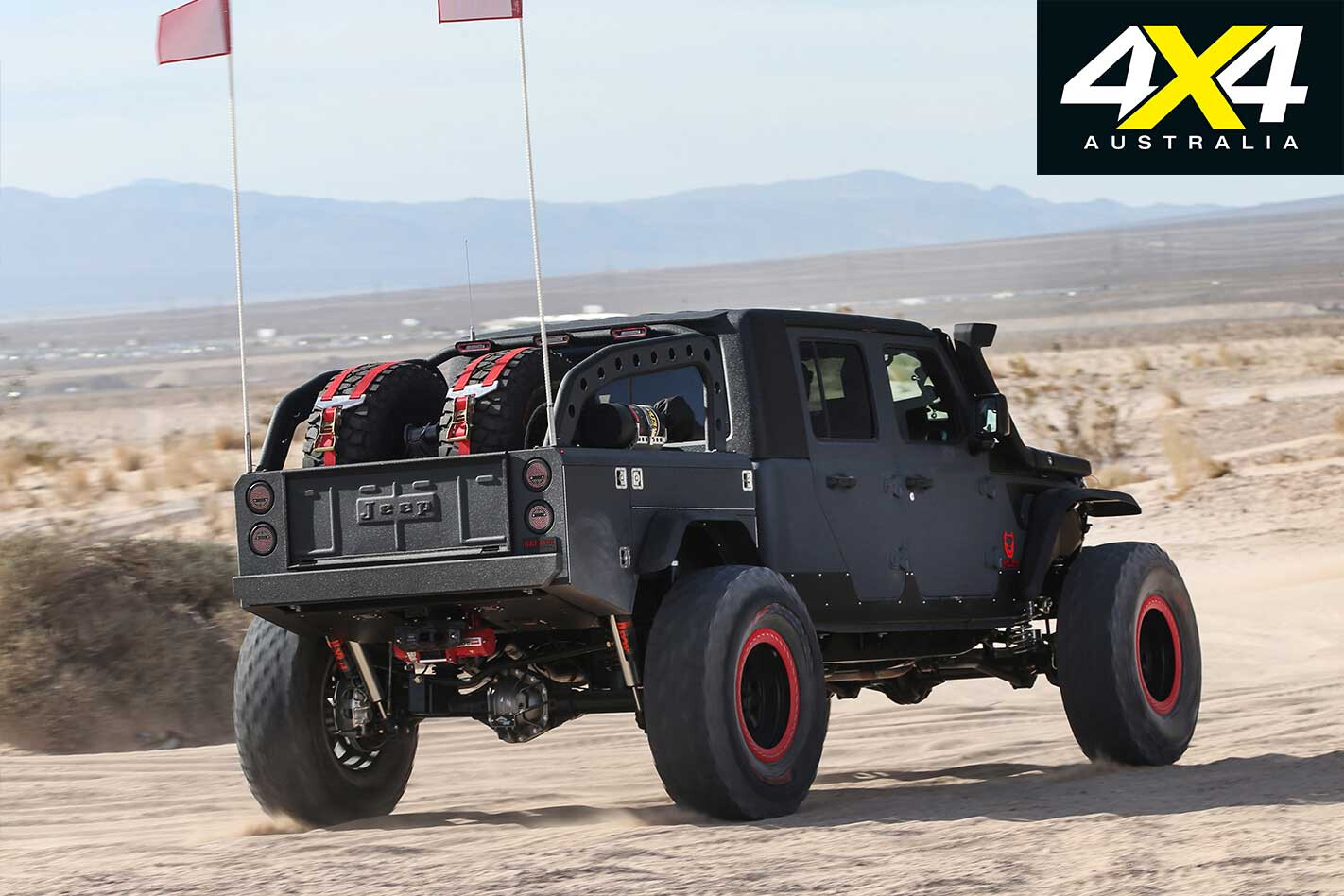
This prime example you’re ogling is a JL Wrangler Sahara that has been stripped down to its bare bones and copped a wheelbase extension – the ladder-frame chassis also received been cut and stretched.
Modelled on a chaser truck – vehicles designed to carry equipment and chase race rigs on desert sprints – the dual-cab Wrangler has a customised ute tray loaded with plenty of aftermarket goodies: CO2 tanks for tyre inflation, an aux fuel tank, a water tank, a portable arc-welding system, power inverter, compressed air bulkhead powered by a twin ARB compressor, Snap-on tools, and two spare 37-inch beadlock wheels with BFG Baja T/A rubber.
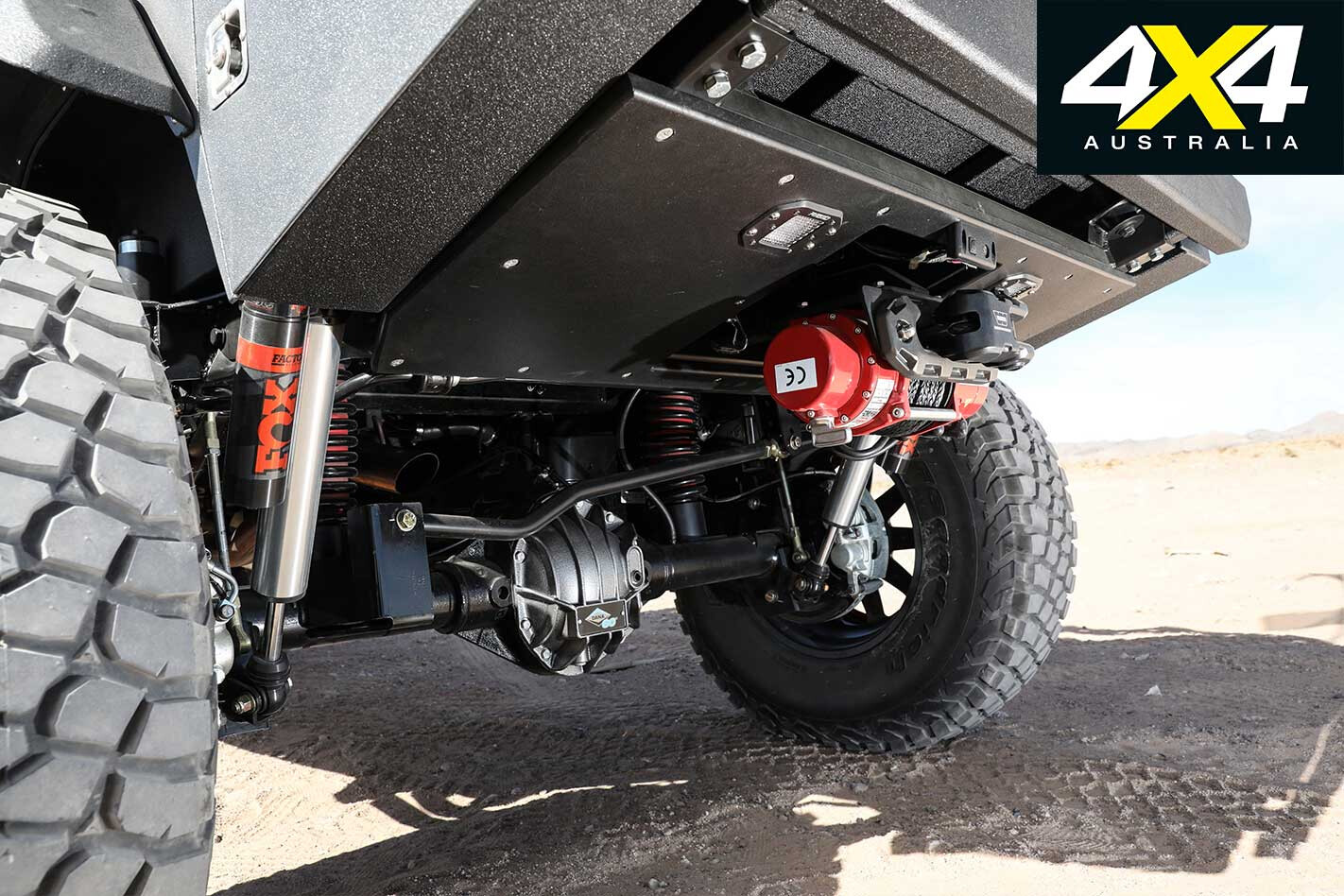
Helping with off-road pursuits is a set of Dana 60 axles with Eaton E-Lockers, Warn manual-locking hubs, a BDS Long Arm kit, a JKS coil-over conversion (up front), Fox 2.5-inch dampers (rear), Air Lift suspension airbags, and Steer Smarts Yeti steering components.
Bruiser Conversions has a reputation for fitting LS3 V8 engines into its custom vehicles, and this JL dual-cab is no exception. Matched to a ZF eight-speed automatic transmission, the brutal 335kW/610Nm V8 is dialled in brilliantly to the Wrangler front-end; with the only other tweak being JE Reel 1350 driveshafts.
The serious desert-conqueror is packing plenty more kit, but to read the full review you’ll need to keep an eye out for the March 2019 issue of 4X4 Australia – in stores March 7.
FIAT CHRYSLER AUTOMOBILES (FCA) has announced a plan for massive expansions to its Michigan Jeep and Ram plants, to meet future demand and deliver new models.
The US$4.5 billion investment will see five of its existing production plants upgraded, and it’s expected to provide up to 6500 new jobs in the state.
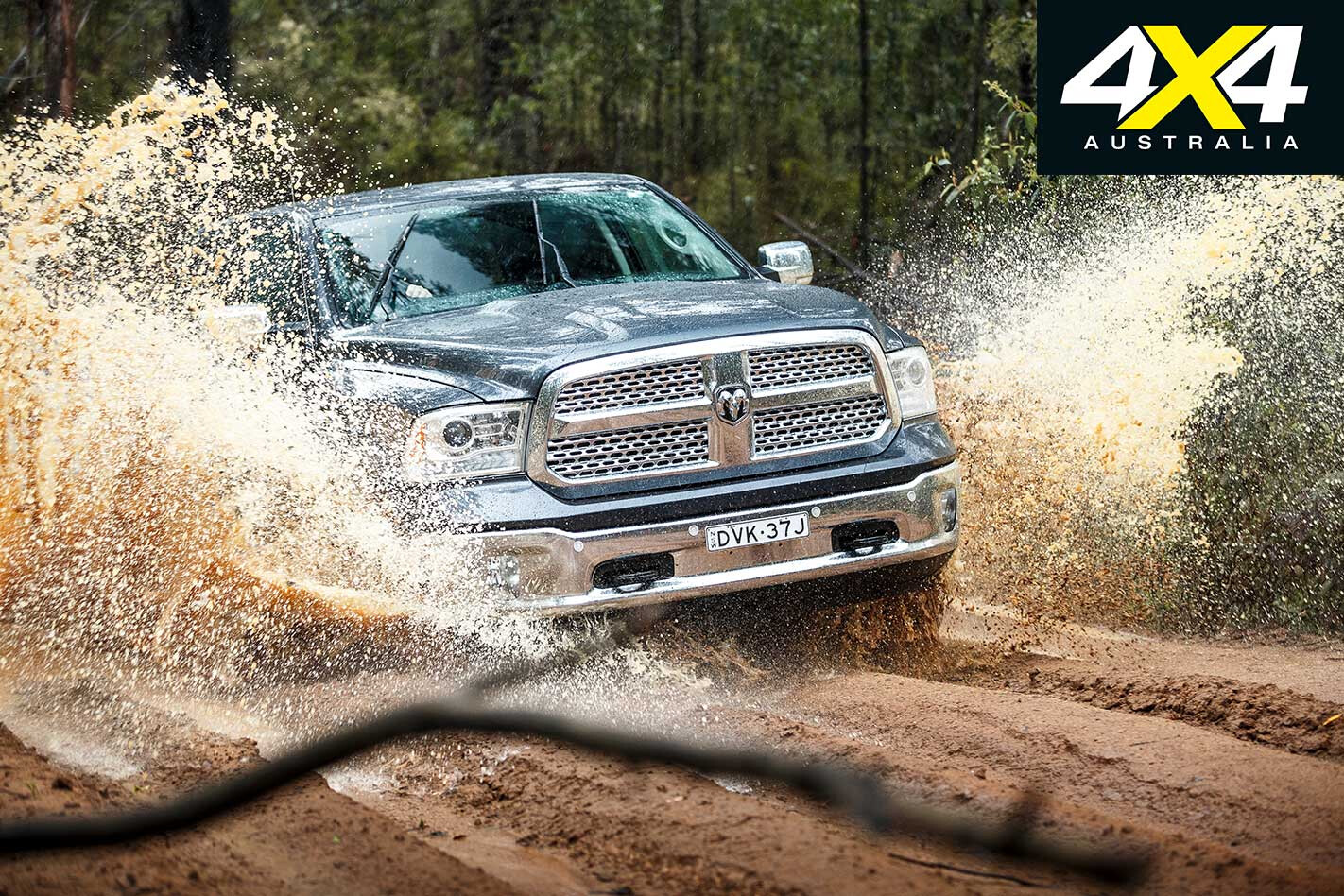
Jeep and Ram are the most successful and profitable brands within the FCA stable, and the company has already discontinued making compact cars in the USA to concentrate on the more popular and profitable large SUVs and pick-up trucks. With the use of lighter weight components, more efficient powertrains – as well as EV and plug-in hybrid powertrains – the bigger Jeep and Ram vehicles continue to be the peoples’ choice.
“Three years ago, FCA set a course to grow our profitability based on the strength of the Jeep and Ram brands by realigning our US manufacturing operations,” said Mike Manley, Chief Executive Officer, FCA N.V.
“Today’s announcement represents the next step in that strategy. It allows Jeep to enter two white space segments that offer significant margin opportunities and will enable new electrified Jeep products, including at least four plug-in hybrid vehicles and the flexibility to produce fully battery-electric vehicles.”
As part of this plan, US$1.6 billion would be spent to convert Mack Avenue Engine Complex into a manufacturing site for the next-generation Jeep Grand Cherokee and a new three-row full-size Jeep SUV, making it the first new manufacturing plant to be built in Detroit in almost 30 years. The new Mack Avenue plant will also be used to build plug-in hybrid models.
The Mack Avenue II engine plant has been idle since it stopped making the 3.7-litre V6 in 2012, while the replacement Pentastar V6 has been built in the Mack I plant ever since. This manufacturing will be shifted to the Dundee Engine Plant in a further $119 million investment.
The Jefferson North Assembly Plant was the last new plant built in Detroit back in 1991, and it will receive a US$900 million upgrade to also produce the next Jeep Grand Cherokee and the seven-seat Dodge Durango wagon. The current versions of these models are built at Jefferson North and share the same platform.
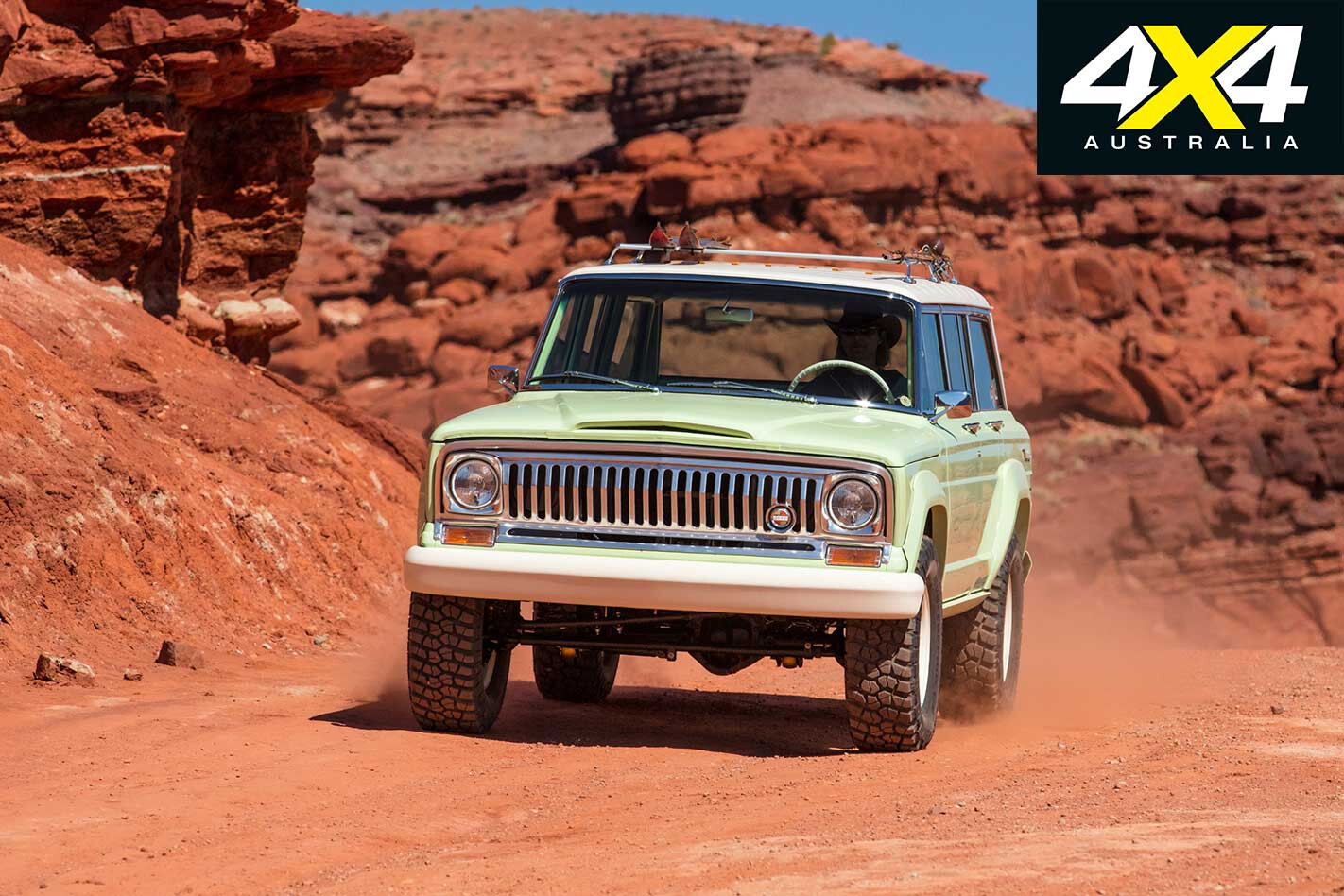
The new Jeep Wagoneer and Grand Wagoneer, which are expected to be revealed in 2020 as 2021 models, will be built alongside the Ram 1500 ‘Classic’ at the Warren Truck Assembly Plant, as good as confirming that these reborn wagons will ride on the same body-on-frame platforms as the Ram truck.
Again, these new models will have hybrid variants. The ‘new generation’ Ram 1500 is built at the Sterling Heights Assembly Plant, which was upgraded in 2018 to meet demand.
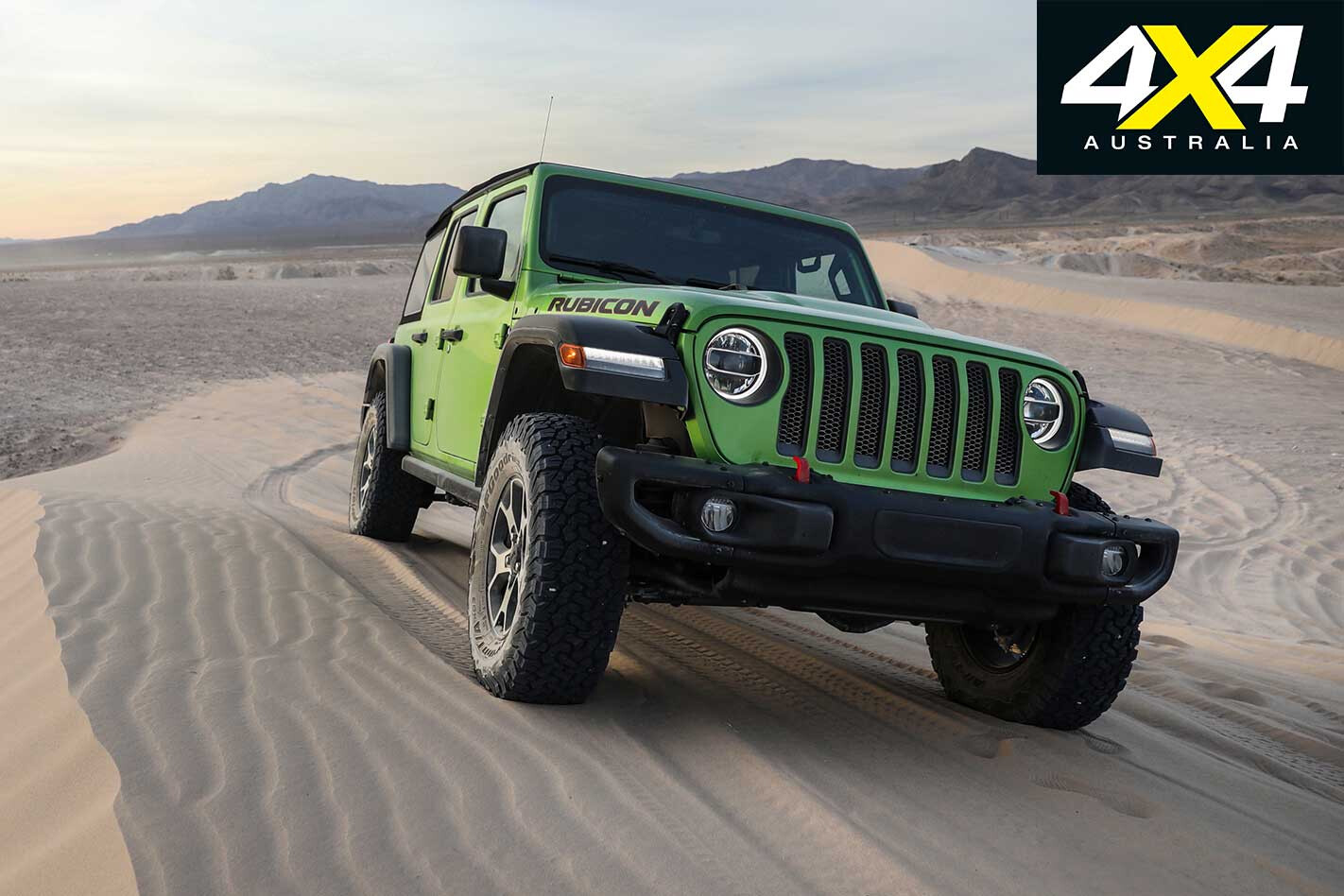
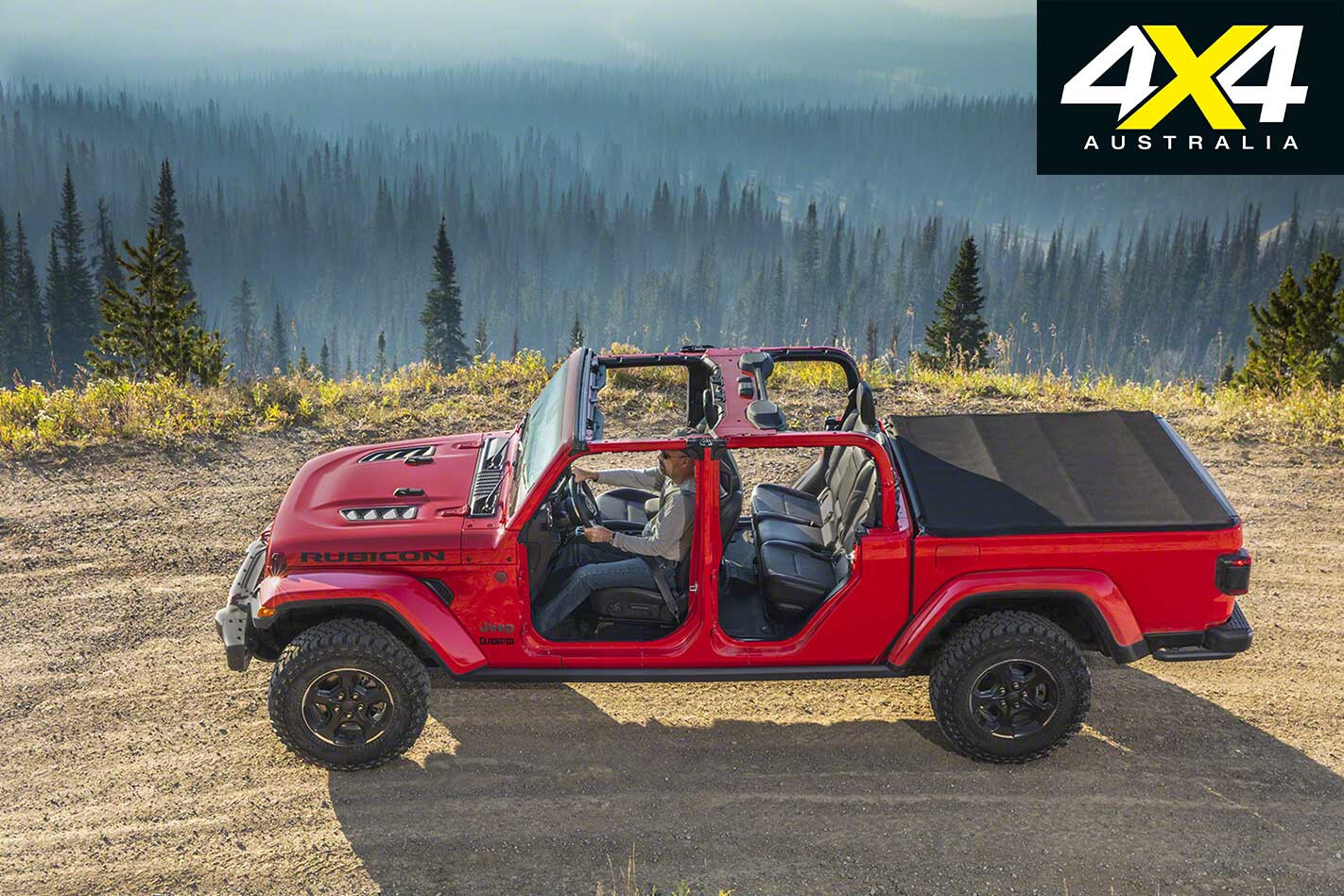
This new investment comes on the back of the recent upgrades at the Toledo, Ohio, Jeep plant to build the JL Wrangler – which goes on sale in Australia in April but has been on sale in the USA for more than a year – and the new Jeep Gladiator pick-up which has just been launched in the USA and is at least 12 months away for us.
FCA claims it has committed to invest nearly US$14.5 billion in its US manufacturing operations since 2009, creating nearly 30,000 new jobs for workers.
This is the second appearance of an Everest at 4X4OTY. Three years ago, it not only made the 4X4OTY shortlist but took out the award from a strong field that included the then-new Toyota Hilux.
Now, thanks largely to its new 2.0-litre bi-turbo engine and 10-speed auto, the Everest is back for a second tilt at the award. In addition, the 2019 Everest also sees a revision to the front suspension, more safety and convenience kit, and a minor facelift.
The new powertrain is the only choice for buyers of the top-spec Titanium and is optional in the mid-spec Trend, which is also available with the 3.2-litre five-cylinder diesel and six-speed auto. The entry-level Ambiente only comes with the 3.2. What we have here is the Trend, which is $61K plus on-road costs with the new 2.0 powertrain attracting a modest $1200 premium over the 3.2.
The Everest is Ranger-based, though key technical differences exist with the adoption of a full-time 4×4 system (in place of the Ranger’s part-time 4×4) and coil springs for the rear live axle.
Touring
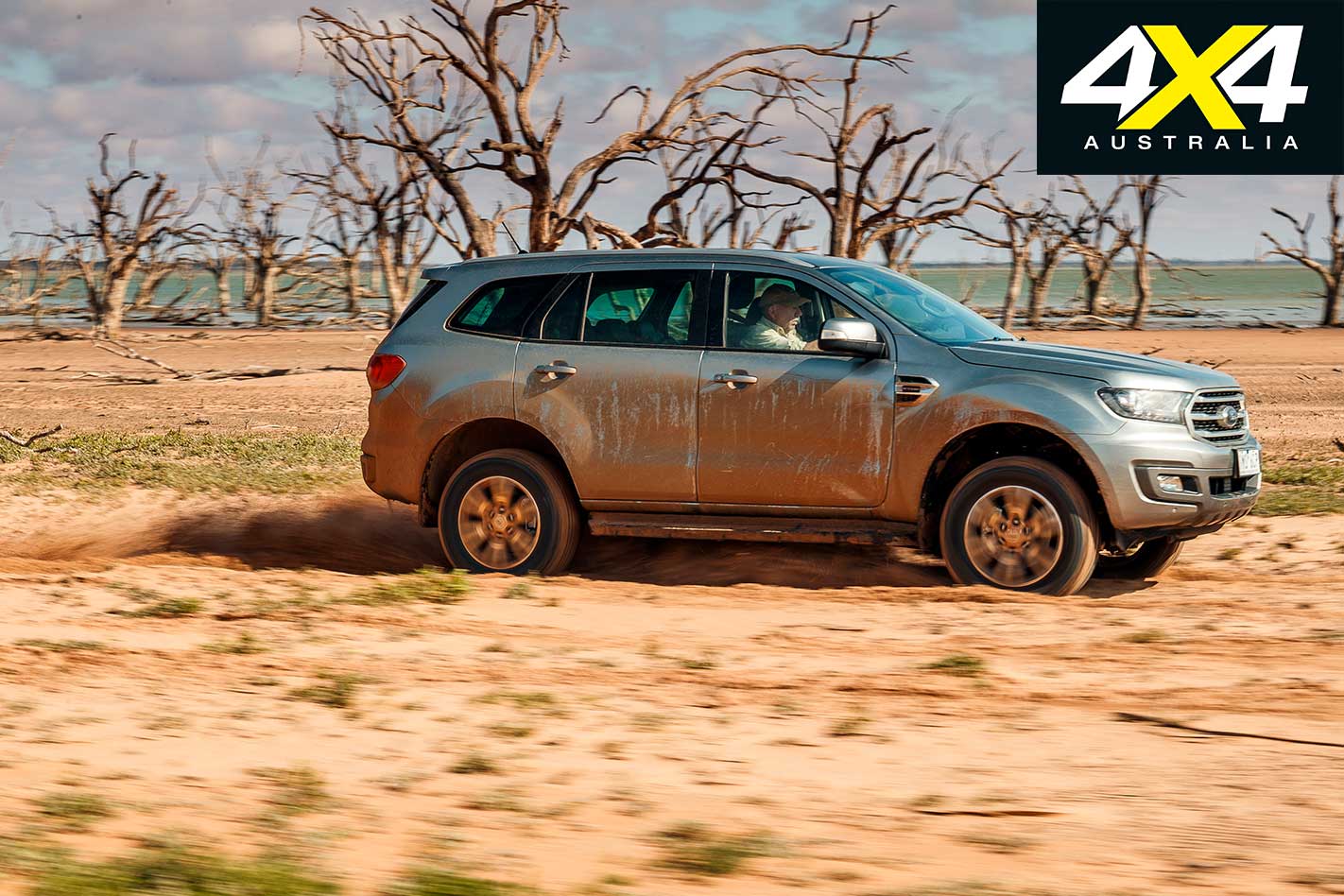
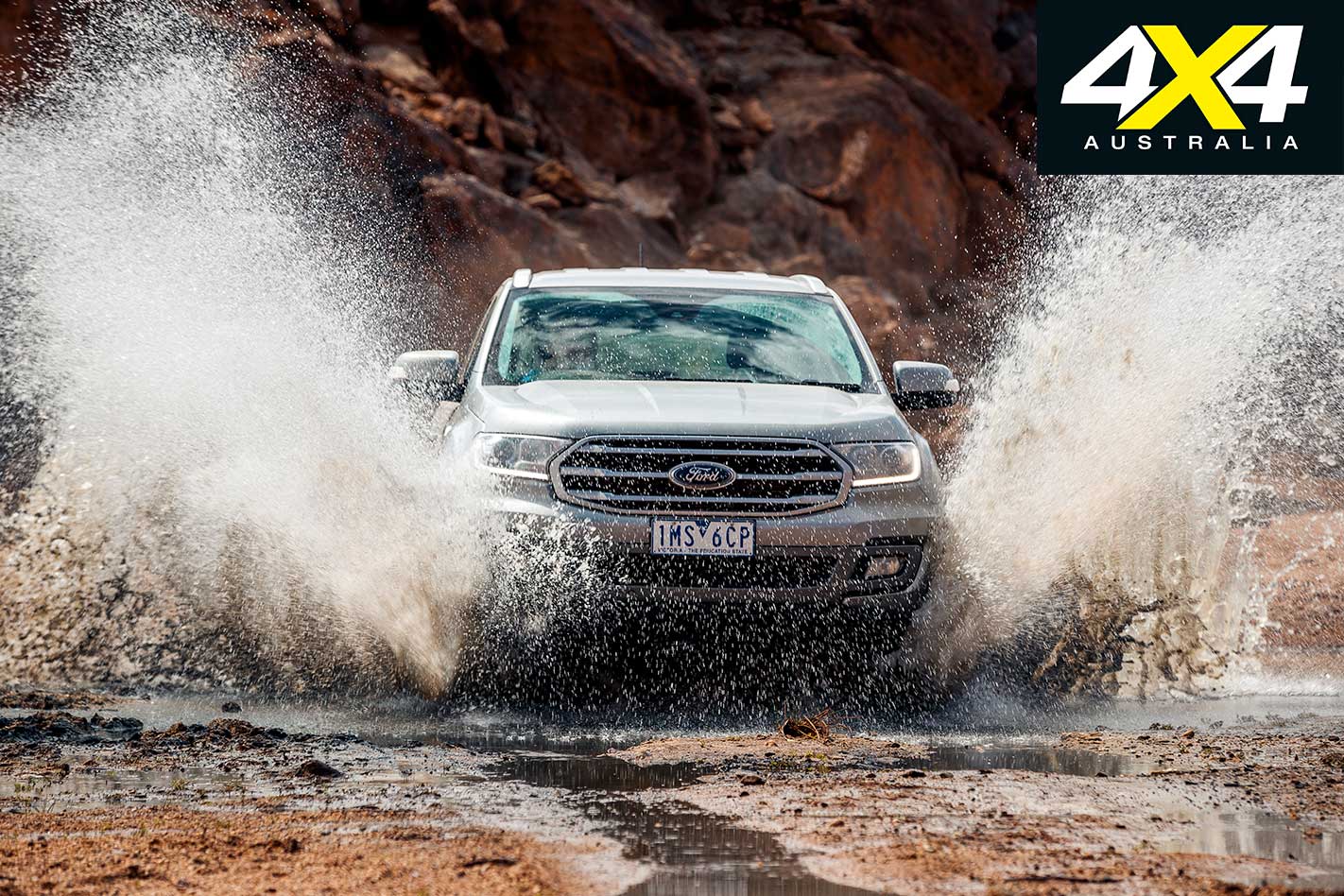
More than anything else the new 2.0-litre powertrain brings refinement rather than any significant improvement in performance to the Everest. This new engine is notably quiet and smooth, while the 10-speed automatic is that smooth and slick you barely notice when it’s changing gears.
The taller final drive gearing (compared to the 3.2) combined with the already tall eighth, ninth and tenth gears means the engine just lopes along at touring speeds. And, while the powertrain only marginally improves the performance over the 3.2, it still carries the taller gears well, is effortless in general driving and provides better fuel economy than the somewhat thirsty 3.2.
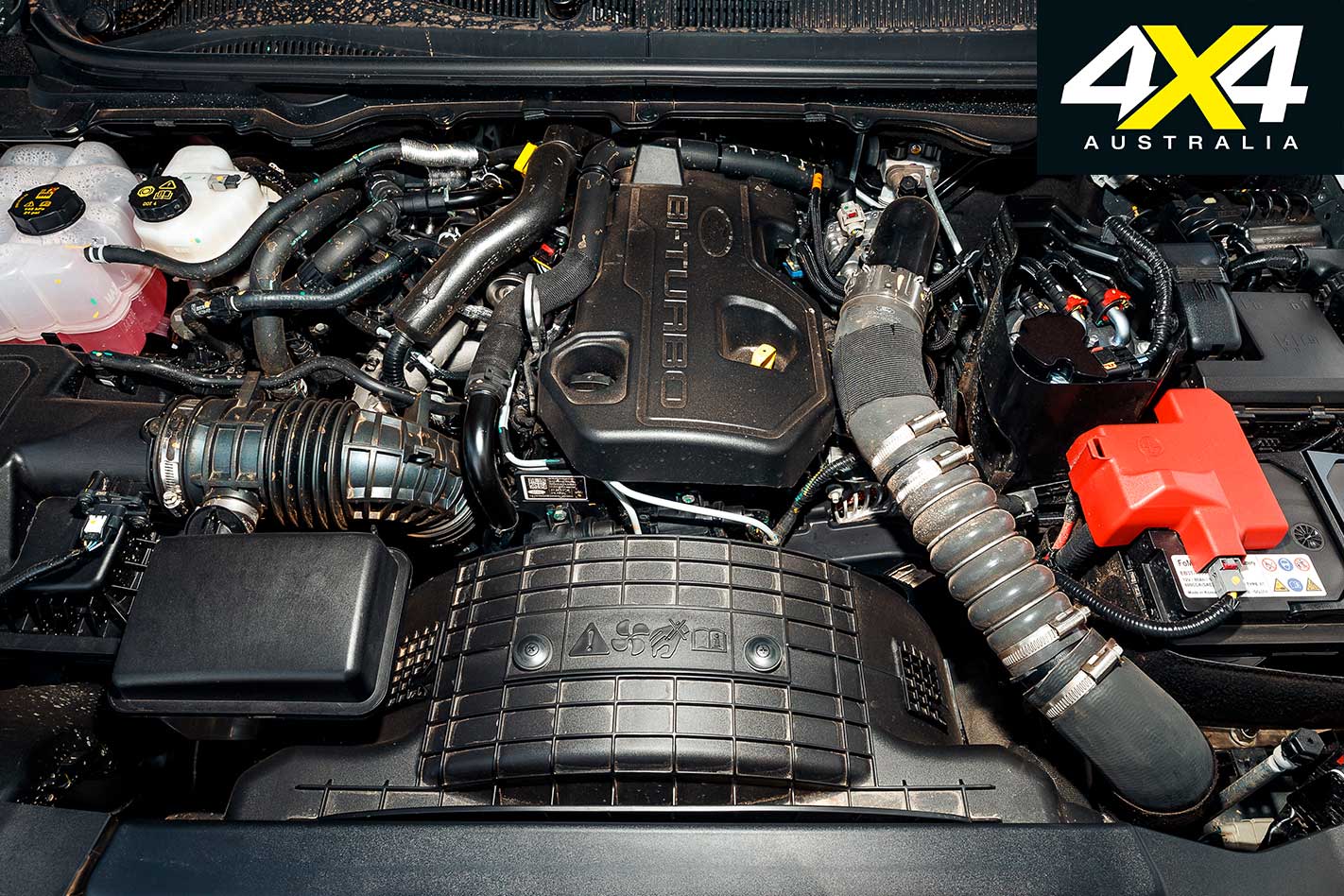
The Everest’s powertrain refinement is complemented by a supple, comfortable and quiet ride, in part helped by the suspension revision. The Everest also handles and steers very well for a plush-riding 4×4 wagon, while its full-time 4×4 system offers convenience, all-roads grip and a good dose of safety, especially on wet bitumen and the like.
The Everest’s radar cruise control is another touring bonus; although, having to go through one of the settings menus to switch from normal cruise to radar cruise is far from ideal.
Trail Driving
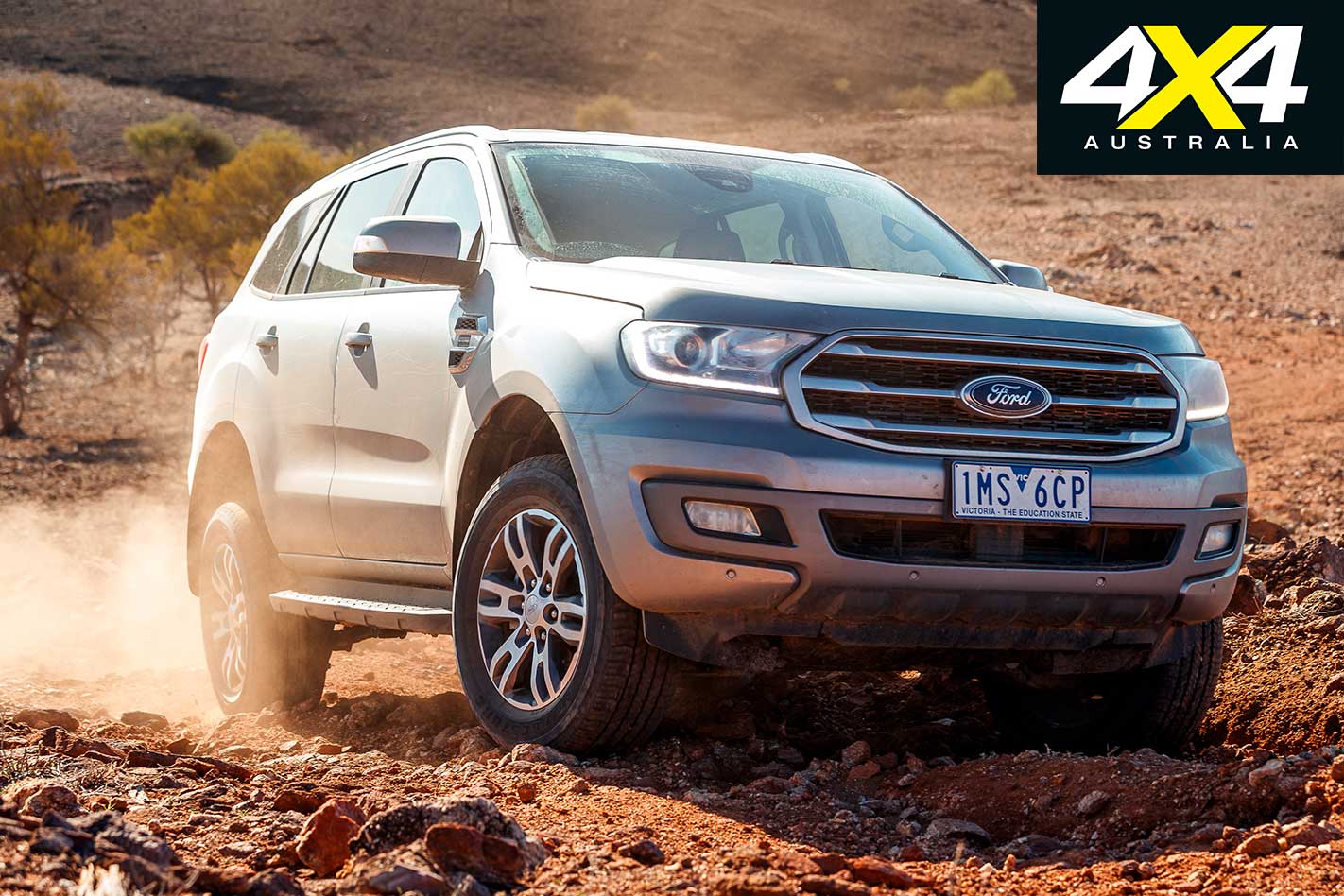
Full-time 4×4 brings convenience once you hit the trails, and you don’t have to think about locking the centre diff as it happens automatically. The only thing the driver needs to do is select low range, if needed, or lock the rear diff, which is rarely needed unless the track is particularly difficult.
The Everest is a comfortable and competent trail vehicle; although, vision from the driver’s seat could be better, and the rocker switch on the side of the shifter (for manual selection) isn’t as natural to use as the sequential side-gate shift.
The Everest offers Terrain Management that usefully tweaks the throttle mapping, the gearbox’s shift protocols, the centre diff’s operation and the traction and stability control systems. In low range you can select Normal or Rock modes, while in high range you can select Normal, Snow/Mud/Grass or Sand.
Set-Piece Hill Climb
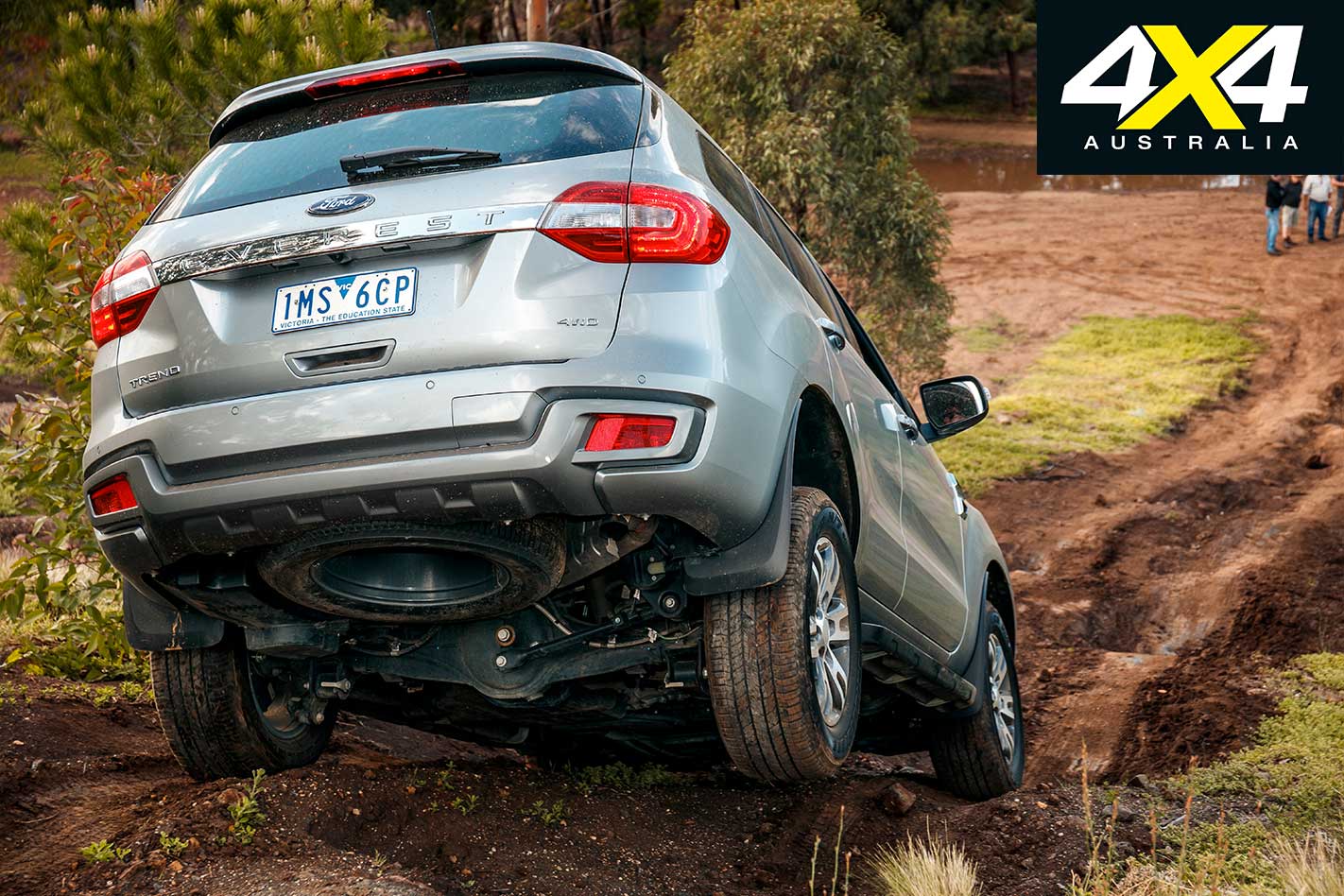
The Everest was another vehicle that failed to get up our set-piece climb without its rear locker engaged, but it managed to clear the climb once the driver-switched locker was brought into play. As with the Ranger, engaging the rear locker keeps the traction control active on the front wheels, a difference you notice on any 4×4 which cancels the traction control completely if the rear locker is engaged.
Cabin, Equipment and Safety
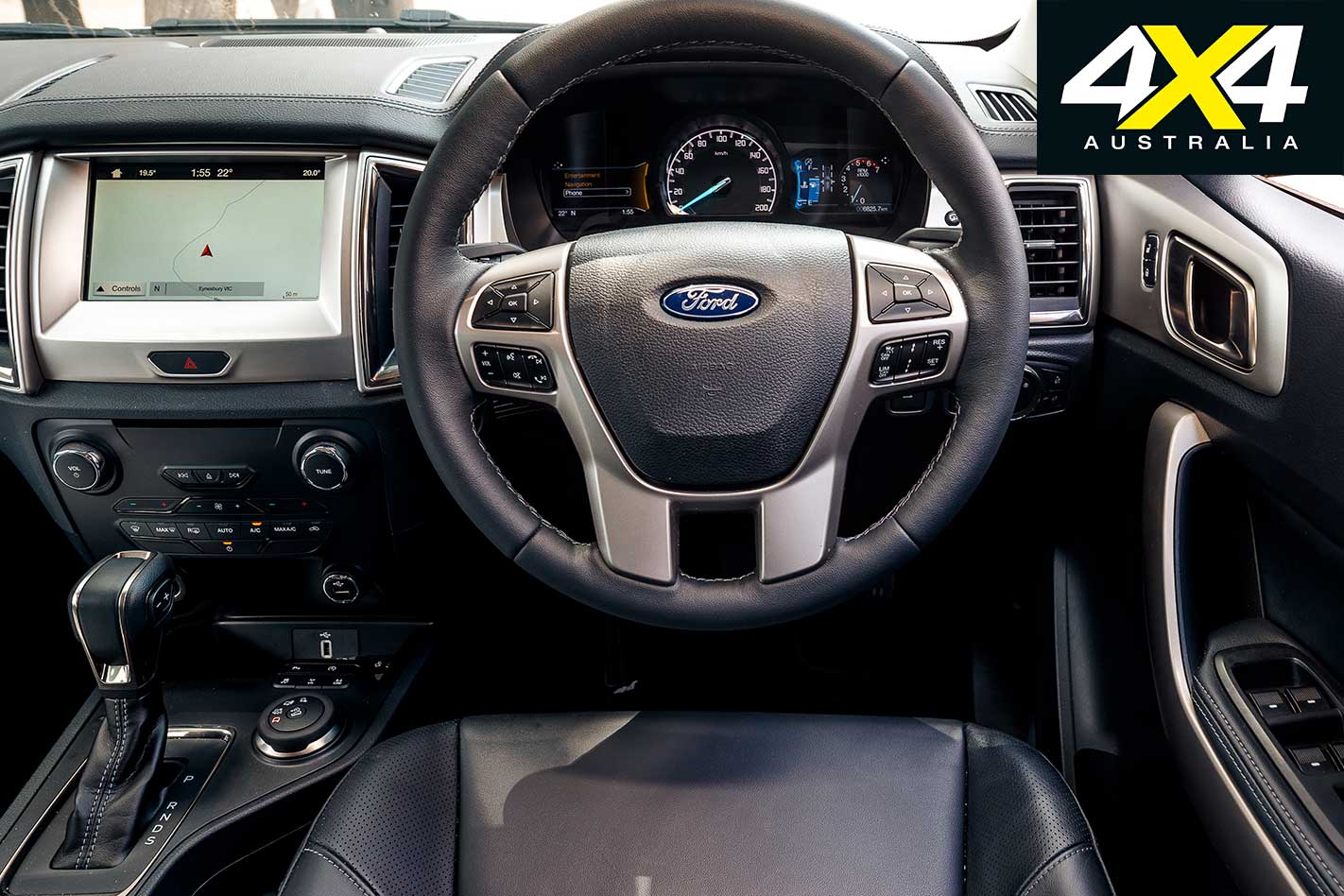
The Everest has a spacious, comfortable and well-appointed and -finished cabin. Highlights include a comfortable driving position, the flexibility that fore and aft adjustment on the middle seat brings, and a good amount of space behind the third-row seats. Negatives include the hard-to-see HVAC controls, fiddly switchgear and complicated display menus.
Standard equipment (on the Trend) extends to smart-key entry and start, leather, power-adjust driver’s seat, dual-zone A/C, eight-inch touchscreen, sat-nav, 10-speaker audio with digital radio and CD player, rain-sensing wipers, auto headlights, and LED DRLs.
Safety kit includes autonomous braking, radar cruise, lane-keeping assist, and front, side, curtain and driver’s knee airbags. Everest had a five-star ANCAP rating in 2015 and, while there are no test results for the new model, it has extra safety kit.
Practicalities
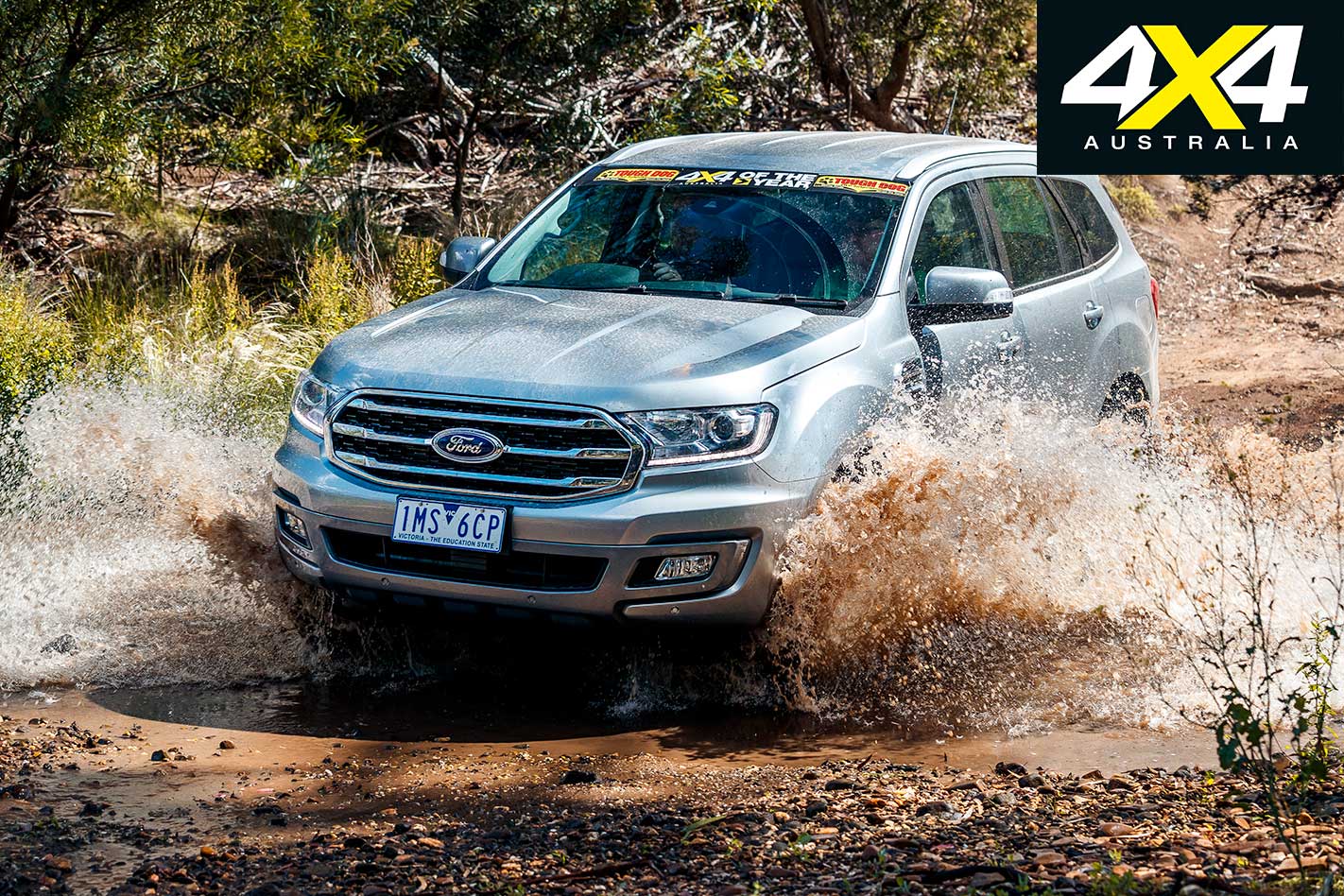
The Everest’s good fuel economy and 80-litre tank provides a touring range of around 800km, the best of our shortlisted vehicles. A practical and common wheel and tyre size and the ability to fit 17s in place of the standard 18s enhances the Everest’s practicality as a remote tourer.
The Everest now draws its engine intake air from under the bonnet lip rather than via the inner guard; although, this hasn’t diminished the claimed wading depth. However, there are no heavy-duty recovery points, only a tie-down point at the front and a rear screw-in towing eye.
Interestingly the 2.0 Everest is rated to tow 3100kg, which is 100kg more than the 3.2; proof of Ford’s faith in the smaller engine’s ability to do a big job.
Summary
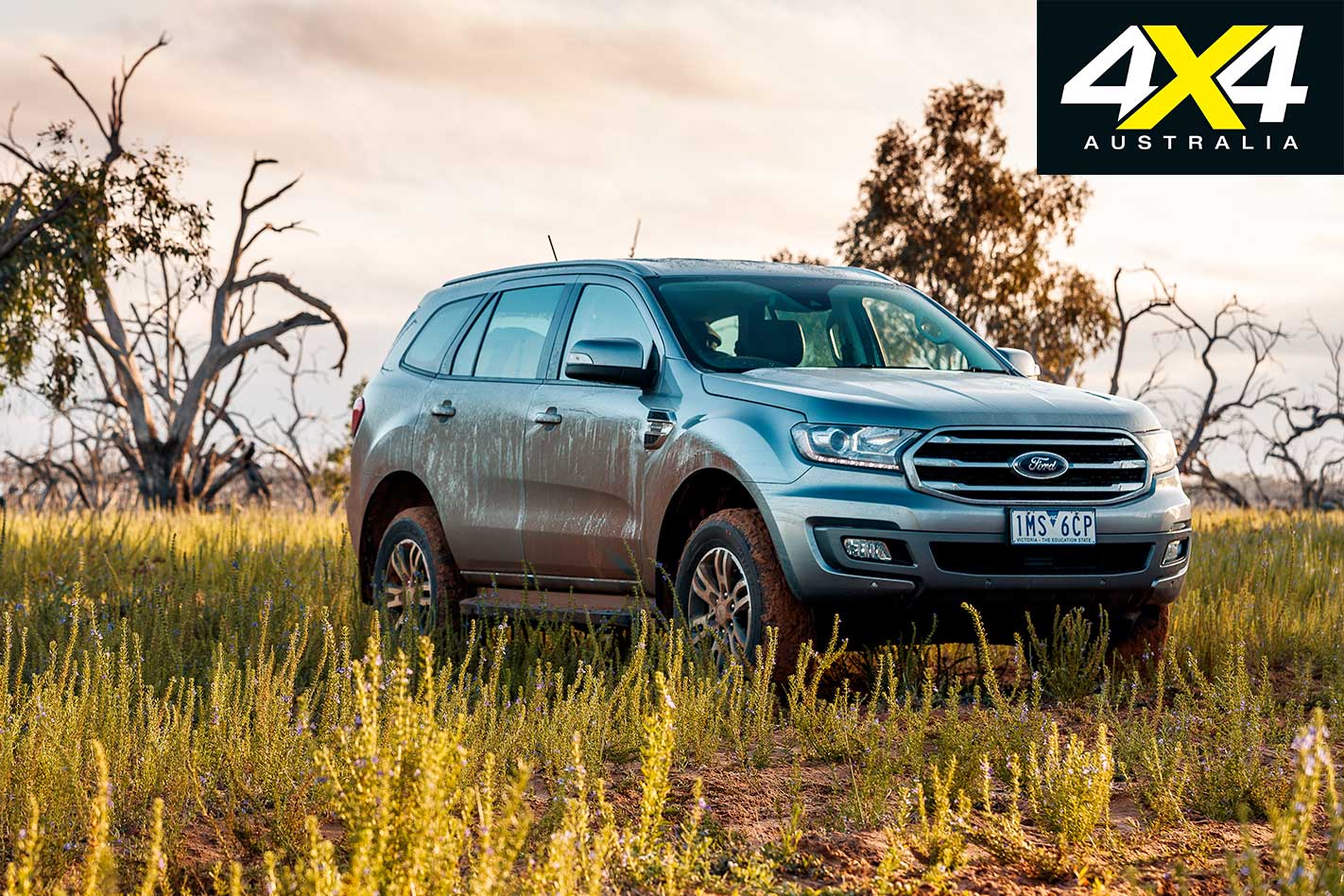
The new 2.0-litre/10-speed powertrain appears in all three Fords here, but arguably finds its happiest and most appropriate home in the Everest, given its excellent refinement sits perfectly with what you want in a family 4×4 wagon.
2019 FORD EVEREST TREND SPECS: Engine: 2.0-litre inline-4 bi-turbo diesel Max power: 157kW at 3750rpm Max torque: 500Nm at 1750-2000rpm Transmission: 10-speed automatic 4×4 system: Dual-range part-time Kerb weight: 2413kg GVM: 3100kg Payload: 687kg Towing capacity: 3100kg GCM: N/A Tyres: 265/60R18 112T Fuel tank capacity: 80L ADR fuel consumption claim: 7.1L/100km On-test fuel consumption: 9.4L/100km Base price: $61,190 (plus ORC) As tested: $61,190 (plus ORC)
Come rain, hail or shine, this new 4×4 gear from Silverbirch, Overboard and Scarpa is all the intrepid outdoor adventurer really needs to make a trip complete.
Silverbirch Broadland 16

Drawing on the classic lines and proven design of a traditional Prospector canoe, the Silverbirch Broadland is the ideal all-rounder for families and waterborne adventurers, with a large load capacity and ample manoeuvrability.
The Broadland measures 16ft (4877mm) and can be paddled solo or tandem thanks to the symmetrical hull and unique rocker profile. A family of two adults/two kids could comfortably load all their gear in for a few days of paddle-based camping (and fishing).
The Broadland is available in two three-layer materials – Duracore and Duralite – the latter 5kg lighter than the former, and the choice of vinyl or timber gunwales. There is also a Highline version with higher sides for additional freeboard and more challenging white-water trips.
RRP: from $1850 Website: www.paddleportagecanoes.com.au
Overboard waterproof classic duffel
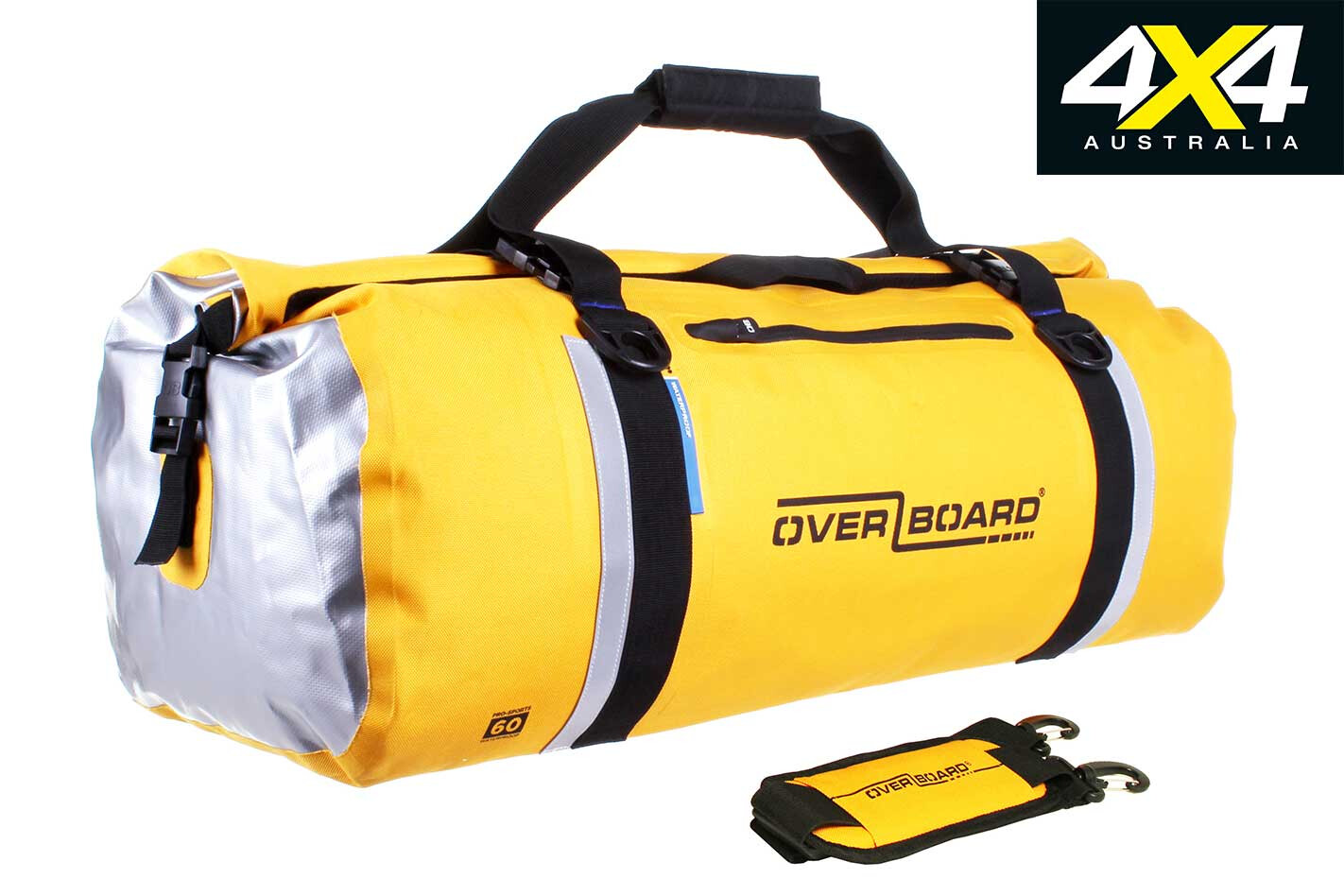
These roll-top waterproof duffels are the ideal gear luggers for when you’re on the water, or for throwing up on the roof rack (or in the ute bed) thanks to the full protection they offer against water, dirt and dust ingress.
The waterproof/dustproof levels (Class 3 IP66) are achieved via the fold seal system used on the main opening of the bag, as well as the high-frequency welded seams. The robust outer is a combination of nylon/cotton shell on the outside and a bonded internal PVC tarpaulin. The front zip pocket is also waterproof (Class 2 IP65), and there is a quick-release loop for fast access to the main compartment.
The duffels are available in 40-, 60- and 130-litre capacities. There are two reflective strips, four D-rings for attaching items, an internal wet/dry pocket, and a top carry handle with hook-and-loop fasteners.
Website: www.over-board.com.au
Scarpa Mojito Hike GTX
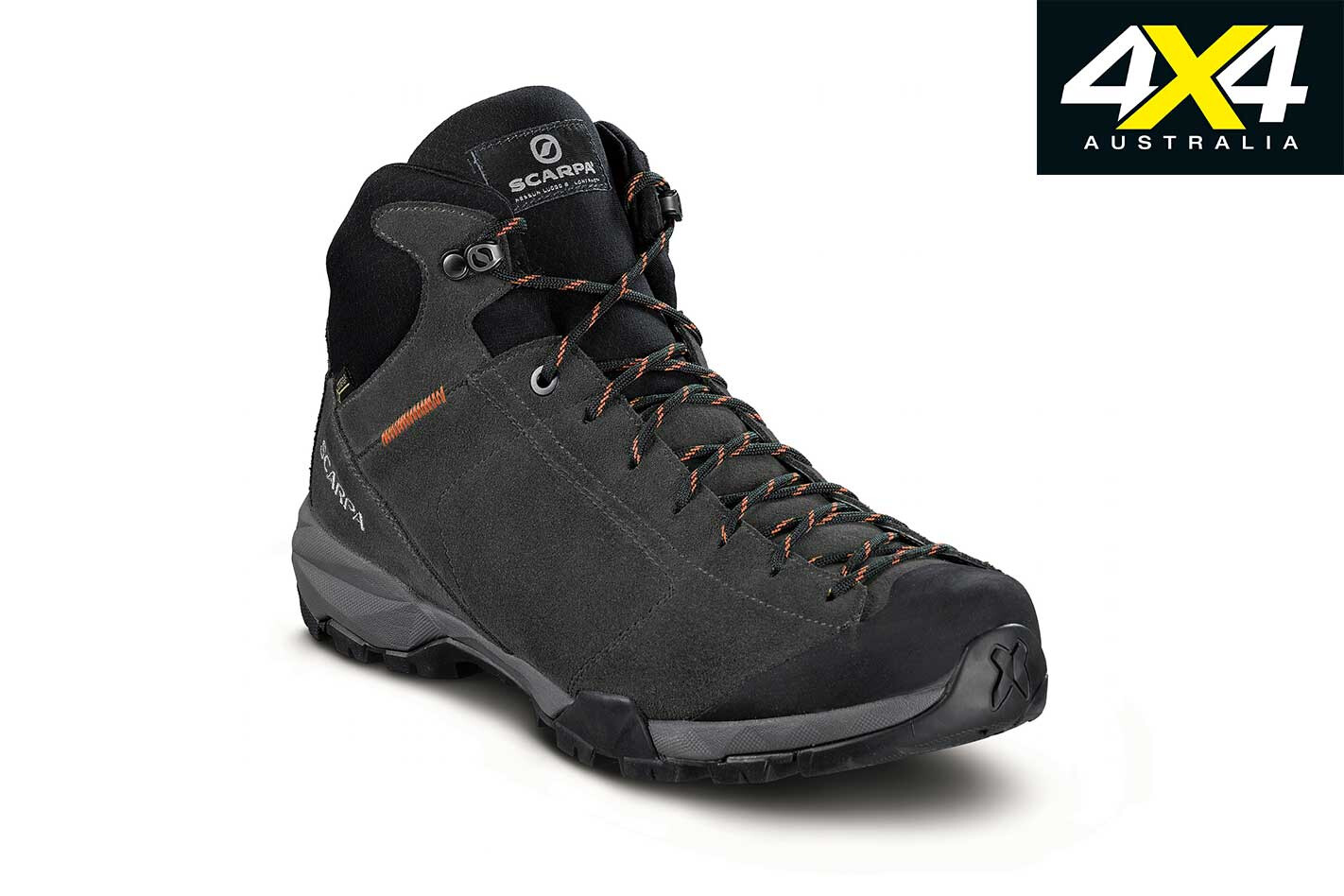
The Mojito Hike GTX is the ideal all-round boot for any outdoor escapade, as it’s not too heavy on your feet and it showcases all that Scarpa is famous for in tough footwear.
The Mojito Hike GTX has an upper section made from 1.8mm water-resistant suede and a to-the-toe lacing system, similar to a rock-climbing shoe. This extended lacing system enables plenty of adjustment for fit, allowing all shapes and sizes to be comfortable.
The Salix sole is grippy and tough, with just enough cushioning to ensure you don’t get sore feet after a few hours exploring. Add in the Flex-Point ankle section Scarpa claims allows for a more ‘natural’ ankle movement and you’re all good to go. Available in men’s and women’s versions.
RRP: $329.95 Website: www.paddypallin.com.au
The Ranger XLT is one of three Fords on our shortlist with Ford’s new 2.0-litre bi-turbo four-cylinder diesel and 10-speed automatic powertrain, which is a world apart from the relatively low-tech 3.2-litre five-cylinder diesel (with its six-speed manual or automatic gearboxes) that has been at the very heart of the Ranger’s success since this generation first appeared in 2011.
However, you could say this new Ranger represents a generational change as it brings the new high-tech powertrain, significant chassis revisions, new safety equipment including autonomous emergency braking, and a host of detail changes both seen and unseen.
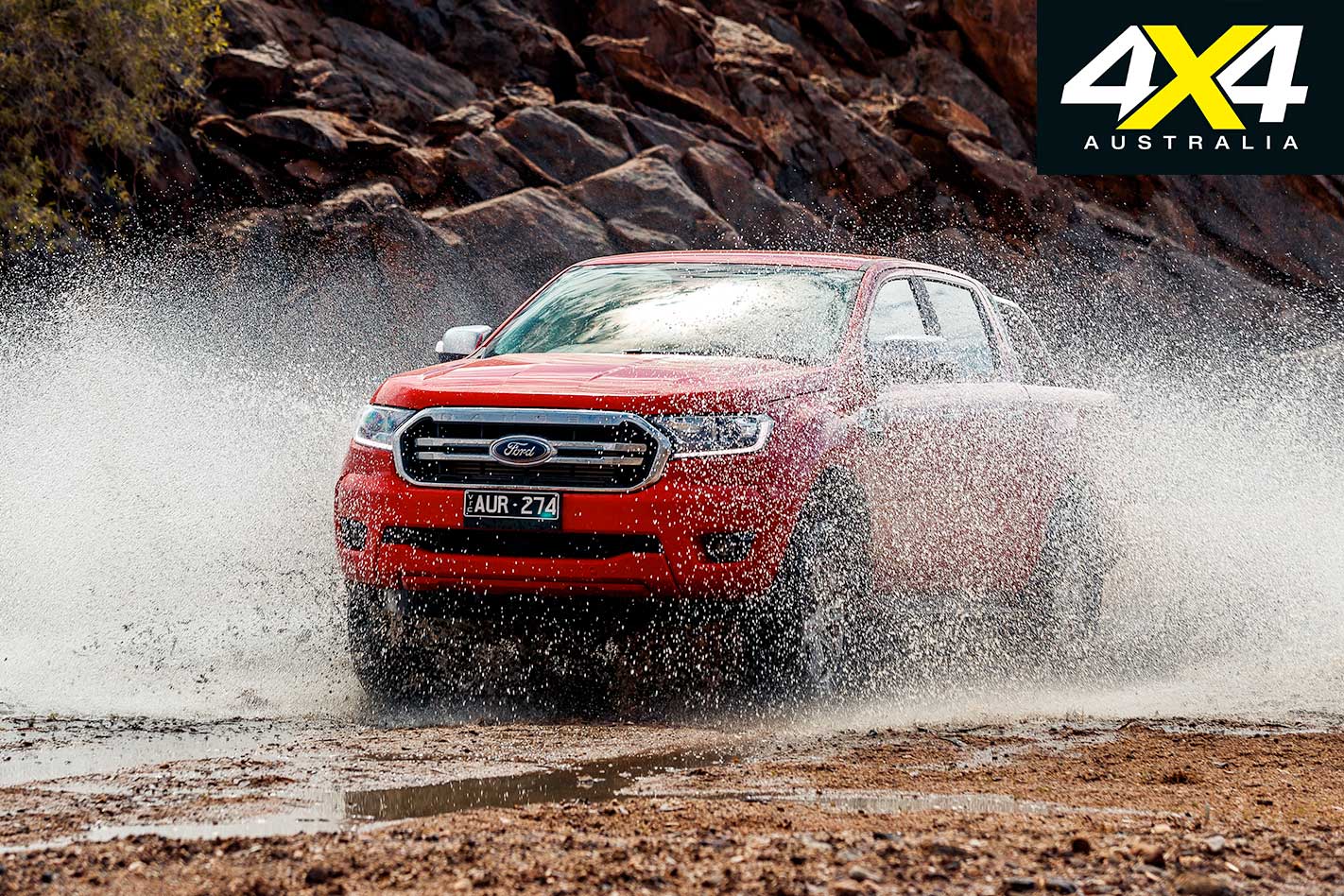
The new powertrain is currently offered in XLT and Wildtrak models where it will sell alongside the existing 3.2-litre engine as Ford hedges its bets on customer acceptance of the new engine. There’s no manual with the new 2.0-litre engine, so keeping the 3.2 in the range stops manual buyers having to look elsewhere.
Our test Ranger is an XLT, traditionally the most popular variant in the dual-cab range, optioned up with leather seat trim (+$1650) and the Tech Pack (+$1700), which brings the extra safety kit led by autonomous braking that’s standard on the Wildtrak. That means it’s $57,340 plus on-road costs.
Touring
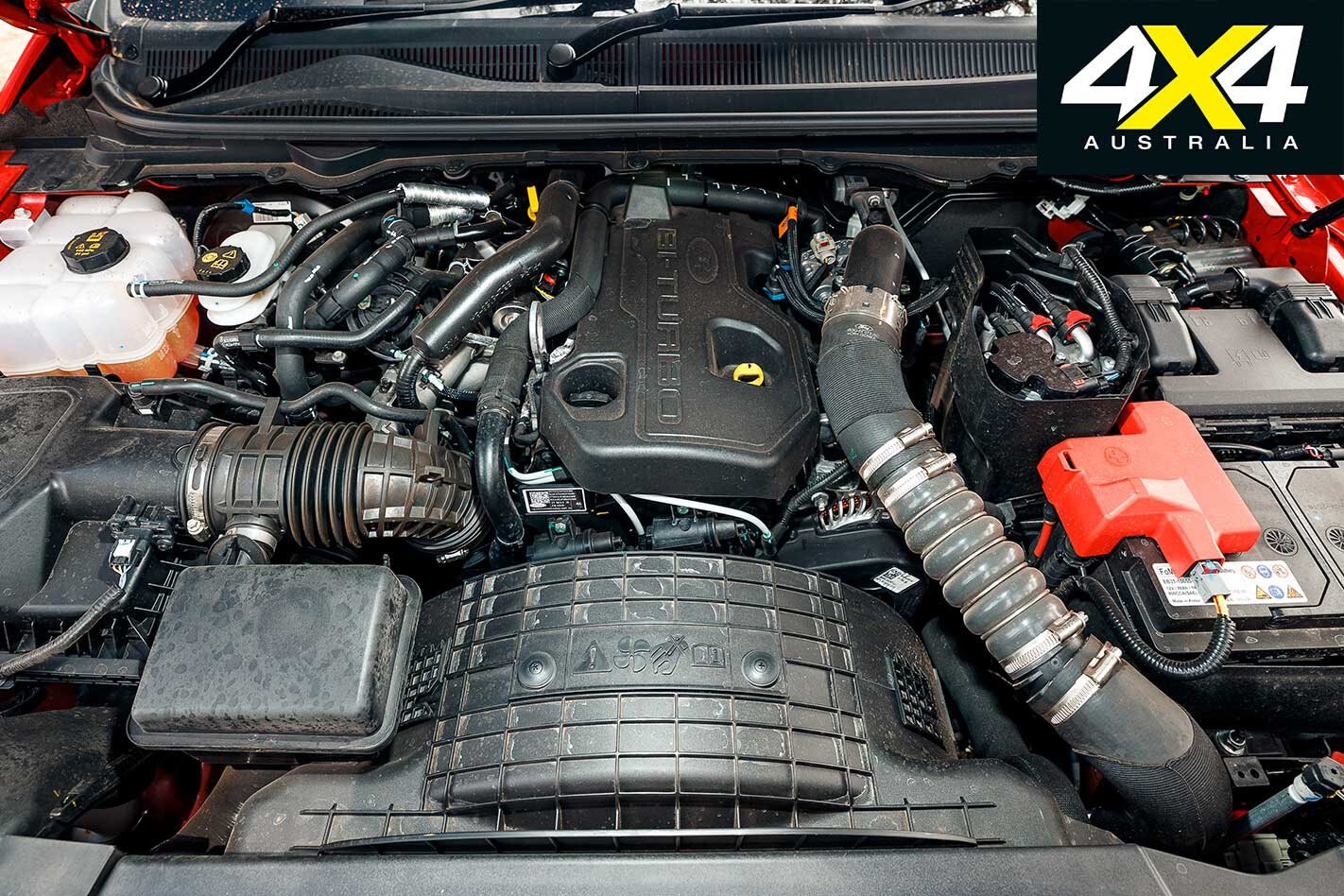
Any doubts that the little four isn’t up to the job of powering a relatively big and heavy vehicle like the Ranger instantly evaporate as soon as you get behind the wheel, especially on the highway.
On paper the 2.0-litre four claims more power (157kW vs 147kW) and more torque (500Nm vs 470Nm) than the 3.2-litre five, and these numbers don’t lie. This little engine feels like a bigger engine in the effortless way it makes its power. It’s still no rocket at overtaking, but it’s not bad either.
More impressive is how quiet and smooth this engine is, as well as the near-undetectable and seamless changes from the slick 10-speed automatic; the combination bringing impressive new-found refinement to the Ranger. The new engine also delivers better fuel efficiency, which was never a strong point of the 3.2.
The suspension revisions bring what is a remarkably supple and refined ride for a ute, while, as ever, the feel and connection from the electric power steering at highway speeds is excellent. The Tech Pack’s radar cruise control and traffic sign recognition, which tells you what speed limit applies at any time, are also handy features.
Trail Driving
The Ranger’s electric power steering not only brings benefits at highway speeds but also effortlessly light steering at trail speeds. The Ranger’s generous ground clearance, long wheel travel and effective electronic traction control make short work of difficult trails; although, over-bonnet visibility could be better.
The Ranger’s basic dual-range part-time 4×4 is operated via a centre-console rotary dial, while the manual selection of gears, needed more when off-road, is operated via a rocker switch on the side of the shifter, a feature not universally liked by our judges.
Interestingly, Ford claims the same 800mm wading depth of the 3.2 with the 2.0, despite the air intake being behind the bonnet lip rather than via the inner guard.
Set-Piece Hill Climb
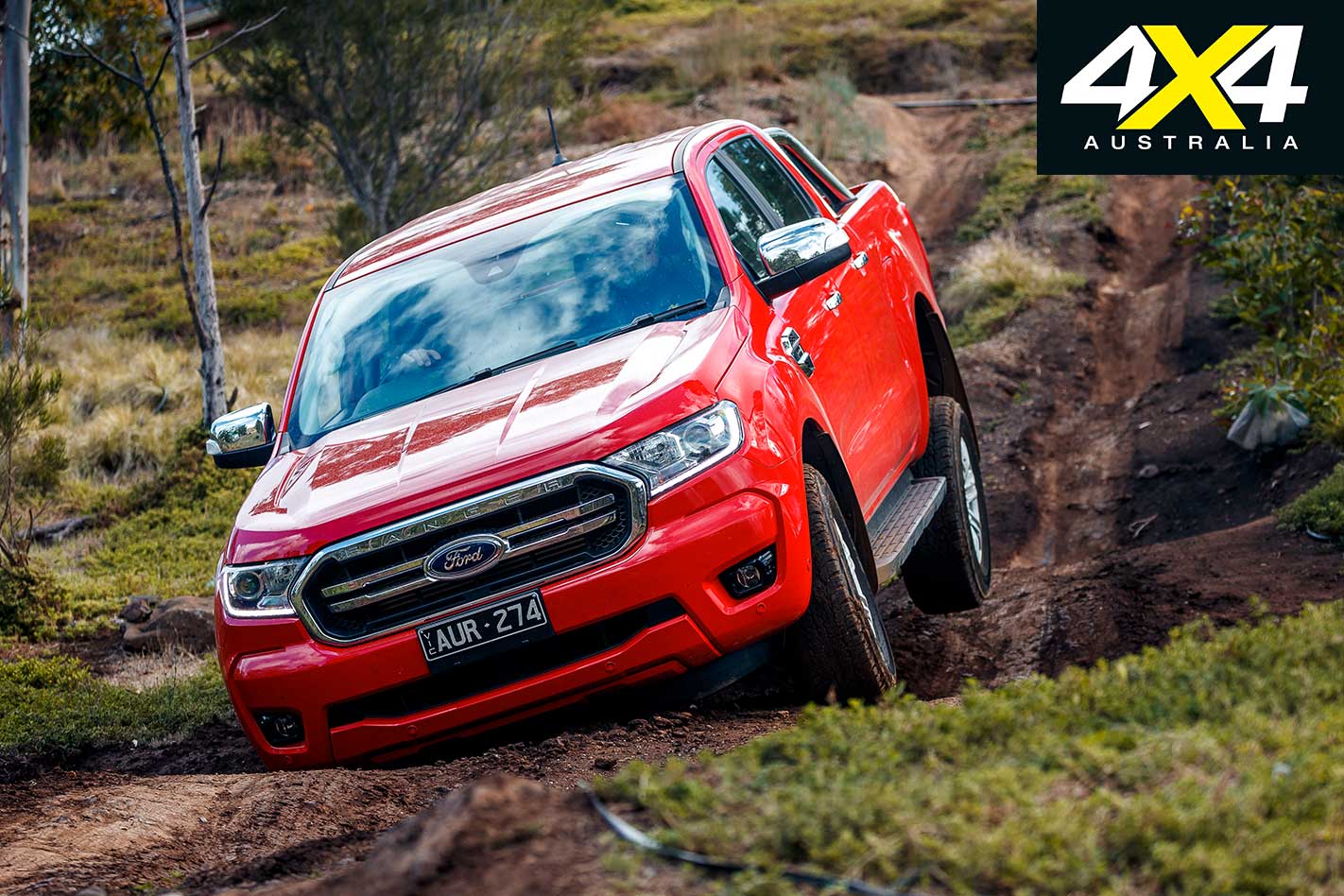
The long wheel travel and well-calibrated electronic traction also proved the trick on our set-piece hill climb the Ranger cleared, even without the need for its driver-switched rear locker. With the locker engaged it made the climb even more easily, due in part to the fact that engaging the rear locker doesn’t cancel the traction control on the front wheels.
Cabin, Equipment and Safety
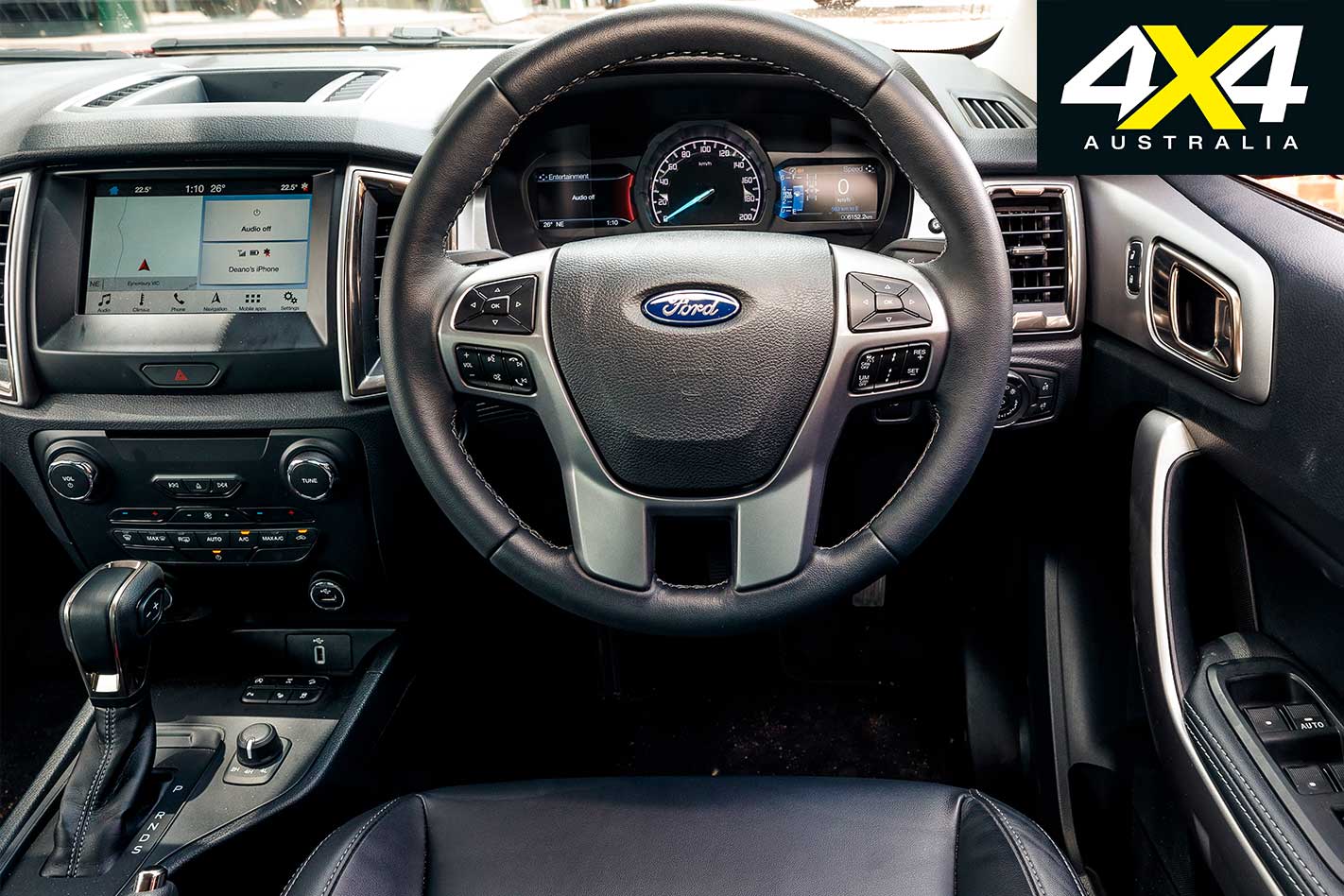
Smart-key entry and push-button start headline a number of changes to the Ranger’s cabin, but there’s still no reach adjustment for the steering wheel, only tilt. Not that it seems to matter as the Ranger’s driving position and seat comfort is excellent. As ever the cabin is big and roomy and offers combined front and rear legroom that no other dual cab can match.
The niggles are as before: the HVAC controls are too hard to read, some of the switchgear is fussy and the display menu isn’t as simple as it could be. I guess with time you get used to them.
This new model Ranger hasn’t undergone ANCAP testing, but the previous model gained five stars in late 2015.
Practicalities
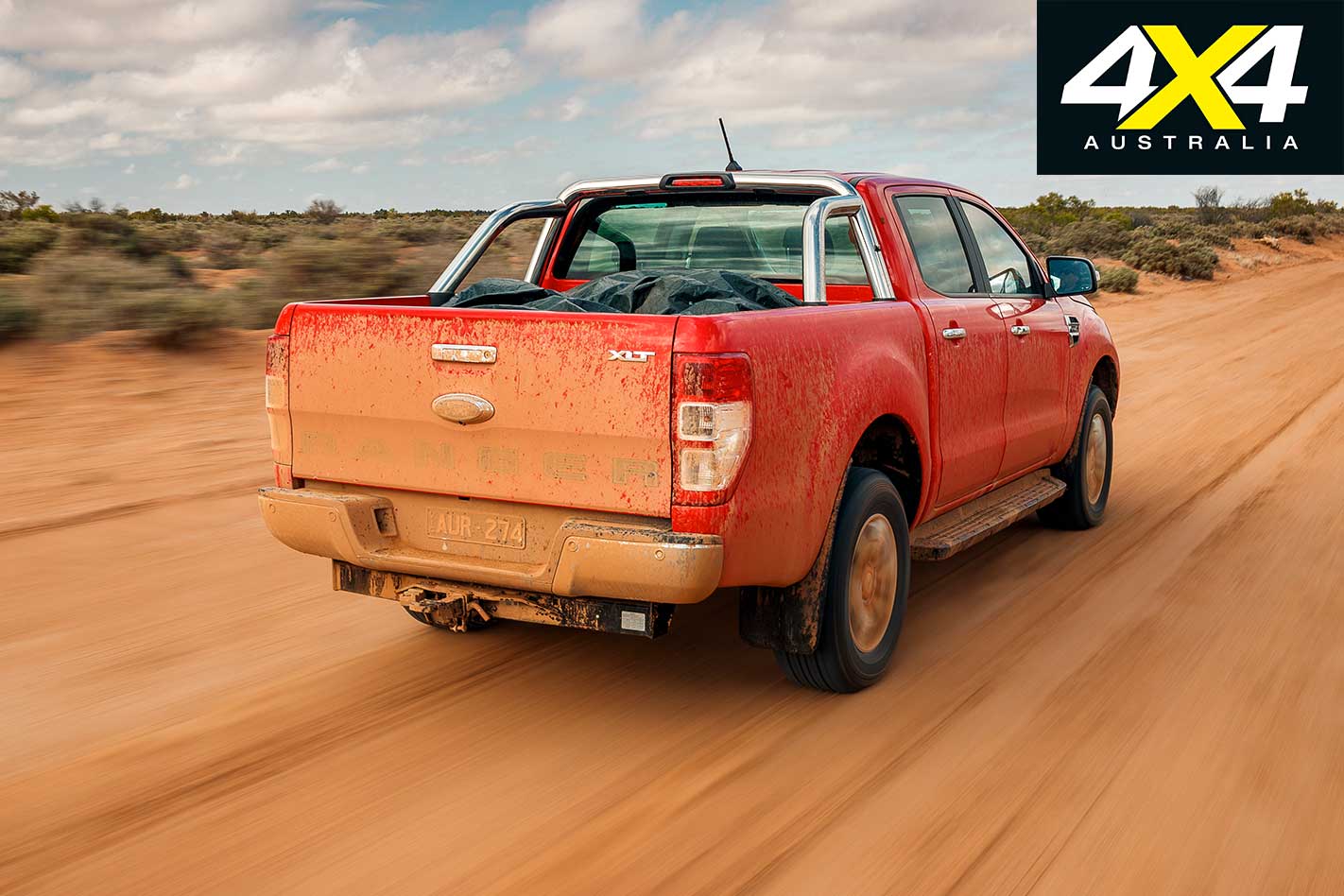
Despite the much smaller engine, the Ranger retains its 3500kg tow rating and one-tonne (but fractionally improved) payload figures, something we didn’t test on 4X4OTY.
A towbar, tub liner, light and 12-volt outlet are all standard. New is a spring-loaded tailgate that is lighter to close and open.
Given its sales volume the Ranger is well served by the aftermarket, but some of the new model’s changes like the engine air intake, new front-end styling and suspension changes mean a redesign of some aftermarket items.
As ever the Ranger carries a common wheel and tyre spec (same as Hilux), so there’s plenty of tyre options and availability of replacement tyres when in remote locations.
Summary
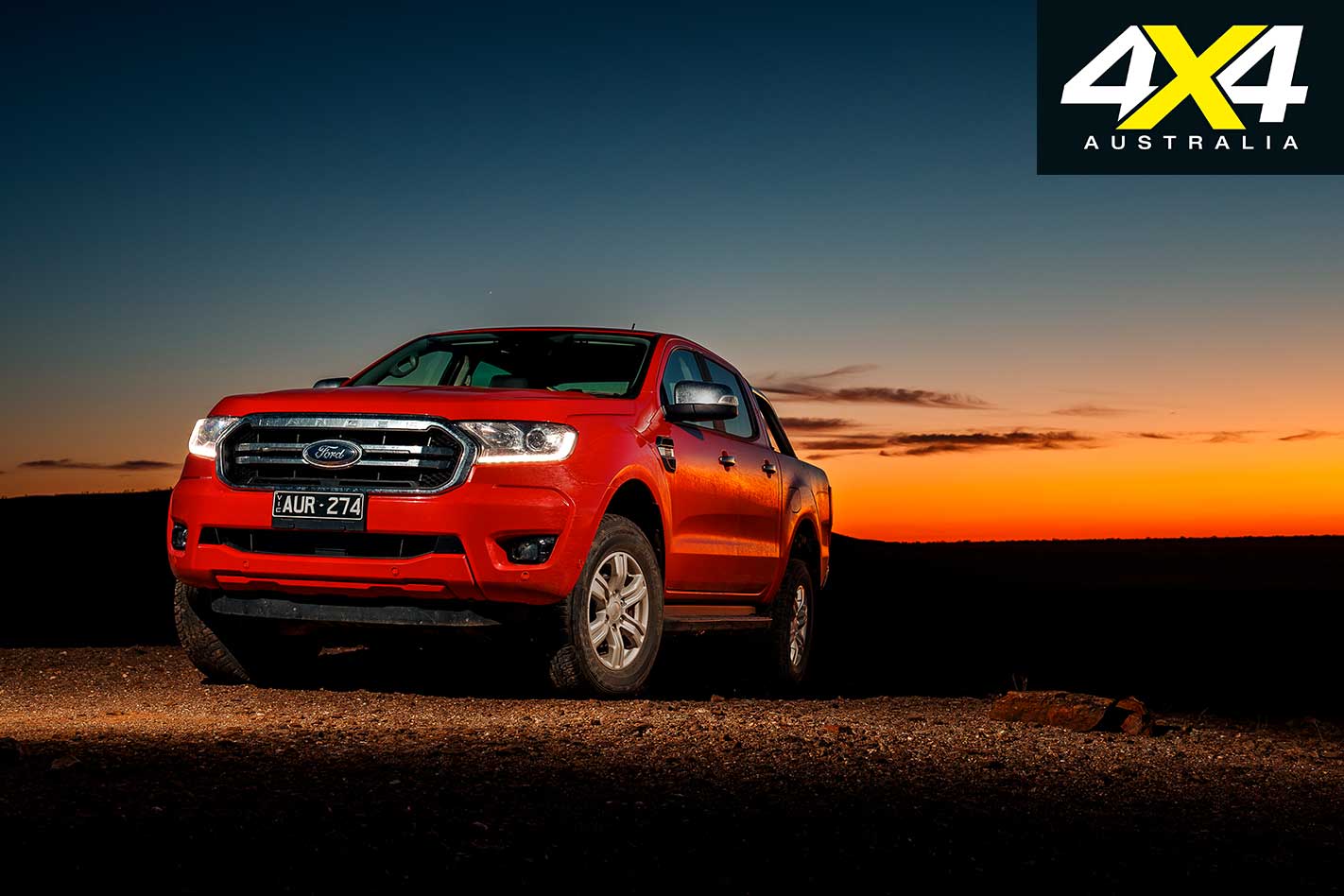
The new 2.0-litre bi-turbo engine and 10-speed auto bring a more refined and quieter driving experience to the Ranger, and more performance, too, thanks the closer gearbox ratios and beefier power and torque outputs. The chassis changes reinforce the fact that this is a more refined and comfortable vehicle than its predecessor.
2019 FORD RANGER XLT SPECS: Engine: 2.0-litre inline-4 bi-turbo diesel Max power: 157kW at 3750rpm Max torque: 500Nm at 1750-2000rpm Transmission: 10-speed automatic 4×4 system: Dual-range part-time Kerb weight: 2197kg GVM: 3200kg Payload: 1003kg Towing capacity: 3500kg GCM: 6000kg Tyres: 265/65R17 112T Fuel tank capacity: 80L ADR fuel consumption claim: 7.4L/100km On-test fuel consumption: 9.7L/100km Base price: $53,990 (plus ORC) As tested: $57,340 (plus ORC)
MORE: Ford Ranger Range Review MORE: Ford Ranger Specs, Range & Price
ISUZU owners were the most satisfied in the country in 2018, according to the latest research conducted by Roy Morgan.
IUA clinched the ‘Best of the Best’ and ‘Car Manufacturer of the Year’ awards at the 2018 Annual Roy Morgan Customer Satisfaction Awards, with the ‘Best of the Best’ award given to the company that achieves the highest customer satisfaction score.
“Isuzu UTE has satisfied customers on an unprecedented level in 2018 with the vehicle manufacturer achieving an average customer satisfaction rating of 96.1 per cent during 2018 to ‘streak the field’ as Roy Morgan’s ‘Best of the Best’ at the Annual Roy Morgan Customer Satisfaction Awards,” said Michele Levine, Chief Executive Officer, Roy Morgan.

To get an accurate sample of the car-buying public, Roy Morgan surveys approximately 50,000 Australian consumers every year. The data acquired (customer satisfaction) is then used to determine winners on a monthly basis – the annual winner is the manufacturer that achieves the most monthly ‘wins’ that year. Simply put, IUA ranked first or second in 11 of the 12 months across 2018, with the Japanese company claiming six-consecutive monthly wins from July to December.
“We are delighted that our attention to customer satisfaction continues to be recognised,” said IUA Managing Director’s Mr Hiro Kuramoto. “I believe that if we can continue to respond to customer feedback and deliver on our promises, our brand will continue to grow from strength to strength.”
Isuzu shifted 13,266 D-Max 4×4 utes and 9090 MU-X 4×4 wagons in 2018, with both vehicles sitting in the top 10 of the hotly contested best-selling 4×4 segment.
BRITISH racing driver Jenson Button is about to make his off-road racing debut at Nevada’s Mint 400, behind the wheel of a Trophy Truck.
Following a 16-year career racing on sealed tarmac racetracks in Formula One (including winning the 2009 championship for Braun GP), World Endurance Racing, Japanese Super GT and even go-karts, Button is taking a different route. He’ll be teaming up with fellow endurance racer Chris Buncombe and Managing Director of Singer Porsche Vehicle Design, Mazen Fawaz, at the newly formed Rocket Motorsports team.
The team will be fielding a new Brenthel Industries 6100 Class ‘Spec’ Truck in the Mint 400, an event also known as ‘The Great American Off-Road Race’. The 6100 Class trucks run a ‘spec’ LS3 GM crate engine mated to a TH400 transmission, to make them more reliable and more affordable than the top-level 850hp Trick Trucks.
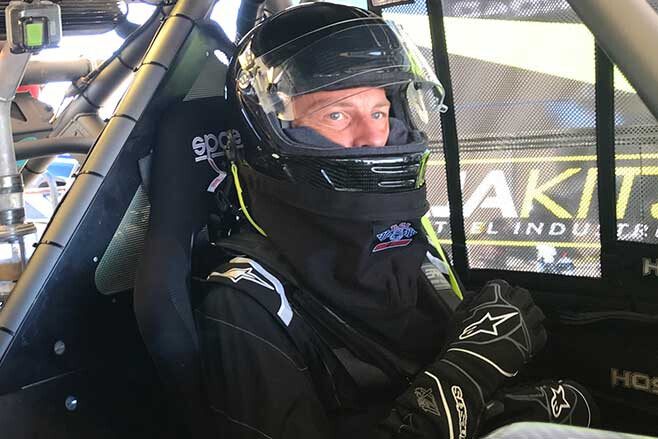
“This is all new to me,” said the F1 champ when testing the Brenthel truck near Barstow, California. “It’s my first time off-road in anything and I’m going to be racing the Mint 400 in a few weeks. I’ve been racing on a track for 30 years and I come to this and I’m like a duck out of water.”
The Mint 400 will take place from March 6-11, and we’ll know then how Button adapts to the off-road truck. The race week starts with a parade of off-road racing trucks along the Las Vegas Strip, before heading into the desert south of the city for the 400-mile race.
As to any further off-road racing for Button, there is already talk of running the infamous Baja 1000 later in the year, but we guess he has to get past the Mint first.
THE V6 CORE is a brand-new Amarok variant and comes just two years after the 3.0-litre diesel V6 first appeared in the Amarok, but the basic design is effectively the oldest here.
The Amarok (with its various four-cylinder engines) first arrived in 2010, while the V6 engine dates back to 2004 and has been widely used in a number of Volkswagen and Volkswagen-family models including the Porsche Cayenne and numerous Audi sedans and SUVs.
This is the second appearance of an Amarok V6 at 4X4OTY. In its first appearance in 2016 it finished second in a photo finish to the then revamped Toyota LandCruiser 79 Series dual cab.
The Core is the new price leader in the Amarok V6 range, a stripped-out budget variant that undercuts the previously cheapest model (the Sportline) by $3K, making it the third cheapest of the eight shortlisted vehicles ($50,900 drive-away) despite being the most powerful of the lot.
Touring
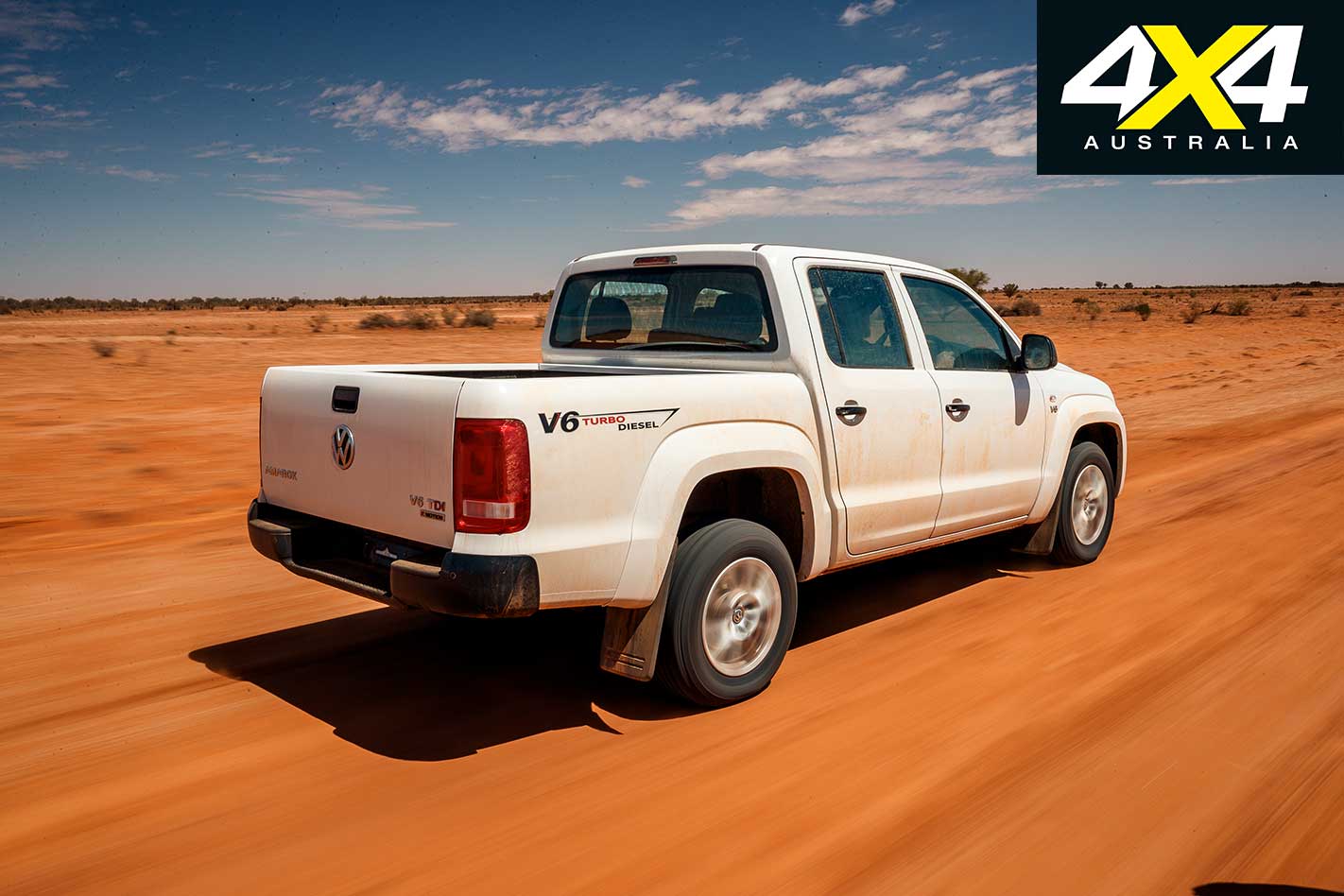
The Core’s highway persona is dominated by the strong performance produced by its torquey and powerful V6. This engine has all the grunt you want at low engine speeds (550Nm available at 1500rpm) but also revs out sweetly and willingly when asked.
Rated at 165kW it produces 180kW in the crucial highway overtaking gears (third and fourth) at wider (70 per cent and over) throttle openings, which gives more zing when wanted. In this company the Core comfortably tops the rest when it comes to get-up-and-go.
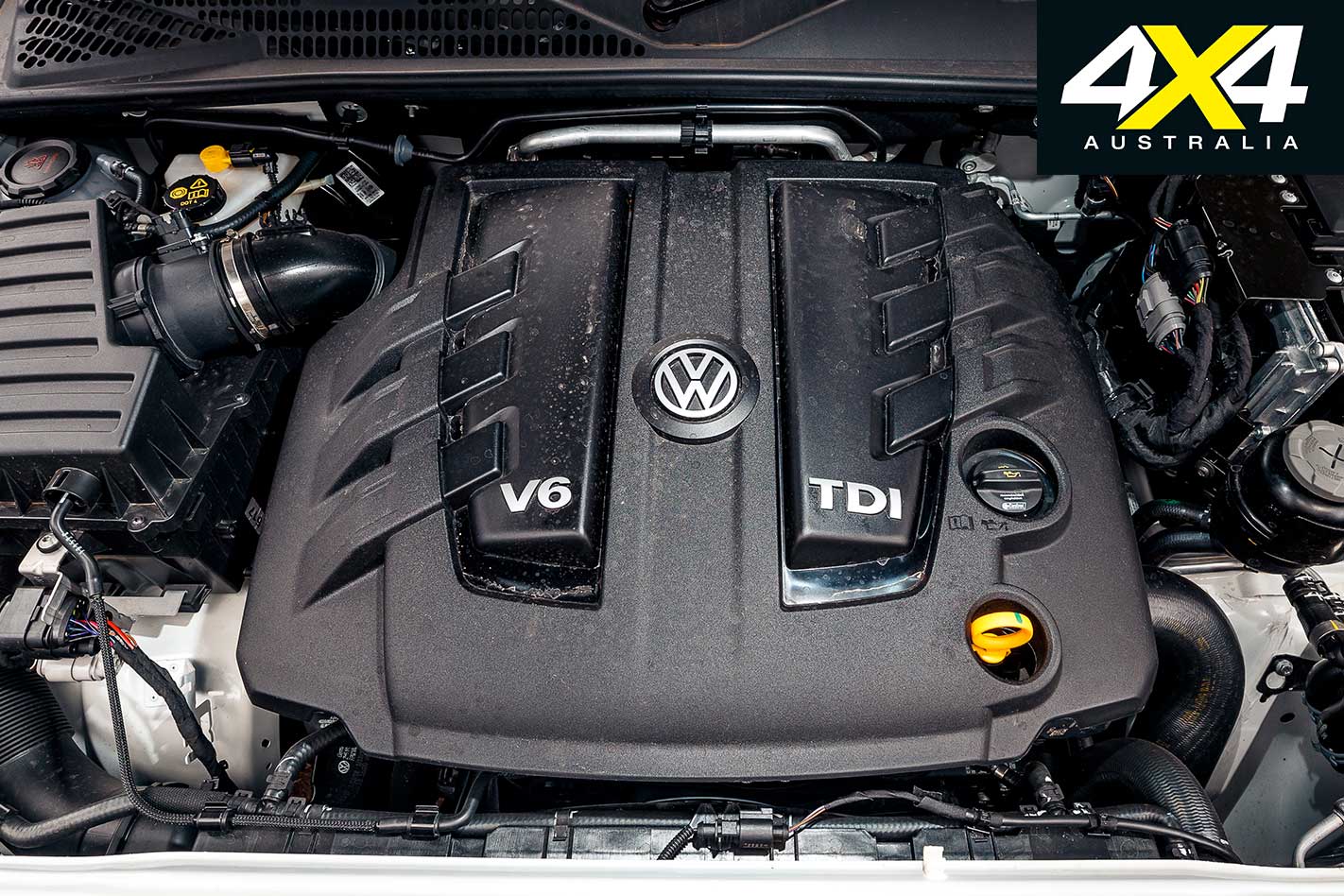
Good refinement, too, from the engine, even if it makes its presence felt through being a bigger ‘six’ in the company of mostly small ‘fours’. The slick eight-speed ZF auto offers near seamless changes and nicely proactive shift protocols.
The Amarok is a big ute that feels small, nimble and handles sweet by ute standards. Unladen the ride can still be a little sharp on some roads, but the chassis is still very nicely balanced front to rear even without a load in the tray.
Bonus ‘touring’ points for the full-time 4×4 system, only one of two vehicles in the shortlist so equipped. Full-time 4×4 makes life easy in mixed touring conditions where, in a part-time 4×4, you may have to switch in and out of High-4. Throw in wet roads – sealed or unsealed – and the system is even better and safer.
Trail Driving
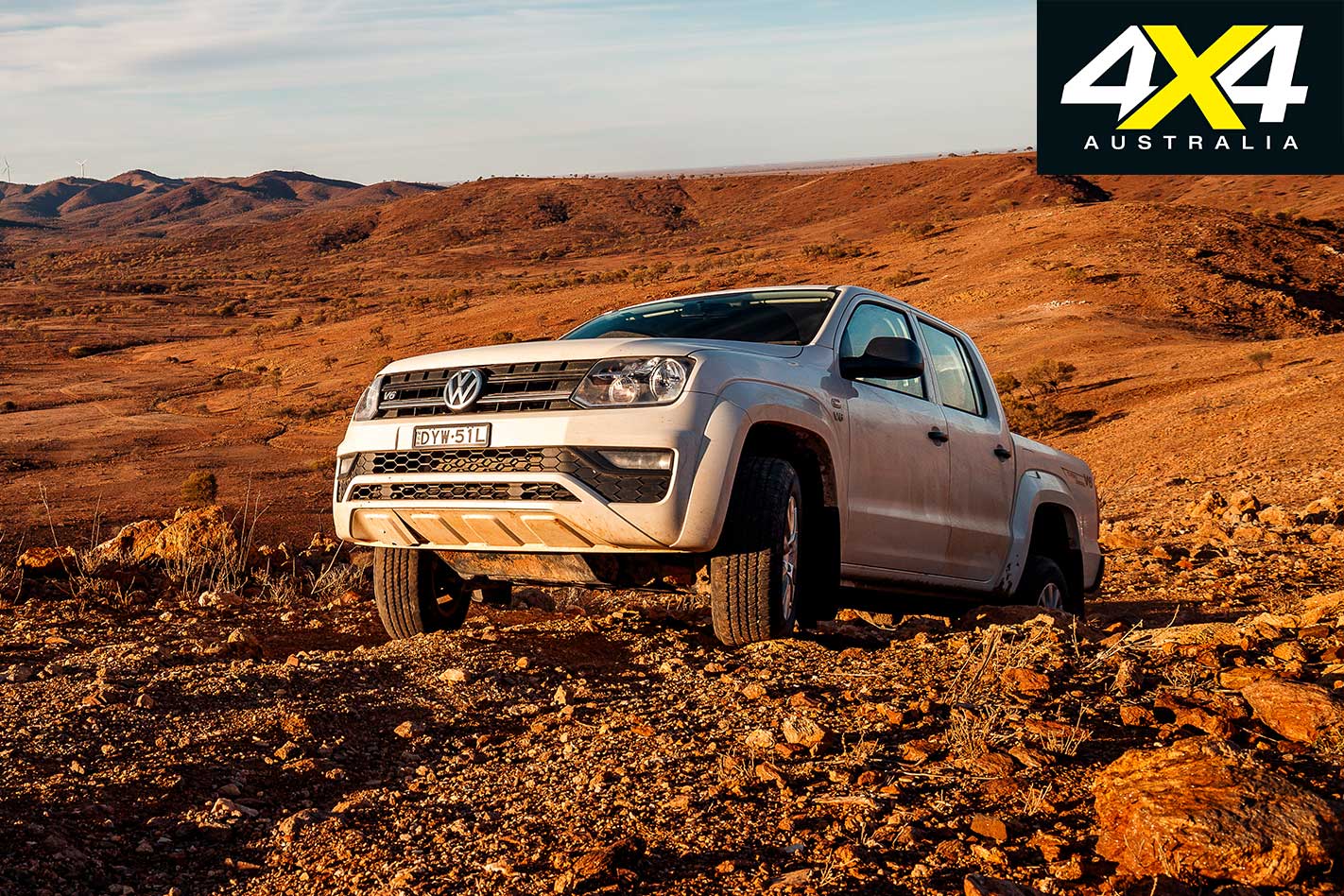
Things get even easier when you hit the trails. No need to engage drive to all four wheels, as all wheels are already being driven. And unlike some full-time 4x4s you don’t even have to lock the centre diff as it locks automatically. There’s not even low range to engage, as the relatively short first gear and specially calibrated torque converter effectively negate the need for low range.
It all works a treat, helped by the Core’s generous wheel travel and good visibility. Reasonable ground clearance, too; although, it’s a little low under nose, so it’s a good thing it’s well-protected there.
Interestingly, the 245/65s fitted to the Core’s 17s are smaller in diameter than the factory-spec tyres on the 18, 19 or 20-inch rims, so you lose a little clearance there. A notably low specified wading depth of 500mm is more of a concern and arguably the weak link in the Core’s off-road skill set.
Set-Piece Hill Climb
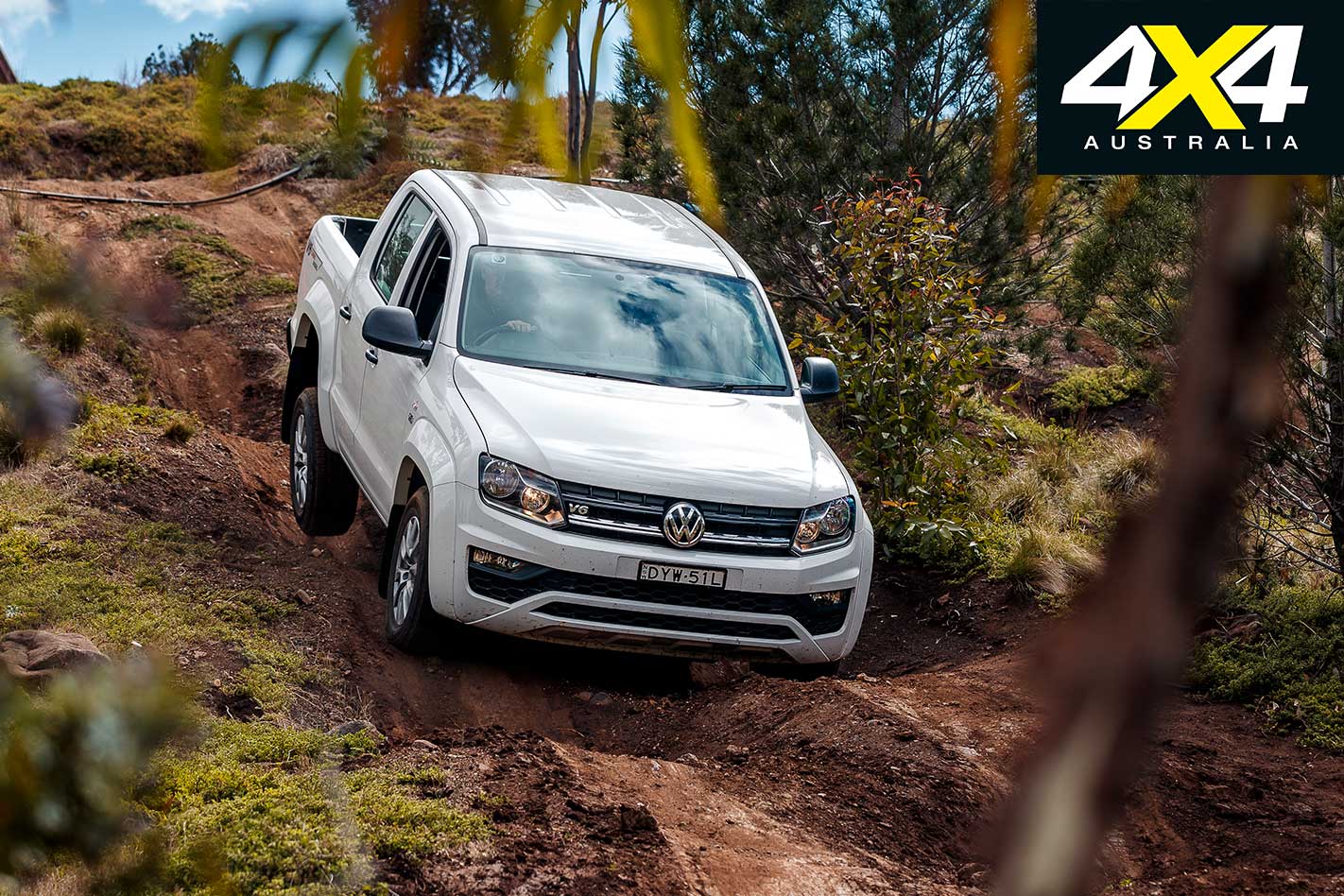
Given the Core doesn’t have low range it shouldn’t even be able to look at our steep set-piece climb, but, as other Amarok’s have done before it, it conquers it without much fuss (thanks largely to the good wheel travel) once the driver-switched rear locker is engaged, which also keeps the ETC active on the front wheels.
Engaging the rear locker or switching off stability control in soft sand are the only two off-road driver interventions needed; although, there is a third switch (labelled Off-Road) that activates hill-descent control if desired.
Cabin, Equipment and Safety
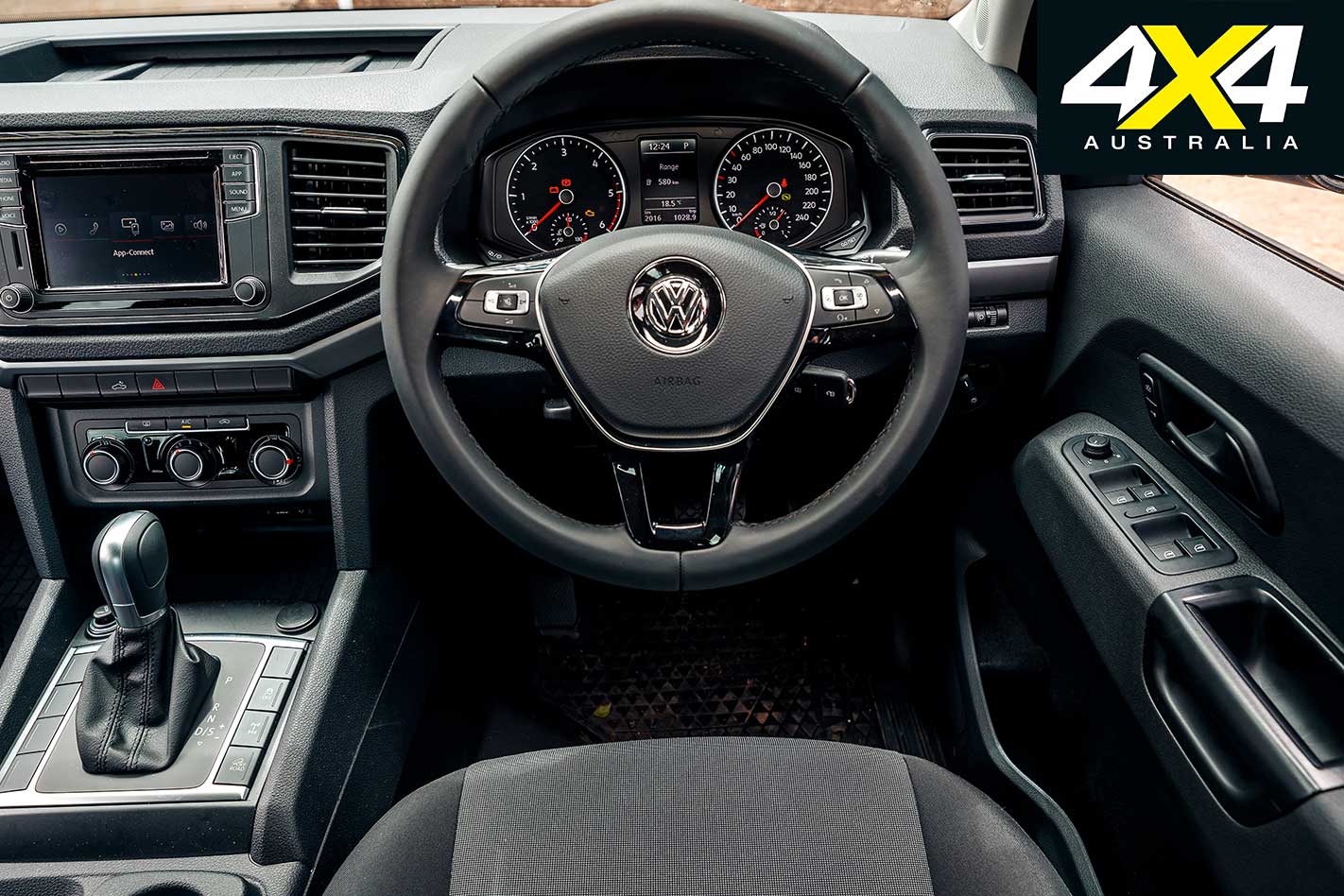
Compared to the Sportline, not an overly flash variant itself and previously the least expensive Amarok V6, the Core loses climate control, auto wipers and headlights, three 12-Volt outlets including one in the tub, body-coloured mirrors, a light-lift tailgate, and a few trim features. It gains some 4×4-friendly kit including 17s (instead of 18s) and vinyl floors with fitted rubber mats instead of carpet.
The Core’s cabin is understated but, while it has the quality finish of other Amaroks, the blanks for the omitted 12-Volt outlets and the back-to-basics air conditioning let you know that this is the budget model. As do the Core’s vinyl floors and rubber mats, even if they are a major bonus at clean-up time.
Like all Amaroks there’s tilt-and-reach steering wheel adjustment, spacious and comfortable front seats and a notably wide rear seat. However, like all Amaroks, there are no rear cabin airbags. It has a five-star ANCAP rating, but that was achieved a few years back and the goal posts have since moved.
Practicalities
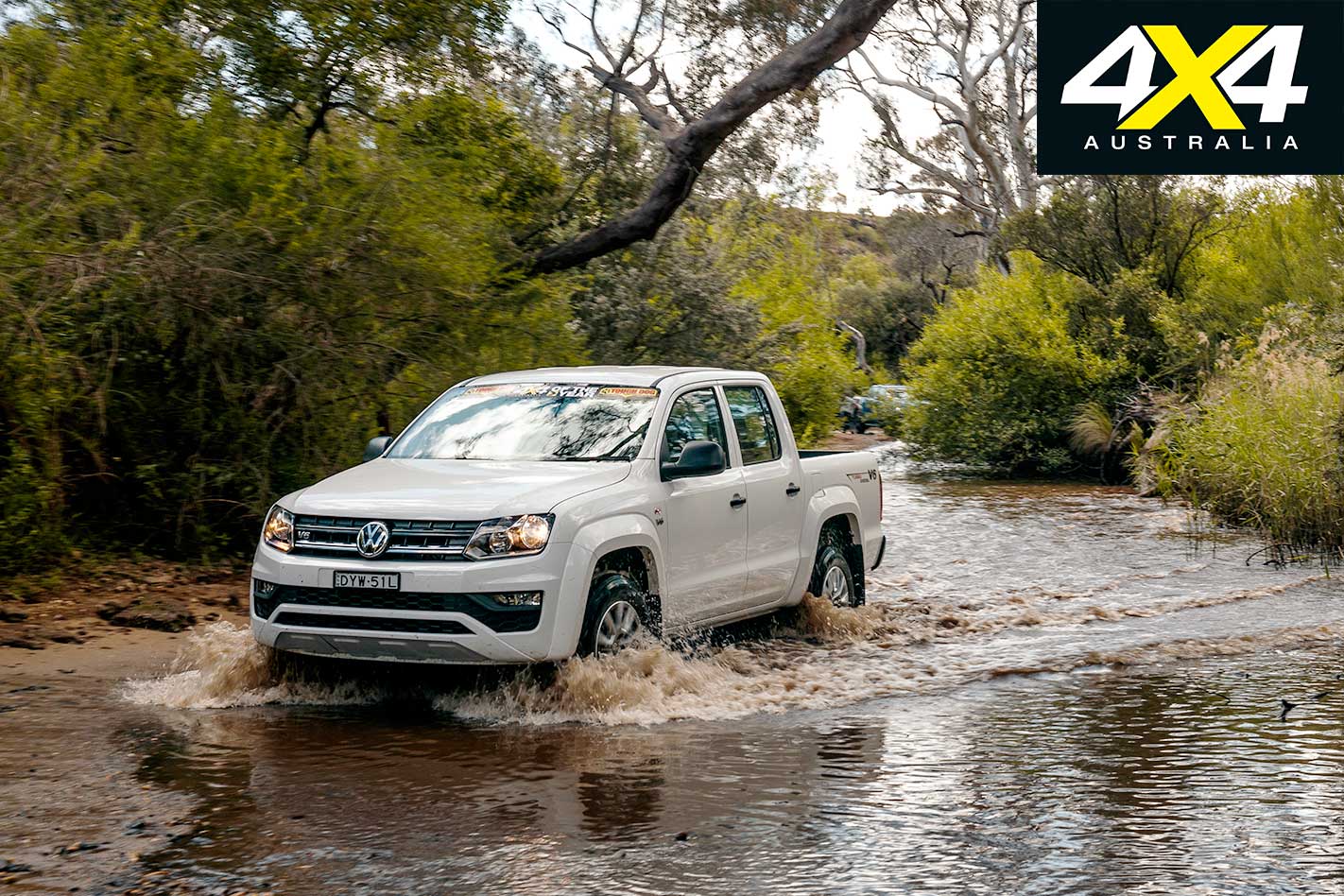
A 3500kg tow rating and the power to fully exploit it, a standard tub liner, and a near one-tonne payload combined with the ability to fit a pallet between the wheel arches are all positives. There’s plenty of aftermarket support to address the wading depth issue and the lack of heavy-duty recovery points beyond the standard screw-in towing eye. Plenty of space, too, in the wheelarches for bigger tyres, which it could do with.
Summary
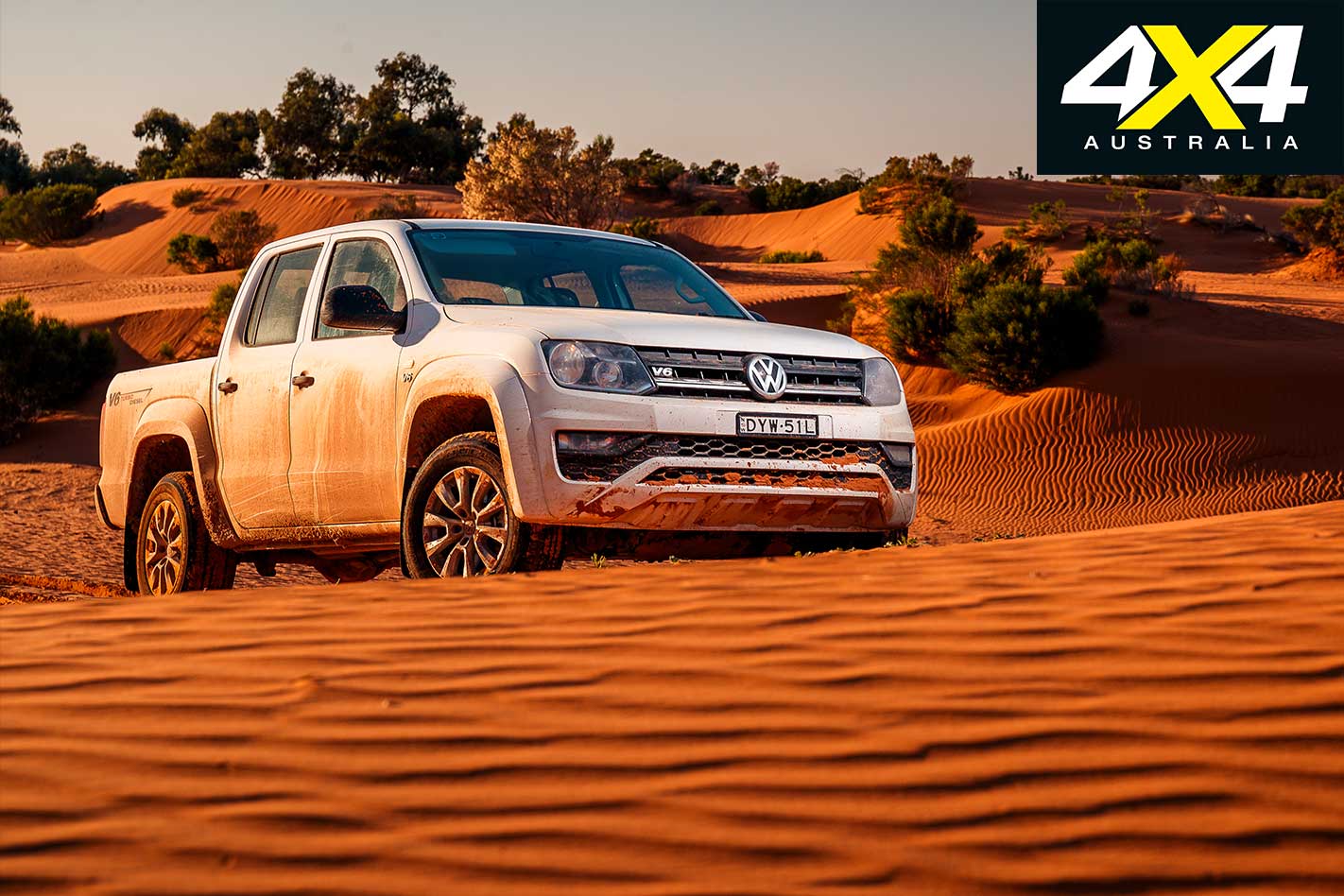
At $50,990 drive-away the Core offers plenty of very good ute for the money. It excels in performance, on-road dynamics, simplicity of operation in 4×4 conditions and general practicality. However, for an extra $3K the V6 Sportline might still be the better buy.
2019 VOLKSWAGEN AMAROK V6 CORE SPECS: Engine: 3.0-litre V6 turbo-diesel Max power: 165kW* at 2500-4500rpm (*180kW on overboost) Max torque: 550Nm at 1500-2500rpm Transmission: 8-speed automatic 4×4 system: Single-range full-time Kerb weight: 2091kg GVM: 3080kg Payload: 989kg Towing capacity: 3500kg GCM: 6000kg Tyres: 245/65R17 111T Fuel tank capacity: 80L ADR fuel consumption claim: 9.0L/100km On-test fuel consumption: 10.1L/100km Base price: $50,990 (drive-away) As tested: $50,990 (drive-away)