TUNING powerhouse Tickford has combined forces with American vehicle importer, Performax, to develop the Ford F-150 Tickford Enhancement Package.
Topping the package’s long list of upgrades is a bump in output from the twin-turbo 3.5-litre V6 EcoBoost engine, courtesy of Tickford’s in-house ECU tune. The recalibration sees power jump to 354kW and peak torque reach 780Nm – up from 280kW and 637Nm respectively.
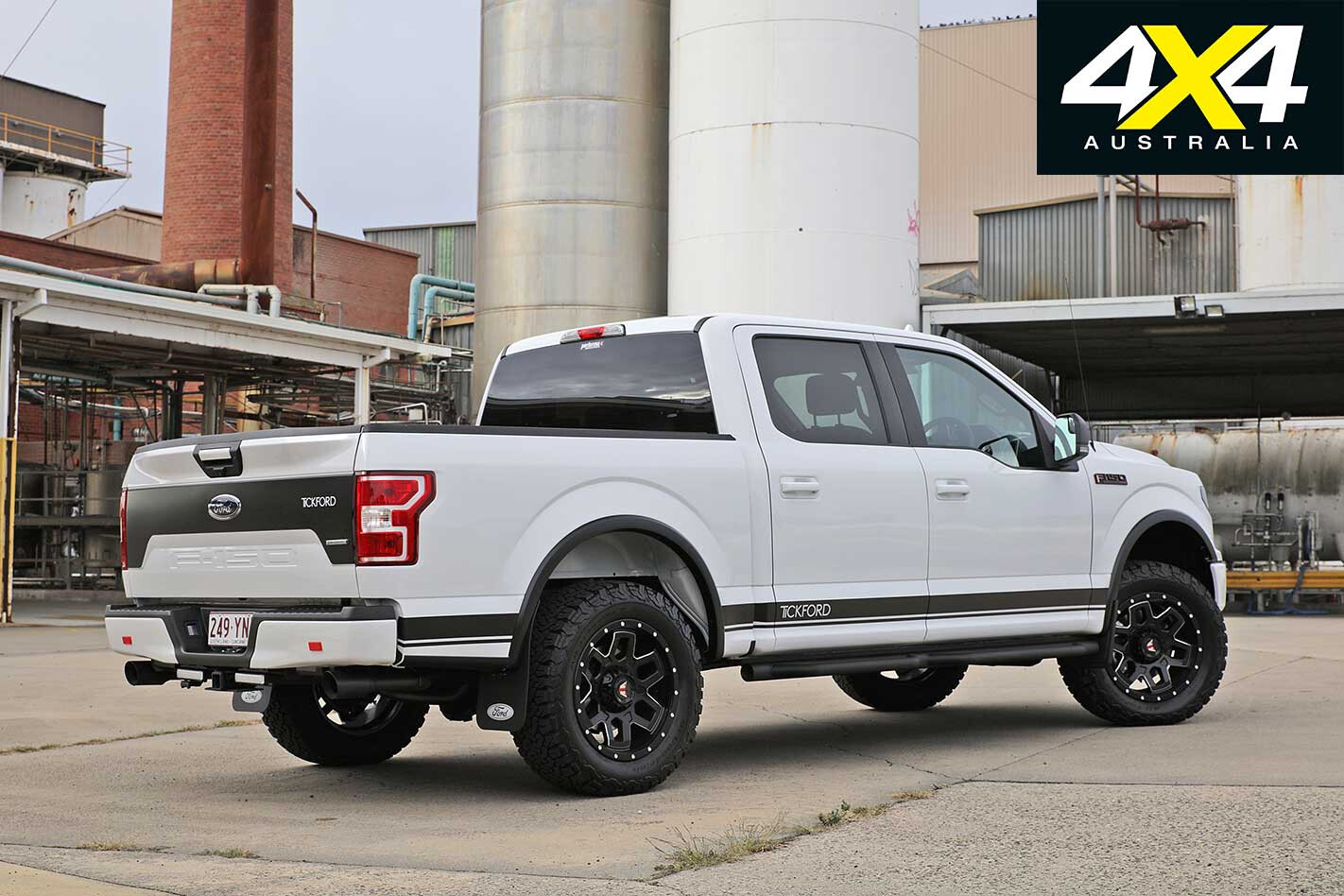
A high-performance cat-back exhaust system, complete with 3-inch into 2 x 2.5-inch pipes (culminating in twin 4-inch outlets) rids the rig of spent gasses.
The package incorporates uprated Roush Fox 2.0 shocks and springs, lifting the F-150 two inches closer to the sky.
20 x 9-inch Tickford-badged wheels are wrapped in BFGoodrich All Terrain T/A K02 (305/55 R20) rubber, and these are protected by low profile wheel flare guards; while Tickford decals, branded side steps and a Tickford-numbered build plate cap off the F-150’s sport-enhanced look.
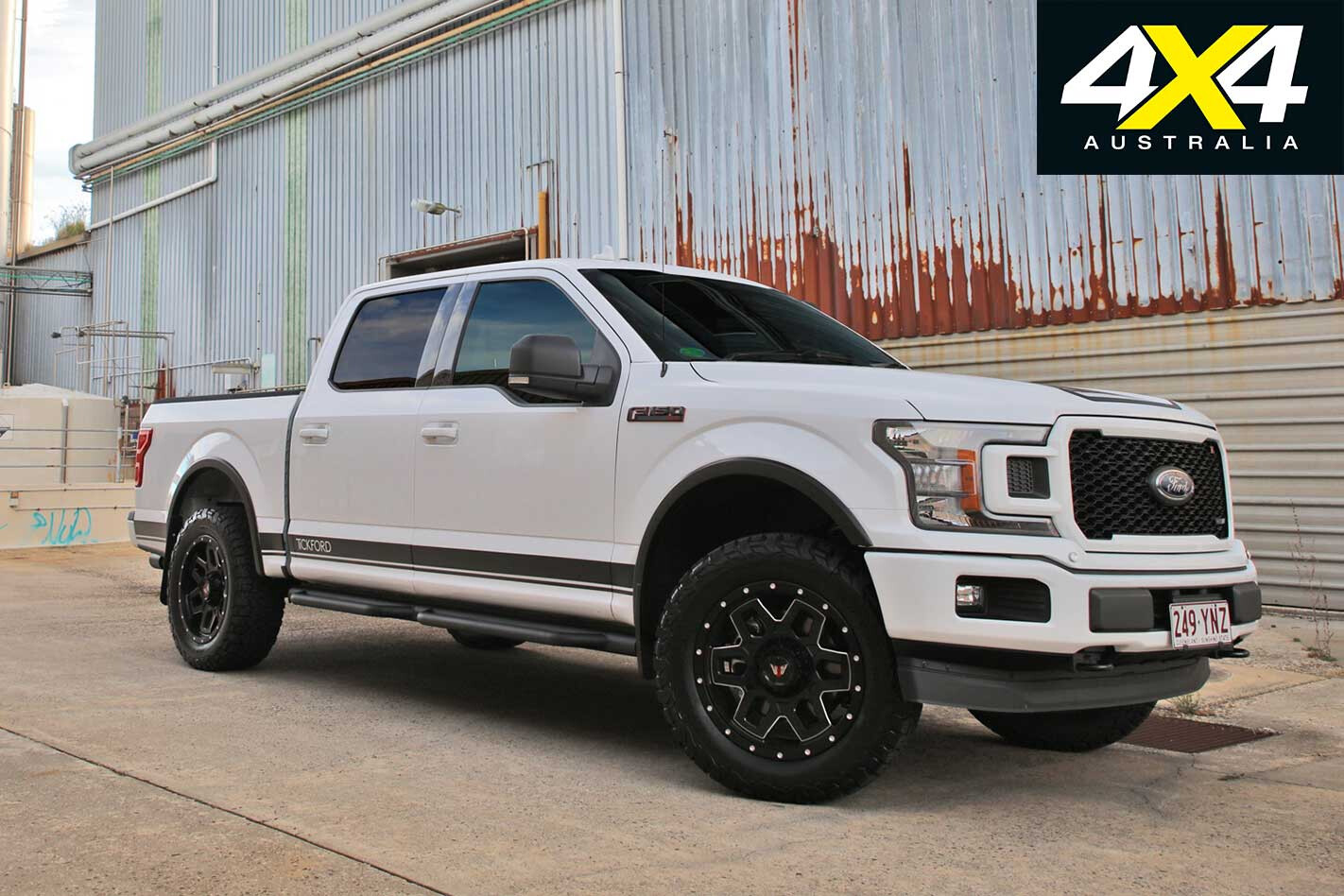
The Tickford package is exclusive to – and installed by – Performax, so anyone who already owns an F-150 and are keen on the Tickford upgrade will need to contact Performax and not Tickford. Tickford won’t be offering installation at Tickford Enhancement Centres.
The Tickford F-150 package costs $24,500 (including GST).
YOU’D HAVE to be living under a rock for the past five years not to notice the juggernaut that is Patriot Campers. From the TV shows to the Supertourers and the wild adventures, it seems Justin Montesalvo and his team are everywhere.
As big as it has become, the Patriot brand would be nothing without its innovative camper trailers and the people that use them. With sales of Patriot Campers booming, the group of owners is growing and banding together for adventures of their own.
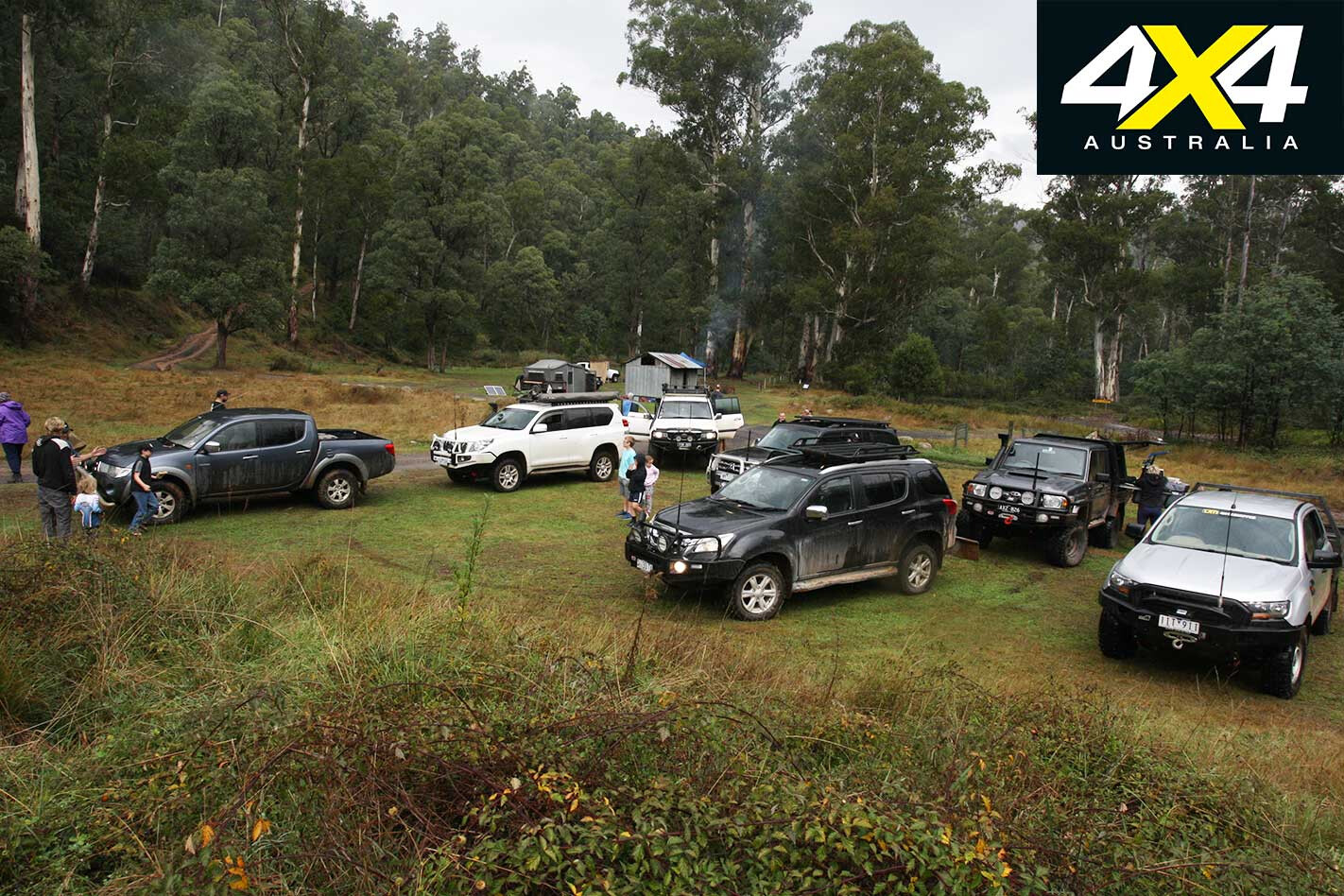
There are several Patriot Campers’ owners’ groups on social media, with the ‘official’ Facebook group having close to 3000 members; sharing tips, tricks and secrets of how they enjoy their camper trailers.
Patriot Campers has recognised this thriving community and now hosts Camp Patriot events to better connect owners with the business and each other. Camp Patriot events will be held around the country, and we joined them on recent jaunt in the Victorian High Country.
Organised by Patriot’s Victorian distributor Camping Adventures and led by CA chief Graham Pryde, the camp was set up near Sheepyard Flat outside Mansfield in readiness for three days of fun and adventure.
A total of 13 Patriot campers attended the weekend, which included all the variants from early X1s to the compact X2 and even the latest X1H which was brought down by the team from Patriot HQ in Queensland. They came filled with families and couples, behind a wide variety of 4x4s from three states.
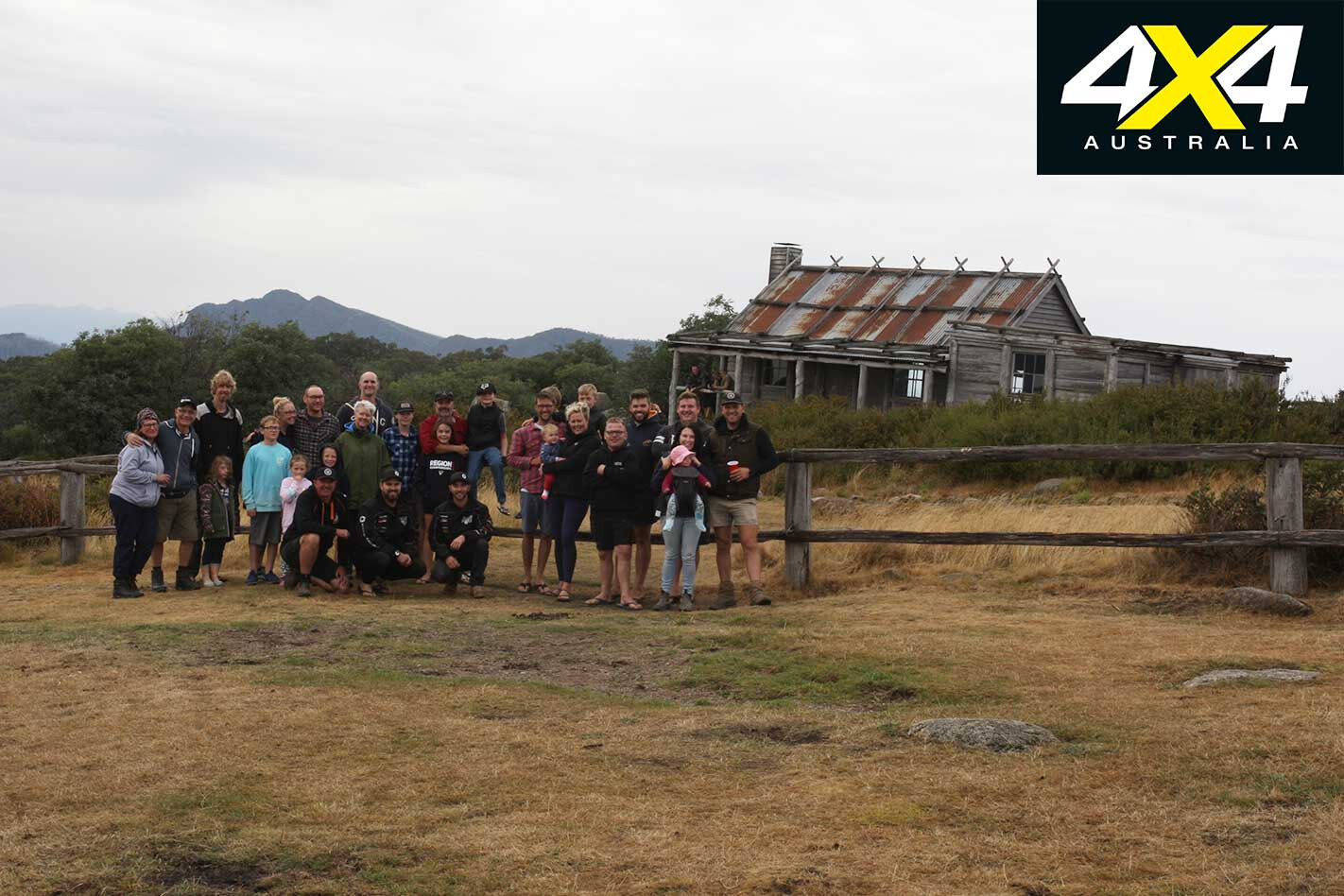
Most of the crew left their campers set up at camp on Saturday morning as they set off to tour of some of the best local tracks and sights. The convoy covered steep and sometimes slippery mountain tracks, crossed creeks and rivers, and visited some stunning lookouts and historic alpine huts.
It was a full day of driving before they found their way back to camp, where a cook-off was enjoyed around the campfire. Some of the crew went touring again on the Sunday while others packed up and headed for home as the event was over all too soon.
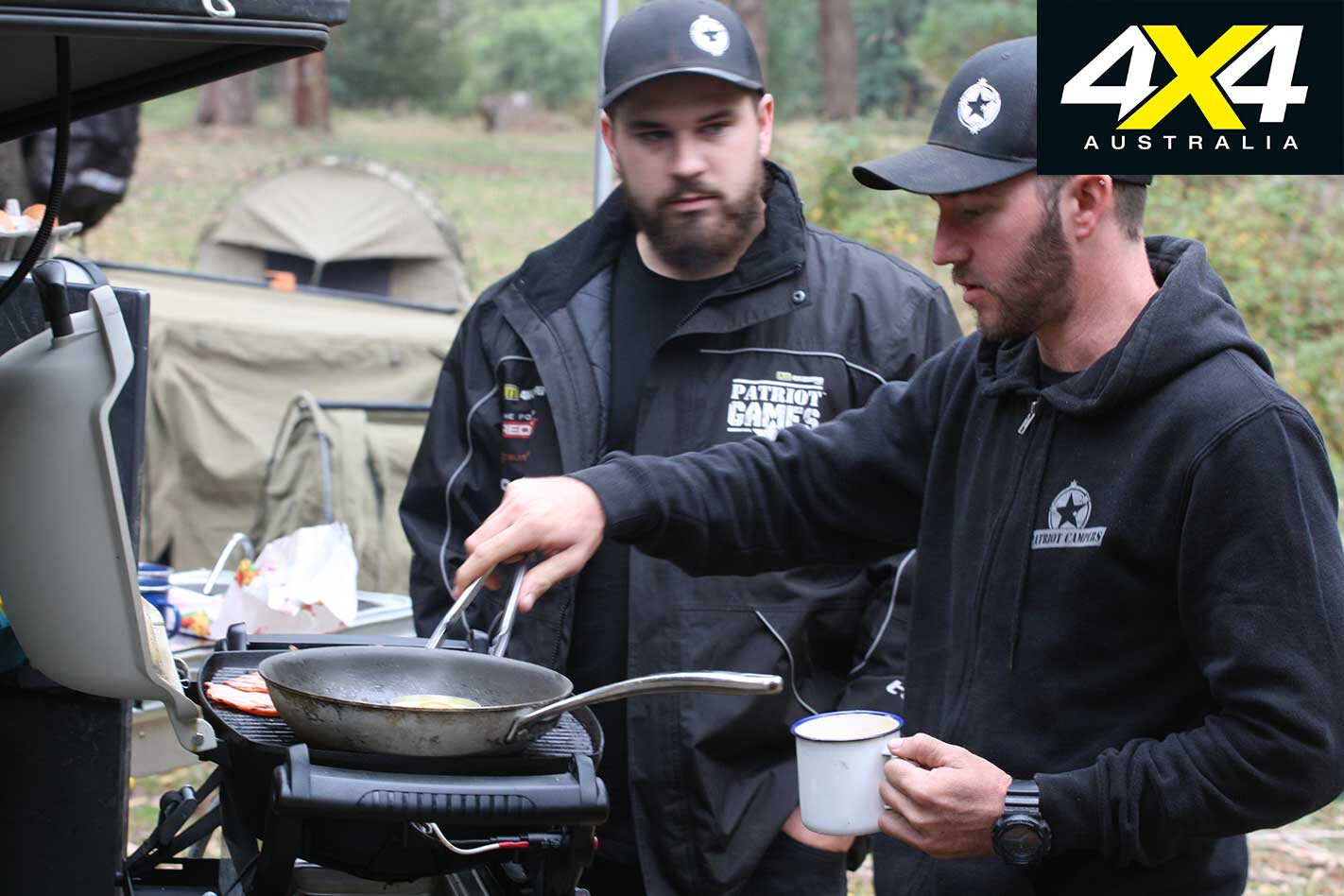
Camp Patriot events are being set up regularly, with one scheduled for Queensland in May. A huge one is planned to cross the Simpson Desert in June, linking up with the Patriot race team in Finke for the annual Finke Desert Race.
Keep an eye on the Patriot Campers website for details and to register your interest.
MORE spy shots circulated of the upcoming 2020 Land Rover Defender over the weekend.
US publication Motor Trend snapped these shots of the Defender test mules on the iconic slopes of Moab, Utah, riding alongside some of the best off-roaders currently in the business: a Wrangler Rubicon and a Mercedes-Benz G-Wagen.
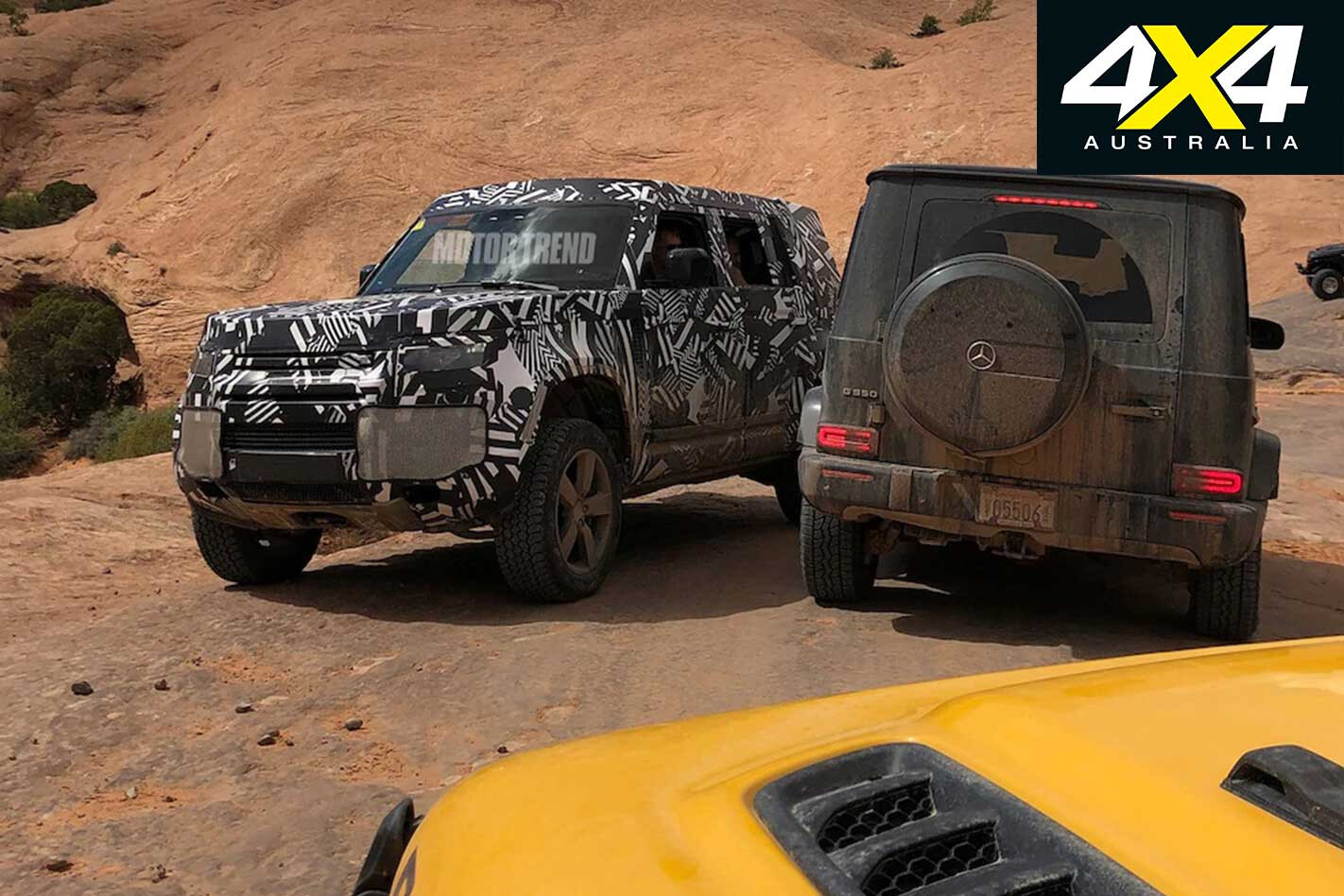
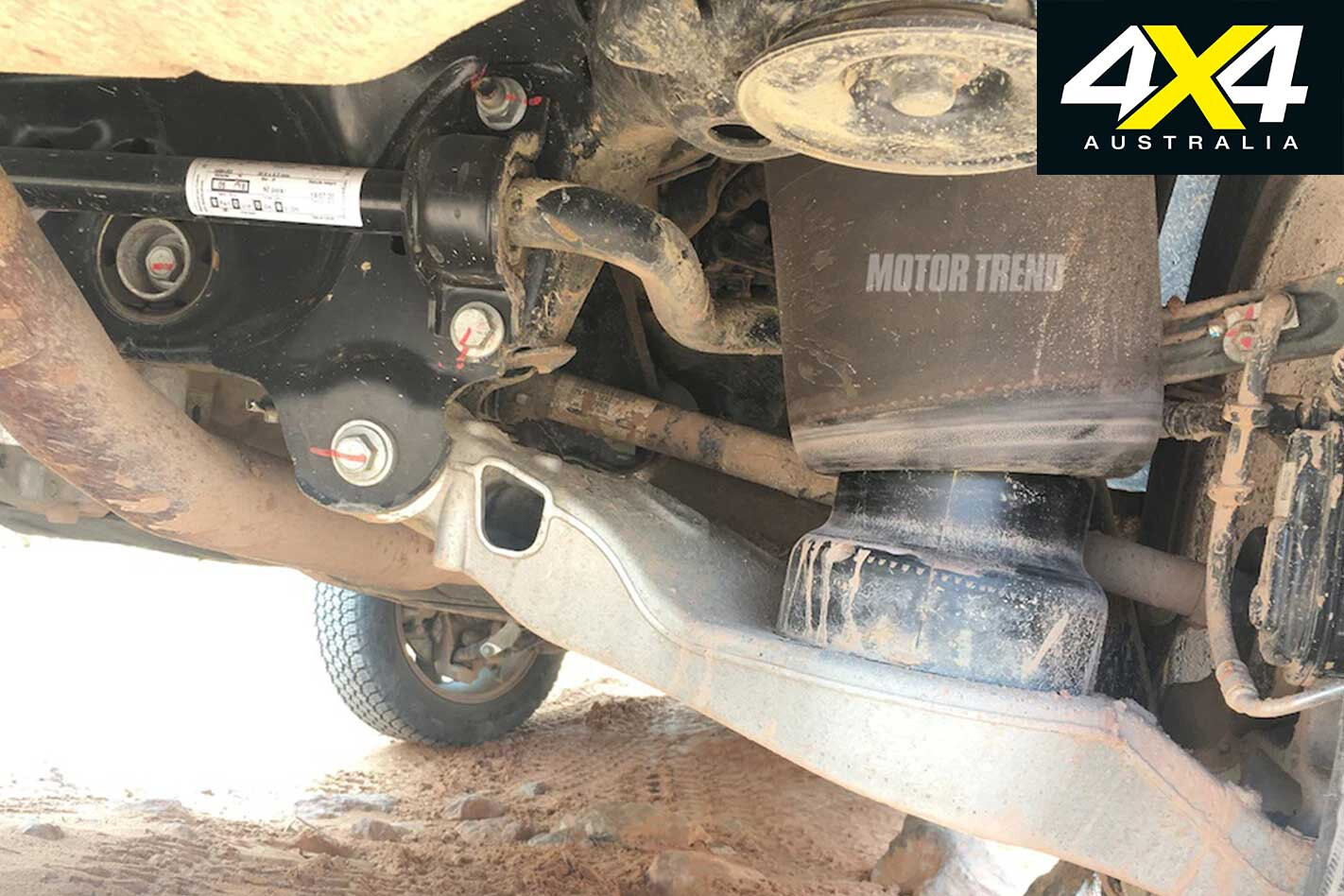
Both the two-door and four-door Defenders were in attendance on Moab’s slick rock, with the spy snaps providing a look at the test vehicle’s underbody componentry.
From the shots it’s clear the Defender will run an independent front and rear air suspension as found under the current Discovery. It’ll be interesting to see how much that affects the Defender’s off-road abilities when we get a chance to drive it.
Much like the current full-sized Discovery and Range Rover models, the Defender will be built on the same aluminium monocoque architecture.
Land Rover strategically leaked ‘spy shots’ of the Defender late last year, where it was revealed, much to the pleasure of Land Rover purists, that the iconic boxy shape of the Defender would remain.
The all-new Defender is expected to arrive in 2020. More information will come to light as we near the off-roader’s debut next year, so stay tuned.
Source: www.motortrend.com
HAVING recently acquired an ex-military 1989 Land Rover 110 6×6 Perentie, we’d been looking out for a sound-and-heat dampening option to help moderate the rig’s in-cabin comfort from an ‘agricultural standard’, to something closer to the mainstream.
While the heat radiating off the engine and exhaust was causing some discomfort in the cabin, particularly for the co-pilot as the exhaust pipe goes straight from the manifold directly under the passenger’s seat, the main problem was the noise. We all expect our 30-year-old rigs to expose us to a bit of road and engine racket, but we’d measured 85dB in the Landy’s cabin at 80km/h on the bitumen.
Meanwhile, online forums for these ex-military vehicles claimed that some owners had recorded an ear-shattering 90 to 100dB due to a combination of panel vibrations, engine and road noise. It’s obvious the sticker on the driver’s visor warning of potential hearing damage over 80km/h isn’t exaggerated.
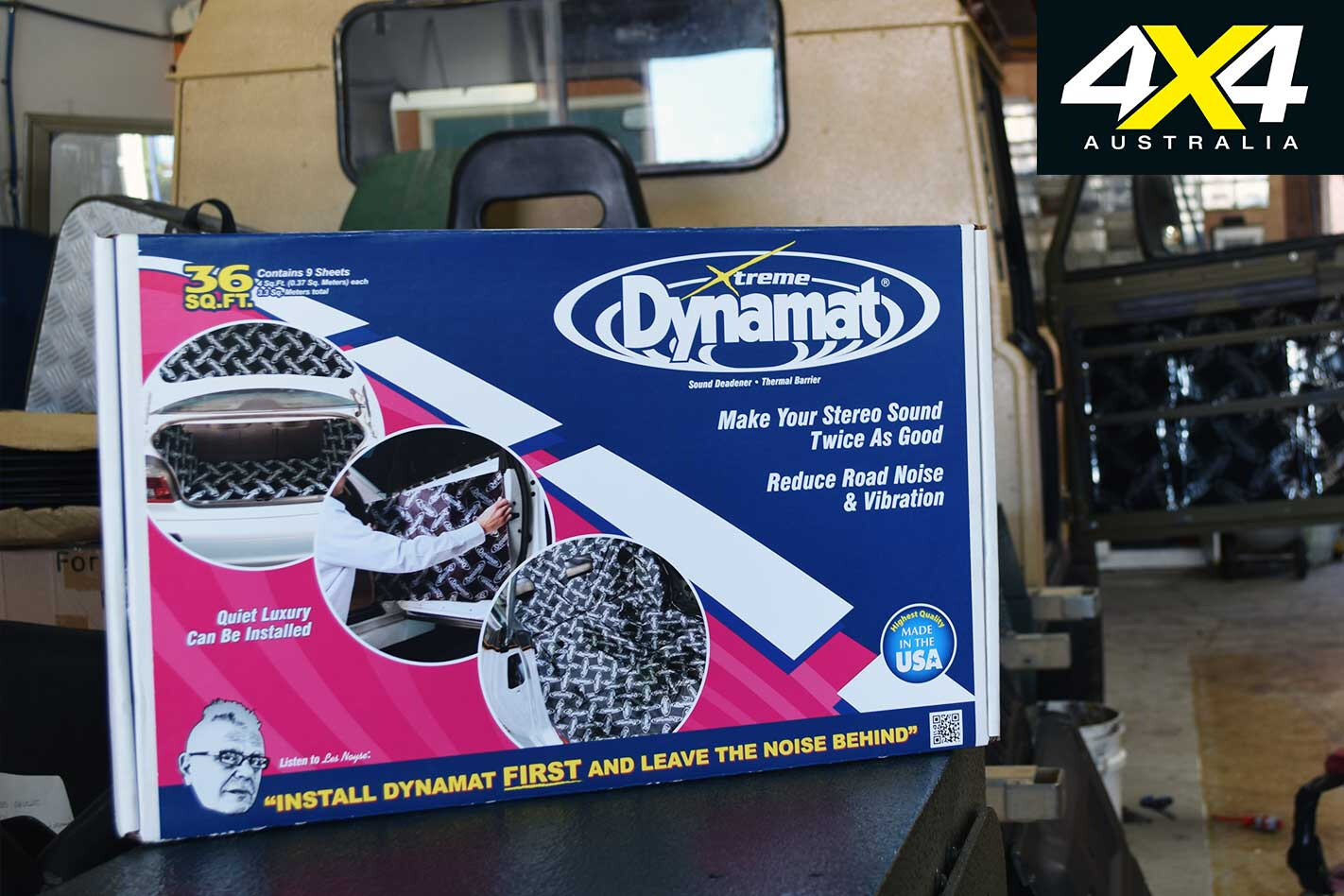
We’d seen a Land Rover enthusiast use Dynamat to sound-dampen their rig, so we headed straight for the Dynamat Xtreme, a thin, super sticky butyl rubber bonded to an aluminium alloy skin. The rubber and heavy aluminium can mould around interior surfaces, adhere to a surface and stay in place without any surface prep, and without tearing. Even better, there’s no nasty odour to leave you gagging after installation.
Produced in sheets, it’s simple to cut and install and leaves no sticky residue or similar mess to clean up. Indeed, it wasn’t the installation that took time, it was removing the seats, rear wall and door panelling. While we’d aimed to install Dynamat on the underside of the roof, the 30-year-old plastic sheath that lines the cabin’s ceiling looked like it mightn’t make it through the process intact, so we’ve left it alone for the moment.
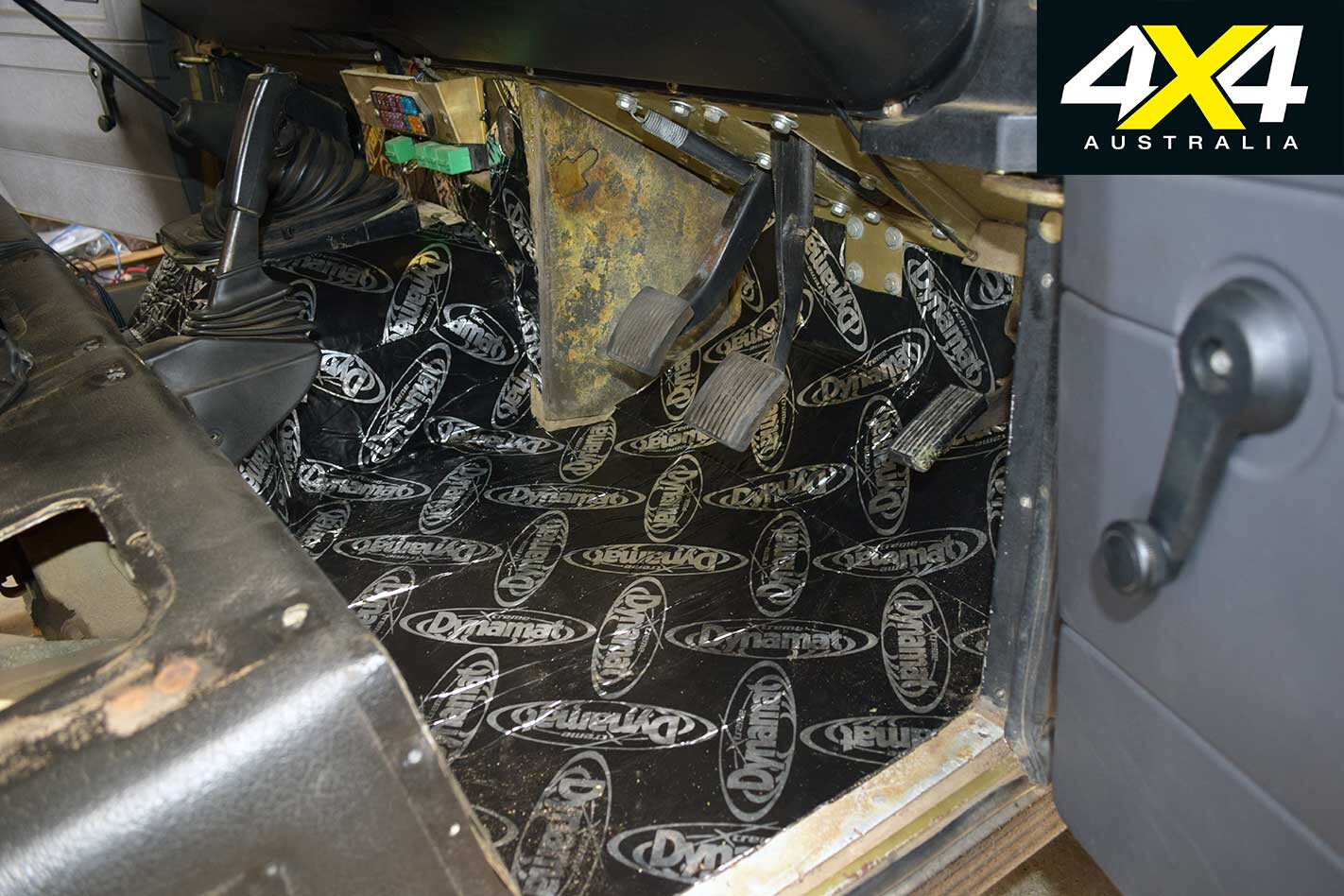
The Perentie 6×6 is wider in the hips than a normal 4×4 Land Rover – allowing for three seats across – and it’s tall with heaps of headroom, so the job took two boxes of Dynamat at 3.3m² a box. It was definitely worth it, though. It’s now possible to hold a conversation in the cabin at 80km/h without raising our voices.
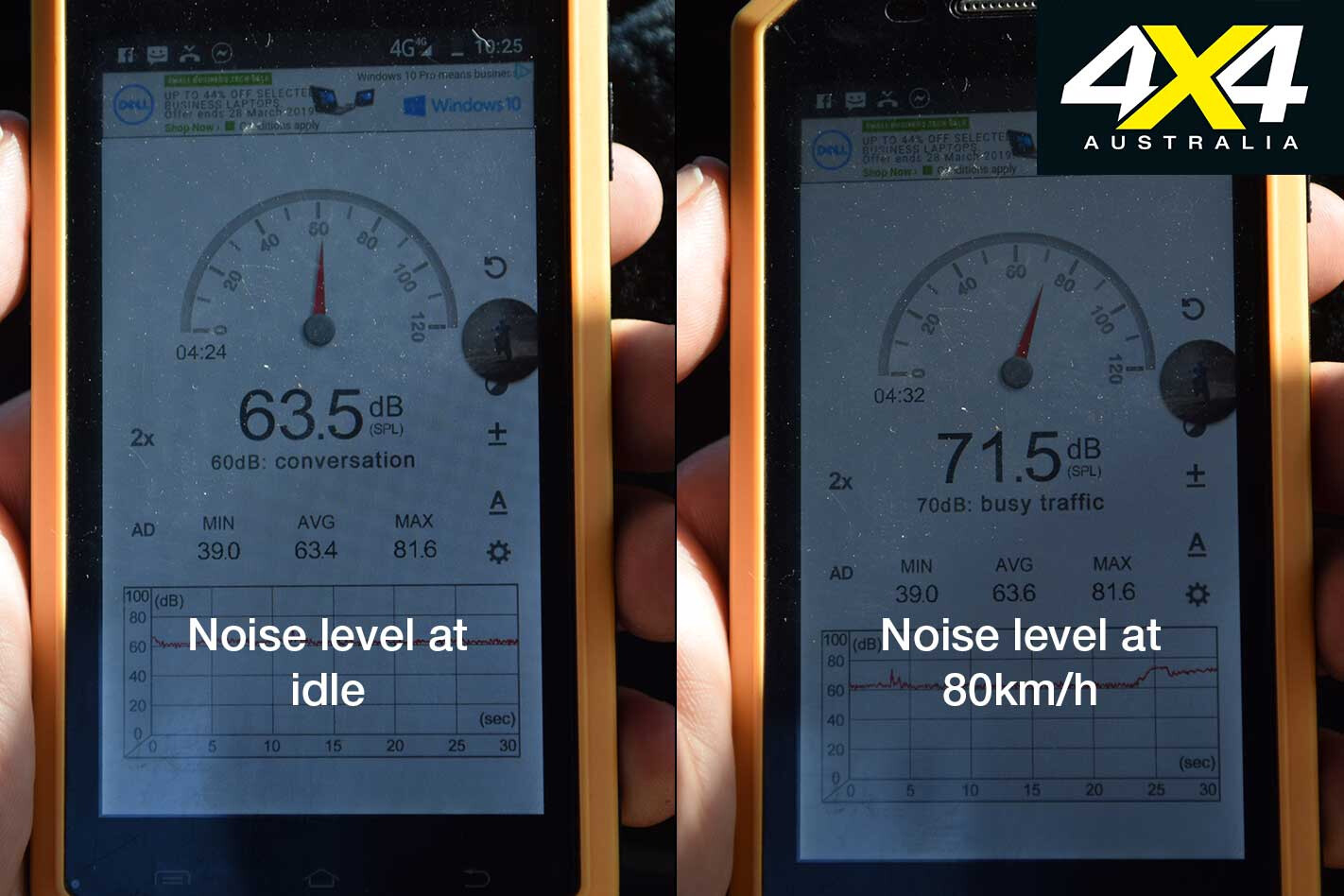
With a sound-metering app, the new reading was 71dB at 80km/h and 63dB at idle. And if you consider where we plan to take the rig, the modification makes a lot of sense for comfort and safety. Our aim is to reduce the inevitable fatigue that comes from rattling around in a rig with our ears bursting.
I don’t know about you, but it’s money well spent considering we bought the old girl for treks along tracks like the 1850km Canning Stock Route (plus the 4500km to get to Halls Creek).
Distances like that with large amounts of cabin noise could result in hearing loss just like the sticker says. Most occupational/industrial noise regulations agree that noise becomes hazardous when it exceeds 85dB Decibel for an eight-hour exposure.
RATED Available from: audiotech.net.au RRP: $299 (3.3m²) We Say: Worth its weight in hearing protection.
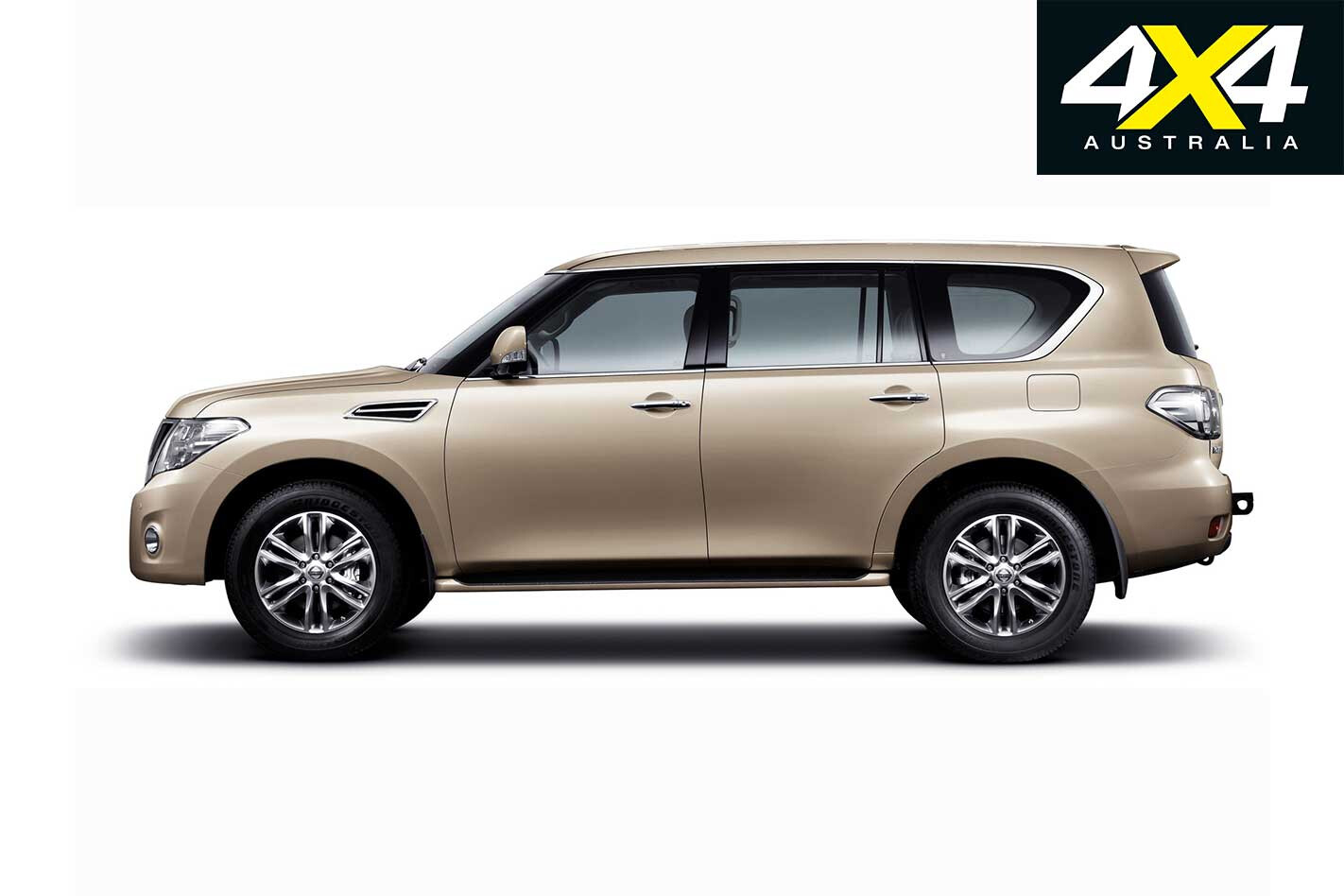
Back in 2010, we were lured to the Middle East and the deserts of the Arabian Peninsula to experience a new-vehicle launch like no other. The vehicle in question was the Nissan Y62 Patrol and its first appearance causing commentators to describe it as a ‘big’ Land Cruiser 200 Series clone. The 5.6-litre V8 petrol engine-powered Patrol was certainly bigger than its rival, and only existed because of demand in the Middle East.
They love the Nissan Patrol in the Middle East. No, I mean they really love the Patrol. The launch of a new generation of Nissan’s iconic off-roader would be big news here, too, of course. In a barbie and a beer with a few mates sort of way, preferably somewhere off the beaten track.
But not in the Middle East. Nissan president and CEO Carlos Ghosn invited 1000 of his closest mates (read: dealers, customers, local royalty, gentry and a few journos) to the first official viewing of the seventh-generation Patrol, followed by a slap-up dinner at Abu Dhabi’s seven-star Emirates Palace hotel.
And it wasn’t just a case of Carlos pulling the rug off the thing and posing for happy snaps. No, Nissan actually commissioned a mini operetta with the theme ‘the hero comes home’. According to the blurb it told the story of a hero born in the desert who also conquers the city. Geddit?
Anyway, we got 20 dancers leaping and flag waving for 10 minutes on stage before the hero came home. And bloody hell, he’d been doing some bulking up while he’d been away!
The size and sheer opulence of the Empire Palace hotel is enough to take your breath away, but let’s just say the new, seventh-generation Patrol (or Y62 as it is coded) fitted right in. First impression when it rolled onto stage was it’s a Land Cruiser clone. Second impression? It’s a big Land Cruiser clone!
When Ghosn posed with the Patrol that impression of mass was only reinforced. Not the most vertically endowed of blokes, he was dwarfed next to the 20-inch wheels, themselves perfectly in proportion with the slab-sided bodywork.
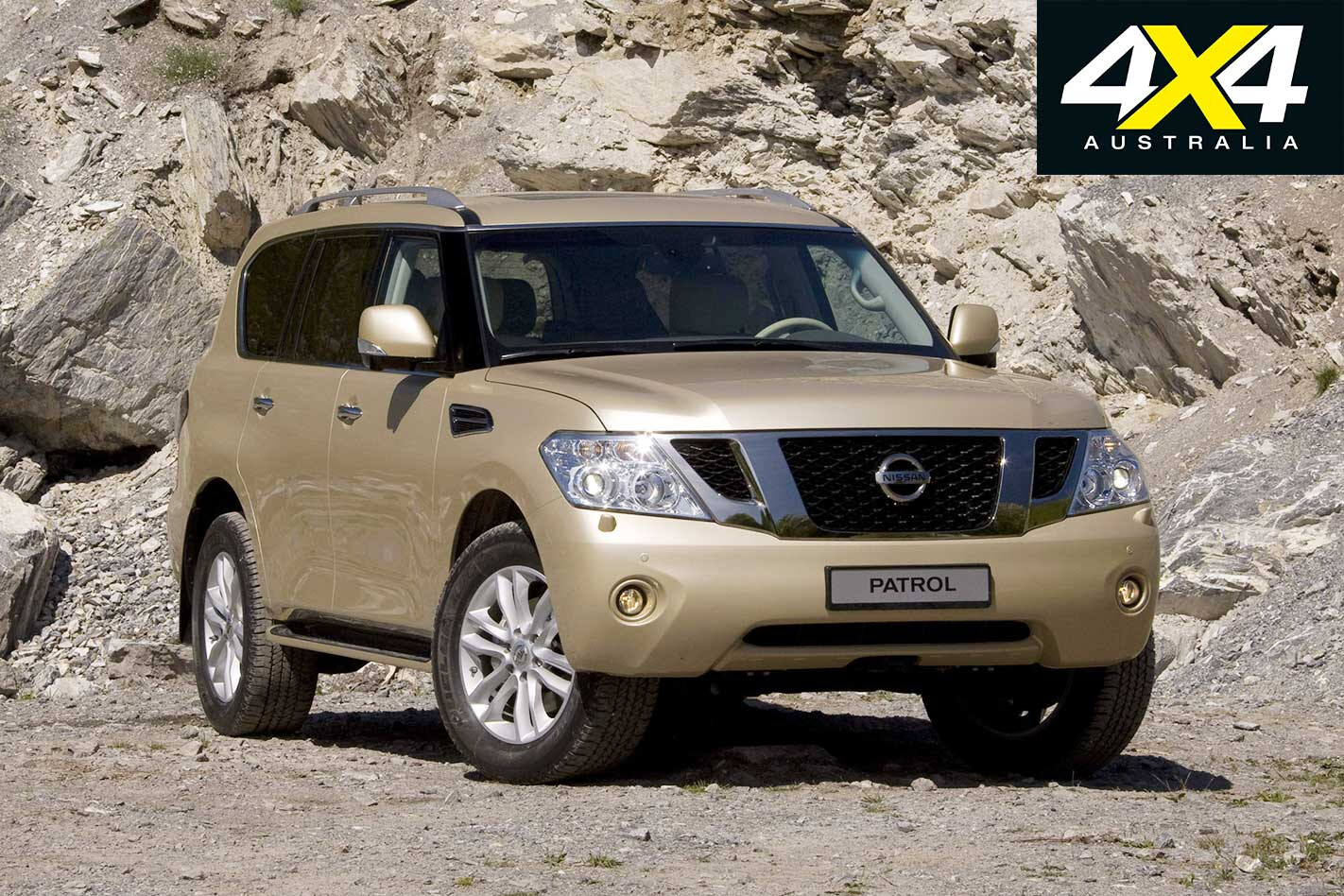
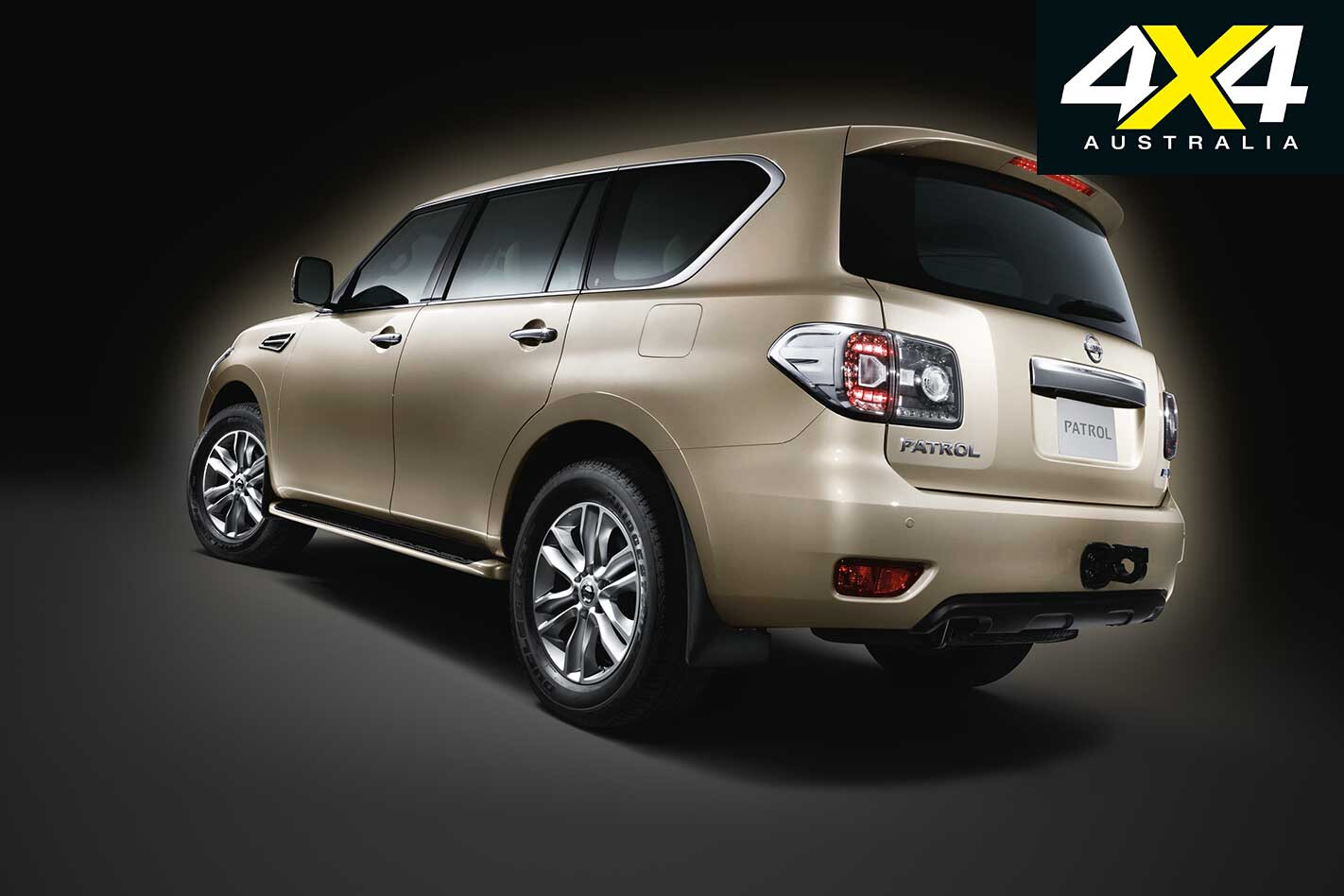
Get up closer and the Y62’s still huge, but you can see some of the detail work that’s gone into the design. The reverse hook to the D-pillar, the chromed vent cut into the guard, the complex headlight array, the retention of the signature Nissan angled strut grille. Inside, the display cars were opulent in leather, wood and chrome. Space was, ahem, abundant.
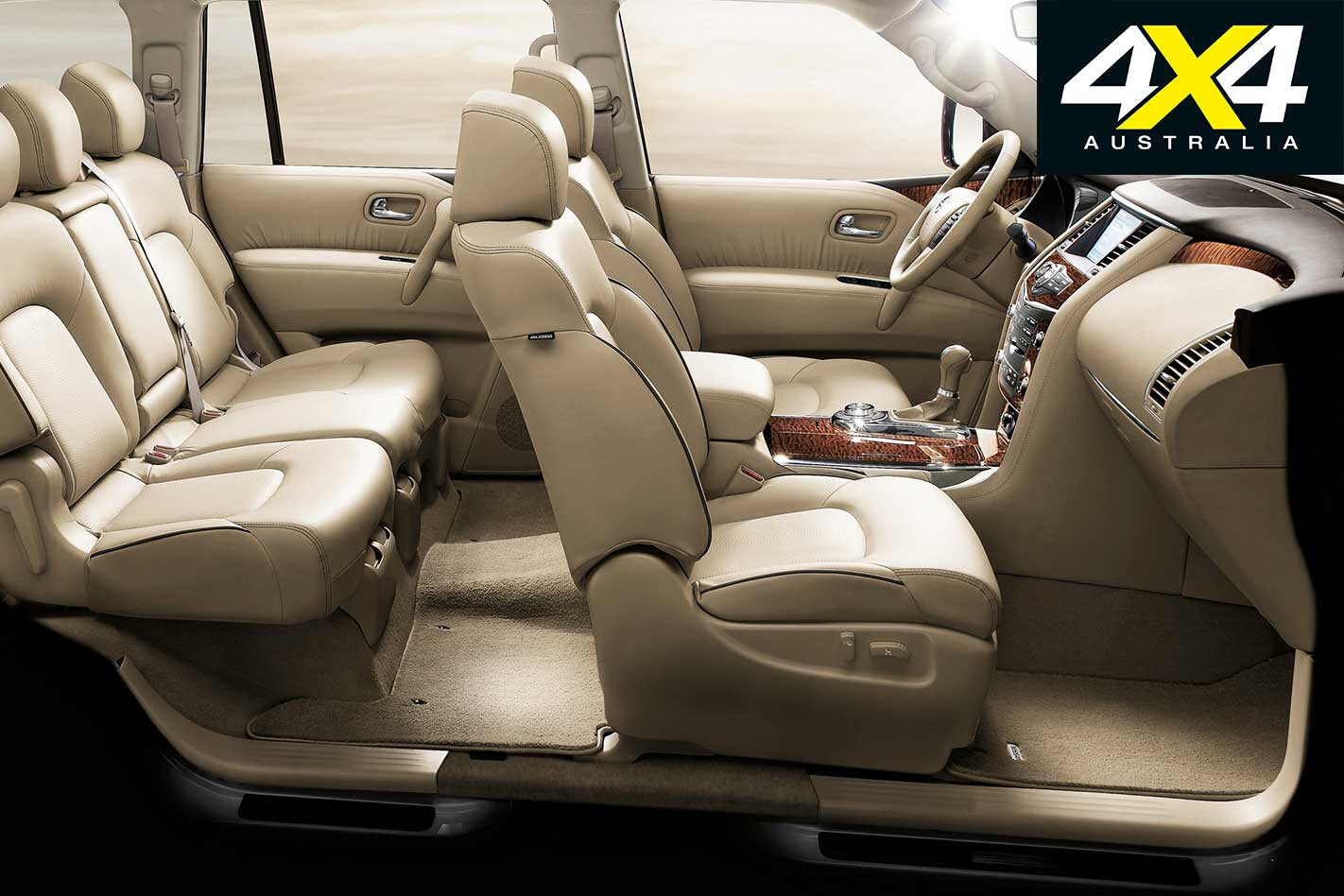
Check the figures and you can see the new Patrol’s mass confirmed in print. Compared to the current GU, the new wagon stretches 90mm in overall length to 5140mm, 105mm in wheelbase to 3075mm, is 55mm wider and nearly 270kg heavier at a whopping 2780kg – admittedly this is in top-spec form. Inside, Nissan is claiming second-row passengers get 100mm more legroom than in Land Cruiser, while third-row seats now fold into the floor helping boost luggage capacity.
Run the ruler over the Cruiser and the Patrol dwarfs it. Some 190mm longer overall and 225mm in wheelbase, it is also 25mm wider and 35mm taller. And weight? Well, so far, Nissan has only confirmed a 5.6-litre V8 petrol engine for Patrol, so using the top-spec petrol Land Cruiser Sahara as a benchmark, Y62 is a substantial 170kg heavier.
Think about that for a second. In an era of greenhouse gas, electric cars and downsizing, Nissan has made the 200 Series look Mini Me.
So what’s going on? The Middle East that’s what. Without this market the Patrol wouldn’t even exist. Unlike Australia, where the heavyweights have declined in popularity, big SUVs remain incredibly popular. And so is luxury. Every intersection in Abu Dhabi is a 4×4 show.
There are X5s, MLs, Q7s and plenty of Yank tanks as well as Cruisers. It’s this top end of town the Patrol has been missing out on. Petrol prices? Heck, at 50c per litre, litres per 100km clearly aren’t the highest priority. It’s still all about kilometres per hour.
“The last Patrol? People said ‘it’s a great car, but you are off the mark in terms of comfort and luxury, it is too frugal, too austere’,” Ghosn explained. “So we listened, we corrected it, we have presented it and now you have seen it.”
Well, you could hardly miss it…
There’s another aspect to all this and that will become apparent at the New York Auto Show in April when Nissan’s Infiniti luxury brand reveals its new QX56. Yep, it’s a badge-engineered Patrol. Previously, it was a badge-engineered Armada, the built-in-America for America full-size SUV based on the Titan.
Well now, Patrol and QX are twinned and the Armada’s future is unknown. One possibility is Patrol will also form the basis of a new Armada, but that depends on where the struggling SUV segment and entire US market heads.
Through all these permutations and perambulations the end result is we get the luxurious, sophisticated Patrol the Middle East and the USA wants. And to rub it in, we also wait another year for it because right-hand drive production doesn’t even start at Nissan’s new Kyushu (Japan) plant until 2011.
So if you like Patrol because it is a simple, tough truck then prepare for a shock. While Toyota has eased Land Cruiser lovers slowly upmarket through the 80, 100 and 200 Series, there’s been no such subtlety at Nissan. Apart from both of them being body-on-frame five door wagons with eight seats there’s little that links GU to Y62.
Part-time 4WD system? Gone. Rigid axles? Gone. Manual transmission? Maybe. For now there are only seven- and five-speed autos. Yep, seven-speed.
Diesel engine? Watch this space.
The new Patrol is now suspended independently all-round on double wishbones, supplemented at the top of the range by the West Australian Kinetic hydraulic stabiliser system also employed by Toyota’s Land Cruiser. And it uses the latest version of Nissan’s electronically controlled permanent All-Mode 4×4 system.
Drill right down to the new Patrol’s basis and you’ll find even the frame bears no relationship to the GU’s aged underpinnings. Instead, it employs an overhauled version of the F-Alpha structure used by Armada, the current QX, Titan and the mid-size Pathfinder and Navara utes that are already sold in Australia.
“We redesigned every aspect of the frame, suspension and also the powertrain,” confirmed Nissan’s Hiroyuki Fushiki. “So in that sense we can say it is an all-new platform.”
Fushiki-san has a long title that effectively boils down to ‘bloke in charge of Patrol development’. He also did the GU and you might argue he didn’t bend the back too hard on that considering how – let’s say – evolutionary it was compared to the GQ. A classic case of if it ain’t broke don’t fix it.
But 12 years on, it’s obvious this generation wasn’t about fixing, but completely replacing. And there’s no doubt Fushiki-san has earned every Yen in his pay cheque.
The US$500 million project kicked off in 2004, well before any formal approval was given. The green light actually came in 2006, but by then engineers had already tuned and tested 200 prototypes at Nissan’s Motegi, Oppama and Tochigi proving grounds.
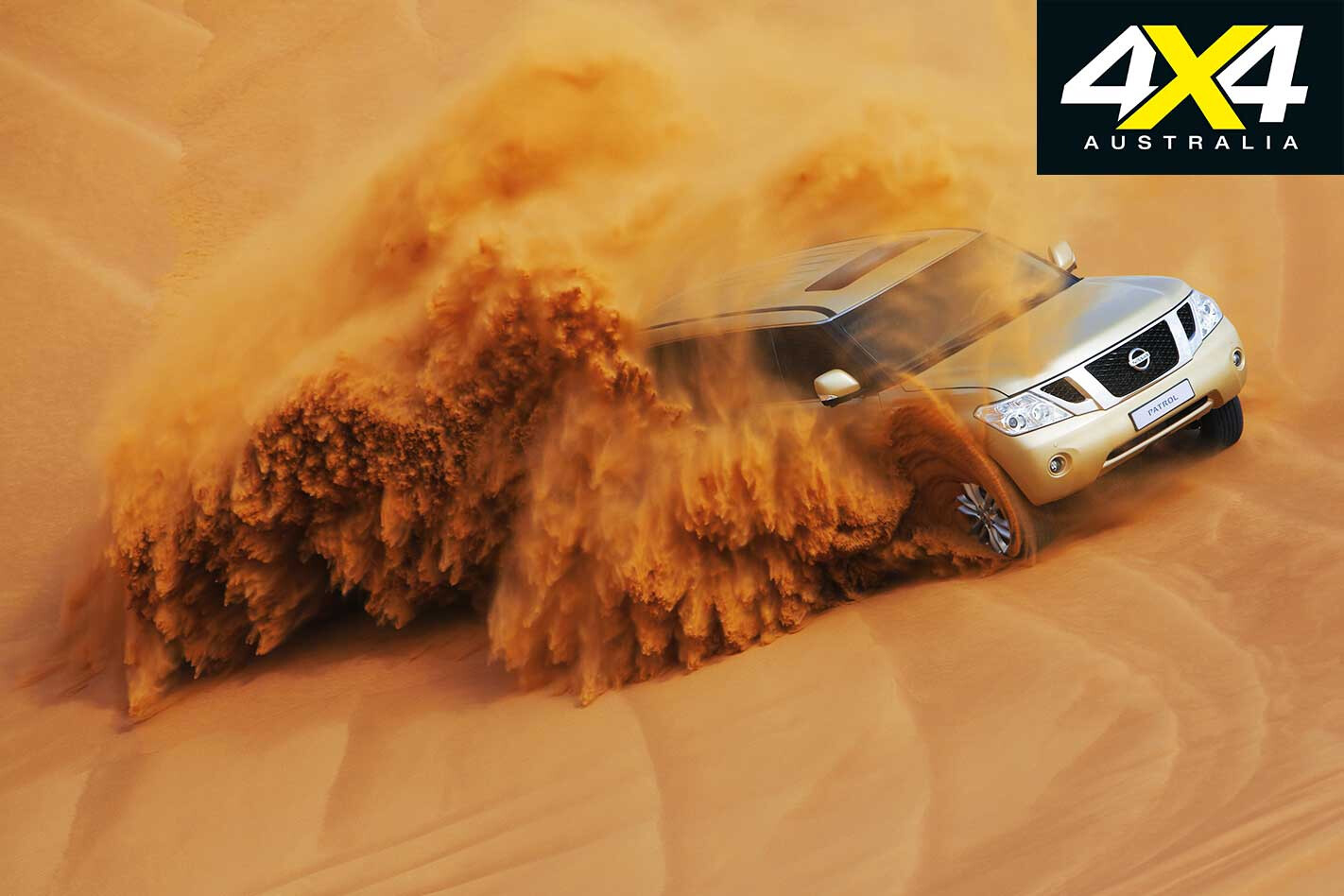
The engineering crew then headed for the Middle East because it was unable to replicate that region’s unique challenges at home. On-road that means being able to run hard at 160km/h and beyond in temperatures heading for 50°C. Off-road, there’s dry heat, powdery sand and the Mid-East enthusiasm for banzai dune-driving.
In the end, Nissan says more than 40 engineers completed 13,265 hours (precisely) of testing in the region.
At least one prototype also came Down Under. We know that because an eagle-eyed punter spotted the Armada-bodied mule in the car park at Nissan Australia. One happy snap later and a Melbourne newspaper was reporting the Armada was on the way to Australia. Oh well…
The big Australian involvement in Y62 came via Nissan’s licensing of the West-Aussie developed Kinetic Ltd’s hydraulic stabilisers. Nissan’s shift to independent suspension was prompted by the desire to deliver better on-road ride, handling and body control. But there are obvious articulation and ground clearance issues that then arise off-road.
The Patrol’s Hydraulic Body Motion Control (HBMC) is the solution, says Fushiki. A further development of the 200 Series’ KDSS (Kinetic Dynamic Suspension System), it locates hydraulic cylinders over each wheel. Connected by cross-piping and two accumulators they generate variable roll stiffness depending on the driving conditions.
The system does this by transferring oil between the upper and lower sections of each cylinder, according to road conditions. The big advance from the Toyota system is that HBMC dispenses with stabiliser bars all together, rather than only temporarily disabling them.
“Stabiliser bars keep the roll angle contained on highway and pathways, but had limitations and problems in the off-road,” explained Fushiki-san.
But it’s not cheap and that’s why lower-spec versions of the Patrol will stick with mechanical stabilisers and presumably sacrifice some on- and off-road capability. They also get 18-inch wheels and rubber.
The All-Mode 4×4 system is Nissan’s own work, of course, and the Y62 system’s fundamentals are derived from the current Pathfinder. However, it has been upgraded so the driver can select the mode he wants, dependant on driving conditions, via a dial and push buttons on the console, be it Auto, 4×4 High, Low, sand, on-road, snow or rocks. Think of the Discovery’s Terrain Response system and you’re on the right track.
The guts of the All-Mode system is a lockable, helical, limited-slip rear diff, lockable centre diff and open front diff, supplemented by stability and traction control, hill start assist and hill descent control. The system runs 100 per cent rear-drive static, shifting up to 50 per cent of torque forward under hard acceleration.
And hard acceleration can be expected via the up-rated VK56VD 5.6-litre V8. Based on the engine fitted to the Armada and current QX, it has been pumped up to 300kW and 560Nm primarily thanks to the fitment of Nissan’s VVEL variable valve timing system and direct injection. The old engine, with 236kW and 520Nm, will continue on as a more economical option, retaining its five-speed auto.
Speaking of which, Nissan claims an average consumption rate of around 18L/100km for the hi-po version of the 5.6, working through its seven-speed slusher. A development of the unit that debuted with the 370Z sports car, it’s been retuned to cope with the extra torque of the V8 and for better economy. Good news is the fuel tank has grown to 140 litres from the GU’s choice of 95 or 125 litres, delivering a theoretical range beyond 700km.
Compare all that with the current Patrol’s 4.8-litre inline six that produces 180kW, 400Nm and averages 16.4L/100km…
And what of diesel? Well it’s coming, but with no Middle East or US sales plans nothing’s being officially said yet. The favourite is alliance partner Renault’s 3.0-litre dCi V6, with vital figures around 195kW and 550Nm.
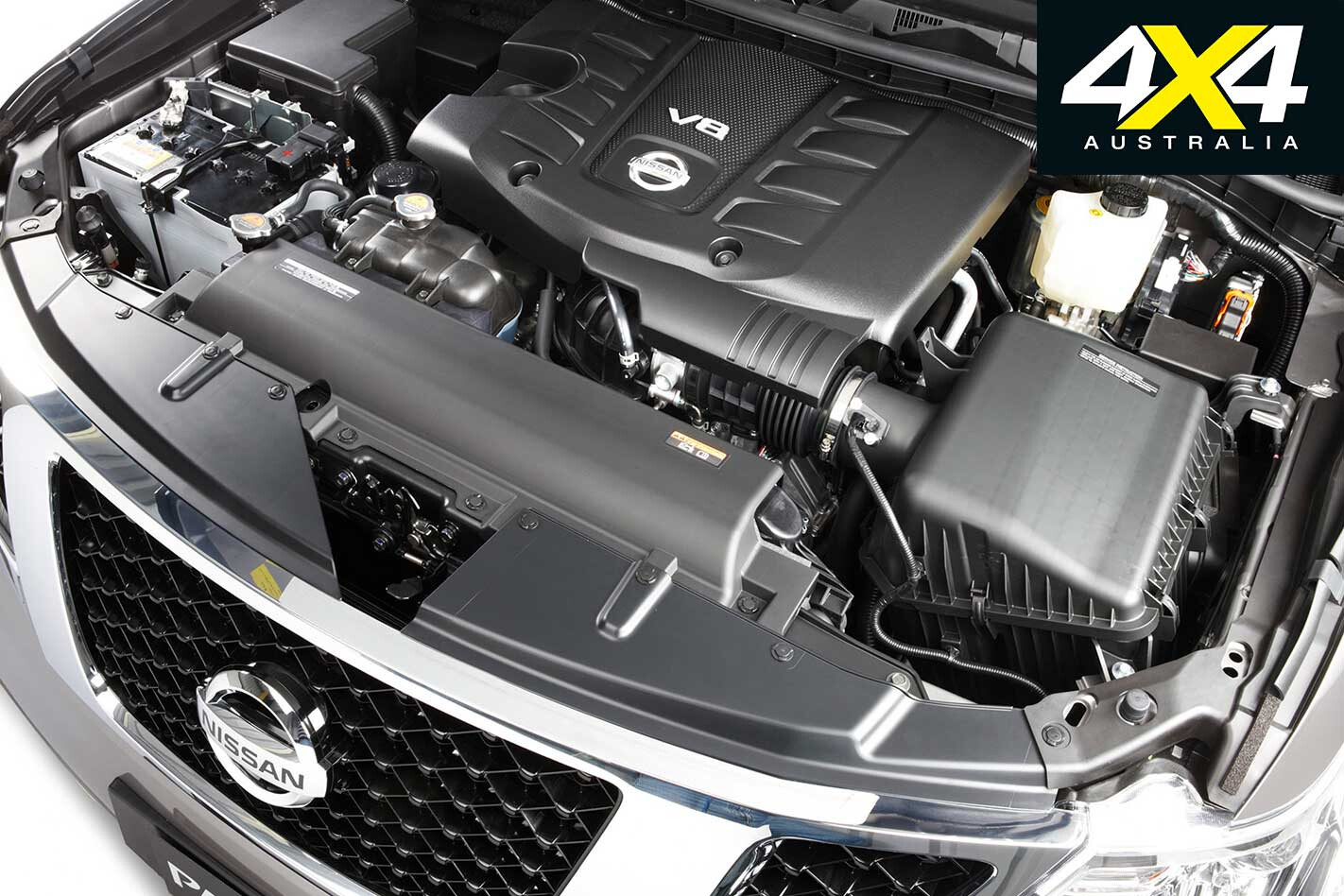
It’s going into Pathfinder and Navara this year so the chances of its spreading to Patrol must be good. Through all this change, one thing stays the same and that is braked towing capacity. Fushiki says it stays at 3500kg. Good news for the substantial number of Patrol owners who haul big loads.
But that won’t be that much solace to the hardcore Patrol traditionalists horrified by this seismic change. Some pretty hefty price rises will also surely come given the technology stuffed into it.
That’s why the GU will continue to soldier on alongside the new vehicle. At the global launch Nissan execs confirmed Australia would see both, but back in Melbourne at local HQ they were not prepared to make such a commitment, citing such issues as future emissions standards.
We’ll wait and see then, but if the GU does stop, it’s going to leave a sizeable hole in the medium and lower end of the heavy 4×4 market for Nissan as there is no plan for a stripper version of the new Patrol.
After all, such activities would be uncouth. As we learned in Abu Dhabi, Patrol’s heading upmarket.
2010 NISSAN Y62 PATROL SPECS: Engine: 5600cc V8 DOHC Max power: 300kW at 5800rpm Max torque: 560Nm at 4000rpm Transmission: 7-speed auto Suspension (f & r): Independent, double wishbone, coil springs, HBMC system Kerb weight: 2785kg L/W/h: 5140/1995/1940mm Wheelbase: 2947mm Tyres: 275/60R20 Fuel tank capacity: 140 litres
Nissan Y62 Patrol drive review
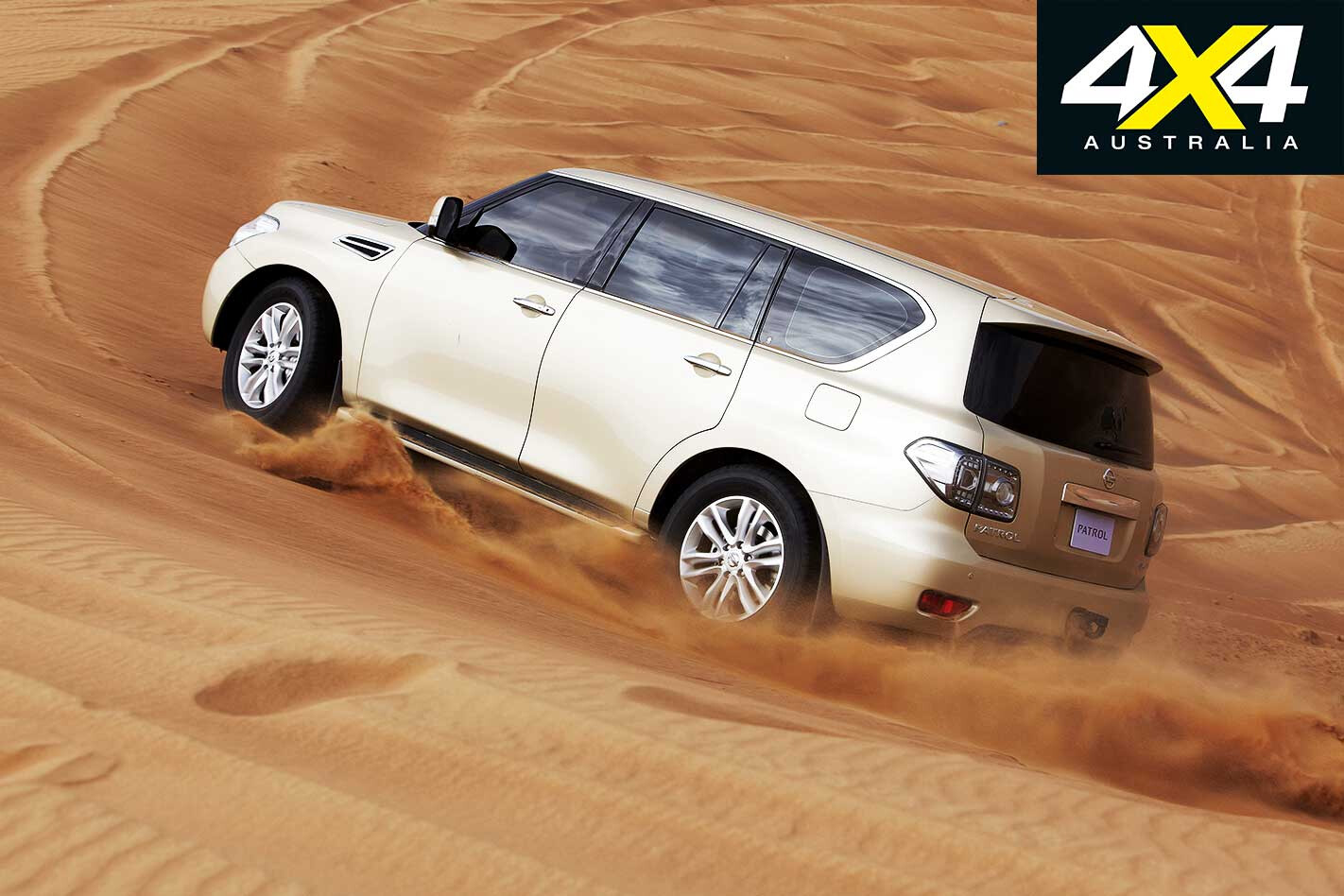
“That’s 180km/h,” remarked my new mate, Hassan, the TV reporter from Abu Dhabi. Surprised, I lifted my head from note taking in the passenger seat of the Patrol. I’d thought we were doing 120km/h. Tops.
Hassan was giving the Patrol the berries on a brand-new freeway somewhere on the Omani coast south of the capital Muscat. It was amazingly quiet, despite the heavy throttle and the amount of wind this massive vehicle was pushing aside.
And yet, a few minutes earlier and a few kays inland we’d been negotiating a dry water bed that doubles as the local road network. The nests of baby-head rocks and creek crossings are so rough and tumble the local school buses are 120 Series Toyota Prados and GU Patrols. Seriously.
A few minutes after the freeway run we clambered up a 2000m mountain, in places so steep and tight that you could hear and feel the inside rear wheel scrabbling for traction on concrete-surfaced hairpins. Cresting the treeless, rock-strewn plateau we found a row of tents, Arab dancers, a four-course lunch and even a plumbed toilet. Nissan global boss Carlos Ghosn was there, too. He ascended in a Patrol, but chose to descend in a helicopter.
The Patrol is a far quieter, albeit slower method of getting down the mountain. We were often engaging low gear or Hill Descent Control on steeper slopes. Then it was back on the freeway for another high-speed strop.
It was a weird but oh-so invigorating day, one that helps explain why Nissan has developed the new Patrol to be a seemingly contradictory combination of luxury exec express and hardcore 4×4.
And Oman is certainly a good place to test it out. One minute you’re blazing across gibber plains that could be out the back of Broken Hill, the next winding round the side of a jagged mountain on a Jeep track that is Arkaroola writ large.
The Patrol’s new full-time AWD system and independent suspension is up for it all, with the rider that the off-road conditions we tackled were tough and rough but not unconquerably extreme.
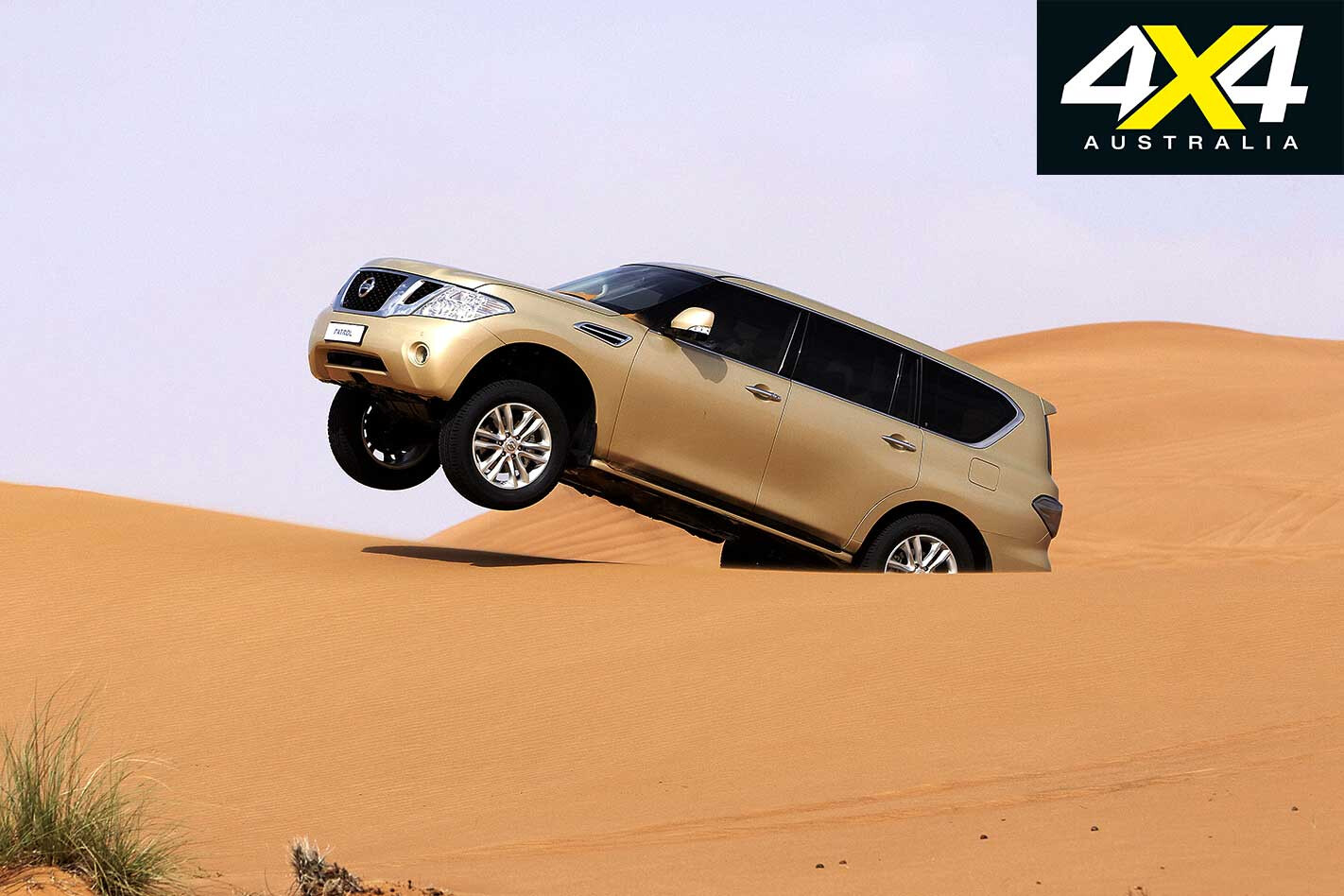
So the verdict on whether it’s as good or better – as Nissan insists it is – off-road than the GU will wait until it gets to Australia next year. But it’s fair to say it is still – at the least – thoroughly competent.
On-road, it’s a league ahead in both performance and refinement. The new 5.6-litre V8 engine is a massive performer, capable of carting this 2.78-tonne behemoth up to extreme speed with surreptitious intensity. It’s just a pity that few of us would be able to afford to run it. All day the fuel use average never dropped below 20L/100km.
The Patrol’s other star-turn, the Hydraulic Body Motion Control system, works exceptionally well on-road, delivering ride comfort and decent body control on virtually every surface at almost any speed.
Of course, the Patrol is so big and heavy, its bulk is impossible to completely disguise, something signalled by the seven-speed auto’s hyperactive desire to drop gears under loads, the pitch of the big nose forward under brakes and the steering’s disconnection from the front wheels in turns.
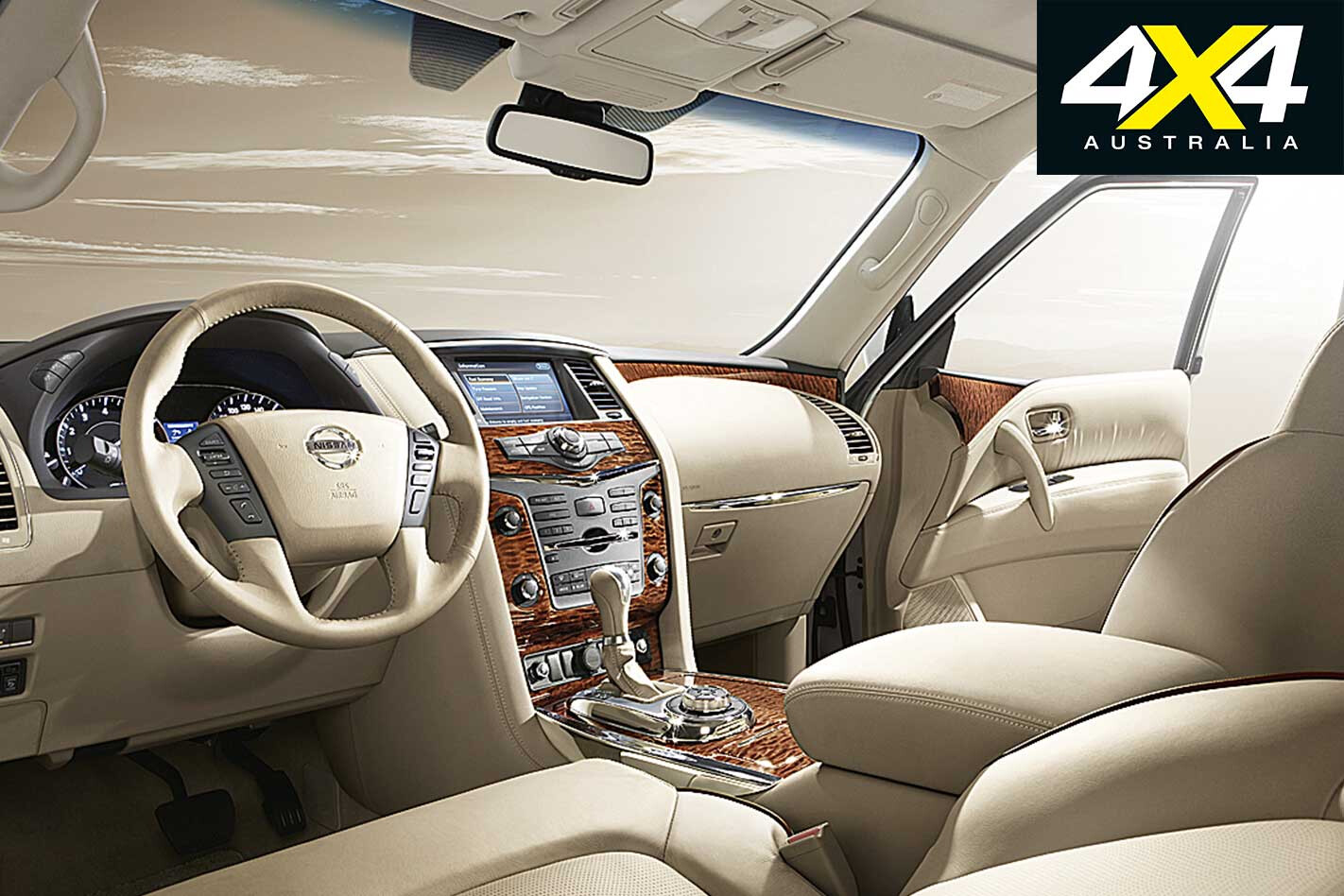
Inside, there’s an incredible amount of space in the first two rows, although, surprisingly, row three remains kids-only. Storage is abundant, seats are plush, visibility is excellent and the quality of the leather, wood and chrome in our top-spec test car outstanding.
It’s sitting in the Patrol that the full effect of the changes wrought to Nissan’s heavy-duty workhorse become obvious. Be it standing still, clambering up a rocky gully or cruising at 180km/h, this is a very credible piece of design and engineering.
Nissan Y62 Patrol equipment
The product planners at Nissan Australia are beavering away to sort out the new Patrol model line-up. The public line is, no equipment has been ruled in or out. In reality, it’s mostly sorted, but you don’t reveal such things so far out from a launch. But here’s what we already know the Patrol offers, most of which we should see here…
Safety: A maximum six airbags will be available. Lane departure warning; intelligent cruise control; stability control; a forward collision warning system and a claimed world-first tyre inflation indicator for the tyre pressure monitoring system are also included. The Y62 also comes with bigger brakes including new callipers and boosters.
Comfort: There are a couple of claimed world firsts here; namely an individual multi-screen DVD system and new roof-mounted air vents that blow in a curtain of cool air that acts as a barrier against heat penetrating the cabin. Also on the equipment list is a cool box, 9.3GB hard drive, sat-nav, a 360-deg camera monitoring system and a power lift tailgate.
JEEP’S reborn Gladiator pick-up has just been launched in the USA, but the new JT is based on the Wrangler and not the full-size trucks Jeep made back in the 1960s through to the 1980s. The J-Series trucks were pick-ups built on the Wagoneer full-size wagon’s ladder-frame platform and were the first to wear the Gladiator nameplate.
The owner of this rig, Riley Hodson, wasn’t waiting around for Jeep to bring out its new mid-size truck, as he had plans for his J10 that would make it truly unique and able to leave any factory offering in its dusty wake.
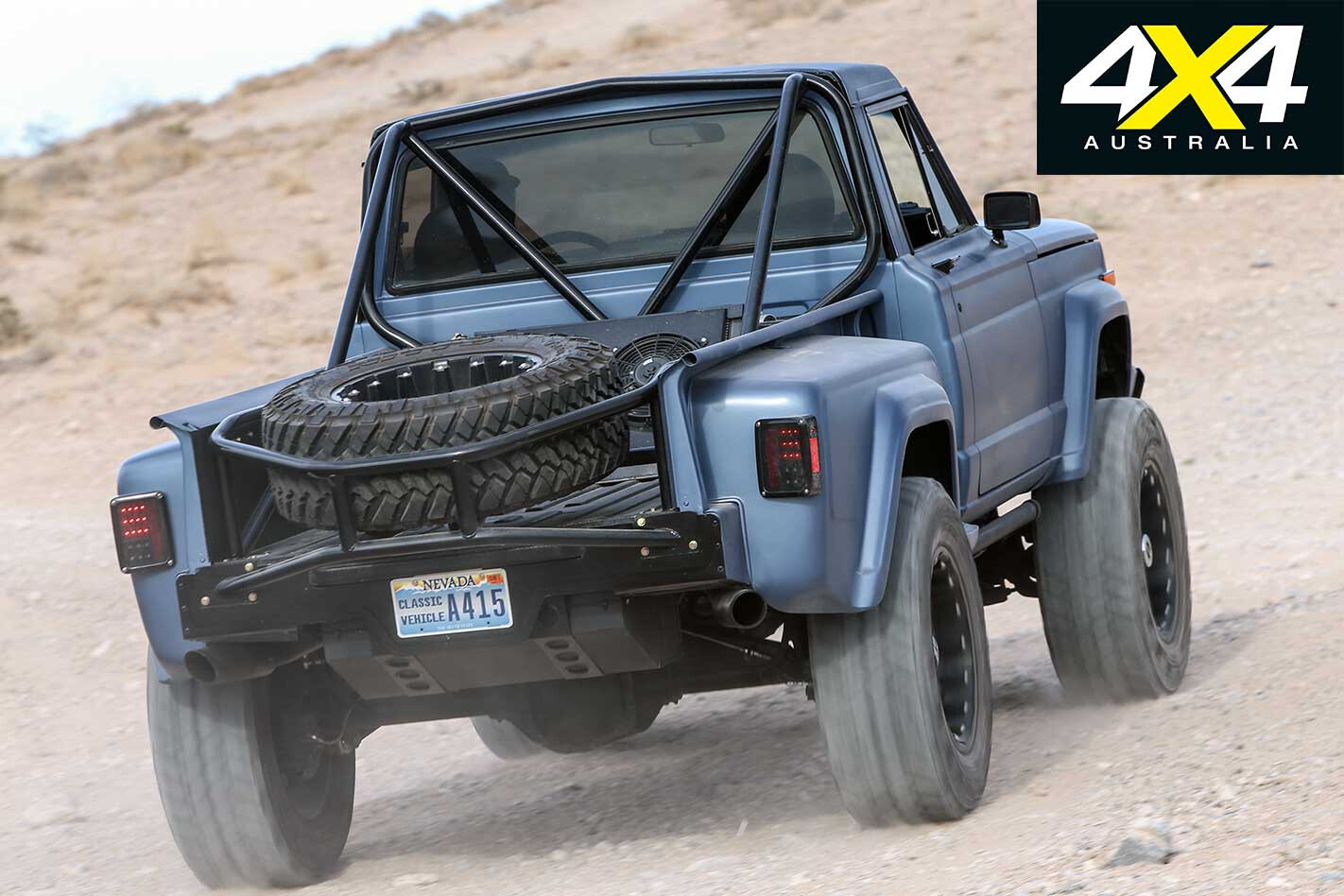
“This truck kills it in the desert,” exclaimed Riley, a Las Vegas resident. “It lights up those big tyres easily and cruises comfortably at 75mph all day while staying cool.”
Those tyres are massive 37-inch Nitto Trail Grapplers wrapped around 20-inch XD Series alloy wheels, on the end of heavy-duty one-ton axles front and rear. Providing the mumbo to turn them is nothing short of a V10 engine, yanked from a 2004 SRT Viper sports car and wedged in between the truck’s modified chassis.
“We originally left the inline-six in it, but it wasn’t powerful enough to push the one-ton axles and the huge tyres,” recalled Riley.
That’s right; when Riley and his father Derrick bought this truck it was an all-original six-cylinder-powered 1983 J10. That was four years ago and the plan was always to build it with the desert-racer style, while sacrificing a few creature comforts and driveability.
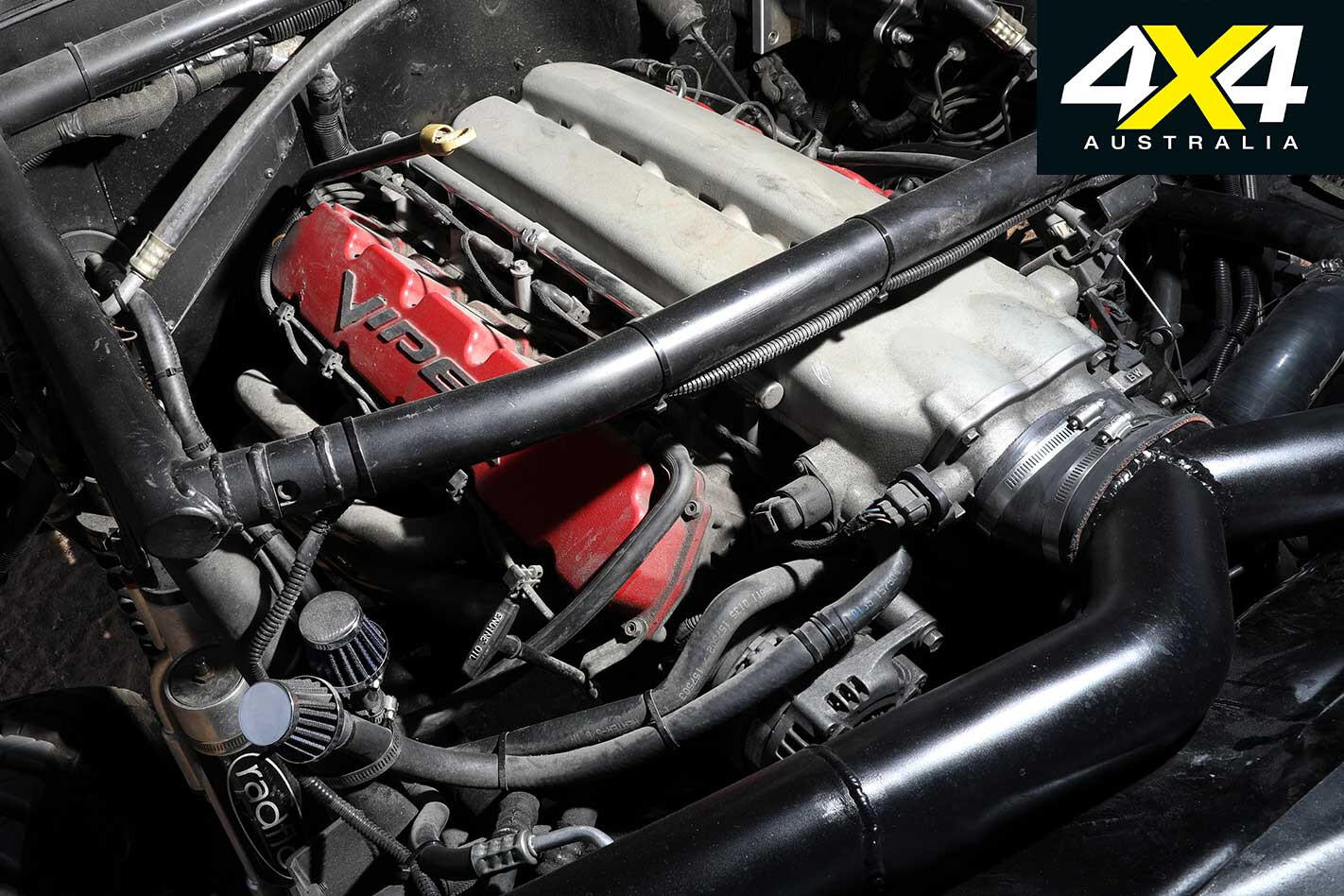
Swapping in the Viper engine was Derrick’s idea and Riley wasn’t going to argue with his dad. They sourced the aluminium V10 from restomod and engine transplant specialists Cleveland Power and Performance and wedged it into the Jeep, and then they enlisted the help of Cameron Chin at Nefarious Kustoms. If you recall Cameron’s wild ‘Trophy FJ’ Land Cruiser we featured in the January 2019 issue of 4X4 Australia you’ll see a certain style that both the FJ and this Jeep have taken.
To give the Jeep its desert-killing capability Nefarious fabricated a 4-link rear suspension with Radflo 14-inch bypass coilovers, a setup that supports the massive Ford Sterling 10.25-inch rear axle. The front axle was also yanked from a Ford truck – in this case a Dana 60 – and a pair of 12-inch-travel Radflo triple-bypass coilovers suspend it on a fabricated radius arm arrangement.
Currie Antirock swaybars are used at both ends, while a PSC steering box with hydro assist helps direct the front Nittos. It’s a bulletproof setup that soaks up bumps and allows Riley to open up that V10 on the dry desert tracks.
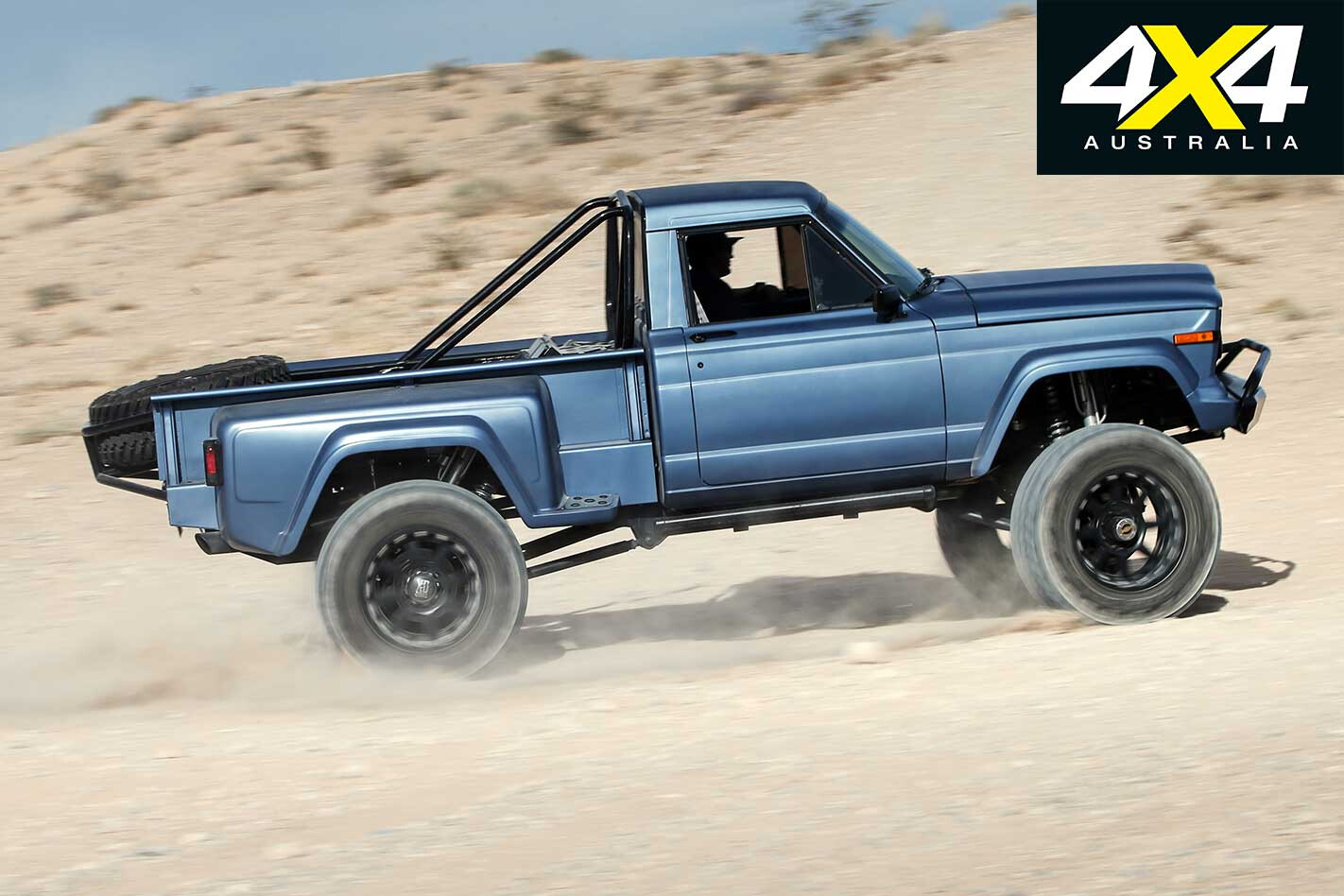
The V10 Viper engine originally made close to 400hp/300kW, but this one probably pulls better than that these days thanks to the long-tube headers fabricated by Nefarious and the massive Magnaflow-equipped exhaust system. The transmission used is a Dodge 48RE four-speed auto, which feeds grunt back to a NV273 transfer case pulled from a HD Ford truck.
Full-size Jeep nuts will be quick to point out that the 1980s J10 had square headlights and was never actually a Gladiator. Riley’s truck gets the traditional look, with the earlier Gladiator front-end transplanted onto the J10 like it was always meant to be there. The old-school front-end has been modernised a bit with the use of LED lights, and the Nefarious-built front bar has an LED light bar neatly tucked into it.
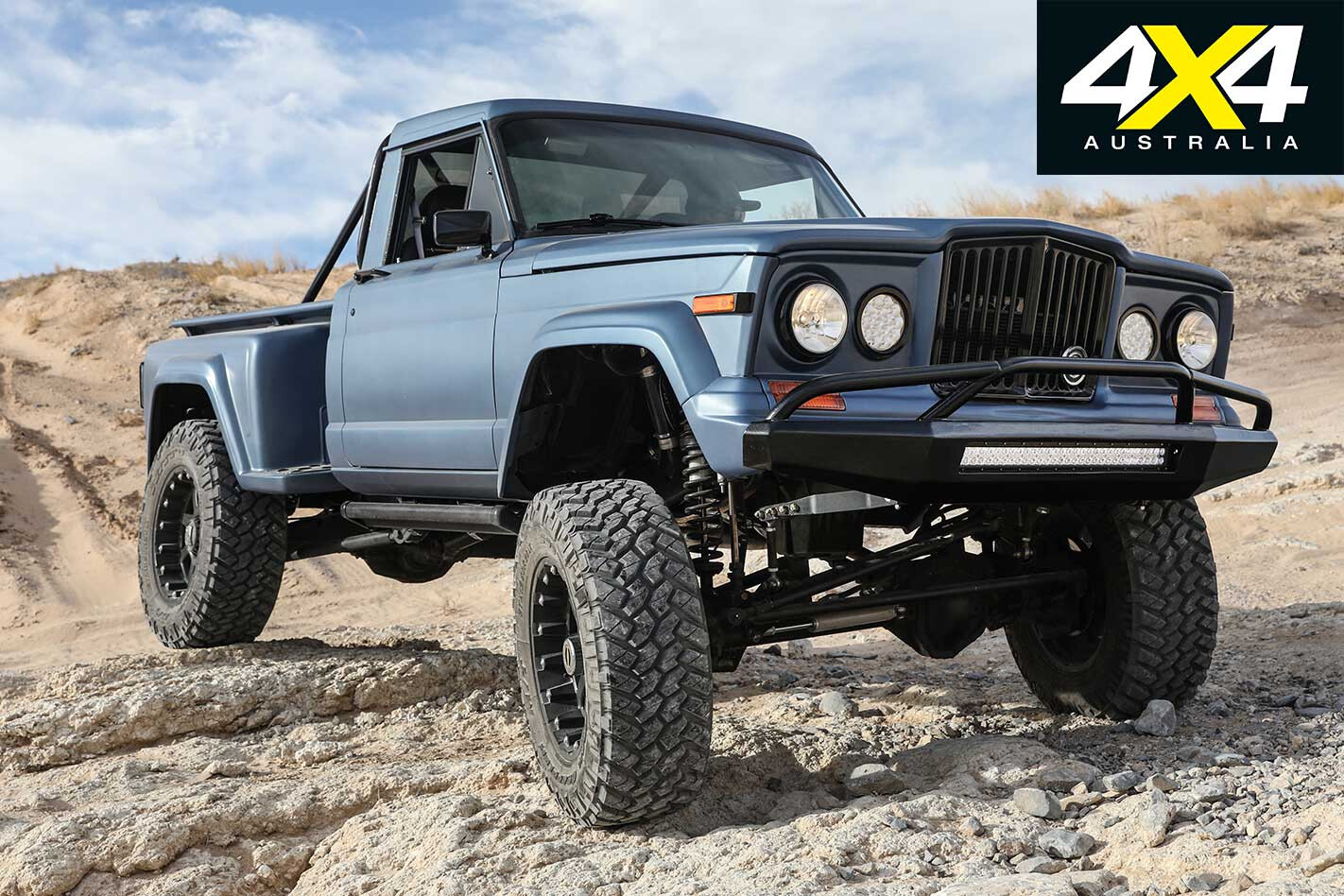
Cameron at Nefarious made the bed rack and roll bar that sit in the step-side tray, with the rack incorporating the rear bumper and mounting the spare 37-inch tyre; the engine’s radiator and cooling fans are mounted front of the tray. The rear-wheel wells had to be widened to accommodate the Nittos at full suspension compression, when the Jeep lands hard after dune jumps.
The V10 J10 might tackle the tracks like a race truck, but it doesn’t ride like one thanks to the leather-trimmed interior fit-out. The power-adjustable seats, gauge panel and steering wheel have all been taken from a late-model SRT, and there’s a custom console, air-conditioning, custom head liner and full carpets to add some luxury to the launch.
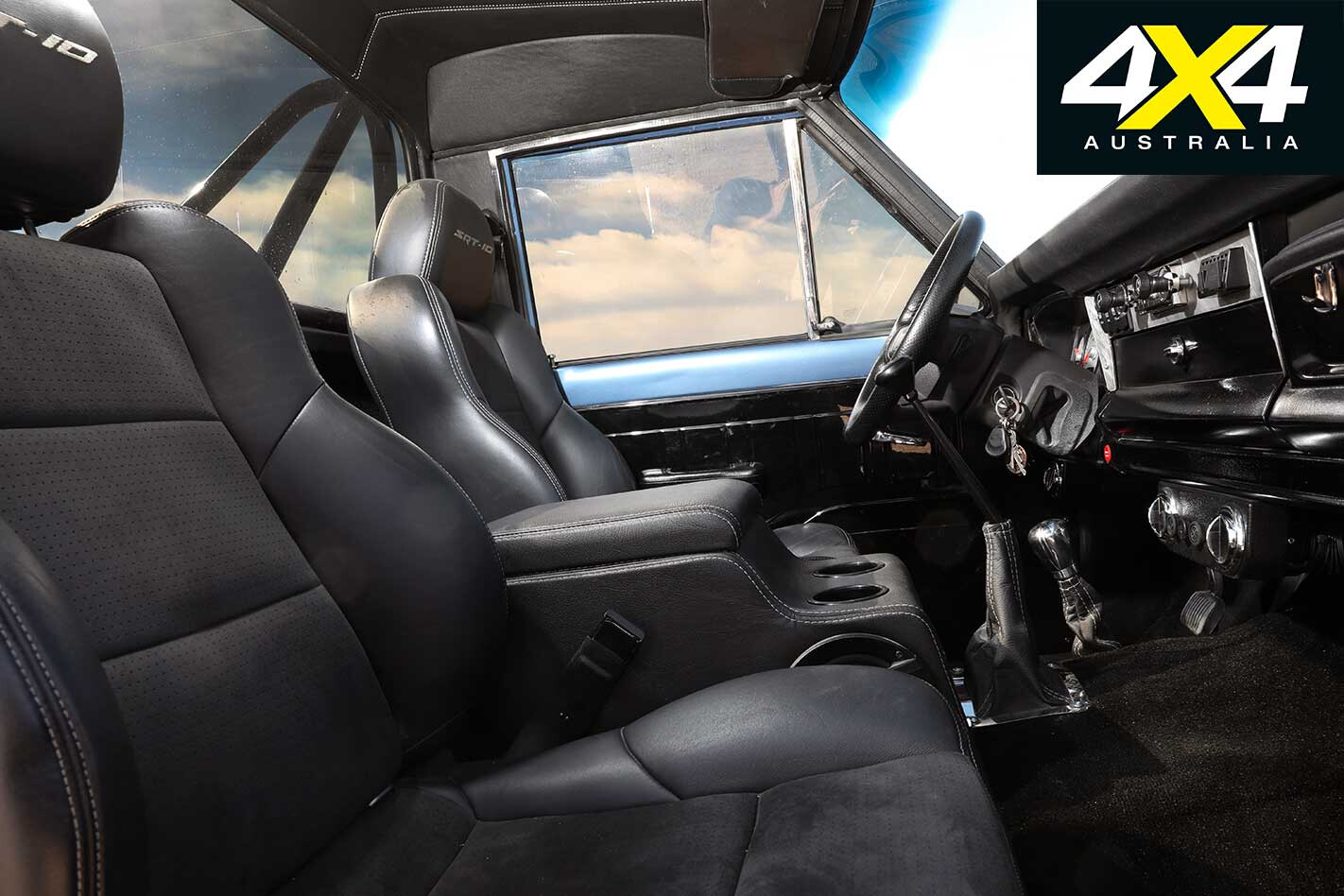
The Viper-powered Jeep is the complete package; it looks the goods and goes even better, and Riley couldn’t be happier.
“The truck runs amazing now that it is all finished,” he said with a smile.
We’re looking forward to seeing the tsunami of modified Jeep JT Gladiators over the coming years, but we reckon it will be a while before we see anything to match this one.
YES, I KNOW, it’s still a Jeep, and love them or hate them it seems everyone has their opinion of the brand behind the seven-slot grille.
To give them credit, though, Jeep is the only brand to come out with a new 4×4 vehicle with live axles front and rear, as well as off-road-focused variants and options, in recent memory. Before you say the new Jimny is a new 4×4 with live axles, it’s pretty much a re-body of the old one with added safety tech and functionality. There’s nothing else like the Gladiator currently on the market.
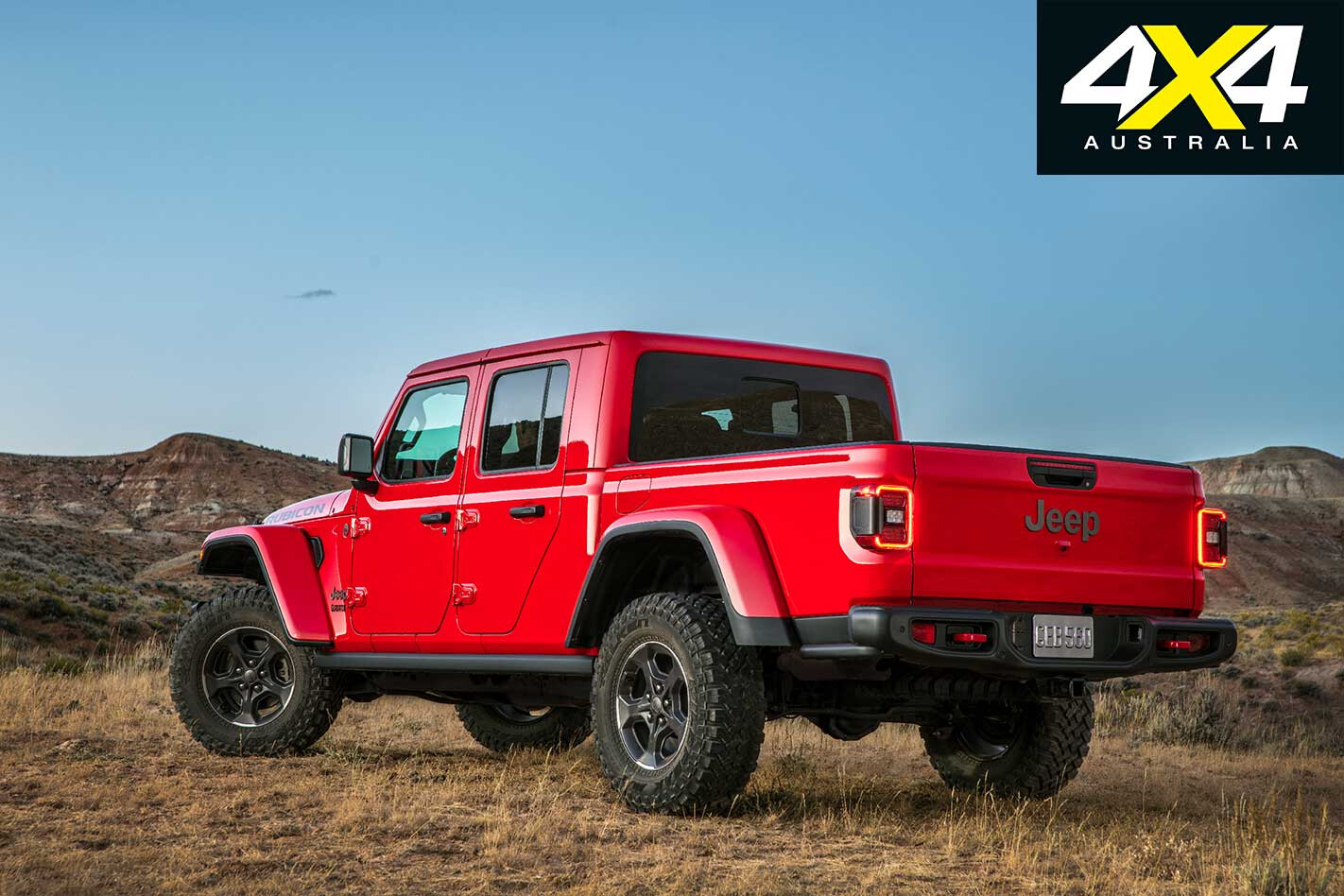
The last one was the dual-cab Land Cruiser 79 Series some seven years back, and while some might draw comparisons between it and the new Gladiator, they’re very different vehicles. Even though the 79 has proven to be a huge success with recreational tourers and four-wheel drivers, it was designed as a workhorse with industry and fleet sales in mind.
The Jeep Gladiator is aimed squarely at recreational four-wheel drivers, and with the availability of a Rubicon model and the ability to remove the roof and doors for open air adventures it is truly in a class of its own.
As a mid-sized truck many will mark the Gladiator against the likes of the Ranger, Hilux and other popular one-tonne 4×4 utes, but the Jeep is bigger and only has a 725kg payload. Plus, its locked, live axles will take it further up the gnarliest off-road track than any Hilux or similar IFS ute. And that’s before you delve into the wormhole of aftermarket off-road accessories that will be available for the Jeep.
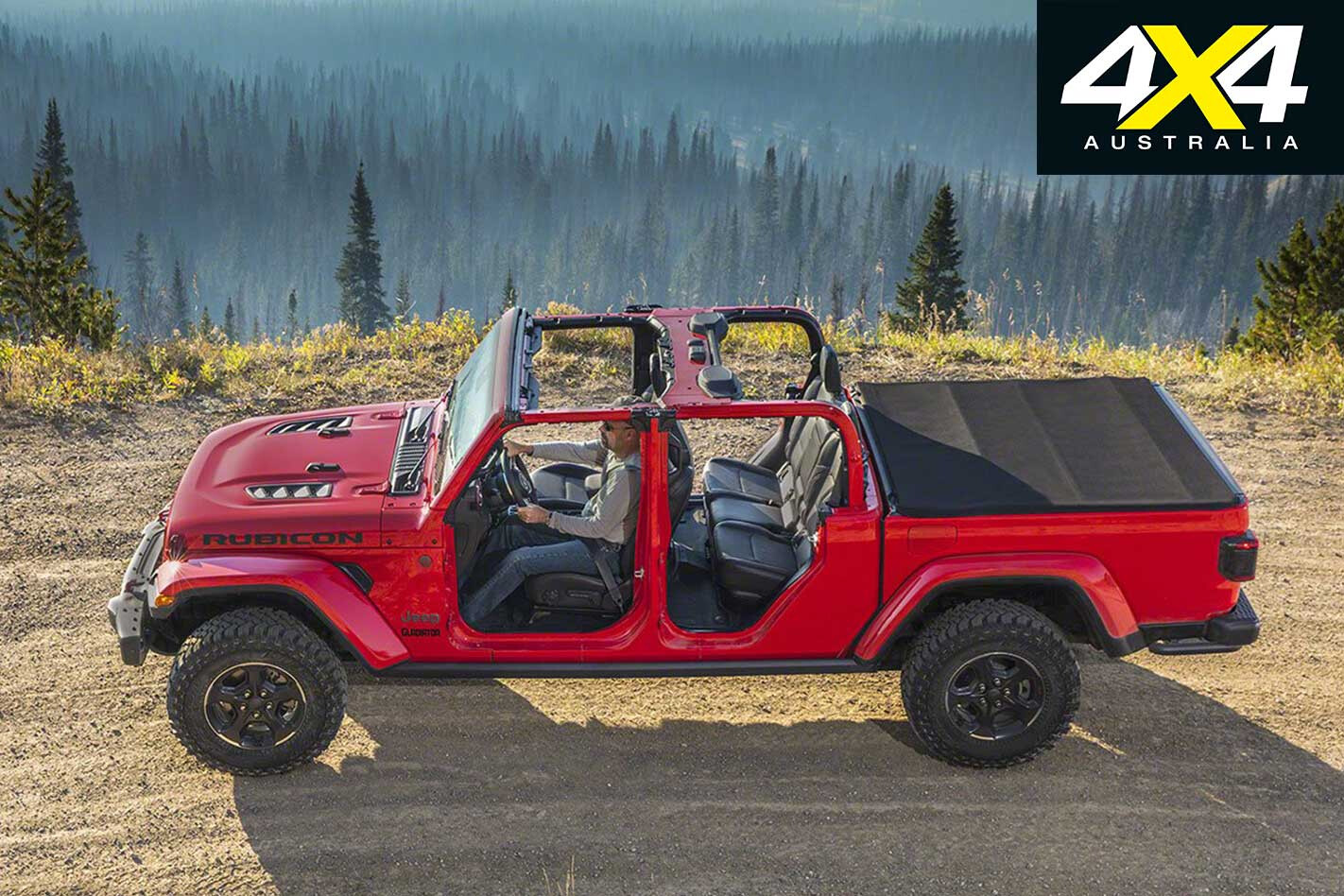
Modern 4x4s are universally becoming softer, more complicated and less capable, and the Gladiator bucks that trend. It probably won’t be as capable as a Wrangler Rubicon due to its longer wheelbase and greater rear overhang creating clearance issues, but being a ute (or truck, if you like) its versatility will appeal to a wider audience and not just Jeep enthusiasts.
Love Jeeps or hate them, we should welcome the Gladiator to the fold as it’s a rare occasion that we get a new off-road vehicle to join the showrooms full of soft-roaders.
For that reason alone I’m calling it the most significant new 4×4 of the decade.
Do you reckon there’s a more significant one? Let us know.
LAST year we tested the Safari ARMAX ECU installed on its 70 Series Land Cruiser, which is also available for a range of diesel-powered Toyotas: Land Cruiser 200 Series, Prado, Hilux and Fortuner.
Safari 4X4 Engineering, headquartered in Melbourne, Australia, has now turned its attention to the Blue Oval, making the ARMAX ECU available for the Ford Ranger and Everest (3.2-litre MY17+ models).
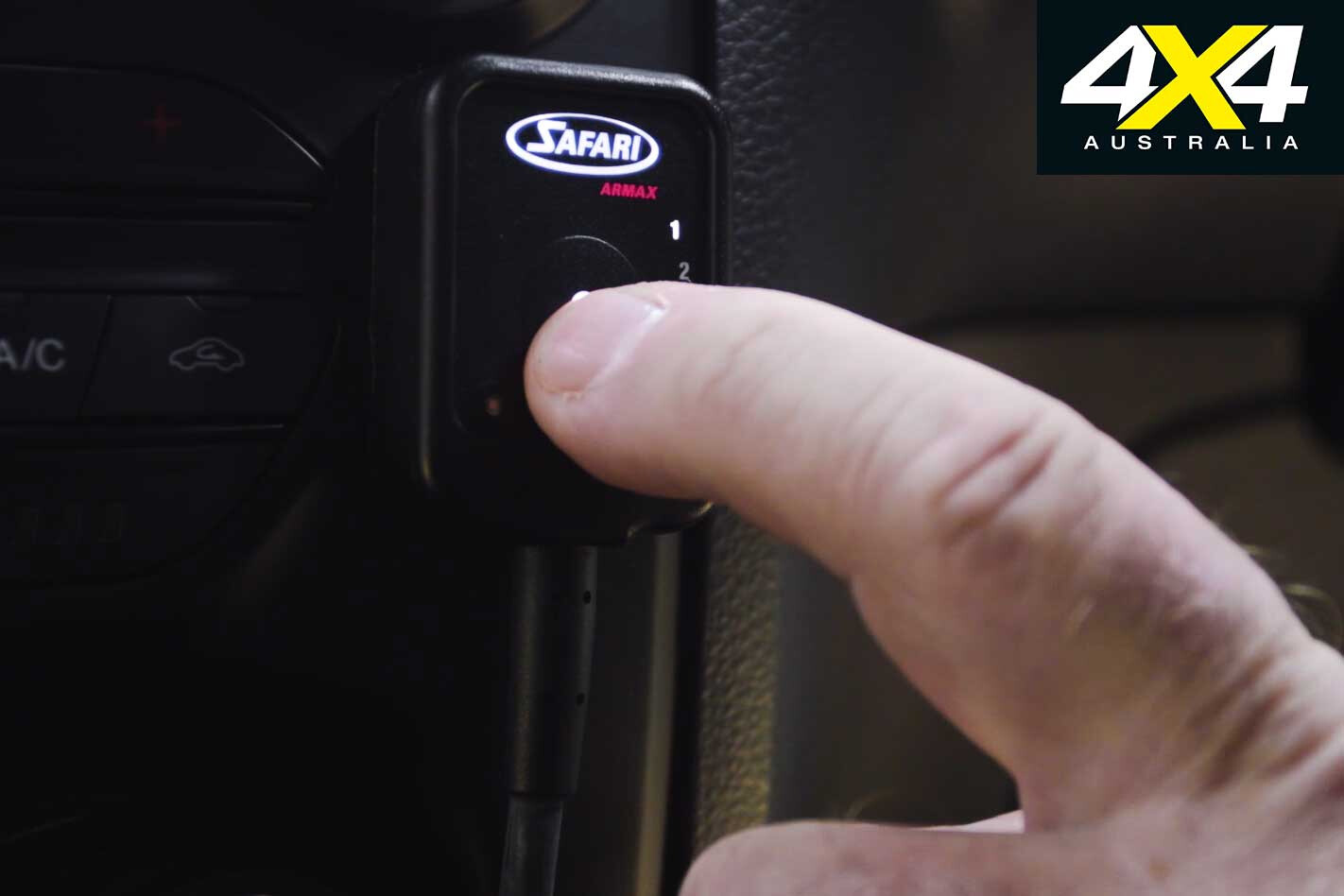
We drove Safari’s PXIII-spec Ranger decked out with aftermarket accessories, including Safari’s ARMAX snorkel and, of course, the ARMAX ECU. The route, which took us from city roads to off-road tracks and tight mountain corners, enabled us to sample the ECU’s five modes.
We also spoke to Safari’s David Burns about the new product. Plus, we hitched a 3200kg caravan to the rear of the Ranger and tested out the unit’s predictive towing mode.
The Safari ARMAX ECU for the Ranger and Everest is available now. Watch the above video for comprehensive coverage, and check head to www.safari4x4.com.au for more information.
IRONMAN 4×4 is now the official Australian distributor of Alu-Cab, the South African aluminium canopy and camping accessories company that has forged a sterling reputation for its products since its first aluminium canopy was produced back in 1999.
The company has since expanded its product line-up to include a wide range of canopies, aluminium rooftop tents (recognised by their unique clamshell opening) and awnings, offering the complete touring accommodation solution.
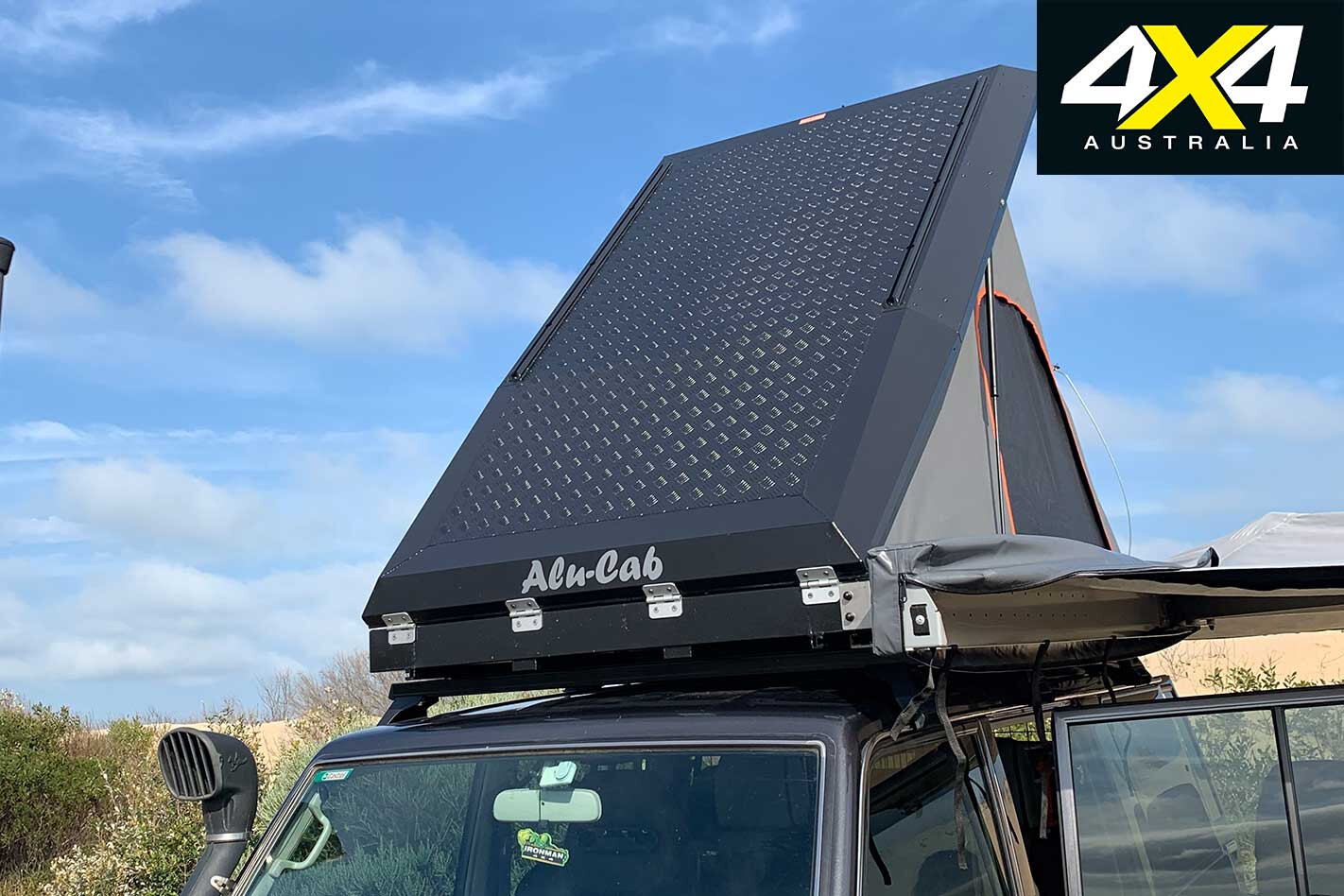
The company’s choice of aluminium came through its team’s many years of touring experience, citing the strength-to-weight ratio of aluminium and its resistance to corrosion as two big benefits. In the 20 years since its formation the company’s touring gear has garnered an enviable reputation as being tough enough for the most challenging touring conditions in not only South Africa but the USA, Australia and NZ. Indeed, the company relies on customer feedback to tweak its various products to ensure it’s up to the punishment this type of equipment cops on big trips.
It speaks volumes for Ironman 4×4’s reputation that it was this Aussie-based company the team at Alu-Cab approached when it was looking for a local distributor. For Ironman 4×4, becoming a distributor was a bit outside the company’s remit, but some on-the-ground research by Adam Craze, Ironman 4×4’s Director of 4×4 Products, soon resolved any hesitation.
“Ironman 4×4 was approached by the team in South Africa to look at the opportunity to take up the distribution for Alu-Cab,” Adam said. “As this is outside our normal direction, we took time to research and find out more about the products and the company.
“I went to South Africa and learned more about Alu-Cab and found that the company was run by a likeminded team and the products are of the highest quality. So we decided that we would take up the opportunity.”
It wasn’t just this common ground that saw the deal confirmed, but the fact it would also allow Ironman 4×4 to expand the product it offers to the Aussie off-road scene even further.
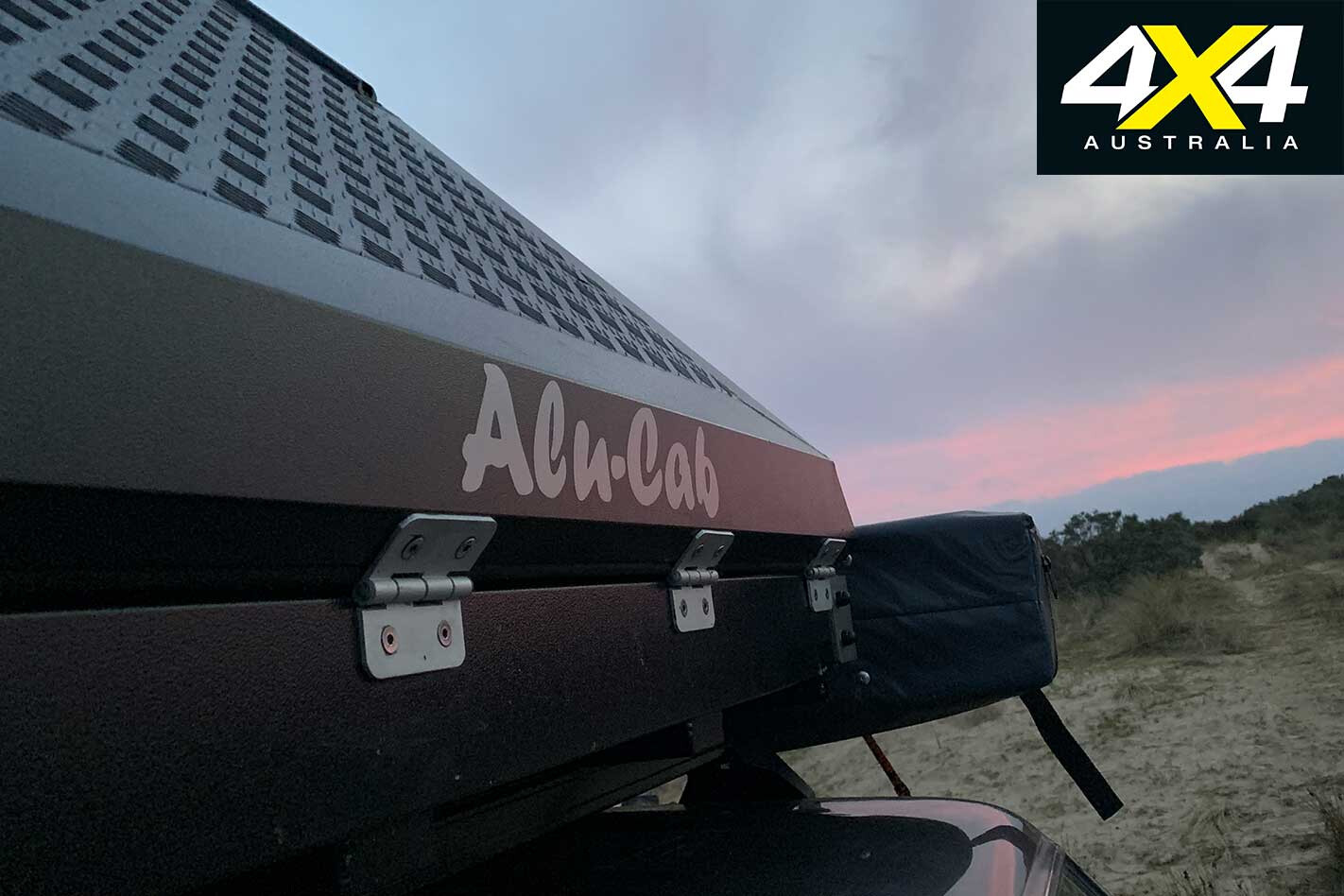
“For Ironman 4×4, Alu-Cab products fill a niche in the market that we do not cover,” Adam affirmed. “The Alu-Cab product works together with our Ironman 4×4 vehicle and camping solutions.”
As you’d expect from someone living and breathing the off-road touring lifestyle, Adam has plenty of user-experience to call on when both making the initial decision and when talking to potential buyers of Alu-Cab gear.
“I have known about Alu-Cab for many years after seeing the gear during a trip to South Africa,” he said. “I have the Gen 3 Expedition [rooftop] tent and 270-degree awning on my [Land Cruiser] 76 and we love the camping trips we do using the products.
“They are amazingly quick to set up and pack up, making them ideal for short- or long-term stays. Being able to pull up, and in about a minute my tent and freestanding awning is all set up and we are kicking back relaxing.”
Alu-Cab will be available from the end of next week through Ironman 4×4 stores and stockists.
For more info on the Alu-Cab product line and all other Ironman 4×4 gear, see: www.ironman4x4.com
Mahindra has released a loaded and tarted-up version of their 2019 Mahindra Pik-Up ute for the Australian market.
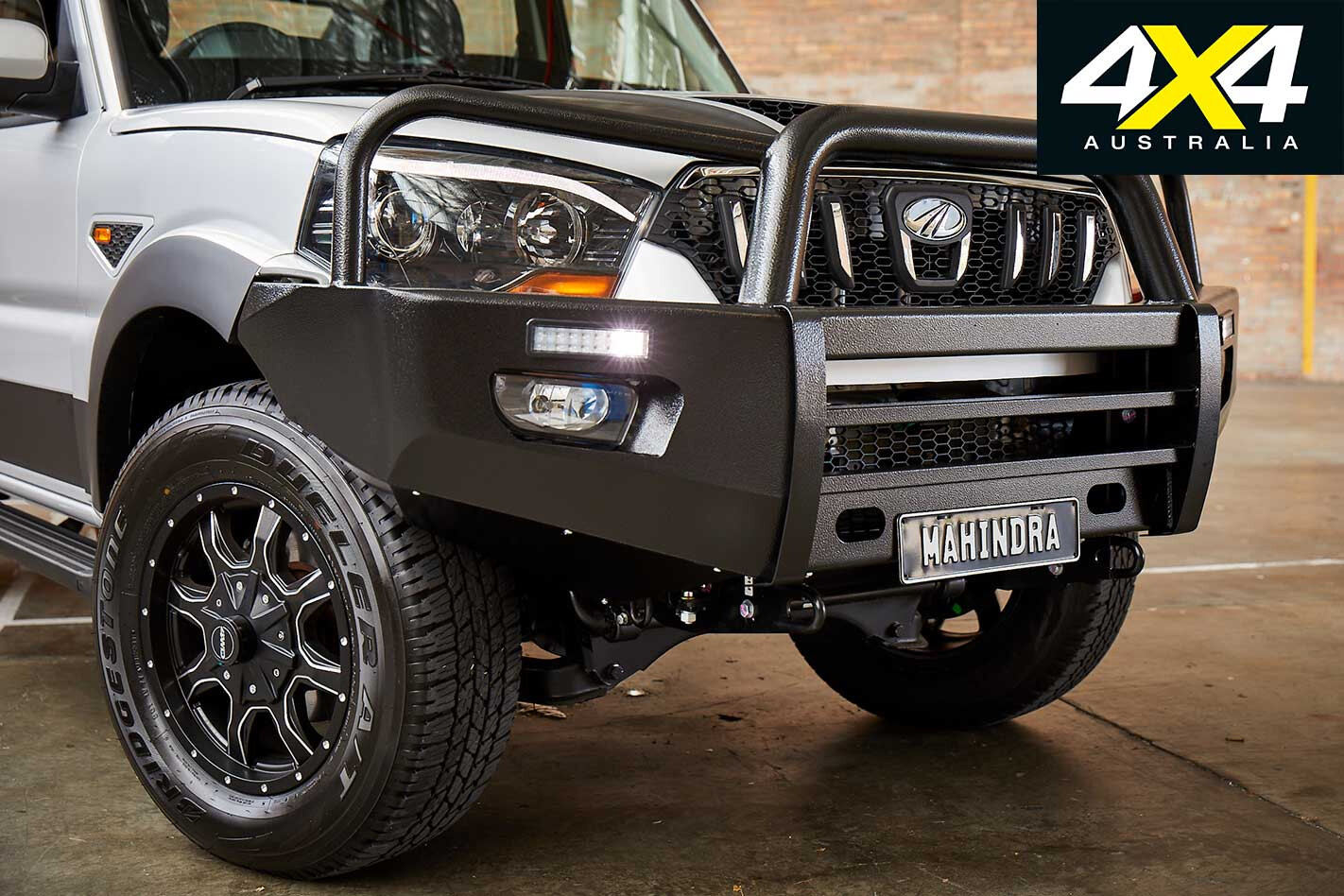
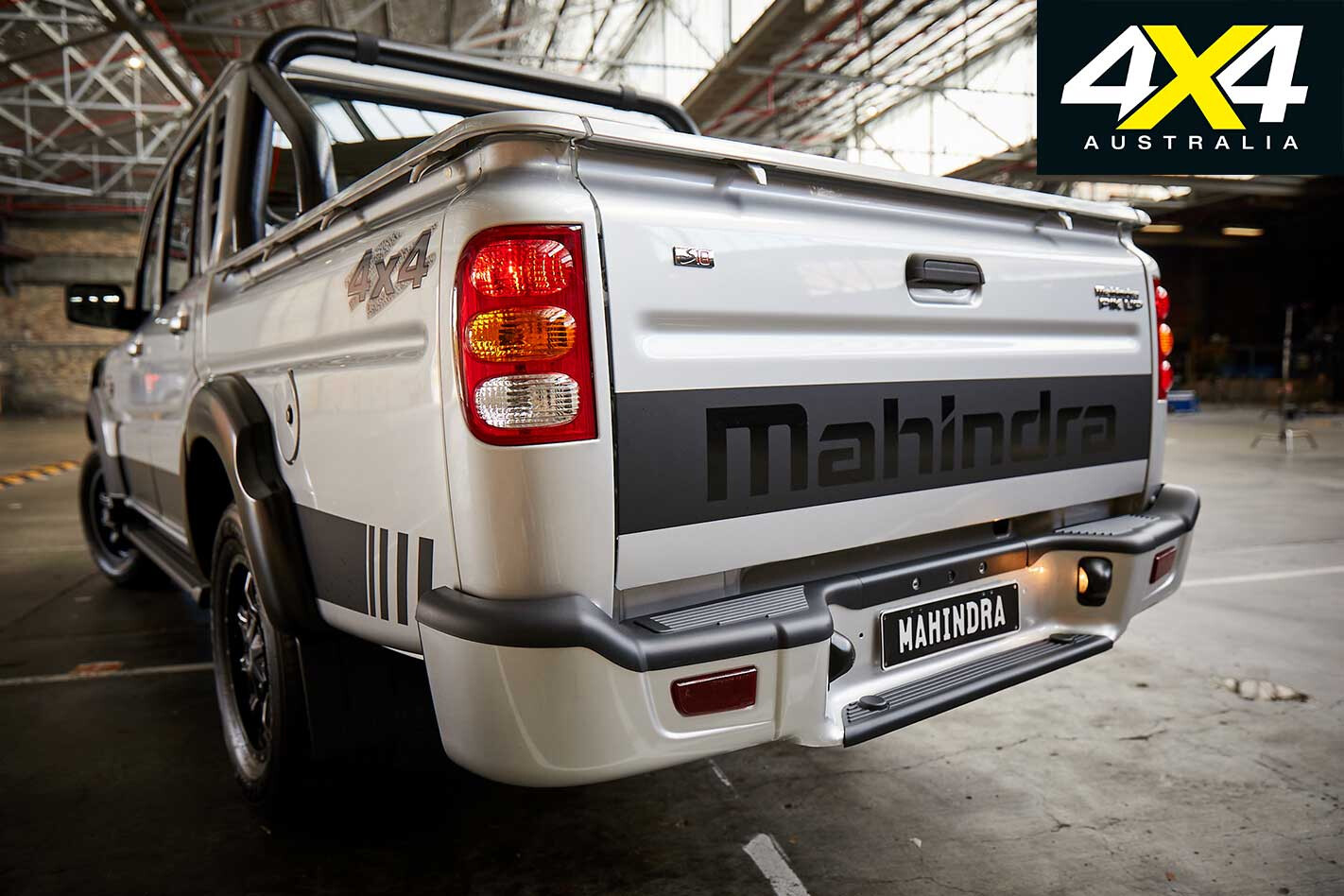
Christened the Black mHawk and based on the dual-cab variant, the limited-edition model comes fitted with 17-inch wheels, alloy sports bar, bullbar, side steps, and decal set running along it flanks. As its name implies, all these extras are finished in black.
“We are very excited to announce that this is the first time that Mahindra has offered a limited-edition vehicle to the Australian public,” national manager for Mahindra Australia, Ankit Taneja, said.
“The Black mHawk was designed in Australia, for Australian conditions.”
Exterior tweaks aside, the Black mHawk Pik-Up retains the same 103kW/330Nm 2.2-litre four-cylinder turbo-diesel and six-speed manual powertrain as the standard PikUp.
As for interior amenities, the Black mHawk comes with tech goodies such as satellite navigation and a reversing camera.
Mahindra says prices for the Black mHawk starts from $38,990, which amounts to a $9,500 premium over the Pik-Up dual-cab’s base price.