
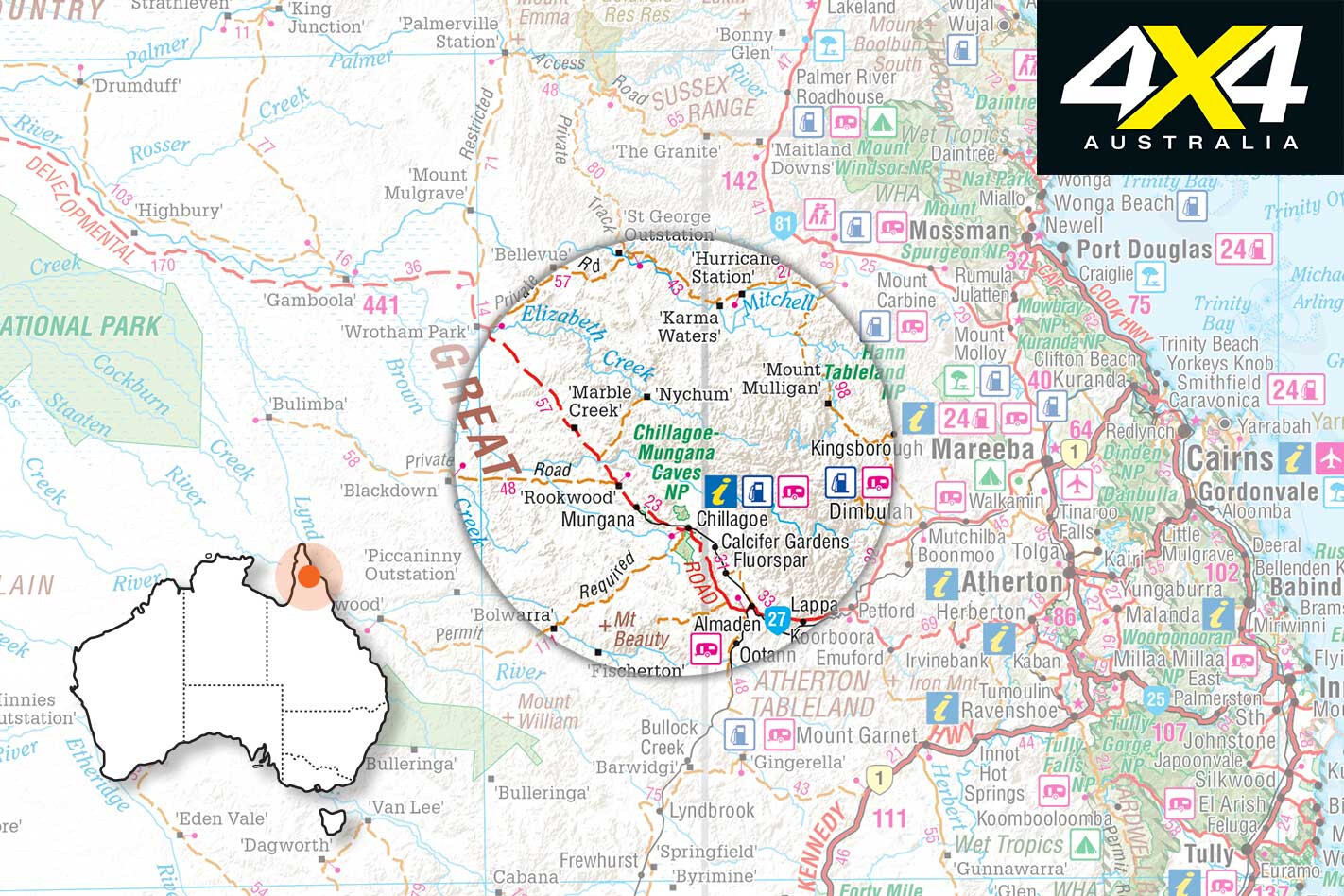
THERE is a lot of country en route to Cape York Peninsula that most travellers miss because they fail to do their research or are on a strict schedule. Chillagoe, 144km west of Mareeba – the gateway to the Cape – is one such spot. Here, one can unwind and explore mining ruins and the surrounding limestone karsts and caves, many of which are in the Chillagoe and Mungana National Parks.
The town has a population of more than 300 people, which is bolstered by mine workers at the Mungana copper mine to the west. There is ample camping and accommodation available in town. It’s best accessed from Mareeba, via the Wheelbarrow Way (Burke Developmental Road), which is sealed apart from about 15km or so. It can also be reached from Normanton and Karumba, via the BDR.
The Southern Route
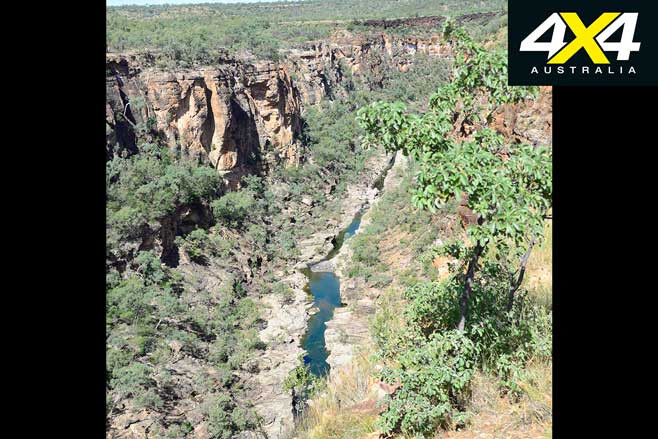
THE most adventurous routes to Chillagoe are from the Kennedy Developmental Road (KDR), north of Greenvale, and onto Gregory Developmental Road to Einasleigh; or, better still, keep heading west from the Oasis Roadhouse (or when coming in from Hughenden).
There is about 100km of dirt on the KDR. The remarkable Porcupine Gorge NP is en route and has a good campground. Remember that all national park campsites must be booked in advance on the Queensland Parks and Wildlife Service website.
Turn off the KDR and head north into Blackbraes NP to Gilberton Station and continue to Forsayth, via Robin Hood Station and Cobbold Gorge. This relatively unknown route runs through cattle stations and, with the black top crawling north to Weipa, it may become the main future track to the Cape York Peninsula for off-road adventurers.
Tourers must leave gates as they are, so leave them open if they’re open and remember to close them behind you if they’re closed. If drivers ignore this, the new route will be closed. Also understand that you don’t have permission to camp on private land when passing through, with camping and accommodation options available in Blackbraes NP, Gilberton Station, Cobbold Gorge, Undara NP and the townships.
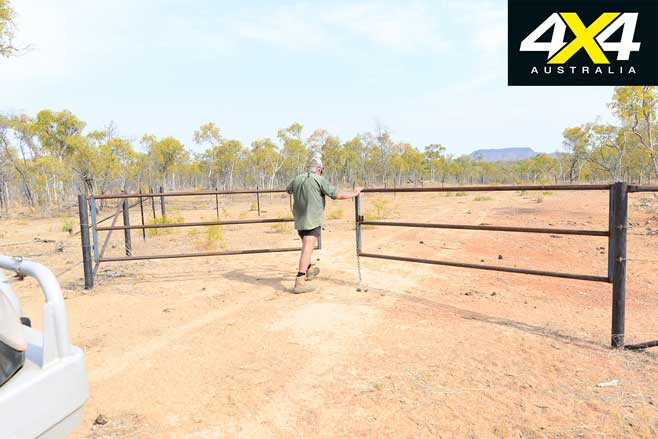
Once on the Gulf Developmental Road you can head to Undara NP (camping, accommodation and tours available), or take the unsealed road from Mount Surprise north to Almaden and Chillagoe.
Another unsealed route is from Mount Garnet and Innot Hot Springs, via Herberton and Irvinebank, to Petford on the Wheelbarrow Way. If you want rough, steep hills and extreme roads and tracks, these routes are purpose-made and will test you and your rig.
Limestone Country
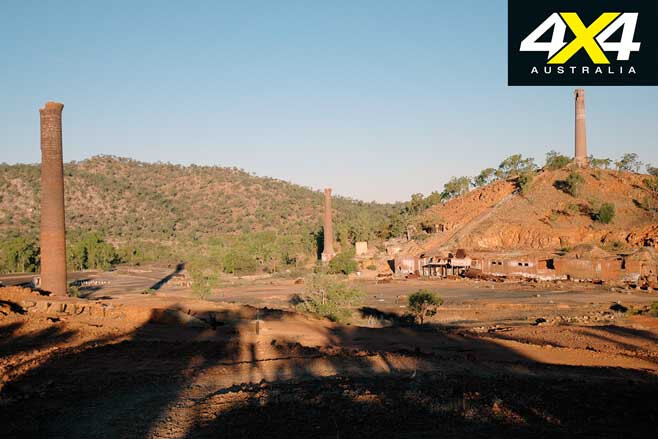
CHILLAGOE was once a booming mining town where some of the richest and toughest men and women on earth drank in the same pubs. James Mulligan, who was credited for the discovery of the Palmer Gold Fields – even though it was explorer Frank Hann’s finding – located rich copper minerals in the Chillagoe Mineral Field in 1874. William Atherton founded Chillagoe Station the same year. Mining magnate, John Moffat of Irvinebank, pioneered mines and smelters at Muldiva, Girofla and Calcifer.
Chillagoe was mooted as Australia’s richest mineral field and hosted dozens of mines scattered in the limestone belt; some had their own treatment plants and smelters. Due to the expansion of the field, a railway line from Cairns reached Chillagoe when the huge smelters, which are in ruins today, were constructed and came online in September 1901. However, these were closed in December that year due to a severe mineral shortage.
A private line from the Etheridge copper and goldfield opened in 1909 and the smelters kicked into life to treat copper, but disastrous flooding and a fire in the calcine plant shut the smelters down in 1914.
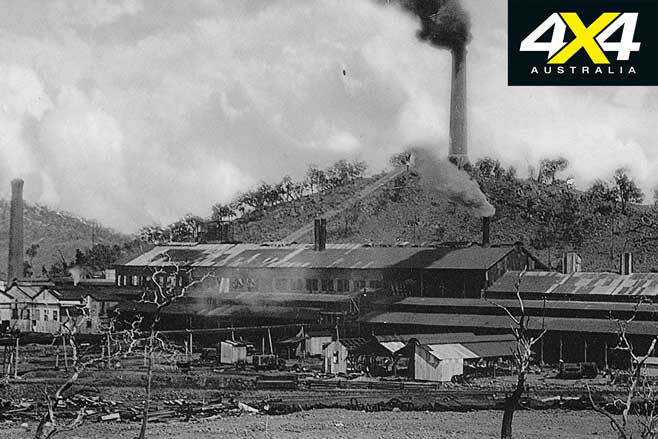
The Queensland Government acquired the smelters in 1919. Ore was shipped from as far as Mount Isa and the Redbank Mine in the NT to keep the smelters going. At the time, the State Treasurer “Red” Ted Theodore and Premier William McCormack, both former union organisers at the Mungana Mine, were entrapped into allegations of misconduct in the late 1920s, all which were disproved.
Between 1901 and 1943 the smelters produced 60,000 tonnes of copper, 50,000 tonnes of lead, 6.5 million ounces of silver and 175,000 ounces of gold. It was the lack of manpower during the war years and the decision by Mount Isa Mines to smelt its own copper and lead that forced the closure of the smelters in 1943.
Today, the ruins are on the National Heritage list and managed by the Queensland Parks and Wildlife Service. They are open to visitors, though access is restricted beyond the carpark fence. The ruins of the smelters can be seen from town.
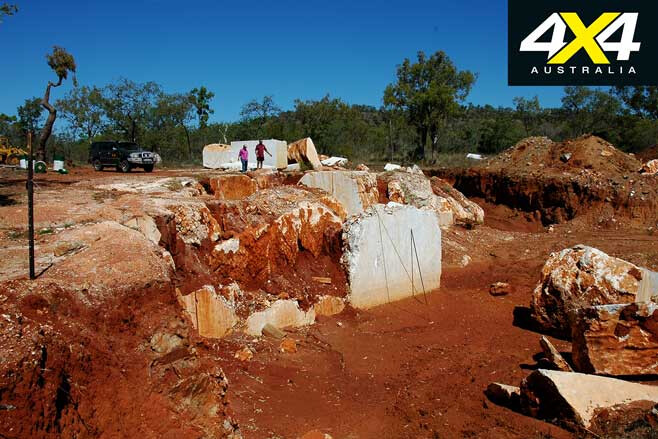
The mining of copper and lead continues in the district at the Red Dome and Mungana Mines. While some locals are employed, most of the staff are on a drive-in drive-out basis and housed in a camp on the west bank of Chillagoe Creek. Marble and lime are also mined, with large 20-tonne blocks of marble visible along the road.
The town of Chillagoe has old period cottages and, with several locals collecting historic equipment and even restoring old vehicles, it’s worthy of exploration.
The Limestone Tower Karst
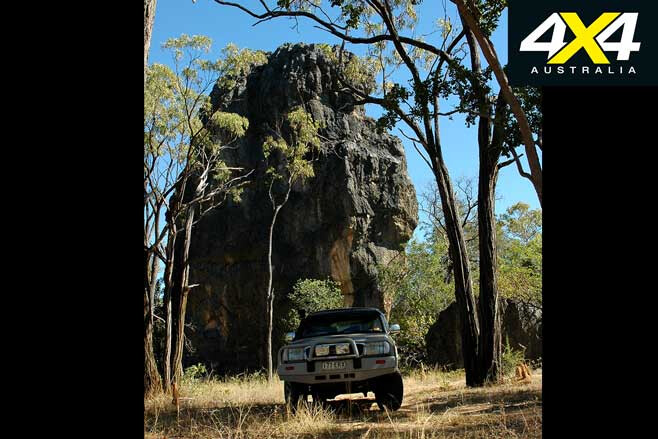
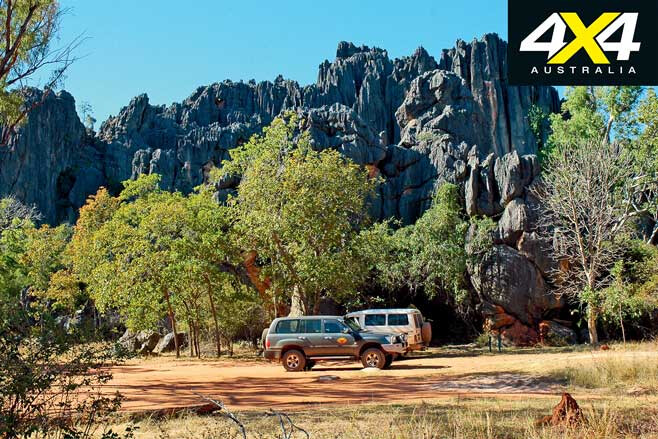
CHILLAGOE sits on the eastern end of a long and wide limestone belt that extends west to Mount Musgrave Station and north to Palmerville, and includes the best example of tower karsts in Australia. Restricted to the Mitchell-Palmer Rivers region, the tower karsts, some measuring more than 100m tall, are distinctive cliff-like limestone outcrops and peaks.
The Chillagoe Karst Region has the best examples of tropical limestone bluffs and towers in Australia, with the closest similarities occurring in Madagascar and Cuba. More than 1000 caves and shelters have been mapped, making it the largest cave system in the country.
Cave tours are conducted by the Parks and Wildlife rangers and must be booked at the Chillagoe Hub Information Centre. Bookings are essential during the dry season when people, searching for something away from the usual tourism trails, flock into town.
Daily tours are conducted in three caves – Donna, Trezkinn and Royal Arch – with each one offering something different, while some caves, like those in Mungana NP, have self-exploration options. The parks may be closed during the wet season due to flooded caves and tracks that have turned into muddy quagmires.
Weathered limestone – dissolving from the effects of wet season rains and fluctuating groundwater levels – continually reforms the caves and adds more features in the form of stalactites, stalagmites and flowstones.
There is also life in these caves, with many species of insects living in the stygian darkness. Several species of insectivorous bat roost and breed in the caverns, preyed upon by green tree frogs, tree snakes and pythons.
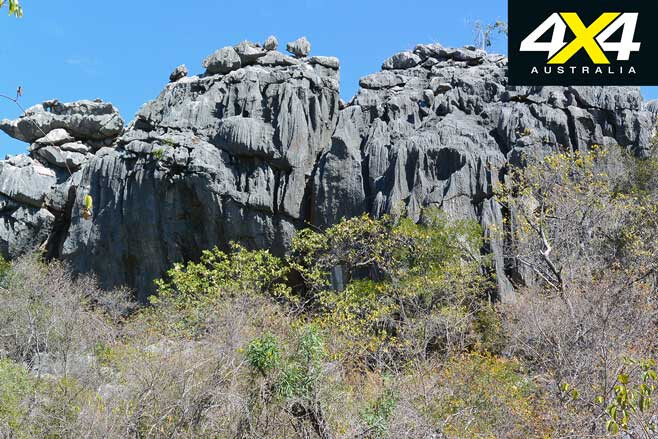
The limestone karsts are surrounded by open and sparsely clad monsoonal woodlands and grassy flats. Water is scarce and few perennial streams occur, with stock dams keeping cattle alive in all but the driest of seasons.
More than 75 bird species have been recorded in the limestone belt, while marsupials and reptiles are common. Some birds, like the white-rumped swiftlet, can be seen flying above the cave entrances, and from November to February they nest in the caves and navigate in the darkness using echolocation.
Some of the most remarkable towers are located on cattle stations that rarely give permission for access. It’s a shame, but we can blame the grubs that dump rubbish and leave gates open. Maps and information on tracks that are open to the public are available at the Chillagoe Information Hub, and there are several 4×4 tracks in and close to Chillagoe that can be used to gain access to karsts, caves and old mines.
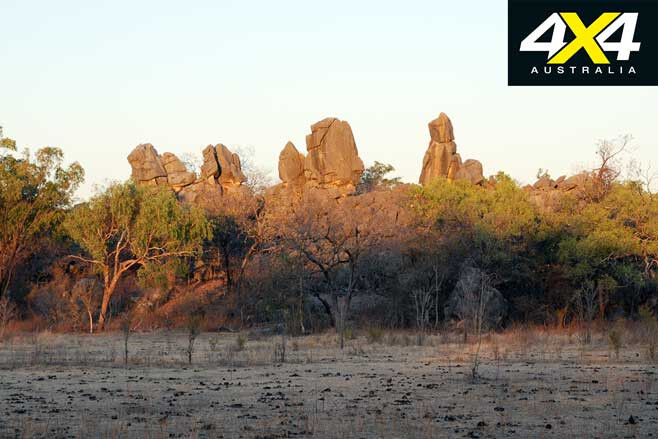
Aboriginal rock art can be found by taking the 150m track on the left side of the Chillagoe NP sign, about 4km before the town’s eastern entrance. You need to climb up the tower, where small shelters display the art.
There’s more rock art at Mungana NP, 30km west from Chillagoe, and at the Wallumba Art Site, a short hike from the Balancing Rock car park. Dome Rock, on the right side of the road, about 2km before entering Chillagoe, is an imposing, picturesque granite outcrop that is best seen from the road.
If you want to hike, there are plenty of walking tracks ranging from 400m to 9km in length. It’s hot country and a good pair of walking boots and a decent level of fitness is required, especially in the caves as the limestone is very sharp.
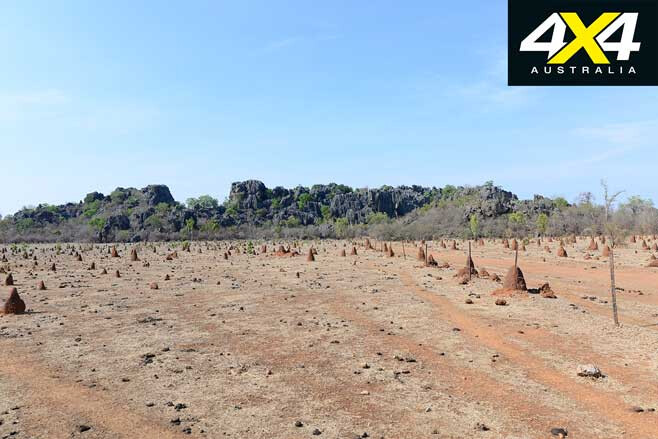
Carry plenty of drinking water, as there is none in the bush. Always let someone know where you are going and don’t wander off the beaten track, as it’s so easy to become lost in the limestone maze where everything appears the same.
The most popular walks start from the Balancing Rock car park. This rock is a remarkable piece of nature and is well worth the climb and short hike. There are walking tracks that extend from the car park to the Donna Cave car park, Pompei Cave and beyond to Bauhinia Cave. You can get someone to pick you up, as there are car parks at any destination.
More Adventurous Routes
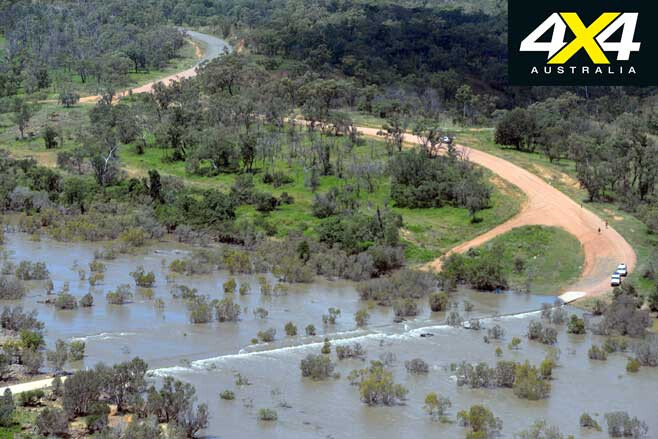
FROM Chillagoe you have a choice of heading east to Dimbulah and then farther east to Mareeba, where you can continue north to the Cape. The Mount Mulligan Road from Dimbulah is one of the most scenic routes to take, and there are some great bush campsites at the Old Cooktown Crossing on the Mitchell River.
If you head west from Chillagoe on Burke Developmental Road, there are roads and tracks to the north that junction with the Peninsula Developmental Road. To the west of Wrotham Park is Mount Mulgrave Station road, which continues north to Palmerville. Further west along the BDR, just past Gamboola Station, another road crosses the Mitchell River and terminates at Fairview Station on the PDR. Or continue north past Dunbar Station and cross the Mitchell River on the Koolatah-Oriners Station Road which leads to Fairview and Artemis Stations.
The roads and tracks can be rough as guts, but invest in a Hema paper map, which has far more detail than a GPS system, and you are well on your way to an unbeatable off-road trip.
Chillagoe Travel Planner
BEST TIME TO VISIT: During the dry season (Apr-Nov) temps range from 25 to 40°C.
TOWN SERVICES: Police station, medical centre, fuel and mechanical repairs, camping and accommodation, two hotels and an airport.
CONTACTS Chillagoe Hub Information Centre Phone: (07) 4994 7111 Email: [email protected]
Cobbold Gorge Phone: 1800 669 922 Website: www.cobboldgorge.com.au
Undara Experience Phone: (07) 4097 1900 Website: www.undara.com.au
Gilberton Outback Retreat Phone: (07) 4062 5329 Website: www.gilbertonoutbackretreat.com
FOR AUSSIE Jeep fanatics the eternal wait for the Jeep JL Wrangler is over, with the local launch officially taking place in Tasmania. Beating Jeep Australia to the punch, however, was Melbourne-based Jeep gurus Double Black Offroad (DBOR), who revealed the first Australian-modified Wrangler a few weeks prior.
This bright and brutally tough four-door Overland promises even more off-road fun and capability. More impressively, DBOR’s head honcho Bill Barbas invited 4X4 Australia to drive the thing. Bill was happy for us to get as down and dirty as we liked with the big orange beast, but there was a bit of a tussle to get to the keys…
Special Delivery
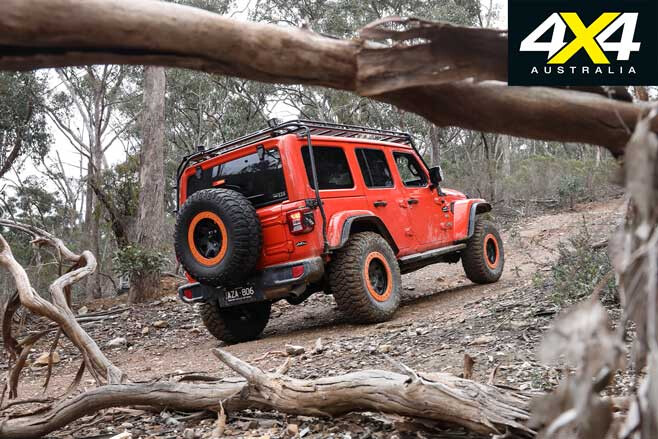
SO HOW does a niche specialist business get a hold of a vehicle before the big boys? Well, Bill is an ambassador for Brighton Jeep and he drew on that strong relationship to (excuse the pun) wrangle himself a very special delivery in the form of a Euro-spec JL Wrangler a few months before the official Australian launch (which, ironically, used Euro-spec vehicles). Once the Overland arrived, Bill and his team got stuck into the modifications they were keen to implement and then showcase.
The Jeep Wrangler isn’t short on available accessories, but the fact that the majority of JLs are, at this stage, still mainly drawn from the USA meant Bill and the team had to solve a few mechanical and engineering problems for this right-hand drive version.
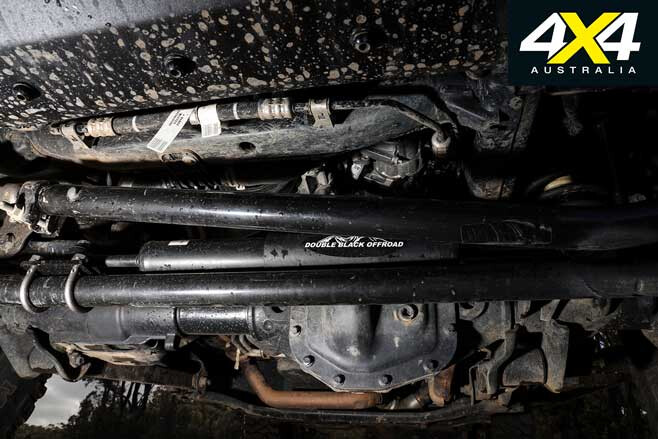
The big one – especially for anyone with an inclination toward off-road touring – is the position of the steering damper as it comes from the factory. In the stock Wrangler the steering damper sits quite low and is exposed to potential crunching when approaching a steep obstacle.
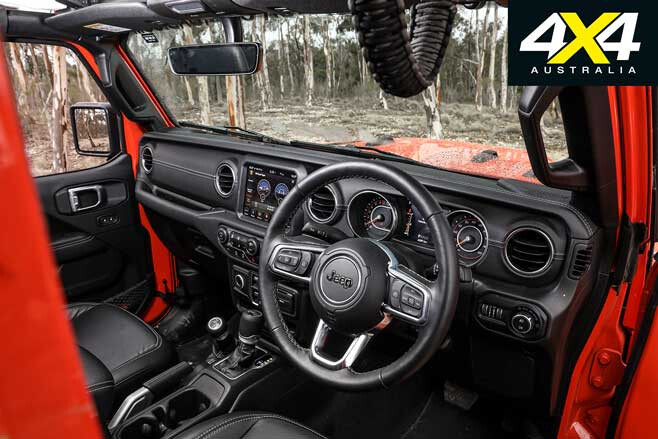
“It’s actually really bad,” Bill affirmed. “And that was the first choice: how to make that work properly to fit and suit right-hand drive.
“So that was one of our first projects; just to flip that dampener and grind off the existing mount. We gained nearly three inches just by doing that,” he said.
Looking at the finished product you’d be hard-pressed to know the steering damper’s revised and far more common-sense location wasn’t like that fresh from the factory. It makes you wonder what the Jeep boffins were thinking when they positioned it down low like that.
A Mix of Flavours
IF THERE’S an upside to Australia having to wait so long for the JL Wrangler to arrive, it’s that by the time this orange rig arrived in the DBOR workshop there was already a vast amount of accessories available for it.
The caveat was that, as Bill found out, what may seem like a straightforward fitment in the Jeep’s home country isn’t always the case for the right-hand drive version. Fitment of the vehicle took a couple of months, with some of the team’s time spent rejigging aftermarket accessories from the USA to fit the Australian/Euro-spec Wrangler. Plus, they had to wait for accessories to be made for the significantly smaller RHD Wrangler market.
“What a lot of it (the timeframe) was … it was more a case of what accessories were available,” Bill explained. “This is the problem … you had a lot of the US companies that are understandably so caught up in their market, and a lot of stock wasn’t available at the time.”
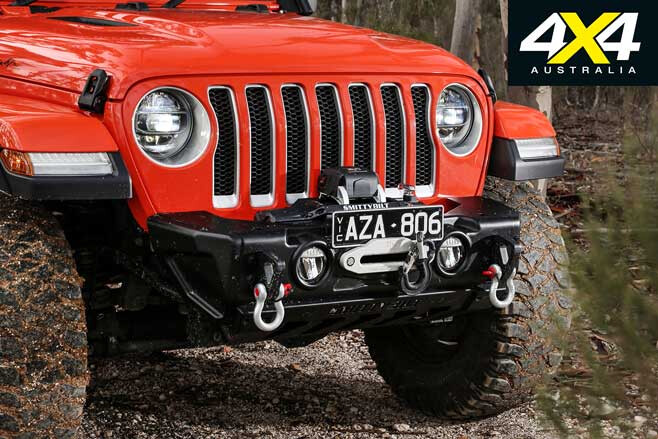
This included the tough-looking Smittybilt Stryker front bar (complete with Smittybilt 10,000lb winch) that was, when fitted by DBOR, still at prototype stage and came with its own US-market quirks.
“We put that on and then lo and behold we worked out that none of the US bumpers have got front sensors, because the US Rubicons don’t come out with them,” Bill laughed. “That was an issue with our (Euro-spec) Overland, as it has the front sensors.”
With that sorted the build continued, with the team drawing on its extensive off-roading experience to produce a sensibly modified rig that is equally at home among the really rough stuff as it is rumbling – it rumbles nicely courtesy of the Injen Cold Air Intake (one of Bill’s favourite mods) – around the streets.
Build it once, build it best
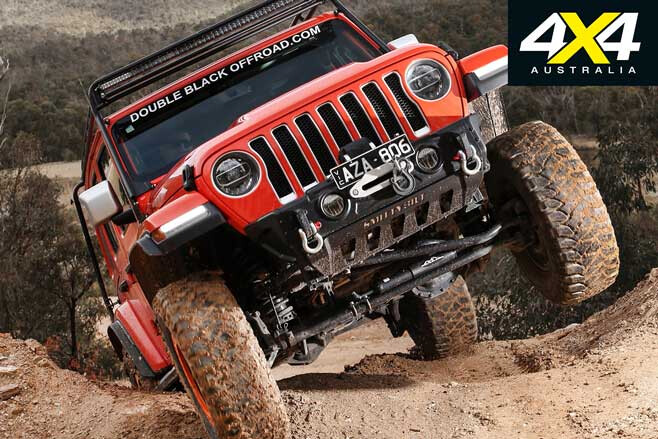
I asked Bill, “Why the Overland and not Rubicon?” He laughingly responded, “Because I couldn’t get a Rubicon.” He then answered more seriously by touting both the Overland’s inherent capabilities – something he attributes across the entire JL Wrangler range – especially off road.
“The way the electronics work on the JL versus the JK is leaps and bounds ahead,” he said. “I don’t know if you notice the difference, but the hill descent is actually usable; it’s not a pain in the arse, where as in the JK it’s just annoying.”
He’s also a big fan of the revised traction control system in the JL, ranking it as “not a diff lock, but damn close”.
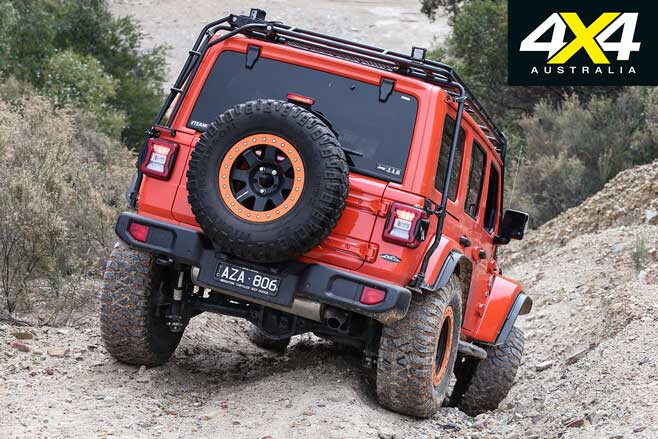
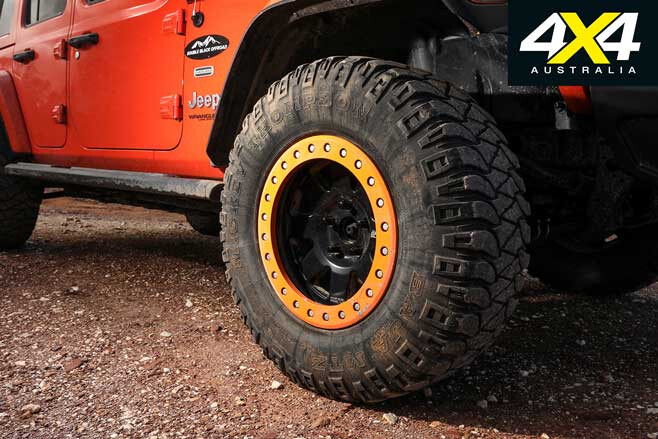
So it was from this already-capable base the Punk’n Orange beast was born, with its mix of standard kit and smart accessories fitted by a mob that are specialists in this vehicle. The most noticeable mod is the Pro Comp two-inch coil-spring spacer lift kit in combination with a trick set of 17-inch Pro Comp beadlocks and beefy 35-inch Mickey Thompson MTZ hoops. Interestingly, the beadlocks were a bit trickier than you’d think, but one for which Bill found a slightly unique resolution.
“The biggest issue we had initially was finding a wheel specific for the JL that would sit just outside the guard, or just under the guard,” Bill explained. “That was a real issue in the 18-inch diameter; finding the right wheel. That’s why we ended up going with a 17-inch JK wheel.” Amusingly, the team also worked out that the wheel runs the same stud as a Commodore.
The Pro Comp lift kit works brilliantly to control ride and handling and keep it aligned with how the factory-spec suspension behaves, as the kit retains the factory dampers (utilising shock extensions) and the factory springs (steel coil-spring spacers provide the extra lift). This means the kit is a straightforward fit; there’s no need for drivetrain mods or extension of brake lines, for example.
Fitment of the kit also provides ample clearance for those beefy 35s on the Overland (and it means you can go up to 37 on the Rubicon) that sit under the DBOR custom flares. Add in the obvious ‘free lift’ from these bigger tyres and the icing on top in the form of a DBOR swaybar disconnect kit and you’ve got, on paper, what looks like an uber-capable Wrangler. In case you need to ask, yep, it definitely goes like it looks.
Orange is more than the new black
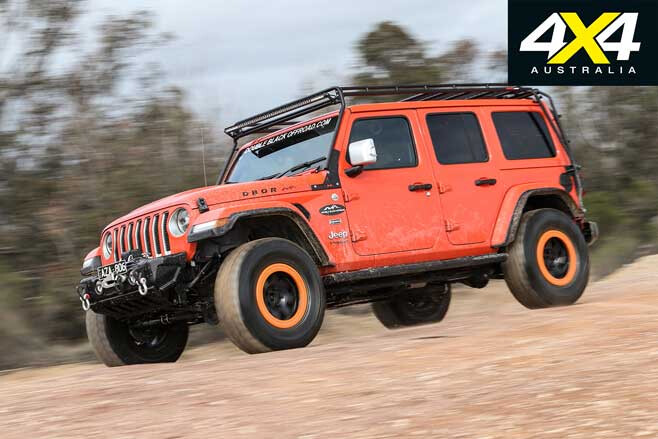
IT’S A WET, cold windy day when snapper Cristian Brunelli and I leave Melbourne to venture into the off-road unknown. The bitumen surfaces are slick and traction is at a premium – especially with those big 35 muddies rolling beneath us – which leads me to take advantage of the new JL’s auto 4×4 mode straight away.
Despite those big chunky hoops and the lofty ride height the four-wheeled Jaffa stays pleasantly planted on the road, with the only moments of discontent coming from blasting Antarctic-cold side winds that shove the Jeep around a bit when at freeway speed.
I soon become an even more fanatical adherent to the DBOR way. After a few kays of loose and slippery dirt roads, we point the Wrangler’s nose up the first of what will be, by day’s end, many challenging off-road obstacles.
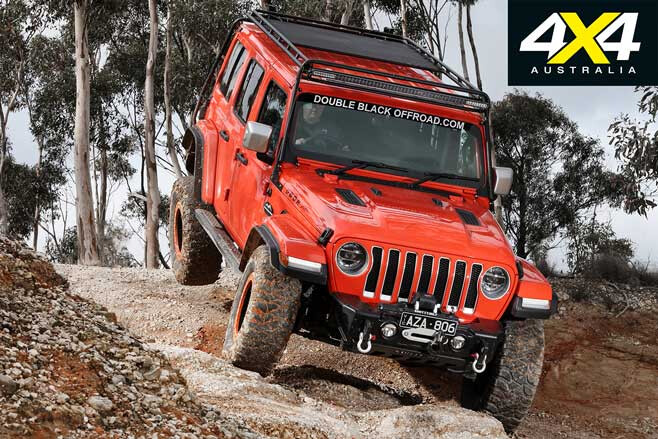
A steep, seriously potholed, mud/sand-covered pinch climb is up first and, remembering Bill’s favourable comments on the Overland’s TC, we don’t disconnect the front swaybar. The thing crawls up with ease, with the TC working away quietly and those Mickey Thompsons digging in to aid forward momentum.
Even with this four-door’s longish belly, there’s no contact with terra firma; the taller tyres, beadlocks and two-inch lift providing ample clearance. However, we do lift a front wheel – for photos, of course – which leads to a short stay in proceedings while we disconnect the front swaybar, just to see how much wheel travel this thing has.
The DBOR swaybar disconnect system, designed and manufactured in-house, is quick and easy and takes less than a minute. The swaybar is disconnected then reattached to a specific chassis-mounted bracket, with the result being a notable increase in wheel travel – DBOR claims up to 28 per cent more wheel flex – and tractive capability. This is well-tested during the next few big climbs that offer more of the same deep potholes, but at an even steeper angle and over a longer distance.
The Overland requires a slightly heavier right foot, but all four wheels stay in contact with the ground thanks to the additional droop as the vehicle despatches the climb, albeit with a bit more noise and a touch of tyre spin.
The overall performance on these off-road sections – tracks you’d likely think twice about if travelling solo – was no-fuss, with little feeling that we were anywhere near reaching the pointy end of this vehicle’s capabilities. When I recount my experiences to Bill, he’s not surprised, mentioning a tougher test of his own on a snow trip up Mt Kent in Victoria two weeks earlier.
“There were about eight or nine Patrols that couldn’t make this one hill,” he recounted. “As soon as we turned up they laughed at us and said, “No, you’re not going to make that!” and I just replied “Oh well, let me just have a crack” and I dropped the tyres down to 6psi and got up. Running beadlocks helped!
Smart always beats smash
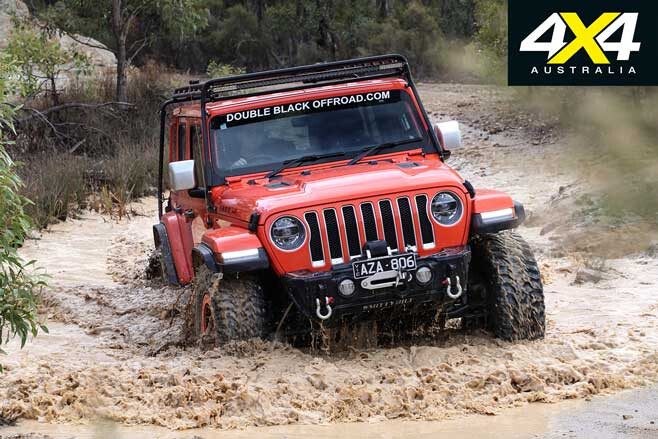
MODIFYING 4x4s for serious off-road duties often brings with it some expected sacrifices, most notably in regards to on-road ride and handling but also often in terms of being able to live with the vehicle day-by-day.
Go too far down the off-road modification path and the result can be a vehicle that is a royal pain in the arse to drive around town during the week. Sure, you can always have a ‘town car’, but not everyone can afford two vehicles.
The smart mods undertaken by Bill and his team have produced a vehicle that is capable enough to tackle the most challenging terrain, without on-road performance being sacrificed.
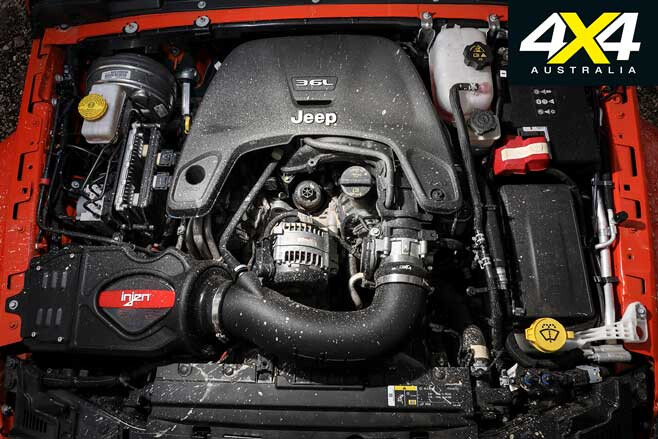
It’s a great combo of said clever mods and the base vehicle’s improvements from the previous-gen Wrangler, something Bill brings to my notice when he mentions the fact he’s now averaging around 12 to 13L/100km of fuel consumption. That’s bloody impressive considering those big 35-inch tyres, and he attributes a lot of it to the improvements in the Pentastar V6 and that sweet-shifting eight-speed automatic gearbox.
Add the relatively benign on-road manners and mix it with the exemplary off-road performance and this DBOR JL Wrangler is a very appealing package, something confirmed by DBOR’s phone running hot with excited JL owners since this rig first broke cover. An excitement we can definitely relate to.
IF ‘2020 Land Rover Defender prototype’ fatigue hasn’t set in yet, perhaps it will after the release of yet another round of video and stills.
Fresh from chasing lions with wildlife conservation charity, Tusk, in Kenya, and then lapping the famous hill at the Goodwood Festival of Speed, the prototype Defender has now been pushed to its limits in Dubai.
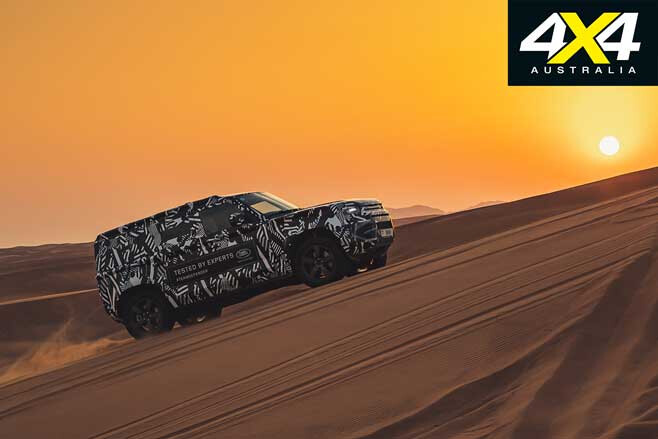
With temperatures soaring above 40°C, Land Rover engineers, together with a team of all-terrain experts from the International Federation of Red Cross and Red Crescent Societies (IFRC), steered the test mule up and over the region’s rolling sand dunes, as well as to the crest of the UAE’s tallest mountain along the iconic Jebel Jais highway.
“The dunes of Dubai are the perfect place to confirm that this is the most capable Land Rover ever made,” said Nick Rogers, Jaguar Land Rover Executive Director Product Engineering. “It sits on tyres with an overall diameter of up to 815mm, resulting in a very large contact patch. Coupled with our bespoke traction control system, which monitors and adjusts for a large variety of terrains, this makes the new Defender fantastic on sand and incredibly smooth on road.”
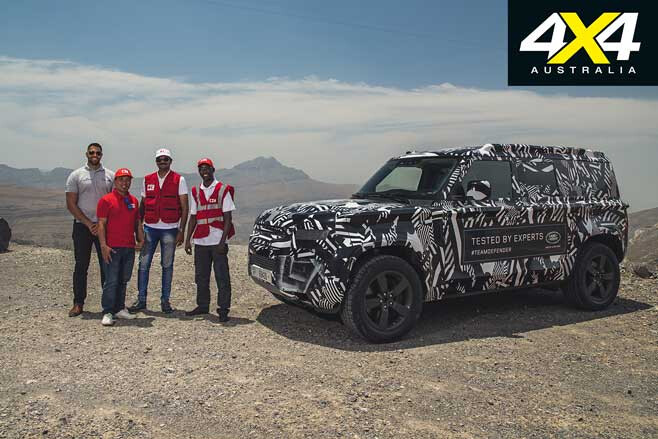
Land Rover and the IFRC recently signed a new three-year global partnership to “focus on disaster preparedness and response initiatives” – the relationship between the two organisations spans back to 1954.
The new Defender will officially be revealed later this year.
RESTOMOD four-wheel drives are massive in the USA right now, and builders are asking equally humungous prices for them.
Anything vintage – CJ Jeeps, Ford Broncos, Dodge Power Wagons and old Toyota LandCruisers – is prime metal for the restomod treatment, which entails taking a classic vehicle and retrofitting it with a modern drivetrain, chassis updates, and luxury and convenience features.
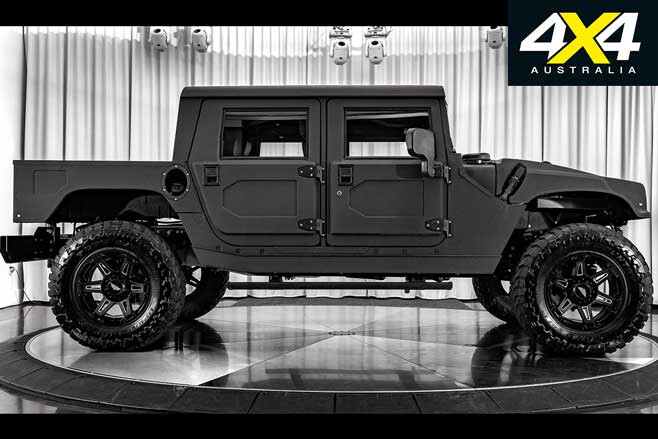
If restomod fourbies are big business, then the biggest 4×4 available is surely the prime subject. Michigan-based Mil-Spec Automotive (MSA) has been reimagining the iconic Hummer H1 since 2015 and transforming the military-based vehicles into premium off-roaders.
“The Hummer was an off-road brand that was not really focused on that luxury-vehicle experience,” says Mil-Spec President, Chris Van Scyoc, of the company’s vehicles. “We’re giving the Hummer H1 an actual lease on life.”
The mod’s start with a rebuilt late-model 6.6-litre GM Duramax engine that makes 500hp, replacing the older version of the GM diesel V8 that came in the HMMWV and Hummer H1 vehicles. Modern suspension, brakes, interior trims and equipment complete the mechanicals, to deliver a contemporary driving experience with added efficiency, performance and refinement. All surfaces inside and out are restored and refinished to the customer’s specifications and add premium appearance and feel, without losing the purposeful character of the H1.
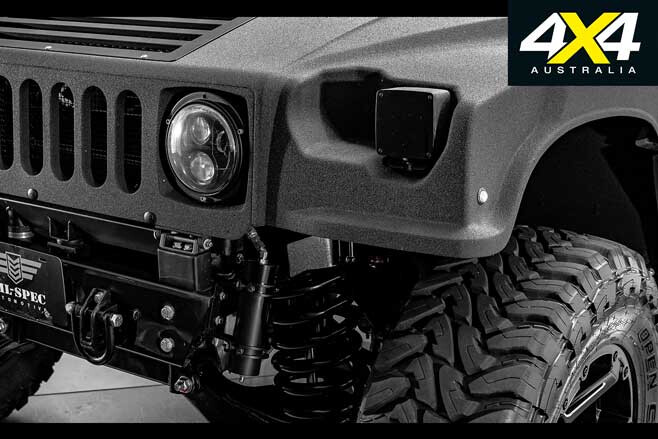
“The exterior of the Hummer is something that really doesn’t need to be changed,” says Mil-Spec CIO/Lead Designer, Ian Broekman. “It’s only important to enhance the vehicle. The entire interior of the vehicle has been re-developed and re-designed in-house by our team.”
The result is a vehicle with a presence like no other, be it rolling down Hollywood Boulevard or dusting up the Arizona deserts. The pictured vehicle – Mil-Spec’s H1 #007 – is finished in an exclusive Kevlar-infused, black polyurethane exterior coating with semi-gloss black accents, while the interior is upgraded with Napa leather upholstery among other luxury accoutrements.
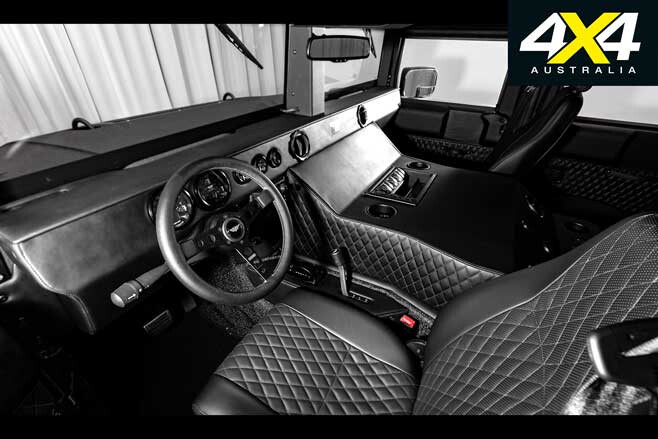
More significant is the Baja Suspension package on H1 #007. Developed by the late, legendary off-road racer Rod Hall, this set-up increases wheel travel to 13 inches at each corner by using longer coil springs and remote-reservoir shocks. The off-road-tuned suspension is perfect for getting the most out of the 38×13.50 R20 Toyo Open Country muddies on rough desert tracks.
An Off-Road Motorsports Hall of Famer, Rod Hall raced at Baja 50 times over his long career and campaigned Team Hummer with H1, H2 and H3 vehicles through the 2000s, recording some of his later Baja victories in the compact H3 Hummer. If anyone knew how to set up a Hummer suspension it was Rod Hall, and his input in to the set-up of H1 #007 makes this vehicle even more special.
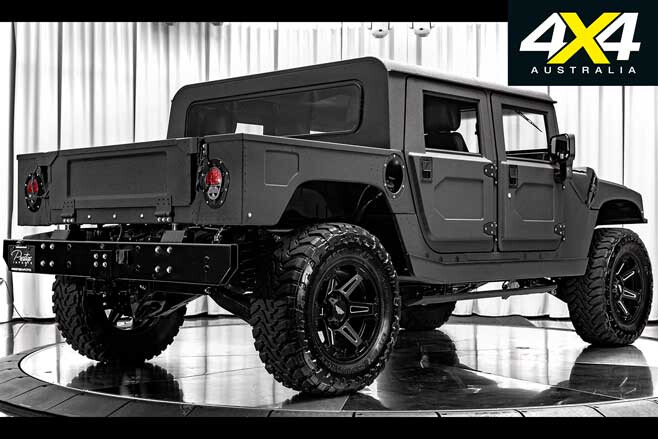
Special, handcrafted vehicles such as those from Mil-Spec Automotive don’t come cheap, with a Launch Edition vehicle such as #007 to set you back close to AU$400,000 by the time you get it here. The base price on the MSA H1 is around US$200,000, before you start adding the special features.
An interesting aside to the whole restomod 4×4 thing is that we’re now seeing owners of such vehicles selling their rigs, claiming that they are too good, too nice and too expensive to subject to the rigours of off-roading. At the going prices we can understand why, but don’t expect to snap up a used one for a bargain. They are usually low mileage and in demand, as buyers seek to get ownership while avoiding the long wait times that come with ordering a new, bespoke vehicle.
THE town of Eden in the far south of NSW is an idyllic spot with an amazing history of whaling and logging. It’s also the local centre for a string of stunning national parks all worth visiting for their enticing beaches, plentiful fishing and glorious walking tracks.
Even the hills outside of Eden are filled with history, and in this episode we venture to an old cattlemens’ hut and an inn that once provided a watering hole between the port on the coast and the goldfields of Kiandra.
It’s an area worth breaking away from the tourist crowds to explore, with exciting four-wheel drive routes, fast-flowing rivers and scenic lookouts to be found.
Ron, Matt and the team take the little convoy through the lush forests and to the beaches, to complete their tour of south-east New South Wales, and they plan to come back again sometime. It’s a corner of Australia often overlooked, but come here once and you’ll be planning your next visit.
WITH ITS sophisticated underpinning derived from the current Land Rover Discovery and Range Rover models, the new 2020 Land Rover Defender takes a huge leap away from its light-commercial vehicle roots. It promises to be a more luxurious and refined vehicle and not the farm truck of 1948 from which it was derived.
These latest photos snapped by UK publication, Autocar.co.uk, indicate there could be a lower-spec variant of the all-new Defender. Obviously a short-wheelbase Defender 90 variant, the steel wheels in lieu of flash alloys indicate a vehicle destined for heavier duty work than what most new Defenders will be bought for.
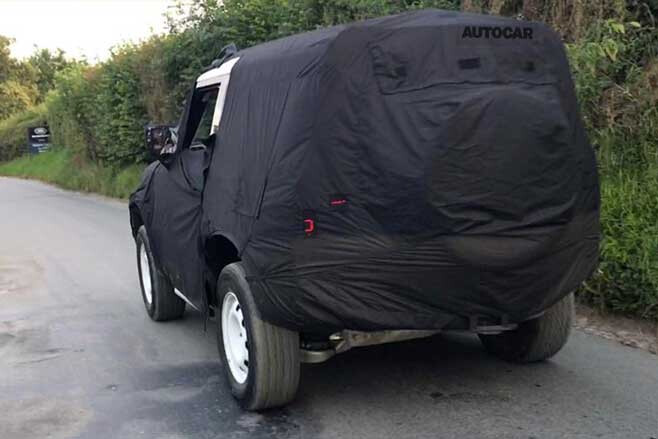
Extra cladding and camouflage over the rear section of the body, as opposed to the many other ‘leaked’ images of new Defender we have seen already, suggest this 90 could even be a ‘van’ style variant with solid panels replacing the rear side glass windows. Commercial-grade Defender vans were offered in both 90 and 110 models in the past.
We already know the new Defender will eventually be available in three distinct variants: 90, 110 and 130 models. However, these designations no longer relate specifically to the wheelbase measured in inches; the 110 and 130 Defenders will ride on the same 3022mm wheelbase, with the 130 having more rear overhang for added passenger space. The Defender 90 shorty rides on a 2587mm wheelbase.
There will be three specification levels with a choice of petrol, diesel and plug-in hybrid (PHEV) powertrains, and it’s doubtful that a manual gearbox will be offered in any of them. The steel wheels on this photographed vehicle indicate it is the Defender 90 Standard model, which should prove popular with English Land Rover traditionalists and those who use their Defenders to work on the country estate.
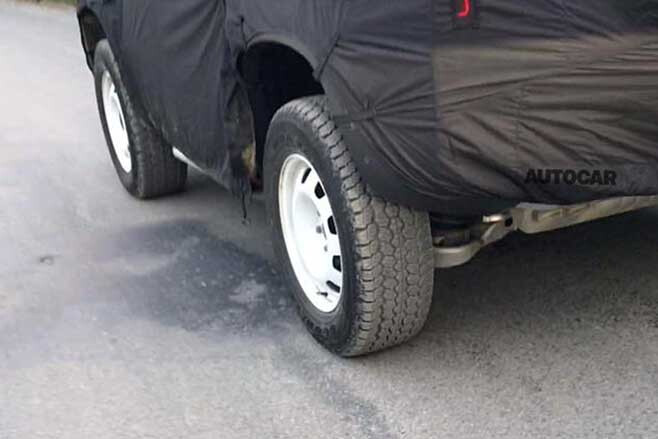
Whichever and how many of these variants make it to Australian showrooms when the Defender lands here in the first half of 2020 is yet to be revealed. We’ll know more about that and exactly what the 2020 Defender will look like when it is officially revealed at the Frankfurt Auto Show next month.
AFTER hearing a few stories about the standard airbox and filter on 79 Series Land Cruisers, I decided to look to the aftermarket for one that could deliver cleaner air with less chance of dust slipping by the air-cleaner element. I’m not a great lover of flat-bed air cleaners anyway – you don’t see them on hard-working interstate trucks, do you? After some deliberation I settled on an airbox and filter element from Fatz Fabrication in Rockhampton.
The specs looked pretty good, with the Fatz AirBox capable of flowing 1090cfm compared to the standard unit’s 680. In addition, a standard Cruiser air-cleaner element has a surface area of less than 800cm², while this new filter has a surface area of more than 1200cm². That will increase airflow and, importantly, maintain the cleanliness of the air going to the engine. The unit is also a lot more compatible with the Safari Armax snorkel I have fitted.
There are two filter elements to choose from: a normal paper element or an oiled gauze unit. These are custom-built for Fatz by Custom Built Motors (CBM) in the USA. Mine, bought about nine months ago, is actually branded CBM but the filters are the same.
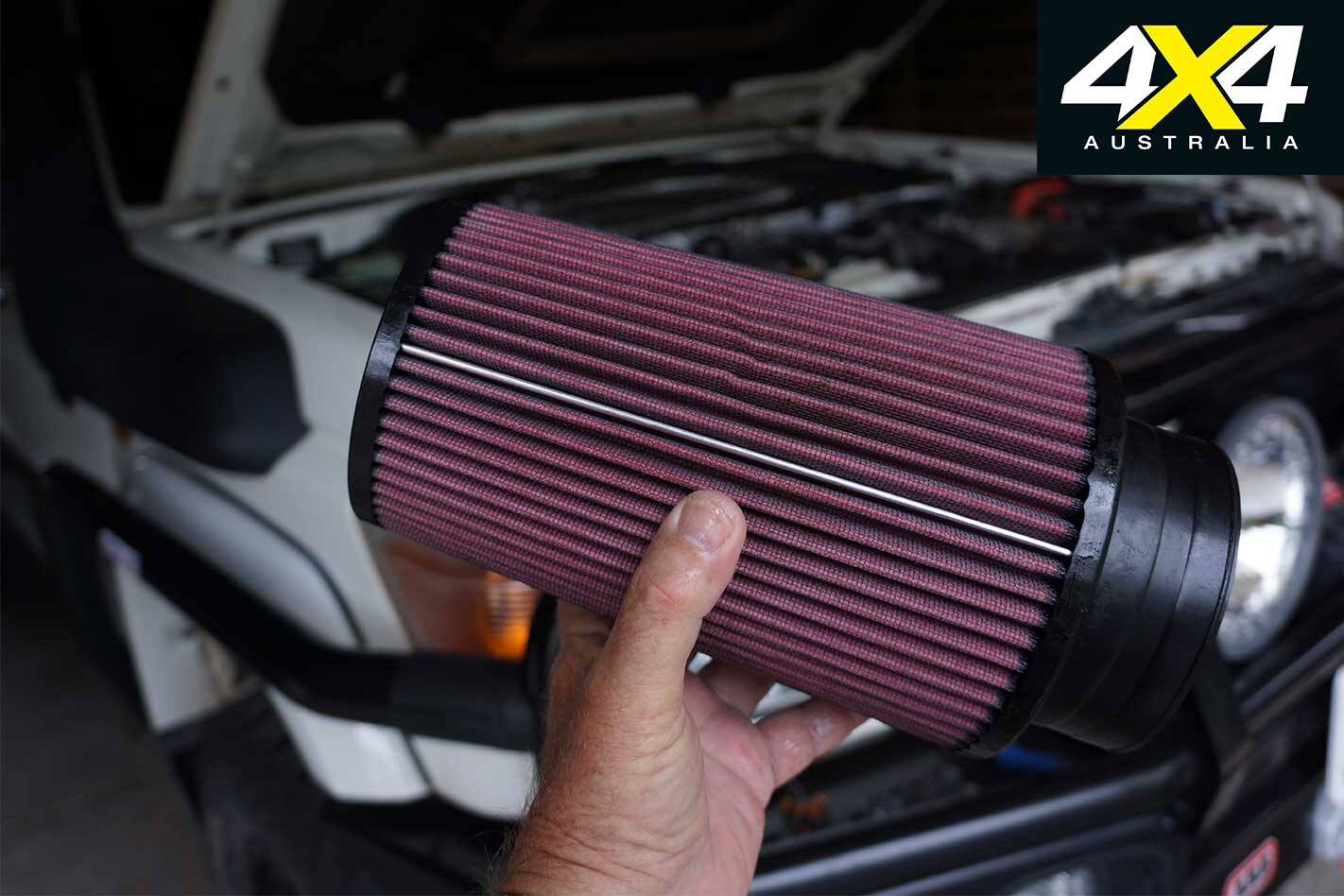
CBM claims its seven-layer filters outperform the three- or four-layer K&N filters and, while there may be some truth in it, I’ll put it down to marketing aggrandisement. Fatz claims the filter it uses is an eight-layer unit, and while you can build more layers into a filter and thereby increase its efficiency, you decrease its ability to flow air. As the Donaldson website (www.donaldson.com) testifies, the efficiency of the filter improves as dust accumulates on the surface of the filter, so an air filter gets better as it gets used – until it restricts the air too much.
Most engine wear is caused by dust particles that are 10 to 20 microns in size (a human hair is 50 microns), and the ability of an air-cleaner element to remove particles is measured against the testing procedures laid down in ISO5011. The results of the test are measured by a specific air-filtration efficiency number. The oiled filter element from CBM is rated at 99.3 to 99.5 per cent efficient, while the dry filter is slightly better at 99.5 to 99.7 per cent efficient; but the oiled filters work just fine if you maintain the filter properly.
We’ve done 22,000km with this new airbox and CBM filter; 9000km of that in very dusty conditions travelling in an outback convoy. The filter has collected a little dirt and dust, as well as a zoo of insects, and while it could have gone longer before being cleaned, I wanted to clean it before the 79’s next outback jaunt.
I tend to use a Unifilter Snorkel Pre-Filter in dusty conditions, changing or washing it more regularly than the main air-cleaner element. A custom pre-filter is available from Fatz for the main filter element, but the Unifilter is easier and quicker to use; although, as it is smaller it probably loads up with dirt faster.
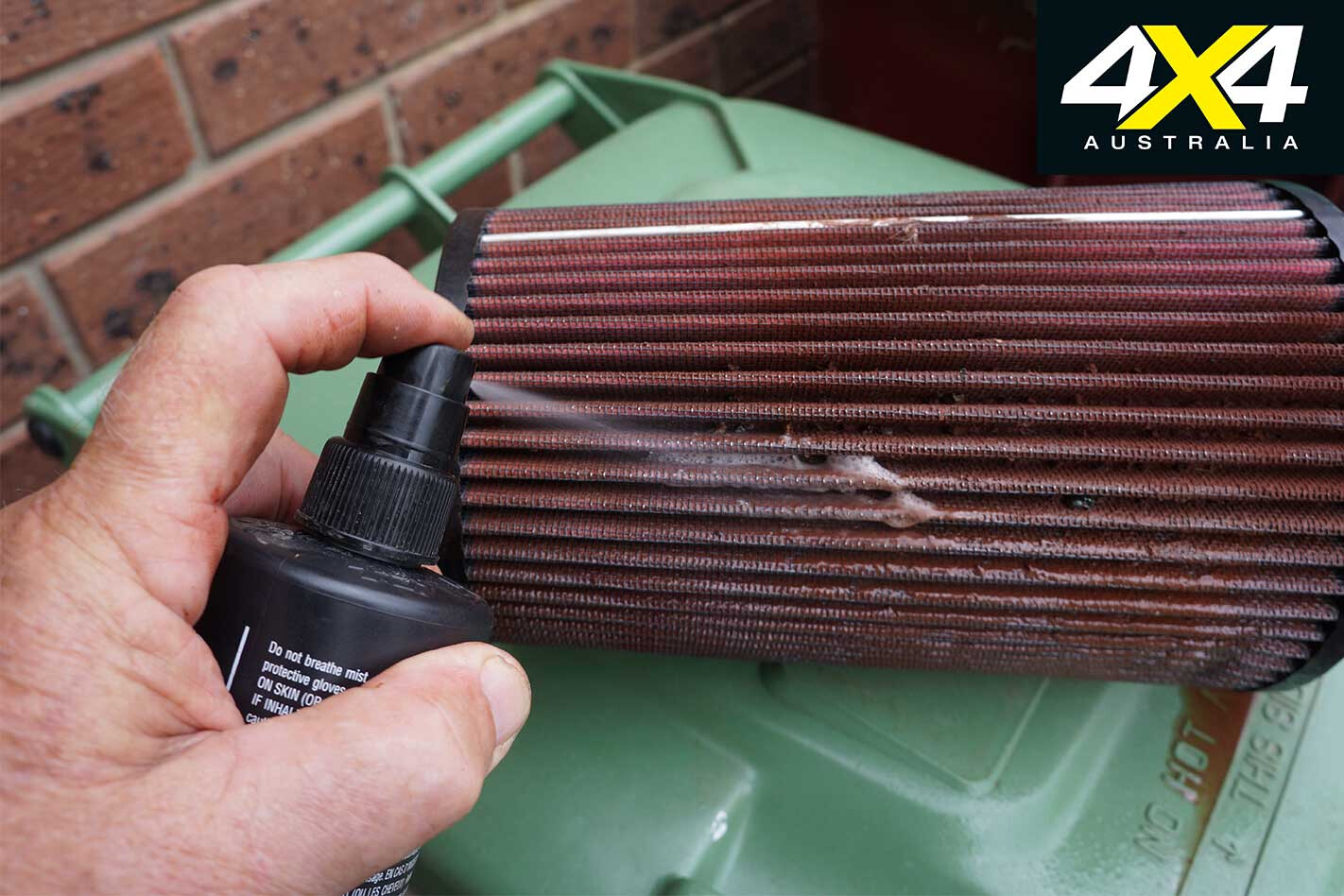
To clean the filter I use a K&N filter cleaning kit that includes a pressure spray cleaner and an aerosol oil spray. You first spray the element with the cleaner fluid and allow it to soak for 10 minutes or so, before rinsing the filter with water. Allow the filter element to dry and then spray it with the oil, ensuring the oil is spread evenly over the entire surface. It might need a second coat.
These kits do about three to four cleans and resprays of the cleaner element … and I’m probably a little heavy handed with the oil. The air cleaners can also be serviced anytime, anywhere.
I’m not chasing any performance gain by using this filter and any resultant increase would be pretty minor, but I’m chasing cleaner air and hopefully a longer life for the engine.
This airbox is much more rigid than the OE unit and won’t deform under normal and extreme off-road situations, and the way the element connects to the air inlet is far more secure and efficient than the OE flat-bed filter. Both result in much less dust getting past the filter element than in the standard situation. Combine that with the eight layers of the Fatz filter element and you’ll have less chance of dusting your engine … if you maintain the filter correctly.
AVAILABLE FROM: www.fatzfab.com.au RRP: $740 (Fatz AirBox) WE SAY: Requires maintenance, but lowers chance of dust bypassing the filter.
MORE PRICES
Plumbing kit for LC79/Armax snorkel: $280 Fatz Filter element: $120 CBM Prefilter: $45 K&N Cleaner Kit: $30-40
I HAVE BEEN with Ironman 4×4 for more than 16 years, beginning in sales and technical services following the completion of my Automotive Machinist qualifications.
I was originally responsible for setting up the first Ironman 4×4 fitment centre in Clayton, Victoria, then promptly escalated to be in charge of the suspension product later in 2003, about a year before Ironman 4×4 produced its first non-suspension 4×4 accessory. Since then, I have led the development of every new suspension kit and product released over the last 15 years.
As an instrumental member of Ironman 4×4’s growth I have been involved in countless major projects, many of which have shaped the company to what it is today such as designing and supplying suspension to more than 35,000 Ford Rangers for Afghanistan and developing suspension for thousands of armoured vehicles built for the Middle East.
Ironman 4×4 operates all around the world and we are always involved in developing product solutions for a variety of clients including OEMs, military organisations, fleets, as well as for unique vehicles only found in certain areas. As a global brand we need to be at the forefront in all markets; a lot of my time is spent developing suspension for vehicles that don’t exist in Australia.
Most recently I travelled to Yakutsk, Russia, known as the coldest city in the world. I was there at the height of winter, testing and assessing suspension performance in -42°C temperatures – a huge contrast to the hot weather testing we do in the Australian Outback. Doing this OS testing gives us a huge amount of specialist knowledge, much of which flows into future product design.
We’ve just wrapped up the first phase of being the official tuning partner for SsangYong Motor Company in South Korea, where we have spent the last four months developing next year’s SsangYong ute suspension and tuning it for the Australian market.
We are proud to be in a position to work with OEM companies, finding ways to increase sales as a result of improving their cars. We have had similar success in recent years with other brands overseas such as GM, Suzuki and Nissan.
I am also an avid photographer; starting out photographing motorsport events with my dad’s old film camera, it evolved from a hobby into being the prime photographer at Ironman 4×4. I run the photo studio at Ironman 4×4, shooting many of the product shots, as well as going out on site to photograph new vehicles and products.
Managing the suspension category at Ironman 4×4, my daily involvements are quite varied. I act as a junction for technical support for all of our overseas distributors. I often travel to visit them and to support them at exhibitions, and also undertake training their workshop and sales staff.
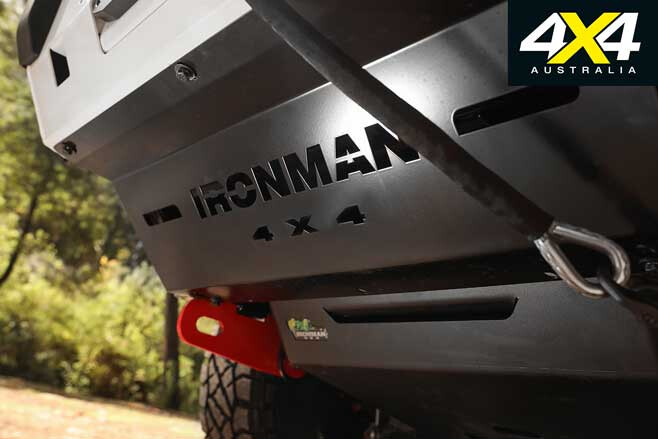
Currently I am in Hungary and next week I am in Romania, visiting our key dealers and working on that next opportunity. I do a lot of travelling, now nudging nearly 60 countries. Often, it’s for trade shows or visiting suppliers and key distributors, as well as specific environment product testing and photo shoots. Every day is different.
When I am in the office, we’re working on the next suspension kit or product. Our team turns out no less than five new part numbers every month. Sometimes it’s keeping up with new vehicle releases, other times it’s an entirely new product line.
I am also entwined in the marketing and cataloguing of the product. Suspension is a very complex and technically heavy category which requires high levels of accuracy and detail. We have more than 5000 part numbers, many of which require a good level of expertise when choosing the right part for a customer’s vehicle.
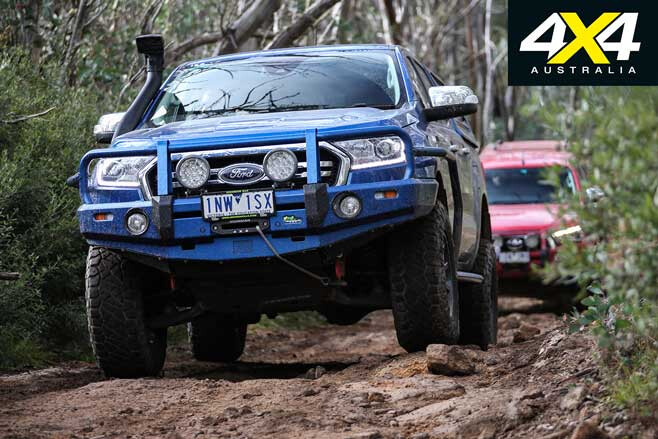
Managing suspension is different to any other product category as there is more variety and choice for a given application; in many instances we offer the choice of nine different shock absorbers and five different springs for one vehicle.
We need to ensure the right product finds its way to the customers’ vehicles, and that takes quite some time with a good team of people. I also manage the underbody protection product, of which we currently have around 25 different models.
One of our most notable new product releases is the Pro-Forge Upper Control Arm project, which sees us as the first aftermarket company in the world to develop a fully forged alloy upper control arms with raised height geometry correction. It involved a mammoth effort from our team of development engineers to bring that idea to reality.
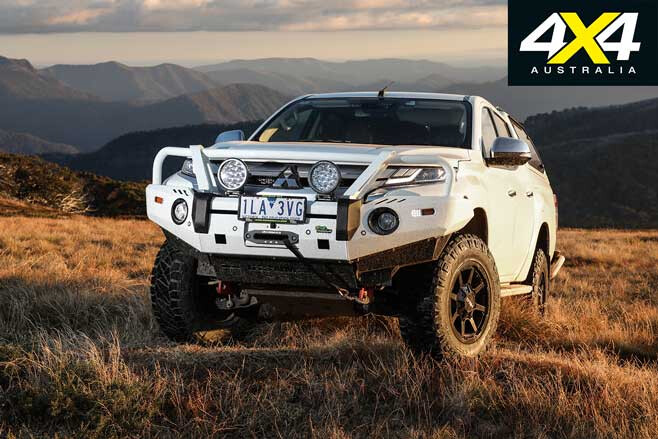
With today’s advances in technology and the increasing need for product compliance and testing, we are investing in equipment and machinery at a rapid rate. This includes fabrication machinery for rapid prototyping, testing and logging equipment for product validation and GVM upgrade compliance, then to things like 3D scanners and printers to accelerate product design. This is only the beginning of what is yet to come, in an industry bound for electronic integration and autonomy which will reshape the automotive landscape.
Manufacturing in Australia is in decline, but the need for innovation and specialist expertise is what keeps our industry alive. It’s no surprise why Australia is at the leading edge when it comes to 4×4 and off-road products, as there is an insatiable demand for upgrades and mods. It’s been an exciting 16 years being part of Ironman 4×4’s growth, driven along by the popularity of utes and the need for 4×4 vehicles around the world.
It’s not a question of whether we remain motivated; it’s a matter of keeping up with the relentless demands of the industry and clients around the world. Sometimes I need to remind myself to breathe and go out to explore our beautiful country by 4×4.
Meet the Expert Name: Kristian Ristell Role: Suspension Product Director, Ironman 4×4 Experience: 16 years at Ironman 4×4
I LOVE four-wheel driving. Whether it’s a day in the scrub or a couple of weeks in the desert, I always enjoy the journey as much as the destination – especially when that journey is off the blacktop. And while I love it when everything goes to plan, I also try to make the most of it when shit hits the fan. After all, what’s better than crawling around on your hands and knees in the mud with a shovel trying to dig out your rig before it’s swamped by a rising tide?
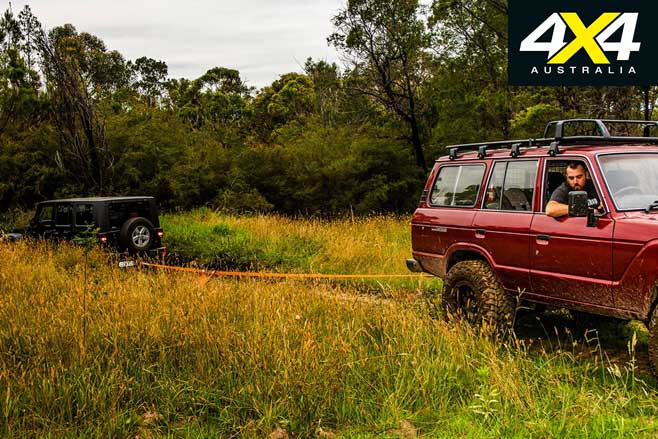
Admittedly, serious problems can arise when shit does hit the fan, no matter how well-prepared you are, especially if there are time constraints on getting a vehicle unstuck. There are many scenarios in which you might be forced to rush a 4×4 vehicle recovery: the aforementioned rising tide; a nasty storm on the horizon; or because you’re waist-deep in a croc-infested creek, fumbling with a snatch strap and shackle.
Things can go wrong at the best of times when recovering a vehicle, but with time pressure comes greater risk; so I’m pleased when someone comes up with a better, safer way of doing things.
About 10 years ago I spotted a then-new recovery strap at the SEMA Show in Las Vegas that promised greater safety for snatch recoveries. It was the SpeedStrap and essentially did away with the need to use metal shackles.
After feeding the SpeedStrap through each vehicles’ rated recovery points, you could create a loop at each end by simply weaving the strap back through itself three or four times. By eliminating metal shackles in a snatch recovery there was far less chance of causing damage or injury if a component failed.
Available in one-inch (10,000lb) and two-inch (20,000lb) widths, the SpeedStrap was marketed and sold in Australia for several years as the Staun Superstrap; but Staun no longer imports this product so you’ll have to go direct to the USA manufacturer if you want to buy one.
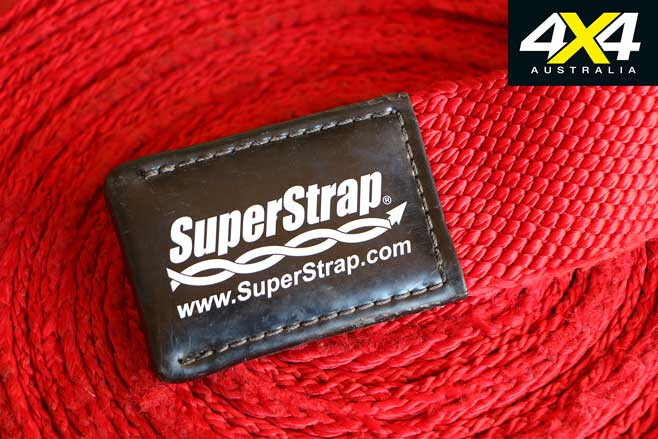
Those after the extra elasticity of the SpeedStrap now have another option in the form of kinetic recovery ropes, which are quickly gaining favour with many 4×4 enthusiasts. These ropes are claimed to offer 50 per cent more stretch than traditional woven nylon snatch straps, reducing the shock loads on vehicles during a snatch recovery.
Unlike the SpeedStrap, however, you still need to use shackles to attach kinetic ropes to recovery points; but soft shackles are now a viable alternative to metal shackles, further improving safety. Soft shackles are strong and light, they float, and you can hang them off your belt so they’re always at hand. More importantly, they won’t maim or kill like a flying metal shackle can in a major equipment failure.
On the downside, not all soft shackles are compatible with all recovery points; some soft shackles are too big to fit through recovery points designed to accept the pin of a metal shackle. So, despite their mass, metal shackles are far from redundant.
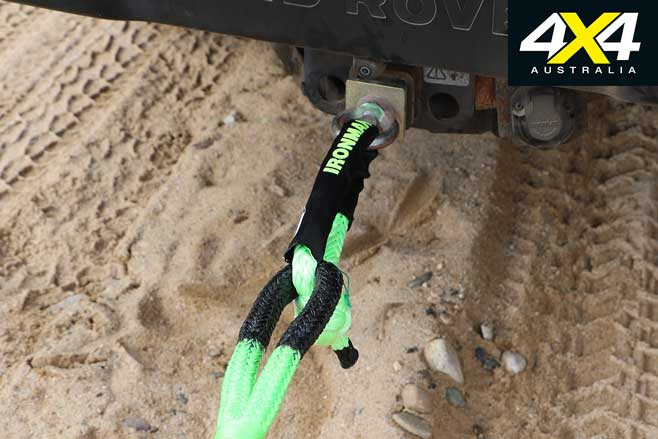
The good news is (knock on wood), I’ve never seen or experienced a failure of a rated vehicle recovery point or a rated shackle when performing a snatch recovery. Sure, I’ve seen a couple of snatch straps fail, and in one case cause some panel damage to the back of a Land Cruiser, but the rated shackle has always remained firmly attached to the rated recovery point.
The moral to this story: No matter what’s in your kit, always use rated recovery points and shackles and take the time to ensure all are properly attached, even if there are time constraints … unless, of course, there’s a big saltie bearing down on you.
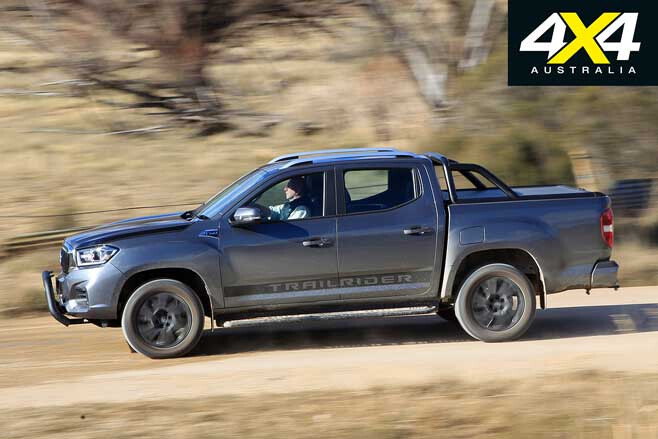
THE LDV T60 Trailrider is a take on the T60 ute created by Walkinshaw Performance, better known for its expertise in vehicles a good deal faster. Walkinshaw Performance runs V8 Supercar race teams, owns HSV and produces high-performance kits including a diesel engine upgrade for the HSV SportsCat.
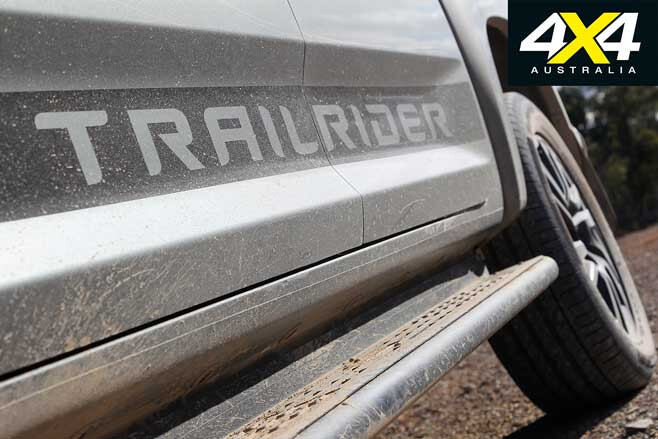
Walkinshaw Performance’s work with the T60 runs to a local suspension tune – wheel and tyre package included – and locally engineered accessories including side-steps, nudge bar, sports bar and roller tonneau cover. The suspension retune will also apparently be applied to the bread-and-butter T60s for future production, which is possibly the best part of this whole story.
The introduction of the Trailrider, which comes in both manual and automatic transmissions, brings the T60 model line-up to six vehicles, given the base-spec Pro and the up-spec Luxe are also both available in manual and automatic.
Based on the Luxe model, the Trailrider is a notably big ute and, among its mainstream dual-cab competitors, only the Ranger and BT-50 have a longer wheelbase and only the Amarok has a wider track.
What’s in a name?
LDV stands for Leyland DAF Vans; although, it has little to do with either and is part of SAIC Motor, one of China’s ‘big four’ state-owned carmakers. SAIC owns the LDV name. LDV is imported into Australia by Ateco Automotive, and Ateco and Walkinshaw Performance are also behind the recent introduction to Australia of the Dodge Ram ‘mega’ ute, so the Trailrider is not the only product of their joint efforts.
Powertrain & Performance
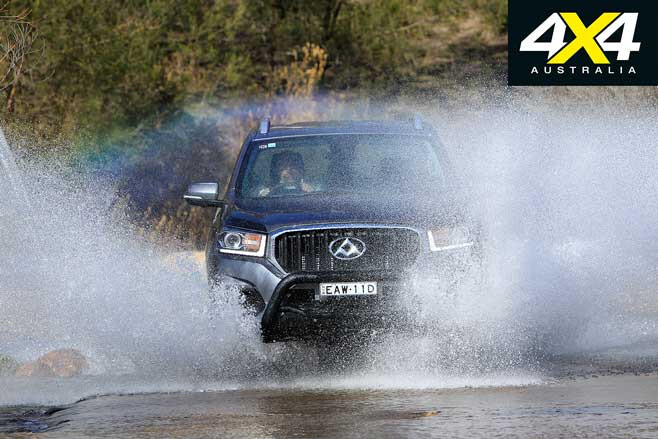
THE Trailrider enhancements don’t extend to the engine, which is standard T60. That means the 2.8-litre four-cylinder diesel is built under licence from Italian engine specialist VM Motori. It’s from the same engine ‘family’ as the 2.8 diesel in Holden’s Colorado and Trailblazer and previously found in Jeep’s Wrangler, but in a lower state of tune.
It meets the latest Euro 5 emission regulations thanks to its diesel particulate filter and modern variable-geometry turbo and common-rail injection technology (among other things), but it’s far from cutting edge in terms of power and torque, claiming a modest 110kW and 360Nm.
Given the Colorado claims 147kW and up to 500Nm from its version of this 2.8, you would have to assume the T60’s engine could be tuned up to something closer to those numbers without too much concern about reliability. As a point of reference, Walkinshaw’s tune of the 2.8 in the HSV SportsCat yields something like 176kW and 600Nm.
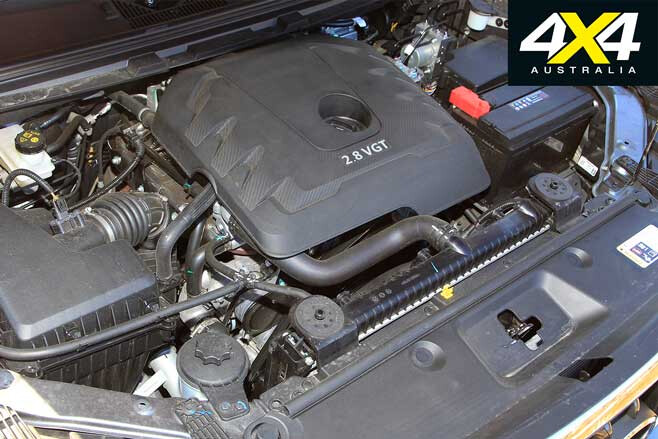
As it is, the Trailrider’s 110kW provides adequate performance that’s generally fuss-free without having much left in reserve for hills or overtaking. While the Trailrider is not a notably heavy ute amongst other dual-cab 4x4s, its big size would work against it at highway speeds.
Our Trailrider test vehicle had the manual six-speed gearbox, which is notably tall-geared (55km/h/1000rpm in top gear) given the modest engine power output. Some current diesel dual-cabs with more powerful engines and automatic gearboxes aren’t geared any taller than this.
The upshot of this is that at highway speeds when there are hills about there’s also a bit of rowing of the gears to be done; although, the six-speed manual is nice enough to use thanks to its light and positive shift action.
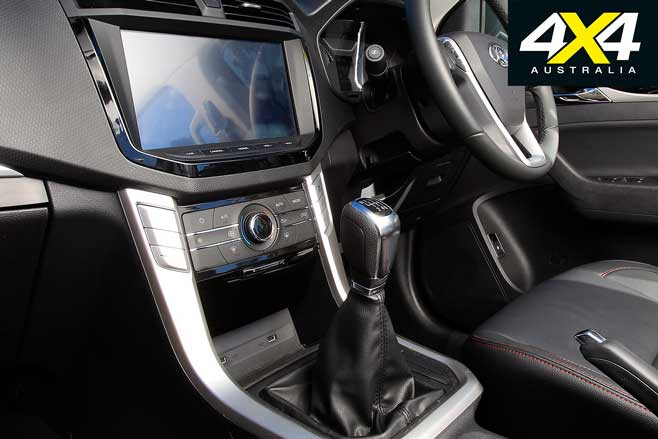
The Trailrider might be better served by its automatic gearbox from Europe’s Punch Powertrain (that’s what’s left of the DAF connection), which shares the ratios of the GM six-speed auto also in the Colorado. LDV and GM have been in a joint-venture partnership for some 20 years now, which probably explains some of the GM connections.
The test average fuel consumption of 9.5L/100km isn’t far off the 8.8L/100km ADR claim, which is unusual. With a typical dual-cab fuel capacity of 75 litres that gives a touring range around 740km, with about 50km left in reserve.
On-road Ride & Handling
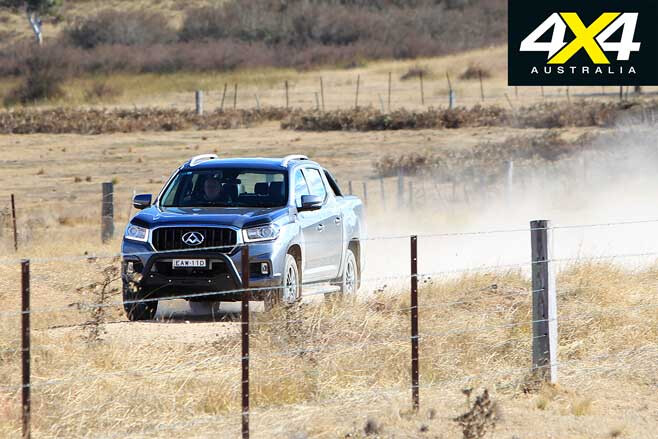
IT IS A GOOD thing Walkinshaw Performance has seen to the suspension of the T60, as the initial factory calibration was well wide of the mark for local road conditions. On bumpy country roads, especially on rutted corners and gravel, the T60 had a tendency to lose its directional composure, often prompting a sharp intervention from the electronic stability control, which would often only make things worse. Even on less-demanding roads and at moderate speeds, the T60 never felt particularly good.
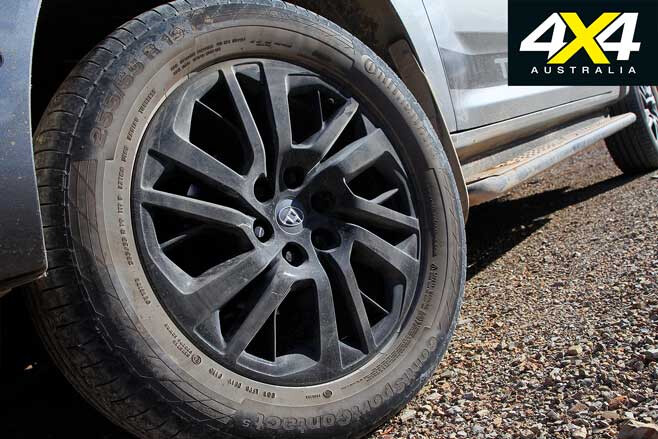
Thanks to Walkinshaw, all that is gone. Starting with the Luxe model, which is more lightly sprung than the heavier-duty Pro, Walkinshaw has added new dampers and a 19-inch wheel and tyre package that has transformed the steering, handling and stability of the T60.
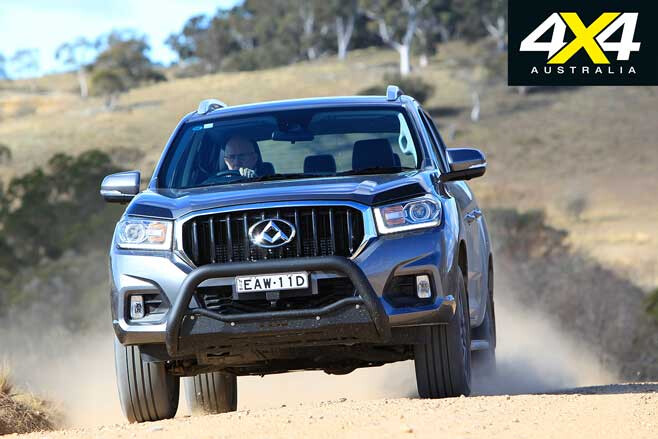
Despite the 19s being relatively low profile, the ride is surprisingly compliant despite the tighter and more-controlled handling. Having control and comfort together is the ideal suspension outcome.
The Trailrider’s new wheel and tyre package no doubt has much to do with vast improvement in the steering accuracy, which, like the general handling, was previously pretty poor. The tyres in question are Continental ContiSportContact 5s, high-speed SUV asymmetrical road tyres with prominent longitudinal grooving designed to foster directional stability. The steering is still a bit vague on centre – it’s still no Amarok or Ranger – but is way better than it was.
Off-road
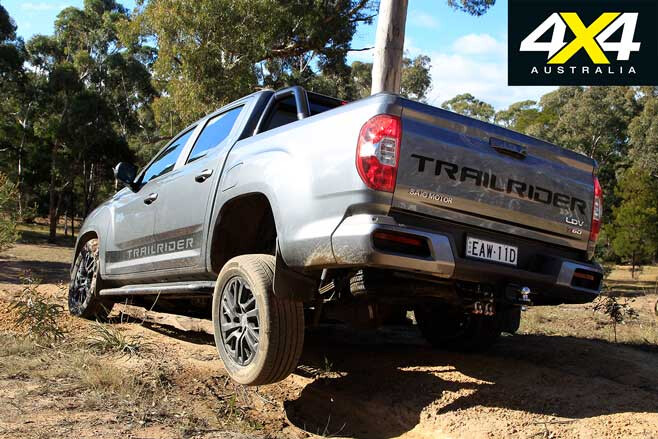
THOSE TYRES may be very impressive on-road, but they aren’t so good off-road for a few reasons, the least of which is the road-orientated tread pattern. The problem lies more in their low profile and ‘V’ (240km/h) speed rating, both of which conspire to bring about a vulnerability to off-road damage, which doesn’t sit well with the Trailrider name.
Perhaps a proper off-road tyre on 17-inch wheels should be offered as an alternative to the road-orientated 19s; although, this means you would lose some on-road steering precision brought by the 19s.
The Trailrider has a conventional dual-range part-time 4×4 system, but one difference to most current dual-cabs is that it has a mechanical self-activating Eaton rear locker. Other current dual-cabs with rear lockers employ driver-switched electro-mechanical units.
Thanks to reasonable wheel travel and the rear locker, the Trailrider is pretty effective off-road (tyre vulnerability aside); although, the Eaton tends to allow a fair bit of slip before engaging abruptly, so progress is not always as smooth as you would really want.
With the combination of the manual gearbox and relatively tall gearing, high-range 4×4 isn’t too useful; so the Trailrider often needs low range at times where other dual-cab 4x4s get away with high range in the same driving environment.
Cabin & Safety
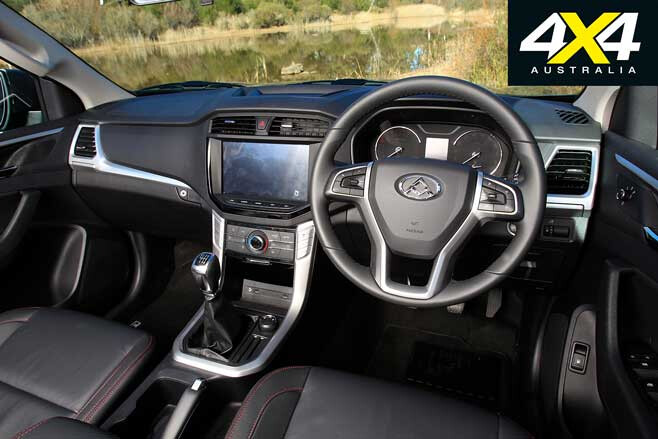
SIGNIFICANTLY the Trailrider, like all T60s, is the only one of the ‘budget’ utes to come with a five-star ANCAP safety rating – amongst other safety features, it has front, side and curtain airbags.
The Trailrider, which shares the leather trim and other features of the Luxe, has a notably big and spacious cabin that’s reasonably well-finished; although, it’s not class best. The myriad warning chimes for everything and anything are annoying, and while there’s no reach adjustment for the steering wheel, the Trailrider’s driving position and seats still prove comfortable enough.
What you get

THE Trailrider is based on the T60 Luxe, the better-equipped of the two T60 models. It adds a local suspension tune, sports wheel and tyre package, and locally engineered accessories including side-steps, nudge bar, sports bar and roller tonneau cover.
Over and above the entry level Pro, the Luxe gets keyless entry and start, folding and heated side mirrors, climate control in place of standard air-con, leather seats with six-way electric adjustment and heating up front, a chrome sports bar instead of a painted head board, and a rear self-activating diff lock.
Standard equipment on all T60s includes six cabin airbags, disc brakes all around, alloy wheels, side-steps, automatic headlights, rain-sensing wipers, LED daytime running lamps, tyre-pressure warning, blind-spot monitoring, a 10-inch touchscreen with Apple CarPlay and Android Auto, and a tub liner.
Practicality
THE Trailrider, like all T60s, is rated to tow 3000kg, but it’s hard to see how the engine would handle that with ease. Something like 2500kg, or even less, would be closer to the mark. The 850kg payload also means that 700kg in the tub would be about as much you can carry, even if you only have two people onboard.
However, thumbs up to the Mountain Top Roll tonneau, which works a treat. Many roller tonneaus we have experienced are problematic (won’t stay closed), but this one worked faultlessly … even if it still lets in dust.
Sum up
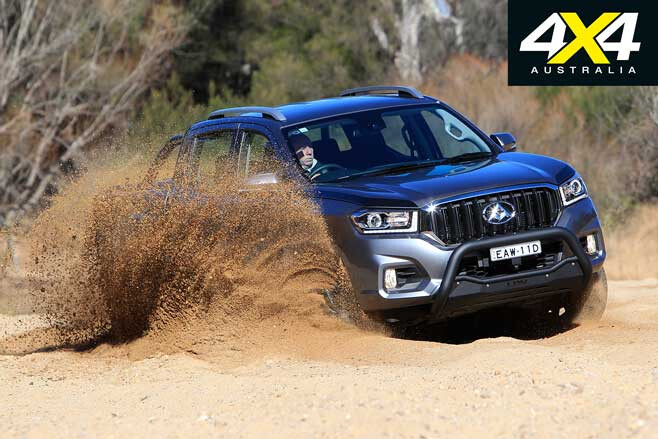
THE $4211 the Trailrider asks over the Luxe T60 (bringing the price to around $40K drive-away) is money well spent, even if it’s just for the revised suspension and wheel/tyre package. It transforms the T60 from a dual-cab with compromised dynamics to one that’s more than acceptable and pleasant to drive.
The fact the new wheel and tyre package is not what you want off-road is the obvious negative, and if you do fit 17s with off-road tyres some of the steering improvement with the 19s will be lost. It’s also a shame Walkinshaw’s talents haven’t been used to crank-up the engine from its current 110kW and 360Nm – the way the chassis works now, it could handle a bit more zip.
2019 LDV T60 TRAILRIDER SPECS Engine: 2.8-litre 4-cyl turbo diesel Max Power: 110kW @ 3400rpm Max Torque: 360Nm @ 1600-2800rpm Gearbox: 6-speed manual 4×4 System: Dual-range part-time Crawl Ratio: 43.4:1 Construction: Separate-chassis Front Suspension: Independent/coil springs Rear Suspension: Live axle/leaf springs Kerb Weight: 2100kg (approx.) GVM: 2950kg Payload: 850kg (approx.) Towing Capacity: 3000kg (braked) GCM: 5950kg Fuel tank capacity: 75L ADR fuel consumption*: 8.8L/100km On-test fuel consumption: 9.5L/100km Price: $38,937 ($41,042 for the auto)