
FRESH off the back of an epic 2019 Big Red Bash, headlined by Aussie rock icons Midnight Oil, the organisers of one of the Australian outback’s biggest events are gearing up for another massive event in 2020.
The 2020 Birdsville Big Red Bash will run on the school holidays from July 7 to July 9, 2020, with tickets to the remote music festival set to go on sale in October 2019.
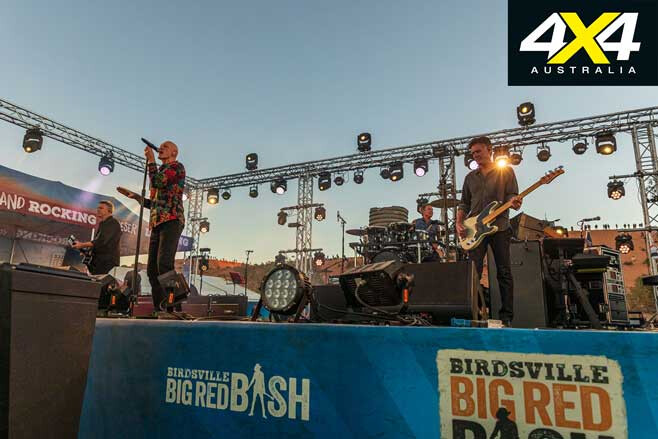
“We have had an amazing response from festival-goers who attended this year’s Big Red Bash,” said Big Red Bash Founder and Organiser, Greg Donovan. “We’ve been inundated with hundreds of queries regarding next year’s festival dates, as punters begin to plan their trip back out to the desert for the 2020 Bash.
“This year was a sold out event, with record attendance numbers – and it already feels like there’s a huge amount of interest around next year’s event, which is why we’ve chosen to announce the dates for the 2020 Big Red Bash so early,” Donovan added.
The festival, which not only features world-class music acts but comedy shows, film screenings, camel rides, dune surfing and plenty more, generated approximately $11 million in annual revenue for Outback Queensland.
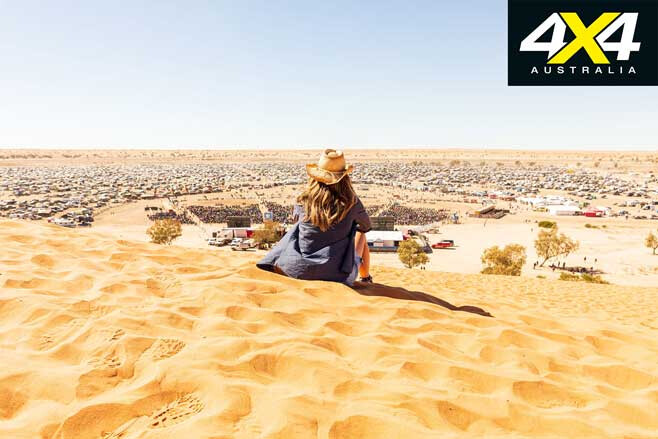
Record numbers – more than 9000 – flocked to Queensland’s Simpson Desert for the 2019 event, with the Bash selling out four days ahead of proceedings.
“The fact this event has sold out is a testament to the hard work of the event organisers and the local community,” said Tourism Industry Development Minister Kate Jones, when news of the sell-out broke.
“The Queensland Government is proud to support this event via Tourism and Events Queensland because it does a great job of drawing visitors to the state, showcasing outback Queensland and providing real economic benefit for the people in this region.”
The Big Red Bash is set against the backdrop of the Big Red sand dune, 35km west of Birdsville. For more information, head to: www.bigredbash.com.au
CAMPSITE life is already bliss, but here are a few camping products to make sitting back at camp after a hard day on the tracks even better.
ARB compact camp table
There’s nothing worse than having to balance your (often hot) meals on your lap when out camping because you haven’t got a suitable camp table to fit your family around.
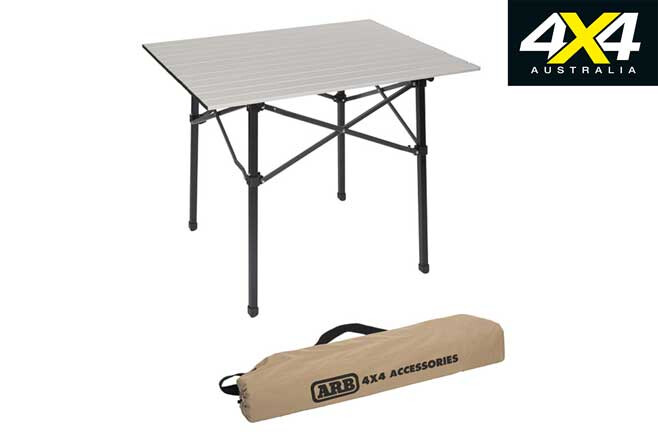
ARB’s new compact camp table can fit a family of four and utilises full-diameter slats that offer a strong supportive surface on which to place your dining utensils and plates, and also a nice heat-resistant area that can be used for meal preparation.
The table top is further supported by cross braces, and the square tube legs are considerably more robust than most found on other camp tables of this size and design. The table is designed to roll up neatly in a compact storage bag, so it takes up minimal space in the back of your rig.
RRP: $79 (Aus metro) Website: www.arb.com.au
Victorinox Alox Limited Edition Swiss Army knife

Victorinox releases its Alox Limited Edition Swiss Army Knives each year, incorporating some of its most popular models in different colours. For 2019 the LE series – comprising the Classic, Cadet and Pioneer – is available in gold. Each knife is complete with its own certificate and the year of release is stamped on the back of the knife.
The Classic Alox LE is compact (58mm in length) and includes blade, screwdriver, scissors, nail file and key ring; The Cadet Alox LE is 84mm long, with blade, reamer, punch, can opener (with small screwdriver), nail file (with nail cleaner) bottle opener (with both small screwdriver and wire stripper) and key ring.

The Pioneer ups the length to 93mm and incorporates a large blade, reamer/punch, can opener (with small screwdriver), bottle opener (with screwdriver/wire stripper) and a key ring.
RRP: $89.95 (Classic); $110 (Cadet); $115 (Pioneer) Website: www.victorinox.com
BlackWolf Strato 40 Technical Daypack
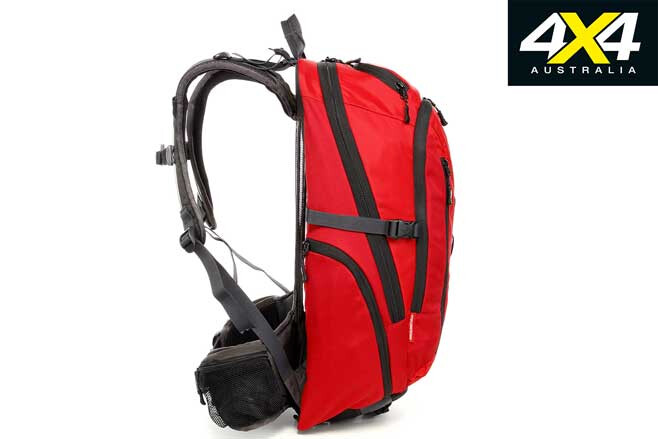
For that everyday gear you take with you in your rig – or for those day hikes from your campsite – the BlackWolf Strato 40 is a nifty solution. The pack has plenty of well thought-out features, including a safety whistle, a night reflective daisy loop and an internal pocket for a hydration bladder for when you’re out on those longer exploratory walks.
The best part about the Strato 40 is it is equally ‘at home’ doing commute duties in town. There’s RFID protection for security from digital theft (aka skimming), a waterproof rain cover, sturdy zippers, a comfortable padded waist belt and shoulder harness, and a sternum strap that helps distribute the weight of heavier loads.
You will also find a padded laptop holder and hard-case for your laptop, plus a removable key holder (you’ll never lose them again!) and an external headphone port.
RRP: $200 Website: www.blackwolf.com.au
Oztent Red-Belly & Taipan HotSpot chairs
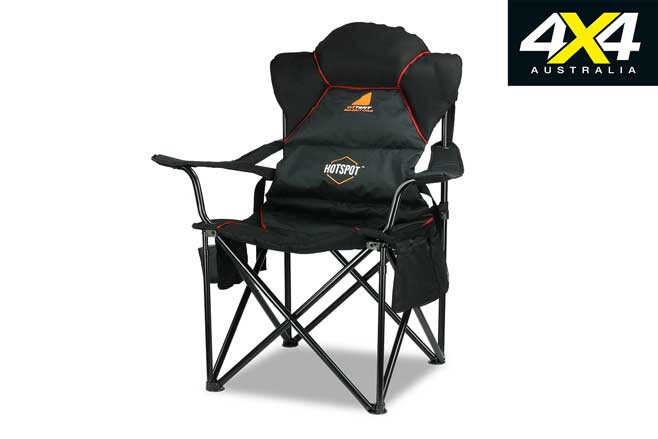
These two new camp chairs from camping icon Oztent are a brilliant mix of rugged engineering and innovative design. Both the Taipan and Red-Belly utilise HotSpot heating pouches to ensure you’re just as comfortable when sitting back relaxing on a cold winter’s camp as you are any other time of year.
Both chairs each have four insulated HotSpot pockets (and both come with two HotSpot pouches) to ensure the ultimate in passive heating. The Red-Belly weighs in at 3.7kg but has an awesome 200kg weight capacity – enough for the burliest camper – while the Taipan is 4.4kg (the additional weight is courtesy of the alloy arm-rests on the Taipan) and can handle a 150kg occupant.
The frame is robust magnesium alloy, while the material used is tough 600-denier polyester. Both seats utilise Oztent’s patented adjustable lumbar support, the aforementioned HotSpot pockets, are fully padded, include an insulated drink holder, and the carry bag can be stored in the headrest. Clever and bloody comfy!
RRP: $219.95 (Red-Belly); $229.95 (Taipan) Website: www.oztent.com.au
LedLenser iF8R portable light
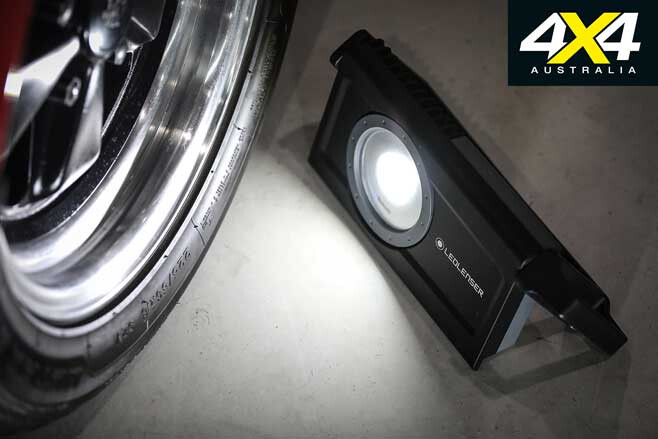
This latest LedLenser light source is high in technology and functionality. The iF8R (powered by rechargeable batteries) offers an output of up to 4500Lumens via its Xtreme LED – and can be controlled via your smartphone if need be, so you don’t need to get out of that camp chair to adjust lighting levels at the campsite.
The iF8R offers three light settings – power, mid power and low power (for up to a claimed 12 hours on this setting). The light has an inbuilt power bank, meaning you can charge your mobile phone off it if needed. A unique feature is the iF8R’s built-in magnet, which allows you to affix the light to any metal surface (such as the side/back/front of your rig).
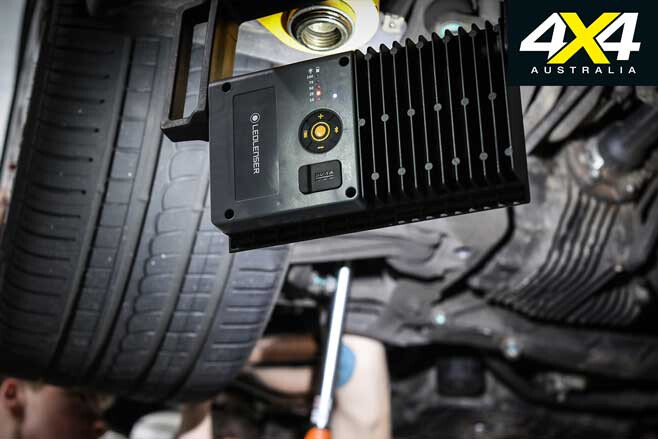
The iF8R also has an efficient cooling element to ensure optimum – and long-lasting – light performance. It is rated IP54 for water protection (can withstand powerful sprays of water), weighs 1740g and measures 142mm high, 44mm deep and 307mm wide.
RRP: $399 Website: www.ledlenser.com.au
GET yourself a reliable set of soft shackles, as well as secure, rated aftermarket recovery points, and your chance of a safe recovery have improved ten-fold. Here are a few such 4×4 recovery products currently in catalogues.
Ironman 4×4 rated recovery points
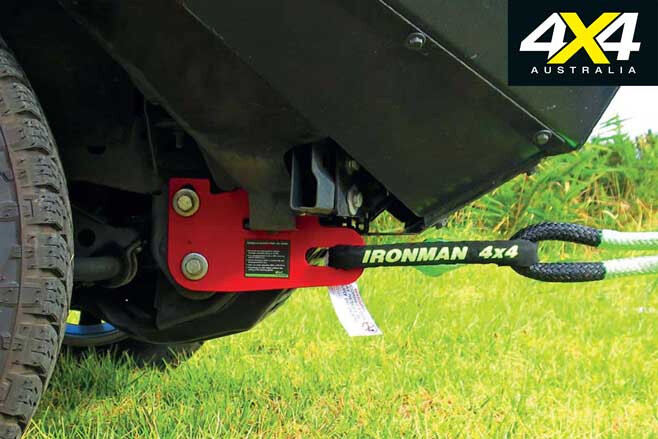
Ironman 4×4 has released new rated recovery points – for Mitsubishi Pajero Sport (11/2016-onwards) and MR Triton (11/2018-onwards) – that have been NATA tested and approved. Built from top-grade materials, SPHC oil and pickled steel (rather than mild steel) these points are super strong and highly resistant to corrosion.
The working load limit of each individual point is 5000kg, and they are designed to connect to your winch/recovery device using a 4.75-tonne shackle or rated soft shackle (you can also use an equalisation strap with two points for even distribution of load).
The recovery points are supplied as a pair with all the necessary mounting hardware (such as high-tensile bolts) and they mount to multiple chassis points for optimum load distribution.
Website: www.ironman4x4.com
Sherpa 4×4 soft shackles
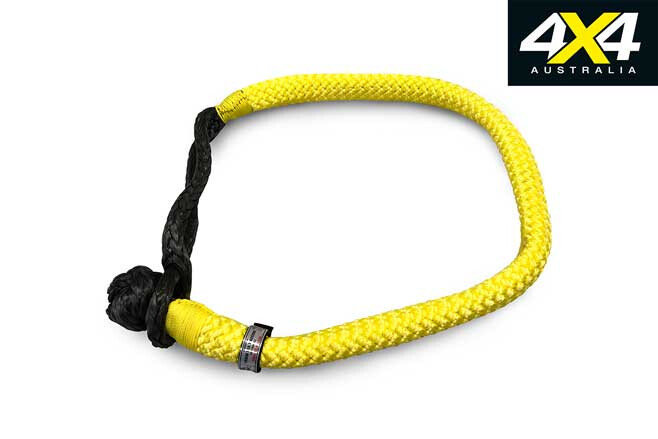
The team at Sherpa 4×4 has released new soft recovery shackles, in two sizes: 11mm x 152mm (rated minimum breaking strength of 14,515kg) and 16mm x 600mm (rated minimum breaking strength 32,400kg).
The soft recovery shackle offers a lightweight solution for those always painful scenarios. The shackles are made from high-quality synthetic rope (the same rope used on Sherpa 4×4 winches) and will float in water, plus they will never suffer from corrosion.
Of course, they are incredibly strong and far safer than a heavy steel shackle if the worst-case happens and the rope breaks. The shackles will not over-tighten so are quite easy to loosen after the recovery has been completed. The Sherpa soft shackles feature large loop diameters and are UV-, abrasion- and chemical-resistant, plus they include a protective sleeve to reduce chafing.
Website: www.sherpa4x4.com.au
Ironman 4×4 soft shackles
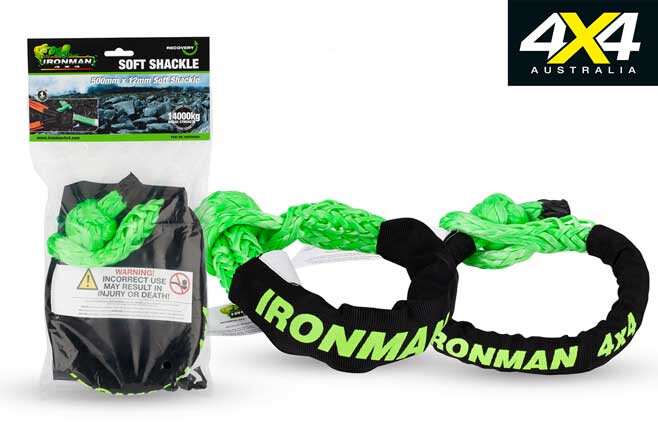
Ironman 4×4 has released new soft shackles, with two variants rated at 14,000kg and the other at 17,500kg breaking strength. The shackles are high-strength, low friction 12-strand single braid UHMWPE rope.
The 14,000kg soft shackle is of a single splice design and diamond knot; the 17,500kg soft shackle features a Class 2 diamond knot and dual splice design. The shackles are covered with a protective sleeve and are designed to float. They also feature an integrated easy-release system that ensures the soft shackle decompresses post-recovery.
The soft shackles also offer low-moisture absorption, so there’s no fear of them becoming water-logged or rotting through continued immersion. The Ironman soft shackles are also 500mm long – a larger surface area than most others on the market.
Website: www.ironman4x4.com
A SELECTION of MY2019 Ram 1500 and 2500 pick-ups have been issued with a recall notice, due to an incorrectly secured master cylinder pushrod clip.
A total of 78 vehicles have been affected by the recall, which could result in an inoperable brake pedal.
“The master cylinder pushrod which is connected to the brake pedal pin may dislodge and become difficult to operate or fail, resulting in the brake pedal becoming inoperable,” the ACCC recall report states. “This may pose an accident risk, potentially seriously injuring vehicle occupants or other road users.”
The affected pick-ups, sold nationally between June 1, 2018, and July 31, 2019, can be found here: https://www.productsafety.gov.au/system/files/VIN%20list_205.xlsx
In other recall news, a total of 19 Dodge Ram 1500 and 2500 pick-ups have been caught up in the ongoing Takata airbag campaign. A handful of RAM 3500 (four units), 4500 (one unit) and 5500 (one unit) were also issued with the same notice.
The affected vehicles were built between 2004 and 2009 and were sold by Queensland’s Maracoonda Automotive between July 15, 2004, and July 15, 2010.
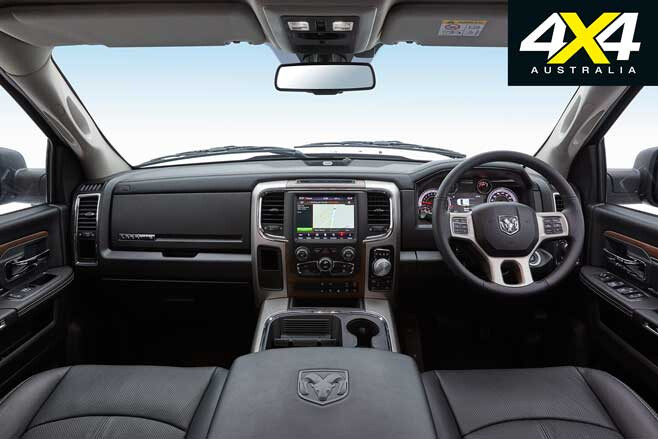
The Takata airbag fault is caused the airbag inflator propellant degrading over time, due to exposure to high temperatures and humidity. If a defective airbag is triggered, the metal inflator housing may explode and metal fragments may cause serious injury to vehicle occupants.
The Ram pick-ups affected by the Takata recall can be found here: https://www.productsafety.gov.au/system/files/VIN%20list_89.pdf
NISSAN has officially unveiled its Ranger and Hilux-fighting Navara N-TREK, in an attempt to push the Navara back up the 4×4 sales charts.
Once a much bigger player on the 4×4 scene, Nissan sold just 787 Navara 4x4s last month, well short of the market leaders – Ford shifted 2850 Ranger 4×4 units and Toyota sold a total of 2571 Hilux 4x4s (VFACTS: July 2019).
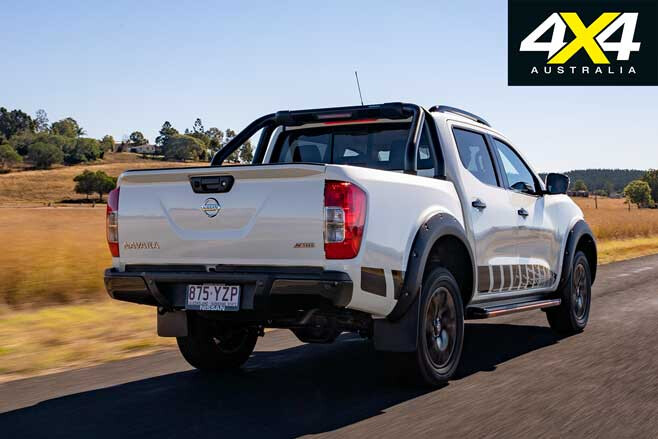
To lure buyers back, Nissan took its Navara Dual Cab ST-X and added black accessories … plenty of black accessories. It’s not the first time Nissan has gone down this path, either (think: Navara ST Black Edition).
The black treatment begins with 18-inch alloy wheels and has been applied to the fender flares, alloy sports bar, lower body side decals, headlamp bezels, side steps, lower front fascia, rear bumper, front grille, roof rails and door handles.
“A majority of ute buyers are prepared to invest in the look of their vehicle, to get the vehicle they really want,” said Nissan Australia managing director Stephen Lester.
“Our black editions have always been popular with buyers. The Navara N-TREK includes a wide variety of Nissan-approved parts and accessories that will set it apart compared to everything else in the range.”
Leather-accented seats (heated up front) boost in-cabin comfort, with the driver’s pew further enhanced by power lumbar support.
In a recent revamp, the Navara range also received a bunch of updates including the addition of the all-new Alliance In-Vehicle Infotainment (AIVI) system, which nets the dual-cab a bigger eight-inch touchscreen and includes Apple CarPlay and Android Auto.
The N-TREK is powered by a 2.3-litre twin-turbo diesel engine good for outputs of 140kW and 450Nm and a towing capacity of 3500kg.
The N-TREK isn’t just a temporary special edition, with the top-of-the-range model a permanent fixture on the Navara line-up. The six-speed manual variant starts at $56,450, and the seven-speed auto alternative asks for $58,950.
NISSAN and Cummins in the USA have announced the Cummins diesel V8 engine that was available in the Nissan Titan XD pick-up truck will be discontinued from the end of 2019, as part of a 2020 model refresh.
This news comes as fresh reports arrive of Nissan Australia’s hopes of introducing the full-size Titan to our shores. Nissan Australia has said for a while now that it would like to offer the Titan here, but we’ve heard that before from all the car companies that manufacture full-size pick-ups in the USA. And why wouldn’t they, as our ute market is so strong and customers are always wanting more from the product. Sales of imported and converted US pick-ups are booming here, as seen by sales of Ram trucks and evident on the highways.
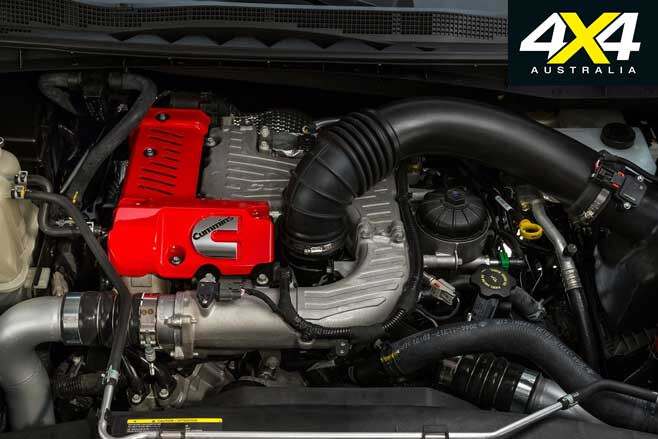
Unlike the USA where gasoline is king, diesel fuel is what Australian large 4×4 drivers want, and if you want a diesel Titan you had better get in before Nissan Australia pulls its finger out and sells a Titan here. Importers and converters such as Performax and American Vehicle Sales are already importing, converting from left- to right-hand drive, and selling the Titan in Australia, including the Cummins diesel-powered Titan XD. AVS currently lists a few 2018 Titan XD diesels around the $130,000 mark.
The petrol engine in the Titan is Nissan’s superb 5.6-litre V8 as found in the Patrol and Infiniti 4x4s. As sweet as the 5.6 is, Australian buyers still like the performance and efficiency of diesel, and the petrol-only Patrol struggles to get anywhere near the sales of the mainly diesel-fuelled Toyota Land Cruiser, its closest competitor. In fact, sales of the petrol V8 option currently account for less than two per cent of Land Cruiser sales in Australia.
Ram has shown strong sales results for a petrol V8 pick-up with its sharply priced Ram 1500, which has only been offered with the Hemi V8 in Australia so far. It is coming with a diesel V6 later this year, but with a price premium and a lower towing capacity. The Ram 1500 is a direct competitor to the Nissan Titan and, no doubt, Nissan Australia will be looking at its sales here when considering a full-size pick-up for our market.
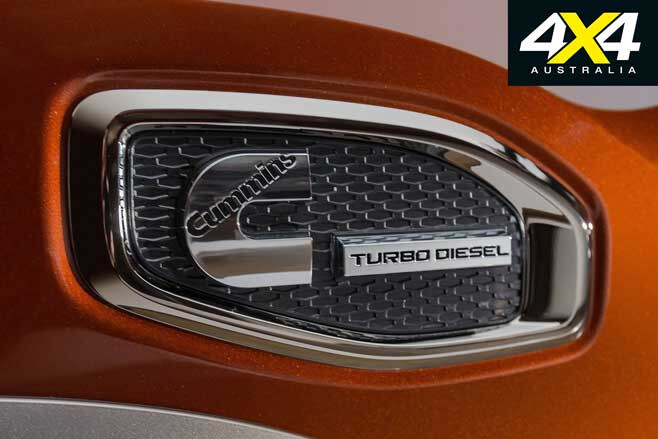
Nissan USA also announced the single-cab Titan body style will also be discontinued along with the diesel V8 in the facelifted 2020 Titan, while Cummins says it will cease to produce the ISV 5.0-litre V8 all together.
Since it was introduced back in 2013, rumours have surfaced that the ISV 5.0 V8 would also find its way into Toyota’s Tundra pick-up and heavy duty Ram trucks, but these applications never eventuated. It was also slated to go on to Cummins’s replacement ‘crate’ engine program alongside the 2.8 four-cylinder diesel, but those plans have also been scrapped.
Amidst Land Rover’s near incessant teasing of the upcoming 2020 Defender, Land Rover Classic has quietly unveiled a range of upgrade packages for the 90 and 110 variants of Land Rover Defenders made between 1994 and 2016.
Based on the components fitted to the limited-edition Land Rover Defender Works V8, the upgrade packages are comprised of wheels, suspension, brakes and engine, which are focused on improving the Defender’s performance and on-road agility.
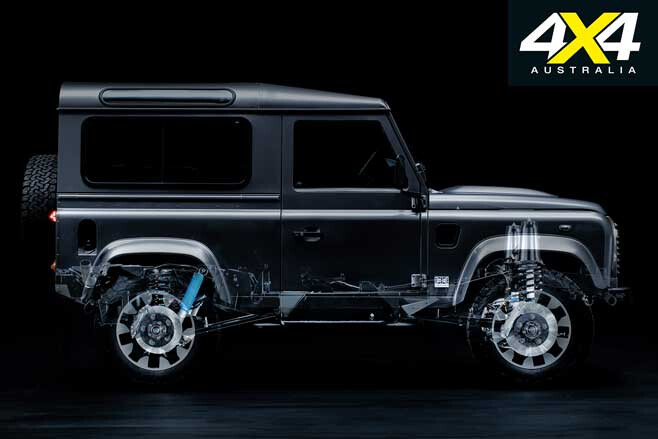
While the wheels upgrade, which comes in the form diamond-turned 18-inch “Sawtooth” alloy wheels, are available for any Defender made from 1994 onwards, the availability of the other packages varies according to the Defender’s year of manufacture.
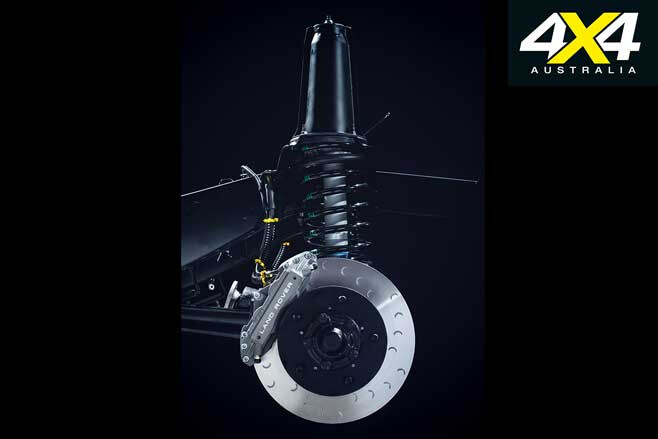
The Defender Suspension Upgrade Kit, which features revised coil spring rates, dampers, anti-roll bars, links, and bushes that are suited for on-road comfort and dynamics, is only available for Defenders from the 2007 model year onwards.
Based on the Defender Suspension Upgrade Kit, the Defender Handling Upgrade Kit not only includes all the former’s components, it also features disc brakes, callipers, and pads from the Works V8 model.
Topping the list of upgrade works available is the full Classic Works Upgrade Kits, which throw in the wheels and the Suspension and Handling Upgrade Kits, and comes with additional BFGoodrich all-terrain tyres, bespoke badging, an owner’s certification, and an ECU upgrade.
That being said, the Classic Works Upgrade Kit is only available for 2.2-litre TDCi models produced from 2012 onwards, with the ECU update giving a power bump of 29kW, raising its power output to 119kW and 463Nm and cranking up its top speed to 170km/h.
According to Land Rover, the 18-inch wheels and the Suspension and Handling Upgrade Kits can be fitted by Land Rover retailers, whereas the Classic Works Upgrade Kit can only be done at Land Rover Classic Works facility in Coventry, UK or Essen, Germany.
THE Ford Ranger has toppled the Toyota Hilux to become the best-selling 4×4 so far in 2019.
The Ranger 4×4 registered 333 more sales than the Hilux 4×4 in July, to put its nose in front on the year-to-date charts by just 75 units.
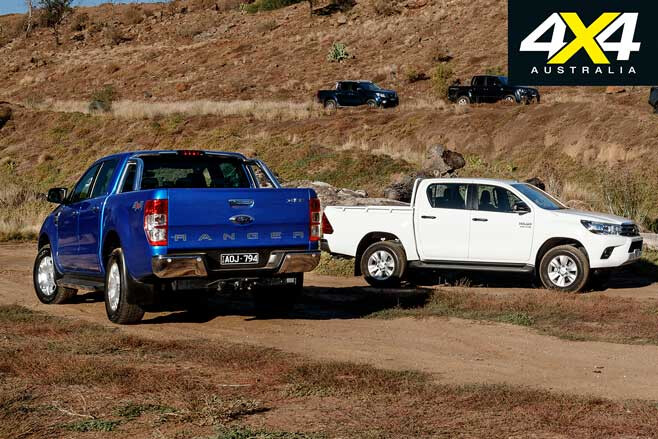
In a slow overall vehicle market, highlighted by a year-to-date sales dip of 7.7 per cent, the Ranger is also one of the only 4x4s to show sales growth compared to the same month last year (+9.6 per cent); the Hilux dropped by 5.4 per cent. In fact, the LCV market was down by 325 sales (1.9 per cent) compared to the same month last year.
The chief executive of the FCAI, Tony Weber, said the month’s sluggish sales figures were the result of increasing the Luxury Car Tax imposts, in addition to a number of other factors.
“The July sales figures continue to illustrate the tough market conditions facing the Australian automotive industry and the sensitive nature of the economy over the past 12 months,” he said. “Tight financial lending, drought, increasing Luxury Car Tax imposts and the Federal election have all contributed to make the Australian car market one of the toughest in the world.”
The Toyota Hilux remains the best-selling vehicle on the overall charts – when you combine 4×4 and 4×2 variants – with a total of 3359 sales (2517 4×4; 842 4×2). The Ranger sits in third spot on the overall charts – behind the Toyota Corolla – with 3168 sales (2850 4×4; 318 4×2).
10 BEST-SELLING 4X4S IN 2019

20 BEST-SELLING 4X4s IN JULY, 2019
It’s early January on the Bells Line of Road just west of Sydney and it’s bucketing down rain, and the road is awash.
I’m driving a base-spec Hilux Workmate. While I’m grateful for having a high-riding 4×4 in these conditions, I can’t help but think how much better off I’d be with full-time 4WD or a part-time 4WD.
The combination of winding mountain roads and lots of water – sometimes in puddles; other times in streams – puts a premium on traction, and with only the rears driving and no weight in the tray, there’s plenty of work to be done by the electronic traction and stability control systems, a burden that would be eased with proper full-time 4×4.
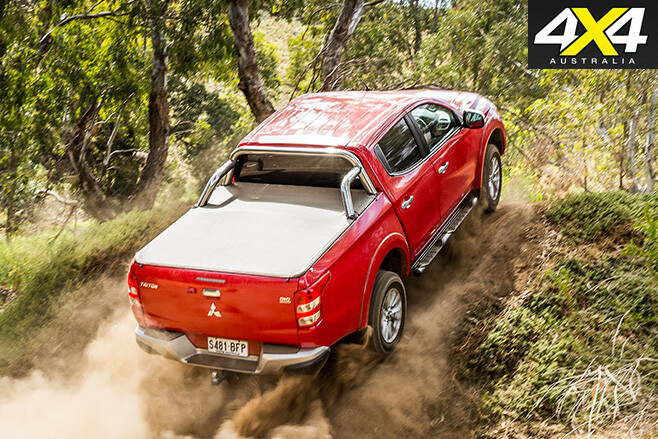
Unfortunately, full-time 4×4 utes are few and far between, and only Mitsubishi’s Triton GLS and Exceed models and Volkswagen’s Amarok, with the eight-speed automatic gearbox, fit the bill.
The essential difference between part-time and full-time 4×4 is the addition of a centre differential, to make three diffs in total, rather than just two.
Mitsubishi’s Super Select, as fitted to the mid- and top-spec Tritons, has a mechanical centre diff that can be manually locked by the driver by moving the shift dial (or lever, depending on the Mitsubishi in question) from 4H to 4HLC, where LC stands for ‘Locked Centre’. Once the Super Select centre diff is locked the 4×4 system effectively operates like a part-time 4×4 system. With the centre diff unlocked, it operates like a full-time 4×4 system.
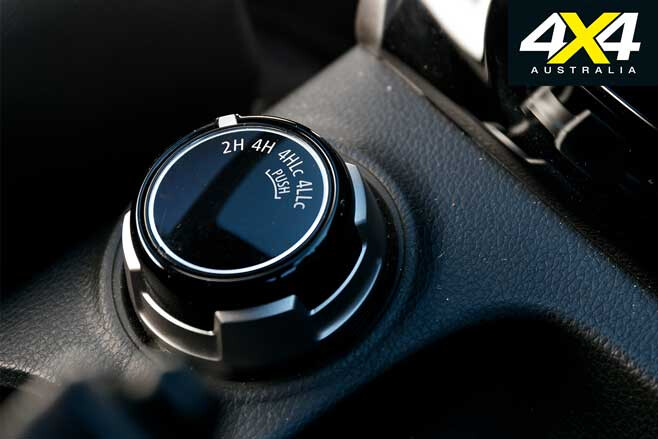
Mitsubishi modelled Super Select on Jeep’s 1983 Selec-Trac 4×4 system but added a more logical shift sequence in place of Jeep’s confusing arrangement.
But while the Triton system is good, and a significant improvement on the part-time 4×4 systems that are standard ute fare, the Amarok takes things further – in fact, several steps further.
In the Amarok, the driver doesn’t have to lock the centre diff, as that happens automatically if – and when – needed, via an electronic clutch that relies on the wheel-speed sensors to tell it what’s happening in terms of the traction available at each wheel.
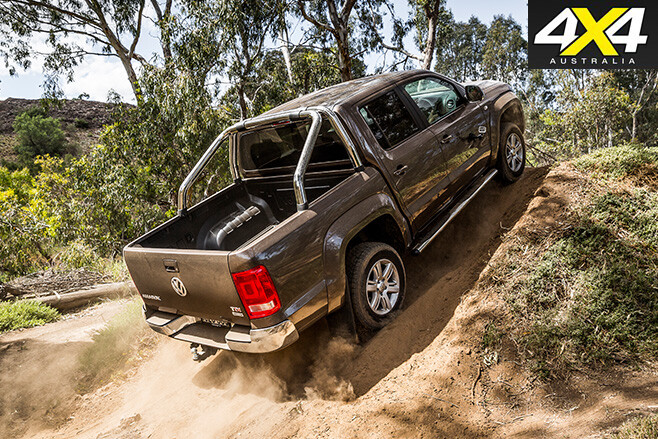
While it is at it, the ‘smart’ centre diff on the Amarok can also proportion the drive to the axle that can most use it. When climbing a steep off-road incline, for example, and the rears have lots of traction and the fronts have little, it can direct as much drive as needed to the rear axle. That’s something that a part-time 4×4 can’t do with its fixed 50/50 front/rear drive.
This helped make the Amarok a standout on the steep climbs when we tested all eight of the popular utes back-to-back last year.
When Toyota released the new Hilux the word was it didn’t come with full-time 4×4 because not having full-time 4×4 saves fuel. This may be true, but the savings would be insignificant at best, and where does that leave the Land Cruiser 200 and Prado, both of which have full-time 4×4?
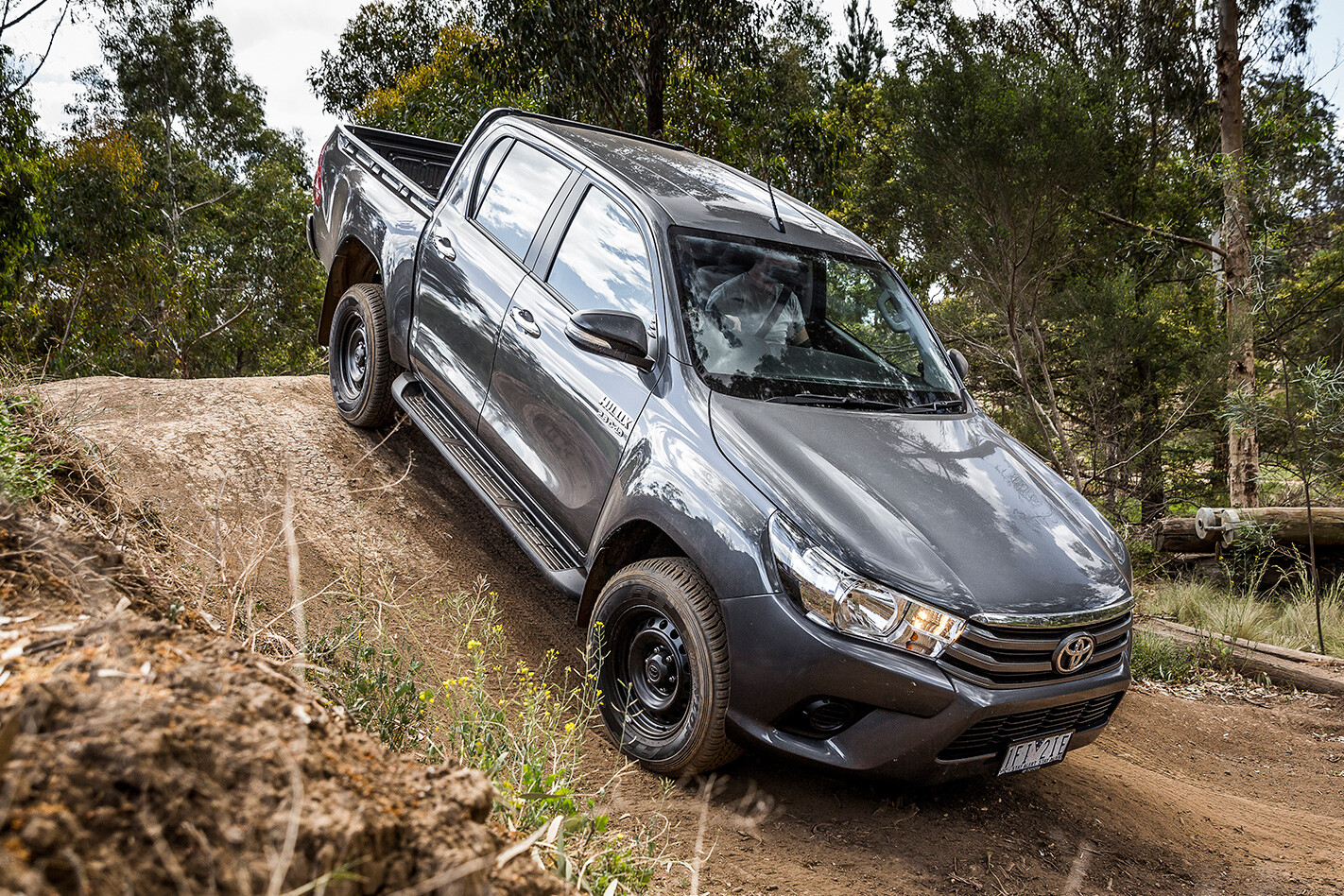
It’s a pity that Toyota didn’t slot the Prado’s full-time 4×4 system under the new Hilux. For that matter, it’s a shame Ford didn’t use the Everest’s full-time 4×4 system under the heavily revised Ranger.
Automatic Disconnecting Differential
All new Hilux 4x4s have what Toyota calls an ‘Automatic Disconnecting Differential’ (ADD) as an alternative to freewheeling hubs and as a fuel-saving measure. Without freewheeling hubs or ADD, the front wheels will turn the front half shafts, the front diff and the front prop shaft when a part-time 4×4 is in two-wheel-drive, all of which is unnecessary and a waste of energy.
Freewheeling hubs solve this problem but are inconvenient, as you have to get out of the vehicle to engage them. Toyota’s ADD also solves this problem, although without driver intervention – but it is more complicated.
ADD uses a sliding sleeve on the left-side front half shaft that effectively disconnects the left-side front wheel from the front diff. While the right-side half shaft stays connected to the diff, it can only turn the diff internals, which without drive from the left-side drive half shaft means the diff’s ring and pinion gears, and the front prop shaft, don’t turn – until, of course, you engage 4wd.
THE WHEEL marks went up and over the dry, grass-covered sand hill, but as we’d been asked by the property manager not to drive on the dunes I got out of the Cruiser and wandered to the top of the low rise.
To the east and south, flat and grassy plains near devoid of anything taller than half a metre stretched to the horizon; while to the north a salty flat bordered an inlet of light blue-green water where short and narrow strips of mangroves gathered to find a foothold on this remote coast.
As I topped the hill, a series of dunes parallel to the one I was standing on marched their way towards the ocean just a few hundred metres away which was wild and wind-capped. Almost at my feet, near smothered in the grass, was what we had come to find: an old cemetery from a long-abandoned pearling port … if you can call three or four markers a cemetery.
We were at Condon, the once important shipping outlet on the far north-west coast of WA, which few people have heard about and even less have visited. Gazetted as Shellborough but rarely known as such, Condon was the first port established along this long-deserted section of coast.
Situated north of the De Grey River mouth, the area was surveyed in 1872. The surrounding De Grey pastoral station, then running sheep, had begun 10 years earlier, a year after Frank T Gregory had explored the area and reported the expanse of rich grasslands.
The tiny hamlet initially provided a shipping point for wool sent direct to London, but it grew in importance with the discovery of gold at Marble Bar and Nullagine in the 1880s. Pearling luggers also used the shallow harbour, with up to 80 boats anchoring here – it’s hard to believe that these days, when the only boat within cooee would be a fisherman’s tinnie.
By the 1890s the town, with a population of about 200, had a couple of hotels, a stone jetty, customs shed, a number of stores, blacksmith shop, telegraph station, and a woolshed and stock yards. Because of the huge tides, the larger ships would sit on the mud as far out as a kilometre from the shore for loading and unloading, while only the smaller ships and luggers would tie up to the stone wharf.
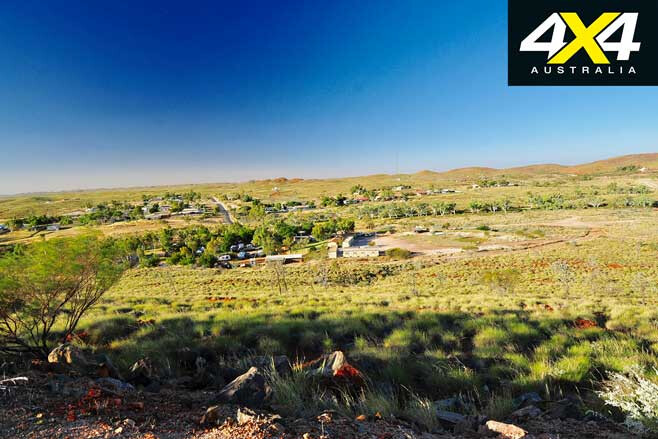
Today the old rock wharf has collapsed (it once stood at least two metres high) and is just a line of flat stones jutting out from the sandy southern shore. The sole timber pylon or strainer post that stood 25 years ago when I first visited the site has disappeared, while the only reminder of the customs shed and other buildings is an occasional stump among the tall grass.
A cluster of tamarisk trees just up from the jetty is the only obvious marker in the whole area and makes probably the best camp for those who want to stay here. However, while we were wandering around, we spotted another camp on the northern shore of the inlet in a fairly exposed spot with good boat access to the inlet – keen fisherman, I’m guessing.
Our travels to Condon originally began back in 1991 when we were following the footsteps of the 1879 Alexander Forrest expedition. His expedition, like ours, started at Condon, but we didn’t have time to explore the surrounding area then, so I knew we’d be back. When we returned just a few years ago, unseasonal rain meant the De Grey Station owners stopped access as the flat country was easily flooded and tracks were damaged by vehicles ploughing through the mud.
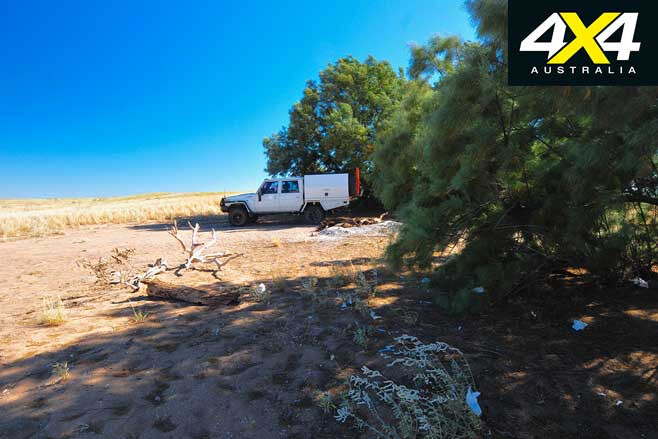
This time we were luckier and, while I had no luck on the phone ringing the homestead, we thought we’d try our luck and just rock up to the property headquarters. The De Grey Station, founded in 1862, is more than 12,000km² in size – or around three million acres.
The well-run and rich property comprises a manager’s quarters, staff accommodation, work sheds, solar panel arrays, trucking yards and machinery of all sorts including graders, front-end loaders, road trains and Land Cruisers. Still, we hardly saw a cow on our way there.
After meeting with and receiving directions from one of the managers, we headed off on some pretty easy tracks across the vast plains. The last 15km of tracks to the coast and Condon follow the route of the original telegraph line, with the occasional old pole complete with insulator still standing and running in a direct line towards our destination.
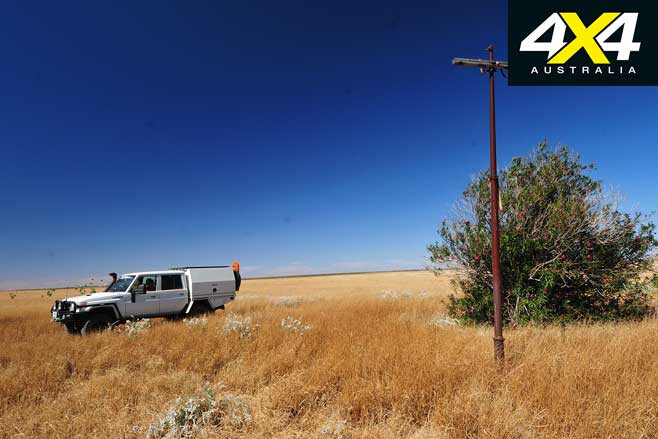
You pass the remains of the telegraph office, which helped link a distant Derby with Perth, a few kilometres short of the actual port of Condon. A forlorn solitary telegraph pole today overlooks the site, along with a tall date palm and a large flowering, scraggly oleander tree.
Just over the dune from the old telegraph station were the graves we had been told about but never saw on our previous visit. There are 11 souls buried here, but only a headstone and a few rusty steel enclosures now mark the hallowed ground.
With that success behind us we went in search of other treasures, and those who wander the wider area will find the occasional rubbish dump strewn with broken bottles and pottery shards. For most people, though, the main attractions include the isolation, beach combing (the shell collecting is pretty darn good), mud crabbing and fishing.
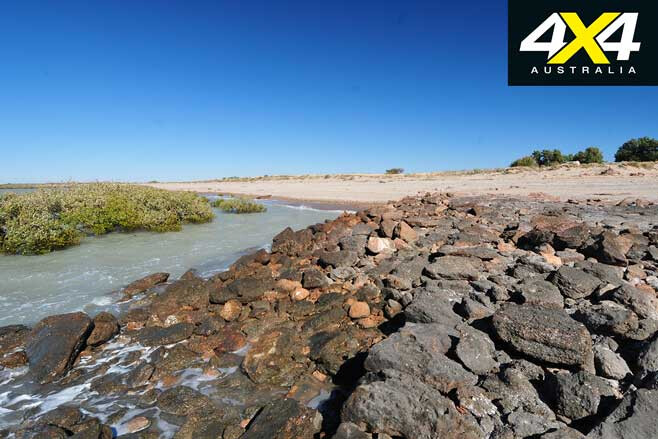
Remember there are no facilities and there’s no firewood at Condon, so you have to bring your own wood. You can launch a small tinnie off the beach in the inlet a few hundred metres upstream from where the old jetty can be seen, but be super cautious launching from anywhere else due to the soft sand and tides.
Plus, avoid driving on the dunes around Condon, as it only leads to erosion. A few years back the property closed entry to the entire place because of the damage and rubbish left behind. It took a couple of years of lobbying by the local shire before they decided they’d re-open access to courteous locals and clean-thinking travellers.
From near here you can swing inland to cross the upper reaches of the inlet and head north to a couple of smaller inlets, the biggest of which is Titchella Creek.
Access to here is also possible from Pardoo Homestead, which now offers travellers good camping, accommodation and even a cold beer at well-established facilities.
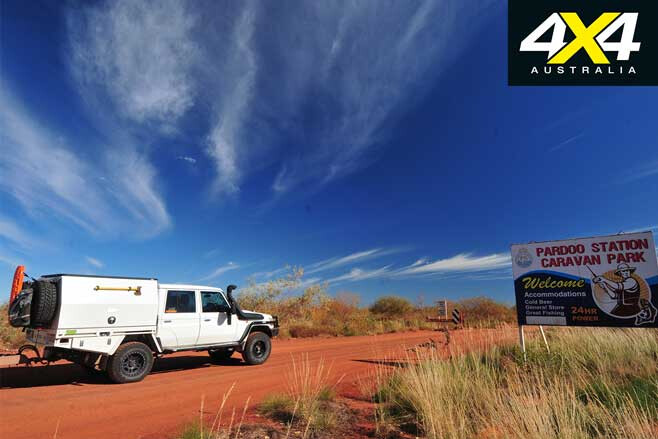
We’d camped for the night near the highway, where it crosses the De Grey River. It’s a popular camp for grey nomads, but fencing and rock barriers have been installed to stop people and stock accessing the riverbank because of the threat of the invading noogoora burr plant.
That noxious weed has already closed off long lengths of river frontage along the Fitzroy, a few hundred kilometres to the north, with workers trying to stop the same happening here. It’s a big ask, with the property owner, the Department of Agriculture and many volunteers actively trying to stop the invasion; so give them a hand and don’t enter fenced-off areas. Also, don’t transport any seeds you get stuck with – you’ll know the spiky buggers if and when you find them.
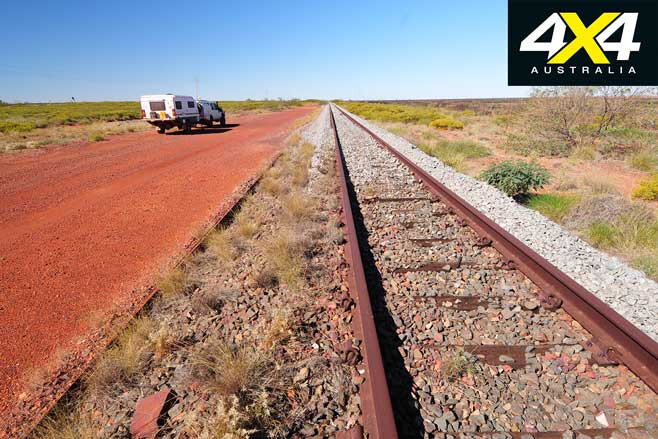
After our Condon experience we headed inland to Shay Gap, by following the now disused railway line that heads from its crossing of the De Grey River near the overnight camping area. Shay Gap, a deserted, basically non-existent town that closed down in the early 1990s, was named after the nearby break in the ranges of the same name, which in turn was named after Robert Shea.
He was the part-owner of the pearling lugger Seaspray and would have almost definitely used Condon as his port for his enterprises back in the 1870s. He headed inland looking to find some of his indentured labourers who had absconded, and he was probably killed by them or their compatriots. This isn’t a surprise, as Robert Shea and his like weren’t particularly nice people, abducting many people and forcing them to dive for pearl shells.
A good dirt road follows the railway line, with our journey only interrupted by flowering cassia bushes and a derailed train that had dumped iron ore and carriages beside the track. As we closed in on the range that acts as a barrier to the shifting sands of the Great Sandy Desert, we could see piles of overburden and the remains of the mining operations that had been carried out between 1972 and 1993.
We left the railway and dodged north around the numerous mining sites to meet up with a bitumen road which took us south towards the dismantled town; the only building still standing is the one at the airport, which still gets used by exploration and mining survey crews by all accounts. That evening we camped in Shay Gap, off the dirt road and surrounded by rich red bluffs, buttes and pinnacles of rock.
We were tucked in beside Coonieena Creek, which was dotted with drying pools of water.
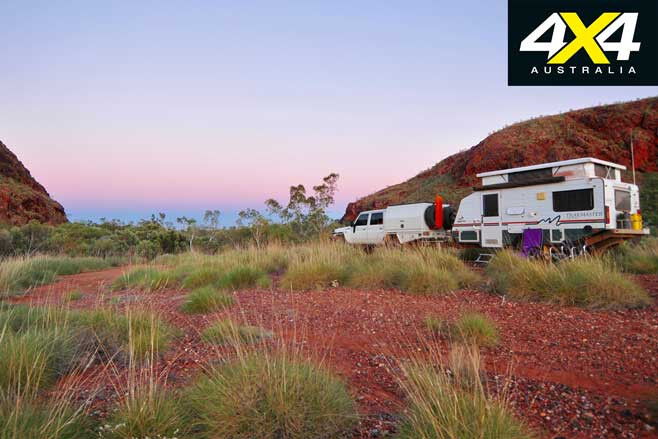
The next day we headed south, crossing the De Grey River near Muccanoo Pool – close to where Robert Shea was reputedly killed – and then the Talga River before we hit the bitumen. Here we turned west for a short distance before finding our way into Doolena Gap, where the Coongan River cuts through the range before joining with the De Grey. It’s a top spot to camp.
For the next couple of days we explored in and around Marble Bar, a town famous for suffering the longest consecutive time – 161 days – of the temperature not dropping below 37.8°C (or 100°F). That was back in 1924, and the record still stands.
The town got its name from a rock bar across the nearby Coongan River; and while the bar isn’t marble it still cuts a pretty sight, especially when the rock is splashed with water. Marble Bar is attractive and much more hospitable than most first-time visitors would assume, with the small town’s setting among the rugged, rocky hills making it much more than a desert hamlet.
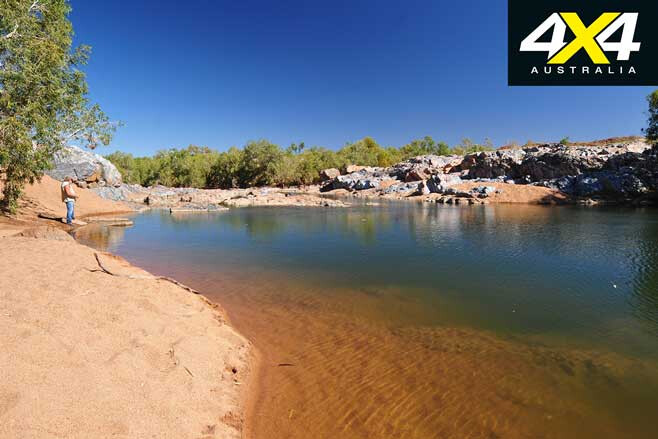
Gold was discovered here back in the 1890s, with some big nuggets found including the ‘Bobby Dazzler’ at 413oz (or 11.7kg), the 333oz ‘Little Hero’ and the 332oz ‘General Gordon’. Metal detectors are de rigueur for travellers to this part of the Pilbara, with fields including Sharks Gully, North Pole, Talga Talga and Twenty Ounce Gully still producing nuggets today.
If you’re a history buff then Ernest Giles at Glen Herring Gorge, south of the town, is worth exploring and isn’t a bad spot to camp. About 50km south of the town, the remains and airstrips of the WWII Corunna Airfield – the secret base where American and Australian bombers flew from to bomb Japanese forces in Indonesia – can be found.
On this trip we popped into the Meentheena Veterans Retreat, which not only caters for veterans but for everyone. Meentheena, about 80km east of Marble Bar, was once a pastoral property straddling the upper reaches of the Talga and Nullagine Rivers. It’s now a conservation park, and the Veterans Retreat of WA now operates camping, accommodation and controls access, all in a low-key manner.
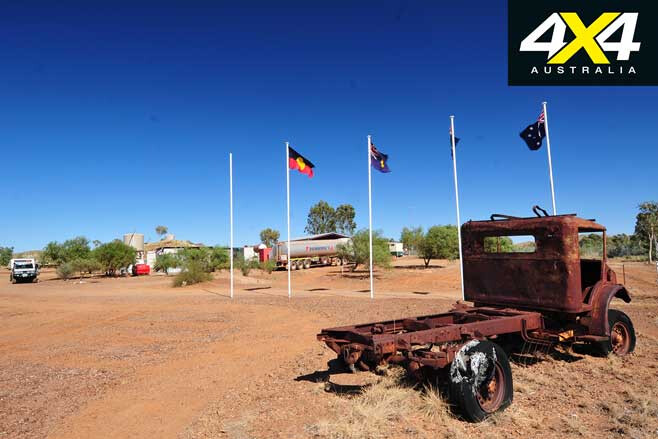
Bush campsites along shaded stretches of water of the Nullagine River have been established, while rough bush tracks lead to points of interest. For those who can’t tear themselves away from the modern world, the retreat’s HQ has powered camping and caravan sites, camp kitchen, hot showers and internet access. You could easily spend a few days here.
With our time up we took one last look at the old town and vowed we’d come back and take a journey from the sea to the mountains once more. You should do the same.
Condon to Marble Bar Travel Planner
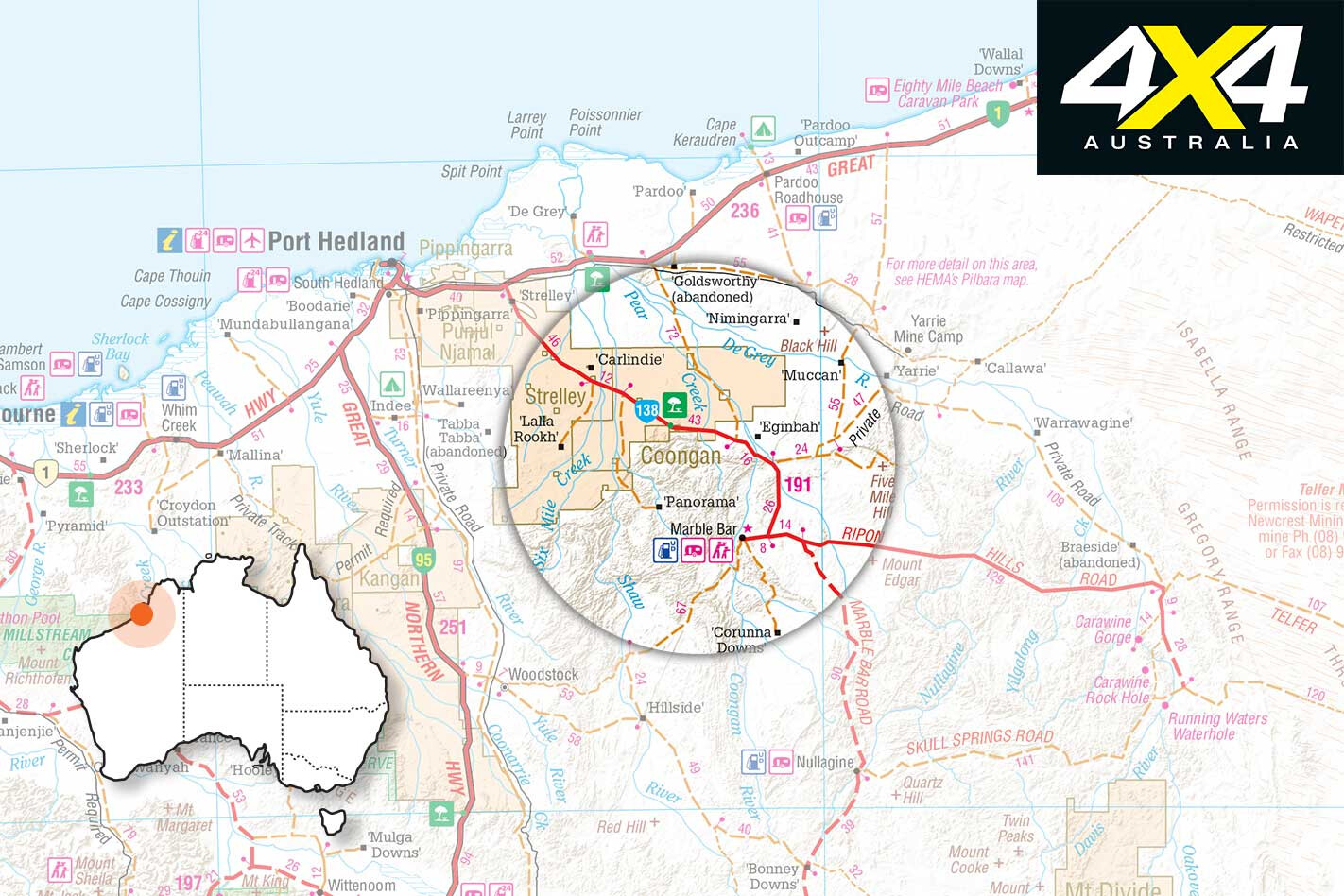
Pardoo Homestead: www.pardoostation.com.au Marble Bar: www.australiasnorthwest.com/destination/marble-bar Meentheena Retreat: www.vrwa-meentheena.org