
FOR YEARS Brabus had made its name known for tuning Mercedes-Benz products, but for the 2019 Frankfurt Motor Show the Bottrop-based tuner rolled out an Adventure Package for the current Mercedes-Benz G-Wagen.
While the package adds a touch of Brabus’ performance aesthetics in the form of the Brabus Widestar kit and exposed carbon-fibre bits seen in the skid plates and bonnet, the package isn’t without its practical purposes.
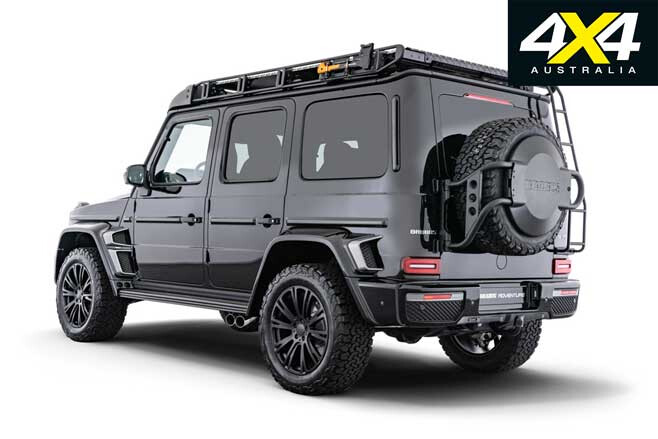
For the avid 4×4 adventurer the package adds a front bar that comes with a neatly integrated winch, four LED spotlights mounted to the front wind deflector, a roof luggage tray with mounting points of tools, a ladder mounted at the back to ease access to the roof tray, and a pivoted spare wheel carrier.
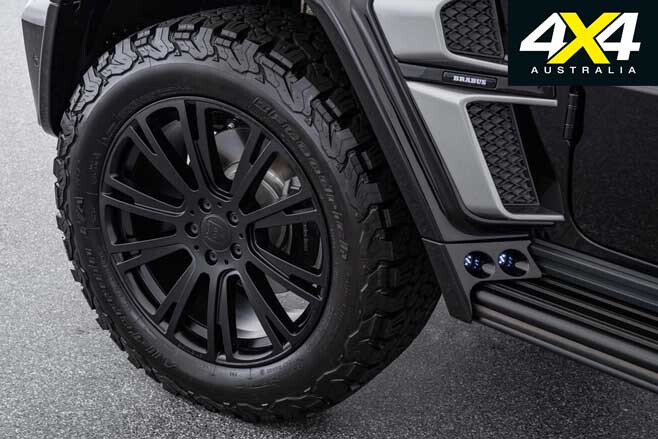
The G-Wagen’s off-road capabilities are further augmented by means of height-adjustable Brabus sport springs, which raises the ride height by another 40mm. The Widestar body widens the G-Wagen’s body by 10cm, allowing Brabus to fit 20-inch Brabus Monoblock R wheels equipped with off-road tyres.
For the 2019 Frankfurt Motor Show Brabus also highlighted its tuning package for the G350d, which brings a generous 33kW and 60Nm bump to the 3.0-litre straight-six diesel donk by means of a plug-and-play engine electronics, unleashing a total output of 243kW and 690Nm.
For those who want to give their G-Wagen some extra street cred, Brabus will only be too happy to supply a side-exit stainless steel exhaust system, as well as an interior customisation package.
FOLLOWING the reveal of the 2020 Land Rover Defender at the 2019 Frankfurt Motor Show, the Lego Technic Land Rover Defender set has now been officially launched.
Images of the 2573-piece kit were leaked earlier this year by Lego news website, The Brothers Brick, but the Lego Defender wasn’t officially confirmed until the curtains dropped on the all-new Defender last night.

“The Land Rover Defender and Lego brand are both iconic across the world and the launch of New Defender felt like the perfect time to bring them together,” said Joe Sinclair, Director of Branded Goods and Licensing at Jaguar Land Rover.
“The level of detail and engineering that has gone into creating this Lego model perfectly reflects the work of our own designers and engineers who have been so dedicated to bringing a motoring icon back for the 21st century.”
The realistic Lego kit comprises authentic body panels and rims, a 4×4 system with three diffs, fully independent suspension, a working winch, a removable roof rack with storage box, a ladder and traction mats.
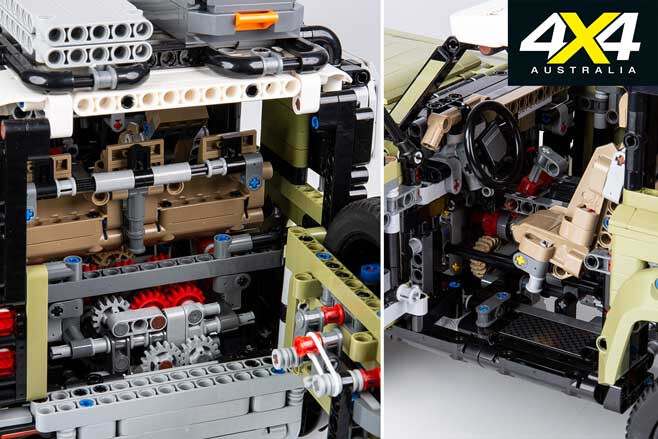
An intricately detailed four-speed sequential gearbox set-up comes with two levers to engage high and low ratios, and it’s said to be Lego Technic’s “most sophisticated gearbox yet”.
Popping open the bonnet reveals an in-line six-cylinder engine with moving pistons, and opening the doors provides access to a working steering wheel and a meticulously detailed dashboard.
“I’m very excited about this new model – a truly impressive job done by our Lego designers,” said Niels Henrik Horsted, Marketing Director at the Lego Group. “Together with Land Rover, we’ve blended elements, design and innovative engineering into a set that shows the boundless creativity of Lego play, and that with Lego Technic you can build for real.”

If that doesn’t spark your inner-child to life, perhaps a life-size Lego VW Kombi campervan complete with pop-up roof, kitchenette, sliding door and real VW tyres will do the trick!
Expect to pay AU$330 when the Lego Technic Defender launches worldwide from October 1.
What’s your favourite LEGO vehicle? Let us know in the comments below.
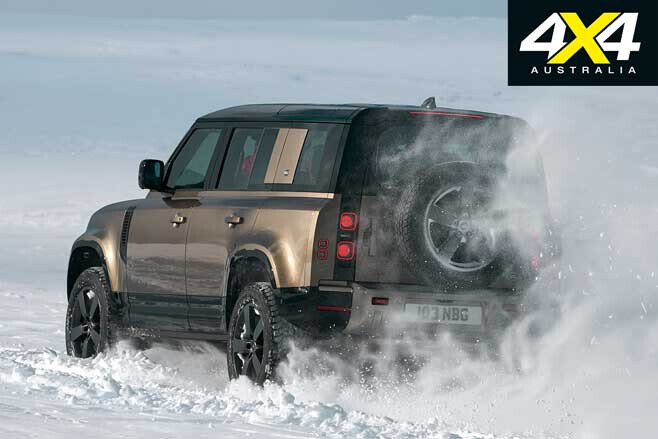
UNVEILED at the 2019 Frankfurt Motor Show, the new 2020 Land Rover Defender is a powerhouse of technology housed in more futuristic styling that acknowledges the original Land Rovers but moves the design game along.
We spent hours with the designers and engineers who spent the best part of a decade bringing the new Defender to market, to get a detailed rundown of the second generation of a Land Rover classic.
Here’s everything you need to know about the all-new Land Rover Defender.
1 – It is all-new
“All-new” is a phrase often bandied around freely in the car industry, but with the new Defender it really is all-new. No single component is shared with the previous Defender, not even a badge.
2 – Aluminium versus steel
The core of the Defender is radically different to the original. The original Land Rovers had aluminium body panels and a steel ladder-frame structure. The new one is almost the opposite. It has an aluminium intensive monocoque body (with high-strength steel used selectively for strength) and mostly steel panels, including the doors and front guards.
3 – Tell ’em the price
The only clue Land Rover Australia is giving regarding Defender pricing is that the 110 will start at around $70,000 plus on-road costs. Look at the UK pricing and the 90 starts at £35,000 with the 110 kicking off at £45,240. However, that £35K base 90 is a commercial model with minimal equipment, which is a car that won’t initially be sold here. So, best guesses are that the 90 should start somewhere around $60,000 in Australia.
4 – Tough stuff
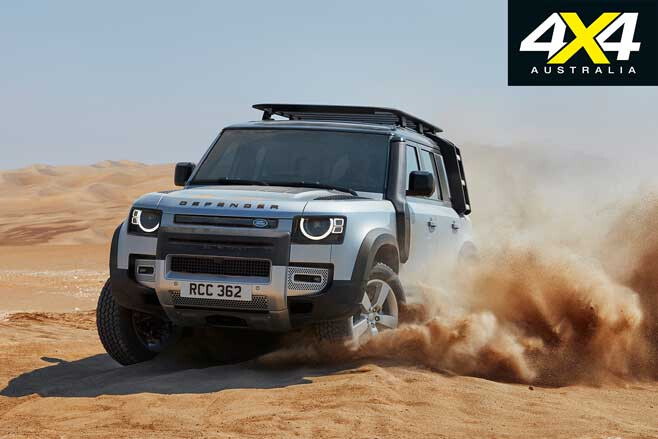
The new Defender sits on an architecture called D7x, the “x” denoting extreme. Engineers say “in some areas it shares some geometry similarities” with the D7 architecture that underpins the Range Rover, Velar and Discovery. However, those same engineers say the design “started with a blank sheet of paper” and that it is “a completely unique body structure” that has been “taken to a new level”.
5 – Name game
Engineers say they “had a conversation” about whether to continue the 90 and 110 model designations. The numbers originally referred to the approximate wheelbase in inches, but the wheelbase of the new cars has grown 227mm for the Defender 90 and 228mm for the Defender 110 (about nine inches). “There’s so much passion, enthusiasm for [those names]… there’ s a lot of heritage in those names,” one of the engineers told us.
6 – Engine options: diesel focus
The Defender will initially be offered with four engines around the world: two 2.0-litre four-cylinder turbo-diesels, a 2.0-litre turbo-petrol and a 3.0-litre inline six-cylinder turbo-petrol with a mild hybrid electric system boosting performance. Australia will get three of those four engines – the 2.0-litre petrol four-cylinder won’t be offered here. Down the track Land Rover will also offer a PHEV (plug-in hybrid electric vehicle) with an electric motor and battery that can drive the car for short distances on electricity alone, with the engine as a backup for more power and to recharge the batteries as required.
7 – Rear overhang identical
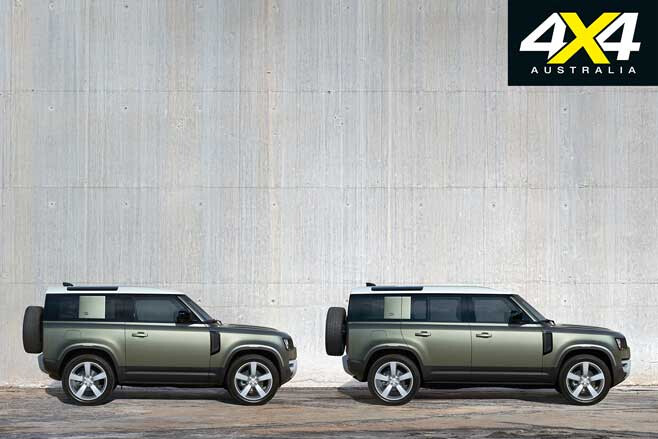
The front and rear of the Defender 90 and Defender 110 are the same. With the old Defender the 110 had more rear overhang, but with the new model it’s identical, indicative of a substantial design shift. That means the only difference between the two is the 435mm in the centre of the car to accommodate the 110’s rear doors.
8 – 130 in the wings
Leaked internal documents suggest the third Defender – the 130 – will join the family from 2022. Land Rover isn’t officially saying anything for now, but those leaked documents suggest the 130 will share the 110’s 3022mm wheelbase but with a larger body with more rear overhang.
9 – Defender pick-up
No word yet on a Defender pick-up; although, the fact engineers have talked about it suggests it’s somewhere in the mix. “You can theoretically do a pick-up from a monocoque [body],” one engineer told 4X4 Australia. “There’s the potential.” If it does happen it’ll be years away.
10 – Air suspension standard on Defender 110
The shorter wheelbase Defender 90 three-door will be offered with standard coil suspension or optional air suspension, the latter allowing up to an additional 145mm of lift. The air suspension is standard on the Defender 110.
11 – Automatic choice
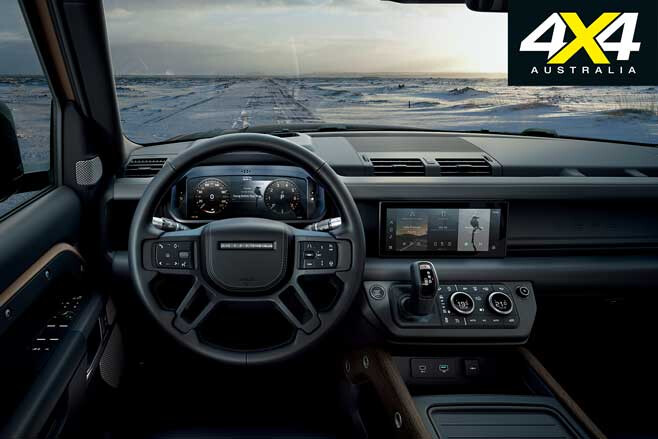
The original Series Land Rovers and Defender were produced only with a manual gearbox whereas the new Defender only comes with an eight-speed automatic (the transmission is produced by ZF).
12 – Wheels & Tyres
The Defender will be available with tyre diameters ranging from 18 to 22 inches (there are 18s, 19s, 20s and 22s). The 18- and 20-inch wheels will be available with factory-approved all-terrain tyres. And, of course, there will be aftermarket suppliers swarming to offer more appropriate rubber for those planning serious off-road work.
All Defenders will be fitted with alloy wheels, but Land Rover is also offering 18-inch steel wheels as an optional accessory. The steelies look great finished in white paint for a hint of retro ruggedness.
13 – Rear-mounted spare wheel
The spare wheel mounted on the rear adds 260mm to the length of the Defender.
14 – Defender’s electrics gets IP67 electrical rating
The electronics and connections in the new Defender have been designed to meet the IP67 water immersion standards. That means they can be submerged in one metre of fresh water for an hour without intrusion or damage.
15 – It is able to wade through 900mm of water
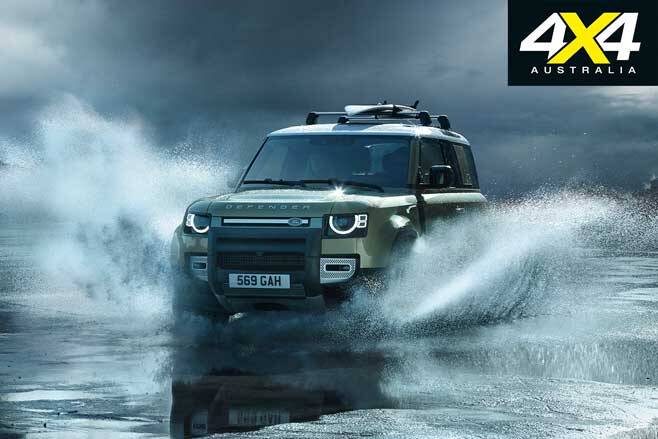
Like the Discovery the Defender is rated to wade through 900mm of water. Engineers say it could theoretically deal with deeper water, albeit with risk of the car floating, particularly with any side currents. If you end up in deeper water and the car starts floating, engineers say the doors can be cracked open to allow some water to flow into the cabin, in turn temporarily adding weight to help with traction. Obviously there will be water damage to carpets and trims, but engineers say the electrics should be fine.
16 – Recovery points
As they are on many modern Land Rovers, recovery points are hidden behind styling fascias, requiring their removal to access them. Engineers headed for the mud of Eastnor Castle in England – a famous Land Rover test facility – to test the recovery points of the new Defender. With the aim of getting the car bogged, the head of the accessories program, Sean Henstridge, then instructed his team to remove the quarter turn fixings attaching the plastic fascias to then expose the recovery points. It took five hours to recover the car, prompting the development of an accessory front cover that leaves the lashing points exposed.
17 – 4 and 6 cylinder counts for the Defender
Land Rover’s V8 engines can technically fit in the Defender body, but the company says there are no plans to add a V8 to the expansive model mix.
18 – Stepping up
There’s only one optional sidestep for all Defender models. 110 models simply use two of those developed for the Defender 90 – and each is interchangeable from left to right. Unlike those on the Ranger Raptor, they are not rock rails.
19 – Two mudflaps
The standard mudflaps that are more about light rain and spray can be replaced with accessory mudflaps that provide broader coverage.
20 – Elasticised wheel cover
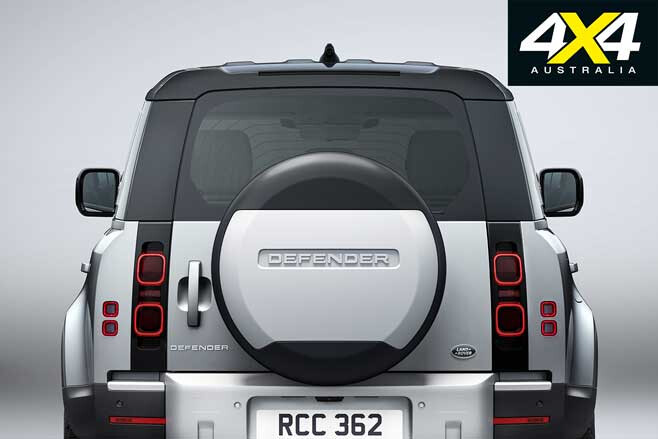
The spare wheel cover on the rear is elasticised, so they’re designed to cover everything from 18- to 22-inch wheels.
21 – Let there be light
There may be 170 accessories on offer for the Defender but none include better high-beam lights or spots. That’s because engineers found such variation in regulations around the world, instead deciding to leave it to the aftermarket to provide better long-range night visibility. Longer term Land Rover says it is “trying to find a way” to offer a factory approved light kit.
22 – Battery charge
The regular 12V battery sits beneath the driver’s seat of right-hand drive cars. Engineers say there is “easy access” for replacement or upgrades. But there’s no second battery and no separate fuse box for accessories.
23 – The Defender’s optional winch
The Defender will be offered with an optional remote-operated winch with a 4536kg (10,000lb) load rating. It’s hidden behind the numberplate frame and requires the removal of that unit to use it. The winch can be remote-operated up to 45m from the car and has a 40m-long synthetic rope.
24 – On the roof
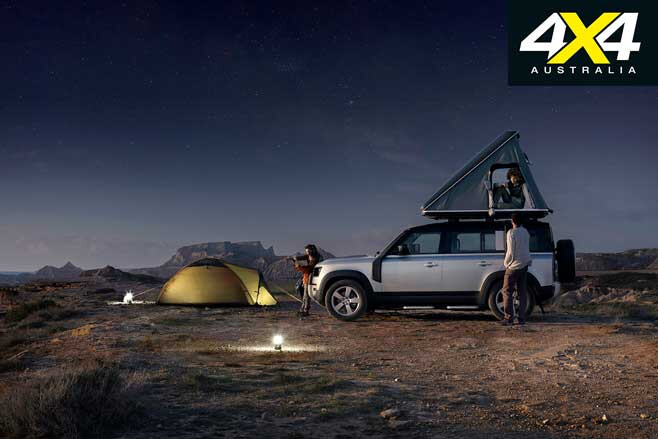
The roof rack weighs 36kg (for the 110) and has been engineered to reduce aerodynamic drag and unwanted wind noise. It can carry 168kg while driving and 300kg when the car is stationary, allowing for a two-person tent up top.
25 – Loading up
The side gear carrier that hangs off the side window can carry up to 17kg. It’s been designed for wet or dirty items and includes a plug for easy drainage. It can only be fitted to the right-hand side of the vehicle because it is mounted to the strengthened brackets used for the tailgate hinges.
26 – Strengthened tailgate
Engineers have beefed up the hinges and brackets on the tailgate mounting point of the new Defender, ensuring it can cope with the punishment of corrugation and bumps, even with the spare tyre hanging off it. They’re confident the sagging tailgates of well-used Defenders will be a thing of the past. That’s also why the optional gear carrier can only be fitted to the right-hand side of the car – because its 17kg load limit relies on the bracing and reinforcement for the tailgate on that side of the car.
27 – Made for Australia
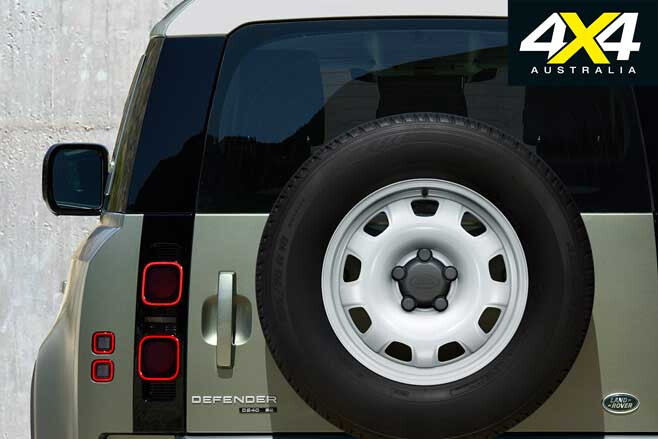
For both left- and right-hand drive markets the Defender’s tailgate is hinged on the right (driver’s side) of the car, so the tailgate swings open to the kerb – perfect for our market. It’s a rare example of a car maker optimising the tailgate layout for right-hand drive markets.
28 – Colours
The Defender will initially be offered with seven factory colours, with another five coming on stream soon after launch. One of those initial seven colours is called Tasman Blue, after the Tasman Sea that splits Australia and New Zealand. It’s said to be “a modern interpretation of Defender Blue”.
29 – Factory wrap
Pinstriping of the paint (from rubbing along bushes or branches) could be a thing of the past, with Land Rover offering a factory-fitted wrap in matte colours to the Defender. It’s claimed to have “scratch recovery” properties, whereby light scratches will effectively melt out with some heat, such as when the car is parked in the sun. While the original wrap is fitted at the factory, Land Rover says it can be removed and replaced during the life of the car.
30 – Exposed beam
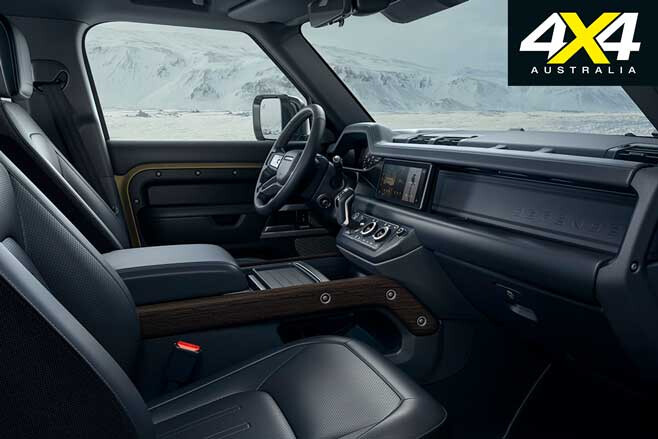
The Defender is the first car to expose the dashboard crossbeam and use it as a key part of the design in the car. It features grab handles at either end and can be powder-coated on top of a primer layer for an industrial look and feel.
31 – Bullbar
Land Rover has developed a ’roo bar specifically for Australia. To be made of steel, the bar will be offered as an accessory, keeping intact all sensors and safety systems. The ’roo bar will be revealed closer to the car’s June 2020 on-sale date.
32 – Chequered life
The chequer plate made famous on Land Rovers in Australia makes a return on the new Defender – sort of. On the bonnet is something that looks like chequer plate; although, it’s not designed to be stood on. That’s because it’s made of plastic, one of the requirements to ensure it meets the latest pedestrian protection regulations.
33 – Two into 4(x4)
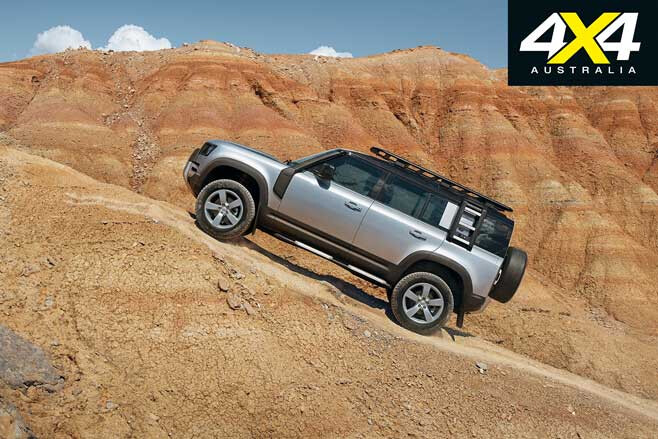
All new Defenders have dual-range four-wheel drive and there are no plans to offer anything different.
34 – Crawl time
The Defender has an impressively low crawl ratio of 51.5:1 for diesel versions and 57.2:1 for the six-cylinder petrol.
35 – Arm rests
The Defender gets arm rests on the door for the first time. It’s indicative of a major step up in comfort levels for a car hoped to appeal to a wider audience.
36 – Jump seat
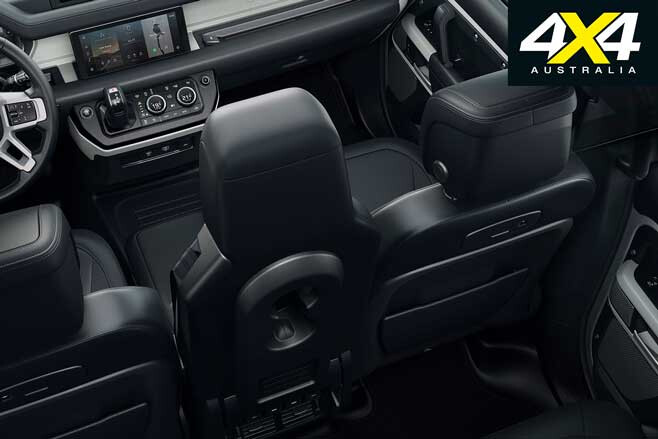
The new Defender will be offered with a jump seat between the two front seats, something that takes seating capacity to six. The optional jump seat sits higher than the outer front seats and is very much a temporary seat, but it’s a novel retro-inspired option for those who think they may occasionally need another pew. The jump seat also incorporates cupholders and arm rests on its backing, so it can transform into a centre console when not in use as a seat.
37 – Take a seat
The new Defender will be offered in five-, six- or seven-seat layouts. For the seven-seat, Land Rover calls it a 5+2, suggesting the third row is best reserved for occasional use. Six-seat versions run two rows of three seats, with the jump seat up front for occasional use. While it is technically possible to offer an eight-seater – with a 3-3-2 configuration – engineers decided against it due to issues with exceeding weight limits.
38 – Powering up
The new Defender will be offered with a 230V electrical socket for powering accessories and low-powered gadgets that may accompany you on adventures.
39 – Connected
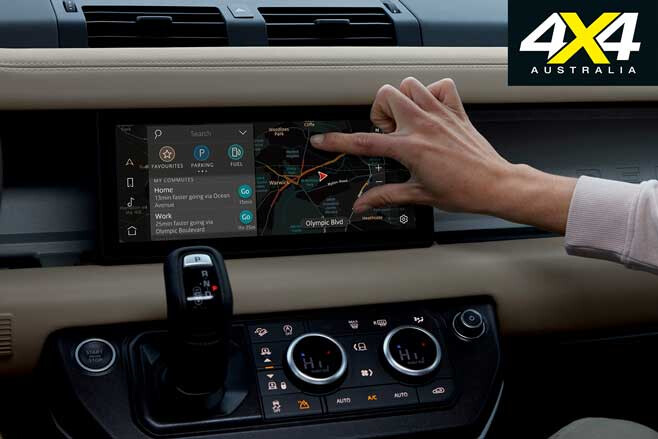
Land Rover discussed the limits of 4G (and upcoming 5G) mobile coverage in keeping the car always connected and allowing for over-the-air software updates. However, the company decided against fitting satellite phone data systems in each car, instead leaving it to portable sat-phones with a Wi-Fi connection for those desperate to update their vehicle in the bush.
40 – 85 computers in new Defender
Whereas a radio was a high-tech addition during the unusually long tenure of the original Land Rover, the new Defender has 85 ECUs, or computers. Working in harmony, Land Rover says they can turn the off-roader into “an all-terrain super-computer capable of handling 21,000 network messages at any one time”. Let’s just hope none of those 1s and 0s heads down the wrong path…
41 – Aerodynamic efficiency
The new Defender has a co-efficient of drag (Cd) as low as 0.38, well below the 0.62 of the old Defender. However, that is for the P300 model that won’t be sold in Australia. The three engine variants sold here have a Cd of either 0.39 (Defender 110 D200 and D240) or 0.40 (Defender 110 P400 and all Defender 90s).
The almost vertical tail and squared edges are arguably the most retro part of the new Defender, faithfully putting a modern spin on the original’s rump. But there’s also an aerodynamic advantage to the squared edges, the swift separation of air reducing drag at speed. The rear-mounted spare tyre also manages to stay out of the air flow.
42 – Aftermarket accessories
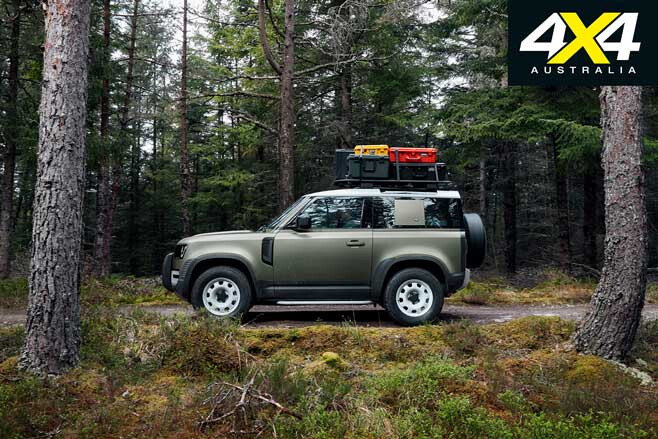
Land Rover engineers have so far not engaged the aftermarket on accessories, instead putting all engineering resources into the broadest line-up of accessories ever offered on a new car. The company says it will consider requests for access to software codes, depending on what the desired outcome is.
43 – Muscling up
Land Rover says the new Defender has “the strongest drive shaft and half shafts ever deployed on any of our vehicles”.
44 – Roof Options
Land Rover’s iconic “Alpine lights” are back for the new Defender. The rear roof-mounted windows built into the roof have become an iconic Land Rover design feature, one formerly used on early Discoverys.
Land Rover is offering three roofs for its new Defender. There is a basic metal roof or a panoramic sunroof. But the most interesting is a safari-inspired retractable canvas roof that allows those in the front or back to get a better view by poking their heads out of the roof.
45 – Stopping power
There is no mechanical link between the brake pedal and the brake discs. Instead the Defender gets a brake-by-wire system claimed to provide more “precise, linear brake pressures”. Engineers also say the electronic braking system helps with off-road traction due to the ability to better regulate braking to each individual wheel.
46 – Air suspension
The Defender’s air suspension system (optional on 90, standard on 110) adds another 135mm of lift at the front and 145mm at the rear.
47 – Ground clearance
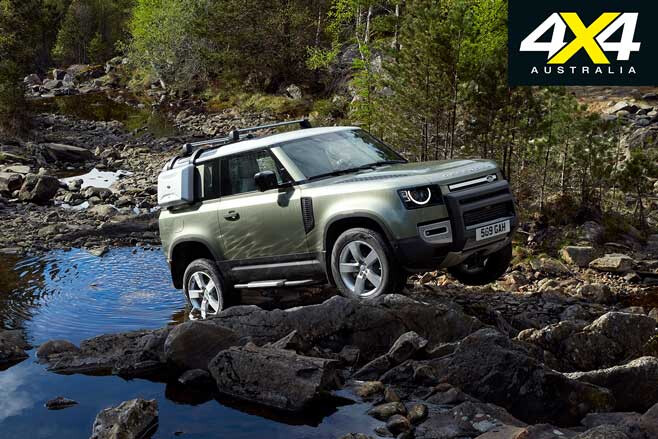
The raw numbers suggest the old Defender had superior ground clearance to the new one: 323mm versus 218mm for cars with steel suspension and up to 291mm for cars with the optional air suspension. However, riding on independent suspension means not having the diff hanging down in a fixed position, something engineers say allows more running clearance on the new Defender.
48 – Any angle
The new Defender can ascend or descend slopes up to 45 degrees. It can also traverse side slopes up to 45 degrees. Of course, the fitment of some accessories – including the roof rack – could alter that due to changes in the centre of gravity.
49 – Activity key
The Defender will be offered with Land Rover/Jaguar’s Activity Key, which has been updated to incorporate a watch. The rubberised band can be worn like a fitness track on your wrist and is water resistant to four atmospheres (40m). It can be used to lock and unlock the car by the press of a button on the watch. Whereas previously you had to hold the key at a specific place on the car, the car can now sense if it is nearby and allow the doors to unlock.
50 – Rear camera
While the rear camera is always exposed to allow for ClearSight Rear View function that places an unobstructed image in the rear vision mirror, it also has a hydrophobic coating to help keep it clear of mud and water.
TOYOTA’S next-generation Land Cruiser is shaping up to get a diesel hybrid system off the back of strong diesel demand for large SUVs in Australia.
While the car being referred to as the 300 Series by enthusiasts – the model code is yet to be confirmed – is yet to be revealed, Toyota Australia executives have given key clues to the environmental performance of the upcoming model.
“We will have all forms of electrification and ultimately the market will determine which is appropriate for that time and that particular market,” said Toyota Australia vice president of sales and marketing Sean Hanley.
Moments earlier Hanley was quick to answer “yes” when asked if a diesel hybrid system would make sense for the Land Cruiser.
“We’re a big market for Land Cruiser in Australia. We’re always analysing the future and market trends… there are many variants of electrification.”
Toyota Australia product planning boss Rod Ferguson reinforced the preference for a diesel hybrid.
He referenced various Land Cruiser buyer types – such as mining companies and farmers – who have diesel on-site, making it the preferred fuel.
“We’ve still got a number of customers who see diesel as important for the performance of their vehicles, for the torque,” he said, with torque and load lugging a major consideration.
“For the big SUVs we are still committed to diesel… whatever we apply has got to be fit for purpose, it’s got to meet the requirements of the customer.”
Toyota has already committed to have an electric or hybrid version of every model in its range by 2025.
For Toyota that means the next-generation Land Cruiser (and Hilux, Prado and Fortuner) will be engineered to accommodate a hybrid system.
However, the company hadn’t yet confirmed whether the internal combustion engine would be fuelled by petrol or diesel.
The two other big markets for Land Cruiser – America and the Middle East – favour petrol engines, one of the reasons the rival Nissan Patrol is these days only produced with a V8 petrol engine.
But as the single biggest market for the Land Cruiser, clearly Toyota Australia holds some sway with global product planners, insisting a diesel hybrid would make more sense.
Over the past 12 months 99.6 per cent of 200 Series Land Cruiser sales have been for the 4.5-litre twin-turbo diesel, prompting Toyota Australia to cease importation of the 4.6-litre petrol V8 (it has already been removed from the website and downloadable online brochure).
The current 200 Series Land Cruiser went on sale in 2007 and is expected to be replaced around 2022, stepping its V8 engines back to V6s as the company chases weight savings and takes advantage of engine advances that improve efficiency.
UPDATE, August 24, 2022: Toyota Tundra confirmed for Australia
In huge news for local fans of heavy haulers, the Toyota Tundra is confirmed for an Australian launch, thanks to a conversion program announced by Toyota and partner Walkinshaw. Get all the details at the link below.
The story to here
TOYOTA AUSTRALIA is investigating options to import the enormous Tundra pick-up, with the Sequoia full-size SUV also of interest.
Local execs have asked its Japanese head office about the possibility of a right-hand drive Tundra out of the factory in America, a question that has so far gone unanswered.
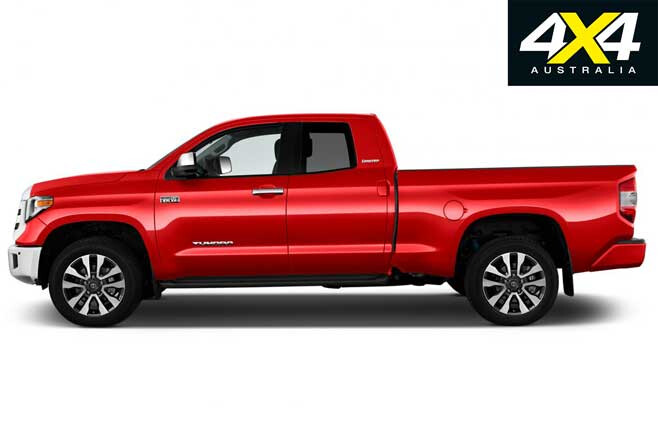
“We’re definitely interested in a full-size pick-up… we see very much an expansion in that segment,” said Sean Hanley, Toyota Australia vice president of sales and marketing, who added that Toyota Australia continued to study all possibilities.
He didn’t rule out the possibility of a local left-to-right-hand drive conversion, as is currently happening with the Dodge Ram and Chevrolet Silverado.
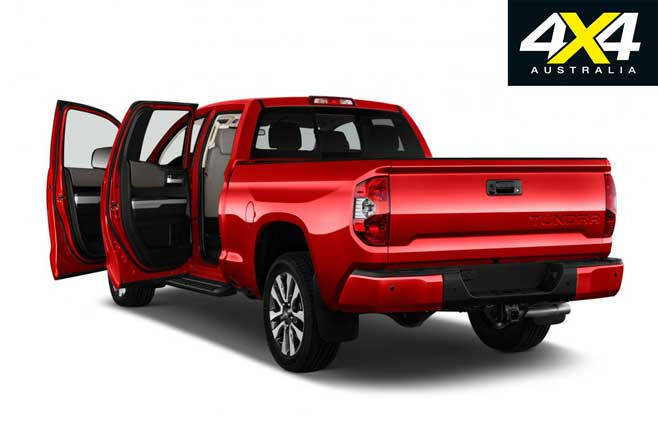
Of course, one issue with the current Tundra is its petrol-only drivetrain. However, given the platform-sharing with Land Cruiser – the two both arrived in 2007 – Toyota could logically engineer a diesel Tundra, and possibly even a diesel hybrid.
SPY shots of a 2020 Isuzu D-Max Space Cab surfaced last week.
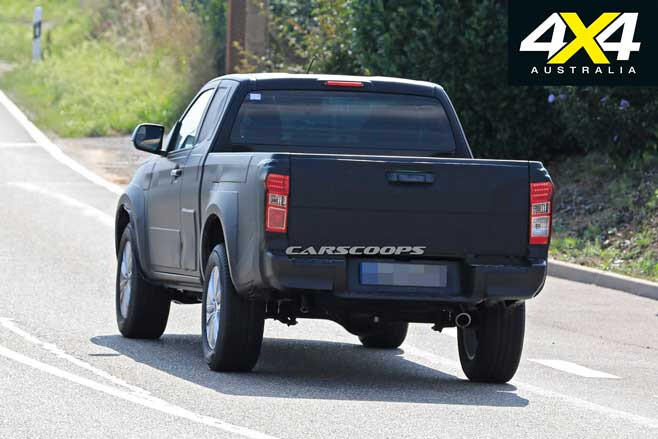
Appearing on US automotive website www.carscoops.com, the two-door, camo-clad prototype was caught testing in Europe, with the spy shots indicating tweaks to the vehicle’s body around the rear side windows and potentially the extended tub, as well as subtle changes fore and aft.
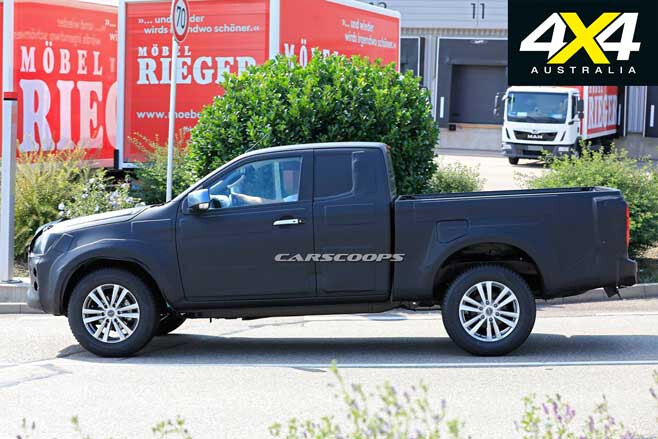
Despite extensive black tape disguising the key changes, there appears to be a bigger grille, modified head- and tail-lights, and a bolder front fascia. Apart from this, however, changes appear slight compared to the current model that’s available locally.
The local D-Max is currently in its second generation, with the MY19 model receiving a tinkering earlier this year with a few cosmetic enhancements including the addition of Fibre-Reinforced Polymer (FRP) sidesteps.
The D-Max is currently offered with Isuzu’s trusty 130kW/430Nm 3.0-litre turbo-diesel engine, which runs through a six-speed auto or six-speed manual transmission. Isuzu UTE Australia will no doubt be keen for this relatively large-capacity four-cylinder engine to carry over into the next generation as it gives a point of difference compared with many of the smaller-capacity offerings in the 4×4 ute segment.
As expected, Isuzu UTE Australia remained tight-lipped when asked about the pictured test mule, with the company not providing any comment on its relevancy to the local market.
CAMPER vans are a great way to travel the country, but they are limited to sealed roads and don’t offer the off-road capability for those who want to retreat off the beaten path.
German motorhome specialists, Hymer, recently unveiled its VisionVenture concept at the Caravan Salon in Dusseldorf, an event which combines the best of camper vans and 4×4 tourers.
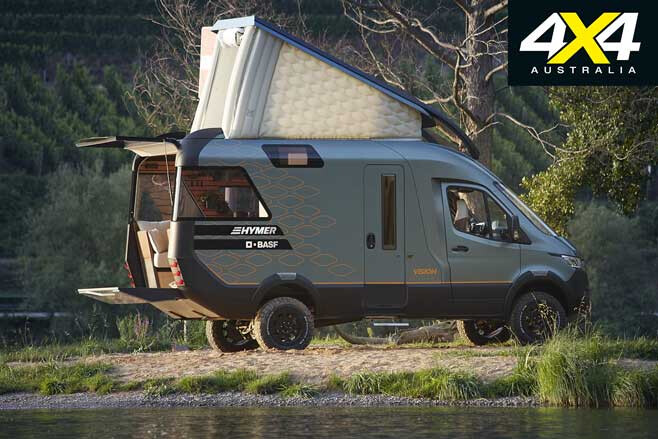
Based on a Mercedes-Benz Sprinter van, the Hymer VisionVenture is said to envision what “modern travel would be like in 2025” with the use of innovative materials made in collaboration with German chemical giant, BASF.
The VisionVenture shares the same chassis, front doors and front fascia as the Sprinter, but Hymer took liberty with the rest of the body, reshaping the front end with a steeper raked windscreen, adding pumped-up wheel arches, and fitting a wide rear panoramic window.
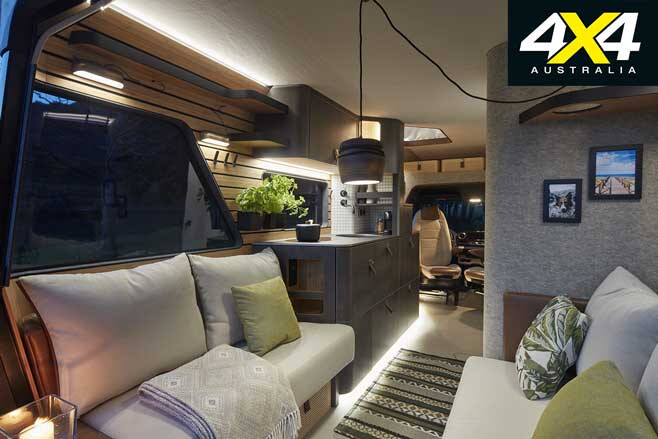
For the interior layout, packaging and fixtures, Hymer teamed up with Studio SYN designers to create a flexible living space, with several neat space-saving features such as a multifunctional wall rail system, pull-out electric barbecue grill and a retractable office space.
Underneath, the VisionVenture has a four-wheel drive system along with raised suspension and chunky muddies to bolster its go-anywhere ability.
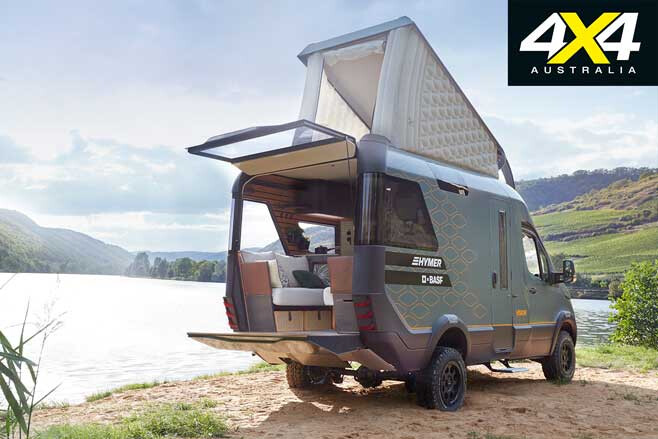
Specifics about the VisionVenture’s drivetrain are scarce, as the headline act of the concept is its use of innovative materials from BASF that are said to improve occupant comfort.
The VisionVenture’s dark paintjob features a temperature-regulating Chromacool technology said to reduce surface temperature by 20°C, which translates into a 4°C temperature reduction for the interior. The pop-top roof, which serves as the sleeping quarters, features inflatable honeycomb outer walls that provide insulation when inflated with heated or cooled air.
Much of the “premium-looking” fixtures used in the interior come from BASF’s own catalogue, with materials such as Veneo Slate – a 1mm-thick material that combines a thin layer of stone with plastic – which delivers the stony veneer without the weight penalty.
“Innovation has always been part of Hymer’s DNA, and the concept car VisionVenture is our take on modern van life,” said Christian Bauer, President of Hymer. “A major source of inspiration for this project was the camper community, who have given us new impetus with their creative ideas and DIY conversions.
“We are confident that we will be able to introduce some elements from this array of innovative and extremely customer-friendly solutions into series production in the not too distant future.”
UNLIKE the average tarmac-dwelling motorist, a 4×4 adventurer requires a more sophisticated battery setup. For those lured by dirt and remote campsites, a capable cranking battery that’ll reliably fire an engine into life is essential, as is a unit that’ll power a host of campsite essentials for days on end: fridges, lighting, charging docks for the kids’ phones and laptops … the list goes on.
Obviously a stock starting battery isn’t going to have the required juice to start a vehicle and power campsite electrics – cranking batteries are designed to provide short bursts of energy.
Enter the deep-cycle battery. Rather than provide short, strong bursts of power, a deep-cycle battery instead provides consistent power for longer, and they’re ideally used as an auxiliary battery in tandem with the main starting battery, as they’re great for powering campsite accessories for lengthy periods while the starting battery snoozes.
4×4 battery types and sizes
Essentially there are three types of batteries used on the 4×4 scene: starting batteries, dual-purpose batteries (a mixture of starting and semi-cycling abilities) and pure deep-cycle batteries. A quality starting battery, as John Kilby, Century Yuasa Batteries’ national training manager, told us, must be able to cope with “excessive under-bonnet temperatures, continuous vibration and repeated impact from rough and uneven outback roads”.
A dual-purpose battery dabbles in both worlds; it provides enough oomph to fire an engine into life and it can power campsite accessories, provided the 4×4 it’s installed in is on the move every couple of days and the workload is light when the engine isn’t running.
Pure deep-cycle batteries are built for long-term remote adventure, where you can kick back at camp with cold beers, charged electronic equipment and a dormant starting battery – when optimised with a dual-battery setup, of course.
4×4 battery chemistry
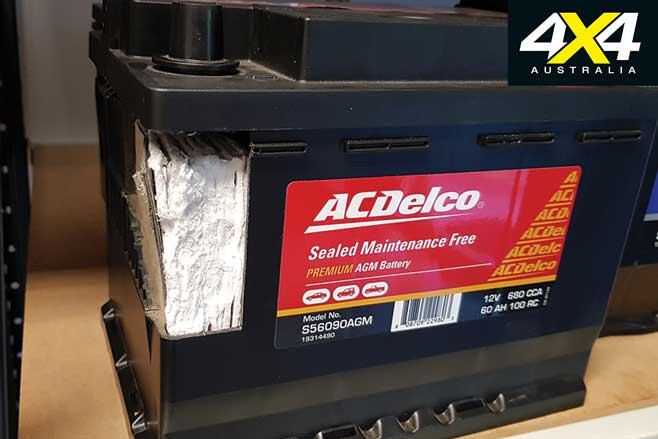
LEAD ACID (FLOODED BATTERIES): The lead is pasted to a plate inside the battery and these are immersed in a battery fluid (electrolyte), which is a mixture of sulphuric acid and water. There are two types of flooded battery available: Low Maintenance, which provides the ability to top-up the battery fluid; and Sealed Maintenance Free (SMF). The term SMF is used when this type of flooded battery is in a container that is sealed and the fluid is unable to be topped up.
AGM (ABSORBED GLASS MAT): In an AGM battery the electrolyte solution is absorbed into glass mat microfibres that are compressed against the plates so there is no loose electrolyte. GEL: In a Gel battery the electrolyte solution is immobilised in a chemical agent called silica that adheres to the battery plates. Again, there is no loose electrolyte.
Lithium 4×4 battery
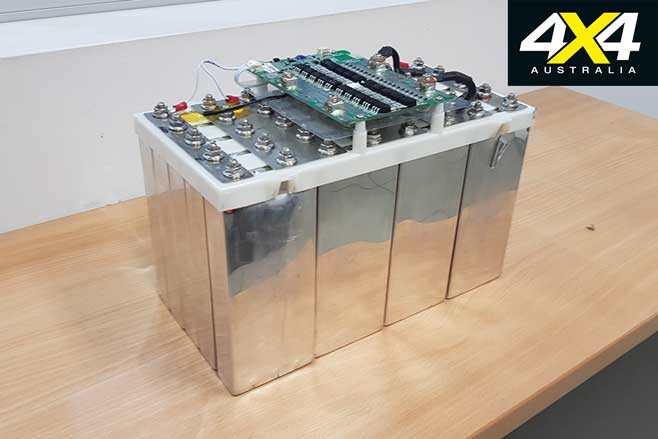
THANKS to their light weight, quicker recharge times and their ability to produce more cycles, lithium batteries are fast becoming all the rage. But what is the difference between a typical Lead Acid battery and a lithium battery, and why are more and more people turning to lithium as a solution? Sealed Performance Batteries is an Australian distributor of Lithium LiFePO4 deep-cycle batteries built for heavy-duty 4×4 use, so we asked marketing manager Callen Price to shed some light on the topic.
“The main difference in the technologies is the base material utilised for the batteries,” he explained. “Both lead acid and lithium contain the standard battery component which includes a cathode, anode, separator and electrolyte; however, lead acid batteries utilise lead for the cathode and anode plates which make them inherently very heavy.
“LiFePO4 utilise LiFePO4 as the cathode and graphite carbon for the anode which make the batteries less than half the weight of the lead acid equivalent. The other large difference is that, with lead acid batteries, a chemical reaction is undertaken during the charge and recharge cycle; whereas with LiFePO4 a transfer of ions is undertaken, which greatly increases the cycle life of LiFePO4 batteries to a point of up to eight times that of lead acid battery.”
Prepare to pay more for the privilege though, with lithium batteries notably more expensive (often five to six times the cost) of lead acid equivalents – although, with their extended running life, a lithium battery can end up being cheaper in the long run. In addition, as lithium batteries are a relatively infant technology they can’t be installed under the bonnet (for overheating reasons). However, they are safe to install inside the cabin or tray.
4×4 battery construction
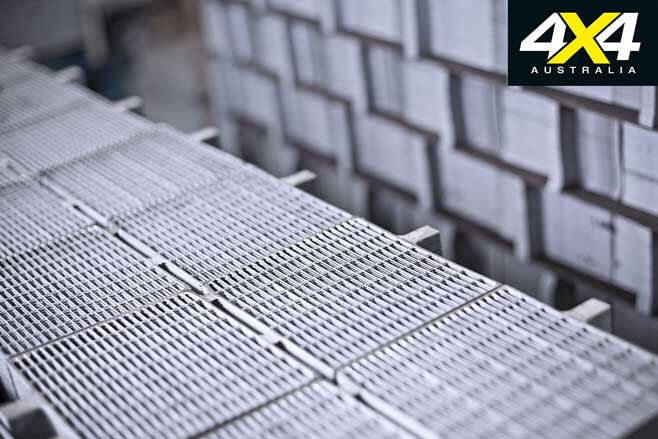
“When installing additional batteries under the bonnet, it is best to use polypropylene cases, not ABS plastic,” John Kilby from Century Yuasa said. “Polypropylene is designed to cope with the extreme heat, and the benefits of extra electrolyte covering those internals acts like a swimming pool, keeping the battery cool to increase battery life.”
A common misconception in the market is that the cold kills lead acid batteries; however, it is heat that does the damage. Every 10°C increase in temperature doubles the chemical reaction inside a battery, increasing the rate of corrosion and service life
Dual 4×4 battery setups
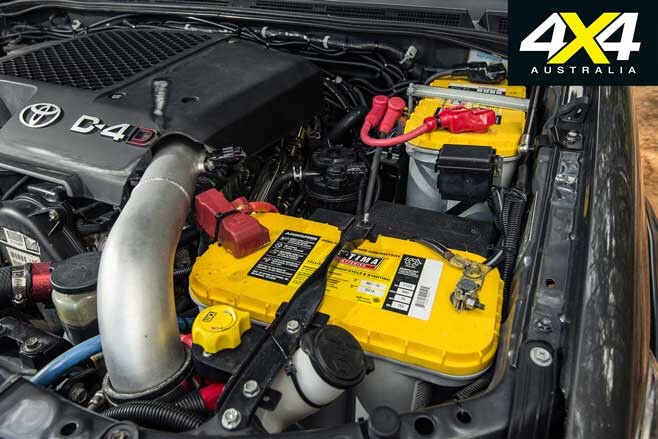
TWO IS better than one, surely? While running two batteries mightn’t be essential for every 4×4 application, it sure does make off-road life a hell of a lot easier. By using a starter battery in tandem with an auxiliary deep-cycle battery, you can (almost) guarantee you won’t wake up to a flat battery and/or warm beers in the morning.
“A dual-battery system is in itself not essential, for its primary purpose allows the use of creature comforts,” Denis Dwyer, branch manager at Piranha Off Road, told us. “But the secondary gain is that it adds a safety net while in the outback to prevent you from flattening your starting battery; it even acts as a back-up battery if your starting battery should suffer a premature failure.”
Callen Price reiterated that sentiment: “There are two main reasons to have a dual-battery system. One is to run extra equipment like fridges and lights while the 4×4 is not running as the starting battery alone is not designed for those applications. The second is to have the ability to jump-start your vehicle if the main start battery either fails or is flat.”
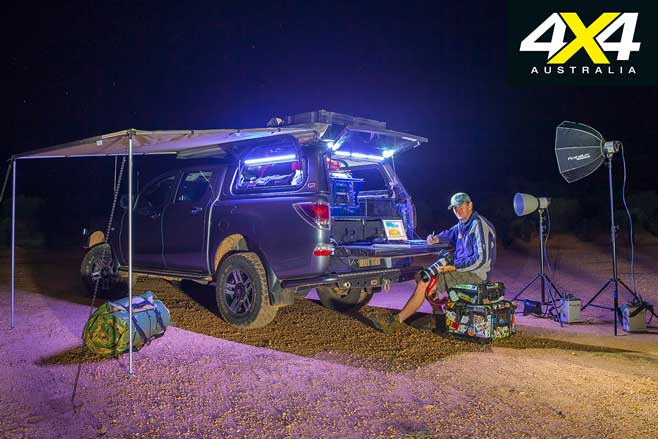
How much electrical charge, or amps, a battery features is also important. For the average weekender, a deep-cycle battery with 80 to 100amp/h is common.
“The camping and 4×4 lifestyle is becoming increasingly popular, though, and with this popularity people are finding themselves staying away from the hustle and bustle for longer periods at a time,” Kahlan Cester from Redarc said. “In order to achieve this freedom, people are moving up to 120, 170, and 200amp/h deep-cycle batteries, with upgrades to LiFePO4 (Lithium) batteries rising at an exponential rate.”
4×4 battery use with solar panels
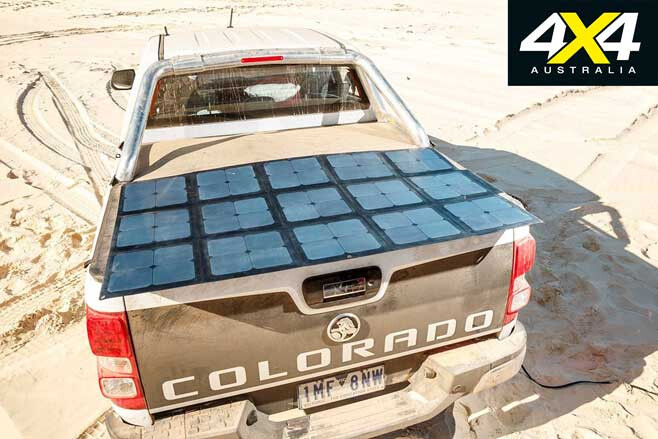
HARNESSING the power of the sun is a great way to recharge your batteries on the run and provide tourers with an alternative means of recharging their batteries to extend the time spent soaking in peace and quiet.
“If you are going to spend some time in the idyllic camp spot where you are unable to plug the big yellow or orange cord into the nearest tree, or you don’t like the purring of a generator, then solar panels are a good investment,” Kilby from Century Yuasa explained. “Particularly now as there some available that fold up and do not consume valuable space in the 4WD.”
Piranha Off Road’s Denis Dwyer added: “With the combination of sun, properly positioned 120-watt panels and a good regulator, your 100-amp/hour battery powering a fridge and LED lights could extend your stay by five days.”
Due to ever-stricter state forest and national park regulations – with increasing restrictions on the use of generators – solar panels will become an even more popular as a source of energy.
4×4 battery smart battery charger
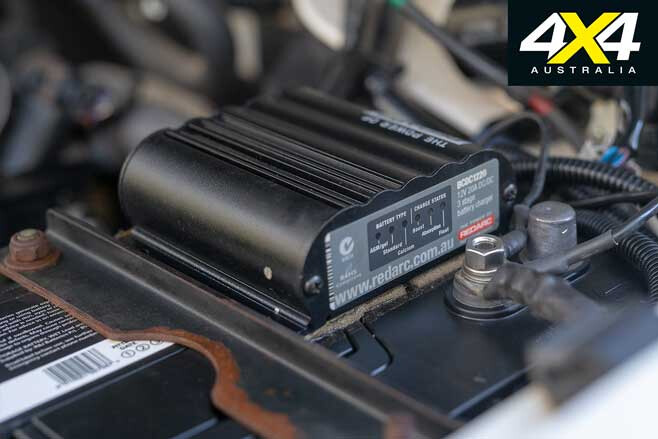
A FLAT battery is good to no-one, and neither is a cooked, overcharged battery. To strike the right balance, a clever piece of tech to invest in is a Smart Charger – 240V AC or 12V DC – which provides the correct voltage or amperage based on the chemistry of the unit (lead acid, AGM, gel or lithium), state of charge and internal resistance.
“If the wrong battery charger is used it could cause the battery to malfunction which may not be covered under warranty,” explained Callen Price.
Redarc stocks the Smart Charger, and the company describes the unit as a multistage rather than a trickle charger: “Where a trickle charger maintains a continuous voltage, a Smart Charger will go through multiple stages such as Boost, Absorption, and Float; with each stage important in recovering a battery without overcharging it.”
4×4 battery DC-DC charger
A DC-DC charger works alongside the vehicle’s charging system and primarily ensures an auxiliary battery is maintained at its correct voltage. The unit can also isolate the second battery from the main battery, to ensure the main starter battery doesn’t go flat. Most units can supply charging power to both the alternator and portable power.
4×4 battery – What to look out for?
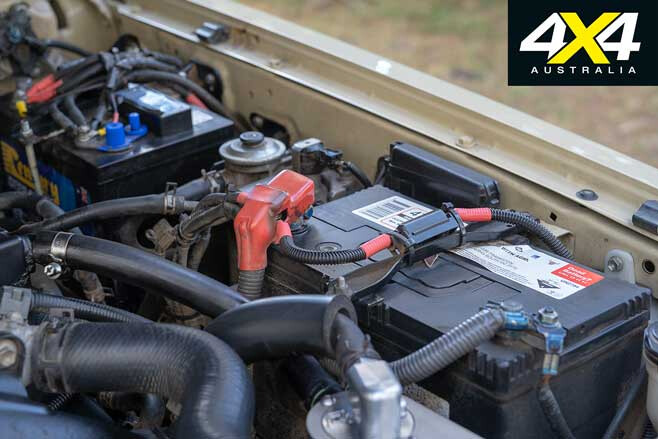
IT’S VITAL to buy 4×4 batteries and accessories that are designed, manufactured and tested in Australia, to be safe in the knowledge that they’ll survive the continent’s harsh and brutal conditions. With heat and vibration the biggest enemies of the 4×4 battery – two things commonly encountered on outback Aussie roads – it’s essential to swipe your credit card for a battery that has robust internal components, and one that can deal with the stress forced upon the plate system.
“Batteries gain extra support on the plate system via a plate lock at the bottom of the plates, which connect it to the case to give extra support,” Callen Price explained. “Others may encase the plate in a sleeve, which protects the plate from shorting the battery if the plate falls due to extreme driving.”
Price also explained AGM batteries contain a glass matting which compacts the plates together, and thus vibration on the plates is drastically reduced.
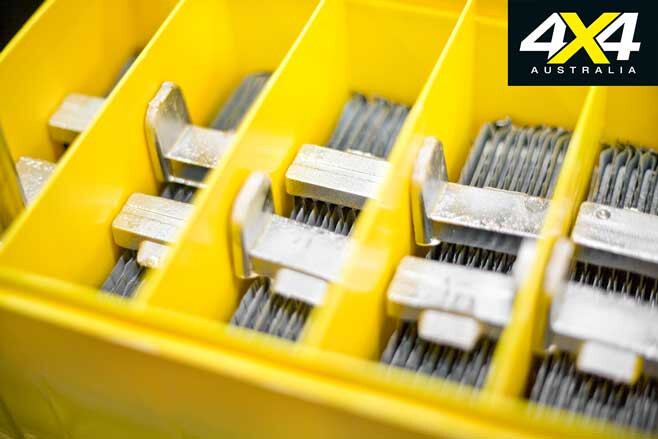
As touched on, a key difference between a 4×4-specific battery and a starting battery is when comparing battery cycle life versus depth of discharge – how much you can drain the battery without affecting its ability to recover is capacity (80amp/h, 100amp/h, etc.).
“Generally speaking, a standard starting battery such as a maintenance-free lead acid battery should only be discharged to an approximate 80 per cent state of charge,” Kahlan Cester from Redarc said.
“Discharging the battery further can cause one or more of the cells to fail to recover, meaning that it will no longer hold nominal voltage under load. A deep-cycle battery can maintain its advertised cycle life when drained to approximately 50 per cent.”
Once you’ve decided on a setup that suits your requirements, it’s time to ensure it’s maximised to work at its potential and that it’s protected from critical failure. The best way to do this is to utilise a Battery Management System (BMS).
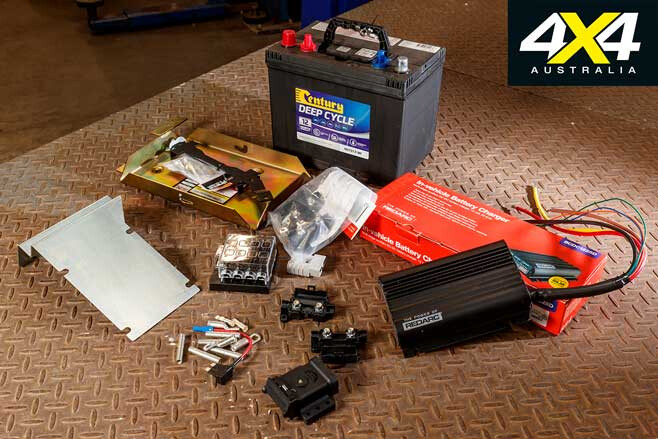
“Outside of monitoring the battery’s status, Battery Management Systems also protect the battery from critical failure caused by over-charge and discharge, over-voltage, over-temperature, short circuit and misuse,” Callen Price from Sealed Performance Batteries said. “However, modern lithium batteries contain an internal BMS system which performs the same critical features as an external system but without the need to install costly equipment. In fact, the internal BMS found on these batteries can connect to your phone via a free app, which allows you to wirelessly monitor your battery and its status.”
A complete Battery Management System can also advise tourers on the most economical ways to use a system and accessories, “so that you can continue your journey without worrying about potential flat batteries,” added Redarc’s Kahlan Cester.
4×4 battery installation
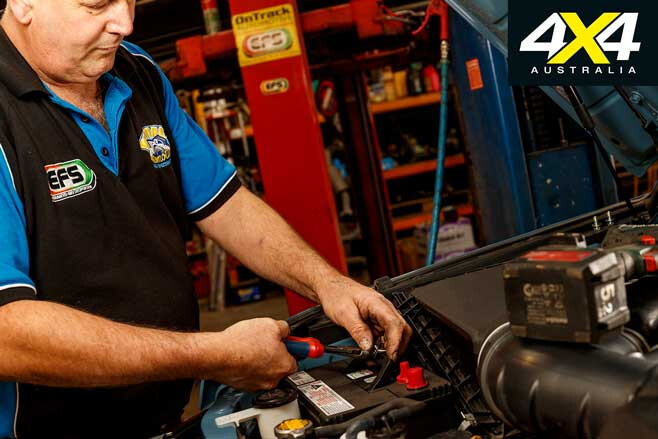
IF deciding to plonk that all-important second battery in your engine bay, you’re going to need to find somewhere to install it – not easy due to overcrowded bays – and something to attach it to.
“The challenge is always finding the real estate to actually locate the auxiliary battery and mounting tray,” explained Piranha’s Denis Dwyer. “The under-bonnet area continues to become more crowded as technology increases, plus the trend for modern cars is to become smaller and lighter.
“This is reflected in the actual internal panel work which means weight becomes a real factor as does the engineering to locate a tray that the manufacturer never expected to allow for.”
The challenge for the aftermarket is to maximise the limited space that’s available in most modern engine bays. A tricky job that’s best left to the experts.
“Compared to past years there are less vehicles that fall into the DIY category, and moving forward with current trends will be even less in a few years’ time. With modern design vehicles, there is peace of mind in having a qualified workshop carry out the install,” Dwyer said.
Piranha Off Road, for example, sells and installs a range of battery trays designed specifically to suit most four-wheel drives currently on the market. When asked if a second battery under-bonnet installation is a DIY possibility, Dwyer told us that it’s getting harder and harder as each year passes.
“Compared to past years, there are fewer vehicles that fall into the DIY category,” he said. “Moving forward with current trends, there will be even less in a few years’ time.”
IF YOU miss the turnoff to the pub you’ll end up on a four-wheel drive track. This is serious four-wheel drive territory around here, with tracks converging in all areas. Plus, there’s another big drawcard: tucked in among the rollicking tracks is a gem of an establishment, a barn-like bistro with a rustic interior that looks straight out of a ‘wild west’ movie.
Add to that good country hospitality, honest, hearty pub grub and friendly bar banter and you know you’re in for a fun weekend. Whether you come with your family or a four-wheel drive club, or with your horse, motorbike or fourby, this is a place that epitomises adventure.
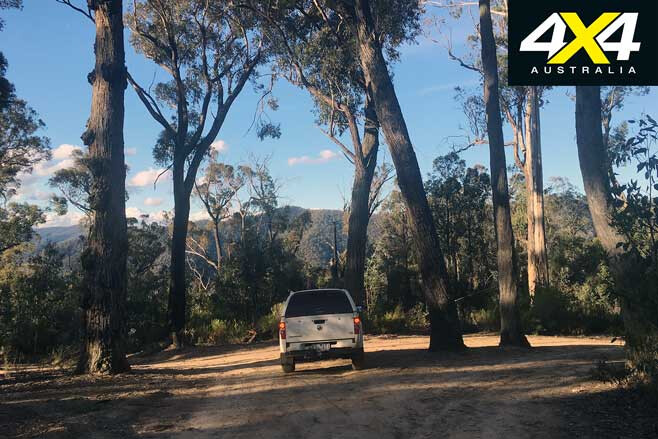
We’re in Rawson, about 2.5 hours’ drive east of Melbourne (taking the turnoff from the M1 towards Moe) in the heart of the Gippsland Mountain Rivers region. Originally built for the construction workers of the Thomson Reservoir, Rawson is nestled close to the timber town of Erica and the gold-mining town of Walhalla and offers something in every season.
In winter, it’s an excellent base for snow activities, with the South Face road offering easy access to Mt Baw Baw Ski Resort and Thomson Valley Road (TV Road) heading to Mount St Gwinear’s toboggan runs. It’s also a great base for brilliant four-wheel drive adventures, with loads of challenging tracks at its doorstep.
Today, on a cool day in late May, the town is quiet and there’s hardly anyone around. We’ve just checked in to the Rawson Caravan Park, which is more like a reserve in the bush. We’re surrounded by towering grey box gums, the sites are spacious, and campfires and dogs are allowed. Every site has an ensuite, which is impressive for bush camping, and it’s just a hop, skip and jump to Rawson Stockyard … and a bit of a stagger back.
At the office we’re handed a mud map of the area – which is to come in handy – and given some tips on nearby tracks. After setting up and meeting our neighbours we’re ready to hit the tracks, with the start of our four-wheel driving adventures literally 50 metres from camp.
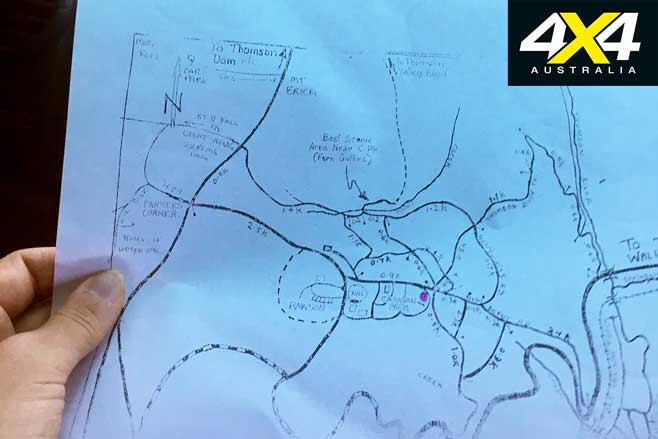
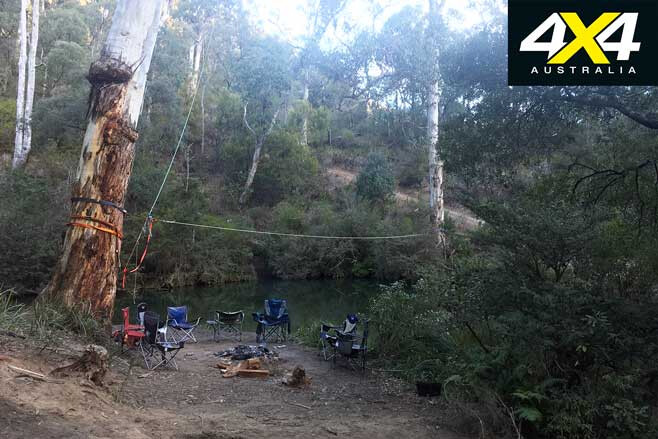
There are plenty of tracks in and around Rawson and the surrounding Baw Baw National Park and, as we discover in this hilly and rocky landscape, they range from easy to ridiculously challenging and offer something for every skill level. For those who prefer remote camping there’s some great bush camping to be found in the state forests on the banks of Coopers Creek, Aberfeldy River and Bruntons Bridge.
There’s a sealed road for conventional vehicles from Rawson to the Thomson River and Walhalla, but we’re keen to explore the back way there. Our plan is to make our way to this iconic goldmining town, nestled in a mountainous valley that still feels unchanged from the golden days of the past.
Leaving the campground we drive down Depot Road, a rough but easy track which leads to Happy Jack Track and then Thomson River Track. There’s one steep part and a hairpin turn that makes things particularly interesting, but otherwise it’s an easy route that passes through scenic fern gullies.
Gold was first found in the valleys of Walhalla in the 1860s and, at its peak, it was home to 4000 people. Today, about 20 people call this township home. It’s an impressive entrance coming in from the tracks through dense alpine forest and across the tranquil Thomson River, before arriving in this wonderfully atmospheric town. Once in town the best way to explore the heritage buildings that line the main street is on foot.
During autumn and spring it’s a profusion of colour and there’s a certain magical quality about this place. On the day we visited a piper was playing his bagpipes on the edge of the timber tramway walk, and the music filtering through town felt like something from another time.
The Wally Pub is a great place to stop for a meal and a hit of nostalgia, with loads of historical photos on the walls. Further along, both the Greyhorse Café and Walhalla Coffee and Kitchen serve great coffee.
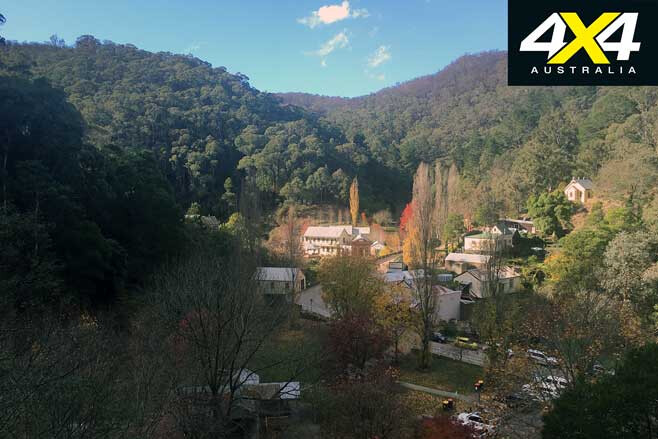
The fire station built over Stringers Creek is one of the most interesting buildings in the town, and you can climb the picturesque rotunda and amble up the Tramway Walkway for magnificent views over the town.
You can go underground on a guided tour through one of Victoria’s greatest gold mines that produced 13.69 tonnes of gold up until 1914; visit the hillside cemetery for the ultimate cardio workout; or walk up to the Walhalla Cricket pitch, which is more than 210 metres above road level. The walk is a hard slog and, believe it or not, the pitch is still used occasionally for social matches.
Much easier is a ride on the Walhalla Goldfields Railway, where you can sit back and soak up the valley views aboard the open-air carriages. Despite being abandoned for many years, the rebuilt narrow-gauge railway between the Thomson Bridge and Walhalla is now one of the most spectacular rail journeys in Australia.
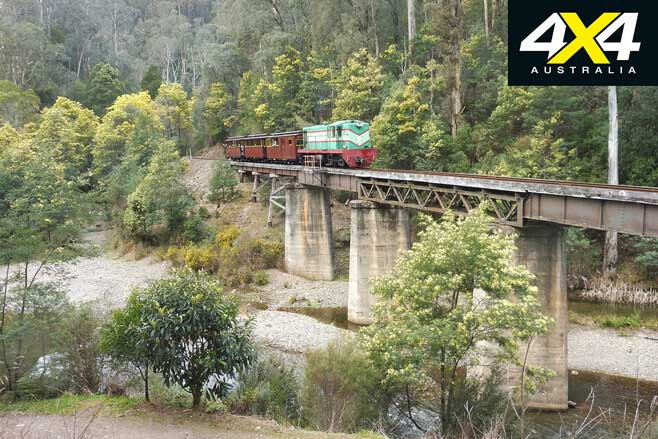
It’s amazing to explore and ponder how – before 1910, when the railway was constructed – this isolated town was only accessible by coach or pack horse. The buildings were crowded along the narrow floor of the valley and perched precariously on the hillsides. These pioneers lived a hard life.
It’s tranquil these days as there’s no mobile phone, internet or television reception, which sort of forces you to tune out. For keen bushwalkers, Walhalla is the start of the epic 650km Australian Alps Walking Trail, which snakes through the beautiful alpine areas of Victoria, NSW and the ACT, ending near Canberra.
Back on the road and the tracks begin to skirt around some of Baw Baw National Park’s mighty impressive countryside. In the distance, mountains beckon snow skiers in winter. Leaving Walhalla we head towards Thomson Reservoir via the Thomson River Track, where the drive along the dam wall provides one of the best views in the area and a chance to observe a pretty impressive feat of engineering.
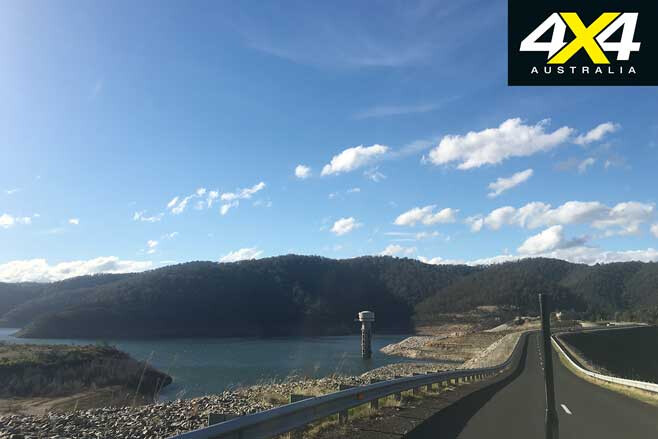
The dam is the largest of Melbourne’s reservoirs and equals about 60 per cent of the city’s storage capacity, and at 165 metres high it’s the biggest earth- and rock-fill dam in the southern hemisphere. The nearby Silvertop Picnic Area is a great spot for a lunch break, with barbecue and picnic facilities. We leave the area and, turning right, take a left-hand turn down an unnamed track. This eventually turns onto Lower Saddle Track which leads in the direction of Aberfeldy. This track becomes rougher each minute and has us quickly engaging low range.
As we make our way down to the Thomson River, where we spot a group set up on a nice, flat area for some solitary riverside camping, the track gets a tad rougher. We get out and check the river depth before crossing over to the other side. Driving out of the river onto Lower Saddle Track, the fun escalates as the rough and rocky track climbs sharply.
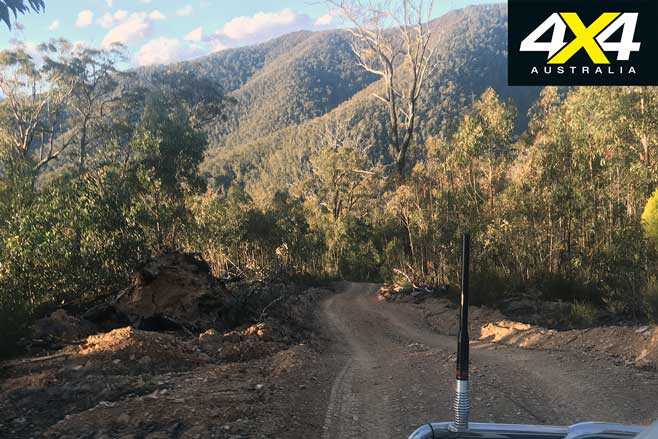
With the Colorado in low range we crawl up steep ruts, through potholes and at one point spin the wheels. Lower Saddle Track is a challenging roller roaster of a track with washouts, ruts, climbs and steep descents. It’s the most fun we’ve had on a track in a long time; although, in the passenger seat, I admit to a few white-knuckle moments.
Standing outside Rawson Stockyard later that night, after our adventurous day on the tracks, we’re looking forward to a night off from cooking. It turns out to be a brilliant decision, as the skies darken and the heavens open. Inside the bistro, barely a hundred metres from our camper, we’re dry and warm, enjoying the company of fellow campers, Sue and Roger, who we met earlier that day.
Curiosity gets the better of me and I order the Stocky Schnitzel topped with vegemite, cheese and avocado, from a unique menu. It’s an odd combination for a chicken schnitzel, but it’s absolutely delicious.
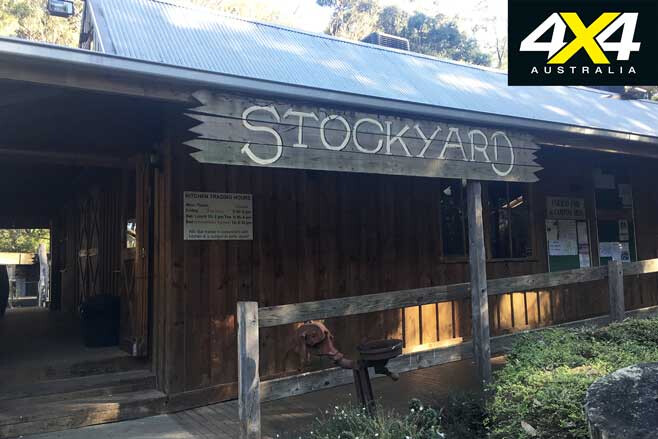
My other half orders the rib-eye steak, which he says is cooked to perfection. The meals are huge and the atmosphere lively. Chris Lee, who runs the Stockyard, told me the Stocky Schnitzel is his own creation. It’s a friendly atmosphere inside, where everyone’s your mate. It epitomises the way this park and bistro is run by the Lee Family.
An evening at the Stockyard is the perfect way to end the day, in this rustic setting that oozes warmth and hospitality. In a region of steep, rugged mountains and rivers, and a heap of slippery trails through fascinating historic sites, this is a haven and a great place to swap tales at the end of the day. Whether you’re into four-wheel driving, dirt-bike riding or a bit of history, it’s a place that’ll have you coming back time and time again, especially given its proximity to Melbourne.
Bruntons Bridge
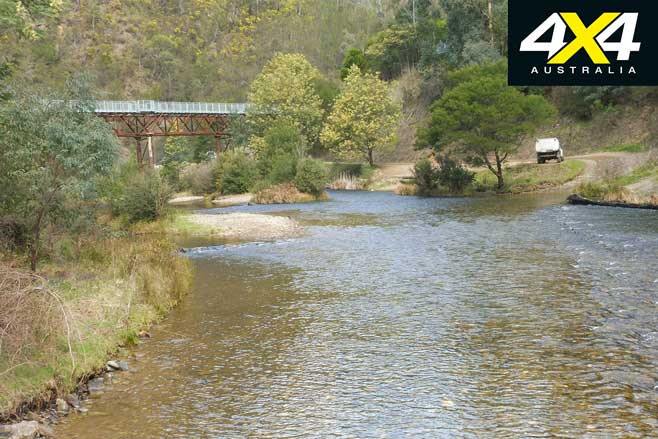
BRUNTONS Bridge was the original road access to Walhalla. The bridge was made in England in 1866 and was intended for use as the Victoria Street Bridge across the Yarra River in Richmond.
Unfortunately, it was the wrong size so it was sent to Bruntons to replace a timber bridge. These days it’s only for pedestrians. Crossing the river is by 4WD only, with a reward being a very nice campground on the other side.
TRIP PLANNER
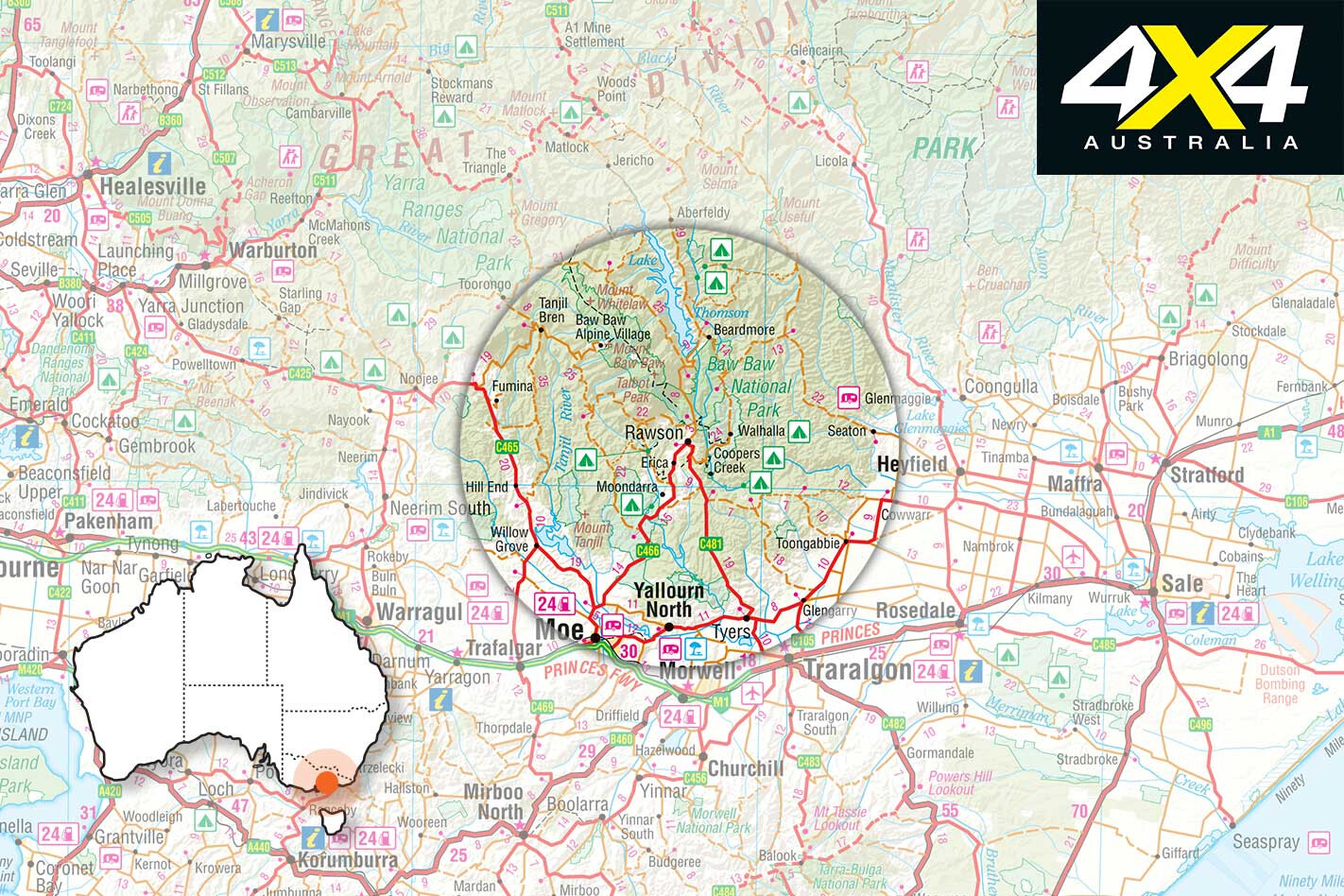
WHERE – Rawson is 170km east of Melbourne, via the Princes Highway and north via C466. The 12km drive from Rawson to Walhalla on the main Walhalla Road is winding, so take care. – Rawson Caravan Park is located on Depot Road, Rawson. Tel: (03) 5165 3439 or visit www.rawsoncaravanpark.com.au – Rawson Stockyard is located on Depot Road, Rawson, Tel: (03) 5165 3111 or visit https://rawsonstockyard.com.au/ – Free camping at Cooper’s Creek, Aberfeldy River or Bruntons Bridge.
BEST TIME TO VISIT Spring to Autumn. Many of the tracks in the Rawson/Thomson River/Mt Baw Baw areas close from June for the winter months. Info: www.visitwalhalla.com