
CHEVROLET has revealed its updated 2021 Colorado ZR2 for the US market, with the Raptor-fighting performance variant set to debut at the 2019 SEMA Show.
Changes to the ZR2 appear to be subtle, with the range-topping variant receiving red tow hooks as standard, an aggressively updated front fascia that includes new flow-through “Colorado” lettering, and revised Chevy “bowtie” emblems and embossed “Chevrolet” lettering on the tailgate. A new Sand Dune Metallic exterior hue is also now available.
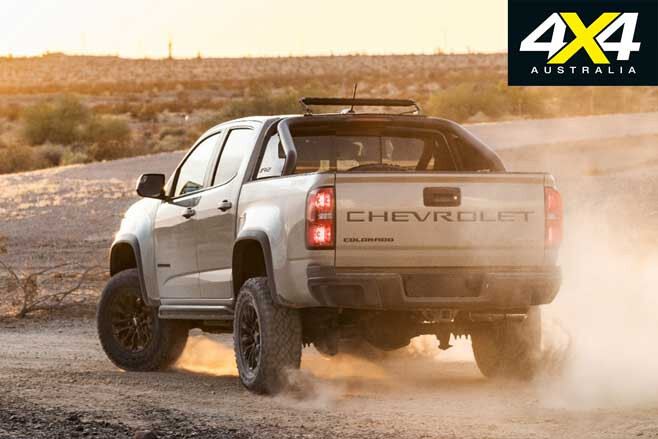
The Chevy Colorado is powered by a choice of two engines: a 2.8-litre turbo-diesel or a 3.6-litre petrol V6. Key features of the US-spec Colorado ZR2 include Multimatic DSSV position-sensitive dampers, front and rear electronic locking differentials, a two-inch suspension lift, 3.5-inch wider track, off-road rocker protection, cast iron control arms, Autotrac transfer case, and multiple skid plates.
“We’ve sold 520,000 Colorado pickups in five years through a relentless, foot-on-the-gas approach to product and feature updates,” said Bob Krapes, director of marketing, Chevrolet Trucks. “With its new-look front-end and tailgate, Colorado will now have a more aggressive appearance to match its award-winning capability.”
All Stateside Colorado models, including the ZR2, will be built in Wentzville, Missouri. The vehicles will be on sale next year in the States, with pricing to be announced closer to production.
GEOSCIENCE Australia (GA), our Federal Government mapping agency, has decided to end production and sale of the paper maps it produces.
This includes all of the topographic maps of Australia in the 1:250,000, 1:100,000 and 1:50,000 series.

With digital maps booming and sales of paper maps declining, this has been on the cards for some time. Don‘t fear, though, as all of the maps GA produces are available from its website in digital format: www.ga.gov.au/data-pubs/maps
If you really want and need a paper version, you can download it and print it at your local Officeworks.
However, a bigger issue is that many of the maps produced by GA are simply out of date. So if you want up-to-date maps, we’d suggest trying commercial organisations such as Hema Maps (www.hemamaps.com), or state-based organisations such as Spatial Vision (spatialvision.com.au/maps).
If you’re searching for a retailer or want a custom map, there are also plenty of options. Start here: www.mapsherpa.com.
You can learn a lot about someone by the custom 4×4 rig they drive. The size of their tyres, the shine of their paint, the number of outback pub stickers slathered up and down their door trims and dash. But like most things in life, a quick snapshot doesn’t tell the whole story, and neither does just one vehicle.
Eagle-eyed readers may pick the name Taylor Shaw from a yarn a year or two back about a bright-eyed apprentice, who rolled up the spanners and set to work building his own adventure machine.
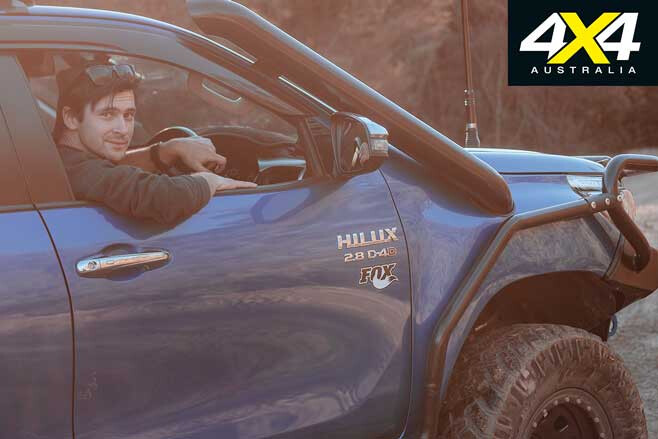
He was an apprentice in both work and life, learning the ins and outs of what goes into a 4×4, what makes them tick, what makes them work and, most importantly, what he wanted them to be when Friday arvo rolled around. But that was that 4×4, not this one.
Taylor’s finished his apprenticeship, he’s learnt his lessons and, just like he’s qualified on the job site, he’s now qualified in the shed, with a solid understanding of what he’s looking for on and off the clock.
The problem is he didn’t want one 4×4, he wanted two. Where his old live-axle-converted Hilux was a do-it-all rig, Taylor found it was a little too nice to be pushing into rocks, so an early Toyota Stout pick-up on an 80 Series frame would serve that purpose (we’ll have a full feature when it’s done). The Hilux also wasn’t quite nice enough for the long-haul touring he wanted to take it on, bringing us to the N80 Hilux before you, which is essentially a more travel-orientated version of his old N70.
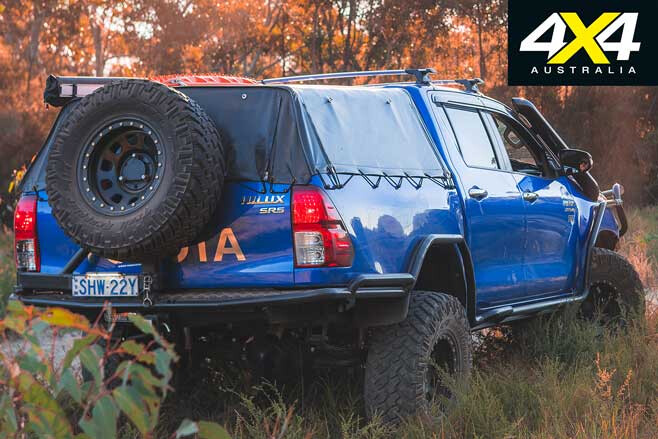
Starting with a showroom-fresh MY18 Toyota Hilux, Taylor set to work building a 4×4 that’d do almost everything … well, everything the Stout wouldn’t do. First cab off the ranks for any 4×4 that’s going to do serious work is the suspension.
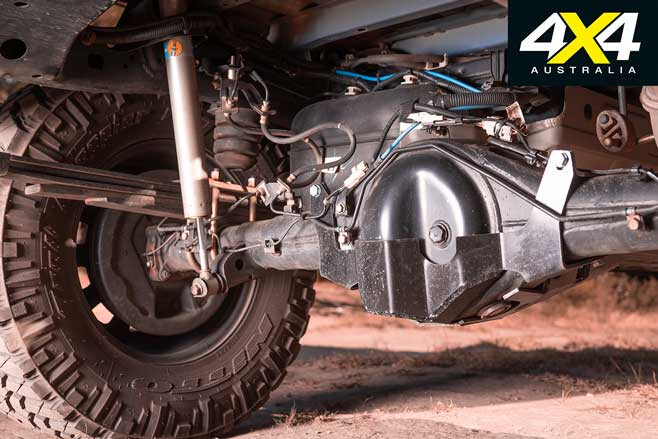
Starting from the rear, Taylor put the experience he earned on his N70 to work. The factory leaf springs remain – their spring rate near perfect for the minimal loads he carries – and these are paired with custom-mounted 12-inch travel Bilstein shocks he had laying around from a previous build that have been notched up into the tub for maximum travel. A pair of extended shackles help tie the lot together and give huge amounts of travel, while modified GU Patrol bump stops keep the ride smooth.
Up front, adjustable 2.0 Fox struts give a 50mm increase in ride height, with adjustable SPC upper control arms preventing ball joint bind as well as keeping the suspension geometry in check. To keep the OEM CVs living their best life, Taylor’s also fitted a diff drop from Phat Bars that physically lowers the diff centre, reducing the operating angle of the CV joint and, by proxy, increasing their strength.
Of course, nothing is as easy as it seems, and fitting the chunky 295/70R17 Nitto Trail Grapplers in the Hilux’s tiny wheel arches wasn’t going to be any different. The front wheel arches have been reprofiled by way of precision grinding, and they now sit back a huge 35mm to neatly match the radius of the oversized tyres.
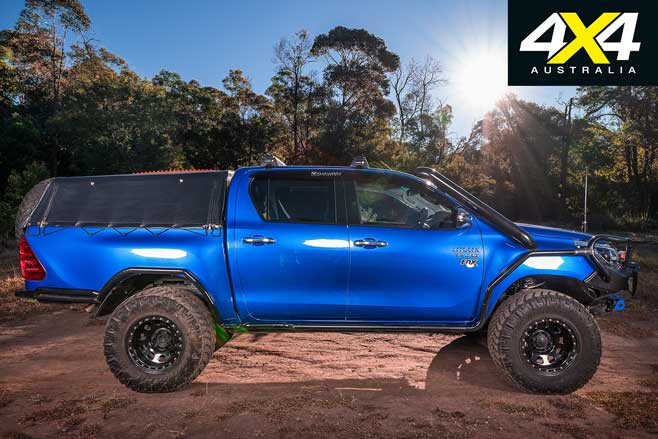
The front body mount also required a slice and dice to provide the necessary real estate to fit the Nittos at full-stuff. The rear wheel arches have had similar treatment; although, this time Taylor was able to reuse the OEM mud flaps to give a near factory finish. The tyres are wrapped around 17×8 -25 King D-Locker steel wheels that complete the aggressive stance.
With the slinky suspension and big tyres combined with the factory rear diff lock, Taylor’s Hilux was starting to become seriously capable, so much so that it’d have the ability to put itself in terrain that’d tear the undersides to shreds.
Phat Bars came to the rescue again with bash plates up front protecting the radiator, engine sump and front diff. They’re fabricated to suit the diff drop, making for an easy install. In the rear, Taylor’s running the first-gen PSR diff centre and pinion armour, and has been told to give it hell.
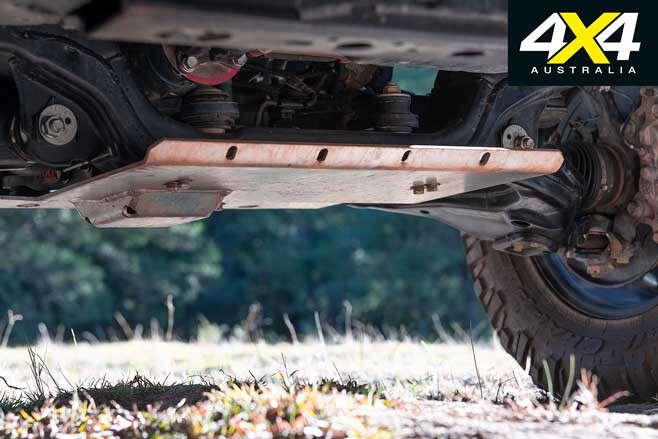
The armour package extends up the sides, too. The Hilux runs AFN’s triple-hoop full replacement bar, but with a twist. Where the standard AFN bar has tube headlight guards and a plate radiator protector, Taylor decided his would look better with the centre section tube as well. A day on the fabrication tools later and his thoughts were confirmed, and a one-of-a-kind bar was fitted to the Hilux. He also re-profiled the wings to prevent fouling on the larger tyres.
Flowing back from here Taylor reached for the bender and grinder again, this time building custom brush bars and rock sliders that go all the way from the AFN headlight hoops to the rear of the vehicle.
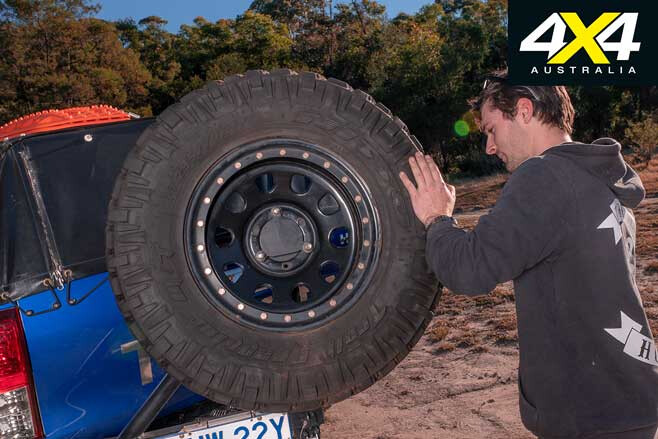
Taylor not only fabricated his own swing-away tyre carrier, he also quarter-chopped the tub to gain valuable ground clearance before protecting the edges with more bar work. A valuable lesson was learned after destroying the first tub on a wayward rock.
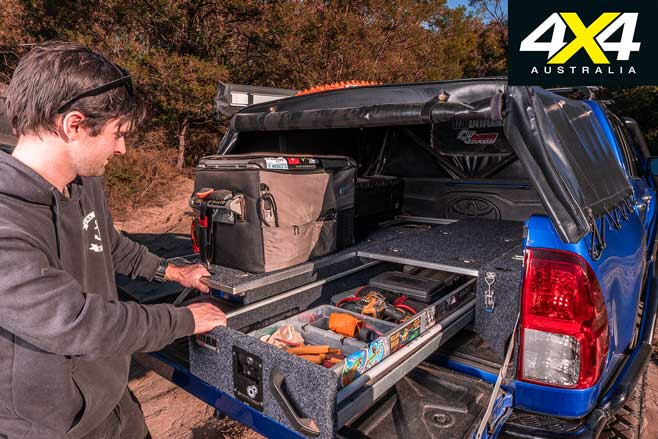
As mentioned, Taylor built this rig to do some serious touring kays, and with red Cape York dirt still embedded in every nook and cranny it’s safe to say he’s hit the nail on the head. Rather than forking out big on an off-the-shelf canopy, Taylor’s reached back into the steel pipe and set to work building himself a full frame above the tub. He then had it wrapped in a custom canvas canopy to keep his camping gear high and dry.
On the outside the arrangement houses his Wanderer awning as well as a pair of camp lights from Supernova lighting (there’s a matching light bar up front from the Australian company). On the inside, a full drawer setup houses his gear for work or play, as well as a hidden compressor in the wings and a trusty old 12V fridge for knock-off time.
While the N70 was a piece of work in itself, the N80 is just another step along the way to Taylor’s real masterpiece. As his skills and knowledge grow on and off the job site, we’re expecting more and more capable rigs to come rolling out of his garage, and if the N80 is anything to go by, they’ll have attention to detail like no other.
Feeling Progressive
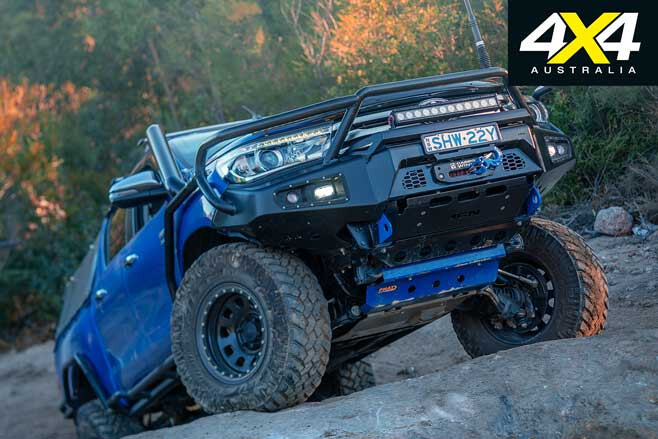
From time to time we come across a vehicle running something that just doesn’t make sense on paper. This time, it’s GU Patrol front bump stops in the back of a Hilux that’s running fairly standard suspension. There’s typically a method in the madness, and this time is no exception.
In basic form, a bump stop is designed to stop the suspension at full bump (when the suspension is fully compressed). The OEM rubbers do that job, but that’s about it. The GU front bump stops are what are known as progressive bump stops. Rather than a hard stop, they gradually slow the suspension down, hopefully to a point where the driver never feels the suspension bottom out.
It’s something used extensively in off-road racing and competition 4x4s, but even in mild tourers it can increase comfort levels when pushing things to the extreme. The added benefit is, without a hard stop you’re far less likely to bend or break components.
GOODYEAR has developed a new all-terrain tyre called the Wrangler AT SilentTrac, which it recently unveiled at an on- and off-road drive day at the Norwell Motorplex in Queensland.
Available in a wide range of sizes (23, in fact) in both Passenger (P) and Light Truck (LT) constructions, as its name suggests the tyre has been designed to offer quiet and smooth on-road performance thanks to a thick rubber layer under the tread that absorbs vibration, as well as an angled-block tread design.
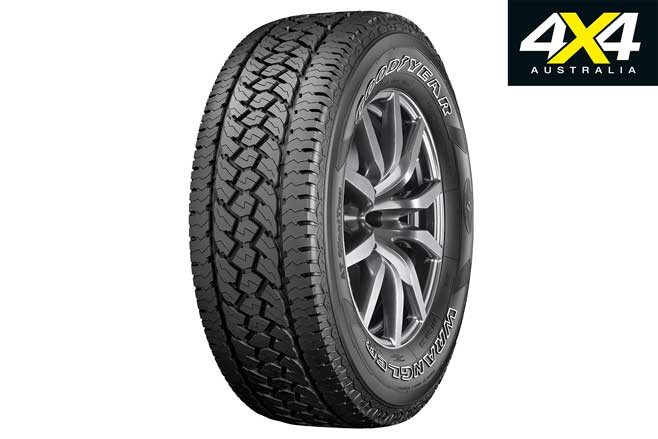
The new Wrangler AT SilentTrac also provides improved mileage performance compared to its predecessor, the Wrangler AT/SA, thanks to more wearable rubber volume and an optimised cavity shape.
Despite its on-road bias, Goodyear claims tough off-road performance, thanks in part to the tyre’s ‘DuraWall’ technology, which consists of a robust compound and thick gauge layer to provide resistance against cuts and punctures when driving in off-road terrain.
Goodyear let 4X4 Australia sample the new tyre at an on- and off-road event held at the Norwell Motorplex in Queensland. The off-road drive loop was short but included some steep climbs and descents, as well as a mud section, while the on-road component included a high-speed dry-road handling test and a run on the facility’s wet skidpan.
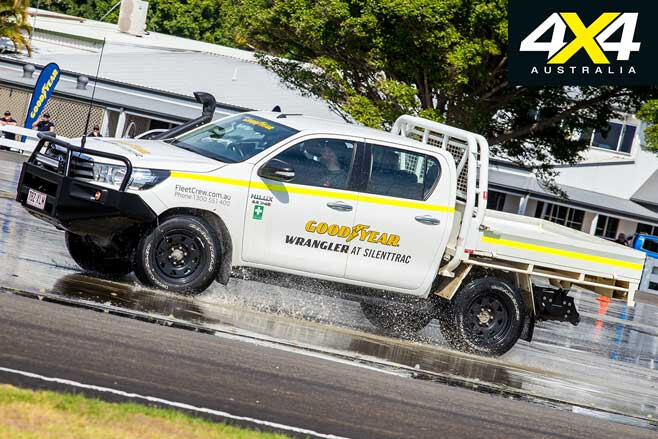
For the dry component of the on-road test, the new Wrangler AT SilentTrac was fitted to a current-model Toyota Prado, which we sampled back-to-back with an identical vehicle equipped with a competitor’s tyre, such was Goodyear’s confidence in the performance of its new product. For the wet skidpan test, the new tyre was fitted to a current model Hilux, and drivers were timed around a set course that involved tight turns and heavy braking.
While the off-road test wasn’t really long (or difficult) enough to properly gauge the performance of the new tyre in the dirt, the on-road tests certainly highlighted good handling and steering response in both wet and dry conditions, as well as good braking performance.
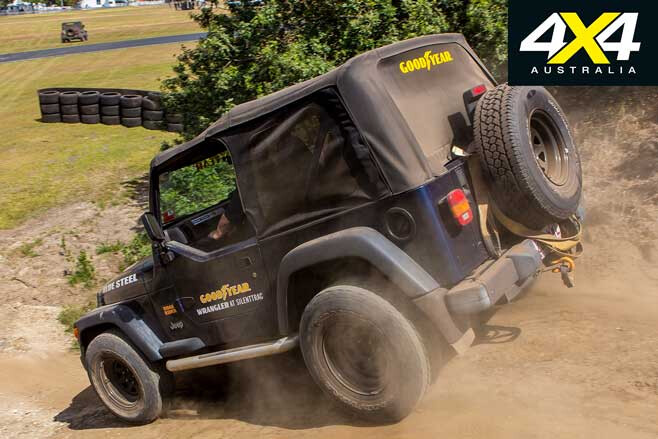
Obviously, it was impossible to test mileage claims in a one-day test, but with more rubber per tyre, Goodyear’s improvement claims in this regard make sense.
The new Wrangler AT SilentTrac is available in a much wider range of sizes than its predecessor, suitable for 4x4s fitted with 15-inch rims through to 18-inch rims, and covering most popular 4×4 wagons and utes. There are 14 sizes with a ‘P’ construction and nine with an ‘LT’ construction.
Prices for the new tyres range from $199 to $379, depending on size and construction.
Goodyear Wrangler AT SilentTrac available sizes
15-inch – LT 30×9.50R15 104R – LT 31×10.50R15 109R – 225/75R15C 110/108S – 235/75R15 109T – 255/70R15C 112/110S
16-inch – LT 205R16 112/110T – LT225/75R16 115/112R – 235/70R16 106T – 245/70R16 111T – LT 245/75R16 120/116S – 255/70R16 111H – 265/70R16 112H – LT 265/75R16 123/120Q – LT 285/75R16 126/123Q
17-inch – 225/65R17 102T – 225/70R17C 112/110S – 255/65R17 110T – 265/65R17 112H – 265/70R17 116H – 275/65R17 115T – LT 285/65R17 121/118H
18-inch – 265/60R18 110H – LT 285/60R18 122/119S
I am driven to explore; it’s in my genes. I have an innate desire to see what’s over the horizon, down the track or around the next bend, and I just love exploring our amazing planet. The more remote, challenging and treacherous the adventure, the better.
So, 30-odd years ago, when I finally got sick of constantly having to retreat from challenging tracks in my Ford Laser, I bought my first four-wheel drive (an ex-Army Land Rover), and I’ve been exploring Australia by 4WD ever since.
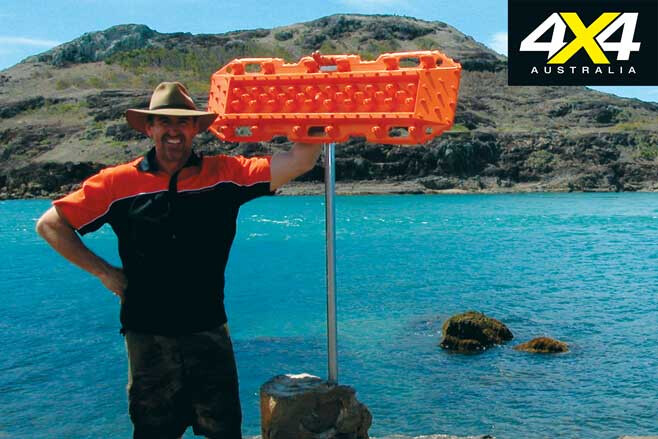
I’ve traversed the Simpson Desert, Cape York and Fraser Island more times than I can count, and I’ve explored practically every off-road location in Queensland, as well as countless other places around Australia and in the USA.
In 1999, I turned my passion into my career when I researched, field-checked, wrote and self-published my first 4WD guidebook, Dirty Weekends in South East Queensland, in my spare time. Following its instant success, I quit my ‘real job’ as a plumber and went on to publish three more 4WD guidebooks on Queensland. It was while field-checking routes for a Dirty Weekends guide to North Queensland and Cape York in 2001 that I got bogged on a remote beach with the tide coming in, and the path that my life would take changed forever.
I was travelling alone, as I often still do, and despite having all of the traditional vehicle recovery gear onboard, spent six hours recovering the vehicle with a hand winch. Once it was finally on solid ground, I lay sprawled on the beach, covered in black mangrove mud, sunburnt, dehydrated, exhausted and covered in sandfly bites, and I thought to myself, “There’s got to be an easier way than that!”
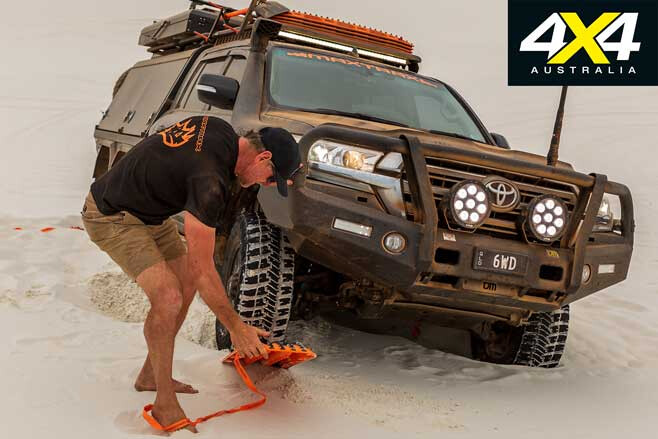
When I got home from the trip, I started researching alternative solo recovery equipment, but I couldn’t find what I wanted, so I started designing my own. Four years of R&D, and numerous prototypes later, Australian-made MaxTrax was launched onto the 4WD world, and instantly won a renowned magazine award for ‘Best New Product under $500’.
Since then our company has grown from our first year of selling solely on the 4WD show circuit to supplying all of Australia’s major outdoor and 4WD retailers, and to distributors and customers all over the world including the Australian, US and French militaries; the United Nations; NGOs; mining, energy and exploration companies; government agencies; emergency services departments; lifeguard services; desert racers; 4WD trainers; tour guides; and weekend warriors.
Our mission has always been to produce the very best 4WD recovery tracks available so that our customers can depend on them when a successful recovery can sometimes be a matter of life or death. So, it was extremely rewarding when our MaxTrax MKII product won a couple of Global Media Awards for ‘Best New Product’ at the 2010 SEMA Show in Las Vegas, our first major international trade show.
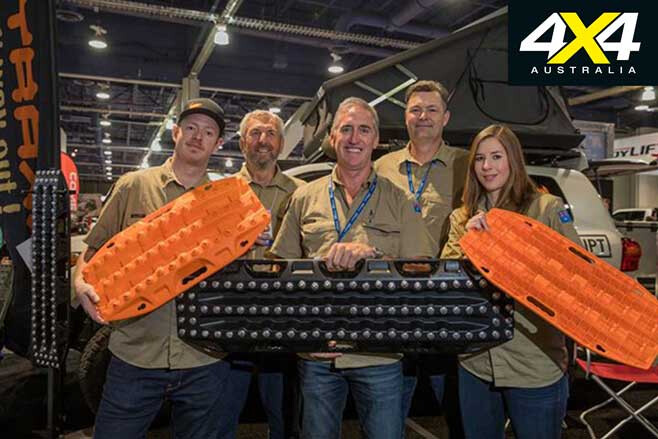
We don’t rest on our laurels, and we’re always looking at ways to improve our products and create new ones that make 4WD recovery better, faster, safer, simpler and easier. We’ve recently released our MaxTrax Xtreme, with replaceable metal teeth, designed with direct feedback from our military customers. It’s manufactured on the Sunshine Coast, and we’ve won a ‘Good Design Awards Gold’ for our efforts. We’ve also been working hard on a comprehensive high-quality vehicle recovery system that will be released before the end of this year.
Our tagline is ‘Take the easy way out!’ and our mission has always been about making vehicle recovery safe, simple, quick and easy. The Australian 4WD products industry has a well-deserved reputation for inventing and producing the best 4WD equipment in the world, and MaxTrax, a little Aussie family company, is very proud to be a longstanding member of that community.
Now that I have a great team to take care of the day-to-day running of the business, I get to do what I truly love, which is to go bush as often as possible, to test new products, gather promotional content, and meet our customers. I also get to push the boundaries, and from personal experience, that’s where great ideas come from.
Meet the Expert Name: Brad McCarthy Role: Owner, MaxTrax Experience: 4WD guidebook author; founded MaxTrax in 2005
Perched high on the crest of a sand ridge, the rising sun cast my elongated shadow to the west, which dissipated like a heat-induced mirage in the thick clumps of spinifex below. Beyond was another sand ridge, then 100 more until the most distant collided with a waning dawn sky.
Three hundred kilometres farther lay Old Andado Station, our next objective. I breathed in deeply and closed my eyes, letting the crisp air fill my lungs as I mentally prepared for the day ahead. Opening my eyes, I scanned the horizon for a hint of an existing track; any that did exist had been expunged by the wind since the last vehicle crossed this region 50 years ago.
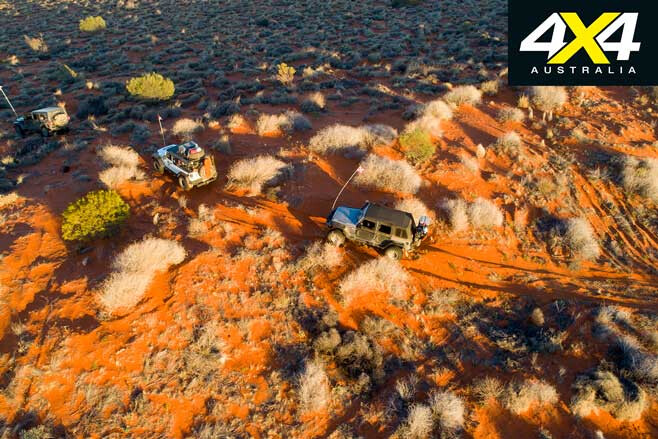
In the valley to the east, my crew pulled a billy from the coals, prepared the last cuppa joe, and stowed gear. Sliding down the ridge to my Jeep, I pulled a whiskey compass from my pocket, pointed the needle due west, and turned the key. We needed to cover 50km before sunset, and it would be a long day.
The previous year I’d met with Ben Davidson, publisher of Jeep Action Magazine, in Las Vegas. He shared that, in 1969, a man by the name of Ian McDonald rounded up a group of friends and three Jeep Overlanders and set out to not only cross the continent from coast-to-coast, but also attempt a transect of the northern Simpson Desert – one of the country’s most remote and inhospitable regions. He also mentioned that McDonald and the expedition’s filmmaker John Eggleston were still alive and might be interested in one last hurrah.
There are few topics that pique the adventurer’s imagination like venturing into a place where few have trod. Positioning such an endeavour on the must-do list was the possibility of travelling with these living legends of the Outback.
We began working on logistics and reached out to companies such as BFGoodrich, Jeep, TeraFlex, Bestop and Warn Industries to see if they shared our dream … they gave us an immediate two-thumbs-up. Enter the BFGoodrich East-West Australia Jeep Expedition.
Peaceful Oceans and Kudamuckra
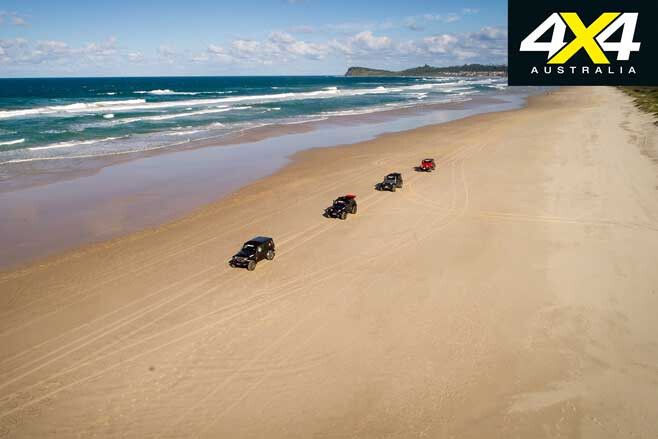
Months later we were chasing an incoming tide on a beach near Cape Byron, the easternmost point of the Australian continent and where McDonald’s team began their journey. Five thousand kilometres to the west, an angry sea crashed against the precipitous shoreline at Steep Point, the most western promontory.
Our journey would be more than simply covering ground; it would be a tribute to the ethos of yesteryear and the honouring of tradition. We had been granted copies of the original journals and committed ourselves to being disciples of lore. McDonald’s crew thought it important to take water from the Pacific Ocean and, if successful in their quest, sprinkle it into the Indian Ocean. We waded into the surf to collect our specimens, humbly requested permission from Neptune, and corked a few bottles of Pacific goodness.
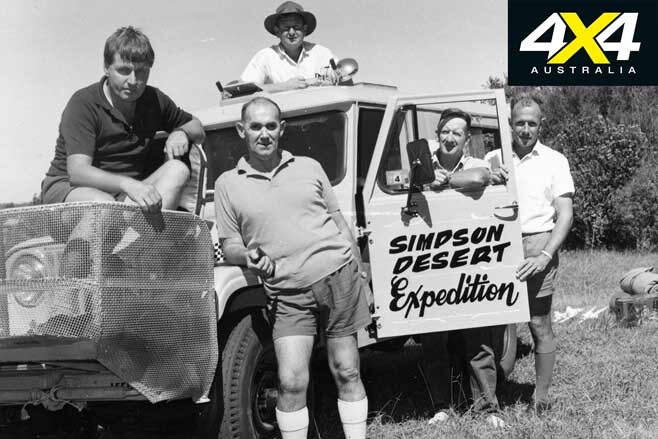
Ian and John, both spry octogenarians, joined the team in Brisbane and were a natural fit. They were excited, energetic and akin to a pair of walking encyclopedias with regard to the region’s natural and cultural history. Sitting around our first campfire, we queried John about his journal reference to a giant serpent. “Kudamuckra!” he said as his eyes dilated to the size of hen’s eggs. He went on to explain an encounter in Birdsville.
“We received a visit from one of the elders of the local Aboriginal tribe and he did his best to talk us out of going into the desert. He explained it was inhabited by a dreamtime serpent called the Kudamuckra, and if we entered it would certainly destroy us. He said we must collect the leaves of a coolabah tree, burn them in our last campfire before we enter the desert, collect the ash, and carry it with us. Then the Kudamuckra might leave us alone.” Dead silence spread through the group, but you know damn sure we Googled coolabah tree and collected some leaves the next morning.
Big Red and the Geocentre
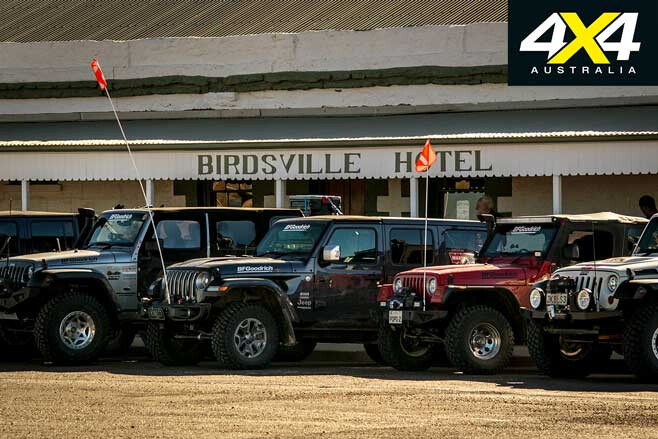
Birdsville, population 140, is placed at the end of the road and squarely in the middle of nowhere – the pavement ended some 800km short of town. Despite its diminutive size, the township has become a destination the world over.
Established in the late 1800s as a toll station for stock routes, it nearly vanished when the new railroad was completed. However, it has reinvented itself with the creation of the Birdsville Races (which attract 9000 spectators) and the Big Red Bash, a music festival at the base of the region’s tallest sand dune.
It is also the launching point for the Simpson Desert, and with fuel prices running $1.75/litre, one could say it still collects a healthy toll to pass. We settled in for tucker and a round of coldies at the iconic Birdsville Hotel (circa 1884), restocked supplies, and sorted out a fuel dump.
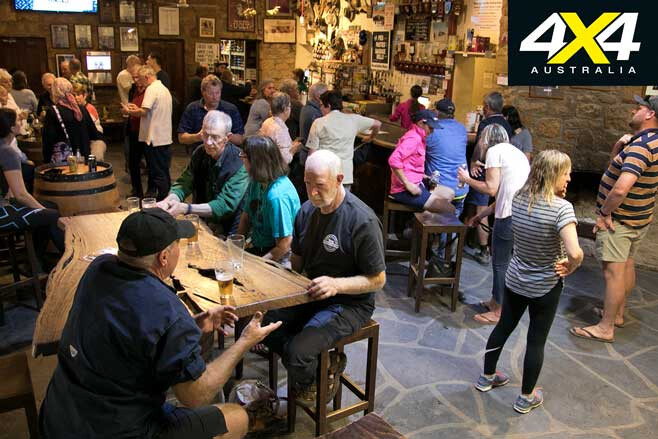
Most of our Jeeps were fitted with auxiliary fuel cells from Long Range Automotive, but the 900km of sand driving to get to the next servo would require a top-off. This was a job for Dave “Emu” Parkinson, legendary bushman of the Outback. Tall, broad and with the no-bull personality mix of Clint Eastwood and Rodney Dangerfield, he sauntered into the pub like Indiana Jones in the Temple of Doom.
We calculated fuel needs and agreed on a meet point 85 clicks up the Colson Track, one of only two that intersected our 300km transect from the abandoned oil well at Beachcomber to Old Andado.
While most travellers to the Simpson Desert follow the QAA and French Line tracks, and usually begin in the west to avoid the steep side of the dunes, our east-to-west route was through Aboriginal lands accessed only by permit. Ben Davidson had arranged permission with the local authority, and with paperwork in-hand we headed for Big Red, the first of more than 1000 dunes that lay ahead.
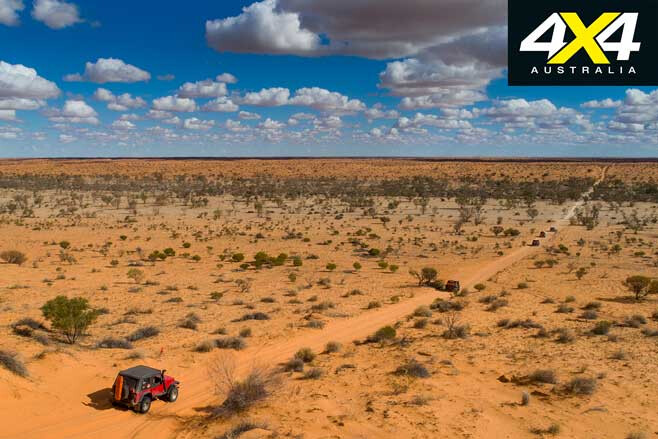
It was a school holiday week, and oncoming traffic was heavy as we made our way like salmon swimming upstream across the QAA to Eyre Creek, which was at flood stage. We reluctantly took the compulsory detour, which burned 40km worth of precious fuel we would dearly need in the coming days.
A few campfires later we had escaped the throngs of sightseers and were positioned at the edge of a void, a sea of white space on the map accented only by a thousand ochre lines running north and south.
A set of tracks led us over the first dune, and then the second, and I thought, “crap, did someone beat us to the punch?” The tracks ended on the third ridge, where the interlopers had bailed and headed for the barn. We would see few signs of human existence from this point on.
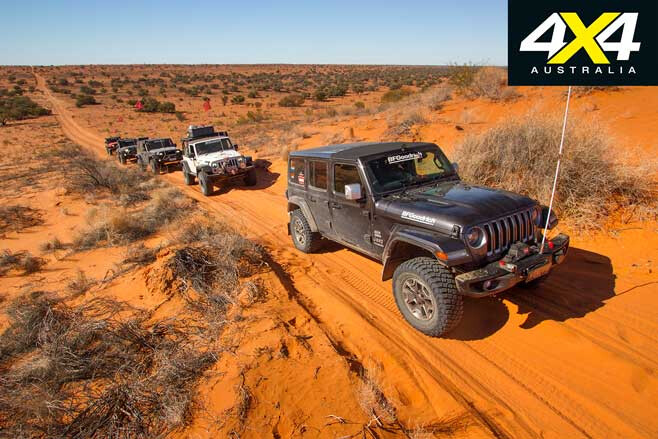
Threading our way through thick clumps of spinifex and tyre-shredding Mulga stumps, we maintained a westerly course toward the Simpson’s geographical centre. John jumped out to do a foot recce of the first few ridges, as was needed during their 1969 trip. But after our fleet made short work of the first dozen he said, “I just can’t believe how capable these new Jeeps are. We had to use sand ladders on almost every ridge. And these tyres (KM3s), they float over sand that would have buried us.”
There was a bit of a competition as to whom Ian and John would ride with each day. Their tales of the past and knowledge of the desert entertained all who listened. When I asked Ian, who is a bit of a firecracker, how much fuel they carried he replied, “As much as we could f…ing carry.”
One night around the fire, John had everyone in stitches as he shared an account of his filmmaking days – the brief summary is that his team captured a whale, shoehorned it into a DC3 and flew it to its new home – and yes, it was alive and flipping through the process.
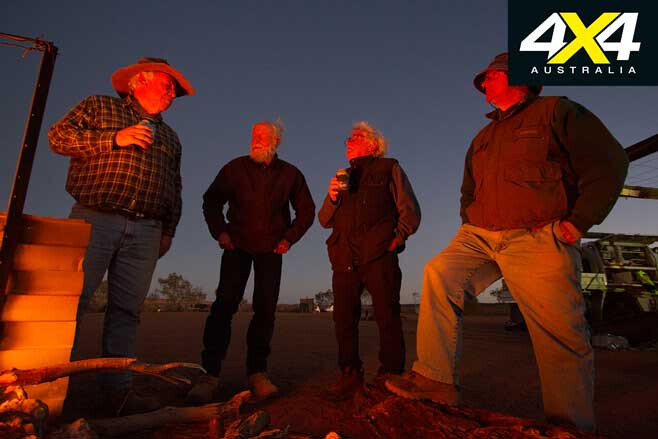
Reaching the Simpson’s geographical centre prompted a moment of pause and celebration, but the days had been long and seemed to melt into one another. Up before first light, stoke the fire and set up the billy, devour a bowl of oatmeal from Karen McMullen’s kitchen (our camp chef), and be rolling by first light.
As an ex-surfer, the sand ridges reminded me of paddling out through set after set of incoming waves. Some were inconsequential, gradual slopes of maybe 10m in height, but as we moved west they grew and became steeper. We would crest one and stop, scanning the next for the path of least resistance.
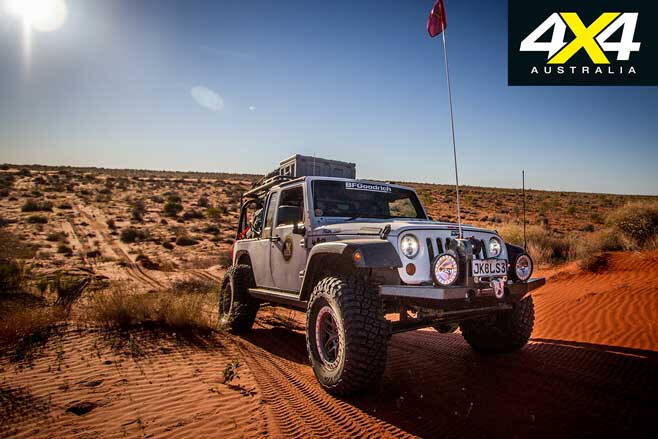
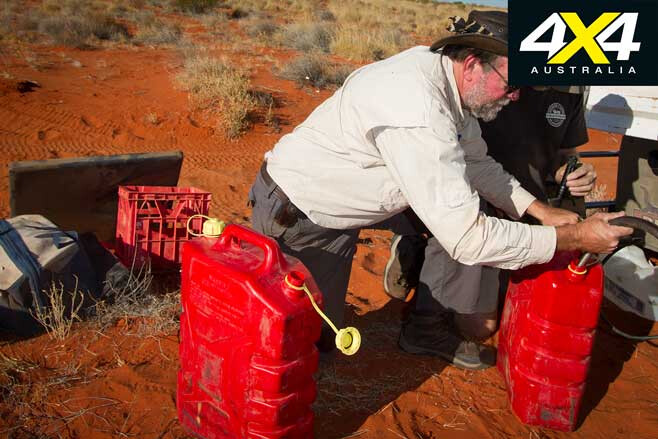
Fuel was a constant concern, as high-rpm climbs over relentless waves of dunes sent our gauges toward the red zone in a hurry. The night we found Emu at the Colson Track meet point, I calculated actual consumption.
The Mule (Paul Graham’s JKU) and Big Red (Rick Péwé’s ’97 TJ) were using 71.4L/100km, while the Jeep Konection four-door Wrangler JL I was driving managed a relatively frugal 50L/100km. Theoretically, we could have carried enough jerry cans to see us to Andado, but would have had to jettison our Dometic fridge-freezers … which carried our coldies. That motion was quickly vetoed.
On the afternoon of day five Rick called over the radio, “I need a winch cable on my front left side and I need it now!” We scurried back up the ridge and peered over the edge. Running a diagonal ascent, he had clipped a clump of spinifex, blew a bead on the low-side tyre, and was pitched over near the point of no return. Ben unspooled line off his Warn Zeon 10-S and hooked the front while I ran a safety line to the high side. It was a basic recovery, but the episode could have turned out much worse.
Cresting what felt like the millionth sand ridge, Old Andado Station came into view in the valley below. After a week off the grid, the team was dog-beat tired but ecstatic. Now a state park with bunk rooms, water and showers, Andado holds the historical record of life in pastoral Australia.
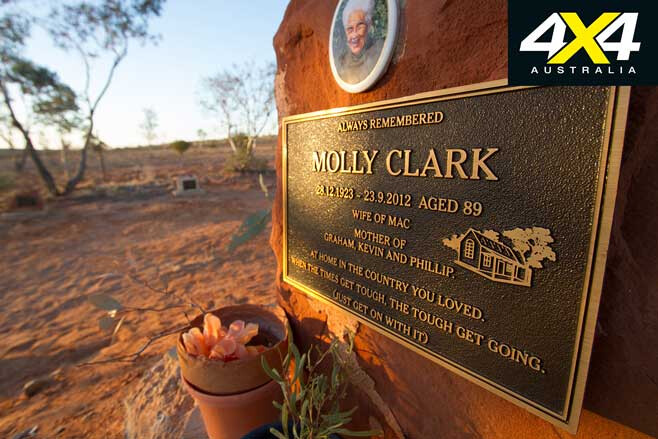
Around the fire that night, Ian and John shared their 1969 encounter with the station’s co-founder, Molly Clark. She was a weathered and hearty character, a pioneer of the Outback who continued to run stock and manage the business long after her husband and sons had passed away. Visiting her grave, we gave thanks for leaving this oasis in the desert, a vestige of Australia’s pioneering spirit.
As prescribed, at our first camp we had burned coolabah leaves, collected the ashes and carried them close at hand. The ritual and offering had apparently appeased the Kudamuckra, as it had let us pass with nary an incident. Gathering around John in a grove of trees near the cemetery, he sprinkled the ashes from their vessel and acknowledged the Kudamuckra’s benevolence. They drifted off on a westerly breeze and we said our adieu to the Simpson.
Palm Trees, Camels and the Indian Ocean
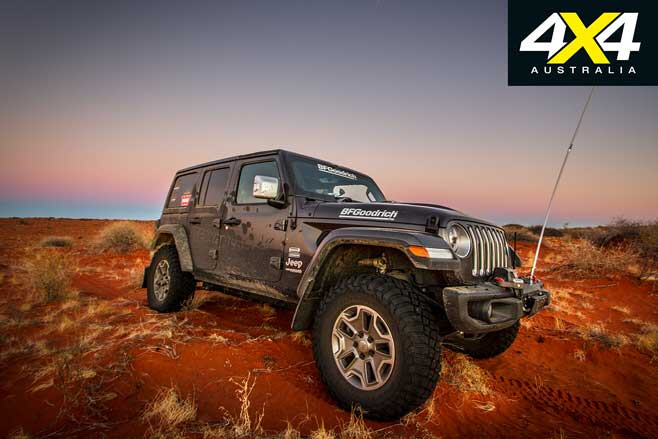
After restocking sundries in Alice Springs, we threaded a path through the verdant chasm of Palm Valley in Finke Gorge National Park, a striking contrast from the arid sands of the Simpson. The days began to meld together once again as we made our way down Boggy Hole Track to Uluru, Kata Tjuta and the Great Central Road (GCR). While the GCR is “great” and “central”, it is unsealed and we would still be on dirt tracks for the next 1500km.
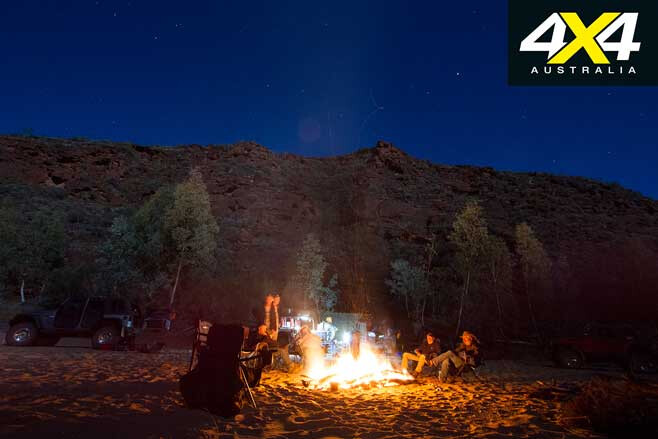
With 2.7 people per square mile, Western Australia (WA) is one of the planet’s least populated regions. One benefit of this emptiness is the complete absence of light pollution. Wandering away from the campfire on any given night revealed dead silence and billions of constellations dancing across an inky blackness.
It is no secret that Australia holds the world’s largest camel population – about 1.2 million of the gangly humpbacked dromedaries roam the Outback without discretion. Brought in with Afghan herdsman in the 1800s as pack animals, they were set free when the railroads rendered their services obsolete. They reproduced like rabbits, and we ran into more than our share – figuratively and almost literally. Emerging at dusk and blending into the environment like a grain of sand in the Sahara, they caused more than one emergency braking manoeuvre.
Fuel was no longer a concern, as there are roadhouses every 300km along the GCR. Even at $2.25 per litre, it was always the cheapest fuel in town. Okay, it was the only fuel in town. Tracing a dotted magenta line across the pages of our HEMA Great Desert Tracks Atlas, we passed the Warakurna, Warburto and Tjukayirla roadhouses, the latter of which is the most isolated and lonely roadhouse in the country.
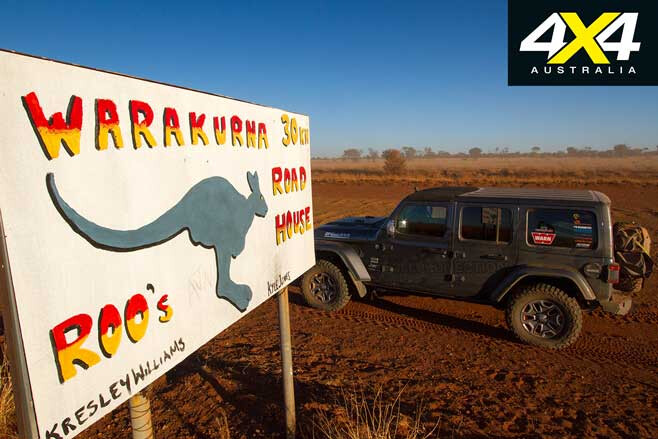
We were slapped in the face by civilisation in Leonora, where the streets were lighted, the surface turned to bitumen and traffic haemorrhaged to more than one car per hour. Turning north on the Coastal Highway, we peeled off at the Overlander Roadhouse and followed a sandy two-track along Shark Bay to the rocky escarpment at land’s end.
John and Ian had headed home from Alice Springs, but we recounted their description of the continent’s westernmost promontory – soft sandy tracks, thick salt brush and precipitous bluffs along the entire coastline. Scanning my surroundings, I realised that, as in the Simpson, not much had changed in the last 50 years.
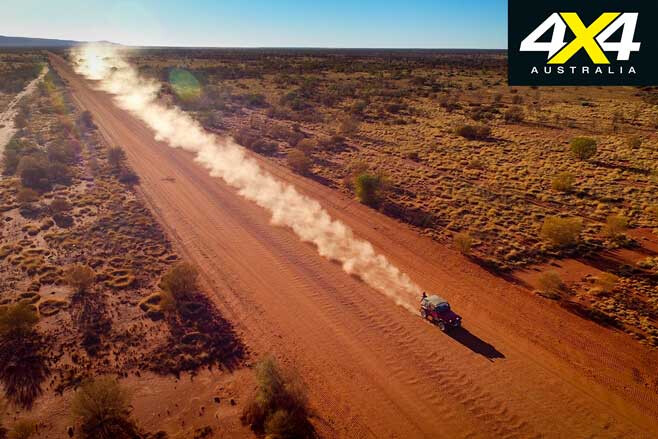
We circled the wagons at the end of the road, Steep Point, in a gusty tempest. Cracking a bottle of scotch, we shared a wee dram in the name of Ian, John and their dedicated team of yesteryear. Rick and I retrieved our bottles of Pacific Ocean water and walked to the edge of the cliff. As we poured the briny liquid into the Indian Ocean, it was uplifted and carried off by an onshore gale like our coolabah ashes over the sands of the Simpson.
It seemed like aeons since I stood alone on that sand ridge, watching my shadow stretch westward and contemplating the forthcoming weeks. We had travelled 6000km through some of the most forgotten expanses of the country and succeeded in our transect of the northern Simpson. As we turned the wheels east, I realised we were merely ashes in the wind, a short paragraph in the 50,000-year narrative of Australia’s compelling past.
On a recent desert trip, we came across a fallen tree on our path. Unlike most you find in desert country, this was a bit too much to manhandle out of the way, so we called for a saw. My mate came out with a Husqvarna 120i chainsaw and, while I’ve seen a few electric chainsaws around, this was my first experience with one.
Husqvarna is a well-known brand in the chainsaw market and has a huge range of saws, with three battery-powered versions to choose from. The 120i is powered by a 36-volt lithium-ion battery that powers a brushless electric motor with ‘normal’ and ‘savE’ modes.
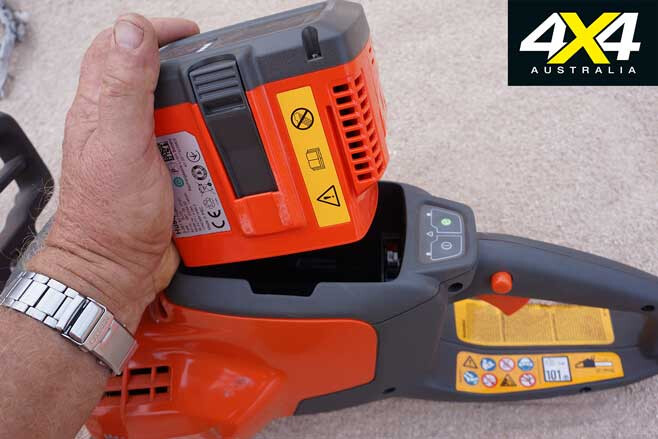
Normal provides maximum power while savE (essentially an eco mode) offers maximum run time and produces less noise. The saw also features a handy chain-tensioning knob that does away with the need for tools. A flip-up cap provides access to the oil tank, which feeds the auto oil pump for effective lubrication of the chain.
The bar length is 30cm and overall weight, excluding the battery, is just 2.95kg. The kit comes complete with battery and charger. The battery inserts easily into the body of the saw and when charged is ready for immediate use. The keypad at the top of the saw body sits close to where your thumb reaches and makes for easy and effortless starting and stopping of the saw.
The 120i cut through desert-hard wood up to about 150mm in diameter with ease, and it was obvious that it could handle much thicker timber. The noise level is rated at just 98dB and, while that’s not whisper-quiet, it is much quieter than an equivalent petrol-powered saw.
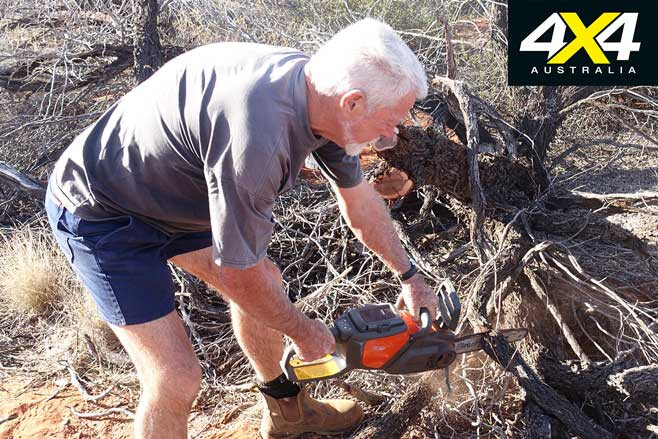
With the tree effectively and quickly cut up, we were soon on our way. What also impressed about the 120i, and other electric saws for that matter, is how easy they are to carry in the back of a vehicle without having to worry about fuel and two-stroke oil.
Sure, if you need to cut big, thick trees into pieces on a regular basis this saw would be a tad small, but for most people looking to clear the occasional fallen timber from a track, or to collect some wood for a fire, this unit is a bloody beauty. I’m so impressed, I’m out to buy one.
RATED Available from: husqvarna.com.au RRP: $567 (complete kit) We Say: Clean and easy to use and carry; fast, effortless cutting.
UTES HAVE dominated Australian new-vehicle sales in September, with the Toyota Hilux, Ford Ranger and Mitsubishi Triton the three best-selling vehicles for the month according to the Federal Chamber of Automotive Industries (FCAI) September 2019 VFACTS report.
When combining 4×4 and 4×2 variants, the Hilux topped the sales charts with 3364 units leaving showrooms in the month. Nipping at the heels of the Hilux were the Ranger (3116 sales) and Triton (3001 sales).
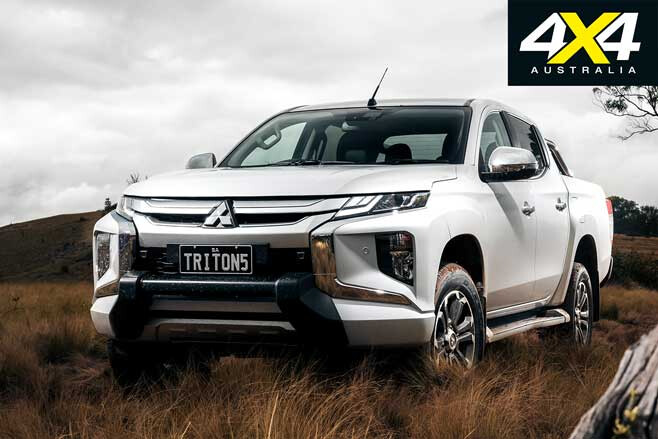
However, when looking at the 4×4-only segment, the Mitsubishi Triton was the month’s biggest mover, raking in a whopping 2755 sales and finally breaking into the top two on the 4×4 sales charts – a typically impenetrable position shared between the Ranger and Hilux.
Mitsubishi registered an insane 64.6 per cent growth compared to the same month last year to take out second spot and relegate the Hilux to third on the 4×4 sales charts.
Making this spike even more impressive is the overall slump of new vehicle sales, with the Australian market experiencing 18 consecutive months of decreasing sales. In September 2019, the drop was 6.9 per cent overall compared to September 2018, or a total of 6530 fewer vehicle sales.

The LCV (Light Commercial Vehicle) market is down 5.4 per cent compared to the same time last month; while the dwindling passenger car market is down a staggering 18.3 per cent.
“It is clear the slower sales rate the market is experiencing is in line with the broader economic environment in Australia,” said Tony Weber, chief executive of the FCAI.“Of particular concern to the industry are the restrictive regulatory lending conditions currently facing consumers.”
The Ranger, Triton and Hilux were joined by the Hyundai i30 and Mitsubishi ASX as the best-selling overall vehicles in September.
IT IS NOT uncommon for classic Toyota LandCruiser FJ40 examples of all shapes and running conditions to be traded for top dollar these days, but how far would you stretch your budget for a perfect FJ40?
American-based FJ40 specialists, The FJ Company, think the sky is the limit, with its run of custom-built, resto-modded FJ40s starting at USD$180,000 (AUD$270,000). And, according to its newly appointed Californian dealer, Canepa, The FJ Company has a 12-18 month waiting list on its hands.
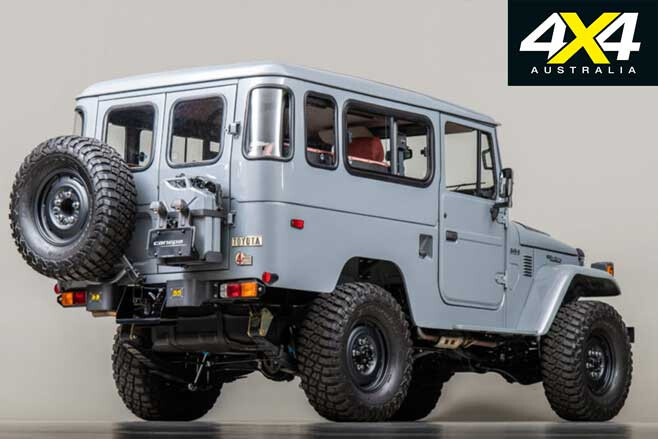
The resto-modded models, known as the G40, are built using authentic 1973-1983 FJ40 bodies and chassis with minimal rust or modifications. From there, The FJ Company fully strips down the body and chassis, realigns the chassis, restores the body, and rebuilds the entire FJ40 by hand.
While the G40 retains its classic exterior aesthetics, albeit with subtle modern touches like LED headlights and CNC-machined exterior bits, it gets modern-day thrust in the form of a 4.0-litre 1GRE-FE Toyota V6, producing 170kW in its naturally-aspirated guise.
The range-topping USD$220,000 (AUD$325,000) Signature G40-S comes specced with a Magnuson supercharger. Either engine spec will come mated to a Toyota five-speed manual gearbox.
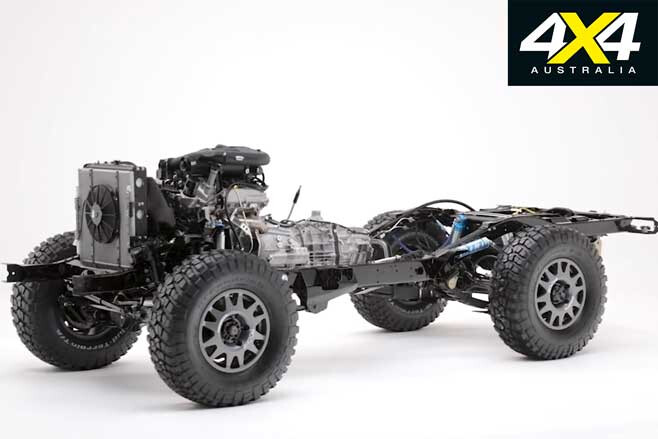
The mechanicals also get a thorough update, with the addition of front coil suspension, ABS with stability and traction control electronics, automatic locking hubs, and optional front and rear lockers.
For something with an asking price of a Range Rover, the G40 gets a raft of interior updates; although, as The FJ Company is dedicated to retaining the vehicle’s classic looks, it only comes in the form of custom upholstered Recaro seats, integrated vintage air-conditioning and heater functions, LED cabin lights, and a centre console-mounted modern infotainment system with Apple CarPlay functionality.
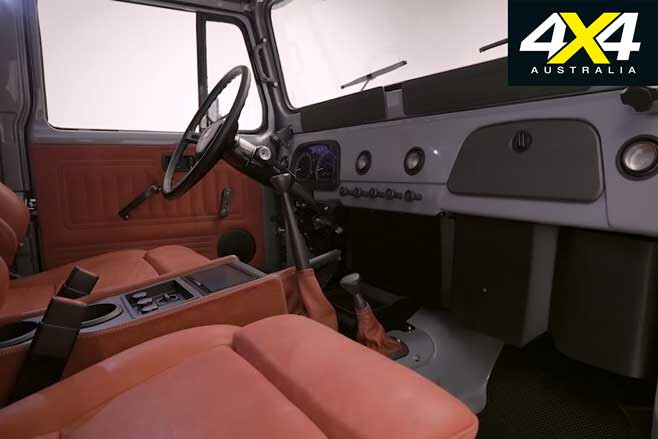
Customers are given a wide range of customisability with a generous list of options, which includes a full range of body colours, interior trim colours, 4×4 gear, and hard- or soft-top options.
According to Canepa, The FJ Company builds around 30 custom examples each year, with an average build time of six months.
IN A BID to thrust the Colorado up the 4×4 sales charts, Holden has introduced seven years of free scheduled servicing for its 4×4 ute.
Applied to all LS, LSX, LTZ and Z71 4×4 variants, the offer comes with Holden’s ongoing five-year/unlimited-kilometre warranty and should help reignite sales.
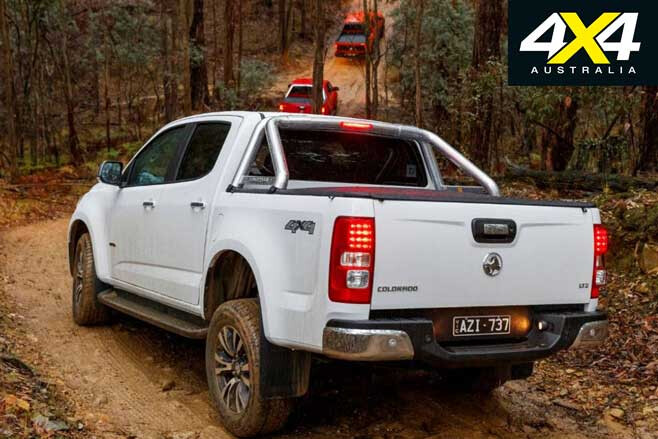
According to VFACTS, Holden has sold a total of 11,056 Colorado 4x4s so far in 2019. The segment’s perpetual best-sellers – Ranger and Hilux – have notched up more than double the amount of sales year-to-date (24,992 and 24,904 respectively).
Andre Scott, the General Manager of Colorado Marketing, said the MY20 Colorado has been a hit with buyers.
“The MY20 Colorado was launched earlier this year and has been very well-received by the marketplace,” Scott said, “but this seven years’ free servicing is an example of Holden ‘putting its money where its mouth is’ in what is an incredibly competitive segment where competitors typically offer ‘capped-price’ servicing schemes for up to six years.
“Just to be clear, this offer is for seven years’ free servicing, rather than capped-price servicing, and on a 4×4 Colorado that represents over $3000 in additional value.
“In covering these service costs for our customers, I hope that more of them are able to spend the extra cash in their pockets to get out and drive what I believe is one of the most capable four-wheel drive utes available,” Scott said.
The offer applies to all Colorado 4x4s ordered or delivered between October 1, 2019 and December 31, 2019.