
IT’S NO SECRET that the last of the old-school Land Rover Defenders to roll off the production line in 2016 was remarkably similar in design and concept to the original Land Rover launched in 1948.
Other than the obvious styling similarities, both had a basic separate chassis with a steel bulkhead, mostly aluminium body panels and live-axle suspension, albeit with leaf springs early on and coils in the later County and Defender years.
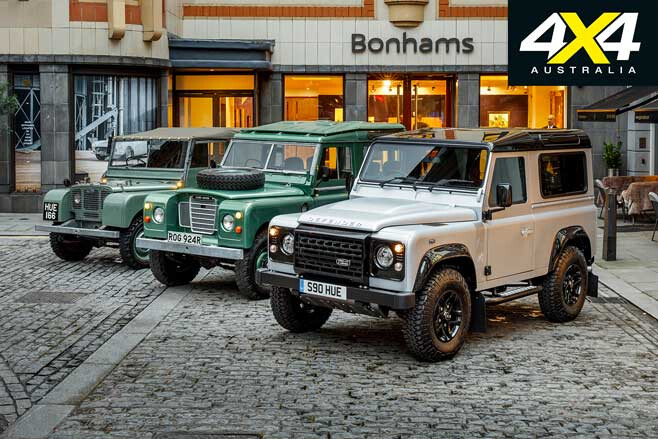
Later-model Defenders had advanced turbo-diesel engines, but, other than that, development over 68 years moved at a slow pace, until the recent launch of the all-new model at this year’s Frankfurt Motor Show.
The new Defender is undoubtedly a technological tour de force, but how did a company like Land Rover, with such a large range of modern 4x4s – Discovery, Range Rover, RR Velar and RR Evoque – manage to let the Defender simply plod along for so long? And then allow the nameplate to be absent from the market for nearly four years?
Here’s how the Defender story reached this point…
Building Blocks
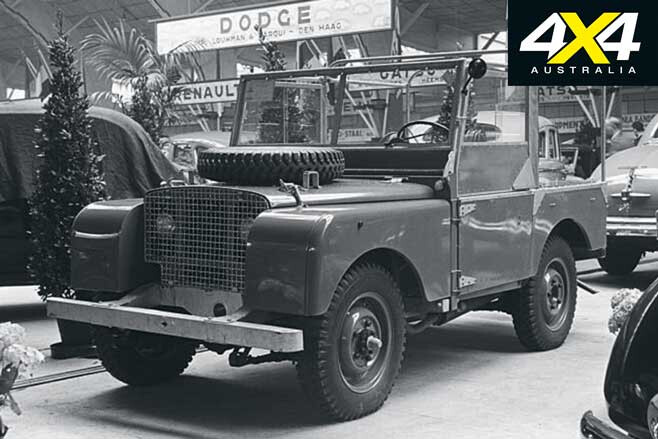
WE ALL know the old Defender can trace its roots back to the original Land Rover that was unveiled at the Amsterdam Motor Show in 1948. This was developed into the Land Rover Series I, which immediately found immense sales success thanks to its unequalled versatility. In fact, the Land Rover went on to become a British manufacturing success story that far exceeded initial expectations. In the first year of production, a total of 3048 Land Rovers were made, then 8000 in 1949 and 16,000 in 1950.
To cut a long story short, the Series I was replaced by the Series II in 1958, followed by the Series IIA in 1961 and the Series III in 1971, and by 1976, one million Land Rovers had been produced; many of those in overseas plants including Australia, which was the first country outside of England to manufacture Land Rovers.
As early as 1975, Land Rover knew that a replacement for the Series III was needed, and it toyed with the idea of a new pick-up based on the Range Rover’s body-style, called the SD5 project, but limited budgets put the brakes on its development.
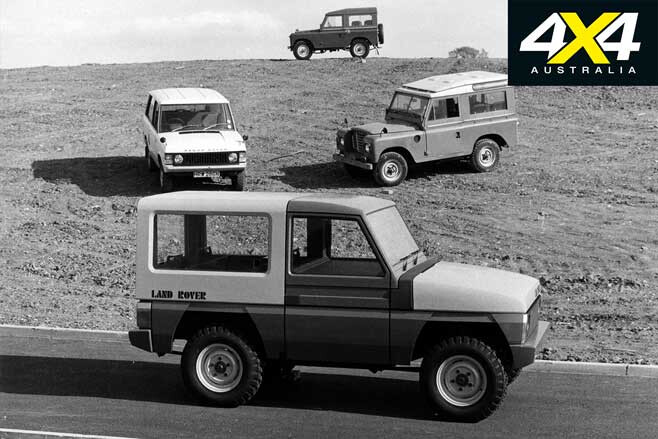
“In the post ’70s, there wasn’t terribly much money available for development of a new vehicle,” explains Mike Bishop, Land Rover Classic Product Specialist.
“They knew that they really had to make a new vehicle (the SD5 project) but they didn’t,” continues Mike. “If circumstances had been different, you know, if they had launched an all-new vehicle instead of the 110, that looked a little bit like a Range Rover, but a pick-up, what you’d probably have now is a vehicle [Defender] which is very, very similar to everybody else.”
Instead of the SD5, in 1980 Land Rover launched the Series III Stage 1 model with a 3.5-litre V8 engine, and this was essentially a practice run for what would come next. While the Stage 1 still ran leaf-spring suspension, Land Rover already had plenty of experience with coil springs thanks to the development and launch of the Range Rover a decade earlier, and this technology was applied to the Land Rover in March 1983 with the launch of the 110.
The following year the coil-spring 90 (actually a 93-inch wheelbase) variant was introduced, followed again by the long-wheelbase 127 model. All of these coil-spring models are now retrospectively referred to as Defenders.
The Defender
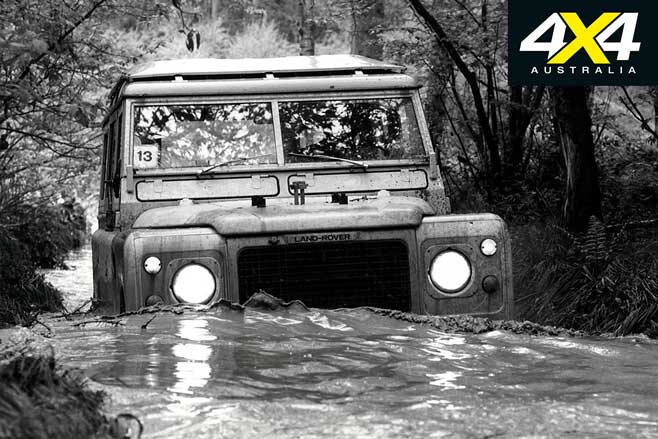
THE coil-spring Land Rover 110s finally arrived on the Australian market in 1985, and the wagon variants were labelled County. Both the wagon and cab-chassis were available with a 3.5-litre petrol V8 or a 3.9-litre Isuzu-sourced turbo-diesel four.
The Defender nameplate was (officially) introduced in the UK in 1990, at which time the vehicle was equipped with the same 2.5-litre turbo-diesel engine (200Tdi) introduced in the Discovery a year earlier. In Australia, we’d have to wait until 1992 for the Defender nameplate and 200Tdi engine.
“There was a chap in the product team for Defender, and he came up with the name,” explains Mike Bishop. “It was basically around the vehicle’s military history… and the Defender needed its own name because of the launch of the Discovery, so it could no longer just be 90 and 110… it couldn’t be just Land Rover anymore.”
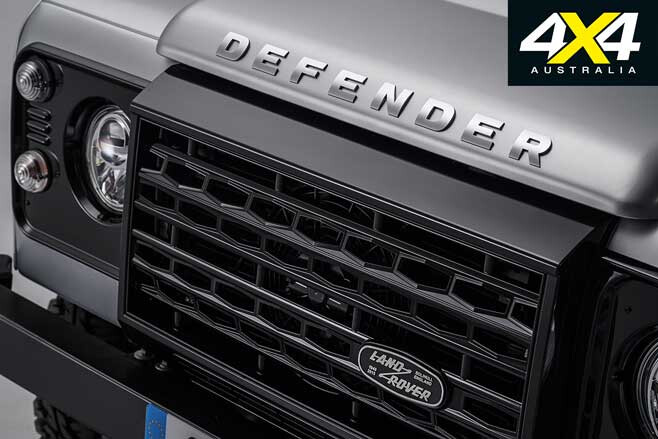
At launch, the Defender was available here as a five-door wagon or two-door cab-chassis, both with the 200Tdi that had relatively modest outputs of 80kW at 3800rpm and 255Nm at 1800rpm; although, it proved very economical.
The only gearbox option was a five-speed manual, and the Defender ran a two-speed transfer case with a full-time 4×4 system. The centre diff could be unlocked and locked in high or low range, which many found to be a handy feature.
While Land Rover production had decreased significantly by the early 1990s due to the success of Japanese manufacturers, in July 1993 the Defender range celebrated another sales milestone: the 1.5 millionth vehicle since production began in 1948.

Over the next three decades, Defender production plodded along at the Solihull plant in much the same way as it always had. While other Land Rovers such as the Range Rover and Discovery would undergo revolutionary revamps, and all-new models including the Freelander and Range Rover Sport introduced, Land Rover evolved the Defender just enough over the years to keep it relevant … and compliant with much of the world’s emissions standards.
“Discovery 1 was developed around Range Rover on a very, very limited budget,” says Mike Bishop, “and Discovery 1 was very successful, so they were able to get the money to develop a new Range Rover, the P38, to move Range Rover into the future, because it was the king. But the Defender had to wait, which was, in hindsight, from an iconic point of view, the right decision.”
The 200Tdi was replaced by the 300Tdi in 1994, with various changes including the introduction of Bosch electronics. Power and torque were up slightly (to 83kW at 4000rpm and 265Nm at 1800rpm) and the Defender scored a new five-speed manual gearbox. The long-wheelbase Defender 130 was also introduced to Australia in 1994 in Single Cab and Crew Cab variants.
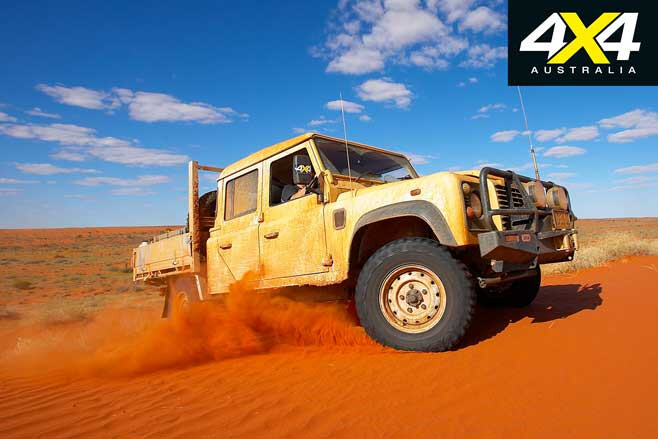
The 300Tdi was replaced by a new five-cylinder Td5 engine in 1998 featuring Electronic Unit Injection, with power and torque now up to 90kW at 4200rpm and 300Nm at 1950rpm respectively. The Defender Xtreme (as the wagon was marketed here) scored electronic traction control from 2000, and the model line-up was largely unchanged until the short-wheelbase Defender 90 arrived in 2003.
In 2007, a 2.4-litre Ford turbo-diesel replaced the Td5 and was mated to a six-speed manual. While max power output was still a modest 90kW at 3500rpm, peak torque was now up to 360Nm at 2000rpm. This greater torque output, along with the six-speed ’box, made the Defender a much better on-road touring vehicle, while retaining its legendary off-road capability.
Build quality was also significantly improved, with later-model Defenders less likely to have water leaking into the cabin when it rained.
The last Defender update included the adoption of a 2.2-litre four-cylinder turbo-diesel in 2012, with the same peak outputs as the previous 2.4-litre engine. This would see the Defender out until production wound up in 2016.
“No one envisaged it would go on for this long,” says Mike Bishop. “As numbers dwindled for use as a traditional pick-up, and people started buying them as a specialist vehicle… in the last year of Defender they were building roughly 100 vehicles a day, and about 90 of these would be station wagons, and just 10 would be standard pick-ups.
“You’d get the Welsh farmer saying ‘Oh, it’s going to be such a shame, I won’t be able to buy a Defender pick-up’, but imagine if you’re Mr Tata, and you’re making 10 cars a day… you’ve got to look at this pragmatically, and the world has changed. The vehicle has done an amazing job…
Even though the Defender got to the point of being one of the world’s ‘hero’ vehicles, it could never reach its full potential because it was held back by its production scale and its takt time. If you look at a Range Rover, takt time is about 86 seconds per stage to build the car, whereas the Defender was four-and-a-half minutes.”
The End Game
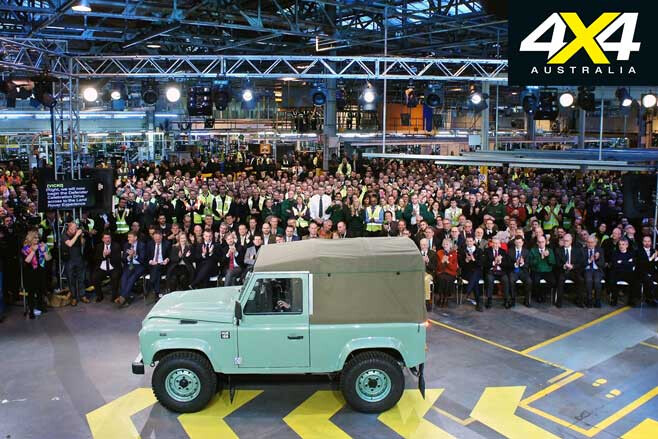
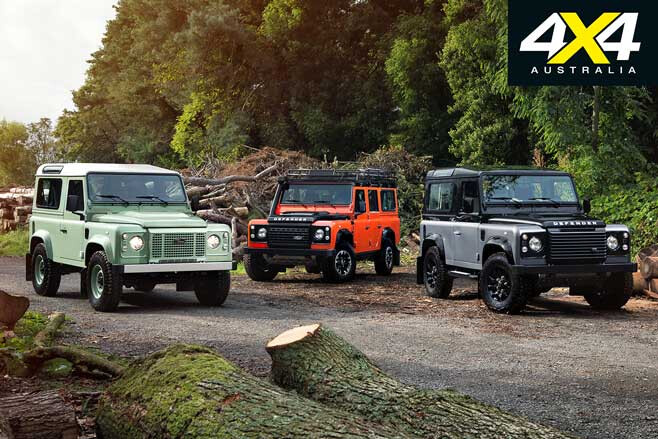
THE final Land Rover Defender Limited Edition models to roll off the Solihull production line in 2015/16 paid homage to the nameplate’s long and distinguished history. There were three models, available in 90 or 110 wheelbase options: the Heritage, Adventure and Autobiography (the latter not offered in Australia).
Designed to evoke memories of the 1948 Land Rover, the Heritage Limited Edition was painted in Grasmere Green, inspired by the original post-WWII RAF surplus paint applied to the first Land Rover. One of these collectible Defenders will now be worth a lot more than the original price.
The Adventure Limited Edition stood out in its bright orange paintwork and special graphics, as well as extra underbody protection plates and unique interior trim, while the Autobiography had boosted power and torque outputs plus a host of luxury appointments.
The Long Leak
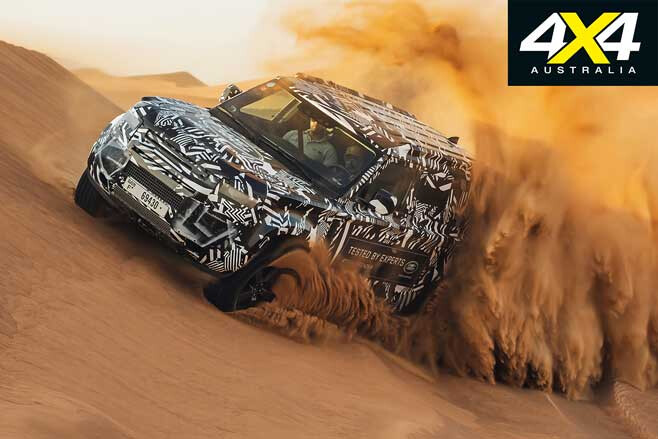
SINCE the demise of the ‘original’ Defender, there have been countless rumours regarding a replacement. For the first couple of years Land Rover remained tight-lipped on the subject, but in the last 12 months or so there have been an ever-increasing number of ‘spy shots’ – most likely intentionally leaked by Land Rover’s marketing department.
When the all-new Defender descended a ramp onto the stage at the 2019 Frankfurt Motor Show in September, it confirmed what many fans had feared: the Defender was no longer the simple, tough and capable utilitarian it had been for nigh-on 70 years. And while this new model will write its own chapter in the history of Land Rover, there’s not much chance it will be as long as the last Defender’s … and that’s probably a good thing.
Key Land Rover Defender milestones
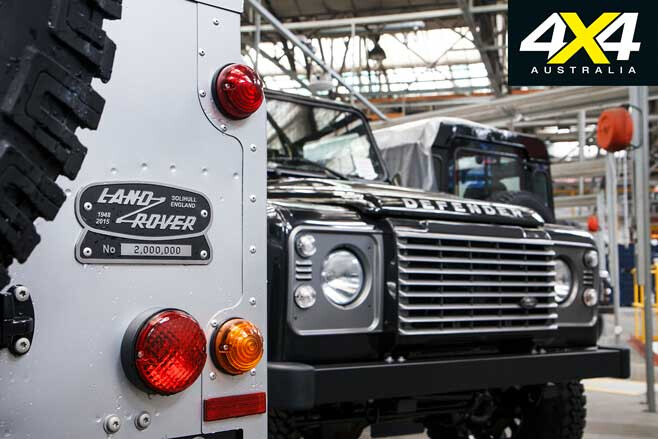
1983 – Long-travel coil-spring suspension introduced on 110 1984 – Short wheelbase 90 introduced 1988 – Rover Group sold to British Aerospace 1990 – Defender nameplate introduced 1993 – 1,500,000th Land Rover (Defender range) produced 1994 – BMW buys Rover Group 1998 – Td5 engine introduced 2000 – Xtreme model scores electronic traction control and Ford buys Land Rover 2007 – Interior redesigned and 2.4-litre turbo-diesel engine introduced 2008 – Tata Motors buys Land Rover and forms JLR
The track we were following had quickly turned to sand as we dropped into the wide bed of the ephemeral Hale River. The Patrol growled in response to the soft clinging sand as we turned to follow the river’s sandy course through the far east end of the MacDonnell Ranges.
The track occasionally climbed the bank to cut a corner in the stream but just as quickly returned to the soft sand of the riverbed, making this area one of the few ‘real’ four-wheel driving destinations in the East Macs.
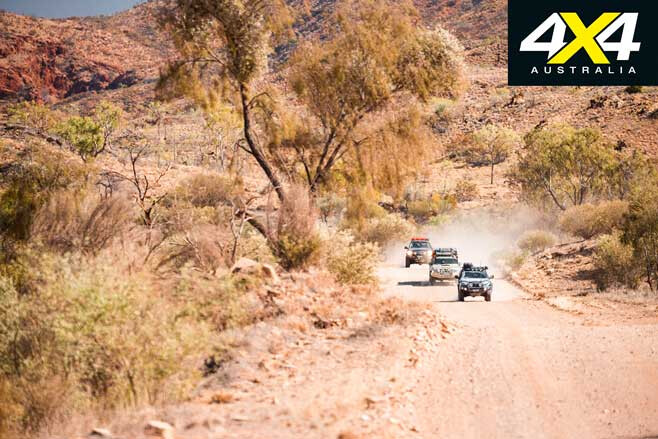
In one spot we splashed through a film of water, the last visible remnants of the flood that had coursed down through the valley a few months previously. What remained of the pool of water had been churned to mud by wild cattle, going by the tracks in the sand and the warning sign at the entrance to this little-visited nature reserve at Ruby Gap. I got out of the Patrol to see if there were any spoor of dingos, but the signs were all of the hoofs of cattle; although, we never spotted any of these during our stay.
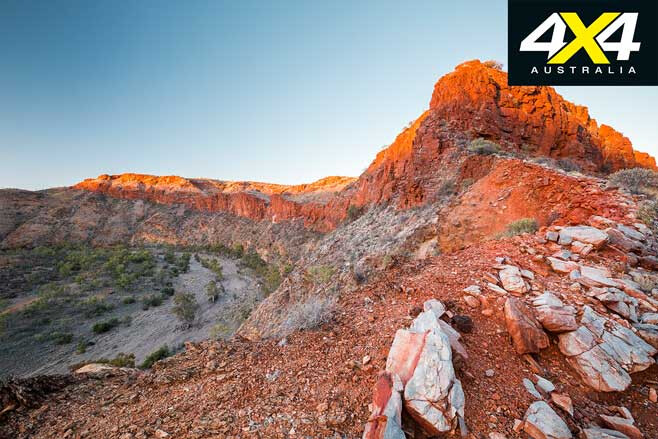
We pulled up for the night at the edge of the stream, with towering red raw rock making an awesome backdrop to our campsite.
Back in 1886, the explorer David Lindsay thought he had discovered rubies throughout this area and a rush had set in for the valuable stones. Within a year there were more than 200 hopeful prospectors looking for the red stones, which quickly turned out to be the far less valuable garnets and the ‘ruby boom’ of Central Australia quickly collapsed.
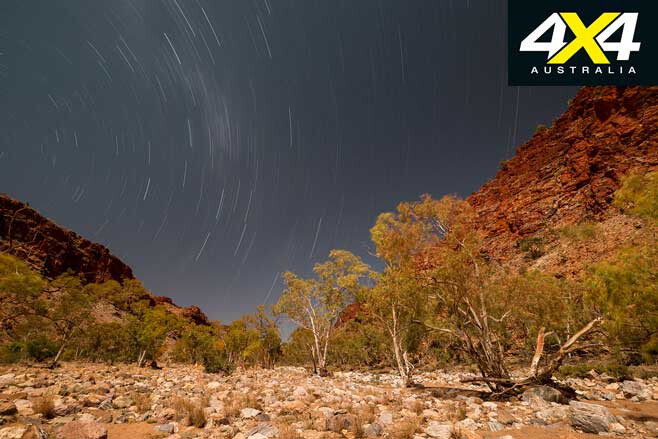
The next day we proceeded deeper into the park, passing a couple of camps scattered along the bank and exploring as far as we could drive, the track becoming more demanding the farther we went.
Sadly, we didn’t have time to do the walk to Glen Annie Gorge, nor to explore farther afield. We called our visit ‘a recce’ as we will certainly return at a future date.
Our journey through the ranges of Central Australia had started a few days earlier when we had left Alice Springs and wandered along the tar of the Ross Highway to Trephina Gorge. This is a far less visited region than the West MacDonnell Ranges and I’m not sure why as the country is just as spectacular.
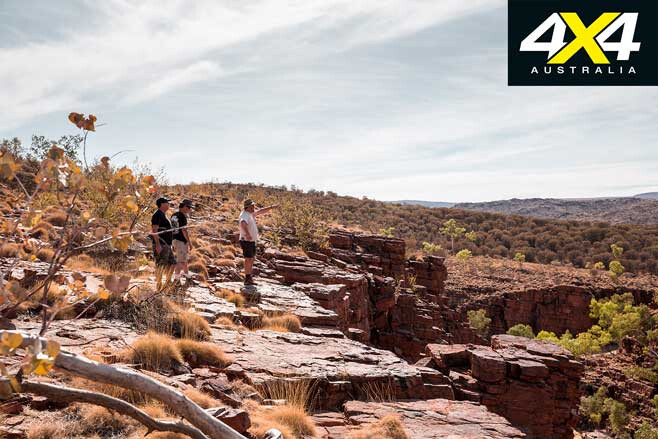
Along the way we had passed the more frequented Emily and Jesse Gaps, places we had visited in the past, so we pushed on to Trephina which is just 85km from the Alice.
There were a few travellers in the three camping areas the park provides and we set up our swags in the Panorama Campground, just a short stroll from the start of the walking trail through Trephina Gorge itself.
There are a number of walking trails in the park, and the one through the gorge itself leads onto the Ridgetop Trail which takes you in a long loop over the rugged hills to the John Hayes Rockhole. Along the way you’ll find some faint Aboriginal rock art tucked away in low overhangs, while the views from the high points of the ridges take in a sweeping panorama of rugged range and hill country.
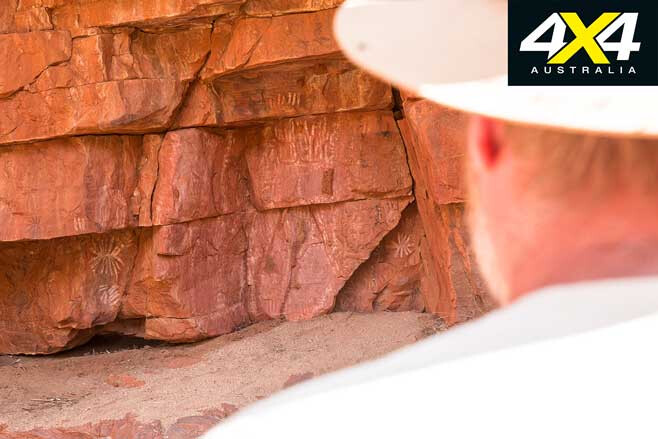
The rock hole is also accessed via a rough 4WD track off the main dirt road into the reserve, and we explored around here to find the only pools of water still visible after a long dry spell; this region of the ranges missing out on any water that had flowed farther east down the Hale.
After a second night camped in this idyllic setting we tore ourselves away and headed east, stopping briefly at Ross River Homestead. This is one of the iconic places in the East Macs and was originally established as the homestead for the Loves Creek station back in 1890.
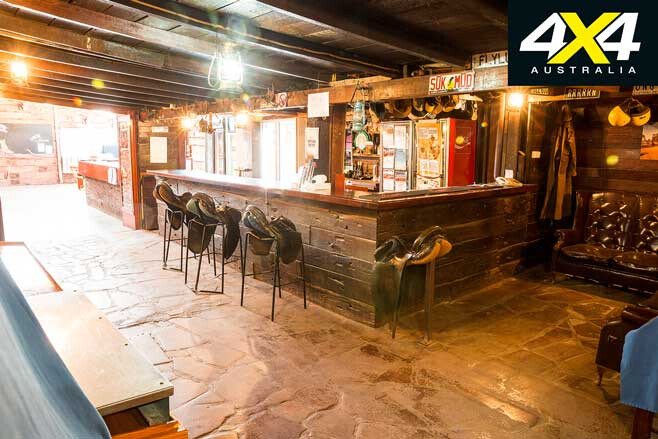
In 1957 the Ross River Resort was established, it being one of the first such establishments in Central Australia and, under a variety of owners, it has supplied rustic and authentic outback accommodation and camping since. Just wandering around the interior of the original bar and dining room areas is a fabulous experience, with history and character oozing from the woodwork.
From the homestead we headed for the historic reserve of the gold mining centre of Arltunga and what was the first European town in Central Australia, and the impetus for the establishment of the township of Stuart, later to become Alice Springs.
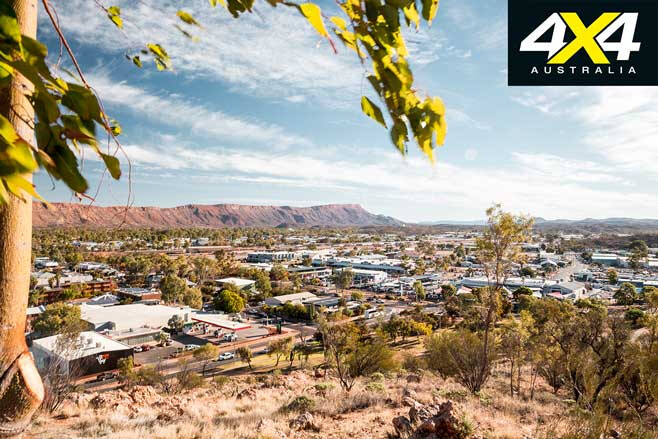
Following on from the failed ruby rush of 1886, alluvial gold was discovered the following year at Paddys Rockhole, just outside the current boundary of the historic reserve; and importantly for modern day fossickers, right beside the designated fossicking areas that border the Arltunga Historic area.
Arltunga was a tough place to look for gold. The harsh conditions, the lack of water and its very remoteness were all factors in its slow development. A government battery and cyanide works for crushing and processing the ore was established in 1898, while a police post to help keep law and order followed a year later.
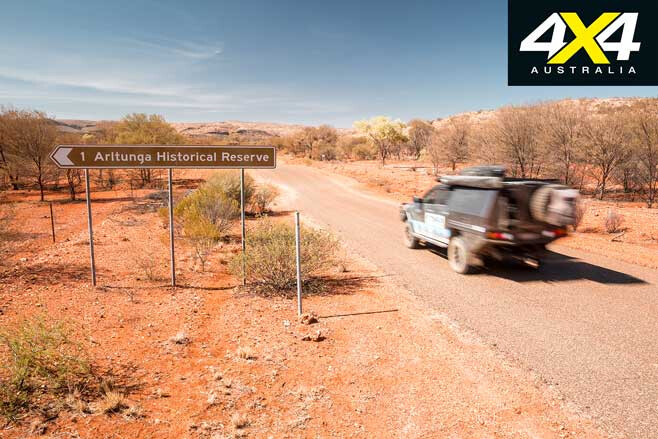
In 1905 a small settlement was established at the Crossroads, but already the miners were moving on. In the 1930s, during the Depression, another small rush saw tough miners scrambling through the hills, and in the 1950s the White Range area was reworked. The reserve was declared in 1977 and since then restoration work has saved many of the original buildings, while walking trails take you to points of interest.
I’ve been here on numerous occasions but always find the place interesting and generally find something I haven’t seen before. The Government Works area is always worth a visit and this trip we stopped to check out the old cemetery at the Crossroads, as well as the Golden Chance Mine, once one of the most productive gold-bearing deposits in the area.
The Arltunga Bush Hotel, which is probably the first building of note you will encounter on your exploration around here, has been closed for years; although, people still use the nearby camping area as no camping is allowed in the historic reserve.
As we headed north on our journey through the East MacDonnell Ranges we stopped at the Hale River Homestead, where there’s good camping and accommodation as well as a fabulous bush bar, cold drinks and hot food (bookings for meals are essential).
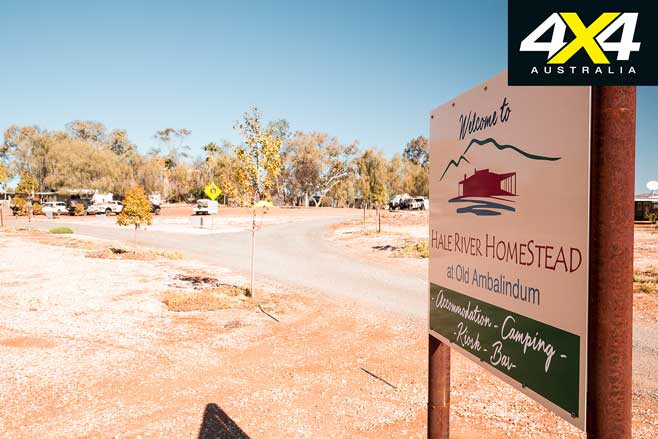
It would make a great base for exploring throughout the region. We could have settled in for the evening but instead took the opportunity for a drive to Fredericks Lookout, about 6km from the homestead, where you can admire expansive views over the Hale River valley to the Harts Range to the north.
With our way-too-short visit over, we headed north towards the Harts Range and the Plenty Highway, stopping at one of my favourite spots, the Gemtree bush resort, which offers pleasant camping, good coffee, takeaway food and fossicking tours.
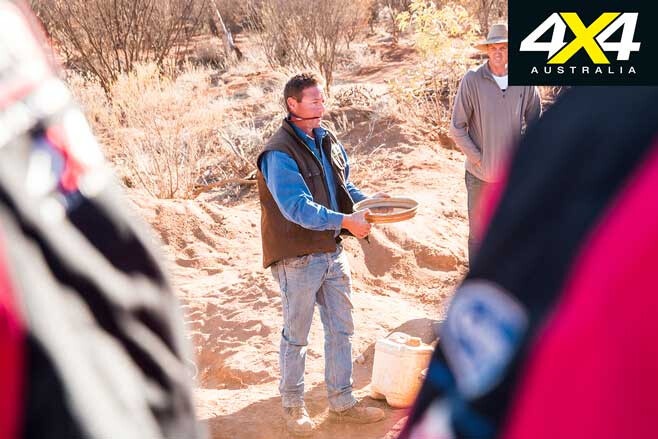
These fossicking tours are run each day during the tourist season and most people head for the more easily found garnet fields, while the keener gem hunter can head off to a zircon field to try their luck on these harder to find, albeit more valuable, gemstones.
While the two spots Gemtree guides lead you to are their own private claims, there are a number of designated public fossicking areas scattered throughout the Harts Range region. I wandered down the rough Cattlewater Pass track to the Harts Range West fossicking area that nestles among the peaks of Mount Brassey, Mount Palmer (the highest peak on the Harts Range) and Mount Mabel.
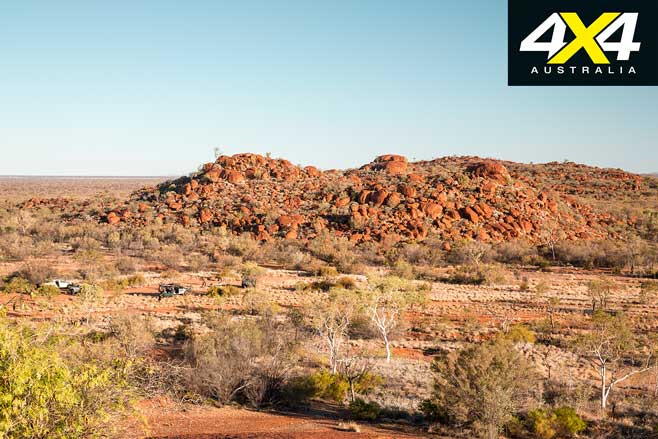
Between the 1890s and the close of the Australia mica mining industry in the 1960s, almost all the nation’s mica came from the Harts Range, while well-shaped almandine garnets attract modern-day fossickers. In the nearby Central Harts Range fossicking area, muscovite, garnets and smoky quartz are just some of the semi-precious stones that can be found.
There’s plenty of opportunity to bush camp among the ranges within these two designated areas, while a few facilities are available at the Spotted Tiger camping area south of the Atitjere Aboriginal community, that can be found just south of the Plenty Highway not far from the Harts Range Police station.
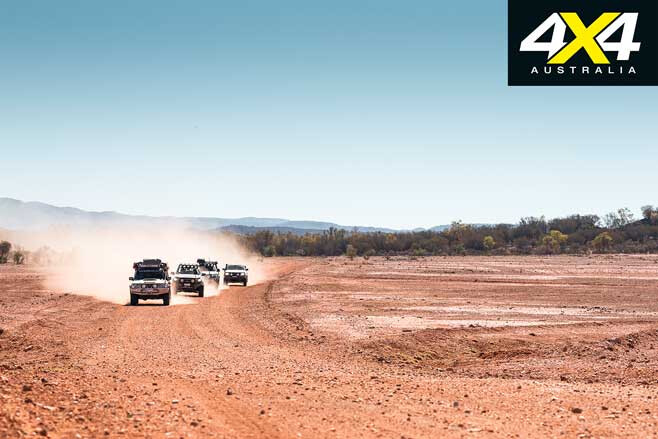
The community also hosts the Harts Range Picnic Races, which are held every August and attract up to 4000 visitors. From our discussions with one of the locals it is a great weekend and one we’ll have to put in our outback calendar for the next trip.
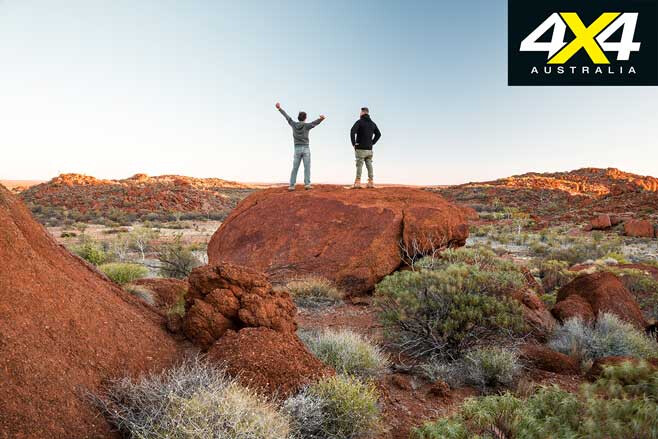
From our fossicking foray we headed for Tower Rock, about 70km north of the Plenty Highway, and one of my favourite places to camp in the whole region. I’ve been here three times before and you really must climb the rock and be there for sunset or sunrise – it’s pure magic!
Not far away was the Boxhole Meteorite Crater, which was a place I had tried to get to in the past but, without permission from the local land owner, I wasn’t prepared to enter the property. Anyway, nowadays there is a public access track that can be found a few kilometres north of the Dnieper homestead access road, so we took that into this rather bland-looking crater (read: hole in the ground) which is, for those with a bent in geology and meteorites, a much more important structure.
First discovered by Europeans in 1937 it was confirmed as an impact crater and described by CT Madigan of Simpson Desert fame. A fair amount of meteorite material has been recovered from this site including an 82kg piece that now resides in the Natural History Museum in London.
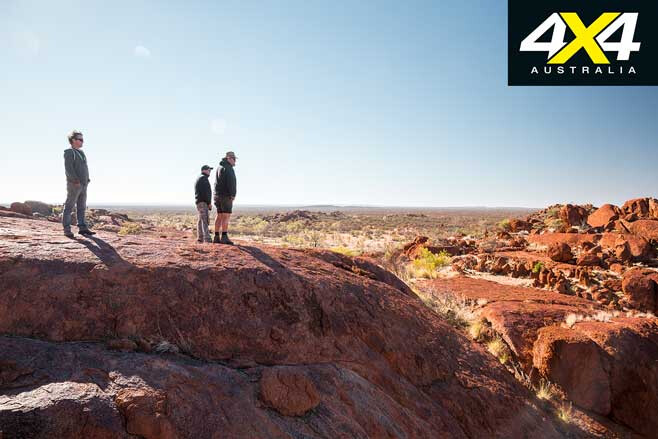
What intrigued Madigan, though, and various researchers since, is that even though this impact crater was probably formed just 5000 years ago, and certainly no later than 20,000 years ago, which is all within the span of human history here in Central Australia, there is no mention of it in any Aboriginal legends nor in dreamtime stories.
For our last night we pulled up at the Mt Swan homestead and threw down our swags. The light was fading fast as a flock of slow, wing-beating and pretty uncommon black cockatoos flew low overhead to roost in the trees along the nearby creek. Then the stars came out in all their glory – it was a fitting end to our wanders through the mountains of Central Australia.
Travel Planner
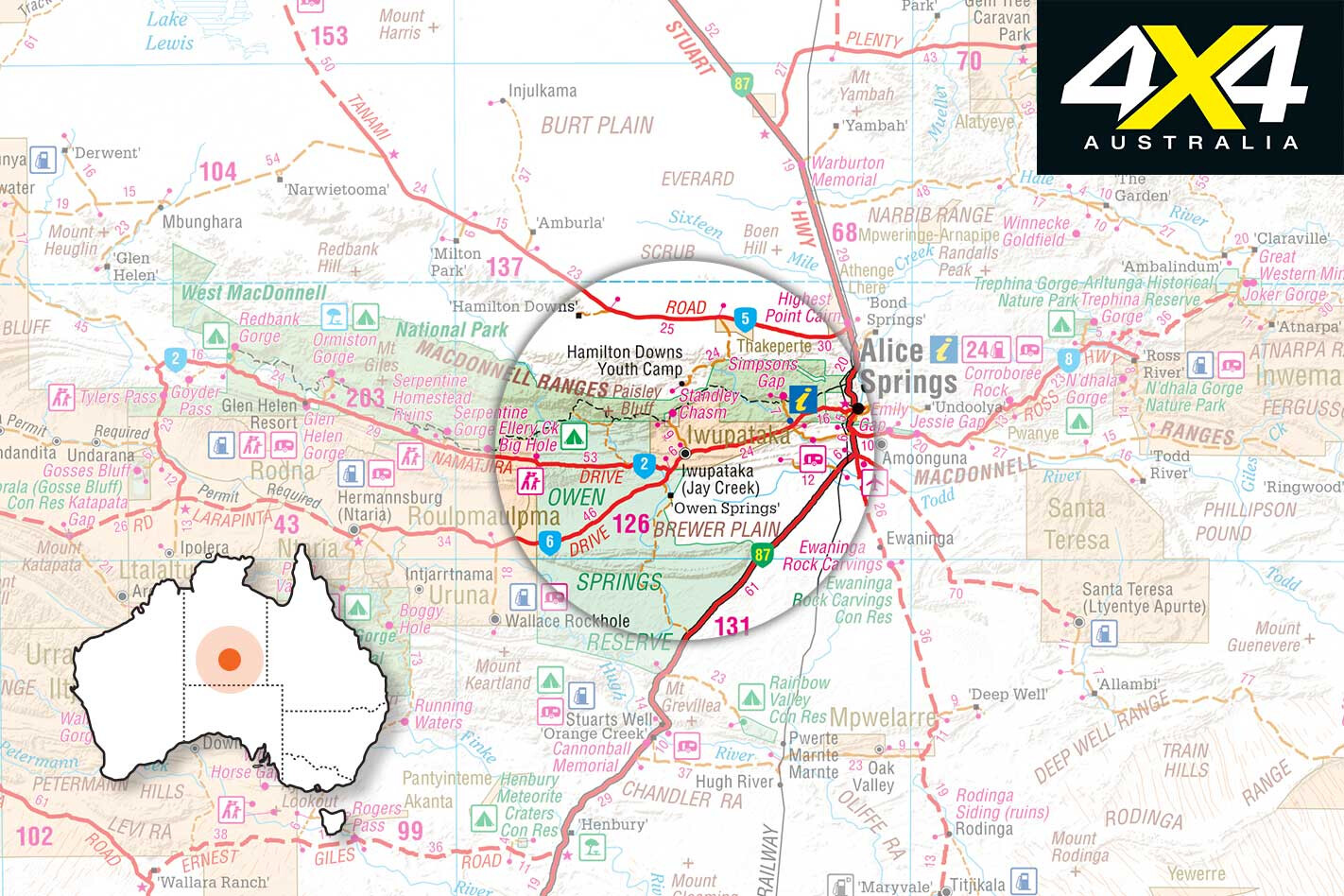
For information on the parks and reserves of the East MacDonnell Ranges, including Tower Rock, go to nt.gov.au/leisure/parks-reserves Ross River Resort – Camping, accommodation, limited supplies and fuel see: rossriverresort.com.au Hale River Homestead – Camping and accommodation see: www.haleriverhomestead.com.au Gemtree bush camp resort – Camping, accommodation, limited supplies and fuel see: gemtree.com.au Fossicking in Arltunga and Harts Range see: fossicking.nt.gov.au/declared-fossicking-areas Atitjere Aboriginal community – Fuel and supplies. Camping at Spotted Tiger camping area. Harts Range Races – Camping, races, rodeo, dance and more see: www.hartsrangeraces.org.au Mt Swan Homestead – Camping, accommodation, supplies and fuel: phone (08) 8956 9582
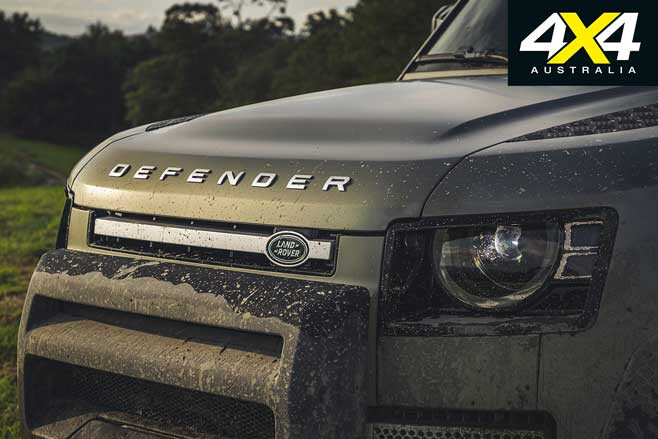
IT’S BEEN a long-time coming, but the all-new 2020 Land Rover Defender has finally been revealed; although, the Defender 110 five-door wagon isn’t expected to arrive in Australian dealerships until June 2020, and the Defender 90 three-door wagon around six months after that.
Land Rover Australia says Defender 110 pricing will start at $69,990, while it has yet to announce pricing for the 90. The initial 110 range will comprise Defender, First Edition and top-of-the-range Defender X model grades, as well as S, SE and HSE specification packs.
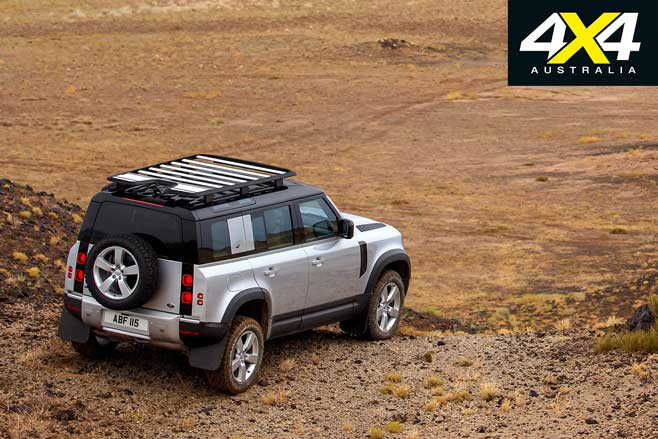
In addition, Land Rover will offer four accessory packs called Explorer, Adventure, Country and Urban, each consisting unique optional accessories. Furthermore, there will be a huge range of individual accessories from an electric winch to a full-length roof rack, and an inflatable awning to a rooftop tent.
There will also be commercial variants of the new Defender 90 and 110, but these are yet to be confirmed for Australia, with James Scrimshaw, Land Rover Australia’s PR manager, telling us, “We are interested in bringing the commercial variants to Australia and will be ordering evaluation units once they are made available to us.”
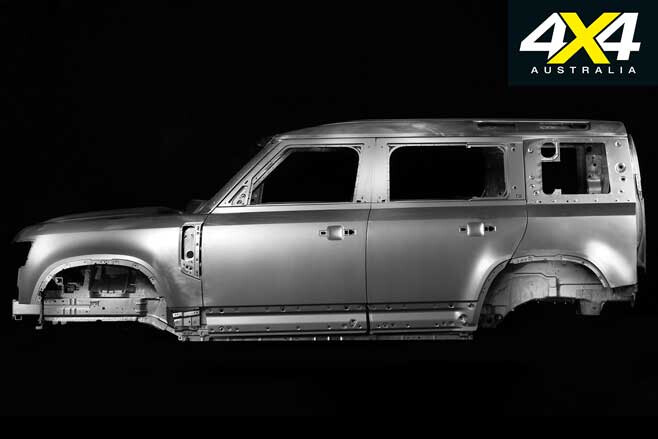
The new Defender really is all-new, built on a D7x (x for Extreme) platform with an aluminium monocoque structure supporting steel panels – rather than its predecessor’s steel chassis with aluminium panels – and fully independent suspension (with air springs on 90 and 110, and coils also available on 90) replacing the old Defender’s front and rear live-axle coil-spring setup. And, as expected, the new Defender is packed full of high-tech equipment … unlike its rather rudimentary ancestor.
At launch the new Defender will be available with a choice of two diesel engines or a petrol engine, all mated to an eight-speed auto. The base SD4 2.0-litre turbo-diesel will make a claimed 147kW at 4000rpm/430Nm at 1400rpm, the higher grade SD4 will have the same torque peak but will make a claimed 177kW at 4000rpm, while the I6 Mild Hybrid Electric Vehicle (MHEV) 3.0-litre petrol straight-six will pump out a handy 294kW at 5500rpm/550Nm from 2000 to 5000rpm. The last of the old Defenders could only muster a paltry 90kW and 360Nm!
There’s no doubt the new Defender will offer far superior on-road performance and dynamics than its predecessor, combining full-time 4×4 with fully independent air suspension and electrically assisted power steering, but Land Rover is also confident off-road performance will also impress, saying the new Defender “has been engineered to be the most capable Land Rover ever built”.
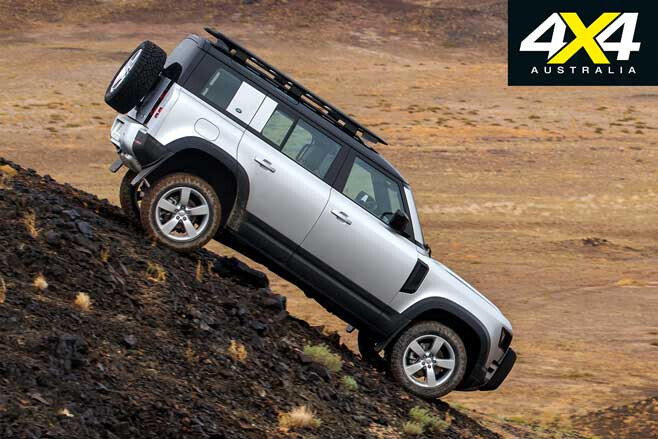
Land Rover says the Defender’s D7x monocoque structure is three times stiffer than a typical separate body-on-chassis design. The air-suspended Defender 110 offers a handy 291mm of ground clearance on its highest off-road setting with 38° approach, 40° departure and 28° ramp-over angles, as well as a 900mm wading depth.
The air-sprung Defender 90 has the same ground clearance and approach and departure angles, but a slightly better 31° ramp-over angle in its highest setting, while angles for the coil-spring 90 are 31°, 37.9° and 25° respectively, with 226mm ground clearance and 850mm wading.
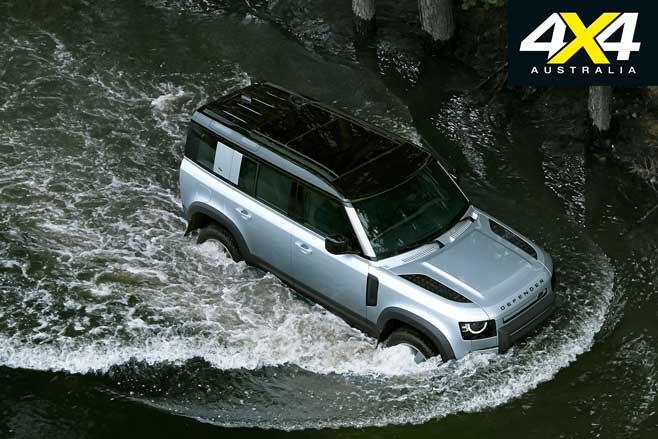
Both diesel variants have an overall low-range reduction in first gear of 51.52:1, while the petrol model betters this with 57.2:1. Land Rover claims a maximum 45° gradient climb/descent capability as well as a maximum 45° side slope traversing.
Depending on specification (and options selected), the new Defender is available with wheels ranging in diameter from 18 to 22 inches. Those keen on adventure travel will be pleased the steel 18s are fitted with 255/70R18 tyres, providing a good range of aftermarket Light Truck (LT) tyre options.
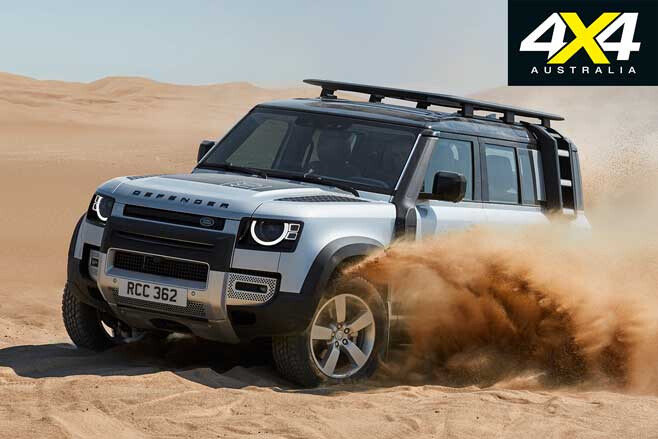
The Defender scores Land Rover’s effective Terrain Response 2 system with a new Wade setting for water crossings joining the Normal, Grass/Gravel/Snow, Mud and Ruts, Sand, and Rock Crawl modes. As well as tailoring throttle response, traction control sensitivity and differential control for water crossings, Wade mode increases ride height, sets the vents to recirc and lightly applies the brakes (to dry them) when exiting the water.
Defender’s Terrain Response 2 also allows the driver to self-configure the setting for certain terrain types, or simply leave it in Auto and let it make up its own mind; while a new 3D Surround Camera provides a 360-degree plan and 3D exterior views of the surrounding area on the vehicle’s 10-inch touchscreen, both off- and on-road.
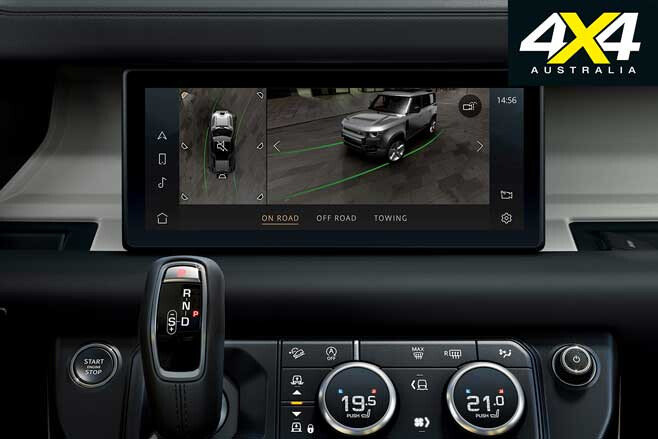
The Defender offers a 3500kg maximum braked towing capability and features Advanced Tow Assist that allows drivers to “steer trailers with their fingertips using a rotary controller on the central console”, according to Land Rover. This system works in conjunction with the aforementioned 3D visualisation on the touchscreen.
On the inside, the Defender can be optioned with a traditional two-seat layout in the front row or an innovative ‘jump seat’, meaning the 90 can be specified to seat up to six occupants, and the 110 can be had in five-, six- or seven-seat configurations. Load carrying is impressive, too: the Defender 110 has a maximum payload of up to 900kg depending on specification. And the roof can handle a static load of up to 300kg or 168kg when driving.
With the optional Urban Pack the Defender gets 22-inch gloss black rims, a spare wheel cover and a few other ‘bling’ bits; the Explorer Pack includes an expedition roof rack, raised air intake and side-mounted gear carrier; the Adventure pack has the gear carrier, an integrated air compressor and a portable rinse system; and the Country Pack has the rinse system and a full-height cargo barrier. There’s also a range of individual accessories.
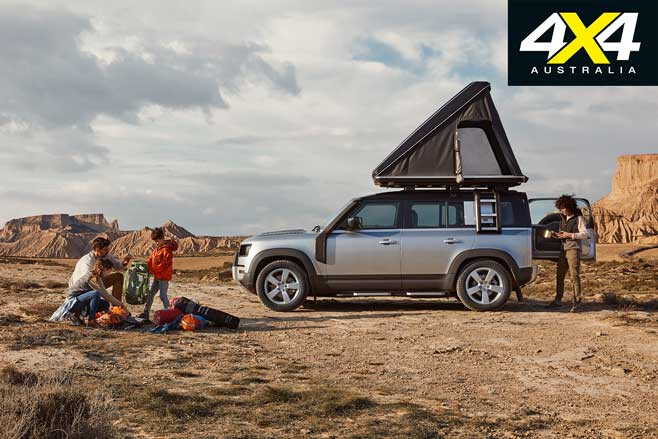
There’s no doubt the new Defender will offer an astounding combination of on- and off-road performance its predecessor simply could not match, but one thing this all-new high-tech off-roader lacks is the simplicity of its forebears; it has 85 individual ECUs that “turn the new Defender into an all-terrain super-computer”. Features include a colour head-up display, remote smartphone tracking, a wearable remote key fob and remote 5G software updating.
While these features will no doubt be a boon for urban buyers, those seeking a remote-area overlander might approach the new Defender with some trepidation. Only time will tell if the new Defender is worthy of wearing the Defender nameplate.
2020 LAND ROVER DEFENDER SD4 Engine: 2.0-litre inline-4 turbo-diesel Max Power/Torque: 147kW to 177kW/ 430Nm
2020 LAND ROVER DEFENDER MHEV I6 Engine: 3.0-litre I6 MHEV petrol Max Power/Torque: 294kW/ 550Nm
Gearbox: 8-speed auto 4×4 System: Dual-range full-time Crawl Ratio: 51.52:1 (SD4); 57.2:1 (MHEV I6) Kerb Weight: 2133 to 2193kg (90); 2248 to 2343kg (110) GVM: N/A Towing Capacity: 3500kg GCM: N/A Fuel tank capacity: 83.5 to 88.5 litres (90); 85 to 90 litres (110) ADR fuel consumption: 8.8 to 9L/100km (SD4); 11.1 to 11.3L/100km (MHEV I6) Price: from $69,990 (110 variants)
As spring arrives the days are getting warmer and longer, the places we visit in our 4x4s change and, I’ve got to say, I’ve had a pretty good winter season.
Escaping the southern chill of winter saw me heading to the Red Centre for the Simpson Desert trip you’ll see in this issue, to Kakadu and the Top End for a future feature, and we’re just back from a couple of weeks in the Flinders Ranges where the early blooms of spring were shooting up.
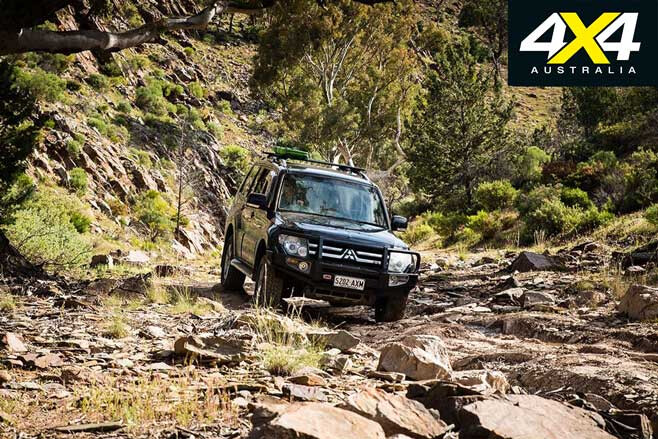
All this travel just reminded me what a great place Australia is for 4×4 adventurers, with so much diversity, natural beauty and history all out there to be explored in your vehicle. And you don’t have to drive a million miles to see it!
For summer our trips will swing back to the cooler and drier states; High Country adventures, beach drives and swimming, all while trying to avoid the holiday crowds. It’s still a great time to get out there, but it just takes some more planning.
While avoiding the holiday crowds might be a minor gripe for some, the summer will be a lot harder for many Australians. It’s been one of the driest winters on record and the drought is strangling much of the country. We’ve recently visited properties where the families have been on the land for generations, yet the current farmers are having to de-stock what they have left as it’s simply becoming too expensive to keep feeding them. This is heart-breaking stuff!
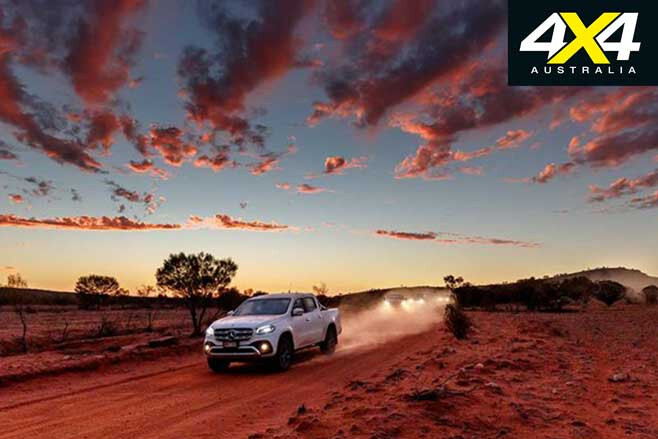
Dust storms are also prevalent and we’ve seen plenty of them over the last year. As the paddocks dry out and vegetation disappears, the top soil is picked up by the wind and blown away. Literally tons of good dirt is being lifted off the land and deposited elsewhere, probably where it is not wanted.
The dry spell will also mean a high fire danger this summer. The bush is a tinderbox, so if you are out there camping these holidays, be fire smart, ensure you properly extinguish any campfires and only light them if really necessary – and definitely not at all if fire restrictions are in place.
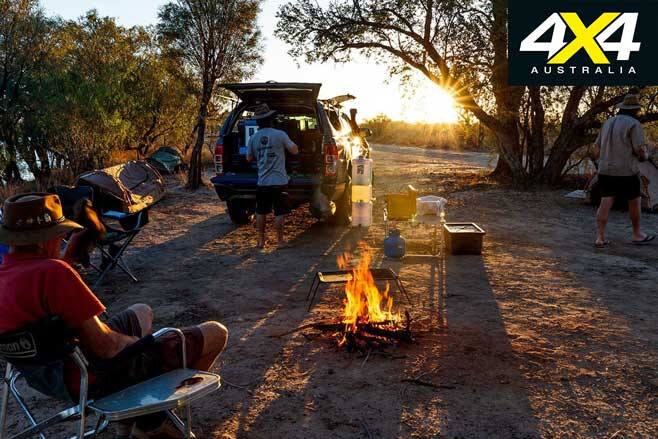
If you’re heading into areas such as the High Country where fire risk is always present, check the conditions beforehand, find out if and where any fires are burning already, know where to go and where not to go, and always have an emergency escape plan.
Plan ahead, stay safe and enjoy our country in the upcoming summer. And if you can afford to, please give to any of the many charities operating to help our farmers who are doing it tough.
Back in the swinging ’60s, the humble Volkswagen Kombi was the ride of choice for surfers in search of the perfect wave.
You’d find them crawling up and down coastlines in Australia and the USA, and exploring the wilds of the Baja Peninsula, usually with longboards stacked high on the roof and a trail of smoke trailing behind that was quite different to the smell of burning oil coming from the VW’s tailpipes. The off-road ability of those old buses was truly amazing but, when more remote beaches beckoned, four-wheel drive was the only way forwards.
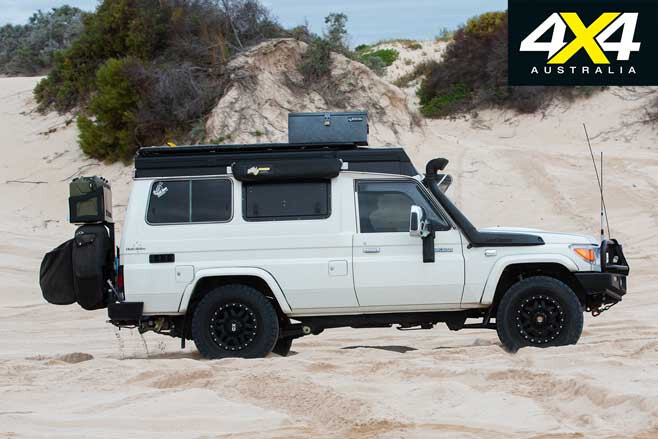
VW went on to produce all-wheel drive ‘Syncro’ Kombis that extended their range, but for true go-anywhere ability in a vehicle you can live in nothing beats the venerable Toyota Land Cruiser Troop Carrier.
Like the old Kombi, the Troopy is a vehicle that you can custom build into a mobile home. Ideally set-up for just two front seat passengers, the Troopy retains a cargo area long enough to allow adults to sleep inside and, with some clever design, space to accommodate all the comforts of home – including the kitchen sink. Oh yeah, that long roof will easily carry the longest Malibu boards.
Like many other global adventurers, West Australian Ryan Mikkelsen saw the Troopy’s potential as a home on the road and, with a lap of Australia with his girlfriend Antonia in the planning stages, he set about building the perfect coastal tourer.
“We wanted a car with off-road and on-road capabilities,” Ryan says of the choice of vehicle. “As the plan was to go on a round trip of Australia, it was vital that the car was able to perform off-road whilst not causing any issues for on-road legalities whilst travelling.”
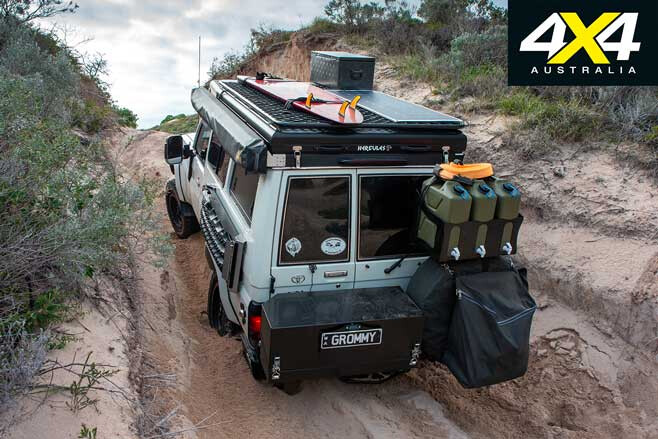
This VDJ78 Troopy is a 2010 GXL model affectionately know as Bruce and it’s been the subject of a comprehensive refit to make it the perfect touring companion.
Central to accommodating Ryan and Antonia on their lap of the map is the Alu-Cab rooftop conversion. This involved cutting the original roof off the Troopy and fitting the Alu-Cab ‘tent’ as a full pop-up top, and the conversion was done by Quick Pitch in WA.
The pop-top opens up the space in the back to allow the users to stand up within it, while the bed up above folds flat to create the sleeping space. The South African made Alu-Cab conversions are renowned for their versatility and durability and are used by many adventurers around the globe.
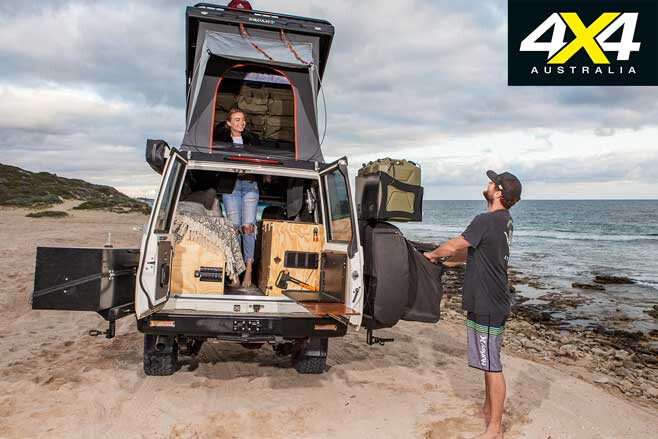
“Accessibility was of high importance to us,” says Ryan. “We wanted the ability to pack up and down at camp in a matter of minutes, and using every inch of space we had, and keeping everything as functional as possible.”
To achieve this Ryan and Antonia looked at a few different setups for the rear space but decided to custom build the fit-out themselves.
“With no carpentry skills between us whatsoever, we set up to build this on our own so we could take our time and figure out what worked best for us. I wouldn’t want to put a square on some parts but all worked out well in the end.”
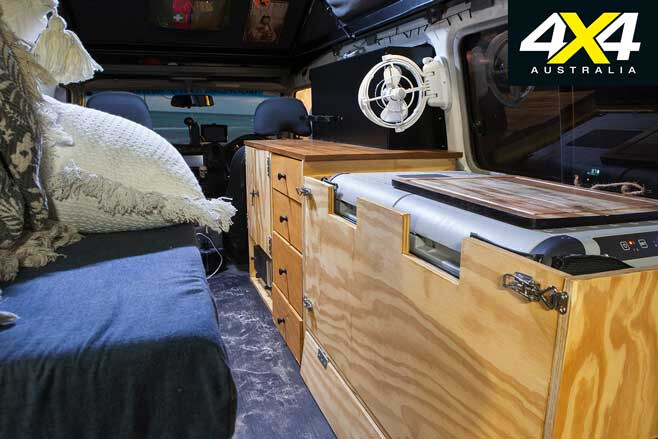
The cabinetry has storage space for just about everything they need on their travels as well as accommodating their generous 75-litre Waeco fridge. Canvas pouches affixed to the underside of the roof/tent compartment accommodate smaller bits and pieces.
The custom storage also extends to the exterior of the Troopy, with the Kaymar rear bumper being used to mount a cabinet that conceals a Weber barbecue and its gas bottle. This rides on a swing-out arm so that it can easily swing into place for use where it is covered under the 270-degree Alu-Cab awning.
The other swing-out mounts the spare wheel and tyre, plus a frame that secures a trio of jerrycans for water. Speaking of water, there’s also a 45-litre tank from Thorburns in Sydney mounted under the tail of the car.
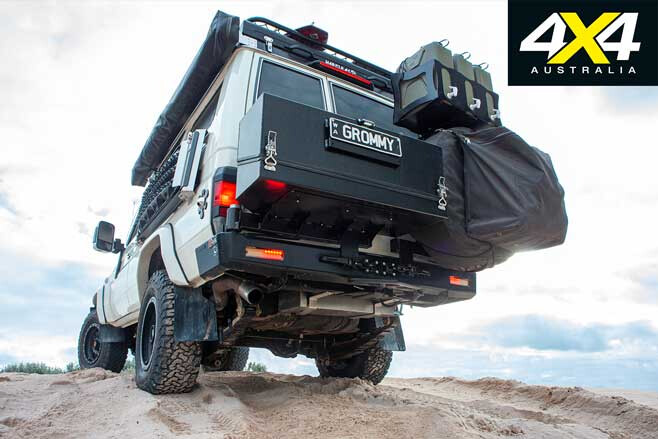
Improving access to the rear of the Troopy are gullwing flip-up windows replacing one of the sliding windows on each side of the rig. The left-side one accesses directly inside the back and is covered by the large awning, while the right side one houses the shower and accessories for when the Quick Pitch ensuite/shower tent is in use.
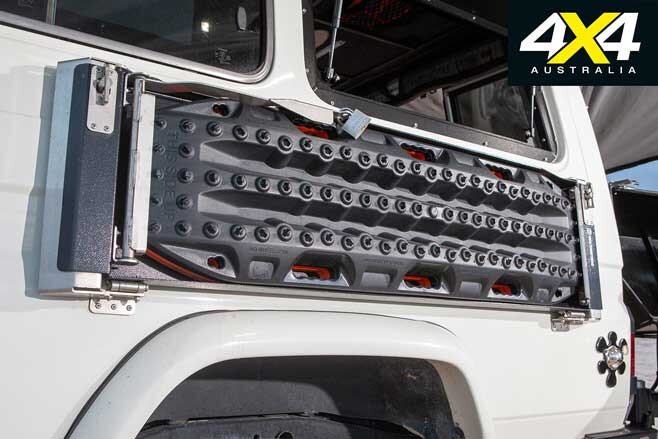
Another neat feature from Quick Pitch is the fold-down table/MaxTrax mount on the passenger side. The Trax Table not only secures your MaxTrax boards on a lockable mount that is easy to access when you need them, but is hinged at the bottom so that it folds down to give a flat, usable table space.
On top of the roof tent is an OCAM mesh rack that is home to a 150W solar panel and a quiver of surfboards, so there’s always the right one at hand for the many different surf breaks they’ll encounter on the trip.
There’s also a 170W solar blanket that can be deployed to make the most of the available sunlight, and these panels feed the batteries via a Redarc BCDC system. An 800W inverter is used to charge and run the AC appliances.
Of course, adding all this equipment adds weight to the vehicle no matter how hard you try to keep it down when building. This required upgrades to the suspension and brakes using Dobinsons springs and remote reservoir shocks on all corners.
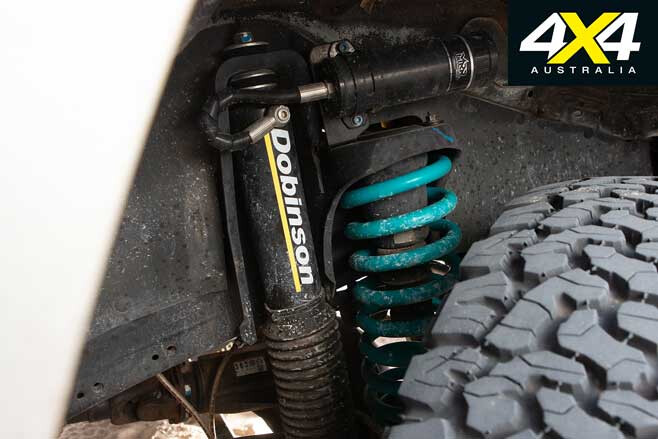
A Superior Engineering sway bar helps control the body roll that comes from a high centre of gravity vehicle like a Troopy with gear on the roof. The brakes were upgraded with slotted and dimpled rotors, to improve feel and durability.
The output of the V8 diesel has been improved as well with a dyno tune from Diesel Torque in Perth. A three-inch exhaust system helps the engine breathe, while an oil catch can and secondary fuel filter protect it from contaminants. An NPC Performance clutch handles the extra torque going back to the otherwise stock driveline.
Ryan spent the best part of four years outfitting the Cruiser, including on a number of shorter trips to try out all the equipment before he and Antonia embarked on their big trip.
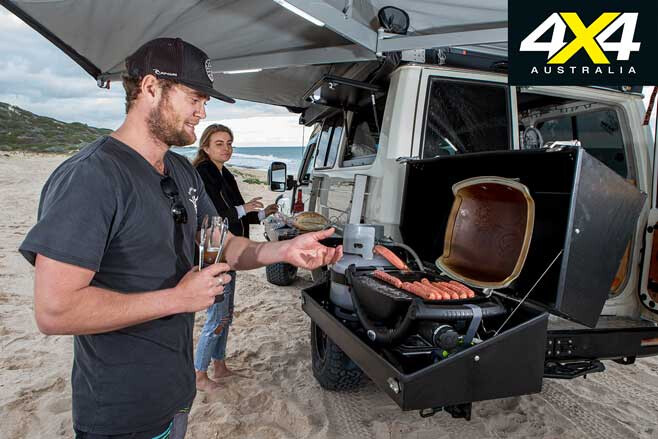
“I can finally say I’m very happy with all products now on the car as they have been tried and tested on- and off-road,” he says. “So far we’re very happy with the use of space and functionality of the build and the overall performance of the car off-road. It’s powerful but also very comfortable.”
The adventurous couple were working their way up the west coast and enjoying life on the road when we pinned them down to get the story on their Troopy. Don’t believe us? Check out their Instagram feed @thealternateroad and you’ll no doubt be as jealous as we are.
THE 2020 Isuzu D-Max will begin rolling out of Thai showrooms this week, but we won’t see it in Australia until next year.
It’s the Japanese brand’s first major change to the pick-up since its debut way back in 2012, despite a few facelifts in-between (2015 and 2017). The design changes are obvious, but delve a bit deeper into the Thai model and there are plenty of things to like about the 2020 iteration.
Here are 10 things you need to know about the all-new D-Max.
MORE POWER
The 2020 D-Max will continue to run its venerable 3.0-litre turbo-diesel engine (4JJ1), but it will get a bump in power and torque (from 130kW/430Nm to 140kW/450Nm) due in part to high-injection pressure and an electronically controlled VGS turbocharger. The updated engine is codenamed 4JJ3.
REAR DIFF LOCK
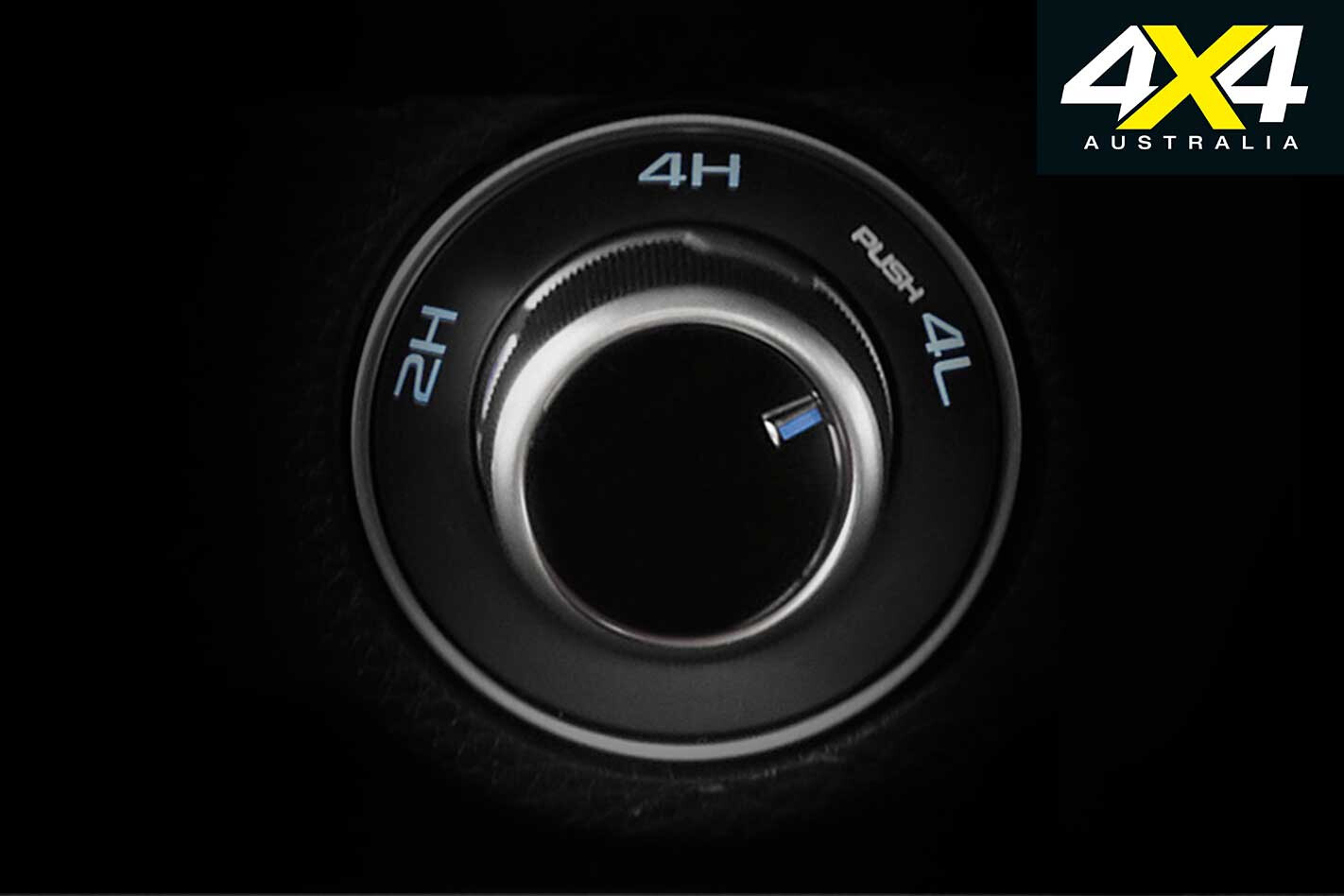
The 4×4 models will be equipped with an electromagnetic rear diff lock as standard for the first time, the lack of which hindered the off-road ability of previous iterations. Isuzu also says: “With an enhanced transfer of power to the wheels, it now takes shorter time to switch between two-wheel and four-wheel drive, as well as between high and low.”
MORE WADING DEPTH
The 2020 Isuzu D-Max now claims a wading depth of 800mm, which is 200mm more than its predecessor. Cahills Crossing, here we come!
POWERTRAIN CHANGES
To cut fat and save weight, Isuzu has incorporated a single propeller shaft made of aluminium into the 4×4 vehicles. In addition, a pull-ring shift lever has been implemented – replacing the canted shift design that requires the driver to push the gear-stick down – to make reversing easier.
BIGGER BRAKES
The size of the D-Max’s brake rotors has been increased to 330mm for improved stopping ability. The servo ratio has also been tweaked, with Isuzu claiming improved braking performance, feel and noise/vibration levels.
STRONGER AND LIGHTER
Isuzu claims body rigidity is up by 20 per cent, in part due to the implementation of 980MPa high-tensile steel plates (which also keeps weight down). Isuzu also states the “application of higher than 390MPa high-tensile steel plates has increased from 30 per cent to 46 per cent.”
REFINED INTERIOR
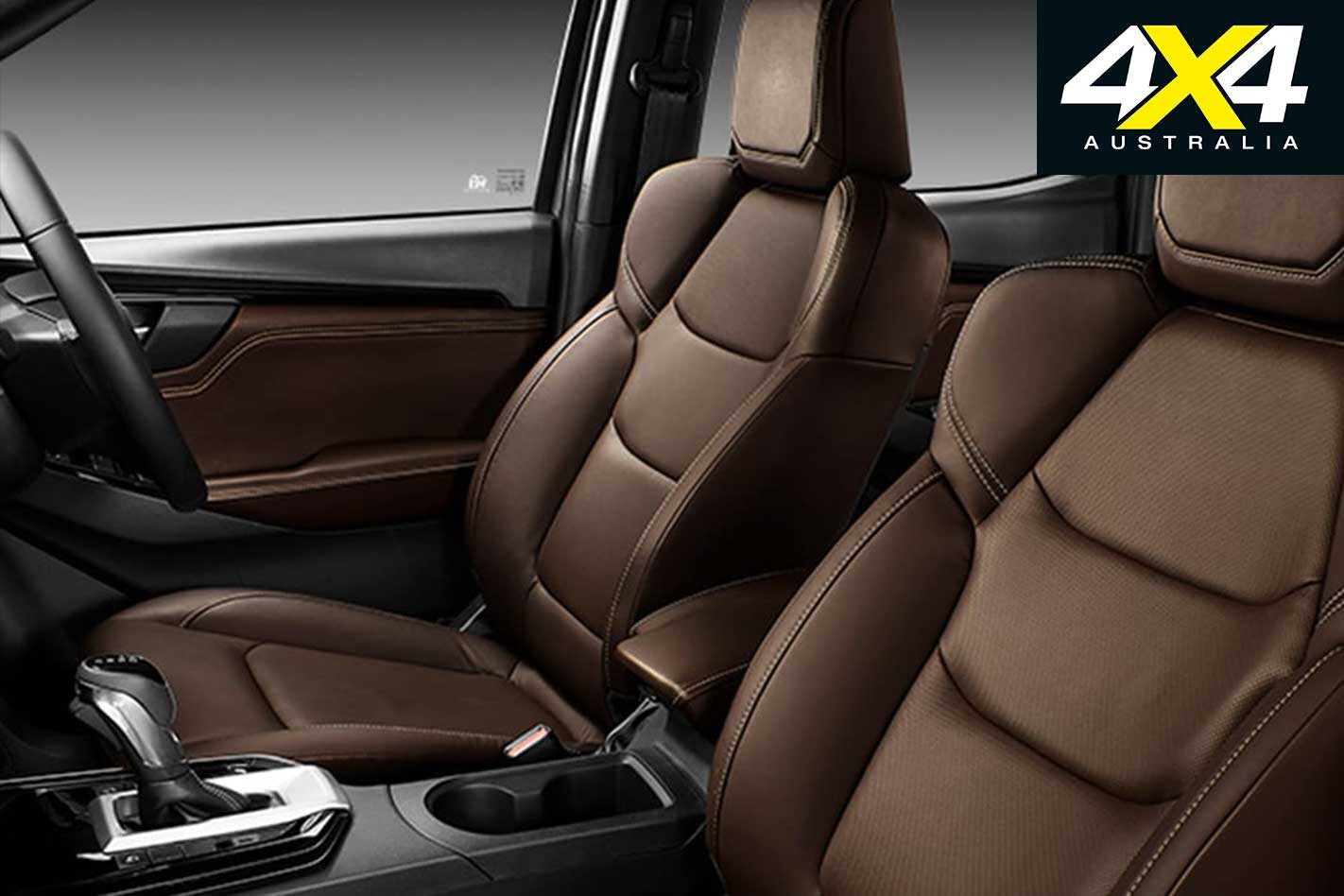
The cabin has been updated with a nine-inch digital display, a redesigned console that is “designed to enfold the driver and passenger as if they were in a cockpit of an airplane”, and high-end textures and embossing. Low-rebound MDI polyurethane is used for the front seat cushions, with eight-way power adjustment available.
IMPROVED SAFETY
The 2020 D-Max will receive advanced safety tech including rear cross-traffic alert and blind-spot monitoring, as well as hill start assist and hill descent control, among others. Whether it comes with autonomous emergency braking remains to be seen.
NEW, TOUGHER LOOK
The 2020 D-Max features a more aggressive silhouette, headlined by a redesigned front fascia with LED lighting. LEDs appear on the tailgate, which also sports a new look. A rear step bumper has been fitted.
IMPROVED FUEL ECONOMY
According to Isuzu Japan, the 2020 D-Max offers “market-leading low fuel consumption and C02 emissions”. We’ll know exact details closer to its local launch.
Land Rover’s all-new largely-aluminium monocoque Discovery arrived here in 2017 with three engine options, two four-cylinder diesels (Td4 and Sd4) and one V6 diesel (Td6). Of those three engines, only the Sd4 remains, but it’s now joined by a more powerful, but still 3.0-litre, V6 diesel called the Sd6.
Claiming 225kW and 700Nm the Sd6 is a fair jump up from the 190kW/600Nm Td6 it replaces and provides a more enticing jump in power from the Sd4’s 177kW, which pedal-to-the-metal gave little away to the 190kW V6.
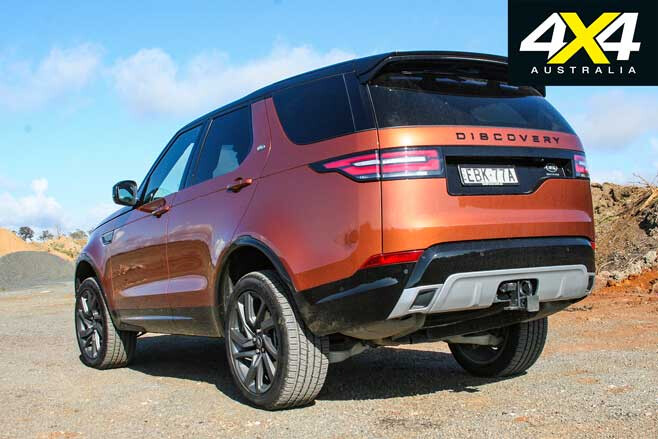
Where the Td6 was a single-turbo design, the Sd6 uses Land Rover’s unique sequential-parallel bi-turbo arrangement that makes for a more muscular engine, everywhere. Using a variable geometry turbo to do most of the work most of the time by itself, at higher revs and under higher loads a secondary fixed-geometry turbo comes in sequentially (via pre-spooling) but operates in parallel once there to add pumping volume to the main turbo.
Up top there’s the extra 35kW but, more importantly, all 700Nm is available at a lower engine speed (1500rpm versus 1750rpm) than the 600Nm of the outgoing Td6.
The Sd6 is quick for a big 4×4 wagon, reaching 100km/h in just 7.5 seconds. But in a way it doesn’t feel quick as there’s no top-end rush in the power delivery, just an even and linear thrust right from the get-go. This latest generation Discovery is relatively light, too, something in the order of 400kg lighter than the Discovery 4, which is also a key factor in its lively acceleration.
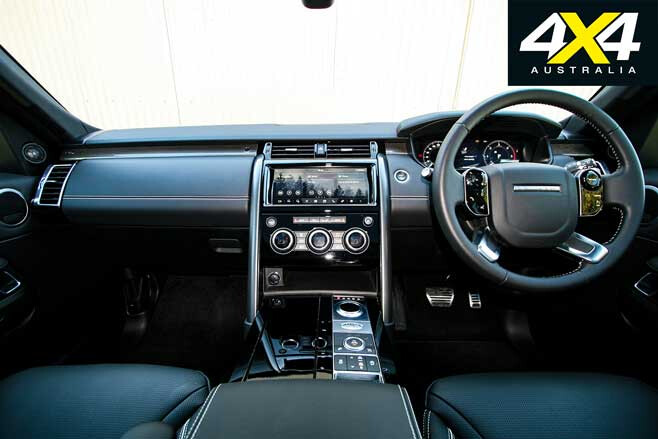
More useful is the Sd6’s abundant torque available right from idle, and the effortless performance it produces under all driving conditions. It has a slick eight-speed automatic, too.
The ‘light for its size’ aspect of the Discovery also translates to entertainingly sharp on-road dynamics, all helped by the fully independent suspension. The ride is compliant, too, even on the test vehicle’s 21-inch rims, thanks largely to the generous suspension travel.
That same generous suspension travel, and the fact the suspension can be jacked up 75mm via its air springs to give 283mm of ground clearance, and more if needs be if the chassis still grounds out, is the secret behind the Discovery’s considerable off-road prowess. Being a much lighter vehicle overall also helps the Discovery in soft sand, where it’s much improved upon its predecessor.
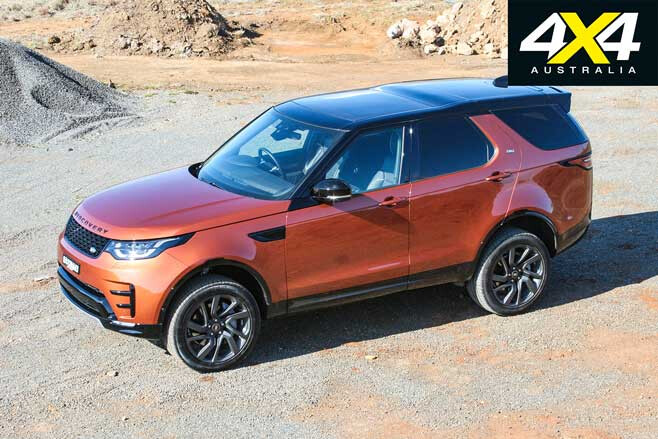
Despite all this you still need to tick the option box for the automatic rear locker to get the most out of the Discovery off-road; although, unfortunately the $85K base spec Sd6 ‘S’ can’t be optioned as such, which means moving up to the $100K SE.
Tyres are the other big issue with the Discovery; as ever, the standard high-speed road tyres are damage-prone off-road, but fortunately this generation Discovery is specified with a one-size-bigger tyre for any given wheel size than the Discovery 4. This opens up the options in terms of off-road replacement rubber, especially for 20s but less so for the 19s.
2019 LAND ROVER DISCOVERY SD6 HSE Engine: 3.0-litre V6 turbo-diesel Max Power/Torque: 225kW/700Nm Gearbox: 8-speed auto 4×4 System: Dual-range full-time Crawl Ratio: 44.3:1 Kerb Weight: 2223kg GVM: 3050kg Towing Capacity: 3500kg GCM: 6650kg Fuel tank capacity: 85L ADR fuel consumption: 7.7L/100km On-test fuel consumption: 10.2L/100km Price: $111,078 ($133,378 as tested)
DON’T GET too excited, as this killer Mojave Sand Package for the 1500 Classic Warlock has been revealed by our mates across the Pacific at Ram Trucks USA.
Still, it’s worth chatting about as it oozes with style courtesy of a sport performance hood, 20-inch black-painted aluminium wheels and that uber-cool Mojave Sand exterior hue.
The 2019 Ram 1500 Warlock debuted earlier this year in the USA, with the FCA-owned brand paying homage to the Warlock’s factory-custom heritage – first produced in 1976, the Warlock pick-up featured bucket seats, fat tyres and real oak sideboards.
The Warlock is available with the choice of two powertrains: a 3.6-litre Pentastar V6 or a 5.7-litre HEMI-powered V8, with both running through a TorqueFlite eight-speed automatic transmission.
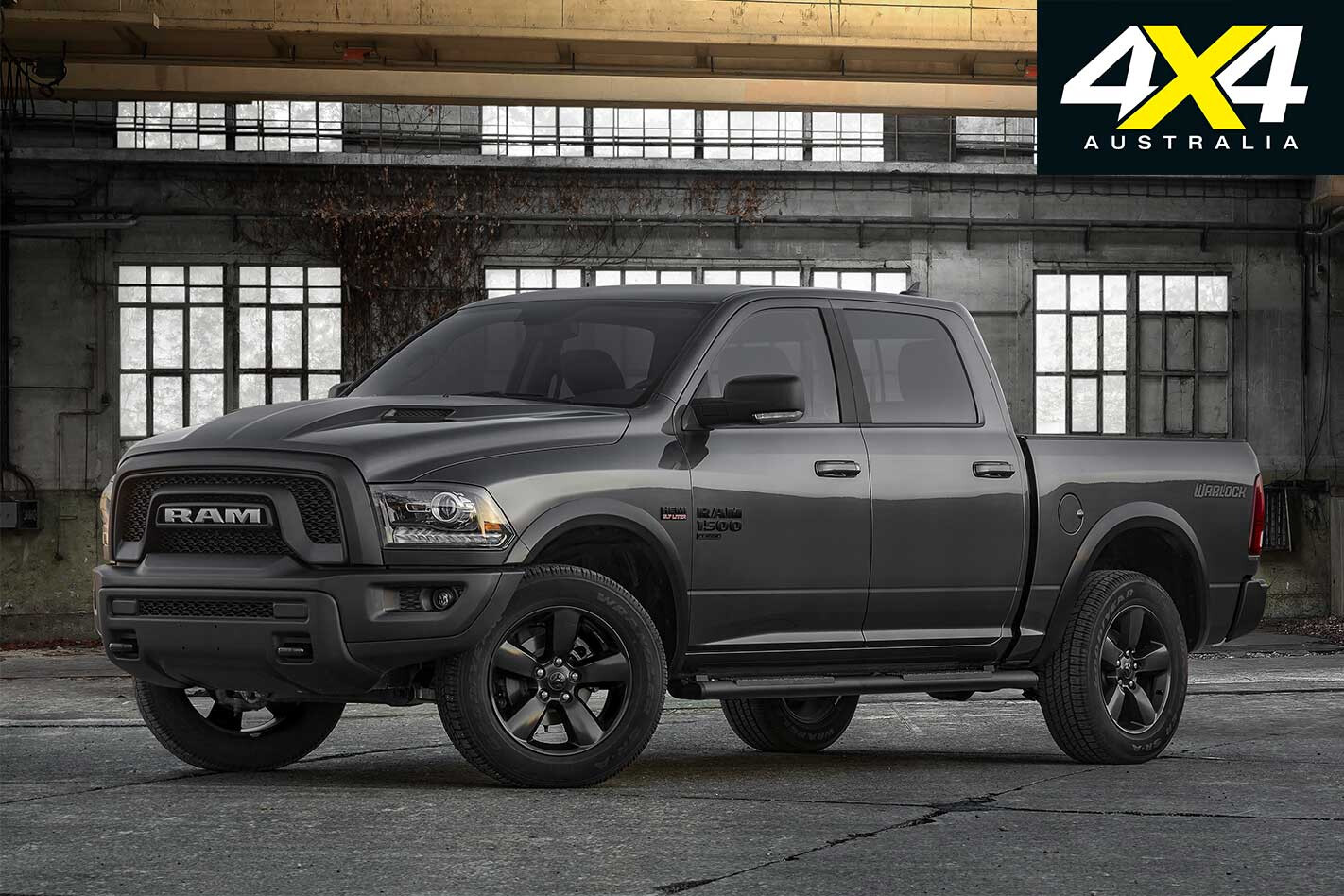
Built at the brand’s Warren Truck Assembly Plant in Michigan, the Classic Warlock – available in Quad Cab or Crew Cab configuration – rides on a link-coil rear suspension and features an abundance of storage space including the RamBox.
“The Ram 1500 Classic Warlock continues to prove that value never goes out of style,” said Reid Bigland, the Head of Ram Brand. “With the addition of the popular Mojave Sand exterior paint option, this truck will continue to resonate positively with buyers.”
If the Mojave Sand paint-job doesn’t tickle your fancy, the Warlock can also be optioned with a bunch of other colours: Blue Streak, Bright Silver Metallic, Bright White, Diamond Black, Delmonico Red, Flame Red, Granite Crystal Metallic, Maximum Steel, Pearl White and True Blue.
Would you empty your pockets for a Warlock if it was offered here?
The Readers’ Rigs feature in the October 2019 issue of 4X4 Australia features a several customised 4×4 dual-cab utes from our enthusiastic readers.
To get involved, post a pic and a description of your rig on our special site here or post it to our Facebook page and stand a chance to win an ARB High Output Air compressor valued at $335.
MITSUBISHI ML TRITON: JOSH SMITH (4×4 Australia Readers’ Rigs Winner of the Month)
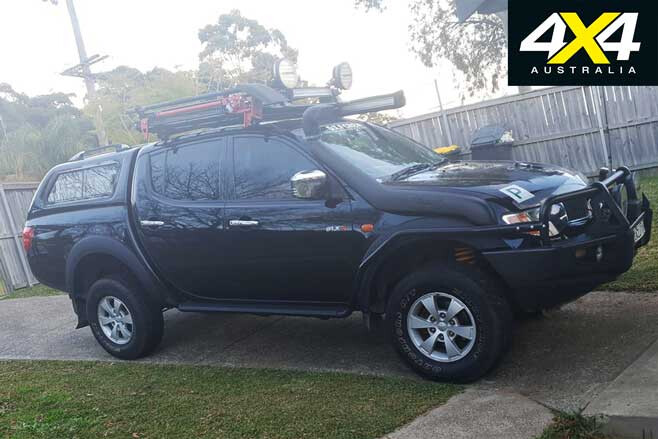
A 3.2-litre turbo-diesel runs through a five-speed manual. Mods include an ARB Deluxe bullbar, Safari snorkel, 13,000lb winch, three-inch exhaust with three-inch dump pipe, Illuminator spotties, ARB side-steps and brush bars, 2m×3m awning, dual-battery setup with Redarc management, Tough Dog suspension, 31-inch all-terrains on 16-inch alloys for every day, 33-inch BFGoodrich muddies on bead lockers for off-road, and heaps more. It has been to the Simpson, the Cape (Gunshot Creek) and the Great Dividing Range.
2014 NISSAN D40 NAVARA: AARON ELPHICK
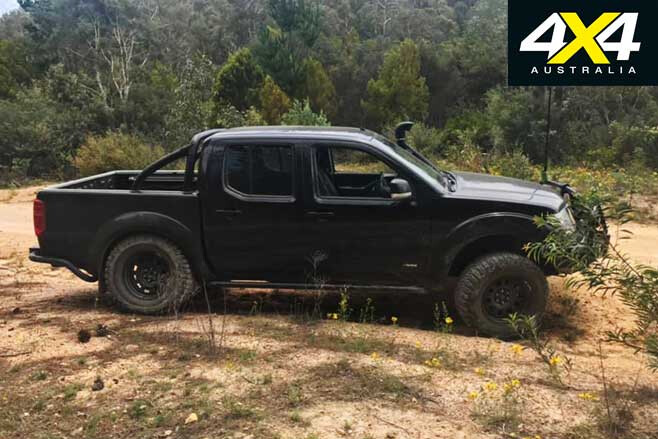
Just about everything has been touched from nose to tail. As well as the mods you can see in the photo, there’s full underbody armour, a lift, 33-inch D-Holes with 0°-offset, a winch, rear locker … the list goes on. I’ve been to Fraser Island, Glass House Mountains, Victorian High Country and all over the Brindies.
1985 TOYOTA HILUX: GAVIN SMITH-CROSSLEY
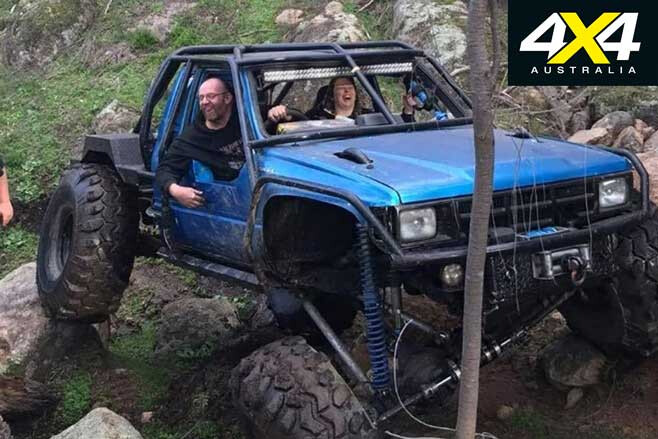
I’ve had it a few months and only driven it on private property. Mods include a 304 V8 with a fully built 4L60e auto gearbox, 16,000lb winch, 16-inch coil-overs with four-link (front), custom leaf springs with 12-inch shocks (rear), full hydro steering, oversized rear one-piece tailshaft, 44×18.5×15 tyres and plenty more.
TOYOTA HILUX: DANIEL MITCHELL
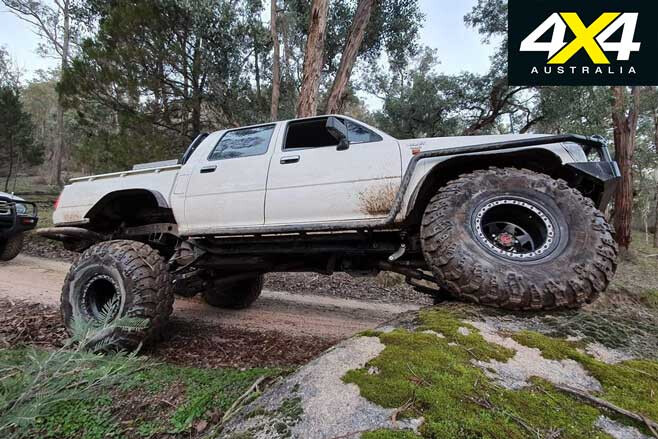
I bought it farm-spec and stripped it down. Now it has a RUF (Rear Up Front) rear with drop shackles, 13-inch remote-res shocks with track rod, one-piece HCB tailshaft with the rear housing, the same shocks up front with hoops and high-steer conversion, wide track conversion with same HCB tailshaft, tractor PTO for long travel, twin-locked 4.88 nitro gears with Longfields CV and axle, 4.7 reduction gears, and 37x14x15 IROKs.
2018 HOLDEN COLORADO LS: GUY MILTON
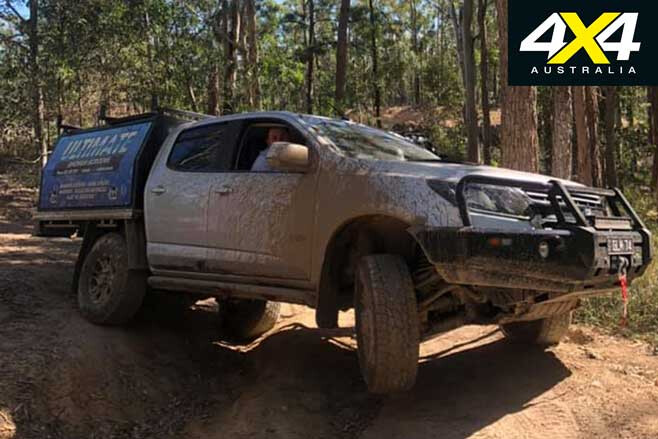
I bought it stock, but have since added an Ironman 4×4 winch bar, two-inch Outback Armour adjustable suspension, rock sliders, Runva winch, EFS light bar, KickAss dual batteries, rear pullout drawer, underbody tool boxes and 130W solar. The kitchen setup in the canopy has a pie warmer, a butane cooker and an 80-litre ARB fridge. I’m ready for a Fraser Island trip next month.
NISSAN D40 NAVARA: JAKE INGLIS
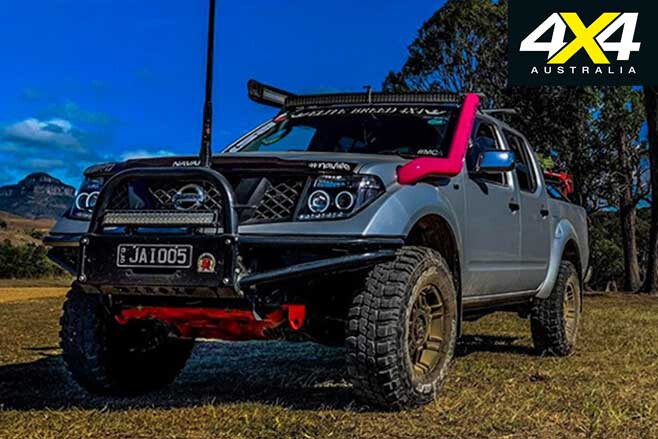
I got it four years ago and started from scratch. I have put a PSR four-inch lift on 33-inch tyres. Plenty of in-house fab, too, as I did the intake, intercooler, piping, air box and snorkel. I have done a lot by myself, including the tub rack and rear bar. I am running a 50-inch light bar on the roof and a 23-inch bar on the front Xrox bullbar. I like taking it to different national parks, my favourite of which would have to be Mount Barney NP in Queensland.
THE November 2019 issue of 4X4 Australia is out now!
While it mightn’t seem like an obvious comparison, the Ranger Raptor and Wrangler Rubicon do share a few traits: they’re both priced in the same ballpark, they’re both loaded with kit, and showroom-stock 4x4s don’t come any more capable than these two. We took to the hills to discover which one we’d pick.
Following the recent revelation of the all-new Land Rover Defender, we’ve delved into the history of the iconic model to understand how it got to this point. Plus, we take an in-depth look at the new model, to see if it’ll live up to the legend of the nameplate.
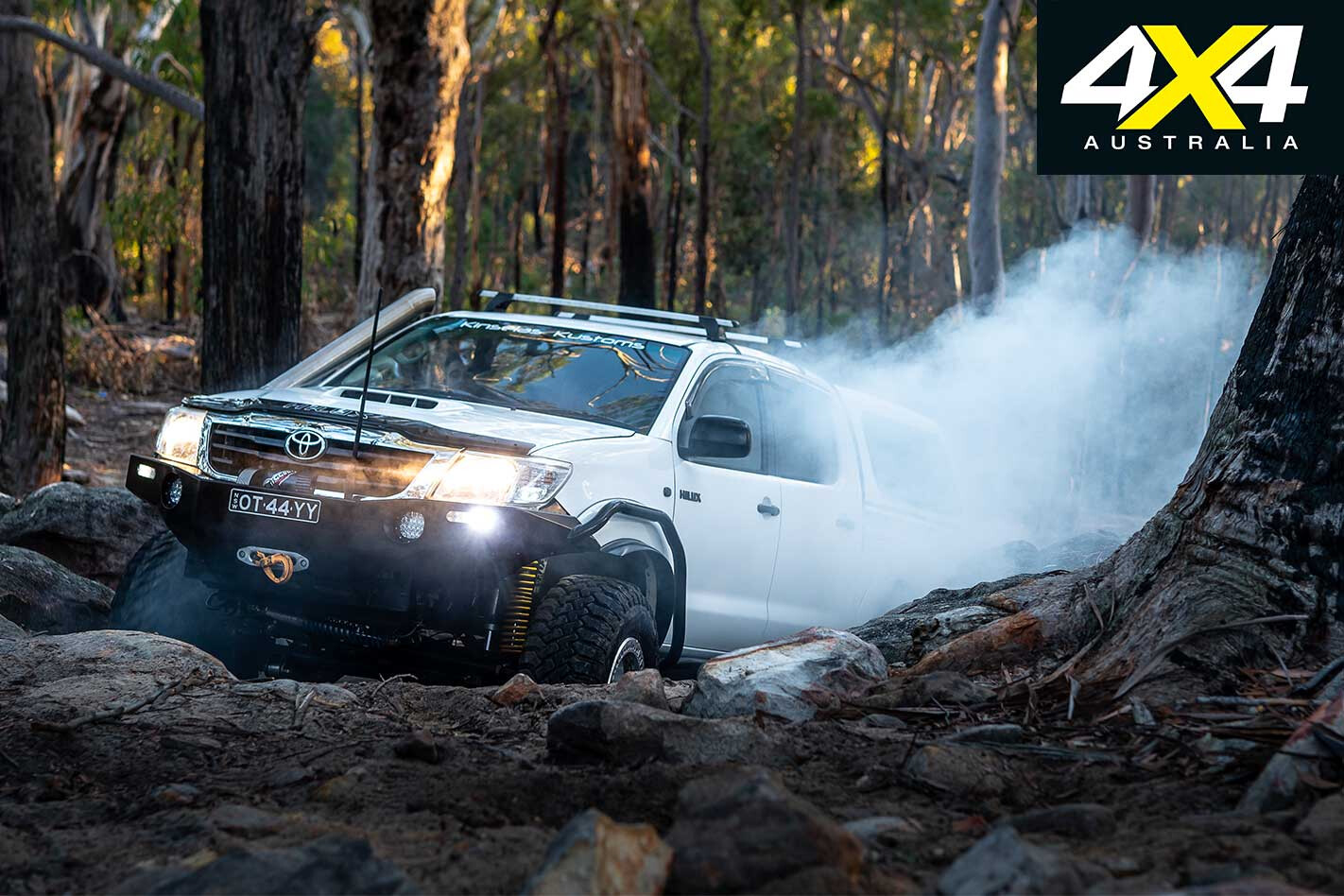
Those looking for their fix of custom metal won’t be disappointed, either, with this issue featuring a live-axle-converted N70 Hilux that’s one hell of a rock crawler, as well as a pair of modified Jeeps – JL Wrangler and JT Gladiator – from the States.
Closer to home and the MSA 6×6 ‘SuperCruiser’ build nears its on- and off-road debut, with the finish line almost in sight after six months of hard slog. Plus, we take Narva Australia’s epic Ranger Raptor for a spin – one of the best company cars we’ve seen!
WHAT ELSE IS THERE?
– First drive of the Discovery SD6 – Plenty of new products tested – Ranger, Hilux and Wrangler long-term updates – Readers’ Rigs and monthly columns – Exploring the Hay River Track and Rawlinna Station
The November 2019 issue of 4X4 Australia is in stores October 17.