IT MAY BE more giant buggy than ute, but what you’re looking at could become the US Army’s next Infantry Squad Vehicle (ISV), which is based on the US-market Chevrolet Colorado ZR2.
Developed by GM Defense, General Motors’ division for military products, the ISV has been picked by the US Army for further assessment, with plans for the acquisition of 650 units from as early as 2020.
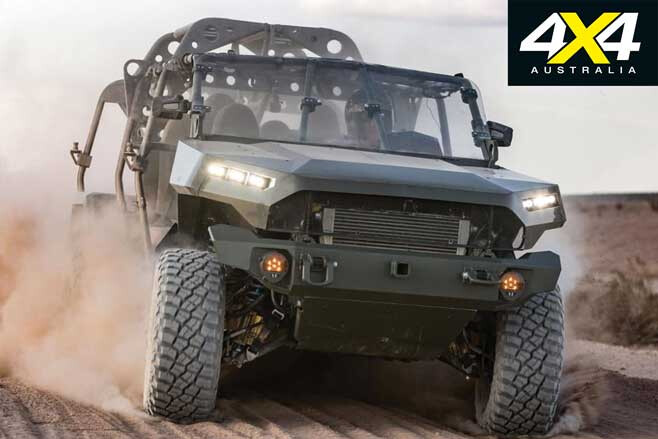
The ISV utilises the Colorado’s architecture for its occupant and cargo superstructure, with propulsion coming from a 139kW 2.8-litre diesel powerplant mated to a six-speed automatic. According to GM Defense, around 70 per cent of the ISV parts are using commercial off-the-shelf components.
One such component used on both Colorado ZR2 and ISV is the Multimatic DSSV dampers developed by Chevy Performance, which GM credits as one of the high-performance solutions that allows the ISV to meet the US Army’s requirement of being able to carry nine soldiers and accompanying gear at highway speeds, both on- and off-road “under extreme conditions”.
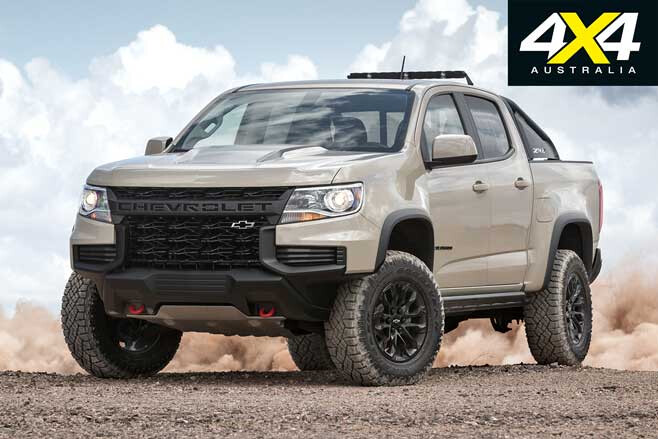
Other Chevy Performance high-performance parts used on the ISV include long-travel rear leaf springs, “jounce” shocks, front upper control arms, steel driveshaft, underbody skid plates, and ball-spline half-shafts.
The ISV is also designed to meet the US Army’s requirement of being light enough to be sling-loaded from a UH-60 Black Hawk helicopter and compact enough to fit inside a CH-47 Chinook helicopter.
“We’re very proud of the opportunity to move forward in this competition and continue our development of a vehicle that will enable Army units to move around the battlefield with greater ease and reliability,” said David Albritton, president of GM Defense.
According to GM Defense, the US Army has so far confirmed the construction of two more ISV prototypes, with testing to commence in the fourth quarter of 2019.
Introduction: Tough Impressions
By: Tristan Tancredi
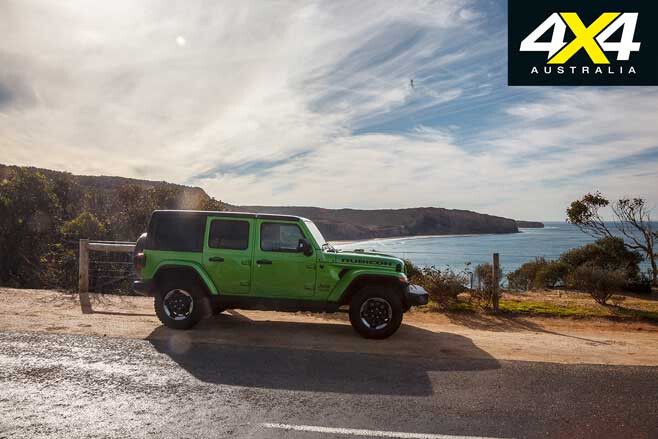
THE JEEP JL Wrangler is one of the most fit-for-purpose off-roaders currently in showrooms. You can pick one up and be carving off-road tracks on the same day, thanks to its rugged design, Rock-Trac 4×4 system, disconnecting front sway bar, locking diffs (front and rear), heavy-duty axles (front and rear), and 32-inch BFGoodrich rubber as standard.
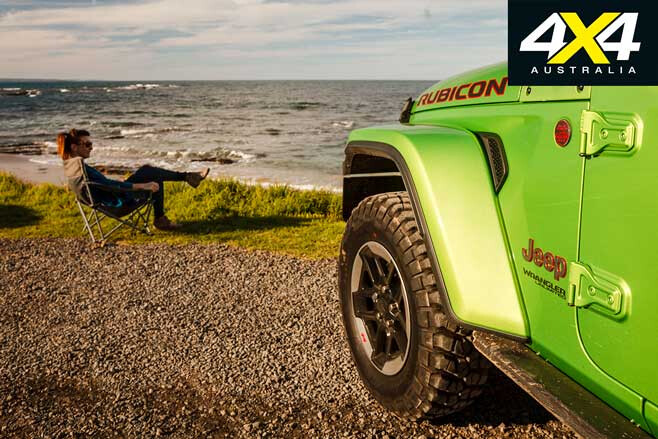
We’ve snaffled a diesel-powered 2019 JL Wrangler Rubicon; the one with the all-new (for Wrangler) 2.2-litre turbo-diesel engine that’s good for 147kW (at 3500rpm) and 450Nm (at 2000rpm). The oil-burner is mated to an eight-speed automatic transmission, with a two-speed transfer case there for off-road pursuits.
The long-termer comes with the Rubicon Luxury Package ($1950) fitted, which comprises leather seats; leather-wrapped shift knob and parking brake handle; heated front seats; and a heated steering wheel
It also has the Trail-Rail Management System ($540) option fitted, as well as 17-inch black wheels ($950). The Mojito green hue lifts the Wrangler’s price tag a further $975, to give the Jeep $4325 worth of extra kit. The diesel-powered Wrangler Rubicon retails for $68,950, but this one fitted with options asks for $73,275 of your hard-earned.
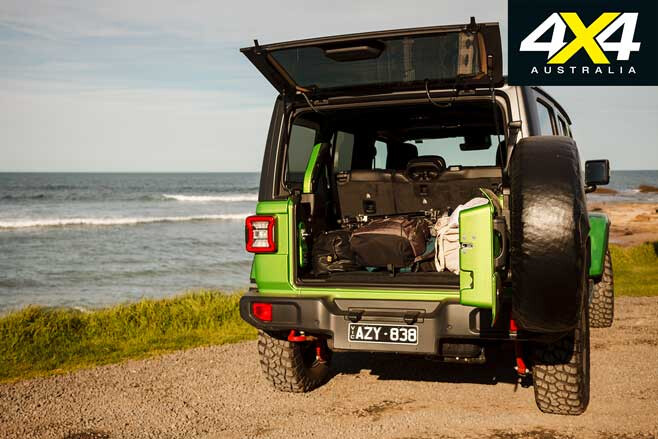
Our time with the Wrangler was cut short, as after only a few weeks of ownership, resident photographer Ellen Dewar snatched the keys for a weekend foray to the south coast. Come Monday morning, however, and electrical gremlins stifled her return journey to the office at 4X4 Australia HQ … the battery was dead.
A call out by Jeep Roadside Assistance had them seeing zero amps despite multiple resuscitation methods – connecting the battery to a boot-load bank of batteries didn’t help, with the battery giving no indication there was life lurking somewhere within. A tow truck was required, with Jeep HQ the destination for some much-needed R&R.
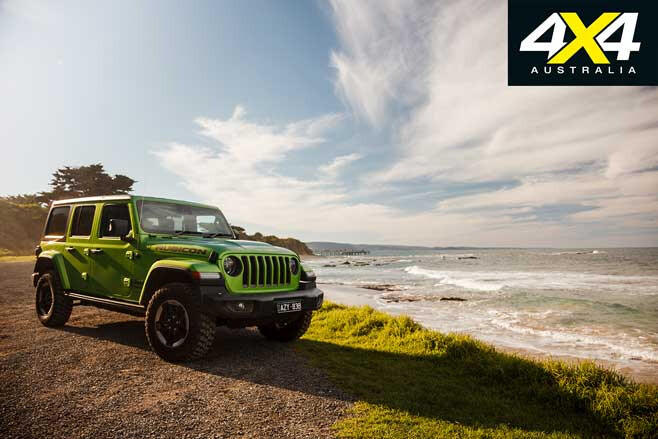
A week or so later, we picked up the as-good-as-new Wrangler, with Jeep notifying us it was the auxiliary battery that died, which then drained the main battery. Jeep recharged the auxiliary battery and it tested with a slightly reduced charge life (85 per cent), so both the main and auxiliary batteries were replaced as a precaution. Jeep explained this would be covered under warranty if it were to happen to a customer.
We’ll be hoping to put plenty of hours into the Wrangler in future issues, and if we notice any amp glitches, you’ll be the first to know. Keep an eye on these pages as we have some epic adventures planned, but let’s keep our collective fingers crossed that the battery doesn’t decide to abandon us when we’re off chasing remote campsites.
4×4 Shed Log #1: 2019 Jeep JL Wrangler Rubicon Current mileage: 4302km Date acquired: July 2019 Price: $73,275 Mileage this month: N/A Average fuel consumption: N/A
Update 1: Well-mannered mare
JL Wrangler improvements stand out in our long-term Rubicon. By: Matt Raudonikis
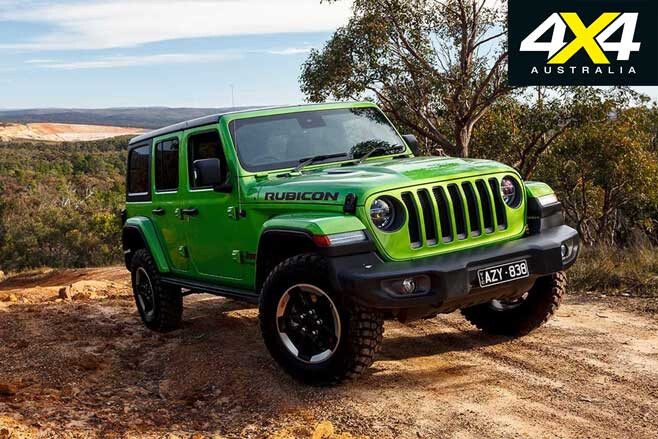
If you, like many people, think that the JL Jeep Wrangler looks just like the old JK Wrangler you’re not far from the truth. It takes a Jeep nerd to spot the visual differences, but the real improvements to the newer model really lie under the skin.
The JL is the best on-road driving and most refined Wrangler in Jeep history. Much of the JL’s improved on-road manners stem from revisions to the chassis and reductions in body weight thanks to the use of aluminium for some of the hanging panels. This not only makes it better to drive, but less weight is good for fuel economy too.
In fact, for this last month where we covered 2101km of commuting and touring, the Rubicon has averaged a smidge under 11L/100km. That’s damn impressive for a 4×4 wagon that is still shaped like a breeze block and rides on mud-terrain tyres. No doubt this is helped by the sweet new 2.2L diesel engine and eight-speed auto transmission that are both new to the JL.
The on-road drive has improved, but unless you’re accustomed to driving vehicles with heavy live-axles both front and rear, a high centre of gravity, and on knobbly mud terrain tyres, you might think the Wrangler is the worst handling car you’ve ever driven.
At highways speeds you really want to keep your hands on the wheel as the steering is slow and the Jeep likes to wander in its lanes. High crosswinds really knock it about too, but such is the price you pay with a design that prioritises off-road ability over highway driving. It’s not a bad thing but it keeps you on your toes and you’ll never get bored driving a Jeep Wrangler on or off the highway.
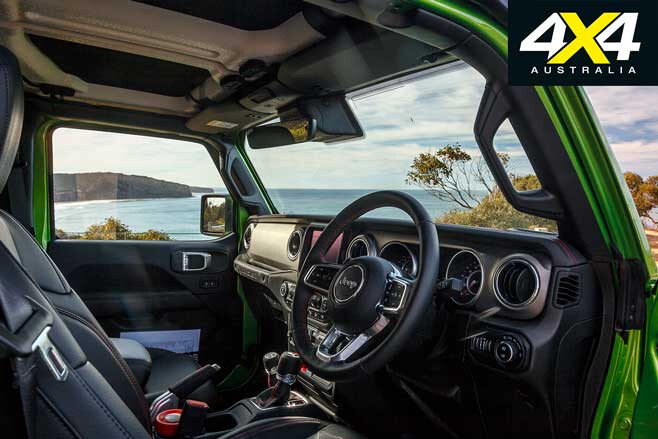
If you’ve spent time behind the wheel of a JK Wrangler you’ll really notice the refinement in the new model, particularly in the top-spec Rubicon like ours, as well as the mid-spec Overland model. With lots of leather covering the seats and dashboard, soft touchpoints on the controls and surfaces around the cabin, and improved sound insulation to keep the NVH levels down, the inside of the JL is a much nicer place to ride in than Wranglers past.
Again, the new 2.2L diesel helps here as it’s a much smoother and quieter engine than the old VM 2.8L engine it replaces. It’s a real shame that you need to fork out for the top-spec Rubicon to get this sweet little engine in a Wrangler.
We were able to experience the improved characteristics of the Jeep in the past month with weekend getaways to regional areas of Victoria; no serious off-roading but nice touring roads and gravel tracks. The more comfortable interior with its great sound system, Apple CarPlay and heated seats were much appreciated, especially the seats on those sub-zero winter mornings out in the hills.
Despite its newfound comforts the Rubicon still has the feel of a traditional off-road vehicle; it’s still a true Jeep. The windscreen might be angled back a bit more than before to improve aerodynamics, but it’s still broad and flat, offering a good view of the track ahead, and you can still fold it down flat on the bonnet if you want to.
The switches for the power door windows are still located down in the centre stack instead of on the doors, so that you can remove the doors altogether if you like; although, check with the local regulators before you go driving around doorless, as some in authority frown on this sort of behaviour.
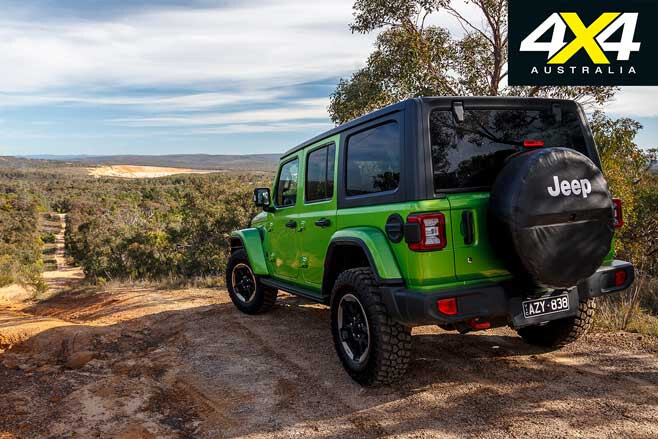
The Rubicon now has an all-wheel drive ‘Auto’ setting in its transfer case as well as the familiar 2WD, 4×4 high and 4×4 low settings, and this Auto setting was all that we needed for the gravel tracks and wet, grassy paddocks we traversed. It is also handy on wet roads for added safety and you don’t have to remember to switch back to 2WD on sealed dry roads. There’s nothing to stop you leaving it in Auto 4×4 for all your regular motoring.
Now we just need to find some more time to get our Rubicon out on some tougher tracks!
4×4 Shed Log #2: 2019 Jeep JL Wrangler Rubicon Current mileage: 5228km Mileage since last update: 2101km Average fuel consumption: 10.97L/100km
Update 2: Flex Master
The Rubicon heads north for a few weeks. By: Dean Mellor
With Melbourne-based Editor Matt Raudonikis heading off to the Flinders Ranges for a couple of weeks in another vehicle, he thought it would be a good idea to send the long-term Jeep Wrangler Rubicon up to Sydney so I could keep the odometer ticking over.
For the first couple of weeks I used the Rubicon as a daily driver, with a bit of around-town stuff and a few freeway runs, and then I headed west where we threw it up against the Ford Ranger Raptor to see which of these two factory customs best fulfilled their intended functions (see the November 2019 issue of 4×4 Australia).
The Rubicon proved a surprise around town; it’s easy to see out of, has a big and clear screen for the reversing camera, is manoeuvrable thanks to an impressive steering lock, and offers decent-enough performance in the traffic-light drag race. I was also impressed by its relative refinement, general comfort (except for the lack of space in the driver’s footwell), supple suspension tune and high spec-level.
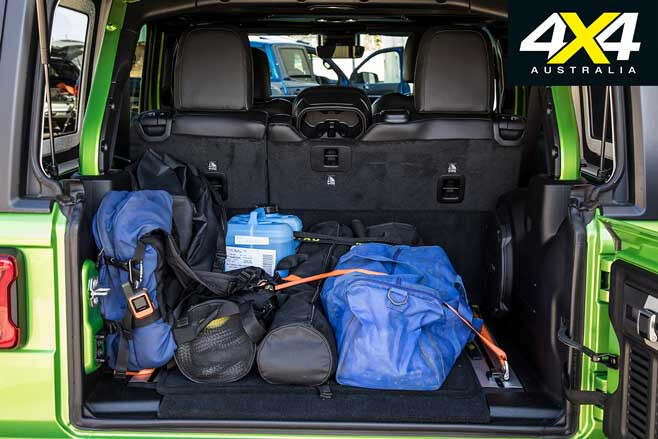
The cargo tie-down system in the rear is one of the highlights, as are the many (various types of) power outlets throughout the cabin.
While freeway performance is also impressive, the Rubicon is susceptible to minor changes of direction in crosswinds, so requires a degree of driver concentration when it’s blustery. Overall wind and driveline noise suppression is impressive at freeway speeds, especially considering the Rubicon’s brick-outhouse aerodynamics, although (as you’d expect) a constant hum is produced by the aggressive BFGoodrich KM3 muddies.
I was also surprised at how much fun the Rubicon was to drive on gravel roads, with a lively chassis that didn’t mind being thrown around in corners and great suspension compliance on rough surfaces. There was a bit of bump steer at times, but that’s to be expected of a vehicle with live-axles front and rear.
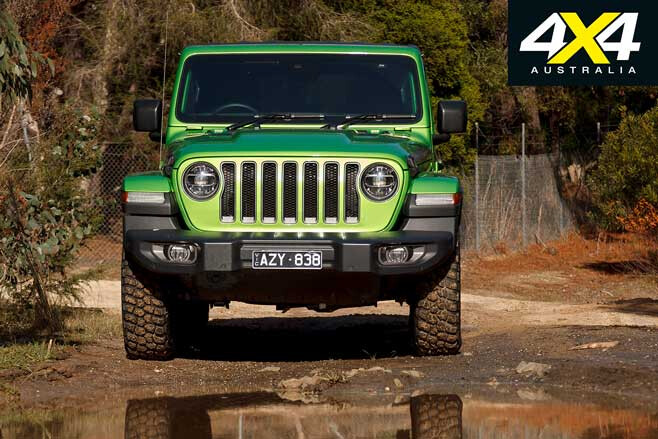
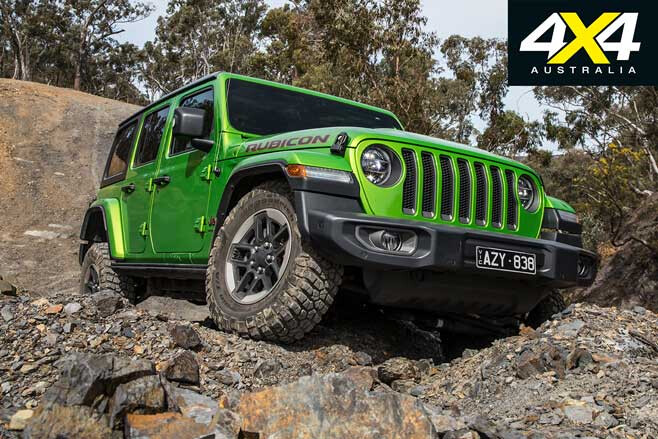
Off-road, the Rubicon is next-level; low-range gearing is superb, the front swaybar disconnect ensures there’s loads of axle articulation, and the front and rear lockers engage and disengage quickly and without fuss.
The only off-road negative is a lack of ground clearance, partly due to a low hanging cross member beneath the transfer case. A 50mm suspension lift and some bigger tyres would go some way to curing this, and you don’t have to worry about sill damage thanks to the integrated rock sliders.
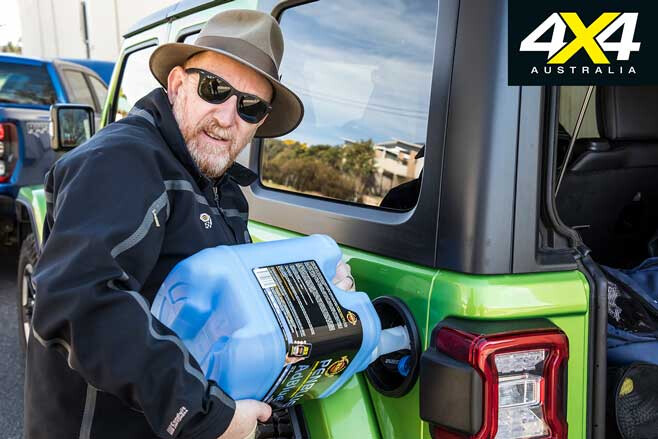
With just 6700km showing on the odo I had to throw 20 litres of AdBlue into the Rubicon, but overall fuel consumption has been impressive with a best of 8.5L/100km and a worst of 11.2L/100km.
4×4 Shed Log #3: 2019 Jeep JL Wrangler Rubicon Current mileage: 7251km Mileage since last update: 2023km Average fuel consumption: 9.8L/100km
Some of the first accessories to go on my Hilux build included an EFS bullbar, LED driving lights and R10 Recon 10,000lb winch. I opted for an EFS Stockman bullbar as the 63mm steel-tube construction and lower bash plates make for a strong and aesthetically pleasing design, and it’s a very affordable bit of frontal protection. Of course, the bullbar is also a great platform for mounting LEDs and a winch.
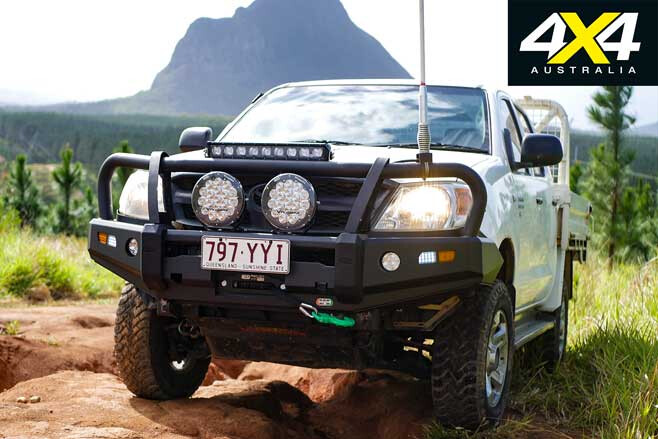
EFS has offered LED driving light and winch options for a couple of years and it made sense to fit these on the EFS bullbar. Each nine-inch round Vividmax driving light (also available in seven-inch) features a tough die-cast aluminium housing and a polycarbonate protective lens cover, and has 18 10W Cree LEDs with a total of 180W and 15,480 lumens. The nine-inch driving light draws 10.4amp at 12V and has a lifespan of 50,000 hours, so you could in theory run them constantly for 5.7 years.
EFS offers a range of LED light bars and I opted to fit the 21-inch/90W unit which, when combined with the nine-inch driving lights, will offer more than enough light for the trips I have planned in the Hilux.
The light bar also features top-notch Cree LEDs and it comes with waterproof connectors as well as tough stainless steel mounts and hardware. It incorporates a spread and spot beam, and has a durable aluminium casing that also provides optimum heat dissipation.
The nine-inch driving lights produce a bright and concentrated spot beam at a good distance, and good short- to mid-distance illumination. The 21-inch light bar casts a good wide beam at short- to mid-distance. The driving lights are great when driving at road speeds, while the light bar suits slower track speeds.
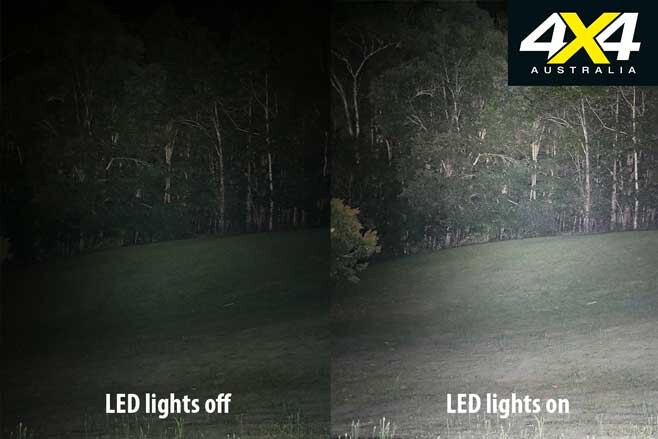
Combined, the EFS LED driving light and light bar package ticks all the boxes, and it’s all covered by a two-year warranty and comes at an affordable price. I might add a roof-mounted light bar once I’ve fitted a Yakima LockNLoad roof rack system.
While I still haven’t needed to use the EFS R10 Recon 10,000lb winch at this stage, it’s reassuring to know it’s there for when I take the Hilux on some more challenging trips in the not-too-distant future.
RATED Available from: efs4wd.com.au RRP: $1480 (EFS Stockman bullbar); $1099 (R10 Recon winch); $349 (Vividmax 9-inch LED driving light); $219 (Vividmax 21-inch LED light bar) We Say: Good value, good quality and good-looking kit.
WE WERE driving through the northern part of the Flinders Ranges and hadn’t had a telephone signal for days, when the phone beeped indicating a message. Stopping the convoy and checking the phone showed a swagful of messages and emails, with one in particular that required an urgent and now overdue response.
I quickly typed out the reply and hit the send button, but with just a single bar of reception the email wasn’t getting out. We considered the option of doubling west toward the highway where we might find a stronger signal, but that would add hours to our travel time and we’d have to come back this way again, so it wasn’t ideal.
Then I remembered Ron was driving our Ford Ranger in the convoy. I asked Ron to switch on the ignition and the signal almost instantly boosted from half a bar to three, and the email was sent.
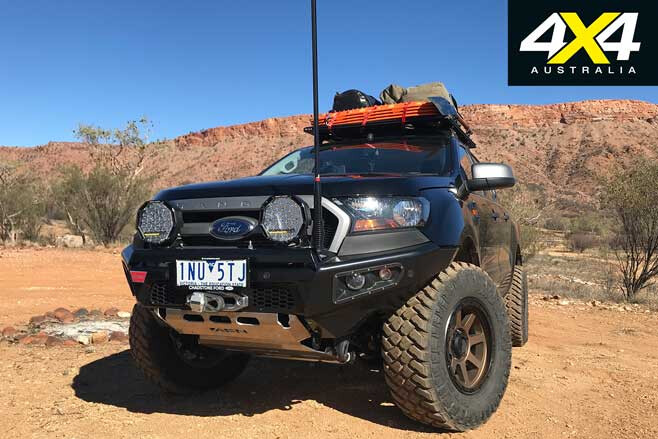
No, this isn’t an amazing new feature from Ford – although the manufacturer would do well to consider it – but early on in the build of our Ranger we had a Cel-Fi Go repeater fitted.
The Cel-Fi Go is a repeater which picks up on the weakest available signal and boosts it. The unit will not give you phone signal where none is present, but it will pick up on the weakest signal and amplify it around your vehicle. The Cel-Fi is available to suit both the Telstra and Optus 3G and 4G networks in Australia, as well as in a variety of kits to suit different applications.
Our Cel-Fi kit came from Powertec and was installed by Freeway Car Audio in Dandenong, Victoria. It’s the Cel-Fi Go Telstra Trucker/4WD EDGE Pack which includes the Cel-Fi unit plus a 6/8dBi gain, 107cm antenna. With this antenna, the Cel-Fi can boost your signal up to 70dB in total.
The main unit can be concealed anywhere in the car such as under the seat, behind the glovebox or under the dash. It requires a 12-volt power supply and needs the two antennas connected to it.
Yes that’s right, two antennas. The first one is the one we have fitted to the bumper on the Ranger, but it can be a small, temporary, magnetised-mount antenna which we have used in the past. The bigger bar-mounted one provides better performance, as this is the antenna that picks up whatever cellular signal is available.
The second antenna is mounted inside, generally under the dash. It retransmits the ‘boosted’ cellular signal within the car and closely around it. Aside from the front antenna, it is out of sight and comes on when the car is on, so pretty much a set-and-forget operation.
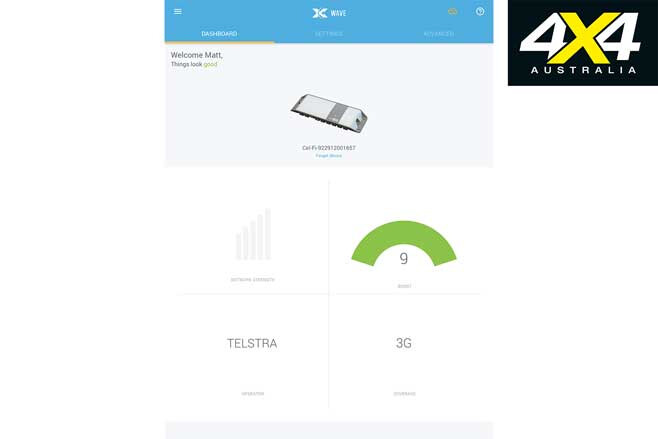
You can set up and configure the Cel-Fi Go using a free downloadable ‘Wave’ app, which is also set-and-forget. The app can also be used to check the operation of the unit or find a Cel-Fi unit in your vicinity.
RATED Available from: powertec.com.au RRP: $1151.54 (Trucker/4×4 pack) We Say: Easy, set-and-forget unit that works
BOLLINGER Motors, an EV start-up company based in Detroit, USA, has confirmed pricing for its all-electric B1 Sport Utility Truck and B2 Pickup Truck.
The hand-built electric vehicles have been stamped with a suggested retail price of US$125,000 (around AU$180,000).
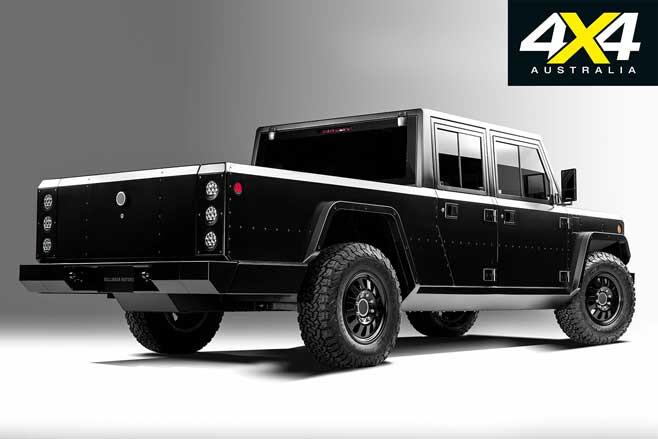
Production-spec versions of the B1 and B2 were officially revealed last month, with the four-door trucks sharing the same dual electric motor set-up and two-speed gearbox, aided by a 120kWh battery pack. Range is listed at approximately 322km, helped in part by regenerative braking.
B1 and B2 both wear all-aluminium bodies and the glass, doors, windshield and roof panels can all be easily removed. Both can tow 3402kg and come with 381mm of ground clearance. The B1 has a payload capacity of 2359kg, while the B2 can carry 2268kg.
“Our intention is to go production with all of the components and features that our team developed from the start,” Bollinger Motors said via its Instagram page. “This level of detail is labour-intensive, but it’s important that we stay true to our DNA.
“These trucks deliver a level of performance unlike anything on the market or coming to market.”
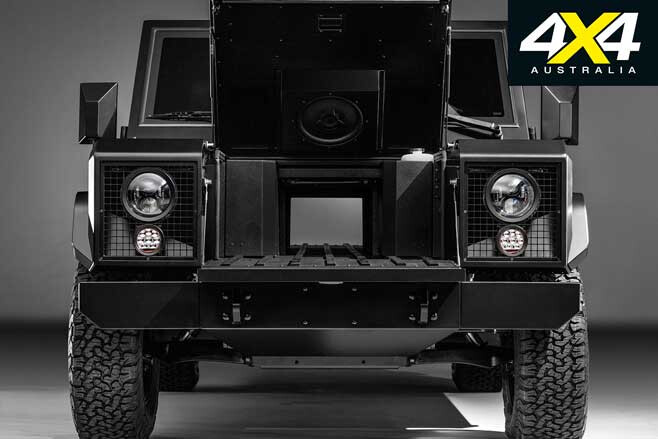
Bollinger aims to have the first vehicle deliveries ready by 2021: “Targeting low-volume production, we will build both the B1 and B2 in the US. Production will start in 2020 with first deliveries slated for 2021,” the brand added. “The trucks will be sold and serviced through independent dealers throughout the US and globally.”
Those wishing to put down a $1000 deposit for their slice of an electrified 4WD future can do so here.
Australian company Zero Automotive also recently launched an electric 4WD, although based on the Toyota 70 Series Landcruiser. The ZED70 is priced at around AU$200K and has a range of up to 350km.
FORD USA has revealed five custom F-Series Super Duty vehicles that’ll be on display at the 2019 SEMA Show.
An F-350, an F-450 and three F-250s have been loaded with custom kit, to showcase the smorgasbord of equipment available for the big pick-ups.
“Super Duty customers love to personalise their trucks, whether modified for the street, off-road, towing and hauling or the ultimate in recreational use,” said Eric Cin, global director at Ford Vehicle Personalization and Accessories. “For 2020 Super Duty customers, these SEMA trucks feature new levels of incredible customisation, capability and performance.”
Here are the five F-Series Super Duty customs set to debut at SEMA 2019:
LGE-CTS Motorsports Baja Forged Ford F-250 Super Duty Crew Cab XLT
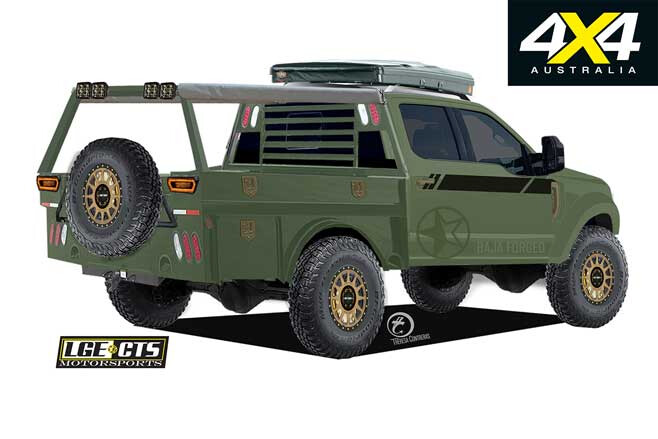
A CHOP shop based in California, USA, LGE-CTS Motorsports has thrown the spanners at this F-250, starting with the installation of its “Baja Forged” front fenders and bumper.
The standard bed has been replaced with a custom canopy to open up a world of space down back. Other equipment includes a Tepui roof-top tent, a roof rack with integrated Rigid LEDs, an Icon 4.5-inch Stage 7 suspension lift kit, 18-inch Method Race 304 NV HD wheels, 37-inch BFGoodrich Mud-Terrains, a Warn Industries 10S winch, and an ARB USA 6.5-foot awning.
F-250 Super Duty Tremor Crew Cab with Black Appearance Package
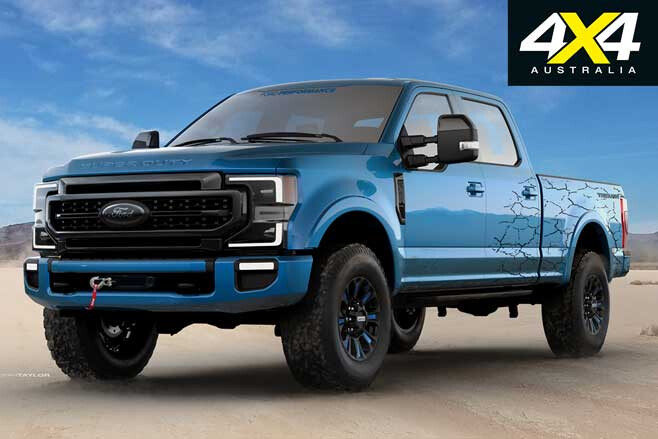
Don’t let the Tremor’s earthquake graphics fool you, this custom F-Truck is loaded with plenty of useful equipment. A two-inch lift up front combined with 35-inch Goodyear Wrangler Duratrac rubber gives the pick-up plenty of clearance and water-fording ability – the best of any Super Duty ever, according to Ford.
Other equipment includes a locking rear diff, a Dana limited-slip front diff, Ford Performance Parts (FPP) chase rack and rock light, a Rigid 50-inch LED light bar kit, Raptor-style side steps and a Toughbed spray-in bedliner. The FPP Warn winch seen in these pics can be ordered as an optional extra.
CGS Performance Products Ford F-250 Super Duty Tremor Crew Cab with Black Appearance Package
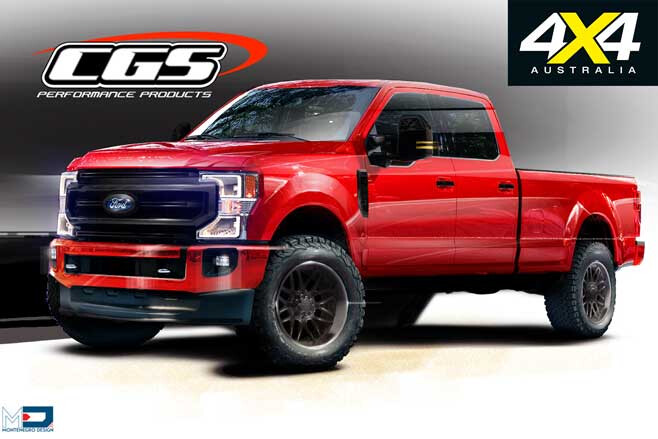
This custom F-Truck takes the Tremor and dials it up a few cogs, adding 20-inch Grid wheels, 37-inch General tyres, a Ford Accessories Sportliner carpet kit by Bed Rug, a Retrax PowerTraxPro MX bed cover, and Rigid Adapt LED light bar and back-up lights. That striking red hue – Sikkens paint by Akzo Nobel – is a custom paintjob.
DeBerti Design Ford F-450 Super Duty Platinum Crew Cab
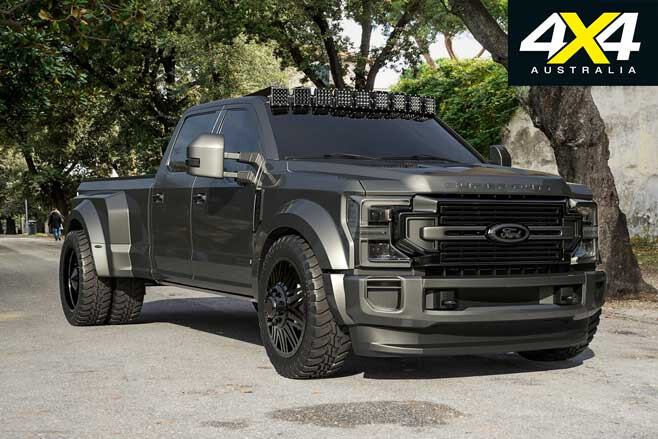
Bigger is better? DeBerti Design reckons so, adding some quality kit to Ford’s massive F-450 Platinum Crew Cab. The brand’s patented pull-out bumper drawer maximises the vehicle’s already enormous storage facilities, and it’s combined with a dual pull-out fender/cabinet and a Ford Accessories safe by Console Vault. The big pick-up utilises a Kelderman air ride suspension set-up and 37-inch Toyo tyres wrapped around 22-inch American Force wheels.
BDS Suspension Ford F-350 Super Duty Crew Cab XLT
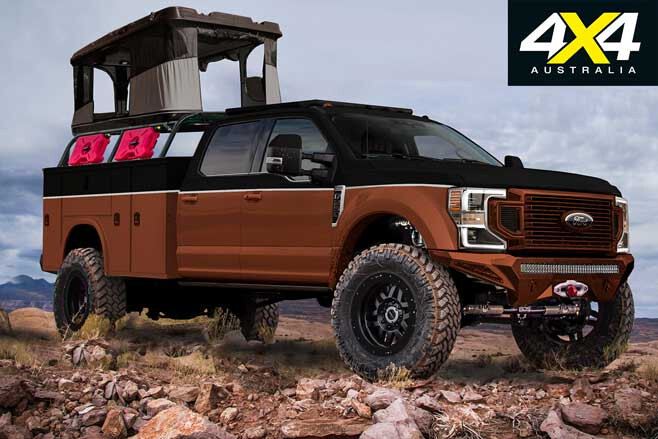
This F-Truck, called the Go Beyond Project, has been transformed into a wild off-road beast. It has been upgraded with a BDS Suspension four-inch radius arm lift, with Fox 2.5 factory race Dual Speed Compression coilovers and shocks.
The whole lot rides on massive 40-inch Mickey Thompson Baja MTZ P3s wrapped around 20-inch Method Race wheels. Other kit includes an Addictive Desert Designs front bumper, a Warn Industries Zeon 12S winch, Rigid LED lights, a Knapheide aluminium service box down back, a Dometic fridge and a Ridetech air compressor kit with air tank.
Ford will showcase more than 50 customised vehicles at this year’s SEMA Show, with the Blue Oval already unveiling six modified Rangers it will also debut at the Vegas event.
The SEMA Show will be held in Las Vegas, Nevada, from November 6-8.
AUSTRALIAN company Zero Automotive has officially launched its ZED70 ute, an all-electric vehicle based on the venerable Toyota 79 Series LandCruiser.
The ZED70 – an acronym for Zero Emission Drive 70 – runs a 100 per cent electric drivetrain that utilises a 700Nm electric ‘permanent magnet’ motor powered by a bank of lithium-ion batteries with a total capacity of 88kWh – although a battery capacity upgrade to 115kWh is available. Regenerative braking is utilised, and the battery life cycle is listed at more than 10 years.
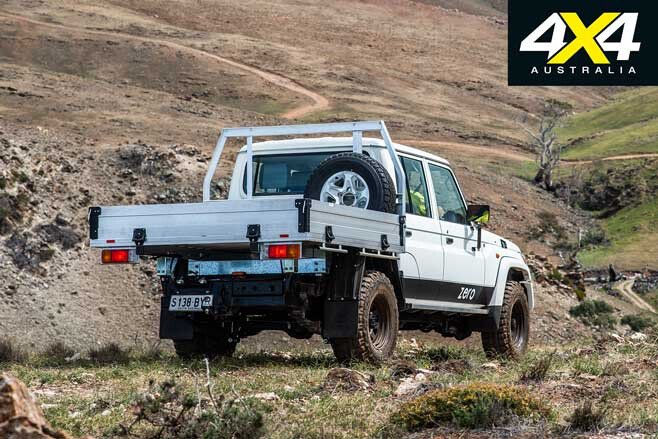
Zero Automotive claims a theoretical range of up to 350km, with a four-hour charge time. However, the Australian company says a one-hour full charge option will also be available shortly.
The vehicle’s operating temperature ranges from -20°C to 55°C.
To protect all the important bits, battery and motor subframes have been strengthened and are now more “structurally rigid”, while the batteries are housed in robust 3mm-thick boxes. Overall weight is 216kg more than a standard 79 Series.
Zero Automotive’s Tim Possingham told us the ZED70 is ADR compliant and road legal, and, while it’s primarily aimed at the mining, petrochemical, agricultural and government sectors, anyone can buy one.
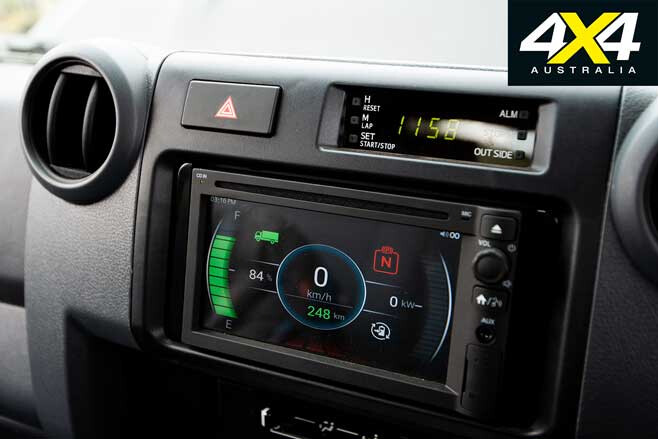
Tim explained that the most popular choice – 88kWh battery, dual-cab configuration, carpet trim and alloy wheels – is priced close to $200,000. He added that farmers, in particular, are showing strong interest in the vehicle, especially those with solar-charging facilities.
There are a number of benefits to ditching diesel and opting for electricity: no fumes (ideal for national parks), no sparks or risk of backfire, it cleans diesel particulates in confined spaces (mines), and it helps to meet reduced corporate emissions targets – “plus it’s completely silent and unbelievably smooth to drive,” adds Tim.
A few other clever, modern touches include more control via GPS-operated speed limiting (ideal for mining sites), and cameras facing the driver can modulate vehicle dynamics – for example, if the camera notices the driver staring out the side window, it will drop the speed.
A number of options are available including full vehicle telematics, mine-compliance upgrades, geo-fencing, GVM upgrades, and body and tray upgrades.
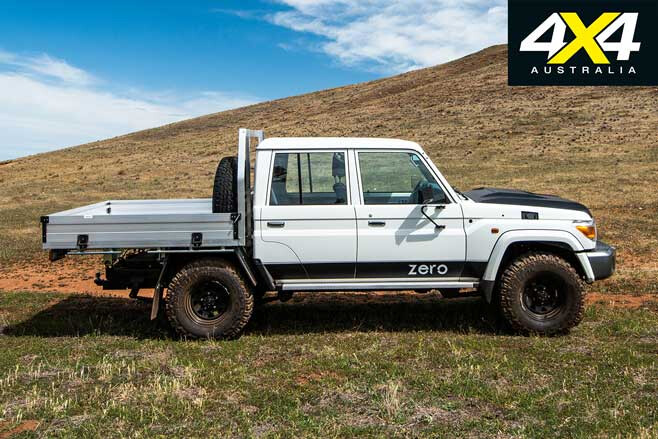
The ZED70 is manufactured in Edwardstown, South Australia, and is currently undergoing its first public trial in Adelaide. It’s available in wagon, dual-cab, single-cab and TroopCarrier configurations.
Once ordered, production takes in excess of six months.
MITSUBISHI continued its streak of unveiling concept SUVs, with the MI-TECH PHEV buggy concept breaking cover at the 2019 Tokyo Motor Show.
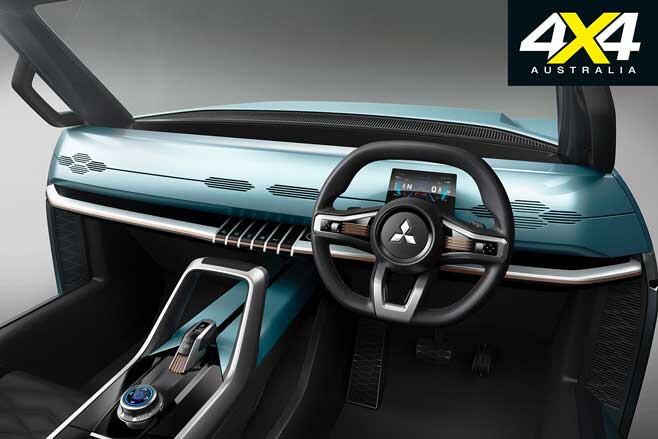
Styled in a similar vein to Mitsubishi’s previous concepts such as the GC-PHEV and Engelberg Tourer concepts, the MI-TECH eschews from its forerunners with an open-cockpit design.
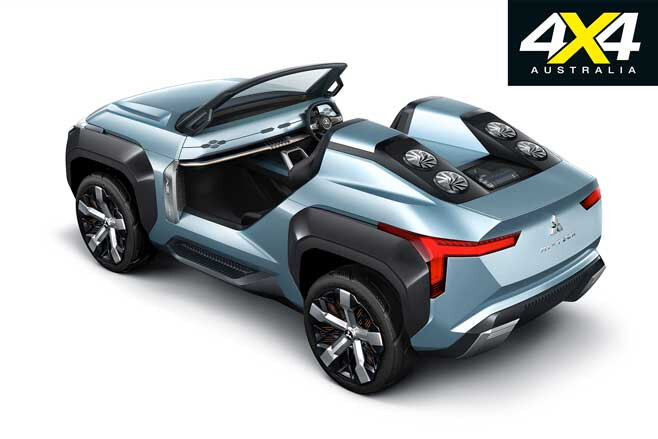
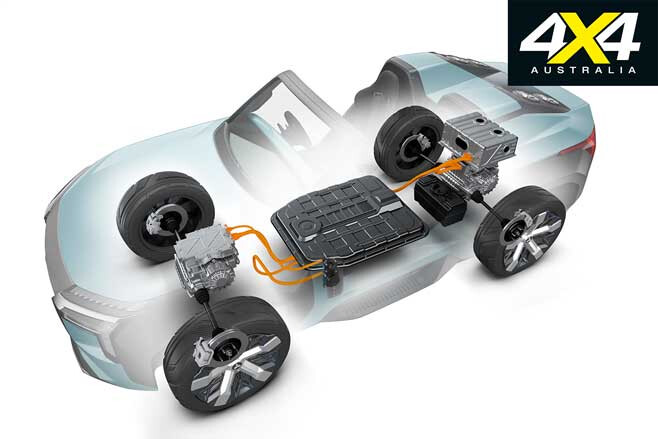
Powering the MI-TECH is a plug-in hybrid (PHEV) drivetrain that utilises a gas-turbine generator, rather than a traditional piston-driven powerplant, to supply electricity to its two dual-motor electric drive motors.
Mitsubishi reasons that, unlike traditional engines, gas-turbine engines are not only compact, but can be run on a variety of combustible fuels such as kerosene and alcohol, which boosts its ‘green’ credentials. This powertrain concept was more recently explored by Jaguar with the C-X75 concept car; although, the idea was abandoned for an inline-four in later developments.
While there are no driveshafts or differentials, MI-TECH’s dual-motor units, located on the front and rear axle, are said to give the concept buggy proper 4WD capability, with drive being metered out to all four wheels.
While the MI-TECH may remain as a motor show pipedream, Mitsubishi’s CEO Takao Kato says the company will be expanding its line-up of electrified vehicles by “delivering more variations and leveraging the diverse electrification technology in the alliance to make Mitsubishi the leader in the PHEV category”.
Adding to that, the company plans to employ its electrification technologies to new mid-size and compact SUV models by 2022.
As electrified powertrains becoming mainstream, more manufacturers are utilising the technology to comply with stricter emission regulations for 4×4 models. Land Rover is set to introduce a PHEV Defender in the near future, and Toyota is rumoured to be working on an electrified next-gen LandCruiser and Hilux.
Currently Mitsubishi has only one PHEV model in Australia, the Outlander PHEV, though on the 4×4 front, the most prospective model to be electrified might be in the form of a dual-cab ute from the Renault-Nissan-Mitsubishi alliance.
Toyota has dropped its 4.6-litre quad-cam petrol V8 from its LC200 range. It’s a surprise Toyota didn’t drop the petrol V8 earlier, given only two per cent or less of 200 buyers have opted for petrol over diesel for several years.
This mirrors the 4.0-litre petrol V6 being recently cut from the 150 Series (Prado) and the in-part related Hilux. As with the LC200, the problem for the petrol engine in the Prado and Hilux was lack of buyer interest.
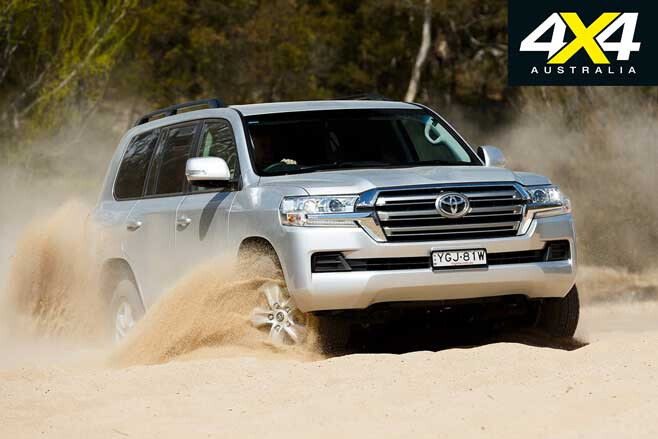
In many ways these petrol engines have been unfairly treated in public perception compared to their diesel counterparts. They are, after all, far simpler, offer more performance pedal-to-the-metal, are quieter and more refined, will be cheaper to service in the long run, and don’t give away much in fuel economy.
Regardless, we have seen the last petrol engine disappear from any Australian-delivered Land Cruiser 200 or 150, at least until the current models of the same are replaced. And it’s probably the last we’ll see of any naturally aspirated petrol engine, even in the upcoming models that replace those currently on sale.
An all-new Hilux is probably a fair way off, but not so a replacement for the 200 and the 150 where new-generation forced-aspiration petrol engines will appear in what will be a watershed design change.
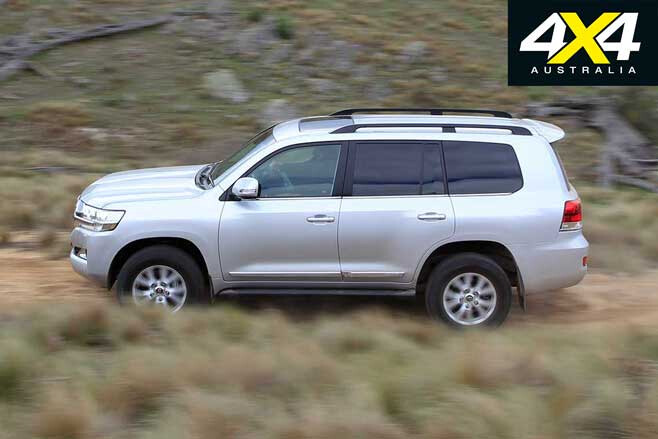
These new petrol engines may not initially appear in Australia when the 200 and 150 replacements are rolled out but will headline the new models in the petrol-loving North American and Middle East markets.
Australian buyers will most likely initially get revamped versions of the current 2.8-litre four-cylinder and 4.5-litre V8 turbo-diesel engines, but there’s also an inevitability that new forced-aspiration petrol engines will make their way into Australian models.
These new-gen petrol engines will feature a raft of technologies such as direct injection, variable intake-valve lift, variable valve-timing on both inlet and exhaust, and some sort of forced aspiration. The latter will primarily come in the form of turbochargers, perhaps aided by superchargers, which would be more than likely electrically driven.
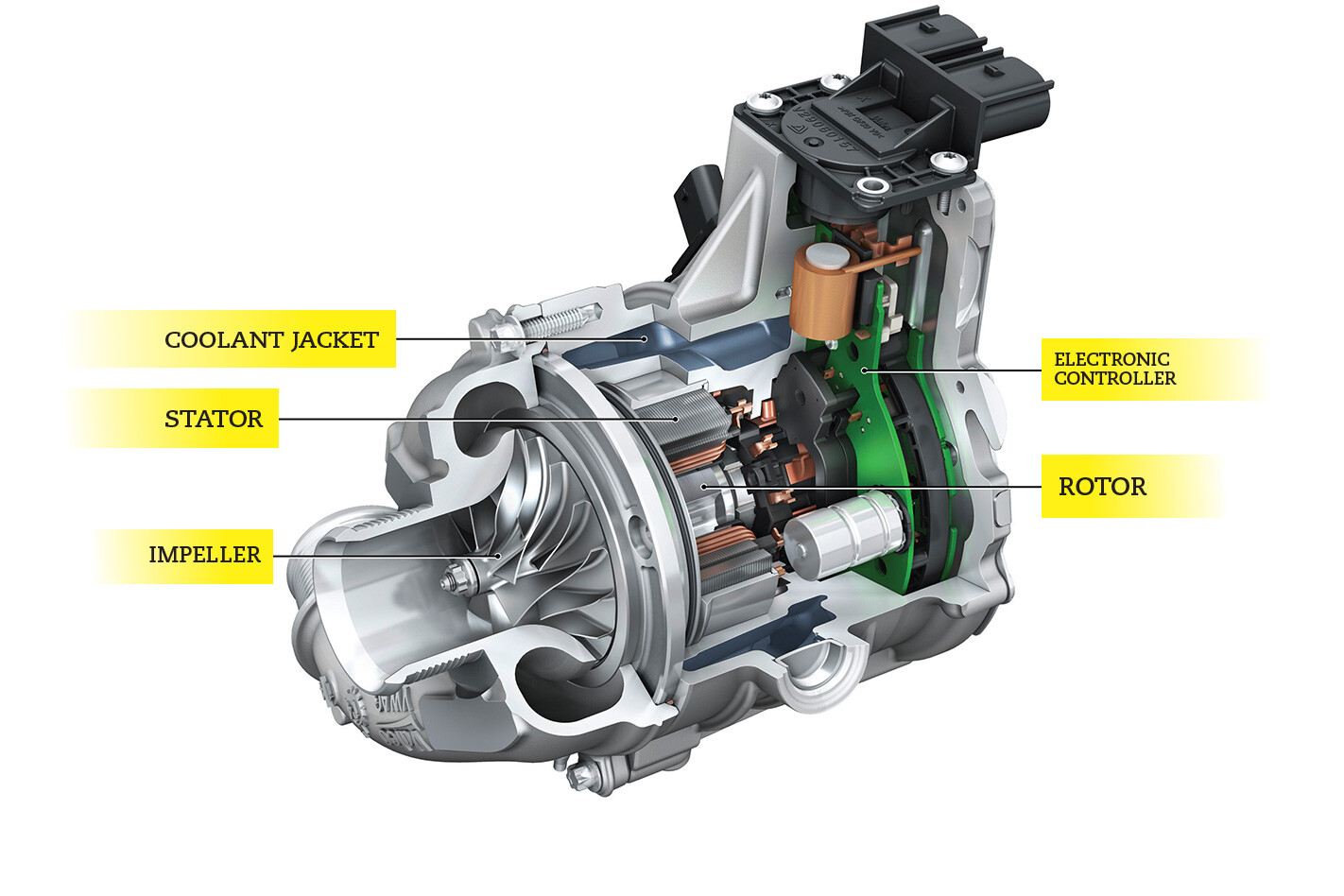
These new engines may even employ a combination of supercharger and turbocharger. But these turbochargers or superchargers won’t be there to add lots of top-end power, but to add lots of torque from off-idle engine speeds.
Adding torque, and therefore superior power at low engines speeds, helps driveability and efficiency. More torque also means smaller, lighter engines can do the same job of bigger engines, so the V8 (and definitely the bigger V8s) will disappear; remembering, of course, that the LC200 as sold currently in the US has the 5.7-litre V8 as per the Australian-delivered Lexus LX570.
Expect the new petrol engines to be smaller; probably no bigger than 3.0-litre in a six-cylinder and, if there’s a V8, it will be a small V8 of around 4.0 litres capacity. What’s more, these new petrol engines will be married up with secondary electric powertrains, either in the form of a conventional hybrid or perhaps a plug-in hybrid (PHEV), which is perhaps the more likely. I can’t wait.
THE King of the Hammers, known as KOH, is one of the most iconic 4×4 off-road racing events in the world, and it’s run in the heart of a lake bed in the Johnson Valley, California, USA.
This remote, dry and dusty location turns into a fully operational makeshift town for this event every year and attracts more than 100,000 people. And this year, a couple of teams from Australia decided to compete: Barry and Jim from Road Runner Offroad, and Chris Hummer and Neil Cooper from Dynamic Wheel Co.
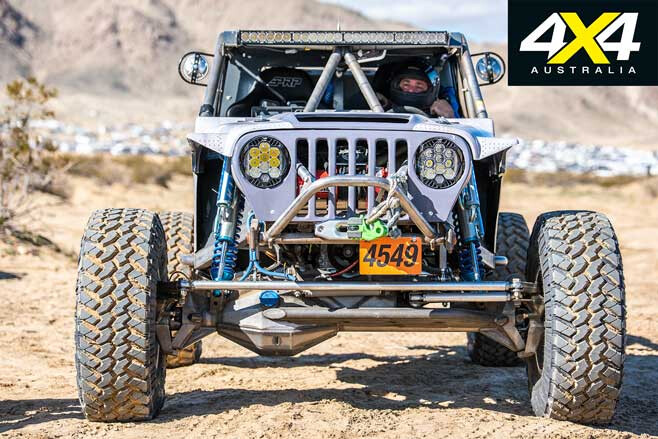
Barry and Jim have competed in basically every winch challenge event in Australia, and they’ve taken out most of the competitions. They’re very well-known and are always known as the team to beat. Chris and Neil (Coops and Hummer, as they are affectionately known) are also very well-known throughout the Australian off-road community. After winning the iconic Outback Challenge three times, they decided to visit KOH in 2018 to have a crack at the biggest Ultra4 race in the world.
Back in Australia, Neil purchased a USA-built Ultra4 and started preparations to get it ready for KOH 2019. It has an LS 6.0-litre engine running through an automatic transmission, an Atlas four-speed transfer case, Spidertrax axle housings and Gearworks 10-inch diffs.
The first job was to fit new ARB racing lockers front and rear and remove the solid spool centres. This proved to be a larger task than first thought, as the original Gearworks diff housings needed upgrading to fit the lockers. Plus, an upgrade to new 40 Spline axles was required. All the wheel bearings needed replacing, and Spidertrax no longer supported the older-style bearing housings so the new Spidertrax Ultimate unit bearings were ordered directly from the USA. The preparation proved to be a much larger job than first expected and meant the buggy was finished one day before it was loaded into a container destined for Los Angeles.
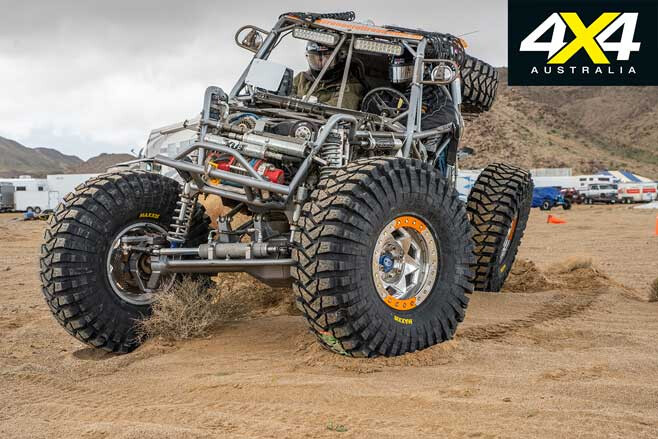
Thanks to some industry contacts in the USA, Barry quickly found a 4400 Class Ultra4 that was last raced in 2014. The car needed some work to bring it up to spec, and a deal was struck and the boys had a car about three months out. This meant a heap of work for the owner in the States and a steep learning curve for Barry and Jim.
Like any good long-distance relationship there were plenty of pictures, measurements and videos heading back and forth across the Pacific to try and get a turn-key car on the lake bed come KOH time.
Back in Australia, Barry saw the opportunity to share the marketing exposure with some of their current suppliers. Maxxis Tyres jumped on board with some sticky competition compound 42-inch M8060 tyres to be put on the car for race day. Having driven on the Maxxis tyres before, Barry was confident in their performance, with the only learning curve being the extra clearance over the 37s he usually ran back home.
Neil and Chris headed to LA late in January to find the ship with the Ultra4 on board was running late, and it only made it to the Port of Long Beach just two days before the opening of Hammer Town.
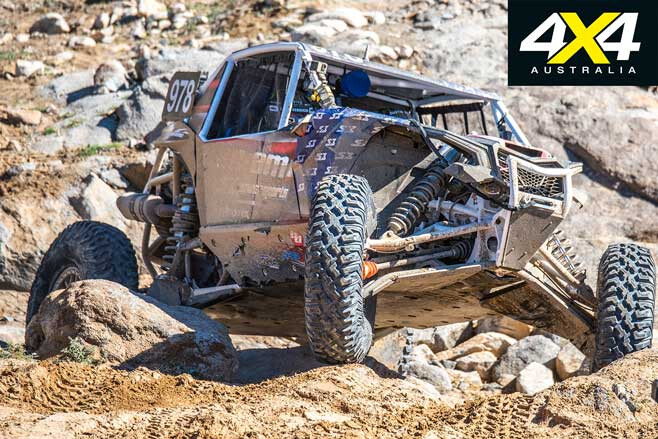
Meanwhile, Barry and Jim, along with a small support crew from Australia, pulled onto the lake bed to join 100,000 other people for the weeklong off-road motor sport festival. There was one small issue, though: the car hadn’t arrived.
Unlike most Australian off-road events, teams can pre-run the KOH course before the event; so most teams do a few runs to perfect their lines up some of the harder obstacles like Back Door, Chocolate Thunder, Wrecking Ball and Boulderdash. This also gives teams a great opportunity to work out fuel usage and practice in the pits.
Unfortunately for Barry and Jimmy, they had no time to do any of this. When the Ultra4 finally arrived, it was complete and working but required some fine-tuning. Maxxis USA fitted the 42-inch Trepadors to the Trail Gear Creeper Lock rims in the specialist tyre-fitting facility onsite.
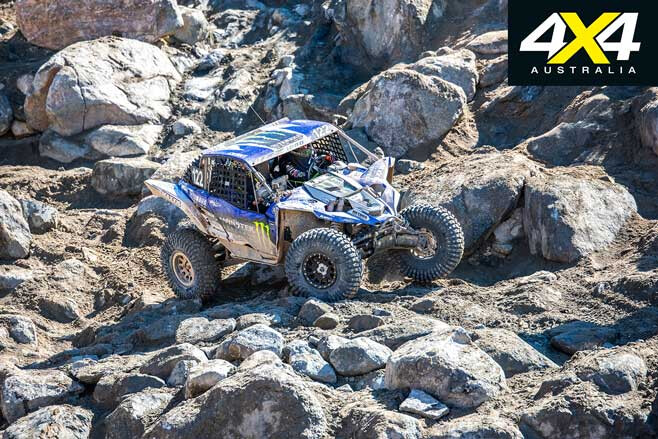
Hammertown in the heart of the Johnson Valley turns from a dust bowl to a fully functioning town for this event, and every manufacturer involved in racing is there. You can change tyres, fabricate brackets, tune shocks, replace coils, use mobile hoists, and more.
Neil and Chris’ Ultra4 was completely untested, with the vehicle transported to Johnson Valley by 4 Wheel Parts, USA. Before Neil and Chris got a chance to pre-run the course, the first day showed some new problems with a faulty steering ram, a leaking shock absorber and many small electrical gremlins.
By the time the prologue was run their Ultra4 was ready to go, and Neil and Chris qualified 79th out of 110 cars, with a tyre going down after hitting a protruding rock during the short prologue course. All-new Mickey Thompson Baja Boss 40-inch tyres were specially built for KOH for the GenRight race team and the ARB/Mickey Thompson team of Neil and Chris. These project tyres, fitted to the new Pro Comp Trilogy Race alloy beadlock wheels, were made with a very special soft compound to give more traction on the Johnson Valley rocks.
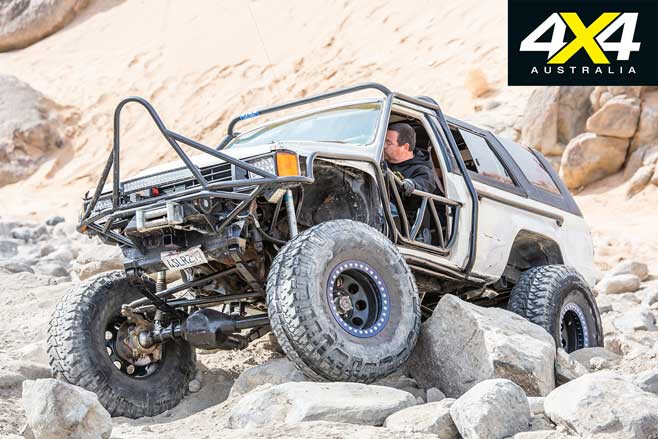
With new tyres, no seat time and a car that wasn’t yet set up, Barry and Jim put on the safety gear and headed out for their qualifying lap. Despite a clean run the boys finished towards the rear of the field, leaving them with a heap of work to do to move up the field on race day. The saving grace was the tyres, which performed beautifully in the sand and rocks of the fairly short qualifying course.
A lot of work was required to set the suspension up – Triple Bypass Shocks combined with coil-overs required a lot of testing to tune them correctly for the terrain they were racing on. Over the next few days, Barry and Jim (with crew Scott McGill and Brad Sherry) spent countless hours and late nights removing shock absorbers, re-valving, changing swaybar set-ups and fine-tuning the suspension, with the hospitality and experience of the American parts suppliers, workshops and teams helping them out along the way.
This was a very steep learning curve for the boys, as the buggy didn’t handle the qualifying lap well and it was a race to get it right for the big dance. After seeing a couple of shock tuners, the guys from ADS Racing Shocks came through with the goods and had Barry and Jim’s buggy singing over the bumps and ready for the main event.
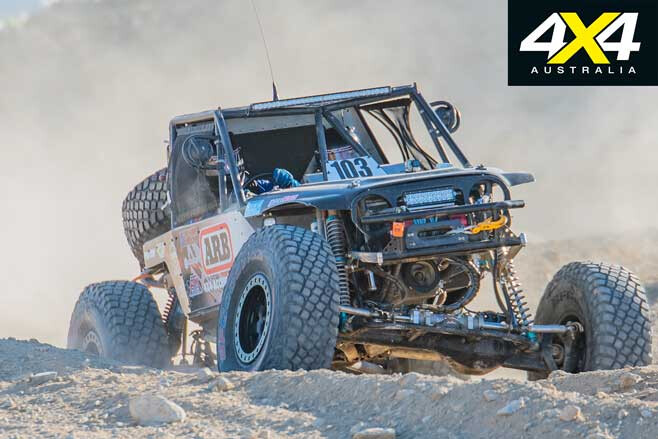
Chris and Neil both had family along as support crew, while the team from 4 Wheel Parts assisting in the main pits and an Aussie crew (supporting fellow competitor Mitchell Thorp from Queensland) supporting in the remote pits. The Crew Chief was Josh Redfern, a full-time firefighter and qualified automotive technician who had also supported Chris during his racing in North Africa a few years earlier.
At 10am – with eager fans in Australia up at 3am to watch the live stream – both teams set off on the grueling 200-mile (322km) desert and rock race. Neil and Chris rapidly started to overtake a few buggies and pass many broken-down vehicles along the course. The goal for Neil and Chris was always to try and finish the event.
With vehicles ranging from home-built buggies to professional teams spending upwards of half a million dollars, it’s pretty normal for only 15-20 per cent of the field to finish the tough event – and this year was no different. Neil and Chris finished a credible 15th against some of the best off-road racers in the world.
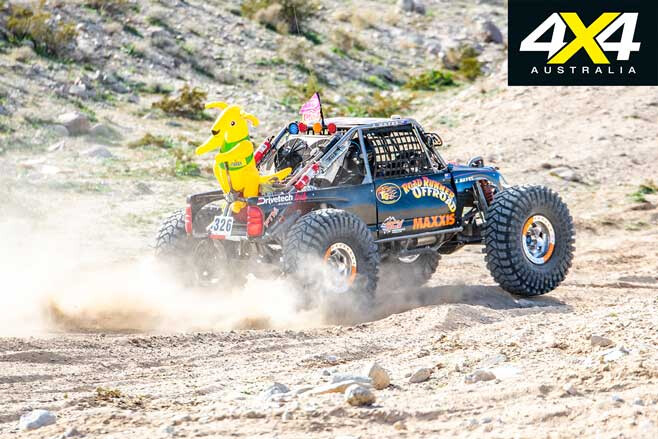
Elsewhere on the course the Road Runner Offroad boys were feeling confident with the car after the work that had been done and spending a bit more time in the seat. The first lap saw them make up places to get them mid-field. A quick pit-stop, check-over and refuel and the car was still in one piece, with the Maxxis tyres holding up perfectly against the rocks and high-speed desert sections.
On the second lap, Jim made the call to attempt the famous ‘Back Door’ trail (which must be completed on any one of the three laps), with the plan to nose the car up and assess the level of grip the sticky compound tyres provided against the vertical rock wall.
As the car climbed and gripped, the rear diff pinion failed, leaving Barry and Jim stranded at the bottom of ‘Back Door’ and their KOH journey over. At this stage, Barry and Jim, who started at the back of the field, had made up a lot of time, which was a huge accomplishment.
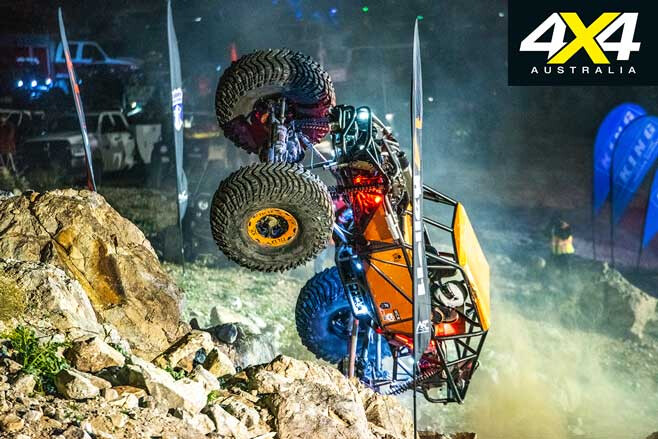
With a couple of deep breaths and a bit of the Aussie never-say-die attitude, a plan was hatched, with no assistance allowed under the rules they set out on foot to the pits to collect a new diff centre and the tools and oil required to do the swap in the field.
Still wearing full two-piece race suits, they made the journey there and back (roughly three kilometres back to the pits) carrying the 50-odd kilos of parts and tools. An unfamiliar set-up and trying conditions saw the whole job take a little over three hours to get it back together.
While working on the car, Barry and Jim helped out a few teams, running the winch cable for the single-seat buggies and saving valuable time for the other drivers – a fantastic display of comradery and Aussie spirit.
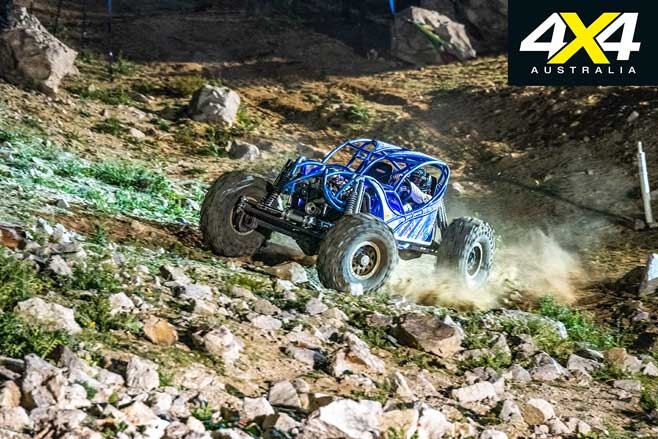
With the car back together and following a quick winch, the duo completed ‘Back Door’ and their goal changed to simply be one of the 30-odd cars (from more than 100) to finish the event. The sticky Treps helped the guys make good time through the longer, slower second lap, seeing them finishing lap two just before dusk.
With only a handful of teams still running and the top running teams finished – and celebrating – they started the third lap despite the dark and cold of the desert. With poor lighting and heavy broken traffic on the trails, the guys pulled the pin at the 85-mile mark and headed back to the pits. The buggy held up on the drive back to pits and the mood shifted to frustration, with the team focusing on how to conquer KOH 2020.
Without the sponsor’s help, this experience would not have been possible. Massive thanks to: Road Runner Off Road, Maxxis Tyres, Drivetech 4X4, SJG Event Photography, RCV Performance Products and Trial-Gear.