
There was no shortage of great 4×4 gear that was released over the last 12 months. From exhaust systems to light bars and communications gear, we have picked the 12 best bits of 4×4 gear of 2019.
Yakima LockN’Load Jerry Can Holder
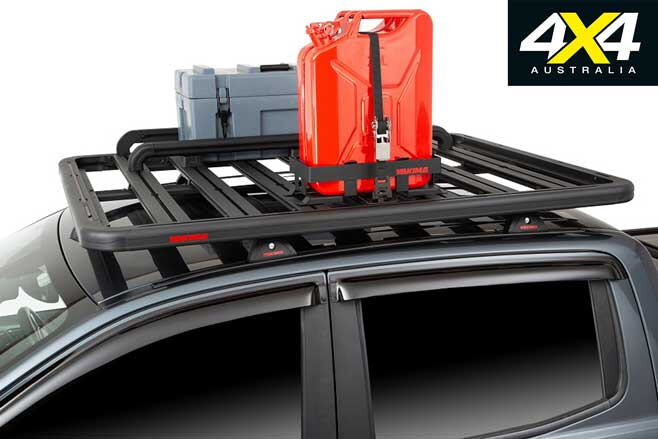
Yakima continues to punch out top-notch gear for its highly regarded Lockn’Load Platform roof-rack system, with this new jerrycan holder the latest piece of kit in the ever expanding range of accessories. The holder has been specifically designed for the Lockn’Load Platform and can be used to store 10- and 20-litre jerries.
The holder can be used with either plastic or metal jerrycans and it features a robust powdercoated finish to ensure it is up to the roughest treatment when out bush. Included with the kit are the holder and a ratchet strap. Another nifty design idea for this holder is the low height of the base cage; this allows for easier loading – always welcome when you’re trying to wrestle 10 or 20kg of full jerrycan up on to the roof.
RRP: $129.00 Website: www.yakima.com.au
Bushranger Night Hawk LED VLI series single-row light bars
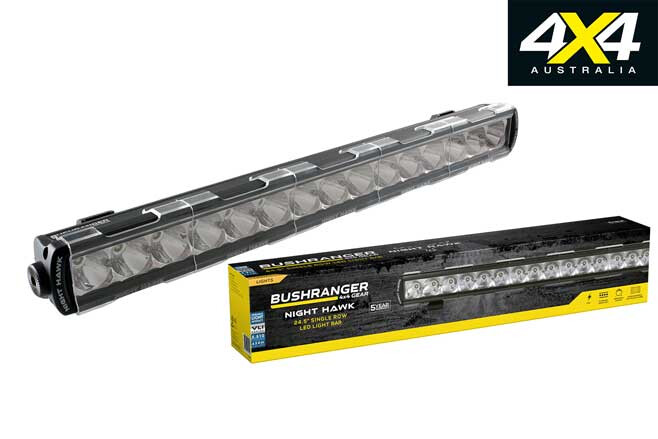
The latest model in Bushranger’s VLI (Variable Light Intensity) Series, the Night Hawk LED offers the same slimline design of the previous-gen model but ups the effective lumens by 82 per cent across the range. This ensures “…considerable distance and width gains” in terms of illuminative coverage from the high-output OSRAM LEDs.
The VLI wiring system allows Bushranger to bring easily adjustable brightness control via a dial setup (wiring system sold separately). You can also create your own beam pattern, with each 13-inch to 51-inch light bars able to be set up as a full spotlight, full flood, or a combo of the two thanks to the ability to mix and match the supplied covers (a set of both spot and flood covers come with each kit).
The extruded 6061 aluminium housing and cast alloy mounts ensure durability, while the inbuilt temperature monitoring of the LEDs keeps it all cool and working to capacity.
RRP: From $115-$595 Website: bushranger.com.au/nighthawk
Outlaw 4×4 Stainless Steel Exhausts
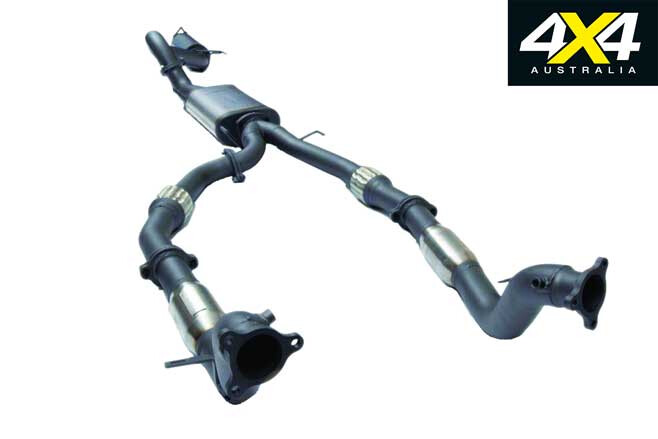
Outlaw 4×4 has recently expanded its range of stainless steel exhaust systems for 4x4s. Most of Outlaw 4×4’s exhausts are offered as ‘turbo back’ systems, which include a high-flow turbo dump pipe for maximum turbo response, a high-flow diesel-spec catalytic converter where applicable, mandrel bent tubing, a premium quality flex joint for system longevity and minimal NVH (noise, vibration and harshness), and high-flow tube and muffler designs.
All systems are manufactured using 409-grade stainless steel, and full stainless steel mufflers are also employed to ensure they operate as designed long after lesser mild steel or aluminium coated mild steel systems have failed.
Website: mercurymufflers.com.au
EFS Vividmax High Performance LED and mount brackets
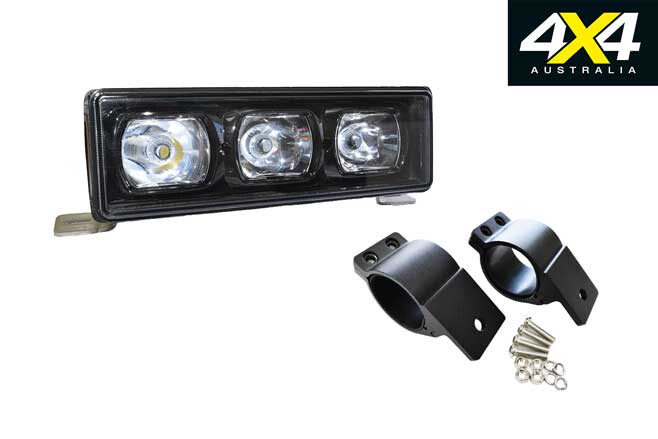
This new schmick lighting setup from EFS incorporates three high quality 9-watt Osram LEDs for the best bright white light output (5000-6300k). The lights offer a 20,000-hour life, include reverse-polarity protection and are 12-36 volt.
The Vividmax is built tough too; an IP67 water/dustproof rating, along with high-quality aluminium construction, polycarbonate lens covers and a claimed operating temperature range of between -40°C and 85°C ensure these things will last for years and years.
There are a number of mounting bracket size options (VM-BKT1 is 50mm; VM-BKT2 is 63mm – both can be used for aerial, light bar, spotlight) constructed of aluminium with stainless-steel fittings (rubber insulated). The VM-BKT3 (50mm) and VM-BKT4 (63mm) offers a side-mount option for the light bar.
Website: efs4wd.com.au
ARB mid-height drawer
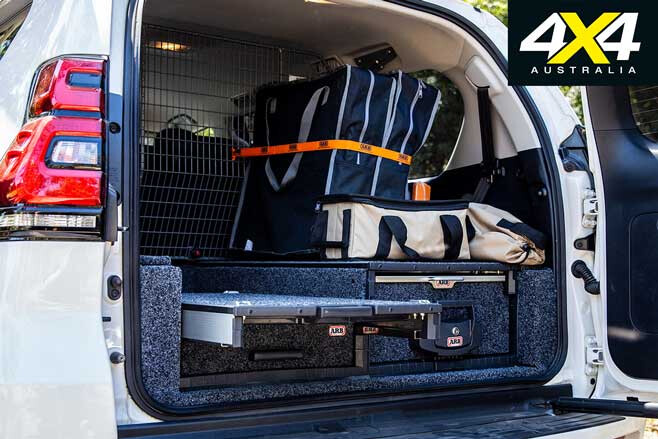
ARB has come up with a great solution to cater for the myriad ways in which off-road tourers set their vehicle’s cargo area up for storage. This mid-height drawer covers those who cannot fit a full-height drawer in their rig, but are after more storage height than low-height drawers. With 105mm of in-draw height, the new ARB mid-height drawer is the perfect solution.
It is available in three lengths – 945mm, 1045mm, 1355mm – so accommodates the full range of vehicles ARB builds drawers for. The drawers bolt in quickly and easily and include a roller floor that allows for fast access to anything stored on top of the drawer. Both the drawer itself and the roller floor feature aluminium drawer runners for optimum durability.
Website: www.arb.com.au
Ironman 4×4 kinetic snatch rope
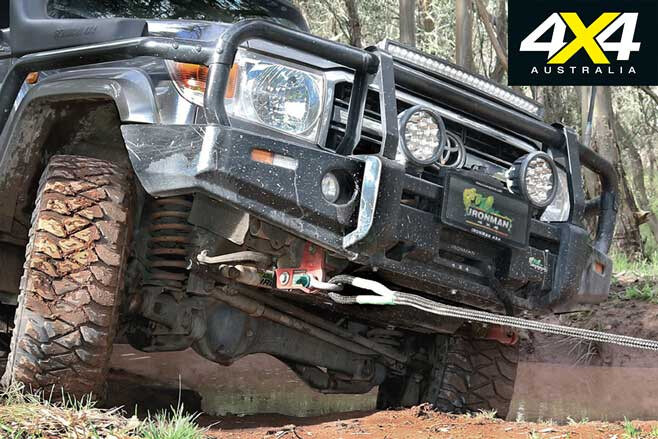
Ironman 4×4’s new kinetic snatch rope measures 9m in length and is 22mm thick. The use of kinetic rope means there is a smoother, more gradual build-up and release of kinetic energy during a recovery situation, making it more effective than conventional webbing recovery straps.
The rope is designed to stretch up to 30 per cent (most traditional webbing recovery straps only stretch up to 20 per cent) and has a rated 9500kg minimum breaking strength. The rope is manufactured with a high-strength nylon 66 (polyamide) double braid cover with an abrasion-resistant core. The eyelets are coated reinforced polyurethane for ultimate strength and durability and there’s also a polyester protective sleeve. The rope comes in a handy carry bag, too.
Website: www.ironman4x4.com
Invicta Lithium battery range
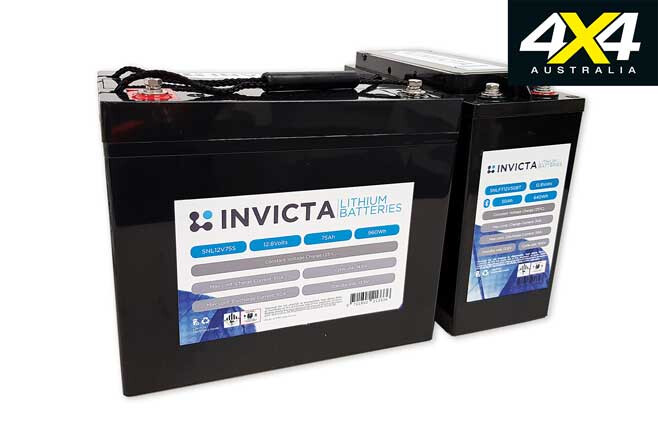
Invicta Lithium is a premium range of batteries consisting of the highest quality Lithium Iron Phosphate (LiFePO4) composition. LiFePO4 has been selected for the Invicta range due to its convenient cell voltage, high energy density, cycle-life and most importantly due to it being one of the safest Lithium technologies available. This makes batteries in the Invicta Lithium range suitable for applications ranging from high-cycle, such as 4×4 rigs, RVs and caravans/campers.
Another benefit of these powerhouses for 4x4s is that fact that these batteries are 50 per cent lighter than comparable Sealed Lead Acid (SLA) batteries while offering up to a claimed eight times the cycle-life. There are even Bluetooth versions that allow you to monitor the state of the battery using the free app which communicates with the battery’s integrated management system.
Website: www.spb.net.au
LedLenser iF8R light
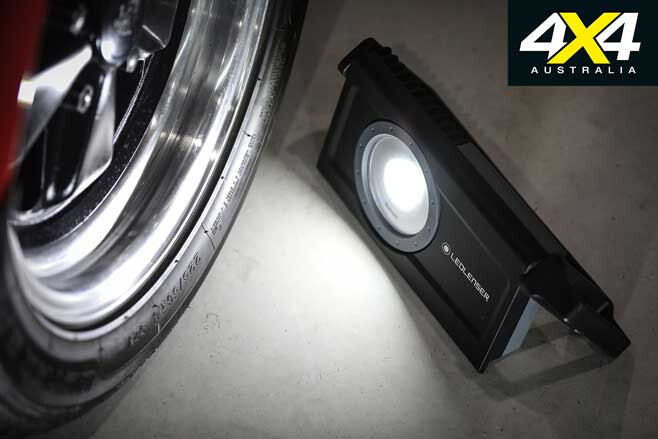
This latest LedLenser light source is high in technology and functionality. The iF8R (powered by rechargeable batteries) offers an output of up to 4500 Lumens via its Xtreme LED – and can be controlled via your smartphone if need be, so you don’t need to get out of that camp chair to adjust lighting levels at the campsite.
The iF8R offers three light settings – power, mid power and low power (for up to a claimed 12 hours on this setting). The light has an inbuilt power bank, meaning you can charge your mobile phone off it if needed.
A unique feature is the iF8R’s built-in magnet, which allows you to affix the light to any steel surface (such as the side/back/front of your rig). The iF8R also has an efficient cooling element to ensure optimum – and long-lasting – light performance. It is rated IP54 for water protection (can withstand powerful sprays of water), weighs 1740g and measures 142mm high, 44mm deep and 307mm wide.
Website: ledlenser.com.au
MSA 4X4 Tradie Gear Canvas Seat Covers
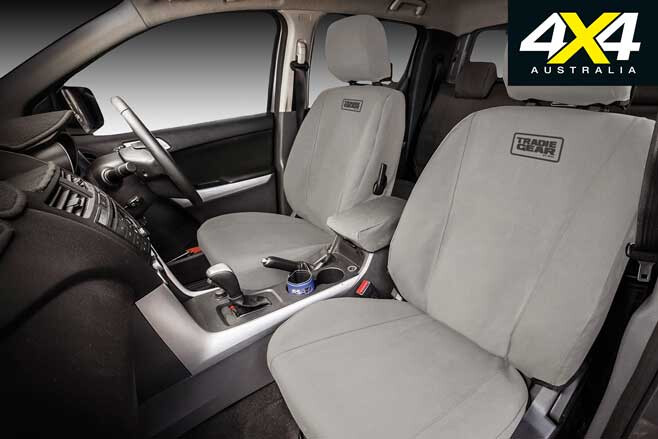
MSA 4X4’s new Tradie Gear Canvas Seat Covers are manufactured from heavy duty 14oz polyester and cotton blend canvas. They are polycotton lined to deliver protection for vehicle car seats by providing a barrier between the canvas and the seat.
In addition, the Tradie Gear Canvas Seat Covers are claimed to be 100 per cent water, dirt, mud, kid and pet proof, and are quick and easy to install. Importantly, all Tradie Gear Canvas Seat Covers are certified ADR compliant. The current Tradie Gear range includes seat cover patterns to suit tradie-relevant and fleet-relevant 4X4s.
RRP: $325 per row; $620 (complete front/second-row set) Website: www.tradiegear.com.au
Terrain Tamer parabolic spring: Toyota Hilux
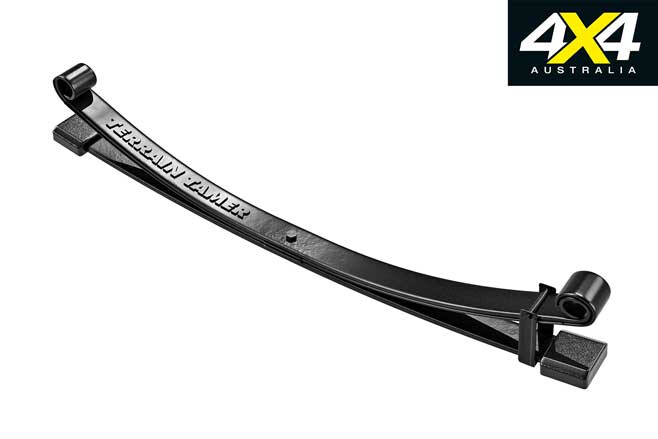
Terrain Tamer has released a new Parabolic Leaf Spring for Toyota Hilux KUN25/26 and GGN25 models, utilising the same impressive parabolic design as the popular spring released for LandCruiser models in 2018, and adding to the company’s extensive existing suspension range.
Applying modern technology to a well-established idea to provide a quieter and more comfortable ride, Terrain Tamer’s parabolic design contains fewer leaves than regular leaf springs. A parabolic spring is thicker in the centre and thinner toward the ends, rather than the usual linear design. Eliminating the weight of often heavy, thick traditional leaf packs, the parabolic design dramatically reduces the unsprung weight of the vehicle.
This design also works to help the spring remain flexible, yet still strong enough to bear the weight of heavy loads – particularly useful in 4WD applications. The parabolic design allows the spring to compress or extend with ease, without the leaves touching each other until there is a reasonable load on the vehicle (up to 500kg).
RRP: $400 Website: www.terraintamer.com
Thunder 5W 80-channel UHF
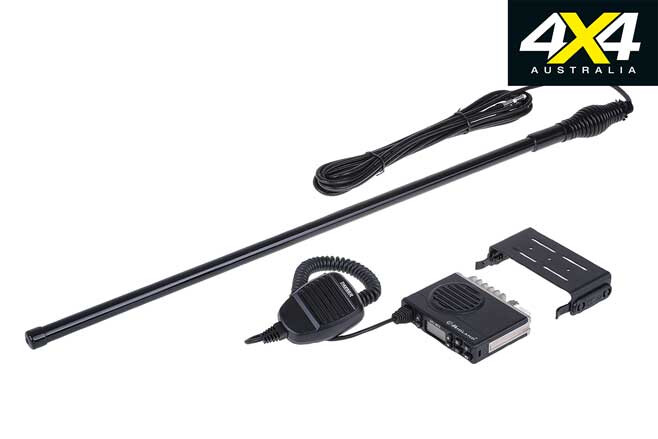
This compact UHF features 80-channel scanning capability and a backlit LED display and keypad. The Thunder 5W features digital selective calling, an external speaker jack and a 75cm 5dB antenna with 35mm black stainless-steel barrel spring.
Outstanding performance with an18km range combined with a sleek, unobtrusive mount for modern vehicles is ideal for the adventurer. For what it lacks in size, the radio packs a punch with built-in loud speaker housed by a durable case. The compact size makes the radio very easy to mount. There is digital selective calling and a quick release cradle as well.
RRP: $588 Website: thunderauto.com.au
GME TX616XO radio
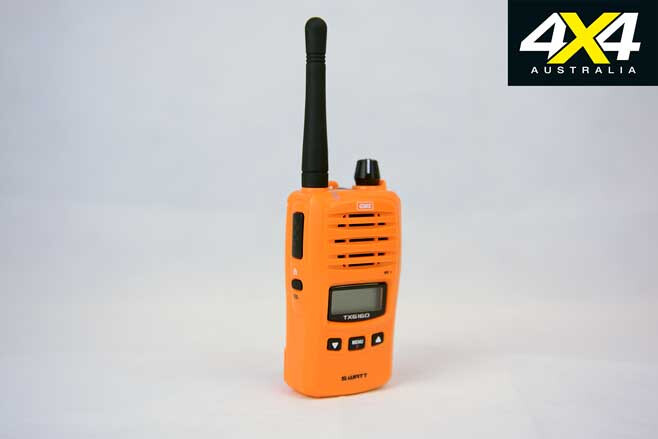
The new TX616XO is a limited edition blaze-orange handheld radio that offers class-leading five-watt transmission power, IP67 dust/water ingress protection and robust construction at a very competitive price point.
The brightly coloured radio (perfect for never losing the thing, if you ask us) claims a 30-hour battery life, courtesy of its 2800mAh Li-ion battery pack, and features include VOX hands-free mode and a built-in LED torch. GME also claims this new unit offers improved scan speed, while there is a rotary power/volume control that enables easy operation.
The TX616XO is compact and light, too, measuring only 285mm tall, 110mm wide and 95mm deep, and it comes with a desktop charger, AC adaptor and a belt clip. GME offers a two-year warranty.
RRP: $249 Website: www.gme.net.au
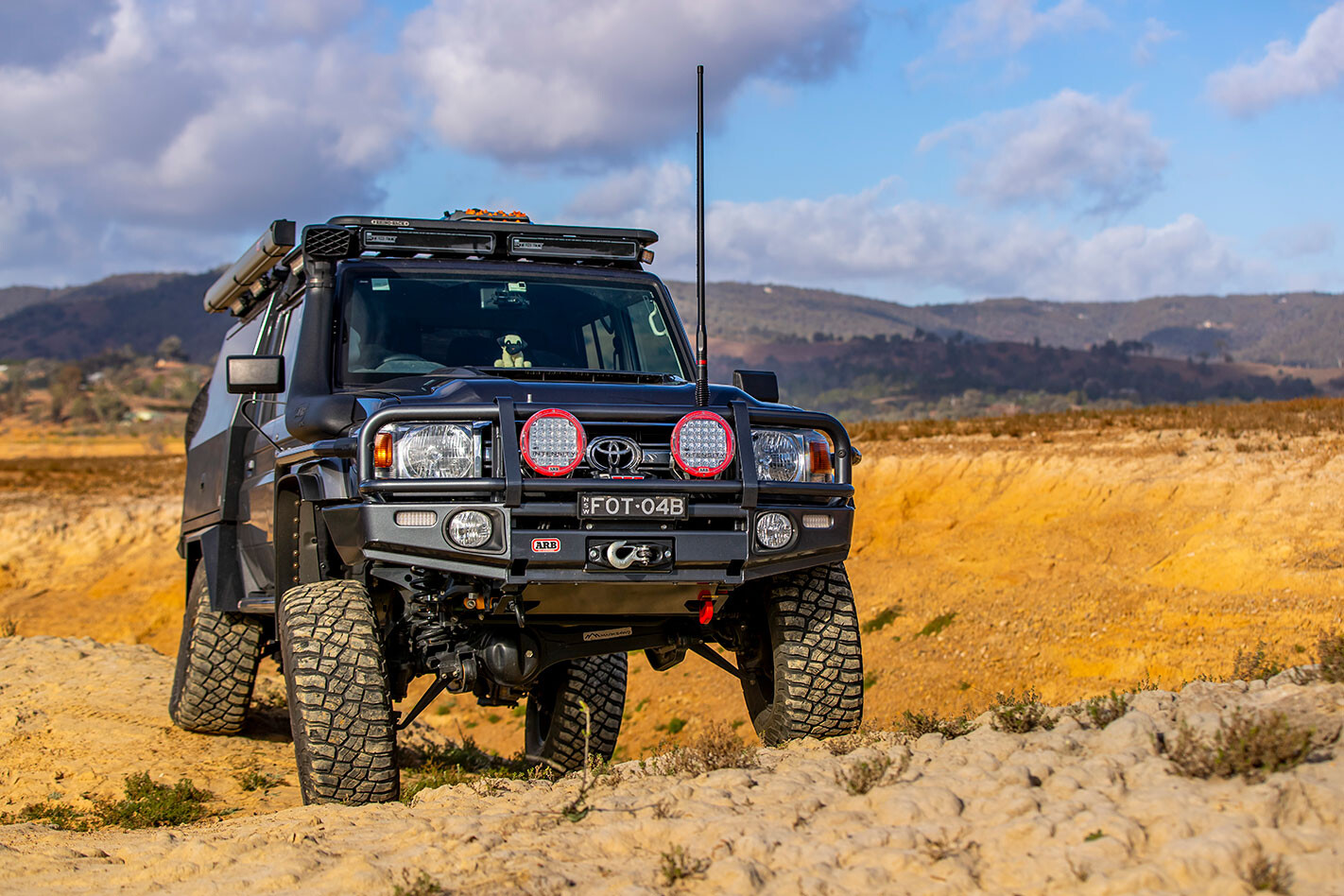
Unless you’ve been hiding under a rock, you’ve probably heard something about Michael Ellem’s ‘Mighty 79’ Landcruiser.
Perhaps you’ve seen pictures of it on Instagram or Facebook, or videos of it on YouTube. You may have even seen it in the metal at a 4×4 show or an ARB open day, or even witnessed it traversing the Simpson Desert, scrabbling around the Flinders Ranges or climbing through the High Country. After all, this vehicle gets around… a lot!
In fact, in the 12 months since it’s been on the road, the Mighty 79 has already covered an astonishing 65,000km, hauling its heavy payload of photographic gear wherever it’s needed to capture spectacular images of other 4x4s doing their thing, as well as the amazing landscapes in which they do it.
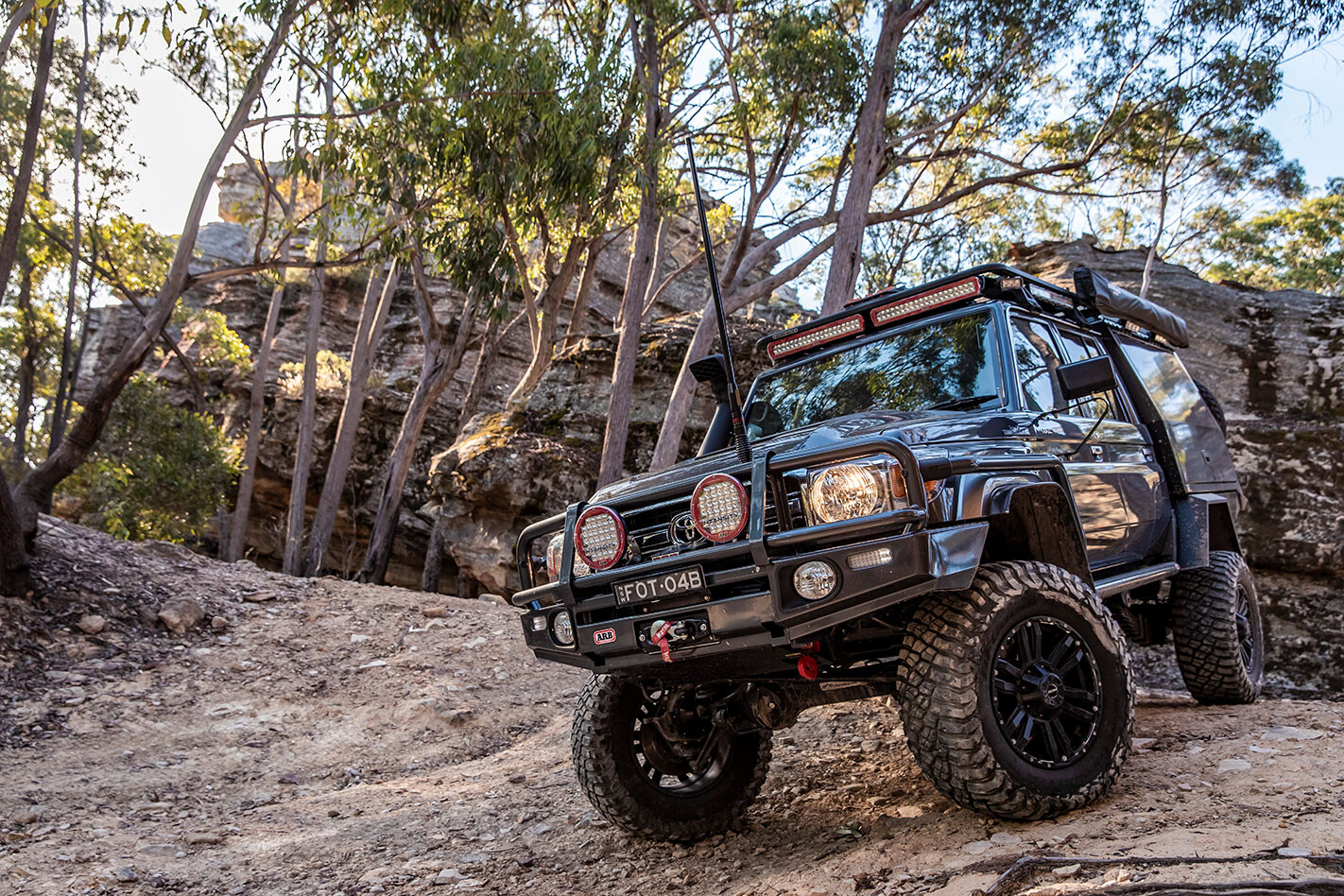
Michael is the man behind Offroad Images, the company that captures some of the most striking ‘off-road images’ in Australia, in some of the most spectacular and hard-to-get-to places in this country. And with an ever-increasing list of still and video equipment to lug around, when Michael started searching for a vehicle to replace his not-big-enough-anymore Mazda BT-50, he couldn’t find anything suitable, so he decided to buy a new LC79 Double Cab, strip it completely and rebuild it from the ground up.
“The best thing about a 79 Landcruiser is you can turn it into absolutely anything,” says Michael Ellem, adding, “Our intention with this one was to turn it into the ultimate camera truck.”
Higher and wider
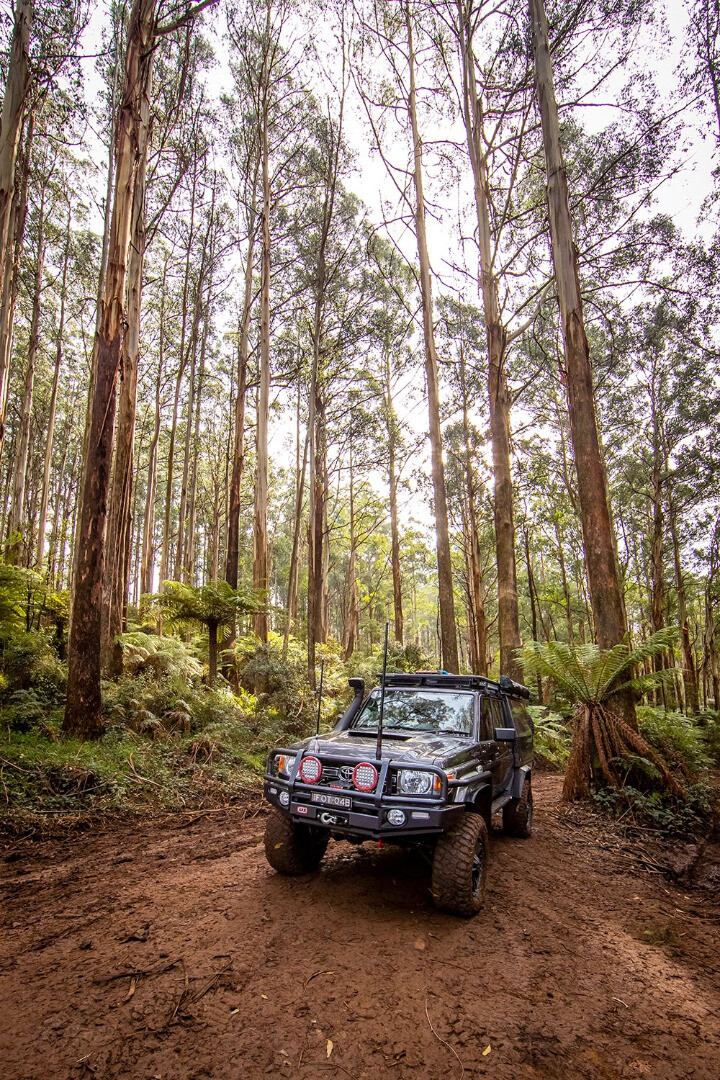
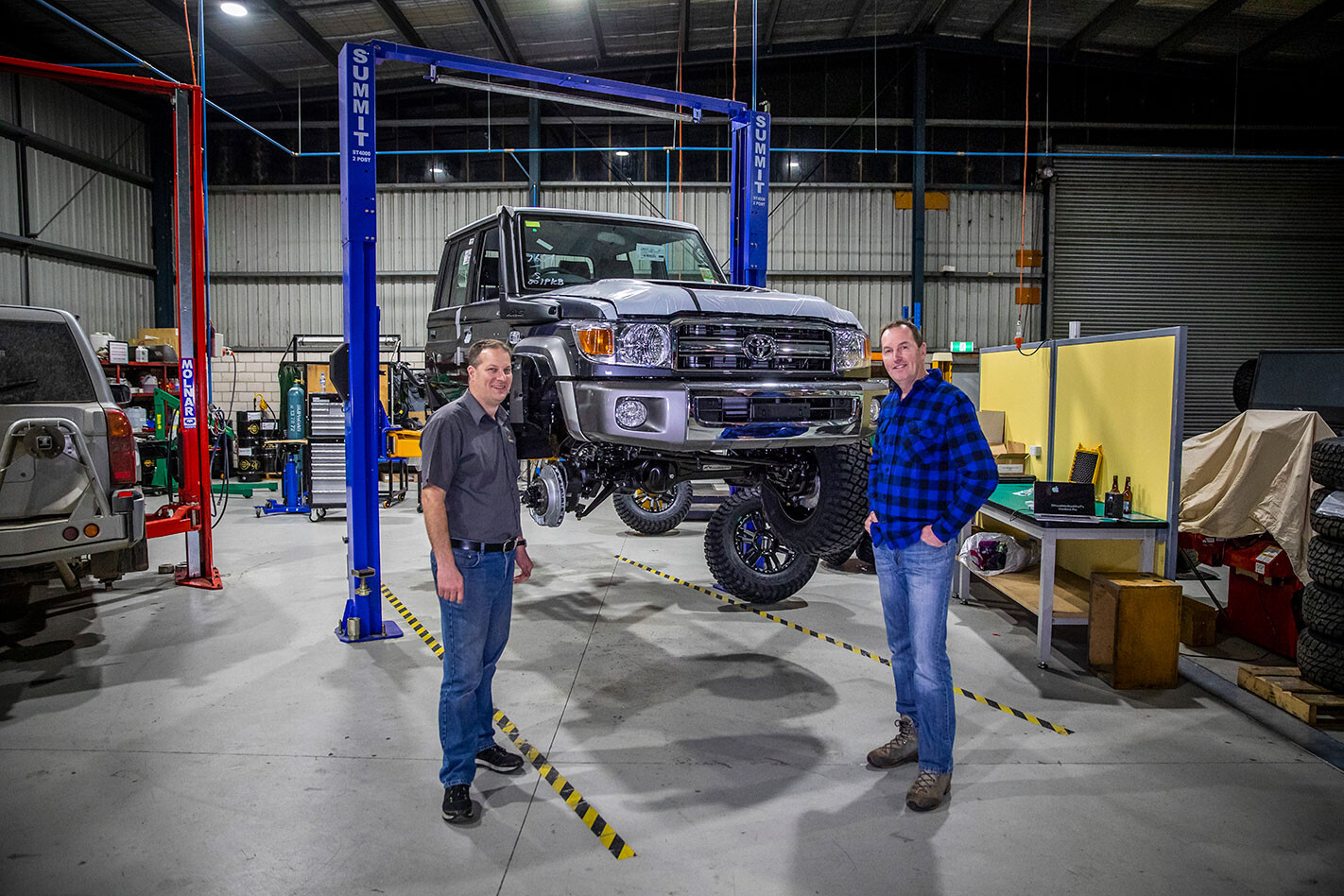
Michael picked up the new Landcruiser at Illawarra Toyota in Wollongong and before it was registered it was shipped down to Marks 4WD Adaptors in Melbourne where a portal axle kit was fitted. Not only does this provide a hell of a lot more ground clearance, it also corrects the Landcruiser’s mismatched front and rear wheel tracks.
“As a part of the portal upgrade, one of the major components we give you is the wide-track diff,” explains Leigh Hardman from Marks 4WD Adaptors. “We manufacture a full diff housing, so it’s the correct width, and then the portal gearbox is bolted to that.
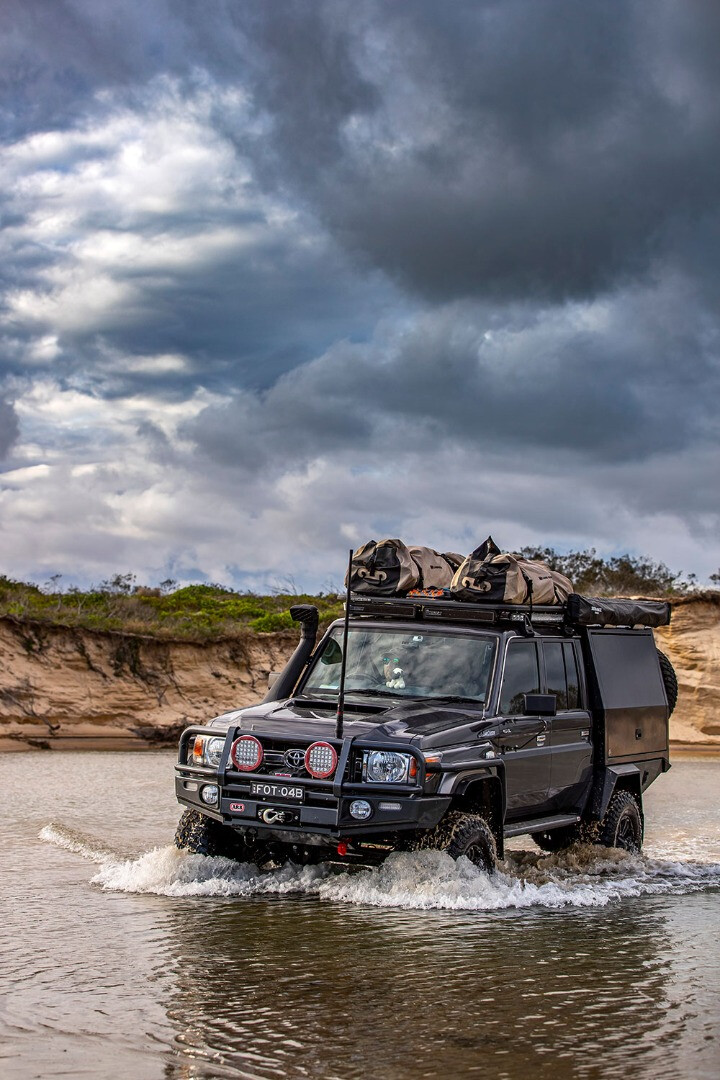
“We also upgrade the swivel housing, so it’s a one-piece swivel housing compared to the factory two-piece swivel housing, and we run a full breather system for the portal axles and the diffs, we run breather lines right up into the engine bay, and we upgrade the brakes.”
The portal axle package has other benefits, too: it allows the legal fitment of 35-inch tyres; it incorporates a GVM upgrade from 3300kg to 3950kg; and includes an upgraded brake system with Delios rotors, brake pads and braided stainless steel brake lines, along with fitment of a new transmission-mounted drum brake replacing the less-than-effective OE park brake.
“Running 35-inch tyres has been a big request from a lot of our customers,” adds Leigh. “With the portals we can do that; we’ve got the gear reduction there, so it will bring you back to a factory ratio.” Another benefit of the portal axle kit is the fitment of air locking hubs that are operated via a switch inside the cabin.
Weighty issues
As Marks 4WD Adaptors is a second-stage manufacturer, a new compliance plate was fitted to the vehicle stating the increased GVM and fitment of the 35-inch tyres, ensuring it’s legal in all states of Australia. And with all of the extra load capacity likely to be used on a regular basis, Michael knew it would be imperative to get the suspension set-up right.
“I went through and made a spreadsheet of all I’m going to carry,” says Michael. “I calculated how much would be over the rear diff, factoring in an increased percentage for weight hanging out the back like the spare tyres and a decreased percentage for weight in front of the axle… I came up with a figure of 930kg over the rear axle, so I asked ARB to fit 700kg springs plus an extra leaf, which is rated to about 850kg.”
In addition to the upgraded OME leaf springs, the Mighty 79 is fitted with an Airbag Man air suspension helper kit, and pressure in the bags can be adjusted via an ARB LINX touchscreen interface thanks to fitment of an ARB twin air compressor and air tank beneath the service body.
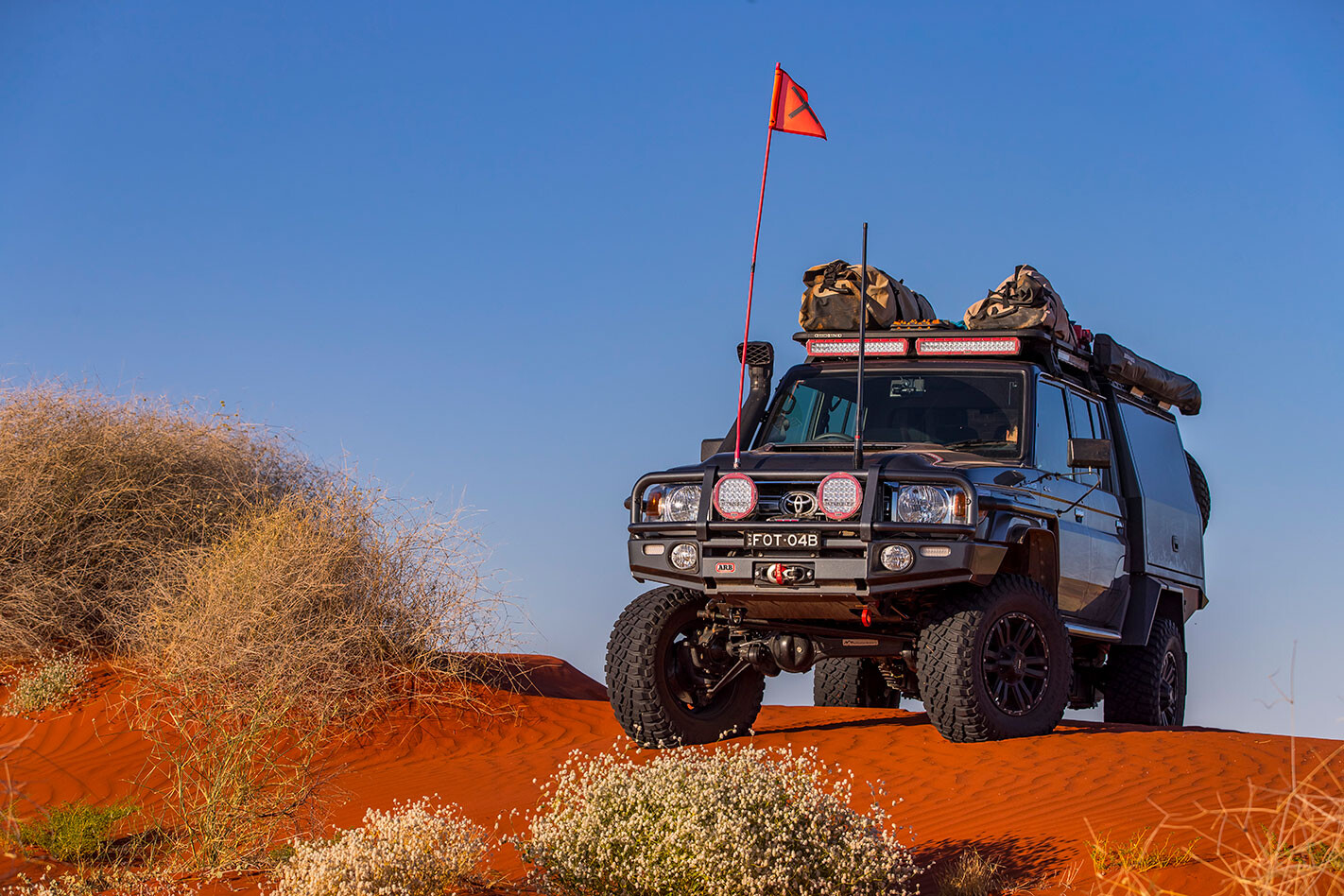
The front-end runs upgraded OME coil springs and there are top-shelf OME BP-51 internal bypass dampers at all four corners, featuring easily adjustable compression and rebound damping to tailor the ride to suit load and driving conditions.
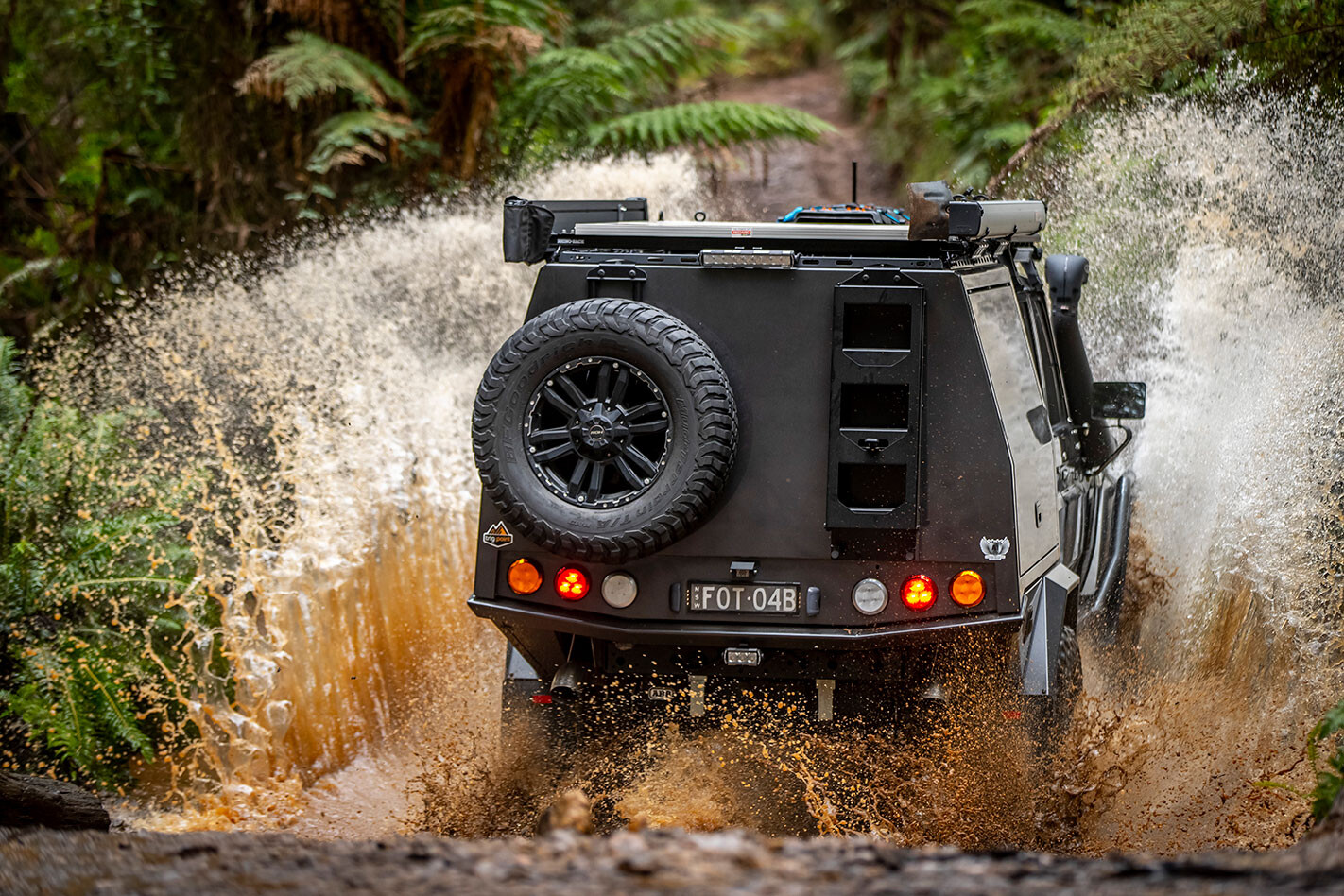
As well as widening the rear track, the portal axle kit adds 200mm to the front track, so the 9 x 18-inch ROH Vapour rims have a +41 offset. Importantly, the wheels also have a heavy load rating, so they’re suited to the GVM upgrade, while an ‘Easycleans’ Matt Black Baked Enamel finish is aimed at providing maximum salt-spray performance and anti-weathering durability.
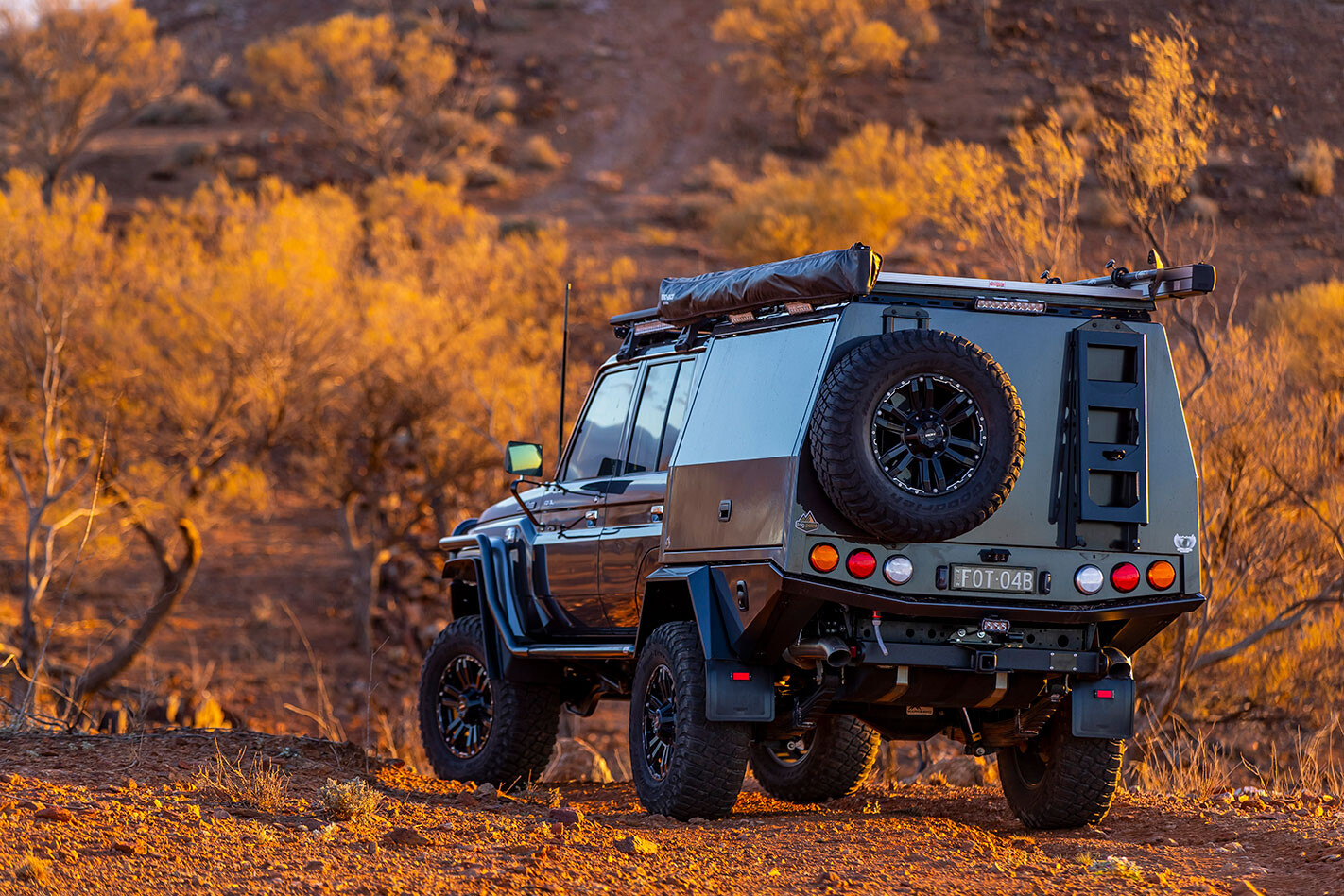
The Vapours wear BFGoodrich 35×12.50R18LT Mud Terrain T/A KM3 tyres and Michael is impressed with their durability and performance. In fact, he’s so confident in them he’s taken the second spare off the back to save weight (about 45kg), and replaced it with a ladder to access the roof of the service body.
Out the back
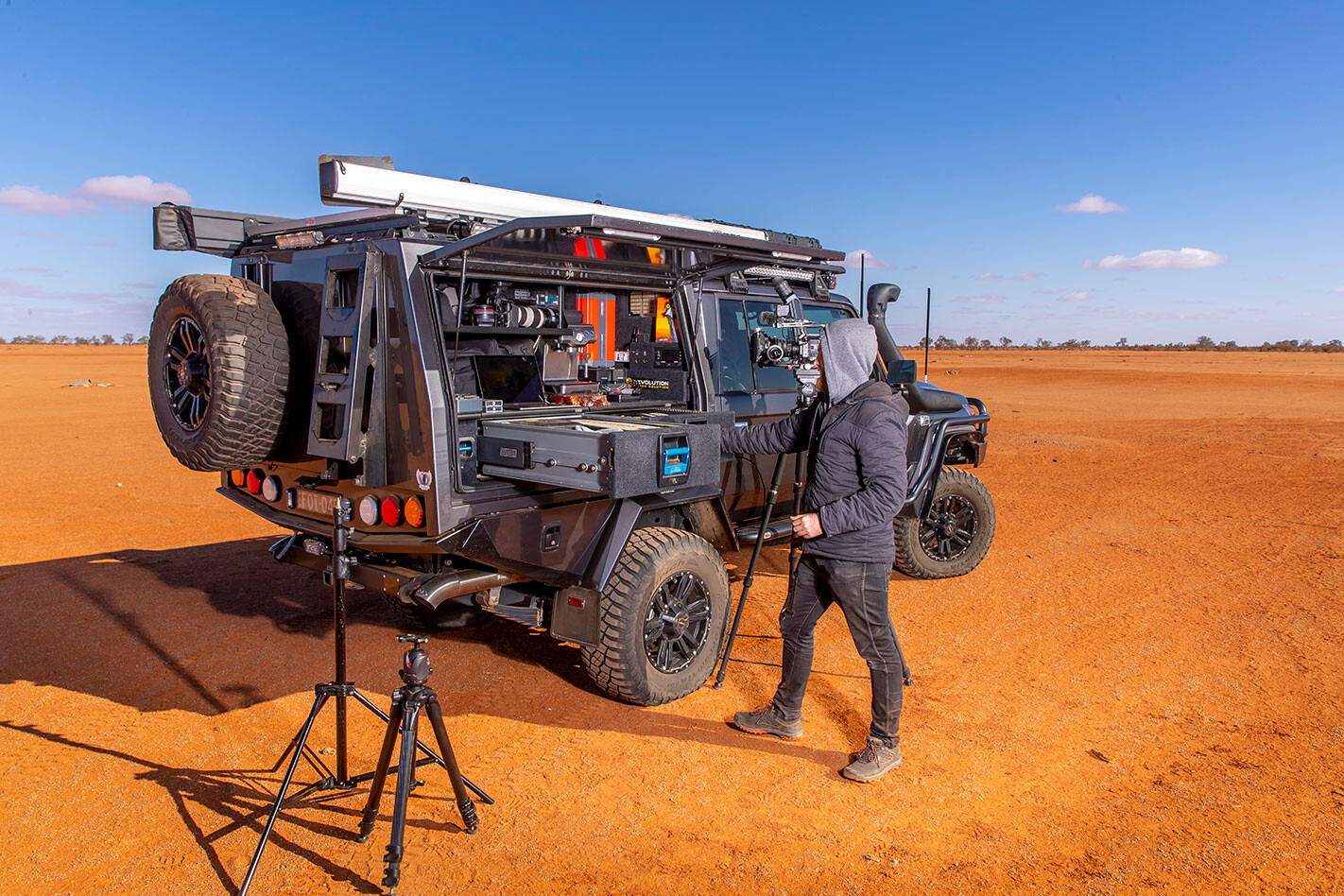
That service body was built by Trig Point. It’s manufactured from aluminium and steel, and it has a monocoque construction to provide a balance between light weight and strength. Features include fully sealed doors and filtered air vents to keep out dust and moisture, integration with the vehicle’s central locking system, tapered underbody boxes for maximised departure angle and recessed LED lights. And it looks great!
The Trig Point mounts directly to the 79’s chassis rather than sitting atop a tray like many other bodies on the market, so its roof is in line with that of the vehicle’s cab. “The thing I really like about the Trig Point service body is it’s slung much lower than a normal service body or tray,” says Michael. “This design keeps the weight down which lowers the centre of gravity.”
All Michael has fitted to the canopy top is a Rhino-Rack Batwing awning, an ARB aluminium encased awning, Bushranger LED work lights and two 150W solar panels. “I’ve deliberately fitted solar panels to the roof of the service body so nothing else can be placed up there – no swags, no tripods – so you can’t put any more weight up the top other than whatever dirt is on the shovel,” he says.
The interior of the Trig Point canopy is set up in two halves: the driver’s side for camera work and the passenger’s side for catering. A custom MSA 4×4 drawer system features two large drawers on each side, fitted with LED strip lights.
There’s a flat surface above the drawers for storing Pelican Cases and the like, there’s a full-width cavity at the rear to accept long items such as tripods and light stands, and removable panels at the front for access to four large-capacity lithium batteries that power everything inside the service body.
The batteries are from Revolution Power Australia and are 60A lithium iron phosphate (LiFePO4) units that weigh 24kg in total. These are managed by a Redarc RedVision system. There are two RedVision touchscreen displays inside the service body.
“No matter what side I’m on, I can turn all the features on or off,” explains Michael. “For example, I can turn the fridge on and off, I can turn the USB sockets on and off, I can turn the pie oven on and off, I can see how much water we’ve got left, I can see how long the battery life is going to run and I can get stats of how much charge we’ve been getting… if it’s less today than it was three days ago, I might have to clean the solar panels, so it gives me all that information.”
All of the electrical equipment in the service body – the neat wiring, fuse box, 3000W inverter and master switch – is in plain view and easy to reach, and for peace of mind “the service body has all been wired up by a licenced electrician for the 240V set-up and an automotive electrician for the 12V set-up”, says Michael.
Sure, a 3000W inverter might seem like overkill for the average 4×4 tourer, but Michael uses a lot of power when working, for charging batteries, running computers and, of course, brewing coffee. Easily accessed in the service body are eight 240V AC outlets, four USB outlets and two 12V DC accessory outlets. There’s also Narva interior lighting, including LED lights on the back, ceiling and lift-up doors of the service body, as well as in the drawers.
Total coverage
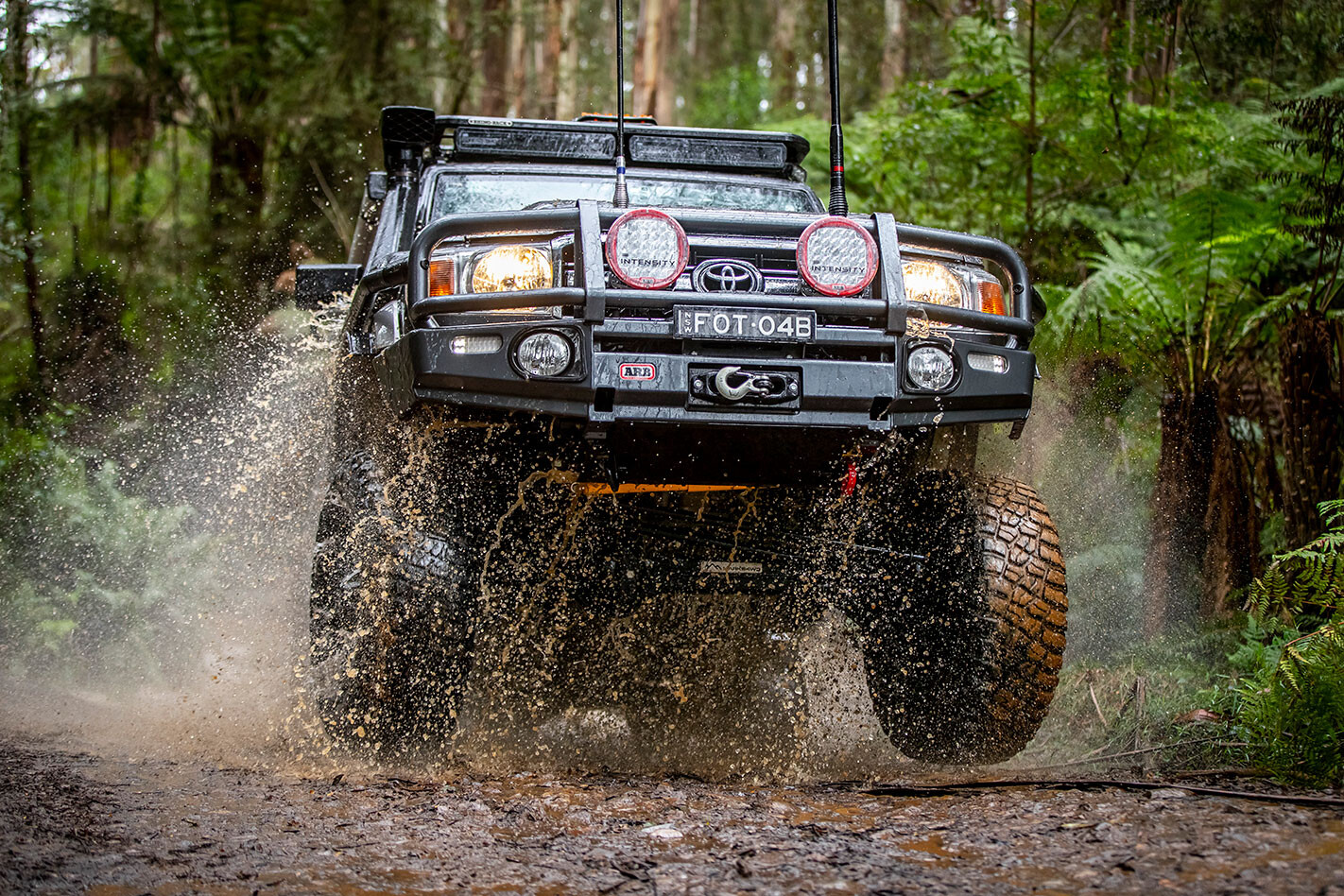
One of Michael’s biggest clients is ARB, so it’s little surprise the Mighty 79 is protected by a colour-coded ARB Large Tube Deluxe bull bar up front. The underside of the Cruiser is covered by an ARB UVP (under vehicle protection) system and there’s an ARB rated recovery point.
Mounted to the bull bar are a pair of AR32 Intensity LED driving lights in a spot/flood combination, while a Warn Zeon 12-S Platinum provides ample winching capacity if required.
ARB Side Rails and Steps provide protection for the side of the vehicle and the lower sills, and make it easier to climb into the cabin, which is much higher up than a standard Cruiser.
As well as the AR32s on the bull bar, additional lighting is provided by a pair of AR40 Intensity LED light bars mounted to a cab-mounted Rhino Rack Pioneer Platform, while side-mounted Bushranger Nighthawk LEDs provide light for camping and working at night.
Inside story
The Mighty 79’s cabin has scored special features, including three Recaro seats – two up front and one in the back next to a custom-made storage system behind the driver’s seat that’s bolted down to the floor of the cab. The seating set-up was fitted by Recaro in Melbourne and signed off by two engineers prior to the vehicle being registered as a three-seater.
“The three-seat conversion is the ideal set-up with all the camera equipment we need to carry in the cabin such as lenses, bodies and batteries,” says Michael. “All up there’s around 80kg of camera equipment in the cab rather than over the rear axle in the service body, so it moves a substantial amount of weight forward.”
Front and rear centre consoles were manufactured by Sydney-based company Department of the Interior and finished in material to match the Recaros. The rear console has a couple of USB ports and a cupholder.
There’s a LINX touchscreen mounted up front, an Outback 4WD Interiors roof console housing a GME TX4500 UHF, a Hema HX-1 mounted where the redundant rear-view mirror used to be and a 4K dashcam at the top of the windscreen.
A nine-inch Power Vision Sound (PVS) head unit with built-in GPS runs Hema mapping, Google Maps and Spotify, and it’s mated to an OBD II Scanner to display vital engine information including exhaust gas temperature, DPF burn temperature, instant and average fuel economy, GPS speedometer, engine temperature and more.
Separate to the power system in the service body, and ensuring there’s enough electrical grunt for all the gear in the cab, is a dual-battery set-up with an Optima Yellow Top battery. “It’s a twin battery system with a 25A BCDC1225D battery charger,” says Michael. “Inside we’ll be charging up iPads, and when iPads are used for mapping, they work the batteries pretty hard.”
Breathing easy
With the retention of standard gearing, Michael didn’t see the need to go overboard with engine modifications, which have been limited to the fitment of a Safari ARMAX snorkel, an ARMAX ECU and a GSL Fabrications exhaust system that runs from the DPF back.
“The most impractical thing I have on this vehicle is the exhaust,” laughs Michael. “I don’t really need it, but it looks good and it sounds great, and at the end of the day it helps the engine breathe better. It’s all stainless steel and it’s completely custom made.
“To make sure the DPF is protected from what’s happening at the front, we’ve gone for a Safari ARMAX ECU, which measures exhaust temperatures prior to the DPF. If it gets too hot the ARMAX will cut power and performance to make sure it protects the DPF.”
Safari 4×4 Engineering also installed a heavy-duty clutch to handle the Mighty 79’s weight, as well as the increased power and torque from its 4.5-litre TDV8.
Working hard
The main objective behind the design of the Mighty 79 was to make working out of it easy, so it’s been set up to provide access to gear and plenty of power to charge batteries and run computers.
“Figuring out where everything goes took a while,” says Michael. “I even adjusted the positioning of the cameras in the camera bag because with everything up quite high it’s easier to pull a long lens out of one side than the other.”
The Mighty 79 also had to be a vehicle that Michael, his wife Gab and at times a third crew member could live out of for weeks at a time in remote areas, and keeping food-prep facilities on the passenger’s side and the camera equipment on the driver’s side proved to be a good move.
“In our previous vehicle, we used to have some complicated times at the start of the day or in the middle of lunch, where I was trying to get to gear to do some shooting but at the same time Gab was trying to prepare food for the crew, but we don’t have that problem at all now,” says Michael.
And with the coffee machine situated on the camera side of the vehicle, Michael can also brew a double-shot ristretto whenever he wants without getting in Gab’s way.
How does it go?
With OME BP-51 dampers all round and Airbag Man air helper bags in the rear, the Mighty 79 offers plenty of scope for suspension adjustment, and it took a couple trips to sort out the best settings for on- and off-road conditions.
On its first trip across the Madigan Line in the northern Simpson Desert, Michael eventually settled on 8psi in the airbags for the load the vehicle was carrying, while he had the rebound damping on the front and rear BP-51s dialled up to ‘9’, with front compression set to ‘3’and rear compression set to ‘5’.
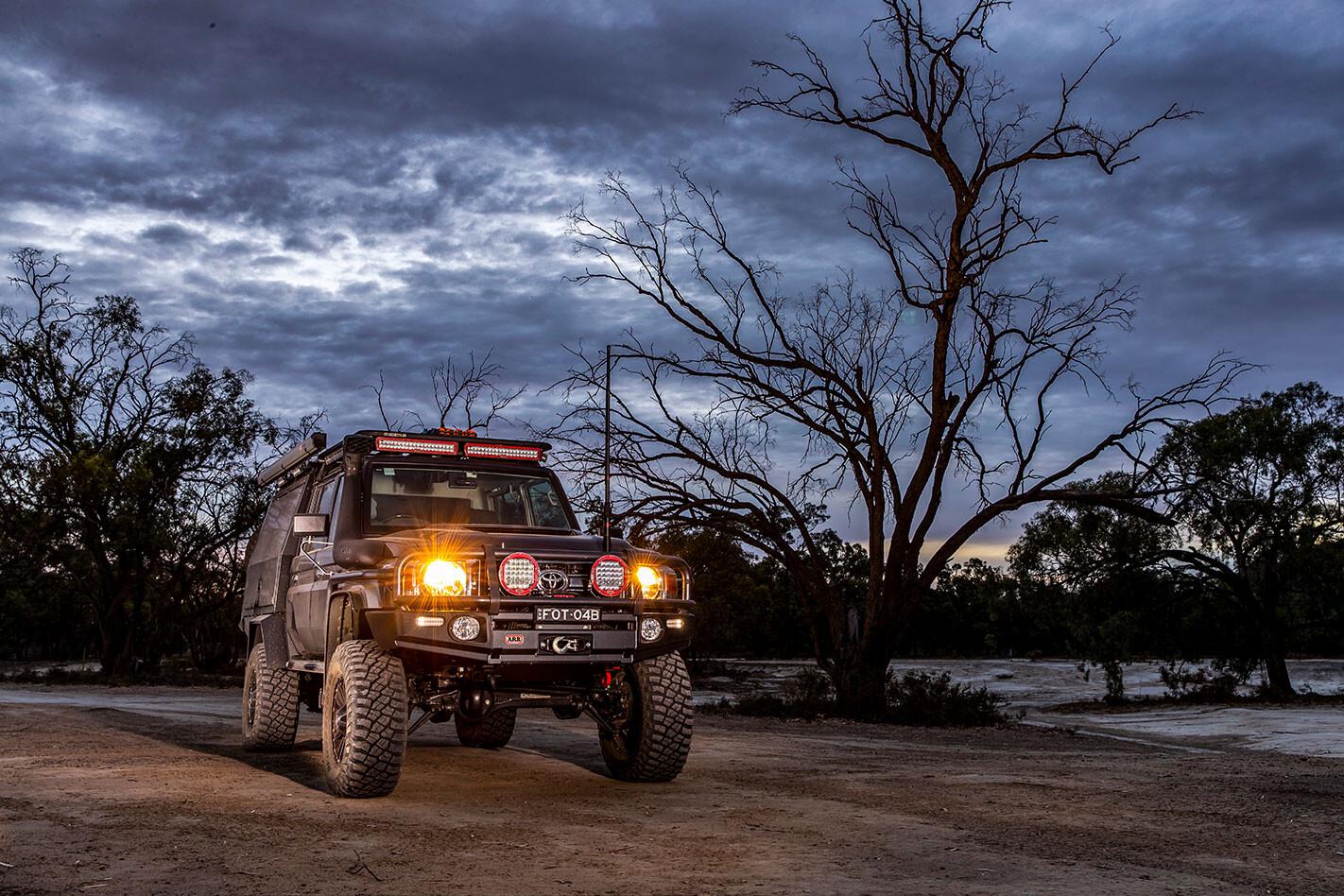
“It drove really well once I got the pressures and settings right,” says Michael. “The first couple of days, every time I pulled up, I’d make adjustments. And then I’d look across to Gab and ask, ‘What do you think? Do you think that’s better?’ and she’d say, ‘Oh, I can’t feel the difference.’ [laughs], but she really did once we got the set-up right.”
Having not previously run 35-inch BFG muddies, Michael also had to learn what tyre pressures would work best. “I know what tyre pressures people should run in a 200 Series or a dual-cab Hilux or Ranger, but this is an entirely different type of vehicle,” explains Michael. “It’s big, it’s got a different stance, it carries a load differently to a typical dual-cab, so it took me a fair bit of time at the start of the trip to work out what pressures I should be running.”
At the end of its Madigan Line shakedown run, Michael says the thing that impressed him the most was how reliable the Mighty 79 proved to be, with no mechanical or equipment failures at all. “It’s testament to the excellent quality of the gear fitted to the Mighty 79, as well as the professionalism of the people who fitted it.” says Michael.
And now, with 65,000km under its belt, Michael is happier than ever with his Mighty 79 camera rig.
Planning an off-road escape this holiday season but don’t want to head too far from the comforts of home? Here’s an off-road guide that sums up the best 4×4 treks within cooee of Melbourne’s city lights.
If nothing else, it’ll make a great stocking-stuffer!
4WD Treks Close to Melbourne: Fourth Edition
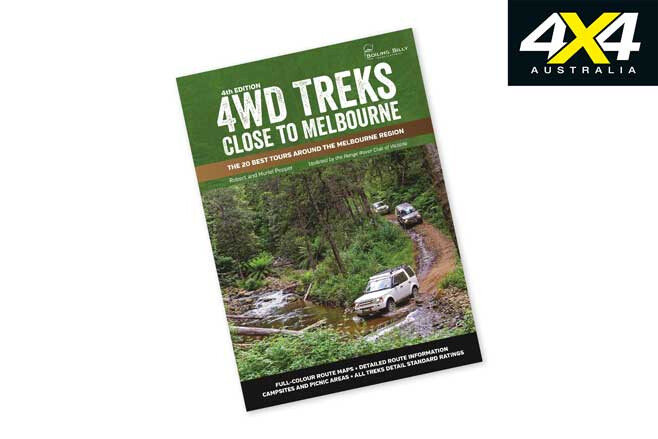
The fourth edition of 4WD Treks Close to Melbourne includes 20 of the best 4WD adventures within two hours of the city. Whether you are looking for an easy trek for a family outing or a serious off-road adventure, 4WD Treks Close to Melbourne highlights some of the best picnic, walking, camping, swimming, fishing and four-wheel drive destinations on Melbourne’s doorstep.
It’s equally suited to those looking for an easy trek for a family outing as it is to serious off-road adventurers. Each trek is colour-coded for driving standards and includes detailed route maps, driving directions, essential contact information and details on picnic and camping areas.
RRP: $49.99 Website: www.booktopia.com.au
WITH sand flags standing tall, that can only mean one thing: we’ve finally landed in the desert proper.
In the final instalment of our Red Centre Adventure, we trek south along the Hay River Track from Batton Hill to reach the dry sands of the Simpson Desert.
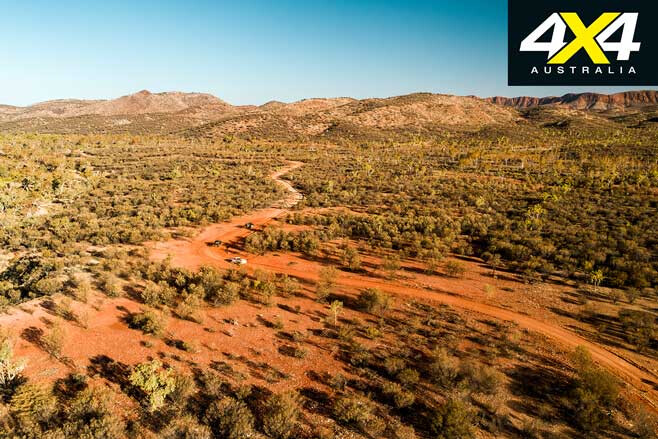
Along the way we chat to Jol Fleming, who pioneered the Hay River Track almost 20 years ago, and then stop by the widely overlooked backyard-built Tropic of Capricorn sign.
We refill our drink bottles at Dingo Well, about 70km south of Batton Hill, as it’s the only source of reliable water you’ll find on the Hay River Run, before crossing the junction of the Madigan Line and heading to Madigan’s blazed tree.
From here it’s on to Beachcomber, the QAA line and then eventually pointing the bullbar toward Poeppel Corner, where Queensland, South Australia and the Northern Territory meet.
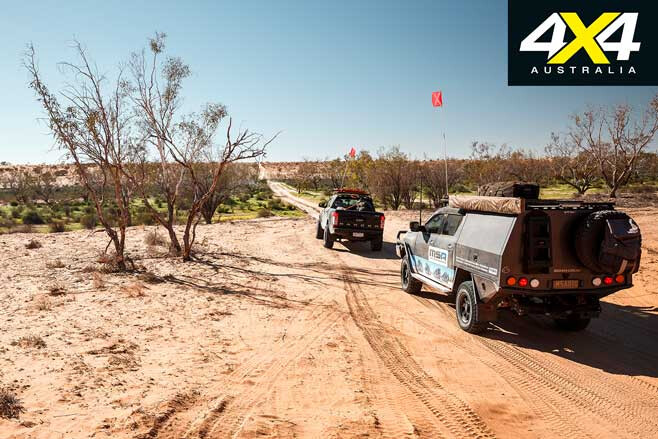
With Big Red on the horizon, it wasn’t long before we reached Birdsville for a well-earned beverage.
In this episode, MSA 4×4’s Matt Mason talks us through his Hilux’s elaborate set-up, as well as discusses the various storage solutions in the MSA 4×4 range.
WITH THANKS MSA 4X4: www.msa4x4.com.au
SOME OF THE most common questions we get from folks checking out our Ranger pertain to the front bar. Everyone seems to love it and they want to know where they can get one, and what it costs. Well, the bar comes from a relative newcomer to the Australian 4×4 industry: AFN 4×4 Accessories. If you haven’t heard of them before, expect to be seeing more of them in the future.
AFN is based in Portugal, where it has been making frontal protection for 4x4s for many years. There isn’t a huge market for these products in Europe, but there is in nearby Africa, and much of AFN’s output is fitted to military, United Nations and NGO vehicles operating in those countries.
AFN has opened shop in Australia, where the 4×4 protection business is booming, and AFN 4×4 Australia is now dictating back to the head office in Portugal just what our market wants and needs. As a result, AFN carries a huge range of products for all the popular 4×4 vehicles sold here including the hot-selling Ford Ranger.
We wanted an AFN hoopless bar on our Ford Ranger even before we took delivery of the vehicle. We first saw one on a show car at the Brisbane 4×4 Show and loved the upswept style for excellent approach angles, the low-line overall look, the mounting rail along the top, and the solid construction and quality finish.
No, this is not a bullbar; it’s a steel full-replacement front bumper which is stronger than the standard plastic bar. It also improves approach angles, provides mounting points for the winch, driving lights and aerials, and has built-in recovery points. If we wanted a full bullbar, AFN does one for the Ranger, including side rails and side steps. There’s even a rear step bar available from AFN. The AFN hoopless bar retails for $2250 plus installation.
Our AFN bar was installed by AFN’s Victorian distributor No Limit 4×4 in Dandenong. The crew there stripped back the front of the then-new Ranger, fitted the Warn Zeon winch in the bar’s cradle, mounted the Bushranger Nighthawk lights to the bar, fitted the bar, and then installed the underbody protection which is also from AFN. This is a full bumper replacement, so the installers don’t need to cut up the original bumper to make it fit.
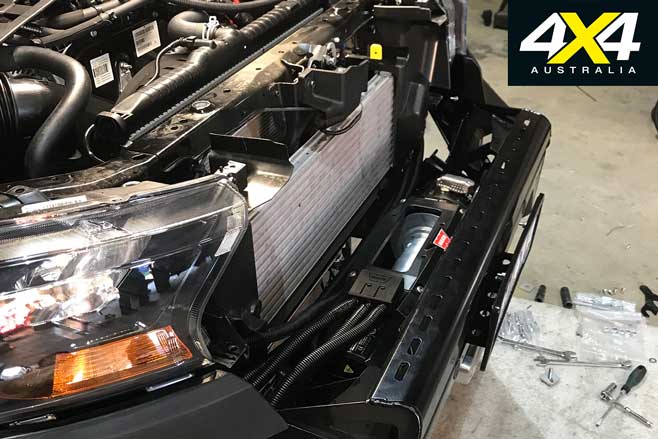
The quality of the AFN bar is evident when you look at it. It is folded from heavy steel, with soft radius curves on the leading edge that can only be achieved with state-of-the-art machinery. The thickness of the steel varies from 6mm in the winch cradle and chassis box, to 3.2mm on the outer skin, so there’s nothing flimsy about it.
The main channel is a single piece running the full width, and it’s not made up of several sections screwed together. The main section contains laser-cut grilles for air flow and provisions for parking sensors and radar cruise control or AEB. The only screws affix the splash panels to the lower edges.
The mounting rail for the accessories, along the top edge of the bar, provides slots for multiple mounting positions. These are okay for smaller mounts such as those on the bottom of driving lights, but we had to drill a few of them wider to accept the bigger mounting bolts for a sand flag and UHF antenna. The bar also has provisions for using a Hi-Lift jack, a pair of recovery points, LED indicator and fog lights, and it comes finished in black powdercoat. It can be colour-coded to your vehicle if desired.
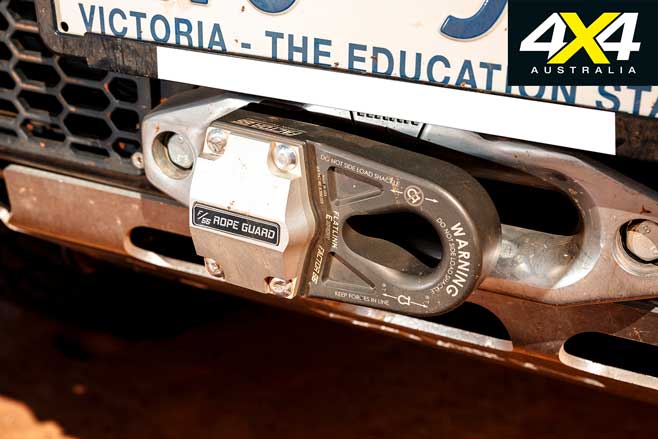
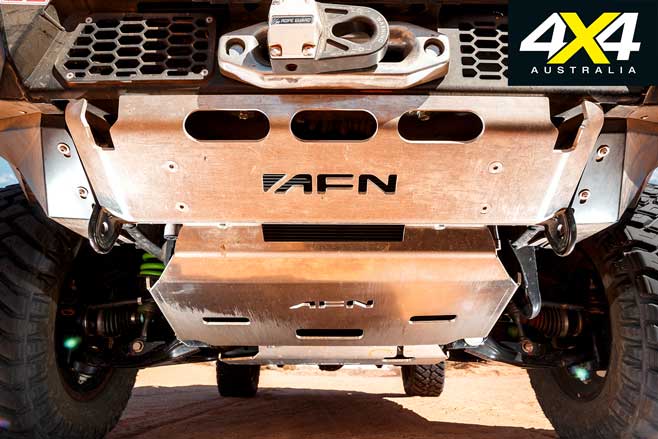
We also got the full underbody protection package from AFN. This comprises four pieces of 6mm AW5754 aluminium plates and extends from under the bar, where it protects the bottom of the radiator, and back over the steering components, sump, transmission and transfer case.
The AW5754 aluminium is used due to its resistance to corrosion, and the plates are milled, not laser-cut, so there is no heat stress which could weaken them. It is solid, fits well and provides all the protection we need for this car. The four plates are available separately or the full complement will cost you $1310.
We haven’t had to test the bar on any wildlife, but the extra clearance around the front wheels and approach angles has been appreciated when off-road. Plus, it sure gets the looks.
RATED Available from: www.afn4x4.com.au RRP: $2250 (hoopless bar); $1310 (underbody) We Say: Good-looking, high quality and great protection.
AFTER copping a pasting for its one-star safety rating when it launched here earlier this year, the 2020 Jeep Wrangler has just received a revised safety score from ANCAP (Australian New Car Assessment Program).
The independent vehicle safety authority lifted the safety rating of the Jeep Wrangler from one star to three, with the 2020 model now getting Autonomous Emergency Braking (AEB) and Blind Spot Monitoring (BSM) functions as standard across the range.
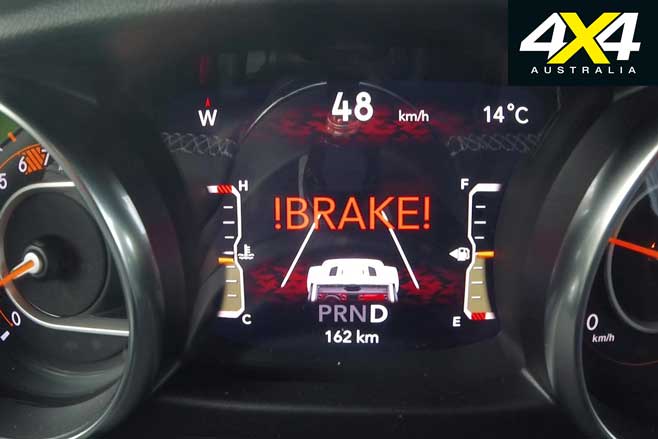
The revised safety rating applies to all two- and four-door variants built from November 2019 – the date when the tech upgrades were introduced – and sold in Australia and New Zealand.
The updated Wrangler received a score of 60 per cent for Adult Occupant Protection; 80 per cent for Child Occupant Protection; 49 per cent for Vulnerable Road User Protection; and 51 per cent for Safety Assist. In contrast, the one-star-rated Wrangler scored 50 per cent for Adult Occupant Protection; 80 per cent for Child Occupant Protection; 49 per cent for Vulnerable Road User Protection; and 32 per cent for Safety Assist.
“These upgrades are welcome, and I commend the local supplier for moving to provide Wrangler buyers in Australia and New Zealand with collision avoidance capability,” said ANCAP Chief Executive, James Goodwin.
“While a three-star rating is still somewhat shy of the expected five stars, all upgraded models now have the ability to detect and assist with avoiding a crash with another vehicle – both in lower and higher speed scenarios.
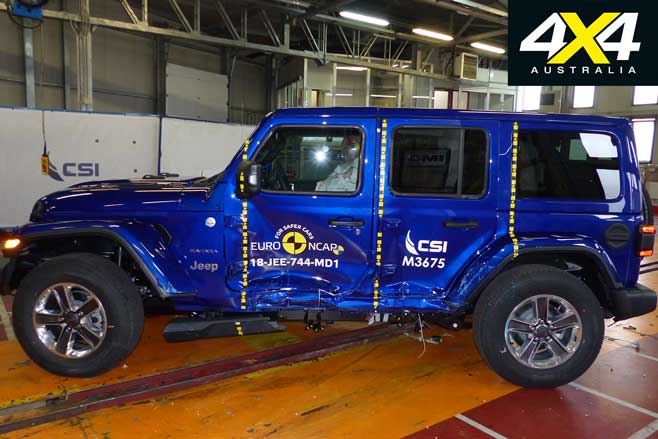
Despite the use of AEB, the ANCAP report says the “system is not designed to react to vulnerable road users such as pedestrians and cyclists”.
“Unfortunately the upgraded AEB system fitted to updated models is not yet able to detect our most vulnerable road users in pedestrians and cyclists” Goodwin said.
“Consumers should be aware that the structural deficiencies we saw with the originally-tested model such as A-pillar and cross-facia beam failure, footwell intrusion, high seatbelt loads and excessive pedal movement have not been addressed and remain a risk for occupants,” he added.
Lane Keep Assist and Emergency Land Keeping remain unavailable.
EARTHROAMER has revealed its finest creation yet: the fully self-sufficient, carbon-fibre-clad, mammoth F-550 LTi.
For just over 20 years the Colorado-based outfitter has been fine-tuning its craftsmanship to build the ultimate expedition vehicle, and we reckon the company has pretty much nailed it with its epic carbon-fibre-clad LTi.
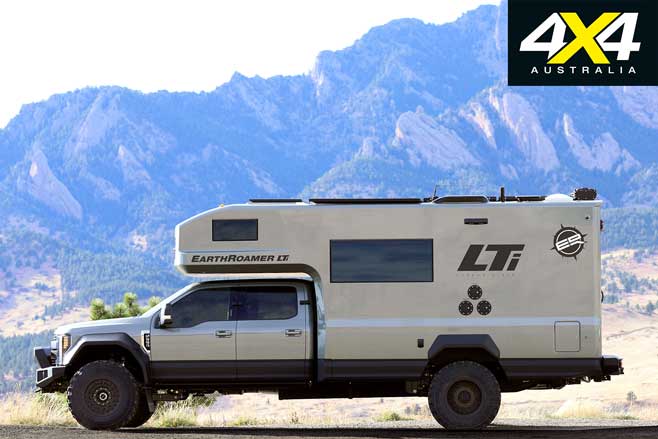
The LTi, said to fuse the best qualities of the brand’s F-550-based LTS and the F-750-based HD, is the result of many years of hard yakka, the company turning over more than 250 vehicles and putting countless kilometres beneath the big trucks’ tyres.
Utilising the chassis of an F-550 4WD in Lariat trim, the LTi gets its grunt from Ford’s venerable 6.7-litre Power Stroke turbo-diesel V8, which then runs through a 10-speed automatic transmission.
The biggest news, though, is that carbon-fibre body – vacuum-infused carbon-fibre, to be precise – which is designed and manufactured in-house at the brand’s Dacono factory in Colorado. The body is produced using a Vacuum Infusion Process (VIP) that’s claimed to make it lighter and stronger than its contemporaries.
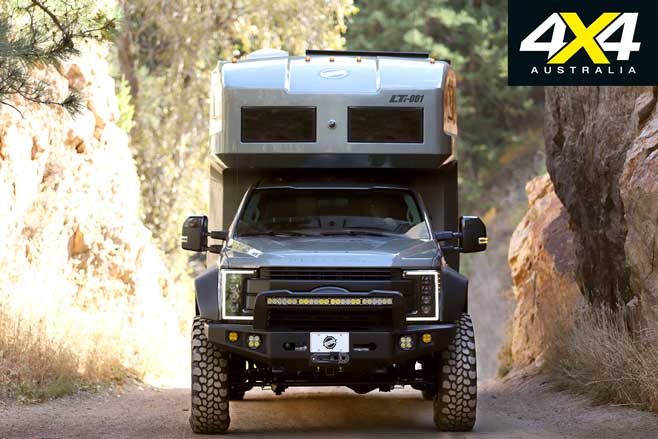
“It is a process that requires a large investment in moulds, highly skilled composite technicians and expensive materials, but we believe the benefits of the much lighter weight and higher strength create value for our customers that is worth the investment and cost,” says EarthRoamer.
Giving the vehicle its ‘self-sufficient’ status includes the use of a lithium-ion battery bank (11,000 Watt/hour), substantial water capacity (378.5 litres of fresh water and 227 litres of grey water), massive solar power courtesy (1320 Watts of rooftop panels), a 360-litre fuel tank, and a full-height bathroom with a shower and cassette toilet (with 19 litres of water).
The burly vehicle measures 8839mm (long), 2438mm (wide), and has a maximum height of 3658mm. It has a 30° approach angle, 22° departure angle, 14° breakover angle and 317.5mm of ground clearance.
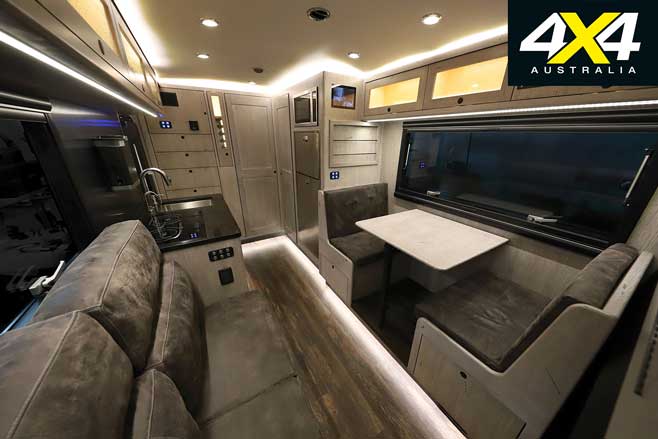
There are five floor plans buyers can choose from – Telluride, Boulder, Breckenridge, Aspen and Crestone – and they offer different sleeping, dining and lounging options.
Clearly a vehicle like this isn’t going to come cheap, and EarthRoamer lists the base price of the LTi at US$590,000 (that’s around $850K here). EarthRoamer adds that a well-equipped LTi is typically priced in the $650,000-$700,000 bracket (AU$950,000 to just over AU$1million).
JAGUAR Land Rover has purchased the Derbyshire-based rally raid specialist outfit Bowler Motorsport, to add to its Special Vehicles Operations (SVO) division.
The product of founder Drew Bowler, Bowler Motorsports produced, raced, sold and supported rally raid-style vehicles, many of them Land Rover based, for 30 years up until Drew Bowler’s passing in 2016.
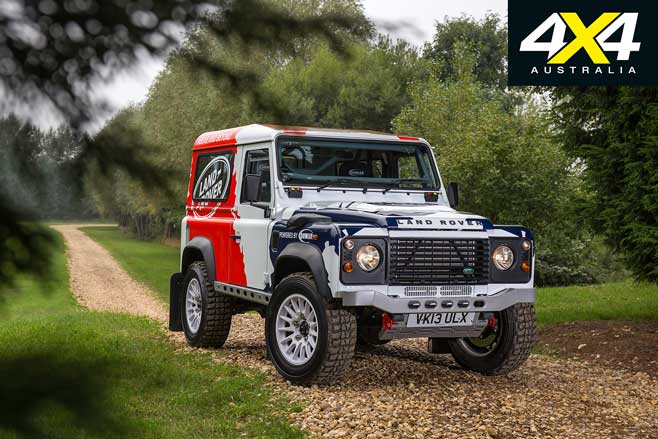
The pinnacle of Bowler’s vehicles were the radical Wildcat and (later) Nemesis models that had success in many of Europe and the UK’s top cross-country rallies. Bowler officially partnered with Land Rover in 2012, leading to the creation of the Defender Challenge by Bowler rally series in 2014-2016.
Since Drew Bowler’s death, the company has continued to produce performance vehicles for race and road and has integrated its extreme motorsport engineering and competition expertise into wider vehicle R&D programs. However, the vehicles were never as wild or exciting as those Wildcat and Nemesis rally-raid specials.
While we’re not expecting to see a Wildcat in Land Rover showrooms anytime soon, JLR plans to use Bowler’s tuning and development expertise to bolster its Special Vehicles Operations (SVO) division. The question is, could the acquisition see Land Rover get more involved in motorsport, even as far as a factory-backed entry to cross-country rallying and ultimately the Dakar Rally.
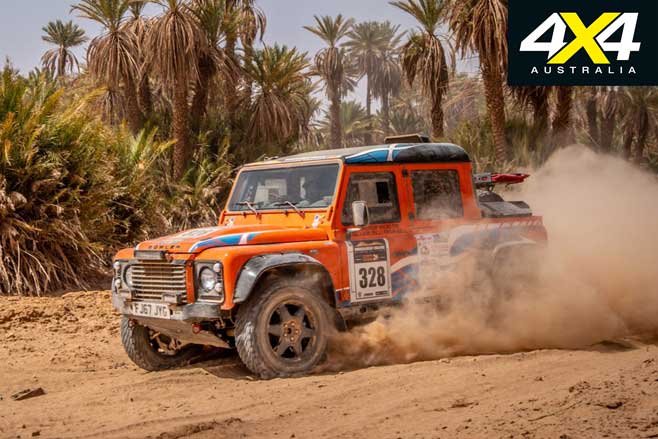
“At Special Vehicle Operations we are all eager to start working with our new colleagues at Bowler,” said Michael van der Sande, Managing Director of Jaguar Land Rover Special Vehicle Operations. “Adding the Bowler team’s skills and experience to those of SV, Vehicle Personalisation and Classic is a key step in our strategy to create an exciting and diverse portfolio of products and businesses within Special Vehicle Operations.
“For almost 35 years the Bowler name has stood for innovation and success, with a reputation forged by its participation in the world’s toughest off-road motorsport competitions. It’s exciting that we’re now in a position to participate in and lead the Bowler brand’s future as part of Jaguar Land Rover.”
The Bowler team of more than 25 specialised staff will continue to operate out of the Derbyshire premises.
JAMIE Facer’s mammoth Ford F-250 proved once and for all that bigger is definitely better in the eyes of our readers, with the 2017 F-250 Platinum winning our Custom 4X4 Of The Year title for 2019.
The burly pick-up clinched the gong ahead of Max’s tidy N80 Hilux by 130 votes, with another Toyota – Matt Szczesny’s 200 Series – rounding out the top three.
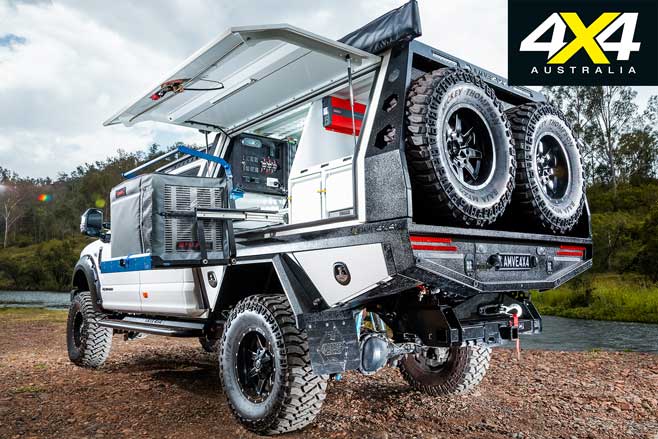
The tinkered F-truck, meticulously crafted by Jamie Facer of Allsafe Mine Vehicle Equipment (AMVE 4×4), pulls no punches, which certainly helped when it came time to vote.
Powered by Ford’s well-known 6.7-litre Power Stroke V8 engine, the F-250 comes from the factory floor as an already-capable 4×4 tourer (after the import and conversion companies play their part, of course), but that didn’t stop Jamie from going to town on the big rig.
A quick glance at the canopy reveals AMVE 4×4’s handiwork, with the epic set-up perfectly suited to remote touring – toolboxes, copious storage, an MSA 4×4 fridge slide, an Engel fridge and a complex electrical fit-out, to name a few.
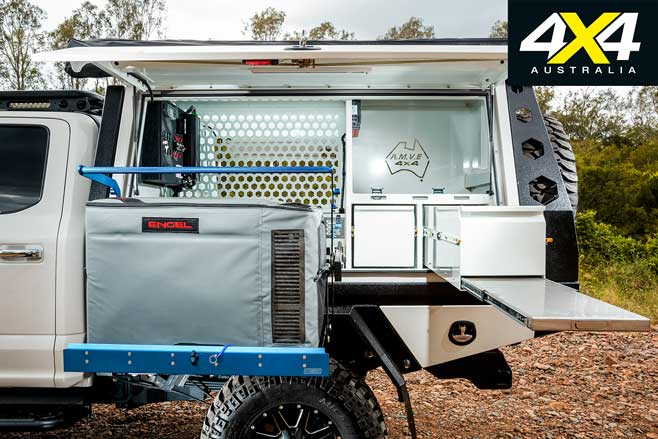
This example stands four inches taller than stock thanks to King Off-Road Racing Shocks coil-overs up front and a set of standard rear springs out the back (with an additional leaf), as well as Airbag Man airbags and another pair of King Shocks.
Other features include LED lighting, two Warn winches, that schmick Road Armor front bar, Bushwacker flares, and a Rhino-Rack Pioneer platform. The vehicle rides on Fuel 18×9-inch wheels wrapped in Mickey Thompson MTZ P3s.
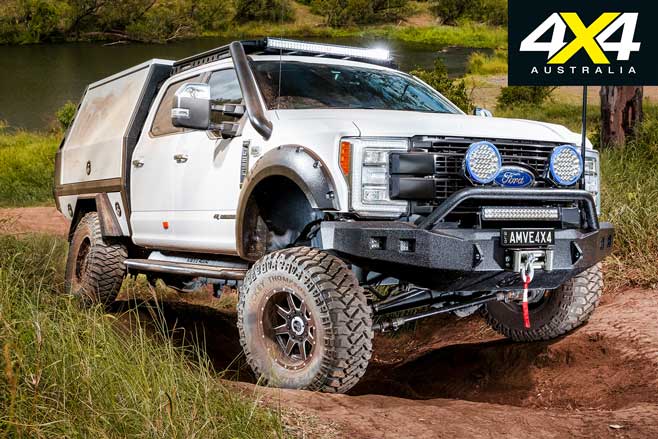
Read our complete write-up on the custom 4x4OTY-winning tourer here.
Those who voted in the Custom 4×4 of the Year competition entered the draw for a chance to win a Maxxis Tyres Australia voucher valued at up to $2000. The lucky winner of the fresh set of Maxxis rubber is Renai R from NSW.
WE ALL LIKE to cram as many appliances into our caravans, camper trailers and motorhomes to take on a camping trip. With so many to keep tabs on, you can’t underestimate usability and convenience when it comes to managing all your on-board devices, particularly when you want to control more than one appliance at the same time.
Mike and Gen, aka Adventure Curated, knew that with all the gear they were packing, they needed a reliable and easy-to-use control system to monitor all their devices when they embarked on an outback adventure through the vast and harsh terrain of the Simpson Desert.
Along with their REDARC Manager30 Battery Management System and Pure Sine Wave Inverter the couple equipped their LandCruiser with REDARC’s award-winning Total Vehicle Management System (TVMS), RedVision.
But first, what does RedVision do? Here is a quick snapshot:
All-in-One
COMBINING power protection, distribution and control in one unit, RedVision allows the user to toggle lights, water pumps or a fridge on and off, in addition to monitoring water levels, temperatures, energy (battery) usage and storage.
Power to your fingertips
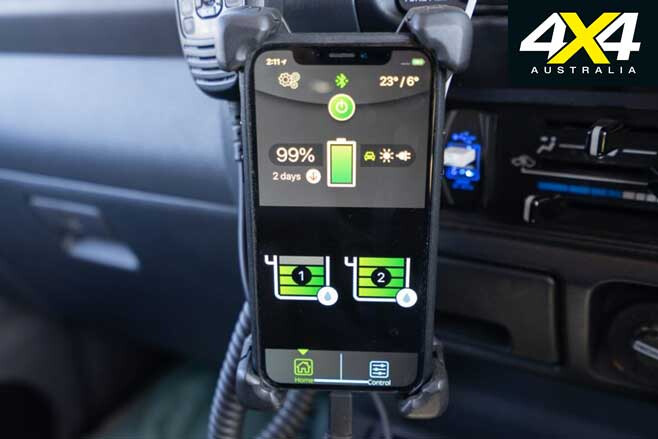
REDVISION comes equipped with an in-vehicle portable display and the option to download the RedVision smartphone app for iOS and Android mobile devices, meaning control of all your appliances is at the convenient touch of a button.
“Both are intuitive to use and have large easy to read colour displays,” said Mike about the in-vehicle display and RedVision app.
The ease of access to all your appliances from a single display/smartphone app meant Mike could check which devices were switched off to keep an eye on power usage without leaving his roof-top tent. Battery status and water tank levels are a glance away with the RedVision app, and with the push of a button Mike could turn on the water pumps to refill his water bottle and rehydrate.
Custom set-up
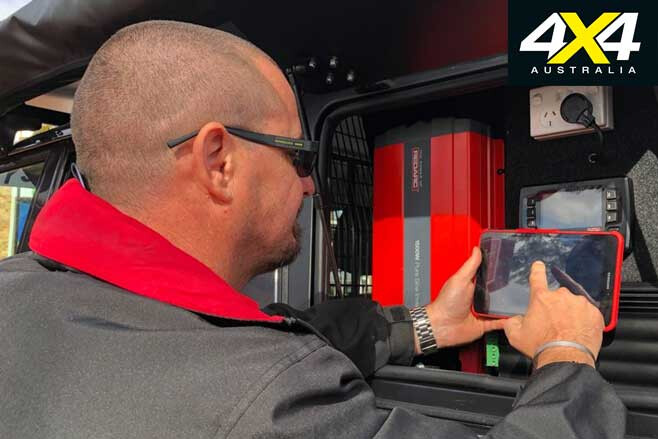
REDARC can customise each of RedVision’s controls to your devices. Mike chose to program his car’s rear locker and boot interior lights to switch off automatically when he started the engine, but there are many customisable options to suit your preference.
Bluetooth usability
DESPITE being mounted in the rear of the car, Mike and Gen were able to connect their tyre compressor to the RedVision system and conveniently take control via the RedVision smartphone app without the hassle of extra wiring to the front of the vehicle.
A handy eco-system
PAIRING RedVision with a REDARC Manager30 makes for easy readability of power consumption and charging time.
“This made it really easy for us to see how much power we were consuming at different times and how quickly our battery charged while driving and in different conditions from solar,” said Mike.
The bottom line
IF YOU have an upcoming road trip and favour a wealth of devices to help keep you connected to your travelling essentials, you need the system to match. Mike recommends you turn to RedVision as your go-to system to control and monitor your devices, describing it as “absolutely impressive”.
RedVision is available for fitment in campers, caravans motorhomes and 4WDs.
Connect with Adventure Curated and stay up-to-date with their adventures via their Website, Facebook, Instagram and YouTube channel. You can read the review in full here.
For more information about RedVision, visit: www.redarc.com.au