
READ our comprehensive 4X4 Of The Year coverage in the February 2020 issue of the magazine, which is in stores now.
Seven contenders vied for the top gong at this year’s event, scrapping for honours at the 4×4 Training and Proving Ground in Werribee and on the tracks and trails from Healesville to Marysville.
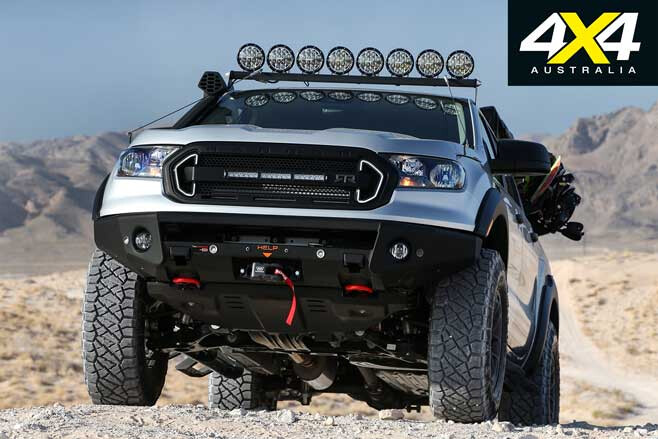
We crossed the Pacific to the US of A, to get up close with Ready To Rock’s tricked-up Ford Ranger. The Ranger RTR gets Fox Performance suspension and a Ford Performance catback exhaust, among a host of well-thought-out accessories.
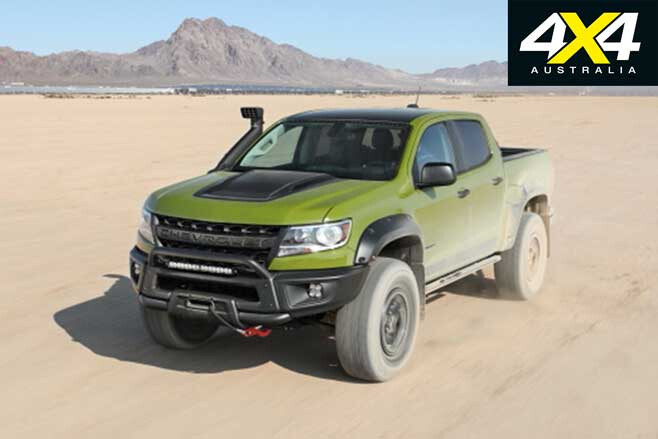
Another epic vehicle we spotted stateside is American Expedition Vehicles’ Chevrolet Colorado ZR2 Bison. The Bison, once a SEMA Show stunner, now spends its time fighting sand dunes wearing an iconic green livery.
We also found a few pages for another wicked custom 4×4: an SAS Colorado that’s an off-road beast!
For Season 6 of our 4X4 Adventure Series, the crew had the Flinders Ranges in its crosshairs. In this instalment, Ron, Matt and GT start the trip at the foot of Mount Remarkable and pull the handbrake at Wilpena Station, stopping at iconic landmarks along the way.
ALSO IN THIS ISSUE – Jeep Gladiator driven in NZ. – Exploring Winton Shire, Queensland. – Bush camping tips. – Project Ranger and Triton GLX+ in the shed. – Opinions, product tests and more.
The February 2020 issue of 4X4 Australia will start landing on shelves from February 6.
Of the 15,000km we’ve covered in our Ford Ranger in the first six months we had it, a large percentage of it was off-road. Trips to the Red Centre, Simpson Desert, Flinders Ranges and the Vic High Country saw us in dust, sand, rocks and mud, so keeping all that dirt out of the floor carpets was a good idea.
I’ve used plenty of different protective floor mats over the years, from heavy rubber ones to carpet and plastic ones, but they all have their pros and cons. One of the biggest cons is ill-fitting mats that slip and move around in the footwell until you end up chucking them out.
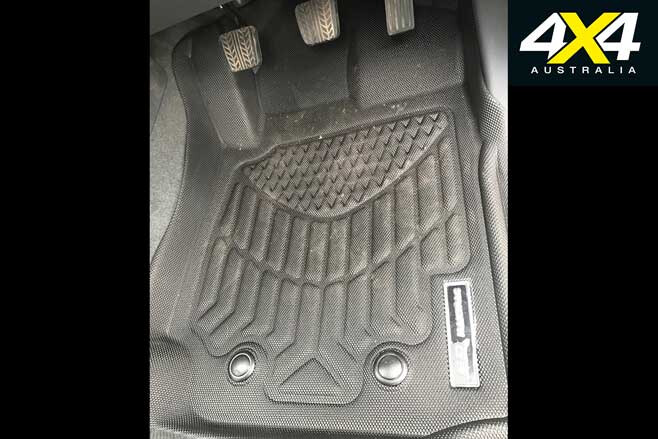
For the Ranger, we tried out the 3D Maxtrac moulded mats from TruFit. TruFit has been making moulded replacement carpets for cars for decades, so it knows the importance of a product that fits the contours of the vehicle’s floor, and they’ve applied this knowledge and experience to the 3D mats.
The first thing you notice about the mats when you fit them is that they are a perfect fit for the footwell. We’ve fitted them in both the front and back of the Ranger and they fit like a glove. And once they’re in, the mats don’t move around at all thanks to the patented ‘Maxpider’ backing that grips into the carpet, kind of like Velcro.
The mats are a three-layer construction: the Maxpider backing; an inner layer that is waterproof, shockproof and offers some sound insulation; and the top layer which can be either a rubber compound or polyester carpet. We’ve gone with the rubber 3D mats to make them easy to keep clean. Simply remove them from the car and shake them off – brush them if required, or hose them off if they’re muddy. Simple and effective protection for carpet and easy to keep clean … what more could you ask for?
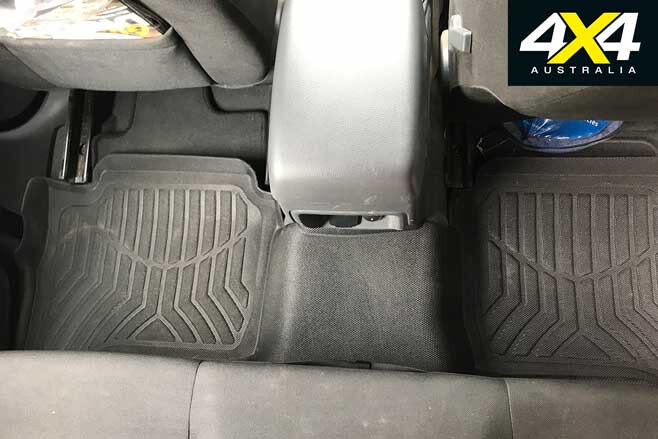
The best part about the 3D mats is that you don’t even know they’re there. They don’t move underfoot, so they never gather or get stuck beneath your boots – they are very much fit and forget. Just pull them out and clean them when needed.
The 3D mats are vehicle specific as they are moulded to each model, and TruFit has a huge range that covers all the popular 4×4 models.
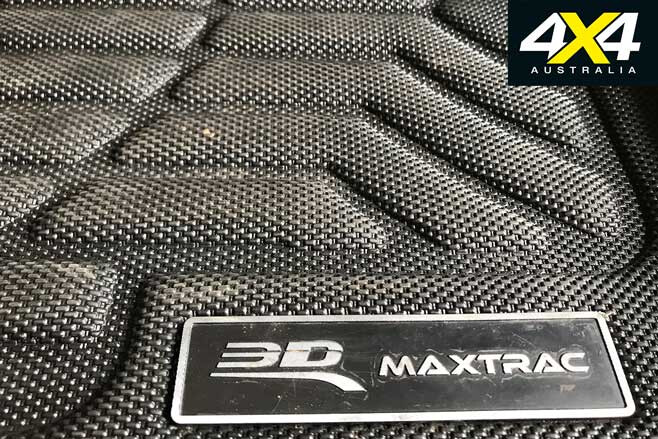
RATED Available from: 3dmats.com.au RRP: $279 + shipping (PXII Ford Ranger double cab) We Say: Fit-and-forget protection for vehicle carpet.
RECKON you’d be a great steerer and/or navigator without the immense pressure of competition, particularly at an event as challenging as a rally raid? Well, join the queue.
The Dakar-style Yokohama Sonora Rally is a premiere rally event held each year in Sonora, Mexico, with the winner of the event earning free entry into the prestigious Dakar Rally. However, for those who can’t handle to pressure-cooker of rally racing, the Sonora Rally will feature an Adventure Raid class in 2020.
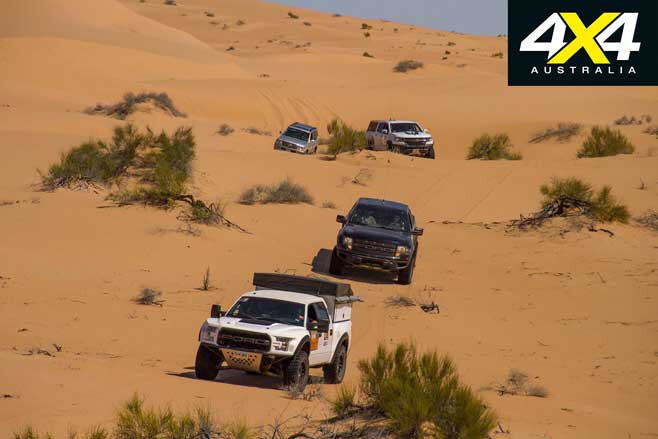
The Adventure Raid will give punters the opportunity to experience rally raid and navigation “without the stress of racing”, by guiding them along many of the competition routes.
Event orientation and a welcome gathering in Hermosillo, Mexico, will kick off proceedings, with the Adventure Raid convoy to travel to the 17th-century mountain settlement of Banamichi, across Rio Sonora, before arriving at the sand dunes of the Gran Desierto de Altar.
Following a night beneath the stars, the group will trek along the Sea of Cortez, pass through the fishing village of Puerto Penasco, before arriving at the finish line in San Luis Rio Colorado.
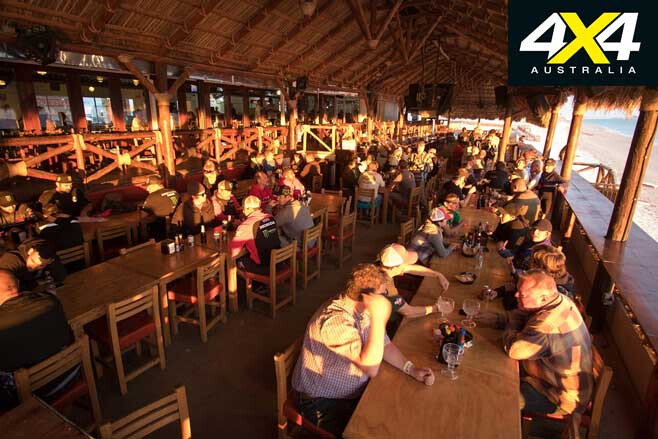
Participants will be thoroughly catered and entertained throughout the event, and they’ll also be able to mix with race teams and competitors each night.
The Adventure Raid will be led by Off Road Motorsports Hall of Famer – and 4X4 Australia contributor – Chris Collard, and will be open to street-legal 4WDs.
The 2020 Yokohama Sonora Rally will run from March 15 to 20. For more information, visit: www.sonorarally.com
MERCEDES-BENZ has signalled it will discontinue production of its Nissan Navara-based X-Class mid-size ute in May this year. This comes less than three years since the ute was launched to the world with high hopes.
Mid-size 4×4 double-cab utes is the hottest segment in the Australian new car market and has been for the last five years. Mercedes-Benz saw this growth here and globally and predicted the segment could grow to three million units worldwide in the 10 years from 2016. Benz wanted in on the action but didn’t have a vehicle to slot straight in to the market, so looked to fill the void in its line-up as a fast as possible.
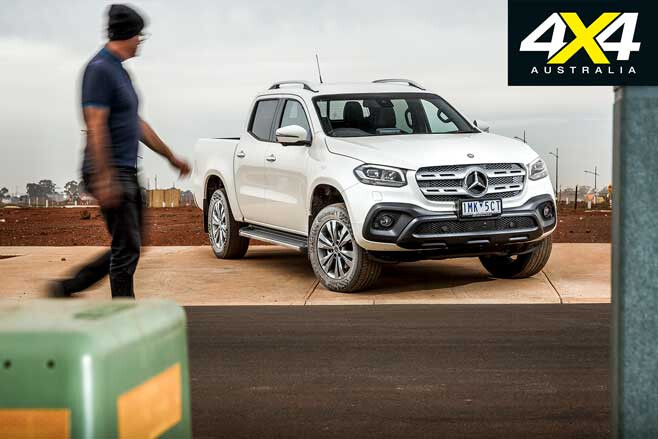
“With the Mercedes-Benz pick-up, we will close one of the last gaps in our portfolio,” said Dr Dieter Zetsche, then Chairman of the Board of Daimler AG and Head of Mercedes-Benz Cars. “We want to offer customers vehicles matching their specific needs. The X-Class will set new standards in a growing segment.”
Mercedes-Benz partnered with Nissan-Renault to build a pick-up on the Alliance’s platform used beneath the Nissan Navara and Renault Alaskan. With its coil-spring rear suspension set-up in lieu of traditional load-carrying leaf springs, Benz saw this platform as ideal to deliver the type of ride and handling buyers expect of the brand while retaining the load and towing capacities of a light truck.
Mercedes-Benz said at the time of the X-Class’s unveiling that by partnering with another manufacturer and using an existing platform, it would halve the gestation period of bringing the new vehicle to market and get it into the popular segment as soon as possible. The pick-up partnership also tied in with existing collaborations between Mercedes-Benz passenger cars and the Nissan-Renault Alliance.
Yet the partnership could have been the nail in the coffin of the short-lived X-Class. The Navara doesn’t share the popularity of the class-leading vehicles such as the Toyota Hilux and Ford Ranger, selling less than a third of the numbers of the top two in 2019.
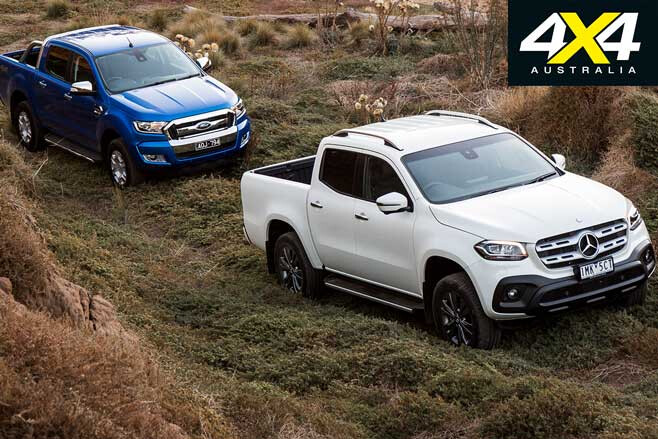
In the Australian 4×4 pick-up segment in 2019, the Ford Ranger led with 37,004 sales, followed by the Hilux at 36,325; the Navara could only muster 10,661 sales. For its part, the X-Class sold just 2081 units in 2019 on the back of only 1520 in 2018. Even the ageing Volkswagen Amarok, the only other European competitor in the segment and the only other ute to offer the performance of a V6 diesel engine, still managed to move 8304 units last year. Globally, the X-Class sold 15,300 units in 2019.
Mercedes-Benz promised to deliver the world’s first premium mid-size pick-up, but it failed to deliver on this promise. While it did an amazing job of transforming the humble Nissan ute, there was no hiding its origins, and buyers, it seems, were not prepared to pay premium prices for a vehicle based on an otherwise average platform. It didn’t help either that in many ways the X-Class was still identifiable as a Nissan despite its extensive makeover, inside and out.
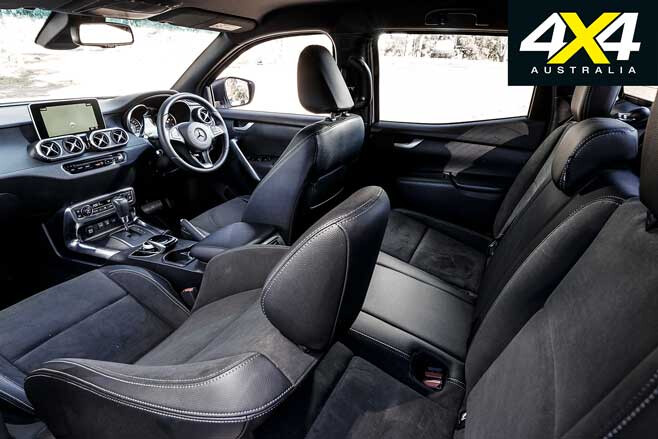
At the time of the X-Class launch, Volker Mornhinweg, the Head of Mercedes-Benz Vans, claimed: “We will open up and change the segment of mid-size pick-ups – with the world’s first true premium pick-up for the modern urban lifestyle. Our future X-Class will be a pick-up that knows no compromise.”
Launched in Australia in 2018 as the entry-level X220d and more powerful X250d across three models, the X-Class was priced from $50,400 for the X220d Pure manual through to $64,500 for the range-topping X250d Power automatic. At that time, a top-of-the-range Hilux SR5 4×4 could be bought for $54,490, a Ford Ranger Wildtrak for $59,590 and a Nissan Navara STX for $51,990.
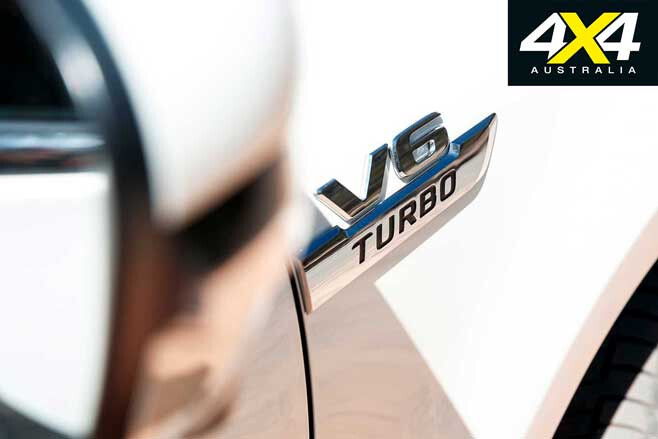
Mercedes upped the ante in 2019 with the release of the V6-powered X350d, which was priced from $73,270 for the Progressive model; although, that price grew rapidly once you started ticking boxes for optional features you might expect of a Mercedes vehicle. The X350d Power model we tested at 4X4OTY had a list price of $79,415, but as-tested was $90,745 plus on-road costs. The buyer wouldn’t be getting much change from $100K on that ute.
Those prices proved too much for an astute market that knew only too well that the X-Class was little more than a Navara in a fancy suit; even if it was a bloody impressive suit. The market was limited too, with the X-Class only sold in Argentina, Brazil, South Africa, Australia, New Zealand and Europe. Significantly it wasn’t offered in the USA, a market dominated by full-size pick-up trucks which is only just now warming to the idea of smaller offerings.
Could the X-Class have fared better if Mercedes-Benz held out and developed its own vehicle? We think buyers would have been more inclined to pay premium prices for a vehicle that was purely Benz, with all the hallmarks of the prestige brand; although, developing a new vehicle from scratch for a limited market would have been more costly. Perhaps if Benz had done its own ute, made it a bit bigger and offered it in the USA, it could have been a success story.
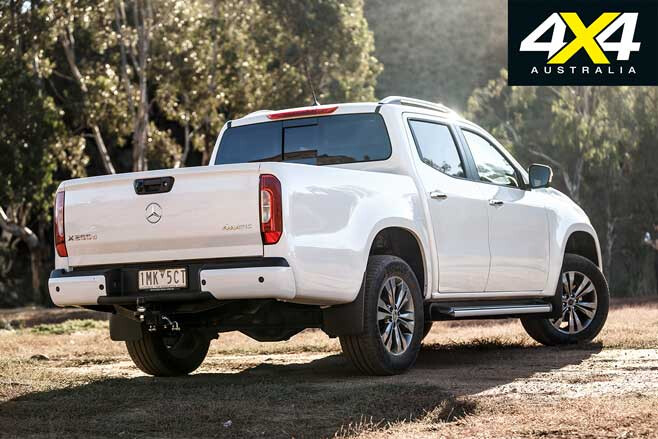
As it stands, Mercedes-Benz has no plans to develop its own ute or continue the X-Class in any way. Production of X-Class ends at the Barcelona plant at the end of May 2020, but Mercedes-Benz Vans Australia will not be ordering any more X-Classes from now on, instead relying on its existing stock to see the model out.
Mercedes-Benz Vans Australia’s Corporate Communications Manager, Blake Vincent, told 4X4 Australia that they currently have good stock across the X-Class range to see the model out and that all service and warranty work will continue to be covered by Mercedes-Benz Vans Australia through its dealers.
GM AIRS SUPER BOWL AD FOR ITS EV HUMMER
Published: 3/2/2020
A QUIET Revolution has hit the 2020 Super Bowl, with GMC airing the highly anticipated ad for its Hummer EV.
The ad, featuring NBA superstar LeBron James, doesn’t reveal much in the way of details, other than that the EV will generate 1000hp (746kW) and 11,500lb-ft (15,592Nm), and will reach 0-60mph in just three seconds. Check out the ad here:
GMC’s Hummer EV will be built at the company’s Detroit-Hamtramck assembly plant. The vehicle will officially be revealed on May 20, 2020, with initial availability from “Fall 2021”. -TT
GM REVEAL TEASER IMAGE OF ELECTRIC HUMMER
Published: 28/1/2020
THE first teaser image of GM’s all-electric Hummer has been revealed during an announcement that GM is investing AU$3.25 billion into its Detroit-Hamtramck assembly plant.
The substantial investment will see GM completely retool the assembly plant and dedicate production entirely to its range of upcoming electric pick-ups and SUVs, as well as autonomous vehicles.
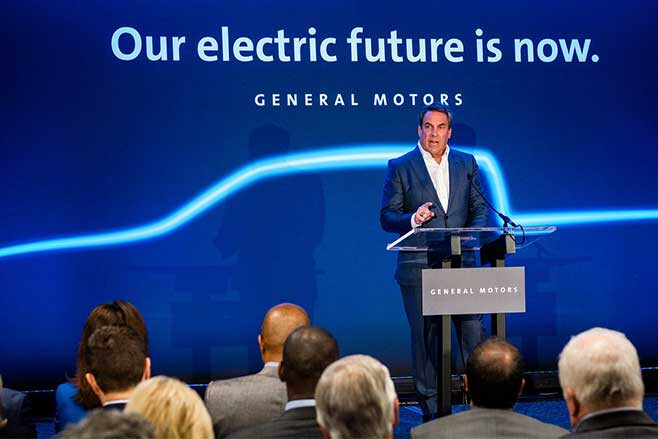
While the teaser image – simply a silhouette of a dual-cab (or crew-cab) ute with a long, sloping hood – doesn’t give much away at all, there are whispers that GM will reportedly release a TV commercial during this year’s Super Bowl, taking place in Florida, USA, on February 3, which will provide more juicy information on the electric Hummer. – TT
HUMMER SET TO RETURN IN 2022 AS AN ELECTRIC VEHICLE
Published: 13/1/2020
GENERAL Motors is planning to bring back its Hummer nameplate and turn the tables on its past reputation as a gas-guzzling SUV brand.
The Hummer name is reportedly coming back in 2022 and will be applied to a range of electric pick-up trucks to be sold under the GMC brand.
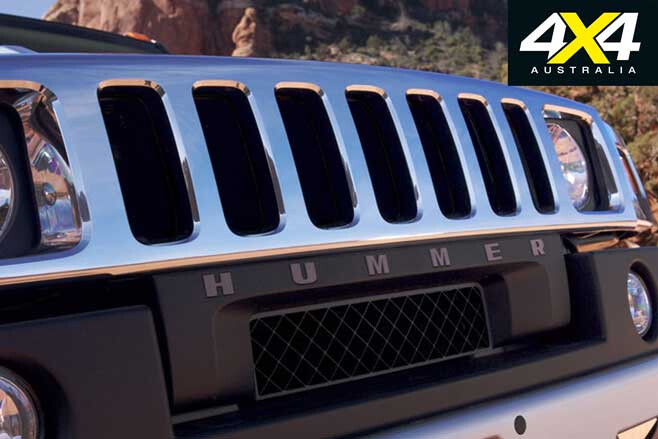
EV trucks are becoming big news in the US, with the likes of the Tesla Cybertruck, Rivian R1T and even the iconic Ford F-Series making headlines as they approach series production.
As part of its bankruptcy proceeding in 2009, General Motors announced it would discontinue manufacturing the H2 and H3 models and would sell its troubled Hummer brand to a Chinese manufacturer. But the deal fell through following Chinese government intervention and the brand has been lying idle ever since.
Fast forward a decade and GM will resurrect the nameplate for its EV trucks, in a move that could bring some perceived ruggedness to the yet-to-be-seen electric vehicles.
GMC currently offers a range of three pick-up trucks, including the mid-size Canyon, the 1500-size Sierra and Sierra Denali, and the 2500-size Sierra HD. The GMC Canyon is related to the Chevrolet Colorado in its underpinnings, while the Sierra models share their platforms with the Chevrolet Silverado 1500 and 2500 variants.
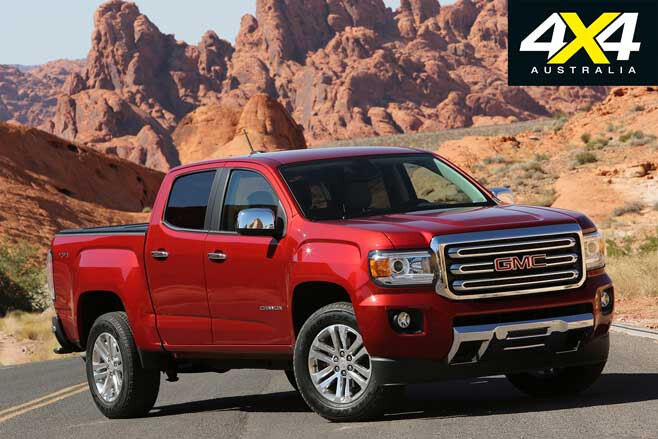
It remains unknown as to which GMC models will get the EV treatment and Hummer badge, but you would expect the popular Denali/1500-sized pick-up would be obvious starters, followed by the mid-size Canyon. Or could the Hummer name be applied to a bespoke line of vehicles?
Late in 2019 General Motor announced a US$ 1.5billion investment in its Wentzville, Missouri, plant to “bring its next generation of midsize pick-up trucks to market”.
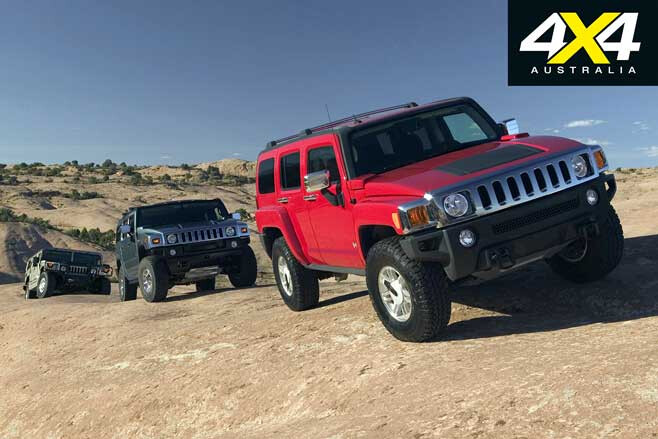
The Wentzville plant has produced the GMC Canyon and Chevrolet Colorado twins since the brand re-introduced its mid-size trucks in 2017, to compete with the Toyota Tacoma and Ford Ranger.
Unlike the Hummer H1 which was a civilianised version of the HMMWV military vehicle made by AM General, the H2 and H3 SUVs were based on GM’s 1500 and Colorado mid-size pick-up platforms respectively and included the H3T Colorado-based pick-up (pictured).
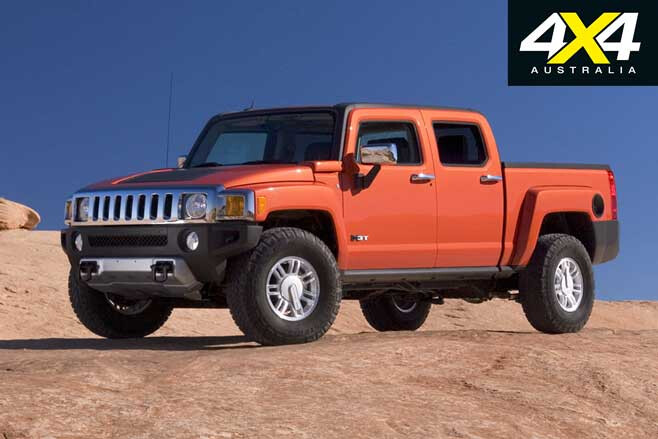
There is no official word yet on what form the GMC Hummer EVs will take as they are not expected to be revealed until 2021. Nor is there any word on whether the Hummer brand will make it back to our shores as an EV.
4×4 Australia drive review
WALK the halls of the annual SEMA Show in Las Vegas each year for the past decade and you’ll be left in no doubt of the popularity of Jeep’s JK Wrangler.
It is certainly the most customised 4×4 on the planet and, even among all the hot rods, street machines and customs of SEMA, it could well be the highest represented vehicle at the show. This is why it continues to win the most popular 4×4 at SEMA each year and why we’re expecting this year’s new JL Wrangler to be huge.
A consequence of the JK’s massive popularity is that to stand out among the throngs your Jeep must be something special. So many SEMA builds are just rigs with catalogues thrown at them, using every bolt-on piece of bling possible with no account for functionality or good taste. The show floors are full of cars like this, and their show lives are short-lived.
So how do you make your Jeep stand out? We reckon Synergy Manufacturing’s Dave Schlossberg got it right with his JKC that debuted at SEMA 2017.
The C stands for Commando, as Dave re-bodied a JK Rubicon with a supercool Jeepster Commando body. But there was a lot more to this build than a simple body swap.
“I’ve always been a fan of the 1966 to 1971 Jeepster Commandos, but wasn’t a fan of the old technology,” Dave told us. “We swapped in a brand-new Jeep JKU frame under the Commando body and shortened up the wheelbase to 101 inches to match the factory (Commando) wheelbase.”
Thankfully for Dave the task was made a bit easier with the help of his business, Synergy Manufacturing.
Synergy is a Jeep specialist company and manufactures suspension systems, components and accessories for many Jeep models and sells them around the world. Synergy products are available in Australia through local stores such as Double Black Off Road and SBR Off Road.
The wheelbase of a stock JK Unlimited is 116 inches, so that chassis had to be shortened 15 inches to match the Commando body.
After the chop, the Rubicon-spec Dana 44 axles were refitted on a Synergy Stage 3 suspension kit, using 50mm raised front and 25mm raised rear coils and Fox Racing 2.5-inch DSC shocks. The stock Rubicon e-lockers and 4.1:1 gears were retained as they were more than deemed up to the job, while custom 1350 driveshafts were used front and rear.
The chosen powertrain owes more to General Motors than any Pentastar brand, and it starts with a 6.0-litre LQ4 small-block that has been tweaked with aftermarket cylinder heads and a cam to produce around 400hp.
The V8 is backed by a GM 4L80 transmission beefed up by GearStar Performance, while an Atlas transfer case fitted with a 4.3:1 low range controls the all-wheel activation with deep crawling ratios.
Dave admitted that adapting the 1971 Jeepster body to the modern chassis was one of the more testing aspects of the build. “Getting the body to fit right on the JK chassis and the extensive amount of bodywork required was a challenge,” he recalled. “We did a ton of body work to the floor pan, rear bed area, rocker guards and firewall to get it all to look and fit well, and still be functional.”
Again, having your own manufacturing business helped here. “Special thanks to Kevin Burk and Dustin Boyack in our engineering/fabrication departments at Synergy Manufacturing. These guys were the blood, sweat and tears behind the build and it could not have been done without their hard work and top level skill sets,” Dave added.
The team nailed the look, and the bright red paint applied by San Luis Autobody in Synergy’s home town of San Luis Obispo, California, sets the retro body alive. The original Jeepster badges and stripes, as well as the old-school rollbar, complete the retro look.
We weren’t the only ones taken by the Commando at SEMA, where it picked up a swag of accolades. The Transamerican Auto Parts (TAP) “Life is Better Off-Road” award is contested between only the best off-road vehicles at SEMA, and the Commando scored first place. It also ranked Top 40 in the Battle of the Builders competition, including Top 10 in the Off Road Class.
In awarding the Synergy Commando at SEMA, TAP President and CEO Greg Adler mimicked our thoughts on the vehicle when he said: “There was clearly a lot of thought, effort and skill put into this build, and with so many over-the-top trucks and Jeeps on display at the show, this simple, clean and well-executed project represents exactly what this award is all about.”
It seems the simple things in life are so often the best, and what could be better than tearing up the Californian dunes in this retro Jeep?
A Closer Look
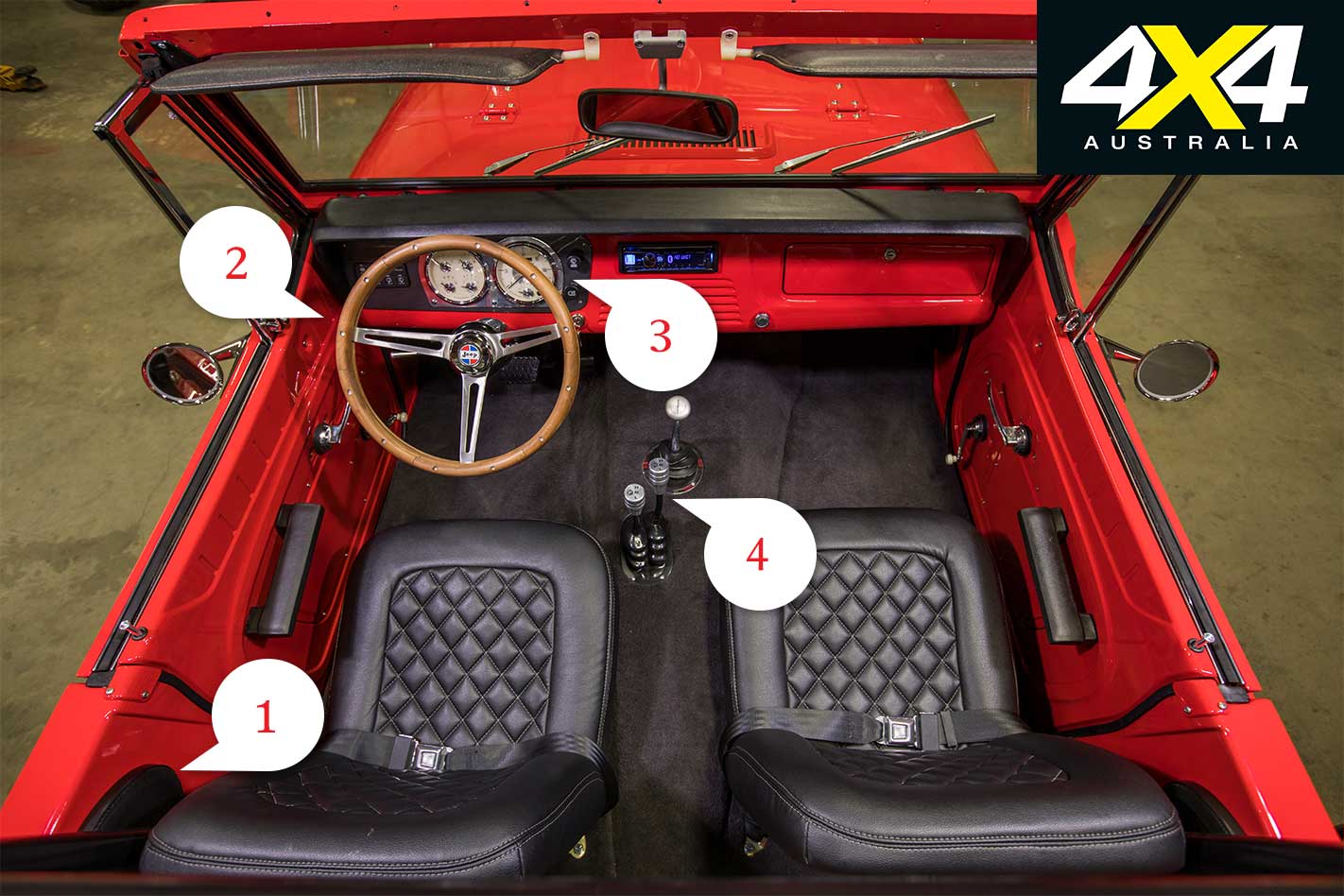
1 – If the sound of the V8 doesn’t float your boat, there’s an Alpine sound system.
2 – Wood-rim wheel and timber cargo deck add to the old-school style of the JKC.
3 – Classic-look gauges from AutoMeter maintain the retro theme of the Jeepster.
4 – Twin sticks control the Atlas transfer case to 4×4, 4×2 and low range activation.
Under the Bonnet
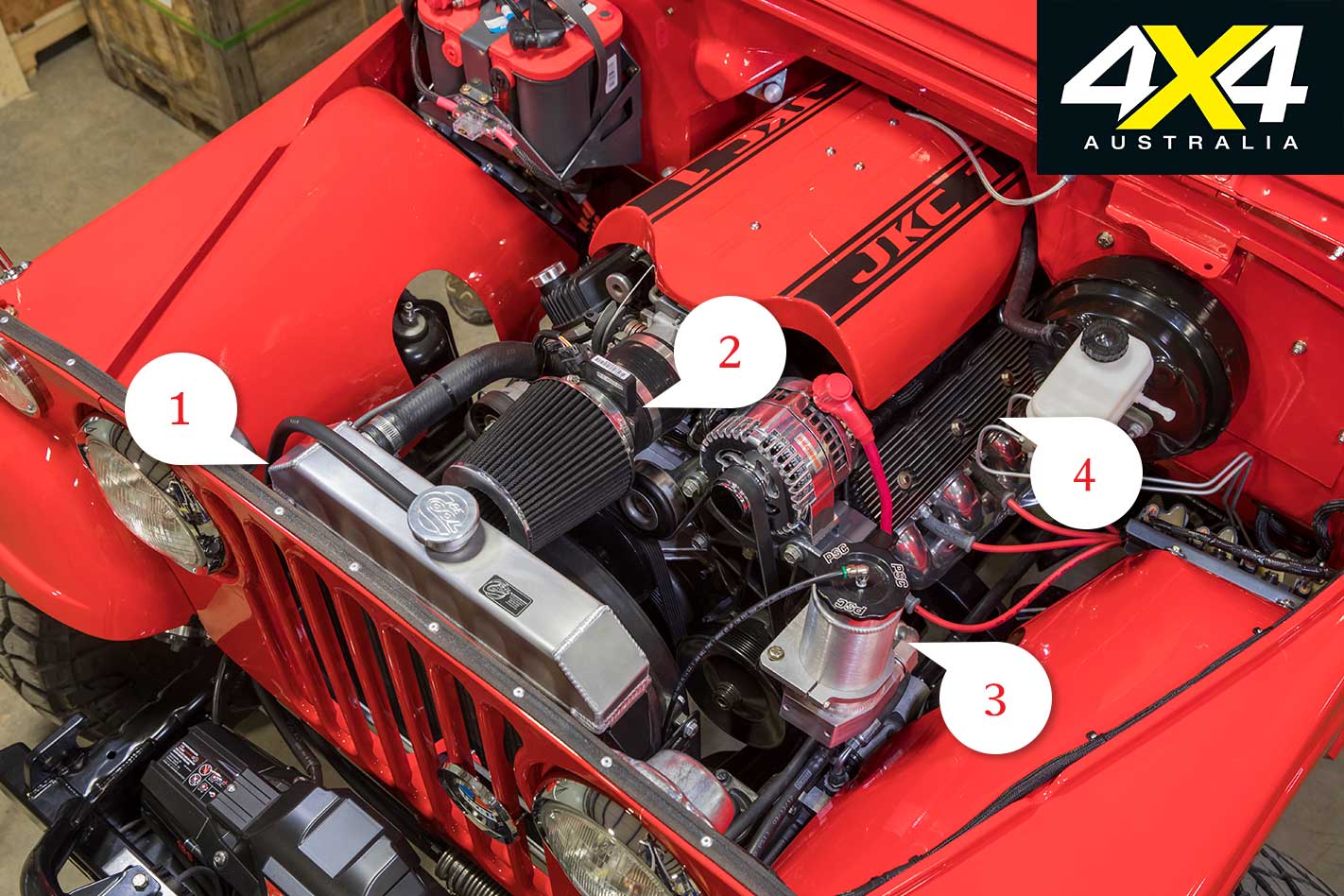
1 – An aluminium radiator keeps the engine cool when powering through the dunes.
2 – The 6.0L LQ4 breathes in through a pod air filter and out via Hooker Headers and a dual 2.25-inch exhaust.
3 – PSC remote steering pump reservoir helps keep the big Jeep aiming true.
4 – Finned rocker covers look better than the factory LS coil packs.
Gear Made Right
THE suspension used on the JK Commando is indicative of the quality components made by Synergy Manufacturing.
The Stage 3 kit is a bolt-in system and includes front and rear track bar relocation brackets; flipped drag link (also available for right-hand drive); progressive-wound coil springs; heavy-duty fixed lower control arms and adjustable upper control arms; front and rear bump stop extensions; front and rear sway bar links; and front and rear extended stainless steel braided brake lines.
The lower control arms manufactured from high-quality crush-resistant 1¾-inch x 0.188-inch wall tubing for durability and feature Synergy’s dual durometer bushings with Teflon bearing surfaces for a maintenance-free design.
Most of the Synergy Manufacturing products are made in the USA and are available for RHD Jeeps. Check them out at www.synergymfg.com
Second Opinion: Jeep Girls’ review
Dave Schlossberg’s hot-rodded Jeepster Commando is one of our favourite Jeeps, so when the Jeep Girls, told us they were taking it for a drive, we asked them to share the experience. by: Ashley and Brittany Hill
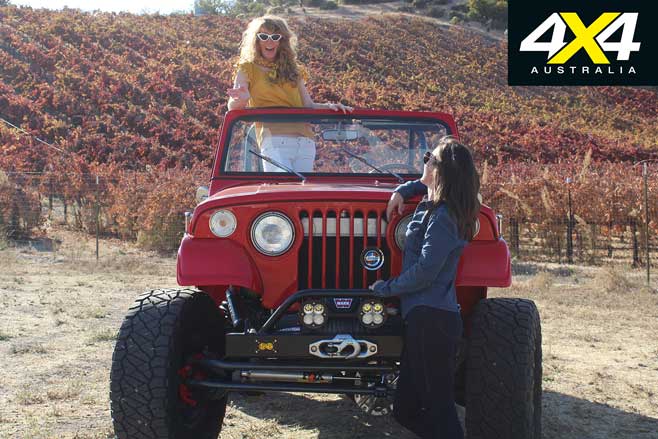
THE Cuesta Pass that crosses California’s Santa Lucia Mountains is no joke. Climbing from just above sea level to an elevation of 1522 feet, it threads Route 101 over the steep range connecting the town of Santa Margarita with the Pacific Coast north of Los Angeles.
Apparently, our recently acquired Jeep Wrangler YJ which we bought in Santa Margarita smoked its engine climbing the hill. At some points the twisting climb reaches a seven-per-cent gradient and can be quite intimidating; especially when you are driving someone else’s precious cargo such as Dave Schlossberg’s amazing Jeepster Commando.
But what were we doing driving this stunning Jeep here anyway? Let’s go back a few years to begin the story.
Show Stopper
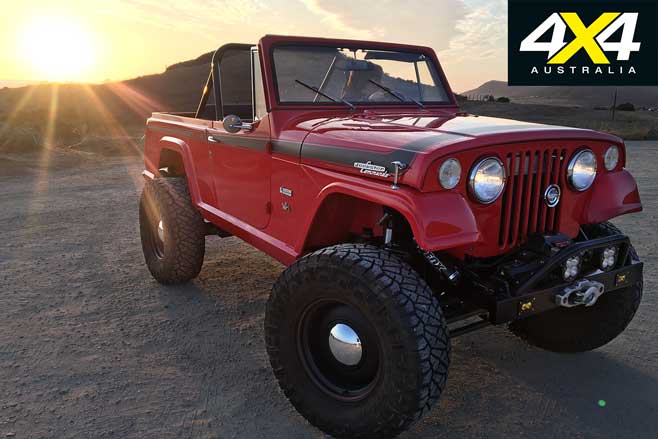
DAVE’S Commando made its debut at the 2017 SEMA Show in Las Vegas and I instantly fell in love with it. I jumped in the driver’s seat at the Las Vegas Convention Center and told my partner Fred Williams (of the online show Dirt Every Day) how much I loved it. It had undergone a complete transformation since I previously saw it, when Dave purchased the original vehicle.
Dave Schlossberg, founder of Synergy MFG, a manufacturer of high-end automotive performance components, found the Jeepster in the small town of Placerville, California, just outside the famed Rubicon Trail. I remember when he first got the yellow Jeep it even had a gold-miner hood ornament which is so iconic of Placerville, a town whose origins date back to the 1848 Gold Rush.
The 1971 Jeepster Commando didn’t run and sat with a cover on it at Dave’s shop on California’s Central Coast for a while. I would always ask him if it was running, because obviously I wanted to drive it.
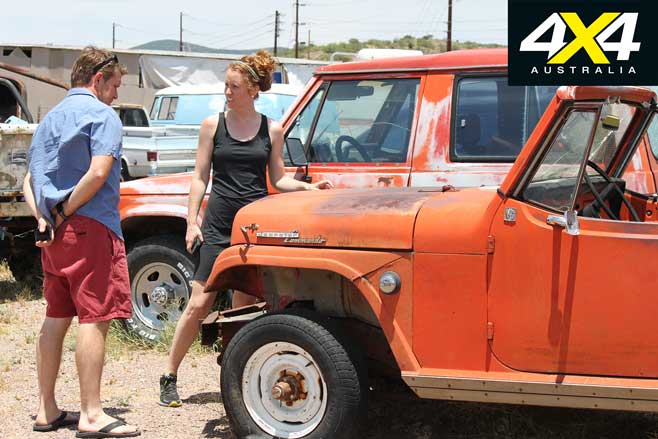
I love the more unique vintage Jeeps such as the early Willys Wagon and the Jeepster Commando. For years Brittany and I have been talking about purchasing a ‘heritage’ Jeep; something iconic, classic and stylish, with a story. We really loved the idea of something cool from the 1960s or ’70s, but everyone we talked to warned us about the amount of work involved with maintaining a vintage Jeep.
When I first saw Mopar Underground’s 1962 Willys Wagon at the Easter Jeep Safari, I fell in love with the aesthetic and I followed the Wagon through Moab, Utah, in my JK Wrangler. The Willys Wagon had been updated with the original chassis, coupled with a Jeep Wrangler TJ Unlimited drivetrain. The idea was maintaining a vintage look, but for it to steer, stop and perform on road (and off) like a modern Jeep.
New Old
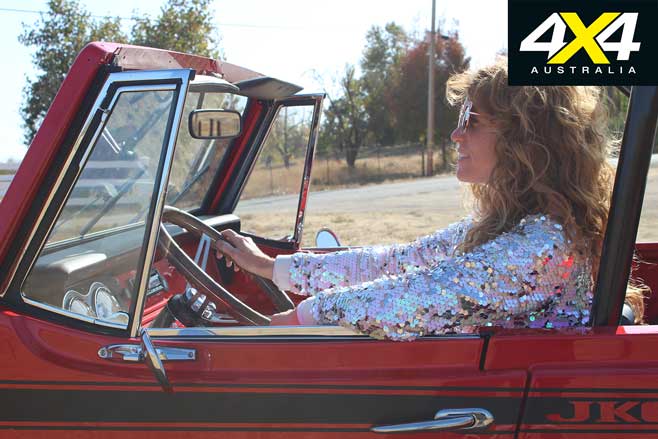
DAVE’S Jeepster follows a similar theme, with a classic yet restored vintage body on a modern chassis and driveline to improve its driveability and performance on- and off-road. In short, it’s a 1971 Jeepster Commando on a shortened JK Wrangler frame with an impressive powertrain.
The engine is a 6.0L LQ4 GM V8 backed by a 4L80E transmission custom-built by GearStar and an Advance Adapters Atlas 4.3 transfer case. The diffs are the donor JK Rubicon’s Dana 44s with the factory e-lockers. Naturally, the Jeepster rides on Synergy Manufacturing’s Stage 3 suspension kit, using 50mm raised front and 25mm raised rear coils and Fox Racing 2.5-inch DSC shocks.
I recently bumped into Dave and told him I wanted to take his Jeepster Commando on an adventure through California’s Central Coast. After twisting his arm – a lot – he agreed to let us take one of his favourite Jeeps to the beach and over the low mountain pass from San Luis Obispo to Paso Robles. Luckily my sister Brittany came out for the adventure, because it was like nothing I had ever driven before. As soon as I got in, I felt as if I was handed very precious cargo, as Dave said sternly: “Don’t mess it up!”
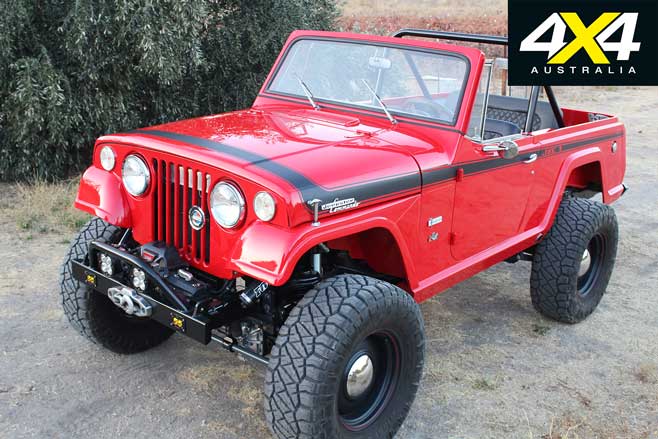
A short time into the drive, Fred called in a panic. He had no idea we borrowed the Synergy Jeepster and he needed us to rummage through a pile of parts in his shop, which is on the other side of town.
This meant one of two things: either I was going to have to tell Dave I was too scared to drive his Jeepster over the Cuesta Pass and take it back to him; or Brit was going to drive up the extremely steep grade.
Luckily Brittany isn’t afraid of going uphill, especially in a fully capable Jeepster with a powerful V8. Dave assured us he built the Commando to take on mountain passes and more, and that steep grades and sharp curves were nothing to be scared of. I shouldn’t have been worried. The refurbished JK chassis, Synergy suspension and 35-inch Nitto Trail Grapplers make the Jeepster effortless to drive, and the powerful 6.0-litre V8 climbed the pass without raising a sweat … but it did use a bit of fuel.
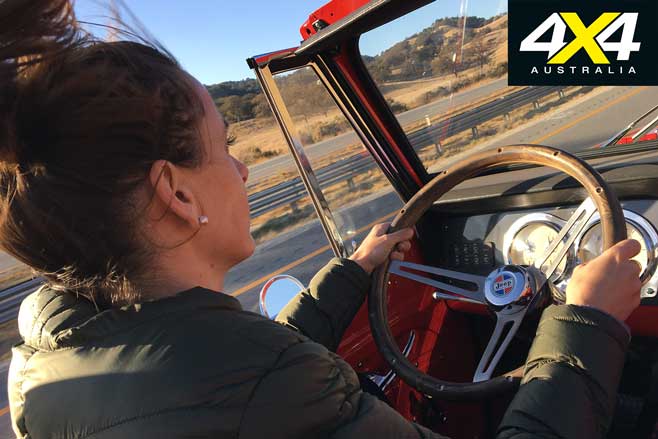
Instead of an intense grade like the eastern approach, the descent to the coast is gradual but much longer. As we went down, Brittany asked nervously how much longer the hill was, and told me that the fuel was running out. We made it to the service station and, when topping up, discovered one of the quirks of driving a vintage vehicle: they all have a unique way of being filled up. After finally figuring out that the pump handle needed to be upside down, we put in a few litres and headed onwards towards Synergy Manufacturing’s head office.
Dave sent us a text asking, “Did you wreck my Jeep yet?” I couldn’t wait to return it to him pronto as I had never been so nervous about being in someone else’s Jeep. As the sun was rapidly setting, we pulled off to take a breath and relax for a quick minute before driving back to Synergy. Our plan was to return it before dark, but the sun sets quickly in a USA winter, and about 10 minutes later it was completely lights out.
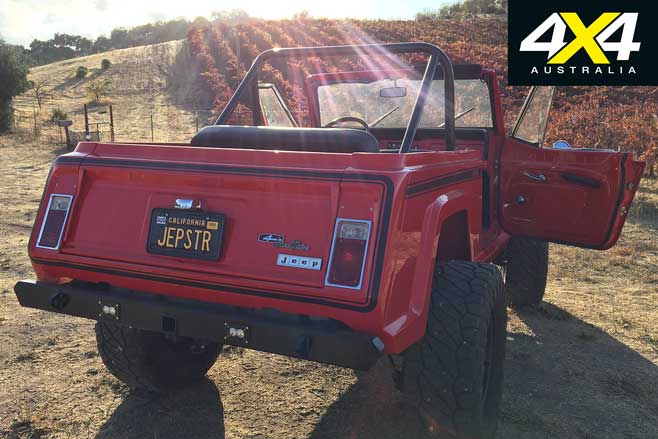
Pulling into Synergy in the dark, I couldn’t have been more excited to jump back in our rental car. We had a fabulous time, but we area learning that owning a heritage vehicle requires a lot of patience, flexibility and understanding. Just recently, as Fred was muscling in the replacement engine for our Jeep Wrangler YJ, he said, “no more Jeeps that aren’t running.” It’s true, because you really don’t know what worked, what has been replaced, or what type of surgery the vehicle needs.
I really love a stock classic heritage vehicle, but I also love the modern conveniences and power from a new vehicle. There’s really something to be said about the time and energy that engineers spend on crafting a vehicle the first time around. I wouldn’t say that I never want to own a heritage vehicle, but there’s so much more to learn in the meantime! Stay tuned as we continue to work on our version of a heritage Jeep … our 1992 Jeep Wrangler YJ.
Heading out from Winton it’s a solid 220km run on the blacktop until the historical and colourful town of Hughenden.
Wind the clock back to 1861 and it was Fred Walker who camped near the river heading north searching for the lost Burke and Wills party. Just opposite the Flinders River a huge coolabah tree was blazed by Walker in 1861, and the following year by explorer Landsborough, as they searched in vain.
Hughenden, or Mokana as it was named by the local Yirandhali people, was soon to become pastoral land, with huge sheep stations covering the area. The town has had a chequered past where pre-1900 barracks were set up for Aboriginal police, so they could track down runaways in the harsh and often inhospitable outback.
Over the next few years the town grew through land sales, shops were established, and a school, a courthouse and churches were built. On one occasion Americans had stored ammo underground just out of town, and during a ‘controlled burn-off’ the fire got out of hand causing explosions, which left huge craters, blew windows out of buildings and burnt shops down.
Grand plans were passed in 1945 to build a two-storey courthouse, but after it was discovered that the foundations would not support the building, and there was a shortage of cement, it was eventually erected as a single-level building.
These days the town survives on agriculture and the tourist trade, the latter either passing through or stopping by to visit the dinosaur centre. Back in 1963 huge bones were discovered, which turned out to be an eight-metre Muttaburrasaurus that roamed the area some 100 million years ago. Hughenden is part of Queensland’s dinosaur trail and the town has embraced this by setting up a fossil centre with all types of rocks, bones and interactive displays.
Along the Kennedy Developmental Road (KDR) you’ll find Point Of Interest (POI) signs alerting you to some pretty cool spots. Just before the Porcupine NP turnoff, keep an eye out for Bottle Tree Hill; although, there are no bottle trees for miles either side of it. A track to the top offers unimpeded views across the plains and ranges in the distance. At the base of the hill is an information sign beside a pile of rocks that suggests a mailman was attacked at this site in 1886 by a group of hostile locals who speared him to death.
Surrounding Hughenden are four national parks, and the most spectacular of these is Porcupine Gorge an hour north along the KDR. It’s 70km of blacktop along the way and a scenic drive that passes hills covered with sandalwood trees along the base of Mount Beckford, with an under-covering of Mitchell grass. Porcupine Gorge is accessible to any vehicle and there are ample camping areas and facilities, with the main attraction being the stunning Porcupine Gorge in which visitors can hike into the valley below.
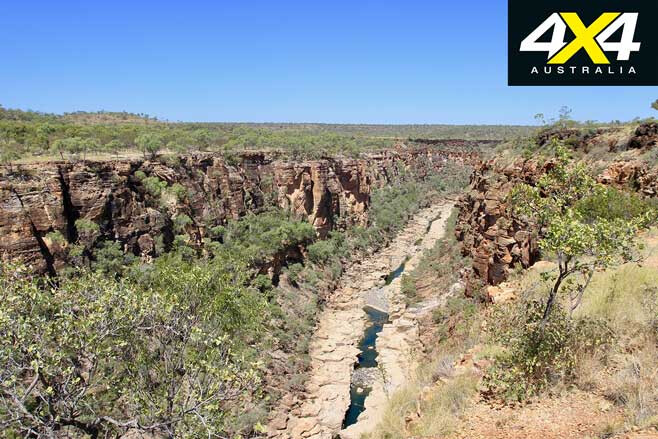
You need to book online to snare your spot at the one and only campground and, as there’s limited reception and the area gets extremely busy during the cooler months, you should do this in advance. The area had volcanic activity millions of years ago, leaving hard basalt layers over the soft sandstone, and with weathering from rain, fast-flowing floods and severe winds it has left what we see today: deep-cut gorges with a multitude of coloured layering rock. This place is a haven for birds (and birdwatchers) who flock here for the cool water deep in the gorge. It’s also popular with hikers who are prepared to spend hours following the trails into the gorge.
While Porcupine Gorge is a great stopover, heading farther north along the KDR sees the tar give way to harsh unsealed outback roads not far from the park’s entrance. Another information sign states that in 1888 a chap called Bill Crossley was bitten on the hand by a scorpion while trying to un-bog his wagon from the creek. It’s said the nearest town doctor would not come out and help Bill until a deposit was made, but by the time his offsider had raised enough cash Bill had passed away by the creek. Today a rock cairn marks this unfortunate occurrence.
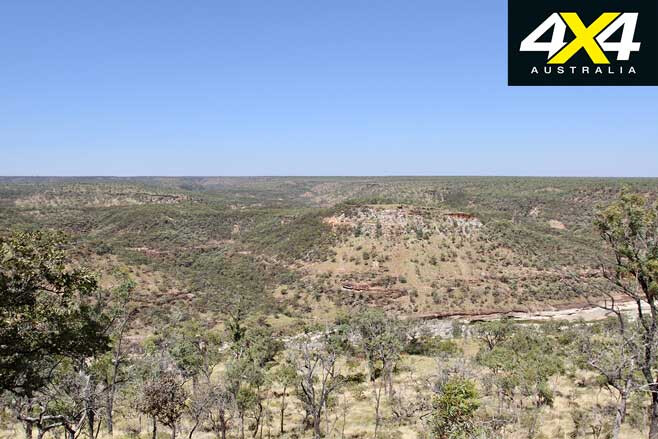
Farther along you’ll find a sign highlighting Whistling Bore, which was sunk to 500 feet with no water found, but on some days a noise can be heard rising from the capped-off bore. We think we heard the hum but, true or not, it’s not a bad place to stretch the legs.
The KDR is narrow in some places, while some of the way it’s as wide as a four-lane freeway. We encountered a few travellers going too fast in the opposite direction, and when they flew past at speed we had to look out for dust and rocks.
Some 100km along the route you’ll find a couple of free camping sites near Moonstone Hill, and if you have a fossicking permit it’s okay to look for a few gems. The gems found here are weird-looking clear pieces of rock not dissimilar to the broken shards of windscreen glass, and they’re as small as a nail head up to a spoon size. These are only found on this side of the Montgomery Range. The 360-degree views from the top are stunning and often you’ll be able to spot the dust trails of other travellers and cattle trucks rising above the trees.
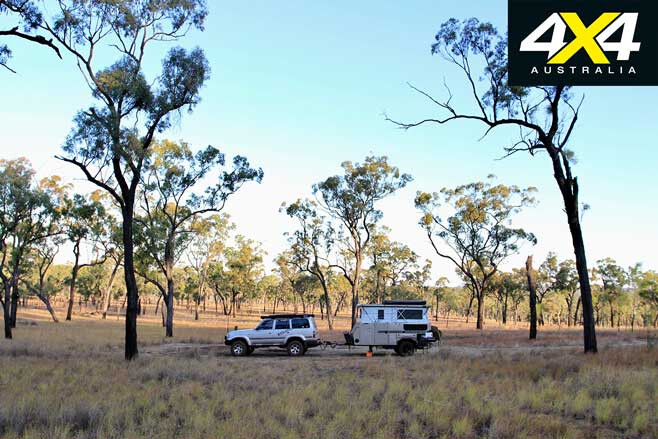
Just up the road is Blackbraes National Park, where you can camp and explore.
With a 21km road in and out, it’s a good base to set-up for a few days to explore Emu Swamp Dam that, when full of water, is alive with birdlife. The dam is an ancient volcanic crater and the surrounding area is typical Gulf lowlands, with black soil plains covered with silver-leafed ironbark trees. The Gilbert Range heads north from here, providing runoff into the lake and surrounding areas.
After leaving this area the KDR follows Einasleigh Creek for many kilometres, and considering how much of the surrounding area was dry it was surprising to see water flowing in some of the creeks, and with it a few bustard birds prancing beside the road.
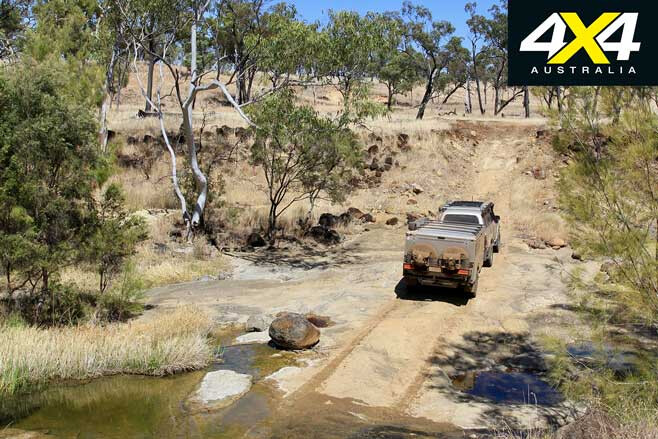
The local shire council was upgrading the road from Lyndhurst Station for around 20km and listening to them on the UHF we heard they were frantically trying to finish the job before the onset of the wet season.
Along the way we found they had completed sealed sections up to 5km long. There are some large properties out this way and with that there are some large trucks hauling cattle around, and despite most only hauling a couple of trailers they demand respect and need the whole road.
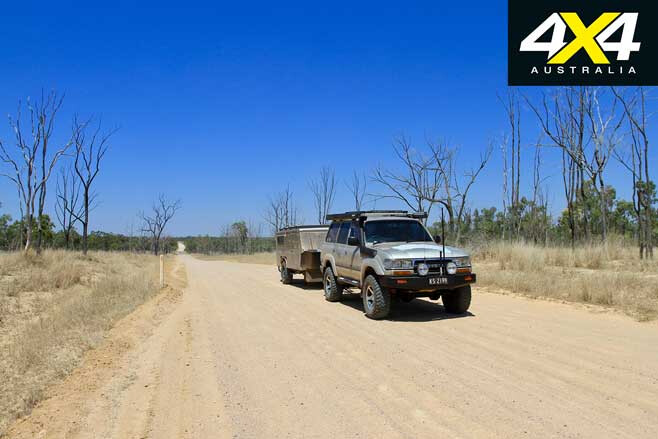
The last 50km from Lyndhurst to The Lynd Roadhouse is in pretty good condition, but don’t expect to be doing any breakneck speeds; generally our speedo was sitting around the 40 to 60km/h mark most of the way due to the rocky and sandy base and our lowered tyre pressures.
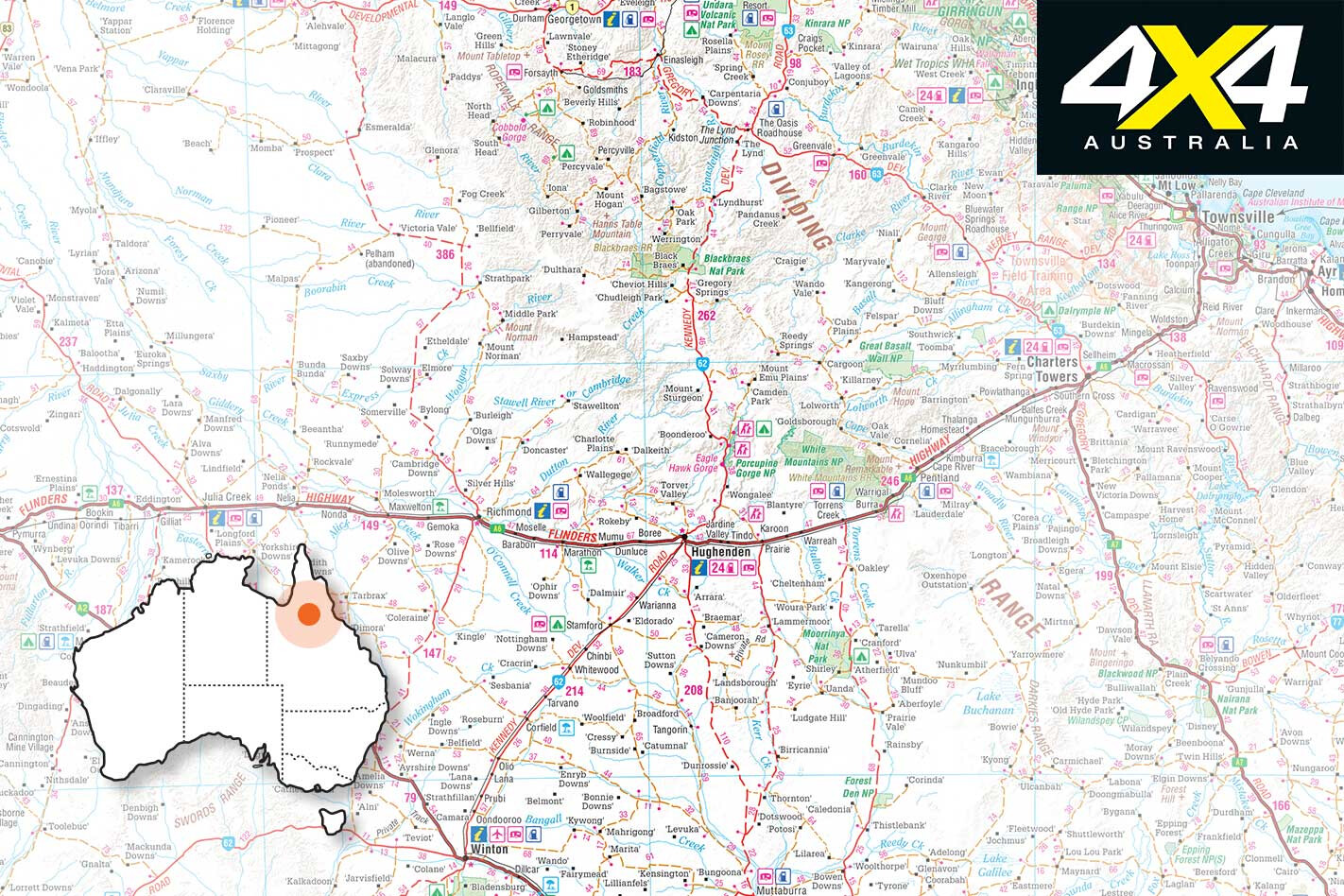
After two days on the KDR it was a pleasure to hit the tar near the Lynd Roadhouse (where basic supplies can be topped up) and the last 95km up to Minnamoolka is a dream drive. If you have time it’s possible to explore the Undara lava tubes for a price, but that’s at the end of the Kennedy Developmental Road.
While the 350km KDR is not a hard or technical drive, it’s an interesting one for the seasoned traveller; however, bear in mind there’s no phone reception along its length, even up on the ranges. At its end you are presented with several options; keep heading north towards the Atherton Tablelands or farther west towards Normanton along the Gulf Development Road.
A PAIR of Unimogs has reached new heights, with the duo climbing the world’s tallest volcano to break the altitude record for wheeled vehicles.
Led by Matthias Jeschke – the owner of Extrem Events – the expedition prepped two Unimog U 5023 vehicles for high-altitude duties, before heading to the tallest active volcano on the planet – the Ojos de Salado in Chile. The Ojos de Salado, part of the notorious Pacific Ring of Fire, stands 6893 metres tall and is said to be one of the driest places on earth.
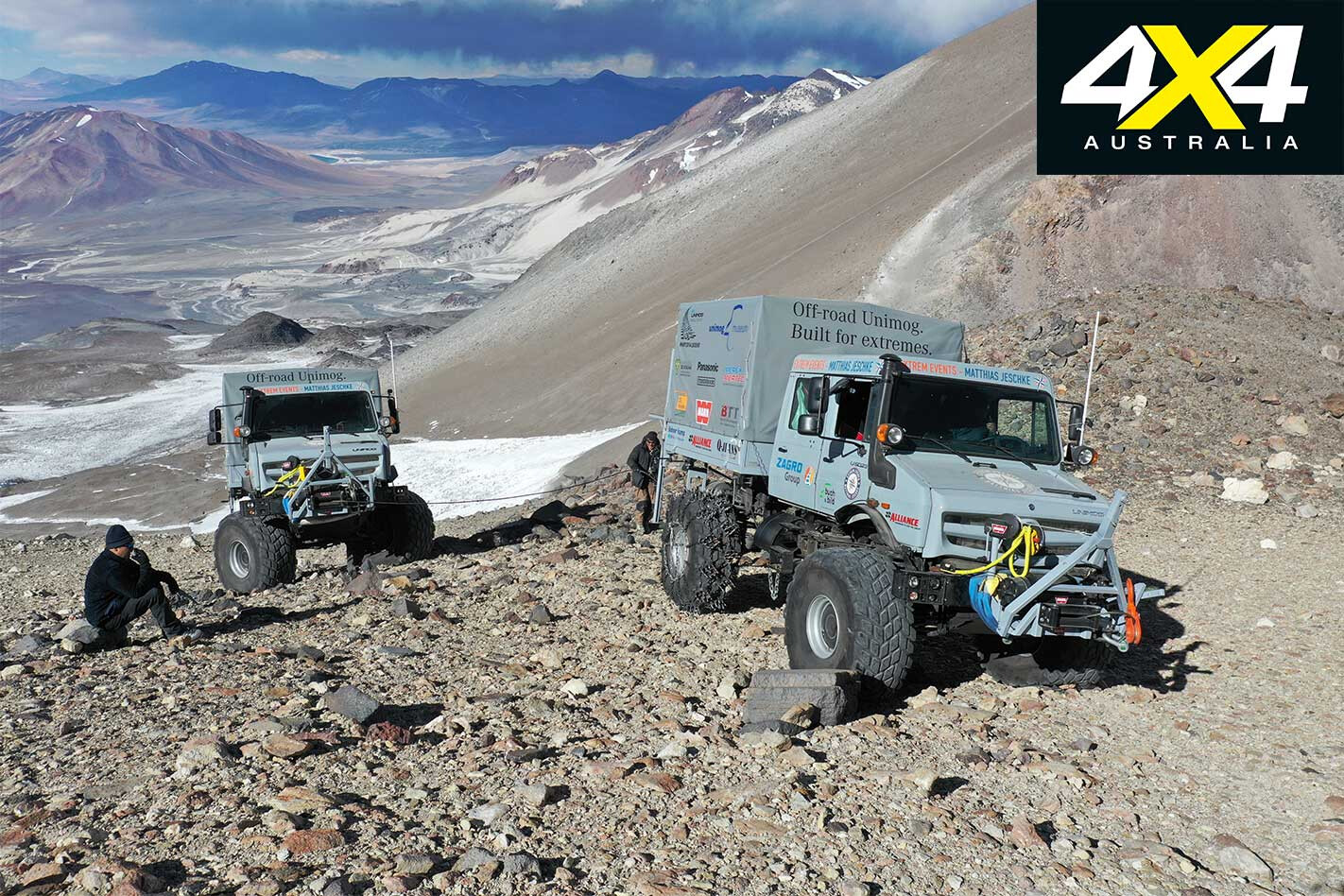
The team’s first assignment was to install four emergency radio units at various high-altitude camps and, once the last unit was pegged down, the ten-strong team honed in on breaking the world altitude record.
“[Both vehicles] mastered the extremely steep and rocky passages thanks to a combination of the best, reliable technology, a balanced centre of gravity and amazing tyre technology to bring the materials and equipment to these enormous heights,” said Matthias Jeschke. “At no point in time around the world have motorised altitude expeditions taken two trucks simultaneously to such an altitude.”
The two Unimogs, which were equipped with tailor-made rubber, heavy duty winches and special bodies, surpassed the previous record by registering an altitude of 6694 metres.
THE JEEP Wrangler Rubicon has won the 2020 4X4 Of The Year award, beating six rivals to the coveted crown.
The award was revealed at the 2020 Australian Motoring Awards, held at the Showgrounds in Flemington, Melbourne.
After an exhaustive testing process – at the Melbourne 4×4 Training and Proving Ground in Werribee and then out past Healesville and Marysville in Victoria – the seven vehicles were compared against the proven 4X4 Australia judging criteria: value for money; breaking new ground; built tough; bushability; and doing the job.
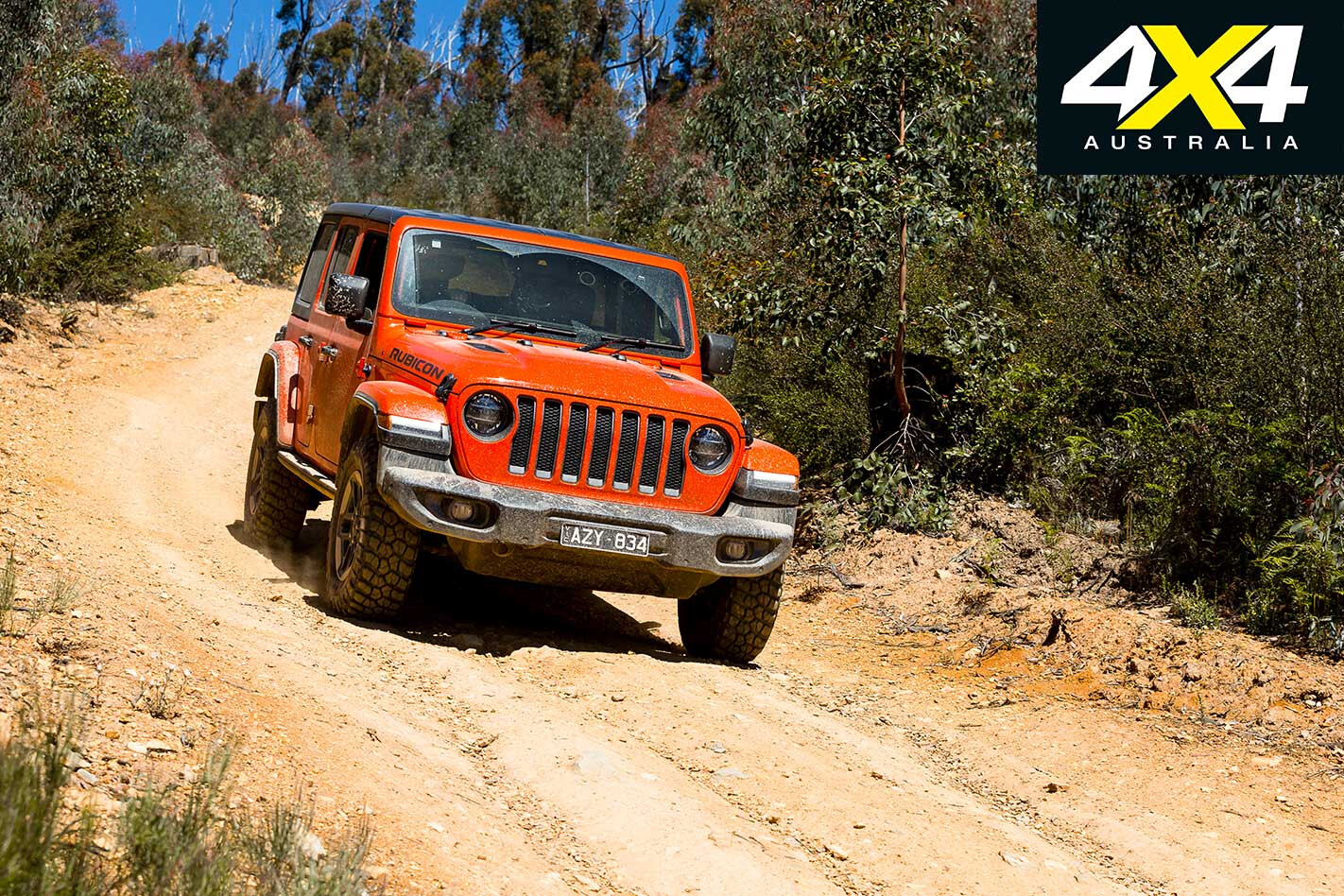
Following lengthy – and often heated – debate, Jeep’s Wrangler Rubicon proved the best of the lot, but by a very slim margin.
JUDGES’ TOTAL SCORES
Jeep Wrangler Rubicon: 246 Suzuki Jimny: 244 Land Rover Discovery Sd6: 238 Nissan Navara N-Trek Warrior: 232 SsangYong Musso XLV: 225 Mitsubishi Triton: 224 Mercedes-Benz X350d: 211
It’s more than fitting that the Jeep Wrangler Rubicon climbs to the top level of the podium here and not just for what it does. It’s what the Rubicon represents in terms of 4×4 history and its impeccable bloodline back to where the 4×4 world as we know it today all begun.
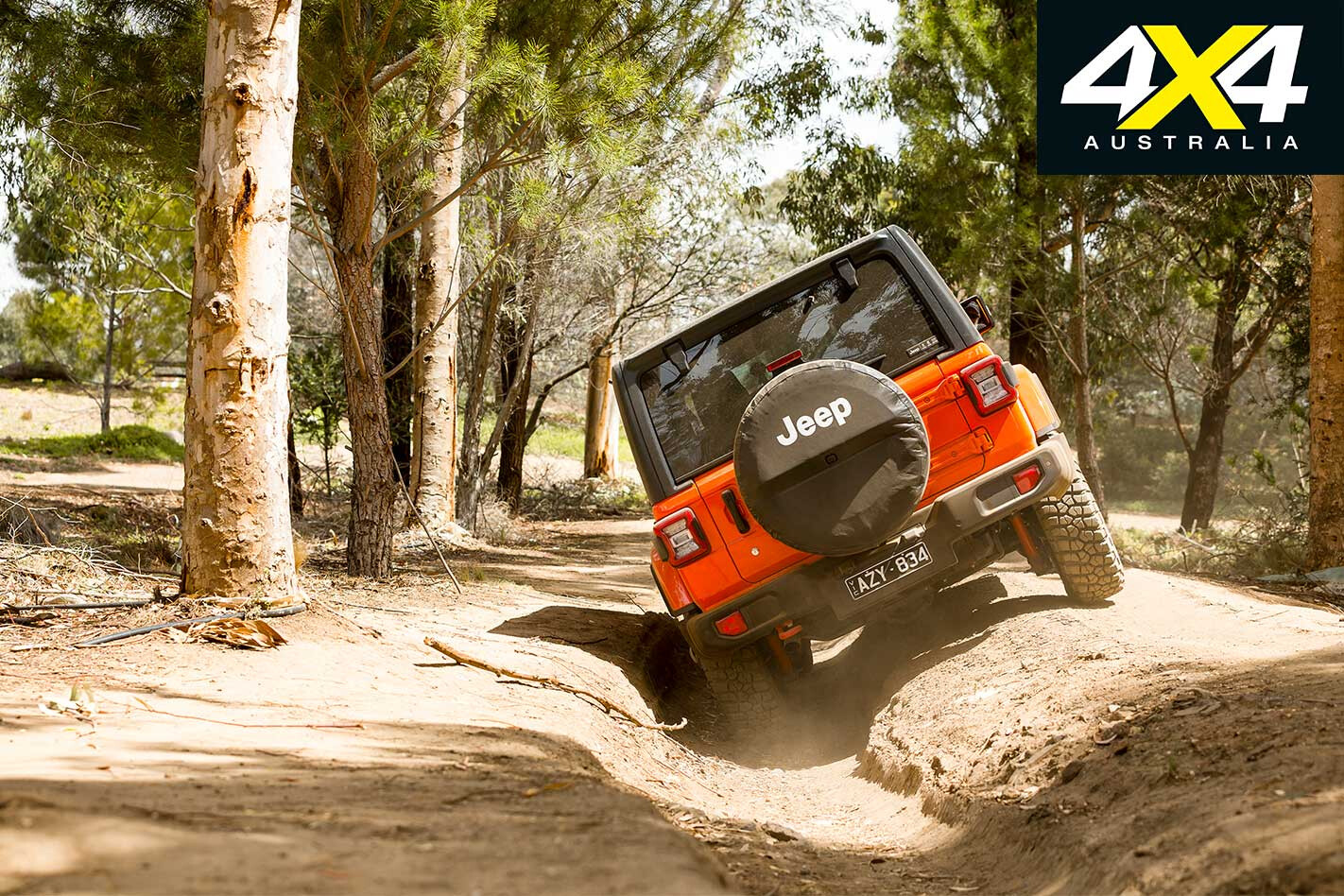
Hats off to Jeep for sticking to the basic 4×4 design principles of a separate chassis and front and rear live-axle suspension when other 4×4 manufacturers have turned their back on this old-school approach, which is still the best way to build a serious 4×4.
For comprehensive 4X4 Of The Year coverage, pick up a copy of our February 2020 issue, in stores February 6.
THIS time last year we’d have been hankering for a local version of Arctic Trucks’ Navara AT32, but our appetite for a ballsy Navara has been somewhat satiated by the local arrival of the Navara N-Trek Warrior.
The brainchild of a joint venture between Icelandic off-roaders, Arctic Trucks, and Nissan, the OFF-ROADER AT32 is a more off-road-focused version of Nissan’s venerable Navara.
The first iteration of the AT32 debuted in 2018, with Nissan recently revealing an updated version for 2020. The refreshed AT32 now utilises full aluminium underbody protection – lightweight and designed to further protect underbody componentry – as well as 31.6-inch Nokian tyres fitted with dual valves, surrounding satin black alloys.
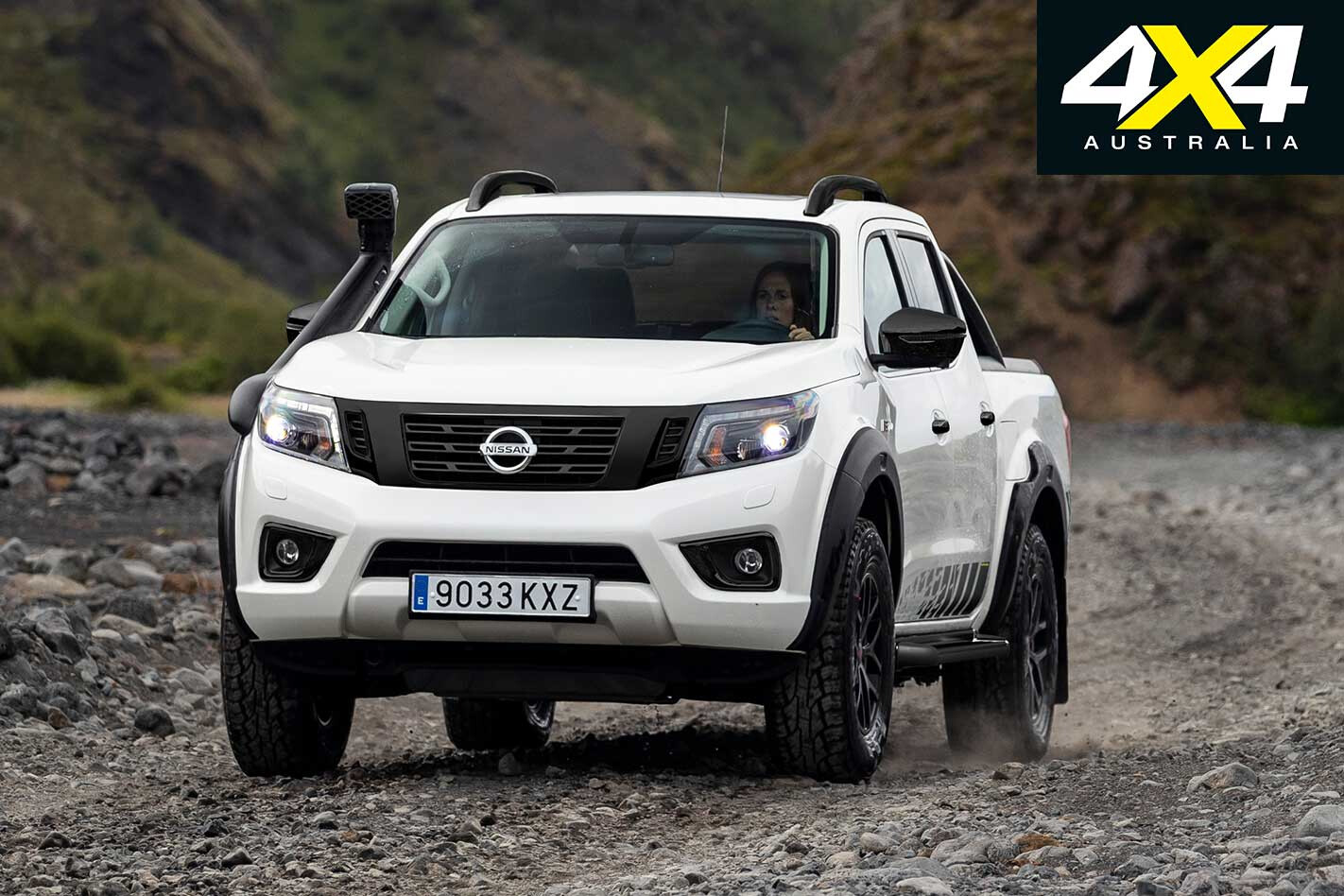
“The Nissan Navara OFF-ROADER AT32 was a sell-out success and proved incredibly popular with adventurers seeking elegance and toughness,” said Manuel Burdiel, General Manager Europe, LCV Sales and Business Development. “We have upgraded the OFF-ROADER AT32 so it can maintain its position as the ultimate Navara … it’s the perfect blend of in-car technology, comfort and extreme off-road performance.”
The updated AT32 carries over the older model’s Bilstein performance suspension and bespoke wheel-arch extensions, while special badges have again been applied from head to tailgate.
For comparison’s sake, the suspension package fitted to the N-Trek Warrior features dual-rate coil springs, progressive bump stops and shock absorbers with larger diameter tubing. Among other tweaks, the Warrior also gets bespoke alloy wheels wrapped in Cooper AT3s which, when combined with the uprated suspension, nets an overall lift of 40mm.
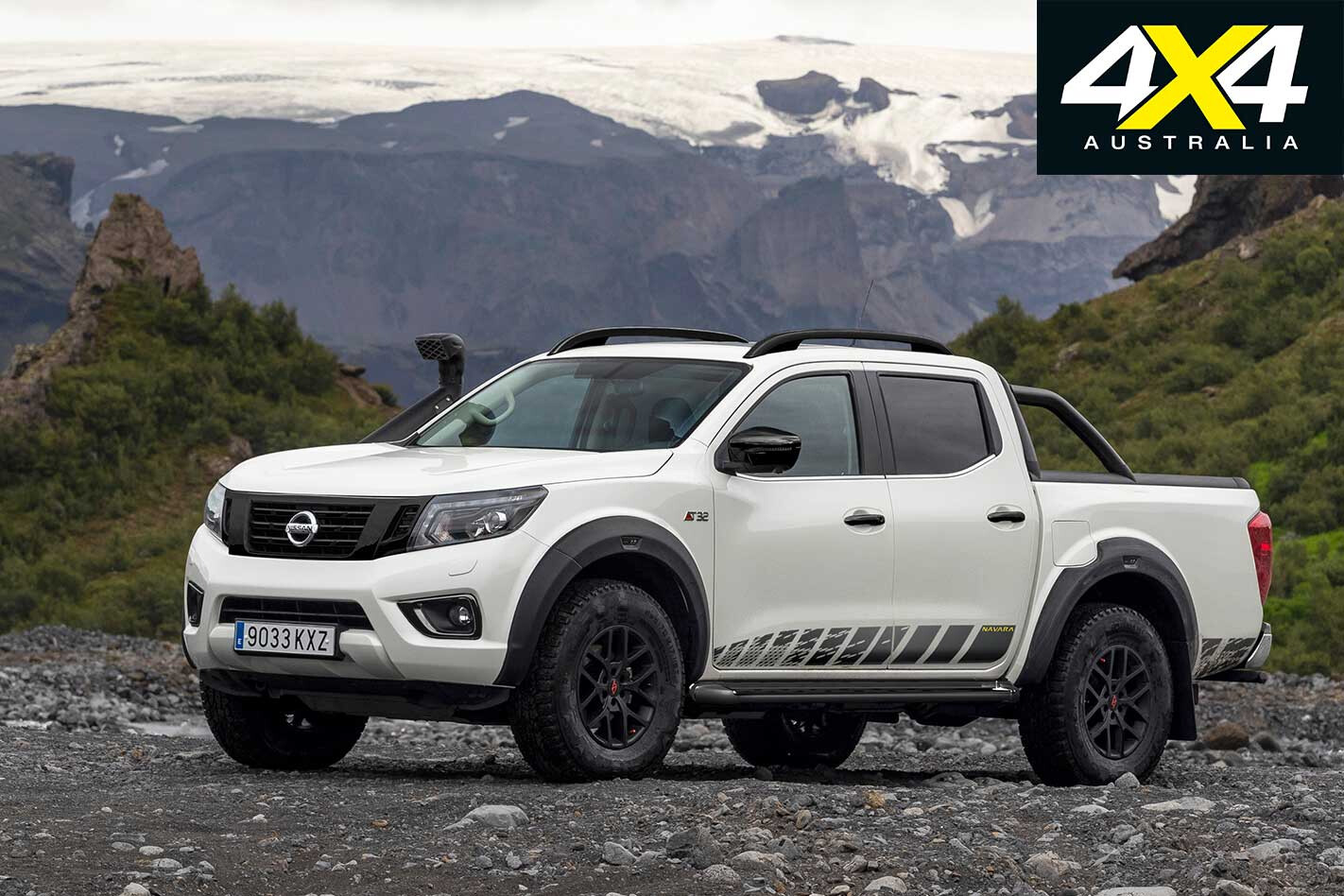
The AT32 comes with a bunch of optional accessories including an electronic front diff lock and an air intake snorkel, which increases the rig’s wading depth to 800mm.
The OFF-ROADER AT32 will hit European showrooms in February 2020, with pricing to be announced closer to launch.