Picture your dream 4×4. A healthy canopy set-up on the back for remote touring; a locker at either end, with some chunky mud-tyres ensuring you’ll make it up any track you point it at; a bullbar up front to keep it safe from animal strikes; and some killer suspension underneath helping smooth out corrugation after corrugation.
2020 CUSTOM 4X4OTY: Vote now for a chance to win!
Got a good mental picture in mind? Perfect. There’s one just like it sitting proudly on Loyalty Beach right now. There are two more just a short drive up the track at Punsand Bay. There are three more rolling into Birdsville as you read this, and another four parked up at the pub at Weipa. Most of them are beige, or Sandy Taupe as the marketing departments have dubbed it.
You see, while 4x4s are a product of function over form they very frequently end up being cookie-cutter builds, straight out of the mould someone else built, just with a few different stickers slapped on the side.
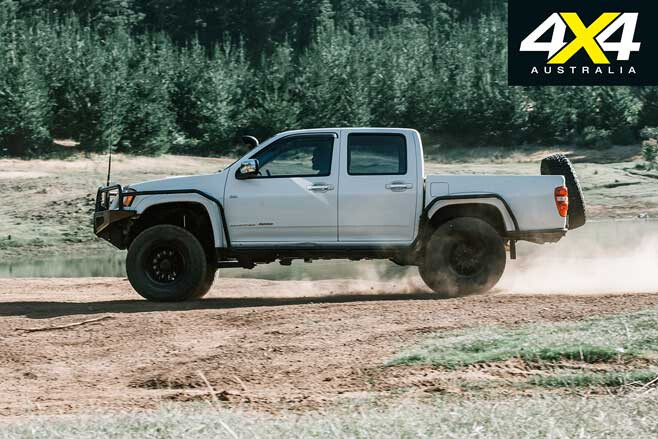
Tyler’s SAS-style custom Holden Colorado is far from beige, in the figurative and literal sense. It’s his perfect creation, every square inch of it dreamt up in his mind and pieced together methodically by his own hands to create something truly unique – something that stands out from the crowd.
The Foundation
Like any decent build, Tyler built his 4×4 on a solid foundation. Underneath, where once lied rudimentary leaf springs and underwhelming independent suspension, there’s now something far more fit for purpose.
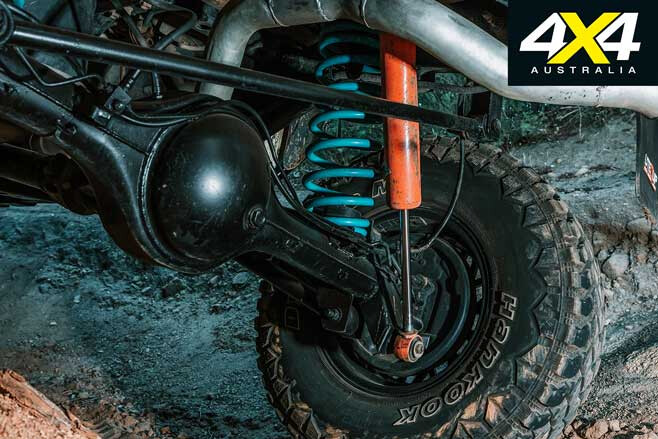
Starting from the back Tyler sliced and diced the bracketry off both the chassis and the rear axle, relegating the leaf springs to the scrap pile. In their place is now a full coil setup utilising the factory Colorado rear end with a set of home-brew control arms holding it in place.
Based off the NP300 coil rear geometry, Tyler pieced together the parallel 4-link and Panhard arrangement before fabbing up mounts to make it all ride on NP300 coils. The 10-inch-travel TJM shocks keep the ride quality in check, with the mounts tucked nice and close to the tyres to help with ground clearance.
Up front has copped a similar treatment. One of the last ‘old-school’ short-arm torsion bar independent front suspension setups, the Colorado’s stock arrangement was never going to be a serious performer, no matter how many shiny parts Tyler threw at it. Instead, out came the grinder again, with the OEM bracketry being expertly removed from the frame rails.
With a blank canvas, Tyler rolled a GQ Patrol live axle up into place and set about making it work. Stock Patrol radius arms locate the axle fore and aft and find a home in custom brackets on the chassis side; a stock Panhard does similar for side-to-side movement.
There’s a second set of 10-inch-travel TJM shocks smoothing out the ride; although, this time there are LC79 coil springs holding the whole affair in the air, with LC80 progressive bump stops ironing out Tyler’s more ambitions lines.
Isuzu Heart
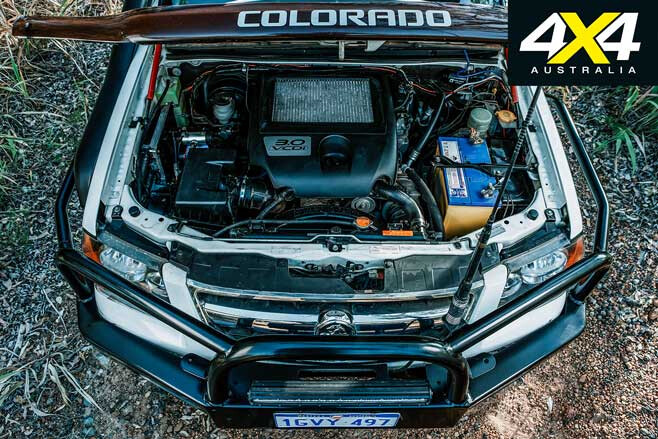
Sending power to both axles is the renowned 4JJ1 3.0-litre turbo-diesel four-cylinder by Isuzu. It’s earnt itself a reputation for easy power, and Tyler flies that flag high. It’s pushing out a massive 200hp and 540Nm to the rear wheels with basic bolt-on modifications.
A Safari Snorkel on the intake side helps it breathe clean, cool air, up out of the churning dust down in the stock location. It feeds down into the stock turbo and intercooler, before firing out the other end through a full three-inch exhaust system.
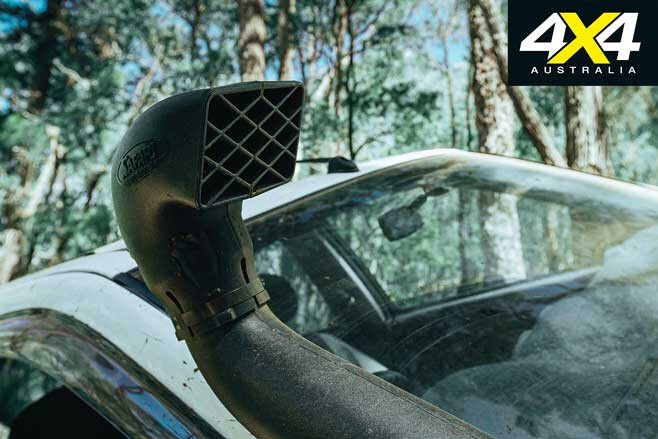
The stock manual cog-swapper has proved itself more than up to the task of handling the power, and a TRE air locker up front gives Tyler that oh-so-important get-out-of-gaol-free card.
“That locker cost me about $100 in metal,” he told us with a laugh. “A bloke I know wanted a bullbar built for his 4×4 and paid me with a locker.”
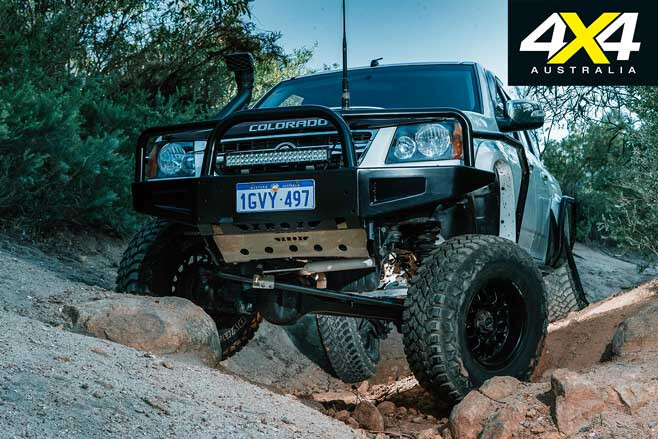
Of course then it should come as no surprise that Tyler’s bar work is more than a little unique, too. Starting from up front, the one-off bar is actually built on the foundations of an Xrox unit.
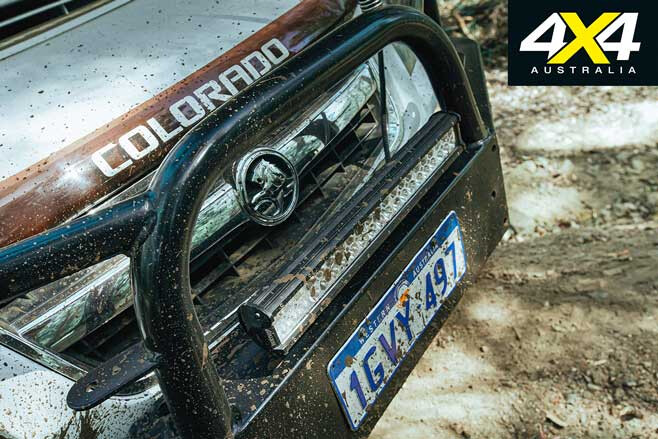
“I started with the centre section of an old Xrox bar,” Tyler says. “I cut off the tube wings on either side and folded up some plate wings to enclose it in.”
While the welder and grinder were out, he also worked in a new set of headlight hoops, giving the bullbar a factory look – and all of his own design.
Sliding on Rails
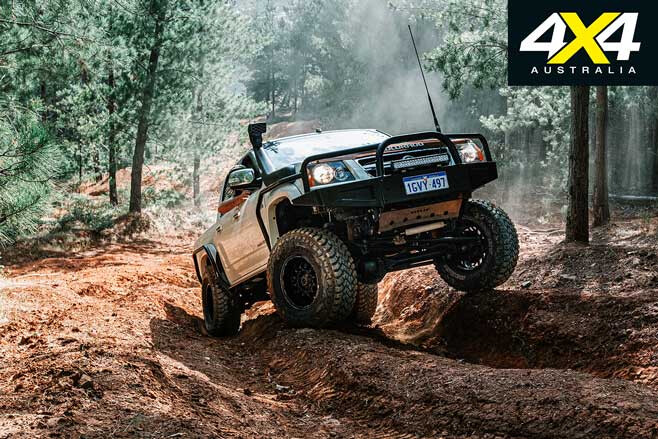
Moving down the flanks and Tyler protected his delicate parts with a set of heavy-duty scrub bars tying in the bullbar to the sliders. He’s done the same again in the rear, allowing the tough-as-nails Colorado to practically slide along obstacles from headlight to tail-light with damage limited to nothing more than some scuffed paint.
Eagle-eyed readers might note there’s something a little odd about that rear bar and tyre carrier. While a tub-chop and tube rear bar aren’t exactly groundbreaking, Tyler’s managed to do it and throw his tailgate in the bin at the same time.
“I really didn’t want to eat too much into my departure angle,” he tells us. “I ditched the tailgate and used the space to push the spare tyre and twin jerry cans further into the tub for less overhang.”
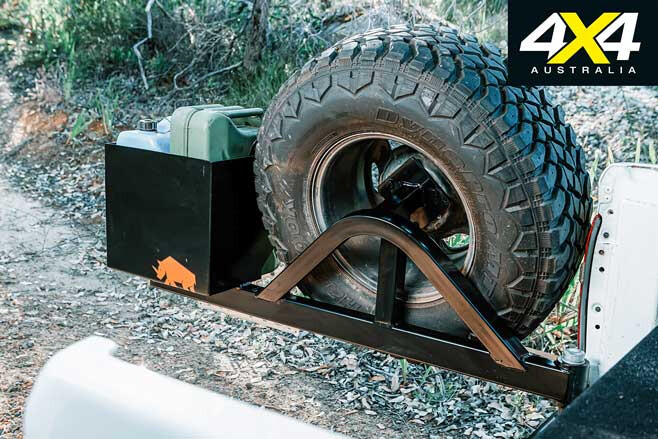
There’s no chance of anything falling through the gaps either. Resting behind the swing-out carrier is – you guessed it – a home-brew camping setup. Tyler The Creator rolled out the tools yet again, this time constructing a full false floor in the tub, giving him storage underneath without impacting his ability to hurl gear on top.
There’s a huge roll-out drawer hiding below, perfect for bulky items, with a 120amp Bosch AGM second battery finding a home in there too. It’s powered by a 25amp Projecta charger, with solar input waiting for his camping setup to grow.
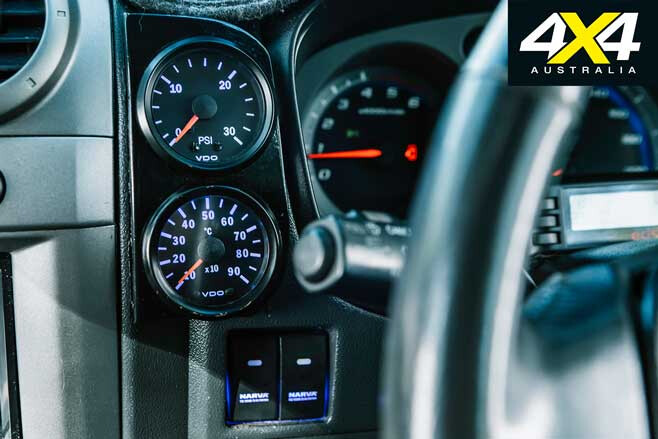
While the Colorado is clearly built for hardcore wheeling, there are a few camping concessions on the inside. A GME UHF keeps communication lines open between the convoy or spotters, while Boost and EGT gauges work hand-in-hand with the Engine Data Scan tool to keep the oil-burner happy.
In a world full of carbon-copy Instagram builds, Tyler’s rig is a refreshing take. A unique platform, unique mods and a unique purpose. It doesn’t take a huge credit card to build something truly capable; sometimes all it takes is a little hard work and some planning.
Same Same but Different
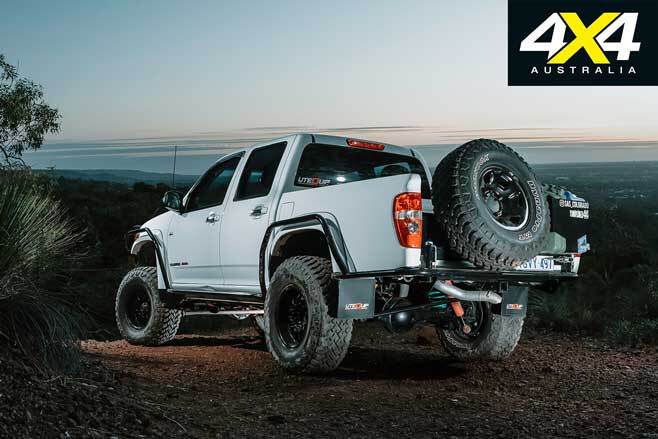
If you’ve been under the front end of a Holden Colorado or the similarly named Chevy Colorado, you might have noticed a few similarities in the suspension and chassis design. You’d notice the same thing again looking under the Isuzu D-MAX and the GMC Canyon. Hell, you’d see them again under the Hummer H3. All five models were developed simultaneously for what is known as the GMT 355 platform.
Just like Instagram is overloaded with same same but different builds, so are dealerships all over the world.
While the differences are mostly cosmetic – different headlights, bolt-on panels and interiors – the drivetrains are the differences that excite us. A whole host of engines were available including the 4JJ1 and other various small-capacity General Motors and Isuzu engines; and both the Chevy Colorado and Hummer H3 were available with a 5.3L V8 LS engine, making the Aussie Colorado prime for an engine swap.
For fans of the Ford F-150 pick-up truck who feel that the turbocharged V6 Raptor was a missed opportunity, American tuner Hennessey Performance Engineering has filled that gap with the Hennessey Venom 775 Supercharged.
Instead of starting off with a 3.5-litre V6 Ecoboost F-150 Raptor, Hennessey bases the Venom 775 Supercharged off the standard F-150, which comes with the 5.0-litre naturally-aspirated V8 engine also employed the Mustang.
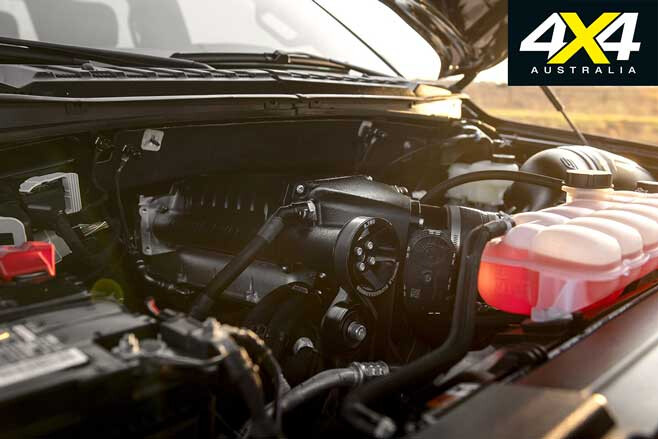
Power from the V8 engine is cranked up from 295kW to 578kW with the fitment of a supercharger system, air-to-water intercooler, high-flow air induction, and fuel-injector and fuel-system upgrades.
According to Hennessey, the resultant power hike endows the Venom 775 with a 0-60mph (96km/h) of four seconds, whereas stopping power has been improved with the fitment of six-piston Brembo brakes up front.
More than a sport truck, the Venom 775 sports a six-inch lift kit, 20-inch wheels wrapped in 35-inch Toyo off-road tyres, and a Hennessey front bar with an integrated light bar.
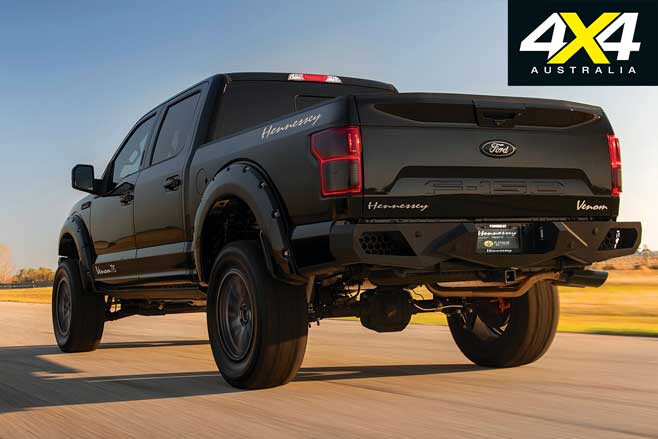
Its brawny nature is complemented by the fitment of a Hennessey Venom ram-air bonnet, Venom rear bumper, and a more vocal stainless steel cat-back exhaust system.
Unfortunately for Australia, the Venom 775 Supercharged isn’t a kit or a model that is readily available from Hennessey itself. Rather Hennessey plans to make just 100 examples of the tuned F-150, all of which will be exclusively sold through a US-based Ford dealership.
A Product Safety Recall has been issued for various Seat Adapter Kits manufactured by Huracan Fabrication between March 15, 2018 and June 6, 2019.
The seat adapter kits allow the fitment of Ford Falcon BA-FGX seats and Holden Commodore VE seats to popular 4×4 vehicles and the recall is specific to kits for the Toyota 100 Series Landcruiser, Nissan GU Patrol and D22 Navara, and Mitsubishi ML and MN Triton models.
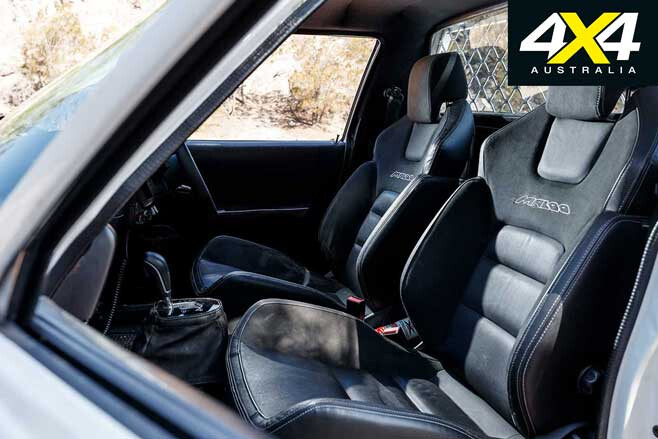
According to the recall notice, “At loads exceeding 1.2 tonne seat belt strain, the seat belt mounting point may fail, resulting in the seat belt buckle breaking loose.
“The product does not meet the required Australian Design Rule ‘Vehicle Standard (ADR 3/03 – Seats and Seat Anchorages) 2006.’”
The recall notice also states, “If [the] seat belt buckle breaks in the event of an accident, the seat occupant is at risk of serious injury or death.”
Rhys Cartlidge from Huracan Fabrication points out that the recall was a voluntary initiation. “We went to the ACCC voluntarily and initiated a voluntary recall, and that was so they could help us with contacting as many people as possible,” he says.
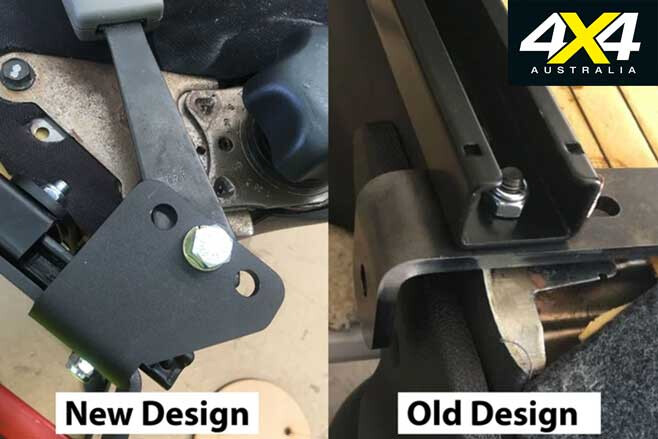
“We were told that the initial engineering was compliant … we did some additional testing and found that although the seatbelt mount was strong it didn’t meet the three-tonne pull requirement in accordance with VSB5, so what we did is we reengineered that part so that it is now compliant.
“We made it so that it was backwards compatible with the kits we had already sold, so that way people can upgrade their old kits … it’s just the seatbelt mount that needs to be changed,” adds Rhys.
Rhys also points out that once the seatbelt mount has been upgraded, the Seat Adapter Kit is fully compliant, and it is supplied with the relevant engineering approval.
If you have a seat adapter kit manufactured in the range stated above, you’re advised to contact Huracan Fabrication to receive seat belt mount upgrade kit, free of charge.
You can contact Huracan Fabrication via email at [email protected] for more information or to organise a seat belt mount upgrade kit, or use the below links to order direct: GU / D22 Navara / MN or ML Triton huracanfabrication.com/products/vsb5 or 100/105 Series Landcruiser huracanfabrication.com/products/100-105-series-landcruiser-vsb-seat-belt-upgrade-kit.
The walk was steep, the 200 or so steps along the way letting you know there were muscles in your legs that hadn’t been used for a while. But it was worth it.
The gorge, a sharp-edged narrow defile, comes as a surprise to most first-time visitors to this region, the red, raw rock closing in as you wander down the creek that cuts through the range here. Sunlight only makes it into the narrowest part of the ravine during late morning or early afternoon, and you can be excused for thinking you are at other more famous canyons in Australia such as Stanley Chasm west of Alice Springs, Echidna Chasm in the far away Bungle Bungles, or even Claustral Canyon in the Blue Mountains.
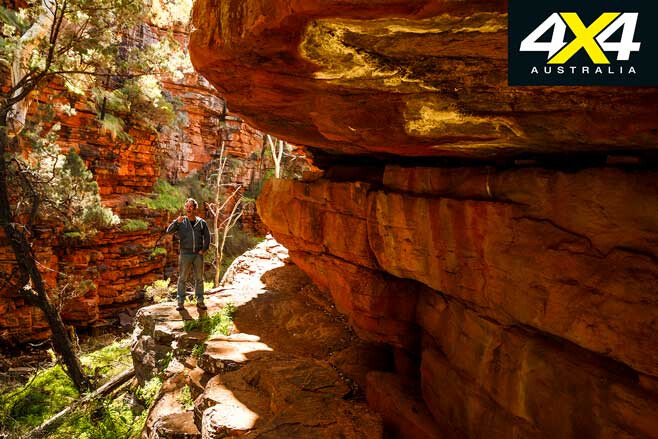
Water nearly always trickles through here, even though it is underground in places. Ferns and other cool-loving plants dot the chasm walls and floor, marking a startling change to the sun-bleached plains and rugged hills outside the hidden recesses of this abyss.
We wandered down the gorge and then out across the low intervening rise to Blue Gum Flat, where road access into the park ends … and I wondered why I never started my walk into and out of the gorge from there.
We were exploring Alligator Gorge (no alligators have ever been seen here!) where the ragged, rugged spine of the hills and peaks we know as the Flinders Ranges rear up from the surrounding flat plains. On the western edge of the range, a narrow coastal strip borders the shallow, ever-narrowing arm of Spencer Gulf, while to the east flat dry plains stretch away to the NSW border and ‘Corner Country’.
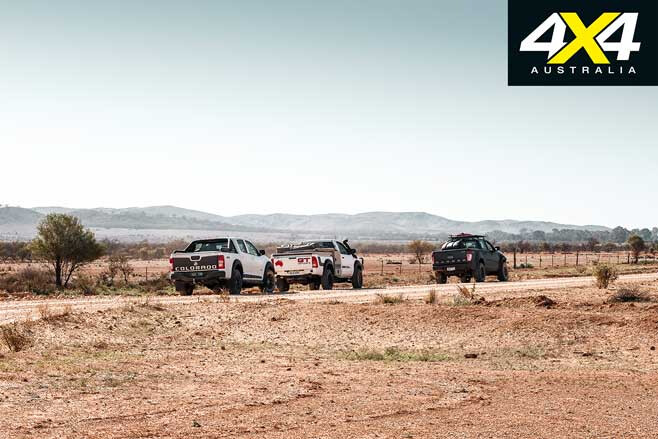
The Flinders officially start just a few kilometres south, where the rounded hills, cleared of most trees, quickly give way to more rugged peaks and valleys. Just north of Port Germein, one of my favourite coastal towns with a good pub and a large dose of history, the hills and peaks crowd together to form what we know as Mount Remarkable National Park.
Our trip had started at the small hamlet of Melrose, which lies tucked into the range at the foot of Mount Remarkable. This area around the high peak is one of the better-watered areas of the Flinders and, as this latest trip was to show, the relatively lush areas of the southern coastal Flinders and the striking drier country just a short distance east and farther north were in stark contrast to one another.
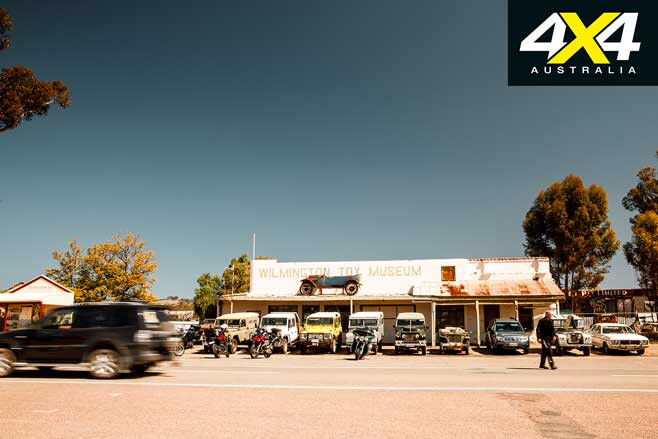
As we headed east away from the dominant peak, the country dried out quickly with each passing kilometre. By the time we passed through Johnburgh – a near ‘ghost town’ and a relic from the days when this area had been opened up for wheat farming, with a population now of just two – a cloud of white dust was following each and every vehicle in the convoy.
Upon arrival at Bendleby Ranges we were greeted by hosts Charlie and Jane, and without further ado we headed out on some of the tracks which took us along a creek bed and past some delightful campsites. The route then led up a high crest of the main range along the North-South Ridge track, to a fine viewpoint where we took in the sunset. The breeze, though, was bitingly cold, so once the sun had disappeared we returned to the homestead, bunking down in the shearers’ quarters for the night.
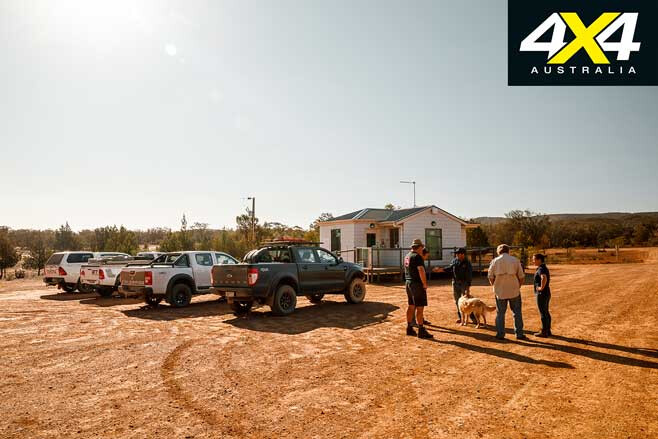
The next morning, even though we had hardly touched the tracks around the nearby hills and valleys, we headed to the Hungry Ranges about 10km south-east of the homestead. Charlie had just pushed a new track up along a ridgeline to the top of a prominent but unnamed hill and wanted to show us the route.
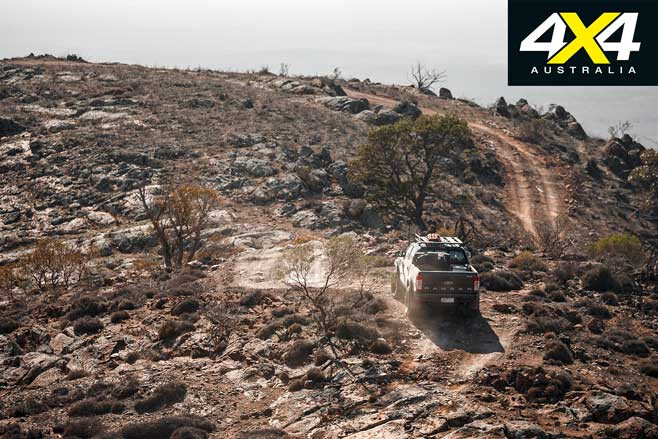
Once we began to climb the range and then trace up along Billy Goat Ridge we knew we were in for something pretty special, as the track features narrow rocky ridges that provide expansive views of the surrounding countryside. The climb to our unnamed viewpoint was a scrambly affair, the Ford Ranger I was driving letting me know the traction control was working hard to help me reach the lookout.
All too soon we were carving tracks westward, passing through the small village of Carrieton where the pub has recently closed; which isn’t a good sign, but hopefully it’ll open again soon. Our route then took us through the hill country of Moockra and out onto the billiard-flat savanna of the Willochra Plains, where at times deep sections of bulldust enveloped the vehicles.
Arriving in Quorn, where I had spent many joyful years as a young kid, we found our way to the old historic railway station, home to the famous Pichi Richi Railway (1878). This was once part of the original Ghan Railway north to Farina (arriving 1882), Marree (1884) and finally to Alice Springs (1929). Steam buffs and kids will love the experience.
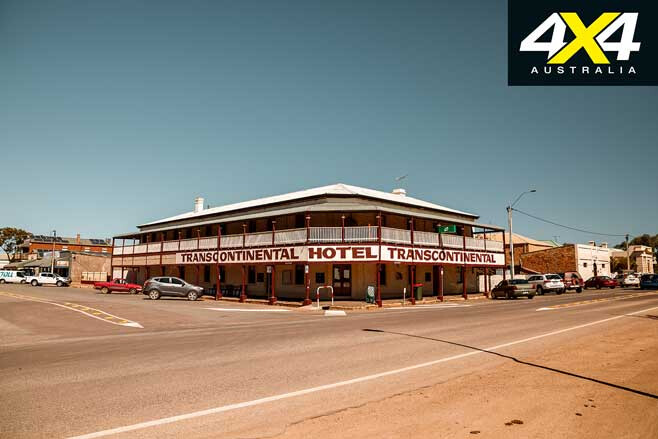
With a key from the info centre, which is housed in the venerable old building, we headed to Warren Gorge, one of my favourite places in the ranges and a spot I’ve camped at many times. A gate at the far side of the public reserve opened the way to the Arden Hills 4WD Track, which is a 22km-long route climbing through some spectacular hill country on what are, at times, steep sections of trail.
From the highest ridges you’ll have fine views south to the rocky crest of Devils Peak, west to Lake Torrens, south-west to the head of Spencer Gulf, and north-east across the ranges to the jagged outline of Wilpena Pound. That evening we threw down swags at one of the designated campsites along the track and had a quiet evening with just a few ’roos to keep us company.
Heading north to the very heart of the ranges we took the back road, crossing a trickle of salty water in Willochra Creek and visiting Hugh Proby’s grave, near where he drowned in the normally dry creek.
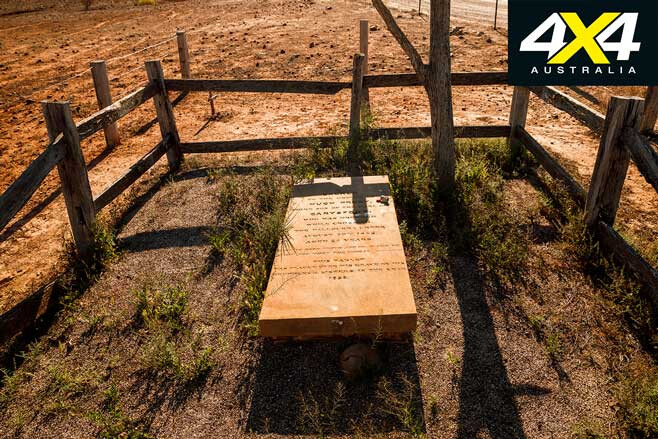
Hugh was once the owner of the one-time vast Kanyaka (sheep) Station and we stopped at the ruins of this sprawling outpost to admire its former glory. Broken up in the 1880s to form smaller wheat farming blocks, the ruins of these and the small towns such as Wilson, Kanyaka, Hookina and Simmonston are testimony to that folly and the idea that ‘the rain followed the plough’.
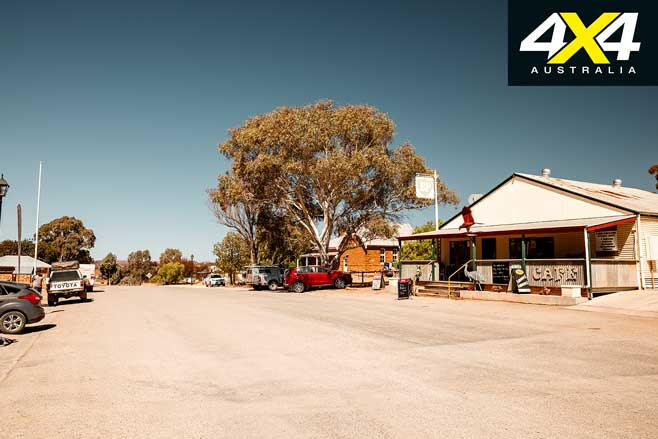
We refuelled in Hawker and arrived in historic Blinman at what seemed like peak hour, the little cafe busy with lunches and the pub dotted with people enjoying a beer on the front verandah; I had never seen the ol’ town so swamped with visitors!
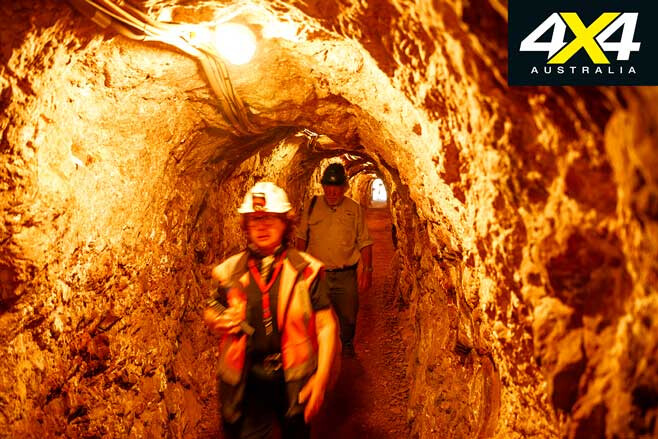
Copper had been discovered here in 1859 by a one-legged shepherd, ‘Pegleg’ Blinman. He sold the rights to his find and made a fortune, and from 1862 through to 1907 the mine produced around 10,000 tonnes of copper. Still, it hardly ever made a profit and after it closed it was left to ruin, until a few years ago when the local community got together and, after a lot of hard work, opened the mine as a tourist venture.
It obviously worked, as now it is best to book to get on an underground tour, while a self-guided walking trail is available at all times. We relished the experience of wandering underground in what are comparatively roomy and well-lit drives that take you deep underground.
With time a constant concern, we headed south on the blacktop to Willow Springs, home of the fabled Skytrek 4WD Track. Most of our group had experienced this great all-day 80km route before, so with permission from the owners we headed off on a shortened version that would get us to the high points and fine lookouts before sunset.
The track takes you through a variety of habitats and rock formations before climbing up onto the high points, which give outstanding views of some of the best range country in the whole of the Flinders. It is a fantastic 4WD route and, while we have been on it a number of times, we never get sick of the drive, the challenge or the outstanding views.
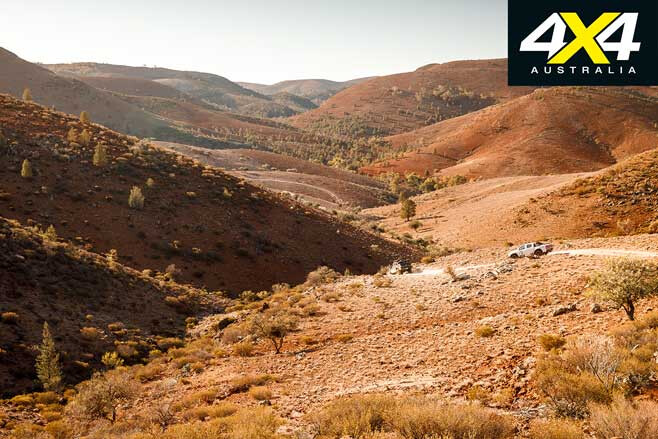
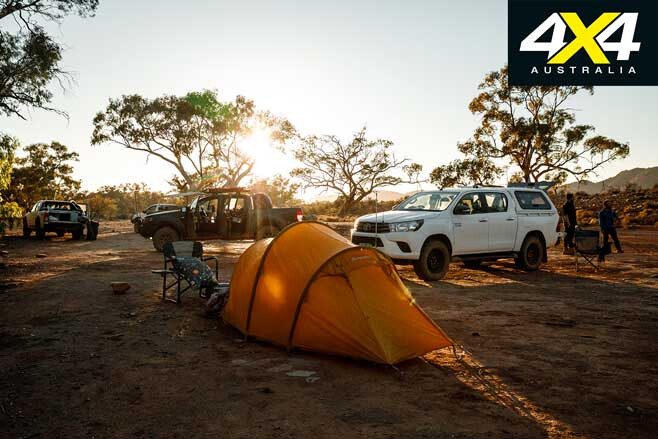
Arriving back at the homestead after last light we found our way to one of the well-established campsites dotted along the creek less than a kilometre from the farmhouse, its nearby workshops, community camp kitchen, and shower and toilet facilities.
After a hurried breakfast and a quick goodbye to the Reynolds family who own and run Willow Springs, we were on the road again. Nobody ever said shooting a video – which was what we were here for on this trip and hence on a tight timeframe – was easy! Still, there was a good reason for our early departure.
The route through Bunyeroo and Brachina Gorges rates as one of the best drives on a public road anywhere in Australia. I’ve done it dozens of times and, while it’s hardly a 4WD track, I never get sick of it or the spectacular views, especially from the Bunyeroo and Razorback lookouts, which are made even better in the early morning light.
Through Brachina Gorge, which is designated a Geological Trail with interpretive signs at significant points, you become a momentary time traveller as you pass through ever-older rock formations, while great peaks such as ‘The Guardian’ dominate the scenery.
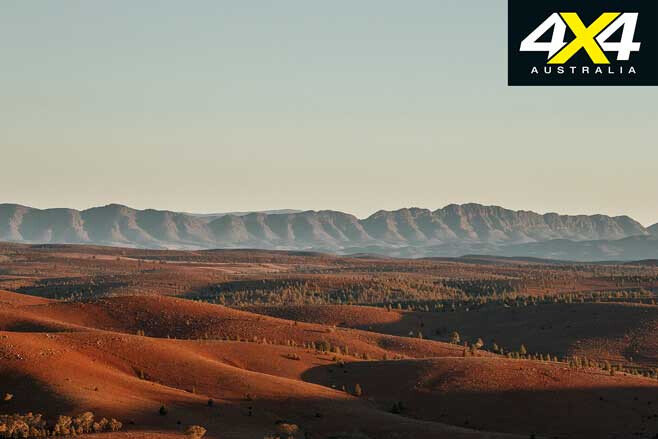
In places, a short walk and a careful eye will reveal fossils from a time when life on earth was very young. In fact, just west of here in the Ediacara Reserve (planned to soon be a National Park), some of the best fossils of early life forms, dating back more than 570 million years, have been discovered.
Once our time travelling was over and we were back in the 21st century, we headed to the Wilpena Resort and the nearby historic homestead of Wilpena Station, where we met up with Keith Rasheed, one of the legendary figures of the Flinders. At the old homestead, which has one of the most historic and delightful settings you can find anywhere in outback SA, we chatted about the Flinders and the Wilpena Resort, which Keith’s father had started and the family had owned until recently.
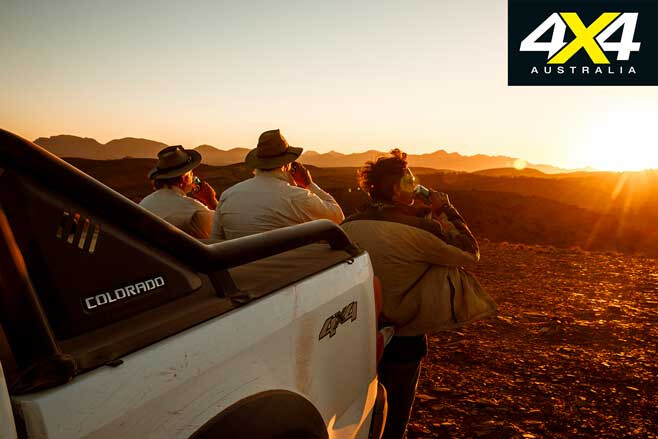
I looked out at the huge, old red gums that scatter the flat around the homestead and wondered at the history they could tell and the droughts they have already survived.
“Those trees are pretty old,” Keith commented. “Some mightn’t make it, but look at the young ones, they’ll survive and the country will come back.”
I could only hope so … and I knew I’d be back to see how they go!
Arden Hills
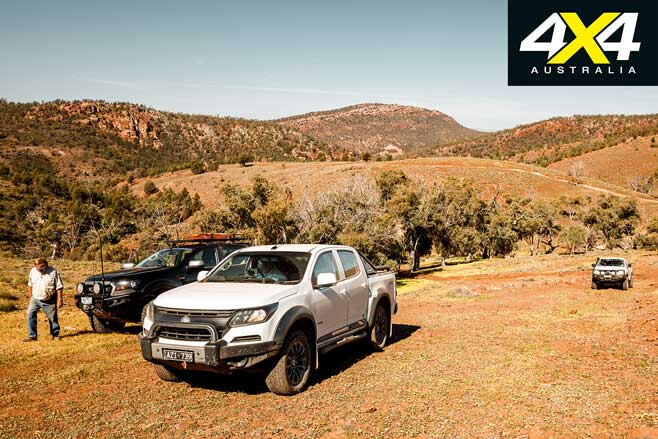
Located just 20km north of Quorn, Arden Hills is a working sheep property where the 4WD track begins and ends at slightly different points just out the back of the popular camping and picnic area of Warren Gorge. The track isn’t to be confused with the Mount Arden 4WD Track, which is located nearby on Argadells Station (www.argadells.com.au).
This route of just 25km or so will take you quite a few hours to complete, with some gnarly sections to keep you on your toes. Great views of the surrounding country and distant views of the head of the Spencer Gulf can be had on the highest ridges just south of Mount Arden.
There are a number of campsites and/or picnic spots along the way to enjoy and prolong your stay.
Dogs are not allowed. For more information and the key to access the track, contact the Flinders Ranges Visitor Centre in Quorn by phoning (08) 8620 0510, or check out https://southaustralia.com/products/flinders-ranges
Willow Springs
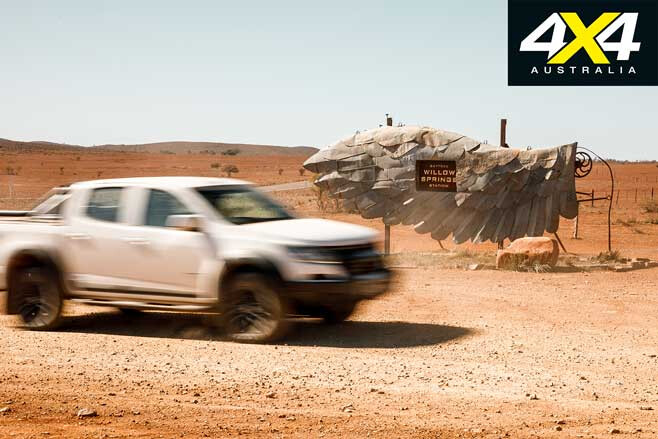
Home to the famous Skytrek 4WD Track, there is more to this property than the great track that offers fabulous views and a range of challenges along the way.
Located in the heart of the ranges and just north of the famous Wilpena Pound, the property is ideally situated to act as a base for not only experiencing Skytrek but also to explore the surrounding ranges and delights such as Brachina and Bunyeroo gorges, Blinman and the Prairie Hotel at Parachilna.
The Reynolds family has a long association with the Flinders going back nearly 100 years. The property covers more than 28,000ha and has been in the family since 1952.
There are seven self-contained buildings to choose from, while campers have a wide choice of well-established but secluded campsites. For more info contact Michelle, Carmel or Brendan Reynolds on (08) 8648 0016 or find details at www.skytrekwillowsprings.com.au
Travel Planner
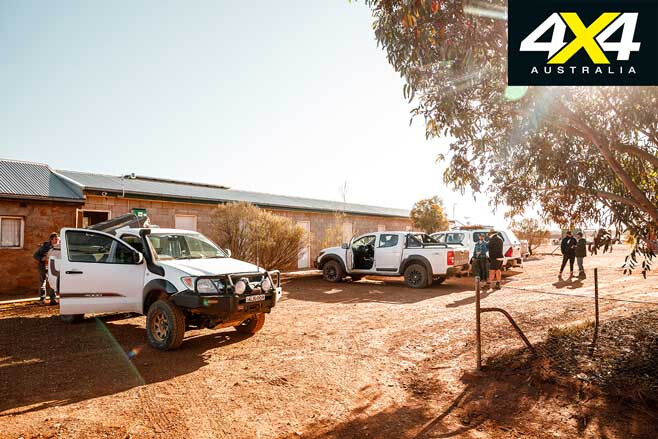
Flinders Ranges – www.frc.sa.gov.au Pichi Richi Railway – www.pichirichirailway.org.au Hawker- https://hawkervic.info Wilpena Pound – www.wilpenapound.com.au Blinman Mine Tours – heritageblinmanmine.com.au
Best map: Hema Maps The Flinders Ranges. Best guide: Ron & Viv Moon’s The Flinders Ranges an Adventurer’s Guide.
The huge popularity of the Ford PX Ranger both in Australia and abroad has ensured the aftermarket has jumped on board with plenty of hop-ups for the 4×4 ute. Whether it’s bolt-on accessories for off-roading, cargo carrying systems, or performance and styling upgrades, there’s sure to be the right products out there for your car.
Some forward-thinking companies even offer complete customised packages for the Ranger, and the better ones even have the support of the factory. Think about what HSV and FPV used to be to Holden Commodores and Ford Falcons, which HSV continues to do with its Colorado utes, and you have an idea of how far these partnerships between the vehicle manufacturer and the aftermarket company can go.
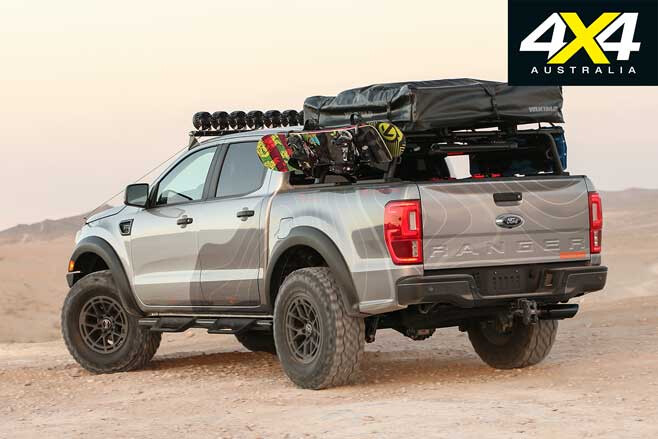
The Ranger hasn’t had the same impact in the USA since its launch there in 2019 as it had here, and it seems Ford Performance really wanted to push the midsize ute at the SEMA Show last year with half-a-dozen tricked-up versions on the main stage in Las Vegas. The show special that caught our eye was this stunning example by the guys at RTR – Ready To Rock.
RTR Vehicles is the brainchild of leading drift racer Vaughn Gittin Jr. who, after years of successfully campaigning Ford Mustangs as drift cars, saw the need for a complete style and performance package for the iconic muscle car, with the full backing of the Ford Motor Company. The first Mustang RTRs were built in 2009 and the following year RTR and Ford joined forces to make these specially prepared vehicles available through select Ford dealerships in the USA with full factory support.
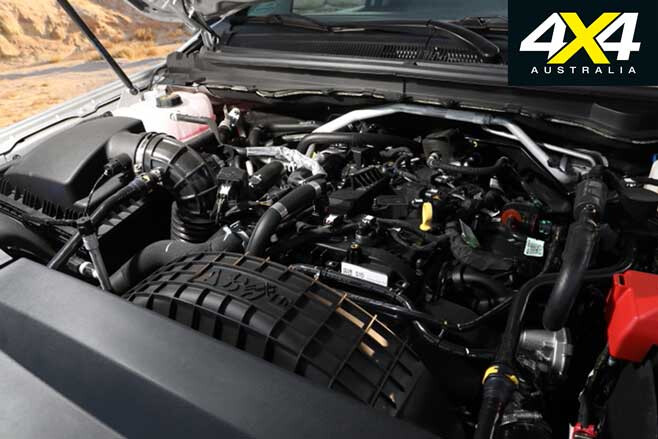
The next vehicle to score the RTR treatment was the ever-popular Ford F150 pick-up and, now in 2020, you can buy a Ford Ranger RTR in America. The standard Ranger RTR’s extra kit starts with Fox Performance 2.0 coil-overs under the front, Fox shocks at the rear, and RTR 17-inch Tech 6 alloys wearing 265/70R17 Nitto Ridge Grappler rubber under RTR flares. A Ford Performance cat-back exhaust system is the only power upgrade to the 2.3-litre turbocharged four-cylinder petrol engine and 10-speed automatic transmission combo; the EcoBoost engine is the only option in US Rangers.
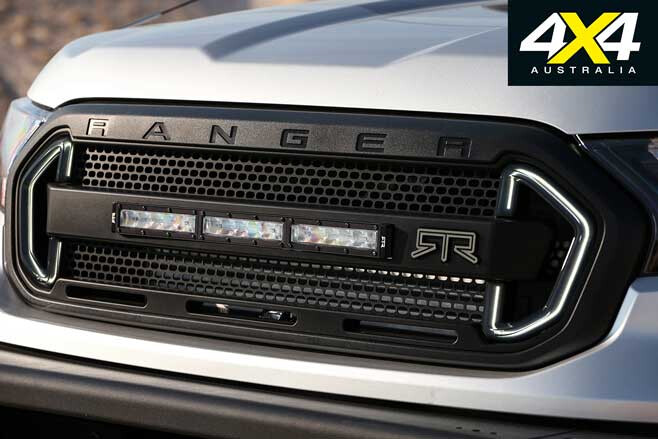
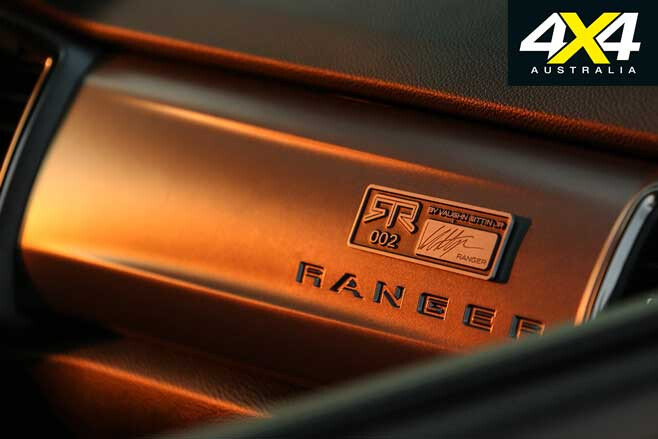
Style-wise there’s the RTR grille with its signature parenthesis LED lights, RTR graphics, fender vents, floor mats and a dash plaque signed by Vaughn Gittin Jr. Consider it a Ranger Raptor Lite package, remembering that the Yanks don’t get the Ranger Raptor there, yet.
“Being an off-road enthusiast and a lover of the great outdoors, I am in love with the way the Ford Ranger RTR can allow you to explore roads and lands less travelled,” said Gittin, who also competes off-road in a Bronco-based Ultra 4 racer. “The goal with the Ranger RTR is to inspire our customers to step out of the boundaries, get off the road, enjoy the outdoors and do some exploring!”
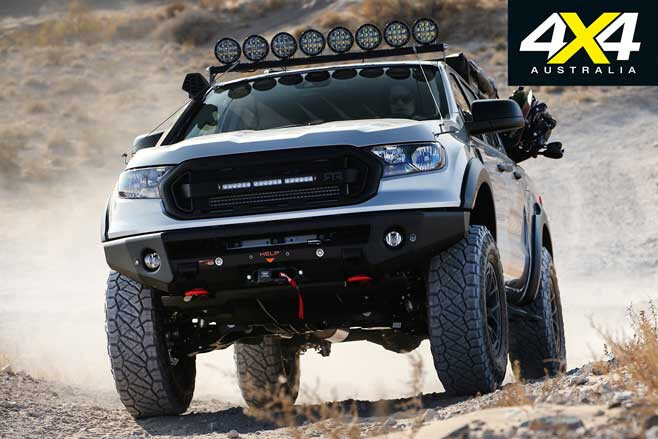
RTR built on this package for the SEMA Show to create the Ranger RTR Rambler; a fully kitted Ranger ready to take on any adventure. Starting at the cargo tub, a Yakima bed rack mounts a rooftop tent up top with snowboard mounts on one side and traction board mounts on the other. In the tub, a BedSlide supports a Rockland single drawer with jerry cans up top and an ARB Jack on the side. There’s also an ARB twin-pump air compressor mounted to the tubside. Utilising both the bed slide and roller drawer gives users easy access to what’s inside.
There’s more ARB goodness up front with a Ford Performance by ARB front bumper, which is another interesting collab between the OE and aftermarket. The steel bumper mounts a Warn winch, while the underbody protection and tow points come from the Ford Performance catalogue. There’s an extra LED light bar mounted in the grille which, when combined with the octet of Rigid Industries blasters up top, provides plenty of lumens for night-time escapades.
The Rambler boosts off road performance thanks to a Harrop/Eaton E-locker fitted in the front axle, complementing the factory locker in the rear differential.
The Ranger RTR and the Rambler concept show how well vehicle manufacturers and top-level customisers can work together to create special vehicles for owners’ needs. It’s not a new idea but is one we are only just starting to see more of in the 4×4 sphere, and we look forward to more of it.
As for RTR, “We are constantly evaluating new markets and options that would allow us to either create unique groups of parts, or new parts all together,” said Cory Justice, director of sales and marketing for RTR Vehicles. “At this time, the parts shown on the Rambler such as the limb risers, grille with the optional LED light bar, and potentially the snorkel, are in process.”
When travelling in our Ford Ranger prior to fitting the Allsafe Mining Vehicles & Equipment (AMVE) custom aluminium canopy with its internal Redarc 12-volt power system and lithium batteries, we still needed an auxiliary 12-volt power source for the ute.
This was primarily for powering the fridge which we could run off the factory Ford 12-volt outlets while the car was running, but not overnight with the engine switched off. Without a dual-battery system or any source of auxiliary power, we couldn’t risk draining the car’s main starter battery by operating accessories off it.
We needed a temporary solution while waiting for the canopy to be built, so we picked up the Portable Power Pack from Ironman 4×4. The PPP is just what it says, supplying portable 12-volt power wherever you need it from in-built 44amp/h battery. It can be charged three ways – either using a 240-volt home power cord, 12-volt power cord or via the solar charge input.
The front of the unit features multiple power outlets comprising a 12-volt cigarette lighter-style plug, 12-volt Merit plug and a USB outlet. The power outlets are protected by individual circuit breakers. There’s also a clear display showing the state of charge voltage and the current draw on the unit at any time. This is all housed in a heavy-duty ABS plastic housing with a carry handle. You can remove it from the car altogether to power something like a fridge in camp, and it can be kept topped up with a solar panel if in use for more than a few days.
We charged the Portable Power Pack using 240-volt before we went away and stowed it securely in the passenger-side rear footwell, where it could easily be plugged into the standard 12-volt socket. Our 12-volt fridge was powered off the car during the day when the engine was running and then, each afternoon when we got in to camp, it was simply a matter of swapping the fridge power from the car to the power pack to run overnight. In the morning the fridge was plugged back in to the car’s 12-volt to run all day and the PPP plugged in to another of the Ford’s outlets to be charged for the next evening.
With this setup, the power pack served us well, keeping the fridge running 24 hours a day for the length of our trips. The in-built USB was handy for charging phones and head torches while on the road and when the car’s USB ports were in use. The power pack comes with charge cords for both 240- and 12-volt charging and is available from Ironman 4×4 stores around the country.
The portable power pack served as a great auxiliary source of 12-volt power when we didn’t have an inbuilt system in the car, but we’d consider still carrying one for power use around the campsite and as a back-up. It’s a worthwhile consideration for any time you need power when out on the road.
RATED Available from: www.ironman4x4.com RRP: $499 We Say: Convenient and reliable power wherever you need it.
Here is an open secret: more often than not, performance utes are all show and no pants, full of brawny numbers that can’t perform off-road as well as purpose-built off-road machines.
For those who want genuine off-road capability but still fancy performance pick-up “aesthetics”, Ireland-based off-road specialist KNINE Racing has the right expertise with a reputation on turning UTVs into miniature performance trucks.
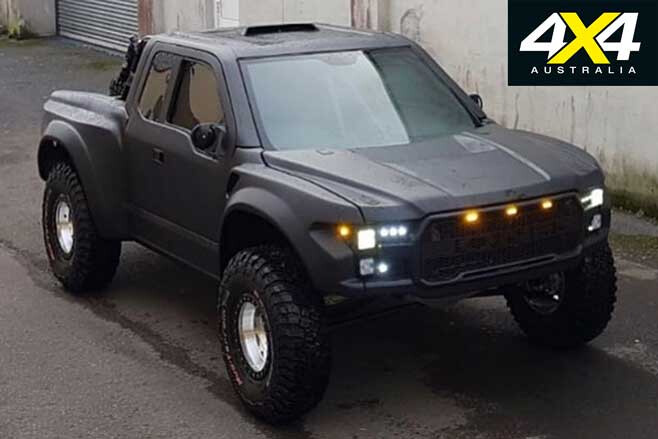
The company’s latest project, dubbed the Mini Raptor, is a luxury turn-key creation that is based on a Can-Am X3 UTV and rebodied to resemble a miniature F-150 Raptor.
KNINE Racing did more than just slap on a fibreglass shell and wire up some extra lights in turning the UTV into a downsized F-150.
In the transformation process features proper extensions to the frame, moulded body panels complete with side-view mirrors, a functional dashboard, an insulated and sound-proofed cabin assembly, and even air conditioning.
https://www.instagram.com/p/B7tH0z6B7dB/?utm_source=ig_embed&utm_campaign=loading
According KNINE, the Mini Raptor’s air-conditioning system uses a 90amp alternator powering a 12v electric compressor mounted behind the rear exhaust and beneath the spare-tyre mount.
KNINE describes its UTV creations as “luxury prerunners” that have the comfort of passenger vehicles and the off-road ability of a UTV or SXS-class rally machine.
Beneath the panelling, the Mini Raptor is mechanically similar to a Can-Am X3 UTV, albeit with new billet hubs and sporting beadlock wheels.
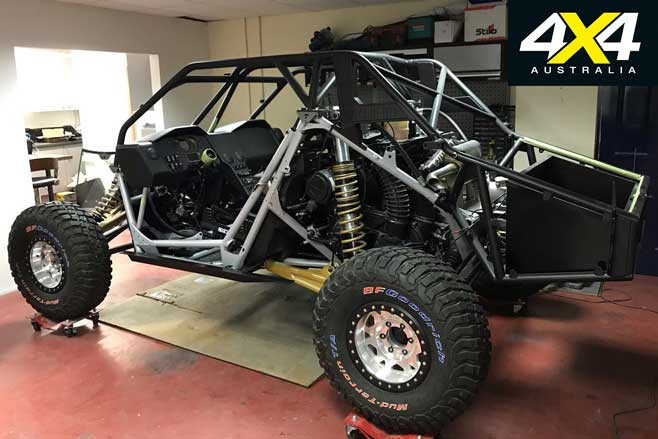
The Mini Raptor is said to weigh “under 1100kg”, and even with just 145kW produced from its 900cc three-cylinder turbo, it still boasts a higher power-to-weight ratio than the real 2700kg 335kW F-150 Raptor.
Unfortunately, the F-150 Raptor has the added benefit of being road-legal, which UTVs don’t, though when it comes to a proper hardcore off-roader, who needs roads?
Renowned as peddler of excessive horsepower, Brabus will be heading to next month’s Geneva Motor Show with a more adventurous creation: a G-Class ute.
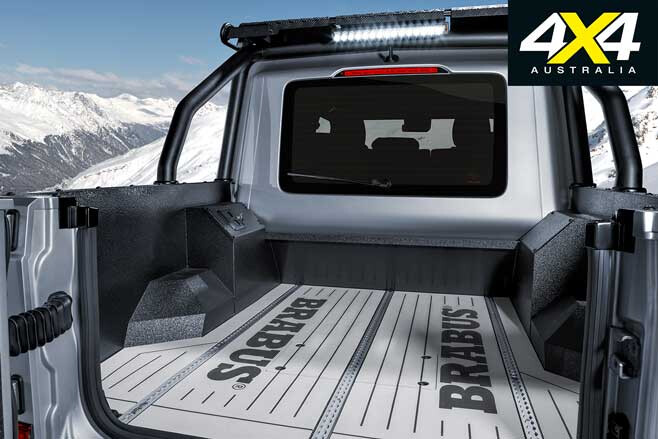
Based on the Mercedes-AMG G63 4×4 wagon, the Brabus 800 Adventure XLP not only features a rear bed, it also sits on an elevated portal axle setup that has been specially designed to suit the current-generation G-Class’ independent front suspension system.
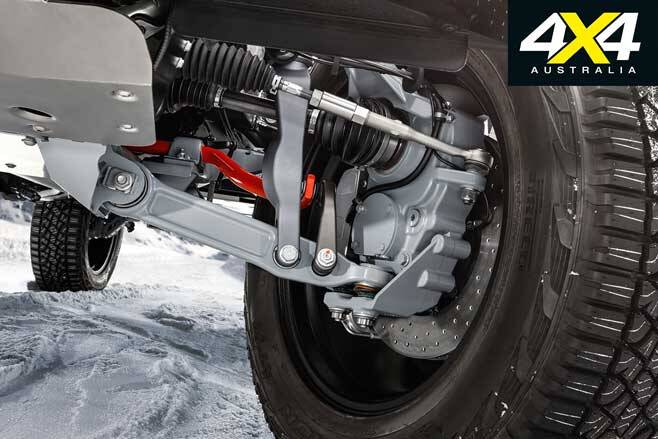
In order to fit the portals in the double-wishbone front end, Brabus engineers had to design an all-new integral subframe and various axle links, which were milled from billet aluminium. And even though the G63 wagon’s rear live-axle setup is retained, many components such as the axle housing and suspension linkages have been redesigned and replaced in the conversion to a ute.
With the portal axle setup raising the 800 Adventure XLP’s ride height significantly over the standard G63, more than doubling the quoted ground clearance from 240mm to 490mm, Brabus engineers fitted specially-designed height-adjustable coilover suspension and powered side-steps.
As for the ute conversion, Brabus didn’t just chop the roof off, weld the doors and call it a day. Instead engineers kept the passenger cabin intact and developed a special module that is attached to the G-Class’ ladder frame chassis, which stretches the 800 Adventure XLP’s wheelbase by 50cm over the standard wagon.
Parts of the rear bed and bedsides are made from carbon-fibre and finished with teak-like panelling, while the 800 Adventure XLP cabin’s new rear wall is made from sheet steel.
This being a full-on Brabus re-engineering effort, the 800 Adventure XLP gets the tuning house’s Brabus 800 PowerXtra + treatment, which raises the 430kW/850Nm output of AMG’s 4.0-litre bi-turbo V8 engine to 588kW/1000Nm.
That being said, due to the added weight from the larger body and portal axles, the 800 Adventure XLP accelerates from 0-100km/h in 4.8seconds, which is 0.3 seconds slower than the standard G63, and it’s limited to a top speed of just 210km/h.
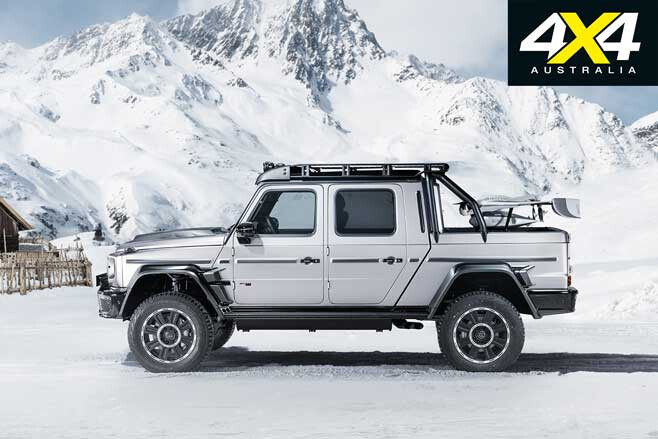
Completing the look, the 800 Adventure XLP will come fitted with Brabus’ Widestar widebody kit that widens its body by 116mm over the standard G63, along with a front bar that can be specified to fit a 4500kg winch.
Strangely for a brand whose pricing policy was “if you have to ask, you can’t afford it”, Brabus has revealed the 800 Adventure XLP’s price, with “First Edition” variants starting at €575,630 (A$958,000), nearly four times the starting price of a G63 wagon before taxes in Germany.
Brabus however, says that there will be a lower-tier version known as the 700 Adventure XLP, with a bargain starting price of €389,830 (A$649,000), or just over two and a half times the price of the G63.
Land Rover has set the Australian arrival date of the three-door Land Rover Defender 90 range for the last quarter of this year.
A limited run of 100 Defender 90 First Edition P400 models will be the first of the shorty Defenders to be introduced in October, with the introduction of the rest of the range to follow in December.
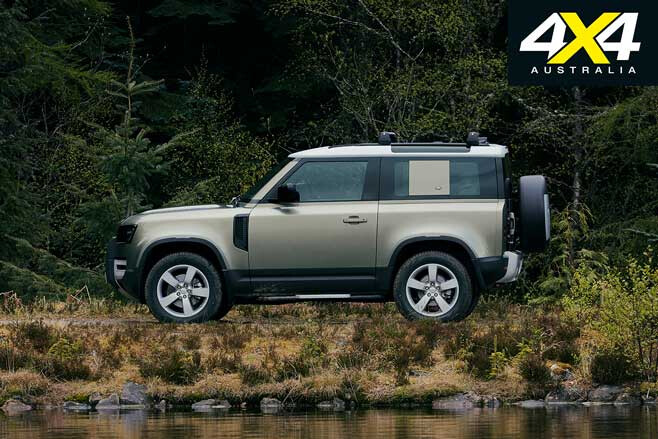
All Defender 90 First Edition models for Australia will be finished in green with the white roof combination.
Unlike Australian market diesel-equipped First Edition Defender 110s, the Defender 90 First Edition models will come with the P400 powertrain specification, which is the most powerful engine option in the Defender range currently.
P400-spec Defenders feature a turbocharged 3-litre inline-six petrol engine paired with a mild-hybrid system, which boasts a power output of 294kW and 550Nm.
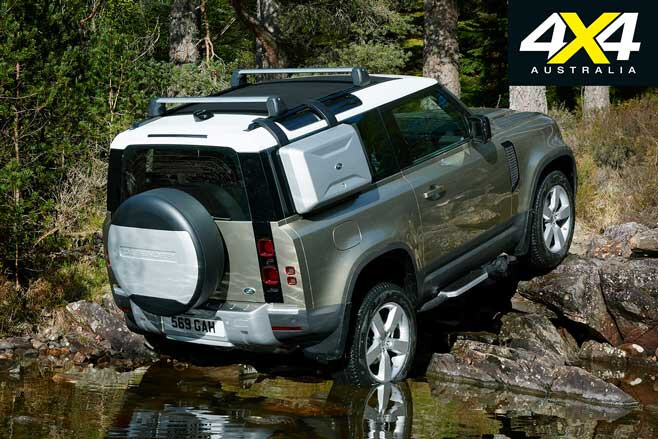
As is the case with the rest of the Defender range, it is expected that Australia-bound Defender 90s will be equipped with an eight-speed automatic transmission.
According to Land Rover Australia, the company website had recorded “extraordinary levels of website traffic” with more than half congregating on the new Defender, and customer expressions of interests were the highest recorded for any new Land Rover launched locally.
“We are delighted with the interest shown in the 110, and have a high level of confidence that the new Defender 90 will prove just as popular,” said Mark Cameron, managing director of Jaguar Land Rover Australia.
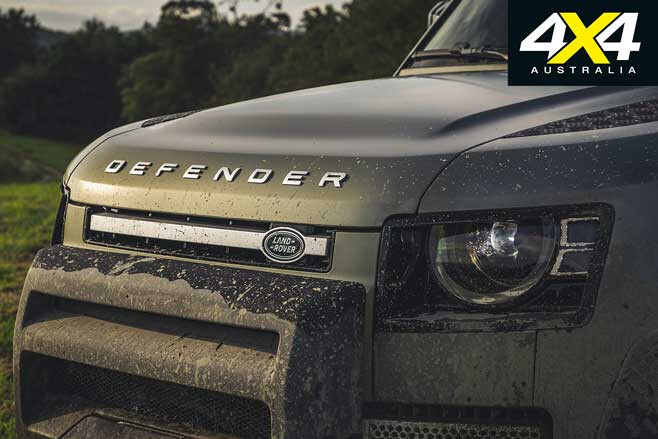
For now, Land Rover Australia has yet to announce the pricing and the specifications of the rest of the Defender 90 range, and will do so closer to the launch date.
With the base Defender 90 priced 10 per cent lower than the base Defender 110 in the UK, we can expect Defender 90 prices to start somewhere in the $65,000 region.
“Sometimes you have to put your balls on the line,” reveals Bernie Quinn, the head of automotive engineering and assembly company Premcar. The casual, almost matter-of-fact comment refers to the multi-million dollar investment in facilities, staff and equipment in the still-fresh factory I’m entrenched in, ready to get my hands dirty.
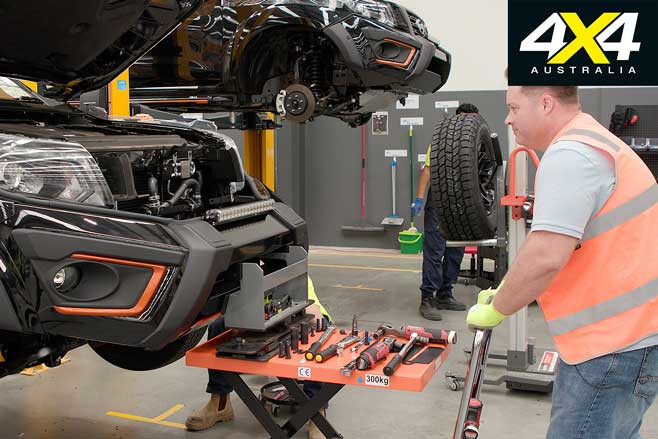
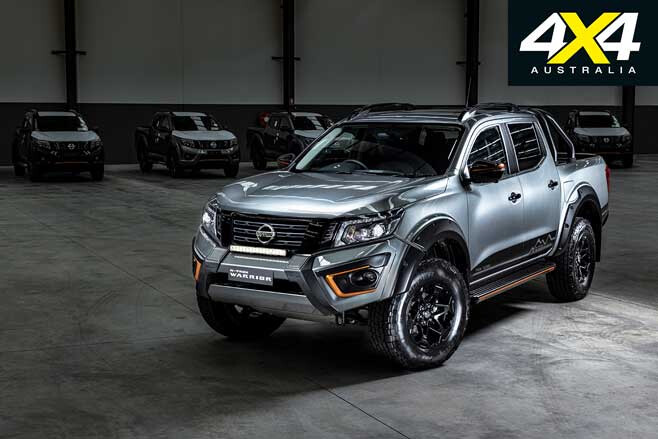
Every few minutes Nissan’s latest tough truck, the Navara N-TREK Warrior, flickers past in the background, moving around the sizeable 6300-square-metre facility in the north of Melbourne. We’re in the boardroom with its large screen TVs and slick furniture that is a far cry from the bustle of the assembly line only metres away. Both are a world away from the grunge and disorder some might envisage of an automotive workshop.
Created from the ashes of the Tickford business that once crafted hot Falcons, Premcar has turned its attention to the booming off-road segment currently dominated by dual-cab utes.
The first major client is Nissan, keen to exploit the potential of the Navara. Rather than throw accessories at it to beef up the look, Premcar sliced and diced with suspension and chassis modifications and enhanced underbody protection as part of comprehensive engineering program aimed at boosting off-road performance.
In one unused corner of the workshop are some dormant vehicle hoists, each brand new. It’s a rare sliver of space where there’s not much happening. Pointing to some telltale tape on the ground, production manager Bill Birney says that’s where a wall will soon be built for the planned engineering facility, all of which helps paint the bigger picture of what Premcar is about.
That planned engineering space is the brains behind the brawn that is the manufacturing facility. It is key to Premcar’s investment.
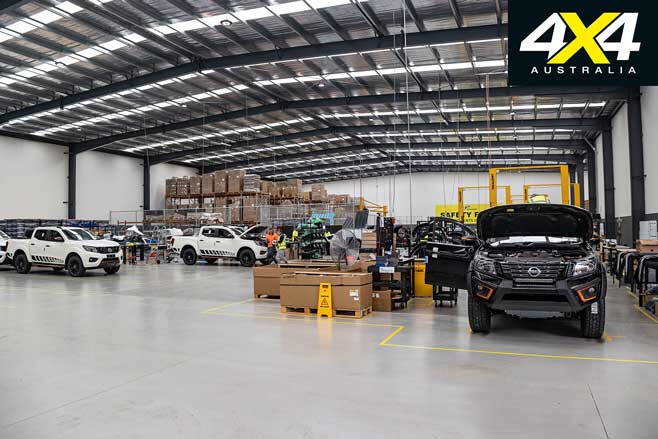
Rather than an aftermarket attack using quality componentry, the N-TREK Warrior work adheres to Nissan’s global factory standards, requiring additional checks and quality measures to keep the Japanese masters content.
Hence the investment, one Quinn says was sharpened for the Warrior deal to learn the ropes of what he clearly hopes is a bigger world of manufacturer-approved modifications.
“We sacrificed some margin on this program and made some long term commitments on facilities and investment that’s going to force us to work harder to keep us busy,” he says, adding that taking a punt is part of his approach to business.
“I’ve never regretted taking a risk, I have regretted not taking a risk.”
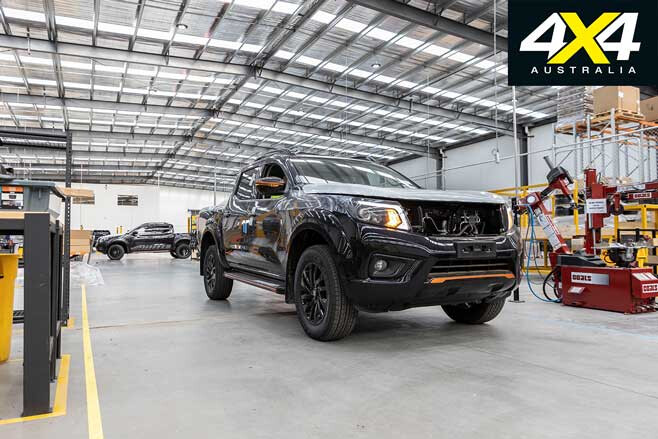
The Warrior deal runs until the end of the year, prompting Quinn’s leap into a brave new world. However, with an updated Navara expected by 2021, provided things are selling strongly there’s a good chance there will be a Warrior 2.0 – from the same (expanding) facilities.
This is as close as we get to vehicle manufacturing in 2020 Australia. In the wake of a horror decade for manufacturing in Australia the Premcar business is a rare bright light. Granted, it’s a minnow compared with the sprawling Toyota, Holden and Ford factories that were once churning out hundreds of cars a day. Instead, Premcar’s target is 13 vehicles, or one every 34 minutes from its full-time staff of 40 personnel. That’s glacial by global standards, but looking at the truncated 11-station assembly line there’s no shortage of activity.
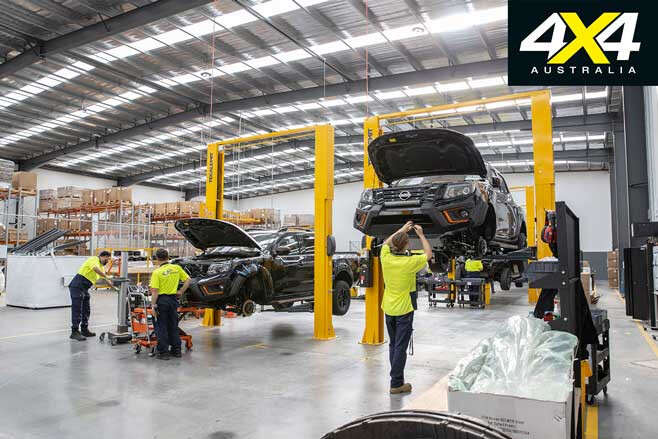
It’s as I’m wielding a strut assembly for the front suspension system that this 34-minute target becomes more pertinent. Unbolting the lower suspension system to allow removal of the factory-fitted unit and replacing it with the new one takes a matter of minutes. Then there’s bolting on the larger bump stops and tweaking other components as part of the rigid process.
It’s then retightening everything using pre-programmed torque wrenches. A chalk pen marks the bolts as correctly fitted, the final piece of a manufacturing process that is meticulous at every step. Those chalk marks are crucial.
Clearly a stickler for rules – the “Safety first” banner taking up half the wall at the end of the workshop is testament to that – Birney reveals he’s stopped cars at the end of the line for not having the appropriate chalk marks. The work may have been done, the components fitted and the bolts tightened – but without that visual confirmation that things have been completed to the book, the car is unfinished and sent back for a recheck.
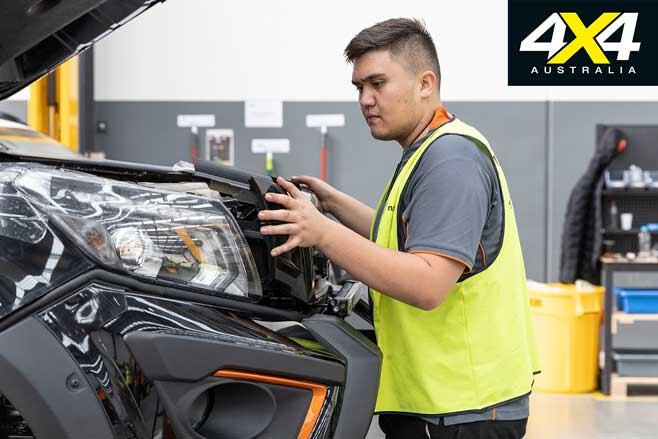
“We inspect to a very high level,” says Birney, formerly from Ford and someone who has worked at a Chinese automotive factory and seen things done on a massive scale.
Like any first-class manufacturing facility Premcar monitors things down to the minute. It’s that big factory thinking that has led to the Warrior production line, itself an evolving facility.
“We’re doing the same processes that you do in a large plant … OEM-style processes.
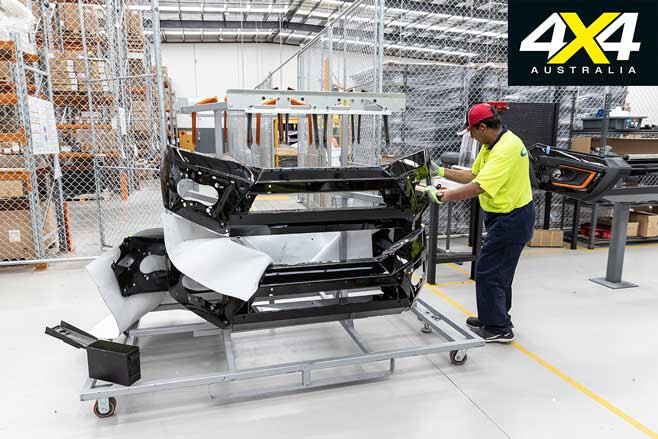
Not content with standing back and admiring the early efforts to assemble modified vehicles to a scale smaller workshops would typically not attack, Premcar turned to data and software to streamline the processes.
Days before I jumped on the spanners, the production line was reworked to unlock a bottleneck with attachment of the front bumpers. Hoists were repositioned and electricians called in to add powerpoints – all in the quest for a better flow. Other tweaks and process refinements helped shave 40 per cent off the build time, in turn increasing total vehicle outputs and lowering costs.
Yet there’s no sense of panic or rushing. Workers are fastidious in ensuring every component is seated correctly and performing its intended function.
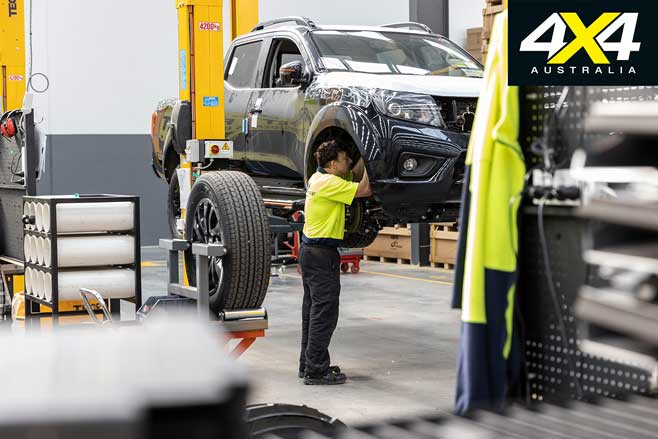
One thing missing from a typical car factory is sparks and noise. There’s not a robot in sight, with humans the ones brandishing rattle guns and wrenches. And things are borderline quiet, save for the occasional staccato woosh of a tyre being inflated or double beep of a horn before a car starts moving. Along with hazards flashing the latter is a simple way to warn of incoming traffic.
It’s clear the all-important processes and people behind the Premcar Warrior have modelled everything off a full-scale factory. Trucks arrive daily to deliver components for the upcoming builds and there are stacked shelves with spares in case something goes MIA.
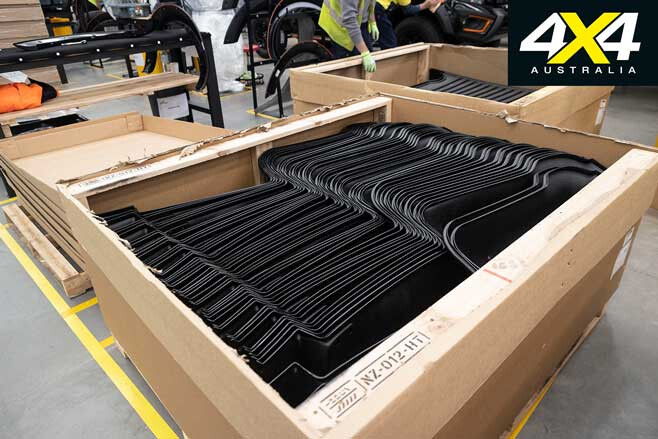
Removed components – such as suspension struts and front bumpers – head back to Nissan to be recycled or sold as second-hand parts.A skip bin sidles past me loaded with recycling. Premcar even found a local business recycling foam packaging, ensuring something more useful than taking up space in landfill.
Trolleys and wheeled stools are all about reducing worker stresses and strains and there’s a cleanliness and order to every inch of the facility. Not that anything is manufactured here. Every component is sourced externally. It’s only the occasional reworking – such as some trimming of the inner ‘guards of the wheel arch – that occurs onsite.
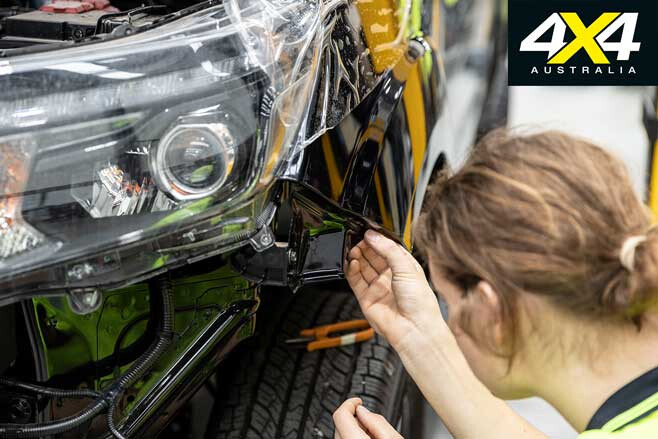
Additional components are either sourced from Nissan’s parts catalogue and modified – such as the front bumper – or sourced from top tier suppliers. The bumpers are painted by the company that once painted components for HSVs, for example. And the tow bar assembly – redesigned to accommodate the larger spare tyre that matches those on the car – is from respected canopy and bar supplier EGR.
Watching the prep work on the front bumper assembly reinforces the quality of the suppliers. The bar starts as a Nissan factory component but one that is modified to do without the upper hoop, instead fitting plastic stubs for aesthetics. By the time a Hella LED light bar is added it’s a 65kg component ready to be bolted on. Everything blends beautifully and the finish of the plastic and matching of colours is in line with components fitted to the Navara at the Thai factory.
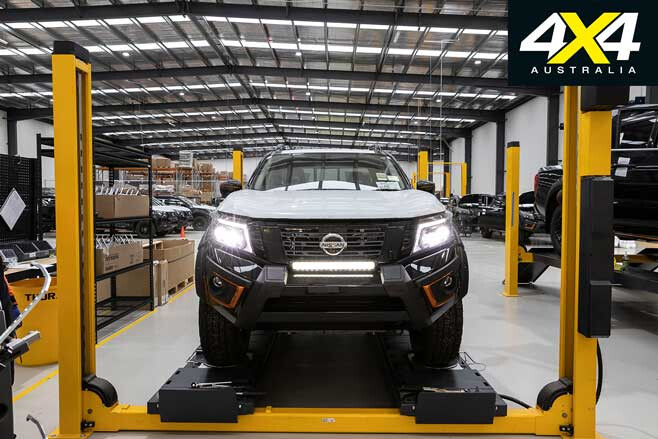
One of the final stations adds some electrical hardware to recalibrate the speedo, which would otherwise be out of whack due to the larger rolling radius Cooper Tires rubber.
Just as I’m getting into the bolting and swivelling groove I get shown the hand towards the end of the production line. It’s the station were the ‘stripers’ do their work; those people who used to fit stripes to FPVs but now add the stickers and decals to a Warrior. While it may seem simple, there’s an art to ensuring such a large sticker lands in the precise spot without dirt or grime between it and the paint. Only three people in the Premcar facility are trusted with the sticker placement – and two of them are women.
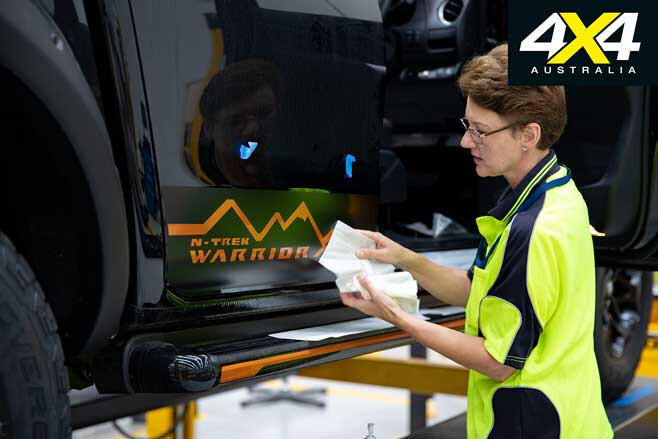
“You need a really steady hand … you need good attention to detail,” says Birney.
From there every car undergoes a short test drive and quality check to ensure all components and additions are done to those processes and are doing what they say on the box.
All before a customer – or one of us – gives it a proper test drive. One involving red dirt and Aussie corrugations. The sorts of things guaranteed to test the mettle of any 4×4.