
With utes displacing passenger cars as the dominant choice of motor vehicle in the Australian market, Nissan has opted to update its Navara dual-cab with better refinement for occupants.
The headlining change in the Navara range is to be found in all MY2020 dual-cab variants, which will come fitted with a new acoustic windscreen, and new sound-absorbing material in the centre console, firewall, and transmission tunnel.
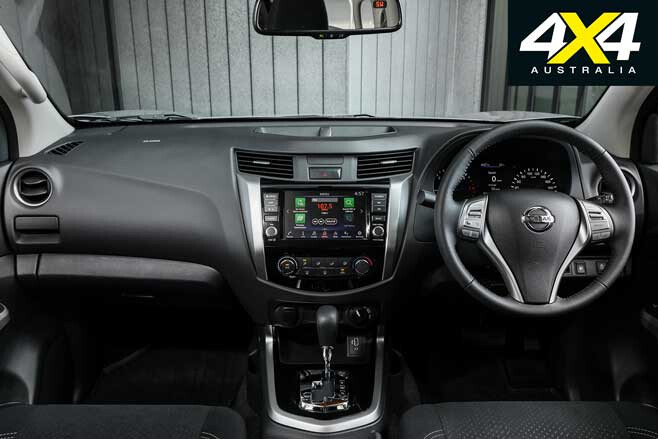
With the Navara’s 2.3-litre inline-4 turbodiesel being far from the most refined engine, Nissan has also fitted a new engine cover, which it claims will help minimise engine noise.
In addition to the NVH improvements, the mid-range dual-cab ST variant will come fitted with the “Black Styling Package” as standard.
The package introduces black versions of the Navara’s grille, front fog light surrounds, sport bar, and mirror caps.
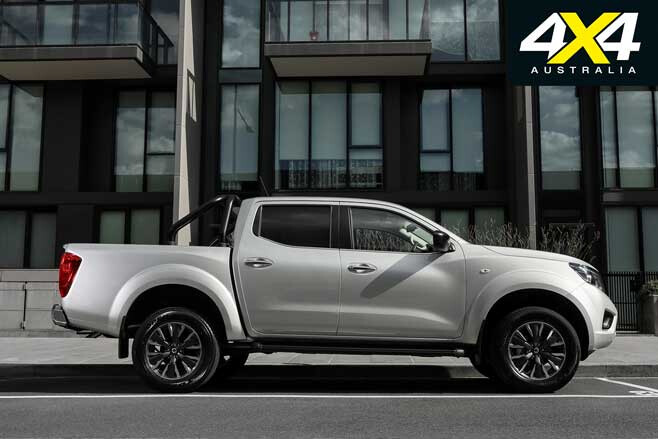
Besides adding some black exterior elements, the styling package also brings bigger 18-inch wheels to the dual-cab ST package, up from the standard 16-inch items, which is said to raise its ground clearance to 228mm as well as its approach, departure, and ramp-over angles.
“These changes deliver even more of what our customers want from their Navara,” said Nissan Australia managing director Stephen Lester. “Not only do they add more refinement right across the Dual Cab range, but they also unlock a new tough look for one of our most popular models, the Navara ST.”
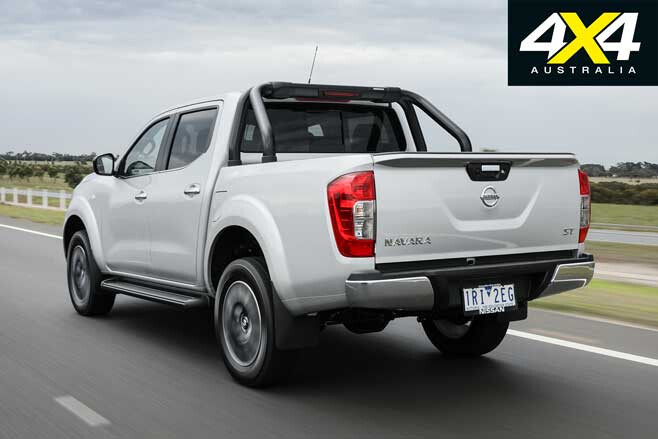
The new improvements have also brought a minor price hike across the dual-cab range, with the RX, SL, ST-X, and N-TREK variants copping a $350 increase, the range-topping N-TREK Warrior sees a $500 price hike, and the “Black Styling Package”-equipped ST bears an $850 rise.
The updated Navara models will go on sale this month with the following prices for the 4×4 models:
| Model | Transmission | Price | Price Change |
| Dual-Cab RX 4×4 | 7AT | $44,200 | +$350 |
| Dual-Cab SL 4×4 | 6MT | $45,400 | +$350 |
| Dual-Cab SL 4×4 | 7AT | $47,900 | +$350 |
| Dual-Cab ST 4×4 | 6MT | $48,750 | +$850 |
| Dual-Cab ST 4×4 | 7AT | $51,250 | +$850 |
| Dual-Cab ST-X 4×4 | 6MT | $53,600 | +$350 |
| Dual-Cab ST-X 4×4 | 7AT | $56,100 | +$350 |
| Dual-Cab N-TREK 4×4 | 6MT | $56,800 | +$350 |
| Dual-Cab N-TREK 4×4 | 7AT | $59,300 | +$350 |
| Dual-Cab N-TREK Warrior 4×4 | 6MT | $63,490 | +$500 |
| Dual-Cab N-TREK Warrior 4×4 | 7AT | $65,990 | +$500 |
News out of the USA overnight see two of the biggest names in the 4×4 recovery and off road industry join forces at Warn Industries has bought Factor 55. While Warn recently celebrated seven decades in business, Factor 55 has only been around for eight years but has fast become the leader in closed loop recovery hitches and other recovery equipment.
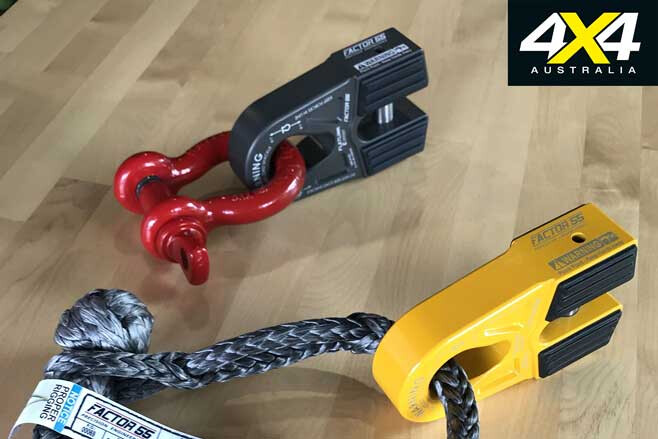
Boise, Idaho based Factor 55 reinvented the way people attach the winch lines to vehicles when it introduced and started mass producing its closed-loop hitches and systems. Products such as the Factor 55 Prolink and Flatlink replace the traditional hook that is used to attach the winch line to an anchor point or another vehicle to create a rig that is safer for all users. The Prolink and Flatlink products have expanded in to ranges of gear and can be seen on the front of recreational, professional and competition vehicles, 4x4s, and UTVs around the world.
Factor 55 has also branched out to producing a range of other recovery products including synthetic ropes, soft shackles, pullies and complete vehicle recovery systems.
Warn has long been the leader and the brand to follow in vehicle mounted winches and in recent times has responded to the popularity of closed loop hitches with its own Sidewinder and Epic Hyperlink hitches but they haven’t gained the global traction of the now renowned Factor 55 products.
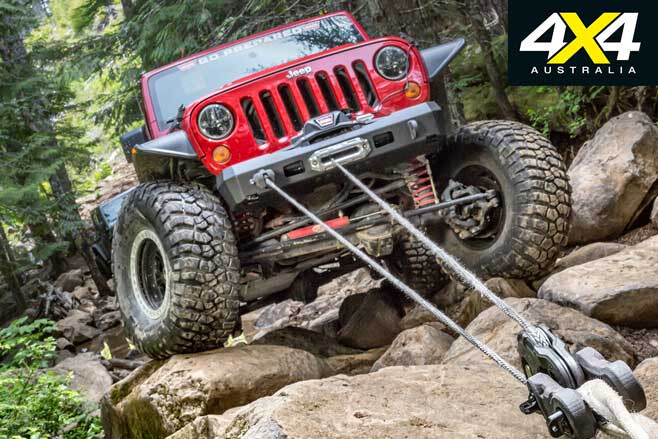
The joining of these two premium brands that operate in the same sector seems like a marriage made in heaven as they both have excellent products and Warn has a massive global business base. Our own Ford Ranger uses a Warn Zeon winch up front with a Factor 55 Flatlink fitted to its synthetic line.
“Given their premium brand, experienced engineering design capabilities, and specialization in closed system winching products, we feel strongly about the complementary nature of the Factor 55 product offering and realizing the benefits this partnership brings,“ said Kyle Shiminski, Vice President & General Manager of Warn Industries in an official statement announcing the purchase. “We look forward to working closely with Michael (Michael Costa, Factor 55’s President) and the entire Factor 55 team, and continuing their history of premium, innovative products for more secure winch and rigging operation.”
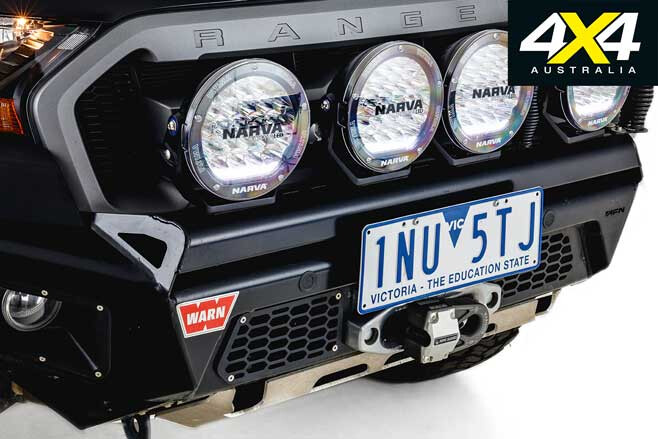
Michael Costa went on to say, “We are excited to be part of the Warn Industries family, joining forces with a company with a rich history of market leadership, innovation, and a highly-recognized, premium brand. We are very proud of what we have accomplished over these eight-plus years at Factor 55, and partnering with another premium brand where our products accompany one another so well is a great feeling. Our team will maintain their focus on designing and introducing the high-level of product ingenuity Factor 55 customers have grown accustomed to. We look forward to continuing that tradition in addition to drawing upon resources available as part of Warn Industries.”
Both Warn and Factor 55 are proud American brands that do their design and development, and much of their manufacturing in the USA. Factor 55 will continue to operate out of Boise, as a division of Warn Industries which is based in Oregon.
Warn winches and Factor 55 products are available in Australia through leading 4×4 accessories outlets.
Volkswagen has revealed a design sketch of what its next Amarok ute might look like. Shown at a recent in-house conference, the artwork provides a hyper-exaggerated, sneak peek of what we might expect the Ford-based 1-tonner to look like when it appears in showrooms next year.
It was already known that the next-generation Amarok will be built on a platform shared with the next-gen Ford Ranger although how much of the new vehicle will be VW and how much will remain Ford is yet to be seen.
The sketch does show that the Amarok’s boxy wheel arches remain as does the full-width grille that is a staple of current VW models. Vehicle designers have wild minds and these sketches usually tell us more of what they would like, not what the engineers and marketeers will ultimately give us.
Thus you can forget about the oversized aggressive off-road tyres, long-travel suspension and ungainly bonnet scoops as seen in the drawing, some of which we will be happy to go without.
We already have a pretty good idea of what the new Ranger will look like thanks to images of a prototype gained by Wheels Magazine last year. This was snapped in Melbourne and is said to be the real deal.
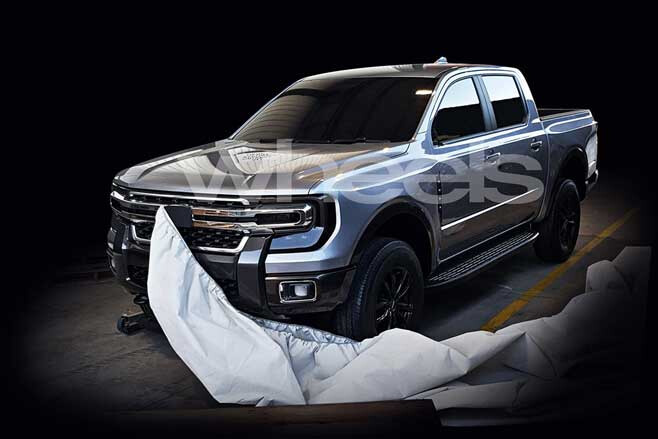
On paper, the product of a Ford and VW amalgamation should be a good thing. The current PX Ford Ranger is Australia’s best-selling 4×4 and is popular around the globe while the aging Amarok remains the best driving ute in its class.
With the demise of the Mercedes-Benz X350d it also remains the only V6 diesel-powered ute in the category and the most powerful. Let’s hope some of those VW power plants make their way in to the next Amarok and it isn’t just a rebadging exercise.
We expect the next-gen Amarok to be revealed sometime next year possibly as a 2022 model but not until the covers come off the new Ranger sometime before that.
*Article updated 3:10pm, March 18, 2020
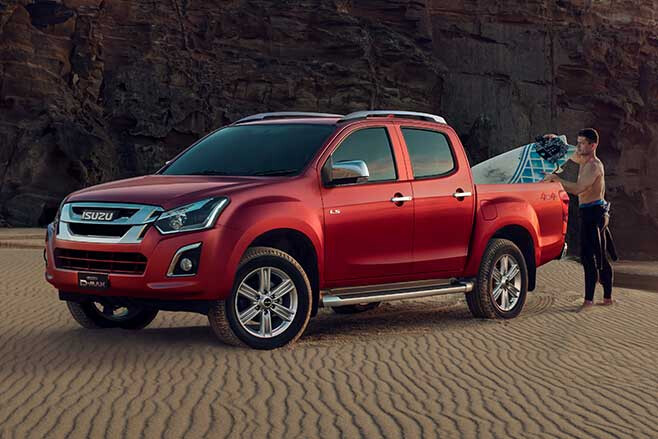
A recall has been issued for 2323 Isuzu D-Max Crew Cab models by the Australian Competition & Consumer Commission (ACCC) over a fault in the ute’s rear suspension.
According to the ACCC, the recall pertains to “an insufficient diameter of the front eye” of the rear leaf spring found in D-Max Crew Cab models sold between January 2018 and February 2020, which may cause a fracture to the assembly.
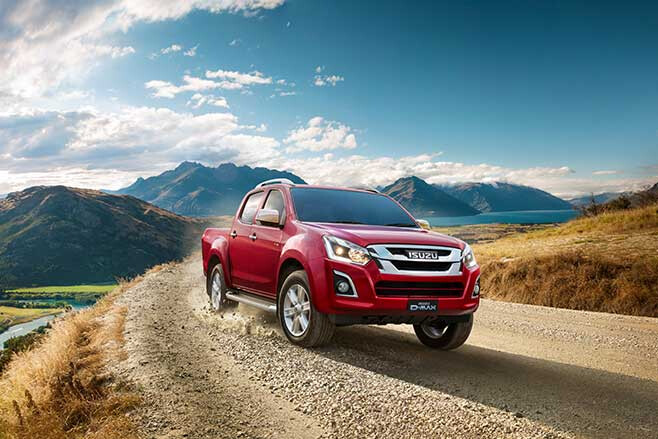
A fracture to the leaf spring can cause the parking brake cable to be unintentionally applied due to the rear axle being unsupported, severely compromising the safety and operability of the vehicle.
The full VIN list of D-Max utes affected by this recall are listed here.
This voluntary recall is an expansion of an earlier one issued in April last year for 4717 D-Max Crew Cabs sold between January 2018 and October 2018.
According to Mark Harman, manager of PR and sponsorship for Isuzu UTE Australia, around 12 per cent of D-Max utes involved in the last recall have yet to have the issue rectified.
“So far there hasn’t been any case of suspension failures related to the D-Max’s rear suspension in Australia, despite that we are concerned that the issue exist and it doesn’t meet our standards. As such we would like owners to bring their D-Max ute in to have the issue rectified,” said Harman.
Isuzu UTE Australia will contact all known owners of affected vehicles, and owners should get in touch with their nearest Isuzu UTE dealer to arrange an inspection and replacement of both the rear leaf spring assembly and parking brake cable.
Because we live in a world that has more money than sense, Dutch car designer Niels van Roij has taken a swing at creating the two-door Range Rover that Land Rover canned shortly after its debut.
Called the Adventum Coupe, the coach-built two-door Range Rover is based on the standard Range Rover, of which only the bonnet, fenders, boot lid and 5.0-litre supercharged petrol V8 engine remain.
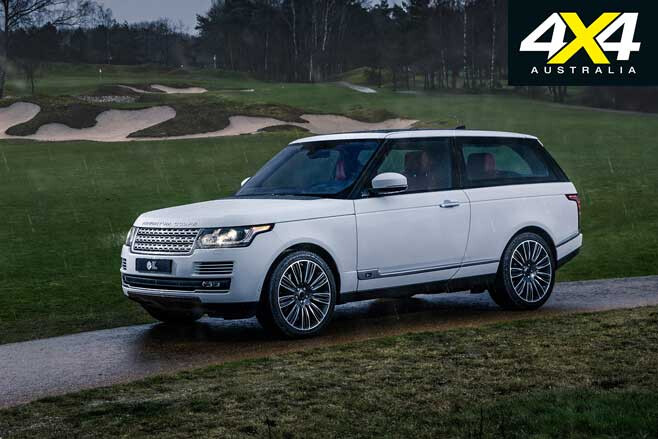
According to Niels van Roij Design, the Coupe’s front doors are completely new, the original Range Rover’s B-pillar climate control vents have been discarded, and the rest of the body is fitted with hand-beaten aluminium panels.
Like the cancelled Range Rover SV Coupe, the Adventum Coupe also features a twin captain-chair arrangement in the back and a list of customisable options from the upholstery to the teak flooring.
Strangely, despite being created by an independent coachbuilder, the Adventum Coupe has a starting price of just €270,000, which is nearly €30,000 cheaper than the original Range Rover SV Coupe’s reported asking price.
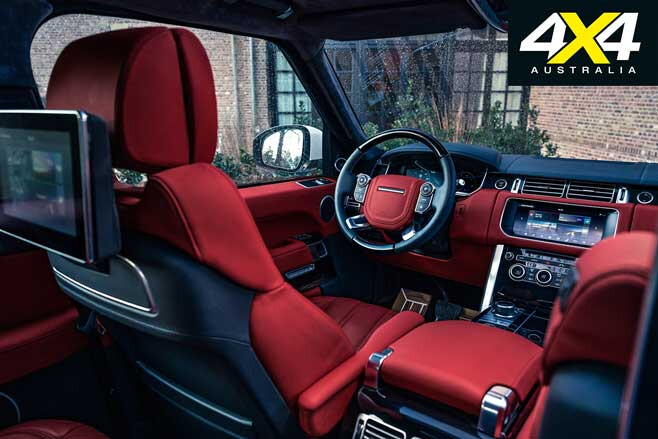
That being said, the Range Rover SV Coupe would have been equipped with a more powerful variant of the Range Rover’s standard supercharged V8… and would have come with factory aftersales coverage.
Land Rover had originally planned to produce 999 examples of the SV Coupe, 20 of which were originally earmarked for Australia, each sporting a price tag “in the vicinity of AUD$500,000”.
The SV Coupe was cancelled a year after its unveiling following declining sales and Brexit concerns, with the resources ploughed into its development being instead diverted into new product development.
Despite yesterday marking the official reopening of the Simpson Desert after the summer closure, significant flooding on the eastern side of the desert and around Birdsville has resulted in several road closures restricting access to Birdsville and the desert.
Parks Queensland has closed the desert from Birdsville to Poeppel Corner due to flooding with conditions to be reassessed on April 3. In addition to that, Queensland road closures around Birdsville include the Birdsville Track (Eyre Developmental Road) from Birdsville to the South Australian border, the Birdsville Developmental Road from Birdsville to Windorah, and the Diamantina Developmental Road from Bedourie to the Barcoo Council Boundary.
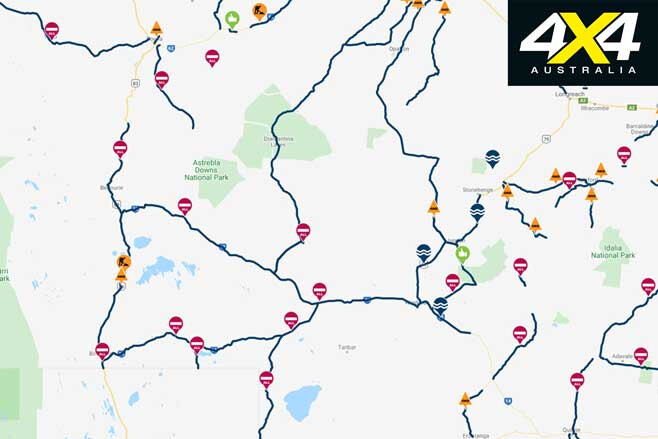
In other words, if you’re already in Birdsville you might find it difficult to leave until roads reopen.
The story is different on the western side of the Simpson Desert with the Mt Dare Hotel reporting that it’s still possible to enter the Simpson Desert from the Mt Dare side for those keen to do some exploring and willing to exit on the same side.
For the latest up to date reports on prevailing conditions and road-closure information, see the following sites:
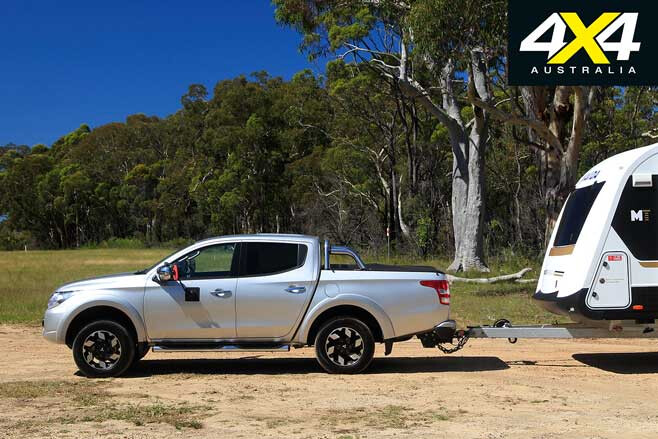
Also check out the Mt Dare Hotel and Birdsville Hotel Facebook pages for more local information.The Australian Competition & Consumer Commission (ACCC) has announced a recall for 102,616 Mitsubishi MQ and MR Tritons sold around Australia over a fire risk.
The fire risk outlined by the ACCC is related to the incorrect installation of Mitsubishi’s genuine accessory towbar’s wiring harness on Tritons that were sold between February 2015 and December 2019.
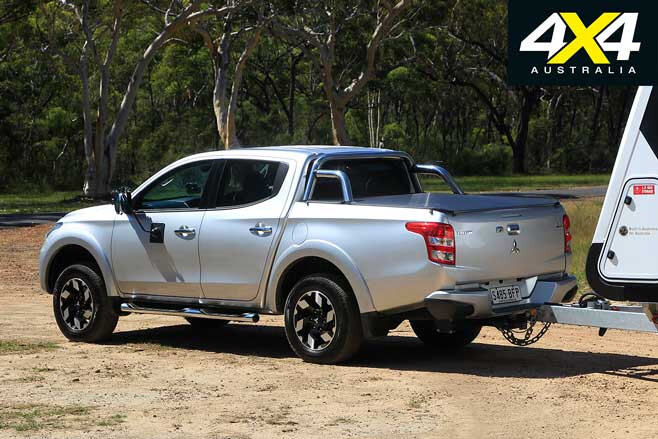
An incorrect installation of the towbar may allow liquids to leak in and come into contact with the towbar’s electrical circuits, which may cause “the harness and its surrounds to overheat, burn, or catch fire”.
Mitsubishi Motors Australia will be writing to affected owners and advise them to bring their Tritons into their preferred dealer to have the towbar issue rectified free of charge.
For more information, owners can contact Mitsubishi Motors Australia on 1800 931 811, or see the full VIN list of affected Tritons here.
FCA announced Friday that its Jeep brand will not be attending the Easter Jeep Safari (EJS) this year due to coronavirus fears. However, as of Monday, the Red Rock 4-Wheelers who is the promoter of the event held on the red rock of Moab Utah, says EJS is still going ahead.
The EJS is an annual mass gathering of Jeep owners and fans in Moab, Utah that includes a week of trail drive, vendor displays and parties, and the reveal of Jeep’s EJS special builds.
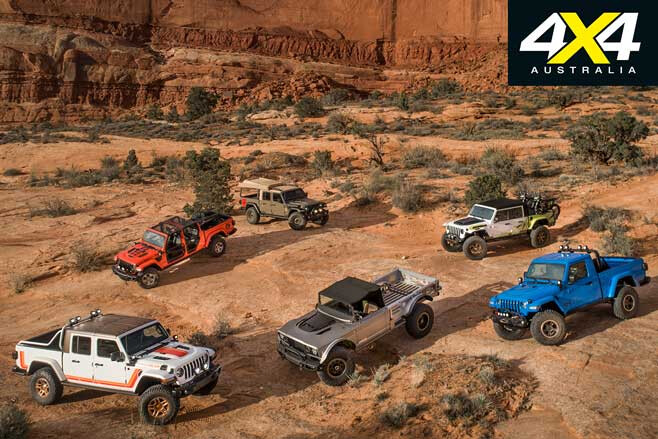
This news comes just a week after it was announced that the vendor fair would be cancelled to limit large groups of people gathering in one place but that the trail drives that are what EJS is all about would still be going ahead.
As for Jeep itself, the team there has a swag of wild new concept vehicles ready that were set to be revealed in Moab but says they will be revealed at a later date, at an event yet to be decided. For many international fans that can’t get to EJS themselves, Jeep’s concept vehicles are the highlight of the event as their reveals are announced online. We’ll be keeping an eye out for them appearing soon.
One place Jeep won’t be revealing its concepts, is the New York International Auto Show which was due to happen in April but has now been postponed, possibly until August. The brand looking to cut in on Jeep’s off road vehicle market this year with its new Boncos, Ford was planning to unveil its Bronco Sport SUV at the New York Show while media and dealer events to reveal the proper Bronco 4×4 ahead of its official launch have also been cancelled or postponed.
We guess we’ll have to make do with the countless daily Bronco leaks to get our fill of the new Ford 4×4 and keep our eyes open for Jeep’s EJS concepts.
SINCE ol’ mate Karl Benz invented the automobile some 135 years ago, car designers and engineers have been trying to improve it, and there’s no doubt they have, in a very big way.
From what was once seen as little more than a horseless-buggy oddity, the automobile has come a bloody long way. Today we can buzz up and down freeways at more than 100km/h in supreme comfort, with windows up and climate control set to 21.5°C, and never really gain a true appreciation of the conditions outside the vehicle, other than seeing the wipers sweep across the windscreen if it starts to rain or watching the lights come on when the sun drops below the horizon.
Many modern vehicles will accelerate from 0 to 100km/h quicker than you can select your Daily Mix on Spotify, all the while sipping fuel at a rate of less than 10.0L/100km. You can throw some vehicles into corners with barely the need to back off the throttle, safe in the knowledge the ESC has got your back. And if you dare wander out of your lane chances are a camera will steer you back on track, while a radar will stop you slamming into the back of someone when you look down to grab your morning coffee.
But it’s this looking down to grab one’s coffee that has me stumped. It should be an easy task, right? After all, the easier it is, the quicker you can do it, thereby minimising the time your eyes are off the road.
Bearing this in mind, it’s a no-brainer that car designers should situate cup holders in easy to reach spots – after all, putting a cup holder where it’s easy to reach would be much easier than developing stability control or lane departure warning systems.
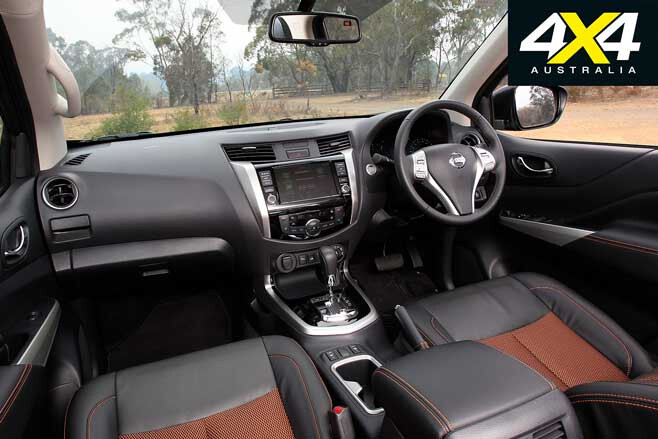
However, I have driven so many new vehicles where this is not the case. Some cup holders are situated immediately in front of the centre console armrest, and you almost need to be double-jointed to contort your arm in such a way as to lift out your coffee cup, while others are jammed under the dashboard so it’s nigh impossible to grab a bottle or cup without bumping it on the dash and spilling your drink. Placing it back where it was after a sip is even worse, because you also have to look down to find the illogically placed cup holders.
There are many other flaws when it comes to vehicle interior design, some of which are almost inexcusable. Take, for example, 4X4 Australia’s latest 4X4 Of The Year, the Jeep Wrangler Rubicon.
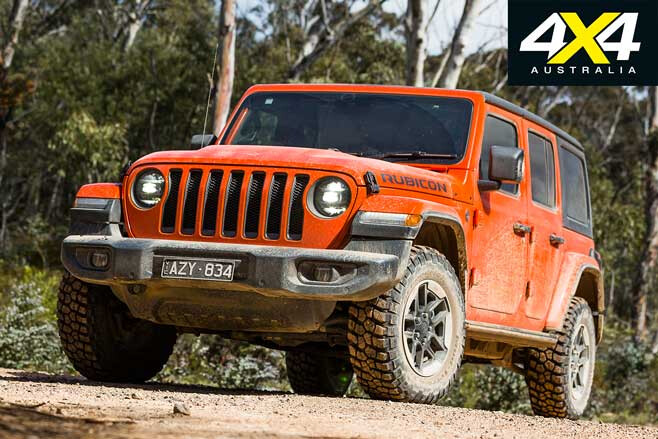
Sure, it’s an absolute weapon off-road, and its overall design achieves several goals including evoking the look of the original WWII Jeep, and providing incredible versatility thanks to its removable roof panels and doors, but its driver’s footwell is an ergonomic disaster, reminiscent of Italian sports cars from the 1960s and ’70s; the transmission hump is so large that it leaves no space for a footrest, so your feet feel as though they’re squeezed into a bucket. Some claim this design flaw is simply the result of the vehicle being predominantly designed for the North American (left-hand drive) market, but the JL Wrangler was always planned as an international vehicle, and in this day and age the LHD excuse simply does not wash.
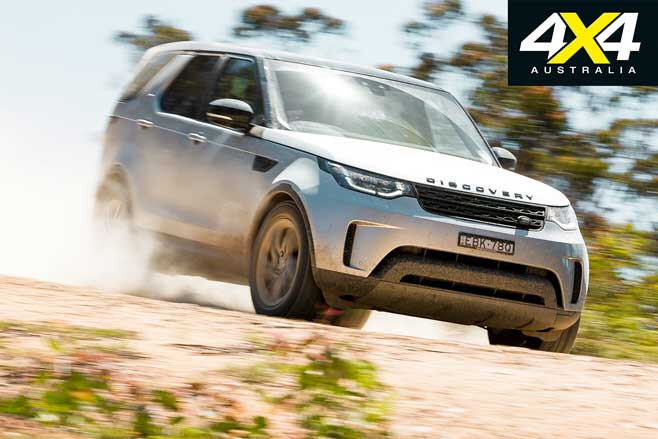
Another big problem with design involves the location and legibility of switches and controls. One example where a vehicle manufacturer absolutely got it right was when Land Rover launched the Discovery 3 with Terrain Response, the controls for which were operated by a dial. Then someone at Land Rover decided with the launch of the Discovery 4 it would be a good idea to use the dial setup for gear selection rather than Terrain Response, moving the latter to a switch-based setup. What originally worked intuitively had now become a far more complicated operation.
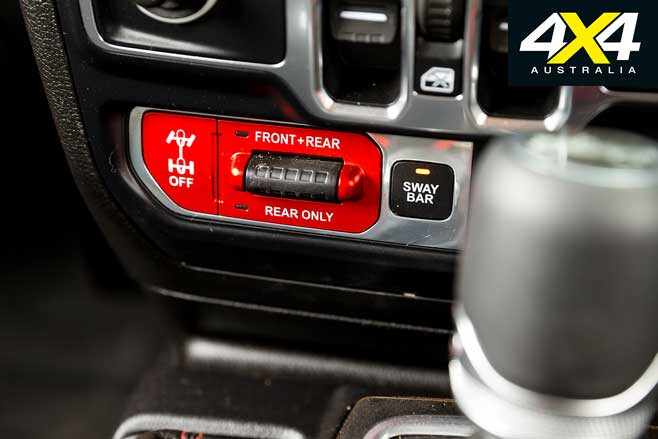
Another example of poor switchgear design is the heater/ventilation switches on the Ford Ranger – they are almost impossible to see if you’re wearing sunglasses. Then there are all the different steering wheel switches on different vehicles to operate cruise control systems that require the driver to look at them to use them. They are not at all intuitive, unlike the early wand setups found on Toyotas and Mitsubishis when cruise control was first being introduced on 4x4s back in the 1990s. Simply flick down to set speed, move up and down to change set speed, pull in to cancel and flick up to resume. You’d have it all worked out in five minutes and would never have to look at the wand again.
Oh, and do you reckon all car designers can place a steering wheel directly in front of a driver rather than offset to one side? I mean, really, how hard can it be?
If I close my eyes I can almost hear tribal whispers, but it’s just the breeze drifting across the dry lake floor. Around me is red earth and a dramatic landscape, and I feel like I’m on the moon. The silence compels me to sit, to be still and experience the land with all my senses.
This is Mungo National Park, one of Australia’s heritage-listed treasures, in the heart of NSW’s Willandra Lakes World Heritage Area. It’s an outback oasis that transports and captivates all who visit, a place far removed from the madding world and yet readily accessible from Mildura, Wentworth, Balranald and Broken Hill.
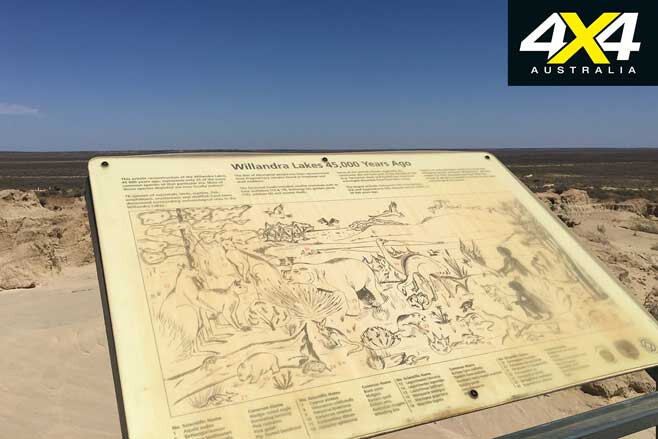
I’m back after my first visit nine years ago and just as enthralled as the first time. It was a wild welcome. Groups of kangaroos, dozens of them, flocked to us as we arrived at Main Camp; large ones, small joeys, a whole family it seemed. There were no other campers, just ’roos. We had the pick of more than 30 sites, most of them had shelter, tables and fire pits. The kangaroos converged, curious yet friendly, as though used to human company.
I was initially unnerved by their boldness, but they seemed thirsty. The landscape was barren and dry and so we gave them a drink from the water tank attached to the shelter. Together with a squadron of apostlebirds they hovered in the background during our stay, in the shade, never bothersome, just there.
We travelled to Mungo after an overnighter at Wentworth, where the mighty Murray and Darling rivers meet. It was an easy drive towards Pooncarie before turning onto Top Hut Road. Here the road became rougher and corrugated, so we let some pressure out of the tyres to make for a better ride.
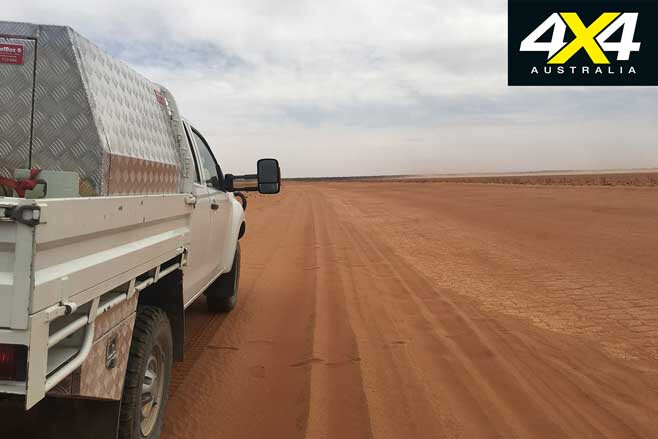
Entering Mungo territory is like entering another land. Big skies, endless horizon, low-lying mallee shrub and not another vehicle in sight. Driving across the expansive dry lakes feels almost like a time warp. Years of wind, searing sun and droughts have eroded the area of dry lakes, leaving essentially a fossil landscape.
Interestingly our GPS still showed blue lakes, but forget any idea of swimming. Mungo is one of 17 dry lakes that make up the Willandra Lakes World Heritage area and there’s not been a drop of water here in more than 1400 years. Once, however, this lake was full of water and teeming with life. It was a meeting place for generations of Aboriginal people.
Mungo’s History in a Nutshell
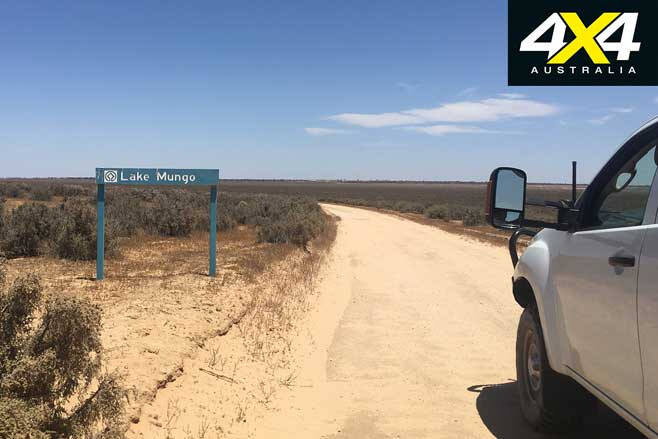
When the lakes dried up about 10,000 years ago the bones and relics of the people who once lived on its shores were swallowed up by the desert sands. Then the wind exposed a fragment of history.
In 1968, a geologist by the name of Jim Bowler found remains of what became known as Mungo Man. Years later he found Mungo Lady. In doing so, Australia effectively became home to the oldest human skeletons ever found including some of the oldest found outside Africa. Over the years it’s been said that Jim Bowler didn’t find Mungo Man and Mungo Lady, but that they found him. “Because they had a story to tell, even after 45,000 years. They wanted to let white Australia know that the Aboriginal people had been here for a long time and were still here.”
Mungo has since become a place of significant archaeological importance, and today the Mungo lunette preserves thousands of snapshots of indigenous life. These discoveries have given scientists clues on how ancient tribes lived and adapted to climate change more than 40,000 years ago.
It’s an extraordinary story of how a culture was able to stay strong and care for country, even as climate change dried up the lakes that were the lifeblood of the region. More discoveries and relics are being unearthed all the time and, understandably, this fragile area is now protected with restricted access. The remains of Mungo Man and Mungo Lady, which were taken away and studied by scientists for decades, will, in 2020, be returned with no fanfare to their resting place in Mungo.
Settling into Mungo time
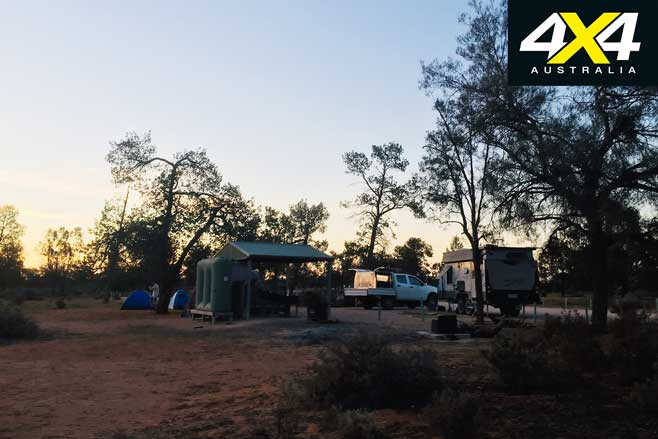
Once we’d set up the ’van, tents and swag, not to mention the dome ‘dining room tent’ (the flies are friendly here) we settled into camp with a cold drink. Close to camp, Mungo lookout offers one of the most expansive views over the vast dry lakes. A visit here at sunset and at sunrise is awe-inspiring and a reason in itself to stay overnight.
Our first port of call was the Visitor/Interpretative Centre, 2km up the road. This is the hub of Mungo, where you organise camping permits and where most guided tours depart from. There are plenty of interesting displays here including a mega wombat at the entrance. Inside you’ll learn about the rich natural history and cultural importance of Mungo. It’s air-conditioned, a respite from the often-searing heat, and open 24/7. The best part for campers is the very welcome free hot showers.
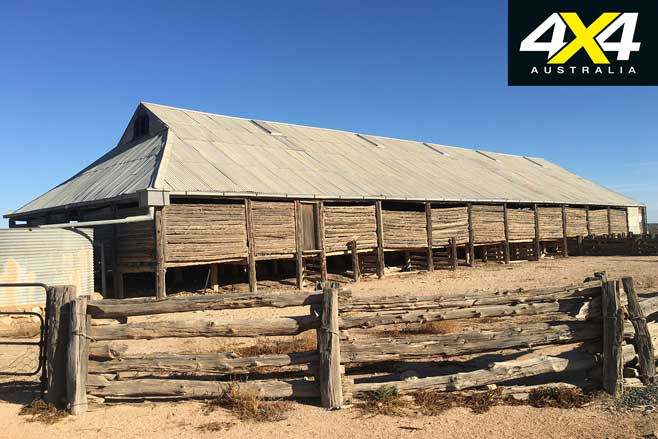
Don’t miss the shearing shed close by, on what was once Gol Gol Station. It’s a fascinating place with plenty of signs and stories inside depicting the pastoral history of the land. Non-campers can stay in the shearing quarters nearby or at the eco-friendly Mungo Lodge a couple of kilometres away. To me, however, the best way to experience this magical place is by camping beneath the stars.
Out on the tracks the next day, the 70km self-guided tour is a great way to explore Mungo territory. You can pick up a copy of Driving the Mungo Story at the Visitor Centre, which gives route notes along the drive, providing a great all-round experience of Mungo. The loop leads across the lake floor to the Walls of China, over the dunes to the mallee country, and then around the north-eastern shore of the lake walls. You can camp at the remote bush campground, Belah Camp, at about the halfway mark. Keep an eye out for emus and wallabies that have zero road sense and often dart out onto the road.
Allow at least half a day for this tour to appreciate the boardwalks, interpretative signs and nature trails, not to mention the impressive dunes at Vigars Well. This was the site of a watering hole for coaches and drays and you can still see the old wagon and dray tracks that cross the lunette. Here, massive sand dunes rise above you and almost beg to be climbed.
From the car park it’s a steep walk to the top, leading to dazzling vast sand as far as the eye can see. Up high you get a sprawling 360-degree view of the lake floor and surrounding plains, and the sand is like pure silk … and scorching hot on this day. It’s impressive and lots of fun, but make sure you take plenty of water with you.
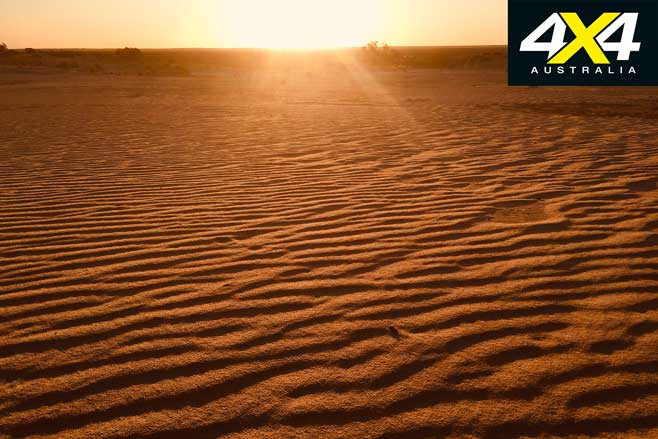
Our sunset tour on the last night was the highlight and culmination of our time at Mungo. There’s no way to get out to the Great Walls of China without a guide. Visitors can walk to a lookout point, but, beyond that, access to the lunettes is only allowed with an accredited guide. Constant decay from wind and rain has created the formations, and only the Aboriginal rangers and guides know where to step.
At almost 35km long and reaching 30m high in parts, we recommend experiencing this landscape for yourself as words don’t do it justice. A walk to the top of the continually drifting sands opens to a magical view across the dry lake floor. During the day it’s impressive, but at sunset, when the sun changes the colours of the landscape from yellow to orange and brilliant deep red, it’s like another world.
Our guide was Gregory, the manager of nearby Mungo Lodge, and he was a wealth of knowledge with his entertaining and informative narrative. It was also his birthday, as we found out from wife Jo before the tour. As we walked across the western shore of the ancient lake bed and climbed the red sand hills, he had us enthralled, bringing the past to life with fascinating stories of early Mungo history.
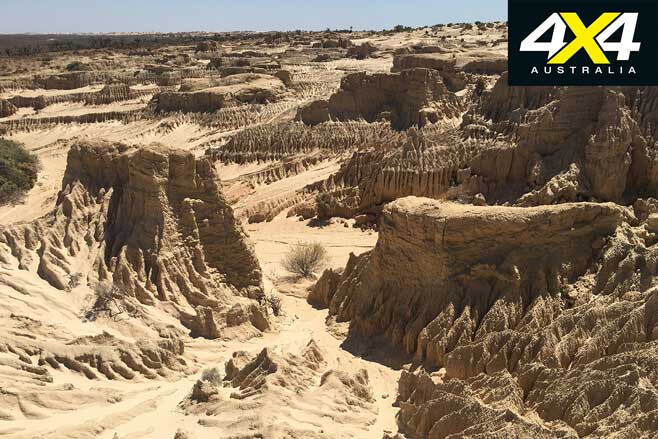
We walked mindfully amongst the lunettes and rock formations, as Greg pointed out a midden and other recently exposed shells, evidence of a time when this place was full of water. It was mesmerising, being out there, as the light dipped closer to the horizon. At the top of the Walls, as we gathered for photos, we spontaneously broke out in song, surprising our guide with a Mungo-style Happy Birthday rendition.
The last time we were here, more than nine years ago, it had been my birthday. I still remember the text my sister sent me afterwards: “Compared to Mungo woman, you are spring chicken!” Yes, I certainly felt a sense of timelessness here; a real sense of history in a surreal setting.
We drove back to camp under a big sunset that lit the way. In the one day, I had watched the sun rise and the sun set over Mungo. As you stand and gaze over vast dry lakes, imagining this land once 10m deep with water, you realise this is a place that transcends time.
This land of spirituality, archaeology and stories from the past intoxicates as no place I’ve ever been before; it’s a place where you can walk in the ancient footsteps of time and culture.
Travel Planner
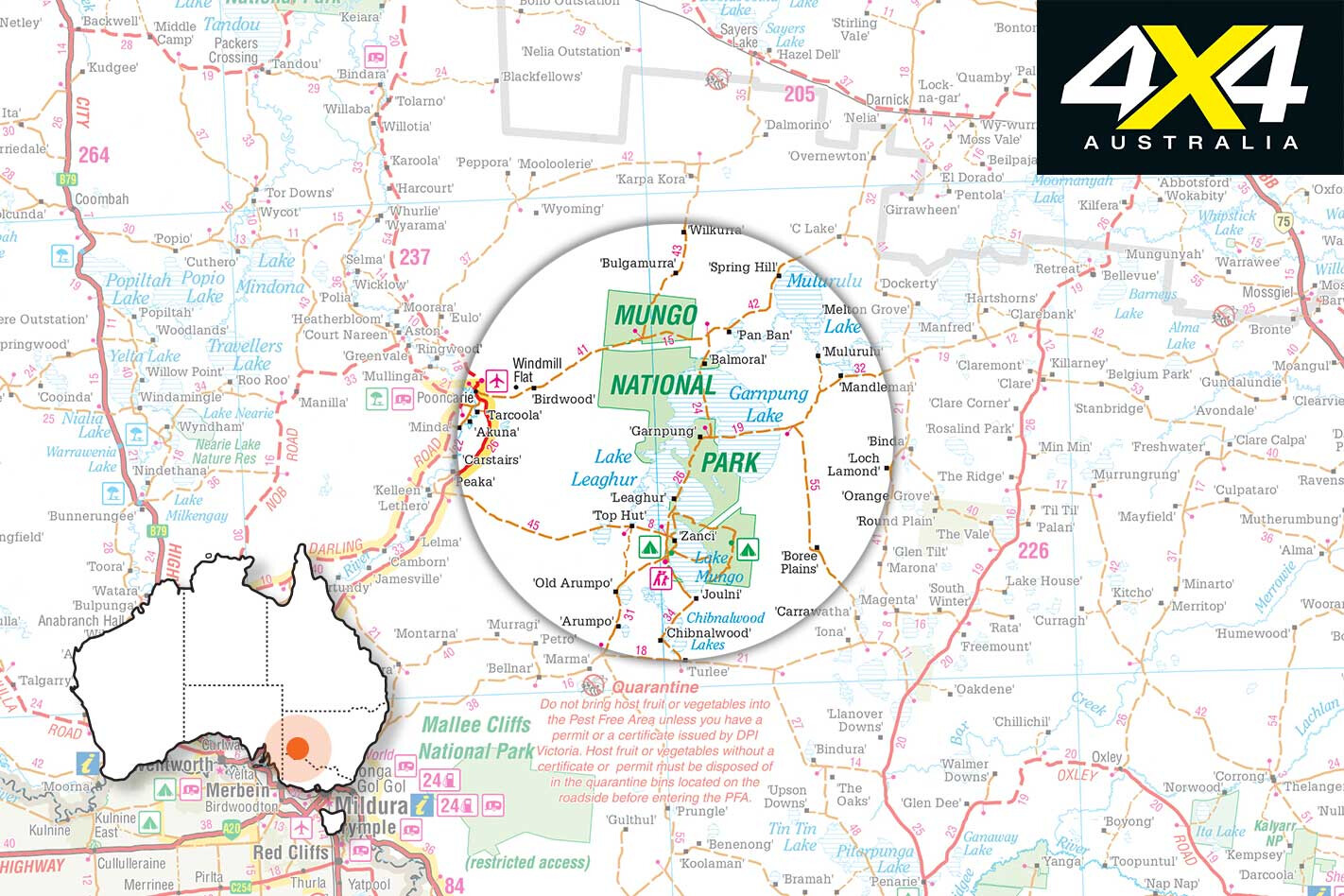
Where Mungo is approximately 110km north-east of Mildura, along the unsealed Arumpo Road or Top Hut Road if coming from Wentworth. All unsealed roads become impassable after rain.
Camping and permits Main Camp: 33 sites, pit toilets, fireplaces, gas barbecues, tables and shelter. Camping fees and park entry fees are payable at the nearby unmanned Visitor Centre. Belah Campground: halfway camp if doing the Mungo self-drive tour, with 12 sites, pit toilets and tables. No fires allowed here.
Supplies and Facilities The closest town for food and fuel is Pooncarie, 81km away, with supplies, spare parts, fuel, LPG and beer available here.
Contacts and Information Accommodation and tours are available at Mungo National Park and Mungo Lodge. For information on Mungo National Park including accommodation, tour bookings and internal road closures and alerts, visit: http://bit.ly/MungoNPNSW