
ANYONE who has driven a new vehicle from SsangYong’s current line-up should have been pleasantly surprised by the vehicle’s quality, equipment and the way it drives. Certainly if you had any experience with the marque’s vehicles from 20 years ago.
The South Korean manufacturer of SUVs and utes is no longer just a budget vehicle brand; although, its products remain to be great value. Like other Korean auto brands, its products have stepped up greatly, with some of them challenging the more recognised brands.
Much of this across-the-board improvement stems from a bailout in 2010 by Indian manufacturing leviathan Mahindra & Mahindra, when it bought 70 per cent of SsangYong to pull it out of near-insolvency.
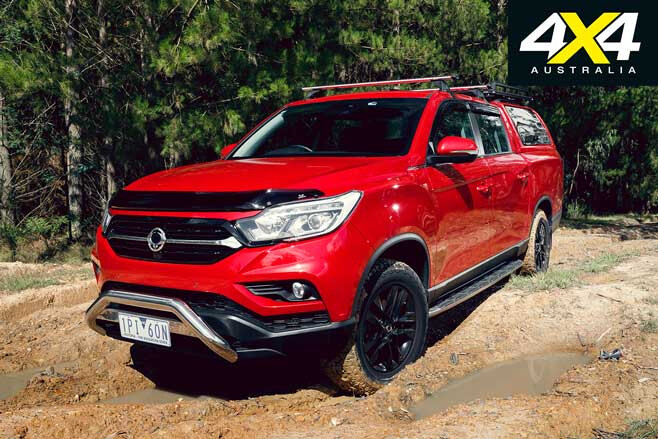
Things might change again after Mahindra this week pulled back on its support of SsangYong, cutting back on planned further investment. As recently as February, Mahindra announced a US$423million package to turn SsangYong around to be profitable by 2022. But, this week, under the shadow of the coronavirus and a government imposed 21-day lockdown in India, M&M has rethought its input.
“After lengthy deliberation given the current and projected cash flows, the M&M board decided that M&M will not be able to inject any fresh equity into SYMC (SsangYong Motor Company) and has urged SYMC to find alternate sources of funding.,” said a company statement issued by Mahindra.
Mahindra has offered a one-off cash injection of close to US$33million over three months to help SsangYong stay in operation while it looks for any alternate sources of funding.
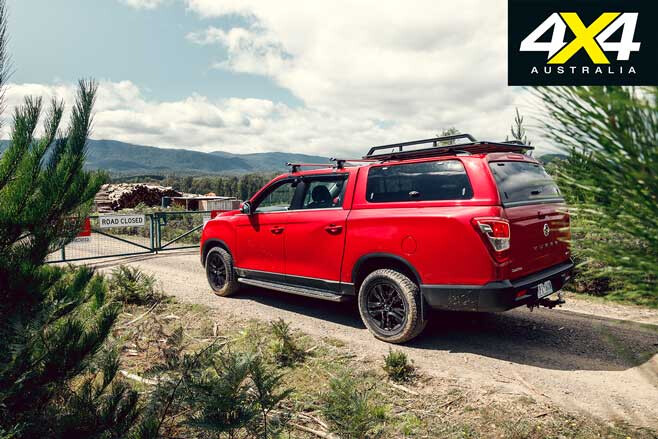
SsangYong only returned to Australia in 2018 with an impressive model line-up and 40 dealers around the country. In a statement to those dealers, SsangYong Australia’s recently appointed Chief Operating Officer, Chris Mandile, said this week, “Mahindra remain committed in maintaining its current position with the SsangYong business. SsangYong have a three-year business plan and structures to support its operations both here and abroad.”
As well as looking for alternative investment, SsangYong Korea has already embarked on strengthening the business against the effects of the virus-related downturn, with a range of innovations across a number of areas, as well as improvements to its financial structures .
The current SsangYong Australia line-up includes the Musso and Musso XLV pick-ups, and the Tivoli, Tivoli XLV, Rexton and Korando SUVs. All SsangYong vehicles are covered by a comprehensive seven-year unlimited kilometre warranty that includes roadside assistance and capped price servicing for the full seven-year period.
TOYOTA’S popular-selling LandCruiser 200 Series, Prado, Hilux and FJ Cruiser are among a mass recall of petrol-fuelled models that totals some 45,683 when you add in passenger cars and SUVs.
The recall concerns the in-tank low pressure fuel pump which can cease operating and cause the vehicle to stall, run roughly, or at least light up the dash with warning lights. Toyota will replace the defective fuel pumps free-of-charge regardless of whether it has faltered or not, to prevent any future issues.
The affected vehicles were manufactured between 2013 and 2019. Owners can search to see if their vehicles are affected at the ACC website here, but Toyota should be in touch with owners to let them know if their car is involved.
Diesel-fuelled vehicles are not affected and owners of them need not worry.
For further information, consumers should contact the Toyota Recall Assist helpline on 1800 987 366 (Monday to Friday, 8am – 6pm AEDT).
Aussie-based 4×4 specialists Patriot Campers has made a name for itself with innovative builds and products, and its latest camper trailer, the Patriot Campers X3 camper trailer, certainly looks the part.
Recently released for the Australian market with prices starting at $69,990, the X3 camper trailer is based on the chassis and suspension of the X1 and has been upgraded with new materials, engineering, and plenty of away-from-home luxuries.
Measuring in at a compact 3.75m long and 1.85mwide, the X3 can be expanded to offer approximately 30m² of indoor and outdoor coverage. According to Patriot Campers, the X3’s CS3 Integrated Tent is said to offer the fastest set-up and pack-down in its entire range of camper trailers, while its awning is PCOR’s world-first ripstop awning that uses a patented Hexocore material.
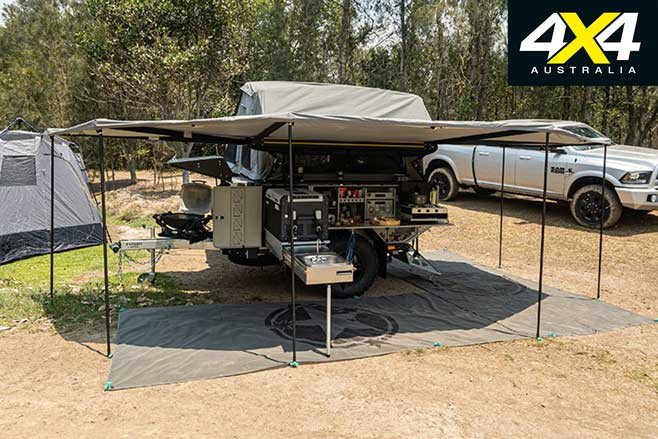
The interior living space features a flexible L-shaped lounge area with a fold-out table, optional pop-up power outlets and coffee machine, and a gel-top double mattress with an additional pull-out bed. Depending on configuration, Patriot Campers says the X3 can accommodate three to four occupants.
Around the outside, Patriot Campers has taken the X1’s L-shaped kitchen layout and expanded it. Patriot Campers say the X3’s outdoor kitchen is 27 per cent larger than the kitchen fitted to the X1 and comes fitted with a 75L dual-zone fridge freezer – the largest the company has offered in a camper trailer.
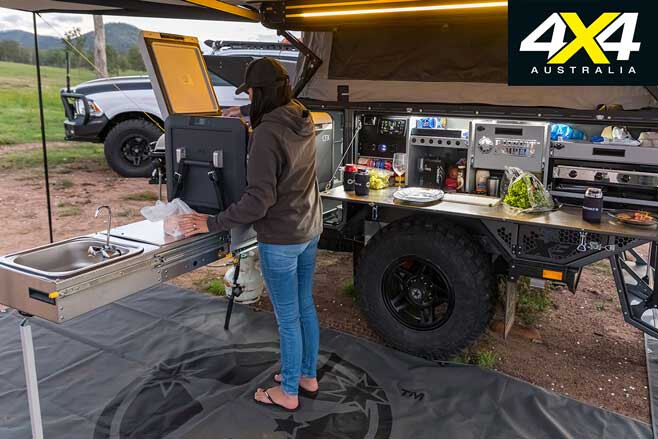
When it comes to utility, the X3 features a diesel heating system for the kitchen sink and shower, twin water tanks with a total of 130L of capacity, and a power system that features a 1500W inverter system and two 150Ahr AGM gel batteries – with lithium battery upgrades and 80W solar panels as optional extras.
Thanks to the use of lightweight materials in its construction, the X3 has a tare weight of 1120kg. As to not hinder the off-road capabilities of the towing vehicle, the X3 boasts 500mm of ground clearance and a 40° departure angle.
WITH the first-ever Ranger Rover launching in 1970, this year marks the 50th anniversary of the iconic nameplate.
In the lead-up to the milestone – officially taking place in June, 2020 -we thought we’d take closer a look at this pristine 1990 two-door Classic, resto-modded by the pros at Legacy Overland.
The hero of this example is a transplanted GM 430hp (321kW) LS3 6.2-litre V8 engine, which runs through a 4L85e four-speed automatic transmission. To cater for this power gain, the CV joints, stub axles and flanges were all upgraded in high-grade steel; automatic torque biasing (ATB) limited-slip diffs are used; the transfer case has been strengthened and upgraded; and heavy duty coils carry the weight.
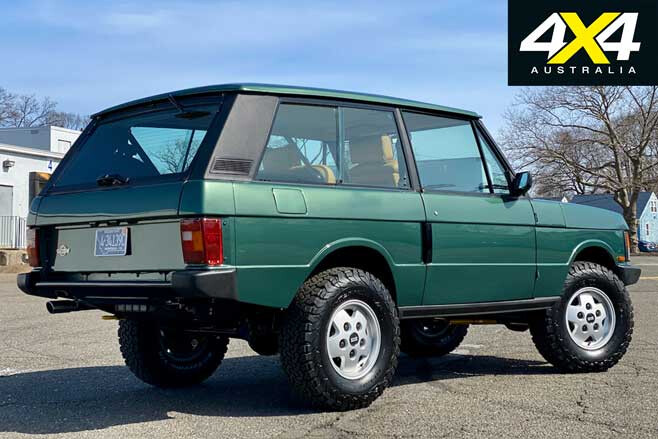
To maintain the original look, the Jade Dark Green hue remains but with a 21st century metallic tweak, while the original five-spoke Rangie alloys have been restored and live within BFGoodrich 265/75R16 tyres. The result: immaculate.
This theme continues on the inside, with restorations performed by hand to maintain the original look and feel. To this end, a Sony Bluetooth receiver and four speakers were installed out of sight, to get the best of both worlds.
Other features include: – Underbody painted with raptor-type paint for extra protection – Original gauge cluster with Dakota Digital conversion box – Lokar shifter – Lokar shifter indicator – Latchwell E-Stopp push-button parking brake – Britpart performance disc brakes front and rear – OEM rebuilt power steering – Terra Firma adjustable steering linkage – Battery kill switch in cubby box – Hidden key lockbox with code locking mechanism welded to frame – LED headlamps – Hella Rallye 100 spot lamps – Rear-mounted tow hook – Interior in custom made saddle leatherette with black piping – Custom installed black fibre carpet – Electric rear view mirrors
An ebony blackness hung overhead, restricting any light from penetrating the omnipresent fog that obscured the night sky. In the distance, headlight beams penetrated the mist and we could hear the whine of diesel mills spinning at redline.
Voices commanding “winch in, winch in … winch out” could be heard toward the crest of the mountain and in the valley below.
Viscous, knee-deep mud that had poured over the cuff of my boots was now oozing between my toes and the sub-tropical heat had induced a continuous stream of sweat from our pores.
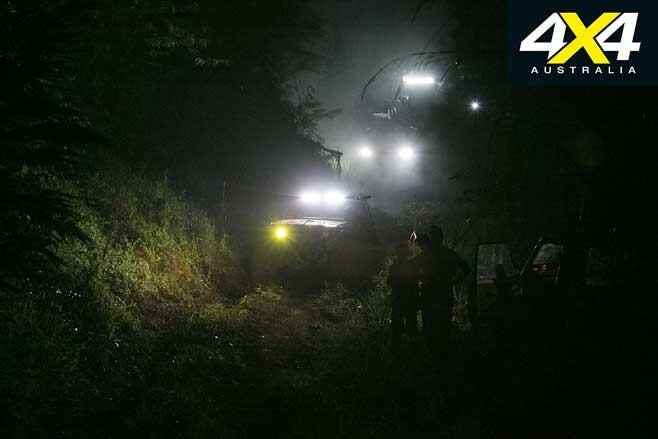
The clock indicated 04:00 and we’d been on the move since 07:00 the previous day. Such is life as a journalist reporting on the Rainforest Challenge (RFC), ankle-deep in one big, fat marathon mud-fest. I slung my camera around my back, picked up a winch line, and slogged up the hill. This night was about survival.
There are few events remaining in the world that capture the essence of the infamous Camel Trophy (CT). Back in the day, the Trophy was a no-holds-barred competition that demanded every fibre of intestinal fortitude, mechanical knowledge and driver ability to survive. The RFC follows suit, pushing competitors, support teams, organisers and media to their physical and mental limits.
Their motto is “not for the faint of heart”, and once you set foot in the saturated red soil one quickly realises the validity of this statement.
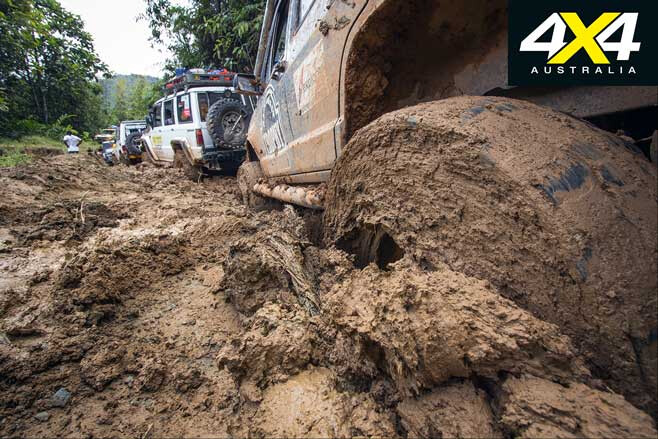
The general route is reconnoitered in advance, but this might have been several months or up to a year earlier, and anything can happen in the jungle. Monsoon rains have a tendency to take out sections of road or entire bridges, the government might dig an elephant trap across the track, or a tribal chief might deny access.
The competition is ambulatory, moving from bivouac to bivouac, but the draw for the adventure-minded rests in the transit stages.
Elephant Traps and Bush Engineering
Ten days earlier we were on the streets of Kuala Lumpur, the nation’s capital, observing the scrutineering process and making sure our camera gear was ready (as possible) for the monsoon. We were also preparing to be fully self-sufficient for a multiday slog through Southeast Asia’s most mysterious jungle.
Our destination was the Kelantan region, mountainous heights home to roaming elephants, venomous snakes, ravenous leeches, and five-inch scorpions. It is also the traditional lands of the Temiar, the largest of the Orang Asli tribes (original people) on the Malayan peninsula, who have occupied the highlands for millennia.

After a few days of mild terrain near the eastern coastline, we turned off the pavement near Tanah Merah on a muddy track and entered the dark, damp domain of the Temiar. Our media team consisted of Tommy Chung and wife Florence (owners of Kepong 4×4), and Polish videographer Bartek Kosiorek.
During the coming days of cramped quarters and adverse conditions we would most assuredly come to love or hate each other. The destination was the village of Kampung Bering, and we were informed that it had not been visited by outsiders in nearly a year.
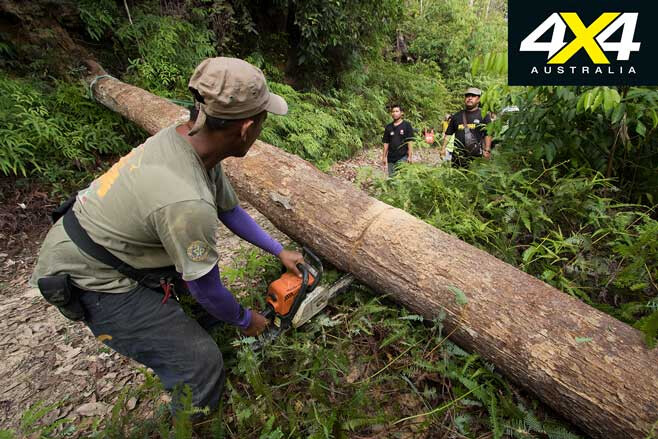
The cause for this isolation was quickly apparent – the track narrowed, the mud deepened and downed trees blocked the way. An old chainsaw, circa 1980s, was brought up to the front of the group and we dispatched the interlopers.
Though we were a large group, this was our only chainsaw (Malaysia is not a rich country). But it was a Stihl, easy to work on, and we figured we could keep it alive. The tree-removal exercise hit replay numerous times that morning.
At midday, the lead vehicle stopped and two of the crew headed into the bush, chainsaw in hand. After the ensuing machine-gun debate (in Malay, I didn’t understand a word), we deciphered that they were selecting which trees to fell.
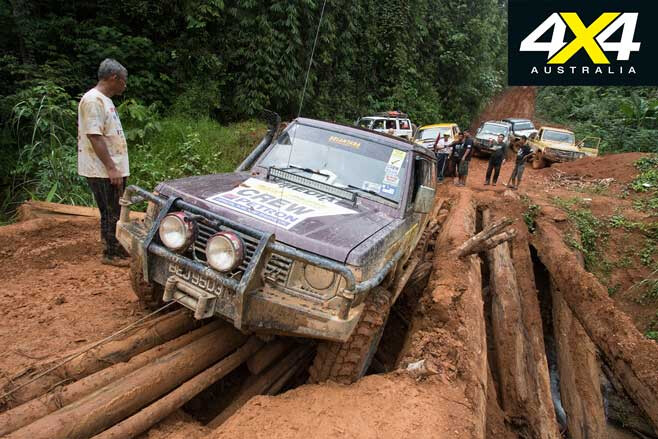
Apparently, the government had constructed an elephant trap a kilometre ahead. Elephant traps, cavernous trenches that run for miles through the Highlands, are four-metres deep and as many wide. Designed to keep the four tonne pachyderms out of agricultural land to prevent them wreaking havoc in villages, this posed a significant roadblock. And so the fun began.
In CT style, everyone dismounted and showed up ready to work with shovels, rigging equipment and winch lines. As logs (runners) were dragged in, vehicle track widths were measured, and a second team cut slots on opposing sides of the trench.
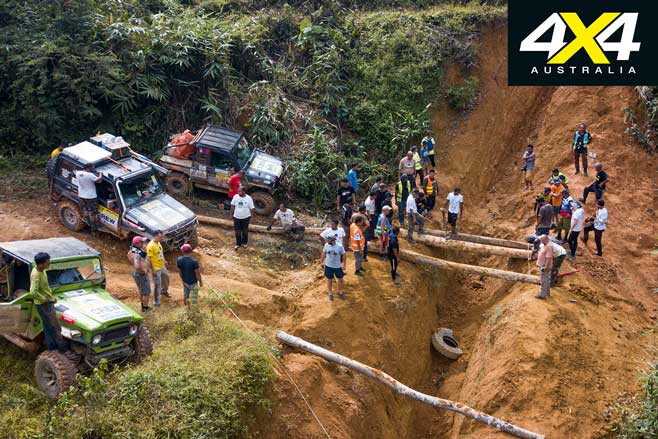
Using a Pull Pal ground anchor and a good measure of elbow grease, we winched each log into place and strapped them together. The key to success is log selection and placement.
Three runners are used for each tyre, with the middle runner setting slightly lower than the other two, which keeps the tyres in “the groove”. A few hours later the first vehicle, the guinea pig, gently crept across. Success!
Shaman and Communists
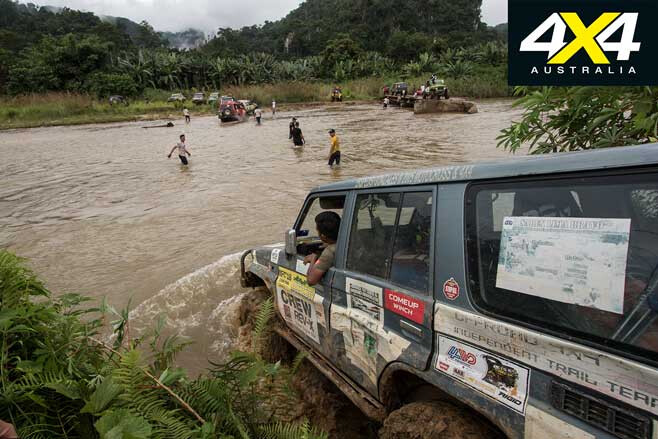
The days began to meld together like an aqueous continuum; swamped in murky brown rivers, decrepit bridges from the region’s logging industry days, and winch lines. On the afternoon of the fourth day we arrived on the banks of the Sungai Nenggiri (mighty river), where a four metre vertical ledge and a hundred metres of water lay between us and our next bivouac. Shovels and winch lines were deployed, and one by one we slid down the embankment, into the water, and drove or winched to the other side.
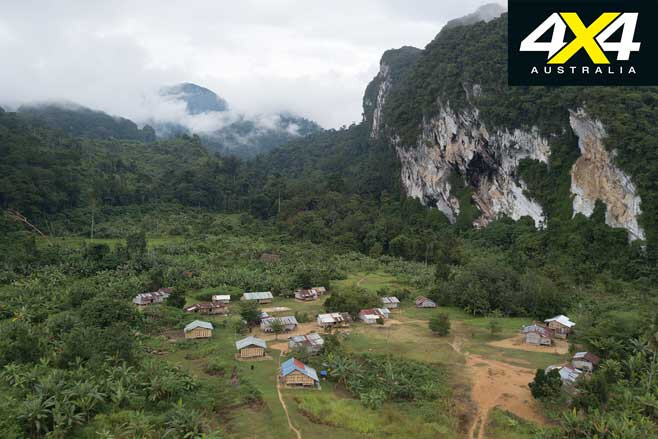
While the rest of the group was clearing the river, a young man appeared from the jungle. Without a common word, we shared friendly greetings and he motioned for me to follow him up a footpath. A few hundred metres through the bush we entered a broad clearing dotted with simple bamboo huts on stilts.
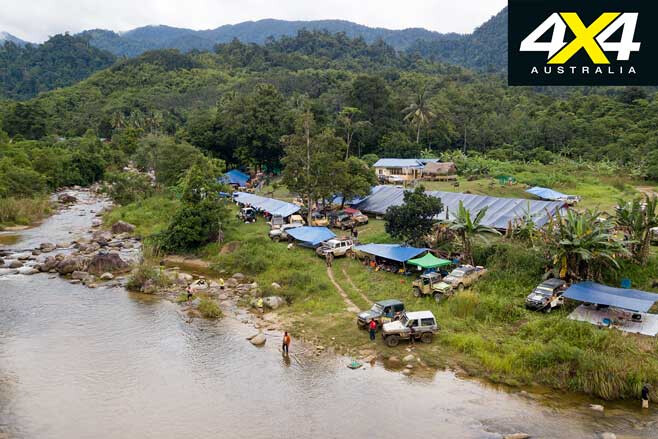
Curious faces peered from windows and door openings, watching as we walked towards his home where he introduced me to his family. This was Kampung Bering, one of several traditional villages of the northern Temiar. Several people moved into doorways and porches, and we made our rounds visiting each. Graceful and reserved, we could only smile and acknowledge our approval of each other.
Smoke seeped from the porous walls of a small hut in the middle of the compound. My host led me to the door, opening it slowly as the afternoon light flooded its dim interior. In the middle next to a small fire was an elderly man. The Temiar revere their elders, and Kule, at 101 years of age, was the spiritual leader and senior member of the tribe.

During World War II, when the expansion of communism from the north was a constant threat, he was enlisted as a bush scout by the British Army to warn of attack by northern insurgents. Sitting down in the dirt just outside the threshold, we acknowledged each other and shared a few magical moments of intercultural friendship.
That night we piled in under a tarp city and set up our cots as the monsoon pounded the earth with a deafening thunder. Exhaustion, sleep deprivation, and the elemental need for comfort are interesting bedfellows. As one attempted to claim a dry sliver of real estate in our open-walled abode, you soon realised that the dryer you were, the wetter your teammates would be.
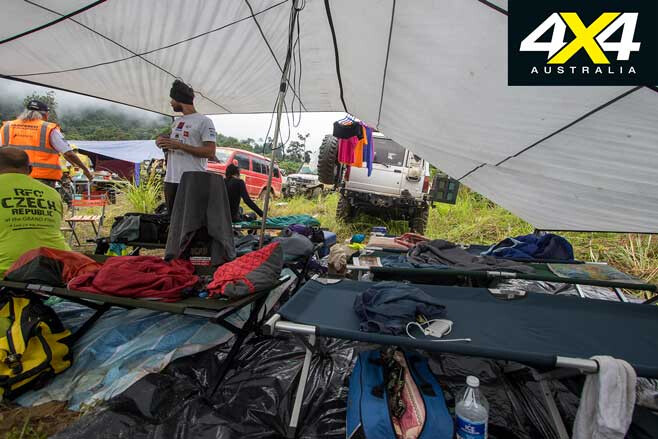
The solution was sleeping head-to-head in the middle, so only our feet would be in jeopardy. Staying dry was a team effort, each of us jumping to action when a lake developed overhead or a guy-rope failed. Nourishment, also a primal trait, can be the demise of the most-prepared expedition.
Each night we’d enjoy a small snack and distribute our ration of alcohol (one beer) before heading to the mess tent where the cook crew served up rice and some type of meat or fish. No one went hungry.
Europeans, Afterlife, and Hell Night

The Europeans were latecomers to Southeast Asia, the Portuguese claiming the Malayan Peninsula in 1511. They ceded to the Dutch, who eventually yielded to the British. But the region’s chronical of occupation reaches back to before the birth of Christianity.
Like many of the smaller, less powerful tribal regions, the Malay have been conquered, subjugated and influenced by a global medley of social and religious flavors – the Hindu, Muslim and Buddhist have all shared a hand in the development of this polytheistic society. But the northern Orang Asli, living in a region that attracted little attention, were typically left alone.

They are considered animists, believing in the power of trance, dreams, shaman, spiritual healing, and the afterlife. The land provided everything they needed, and tribal life remained relatively stable until the British created a remote outpost at Pos Gob during World War II.
The most isolated village in Malaysia, Pos Gob would be our final bivouac. Today, this small settlement near the Thai border serves as the tribal centre for the Temiar. Power is supplied by a diesel generator a few hours a day, there is satellite Wi-Fi for emergencies, and a government doctor visits by helicopter once each month. It is truly the end of the earth.
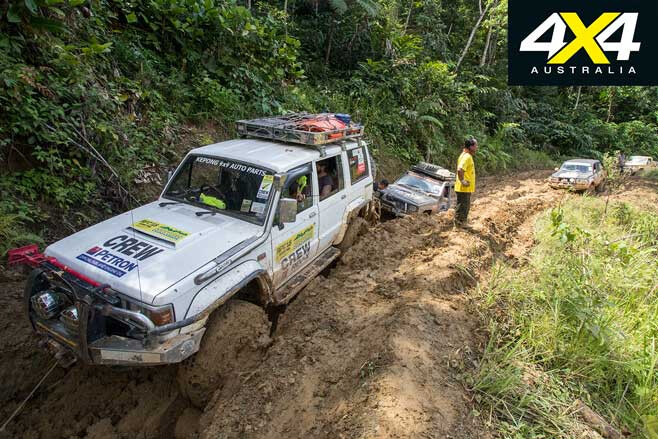
The following two days of competition left many teams low on fuel, short on supplies, and in need of mechanical assistance or a tow strap. Whether by necessity or desire, everyone was ready to find the pavement, a shower, and a coldy at the awards celebration that evening in Kuala Betis. There were two routes: one was easy but longer, the other more direct but challenging. The group split, and being the macho guys that we were, we selected the straight-line approach. Big mistake.
The morning and afternoon were consumed with winching each other through bottomless mud bogs and rebuilding bridges. Darkness arrived and the jungle awoke with a symphonic cacophony of, well, everything – bugs, beetles, bats and a barrage of scary noises from its depths.
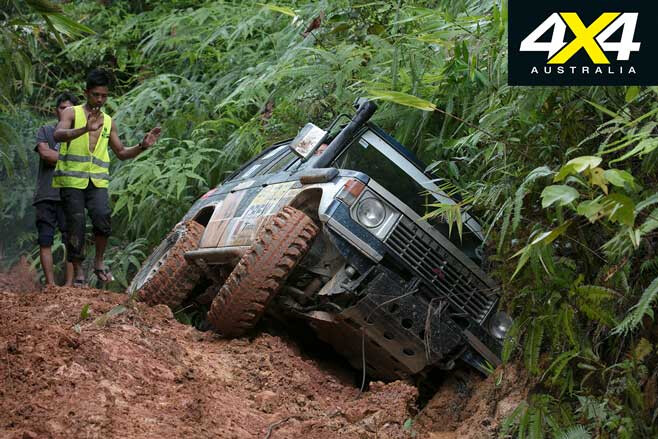
We heard over the radio that Group B, which took the long way, had arrived at the hotel at about 20:00, enjoyed dinner and libation, and were probably counting sheep. Around midnight we deducted that we were eight miles from Easy Street, but at the moment we were still knee-deep in mud, daisy chain winching our way over hell mountain. The RFC was testing our fortitude.
We finally reached a two-wheel-drive road at about 06:00, as the rising sun began to illuminate the eastern horizon. While regrouping for the stragglers, the rescue team showed up from town with a few cases of water and Tiger beer. Our supplies had been depleted, and we chugged down a few of each like hyaenas in a Kalahari drought.
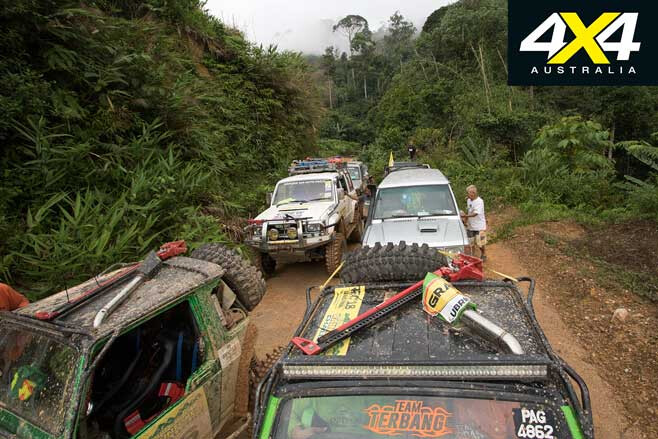
Tired but triumphant, our little team of four had emerged with nary an injury or mechanical issue; to boot we had become the best of mates. Emotions were a pungent mix of exhaustion, adrenaline and elation, the perfect end to 10 days in the Malaysian Highlands.
Editor’s note: If this type of Malaysian maelstrom sounds like your cup of mud, we offer you a few options. Join the RFC Adventure Tour, which follows the race as we did, or register for the Rainforest Trophy, a non-competitive trek of similar magnitude.
The opportunity to drive the new Land Rover Defender ahead of its launch in a wild and beautiful place was an opportunity of a lifetime. It becomes even more special in light of events since then as getting around the world to drive anything has become a lot harder if not impossible.
The official media launch of the vehicle that was set to happen in the UK in April has been postponed to a date yet to be announced although release dates of the Defender remain unchanged.
Land Rover says its new Defender is the most off-road capable 4×4 the company has ever made and that’s a pretty big statement when you look back on its history of off-road vehicles.
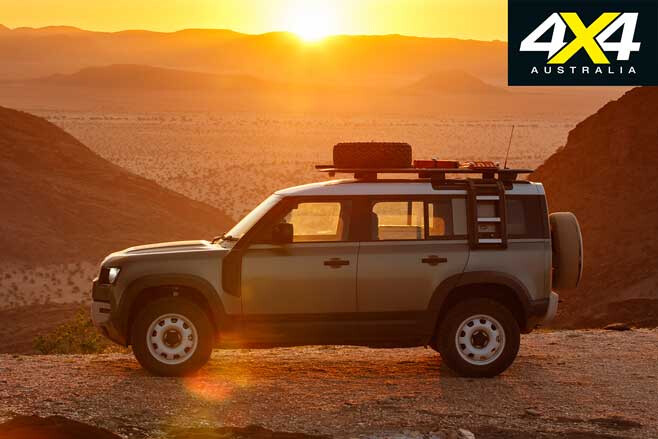
With its plethora of electronic traction systems, auto-locking differentials and height adjustable suspension that permits higher than usual ground clearance for uneven terrain, the new Defender, like most modern Land Rovers that ride on derivatives of this platform, is pretty amazing.
But driving along the dusty tracks of northern Namibia where the terrain was ever changing had me thinking that height adjustable or not, there’s no real comparison to genuine, fixed-height ground clearance.
The advantage of height adjustable suspension is that it allows the vehicle to be efficient and more dynamic when travelling at faster speeds on a highway or open tracks, and then be raised when needed to clear over steps, rocks and other obstacles. This is instrumental in the ‘Breadth of Capability’ philosophy that Land Rover applies to all of its new vehicles.
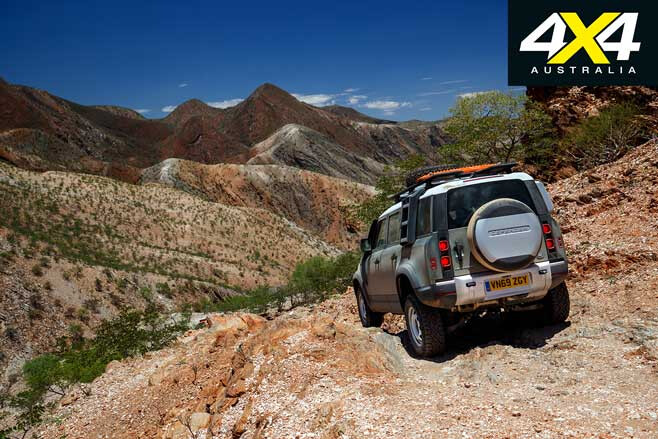
But the system’s shortcomings become evident in varied terrain when you’re driving along and the ground changes to a point where you need to raise the suspension, which takes some time, and then greatly affects the ride quality and performance if you drive in the raised setting.
This is opposed to driving a vehicle like a classic Defender, that has plenty of ground clearance in its fixed position (even more with aftermarket upgrades) but you can drive along confidently without worrying if you are going to clear that bump or if the suspension has automatically dropped back to the standard road-going height setting.
Sure, the tall fixed height means the old vehicle won’t be as fuel efficient or sporting on road, but at least you know exactly where you are at as you drive it along the tracks.
Having a huge breadth of capability might be nice when you’re trying to create one car to do everything, but it’s not ideal when you want a specialised vehicle like a dedicated off-roader.
AMERICAN Hummer H1 restomod specialists, Mil-Spec Automotive, has taken its know-how with the H1 and applied its expertise to something more current, the popular Ford F-150.
According to Mil-Spec, the Ford F-150 by Mil-Spec Automotive was developed by the same team behind its H1 creations and takes plenty of inspiration from the iconic off-roader.
The most prominent feature of the F-150 is its Baja-style widebody; although, Mil-Spec also rejigged the suspension setup with its Baja Suspension Package, which introduces a wider track coupled with the fitment of Fox 3.0 F-150 long travel performance shock absorbers.

The suspension package widens the Mil-Spec F-150’s tracks by 183mm over the F-150 Raptor – and 343mm over the standard F-150 – and lends the beefed-up pick-up 279mm of wheel travel up front and 305mm around the rear, with 406mm of ground clearance.
Mil-Spec also tweaked the F-150’s powertrain, opting for the F-150’s naturally-aspirated 5.0-litre V8 engine, which has been tweaked from 295kW to 373kW, instead of the F-150 Raptor’s 335kW 3.5-litre turbocharged V6.
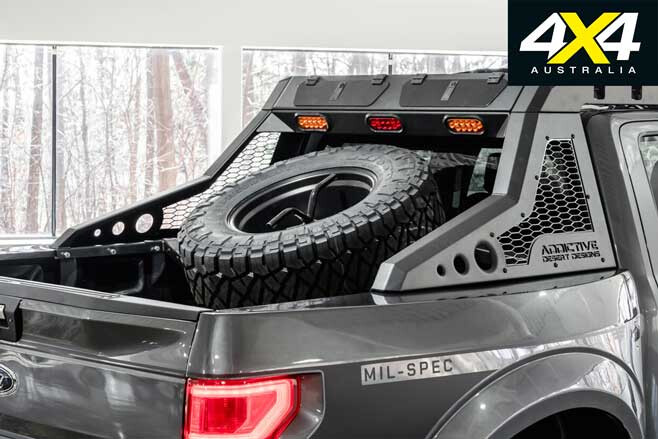
Prices for the Ford F-150 by Mil-Spec Automotive start from USD$85,000 (AUD$140,000), which is a significant premium over the USD$55,000 American Ford dealers would ask for a standard F-150 Raptor, before counting in the optional suspension and appearance package.
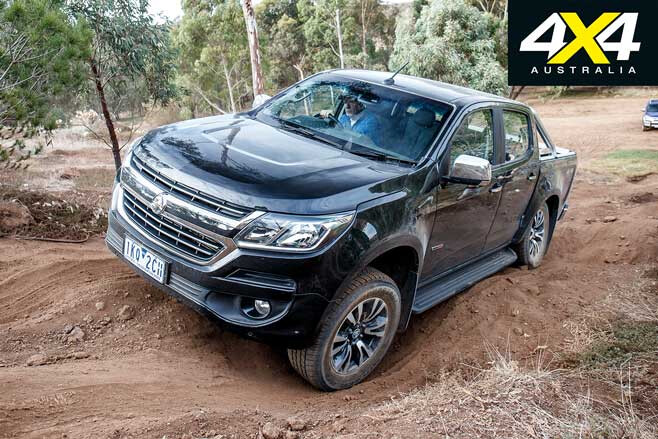
MONTHLY sales of the Holden Colorado 4×4 lifted by a total of 1678 units in March 2020, due to the cost cuts implemented after the closure of Holden last month.
People flocked to Holden dealers following the announcement of Holden’s departure, with dealers offering substantial bonuses across its entire range.
However, overall new-vehicle sales were hit hard by the global coronavirus pandemic, with sales for the month totalling 81,690 – a drop of 17.9 per cent compared to March 2019, with 99,442 sales registered.
The Light Commercial Vehicle market suffered a 15.5 per cent year-on-year slump, with 3326 fewer vehicles purchased. Amazingly, this has resulted in the 24th consecutive month of negative new-car sales.
Expect the dramatic slide in sales to linger, as the coronavirus pandemic continues to halt 2020 and people prefer to hold onto their hard-earned.
Despite these tough conditions, Tony Weber, the chief executive of the FCAI, said many dealerships remain open.
“Many dealerships have opted to remain open to maintain support for their customers, particularly from a service perspective, during this difficult period.”
In the 4×4 segment, the Ford Ranger and Toyota Hilux remain the market leaders with 2947 and 2804 sales respectively in March. The ever-popular, value-packed Triton finished up with 1582 sales for the month, slotting in behind the (as-mentioned) hugely discounted Colorado (2186).
Here are the 20 best-selling 4x4s in March 2020:

THERE WAS a time when a simple solenoid-type of dual-battery system was enough to happily supply your auxiliary 12-volt power needs – it’d keep the Engel cold without draining a vehicle’s main starter battery, and perhaps run a camp light every now and then.
This still does the job for many folks and their vehicles, but in an age when vehicle manufacturers are filling the cars with complex electronics systems, travellers never leave home without every conceivable electronic gadget, and 4×4 builds that include everything including the kitchen sink, our auxiliary power needs have changed considerably.
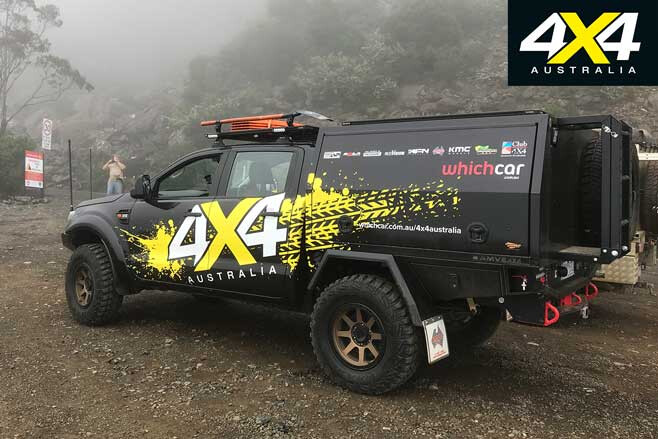
Our Ford Ranger has become one of those ‘everything including the kitchen sink’ type builds, so a good source of reliable power was essential for powering fridges, lights, gadgets, an inverter and charging the batteries for the team’s tools. For the right gear we went straight to the good folks at Redarc Electronics for proven, Australian-made hardware.
Redarc has extensive technical information available on its website to help you design the right system for your needs, and this is backed with online wring guides and tech support. We spoke directly with the technicians at Redarc’s Adelaide HQ and described our vehicle build and expected electrical needs, to get the best advice on the right product for the job. They recommended we run a Redarc Manager30 BC-DC charging system for battery management and a 2000-watt inverter for 240-volt power supply. These would be controlled via a RedVision TVMSKIT04.
The Manager30 is Redarc’s state-of-the-art battery charging system and is designed to work in vehicles with multiple batteries including the vehicle start battery, auxiliary batteries and any batteries in the camper trailer or caravan. The Manager30 is a 30-amp unit, and there is a smaller 15-amp version available.
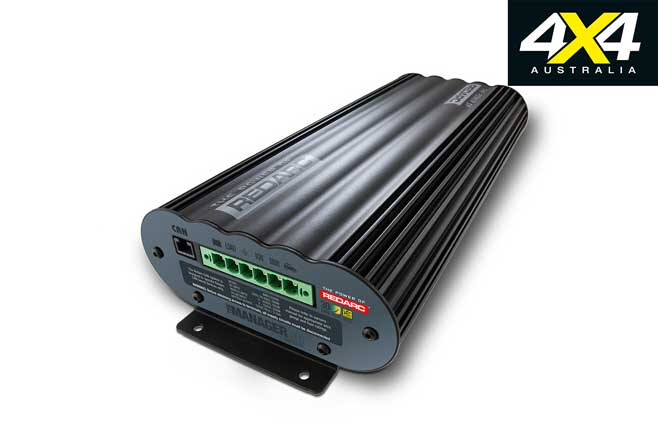
The Manager30 works with all types of automotive batteries: Lead Acid, Gel, Calcium, AGM or Lithium-Iron Phosphate. On the technician’s recommendation we went with Lithium-Iron batteries and purchased a trio of 60-amp/h units from Revolution Power Solutions in Brisbane.
The Manager30 is capable of charging and maintaining your batteries via multiple sources including the vehicle’s alternator, so-called ‘smart alternators’ like that fitted to the Ranger, via 240-volt when plugged into mains power, or via a solar panel or blanket.
RedVision is Redarc’s vehicle electrical system management unit that accepts input from all of the vehicle’s accessories to control, switch and monitor them. This is done on the included control unit and display or via an Apple or Android device using a Bluetooth connection.
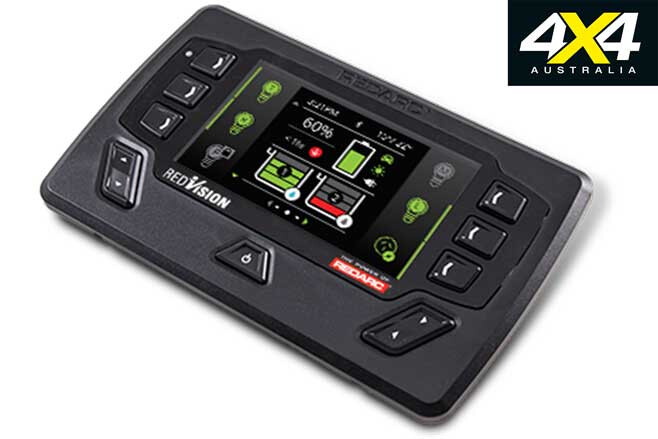
On our Ranger, the accessories running through the RedVision system include the Redarc inverter, the MyCOOLMAN fridge, work lights on the rear of the canopy, Narva LEDs on the roof rack, and the water pump for the canopy’s water tank. These can all be controlled via the display panel inside the AMVE canopy or on a smartphone.
One feature we haven’t hooked up yet is the ability to monitor the level in our water tank. The RedVision can monitor up to six different water tanks in a vehicle and trailer, but we need to hook up a sender unit on our tank to make that work. Another useful feature is the temperature input from the fridge. With a phone mounted in a cradle on the vehicle dash, we can see the temperature inside the fridge at any time to ensure all its contents are cool and safe.
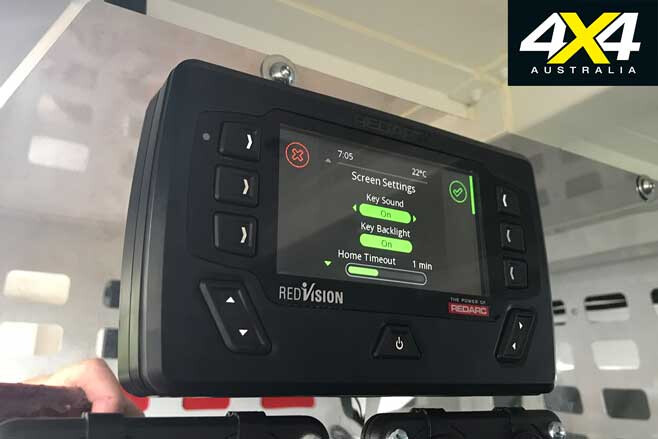
Our aluminium canopy was built by the team at Allsafe Mining Vehicles & Equipment (AMVE) in Brisbane and, as they fit Redarc controllers to all their builds, the team there handled the Redarc and battery installation during this build, before shipping the canopy to us for installation.
The Manager30 and RedVision units are mounted in a panel on the headboard, with the control panel within easy reach from an open side door. There’s also a host of power outlets and circuit-breakers for any extra items that need charging.
The Redarc 2000W pure sine-wave inverter is mounted on the fridge divider, where it can be used to power 240-volt accessories or charge gadget batteries. It has a pure sine-wave output for powering sensitive electronics such as computers, while its grunty 2000-watt capacity means we can run things like toasters, a coffee machine or even some microwave ovens. Our trio of Li-po batteries are housed in a separate box behind the fridge enclosure.
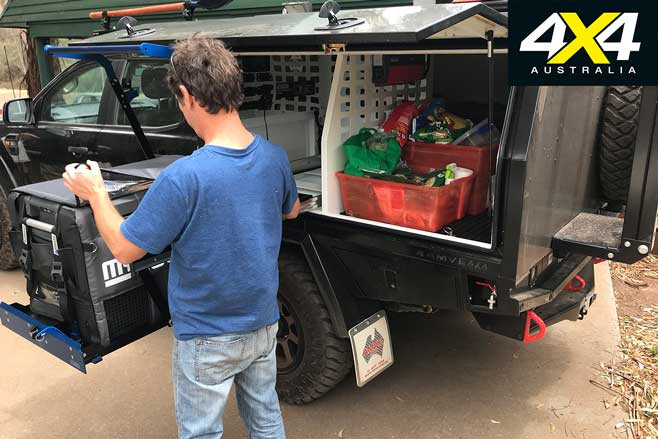
With the Manager30 and the accessories running through the RedVision we are able to see exactly how much power we have in our battery bank, how much charge is being inputted via the alternator or 240-volt, and how much power is being sucked out by the accessories. It even gives us an indication of how many days of power we have in store depending on the inputs and power consumption, which is handy if set up at camp for a while.
As the Ranger doesn’t get used every day and is saved for trips, we plug the Manager30 into the 240V to keep the batteries topped up if it has been sitting idle for any longer than a week or two. We always like to do this in the days before a trip, and we switch the fridge on to cool things down so that it’s ready to be loaded and hit the road.
Operating the various systems has been a bit of a learning curve for us all, but the more time spent with it the more logical it becomes. While in the High Country we broke a power plug off the fridge cord and it was knackered. It was the second last day of the trip, but we powered the fridge off the invertor for the remainder to keep things cool.
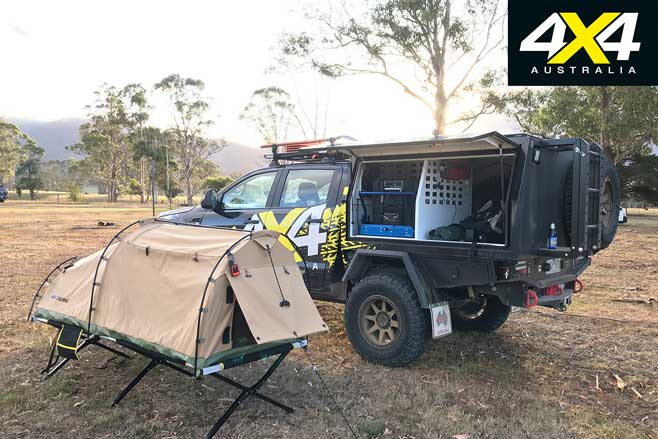
Unfortunately the Ranger went into the shed with the fridge still running off the invertor, which drained our auxiliary batteries. The Li-Po batteries go into ‘sleep’ mode before they are totally dead, and they require ‘waking up’ before they will accept a charge. Tech support from Revolution Power clued us in to how to do this and they were booted back up via 240V on the Manager30.
Cameron from Redarc then showed us how to set a cut-out minimum in the RedVision system, to prevent draining when that low again. Now it will automatically shut the system down once that preset mark is reached, to avoid killing the batteries again. Lithium batteries are more resistant to damage from being fully discharged, but it’s not recommended to do it often and best to keep them topped up. With the Redarc systems now working, we are best equipped to do this.
The Ranger was built for trips and supporting our crew when out on shoots. With the right 12-volt power management system onboard, and us slowly working out how best to use it, it’s getting the job done without issue. And the best part is we’ve used Australian companies and Australian-made products to showcase the great work our brands do.
RATED RRP: RedVision Manager30 kit: $3186.81 Redarc 2000W pure sine invertor: $1991.65 Revolution Power 60Ah slim lithium batteries: $1306 (each)
An American aftermarket company, Lingenfelter Performance Engineering, has shoehorned a supercharged 6.2-litre LT4 V8 engine into a Chevrolet Colorado ZR2, and then pushed it further for good measure.
That V8 in question, more commonly found in a Corvette Z06,has been tickled to deliver a whopping 720hp (537kW) thanks to the addition of a Lingenfelther pulley kit and tune. That amount of ponies is considerably more than the ZR2 in stock V6 form.
To deal with the added surge of grunt, Lingenfelther also calibrated the eight-speed automatic transmission.
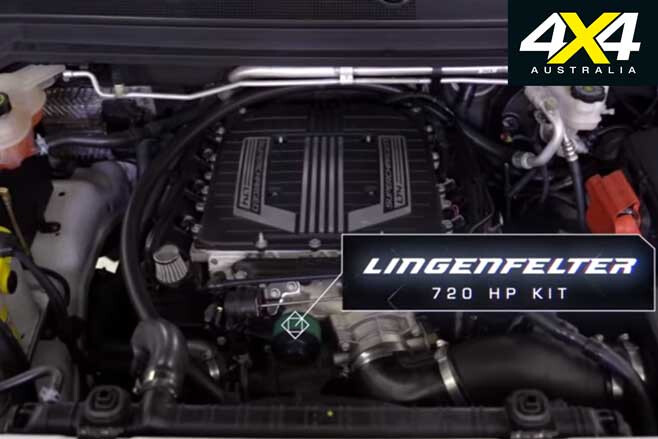
The dyno video, recently published to the Lingenfelter YouTube channel, shows the newly transplanted engine pushing 534hp to the rear wheels.
Lingenfelter, with its HQ based in Brighton, Michigan, has a history in building, tuning and installing engine and chassis components for most GM vehicles, for more than 46 years.
This specific powered-up ZR2 build is a customer car. Would you be lining up for one if you lived Stateside?