
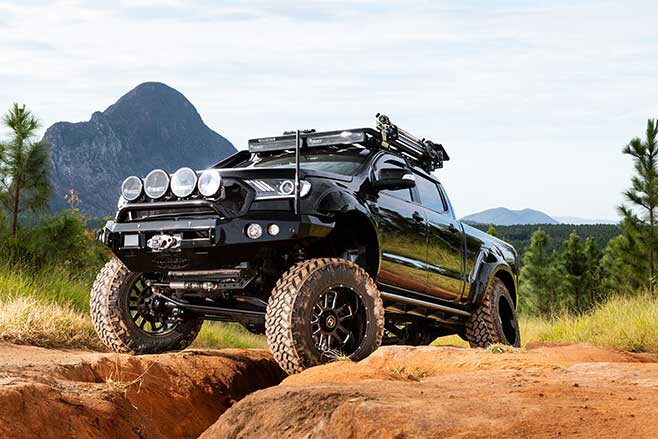
Goliath of a Ford Ranger has won the 2020 Custom 4×4 of the Year award.
Beating 11 worthy combatants to the coveted crown, the winning SAS’d Ranger boasts plenty of meticulous modifications including a chassis stretch and revised suspension – it’s hardly surprising then that voters lapped up the Ranger and threw the most votes its way.
The brainchild of owners Claire and Sean, the mighty Ranger build is decked head to toe in quality kit including a colour-coded Rocker bar from MCC4X4, a smorgasbord of ARB LED lighting, two Warn Zeon winches, a Rhino-Rack, a five-inch-diameter Meredith Metal Works snorkel sending air through a Meredith Metal Works airbox, a Plazmaman intercooler, and a three-inch DPF back stainless-steel exhaust.
READ the full review
Two LandCruisers occupied the remaining spots on the 2020 Custom 4X4OTY podium, with Scott Round’s epic Troopy getting the second-most number of votes, followed by Brett’s tidy HJ75 build.
Those who voted for their favourite custom 4×4 for 2020 were placed into a draw to win a Maxxis Tyres voucher valued at up to $2000, and the lucky winner of the random draw was Jeffrey Millen from South Australia. Congratulations and thanks to everyone who voted.
Keep your eyes peeled throughout 2021 as we dissect and display a new bunch of modified metal. The 2021 Custom 4X4 of the Year award will be back bigger and better than ever.
SIT back and relax at camp in comfort, with these new products on the market.
OZTRAIL DURALITE COMPACT DIRECTOR’S CHAIR
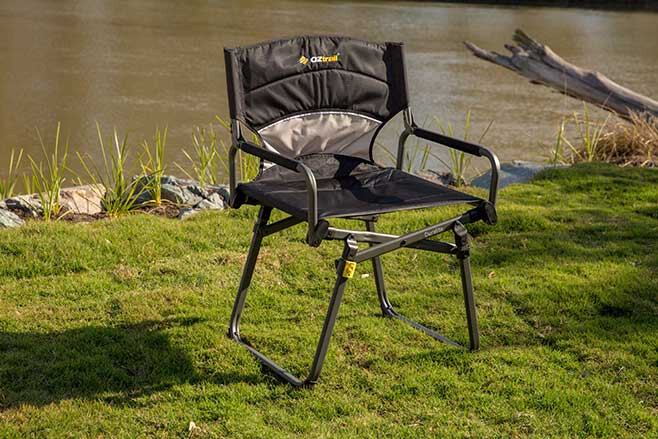
Be the envy of your mates when you’re sitting around the campfire on your very own OzTrail Duralite Compact Director’s Chair. Not only does it look immensely comfortable, it’s manufactured using a Duralite aluminium alloy frame, which is said to be up to 33 per cent lighter than conventional aluminium alloys. A cross-frame locking mechanism adds stability, and it utilises sturdy 420 denier soft-touch ripstop fabric. The chair has a three-stage folding system to cut down storage space, and a zippered deluxe carry bag is included.
RRP: $169.99 WHERE TO BUY: www.oztrail.com.au
OZTRAIL IRONSIDE TABLES
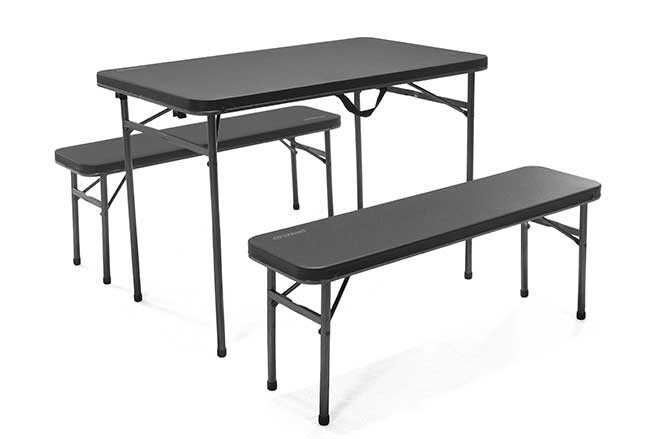
OzTrail has a selection of camping tables available, with five models in different configurations to choose from: Solo Utility, 3pc Picnic Set, 3ft fold in half, 4ft fold in half and 6ft fold in half. A great addition to any campsite, the tables feature a corrosion-resistant steel frame; a quick-release locking mechanism; a convenient carry handle; and a thick top that easily wipes clean.
RRP: $69.99 to $159.99 WHERE TO BUY: www.oztrail.com.au
CAMPFIRE JAFFLE IRONS
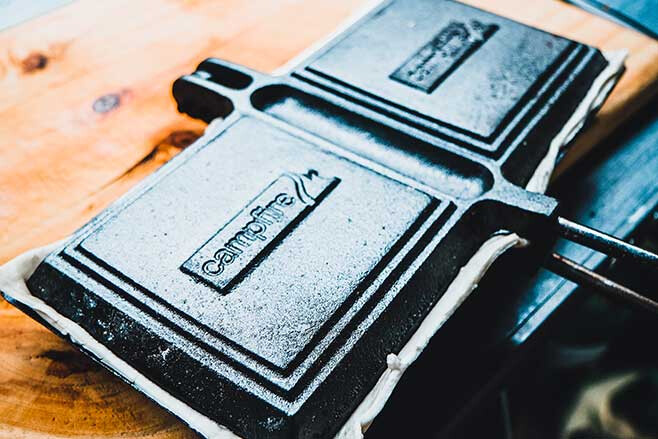
Who doesn’t love a campsite jaffle? A necessity for the campfire cook-up, these jaffle irons are made from quality cast iron, ensuring they’ll be up to the job for many years. The jaffle irons are pre-seasoned and ready to use, and they feature a removable wooden handle which screws off for easy storage. Multiple sizes are available – Single, Double, Quad, Single Jumbo, Double Jumbo – to ensure the entire family remains well fed. The storage bags are sold separately.
RRP: $20.99 to $47.99 WHERE TO BUY: www.campfirecook.com
BACK at the 2019 SEMA Show we came across a clever product that makes it easy to safely and securely mount a fire extinguisher in your 4×4 or vehicle.
The multi-adjustable mount from the Bracketeer allows you to mount an extinguisher to the seat rails or existing holes in the floor without the need to fabricate custom brackets or drill holes in your vehicle.
We were so impressed with the Bracketeer we nominated it for a Global Media Award that year; and that was before we found out that the product’s creator is an ex-pat Aussie now living and working in the USA.
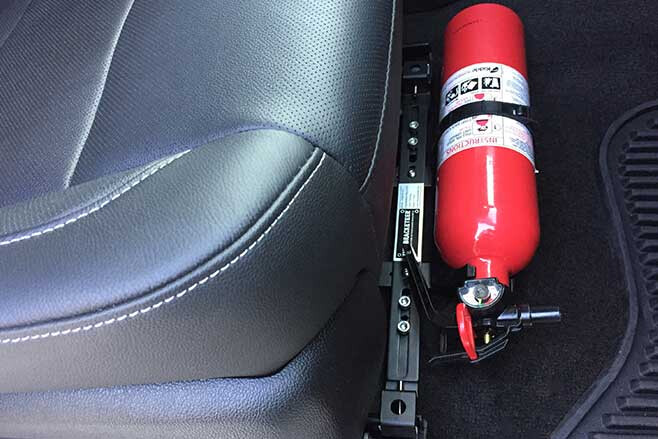
Until now, if you wanted a Bracketeer you had to order it direct from the USA and the shipping cost was a killer; but it is now available in Australia with stock being supplied from Melbourne.
The universal-fit Bracketeer is adjustable to suits most vehicles and is transferable between cars. It securely mounts your fire extinguisher within easy reach in case you ever need it.
The bracket is made with Grade 50 A572 steel and supplied with all stainless-steel fasteners and hex keys necessary for quick installation (around 10 minutes).
WHERE CAN I BUY IT?
HOW MUCH DOES IT COST?
$99 (plus shipping)
AUSTRALIAN new car sales kicked off the New Year where it left 2020, with signs of a strong recovery for the sales market.
A total of 79,566 new vehicles were sold, which is up from January 2020 when 71,731 cars and trucks found new homes.
Also maintaining its late 2020 charge was the Toyota Hilux, which was the best-selling vehicle overall in January as well as the top-selling 4×4 vehicle.
The Hilux’s 3090 4×4 sales trumped its main rival the Ford Ranger by more than 200 units, to kick off what again should be a closely contested race.
It was the usual players filling out the remaining top 10 spots on the 4×4 charts, with the Isuzu D-MAX maintaining its strong performances from last year and the Nissan Navara continuing to slide down the rankings. With the face-lifted Navara due to land in March, you can bet Nissan Australia is eagerly awaiting its arrival.
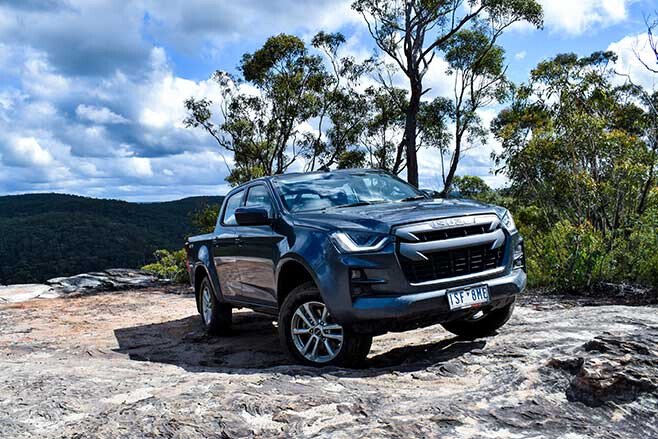
While the Toyota LandCruiser and Prado are the only 4×4 wagons to consistently make it into the top 10 monthly rankings, the midsize wagons have a battle of their own.
Isuzu’s MU-X is the most popular and occasionally pops its nose in the 10 throughout the year, and it narrowly missed out in January with 541 sales putting it in 11th place. A new MU-X will be dropping some time in 2020 and should prop up its sale numbers.
Others in the segment include the Ford Everest (532 sales in January 2021), Toyota Fortuner (181), Mitsubishi Pajero Sport (190) and Pajero proper (188). Of course, the Pajero is no longer made and imported, so what’s left of them in dealers now will unfortunately be the last of them.
The only other large 4×4 wagon is the Nissan Patrol and it sold 241 units for the month. It will be interesting to watch its sales against the LandCruiser if and when a new Cruiser lobs this year as expected and in what form it takes.
At the other end of the size spectrum, the Suzuki Jimny is the only compact 4×4 available and its sales have been hampered by supply limits. Still, the rugged box managed to move 266 units to start the year.
TOTAL 4X4 SALES IN JANUARY 2021
- Toyota Hilux: 3090
- Ford Ranger: 2802
- Mitsubishi Triton: 1723
- Toyota LandCruiser 200: 1499
- Isuzu D-MAX: 1416
- Toyota Prado: 1359
- Mazda BT-50: 891
- Toyota LandCruiser 79: 889
- Nissan Navara: 830
- Volkswagen Amarok: 546
- Isuzu MU-X: 541
THERE’S a lot to be said about the quality of gear on the market these days, and I reckon I’ve found some of the best quality adventurer bags around.
North Storm owners Marc and Lisa saw a demand on the market for decent waterproof bags and began the process to design several configurations for the market. They now offer three different waterproof bags to suit most outdoor adventures. Each bag has its own features, are versatile so they can store your gear when you’re in the great outdoors, and you can also separate wet and dry stuff while on the go.
North Storm offers a 60-litre Duffel Bag, a 30-litre Backpack and a 20-litre Dry Bag. They all have an IP66 waterproof rating, are lightweight, and are made from 100-per-cent waterproof flexible and durable 500D PVC tarpaulin material, with various lash points.
The waterproof rating makes the bags totally resistant to dust ingress, as well as provides protection from high-pressure waterjets or a quick dunking.
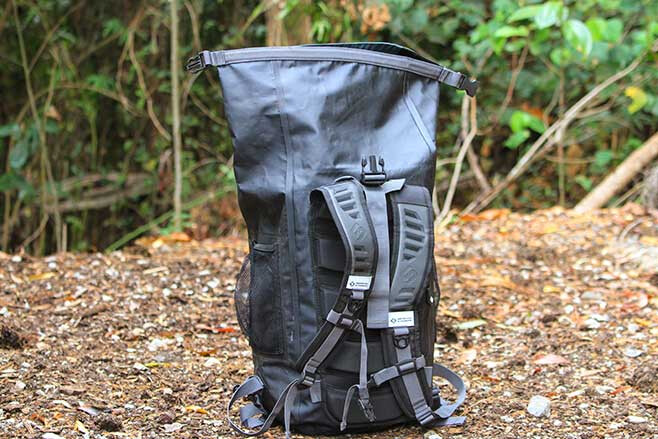
Now, I won’t lie, I’ve been giving a couple of these bags a caning the past few months and I’m suitably impressed. The 30-litre Backpack is absolutely huge, with heaps of usable storage; it’s got an extra layer on the base, EVA back pads (thick foam that breathes) on the adjustable back straps, an easy-to-use chest strap, side mesh pockets, and the list goes on. I’ve been using it as a fishing backpack when searching for remote spots that require hiking and wading across the odd creek or two.
At the end of the day the bag has been designed to be hosed off inside and out, and it dries quick due to the PVC material it is made from. Inside you say? Yep, simply stand the bag on the ground and fill it up with water, then empty. You’ll achieve two things here: it’ll wash out any muck inside that has spilled, and you’ll realise how waterproof these bags are as nothing leaks out.
4X4 GEAR: New aftermarket products tested
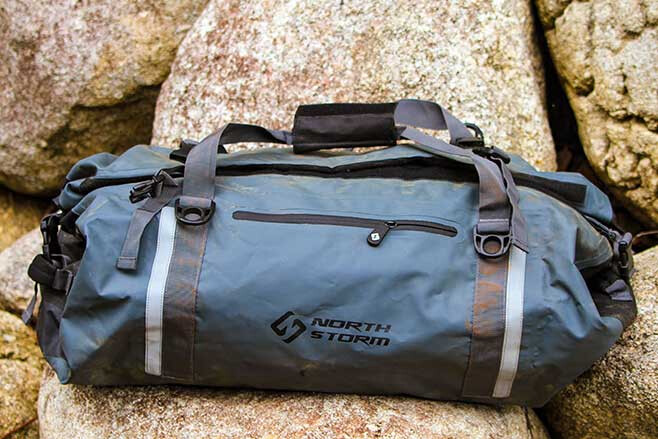
The other bag I’ve been using is the 60-litre Duffel Bag made from the same material. It has all the same features, but it also comes with additional removable straps to be used as a backpack. This bag has its own serious tie-down points (eight in total) so it can be strapped to the top of a 4WD, on a bike or jetski, and even inside a boat. Two large internal pockets, an external mesh pocket (great for wet or smelly clothes), end grab handles, a large waterproof roll closure system, as well as a host of other features including hard-wearing oversize buckles and zips, makes life easier when fumbling in the dark.
This bag has been riding on top of my 4WD for some time now and been through dust, dirt and rain, plus the local car wash, and there has been no trace of any moisture inside the bag. When out on the tracks all day, it’s been great to throw the dirty recovery gear inside the bag knowing it won’t dump mud and grit inside the car. To clean, just give it a quick hose out with water, a wipe down and set aside to dry – it’s that simple.
So what makes these bags stand out for me?
Well, it’s good knowing they have been designed for our conditions and come from people that have actually put some serious thought and effort into a product. Marc and Lisa breathe the outdoors and saw a gap in the market when they couldn’t find a suitable product for their own needs.
Being made from thick and tough PVC material, the bags are so easy to clean and store; plus, being non-rigid, they can be folded away if you can’t hang them up. Across the range, all seams have high-frequency welding, where a radio frequency has been used to fuse two pieces together to make a join (it’s a bit more complicated than that, but it works).
North Storm’s quality standard has resulted in making the joins as strong as the material itself, making the bags buoyant if dropped in water. The range also includes heavy-duty strapping and reflective strips, and the Duffel and Backpack each feature a light-coloured inside base to make it easier to find lost items.
The bags have been a success with a host of different professional users, from divers, commercial photographers through to sports people and offshore fishers, hikers, travellers and 4WDers. North Storm is gaining a reputation for quality, and these bags are only available online with free postage within Australia.
WHERE CAN I BUY IT?
HOW MUCH?
$59.95 20L Dry Bag; $139.95 30L Backpack; $169.95 60L Duffel Bag.
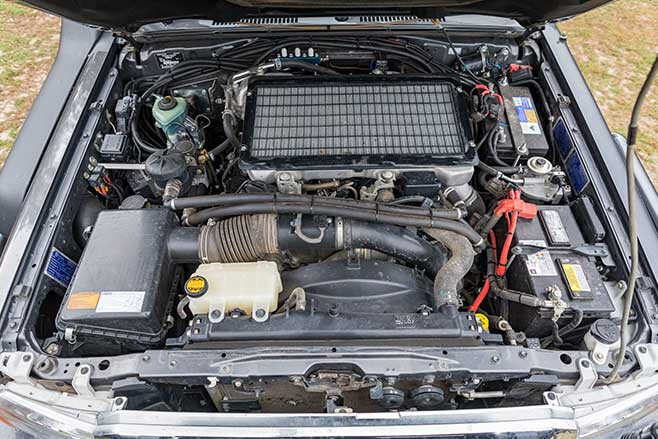
WHAT would be your ultimate rig for doing the full-time lap of Australia? For Queenslanders Brendan and Nikita Shanley it’s this incredible portal axle-equipped 79 Series LandCruiser and the mind-boggling Bruder EXP-6 caravan. We certainly can’t argue with their choices.
The venerable Toyota workhorse has been the first choice as an expedition vehicle for many travellers for near-on 40 years, but the double-cab variety brought with it a new-found popularity with family adventurers. Such was the attraction for the Shanley family, but it hasn’t been a straightforward journey getting to this point.
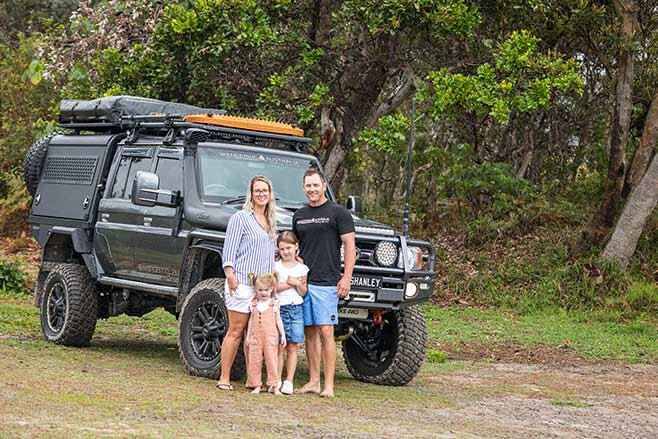
Starting out with a LandCruiser 200 Series and Patriot Campers Toy Hauler, they whetted their appetite for travel and soon ordered the 2015 LC79 double-cab to give them some more flexibility.
“I always loved the 79 Series farm truck and wanted to build it into the ultimate off-road touring rig,” says Brendan. “The plan was to set it up to take the family touring this great country, on- and off-road and into those quieter ‘off the beaten track’ camp spots.”
With a basic tray behind the cabin, ARB bar work and suspension, Redback three-inch exhaust, Safari Armax snorkel, and the TH610 in tow, the four-door farm truck took them all over Queensland and to the Top End of the Territory, but the idea was always to set off on a full-time lap of the map.
To do that job the Toy Hauler was set up with two tents, one for Brendan and Nikita and the other for their daughters – Bella (6) and Hannah (3). A rack is fitted to carry a tinny with space to haul a pair of dirt bikes, the outboard motor, and all the tools and kit needed when you’re travelling with your toys.
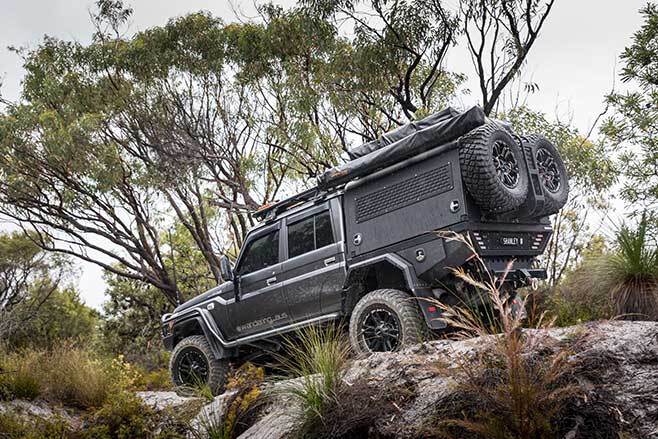
Further extending the flexibility of the Cruiser, the factory tray was replaced with a tray and canopy from Outback Customs. It is filled with drawers from Loaded Drawers and an MSA Drop Slide for an Engel 40-litre fridge. A rooftop tent on top of the canopy has been equipped so the Cruiser can be used for camping when the trailer is left behind.
“Living in the bush made it a little tricky to get work done,” recalls Brendan. “But the rewarding bit was the end result, as the Outback Customs build went on the rear just before taking off on our lap.”
Late in 2019 the Shanleys set off with their Cruiser and Toy Hauler to start their year-long trip around Australia. They headed south and took in all the highlights of the High Country and other parts of Victoria before discovering the coast of South Australia with its many remote beaches, coves and fishing spots.
2020 proved to be a year of cancelled plans for many of us and the Shanleys were not exempt from such interruptions. As COVID spread and borders closed restricting travel, they retreated back home to rural Queensland to see out the pandemic and put their travel aspirations on hold. No one could have predicted such a global event and no one knew the extent of it and how long it would last.
Never one to sit back and waste time, Brendan used the time to refine their set-up and make further improvements to the Cruiser.
“We spent our ‘quarantine time’ on the banks of the Balonne River and not being able to travel is dangerous for the bank account,” says Brendan. “We loved the Patriot Toy Hauler for its ability to carry so much including motorbikes and boat, however we found it was a lot of set-up and pack-up every three days with the rooftop tents and we were constantly dusty with this. We decided to sacrifice the bikes and boat and go for a caravan for ease of set-up and the amenities.”
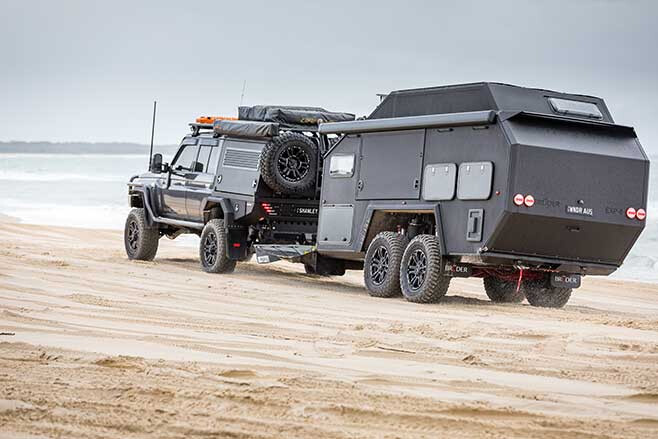
Bruder is a Queensland company producing what can only be described as one of the most impressive off-road caravans ever seen. No stone was left unturned when they designed and created the EXP-6 caravan, with its unique height-adjustable suspension, top-end levels of equipment and lightweight but durable construction. So much so that Brendan and Nikita put in an order for one built to their own requirements.
“We chose the Bruder for many reasons, but mostly because it is like no other van. The Bruder is the same width and height as the car, and tracks in line with the car making it much easier to tow and good for fuel economy. It has plenty of storage, great off-grid power, and full-size toilet and shower.”
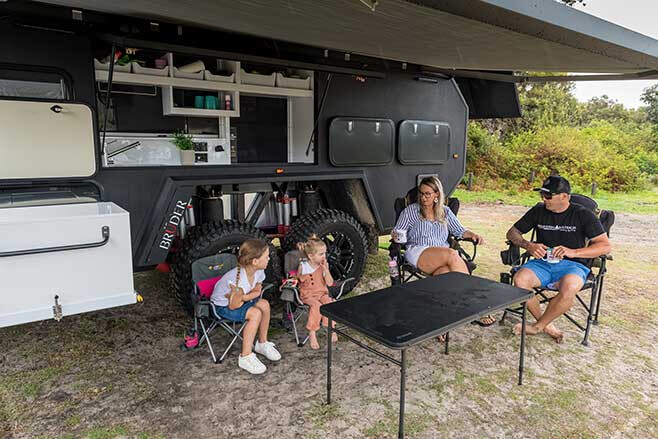
Extras fitted to the EXP-6 include an additional 60-litre water tank, a powered 4.5m 12V awning, a pair of drop-down external tables, an internal 60-litre drawer fridge, the front bar protection system to carry pushbikes and firewood, midgee screens to the kitchen and bedroom, child bunk screens, a 240V microwave oven, extra USB and power points throughout, plus a Warn winch on the rear of the ‘van.
VIDEO: Marks 4WD LC79 in the High Country
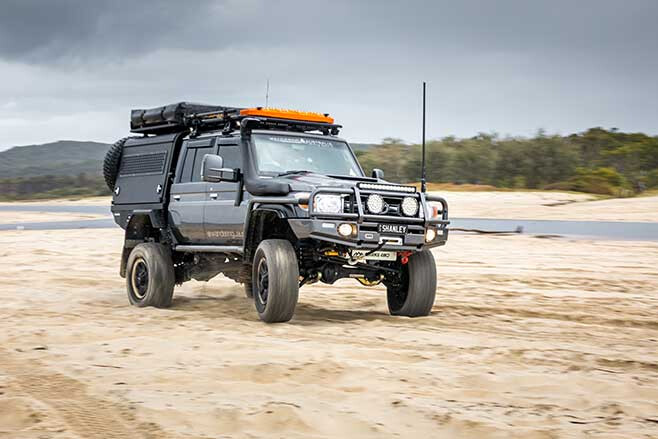
While the van was being built, the Cruiser was sent to Mick Tighe Automotive in Toowoomba where a set of Marks 4WD portal axles and a Marks 4WD hydraulic brake booster system were fitted. The portal axles are the ultimate off-road accessory as they give the Cruiser plenty of clearance under the axles without a massive suspension lift, and they are nationally approved to run with 35-inch tyres under the Second Stage approval scheme. The hydraulic brake booster fixes the less-than-optimal performance of the standard Toyota braking system, especially on Cruisers with big tyres and extra weight onboard or in tow.
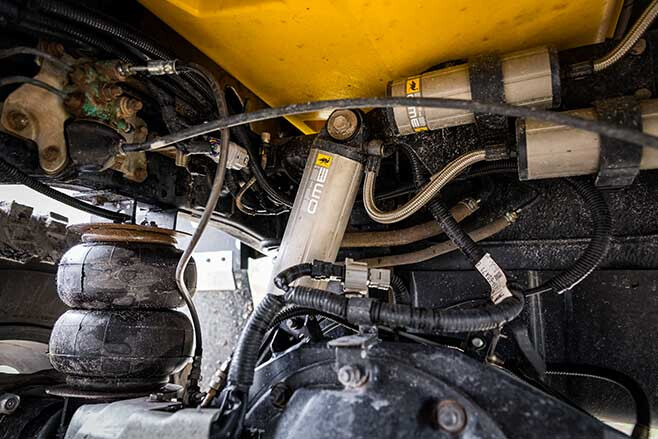
With the wider wheel track of the portal axles, the wheels used are equivalent to 200 Series in their offset. Brendan chose ROH Vapour wheels shod in 35-inch BFG KM3s and, when you add the two spares on the back of the canopy plus another four on the Bruder van, this is not a tyre bill you want to think about.
The suspension retains the ARB coils up front and leaf packs at the back with OME BP-51 shock absorbers all around and Airbag Man bags under the back to assist with the towing loads. JMACX arms are used to maintain proper front axle location and caster angles.
Once the now taller Cruiser and its Bruder caboose were completed a couple of shakedown runs were done in regional Queensland, to Gordon Country and to Stradbroke Island where we were able to get these photos shot.
“We loved the Bruder with our first few trips. We did find it quite compact with not much room in the interior. However we are all about outdoor living and only use inside for sleeping or to get out of the elements. We haven’t found anything we would change, although we are working on putting the motorbike on the drawbar so we can take the bike on the trip with us.”
I am always interested in chasing up the stories behind some of the old, historic vehicles we have here in Australia, and they often have a fabulous story to tell.
One that grips the imagination more than most is Francis Birtles’ ‘Sundowner’, now in the National Museum of Australia, often on display in the main hall.
Made famous by Birtles’ exploits around Australia, it gained enduring fame when it became the first vehicle to drive from London to Melbourne in 1928. It was an incredible achievement.
But there are others.
At the National Motor Museum (NMM) in Birdwood, South Australia, which houses one of the greatest collections of vehicles in the country, you will find a heap of interesting, old vehicles.
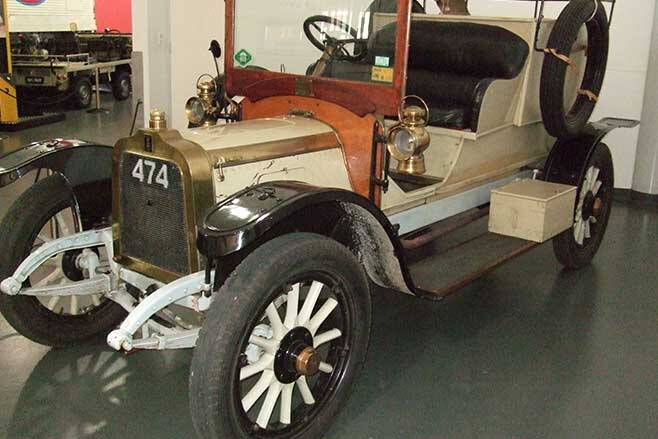
The outstanding one, no doubt, is the 1908 Talbot that was the first vehicle to drive across the continent from Adelaide to Darwin. In fact, it did the trip a few times and is now in impeccable condition in its new home.
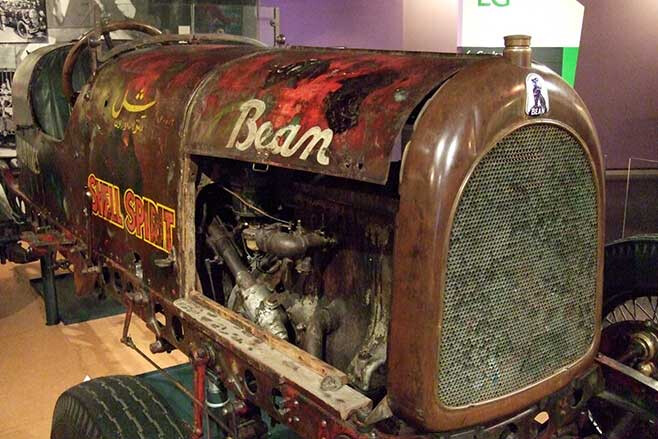
One that caught my eye on my first visit to the NMM was a not-so-shiny slab-slided affair that I wanted to know more about. When Matthew Lombard, the curator at the museum, contacted me to let me know the original owner of the vehicle was in town, I organised a quick trip to see the vehicle and to yarn to the guy.
Meeting up with Brian Materne at the museum I got the story of the ‘Overland’, as Brian called his vehicle, and the trips he and his wife, Julia, had done in it.
Based on a 1952 Vanguard it had a 2088cc four-cylinder engine producing a staggering 51kW at 4200 revs. Top speed was reported to be in excess of 120km/h, but Brian reckoned his less-aerodynamic vehicle cruised effortlessly at 90km/h.
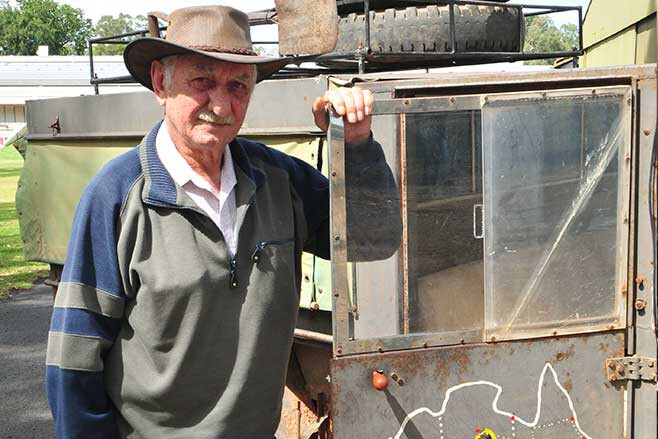
In 1962, once Brian had the Vanguard back home, he found the body riddled with rust, so he removed the body and after much deliberation fitted a wooden box on the chassis, where he told me, “I thought it would make a good driving position”.
The body was then mounted to the chassis on nine engine mounts, while the canopy was removable with roll-up curtains and an inbuilt roof rack. The seats – pretty basic I gotta say – were hinged to allow for the stowing of rifles and spare parts behind them. A 40-litre water tank, an axe and a shovel were mounted below the tray.
The front coil suspension remained unchanged, but Brian changed the rear leaf springs to heavier duty Holden springs. During all this work the vehicle was completely rewired, even though Brian was not an auto electrician, welder or mechanic. Finally, he christened the vehicle Overland. A bloody good effort you gotta say for a home mechanic with very limited resources!
TOP TEN: 10 greatest 4x4s of all time!
With his wife, two kids and the family cat they toured all over the country between 1963 and 1991. In between travelling, there were jobs working on or managing remote sheep properties as far-flung as Lake Everard Station in South Australia, Gunbah Station near Hay in western NSW and finally, in 1979, Wilgena Station near Tarcoola in the west of SA where they stayed until 1991. All were reached in the mighty Overland.
In 1992 the Overland was bought by the Australian Motor Vehicle Museum in Sydney, but when that museum folded the vehicle found its way to the NMM.
It is now on display amongst a whole range of many fine automobiles, some much prettier and far more expensive but few with more travel credentials – and the only one that hasn’t been manufactured in a factory.
USUALLY our February 2021 edition of 4X4 Australia magazine would contain the annual 4×4 Of The Year report, where we bring together the best new 4×4 releases of the previous year and put them through a rigorous week of testing to determine our 4×4 Of The Year.
We do the testing for this event as late as possible each year so we can include all of the new and substantially updated models from the manufacturers. It usually happens in the first week of December.
2020 being what it was, we weren’t able to do that testing in our regular timeslot because of border closures, travel restrictions and general uncertainty of what we would be free to do.
So we’ve moved the testing to the first week of February this year (we’re on it now) and the results will come to you in the April 2021 edition.
Our test will still focus on the best new 4x4s released between December 1, 2019, and November 30, 2020, so anything that might have hit the market late last year or early in 2021 will still have to wait until the next round.
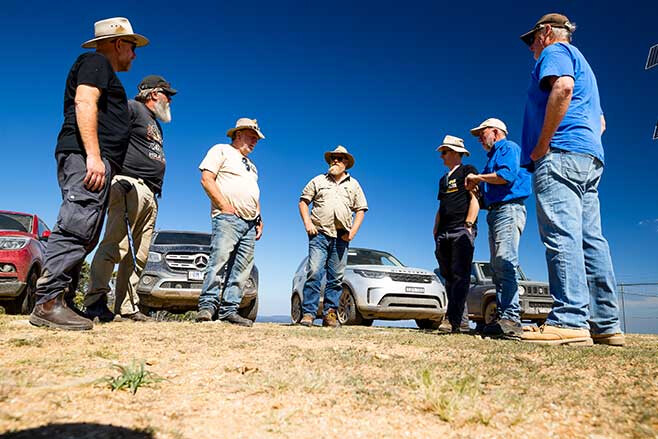
And, again, 2020 being 2020, the number of new contenders released was relatively small, but it is still a quality field.
Our five finalists present a broad cross-section of the market – from the popular double-cab utes to a lone wagon, all-new vehicles and a significantly upgraded one.
Those finalists are (in no particular order) the Jeep Gladiator Rubicon, Land Rover Defender 110 P400, Mazda BT-50, Isuzu D-MAX and the Toyota Hilux. Obviously, the Hilux is the upgraded model and our testing of it in late 2020 deemed the improvements to the ute warrant its inclusion.
As always, we’ll bring together a team of experienced four-wheel drivers to do the testing, and our best photographers and videographers willk document the process as we put them through their paces at the proving ground and in the bush.
There’s a lot of work involved in the testing, but it’s also a lot of fun. I mean, who wouldn’t want to be out four-wheel driving with a group of blokes I call mates and get paid for it?
The real work starts when we get back to the office and wade through the pages of notes, data and the judges’ scores to determine a winner. Yes, it’s work, but I wouldn’t miss it for quids!
THE latest issue of 4X4 Australia has officially hit the market, with the February 2021 issue brimming with modified metal and unmissable 4×4 getaways.
Headlining the custom 4×4 charge we’ve included a giant-killing 1969 Toyota Stout, said to be one of the toughest rigs you’ll find roaming Aussie bush tracks – a claim we believe.
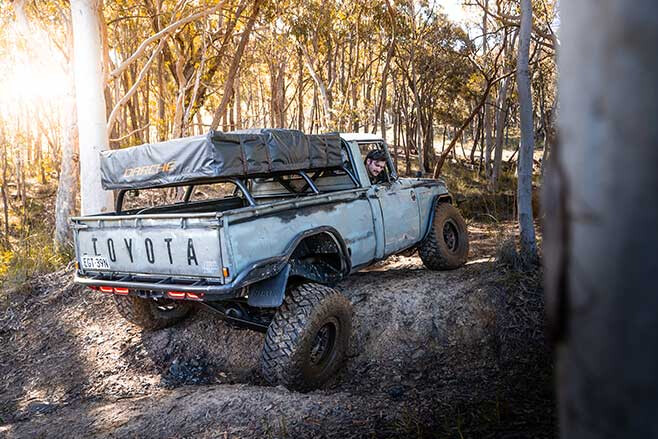
If the Stout isn’t your flavour, perhaps a meticulously built Amarok dripping with quality kit is more your style.
The custom Amarok – Dr Rok – wears 34-inch tyres … when’s the last time you saw an Amarok wearing those hoops?
Rounding out our trio of insane custom creations is an FJ45 winch truck that combines the best bits from Toyota, Nissan and GM. You need to see this wild winch truck to believe it exists.
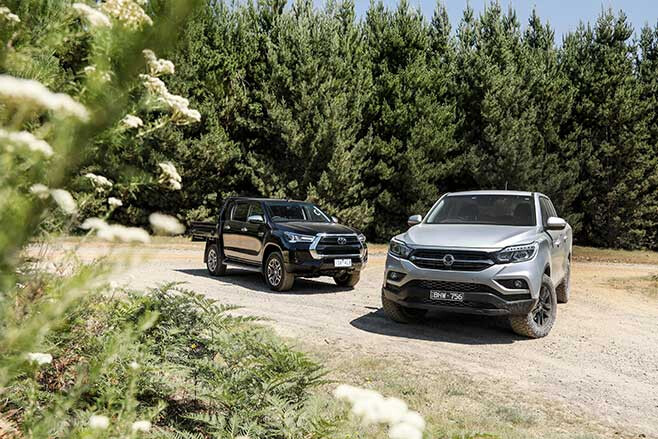
A head-to-head comparison you might not be expecting is a David-versus-Goliath dual between the proven SR5 Hilux and the relatively unknown SsangYong Musso XLV Ultimate (the one we’ve had in the 4×4 shed for the past six months).
Are the odds stacked too heavily against the Musso? Or are we in for a surprising result?
Plus, we crunch the numbers to bring you Australia’s best value 4x4s for 2021.
WHAT ELSE IS THERE?
– 2020 D-MAX LS-M off-road review – 4×4 trips to Fowlers Bay and Portland Road – AOR Sierra ZR camper trailer tested – ARB Base Rack + Accessories tested – Lux Fab exhaust system tested – Monthly columns, new gear + more
The February 2021 issue of 4X4 Australia is out now.
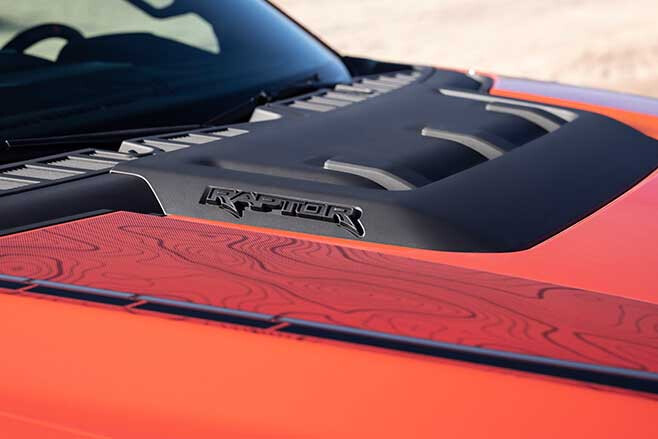
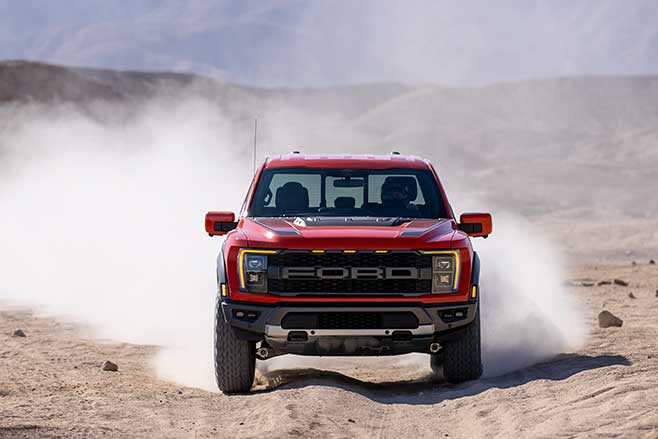
THE third-generation Raptor F-150 debuted overnight in the US, and you’d be forgiven for thinking it doesn’t look all that different to the outgoing model.
Delve a little deeper, however, and you’ll notice Ford has tickled with it just enough to improve its already impressive dune-bashing ability.
OFF-ROAD SUSPENSION HARDWARE
The high-performance suspension hardware has been re-engineered with a fresh five-link rear set-up, said to give the Raptor even greater control and power when scorching dunes beyond the black stump.
The hardware allowing this to happen includes extra-long trailing arms, a panhard rod and gigantic 24-inch coil springs.
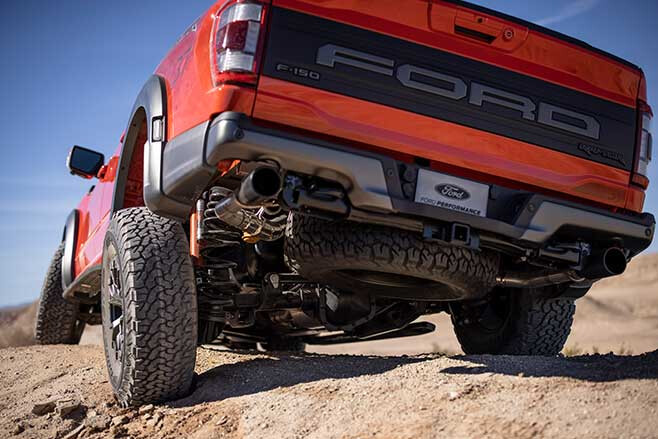
The new five-link rear set-up allowed Ford to fit massive 37-inch BFGoodrich All-Terrain T/A KO2 tyres beneath the wheel arches.
With this large set of rubber installed, the Raptor claims 333mm of running clearance, 33.1 degrees of approach angle, a maximum departure angle of 24.9 degrees and 24.4 degrees of breakover angle.
Wearing the standard 35-inch tyres, the Raptor manages a still-impressive 305mm of clearance, with an approach angle of 31 degrees, maximum departure angle of 23.9 degrees and breakover angle of 22.7 degrees.
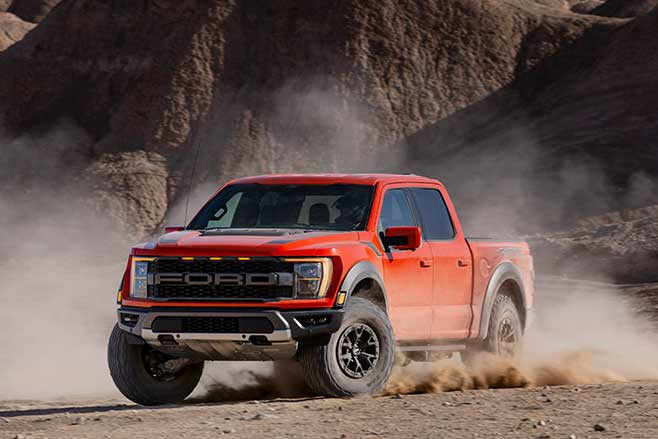
Dashing through the desert in relative comfort is achieved via (you guessed it) massive next-gen Fox Live Valve internal bypass shocks capable of position-sensitive damping adjustability.
Measuring at 79mm in diameter, the race-proven shocks enable “upward of 1000 pounds (453kg) of damping per corner at desert speeds”, according to Ford.
Seven driving modes are available via the Terrain Management system – Slippery, Tow/Haul, Sport, Normal, Off-Road, Baja and Rock Crawl – which modulate driving dynamics and transmission shift points depending on the terrain.
V6 POWER PLAY
Clever engine management software combines with the state-of-the-art suspension set-up, allowing the twin-turbo 3.5-litre EcoBoost engine to deliver a torque-kick to the rear wheels, as well as providing improved throttle response, and the comfort and control at speed the Raptor is known for.
It’s mated to Ford’s familiar 10-speed transmission.
The EcoBoost has a 10.5:1 compression ration, while the cooling system utilises new high-power fans, essential for the obligatory high-speed desert safari.
Customers can even customise their very own exhaust symphony, with four sound level options available via the three-inch exhaust system: Quiet, Normal, Sport and Baja.
In a clever addition, Ford also included its Pro Power Onboard system, which enables the Raptor to be converted into your very own power station.
Just tick the options box to get the extra two kilowatts of exportable output, and you’ll be able to charge all of your gear on your next trip while you sink a few cans at camp.
TRAIL 1-PEDAL DRIVE
Who needs to master the art of rock-crawling when the vehicle can do it for you? That’s exactly what the Trail 1-Pedal Drive system does: it simplifies the pedal-work required for rock-crawling by braking for you when pressure on the accelerator is released.
CONNECTIVITY
Improving connectivity was another area the boffins at Ford were tasked with. In addition to a new 12-inch digital gauge cluster and a new 12-inch centre screen, the F150 features over-the-air updates.
This ever-evolving tech keeps the Raptor connected to the Ford grid, to allow easy access for future system upgrades like trail maps.
IS IT COMING HERE?
Nope. Ford Australia has repeatedly said it won’t bring it here. Plus, the vehicle is made in LHD only.
Of course, there is a tranche of importers ready to take your money and convert the F-150 of your choice…