
Talking Points
- JPP 50mm lifted suspension kit now available for 4xe PHEV
- Jeep to install charging stations on iconic trails
WHILE most buyers of electric vehicles (EV) and plug-in hybrid electric vehicles (PHEV) would be excited by the fact they can purchase a car charging station to install at home, owners of Jeep’s Wrangler 4xe PHEV have access to a whole catalogue of accessories and performance parts that are more likely to ignite their passions.
Yes, Jeep offers a 240-volt home charger for the 4xe, but an advantage of the car being built on an existing and already heavily accessorised model means that most of the gear you can buy and fit to your Jeep Wrangler can also be fitted to the PHEV version.
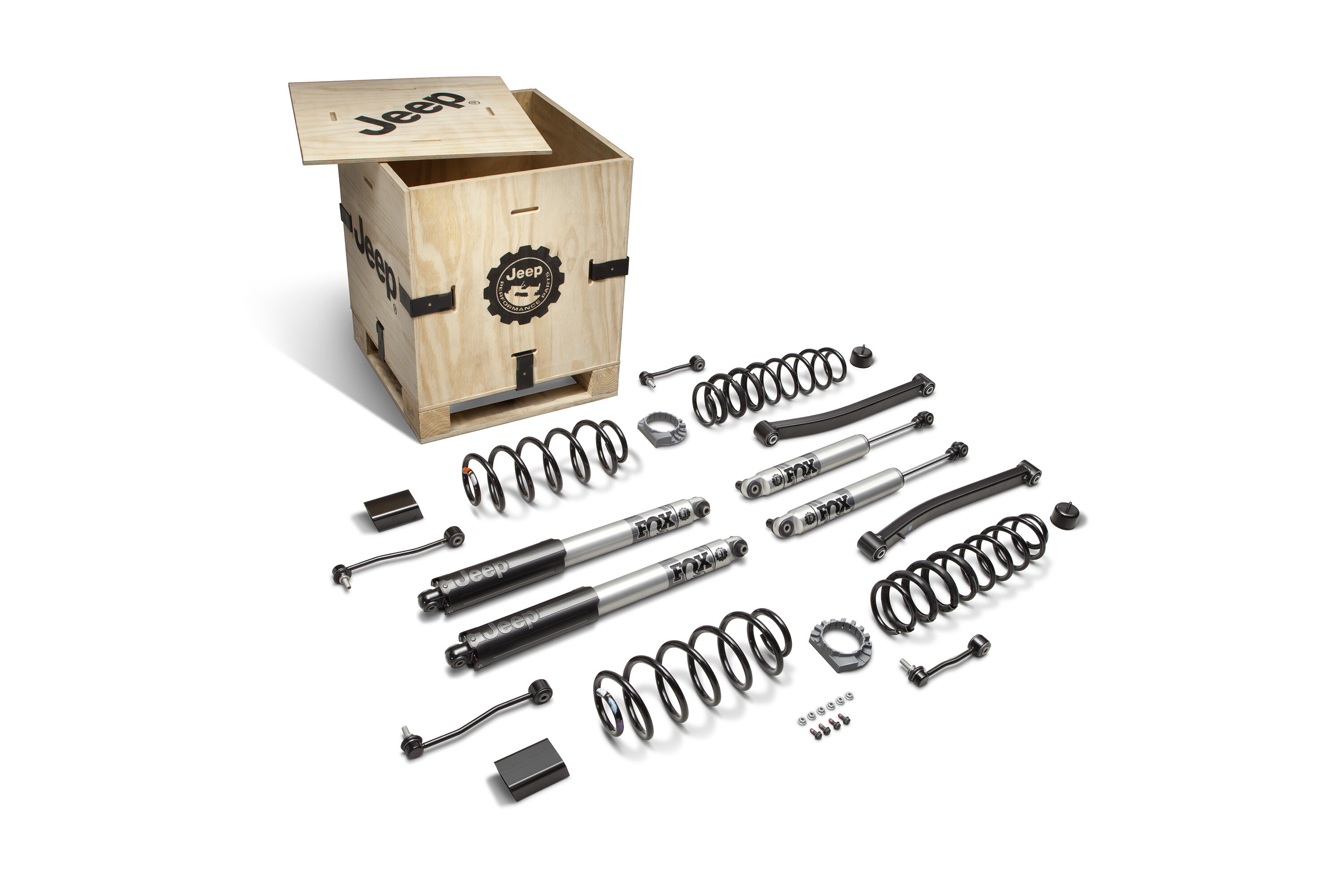
The most recent kit to come from Jeep Performance Parts (JPP) for the Wrangler 4xe is a 50mm lifted suspension kit specifically designed for the unique weight distribution of the PHEV model. The JPP kit includes four coil springs, four FOX shocks, front lower control arms, front and rear stabilizer links, front and rear bump stops, and all installation hardware.
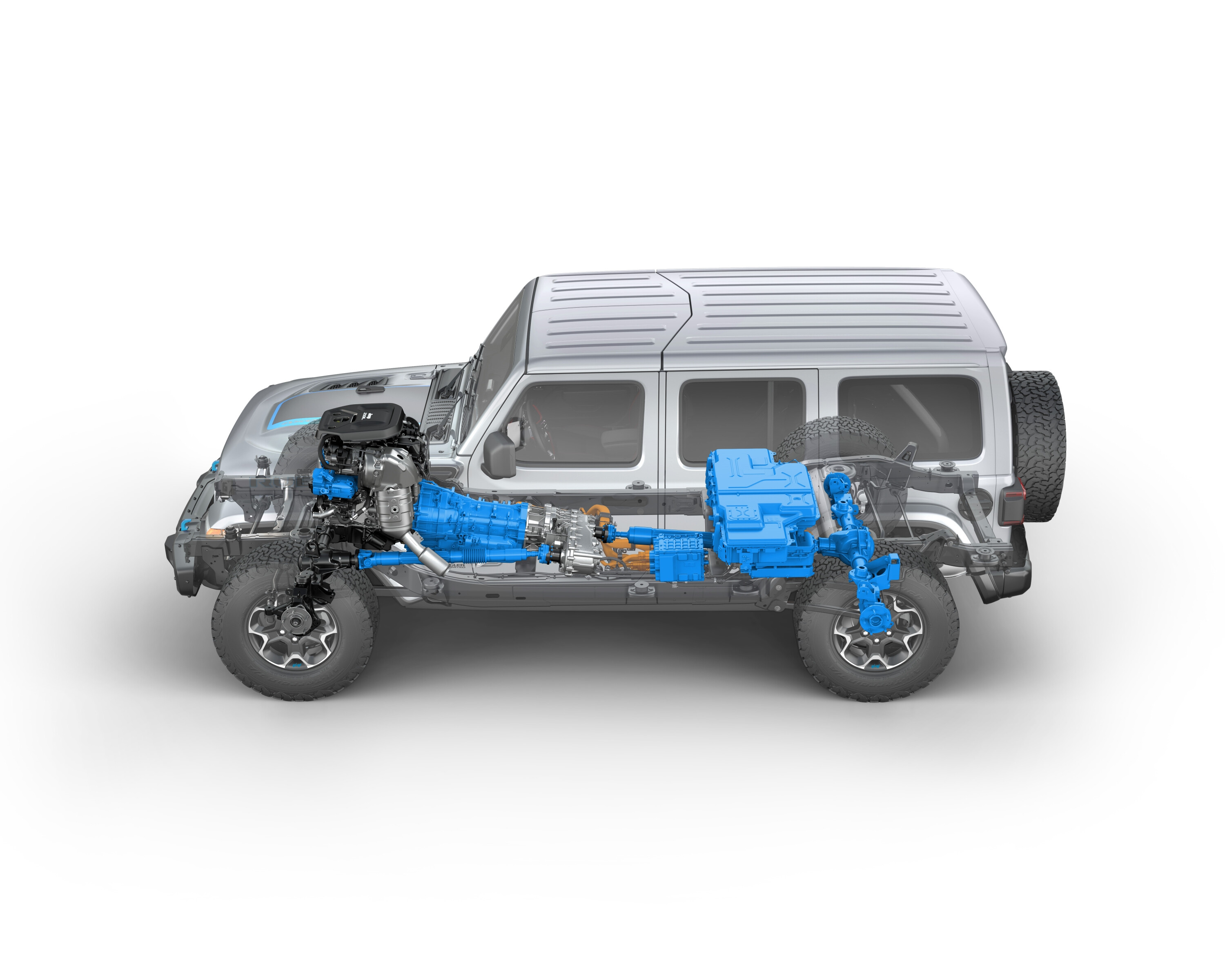
The Jeep Wrangler 4xe powertrain uses a pair of electric motors and a 400-volt battery pack with a fuel-efficient, turbocharged, four-cylinder petrol engine and eight-speed automatic transmission.
The 17kWh, 96-cell lithium-ion, nickel manganese cobalt battery pack and electric motors obviously add weight to the Wrangler Unlimited, requiring a unique suspension set-up for the PHEV.
The battery pack is mounted beneath the rear seats and all high-voltage electronics, including the wiring between the battery pack and the electric motors, are sealed and waterproof to preserve the Wrangler’s 760mm water-fording depth.
It’s not only the factory supported JPP suspension that will fit the Wrangler 4xe. As one of the most heavily modified and accessorised vehicles on the planet, the Wrangler is massively supported by the aftermarket gear industry and many of those products made for a regular Wrangler will fit in a 4xe.
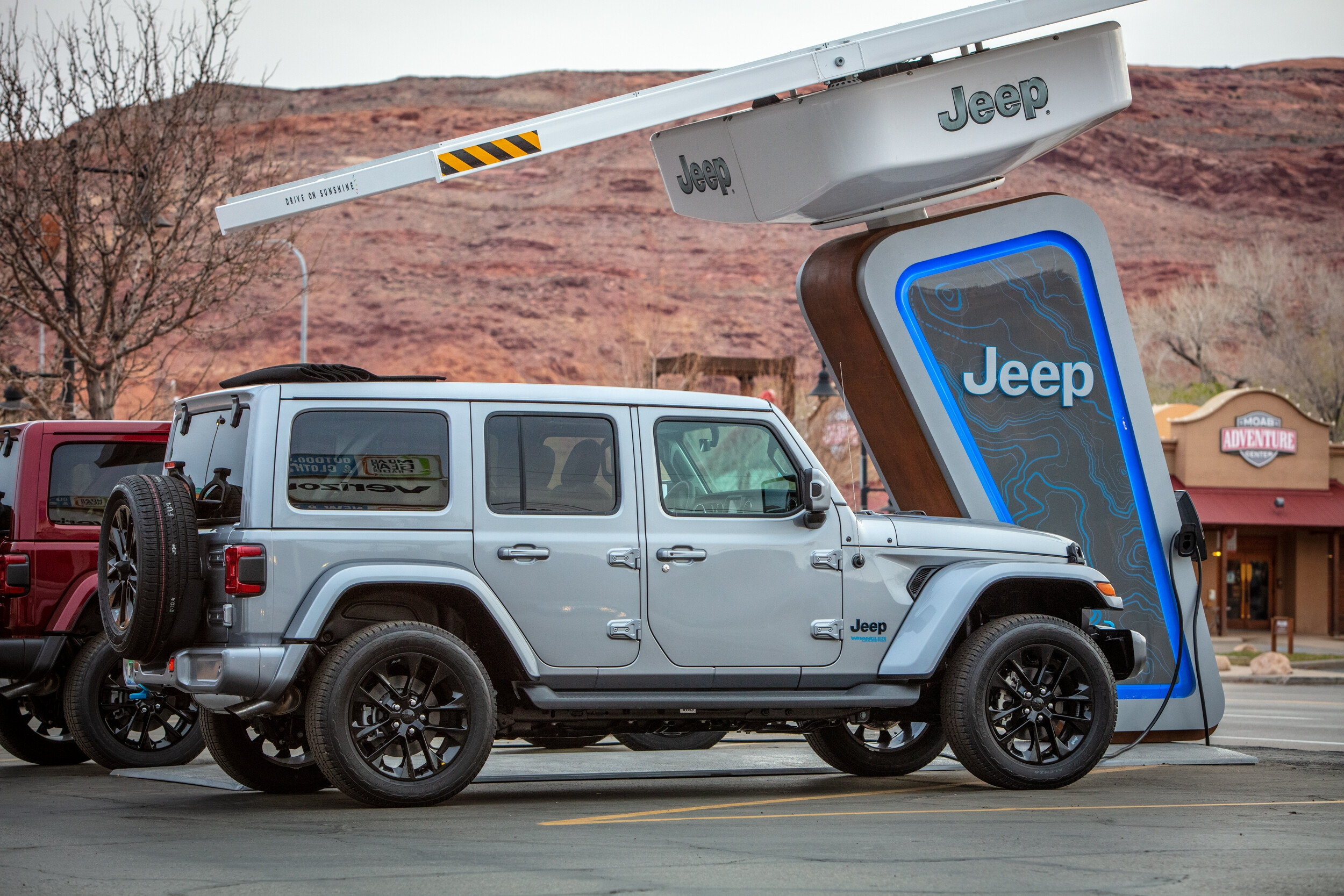
Not only is Jeep equipping its PHEV Wrangler for the off-road adventures you would expect a Wrangler to venture out on, but it is equipping the remote trails with EV charging stations to ensure owners can make the most of their vehicle’s potential.
Jeep is installing charging stations at what it calls its ‘Badge of Honor Trails’ including three of the most iconic trails for the Jeep brand: Moab, Utah; the Rubicon Trail in Pollock Pines, California; and Big Bear, California.
These charging stations will either be directly connected to the power grid or use solar power to generate electricity, and more are planned to open in the coming year.
The 240-volt, Level 2 charging stations can charge the 17-kilowatt-hour battery pack in the Jeep Wrangler 4xe in about two hours, to give the PHEV Jeep around 34km of pure electric range.
The 4xe’s PHEV system is backed up with a turbocharged four-cylinder petrol engine.
“Electrification opens a new chapter in the Jeep brand story, and it brings an entirely new level of excitement and enjoyment to our enthusiastic owners,” said Christian Meunier, Jeep Brand Chief Executive Officer. “Key to making Jeep brand the greenest SUV brand is assuring our owners can enjoy the benefits of electric propulsion wherever they go, including the most iconic off-road trails in the country.”
The Wrangler PHEV is available in the USA in high-spec Sahara and Rubicon models.Unfortunately for us, it is only manufactured in left hand drive configuration, so, just like the diesel Wrangler and Gladiator and the recently debuted V8-powered Wrangler 392, the Wrangler 4xe PHEV is not for us.
Talking Points
- Ranger outsells Hilux for the first time in 2021
- Everest sales strong in April 2021
- Sales down for 79 Series
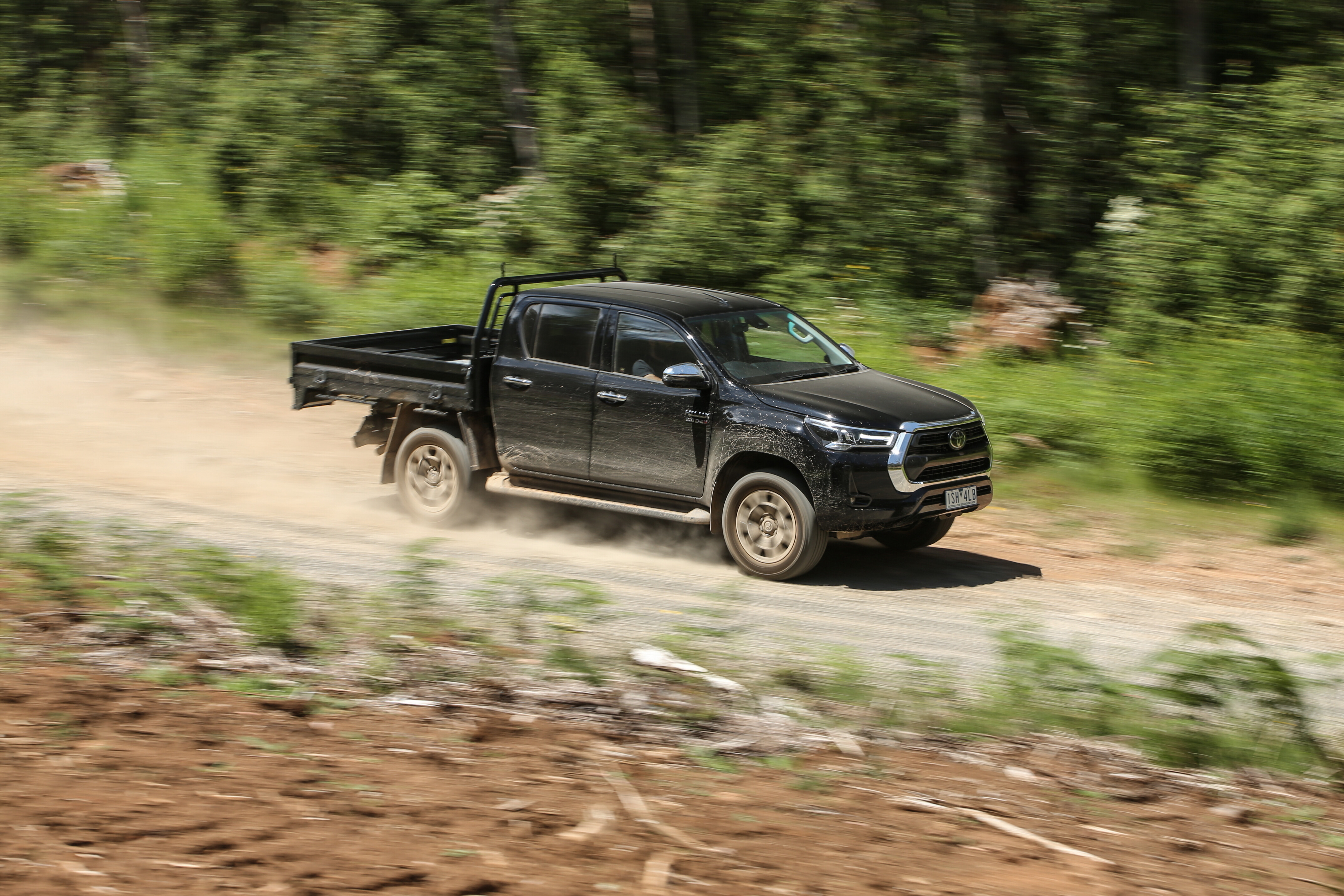
There’s been a bit of movement on the new 4×4 sales chart in April, with the Ford Ranger outselling the Toyota Hilux for the first time this year.
Add in 4×2 models and the Ranger was the top-selling new vehicle overall for the month, stealing that title from the Hilux.
Interestingly, the five top-selling vehicles overall in April all have four-wheel drive or AWD variants, with the Ford Ranger being the top-selling individual model (5021), followed by the Toyota RAV4 (4506), Toyota Hilux (4222), Toyota LandCruiser (3177) and Mitsubishi Triton (2458). With three of those five top-sellers, Toyota remains the best-selling brand in the country.
With 92,347 units moved in April, the overall market was up on the same month in 2020, but it’s a bit unfair to compare it with that time which was the height of pandemic instability in Australia.
Chief Executive of the Federal Chamber of Automotive Industries, Tony Weber, put it in better context when he said, “Historically the April result is between 70,000 and 80,000 vehicles, so the 2021 result is very significant.”
A nameplate we don’t usually see among the monthly Top 10 4×4 sales in the Ford Everest, which has been slowly gaining traction in the market. Its 958 sales includes 4×2 variants but it’s enough to slot it into ninth place for the month.
As well as offering a choice of 4×4 and 4×2 models the Everest has the unique choice of the 3.2-litre and 2.0-litre diesel engines, five- and seven-seat interiors, and across four grades.

The Isuzu MU-X really owns that market of mid-size SUVs that are smaller than the Toyota Prado. Its totals are also spread across 4×4 and 4×2 variants, and with a new MU-X expected some time in the second half of 2021 its popularity with family buyers should stay strong.
Notably absent from the Top 10 best-selling 4x4s in April was the Toyota LandCruiser 79 Series. Buyers are reporting a lack of LC79s in stock around the country and these could be one of the many new cars suffering shortages due to the lack of electrical components.
Stock shortages will continue to present problems for some manufacturers in the coming months, but sales of 4x4s are expected to remain healthy through May and June as businesses get into their new vehicles before the end of the financial year.
4X4 SALES: APRIL 2021
- Ford Ranger: 4671
- Toyota Hilux: 3315
- Toyota LC200: 2595
- Mitsubishi Triton: 2256
- Isuzu D-MAX: 1576
- Toyota Prado: 1370
- Isuzu MU-X: 1179
- Mazda BT-50: 1214
- Ford Everest: 958
- Nissan Navara: 922
4X4 SALES: YEAR TO DATE
- Toyota Hilux: 14,191
- Ford Ranger: 13,786
- Mitsubishi Triton: 7762
- Toyota LC200: 7664
- Isuzu D-MAX: 5610
- Toyota Prado: 5347
- Mazda BT-50: 4297
- Toyota LC79: 3814
- Nissan Navara: 3417
- Isuzu MU-X: 3315
Talking Points
- What we think the 2022 Ranger Raptor will look like
- Significant changes expected for the new model
Last week Ford Australia released news of its Ranger Raptor X, which brings a range of styling tweaks to the top-of-the-range Raptor model to see it through to what we expect will be the end of the PX2 model at the end of 2021.
But what of the next Ranger; will we see a Raptor in 2022?
With the popularity of the current Ranger Raptor and its success as a halo model for the brand, we’d have to say that an all-new one will be a definite yes; but what form it will take and what will power it are a long way from being revealed.
We expect the 2022 Ranger will be shown by the end of 2021, but whether or not it will make showrooms by the end of the year is still unknown.
We expect the new model to bring significant changes to the popular ute
We expect the new model to bring significant changes to the popular ute but we’re pretty sure it will stick to the proven ladder chassis, with a choice of two- and four-wheel drive, a diesel engine, and IFS with a leaf-sprung live rear axle.
The long-serving 3.2-litre, five-cylinder diesel engine is expected to be pensioned off and the current 500Nm, 2.0-litre, four-cylinder engine will become the standard powerplant; hopefully Ford will see fit to adapt a manual gearbox to the bi-turbo engine.
The new Ranger will be developed for global markets including the USA, so there will be petrol powertrain; but whether that will go on sale in Australia is yet to be revealed. EV and hybrid power also can’t be ruled out, as they become essential to any new vehicle plans.
The PX2 Raptor wasn’t released with the rest of the Ranger models back in 2015, so a new Raptor might not be seen for a while longer. In the USA, the new F-150 has been on sale for almost a year and the Raptor version has only recently been shown and is yet to go on sale.
Also looking to the USA and its current T6 Ranger and Bronco models and we get a hint of what we could see in a new Raptor.
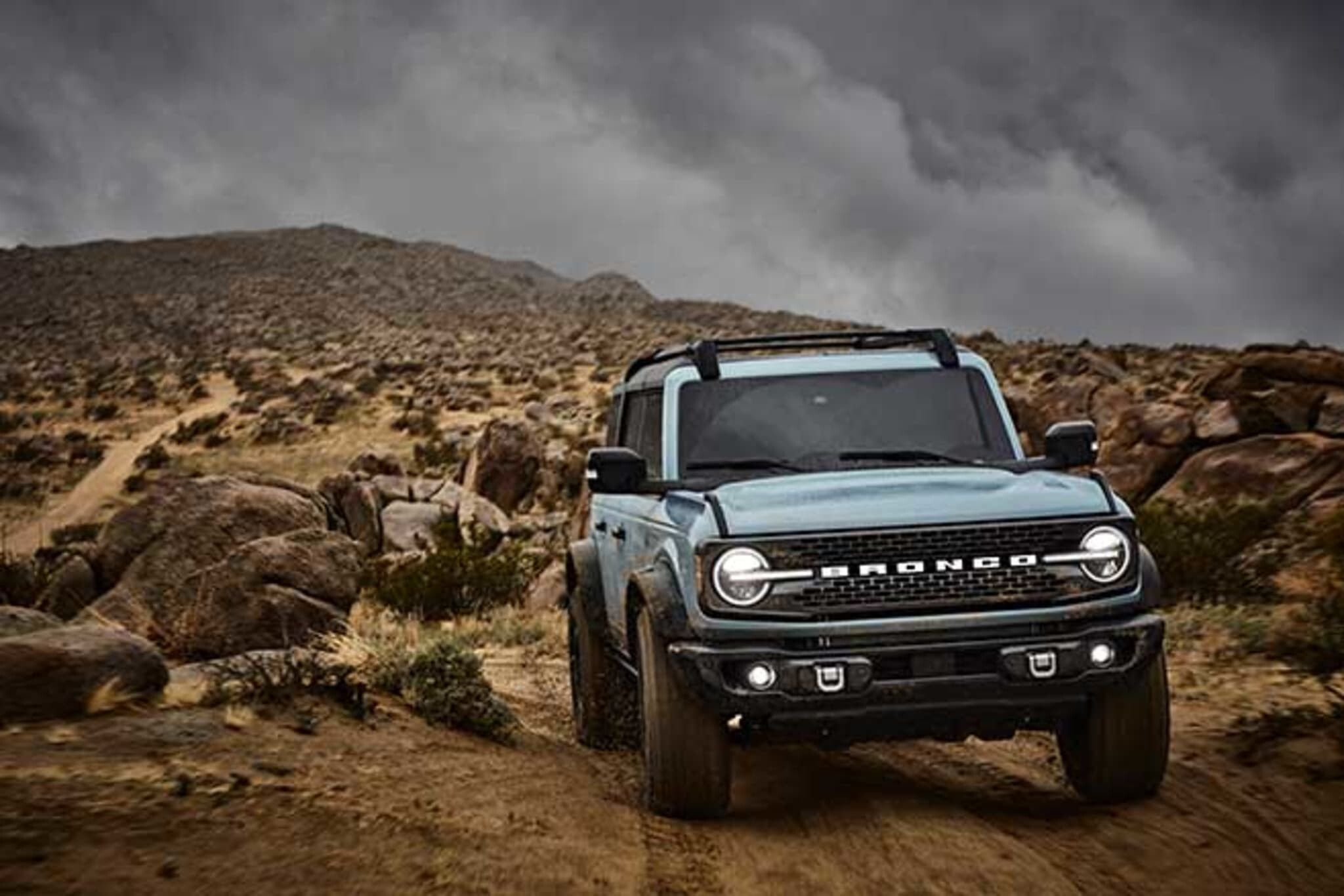
The Bronco, which seems to be everywhere in the media but is yet to go on sale following production delays, is available with the optional 2.7-litre V6 EcoBoost petrol engine which we think would be the perfect mill to power a new Raptor. And with the Yanks also pining for a Ranger Raptor, they wouldn’t expect anything less under the hood.
The 2.7 makes 231kW and 542Nm in the Bronco, so it would be killer in the awesome Raptor chassis. Expect it to be backed by the 10-speed auto and an on-demand 2WD/4WD system with a seven terrain Multi Terrain System also taken from the Bronco.
The key to the current Ranger Raptor is its bespoke Ford Performance-developed suspension which includes a widened wheel track front and rear and a unique back half of the chassis to accommodate a coil-sprung, Watts link-equipped rear suspension.
Throw in the model-specific Fox dampeners and BFGoodrich tyres and it’s an off-road-ready package that doesn’t require too much messing with.
Interestingly, the Bronco also runs a coil spring rear suspension but misses out on the Watts link, instead getting a cheaper- to-produce Panhard rod for lateral location of the rear axle.
However, the Bronco does get tyres up to 35-inch in diameter, so a step up from the current Ranger Raptor’s 33s wouldn’t go astray. Bigger is better, right?
Bronco Down Under?
Despite being on the same T6 chassis as our Ranger and Everest models, the Bronco is only made in left-hand drive and there are no plans for a right-hook version. But you’d have to think that while the Australian engineers are developing the T6 platform for both left- and right-hand drive markets, it shouldn’t be too hard to give us a RHD Bronco.
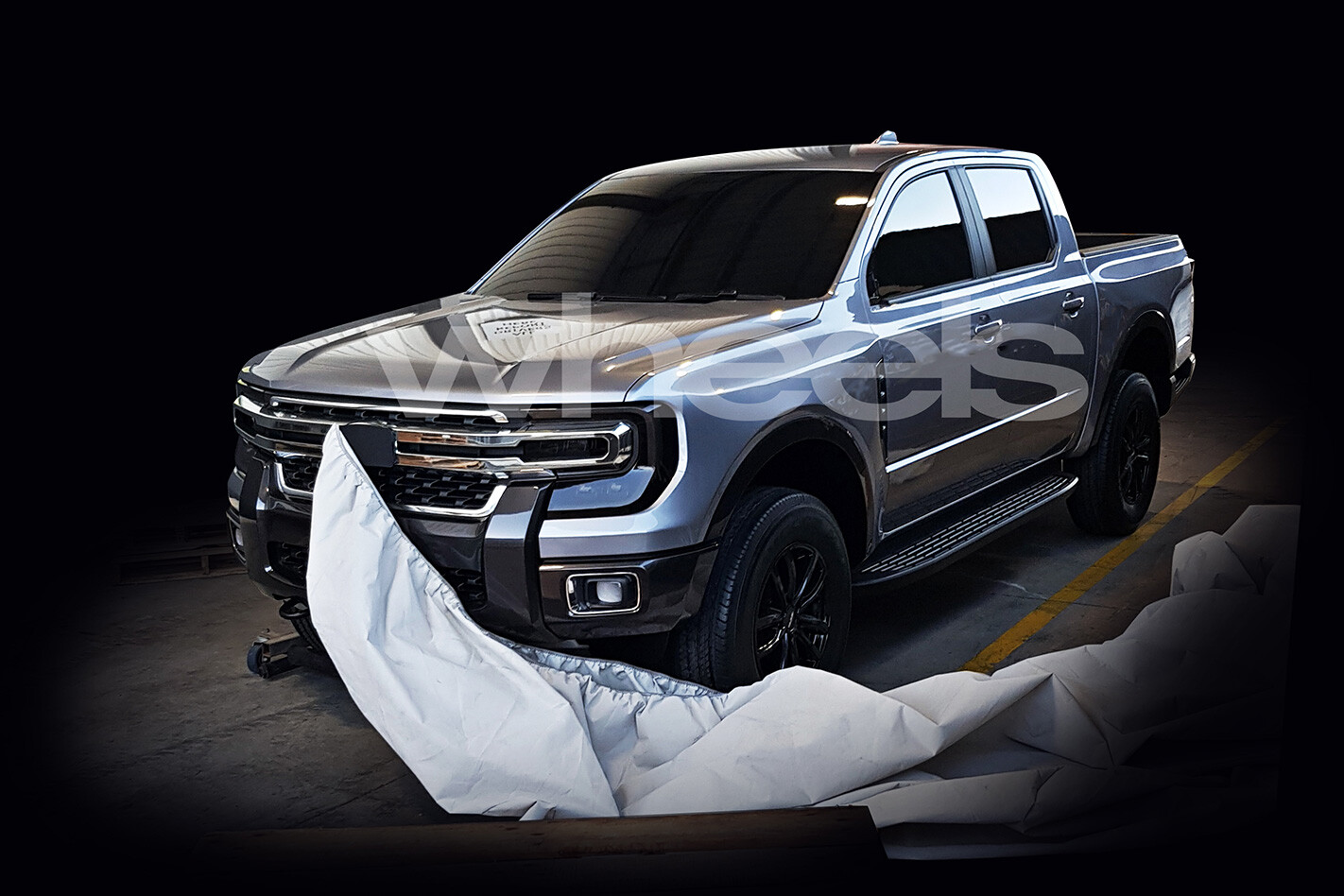
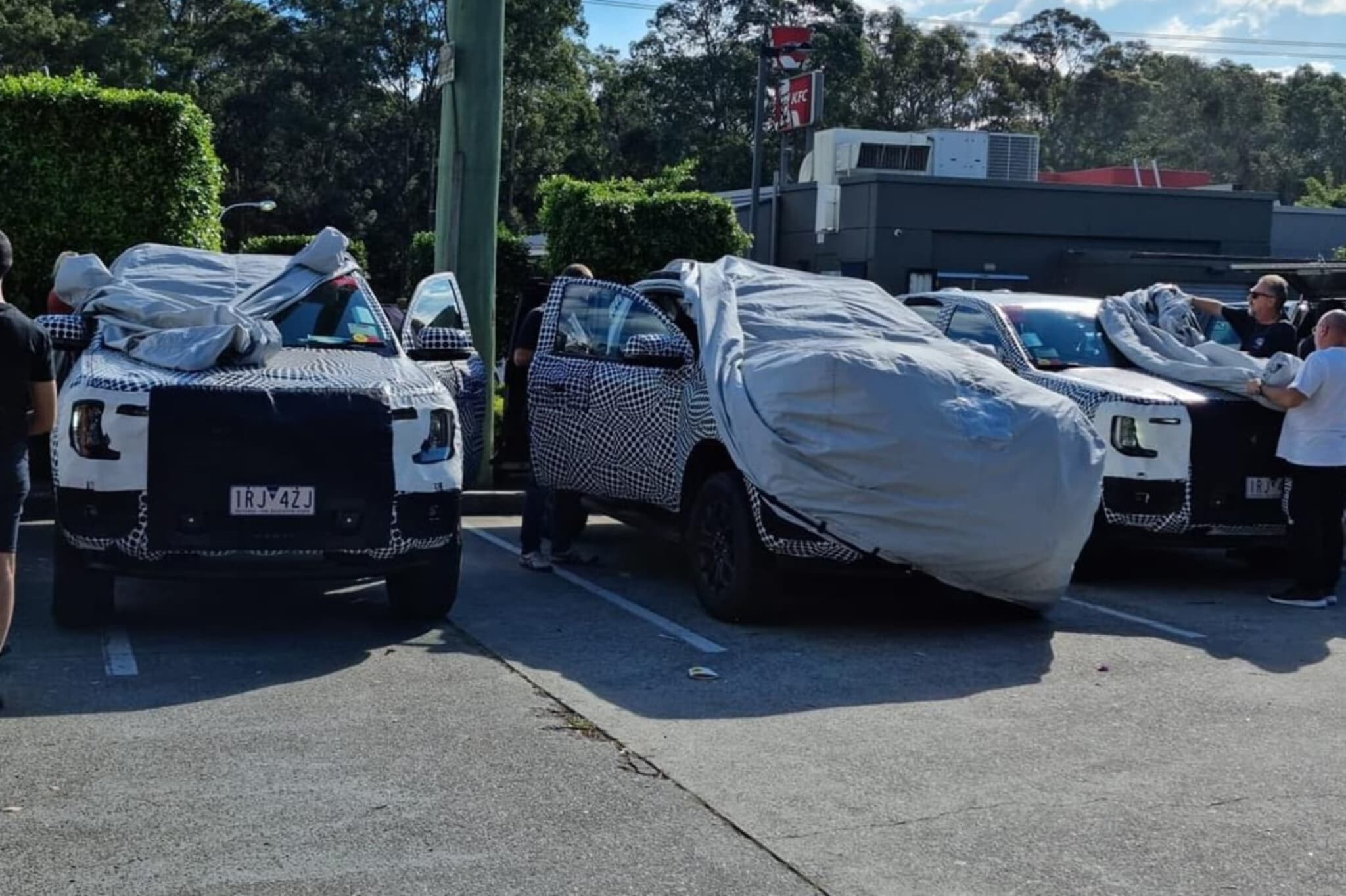
Fresh spy photos of next model Ranger production mules out testing in Australia and around the world are dropping every week, each one giving us a better idea of what the new Ford will look like.
We looked at the image leaked to Wheels Magazine back in 2019, had a close look at the more recent spy photos and checked out the front end on the 2021 F-150 Raptor and asked Brendon Wise to come up with this rendering of what we think a 2022 Ranger Raptor might look like.
Let us know what you think of it in the comments below.
THE mid-size SUV marketplace comprises a mix up of vehicles that all do different jobs. On one hand you have the light-duty people movers like the Toyota Kluger, Mazda CX9, Mitsubishi Outlander and Kia Sorento which are hugely popular, yet bucking the trend is the off-road capable Toyota Prado that outsells them all most months.
Since Mitsubishi hammered the nail into the coffin of its legendary Pajero 4×4 wagon late last year, the Prado really has had that end of the segment all to itself.
Below the Prado you have the smaller 4×4 wagons that owe their existence to the popular 4×4 utes and are wagon derivatives of the light trucks. Mitsubishi has passed the iconic Pajero nameplate on to its Triton chassis-based wagon and now calls it the Pajero Sport, whereas older versions of this wagon were called the Mitsubishi Challenger.
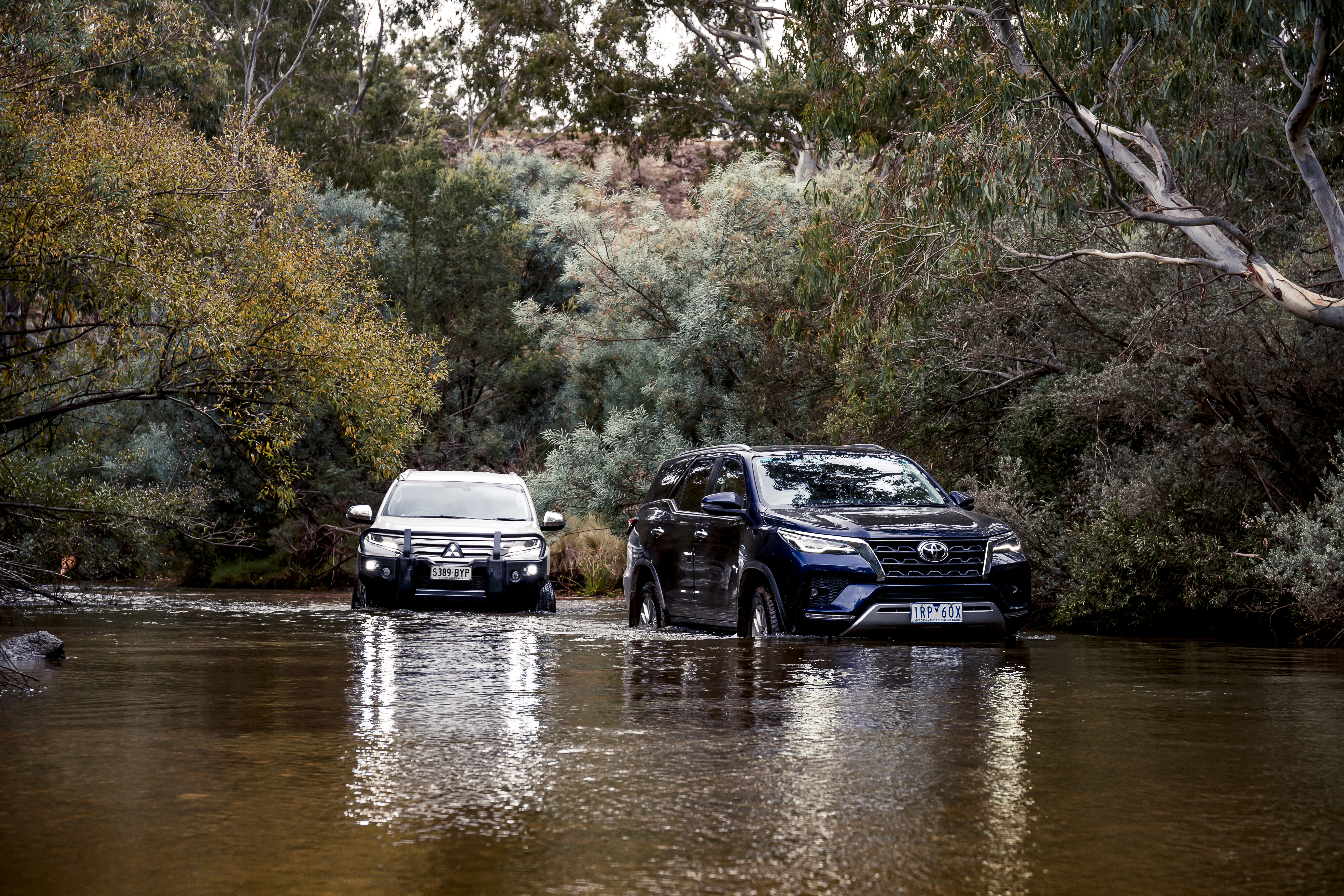
Toyota has this niche in the market covered as well with its Hilux-derived Fortuner wagon, and if you want to trace its roots back to earlier models you could call it the successor to the once-popular Toyota 4-Runner wagon.
Other vehicles in this segment include Ford Everest and Isuzu MU-X but today, we’ve got the top-specifications of the Fortuner and Pajero Sport here to see which best fills the family 4×4 role.
When we say these wagons are based on their light-truck siblings, they share a chassis with the utes but the chassis has a shorter wheelbase and the rear leaf springs which allow the utes to carry heavy loads, are replaced with a coil sprung multi-link suspension to deliver better ride and handling than the load haulers. Rear disc brakes are also included in lieu of the drum brakes fitted to the back of the respective utes.
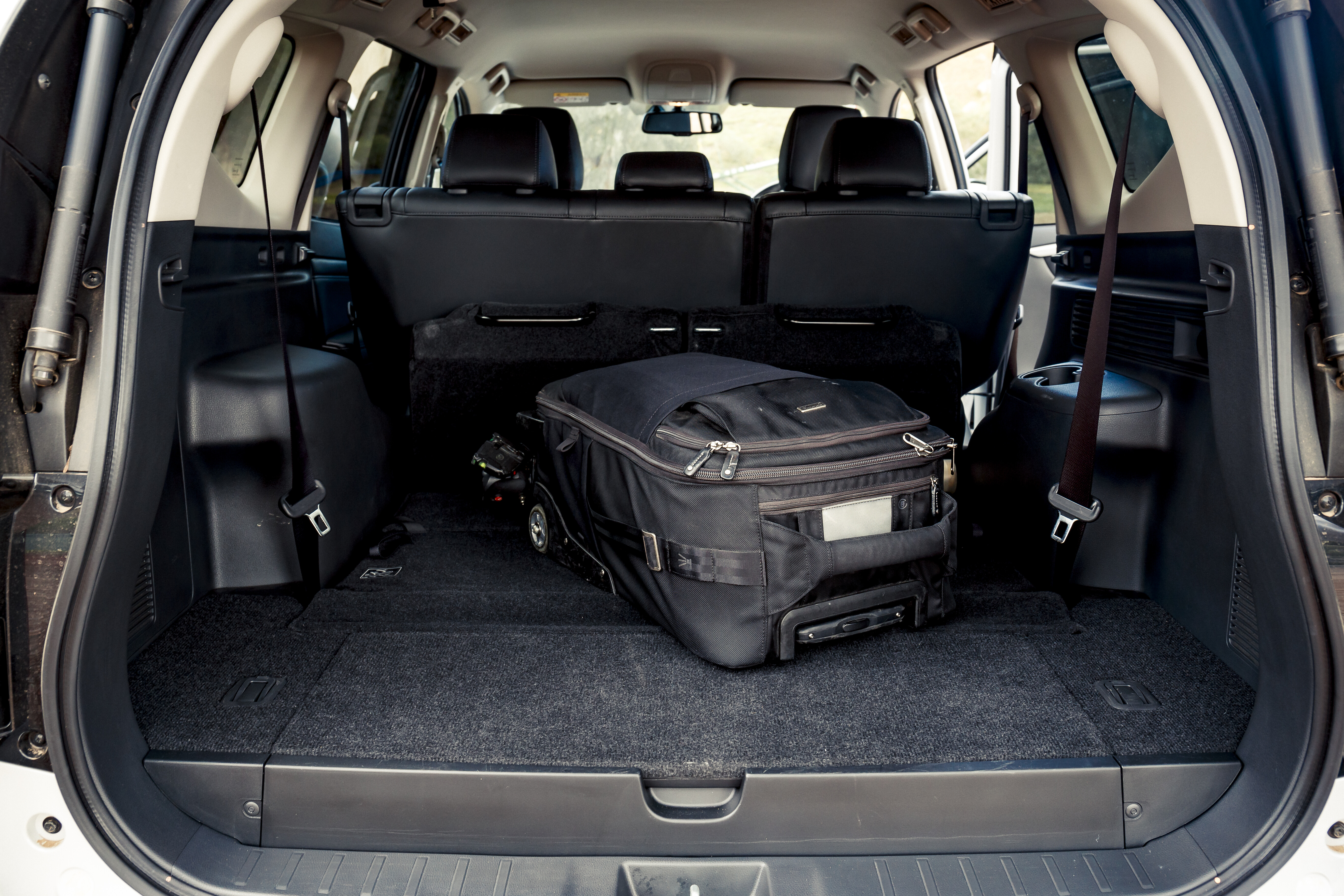
Instead of a ute’s cargo tub, both of these wagons are fitted with third row seating to carry up to seven passengers.
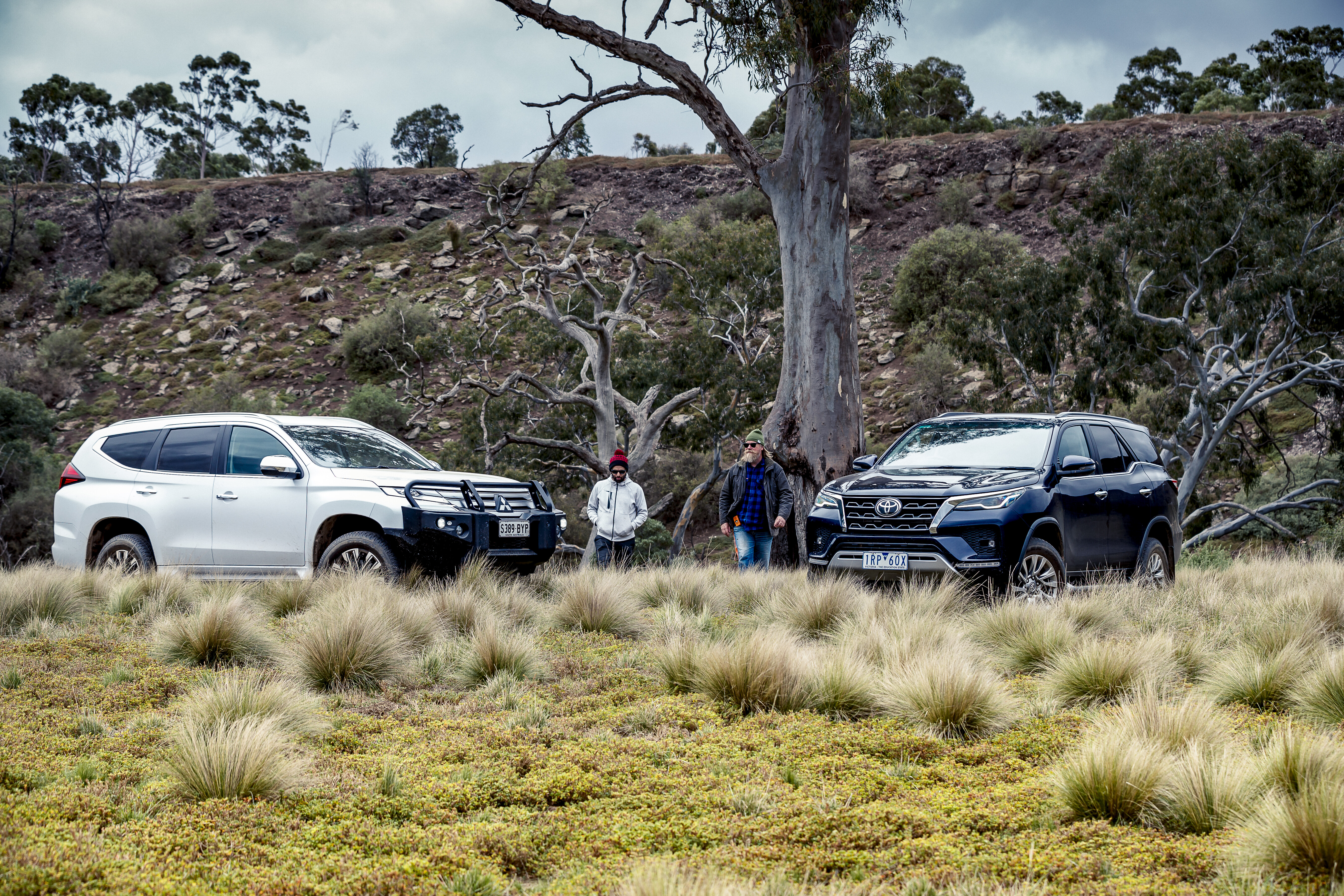
PAJERO SPORT EXCEED
THE Pajero Sport was launched back in 2015 but received a mid-life refresh at the start of 2020. This included updated styling and a handful of new features such as a power tailgate and remote operation via a phone app.
The Exceed is the top end of the four-tier Pajero Sport range which includes variants with five or seven seats and all of them are four-wheel drive. The Pajero Sport Exceed is priced from $59,990 driveaway for private buyers.
POWERTRAIN & PERFORMANCE
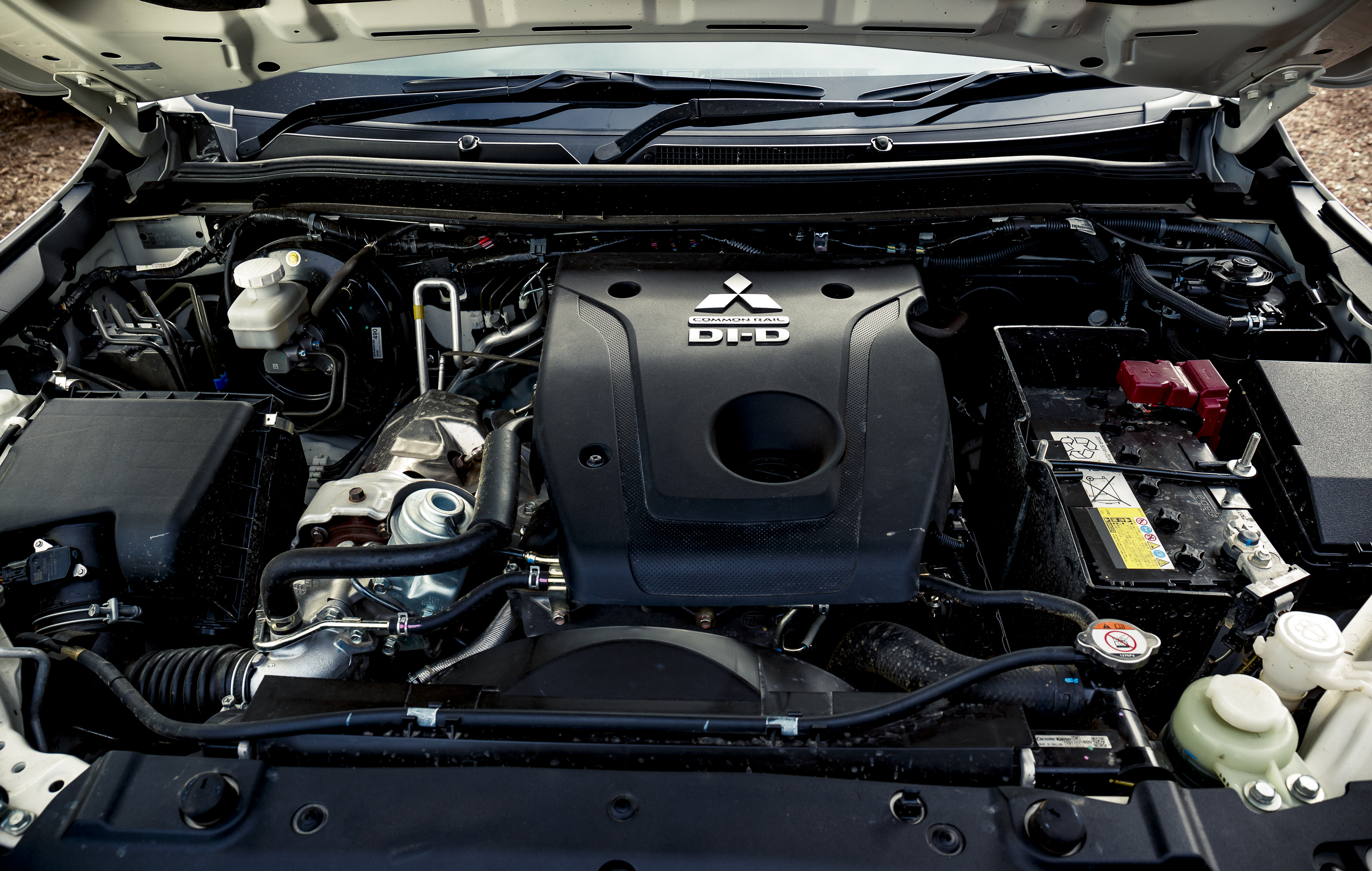
PAJERO Sport comes with a 2.4-litre diesel engine that makes 133kW and 430Nm of power and is only offered with an 8-speed automatic transmission – no manual gearbox is available.
Four-wheel drive comes from Mitsubishi’s proven Super Select 2 system that gives driver the choice of 2WD, full-time 4×4 and locked 4×4 in high and low range in the transfer case. It is backed up by a driver-selectable rear differential lock for when the going gets tricky. The Sport also gets a drive mode selector that optimises the chassis electronic systems for various terrain conditions including Sand, Mud and Snow, Gravel roads and Rocks.
The engine delivers adequate performance for a family wagon but could never be described as sporty. The acceleration is linear from the initial throttle input through to the upshift and is relatively quiet and refined for a 4-cylinder diesel engine.
For its part, the 8-speed automatic transmission is smooth and does its job without complaint. We did however, feel a bit of backlash in the drivetrain when commuting at light throttle. This was more evident when driving in the full-time 4WD setting than in 2WD and was only a minor annoyance.
ON ROAD RIDE & HANDLING
AS mentioned, the Pajero Sport employs a traditional ladder-frame chassis derived from that found under the Triton ute. Under its back end, the live axle is located by a three-link system with coil springs and a Panhard rod in lieu of the leaf springs under the Triton. The front end shares the double wishbone and coil design with the Triton.
The Pajero Sport’s suspension is soft and delivers a supple and comfortable ride across sealed roads and rough terrain. That compliance also allows the chassis to pitch and wallow on its suspension and like the performance of the engine, the suspension could never be called sporty which leaves us still looking for the ‘Sport’ in the model name.
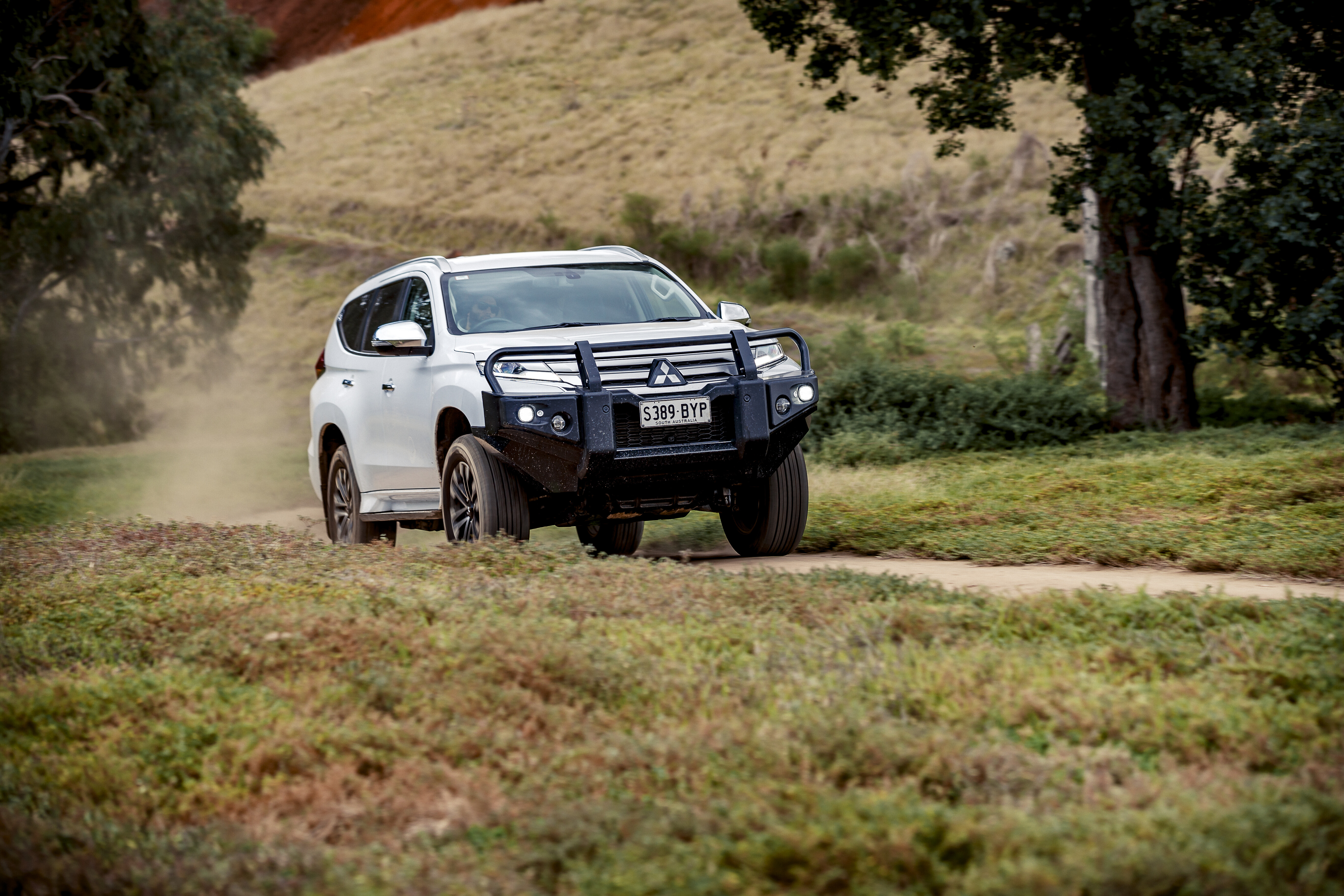
The fully independent, monocoque chassis Pajero was more sporty than this vehicle. The suspension borders on loose and felt like it had 414,000km on it, not the 14,000 as displayed on the odometer. This wouldn’t be helped by the addition of the steel bullbar fitted to the front end on the factory suspension.
OFF-ROAD
THE shorter wheelbase when compared to the Triton means that the Pajero Sport has a tighter turning radius than the load-hauling ute and thus is more manoeuvrable wherever you are driving it.
The shorter distance between the axles is also beneficial when you are off road as it improved the ramp-over angle, meaning the wagon is less likely to get hung up on the sills or chassis in the middle of the car.
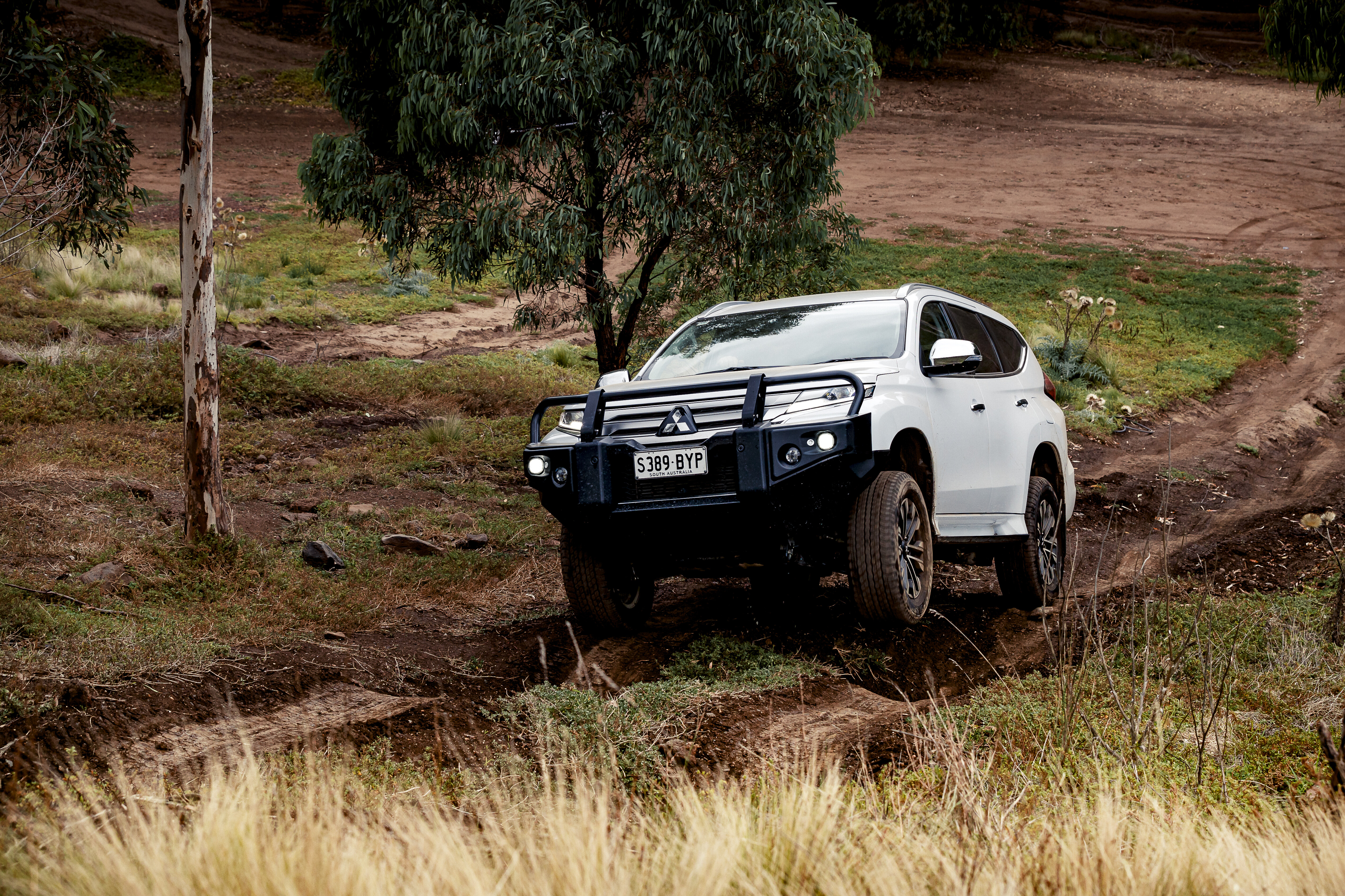
The Paj didn’t suffer any clearance problems on our test but its tractive ability was found lacking on our set hill climb. Using just the electronic traction control with and without the rear diff lock (RDL) employed and in the various modes of the terrain selector, the Paj failed to get up our hill which was greasy on the first day of our test.
It did get up there on day two when the track was dry and with the RDL switched , while the Toyota did it relatively easy on both days.
CABIN & ACCOMMODATION
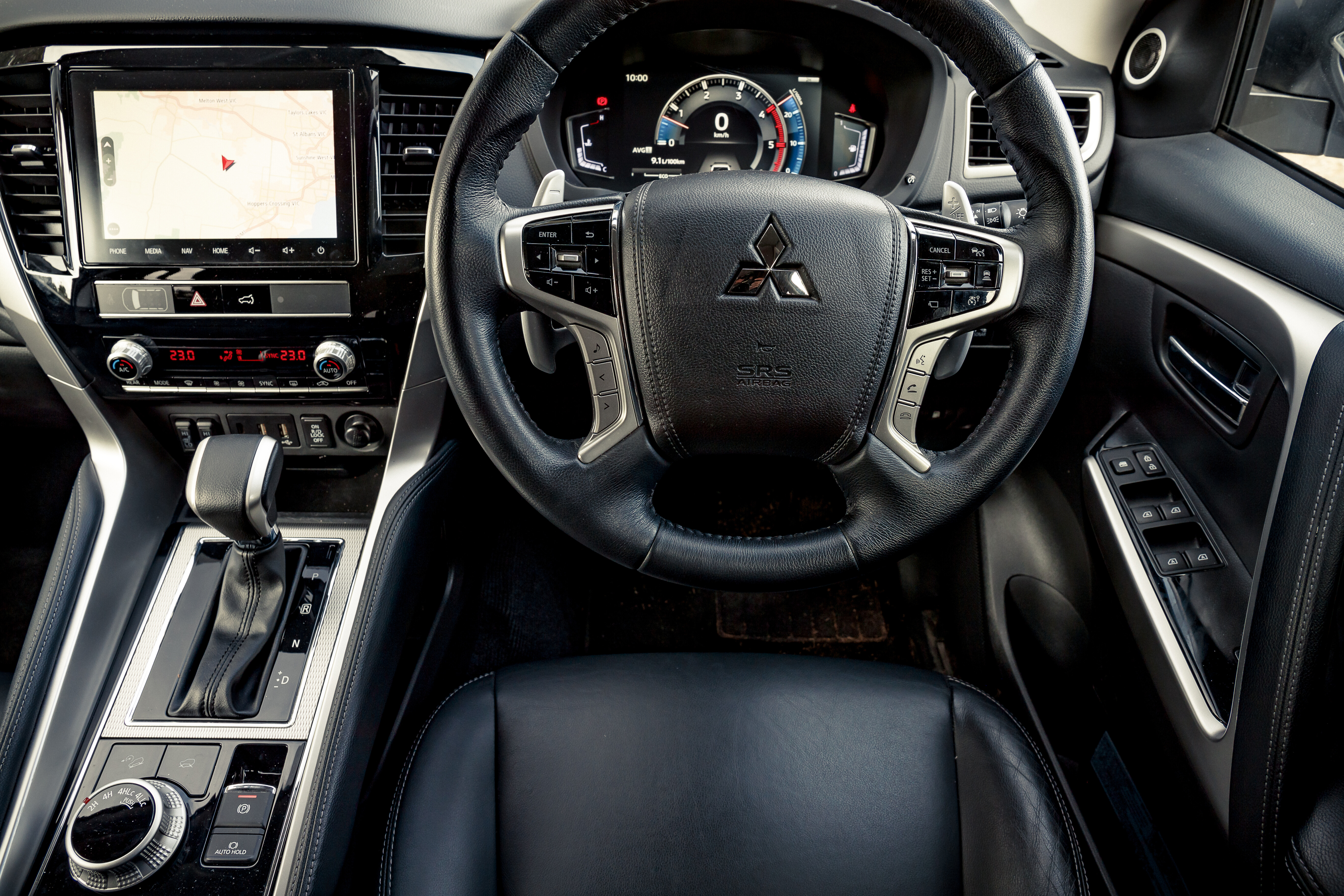
THE Pajero Sport feels big and airy inside, even if not as spacious as the now discontinued Pajero proper. The power adjustable, heated leather front seats are comfortable and with the tilt-and-reach adjustable steering column, allow you to get in the best position for driving.
The second row seat is equally as comfortable and both sides tilt and roll forward to allow access to the third row. The second row does not slide fore and aft to allow for more leg room in the second or third row of seats. Not that it is needed in the third row, as we found the seat quite spacious with enough leg and headroom for an average-height adult, although the position would best be suited to kids on anything but short trips.
The Exceed has dual-zone climate control (left and right) a large AV screen with inbuilt navigation as well as access to Apple CarPlay and Android Auto, although it does annoyingly have only small, fiddly buttons for volume control, a pet hate of our testers who prefer more functional and tactile knobs or dials.
Part of the 2020 update to the Pajero Sport included a phone app that allows the user to remotely access the vehicle status including fuel level, find their car, and open and close the power tailgate. This app is also accessible via an Apple Watch.
Extra points for the abundance of power options in the cabin with two USB ports in the front of the console, two more for the rear seat as well as three 12-volt outlets and a 150W-220-volt inverter outlet. There’s another 12-volt plug in the cargo area. A modern family wagon can’t have enough power outlets to keep everyone and their devices charged.
PRACTICALITIES
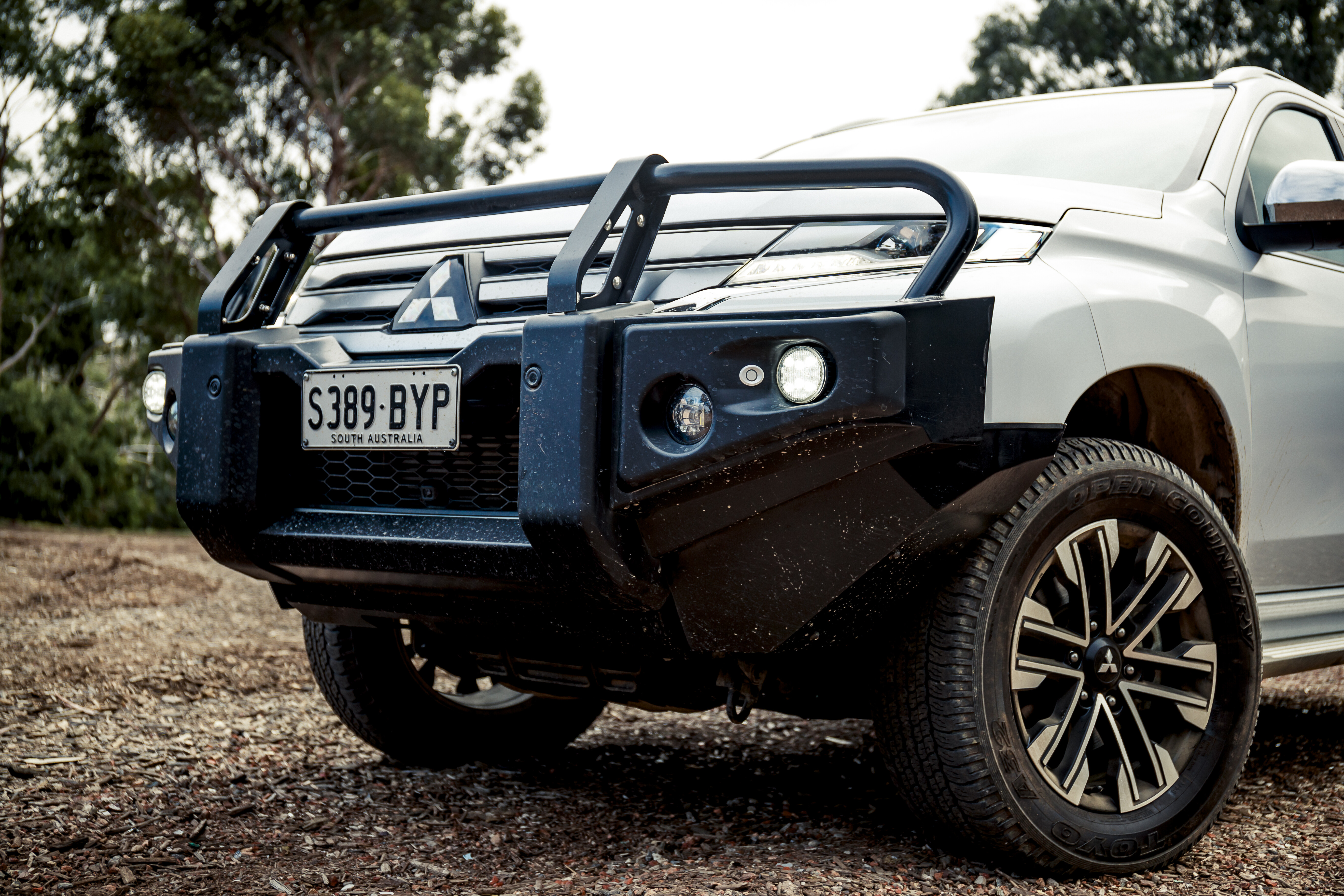
THE Pajero Sport is a rugged 4×4 wagon built to take on any road with the right accessories. Thankfully, it is well-supported from the aftermarket companies as well as Mitsubishi which offers a range of kit such as the bullbar fitted to this test car.
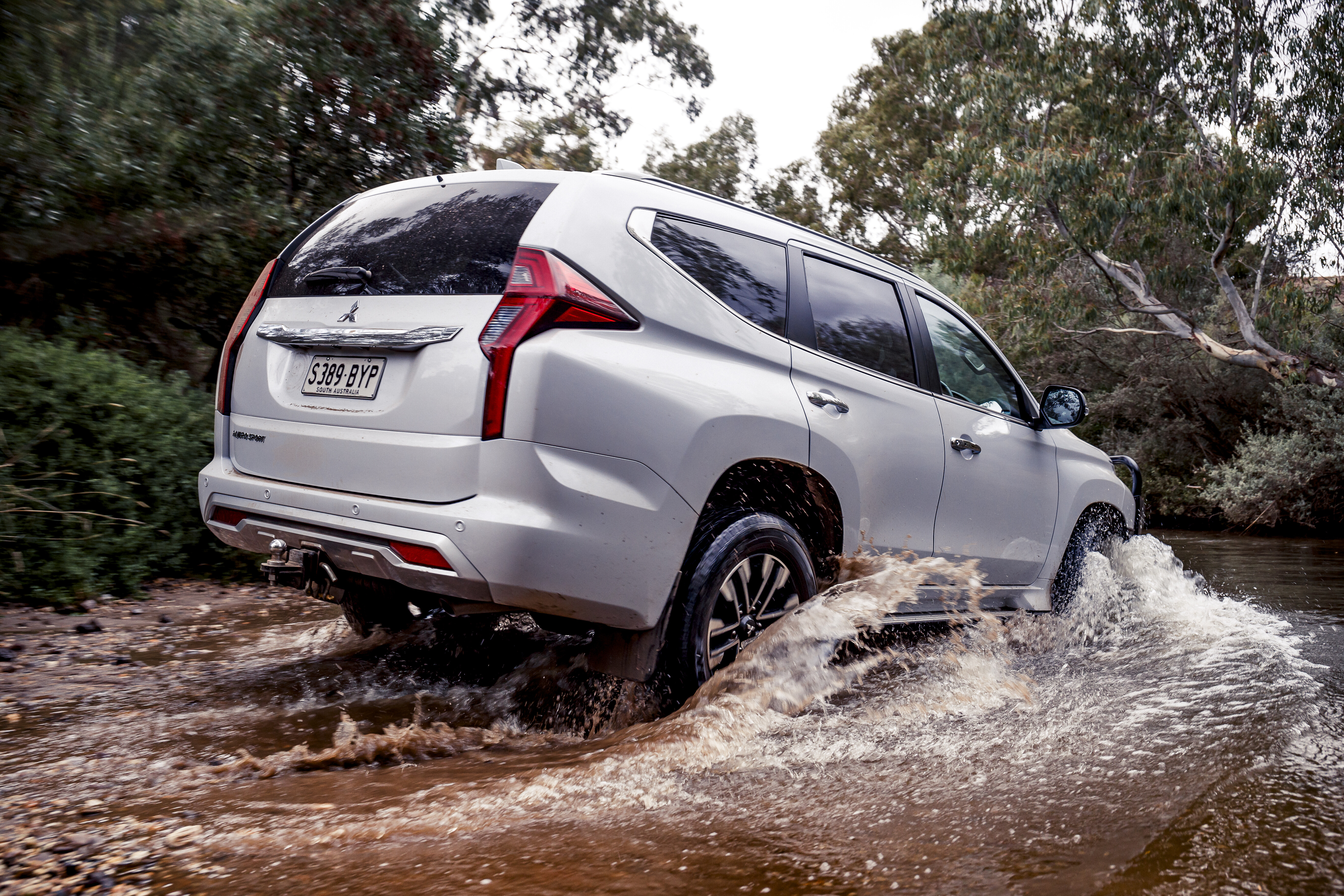
In Exceed spec it has a 670kg payload and is rated to tow 3100kg. The engine breathes in through the inner ’guard and the wading depth is quoted at 700mm. The fuel tank carries 68 litres of fuel, so it’s getting on the small side of what you might want for touring in Australia.
The Exceed rolls on 18-inch alloys with a matching spare, and the tyres a now common 265/60-18 size. Pajero Sport uses an electric park brake, which is not automatic in its operation as similar devices are in other vehicles.
Mitsubishi bolstered the Pajero Sports safety systems with the 2020 update adding autonomous emergency brakes (AEB) radar cruiser control, blind spot warning, lane change assist and rear cross-traffic alerts to the usual ETC, ABS and ESC. There’s also what Mitsubishi calls Ultrasonic misacceleration Mitigation System which warns the driver if the car thinks he or show has accidentally hit the accelerator pedal instead of the brake.
TOYOTA FORTUNER CRUSADE
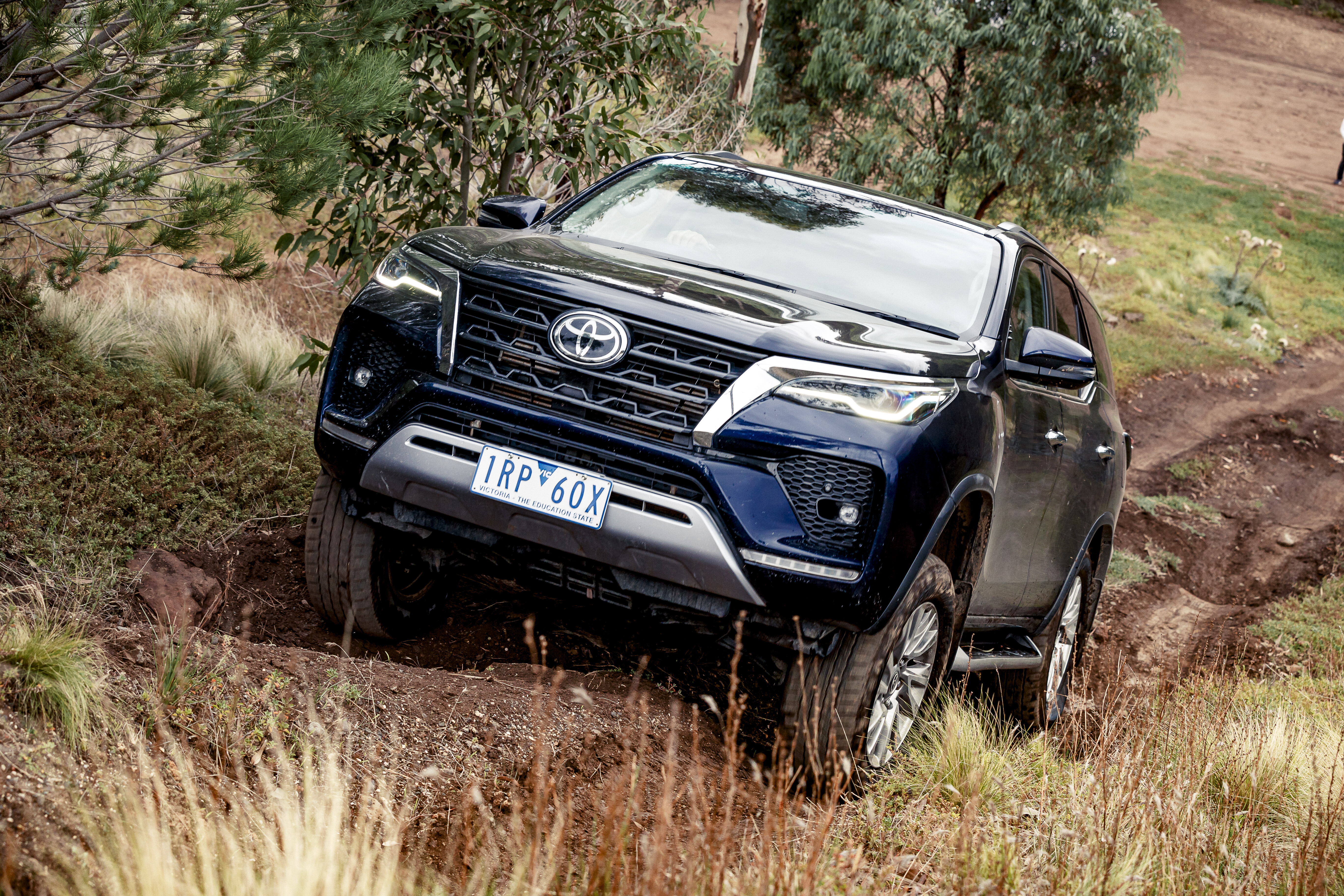
LIKE the Pajero Sport, the Toyota Fortuner was first released in Australia in 2015 and received its mid-life refresh in 2020. This came in September with the introduction of the heavily revised 2.8L diesel engine that was introduced across the Hilux, Prado and Fortuner models at the same time and has certainly breathed new life in to the Toyotas. In fact, with 500Nm and 150kW now on tap, the performance of the Fortuner represents a significant difference between these two family wagons, with the Fortuner feeling far more sporty than the Paj Sport does!
Like the Pajero Sport Exceed, the Fortuner Crusade is the top specification in the model line-up, although there are only three models offered by Toyota. They do however, offer interior option packs to the GX and GXL models to up-spec them with leather trim and extra features. The Fortuner Crusade sells for $61,140 plus ORC so it will cost buyers a few thousand more than the driveaway price of the Pajero Sport Exceed.
In addition to the engine upgrades the 2020 refresh included updated styling inside and out, with added features including improved headlights and improved safety kit, although this is limited to the inclusion of front parking sensors.
POWERTRAIN & PERFORMANCE
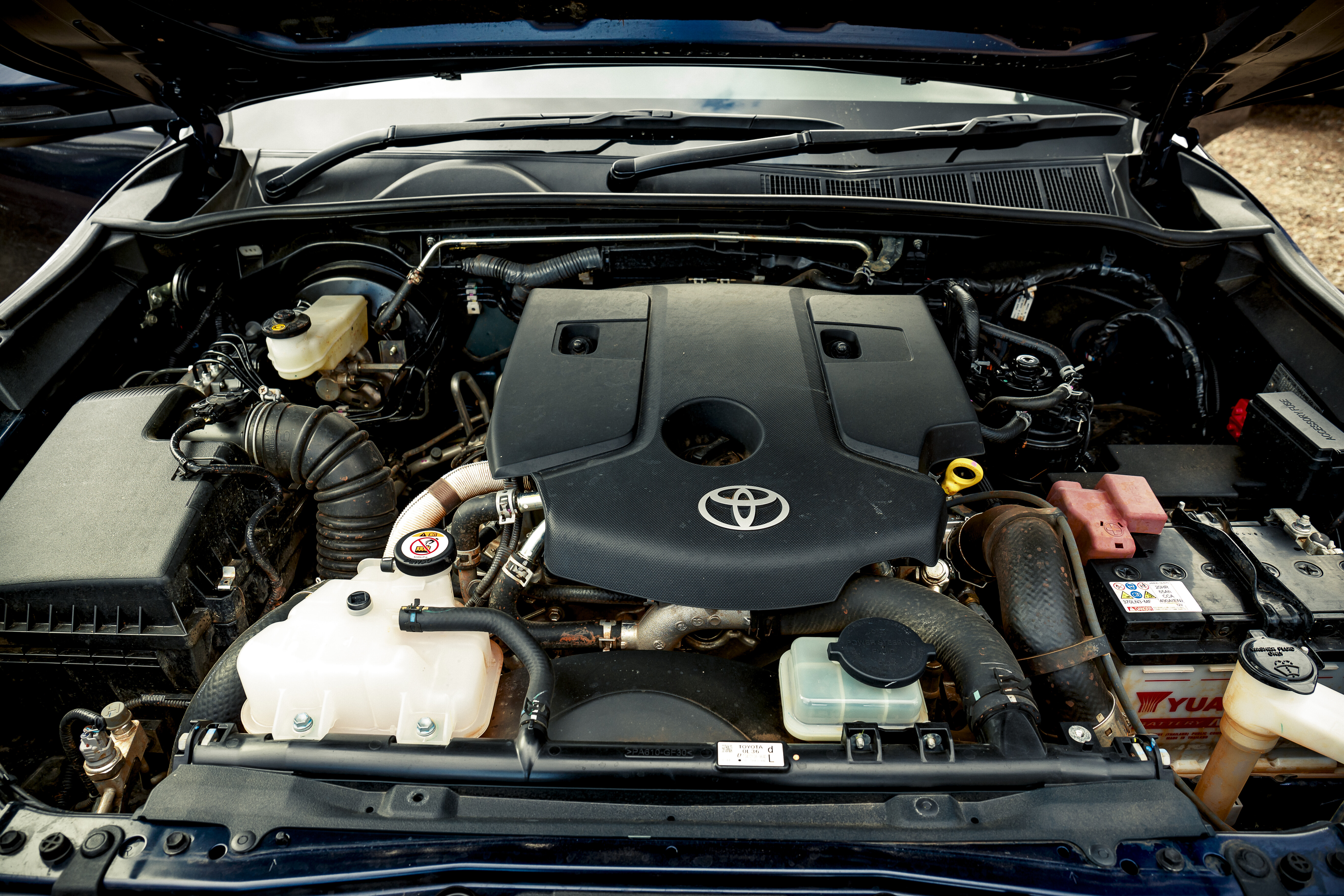
ALL Fortuners get the improved 2.8L diesel engine and it’s backed by a 6-speed automatic transmission only, while the 4WD system is part-time only with locked high and low range and a rear differential lock. It doesn’t give you that full-time 4×4 functionality that Mitsubishi’s Super Select 2 system does in the Pajero Sport.
The updated 1GD-FTV 2.8L engine gained 20kW and 50Nm over the pre-September 2020 model and that 500Nm of torque puts it up there with the torquiest 4-cylinder diesels in the class, namely Ford’ 2.0-litre bi-turbo engine as found in the Everest and Ranger models.
With 150kW coming in at 3400rpm the Fortuner is a more exciting car to drive than the Pajero Sport as you really feel that extra power when you put your foot down. The Toyota engine is a touch harsher and noisier than the Mitsubishi’s under such throttle application although neither of them are intrusive. The auto transmission is positive and direct in its shifts, further adding to that sportier feel. Both of these cars have paddle shifters behind the steering wheel for manual gear shifts.
ON-ROAD RIDE & HANDLING
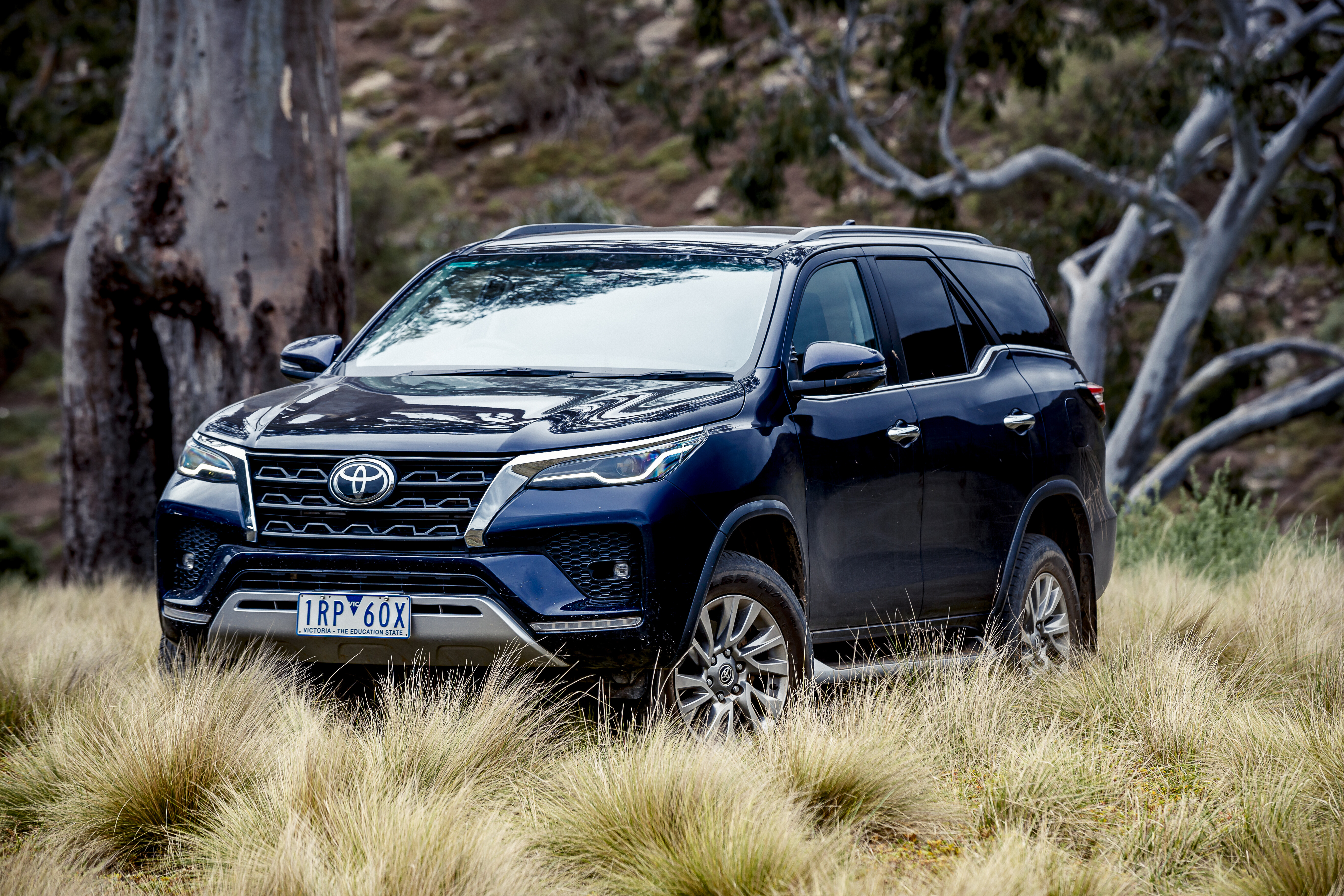
LIKE others of its ilk, the Fortuner rides on a ladder chassis derived from that of a ute, in this case the ever popular Hilux, and it has a shorter wheelbase and a coil spring, multi-link rear suspension.
Toyota has set the Fortuner’s suspension up to ride firm and composed, although not too firm as to be uncomfortable as you might find in many 4×4 utes. The five-link rear suspension provides plenty of control for improved dynamics when driven back-to-back with the softer Pajero Sport.
Toyota also tweaked the hydraulically-assisted power steering with the 2020 update to make it easier to turn at lower and parking speeds, yet still retain plenty of feedback for the driver at road speeds, and it has succeeded in this regard. The steering combines with the firmer and more controlled suspension to make the Fortuner a better ‘driver’s car’ than the Pajero Sport.
CABIN & ACCOMMODATION
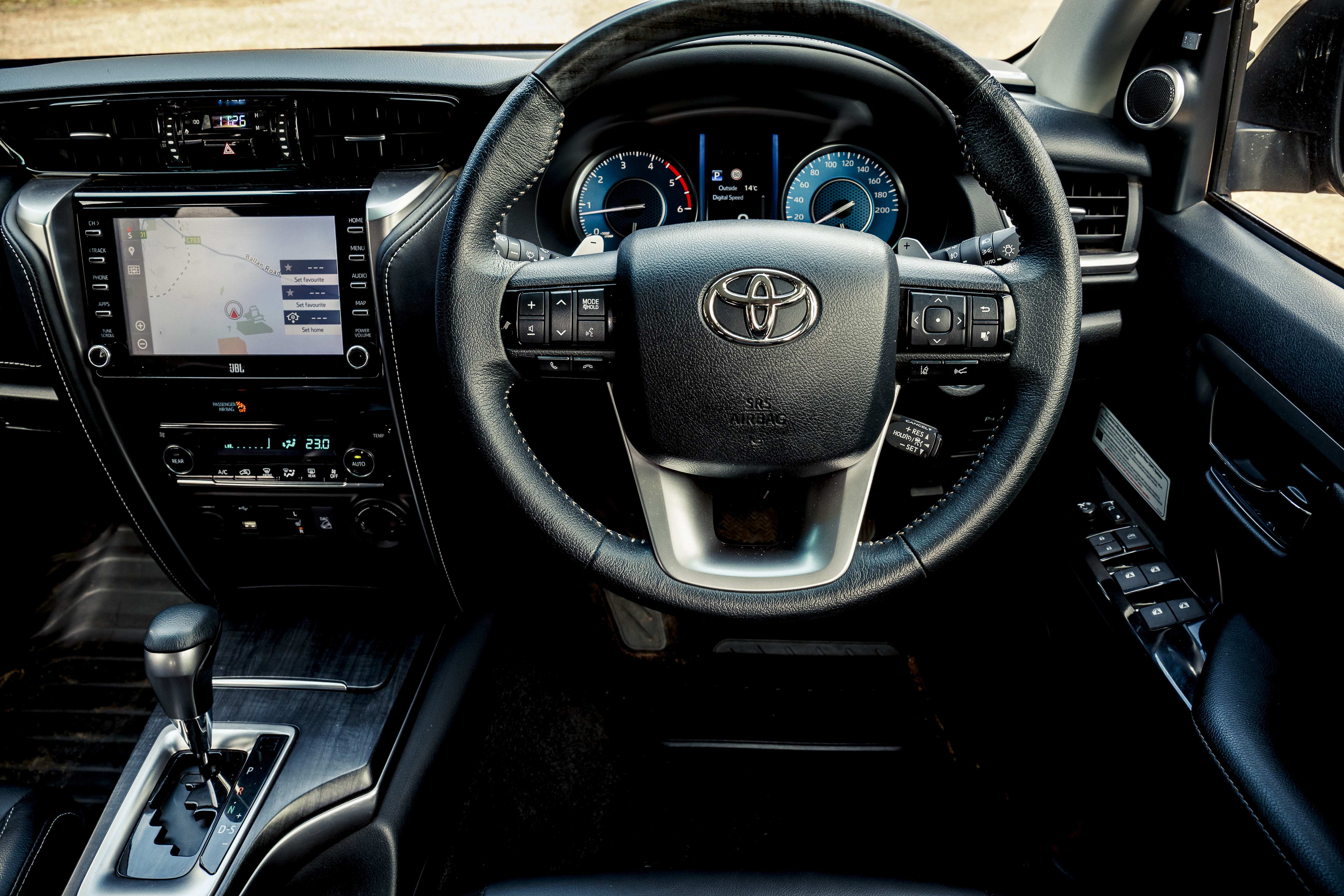
LIKE the Pajero Sport Exceed, the Fortuner Crusade is well-appointed in terms of interior trims and equipment. The now bigger AV screen has its own satellite navigation as well as access to Apple CarPlay and Android Auto and the gauges ahead of the driver have a fresh look and updated features in the information screen.
The steering column is adjustable for both reach and height, while both front seats are power adjustable and heated. The climate control system is single zone, however there is a button to switch the rear air on and off.
The second row seat in the Fortuner slides fore and aft to allow extra legroom for the rear passengers depending on which row they are occupying, however the third row doesn’t offer the same space, notably the headroom, as that offered in the Mitsubishi. Our average-sized passenger said he felt more cramped in the rearmost seat of the Fortuner and stated that he wouldn’t like to have to sit there for long.
A standout feature of the Crusade’s cabin is its excellent JBL sound system, while it only has a single USB outlet in the front along with a 12-volt plus a 12-volt and 100W-220V outlet in the rear. There’s also a 12-volt in the cargo area.
PRACTICALITIES
WHEN Toyota updated the Fortuner back in September, it raised the towing capacity to 3100kg so that it now matches the Pajero Sport. In Crusade trim the payload is rated at 645kg on a 2800kg GVM.
The Fortuna Crusade’s 18-inch alloys also wear the popular 265/60-18 size tyre so finding replacements shouldn’t be an issue.
The engine takes its air from the inner ’guard and wading depth is 700mm. Toyota offers a healthy range of factory accessories and the aftermarket supports the Fortuner well for any gear you may need. The standard fuel tank holds a handy 80-litres of diesel.
THE VERDICT
THESE two wagons are very similar in size and specification on paper so it might look like the Pajero Sport Exceed would be the better buy due to its lower driveaway price. But a decision shouldn’t be based on price alone and for our money, we’d find the extra dollars to put the Crusade in our garage.
While the Mitsubishi might edge the Toyota out for rear seat space and safety equipment, the everyday dynamics and performance of the Toyota more than make up for this. The Fortuner accelerates, rides and handles better than the Pajero Sport in all conditions and then leaves it behind when the going gets rough off road. It is more of a driver’s car, if ever you could call a 7-seat SUV a driver’s car and this makes it a better and safer touring vehicle.
While the Pajero Sport and Fortuner both reside in that crowded mid-size SUV segment, they both bring an extra level of capability to the category than the softer equivalents in the class, the respective Mitsubishi Outlander and Toyota Kluger can offer, giving adventurous families wider scope for their travels.
Talking Points
- ARB 4×4 accessories available from Ford Dealers
- Covered by Ford new vehicle warranty
Ford Australia has announced it will offer a range of vehicle accessories made by aftermarket accessories giant ARB for its Ranger and Everest models.
These parts will be available through selected Ford dealerships and be covered by the vehicle’s full five-year/unlimited kilometre warranty.
Both the Ranger ute and Everest wagon are built on the Australian-developed T6 platform, so there is some cross-over between the parts available for them.
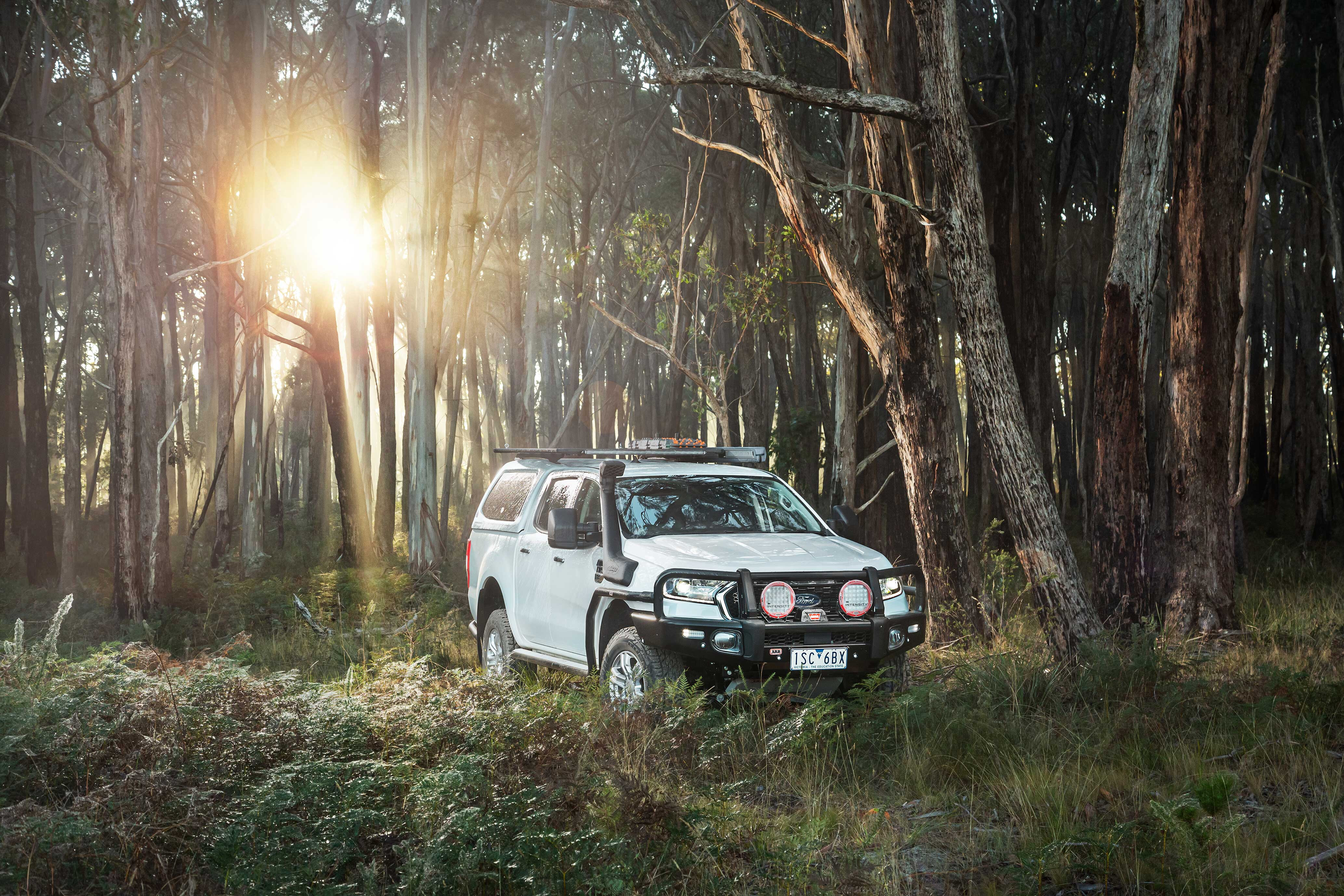
ARB accessories offered under this deal with include popular items such as bullbars, sidesteps, rear steps, electric winches, spotlights, canopies, storage solutions and suspension systems.
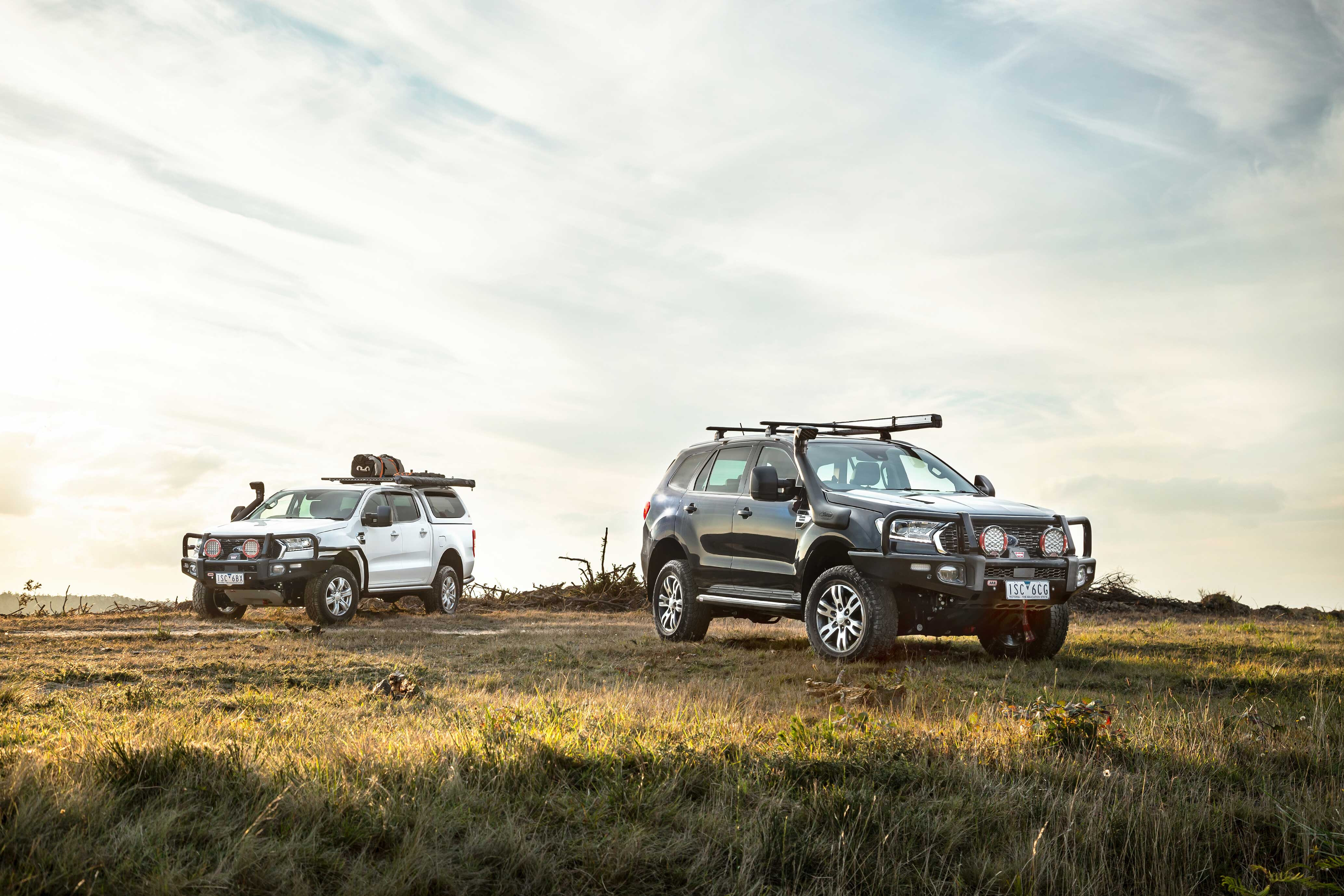
These accessories are designed in Australia by ARB 4×4 to better equip the vehicles for the owners’ personal requirements, be they outback touring, off-road driving, towing or tradie work.
Ford Australia’s engineering team tested and validated the ARB products over thousands of kilometres of driving including in outback South Australia and at Ford’s proving ground at Lara, west of Melbourne. The testing allowed Ford to warrant the accessories to match their vehicle warranty, which exceeds that offered by ARB.
“We are very proud to welcome ARB on-board as they are known globally and respected in the off-road community for their state-of-the-art manufacturing processes and stringent quality controls,” says Andrew Birkic, President and CEO of Ford Australia and New Zealand. “A lot of our customers have told us they’d love to be able to access a wider range of quality off-road accessories through our Ford dealership network, and this collaboration will mean they can head off-road safely with access to a range of ARB accessories.”
Just like the Australian-developed Ford Ranger which is sold in more than 180 markets globally, ARB is an Australian company creating vehicle accessories for global markets where it has garnered a reputation as being some of the best products in the world.
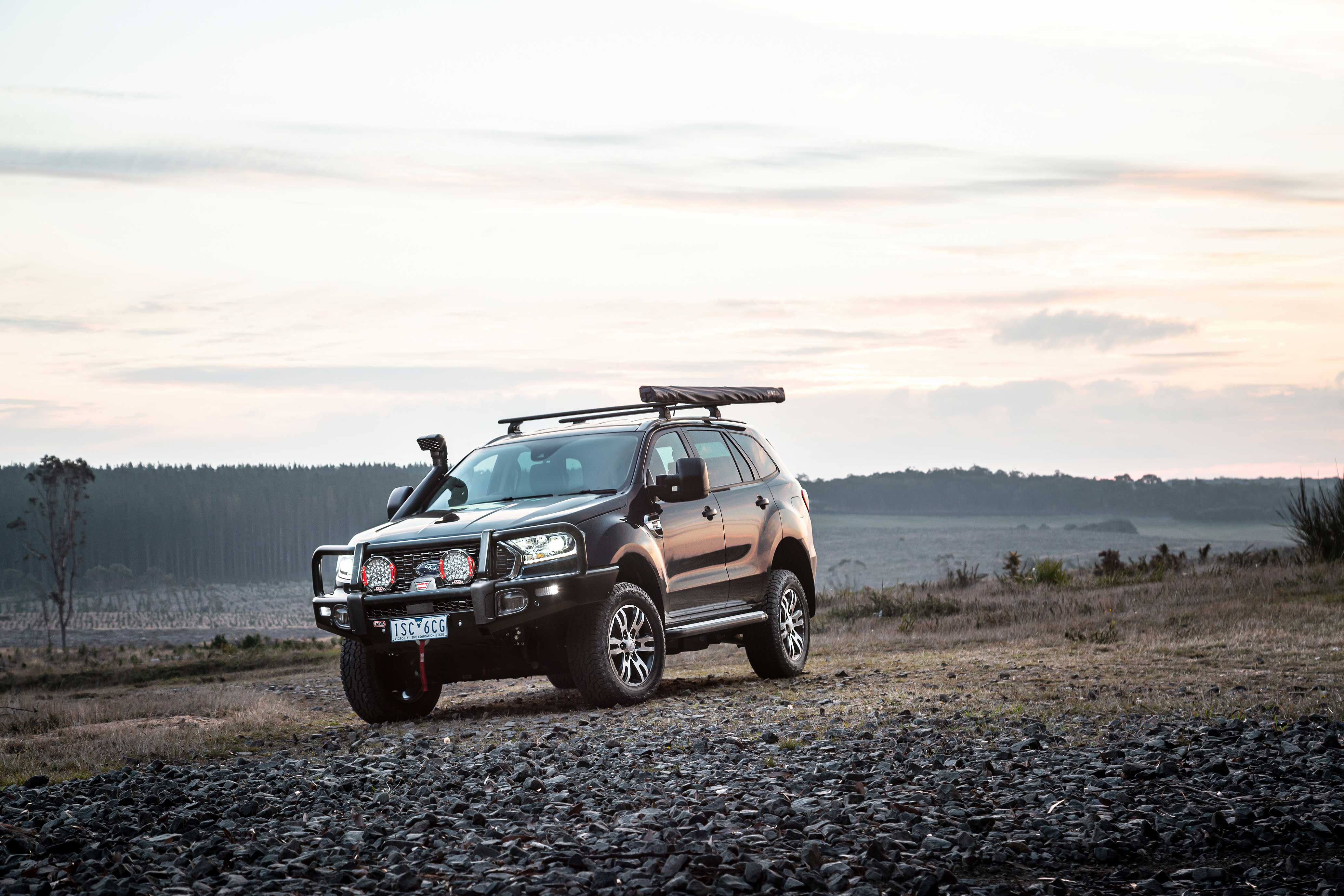
As such, ARB off-road accessories are revered in many markets including the USA, where demand for their products is huge. ARB exports its products to more than 100 countries around the world.
“ARB is truly honoured to be working with Ford at a global level. This collaboration is a great testament to the progressive vision of Ford and ARB to deliver to customers highly capable off-road vehicles with a broad range of best-in-class accessories,” says Andrew Brown, Managing Director of ARB 4×4 Accessories.
This partnership with ARB 4×4 Accessories follows on from a similar one in the USA where Ford Performance offers protection bars and equipment for the US model Ranger, F-Series and Bronco vehicles, some of which is branded ‘Ford Performance by ARB’. No such co-branding will be seen in Australia, where the products will retain ARB branding.
Such collaboration between the OEM and the aftermarket industry comes at an important time in the development of new vehicles and accessories, as the complexity of the vehicles continues to challenge aftermarket engineers.
Cameras and radar systems fitted to the front of new vehicles for safety systems such as Autonomous Emergency Braking (AEB), pedestrian and cyclist detection, and radar cruise control, present challenges in the design of items such as bullbars, as anything fitted to the front of the vehicles could affect the operation of these safety systems.
Ford will continue to offer its Genuine Ford Accessories products for the Ranger and Everest alongside the ARB products, including a steel bullbar for the Ranger which Ford says does not compromise the vehicle’s five-star ANCAP safety rating.
This rating was achieved prior to more stringent testing procedures introduced by ANCAP back in 2018, and ANCAP no longer tests vehicles fitted with accessories such as bullbars. The ARB Deluxe bullbar (part number 3440400) for Ford Ranger models from 2015 onwards (which includes the current model Ranger) also passed this older testing to not affect the car’s ANCAP rating.
The roll-out of Ford-backed ARB 4×4 Accessories will hit Ford dealers in the second half of 2021.
It’s not every day you see a Range Rover Classic on a remote track. Heck, it’s not like you even see them on a daily basis around the suburbs anymore. Which is a real shame, as there is just something cool about that Range Rover Classic shape, not to mention how ahead of their time they were from a driving point of view.
Rover fans will know the Range Rover Classic was usually powered by a 3.5L or 3.9L petrol V8 motor. It was regarded as an engine that sounded amazing, didn’t really go too well and drank petrol like it was free. There was also a factory diesel option, utilising an Italian VM Motori engine. Sadly, this didn’t set the world on fire performance or reliability wise, and is considered the ugly step child of the factory Rangie offerings.
So, what to do if you want the torque and fuel efficiency of a turbo-diesel engine, but the comfort and off-road ability of a Range Rover Classic? You can do what the owner of this stunning vehicle did, and swap in a 3.9L Isuzu 4BD1 engine from an ex-army Land Rover Perentie. Now that makes sense to us.
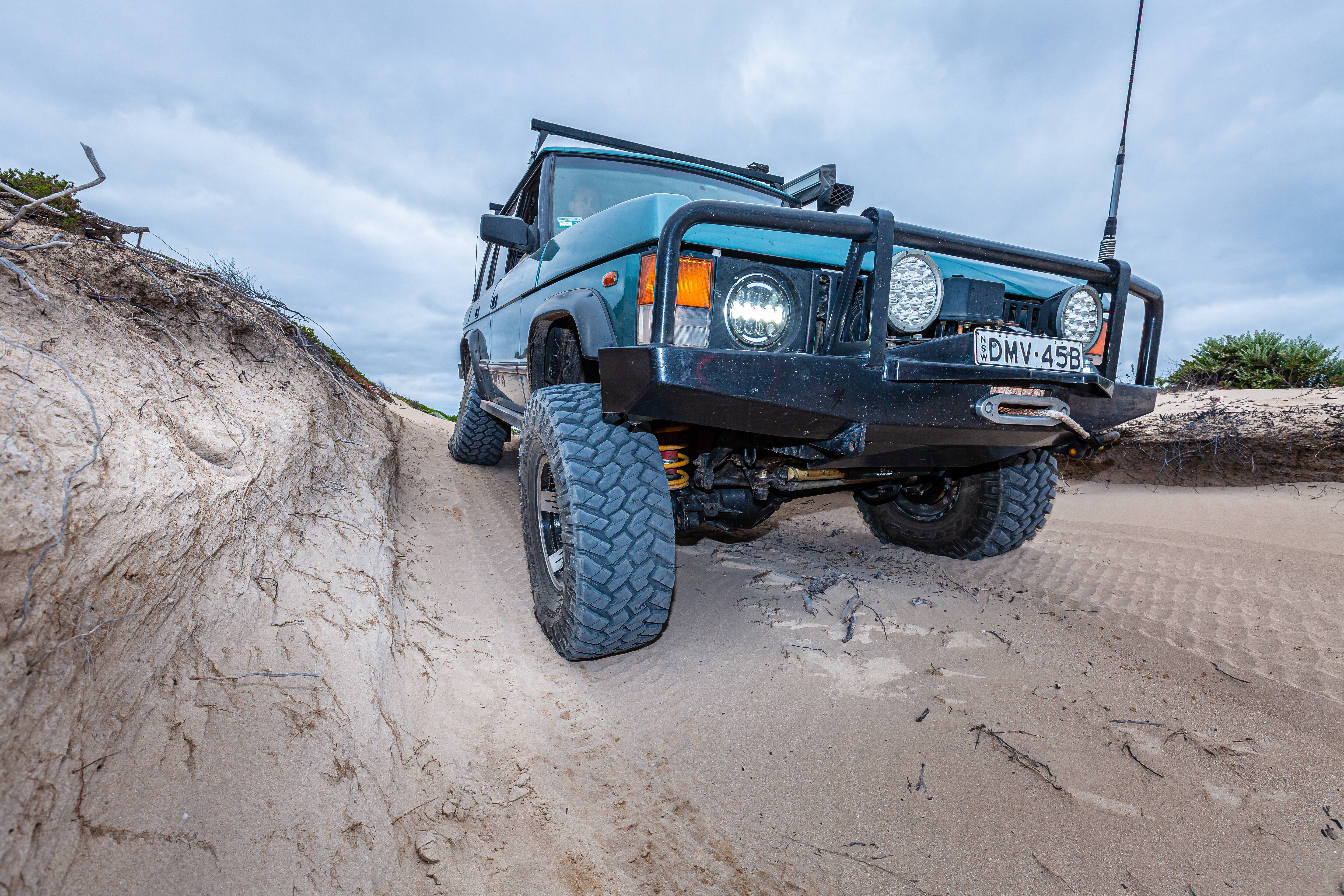
He didn’t just stop there though, as this motor is now turbo-charged producing an estimated 140hp and an eye-watering amount of torque down low.
The 4BD1 engine is a bit of a legend, it’s a heavy-duty truck motor which was decided upon by the Australian army to use in their Perentie line-up. Now that these vehicles are available to the general public for sale, this engine swap is a very attractive option for those looking to repower their older vehicles.
Parts are cheap, and they can handle a bit of boost if you want to turn the wick up. They feature minimal electronics, and are dead simple to work on. They are also as reliable as the sun, which is just what you want in a vehicle designed to see tough conditions while on duty.
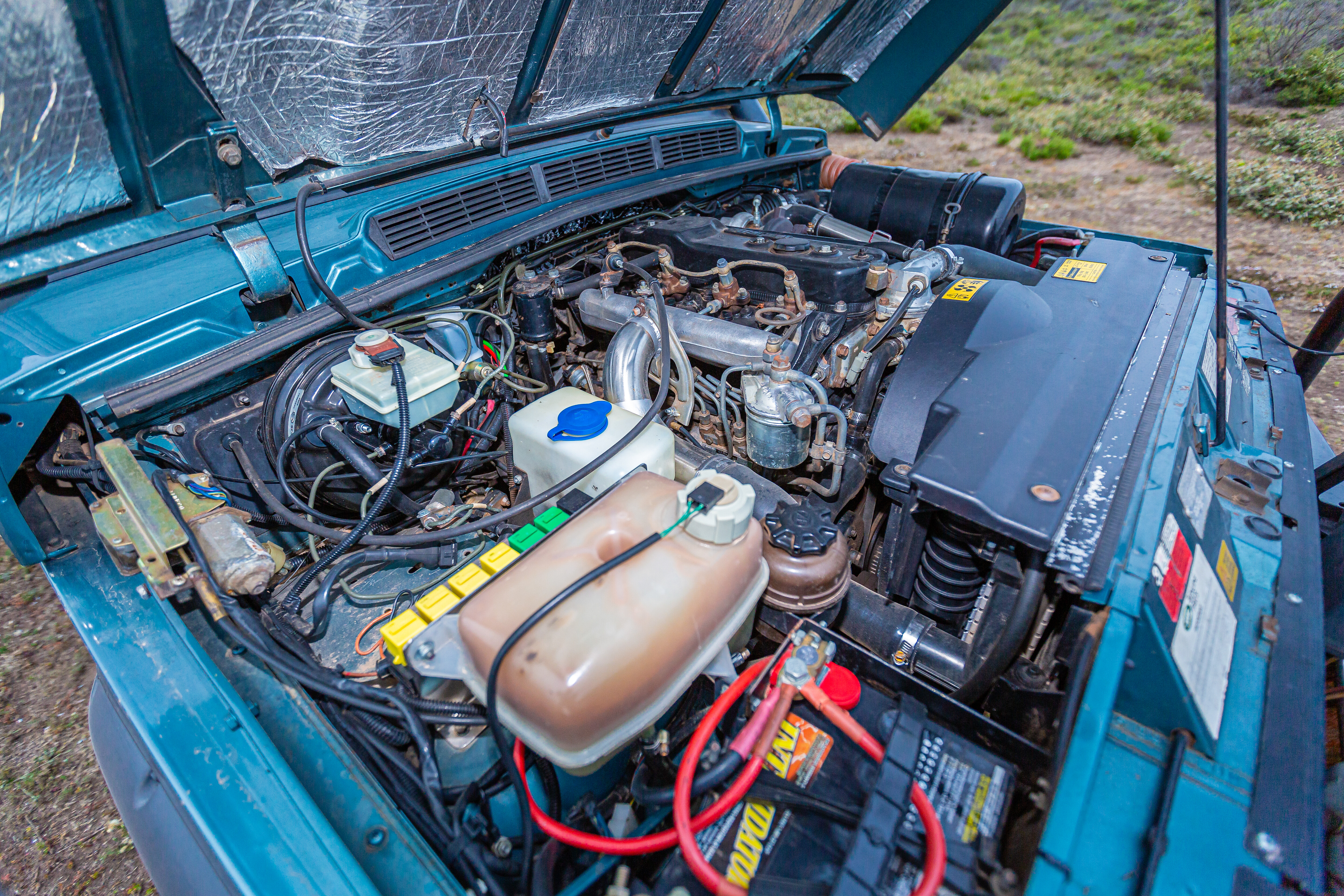
The now turbo-charged engine produces an eye-watering amount of torque down low
David Bellantonio is the owner of this fine example of a Classic Rangie, who undertook the ground up rebuild over the space of two-years. Don’t let the looks fool you though, this thing gets used; travelling to remote destinations such as his recent trip to the Flinders Ranges, and a jaunt across the Canning Stock Route before that.
“I wanted to build a vehicle that was capable of doing all things reasonably well, with reliability as a priority,” David tells us. “A daily driver, remote tourer and something for technical 4WDing all in one”.
David started with a 1985 Range Rover Classic chassis and a Vogue SE body, then set about a full mechanical rebuild, as well as ironing out any bugs along the way. Considering the Range Rover Classic platform has been around for such a long time, there is a considerable amount of knowledge out there, as well as upgraded parts to fix any weak points which are easy to track down locally and overseas.
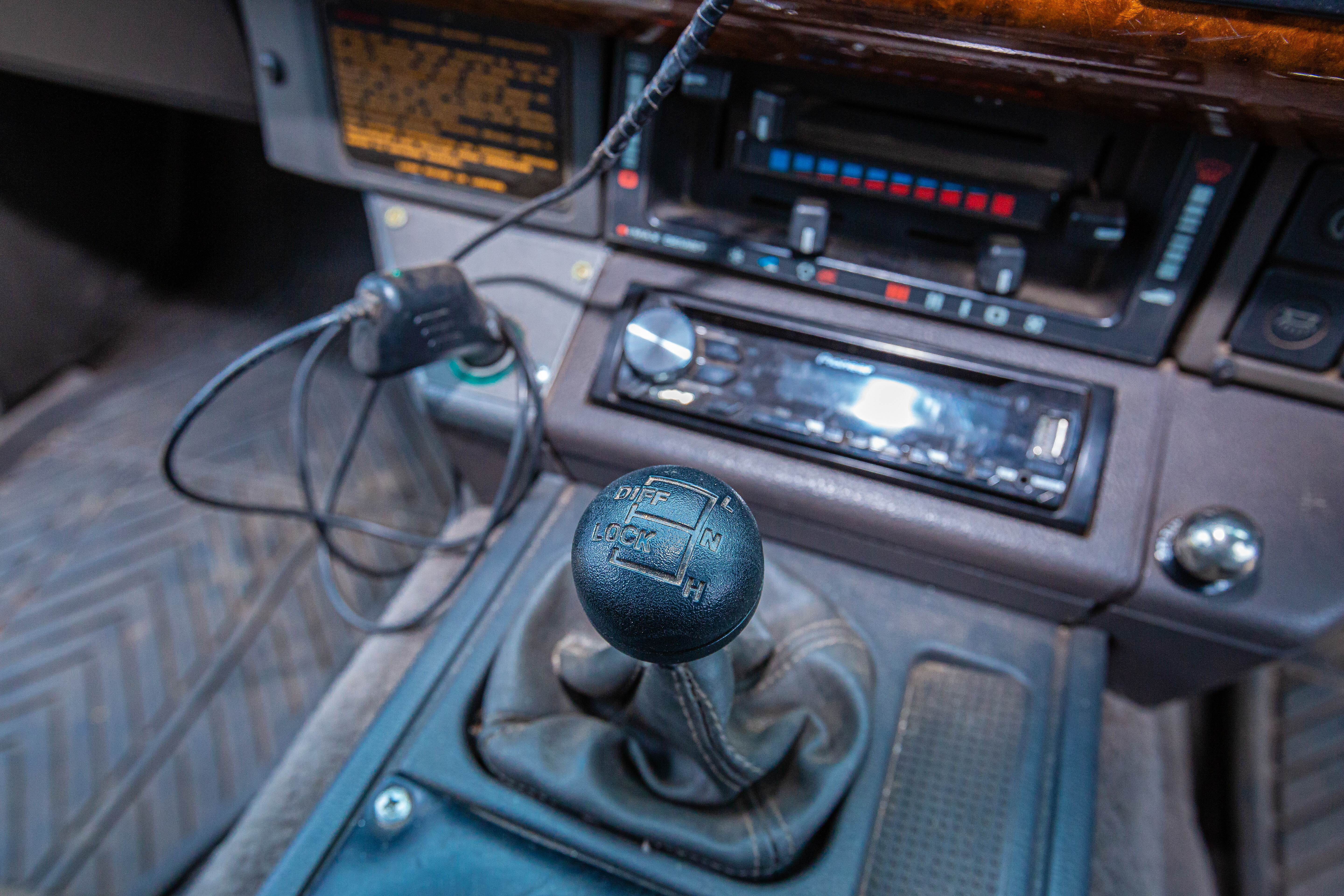
David became increasingly interested in building an older vehicle, to a higher standard, and cover his key requirements as best as possible. All for roughly the same price as a new dual cab ute.
“The best thing about my current vehicle is that it is mechanically very reliable, very simple with no computers and minimal electronics, it’s also capable and comfortable as you would expect from a Range Rover Classic,” David explains.
One such area that required improvement, is the driveline. Specifically, the differentials and axles as they are on the weak side when you add 35-inch tyres basically. Not to mention the amount of torque produced from the mighty 3.9L Isuzu motor.
David promptly sorted this out, with the use of Maxi Drive heavy-duty axles, Perentie CV joints, Maxi Drive axle flanges and a Maxi Drive rear locking differential with Eaton E Locker in the front. Differential ratios are 3.54 for anyone playing along at home.
KLR in Sydney, who specialise in Rovers, supplied a bellhousing to mate the Isuzu motor to a HD R380 5-speed manual gearbox. This sends drive to the legendary LT230 transfer case. The conversion is a relatively simple one, as it is a path well-travelled these days. Having ready-to-run parts (such as the custom bellhousing) simplifies the process massively. But it’s never fair to call an engine conversion easy.
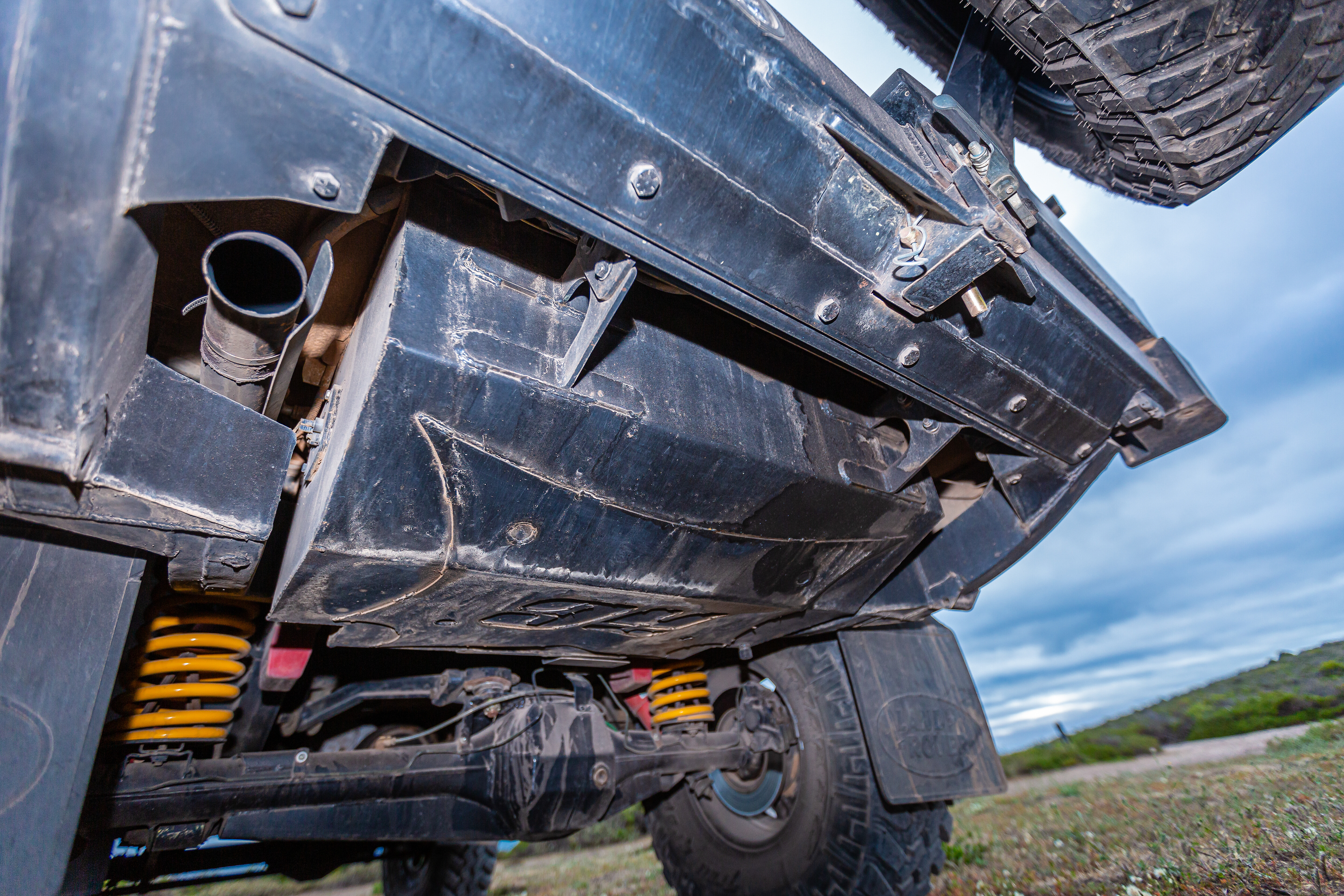
The get the most out of the engine, David had a Factory Isuzu turbo fitted on a factory turbo manifold. The engine is cooled by a Land Rover radiator, with an engine driven fan as well as two electric thermo fans as backup. An off the shelf exhaust system was never going to happen, so David opted for a custom 2.5” exhaust, and has fitted two fuel filters for peace of mind when filling up at outback servos.
From the start of the project, it was a requirement to have this vehicle engineer certified prior to registration. With so many custom built or modified parts it sometimes takes a bit of work and re-work until you get things just right. One example of the level of detail David went to was trialling brake pads.
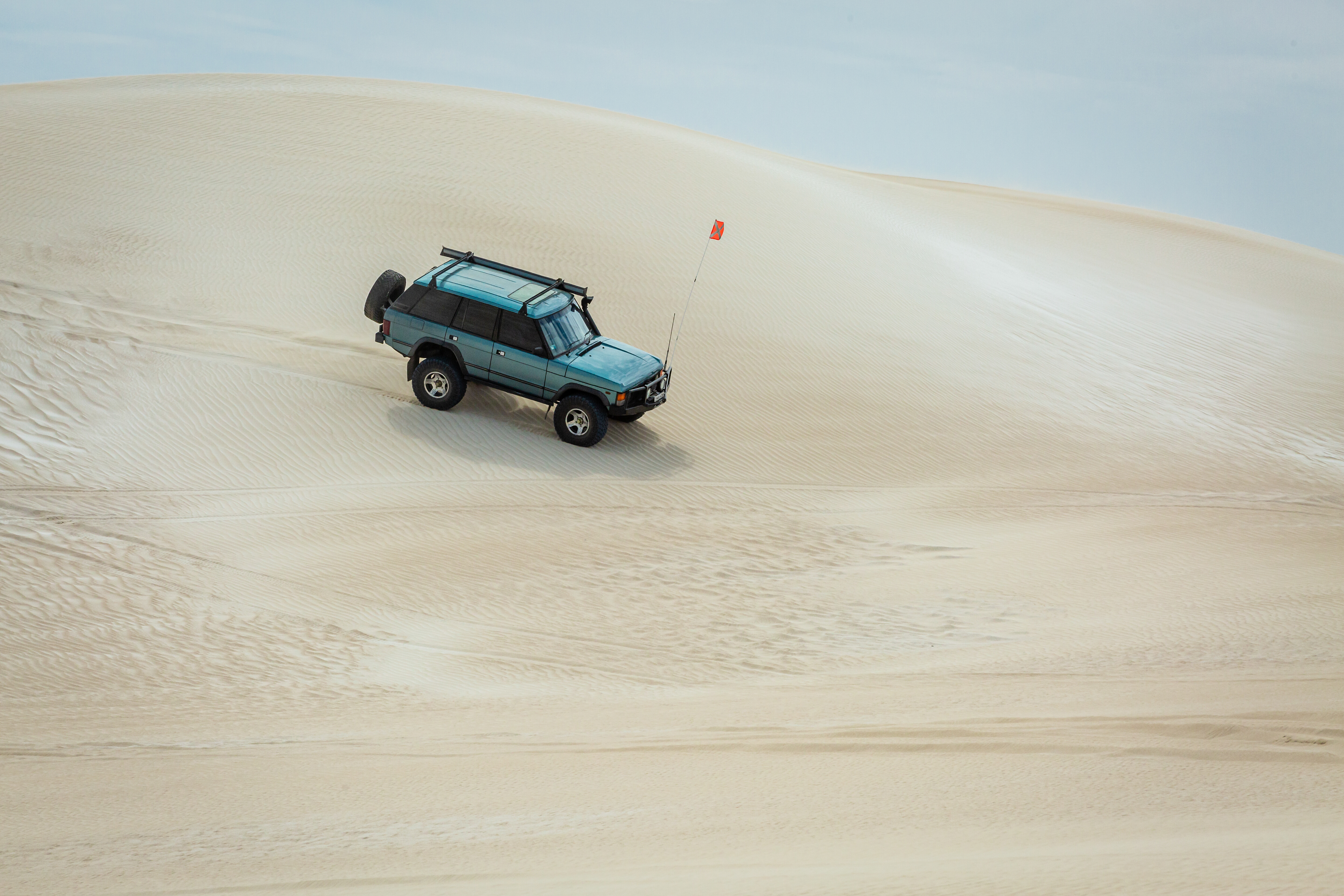
The build started with a 1985 Range Rover Classic chassis and a Vogue SE body
After testing many options, he eventually settled on EBC Green Stuff pads, which he tells us made a huge difference to braking performance both in terms of initial bite and in thermal recovery. This was proven during the brake testing component of the vehicle testing for engineering sign off.
Quality components is a key theme in this build, as such David opted for a simple yet effective suspension system. The core ingredients consist of 50mm raised King Springs, mated to Koni Raid shock absorbers. As this is a tourer, daily driver and off-road play toy, getting the suspension right is extremely important, and David is happy with the results.
A 50mm body lift was also added, which helped fit the large 35” Nitto tyres mounted on 16×8 Performance alloys. Polyurethane radius and trailing arm bushes were also installed, and David upgraded to a set of heavy duty cranked trailing arms at the same time.
As you’d expect in a vehicle designed with long-distance touring in mind, there is a dual battery system and plenty of gauges to keep an eye on things. The second battery lives in the rear of the vehicle, with plenty of charging points to keep David’s devices topped up. A GME TX3350 UHF keeps him in contact with his convoy, while boost, EGT and water temp gauges keeps him in contact with his engine.
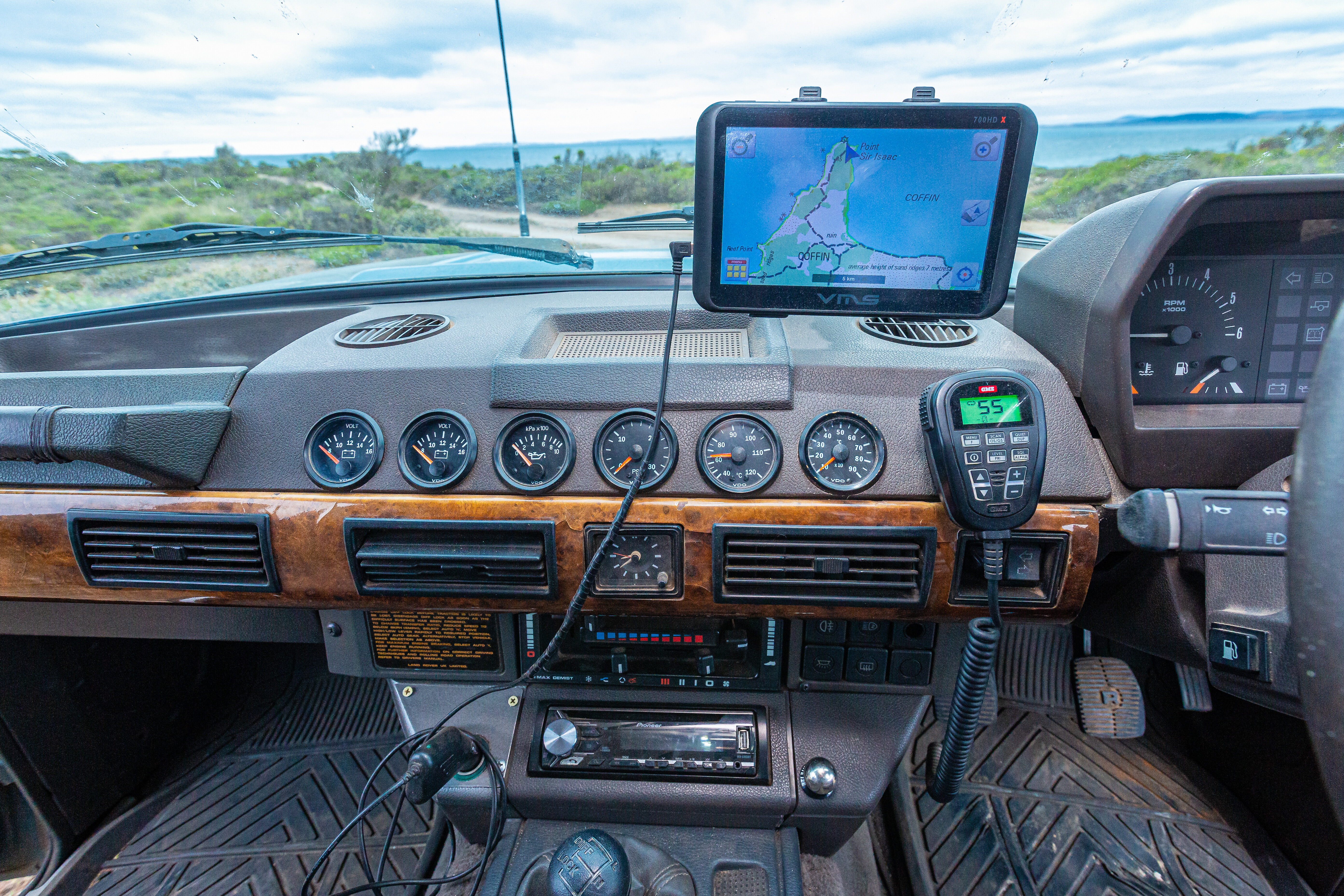
Frontal protection is essentially mandatory for any touring 4×4, and David’s Range Rover is no exception. He’s fitted an ARB winch bar with a custom front bash plate. Adorning the bull bar is a pair of LED spotlights and a 12,000lb winch, rounding out a very neat front-end package.
The rear bar is a custom-made unit, and has integrated reverse lights. It also has provisions for a tow bar, and swing away tyre carrier. David went with a custom rear bar, as the 50mm body lift would have made any commercially available unit not sit right leaving a 50mm gap. While the welder was fired up, David decided on a custom-made set of steel rock sliders, and a steel snorkel with Safari head on it.
One question we had to ask David, was why not just start with an ex-army Land Rover Perentie and build that up?
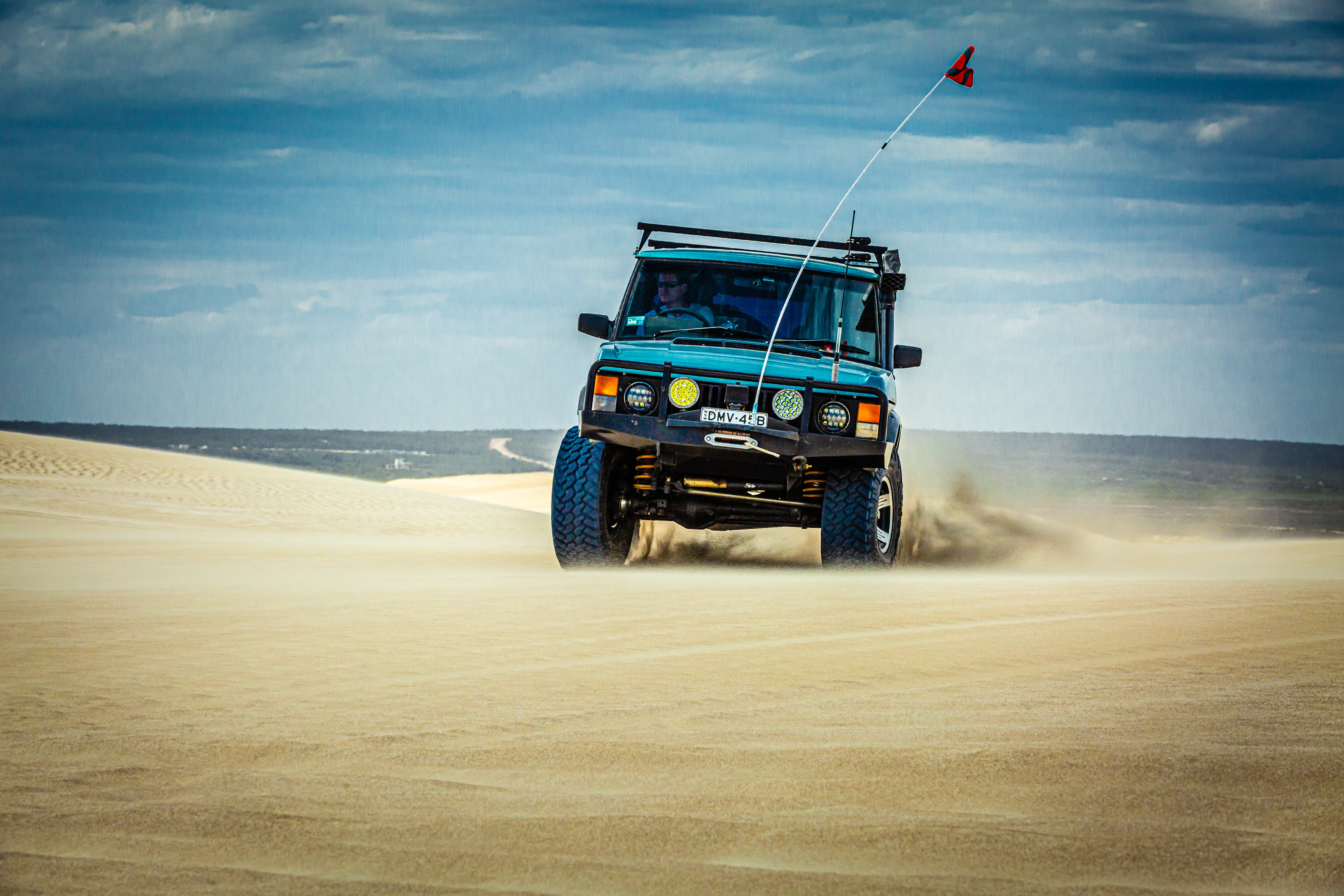
“The down-side to these vehicles as a daily driver or touring vehicle, is they are very agricultural,” David replied. “Comfort in all areas was not a priority for the army, and it takes lots of work and money to get them anywhere close to the level of a modern vehicle for basic comfort.”
By taking the best bits of a Perentie and combining them with the comfort of a Range Rover, David certainly has the best of both worlds.
So the proof is in the pudding. If you have ever dreamed of building an older touring vehicle, that can keep up with the big boys when the tracks get technical, it’s possible. You just need to put the work in, come up with a plan and double your budget.
It does bring up a very big question though: Would you rather be driving through the Victorian High Country in this Range Rover Classic or a stock-standard modern dual cab ute? I know what I’d pick.
Talking Points
- Clever tech makes it easier to load and tow trailers
- Smart tail-lights operate like a phone charger indicator
PICK-UP trucks or utes – call them what you will – are made to carry a load, either in the tray or pulled behind on a trailer.
Australia has strict regulations on towing and load capacities and getting caught on the wrong side of them can land you in hot water and facing large fines – that’s if you get caught and don’t end up off the side of the highway after losing control due to a poorly fitted trailer or load.
So it pays to know your limits and how to properly load your vehicle.
Ford understands its truck owners like to load them up and has just unveiled some clever new tech to assist owners on how to correctly load their vehicle or hook a trailer up to it.
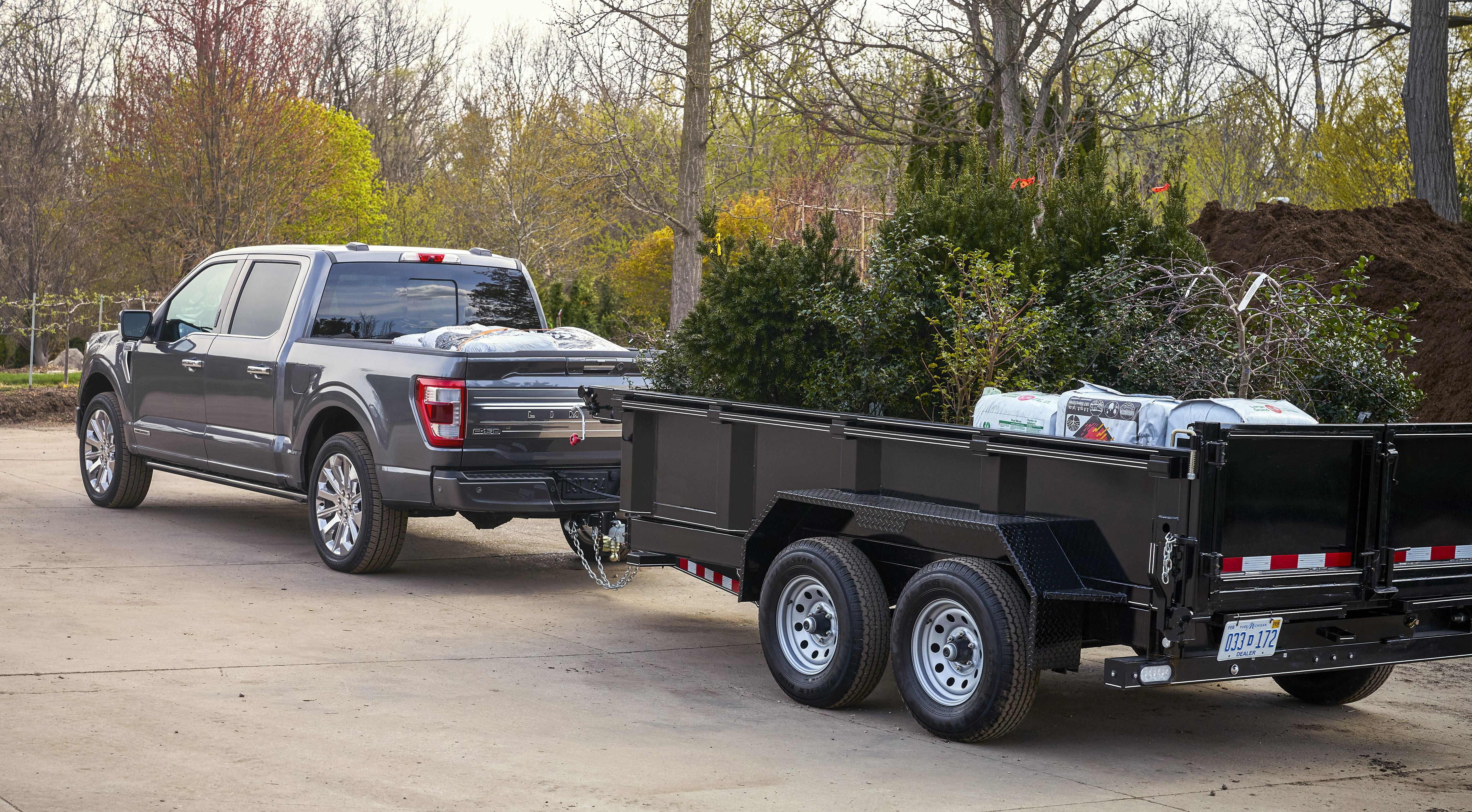
The 2021 Ford F-150 will soon be available with on-board scales that tell the operator how much weight is in their vehicle and how close it is to the rated load capacity.
Ford’s on-board scales measure and display the approximate weight of the payload in the truck as it is being loaded. That information is displayed on the dash screen with a graphic representation of the truck, on a mobile phone through the FordPass app, or on the LEDs within the truck’s tail-lights.
The smart tail-lights operate like the battery charge indicator on a phone, displaying the percentage of payload capacity by illuminating LEDs arranged in a vertical bar. As the truck is loaded, all four lights illuminate, showing it’s fully loaded; if the truck is overloaded, the top lights blink.
The maximum payload based on the pick-up’s configuration is programmed into the system. Additionally, the truck can be set on scale mode, which zeroes out the current load and allows for approximate weighing of additional items loaded into the bed.
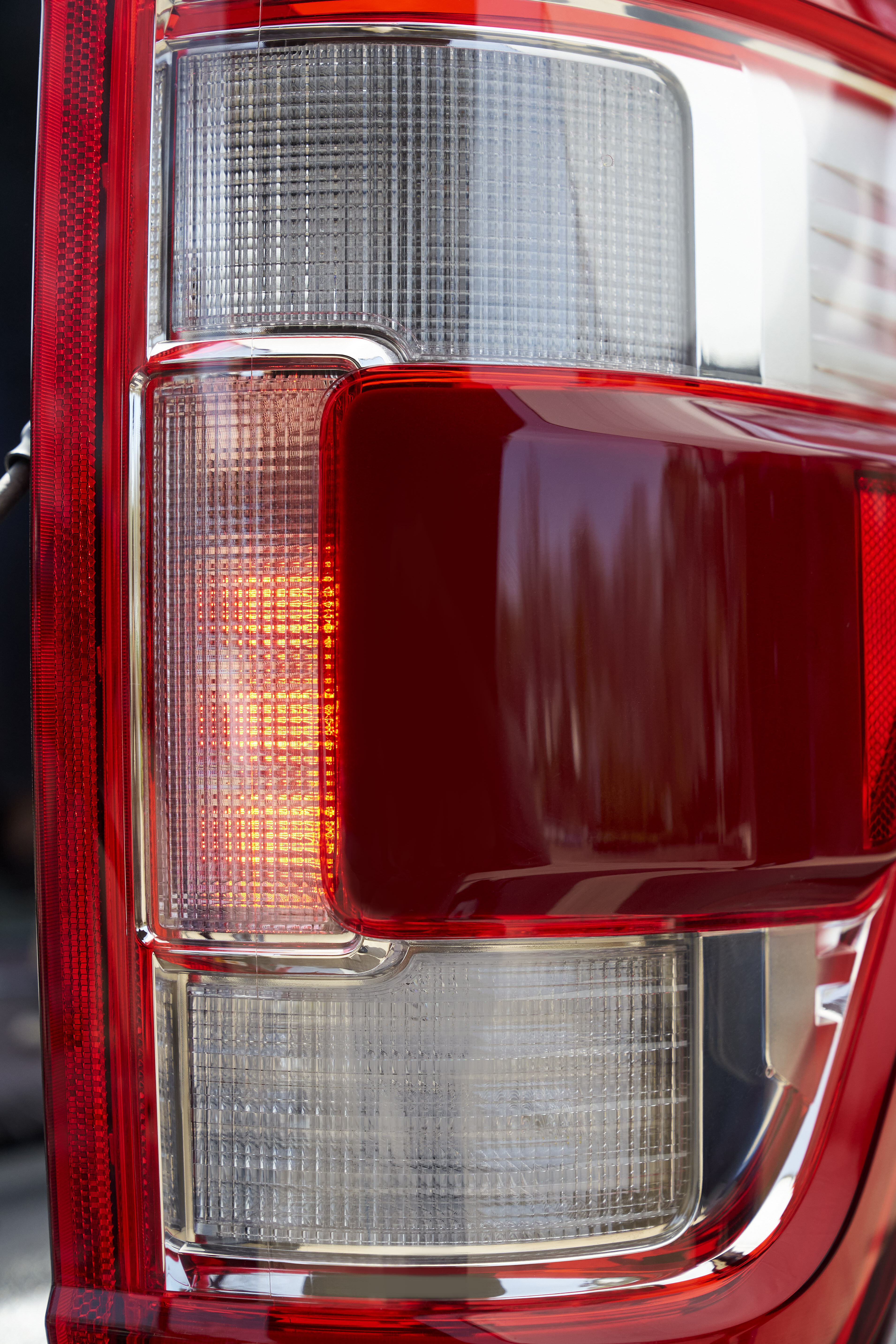
Also helping Ford users is a Smart Hitch, which can calculate the tongue-weight download on the hitch and provide guidance on weight distribution or hitch overloading on the screen, on the FordPass app, or within the tail-lights.
The truck will also indicate if the hitch weight is too high or low and can guide owners through properly tensioning a weight redistributing hitch.
It’s clever stuff and would be useful for any ute owners who tows and carry loads, including Australian Ford Ranger owners.
At around 1000kg, depending on the vehicle specification, Australian Rangers have a payload that is higher than that of the bigger F-150 US cousin – and the 3500kg towing rating is nothing light either.
So you can see how these features would make life easier for owners, giving them the information to stay on the right side of load limits.
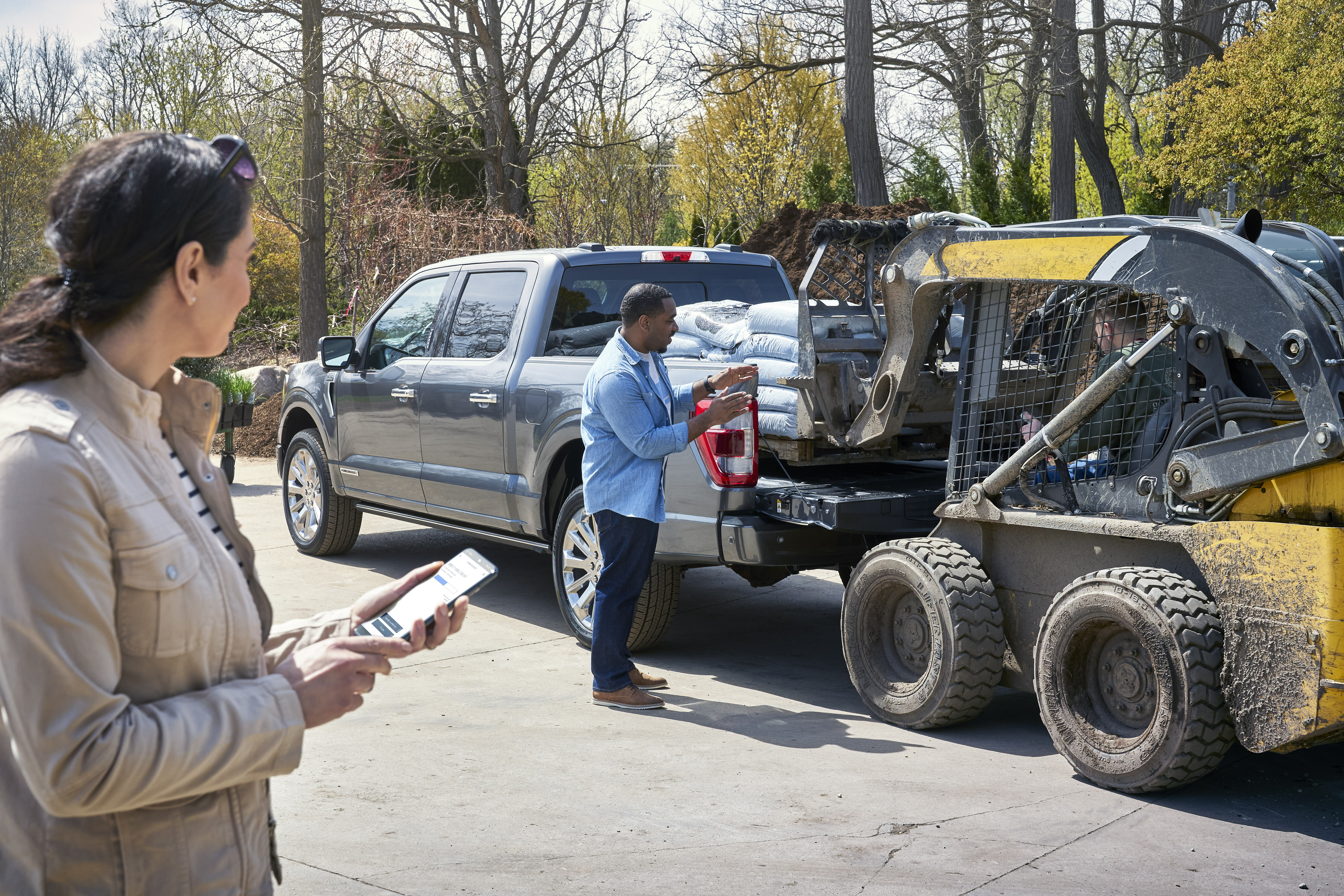
The Ford Ranger already has trailer sway control as part of its chassis control systems, which can detect and arrest trailer sway if and when it occurs. A correctly weighted and balanced trailer would help eliminate that sway before it occurs.
The FordPass app on 2021 Rangers allows users to check the systems and start their Ranger remotely using the app on their phone, so some of the technology is already there. The on-board scale hardware could be something that is fitted to new of future models.
Most US pick-up trucks have in-built electric brake controllers, while Aussies rely on the aftermarket or dealer-fitted controllers to help pull up their rigs safely.
It’s this sort of integration and technology we’d like to see filter down to the Australian markets in our hugely popular mid-size four-wheel drive utes.
THE latest issue of 4X4 Australia magazine has hit the shelves.
Not only is the insane BT-50 that dominates the cover one of the most modified BT-50s you’ll find this side of the black stump, it’s also one of the smallest. To learn exactly what we mean by that, you’re going to have to read the feature in full.
We also pored over every inch of a diminutive 2019 Jimny loaded with accessories and built to tackle tough bush tracks. It seems good things do come in small packages.
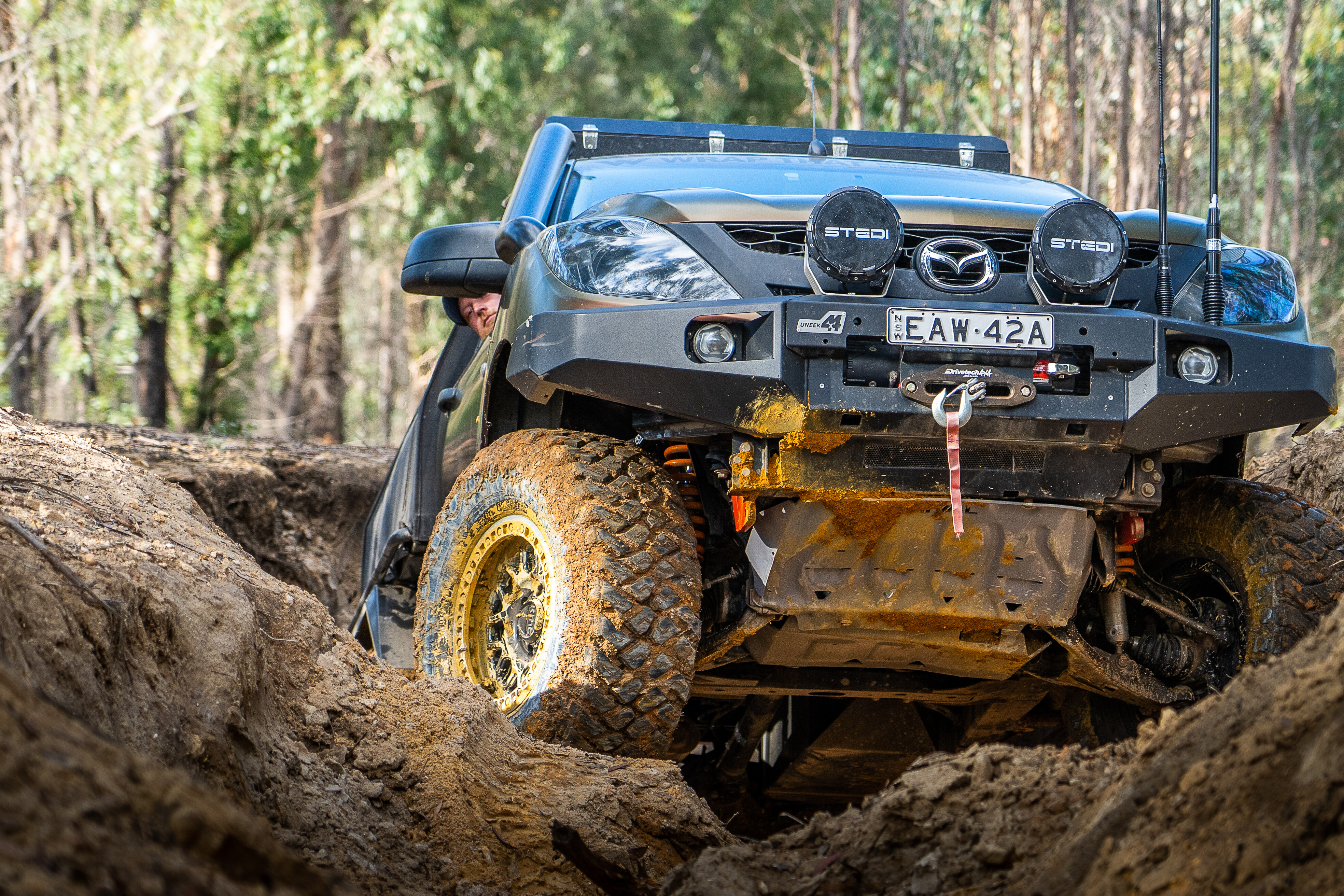

We didn’t stop there on the custom front, including a modified Hilux equipped with pre-runner suspension designed to tame the Toyota on high-speed pursuits.
Stay up to date with the progress made on our 4X4 Australia D-MAX build, with the Isuzu paying a visit this month to both Tough Dog and Ironman 4×4 for some aftermarket treatment.
Also in this issue we lined a D-MAX X-Terrain up against a Ranger FX4 Max, to see whether it’s just a matter of style over substance for these two utes.
WHAT ELSE IS THERE?
– 4×4 trips to North Queensland + The Cells – Isuzu I-Venture to Stockton Beach – Prado versus Everest – New products tested – Monthly columns and shed updates
The May 2021 issue of 4X4 Australia is out now.
Talking Points
- The Raptor X is expected in Ford dealers in July at a list price of $79,390
- Ranger FX4 also headed for Ford dealers in July, starting at $59,990
FORD Australia continues to roll out its range of special editions and styling packs for its hot-selling Ranger mid-size 4×4 ute, in what is expected to be the last year of the current PX2 model before an all-new Ranger lands in 2022, if not later this year.
From July delivery dates, the Ranger Raptor will become the Raptor X.
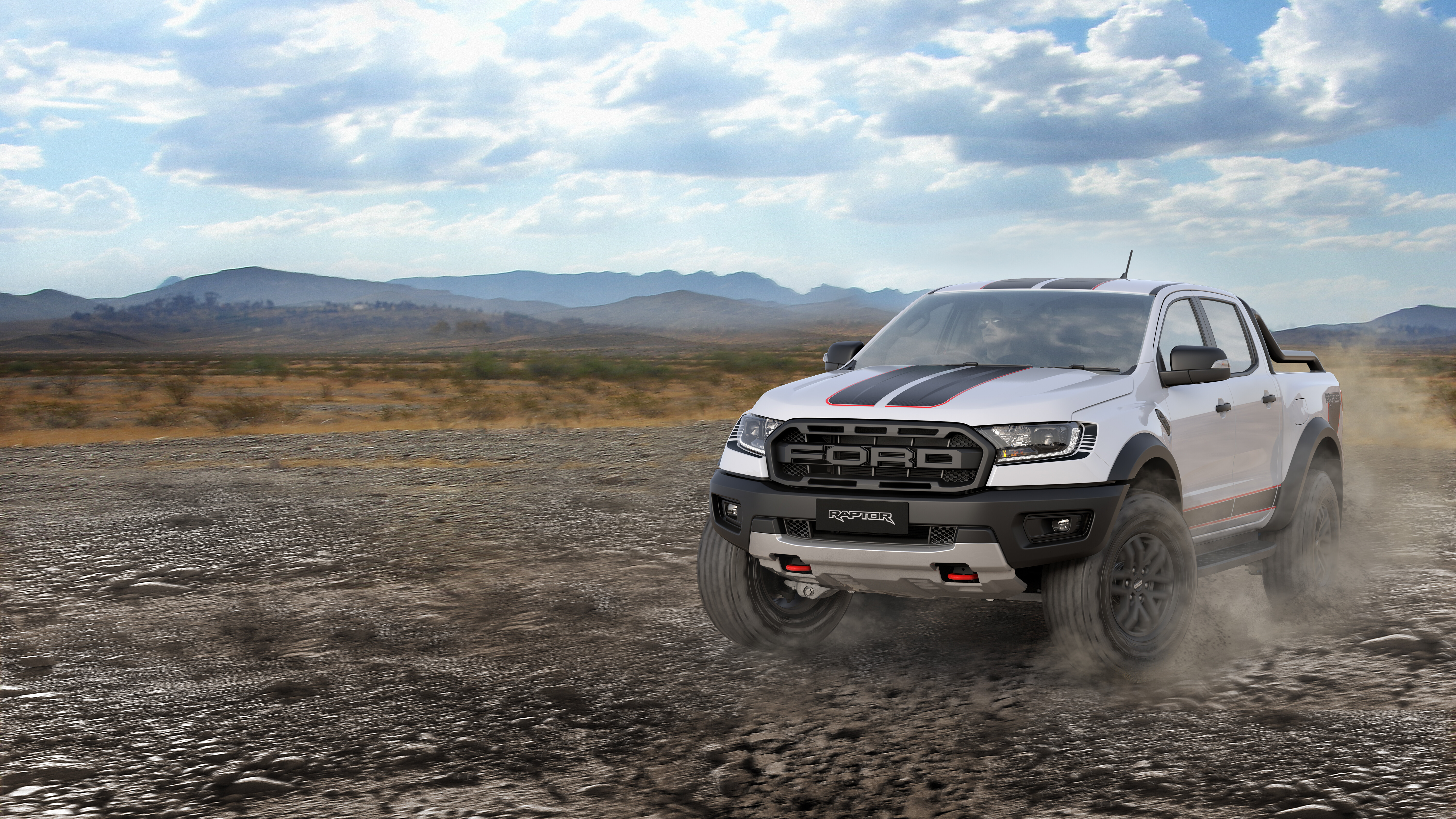
The changes to the popular model centre on new styling to the aggressive-looking and off-road-ready Raptor model, with bold stripes running across the roof and down the pick-up’s flanks; a new matte-black finish on the 18-inch alloy wheels, flares, bumpers, exterior mirrors, handles and grille; a black FORD logo on the tailgate; red front tow hooks; and the longer length sports bar atop the cargo tub.
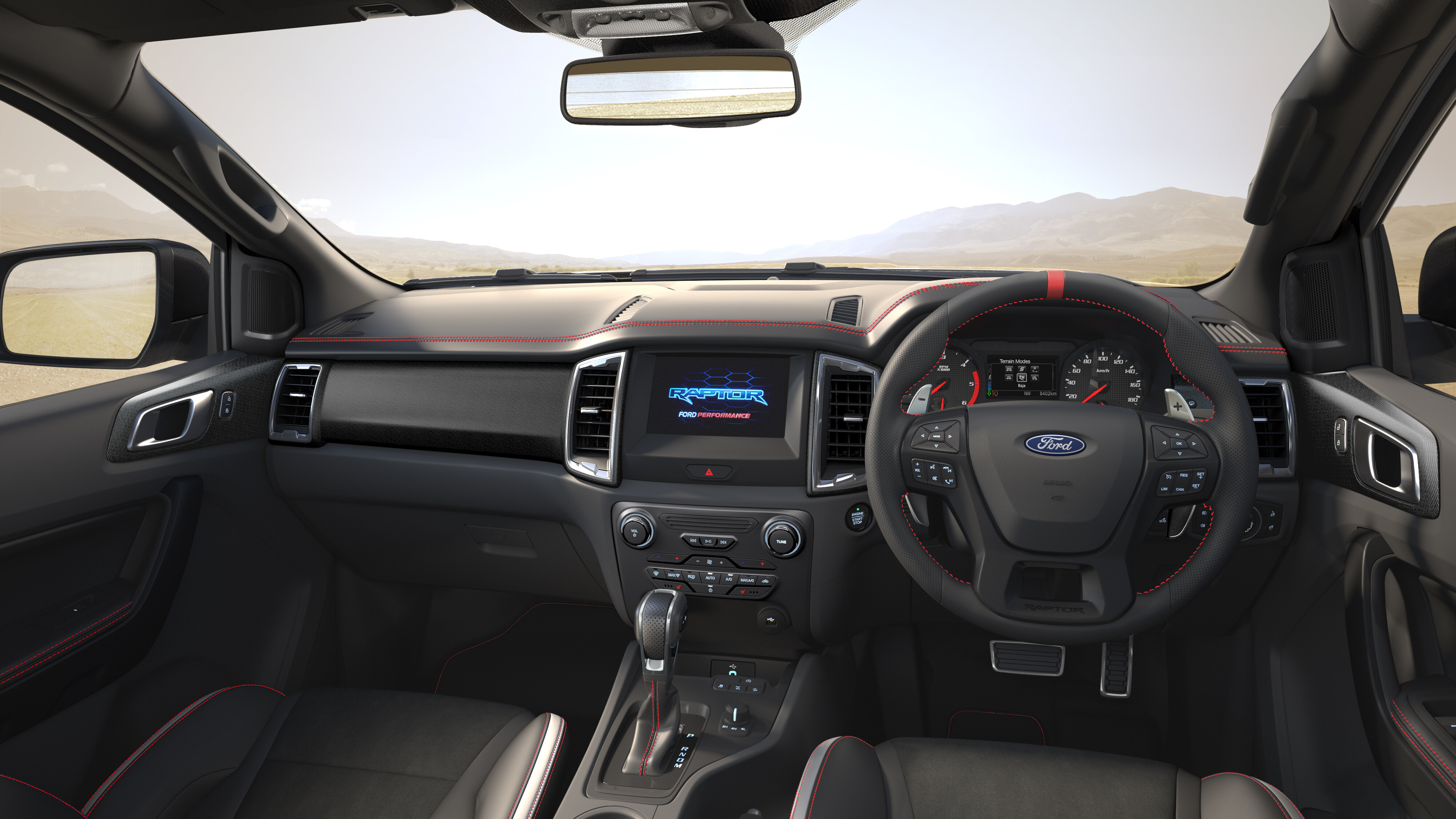
Inside, the Raptor’s sports steering wheel and dash get red stitching in lieu of the blue stitching on previous Raptors, with hydrographic and black alloy accents across the dash and door trims.
While the Raptor X’s unique features are purely aesthetic, it doesn’t lose any of the mechanical components that make the Raptor so special. Notably the bespoke coil-sprung Watts-link rear end is still there, as are the model-specific Fox Racing internal bypass shock absorbers and Ford Performance tuned springs.
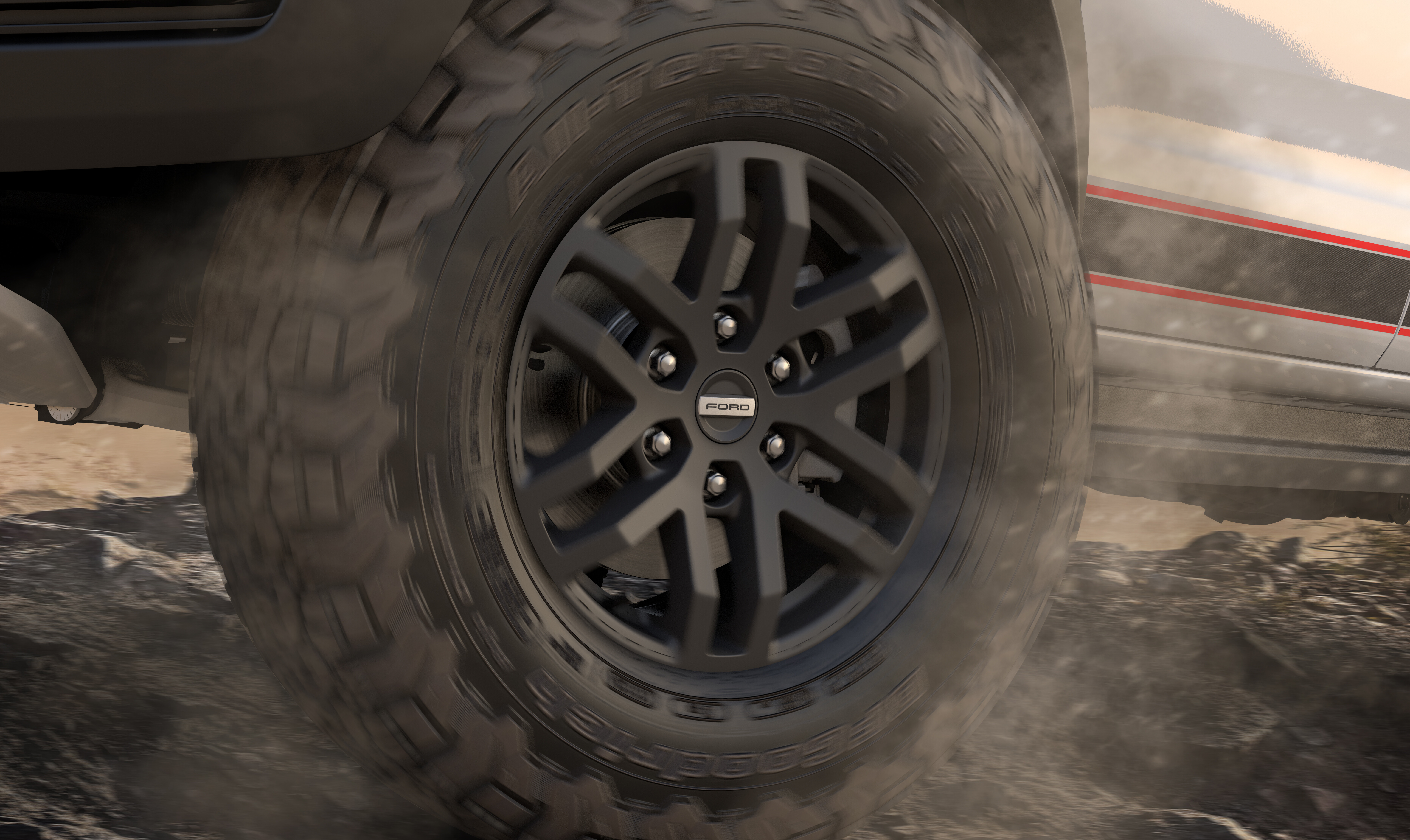
Even the chassis of the Raptor and Raptor X is different to that of any other model Ranger, and the BFGoodrich All Terrain tyres were specifically developed for the car.
The powertrain is still limited to the 150kW/500Nm 2.0-litre bi-turbo diesel engine which is backed by a 10-speed automatic transmission and the Raptor-specific Terrain Management System. The system features Baja mode that sets all the electronic chassis and powertrain controls to 11 for the best off-road performance.
The Ranger Raptor X is expected in Ford dealers in July at a list price of $79,390.
RANGER FX4 MAX
Also headed for Ford dealers in July is the return on the Ranger FX4, following on from the recently launched Ranger FX4 Max.
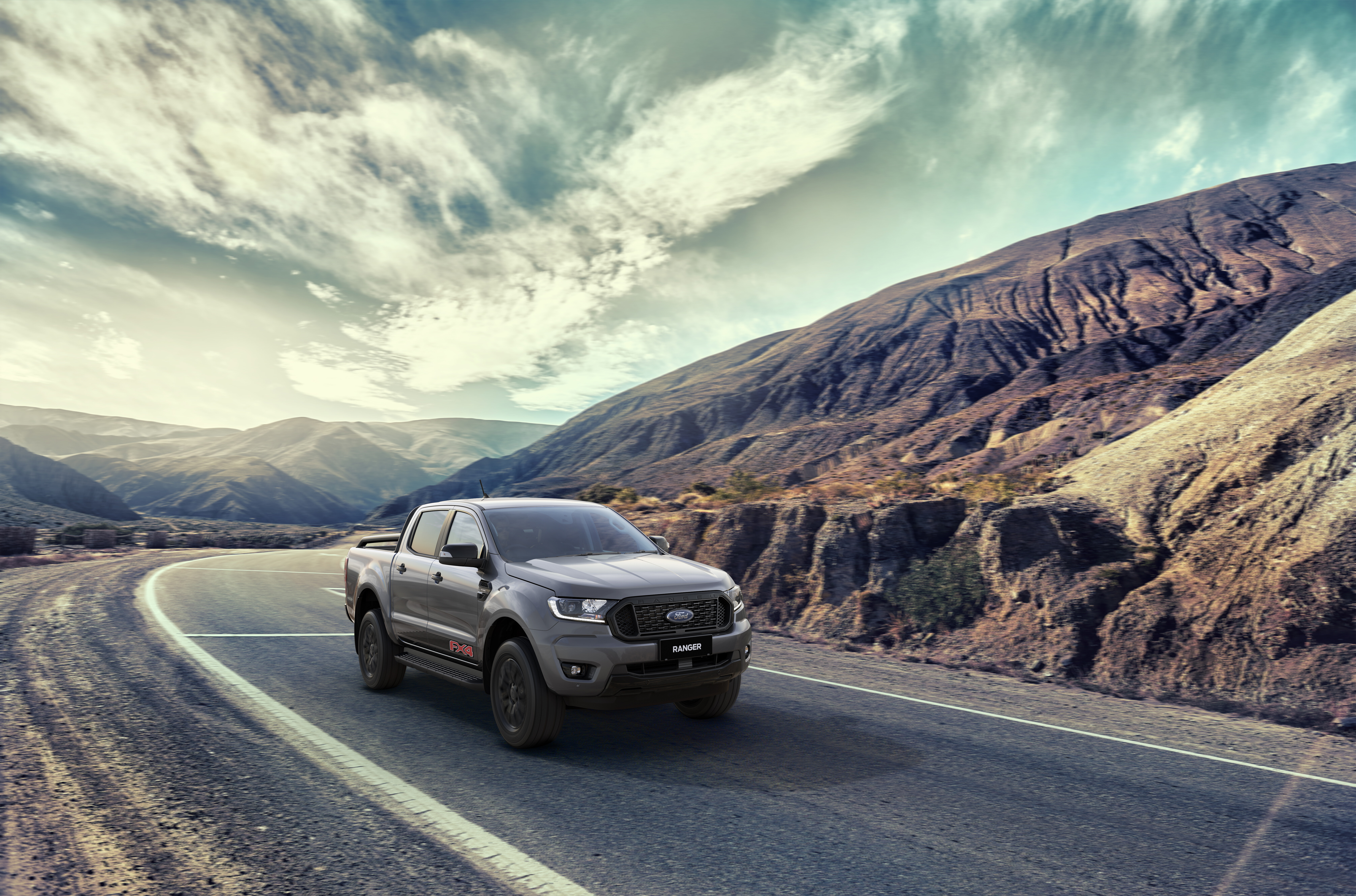
Unlike the FX4 Max which gets Fox suspension and Raptor-esque styling ques, the standard Ranger FX4 is pure styling with model specific leather-accented front and rear seating with contrasting red stitching and embossed FX4 logos; soft-touch red-stitched instrument panel and graphite accents on instrument panel and door trim; and matching red stitching on the steering wheel, gear selector and centre console.
Outside there’s a FX4-specific mesh grille, extended sports bar, 18-inch alloy wheels, darker-look bi-LED headlights, bold FX4 decals, and ebony black exterior mirrors, handles and fender vents.
The Ranger FX4 is available with the same 157kW/500Nm 2.0-litre turbo-diesel 10-speed transmission that powers the Ranger Raptor, but also offers buyers the option of the trusty 147kW/470Nm 3.2L 5-cylinder diesel engine and the choice of six-speed manual or automatic transmissions.
Unlike the Raptor, the Ranger FX4 retains its full 3500kg towing capacity and upwards of 960kg payload, depending on the engine transmission combination.
The FX4 pack is exclusive to Ranger double-cab 4×4 models and sits between the popular Ranger XLT and FX4 Max variants within the comprehensive line-up.
It is priced at $59,990 when fitted with the 3.2-litre engine and manual gearbox, $62,190 for the 3.2-litre with auto transmission; and $63,690 with the 2.0-litre and 10-speed auto.
Talking Points
- Output up 230kW and 430Nm
- 0-96km/h in just 3.2 seconds
American hot-rodder Hennessey Performance has waved its horsepower wand over the Ram TRX, giving both the supercharged V8 engine and the pick-up body a serious makeover.
The Hennessey Mammoth makes 755kW and 1314Nm from its tuned 6.4-litre Hemi engine; that’s up 230kW and 430Nm from the already impressive figures from the standard TRX pick-up.
To achieve these numbers the Texan tuners fitted the engine with a larger 2.65L supercharger with upgraded upper and lower drive pullies, high-flow catalytic converters, high-flow injectors, and a high-flow induction system to keep the beast fed.
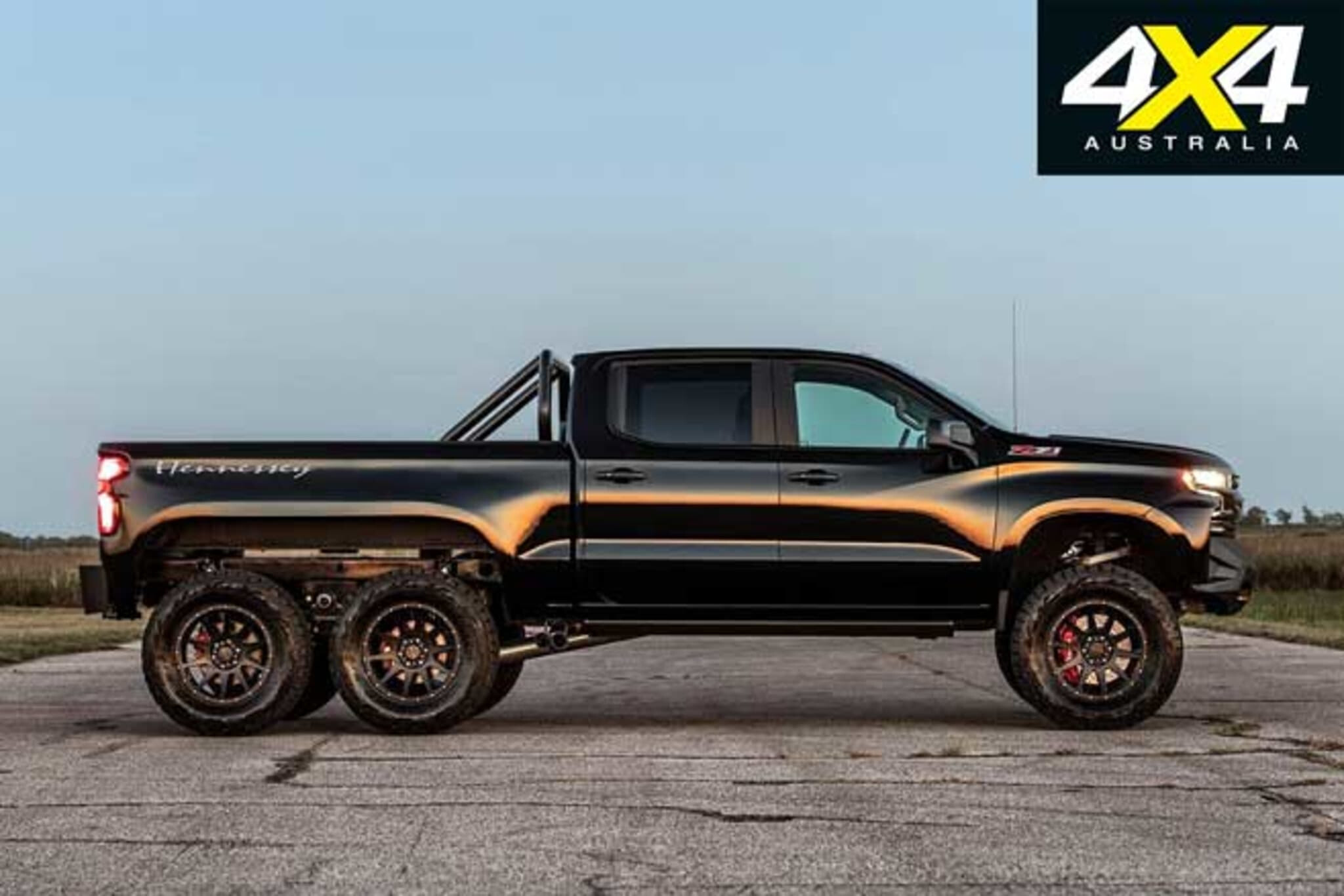
The company claims the tweaks are enough to blast the Mammoth from zero to 96km/h in just 3.2 seconds, and smash the standing quarter mile in 11.4 seconds.
Hennessey hasn’t left the truck as a pick-up, instead converting it to a five-door, seven-seat SUV with a unique body conversion with rear-side windows and a rear window to accommodate extra passengers, while retaining excellent luggage space behind the third row seats.
The Hennessey Mammoth gets improved off-road credentials with a 2.5-inch raise in the suspension height, a custom front bumper with LED lights, and 20-inch 10-spoke wheels wrapped in 35-inch off-road tyres.
The Mammoth will be an exclusive vehicle, with Hennessey saying it will build just 20 examples with a base price starting at US$375,000.
In case you’re worried about the modification affecting your vehicle warranty, the Mammoth comes with a full three-year 58,000km warranty .