
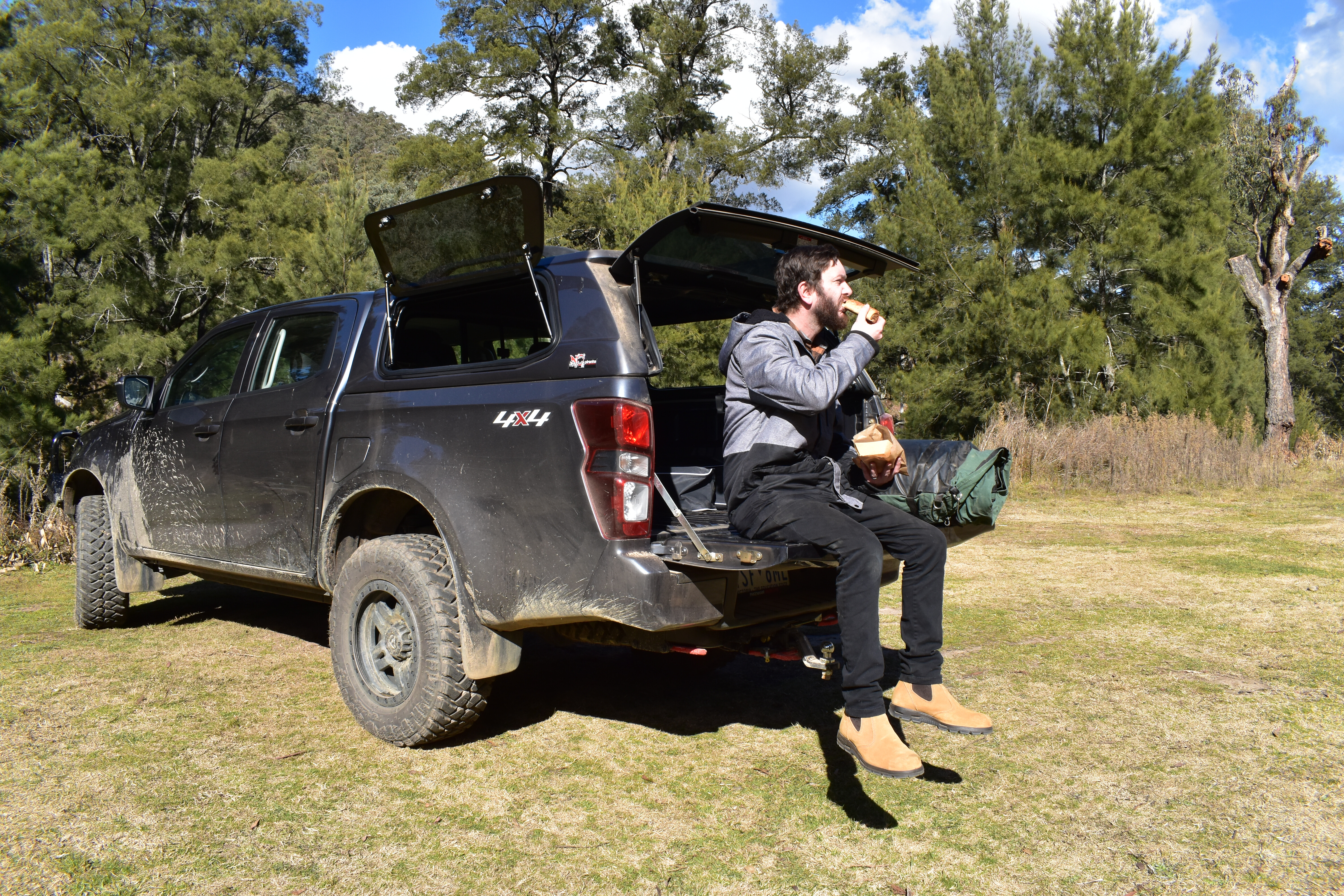
RUNNING our D-MAX without a tonneau cover or canopy over the tub has meant that I’ve had to store any valuables on the back seat of the ute for the last few months, making it difficult to cart passengers around. There are few things in this world more frustrating than having a ute without some form of cover over the tray. Sure, it’s fine if you are moving house and need maximum height, but we’re moving swags not domestic fridges or washing machines.
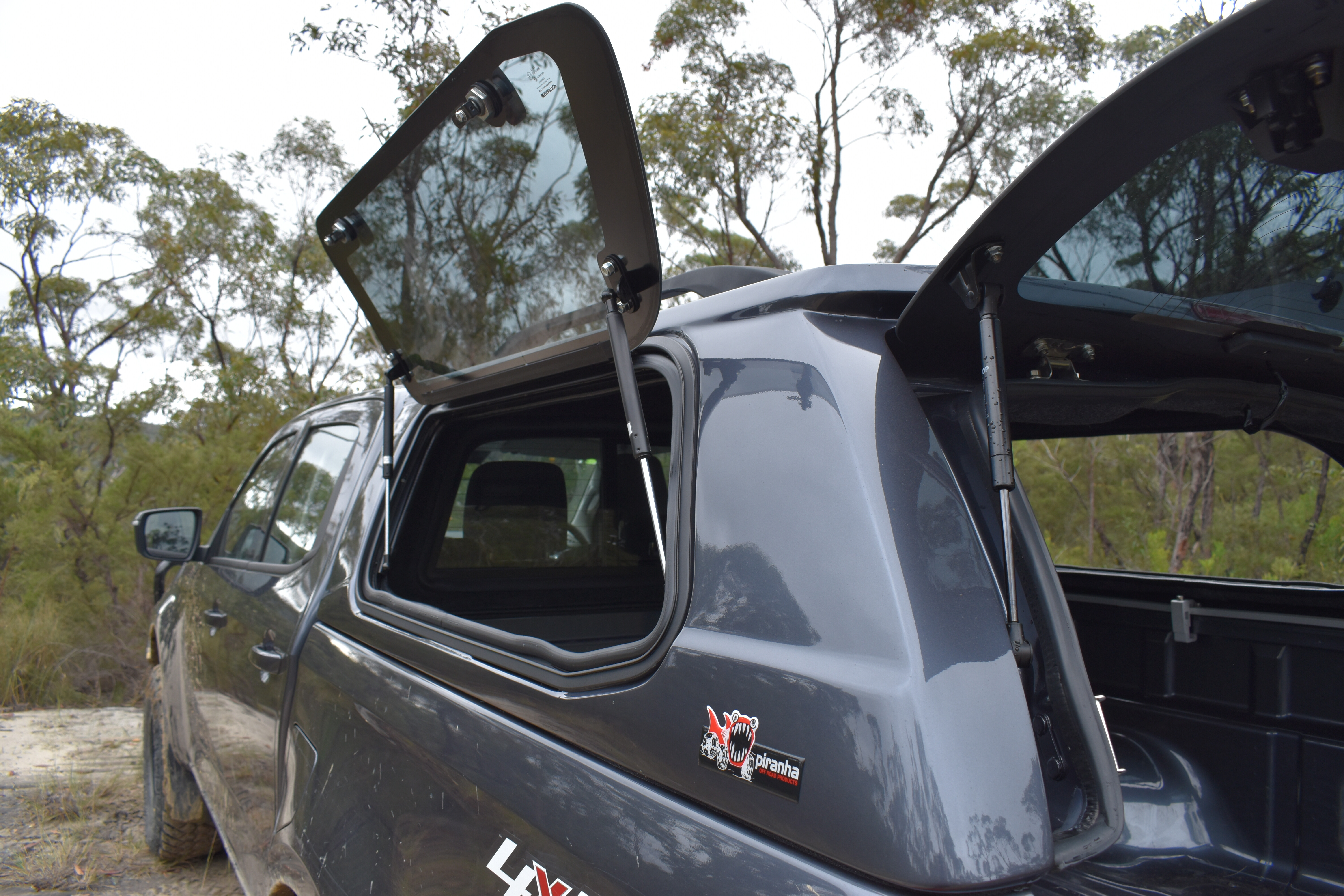
Piranha Off Road has been around for more than 30 years, specialising in 4WD electronic battery management systems and trays. Recently, it has expanded its product range into 4WD canopies and ute trays, and we saw this as a great opportunity to have one of its fibreglass canopies installed on to our 2020 D-MAX. We wanted to fit a fibreglass canopy, that had rated roof racks (100kg in this case), lift-up side windows and a nice colour-matched painted finish. We also wanted to have central locking and a rear window demister. The Piranha canopy ticked all those boxes, and really suits the look of the D-MAX.
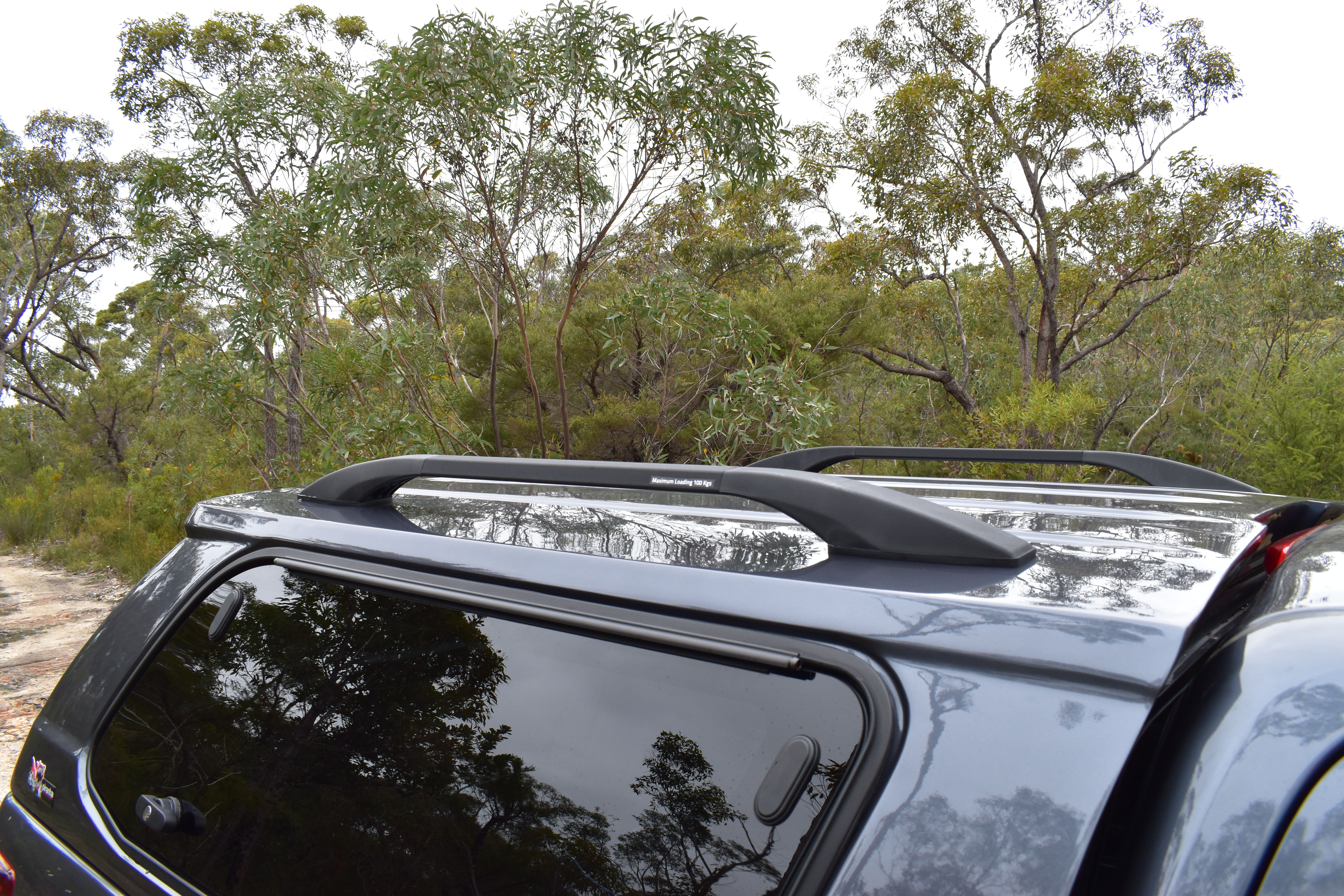
The canopy arrived unpainted and once we supplied the paint code, it was sent off to be sprayed. Once dry, the team at McNaughtans in Western Sydney handled the fitment, which was by all accounts a simple affair. Everything was supplied with the canopy, including a wiring loom to tap into the factory rear brake lights, central locking and window demister.
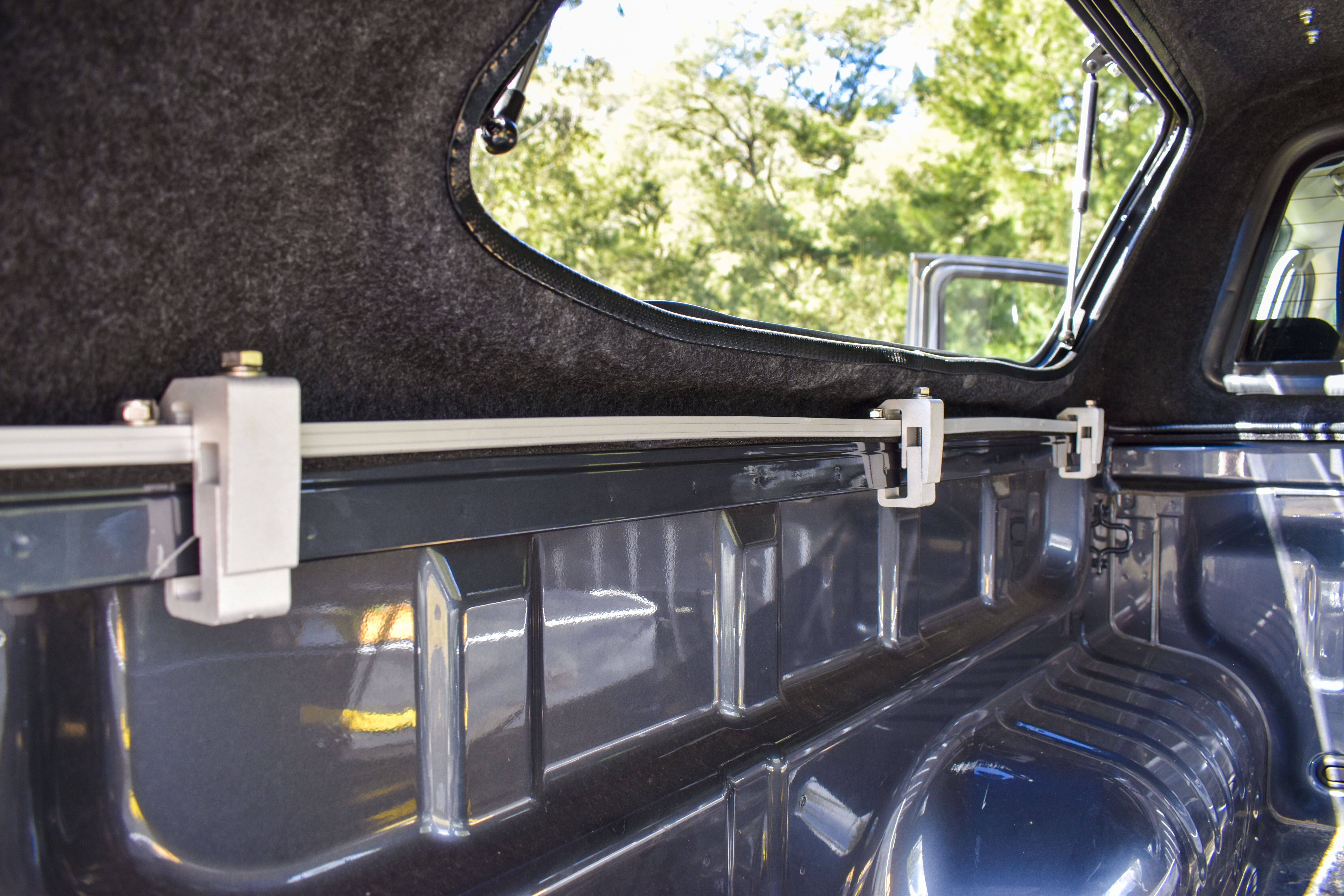
Sturdy (and simple) clamps mount the canopy to the tray for a quick install, and easy removal if ever required. No drilling is required, which I feel is a good thing for resale value or if you decide to go a different way down the line. Now that the canopy has been installed, Piranha Off Road are developing a battery tray specifically for this vehicle, so we can mount our 100amp/h Invicta lithium battery behind the back seat. Stay tuned for that update.
RATED
AVAILABLE FROM: piranhaoffroad.com.au
RRP: $3400 including paint, side lift-up windows and installation.
WE SAY: Piranha Off Road canopies are available to suit a range of 4×4 utes, including Hilux, Ranger, Navara, Triton, Amarok, Colorado and naturally the Isuzu D-MAX.
With ever-tightening travel restrictions, we’ve had to abandon our plans for gallivanting around the countryside with the Everest Sport and a camper trailer in tow. Apparently it’s not the done thing at the moment. So, what’s a fella to do with the keys to a new 4×4 and articles to write? If you’re thinking we should punt it around the local tracks to find its limits, then we’re definitely on the same page.
The Everest Sport was put in the 4×4 Australia fleet to see how they fare as a family camping machine, but like every 4×4 ever built, it’s going to get punted down some tracks it definitely shouldn’t at some point, so we figured we’d find out exactly how it’ll perform when you push it further than you should.
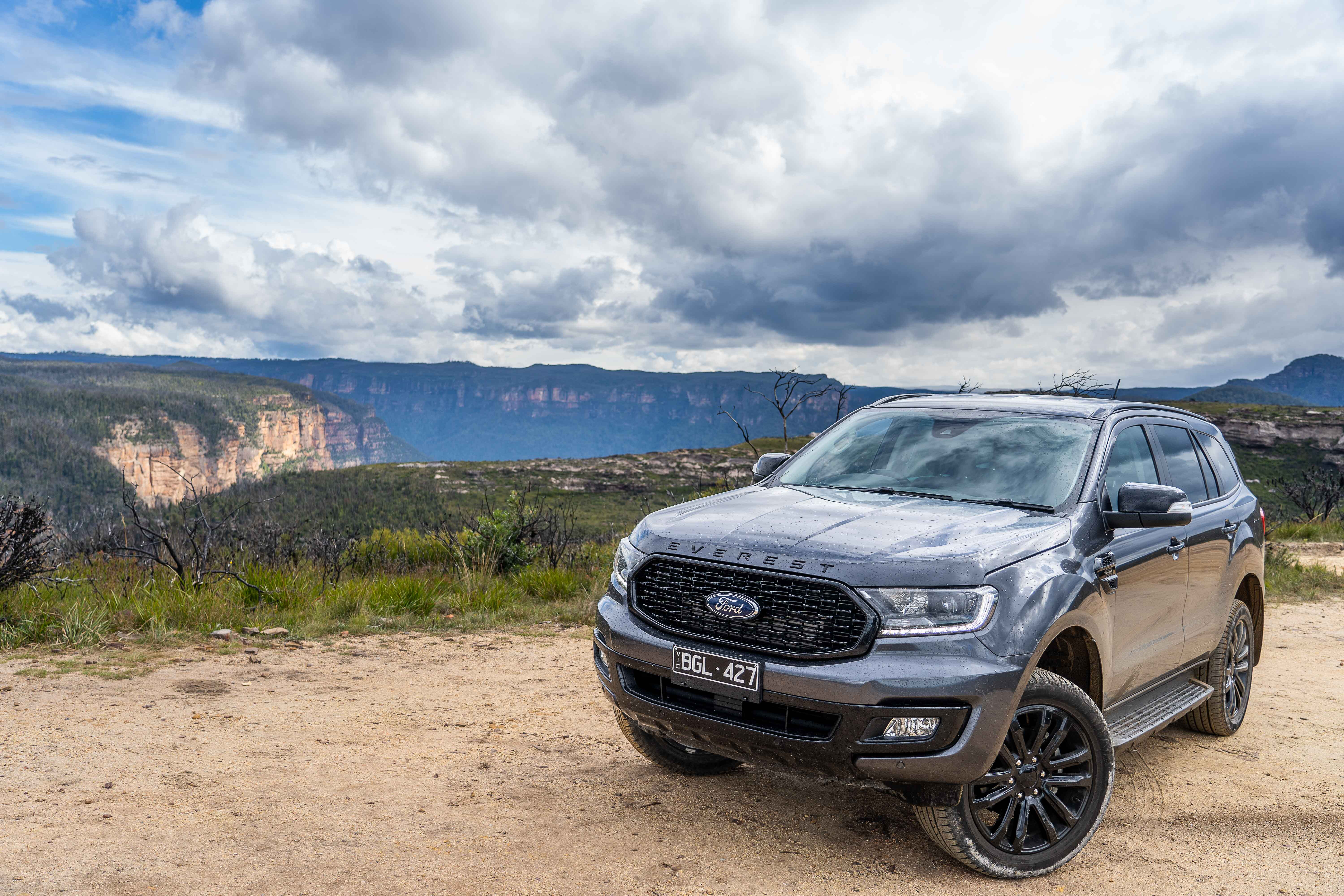
With any 4×4 sporting independent suspension, lack of wheel travel is always going to be a challenge you’ll need to overcome, and the Everest is no different. Pointing it at the local wombat holes, its rear suspension does a reasonable job soaking up the terrain, but the front end lifts almost immediately.
Despite the wheels in the air, the suspension is supple and the wheel track wide enough that it rarely felt unsettled – we had to jump out a few times to verify that the wheels were in fact in the air. Tapping the rear locker button was all it took for the Everest to keep working competently off-road, no matter how many wheels were in the air. The only two things stopping forward momentum were traction with the road-focused tyres, and mechanical sympathy by not wanting to punt sheet metal into rock.
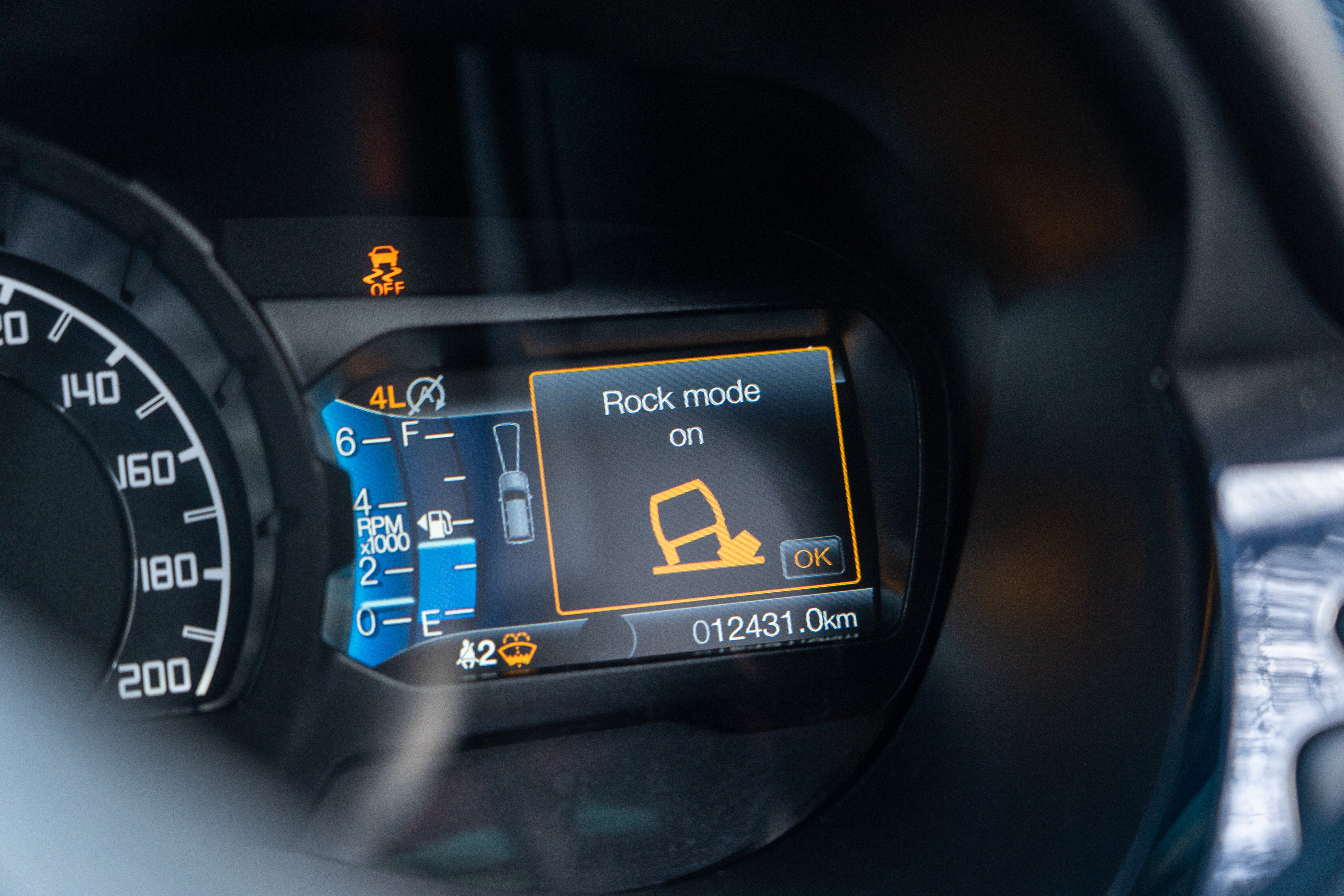
The Terrain Management System is something you don’t necessarily need to play with, but it did make things a little easier for the terrain. Engaging Rock mode softened the throttle response significantly, allowing for finer, more precise inputs. It also locked the transmission into first gear for maximum engine braking, and turned the traction-control sensitivity way up to keep us moving forward predictably without all the bucking and jerking of older systems.
Essentially it turns the front axle into a nearly locked state and slows everything down so you’re in full control. Even pointing downhill, the Everest never wanted to run away from us. Unfortunately, the nearest beach is three locked-down local areas away, so we’re unable to put the Sand mode through its paces.
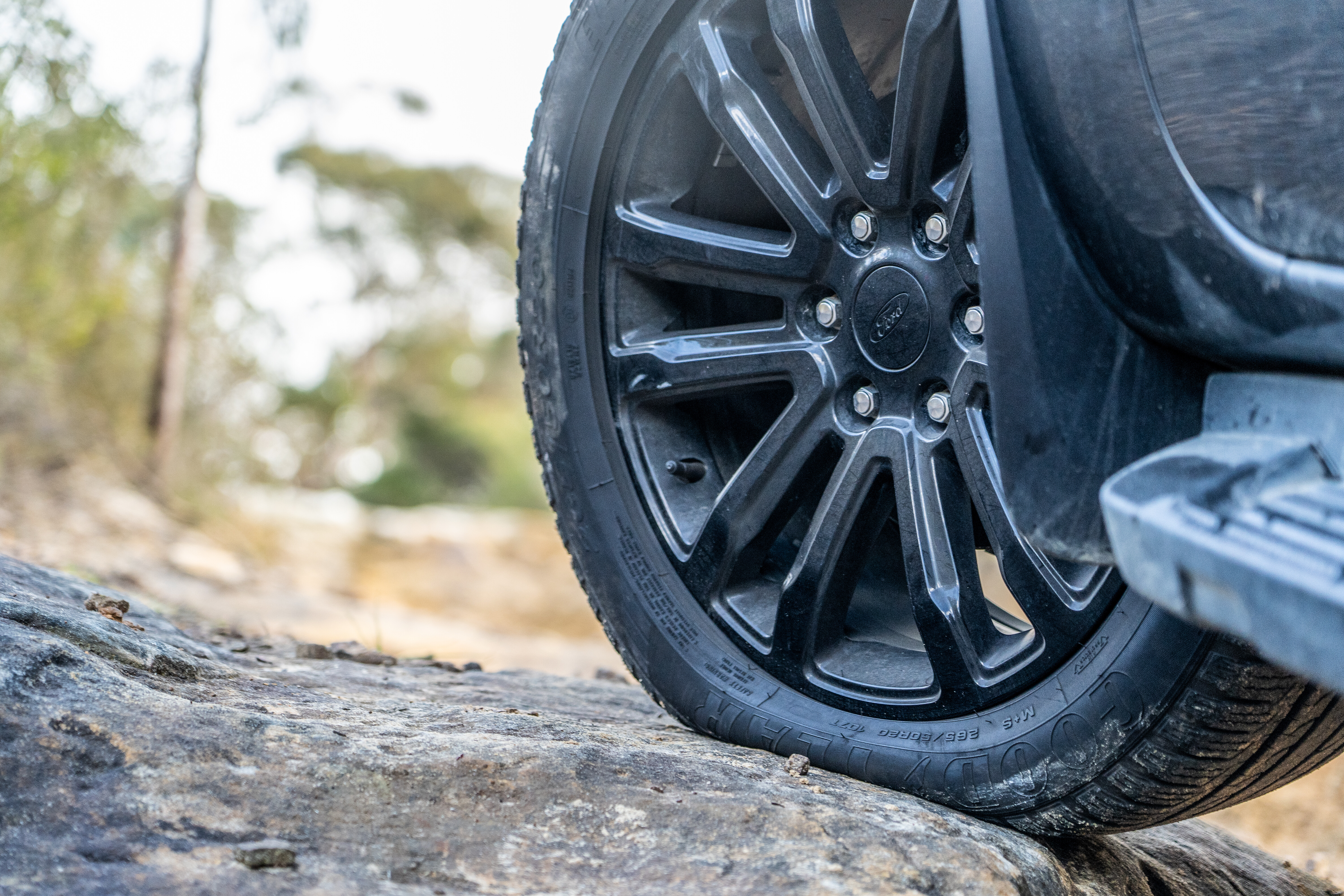
While the vehicle itself is fantastic off-road, it’s not without its drawbacks. Those 20-inch wheels on each corner look fantastic, but with next to no sidewall, airing down simply wasn’t an option. Even dropping 10psi out of the tyres would have had us hitting the rims on rocks and potentially rolling a tyre off the rim. The Everest itself is so insanely capable that fitting a set of larger mud tyres is all you’d need to drive most tracks you can point it at. A set of rock sliders and a front bar would also be highly recommended, as we’ve had a few moments where the Everest will keep climbing places it has no right to be.
THE DATA
| Km | 12870 |
| Date acquired | March 2021 |
| Price | $63,790 |
| Km since last update | 1420 |
| Av fuel | 9.3L/100km |
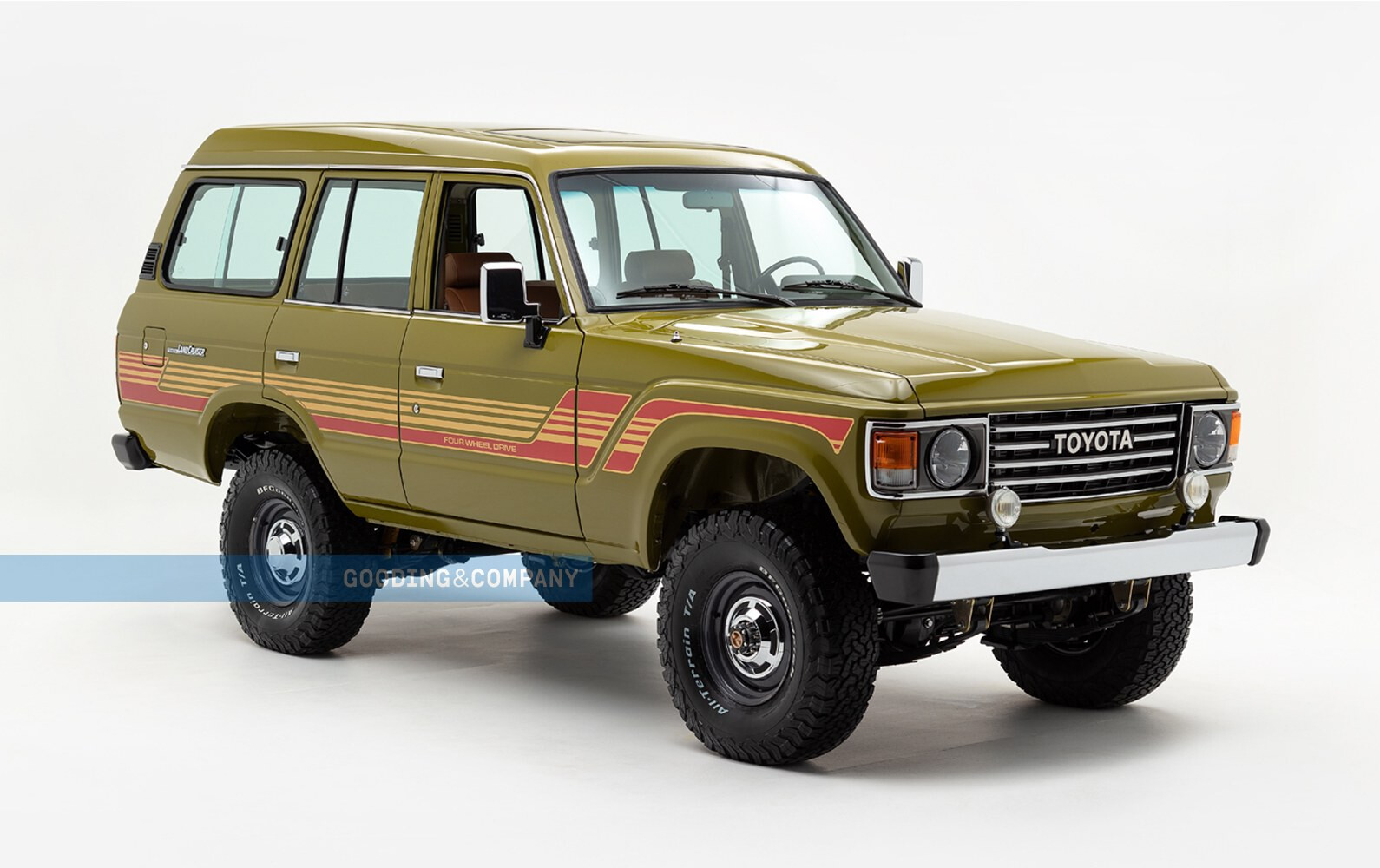
Following the news that a 60 series LandCruiser has sold at auction in the US for a record breaking $US134,400, we thought we’d take a look at what’s going under the hammer right now and what 4x4s will be going under the hammer in the coming weeks – both locally and overseas.
Starting off locally is Shannons’ spring timed online auction, which has three tasty lots up for grabs. Bidding starts online on Tuesday, August 31 and closes on September 7.
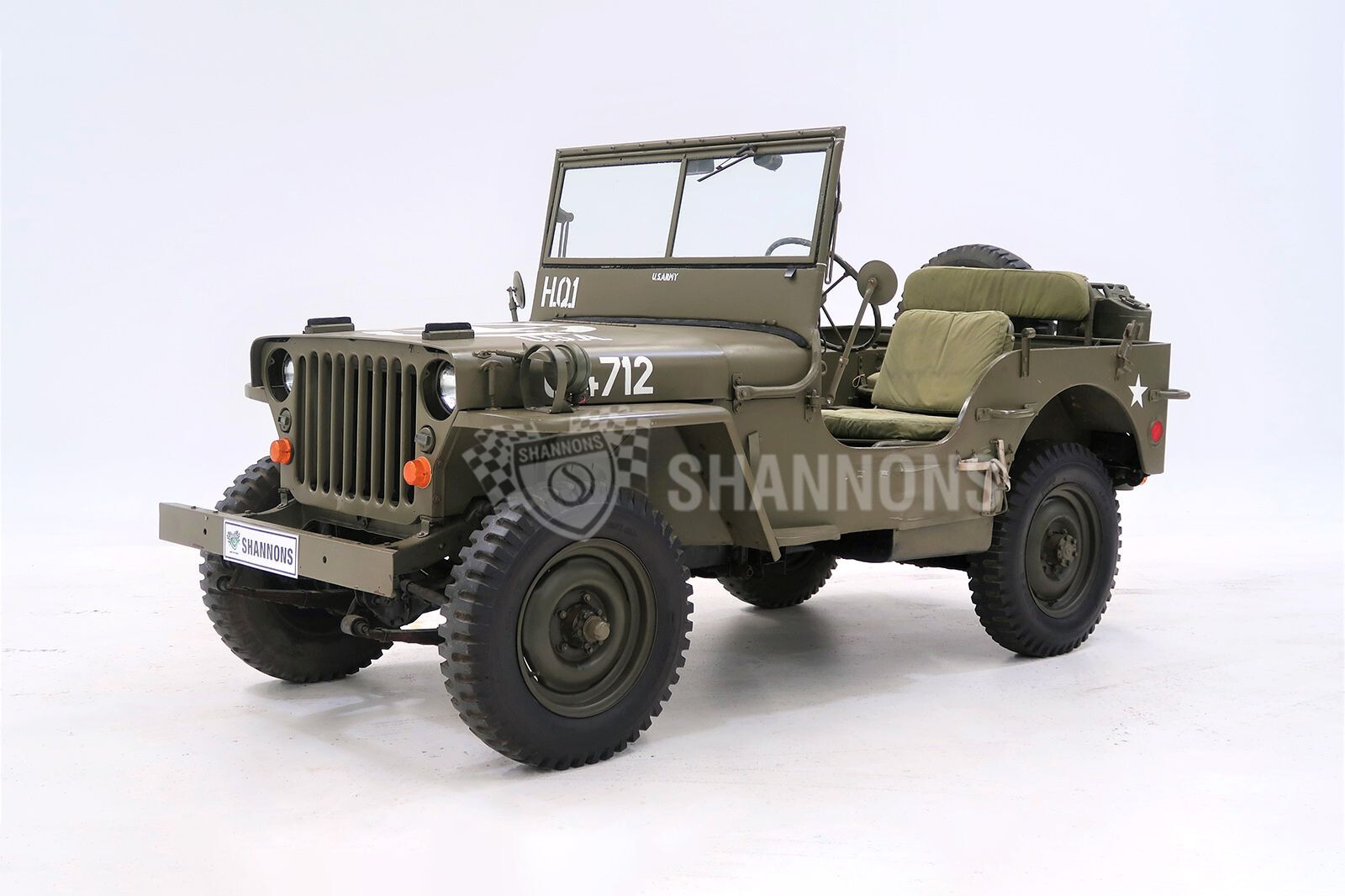
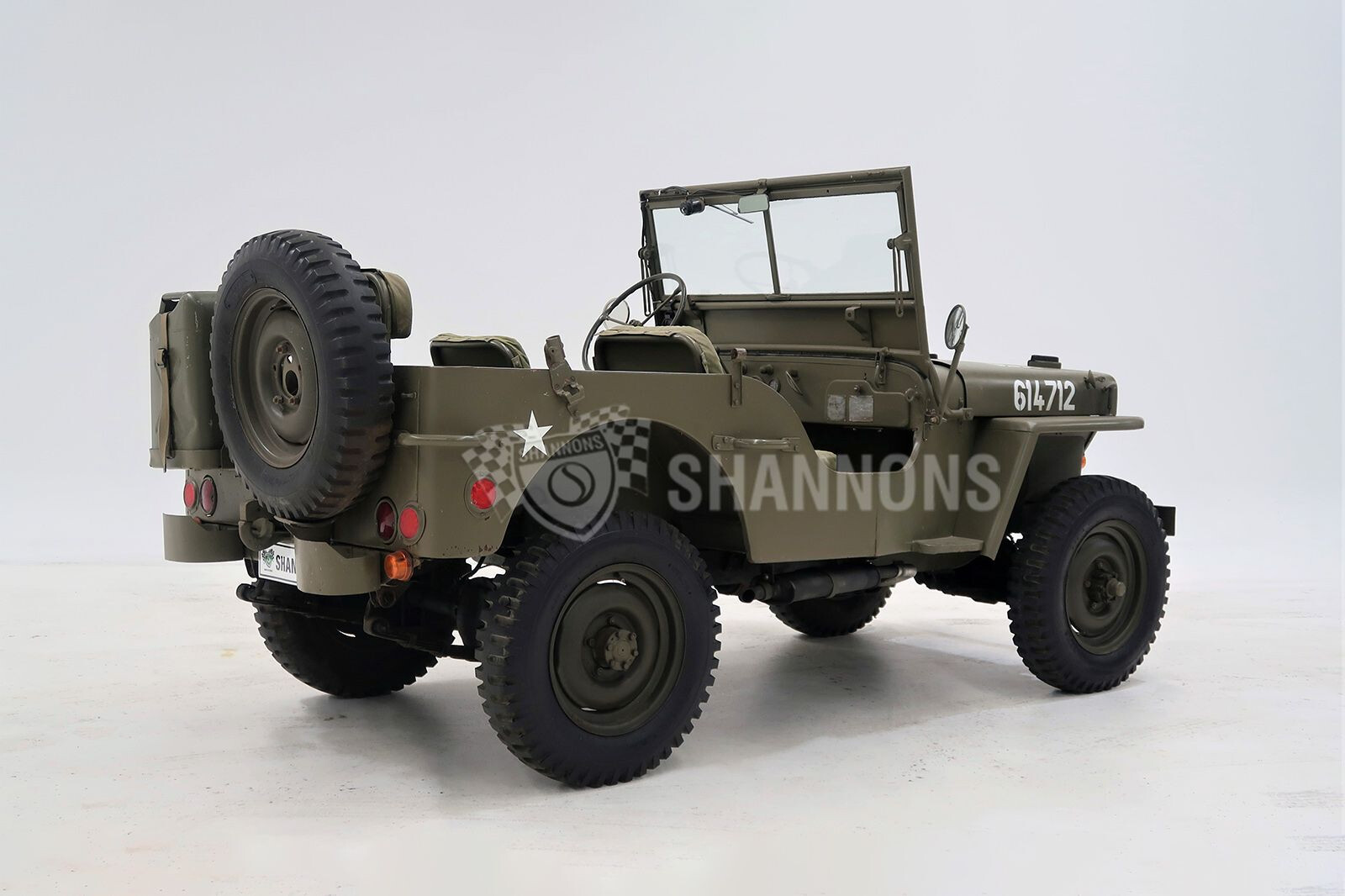
The first is this 1944 Ford-built GPW, one of the most iconic 4x4s of all time. It features a rebuilt version of the period-correct Willys’ four-banger engine – along with a new clutch in front of the three-cog manual, a new exhaust system, overhauled brakes and minor cosmetic improvements.
Shannons estimates a sale price of around $18,000 – $24,000.
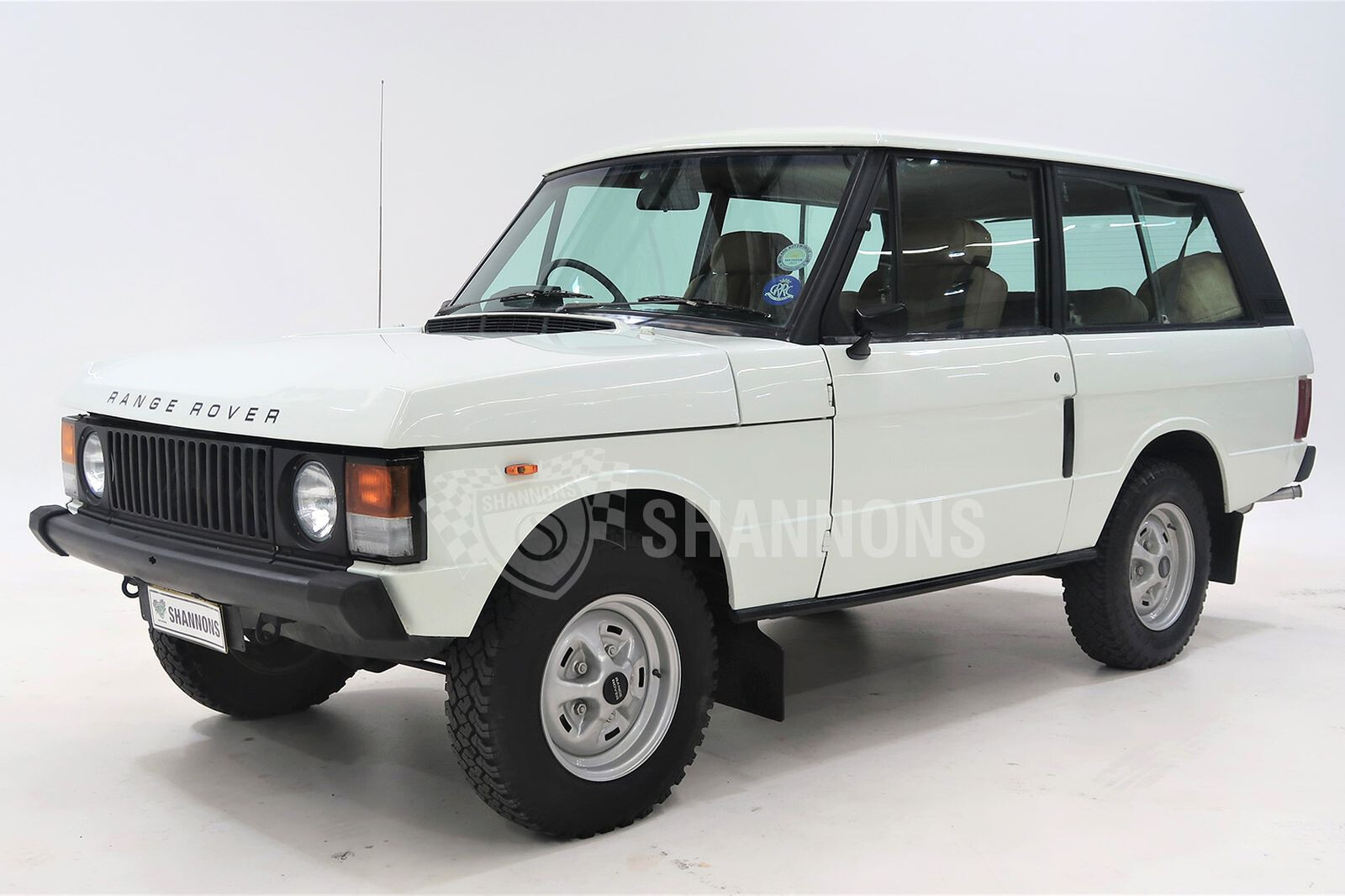
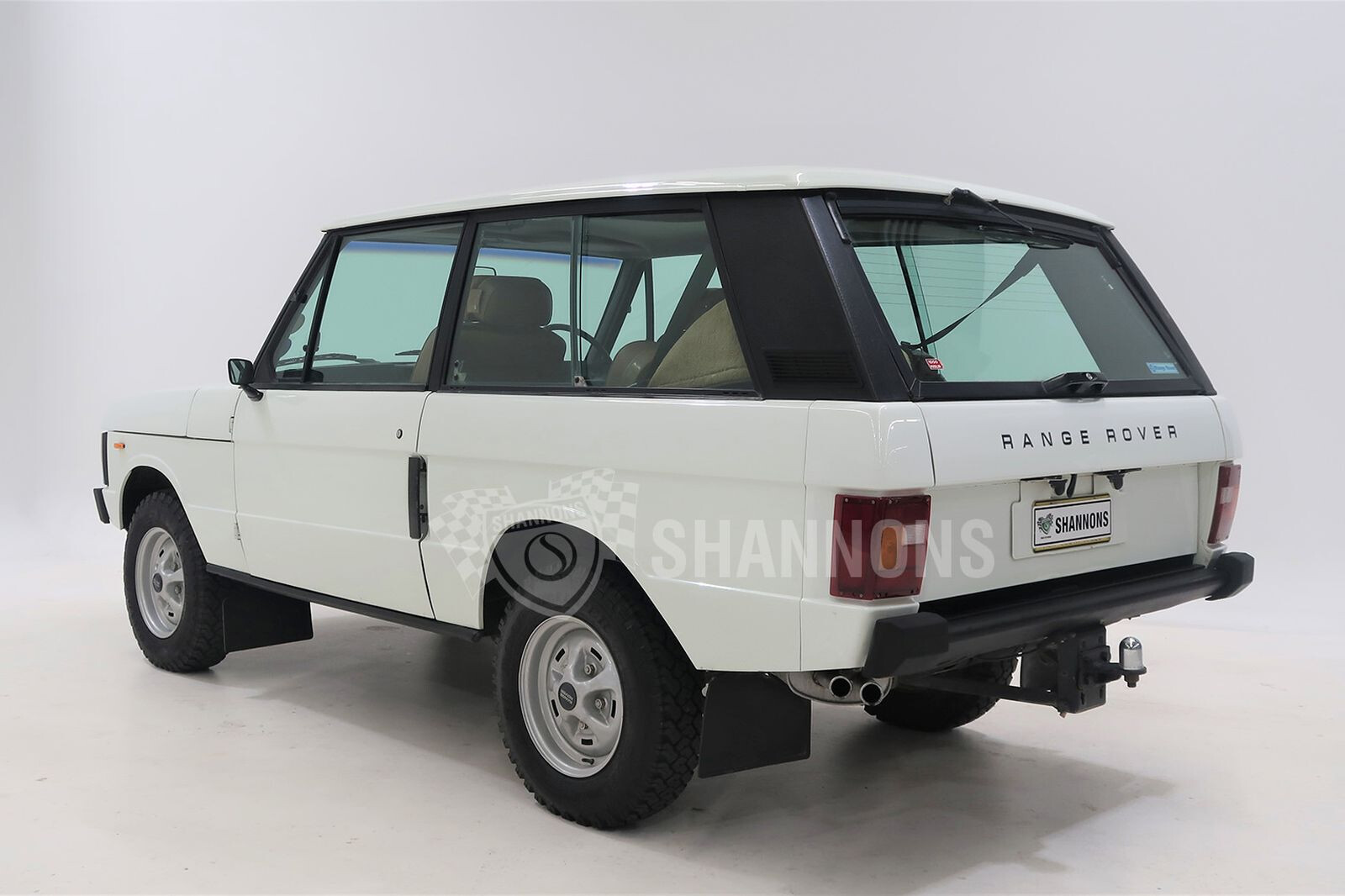
Fancy a shorty Range Rover? This 1984 two-door, V8 five-speed manual wagon looks like a super neat specimen, especially considering it has over 283,000km on the ticker.
Admittedly, it does have the smaller 3.5-litre carby-fed Rover V8 rather than the later 3.9-litre EFI version, and it appears there’s a few oil leaks that need attention. Despite this, prices for these older Range Rovers have been on the rise, Shannons estimating the hammer will fall around $40,000 – $50,000.
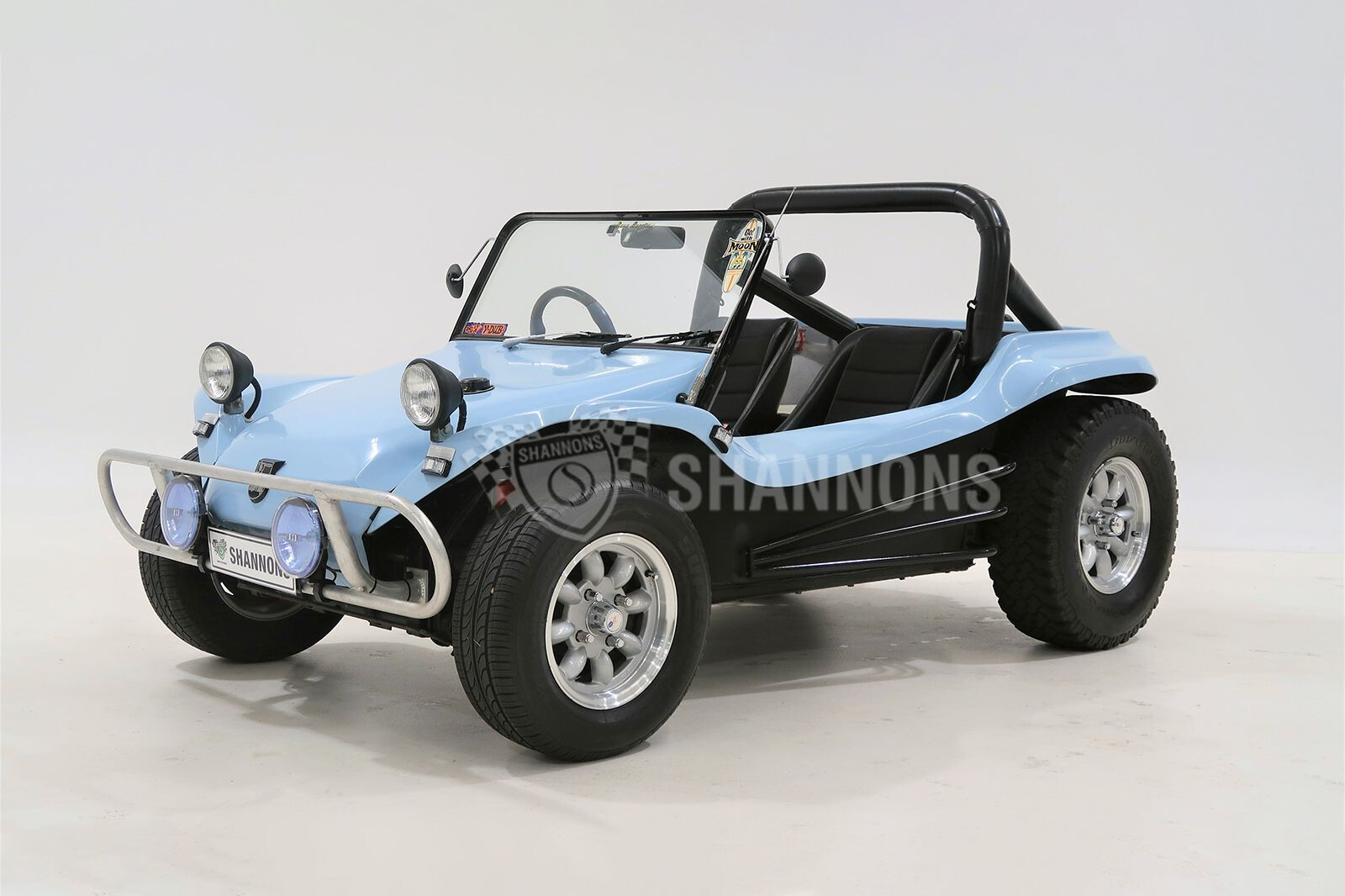
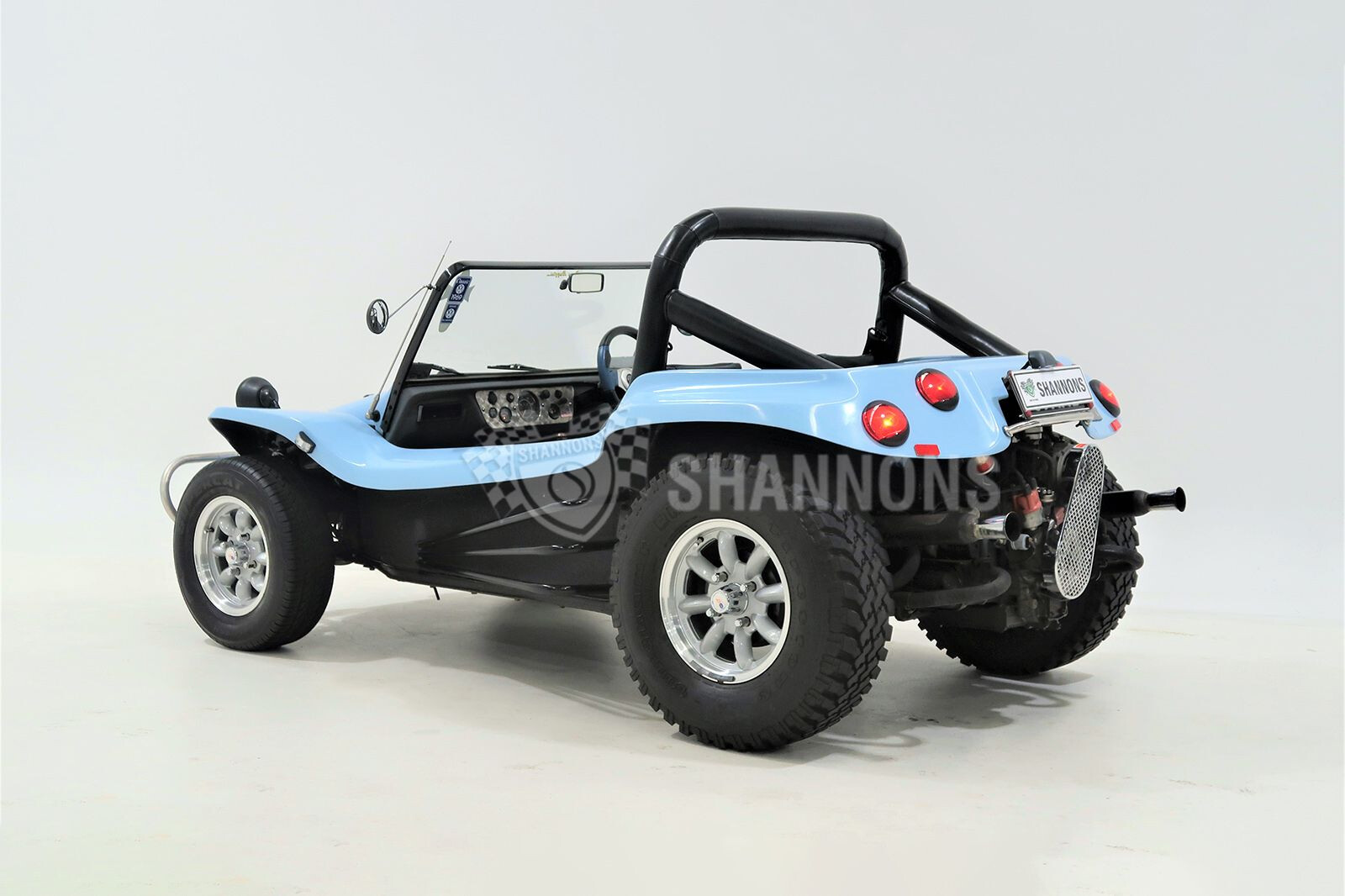
While not technically a 4×4, we couldn’t pass up this 1969 Volkswagen/Meyers Manx Beach Buggy, because we’re dreaming of some hitting the dunes in a few months’ time.
Under the genuine Australian Meyers Manx super lightweight body shell is a good-old dack dack four-banger with a four-speed manual, and it has just 7500km on the clock. Auctioneers estimate it’ll fetch between $28,000 – $32,000.
Grays mostly has ex-fleet 4x4s up for grabs, but we did spot this neat 2013 Jimny going under the hammer. It’s got a neat little snorkel, lightbar, roof racks and the four-pot is backed up by a slushbox.
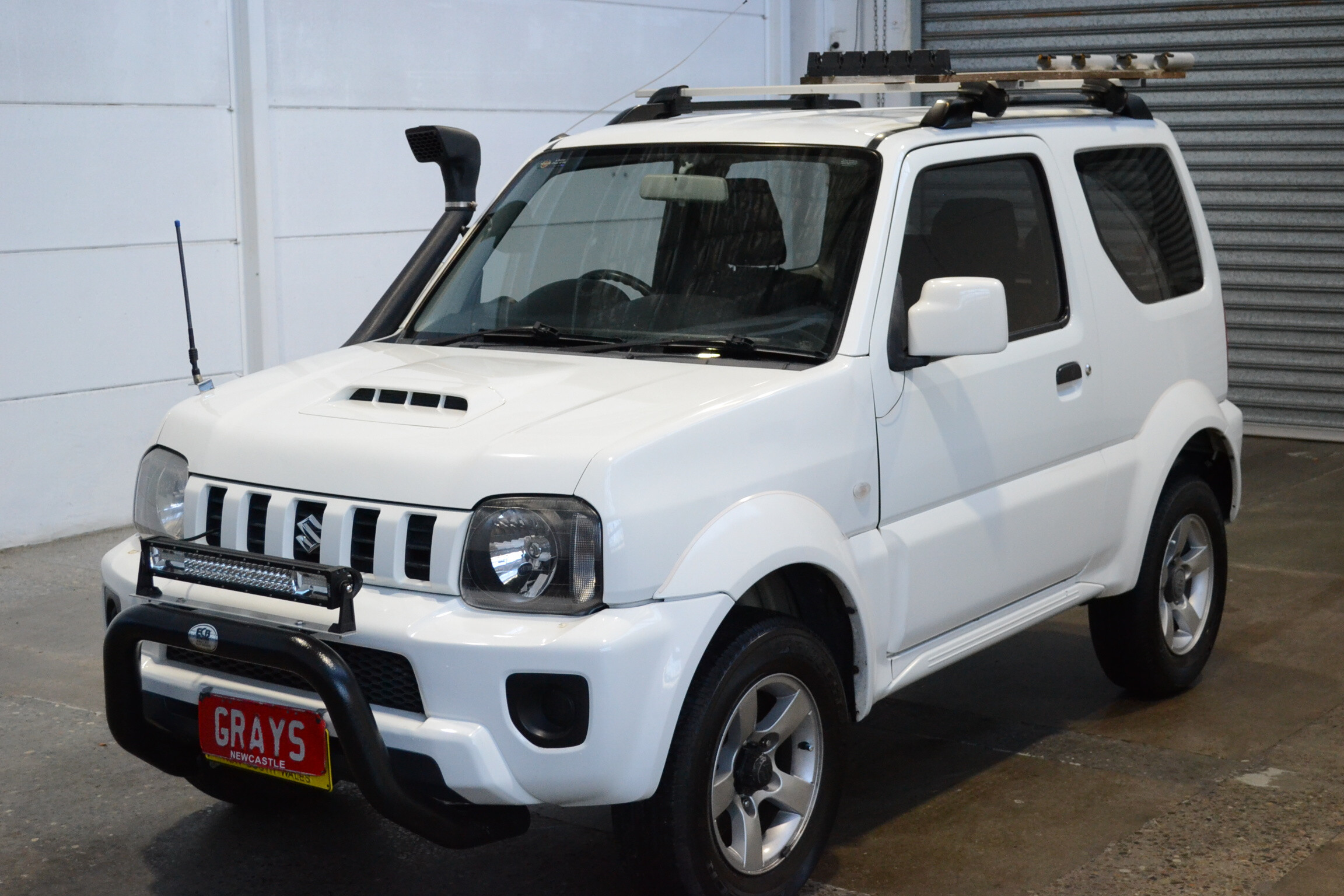
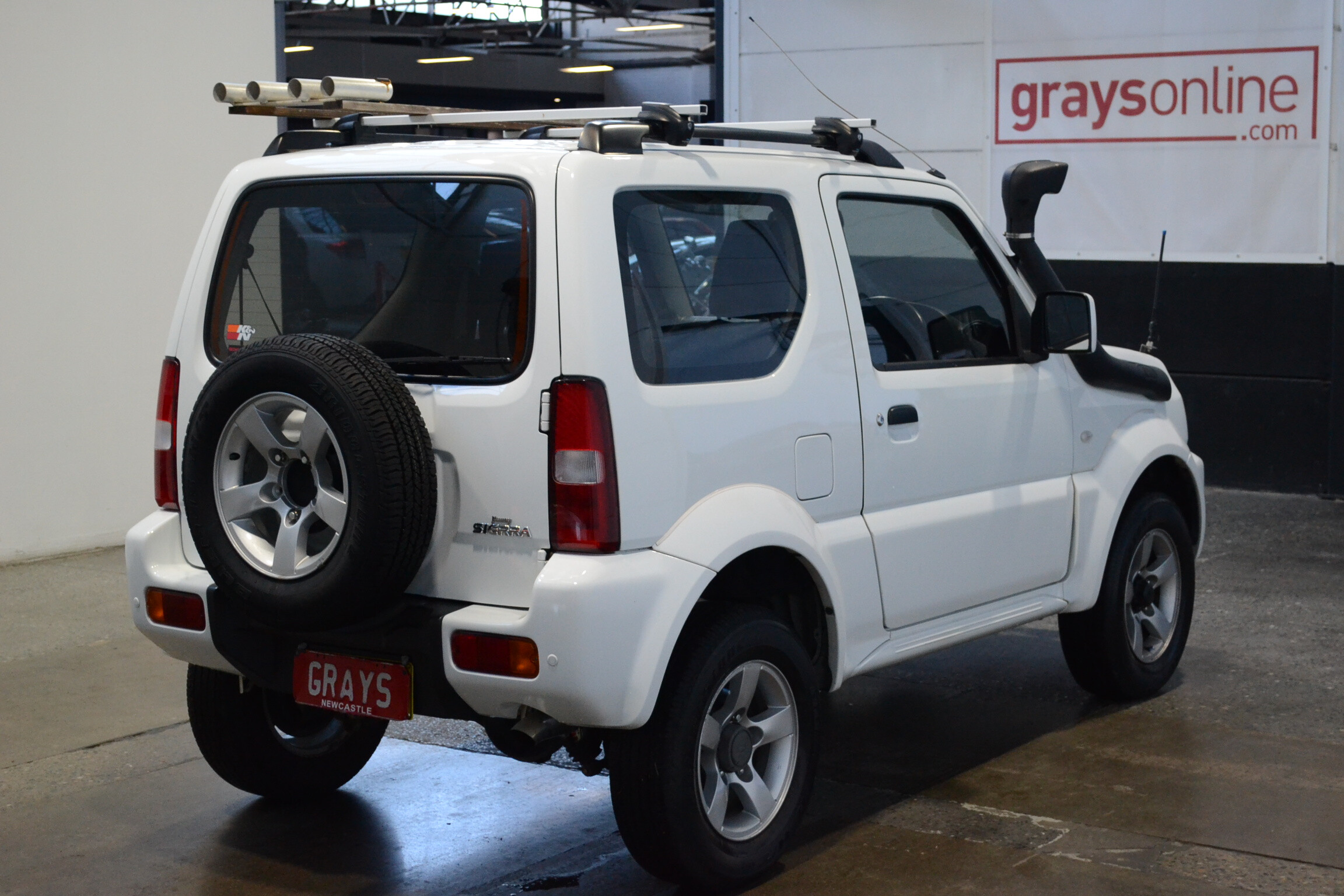
At the time of writing the listing has just over one day remaining, with bidding sitting at $15,000. With demand for the current model so high, it’s not so surprising Jimny buyers are offering decent money for the previous generation model.
Overseas, auction juggernaut Barrett-Jackson is gearing up for its Houston auction on September 16-18, and we’ve cherry-picked some cool 4x4s which will cross the stage.
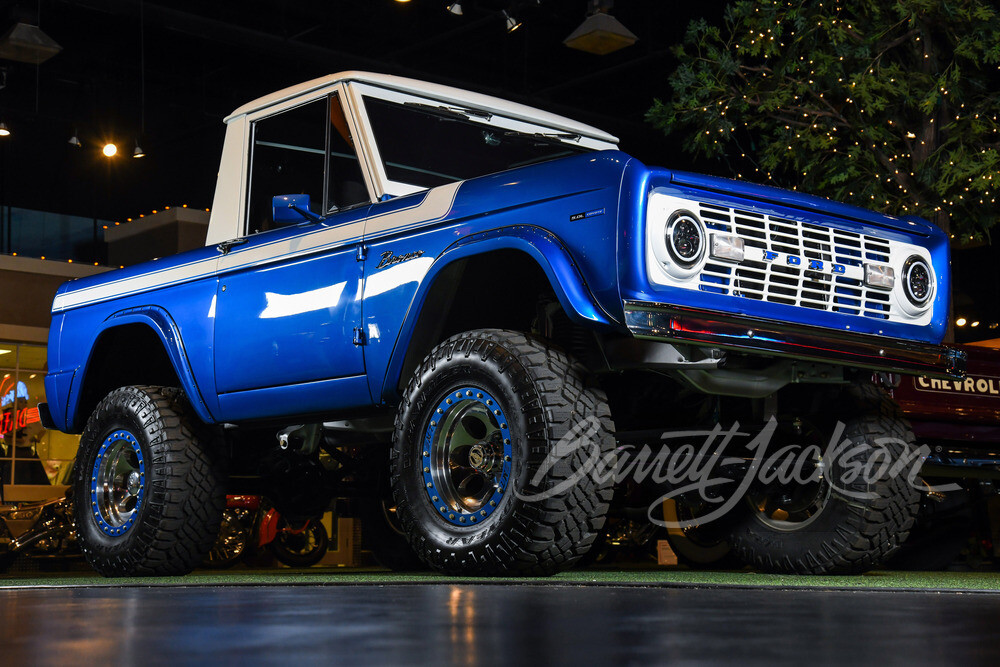
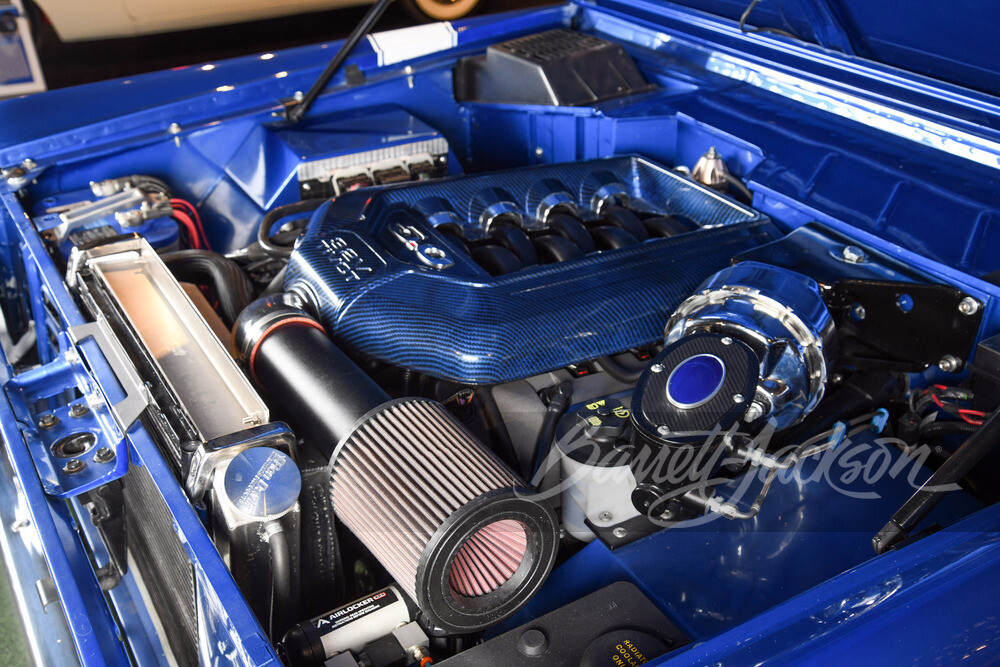
First up is a half-cab 1969 Ford Bronco, featuring a 5.0-litre Coyote V8 from the current S550 Mustang – that’s 330kW of power in a high-riding Bronco!
The rest of the car has undergone a frame-up resto – it uses a 6R80 ‘box and a neat part for us Aussies is the Dana 44 front diff and Ford 9-inch rear-end feature Australian-made ARB air lockers.
As previous mentioned, classic LandCruisers have been going bananas at auction lately, with both a 60 and an 80 series selling for north of US$130,000 (AU$181,915) each in recent months.
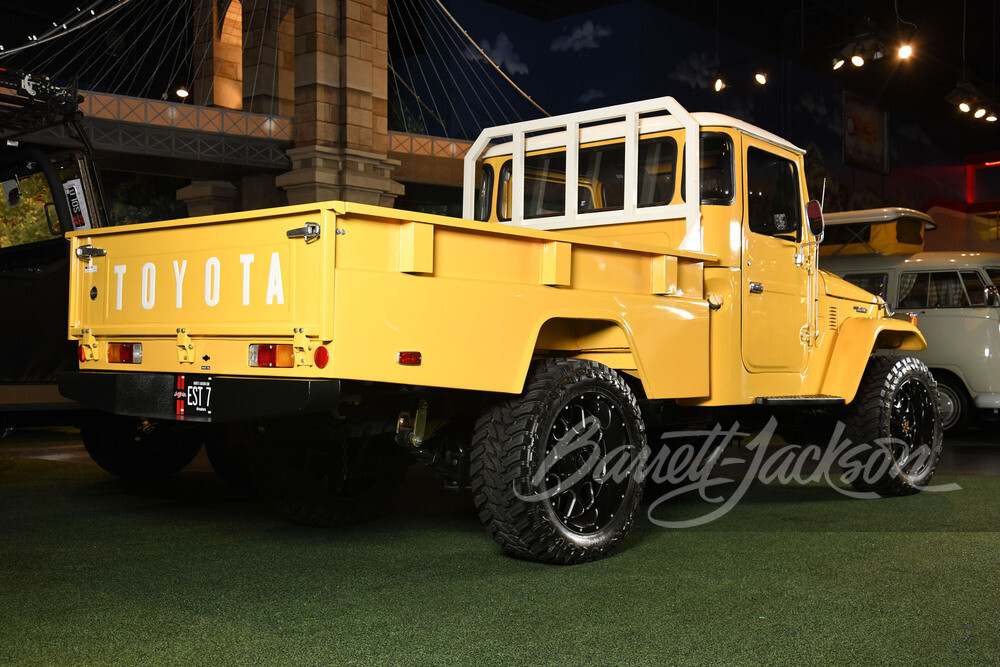
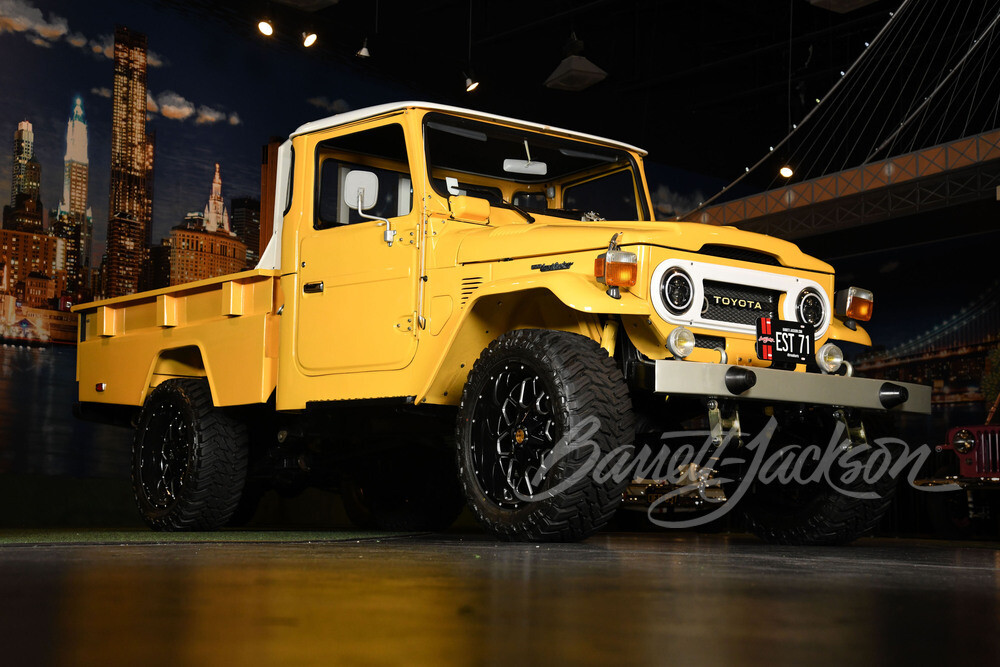
The FJ series started that trend, so we fully expect this completely restored FJ45 to score a seriously high number. It still uses the standard six-cylinder aspo driveline with the four-speed manual, as well as working A/C and custom stereo. Other modifications include two-inch lift and 20-inch Hardrock Gunner wheels wrapped in 33-inch tyres.
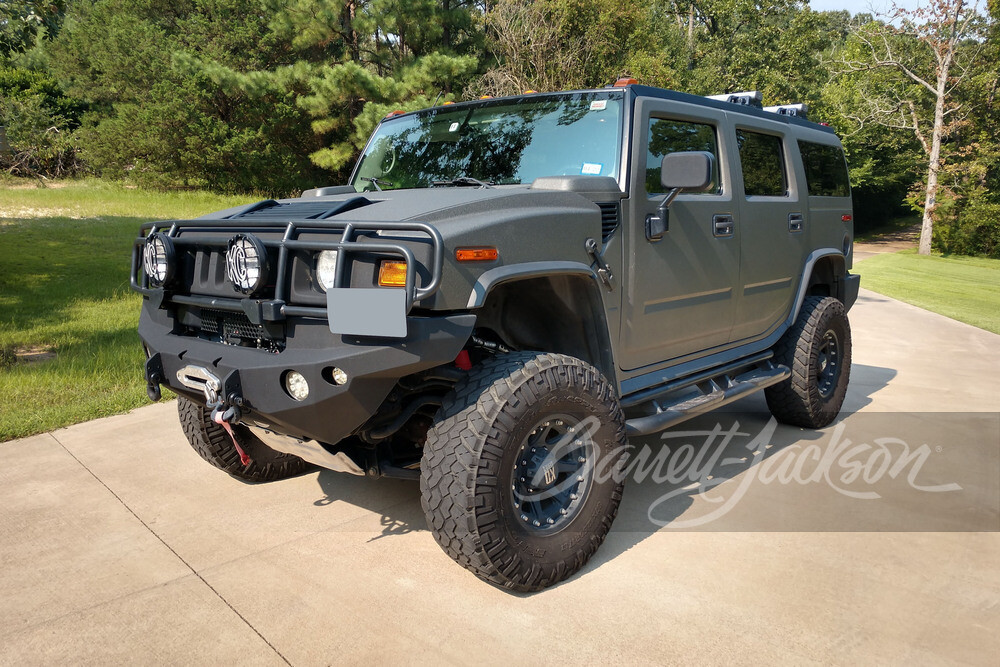
Bigger is better, right? This 2003 Hummer H2 has been shoved with a 6.6-litre LBZ V8 Duramax twin-turbo diesel, backed up by an Allison six-speed automatic. Other modifications include a 4-inch lift, 37-inch Nitto tyres and a heavy duty winch.
IF THERE were two basic ingredients every touring 4×4 needs, quality recovery gear and reliable communication equipment would be on top of the list. We’ve got the recovery side of things covered and we now have communications sorted after installing this GME XRS-330C UHF radio with the AE4702BTP antenna twin pack.
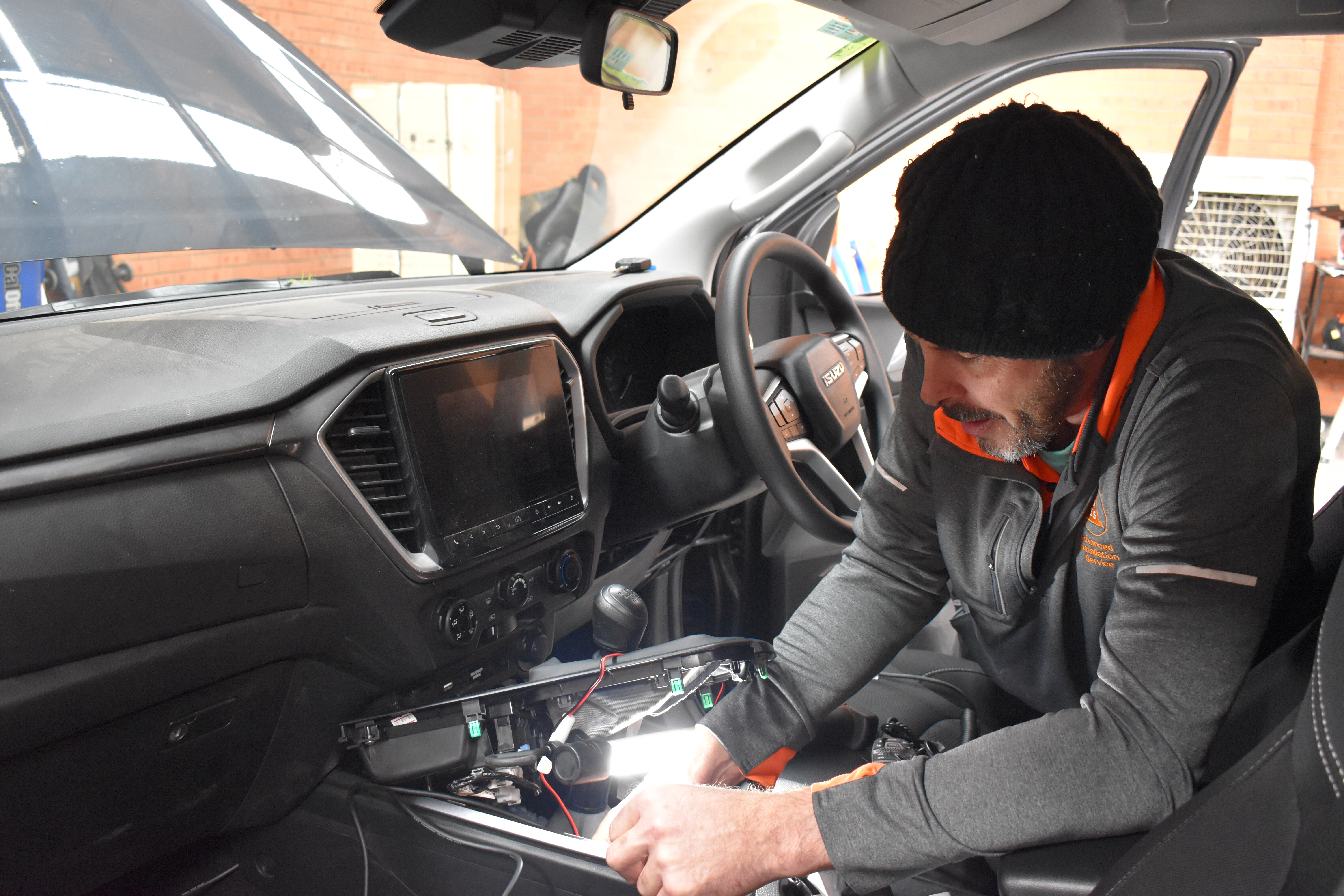
Jeremey (who’s Amarok custom featured in issue 449) from Advanced Installation Services (Emu Heights NSW) handled the install, and ran me through the process. For anyone with a 2020 Isuzu D-MAX, there is a grommet on the passenger side on the firewall to pass the antenna cable through. There are also spare fuse slots for 12V power, found in the driver’s side kick panel.
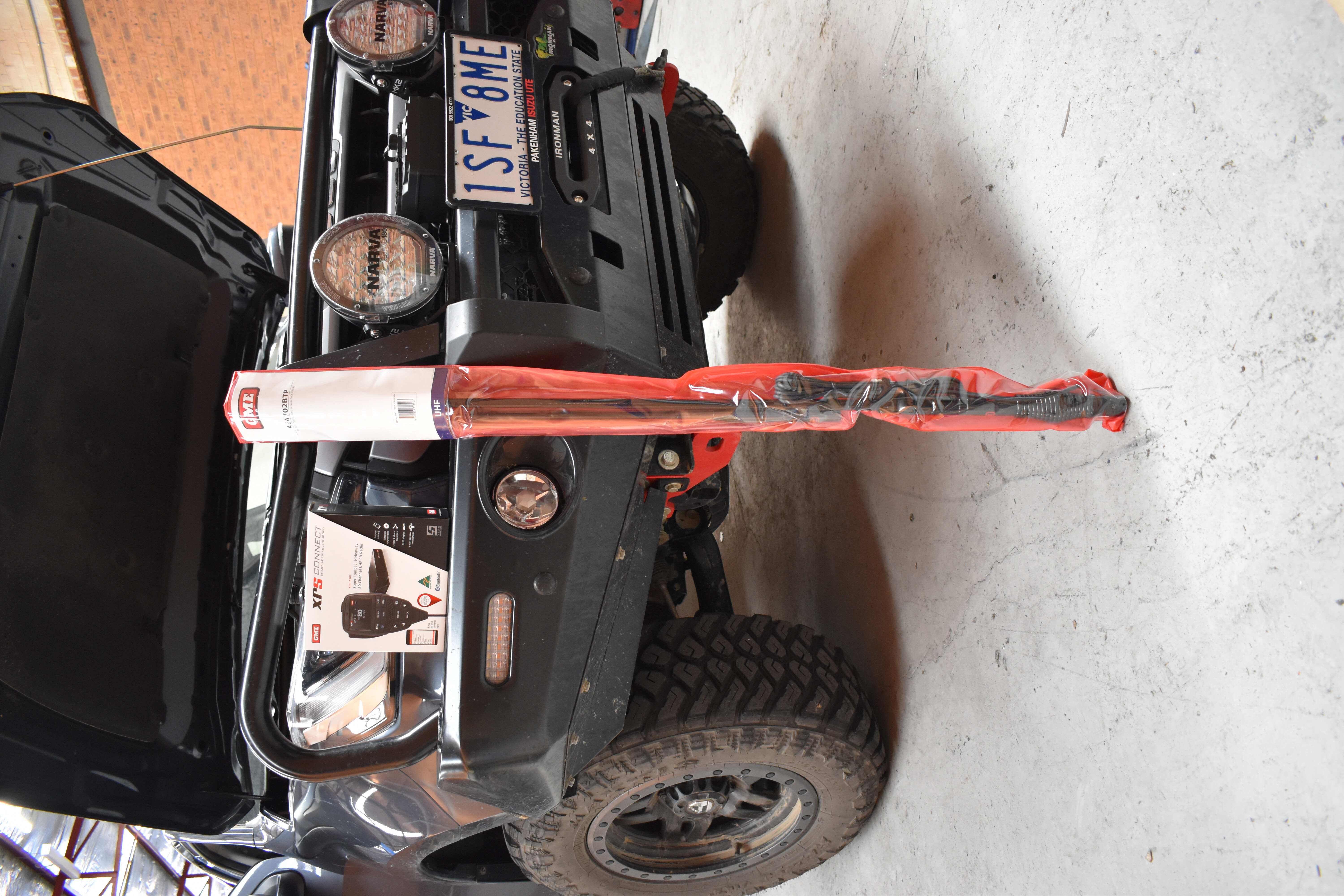
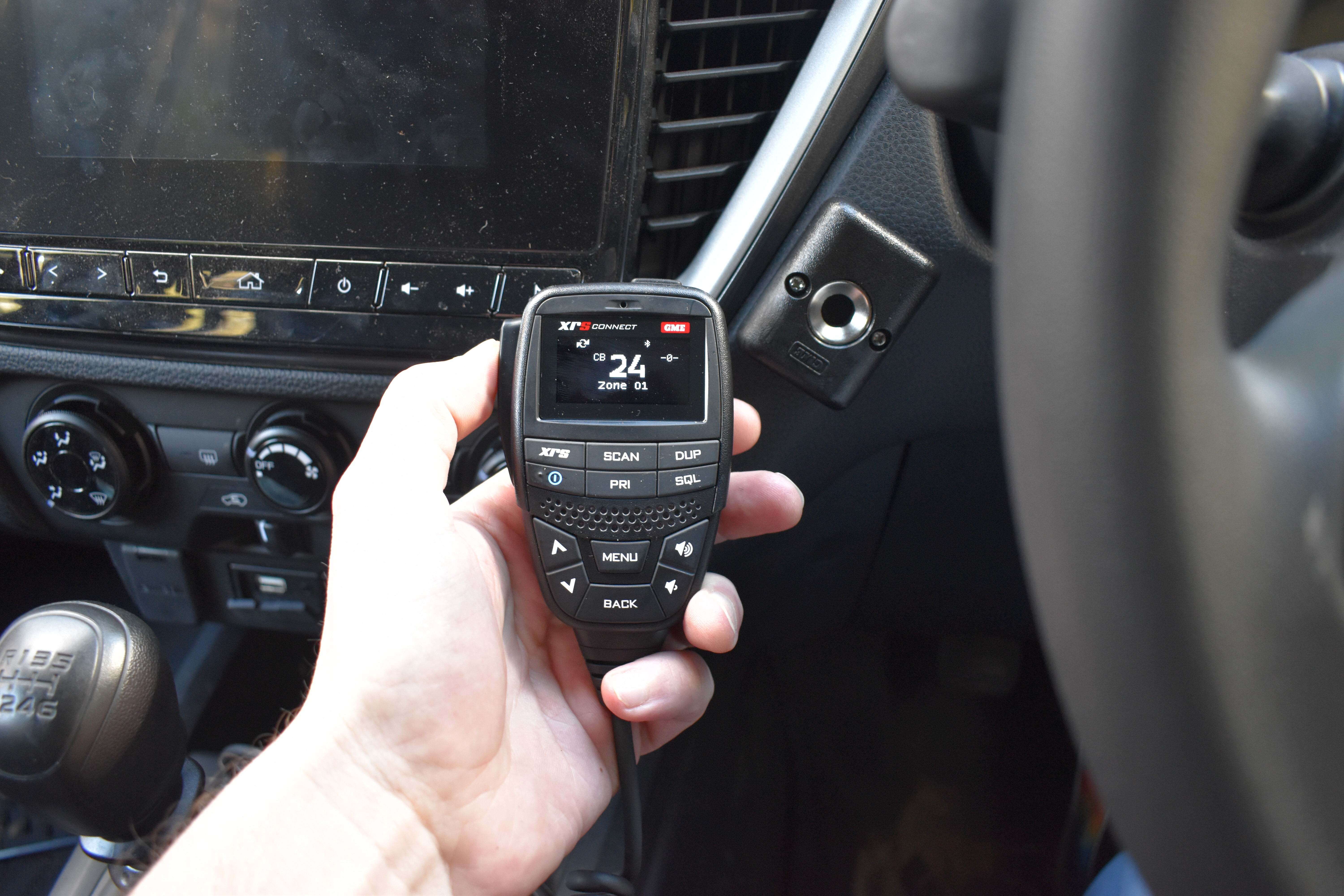
The XRS-330C from GME is compact, which allows the base unit to be mounted under the trim surrounding the transmission tunnel (or behind the dash). A small pass-through adaptor was secured into a blank switch slot, making for a very neat install. The business end of this GME UHF is all in the microphone handpiece, which is held in place with a neat optional magnetic mount (part number MB207) and strong double-sided tape.
Naturally, the XRS-330C is an 80-channel UHF so suits Australian requirements, but it’s also manufactured and designed in Australia. As mentioned, the handpiece is packed with tech making for an easy install. There’s an OLED display for easy visibility and front mounted speaker meaning you won’t need an external speaker to hear radio chatter. It also comes with an app called XRS Connect App which allows you to control and configure radio settings using Bluetooth. You can even use this app to share your location using your phones GPS location.
RATED
AVAILABLE FROM:
Snapshot
- Restored 60 series sells for record US$134,400
- The second classic LandCruiser to sell for over US$130,000 in successive months
- No sign of classic LandCruiser market slowing down
The market for classic LandCruisers is showing no signs of slowing down – with a mint condition 60 series 1986 LandCruiser selling at auction in America for US$134,400 (AU$187,873) before buyers fees.
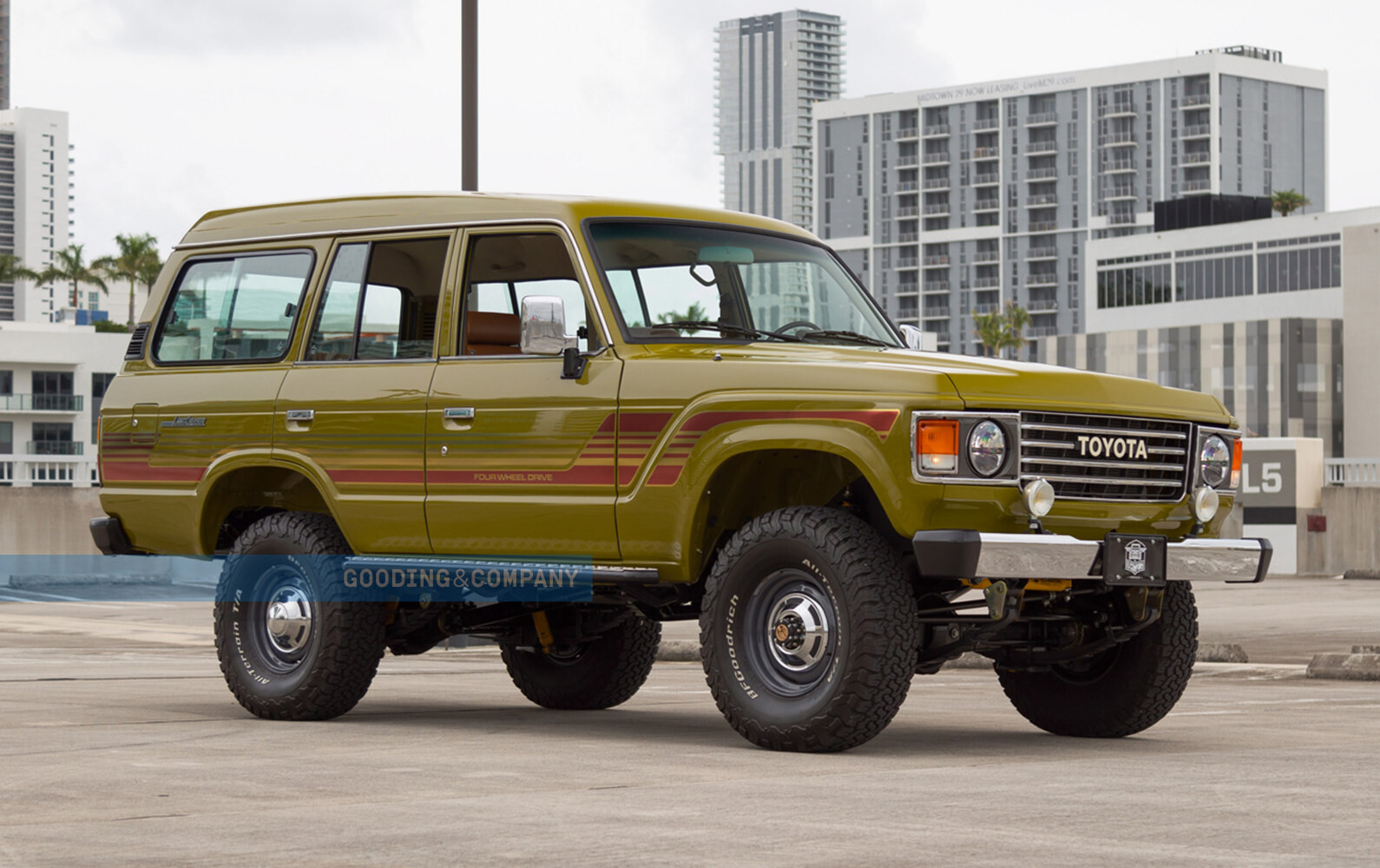
The FJ62 ‘Cruiser went under the hammer at Gooding & Company’s Pebble Beach auction, well and truly exceeding the estimate that was forecast between US$70,000 (AU$97,980) to US$90,000 (AU$125,976).
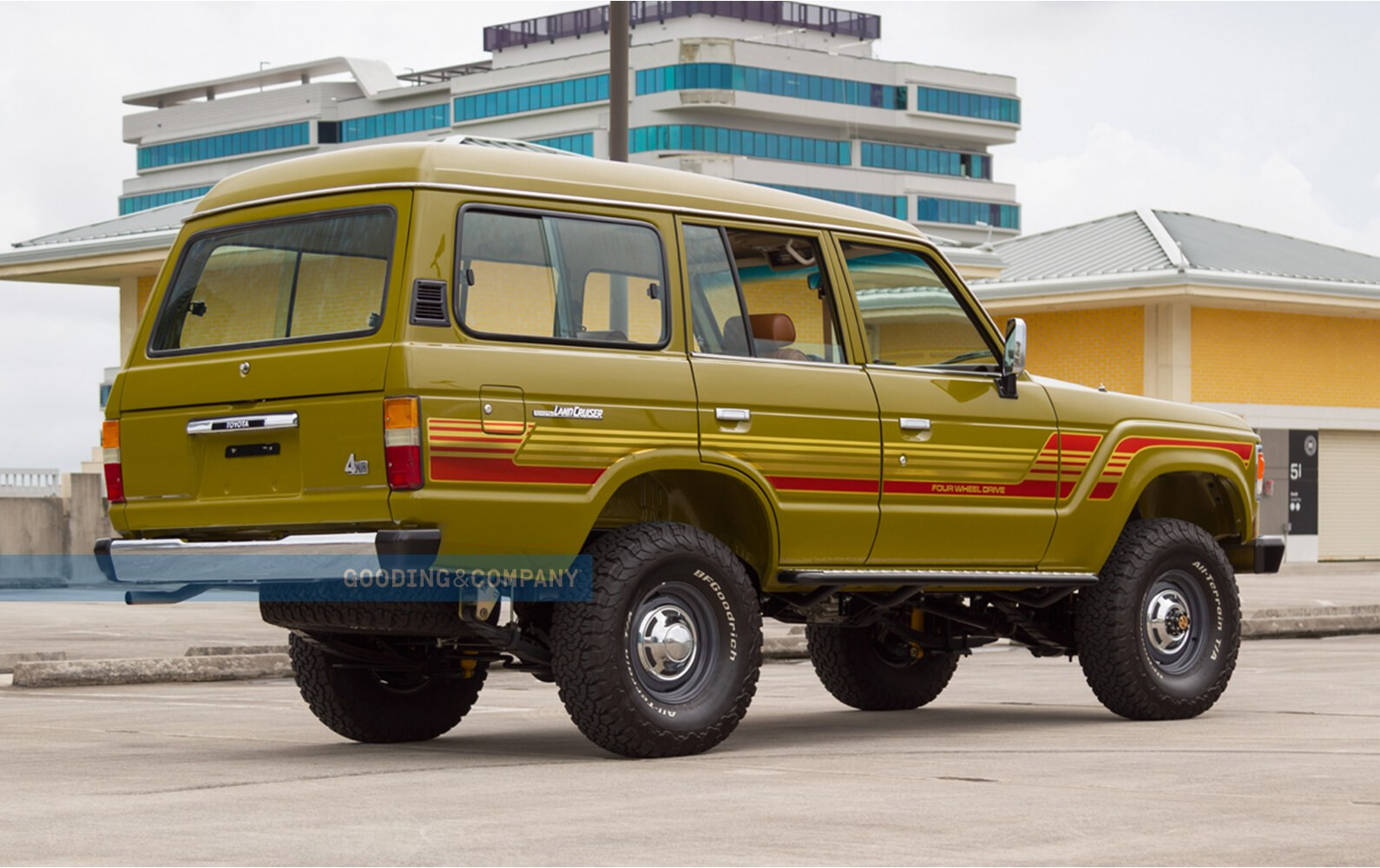
The news comes just a few months after an 80 series with just 1005 miles (1617 kilometres) on it sold on US buy-sell website Bring-a-Trailer for US$136,000 (AU $190,100).
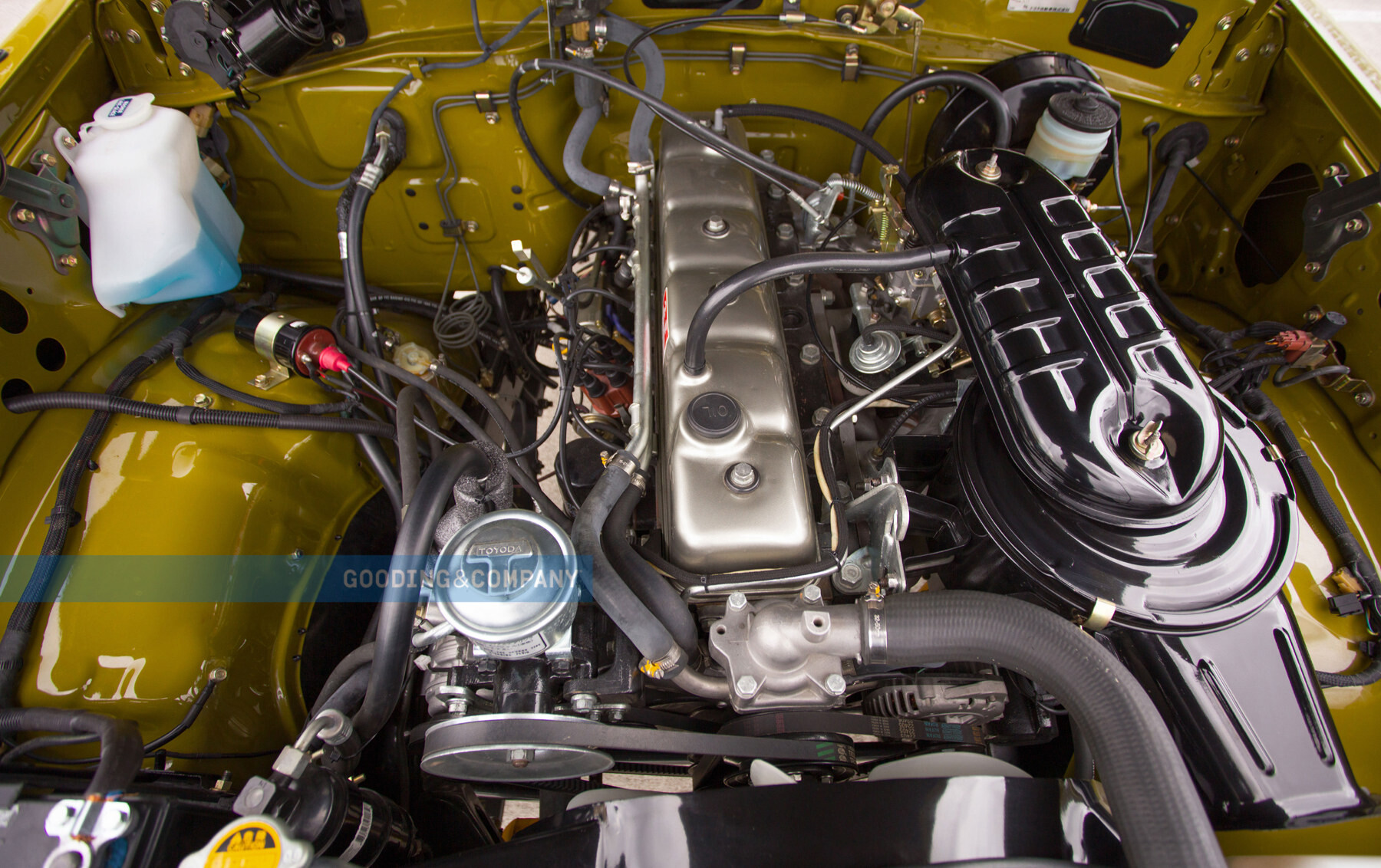
The 60 series is a high-roof model with rare luxuries like a powered sunroof, and was treated to a full frame-off, two-year restoration by LandCruiser specialists, The FJ Company.
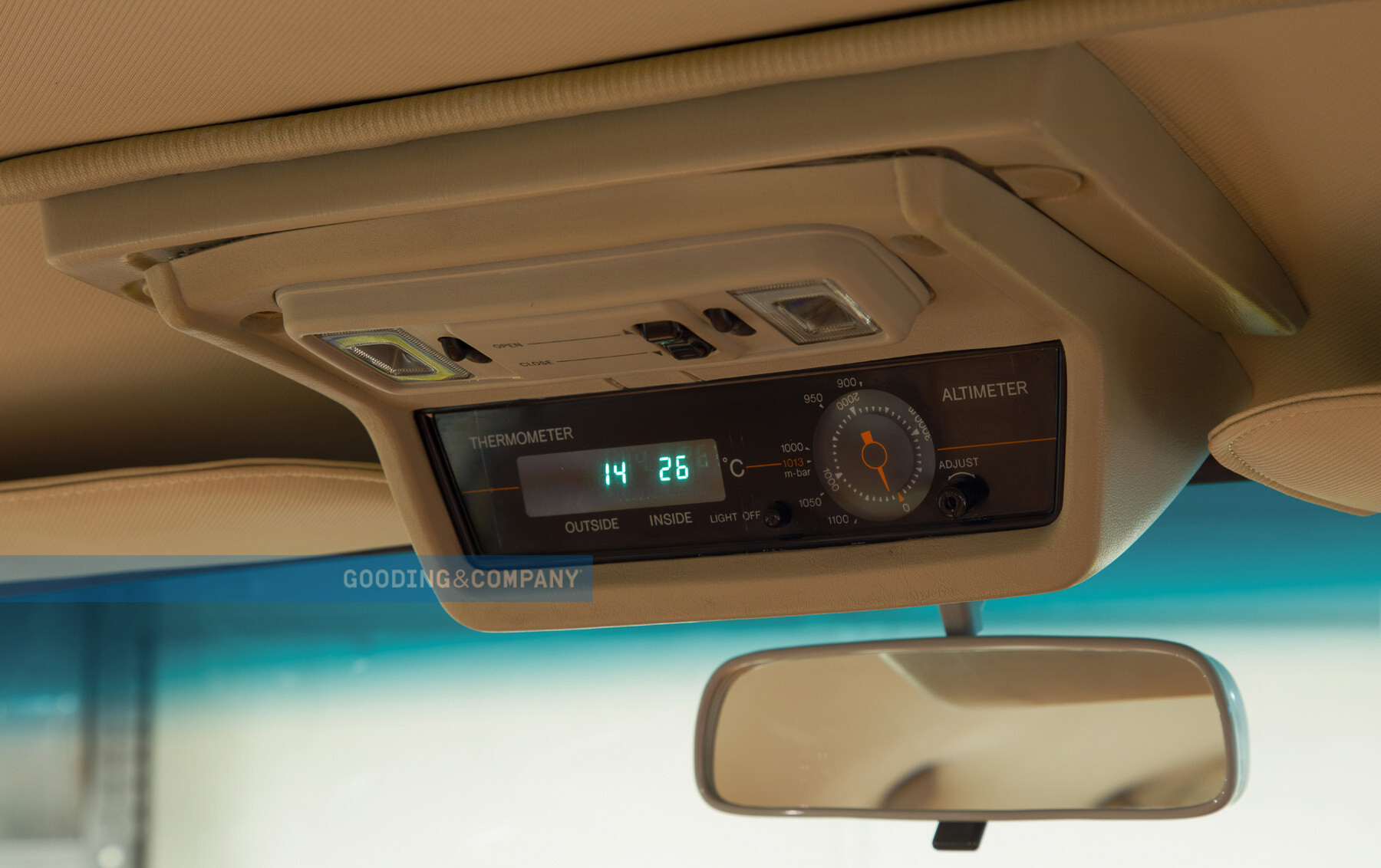
Included with the sale was the original tool kit, and the air conditioning even works along with the outside temperature monitor and altimeter.
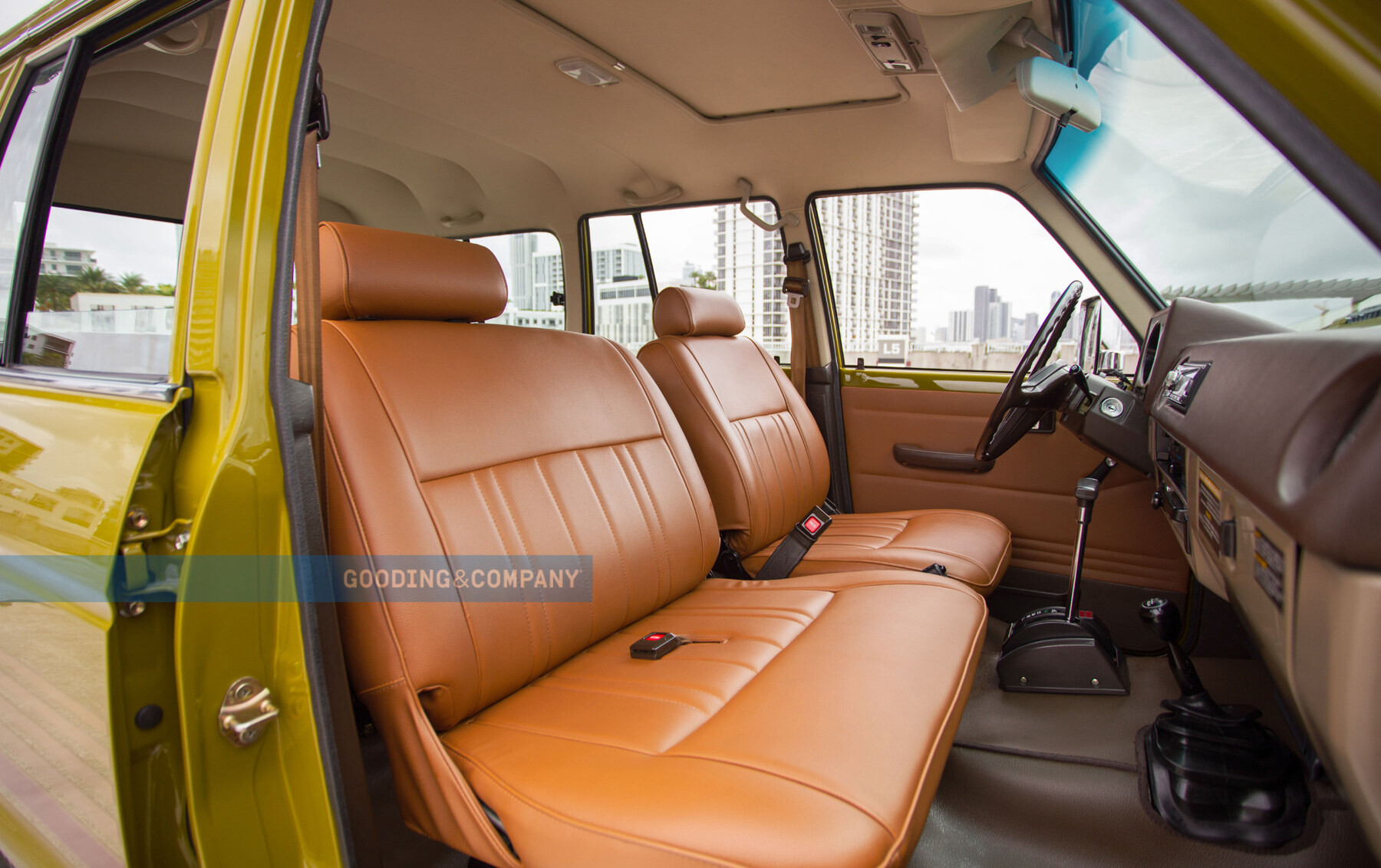
The car isn’t 100 per cent original though, upgrades include; Old Man Emu suspension, 33-inch BF Goodrich all-terrain tyres, LED headlights and an aftermarket head-unit with bluetooth and smartphone compatibility.
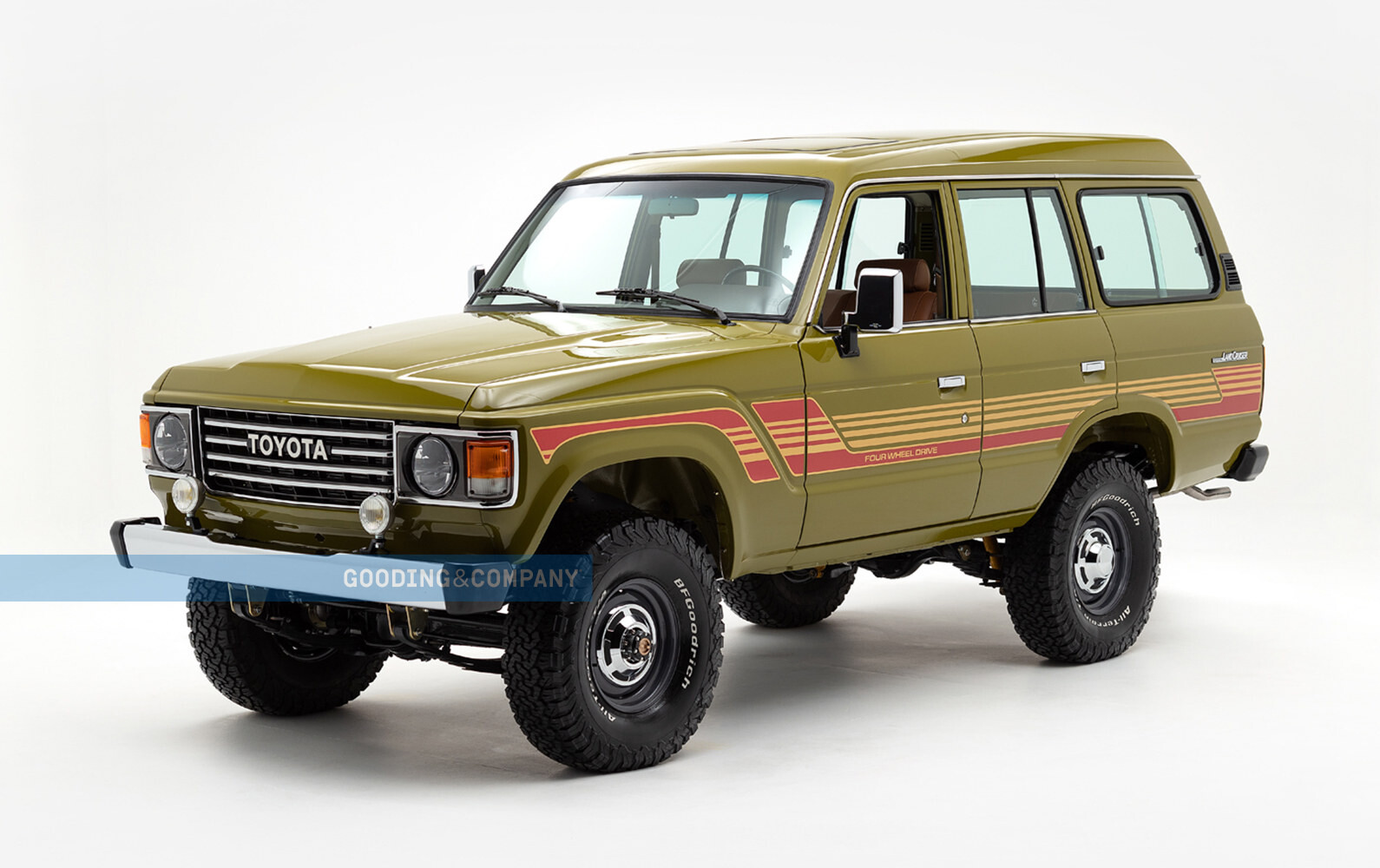
The record high prices follow on from the steady increase in value we’ve seen from earlier FJ-series ‘Cruisers, and earlier this month Toyota announced it would start making restoration parts for the 40 series LandCruiser early next year, with later series to follow after.
There’s a side of Australia most don’t ever see. Perched up in their high-rise apartments in the guts of cities all along the eastern seaboard, the average Joe has no understanding of what lies beyond the city lights. They’ve never seen the endless kilometres of corrugations. Couldn’t fathom the idea of hours between fuel stops, let alone days. The concept that a marked road may be nigh on impassable, requiring winching, sawing and technical driving ability to master it, is so foreign to them you may as well be describing a Mongolian odyssey. But for those with red dirt in their veins it’s a part of life; it defines not only their entire concept of adventure, but the very vehicles they build to tame the great outdoors.
With his sights set on serious remote touring, Luke knew he’d need a serious 4WD to get the job done, and with a Lifestyle Campers Reconn R2 ready to hook up to the back, a modern dual cab wasn’t going to cut the mustard; it’d need a bit of serious get up and go as well. Enter a stunning Merlot Red 2020 LC200 GXL, one of the toughest 4WDs on the market in factory form, and even tougher again after Luke had KDT Automotive Solutions spin its automotive wizardry on it.
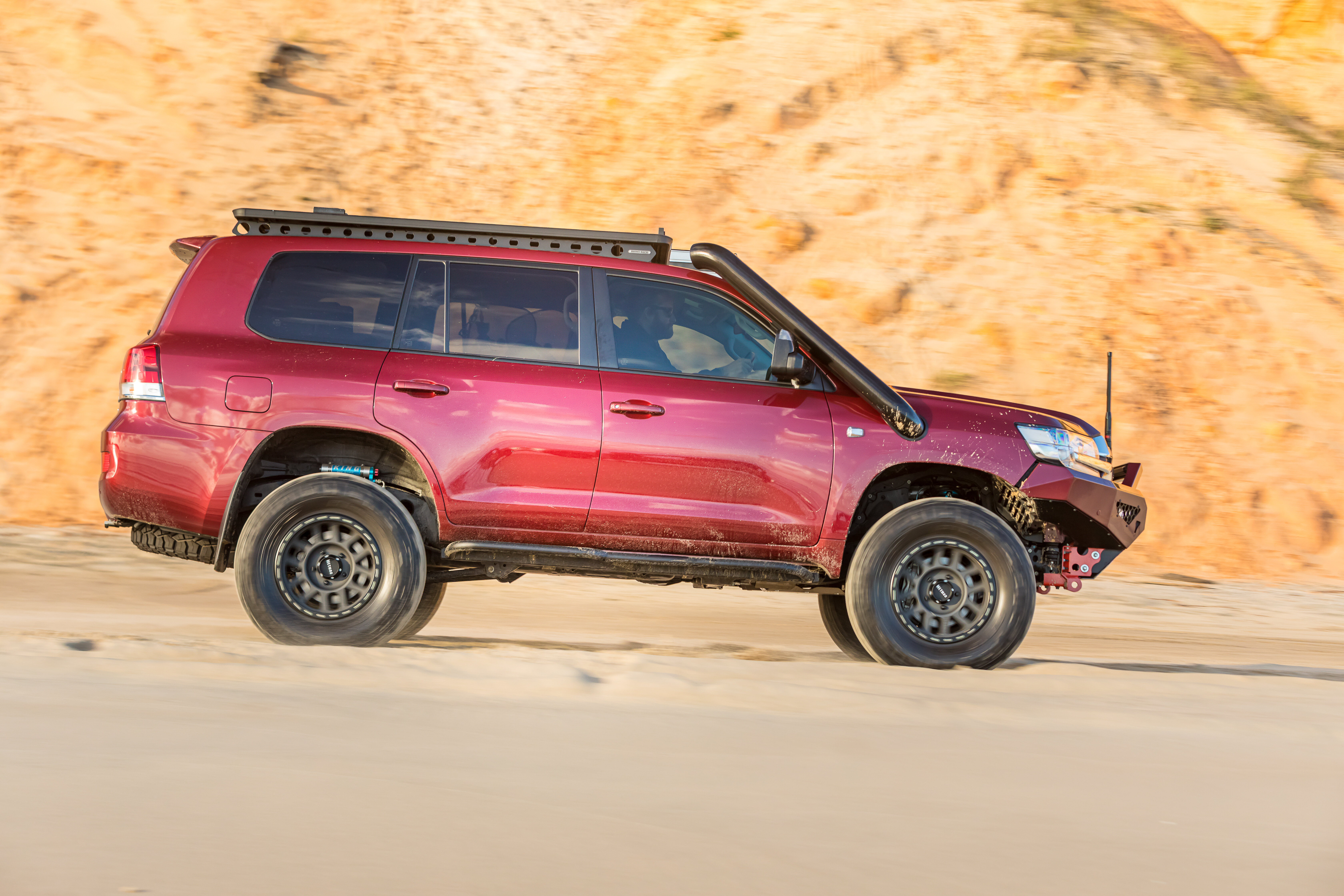
Like many tourers on the market, Luke knew the gear he’d be adding would start eating into the factory GVM, leaving him in a pinch of strife if he ever came face to face with a stern inspector holding a set of scales. With that in mind before he even picked up the keys, he had Darren from KDT lined up for a second-stage rego-certified GVM upgrade, bumping the Cruiser up to a massive 3800kg legal weight limit. With the LC200 so robust right out of the factory, extensive modifications weren’t required to boost the carrying capacity, but he did start with a solid foundation.
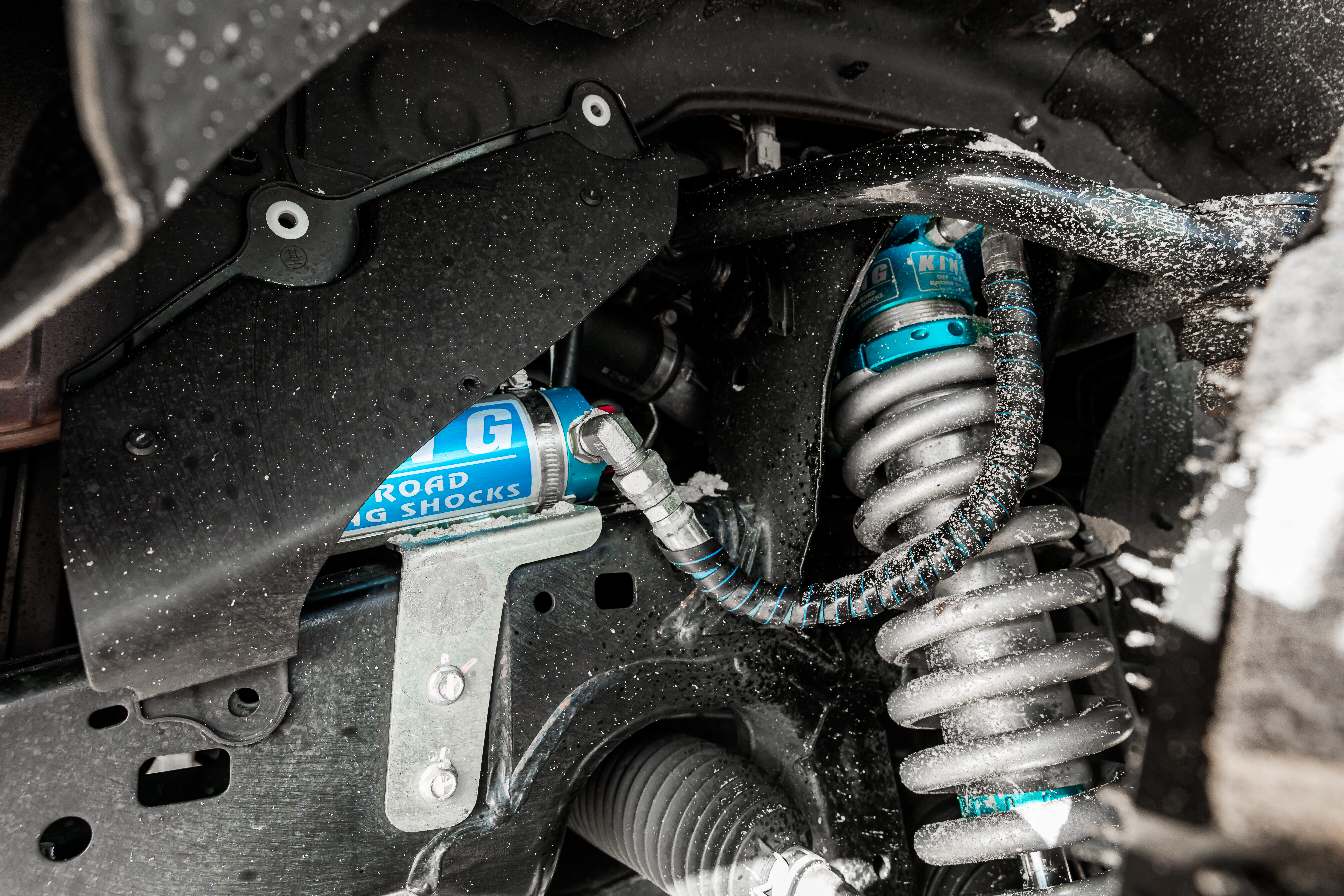
Hiding in each wheel of the Cruiser are huge 2.5-inch diameter King shocks with remote reservoirs and adjustable dampening, allowing Luke to dial-in his suspension set-up to suit exactly the loads he’s carrying and how he wants the rig to ride on the magic-carpet scale. Up front, the King shocks have bumped the ride height three inches closer to the clouds with Eibach springs, while the rear sits two inches higher on a set of Aussie-made King springs, a popular combination to level out the factory rake so many OEM 4x4s come with these days.
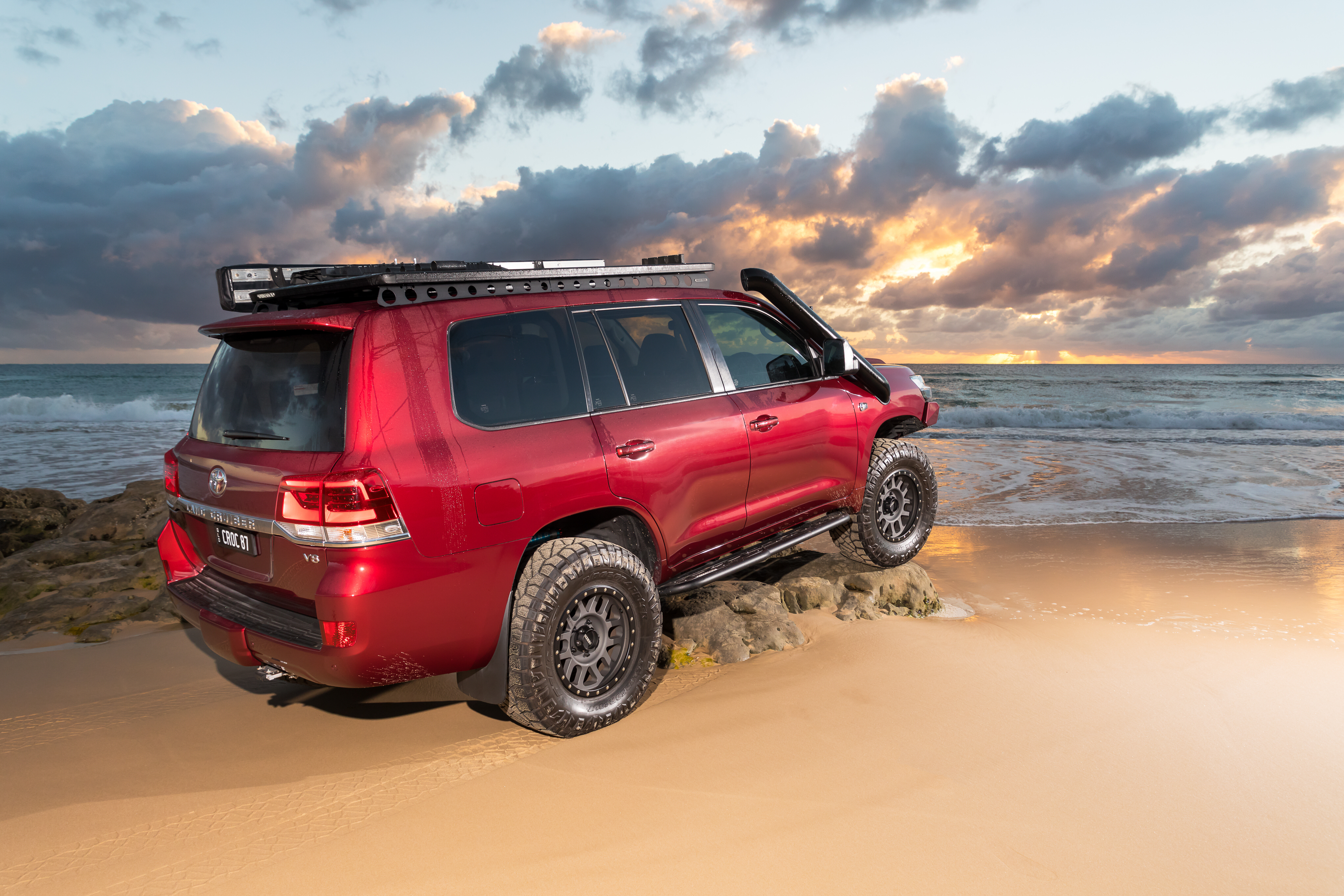
While it was on the hoist, a host of ancillary parts were fitted to ensure the Cruiser didn’t just sit better, but performed better too. Back to the front, and the restrictive OEM upper control arms have been binned and in their place now reside a pair of significantly beefier Blackhawk replacement arms, with the upper ball joint realigned to suit the new ride height; the suspension now far more comfortable at full travel. Moving backwards, the restrictive Panhard rod has swung the Cruiser’s diff to the side with the new lift, so an adjustable unit from Roadsafe was optioned up, providing a strength upgrade as well as adjustability to get the axle tracking straight again. Eagle-eyed readers will spot a set of Airbagman helper springs tucked inside the rear coils, allowing Luke to effectively increase his spring weight if the rear end is loaded up.
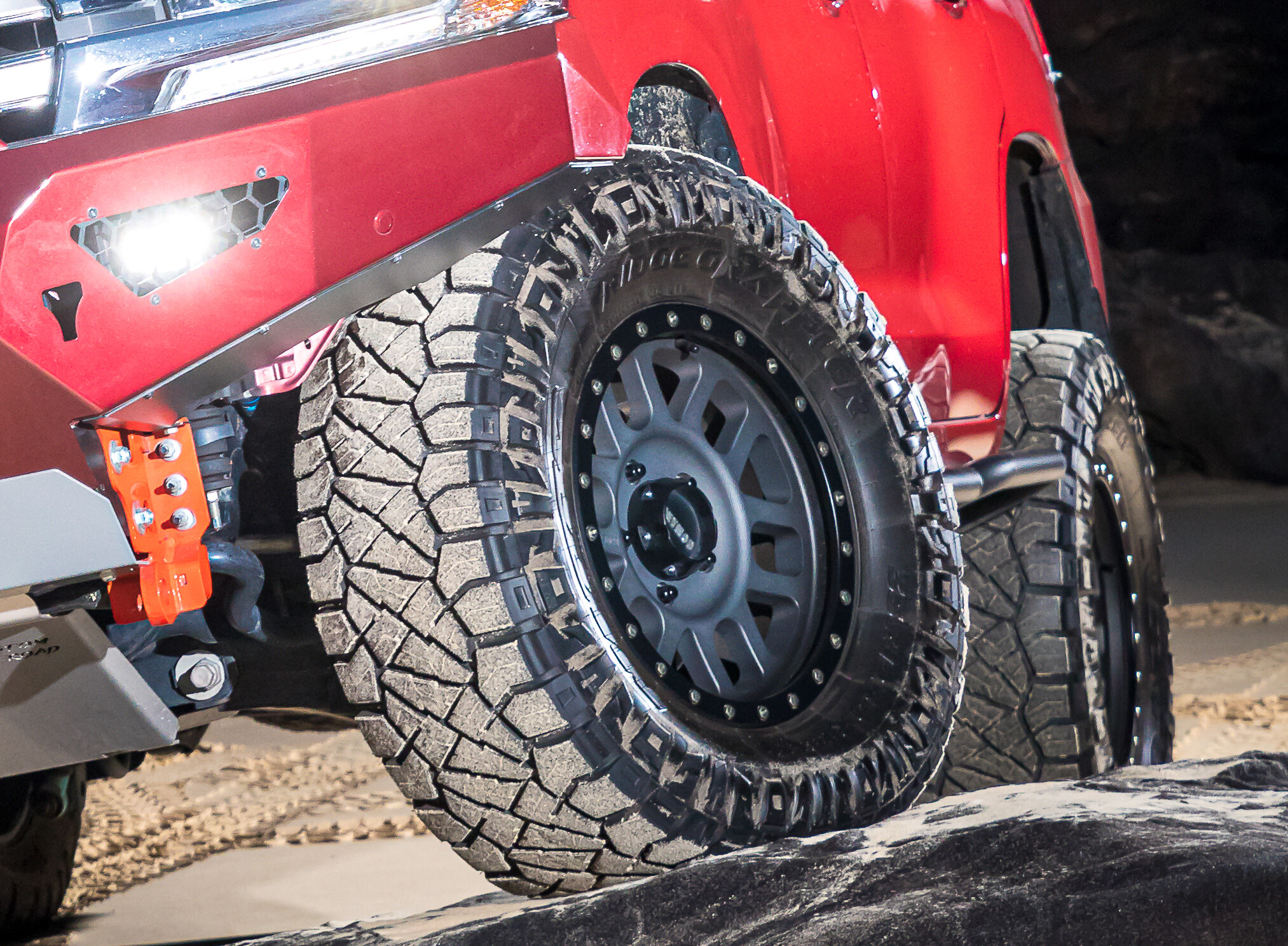
With so much space liberated in the wheel arches, Luke knew exactly what he’d need to do to fill it. “The overall goal of the build was long-range touring,” Luke told us. “But I didn’t want to compromise the look of the car.” Each corner now sports huge 18×9-inch 309 Grids from Method Race Wheels. Measuring in at +18 offset, they line up perfectly with the guards, giving the Cruiser an aggressive look without requiring huge flares to cover larger offsets. They’re wrapped front to back in 35×12.5-inch Nitto Ridge Grapplers, an aggressive all-terrain tyre perfect for a do-it-all tourer. “I didn’t want to go down the path of flares,” Luke says. “It meant with the offset I was running, a body mount chop and some minor guard trimming was required.”
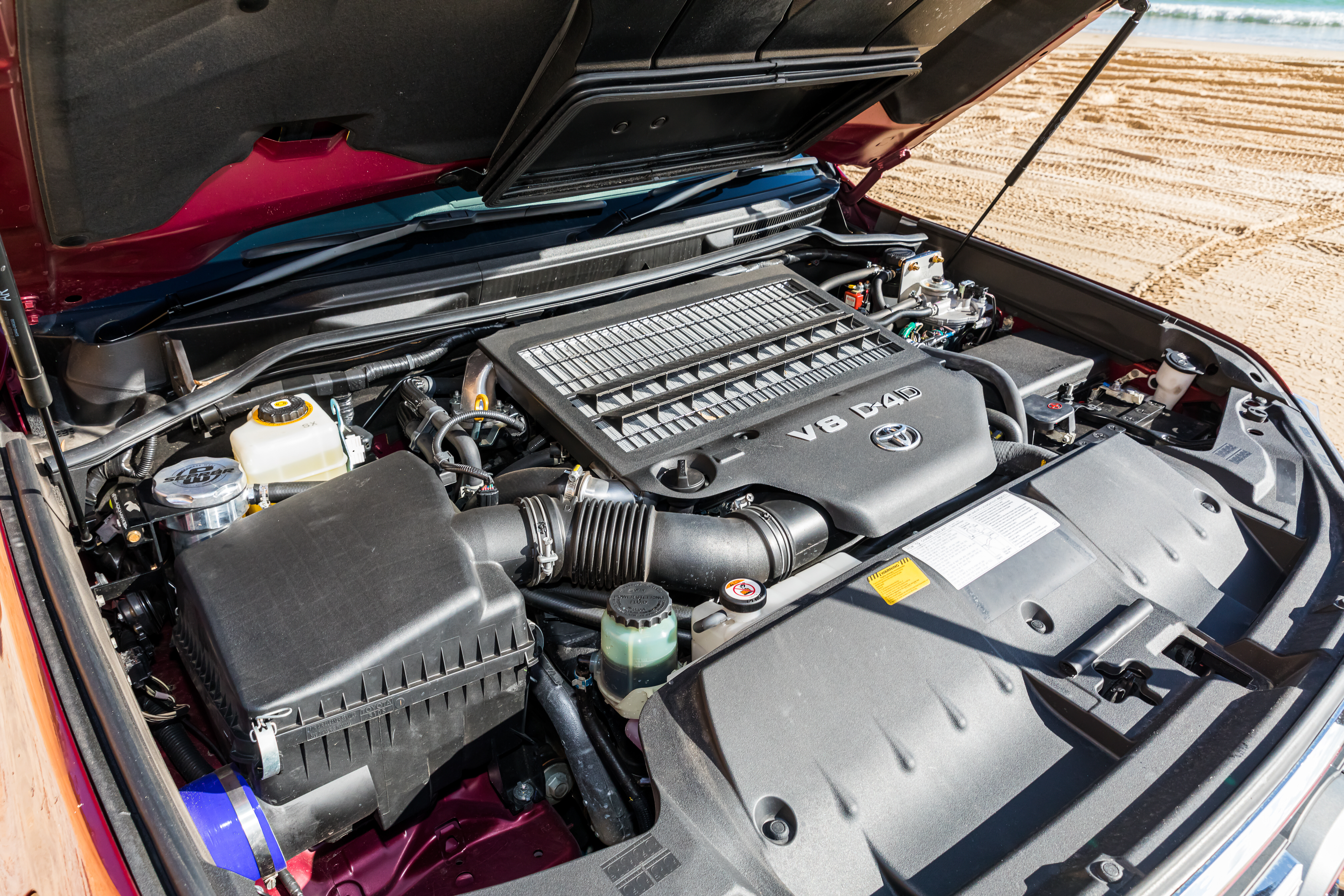
Keeping the whole show motoring down the road is the renowned twin-turbo bent-eight 1VD-FTV diesel. It’s breathing freely through a five-inch Vogue Industries stainless-steel snorkel and Unifilter combination. A Direction-Plus pre-filter helps ensure the injector pump and injectors live a long and healthy life, while a Process West catch can separates oil from the engine’s blow-by, helping keep the intake gunk free without blocking the EGR like so many people do these days.
Back on the outside and the Cruiser’s distinct look comes from the clean-as-a-whistle ‘Predator’ bar from Offroad Animal in Victoria. The colour-coded unit not only armours up the Cruiser’s soft bits, it also provides a home for a 22-inch slimline LED light bar from Stedi. Sliding back and the up-armouring continues with a set of Legendex rock sliders protecting the vulnerable sill panels.
Underneath, there’s more steel than a Sherman tank in the form of Custom Offroad bash plates front to back. MSA towing mirrors help bump out the view too, to let Luke keep a keen eye on the Lifestyle Campers set-up on the hitch.
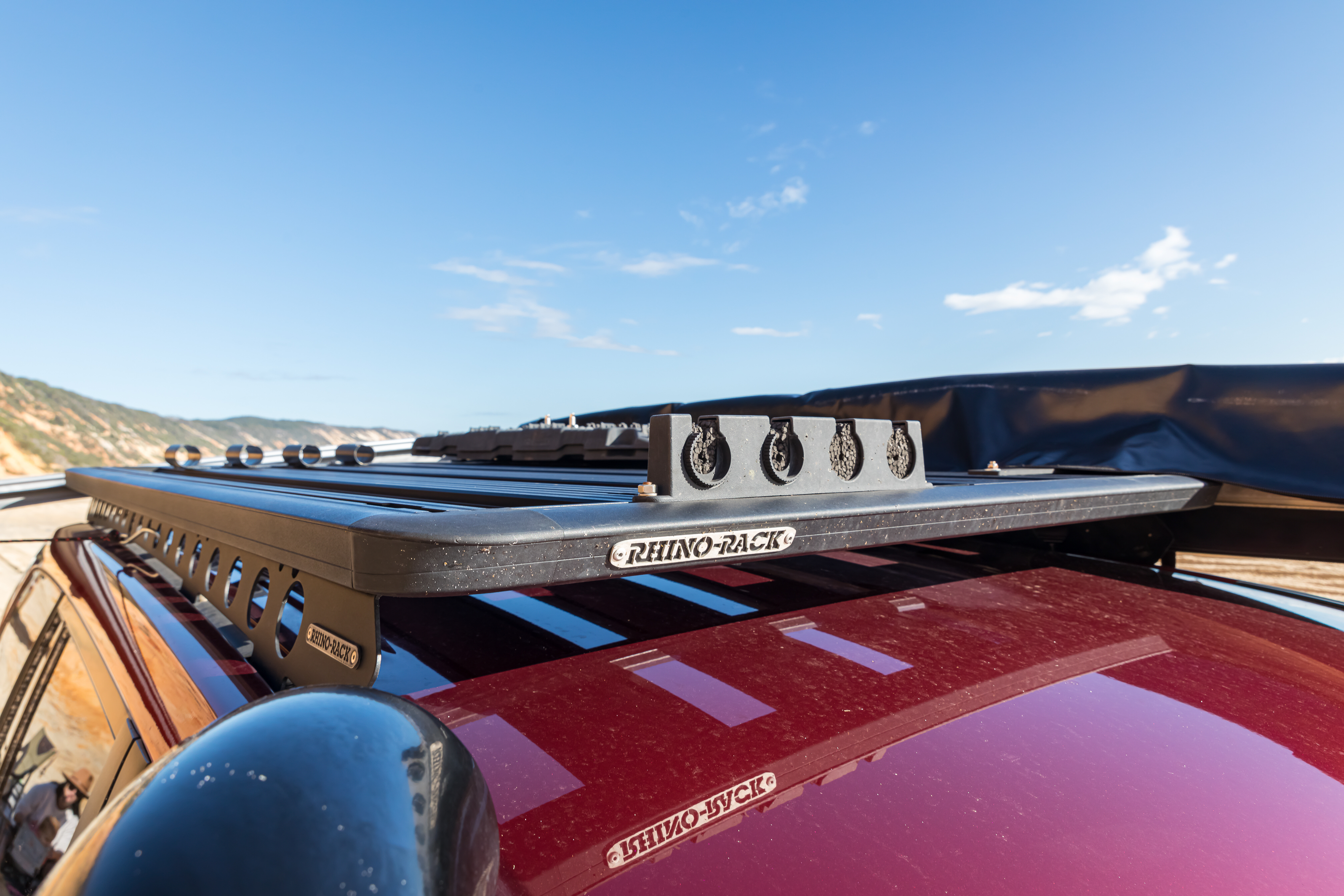
Up top there’s more than two square metres of touring storage thanks to a full Rhino-Rack set-up resting on a Backbone mounting system. It plays host to a 270-degree awning, a couple of additional light bars and a few recovery items if things turn pear-shaped on the tracks.
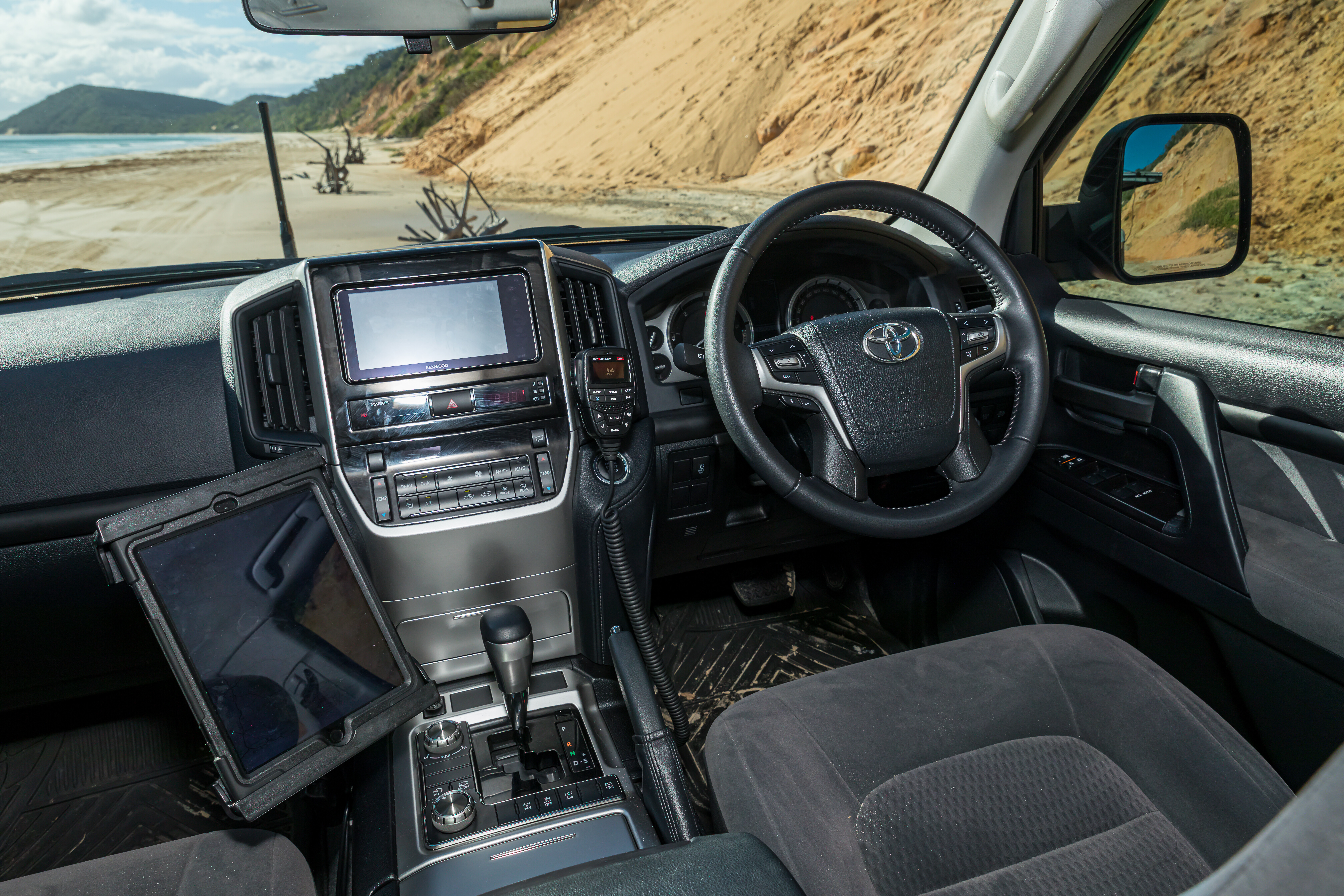
Sliding into the captain’s seat, Luke’s kept things simple but practical for his remote touring needs. A Throttle Monkey unit lets him dial in the throttle sensitivity, allowing him to dull it right down for precise rock-crawling work, or give him instant throttle response in soft sand or mud. A GME XRS 330C falls easily to hand, the high-tech unit not only giving clear communications but allowing Luke to replay previous messages and locate other members in his convoy thanks to the built-in location services. Hanging off the centre console is a full-sized iPad with off-road mapping, and a Redarc trailer-brake controller equipping Luke with all the tools he needs in his off-road arsenal.
While Luke’s Cruiser may not be one of the most modified we’ve ever seen, it’s easy to see it’s one of the most well thought out and intentionally modified. Everything he needs for remote touring, everything he’d want for hard weekend wheeling, and enough drool factor to ensure he’ll spend plenty of nights sitting in the shed looking at it with a smile on his face.
TRADING SPACERS
In days gone by, if you wanted your wheels to sit further out of the guards, you’d whack in a set of wheel spacers, convince yourself you’d recheck their tightness regularly, then never check them again until they came loose and left you stranded. With so many suitable aftermarket wheel options on the market, people are now putting the effort in to not only getting the right-looking wheel for their rig, but making sure it fits right too. Radius and width are easy enough to understand, but when it comes to offset a lot of people are left scratching their head wondering what the heck the +18 even means. We’re a bunch of nice fellas here at 4X4 Australia, so we figured we’d take the chance to shine a little light on the topic. Picture a typical wheel at 8-inch wide, but we’ll call it 160mm because mixing metric and imperial is an offence that should be cause for capital punishment. If your wheel is 0 offset, it means the wheel-mounting surface sits smack bang in the middle of the wheel, you’ll have 80mm of the wheel poking out from the rotor, 80mm poking in. If you’ve got a positive offset, your wheel-mounting surface moves to the outside by the same amount, a +20 offset means you’d have 100mm of wheel poking in, and 60mm poking out. Negative offset is just the opposite and would sit further out by 20mm.
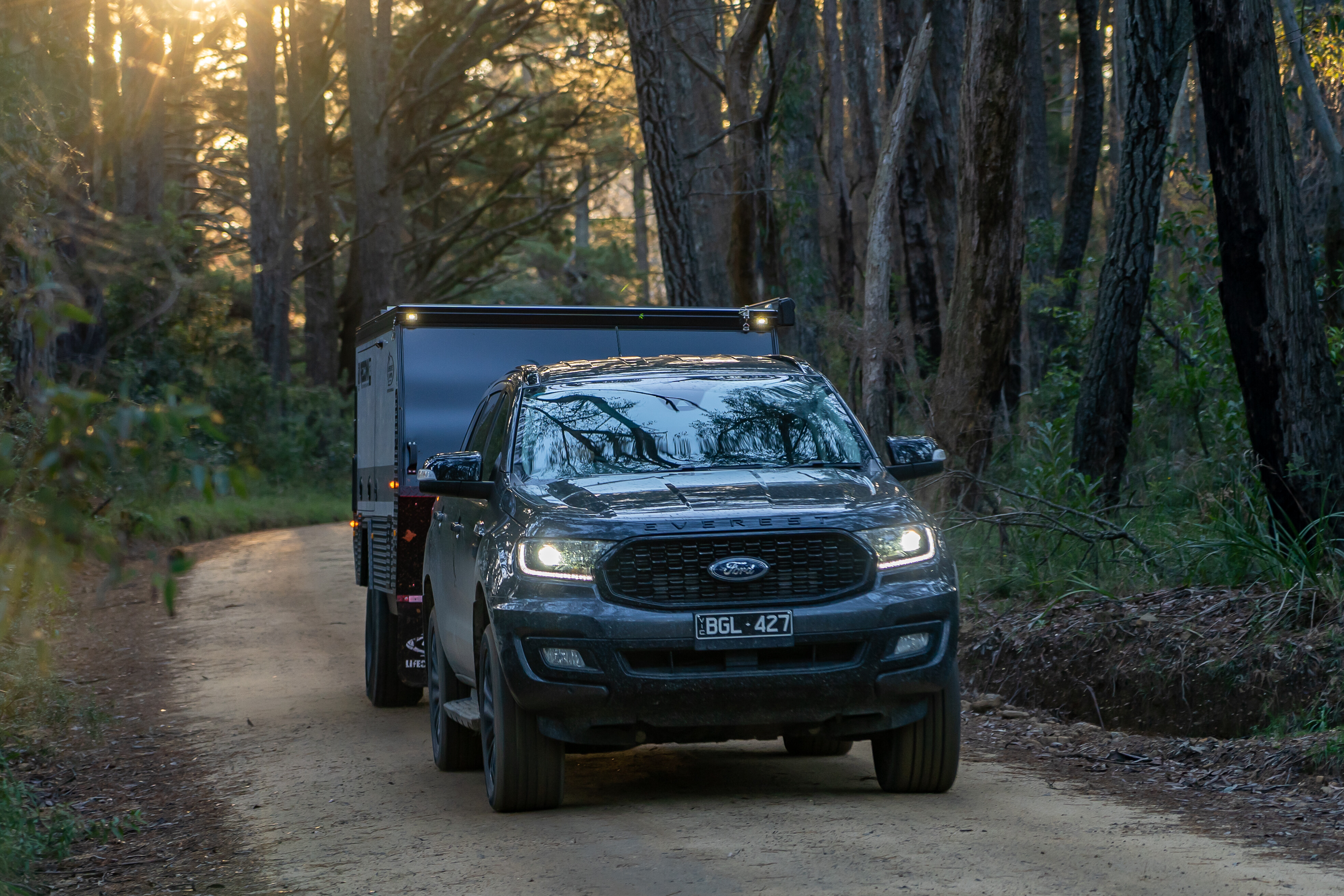
I’M going to start this yarn with a quick little disclaimer here, I’m going to be biased. Not because Lifestyle Campers have lined my pocket, hell they’re probably going to charge me for cleaning out the empty beer cans I left in the fridge. No, instead I’m biased, because this is the camper I’d buy right now if I had the money in my pocket, and I don’t, due in no small part to the beer I just mentioned. Ain’t life poetic sometimes?
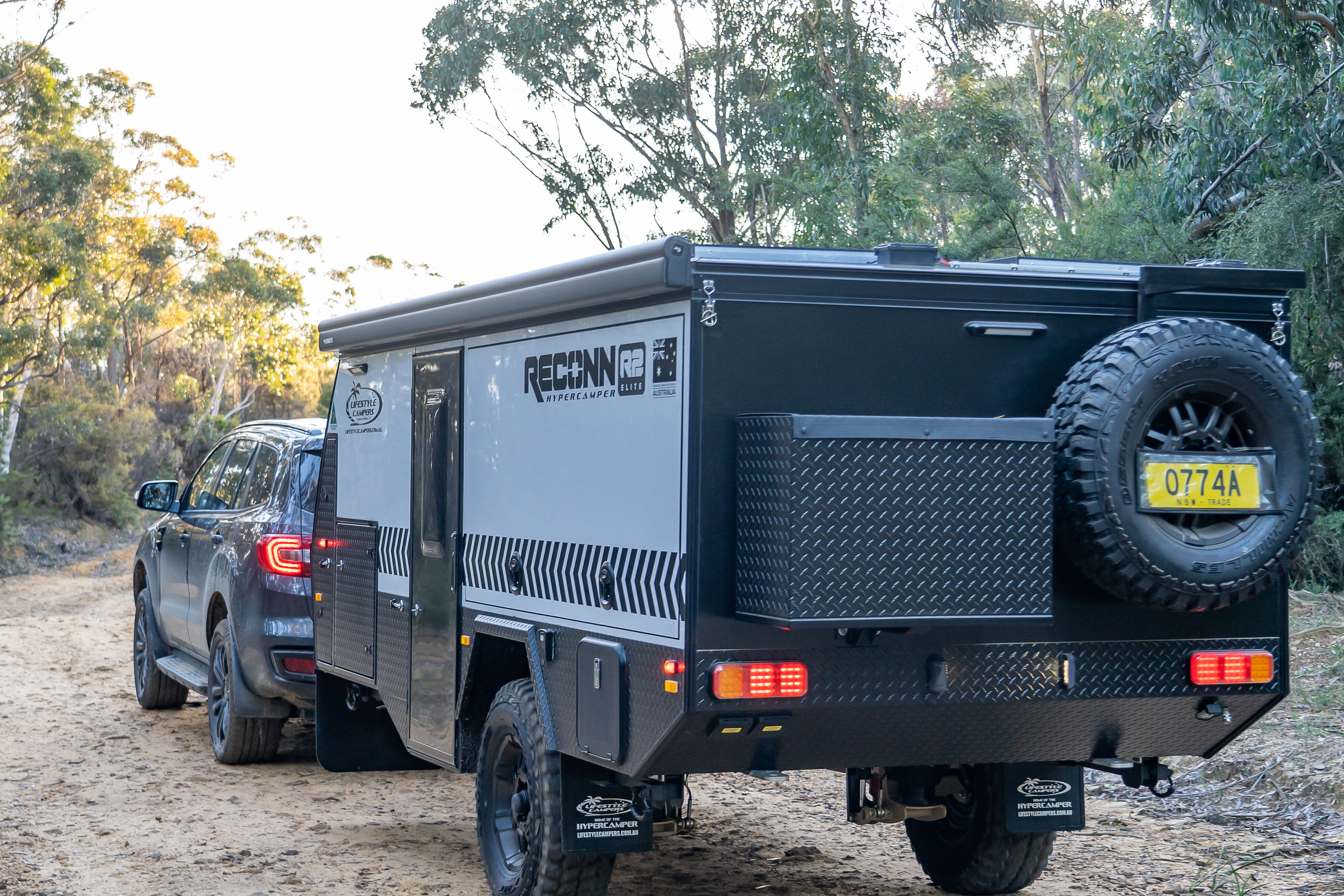
You see, campers of any description fit a reasonably small part of our life. If you camped every weekend of every month of every year of your life, your camper would still spend more than 70 per cent of the time parked in your driveway. To me, that means a camper needs to make life a lot easier so I can maximise my time kicking back drinking the previously mentioned beer and watching the sunset over the water somewhere far beyond the nonsense the other five days of the week bring. I’m not overly fussed on how many comforts I’m bringing, I just don’t want to have to wrestle a tent and collapsible table just to be away from it all. Camping should be about camping, ya know? Building camp fires, cooking up a good feed, exploring the tracks nearby, and to that extent the Lifestyle Campers Reconn R2 Elite knocks off-grid living out of the park.
OFF THE BEATEN PATH
I’M going to start here, because this is a 4×4 magazine, not Queen Bed Monthly. There are a few things I look for in any camper trailer to gauge its off-road ability, things that have never led me astray after a good couple of hundred thousand kays towing these contraptions around, and things that you can pick out yourself as problems or benefits before even laying your eyes on one in person – unladen weight, and dimensions packed up. Get those two features right and everything else damn near falls into place. So how does the Reconn R2 Elite stack up against its competitors off road?
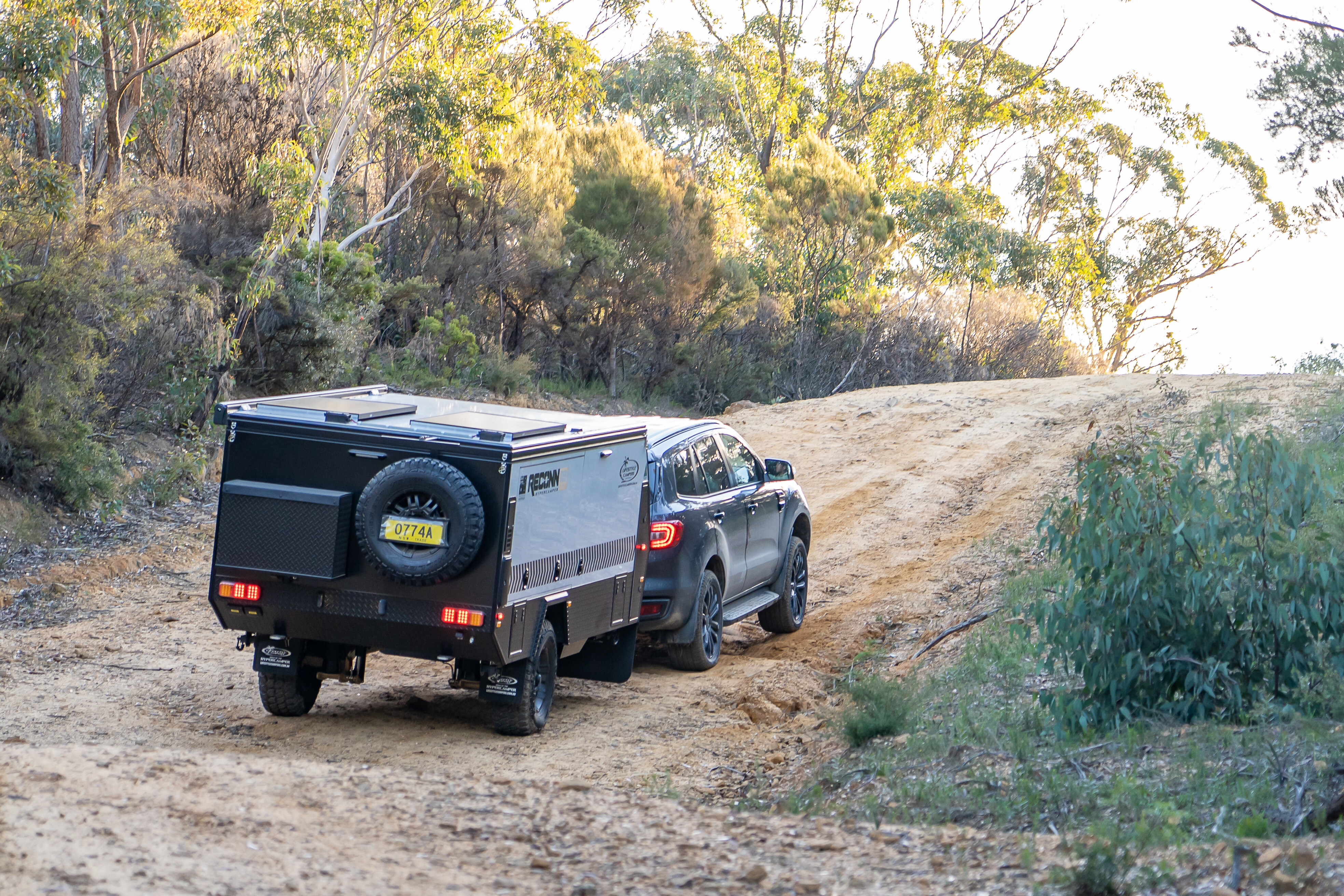
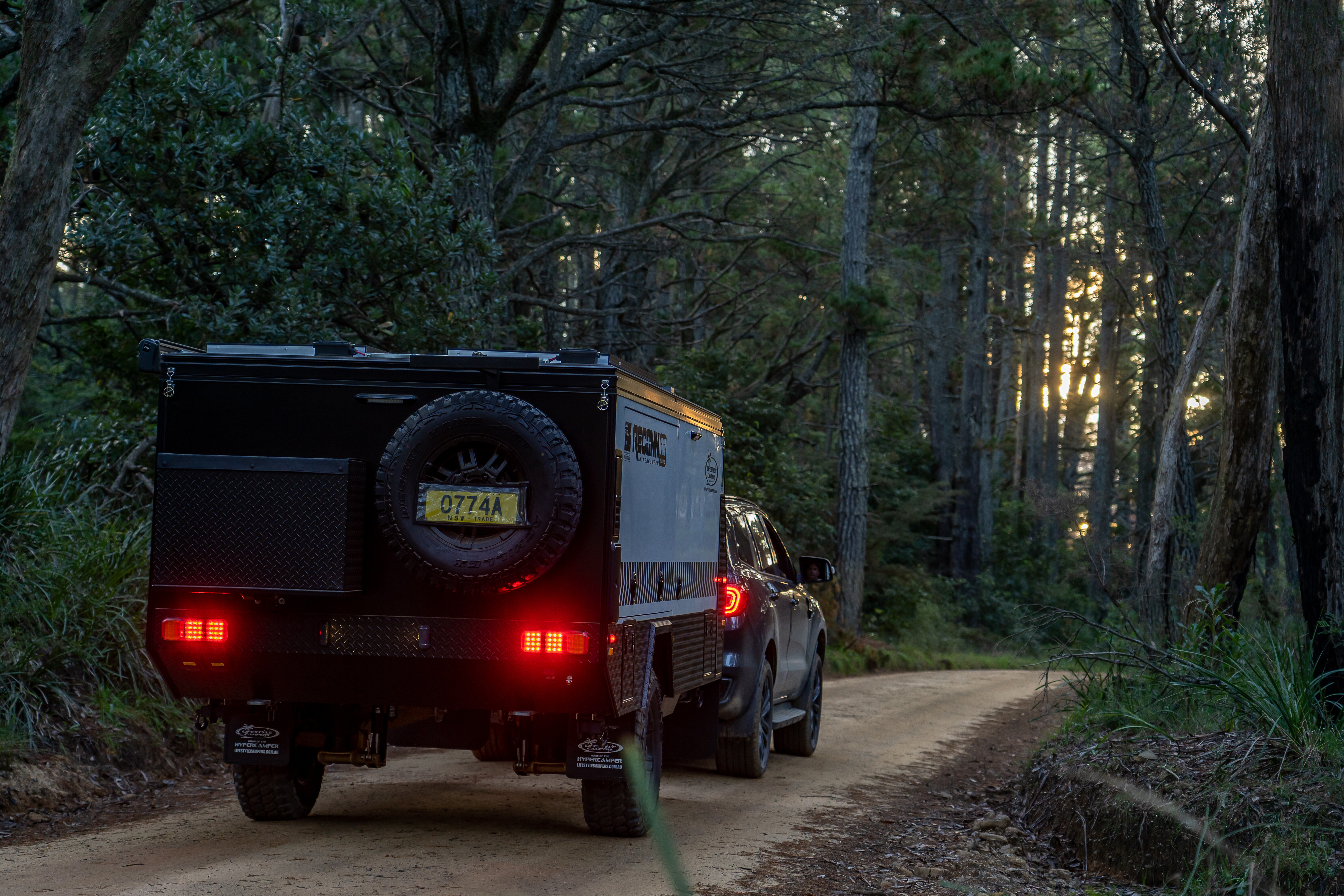
The R2 Elite’s tare or unladen weight punches in smack bang on the 1600kg mark. It’s not exactly a featherweight compared to some of the hardcore off-road options on the market, but it’s also 200kg lighter than some of the dual-fold camper trailers on the market and nearly 400kg lighter than some comparable ‘hybrid’ campers too. The end result of that alone is your tow-tug won’t have an overly difficult time yanking the Reconn R2 Elite across creek crossings, through mild mud holes or through wombat holes. Even our little bi-turbo Everest had no trouble muscling the Lifestyle Camper around.
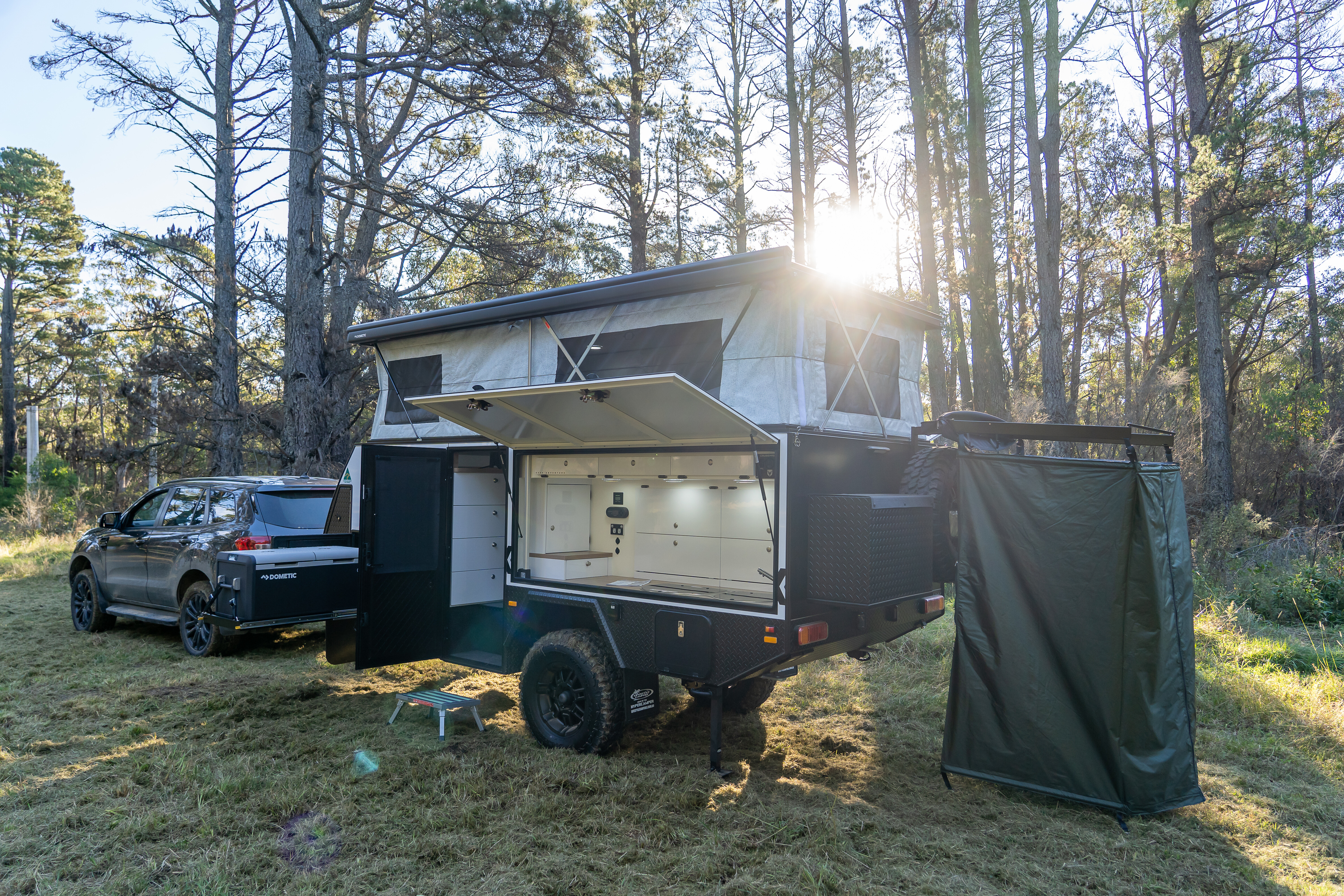
The overall footprint is reasonably compact as well. At 1880mm wide and 5800mm long it’s not only narrower than most of the twin-fold campers on the market, it’s shorter too. The result is when you’re off roading, you’ve got less of an arc swinging around behind you to clip trees on tight tracks, and the trailer will track within the width of most 4WDs so you won’t be constantly paranoid if it’ll make it through a spot your tow-tug is already through.
Actually, in the real world there were a few key things that stood out in the Lifestyle’s favour too. The axle placement hasn’t over or underloaded the tow-tug making for a smooth and predictable towing experience with no bucking or bouncing on or off road. The optional Airbag Man set-up tucked on to the Cruisemaster independent suspension also provided plenty of articulation and ground clearance, so match that with a full range of motion from DO35 coupling and the Lifestyle Camper had no issues following the Everest wherever it’d go.
PITCHING TENTS
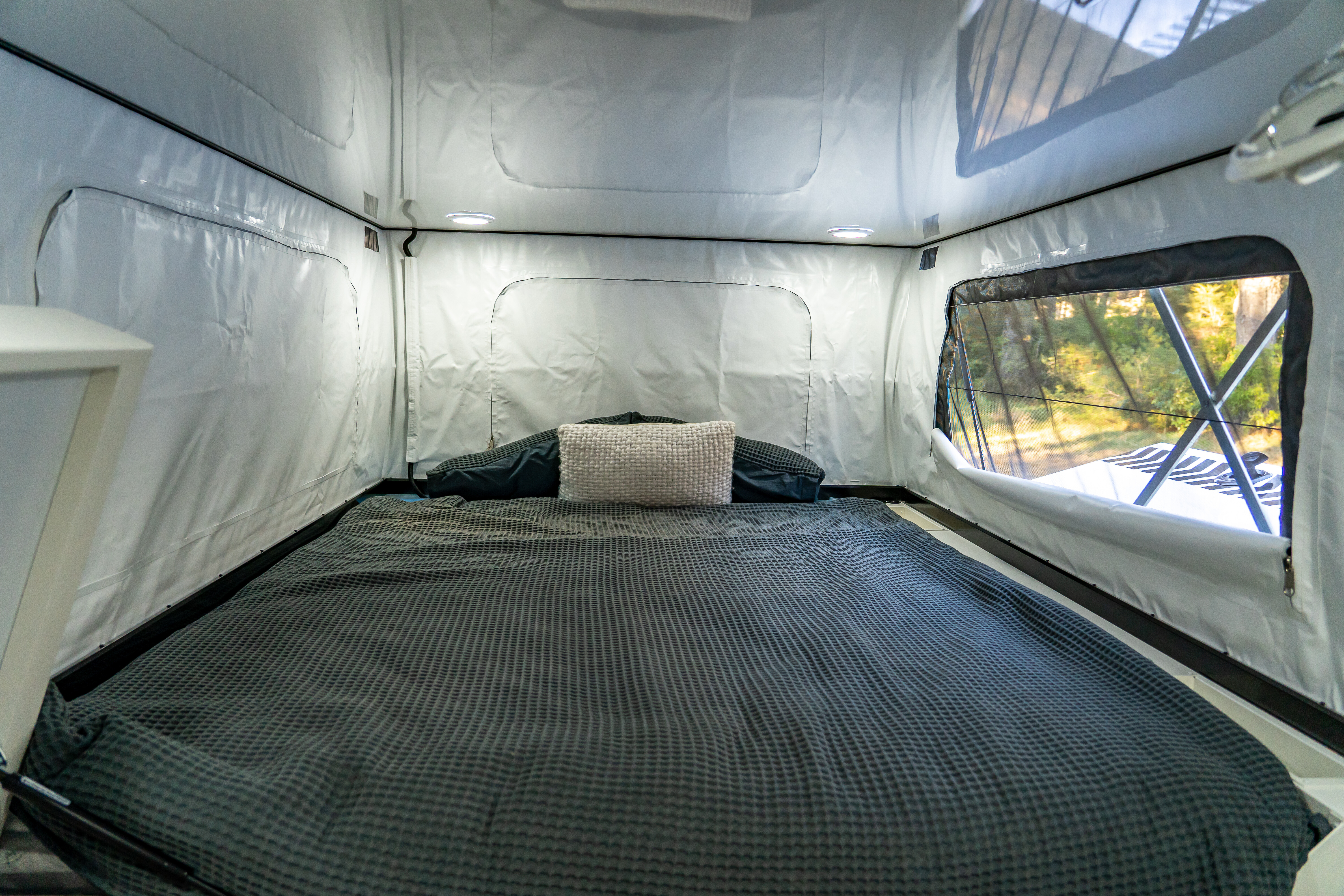
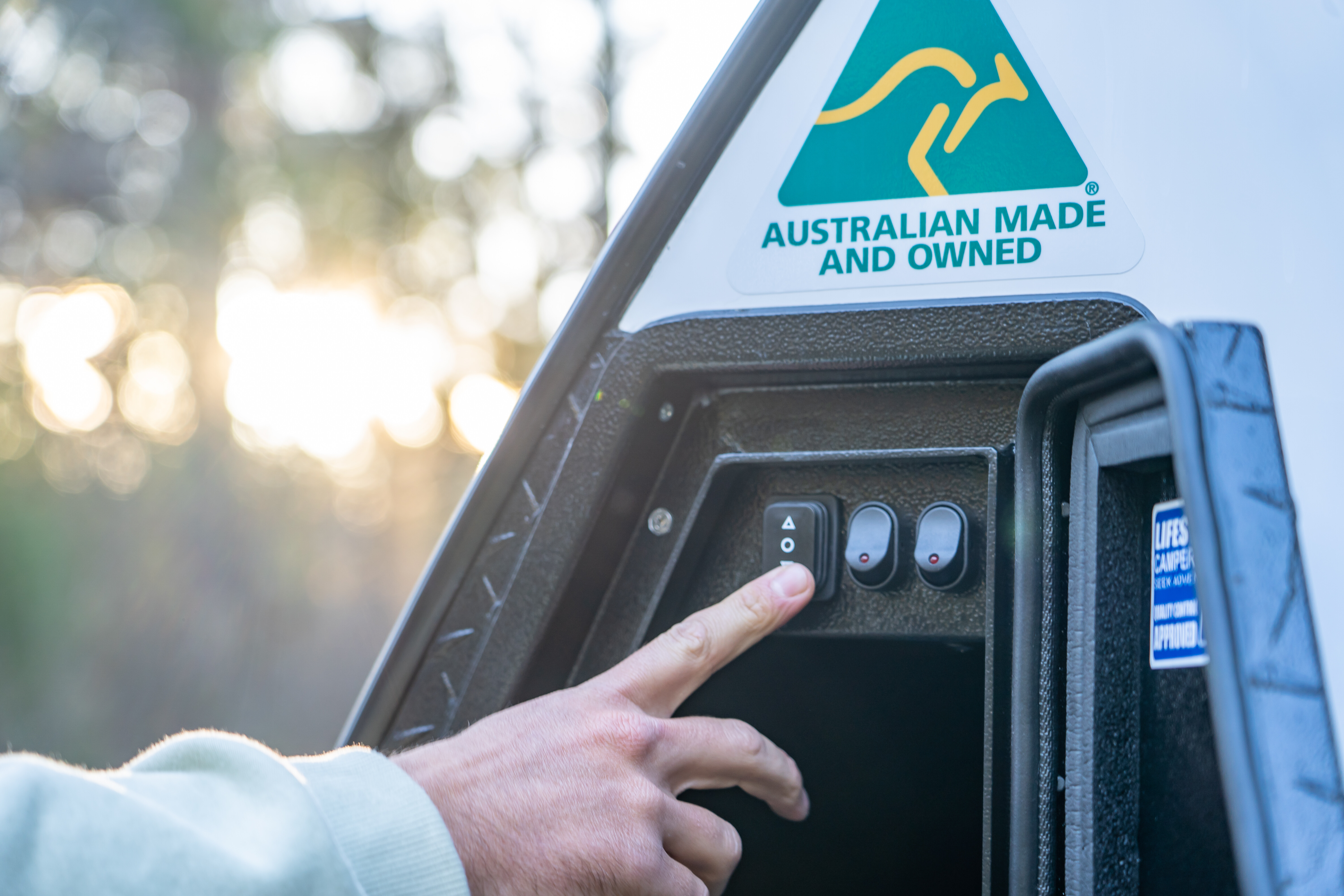
EASE of use comes second, because that’s basically how we judge an off-road camper, right? I don’t think I’m overstating it when I say this has to be one of the easiest camper trailers on the market to set up. From front to back, the entirety of the set-up is as simple as popping the four over-centre latches that keep the lid clamped down, open the front storage compartment, and press the button that opens the lid. From there, the whole roof opens electronically while you’re grabbing a cold one from the fridge. It really is that simple. If you’re going to unhitch the camper from the tow tug there are the typical stabiliser legs at each corner too.
Two minutes after tapping the button the camper is effectively set up, at least enough that you can duck inside for an early night if it’s flogging down rain on the road. Unlock the screen door, climb up the stairs and to your right you’ve got a full-sized inner-spring queen bed surrounded by large opening zippered windows, they open under the attached wind-out awning so can be left open in rain too. There’s under bed storage with a handful of drawers at the foot of the bed perfect for storing clothing, while a set of fold-out stairs makes accessing the bed a little easier.
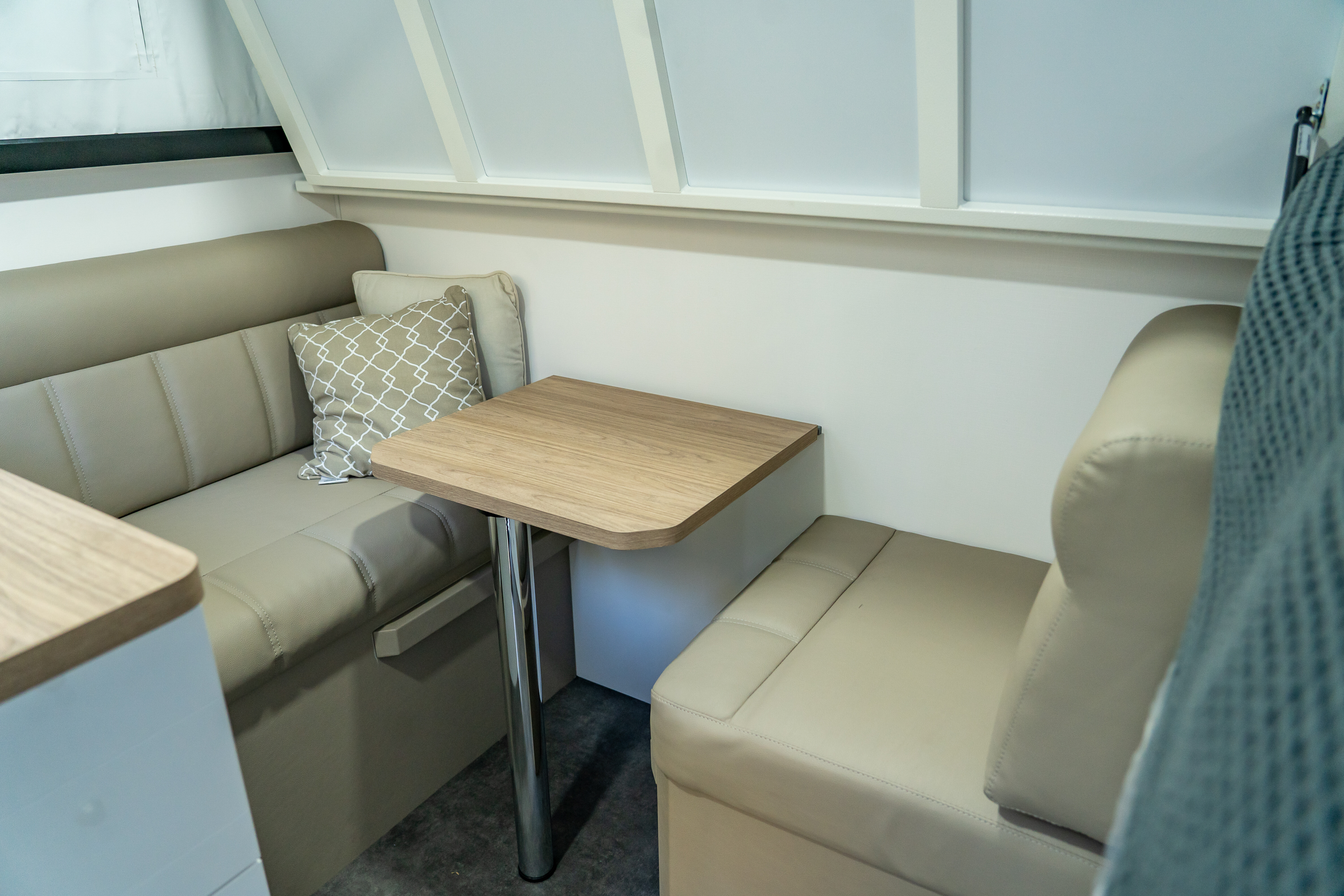
Back down on ground level you’ve got a three-berth dinette in the base R2 Elite, with additional storage off to the passenger side. There’s premium fabrics used throughout but with the optional bunk bed fitted, you’d want to be short to tuck yourself right into the table. There’s also a straight dinette available without bunks, or an optional en suite, so suit the layout that best fits your needs.
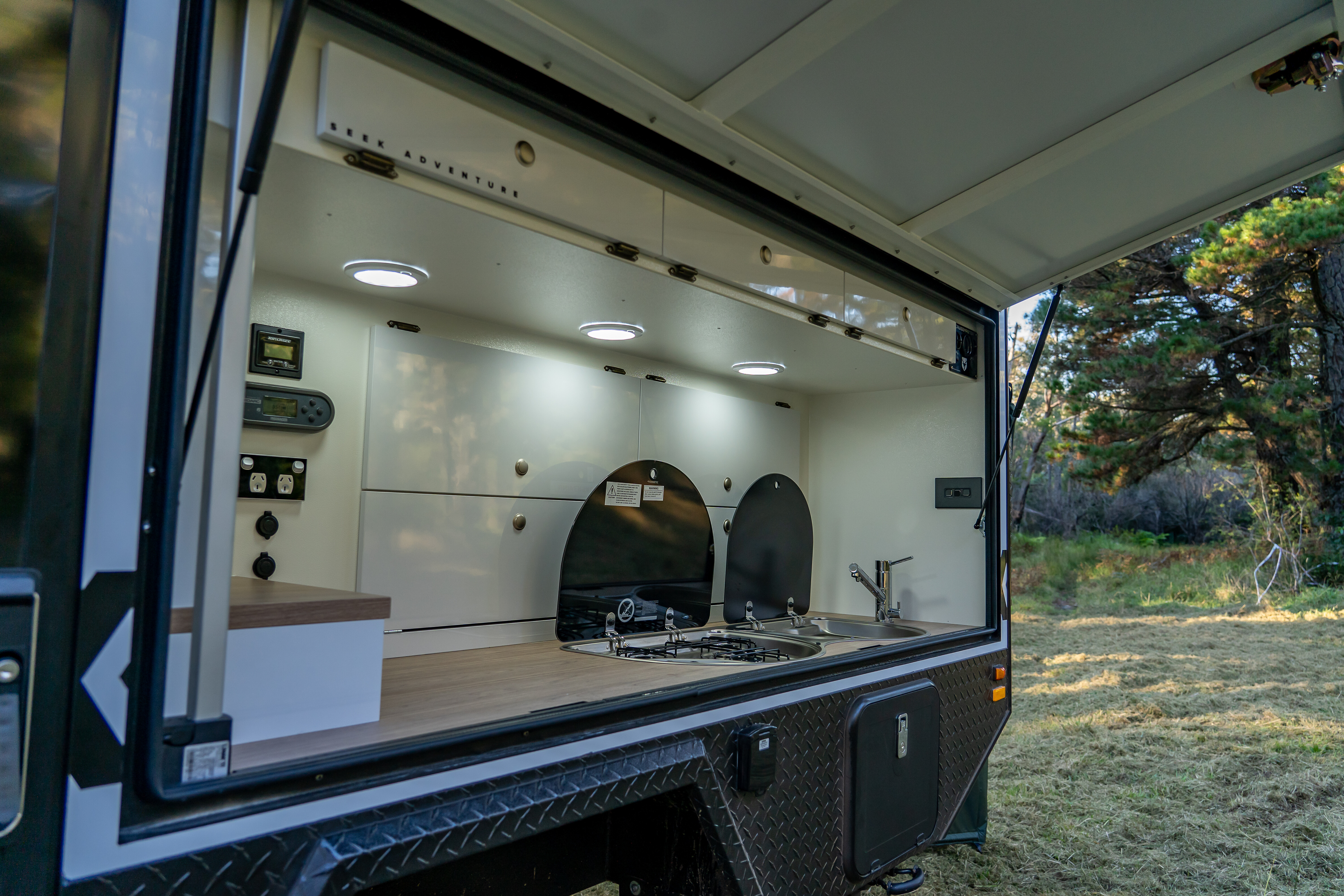
Back out on the outside and setting up is quick and easy again. There’s a hard-shell wind-out caravan-style awning that makes setting up shelter a one-person operation. The kitchen is twice as fast too, pop open the side compartment, connect a couple of quick fittings and you’re up and running with huge pantry space, a cutlery drawer, prep bench, gas stove top, and hot and cold running water to the sink. Our demo was fitted with the optional air-bag suspension which allowed us to level the camper out despite the uneven terrain we parked on helping get the kitchen to the perfect height.
The storage space is best described as cavernous too. There’s a huge dry storage space on the driver’s side perfect for stashing additional clothing, kids’ pushbikes, camp furniture, or anything else you can think of really. There’s also additional storage space up front in the bulkhead and protected by sacrificial plates guarding against wayward rocks.
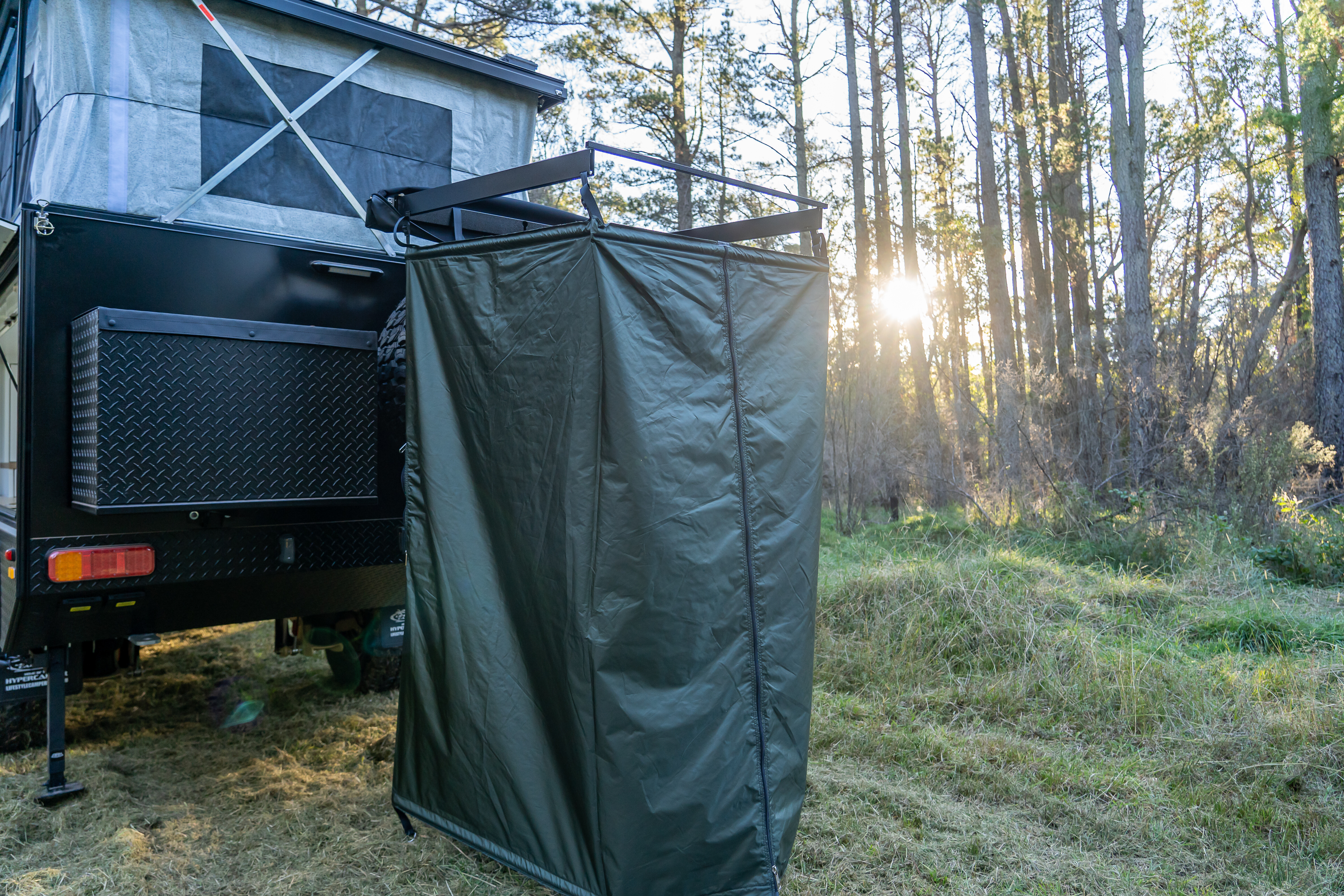
If you’re after a shower, there’s an external one at the rear. The shower head itself is quick to deploy but the shower tent is a little awkward, needing to be manually clipped on to an additional strut on the rear. Hardly a deal breaker but considering the build quality and overall design of the camper, it’s surprising to see it not permanently hard mounted.
OFF THE GRID
THE third aspect camper trailers need to be judged on, at least in my books, is the gear they bring to the table to enable extended camping without needing to plug in a generator and pray for water. After all, if the camper can barely cope with more than a night off the grid then essentially, it’s an horrendously expensive tent.
To that end the Reconn R2 Elite does a fair job carrying its own, so to speak. On the water front you’re looking at a combined 180L of water split between two 90L poly water tanks. In an unconventional move the tanks are mounted internally so aren’t susceptible to wayward branches ruining your day. There’s room to fit an additional 90L tank bumping capacity up to a massive 270L of potable water. The water system runs through an in-line carbon filter to protect against general nastiness and pumps up both to the kitchen and the Truma hot-water system.
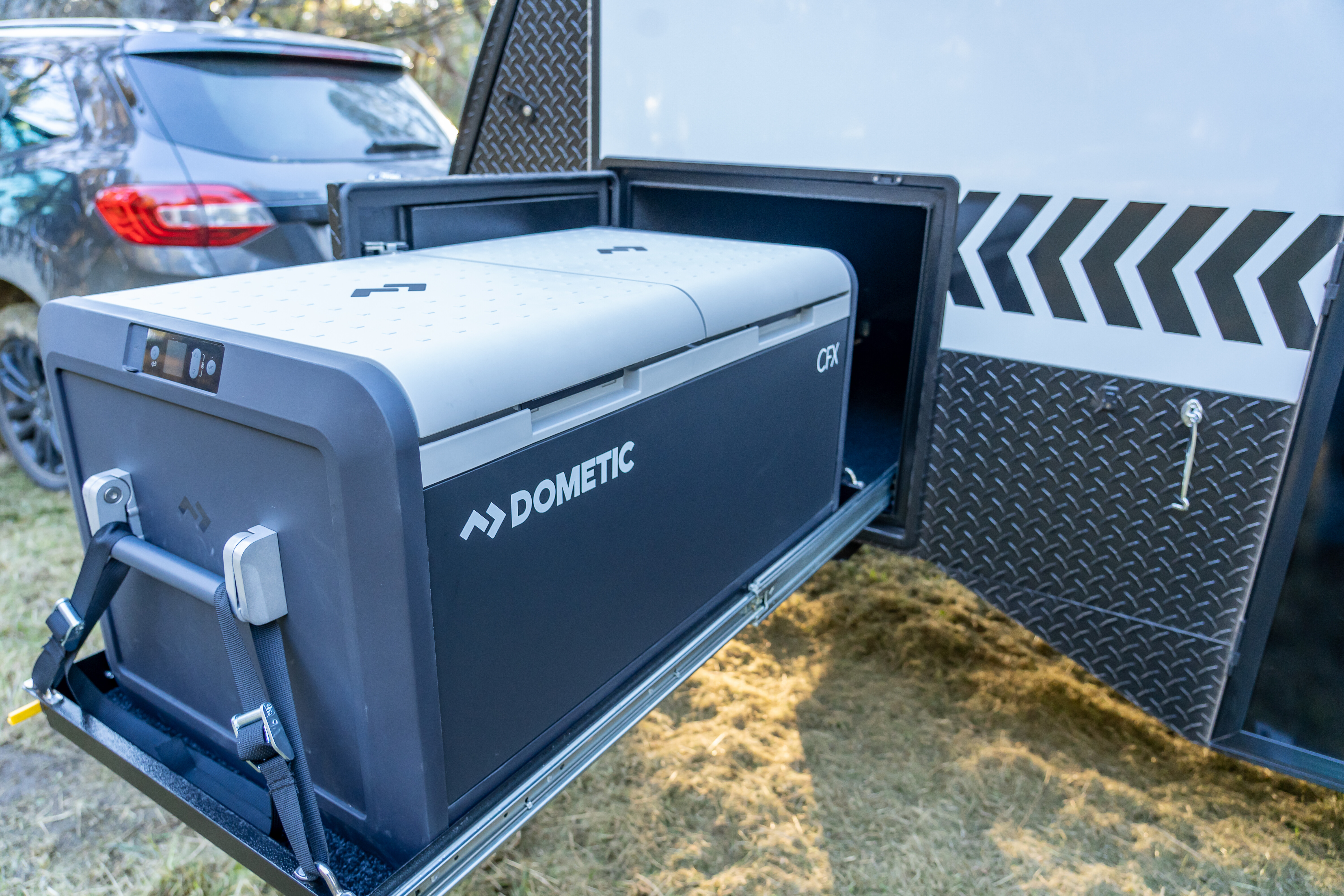
On the electrical front, the brains of the operation is the trusty Redarc Manager 30 battery management system that combines inputs from the 175W solar panel up top, 240V inlet on the side, and 12V DC through the Anderson connection on the tow tug to keep the battery levels topped up. The base model comes with a single 120amp/h AGM battery but can be optioned up to a second 120amp/h AGM battery. On the cooking front, you’ll have enough gas to last for months on end with twin 4kg gas bottles up front in their own compartment, with a large slide capable of handling a large dual-zone fridge-freezer. If it were our own camper we’d be throwing in a little more battery and solar but as is, will suffice for most camping trips.
SHOULD YOU BUY ONE?
LET’S get one thing clear, if you’re a little more established in life, have a little deeper pockets, and want to spend less time fighting tarps and more time enjoying camping, you need a hybrid camper, it’s as simple as that. Should you buy the Reconn R2 Elite from Lifestyle Campers? That really depends on a few things. The first is where your happy place lands on the value-for-money scale.
Imported campers will do the same thing for cheaper, but most won’t be as smooth and well-thought-out in the design. The Lifestyle will also perform better off road than most as well, so ask yourself if you’ll be using it in places where that matters. And finally, does the layout suit you? If you’re travelling with two adults and up to two kids it’s unarguably one of the best set-ups you can buy, but that’s no use if your kids’ earn their pocket money playing for the Harlem Globetrotters. For me, it ticks every box I can think of, and some I hadn’t considered, now I just need to find a spare 60-odd thousand tucked in the lounge and I’m home free.
SPECS
LIFESTYLE CAMPERS RECONN R2 ELITE
| STYLE | Hybrid pop top |
| BODY MATERIAL | Aluminium composite |
| BODY SIZE | 4400mm (L) x 1880mm (W) x 2150mm (tow H) |
| LENGTH | 580mm (coupling to tail-lights) |
| TARE WEIGHT | 1600kg |
| ATM WEIGHT | 2800kg |
| SUSPENSION | Coil sprung trailer arm w/ twin shocks |
| BRAKES | 12in electric drum brakes |
| COUPLING | Cruisemaster DO35 |
| WHEELS/TYRES | 265/75R16 MTs / alloy mags |
| WATER CAPACITY | 180L std; 270L optional |
| RRP | $66,950 |
| AVAILABLE FROM | Off Grid Outfitters, (02) 4648 4181 or offgridoutfitters.com.au |
Snapshot
- New concept shows off Ford’s parts catalogue for Bronco
- Two new accessory parts teased on the concept
- No plans to make it part of the Bronco range yet
Ford hasn’t been shy about showing how many different versions can be squeezed out of the new Bronco – and this new Riptide concept showcases just how much the new 4×4 can be modified within the marque’s own catalogue.
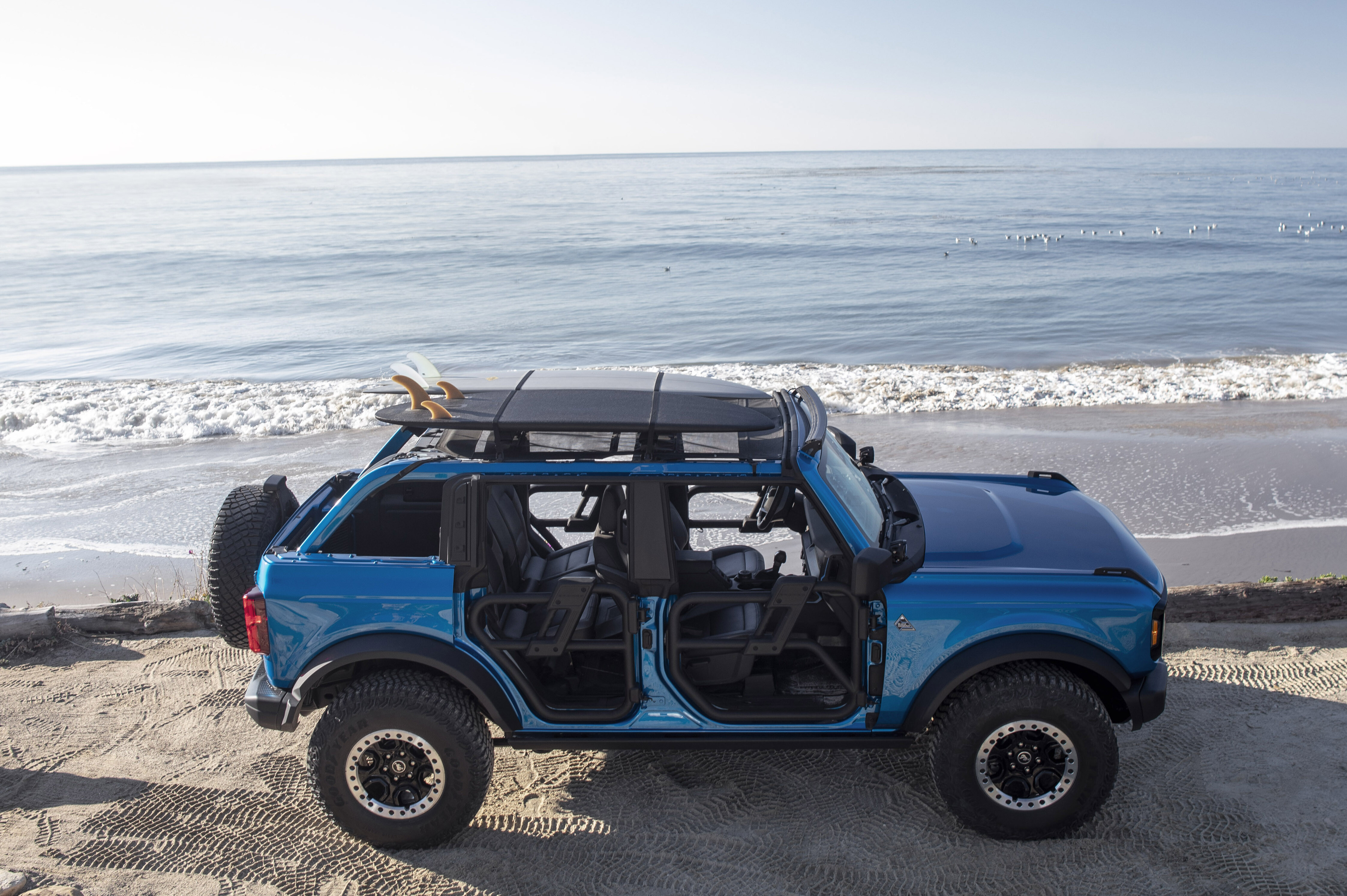
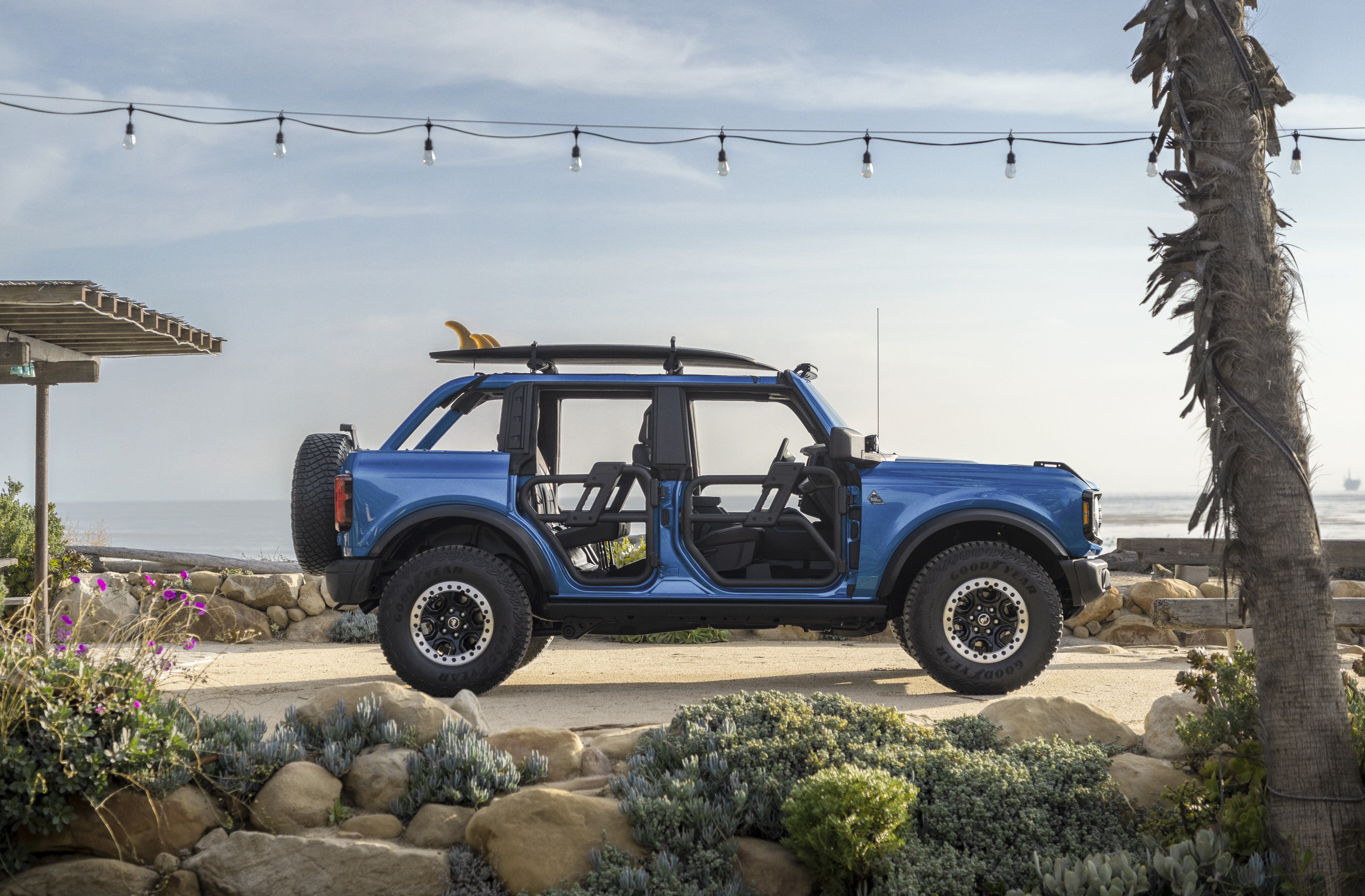
The Riptide concept started out life as a four-door Bronco with the Sasquatch package added, which already includes the 35-inch mud-terrain tyres wrapped around 17-inch alloys and Ford Performance beadlock rings.
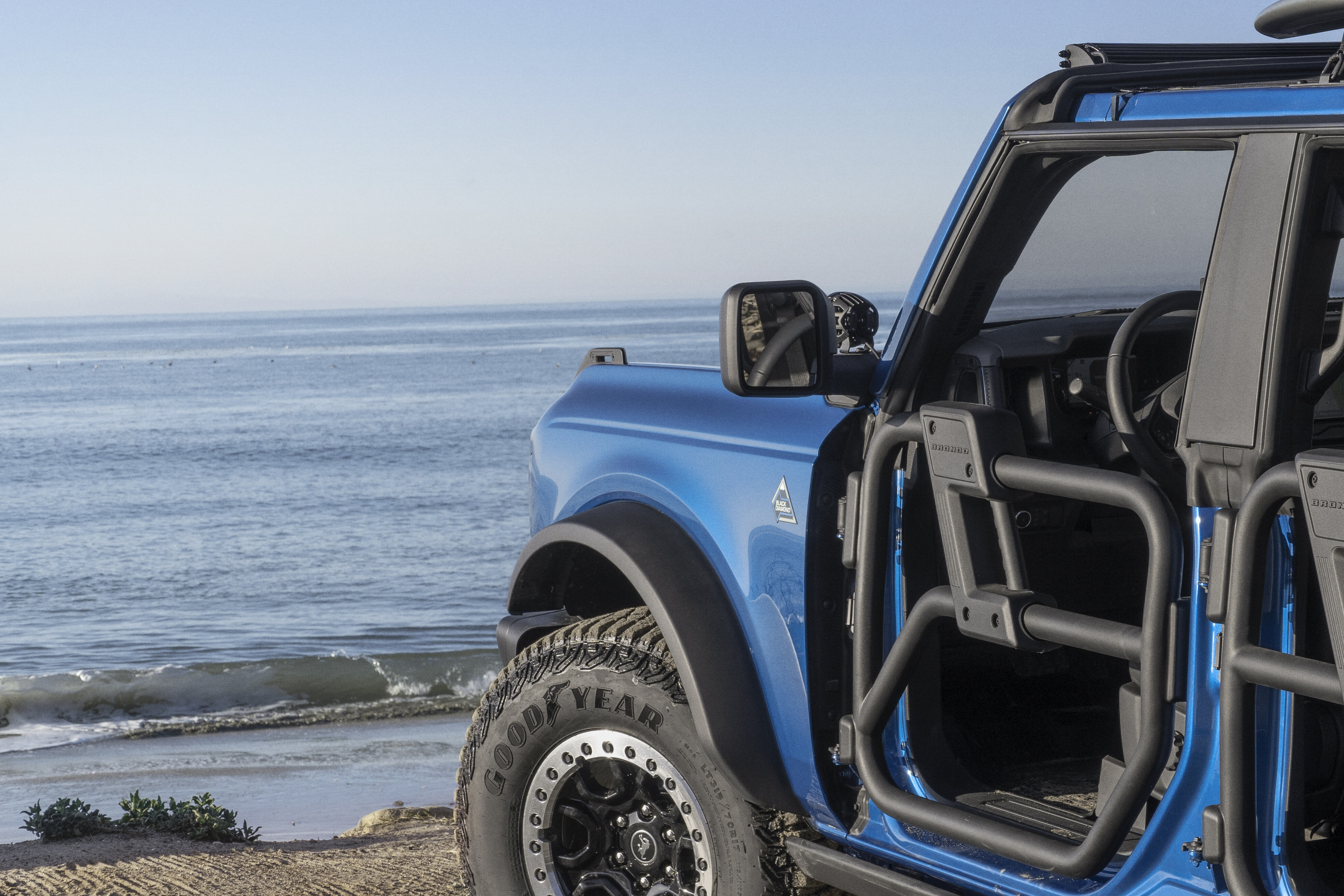
The biggest difference is the removable doors have been replaced with open tubular doors, and Ford has also equipped the Riptide concept with front and rear e-lockers, high-clearance Bilstein long-travel shocks and the Bronco Terrain Management System – so beach-goers will have a harder time getting stuck.
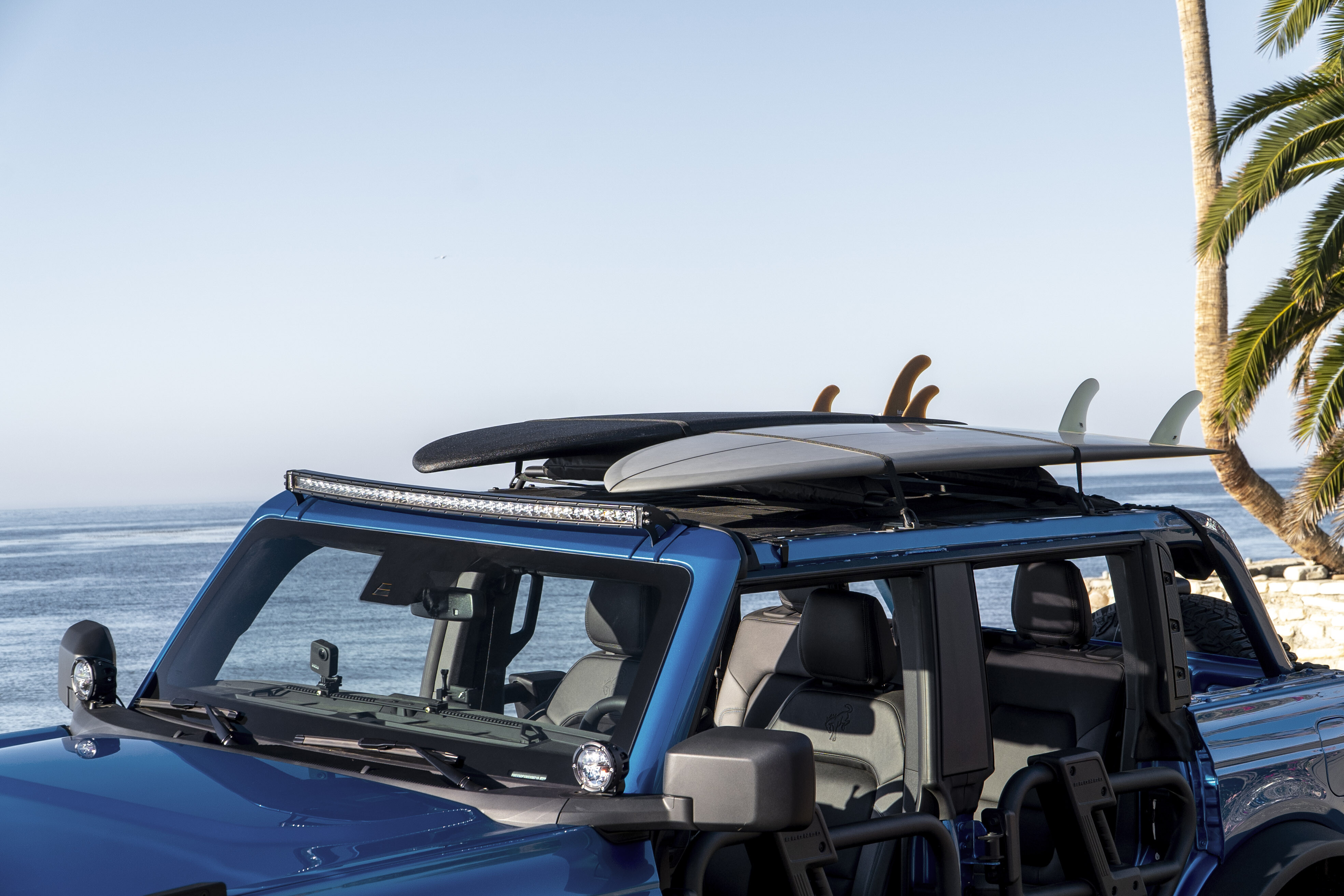
Finishing off the factory-added accessories on the Riptide is an LED light bar above the windshield and a Yakima bike rack, along with marine-grade vinyl-trimming on the seats and rubber flooring for easy cleaning.
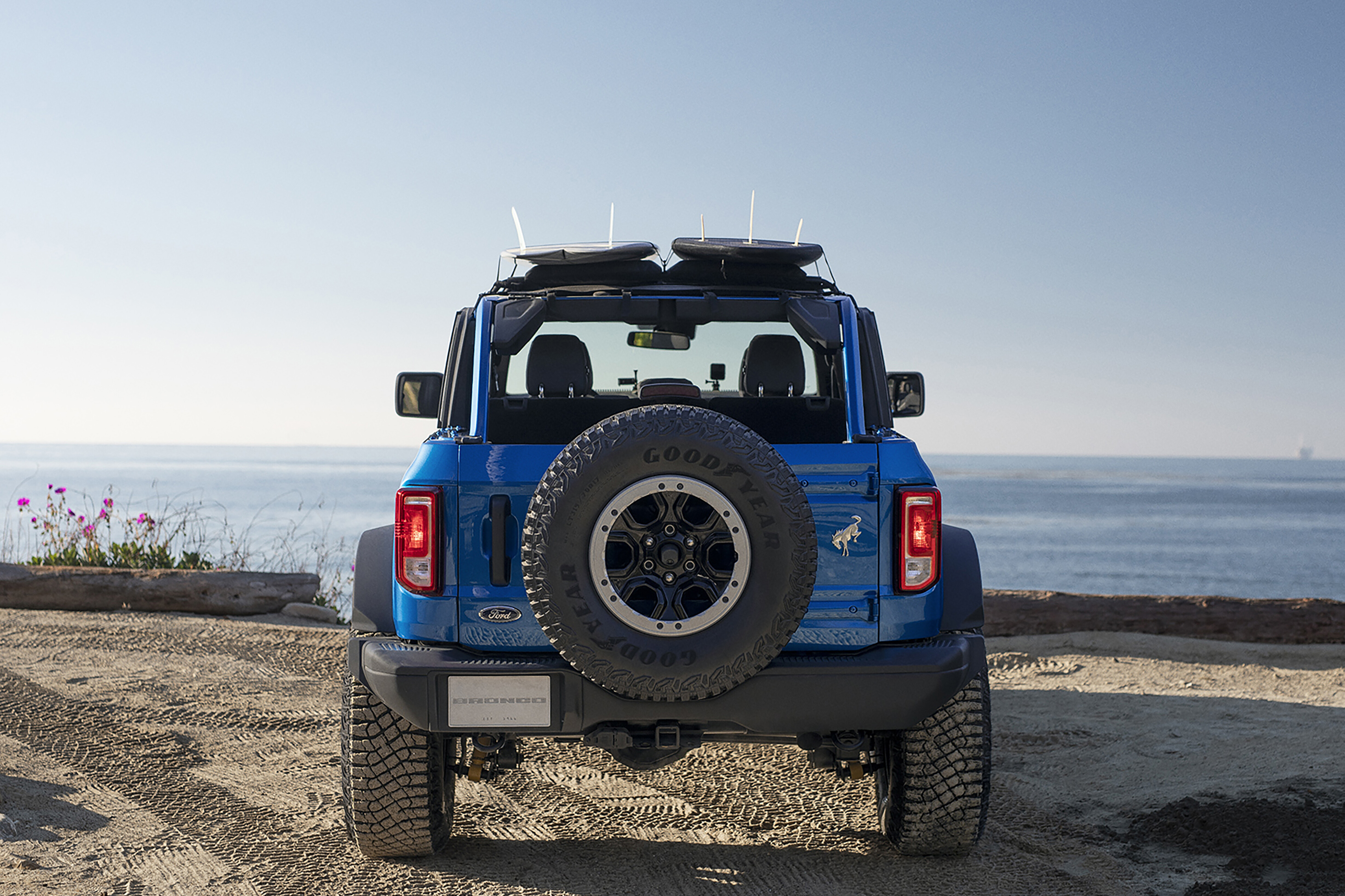
All of those extras fitted to the Riptide are already available through Ford to add onto any Bronco order, but the Riptide has debuted two new prototype parts we expect will make it into production very soon.
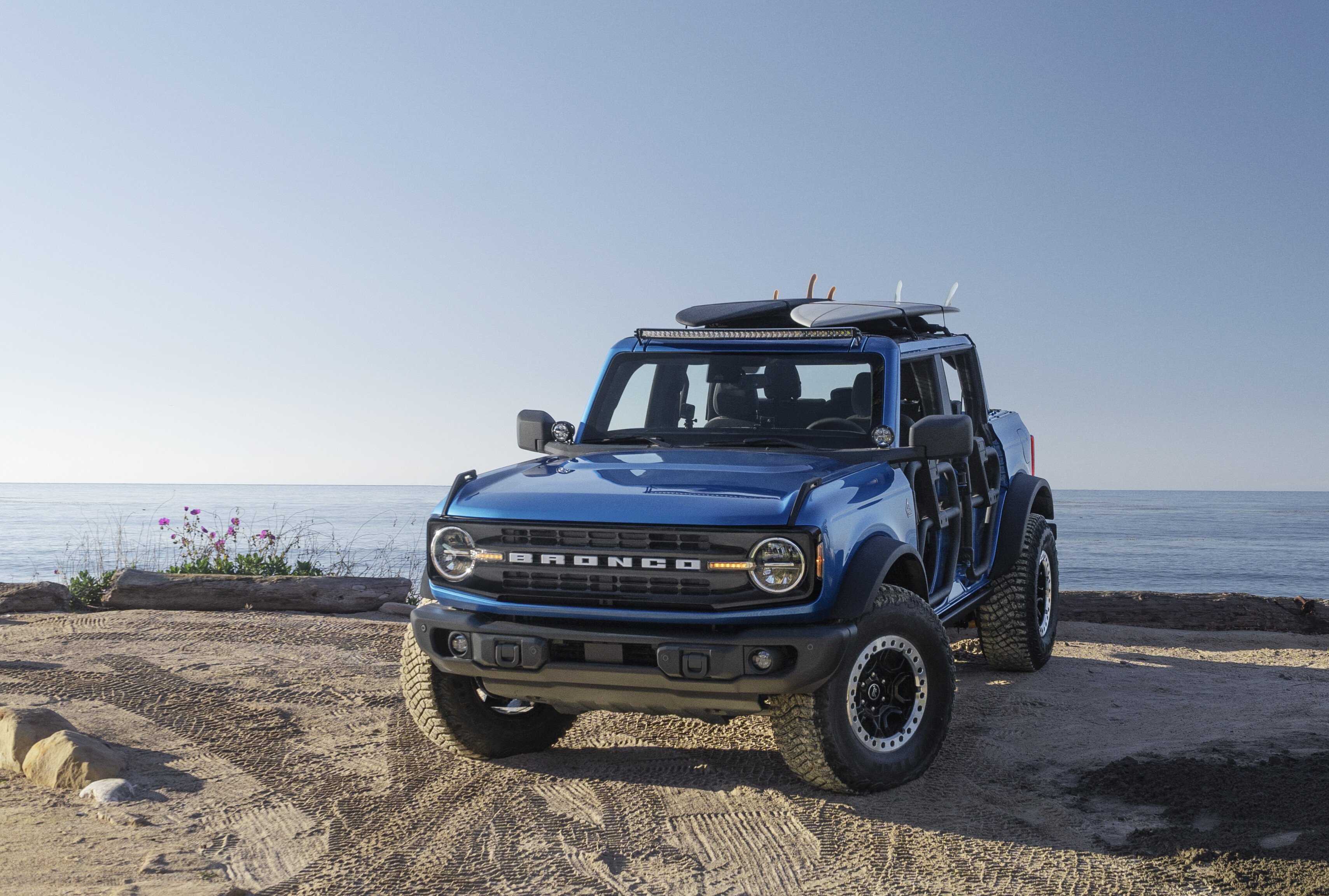
There’s a new prototype steel front bumper fitted with fog lights and two hooks, as well as the system on the roof rack which allows surf boards to be strapped down.
“We wanted the vehicle to demonstrate how Bronco customers can personalize [sic] their vehicle, letting different types of customers visualize [sic] what they might want to do with their future Bronco,” said Missy Coolsaet, Bronco color [sic] and materials designer.
The Riptide concept is powered by the 2.7-litre EcoBoost petrol V6 developing 231kW/542Nm when paired with a 10-speed automatic transmission.
At this stage it’s not clear if the Riptide will be added to the current Bronco range – but even if it isn’t, buyers can easily create their own by personalising their Bronco with the Ford optional parts catalogue and aftermarket suppliers.
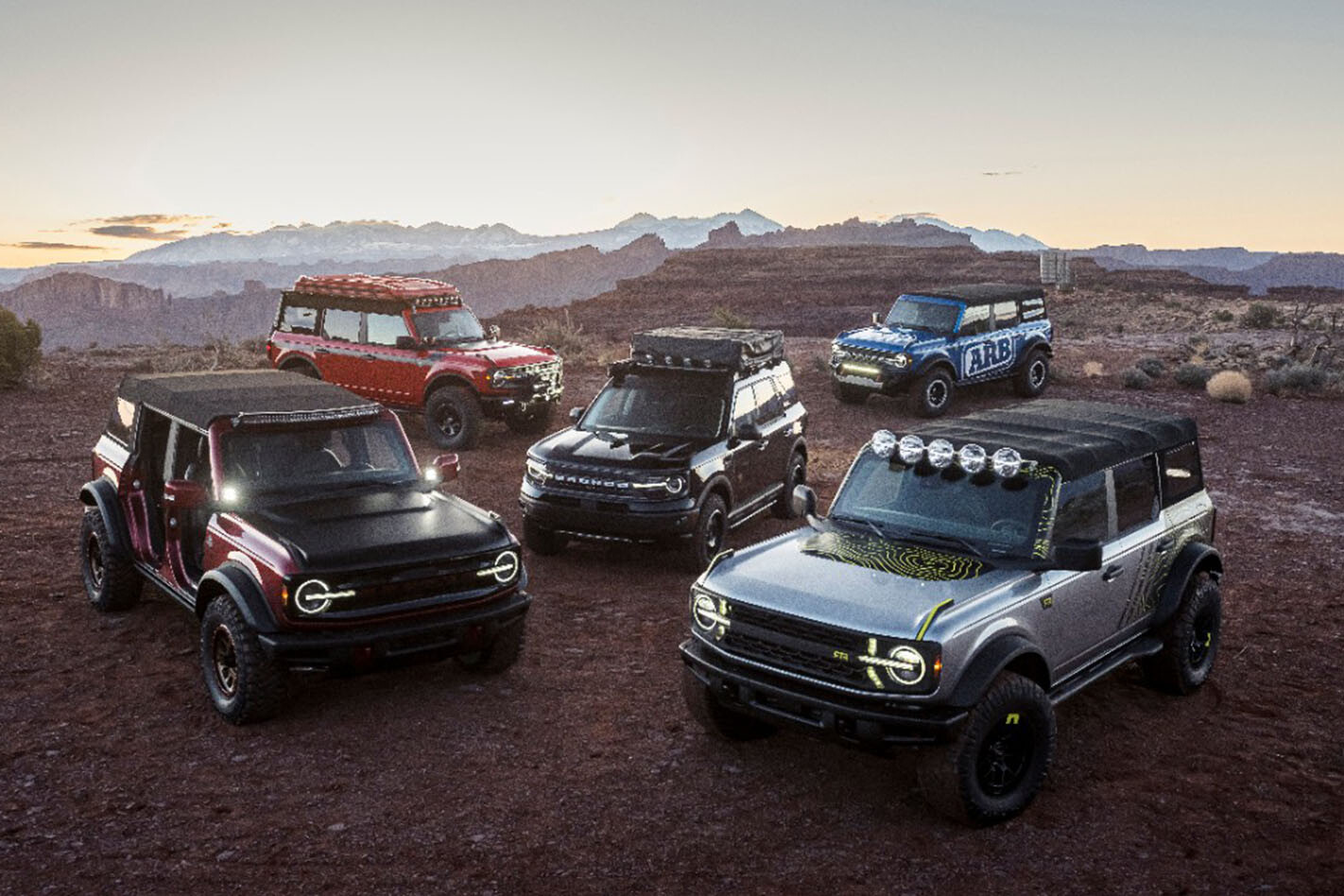
At this stage Ford Australia has no plans to make the Bronco range available in Australia.
Snapshot
- Toyota dealer in Sydney says the LC300 will be available in October
- Toyota Australia still yet to confirm a release date
- Prediction lines up with Toyota Australia saying LC300s would land in the fourth quarter
A Toyota dealer in Sydney has hinted that we may be seeing the highly anticipated 300 series LandCruiser landing in dealers as early as October this year.
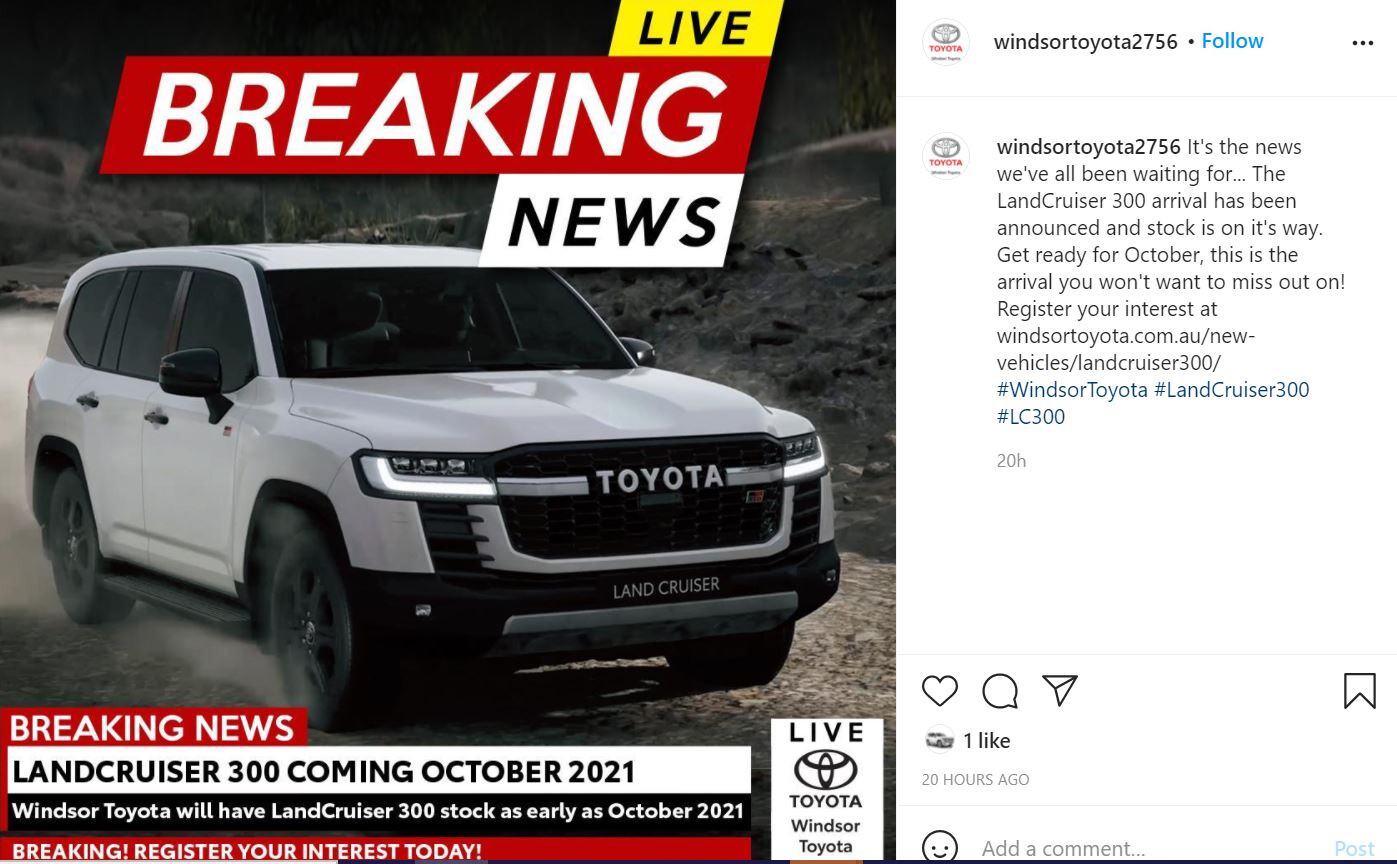
Windsor Toyota made the post yesterday on its Instagram page stating: “The LandCruiser 300 arrival has been announced and stock is on it’s [sic] way. Get ready for October, this is the arrival you won’t want to miss out on!”
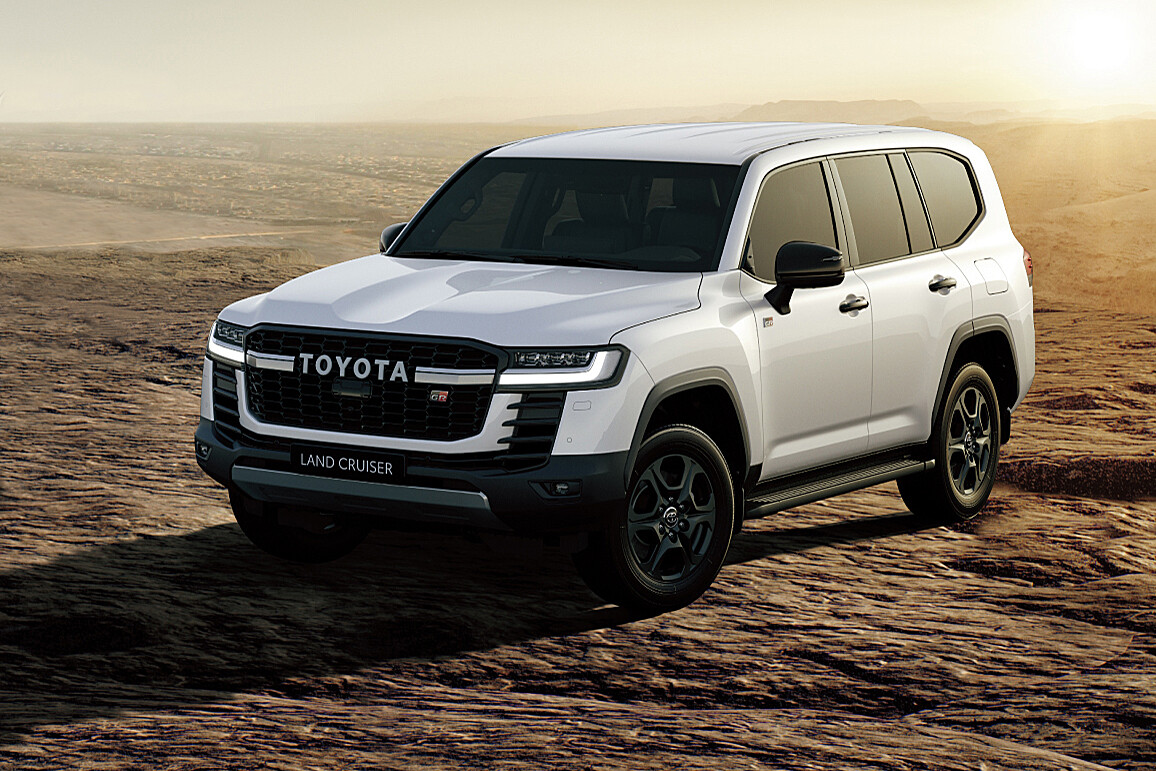
Up until now, Toyota Australia has only confirmed the new 300 series will be in Australia by quarter four of this year.
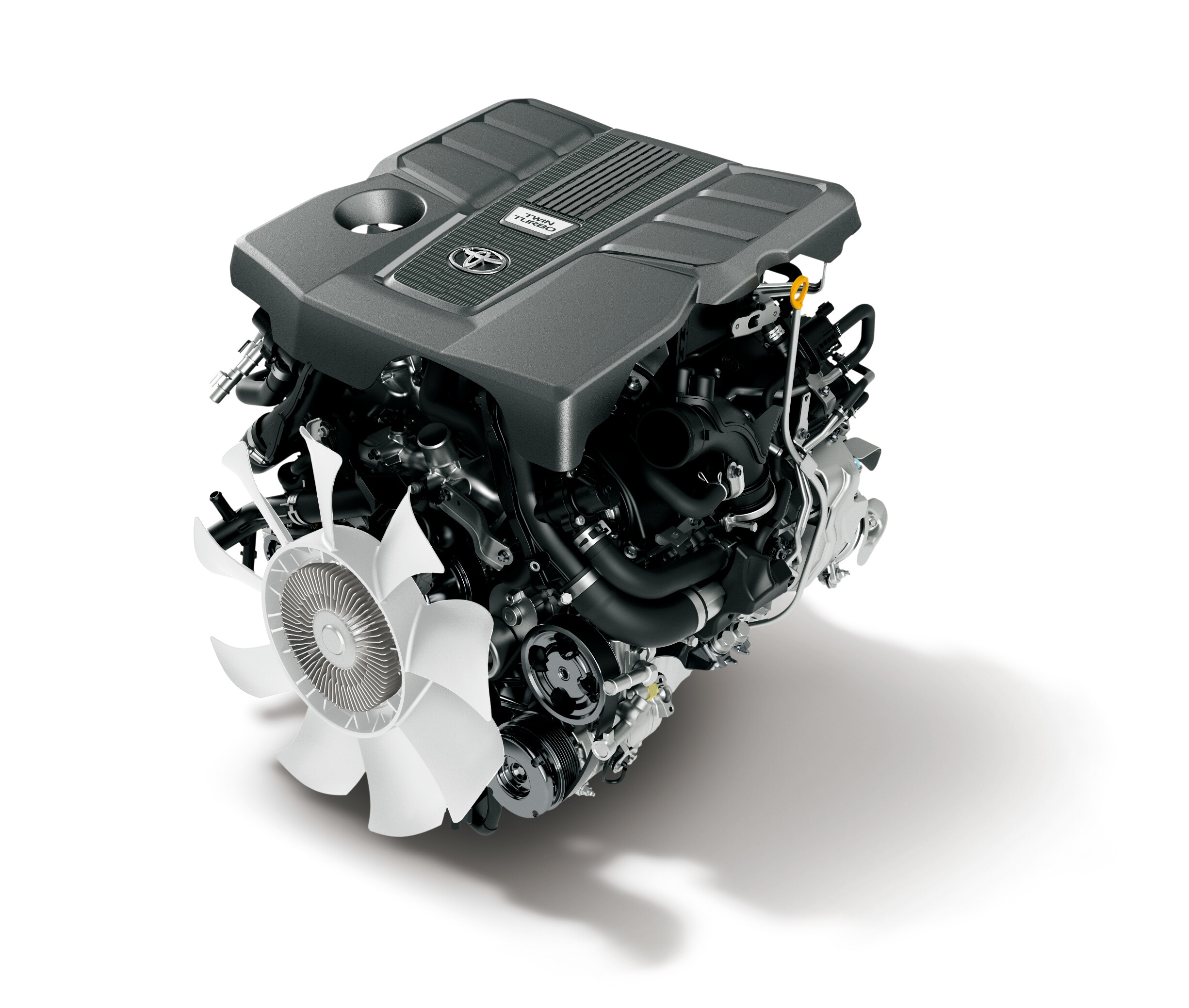
The biggest headline from the new 300 series is that the twin-turbo 1VD-FTE V8 diesel from the outgoing 200 series will be replaced by the more powerful F33A-FTV 3.3-litre twin-turbo V6 diesel engine, which develops 227kW and 700Nm.
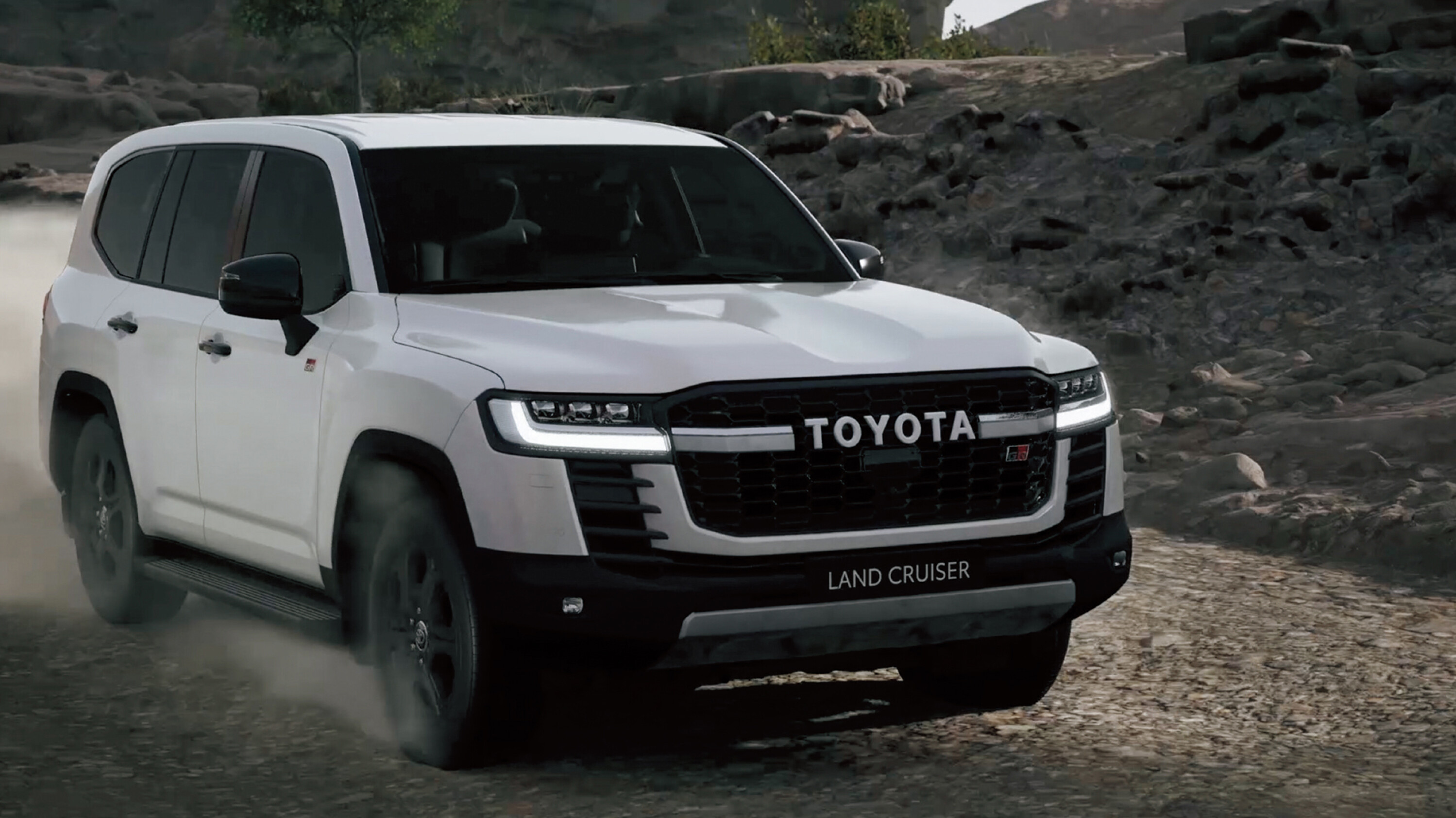
Toyota Australia confirmed at the start of this month the 300 series will be offered in six different trim levels, with pricing starting at $89,990 for the GX, moving through to the range-topping Sahara ZX on offer from $138,790 and the hotly anticipated GR Sport version costing upwards of $137,790.

You can read about the full range breakdown here, and we’ve already had a steer of a pre-production 300 series prototype before the official reveal last month which you can watch here.
Snapshot
- EV version of G-Wagen set to be previewed at Munich motor show next month
- Production versions expected in 2024
- Drivetrain likely to be similar to twin-motor set-ups already used in EQS Mercedes SUV
The electric version of Mercedes’s premier 4×4 is finally ready for public eyes, with reports suggesting the German marque will preview its future G-Wagen at the upcoming Munich motor show
According to Autocar, Mercedes-Benz is expected to make the reveal at the event which gets underway on September 7.
The news comes nearly two years after Mercedes-Benz CEO Ola Källenius stated there would be an all-electric version of the brand’s luxury 4×4, as the company moves towards offering EV versions of all of its vehicles.
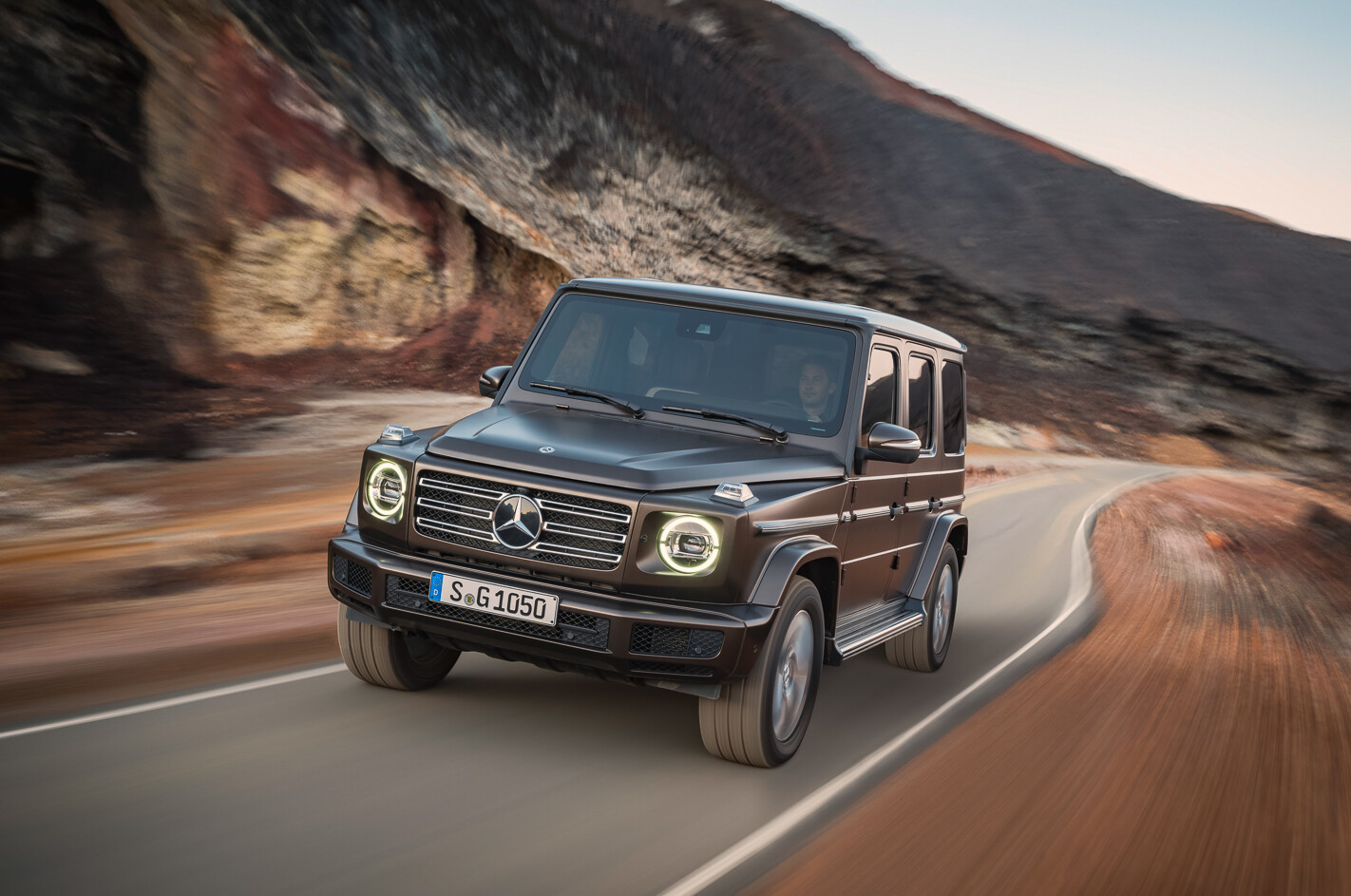
While the concept unveil at Munich is less than a month away, Autocar says that we’ll have to wait until 2024 to see production models become available to the public.
There’s no official word on what electric powertrains will be used, but we do know Mercedes-Benz has already trademarked the EQG 560 and EQG 580 names.
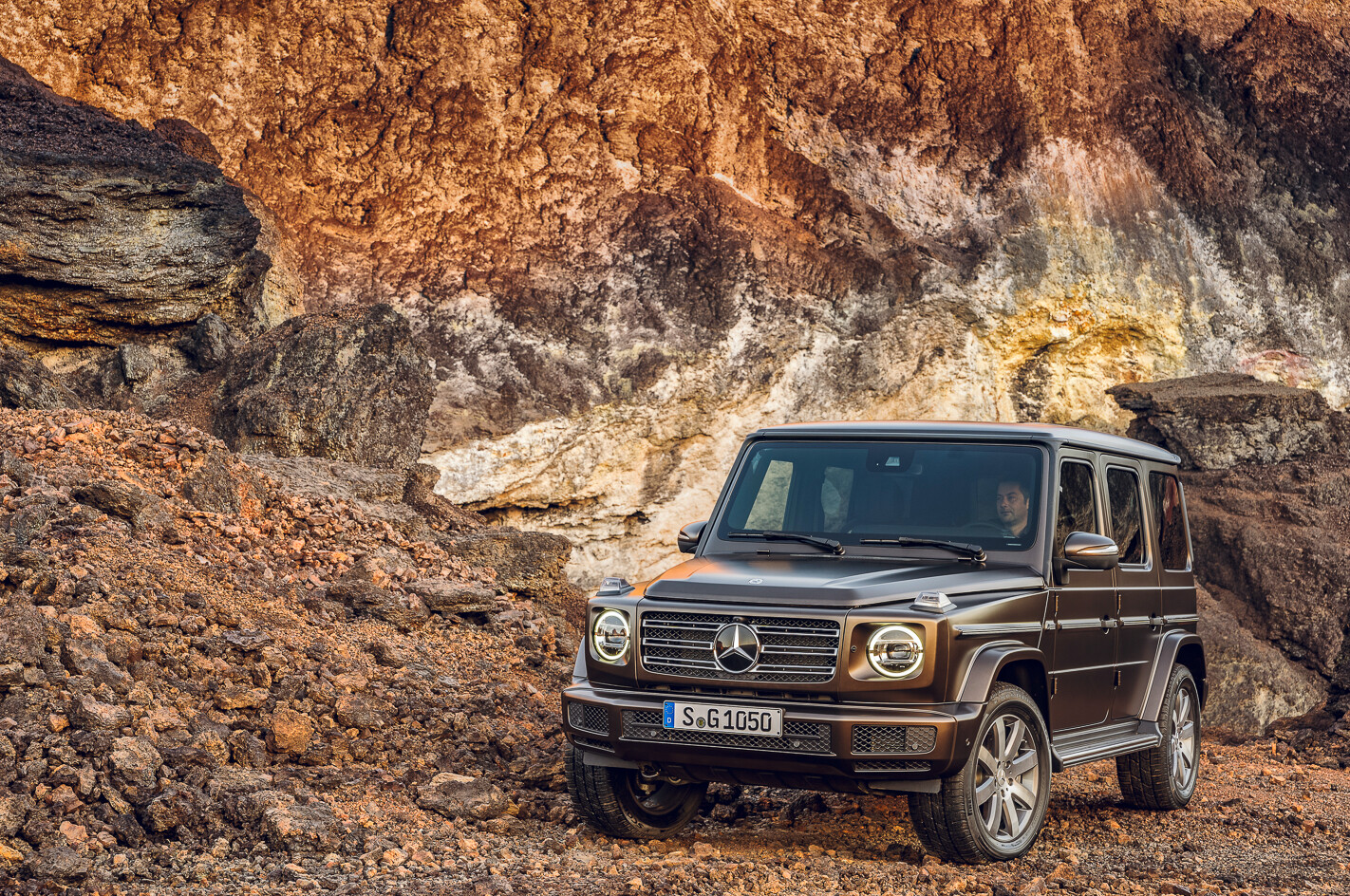
That strongly points to the possibility of the EV G-Wagen making use of the 384kW, 855Nm electric twin-motor driveline currently used in the EQS SUV.
Given the G-Class styling has scarcely changed since it first debuted 42 years ago, we expect the new EV version – widely dubbed the EQG – will keep loosely the same styling as the current G-Class range, but more than likely with a solid-piece front grille, different wheels and other subtle touches to stand out from the rest of the range.
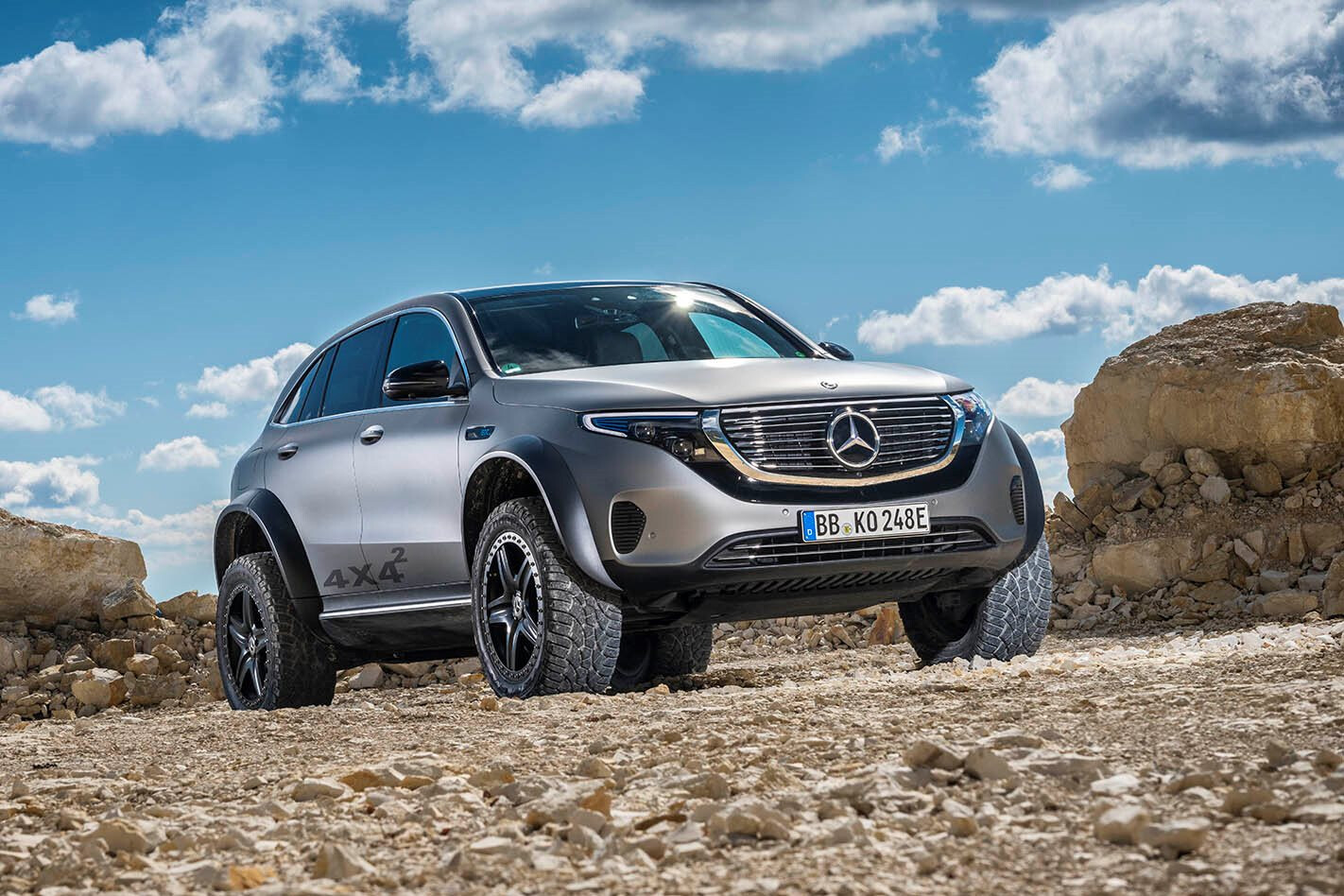
The unveil of the electric G-Wagen won’t be the first electric 4×4 concept from Mercedes-Benz, which first experimented with all-electric off-road capable drivetrains with the high riding EQC 4×4² prototype – first seen by the in October last year.
That concept was based on the EQC 400 4Matic, which used a twin-motor EV driveline developing 304kW and 761Nm of torque.
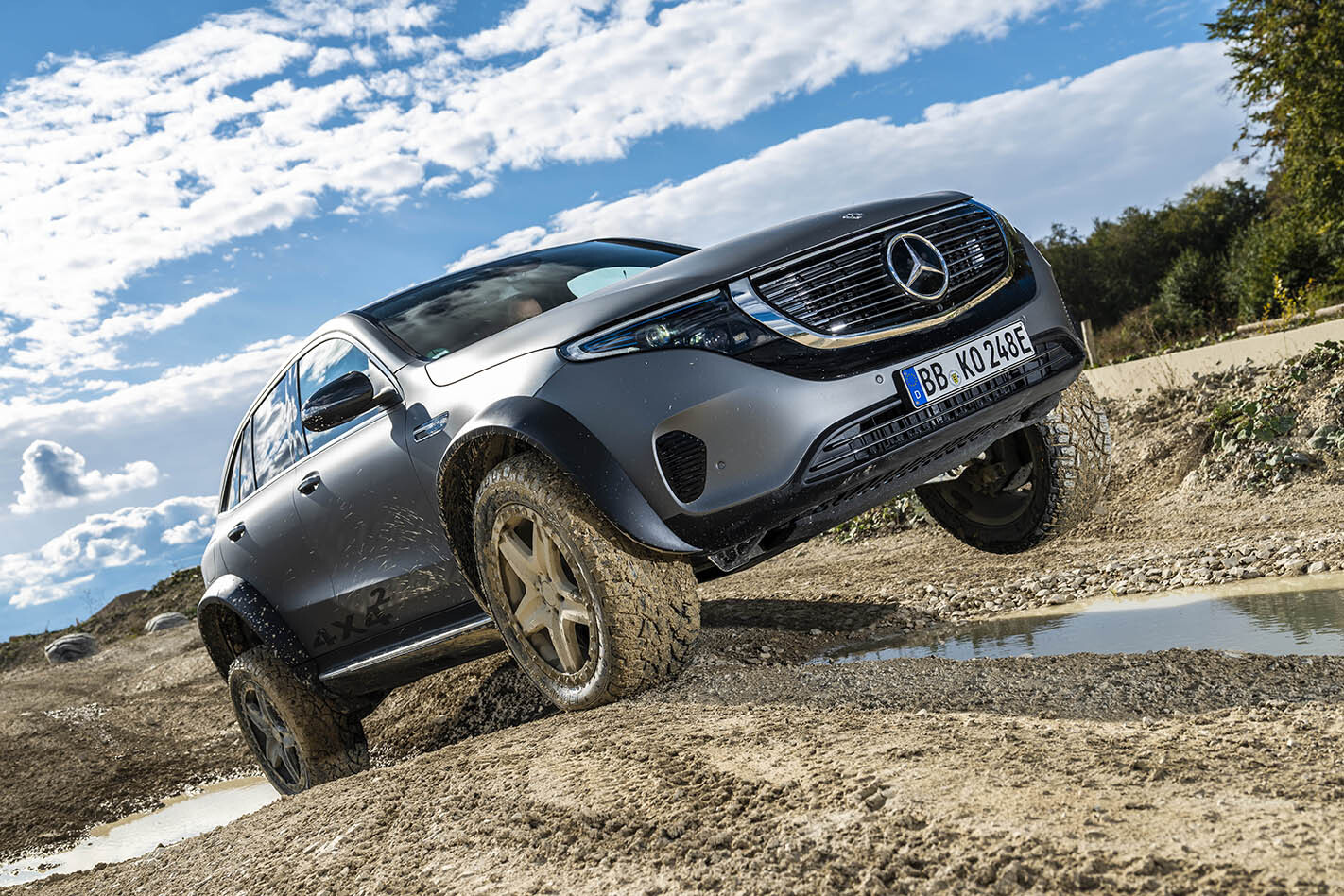
If the off-road capability of that concept is anything to go by, we expect the electric version of the G-Wagen to be just as capable as its internal combustion engined counterpart.